Inspira Medical Center Mullica Hillhas doubled the size of its maternity unit to meet rising demand.
The updated maternity unit, which opened this week, is part of Inspira’s $257 million expansion project at the Mullica Hill hospital that includes a new five-story tower for surgery, intensive care, education and residency programs, and additional parking.
The maternity unit doubled its size, to a total of 36,000 square feet, and increased the number of beds to 38, up from 20. The extra space is intended to give families more privacy and improve patient flow from delivery to recovery.
“Opening this expanded maternity unit is an important step forward for families across South Jersey and for the future of Inspira Medical Center Mullica Hill,” Lydia Stockman, executive vice president and chief clinical officer at Inspira Health, said in a statement.
Inspira opened the Mullica Hill hospital in late 2019, and it has quickly become one of the system’s busiest hospitals in a growing South Jersey community.
The hospital had 1,374 births last year.
The new patient tower, expected to open in 2027, will add more beds and an observation unit to ease strain on the emergency department. It will also include a surgery unit, intensive care beds, and a neuro ICU.
Philadelphia-area patients say they are often being left in the dark about side effects that could result from new medications given during hospitalizations, even though hospitals are required to explain the potential risks.
One in three patients at Philadelphia-area hospitals claimed that staff did not consistently explain possible side effects of medication, according to a leading patient satisfaction survey conducted annually by the Centers for Medicare and Medicaid Services.
To gauge the patient experience, the Hospital Consumer Assessment of Healthcare Providers and Systems (HCAHPS) survey asks questions about the hospital environment and how staff treated them during their stay. These quality indicators are less tangible thanclosely watched rates of infections or falls but still can offer meaningful insight into hospital culture and help administrators identify gaps in care.
The regional hospitals where large portions of patientssurveyed reported not being told about medication side effects included three operated by the Virtua health system in New Jersey. About 40% of patients at Our Lady of Lourdes, Mount Holly, and Willingboro said staff had “never” or only “sometimes” explained side effects.
“These survey results reinforce that it is not enough for patients to receive clear information most of the time,” Jen Khelil, executive vice president and chief clinical officer at Virtua, said in a statement.
(function(){function e(){window.addEventListener(`message`,function(e){if(e.data[`datawrapper-height`]!==void 0){var t=document.querySelectorAll(`iframe`);for(var n in e.data[`datawrapper-height`])for(var r=0,i;i=t[r];r++)if(i.contentWindow===e.source){var a=e.data[`datawrapper-height`][n]+`px`;i.style.height=a}}})}e()})();
“Our goal is for every patient to feel fully informed about new medications, including their potential side effects, every time,” Khelil said.
Medication safety
The most recent HCAHPS report, released in June, includes responses from about 2.3 millionpatients across the country, including nearly 32,000 from Philadelphia-area hospitals, between July 2024 and June 2025.
The survey covers topics such as noise levels, room cleanliness, staff friendliness, and whether they would overall recommend the hospital.
Among the questions: Before giving you any new medicine, how often did hospital staff tell you what the medicine was for?
Patients can answer “never,” “sometimes,” “usually,” or “always.” The survey results published by CMS combine “never” and “sometimes” answers.
These multiple-choice answers are subjective. But generally speaking, doctors and nurses should strive to always explain side effects, said Jeffrey Millstein, an internist and regional medical director for Penn Primary Care who regularly writes about the doctor-patient relationship as an Inquirer contributor.
Patients who do not fully understand potential side effects may disregard a dangerous complication as “normal.” Alternatively, a common, harmless side effect could be alarming to a patient who wasn’t educated about what to expect when taking a new medication, he said.
“They need to know the real red flags, and to not discontinue their medicine for the wrong reason,” he said.
In busy medical settings, staff may focus on other aspects of medication adherence, such as explaining what the medication does, instructions for when and how to take it, and whether it will negatively mix with a patient’s other medications. Side effects may be mentioned last, quickly, or by telling patients to refer to a manufacturer’s pamphlet with warnings.
“That’s really useless,” Millstein said. “It doesn’t put anything in context.”
Doctors and nurses should open a conversation about side effects by asking patients what they know about a drug, or what concerns they have, which can allow staff to dispel inaccurate information, he said.
Philadelphia-area hospitals respond
Across the Philadelphia region, three Penn Medicine hospitals scored the highest marks for explaining medication side effects.
More than half of survey respondents who stayed at Chester County Hospital, Penn Presbyterian Medical Center, and Hospital of the University of Pennsylvania said staff “always” explained side effects. About a quarter of respondents said they had received such information “sometimes” or “never” during their stay at the Penn hospitals.
(function(){function e(){window.addEventListener(`message`,function(e){if(e.data[`datawrapper-height`]!==void 0){var t=document.querySelectorAll(`iframe`);for(var n in e.data[`datawrapper-height`])for(var r=0,i;i=t[r];r++)if(i.contentWindow===e.source){var a=e.data[`datawrapper-height`][n]+`px`;i.style.height=a}}})}e()})();
Lower Bucks Hospital and Roxborough Memorial Hospital — both owned by California-based Prime Healthcare Foundation — received the region’s lowest marks for explaining side effects.
Forty-five percent of survey respondents said Lower Bucks staff had “never” or only “sometimes” explained side effects, while 34% said they had “always” received such information during their stay.
Michelle Aliprantis, a spokesperson for Prime, said the 2024-2025 data in the CMS survey does not reflect more recent efforts at the hospitals to improve bedside medication education and postdischarge follow-up. The health system has also expanded pharmacy consultation to ensure patients understand medications.
“We are always focused on continued improvement,” Aliprantis said in a statement.
Virtua’s chief medical officer said the health system closely monitors results from the CMS survey, which includes responses from about 2,000 patients across the New Jersey hospital system.
Administrators review feedback from a total of some 300,000 consumers a year from satisfaction surveys, Google ratings, and other ratings systems.
Virtua has been working to improve consistency and patient communication.
“We remain committed to listening, learning, and improving so that every patient receives clear, compassionate, and consistent communication,” she said.
(function(){function e(){window.addEventListener(`message`,function(e){if(e.data[`datawrapper-height`]!==void 0){var t=document.querySelectorAll(`iframe`);for(var n in e.data[`datawrapper-height`])for(var r=0,i;i=t[r];r++)if(i.contentWindow===e.source){var a=e.data[`datawrapper-height`][n]+`px`;i.style.height=a}}})}e()})();
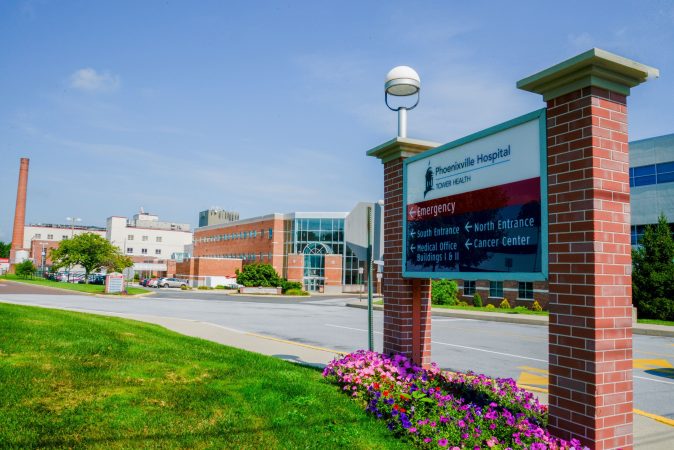
Tower Health reported an $8.5 million operating profit in the year that ended June 30, compared to a $20.6 million loss the year before.
The fiscal 2026 profit will be Tower’s first in eight years, if the result holds in its audited financial.
In the Berks County nonprofit’s preliminary financial report to bond investors Friday, Tower management called the result “an important milestone in Tower Health’s ongoing journey toward sustained financial strength.”
In addition to Pottstown, Tower owns Phoenixville Hospital and Reading Hospital in West Reading, and half of St. Christopher’s Hospital for Children in North Philadelphia in a joint venture with Drexel University.
Here are more details:
Revenue: Tower reported a 2% increase in revenue, to $2.07 billion from $2.03 billion. Reading Hospital in West Reading logged an 11% increase in revenue, while the combined revenue of Phoenixville and Pottstown Hospitals fell 8%.
Patient volumes: Pottstown saw an 11% decrease in hospital admissions, likely because Tower closed the hospital’s intensive care unit at the beginning of the this year. Phoenixville had a small gain of 0.7% in admissions, while Reading was flat. Total surgeries across the system were flat.
Notable: A year ago, Tower reported a preliminary operating profit of $5.9 million for fiscal 2025, thanks to a gain on the sale of the former Brandywine Hospital. That would have been the system’s first profit in seven years, but it turned into a $20.6 million loss in Tower’s audited financial statements. Auditors from KPMG decided that Tower needed to boost medical malpractice reserves and give up on collecting millions owed by patients.
In an email to The Inquirer, Tower CEO Michael Stern expressed confidence this year’s audit will uphold the preliminary result, giving Tower its first profitable year since 2017.
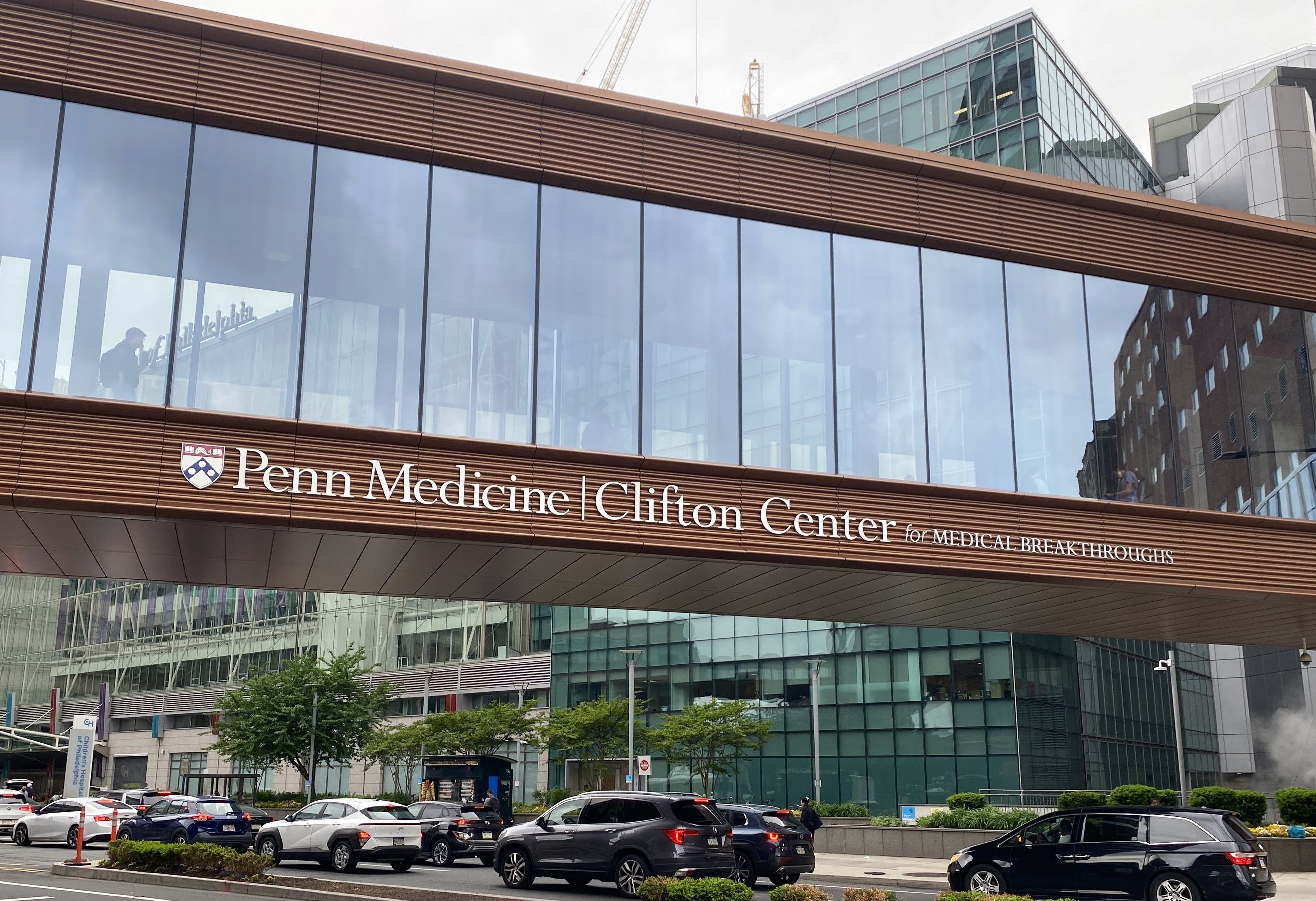
Aramark and the University of Pennsylvania Health System launched a partnership this year to offer the food service giant’s Philadelphia-area employees healthcare in a test of a new model for reducing costs.
Aramark employees who choose the benefit option, called the Penn Medicine Premier Plan, face no deductibles and lower copays when they and their dependents use Penn doctors and facilities.
The move by Aramark into what is called direct contracting comes as employers are contending with years of surging healthcare costs. It’s an example of experimentation designed to slow spending growth in spending and perhaps improve quality, experts said.
“We certainly would like to save money on the model, but its primary focus is to make benefits more affordable” by getting lower prices than it would get by going through an insurer, said James Startare, Aramark’s vice president for benefits.
The model is called direct contracting because Aramark negotiated prices and other terms of the contract directly with Penn, instead of relying on an insurer to negotiate prices.
It’s Penn’s first such contract and the first large-scale direct contract in the Philadelphia region. Aramark talked with other systemsin the area, but Penn emerged as the partnerwilling to enter into the experimental contract. Penn described the deal as a multiyear contract ultimately expected to roll over from year to year.
Aramark didn’t provide details on savings, but its goal was to negotiate prices that are lower than those it would pay though a benefits administrator, such as Aetna.
By eliminating deductibles that function as a barrier to care, the plan is expected to encourage primary care visits. Thiscould reduce long-term costs by catching patients’ health problems early.
For health systems like Penn, such contracts offer a chance to increase market share, streamline payments, and hone their ability to manage the health of a population.
The Penn Medicine Premier Plan features no deductibles and lower copays when Aramark employees and their dependents use Penn doctors and facilities. Harold Brubaker / Staff
Aramark’s move into direct contracting
Penn is Aramark’s third major direct contracting partner.
Employers, even those like Aramark that are self-insured, typically rely on an insurer’s negotiated prices.
With the new direct contract, an Aetna administrative unit still processes the claims for Aramark, and patients who go outside Penn for care use the Aetna network.
Aramark launched its first such contract in 2024 in Dallas and expanded to Chicago last year, each time getting a strong employee enrollment, though it took two years in Chicago, Startare said.
In the Philadelphia region, 35% of eligible employees (those who work 30-plus hours a week on average) have chosen the Pennplan, which took effect Jan. 1, Startare said. That amounts to 800 employees.
Employees who were moving to Aramark with the food services contract were worried about losing their Penn benefits, said Megan Lieberman, a patient services manager at Chester County Hospital who was among those who became an Aramark employee.
But the Penn Premier Plan was very similar to what they were used to. “It was definitely a huge relief to know that we got to hang on to those benefits,” Lieberman said.
A separate contract covers pediatric services at Children’s Hospital of Philadelphia for Aramark employees and their families.
Next year, Aramark plans to take direct contracting into central New Jersey, but did not name the system it’s using there.
What’s in it for Penn
The Aramark contract is an opportunity to focus on “chronic disease management, preventive care, cancer screenings, things like that” for a specific group of 1,400 patients who are motivated to stay within the Penn system, said Mark Angelo, Penn’s chief medical officer for population health.
A key goal is to reduce the deductibles, copays, and prior authorizations that can slow access to preventive care. The model is designed totake care of people before they end up in high-cost places like the emergency department or hospital, Angelo said.
Keeping more patients within Penn is expected to result in savings because of better care coordination and fewer repeated tests, Angelo said. Penn Premier plan members can seek care outside of Penn, but it will cost them more out-of-pocket.
As it is, the typical Penn patient also uses other health systems for some services, said Roy Schwartz, Penn’s vice president for payer strategy.
“Sometimes it’s the right choice, sometimes it can fragment their care,” Schwartz said. “There should be savings just simply coming from having integrated, coordinated care at a place like Penn.”
Penn does not yet have much of its own data on Aramark employees, but indications from Aramark are that the plan’s members were using more Penn services in the first six months, Schwartz said. “It was not just patients who were using Penn anyway for pretty much everything.”
Penn and Aramark officials plan to meet regularly to review results and consider modifications. “We’re hoping this works out well for everybody because we’d love to do some more of these,” Schwartz said.
Momentum behind direct contracting
Employers nationally have long contracted directly with doctors and health systems for specific procedures, like joint replacements, cancer care, and heart surgery. For years, they’ve also paid directly for primary care through on-site clinics.
Aramark’s move to an all-encompassing healthcare plan with a single providerfits into a newer trend gaining momentum nationally. Investors have created platforms like Cost Plus Wellness, Mishe Health, Nomi, and Transcarent to help health systems implement direct contracts.
Northwell Direct’s biggest contract covers 100,000 building service workers in the New York area and their dependents. Ittook effect this year and is expected to save 20% in the first year.
Big savings to start are not guaranteed.
“They may not go into it with a lower cost, but they’re going to go into it with better access, better quality for their employees, and what they’re finding is eventually those lower costs will come,” said Jenny Goins, chief of staff at the National Alliance of Healthcare Purchaser Coalitions.
The Washington nonprofit is putting together a direct contracting advisory council to help more employers to do what Aramark is doing, Goins said.
The model is not expected to replace traditional coverage anytime soon in the Philadelphia region.
“It is not for everyone, and it does take effort and coordination on the part of the employer,” said Tom Belmont, CEO of the Greater Philadelphia Business Coalition on Health. “Also, some health systems are ready for the discussion, while others are not.”
Thomas Jefferson University and Jefferson Health posted an operating loss of $181.5 million in the year that ended June 30, an improvement over last year’s $208 million loss. In both years, the loss was concentrated in Jefferson’s insurance business.
The fiscal 2026 results, reported to bondholders Friday, included $112 million in costs for layoffs and other moves designed to put the Philadelphia region’s largest health system on firmer financial ground.
Jefferson highlighted in its preliminary report to investors that results improved each quarter of fiscal 2026 — from an operating loss of $103.8 million in the first quarter to a $71.1 million operating profit in the fourth quarter.
“We’ve made significant progress strengthening Jefferson’s financial performance, yet those gains are increasingly threatened by the actions of commercial insurers in Pennsylvania,” Jefferson’s chief financial officer, Michael Harrington, said in an email.
“Despite already paying some of the lowest reimbursement rates in the nation, certain payers are now attempting to unilaterally rewrite or reinterpret existing contract terms to further reduce payments and improve their own margins at the expense of providers and the patients they serve,” he said.
Separately, Jefferson sued Aetna in April over a policy that reduces payments for hospital stays for Medicare Advantage patients that Aetna decides aren’t sick enough to qualify for full payment.
Insurers are under pressure from employers to slow healthcare expense growth. Independence said in response to the lawsuit that it acts in the best interest of its customers. Aetna said its policies comply with federal laws and regulations.
Here are more details on Jefferson’s results:
Revenue: Jefferson’s revenue reached $17.7 billion, up from $15.8 billion the year before. Fiscal 2025 included just 11 months of Lehigh Valley Health Network results. Jefferson completed that acquisition on Aug. 1, 2024, expanding its reach into Northeastern Pennsylvania and giving the nonprofit more than 30 hospitals.
Jefferson Health Plans: Jefferson’s insurance arm had a $130.3 million loss in fiscal 2026, an improvement over a $169.9 million loss the year before. The insurance arm had 415,172 members on June 30, up from 366,780 the year before. The plan is diversifying away from Medicaid as it increases enrollment in Medicare Advantage and the Affordable Care Act markets. The percentage of membership in Medicaid fell to 75% this year from 87% last year.
Notable: The fourth quarter of fiscal 2026 was Jefferson’s first profitable quarter in at least four years, according to Inquirer calculations that exclude investment income. Unlike other local health systems, Jefferson follows accounting rules for higher education, allowing it to include a portion of investment income in revenue.
St. Luke’s Hospital — Upper Bucks Campus was not cited by the Pennsylvania Department of Health for any safety problems between July 2025 and May of this year.
The Quakertown hospital is part of St. Luke’s University Health Network.
Here’s a look at the publicly available details:
Dec. 4, 2025: Inspectors visited for a monitoring survey and found the hospital was in compliance.
Dec. 18: Inspectors came to investigate a complaint but found the hospital was in compliance. Complaint details are not made public when inspectors determine it was unfounded.
Jan. 21, 2026: Inspectors visited for a mental health survey and found the hospital was in compliance.
Tower Health and Jefferson Health announced Friday that they have formed a clinical affiliation that would expand access to advanced treatments in Tower’s markets northwest of Philadelphia.
The two nonprofit organizations said Jefferson is not acquiring Tower, which is the biggest healthcare provider in Berks County and also owns two hospitals in Chester and Montgomery Counties.
“Healthcare organizations today face unprecedented challenges, including inadequate reimbursement, rising costs, workforce shortages, and increasing competition,” Tower’s CEO Michael Stern said in an announcement to employees.
“History teaches us that when an organization is confronted by challenges on multiple fronts, success depends on finding the right ally — one that shares our values, respects our strengths, and is committed to the same mission,” Stern’s note said.
Jefferson said it routinely works with other health systems to provide high-level specialty care throughout the region it serves.
“As part of that commitment, we are working with Tower Health to enhance access to advanced tertiary and quaternary services, bringing more specialized expertise, innovative treatment options, and coordinated care closer to the communities we serve,” Jefferson said.
Details of the arrangement with Tower will worked out in the next few months.
Jefferson is also among the Philadelphia-area health systems exploring a clinical alliance to support financially struggling St. Christopher’s Hospital for Children, which Tower manages and owns in a 50-50 joint venture with Drexel University.
Turnabout for Tower
For Tower Health, the potential collaboration with Jefferson represents a turnabout from a decade ago when the system based in West Reading plotted a move into the Philadelphia market. Tower spent $423 million for theacquisition of five community hospitals in Southeastern Pennsylvania from Community Health Systems Inc. in 2017.
The idea then was that the health system’s anchor, Reading Hospital, would draw patients for the most advanced care to Berks County from the Philadelphia region. That deal led to massive losses as the anticipated patients didn’t materialize in Reading and then COVID-19 crushed health system finances nationwide.
Tower sold or closed three of the five acquired hospitals, but remains saddled with a huge debt load. The interest payments leave the system with little money left over to invest in the new facilities and services. Last year, Tower instituted significant service cuts and layoffs at Pottstown Hospital.
Jefferson has expanded through acquisitions from three hospitals to 33 since 2015. The most recent acquisition was Lehigh Valley Health Network two years ago, creating a network that stretches from South Jersey to near Scranton. The system has been losing money for years as management attempts to make the hospitals it acquired work as a financially sustainable system.
Jefferson Health says ithas incurred nearly $100 million in financial losses this year because of policy changes by Independence Blue Cross in a lawsuit filed this week.
The lawsuit, submitted Wednesday in Philadelphia Court of Common Pleas, detailed five policy shifts — including two impacting when IBX pays higher inpatient rates for hospital stays — that Jefferson says amount to breaches of the current contract between the region’s largest health system and its largest insurer.
“IBX has attempted to use policy changes to — over time — effectively rewrite the contract” and pay less than agreed to in the contract, Jefferson’s lawsuit said.
The suit comes less than six months before its IBX contract expires Dec. 31, adding pressure to negotiations over a new deal. Jefferson said it cared for more than 300,000 people with IBX insurance last year.
In the last year, the nonprofit health system has shown its willingness to challenge major insurers at a time of increasing financial strain on both insurers and healthcare providers nationally.
IBX introduced a series of payment changes impacting both commercial and private Medicare plans this year as it faces intense pressure from employers to slow the growth of healthcare expenses and from the federal government, which is trying to trim spending in Medicare Advantage plans.
Independence declined in an email to comment on the claims in the lawsuit: “We value our provider partners, honor our contractual commitments with them, and regularly discuss any issues. It’s unfortunate that Jefferson chooses to do this in the public arena but if you’ve kept up with the news you can see this is typical of their playbook.”
A series of reimbursement shifts
The biggest financial impact came from IBX’s requirement, effective June 1, that certain procedures be performed in lower-cost freestanding ambulatory surgery centers, rather than in hospital outpatient departments, which often get paid twice as much for the same work.
Jefferson estimated damages from the ambulatory surgery center rule at $35.4 million.
Two policies affecting when IBX pays inpatient rates cost Jefferson a combined $35.5 million, according to the complaint.
Jefferson sued Aetna in April over a similar policy that reduces payments for Medicare Advantage plans if Aetna considers patients not sick enough to qualify for full payment.
The complaint says a policy that eliminated payment for hospital readmissions up to 30 days after discharge cost Jefferson $18.3 million. Since 2017, Penn Medicine has had a contract with IBX that does not pay Penn when patients return to the hospital within a month of being discharged.
Finally, Jefferson said IBX has failed to pay more than $7.2 million owed under a controversial federal drug discount program known as 340B.
“After trying to work directly with Independence Blue Cross to resolve these breaches of contract, we have been forced to take this action on behalf of our patients,” Jefferson’s vice president for payer relations, Allison Yudt, said in an email. “This action is the result of a pattern that has repeated itself time and again.”
IBX said in its statement that it “acts in the best interest of our customers and members and protects their access to high quality affordable care.”
Jefferson’s harder line with insurers
Jefferson has expanded through acquisitions from three hospitals to 33 since 2015. The most recent acquisition was Lehigh Valley Health Network two years ago, creating a network that stretches from South Jersey to near Scranton.
Amid significant losses in recent years, Jefferson has been taking an aggressive approach with insurers when it believes they are paying it less than contractually required.
Children’s Hospital of Philadelphia researcher Christopher Forrest has spent nearly a decade training early-career scholars on how to design studies that improve care for kids with congenital heart disease, stroke, and influenza.
That work ended last month, when he had to shut down his PEDSnet Scholars program. The federal funding designated for it stopped coming last fall.
Forrest received official notice last week that the Agency for Healthcare Research and Quality (AHRQ) had canceled his $5 million grant — originally intended to last through 2028. The letter gave no specific reason, stating only that continuing the grant was not “in the best interest of the Federal Government.”
PEDSnet Scholars trained researchers to study how healthcare systems can be organized and financed to improve health outcomes. It was one of 16 such programs nationwide funded by AHRQ. Another program site, located at the University of Pennsylvania, received an identical cancellation notice last week from AHRQ.
“These are not controversial topics,” Forrest said.
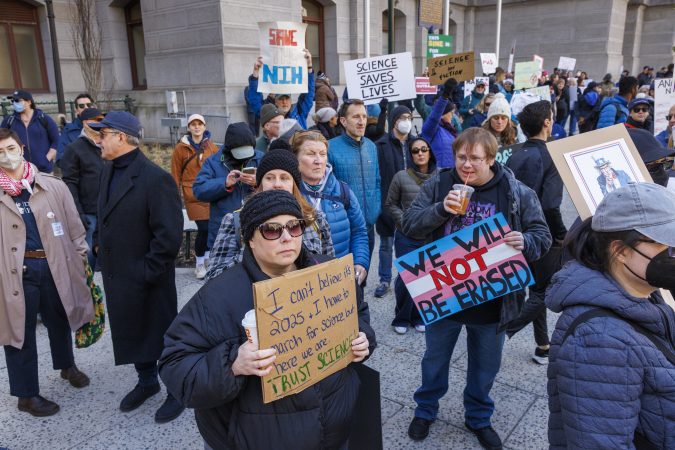
Eighty-two affected grants totaling an estimated $211.6 million as of Tuesday had come to the attention of AcademyHealth, a nonprofit that supports health researchersand has been tracking AHRQ grant cancellations. Those include funding for research projects, career development, training programs, and centers.
Some researchers received letters sayingtheir work did not align with the agency or federal government’s priorities, followed by a list of the priorities, AcademyHealth president Aaron Carroll said.
However, many of these projects appear to be directly aligned with priorities, he said.
One involved a randomized trial of antibiotic stewardship — efforts to encourage careful and responsible use of antibioticsto avoid resistance — across 40 hospitals. Yet in the letter canceling it, antibiotic resistance was listed as a priority.
“It can’t possibly be that all of these grants that are seeking to improve the quality, safety, and efficiency, and patient-centeredness of healthcare delivery are all incompatible with this or any other administration’s priorities,” said Scott Halpern, a Penn health services researcher whose funding was alsocanceled.
The Department of Health and Human Services did not respond to requests for an exact count of the grants impacted, saying in a statement that the AHRQ director determines “whether continuation funding is in the best interest of the federal government.”
“To be clear, these grants were not terminated — they were not awarded continued funding,” the HHS statement said.
‘Incredibly demoralizing’
In late 2025, Halpern had planned to hire a new staff member for the Penn PORTAL program, one of the 16 AHRQ-funded training programs, separately funded from CHOP’s program.
His team identified a candidate, but — unable to access funding from their $5 million grant since the fall — delayed extending an offer.
The position was ultimately eliminated. They also rescinded offers to train new scholars in the program.
Halpern received his official notice last week that his grant, set to continue into 2028, was canceled. He had only spent $1.5 million of it so far.
Instead of having 10 trainees this month as planned, the Penn program has zero.
“To not have the resources to support the people who will make a difference in the future is incredibly demoralizing,” Halpern said.
He drew on philanthropic resources and a roughly $150,000 commitment from Penn Medicine to finish training his first cohort. However, the second cohort of scholars was stopped midway.
As a result, projects on improving translation services for hospitalized patients and expanding access to hormone therapy for menopausal women were canceled.
Jay Bhattacharya (left), director of the National Institutes of Health, and Sen. David McCormick (R., Pa.) speak to the media in March, after touring University of Pennsylvania facilities to highlight NIH-funded research in Philadelphia.Jose F. Moreno / Staff Photographer
Grant cancellations from AHRQ will have longstanding impacts on advancing healthcare in the United States, a Penn Medicine spokesperson said in a statement, declining to answer more specific questions.
“Some research projects at Penn Medicine have felt those cuts at their core and impactful work now cannot progress as planned,” the statement said.
CHOP did not respond to a request for comment.
In limbo
Penn researcher Jaya Aysola had not heard as of Tuesday whether her AHRQ grant is canceled, but she assumes the notice is coming.
She had received a $3.8 million grant to serve as a coordinating center for the 16 training centers starting in 2024. The grant should have been renewed for its second year last November, but that didn’t happen.
At first, she was told by the agency that it was delayed due to the government shutdown. Then she was told it was held up due to a lawsuit filed by the Society of General Internal Medicine, a physicians group, in August over AHRQ shutting down its grantmaking program.
Since then, “it’s been radio silence,” she said.
All but roughly $300,000 of her grant remains unused. Unable to access funds since last fall, she had relied on bridge funding from the university to support staff and research faculty.
When that funding ended earlier this year, she had to find new jobs and projects for three of her full-time employees, as well as three part-time employees.
“We already shut down most of the operations,” Aysola said.
The work she has done since has largely been pro bono with her personal time and limited internal funding.
Aysola convened a meeting this spring with the 16 AHRQ-funded training centers to discuss how other programs were bridging the gap in funding. Most had paused on accepting new trainees, and have prioritized finishing the current cohort’s work.
A July 2025 group photo featuring scholars and faculty leaders in the Penn PORTAL program, which was affected by recent cuts to AHRQ grants.Courtesy of Scott Halpern
At Halpern’s Penn PORTAL, the first cohort of scholars’ projects have already been implemented. Across the Penn health system, they “are yielding improvements in the patient experience of care,” Halpern said.
None of the projects led by later cohorts, who would have been trained had the full five years of funding been maintained, are likely to see the light of day, he added.
He hopes to bring awareness to what he considers an inappropriate cancellation of AHRQ funding. Many organizations are exploring options in terms of advocacy and potentially legal engagement, he added.
CHOP’s Forrest estimates 30 faculty will never be trained due to PEDSnet Scholars losing its grant funding.
“It’s very sad because it’s been so instrumental to my career, and I had hoped that it would be instrumental to the career of many of our junior faculty,” Forrest said.
In the last 16 months,Main Line Health has gone from employing no gastroenterologists to nine, with two or three more expected to start this summer.
The hiring is part of a push by the nonprofit health system to reduce wait times for patients.
“We are down to three weeks” from months of waiting for a GI appointment, Main Line CEO Ed Jimenez said in a June interview. The organization has also hired six GI physician assistants and nurse practitioners to speed up care.
A similar move in urology is planned as the health system in Philadelphia’s western suburbs partially unwinds itstraditional heavy reliance on outside physicians for specialty care, seeking to regain momentum after financial losses during the COVID era.
In another shift, Main Line is replacing contracted Jefferson Health trauma surgeons with its own hires. Main Line is ending its contract with Jefferson at the end of this year.
Overall, Main Line has hired 100 physicians since Jimenez became CEO in June 2025. About a third replace people who retired, but “two-thirds are brand new, accretive, so we’ve been very successful,” he said.
Some of the hiring is related tothe needs of patients coming to Main Line after last year’s bankruptcy collapse of Crozer Health. That includes eight OB-GYNs and one advanced practice provider hired from Crozer.
Starting a urology department
Christopher Hartman joined Main Line from Northwell Health on Long Island in January as medical director of urology. One of his jobs is to build the employed physician group. How big it gets will depend on its success in drawing patients.
By targeting GI and urology, Main Line is putting itself into competition with private practices — U.S. Digestive Health and MidLantic Urology — it has had close ties with for years.
MidLantic’s market president, Michael Hagg, is Main Line’s system chief for urology. Main Line said he oversees urologists who are not Main Line employees.
“We continue to work and serve the communities of Main Line Health as we have for the past several decades as urologists, collaborators, and leaders across all four Main Line Health campuses, working with past and present CEOs and hospital presidents,” Hagg said in an email.
Both MidLantic and U.S. Digestive Health grew substantially with the help of private-equity backing. U.S. Digestive was sold last year to a subsidiary of UnitedHealth Group, SCA Health, which declined to comment on Main Line’s move into gastroenterology.
Bringing trauma surgery in house
Main Line plans to hire at least a dozen trauma/critical care surgeons to replace the Jefferson Health physicians it has been relying on for those services. Main Line’s emergency departments at Lankenau Medical Center and Paoli Hospital are Level II trauma centers.
“We appreciate the excellent care provided by these trauma surgeons. However, at this point, we believe the time is right to bring the program in house so we can continue to grow and enhance it,” Main Line said in an email.
Main Line declined to say how many surgeons it had already hired. It can’t hire the Jefferson surgeons for contractual reasons, it said.