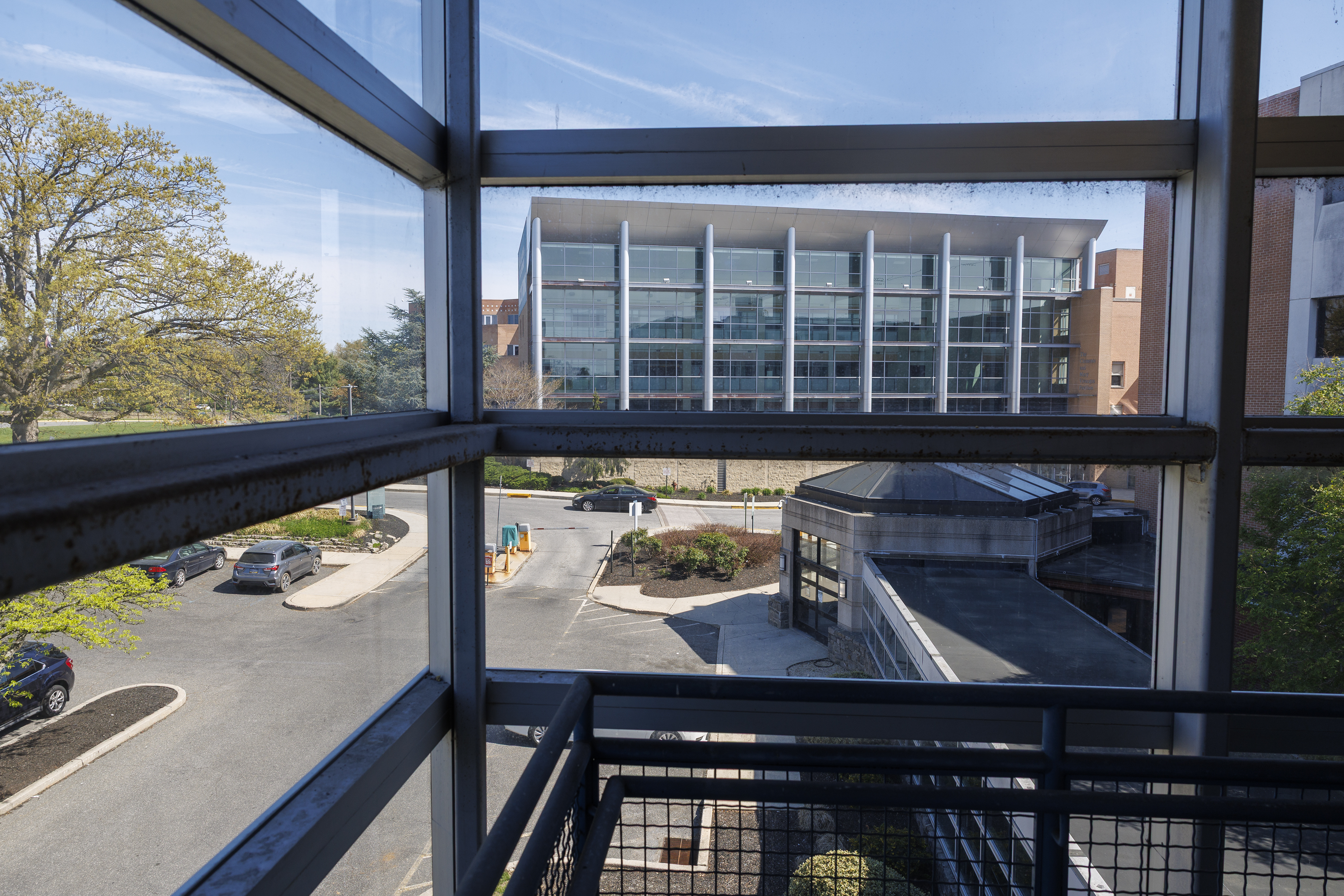
Main Line Health is adding a 108-bed patient pavilion to its Paoli Hospital campus as part of a push to expand its capacity in Chester and Montgomery Counties, the nonprofit health system announced Tuesday.
The building, expected to cost between $220 million and $240 million, is scheduled to open in early 2029. The project will expand Paoli’s capacity by more than 40%.
Patient rooms will occupy three of five floors. They will be convertible from standard hospital rooms into rooms for intensive care. One floor will be used for diagnostics, such as radiology and perinatal testing. The roof will have a landing pad for helicopters.
Beyond Paoli, Main Line is adding to its outpatient capacity in Downingtown, where a large facility that has township approval will include surgical care. The health system also has shared an early-stage proposal for outpatient offices in the Collegeville area, while it considers building there what would be its fifth hospital in Philadelphia’s western suburbs.
“While many communities face declining access to care, Main Line Health is moving forward with optimism, investing in this region’s future and reaffirming our commitment to exceptional care where people live and work,” Main Line CEO Ed Jimenez said in the announcement.
Paoli hospital currently has 261 licensed beds and employs nearly 1,400 people, according to Main Line. The hospital had 53,000 emergency department visits in the year that ended June 30, 2025. Main Line Health completed its last major expansion of Paoli Hospital in 2009, doubling the facility’s size.
Like other Philadelphia-area health systems, Main Line has experienced tough times financially since the pandemic, which led to broadly higher costs in healthcare. In the nine months that ended March 31, Main Line had a $214,000 operating profit on $2.1 billion in revenue.
More Main Line projects
Separately, about 12 miles west of Paoli Hospital, in Downingtown, Main Line plans to open a large outpatient facility next summer. Main Line Health Downingtown, at the intersection of Lloyd and Manor Avenues, willcost $150 million and include a surgery center and substantial imaging capabilities.
Incentral Montgomery County, as well, Main Line recently made a presentation to the Upper Providence Township Board of Supervisors about a major development in an area where the health system has seen substantial growth.
The long term could see Main Line builda 108-bed hospital, but more immediately itneeds to add outpatient office space in the Collegeville area, Main Line said.
Half of the nonprofit health systems in Southeastern Pennsylvania had operating losses in the first nine months of fiscal 2026, the systems’ latest reports to municipal bond investors showed.
All had strong revenue growth, with the exceptions of Redeemer Health and Tower Health, the two smallest systems by revenue. The gains at Jefferson Health and Penn Medicine benefited from acquisitions in fiscal 2025.
The reports are not perfectly comparable because of variations in accounting practices.
For example, Jefferson, Main Line Health, and ChristianaCare changed their depreciation rates, which reduced their expenses relative to competitors. Jefferson includes investment income in its revenue, boosting its results.
Here’s a summary in order of revenue, from the region’slargest to smallest systems:
Jefferson Healthhad a $252.6 million operating loss, which it attributed to severe winter weather, restructuring costs related to layoffs, and shortfalls in insurance reimbursement. Total revenue was just shy of $13 billion, up from $11.6 billion last year, which included only eight months of results from Lehigh Valley Health Network.
Children’s Hospital of Philadelphia had a $271 million operating profit in the first nine months of fiscal 2026, up from $195.8 million the year before. Total revenue rose 9% to $4.1 billion from $3.7 billion, thanks to strong gains in payments for hospital patients and unspecified other operating revenue.
Temple University Health System had an operating loss of $9.9 million, recovering largely from a $50.5 million loss in the first half of fiscal 2026. In the same period a year ago, Temple had a $10.9 million operating loss. The health system’s revenue was $2.6 billion, up from $2.3 billion last year.
Main LineHealth reported a small operating profit of $214,000, following a winter quarter setback. The four-hospital nonprofit system recorded an $8.5 million loss in the three months that ended March 31. Severe winter weather reduced patient visits, and the health system increased its reserves for medical malpractice expenses.
Tower Health swung to a small operating loss of $3.6 million. During the same period a year ago, Tower had a $4.2 million operating profit. Revenue increased 1.6% to $1.6 billion.
Steep losses continued at Redeemer Health, which reported a $29 million operating loss, compared to a $33 million loss last year. Redeemer’s total revenue rose by less than 1%, to $332 million. Redeemer owns Holy Redeemer Hospital, a 239-bed facility in Abington Township, Montgomery County, not far from Jefferson Abington Hospital.
Inside Philadelphia’s new RNA manufacturing hub, scientists are working to create vaccines for fish, precision pesticides, and treatments to protect plants from extreme heat.
The recently launched biofoundry at the University of Pennsylvania aims to expand biotechnological capabilities in the United States, funded by an $18 million federal grant. The National Science Foundation has invested infive such facilities nationally, each focused on a specific biological material.
The term foundry traditionally refers to a factory where metal is melted and shaped into desired forms. Expanding the concept, Penn’s NSF AIRFoundry now offers a one-stop facility for designing and building RNA technology.
All products under development involve ribonucleic acid, or RNA, a key molecule in living cells. Some consider it the cousin of the better-known molecule, DNA. Both can carry the genetic instructions for life.
The facility opened in March at One uCity Square in University City. It builds upon Penn’s success with the 2023 Nobel Prize-winning development of an mRNA platform that led to the first COVID-19 vaccine.
“We need to democratize this technology,” said Daeyeon Lee, a Pennprofessor of chemical and biomolecular engineering who serves as the foundry’s director.
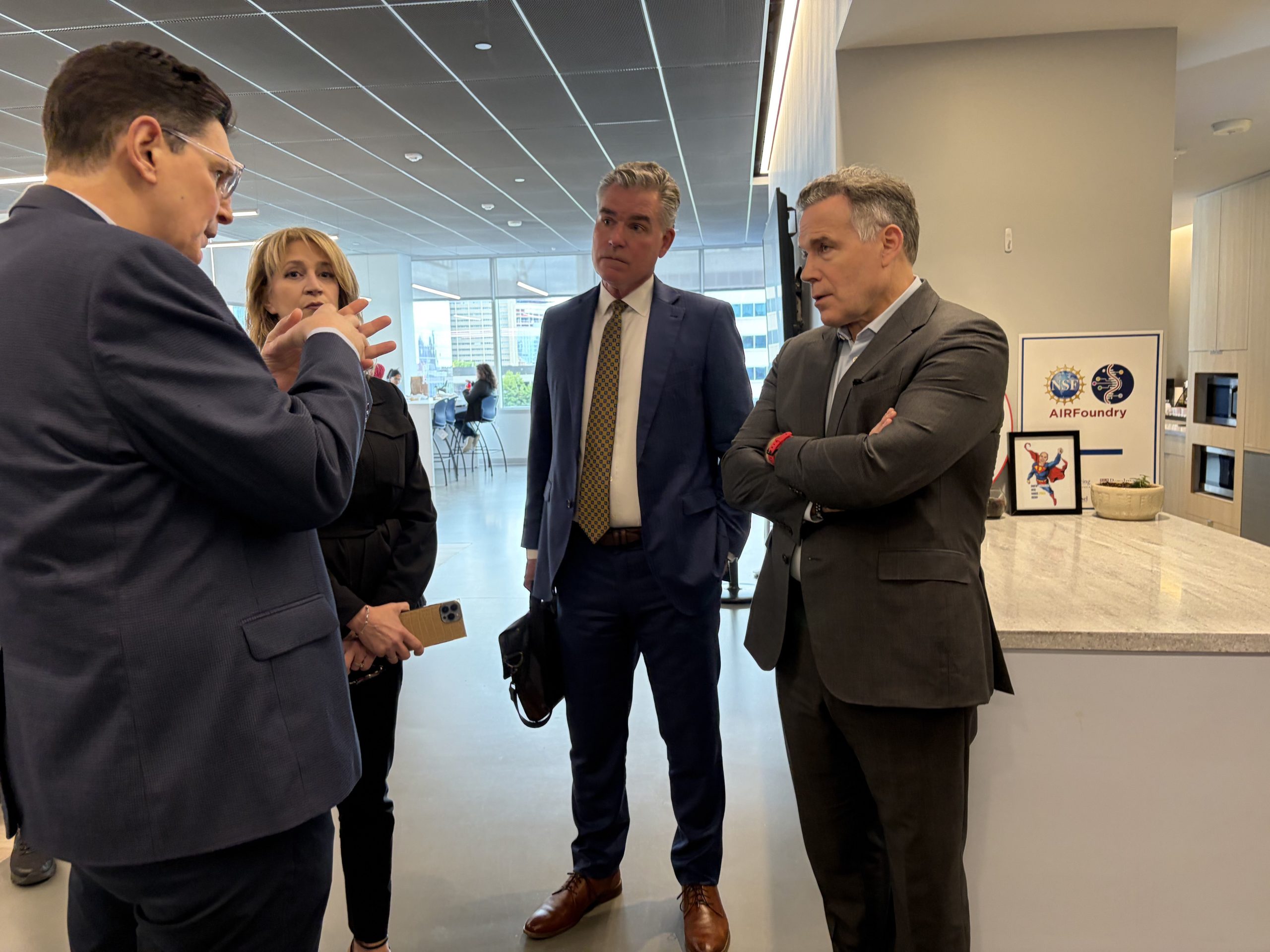
Penn Engineering professor George Pappas speaks with Sen. Dave McCormick about the AIRFoundry.Kayla Yup / Staff
AIRFoundry stands for Artificial Intelligence-driven RNA BioFoundry. Scientists hope AI will help them automate aspects of the design and manufacturing process, serving as a resource for researchers and commercial companies across the world.
A longtime anti-vaccine activist, Kennedy has claimed the technology is unsafe and ineffective, despite scientific evidence finding the vaccines to be highly safe and beneficial.
Now the foundry seeks to expand RNA’s applications in healthcare, agriculture and beyond.
Lee compared the technology to a hammer — good for certain things, but not everything.
“Our students and postdocs that get trained right now are going to be sort of the first generation of people to think about RNA as a tool for whatever problem they’re trying to solve,” Lee said.
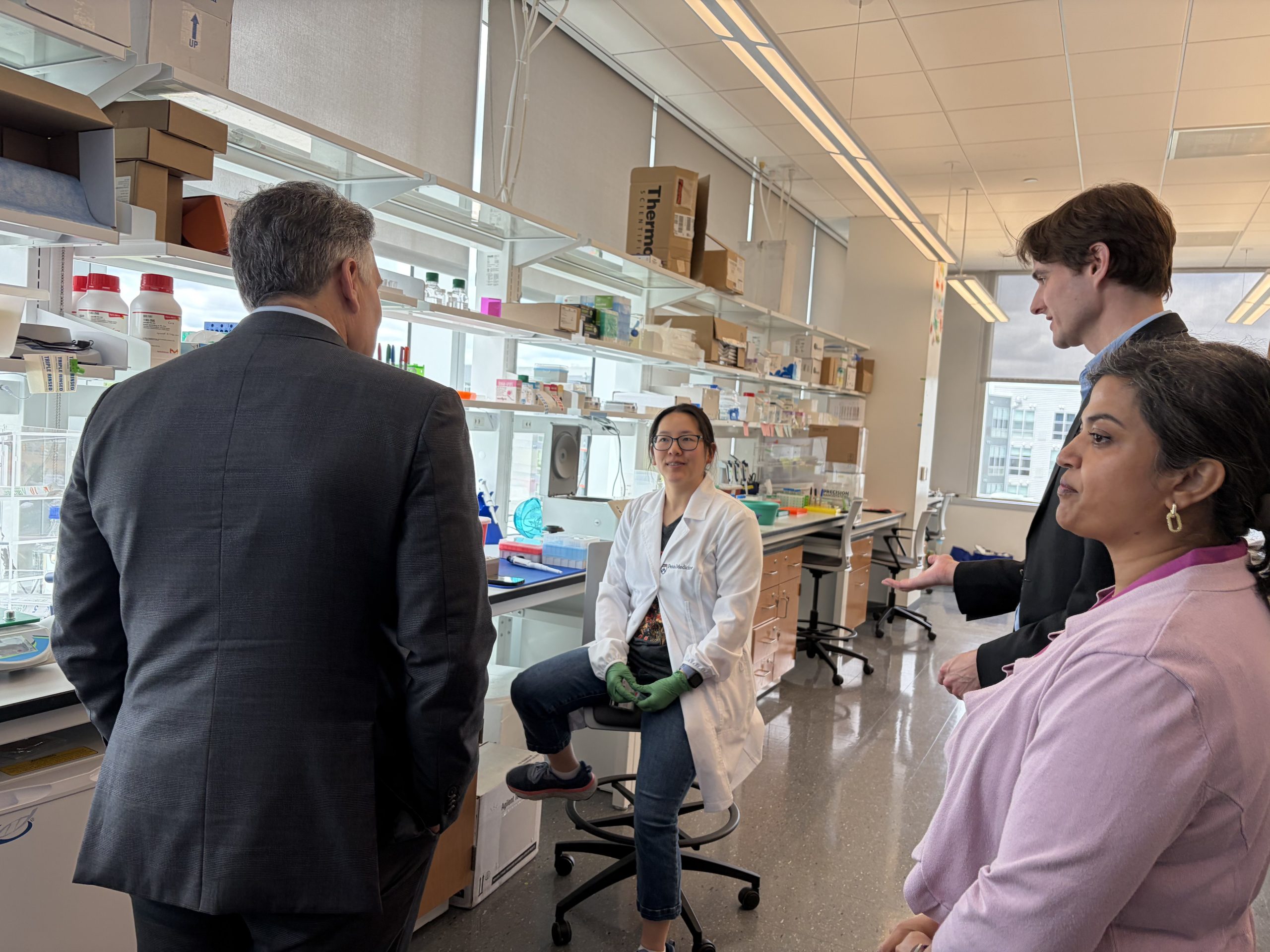
An AIRFoundry scientist describes her work in the facility.Kayla Yup / Staff
A foundry for RNA
In themRNA COVID-19 vaccines, injected mRNA provides the instructions for cells to build a harmless fragment of the viral protein. That trains the body to recognize and fight a future infection.
Compared to traditional vaccines that use live or inactivated pathogens, mRNA vaccines can be produced more rapidly — useful in a pandemic.
One of the Nobel laureates behind that effort, Pennscientist Drew Weissman, has operated a smaller scale version of the facility, mainly to make mRNA for his lab and collaborators. The foundry’s launch marked an expansion beyond Penn.
Its sterile instruments and busy lab benches were on display last month as students and faculty walked through the manufacturing process.
“It takes special facilities and skills to make RNA and associated materials,” Lee said.
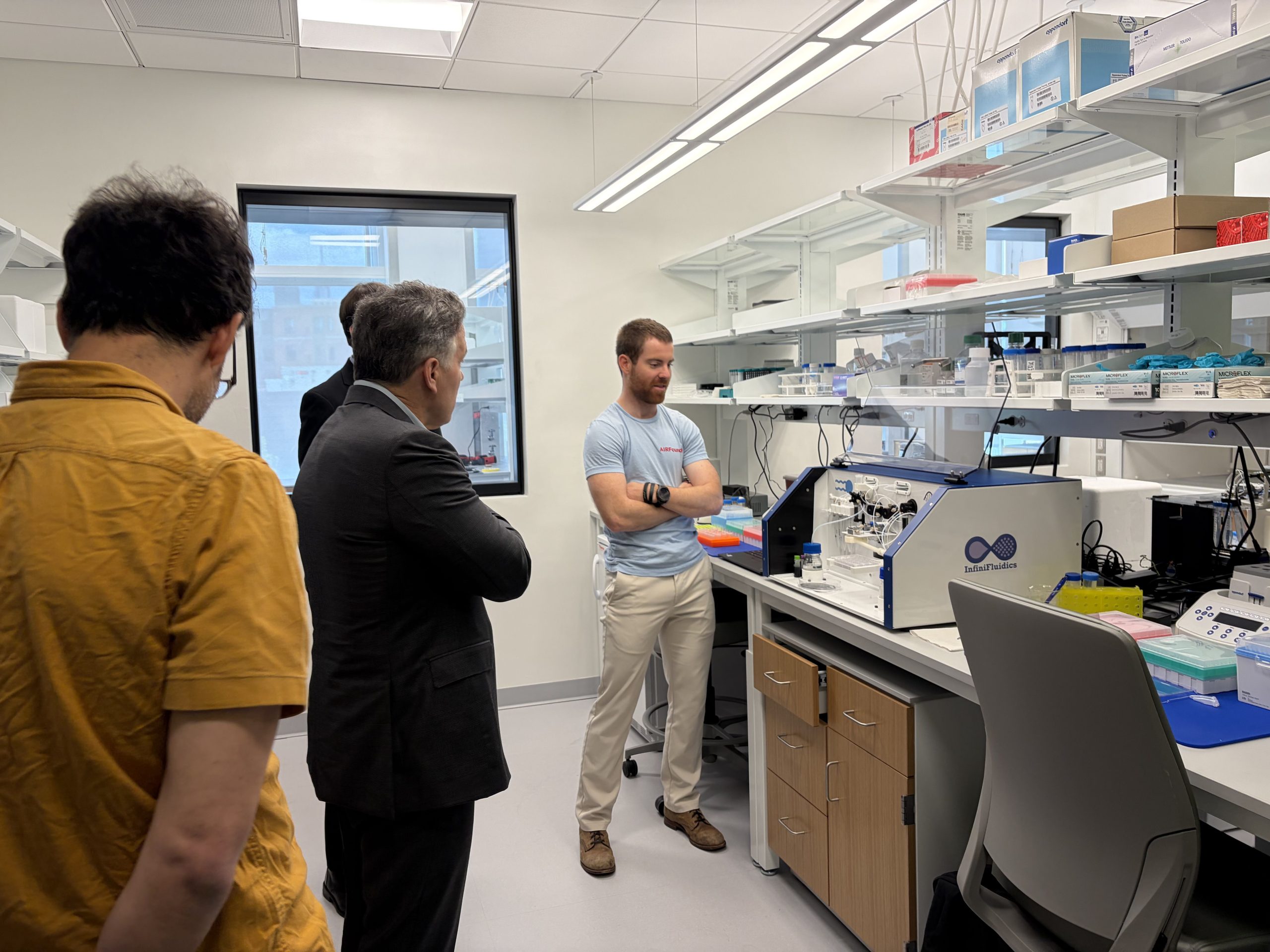
Owen Land, an engineer at Infinifluidics (a Penn spinout), spoke about a device used to automate part of the process of creating liquid nanoparticles (a delivery vehicle for RNA).Kayla Yup / Staff
So far, Penn’s facility has operated on a “fee-for-service” basis, where collaborators request a specific RNA technology and the foundry builds it.
But its scientists hope to incorporate AI to help with synthesizing all the current knowledge, best practices and databases.
They also want to reach a point where users can come to the physical facility and use the instruments themselves.
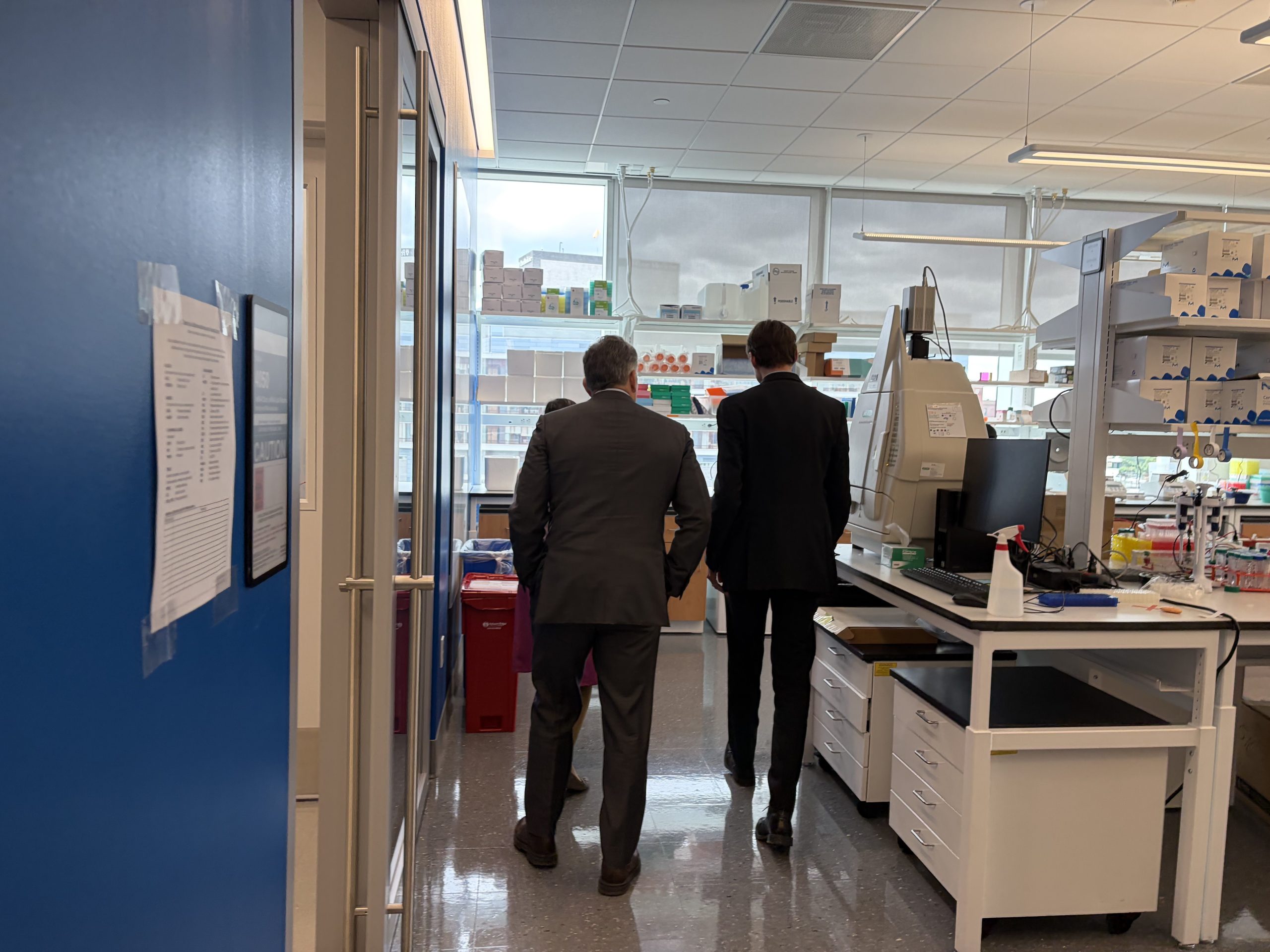
Sen. McCormick toured the AIRFoundry in May.Kayla Yup / Staff
The federal grant, which started in September 2024, supports the foundry for six years. Lee hopes it will eventually become self-sustaining through the services they provide.
Projects underway includeworking on vaccines to keep fish healthy.
Another collaboratoris developing ways to deliver RNA into plants to benefit the agriculture industry. For example, designing RNA molecules that carry instructions for producing a heat shock protein could protect plants from high temperatures. The plant would produce the protein and theoretically have greater resilience against extreme heat.
The molecule degrades over time, making its effects temporary. So if used during the summer months, the RNA could be gone by the time harvest rolls around.
This transient quality could also make RNA useful for pest control, in lieu of chemical-based pesticides, Lee said.
“We want to interact with everyone that’s interested in using RNA technology,” he said.
Independence Blue Cross, the Philadelphia region’s largest health insurer, launched this month a policy designed to move care into lower-cost surgery centers and away from hospitals and clinics that can generate payments twice as high for the same treatment.
The policy started June 1 echoes Medicare’s efforts to slow federal healthcare spending by paying the same price for outpatient procedures such as colonoscopies and knee surgery in hospitals as in surgery centers.
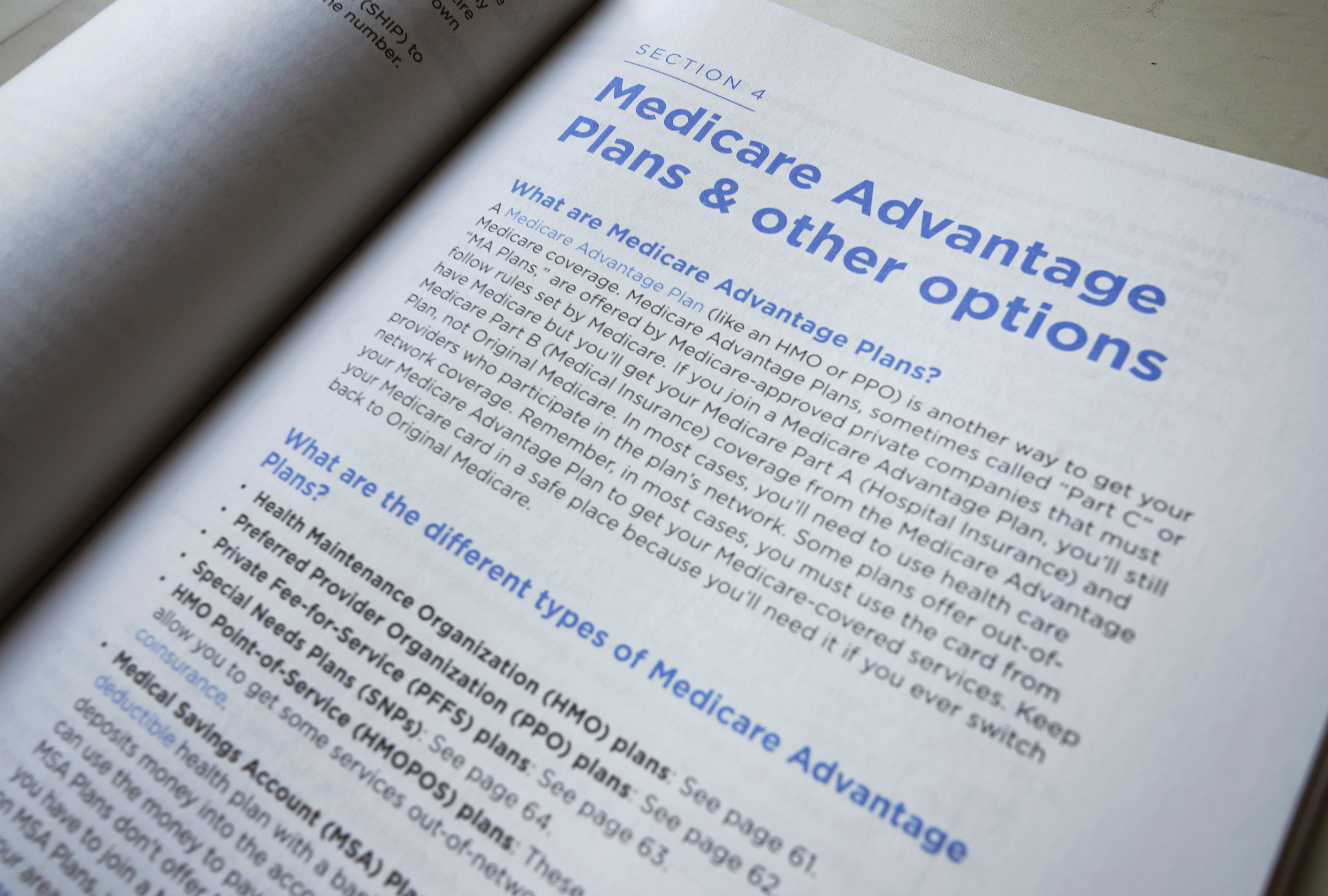
Pressure from employers to control costs has similarly motivated IBX and a newer regional competitor, Pittsburgh-based Highmark, which implemented a similar policy on Jan. 1. Both companies’ policies affect people with low risk of complications who are covered by commercial insurance or Medicare Advantage.
When doctors seek insurance authorization for certain procedures, IBX reviewers will ask whether doctors can treat low-risk patients in a surgery center, according to the company’s chief operating officer Richard Snyder.
“This is a gentle move,” Snyder said. “We’re not willing to force you to change doctors to have your colonoscopy or your service, but we want docs to get privileges in ambulatory surgery centers.”
The region doesn’t have enough low-cost surgery center capacity for a large-scale move to that setting, Snyder said. That means the policy might not hit hospital finances right away.
But the implication is that the policy could take a harder edge in the future. IBX’s goal is to spur the development of more surgery centers — either by the incumbent health systems or by new competitors, Snyder said.
Even now, the potential for delayed care and denied coverage has several regional health systems worried. Temple University Health System, for example, does not own ambulatory surgery centers, so the time could come when it has to coordinate care with outside providers.
The money at stake
Surgery to remove torn cartilage on the knee can cost $7,190 when performed on an outpatient basis in a hospital, nearly three times the $2,477 cost in ambulatory surgery centers, according to Philadelphia-area commercial insurance averages from heath prices data firm Turquoise Health.
Smaller gaps exist for hernia repairs and colonoscopies with a biopsy, Turquoise reported. Another data firm, Medscout, showed that a majority of those colonoscopies had already shifted to ambulatory surgery centers by 2024. The shift was far less advanced for hernia repairs— a procedure IBX is targeting.
(function(){function e(){window.addEventListener(`message`,function(e){if(e.data[`datawrapper-height`]!==void 0){var t=document.querySelectorAll(`iframe`);for(var n in e.data[`datawrapper-height`])for(var r=0,i;i=t[r];r++)if(i.contentWindow===e.source){var a=e.data[`datawrapper-height`][n]+`px`;i.style.height=a}}})}e()})();
Some physicians’ groups already are seeing opportunity in commercial and government insurers’ increased emphasis on surgery centers as a way to reduce spending — as well as regulatory changes that allow more procedures to be done in free-standing surgery centers.
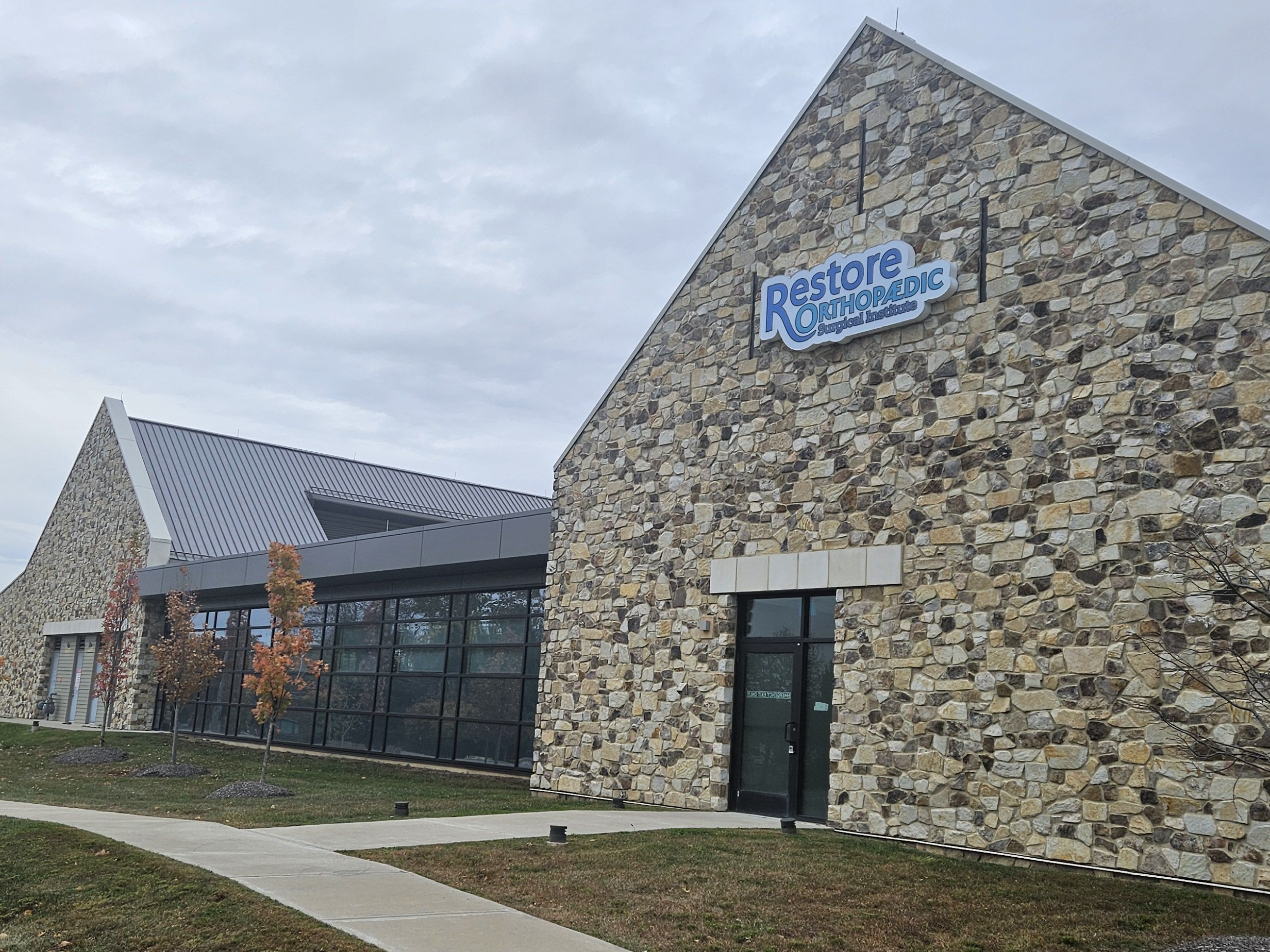
Restore Orthopaedic Surgical Institute in Chadds Ford, founded by a group of Delaware doctors, has been quickly become a high-volume joint-replacement center.
In the coming year, Rothman Institute plans to open three surgery centers in the Philadelphia region, the private practice’s CEO Christian Ellison said.
Restore Orthopaedic Surgical Institute in Chadds Ford has grown quickly to become one of the top joint replacement destinations in Southeastern Pennsylvania after opening in March 2023. The center is positioned to take advantage of an effort by Highmark and IBX to move outpatient procedures from high-cost hospitals to lower-cost surgery centers.Restore Orthopaedic Surgical Institute
Potential consumer impact
Several major health systems said the new site-of-care review policies raise questions about the potential impact on patients, without commenting on the implications for their finances.
Because Temple University Health System does not have any ambulatory surgery centers, “the policy will require certain studies and procedures to be referred outside the health system. This could create additional coordination requirements and may contribute to delays in testing, crucial diagnosis, and/or treatment,” Temple said in an email.
Main Line Health also said it anticipates the policy “could disrupt established care pathways, including in circumstances where surgeons lack privileges at available free-standing surgery centers,” the nonprofit said in a statement. Main Line has ownership interest in three surgery centers in Philadelphia’s western suburbs.
The University of Pennsylvania Health System said it will “advocate for our patients’ best interest and appeal any service denials based on the clinical and nonclinical exceptions outlined in the policy.”
Additional concerns for consumers include complexity, confusion, and possibly more risk of having care denied to what can already be a burdensome prior authorization process, said Christine Monahan, assistant research professor at Georgetown University’s Center on Health Insurance Reforms.
Monahan said she understands insurers’ impulse to steer people to lower-cost settings, but called policies like IBX’s “maybe not the most efficient way to handle the inefficient pricing in the system.”
The economic and political backdrop
The biggest increases in healthcare costs in 15 years are hitting employers this year, according to Mercer’s National Survey of Employer-Sponsored Health Plans.
The average increase was 6.7%, according to the February survey of 161 chief financial officers, who were not identified.
The increases are substantially higher than broader inflation. “It becomes more of a tax on employers,” Snyder said. “Next to salaries, many will tell you, that’s the biggest line item” in their expenses.
IBX has taken other steps to reduce healthcare spending, such as in 2015 introducing a benefit design that includes a preventive colonoscopy with no out-of-pocket costs for the patient at what are called Preventive Plus facilities. Elsewhere, they have a $750 co-pay.
Highmark and IBX have new policies designed to move more outpatient procedures and treatments out of high-cost hospitals and into lower-cost surgery centers.Pablo Martinez Monsivais
Medicare has pushed for the last decade to pay the same for services in hospital outpatient departments as in doctors’ offices and surgery centers.
Medicare prohibited most new off-campus hospital clinics from billing at hospital rates in 2017. So-called site-neutral payments expanded in 2019 to include clinic visits. This year, the government applied the standard to payments for drug administration, such as chemotherapy.
Highmark Health Plans’ approach
In the first five months of under new policy, Highmark Health Plans has found some health systems are willing to accept lower surgery center rates for procedures performed within hospitals.
“What we’ve found is that a number have been willing to do that,” said Kate Musler, chief financial officer for Highmark’s insurance arm. “It may be advantageous for them to have that volume flow through the hospital and keep some volume there, it’s just not necessary in terms of the expense level.”
Musler cited bariatric surgery as an example of how technology and surgical practices have advanced to the point where a hospital is no longer needed.
It’s too early to say how much savings the new policy has generated, including in Southeastern Pennsylvania, Musler said. Highmark has seen its policy accepted at different levels across the five states where it took effect.
Some hospital systems are proactively shifting care to surgery centers to reduce costs, said Musler, who oversees Highmark underwriters helping employers understand their health expenses.
“We hear directly from employers who are making very difficult decisions,” she said. “It is now more than ever a question of whether they can afford employee health.”
Daniel Feinberg can’t recall ever holding a soccer ball, but he’s ready to aid the pros playing this month at the FIFA World Cup games in Philadelphia — should one take a hard hit to the head.
Feinberg, a neurologist and concussion specialist at Temple University Hospital, is part of a team of doctors on call to help injured players, coaches, and others in town for the games.
The Inquirer spoke to Feinberg, who also serves as chief medical officer for Temple University Hospital Inc., in an interview lightly edited for length and clarity about his upcoming role, and what people should know about concussions.
How did you get involved with FIFA?
When the World Cup [medical team] was being put together, it was done under the guidance of Dr. PJ Brennan, the chief medical officer of University of Pennsylvania Health System. I was the chief medical officer of Pennsylvania Hospital until mid-March, and then I transitioned to Temple on April 1. PJ, who is my mentor and friend, said we’d still like you to be part of the medical consultative group for the World Cup coverage.
What is your background in neurology for athletes?
When I came to Philadelphia, I practiced at Pennsylvania Hospital for many years, and they had a large sports medicine presence. I was on the medical staff of the Flyers and the Eagles for many years. I was never on the sidelines watching all the games, but I was the one seeing them the day after. In very rare situations, I would have to meet them in an emergency room setting. I also took care of players’ families and friends, if someone had another neurological problem.
What will your role be during the World Cup?
I will be available to consult with trainers on the field, team physicians who are accompanying the groups, and I will see patients as necessary. Dr. Brennan will call me and say, “Dan, I need you to see player X for this problem.“ It will likely be a concussion or concussion-type symptoms, but it could be other neurological symptoms. I would see them at Temple University Hospital.
What happens when you get a concussion?
The brain is inside of the skull, and it’s floating in the skull — it’s not actually packed into the skull. Around the brain is fluid that communicates from around the brain all the way down the spine to the tailbone. It serves as a buffer for the brain and the spinal cord to make sure that they don’t literally push up against the bone.
What happens when someone has a concussion is the brain actually shifts — whether it’s a neck movement, like whiplash, or a direct head hit — and the brain literally will push up against the bone or smack up against the bone.
The severity of that impact will dictate how severe the concussion is. If there’s not much movement of the brain in the skull, it’ll produce mild symptoms, headaches, nausea, light sensitivity, sound sensitivity, maybe some balance trouble.
If it smacks up against the skull harder, that’s when people have word-finding difficulty, memory trouble, concentration trouble, along with those other things that happen with the milder concussions.
What do you want people to know about concussion treatment?
People are very nervous — the parents of the high school athletes, particularly, and maybe even the college athletes — when they come in with their kids to these visits.
They ask questions like, is my kid going to get Alzheimer’s disease earlier? Is my kid going to get a neurodegenerative disease earlier? And there’s no real proof that’s the case. A lot of what I do in these visits, especially when I’m seeing someone for the first time, is alleviating anxiety and putting to rest some of the myths.
The vast majority of concussions only have symptoms for a few hours to a few weeks with proper guidance — which is usually rest, avoiding screen time, and staying really well hydrated. When kids or adult athletes are less symptomatic or asymptomatic, they can resume physical activity slowly.
Is it bad to fall asleep after a concussion, or is that a myth?
That concern comes from the idea that if someone falls asleep, they could be unconscious. And that could be a sign that a bad thing is happening, that there is bleeding in the brain, or pressure in the brain — and you wouldn’t want to miss something like that.
The other danger signs that would go along [with risk of unconsciousness] are things you would go to an emergency room for — a bad headache, sick to their stomach, a lot of light or sound sensitivity. Those things would make me say get evaluated at an emergency room.
When bad things happen, they’re going to happen in the first few hours. When I talk about getting a good night’s sleep, I’m talking about after they’ve been cleared.
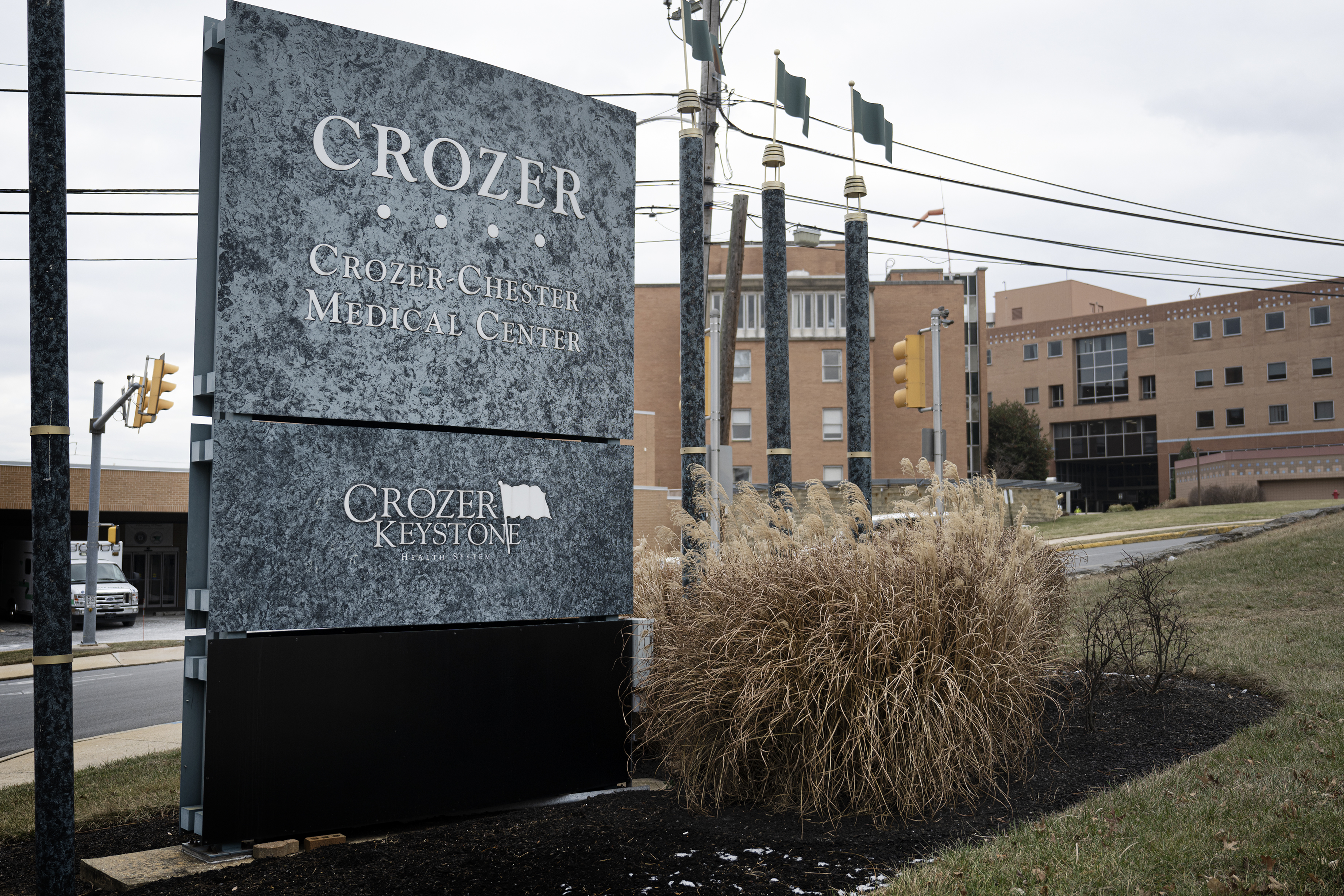
The new owner of the shuttered Crozer-Chester Medical Center in Delaware County shared what he called an “aspirational” plan to restore healthcare services to the Upland facility at a town hall meeting Tuesday in Chester.
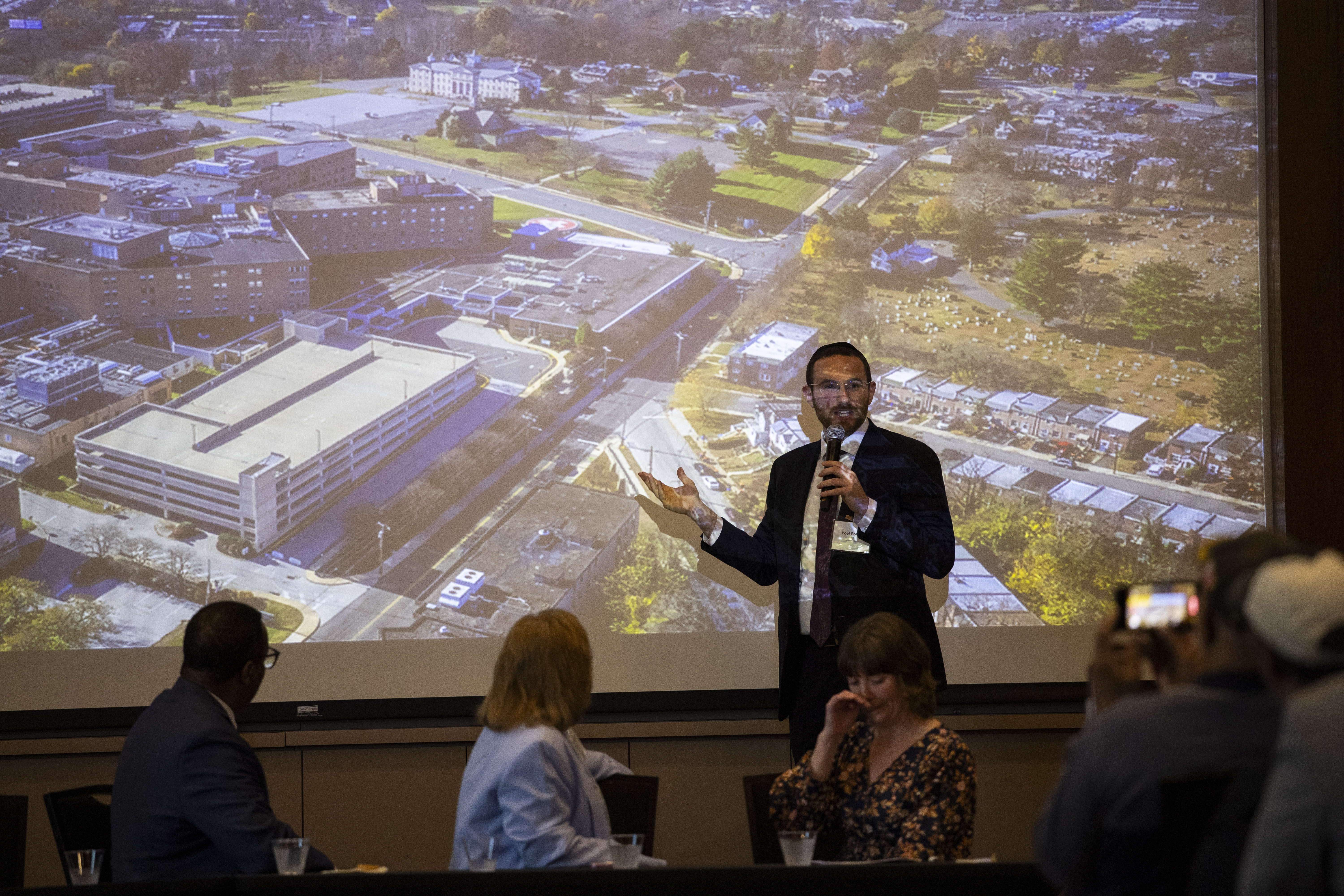
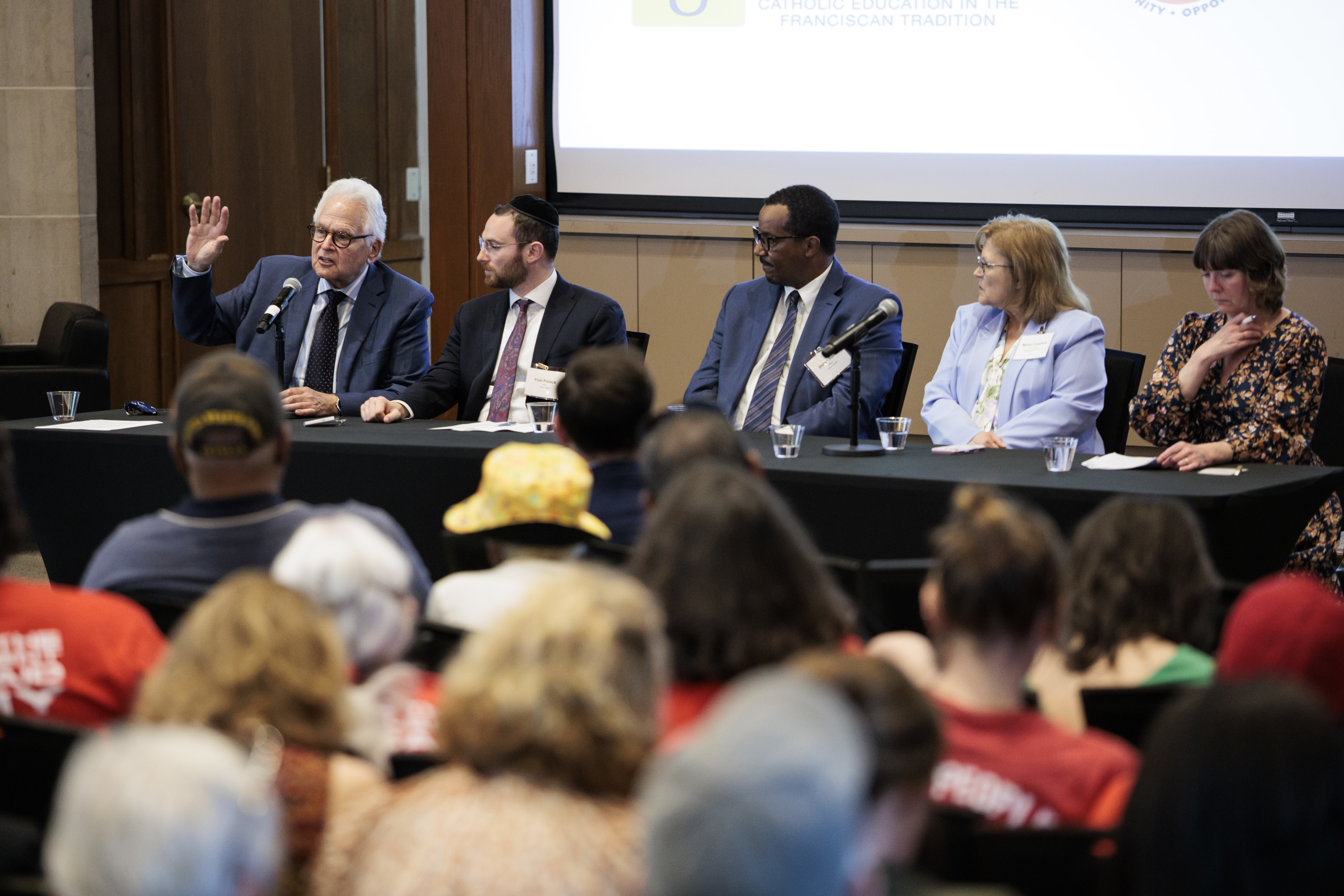
The vision includesreopening of the emergency department, creating a small hospital above the ED, and developing outpatient services — all operated by one or more local nonprofit health systems, Yoel Polack told a standing-room-only crowd of more than 200 at Widener University.
Polack isCEO of Chariot Allaire, the for-profitpartnership that paid $10 million for Crozer in January. His group has been talking to all the regional health systems for months and expects soon to begin “a study process with two and hopefully three of the major academic medical centers in the region,” he said.
That is expected to last up to 90 days, he said, “and hopefully at the end of that period, we’re going to be having some outline of partnership with the system.” Polack described his anticipated partner as an institution “you know and trust.”
The entire process could take two or three years after a partnership is formed, he said Polack, whose company is registered in Lakewood, N.J.
He provided no details on how much Chariot Allaire would be willing to invest to attract a health system to the site, where state-led efforts previously failed to savea major safety-net provider for Delaware County that closed last May amid the bankruptcy of its California-based owner, Prospect Medical Holdings Inc.
Chariot Allaire paid relatively little for the 64-acre campus, which gives the company a low cost basis for owning the site. But that doesn’t mean it will be easy to attract a partner at a time of thin to nonexistent profit margins for the region’s health systems.
“It does not seem like there’s an easy and obvious candidate,” said Dan Grauman, managing director at VMG Health, a national healthcare consulting firm.
“There’s no question there’s need for care and for services, said Grauman, who has decades of familiarity with the Philadelphia region’s healthcare market.
A welcome public meeting
During an hourlong question and answer session, residents expressed gratitude for the meeting with Polack and his senior medical adviser, Arthur Klein, a pediatric cardiologist who spent decades as an executive at nonprofit health systems in New York.
A town hall meeting Tuesday in Chester about plans for the former Crozer-Chester Medical Center drew a large crowd.Monica Herndon / Staff Photographer
“Many times things happen in our community, and we are the last to know, so you started off very, very well,” said Zulene Mayfield, chairperson of Chester Residents Concerned for Quality Living, a community group known for the fight to close alarge trash incinerator in the city.
Some residents pushed back againstPolack and Klein’s plans for a much smaller hospital than the more than 400 beds Crozer-Chester Medical Center had at its peak. During a March interview with The Inquirer, Klein suggested the new hospital could have 80 beds.
“You don’t want a hospital of the 1990s,” Klein said Tuesday.
The current hospital structure encompasses 750,000 square feet — now completely empty. Crozer’s shuttered ED took up 30,000 of the square feet. Chariot Allaire contemplates opening a hospital a tenth of the size of the old hospital.
Operating that hospitalcost way too much, Polack said. ”It also doesn’t meet the way medical care is done today, which is mainly on the outpatient side,” said Polack,who has worked in healthcare real estate development in New York.
Simone Development Cos., where Polack worked before striking out on his own, often collaborated on real estate deals with Montefiore, a health system in the Bronx that serves many patients with Medicaid insurance, Grauman said.
That experience is relevant to the effort here, he said, given that Crozer also served large numbers of people with Medicaid, which pays significantly lower rates than private insurers.
The role of local health systems
Before Prospect’s bankruptcy filing in January 2025, a few local health systems explored establishing a new nonprofit to take over Crozer-Chester Medical Center. Those talks continued during the bankruptcy, but failed to produce a solution.
The University of Pennsylvania Health System saidit remains at the table.
“We continue to work with committed partners to restore crucial healthcare services for Delaware County residents,” Penn said in a statement. “It’s important that any new models for the former Crozer-Chester site are built to be sustainable amid a rapidly changing healthcare landscape and persistent financial challenges.”
ChristianaCare, which plans to open a micro-hospital in Aston in June, is not in discussions with Chariot Allaire, it said, but supports “their efforts to expand access to quality heath care in Delaware County.”
Arthur Klein, senior medical adviser (left), and Yoel Polack, CEO of Chariot Allaire, greet attendees during a town hall in Chester on Tuesday.Monica Herndon / Staff Photographer
While Chariot Allaire is wooing health systems, the new owners of two other closed Crozer Health hospitals,Taylor and Springfield, are doing the same thing. Local investors paid $1 million each for those hospitals. Those low prices could allow the owners to offer below market rate leases to attract tenants.
Polack noted that if no local systems want to bring services to the Crozer site, he would look farther afield.
“We don’t control hospital systems and operators, but we are doing everything that we can to put the pieces together to illustrate the opportunity that we see here to those hospital systems,” he said.
Dawn Pierce felt heartbroken last spring when she learned that Crozer-Chester Medical Center was closing.
The hospital had long been a lifeline in a city with limited healthcare services. Many Chester residents, like Pierce, were unsure where to turn for care when the hospital’s for-profit owner, California-based Prospect Medical Holdings, declared bankruptcy and shut down Crozer and Taylor Hospital in Ridley Park last spring.
“I don’t think of myself as one that will sit around and watch things happen, but I felt hopeless,” Pierce said.
Nearly a year later, Pierce and other residents say the community was left with major healthcare gaps: There are no primary care doctors or pediatricians in town. Locals who received routine care at the hospital had to switch to doctors outside the city, dealing with long drives or rides on public transportation. Some are going without care.
And many worry about whether they can make it to another hospital in time during a medical emergency.
Janice Cimabue, left, and Jamie Blair, center, with Put People First PA, after a news conference outside of the recently closed Crozer Medical Center in Delco, in Philadelphia, May 15, 2025. Jessica Griffin / Staff Photographer
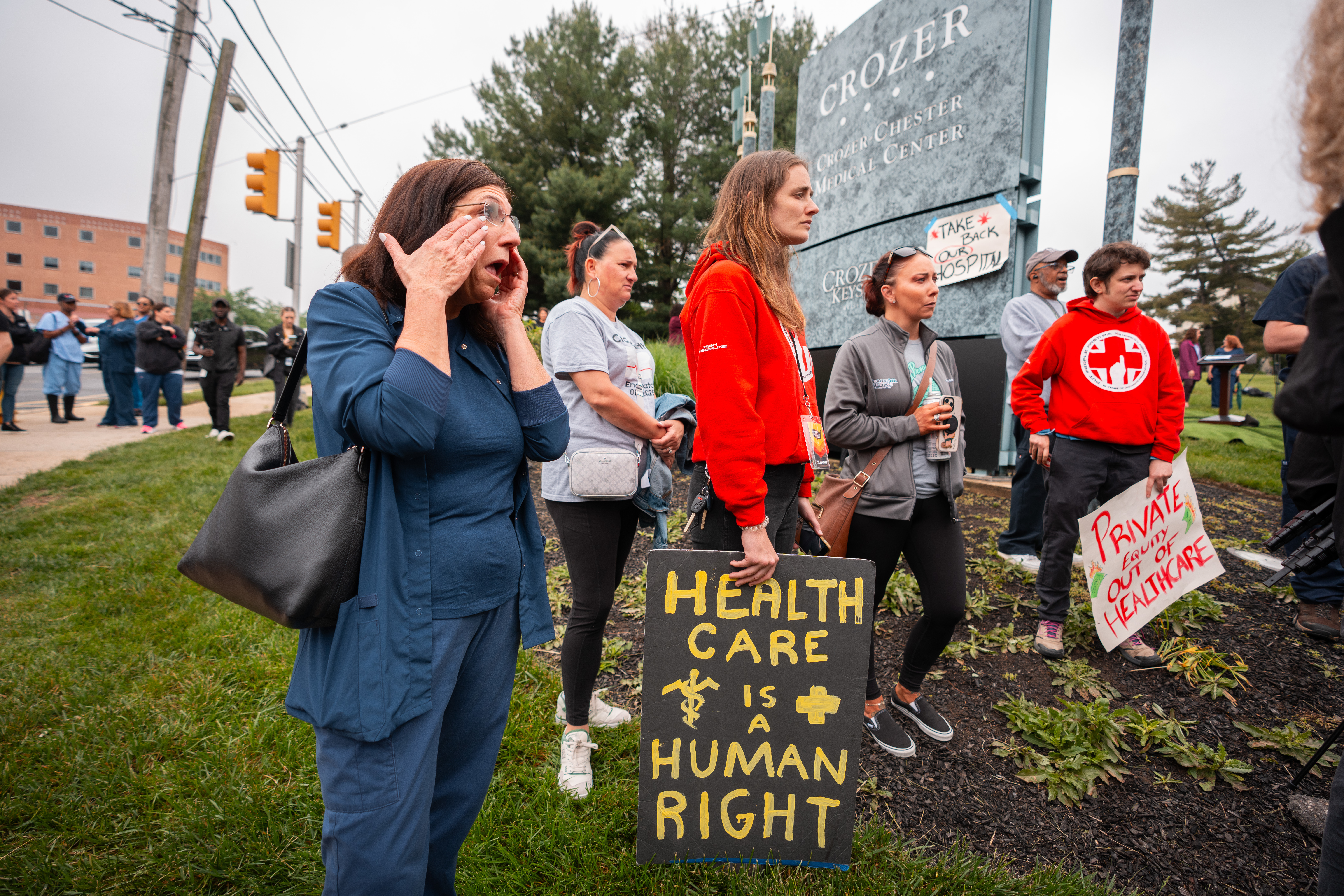
These concerns have emerged through grassroots canvassing by One Pennsylvania, which shared its findings at a news conference this month. In recent months in Chester, organizers have knocked on 4,300 doors to gauge residents’ thoughts on Crozer’s closure and encourage them to advocate for better healthcare options in the city.
The membership group focuses on issues including housing rights and environmental justice. Originally founded as part of a 2011 Pittsburgh campaign by the labor union SEIU, it became an independent organization in 2015 and expanded into the Philadelphia area in 2016.
Pierce, who heads its Chester chapter, counts herself relatively lucky: While she saw specialists at Crozer, her primary care physician was at a different health system. But her brother and his significant other spent most of last year looking for a new doctor after Crozer closed.
“I do think they finally found someone, but at this point those visits are not near Chester. They’re 20 to 30-plus minutes away,” Pierce said.
Residents told One Pennsylvania organizers they felt relief that Chester officials did find a solution for EMS services lost in the closure. The city contracted with VSMC, an ambulance company, for higher-level care on the go, including blood transfusions.
“The restoration of EMS services and ambulance for our city — this matters,” Pierce said at the event held outside a downtown church on a recent Saturday. “However, EMS is a bridge. It’s not the final destination.”
(function() {
var l2 = function() {
new pym.Parent(‘he_chester’,
‘https://media.inquirer.com/storage/inquirer/projects/innovation/arcgis_iframe/he_chester.html’);
};
if (typeof(pym) === ‘undefined’) {
var h = document.getElementsByTagName(‘head’)[0],
s = document.createElement(‘script’);
s.type = ‘text/javascript’;
s.src = ‘https://pym.nprapps.org/pym.v1.min.js’;
s.onload = l2;
h.appendChild(s);
} else {
l2();
}
})();
Chester Mayor Stefan Roots told residents at the news conference that he met recently with representatives from the Crozer property’s new owner, for-profit Chariot Equities, which says it wants to restore medical services to the campus.
Roots said he couldn’t provide many details about a plan for the 64-acre campus that straddles Chester and Upland Township in Delaware County, which Chariot purchased last month for $10 million. Chariot said at the time it planned to operate a “right-sized” hospital and emergency department at the facility.
The new ownership comes after government-supported efforts failed to convince other local health systems last year to form a new nonprofit to run Crozer-Chester and other Crozer Health facilities.
Chester Mayor Stefan Roots told city residents that he met recently with representatives from the Crozer property’s new owner, for-profit Chariot Equities, which says it wants to restore medical services to the campus. Tyger Williams / Staff Photographer
Roots said the new owner has impressive plans, but it could take years to bring back medical services, if successful. “It’s going to take some time, it’s going to take some money, and all we can do right here is to readjust,” he said.
Delaware County Council voted Wednesday to end a disaster declaration over lost EMS services in the wake of Crozer’s closure, since communities left without services, like Chester, had been able to contract with other EMS providers, WHYY reported.
Chester resident Andrea Robinson say she’s still feeling the impact of the lost medical services.
Robinson had to find new doctors after the closure, and a family member is now traveling farther to receive care for a mental health condition once treated at Crozer. And while other area hospitals are taking patients from Chester, the influx of new patients has at times led to long wait times elsewhere.
“We are truly in need of medical services now,” she said.
The new owner of the defunct Crozer-Chester Medical Center wants to restore hospital and emergency services to the 64-acre campus that straddles Chester and Upland Township in Delaware County.
Newly formed Chariot Equities completed the $10 million purchase Wednesday. The for-profit entity said it expected within six months to have an agreement with a health system that would operate a “right-sized” hospital and emergency department at the facility that had been the county’s largest provider of those services before closing last year.
The idea is then to open the first phase within two years, Chariot said in a statement.
Chariot did not say how much it would spend on refurbishing Crozer-Chester, which had suffered from years of neglect under its two previous owners.
Chariot’s partner at Crozer-Chester is Allaire Health Services, a Jackson, N.J.-based for-profit operator of nursing homes.
The partners said they are in talks with regional and national nonprofit health systems regarding an operating partnership, but provided no details. The amount of money needed for the project would likely depend on what prospective tenants would want to do at the property.
“Our belief in Delaware County’s future, and the community’s need for sustainable healthcare access, made this an effort worth committing to well before the finish line,” said Yoel Polack, Chariot’s founder and principal.
Little is known about the new owners. Polack worked in healthcare real estate in the New York City area before setting his sights on redeveloping Crozer-Chester.
Federal records list Allaire’s CEO Benjamin Kurland as an owner of 20 nursing homes, including three in the Philadelphia area. Chariot’s statement said Allaire owns a total of 29 facilities in five states.
Main Line Health has been involved in discussions about reopening emergency services at three former Crozer hospitals — Crozer-Chester Medical Center, Springfield Hospital, and Taylor Hospital — at the request of state lawmakers and the property owners, Ed Jimenez, CEO of Main Line Health, said Wednesday at a Riddle Hospital event.
Jimenez said he would “entertain the concept” of restoring emergency services at one of the hospitals as part of a partnership with other health systems, but only if it can be done on a break-even basis.
All three of the former hospital buildings visited by Main Line officials are in poor condition and were stripped of medical equipment after the closures. Main Line’s experts estimated it would cost between $15 million and $20 million just to make the emergency department at Taylor functional, Jimenez said.
ChristianaCare, Delaware’s largest health system, considered acquiring Crozer in 2022. Instead, it took a different path to expansion in Southeastern Pennsylvania. It is planning to open two micro-hospitals in Delaware County. The nonprofit system also took over five former Crozer outpatient locations. Its credit rating was recently downgraded by one notch because of lower profitability.
The importance of Crozer-Chester
Crozer-Chester closed in early May during the bankruptcy of owner Prospect Medical Holdings Inc., a for-profit company based in California, and after the failure of government-supported efforts to form a new nonprofit owner for Crozer-Chester and other Crozer Health facilities.
Crozer-Chester was particularly important as a safety-net provider for a low-income area of Delaware County that has few other nearby options. The Crozer system, which had four hospitals, was the county’s largest health system and largest employer for many years.
Two local Democratic officials, State Rep. Leanne Krueger and Delaware County Council member Monica Taylor, said they were encouraged by the approach being taken by Chariot and Allaire.
At Taylor Hospital, the other Crozer hospital that closed last year, new owners are also looking for healthcare tenants. Local investors bought the Ridley Park facility for $1 million. It is less than four miles from Crozer-Chester.
The same group agreed last week to pay $1 million for Springfield Hospital, another facility that had previously shut down under Prospect ownership.
Friday marks three weeks since the bankruptcy auction for Delaware County’s Crozer-Chester Medical Center and Springfield Hospital, and it’s not clear how much progress has been made.
Closing the sales depends in part on local authorities agreeing to tax deals that set the assessments at the transaction prices of $10 million and $3 million, respectively,for a limited period of time.
Upland Borough, which is home to much of Crozer-Chester, is working on a property tax agreement that will be filed in court, borough council president Christine Peterson said Thursday. “We anticipate that Upland Borough Council will take action in favor of that stipulation once it is complete,” she said.
A representative for Chester Upland School District did not respond to a request for comment Thursday.
If the school district also agrees to a tax resolution, a company called Chariot Allaire Partners LLC is clearto acquire the shuttered safety net hospital for $10 million.
Yoel Polack, who is principal of Chariot Equities and has been talking with local officials and prospective healthcare providers about plans forthe hospital, said last Tuesday that he expected to issue what he called a “comprehensive memo” on the property this week.
Polack said in an email Thursday that there was still no update, but he is hoping to have something in the next few weeks.
The backup bidder for Crozer-Chester is the same group that won the auction for Springfield. The auction led to Chariot increasing its offer by $3 million.
Both facilities are owned byProspect Medical Holdings, whose next bankruptcy hearing is scheduled for Tuesday. Items to be considered include Springfield Township’s lawsuit aiming to force Prospect to improve safety on the hospital campus that it closed in 2022.
Bankruptcy Judge Stacey Jernigan granted a temporary injunction blocking Springfield from taking any action against California-basedProspect.
Another topic is a proposed $1.5 million settlement of a lawsuit filed on behalf of Crozer employees who did not receive 60 days notice before losing their jobs in April and May when Prospect closed Crozer-Chester Medical Center and Taylor Hospital, which has since been sold. Federal law requires employers to provide two months notice of layoffs.
A stalemate in Springfield
Lawyers for Prospect identified Restorative Health Foundation and Syan Investments as the auction winner with a $3 million bid. But it appears a tax agreement that would assess the Springfield property at the purchase price is nowhere near completion.
“The township has no interest in agreeing to a tax deal without having a better understanding of the buyer’s intended use of the site and whether it aligns with the township’s comprehensive plan,” spokesperson Pete Peterson said in an email.
A representative for the winning bidders, Aminah Shabazz Perez, told the Delaware County Times recently that the buyer was in talks with two health systems about moving into the hospital, but one of them told township officials that was not true, Peterson said.
“In addition, the township already did its due diligence prior to the bankruptcy auction and engaged in discussions with representatives of different health systems,” he said. ”There was no interest in the property due to the cost of improvements the facility would need.“
Attempts by The Inquirer to reach Shabazz Perez have not been successful. Prospect did not respond to request for comment on the property tax situation.
The Springfield School Board would also have to agree to a tax settlement, but has not voted “on any proposed resolution of the outstanding tax appeals or the tax assessments relating to the Springfield Hospital and parking garage properties,” the school board’s solicitor Mark Sereni said Wednesday.
The face value of the Springfield School District’s latest claim in bankruptcy court is $1.43 million. Under an abandonment order signed on Oct. 14 by Jernigan, the district would receive a general unsecured claim, which is not likely to be worth much.
If Prospect abandons Springfield and Crozer-Chester, the municipalities would have to foreclose on the properties to collect any of the money Prospect owes them.
The winning bids at a bankruptcy auction were $10 million for Crozer-Chester Medical Center and $3 million for Springfield Hospital, ownerProspect Medical Holdings Inc. said in a court filing late Monday.
The California for-profit, which filed for bankruptcy protection in January, identified the top bidders from Friday’sauctionas Chariot Allaire Partners LLC for Crozer-Chester in Upland and Restorative Health Foundation and Syan Investments LLC for Springfield.
Prospect did not say in its filing when it expected the sales to be finalized. Both hospitals are currently closed.
Yoel Polack, who is in the group that wants to buy Crozer-Chester, initially declined to comment about plans for the property. “We are still working through final administrative details of the sale and will wait until next week to make any statements to the press,” he said in an email over the weekend.
Polack is identified on LinkedIn as principal at Chariot Equities, which describes itself on its website as a real estate investment and development company. Previously, Polack worked in healthcare real estate, such as medical office buildings, at Simone Development Cos. in New York.
Polack had an out-of-office reply on his email Tuesday, saying he would have no internet or phone access until Thursday.
The president of Upland Borough Council, Christine Peterson, did not respond to a request for comment Monday about the winning bidder.
No definitive information was available on Restorative Health Foundation and Syan Investments.
A phone number registered under the name Restorative Health Foundation in Philadelphia led to a home care agency called Restorative Home Care. The person who answered the phone Tuesday said she knew of no connection to a bid for Springfield Hospital. Another number for Restorative Health Foundation had a voicemail box that was full.
Restorative Health and Syan also participated in the Crozer-Chester auction, driving the winning bid up to $10 million from Chariot Allaire’s original $7 million offer. They were identified as the backup bidder for Crozer-Chester, in case Chariot Allaire doesn’t complete the purchase.
At Springfield, KQT Aikens Partners 2 LLC is the backup buyer. That involves the same group of local investorsthat bought Taylor Hospital for $1 million last month.
Prospect shuttered Crozer-Chester this spring, following the failure of government-led efforts to find a new, nonprofit owner. It had closed Springfield in 2022.