Tag: Eds & Meds

  • Penn trial tests ultrafast form of radiation aimed at reducing cancer treatment side effects

    Penn trial tests ultrafast form of radiation aimed at reducing cancer treatment side effects

    Penn Medicine researchers are testing whether an ultrafast form of radiation therapy can treat cancers in the head and neck with fewer side effects.

    The clinical trial marks the first time the technology, conformal FLASH proton therapy, is being used in humans.

    Radiation therapy, one of the most commonly used cancer treatments, works by aiming high-energy beams at tumors. While this kills cancer cells, it can also cause damage to surrounding healthy tissues.

    Patients with head and neck cancers, for example, can develop ulcers in the mouth, damage to the jawbone, dry mouth, and scarring as a result.

    A trial launched this month at Penn Medicine’s Abramson Cancer Center will assess whether delivering radiation more than 100 times faster than typical therapies is safe and could lessen that damage.

    The pilot trial will enroll 10 people whose head and neck cancers have returned.

    These are patients who lack good treatment options and risk side effects that interfere with speaking, breathing, and swallowing.

    “Giving another full dose of radiation is very hard for these patients,” said Jonathan Schoenfeld, who directs the Head & Neck Radiation Oncology program at Mass General Brigham and is not involved in the trial. “This is a good population that could potentially benefit from this type of approach.”

    The specific type of FLASH radiation used in this study was developed by researchers at Penn and the Belgium-based Ion Beam Applications S.A. (IBA), which manufactures the platform and is sponsoring the study.

    In mouse studies, FLASH proton therapy reduced side effects while still killing cancer cells. Researchers have since tested the approach in a clinical trial involving dogs with cancer.

    However, promising results in animals often do not translate to humans. Even if the trial produces encouraging results, it could take years before the therapy becomes widely available.

    The hope, ultimately, is not only to preserve quality of life in patients, but to make radiation therapy more convenient and accessible.

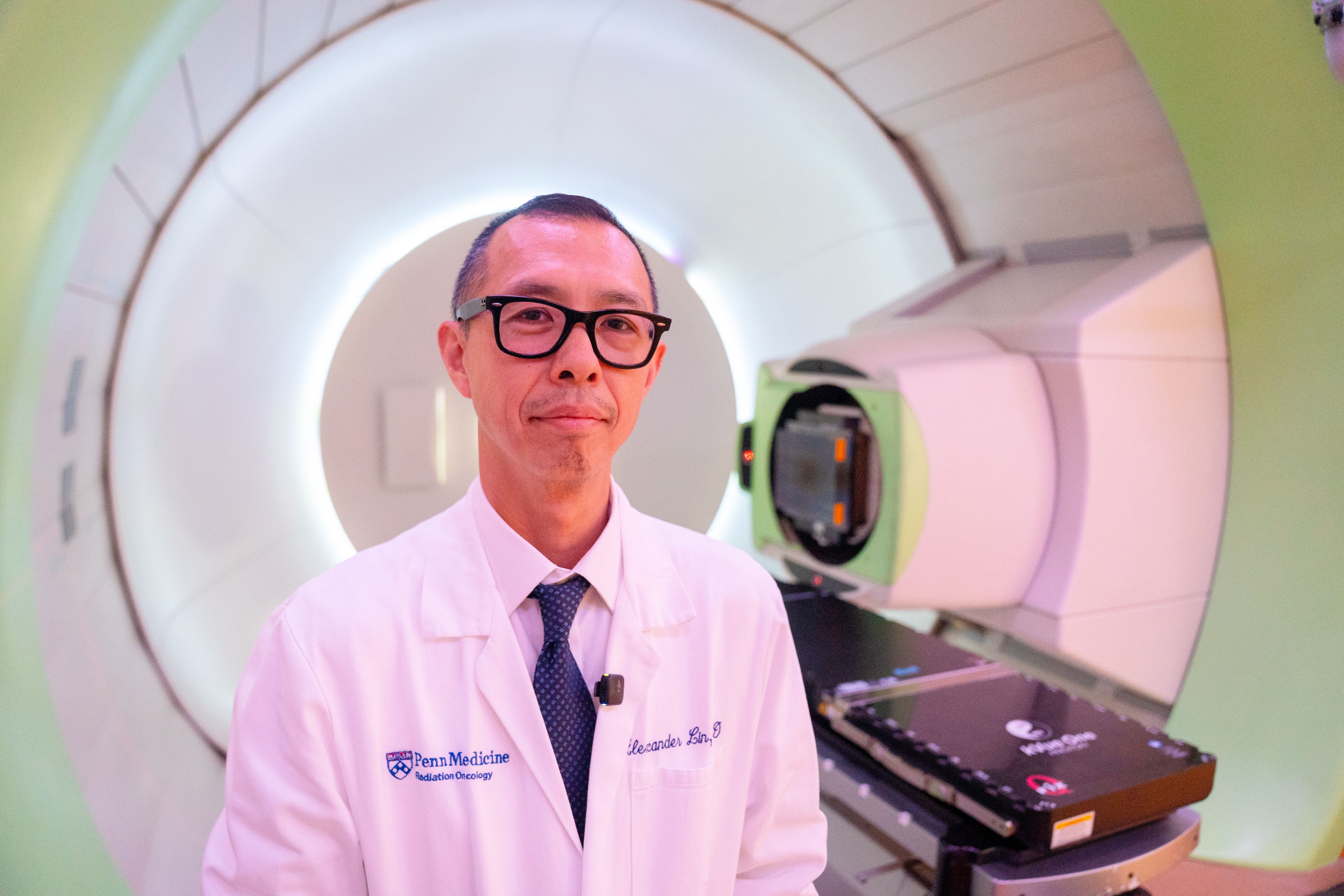
    “Instead of 30 to 40 treatments, we can do the treatment in one to five treatments,” said Alexander Lin, a radiation oncologist at Penn and the trial’s lead investigator.

    Lin walks through the Roberts Proton Therapy Center.Credit to Margo Reed Studios

    Faster and fewer doses

    Doctors typically divide a patient’s radiation therapy into dozens of daily treatments over several weeks.

    FLASH radiation aims to accomplish that in fewer doses.

    Think of it like air travel: A trip from the East to the West Coast would take hours with today’s technology. But if you can fly at the speed of light, it would take less than a second.

    “We’re giving the same dose or similar dose, but the dosage rate changes,” said Constantinos Koumenis, the vice chair for research in Penn’s Department of Radiation Oncology and a developer of the therapy.

    Lin hopes this lighter schedule could alleviate some of the time and financial burden of treatment.

    The FLASH therapy builds upon a highly advanced radiation treatment, proton therapy, which uses protons to more precisely target tumors. Penn has heavily invested in the expensive technology, with its fourth proton therapy center — a $224 million facility at Penn Presbyterian Medical Center in University City — expected to open in 2027.

    The researchers are also incorporating a technique called conformal radiation therapy, which shapes the radiation beam to match the tumor’s three-dimensional size and location. This helps limit exposure to nearby healthy tissue.

    The exact biological explanation for FLASH radiation’s effects remains a mystery. However, scientists theorize that the treatment reduces damaging oxidation in healthy tissue while promoting faster recovery.

    “The hope is that, if this type of trial is successful, you can treat patients who need more radiation with much lower risks,” Schoenfeld said.

    But “it’s a new treatment that we don’t fully understand yet, so I would highlight that it’s still very early days,” he added.

    First trial
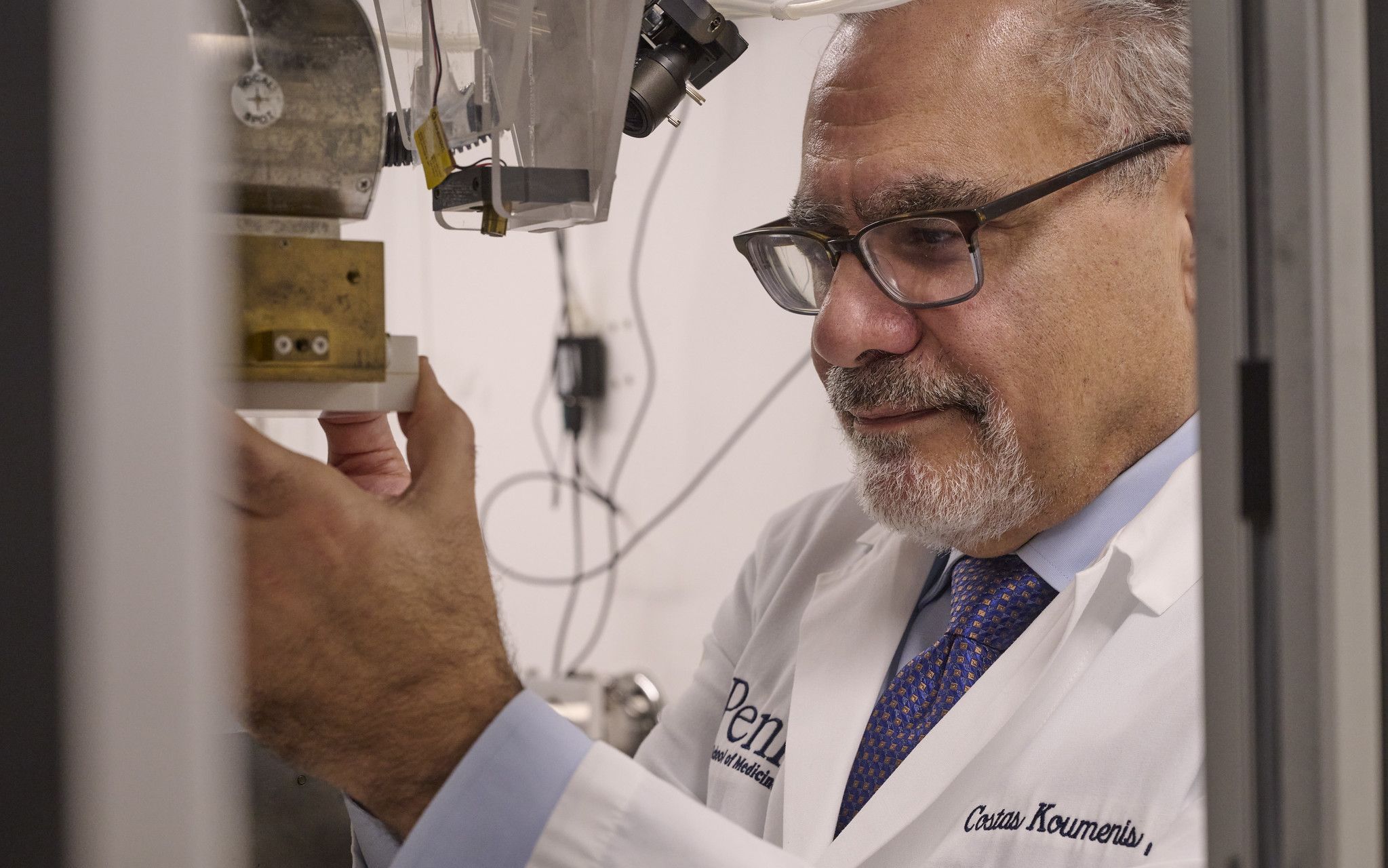
    Constantinos Koumenis is the vice chair for research in Penn’s Department of Radiation Oncology and a developer of the new therapy being tested.Credit to Peggy Peterson

    The primary focus of the Penn trial will be assessing the treatment’s safety and feasibility, with an eye on quality of life and cancer outcomes.

    Researchers will be taking a more cautious approach to begin, using a dose and schedule that have already been found safe and effective in patients. The only difference will be giving the radiation at the FLASH speed, Lin said.

    Schoenfeld said he would first want to see whether the team can deliver their treatment with the intended speed and precision — an accomplishment in itself for an early-stage trial.

    Then he would look at how the tumors respond to FLASH and whether patients develop side effects over a period of months to years.

    “Some of these side effects are longer term side effects, so it’s important to start to follow these initial cohorts of patients as long as possible,” he said.

    The Penn team will follow patients for at least five years.

    If the trial shows promise, the researchers hope to launch additional trials in other types of cancer, from gastrointestinal to liver tumors.

    “If these trials show that they’re safe, we want to target any solid tumor that we can target,” Koumenis said.

  • Penn Medicine gets $50 million gift from Stanley C. Middleman to support early-stage research

    Penn Medicine gets $50 million gift from Stanley C. Middleman to support early-stage research

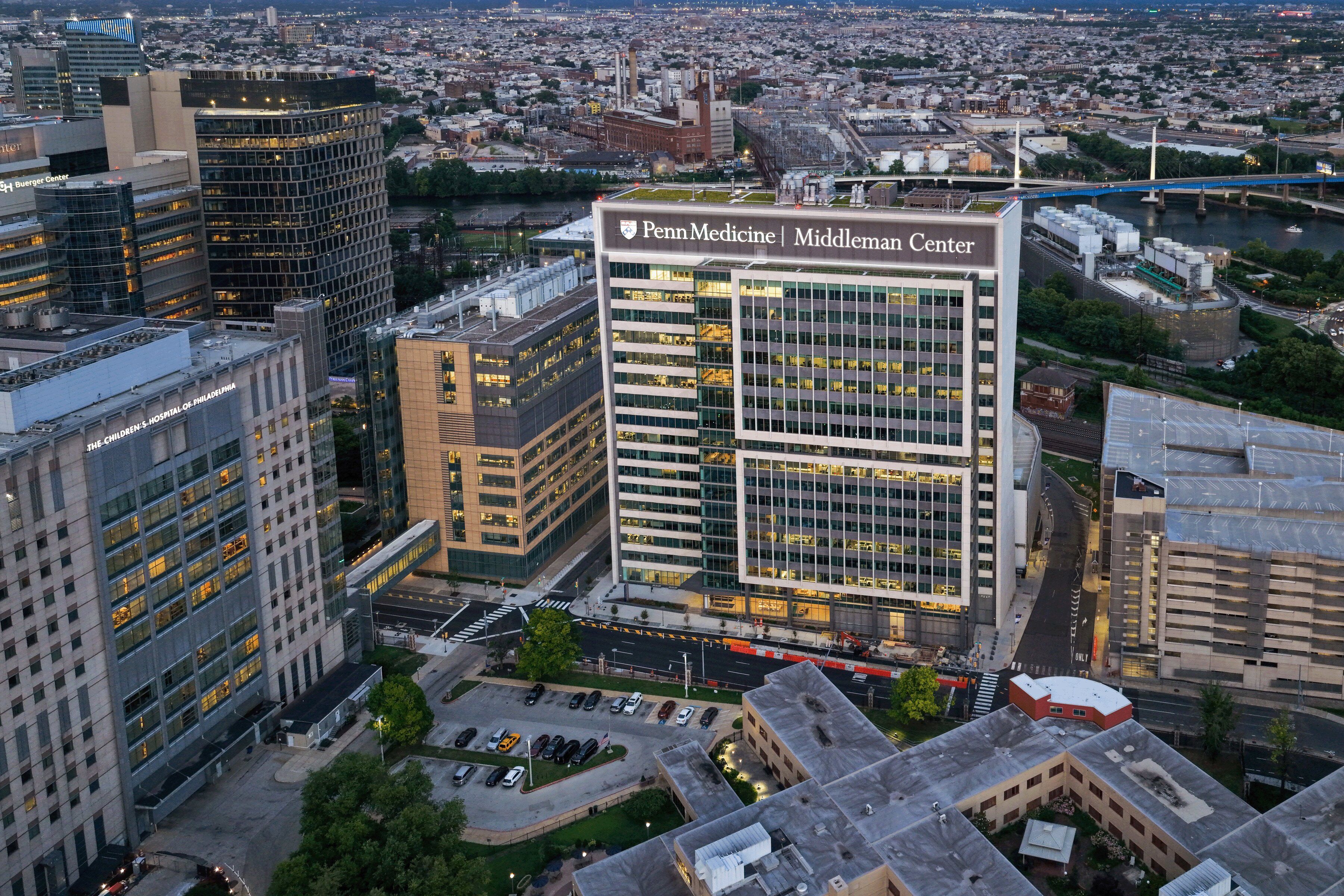
    Penn Medicine announced a $50 million gift from Stanley C. Middleman on Thursday to support early-stage research and will name a recently expanded building at 3600 Civic Center Blvd. in the businessman’s honor.

    Income from the fund will be used to accelerate work on therapies for cancer, autoimmune diseases, infectious diseases, and other serious conditions, with a goal of shortening the path from the laboratory to the market, Penn said.

    “I was born and raised in Philadelphia, and I’m proud to support Penn Medicine and the extraordinary work being done there to advance medicine and improve people’s lives,” Middleman said in a news release provided to The Inquirer in advance.

    The Middleman Center “will bring together the people and ideas” to support new approaches to treatment and scientific discovery, he added.

    The $50 million gift marks his first to Penn. He previously donated undisclosed amounts to his alma mater, Temple University, and to Children’s Hospital of Philadelphia, which named the main patient tower at its King of Prussia hospital for Middleman’s family.

    Middleman founded privately owned Freedom Mortgage Corp. in South Jersey in 1990 and grew it into one of the nation’s largest lenders before moving the company’s headquarters to Florida in the early 2020s.

    Middleman is among the owners of the Philadelphia Phillies.

    Boost for research at Penn

    The building being renamed for Middleman underwent a $376 million, 217,000-square-foot expansion that opened last year. It added seven floors, including as many as 37 labs. Penn originally opened the building in 2018 with eight floors and 250,000 square feet of office space, which has also been renovated.

    The new floors house the Colton Center for Autoimmunity at Penn and the High-Throughput Institute for Discovery, a specialized lab testing patient samples to help make diagnoses and guide treatments. The Middleman Center also includes a Biosafety Level 3 lab, which is specially equipped to handle infectious disease specimens.

    “Anchoring the western edge of Penn Medicine’s campus, the Middleman Center is uniquely positioned to bring together biomedical researchers, physicians, medical students, patients, and experts from engineering, business, and other areas of the University of Pennsylvania,” said university president J. Larry Jameson in the news release.

    “This creates an extraordinary environment for discovery — not just sparking ideas but seeing them all the way through to the moments where lives change for the better, as a result of discovery,” he said.

  • More than 200 Jefferson Health nurses to vote on unionizing

    More than 200 Jefferson Health nurses to vote on unionizing

    Nurses at three Jefferson Health facilities want to unionize under the Pennsylvania Association of Staff Nurses and Allied Professionals, saying their effort addresses safety and quality-of-care concerns.

    Nurses at Jefferson Bucks Hospital filed paperwork with the National Labor Relations Board for an election to form a new union chapter at the hospital that, if approved, would represent 170 staff members.

    In a separate filing, nurses at Jefferson Health — Center One, a primary care and outpatient facility in Northeast Philadelphia, and Willowcrest, a skilled nursing center at Jefferson Einstein Philadelphia Hospital, are seeking membership in the existing nurses’ union at Jefferson Einstein Philadelphia. If approved, the move would add 43 nurses from Center One and Willowcrest to Einstein Nurses United.

    The organization efforts would bring more than 200 Jefferson Health nurses into union chapters affiliated with PASNAP.

    At a news conference outside Jefferson Bucks Hospital in Langhorne Tuesday, nurses said they wanted to organize because hospital administrators have not heeded their concerns that understaffing, heavy workloads, and insufficient resources could harm patients and lead to staff burnout.

    “Jefferson Bucks nurses are being asked every day to do more with less and less, and it’s getting harder and harder to feel like our concerns are actually being heard,” Ashley Bupp, an emergency room nurse at Jefferson Bucks Hospital, said in a statement.

    Jefferson Health accused PASNAP, which represents some 11,000 nurses and other healthcare professionals across Pennsylvania, of “promoting a narrative that serves its organizing efforts and ultimately, its own bottom line.”

    “PASNAP has once again relied on a predictable campaign of misleading claims and public attacks designed to generate headlines rather than constructive solutions,” the nonprofit health system said in a statement. “Jefferson remains focused on supporting our nurses, caring for our patients, and meeting the healthcare needs of the communities we serve.”

    Kiersten McCalmant, a nurse at Jefferson Bucks Hospital, said she and her colleagues were inspired to organize by the nurses at Jefferson Einstein Philadelphia Hospital.

    Einstein Nurses United, which represents nearly 1,200 nurses, signed a new contract earlier this year that gave nurses raises, strengthened staffing, and included protections against forced shift rotations.

    “We saw what a great contract they had already, and the fact that they were able to stand together and win improvements, and protect what they already had,” McCalmant said in a statement. “We thought, if nurses at Einstein can bargain with Jefferson and be successful, why can’t we?”

  • Links exposed physician cell numbers and work schedules at health systems in Philly and nationwide

    Links exposed physician cell numbers and work schedules at health systems in Philly and nationwide

    Philadelphia-area health systems have been moving swiftly to pull offline web links that publicly revealed the daily work schedules and cell phone numbers of healthcare workers, information that hospitals traditionally do not make available online.

    The information for thousands of medical workers at Penn Medicine, Children’s Hospital of Philadelphia, ChristianaCare, and dozens of hospitals nationwide was published online through a popular scheduling service, QGenda.

    Experts said the online availability of internal information raises serious security and privacy concerns at a time when healthcare workers increasingly face the threat of workplace violence and doxing.

    The Philly-area health systems took down the schedules in late August after The Inquirer alerted them that the information was publicly available. Penn and CHOP did not respond to questions about whether they were aware the link was accessible without a log in.

    A spokesperson for ChristianaCare said the system “recently became aware” the pages were public, and “immediately” worked with the QGenda to “eliminate the vulnerability.”

    “We are not aware of any impact to caregivers, clinicians, patient care, or operations,” Christiana’s statement said. “Protecting the privacy and security of our caregivers, clinicians, patients, and information systems remains a top priority.”

    Other Philadelphia-area systems did not appear have publicly available links.

    The web pages managed by QGenda, an Atlanta-based workforce management software company, exposed months of schedules of physicians, nurse practitioners, social workers, and other hospital employees.

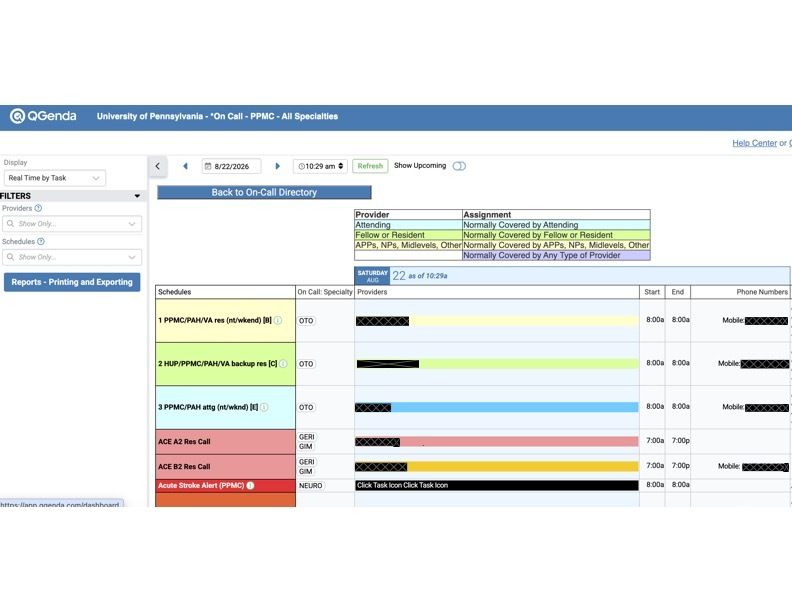
    The links don’t appear on Google searches, but anyone with access to basic AI chatbots could pull up live schedules showing the hours and assigned hospital service for on-call doctors and other providers.

    “That’s very concerning,” said Lane Kantor, a fourth-year medicine-pediatrics resident at Penn and CHOP, explaining that healthcare providers’ work “sometimes comes with patients who can harass and threaten us.”

    Kantor, a leader at Penn’s resident union, said the public information of providers who work with undocumented immigrants or in the areas of gender-affirming or abortion care was especially concerning.

    QGenda is used by more than 4,500 organizations, according to the company’s website, including many hospitals that use the software as a one-stop source of information about providers who are on-call and available for consult at any given moment.

    It is not clear how the schedules became public, how long the information was available online, to what extent hospital administrators knew the information was not safeguarded with a log in requirement, or whether anyone — let alone someone wishing to inflict harm — accessed the information.

    QGenda did not respond to multiple requests for comment.

    The Hearst-owned company offers “QuickLinks” to allow “any staff member without a QGenda account” to easily access the schedule, according to the company’s website. The site also notes that “on-call schedules may contain sensitive information” and that there is risk of “unauthorized access or data breaches” without proper safeguards.

    The platform also enables healthcare systems to restrict access, “so that only devices on your practice’s secure network can access schedule data on the public-facing landing page,” the company’s site says.

    Health systems in the Philadelphia area and across the country have taken steps in recent years to minimize doctors’ publicly available information in response to the growing politicization of many health services, especially those involving diversity, equity and inclusion, abortion, and gender-affirming care.

    CHOP, for example, removed provider names from the webpage of its gender and sexual development program in 2022 as the clinic received threats because it provides gender-affirming care for teens. But information on clinic’s providers was available through the now-removed public schedule.

    Security experts say releasing public work times and locations alongside cell numbers leaves providers vulnerable to being targeted by dissatisfied patients, or individuals who disapprove of the type of medicine a doctor practices.

    “This is really alarming,” said Will Owen, a spokesperson for Surveillance Technology Oversight Project, a New York-based privacy nonprofit. “Hospitals must scrutinize the platforms they work with in their data collection to minimize information that can be weaponized.”

    Live hospital schedules exposed

    After receiving a confidential tip that three East Coast health systems had public QGenda web pages, The Inquirer identified public landing pages for nearly 50 health systems or hospitals nationwide, including Veterans Affairs hospitals, using OpenAI’s Codex.

    For some, like Penn and CHOP, the landing pages for the entire system were public. For other hospitals, schedules for only one department or service surfaced.

    Some of the United States’ largest and most prestigious institutions had public QGenda links, including Johns Hopkins Medicine and the University of California-San Francisco.

    The Inquirer attempted to reach out to each hospital or system for which it found schedules before publication. At least 10, including Hopkins and UCSF, have removed the public link completely or added a password requirement.

    A spokesperson for Cedars-Sinai Medical Center in Los Angeles said it was “unaware” that its anesthesia department’s schedule was public. The schedule has since been removed.

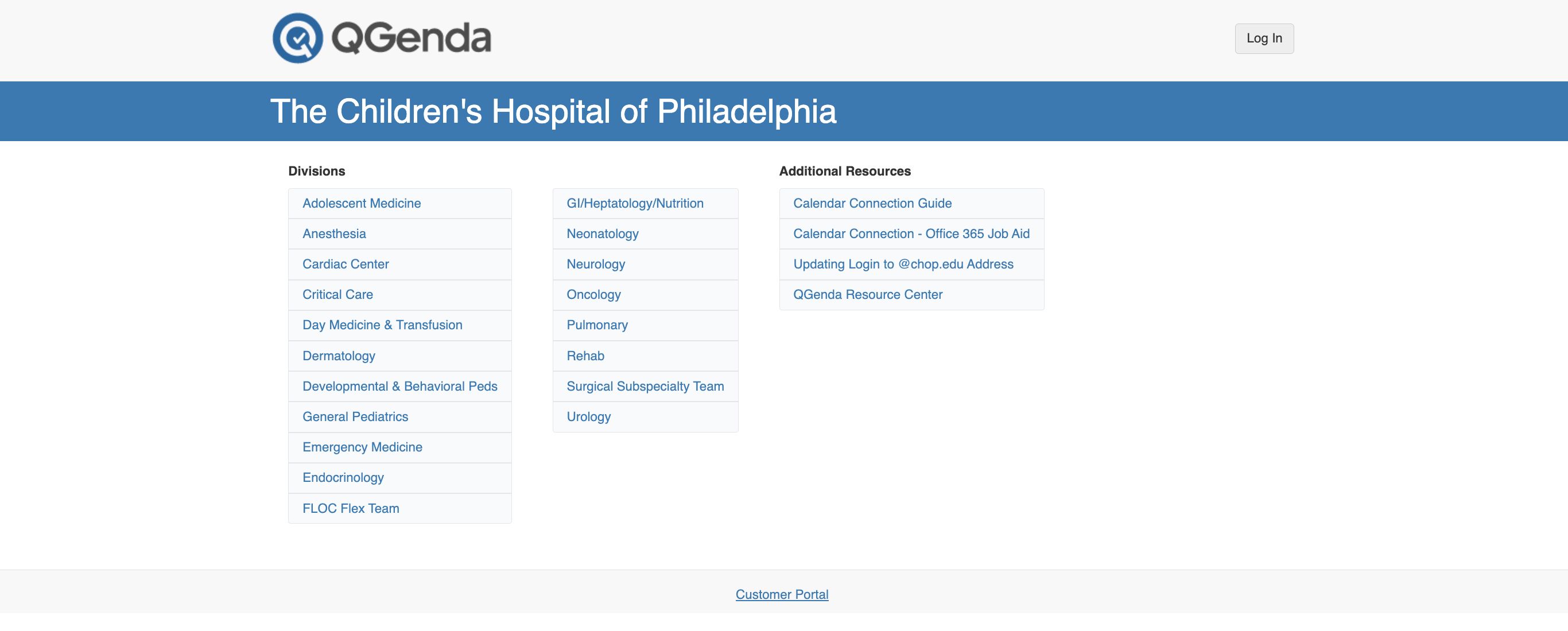
    The call schedule for the Children’s Hospital of Philadelphia, and dozens of hospitals nationwide, was available online through a public QGenda link. CHOP updated the web page’s permissions to require a login after being alerted by The Inquirer.Screenshot

    CHOP informed hospital staff last week about security updates made to QGenda “out of an abundance of caution.”

    “We are taking a precautionary step to update access to the QGenda platform used to display CHOP on-call schedules,” CHOP said in an email to staff obtained by The Inquirer.

    QGenda’s platform does not contain patient information, and CHOP “continually assess our systems, processes, and technologies with an eye toward privacy, security, and operational needs,” a CHOP spokesperson said in a statement.

    Penn said it uses QGenda to support communication among care teams.

    “We continually monitor the risk environment surrounding online information and, as it continues to evolve, we are adding controls that both preserve appropriate protection and provide reliable access for those who need the information to coordinate patient care,” Penn said in a statement.

    Privacy concerns rattle doctors

    Healthcare workers have been reporting increased rates of online harassment and workplace violence since the COVID-19 pandemic.

    The problem has become so pronounced that Colorado, for example, enacted in 2021 an anti-doxing law that made it a crime to share the personal information of health workers and their families online.

    An American Medical Association policy from 2024 says the organization supports data privacy and anti-doxing laws to prevent threat and harassment.

    Gennadiy Ryklin, a hospitalist at ChristianaCare, was surprised to learn a colleague had done a work-hour analysis for ChristianaCare’s attending union using an AI model.

    “I asked him, ‘well, how’d you do that without having Claude get access to our private schedules?’ And, well, it’s not private, there’s a public link here,” Ryklin said.

    Privacy and data security are principles are drilled into physicians through policies, procedures, and training courses, Ryklin said.

    “We understand that patient information in the wrong hands can cause a lot of harm,” the doctor said. “Where’s that same concern for us?”

    A June shooting that killed one IT intern and left another injured in ChristianaCare’s Wilmington Hospital underscored for Ryklin the threat of violence within health systems. Law enforcement charged a third intern in connection to the incident.

    He reached out to hospital administrators and last week the hospital began removing the public web pages.

    Employee privacy exists in a legal gray area, with protections often dependent on institutional policies, said Matthew Bodie, a law professor at the University of Minnesota.

    Publicly sharing schedules and cell numbers does “feel invasive,” Bodie said, “especially if employees didn’t know about it.”

    The combination of cell numbers and work schedules could be used to cause harm, whether by patients, politically motivated individuals, or stalkers, said Sharona Hoffman, a co-director of the Law-Medicine Center at Case Western Reserve University.

    The lack of any sweeping federal employee privacy requirements makes the online availability of the information, “not surprising though very disturbing,” the professor said.

  • Dispatch Bio launches its first clinical trial to develop a universal treatment for solid cancers

    Dispatch Bio launches its first clinical trial to develop a universal treatment for solid cancers

    A University of Pennsylvania biotech spinout recently launched its first clinical trial of an experimental cancer treatment for hard-to-treat solid tumors.

    Its approach builds upon groundbreaking work harnessing the body’s immune system to fight cancer.

    Based in Philadelphia and San Francisco, the company, Dispatch Bio, launched a year ago with CAR-T pioneer and Penn researcher Carl June as a scientific co-founder and $216 million in funding from private investors.

    The company aims to succeed where CAR-T, an immunotherapy that genetically modifies a patient’s immune cells to recognize and attack cancer, has struggled.

    Although CAR-T has revolutionized the treatment of blood cancers, scientists have yet to replicate that success in solid tumors. By painting a target on tumors and revving up the immune system, Dispatch believes its platform could.

    It dosed its first patient earlier this month.

    “With one approach, we are addressing the two main challenges that we have faced over the last decade or so,” said Mauro Avanzi, the chief medical officer of Dispatch.

    Success is not guaranteed. Most exploratory scientific efforts do not advance to the point where they are found safe and effective in humans. Even if the results are promising, it could take years before a potential new treatment becomes widely available.

    Dispatch’s first clinical trial focuses on advanced gastrointestinal cancers, including cancers of the stomach, esophagus, and colon. The company also announced a clinical trial earlier this year in China that has not yet started dosing patients.

    If the treatment turns out to be safe and effective, Dispatch hopes to expand to other solid tumor types with significant unmet need.

    “As many patients as we can deliver that for, we will keep striving to do,” said Lex Johnson, Dispatch’s co-founder and chief platform officer.

    ‘A Trojan horse’

    Solid cancers are notoriously difficult to treat with immunotherapy for two main reasons: they’re hard to target, and they’re good at suppressing the immune system.

    To attack a cancer cell, you need to be able to find it. Sometimes cancer cells have more unique identifiable elements on the outside, but other times they don’t. Imagine trying to identify someone when all you know is that they’re wearing jeans.

    Many of the proteins found on solid cancer cells are also present in healthy tissue, making them potentially risky targets.

    Solid tumors are also good at building an environment around them that blocks and suppresses the immune system. Think of it like a protective shield.

    “They prevent your immune system from recognizing and clearing aberrant cells,” Johnson said, referring to cancer cells.

    Dispatch Bio’s signature treatment — called the Flare platform — is designed to overcome both of these challenges by tagging cancer cells with a unique target and boosting the immune system.

    The strategy revolves around a virus that, when injected intravenously, will traverse the body in search of tumor cells. Once the virus finds its target, it’ll take up residence inside the cell and tag it with a target protein called “the Flare.”

    “You can create that Flare protein to be something that is not present on healthy tissue throughout the body,” Johnson said.

    In colon cancer, for example, they would use a protein that is not present on any healthy colon cell, to avoid toxicity.

    At the same time, the Flare platform secretes chemical signals to re-engineer and reset the environment around the tumor. This enables the immune system to better attack the tumor.

    “It is a Trojan horse,” Avanzi said, describing the virus.

    When a tagged cancer cell is destroyed, it goes on to release thousands more viral particles carrying the Flare. That chain reaction helps spread the therapy’s effect across multiple sites.

    In animal studies, the platform has been able to completely clear out tumors without off-target effects or toxicity.

    But results in animals are often difficult to replicate in people, and the ongoing clinical trial is the first time the platform is being used in humans.

    The trial

    Mauro Avanzi is the chief medical officer of Dispatch Bio.Courtesy of Dispatch Bio

    If the virus successfully paints cancer cells with the target, CAR-T cells can then find and clear them. (CAR-T therapy uses what’s called a chimeric antigen receptor, a protein that recognizes a cell as cancer based on what’s on the outside of the cell.)

    The first phase of the trial involves escalating the dose of the virus alongside a standard dose of an approved CAR-T therapy to figure out the ideal regimen.

    Once Dispatch determines the safest dose of the virus, they’ll move into the dose expansion phase, where they test that dose in a bigger group of patients.

    “We are really trying to optimize the virus,” Avanzi said.

    There is no expected timeline yet for the trial.

    Dispatch is actively enrolling patients at City of Hope in California and the University of Cincinnati, and is in the process of activating four or five additional sites. They plan to open a site in Philadelphia, too.

  • Penn Medicine reported a $337 million operating profit for the year ended June 30

    Penn Medicine reported a $337 million operating profit for the year ended June 30

    The University of Pennsylvania Health System had $337 million in operating profit in fiscal 2026, up from $247 million the year before, the Philadelphia nonprofit reported to bond investors Friday.

    “We saw good growth in several of our clinical programs that helped us to generate the operating performance,” Julia Puchtler, the health system’s chief financial officer, said in an interview.

    That’s money “we’re going to be able to reinvest in the academic missions and in our clinical programs and our workforce,” she said.

    Here are more details:

    Revenue: Penn’s total revenue rose 13.7%, to $13.6 billion from $12 billion the year before. Revenue from patient care accounted for $11.4 billion of the total in fiscal 2026, according to Penn’s report to bondholders.

    Outpatient cancer care and outpatient surgeries by urologists and ear, nose, and throat doctors stood out as areas of growth, Puchtler said. On the inpatient side, neurosciences and transplants had notable increases, she said.

    Expenses: For the first time since 2021, the average length of time a patient spent in the hospital fell below 6 days. Longer stays have higher expenses, even though hospitals generally don’t get paid more for them.

    The average in fiscal 2026 was 5.93 days, from 6.14 days the year before. That looks like a small decline, but it adds up when spread over the health system’s more than 161,000 admissions in the year. The reduction helped Penn reduce expenses relative to revenue. It also freed capacity for more patients, Puchtler said.

    In employee benefits, Penn had an additional $20 million in expenses because it aligned retirement plans across the system, Puchtler said.

    Notable: Penn refinanced about $300 million in debt last month at a lower interest rate. That means the health system will save $28 million in interest payments over the next 9 or 10 years, Puchtler said.

  • Nemours Children’s Health to open Glen Mills urgent care Sept. 16

    Nemours Children’s Health to open Glen Mills urgent care Sept. 16

    Nemours Children’s Health is opening a new pediatric urgent care center in Glen Mills next month.

    The urgent care center, located at Nemours’ health facility at 101 Applied Bank Blvd. Suite 11 in Glen Mills will open daily beginning Sept. 16.

    The facility is intended for patients with medical needs that do not require treatment in an emergency department, such as upper respiratory illnesses, rashes, abdominal pain, pink eye, sports injuries, burns and bites.

    Nemours’ Glen Mills urgent care will offer basic laboratory and X-ray services.

  • Burnout among psychiatric nurses is high. What can hospitals do to improve?

    Burnout among psychiatric nurses is high. What can hospitals do to improve?

    As a former psychiatric hospital nurse, Justinna Dixon knows what it’s like to feel passionate for a job and overwhelmed by it at the same time.

    Dixon graduated from nursing school at the height of the COVID-19 pandemic, and threw herself into her work, caring for people struggling with mental health and addiction issues. But her new-nurse shine quickly dulled under the burden of long hours, high caseloads, and insufficient support.

    Now a postdoctoral fellow at Penn Nursing’s Center for Health Outcomes and Policy Research, Dixon is studying the burnout she experienced. She hopes her work will help hospital systems better understand what contributes to burnout and what they can do to improve.

    Two out of five inpatient psychiatric mental health registered nurses experience high burnout, according to Dixon’s latest study, published in July in the Journal of Psychiatric and Mental Health Nursing. The study, based on data from 740 registered nurses across 10 states, found that workplace improvements — such as increasing staffing — can help nurses feel more supported and provide better care.

    Dixon spoke to The Inquirer about her research and experience as a nurse in an interview lightly edited for length and clarity.

    What in your experience as a nurse made you want to study burnout?

    I’m a Ph.D.-prepared registered nurse. After I finished my bachelor’s degree in nursing in 2020 from Rutgers University, I worked as an inpatient psychiatric registered nurse for two years. I worked within the same types of units that I talk about in this study. I have personally seen and even felt myself how, when we didn’t have enough leadership support and adequate staffing, it made the job much harder. It made me and my other fellow colleagues give worse care to our patients and made our patients suffer even more than they already were.

    What were the study’s most significant findings?

    One of the main takeaways is that 40% of current inpatient psychiatric nurses right now are burned out. One of the other takeaways: Staffing was a huge driver of these outcomes, the impact of the work environment on the poor job outcomes of the nurses.

    Were you surprised by what you learned?

    To be honest, I’m actually not struck by any of my findings, because I have lived it. Normally, on medical-surgical units in a general acute hospital, nurses are assigned around four to five patients to take care of for their shift.

    I worked on a substance-abuse detox unit in a psychiatric hospital. In this unit, one of the most medically complex units in the psychiatric hospital, I was typically assigned around 10 to 12 patients. One time, we were very short-staffed and had a full house or an almost full house, and we had one patient who was just so sick from actively withdrawing. We were so overwhelmed with all the other patients on the unit, taking admissions on top of caring for our other patients, being short a nurse.

    To be honest, we just couldn’t take care of him the way we wanted to, we couldn’t get him the medication he really needed to quell his uncomfortable symptoms. He was in a lot of distress, and he ended up getting so overwhelmed he threw a chair into our nursing station. It was terrifying for the nurses, but imagine how the other patients felt. It made us delay their care because now we have to deal with this situation, and they’re all sick, too.

    What could hospitals do to reduce nurse burnout?

    Nurse staffing is a very complex issue. But there are some things I think could move the needle. In the current system, hospitals are not financially incentivized to improve their staffing. Hospitals are typically able to bill individually for physicians or other prescribing provider services. But for registered nurses, there’s really no financial structure that allows hospitals to bill insurance companies to pay for a nurse’s contributions to patient care. Nurses are actually lumped in with hospitals’ overhead costs.

    I think that a potential solution to incentivize hospitals to improve hiring is giving them a financial incentive to do so. Another thing that I think could really help is enlisting the public. As nurses, we try to advocate so much for our patients. But maybe we could let our patients advocate for us, too.

  • Universal Health Services wants to create something new with Talkspace acquisition

    Universal Health Services wants to create something new with Talkspace acquisition

    Universal Health Services Inc. has long dominated as the nation’s largest provider of behavioral health services through its network of 182 hospitals and 110 outpatient facilities.

    Last week, the King of Prussia company added a new dimension, completing the acquisition of Talkspace Inc., a virtual behavioral health company, for $835 million. It was UHS’s biggest deal in 15 years.

    “We look at this as a real significant moment for healthcare,” UHS CEO Marc D. Miller said in an interview Tuesday. “It’s not simply a transaction for the company, but creating something in behavioral health that hasn’t existed.”

    UHS’s goal is to create what Miller described as a new mental health continuum of care — including an AI agent introduced in June with human oversight and immediate intervention by licensed clinicians for safety if needed.

    Talkspace’s network of 6,000 therapists conducted 933,000 treatment sessions with patients covered by insurance or employee assistance plans in the first half of this year. It had an additional 5,000 active patients who paid directly for the service during that period, according to Talkspace’s quarterly report.

    The New York-based company reported $123.4 million in revenue and a $7.8 million net loss for the first six months of 2026.

    UHS’s behavioral health arm had $3.9 billion in revenue and $773 million in profit before taxes in the six months that ended June 30. Philadelphia-area facilities include Friends Hospital in Philadelphia, Horsham Clinic in Ambler, and KeyStone Center in Chester.

    UHS also owns the largest behavioral health company in the United Kingdom. Including its 30 acute-care hospitals, UHS’s six-month revenue totaled $9.1 billion.

    The Inquirer spoke with Miller about how Talkspace is expected to complement UHS’s current business. This interview has been lightly edited for length and clarity.

    What made Talkspace attractive to UHS?

    By acquiring Talkspace for UHS, we’re creating the industry’s first nationally scaled end-to-end connected continuum in all of behavioral healthcare. Nobody has what we now have. For example, you can go to Talkspace to get treatment on your phone through the app, access therapists wherever you are, whatever’s comfortable for you. The vast majority are patients that UHS never would have touched.

    Now, they’re going to know about UHS, so it would be natural that if they need excess care after they’ve had some care with Talkspace, they’re going to immediately be referred to all of the different options that UHS offers. On the flip side, we’re now going to have this Talkspace option after somebody’s either in one of our more intensive outpatient programs or an inpatient, so we can quickly say, as part of your aftercare, you might want to go to Talkspace, which is a subsidiary of UHS.

    The concept makes sense. How do you make it work?

    It’ll be totally integrated. Most of the insurers that they’re contracted with we’re contracted with, so there won’t have to be huge changes. There are some different contracts, and there will certainly be some things to work out, and there are some small pockets where they’re with somebody that we’re not. But for the most part, that’s not a big concern.

    As far as the referral networks, we’re just doubling what we have. So there’s the current referral networks that go into UHS. There’s the current referral networks to Talkspace that are vastly different.

    We’re now going to put this together, and we’re going to kind of double up the opportunities to both companies. It’s incredibly positive.

    Talkspace’s AI agent Tee has gotten attention. Why is it different from using ChatGPT or Claude like a therapist?

    Tee was purpose-built for mental health. Rather than just adapting a general purpose chatbot to a clinical context, this was built for this. That’s a huge difference. This was built by mental health experts who had safety and privacy in mind, and it was designed to complement human care.

    People right now are going to ChatGPT and Claude and all these things and asking them questions that are totally disconnected, totally disjointed from any care they could be getting. If they’re not getting care, they’re really relying on something that is not expert to help them in a most serious endeavor.

    Editor’s note: This article has been updated to correct UHS’s revenue and profit for the six months that ended June 30.

  • Ten months of inspections at Roxborough Memorial Hospital: July 2025 — April 2026

    Ten months of inspections at Roxborough Memorial Hospital: July 2025 — April 2026

    Roxborough Memorial Hospital was cited by the Pennsylvania Department of Health for failing to properly dispose of medical waste and document patient treatment plans earlier this year.

    The incidents were among 11 times inspectors visited the hospital, which is part of California-based Prime Healthcare Foundation, to investigate potential safety problems.

    Here’s a look at the publicly available details:

    • July 17, 2025: Inspectors came to investigate a complaint but found the hospital was in compliance. Complaint details are not made public when inspectors determine it was unfounded.
    • July 22: Inspectors followed up on an April 2025 citation regarding failure to report suspected elder abuse and found the hospital was not in compliance. The hospital had been cited for failing to report suspected abuse of a patient at the behavioral health facility where they had been staying before arriving at Roxborough. In April, the hospital said it would update its policies to make clear suspected abuse should be reported as soon as possible and retrain staff. In July, inspectors found the hospital had reported the suspected abuse to the behavioral health facility, but not to the Pennsylvania Department of Health, as required. The hospital said it would clarify in its policies that all cases of suspected abuse should be reported to the health department.
    • Aug. 4: The hospital was cited for failing to properly transfer patients under federal EMTALA (Emergency Medical Treatment and Labor Act) protocol. In one of 11 patient records inspectors reviewed, staff transferred a patient to another facility without sending along their emergency records. The hospital was also cited for a staff member who had not completed mandatory annual EMTALA training since 2022. The hospital retrained staff on documenting patient transfers and agreed to hold monthly meetings on EMTALA compliance. Staff members who are not up-to-date on their EMTALA training will be removed from the schedule until they complete the required training.
    • Oct. 15: Inspectors followed up on the August EMTALA transfer complaint and found the hospital was in compliance.
    • Feb. 2, 2026: Inspectors followed up again on the April abuse reporting citation and found the hospital was in compliance.
    • Feb. 12: Inspectors came to investigate a complaint but found the hospital was in compliance.
    • March 4: Inspectors cited the hospital for improper medical waste disposal and unsafe equipment in behavioral health rooms. Inspectors found that a pharmaceutical disposal box was unlocked and lined with a black trash bag, which is not approved for pharmaceutical waste disposal containers. The hospital was also cited for cords attached to call bells on beds in the geriatric psychiatric unit, which could be dangerous for people at risk of self-harm. The hospital retrained staff on pharmaceutical waste disposal and replaced the corded call bells with wireless systems.
    • March 4: Inspectors visited for a mental health survey and cited the hospital for failing to complete written treatment plans for one of 12 patient files they reviewed. The hospital retrained staff on documentation and the importance of scanning any written documentation into patients’ electronic files.
    • March 25: Inspectors came to investigate a complaint but found the hospital was in compliance.
    • March 31: Inspectors visited for a mental health survey and found the hospital was in compliance.