It’s terrible what’s going on with Haitians and Syrians who have been living under a special designation known as Temporary Protected Status (TPS).
They’ve literally been in panic mode since last month’s U.S. Supreme Court 6-3 ruling cleared the way for the Trump administration to strip away their ability to legally work and be protected from deportation. Roughly 350,000 Haitians and 6,000 Syrians are scrambling to figure out what their next moves will be.
Will they relocate to Canada? South America? Somewhere else? Or even go underground? Pause for a moment and imagine having to find a whole other country that will take you in.
Many fled Haiti’s 2010 earthquake and have lived in the United States for more than 15 years. We’re not talking about illegal aliens. These people are here legally. They are our neighbors. They own homes. Some have children who are U.S. citizens. They pay taxes. They hold jobs. Many work in hospitals, nursing homes, and retail establishments. Some are entrepreneurs. What are they supposed to do? Where do they go? Do they take their American-born children with them?
MAGA dismisses them, saying, “Go back to Haiti.” But it’s not that simple. The tiny Caribbean nation is on the U.S. Department of State’s Do Not Travel list. It’s not safe there. Not for Americans. Not for native-born Haitians, either.
The Trump administration has dramatically restricted the number of refugees allowed in this year to just 7,500, but makes exceptions for white South Africans.
As an African American, it galls me to have to sit back and watch this kind of racial preference play out. Granted, disparate treatment like this is nothing new. America has always been racially divided — but what’s happening now reaches a new depth of inequality.
It starts at the top.
President Donald Trump’s disdain for Haitians is deep and well documented, having falsely accused those living in Springfield, Ohio, of eating their neighbors’ pets and “destroying their way of life.” He has a long history of racial animus directed at Black people, famously referring to Haiti as being a “shithole country” and claiming many of its immigrants “probably have AIDS.”
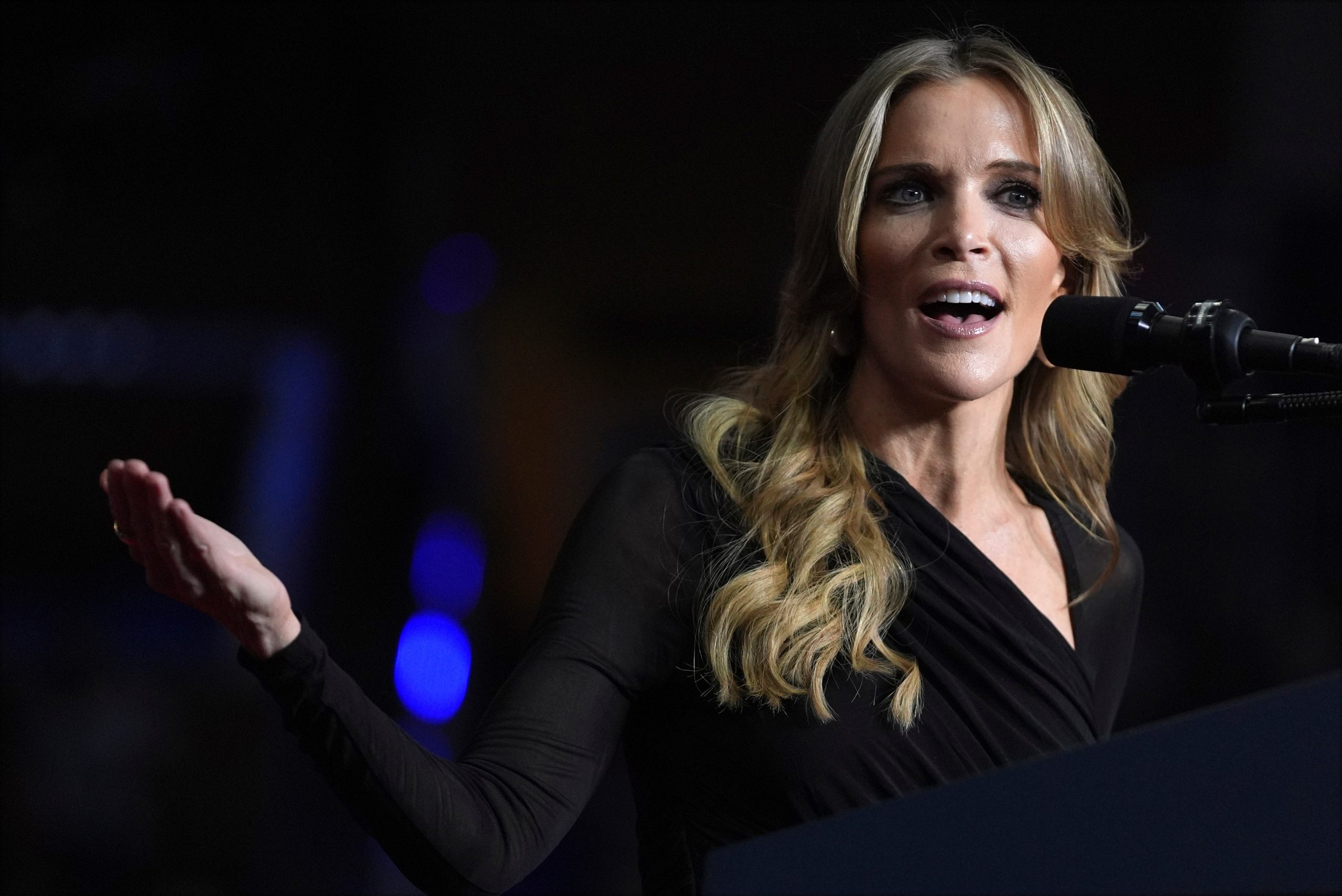
Former Fox News host Megyn Kelly may be feuding with Trump, but it certainly sounded as if she were speaking for his administration last month when she said this about Haitians: “We don’t want you. We don’t care if you’re offended.”
Bigot Barbie wasn’t done, adding: “Get out. Go home,” before using an expletive to tell immigrants to go back to Haiti. Kelly delivered her vile commentary shortly after the Supreme Court’s conservative majority ruled that government officials could end Temporary Protected Status for those who had cometo America to escape violence and natural disasters.
Megyn Kelly speaks at a Donald Trump campaign rally at PPG Paints Arena in Pittsburgh in advance of his election in 2024.Evan Vucci
Now that the protections Haitians and Syrians have been living under have effectively ended, Trump can extend his campaign pledge and include those until now legally residing here in his mass deportation efforts.
This is scary.
And potentially life-threatening.
Yet, it’s not on a lot of people’s radar.
I reached out to the Rev. Jennifer Joseph, the lead pastor at Zion Community Church in Yeadon, where many Haitians worship. She told me people need to know that “folks on TPS are not illegal, and they are not criminals.”
Joseph added, “Those who are not well versed about immigration law just assume that these people shouldn’t have come [and that] they should have known better.”
It’s great that the U.S. allows immigrants to reside here when their homelands are in turmoil. But once people arrive and become long-term, law-abiding residents, they need more pathways to permanent legal status.
They also need to be protected from the political whims of people like Trump or Homeland Security Secretary Markwayne Mullin.
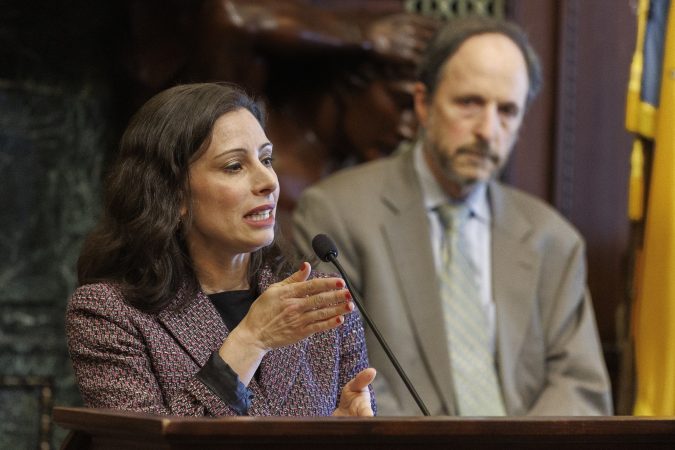
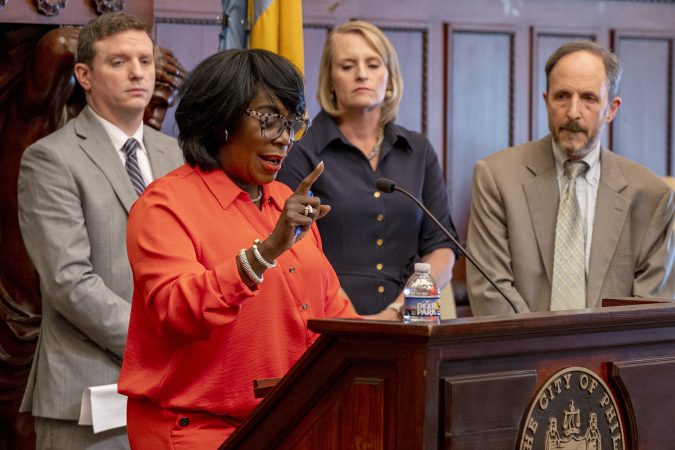
Renee Garcia, the top lawyer in Mayor Cherelle L. Parker’s administration, is resigning from her job as city solicitor to work in the private sector, the mayor announced Tuesday.
The reason for Garcia’s departure was not clear Tuesday, and she was not present at a news conference announcing the staff change.
Garcia will be replaced at the top of the city’s law department by Monique Galloway, who most recently worked as an assistant U.S. attorney in Philadelphia. Galloway’s resume also includes stints as counsel at the federal General Services Administration and the Federal Transit Authority.
Parker said Galloway’s experience working in the federal government was a key reason for her selection as the next city solicitor.
“These are challenging times for cities and states as we all have to interact with the federal government,” Parker said. “On any given day, we can never be sure if we’re going to face a legal filing, a summons, or a subpoena out of Washington on a range of different issues.”
She added that Garcia’s law department has been “Philadelphia’s frontline defense on many of these issues.”
Galloway said she was “moved by this moment.”
“Integrity, sound judgment, excellence, and a key focus on public service are who I am,” she said. “And they are the anchor through everything that I do.”
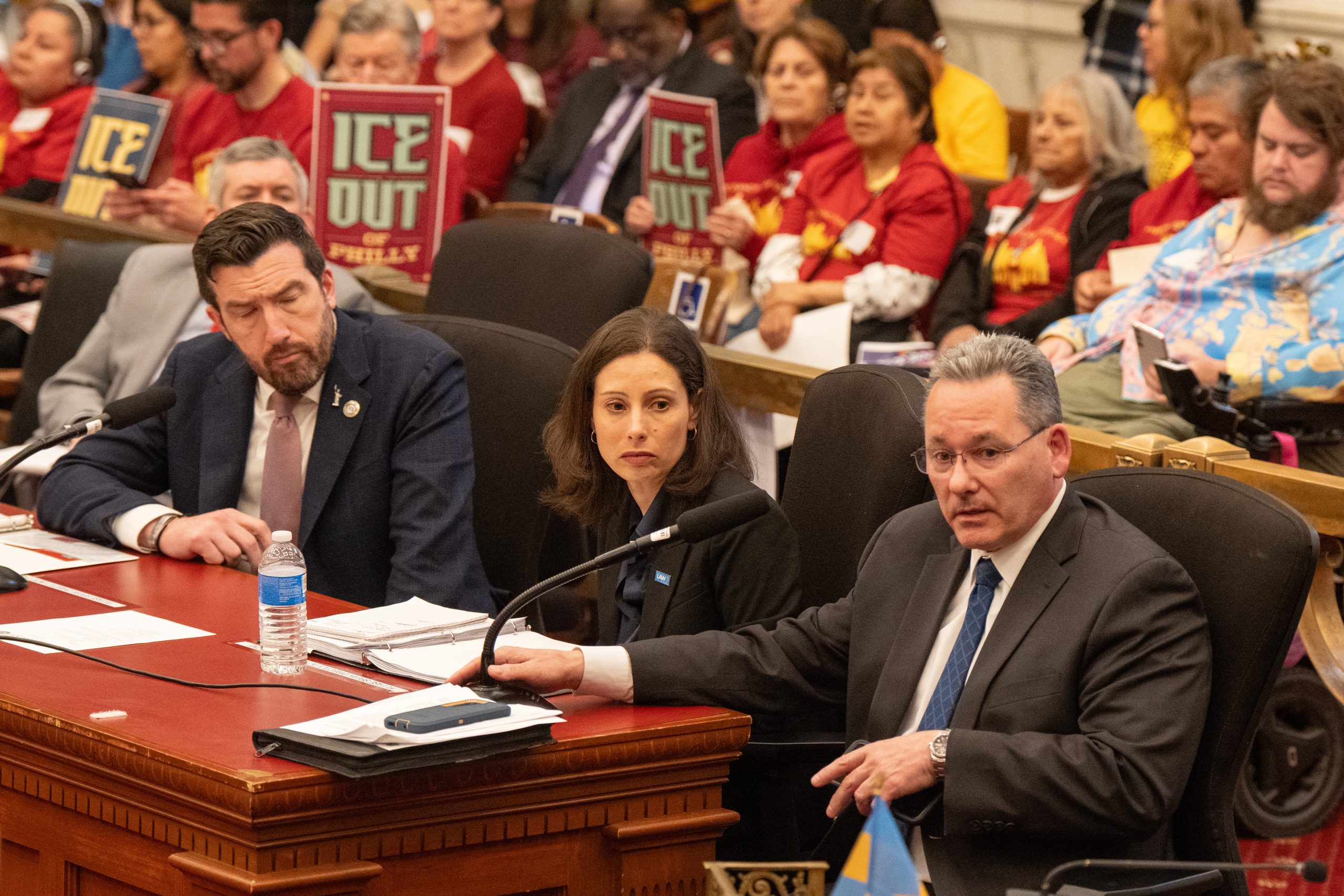
(left to right) Charlie Ellison, Director of the Office of Immigrant Affairs, Renee Garcia, City Solicitor, Francis Healy, Deputy Police Commissioner, at the City Council hearing about ICE Out legislation, in Philadelphia City Council, Monday, April 13, 2026.Jessica Griffin / Staff Photographer
Garcia’s departure was the second major leadership change Parker announced Tuesday. Managing Director Adam K. Thiel, who oversees much of the city’s day-to-day operations, is also resigning to take a job in the private sector. He will be replaced by Carlton Williams, a longtime city official who most recently led the Philadelphia Office of Clean and Green Initiatives.
Taken together, the changes represent a significant shift in the top rungs of Philadelphia’s government. The managing director is in charge of implementing much of the mayor’s agenda, and the city solicitor is responsible for a host of matters, including overseeing litigation and advising both the mayor and City Council on legislation and policy.
Parker also on Tuesday formalized her appointment of Ralph DiPietro, a deputy commissioner in the Philadelphia Department of Licenses and Inspections. The administration announced last month that DiPietro would replace Basil L. Merenda as commissioner.
The mayor said Tuesday that she is “excited to welcome this next generation of leadership.”
A state board that oversees the City of Philadelphia’s finances signed off on Mayor Cherelle L. Parker’s five-year financial plan on Tuesday, despite a structural deficit and significant uncertainty about future federal funding.
The Pennsylvania Intergovernmental Cooperation Authority, which was established in the early 1990s to monitor the city’s finances amid a severe fiscal crisis, must every year approve the five-year budget plan agreed to by the mayor and passed by City Council. The board voted 5-0 to green-light the plan.
In June, Parker and Council agreed to a $7.1 billion budget for the fiscal year that began on July 1, as well as a five-year financial plan in which the city is projected to spend more than it generates in four of those years. This fiscal year, the city is projected to spend about $550 million more than it brings in.
As has been common in recent years, the city’s budget relies on reserves and an existing surplus to avoid a significant deficit. The city is projecting that this year it will have a $364.6 million fund balance, which is the amount of money left over in the city’s general fund after liabilities are accounted for. That balance is set to decline in each of the next five years.
Parker administration Finance Director Rob Dubow said the city is on track to unlock hundreds of millions of dollars in additional revenue once its pension fund is fully funded, a major milestone that is projected to take place in fiscal year 2033.
Also on Tuesday, Alan C. Kessler was unanimously elected to serve as chair of the PICA board after Kevin Vaughn, who has chaired the board for a decade, announced he would not seek reelection to the position. He intends to remain a board member, he said.
Kessler, who has also served on the board for about a decade, is a commercial litigation attorney. He is a prominent fundraiser in the Democratic Party and has long been active in local and national politics.
As for the city’s financial position, board members on Tuesday also discussed potential risks that are largely outside the Parker administration’s control, such as the funding issues that both SEPTA and the Philadelphia School District have faced in recent years. The transit authority has warned of the possibility of debilitating service cuts, and the public school system is borrowing hundreds of millions of dollars just to pay its bills.
Parker had earlier this year proposed implementing a tax on rideshare services to generate about $50 million a year for the district, but Council members rejected her plan.
Administration officials identified existing funding for the district to stave off planned staff cuts. Dubow said Tuesday that cuts were made in each year of the five-year plan to make up for that money, but that the hope is to reach an alternative, recurring revenue generation plan before the cuts would take effect.
The biggest uncertainty for Philadelphia’s finances, the board said, is the federal government and potential policy shifts affecting funding under President Donald Trump. PICA officials warned in a report that while the city has so far sustained only limited losses as a result of slashed grants under the Trump administration, the city “will not be able to absorb federal funding reductions at a greater scale without significant service reductions.”
The city received more than $2.2 billion in aid from the federal government in fiscal year 2024, the most recent data available. More than half that money was for healthcare and other social safety net programs for poor and disabled residents.
The president has repeatedly threatened to cut off federal funding to cities like Philadelphia that are led primarily by Democrats and have relatively permissive local immigration policies. However, those efforts have been tied up in litigation.
A more pressing concern for the city, PICA officials wrote, could be the changes made last year to the enrollment criteria for social programs like Medicaid and the Supplemental Nutrition Assistance Program (SNAP).
Philadelphia is one of the poorest big cities in the nation, and hundreds of thousands of residents rely on government assistance. The Pennsylvania Department of Human Services has estimated that changes to Medicaid instituted under the Trump administration will leave more than 73,000 Philadelphians without coverage by next year.
And, the PICA report warned: Changes to federal programs can have ripple effects.
“The fiscal crisis that precipitated the creation of PICA in the 1990s,” officials wrote, “was in part due to dramatic reductions in federal programs for vulnerable individuals that the City tried to manage but was incapable of replacing.”
WASHINGTON — U.S. Sen. John Fetterman, doubling down on a position that has already added to Democrats’ frustrations with him in recent months, offered a more detailed explanation this week for his change of heart about eliminating the Senate filibuster.
The Pennsylvania Democrat wrote in an op-ed for the Washington Post that he had been “horribly wrong” to support ending the practice that requires bills to win 60 votes rather than a 51-vote majority.
The rule frequently allows members of the minority party to block policies that fail to win bipartisan support, including some of each party’s top priorities — like abortion protections when Democrats have been in control, or the voting restrictions that Republicans are now attempting to pass at President Donald Trump’s urging.
Fetterman was among many Democrats in recent years to campaign on eliminating the filibuster in order to secure those bigger wins. During his 2022 campaign, he specifically referred to passing abortion protections established under Roe v. Wade as a reason for that position after the Supreme Court overturned its landmark 1973 decision that year.
“I became one of the first candidates in the country to call for abolishing the filibuster for a reason: it stands in the way of getting things done for [Pennsylvanians],” his active campaign website still read on Tuesday, nearly four years after he won.
But as he has more frequently sided with Republicans and criticized his fellow Democrats, Fetterman has said repeatedly this year that he had been “wrong.”
“We were very wrong about that to nuke the filibuster, and we should really humble ourselves,” he said on Fox News in February. In that interview and others, he needled Democrats who opposed the filibuster but now, he said, express a “love” for it as they find themselves in the minority and try to reject Republican policies.
In the Washington Post this week, Fetterman wrote that Americans who are “horrified” at the policies coming out of the Republican-led Congress and Trump’s administration would be alarmed if the filibuster had been eliminated and every proposal could become law with a simple majority.
“We’d have the Save America Act by now, which I do not support,” Fetterman wrote. “We could have extreme policies such as nationwide abortion restrictions, backpedaling on LGBT rights, repeal of birthright citizenship and limited voting rights across the country. With a government trifecta firmly in place, many provisions of Project 2025 would have easily been enacted. Republicans could fundamentally change the entire government and country with a simple majority vote.”
Fetterman’s reference to the SAVE America Act comes as Trump has pressured Senate Republican leaders to eliminate the filibuster in order to pass the bill, which would enact sweeping election changes. It would require individuals to provide proof of citizenship when registering to vote and to show photo ID at the polls, and it would scale back mail voting.
Opponents of the bill say it would make registering and voting more difficult for millions of people. And Fetterman has opposed the bill because of the changes to mail voting, though he has changed his position to support requiring a photo ID at the polls.
The bill has failed to receive support from 60 senators, and Trump has demanded that Republicans bypass the filibuster to force it through with only GOP support. U.S. Sen. Dave McCormick (R., Pa.), a Trump ally, has said such a scenario is “very tempting” even though he campaigned against ending the filibuster in 2024.
“It’s a path to get more things done,” McCormick said during a telephone town hall with constituents last week.
Fetterman, in his op-ed, called the filibuster “a critical line of defense that prevents President Donald Trump from having a fill-in-the-blank government with new laws, deregulation or procedures of its choosing.”
He wrote that “history has vindicated” former U.S. Sens. Kyrsten Sinema (D., Arizona) and Joe Manchin (D., W.Va.) for voting with Republicans to block reforming the filibuster when Democrats were in control in 2022.
Fetterman could potentially play a similar role after the midterm elections this fall if Democrats win control of the Senate with a slim, potentially one-vote majority. Some observers have said Fetterman could also leave his party, becoming a Republican or — as Sinema and Manchin did after serving as Democrats — become an independent.
“Some of my colleagues, including myself, have been frustrated when engaging with the minority,” Fetterman wrote. “But that process isn’t a bug — it’s one of the best features of the Senate. We have a great democracy that is imperfect, but it requires working together.”
As Fetterman works more often with Republicans, though, Democrats have become more frustrated with him and vowed to mount a challenge if he seeks a second term in 2028.
Former U.S. Rep. Conor Lamb — one of the Democrats who has not ruled out another campaign after losing to Fetterman in the 2022 primary — has said the senator’s switch on the filibuster “is probably the worst Fetterman story yet” that most people don’t realize.
In a social media video in early June, Lamb said eliminating the filibuster was essential for Democrats to “put Roe v. Wade back into law” and to pass legislation on voting rights, gun control, and raising the minimum wage if they regain control of the Senate.
“When we ran against each other, he promised he would fight for women on this issue and get rid of the filibuster,” Lamb said. “And of course, like so many things, he’s changed his mind.”
Occasionally, I get to share good news in this space. Wu Shaoping — the Chinese dissident who fled to America but was detained by U.S. Immigration and Customs Enforcement after a Central Pennsylvania traffic stop — was freed from ICE’s Moshannon Valley Processing Center Friday night, not long after my column dropped and a couple ofmembers of Congress pressed for his release. His asylum case is still pending. I’ve learned there’s actually a lot more to this story — stay tuned.
The Trump regime is shifting billions from college into AI. That’s no accident.
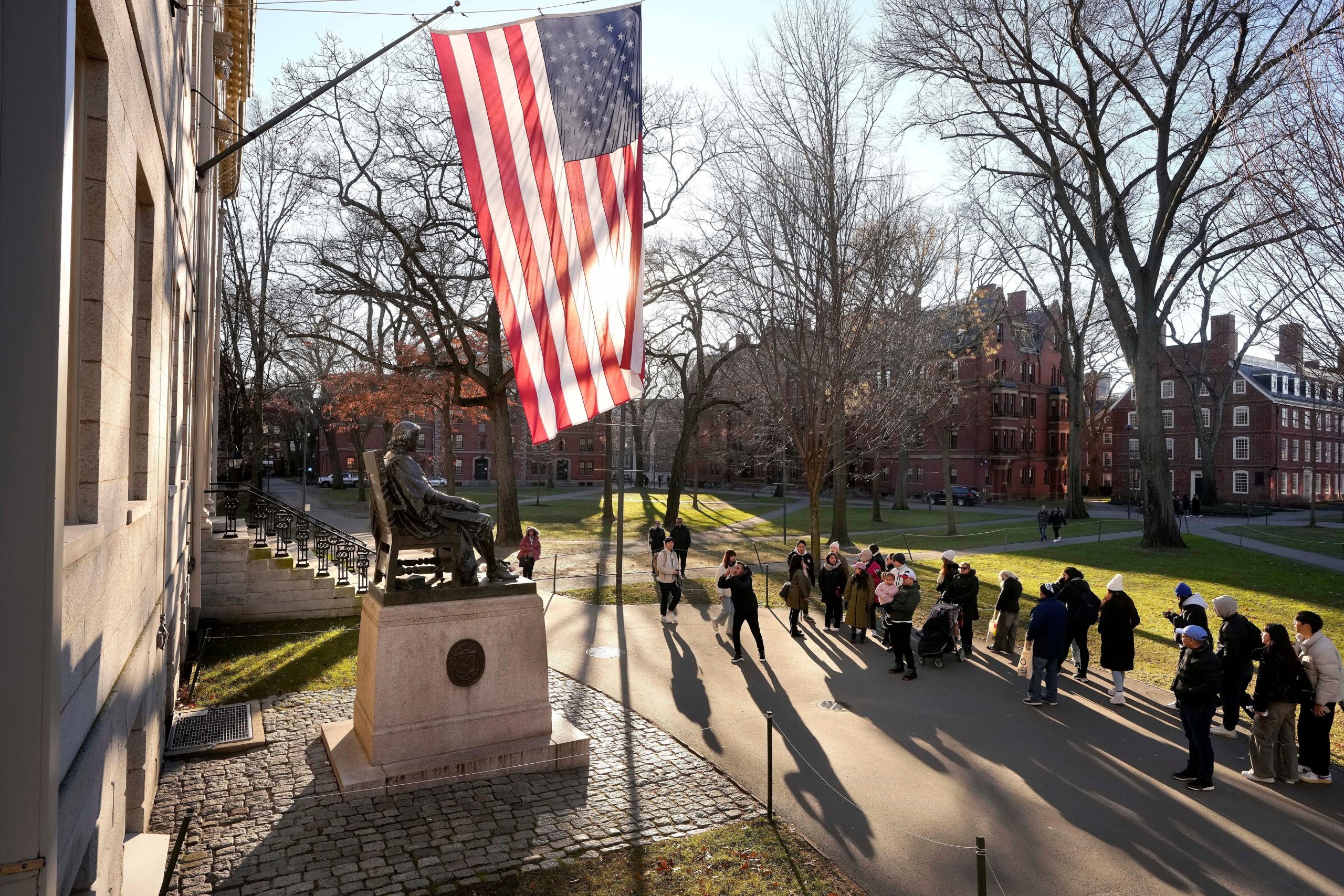
People take photos near a John Harvard statue on the Harvard University campus in 2024 in Cambridge, Mass.Steven Senne
The U.S. government has become pretty stingy when it comes to finding money for human beings — just ask any struggling single mother in Mississippi needing food stamps, or a physician in Africa waiting on vaccines that no longer arrive through American foreign aid programs.
But Washington always seems to have an open wallet for computers.
In fact, the very first one — ENIAC (Electronic Numerical Integrator and Computer), constructed right here in Philadelphia on the University of Pennsylvania campus as World War II came to an end — was funded by the U.S. Army Ordnance Corps at a cost of about $7 million in today’s dollars. Over the years, billions of dollars in federal funding would fuel key moments in the Computer Age, including the creation of the internet, which was also a Pentagon project.
Still, there was something chilling about last week’s report from the White House Office of Science and Technology Policy that called for a surge in research aid in one area: computers and robots using artificial intelligence, or AI. The nuts-and-bolts of the paper — “Science: A New Golden Age” — highlighted a new, more-than-$5 billion commitment for an AI-in-science program called the Genesis Mission.
But the White House paper also called for a radical shift in the way the federal government pays for science, with a massive move of $200 billion away from funding research and basic science at top universities — the system that has thrived since the time of ENIAC — and toward individuals and more directly applied AI projects, including those at private tech companies.
Goodbye, John Harvard. Hello, Claude.
“This plan raises profound concerns about the future of publicly funded science,” the top union leaders for educators — Todd Wolfson of the American Association of University Professors (AAUP) and Randi Weingarten of the American Federation of Teachers (AFT) — said in a joint statement last week. “It does nothing to make anyone healthier or safer, and it isn’t what Americans want.”
Wolfson, Weingarten, and other critics of the new science scheme from the Trump regime say it unravels long-standing protections for academic freedom and transparency on campuses in favor of a process that’s ripe for political interference. “This is a defining moment for American science,” the educators wrote.
Indeed, while the federal funding gains for AI are still mostly theoretical, the cuts for research projects on college campuses across the United States have been underway since Donald Trump took office in January 2025, and the impact has already been dramatic.
The playing field is complex, but a recent deep analysis by the Brennan Center for Justice found that the Trump administration successfully froze about $3 billion in previously approved grants for scientific research, is imposing a scheme to slash an additional $4 billion, and issued a budget proposal calling for a whopping $44 billion additional reduction.
The analysis noted that “these midstream freezes and cancelations have ripple effects far beyond the nominal dollars involved, prompting layoffs, interrupting careers, and destabilizing the budgets of research universities.”
But now it feels like the White House is stating the quiet part out loud: The bigger goal is simply to build smarter computers, even if that means humans get dumber. Intelligent robots still don’t vote in elections, after all, but poorly educated people do.
Ironically, the regime’s rationale for spending our tax dollars on making AI more powerful regurgitates a Cold War mentality that, on the surface, sounds like the reasons behind decades of massive college research funding and programs like the space race of the 1960s or the nuclear arms buildup: to stay one step ahead of the communists — this time in China.
The difference between then and now is that after World War II, Washington made a conscious effort to fund basic science and free inquiry as a way to distinguish the United States from the rigid planned economy of our then-biggest adversary, the Soviet Union. Now, the White House seeks to copy Beijing’s centralized planning. Can we truly promote science without lifting up the actual scientists?
Trump’s “Golden Future of Science” feels more like an extremely narrow wind tunnel. The irony is that many of today’s politicians in both parties see higher education as mainly workforce development, even as corporate recruiters say what they really want are more broadly educated critical thinkers. In other words, the AI era actually screams out for a boost for the humanities like literature or philosophy — the types of majors that are getting crushed in the Trump era.
An epic battle is looming between those obsessed with a new nuclear arms race around AI — especially the Silicon Valley billionaires who stand to gain and who, not coincidentally, have heavily funded the second coming of Trump — and a public that doesn’t want our communities ruined by noisy, energy-guzzling data centers that aim to take away our jobs while making reading a lost art.
A government scheme to build better computers while rendering humans obsolete used to be the stuff of dystopian science fiction. Maybe we can keep it that way before it’s too late.
Yo, do this!
About once a year or so, I write, “Yo, actually maybe don’t do this.” Last weekend, I ventured out of my underground lair to join every other American in devoting three hours to Christopher Nolan’s The Odyssey. To say I was underwhelmed would be, well, an understatement. The movie was a funeral for the now totally lost art of movie dialogue, amid a plot that meandered from gouge-your-one-eye-out boring to bursts of incomprehensible violence. It was a metaphor — Troy was My Lai, apparently — that got terribly lost at sea. But I do feel there’s something happening here. First the World Cup, now this mediocre whale of a motion picture: Americans are desperate to bea part of something, anything, that is bigger than our politics.
Regular readers know I’m a huge fan of the CNN modern history documentaries they now call the Decades Series, but the original format of politics, TV, and music did have gaping holes. A few years ago, they backfilled with a series on The Movies of our post-World War II world. Now, finally, Decades in Sports arrives on CNN with back-to-back episodes (presumably the 1960s and ‘70s) on Sunday night at 9 p.m. I can’t wait. Spoiler alert: Havlicek stole the ball.
Another thing you may have noticed is that Rep. Ro Khanna, who meandered west after Council Rock High School in Bucks County and became the congressman from Silicon Valley, is something of a friend of the newsletter. He’s back in our area frequently, and he’ll be at Philadelphia’s Parkway Central Library on Tuesday at 6 p.m. to deliver a special speech: “America at a Crossroads: A Vision for the Future on our 250th Anniversary.” He’ll talk about his background growing up here as the son of immigrants and the need for economic freedom that ends gross corruption and inequality — go check it out.
Ask me anything
Question: Who should be DNC [Democratic National Committee] chair? And does it matter? — Martha (@marthagrant.bsky.social) via Bluesky
Answer: It does matter. Despite everything else that’s happening in the world right now, one of the more revealing stories of the last week was the New York Times article about Democrats in disarray, focusing on embattled DNC chair Ken Martin, who before the 2024 election was the state leader in Minnesota. Under Martin, the party is sliding deeper in debt, and there are complaints about an abrasive personal style, the botched “autopsy” of the 2024 election, and the Democrats’ muddled message. A change should be made as soon as possible. Hopefully, party leaders could rectify the mistake of not picking Wisconsin’s more skilled ex-party chief, Ben Wikler. The problem is that, under the constant assault of GOP fascism, Dems need to fix this plane while it is flying at 37,000 feet.
What you’re saying about …
There was an excellent response to last week’s question about what a future Democratic president should do on Day One to erase the stench from two Donald Trump presidencies. I wish I could reprint all the suggestions, but recurring themes included a rapid purge of any Trump holdovers, abolishing ICE and related immigration raiders, and a speedy effort to prosecute the many wrongdoers. The two most frequent suggestions included major reform of the judiciary, from fixing the mangled immigration courts to ethics reform, and definitely an expansion of the U.S. Supreme Court. Mark Cohen suggested two more federal appeals courts and then “assign a Supreme Court justice to each one, bringing a total of 13 justices to the Court for fixed term of 18 years.” Another theme was erasing Trump’s various renovations to the District of Columbia. The ex-congressman Joe Hoeffel wrote, “Strip all the cheesy gold out of the Oval Office.”
📮 This week’s question: Speaking of Democrats, some top party officials like House Minority Leader Hakeem Jeffries seem to think the November election is primarily about “affordability.” That seems to miss the bigger moment, but I’m curious: What pithy message would you like to see Dems run on this fall? Please email me your answer and put the exact phrase “Democratic message” in the subject line.
Backstory on the Gen Z revolution rocking India
Protesters participate in a demonstration demanding educational reforms as part of the Cockroach Janta Party’s ongoing protest movement in New Delhi on July 25.Vipin
Last October, I wrote a column, with great interest and enthusiasm, about a growing revolution of Gen Z 20-somethings that was taking place across the global south — from Madagascar to Peru to Nepal, and elsewhere — who were fed up with the political corruption of grown-ups and threatening to topple governments. I wondered if this very online youth activism might spread to the United States or other more developed nations, but over the coming months, the momentum for these protesters and their Japanese anime pirate flags seemed to fade. The so-called Gen Z revolution looked like a historical footnote.
But it turns out that the embers of youth unrest were still smoldering, and this summer they have reignited in a big way in the world’s largest — if deeply flawed — democracy: India. And as is so often thecase, the spark was something nobody saw coming: a nationwide exam for entrance to medical school taken by roughly two million students, which the government moved to scrap after allegations that some of the questions had leaked. Some young people who’d studied for months for the exam took tothe streets in protest, and — as so often happens — a repressive police response only caused these demonstrations to get bigger. So did a comment from India’s chief justice, who described young, unemployed Indians as “cockroaches.”
That gave the protests a name when Abhijeet Dipke, a 30-year-old graduate of Boston University, posted on the social media platform X that he was starting the “Cockroach Janta Party” — a wordplay on the Indian authoritarian-minded leader Narendra Modi’s Bharatiya Janata Party. Incredibly, this “CJP” has seen its protests — calling successfully for the resignation of the education secretary and for other deeper reforms, using tactics such as sit-ins and hunger strikes — spread to some 30 cities while clogging the streets of the capital, New Delhi. The movement has become arguably the biggest threat to Modi’s strongman rule since the leader’s ascension in 2014.
All of which raises the same question I posed last fall: Could it happen here? In one sense, it already has. On Friday, about 500 Indian students and other members of the U.S.-based diaspora gathered under a statue of Mahatma Gandhi in Manhattan’s Union Square to express support for the “cockroaches” of their native country. Meanwhile, the kind of pressures that caused India’s youth to erupt — government meddling in higher education, diminished job prospects in a time of rising AI, to name two — are also found in the United States. Young people almost never protest over the same stuff that riles up their parents, as shown by the gray hairs that have populated the No Kings rallies against Donald Trump. When lightning strikes, it will probably be something as unexpected as a college entry exam. But thunderstorms are definitely in the forecast.
What I wrote on this date in 2019
A culture of death permeates the Donald Trump regime, from the doomed fishing boats of the Caribbean to an Iranian girls’ school to the scores now dying in immigration detention cells. But this is not exactly new. The seeds were planted in the first Trump presidency, when his attorney general, William Barr, led a push to revive the death penalty for federal prisoners in a big way. On July 28, 2019, I asked: “What took the American Caligula so long to bring back the spectacle of executions to electrify the masses (but not the prisoners … they’d be lethally injected) and juice his 2020 reelection campaign? Indeed, the five executions are scheduled around the Christmas holiday, presumably to remind us of its pagan roots.”
In 2026, I’ve been very focused on the individuals whose world has been turned upside down — or, in some cases, ended prematurely — by the horrors of life in these authoritarian United States. Last week, I took a deep dive into the story of Wu Shaoping, a Chinese dissident who fled his likely detainment by Xi Jinping’s regime and made it to Pennsylvania with his wife and teen daughter, only to get arrested at a traffic stop, turned over to U.S. Immigration and Customs Enforcement, and detained. The outcry may have had something to do with ICE’s release of Wu shortly after the column ran. Over the weekend, I wrote about the police killing of Corey Ruiz in Madison, Wisc. — noting that the shootings of civilians by cops have only increased since the massive George Floyd protest marches of 2020. I urged an end to the new numbness about police violence in America.
You didn’t really think I could make it all the way through the newsletter without mentioning the face that launched 1,000 hot takes: basketball king LeBron James. He stunned not just the sports world but America’s founding city by announcing Friday that he is taking his aging but still considerable talents to South Philadelphia, hoping to grab one last title with a completely revamped 76ers. Has there been any other story since then? The Inquirer has told you about the first time James played at the Palestra, his new uniform (No. 23), the speculation over how he will (or won’t) gel with the rest of the Sixers, the speculation over where he might live, hisrelationship with Tyrese Maxey and Joel Embiid, and on and on and on. Just wait until he actually takes the court this fall! Actually, don’t wait. Subscribe to The Inquirer today, slam dunk the paywall, and read every story from now until the hoped-for parade down Broad Street.
By submitting your written, visual, and/or audio contributions, you agree to The Inquirer’s Terms of Use, including the grant of rights in Section 10.
The day after President Donald Trump delivered a prime-time speech contending, among other claims, that 250,000 noncitizens were registered to vote in just four states, Pennsylvania Gov. Josh Shapiro derided it as“a whole bunch of conspiracy theories that are just simply not connected to reality.”
A week later,when New Jersey revealed that 6,600 noncitizens were improperly registered to vote in the state and nearly 400 cast a ballot due to a glitch, Shapiro’s message was nearly identical — that Trump ispushing “baseless conspiracy theories” as he seeks more power over state-run elections.
Pennsylvania and New Jersey were both on the list of Democratic-led states that Trump claimed had thousands of noncitizens on their voter rolls. The methodology of how the Trump administration arrived at that figure remained unclear, but his administration has sought to leverage the New Jersey disclosure as evidence of a larger problem.
But Shapiro and other national Democrats have not shifted their messaging on the issue ahead of the high-stakes midterm elections.They are refusing to cede to the GOP any suggestion that New Jersey’s voter rolls are evidence of widespread voter fraud and arewarning that the changes Republicans seek would make it tougher for many Americans to vote.
“Withholding this funding will make our communities less safe and would be dangerous under any circumstance, but doing this in an attempt to undermine states’ authority over elections is reckless and unconstitutional,” Shapiro said.
Kentucky Gov. Andy Beshear, another potential 2028 candidate, also joined the suit. (Both Shapiro and Beshear lead states with Republican attorneys general.)
The day after Trump’s speech, Shapiro challenged the administration to present “real evidence” of noncitizen voting, which Pennsylvania election officials say is extremely rare.
In addition to Pennsylvania and New Jersey, the White House also targeted Nevada and California for additional scrutiny over their voter rolls, according to a document posted to the White House website last week shortly after Trump’s speech.
California Gov. Gavin Newsom, one of Trump’s most vocal critics in the Democrats’ potential 2028 field, said the president’s speech was fueled by debunked lies.
“It was unhinged. Unfounded allegations of election fraud — it’s madness. But he’s setting it up. He’s setting you all up. You know what he’s doing. He’s doing it in plain sight. He’s socializing all of this to normalize all of this,” Newsom said last week, during a newsconference that took place the same day as New Jersey’s announcement.
Trump has repeatedly promoted conspiracy theories about California elections in recent weeks — including in two Pennsylvania speeches — despite no evidence that fraud occurred.
For U.S. Sen. Cory Booker (D., N.J.), pushing back against Trump presents a tougher challenge.
Booker, also a likely 2028 aspirant, must balance the governing changes he sees as needed in New Jersey with the larger politics of the moment. He said the failure of the software was “not acceptable” but rejected Trump’s efforts to portray the entire election system as faulty.
“There are those who will choose to weaponize this issue to undermine confidence in our elections,” Booker said in a statement. “We cannot allow that.”
ButRepublicans have pointed toNew Jersey as proof that a sweeping overhaul is neededfor November’s results to be trusted.
Trump’s allies are pushing the SAVE America Act, which would require voters to provide proof of citizenship when registering to vote and to show photo ID at the polls. The effort has stalled in Congress amid concern, even among Republicans, that the bill’s restrictions on mail voting could make it harder to cast a ballot and that many citizens could wrongly be blocked from voting if they do not have access to required paperwork.
Vice President JD Vance, widely viewed as a 2028 Republican candidate and a potential political heir to Trump, seized on New Jersey’s revelations as a renewed opportunity for the legislation’s relevance.
“If only there was a way to stop this type of ‘software error’ that allowed non citizens to vote in our elections,” he wrote in a post on X that targeted Booker and Sen. Andy Kim (D., N.J.), both of whom are unlikely to support the Republican-led bill.
But theregistration glitch happened despite these individuals answering “no” when asked on a keypad whether they were U.S. citizens. They were added to the system “through no fault of their own,” New Jersey Gov. Mikie Sherrill said last week, so it is not clear that showing additional documentation would have prevented the error.
Sherrill ordered her chief counsel to investigate the issue, which occurred under her predecessor, former Democratic Gov.PhilMurphy, and promised to hold those responsible for the error accountable.
Talking about this issue can pose an obstacle for both parties now that New Jersey’s glitch has been identified, said Sam Chen, a Pennsylvania strategist who has worked for former Gov. Tom Corbett and other Republicans.
Republicans have overplayed their hand and are not seen as an authoritative voice on voter fraud, but Democrats have spent the same amount of time dismissing all of Republicans’ concerns, including some that are legitimate, Chen said.
“When you’ve got an entire party saying, ‘No, this is never happening,’ and now you see what you see in New Jersey, it is going to leave a serious credibility issue for them,” Chen said.
Democrats, like Shapiro, could build more credibility if they acknowledged the positive parts of the SAVE Act, he contended.
“Grab what’s good, vehemently oppose what’s bad, and states can blaze their own path,” he said.
But J.J. Balaban, a Philly-based Democratic ad maker, said it does not make sense for Democrats to go along with the SAVE Act because the charges are being made in bad faith.
While many Democrats would support efforts to make election systems more secure, Balaban said, that is not what the Trump administration is trying to do — and New Jersey does not change that.
“Voter fraud was shockingly rare a month ago. It remains shockingly rare today,” he said.
When Herman Welker came to Washington in 1951, he had what seemed to be the ideal résumé to become a man of influence.
The Republican senator from Idaho was an unwavering conservative — a former prosecutor and World War II veteran — whose opinion counted on matters including war, national security, and U.S. Supreme Court seats.
But Welker’s path to power and prominence — serving as a close ally and faithful wingman to Republican Sen. Joe McCarthy in his abusive, power-hungry, and attention-seeking campaign to root out American communists — undid him in a single term. Welker, known in the Senate as “Little Joe from Idaho,” was implicated in another senator’s blackmail-driven suicide. When McCarthy faced censure in the Senate, Welker tried to delay, dissuade, and, according to accounts at the time, bully others out of officially expressing their disgust.
Welker lost his seat in the next election, then, after a brief illness, died.
That’s the thing about influence attained through a grand bargain with those who wield power in ways that defy the law, norms, and anything approaching restraint: It requires a grasp of time and mortality few humans can reliably claim. Which is precisely the risk Sen. Lindsey Graham, a lawyer and a veteran of the wars in Iraq and Afghanistan, ran until his sudden death this month.
Unlike Welker, Graham transformed in full public view from a man who was once one of Donald Trump’s most strident and vociferous critics into a dependable MAGA workhorse in Congress.
Now, Graham’s legacy will be forever bound up with that of the 47th president, who took pains to tell NBC News that his faithful wingman’s death would be a “big blow” to the passage of the SAVE America Act.
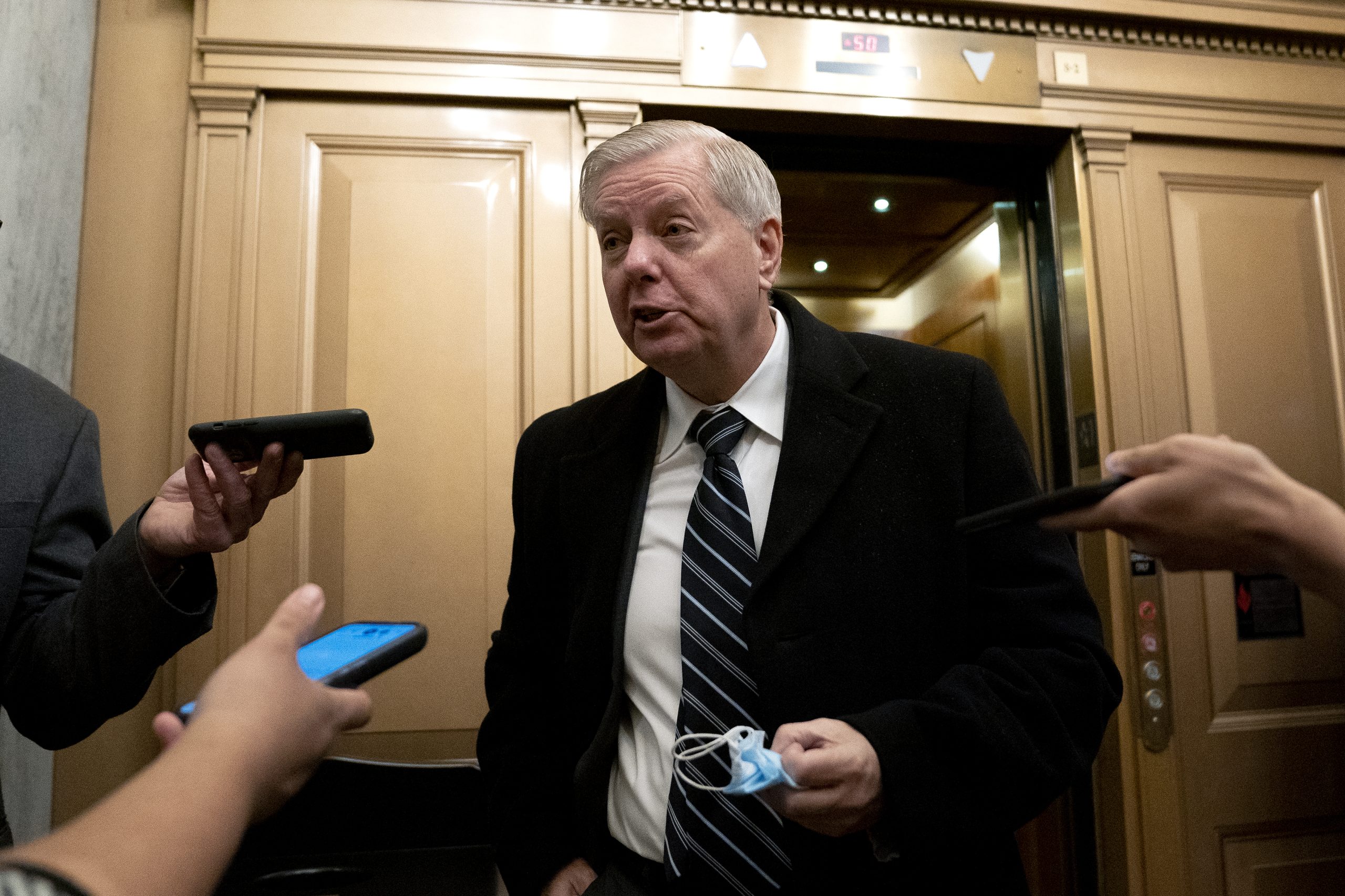
In 2015, Sen. Lindsey Graham described Donald Trump as a bigot. Much changed over the next decade, Janell Ross writes.Jacquelyn Martin
In 2015, Graham was a third-term senator from South Carolina vying for the Republican presidential nomination — a field that included more than a dozen others — en route to being crushed by Trump.
Graham, for his part, described Trump as a bigot, interested in anti-American policy, and a malignancy that, if nominated, would destroy the GOP.
Given that, when Graham offered his pithy prescription for America in a December 2015 appearance on CNN, I wasn’t exactly surprised.
“You know how you make America great again?” he said. “Tell Donald Trump to go to hell.”
It was a riff on the recycled bit of American political sloganeering that Trump had pushed into the zeitgeist, again. Trump’s vision was to make America more like it was in the past: less diverse, more exclusionary, with group suspicion as public policy, and strict racial and gender hierarchies governing national life.
In 2015, Graham’s position on Trump seemed clear and immutable. He told reporters he did not vote for Trump in 2016. Then, Trump won the election, and Graham spent most of the decade since transforming into one of the president’s most steadfast defenders.
There was a brief interregnum, a wobble of sorts on Jan. 6, 2021. After Trump supporters invaded the U.S. Capitol, Graham gave a speech. On the Senate floor, Graham seemed to point the finger of responsibility directly at Trump.
Sen. Lindsey Graham (R., S.C.) speaks with reporters during the second impeachment trial of former President Donald Trump in February 2021 at the U.S. Capitol Building.Stefani Reynolds
“Trump and I, we’ve had a hell of a journey,” Graham said. “I hate it to end this way. Oh my God, I hate it. From my point of view, he’s been a consequential president. All I can say is count me out. Enough is enough.”
But Graham, converted MAGA bannerman and, his critics say, Trump-era opportunist, soon returned.
Graham’s devotion to Trump was so sweeping and so sudden that the more conspiracy-minded have embraced the idea that Graham was the victim of blackmail or controlled by some sort of kompromat.
In death, Graham’s defenders — a group that, in these contentious times, notably includes Republicans and Democrats — have described his Trump transition as pragmatic, even admirable; what a skilled legislator must do.
Graham, they say, managed, in the final days of his life, three substantive foreign policy victories. He hammered out the details of a Russian economic sanctions bill Trump has said he will sign. He secured U.S. approval for Ukrainian strikes in Russia. And with these agreements, Graham effectively shored up NATO and its fundamental goal of staving off world war. Of course, all of that is contingent upon a mercurial president remaining uncharacteristically disciplined and consistent.
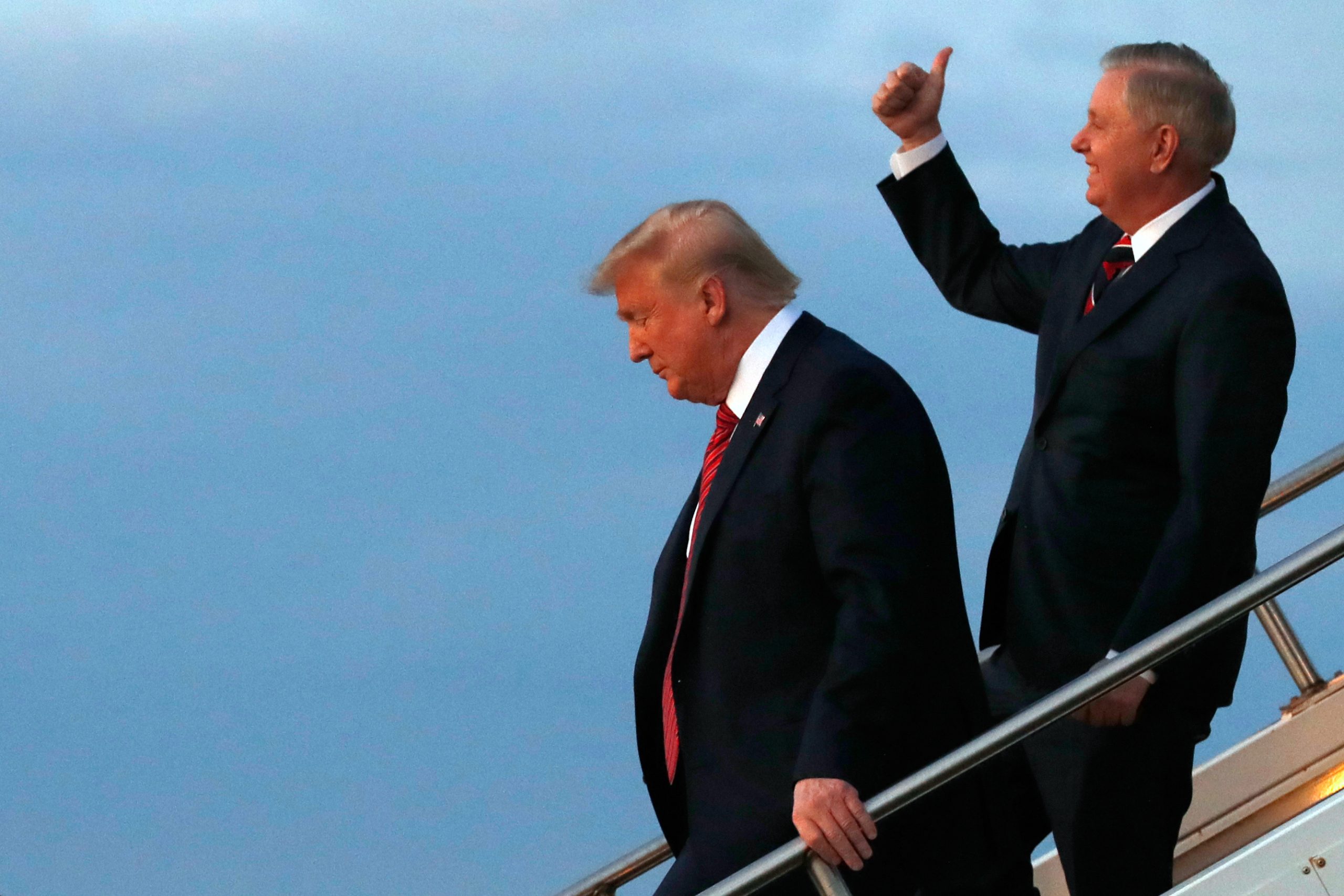
Sen. Lindsey Graham (R., S.C.) with President Donald Trump at a rally in Charlotte, N.C., in March 2020.DOUG MILLS
And therein lies the public lesson for us all. Time can and will run out. Redemption arcs, periods of public reconsideration, and book-tour explanations are not guaranteed.
Entirely honest assessments of the dead are rare. Many will offer familiar strings of superlatives, words of admiration, mutual respect, and sympathy — perhaps in the hope that those sentiments will be reciprocated when their time comes.
Others might just say our passing was a “big blow” to one of their pet projects.
Ultimately, though, our actions and associations will speak unvarnished truths about us long after we are gone.
Visit the block where Welker lived in Washington, D.C. Today there is not so much as a plaque. There’s just a Marriott.
Janell Ross is a former senior correspondent at Time magazine who frequently writes about race, politics, and identity.
In the opening pages of the book he published between losing and then winning a Pennsylvania seat in the U.S. Senate, Dave McCormick painted the picture of an uncomfortable scene at Mar-a-Lago.
It was early 2022. McCormick, a former hedge fund CEO running in a tough Republican primary against celebrity doctor Mehmet Oz, had made the pilgrimage to meet with then-former President Donald Trump and ask him not to endorse Oz. Trump had maintained a firm grip on the party after leaving office and avoiding conviction for “incitement of insurrection” at his second impeachment trial.
According to McCormick’s retelling, Trump pulled up a television interview McCormick gave after the Jan. 6, 2021, attack on the U.S. Capitol in which he said the president was partially responsible for political divisiveness.
“Then the former president looked me in the eyes and warned, ‘You know you can’t win unless you say the election was stolen,’” McCormick wrote. “I made it clear to him that I couldn’t do that. Three days later, Trump endorsed Mehmet Oz.”
McCormick lost the race but ran again and won with Trump’s support two years later — when they shared a ballot. Now, three years after McCormick penned the book, he has become a prominent cheerleader in the Senate for an election reform proposal — the SAVE America Act — that Trump has advocated for while continuing to falsely say the 2020 election was rigged against him.
The Pennsylvania Republican has still not echoed the president’s debunkedclaims of widespread fraud in 2020. He also has not disputed them as he lobbies for the bill, which he and other Trump allies argue will build confidence in elections and which critics say will do the opposite while potentially disenfranchising millions of voters.
Other Pennsylvania Republicans in Congress — some of whom tried to block the state’s electoral votes hours after the Capitol attack— have similarly stayed quiet as Trump has both resurfaced old allegations and introduced new ones.
In a prime-time speech earlier this month, Trump claimed that China had secretly obtained U.S. voter information and that a “large-scale voter registration operation” led to fraud in Michigan six years ago. His administration also released a document alleging Pennsylvania was among four states where the Department of Homeland Security had identified more than 250,000 noncitizens registered to vote.
Pennsylvania Secretary of State Al Schmidt, a Republican appointed by Democratic Gov. Josh Shapiro, has forcefully rejected those claims.
But adding more fuel to the rhetoric about election integrity, New Jersey officials said last week that about 6,600 people who were not citizens were registered to vote before the 2024 election, and fewer than 400 cast a ballot.
Still, many of the claims Trump made in his speech have been refuted by election experts and, in many cases, were not new.Meanwhile, none of the 11 Republicans representing Pennsylvania in Congress have commented directly on them, including some who responded to certain questions for this story but did not answer others specifically about the new claims.
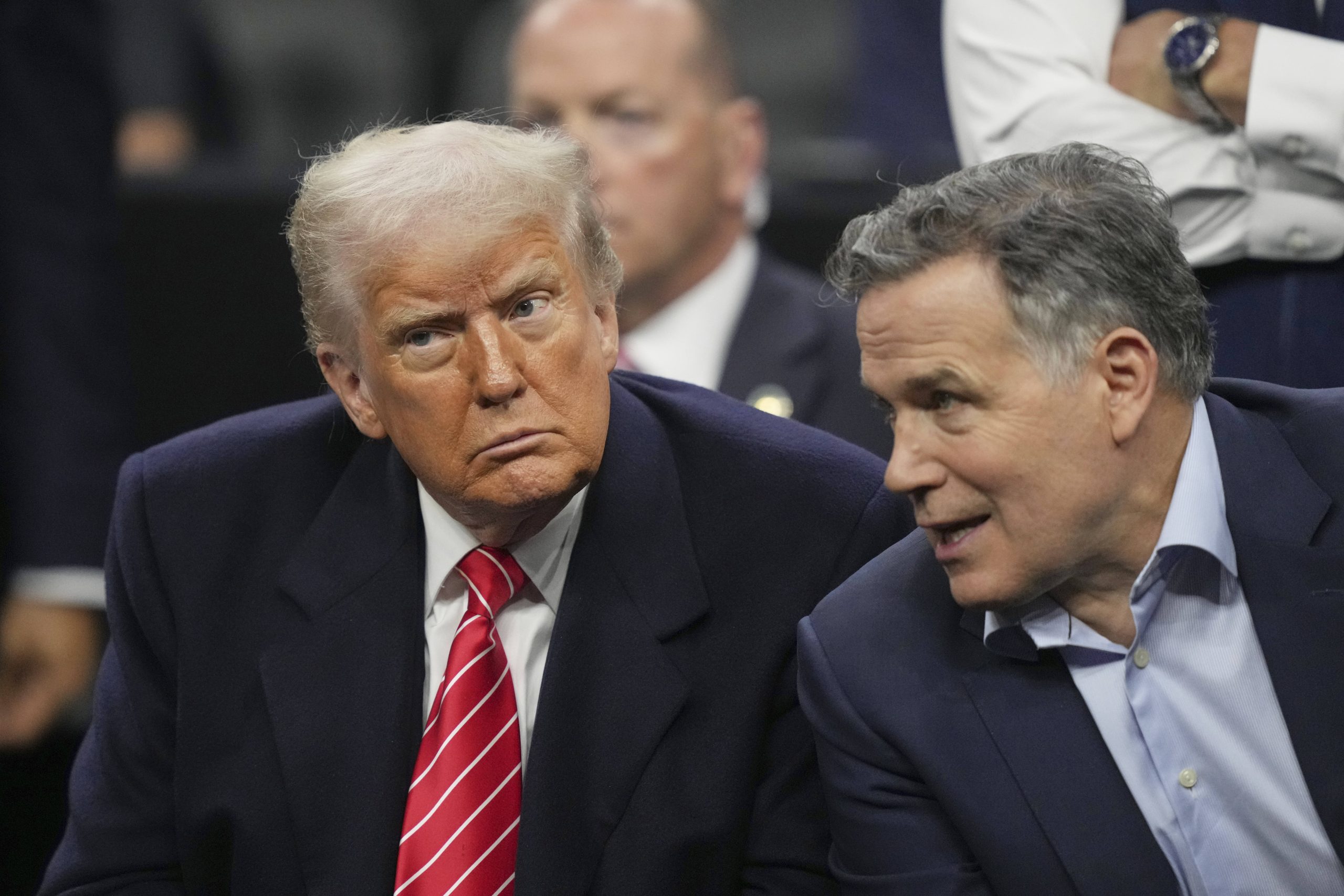
President Donald Trump, left, and Sen. Dave McCormick, R-Pa., attend the finals at the NCAA wrestling championship, Saturday, March 22, 2025, in Philadelphia. (AP Photo/Matt Rourke)Matt Rourke
McCormick’s spokesperson said only that the senator’s position on 2020 “remains unchanged.”
A spokesperson for U.S. Rep. Brian Fitzpatrick, a moderate Bucks County Republican who voted to certify President Joe Biden’s 2020 win, said the lawmaker “completely disagrees with the president’s allegations of interference in the 2020 election.” She did not answer a question about the new and specific claims, such as the 250,000 noncitizens registered, but said Fitzpatrick “has full faith and confidence [in] our election officials.”
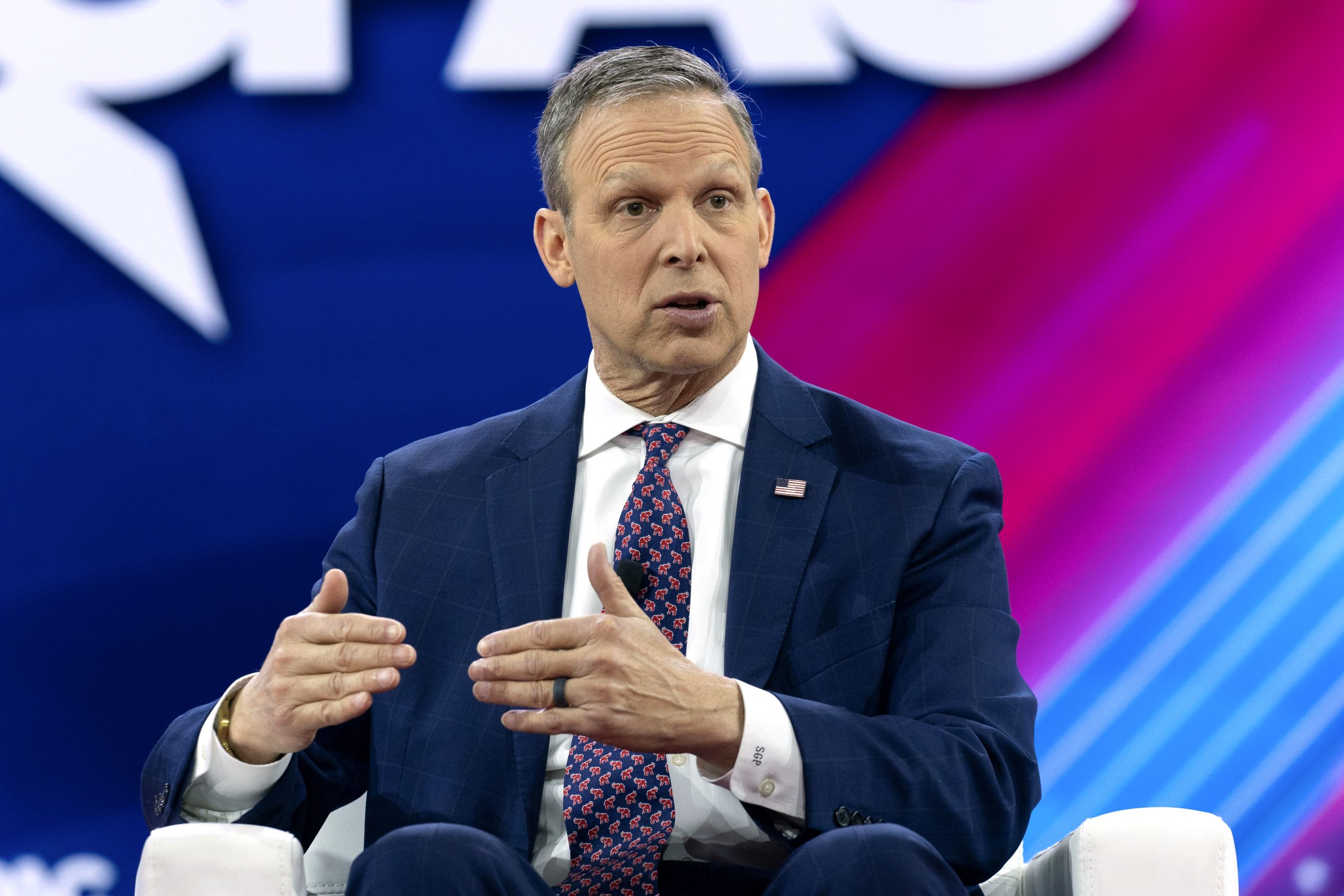
Rep. Scott Perry, R-Pa., speaks during the Conservative Political Action Conference, CPAC 2024, in Oxon Hill, Md., Feb. 22, 2024. (AP Photo/Jose Luis Magana, File)Jose Luis Magana
U.S. Rep. Scott Perry, a York County Republican who tried to overturn election results and became a subject of investigations into Jan. 6, reposted comments online that raised alarm about the White House’s claims of noncitizen voters.
Perry’s office did not respond to a request for comment. He is one of four Republicans in the state facing a competitive reelection this fall — putting Pennsylvania in the national spotlight as Democrats push to gain control of the narrowly divided U.S. House, and potentially at the center of concerns about Trump’s attempts to control the election process.
Republicans point to N.J. as they call for new voting law
Every Pennsylvania Republican in Congress, meanwhile, has supported the SAVE America Act. The bill would require voters to provide proof of citizenship when registering to vote and to show photo ID at the polls. It would also scale back mail voting, which has become increasingly popular since the COVID-19 pandemic but has remained a focus of Trump’s false claims of fraud.
Supporters of the legislation say that voter ID is widely popular and that eliminating even a few noncitizens from the voter rolls is worth ensuring elections are legal and secure. Opponents say that the issues the bill is trying to solve are either nonexistent or statistically irrelevant, and that it would effectively make registering more difficult for about 21 million people who do not have easy access to the paperwork that would be required, like a passport or birth certificate.
“It would upend voter registration and our democracy and, on its own terms, is an extraordinarily harmful policy that would hurt millions of American citizens,” said Eliza Sweren-Becker, a voting rights expert at the Brennan Center for Justice. “It is being advanced on the backs of lies about our election system that are themselves harmful to our democracy and trust in election administration.”
Though he has not addressed Trump’s latest claims, McCormick renewed his public push for the SAVE America Act after Trump’s prime-time address — writing, “Let’s act now,” on social media following the speech.
Last week, he and others also grasped on to both a nearly decade-old voter registration issue in Pennsylvania and the fresh problem in New Jersey to underscore the need for the law.
“This isn’t a harmless ‘software error,’” McCormick wrote on social media after Gov. Mikie Sherrill said a technical mistake led to noncitizens registering to vote. “This is why we must confirm citizenship before anyone registers. Only U.S. citizens should vote in our elections.”
McCormick also elevated a statement from the Department of Homeland Security that referred to an issue that Schmidt, then a Philadelphia city commissioner, discovered in 2017. Schmidt found 168 noncitizens were registered in Philadelphia, and likely hundreds more were registered statewide, due to an error by the Pennsylvania Department of Transportation. State Auditor General Tim DeFoor, a Republican, has said fixes to the system were largely successful.
U.S. Rep. Ryan Mackenzie, a Lehigh County Republican who is running in one of the most competitive districts in the country, also pointed to the Pennsylvania example and the New Jersey developments while justifying his support for the SAVE America Act during a telephone town hall with constituents Wednesday.
But while trying to remember the details on the call, Mackenzie potentially overstated the problem.
“I believe it was about 8,000 people here in Pennsylvania made their way onto the voter rolls, who were not supposed to be there and weren’t asked those proper questions. So these things do happen,” Mackenzie said before stressing the need for the SAVE America Act.
Asked about that number, a spokesperson for Mackenzie pointed to the Pennsylvania Department of State’s additional review in 2018 that found 8,698 voters whose eligibility needed to be determined. Those voters, however, were not necessarily noncitizens or otherwise ineligible to vote, and the state never released a more detailed analysis.
The spokesperson did not answer questions about whether Mackenzie agrees with Trump’s old or new claims about election fraud in 2020, or whether Pennsylvanians should have confidence in the state’s current system.
“This case from Pa., and from N.J. more recently, highlight the lack of appropriate checks taking place when people initially register to vote. We should have appropriate checks to verify the citizenship status when someone initially registers, which is what the SAVE Act provides. The absence of these safeguards, as well as the egregious errors that have been seen in states like New Jersey, are key reasons for the bipartisan frustration with our elections.”
Sweren-Becker said overstated claims of noncitizen voters have contributed to spreading distrust. The Pennsylvania situation, she said, was also not an example of a scheme to defraud the system, and “not the basis for a policy that would block millions of Americans from being able to cast their ballots.” Both that case and the one in New Jersey are instead examples of administrative errors that occasionally happen in a complex election system and represent “an extraordinarily small fraction” of voters, she said.
The Cato Institute, a libertarian Washington-based think tank, has also thrown cold water on the idea that the SAVE America Act would have prevented the New Jersey error. Legal fellow and former Arizona Republican official Stephen Richer, in a post that referred to McCormick’s advocacy, wrote that the current structure of the bill “likely wouldn’t have prevented” the software error.
“Be wary of politicians who say, ‘All of these problems will be fixed with my simple legislation,’” Richer wrote. “That’s often not the case.”
‘Deeply unhelpful’
McCormick, in response to questions for this story, did not directly say if the law would have prevented the issue in New Jersey. But he stressed that the paperwork requirement “helps stop noncitizens from getting registered.” It would also require states to set up a program to “continuously check voter rolls to find noncitizens” using different datasets — which he noted some states already have.
In a telephone town hall with constituents on Wednesday, the senator also acknowledged concerns about the bill when asked about it by voters on both sides of the issue.
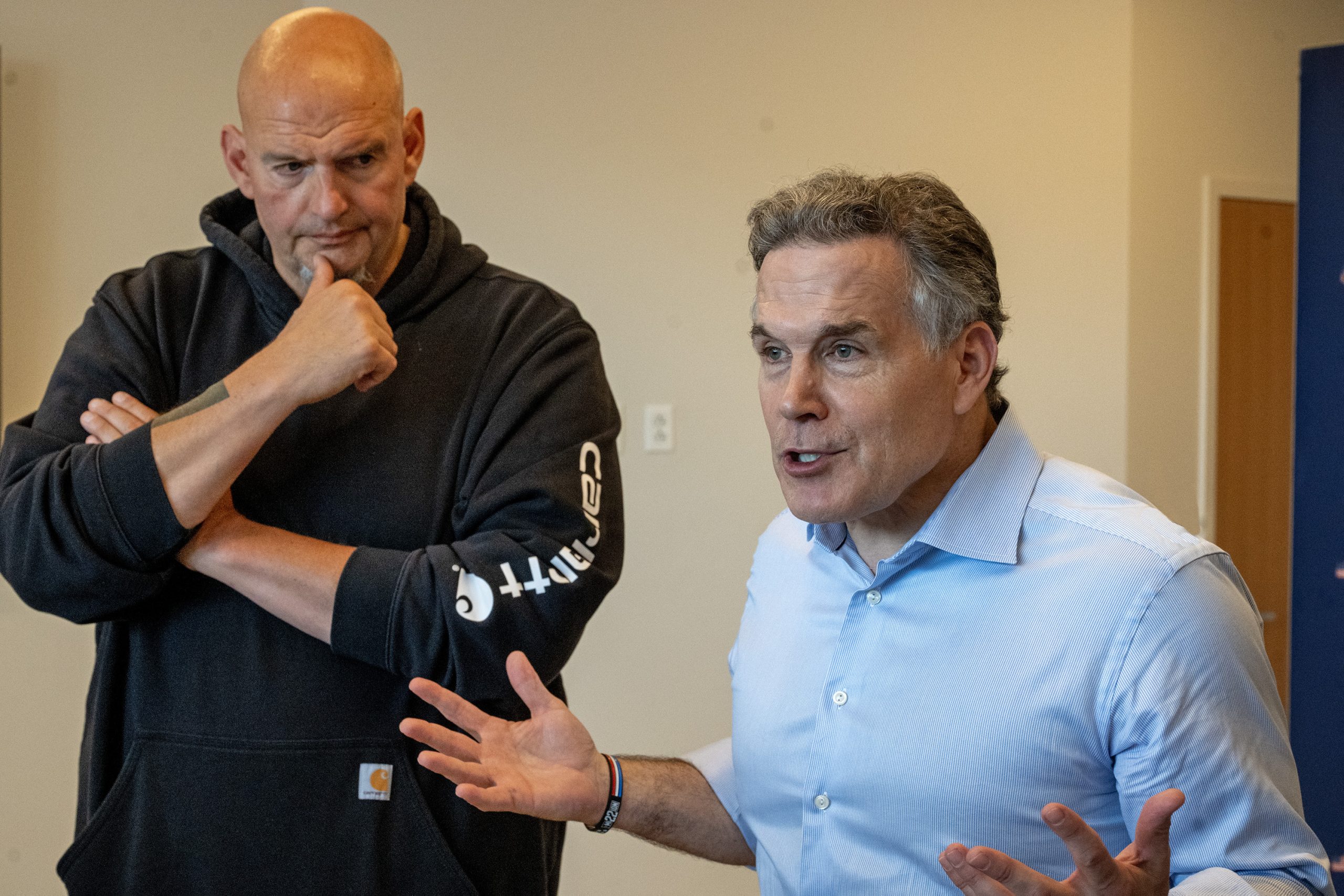
Pennsylvania’s U.S. Senators John Fetterman (left) and Dave McCormick appear together Monday, June 29, 2026 to promote the savings accounts for kids that were a signature piece of President Trump’s Big Beautiful Bill.Tom Gralish / Staff Photographer
He said he believed the law would “make it as easy as possible” for people to obtain valid forms of ID if they do not have them. And as someone who lost his first race against Oz by 950 votes and won his second race against Democratic U.S. Sen. Bob Casey by about 15,000 votes, he said even rare cases of noncitizen voting could make a difference in close elections. Eligibility for mail ballots also needs “to tighten up dramatically,” he said, though he did not fully explain his thoughts on the issue or if he believes there has been fraud associated with them.
As Democrats block the bill in the Senate, he called on them to “defend the indefensible” and said “there should be a political cost in objecting to something that most Americans agree with.”
One of the Democrats opposing the bill is McCormick’s close friend and ally — U.S. Sen. John Fetterman.
Though he has frequently broken with his party — and now supports voter ID after previously calling it “insidious and unnecessary” — Fetterman has said the bill’s changes to mail voting are “a nonstarter” for him.” In a CNN interview last week, he also said that the 2020 election in Pennsylvania was fair, that there is “no evidence” of 250,000 noncitizens registered, and that Trump was unnecessarily fixated on the 2020 election.
“In Pennsylvania, out of 67 counties, the vast, vast, vast majority of them are deep red counties, and they’ve never encountered any kinds of fraud,” Fetterman said. “I don’t know why the president is dragging up all of this stuff. You’re the president. Do something positive. And you are talking about 2020. That’s been settled over six years ago. It’s deeply unhelpful.”
Other Pennsylvania Democrats have lambasted Trump for dredging up the old claims, and they have blamed GOP “enablers” for supporting him and pushing the bill.
“The only thing it would ‘save’ is Trump and his Republican enablers from voters holding them accountable,” U.S. Rep. Dwight Evans (D., Philadelphia) said.
U.S. Rep. Chris Deluzio, an Allegheny County Democrat who worked on election security issues before running for Congress in 2022, said the bill “will do nothing to improve election security” and would instead harm married women — whose birth certificates might not have their current name — and people without passports. He said those who lie about the 2020 election are “cowards” who should not have a place in elected office.
“The fact that some Republican politicians are so scared of Donald Trump that they lie for him just to keep their jobs is spineless and pathetic,” Deluzio said.
McCormick, for his part, said during the telephone town hall that the bill is unlikely to pass as Democrats continue to block it from getting the required 60 votes in the Senate, and as Republicans decline to eliminate the filibuster rule to let it move forward with just 50 votes.
“Where does that leave us? That leaves us in a position where I think we should be constantly talking about this, and I try to do this every single week, multiple times, [saying] why the SAVE America Act is important,” said McCormick, whose staff said he was unavailable for an interview.
New Jersey Gov. Mikie Sherrill signed a surveillance pricing ban into law on Thursday as she champions herself as a fighter for lower costs in New Jersey.
The Democrat lauded the initiative as part of her broader agenda and campaign promise of making life more affordable in the state. Also in line with her messaging, she blamed President Donald Trump’s tariffs and the war in Iran for high grocery prices at a news conference announcing the new law.
“Surveillance pricing essentially gives Big Brother a look into your shopping cart,” she said. “It’s incredibly invasive and it’s expensive.”
Several states across the country have similar bills under consideration, but New Jersey is just the third to write the ban into law, after Maryland and Connecticut.
Here’s what to know about the new law.
What is surveillance pricing?
Essentially, it’s when grocery stores or apps create individualized pricing based on shoppers’ personal data.
As defined by the new law, it’s a pricing strategy in which food prices are adjusted, optimized, or recommended by an algorithm or automatic system that uses personal data, such as through biometrics, cameras, sensors, device tracking, or other forms of observing consumers’ personal attributes.
What does this law do?
The new law, called the Fair Price Protection Act, bans surveillance pricing or other pricing strategies that determine the cost of groceries based on consumers’ data. The law takes aim specifically at groceries and not at restaurants or other places that sell food or beverage for immediate consumption.
It also implements a one-year ban on new electronic shelf labels and requires the state to study the use of such labels. The New Jersey Innovation Authority is required to submit findings no more than six months before the end of the moratorium along with policy recommendations surrounding the practice. Companies are allowed to repair or replace existing electronic shelf labels during this moratorium.
These labels allow companies to update prices more efficiently and do not mean surveillance pricing is being used. But a group that has lobbied for a surveillance pricing ban — the United Food and Commercial Workers International Union — has also called for bans on electronic price tags and called them “the missing piece of the surveillance pricing puzzle.”
The surveillance pricing ban will not take effect for a year, but the electronic shelf label moratorium will begin in six months.
A violation of the new law carries penalties of up to $10,000 for the first offense and up to $20,000 for further violations, and the attorney general can pursue additional civil penalties.
What did lawmakers think of this bill?
Earlier this year, some South Jersey legislators said they wish the bill had gone further and banned the practice across other industries.
The bill passed both chambers of the legislature on June 30 as part of a slew of last-minute actions before the budget deadline.
It passed largely along party lines, though two Democrats voted against it in the Senate, including Sen. James Beach, a Camden County Democrat who had been listed as a cosponsor on the bill. He did not immediately respond to a request for comment Friday.
In the Assembly, seven Democrats did not vote on the bill, and one Republican voted for it.
Does Instacart use surveillance pricing?
At her news conference, Sherrill cited figures from a Consumer Reports study that found Instacart used artificial intelligence-driven pricing that left customers with price tags differing as much as 23% per item for an annual household cost difference of $1,200 per year.
However, Instacart has said it did not use personal information to set those prices, and therefore it did not involve surveillance pricing — a practice the company said it does not use. The company also said it has changed its practices outlined in the study.
That being said, experts have warned that the combination of AI pricing models and the mass amounts of data collected on U.S. shoppers paves the way for surveillance pricing, per Consumer Reports.
Will this law interfere with your loyalty discounts?
Opponents of the bill, such as business groups and Republican lawmakers, have argued that the bill will have the opposite effect than intended, leading to higher prices because of negative effects on loyalty discount programs.
“The reason so many businesses pushed back on ‘The Fair Price Protection Act’ wasn’t because they want to price gouge customers, it’s because the bill threatens the loyalty programs, discount apps, and member pricing that brings in customers and actually brings prices down for everyday shoppers. … This law threatens to take that all away,” Assembly Republicans said in a post on X on Thursday.
But Sherrill insists the new law will not go after those discounts.
“Deals are fine,” Sherrill said. “Surveillance-driven surcharges driving up costs are not. If companies violate your privacy to try and make a buck, they’ll be held accountable under our state’s Consumer Fraud Act.”
The law specifically says it does not prevent discounts with publicly shared eligibility requirements, such as being a teacher or veteran. It also allows companies to offer discounts through loyalty programs that shoppers opt in to and provide discounts based on customers’ purchases as long as all members of the program are eligible to receive them under the same conditions.
The Trump administration has agreed to drop its subpoenaordering the University of Pennsylvania to release the names of Jewish people on its campus, marking what seems to be a victory in the Ivy League school’s battles with the federal government.
The Equal Employment Opportunity Commission has said “it will not take any further measures to enforce the subpoena seeking identification and personal contact information of employees,” according to a resolution agreement filed Thursday in the U.S. Court of Appeals for the Third Circuit. The agency also agreed not to seek the information through other means, according to the agreement.
The commission had been requesting the information to further its investigation into antisemitism complaints on Penn’s campus.
The EEOC initially won the court’s approval to enforce the subpoena, but Penn appealed the decision. Penn said it has agreed to drop its appeal and, according to the resolution, the school agreed not to ask that the district court’s opinion in the case be vacated.
It was not clear what caused the federal agency to change course or the status of the commission’s antisemitism investigation. An EEOC spokesperson said: “We will decline to add anything beyond court filings.”
Penn released a statement. “With the support of many members of the community who have stood with Penn throughout, the university has been able to protect its employees’ rights and none of the subpoenaed personal contact information was disclosed,” a university spokesperson said. “Penn remains committed to fighting antisemitism and all other forms of discrimination, to ensure everyone it serves can learn, work, and thrive.”
The move brings the monthslong battle between the federal agency and the Ivy League university over the subpoena to a close.
The EEOC’s decision to subpoena the information drew widespread criticism from faculty and others, on and off the campus. Among those that opposed the subpoena was the Penn chapter of the American Association of University Professors.
“This victory shows that universities should not capitulate to unjust and unconstitutional demands from the Trump administration,” said Lorena Grundy, vice president of AAUP-Penn. “AAUP-Penn will continue to defend the rights of all communities at Penn, and we look forward to continuing to grow the coalition that has grown out of this effort.”
The Anti-Defamation League Philadelphia, which has supported the EEOC’s effort to address antisemitism at Penn and has been critical of college campuses’ handling of antisemitism complaints, said it was pleased the EEOC was not pursuing the subpoena.
“As we’ve said, demanding lists of Jewish employees and campus organizations is a different matter, one with a troubling history we cannot ignore,” said Andrew Goretsky, senior regional director. “We’re pleased the EEOC has apparently agreed not to pursue its requests for sensitive information and that information was not disclosed. We’ll continue working with our partners to support Jewish students, staff, and faculty at Penn.”
Roy Hamilton, faculty senate chair, said he was “heartened to see that this matter has been resolved in a way that protects the privacy of Penn employees while allowing the university to move forward.
“Our shared focus remains on fostering a community where all members are treated with dignity, respect, and fairness.”
Penn has faced other pressure from the federal government. Last summer, the school struck an agreement with the Trump administration over the participation of transgender athlete Lia Thomas on the women’s swim team. The school met a number of the White House’s demands, including adhering to the Trump administration’s definitions of sex, female, male, women, and men, and sending letters of apology to female athletes who felt aggrieved by Thomas’ participation on their team during the 2021-22 season.
Penn pointed out at the time that the agreement was restricted to athletics and did not affect other university operations.
The EEOC last year — as part of its quest to find people potentially affected by antisemitism concerns at Penn, officials said — demanded a list of employees in Penn’s Jewish Studies Program, a list of all clubs, groups, organizations, and recreation groups related to the Jewish religion, including points of contact and a roster of members, and names of employees who lodged antisemitism complaints.
The original complaint was launched by EEOC Commissioner Andrea Lucas, now chair of the body, on Dec. 8, 2023, two months after Hamas’ attack on Israel that led to unrest on college campuses, including Penn, and charges of antisemitism. It was also just three days after Penn’s then-president, Liz Magill, had testified before a Republican-led congressional committee on the school’s handling of antisemitism complaints; the testimony drew a bipartisan backlash and led to Magill’s resignation days later.
The commission sued Penn in November for failing to turn over the information sought in the subpoena.
Judge Gerald J. Pappert ruled in March that Penn must comply with the subpoena, signaling a major loss for the university in its fight to keep employees’ and students’ personal information from the federal government. In his 32-page ruling, Pappert largely dismissed arguments from Penn and others who intervened on the school’s behalf that releasing the information sought by the commission would put employees at risk, create an undue burden on the school, and cause employees to disaffiliate from such groups.
Pappert had ruled the school had to provide the information to the EEOC, though it did not have to state which particular organization each person is affiliated with.
Penn sought a stay of the order and said it would be “irreparably harmed” if it had to comply before the school had a chance to appeal.
Pappert in April granted Penn a stay while the appeal proceeded. But Pappert at that time also underscored the school’s unlikely success in an appeal.
“The charge of discrimination is valid, the EEOC’s subpoena seeks information relevant to the charge and the subpoena does not unduly burden Penn,” he wrote. “The subpoena also does not violate substantive due process or the First Amendment.”
Penn has said it provided information to the EEOC in cases where employees consented but steadfastly refused in others.
“Violating their privacy and trust is antithetical to ensuring Penn’s Jewish community feels protected and safe,” Penn said when the EEOC filed the suit.
The school offered to help the EEOC reach employees who were willing to speak with the agency by informing all employees of the investigation and how they could reach the agency.
Jon Fansmith, senior vice president for government relations and national engagement at the American Council on Education, said the resolution “reinforces the merits of Penn standing up to something that was clearly inappropriate and excessive from the start.”
The government alleged wrongdoing and then tried to find the evidence to prove it in part by issuing the subpoena.
“This is clearly an abuse by the government of their authority,” Fansmith said.