Tag: Donald Trump

  • ‘People are sacrificing necessities.’ Ahead of Pa. governor’s race, the economy weighs heavily for Latino voters

    ‘People are sacrificing necessities.’ Ahead of Pa. governor’s race, the economy weighs heavily for Latino voters

    Jorge Luis Burgos of North Philadelphia, a registered Democrat, was one of many Latino voters who shifted to the right and voted for President Donald Trump in the 2024 presidential election.

    Now he’s planning to shift back and vote for Democratic Gov. Josh Shapiro as he runs for reelection in the key swing state.

    “Shapiro 100%. I love the way he manages everything,” Burgos said while attending Arte en las Calles, an event last weekend celebrating Latino culture held by the Esperanza Art Center in North Philadelphia.

    Burgos, 57, who moved to Philadelphia from Puerto Rico in 1980, said he voted for Trump in 2024 because he was worried about inflation and felt betrayed by the last-minute switch that swapped then-President Joe Biden for Vice President Kamala Harris as the Democratic nominee. But he said Trump has failed to fulfill his promises, and he has found himself turning back to the Democratic Party.

    “I was disappointed, and that’s why I switched. But you ask me now, I’m disappointed, too. Big time,” Burgos said. “Trump didn’t accomplish his promise: ‘On Day One,’ inflation is gonna go down. It didn’t happen.”

    In the past decade, support of Republican candidates, specifically Trump, has grown in the majority Latino precincts of Philadelphia — with Trump’s share of the vote increasing from 6.1% in 2016 to 21.8% in 2024.

    While Harris still won these wards — and a slight majority of Latino voters nationally, according to exit polls — Trump’s improved performance with this voter group helped him win both Pennsylvania and the presidency.

    Burgos, like many other supporters who shifted to the right, said Trump’s promises to bring the cost of living down to its pre-COVID rate ultimately won over their vote.

    Ninety-three percent of Trump’s Latino supporters cited the economy as the main issue driving their vote in the 2024 election, according to a September 2024 Pew Research Center poll.

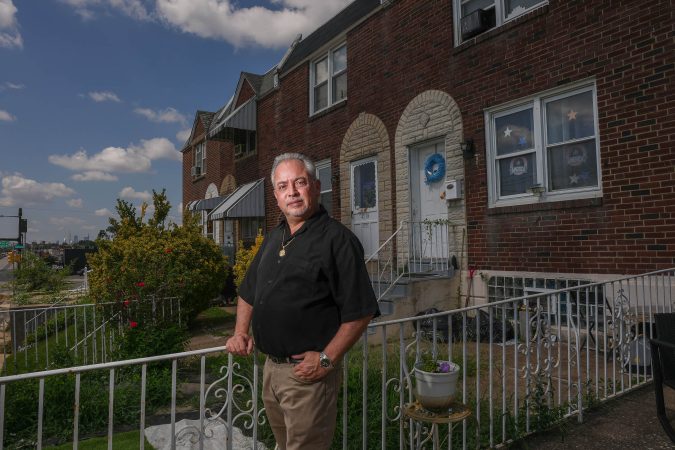
    Jorge Luis Burgos with his grandchildren Luis Burgos Jr. and Athena Burgos, in Philadelphia. His wife Carmen is standing in the doorway in this photo.Jessica Griffin / Staff Photographer

    But now many Latino voters have not seen the outcomes they were hoping for, with a May poll from Pew finding that Trump’s support has fallen more sharply with Latino voters than other voters. Only 66% of Hispanic Trump voters approved of his job performance in the poll, falling 27 percentage points from the start of his presidency.

    According to a May poll from UnidosUS, a national Latino civil rights organization, 66% of Latino voters say Trump and congressional Republicans are not focused on fixing the economy.

    Pennsylvania Democrats and Republicans will be seeking to sway these voters in November when Shapiro faces off against Republican nominee Stacy Garrity, the state’s treasurer, in the race for governor.

    What are the issues on the minds of Latino voters?

    Latino voters, who make up more than 600,000 of eligible voters in Pennsylvania and are the fastest-growing demographic group in Philadelphia, said in interviews that the economy, immigration, and support for small businesses are the issues that will determine who they vote for.

    “They’re focused on cutting costs,” Shapiro said of the region’s Latino voters at a rally with congressional candidate Bob Brooks and House Minority Leader Hakeem Jeffries in the 7th Congressional District, one of four GOP-held seats in the state Democrats are hoping to flip after the area accounted for some of Trump’s biggest Pennsylvania gains in 2024.

    “They’re focused on their small businesses getting help,” Shapiro said. “They’re focused on more cops on the street for safer communities and schools that are stronger.”

    Gov. Josh Shapiro addresses the audience during a rally for congressional candidate Bob Brooks at the United Steelworkers Union Hall in Bethlehem, Pa. on Sunday, July 26, 2026.David Maialetti / Staff Photographer

    Jaime Negrone, 67, from North Philadelphia, has lived in Pennsylvania his whole life but has roots in Puerto Rico. He said the cost of living is the major issue he is hoping to see tackled.

    “Everything has become so expensive,” Negrone said. “People are sacrificing necessities on one end to cover for the other end: food, gas, housing.”

    Negrone said he will vote for Shapiro over Garrity because the governor seems to be more connected to the people of Pennsylvania.

    “Shapiro has a pulse on the issues in Pennsylvania,” Negrone said. “He’s been in the office, he knows the politics, and he seems to be a politician for the people.”

    Seth Ortiz, 30, a second-generation Puerto Rican from Northeast Philadelphia, said he’s going to vote for Democratic candidates in November because he feels that’s the only way to protect people’s rights amid increased immigration enforcement.

    “I don’t like the fact that ICE is pretty much doing what they want in U.S. cities. At some point, even killing American citizens and getting away with it, it’s horrible,” Ortiz said. “So anyone who is going to stand up for immigrant rights is probably the most important thing for me. And it’s probably always going to be the Democrat.”

    Gladis Avila, 55, a Venezuelan business owner from South Philadelphia, said she is not sure who she is going to cast her vote for yet. She wants a candidate who is going to stand up for her community and small businesses but has not heard much outreach from either campaign.

    “The Latino community needs people who work more for our community,” Avila said. “…When we vote, we want to feel like we are voting for someone who is going to help our community. Because that’s our voice, and our voice has an impact.”

    Gladis Avila stands in a park near her house in South Philadelphia.Andrea Padilla

    Echoing this, Jennifer Rodriguez, president of the Greater Philadelphia Hispanic Chamber of Commerce, a nonprofit focused on the economic growth of the Hispanic community, said she’s heard worries from businesses about being able to keep up with their expenses.

    “Small businesses are very, very concerned about the viability of their businesses,” she said. “And in the really escalating cost environments. Particularly, the labor force has become very costly.”

    How are campaigns reaching the Latino community?

    Matt Beynon, a representative for the Garrity campaign, said that helping small businesses is the main concern the campaign has heard from Latino voters.

    “And a lot of concerns she’s hearing are about the overregulation and red tape that is preventing them from either starting a business, growing their business, expanding their business,” he said.

    Outreach to the Latino community has so far included attending community events in Philadelphia and other communities with large Latino populations, like Allentown, Beynon said.

    State Treasurer and Republican candidate for governor Stacy Garrity holds a rally in Bucks County Sept. 25, 2025 at the Newtown Sports & Events Center.Tom Gralish / Staff Photographer

    Shapiro has also spent time in majority Latino areas. In May, he attended and co-hosted “Fiesta on Hamilton,” in Allentown, a street festival that celebrates Latino culture in the Lehigh Valley.

    “During Fiesta on Hamilton, Gov. Shapiro met with local small business owners, entrepreneurs, creators, cultural leaders, and local officials as part of Shapiro for Pennsylvania’s ongoing commitment to engaging, uplifting, and investing in Latino communities across the Commonwealth,” the Shapiro campaign wrote in a statement.

    Samantha Reposa, a representative for the Shapiro campaign, said the campaign is also running Spanish-language radio ads to further engage voters.

    ‘I feel left behind’

    Despite this, many Latino voters in Philly said they haven’t felt reached by either campaign.

    Rodriguez expects messaging to ramp up closer to the election. Because of the Latino community’s lower voter turnout in relation to other groups, Rodriguez said they are often the last to be reached, a strategy she is hoping to see change

    “One thing that typically happens is that the Latino community oftentimes is the last community to be approached by politicians and their systems,” Rodriguez said. “The Latin community’s voter engagement is relatively low. And a lot needs to be improved, but a lot of it has to do with candidates really seeking the relationship with our community much earlier on.”

    Carolina Hansell, 61, immigrated from Venezuela 33 years ago and is planning to vote for Shapiro, but said she has seen and felt the conservative shift in her community and that it’s in part due to a lack of outreach.

    “They need to work and talk to real people and the neighbors over here,” Hansell said. “It’s the only way to convince people and have a good plan. There’s not a plan right now, not in that Democratic Party.”

    Anjoli Santiago, 41, said it’s not just the Democrats that are lacking but feels like both political parties have lost touch with the Latino community and sees that trend continuing.

    “I think it will continue if we don’t have more conversations about how diverse our people are and the different needs that our people have,” Santiago said. “I feel left behind by both parties definitely. It feels like we are voting and those who we vote for no longer represent us.”

    Staff writer Michelle Baruchman contributed to this article.
  • Trump administration may be forcing immigrant parents to choose between green cards and benefits for their U.S.-born children

    Trump administration may be forcing immigrant parents to choose between green cards and benefits for their U.S.-born children

    President Donald Trump’s administration may be creating a difficult choice for low-income immigrants who could be denied green cards by seeking public assistance to feed and access healthcare for their U.S.-born children.

    Under the “public charge” rule — which the administration plans to put in place on Sept. 18 — a person could be denied permanent residency in the United States if immigration officers believe the individual would become a drain on the country by accessing government benefits, which could include SNAP, Medicaid, and housing vouchers.

    In Philadelphia and throughout the region, the rule, though not yet official, is nevertheless having a chilling effect, frightening parents who are legal immigrants into avoiding public benefits for their children, say advocates who work with immigrants and low-income communities.

    “It could prevent families from going to food cupboards, or keep women from accessing domestic violence shelters. The effect will be broad,” said Maripat Pileggi, an attorney with Community Legal Services in Center City.

    Advocates say the administration’s public charge rule could have a major impact on so-called mixed-status families made up of immigrant adults awaiting green cards and their children who are U.S. citizens.

    Immigrant parents have customarily been permitted to apply for the Supplemental Nutrition Assistance Program as well as Medicaid and housing assistance on behalf of their children, as long as they were not seeking help for themselves.

    A spokesperson for the U.S. Department of Homeland Security said people in the United States legally “have nothing to fear” and reiterated that U.S. policy has been that immigrants “should not depend on U.S. taxpayer resources to meet their needs.”

    As the Trump administration pursues its highly public crackdown on undocumented immigrants, the rule highlights ways in which its policies have also targeted all immigrants, including ones on track for lawful permanent residency.

    “They throw another hurdle people have to worry about into their path, making America seem less desirable,” said Jeff DeCristofaro, executive director of the Camden Center for Law and Justice.

    “What happens next is people gathering around their kitchen table and deciding it’s too difficult to be in this country. So they give up and self-deport.”

    DeCristofaro said his organization, which provides free and low-cost legal services to individuals with low incomes, is “already getting calls from people who have to make agonizing choices.”

    What is the public charge rule?

    The public charge rule dates back to the Immigration Act of 1891, when entry to the United States was denied to people who could not take care of themselves, primarily “paupers.”

    In 1999, the Clinton administration clarified the public charge to deny entry to a person who would be primarily dependent on the government for cash subsistence, such as TANF (previously known as welfare), Supplemental Security Income (SSI), or long-term Medicaid. However, the guidance explicitly said that noncash benefits such as SNAP, non-long-term Medicaid, or housing help would not be considered public charge determinations.

    But near the end of Trump’s first term, the public charge definition was expanded to penalize green card applicants for using legal public benefits such as Medicaid of any kind, SNAP, and housing assistance. President Joe Biden later rescinded Trump’s version of the public charge, reestablishing the earlier iteration of the rule.

    Currently, the Trump administration’s second version of the public charge rule does not explicitly state which benefits will be penalized. Advocates, however, expect a return to 2019 standards.

    The Department of Homeland Security has calculated that more than 950,000 individuals will either disenroll from public benefits or forgo enrollment into them because of the policy, according to the Federal Register.

    Ann Sanders, the director of public benefits policy at Just Harvest, an anti-hunger nonprofit in Allegheny County, worries the disenrollments will exacerbate the already growing demands on food pantries in the state.

    “You’re going to have kids going hungry because parents will be trying to keep families together by not going for SNAP benefits,” she said. “It’s insidious. It’s awful.”

    The fear among advocates is that by not delineating the public benefits that can trip up a legal immigrant, U.S. immigration officers will be free to use the public charge rule in any way they see fit, which could severely limit the number of people accepted into the country.

    That is not the best way to assess the policy, according to Hans von Spakovsky, a senior legal fellow at Advancing American Freedom, a conservative think tank created by former Vice President Mike Pence.

    “It allows immigration officers to take a holistic view of the alien being considered for a green card. The old rules about obtaining cash and noncash benefits were rigid,” said von Spakovsky, who was a contributor to Project 2025, a more than 900-page document intended to serve as a conservative blueprint for Trump’s second presidency.

    He called the public charge rule an important tool for determining who should obtain a green card, a major step toward U.S. citizenship. “We want immigrants to be productive members helping the economy without relying on benefits,” von Spakovsky said. “It’s a matter of being more selective.”

    The public charge rule is expected to be challenged in court before the end of the summer.

    Jonathan Grode, an immigration attorney in Center City and adjunct law professor at Temple University, argued the policy stems from one of the goals of Project 2025, which is to reduce all immigration, not just illegal entry into the country.

    “What’s in the rule is secondary to the rule’s primary purpose: changing people’s idea to come to this country in the first place,” Grode said.

  • The U.S. faces financial losses as the Trump administration ends temporary protections for thousands of immigrants

    The U.S. faces financial losses as the Trump administration ends temporary protections for thousands of immigrants

    The government protection that allows more than a million immigrants to live and work in the U.S. because it is unsafe for them to go home expired last month for people from Syria and Haiti.

    It is set to conclude for more than 170,000 people from El Salvador in September, and in October 100,000 from Ukraine could face the same termination of temporary protected status (TPS).

    The Trump administration promises to deport those who lose legal status ― a fate advocates say is guaranteed to hurt immigrant families that include spouses and children who are American citizens.

    But immigration researchers and organizations say that immigrants will not be the only ones hurt, that the rest of the U.S. will pay a big financial price ― in lost taxes, wages, spending, and services, as large numbers of workers and dollars exit the U.S. economy.

    The nation’s 1.3 million TPS-holders work at higher proportions than the country as a whole, pay billions of dollars each year in federal and local taxes, and contribute to the solvency of a Social Security system from which they are unlikely to ever draw benefits.

    “Even if you don’t care anything about immigration in this country, removing this many highly productive workers from the economy is going to hurt Americans in their pocketbooks,” said Rebecca Shi, executive director of the American Business Immigration Coalition, a Chicago-based, bipartisan network of companies and CEOs. “Americans are going to get hit, in terms of inflation, in healthcare, in housing.”

    Many TPS-holders work in critical jobs and industries. They are the people who build homes, keep restaurants running, fix plumbing and wiring, and, particularly in the case of Haitians, care for the ill and elderly.

    “If you access our healthcare system in any way, shape, or form, particularly elderly care or senior care, you’re going to feel it,” said Anuj Gupta, president and CEO of the Welcoming Center in Philadelphia, “Whether it’s shortage of staff at facilities, whether it’s longer wait times to get in for the appointment that you need. … And if we start going down the road of Salvadorians, Ukrainians, Venezuelans, all having their TPS removed, then those kinds of day-to-day impacts will be more profound.”

    (function(){function e(){window.addEventListener(`message`,function(e){if(e.data[`datawrapper-height`]!==void 0){var t=document.querySelectorAll(`iframe`);for(var n in e.data[`datawrapper-height`])for(var r=0,i;i=t[r];r++)if(i.contentWindow===e.source){var a=e.data[`datawrapper-height`][n]+`px`;i.style.height=a}}})}e()})();

    TPS-holders live in every state. Florida is home to the largest number, about 404,000, followed by Texas and New York. New Jersey ranks seventh, with 43,360, and Pennsylvania 14th, with 23,770, according to the National Immigration Forum.

    “Certain states are just going to get obliterated by this,” said Jeff Hornstein, executive director of the Economy League of Greater Philadelphia, a regional policy and research organization.

    The Philadelphia region will get hit, too. The league examined four countries where designations are ending or at risk ― El Salvador, Ukraine, Syria, and Haiti.

    In the local area, between 4,100 and 6,100 workers from those countries depend on TPS, and as many as 4,600 could lose legal employment authorization, the league said.

    In the city, those TPS workers bring home $36 million to $76 million in annual salaries and pay $1.5 million to $3 million in wage tax.

    The most affected local sectors are predicted to be construction, building cleaning and landscaping, trucking and warehousing, manufacturing, restaurants, and retail.

    The league’s Saloni Tandon, who directs research and analytics, said area residents may notice changes in everyday life, such as the cleanliness of offices and buildings, and the speed of delivery for goods.

    “Because our minimum wage is so low, there are fewer workers coming into the region,” she said. “So it’s going to get very tricky and very stressful to compensate for that.”

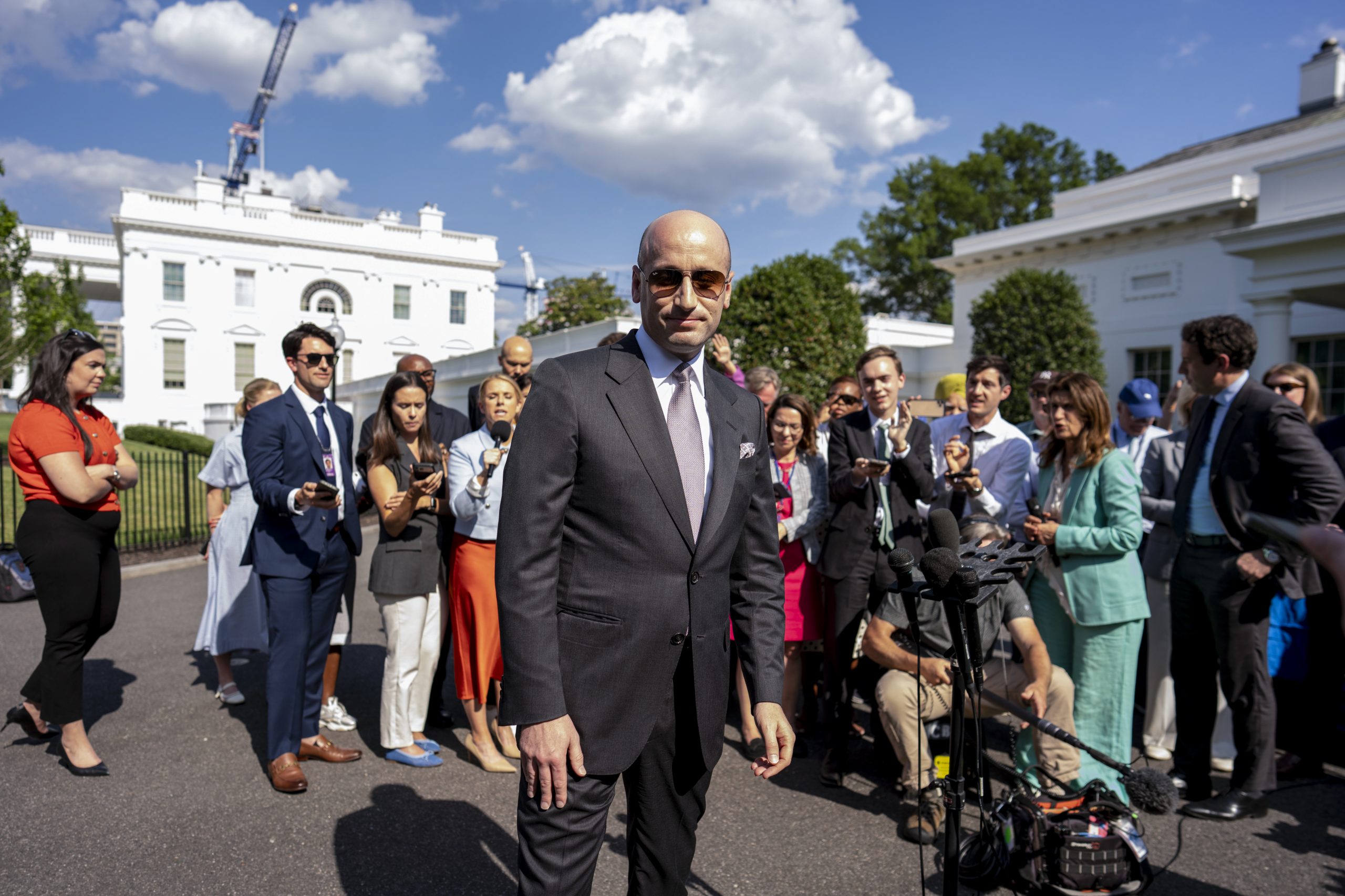
    Stephen Miller, a key White House advisor, speaks to reporters outside the White House after the Supreme Court ruling on June 25. He called Supreme Court’s ruling on TPS “a victory 10 years in the making.”DOUG MILLS

    The American Business Immigration Coalition notes that while the U.S. has only 4% of the world population, it produces 25% of all gross national product and captures 65% of global stock market value. That is tied to the strength of the economy, which depends on the growth and productivity of the workforce.

    With birth rates falling below replacement levels and a shrinking pool of domestic labor, the coalition said, the United States must embrace a robust legal immigration system to ensure sustained economic growth.

    That has become harder for people here under TPS.

    In June, the Supreme Court ruled that the Trump administration could terminate temporary protected status for countries like Haiti and Syria, putting more than 350,000 people from those lands at immediate risk of deportation.

    More broadly, the ruling appears to make Department of Homeland Security decisions about TPS unreviewable by lower courts, creating deep uncertainty for the future.

    Homeland Security says TPS has officially ended for Haiti and Syria, even though cases involving stays and constitutional issues are technically alive in lower courts. The Supreme Court decision started the process for an implementation order that typically takes 32 days. Once TPS ends for individual countries, holders revert to their previous immigration status, meaning those who have no other protection will be subject to arrest and deportation.

    The Trump administration has made a goal of ending TPS, insisting that “temporary” means temporary. It’s unclear if the administration may let TPS designations end on their staggered schedules or attempt to conclude the status for all holders at once.

    Work authorizations for Haitians expired on Monday.

    They face a forced return to a country crippled by natural disasters, governmental collapse, and ongoing gang violence.

    The U.S. government warns Americans not to go to Haiti, issuing its highest “Do Not Travel” advisory. The United Nations estimates that 90% of Port-au-Prince, the capital and largest city, is controlled by criminal gangs, the violence having left thousands dead and displaced more than 1.4 million people.

    White House adviser Stephen Miller told reporters after the court ruling that it was safe for Haitians to return, saying it would be “crazy to say that Haitians couldn’t live in Haiti.”

    Asked if people who lose TPS would be deported, he answered: “Of course. If you no longer have status in this country, then you’re supposed to be deported.”

    CBS News reported last Sunday that U.S. Immigration and Customs Enforcement is preparing a operation to quickly arrest and deport Haitians — including those in Ohio, where Trump falsely accused migrants in Springfield of eating cats and dogs.

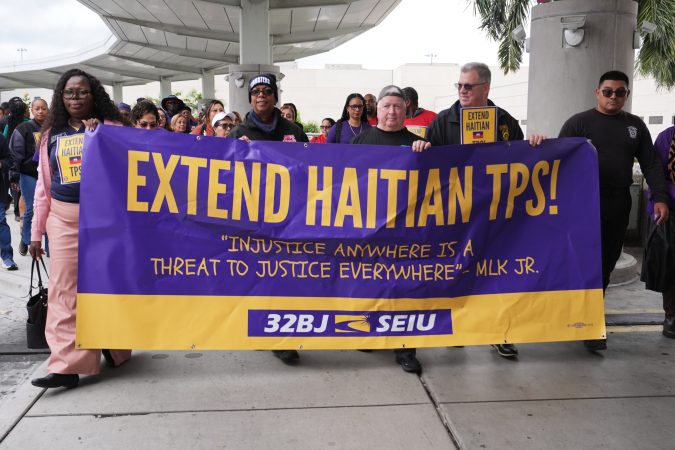
    The Haitian Bridge Alliance, a California-based advocacy organization, warns against “one of the largest family separation events in modern-day history,” as TPS-holders live with an estimated 390,000 American-citizen children and 410,000 citizen adults.

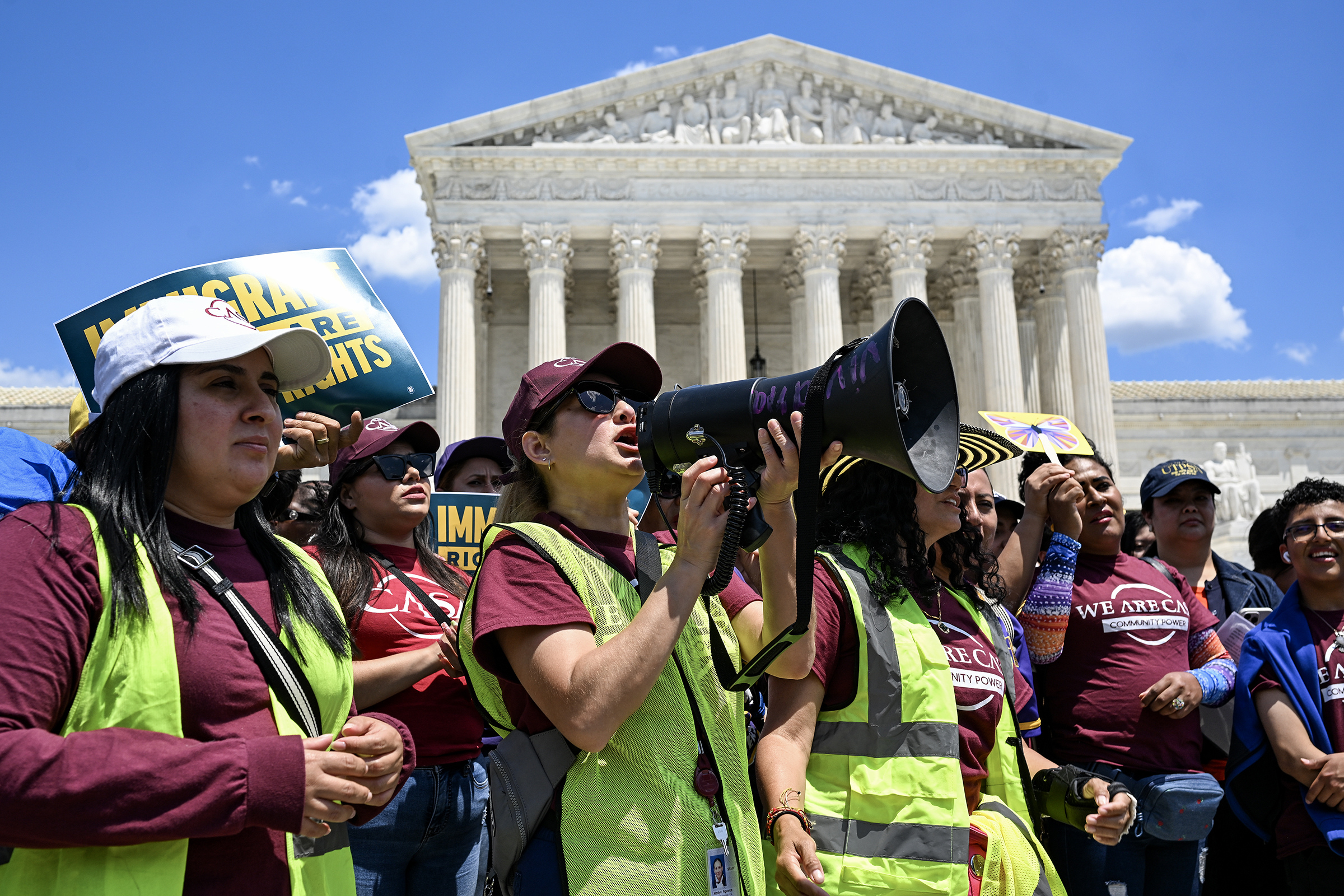
    Demonstrators protest outside the U.S. Supreme Court after the court issued a 6-3 ruling that significantly impacts the future of Temporary Protected Status, a U.S. immigration program established by Congress in 1990.KENNY HOLSTON

    Immigrant allies are planning a rally for Haitians in Philadelphia on Thursday.

    TPS is a humanitarian status that the U.S. can grant to foreign nationals whose countries are embroiled in war, environmental disasters, epidemics, or other extraordinary circumstances. It provides work authorization and protection from removal, but no path to permanent residency or citizenship.

    People with TPS participate in the labor force at a rate of 85%, well above the overall U.S. rate of 63%, according to a new policy briefing from FWD.us, a bipartisan advocate for immigration and criminal justice reform.

    About one-third of TPS households own homes and pay mortgages.

    Each year, people with TPS pay about $7.8 billion in federal, payroll, state, and local taxes, and contribute $690 million to Social Security, FWD.us said.

    Haitian TPS-holders pay close to a billion dollars in taxes annually, according to the American Immigration Council.

    They compose a disproportionate share of nursing aides and long-term-care assistants, and any removal is expected to hurt nursing homes and assisted-living facilities that already face a shortage of workers.

    “In Ohio, Florida, and Pennsylvania, businesses will lose workers, the elderly will lose caretakers, and families will be separated,” said Vanessa Cárdenas, executive director of America’s Voice, a Washington-based advocacy organization.

    The pro-business U.S. Chamber of Commerce has urged the Senate to pass legislation that would extend protections for Haiti, in order “to prevent significant disruption to America’s workforce and avoid an unnecessary humanitarian crisis.”

    The chamber knows TPS was never intended to be permanent, it wrote in a letter to Senate leadership, but the reality is hundreds of thousands of Haitian nationals have lived and worked lawfully in the U.S., “contributing to communities and filling critical positions throughout the American economy.”

    At the same time, widespread violence and governmental dysfunction in Haiti “make safe and orderly large-scale repatriation unrealistic.”

    Ukrainians in the U.S. face a similar situation.

    Many have nothing to return to ― their homes were destroyed in the war. Or they lived in cities that face constant bombardment, making any return potentially deadly.

    The Philadelphia region has been a main resettlement area for people escaping the war, spurred by the vitality of a local Ukrainian community that is tens of thousands strong. Now Ukrainians who fled to the U.S. see their TPS scheduled to end on Oct. 19, and wonder how they will afford food and housing if that happens.

    “People are really panicked,” said Iryna Mazur, the honorary consul of Ukraine in Philadelphia.

    Ukrainians need both an extension and a redesignation of TPS ― the latter allowing newer arrivals to qualify, she said. Employers are upset, too, worried they are about to lose good, qualified workers, including many employed as mechanics or plumbers’ and electricians’ assistants.

    “They are losing their employees, and their businesses will be hurt,” Mazur said. “We need the [Trump] administration to act.”

  • N.J. Democratic delegation asks President Trump to reverse FEMA aid rejection for deadly February snowstorm

    N.J. Democratic delegation asks President Trump to reverse FEMA aid rejection for deadly February snowstorm

    Every Democrat in the New Jersey congressional delegation signed a letter to President Donald Trump asking him to reverse his rejection of disaster aid for a deadly blizzard earlier this year.

    The lawmakers sent the letter, which was first obtained by The Inquirer, to the White House on Friday in support of Gov. Mikie Sherrill’s appeal of the president’s rejection. Their plea comes after Trump denied an $84 million request to the Federal Emergency Management Agency (FEMA) for relief for a late February blizzard earlier this month.

    “Severe blizzard conditions led to widespread damage—overwhelming State and local capacity,” the lawmakers wrote. “Tragically, this fatal event resulted in 12 confirmed weather-related fatalities across nine counties, the most out of any impacted state.”

    The letter was led by U.S. Sens. Cory Booker and Andy Kim, both Democrats. All members of the New Jersey delegation were invited to join, Booker’s office said, but all three of the state’s Republican members opted out. Even U.S. Rep. Jeff Van Drew, a South Jersey Republican, sat out of the effort despite initially backing the request in April.

    Van Drew joined Booker, Kim, and six Democratic House members in an April letter of support for the request in which they said the public assistance and hazard mitigation funds “are crucial to the recovery of the communities” impacted by the storm.

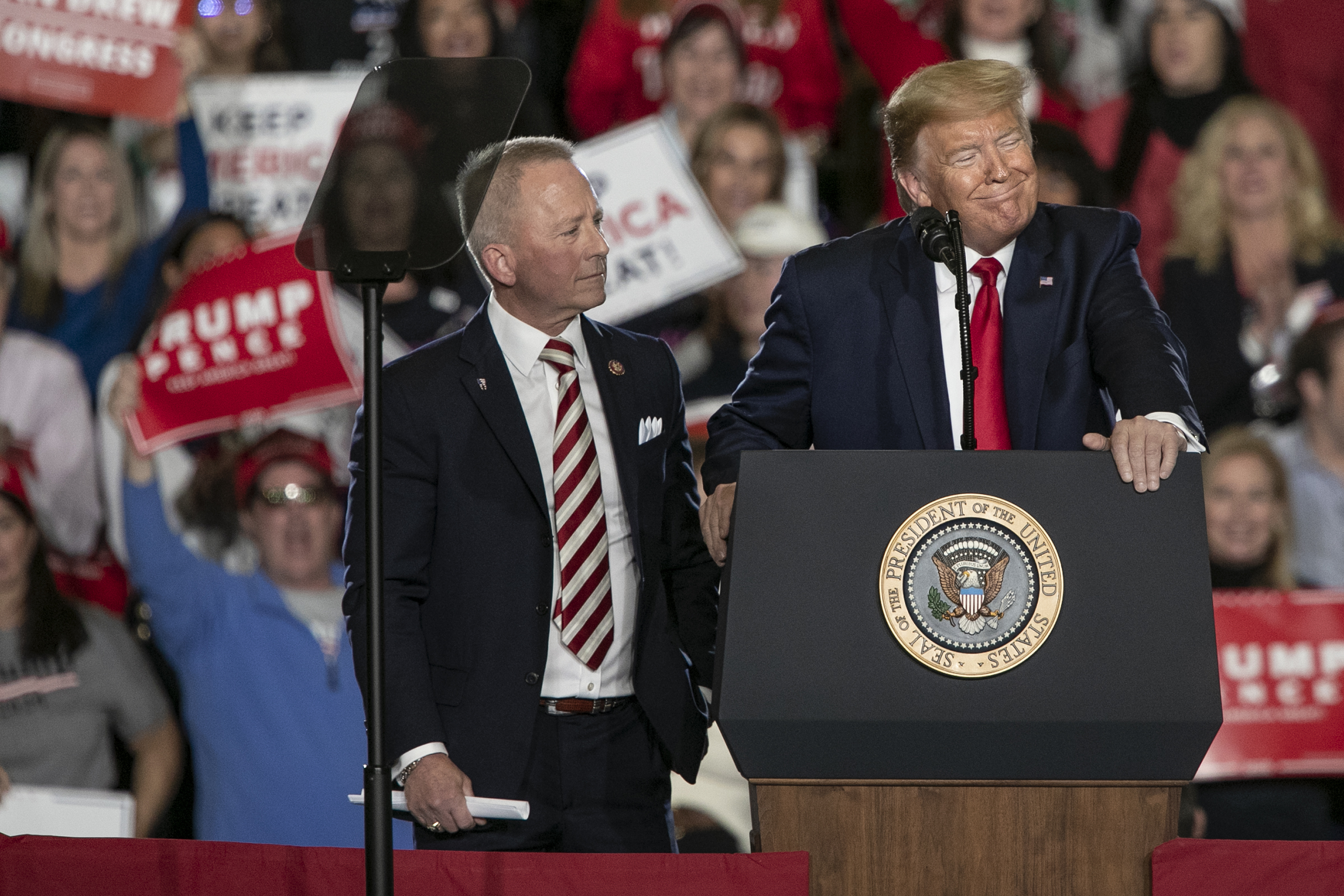
    President Donald Trump smiles while Rep. Jeff Van Drew (R-NJ) stands next to him at a Keep America Great campaign rally in Wildwood, NJ on Tuesday, Jan. 28, 2020.HEATHER KHALIFA / Staff Photographer

    The request sought money for every county in Van Drew’s district for costs related to the snowstorm, including damage from moderate coastal flooding in Atlantic County and his home county of Cape May. Van Drew, a Trump ally and former Democrat, faces a challenge from Cape May Mayor Zack Mullock for his reelection in November.

    Van Drew did not respond to a request for comment.

    In the Friday letter, the Democratic lawmakers’ tone was direct but they did not reference accusations that Trump’s decision was politically motivated. Those concerns come amid a revelation that the Trump administration has been rejecting Democratic states at a particularly high rate. A Wednesday Politico report found Trump recently overrode regional FEMA assessments when he rejected aid for four Democratic states.

    The request included assistance for the vast majority of the state’s counties – including all of South Jersey – as well as hazard mitigation funding statewide, according to the Friday letter. Preliminary damage assessments across those 19 counties documented “extensive emergency work” such as snow and debris removal and “damage to critical infrastructure and public facilities.”

    The New Jersey Office of Emergency Management estimates that disaster costs will exceed $100 million, which is more than five times more than the state’s threshold of about $18 million to qualify for federal disaster assistance.

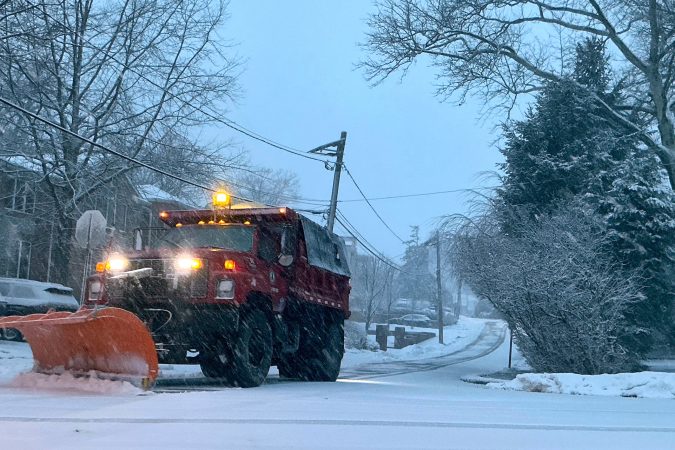
    Covered Bridge Road in Cherry Hill is Monday Feb. 23, 2026 after a power line was knocked down by the Sunday night snorwstorm.Tom Gralish / Staff Photographer

    “The extent of the damage, the operational burden throughout the State, and the cumulative impacts of recent and related extreme weather all provide overwhelming evidence that New Jersey’s request must be granted,” they wrote. “While we commend the actions of the State and local governments to respond thus far, full recovery will require your approval of federal resources.”

    The lawmakers cite National Oceanic Atmospheric Administration data that found approximately 24 inches of snow fell in less than 24 hours across central and eastern parts of the state, and eight of the state’s 21 counties recorded record or near-record snowfalls.

    Power outages during the storm impacted more than 127,000 customers in the state and there were 544 motor vehicle accidents and 1,518 motor vehicle-related assists, according to the letter.

    They also argued that Trump should consider that the state already had a “strained capacity to respond” because of another severe snow and ice storm weeks earlier, as well as six open federal disaster declarations — in reference to prior disasters for which the state is still working on recovery projects.

    “We look forward to working with you to ensure all Americans receive protection and support from the federal government in the aftermath of a serious disaster,” they wrote.

    On Thursday, Sherrill spokesperson Sean Higgins noted in a statement that the costs of the February snowstorm “didn’t care about political boundaries” and that the governor will fight for funding “regardless of political party,” in a nod to the accusations Trump is putting his thumb on the scale based on partisan favoritism.

    White House spokesperson Abigail Jackson said in a statement Thursday, before receiving the letter, that the president “provides a more thorough review of disaster declaration requests than any Administration has before him” and that he responds to FEMA requests “with great care and consideration, ensuring American tax dollars are used appropriately and efficiently by the states to supplement—not substitute, their obligation to respond to and recover from disasters.”

    She also said the Trump administration is committed “to empowering and working with State and local governments to invest in their own resilience before disaster strikes, making response less urgent and recovery less prolonged.” The Trump administration previously tried to cut disaster prevention funding because it was too “focused on ‘climate change” before a group of states including New Jersey sued.

    Kim, the ranking Democrat on the committee that oversees FEMA, said in an interview Thursday that he is concerned that politics were involved in the latest rejection but couldn’t say for sure.

  • Trump denied New Jersey’s request for FEMA aid after a blizzard. Andy Kim is worried it’s about politics.

    Trump denied New Jersey’s request for FEMA aid after a blizzard. Andy Kim is worried it’s about politics.

    Sen. Andy Kim wants to get to the bottom of why President Donald Trump rejected New Jersey’s request for FEMA aid over a record-breaking snowstorm earlier this year.

    Winter Storm Hernando, a massive blizzard, hit New Jersey and other Northeastern states hard in February. New Jersey submitted an $84 million disaster request after tallying the damage in the weeks that followed.

    The Federal Emergency Management Agency (FEMA) this month rejected New Jersey’s request as part of $227 million in disaster aid requests from four Democratic-led states that were denied, Politico reported Wednesday.

    The decision came from Trump after regional FEMA offices and the National Oceanic and Atmospheric Administration (NOAA) determined that the states met the required thresholds to receive aid, according to the report, which cited a former FEMA official calling the move to override the agencies unconventional.

    Kim said in an interview Thursday that Americans need “absolute assurance” that FEMA decisions won’t be based on “the whims of the president.”

    ”I think we should all just declaratively be able to say that partisan politics does not belong in disaster response … I would hope that every single public servant, from the White House to FEMA to the Capitol, believes that,” he said.

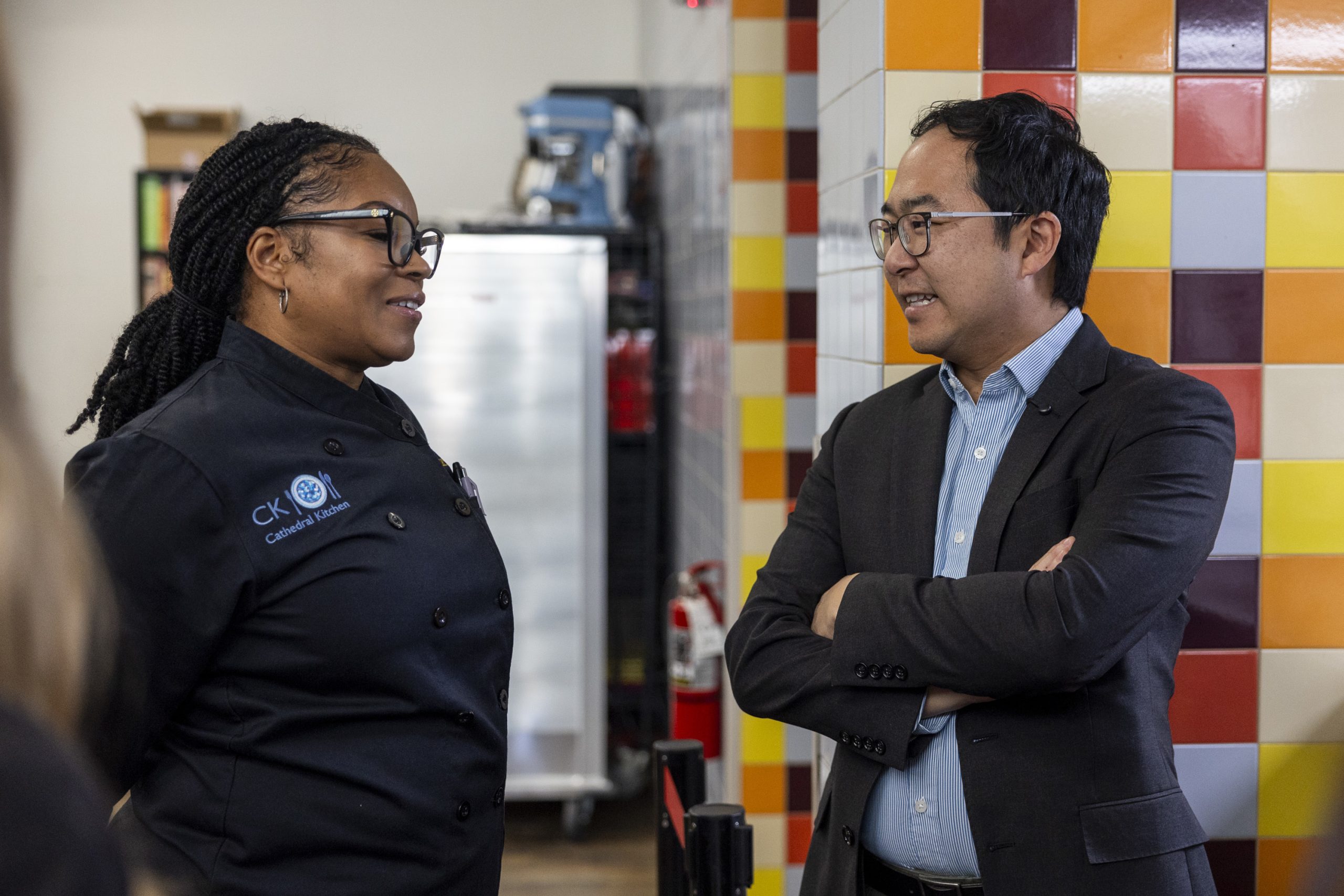
    Sen. Andy Kim speaks with Naimah Rutling, executive chef at Cathedral Kitchen in Camden, N.J., during a visit this month. Tyger Williams / Staff Photographer

    The South Jersey Democrat is the ranking member on the subcommittee that oversees FEMA, the federal agency responsible for doling out aid to communities hit by disaster.

    The president must declare a disaster in order for states to access FEMA aid — and the same goes for individual assistance. Democrats have in recent weeks raised concerns that Trump has penalized blue states in these decisions.

    A 16-page NOAA report indicated snowfall records in seven counties in the state, and a 12-page spreadsheet developed by FEMA and New Jersey documented the $84.4 million in costs, which were primarily for snow removal, Politico reported.

    The National Weather Service reported blizzards in several counties, including in Southeast Burlington County and other parts of South Jersey. The blizzard caused disruptions to the region such as thousands going without power, school closures, and transit disruptions.

    Sean Higgins, a spokesperson for New Jersey Gov. Mikie Sherrill, said the state’s request included costs incurred by the state’s municipalities and counties. He said Sherrill’s administration will appeal the denial.

    “Without that aid, our local governments will be stuck with the costs of an unprecedented snowstorm that didn’t care about political boundaries … Governor Sherrill will continue to fight for every dime that New Jerseyans are owed, regardless of political party,” Higgins said in a statement.

    FEMA’s cost threshold for public assistance for New Jersey is about $18 million, according to the New Jersey Office of Emergency Management, far below the assessed damage from the storm.

    FEMA did not respond to an inquiry about the rejection on Thursday, but Kim said the agency said it disagreed that New Jersey met the threshold.

    White House spokesperson Abigail Jackson has told news outlets that Trump is ensuring FEMA aid is used “to supplement — not substitute” states’ “obligation to respond to and recover from disasters.”

    The South Jersey senator said he has “concerns” that the rejection was political but he can’t say for sure.

    “I understand that you know, the federal government’s not supposed to cover everything for everything, but … this was a situation of record snowfall in wide swaths of New Jersey and, frankly, across the country,” Kim said.

    If the state’s appeal isn’t successful, Kim said he has “more tools in my toolbox to try to get my state the funding they deserve” but declined to share what those would be, saying it’s part of a “broader negotiation.”

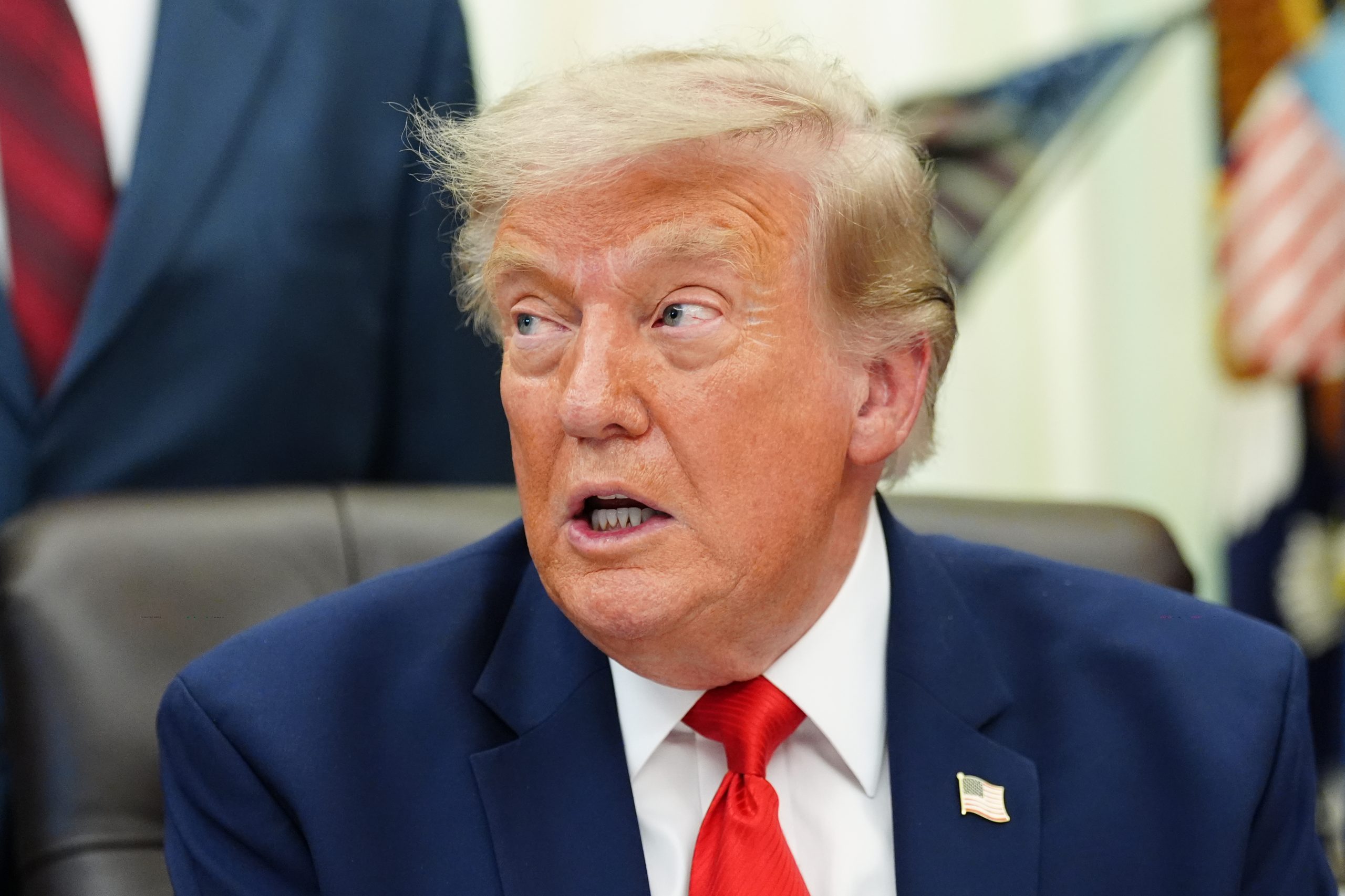
    President Donald Trump speaks in the Oval Office of the White House Wednesday, July 29, 2026, in Washington. (AP Photo/Julia Demaree Nikhinson)Julia Demaree Nikhinson

    The White House has maintained that Trump’s rejections have not been political. But Kim and other Democrats have cited a March Politico report that found Trump’s second administration rejected disaster aid for Democratic-run states at the highest rate in the 47 years that FEMA has existed.

    The rejections underscore bigger questions of the future of FEMA. Trump previously called for the dismantling of FEMA before changing course, but his advisers have recommended an overhaul of the agency that would put more responsibility on states, NPR reported.

    Trump has also caused concern among Democrats for withholding FEMA’s Homeland Security grants from states that do not comply with his administration’s requests for unredacted voter data, including New Jersey and Pennsylvania.

    New Jersey was also hit hard by flooding earlier this month and Sherrill said she believes the state would likely qualify for FEMA aid.

    Joseph Walsh, a spokesperson for the New Jersey Office of Emergency Management, said New Jersey is still in the process of “collecting and validating” the assessed flood damage. Once that’s complete, the state will decide on whether to submit a request.

    Kim said he is trying to clarify and codify FEMA’s role and work with a bipartisan group of legislators on the issue.

    “Every single state is prone to some type of disaster, and so I just don’t want a situation where we’re pitting the states against each other … I hope we can all agree that we want to be there for each other in their time of need,” he said.

  • This quaint Pa. borough is a ‘speed trap’ nabbing immigrants for ICE

    This quaint Pa. borough is a ‘speed trap’ nabbing immigrants for ICE

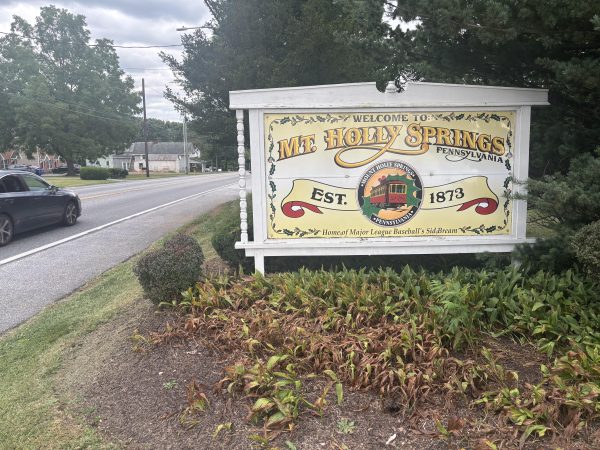
    MOUNT HOLLY SPRINGS, Pa. — Still hailed for its trout fishing, this bucolic Central Pennsylvania borough in the shadow of South Mountain was a big draw for tourists at the turn of the 20th century who flocked here to cool off in its mineral-spring waters.

    In 2026, this tiny municipality about 25 miles southwest of Harrisburg is developing a much less welcoming reputation. The new notoriety began with an agreement between borough police and U.S. Immigration and Customs Enforcement that has turned Mount Holly Springs into a kind of “speed trap” for unsuspecting immigrants — one with life-altering consequences.

    What had been a simmering small-town controversy since the start of the year boiled over into an international incident on July 15 when a prominent Chinese dissident and U.S. asylum seeker named Wu Shaoping was pulled over by a borough officer who claimed Wu had blown through a stop sign. The Amazon delivery driver was then taken into custody by ICE agents who had been running an operation just down the road.

    But the outcry over the arrest and detention of Wu — taken to ICE’s Moshannon Valley Processing Center and crammed into a room with 60 other detainees for 10 days before winning his release on bail — also exposed an even darker story.

    In March, Mount Holly Springs became the only municipality in Cumberland County and one of a handful across Pennsylvania to execute a formal cooperation agreement with ICE under a controversial program known as 287(g). The program gives local cops expanded powers to arrest suspected undocumented immigrants, while offering training and financial incentives in return.

    In just four months, the borough’s four police officers have pulled over and checked the status of dozens of motorists — mainly commercial truck drivers — and turned over 32 arrestees to ICE, the Mount Holly Springs Police Chief Tom Day told me on Wednesday.

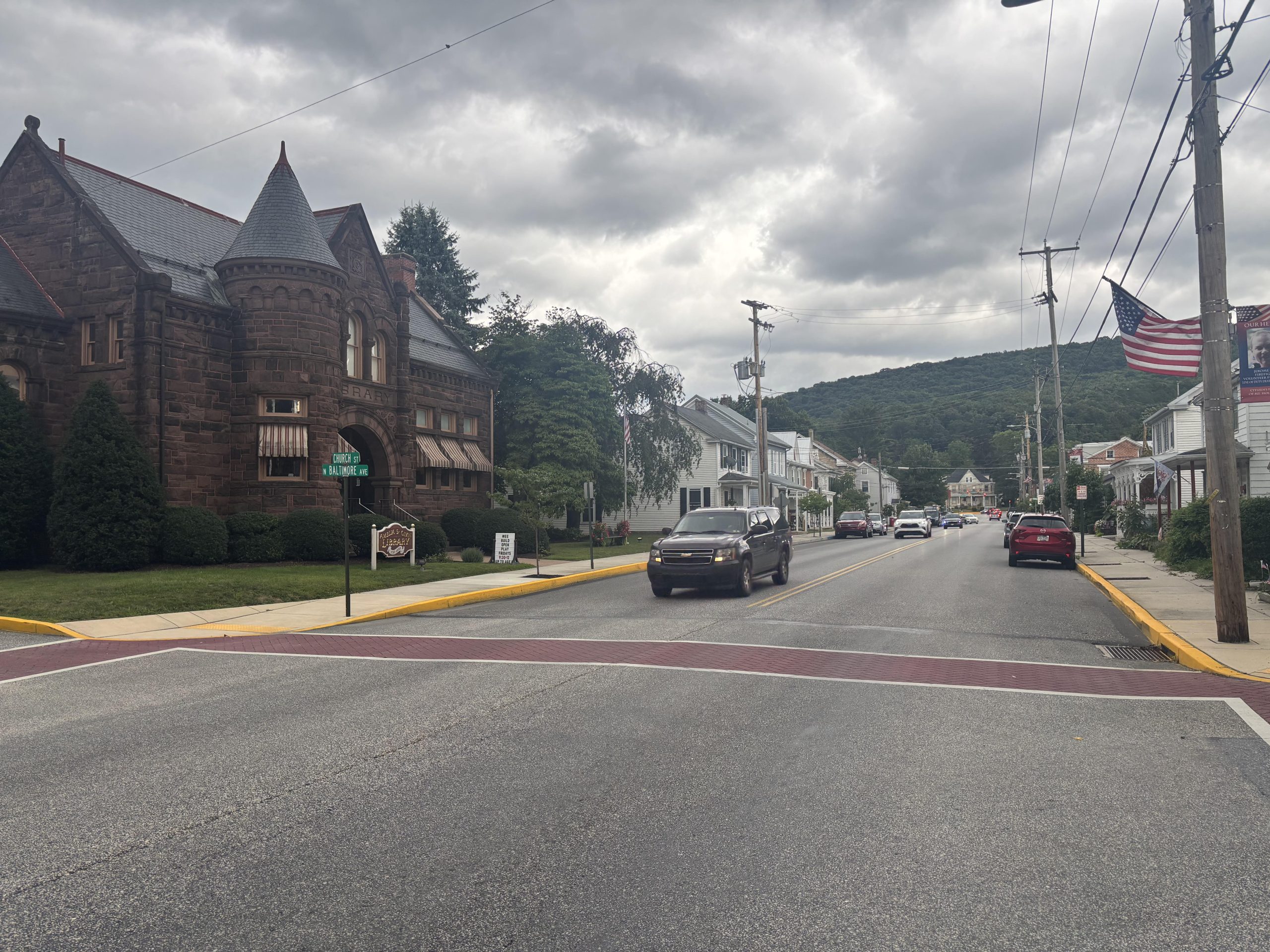
    The main drag in Mount Holly Springs, a small borough in Cumberland County, Pa., on Wednesday. The community has seen controversy over local police cooperation with federal immigration authorities.Will Bunch

    Day, a gruff ex-Marine in a Nittany Lions cap and blue jeans who doubles as borough manager, insisted to me that the traffic stops and ICE cooperation have nothing to do with racial profiling and everything to do with road safety in a borough with aging bridges and narrow streets.

    “There’s no racial profiling of or ethnic profiling of drivers,” the police chief maintained. “We have no clue until we step up on the side of that truck who we’re even dealing with.” Day also said “it’s not that we don’t have a heart” — that he believes in the American dream and understands why refugees want to come here, but when immigrants show up without permission “actions have consequences, you know.”

    Minutes later, I met with a gaggle of local residents and business owners who told a very different story — that the wave of immigrant arrests has created a climate of fear that permeates Mount Holly Springs. The growing uproar has riven their once-placid borough into a distrustful cauldron of angry Facebook comments, muttered asides, and occasional threats — a kind of modern civil war just 25 miles north of Gettysburg.

    “What I’m hearing from my customers, our people are afraid,” said Rachel Bear, the co-owner of a popular local boutique. “Immigrants are afraid. It’s out there.” She said she’s decided to speak out against the borough’s relationship with ICE because some neighbors are intimidated. “I think they’re just scared.”

    Andrew Dapkins, the owner of The “Bird Guy” Tours of local wildlife, told me he’s stopped bringing his excursions into Mount Holly Springs since the deal with ICE was signed. “If I was to bring someone of color, or they were not heterosexual male, I would feel like I was bringing them into a potential hostile environment,” he explained. “So I can’t do that.”

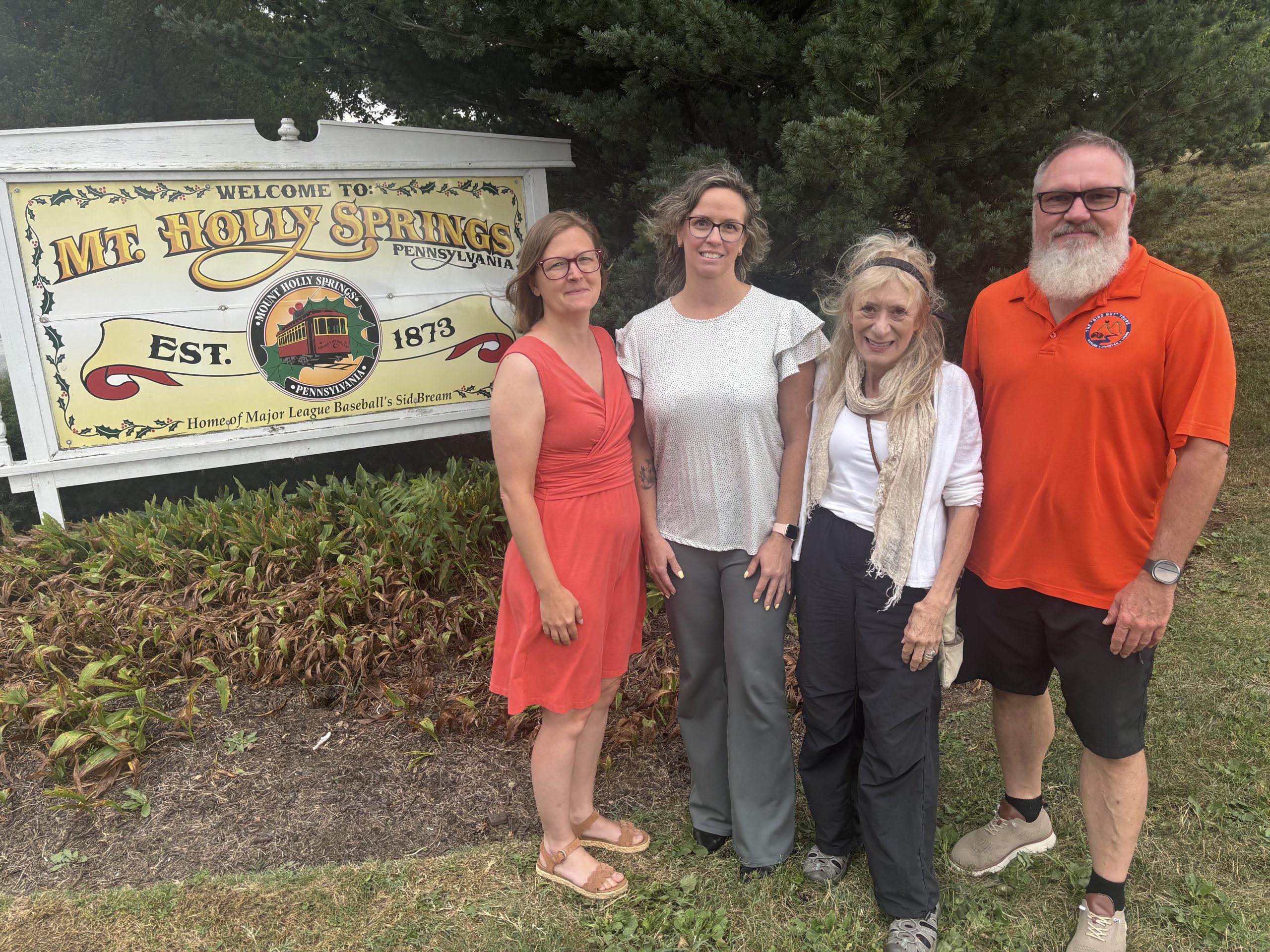
    Some local residents who oppose Mount Holly Springs’ police federal immigration arrests include (left to right) Democratic legislative candidate Jessica St. Clair, precinct leader Mandy Taylor, borough council member Pamela Still, and business owner Andrew Dapkin.Will Bunch

    What’s happened in Mount Holly Springs since the ICE program began this winter feels in many ways like a microcosm of Donald Trump’s America. It’s the rage, distrust, and paranoia that only metastasizes as the demagogue’s fiery campaign tirades get translated into harsh reality at a small-town stop sign.

    But it’s also exactly the chaos that some immigration policy experts warned about when the Trump regime dramatically expanded the 287(g) program, named for a section of 1996 federal immigration law that grants broader immigration enforcement powers to trained state or local police.

    Despite warnings about the potential for racial profiling and seeding distrust in immigrant communities, the number of 287(g) agreements has exploded from a few dozen when Trump first became president in 2017 to more than 2,000 today, with at least 88 on the books now across Pennsylvania.

    Still, the immigration arrest total in tiny Mount Holly Springs, which covers just 1.4 square miles and has a population of fewer than 2,500 residents, seems staggering. As recently as February, there were only 67 monthly immigration arrests by local police across the entire state. But now this one borough is on a pace for nearly 100 arrests in just one year.

    “This is an agenda that’s being driven by numbers for numbers’ sake,” Nayna Gupta, policy director at the American Immigration Council, told me Thursday. “There is an arrest quota that the White House is pushing, and they’re leaning on local police departments to do that work for them” — even as that work paralyzes local immigrants when they learn of increased traffic stops.

    “Communities become afraid to go to the grocery store, to go to work every day, to use public transit, even,” Gupta said.

    There have been festering recriminations in Mount Holly Springs since January, when residents first learned that Day — seen as a local power broker because of his dual role and his close allies on borough council — had signed the paperwork with ICE to become a 287(g) department. A handful of angry residents denounced the plan — revealed at the same time as two ICE-related killings in Minneapolis sparked national outrage. But the lone Democrat on the seven-member board, Pamela Still, failed to get a second on her push to rescind the deal.

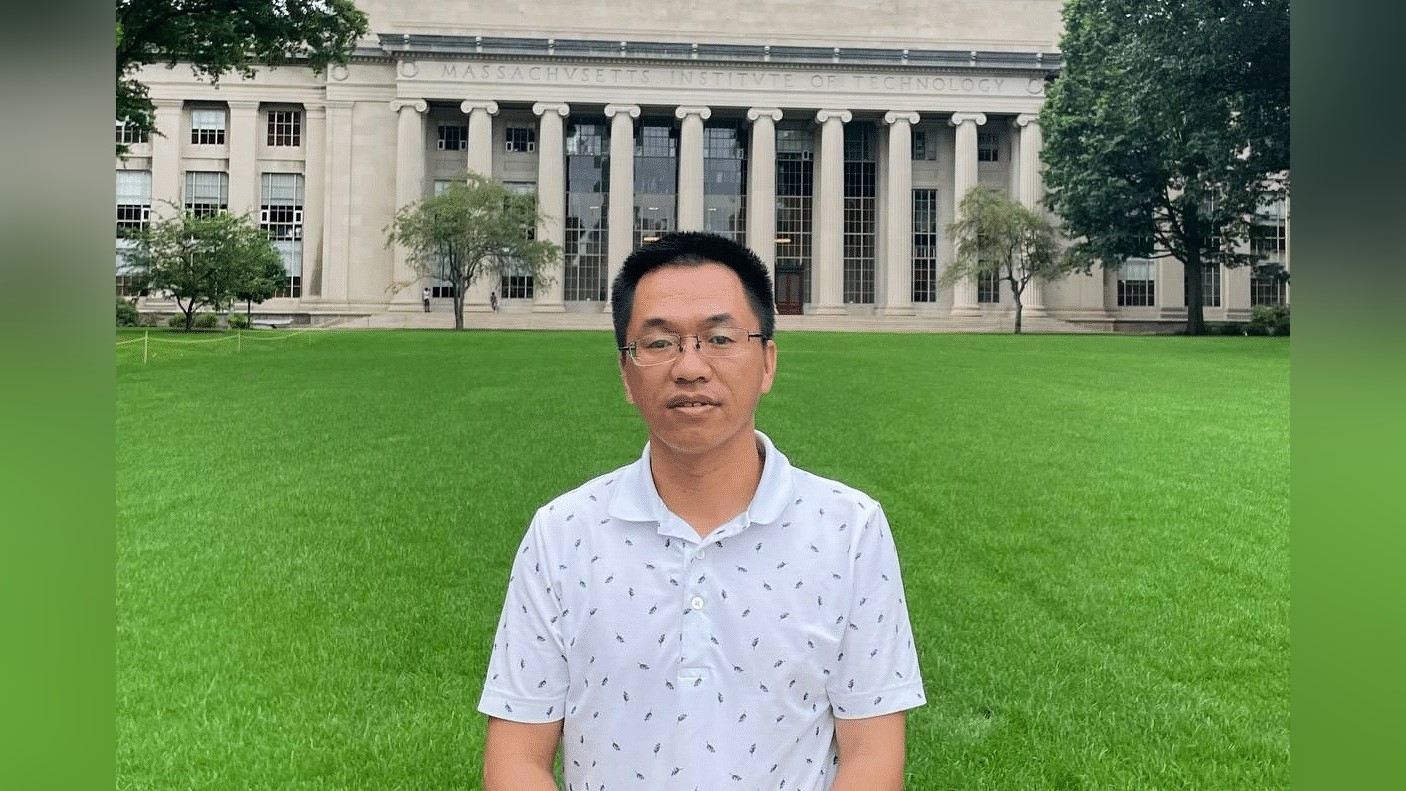
    Human rights attorney Wu Shaoping, on the campus of the Massachusetts Institute of Technology in Cambridge, Mass., in an undated photo, was arrested on July 15 and taken into custody by U.S. Immigration and Customs Enforcement.Handout art

    Trump received just over 62% of the vote in Mount Holly Springs in the 2024 election, although local residents said there are now growing numbers of Latinos and refugees from Nepal who’ve flocked to Central Pennsylvania living in the borough that census data had reported as more than 95% white.

    There is clearly considerable local support — often voiced in angry Facebook comments about “illegals” — for Day and his department’s work with ICE. “You guys are doing the right thing; don’t listen to the childless cat ladies,” borough resident Derek Scheuren told a contentious council meeting in February, as reported by PennLive. He also called undocumented truck drivers “illegal invaders” and offered to buy a beer for any officer responsible for detaining one.

    That would be nearly a half-dozen six-packs, based on Day’s updated tally. We don’t know if Scheuren has made good on that, but then there’s a lot that local officials and residents don’t know. There’s been little to no information about the multiple arrests since March, and while ICE is bringing the detainees about two hours north to Moshannon Valley, next to nothing is known about their fates.

    Locals like council critic Still have also pressed for answers on the carrot of federal dollars that state and local supporters of these 287(g) programs cite as a key benefit. Day only volunteered to me that in addition to federal training of all four borough officers, he has so far put in for just $1,100 in reimbursement for officers’ time on 287(g) stops. But in an email he also sent to local leaders Wednesday, which was shared with me, Day further acknowledged that Mount Holly Springs has received some $130,000 for vehicles and equipment.

    The July 15 arrest of Wu, which drew the attention of the New York Times, the Guardian, and other outlets, has so far brought more questions than answers about what’s really happening with immigration arrests in Mount Holly Springs.

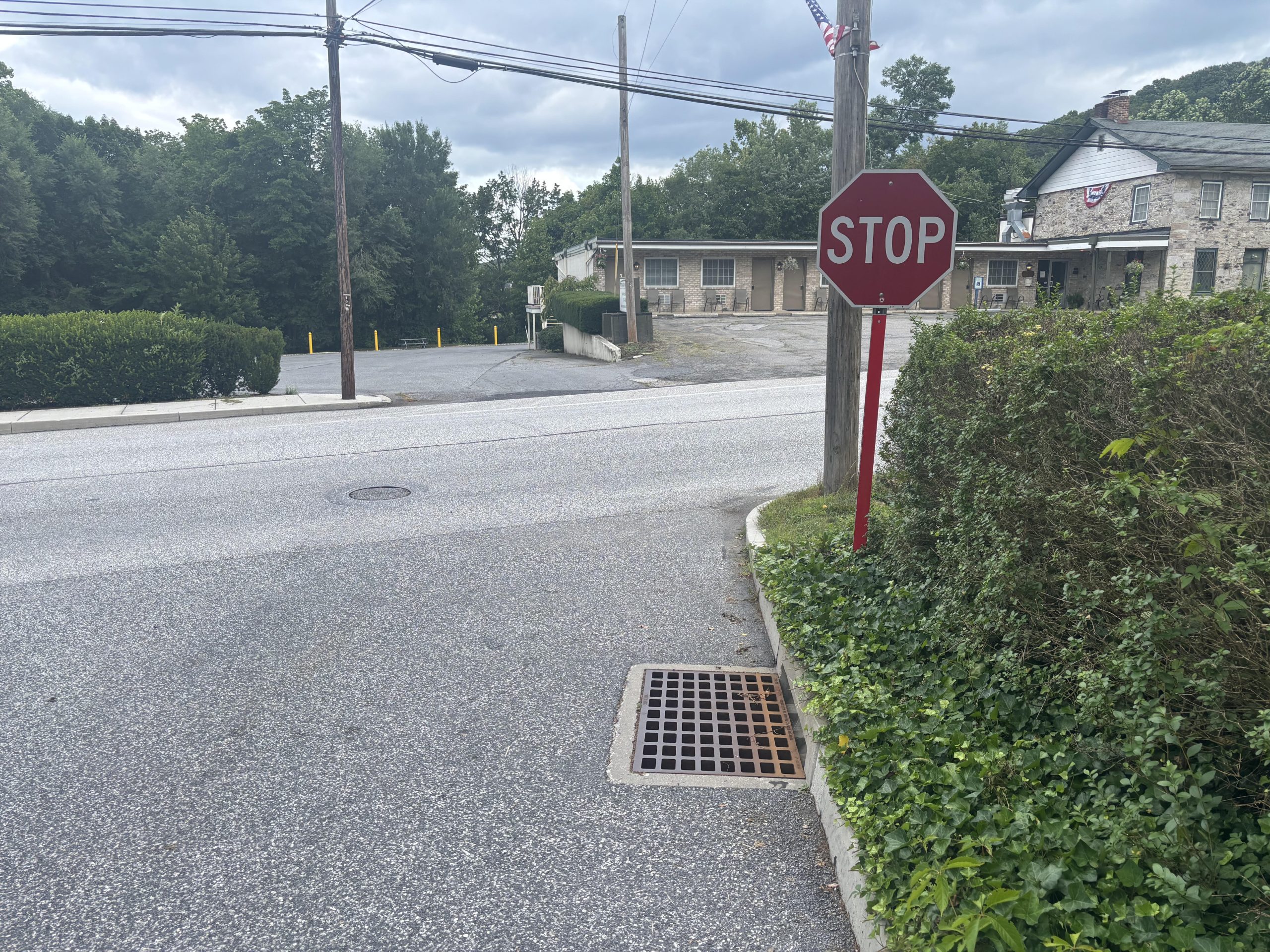
    The stop sign at Hill Street and State Route 34 in Mount Holly Springs, Pa., where Chinese dissident and asylum seeker Wu Shaoping was stopped by a local police officer on July 15. Wu’s arrest sparked controversy over the borough’s relationship with federal immigration.Will Bunch

    Day insists that Wu, making Amazon deliveries in his Toyota Camry, ran the stop sign at the bottom of steep Hill Street and nearly collided with his officer who happened to be patrolling the main drag, State Route 34. The chief said Wu exacerbated the situation by refusing to roll down the window and instead calling his lawyer — causing a commotion that attracted attention from ICE agents who happened to be in Mount Holly Springs doing truck inspections almost right across the street.

    Wu disputed that account to Lancaster Online, insisting that he did stop at the intersection, then rolled a bit forward because of its poor visibility. ICE later said Wu was sent to Moshannon Valley because he’s overstayed his 2020 tourist visa, even though he has an active asylum application and a work permit. He was released on bail after two members of Congress formally complained about his detention.

    Still, Wu’s arrest — along with the high number of other detentions in Mount Holly Springs — has only fueled suspicion among the program’s critics that cops are racially profiling drivers. Day has repeatedly insisted in past comments and in the Wednesday interview that undocumented truck drivers who can’t read English and don’t follow signs about restricted streets and bridges are a danger to the community.

    “I don’t want to sound mean over it, you know, or that I’m not sympathetic,” Day told me. “But they can’t be driving 18,000-pound vehicles and not understand our roadway signs.”

    But local critics say cops working so closely with ICE isn’t making Mount Holly Springs safer — not when immigrants are afraid to shop, landscaping crews that largely employ Latinos have seemed to vanish, and a quaint rural town that seeks outside tourists for trout fishing or bird watching starts getting a bad reputation.

    “A lot of times, it is this overweight thing — going over the bridge on the Pine Street extension or something is what they get pulled over for, and you know it’s like don’t ruin somebody’s life because their truck was packed or because their GPS didn’t tell them,” said longtime local resident Jen Dieter.

    The arrest surge in Mount Holly Springs seems to confirm the fears of immigration experts who’ve found in earlier iterations of the program that immigrants were less likely to call 911 for emergencies or report other crimes. Critics also believe that cops will ignore their public-safety duties to focus instead on immigration arrests, especially as the carrot of federal dollars is dangled before small departments.

    “There’s plenty of evidence and data to show that 287(g) agreements undermine trust in the communities where these agreements exist and are used extensively, because the community becomes less likely to report crimes, or to report instances of domestic violence, out of fear that doing so could translate to detention and deportation,” Gupta said.

    Experts also say what’s happening in Mount Holly Springs may be the future of mass deportation under the Trump regime. While high-profile, publicity-seeking operations like the ones that targeted Minnesota or Chicago are out, ICE is increasingly relying on its 287(g) partners to make arrests without attracting as much public outcry. The wave of arrests in the Pennsylvania borough came as ICE is nationally reporting as many as 1,400 immigration arrests in a day, an all-time record.

    Some longtime residents of Mount Holly Springs are worried that things will never be the same.

    Bear, the shop owner, spoke about moving here 25 years ago and slowly building a community around her business. “This is a small community,” she said. “We all know each other. You know these people that we’re talking about, [that] I’ve done business with. You know, hopefully we’ll do it again. But who knows?”

    “But more than it being about business, it’s about community. And I think this isn’t how I would treat my neighbors.”

  • Johnny Doc will remain in prison after a judge again denied his request to be released on house arrest

    Johnny Doc will remain in prison after a judge again denied his request to be released on house arrest

    Convicted former Philadelphia labor leader John Dougherty will remain in prison after a federal judge again denied Dougherty’s request to be released on house arrest to provide care for his gravely ill wife.

    U.S. District Judge Jeffrey L. Schmehl wrote in a memorandum filed Thursday that Dougherty and his lawyers had failed to demonstrate that he was the only person who could provide adequate care for his wife, Cecelia, who for years has suffered from a debilitating brain injury.

    In addition, Schmehl wrote, Dougherty did not sufficiently specify when a trust fund established to support his wife’s care would run out of money. Those factors, coupled with the “minimal amount of time” Dougherty has served in his six-year sentence, Schmehl wrote, “do not weigh sufficiently in favor of relief.”

    The decision was a blow to Dougherty, 66, who for months has been contending in court documents and in testimony before Schmehl that his wife’s condition has significantly worsened while he has been imprisoned, and that if he is not released to care for her, she will likely die.

    Dougherty’s attorney, George Bochetto, said in an interview Thursday that he was “deeply, gravely disappointed” by the ruling, and that he disagreed they had not shown the acute nature of the emergency that should qualify Dougherty for release.

    “I thought the evidentiary hearing we had in front of Judge Schmehl was extraordinary, and it left no doubt in anybody’s mind” about the merits of Dougherty’s petition, Bochetto said.

    The ruling followed another rejection in Dougherty’s ongoing bid for freedom. Earlier this month, President Donald Trump denied Dougherty’s request for a commutation, a legal avenue that could have cut Dougherty’s prison term short.

    Schmehl, in his memorandum, did say that Dougherty could file a renewed motion in the future, “should the facts materially change.”

    Bochetto said he would not wait that long. He was already working on his notice of appeal to the U.S. Court of Appeals for the Third Circuit, he said, and he intended to ask the court to consider the case on an emergency basis.

    “This is why God invented appellate courts,” Bochetto said.

    Dougherty was sentenced in 2024 to six years in prison after being convicted in separate bribery and embezzlement trials that centered on actions he took while serving as the head of his politically powerful union, Local 98 of the International Brotherhood of Electrical Workers.

    But last year, Dougherty — known colloquially as Johnny Doc — filed emergency motions asking Schmehl to allow him to serve the remainder of his prison term on house arrest so he could be his wife’s primary caregiver.

    In his first request, filed in the summer, Dougherty said that the trust fund established to pay for her care was about to run out of money, and that his daughters and other relatives were unable to provide the kind of around-the-clock assistance she needed.

    Then, in December, he filed another motion, saying the situation had become more dire after the death of his father-in-law, who had been serving as the primary caregiver in his absence.

    Prosecutors opposed Dougherty’s requests, saying that although they were sympathetic to his wife’s plight, they did not believe he had served enough of his sentence to merit release.

    And in January, Schmehl denied Dougherty’s request, writing that he, too, recognized the significant health challenges, but that they did “not outweigh, at this point in time, the need for punishment that has been adjudged.”

    Bochetto appealed that ruling. And in May, Schmehl held an evidentiary hearing to learn more.

    At the hearing, Dougherty took the stand for more than an hour, and occasionally choked back tears as he described his wife’s myriad complications and detailed the efforts he had made in prison to help her, including by sending her dozens of letters and using all of his allotted monthly phone minutes to call her.

    But prosecutors argued that Dougherty and his relatives had not sufficiently looked into alternative care arrangements that might be covered by Medicaid or other insurance. And they said that while many families across the country could benefit from having an incarcerated defendant released to help care for their relatives, Dougherty had not shown that he was the only person who could do so for his wife.

    Schmehl, in his order, said that Dougherty’s wife is being cared for by private nurses and her two daughters, and that “neither party suggests that her current care is inadequate.” Beyond that, the judge said, Dougherty did not sufficiently specify when her trust fund would run out of money and did not adequately explain what would happen once it did.

    The ruling will leave Dougherty, for now, to serve out the remainder of his term, which he is serving at a federal prison in Lewisburg, Pa. His projected release date is in June 2029, according to the Bureau of Prisons website.

  • Federal judge dismisses Trump administration’s lawsuit seeking New Jersey voter records

    Federal judge dismisses Trump administration’s lawsuit seeking New Jersey voter records

    A federal judge on Wednesday dismissed a lawsuit from President Donald Trump’s administration that sought New Jersey’s unredacted voter files.

    The case — one of more than two dozen lawsuits filed by the Trump administration against states ahead of the midterm election — predates New Jersey’s recent disclosure that thousands of noncitizens had been registered to vote in 2023 and 2024 due to a glitch in the motor vehicle system.

    The Justice Department attempted to use that news as leverage in the case, but it was unsuccessful.

    U.S. District Judge Zahid N. Quraishi ruled the department did not have the authority to compel New Jersey to hand over its unredacted records.

    “The Constitution’s architects chose to delegate election administration to the states, recognizing local governments have the deepest understanding of their constituents’ circumstances,” Quraishi wrote in the ruling, which granted New Jersey’s motion to dismiss the lawsuit.

    Quraishi has become the 18th U.S. District Court judge to rule against the Trump administration on the issue, according to data from the Brennan Center for Justice.

    The Trump administration will likely appeal the case, as the president and his allies have made election security a focal point ahead of the November midterms. It is mounting an appeal in a similar case in Pennsylvania.

    The ruling in the state’s favor came a day after New Jersey Gov. Mikie Sherrill formally told the Justice Department she would not release personal information about noncitizen voters who had been mistakenly added to the state’s voter rolls ahead of the 2024 election.

    Sherrill announced last week that about 6,600 noncitizens had been registered to vote due to a glitch in the automatic voter registration system at the New Jersey Motor Vehicle Commission. She said fewer than 400 had cast ballots and there was no evidence they had affected election results.

    On Tuesday, she said the New Jersey Department of State had begun removing 4,500 voters from the rolls. But there is a chance the rest could actually be citizens, so counties will review those about 2,000 individuals to ensure no eligible voters are disenfranchised, she said.

    Following Sherrill’s disclosure last week, Assistant U.S. Attorney General Harmeet Dhillon requested the full names, dates of birth, nationalities, and home addresses of the individuals who were erroneously registered, as well as additional information about the noncitizens who voted, within a week.

    Sherrill had publicly indicated she would not hand over the data, but her letter Tuesday put it on the books.

    The Justice Department’s request has no legal basis, Sherrill said in a Tuesday letter to Dhillon, and sharing “extensive personal information about thousands of New Jersey residents” is limited by state and federal privacy laws.

    “Here and always, I remain committed to protecting New Jerseyans’ personally identifying information,” Sherrill wrote, reiterating her stance from the previous week, when she cited concerns about federal data breaches under Trump.

    In response to Sherrill’s rebuffing, Dhillon said the Justice Department’s request was rooted in the legal authority to “keep ineligible voters off its rolls” and vowed to obtain the information “through all legal means!”

    Sherrill’s “refusal to cooperate with federal law enforcement does nothing to protect law-abiding NJ voters,” Dhillon said on X.

    Sherrill on Tuesday criticized the Trump administration for “weaponizing the government against individuals that disagree with them.”

    She pointed to an issue during her campaign last year in which the federal government provided personal information about her that should have been redacted, like her Social Security number, to an ally of her Republican opponent. The National Personnel Records Center director apologized at the time and called it a rare error, but Sherrill claims her data were “weaponized” against her.

    Sherrill has not shied away from the issue of voter access in New Jersey as it becomes a national talking point in the debate over election security after last week’s revelation that thousands of people had been improperly added to the voter rolls when applying for driver’s licenses and identification cards.

    On Tuesday, she championed a new law, the John R. Lewis Voter Empowerment Act, that offers a slew of policies meant to increase voter participation.

    The erroneous registrations took place between June 2023 and June 2024 under former Gov. Phil Murphy’s administration due to a software glitch in New Jersey’s motor vehicle system, which processes the automatic registration when citizens obtain an ID or a license unless they decline.

    Even though they checked “no” when asked if they were a U.S. citizen, the noncitizens were registered anyway.

    Sherrill pointed a finger at her predecessor but a spokesperson for Murphy said the former governor had “no knowledge” of the glitch.

    U.S. Rep. Jeff Van Drew, a South Jersey Republican, said he planned to hold hearings over the issue and called on Sherrill to answer a slate of questions.

    Sherrill said Tuesday that her administration had hired a law firm to conduct an independent bipartisan investigation. One of the firm’s main partners worked under former Republican Gov. Chris Christie as attorney general and was later appointed by Christie to the Senate, she noted, saying “we have nothing to hide.”

    Christie said in a post on X that Sherrill “made the right choice tapping my former AG Jeff Chiesa to lead the independent investigation into New Jersey’s voter rolls.”

    “Jeff won’t hide anything from the public,” he said. “You can count on it.”

    But the New Jersey GOP questioned Wednesday why Sherrill would not comply with the Justice Department if she “has nothing to hide.”

    “She ran on transparency and accountability,” the party said in a post online. “Apparently, those were campaign promises that expired the moment she was sworn in.”

    Republicans have seized on the noncitizen voter registrations to make the case for the SAVE America Act, which would require proof of citizenship like a passport or birth certificate to register to vote.

  • Congressional questioning of Anthony Fauci isn’t a good-faith effort. It is political persecution.

    Congressional questioning of Anthony Fauci isn’t a good-faith effort. It is political persecution.

    Congress has every right to investigate the government’s response to the COVID-19 pandemic.

    It should ask difficult questions about the origins of the virus, school closures, public health restrictions, research oversight, masking guidance, and the government’s changing messages to the public. More than a million Americans died, businesses closed, families suffered, and trust in public institutions was badly damaged.

    But what is now happening to Anthony Fauci as he appears before the Senate Homeland Security and Governmental Affairs Committee at the U.S. Capitol on Wednesday no longer looks like a good-faith effort to learn from those failures.

    It looks like political persecution.

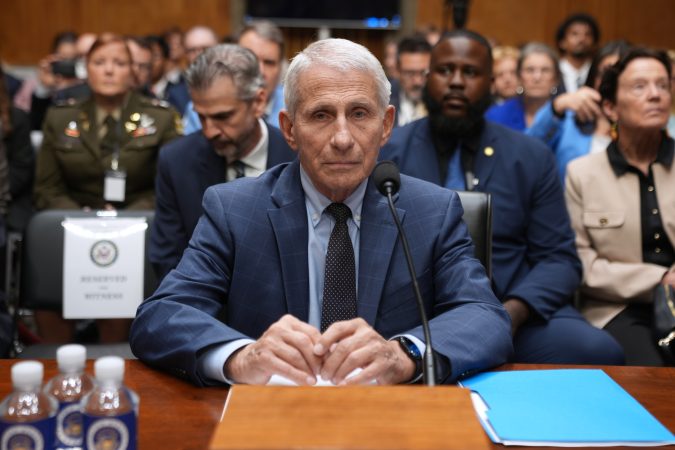
    Fauci, appearing under subpoena before the committee chaired by Sen. Rand Paul (R., Ky.), invoked his Fifth Amendment right against self-incrimination and declined to answer questions.

    His critics immediately treated that decision as proof of guilt.

    It is not.

    The Fifth Amendment does not protect only guilty people. It protects anyone who reasonably fears that their words may be used against them in a criminal prosecution. That protection is especially important when the person asking the questions has already spent years accusing the witness of crimes and demanding that they be imprisoned.

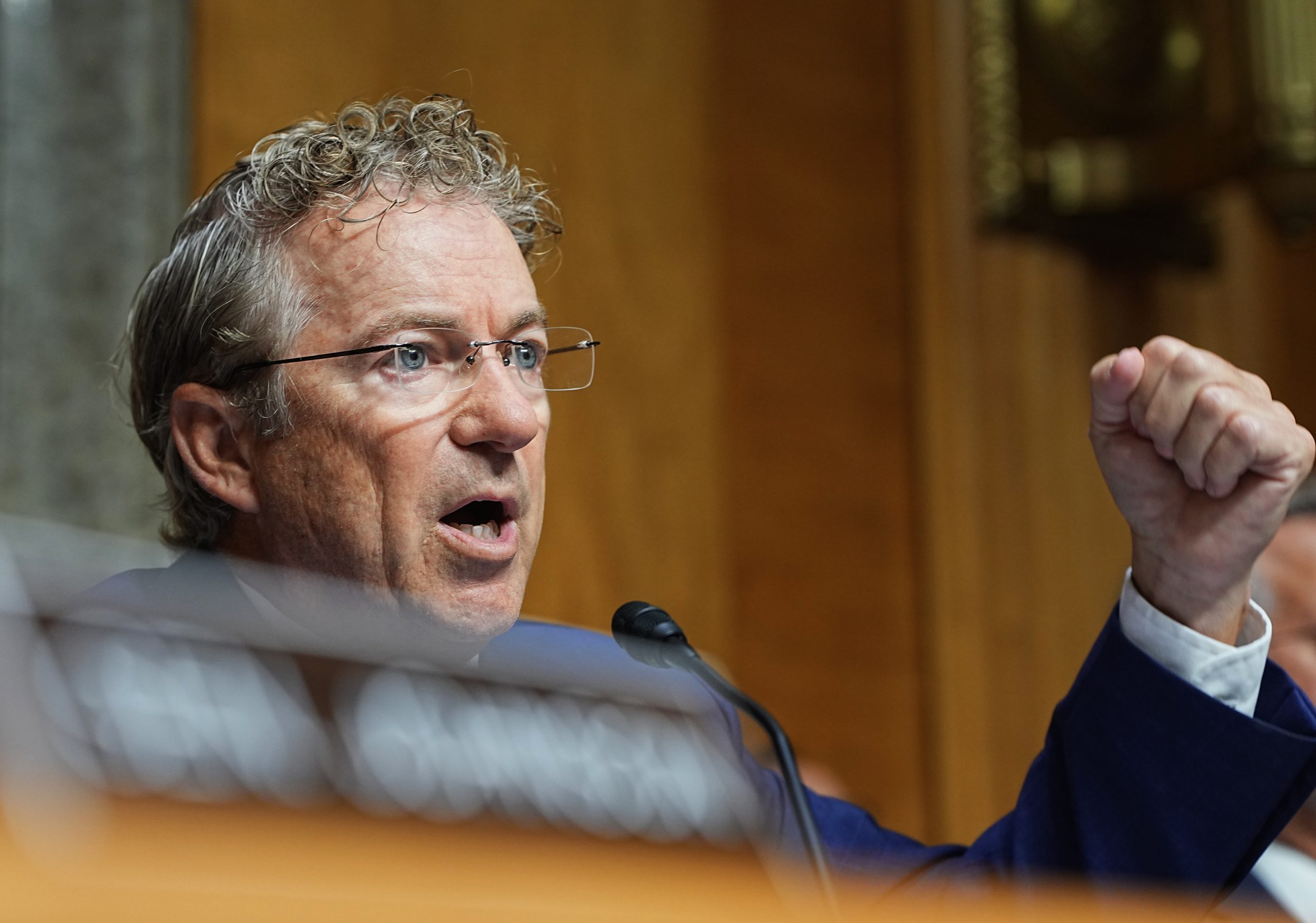
    Sen. Rand Paul (R., Ky.), Senate Homeland Security and Governmental Affairs Committee chairman, speaks at the start of a hearing with Anthony Fauci, the former director of the National Institute of Allergy and Infectious Diseases, on Capitol Hill on Wednesday.HAIYUN JIANG

    Paul has not approached Fauci as a neutral investigator. He has repeatedly accused him of lying to Congress and called for his prosecution. Under those circumstances, Fauci had every reason to believe the hearing was not simply intended to gather information. It was also intended to create a criminal referral, a damaging headline — or both.

    There is a difference between oversight and a trap.

    Fauci has testified before Congress many times. He has answered questions about the National Institutes of Health, coronavirus research, government funding, and the still-unresolved debate over whether COVID-19 emerged naturally or through a laboratory-related incident.

    Republicans are entitled to challenge his answers. They are entitled to criticize his judgment. But they should not be permitted to announce that he is guilty, threaten him with prosecution, and then place him under oath in the hope that some minor difference in wording can be turned into a new criminal allegation.

    The release of more than 1,100 pages of Fauci’s pandemic-era notes shortly before the hearing only strengthens the appearance of a coordinated political campaign.

    Those notes reportedly show that Fauci and other scientists privately considered several possible explanations for the virus’s origin.

    Of course they did.

    That is how science works.

    In the early months of the pandemic, scientists were working with limited and rapidly changing information. They considered competing theories, debated evidence, and revised their conclusions as new facts emerged.

    Scientific uncertainty is not evidence of dishonesty.

    Considering a laboratory origin in private did not require Fauci to publicly declare that theory proven. Nor does changing one’s position as evidence develops amount to perjury or a cover-up.

    The journals also reveal Fauci’s private criticism of Donald Trump. Republicans may find those comments offensive, but criticizing a president is not a crime.

    Fauci’s real offense in the eyes of the MAGA movement appears to be that he sometimes contradicted Trump publicly.

    Trump wanted optimism. Fauci warned of danger.

    Trump wanted the country reopened. Fauci warned about transmission.

    Trump promoted claims before strong evidence supported them. Fauci attempted, sometimes imperfectly, to return the discussion to science.

    That made him a political enemy.

    None of this means Fauci should be beyond criticism. His decisions should be examined. The government’s masking guidance, vaccine messaging, school closure recommendations, and oversight of research funding all deserve scrutiny.

    But an honest investigation begins with open-minded questions.

    This one began with a verdict.

    The broader danger goes far beyond Fauci. Scientists and career public servants are being warned that if their professional judgment conflicts with the political needs of a president, they may face years of investigations, public attacks, and threats of prosecution.

    That will not produce better science. It will produce fear and silence.

    The next pandemic will require experts willing to speak honestly, revise their conclusions, and tell a president when he is wrong. A government that punishes experts for delivering unwelcome information will eventually be left with people who say only what political leaders want to hear.

    Fauci is not infallible. But political disagreement is not a crime. Scientific uncertainty is not perjury. And invoking the Fifth Amendment is not a confession.

    Michael A. Gottesman is a lawyer and the founder of the New Jersey Public Education Coalition.

  • U.S. bans foreign-made humanoid robots, targeting China over national security

    U.S. bans foreign-made humanoid robots, targeting China over national security

    HONG KONG — The U.S. Federal Communications Commission is banning imports of new foreign-made humanoid robots and power inverters, citing national security risks, in a move that targets China. Beijing quickly accused the U.S. of protectionism.

    The measures are likely to test relations with Beijing ahead of a planned U.S. visit by Chinese leader Xi Jinping to meet with President Donald Trump in September. China dominates the global market for humanoid robots with an estimated market share of roughly 85%.

    The FCC’s ban also includes new imports of quadruped robots, often referred to as four-legged robot dogs. The agency said imports of advanced robots pose cybersecurity and other national security risks. Offshore production of such equipment also leaves U.S. supply chains vulnerable to disruptions.

    The ban on power inverters, which are used to convert direct current (DC) electricity into alternating current (AC) electricity and are used in renewable energy systems, data centers, and household appliances, could have sweeping ramifications.

    This is the latest in U.S. restrictions on Chinese imports

    FCC chairperson Brendan Carr said Tuesday that the move was to “secure America’s critical supply chains.” He said the bans apply to “new versions” of such imports.

    The FCC’s bans follow a slew of U.S. restrictions on imports of Chinese products, including drones, and on exports of U.S. advanced technology to China.

    The U.S. is also weighing controls on use of Chinese open-source artificial intelligence models at a time when Chinese AI is rapidly gaining ground.

    “It’s a steady drumbeat of potential flashpoints heading into [the] Trump-Xi summit planned for September,” said Samm Sacks, a senior fellow at the New America think tank focused on Chinese technology policies.

    China has been rapidly expanding the use of robots, with policies supporting its technology sector. Morgan Stanley analysts forecast its market for humanoids could reach $15 billion by 2030.

    “Chinese manufacturers have been scaling production and reducing costs faster than most overseas competitors,” said analyst Kangyuxiao Li at Morningstar.

    “Restricting their access to the U.S. removes an important future market and protects U.S. developers from potential price competition,” he said. “However, it will not materially slow China’s overall humanoid development, given the size of its domestic manufacturing base and opportunities in other export markets.”

    Of the around 15,000 humanoid robots shipped globally in 2025, Unitree and AGIBOT, two of China’s largest advanced robotics companies, each shipped more than 5,000. Their U.S. counterparts, like Tesla and Figure AI, each shipped a few hundred or less, according to the technology research and advisory group Omdia.

    On the restrictions on power inverters, Cheng Wang, another Morningstar analyst, said the pressure on U.S. markets should be limited. The ban appears to not impact the continued use of existing devices nor the selling by Chinese companies of models that were previously approved by the United States.

    China says protectionism will only hurt the U.S.

    China’s Foreign Ministry hit back at the U.S. move, accusing Washington of overstretching the concept of national security to suppress Chinese companies.

    China will take “all measures necessary” to defend the legitimate rights and interests of Chinese businesses, it said.

    “Protectionism does not make the U.S. more competitive, and it will only hurt the interests of U.S. companies and consumers,” Mao Ning, a ministry spokesperson, told reporters at a regular news conference Wednesday in Beijing.

    The new bans could also potentially interfere with collaborations between U.S. and Chinese technology companies, said Lian Jye Su, a chief analyst at Omdia.

    Nvidia, for example, in June revealed a humanoid robot reference design which uses the humanoid chassis of China’s Unitree.

    The Pentagon recently included Unitree and several other major Chinese technology companies on its list of firms that it said have ties to or aid the Chinese military. Beijing has rejected that claim.