Tag: Donald Trump

  • How two deaths in a Pennsylvania measles outbreak led to a clash between Gov. Josh Shapiro and RFK Jr.

    How two deaths in a Pennsylvania measles outbreak led to a clash between Gov. Josh Shapiro and RFK Jr.

    Gov. Josh Shapiro came to the Philadelphia suburbs on Friday morning to announce a new investment in a local police department. But the first question he fielded at a news conference concerned the growing confusion and political intrigue surrounding his administration’s response to two deaths associated with the state’s spiraling measles outbreak.

    For the last three days, Shapiro, a Democrat, and Robert F. Kennedy Jr., the Republican heading the federal Department of Health and Human Services, have clashed over what the state has disclosed about the deaths and the consequences of Kennedy’s longtime anti-vaccination activism.

    By Friday, Shapiro wanted to bring the focus back to an outbreak that has grown to more than 400 cases so far this year, saying “getting into a back-and-forth with people online who are spewing irresponsible conspiracy theories” does not “serve the public interest.”

    But public health and communications experts say that the state’s initial refusal to share more information on the deaths created an environment in which anti-vaccination skeptics could spread their own narrative.

    State officials announced the deaths of two unvaccinated Lancaster County residents at a news conference Tuesday, calling the deaths “measles-associated.” Their ages, causes of death, or their medical histories were not disclosed by the governor or his health secretary.

    Within hours, other voices started filling the information vacuum. Lancaster County’s coroner told reporters that he had handled just one of the deaths. Coroner Stephen Diamantoni, a Republican elected official who is also a physician, said his office had examined a newborn who had tested positive for measles, but said the baby had not died from measles.

    Soon misinformation and innuendo were spreading online out of the seemingly contradictory and limited details being disclosed by state officials, the local coroner’s office, and federal health leaders — all with their own political affiliations at a time when the safety of the measles vaccine increasingly divides Democrats and Republicans.

    In response to the coroner’s statements, state health officials said they define a “measles-associated death” as one in which measles was present, even if measles is not identified as the immediate cause of death. Shapiro’s administration confirmed the newborn’s case was one of the two announced deaths, but offered no information on the second death.

    President Donald Trump’s health secretary, Kennedy, pounced on the missing details the next day to spread misinformation. He wrote on X that the deaths may have been “fabricated” by the Shapiro administration and said in a television interview that “they cannot find any measles deaths in Lancaster County.”

    Shapiro’s administration has called this inaccurate. Still, his administration has not revealed details of its medical review, beyond saying the state Department of Health’s epidemiology team had “thoroughly investigated.”

    By late week, the Centers for Disease Control and Prevention, which operates under HHS, posted on X that state health officials were not sharing “information relevant to the outbreak” as it worked “to clarify conflicting information from Pennsylvania officials about whether the two reported deaths were caused by measles.”

    State officials, including Shapiro, have repeatedly said the state is cooperating with the CDC.

    But Pennsylvania health officials could have shared information on the patients’ ages, causes of deaths, and reasons for being unvaccinated, said Paul Offit, a physician at the Children’s Hospital of Philadelphia who heads the hospital’s Vaccine Education Center and is a vocal critic of Kennedy.

    “It created fertile ground for conspiracy theories to thrive,” he said.

    In a statement, a Shapiro spokesperson said the governor understands the “desire for as much information as possible to be made public.”

    “However, when an individual dies, it is our legal responsibility to protect their right to privacy by maintaining patient confidentiality,” the statement said, noting this is critical to maintaining trust among communities statewide.

    In a highly politicized environment in which measles cases are rising — and vaccination rates dropping — public health experts say it’s imperative for health officials to communicate accurately and transparently.

    “You have to be transparent, be very clear about what you know, what you don’t know, what you’re trying to find out, and what questions are outstanding,” said Amesh Adalja, an infectious disease physician at the University of Pittsburgh Medical Center and a senior scholar at the Johns Hopkins Center for Health Security.

    A lack of information from the state, he said, “created an information vacuum with people very adept at using information vacuums to spread their message.”
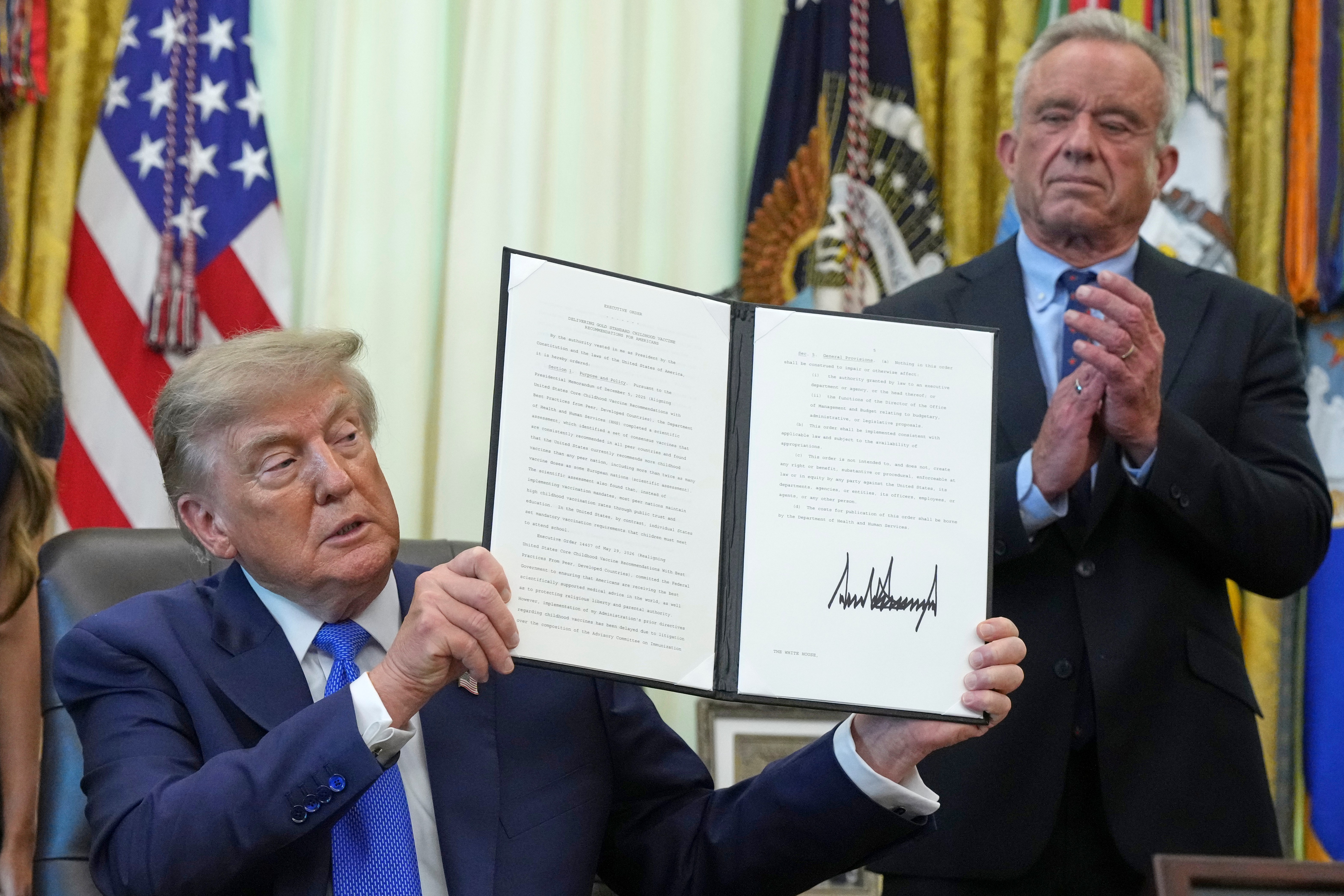
    President Donald Trump holds a signed executive order about vaccines as Health and Human Services Secretary Robert F. Kennedy Jr. looks on Aug. 10 in the Oval Office of the White House. Jacquelyn Martin

    What’s known about the Lancaster County deaths

    Diamantoni said Friday that the baby died shortly after birth at a Lancaster County birthing center on Aug. 14.

    Postmortem testing of the baby’s lung tissue showed that the baby had an active measles infection acquired before birth, he said.

    He has not talked to the baby’s mother or the midwife who delivered the baby, and has not fully reviewed records from the birthing center where she gave birth, he said in interviews.

    He told the Pittsburgh Tribune-Review that measles was listed on the baby’s death certificate, in a section of the certificate that reports other ”conditions contributing to death but not resulting in the underlying cause.”

    He told the outlet that measles was included on the death certificate “to offer a broader view of the general health of the child.”

    Babies can become infected with measles in utero if the mother is infected with measles and develops a rash within 10 days of giving birth, Offit said.

    Diamantoni said a forensic pathologist in his office concluded the baby died of a ruptured spleen and cited trauma to the baby’s torso. He said he was unsure what had caused the trauma, and added that the baby’s spleen did not appear enlarged or infected.

    Offit said that measles can cause an enlarged spleen that is then more likely to rupture — including during birth — and that it’s often difficult to tell whether a spleen has become enlarged once it ruptures.

    A spleen also doesn’t have to become “massively” enlarged to rupture, he said: Measles can cause the spleen to become fragile, which also heightens the risk of rupture.

    In conversations with state health officials, Offit said he learned that the patients who died in Pennsylvania would not have died were they not infected with measles.

    He said the coroner should explain why the spleen ruptured, if it was not damaged from measles. Diamantoni said the office is still investigating the cause.

    The state has released no additional information on the second death, and Diamantoni said his office was not handling it. He said his chief deputy spoke to the department prior to Shapiro’s news conference Tuesday.

    “At no point was the Pennsylvania Department of Health told that this was not a measles-associated death,” a state spokesperson said on Friday. “The Shapiro Administration stands firmly by their comments on Tuesday.”

    Public health communications

    Pennsylvania’s health department has cited a state law prohibiting public access to death records, saying they cannot release more information on the deaths. Another state law requires the state to keep records of diseases confidential, except when it’s necessary to inform the public of the risk of communicable disease, a department spokesperson said in a statement.

    The department “works hard to build and maintain trust in communities all over the Commonwealth — which includes doing everything possible to keep people’s identities confidential,” the statement read.

    The department didn’t share information that could be used to “personally identify individuals or their grieving families” because “the circumstances of these individuals’ deaths do not change the Commonwealth’s response: Measles is a serious, highly contagious and preventable disease, and our focus remains on protecting Pennsylvanians, getting people vaccinated, and stopping the spread of this outbreak,” the spokesperson said.

    But the state could have been more transparent about how they characterize deaths in a measles outbreak, said Kathleen Hall Jamieson, director emerita of the Annenberg Public Policy Center at the University of Pennsylvania.

    People who are not trained in medicine may not understand the term “measles-associated,” for example, or how it differs from a cause of death, and state officials should have taken time at the news conference to explain what they meant by that term.

    “You have an obligation to make sure that people don’t mishear on something as fraught as this topic,” she said.

    Jamieson added that the political clashes around the deaths could overshadow a crucial point: A highly contagious disease is spreading in an under-vaccinated community, exposing children — including newborns unable to be vaccinated — to a serious illness.

    “If we miss that moment, then the public health community has failed,” she said.

  • ICE’s policy to detain nearly all undocumented immigrants is unlawful, a Philly-based federal appeals court ruled

    ICE’s policy to detain nearly all undocumented immigrants is unlawful, a Philly-based federal appeals court ruled

    U.S. Immigration and Customs Enforcement’s controversial policy mandating detention for nearly all undocumented immigrants is unlawful, a split Philadelphia-based federal appeals court ruled Friday.

    In a 2-1 ruling, the U.S. Court of Appeals for the Third Circuit held that ICE violated the federal immigration law and the Fifth Amendment of the U.S. Constitution by holding undocumented immigrants who have been in the country for years in detention without a hearing. The policy, enacted last summer, has been a key part of efforts by President Donald Trump’s administration efforts to ramp up deportations across the country.

    The ruling will take immediate effect in Delaware, New Jersey, Pennsylvania, and the U.S. Virgin Islands.

    Undocumented immigrants who have lived in the United States for decades “are entitled to due process rights beyond those provided to noncitizens at the border,” Circuit Judge Patty Shwartz wrote in the majority opinion.

    The government has a legitimate interest in keeping dangerous noncitizens in custody, the judge said, but a “neutral decisionmaker” should make that assessment on a case-by-case basis — rather than a practice of detaining all undocumented immigrants indefinitely.

    Circuit Judge Theodore A. McKee, who was appointed by Bill Clinton, joined the opinion written by Schwartz, who was appointed by Barack Obama.

    In a dissent, Circuit Judge Jennifer L. Mascott said the ruling was inconsistent with federal immigration law.

    “A bond hearing focused on flight risk and dangerousness would generate irrelevant facts, not material to individual determinations,” wrote Mascott, who was appointed by Trump.

    The Justice Department disagrees with the ruling and believes its position will “ultimately be vindicated,” a spokesperson said in a statement.

    “This is a huge win for due process,” said Rachel Rutter, a lawyer and executive director of Project Libertad, a Phoenixville-based nonprofit that provides free legal and social services for migrant youths facing deportation. “The Third Circuit has joined a chorus of other circuit courts striking down the Trump administration’s inhumane practice of mandatory detention of people who have spent years building lives in the U.S.”

    The decision “reaffirms decades of case law stating that these people have the right to challenge their detention through a bond hearing,” Rutter said.

    Nine other circuit courts have issued rulings on mandatory detention, and seven found the policy unlawful. The Justice Department petitioned the Supreme Court in June, asking the high court to resolve a split it said was “disrupting the orderly administration of immigration law.”

    The mandatory detention policy was rolled out by the Trump administration last year, and has led to an avalanche of lawsuits by immigrants who challenged their incarceration and demanded a bond hearing.

    These requests, known as habeas corpus petitions, were rare not long ago, but since the policy change, they’ve dominated the docket in Philadelphia’s federal courthouse. More than 1,100 such petitions have been filed since September. Between 2020 and 2024, by contrast, only 11 such suits were filed.

    Philadelphia’s federal judges have granted these requests at near-universal rates, often chastising ICE for continuing the practice despite the overwhelming judicial pushback.

    The Third Circuit case involved two undocumented immigrants who have been in the United States for over a decade and were picked up by ICE after the mandatory detention policy took effect. Neither has a criminal history. Federal judges in Philadelphia ordered their release, finding their detention was unlawful.

    Christopher Casazza, a Philadelphia-based immigration lawyer who represented one of the immigrants at the center of the case, called the court’s decision a “great ruling that will help thousands of people.”

    The benefit for immigrants, he said, would come primarily in two forms: Anyone still being detained in the region after being arrested under the Trump administration policy can now apply for a bond hearing. And going forward, anyone who is arrested will be able to ask an immigration judge for bond.

    That doesn’t guarantee release, Casazza said, but it provides people the opportunity to make a case to an immigration judge, as had been the practice before the new policy took effect after Trump began his second term.

    “We’re going back to the rule of law that’s been the case for 30 years,” he said.

  • ICE cannot survive past the Trump administration

    ICE cannot survive past the Trump administration

    Another day, another video on social media featuring U.S. Immigration and Customs Enforcement agents behaving badly.

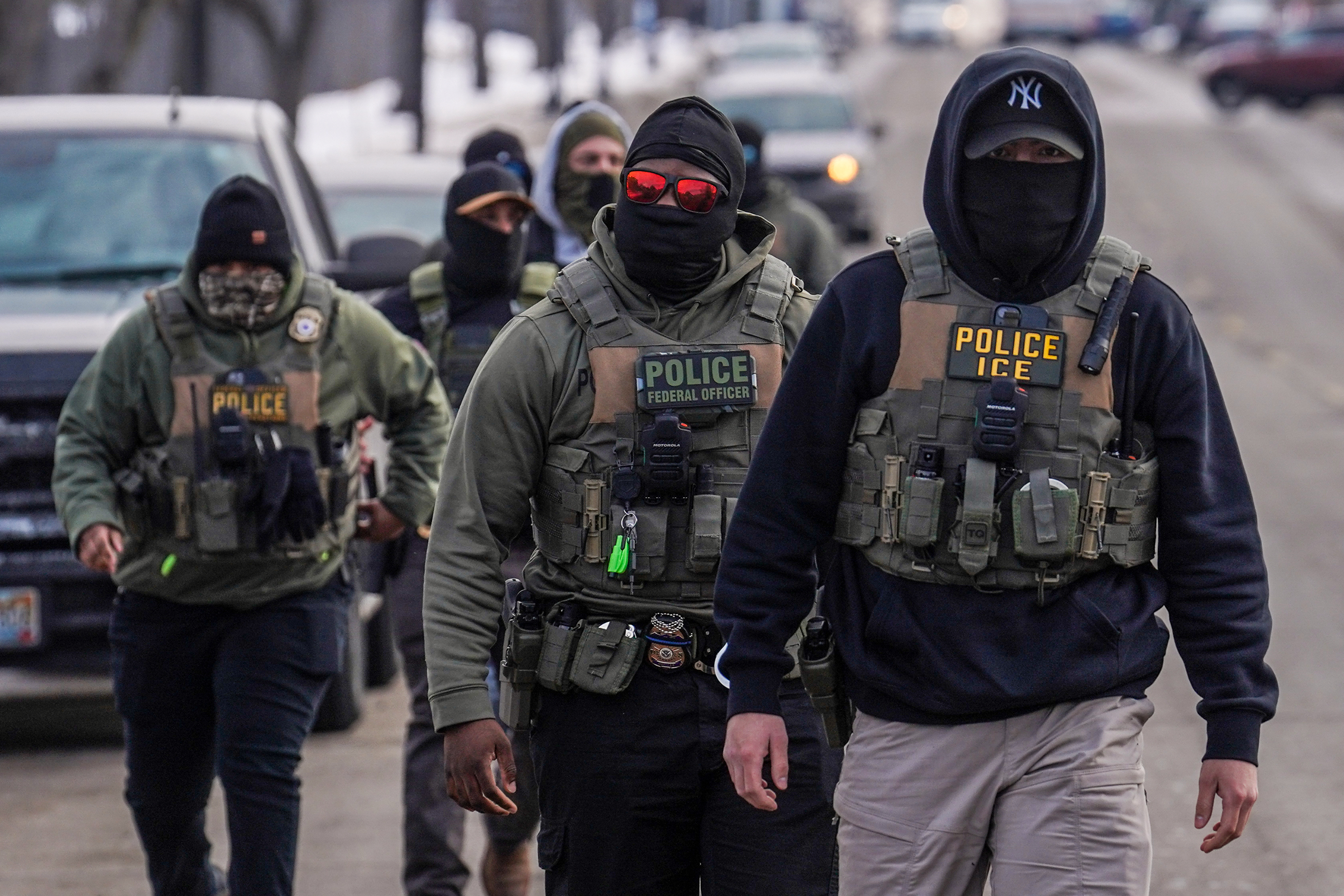
    Sometimes they act like bullies, intimidating goons trampling the Constitution. Other times they show they’ve learned nothing from their deadly encounters in Minnesota and Texas, using excessive force and putting people in harm’s way.

    And every time, my blood boils at the rampant thuggery on display.

    I abhor facile slogans, but as more and more incidents pile up, this one’s an easy call: Abolish ICE.

    Smash it up. Close it down. Dismantle it. It shouldn’t be too hard, since it’s already been broken by President Donald Trump and his GOP allies in Congress, who have flooded the agency with billions of dollars and a mission directive that rewards lawlessness and recklessness.

    Under Stephen Miller, the architect of the administration’s anti-immigrant policies, the goal is mass arrests and deportations, no matter the cost. A June 2025 post by the president on Truth Social made it explicit: “ICE Officers are herewith ordered, by notice of this TRUTH, to do all in their power to achieve the very important goal of delivering the single largest Mass Deportation Program in History.”

    This has led to the foreseeable consequences that are playing out on America’s streets and inside immigration detention centers. The stories of abuse are so common, their number so overwhelming, that I don’t see how the agency survives.

    This should not be interpreted as a call for nonexistent borders or unfettered immigration. Having spent much of my life in and around southwest Texas, I count myself among those who have a particular appreciation for the importance of humane, rational, and consistent immigration policies — but, by almost any measure, we’re getting none of the above from ICE as it’s currently formulated.

    And it’s not just me or the usual left-leaning advocates who are questioning the national framework on immigration. Nearly three-quarters of Americans believe immigration is a good thing for our country, and most people prefer widening paths to citizenship rather than increasing enforcement efforts.

    The prospect of doing away with ICE does not garner nearly as much support from undecided midterm voters, with just 21% of them saying in a recent poll that they favored eliminating the agency.

    As I’ve written about how the administration is demonizing immigrants, I’ve heard from conservative readers who say the media is doing the same to ICE, casting it as the worst of the worst and inevitably forcing a critical look at its future.

    To answer the question of what the agency might look like in the years to come — or if it should even continue to exist at all — I reached out to a few people who may know ICE better than nearly anyone else: those who’ve worked inside it.

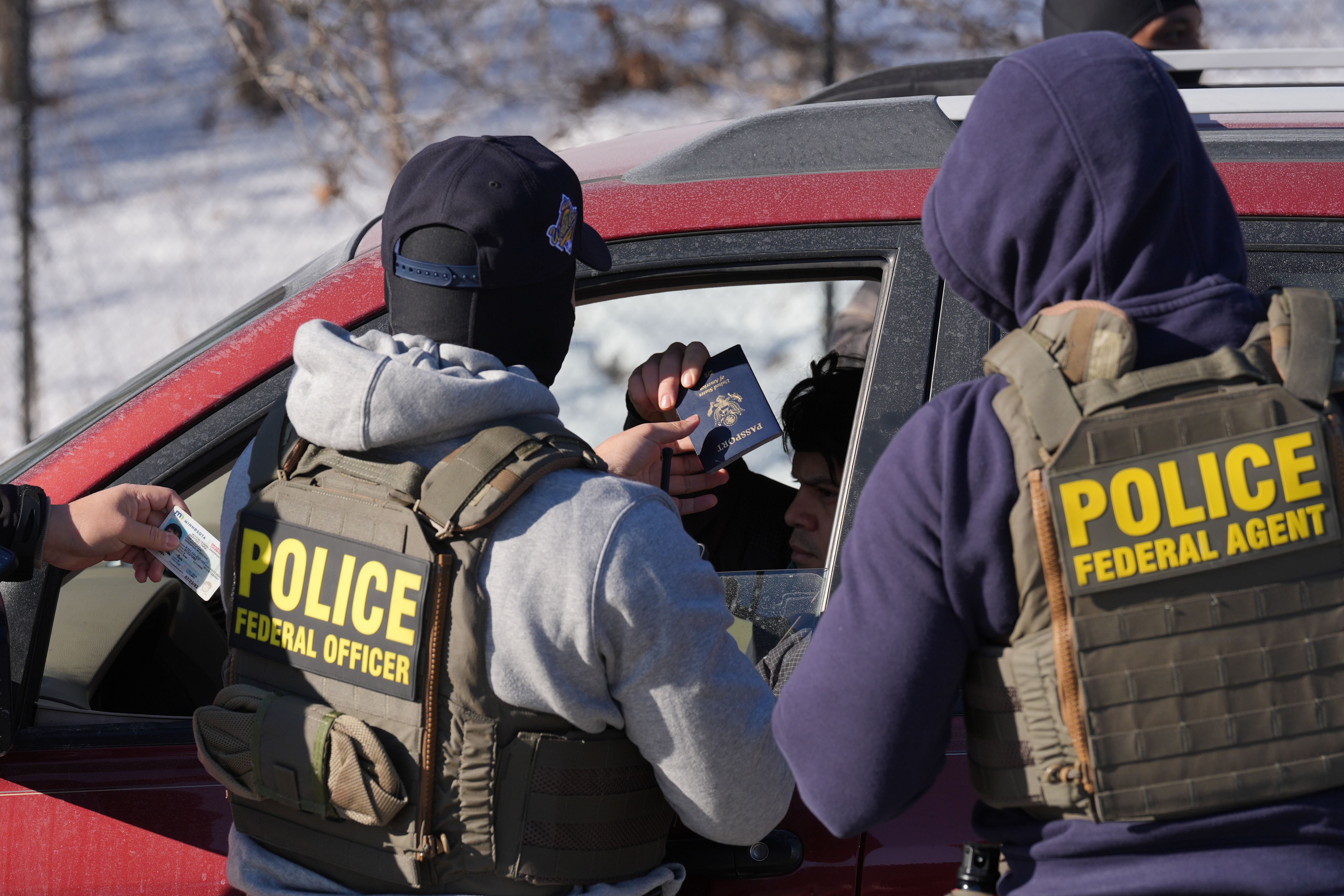
    Federal agents make a traffic stop on a U.S. citizen in Minneapolis in January.Adam Gray

    Changing tactics

    I put the question of ICE’s future and how its agents are regarded to Jason Houser, who spent his government career at the U.S. Department of Homeland Security and is a former ICE chief of staff. The Afghanistan combat veteran told me it starts and ends with leadership.

    “The tactical and operational guidance and directives from the administration are putting ICE officers in a place to be demonized,” he said. “There’s a lot of authority and power in law enforcement, and the way that power is being used by this administration for the first 18 months has been disjointed, punitive, shortsighted, and targeted at the most vulnerable communities.”

    While the behavior of some agents is inexcusable, and they should be held accountable, the agency is ultimately an instrument wielded by those in power.

    For example, some of the same agents who are being maligned today were redeployed to Del Rio, Texas, in 2021 to help humanely and safely process almost 16,000 mostly Haitian immigrants who were living in substandard conditions in a makeshift border camp, Houser noted.

    How ICE is operating today cannot be separated from the administration’s demands.

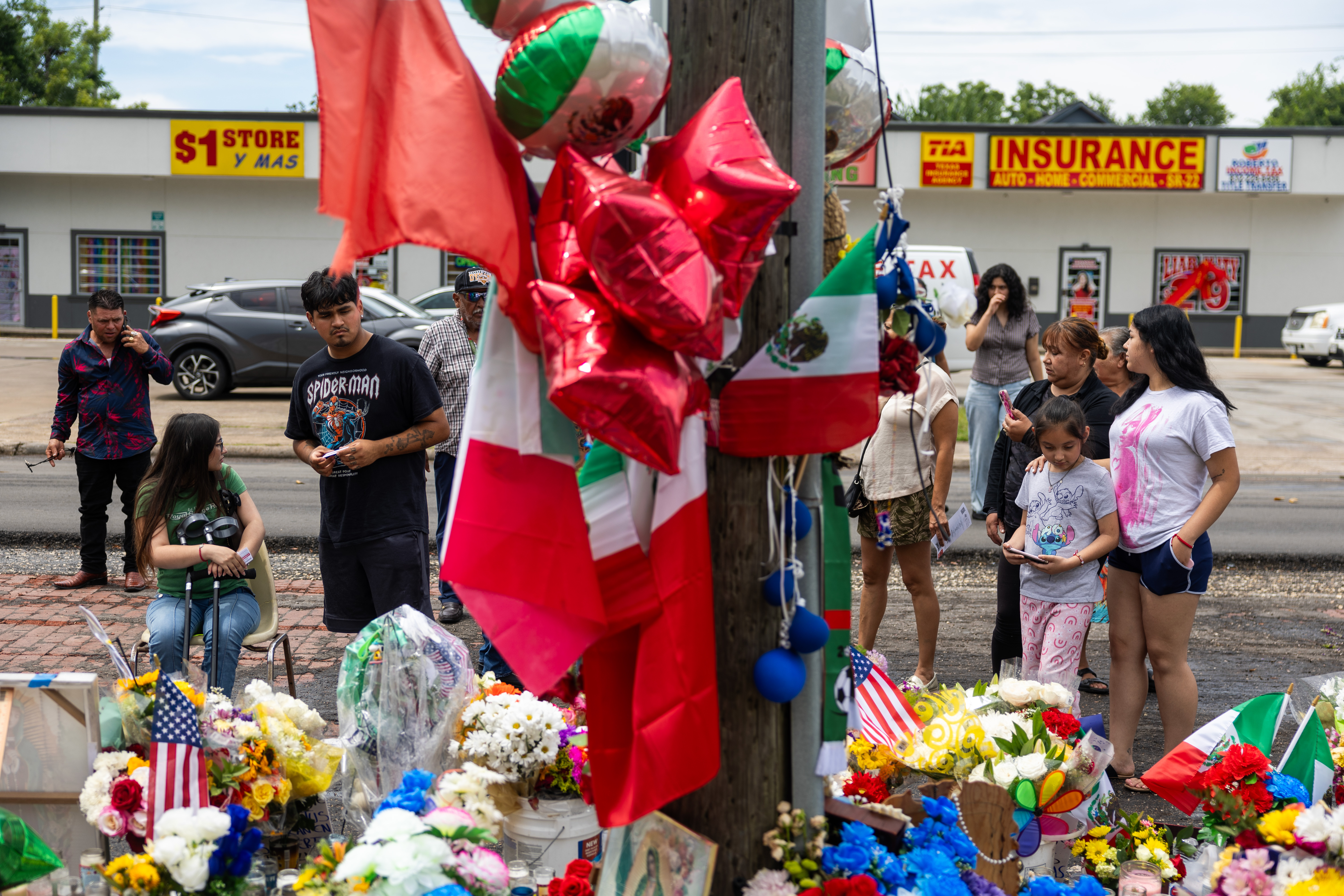
    Some of the worst examples of abuse by ICE agents have come during vehicle stops, including the July killing of Lorenzo Salgado Araujo in Houston. Agents have been captured on video in high-speed pursuits, cutting off cars, and smashing windows.

    Before Trump returned to office, the agency rarely engaged in these kinds of tactics, let alone used them to target noncriminal immigrants, said Joe Sifuentez, who worked for ICE until he retired in 2020.

    “If it’s a bad guy in that vehicle, we have a judicial warrant, we stop them. Then we can break that window and drag that person out of the vehicle,” he said. “But that’s not what’s happening now.”

    While the president campaigned on mass deportations, many voters believed the government would focus on immigrants with serious criminal records. Increasingly, that is not the case, with most people being detained only charged with violating civil immigration laws.

    And in trying to fill a reported White House quota of 2,000 arrests a day, federal agents are engaged in random sweeps and racial profiling that put people at risk.

    “I’m concerned that one of my loved ones could get pulled over tomorrow,” Sifuentez said. “God only knows what can happen.”

    Detainees stand at windows at the Delaney Hall immigration detention center in Newark, N.J., in May, as demonstrators gather outside.TODD HEISLER

    Bad math

    The Republican-controlled Congress has given the administration more than $150 billion for immigration enforcement. The question is what taxpayers are getting in return. It isn’t increasing public safety, the former officials I spoke with said.

    Houser pointed to a recent report by the DHS Office of Inspector General that found that as ICE shifted priorities toward immigration enforcement, its efforts to combat fentanyl trafficking declined. From fiscal years 2024 to 2025, the report said, fentanyl investigations decreased by 24%, investigative hours spent countering fentanyl decreased by approximately 30%, and fentanyl seizures decreased by almost 40%.

    It’s not just drug trafficking investigations that are falling by the wayside over Trump’s misplaced priorities. ICE agents descending on a Home Depot or a Walmart to fulfill their arrest quotas fail to target the kinds of criminals the agency should be focused on.

    “Real sex predators, convicted rapists, murderers, aren’t just hanging out at a Starbucks on a Tuesday, right? They’re not at the corner, walking their kids to school,” Houser said.

    Mass arrests also put people in detention who do not have a final order of removal. These are immigrants who are going through the system and would generally be allowed to walk free until they had exhausted their legal options. Instead, the administration is deciding to hold them without bond for what can be an indeterminate amount of time.

    Sifuentez, who oversaw ICE’s national fugitive operations program and detention facilities, told me that even under regular circumstances, detention is extremely challenging. As the government works to not only increase the number of such facilities in the country, but also how many people these places hold, the situation is bound to get worse.

    “When I was in Atlanta, I oversaw a facility with 2,000 detainees. That in itself was very difficult to oversee and keep your staffing levels intact,” he said. “What do you think it’s going to be like when you ramp it up to 10,000?”

    Already, there have been more than 50 deaths in detention since the start of Trump’s second term, with the detention fatality rate hitting a two-decade high.

    “You’re going to see more suicides. You’re going to see more people die of health conditions. You’re going to see more both mental and physical stress that leads to horrific outcomes,” Houser added. “It’s just math.”

    Lorenzo Salgado Araujo, a 52-year-old Mexican immigrant, was fatally shot by ICE agents in Houston in July. A makeshift memorial took shape at the site where he was killed.ANTRANIK TAVITIAN

    Abolish ICE

    If ICE is being used to indiscriminately terrorize communities, and ignore constitutional protections while disregarding its public safety charge, what is the point of its continued existence? Even if you see it as a tool, if it can be abused so readily and so thoroughly by an out-of-control executive, wouldn’t the cause of sensible and coherent immigration policy be better served by replacing it?

    Neither of the former officials I spoke with would endorse the call to abolish ICE, and perhaps their experiential knowledge of the agency’s complexity would keep them from ever embracing what can feel more like a facile bit of political sloganeering than anything else. After all, activists have long called to eliminate the agency, rightly underscoring the need for accountability over the lives that have been destroyed by detention and deportation — but they hardly ever offer realistic or politically viable alternatives.

    Indeed, as long as we are a nation of laws, there will be the need for enforcement. In humanitarian terms, whatever agency takes ICE’s place will be judged harshly under those same standards, but exist it must.

    Still, Sifuentez, until recently a lifelong registered Republican, said that at the very least ICE should be renamed and its functions divided among other agencies.

    “Everybody in America should be very concerned about what’s going on,” he said. “This isn’t about politics. This is about what’s right and what’s wrong, and what’s going on is wrong.”

    For his part, Houser stressed that we need migrants in this country, and we need public safety. Immigration enforcement is difficult, nuanced work and should be entrusted to those who have the highest level of training and expertise.

    “No matter what the structure and organization of the bureaucracy is, there’s going to be immigration enforcement, and it needs to be handled with professionalism,” he said. “Remembering that 95% of individuals who are coming to this country want the American way of life, and that’s something to be embraced.”

  • Trump’s Supreme Court is still helping him try to steal elections | Editorial

    Trump’s Supreme Court is still helping him try to steal elections | Editorial

    The U.S. Supreme Court, as one of its members recently noted, has held that judges “are not required to exhibit a naiveté from which ordinary citizens are free.” And yet, that is precisely what its conservative justices just did.

    Considering one of Donald Trump’s latest attempts to illegally suppress votes, the court’s Republican-appointed majority was — or pretended to be — so naive as to fail to notice the president’s plain intent.

    At issue was Trump’s March order directing the U.S. Postal Service to restrict mailed ballots by delivering only those sent by “confirmed” citizens listed by the U.S. Department of Homeland Security.

    The court allowed the government to proceed with this plot on the grounds that it wasn’t fully hatched. Because postal and other officials hadn’t yet developed a full-fledged plan to meddle with the election, the justices reasoned, it was too soon for Gov. Josh Shapiro and 22 other state officials to sue to stop them.

    The ruling came, by the way, with just over two months left until the midterm elections, and some mail-in ballots expected to be sent to voters in less than a week.

    It doesn’t take half a dozen elite jurists poring over this set of facts to understand what’s going on.

    It isn’t genuine presidential concern about a means of voting that Americans have practiced since the Civil War and even beforehand — Pennsylvania pioneered military absentee ballots in the War of 1812 — and which Trump used as recently as this month, when he cast his ballot by mail in Florida.

    Rather, the president is trying to head off a well-earned midterm shellacking of his fellow Republicans in Congress any way he can other than by actually persuading Americans to vote for them. He has already pushed unprecedented partisan gerrymandering, lobbied for legislation to make voting harder, and after his 2020 defeat, attempted to overturn results with fraud and violence. The Supreme Court helped him get away with that, too.

    But it’s not impossible for a federal judge to dispense with a state-sponsored attack on democracy swiftly, decisively, and appropriately. We know that because it’s what happened when U.S. District Judge Indira Talwani ruled on Trump’s mail heist in June.

    The Boston-based judge blocked the president’s executive order until after the midterms in light of the elections’ imminence and because, as she succinctly put it, “The Constitution does not grant the President any specific powers over elections.” As Talwani pointed out, the founding document delegates authority over elections to Congress and the states, neither of which ever asked a post office to take over for them.

    The judge is not an outlier here: The First U.S. Circuit Court of Appeals upheld her decision in July, noting that the administration hadn’t even argued that Trump’s order was legal, only that it was too soon to consider it. The appellate court added that the states, given the approach of elections they play a substantial role in running, had “no practical choice but to respond” to the executive order when they did.

    It’s not impossible for a member of the Supreme Court to recognize reality when she sees it, either. In dissenting from the majority, Justice Ketanji Brown Jackson wrote that “what makes today’s ruling so off-base is the Court’s lack of situational awareness.” She added that her colleagues overlooked the administration’s “actual objective: to secure our imprimatur for its effort to foment chaos ahead of the November elections.”

    As unstinting as Jackson’s dissent is, her attribution of the majority’s decision to obliviousness is charitable. The problem is less likely that the Republican appointees don’t know what Trump is up to than that they don’t care.

    While the court’s ruling isn’t close to the end of the legal challenges to Trump’s scheme — another lawsuit was filed Wednesday in response to the Postal Service’s newly finished plan to lose our votes in the mail — it does perpetuate unnecessary confusion over a popular means of participating in a crucial election. Even if the president is never permitted to block ballots outright, bewildering the people who cast them will serve his purposes just fine.

    In an age of official disinformation and artificial intelligence, the country could use some clarity. Fortunately, we have a Constitution that provides a crystalline degree thereof on the subject of authority over elections. Unfortunately, we have a Supreme Court that refuses to acknowledge the obvious.

  • Pennsylvania is caught in the ‘crossfire’ of U.S. trade dispute with Canada

    Pennsylvania is caught in the ‘crossfire’ of U.S. trade dispute with Canada

    President Donald Trump says he’s holding Canada accountable for “ripping off” the United States through unfair trade practices.

    But by imposing new tariffs on Canadian goods and prompting retaliation from one of America’s largest trading partners, U.S. businesses and consumers could face higher costs, analysts said — including in key electoral battlegrounds like Pennsylvania.

    Pennsylvania sold $13.4 billion in goods last year to Canada — its largest export market.

    About $2 billion worth of those goods, or 16%, will be subject to higher tariffs — some as high as 50% — starting Sept. 8 after Canada this week announced new levies, according to an Inquirer analysis of trade data. Some of the state’s top exports facing new tariffs include raw aluminum, lumber, and passenger vehicles.

    (function(){function e(){window.addEventListener(`message`,function(e){if(e.data[`datawrapper-height`]!==void 0){var t=document.querySelectorAll(`iframe`);for(var n in e.data[`datawrapper-height`])for(var r=0,i;i=t[r];r++)if(i.contentWindow===e.source){var a=e.data[`datawrapper-height`][n]+`px`;i.style.height=a}}})}e()})();

    Canadian officials said the tariffs on hundreds of U.S. goods worth a total of $20 billion are meant to protect its workers in response to increased U.S. levies on the same amount of Canadian imports. That affects a relatively small share of trade between the two countries, but analysts said the situation is still evolving.

    “There’s so many things that go back and forth, some of it multiple times. The effect and the amplification of these tariffs, we’ll definitely feel,” said Lauren Swartz, CEO of the nonprofit World Affairs Council of Philadelphia. “When we think about what that means for Pennsylvania, it’s going to be loud.”

    “My sense is the rhetoric that we’re hearing, and the fact that it’s already being labeled a trade war, is that both countries are reserving the right to escalate the level, the percentage of tariffs, as well as the scope of goods that will fall under the new trade war,” she said. “So it will expand.”

    Steel, dairy, electronics impacted

    The new tariffs came after talks between the U.S. and Canada over a trade deal fell apart last weekend. Trump imposed 50% tariffs on goods such as hockey sticks, national flags, and building materials.

    “Canada has been ripping off the United States for decades — and President Donald J. Trump is done letting them get away with it,” the White House said on Tuesday. It said the U.S. had offered Canada “the most preferential market access of any country on Earth” but that the country chose “unreasonable demands, walk-backs, and flat-out rejection.”

    Canada said the proposed terms would undermine Canadian interests.

    Canadian officials said the country’s counter tariffs would protect the country’s workers and businesses. They said the levies on U.S. goods targeted sectors such as appliances, steel, dairy, and electronics.

    (function(){function e(){window.addEventListener(`message`,function(e){if(e.data[`datawrapper-height`]!==void 0){var t=document.querySelectorAll(`iframe`);for(var n in e.data[`datawrapper-height`])for(var r=0,i;i=t[r];r++)if(i.contentWindow===e.source){var a=e.data[`datawrapper-height`][n]+`px`;i.style.height=a}}})}e()})();

    Influence on midterms?

    The trade dispute could inject new uncertainty into the economy less than three months before the U.S. midterm elections decide control of Congress and statehouses around the country. Republicans are seeking to retain control of the U.S. House and Senate. Pennsylvania has several competitive House races in which Republican incumbents are seen as vulnerable.

    Pennsylvania Gov. Josh Shapiro, a Democrat who is running for reelection against Republican state Treasurer Stacy Garrity, has repeatedly criticized Trump’s tariffs.

    “Donald Trump’s reckless tariffs are a tax on Pennsylvanians — and Gov. Shapiro has been fighting back against them from day one,” said campaign spokesperson Manuel Bonder.

    “This President has raised costs for families, screwed over our farmers, and shut down markets for businesses — all with Stacy Garrity’s 100% support,” Bonder said in a statement.

    Garrity’s campaign didn’t respond to requests for comment. She has in the past said Trump’s tariffs could result in some “short-term pain” but would ultimately bring jobs to America. “It’s going to be fantastic,” she said in a clip that Shapiro’s campaign has highlighted. More recently, Garrity told reporters in July she would “do the tariffs a little bit differently.”

    Canadian officials appeared to target some goods that are important in electoral battlegrounds, such as seafood in Maine, the Wall Street Journal reported.

    Analysts said Pennsylvania didn’t appear to be a principal target. “But unfortunately, it’s one of the states that does a lot of goods transfer with Canada, and unfortunately, they’re hit in the crossfire,” said Kyle Peacock, a trade expert and founder of Peacock Tariff Consulting.

    Peacock said that after previous rounds of tariffs, many businesses were able to absorb the costs.

    But now that some products face 50% levies, that will likely change, he said. “Not a lot of industries or products have 50% margin that you can just eat,” he said. “So I think you’re going to see that this time, unfortunately, that’s going to be passed on to the consumer.”

  • Young Pa. voters are frustrated with Trump as they grapple with ‘the cost of continuing to exist’

    Young Pa. voters are frustrated with Trump as they grapple with ‘the cost of continuing to exist’

    Kelly Harrington is frustrated.

    The 29-year-old Conshohocken resident recently got laid off from a local, financially struggling real estate company and is now trying to find work in a grueling job market for young workers where many of her applications are getting intercepted by AI bots, instead of a person.

    On top of that, she is watching the cost of gas and groceries climb, concerned about reproductive rights after the U.S. Supreme Court in 2022 overturned Roe v. Wade, and is deeply worried about the environmental impacts from a proposed data center in nearby Plymouth Township.

    Harrington joins 75% of likely voters ages 18 to 29 in disapproving of President Donald Trump’s job performance, according to an Inquirer/New York Times/Siena University poll published Tuesday.

    That is a higher percentage than any in other age group in the poll, which found 58% of all Pennsylvania likely voters disapprove of the president.

    Though 80% of young voters said they are satisfied with their own life, they overwhelmingly gave Trump low marks on his handling of the economy and other major issues in the United States.

    Young people are overwhelmed by rising costs in what they see as an unstable economic and volatile international landscape with ramifications that they will one day have to shoulder.

    “It feels like things are going downhill in a way that we don’t know how to recover, and our generation is going to be responsible for picking up the pieces environmentally,” said Harrington, a Democrat. “Also, politically, there are many things that have been done that are going to be hard to take back or that we have to figure out how to undo in the future.”

    The poll, which surveyed likely voters in Pennsylvania between Aug. 17 and 21, underscores how deeply unpopular Trump is among the generation that came of age during his foray into politics and could foreshadow where the state’s politics are headed beyond November’s high-stakes midterm races.

    “Young people are feeling as though they simply don’t have the same level of opportunity as do older people,” said Don Levy, director of the Siena Research Institute. “They are dissatisfied,” he added, and contending with housing expenses, the prices of goods and services, and how much it costs to get married.

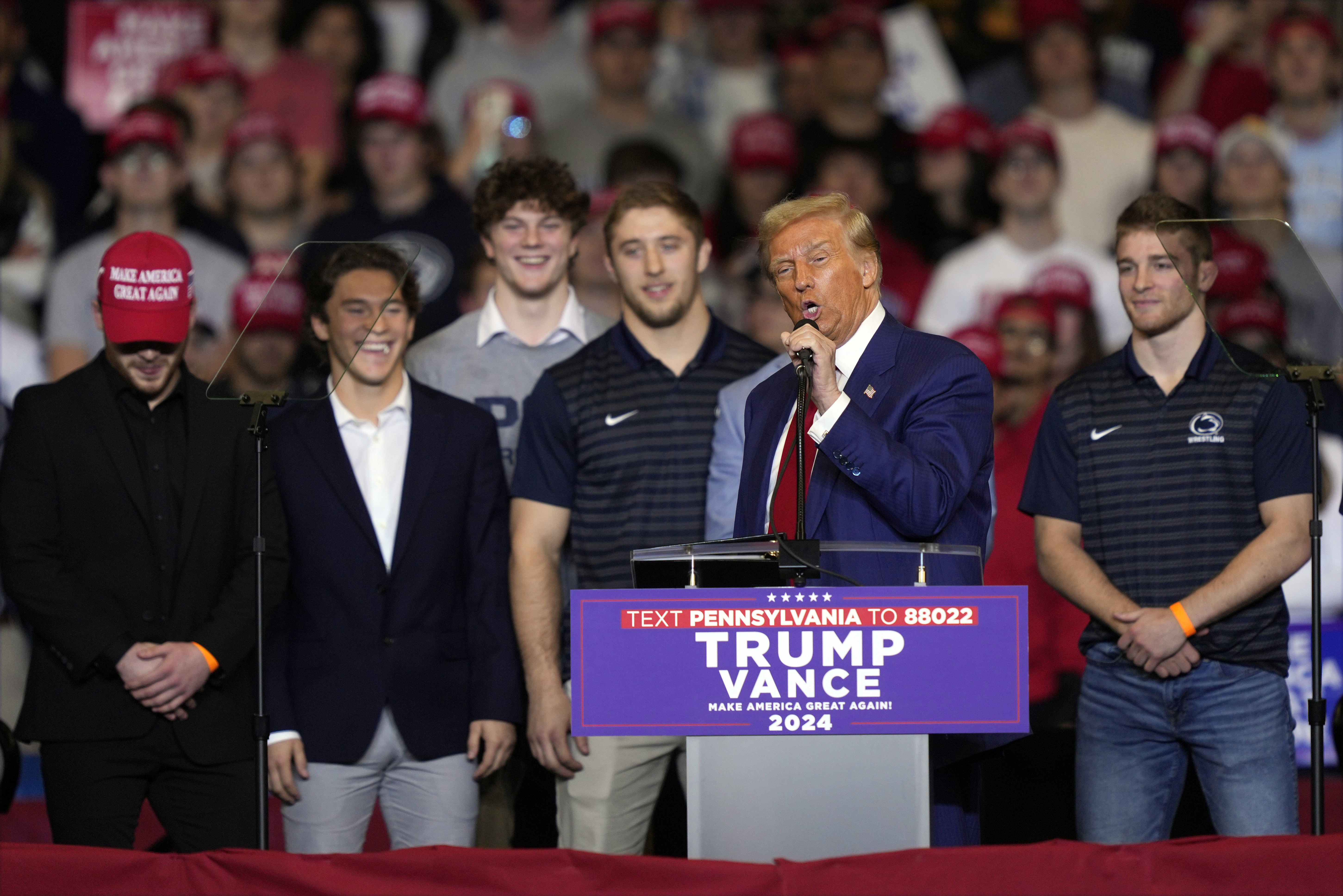
    President Donald Trump speaks as members of the Penn State wrestling team listen at a campaign rally at the Bryce Jordan Center in State College in October of 2024. Trump went onto win the state. Matt Rourke

    ‘The cost of continuing to exist’

    Sophie Showers, 19, wants kids, a stable job as a psychologist, and to one day be married.

    But now that vision is getting hazier as costs rise, including at the grocery store and at the gas pump, which she needs for her 45-minute commute to school — what the Mechanicsburg resident and first-time voter refers to as “the cost of continuing to exist.”

    Trump, according to the poll, is most underwater with young voters on the cost of living: Only 9% approve and 90% disapprove of his handling of the issue.

    That disapproval includes a quarter of voters under 30 who cast ballots for Trump in 2024, including a young voter from the Philadelphia area who asked not to be identified due to his role in his local Republican Party.

    He supported Trump in 2024, but he has become disappointed with what he says is Trump’s ignorance of the country’s biggest problems, namely inflation.

    “He wants to lower taxes. He wants to cut regulation. I agree with all those things,” he said. “But actually making major changes to people’s pricing, I don’t think he’s taking it that seriously.”

    On the economy, 19% of young people approve of Trump’s handling and 81% disapprove, according to the poll.

    “The current state of our country is that young people feel as though they have less opportunity economically than their parents or grandparents,” Levy said. “That’s a clear statement on dissatisfaction with the economy.”

    As they try to jump-start their early adulthood, young people are dealing with rising expenses, including unusually high gas prices and years of steadily increasing grocery store costs. Trump’s tariffs also raised prices for both businesses and consumers.

    (function(){function e(){window.addEventListener(`message`,function(e){if(e.data[`datawrapper-height`]!==void 0){var t=document.querySelectorAll(`iframe`);for(var n in e.data[`datawrapper-height`])for(var r=0,i;i=t[r];r++)if(i.contentWindow===e.source){var a=e.data[`datawrapper-height`][n]+`px`;i.style.height=a}}})}e()})();

    “If the cost of living keeps increasing, whether it be due to gas prices … or tariffs increasing the costs of groceries, I don’t want to be in a world where I have to worry about those kinds of things for the family that I want to have or will have, and I personally don’t really see things getting better,” said Showers, an independent voter.

    Miles Balfour, a graduate student pursuing a degree in human interaction at Carnegie Mellon University, is feeling similarly pessimistic.

    “When it comes to the financial and economic goals that I have for myself — wanting to own a home, wanting to be able to help provide financially for my family — I don’t know, honestly. I wish there was a better sense of confidence or assurance that these things are much more likely to actually happen,” Balfour, 25, said.

    According to a survey earlier this year from CIRCLE, a Tufts University program that studies youth civic engagement, many young people ages 18 to 29 are barely making ends meet, and nearly 60% said they struggle to meet their basic financial needs.

    “Young people’s personal situations are also really coloring their view of politics and of what’s happening in the country,” said Alberto Medina, CIRCLE’s communications manager.

    Ben Hummer, 28, of Pittsburgh, said though he is new to his career in recruiting, raises have slowed down while expenses like rent have gone up. His auto insurance for his Hyundai skyrocketed to roughly $3,000 a year, and his favorite sneakers — for a race he will be running later this year — have jumped from $120 to about $170.

    “My ability to afford my lifestyle comfortably has become more challenged,” Hummer, a Democrat, said.

    Young voters grapple with international conflicts

    Beyond struggles at home, young voters are also wrestling with questions about the U.S. role in overseas conflicts.

    After the deadly Oct. 7, 2023, terror attack against Israel by Hamas, the country launched a military campaign against the insurgent group in Gaza. And with the death toll of Palestinians climbing to more than 70,000 over the last three years, the debate over U.S. support for Israel has become a defining issue for many young people in Pennsylvania and elsewhere.

    As encampments and protests in support of Palestinians roiled university campuses ahead of the 2024 election, the issue hung over former President Joe Biden’s reelection campaign before his withdrawal and may have contributed to Vice President Kamala Harris’ loss.

    Trump repeatedly vowed during his 2024 campaign to end the war. But fighting has continued, and now only 16% of likely young voters in Pennsylvania approve of Trump’s handling of the conflict, the poll found.

    Hummer, the 28-year-old from Pittsburgh, disapproves of the president’s approach and said the U.S. “needs to balance its approach” in the Middle East.

    (function(){function e(){window.addEventListener(`message`,function(e){if(e.data[`datawrapper-height`]!==void 0){var t=document.querySelectorAll(`iframe`);for(var n in e.data[`datawrapper-height`])for(var r=0,i;i=t[r];r++)if(i.contentWindow===e.source){var a=e.data[`datawrapper-height`][n]+`px`;i.style.height=a}}})}e()})();

    “It doesn’t necessarily have to be pro-Palestinian by any means, but the United States has allies in the region outside of Israel that are being negatively impacted by the conflict, and we often just throw them under the bus,” Hummer said.

    Many young people have coupled their anger about the economy with Trump’s decision to join Israel in striking Iranian nuclear facilities and military sites. The Iranian regime retaliated by blocking a key water channel where oil tankers flow, spiking the price of gas throughout the spring.

    Among 18- to 29-year-old Pennsylvania voters, only 17% approve of Trump’s handling of the war in Iran, while 82% disapprove (it is also his least popular issue among all likely voters in the state). The war — which the president originally promised would go on for only a few weeks — has now lasted for six months.

    “I’m concerned about the United States’ ability to extract itself from the war in Iran without taking some kind of loss — whether it’s loss of influence, loss of life, or loss of financial resources,” and the prospect gets worse the longer the U.S. remains involved, Hummer said.

    Young voters are also more critical of Pennsylvania leaders’ positions on Israel than are respondents overall.

    Nearly half, 47%, of respondents said Pennsylvania’s third Jewish governor, Josh Shapiro, has been just “about right on support of Israel,” with 14% saying he has been too supportive, despite his vocal opposition to the country’s leader, Prime Minister Benjamin Netanyahu. But among young voters, 40% said he was too supportive.

    And more than half, 51%, of young voters said Pennsylvania U.S. Sen. John Fetterman, a frequent defender of Israel who has said he would leave the Democratic Party if anti-Israel sentiment grew too strong, is too supportive of Israel — compared with 30% overall.

    ‘Willing and ready to vote in 2026’

    Young voters are now figuring out what to do next.

    Darlene Jimenez, 19, of Philadelphia, said she is grappling with what she can feasibly do as a young person who cares deeply about many issues, including immigration (on which Trump has a 25% approval rating among young voters) and climate change.

    “There’s so many times where I find myself thinking like, ‘What am I to do?’” said Jimenez, a Democrat and college student. “Like, I’m 19 and I have so many opinions, and it’s like, what am I supposed to do to actually make a change?”

    Medina, communications manager for CIRCLE, said that while there is a sense of hopelessness among young people, “many of them are paying attention, and they say that they’re willing and ready to vote in 2026.”

    “Often, precisely because they don’t like the way things are going, and they would like things to change, and they see themselves as having a role in bringing about that change,” Medina said the organization has found in its research.

    In Pennsylvania, the youth vote has the potential to make a “decisive impact” on the four key competitive congressional district races this fall — in Bucks County, the Lehigh Valley, the Scranton area, and the Harrisburg region — according to CIRCLE’s 2026 Youth Electoral Significance Index.

    (function(){function e(){window.addEventListener(`message`,function(e){if(e.data[`datawrapper-height`]!==void 0){var t=document.querySelectorAll(`iframe`);for(var n in e.data[`datawrapper-height`])for(var r=0,i;i=t[r];r++)if(i.contentWindow===e.source){var a=e.data[`datawrapper-height`][n]+`px`;i.style.height=a}}})}e()})();

    But at the same time, young people are still trying to find their political home and historically have been less likely to vote than other age groups, including in 2024, when there was a 54% turnout rate among Pennsylvanians ages 18 to 24 compared with 70% for the overall electorate, according to census data.

    Others are a little more sure of where they stand. For instance, young women are the demographic most disapproving of Trump among likely voters in the Inquirer/New York Times/Siena poll. Fourteen percent of young women approve of his job performance, and 83% disapprove.

    (function(){function e(){window.addEventListener(`message`,function(e){if(e.data[`datawrapper-height`]!==void 0){var t=document.querySelectorAll(`iframe`);for(var n in e.data[`datawrapper-height`])for(var r=0,i;i=t[r];r++)if(i.contentWindow===e.source){var a=e.data[`datawrapper-height`][n]+`px`;i.style.height=a}}})}e()})();

    While a gender gap still exists among young voters, young men — who helped catapult Trump to the White House in 2024 — now disapprove of the president by a nearly 2-1 ratio: 33% approve of his job performance, compared with 64% who disapprove.

    Will, a Democrat from Bucks County who works in academia, crossed the aisle to vote for Trump in 2024 because he — “a loyal Joe Biden guy” — vehemently disagreed with how Harris was nominated without a primary after Biden’s withdrawal and also believes Democrats have focused too much on identity politics.

    The 27-year-old, who asked to be identified only by his first name because of concerns about workplace retaliation, has mixed feelings about Trump’s handling of the issues and called the Iran war “ridiculous.” But he does not fully regret his vote, citing Trump’s handling of Israel as one reason.

    “My impression is that the Democrats have been moving further left to kind of compensate for the fact that MAGA and the tea party moved the Republicans further right, so it kind of leaves people in the middle stranded. … I would prefer the Democrats kind of bring things back to the center,” said Will, who supports Shapiro for governor and would back him for president in 2028.

    And Luke Averill, 19, a registered Republican from Delaware County who voted for Harris in 2024, said he thinks he can make the most impact on the direction of the country by voting for moderate candidates in Pennsylvania’s GOP primaries, but he does not see himself as a “diehard for one party in particular.”

    But for many young voters, the elected officials they are gravitating toward are indicative of what is most important to them.

    Several young respondents to the poll said they find New York City Mayor Zohran Mamdani’s style of politics and focus on affordability to be refreshing.

    “He’s the inspiration for myself and many people in my generation and all around the country,” Balfour, the 25-year-old at Carnegie Mellon, said. Mamdani brings “a sense of hope and optimism” and the ability to see government “make our lives much more meaningful.”

    Kelly Harrington, 29, poses for a portrait near her home in Conshohocken, Pa., on Monday, Aug. 24, 2026.Erin Blewett / For The Inquirer

    And as for Harrington, the 29-year-old from Conshohocken, she said though she feels “frustrated and sad about the state of the world,” she believes it is important to take those emotions to the ballot box.

    “Politics is in every aspect of life,” Harrington said. “It affects you directly in almost every way, and if you get involved, you can make real change.”

  • South Jersey Freedom Fuel stations racked up big fines before being promoted by White House

    South Jersey Freedom Fuel stations racked up big fines before being promoted by White House

    Six South Jersey gas stations that the White House promoted in July, touting below-market fuel prices, have racked up environmental violations with the state dating back to 2023.

    The New Jersey Department of Environmental Protection issued close to $430,000 in fines in May to operators who run 17 gas stations, including the six Freedom Fuel locations, for the violations accrued over the years, according to an administrative order first reported by Politico and obtained by The Inquirer. The fines were issued before these stations rebranded to Freedom Fuel.

    The Freedom Fuel stations, which made their debut this summer, accrued more than $202,000 in fines, according to department records. All 17 stations are owned by asset manager Blue Owl Capital and operated by Cherry Hill developer Shamikh Kazmi and his brother Syed Kazmi.

    Blue Owl and the Kazmi brothers could not be reached for comment.

    The owner-operators have requested a hearing, according to DEP spokesperson Larry Hajna, but no date had been set as of Wednesday.

    The violations include failing to properly register underground storage tanks, failing to provide overfill prevention for some tanks, failing to cut and cap lines that lead to out-of-service tank systems, and violating delivery bans.

    A Freedom Fuel location at 6801 Tilton Rd. in Egg Harbor was issued a fine of $50,000, the maximum penalty for the violation. The location received four deliveries in November 2023, despite having been banned from doing so because it did not properly register its storage tank.

    In its justification for the fine, the department described the operator’s actions as a “deliberate and knowing act,” noting it was a major violation.

    The Kazmi brothers have been embroiled in at least two lawsuits related to previous gas station ventures, including a 2021 trademark dispute with BP American Inc. and BP Products North America Inc. Additionally, Petroleum Marketing Group Inc., a fuel distribution company, accused the brothers of stealing thousands of gallons of gas from the company.

    City won’t shut down Philly Freedom Fuel station

    The Freedom Fuel station on Bustleton Ave. in Philadelphia.Dana Munro / staff

    The Freedom Fuel Network expanded to 29 locations earlier this month, but one Philly station was nearly shut down by the city.

    The network’s Bustleton Avenue station — also linked to the Kazmi brothers — failed a license renewal inspection at the end of July that could have forced its closure. But the owners remedied the issue and can continue to operate the station, according to a city spokesperson.

    More than two months after having been loudly promoted by the White House and President Donald Trump, Freedom Fuel’s owners have remained silent about their discount gas operation.

    Baltimore Ravens assistant coach Randy Brown and former commodities trader Yoni Gontownik signed the company’s certificate of formation in Delaware and have not spoken publicly about the highly touted enterprise.

    Freedom Fuel launched with prices 40 to 50 cents a gallon cheaper than nearby stations, frustrating competitors and confusing experts who follow the notoriously low-margin business.

    “With every new site, we’re driving down gas prices at the pump for more communities,” reads a message on the network’s website.

    In recent weeks, prices across Freedom Fuel locations have risen closer to other discount locations.

    Take the location on Dreshertown Road in Upper Dublin Township, which was promoted in a video shared by the White House. When it launched at the beginning of July, the station sold gas for $3.47 a gallon — a nod to Trump being the 47th president. But as of Tuesday, the station was selling gas for $3.89 a gallon, about a dime cheaper than a nearby Citgo station and slightly more than Sam’s Club, according to gas-tracking website GasBuddy.

    The average cost of a gallon of gas in Philadelphia on Tuesday was $4.15, according to AAA. That was up more than 28% from this time last year, when the cost averaged $3.23.

  • I don’t care what anyone says: Being ‘woke’ isn’t a bad thing

    I don’t care what anyone says: Being ‘woke’ isn’t a bad thing

    I was chatting with a friend recently whom I’ve known for a long time when she used the term woke as if it meant something disgusting.

    I was so stunned that I didn’t bother trying to correct her. But I hung up the phone thinking about how the concept has become a political football, with even some Dems kicking it around.

    African Americans created this vernacular. It preexisted MAGA’s hijacking of it by decades, dating back to the days of civil rights activist Marcus Garvey, founder of the Universal Negro Improvement Association. It has long been a part of pop culture, showing up in musical performances by everyone from Depression-era blues singer Lead Belly to Erykah Badu in her 2008 song, “Master Teacher.”

    I first heard it during the early 1990s. Back then, if someone said, “You’re not woke,” it was considered the ultimate insult, right up there with being an Uncle Tom — or worse. Being woke refers to being alert to racial transgressions. The opposite of woke is to be asleep, and therefore oblivious to systemic racism and injustice.

    No matter how President Donald Trump and Secretary of Defense Pete Hegseth attempt to vilify the term, I stand by the notion that being woke is a good thing. As in the exhortation, “Stay woke, brother.”

    It’s galling to watch politicians bastardize it. U.S. Rep. Alexandria Ocasio-Cortez recently brought it up during an ABC News interview when she said, “I have a local city councilman that has this saying: ‘Woke 1 was crazy.’”

    She was talking about Francesca Hong, a progressive candidate running for governor of Wisconsin with a history of making radical statements, and was also quoting New York City council member Chi Ossé, who used the “woke 1” term on social media. I get that Ocasio-Cortez was referring to far-left calls to defund the police — which most Black people never fully supported — among other extremist ideas. But her words still stung.

    I found myself wondering: Since when did the concept of being woke become a bad thing for Democrats?

    I have an awful lot of respect for Ocasio-Cortez. I recognize she may be weighing a run for the presidency in 2028 and trying to center herself politically. But this kind of virtue signaling won’t be as beneficial as she hopes if it also alienates African Americans.

    M.K. Asante said that “the idea of staying woke became associated with consciousness,” but that the meaning of the term has changed after being co-opted by the mainstream.

    For insight, I reached out to M.K. Asante, a professor at Morgan State University whose father is Molefi Kete Asante, a renowned professor of Africology at Temple University. “The idea of staying woke became associated with consciousness,” Asante told me, but added that the term was co-opted around 2020 following the widespread uprisings after the murder of George Floyd by a police officer.

    Asante pointed out, “Now it does not have the same meaning in the mainstream.”

    That’s mainly because of Trump, who, after his return to the White House, immediately began vilifying woke and other things associated with diversity.

    He declared an all-out war on diversity, equity, and inclusion efforts in both federal and private sectors, and has also taken aim at museums he says are “essentially, the last remaining segment of ‘WOKE.’” Trump also has cut funding from key government programs that support DEI.

    Even the military hasn’t been immune. Trump summarily dismissed Air Force Gen. Charles Q. Brown Jr., who was the second Black person to serve as chairman of the Joint Chiefs of Staff, and set about renaming military bases after Confederate generals.

    Earlier this year, Pentagon spokesperson Sean Parnell announced on X that officials were targeting Stars and Stripes, an independent newspaper that covers the military, in part to “refocus its content away from woke distractions that syphon morale.” Since then, the paper’s publisher, editor-in-chief, and a reporter have all been terminated, ending 155 years of editorial freedom, as my colleague Will Bunch reported.

    Meanwhile, the United States is at war with Iran, Canada, our closest ally, has announced retaliatory tariffs on U.S. products, and American consumers are wondering if the influx of tariff-free foreign beef imports Trump is pushing will be safe to consume.

    Yet, Trump says woke is the enemy.

    Despite the president’s best efforts, he can’t stamp the term or its real meaning out.

    As Asante pointed out, “You can co-opt a word, but the spirit of what ‘stay woke’ means is alive and well.”

  • A newborn baby was one of Pa.’s two measles-related deaths, state says as RFK Jr. questions whether they were ‘fabricated’

    A newborn baby was one of Pa.’s two measles-related deaths, state says as RFK Jr. questions whether they were ‘fabricated’

    A newborn baby from Lancaster County was among the two unvaccinated residents whose deaths were associated with measles, Pennsylvania health officials said Wednesday.

    The state disclosed the age of one of two Lancaster County residents whose measles-related deaths were announced Tuesday. Their deaths were the first in Pennsylvania in 35 years, and the first in the United States this year, tied to the highly contagious disease.

    As vaccination rates decline in the state, an outbreak that began in April this year has sickened more than 400 people in 29 counties — with the epicenter in Lancaster County, where nearly 200 individuals have tested positive for the viral disease. Local physicians and health officials say the true case count is likely much higher.

    The state initially declined to share any information about the deaths, citing privacy concerns, and no information has been released about the second Lancaster resident who died.

    The Pennsylvania Department of Health confirmed information about the newborn’s death on Wednesday only after the Lancaster County coroner publicly stated his office was investigating a newborn who had tested positive for measles and died from a ruptured spleen.

    Lancaster County Coroner Stephen Diamantoni, a physician, said the cause of death was not the measles. The newborn died shortly after birth from a laceration of the spleen. A postmortem test on the baby’s lung tissue showed that the child had a measles infection that was acquired before birth, he said in an interview.

    His description of the death, shared with reporters and a local county commissioner, contributed to a growing uproar on social media over the nature of the deaths and the state’s release of information.

    President Donald Trump’s secretary of health and human services, Robert F. Kennedy Jr., traded attacks with Gov. Josh Shapiro, a Democrat, on X over the deaths and the safety of the measles vaccine.

    In his own posts on X, as well as during a news conference Tuesday, the governor said Kennedy was spreading misinformation about vaccine safety and scaring parents; Kennedy replied that the governor was “gaslighting.”

    Late Wednesday, Kennedy went further in another X post. He accused Shapiro’s administration of potentially having “fabricated” the deaths, after saying in an interview on C-Span that “they cannot find any measles deaths in Lancaster County.”

    He said that Shapiro was not cooperating with the Centers for Disease Control and Prevention or the county in giving information on the deaths.

    Shapiro administration staff said the department has been in regular contact with the agency during the outbreak. Pennsylvania Health Secretary Debra Bogen said in a statement late Wednesday that she “sadly can confirm” two measles-associated deaths in Lancaster County.

    Measles deaths are rare. Most patients recover after mild illness, but the virus can cause pneumonia and brain swelling and kills about one to three patients in 1,000. The disease is so contagious that it can infect nine in 10 unvaccinated people.

    The Pennsylvania Department of Health explained that it reports deaths where measles are present as “measles-associated,” and it “may not be assessed by the medical examiner or coroner to be the immediate cause of death.”

    In Lancaster, the coroner’s office determined that the baby’s primary cause of death was a laceration of the spleen, Diamantoni said.

    Despite the baby’s positive measles test, the forensic pathologist who conducted the autopsy “did not feel it was related to measles,” Diamantoni added.

    His office is seeking to learn whether the baby’s mother had measles at the time of the baby’s birth.

    He said state health officials had not contacted him personally as of Wednesday about the two Lancaster County measles-associated deaths, but his chief deputy spoke to the department prior to Shapiro’s news conference Tuesday.

    Paul Offit, a national vaccine safety expert and physician at Children’s Hospital of Philadelphia, said news of the coroner’s investigation “doesn’t really give us more information” on the death.

    Children can acquire the disease after birth, or can be born with measles if their mother is infected and develops a rash within 10 days of giving birth, he said.

    Measles can cause an enlarged spleen, and birth can cause it to rupture, he said. After a spleen ruptures, Offit said, it is difficult to tell whether it had been enlarged, and he added that the coroner should provide an alternate explanation for the rupture if it had not been caused by measles.

    Diamantoni said the doctor who performed the baby’s autopsy did not note that the spleen was enlarged, and the office is still investigating the cause of the rupture.

    To prevent speculation, the state could release information about the patients’ age, vaccination status, and cause of death while still protecting their privacy, Offit said.

    In conversations with state health officials, he said, he learned that “these patients would not have died were it not for measles.”

    Anti-vaccination advocates “try and completely misdirect and say it really wasn’t measles. They try to do everything they can to distance themselves from it,” he said. “You’re making it a lot easier for them when you don’t give more information.”

    In her statement, Bogen said the department reported the deaths to the CDC on Tuesday morning and met with CDC staff on Wednesday afternoon to discuss the cases.

    “DOH’s Epidemiology team thoroughly investigated and verified both individuals tested positive for measles. The information was not reported to the public until the results of the epidemiological investigations were confirmed,” she said.

    She noted that state health officials are prohibited from releasing death certificate information except under limited circumstances that do not apply to this case.

    A county commissioner questions measles-associated deaths

    The clash over the deaths began within hours of Shapiro’s Tuesday news conference.

    Lancaster County Commissioner Josh Parsons, a Republican, shared the coroner’s account on Facebook, suggesting the state was spreading incorrect information on the deaths.

    In several posts, Parsons questioned whether the patients had died “OF measles or WITH measles” and suggested the state was spreading incorrect information on the deaths.

    “We have ZERO information that corroborates the idea that there were two measles deaths in Lancaster County,” he wrote in a post several hours before the state’s announcement. Later, he shared Kennedy’s remarks on C-Span.

    Parsons has not responded to several requests for comment from The Inquirer about the outbreak over the last several months.

    Democratic County Commissioner Alice Yoder, a registered nurse, said she has been unable to persuade him and the other county commissioner, Ray D’Agostino, a Republican, to post details about the measles outbreak or information encouraging vaccination on the county website.

    Yoder, who attended the Tuesday news conference, said at a Lancaster commissioners meeting Wednesday that she had no additional information on the recent deaths.

    Shapiro and Kennedy clash

    While announcing the deaths Tuesday, Shapiro blamed the federal government’s rhetoric around vaccination for confusing parents and leading to declining vaccination rates.

    The consequences, he said, were apparent in the deaths reported in Pennsylvania. He said he had told Kennedy as much in a recent phone call.

    Later that night, on X, Kennedy said that Shapiro had falsely accused him of spreading misinformation and that drops in the state’s high vaccination rates occurred mostly during President Joe Biden’s administration.

    Kennedy, a longtime anti-vaccine activist, has for years promoted false claims about vaccines.

    Replying to Kennedy on X, Shapiro said that he asked the secretary to help him encourage people to get vaccinated and “stop spreading misinformation.”

    The governor joined a lawsuit earlier this year against Kennedy’s department’s decision to scale back federal vaccine recommendations for children.

    Shapiro noted that Kennedy had visited Lancaster in 2021, during the Biden administration, and told a crowd there that measles could be cured by “chicken soup and vitamin A.”

    Measles has no specific treatments, and although vitamin A is sometimes given to severely ill patients, it cannot prevent the disease and is not a cure.

    Shapiro added that measles cases have increased in the United States and Pennsylvania under Kennedy’s watch.

    Editor’s note: This story has been updated to clarify that the newborn who died had a measles infection acquired before birth.

  • Top Trump official blasts Larry Krasner over comments about blowing up White House ballroom

    Top Trump official blasts Larry Krasner over comments about blowing up White House ballroom

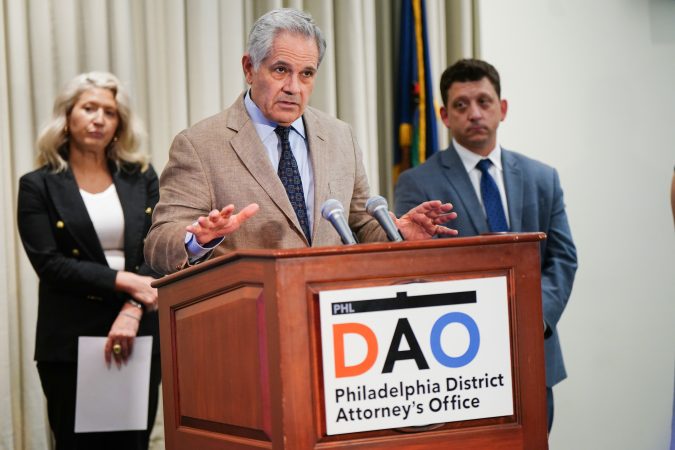
    Philadelphia District Attorney Larry Krasner drew a rebuke Wednesday from Attorney General Todd Blanche after he said President Donald Trump’s White House ballroom, which is currently under construction, should be blown up and pieces of debris sold as paperweights.

    Krasner, a progressive Democrat who has centered much of his political identity on opposing Trump, made the initial comments Tuesday during an event at the President’s House Site, George Washington’s Philadelphia home. The Trump administration this year removed educational panels about slavery from the site and replaced them with an exhibit that experts say sanitizes history.

    According to NBC Philadelphia, the district attorney said during his remarks at the annual Slavery Commiseration ceremony on Tuesday that “there is a beautiful time coming [when] the memorial will be here.”

    “Let me tell you what will not be here: There will not be a ballroom,” Krasner said, referring to the ballroom and military bunker that Trump wants to replace the demolished East Wing of the White House. “What is going to be happening is that, in about 10 or 15 years … I’m gonna have a paperweight sitting on my desk. You know what that paperweight’s going to be? It’s gonna be a piece of the ballroom after we all blow it up.”

    Krasner paused, then added: “In an official ceremony, just so we’re clear. In an official ceremony, we’re gonna blow it up, and we’re gonna give the taxpayers their money back by selling all the pieces as paperweights.”

    The remarks by the Philadelphia district attorney, a third-term prosecutor who has recently flirted with running for higher office, were the latest in a long line of provocative comments he has made about Trump and other GOP officials. Earlier this year, the White House press secretary and Republican members of Congress ripped Krasner after he called federal immigration enforcement agents “wannabe Nazis” and said Trump’s administration is orchestrating a “fascist takeover” of the country.

    And last month, Krasner rallied with protesters in Washington and slammed House Republicans after they subpoenaed documents from his office related to the city’s immigration policies.

    Video of Krasner speaking at the event in Independence National Historical Park rocketed around social media this week, drawing condemnation from prominent supporters of the president, some of whom said his comments were inciting violence.

    The White House’s “rapid response” account wrote Tuesday on X that Krasner’s comments were “sick” and that “Democrats are the party of violence.”

    Attorney General Todd Blanche listens as President Donald Trump speaks at the David Mack Center for Training and Intelligence, Friday, Aug. 14, 2026, in Garden City, N.Y. (AP Photo/Julia Demaree Nikhinson)Julia Demaree Nikhinson

    On Wednesday, Blanche, who was confirmed earlier this month, appeared on Fox News’ America’s Newsroom to discuss a range of issues. Host Dana Perino asked him about Krasner’s comments and the timeline for the controversial ballroom, which had been briefly on hold amid litigation contending the Trump administration needs congressional authorization for the project. The Supreme Court this week allowed construction to proceed while justices consider the case.

    “The ballroom is being built,” Blanche said. “And it’s disgusting that a district attorney in Philadelphia, who, by the way, has a city with its own problems, is so focused on what the president is doing in the White House.”

    In an interview Wednesday, Krasner said he stands by his initial comments about the ballroom “100%” because “when you demolish a building, you do it with explosives and/or wrecking balls.”

    Krasner added that he sees Blanche’s opposition to his rhetoric at the Slavery Commiseration event as part of the Trump administration’s broader project of stripping historical sites like the President’s House of references to slavery.

    “I support the permanent existence of this historically important memorial in Philadelphia. I know that may be disturbing to white supremacists, but too bad,” Krasner said. “Philly is going to stand up for its history, and Philly understands that being an elected official is not about making everybody your friend. It’s about having the right enemies.”