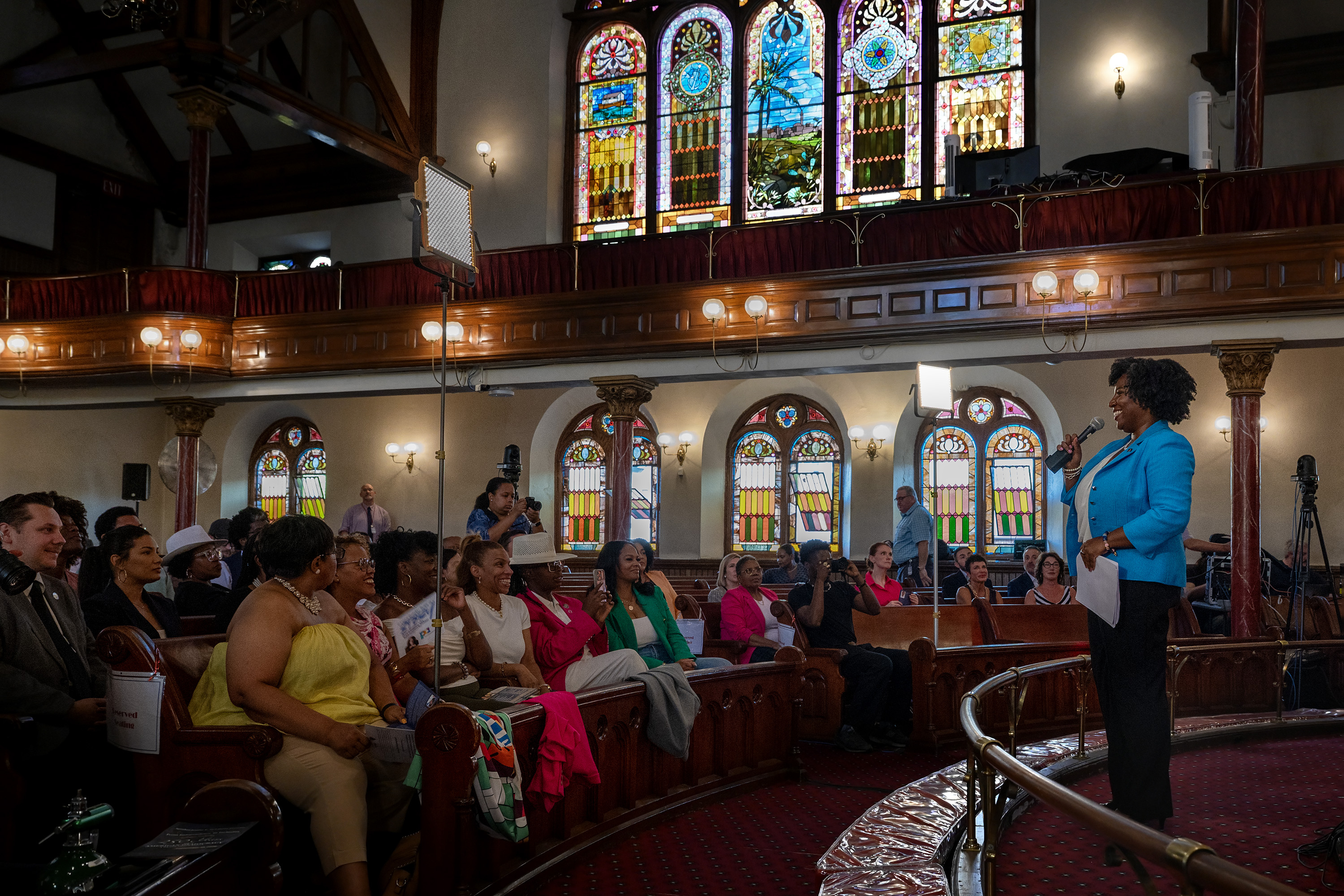
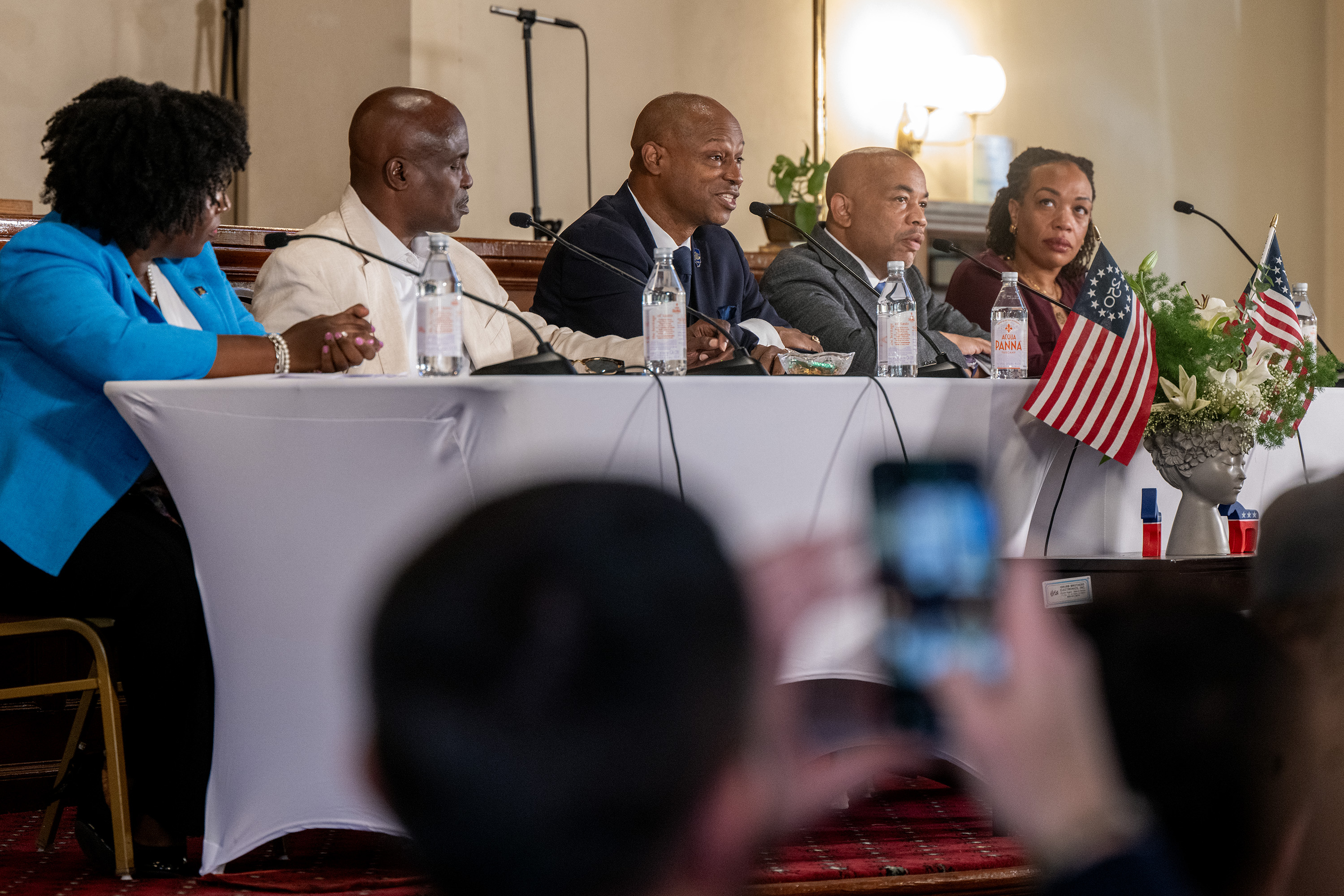
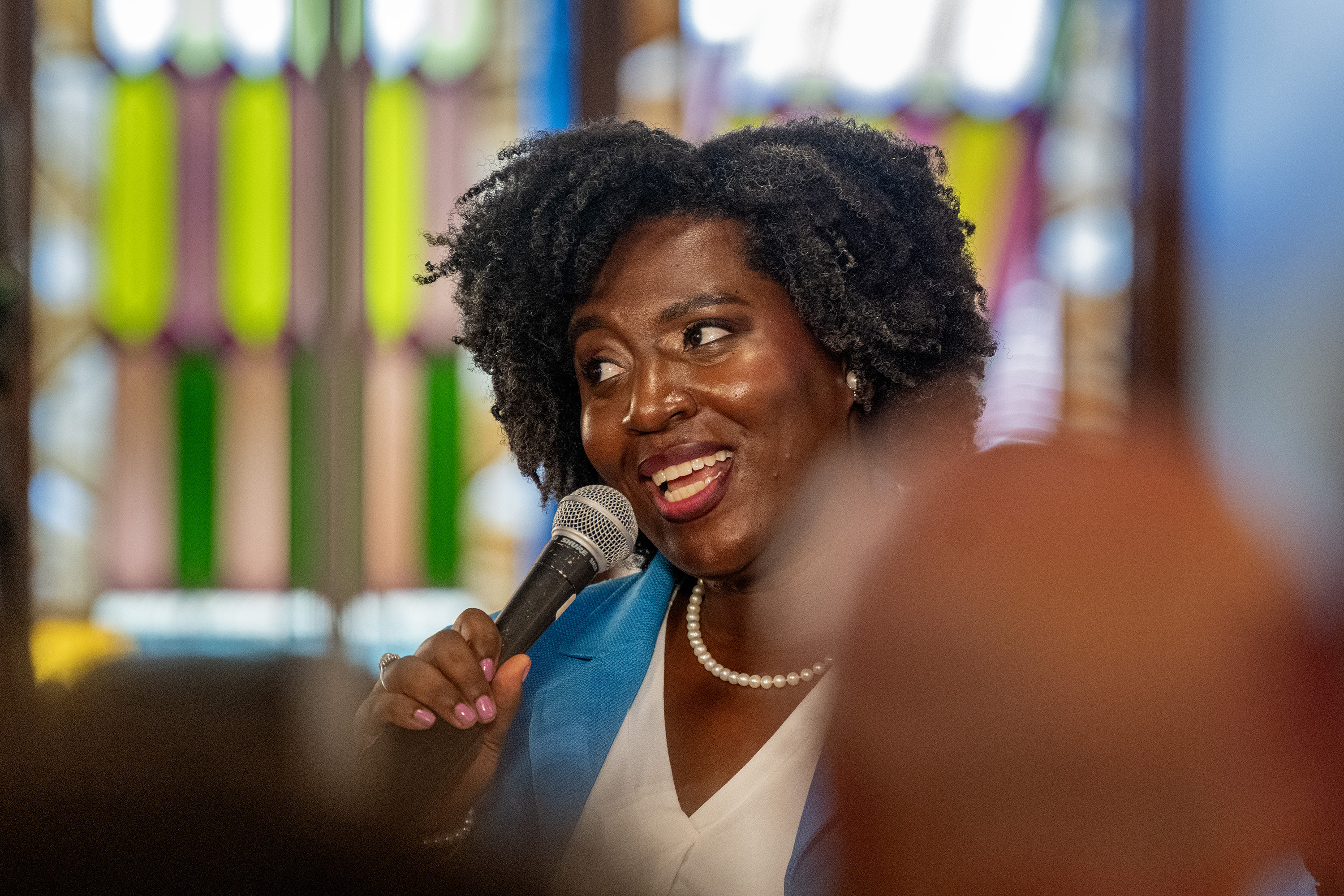
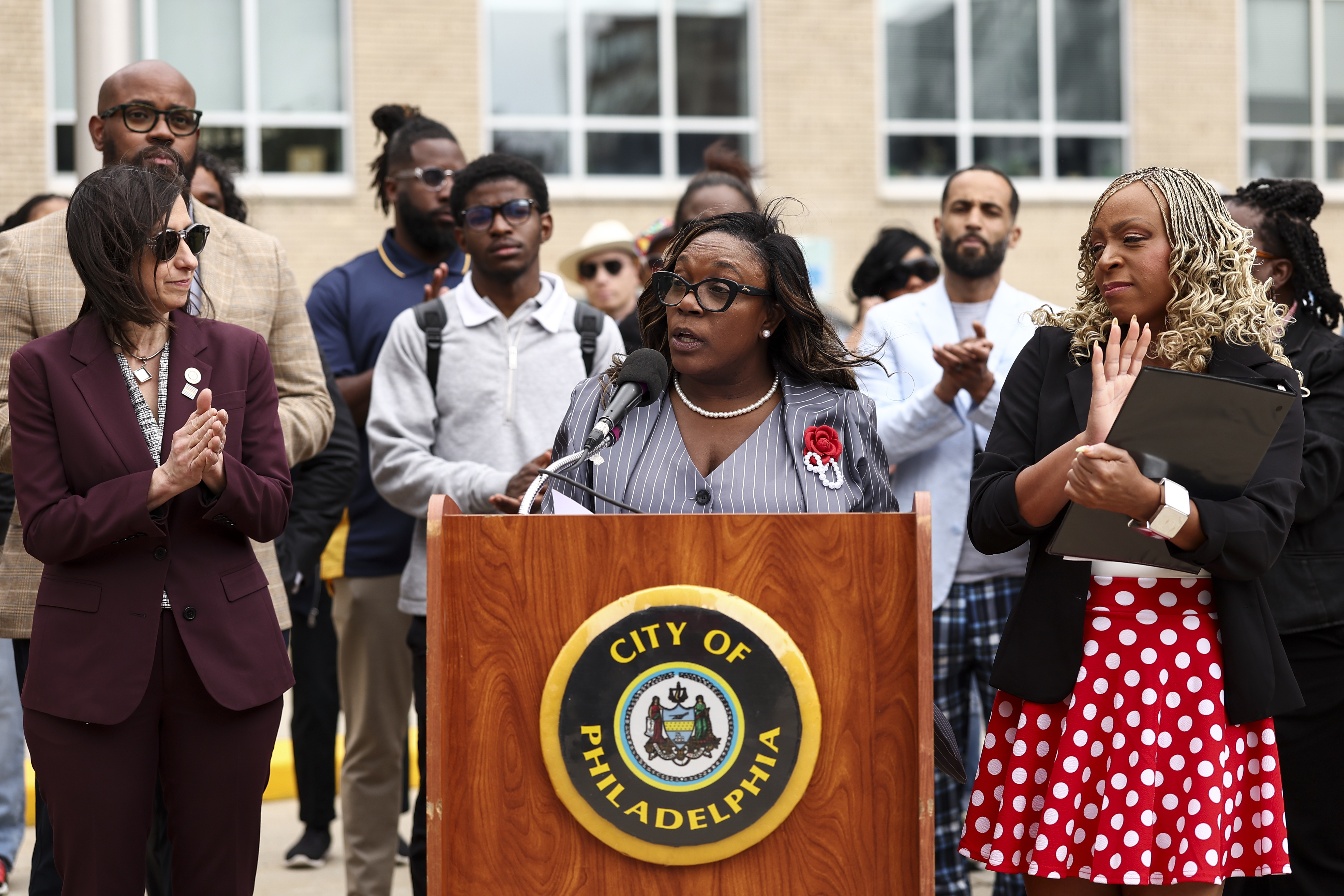
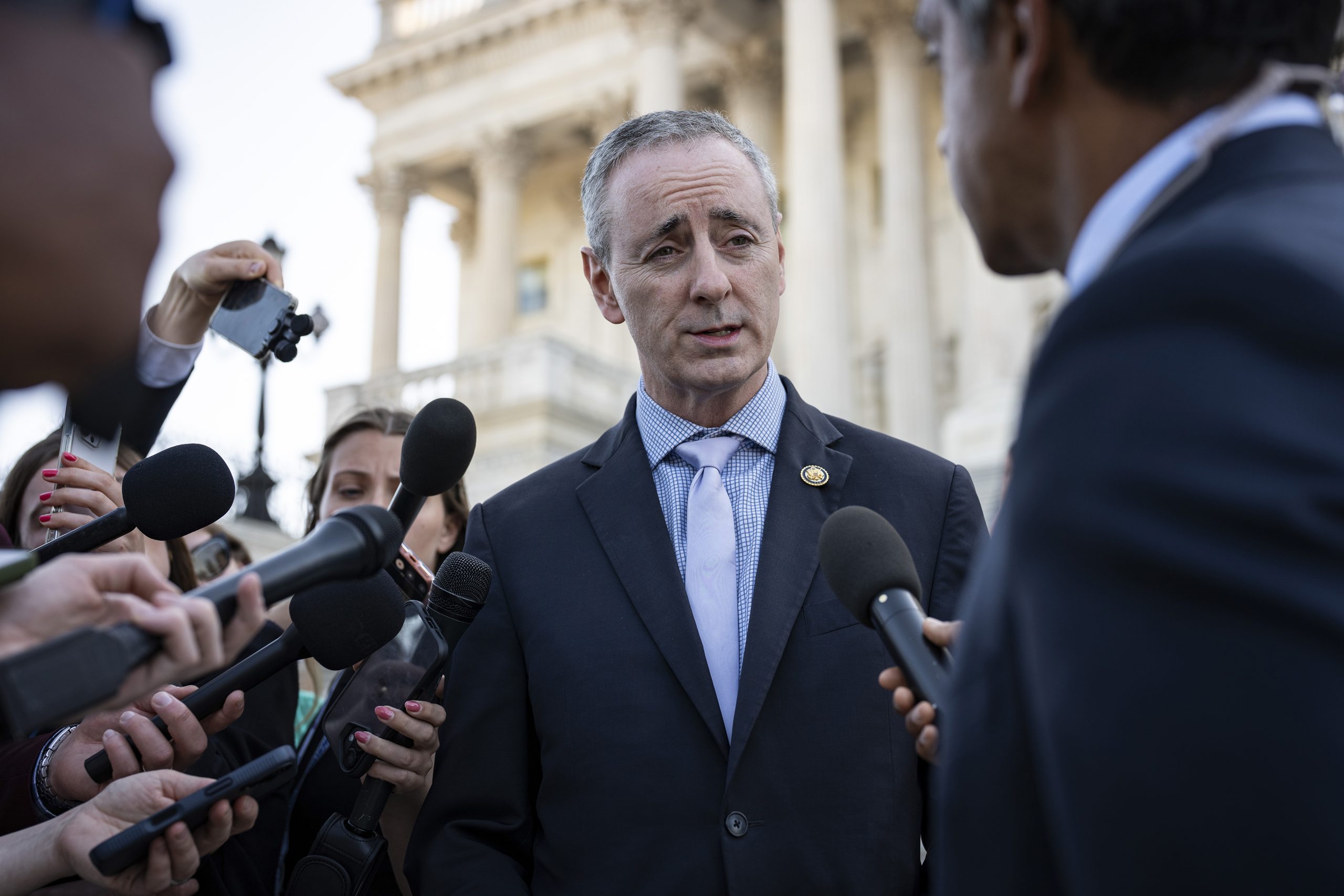
Addressing the crowd packed into Mother Bethel African Methodist Episcopal Church in Philadelphia on Thursday, Pennsylvania House Speaker Joanna McClinton and three other Black House speakers from around the country outlined the steps they’re taking in their state legislatures to safeguard the future of American democracy under President Donald Trump’s administration.
McClinton hosted the three House speakers — Delaware House Speaker Melissa Minor-Brown, New York House Speaker Carl Heastie, and Illinois House Speaker Emanuel “Chris” Welch — for the discussion on America’s progress toward its founding ideals 250 years ago. Each of the speakers, including McClinton, are the first Black person or Black woman to lead their chambers.
The event was moderated by WURD radio host Solomon Jones. Attendees from around the city, including at least two high school classes, packed Mother Bethel A.M.E. Church in Society Hill, which is on the oldest property continuously owned by African American people in the United States since 1791.
House Speaker Joanna McClinton (left) hosts an America 250 Conversation at Mother Bethel A.M.E. Church on Thursday. Others reflecting on America’s history and path to inclusion for Black Americans are, from left, moderator Solomon Jones, Illinois House Speaker Emanuel “Chris” Welch, New York House Speaker Carl Heastie, and Delaware House Speaker Melissa Minor-Brown.Tom Gralish / Staff Photographer
The three blue-state leaders from Illinois, New York, and Delaware have enshrined voting protections into state law under the John Lewis Voting Rights Act, following a U.S. Supreme Court ruling earlier this year that dismantled some federal protections.
“When we talk about voting, it’s very personal,” said Welch. “When I first got elected to the state House in 2012, I won my election by 36 votes … Eight years after winning the election by 36 votes, I became the state’s first Black speaker. You can’t tell me every vote doesn’t count.”
Similar legislation has yet to become law in Pennsylvania, where the General Assembly is split, with Democrats controlling the House and Republicans controlling the Senate.
McClinton, the first woman and first Black woman to lead the Pennsylvania state House, said she was jealous of her blue-state neighbors, as Pennsylvania Democrats are vying for control of the state Senate in November. The state House passed a bill to expand voting access to include same-day voter registration in a bill titled the Leroy Irvis Voting Rights Protection Act to memorialize the late Pennsylvania House speaker, who in 1977 became the first Black person to lead any state legislature since Reconstruction. That bill has yet to be called up for a vote by the GOP-controlled Senate.
“I know I’m not supposed to be envious of my neighbors,” McClinton joked from the table set up in front of the church pulpit.
House Speaker Joanna McClinton hosts an America 250 Conversation at Mother Bethel A.M.E. Church on Thursda. She hosted three other state House speakers from around the country at the event, reflecting on America’s history and path to inclusion for Black Americans.Tom Gralish / Staff Photographer
Each of the leaders acknowledged the ways Black Americans were purposely excluded from many of America’s liberties by the nation’s founders, progress in broadening civil rights since then — and how their state governments are trying to safeguard those protections under Trump’s administration. They each expressed concern about voting access, immigration, healthcare, and their state-level efforts to protect them through legislation.
“State legislatures have power,” McClinton said, noting Pennsylvania’s increased investments in public education and a focus on Black maternal health. “We are not in charge of ICE, we are not in charge of the president, but we do have power, and we do good work.”
In New York, Heastie said state lawmakers included protections in this year’s state budget to discourage U.S. Immigration and Customs Enforcement from appearing near polling places as Trump ramps up his efforts against noncitizen voting that advocates fear will discourage American citizens from going to the polls.
Each of the legislative leaders encouraged the young people in attendance to get involved in their local government, expressing hope for the future.
“I look at pictures of my late aunt and uncle back in the ’60s and ’70s and I see them at protests,” Minor-Brown said. “When I see those pictures, I look at our young people today and know that’s the direction that we’re going in. That’s where we’re at right now, and that’s what brings me hope that we’re going to get to a better place. I know we will, because our young people are so energized and ready to move and ready to close these gaps.”
McClinton also noted the ways the Trump administration has tried to rewrite history just a few blocks away from Mother Bethel A.M.E. Church at the President’s House Site, where officials swapped panels detailing the brutality of slavery for ones that sanitize George Washington’s history as an enslaver.
“We see the fact that this federal administration continuously out an eraser and says, ‘Oh that didn’t happen, that’s not how it occurred,’” McClinton said. “We, in this moment, have to recommit to the promise of this nation.”
During Thursday’s panel, the speakers fielded questions on a number of current events, including about the 25th anniversary of the Sept. 11, 2001, terrorist attacks. McClinton recalled her experience in college at the time, and said that America is at risk of another terrorist attack due to Trump eroding the nation’s image in the rest of the world.
“Thank God we’ve not had another attack … But we have to also recognize that our policies are impacting our perception around the world,” she said.
Several Pennsylvania Republicans were quick to seize on her comments on the eve of the anniversary as insensitive and trying to blame America for the terrorists’ actions.
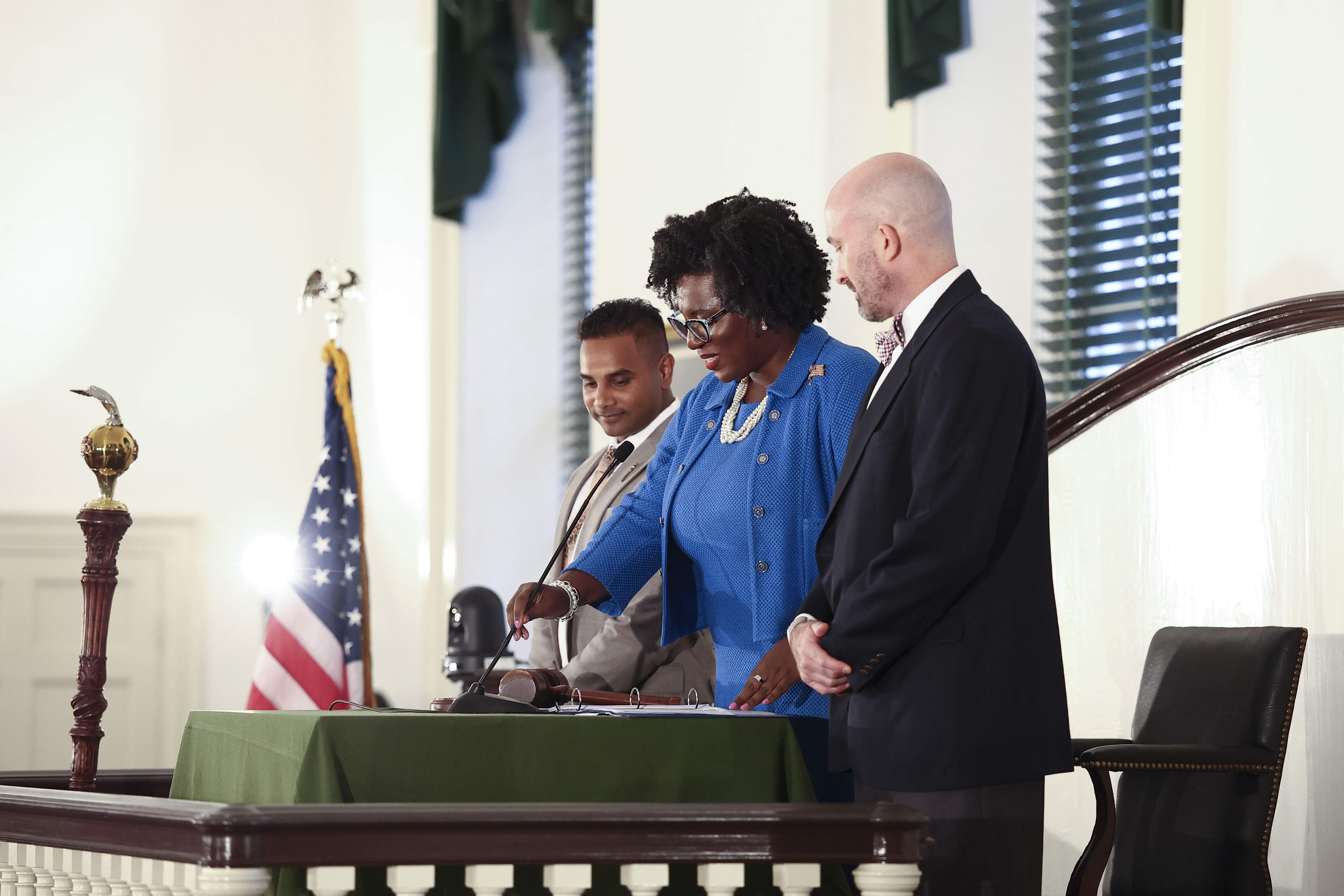
Earlier in the week, McClinton presided over a ceremonial session of the state House in Independence Hall, the same place where the Declaration of Independence was signed 250 years ago, and the building that also served as Pennsylvania’s first statehouse.
Joanna McClinton, speaker of the Pennsylvania House of Representatives, along with members of the Pennsylvania House of Representatives convened a special session at Congress Hall on Wednesday in Philadelphia. The gathering commemorates the 250th anniversary of America and Pennsylvania’s Constitution.Monica Herndon / Staff Photographer
She stood at the rostrum, leading the same room where in 1787 the nation’s founders decided that enslaved Black people would only be counted as three-fifths of the number of white residents when tallying America’s population to calculate congressional representation.
“We are in a day where ‘We, the people’ should mean what it says, finally,” McClinton said Thursday. “But starting with the inception of this country, it did not mean all of us. ‘We, the people’ meant white men who owned a certain amount of property.”
DALLAS, Texas — As Republicans look to keep their narrow control of Congress by defending the seats they flipped in 2024, there aren’t many places where they can afford to lose fewer votes than in U.S. Rep. Ryan Mackenzie’s district covering the Lehigh Valley and Poconos.
Mackenzie’s takedown of a three-term Democrat by a mere 4,000 votes two years agowas the narrowest congressional race in Pennsylvania — his 1% margin of victory was the seventh smallest out of 435 House districts across the country.
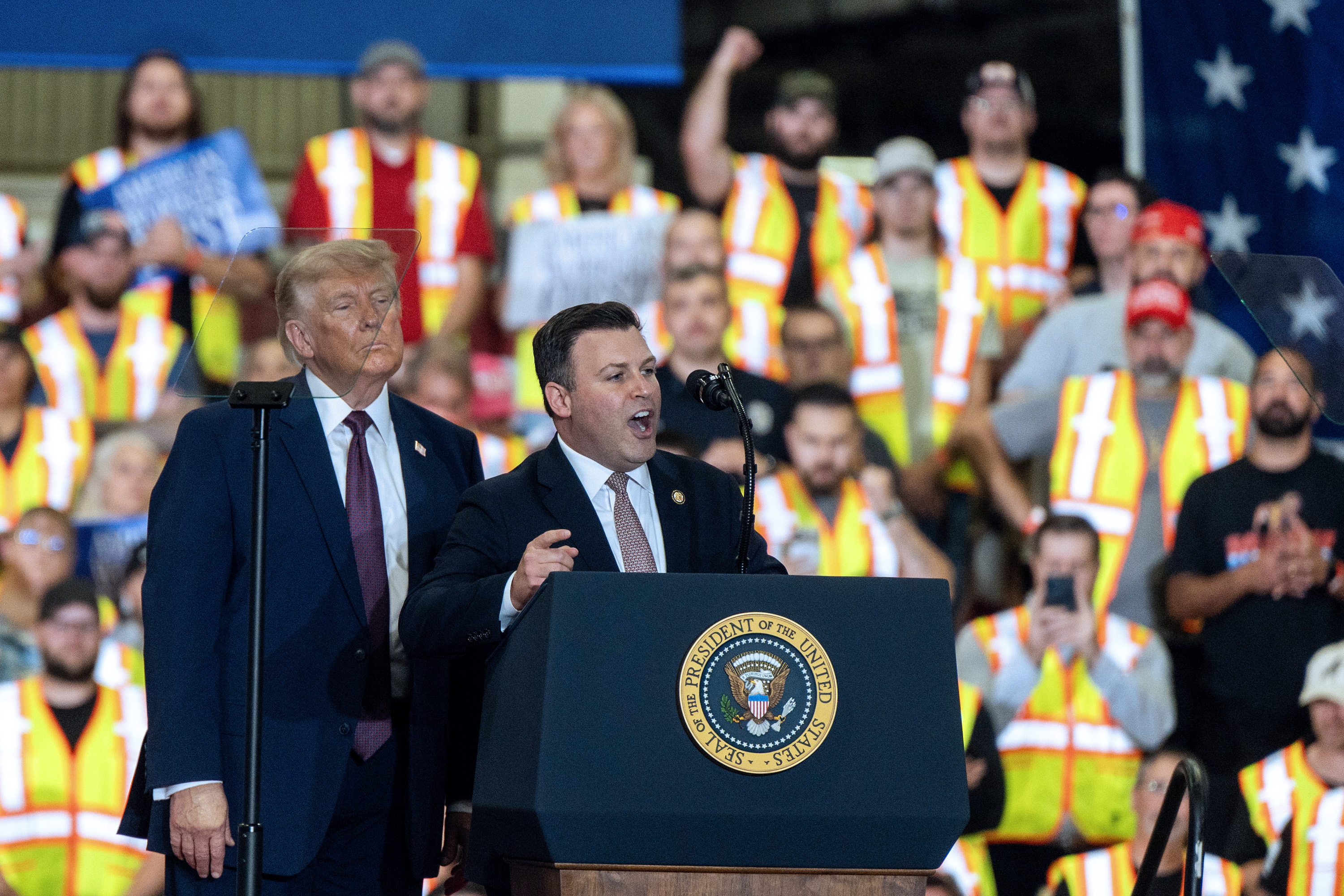
Standing Thursday on the Republican Party’s biggest stage of the year — and likely staring down another razor-thin result this fall — Mackenzie didn’t hold back when laying out the potential stakes.
“I’m running in one of the top races again, and it will determine the future direction for our nation,” Mackenzie said on the second day of the first-ever Republican midterm convention. “Now we must get to work, we must go out and win in November, and we must save America.”
In an interview after a brief speech that focused on the president’s signature tax cuts, Mackenzie said Democrats’ threats to repeal those cuts and other Trump policies meant the president is, in a sense, on the ballot — so it makes sense to campaign in that way.
“We know the history of American politics is the party who has the White House, their voters end up being less energized in midterm elections, and so I think it was a smart idea to try something like this, a midterm convention, to energize our voters,” Mackenzie said.
Generating enthusiasm for the Republican ticket could be a tough task for Mackenzie and other incumbents, with polling in Pennsylvania showing widespread frustration with Trump’s handling of key issues, including the cost of living.
“Everybody is getting gouged,” said Ron Jones, 79, an Allentown Democratic voter and Navy veteran who said he feels stretched relying on his Social Security and pension checks. “You just can’t afford to live. Period.”
Jones said he hasn’t been following the congressional race closely, but said he plans to help “get rid of all incumbents.”
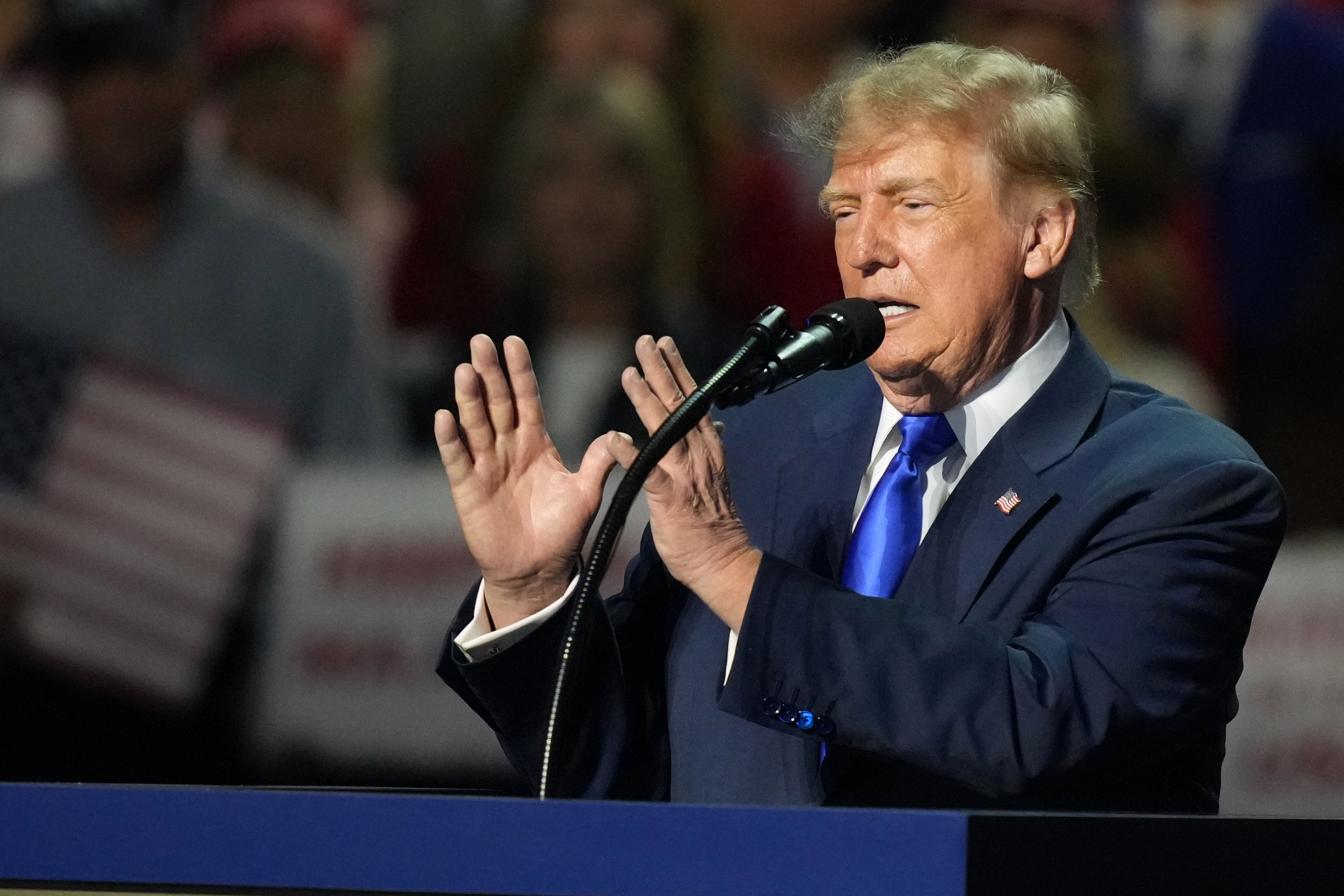
President Donald Trump onstage during the Republican Party’s unusual midterm convention in Dallas on Wednesday, Sept. 9, 2026. (Haiyun Jiang/The New York Times)HAIYUN JIANG
Going after Brooks on a national stage
Mackenzie told The Inquirer his phone started blowing up with text messages immediately after his speech. The lawmaker said he welcomed the opportunity to have a national audience to talk about his work, and his opponent.
Mackenzie didn’t just applaud Trump’s policies during his speech, he also imitated the president’s ferocious style of politics by blasting his Democratic challenger Bob Brooks as a scandal-ridden, “far-left nutjob.”
Brooks, he contended, was “handpicked by the Democratic establishment,” and has spoken critically about nonunion firefighters. He also accused Brooks of stealing money from his own family, a claim based on a lawsuit brought by Brooks’ former mother-in-law and involving a decades-old debt she says that he owes.
“That’s what crazy looks like,” Mackenzie said.
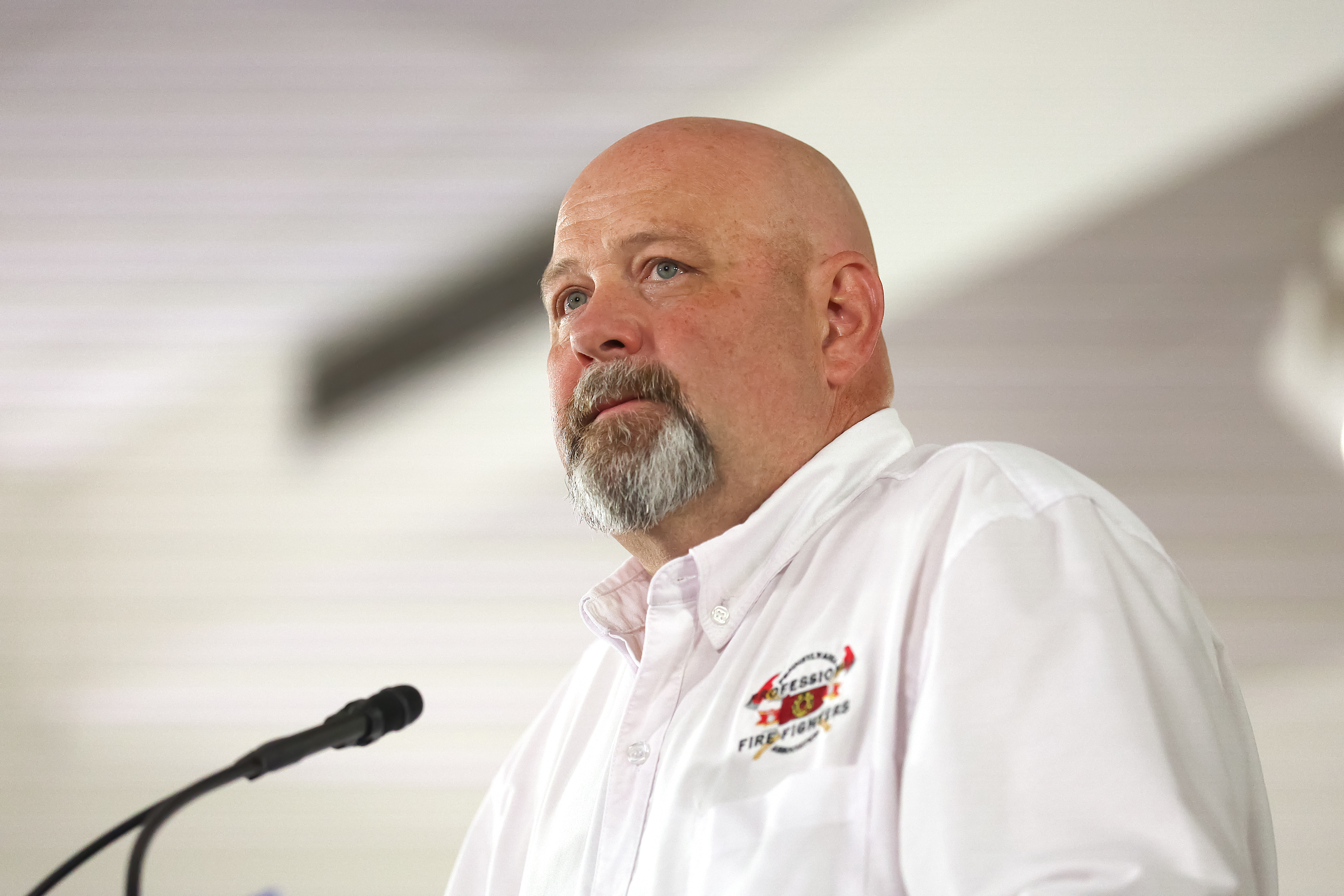
Brooks, a retired firefighter in Bethlehem and the Pennsylvania Professional Fire Fighters Association president, was recruited last year by prominent Democrats, including Gov. Josh Shapiro and U.S. Rep. Chris Deluzio. He quickly got a groundswell of support from moderates and progressives alike, including U.S. Sen. Bernie Sanders and former Transportation Secretary Pete Buttigieg.
Those high-profile supporters, and Brooks himself, leaned into his working-class image — highlighting his history of working multiple jobs and his insistence, even as he ran for Congress, on continuing to drive a snowplow and coach high school baseball.
Mackenzie and national Republicans who’ve invested resources into his campaign have repeatedly targeted Brooks for the lawsuit involving his family and for old social media comments.
In one post, Brooks lambasted volunteer firefighters working in areas where other union firefighters operate as “scabs” and other pejoratives.
Brooks has dismissed those and other attacks on his old posts, saying he never thought he would be a candidate for office when he made them.
The Democrat did not directly address those issues in a comment after Mackenzie broadcast them to a national audience.
“Ryan Mackenzie got his wish today: a big boy speaking slot on stage at Trump’s party in Dallas,” Brooks said in a statement that blamed Mackenzie for rising costs and voting against restricting Trump’s attacks in Iran, the two areas that polls show Trump performing the worst among both Republicans and Democrats.
“Mackenzie’s trip to Dallas is a reminder of who he is: a lap dog for Donald Trump, for his party bosses, and for anyone with power and money,” Brooks said.
Bob Brooks, who is running for Pennsylvania’s 7th Congressional District, addresses the audience during a rally at the United Steelworkers Union Hall in Bethlehem, Pa., on Sunday, July 26, 2026.David Maialetti / Staff Photographer
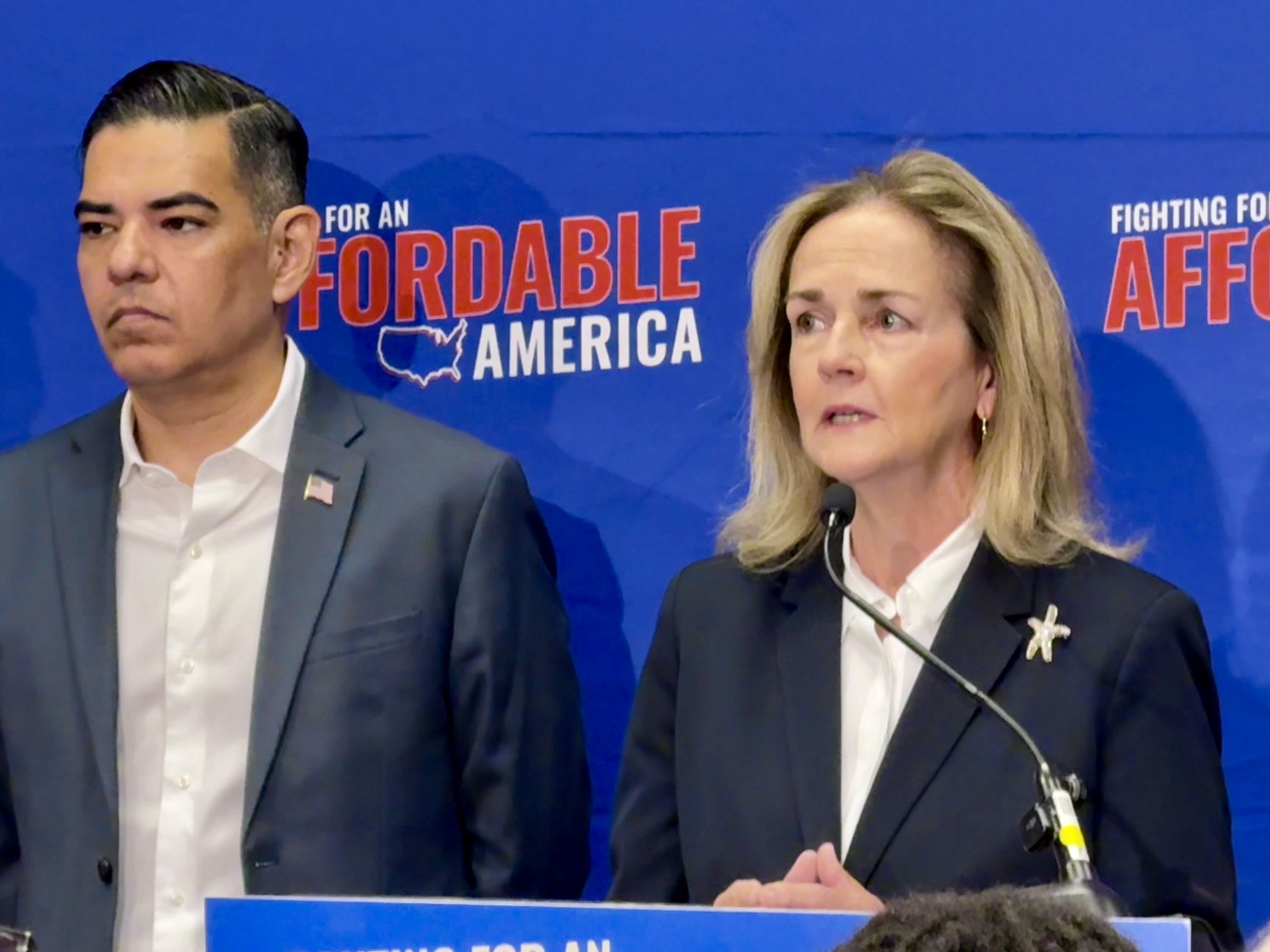
Just steps from the convention location earlier in the day, a small group of House Democrats that included U.S. Rep. Madeleine Dean (D., Montgomery) protested by, mainly, hitting Republicans on affordability.
“If you listen to what’s being said across the street, you might feel like you’re living in some separate reality. Here’s the reality check,” Dean said as she rattled off the higher cost of groceries, electricity and gasoline since Trump took office.
Dean targeted Mackenzie as well as U.S. Rep. Rob Bresnahan (R., Luzerne) and U.S. Sen. Dave McCormick (R., Pa.) — who each spoke at the convention on Wednesday — specifically, saying they were among the Republicans “happy to coddle a president who is unfit and unwell.”
“Here at the heel of Donald Trump, I don’t know what they think they’re doing,” Dean said behind a podium with a sign reading, “Fighting for an affordable America.”
Both Bresnahan, who is running in a competitive race against Democratic Scranton Mayor Paige Cognetti, and Mackenzie focused on an economic message during their speeches.
They did not directly address concerns about inflation, or the Iran war’s effects on the rising cost of gas.
U.S. Rep. Jason Smith, a Missouri Republican who joined Mackenzie onstage, contended the GOP majority had focused its agenda on the working class. He pointed to the tax exemptions for tips and overtime pay.
“If you don’t believe me, just ask yourself, how many billionaires do you know that are tipped employees?” said Smith, the House Ways and Means Commitee chair.
But neither he nor Mackenzie addressed the cuts to Medicaid and food assistance that were included in the same legislation to help pay for the tax cuts they repeatedly touted.
“We delivered tax relief for every American by locking in lower rates and expanding the standard deduction,” Mackenzie said.
Staff writer Alfred Lubrano contributed reporting.
Democrat Bob Harvie released his first general election TV ad Thursday morning, calling for a moratorium on artificial intelligence data center development and attacking U.S. Rep. Brian Fitzpatrick (R., Bucks) for his stance on the issue.
“I don’t want any more data centers. I want a moratorium. Big tech owns enough; they shouldn’t own our congressman, too,” Harvie says in the 30-second ad.
The ad marks the first timethe congressional candidate and Bucks County commissioner has called for a moratorium and signifies a shift in his position.
Previously, in an interview with The Inquirer last week and on his website, Harvie had calledonly for strict regulations on development. To focus his first major television ad on the topic shows how the projects are becoming a top issue for voters in Bucks County’s swingy 1st Congressional District amid a national backlash against data centers.
In Bucks County, both Harvie and Fitzpatrick have to grapple with the development of an Amazon data center in Falls Township, which is nearing completion.
Harvie, who lives just miles from the project, voted in December 2020 to approve acounty tax break for NorthPoint Development, the property owner of the Falls Township site.
Last year, Harvie celebrated Amazon’s investment in the data center and Fitzpatrick called it “one of the most transformative investments Bucks County has seen in decades.” More recently, they both supported Shapiro’s executive order.
In Harvie’s television ad, images of Elon Musk and Mark Zuckerberg flash on the screen. “Big tech is taking over our lives,” the candidate says in the ad. “And they want more. Grabbing our land, water, electricity, and sticking us with the bill.”
Heather Roberts, a spokesperson for Fitzpatrick’scampaign, said in a statement that the Bucks County Republican has always been supportive of “uniform federal regulations” and “100% control by local residents who could be impacted.”
She also pointed tohis cosponsorship of two bills aimed at regulating the effects of data centers: the Ratepayer Protection Act and the Data Center Transparency Act.
“Bob Harvie literally created this problem in our community — and he is now well aware of the massive albatross that this is around his neck. Hence, his latest lie in this ad,” Roberts said.
In an interview about data centers last week, Harvie did not call for a moratorium on the projects, but rather for strict regulations — as is also reflected on his campaign website. He also touted tasking the county planning commission with developing guidelines for municipalities facing potential data center proposals.
When asked last week why he had not called for a moratorium, Harvie said: “I think there’s probably areas in the country where data centers can make sense, where the energy grid can handle it, where there’s limits to it on the impact it could have on other people who might live in the area.”
“But I do think certainly we need to have a lot of cause for concern about how rapidly this is happening and making sure we can put some kind of handle on it,” he added.
He also echoed residents’ environmental concerns related to data centers and said that the developments need the increased oversight outlined in Shapiro’s executive order and that projects should not continue if the local community opposes.
Nine days later, Harvie said Thursday in another interview with The Inquirer that the decision for a moratorium did not come “out of left field for me” but was the product of many conversations amid what he says is a “complete failure of leadership” by Trump and Republicans, including Fitzpatrick, on the issue.
Of his 2020 vote to give NorthPoint a tax break, he said there was not an indication that the property was going to be used for data centers, but rather for e-commerce distribution.
He said that he is not set on one particular time frame for the moratorium but that “setting up guardrails” is most important, and he hopes a Democratic-controlled Congress would further hold hearings on imposing a moratorium.
“As we’ve seen more and more of what’s going on around the country with data centers just trying to gobble up space and build, build, build without any regulation, I’ve come to the point now where we have to do something to slow down this genie getting out of the bottle,” Harvie said.
DALLAS, Texas — Just steps away from a Republican midterm convention that she slammed as a “farce,” U.S. Rep. Madeleine Dean (D., Montgomery) said Thursday she was “gravely disappointed” with Democratic U.S. Sen. John Fetterman’s participation in the event — as well as a range of other issues that she said indicate his abandonment of democratic values.
“What I wish he was doing was — back home in Pennsylvania — making sure, like I am, that Pennsylvania will see more Democratic members of the House to uphold the values that he originally ran on,” Dean said after Fetterman appeared in a video at the convention Wednesday night that praised President Donald Trump.
Fetterman’s appearance was a remarkable and rare turn for a Democratic lawmaker, even one who has frequently crossed the aisle to support the opposing party like he’s done since Trump returned to office.
In a video that served as an introduction to a speech by U.S. Sen. Dave McCormick (R., Pa.), Fetterman said he and McCormick are able to “work with President Trump to fight and defend the steel way of life” in Pennsylvania.
As he’s done repeatedly, he also denounced socialism and what he considers the “anti-American way of life” that the leftist wing of his party represents. That message fit nicely into some of Republicans’ most prominent attacks on Wednesday as they tried to motivate their base to turn out for GOP candidates in the midterm elections — including in several Pennsylvania key races.
On Thursday, a web page soliciting donations to Fetterman’s campaign committee included a link to the video and said Fetterman would “keep standing his ground, speaking his mind, and putting Pennsylvania first.”
Fetterman said in a statement later that he made the video to support McCormick, who has become a staunch ally and one of his biggest defenders. He also said, as he has for months, that would not switch parties.
“That’s entirely on John,” Dean said Thursday when asked by a reporter if Fetterman should remain in the Democratic Party. “I will tell you, from the ground, from suburban Philadelphia, my constituents are livid. Those who went out and knocked doors for him, they are absolutely livid.”
Dean was in town on the second and final day of the convention alongside four other House Democrats who blasted what they were hearing from the gathering, which has largely been a celebration of Trump.
But Dean was quickly asked by reporters about the convention’s most surprising turn so far — the appearance of Pennsylvania’s controversial Democratic senator.
Dean has, historically, had a closer relationship with Fetterman compared to some of the other Democratic members of Pennsylvania’s U.S. House delegation. The pair briefly ran against each other in the 2018 lieutenant governor primary, which Fetterman won. Dean said it was then that she grew to “really like him and his family, and his values.”
Those values, she said, have taken a turn in more ways than one. She criticized his convention video as a “stunt” while saying she was mostly disappointed by his work ethic, his decisions to back Trump policies, and his “blind support” of Israeli Prime Minister Benjamin Netanyahu’s attacks in Gaza.
“All I want is for his good health, his well being. And that has been my worry,” Dean said in an interview after the press conference, referring to Fetterman’s well-documented health struggles.
“But I think you have to look at his record, and his record of not working, of not participating, and not caucusing with Democrats, of not being active in his committees — alongside what he is active on, [which] is voting alongside Mr. Trump, and enabling this corruption of chaos,” she said.
Dean is one of several Pennsylvania Democrats who have ramped up their public concerns about Fetterman, with some essentially promising to oust him if he runs for reelection in 2028.
“He’s not going to be a senator after 2028 — mark my words,” U.S. Rep. Chris Deluzio, an Allegheny County Democrat who is a potential candidate for the seat, after the video.
Dean did not comment on the next election other than saying “voters will have to decide whether that is appropriate” for Fetterman to conduct himself the way he has, including associating closely with Israeli leadership.
Democratic Gov. Josh Shapiro, who has clashed with Fetterman but hasn’t heavily criticized his job performance as a senator, said Thursday he did not see the video. The governor said at an event in Chester he was “not going to get distracted” from his duties as governor and his reelection campaign.
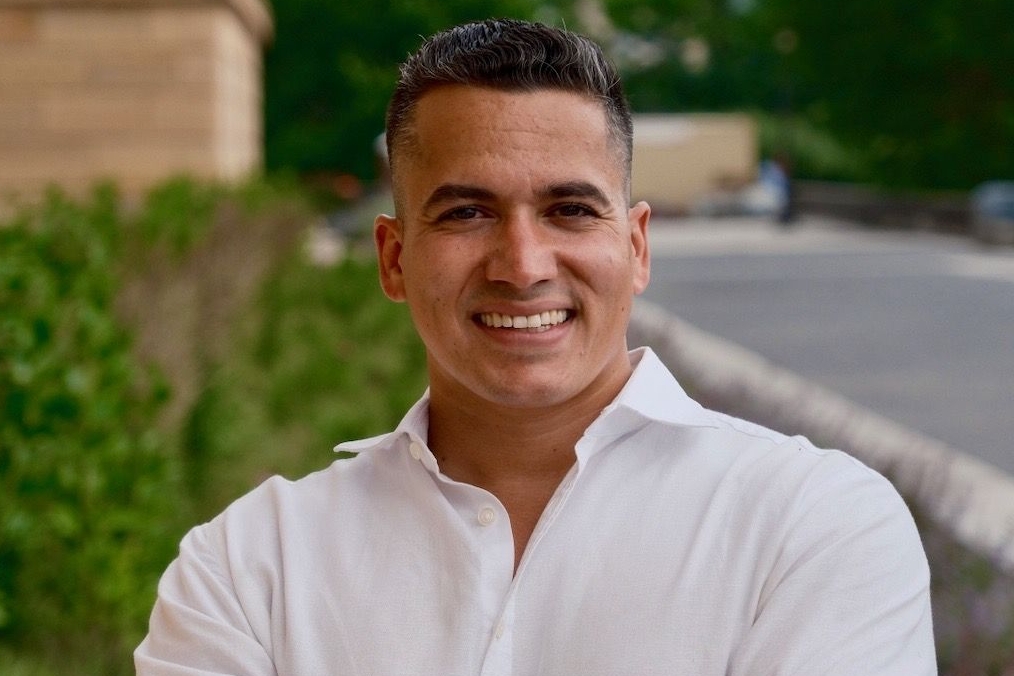
Dennis Mahoney has spent a decade in disaster relief, dispatching humanitarian aid in the wake of devastating hurricanes in the United States and Puerto Rico and poverty crises in 18 countries in Asia, Africa, and Latin America.
Now the 34-year-old independent candidate is using that same determination to engage in an uphill battle as he seeks to represent Philadelphia’s 3rd Congressional District this November.
Mahoney, from South Philadelphia, is the lone opponent running against State Rep. Chris Rabb, a democratic socialist from Northwest Philly who won the crowded Democratic primary in May to succeed retiring U.S. Rep. Dwight Evans.
“I think it’s going to be a hard fight and a hard run, but I feel so strongly that people in Philadelphia want something different,” Mahoney said of his independent campaign.
Mahoney will have his work cut out for him to persuade voters to back his grassroots candidacy.
The 3rd Congressional District is one of the most Democratic-leaning districts in the country, where Rabb won with almost 45% of the vote. Rabb saw national support from big-name progressives, including U.S. Rep. Alexandria Ocasio-Cortez (D., N.Y.), and used his victory to support other like-minded candidates throughout the United States.
And the last time Pennsylvania elected an independent to Congress was in 1920, when Milton W. Shreve of Erie won as an Independent Republican.
But Mahoney and his allies view his candidacy as an opportunity to present an alternative option after more than half of 3rd District voters in the May primary cast their ballots for Rabb’s opponents. Mahoney’s platform focuses on addressing poverty, expanding access to affordable housing, and investing in education.
Rabb’s campaign did not comment on Mahoney’s candidacy Wednesday.
The race comes amid shifting political dynamics in the United States in response to growing frustration with the two-party system.
On one hand, progressive candidates — many of whom, like Rabb, are part of the Democratic Socialists of America — have been gaining momentum in elections nationwide.
Earlier this year, meanwhile, a Gallup poll showed a record high of 45% of U.S. adults identified as independents in 2025.
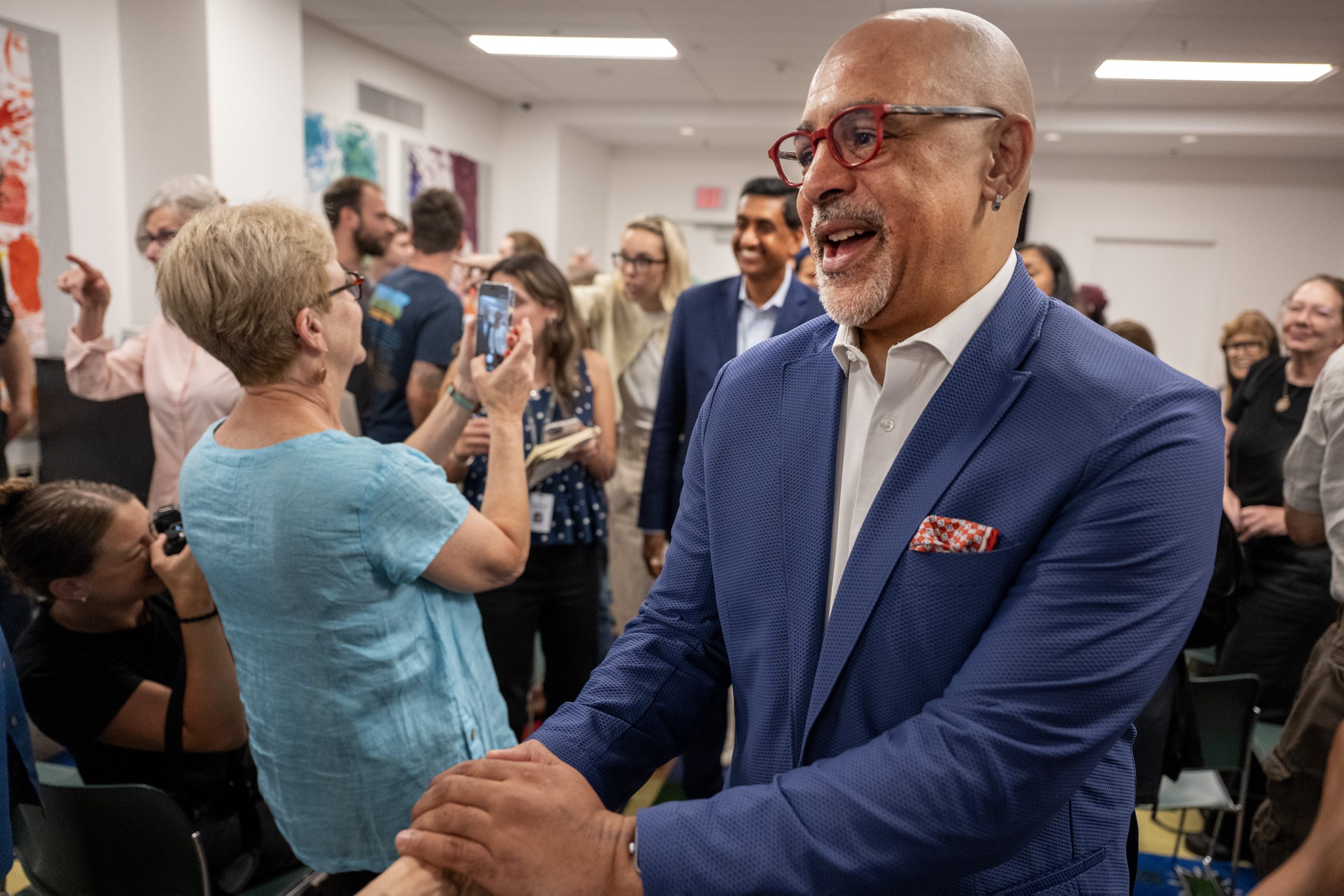
State Rep. Chris Rabb greets supporters after appearing with U.S. Rep. Ro Khanna (rear) Tuesday, July 28, 2026, on his “Made in PA: New Economic Patriotism Tour” at the City Institute Library on Rittenhouse Square.Tom Gralish / Staff Photographer
Mahoney said he has belonged to both political parties in the past, but did not find a home in either.
The first-time politicalcandidateworked in humanitarian aid through his former Washington, D.C., church, the Christiannonprofit Food for the Hungry, and now his own firm, AOI Solutions. He said the experience provides lessons for overcoming partisan division in Congress.
“Let’s build bridges and partnerships and bring results. And that’s the same work that I did in the disaster relief field, where we would land in a spot where a disaster happened, and we’d work with anyone we could to really make the place come back to whole,” Mahoney said.
‘Anti-MAGA’ and ‘anti-DSA’
It’s those middle-of-the-road qualities that made Mahoney an appealing candidate to Craig Snyder, a registered Republican who led an effort to support Vice President Kamala Harris’ presidential bid two years ago and is now leading the Philly-based Forward Party Victory Fund.
The super PAC plans to support Mahoney and other independent candidates across the country — including a pair of independent Senate candidates running in GOP-leaning states, Todd Achilles of Idaho and Brian Bengs of South Dakota — this fall via spending on digital ads and text messages. The PAC is also supporting U.S. Rep. Kevin Kiley, who switched from the GOP to run for reelection in California as an independent, and Kevin Block, an independent running for Rhode Island governor.
Snyder said the group is an independent offshoot of the Forward Party, founded in 2022 by former presidential candidate Andrew Yang and former New Jersey Gov. Christine Todd Whitman. He described the centrist candidates the PAC is backing as both “anti-MAGA” and “anti-DSA.”
He said a win in one of the group’s targeted races wouldbe “an earthquake in American politics.” But even if Mahoney is unsuccessful, Snyder said, it will be the start of elevating the independent movement in Philly politics.
“I think people don’t want to be told that they have to vote for somebody just because of the party label,” Snyder said. “I think that they want there to be alternatives, and so it’s our job to make that case.”
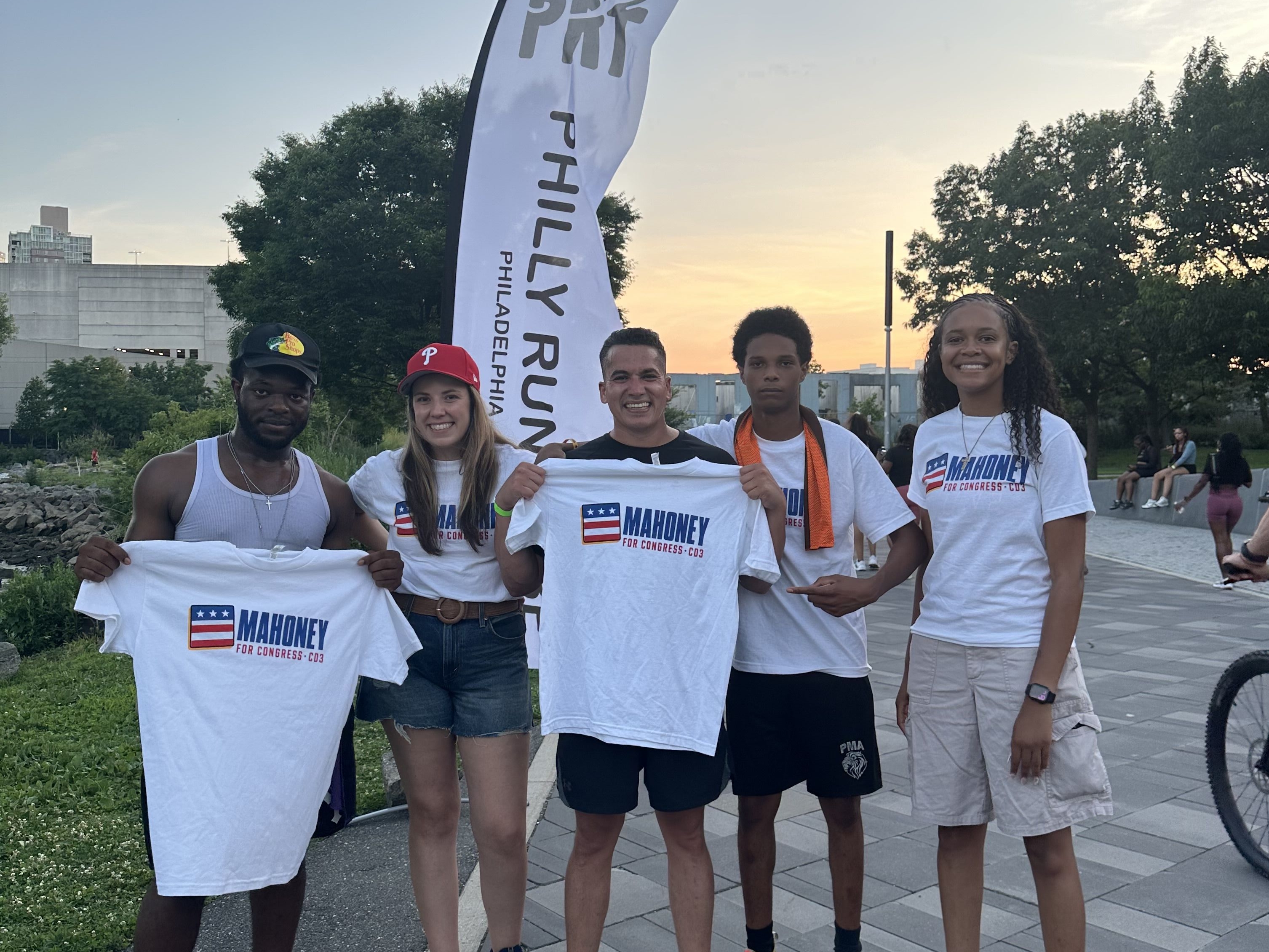
Dennis Mahoney (center) on the campaign trail as he prepares to run against State Rep. Chris Rabb in the general election in the 3rd Congressional District this November.Dennis Mahoney
Mahoney said, if elected, he would help form the first independent caucus in the U.S. House, contending he would become a coveted vote for both parties that would enable him to influence legislation and score committee assignments.
Butunder current House rules — which Kiley has proposed changing — Mahoney would not be able to hold a committee seat if he does not caucus with either party. Kiley, for instance, has continued caucusing with the GOP even after becoming an independent.
Mahoney pointed to the 19,000 signatures he received for his petition to join the ballot as a sign some voters are open to a choice in the deep-blue district.
He said he would like to debate Rabb.
“He talks a lot and engages a lot, and I think that that’s wonderful,” Mahoney said. “But I think at the end of the day, there’s people who are hurting in the district who need somebody who isn’t worried about being on, you know, MSNBC or TV, but who really is like, let’s just get into the community and drive results.”
Mahoney said he has been connecting with religious leaders, educational organizations, community groups, and youth organizers to hear feedback on what they want public service to look like in the 3rd District.
The independent will have scant resources to spread his name in just two months but said he is not concerned with raising big money for advertising. He had roughly $8,200 cash on hand in his most recent campaign finance report.
Rabb had a little more $21,000, but that was after the Democrat raised and spent more than $1.3 million for the primary campaign in which he out-raised his opponents.
Mahoney, meanwhile, has been trying to meet voters where they are — at running clubs and other fitness groups, for example.
“I think people find it refreshing to have somebody who wants to represent them out there running alongside them,” he said.
DALLAS — In an arena littered with President Donald Trump’s image — from the photos that lined the concourse to the gift shops selling merch depicting the president as a cowboy — one of Pennsylvania’s most vulnerable Republican lawmakers this fall went all-in.
U.S. Rep. Rob Bresnahan, running for reelection in a Scranton-based district that is one of the most competitive in the nation, addressed the Republican Party’s first-ever midterm convention during its opening night on Wednesday.
His decision to attend “Trump-a-palooza” (as the RNC has described it) at all was notable. Some Republicans in tight races decided to stay away out of concerns of associating themselves with a president with low approval ratings. U.S. Rep. Brian Fitzpatrick (R., Bucks), for example, is not attending and has distanced himself from parts of Trump’s agenda.
Bresnahan promoted Trump’s signature tax policy in a brief speech focused on supporting workers and their families.
“Tax relief matters,” Bresnahan told hundreds of party loyalists at the American Airlines Arena in a speech that followed Ken Paxton, the controversial Trump-backed U.S. Senate candidate in Texas. “In Northeastern Pennsylvania, we work until the job is done. And those extra hours should mean more money in your pocket.”
Democrats have used Bresnahan’s vote for the One Big Beautiful Bill Act, which included cuts to Medicaid and food assistance, as a wedge against Bresnahan and other vulnerable Republicans. But Bresnahan contended the income tax cuts and other policies in the legislation, like no tax on tips, are paying dividends for families.
Two other Pennsylvania GOP lawmakers in similar situations, U.S. Reps. Ryan Mackenzie (R., Lehigh) and Scott Perry (R., York), are also attending the two-day convention, with Mackenzie slated to speak Thursday.
Bresnahan spoke to a somewhat sparse crowd compared with Republican National Conventions during presidential election years, which served as a model for the novel midterm convention this year as the party looks to energize its base of voters while seeking to defend narrow majorities in the House and Senate.
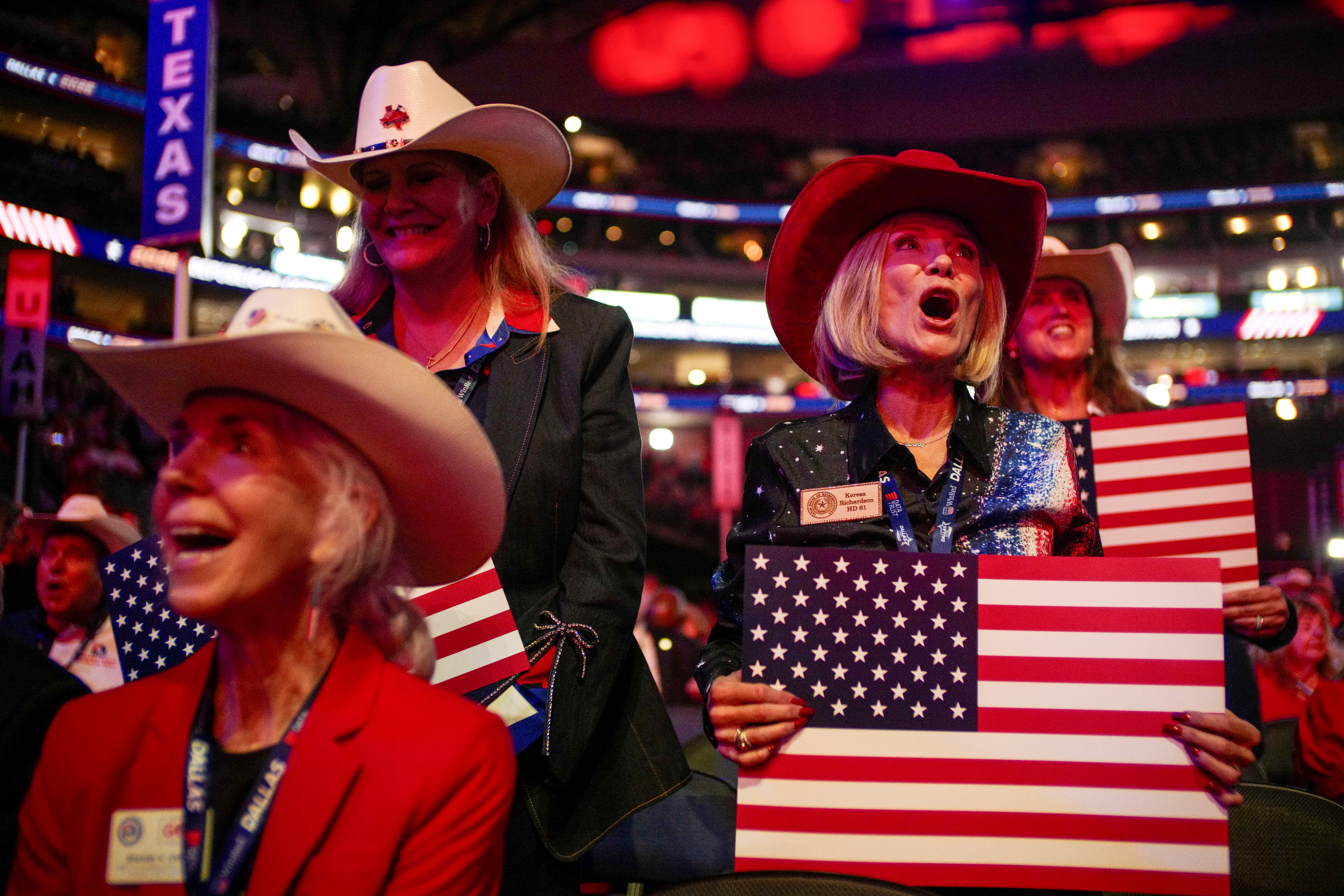
Delegates, clustered by state on the convention floor, cheered and waved signs reading “Keep the majority” and “Republicans are fixing Democrats’ mess.” The stands in the roughly 19,000-person arena remained largely empty, at least for the first few hours before Trump’s speech.
Merchandise shops were packed with Trump’s typical MAGA merchandise, copies of his son Eric Trump’s book, Under Siege, and new mugs and shirts showing Trump on a horse in cowboy gear. Red, white, blue, and — in an unmistakable nod toward the president — gold balloons waited in the rafters for the grand finale on Thursday.
“I’m asking you to pretend that I’m on the ballot. I’m on the ballot, just one more time,” Trump told the cheering crowd in prime time, noting there were about 35 “swing” races the party was prioritizing.
President Donald Trump speaks at the Republican convention Wednesday, Sept. 9, 2026, in Dallas. (AP Photo/Alex Brandon)Alex Brandon
About 1,500 miles away, in another town called Dallas, one of Bresnahan’s constituents hatched a plan to tune in.
On the opening night of the annual Luzerne County Fair — in a booth yards from deep-fried Oreos, flying elephant kiddie rides, and life-size cardboard cutouts of Abraham Lincoln, Donald Trump, and Jesus — Dwayne McDavitt fiddled with his tablet to see if he could stream the convention.
The symmetry of Dallas, Texas, and Dallas, Pa., was “too good to pass up,” said McDavitt, the head of a conservative group called Thunder and Liberty PAC and also the Pennsylvania chapter of Bikers For Trump.
He said he supports Bresnahan, who lives in Luzerne County, over Scranton Mayor Paige Cognetti, the Democratic nominee.
“He shares our values of faith, family, and freedom — meaning free and fair elections,” McDavitt said.
Interviews with other voters in the district on Wednesday underscored the potentially risky nature of Bresnahan’s leaning into the Trump administration.
Malcolm Mabry, 28, of Wilkes-Barre, said he had been victimized by a “Trump bait and switch” as a Republican who voted for the president two years ago. He picked Trump, believing that better policing of the Southern border was paramount.
And while Trump has been using ICE to “grab up people,” as he said, Mabry said much of what else the president promised, like lowering prices and avoiding war, has not occurred.
“Trump just said what he had to, to get into office,” said Mabry, who was unaware of the convention happening at the same time.
A campaign about workers and affordability
Bresnahan won his seat by less than 2 percentage points in 2024 to take down a six-term Democrat in the northeast corner of the state. Trump won the district by more than 8 percentage points.
His Democratic challenger, Cognetti, has garnered high-profile supporters like Gov. Josh Shapiro, who is also up for election, and she has repeatedly targeted Bresnahan for trading stocks while in office despite his previous statements that he would not do so.
Bresnahan, the former head of a family-run electrical contracting business, has made jobs and the workforce a top focus in his campaign and in his brief congressional career.
On a few occasions, he has broken with House Republican leaders to support bills that would strengthen union protections for federal workers. He has said that he hopes his party changes tactics to support those kinds of bills.
“We need the unions that have trained generations of some of the most skilled workers in American history,” Bresnahan said onstage Wednesday. “We have those workers in Northeastern Pennsylvania, and communities across this country are ready for the same opportunity.”
Texas state Rep. Keresa Richardson (R), right, attends the GOP midterm convention. (Joel Angel Juárez/For The Washington Post)Joel Angel Juárez
Bresnahan has racked up a series of union endorsements that are otherwise rare for Republicans. While major unions like the AFL-CIO and the Pennsylvania State Education Association have backed Cognetti, he has won support from organizations like the American Federation of Government Employees and the Teamsters — groups that, in a region with a long history of union issues, could make a difference in a close race.
In his speech, Bresnahan talked generally about supporting workers and manufacturing in the U.S. He spoke about tax policies that put “more money in your pocket” and help “build communities where people can stay, raise a family, and build a life.”
They and other speakers did not address other affordability issues that Democrats have seized on and that polls show voters have top-of-mind heading into early voting.
Trump has mocked the Democratic attacks on the issue as a hoax, including in a speech in Bresnahan’s district last year. But it is a message, and a reality, that has resonated with voters in Pennsylvania, according to polls and interviews.
“I’m on a fixed income,” Bill Dudeck, 83, of Nanticoke in Luzerne County, said Wednesday. “But under Trump, gas, groceries, and utilities are skyrocketing.”
Trump promised a lower cost of living, “but now all our money is out the window,” said Dudeck, a Democrat and former construction worker in Bresnahan’s district.
Bresnahan, whose campaign said earlier this week that he was looking forward to bringing “NEPA to the national stage,” appeared onstage instead with a sheet metal worker and mother of seven from Baltimore.
Cognetti’s campaign noted the pairing in a comment Wednesday that criticized Bresnahan, in part, for trading stocks in office.
“That’s probably why he didn’t have a Pennsylvanian on stage with him tonight,” a Cognetti campaign spokesperson said in a statement. “His speech is just more empty words to try and distract from his broken promises.”
Nora Pruitt, who joined Bresnahan, had previously been recognized by the White House as a beneficiary of Trump’s second term. Listed on the agenda as an “everyday American, factory worker, working mother and manufacturing success story,” Pruitt said “things have really improved for our family since President Trump returned to office.”
“We are so grateful President Trump and Republicans in Congress like Congressman Bresnahan vote for families like ours,” she said.
Key figures in Pennsylvania Republican politics — including the state’s top elected federal GOP official and several lawmakers in the middle of heated reelection campaigns — will participate in their party’s first-of-its-kind midterm convention this week in Dallas.
The gathering, spurred and heavily promoted by President Donald Trump, arrives as Republicans look to defend their control of Congress this fall amid difficult circumstances. Trump’s approval ratings, including on key issues such as the economy and the war in Iran, have sunk, including in Pennsylvania.
After Trump successfully won the White House and ushered in a wave of downballot Republican wins just two years ago, the convention — described as “Trump-a-palooza” by Republican National Committee chairman Joe Gruters — is aimed at energizing the base at a critical time.
Pennsylvanians, representing a swing state that has been key to Trump’s success in the past, will play a role.
U.S. Sen. Dave McCormick (R., Pa.) and a pair of House lawmakers in competitive districts — U.S. Reps. Ryan Mackenzie (R., Lehigh) and Rob Bresnahan (R., Luzerne) — are among the more than 100 scheduled speakers over two days, starting Wednesday.
Their speaking slots were among the first to be announced. Underscoring the Keystone State’s role in keeping the House Republican majority, only the host state of Texas had more representatives on the initial list of elected officials scheduled to address the crowd.
The Pennsylvania Republican Party, meanwhile, has orchestrated a “full slate” of 55 delegates and alternate delegates.
“The Republican Party of Pennsylvania is excited and honored to be a part of the first ever RNC Midterm Convention in Dallas,” spokesperson James Markley said in a statement. “It will be a tremendous opportunity to hear from everyday Americans about how this administration has changed their lives for the better.”
The state party had not provided the names of the delegates as of Tuesday, though the list is expected to include party activists and other elected officials. State party leaders had encouraged Pennsylvanians to attend the gathering.
Democrats, who see the president’s lagging approval ratings as a key to their success in the midterms, were quick to blast Pennsylvania Republicans for attending. Their response includes plans to send a small group of House Democrats, including U.S. Rep. Madeleine Dean (D., Montgomery), to Dallas to push back against the GOP messaging.
“While swing seat House Republicans try to hide from their record of raising costs on working families, gutting Medicaid to fund tax breaks for billionaire donors and supporting a reckless war of choice in Iran, House Democrats will be present to hold them accountable,” House Minority Leader Hakeem Jeffries, the New York Democrat in line to become House speaker if his party wins the majority, said in a statement.
Fitzpatrick skips as other Pa. Republicans take center stage
Four of Pennsylvania’s 10 Republican-held U.S. House seats are considered key battlegrounds as the GOP looks to maintain its four-seat advantage nationwide.
Of those, only U.S. Rep. Brian Fitzpatrick (R., Bucks) has distanced himself from parts of Trump’s agenda and is not planning on attending the convention.
Mackenzie and Bresnahan, on the other hand, will be among the featured speakers, and U.S. Rep. Scott Perry (R., York) will attend.
Perry, a close Trump ally, has routinely won reelection in a Harrisburg-based district but is running this year against Democrat Janelle Stelson, a former local television anchor who nearly defeated him two years ago.
Freshmen Mackenzie and Bresnahan were elected to Congress in 2024 afterthey each defeated incumbent Democrats by less than 2 percentage points. Local, state, and national Democrats have rallied behind their challengers — union leader and retired firefighter Bob Brooks in the Lehigh Valley, and Scranton Mayor Paige Cognetti in the district that covers the northeast corner of the state.
Bresnahan campaign spokesperson Samantha Bullock said the lawmaker was “excited to bring NEPA to the national stage because these are the people driving his work in Washington.”
Mackenzie, in a statement that referenced his work to bring federal funds to his district and support areas like local healthcare and tax relief, said he was “looking forward to talking to the people of the Lehigh Valley, the Poconos, and the entire nation about these accomplishments, and how we can build on them in the years ahead.”
Brooks said Mackenzie was “flying to Dallas to kiss the ring of Donald Trump and his party bosses.”
“This is exactly why people are fed up with a broken Washington that isn’t working for working people,” Brooks said in a statement.
Mackenzie’s campaign has similarly criticized Brooks for campaigning with national Democrats — calling an event Brooks had with Jeffries in July a sign that “establishment backers” were trying to “bail him out.”
The convention will feature six hours of programming each night.
Topics that speakers will highlight include the elements of Trump’s signature One Big Beautiful Bill Act, which Republicans have rebranded as the Working Families Tax Cuts Act.
A “candidate showcase” that will highlight “key candidates in target districts” and contrast them with their “extreme” opponents is set for Wednesday night. And an “opposition contrast” to “[deliver] the night’s sharpest partisan case against the extreme liberal Democrats” is slated for Thursday night, according to the agenda.
Besides Trump, the members of his administration scheduled to speak include Vice President JD Vance, U.S. Attorney General Todd Blanche, Centers for Medicare and Medicaid Services Administrator Mehmet Oz, and Health and Human Services Secretary Robert F. Kennedy Jr., who has engaged in a war of words with Pennsylvania Gov. Josh Shapiro over the state’s measles outbreak.
National Republicans have described the convention as a way to energize voters in a tough election year.
The poll found that 51% of likely voters said they were more likely to vote for a Democrat for Congress and 53% said they would want to see the House flip to Democratic control, though the polldid not ask about specific congressional races.
Philadelphia real estate developers see the writing on the wall.
As progressives have toppled centrist Democrats in nationally watched races, some local development interests are wary that the same trend could reshape Philadelphia City Council this spring, when every member is up for reelection. They see a growing progressive faction as a threat to business.
Enter the incumbent protection plan.
Nearly a dozen local developers are already pouring hundreds of thousands of dollars into Philly For Growth, a group that in the past two Council election cycles spent millions on advertising campaigns to back business-friendly Democrats, according to a source familiar with the planning.
Philly For Growth is an independent expenditure group, also known as a super PAC. It can raise and spend unlimited amounts of money to influence an election, but there are rules barring super PACs from most forms of coordination with the candidates they support.
In 2023, the group was the biggest special interest group involved in that year’s Council races, and it provided a substantial boost to its chosen candidates by outspending individual campaigns.
Ahead of the May primary election, Philly For Growth plans to spend $1.5 million to support pro-business Democrats, most of whom are sitting Council members, according to the source, who spoke on the condition of anonymity because they were not authorized to discuss the plans. The group will not fund negative advertising about Council’s four incumbent progressives, the source added.
Councilmember Kendra Brooks, of the progressive Working Families Party, speaks during a rally outside of the School District of Philadelphia headquarters in May. At left is Councilmember Rue Landau and at right is Councilmember Jamie Gauthier. All three are members of Council’s progressive faction.Monica Herndon / Staff Photographer
The idea is to keep progressives from growing their power on Council instead of spending money to knock off the leftists who are already there. There are currently four reliably progressive votes out of the total 17 on Council, but some members may be more likely to vote with that faction as Democratic voters nationally revolt against incumbents.
That’s a different strategy than in 2023, when Philly For Growth backed a slate of five candidates — two incumbents and three challengers. Both incumbents won, but all three challengers lost.
Philly For Growth has previously been affiliated with the Building Industry Association of Philadelphia, an advocacy group for development interests. Mo Rushdy, the BIA’s former president who leads the organization’s political activity, declined to comment.
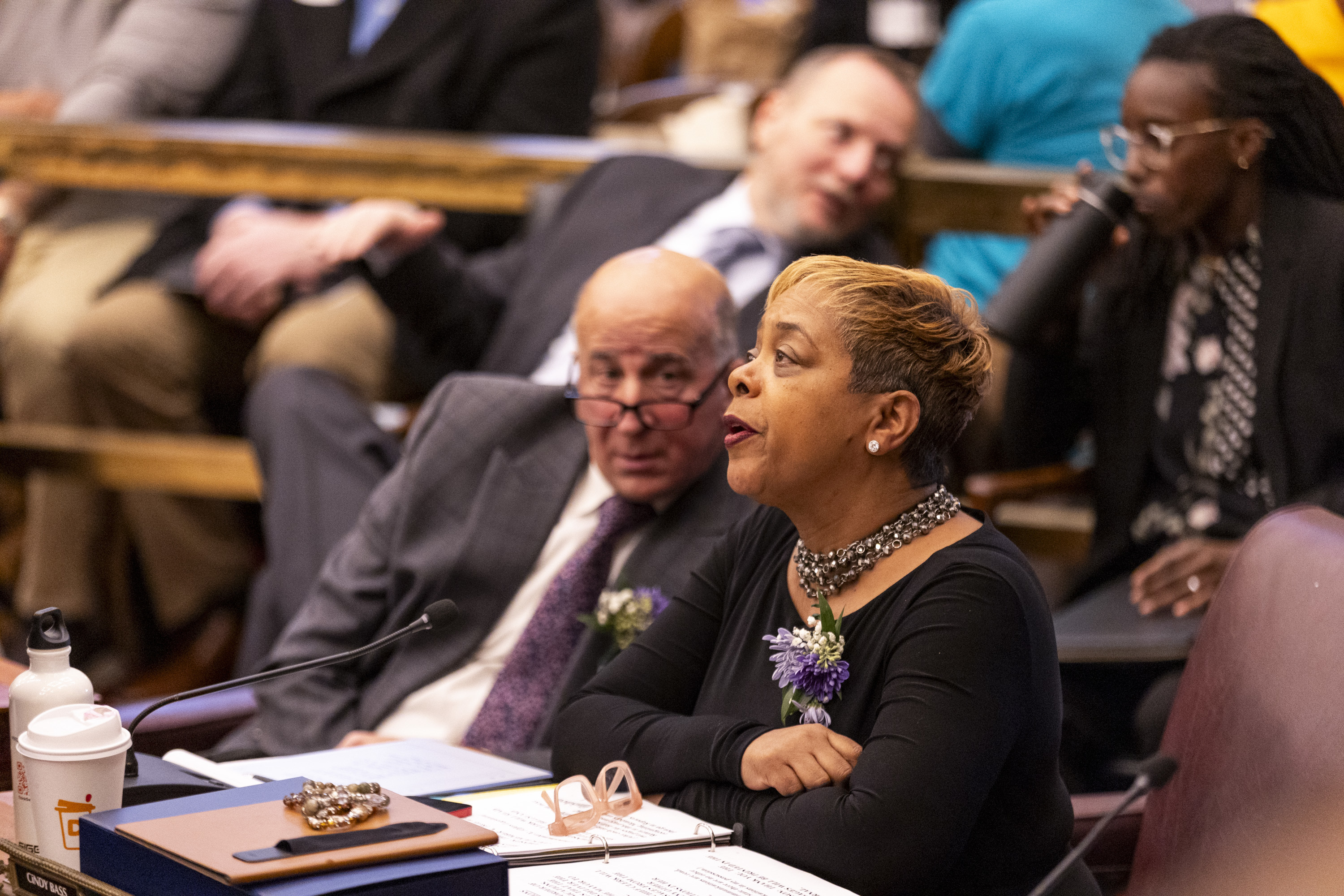
The source said that Philly For Growth will fund advertising to support Council members Mark Squilla, whose 1st District includes parts of South Philly, Center City, and Fishtown; Cindy Bass, whose 8th District is based in North and Northwest Philadelphia; and Quetcy Lozada, whose 7th District includes much of North Philadelphia and Kensington.
All three are seen as more centrist members and have said they intend to run for reelection. No challenger has officially launched a campaign against any of them, but candidates who are aligned with the city’s left-leaning political organizations are expected to emerge as the primary — still eight months away — draws nearer.
The super PAC is making one exception when it comes to supporting incumbent district Council members, the source said. In the 5th District, currently represented by Councilmember Jeffrey Young Jr., the group will support a to-be-decided challenger.
Councilmember Jeffery Young Jr. speaks to other members of Council during a 2025 session.Tom Gralish / Staff Photographer
At least five people have said they are interested in running for the North Philly-based 5th District seat, and Young has drawn opposition from development interests for pushing proposals that would slow or halt some projects in his district.
Young said in a statement that building “sensible, affordable housing” is one of his top priorities and that he has supported city programs like Turn the Key, which provides mortgage support to first-time homebuyers.
“People are free to back those who share their values. These are my values,” Young said. “I am leaving it to the residents of the 5th to determine whose values best reflect them.”
The super PAC will also fund advertising backing four incumbent members who represent the city at-large: Isaiah Thomas, Katherine Gilmore Richardson, Jim Harrity, and Nina Ahmad. That group doesn’t include progressive at-large Councilmember Rue Landau, but Philly For Growth doesn’t plan to oppose her, the source said.
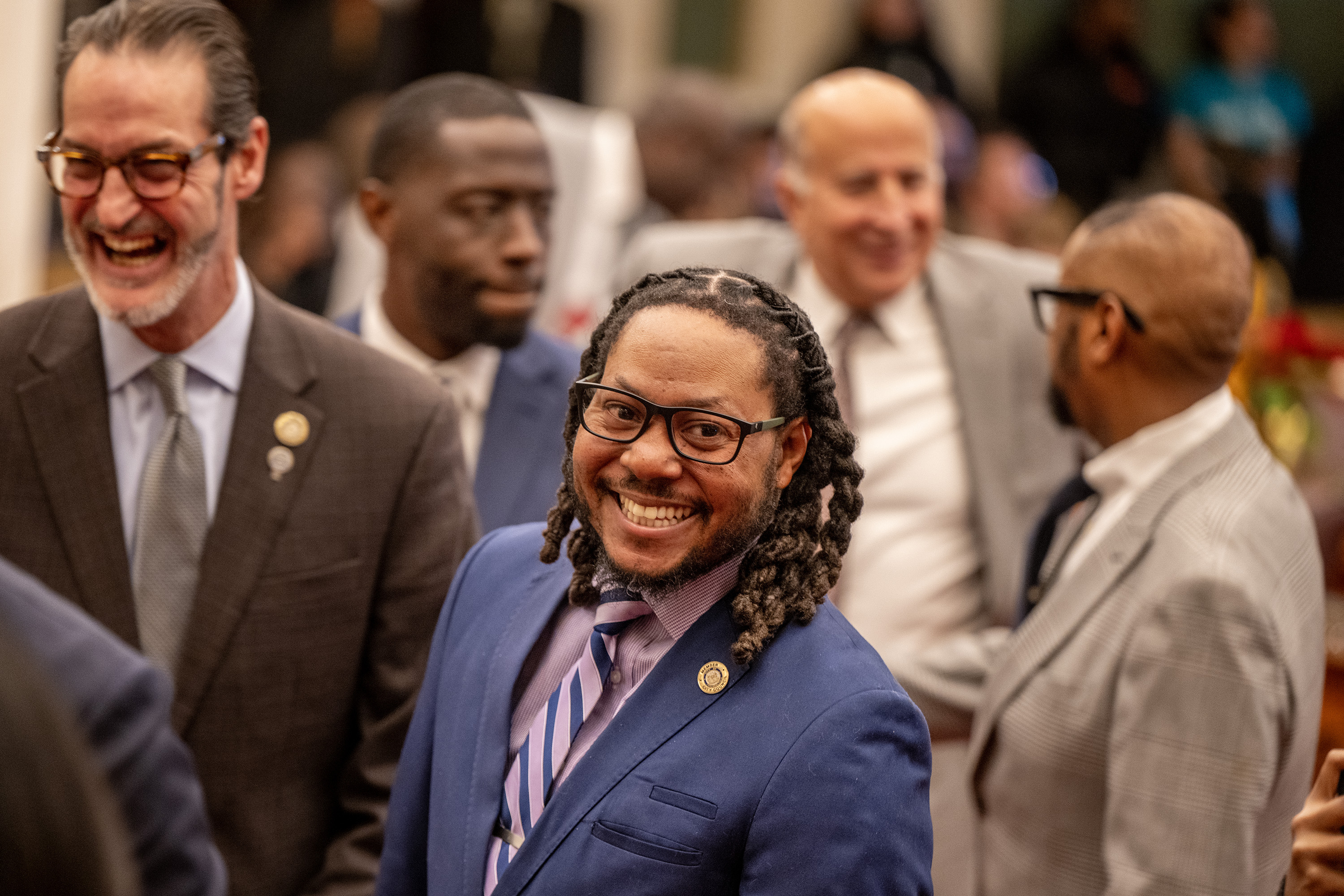
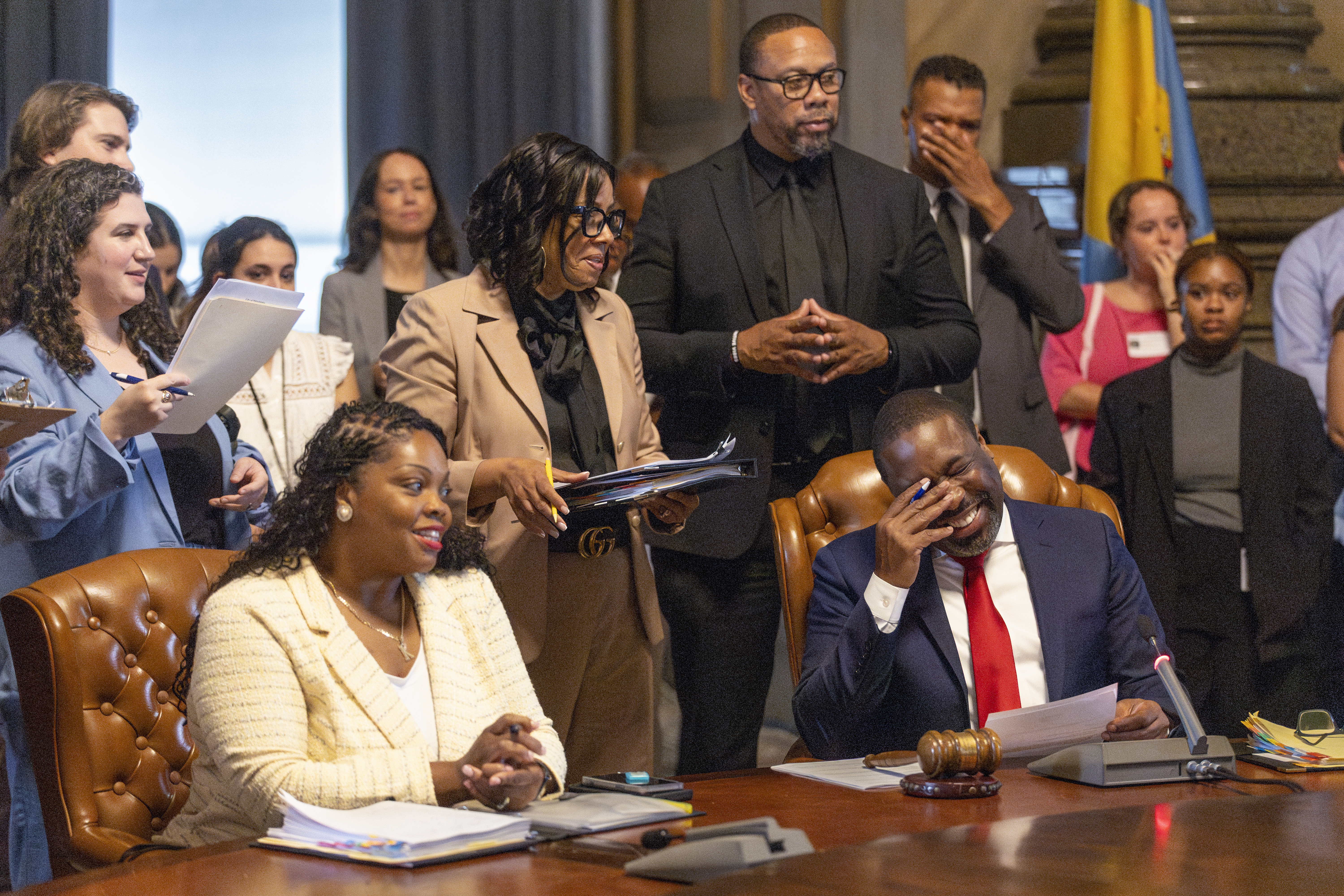
Council President Kenyatta Johnson laughs inside the caucus inside City Hall on June 11.Aidan T. Gallo / Staff Photographer
A spokesperson for Landau’s campaign arm said in a statement that the Council member “stands by her accomplishments for working people, small businesses and vulnerable communities in Philadelphia and looks forward to voters having the opportunity to make up their own minds next year.”
It’s unclear just how competitive the at-large race will be, and candidates have until the spring to decide — nomination paperwork is typically due in March. Seven of Council’s members represent the entire city at-large, and two of those seats are effectively reserved for members of minority parties under the city’s Home Rule Charter.
That has traditionally meant that five seats are held by Democrats, given the party’s massive voter registration advantage in the city. In recent years, Republicans and the progressive Working Families Party have battled for the remaining two seats during the fall general election, and the WFP currently holds both.
Mayor Cherelle L. Parker, who is also up for reelection, and Council President Kenyatta Johnson, who insiders do not expect will see a serious challenger, will likely be on Philly For Growth’s slate, too, the source said.
For anyone who noticed I was gone, I’m back. It was a weird two weeks of flex time — half vacation, including jaunts to a couple of Jersey Shore points (see below) and an OG family reunion in the Hudson Valley, and half working on my biggest investigative reporting project in several years. It’s coming very soon. Stay tuned.
On the 25th anniversary of 9/11, anti-Islamic hate is getting worse
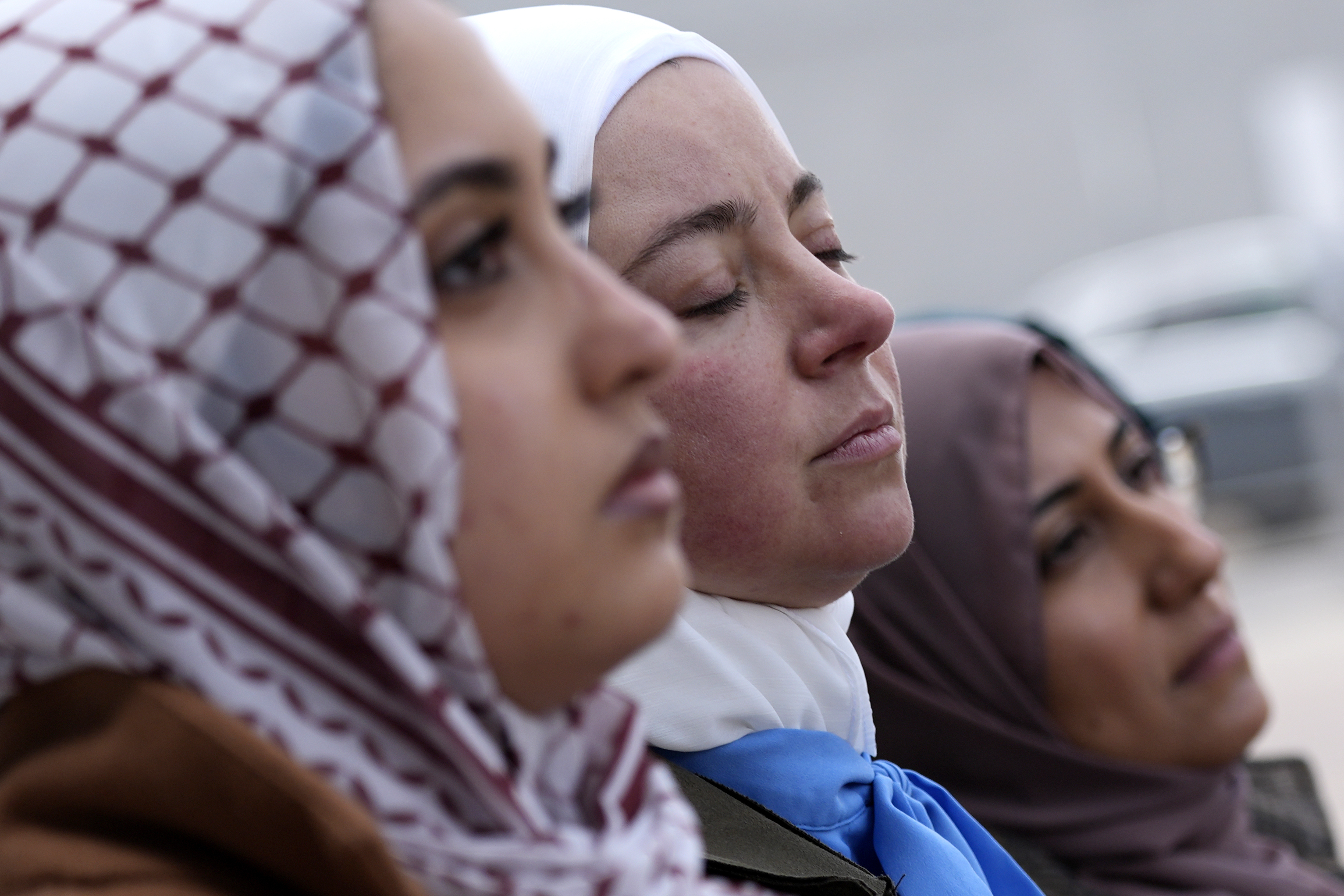
Amina Barhumi (center), the advocacy and policy lead of the Muslim Civic Coalition, prays with members of the Council on American-Islamic Relations outside the Will County Courthouse in Joliet, Ill., where a jury found defendant Joseph Czuba guilty of murder and hate crime charges in February 2025.Nam Y. Huh
The footprints of the World Trade Center’s twin towers are now a memorial attached to a well-attended museum. Osama bin Laden is dead, and the last U.S. combat troops finally left Afghanistan five years ago. But there is one thing that spiked immediately after the attack and never really went away.
In fact, anti-Islamic hate is a bigger force in our politics than it ever was. Republicans, desperate to cling to power in an election when all the cards — including another “dumb war” in the Middle East and sky-high gas prices — are stacked against them, are frantically waving the bloody shirt of 9/11 and the Islamophobia it inspired.
You can see it in Lower Manhattan, where the man who was New York City’s mayor in 2001, Rudy Giuliani, is now saying that the idea of the current mayor — Zohran Mamdani, the first Muslim American to hold the post, who was only 9 years old on the morning of the attack — attending the 9/11 memorial ceremony “offends me.” His comments were part of a bigger racist diatribe that somehow tied Mamdani to a Muslim plot aimed at “taking over certain parts of America and certain parts of Europe.”
You can see it in Michigan, where a wave of anti-Muslim hate has surged after an Islamic doctor and public health expert, Abdul El-Sayed, won the Democratic primary for U.S. Senate. This includes events like “the Christian Crusader March” organized by the Donald Trump-pardoned Jan. 6, 2021, insurrectionist Jack Lang, which flooded the city council of majority-Muslim Dearborn with anti-Islam placards and even a Nazi flag.
And you can read all about it when a sitting congressman like Tennessee’s Andy Ogles has no problem taking to the cesspool of Elon Musk-owned X last March to write that “Muslims don’t belong in American society.” The fact that the fanatically pro-Trump Ogles lost his GOP primary a couple of months later could have been a warning to his fellow Republicans to dial it back, but few seem to have gotten the memo as Sept. 11, 2026, arrives.
To be clear, I don’t believe Islamophobia is the only permanent scar from the day the United States was attacked by four planes and their 19 hijackers who were followers of bin Laden’s Islamist brand of extremism. It’s been five years — although it feels like yesterday — since the 20th anniversary of the attacks, when I wrote that the fear and loathing of the 9/11 aftermath hadn’t evaporated but instead metastasized.
I could write that exact same column today … so I won’t. The role the attack played in pointing America toward fascism hasn’t changed, but it is striking after five more years that while many overt symptoms of a 9/11 hangover have subsided over the years, the virus of Islamophobia has only grown more persistent.
Prejudice toward Muslims existed, of course, yet it exploded after the attacks on the World Trade Center, the Pentagon, and the fourth jetliner that crashed in Shanksville, Pa., in ways both large and small.
Large: On Sept. 15, 2001, a Dallas-area neo-Nazi killed a Pakistani immigrant working in a convenience store — the same day a Sikh native of India was also murdered at a Mesa, Ariz., gas station by a man who believed the victim was Muslim. Smaller but not insignificant: Islamic schoolchildren from coast to coast were bullied and slurred by classmates who called them “terrorists” or just “Osama.”
At the highest levels of the U.S. government, there was schizophrenia. Many recall that the president, George W. Bush, visited the Islamic Center of Washington, D.C., to insist that U.S. Muslims “love America as much as I do,” had no connection to the foreign extremists, and that “Islam is peace.”
Less well-remembered is the federal operation that targeted thousands of Muslims and South Asians — especially men under the age of 45 — in the weeks immediately after the attacks. They were detained, interrogated, fingerprinted, or subjected to deportation proceedings.
In a new piece, the “war on terror” historian Spencer Ackerman chronicled how agents went through a Brooklyn neighborhood known as Little Pakistan, dropping cards under doors with instructions such as: “This is the FBI. This is the INS. This is the NYPD. We need to talk. I have questions. Call me. ASAP.” It’s believed that thousands found the post 9/11-climate so hostile that they left Little Pakistan … and the United States.
Islamophobia has managed to both persist and change over the last quarter century. Certainly one can’t imagine Trump going to a mosque and acknowledging that Islam is a peaceful religion; the man who entered national politics by calling for — and partially enacting — a “Muslim ban” just last month labeled Democratic candidates in the midterms as “jihadists.” Today, the fish stinks from the head, and those middle-school punks who called their classmates “terrorists” are all grown up and running for office in November.
To some extent, it’s one step up and one step back for American Muslims. The stunning success of Mamdani, who’s more popular than ever after eight months in City Hall, and the rise of El-Sayed and other mostly progressive young Muslim American politicians is a next chapter of immigrant success that seems to have rattled the ancient U.S. hierarchies around race and religion.
But mostly it feels like Republicans — seeing that the crowd doesn’t want to hear the new stuff like the Iran war or data centers — have reverted to playing the hits, like railing against “men in women’s sports” in a desperate bid to get an unearned encore.
That’s pathetic yet predictable, but one thing I find appalling is that a news media that ought to know better keeps going along with this malarkey. That includes grilling every Democrat who appears on TV about what they think about a Turkish American Twitch streamer named Hasan Piker, even as most voters have never heard of Piker while some subjects of these inquisitions have never met him.
Last week, CBS News — purchased by a pro-Trump billionaire who put the over-her-head conservative opinion writer Bari Weiss in charge — ran one of the most irresponsible pieces of journalism I’ve ever read, implying there was something sinister about El-Sayed’s anodyne early 2020 social media comments that America should take the coronavirus seriously because it had killed (at that time) as many people as died on 9/11. One CBS staffer told the website Status that the dubious hit piece on El-Sayed was “shameful,” adding, “The racism is overt.”
The staffer was being kind.
Someday — hopefully in my lifetime — there’ll be a U.S. president who won’t only call Islam a religion of peace, but will also stop dropping bombs on Muslim countries. Until then, demagogues are going to demagogue, but the media needs to be calling out the racists, not empowering them. If we keep giving in to our worst instincts, then — as folks used to say 25 years ago — the terrorists will have won.
Yo, do this!
One reason my two-week hiatus passed so quickly was that I immersed myself (and thus finished too quickly, perhaps) in this month’s riveting audiobook, Housewives of the Underground: The Untold Story of the Women Who Made the JFK Assassination Our Most Enduring Mystery by the Atlantic writer Kaitlyn Tiffany. The book tells the story of how the majority of Americans came to doubt the Warren Commission’s official story of John F. Kennedy’s 1963 murder in Dallas through the persistence of very average citizens — including the three middle- or nearing-middle-age women of the 1960s at the center of Tiffany’s compelling narrative. This is not “another Kennedy assassination book,” but rather a robust and much-needed tale about regular folks successfully challenging their government to do better that resonates in the Trump era.
I did somehow find time to make the short drive (90 minutes from Center City Philadelphia) to Long Branch, N.J., for a Bruce Springsteen pilgrimage centered on a visit to the new and impressive Bruce Springsteen Center for American Music. It was just our luck that our tickets were for the day afterthe Jersey rock icon stunned fans with a surprise visit there (and also popped on stage that night at Asbury Park’s Stone Pony). But the collection of artifacts — amplified by a film and listening booths, and illuminating not only Springsteen’s 60-year career, but the artists from soul, country, and early rock ‘n’ roll who inspired a legend — is well worth the trip. Augment the day, as we did, with a trip to Asbury Park’s revived boardwalk and a drive-by of Bruce’s childhood homes in nearby Freehold. Bonus: Springsteen’s remarkable “Land of Hope and Dreams” show that wrapped up his 2026 tour at Philadelphia’s Xfinity Mobile Center in May was recorded for a full-length film that begins streaming Wednesday!
Ask me anything
Question: Given the current outbreak of measles in Pennsylvania and the start of the school year, how long will it be until the first case of polio is diagnosed? — @mcsween66.bsky.social via Bluesky
Answer: Hopefully a long time, or never, although polio has not been completely eradicated and there was a case earlier this year in Rockland County, N.Y. (here’s a good explainer of how that happened and what it means). Experts are right to be worried if low U.S. vaccination rates persist. But right now I’m more worried about something else that your question hints at: a stunning lack of information about the measles outbreak in Lancaster County, which seems to have caused two deaths, and which I know much more about from reading an article in the Atlantic than from our public health officials. At the core of this seems to be the politics of a Democratic governor in Josh Shapiro and a Trump-y GOP, including the elected county coroner in Lancaster County as well as in Washington. Public health is way too important to get tangled up in political spin.
What you’re saying about …
My question from late August about transgender politics in the November election drew a spirited response from readers, most of whom agree with me that Democrats should openly embrace transgender rights and not either run away or equivocate on the issue. The most passionate response came from Zoë Sparks, a transgender woman, who wrote it would be best for Dems if they “stood up boldly, made it an issue of civil rights, pointed out that history, statistics, science, and medicine are all on our side and MAGA has only fake history, fake statistics, pseudoscience, and quack medicine in their favor …” But Arlene Stach argued that it’s commonsense politics to support keeping transgender athletes who were born with male biology out of women’s sports. She wrote, “If the Democrats think this will win for them, they are mistaken!”
📮 This week’s question: The passage of Labor Day means it will be Election Day in what will feel like the blink of an eye. Democrats seem all but certain to gain at least the handful of seats needed to retake the House, but the Senate is up for grabs. Do you think Dems will win at least 51 Senate seats, and why? What are the key races? Please email me your answer and put the exact phrase “a Democratic Senate” in the subject line.
Backstory on the mysterious masked men of Dover
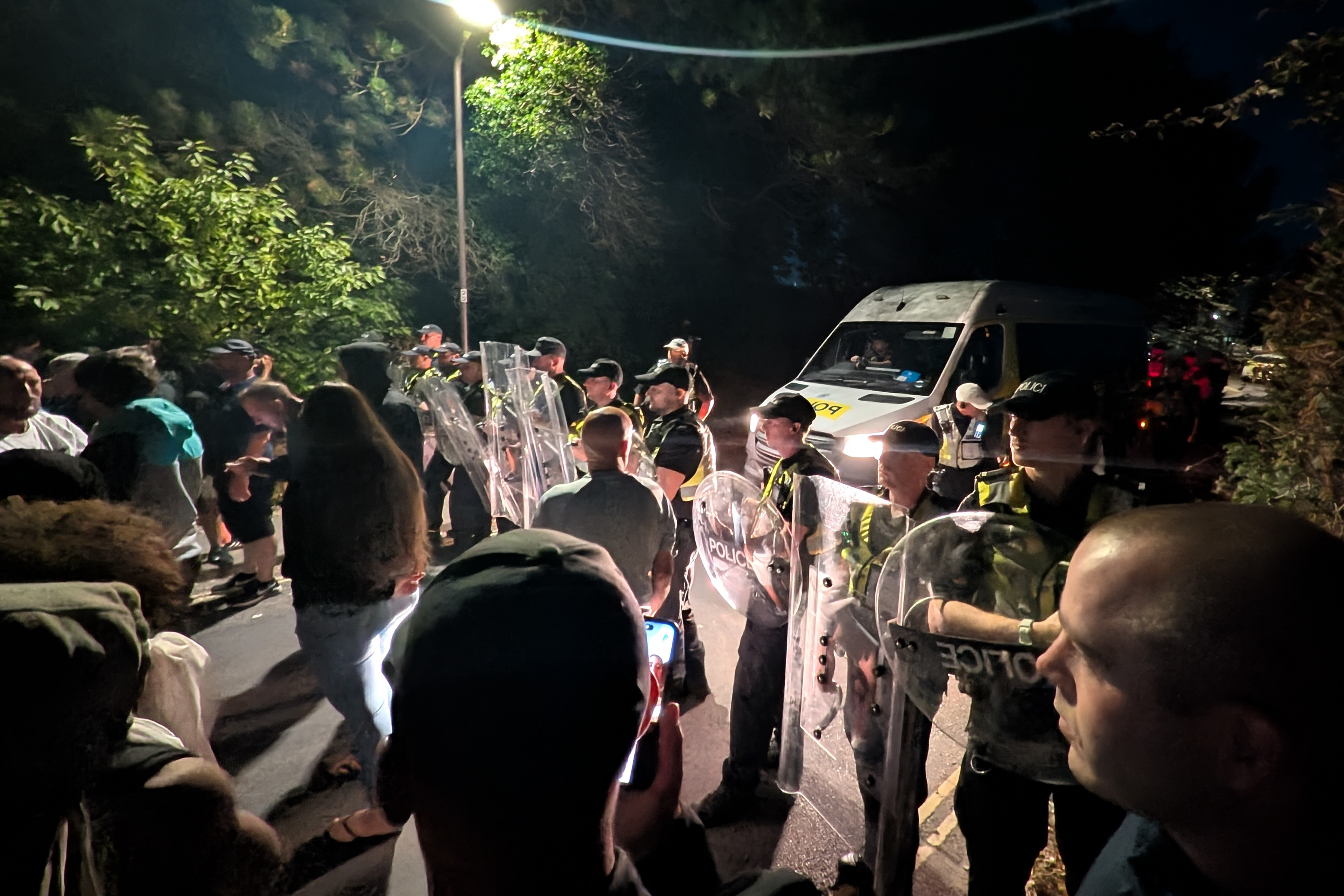
Police officers form a line to block protesters near Eastney Beach, in Portsmouth, England, on Sunday.PA
The myth that nothing ever happens on Labor Day weekend was punctured repeatedly in 2026, including the gruesome Miami crash of a cargo jetliner that killed five people on the ground and an armed man lunging at Ohio Democratic gubernatorial candidate Amy Acton at a campaign event. But the weekend’s most puzzling and arguably most alarming news was barely covered on American television: the sudden appearance in two British port cities — Dover and Portsmouth — of hundreds of black-clad, right-wing male protesters, their heads covered in balaclavas, there to cause chaos and protest the arrival of migrant boats.
The mysterious men — eventually tied to a self-proclaimed Christian group called the Patriot Platform, led by a former associate of the anti-Islamic, far-right political activist Tommy Robinson — attempted to block lifeboats carrying migrants from landing, and also tried to blockade their buses once on shore, while snarling local traffic as Dover’s famed white cliffs loomed in the background. The protests were a dramatic public illustration of the rising tide of right-wing reaction — much of it xenophobic rage over refugees — that has increasingly roiled politics in the United Kingdom, posing a threat to the milquetoast, inept Labour government.
But, in the spirit of the U.K.’s most famous fictional detective Sherlock Holmes, the real mystery along the British seacoast was the dog that did not bark. Although police did eventually restore order in the two port cities, the authorities were painfully slow to respond to such a large-scale civil disturbance, and few or no arrests were made. That’s in stark contrast to the frequent images over the last year of grandmothers and other peaceful, placard-carrying protesters getting dragged away by British bobbies when protesting for a free Palestine.
The reaction from the government of new Labour Prime Minister Andy Burnham was equally languid. A Burnham spokesperson, pressed by a reporter for a political response, would only call the shocking protests “an operational matter for the police to set out their response to the protests on the ground. So I will leave them to respond to that.” Winston Churchill, who (despite his many flaws) famously promised to fight fascists “on the beaches,” must have been spinning in his grave.
Speaking of Nazis, the protests and the sudden police embrace of pacifism coincided with a regional victory in a battered former industrial corner of eastern Germany for the extreme right AfD (Alternative for Germany) Party, the unholy heirs to Adolf Hitler’s legacy. This weekend’s echoes of Western Europe’s failed appeasement of the Nazis in the late 1930s are almost as troubling as the thuggish extremism itself. The coddling needs to end, or else we are condemned to repeat the absolute worst of our past.
What I wrote on this date in 2016
The protests in South Dakota, led by its Indigenous people, against the Dakota Access oil pipeline that erupted in the late summer of 2016 were a peak moment of 2010s political activism, and a lost cause (the pipeline opened the following year, after Donald Trump became president) that was totally worth fighting for. On this date 10 years ago, I was crusading — also unsuccessfully — for the Pennsylvania State Employees’ Retirement System (PSERS) to drop its roughly $192 million investment in the pipeline owner. I wrote, “Pennsylvania doesn’t have a great track record of environmental leadership — but there’s no reason why that history can’t be altered.”
I’ve mentioned it before in this space, but no one has done more to keep the tradition of the great American sports columnist alive than The Inquirer’s Mike Sielski. Last week he published a remarkable — and remarkably timely — deep dive into the case of a then-19-year-old from Pennsylvania Amish country whose addiction to online sports gambling and social isolation led him to make a bomb threat against the U.S. Open tennis tournament. The case was hardly an isolated incident, but the hallmark of an alarming trend: the growing number of threats not just against major sporting events but individual athletes, as more and more people — especially vulnerable young men like the one Sielski chronicles here — get addicted to the ubiquitous, heavily advertised betting sites. The piece is a reminder that great storytelling doesn’t need to be a dying art — but also that in-depth journalism requires time and your support. You provide that — and get some great reads in return — when you subscribe to The Inquirer.
By submitting your written, visual, and/or audio contributions, you agree to The Inquirer’s Terms of Use, including the grant of rights in Section 10.
In what might have been unheard of just two years ago, the Democrat in Bucks County’s key congressionalrace does not mention abortion or reproductive rights by name on hiscampaign website.
Instead, Bob Harvie, the county commissioner challenging U.S. Rep. Brian Fitzpatrick (R., Bucks) in the crucial 1st Congressional District race, largely highlights affordability issues, like tax cuts for the middle class and raising the minimum wage, on his list of 12 priorities.
It’s not that Harvie is suddenly against abortion — he has been vocal about his support forreproductive rights — but it exemplifies a broader shift in how Democrats are fine-tuning their message for must-win races in the county this fall.
Once a top-line issue for Democratic candidates in Bucks — one of theswingiest counties in Pennsylvania — discussion of abortion and reproductive rights has faded into the background in local political campaigns in favor of issues related to the economy and the cost of living.
“People [are]feeling that right now they’re living in an America that’s not fair for them,” Harvie said.
The issue has also been so far been absent from Fitzpatrick’s campaign and his website. The Republican currently holds a moderate view on abortion, though he has previously voted for restrictions.
For Harvie, discussions surrounding access to affordable healthcare — which is his No. 1 listed campaign priority — includes abortion. All of these issues reflect a broader struggle, he argued.
“They’re losing their rights, they’re losing their power over their own futures, they’re losing the American dream, all of that is combined,” Harvie said.
It’sa noticeable shift from Fitzpatrick’s last challenger Ashley Ehasz’s strategy in 2022 and 2024 whenabortion and reproductive rights served as the focal point in both of her campaigns, which followed thebacklash to the U.S. Supreme Court’s decision to strike down Roe v. Wade in 2022.
“Folks are pretty pragmatic when it comes to the politics here, and if something isn’t working, we’re not going to just keep doing it over and over again,” said Kierstyn Zolfo, co-leader of the progressive group Indivisible Bucks County, which supported Ehasz and is now backing Harvie.
Pennsylvania voters’ overwhelming disapproval of President Donald Trump and his handling of economic-related issues, as highlighted in a recent Inquirer/New York Times/Siena University poll, offers Democrats an opportunity as they target key state Senate seats in addition to the congressional contest.
“The point is to move the needle with the voters,” Zolfo said.
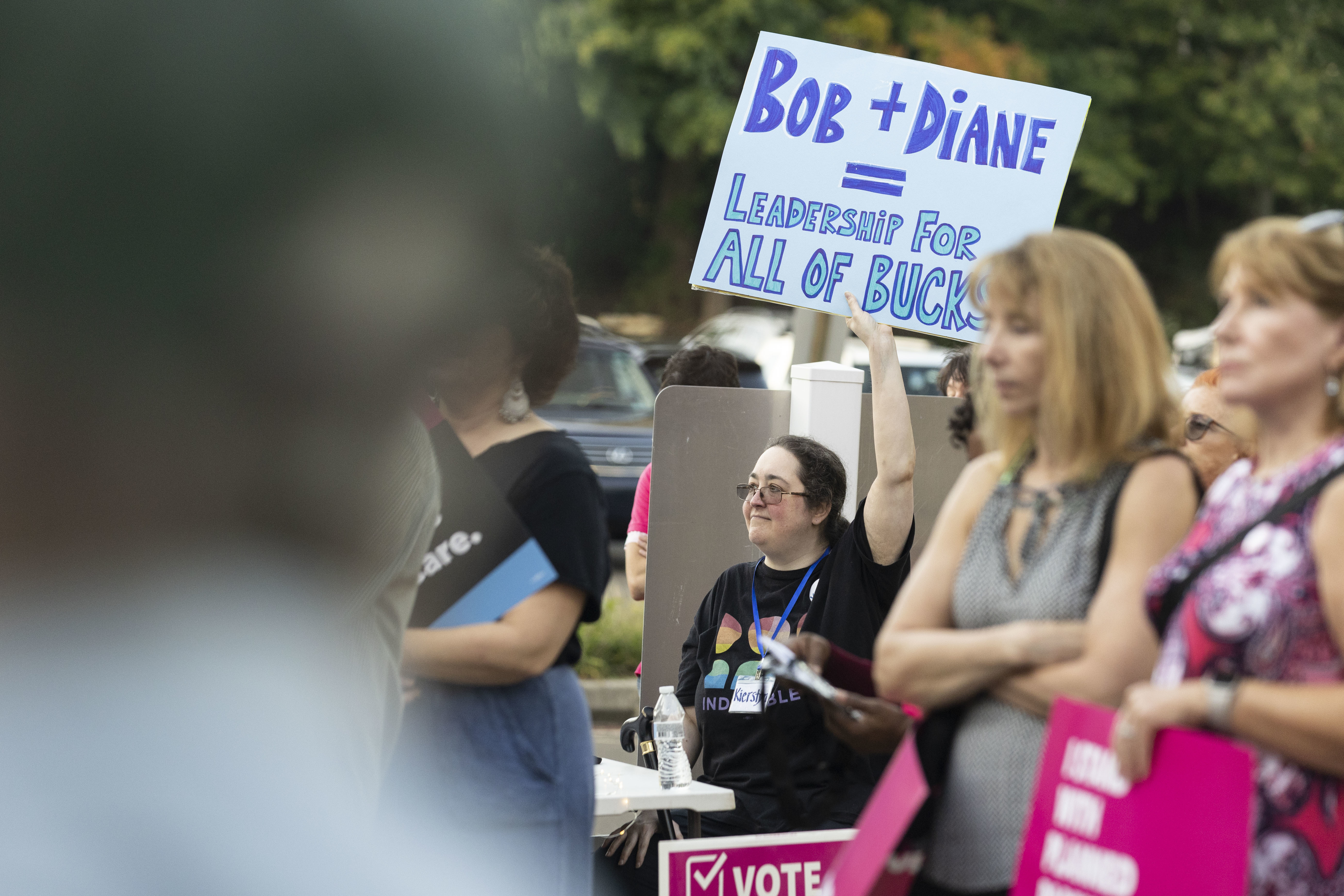
Kierstyn Zolfo, from Indivisible Bucks County, holds a sign that reads “Bob + Diane = Leadership for All of Bucks,” during a rally outside of the Middletown Township Police Department and Administrative Offices in Langhorne on Oct. 5, 2023. Harvie was running for county commissioner.Monica Herndon / Staff Photographer
How abortion became a ‘dormant’ issue in the midterms
The League of Women Voters of Pennsylvania has thousands of volunteers and members talking to voters across the state ahead of the midterm elections.
And leaders of the nonpartisan organization are hearing very little about reproductive rights. Instead, they’re getting feedback on crucial cost-of-living issues and concerns about democracy.
Abortion has become a “dormant” issue, said Amy Widestrom, executive director of the League of Women Voters of Pennsylvania.
“Nobody’s coming to us saying I need talking points on reproductive health in Pennsylvania,” Widestrom said.
The shift reflects a national trend, with ads related to abortion drastically receding amid Democrats’ focus on bread-and-butter issues, NOTUS reported.
The midterms are mainly about serving as a “referendum” on Trump’s economic agenda and foreign policy, said State Sen. Steve Santarsiero, chair of the Bucks County Democrats, though reproductive rights “must always be a central plank” of the party and its candidates, noting that majority of the country support a woman’s right to choose.
“Affordability is really the key issue, so you would expect candidates to talk about that, and then you know they’re obviously going to talk about other issues as well, and abortion rights would be one of those,” said Santarsiero, who is also up for reelection this year.
In The Inquirer/New York Times/Siena poll, Pennsylvania’s likely voters in November’s gubernatorial election between Shapiro and Republican challenger Stacy Garrity indicated that the economy and the cost of living were the two most important issues.
Abortion was ranked fourth.
Democrat Eileen Hartnett Albillar, a social worker and the county’s clerk of courts who is running to unseat state Sen. Frank Farry in the 6th state Senate district, said she doesn’t see abortion and the economy as “competing issues,” though conversations with voters have primarily focused on making ends meet. People, she said, will engage in discussion over protecting abortion rights and related topics if she raises the issue.
“They want to protect reproductive freedom,” Hartnett Albillar said. “But you know, the cost of living is just so incredibly crushing for so many people. Just because they’re quiet about it, doesn’t mean it’s not important.”
Reproductive rights took center stage in the 2022 election after several GOP-led states enacted restrictions on abortion following the Supreme Court’s decision to overturn Roe v. Wade.
In Pennsylvania, the issue helped motivate voters to turn out for Democrats Josh Shapiro and John Fetterman in the contests for governor and Senate. But as the procedure remains protected in the state under Shapiro, the topic has faded from focus.
Lehigh County Controller Mark Pinsley, a Democrat who is challenging GOP State Sen. Jarrett Coleman in the 16th district straddling Bucks and Lehigh Counties, still believes reproductive rights can motivate voters. But while he thinkshis party doesn’t talk about abortion enough, he acknowledged the dynamic is different now than it was then.
“I think you could win on that issue by itself,” Pinsley said. “I don’t think that’s true in the moment.”
Brianna Twofoot, vice president of organizing, elections and campaigns at Planned Parenthood Votes, said abortion and reproductive rights still matter to voters even if it’s not taking center stage this year.
“We’re not asking for anyone to make abortion or reproductive healthcare the number one issue, but we do think that voters want to hear about it,”Twofoot said. “And we do think that elected officials should be standing publicly on the issue.”
But any discussion of abortion will come amid what’s shaping up to be an apparent rebrand of the topic, folded into conversations about access to basic needs.
Signe Espinoza, executive director at Planned Parenthood Pennsylvania Advocates, said it’s key to look at reproductive rights through the lens of affordability, especially if health centers are defunded or closed.
“If Planned Parenthood doors close, where are you going to get your healthcare?” said Espinoza, whose organization is planning some days-of-action in Bucks. “It’s going to become more expensive. Everything’s going up.”
Bucks County Commissioner Bob Harvie hosts a veterans roundtable in May at Middletown Township Building in Langhorne.William Thomas Cain / For The Inquirer
How is the issue playing out in Harvie vs. Fitzpatrick?
Past elections in the Bucks County swing district have shown the abortion argument does not work against Fitzpatrick, who has been known to survive blue wave after blue wave.
Harvie, a twice-elected county commissioner backed by groups like Reproductive Freedom For All and Planned Parenthood Action Fund, said voters in the district already know where he and Fitzpatrick stand on abortion. The Democrat criticized Fitzpatrick and the Republican Party for supporting “pretty extreme restrictions on abortion.”
“I think that’s the reason why you’re not hearing it very much because everybody knows the positions and knows who’s on what side,” Harvie said.
Heather Roberts, a spokesperson for Fitzpatrick, said the Bucks County Republican has long supported “full reproductive freedom” for the first five to six months of pregnancy, as is outlined by Pennsylvania law.
“We also note that the Congressman’s position is the position held by the overwhelming majority of PA-1 residents,” Roberts said.
His campaign also noted Fitzpatrick’s backing of legislation in recent years that aimed to protect the right to cross state lines for an abortion as well as bills that protect access to contraception and in vitro fertilization and support of pregnant workers and women’s rights.
Rep. Brian Fitzpatrick (R., Pa.) speaks to reporters on June 3 on Capitol Hill after the House passed an Iran war powers resolution.Haiyun Jiang
But he has also voted for abortion restrictions, including a 20-week abortion ban in 2017 and twice against the Women’s Health Protection Act, which would have codified protections to access abortion into law.
The issue is absent from Fitzpatrick’s campaign website, which does not reference abortion in sections about healthcare or empowering women.
Widestrom, the executive director of Pennsylvania’s League of Women Voters, said Fitzpatrick has found a way to “neutralize” issues related to his position on abortion by continuing to win races where his opponents wage such arguments and refraining from touting a “hardcore pro-life” agenda.
“By not staking a claim, by not talking about it, it loses saliency in voters’ minds,” Widestrom said.