If Gov. Josh Shapiro wants to be on stage for the Democratic Party’sfirst presidential primary debate, he’ll need to launch a campaign by June.
Under a new timetable announced by the Democratic National Committee Monday, contenders for the 2028 Democratic presidential nomination could face their rivals in 12 debates over the course of the cycle with five coming next year.
Shapiro’s case for a presidential run was strengthened after he defeated his GOP challenger by more than 20 points in a swing state and helped usher in a string of downballot Democratic victories. He has begun to publicly acknowledge his interest in a possible White House run, telling reporters at a post-election gathering of Democrats in Denver that he and his family will be making a “personal decision.”
But with the DNC’s new schedule, that decision could come ashe’s still trying to achieve the legislative goals he laid out for his second term.
During his reelection campaign, Shapiro said his agenda for the first 100 days of his second term — a period which lasts from Jan. 17 to April 29— includes an ambitious list: increasing funding for mass transit, protecting abortion rights, supporting housing development and, most urgently, raising the state’s minimum wage. These wins under his belt could show Shapiro’s ability to pass meaningful legislation but may take some time to come to fruition, even under a new Democratic trifecta in Harrisburg.
To participate in the debate, Shapiro would also have to agree to the DNC’s new parameters, which include denouncing spending by “dark money” groups, which do not disclose their donors, and super PACs, which can raise raise unlimited contributions as long as they don’t coordinate directly with a campaign.
Manuel Bonder, a spokesperson for Shapiro, declined to comment on a timeline for the governor’s decision or his thoughts on the new rules.
TheDNC also said in its announcement Monday that it would involve content creators and influencers in the debate process but did not elaborate on how that would work.
Shapirohas frequently relied on influencers to help spread his message and has given them access on both the campaign trail and at the statehouse, where he gave a tour to Kylie Kelce earlier this year.
Shapiro has been seen as a top contender for 2028 after being considered but passed over as former Vice President Kamala Harris’ running mate two years ago. His multi-city book tour and frequent appearances in national media have only increased speculation that he’ll be part of what promises to be a crowded Democratic field.
Other likely entrants with ties to the region, include U.S. Sen. Cory Booker of New Jersey and U.S. Rep. Ro Khanna, a progressive who represents California who grew up in Bucks County.
Booker, who mounted a 2020 primary run but dropped out before voting began, is already making trips to South Carolina, the first state in the 2028 primary schedule.
The field could also include Harris and former Transportation Secretary Pete Buttigieg — who like Booker sought the 2020 nomination — along with Illinois Gov. J.B. Pritzker, California Gov. Gavin Newsom, U.S. Sen. Mark Kelly of Arizona, U.S. Rep. Alexandria Ocasio-Cortez of New York and both of Georgia’s senators, Raphael Warnock and Jon Ossoff.
The DNC did not lay out the polling threshold candidates would have to meet to participate in the debates but said the stage would be capped at 20 participants. Given the potentially large field of candidates, the debates may take place over two nights, with the lineup determined at random.
In 2020, multiple debate organizers required Democrats to poll at least 1% or have a certain number of donors to qualify.
When asked about his plans Fridayduring a foreign policy summit in in Philadelphia, Shapiro gave a subtle nod to his interest by specifically suggesting a governor would be best-suited for the role.
“I’m going to do everything in my power to ensure that we have not just a new foreign policy… but a Democratic governor defeating (Vice President) JD Vance or whoever they put up on the other side,” he said.
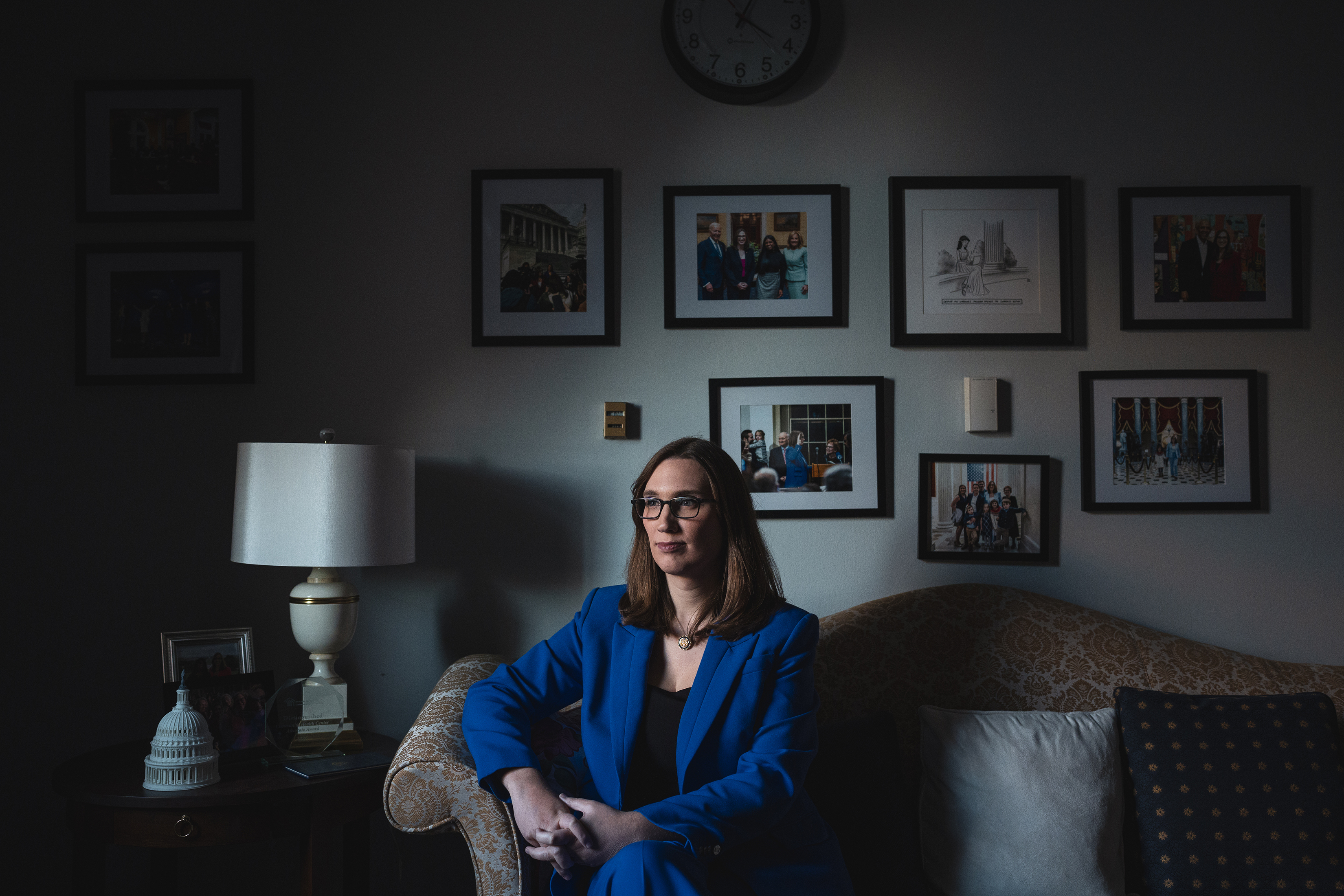
U.S. Rep. Sarah McBride of Delaware, the first openly transgender member of Congress, will hold a leadership role when Democrats take control of Congress in January.
Her elevation to a prominent position comes after Republicans repeatedly targeted her gender identity during her first term, even enacting a rule to bar her fromusing Capitol Hill women’s bathrooms by Republicans shortly after she first won her seat in 2024.
McBride, who easily won reelection to Delaware’s lone U.S. House seat earlier this month, will serve as one ofthree co-chairs of the Democratic Policy and Communications Committee, which is charged with disseminating the party’s messaging. She was chosen for the role by her colleagues in the Democratic caucus.
“They didn’t elect me because of my identity; they elected me because of my ideas,” McBride noted to The New York Times.
In a post on X last week, McBride said she was honored by her colleagues’ trust and said the vote “reflects a shared vision for our caucus: to be laser-focused on lowering costs, ending the war in Iran, combatting corruption, and building a government that respects everyone.”
In offering congratulations on Facebook on the new role, the Democratic Women’s Caucus thanked McBride for “continuing to use your gift of explaining what’s at stake in a way that connects with people. The DWC is thrilled to see you in this role, and ready to help you get the message out!”
U.S. Sen. Chris Coons,the state’s senior lawmaker, also cheered McBride’s ascendance to party leadership, saying on Facebook, “Delaware has seen what an incredible fighter you are for your constituents, and I know you’ll bring that same passion to House Democratic leadership.”
After McBride was elected in 2024, Republican U.S. Rep. Nancy Mace of South Carolina introduced a resolution prohibiting lawmakers, officers, and House employees from using “single-sex facilities” like restrooms and gym locker rooms “other than those corresponding to their biological sex.”
Mace said that McBride, “does not belong in women’s spaces.”
After Mace’s introduction, House Speaker Mike Johnson (R., La.) instituted a ban through his administrative power rather than putting it to the House floor for a vote. (Mace, who lost a primary race for South Carolina governor, did not seek reelection to the House and will be out of office in January.)
McBride has said little publicly about the situation since the initial uproar,but it took a private toll.
In an interview with The Advocate this month, McBride revealed that she had a panic attack during a 2024 photo shoot with the LGBTQ+ magazine with the Capitol dome in the background.
“This place that I had worshiped for so long, revered for so long was the place that was causing me a panic attack,” she said.
McBride has largely declined to directly engage with the GOP attacks since taking office and has instead focused on building relationships on the hill to advocate for LGBTQ+ rights more generally.
“Two years ago, I came into this place and was thrust into the middle of the conversation in a way that I wasn’t eager to be,” McBride told The New York Times. “I’m really grateful that after two years of relentless attacks on a community I’m a part of, after two years of some in this building using me as a pawn in their efforts to get attention, after hundreds of millions of dollars spent to demonize people like me, my colleagues demonstrated their values.”
Former Nvidia boss Jensen Huang’s affair with a woman who intelligence officials believe is a Chinese spy rightly refocused attention on Donald Trump’s lax attitude toward national security and his disregard for efforts to safeguard against the dangers of artificial intelligence.
But another sex scandal involving Trump received little attention amid the Election Day earthquake and Huang’s ouster from one of the world’s most valuable public companies.
A Democratic House Judiciary Committee report released last month included sexual abuse allegations from 11 women connected to convicted sex trafficker Jeffrey Epstein, including five women who accused Trump of rape or sexual assault that occurred decades ago.
One horrific claim came from a former Miss Switzerland who alleged she was raped by Trump at the Plaza Hotel while attending a beauty pageant there in 1993.
Beatrice Keul told the Judiciary Committee staff she was attending the American Dream Pageant where she met Trump at the press luncheon at the iconic New York hotel, which he owned at the time.
The White House denied Keul’s allegations. “This ‘report’ is nothing more than a desperate attempt by crazed Democrats to distract Americans from the surging Republican momentum driven by President Trump’s historic achievements,” said Lauren Bis, an administration spokesperson.
Keul, then 24, said Trump invited her to a hotel suite where he grabbed her from behind and “forcibly raped her,” the 53-page report said. She said the incident left her bruised and bleeding. Keul added that Trump urged her not to tell anyone about the incident and promised to help with her college admission and visa issues.
The report said four other women accused Trump of rape or sexual assault in connection with the Epstein investigation. The allegations date to the mid-1980s and 1990s. Many of the details were made public earlier through media reports or FBI testimony released as part of the Epstein files.
The allegations add to the long list of women who have claimed Trump sexually assaulted them. In 2023, a jury found Trump liable for sexually abusing advice columnist E. Jean Carroll in 1996. In 2024, he was found guilty of a scheme that included paying hush money to an adult film star in advance of the 2016 presidential election.
For his part, Trump was captured on the infamous Access Hollywood tape bragging about how he grabbed women by their genitals. “I just start kissing them. It’s like a magnet. Just kiss. I don’t even wait,” he said, before adding, “When you’re a star, they let you do it. You can do anything.”
“Access Hollywood” host Billy Bush and Donald Trump greet Arianne Zucker in an infamous 2005 video that almost derailed Trump’s presidential campaign.Access Hollywood
Trump has long denied any wrongdoing. After the recent congressional report was released, the White House said Trump has been “fully exonerated of anything related to Epstein.”
That is not entirely accurate, since the U.S. Department of Justice has only released about half of the roughly seven million pages in the Epstein files. And many of the documents that were released were redacted.
Attorney General Todd Blanche, who was Trump’s criminal defense attorney and now oversees the Justice Department, continues to block the full release of the files despite a federal judge’s order.
The House Oversight Committee released a report that found prosecutors failed to hold Epstein and coconspirator Ghislaine Maxwell accountable for years, enabling him to get away with sexually abusing scores of young girls and women. The report called on investigators to do more to ensure justice for the survivors.
“The DOJ should interview or, in some cases, reinterview key individuals who were part of the inner circle of Epstein and Maxwell,” the report said.
Thomas Massie, the departing GOP congressman from Kentucky, is pushing a measure that would allow Epstein survivors, state prosecutors, and lawmakers to sue the Justice Department to get more records released.
The Nvidia case and the latest allegations against Trump have reignited a broader national conversation about powerful men who have been accused of abusing their power. The stakes are further raised now that national security is at risk, along with the growing danger of artificial intelligence.
The problem is only made worse with a convicted felon and alleged sexual predator in the Oval Office.
When Democrats take control of the House and Senate in January, among their priorities should be the full release of the Epstein files, much-needed justice for the victims, and accountability for any wrongdoers.
Now, that progressive is running for elected office — and she’s taking on party stalwarts to do it.
Lauren Rinaldi, an artist and the Democratic leader of the Fishtown-based 18th Ward, is launching a campaign to be one of three city commissioners who make up the panel of elected officials responsible for administering the city’s elections, Rinaldi said in an interview.
She’s pitching herself as a neighborhood organizer who can use that perspective to increase voter participation, prioritize outreach, and advocate for policy changes in Harrisburg that would expand voting rights.
“I want more Philadelphians to vote. That’s been my central mission for years and years doing the work that I do,” Rinaldi, 43, said. “We need to expand our understanding of what election administration can be. I think that city commissioners should be more than just the mechanics of the election.”
Commissioners have an array of responsibilities related to election administration, including overseeing staff, maintaining voting machines, issuing election materials like mail ballots, and certifying election results.
Under city law, one of the three seats is effectively reserved for a member of a minority party, meaning that Rinaldi would be competing in the Democratic primary against two incumbents, if both choose to run for reelection. The top two finishers in the May Democratic primary are all but certain to win seats.
Both incumbent Democrats — Omar Sabir and Lisa Deeley — said in interviews that they are leaning toward running for reelection, but neither made it official. State law requires that commissioners step aside from overseeing an upcoming election once they officially become a candidate.
Sabir and Deeley each have longstanding ties to the party apparatus and organized labor. That could put the Democratic City Committee’s leadership in an uncomfortable position as ward leaders consider whether to back the incumbents, whom they tend to endorse, or Rinaldi, who holds a party leadership role.
Endorsements from wards and ward leaders, who name their preferred candidates on sample ballots that are handed out on Election Day, can be a major advantage in low-turnout elections like off-year municipal races.
Brady, a former U.S. representative and the longtime head of the city’s party, said the city committee will decide whom to endorse using its typical process, in which its policy committee will hear from candidates and recommend endorsements to the full group of ward leaders.
“She’ll come in front of the policy committee just like the incumbents,” he said of Rinaldi.
Rinaldi said she will seek the party’s endorsement but is not looking for a messy campaign or to “tear down the incumbents.”
“I have respect for the work that they do and have done,” she said. “I care deeply about this and I want to win, but I’m not going to burn bridges and relationships.”
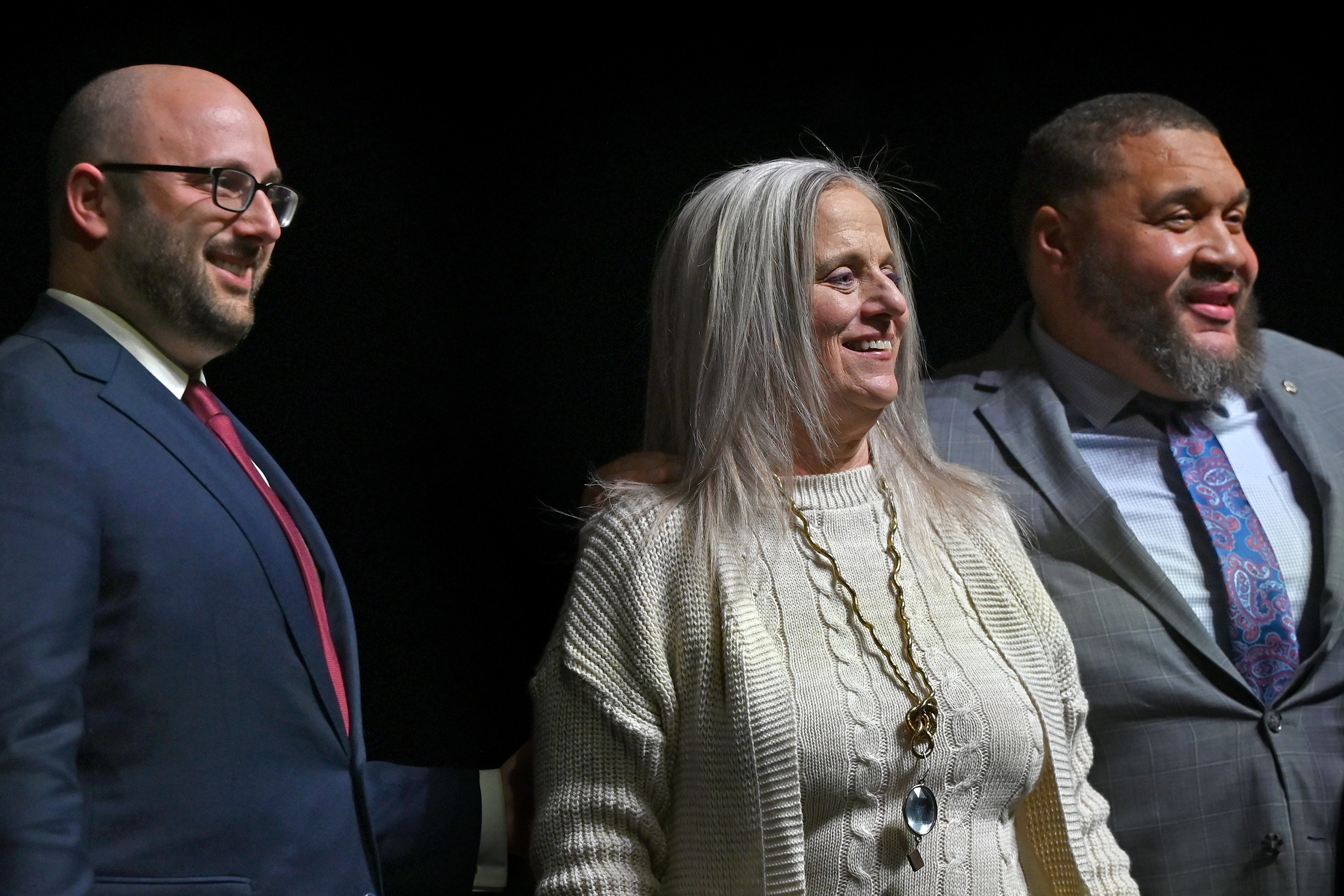
Seth Bluestein (from left), Lisa M Deeley and Omar Sabir after they are sworn in as City Commissioners Jan. 2, 2024 on the stage of the Met Philadelphia on North Broad Street.Tom Gralish / Staff Photographer
Sabir said in an interview that, if he runs for reelection, he is “going to win.”
“I have been battle tested,” he said, “and I do honestly believe that the citizens of Philadelphia will have me back another term.”
Deeley said it’s “great” that others want to run for commissioner and pointed out that she has prevailed in competitive elections in past years.
Next year’s municipal elections — when every row office, City Council seat, and the mayor will be on the ballot — comes ahead of the 2028 presidential election, when Philadelphia’s election administration could again be in the national spotlight as the largest city and a Democratic stronghold in a critical swing state.
Deeley, who first took office in 2016, and Sabir, who was sworn-in in 2020, will likely emphasize their experience working under that scrutiny. Both were commissioners during the chaotic aftermath of the 2020 presidential election, when all eyes were on Philadelphia as exhausted elections officials counted votes for nearly a week as the race hinged on Pennsylvania.
That year, Sabir and Deeley served alongside Republican Al Schmidt, who is now the secretary of state under Gov. Josh Shapiro, overseeing elections statewide. Schmidt’s former seat on the city commissioners is currently held by Republican Seth Bluestein, who was a longtime aide to Schmidt.
Rinaldi said the attacks on free elections in 2020 motivated her to get more involved in the process, including leading neighborhood-level campaigns to increase voter education and turnout.
“This is the bedrock of everything in our country, and if we’re being challenged, we have to respect the evidence and defend the legitimate outcomes of the votes and the will of the people,” she said. “It just makes me feel even stronger about the work that needs to be done.”
Gov. Josh Shapiro on Friday called China “perhaps the greatest adversary of the United States,” and blasted the White House’s current relations with the country, in remarks that covered his broad vision for American foreign policy as he lays the groundwork for a likely presidential campaign.
“The reality is, with China, we have to understand they are economically trying to overtake us,” Shapiro said at the University of Pennsylvania’s Perry World House in Philadelphia as part of an event series on transatlantic policy. “But we also have to understand that we have to find ways to be able to work with them to deal with some of the most pressing challenges.”
He called the president “profoundly and pathetically weak” during the meeting, which did not produce any meaningful agreements, and said Trump made America “the laughing stock of the free world.” Shapiro said his approach, if he were representing the U.S., would be to work with China in areas both countries have an interest, namely artificial intelligence, but not give them a free pass.
“It’s not that we shouldn’t engage, but we should engage from a position of strength. And Donald Trump is engaging from a position of weakness,” Shapiro told Frederick Kempe, CEO and president of Atlantic Council, which partnered with Penn to host the summit on foreign policy.
Governor Josh Shapiro speaks at a conference on the impact of NATO on communities in the United States at the Perry World House of the University of Pennsylvania in Philadelphia on Friday, Nov. 20, 2026.Tyger Williams / Staff Photographer
For years, Shapiro said, it hasn’t been clear to Americans, including farmers in Lancaster and construction workers in Philadelphia, how foreign policy impacts their daily lives. That changed during this year’s midterm elections, when Democrats swept races up and down the ballot, including in Pennsylvania, where Shapiro staked his political capital on flipping four U.S. House seats to help deliver a majority.
Everyday Pennsylvanians, he said, experienced the impacts of Trump’s war with Iran that began in February and led to sporadic closures of the Strait of Hormuz, causing a spike in gas prices.
“They feel the effect of foreign policy, even if they’re not sort of thinking about it, debating it every day,” he said.
Shapiro on Friday introduced his three-pronged proposal for a stronger relationship with America’s allies, including Canada and some European countries. (Canada is Pennsylvania’s largest international trading partner, and Shapiro has maintained a friendly relationship with its leaders.)
First, he said, the U.S. should grow its economy and industrial strength with allies together, calling Trump’s tariffs and trade war “foolish.”
Shapiro, who has boasted his efforts to speed up the state’s process to get licenses or permits to do work, said cutting red tape and welcoming other countries’ investment into Pennsylvania would help, not weaken, workers.
Next, he said, the alliance should work together to face emerging challenges, like developing guardrails on AI — something he said no country can go at alone. In August, amid mounting concern from constituents, Shapiro issued a sweeping executive order that dramatically restricts data center development in Pennsylvania.
“AI, in particular, carries massive risks to our communities, to our jobs, to that very same way of life that it promised to change for the better,” he said. “AI must make life better for all of us, not replace us, or God forbid, endanger us. There are critical steps we need to take here in this country to mitigate the dangers of AI — steps that this administration in Washington has repeatedly refused to take.”
And third, he said, countries that belong to NATO — a political and military alliance founded in 1949 of 32 member states in Europe and North America — need to strengthen their collective defense, primarily by deterring future military conflict. In turn, Shapiro said that he hopes that under a Democratic president, America would never again waver on keeping NATO’s central principle to aid other nations under attack.
While making the last point, Shapiro indirectly praised Trump by saying he rightly pushed allies to invest more of their economic output into defense spending. He noted that former Presidents Joe Biden and Barack Obama, also carried that urging forward.
Shapiro said his plan would provide a new opportunity to develop a foreign policy strengthening existing alliances that links security and prosperity together. He added that the Democratic Party needs to build a coherent foreign policy that focuses on attracting investment from overseas into the U.S. to strengthen manufacturing and make sure international students, like those at Penn, continue to come to American universities to innovate.
Finally, he said, Democrats — now in the majority in both chambers of Congress — need to use their leverage to pressure Trump and Secretary of War Pete Hegseth to end the war in Iran by reducing funding, holding them accountable for their unlawful actions, and ending blanket tariffs.
“We need to wind this down. We need to save lives. We need to protect the American people,” Shapiro said. “There has to be a plan forward to reopen the Strait of Hormuz, and then deal with the effects of what occurred in Iran.”
As the drumbeat of bad news for Republicans grew louder on election night, U.S. Rep. Brian Fitzpatrick called to apologize.
Jim Worthington, the owner of the Newtown Athletic Club and a prominent GOP booster in Pennsylvania, had supported Fitzpatrick for a decade as he won time after time in their purple district outside Philadelphia. Worthington also backed President Donald Trump over that time — hosting campaign rallies and raising money for the president even as Fitzpatrick, a moderate Republican, repeatedly survived reelection by distancing himself from the leader of their party.
Now, though, it was clear Fitzpatrick was calling amid a “bloodbath.” Republicans had lost up and down the ballot in the nation’s biggest midterms rout in a half-century, and Pennsylvania was no exception. Fitzpatrick knew his time in office would be over and he wanted to tell Worthington personally that he was sorry, that there was more he wanted to get done for Bucks County and now would not be able to.
GOP booster Jim Worthington, left, sits with his son Jack during an election night watch party in Newtown Bucks County, in 2024, when Republicans won in Pennsylvania and across the country. This year, many GOP candidates fell to Democrats in a blue-wave election.Steven M. Falk / Staff Photographer
Worthington, recalling the conversation from election night, said he has come to blame the widespread losses on both state and federal Republicans. And, he said, that has put him at a “crossroads” that could determine whether he keeps helping their efforts in the future.
“I’m not going to beat my head against the wall and not make a difference; raising a lot of money, spending time, and losing,” Worthington said last week. “I could conceivably be stepping away, particularly when you see that people on both sides of these parties, Democratic and Republican, are in it for the wrong reasons, making fortunes, scamming the system, and being grifters. I’m just doing this because I want my country to be better.”
The party, by some measures, is at its lowest point in the Keystone State in decades. In January, the GOP will sit in the minority in the state legislature for the first time since 1993 and will hold just six of the state’s 17 congressional seats, and it has lost four consecutive races for governor, including Gov. Josh Shapiro’s sizable 22-percentage-point win over Republican Stacy Garrity this year.
And after a decade in which Trump twice won the critical swing state and remade the GOP in his image, his cratering popularity and final years in office have made some Republicans eager to move on.
“It needs to send a message to the party and President Trump, too, that MAGA is not bigger than the Republican Party,” said one Pennsylvania Republican Party official, who requested anonymity to freely discuss intraparty conversations. “We’ve all learned a hard lesson that it isn’t. Many of us have believed that for a long time.”
The party official said Republicans who want to win general elections moving forward must recognize the “deadly, devastating, negative effect” of continuing to tie themselves solely to Trump, including in the nomination process for a 2028 presidential candidate and other races in Pennsylvania. That may be easier said than done.
“The anti-Trump sentiment that controlled the day in ’26 will not fully dissipate by ’28,” the official said, adding that Pennsylvania Republicans might be best suited to consider a “2030 strategy” rather than one focused only on 2028.
Such a move would set the party’s sights more on the next gubernatorial race and presidential midterms in four years.It is not impossible to rebound in two years, the official said — especially if the national mood shifts, if Democrats overreach in their new power, and if Republicans recruit strong candidates for everything from the state House to the U.S. Senate, when Democrat John Fetterman’s seat is up for election. But it will be challenging.
“We got thumped,” said U.S. Sen. Dave McCormick, Pennsylvania’s top elected Republican, who could play a key role in rebuilding the party.
McCormick told reporters this week that Republicans ran on a “really great track record” of border control, reductions in violent crime and fentanyl deaths, tax cuts, and school choice.
But he said they also did not talk enough about the cost-of-living pains that voters were expressing around gas, healthcare, and housing — or about perceptions of corruption in Washington, like when lawmakers trade stocks tied to issues they legislate.
President Donald Trump appears at a Defense and Innovation Summit hosted by U.S. Sen. Dave McCormick (left) at the US Army War College in Carlisle Wednesday, July 15, 2026.Tom Gralish / Staff Photographer
McCormick defeated longtime Democratic U.S. Sen. Bob Casey in 2024, when Republicans’ wins, including Trump’s, were propelled partly by economic concerns. A former hedge fund leader whose wife, Dina Powell McCormick, is the president of Meta, McCormick is one of the wealthiest members of Congress and said he supports legislation to ban stock trading by lawmakers. He said the public has concerns about both insider trading and the cryptocurrency market — which he also has investments in — and Republicans need to “build back confidence” that voters should have in them.
“Lesson one is: More focus, more attention, on giving them confidence that we heard you and we have a plan to deal with that,” McCormick said. “I don’t think the voters expect us to fix everything right away. But I don’t think they felt like we were focused enough on the things that they were feeling were most important.”
State Rep. Craig Williams, who had been one of the few remaining Republicans representing the Philadelphia collar counties in Harrisburg, was among the more than a dozen GOP state lawmakers who lost reelection. He was ousted by Democratic Rep.-elect Elizabeth Moro, a local small-business owner and real estate broker, who had challenged him unsuccessfully in 2024.
“I don’t think it had anything to do with the work we were doing in the 160th District,” said Williams, who represents parts of Chester and Delaware Counties. “This election was entirely about affordability and a national sense that our party hasn’t done enough to address it, and I tend to agree with them.”
Williams said he is unsure what he will be doing come January, but hopes that Republicans work with the Democrats while in the minority. The former federal prosecutor and retired U.S. Marine Corps colonel said he is unlikely to run again.
“I have to say, all credit to the Democrats. They found the right message,” Williams added. “It falls to Republicans to decide how they want to respond. … If we’re not awake, then we’re going to be facing these same problems in the future. Right now we should do whatever we can to help everyday Americans.”
House Agriculture Committee Chairman Glenn “GT” Thompson visits a dairy farm in Lebanon County Apr. 14, 2025Tom Gralish / Staff Photographer
In Washington, U.S. Rep. Glenn “GT” Thompson (R., Pa.) said the party, in some ways, has been here before.
The Centre County Republican is the longest-serving House member from Pennsylvania. He won his first election in his sprawling and heavily conservative central Pennsylvania district in 2008, the last high-water mark for Democrats. Republicans responded after the first two years of President Barack Obama’s administration by winning across the board in the 2010 midterms, allowing them to put up roadblocks for the rest of Obama’s term and paving the way for their eventual success in the Trump years.
“There’s a lot of people that love to declare the end of either party after an election. That’s just not true. I think 2009-2010 proved that,” Thompson said in an interview Thursday on Capitol Hill.
Thompson compared the massive swing this year to the post-Watergate era, when Democrats swept into office after President Richard Nixon’s scandalous collapse. But, like others in his party who have made the comparison in recent weeks, he attributes it not to corruption but to the economic pressures that voters felt Republicans were not doing enough to address.
Thompson said the Iran war’s impact on fuel prices and Trump’s widespread tariffs, though well-intentioned, played a role. So did the president’s immigration agenda, which Thompson and other Republicans see as largely necessary but have looked to tweak through bills like the Securing Agriculture’s Workforce Act. Thompson, who chairs the House Committee on Agriculture, sponsored the bill to expand seasonal harvester visas — a move that agriculture leaders in Pennsylvania have hailed amid frustrations with Trump’s agenda.
“Do I think that that would have made a difference in this election, if the administration and leadership would have embraced this five months ago? Yeah, I think it would have, actually,” Thompson said. “Because it is one of the things in rural America.”
Worthington said Trump’s success in areas like immigration were overshadowed by his failure to address “kitchen-table issues.” And at the state level, he said he blames the Pennsylvania Republican Party, of which he is a committee member, for continuing to rely on outside groups to run its mail-ballot strategy as Democrats continue to vote at significantly higher rates.
The Pennsylvania Republican Party, for its part, said it ran “great candidates up and down the ballot” and attributed the GOP’s losses in the state to the blue-wave election that impacted even deep-red states like Texas and Mississippi, spokesperson James Markley said in a statement.
Pennsylvania Republicans this election built an expansive early voting and mail-ballot chase program in which they reached out to voters to get them to turn in their mail ballots,and for the first time had a higher return rate than Democrats, Markley added. Republicans returned 87.5% of their requested mail ballots, for a total of 285,397, according to Pennsylvania Department of State data. Democrats returned 85.2% of their requested mail ballots, or 734,477.
“The Democrats ran on affordability, but are already pivoting to job-crushing policies and an agenda that will drive Pennsylvania and our country into the ground,” he said in a statement. “The Republican Party of Pennsylvania is taking the necessary steps today to ensure our strength and preparedness for the road ahead.”
People watch the evening election returns on TV on Tuesday, Nov. 3, 2026 at Bucks County Republican Committee Headquarters in Doylestown, Pennsylvania.William Thomas Cain / For The Inquirer
Both parties, from Harrisburg to Washington, are set to face their share of challenges moving forward.
Democrats are entering the majority in Congress with warring factions of progressives and moderates. Republicans have largely seen their ranks purged of candidates who oppose Trump but are now considering different leaders heading into the president’s final years in office.
McCormick, for one, had urged his Senate Republican colleagues after the election to hold off on their internal leadership elections, saying there should be a thorough review of what went wrong before they picked who would guide them through the aftermath. That move — which a few other senators also joined — came up short, with Republicans picking Senate Majority Leader John Thune of South Dakota to continue as their leader in the minority next year.
This week, McCormick said the “accountability” conversation needs to happen at all levels.
“In business and the military and elsewhere, you start with accountability,” McCormick said, referencing his own personal background. “It’s from the commander in chief, to the leadership in the Senate and the House, to individual senators like me. What did I miss? What did we do wrong?”
Staff writer Michelle Baruchman contributed to this article.
The slow fuse of Richard Nixon’s Watergate scandal had been burning for more than two years on the night of July 25, 1974, when millions turned on their TV sets and watched a woman who’d been previously unknown to most Americans — even after making history as the first Black congresswoman from a former Confederate state.
In a booming voice, the Democrat from Houston spoke of her passion for the U.S. Constitution after people like her had fought for nearly 200 years and counting for full recognition. “My faith in the Constitution is whole; it is complete; it is total,” Jordan said, in what is now regarded as one of the most memorable speeches of the 20th century. “And I am not going to sit here and be an idle spectator to the diminution, the subversion, the destruction, of the Constitution.”
In the most enduring moment of a televised debate that was watched at least in part by an estimated 90% of all Americans, Jordan outlined Nixon’s abuses of power in seeking to thwart probes into the 1972 Watergate break-in, and his other abuses. “If the impeachment provision in the Constitution of the United States will not reach the offenses charged here,” she concluded, “then perhaps that 18th-century Constitution should be abandoned to a 20th-century paper shredder.”
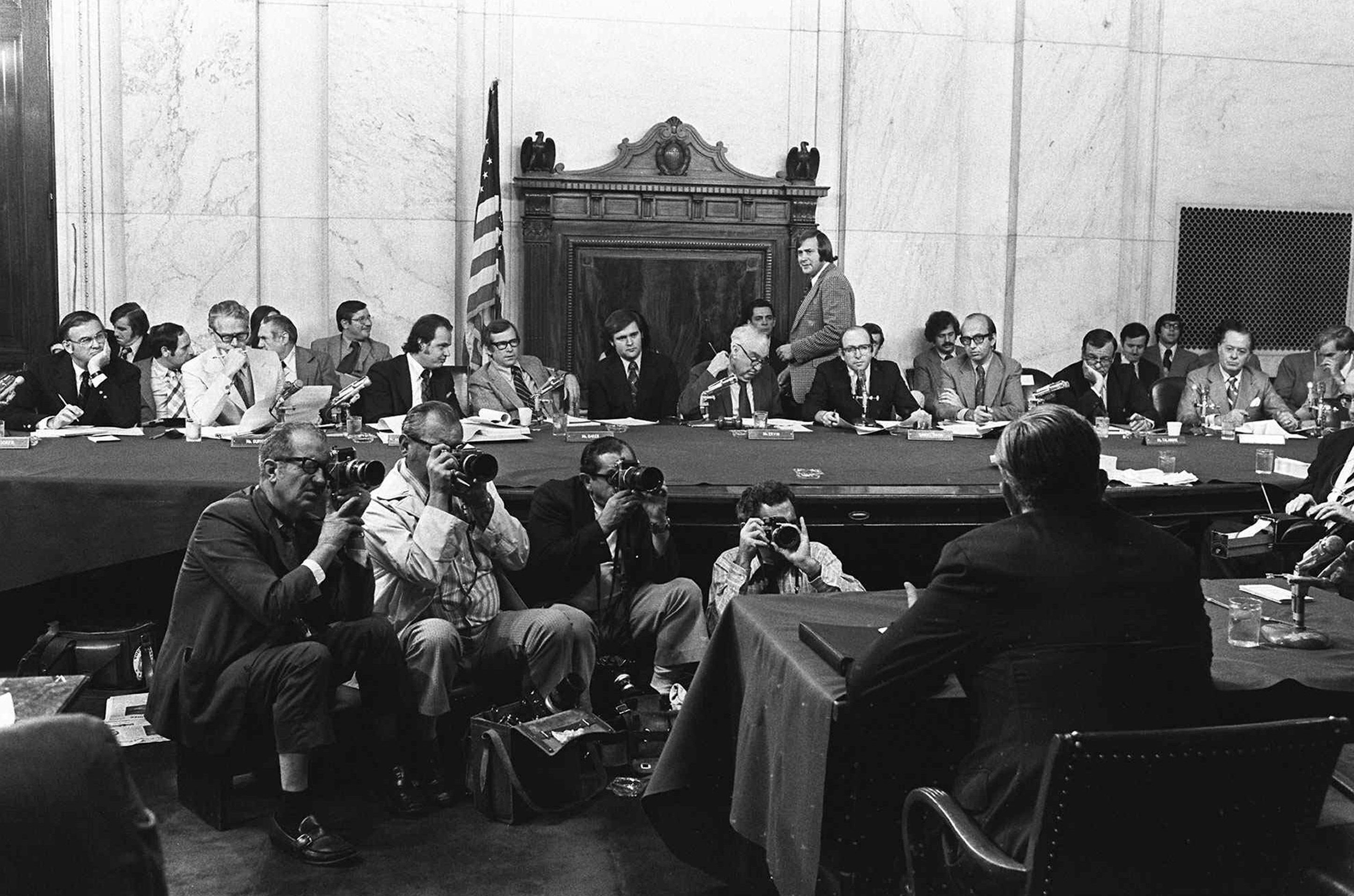
Jordan’s speech set the tone for a week of sober and sometimes moving debate that endedin the House Judiciary Committee, with bipartisan majorities, approving three impeachment counts against the embattled 37th president. Meanwhile, a unanimous U.S. Supreme Court forced Nixon to finally release incriminating Oval Office tapes sought by the committee and a special prosecutor. On Aug. 8, 1974 — two weeks after Jordan’s speech — Nixon became the first and only president to resign.
Over the long half-century since then, it’s been easy to forget how improbable Nixon’s ouster had truly been. In November 1972 — five months after the Watergate break-in — he’d been reelected with nearly 61% of the vote in one of the biggest landslides in the nation’shistory. In late 1973, after a summer of explosive Senate hearings and Nixon’s firing of the first special prosecutor in the notorious “Saturday Night Massacre,” support for impeachment rose, but only to about 37%.
There’s a reason one of the best modern histories of Watergate, a Slate podcast series, was named Slow Burn. The Democratic-led Congress took months to bring in top lawyers, gather evidence, hold hearings — both behind closed doors and on prime-time television — and build a case for impeachment that a majority of Americans — even some of Nixon’s fellow Republicans — could support.
In 1974, the House Judiciary Committee — led by a rising-to-the-moment ex-Newark ward-heeler, Rep. Peter Rodino — didn’t just make history. It also created a road map for today’s Democrats facing the quandary of how to address Donald Trump, his cabinet, and their growing list of high crimes, misdemeanors, and abuses of power. The Trump rap sheet makes Watergate actually seem like the “third-rate burglary” Nixon’s spokesperson claimed it was.
And think about this: These are just the impeachable offenses that we’ve learned about in two years of a GOP-led do-nothing Congress, a DOJ that sees itself as representing Trump and not the American people, and a partially cowed news media. Imagine what a thorough and intense investigation led by Democrats could additionally uncover about the questionable business dealings of the Trump family, including its hedge-fund envoy Jared Kushner, or the real motivations for the White House to look the other way on Nvidia’s chip sales to China.
A lot of rank-and-file Democratic voters will look at this laundry list of outrageous offenses and ask: Why not impeach Trump and his worst-of-the-worst cabinet secretaries on Jan. 4, 2027, the day after Hakeem Jeffries is elected House speaker? There’s a mechanism, after all, for the House to take a snap impeachment vote that was attempted this year not just for Trump but for his unctuous “secretary of war,” Pete Hegseth.
Both those efforts failed, and while in a moral sense sooner would be better for removing both men — especially Trump, with the nuclear football in his deteriorating grasp — from power, it’s politically much better for the Democrats to go the “slow burn” route of gathering every scrap of evidence and laying it out in dramatic public hearings over the course of 2027.
But that won’t be easy. House Democrats face pressure not just from their base voters demanding immediate action, but also from many in their own party who think impeachment is a waste of time either because “the votes aren’t there” to convict in the Senate, or because they believe voters want Congress to only focus on lowering prices. That’s in addition to a Trump White House with a new combative chief of staff in Stephen Miller, who will fight every subpoena to the death.
The good news is that after the Democrats’ “blue tsunami” in the midterm election, there seems to be growing consensus and understanding that a) the voters who elected them want accountability as much as affordability and b) a thorough and intentionally deliberate investigation into Trump’s corruption — one that could see impeachment (or impeachments, including other top officials) — is the strategy that makes the most sense.
The even better news is that the point man for all of this — the 21st century heir to Rodino — is someone who seems to get it: Maryland Rep. Jamie Raskin, a top constitutional lawyer, breakout star of Trump’s second impeachment in 2021, and a child of Watergate.
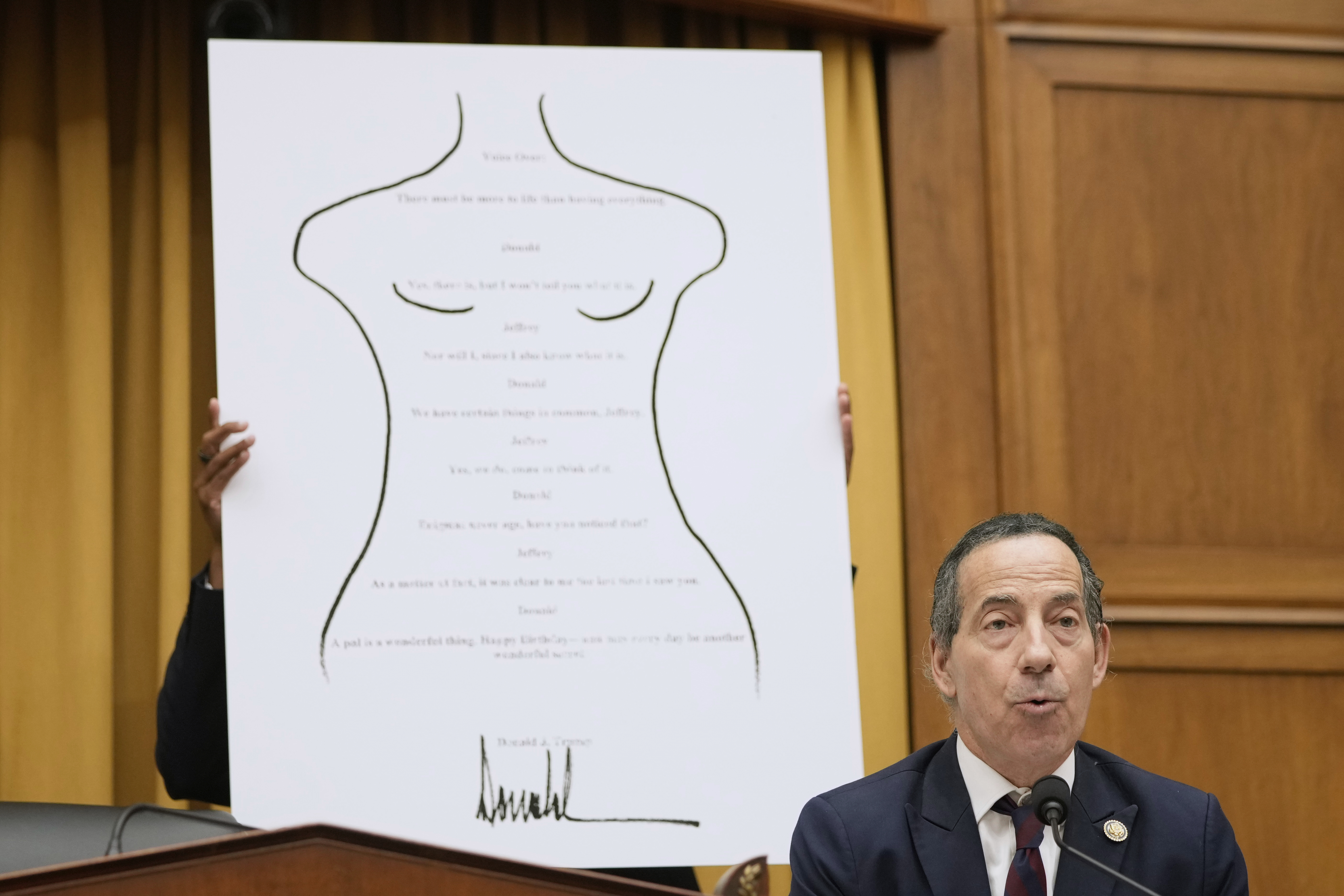
Committee Ranking Member Rep. Jamie Raskin (D., Md.) speaks as FBI Director Kash Patel appears before the House Judiciary Committee on Capitol Hill in September 2025.Mark Schiefelbein
Raskin pointed out to famed Watergate whistleblower John Dean at a 2019 hearing of the House Judiciary Committee — which he’s expected to chair when the Democrats take power in January — that his father, a liberal thought leader and former John F. Kennedy administration official named Marcus Raskin, was on Nixon’s notorious “enemies list.” And he’s said Trump’s conduct “makes Watergate look like a Cub Scout picnic.”
Raskin told Politico last week that he shares the concern of other Democrats that a rushed impeachment of Trump might benefit the president by giving him a rallying cry to reunite his fracturing base. What’s more, there’s a legitimate concern that an instant Trump impeachment would bog down the Senate in a winter trial that would delay votes on popular issues such as healthcare or the minimum wage.
But Raskin’s belief in White House accountability makes him the right man to lead — and work collaboratively with colleagues such as Rep. Robert Garcia — the kind of “slow burn” investigation over the course of 2027 that would not only educate the public about Trump regime wrongdoing, but would build support for impeachment beyond the roughly half of voters in the most recent polling. He told Politico on Thursday that the committee is bringing in a couple of dozen new investigators to probe “pardon brokers” and other alleged wrongdoing.
“I think we need a national conversation,” Washington Democratic Rep. Zoe Lofgren, who was a Trump impeachment manager in 2020, told Politico. That’s correct. When done properly, as it was in 1973-1974, impeachment is just the end result of a process that will allow Democrats to use their newfound subpoena powers to pry free documents and obtain new witness testimony, and to hold prime-time hearings to win over the not-yet-convinced.
There’s an even more recent example in 2022’s congressional hearings on the Jan. 6, 2021, Capitol Hill insurrection and Trump’s attempted election interference, with televised testimony that pressured then-Attorney General Merrick Garland into naming a special prosecutor who then indicted the between-presidencies Trump.
It’s certainly true that crusading for truth in prime time can be good politics. Just three months after the House Judiciary hearings and Nixon’s resignation, Democrats gained 49 seats in the 1974 midterms for a veto-proof House majority, on a path toward regaining the White House in 1976.
But the best argument for impeaching Trump with all deliberate speed is the one Jordan made that summer night in 1974 — respect for the rule of law. The Constitution Trump has tossed into a 21st-century shredder demands it.
“If there is something that is worthy of impeachment, we should have impeachment, even if it’s bad politics,” Democratic Rep. Suhas Subramanyam of Virginia told Politico. That’s not quite the poetry of Barbara Jordan, but he’s exactly right.
HARRISBURG — State lawmakers are readying themselves for a new beginning next year in Pennsylvania’s Capitol, where Democrats are set to control the state House, Senate, and governorship for the first time since 1993.
The first order of business: choosing who will be in charge.
Gov. Josh Shapiro and top Democrats have pledged to be more productive by passing more laws now that they do not have to compromise with Republicans to do so. During his first term, Shapiro often blamed the state’s split legislature — and the GOP-controlled state Senate — as the reason why so many top Democratic priorities were never passed. He is relying on the new Democratic trifecta to pass his agenda, in part, as a way to round out his resume before an expected 2028 presidential run.
Top Democrats from the state House and Senate are working with Shapiro to outline their priorities for the first 100 days of their trifecta. Shapiro promised that plan will include doubling the state’s minimum wage, securing a long-term funding source for mass transit, and more. The new legislative session begins on Jan. 5, 2027.
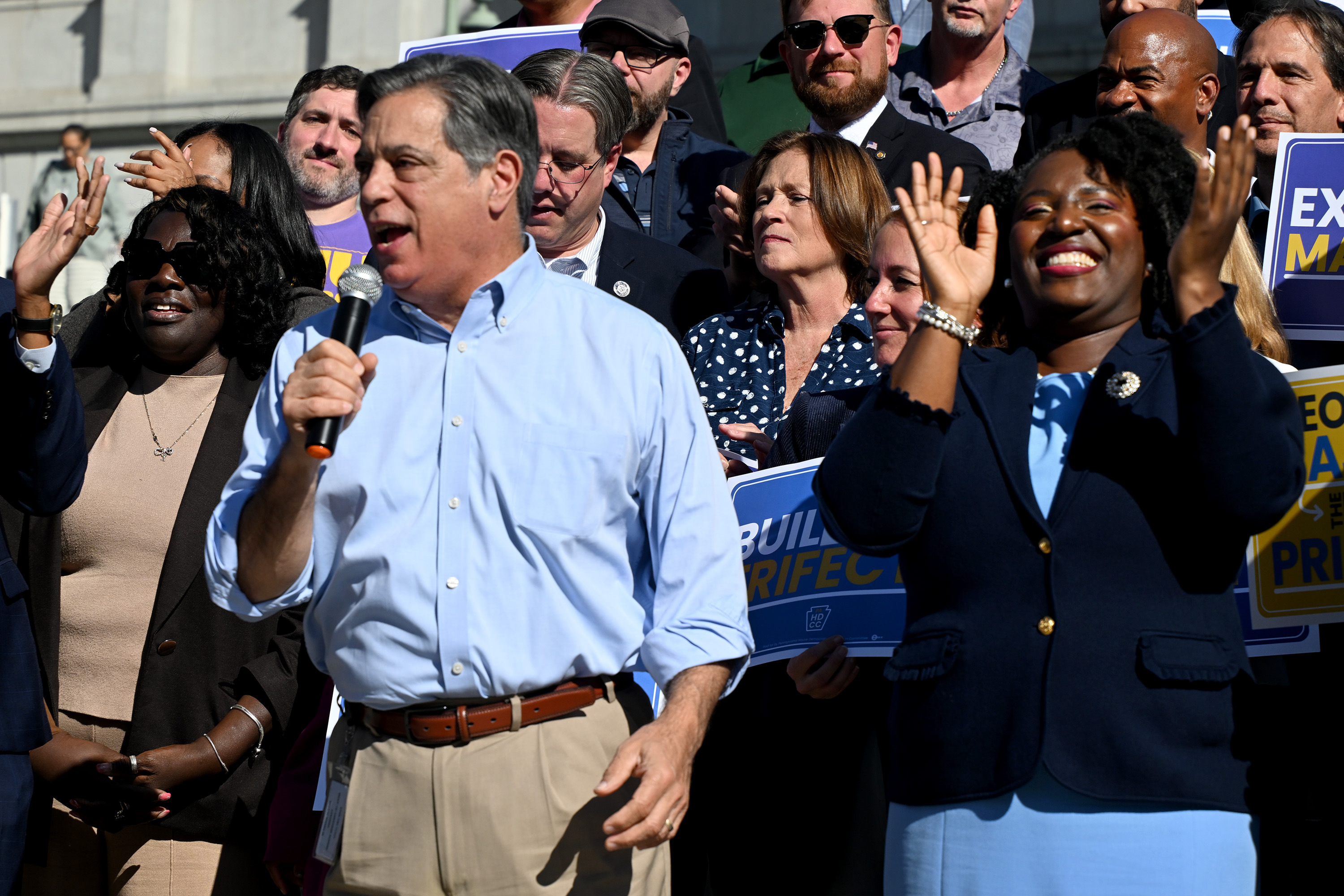
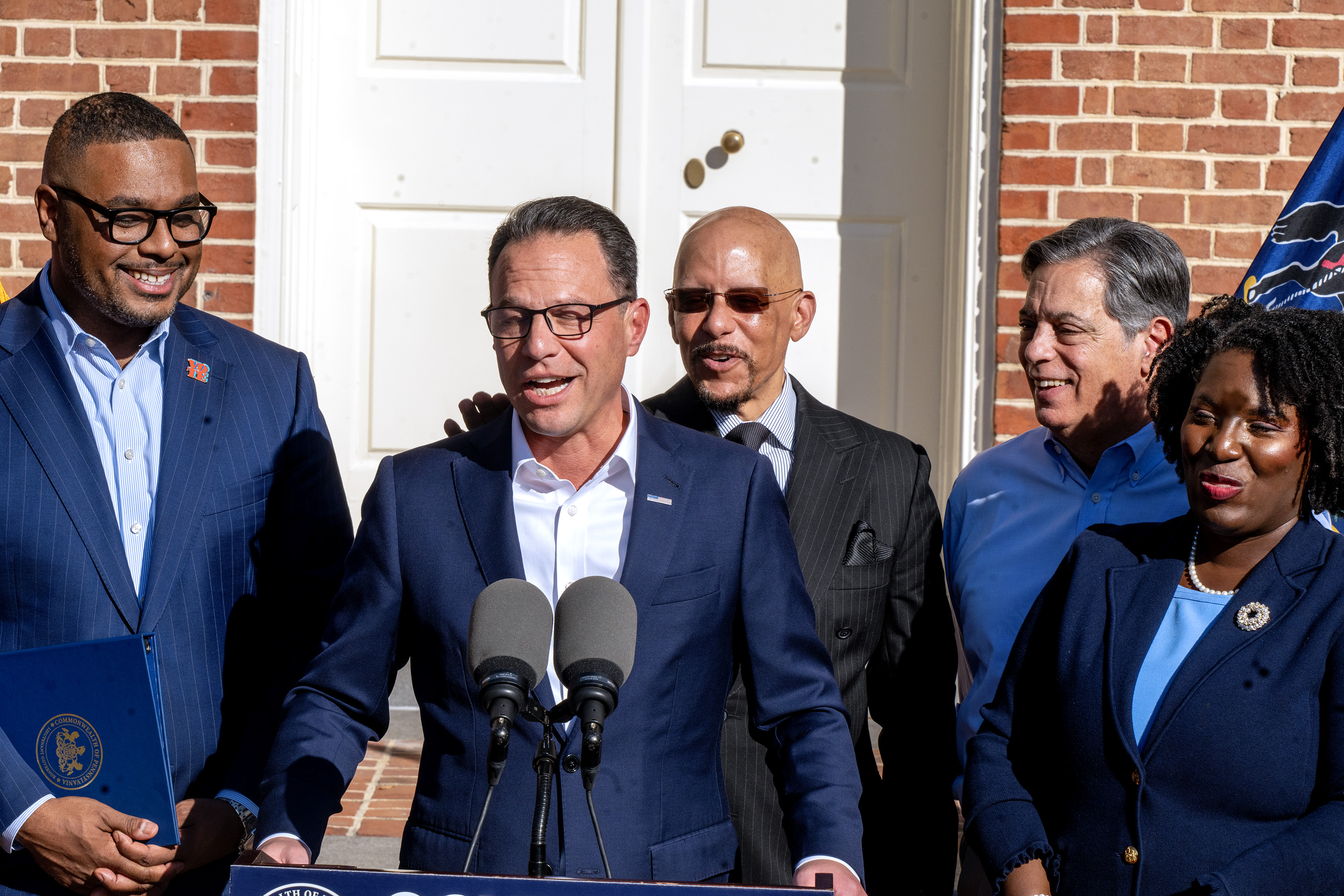
Gov. Josh Shapiro hosts a post election press conference with Lt. Gov. Austin Davis (left) and Democratic leaders at the Governor’s residence Wednesday, Nov. 4, 2026, including (from left) State Sen. Vincent Hughes, Senate Democratic Leader Jay Costa and House Speaker Joanna McClinton. It has been three decades since the caucus has had a trifecta.Tom Gralish / Staff Photographer
Despite Democrats consolidating power for the first time in decades and a lengthy list of long-stalled priorities to pass, it will not all be smooth sailing in Harrisburg. Senate Democrats, with a two-seat majority, will need to learn how to govern in the majority for the first time in decades while navigating a politically diverse caucus. Meanwhile, the outgoing top Senate Republican, President Pro Tempore Kim Ward (R., Westmoreland) — an outspoken critic of Shapiro — chose not to stay in leadership and has positioned herself to be a thorn in the side of Democrats as they move into power.
Each caucus chamber — Senate Democrats, Senate Republicans, House Democrats, and House Republicans — this month elected leaders for the next two-year legislative session. These administrative jobs play critical roles in the function of Pennsylvania’s General Assembly, which is the largest and most expensivefull-time legislature in the country, with 203 members in the House and 50 members in the Senate.
Who will lead Harrisburg?
The most powerful roles in the state legislature belong to each chamber’s highest-ranking officials: the Senate president pro tempore and House speaker. As the top leaders of their chambers, they can have as much control over the legislative agenda as they want. Some leaders, like former House Speaker Mike Turzai or former Senate President Pro Tempore Joe Scarnati, tightened their grip on everything that happened in the chamber and pushed their personal priorities, while others, like former House Speaker Bryan Cutler or current Speaker Joanna McClinton, focused on running the floor and the many administrative roles that come with the job.
Come January, longtime Minority Leader Jay Costa (D., Allegheny) will take the helm as the Senate president pro tempore.
The majority leader also holds a powerful position in the General Assembly, controlling which bills get a vote, working closely with their caucus whip to ensure they have the support they need to pass a bill, and negotiating an annual budget deal with the governor in closed-door meetings.
Senate Democrats chose Sen. Maria Collett, who this month was elected to her third term representing parts of eastern Montgomery County, to assume the majority leader role. She will replace Sen. Joe Pittman (R., Indiana), now the minority leader, as the new floor leader in the Senate. House Democrats also reelected Rep. Matt Bradford of Montgomery County as their floor leader, a role he has held since 2023.
Gov. Josh Shapiro talks with state Reps. Maria Collett (left, D-Montgomery) and Liz Hanbidge, (center, D-Montgomery) at a Johnson & Johnson event in Ambler Feb. 18, 2026.Tom Gralish / Staff Photographer
The appropriations committees in both the House and the Senate are influential panels that review every bill to determine whether a policy change will cost the state or its taxpayers any additional money. Chair of the appropriations committee is a coveted position responsible for allocating more than $50 billion in state revenues.Sen. Vincent Hughes (D., Philadelphia), who was formerly the minority chair, was elected as Senate appropriations chair.
Other leadership positions include: caucus whip, who is responsible for corralling votes; caucus chair, who leads the closed-door caucus meetings; policy committee chair, who is focused on developing the policy agenda for the caucus; caucus secretary, who has special recording duties for legislative action; and caucus administrator, who assigns parking spots and performs other operational duties.
Committee chairs, who will be chosen by leaders in early January, also play an influential role in what legislation gets considered. There are also a number of different caucuses that members can join, including those based on a member’s geographic or identity-based interests, which focus on how policies affect specific communities and regions.
Here is a look at who will lead each caucus in the 2027-28 legislative session.
Senate Democrats
The most anticipated choice among the new legislative leadership: Who will lead the state Senate as Democrats take control of the chamber for the first time in more than 30 years with a narrow 26-24 partisan split?The split will require Democrats to enforce party discipline and find consensus among its members from vastly different parts of the political spectrum — and, in some cases, may require them to compromise with Republicans.
Senate Democrats chose the following top leaders:
Jay Costa (D., Allegheny), a Pittsburgh native who has served as Senate minority leader since 2010, will be named Senate president pro tempore. (Costa’s position will not become official until the start of the new legislative session, when the full Senate casts a vote.)
Maria Collett (D., Montgomery), of Lower Gwynedd Township, will be the Democrats’ majority leader. She is a nurse-turned-legislator and attorney who was first elected to the state Senate in 2018.
Vincent Hughes (D., Philadelphia) will be the majority appropriations chair, after serving as its minority chair since 2010. He has been in the state Senate since 1994, with seven years in the House before that.
Senate Republicans
Senate Republicans will have to learn how to be in the minority and successfully negotiate with Democrats, after decades in control.
Senate Republicans on Tuesday chose these leaders:
Joe Pittman (R., Indiana) will be the Republican floor leader, after previously leading the chamber as its majority leader.
Scott Martin (R., Lancaster) will be the minority appropriations chair; he had led the committee since 2023.
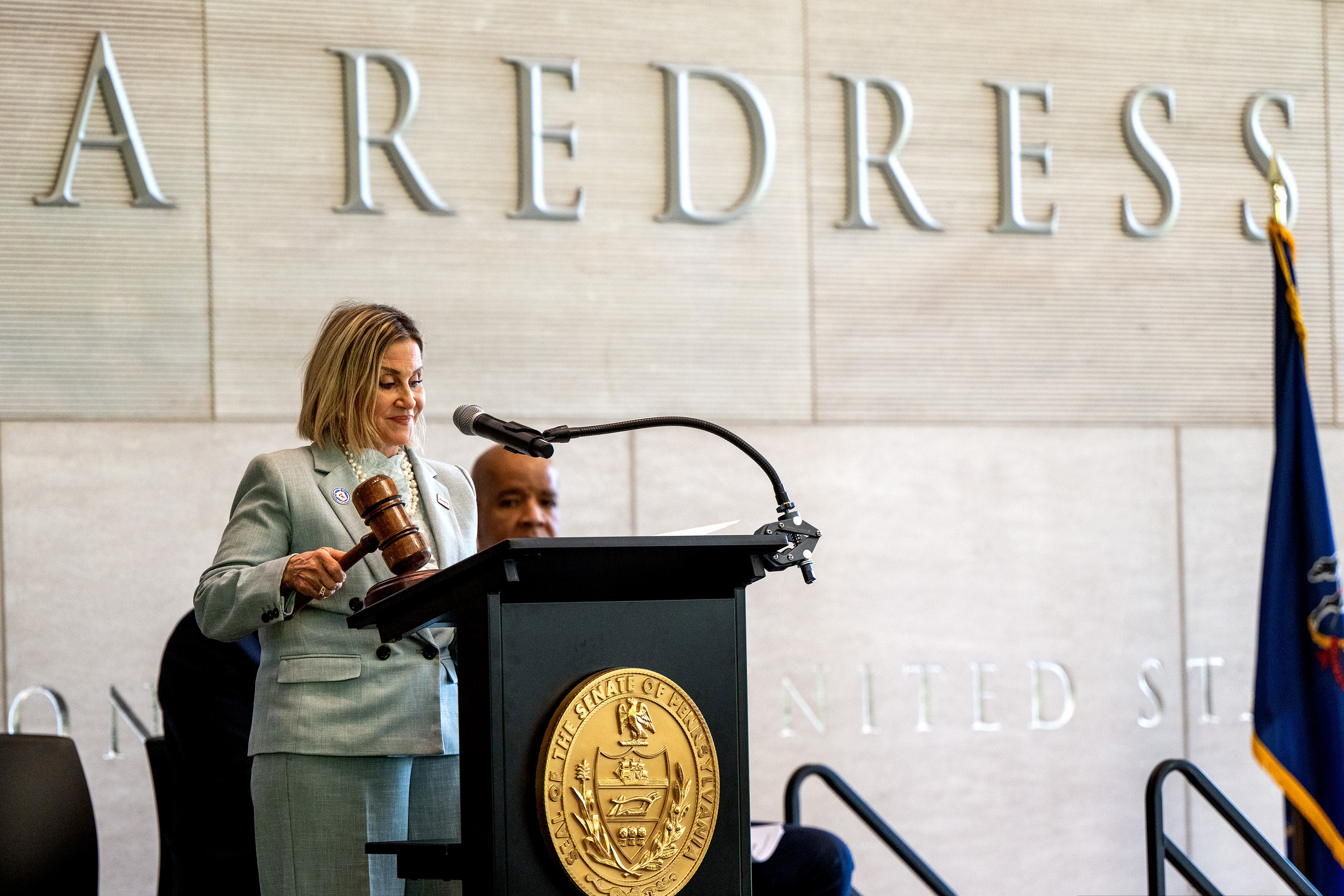
President Pro Tempore Kim Ward gavels the opening as the Pennsylvania Senate hosts a ceremonial meeting at the National Constitution Center Tuesday, May 5, 2026.Tom Gralish / Staff Photographer
But there’s one name notably not on the GOP leadership list. Ward, the outgoing top Republican firebrandwho is known to frequently challenge Shapiro, said shesees herself as much freer to speak her mind by not operating on behalf of the chamber.
“It’s me, Kim Ward, unplugged,” she said in a brief interview Tuesday.
Ward will serve as the interim Senate president pro tempore until Costa is officially elected at the start of the year. She was sworn into the position on Tuesday.
“I’m rooting for you, because I care about our state,” she told Democrats in a brief speech following the oath of office.
House Democrats
With an expected 114-89 majority, House Democrats will no longer struggle for votes with a one-seat majority, as they did for the last four years.Since Democrats flipped the state House in 2022, they have sent hundreds of bills to the GOP-controlled Senate that never received a vote.
Now with fortified ranks, House Democrats are looking to promptly send legislation to a Democratic-controlled Senate that will pass it.
House Democrats reelected their same top leaders for the 2027-28 legislative session:
Joanna McClinton (D., Philadelphia), who was first elected to the job in 2023, will again be House speaker. She is the first Black woman and second Black person to lead the chamber in state history.
Matt Bradford (D., Montgomery) will also return as House majority leader. He has served in the state House since 2008.
Jordan Harris (D., Philadelphia) will again chair the House Appropriations Committee, which he has led since 2023.
House Republicans
Jesse Topper (R., Bedford) will return as House minority leader, a position he has held since 2025.
Jamie Barton (R., Schuylkill) will be the minority chair of the appropriations committee, replacing Rep. Jim Struzzi.
Challenges ahead
Both Democratic and Republican leaders in the Senate are poised to face a number of challenges over the next two years. And the most immediate one for Senate Democrats — soon to be in power — is finding a way to govern.
No current member of the Senate from either party was in office in 1993, when Democrats last held a trifecta. Senate Democrats have to quickly master the process, including whipping votes and finding consensus they have never had to do before. The 26-24 split leaves no room for Democrats to lose support from any member of their caucus — one with some deep ideological divides between progressive and moderate members.
Some of the divides between members are limited to specific issues, such as school choice, where at least one Philadelphia Democrat supports its expansion. Others are ideological, including at least one member who was endorsed by the Democratic Socialists of America. And other differences come from incompatible personalities who just do not see eye-to-eye.
Top Senate Democrats like Hughes and Collett said in interviews this month that although individual members may differ on specific issues, the caucus shares a core belief of “people first.”
“For decades, the Pennsylvania Senate has not been putting good energy toward making people’s lives better,” Collett said in an interview Tuesday. “For our purposes, we have been looking at this as our opportunity to deliver for people.”
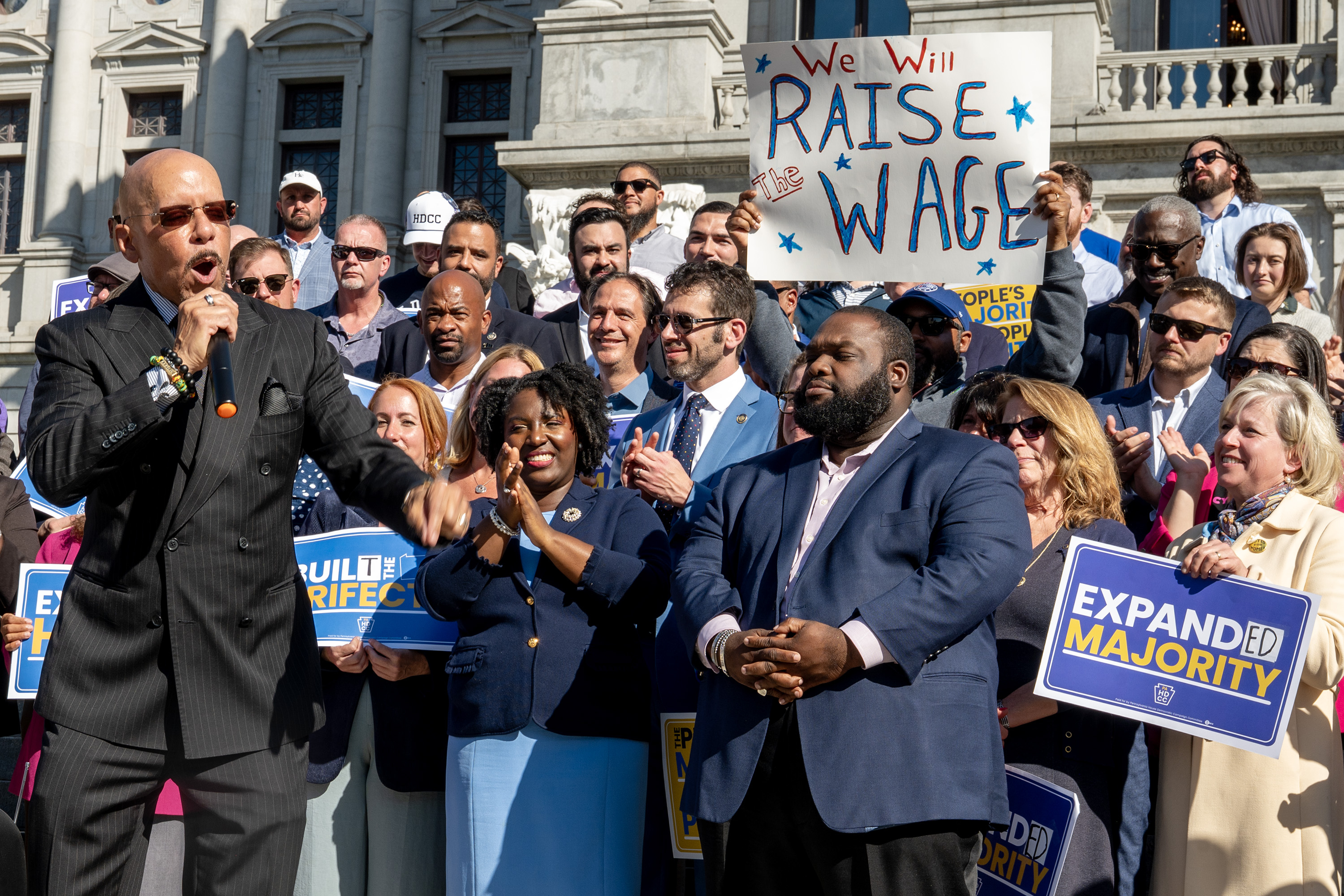
State Sen. Vincent Hughes (left) on the steps of the State Capitol in Harrisburg Wednesday, Nov. 4, 2026, joining Democratic Senate and House members and staffers and newly elected members gathering in a post-election celebration. At right are House Speaker Joanna McClinton and State Rep. Jordan Harris. It has been three decades since the caucus has had a trifecta.Tom Gralish / Staff Photographer
Hughes, just minutes after the Associated Press called the state Senate control for Democrats earlier this month, said his caucus is representative of the differences across Pennsylvania.
“They’re ready to roll up their sleeves to get some work done, responding to the needs of the people of Pennsylvania,” Hughes added.
In the case of a tie, Lt. Gov. Austin Davis has some tiebreaking powers but cannot be the deciding vote on a bill’s final passage.
Senate Republicans, meanwhile, will have to learn how to be effective in the minority, including how to challenge Democratic policies while also persuading top Democrats to consider their proposals.
Collett said she hopes her Republican colleagues know that “now is their opportunity to collaborate with us to make sure that the people in their communities are benefiting from the initiatives that we’re putting forward, just as much as the people from our communities.”
“This is not a partisan issue,” she added. “This is about Pennsylvanians.”
The entire General Assembly will have to face the state’s tough financial straits, with Pennsylvania’s government on a path to spend $6.6 billion more than it brings in next fiscal year, according to an Independent Fiscal Office report released Tuesday.
Shapiro is likely to propose spending down the state’s Rainy Day Fund, which Senate Republicans have painstakingly protected over the last few years. The potential 2028 presidential candidate is also likely to pitch a number of new revenue generators, rather than broad-based tax increases.
Pew Charitable Trusts has cautioned against state legislatures using their emergency reserves to help balance the budget.
Pennsylvania Democrats have a lengthy list of complaints against U.S. Sen. John Fetterman, and the list of potential primary rivals for the first-term lawmaker is growing nearly as long.
The Democrat has already drawn a challenger from the left, Ahmed Moor, a Philadelphia writer who was born in Gaza and launched a campaign this month. But more candidates are likely eyeing the seat ahead of 2028 as Fetterman’s unprecedented unpopularity with his own party makes a crowded Democratic primary field increasinglyexpected — whether or not he runs for reelection.
Fetterman has repeatedly denied that he plans to switch parties, but he has left the door open to abandoning the Democrats if opposition to Israel becomes the party’s official stance. He recently indicated that he could leave if Senate Democrats elect U.S. Sen. Chris Van Hollen (D., Md.), an outspoken critic of Israel, as Senate majority leader. (Republicans have indicated they would embrace Fetterman if he leaves his party).
If Fetterman chooses to change parties, run as an independent, or retire, it will set off a wide-open race for Pennsylvania Democrats who feel emboldened after this month’s midterm success. But even if Fetterman remains a Democrat, the party appears primed for a bruising contest with no shortage of candidates.
Here is who is already running, who is likely to run, and some wild cards who could make the race even more interesting.
Officially running
Ahmed Moor, a 42-year-old West Philadelphia resident and Palestinian American writer, became the first to announce his intention to run for Fetterman’s seat in 2028, declaring his candidacy just a week after Election Day this year.
His personal background and foreign policy positions directly contrast with Fetterman’s, who has wholeheartedly embraced Israel during its war with Hamas. Moor was born in Rafah, a city in southern Gaza that was largely destroyed in the latest conflict with Israel, and moved to Philadelphia as a child.
Ahmed Moor, a Philadelphia writer and businessman who was born in Gaza, is the first Democrat to enter what’s expected to be a crowded field for John Fetterman’s seat.Jessica Griffin / Staff Photographer
He calls Israel’s response to the Oct. 7, 2023, attack by Hamas — which killed about 1,200 Israelis and sparked a war that has left more than 74,000 Palestinians dead — a genocide and supports withdrawing U.S. military aid to Israel as well as imposing sanctions until Palestinians have equal rights to Israelis. After the attack, Moor became a dues-paying member of the Philadelphia chapter of the Democratic Socialists of America.
He has never held or run for political office aside from a recent position as a committeeperson within the Philadelphia Democratic City Committee. Prior to beginning his campaign, Moor worked in finance at Swiss Re Capital Markets, a global reinsurance firm, and as a freelance journalist covering the 2011 revolution in Egypt.
Very likely to run
Though he has not made a formal declaration, all signs point to a Senate run by U.S. Rep. ChrisDeluzio, who currently represents Beaver County and parts of Allegheny County.
During this year’s midterms, Deluzio, a 42-year-old Navy veteran and lawyer,deployed his campaign war chest for Democrats in competitive U.S. House and legislative seats. His campaign said he raised or directly donated $300,000 for congressional candidates and raised or donated $350,000 for state candidates, in addition to $65,000 for the Pennsylvania Democratic Party.
U.S. Rep. Chris Deluzio attends a canvas launch for fellow Democrat Bob Harvie in Bucks County. William Thomas Cain / For The Inquirer
As he traveledto the state’s swing districts,he honed a Democratic message on issues like the war in Iran and affordability.
Deluzio, a member of the Congressional Progressive Caucus, has been endorsed by the Working Families Party and progressive Vermont Sen. Bernie Sanders for his U.S. House seat. But hehas maintained strong relationships with moderates in his party as well and attended a postelection summit in Denver headed by centrist Democrats, though he said he had not been endorsed by the group. He also became a founding member of the New Economic Patriots, an economically populist group of Democrats focused on making corporations pay more and reducing the role of money in politics.
When asked about his potential aspirations for higher office, Deluzio has said he is open and considering whether he is the best candidate for the role.
“Can my family support this? Can I win? And will I be the best damn senator possible?” Deluziorecently told The Inquirer. “If the answer to any of those things is not a resounding yes, then I won’t go do this. If it’s a yes, then maybe I will. But that’s how I think about it. And what John Fetterman does doesn’t affect it one bit for me at this point.”
Possible rematch
It is also possible that two Democrats who came up short against Fetterman in 2022 —former U.S. Rep. Conor Lamb and State Rep. Malcolm Kenyatta — see their chances improved by Fetterman’s fading numbers.
Lamb received about 26% of the Democratic primary vote four years ago, and Kenyatta raked in about 11% — but Fetterman clobbered both of them outright, winning 59% in total.
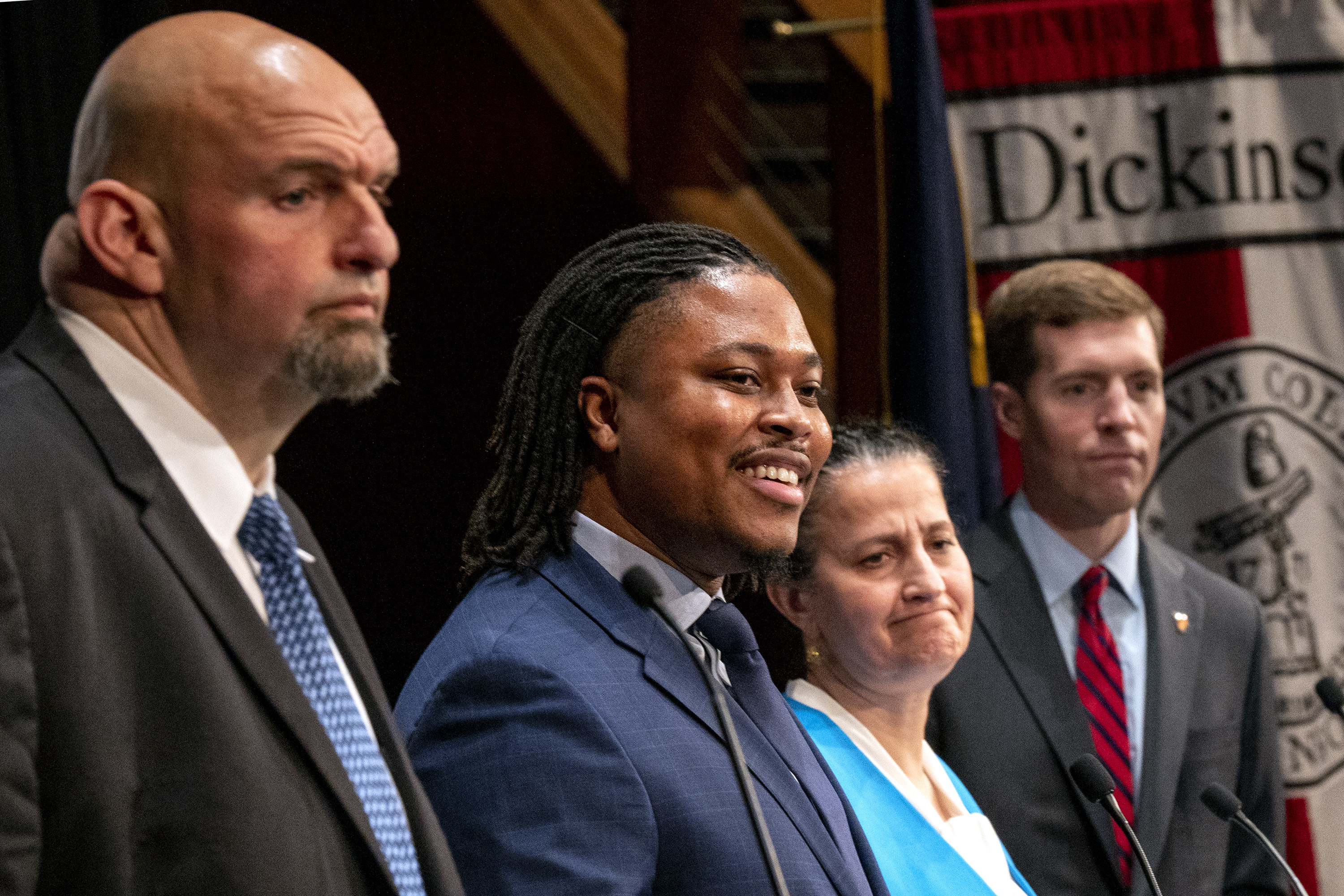
U.S. Sen. John Fetterman (left) stands next to State Rep. Malcolm Kenyatta, Jenkintown Borough Councilmember Alex Khalil and then-U.S. Rep. Conor Lamb during their live televised debate at Dickinson College in 2022. TOM GRALISH / Staff Photographer
Lamb, who flipped his U.S. House seat covering a district around Pittsburgh blue during Trump’s first term in 2018, gave up his position to run against Fetterman. He was later succeeded by Deluzio. In 2025, Lamb, 42, joined a Democratic organization to build digital voter efforts in key battleground states.
Both have expressed outrage about Fetterman’s actions in the Senate.
After Fetterman said he would vote against a resolution requiring congressional debate and approval prior to U.S. involvement in Iran, Lamb, a former prosecutor in the Marines, said the senator had approached the war with a cavalier attitude unbecoming of the office.
“He’s gone a long way on vibes, finally meets an issue that requires the input of serious people and he talks about bombing and killing like it’s a video game,” Lamb said on X. “I would say it’s embarrassing but if you think about the human lives involved it’s far worse than that.”
Lamb, who criticized Fetterman’s lack of town halls, began holding some of his own, including more than a dozen across the state. In 2025, he said he did not plan to challenge Fetterman in a 2028 primary, but that could change.
Kenyatta rejoiced after Democrats took the majority in the U.S. Senate in this year’s midterms — not just because of what it means for their legislative agenda, but also because of the minimized influence Fetterman will have on votes.
“We just Fetterman proofed the US Senate,” Kenyatta said on social media.
Potential history-makers in the House
But Deluzio and Lamb are not the only current and former House members who could pursue the seat.
Five other current and formerDemocratic U.S. House members in Pennsylvania have been floated as potential candidates and have yet to rule it out.All are women and would make history in a state that has never elected a woman to the U.S. Senate.
“I have been concerned about, really, two things, which is his family and his health … and am very disappointed in his activity as a senator and in his votes,” she said.
Dean,67, ran against Fetterman in 2018 when both were vying to serve as Pennsylvania’s lieutenant governor, but she dropped out and pursued a run for Congress instead — in a year that saw a record number of women elected to Congress, along with U.S. Reps. Mary Gay Scanlon and Chrissy Houlahan and former U.S. Rep. Susan Wild.
Houlahan, 59, who representsChester County, haspublicly called out Fetterman, having asked her social media followers to call his office to urge him to oppose Homeland Security Secretary Markwayne Mullin’s confirmation. She has also said U.S. Sen. Dave McCormick, a Pennsylvania Republican, has been easier to work with than Fetterman.
“It’s no secret that I’ve been disappointed with some of his votes and that I’m confused by it,” she told Punchbowl News in April. ”But I’m not responsible for deciding whether he runs again.”
Scanlon, who represents Delaware County and part of Philadelphia, expressed her dismay toward Fetterman when he and seven other Democratic senators voted to end the U.S. government shutdown in 2025 in an agreement that did not include healthcare fixes the party had demanded amid one of the longest closures in American history.
(From the left) U.S. Reps. Chrissy Houlahan, Mary Gay Scanlon, Madeleine Dean and former U.S. Rep. Susan Wild share a stage during a 2018 file photo. All four won election to the U.S. House that year. They’re among the potential candidates being floated for Sen. John Fetterman’s seat in 2026. Matt Rourke
Wild, who represented Lehigh Valley for three terms until she narrowly lost her seat in 2024, has said she is “not ruling out” a run. But, she said,she is more interested in thinking about supporting strong female candidates in general for the seat.
“People worked so hard for Fetterman and he kicked them in the teeth. On to 2028 when we elect a real Dem,” Wild, 69, wrote on X in March.
Another potential candidate could be U.S. Rep. Summer Lee, a Pittsburgh progressive who was first elected to the House in 2022 and is also a member of the Congressional Progressive Caucus with Deluzio. She is a member of the House’s left-leaning “Squad,” along with U.S. Rep. Alexandria Ocasio-Cortez of New York, too.
She spearheaded efforts to getthe Jeffrey Epstein files released and has been an ally of U.S. Rep.-elect Chris Rabb, the democratic socialistelected to represent Philadelphia in the U.S. House this year.
U.S. Reps. Summer Lee and Chris Deluzio, both Pittsburgh-area Democrats, speak outside of the Moshannon Valley Processing Center in Clearfield County after getting a tour of the facility, the largest detention center for undocumented immigrants in the Northeast, on May 28, 2026.Sam Janesch / Staff
U.S. Rep. Brendan Boyle of Philadelphia, an outspoken critic of Fetterman who had consulted with advisers about a possible run, decided this month to remain in the House as the incoming chair of the powerful Budget Committee.
Fetterman’s future
Fetterman has not yet said whether he will seek a second six-year term — or, if so, whether he would do so as a Democrat.
He has increasingly leaned on Republicans for fundraising, including through a joint committee with McCormick. Those connections could be a tough sell to voters if he remains in the party.
If Fetterman does want to win reelection in 2028, the senator “has a lot of work to do earn the trust of the people of Pennsylvania,” Democratic Gov. Josh Shapiro told NBC after the state’s massive blue wave.
“He’s got to show up, and he should speak to the people of Pennsylvania about what his plans are.”
Staff writer Sam Janesch contributed to this article.
Inside a packed church in Atlantic City, Gov. Mikie Sherrill celebrated the blue wave of wins across the nation in the midterm elections by giving credit to Black women — about 94% of whom voted for Democrats.
Declaring it was “a moment for action,” the Democratic governor signed an executive order from the pulpit that she said would reduce the barriers Black business owners and other people of color face competing for hundreds of millions of dollars in state contracts.
“I’m ready to do it all in partnership with you,” Sherrill told a receptive audience of leaders and congregants before she departed St. James A.M.E. Church.
Then, for the next hour, Black leaders including Newark Mayor Ras Baraka, Assemblyperson Verlina Reynolds Jackson (D., Mercer),and civil rights activists described what Sherrill offered as a meaningful start. But, without naming the governor or any other specific official, they said they intended to use their political clout gained from electing Democrats to work as partners with Sherrill and seek more for their communities.
New Jersey Gov. Mikie Sherrill addresses a group of Black leaders and congregants at the St. James AME Church in Atlantic City on Wednesday. She signed an executive order removing governmental barriers that prevent minorities from competing for state contracts.Susan Livio
“Why are we still asking for things and begging for things? Why do we have our hand out and let people tell us that they did something for us? I never accepted the concept that we are asking for a handout,” said Baraka, who lost to Sherrill in a crowded primary election in June 2025.
The speeches by the governor and the Newark mayor were part of an event commemorating the first anniversary of the “New Jersey Statewide Black Agenda” organized by Baraka, the clergy-led Salvation and Social Justice, and the New Jersey Institute for Social Justice.
But the gathering, which coincided with a larger of conference of local officials happening in Atlantic City, also took place against the backdrop of this month’s national “blue tsunami.”
Baraka thanked Black women for helping deliver big wins in states like Georgia and Mississippi.
“But what do you do when the state is blue and still deeply racist?”
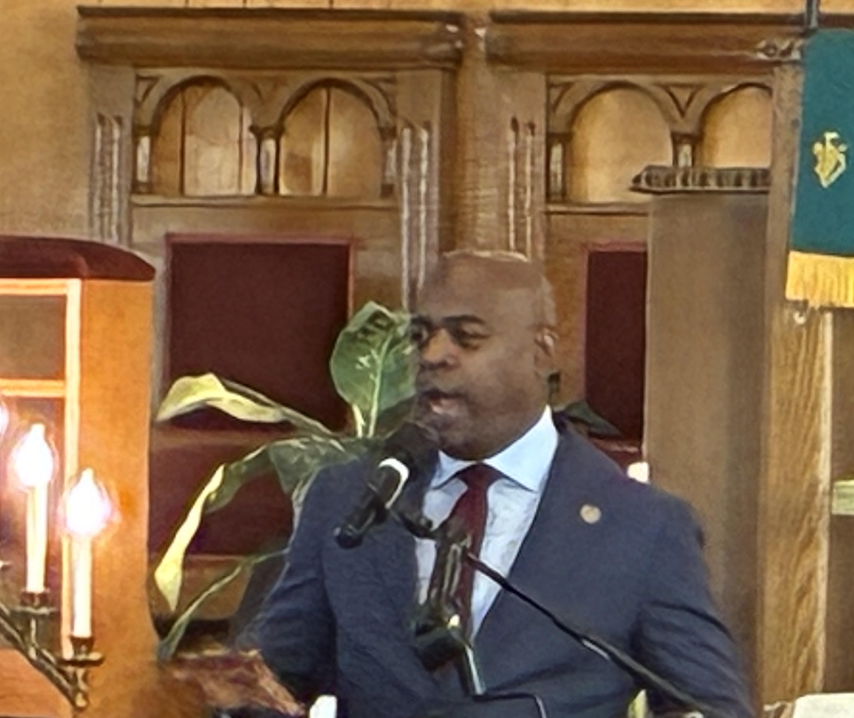
Newark Mayor Ras Baraka spoke at the first anniversary of the New Jersey Statewide Black Agenda, held at the St. James AME Church in Atlantic City Wednesday.Susan Livio
Reynolds Jackson, who leads the New Jersey Black Legislative Caucus, acknowledged the governor is taking important steps, such as spending more money to recruit midwives and doulas to address the state’s high rate of maternal mortality among Black mothers.
But now it is time to “bring the passion and urgency” to demand more from the state, Reynolds Jackson said. “We are not taking that ‘it’s not in the budget’ anymore. We know the money is there,” she said.
Speakers credited Sherrill for signing the John Lewis New Jersey Voter Empowerment Act in July, which prohibits politicians from redrawing legislative districts that minimize the minority vote, among other provisions. In January, Sherrill’s predecessor, former Democratic Gov. Phil Murphy, signed a “survivor’s justice” law that requires courts to recognize domestic abuse as a mitigating factor if victims retaliate against their abusers.
The blueprint for the Statewide Black Agenda grew in part as a reaction to a disparity study completed two years ago that found people of color owned 28% of construction businesses in New Jersey but received less than 4% of the state construction contracts. Similarly, people of color owned nearly 24% of the businesses selling goods and services but held a little more than 4% of those state contracts.
The agenda is broader than seeking a share of state contracts. The plan includes strategies to improve economic equity and generational wealth through homeownership, reduce homelessness, and prevent companies from polluting urban neighborhoods.
Henal Patel, interim president and CEO of the Institute of Social Justice, said Sherrill signed “one of the strongest voting rights laws in the country.”
”But it didn’t come from nowhere. It came from the relentless advocacy from Assemblywoman Verlina Reynolds Jackson and from communities and activists over four years,” Patel said.
“All of this stuff is progress, but it just scratches the surface,” Patel said.