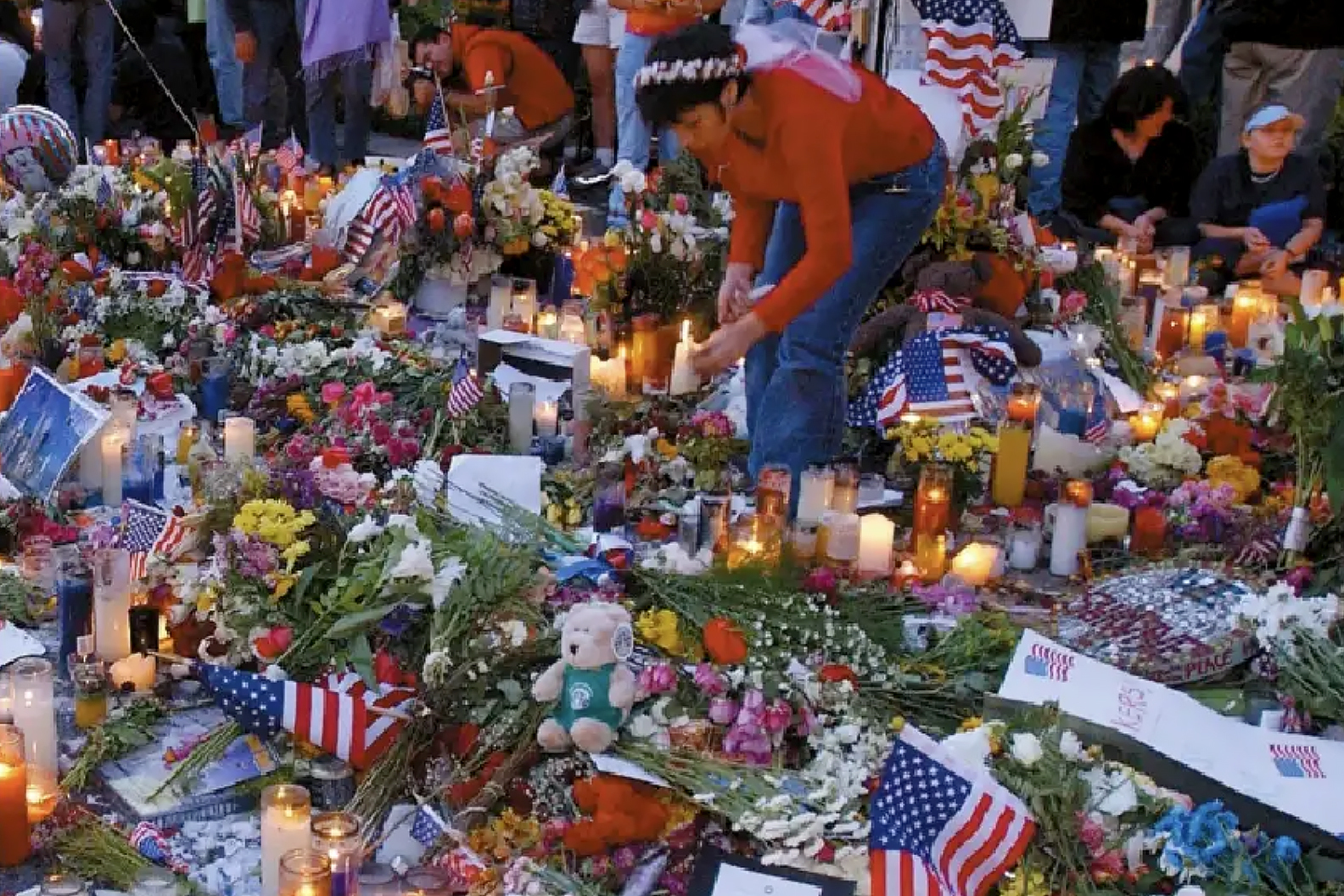
It is as important to remember what happened after the Sept. 11, 2001, terrorist attacks as it is to recall the nearly 3,000 lives lost, dozens of buildings mangled or destroyed, and the millions of prayers said in response to what many believed could never happen to the most powerful nation in the world.
In the immediate aftermath 25 years ago, this country became unified across income, religious, and racial lines in a manner it had not shown since imperial Japan’s despicable aerial attack on Pearl Harbor in 1941. But in both instances, there was shameful xenophobic backlash. The Japanese suffered internment. The anti-Muslim rhetoric and actions continue to this day.
Just as undeniable was that unity after the attacks — including President George W. Bush’s words that “Islam is peace” — helped blunt prejudice.
Black people, white people, Christians, Jews, Muslims, Republicans, Democrats, the rich, the poor, citizens and new arrivals — they all saw themselves as Americans on 9/11. We found common ground in using the nightmare that had just occurred as the impetus toward a greater sense of community.
That spirit of togetherness was a reminder of just how important the word united is in calling our country the United States of America. The 9/11 attacks made it easier to see why we as a nation must not let our differences be exploited by calculating entities looking for ways to weaken our resolve.
A quarter century later, the U.S. is much different in that respect.
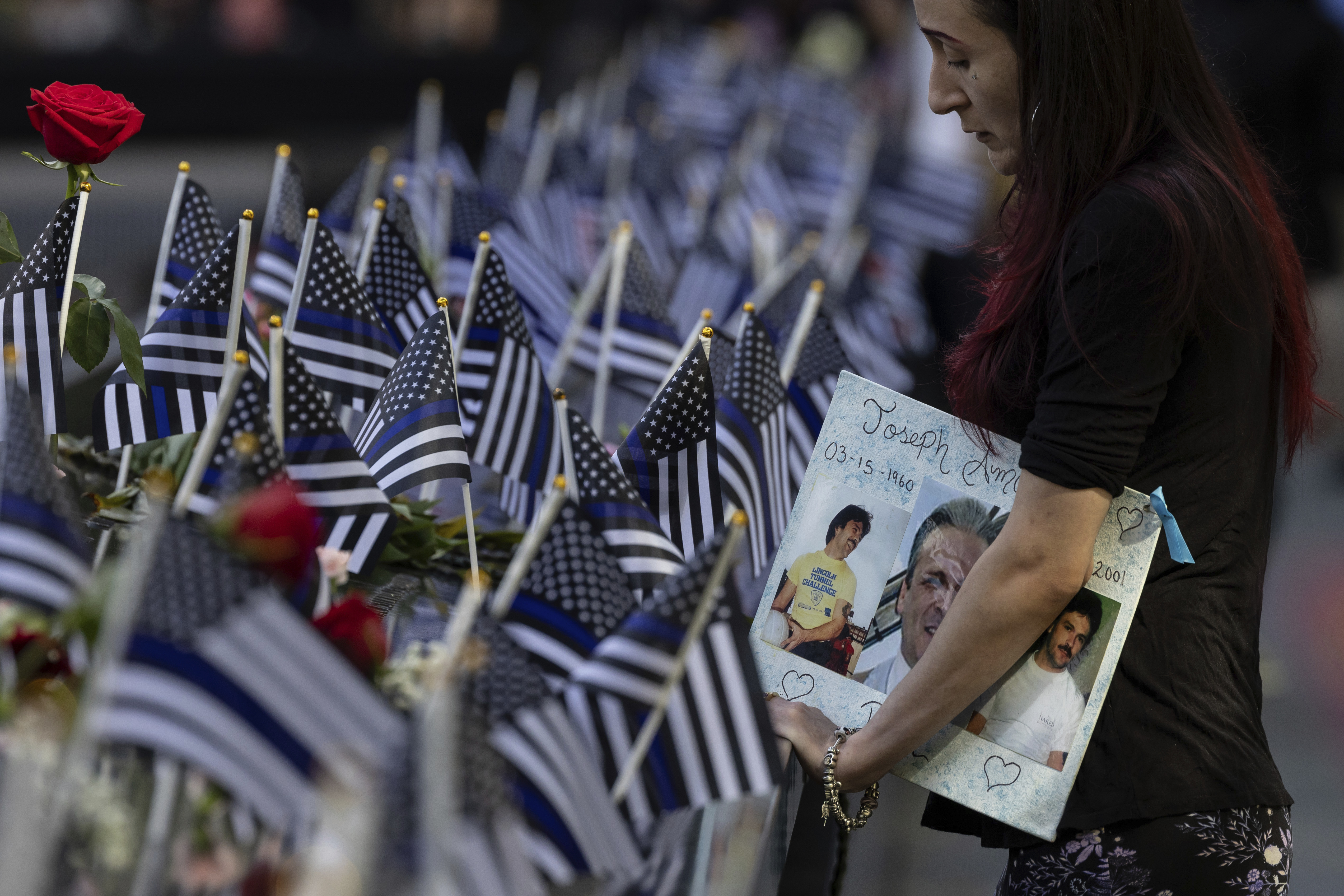
Mercedes Arias stands by the name of her father, Joseph Amatuccio, on the south pool during the 9/11 memorial ceremony on Sept. 11, 2024.Yuki Iwamura
Our current leadership prefers sowing seeds of division instead of reaching past political, economic, religious, social, and ethnic distinctions to help Americans of every station and persuasion work together for our common good.
Instead of trying to unify, this nation’s current leaders decided it was more important to wage war with Iran and argue with our allies. Iran may one day develop a nuclear weapon, they said. Dismissing that Russia and China already have that capability and, unlike militarily feeble Iran, have delivery systems to reach our shores.
Washington also decided to overthrow Venezuela’s despotic president to seemingly gain control of its oil reserves, and has made threats against Cuba and Greenland. It’s hard to believe the same Donald Trump who is now so eager to use military force once promised that if reelected, “we will have no more wars, no more disruptions, and we will have prosperity and peace for all.”
Are we supposed to forget the president said that? Is he playing games with the American public? Is he distracting our attention by waging wars that lack clear goals, abruptly destroying historic settings like the White House Rose Garden, and putting unqualified people in charge of public health, public safety, and national security?
So much is going on that too little attention has been paid to all the money changing hands amid the clamor.
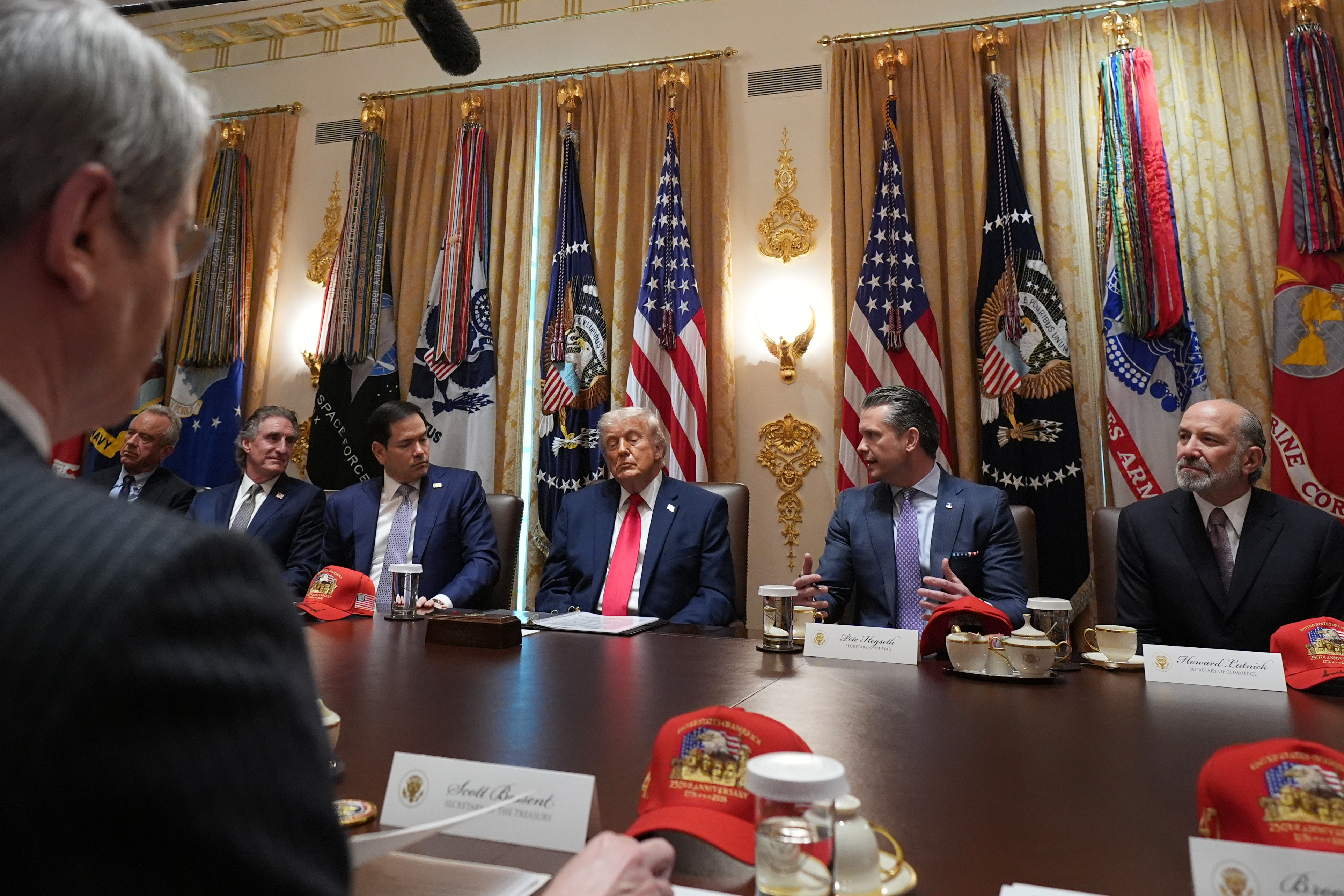
President Donald Trump attends a cabinet meeting at the White House in May.Jacquelyn Martin
Trump’s personal wealth has increased by a staggering $2 billion since he took office, much of it in cryptocurrency holdings. Investors in these schemes have lost about $3 billion as the currencies’ value continues to decrease, but many see their losses as the price to get the president’s ear.
As Trump continues to be Trump — more engaged with building monuments to himself and posting aggrandizing AI slop on social media — everyday Americans struggle to make ends meet because of his policies. Although the cost of his mindless tariffs and needless war goes beyond the high prices people are paying at the pump and the checkout line, it is emblematic of the president’s complete abandonment of the American people.
While Trump counts bitcoins, our healthcare system continues to undergo dramatic changes that have allowed insurance companies to acquire hospitals, doctors’ offices, pharmacies, and otherwise take control of this nation’s medical institutions.
The president’s draconian immigration policies haven’t really solved the problem. There will always be people seeking a better life who will do anything, legal or illegal, to cross the border or stay past their visas’ expiration. That’s because despite its faults — and Trump’s best efforts — the United States remains the land of opportunity, even if dwindling.
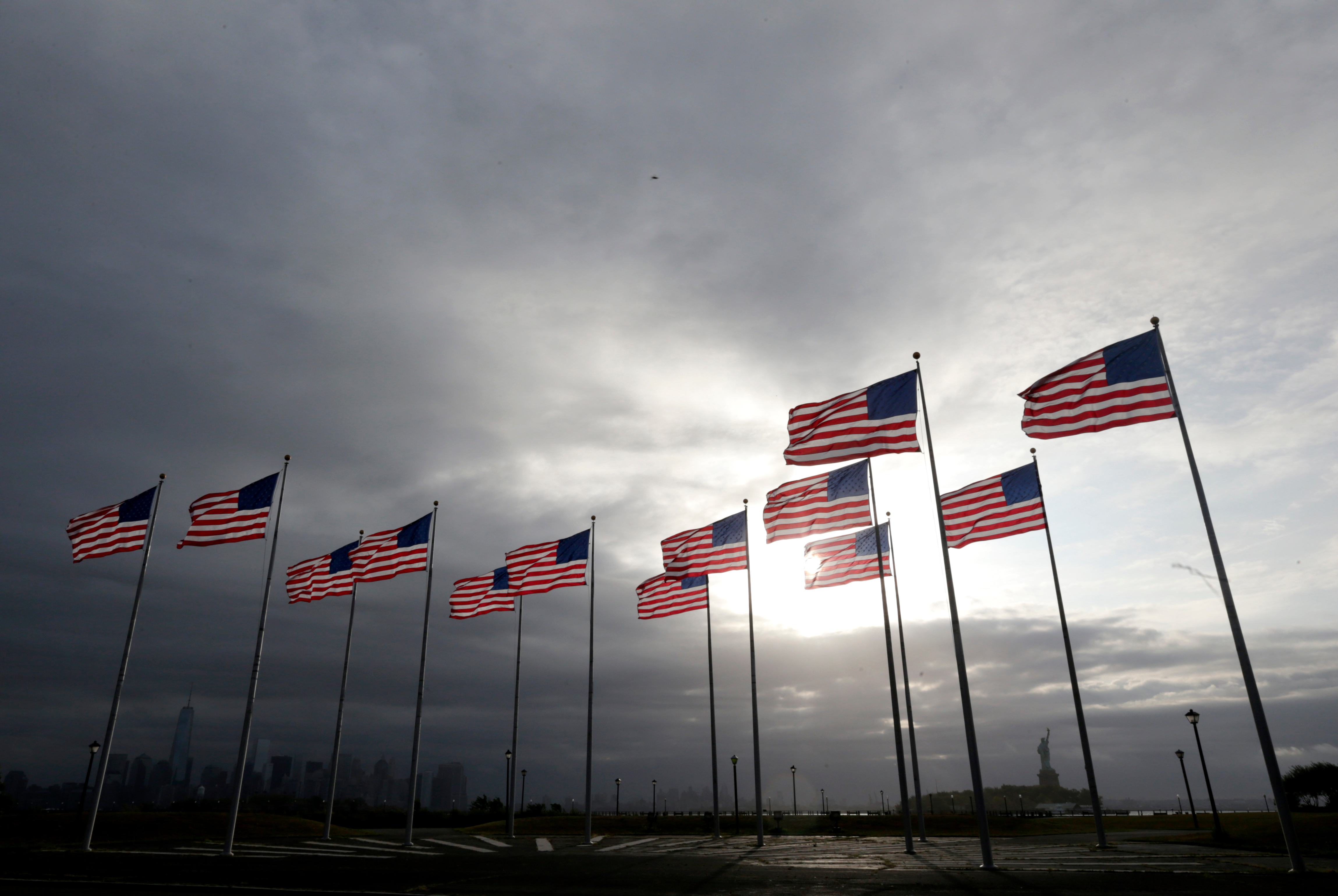
Thirteen United States flags representing the 13 original colonies are seen at Liberty State Park with 1 World Trade Center (bottom left) and the Statue of Liberty (bottom right) in the background, in Jersey City, N.J.Julio Cortez
America’s problem isn’t immigrants, most of whom have no criminal intent; it’s the lack of an effective system to better manage border crossings and adjudicate the cases of people who may have lived here illegally for years but otherwise committed no crimes.
Effective immigration reform almost occurred 20 years ago, when the so-called Gang of Eight senators, including now-Secretary of State Marco Rubio, supported a bipartisan bill written primarily by Republican John McCain and Democrat Edward Kennedy that would create a 10-year registered provisional immigrant status for eligible illegal residents who paid fines and back taxes to eventually obtain permanent legal residency.
This country also needs innovative equal opportunity ideas to replace the diversity, equity, and inclusion programs now considered reverse discrimination by federal judges. But instead of addressing that issue, the president and his enablers choose to demonize trans people, crack down on speech they disagree with, and abandon civil rights enforcement — all while embracing economic and tax policies that favor the rich.
None of these issues will be resolved with leaders who seem to thrive with our nation as divided as it is now.
It shouldn’t take another 9/11 to bring us closer as Americans. But as we seek a greater sense of community, let’s remember that day and what Todd Beamer was heard saying after he and fellow passengers aboard thehijacked United Airlines Flight 93 realized they had no alternative but to forget their differences and act: “Are you ready? OK, let’s roll.”
It’s time for us to fight together for each other, too.
Ben Hummer would like to own a house one day in Pittsburgh. He dreams of a two-bedroom, one-bathroom town house where he can live near his job.
But for now, Hummer, 29, rents his 500-square-foot, one-bedroom apartment, and his monthly rate since he moved in has continued to increase by $50 each year, making the goal seem further out of reach.
“Anything that could increase the supply and affordability of housing in the Pittsburgh area would be massive,” said Hummer, who works in human resources.
Like most voters in Pennsylvania, according to a recent poll from The Philadelphia Inquirer, the New York Times, and Siena University, the economy and cost-of-living concerns are the most important issues deciding Hummer’s vote in the 2026 governor’s race between incumbent Democratic Gov. Josh Shapiro and his Republican challenger, state Treasurer Stacy Garrity.
And as Election Day draws nearer, both campaigns are focusing their messaging on these kitchen table issues.
(function() { var l = function() { new pym.Parent( ‘nyt-afford__graphic’, ‘https://media.inquirer.com/storage/inquirer/ai2html/nyt-afford/index.html’); }; if(typeof(pym) === ‘undefined’) { var h = document.getElementsByTagName(‘head’)[0], s = document.createElement(‘script’); s.type = ‘text/javascript’; s.src = ‘https://pym.nprapps.org/pym.v1.min.js’; s.onload = l; h.appendChild(s); } else { l(); } })();
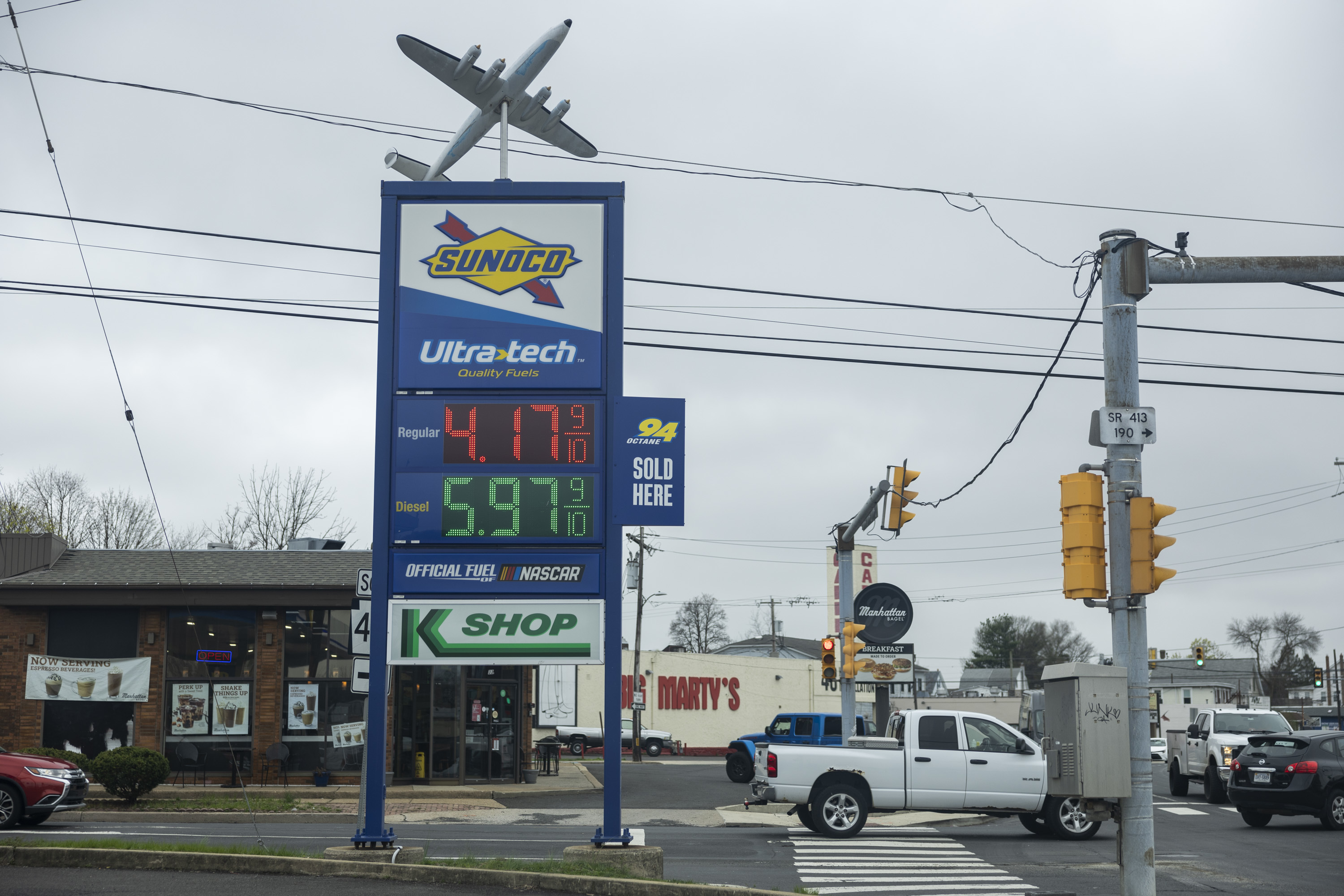
Two years ago, it was the cost of eggs, gas, and groceries that were top priorities among the electorate in Pennsylvania and elsewhere. Voters’ trust in President Donald Trump’s ability to bring down high prices propelled him back to the White House, sending Democrats scrambling to hone an affordability pitch that could land in time for the high-stakes 2026 midterm elections. But in that same time, prices have continued to climb; gas prices have topped $4 per gallon; and tariffs instituted by Trump — who called affordability “a hoax” at a Pennsylvania rally last year — have driven up the cost of every day life. Now both parties are latching on to a focus on affordability.
As he mounts a reelection campaign, Shapiro — who holds a commanding lead in polls — is highlighting his accomplishments during his first term that his campaign says has given Pennsylvanians more money back through tax cuts and wage increases for childcare workers.
Meanwhile, Garrity has recently shared her own plan, called “Turnaround PA,” to make living more affordable with an outline of how she’d lower prescription drug costs, reduce property taxes, and aim to cut energy bills to get there. But she’s also closely aligned with Trump, who has endorsed her in the race and has dismal markings from voters on two of their top priorities: the economy and cost of living.
(function(){function e(){window.addEventListener(`message`,function(e){if(e.data[`datawrapper-height`]!==void 0){var t=document.querySelectorAll(`iframe`);for(var n in e.data[`datawrapper-height`])for(var r=0,i;i=t[r];r++)if(i.contentWindow===e.source){var a=e.data[`datawrapper-height`][n]+`px`;i.style.height=a}}})}e()})();
That puts her in a difficult spot to challenge Shapiro, said Mark Zandi, the chief economist at Moody’s Analytics.
There’s no easy answer for Republicans to win on economic issues in the midterms, but Zandi said his best advice is to focus on what is in the governor’s control and draft ideas that mitigate the fallout from Trump’s policies.
Hummer, a Democrat who plans to vote for Shapiro this fall, said he trusts the governor to handle the economy and cost of living issues better. More than half of likely Pennsylvania voters in the Inquirer/New York Times/Siena poll agree.
Fifty-five percent said Shapiro would do a better job of handling the state’s economy, and 56% said they think Josh Shapiro would do a better job of handling cost-of-living issues.
“I’m well aware he’s limited in his options to do things, but I would say he’s kept a steady hand on the wheel of the Pennsylvania economy — to the extent that he can,” he said.
Garrity pitches affordability as Republicans seek to overcome Trump’s ratings
Among other proposals, Garrity has pitched a “first-time homebuyer assistance initiative,” which could help house seekers like Hummer and would provide qualified buyers 3% mortgage interest rate support from the state.
She also has proposed cutting taxes by seeking a constitutional amendment that exempts Pennsylvania seniors from paying school property taxes and gives voters the final say over whether to increase property taxes. Her plan would also “reprioritize state spending for property tax relief.”
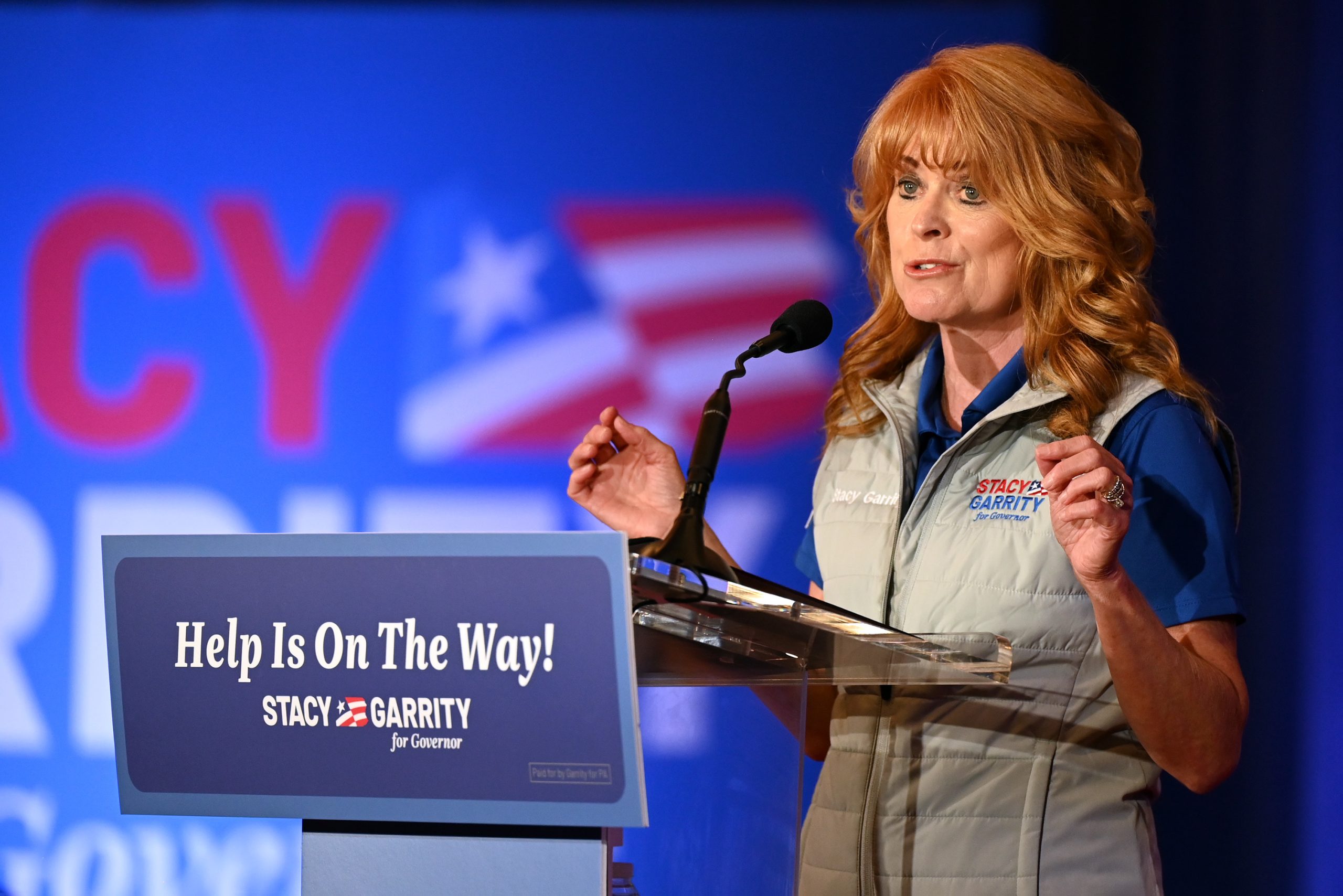
State Treasurer and Republican candidate for governor Stacy Garrity holds a rally in Bucks County on Sept. 25, 2025, at the Newtown Sports & Events Center.Tom Gralish / Staff Photographer
But there’s no free money, Zandi said. “If you’re giving tax cuts over here,” he said, “you’ve got to figure out how to pay for it … and that means you’re cutting spending.”
Garrity’s plan also would address rural healthcare, and she would “aggressively pursue available federal funding to strengthen rural healthcare.”
But there’s little money left in the pot after Trump cut government spending in last year’s federal budget. His One Big, Beautiful Bill Act directed a reduction in Medicaid spending by $1 trillion over 10 years, starting after the midterm elections, and rural hospitals and nursing homes are more dependent on federal funds. Additional dollars would likely need to come from Harrisburg.
For Pennsylvanians like Caitlyn Needham, 28, the consequences of an unexpected medical bill on top of a limited income meant she went without substantial meals for weeks.
“I have a rabbit, and she had a medical emergency [in November],” she said. “So for two months, the only thing I could afford to eat while paying off those bills was peanut butter and jelly sandwiches for breakfast, lunch, and dinner.”
Needham, a cake decorator in Pittsburgh, said she’s always been frugal and saved a little bit of money from each paycheck, but increasing expenses are pushing her budget to the limit. She said she plans to vote for Shapiro this November.
“Pennsylvanians need a relief valve before things get worse,” she said. “So many people are one bad week away from not being able to keep their housing, or losing their medical coverage, or losing their job because their car broke down and they can’t afford to get service. It’s like everyone is just one accident away from not being able to live.”
(function(){function e(){window.addEventListener(`message`,function(e){if(e.data[`datawrapper-height`]!==void 0){var t=document.querySelectorAll(`iframe`);for(var n in e.data[`datawrapper-height`])for(var r=0,i;i=t[r];r++)if(i.contentWindow===e.source){var a=e.data[`datawrapper-height`][n]+`px`;i.style.height=a}}})}e()})();
“If you’re trying to infer I’m out of line with the president, I don’t think I am,” she said last month during a news conference she held on data centers.
In a statement, she blasted Shapiro’s handling of the economy, saying he has put a tax burden on families and tied businesses up with unnecessary regulations.
“Josh Shapiro’s Pennsylvania is simply unaffordable for the commonwealth’s hardworking families,” Garrity said. “He allowed utility and energy costs to skyrocket due to his unwillingness to expand generation capacity and instituting policies that benefit our neighboring states instead of us.”
Shapiro emphasizes his record is separate from national picture
Shapiro, the incumbent, is leaning on his record on economic policy.
According to his campaign, his administration created more than 25,000 jobs during his first term and brought in $41 billion in private-sector investment.
“Governor Shapiro is fighting for all Pennsylvanians — and he has a track record of creating jobs and economic opportunity, putting money back in Pennsylvanians’ pockets, and standing up to Washington’s reckless, cost-raising policies,” said Samantha Reposa, a spokesperson for the campaign. Garrity, she said, “fully supports the failed economic policies that are raising costs and hurting working families across the commonwealth.”
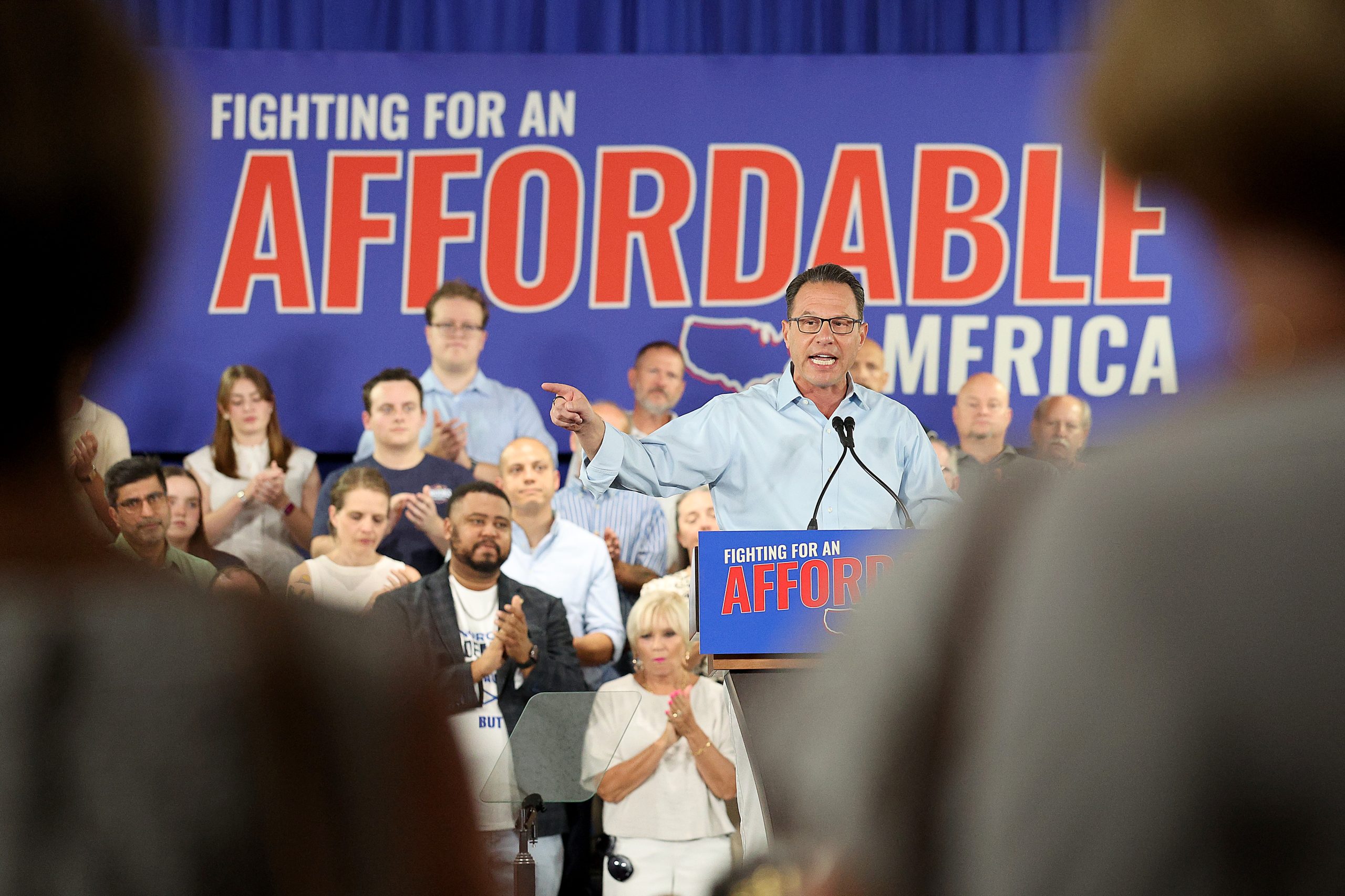
Gov. Josh Shapiro addresses the audience during a July 26 rally for congressional candidate Bob Brooks at the United Steelworkers Union Hall in Bethlehem.David Maialetti / Staff Photographer
His campaign released a Spanish-language digital ad focused on benefits of the Working Pennsylvanians Tax Credit and the Property Tax/Rent Rebate Program, which is targeted toward seniors and people with disabilities.
“If you’re working, you get to keep more of your money. Up to $800 more, more money in your pocket. And right now, every little bit helps,” a woman in the commercial said in Spanish.
Ultimately, Zandi said, “it’s very difficult for lawmakers at any level of government to change the picture on affordability, at least any time quickly,” because those issues are due to broader national and international forces.
There’s also no one-size-fits-all approach for a governor to tackle the costs of education, housing, energy, childcare, elder care, healthcare, and groceries.
“Each issue that makes up the affordability crisis requires its own set of solutions and efforts, so it feels like a laundry list of policy steps, and it is,” he said. “But that actually is probably the only way to make a difference.”
For many Pennsylvanians, paychecks feel like simply treading water: By the time all expenses are covered, there’s little money left to save and build toward the future.
“It just seems that money doesn’t go as far as it used to,” said Thomas Schank, 49, of Scranton. “I’ve gotten raises at work over the last two years, but everything else went up also, so really, no net gain.”
In the country’s premier battleground state, Pennsylvania Democrats believe they’re in striking distance of a tidal-wave victories that would dramatically shift the balance of power in both Washington and Harrisburg.
For the first time in decades, the party could take full control of the legislature. That would give Democratic Gov. Josh Shapiro — seeking reelection with a wide polling gap on his Republican challenger Stacy Garrity— significantly more power to shape the direction of the state as he potentially pursues a White House bid in 2028.
Democrats also see a chance to flip four congressional seats and take control of the U.S. House. Republicans, meanwhile, are prioritizing defending the Pennsylvania seats with their House majority on the line as President Donald Trump, who won the state justtwo years ago, sinks in popularity.
The path forpower in Washington inthe high-stakes midterms runs through Pennsylvania and its results will be closely watched as both parties prepare for a presidential race in two years when the state promises to play a pivotal role.
Voters across Pennsylvania will head to the polls in November to cast their ballots for races that will decide the balance of power in the state and nation.
Here are the races to watch and how to vote.
Shapiro’s November could dictate his 2028
Shapiro, widely viewed as a likely contender for the 2028 presidency, has big ambitions this fall when he’ll stand for reelection against Garrity, the state’s treasurer.
More than just securing his own reelection, Shapiro hopes to run up the margin and carry downballot Democrats across the finish line.
Another double-digits win and a string of coattail victories would be ashow of strength about his ability to perform in a key swing state that his party lost in the last presidential election.In a presidential primary, Shapiro could use that result to make an argument that he’s a strong general electioncandidate who can boost the Democratic brand.
Will Republicans hold on in competitive congressional seats?
There are four U.S. House districts in the eastern portion of Pennsylvania, targeted by both parties as must wins. In each, the Republican incumbents are seeking to fend off highly financed challengers amid deep frustration among voters with the leader of their party that could translate into a wave of Democratic victories down ballot.
7th Congressional District: Freshman Republican U.S. Rep. Ryan Mackenzie narrowly flipped the Lehigh Valley district two years ago and is widely seen as one of most vulnerable incumbents in Congress. He’s facing a challenge Democrat Bob Brooks, a retired firefighter and union leader whose blue-collar campaign has attracted support across the party’s ideological spectrum with endorsements from Shapiro and U.S. Sen. Bernie Sanders.
10th Congressional District: Republican U.S. Rep. Scott Perry, a close ally of Trump, faces a November rematch against Democrat Janelle Stelson, a former TV anchor, in the Harrisburg area district. Stelson has consistently outraised Perry after narrowly losing in 2024.
In addition to these four races both national parties have targeted, Shapiro has argued that the 9th Congressional District, where Democrat Rachel Wallace is taking on incumbent GOP U.S. Rep. Dan Meuser, is flippable — despite the strong GOP lean in the district, which stretches from Berks County to the New York state border. The district is home to two warehouses that ICE was planning to convert into detention centers before abandoning the plan after a backlash from residents.
This year, Shapiro wants to flip the chamber and win a trifecta to push forward his key priorities, such as codifying abortion access, raising the state’s minimum wage, and increasing funding for transit.
Republicans currently hold 27 of the chamber’s 50 seats. Democrats, who currently hold 23 seats, need to win at least two additional seats and the governor’s office to win control of the chamber with the lieutenant governor as a tiebreaking vote.
The seats, drawn advantageously for Republicans, have been stubbornly resistant to political change for decades.
But this year a blue wave could usher in Democratic pickups in Philadelphia suburbs and the Lehigh Valley.
Races to watch include:
Bucks County’s 6th District, where Republican incumbent State Sen. Frank Farry faces a challenge from Democrat Eileen Hartnett Albillar.
Montgomery County’s 24th District, where incumbent Republican State Sen. Tracy Pennycuick is up for reelection against Democrat Chris Thomas.
Bucks and Lehigh County’s 16th District, which will see a rematch race between incumbent Republican State Sen. Jarrett Coleman and Democrat Mark Pinsley, the Lehigh County controller.
What are the important dates to know?
Election Day is Nov. 3.
The deadline to register to vote is Oct. 19. You must be at least 18 years old, a resident of Pennsylvania and a citizen of the United States to vote. You can register online, by mail, at your county elections office, or at one of several other government buildings.
Pennsylvanians can vote by mail with no excuse required. To apply, fill out an application by mail, online, or in-person and send it into your county election office. Applications must be received by Oct. 27 at 5 p.m. and the completed mail ballot must be received — not just postmarked — by 8 p.m. on Election Day.
An application and mail ballot can be completed in one visit at an election office, essentially functioning as early voting.
Staff writer Fallon Roth contributed to this article.
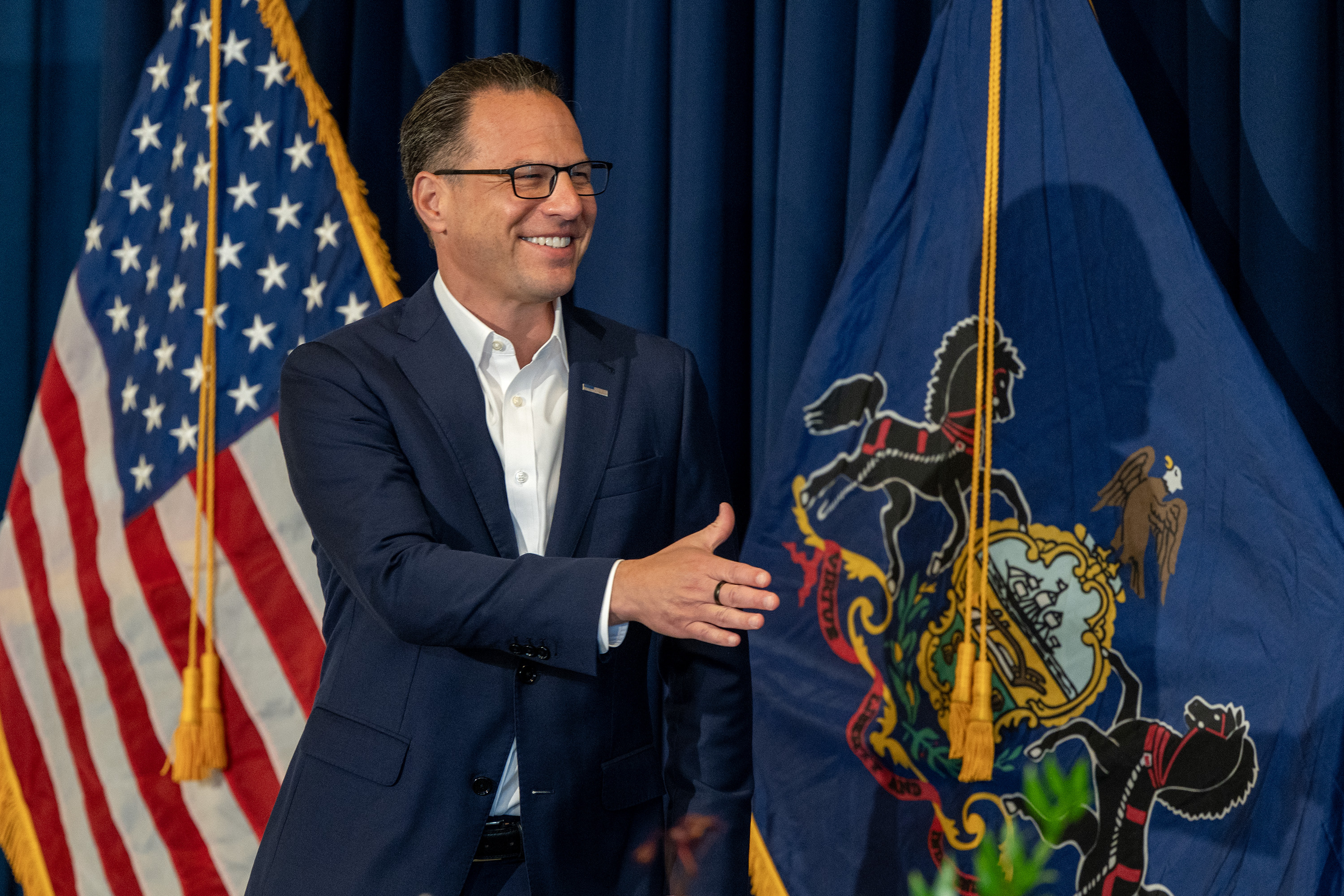
Philadelphia’s police union on Tuesday endorsed Gov. Josh Shapiro’s reelection bid, announcing its continued support for the first-term Democratic governor while touting his commitment to law enforcement.
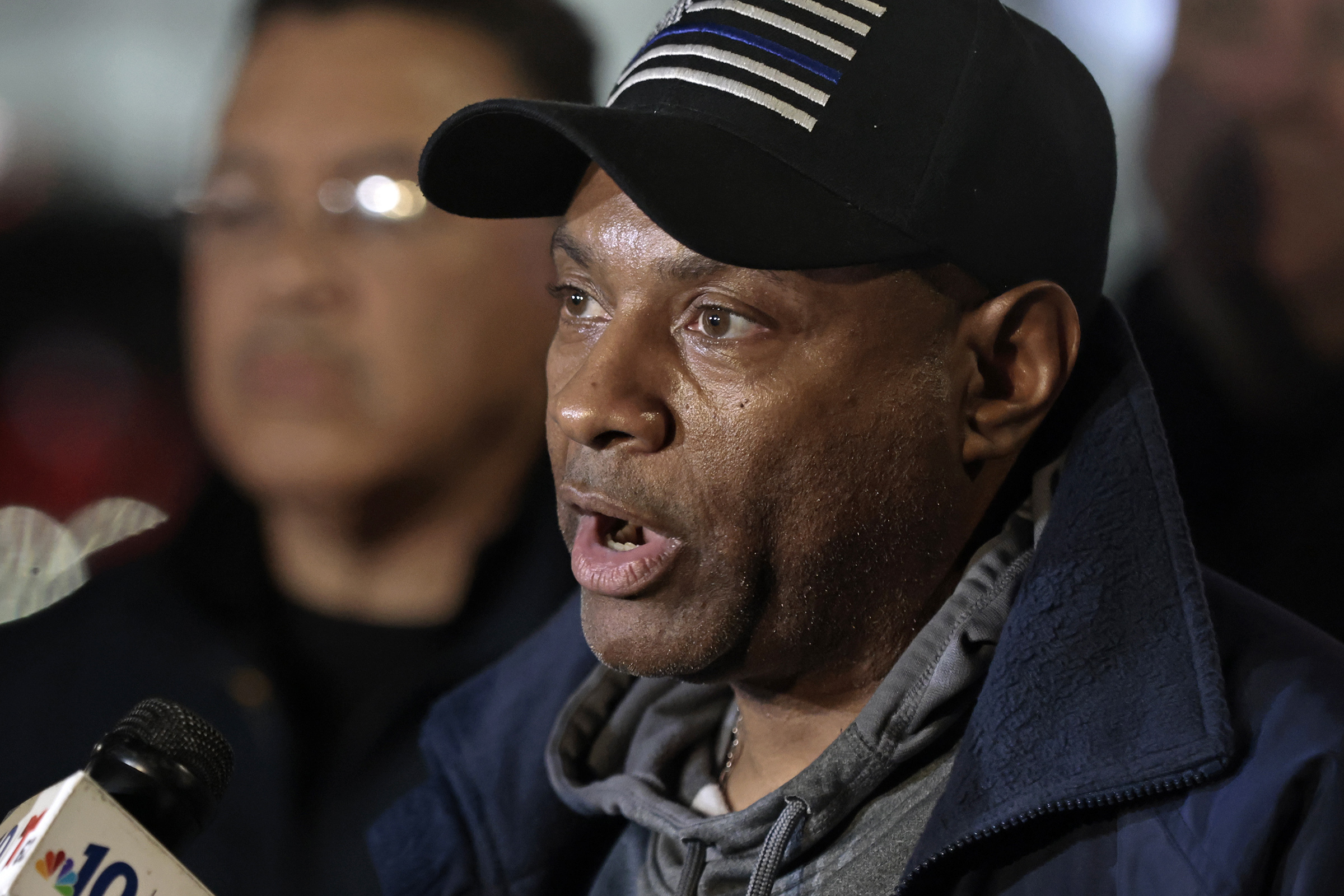
“Every day, he has shown a commendable ability to work with local law enforcement and deliver the resources and support we need to protect and serve our friends, families, and neighbors,” said Roosevelt L. Poplar, president of the Fraternal Order of the Police Lodge 5, which represents over 14,000 active and retired Philadelphia police officers and sheriff’s deputies.
In a statement, Shapiro said he was “honored” by the endorsement.
“I’m going to keep fighting for the brave law enforcement officers who work to keep Philadelphia safe every single day,” he said. “I believe all Pennsylvanians deserve to be safe and feel safe in their communities — and we have focused every day on funding law enforcement and supporting the men and women that protect and serve our Commonwealth.”
It marks the second time the police union has embraced Shapiro for governor after endorsing him in 2022 over Republican candidate Doug Mastriano, who the then-president of the union said couldn’t be trusted to protect their collective bargaining rights. Shapiro, a former state attorney general, was a reliable government official who the union said was “there to help us with whatever we need to do.”
This election cycle, Shapiro holds a commanding lead over his Republican opponent, Treasurer Stacy Garrity, according to a recent poll from The Philadelphia Inquirer, the New York Times, and Siena University. The union has previously supported President Donald Trump, but Shapiro attracted its backing over Garrity, who Trump has endorsed in the Pennsylvania governor’s race.
Shapiro has also received support from other organized labor unions, including the Pennsylvania AFL-CIO and the Pennsylvania Professional Fire Fighters Association. On Monday, he received the backing of the Pennsylvania State Troopers Association.
Shapiro has maintained a comfortable relationship with law enforcement, and his campaign noted that he has signed multiple state budgets funding 2,000 additional officers across Pennsylvania and allocated more than $1 billion in community-based violence prevention grants.
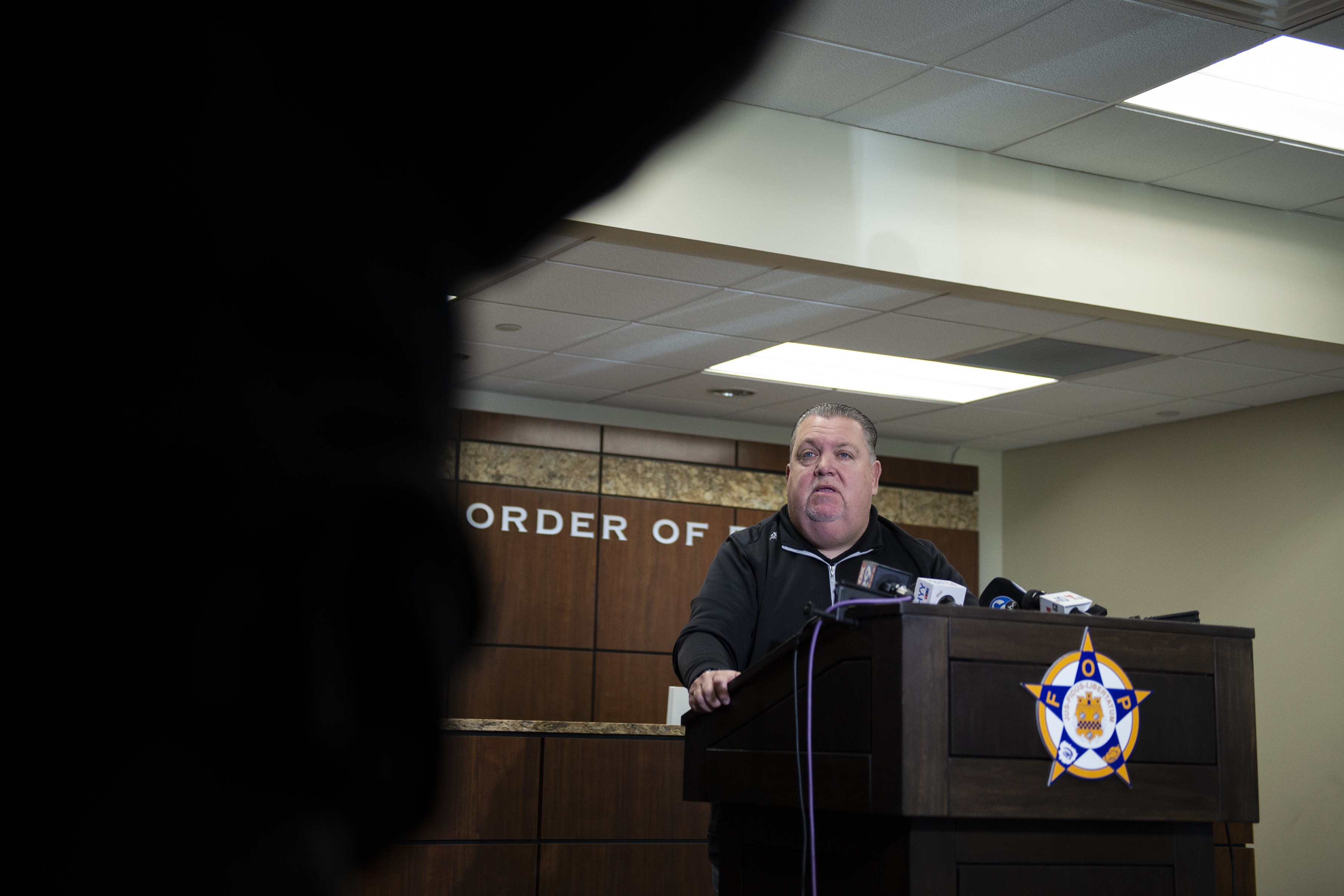
Roosevelt Poplar, president of Fraternal Order of Police Lodge 5, on Jan. 26, 2024.Elizabeth Robertson / Staff Photographer
In his statement, Poplar also commended Shapiro for providing funding for police department needs.
“The Governor has delivered on his promise to invest in public safety, he has shown up with us in times of tragedy, and he has proven his commitment to keeping our officers and the communities we serve safe,” he said.
The police union’s endorsement of Shapiro is notable for an organization that just a few years ago was seen by some Philadelphia Democrats as politically toxic.
In the aftermath of the 2020 Minneapolis police killing of George Floyd, protests by racial justice activists swelled in Philadelphia and across the country with many of the movement’s participants calling to “defund” or abolish the police. They pressed local lawmakers to redirect police funding to social services, and Philadelphia City Council in June 2020 canceled a planned increase to the Philadelphia police budget.
Amid the calls for reform, the FOP was a major point of contention, as was its bombastic former leader, John McNesby. Activists — and many of their allies in elected office — said the union was too resistant to change and protected bad cops.
Former FOP president John McNesby holds a news conference on Oct. 19, 2022.Joe Lamberti
At the time, Shapiro was running for reelection as the state attorney general, and his campaign presented him as a “progressive reformer” who had established a unit in his office to review criminal convictions that may have been unfairly applied and a council to support people leaving prison with housing and employment opportunities. The FOP endorsed Shapiro’s 2016 and backed his 2020 campaign for attorney general.
Unlike some Philadelphia Democrats, Shapiro — who has rumored ambitions for a presidential run in 2028 — did not embrace the “defund” movement. He argued during a 2020 trip to Philadelphia that addressing structural inequities in the department and having strong law enforcement, especially in communities with high levels of poverty, were not mutually exclusive endeavors.
“We reject that poverty or institutionalized indifference and marginalization should mean that some people don’t get to have a safe community to live in,” he said. “We won’t give up on the belief [of] law enforcement showing up in a community to make people feel safer.”
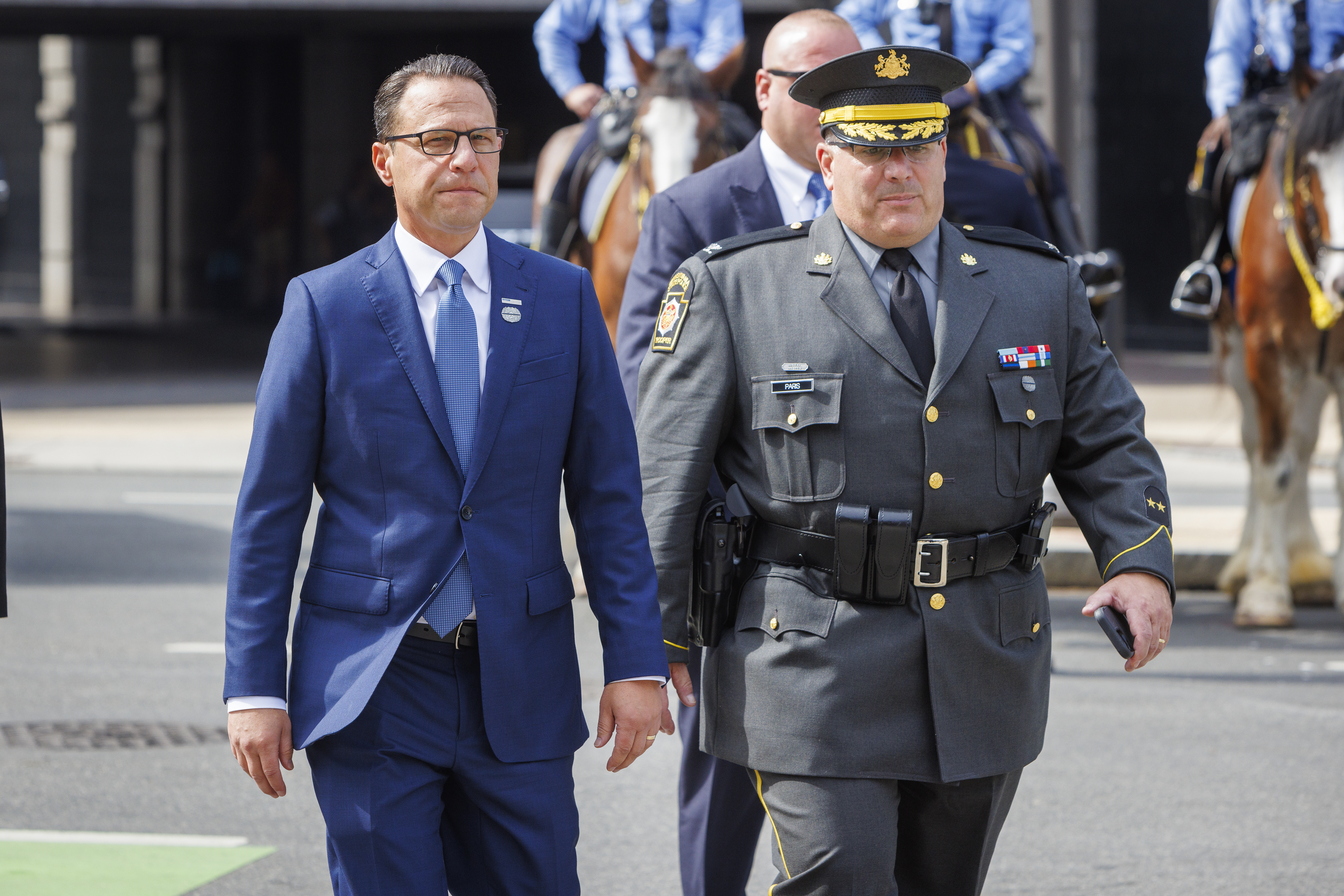
Gov. Josh Shapiro with Pennsylvania State Police Col. Christopher L. Paris. They were attending the funeral for Philadelphia police officer Jaime Roman at the Cathedral Basilica of SS. Peter and Paul on Sept. 19, 2024.Alejandro A. Alvarez / Staff Photographer
In the years following 2020, public support for police in Philadelphia appeared to grow. The city saw a historic spike in gun violence, and Republicans nationally portrayed Democrats as soft-on-crime. When a half-dozen Democrats were fighting for the mayoral nomination in 2023, polling showed that most voters saw public safety as the No. 1 issue driving the race. None of the candidates embraced “defund,” and most of them supported proposals to provide additional resources to the police department as it sought to solve shootings.
In the end, the tough-on-crime mayoral candidate — then-City Councilmember Cherelle L. Parker — won decisively.
Eleven years ago, Carlton Williams was, to some, a symbol of government dysfunction.
He was leading the troubled Philadelphia Department of Licenses and Inspections, an agency engulfed in controversy over safety lapses and staffing issues following the deadly 2013 Market Street building collapse. The city controller called on Williams to resign, and Jim Kenney, then a candidate for mayor, promised that he’d get rid of him.
And yet Williams remained.
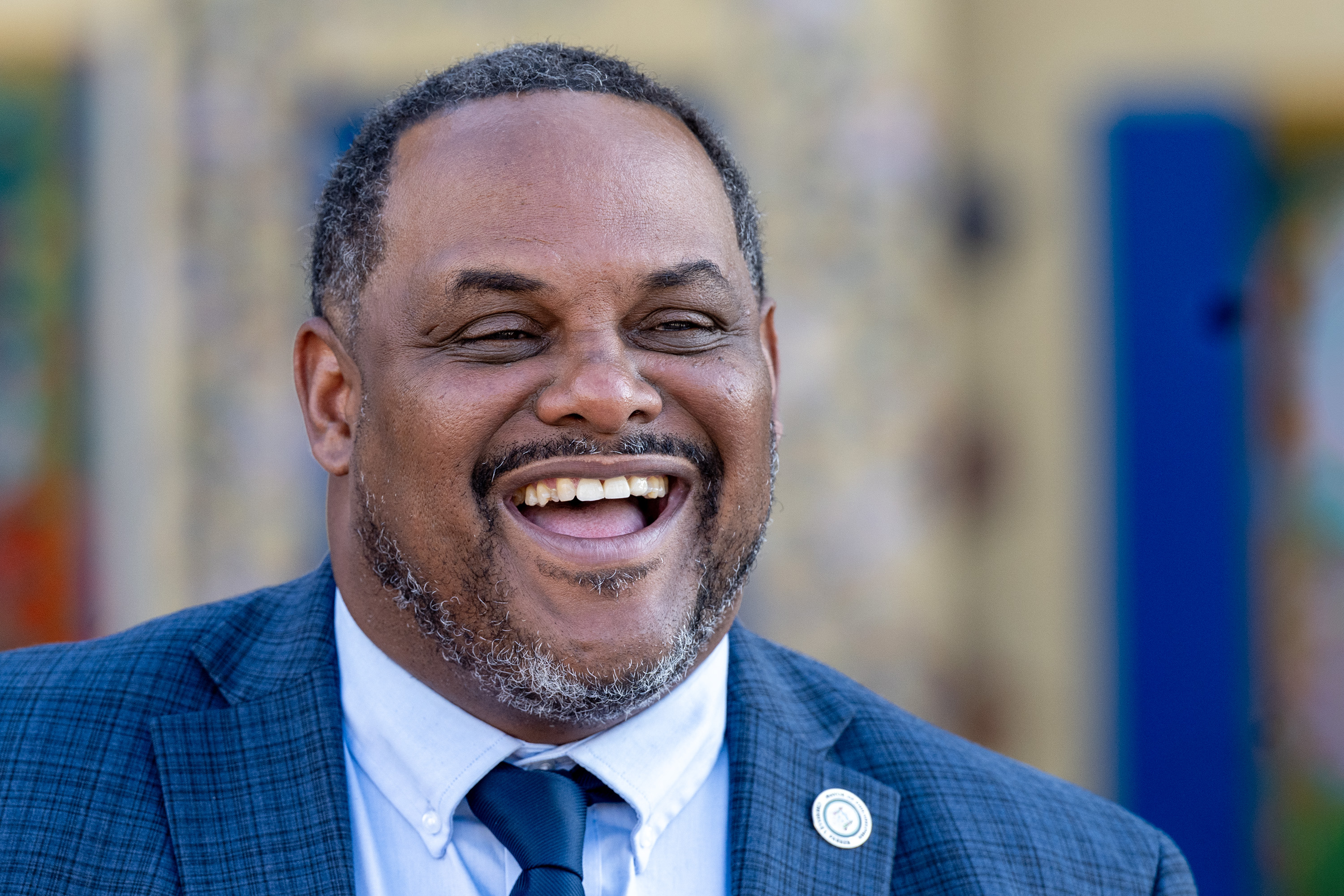
In July, he was named Philadelphia’s managing director, one of the most powerful positions in city government, second only to the mayor. He is assuming responsibility for L&I again, plus dozens of other agencies and thousands of employees who carry out the day-to-day operations that make the city run.
It is perhaps an improbable outcome for a longtime city employee who absorbed a level of scrutiny that could have easily ended his career.
But Williams proved durable, cycling through leadership positions across several departments while establishing himself as a City Hall insider. He has politically powerful allies and a reputation among City Council members as someone who will quickly act on their needs. That goes a long way with 17 politicians who value responsiveness and omnipresence, traits that they did not see in Williams’ predecessor, Adam K. Thiel.
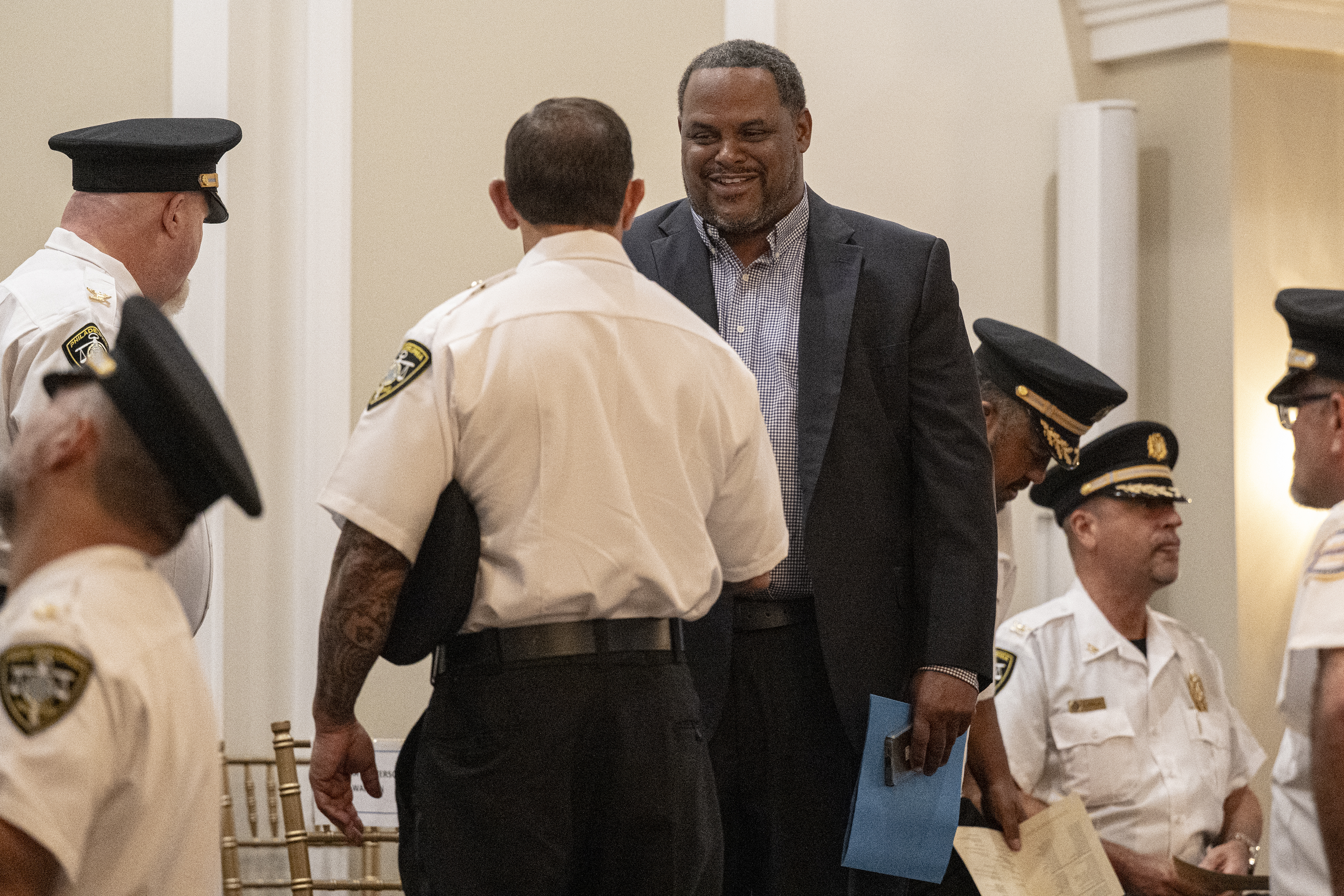
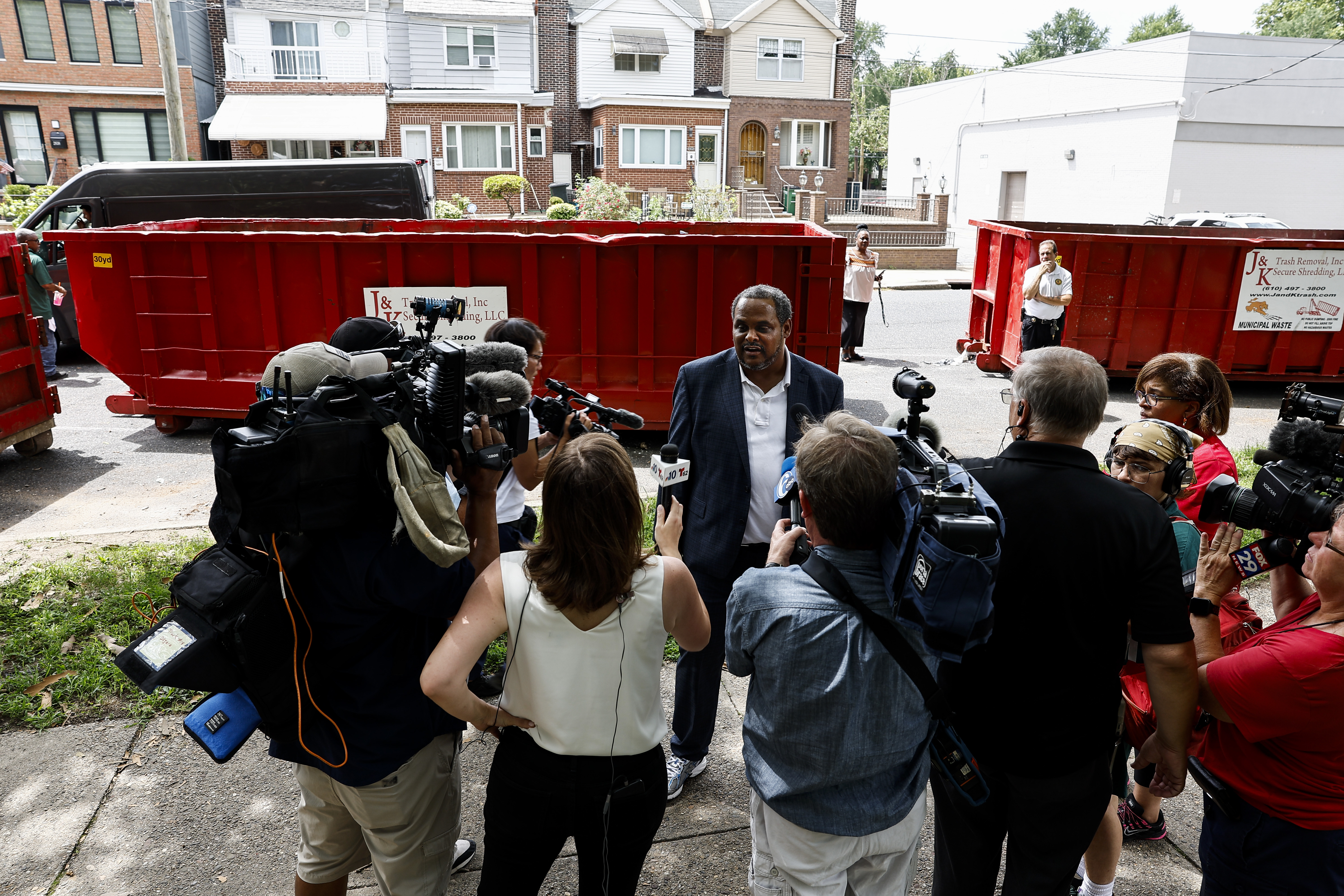
Newly appointed Managing Director Carlton Williams interacts with city officials during a correctional officer graduation ceremony at FOP Lodge 5 in Philadelphia on Friday.Jose F. Moreno / Staff Photographer
Perhaps most importantly for Williams’ ascent: he is all-in on Mayor Cherelle L. Parker.
The ties between Parker, 53, and Williams, 57, stretch back to their childhoods in Northwest Philly — he played football for the Oak Lane Wildcats, and she was a cheerleader. The team remains a part of both of their identities: Williams has led the Oak Lane Youth Association for 20 years, and the mayor often says proudly that she is a “Wildcat for life.”
Later in life, both found allies in the storied Northwest Coalition, a powerful political family. Williams said that he has known for 20 years that Parker would one day sit atop City Hall. And he most recently led Parker’s Office of Clean and Green Initiatives, overseeing the implementation of some of her key campaign promises.
“I’m bringing the ‘One Philly’ brand to the managing director’s office,” Williams said in an interview, echoing the mayor’s oft-used slogan. “Not to say it wasn’t being done under my predecessor. But I want to make sure it’s completely aligned with the mayor’s goals, because I believe in that vision.”
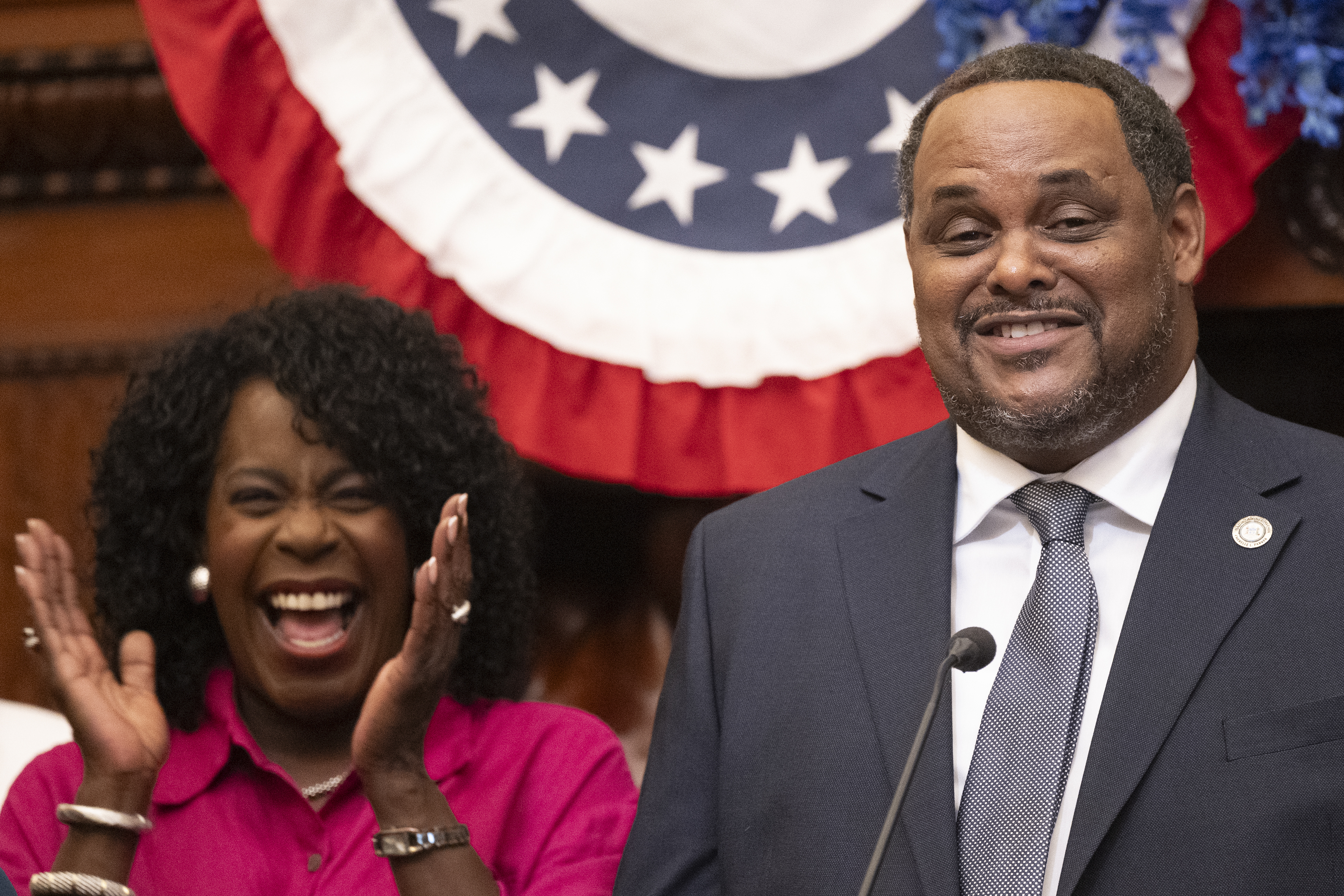
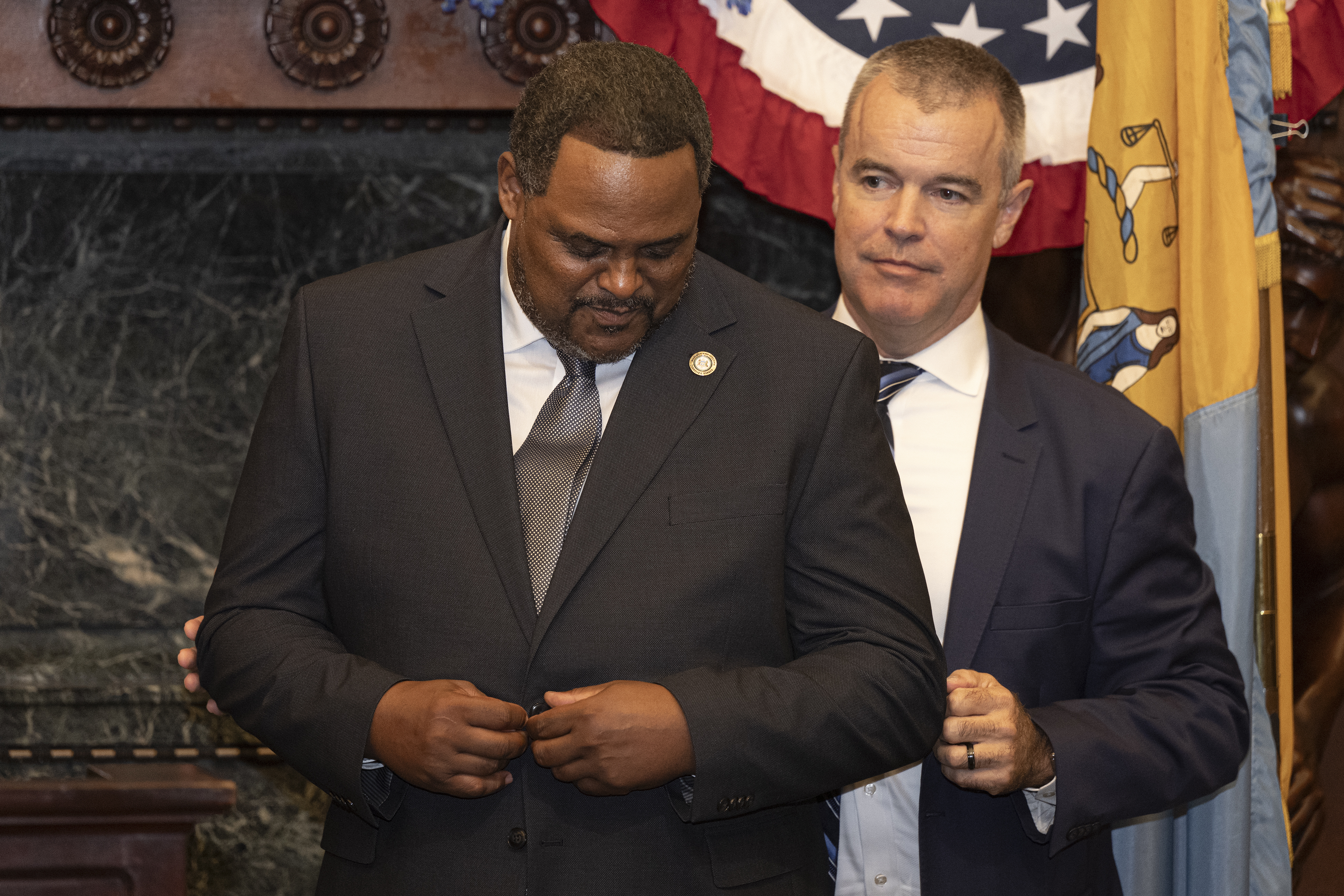
New Philadelphia Managing Director Carlton Williams speaks at the podium after being announced by Philadelphia Mayor Cherelle L. Parker during a July 28 news conference at City Hall.Jose F. Moreno / Staff Photographer
His appointment as managing director marks a new stage for the Parker administration that has seen significant turnover at its highest levels. And it is indicative of what Parker values in her inner circle: vast institutional knowledge and loyalty.
For the mayor, trust in Williams’ ability to operate within the bureaucracy and advance her priorities may outweigh his mixed record of management.
“Whenever we had a crisis of any kind in this city, he has been on my speed dial,” Parker said when she announced Williams’ appointment last month. “No matter who’s been leading, I’ve always called him for his counsel.”
Overseeing ‘a very broken’ L&I
Parker’s bet on Williams would have seemed almost unimaginable a decade ago.
A year after Williams was appointed to lead L&I, an excavator demolishing a wall on Market Street in Center City toppled the building onto an adjacent Salvation Army store, killing six people and injuring a dozen more. The inspector responsible for the demolition project died by suicide a week later.
Calls for reform abounded and questions swirled about whether the city’s agencies were responsible. There were multiple investigations launched and commissions convened to probe the disaster, and within days, Council members were pressing Williams to institute reforms that would bolster safety on private construction sites.
In response, Williams sought to hire more inspectors, increase their training, raise demolition standards, and create new specialized units within L&I.
Today, he says the collapse on Market Street was “one of the saddest moments” of his time in government.
“You have to lead through some tough challenges when you’re a leader,” he said. “You don’t get to pick and choose when you lead.”
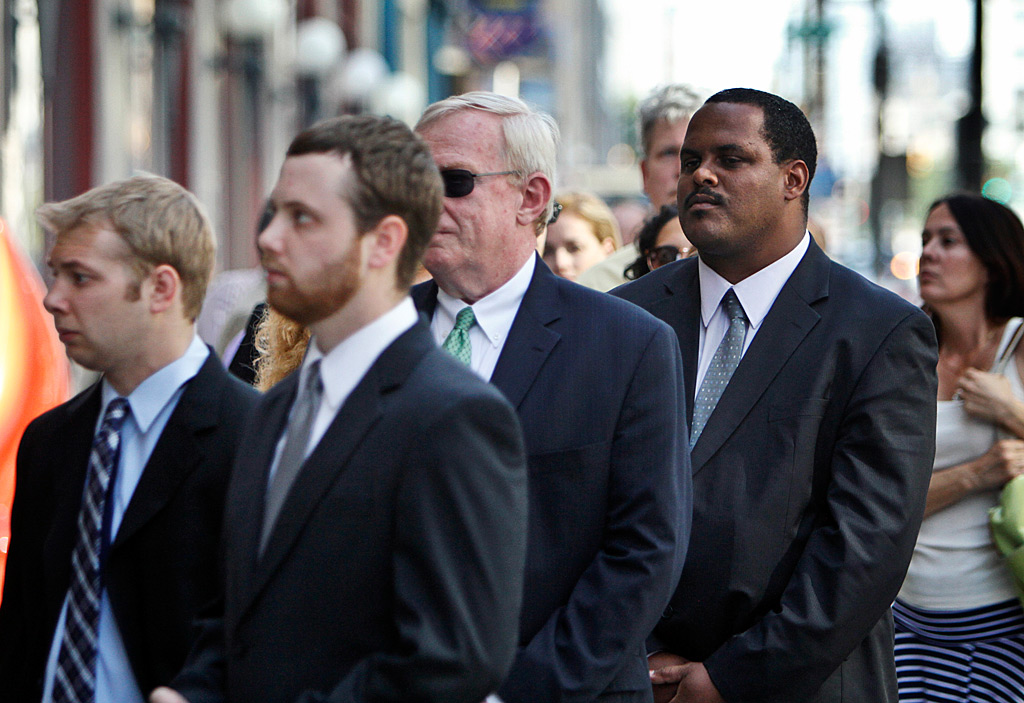
In this June 2013 file photo, then-Philadelphia Commissioner of the Department of Licenses and Inspections Carlton Williams (second from right) waits in line to attend a memorial service for Anne Bryan, who was among the victims of the Market Street building collapse.JOSEPH KACZMAREK / Associated Press
By fall 2015, then-City Controller Alan Butkovitz was calling on Williams to be fired. He said at the time that L&I had long been troubled, but that his office’s audit of the agency found that Williams had not made enough improvements.
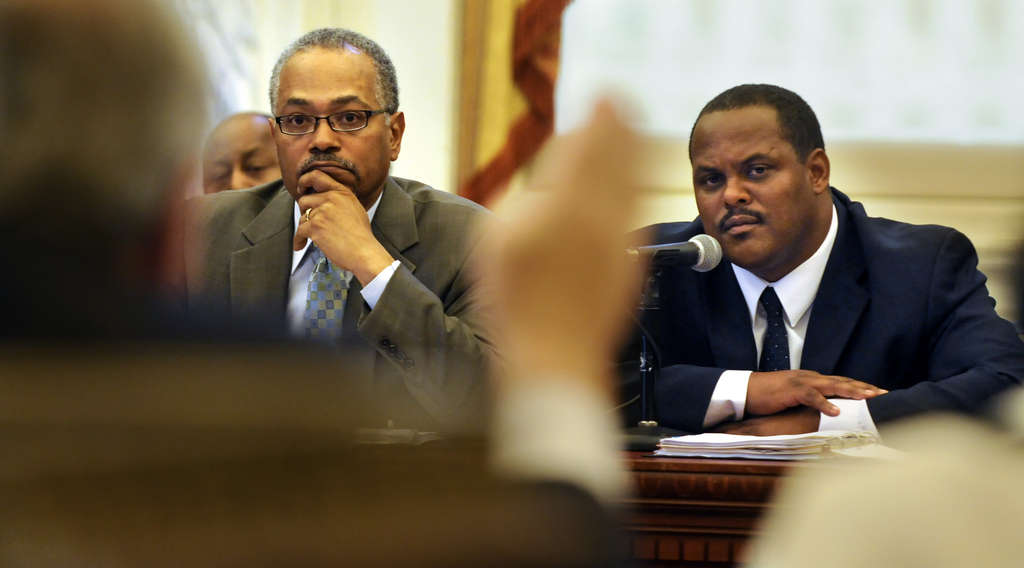
In this 2013 photo, then-Deputy Mayor Everett Gillison (left) and then-Commissioner of Licenses and Inspections Carlton Williams listen to members of City Council during a hearing.TOM GRALISH / Staff Photographer
Butkovitz now says that he blames former Mayor Michael Nutter instead, and that Williams was “caught between the mayor and me.” He said Williams had promised to provide the controller’s office with documents to assist in an audit, and then did not.
“I took it out on Carlton Williams at the time,” Butkovitz said.“His inclination was to cooperate with me, but at the time, it looked to me like duplicity. And I don’t think it was. I think he was overridden by higher authority.”
Nutter did not respond to a request for comment.
Estelle Richman, a former Philadelphia managing director who has held a variety of roles in local, state and federal government, said L&I is “one of the most difficult city departments.” She noted that past agency leaders have been pushed out, fired, indicted, and jailed.
“We can go back and say ‘maybe [Williams] should have done this or that,’ but the reality is it was a very broken department,” she said. “I think he did more to try to get it restabilized and back on track than any other commissioner at that time could have done.”
‘You have to be accessible’
Before taking the helm at L&I, Williams was a career bureaucrat.
Born in North Philly and raised in West Oak Lane, Williams started with the city at age 19, working in Fairmount Park as one of the first-ever members of the Philadelphia Ranger Corps. The program paid for part of his tuition to attend Temple University and marked his foray into public service.
Jeffrey Montague, who led the Philadelphia Ranger Corp. and has been a mentor to Williams for decades, said that at a young age, Williams showed potential.
“He didn’t try to fit in. He always stood out on his own independence,” Montague said. “He wasn’t trying to fit into a crowd.”
After working as a ranger, Williams spent three years running a Harrisburg youth program for AmeriCorps — the first and last time Williams lived outside the city.
He returned to Philadelphia to work for the Parks and Recreation Department, rising to become a deputy commissioner in both the recreation and streets departments.
Then came the four-year stint leading L&I, and when Kenney took office in 2016, he moved Williams back to his old job as a deputy in the streets and sanitation department.
But it didn’t last. Five months after Kenney took office, the streets commissioner was arrested for assault. Williams ascended to the role, and suddenly, the person who Kenney said he wouldn’t retain to lead L&I was in charge of one of Philadelphia’s most visible departments, overseeing transportation and sanitation operations citywide.
Carlton Williams, then the director of the Office of Clean and Green Initiatives, speaks during a news conference at Bigler and South 15th Streets on July 7, 2025.Monica Herndon / Staff Photographer
It was there where Williams solidified himself as a City Hall fixture. He said that as an administration staffer,he has “one primary that I listen to” — the mayor — but he has always tried to be attentive to Council.
That may be a key difference between Williams and Thiel, his predecessor. Thiel was the former fire commissioner and a nationally recognized expert in emergency management who was seen as a skilled behind-the-scenes operator.
But Council members said thatThiel did not foster close relationships with members of the city’s legislative body who are often conduits between residents and the mayor’s administration.
In addition, Thiel was often absent during major events in the city and he was frequently on leave — he joined the Army Reserve eight months into his tenure, and held several jobs outside city government, including as a consultant and professor.
That was a departure from prior administrations, when the managing director was often the public face of city operations.
On several occasions during the Parker administration, it was Williams who was in the spotlight. As director of the Office of Clean and Green Initiatives, he played a key coordinating role during the eight-day municipal worker strike that halted city services — most visibly, trash pickup.
And he oversaw the city’s response to a severe winter storm earlier this year that left much of the city encased in ice, despite weather emergencies typically falling under the managing director’s purview.
New Philadelphia Managing Director Carlton Williams (left) stands near the former director, Adam Thiel, before an introduction by Philadelphia Mayor Cherelle L. Parker during a July 28 news conference at City Hall.Jose F. Moreno / Staff Photographer
City Councilmember Anthony Phillips, whose district includes Northwest Philadelphia, said that prior to Thiel’s resignation, members of Council were “gravely concerned” about his frequent leave.Some members said that, in Thiel’s absence, Williams was their primary contact among Parker’s top staff.
“You can’t get certain things done and you can’t expect an efficient and effective city when you’re not present,” Phillips said. “Carlton is going to be the complete opposite of that.”
Williams said that his role as managing director is his only job aside from volunteering.
“It’s a full-time, 24-hour, seven-day-a-week job,” he said. “You have to be accessible.”
Williams’ coziness with elected officials has also drawn criticism.
A former city employee who previously worked for Williams said his relationships with Council amount to a “favor machine.” The staffer spoke on the condition of anonymity in order to preserve relationships.
“There is this cycle of Council getting calls from constituents, like ‘there’s a pothole,’ and then they get it fixed, and that’s the main work,” the former staffer said. “It’s not actually setting up systems that are solving the problems. It’s reacting to them.”
But Williams said some of his proudest achievements have resulted in systemic change: he led the installation of some of the first spraygrounds in the city, overhauled the recycling program, had BigBelly trash cans placed throughout Philadelphia, and started the annual Philly Spring Cleanup.
“He is probably one of the most well-prepared managing directors that the city has had,” Richman said. “He knows not only how operations work within the city departments, he knows the political structure of the city. And I believe a managing director has to know both.”
John Dougherty, the former leader of the politically powerful Local 98 of the International Brotherhood of Electrical Workers, and his ally, ex-Councilmember Bobby Henon, were on trial for bribery and other corruption charges. Prosecutors accused Henon of taking official actions as a Council member at Dougherty’s behest in exchange for a salaried, no-show job with the union.
One of the schemes prosecutors presented during the trial focused on efforts by union officials in 2015 to halt the installation of an MRI machine at the Children’s Hospital of Philadelphia, a project that was being completed with nonunion labor. Williams, at the time, was at the helm of L&I.
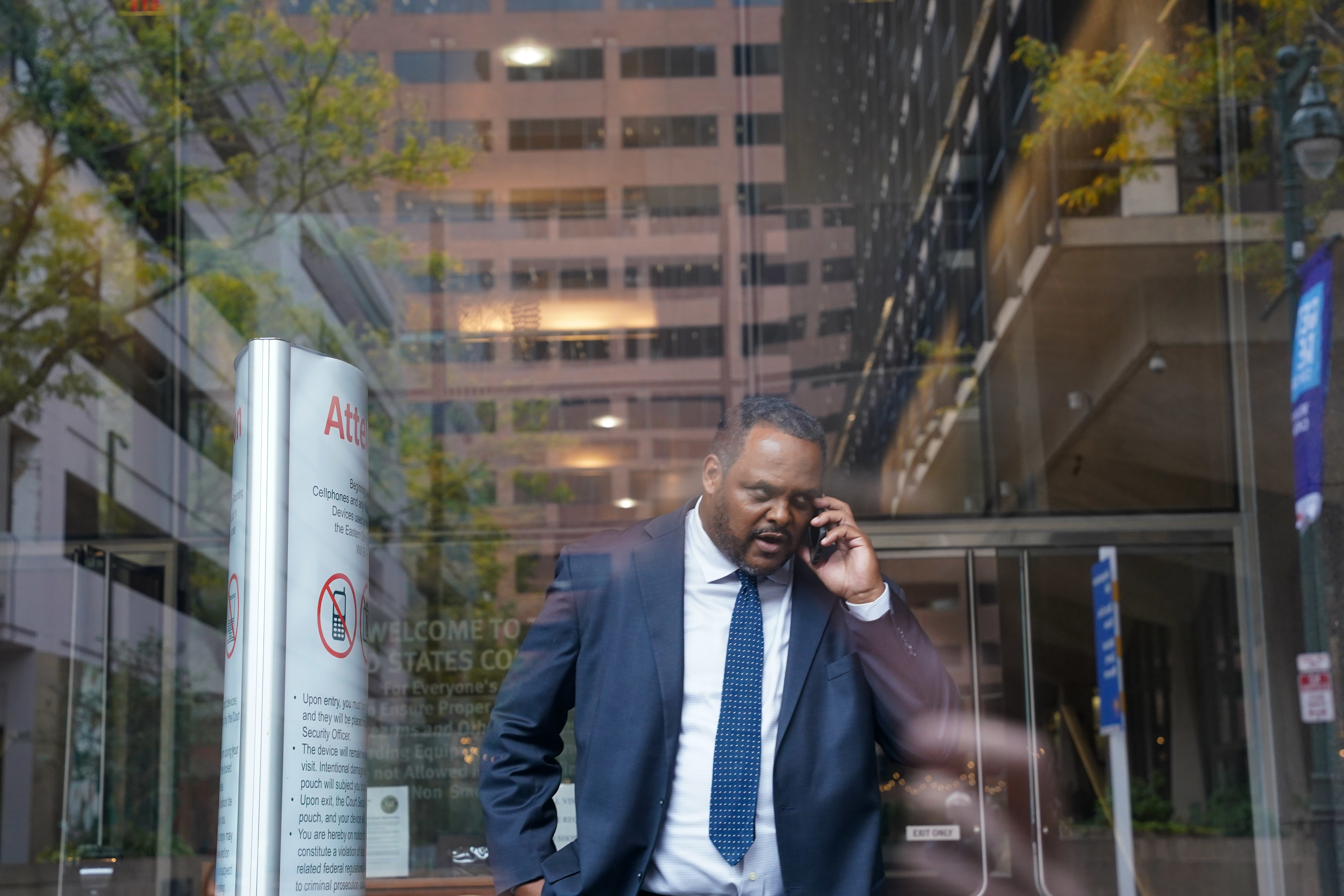
Department of Streets Commissioner Carlton Williams exits federal court on Oct. 12, 2021, after testifying in the John Dougherty and Bobby Henon bribery trial.Thomas Hengge / Staff Photographer
During the 2021 trial, Williams was called to testify. He told the jury that Henon called him in August 2015 to report that an unlicensed contractor was working at CHOP, and that he dispatched an inspector to investigate.
The inspector, Williams testified, issued a stop-work order on the construction of the MRI machine. But he insisted that he did not direct the inspector to do so, and told the jury that responding to complaints from Council members was a routine part of his job.
Ultimately, L&I reversed the stop-work order, and the MRI machine was built.
Prosecutors said Dougherty paid Henon to be his “man on the inside” in City Hall and used the episode at CHOP to establish evidence of a corrupt agreement between the two.
“You heard what happened,” Assistant U.S. Attorney Frank Costello told the jury during closing arguments. “Henon contacted Carlton Williams, Carlton Williams sent inspectors out and they issued orders — they issued orders to shut the job down.”
But defense attorneys said one public official asking another to take action doesn’t constitute a crime.
“Carlton Williams was the recipient of information just passed on to him about the MRI and the unlicensed contractor,” said defense attorney Brian McMonagle. “That ain’t a crime.”
During the 2023 mayoral campaign, when a half-dozen Democrats could have plausibly won the party’s nomination, Williams nearly left the city.
He said he got a job as the public works director in San Francisco, but before he accepted, Parker won the primary election. Williams decided to stay.
“I wanted to work for Cherelle Parker,” he said. “I believed in her vision.”
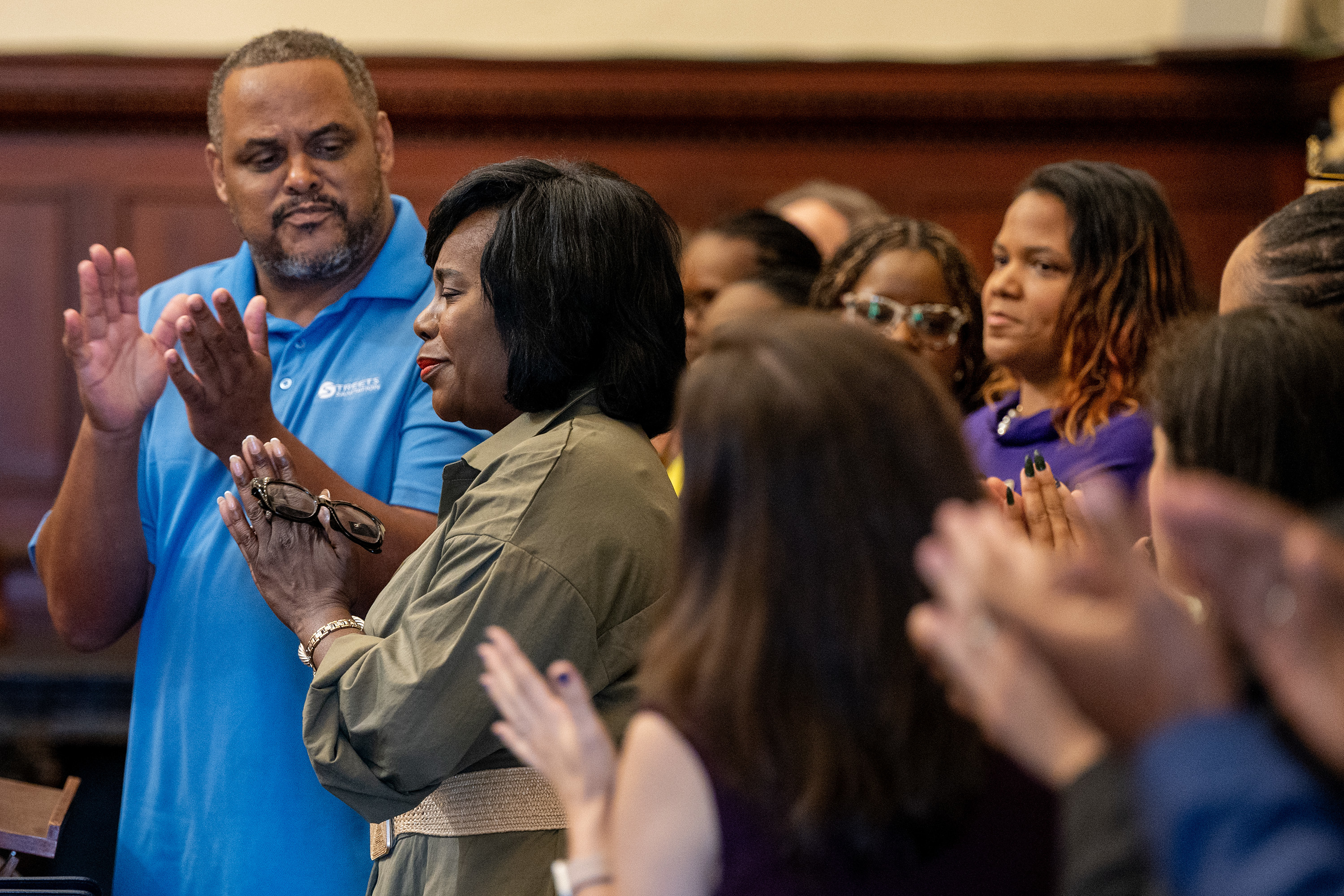
Mayor Cherelle L. Parker is applauded by members of her administration at City Hall on July 9, 2025, hours after reaching a tentative contract agreement with District Council 33 leaders overnight, ending the workers’ strike. At left is Carlton Williams, director of the Office of Clean and Green Initiatives. Chief Deputy Mayor Sinceré Harris is behind the mayor at right.Tom Gralish / Staff Photographer
Parker took office in 2024 and created a new role: director of the Office of Clean and Green Initiatives. Williams would carry out her campaign promise to rid the city of its “Filthadelphia” moniker by implementing twice-weekly trash collection, an expansion of illegal dumping enforcement, and a biannual citywide program to clean every block.
As managing director, Williams’ portfolio will grow substantially. He will be responsible for the city’s response to public health and homelessness, as well as overseeing large agencies like the fire department and the prisons.
He will also coordinate the city’s strategies in Kensington, the beleaguered neighborhood and the site of an open-air drug market that the Parker administration has spent more than two years working to shut down. Williams said there is inherent pressure that comes with being responsible for addressing such long-entrenched issues.
“But I work best under pressure, and so I take that as a badge of honor,” he said.
Williams said he intends to prioritize communication with residents because they “understand that everything can’t get fixed at one time.”
“But at least we can say what needs to be done, when it’s going to [be] fixed, what’s the timeline,” he said. “I manage through the eyes of everyday citizens. I want what they want.”
Sixty-one years ago, the U.S. Supreme Court decided Griswold v. Connecticut — striking down a state law that banned married couples from using contraception. The court recognized what should have been obvious: that the most intimate decisions people make about their bodies, their families, and their futures belong to them, not to the government. That ruling established the constitutional right to privacy, and laid the foundation for modern reproductive healthcare.
Today, those rights are not as secure as they once seemed.
The political landscape has shifted. Forces that once operated at the margins of American politics are now driving policy — and contraception is squarely in their sights, along with access to in vitro fertilization (IVF) and even vaccines.
Lab staff prepare small petri dishes, each holding several 1- to 7-day-old embryos, for cells to be extracted from each embryo to test for viability, at the Aspire Houston Fertility Institute in vitro fertilization lab in 2024 in Houston.Michael Wyke
The legal landscape has also shifted, with the Supreme Court a standout case in point when it issued its decision in Dobbs v. Jackson Women’s Health Organization and took away women’s hard-fought right to abortion care.
In his concurring opinion, Justice Clarence Thomas went even further in his endeavor to strip women of their bodily autonomy. He wrote that the court should “reconsider” earlier rulings, specifically naming Griswold. The right to contraception has been settled law for more than half a century, and this was not an offhand comment. It was a sitting Supreme Court justice signaling that, in his view, the constitutional protection for birth control could be reconsidered next.
Those of us in Harrisburg cannot wait for that to happen.
That is why I introduced legislation to ensure everyone in Pennsylvania has a clear statutory protection to the right to contraception and fertility treatment, no matter what the Supreme Court does. If Washington will not protect this right, Pennsylvania will.
The same constitutional principles Griswold recognized — privacy, autonomy, and freedom from government interference in personal medical decisions — deserve protection under state law, so no court ruling can strip them from Pennsylvanians overnight.
We have already seen how quickly long-established rights can disappear. We watched Roe v. Wade fall in Dobbs. We have seen misinformation about birth control spread — false claims that common forms of contraception are abortifacients — designed to create legal grounds to restrict them.
Contraception and fertility treatment are a part of everyday life for millions of Americans. People use birth control to plan their families, pursue their education and careers, and manage health conditions like endometriosis and polyendocrine metabolic ovarian syndrome (PMOS). These are deeply personal decisions that belong to individuals and their doctors — not politicians.
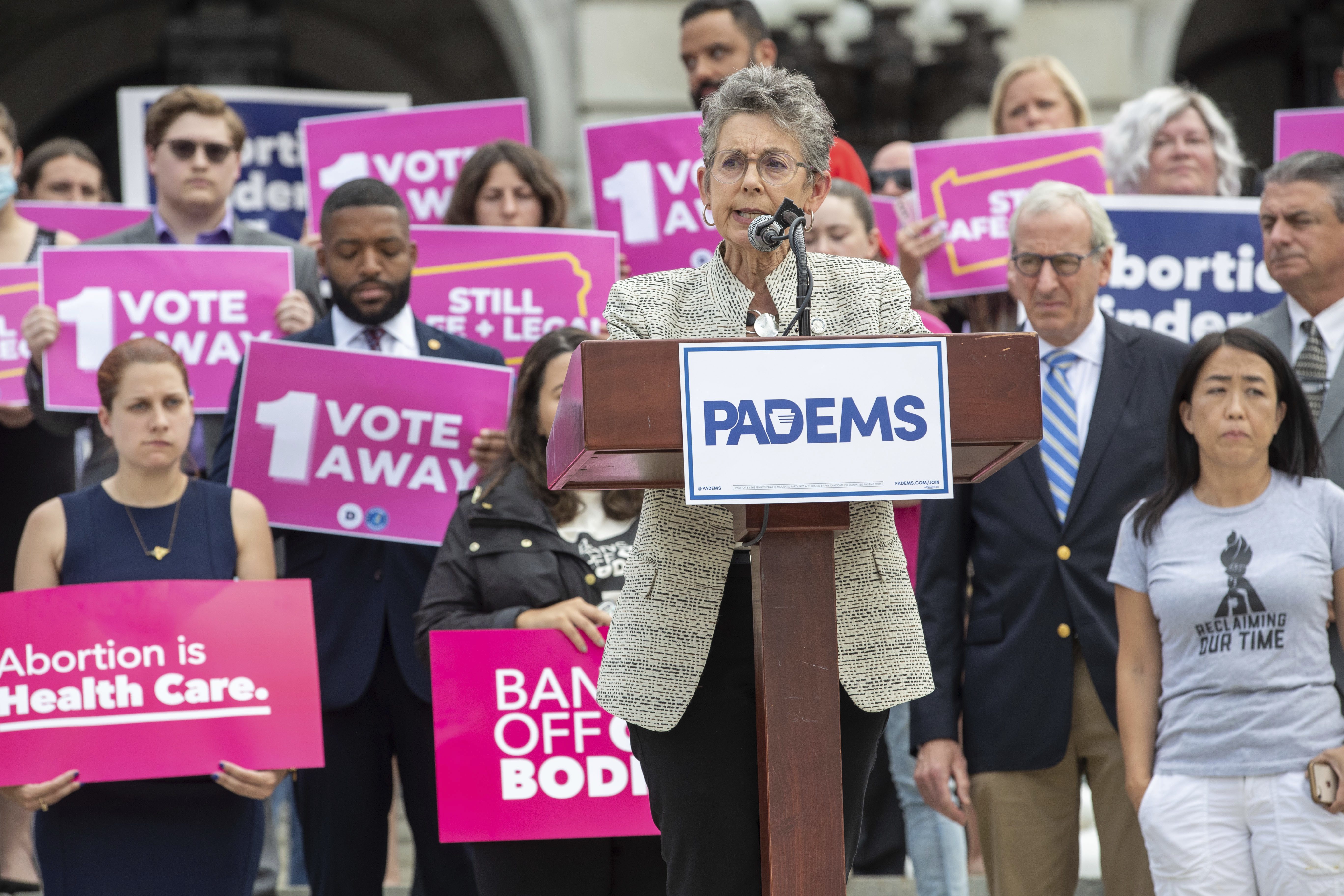
Supporters of abortion access listen to Democratic State Rep. Mary Jo Daley speak in 2022 in Harrisburg.Mark Pynes | pennlive.com / AP
Yet, there remains a gap between what the public supports and what some lawmakers set out to personally and politically accomplish. That is why action by states matters.
The lesson of Dobbs is that rights cannot be taken for granted.
Pennsylvania has an opportunity to act before another right comes under attack. The question is not whether contraception and fertility treatments deserve protection. The question is whether we are willing to protect them.
I am. And I hope my colleagues are, too.
State Rep. Mary Jo Daley (D., Montgomery) represents the 148th Legislative District. She is cochair of the Pennsylvania Women’s Health Caucus.
The U.S. Supreme Court this summer overturned limits on how much money political parties can spend in coordination with their chosen candidates — the latest in a series of decisions by the conservative majority that have unleashed a flood of money into national politics.
How that will play out in Philadelphia remains to be seen. But local elections lawyers said last week it could boost the power of the city’s political parties to influence the outcome of elections.
“It will be disruptive to city elections,” Adam Bonin, a Philadelphia-based Democratic elections attorney, said of the case, National Republican Senatorial Committee v. Federal Election Commission. “It will give parties more power, and it will give incumbents more power.”
The Philadelphia Board of Ethics, which enforces the city’s campaign finance rules, plans to consider the potential impacts of the Supreme Court’s 6-3 ruling this fall, said board chair Ellen Mattleman Kaplan. That would ensure any changes would take effect before next year’s municipal elections, when Mayor Cherelle L. Parker and all 17 Council members are up for reelection.
In deep-blue Philadelphia, where most local elections are effectively decided by Democratic primaries, two key questions will determine the case’s impact: Does the ruling apply to local elections, and does it apply to primaries?
Both are legally thorny issues that could require lengthy court battles to sort out. But if the answer to both questions ends up being yes, the NRSC ruling has the potential to give significant advantages to candidates who are endorsed by the Democratic City Committee.
For instance, in crowded Democratic primaries for mayor or City Council, the party-endorsed candidates would be the only ones who could effectively circumvent the city’s limits on the size of political donations — currently $3,700 per year for individual donors — by directing deep-pocketed supporters to give additional money to the party, which is not subject to those limits.
The party could then work directly with its endorsed candidates on how to spend that money, including decisions on the messaging and timing of TV ads or door-knocking efforts.
To be clear, experts said, there are many uncertainties about how, and even if, the ruling would apply to Philadelphia municipal elections, where political money is more tightly regulated than in state and federal races.In the immediate future, the ethics board could take the position that the ruling applies only to federal races, not the city races it regulates.
“We haven’t come to any conclusions yet,” said J. Shane Creamer Jr., the ethics board’s executive director. “We’ve got to keep in mind that the federal law in that case is a little different than Philadelphia’s laws, including different rules designed to prevent circumvention of contribution limits.”
Additionally, the Supreme Court opinion did not specify whether its ruling applies to local elections, a question that could be addressed by subsequent federal court cases. The NRSC case before the justices centered on limits on coordination between parties and candidates in federal law that apply only to general elections.
But Philadelphia elections lawyer Kevin Greenberg said the underlying philosophy in the decision — that limiting political parties’ coordination with their candidates constituted a violation of the constitutional right to free speech — would likely extend to primary elections.
“There is nothing about the Supreme Court’s logic that inherently applies only to general elections,” said Greenberg, who has done legal work for the Pennsylvania Democratic Party. “What any judge and any lawyer thinking about how to implement this … would and should do is apply the Supreme Court’s opinion to what the next set of facts are, and under the Philadelphia law, this will be problematic for the existing [campaign finance] statue.”
The ruling directly applies to general elections for U.S. House and Senate races, meaning that federal party committees can now coordinate with — and spend freely on behalf of — candidates running for Philly congressional seats and Pennsylvania’s U.S. Senate seats.
But the two outstanding questions, about local elections and primaries, would likely have to be sorted out in court because the city is unlikely to voluntarily change its system, said Matthew Haverstick, a Philadelphia elections lawyer who often works with Republican clients. Such a case would require a candidate or, more likely, a political party suing the city, he said.
“Given the way the Philly ethics board and the city regulates elections, they’re not going to do anything unless they’re told to do it by a court,” Haverstick said. “Whether this decision has a direct impact on the Philadelphia rule is unclear. … You could argue that political parties can coordinate in primaries — there are good arguments that it could — but it would have to be considered in court.”
Haverstick is representing 2023 mayoral candidate Jeff Brown in a lawsuit against the ethics board. During that campaign, the ethics board alleged that a super PAC backing Brown coordinated with him in violation of campaign finance rules. A judge later threw out the case.
With Haverstick as their attorney, Brown and the PAC have since sued the ethics board, alleging in part that it unfairly targeted him during the campaign. The Commonwealth Court in March ruled against Brown and the PAC. They have appealed the decision to the Pennsylvania Supreme Court, where it is pending.
A potential opportunity for Philly’s Democratic establishment
The local Democratic establishment’s influence in recent years has been waning as insurgent candidates backed by progressive groups have notched key victories, oftentimes with the backing of deep-pocketed outside spending groups supported by organized labor.
Depending on how it is applied, the court’s decision could create an opportunity for the Democratic City Committee to reassert itself by giving its preferred candidates, who are typically more centrist or conservative Democrats, access to a major financial advantage over their rivals.
The Democratic City Committee did not respond to a request for comment.
Currently, candidates for city offices are subject to strict limits on the size of donations they can collect: $3,700 per year for individual donors, and $14,800 for organizations. Outside groups known as super PACs can raise money in unlimited amounts — but they are prohibited from coordinating with campaigns over fundraising, strategy, and spending.
If applied to city elections, the ruling could create an exception to those rules for one type of outside group — political parties — allowing them to raise money in unlimited amounts and spend as much as they want while working hand in glove with their endorsed candidates. And in a primary election, where there is only one party involved, that could give the establishment-backed candidate a major advantage.
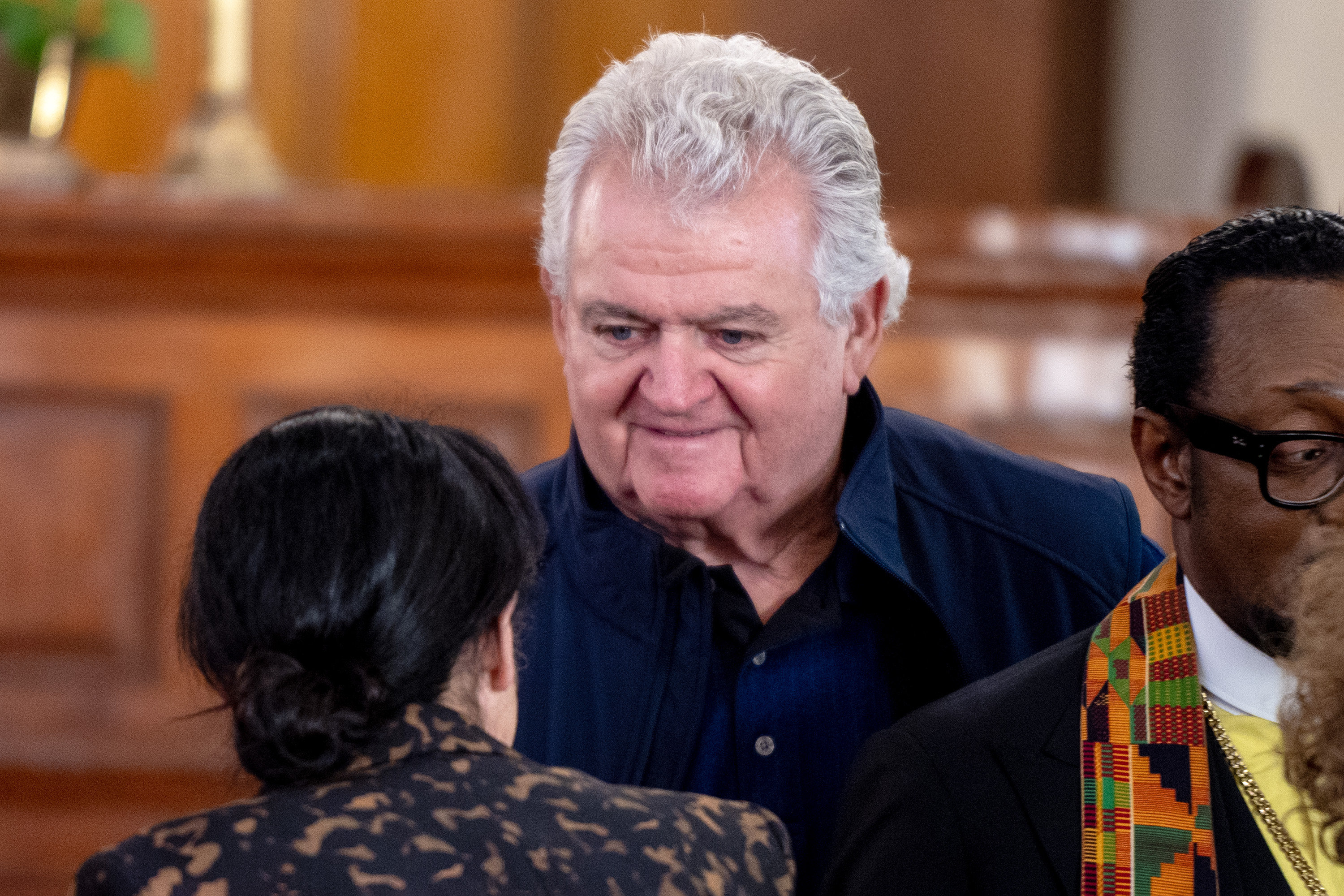
Chairman of the Democratic City Committee, former U.S. Rep. Bob Brady, at Mother Bethel AME Church Nov. 2, 2025.Tom Gralish / Staff Photographer
But there is reason to doubt that scenario will become the norm in high-profile Philadelphia elections. In addition to legal questions about the NRSC case’s applicability, there are political obstacles that could prevent candidates from taking advantage of the court’s ruling.
To be endorsed by the city committee, candidates must receive the support of a majority of the 69 Democratic ward leaders, who often fail to reach that level of consensus in crowded races. And even if a candidate wins the endorsement, there is no guarantee they would have the donor network to be able to take full advantage of coordinating fundraising with the party.
Lastly, the party may differ with a candidate’s campaign on strategy decisions, or it could decline to raise money beyond the limits applicable to other candidates to avoid the appearance of tipping the scales.
Bonin said he opposes the current Supreme Court’s campaign finance rulings, such as the 2010 Citizens United decision that helped usher in the dominance of super PACs. But in light of those rulings, he said, the NRSC decision may be a positive development.
“If we’re going to live in a world where super PACs exist, we are better off strengthening political parties, which are more accountable,” he said.
A new twist in Council election races for the GOP and Working Families Party?
There is another arena in which the decision could have a major impact in Philadelphia: the general election races for the two seats on City Council that are reserved for independent or minority-party candidates.
Republicans held those seats for about 70 years until Councilmembers Kendra Brooks and Nicolas O’Rourke of the progressive Working Families Party won them in the two most recent city election cycles, a major factor in Council’s recent shift to the left.
At left is Kendra Brooks speaking with colleague Nicholas O’Rourke during caucus session. Philadelphia City Council gathered today for the budget address from Mayor Cherelle L. Parker in chambers, Thursday, March 12, 2026. .Alejandro A. Alvarez / Staff Photographer
The Philly GOP has seen anemic fundraising levels and dismal results in recent years. If applied to local primaries, the NRSC ruling could potentially help the party gain traction with the help of just a handful of major donors — especially given that it is less clear the Working Families Party, without a primary election, would be able to take advantage of the change.
If the NRSC ruling is applied to city elections, the Philly GOP would undoubtedly be able to coordinate with its nominees in those Council races. Vince Fenerty, who chairs the Republican City Committee, said he is seeking legal advice on that question.
“We’re hopeful that there could be a chance for us to help our City Council candidates next year and everyone else who runs [as a Republican],” he said.
It is unclear whether the ruling would benefit the smaller Working Families Party, which under Pennsylvania law is not a major political party. (Pennsylvania’s Commonwealth Court is currently deciding an unrelated case on the Green Party that could affect the legal standing of groups like the Working Families Party.)
At left is attorney Matt Wolfe and Vince Fenerty, chair of the Philadelphia Republican Party attended the hearing for Working Families Party candidates. Hearing in courtroom 443 Philadelphia City Hall for Working Families Party candidates on Friday, August 11, 2023.Alejandro A. Alvarez / Staff Photographer
In a statement, Working Families Party spokesperson Nick Gavio lamented the direction of the U.S. Supreme Court’s recent rulings on campaign finance law.
“Anyone who has knocked a door in Philadelphia knows that regular voters are not pushing to give billionaires and the ultra-rich more power to influence our elections,” he said. “WFP has no interest in overturning existing campaign finance regulations that act as guardrails against political and corporate insiders buying elections. We will of course continue to follow all campaign finance rules that are on the books.”
A new quandary for the ethics board
In stark contract to the increasingly unregulated world of federal elections, Philadelphia has some of the tightest campaign finance restrictions in the country, and the ethics board has aggressively enforced the city’s rules.
Critics, including Greenberg, believe the board has already overextended itself by sticking to Philly’s rules as the Supreme Court increasingly takes a wrecking ball to federal campaign finance law. And for Greenberg, the NRSC case is the latest decision that shows Philly is overdue for a full redo that “addresses these issues in light of the [Supreme Court’s] clear direction.”
“City Council needs to write appropriate rules, and the board of ethics needs to rescind almost all of its existing regulations and readopt them in law,” he said.
It is unlikely the ethics board would lead the charge in demolishing the campaign finance system it helped to create — one that has been widely credited with limiting the influence of corporate interests and super-wealthy individuals since it was implemented in 2005.
In an interview, Creamer, the ethics board executive director, referenced differences between the federal law in question in the NRSC case and Philly’s system — an indication the board could determine the decision has no bearing on local elections.
“We don’t have a similar structure to our law. So it may impact our law somehow; it may not,” Creamer said. “We’re still analyzing it.”
There are several important differences the board could point to. In federal law, for instance, there are limits on how much individuals can give to political parties, but in Philadelphia there are none.
In addition, the majority opinion in the NRSC decision, which was authored by Justice Brett M. Kavanaugh, discusses at length how rules around “earmarked” donations — in which donors give money to political parties and direct them to spend it on specific candidates — provide a “prophylaxis” against corruption that could result from eliminating limits on coordination with political parties. Philly does not have an earmarking process.
If the ethics board stands pat, candidates or political parties seeking to take advantage of the NRSC ruling could challenge the board’s regulations in court. Politicians in heavily Democratic cities like Philadelphia, however, face strong disincentives from taking that step, which would allow them to be painted as supportive of moneyed interests playing a greater role in local politics.
Bonin, who has been less critical of the ethics board’s approach to campaign finance than Greenberg, said resistance to the NRSC case would be difficult.
“Whether they like it or not, they have to allow it,” Bonin said, referring to coordination between candidates and parties.
The Constitution clearly gives states, and not the president, the primary authority to administer elections. Congress has secondary authority, but only under emergency conditions. That means the president’s executive order, which directs various federal departments to impose rules on mail-in balloting if it is “feasible” and “lawful,” is more than a cynical attempt to save Republicans from losing congressional seats. His executive order is blatantly unconstitutional.
Yet, in a ruling that seems bizarre on its face, the Supreme Court has decided, with a crucial midterm election just weeks away, that Trump’s executive order does not interfere with the states’ authority “‘to create and enforce a legal code’ for elections.”
That’s nonsense. In my view, and in the opinion of 56 former judges who submitted an amicus brief to the Supreme Court, Trump’s order is all about interference. Changing rules just weeks before mail-in ballots are set to be sent to voters is an exercise in chaos. It is designed to hamper voting in blue states whose cities are filled with African American voters and others who tend to cast ballots for Democrats.
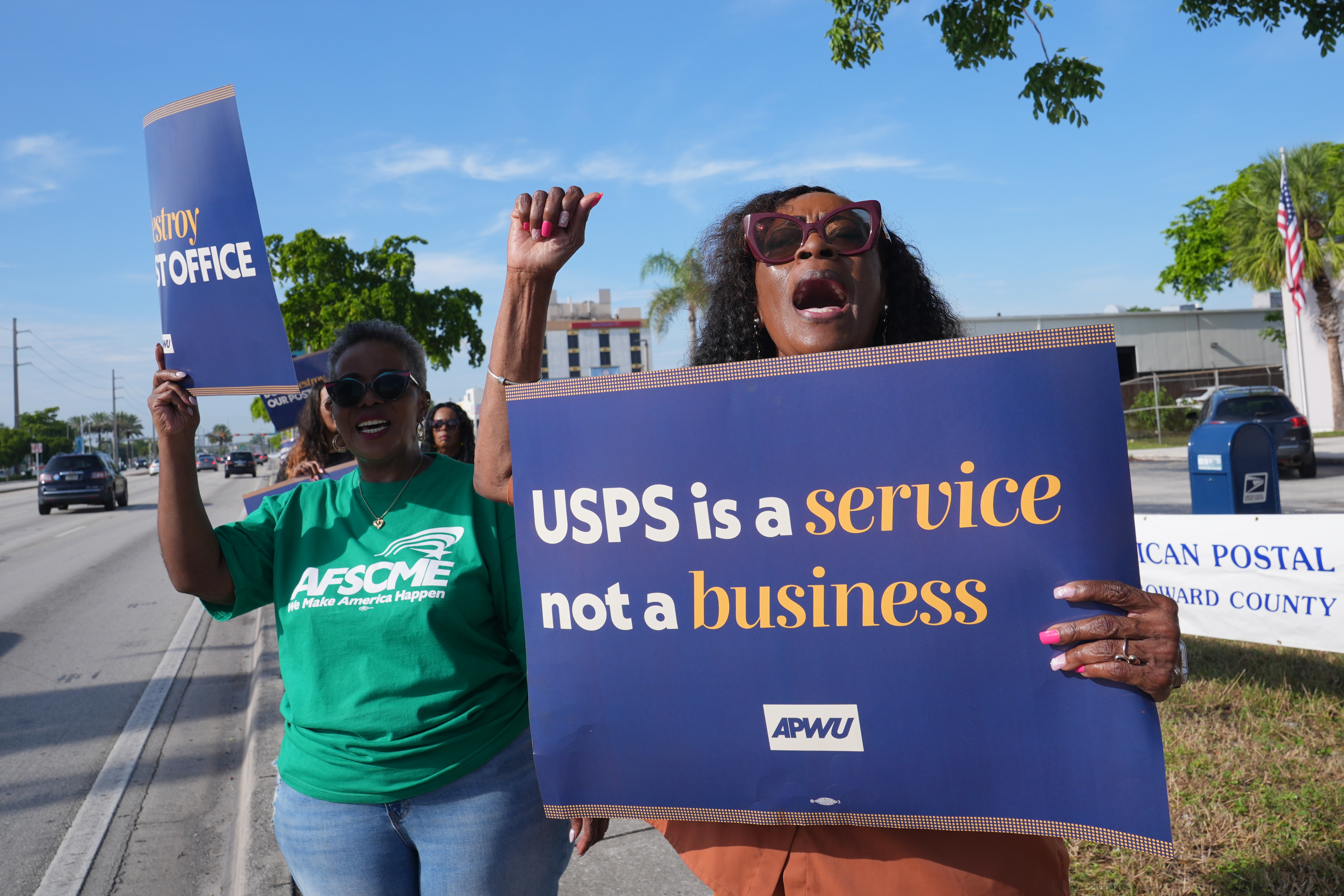
Joy L. Jackson (right) and Ketha Otis demonstrate against proposed changes to the U.S. Postal Service and President Donald Trump’s executive order regarding mail-in ballots in Miami Gardens, Fla., last month.Marta Lavandier
Voter suppression is the apparent goal, and the Supreme Court has played an outsized role in helping the Trump administration to get there. Even now, as the U.S. Department of Justice petitions U.S. District Judge Indira Talwani to reverse her nationwide injunction on Trump’s executive order, the Supreme Court looms in the background, ready to further erode democracy.
Of course, the threat posed by the court is about more than just one ruling. It is about the justices’ pattern of acceding to the whims of a president who seems to view the Constitution as a suggestion, rather than the law.
In 2024, the court shocked legal observers by ruling in Trump v. the United States that presidents have broad immunity from criminal prosecution for official actions they take while in office. And just a week ago, the court allowed construction of the president’s legally dubious $400 million ballroom to continue while lower court appeals play out, knowing the ballroom will likely be near completion by the time the courts catch up.
Still, the Supreme Court, whose 6-3 conservative majority includes three justices Trump nominated to the bench, does not have the last word on his policies. In America, the people have the final say. That’s why this latest gambit to cripple mail-in voting is so dangerous, and it is why the Supreme Court must be held accountable.
The people must sit in judgment of a president who starts a war that results in skyrocketing gas prices and American loss of life. The people must sit in judgment of a president who demolishes half of the White House without congressional approval. The people must sit in judgment of a president who wrecks the economy with illegal tariffs, and the people must sit in judgment of a president whose immigration crackdown costs American citizens their lives.
Polling has already indicated that Trump, whose 33% approval rating represents his all-time low, could drag his party down in the upcoming midterm elections. But as a seasoned politician once told me, the only poll that matters is the one that takes place on Election Day. Trump understands this truth, and he is trying to put his thumb on the scales. That’s to be expected, but he should not have the Supreme Court’s help.
At its best, America’s highest court should be apolitical, driven both by the letter and the spirit of the law. It should serve as a check on the worst instincts of politicians, and as a guardrail against tyranny. This court has failed on all those fronts, and has instead allowed itself to be driven and shaped by conservative ideology. It has fallen so far that it has seemingly been co-opted by those who would stop Americans from exercising their most basic freedom — the vote.
Gov. Josh Shapiro came to the Philadelphia suburbs on Friday morning to announce a new investment in a local police department. But the first question he fielded at a news conference concerned the growing confusion and political intrigue surrounding his administration’s response to two deaths associated with the state’s spiraling measles outbreak.
For the last three days, Shapiro, a Democrat, and Robert F. Kennedy Jr., the Republican heading the federal Department of Health and Human Services, have clashed over what the state has disclosed about the deaths and the consequences of Kennedy’s longtime anti-vaccination activism.
By Friday, Shapiro wanted to bring the focus back to an outbreak that has grown to more than 400 cases so far this year, saying “getting into a back-and-forth with people online who are spewing irresponsible conspiracy theories” does not “serve the public interest.”
But public health and communications experts say that the state’s initial refusal to share more information on the deaths created an environment in which anti-vaccination skeptics could spread their own narrative.
State officials announced the deaths of two unvaccinated Lancaster County residents at a news conference Tuesday, calling the deaths “measles-associated.” Their ages, causes of death, or their medical histories were not disclosed by the governor or his health secretary.
Within hours, other voices started filling the information vacuum. Lancaster County’s coroner told reporters that he had handled just one of the deaths. Coroner Stephen Diamantoni, a Republican elected official who is also a physician, said his office had examined a newborn who had tested positive for measles, but said the baby had not died from measles.
Soon misinformation and innuendo were spreading online out of the seemingly contradictory and limited details being disclosed by state officials, the local coroner’s office, and federal health leaders — all with their own political affiliations at a time when the safety of the measles vaccine increasingly divides Democrats and Republicans.
In response to the coroner’s statements, state health officials said they define a “measles-associated death” as one in which measles was present, even if measles is not identified as the immediate cause of death. Shapiro’s administration confirmed the newborn’s case was one of the two announced deaths, but offered no information on the second death.
President Donald Trump’s health secretary, Kennedy, pounced on the missing details the next day to spread misinformation. He wrote on X that the deaths may have been “fabricated” by the Shapiro administration and said in a television interview that “they cannot find any measles deaths in Lancaster County.”
Shapiro’s administration has called this inaccurate. Still, his administration has not revealed details of its medical review, beyond saying the state Department of Health’s epidemiology team had “thoroughly investigated.”
By late week, the Centers for Disease Control and Prevention, which operates under HHS, posted on X that state health officials were not sharing “information relevant to the outbreak” as it worked “to clarify conflicting information from Pennsylvania officials about whether the two reported deaths were caused by measles.”
State officials, including Shapiro, have repeatedly said the state is cooperating with the CDC.
But Pennsylvania health officials could have shared information on the patients’ ages, causes of deaths, and reasons for being unvaccinated, said Paul Offit, a physician at the Children’s Hospital of Philadelphia who heads the hospital’s Vaccine Education Center and is a vocal critic of Kennedy.
“It created fertile ground for conspiracy theories to thrive,” he said.
In a statement, a Shapiro spokesperson said the governor understands the “desire for as much information as possible to be made public.”
“However, when an individual dies, it is our legal responsibility to protect their right to privacy by maintaining patient confidentiality,” the statement said, noting this is critical to maintaining trust among communities statewide.
In a highly politicized environment in which measles cases are rising — and vaccination rates dropping — public health experts say it’s imperative for health officials to communicate accurately and transparently.
“You have to be transparent, be very clear about what you know, what you don’t know, what you’re trying to find out, and what questions are outstanding,” said Amesh Adalja, an infectious disease physician at the University of Pittsburgh Medical Center and a senior scholar at the Johns Hopkins Center for Health Security.
A lack of information from the state, he said, “created an information vacuum with people very adept at using information vacuums to spread their message.”
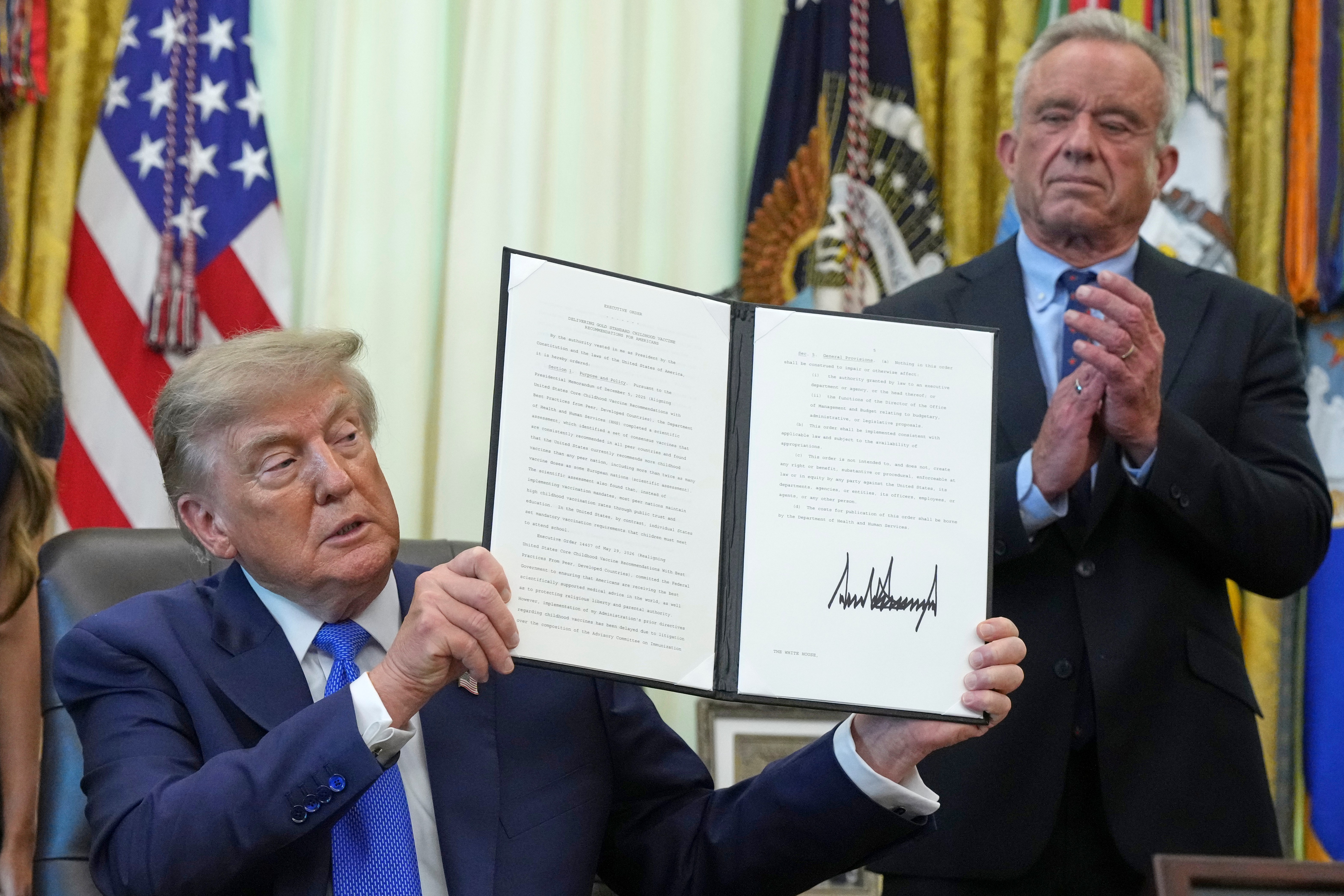
President Donald Trump holds a signed executive order about vaccines as Health and Human Services Secretary Robert F. Kennedy Jr. looks on Aug. 10 in the Oval Office of the White House. Jacquelyn Martin
What’s known about the Lancaster County deaths
Diamantoni said Friday that the baby died shortly after birth at a Lancaster County birthing center on Aug. 14.
Postmortem testing of the baby’s lung tissue showed that the baby had an active measles infection acquired before birth, he said.
He has not talked to the baby’s mother or the midwife who delivered the baby, and has not fully reviewed records from the birthing center where she gave birth, he said in interviews.
He told the Pittsburgh Tribune-Review that measles was listed on the baby’s death certificate, in a section of the certificate that reports other ”conditions contributing to death but not resulting in the underlying cause.”
He told the outlet that measles was included on the death certificate “to offer a broader view of the general health of the child.”
Babies can become infected with measles in utero if the mother is infected with measles and develops a rash within 10 days of giving birth, Offit said.
Diamantoni said a forensic pathologist in his office concluded the baby died of a ruptured spleen and cited trauma to the baby’s torso. He said he was unsure what had caused the trauma, and added that the baby’s spleen did not appear enlarged or infected.
Offit said that measles can cause an enlarged spleen that is then more likely to rupture — including during birth — and that it’s often difficult to tell whether a spleen has become enlarged once it ruptures.
A spleen also doesn’t have to become “massively” enlarged to rupture, he said: Measles can cause the spleen to become fragile, which also heightens the risk of rupture.
In conversations with state health officials, Offit said he learned that the patients who died in Pennsylvania would not have died were they not infected with measles.
He said the coroner should explain why the spleen ruptured, if it was not damaged from measles. Diamantoni said the office is still investigating the cause.
The state has released no additional information on the second death, and Diamantoni said his office was not handling it. He said his chief deputy spoke to the department prior to Shapiro’s news conference Tuesday.
“At no point was the Pennsylvania Department of Health told that this was not a measles-associated death,” a state spokesperson said on Friday. “The Shapiro Administration stands firmly by their comments on Tuesday.”
Public health communications
Pennsylvania’s health department has cited a state law prohibiting public access to death records, saying they cannot release more information on the deaths. Another state law requires the state to keep records of diseases confidential, except when it’s necessary to inform the public of the risk of communicable disease, a department spokesperson said in a statement.
The department “works hard to build and maintain trust in communities all over the Commonwealth — which includes doing everything possible to keep people’s identities confidential,” the statement read.
The department didn’t share information that could be used to “personally identify individuals or their grieving families” because “the circumstances of these individuals’ deaths do not change the Commonwealth’s response: Measles is a serious, highly contagious and preventable disease, and our focus remains on protecting Pennsylvanians, getting people vaccinated, and stopping the spread of this outbreak,” the spokesperson said.
But the state could have been more transparent about how they characterize deaths in a measles outbreak, said Kathleen Hall Jamieson, director emerita of the Annenberg Public Policy Center at the University of Pennsylvania.
People who are not trained in medicine may not understand the term “measles-associated,” for example, or how it differs from a cause of death, and state officials should have taken time at the news conference to explain what they meant by that term.
“You have an obligation to make sure that people don’t mishear on something as fraught as this topic,” she said.
Jamieson added that the political clashes around the deaths could overshadow a crucial point: A highly contagious disease is spreading in an under-vaccinated community, exposing children — including newborns unable to be vaccinated — to a serious illness.
“If we miss that moment, then the public health community has failed,” she said.
The 29-year-old Conshohocken resident recently got laid off from a local, financially struggling real estate company and is now trying to find work in a grueling job market for young workers where many of her applications are getting intercepted by AI bots, instead of a person.
That is a higher percentage than any in other age group in the poll, which found 58% of all Pennsylvania likely voters disapprove of the president.
Though 80% of young voters said they are satisfied with their own life, they overwhelmingly gave Trump low marks on his handling of the economy and other major issues in the United States.
Young people are overwhelmed by rising costs in what they see as an unstable economic and volatile international landscape with ramifications that they will one day have to shoulder.
“It feels like things are going downhill in a way that we don’t know how to recover, and our generation is going to be responsible for picking up the pieces environmentally,” said Harrington, a Democrat. “Also, politically, there are many things that have been done that are going to be hard to take back or that we have to figure out how to undo in the future.”
The poll, which surveyed likely voters in Pennsylvania between Aug. 17 and 21, underscores how deeply unpopular Trump is among the generation that came of age during his foray into politics and could foreshadow where the state’s politics are headed beyond November’s high-stakes midterm races.
“Young people are feeling as though they simply don’t have the same level of opportunity as do older people,” said Don Levy, director of the Siena Research Institute.“They are dissatisfied,” he added, and contending with housing expenses, the prices of goods and services, and how much it costs to get married.
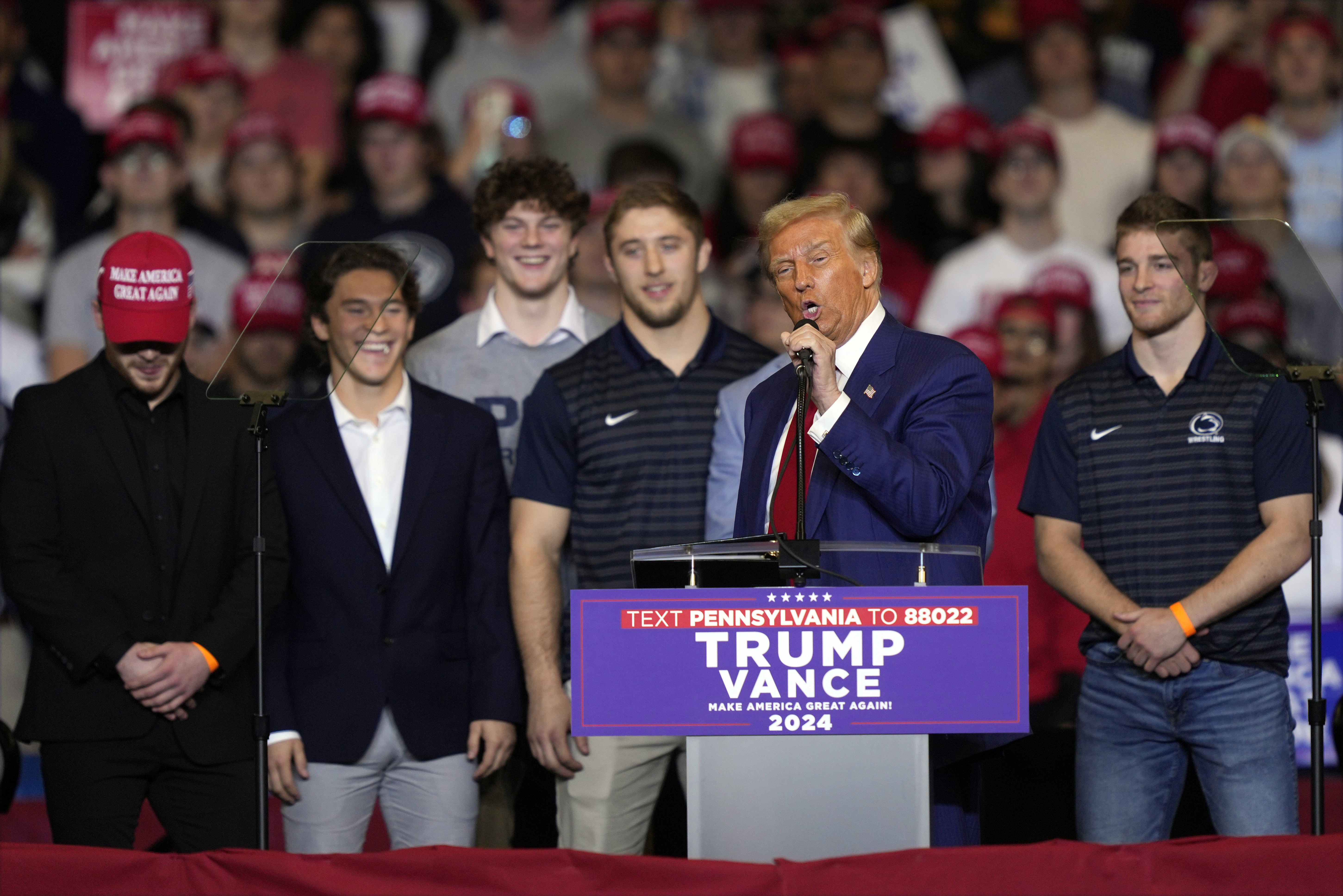
President Donald Trump speaks as members of the Penn State wrestling team listen at a campaign rally at the Bryce Jordan Center in State College in October of 2024. Trump went onto win the state. Matt Rourke
‘The cost of continuing to exist’
Sophie Showers, 19, wants kids, a stable job as a psychologist, and to one day be married.
But now that vision is getting hazier as costs rise, including at the grocery store and at the gas pump, which she needs for her 45-minute commute to school — what the Mechanicsburg resident and first-time voterrefers to as “the cost of continuing to exist.”
Trump, according to the poll, is most underwater with young voters on the cost of living: Only 9% approve and 90% disapprove of his handling of the issue.
That disapproval includes a quarter of voters under 30 who cast ballots for Trump in 2024, including a young voter from the Philadelphia area who asked not to be identified due to his role in his local Republican Party.
He supported Trump in 2024, but he has become disappointed with what he says is Trump’s ignorance of the country’s biggest problems, namely inflation.
“He wants to lower taxes. He wants to cut regulation. I agree with all those things,” he said. “But actually making major changes to people’s pricing, I don’t think he’s taking it that seriously.”
On the economy, 19% of young people approve of Trump’s handling and 81% disapprove, according to the poll.
“The current state of our country is that young people feel as though they have less opportunity economically than their parents or grandparents,” Levy said. “That’s a clear statement on dissatisfaction with the economy.”
(function(){function e(){window.addEventListener(`message`,function(e){if(e.data[`datawrapper-height`]!==void 0){var t=document.querySelectorAll(`iframe`);for(var n in e.data[`datawrapper-height`])for(var r=0,i;i=t[r];r++)if(i.contentWindow===e.source){var a=e.data[`datawrapper-height`][n]+`px`;i.style.height=a}}})}e()})();
“If the cost of living keeps increasing, whether it be due to gas prices … or tariffs increasing the costs of groceries, I don’t want to be in a world where I have to worry about those kinds of things for the family that I want to have or will have, and I personally don’t really see things getting better,” said Showers, an independent voter.
Miles Balfour, a graduate student pursuing a degree in human interaction at Carnegie Mellon University, is feeling similarly pessimistic.
“When it comes to the financial and economic goals that I have for myself — wanting to own a home, wanting to be able to help provide financially for my family — I don’t know, honestly. I wish there was a better sense of confidence or assurance that these things are much more likely to actually happen,” Balfour, 25, said.
According to a survey earlier this year from CIRCLE, a Tufts University program that studies youth civic engagement, many young people ages 18 to 29 are barely making ends meet, and nearly 60% said they struggle to meet their basic financialneeds.
“Young people’s personal situations are also really coloring their view of politics and of what’s happening in the country,” said Alberto Medina, CIRCLE’s communications manager.
Ben Hummer, 28, of Pittsburgh, said though he is new to his career in recruiting, raises have slowed down while expenses like rent have gone up. His auto insurance for his Hyundai skyrocketed to roughly $3,000 a year, and his favorite sneakers — for a race he will be running later this year — have jumped from $120 to about $170.
“My ability to afford my lifestyle comfortably has become more challenged,” Hummer, a Democrat, said.
Young voters grapple with international conflicts
Beyond struggles at home, young voters are also wrestling with questions about the U.S. role in overseas conflicts.
After the deadly Oct. 7, 2023, terror attack against Israel by Hamas, the country launched a military campaign against the insurgent group in Gaza. And with the death toll of Palestinians climbing to more than 70,000 over the last three years, the debate over U.S. support for Israel has become a defining issue for many young people in Pennsylvania and elsewhere.
As encampments and protests in support of Palestinians roiled university campuses ahead of the 2024 election, the issue hung over former President Joe Biden’s reelection campaign before his withdrawal and may have contributed to Vice President Kamala Harris’ loss.
Trump repeatedly vowed during his 2024 campaign to end the war. But fighting has continued, and now only 16% of likely young voters in Pennsylvania approve of Trump’s handling of the conflict, the poll found.
Hummer, the 28-year-old from Pittsburgh, disapproves of the president’s approach and said the U.S. “needs to balance its approach” in the Middle East.
(function(){function e(){window.addEventListener(`message`,function(e){if(e.data[`datawrapper-height`]!==void 0){var t=document.querySelectorAll(`iframe`);for(var n in e.data[`datawrapper-height`])for(var r=0,i;i=t[r];r++)if(i.contentWindow===e.source){var a=e.data[`datawrapper-height`][n]+`px`;i.style.height=a}}})}e()})();
“It doesn’t necessarily have to be pro-Palestinian by any means, but the United States has allies in the region outside of Israel that are being negatively impacted by the conflict, and we often just throw them under the bus,” Hummer said.
Many young people have coupled their anger about the economy with Trump’s decision to join Israel in striking Iranian nuclear facilities and military sites. The Iranian regime retaliated by blocking a key water channel where oil tankers flow, spiking the price of gas throughout the spring.
Among 18- to 29-year-old Pennsylvania voters, only 17% approve of Trump’s handling of the war in Iran, while 82% disapprove (it is also his least popular issue among all likely voters in the state). The war — which the president originally promised would go on for only a few weeks — has now lasted for six months.
“I’m concerned about the United States’ ability to extract itself from the war in Iran without taking some kind of loss — whether it’s loss of influence, loss of life, or loss of financial resources,” and the prospect gets worse the longer the U.S. remains involved, Hummer said.
Young voters are also more critical of Pennsylvania leaders’ positions on Israel than are respondents overall.
Nearly half, 47%, of respondents said Pennsylvania’s third Jewish governor, Josh Shapiro, has been just “about right on support of Israel,” with 14% saying he has been too supportive, despite his vocal opposition to the country’s leader, Prime Minister Benjamin Netanyahu. But among young voters, 40% said he was too supportive.
And more than half, 51%, of young voters said Pennsylvania U.S. Sen. John Fetterman, a frequent defender of Israel who has said he would leave the Democratic Party if anti-Israel sentiment grew too strong, is too supportive of Israel — compared with 30% overall.
‘Willing and ready to vote in 2026’
Young voters are now figuring out what to do next.
Darlene Jimenez, 19, of Philadelphia, said she is grappling with what she can feasibly do as a young person who cares deeply about many issues, including immigration (on which Trump has a 25% approval rating among young voters) and climate change.
“There’s so many times where I find myself thinking like, ‘What am I to do?’” said Jimenez, a Democrat and college student. “Like, I’m 19 and I have so many opinions, and it’s like, what am I supposed to do to actually make a change?”
Medina, communications manager for CIRCLE, said that while there is a sense of hopelessness among young people, “many of them are paying attention, and they say that they’re willing and ready to vote in 2026.”
“Often, precisely because they don’t like the way things are going, and they would like things to change, and they see themselves as having a role in bringing about that change,” Medina said the organization has found in its research.
In Pennsylvania, the youth vote has the potential to make a “decisive impact” on the four key competitive congressional district races this fall — in Bucks County, the Lehigh Valley, the Scranton area, and the Harrisburg region — according to CIRCLE’s 2026 Youth Electoral Significance Index.
(function(){function e(){window.addEventListener(`message`,function(e){if(e.data[`datawrapper-height`]!==void 0){var t=document.querySelectorAll(`iframe`);for(var n in e.data[`datawrapper-height`])for(var r=0,i;i=t[r];r++)if(i.contentWindow===e.source){var a=e.data[`datawrapper-height`][n]+`px`;i.style.height=a}}})}e()})();
But at the same time, young people are still trying to find their political home and historicallyhave been less likely to vote than other age groups, including in 2024, when there was a 54% turnout rate among Pennsylvanians ages 18 to 24 compared with 70% for the overall electorate, according to census data.
Others are a little more sure of where they stand. For instance, young women are the demographic most disapproving of Trump among likely voters in the Inquirer/New York Times/Siena poll. Fourteen percent of young women approve of his job performance, and 83% disapprove.
(function(){function e(){window.addEventListener(`message`,function(e){if(e.data[`datawrapper-height`]!==void 0){var t=document.querySelectorAll(`iframe`);for(var n in e.data[`datawrapper-height`])for(var r=0,i;i=t[r];r++)if(i.contentWindow===e.source){var a=e.data[`datawrapper-height`][n]+`px`;i.style.height=a}}})}e()})();
While a gender gap still exists among young voters, young men — who helped catapult Trump to the White House in 2024 — now disapprove of the president by a nearly 2-1 ratio: 33% approve of his job performance, compared with 64% who disapprove.
Will, a Democrat from Bucks County who works in academia, crossed the aisle to vote for Trump in 2024 because he — “a loyal Joe Biden guy” — vehemently disagreed with how Harris was nominated without a primary after Biden’s withdrawal and also believes Democrats have focused too much on identity politics.
The 27-year-old, who asked to be identified only by his first name because of concerns about workplace retaliation, has mixed feelings about Trump’s handling of the issues and called the Iran war “ridiculous.” But he does not fully regret his vote, citing Trump’s handling of Israel as one reason.
“My impression is that the Democrats have been moving further left to kind of compensate for the fact that MAGA and the tea party moved the Republicans further right, so it kind of leaves people in the middle stranded. … I would prefer the Democrats kind of bring things back to the center,” said Will, who supports Shapiro for governor and would back him for president in 2028.
And Luke Averill, 19, a registered Republican from Delaware County who voted for Harris in 2024, said he thinks he can make the most impact on the direction of the country by voting for moderate candidates in Pennsylvania’s GOP primaries, but he does not see himself as a “diehard for one party in particular.”
But for many young voters, the elected officials they are gravitating toward are indicative of what is most important to them.
Several young respondents to the poll said they findNew York City Mayor Zohran Mamdani’s style of politics and focus on affordability to be refreshing.
“He’s the inspiration for myself and many people in my generation and all around the country,” Balfour, the 25-year-old at Carnegie Mellon, said. Mamdani brings “a sense of hope and optimism” and the ability to see government “make our lives much more meaningful.”
Kelly Harrington, 29, poses for a portrait near her home in Conshohocken, Pa., on Monday, Aug. 24, 2026.Erin Blewett / For The Inquirer
And as for Harrington, the 29-year-old from Conshohocken, she said though she feels “frustrated and sad about the state of the world,” she believes it is important to take those emotions to the ballot box.
“Politics is in every aspect of life,” Harrington said. “It affects you directly in almost every way, and if you get involved, you can make real change.”