A Delaware County volunteer fire chief was convicted of ethnic intimidation, terroristic threats, and related crimes for calling a woman the N-word, among other slurs, during a tense encounter in 2024.
John Romano, 48, said the woman was “a wild animal,” according to police body camera footage played during his trial last month before Judge Margaret J. Amoroso, who handed down her verdict Monday.
Romano, the assistant fire chief at the Sharon Hill Fire Company, also said he was “tired of dealing with them,” the footage showed.
District Attorney Tanner Rouse said that Romano’s conviction “is an important reminder that words have consequences.”
“What happened in this case was not an argument between two people,” Rouse said. “It was a disturbing encounter involving racial slurs, intimidation, threats, and behavior that left someone fearing for their safety. No one should have to endure this kind of treatment, plain and simple.”
Romano and the woman crossed paths on Hook Road in Darby Township in November 2024, while Romano was using a forklift to unload Christmas trees. His forklift, the woman testified, was blocking the road, causing a traffic jam of irritated drivers who were honking their horns.
After the car in front of hers squeezed through a small gap near the forklift, the woman said, Romano got out of the forklift, “rushed” to the passenger-side window of her car, and demanded to know why she was honking at him.
From the outset, she said, Romano was “on full-blast rage.”
He called her the N-word, as well as another slur, she said, and took a picture of her license plate, telling her he would “take care” of her at her home. When she said she was calling the police, Romano told her to do so, saying he knew the county sheriff.
Romano’s attorney, Christopher Boggs, said in his closing arguments that the confrontation was “more akin to a road-rage incident” and was not a case of ethnic intimidation.
Romano, upset at the car horns honking, would have said “awful things to anyone in that circumstance,” he said.
Amoroso is expected to sentence Romano on Sept. 28.
AmeriHealth Caritas, a Medicaid insurer based in Delaware County, has agreed to invest $15 million in Deon Health, a Michigan start-up that works with states and insurers to improve care for people with intellectual and developmental disabilities, the two companies announced Friday.
Deon was founded in 2024 to work with local providers to help people with intellectual and developmental disabilities (I/DD) overcome the silos that make it hard to coordinate primary care, specialty services, behavioral health, and long-term supports needed to allow individuals to live in community settings.
“We built Deon Health to create a better way to organize care around people with I/DD, their families and the professionals who support them every day,” Sara Ratner, chief executive of Deon Health, said in a news release. “AmeriHealth Caritas brings deep Medicaid experience and shares our commitment to a model built around strong local relationships.”
Other investors in Deon include Town Hall Ventures, First Trust Capital Partners, and Difference Partners.
Independence Health Group, the parent company of Independence Blue Cross, is the majority owner of AmeriHealth Caritas. Independence’s partner in the business is Blue Cross Blue Shield of Michigan. Among the nation’s largest Medicaid insurers, AmeriHealth Caritas has contracts in 13 states and Washington D.C.
In between his shifts as a guard at the State Correctional Institute at Chester, David Lemmon sent multiple child pornography videos to users on an encrypted messaging app, according to court documents obtained Thursday by The Inquirer.
After sending one video involving a girl that appeared to be between 5- and 7-years-old performing a sex act on an adult man, Lemmon, 45, bragged about his collection, the affidavit of probable cause for his arrest said.
“I have quite a bit I can share,” he told an unidentified person in a June 12 conversation.
Lemmon, of Clifton Heights, was charged last week with more than 100 counts of possessing and distributing child pornography after detectives in the Delaware County District Attorney’s Office received a tip from the National Center for Missing and Exploited Children.
Arik Benari, whose law firm is representing Lemmon, declined to comment Thursday. Lemmon, who was freed after posting $10,000 bail after his arrest, did not respond to a request for comment.
The investigation into Lemmon began in March, after county detectives received the tip that an IP address connected to Lemmon’s email had uploaded a video to Snapchat of an adult man sexually assaulting a girl between 3 and 6-years-old, according to the affidavit.
Detectives served a search warrant on Lemmon’s cell phone in June, and found nearly 190 child pornography files on the device.
The warrant also showed Lemmon had been sending some of those files through Session, an end-to-end encrypted messaging application that detectives said is commonly used to share child pornography, the affidavit said.
Within those chat logs, Lemmon also discussed having sex with another user who told him she was 17, the affidavit said. Detectives noted that Lemmon “sent more [child pornography] than he was receiving.”
Maria A. Bivens, press secretary of the Pennsylvania Department of Corrections, said Lemmon has not worked at SCI Chester since his arrest last week, and that the department is moving to suspend him.
Lemmon is scheduled to appear before a district judge for a preliminary hearing on Sept. 24.
Armed with signs that read “Just say no!” and buttons etched with “Save our community,” Middletown Township residents on Tuesday pushed back fiercely against a proposal to build a new school on open land behind Penncrest High School as negotiations between the Rose Tree Media School District and the township drag on into the fall.
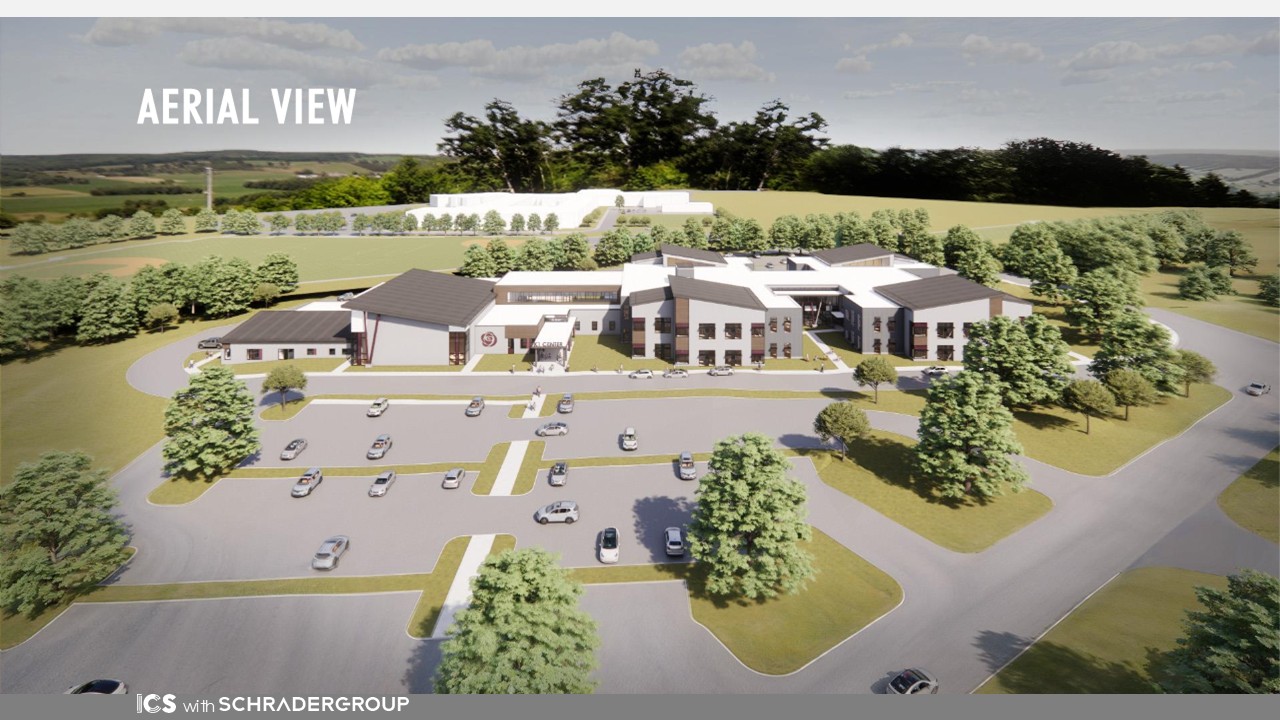
The Rose Tree Media School District, which serves families in Media borough and Edgmont, Middletown, and Upper Providence Townships, is proposing a new school for kindergarten and first grade students on an empty lot behind Penncrest High School. The district says the school will relieve overcrowding and allow Rose Tree Media to finally offer full-day kindergarten, bringing it up to par with neighboring schools.
Yet the proposal has not been welcomed by many neighbors in Middletown, who during nearly two hours of public comment on Tuesday raised concerns that the school would create dangerous driving conditions on key roadways, increase traffic, and burden taxpayers.
During the meeting, representatives from the school district presented traffic impact data to theplanning commission, an advisory board that will issue a recommendation to Middletown’s seven-membercouncil on whether the township should approve the project. The planning commission voted to postpone a recommendation voteuntil a later date, when the school district will be expected to provide more detailed traffic data.
The estimated cost for the school building is around $84 million, with an additional estimated $7.5 million for a proposed athletics addition. The realignment of Rose Tree Road will cost around $3.7 million, but is likely to be funded in part by grants.
The meeting was the latest development in a protracted process for the Rose Tree Media School District, which has been attempting, unsuccessfully, to build a new school for six years.
School officials say the district is overcrowded and unprepared for a wave of young students coming in the next decade.
The school district’s enrollment has risen steadily in the last 10 years, from 3,779 students in the 2015-16 school year to 4,319 in the 2025-26 year. Enrollment is expected to peak in 2032-33 with nearly 4,600 students. Student population growth has forced the district to adopt space-saving measures, including installing multiple modular classrooms.
!function(){“use strict”;window.addEventListener(“message”,function(a){if(void 0!==a.data[“datawrapper-height”]){var e=document.querySelectorAll(“iframe”);for(var t in a.data[“datawrapper-height”])for(var r,i=0;r=e[i];i++)if(r.contentWindow===a.source){var d=a.data[“datawrapper-height”][t]+”px”;r.style.height=d}}})}();
The new school would also allow the district to provide full-day kindergarten, officials say, as Rose Tree Media is one of the few remaining school districts in the region that only offers a half-day option.
During brief remarks at the beginning of the meeting, Rose Tree Media’s superintendent Joe Meloche said, “I think we all want the same thing ultimately, which is a plan that is safe, practical, and thatworks well for everyone.”
Yet dozens of Middletown residents, many of whom live in close proximity to the proposed school site, said they felt the project was misguided, poorly planned, and would add hazards to already congested roadways. Some recounted watching dangerous car accidents on the streets abutting the site. Others charged the district with failing to account for how many cars would be clogging roads during peak pickup and drop off times. Many said they disagreed with the concept of a K-1 center as a whole and asked the planning commission to require the district to come up with a different option.
“The site is too small, and student capacity is too great,” said resident Peter Wolf, who called the proposal “an oversized industrial project.”
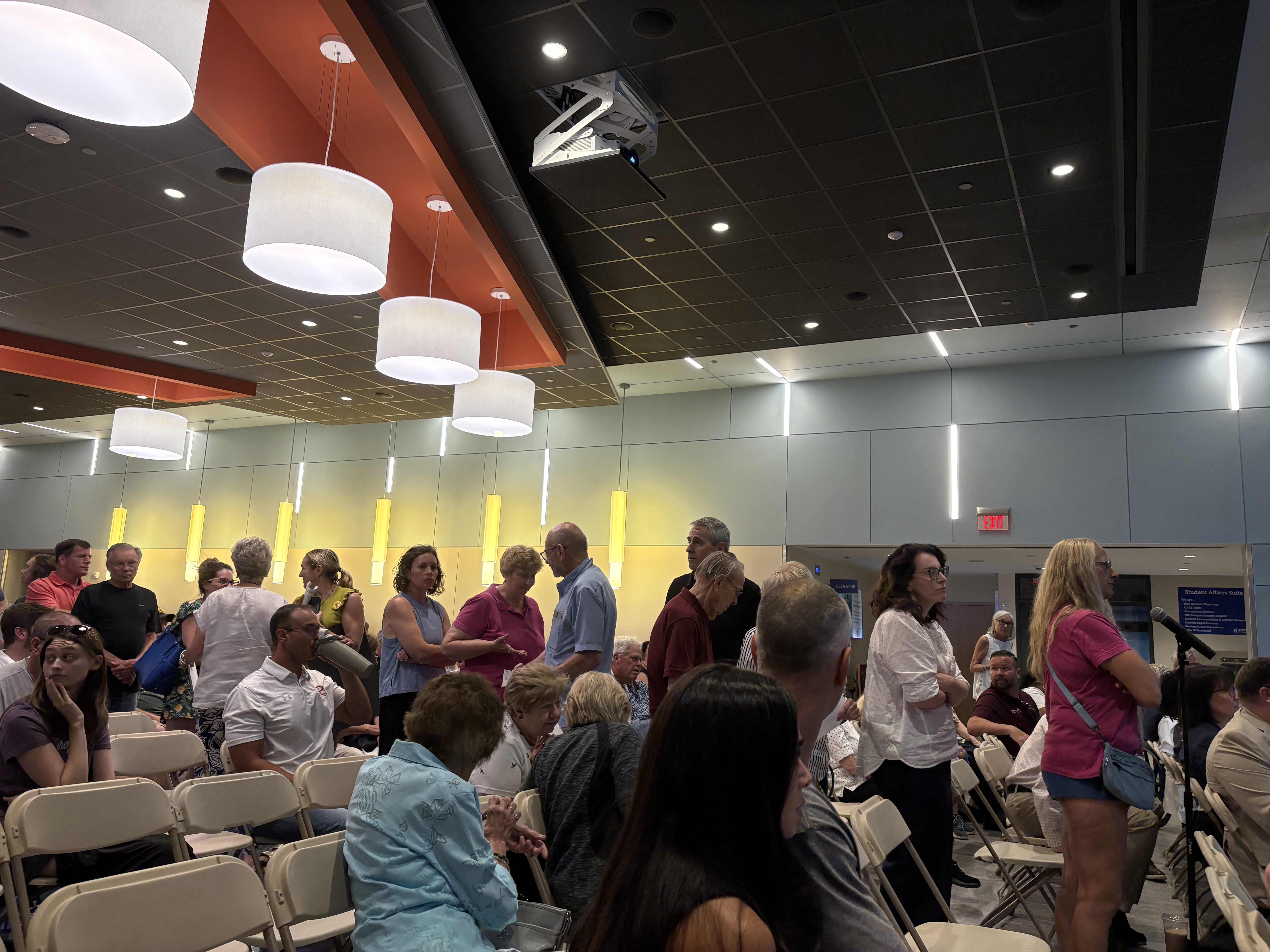
Residents of Middletown Township line up to make public comment at an Aug. 11 meeting of the township’s planning commission. Dozens of residents spoke in opposition to a new K-1 school proposed by the Rose Tree Media School District.Denali Sagner
Resident Sally Turek said she agrees that the district needs full-day kindergarten, but that “there are definitely other, better options than this.”
“This is like planning for Disney World. We can’t afford Disney World. We don’t need Disney World,” Turek said. “This is not the right time to do this, nor the right place.”
A small contingent of parents spoke in favor of the proposal, describing the crowd as a vocal minority and saying that the residents who needed the school most, namely parents and their young children, were the very people who were unable to attend the evening meeting.
“The kids are here. They need a place to go, and this notion that we can move the fifth grade to the middle school does not solve the problem,” said Ron Peterson, parent of an elementary school student.
“Is this an ideal spot? Perhaps not,” Peterson said. “But there aren’t better spots available.”
The proposal in Middletown Township is Rose Tree Media’s second attempt to find a home for a new school. The school district proposed putting a new elementary school in Edgmont Township in 2023, a planthat was voted down by the township’s board of supervisors, who cited traffic and location concerns.
The planning commission will reconsider the proposal in September or October and has asked the school district to provide more detailed traffic data.
This suburban content is produced with support from the Leslie Miller and Richard Worley Foundation and The Lenfest Institute for Journalism. Editorial content is created independently of the project donors. Gifts to support The Inquirer’s high-impact journalism can be made at inquirer.com/donate. A list of Lenfest Institute donors can be found at lenfestinstitute.org/supporters.
Joseph Richie was born in 1942 and served as a U.S. Marine in the Vietnam War. When he died in 2017 in Delaware County, no one claimed his body, and his cremated remains sat for nearly a decade in the county medical examiner’s office.
But on Friday, Richie’s ashes were taken by motorcade to a national military cemetery about two hours away. Bagpipes played as a volunteer carried his remains. A bell tolled when his name was read. Rifles fired three ceremonial volleys to honor Richie and other veterans. A flag was presented to a volunteer as a sign of gratitude. A bugler played Taps. And although the people there did not know Richie personally, they saluted him.
Richie was one of 15 military veterans from Delaware County belatedly laid to rest during the ceremony at Indiantown Gap National Cemetery, northeast of Harrisburg. Those who attended said it was a fitting honor for people who served their country in Vietnam and elsewhere, but never received a proper funeral.
“They served their country. No one claimed them. It breaks my heart,” said James Augustin, a 74-year old Army veteran who attended the ceremony. Augustin said the ceremony righted that wrong.
Many veterans qualify for military honors at their funeral. Usually, that process begins when a family requests the honors from a veterans service organization.
What made this ceremony different is that no family members were around to do that for these people, said Kathleen Kenney, a staffer in the Delaware County Medical Examiner’s Office. So she and other volunteers took on that role instead.
“My family has a military background, and I believe that everyone who has served should be laid to rest in a dignified manner,” Kenney said.
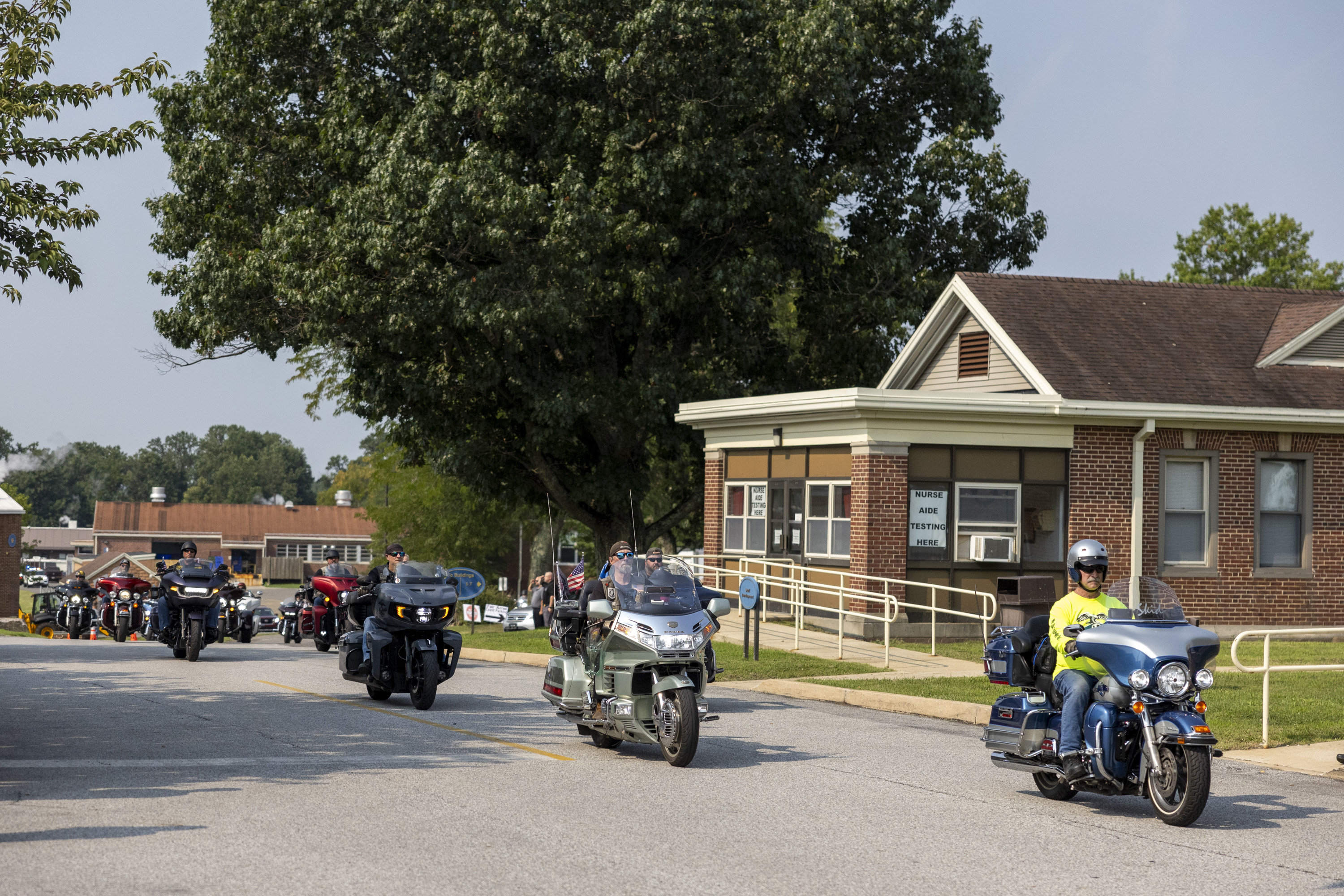
A motorcade send off for 15 veterans whose remains that came into the county’s possession as part of the Missing In America project, is seen being escorted from the Delaware County medical examiner office in Media, Pa., on Friday, Aug. 14, 2026.Tyger Williams / Staff Photographer
Kenney declined to discuss specific cases but said the county takes possession of a body when it cannot locate any living family members, or when the family declines to do so.
As a result, by the time Kenney took her current role in the medical examiner’s office in 2025, she faced a backlog of names and human remains.
“And I just said, I bet you we have some veterans here,” Kenney said.
She took the list of names and biographical information to the U.S. Department of Veterans Affairs and the National Archives, which confirmed that 15 of the people on the list had been in the military.
Kenney reached out to the Missing In America Project, a nonprofit that coordinates such veterans’ ceremonies. The organization has helped inter more than 41,000 previously unclaimed veterans, Forrest Lingenfelter, the group’s regional coordinator, said at the ceremony.
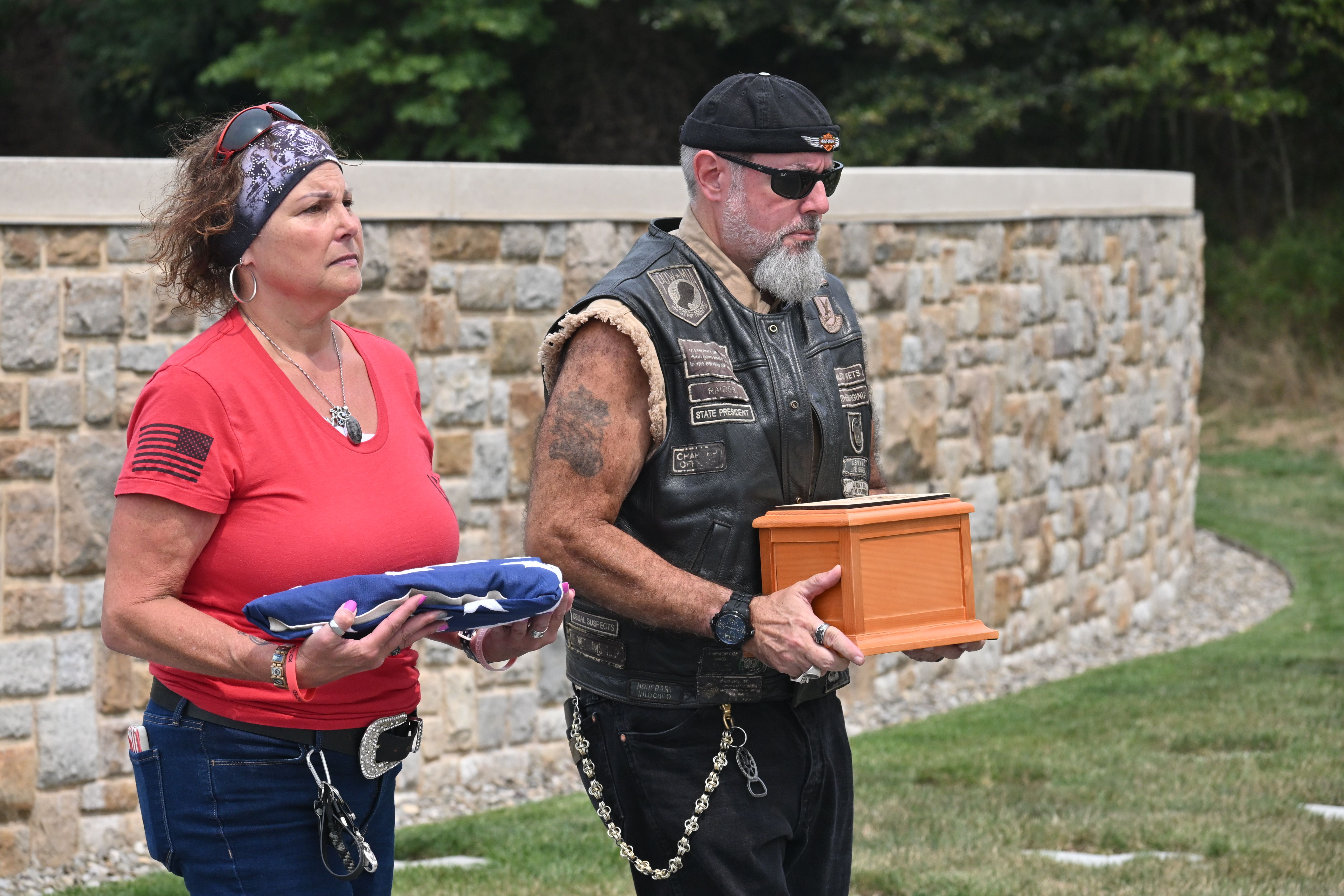
Volunteers carry a flag and the remains of a U.S. military veteran who was interred at Indiantown Gap National Cemetery Friday, Aug. 14.Brett Sholtis / Staff
Lingenfelter’s team put out the word to veterans organizations, and by Friday morning, more than a dozen vehicles and a pack of motorcycles were gathered at the Delaware County Medical Examiner’s Office in Media. With a police escort, the convoy traveled two hours west to the national cemetery.
During the ceremony, an Army sergeant sang the national anthem, the crowd sang “Amazing Grace,” and American Legion Chaplain Karis Hagen asked God to consecrate the veterans’ final resting place.
Lingenfelter, a retired Army master sergeant, read a poem from a soldier’s perspective that concluded: “I can’t forget a single name. Those men are with me still. If I don’t remember them, then I ask you, who will?”
Then Lingenfelter told the crowd: “Your presence here today answers that question. We will remember those names.”
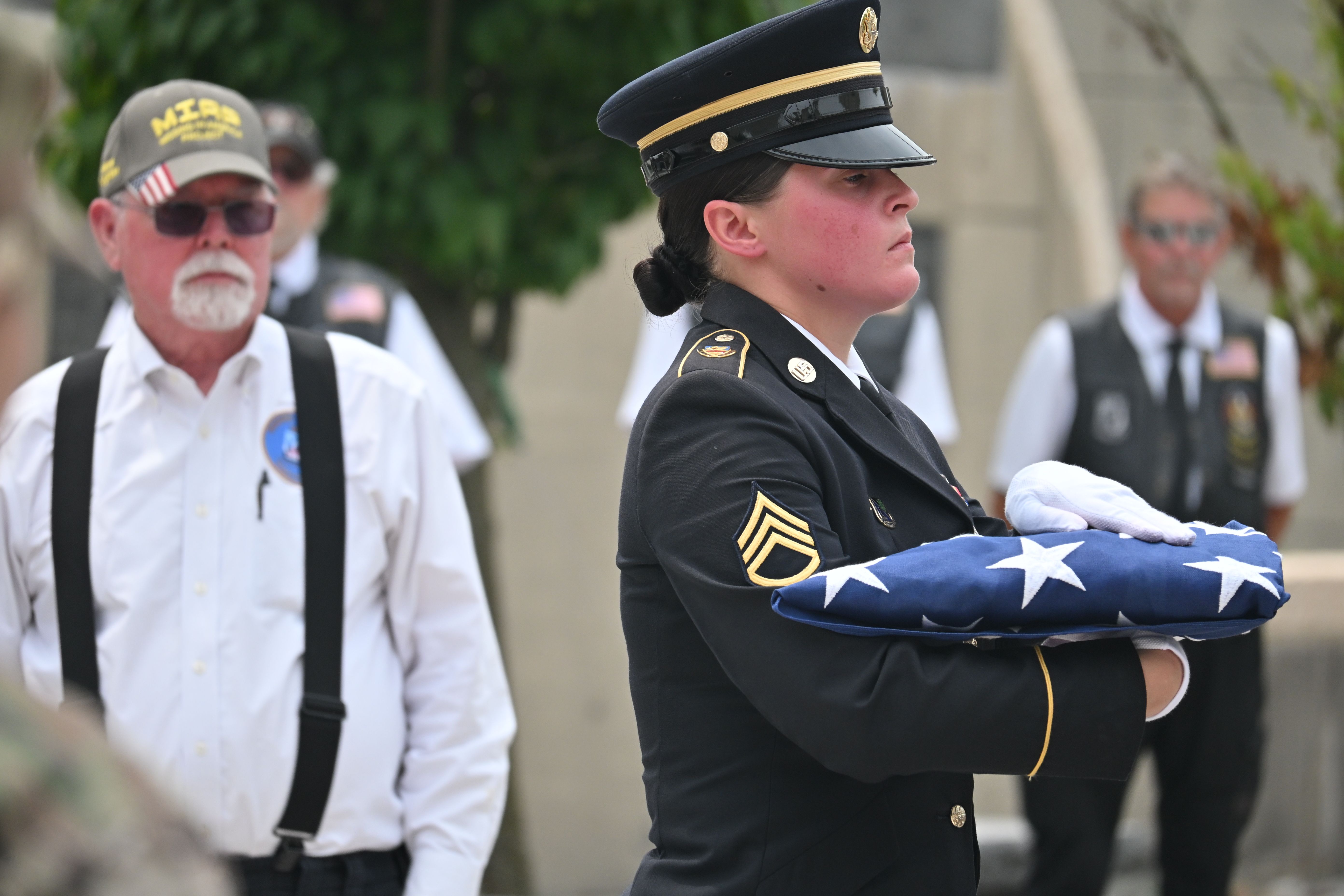
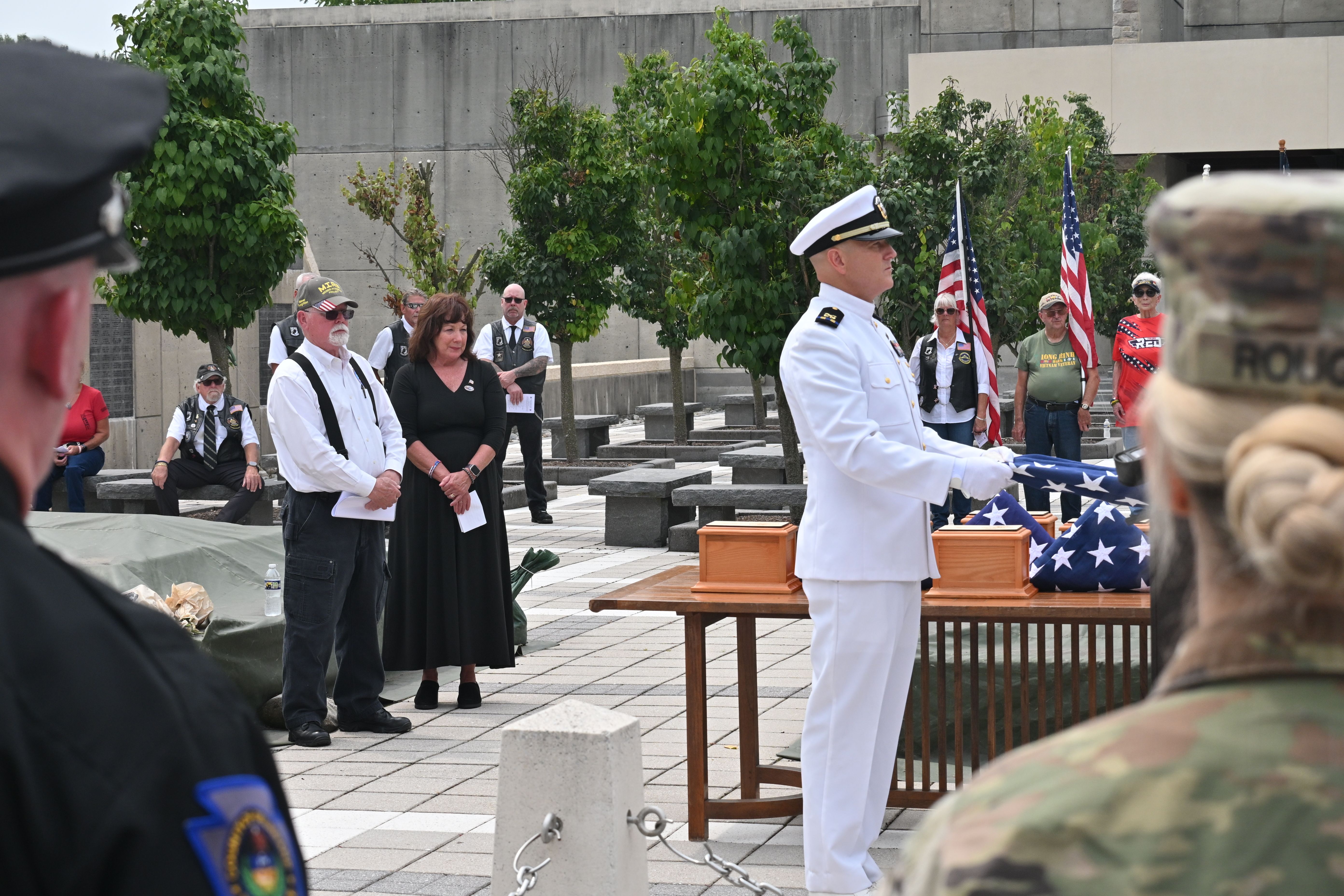
The ceremony fell silent, other than the sound of flagpole cables clacking in the wind, as members of the military honor guard folded each veteran’s American flag 13 times — one time for each original colony.
Typically, the flag would be presented to a family member as a sign of gratitude. But Friday, volunteer LuAnn Jahnke accepted one of the flags.
Jahnke, a retired Army veteran from Wallingford, Delaware County, said she did not know exactly what these veterans went through, but she could imagine.
“Vietnam veterans lived with secret wounds, hidden wounds from their service,” Jahnke said.
Her husband, retired Army Col. Jeffery Jahnke, carried a flag for one of the dead veterans. He said Vietnam veterans were not always welcomed when they returned to the U.S.
“I tell them, welcome home,” he said.
Jimbo Ernst leads a chapter of Special Forces Brotherhood, a motorcycle club made up of former military special forces members.
He said that ceremonies like this do not just pay tribute to the dead. They also bring together other veterans.
In this case, these people are from all different branches of service and age ranges. Though there is always some rivalry between groups, they are like one big family.
“It definitely helps keep the veteran community together,” Ernst said. “When push comes to shove, we’re always here for each other.”
At left, ceremony organizers Forrest Lingenfelter and Kathleen Kenney watch as a memberof the U.S. Navy honor guard folds an American flag.Brett Sholtis / Staff
The veterans who were interred Friday will be placed in an above-ground structure for cremated remains at the cemetery known as a columbarium, Lingenfelter said. Their names and information will be on display along with a message: “You Are Not Forgotten.” Their names are:
Sgt. First Class Ronald D. Lewis Jr., U.S. Army, 1956-2024.
Spec. 5 Richard J. Catalano, U.S. Army, 1944-2022, Vietnam.
Spec. 5 Ronald C. Ramsue, U.S. Army, 1945-2023, Vietnam.
Cpl. Joseph B. Richie, U.S. Marine Corps, 1942-2017, Vietnam.
Spec. 4 Michael Y. Yellin, U.S. Army, 1941-2024, Vietnam.
Cpl. George L. Zechman, U.S. Marine Corps, 1947-2019, Vietnam.
Pfc. Francis M. Siple, U.S. Marine Corps, 1944-2024, Vietnam.
Pfc. John F. Snow, U.S. Marine Corps, 1951-2025, Vietnam.
Pfc. Samuel L. Williamson, U.S. Army, 1951-2020, Vietnam.
Airman First Class Raymond L. Vining, U.S. Air Force, 1939-2022, Vietnam.
Airman Second Class James L. Lemons, U.S. Air Force, 1942-2018.
Airman Third Class Stanley E. Kornafel, U.S. Air Force, 1940-2024.
Pvt. 2 Samuel L. Webb, U.S. Army, 1950-2023, Vietnam.
Pvt. Hayward J. Strange, U.S. Army, 1948-2025, Vietnam.
Seaman Robert J. Finkbiner, U.S. Navy, 1944-2017, Vietnam.
When 8-year-old angler Seamus Coffey reeled in a 2-pound, red-bellied creature with menacing teeth last weekend, he knew exactly what he had caught.
“That’s a piranha!” Mike Coffey recalled his son screaming on the banks of Ridley Park Lake.
Surely, his father thought, Seamus was mistaken — this must just be a bluegill or sunfish or a bass. A quick reverse image search confirmed Seamus’ hunch.
“No, Dad,” Seamus, who loves watching fishing videos on YouTube, insisted, “that’s a piranha.”
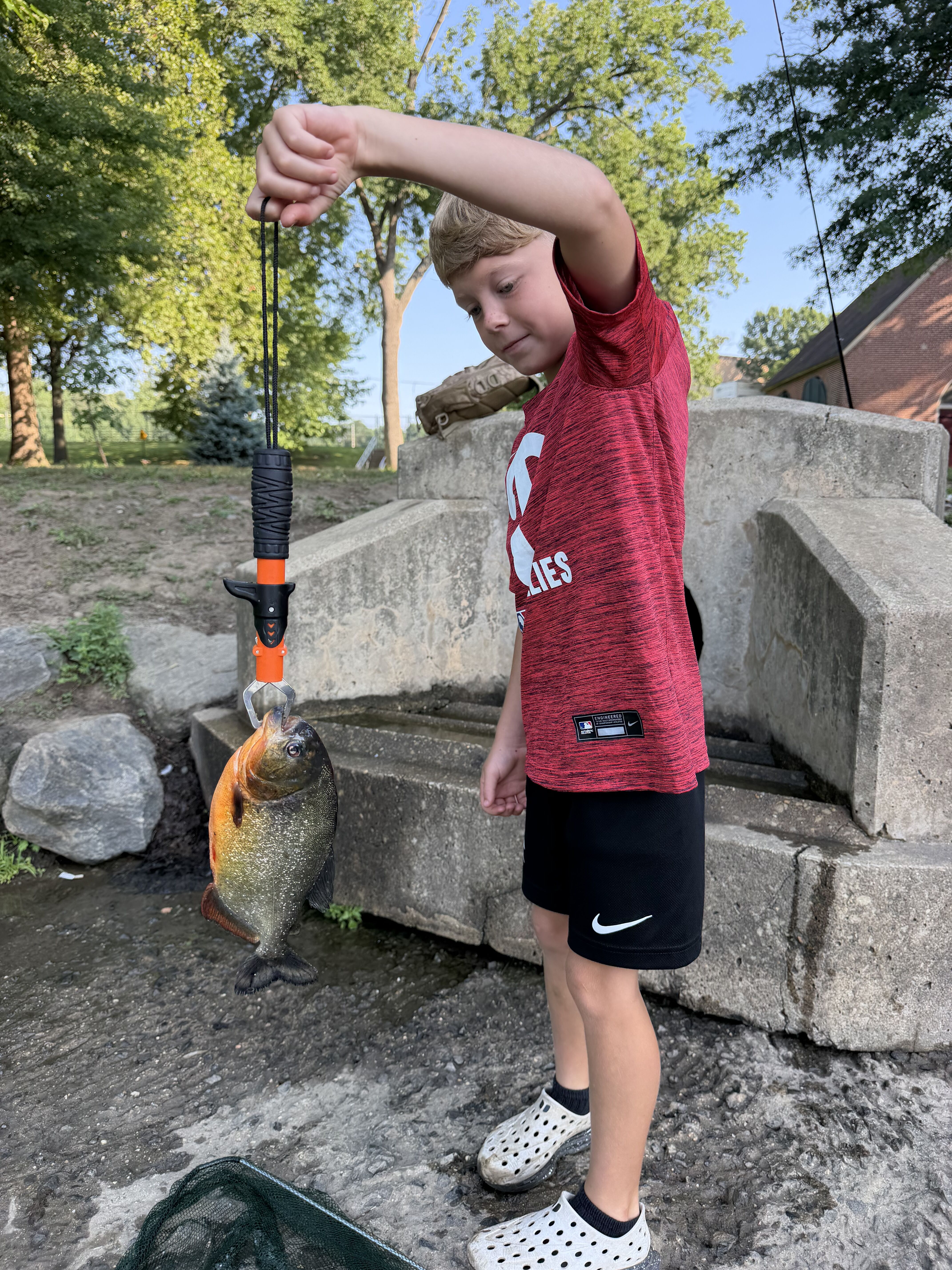
Pictured here, the piranha at the center of Seamus Coffey’s recent virality.Courtesy of Mike Coffey
Now, Seamus is a budding influencer and wannabe YouTuber. Brands are sending him fishing gear, according to de facto manager and agent Mike, who is fielding media requests and running a GoFundMe for filming equipment. Their new Instagram persona, @ReelTalkPiranha, bills them as the “father-and-son duo who took down the infamous Delco Piranha.”
“I understand it’s an extremely, extremely rare circumstance to catch the fish that we did, but we did not expect anything like this,” Mike Coffey said of their virality.
Seamus, meanwhile, has not quite internalized his newfound fame. His bashful TV appearances have been clipped for social media — “I’m everywhere,” Coffey recalled his son saying while scrolling on the couch — but he “doesn’t really understand how big it is.”
Saturday, Aug. 8, started as a normal day of fishing for the Coffeys. Armed with frozen shrimp, they cast their reels hoping to maybe catch a catfish. After a little more than an hour, Seamus pulled in the piranha.
Mike Parker, spokesperson for the Pennsylvania Fish and Boat Commission, said biologists visually confirmed it was a “species of piranha.” No other piranhas have been reported at the lake.
The South American tropical fish was likely a pet whose owner dumped it in the Delco lake — a crime punishable by misdemeanor charges or fines, according to Parker.
“If you have one of these exotic pets and you can no longer take care of it … you have to understand you’re responsible for that animal,” Parker warned. “Releasing it isn’t only illegal, but it’s really cruel.”
While the catch was concerning and unusual, Parker said, his agency does not believe this is a serious or ongoing threat. Frankly, he said, tropical fish cannot survive a Pennsylvania winter. (Mike Coffey said he killed the fish humanely and threw it back into the water.)
“A lot of things happen for a reason,” Coffey said. Seamus “had a lucky catch that day and it took off.”
Thora Jacobson, 77, of Philadelphia, award-winning former chief executive officer at the Fleisher Art Memorial, former executive director at the Philadelphia Art Alliance, former director of design review for Mural Arts Philadelphia, former chief operating officer for Philagrafika, former chair of the Philadelphia Art Commission, onetime adjunct instructor at Drexel University, independent curator, artist, mentor, Mummers Parade judge, and much more, died suddenly Sunday, Aug. 2, at her home. The exact cause of her death has not been determined.
Born and reared in Ridley Park, Delaware County, Ms. Jacobson became interested in art education, administration, and conservation at Trinity Washington College in Washington in the 1960s. She settled in South Philadelphia after college in the 1970s and spent the next 50 years organizing, promoting, and inspiring local artists and art organizations.
“Philadelphia richly deserves to be known as a place that honors its own,” she told The Inquirer in 2006.
She joined Fleisher in 1972, rose to CEO in 1983, and left in 2006 to work over the next two decades at Philagrafika, Mural Arts Philadelphia, the Philadelphia Art Alliance, and elsewhere. During her 34 years at Fleisher, she developed its Center for Works on Paper, the Community Partnerships in the Arts program, and the Challenge series juried competition.
She also oversaw three capital campaigns and told The Inquirer that her priority was “seeing connections and possibilities between and among artists, institutions, and their constituencies.” A colleague said on Facebook: “To many of us she was Fleisher.”
John Ittmann, former curator at the Philadelphia Museum of Art, told The Inquirer in 2006: “Thora is a real firecracker. She has a wonderful type of energy that is really infectious.”
Ms. Jacobson was also chair of the Philadelphia Art Commission for a decade, interim director of operations for the Asian Arts Initiative, vice president of the Philadelphia Volunteer Lawyers for the Arts, trustee of the National Guild of Community Arts Education,member of the American Swedish Historical Museum,and, most recently, a visual arts management consultant.
Ms. Jacobson and fellow curator Warren Angle admire an exhibition at the Fleisher Art Memorial in 2002. April Saul / Staff Photographer
“Thora was kind and clear,” colleagues at Social Impact Studios said on Facebook, “but firm as she pushed us to keep tweaking things until they were as strong as they could be.”
She was an adjunct instructor at Drexel University from 2010 to 2014 and led research projects at Drexel and the University of Pennsylvania on social impacts of art in Philadelphia neighborhoods. Her first job out of college was coordinator of the student center at the Art Museum.
She curated and juried shows, and wrote forwards and essays for art books and catalogs. She drew in her spare time and judged the Mummers Parade for years.
She was featured in The Inquirer and Daily News, and appeared in the 1992 TV art documentary Monuments in Love. In 2006, she earned the Visionary Woman Award from Moore College of Art and Design, and was honored for lifetime achievement by Tri-State Artists Equity.
Ms. Jacobson, standing between Jim Straw, to the left, and Ralph Wellington to her right, earned the Visionary Woman Award from Moore College of Art & Design in 2006.Gary Horn Photography
“She’s really respected throughout the arts community in Philadelphia,” Happy Fernandez, then president of Moore, said in 2006. Anne d’Harnoncourt, then director of the Art Museum, said Ms. Jacobson’s “impact has been enormous.”
William Valerio, director and CEO of the Woodmere museum, said: “Thora was a towering figure in the arts of Philadelphia, a builder of institutions whose accomplishments are lasting.”
Thora Elizabeth Jacobson was born Feb. 19, 1949, in Ridley Park. She was the youngest of three children; her father died when she was 3. She played field hockey in high school, was fascinated by words and language, and graduated from the old Holy Child Academy in Sharon Hill.
She met her husband, Antonio Sorgini, when he was taking classes at Fleisher, and they married in 1980 and had a son, Antongiulio. Her husband died in May.
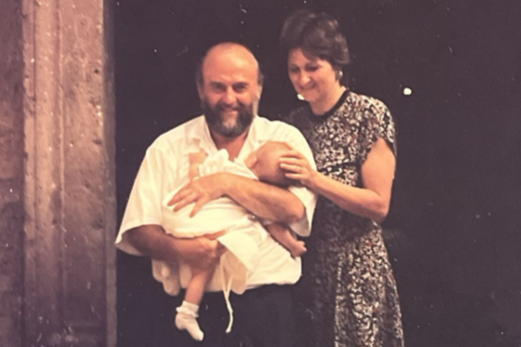
Ms. Jacobson, her husband, Antonio Sorgini, and their son, Antongiulio, lived in South Philadelphia.Courtesy of the family
Ms. Jacobson was a talented seamstress and baker. She did humorous impersonations, collected art, and enjoyed working with young people.
Friends noted her “many kindnesses” and “decades-long advocacy for artists and the cultural community” in online tributes. Woodmere’s Valerio said: “She was both a strong voice and a warm friend to many.”
Her son said: “She had a sharp wit and relished cheerful banter among friends and colleagues. Above all, she took the work of mentorship very seriously.”
In addition to her son, Ms. Jacobson is survived by a sister and other relatives. A brother died earlier.
Friends noted Ms. Jacobson’s “many kindnesses” and “decades-long advocacy for artists and the cultural community.”Courtesy of the family
A celebration of her life is to be held later.
Donations in her name may be made to the Fleisher Art Memorial, 719 Catharine St., Philadelphia, Pa. 19147; and Mural Arts Philadelphia, 1727-29 Mount Vernon St., Philadelphia, Pa. 19130.
Ms. Jacobson was a talented seamstress and baker. Mark Garvin, / Philadelphia Museum of Art
When Michael Nixon pulled the trigger on the handgun he was carrying last May, he robbed Khalief Webster Jr. of his future, Webster’s family of a loving son, and the community of any semblance of safety, Webster’s mother said Tuesday in a crowded Delaware County courtroom.
“Khalief was not just the headlines, not just the crime scene tape that haunts me through the night, not just a victim,” Talaya Shaw said of her 17-year-old son. “Khalief was a young boy growing into a young man with a heart bigger than this world could handle.”
And Nixon, she told Judge Deborah Krull, “had no God-given right to decide when and how he left this world.”
For killing Webster, Nixon, 18, of Upper Darby, was sentenced to 18 to 36 years in state prison. Nixon pleaded guilty to third-degree murder earlier this year for the fatal shooting, which unfolded in May 2025 as the two teens, classmates at Upper Darby High School, crossed paths on Long Lane near Pine Street.
Emotions and tempers flared during Nixon’s hours-long sentencing, which the judge had to pause multiple times to rein in outbursts from those who filled the standing-room-only courtroom. Webster’s friends and relatives screamed to be heard, calling Nixon a coward, among other insults, and demanding justice.
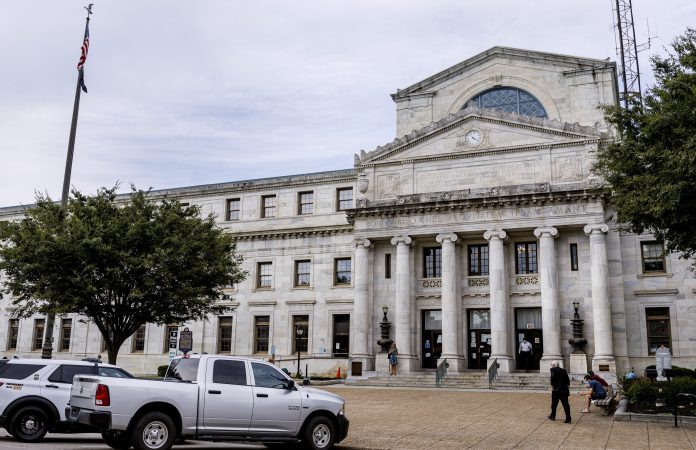
Sheriff’s deputies barred more people from entering the hearing, and had to respond to a scuffle that erupted outside the courthouse after Nixon’s sentence was handed down.
In May 2025, Upper Darby Police Superintendent Tim Bernhardt (center) announced the arrest of Michael Nixon for the murder of Khalief Webster.Vinny Vella / Staff
On the day of the shooting, Webster was riding a miniature dirt bike when he encountered Nixon, who had walked 25 minutes from his own neighborhood to the area, according to investigators.
What happened next was the subject of debate during Tuesday’s hearing.
Nixon’s attorney, Pete Manaras, said Webster asked his client if he was the “young boul” he had seen “the other day,” and got off the bike to confront him.
The two teens, he said, knew each other and had gotten into disputes before. Nixon, fearing for his safety, shot Webster in the abdomen, Manaras said.
But Senior Deputy Attorney General Christopher Phillips, who prosecuted the case, said Nixon was the aggressor. He was out looking for Webster, Phillips said, armed and lying in wait in an area where he knew he would encounter the other teen.
“The public needs to be protected from people that would do such a thing on a sunny afternoon, on a beautiful May day, to a young man who didn’t see it coming,” Phillips said.
After the shooting, Nixon fled and was recorded on a surveillance camera telling someone on a phone call that he had shot somebody in the chest, according to the affidavit of probable cause for his arrest. Nixon’s mother then picked him up and drove him away.
Nixon addressed Webster’s family Tuesday to apologize, saying he wished he could take back what had occurred.
“I didn’t want to kill him. I never wanted to hurt him,” Nixon said. “I was just scared and my body reacted before my mind.”
Nixon said he encountered Webster by chance. He was carrying the gun because of previous run-ins with him, he said, and needed it for protection as he walked to a friend’s house.
Webster grabbed at his waistband as he confronted him, Nixon said. He believed Webster was reaching for a gun and reacted.
Nixon said he had grown up in an abusive household and that made him “perceive everything as a threat” and grow anxious when people get too close to him.
“I’m not saying this as an excuse for my actions, because I know I deserve to be locked up for what I did,” he said. “But that doesn’t mean I don’t want to turn my life around, because I do.”
Webster’s relatives, including his grandmother, Charlotte Webster, said that while they have not yet forgiven Nixon, they know that will come in time through their faith.
Still, she said, the pain Nixon caused their family was devastating.
“I believe this was a deliberate, heinous crime he committed,” she said. “He didn’t care about anything or anyone.”
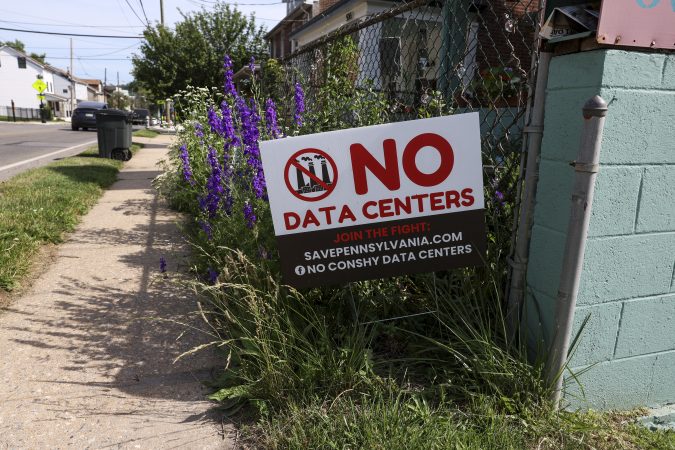
WASHINGTON — A new federal proposal to enact protections for communities opposed to the proliferation of data centers has drawn inspiration from both the Philadelphia suburbs and Western Pennsylvania fracking country.
The Data Center Bill of Rights is one of several national efforts to address a growing dissatisfaction with data centers, which have so far faced few restrictions at either the federal or state level in Pennsylvania.
U.S. Rep. Ro Khanna, a California Democrat and Bucks County native considering running for president in 2028, said his home state should be doing more.
He introduced thefederal legislation after a recent tour across Pennsylvania that he said was designed to hear from communities that have lost manufacturing jobs and other economic opportunities.
Data center concerns came up more than any other issue, he said — leading him to incorporate new ideas into the bill healready had in the works, and to call for a pause on data center development in Pennsylvania until further protections and local controls are enacted.
A statewide pause would be more than what Gov. Josh Shapiro — another potential 2028 Democratic contender — has proposed as he seeks to enact data center guidelines. It would also be less than other Democrats, both in Pennsylvania and nationally, who have called for more robust moratoriums. Shapiro’s Republican challenger this year, Treasurer Stacy Garrity, has also called for a pause but not for an extended moratorium.
“I was surprised by the anger about it in Pennsylvania,” Khanna said in an interview after his 15-county tour. “In other states, people are sometimes opposed in local communities, local pockets. But not this widespread anger.”
Khanna, a Council Rock High School graduate who has represented Silicon Valley in Congress since 2017, spoke about the Data Center Bill of Rights during his tour but said afterward that it was “partly inspired” by the concerns he heard in the communities similar to the ones where he grew up.
“As a kid, I used to go to Conshohocken and the King of Prussia Mall. I’m familiar with that area,” Khanna said. “You can’t ride roughshod over what Delaware County wants or when Montgomery County wants.”
The legislation would declare that communities have the right to reject data centers through a “transparent community process” or allow them with specific protections. That includes demanding that data centers don’t lead to higher electricity rates, that they use renewable energy sources and disclose their water consumption, and “pay their fair share of state and local taxes.”
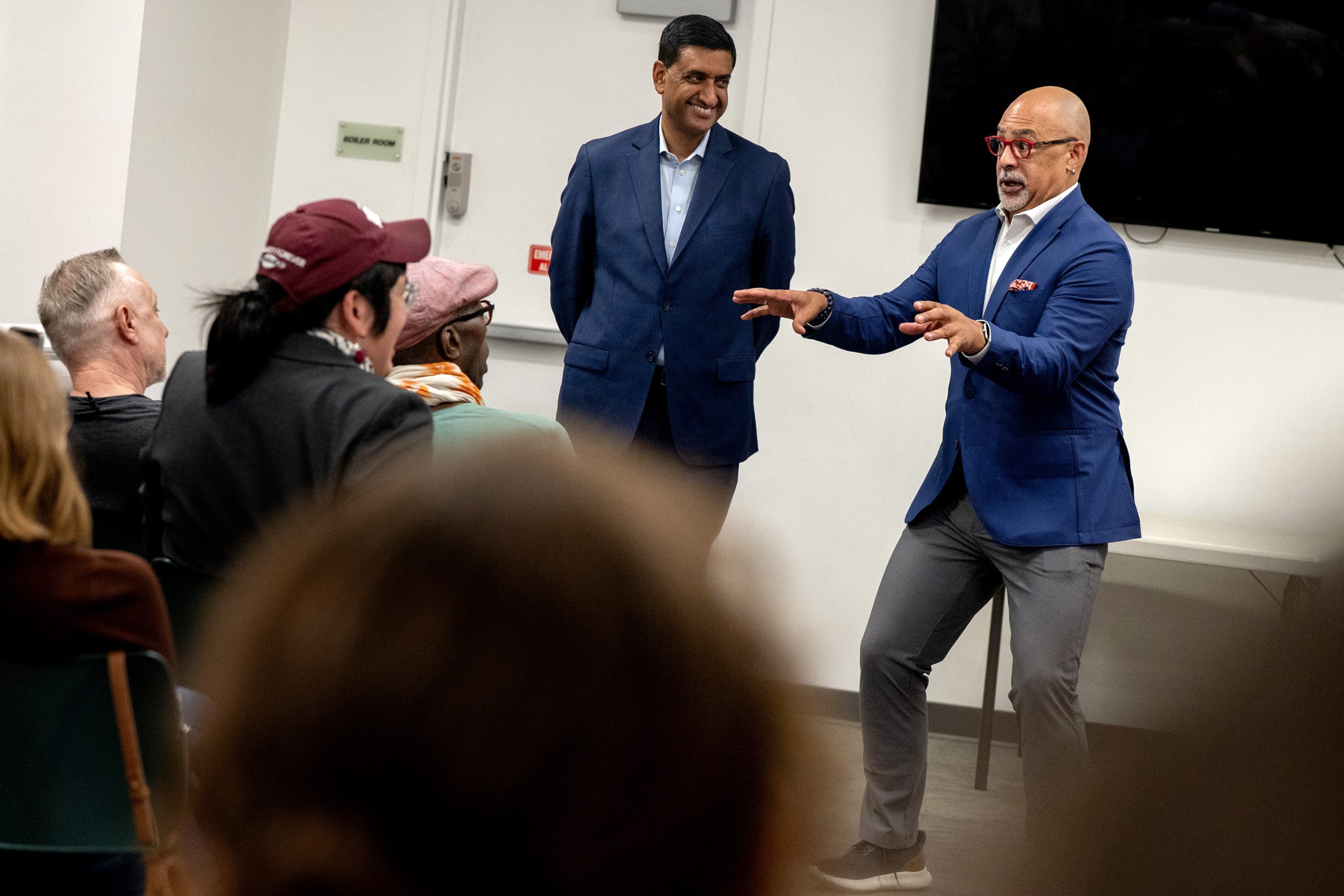
State Rep. Chris Rabb (right) joins U.S. Rep. Ro Khanna (left) Tuesday, July 28, 2026, as he stops on his “Made in PA: New Economic Patriotism Tour” at the City Institute Library on Rittenhouse Square.Tom Gralish / Staff Photographer
One specific provision, Khanna said, was informed by his visit in Washington County with individuals who are paid to host natural gas wells on their properties. It was there that he said he learned of community demands for oil and gas well sites to be at least 2,500 feet from residences. That buffer was a recommendation from a 2020 grand jury report released by Shapiro when he was serving as attorney general and that outlined health and safety issues caused by fracking in the Marcellus Shale region.
The recommendation was not followed, and advocates are continuing to push for extending the buffer from the current distance of 500 feet, according to Inside Climate News.
Khanna’s bill of rights would call for data centers to be built no closer than 2,500 feet from residences, schools, childcare facilities, hospitals or nursing homes. He said the environmental and health hazards for data centers aren’t the same as fracking but they should be kept at a distance from communities that don’t want to live directly next to them.
“At least they were offering royalty checks in the cases of fracking,” Khanna said. “[Data center developers are] not even giving the communities checks. It’s just kind of like, ‘OK, we’re going to build.’ What does the community get out of it? I literally don’t understand it.”
Data center advocates have argued their development is critical in winning an artificial intelligence war with China, and that they will bring construction and some skilled jobs to communities that need them.
Even the staunchest advocates, though, have acknowledged the public blowback.
“I do think that data centers in Pennsylvania have raised legitimate concerns,” U.S. Sen. Dave McCormick (R., Pa.) said during a recent telephone town hall as he continued to promote them in the competition with China and their creation of “thousands of jobs.”
When developers are making their pitch, McCormick said they should come with commitments to protect energy costs and overuse of water, use local labor, invest in the community and pay taxes.
“That should be part of the deal up front,” McCormick said during the telephone town hall in late July. “With all those facts, then the local community can decide whether they want the data center or not. And if they choose not to, that’s their choice.”
Khanna said he’s hoping for bipartisan support as he introduces the bill of rights idea. He’ll also be competing with other proposals — like one from fellow progressives U.S. Rep. Alexandria Ocasio-Cortez (D., N.Y.) and U.S. Sen. Bernie Sanders (I., Vt.) called the AI Data Center Moratorium Act. The bill would enact an immediate federal moratorium on data center construction until other safeguards are passed into law, including some of the ideas Khanna and McCormick have proposed, like around utility costs.
Several Pennsylvania state-level laws have been proposed, though the legislature did not address them during its busy budget season earlier this spring and summer. Lawmakers also left Harrisburg without ending tax breaks aimed at incentivizing data center construction even though the idea had garnered widespread support.
“They shouldn’t be getting these tax breaks to build,” Khanna said. “That’s absurd when you’ve got hyperscalers that are making trillions of dollars.”
The fact that many of those ultra-wealthy corporations are based in his district made the issue a politically dicey situation for him, but also one that the possible presidential hopeful said he was willing to take on.
“We’ve got to pause it in states like Pennsylvania,” Khanna said. “Some of my own constituents aren’t going to like that.”
Traffic is squeezed into one lane in each direction from 7 p.m. to 5 a.m., and residual morning delays have been reported. Crews sometimes also have to close lanes or temporarily stop all traffic during daytime to move equipment and materials.
It is a major undertaking for the Delaware River Port Authority, the bistate agency that owns and runs the Commodore Barry, as well as the Walt Whitman, Ben Franklin, and Betsy Ross Bridges.
As they move along the 13,912 feet of the bridge, industrial painting crews first sandblast layers of old paint and protective coatings that have built up over the years.
They work from suspended platforms in enclosed spaces of canvas, with containment systems that capture the gritty material used to clean the steel, lead-based paint, and other grime.
Although that up-in-the-air work is most visible to motorists, massive repairs are going on underneath, on the deck, and in the support structures below that, including the piers in the river.
Crews are removing crumbling concrete and replacing it, repairing the drainage system, and installing 14,000 feet of new electrical conduits and wire, DRPA officials say.
The rehab began in spring 2025, with replacement of the movable “zipper” barrier that separates lanes of bridge traffic. It was finished last summer.
The bridge opened in 1974 after five years of construction.
Earlier, people relied on ferries to cross from one state to another.
In 1930, the Chester-Bridgeport Ferry began running, with a capacity of 60 cars per trip. Six years later, the ferry’s boats were added to the federal highway system, as moveable parts of U.S. Route 332.