Tag: Delaware County

  • For the Diamonds of Delco, taking care of the Flyers’ rink is a family business that spans 40 years

    For the Diamonds of Delco, taking care of the Flyers’ rink is a family business that spans 40 years

    Kevin Diamond Jr. spent his childhood roaming the Spectrum like it was his own personal playground. He’d start in the Zamboni tunnel, and migrate to the players’ entrance, giving the Flyers fist bumps before the game.

    Then, the boy would dart upstairs to catch T-shirts in the crowd before finishing his night on the event level, melting piles of snow with a hot water hose. Watching hockey was always secondary; Diamond was rarely in his seat.

    Instead, he’d frequent the places fans couldn’t go, where staff members toiled to make sure the game went smoothly. Of course, Diamond was always around the Flyers. But it was the ice crew he really idolized.

    Men like his father, Kevin Sr., and his uncle, Mike, and the four other relatives who’d maintained the rink in front of him.

    “They were always laughing,” Diamond Jr. said. “They were always talking about it. They were always going to work.

    “So, I thought that was what you should be doing: going to games, and going to work. So, I was trying to go as well.”

    Mike Diamond Sr. gets the “mites on ice” players off the rink between periods during the Flyers game on Oct. 24. Elizabeth Robertson / Staff Photographer

    The Delaware County-based family has been in the ice business since 1977. They’ve been in the Flyers arena business for even longer; Kevin Sr. and Mike’s father, Jimmy, was a police officer who would direct traffic in and out of the Spectrum in the late 1960s.

    He never developed an affinity for frozen surfaces, but his sons certainly did. Jimmy’s oldest, Doug, joined the Spectrum ice crew in 1977. Kevin Sr. was hired in 1984, followed by his brothers Greg, in 1988, and Mike, in 1993.

    Mike’s stepson, Tommy Eisenhower, was brought on in the late 1990s, which was when Mike’s son, Mike Jr., started showing up. Kevin Jr. continued the tradition in the early 2000s.

    Kevin Diamond Sr. (right) and Kevin Jr. have been part of an unlikely multi-generation family business.courtesy of Kevin Diamond Jr.

    Kevin Jr. wasn’t allowed to “work” in the legal sense when he began going to the rink as a fourth-grader, but found other ways to be useful.

    “I was not taking no for an answer,” he said.

    As soon as Mike Jr. and Kevin Jr. were old enough, they moved onto the crew. None of the Diamonds had been hired full-time, and most were juggling multiple jobs. But their love of the craft — and the sport — made it worth it.

    Which is why most of them are still there. Kevin Sr. drives trucks for SEPTA, but spends his nights with the Flyers. Mike Sr. has retired from an electric supply company, but like his brother, he remains on the crew.

    So does Mike Jr., who drives the Zamboni at Hollydell Ice Arena when he’s not at Xfinity Mobile Arena. The only one of the father-and-son duo who is no longer with the team is Kevin Jr., who became the ice operations manager for the Anaheim Ducks in 2021.

    Kevin Diamond Sr. (left) points Mike Diamond Jr. (right) to an area of the ice that needs attention during the Anaheim Ducks vs. Philadelphia Flyers NHL game at Xfinity Mobile Arena on Oct. 24.Elizabeth Robertson / Staff Photographer

    But even from opposite ends of the country, that generational bond endures.

    “You can’t make this up, you know what I mean?” said Kevin Sr. “[My brother and I] have been doing games together for over 30 years. His son can come and do it, and my son can come and do it, and he goes out there to Anaheim …”

    For the Diamonds, taking care of the Flyers' rink is a family business
    Video: For the Diamonds, taking care of the Flyers’ rink is a family business

    Learning the craft

    The Diamonds were raised at S. 61st and Reinhard Street. Their father wasn’t a big hockey fan, but the boys, growing up in Southwest Philly in the mid-1970s, quickly became immersed in it.

    During the summers, they’d bring their sticks to Greenway Avenue, setting up two milk crates as a makeshift goal, with a jacket on top to simulate a net. During the winters, they’d play on a pond in Tinicum Township.

    After the Flyers won their first Stanley Cup in 1974, Kevin Sr. and Mike Sr. went to the parade, watching Bernie Parent and Bobby Clarke cruise by in open convertibles. When they won it again, in 1975, the two brothers returned, only to find that the convertibles had been replaced by a flat-bed truck.

    “Because everybody mobbed the cars back then,” Kevin recalled.

    The excitement around the Broad Street Bullies was palpable. Fans fell in love with their unapologetic and bruising style. So much so, that a few applied to work for (or around) the team.

    Kevin Diamond Sr. (foreground) checks the boards by the Flyers bench followed by his brother Mike Diamond Sr. (in background) before a game on Oct. 24. Elizabeth Robertson / Staff Photographer

    In the Diamonds’ corner of Southwest Philadelphia, neighborhood kids had started joining the changeover crew, which turned the Spectrum into whatever it needed to be on a given night: a basketball arena, or a hockey arena, or a concert venue.

    This was the brothers’ entryway into the family business. After Doug’s brief stint with the Flyers (from 1977-79), Kevin Sr. was hired to work changeovers. Before long, he’d earned a spot on the ice crew.

    Because Doug was no longer at the arena, it was the neighborhood kids who taught Kevin Sr. the nuances of the job. And there were plenty of nuances. Pieces of rink and hard court were constantly being shuffled around.

    This left a lot of room for error, which made pregame walk-throughs all the more important. The glass and the dasher boards had to be perfectly aligned. Latches and doors had to be properly fastened. There could be no divots on the rink, or any other striations that would impede a skater or affect a bounce.

    The objective was to have the game be completely unaffected by venue conditions. And in order to do that, the ice crew would have to be meticulous. This work continued throughout all three periods.

    Crew members would shovel the rink during commercial breaks. The pins holding the goals would often get filled with ice shavings from the Zamboni, so during intermissions, the crew would clean them out with a turkey baster, pouring hot water into the holes to melt any remaining debris.

    These were just a fraction of the countless details to remember, all of which Kevin Sr. passed on to Greg and Mike Sr., who in turn, passed them to Mike Jr. and Kevin Jr.

    Kevin Diamond Sr. (foreground) checks the glass and boards around the rink, followed by his brother Mike Diamond Sr. (in background) before the Flyers/Ducks on Oct. 24. Elizabeth Robertson / Staff Photographer

    “They taught me everything I know,” Mike Jr. said. “I had no clue what I was doing, but over the years, just watching them kind of made it a little easier.”

    For Kevin Jr., the lessons were both granular and overarching. When he looks back at his time with the Flyers, he also sees the culture his father and uncle helped build. Even with all of their preparation, disaster would inevitably strike.

    The Zamboni would break, or the glass would break, or there would be some problem with the ice. But whenever these things happened, the crew was able to handle it, because of the rapport they’d built.

    It’s an ethos that Kevin Jr. has brought to Anaheim.

    “I just try to include everyone,” he said. “Try to make the Zamboni tunnel a better place to be, not so uptight. Kind of get away from the stigma that maybe Zam drivers are grumpy. Just lighten the mood a little bit, so everyone’s very serious and ready, but also very comfortable.”

    A hockey heritage

    The luster of the job has still not worn off. Not all these decades later; not even amid the Flyers’ shaky start. Regardless of whether the team is winning or losing, the Diamonds know they have an unusually good seat.

    They can hear the chatter of the players on the ice. They can see the speed and athleticism up close. Kevin Sr. and Mike Sr. have watched Stanley Cup finals and playoff games at ground-level.

    Mike Diamond Sr. checks the glass by the Flyers bench prior to the Flyers/Ducks game on Oct. 24. Elizabeth Robertson / Staff Photographer

    The brothers have also witnessed some of the more absurd moments in Flyers history, like when Havertown native Chris Falcone fought Maple Leafs enforcer Tie Domi in the penalty box in 2001.

    Kevin Sr. didn’t have time to repair the glass during the game. So he sat with Domi for the rest of his penalty, to make sure no other rabble-rousers jumped in.

    “It was insane,” Kevin Sr. recalled. “I just asked if he was OK. That he wasn’t cut. Because once [glass] breaks in half like that, that’s a razor. Literally.”

    For two diehard hockey fans, this is a dream. And having their sons share it with them makes it all the more sweeter. Kevin Sr. and Jr. have not let physical distance get in the way of this connection.

    Even though they’re thousands of miles and multiple time zones apart, they still talk after games; what went right, what went wrong, and how to fix it. They say goodbye, and drive to their respective rinks; ready to do it all over again, with generational insight.


  • Politics and misinformation shadowed the measles response in Pa. The fix won’t be easy.

    Politics and misinformation shadowed the measles response in Pa. The fix won’t be easy.

    Pennsylvania health officials convened leaders from Lancaster County’s hospitals, emergency response services, and schools earlier this month in an effort to “enhance response efforts” in the community hit hardest by the spiraling measles outbreak.

    But County Commissioner Ray D’Agostino, like other elected officials, was not invited. The two-term Republican commissioner has grown increasingly frustrated that most of his information about the monthslong public health crisis has come through news outlets and a public state website.

    The county’s frontline responders have also taken note. “Goes to the press first … then official notices?” the county’s director of public safety wrote in an email to the commissioners’ communications director in February, forwarding a news release from the state when five measles cases were reported in the county.

    The state’s messaging — and the incomplete and sometimes contradictory information emerging from local government boards and coroners — has fueled controversy since the onset of the outbreak, interviews and internal communications obtained through public records requests show.

    The resulting confusion, especially over details about high-profile deaths, has contributed to the spread of politically divisive misinformation over the resurgence of a vaccine-preventable disease.

    Two measles deaths in Lancaster County, announced in August by Gov. Josh Shapiro, showed how a lack of information can get exploited. Citing state privacy laws, state health officials provided few details on the deaths. When a local coroner disputed that one of the deaths was caused by measles, Health and Human Services Secretary Robert F. Kennedy Jr. claimed that Shapiro’s staff had “fabricated” the deaths.

    The resulting information void allowed anti-vaccine rhetoric to spread, public health experts have said, even after prominent physicians challenged the coroner’s claim and state officials reiterated that the death fit the official definition for a “measles-associated death.”

    Tombstones are shown in September at Wakefield Amish Cemetery, where Amish children who died from measles are buried, in Peach Bottom, Lancaster County.Jose F. Moreno / Staff Photographer

    Lancaster County relies on the state to lead the public health response to the highly contagious virus. Like all but six of the state’s 67 counties, it has no local health department to organize vaccination clinics, trace contacts of those exposed, and disseminate sensitive information about deaths.

    Though local elected officials across party lines say they would welcome more information from the state on the outbreak, they differ on how that information should be shared.

    Legislation proposed last year, before the outbreak began, would require the state to share more data on communicable disease outbreaks with local officials in counties that lack public health departments.

    But as Alice Yoder, the lone Democrat on the Lancaster County Board of Commissioners, notes, counties like hers still would not have the public health infrastructure to handle complex data on infectious diseases.

    State and local governments have a responsibility to coordinate during a health emergency, said Kathleen Hall Jamieson, the director emerita of the University of Pennsylvania’s Annenberg Public Policy Center and an expert on health communications.

    “We don’t realize the need for a structure of communication until you get a communication breakdown,” she said.

    State officials said that they do work closely with local leaders, and that the roundtables organized this fall in Lancaster County and Mifflin County, another central Pennsylvania community with exceptionally high infection rates, were not intended for local officials, but rather for healthcare, EMS, and school leadership.

    The state notifies county commissioners and local state lawmakers when cases are first identified in their areas, and maintains a public measles dashboard to help officials track cases in “near real-time,” department spokesperson Neil Ruhland said in an email.

    “PA DOH engages with them in other ways,” Ruhland wrote, noting that frustrated officials such as D’Agostino can reach out to the department to share direct feedback.

    Pennsylvania Health Secretary Debra Bogen connected with county leaders at a virtual statewide commissioners meeting earlier this year. On that call, D’Agostino recalls asking for “just a little transparency” and for the state to “[work] with us” around the deaths that had recently been reported. Bogen thanked him for the comment, he said.

    County Commissioner Alice Yoder poses for a portrait in Lancaster, Pa., on Tuesday, March 31, 2026.Tyger Williams / Staff Photographer

    Crisis communications

    Lancaster County rapidly emerged as the epicenter of the nation’s largest measles outbreak in three decades, home to one in three of the more than 1,500 cases reported since the virus began spreading statewide last spring.

    By June, Lancaster County leaders were worried about the flow of information from the state. The 31 reported measles infections were already nearly double the total cases reported across all of Pennsylvania in 2025.

    Yoder, a former nurse, implored her fellow commissioners to raise awareness of the disease. She told The Inquirer at the time that she was learning about the extent of the outbreak mostly through the local news.

    So was Jeffrey Martin, a physician who heads the family medicine department at Penn Medicine’s Lancaster General Hospital. He could track cases in his health system, but not elsewhere.

    As the outbreak spread rapidly all summer, especially in the county’s large Amish community where many have eschewed vaccinations, Yoder could not persuade her fellow commissioners to add measles warnings to the county’s homepage.

    The county does have a dedicated page on its site with information on the virus, and a map of clinics offering vaccinations.

    The stakes grew higher when Shapiro held a news conference inside a Lancaster hospital in late August to announce the state’s first measles-related deaths in 30 years.

    Flanked by Bogen and other state health officials, the Democratic governor linked the deaths to Kennedy’s longtime anti-vaccine activism, saying that President Donald Trump’s appointee had spread misinformation that led to plummeting vaccination rates and spiraling case counts statewide.

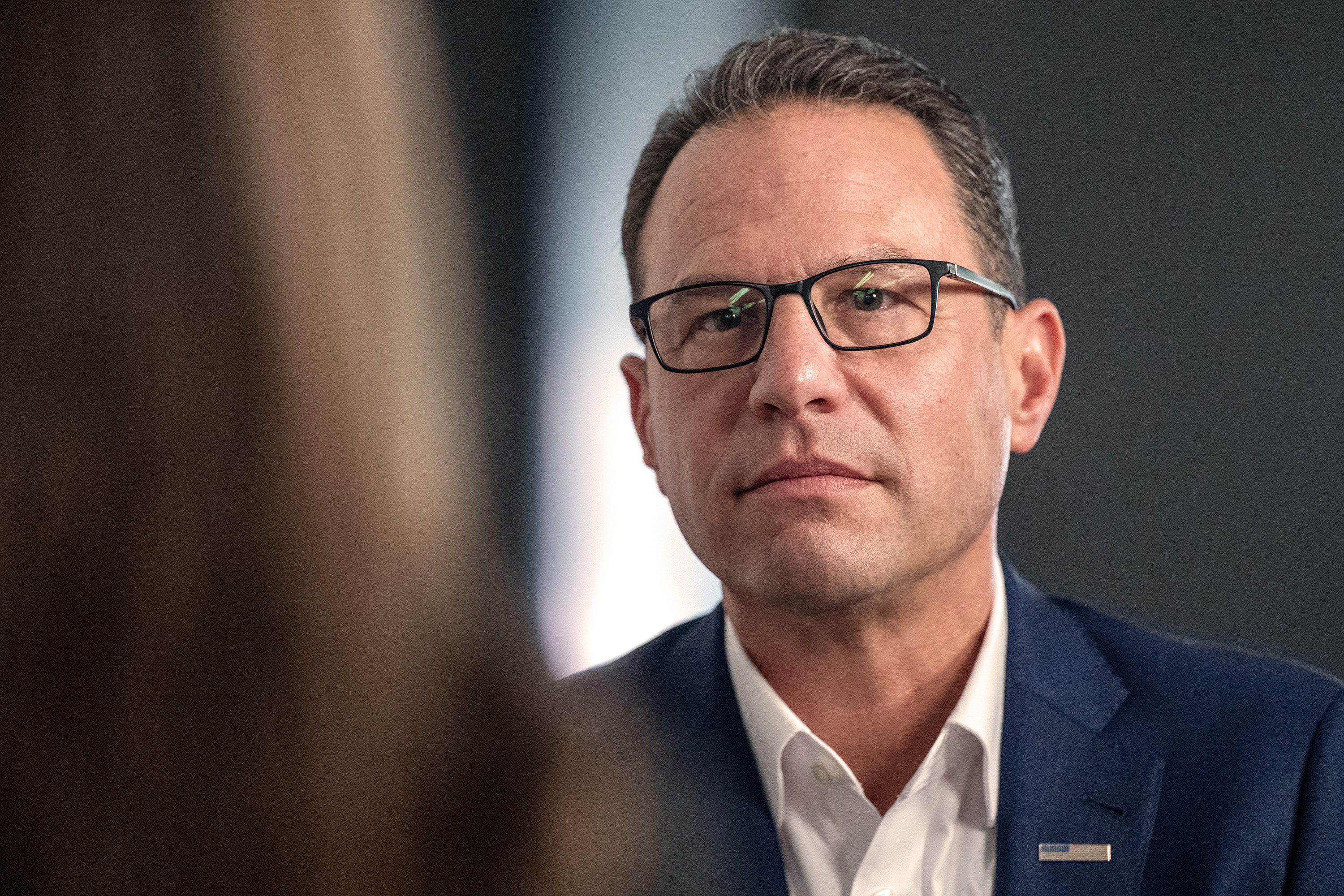
    Gov. Josh Shapiro, shown here in a file portrait, came to Lancaster County in late August to announce the state’s first measles deaths in three decades. Tom Gralish / Staff Photographer

    Lancaster County’s coroner, Stephen Diamantoni, said he was surprised by the announcement. He told reporters after the news conference that his office had handled only one of the two deaths reported in the county, in an infant who died shortly after birth, and that he did not believe it was caused by measles. Instead, he said, the death was caused by a lacerated spleen.

    Prominent physicians have questioned that interpretation, saying that measles can weaken a spleen and put it at risk for rupture.

    Yet the conclusion of the coroner, an elected Republican, got publicized in a series of viral tweets by Josh Parsons, a Republican county commissioner, who called for more transparency from the state. “The evidence now leads to the conclusion that there is deception happening here,” he wrote. Parsons did not return calls for comment on the state’s communications around measles.

    Diamantoni also told reporters at the time that the state had not communicated directly with him about the measles death, speaking only to his deputy a few hours before the news conference.

    Emails The Inquirer obtained through a public records request showed state health officials had in fact tried to contact his office for days beforehand.

    At one point, an infectious-disease doctor with the state health department said that he was available “24/7” to discuss the case.

    Experts see failures on both sides in the communications breakdown. The coroner’s office apparently lacked clear communication procedures to ensure prompt contact with state officials, they say. And the state could have been clearer in the initial announcement about how it defined a “measles-associated death.”

    In the aftermath of the dispute, the state provided that clarity: a person who dies within 30 days of developing clinical signs of measles, with a positive lab test for the disease, whose death is not due to another cause, like a car crash.

    The political fallout continues. The Centers for Disease Control and Prevention refused for weeks to add any deaths from Pennsylvania in its online tracking of measles outbreaks and still does not acknowledge the full death toll reported by the state.

    Doctors work at Union Community Care clinic, a nonprofit in Lancaster, in October.Jessie Wardarski

    At Lancaster General Hospital, Martin watched in dismay as news organizations devoted days of coverage to the sniping over the deaths. His colleagues were treating patients with severe complications from measles — pneumonia, brain swelling, cases of the virus in pregnant women — but receiving far less attention.

    “The political games that are being played around deaths or not deaths really miss the point,” Martin said, noting that more than one-third of children under the age of 4 with measles are requiring hospital care. “That story needs to be told.”

    The state health department has worked with Martin when he asks for more information on cases, he said, and he appreciates the agency’s local engagement in setting up community vaccination clinics.

    “I feel like the state has worked really well with local county partners,” he said.

    Solutions proposed

    State Rep. Dave Zimmerman, a Republican who represents parts of Lancaster, has heard from constituents incensed over the state’s initial handling of the local deaths.

    “There’s a lot of people in Lancaster County that felt that they were troubled by someone coming in and lying in a position like that — that essentially lied to them, that’s how they felt,” he said.

    He would address their concerns through legislation requiring the state to share data on communicable disease outbreaks with county officials in counties without a local health department. He first filed the bill last January and plans to reintroduce it in the legislative session that begins next year.

    He says that counties like his deserve the same kind of detailed outbreak information that counties with health departments regularly access.

    Philadelphia and all four of its surrounding suburban counties in Pennsylvania operate their own health departments. But most counties have not wanted the additional expense and bureaucracy. After Delaware County created the state’s newest health department in the aftermath of the COVID-19 pandemic, it faced a protracted controversy over its responsibilities around mosquito control and restaurant inspections.

    In Chester County, the local health department responded directly as the measles outbreak spread from neighboring Lancaster County. It conducted contact tracing, reached out to schools at risk of outbreaks, and monitored local cases.

    A sign for vaccinations directs visitors at the Chester County Health Department in West Chester in September.Kriston Jae Bethel / For the Inquirer

    Even if they cannot do similar outreach, just knowing exactly where in the county cases were reported could have helped Lancaster officials direct resources to hard-hit areas, said D’Agostino, the county commissioner, who supports Zimmerman’s bill.

    During COVID, counties without health departments also had to push the state to provide more information on cases in their area, D’Agostino recalled, adding that local governments eventually worked closely with state health officials.

    Yoder, a former hospital executive, said she also wants more data from the state but does not know what the county would do with it.

    As a local physician, Martin noted that a public health department’s trained epidemiologists could protect such data and safeguard it from political whims.

    Zimmerman said sharing knowledge is essential in a serious outbreak.

    “Here in Harrisburg, we talk so much about transparency,” he said. “I believe that our department of health should be a little more transparent for some of those things without us needing to beg for it.”

  • After a midterm shellacking, where do Pennsylvania Republicans go from here?

    After a midterm shellacking, where do Pennsylvania Republicans go from here?

    As the drumbeat of bad news for Republicans grew louder on election night, U.S. Rep. Brian Fitzpatrick called to apologize.

    Jim Worthington, the owner of the Newtown Athletic Club and a prominent GOP booster in Pennsylvania, had supported Fitzpatrick for a decade as he won time after time in their purple district outside Philadelphia. Worthington also backed President Donald Trump over that time — hosting campaign rallies and raising money for the president even as Fitzpatrick, a moderate Republican, repeatedly survived reelection by distancing himself from the leader of their party.

    Now, though, it was clear Fitzpatrick was calling amid a “bloodbath.” Republicans had lost up and down the ballot in the nation’s biggest midterms rout in a half-century, and Pennsylvania was no exception. Fitzpatrick knew his time in office would be over and he wanted to tell Worthington personally that he was sorry, that there was more he wanted to get done for Bucks County and now would not be able to.

    GOP booster Jim Worthington, left, sits with his son Jack during an election night watch party in Newtown Bucks County, in 2024, when Republicans won in Pennsylvania and across the country. This year, many GOP candidates fell to Democrats in a blue-wave election.Steven M. Falk / Staff Photographer

    Worthington, recalling the conversation from election night, said he has come to blame the widespread losses on both state and federal Republicans. And, he said, that has put him at a “crossroads” that could determine whether he keeps helping their efforts in the future.

    “I’m not going to beat my head against the wall and not make a difference; raising a lot of money, spending time, and losing,” Worthington said last week. “I could conceivably be stepping away, particularly when you see that people on both sides of these parties, Democratic and Republican, are in it for the wrong reasons, making fortunes, scamming the system, and being grifters. I’m just doing this because I want my country to be better.”

    As the dust settles and Democrats prepare to take back some level of power in Washington and full control of Harrisburg, how Pennsylvania Republicans — and Republicans across the country — handle the beginning of the post-Trump era has become a burning question.

    The party, by some measures, is at its lowest point in the Keystone State in decades. In January, the GOP will sit in the minority in the state legislature for the first time since 1993 and will hold just six of the state’s 17 congressional seats, and it has lost four consecutive races for governor, including Gov. Josh Shapiro’s sizable 22-percentage-point win over Republican Stacy Garrity this year.

    And after a decade in which Trump twice won the critical swing state and remade the GOP in his image, his cratering popularity and final years in office have made some Republicans eager to move on.

    “It needs to send a message to the party and President Trump, too, that MAGA is not bigger than the Republican Party,” said one Pennsylvania Republican Party official, who requested anonymity to freely discuss intraparty conversations. “We’ve all learned a hard lesson that it isn’t. Many of us have believed that for a long time.”

    The party official said Republicans who want to win general elections moving forward must recognize the “deadly, devastating, negative effect” of continuing to tie themselves solely to Trump, including in the nomination process for a 2028 presidential candidate and other races in Pennsylvania. That may be easier said than done.

    “The anti-Trump sentiment that controlled the day in ’26 will not fully dissipate by ’28,” the official said, adding that Pennsylvania Republicans might be best suited to consider a “2030 strategy” rather than one focused only on 2028.

    Such a move would set the party’s sights more on the next gubernatorial race and presidential midterms in four years. It is not impossible to rebound in two years, the official said — especially if the national mood shifts, if Democrats overreach in their new power, and if Republicans recruit strong candidates for everything from the state House to the U.S. Senate, when Democrat John Fetterman’s seat is up for election. But it will be challenging.

    “We got thumped,” said U.S. Sen. Dave McCormick, Pennsylvania’s top elected Republican, who could play a key role in rebuilding the party.

    McCormick told reporters this week that Republicans ran on a “really great track record” of border control, reductions in violent crime and fentanyl deaths, tax cuts, and school choice.

    But he said they also did not talk enough about the cost-of-living pains that voters were expressing around gas, healthcare, and housing — or about perceptions of corruption in Washington, like when lawmakers trade stocks tied to issues they legislate.

    President Donald Trump appears at a Defense and Innovation Summit hosted by U.S. Sen. Dave McCormick (left) at the US Army War College in Carlisle Wednesday, July 15, 2026.Tom Gralish / Staff Photographer

    McCormick defeated longtime Democratic U.S. Sen. Bob Casey in 2024, when Republicans’ wins, including Trump’s, were propelled partly by economic concerns. A former hedge fund leader whose wife, Dina Powell McCormick, is the president of Meta, McCormick is one of the wealthiest members of Congress and said he supports legislation to ban stock trading by lawmakers. He said the public has concerns about both insider trading and the cryptocurrency market — which he also has investments in — and Republicans need to “build back confidence” that voters should have in them.

    “Lesson one is: More focus, more attention, on giving them confidence that we heard you and we have a plan to deal with that,” McCormick said. “I don’t think the voters expect us to fix everything right away. But I don’t think they felt like we were focused enough on the things that they were feeling were most important.”

    ‘What did we do wrong?’

    Long gone are the days where Philadelphia is a blue dot in a sea of red counties. In 2027, there will be no Republicans in the state Capitol representing Delaware, Chester, and Montgomery Counties, which were once GOP strongholds.

    State Rep. Craig Williams, who had been one of the few remaining Republicans representing the Philadelphia collar counties in Harrisburg, was among the more than a dozen GOP state lawmakers who lost reelection. He was ousted by Democratic Rep.-elect Elizabeth Moro, a local small-business owner and real estate broker, who had challenged him unsuccessfully in 2024.

    “I don’t think it had anything to do with the work we were doing in the 160th District,” said Williams, who represents parts of Chester and Delaware Counties. “This election was entirely about affordability and a national sense that our party hasn’t done enough to address it, and I tend to agree with them.”

    Williams said he is unsure what he will be doing come January, but hopes that Republicans work with the Democrats while in the minority. The former federal prosecutor and retired U.S. Marine Corps colonel said he is unlikely to run again.

    “I have to say, all credit to the Democrats. They found the right message,” Williams added. “It falls to Republicans to decide how they want to respond. … If we’re not awake, then we’re going to be facing these same problems in the future. Right now we should do whatever we can to help everyday Americans.”

    House Agriculture Committee Chairman Glenn “GT” Thompson visits a dairy farm in Lebanon County Apr. 14, 2025Tom Gralish / Staff Photographer

    In Washington, U.S. Rep. Glenn “GT” Thompson (R., Pa.) said the party, in some ways, has been here before.

    The Centre County Republican is the longest-serving House member from Pennsylvania. He won his first election in his sprawling and heavily conservative central Pennsylvania district in 2008, the last high-water mark for Democrats. Republicans responded after the first two years of President Barack Obama’s administration by winning across the board in the 2010 midterms, allowing them to put up roadblocks for the rest of Obama’s term and paving the way for their eventual success in the Trump years.

    “There’s a lot of people that love to declare the end of either party after an election. That’s just not true. I think 2009-2010 proved that,” Thompson said in an interview Thursday on Capitol Hill.

    Thompson compared the massive swing this year to the post-Watergate era, when Democrats swept into office after President Richard Nixon’s scandalous collapse. But, like others in his party who have made the comparison in recent weeks, he attributes it not to corruption but to the economic pressures that voters felt Republicans were not doing enough to address.

    Thompson said the Iran war’s impact on fuel prices and Trump’s widespread tariffs, though well-intentioned, played a role. So did the president’s immigration agenda, which Thompson and other Republicans see as largely necessary but have looked to tweak through bills like the Securing Agriculture’s Workforce Act. Thompson, who chairs the House Committee on Agriculture, sponsored the bill to expand seasonal harvester visas — a move that agriculture leaders in Pennsylvania have hailed amid frustrations with Trump’s agenda.

    “Do I think that that would have made a difference in this election, if the administration and leadership would have embraced this five months ago? Yeah, I think it would have, actually,” Thompson said. “Because it is one of the things in rural America.”

    Worthington said Trump’s success in areas like immigration were overshadowed by his failure to address “kitchen-table issues.” And at the state level, he said he blames the Pennsylvania Republican Party, of which he is a committee member, for continuing to rely on outside groups to run its mail-ballot strategy as Democrats continue to vote at significantly higher rates.

    At the top of the GOP ticket, meanwhile, Garrity did not draw the kind of voter enthusiasm needed to defeat Shapiro, whose popularity and vast financial resources were credited with helping Democrats win up and down the ballot.

    The Pennsylvania Republican Party, for its part, said it ran “great candidates up and down the ballot” and attributed the GOP’s losses in the state to the blue-wave election that impacted even deep-red states like Texas and Mississippi, spokesperson James Markley said in a statement.

    Pennsylvania Republicans this election built an expansive early voting and mail-ballot chase program in which they reached out to voters to get them to turn in their mail ballots, and for the first time had a higher return rate than Democrats, Markley added. Republicans returned 87.5% of their requested mail ballots, for a total of 285,397, according to Pennsylvania Department of State data. Democrats returned 85.2% of their requested mail ballots, or 734,477.

    “The Democrats ran on affordability, but are already pivoting to job-crushing policies and an agenda that will drive Pennsylvania and our country into the ground,” he said in a statement. “The Republican Party of Pennsylvania is taking the necessary steps today to ensure our strength and preparedness for the road ahead.”

    People watch the evening election returns on TV on Tuesday, Nov. 3, 2026 at Bucks County Republican Committee Headquarters in Doylestown, Pennsylvania.William Thomas Cain / For The Inquirer

    Both parties, from Harrisburg to Washington, are set to face their share of challenges moving forward.

    Democrats are entering the majority in Congress with warring factions of progressives and moderates. Republicans have largely seen their ranks purged of candidates who oppose Trump but are now considering different leaders heading into the president’s final years in office.

    McCormick, for one, had urged his Senate Republican colleagues after the election to hold off on their internal leadership elections, saying there should be a thorough review of what went wrong before they picked who would guide them through the aftermath. That move — which a few other senators also joined — came up short, with Republicans picking Senate Majority Leader John Thune of South Dakota to continue as their leader in the minority next year.

    This week, McCormick said the “accountability” conversation needs to happen at all levels.

    “In business and the military and elsewhere, you start with accountability,” McCormick said, referencing his own personal background. “It’s from the commander in chief, to the leadership in the Senate and the House, to individual senators like me. What did I miss? What did we do wrong?”

    Staff writer Michelle Baruchman contributed to this article.

  • Philadelphia City Council blocks Parker administration from contracting with Chester trash incinerator

    Philadelphia City Council blocks Parker administration from contracting with Chester trash incinerator

    Philadelphia City Council members on Wednesday blocked Mayor Cherelle L. Parker’s administration from entering into a new, four-year contract with a controversial trash incinerator in Chester, a move that injects uncertainty into the city’s vast and complex trash disposal system.

    The administration sought Council approval to ink a new deal with Reworld, the waste-to-energy facility where the city has for years sent about a third of its trash to be burned while the rest is sent to landfills.

    However, Council’s Committee on the Environment on Wednesday voted unanimously to amend the Parker-backed legislation to remove Reworld from the proposed city contract. The legislation the committee advanced only allows for the city to contract with landfills, effectively blocking the city from using incineration to dispose of its trash.

    “We have ended our practice of burning trash in Chester,” Councilmember Jamie Gauthier declared after the vote.

    The amended legislation now advances to the full Council, where it could be voted on in the coming weeks.

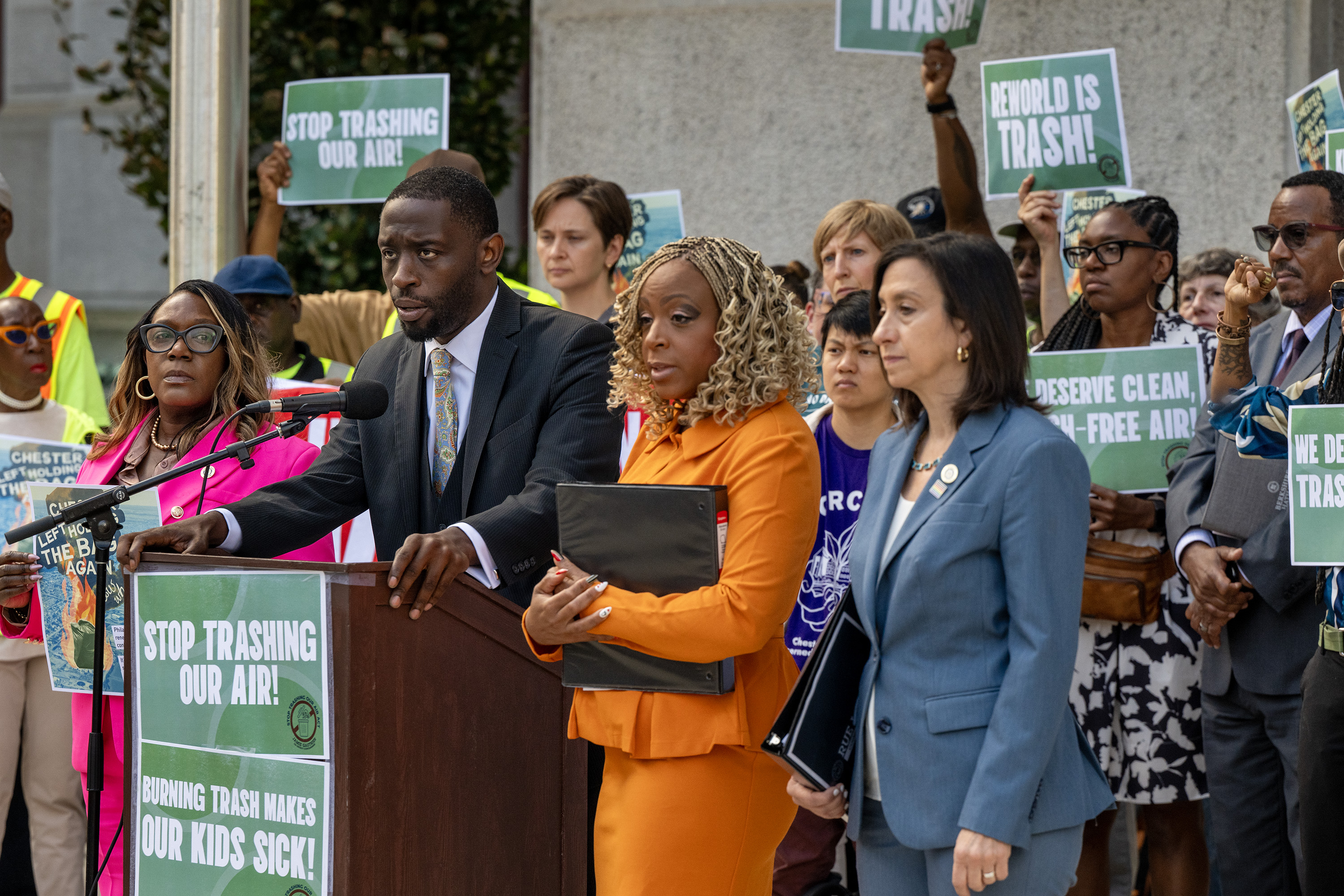
    The vote was the culmination of a yearslong effort by environmental and racial justice advocates who teamed up with Chester Mayor Stefan Roots and Gauthier to press the city to end its relationship with Reworld.

    “It is our constitutional obligation to reject a deal that is bad for this city,” Gauthier said Wednesday during a hearing on the legislation that lasted more than five hours. “We’ve been clear for over a year now that we are not OK with the same toxic choices.”

    Philadelphia Councilmember Jamie Gauthier meets with Chester Mayor Stefan Roots to discuss Gauthier’s “Stop Trashing Our Air Act,” which would ban the city from incinerating waste, during a visit with lawmakers and staff in Chester, Pa., on Friday, Nov. 7, 2025.Jose F. Moreno / Staff Photographer

    Gauthier, Roots, and others have cited pollution that can cause adverse health effects for residents in the city to Philadelphia’s south. Last year, Gauthier authored legislation to ban the city from incinerating trash entirely, but she failed to garner support from a majority of Council members, and the bill was never called up for a vote.

    Parker’s administration has advocated for the city to continue its existing contract with Reworld while it develops a long-term plan to move away from both incineration and landfills by reducing waste entirely.

    “It is not a real solution to move it from an incinerator in Chester to landfills,” Managing Director Carlton Williams said Wednesday. “The real solution is … waste reduction, increased recycling, and better composting.”

    And Reworld officials said that the pollutants emitted by the facility are below national quality thresholds, and that refusing to contract with the company would threaten jobs in the region.

    “Today is about more than political differences,“ said John Scott, Reworld’s director of government relations. ”It’s about the hardworking men and women who provide essential services, the families who depend on those jobs, and Philadelphia’s long-term future.“

    Williams said that moving away from incineration would cost taxpayers $15 million over the life of the contract.

    The city’s current contract with Reworld runs out at the end of this year. It was unclear Wednesday if the Parker administration could continue to send trash to Reworld’s facility next year by using another contracting mechanism, such as extending its current contract without Council’s approval.

    Joe Grace, a spokesperson for the mayor’s office, said only that the administration would “consider all options.”

    Council members on Wednesday heard testimony from a variety of Philadelphia and Chester officials, as well as health experts, environmental advocates, and dozens of members of the public.

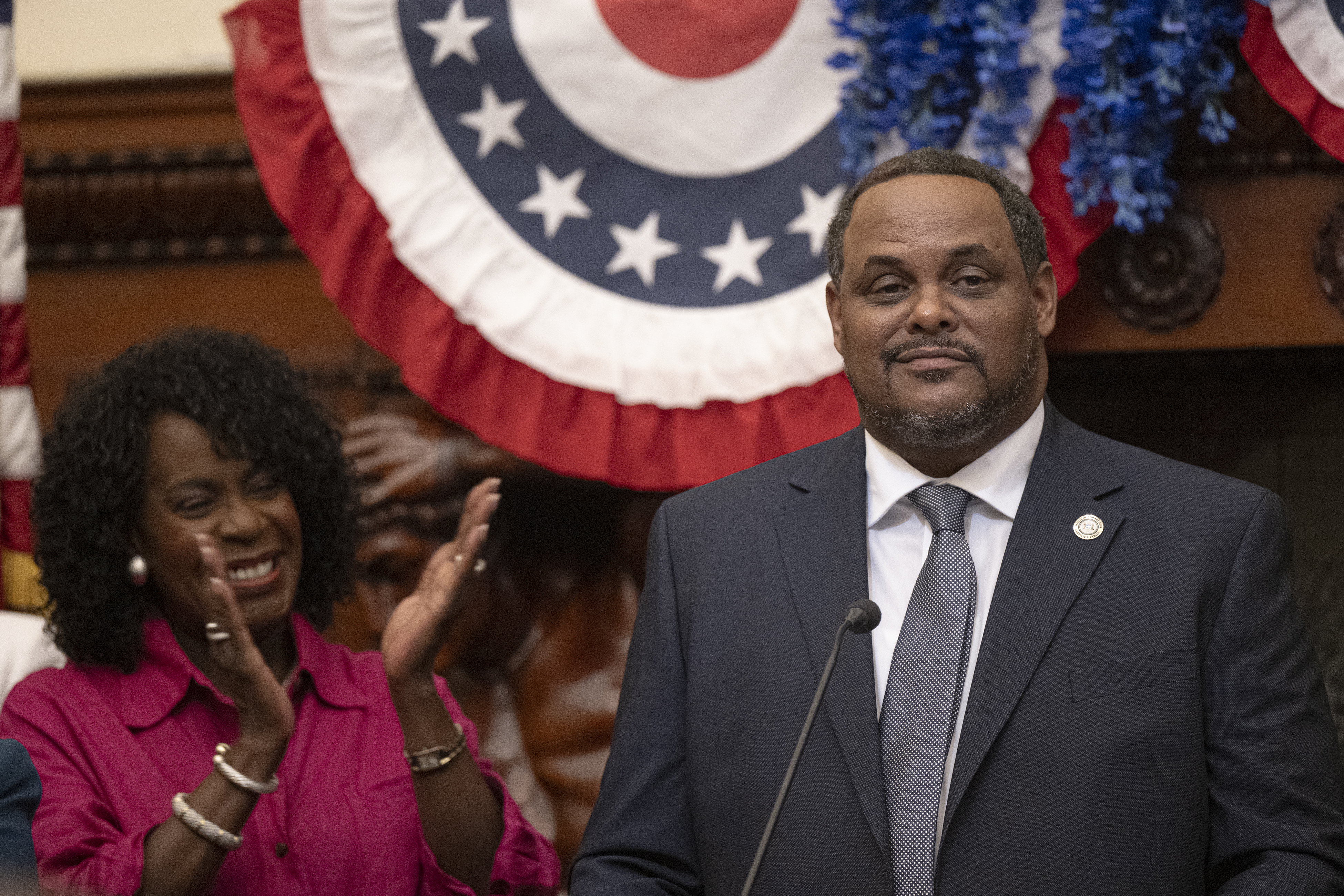
    New Philadelphia Managing Director, Carlton Williams speaks at the podium after being announced by Philadelphia Mayor Cherelle L. Parker, left, during a news conference at City Hall in Philadelphia on Tuesday, July 28, 2026.Jose F. Moreno / Staff Photographer

    They also heard from Eric Bazis, a former Reworld employee who sued the company in 2024, saying that he was improperly fired after raising concerns about environmental compliance. That lawsuit is pending.

    Council subpoenaed Bazis for testimony, and Reworld attorneys this week asked a city judge to nullify the subpoena, writing in court papers that it would be inappropriate for Bazis to testify given his ongoing litigation.

    But a Common Pleas Court judge on Tuesday upheld Council’s subpoena, clearing the way for Bazis to testify, court records show.

    Bazis told Council members on Wednesday that he learned during a 2023 meeting that higher-ups at Reworld were “gaming the system” by burning clean material during regulatory testing. He said that he raised concerns and that, shortly thereafter, he was suspended from his job and ultimately fired.

    Attorneys for Reworld have previously said in filings that Bazis is a disgruntled former employee who was terminated for faking time sheets.

    Councilmember Jim Harrity, a Democrat who represents the city at-large, said he was taken aback by Bazis’ testimony, saying during the hearing that what Bazis described “doesn’t even sound legal.”

    Several other members of the committee signaled at the beginning of the hearing that they were leaning toward blocking the Parker administration from entering into a new contract with Reworld.

    “There was never a convincing argument that took my attention off the health impacts,” said Councilmember Nicolas O’Rourke, a member of the progressive Working Families Party who represents the city at-large. “The administration will need some deeply, deeply compelling new information to convince me that trash incineration is remotely close to the right move.”

    And Councilmember Nina Ahmad, a Democrat who also represents the city at-large, said at the start of the hearing that her goal was not merely to reduce the amount of trash that the city burns.

    “I want that number to go to zero,” she said.

  • Jim Purcell, retired teacher, principal, and Hall of Fame boys’ basketball coach, has died at 92

    Jim Purcell, retired teacher, principal, and Hall of Fame boys’ basketball coach, has died at 92

    Jim Purcell, 92, formerly of Glenolden, Delaware County, retired teacher, high school principal, star basketball player, and Hall of Fame boys’ basketball coach at Cardinal O’Hara and St. Thomas More High Schools, died Sunday, Nov. 15, of age-associated decline at the Bellingham at West Chester senior living community.

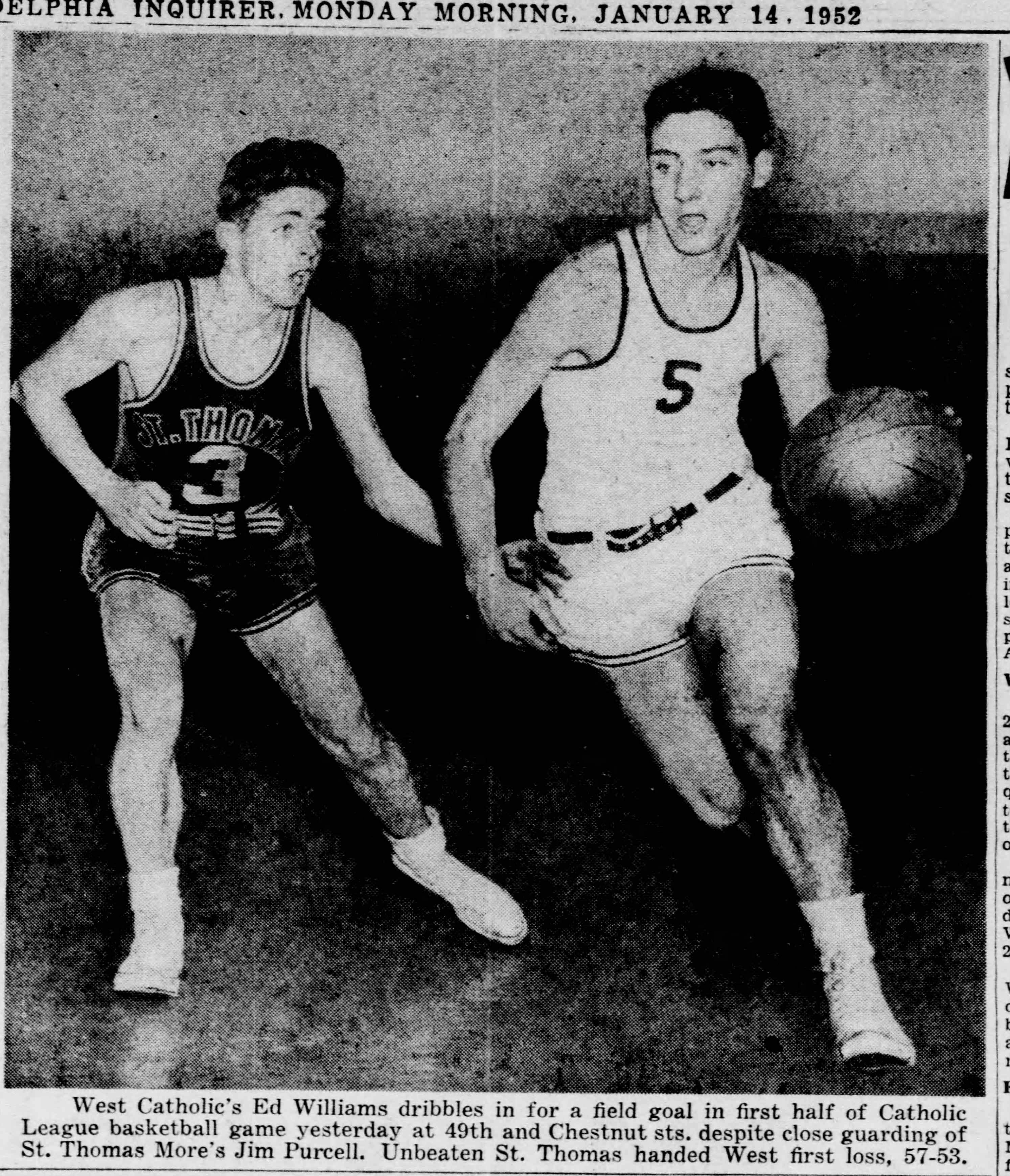
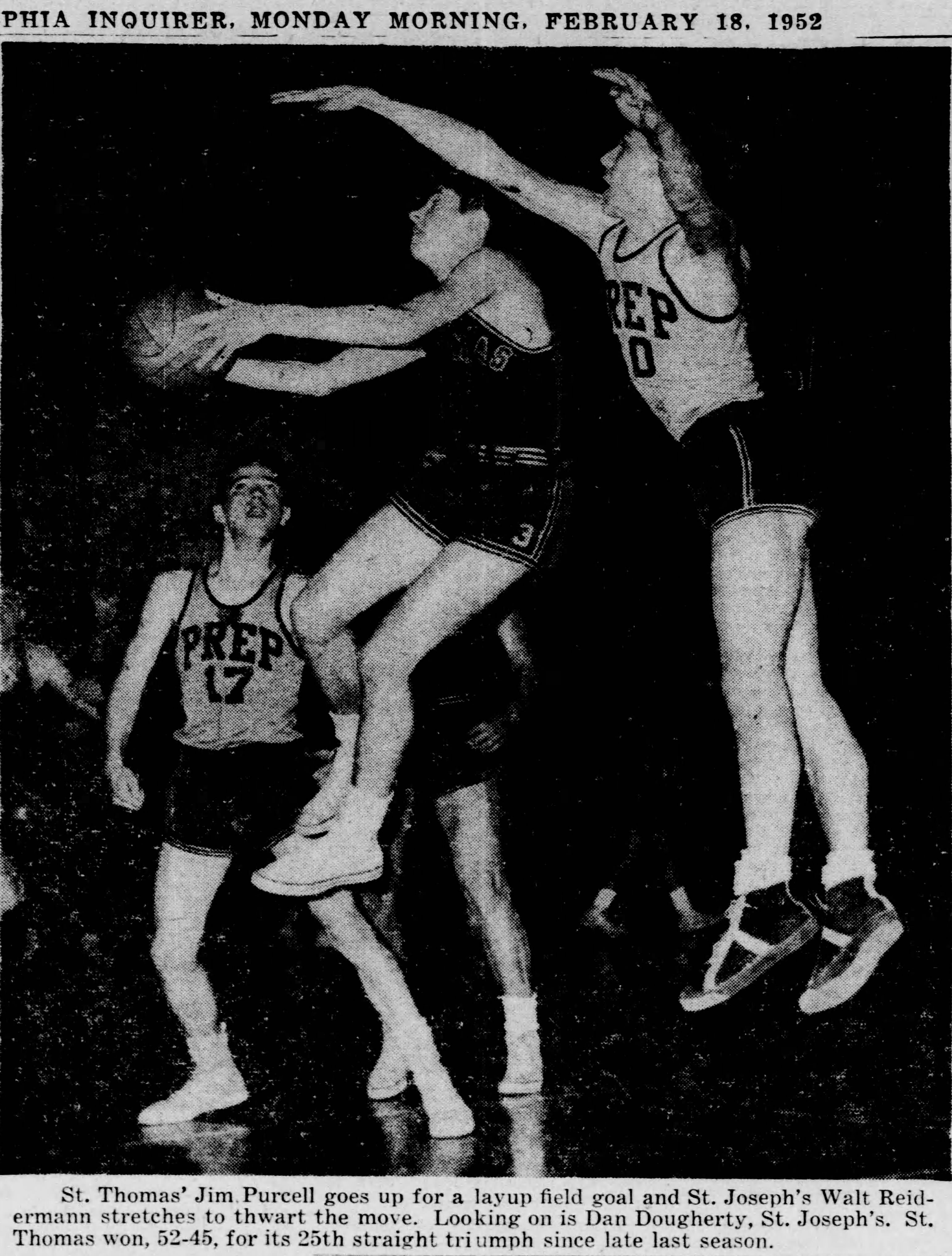
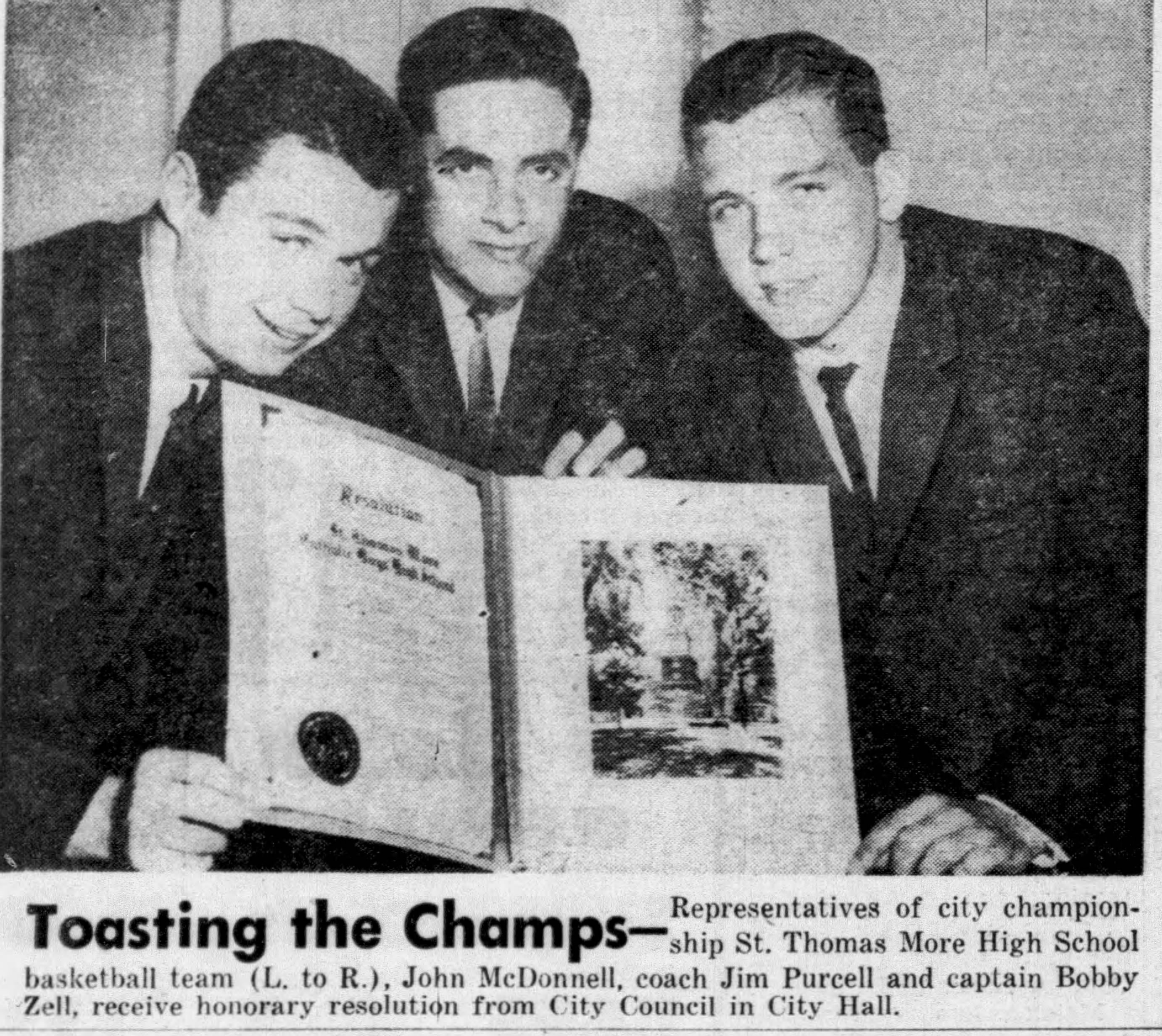
    Known as “Coach” and “Delaware County royalty” to many former players, colleagues, and basketball fans in and around Philadelphia, Mr. Purcell was a star basketball player at the old St. Thomas More High School and what is now St. Joseph’s University. Inquirer sportswriter Hal Freeman called him “an efficient, swift, and heady playmaker” in a 1952 article, and Mr. Purcell helped St. Thomas More win its first Philadelphia Catholic League boys’ basketball championship in 1951.

    He graduated in 1952, returned to the high school in 1958 as a teacher and basketball coach, and, in 1961, became the first person to win the Catholic League boys’ basketball championship as a player and a coach. He left More in 1963 to teach and coach basketball at Cardinal O’Hara, won the Catholic League championship there in 1968, and became the first coach to win Catholic League titles at two schools.

    His teams at O’Hara made the Catholic League playoffs in seven of his eight seasons, and he finished, according to the Daily News, with a career record of 126-68 at O’Hara and 82-51 in six seasons at More. He was inducted into both the Cardinal O’Hara Hall of Fame and the St. Thomas More Hall of Fame.

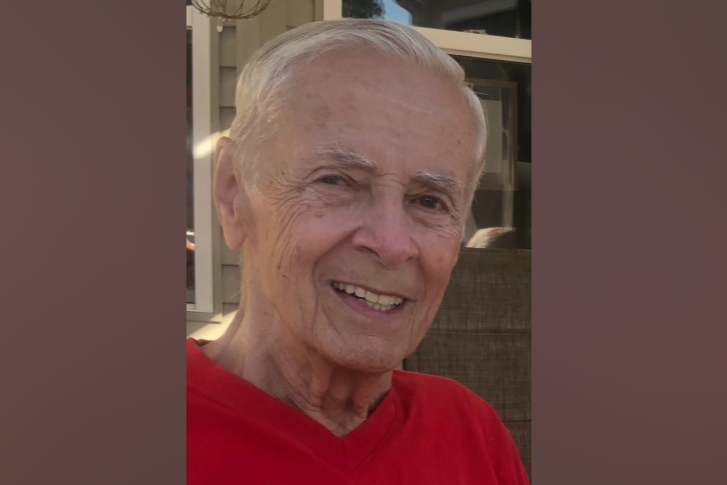
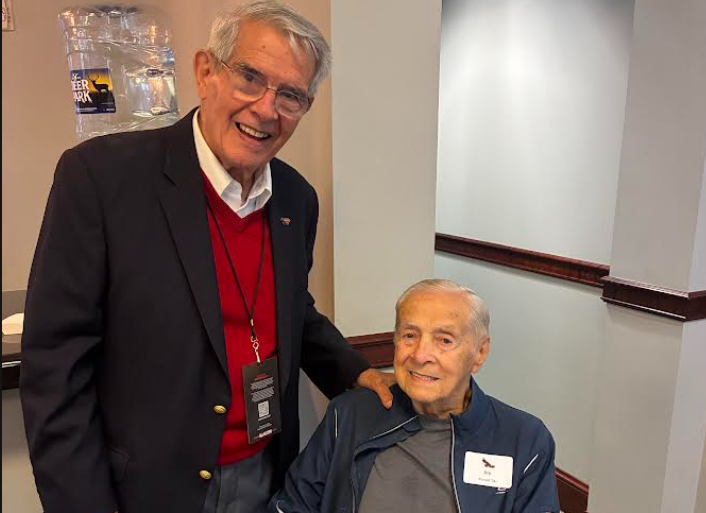
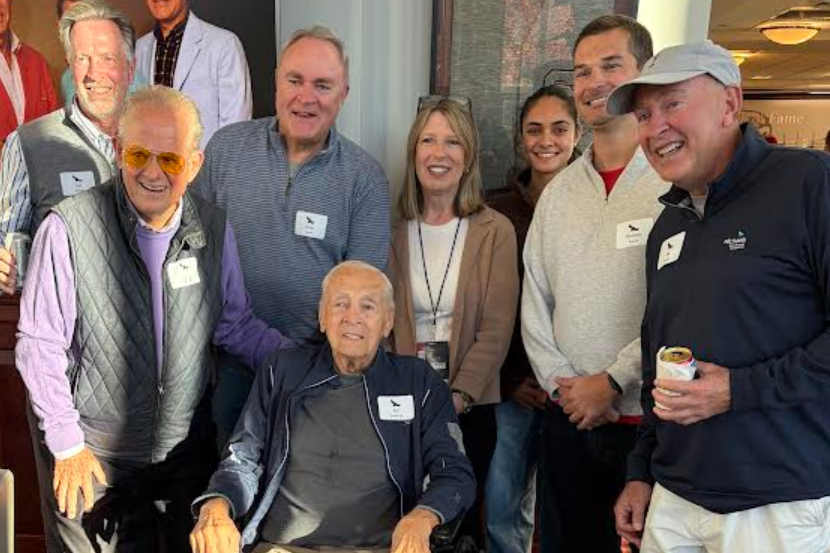
    Above, Mr. Purcell (right) was close with his former Cardinal O’Hara player Tom Ingelsby. Below, he (right) poses with St. Joseph’s longtime administrator Don DiJulia. Courtesy of the family

    Mr. Purcell’s 1967-68 championship team at O’Hara featured star players Tom Ingelsby and Joe Hazinsky, and finished 13-1 in the Catholic League. His 1971-72 team featured Mike Arizin, finished 13-3 in the league, and lost a heartbreaker to More in the division semifinals.

    “The team I coached in 1968 was one of the best,” Mr. Purcell told The Inquirer in January 1972. “But this [1971-72] team is potentially one of the greatest.”

    Ingelsby said: “Coach Purcell insisted his players to be fundamentally sound, very team-oriented, and very competitive.” Arizin said: “He was the best coach I ever had. He quietly but firmly taught us all how to play and that basketball was a team sport. I respected him immensely and listened to him. He made me better.”

    At St. Joseph’s, he played in 64 games over three seasons, averaged 5.1 points per game, and helped the Hawks win the inaugural Big Five college men’s basketball championship in 1956. “Jim was an outstanding player and a loyal teammate,” former St. Joe’s player Ray Radziszewski said in an online tribute, “soft-spoken, quiet leader both on and off the court.”

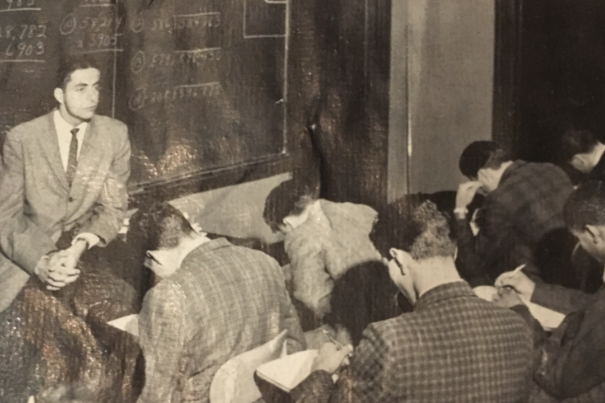
    Mr. Purcell taught Spanish and business math at More and O’Hara. He served as dean of students and vice principal at O’Hara for six years, and, in 1977, was named principal at Archbishop Kennedy High School. He retired from Kennedy in 1983 and worked for years as a construction contractor.

    These photos of Mr. Purcell, left above and center below, appeared in The Inquirer in 1952.
    Newspapers.com

    In a tribute, his family said: “Jim’s passion for basketball and his former students and players lasted a lifetime.”

    James A. Purcell was born April 1, 1934, in Philadelphia. The youngest of six children, his mother died when he was young, and his older sister became his primary caretaker.

    He played basketball all the time as a boy. Mr. Purcell earned a bachelor’s degree in political science in 1956 and a master’s degree in education in 1963 at St. Joseph’s. He married Dolores Doheny, and they had a son James, and lived in Aldan, Delaware County. They divorced later, and he lived in Glenolden, Collingdale, and Upper Darby.

    “He was humble and low-key,” his nephew Steve Purcell said. “He was a bright guy who would talk to both the janitor and the CEO. We knew him as Delaware County royalty.”

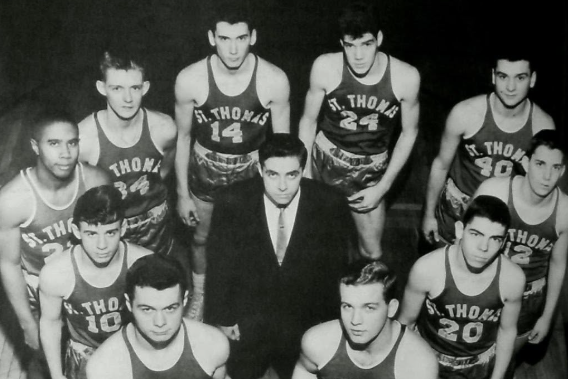
    Mr. Purcell, center above and below, coached his St. Thomas More basketball team to the 1961 Philadelphia Catholic League championship.St. Thomas More High School

    In addition to his son, former wife, and nephew, Mr. Purcell is survived by three grandchildren and other relatives. Four brothers and his sister died earlier.

    Visitation with the family is to be from 9 to 10:15 a.m. Tuesday, Nov. 24, at St. Dorothy Catholic Church, 4910 Township Line Rd., Drexel Hill, Pa. 19026. A service is to follow at 10:30.

    Donations in his name may be made to Cardinal O’Hara High School, 1701 S. Sproul Rd., Springfield, Pa. 19064.

    Above, Mr. Purcell (left) in class. Below, he is surrounded by friends and colleagues at St. Joseph’s University. Courtesy of the family
  • A Delco teen is ‘forever 15.’ His killer was sentenced to life in prison for an unprovoked attack.

    A Delco teen is ‘forever 15.’ His killer was sentenced to life in prison for an unprovoked attack.

    “I’ll be home in five minutes, Mom,” Michael Garr told his mother, Donna, over the phone on April 21, 2023. “I love you.”

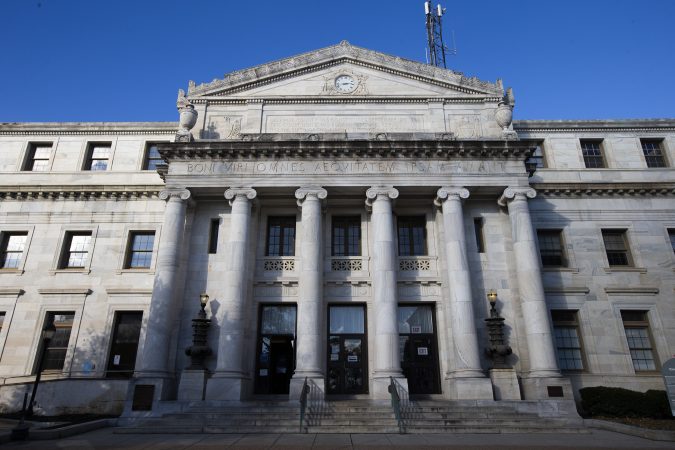
    But Garr never made it home, his mother remembered through her tears Tuesday inside a crowded courtroom in the Delaware County Courthouse.

    He was fatally stabbed minutes after that final call as he walked home through Upper Darby, leaving him, as his mother described it, forever 15.

    “His love for life was so honest and pure, I don’t believe he ever had a bad day,” Garr said. “He always had a smile on his face and would tell me, ‘It’s OK, Mom. It’ll be OK.”

    Garr’s killer, Marson Weh, 26, was sentenced Tuesday to life in prison without parole, a mandatory sentence after a jury found him guilty of first-degree murder in September.

    Delaware County Court Judge G. Michael Green sentenced Weh to a consecutive nine to 60 months in state prison for possession of an instrument of a crime.

    District Attorney Tanner Rouse did not mince words Tuesday in describing the person behind what he has described as a random, unprovoked, and senseless killing.

    “This man is the most evil person I have ever encountered,” Rouse said of Weh. “I truly believe this was a serial killer in bloom, and he was still growing into his role when the Upper Darby police saved lives by working their asses off to piece this together and bring him to justice.”

    Weh, for his part, said nothing throughout the sentencing hearing until the very end, when he interrupted Green and spoke over his attorney, Ian McGurdy, with a string of gibberish phrases as they explained his post-sentencing rights.

    Michael Garr was killed in April 2023 as he walked to his home in Upper Darby.Handout

    When Weh was arrested, he was still wearing parts of his “kill suit,” nondescript clothing that included thermal underwear stained with Garr’s blood, Rouse said during the trial this summer. And he was carrying the murder weapon, a folding knife that matched the dimensions of Garr’s fatal wounds and still had his dried blood caked in its handle.

    After the killing, investigators quickly identified Weh through surveillance footage, which recorded him following Garr for more than a mile as he walked with his girlfriend. Gradually, prosecutors said, he closed the distance between them, and attacked Garr as they approached Brunswick Avenue near Bridge Street in Drexel Hill.

    A passerby found Garr moments after the stabbing, but was unable to help him, according to evidence presented at trial. His wounds were too severe.

    Garr’s grandfather, Martin Peabody, found the crime scene while out searching for him, concerned that he was taking so long to come home, his family said Tuesday. He died in February 2025, from what his son, Anthony Peabody, described as a broken heart.

    Peabody, in addressing the judge Tuesday, described a coincidence that can only occur in a tight-knit community such as Delaware County: Members of Garr’s extended family coached Weh in football during his teenage years.

    “Marson Weh had over a mile to change his mind, but he did not,” Peabody said. “And I don’t know what punishment can be handed down.

    “‘In God We Trust’ is something we see everywhere,” Peabody said. “That’s all we have left.”

    Peabody and other members of Garr’s family described him Tuesday as a fun-loving, bright teen who loved sports, chess, and fishing. He was robbed, they said, of a lifetime of memories and the potential to create a family of his own.

    “The animal who killed my son deserves 100 life sentences,” Donna Garr said. “He is a coward who preyed on a child. Your Honor will give him one. God will give him the rest.”

    Weh has a trial scheduled in February in another, unrelated attack, in which he is charged with attempted murder for allegedly slashing the throat of a pregnant woman.

    And despite Weh’s initial attempts at claiming to be incompetent to stand trial, Rouse, the prosecutor, is adamant that countless medical evaluations have proved otherwise.

    “This is all an act,” he said of Weh’s incoherent ramblings in court. “And it always has been.”

  • Man charged with double murder in 2022 fatal shooting of pregnant woman in Philly

    Man charged with double murder in 2022 fatal shooting of pregnant woman in Philly

    A 25-year-old man Delaware County has been charged with two counts of murder for the 2022 fatal shooting of a pregnant woman in the Port Richmond section of Philadelphia and the subsequent death of her newborn who survived a month after the woman was killed, police said.

    Christian G. Brown, of Lansdowne, was arrested Friday and was being held without bail at the Curran-Fromhold Correctional Facility, court records show.

    Around 1 a.m. on June 4, 2022, in the area of Richmond Street and Wheatsheaf Lane, Brown allegedly shot 19-year-old Matayah Haynes in the head.

    Haynes, a Camden resident who was about 34 weeks pregnant, was taken by medics to Temple University Hospital, where she was pronounced dead at 1:56 a.m.

    Police reported that a baby boy was delivered and was immediately listed in critical condition.

    Ry’Kier Haynes, as he was named, died July 5, 2022, at 2:56 p.m., police said Monday.

    Police did not release any other details about the investigation.

    No attorney was listed in court records on Monday for Brown.

    An online obituary for Haynes said she “couldn’t wait to take on life with her first child, son Ry’Kier whom she passionately referred to as her critter.”

  • Swarthmore Borough passed an earned income tax. Officials say it will bring in $2 million in 2027.

    Swarthmore Borough passed an earned income tax. Officials say it will bring in $2 million in 2027.

    Swarthmore Borough voted to implement a 1% earned income tax last week, a move officials say will generate nearly $2 million next year as the borough contends with deferred maintenance and rising operational costs.

    Swarthmore’s earned income tax will take effect on Jan. 1 and will be levied on both working Swarthmore residents and nonresidents with jobs in the borough. The borough estimates the tax will bring in about $1.9 million in 2027 and about $2.9 million annually after that.

    Disability benefits and retirement pay such as pensions and Social Security will not be taxed. People making $12,000 or less annually will be exempt.

    Swarthmore joins 28 of 49 municipalities in Delaware County, and nearly 97% of municipalities across the state, that levy earned income taxes.

    In Pennsylvania, earned income taxes are reciprocal, meaning that for people who work in one municipality with the tax and live in another that also has it, the tax revenue from their income goes to their home municipality.

    In Swarthmore, about two-thirds of working residents already pay an earned income tax or wage tax to another municipality. The new tax will allow the borough to recapture about $1 million in revenue that residents are currently paying elsewhere, according to a presentation from consulting firm Keystone Municipal Solutions.

    Philadelphia is a notable exception. Those who work in Philadelphia but live in a municipality with an earned income tax must pay Philadelphia’s nonresident wage tax instead of their home municipality’s tax. One-third of employed Swarthmore residents worked in Philadelphia as of 2023, according to Keystone Municipal Solutions.

    Residents are projected to contribute about 80% of Swarthmore’s income tax revenue, and people who work in the borough but live elsewhere will contribute the remaining 20%, according to the presentation.

    The tax, approved at a Nov. 9 council meeting, faced pushback from residents in attendance, many of whom said it will unfairly burden lower-income workers who do not benefit from the borough’s services.

    Resident and local business owner Gus Pappas called the tax “aggressive” and warned it will land “on the backs of people who don’t live here.”

    “Supposed good intentions do not excuse poor fiscal stewardship, and taxpayer dollars are not an unlimited resource to fund every program that council members consider worthwhile,” said resident Stephen Kraftschik, who criticized the council’s spending decisions.

    Council members described the tax as an unfortunate necessity, as the borough faces a “sobering” financial reality.

    In the absence of an earned income tax, the borough would face a budget shortfall of more than $1 million, council member Cindy MacLeod said.

    “There is no great way to approach this problem, and I’ve racked my brain and I’ve been uncomfortable and squirming, and this is a horrible position to be in as council,” council president Jill Gaieski said.

    “I do think that we’re in this period of righting our financial ship and figuring out where the money is actually coming from and where it’s going,” council member Angie Tseng said.

    Council members described years of overdue maintenance, including fire trucks that are beyond their usable life and bridges that need to be replaced.

    Swarthmore floated an earned income tax last year, but dropped the proposal after a $638,000 contribution from Swarthmore College. The borough instead voted to levy an emergency service tax, which will be eliminated in 2027.

    Swarthmore’s borough council voted to approve the new tax in a 6-1 vote. Council member Jared Therrien voted against it, arguing it would burden working people and young families.

    This suburban content is produced with support from the Leslie Miller and Richard Worley Foundation and The Lenfest Institute for Journalism. Editorial content is created independently of the project donors. Gifts to support The Inquirer’s high-impact journalism can be made at inquirer.com/donate. A list of Lenfest Institute donors can be found at lenfestinstitute.org/supporters.

  • Jill Scott leads the Philly Grammy parade with five nominations

    Jill Scott leads the Philly Grammy parade with five nominations

    Philly’s own Jill Scott garnered five Grammy nominations for music from her album To Whom This May Concern. Sabrina Carpenter, Questlove, Yannick Nézet-Séguin, Christian McBride, and Adam Blackstone are among the other Philadelphia-area artists up for awards at the 2027 Grammys.

    British singer-songwriter Raye is the surprise leader with 11 nominations, tying Beyoncé for the most ever. The singer, born Rachel Keen, is up for three major awards: album of the year for This Album May Contain Hope and record and song of the year for “Where Is My Husband!”

    Nearly all the top nominees are women at this year’s awards, which will be held in Los Angeles on Feb. 7. Rosalía has nine nominations; Ella Langley, Miranda Lambert, Phoebe Bridgers, and Olivia Rodrigo have seven each; and Olivia Dean, Bruno Mars, and Leon Thomas have six each.

    Along with Scott, artists with five nominations include Taylor Swift, Geese, Jesse Welles, Don Toliver, and Lainey Wilson.

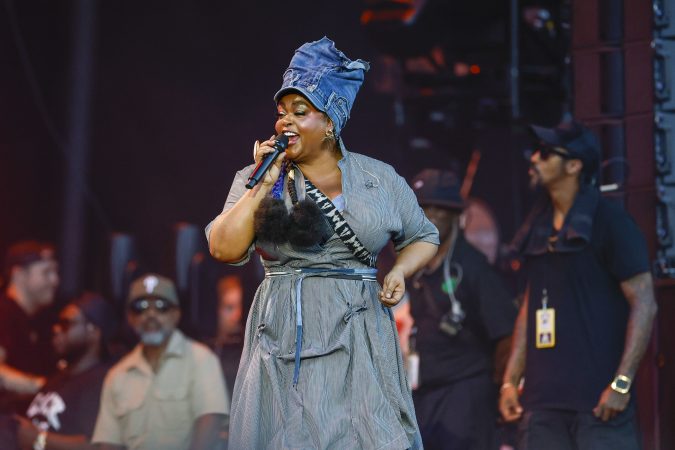
    Jilly from Philly is up for best R&B performance for “Pressha”; best melodic rap performance for “To B Honest,” featuring JID; best traditional R&B performance for “Beautiful People”; best R&B song for “Pressha,” which was written with Blackstone and Vincent Tolan; and best R&B album for To Whom This May Concern.

    Carpenter, who grew up in Quakertown in Bucks County, is up for two awards, but she can’t win them both because they’re in the same pop duo/group performance category. Her collab with Madonna “Bring Your Love” is going against a team up with Swift on ”The Life of a Showgirl.”

    Berks County native Swift’s five nods include album of the year for The Life of a Showgirl, in which she’s battling Raye as well as Olivia Dean, Langley, Mars, Rodrigo, Bridgers, and Rosalía. Swift’s “The Fate of Ophelia” is up for record of the year, in competition with Langley, Mars, Rodrigo, Raye, and Rosalía with Bjork and Yves Tumor, plus Tame Impala and Jennie.

    In 2022, Roots drummer Questlove won a music film Grammy for his directorial debut, Summer of Soul. This year, he’s trying to win again for his Earth, Wind & Fire doc To Be Celestial vs. That’s the Weight of the World.

    Raye performs at the Greek Theatre in Los Angeles on May 12, 2026. Andrew Park

    Two Philly artists are nominated for best jazz performance. The Baylor Project, the married couple of Jean and Marcus Baylor, is in the running with “Good Life — Tamron Hall Main Title Theme,” from Temple grad Hall’s daytime talk show.

    They’re vying against a version of Hoagy Carmichael’s “I Get Along Without You Very Well (Except Sometimes),” from Southwest Philly native Christian McBride, with Gilad Hekselman, Nicole Zuraitis, and Dan Pugach.

    In best opera recording, Philadelphia Orchestra music director Séguin is nominated for conducting the Metropolitan Opera Orchestra in Bates: The Amazing Adventures of Kavalier & Clay.

    Philadelphia choir the Crossing is nominated in the best choral performance category for Farming, a collaboration with composer Ted Hearne. It’s the 12th nomination for the group conducted by Donald Nally. The group has won four Grammys — in 2018, 2019, 2023, and 2025.

    Philly string trio Time for Three is nominated along with Joyce Didonato for best engineered album, classical, for Puts: Emily — No Prisoner Be. And Marin Alsop, who is the Philadelphia Orchestra’s principal guest conductor, is nominated for Cline: Color Field, with the Baltimore Symphony Orchestra.

    In the best rock song category, Philly’s Alex G. is nominated for cowriting Bridgers’ song “Lost Boys.” The competition includes Bruce Springsteen’s anti-ICE protest song “Streets of Minneapolis.”

    Bruce Springsteen at the “Land of Hope & Dreams” tour stop at Xfinity Mobile Arena in Philadelphia on May 30. He’s up for a Grammy for “Streets of Minneapolis.”Elizabeth Robertson / Staff Photographer

    Other nominations of note: Dolly Parton is up for three posthumous awards, including two for country duo/group performance, plus another for reading her book Star of the Show: My Life on Stage in the audio book, narration, and storytelling category.

    Comedian Wanda Sykes, who lives part time in Media in Delaware County, is up for Best Comedy Album for Legacy, against Nikki Glaser, Trevor Noah, Jeff Ross, Fred Armisen, and Dave Chappelle.

    This year’s list of best new artist nominees is strong, with microtonal polka-dot-mask-wearing Canadian duo Angine de Poitrine (who play Franklin Music Hall on Friday), indie quartet Geese, record-breaking country star Langley, electro-pop sensation Slayyyter, powerhouse British vocalist Sienna Spiro, rapper Toliver, indie pop singer Remi Wolf, and retro-soul siblings the Womack Sisters.

    After being broadcast on CBS for more than half a century, this year’s Grammy s, which will be held at the Crypto.com Arena, will be shown on ABC and streamed on Hula and Disney+. The great majority of the 100 awards will be given out in a pre-telecast ceremony streamed on YouTube and on Grammy.com.

    This combination of images shows performers, (from left), Raye, Rosalía, Ella Langley, and Olivia Rodrigo. Uncredited
  • This Trump policy has Asian ships hauling U.S. cargoes for Philly refineries despite a century-old ban

    This Trump policy has Asian ships hauling U.S. cargoes for Philly refineries despite a century-old ban

    Except in wars or great storms, the federal Jones Act of 1920 requires that U.S. cargoes shipped between U.S. ports on the Delaware River and other waterways must travel in U.S.-built ships worked by U.S. crews.

    But since March, amid the war with Iran that stalled Middle East energy shipments, the U.S. has been in one of those exception periods, with President Donald Trump authorizing waivers allowing ships built in Korea, China, and other shipbuilding nations to haul cargoes between American ports.

    Trump on Friday extended the waivers, which had been due to expire Sunday, for another 90 days, the longest exception since the law was passed, Reuters first reported.

    The waivers have been cheered by energy lobbies representing refineries such as Delta Air Lines’ Monroe Energy in Trainer, Delaware County, and PBF Energy’s in Paulsboro, Gloucester County, and Delaware City, Del. And they’ve been lamented by reps for U.S. shipbuilders such as Hanwha Philly Shipyard in Philadelphia and American tugboat and barge owners, merchant marine officers, and the Seafarers union.

    Energy companies say waiving Jones Act restrictions is “giving shippers access to additional vessels and potentially lower transportation costs,” said Michael F. Merlie, business and maritime lawyer at Gawthrop Greenwood in West Chester.

    By contrast, Jones Act supporters warn the waivers risk shifting cargoes to foreign carriers and eroding support for U.S. flag vessels, American mariners, and domestic shipbuilding, as well as the Jones Act goal of preserving a U.S. shipping fleet, Merlie said.

    Most cargo and energy ships are now made in China, Korea, or Japan, where costs are a fraction of those in U.S. yards, thanks in part to mass production.

    An Inquirer review of federal cargo reports and other records showed more than 30 tanker loads of U.S. crude oil and locally refined fuels worth over $1 billion have traveled between Delaware River ports and other U.S. ports on waivers since March, in ships built mostly in Korea, China, and Japan.

    That level of trade “suggests the waivers have been commercially meaningful in this market,” Merlie said.

    Delta Air Lines’ Monroe Energy refinery in Trainer, Delaware County, is among the U.S. energy facilities that have been able to collect crude oil and ship out finished fuel on foreign ships in 2026 thanks to President Donald Trump’s Jones Act waivers.Joseph N. DiStefano

    Around 25 tankers visit ports on the river each month, according to data posted by the Maritime Exchange for the Delaware River and Bay, an industry group.

    The rush of foreign ships to carry U.S. cargoes between U.S. ports has changed trading patterns.

    Crude oil from the Bakken fields in North Dakota and Eagle Ford fields in Texas, moved by pipeline to Gulf Coast ports, have been shipped north to the Philadelphia area in European-owned, Asian-built tankers. It’s used to make jet fuel at Delta’s Delco refinery and gasoline at PBF.

    The waivers make it easier to ship crude between U.S. ports instead of exporting it and leaving U.S. refineries to use imported crude.

    Propane from Energy Transfer’s Marcus Hook Industrial Complex, collected from the Marcellus and Utica gas fields in western Pennsylvania, has similarly traveled on foreign tankers to Puerto Rico. The island relied more on gas from West Africa and Latin America before the waivers.

    A smaller stream of oil products from area refineries has been sent on foreign ships to specialized chemical facilities in Louisiana and Mississippi. A shipload of asphalt made in Paulsboro was carried by a Chinese government-affiliated tanker to Baltimore in July.

    The foreign ships are “displacing imports, not U.S. ships,” because there aren’t enough U.S.-built ships to meet demand, said Colin Grabow, a trade scholar at the pro-free trade Cato Institute in Washington. That means more U.S. demand for energy produced in Pennsylvania, Texas, and other gas and oil states, and less pressure to export it, he said. That should lead to cheaper energy.

    But the increased use of foreign ships “is counterproductive to the [Trump] administration’s own goal of revitalizing American shipbuilding,” said Jennifer Carpenter, president of the American Maritime Partnership of U.S. shipbuilders and workers, and American Waterways Operators, which represents tugboat and barge firms.

    Without Jones Act protections, investors won’t buy and update U.S. commercial ships, leaving America farther behind China, the world’s leading shipbuilder, she said.

    “Without the Jones Act, there is no U.S. maritime industry” or future jobs for U.S. seafarers, ship officers, and shipbuilders, Rear Adm. Michael Fossum, superintendent of Texas A&M University Merchant Marine Academy, told a crowd of senior U.S. officials in July, who gathered at the christening of the Philadelphia-built TS Lone Star State.

    Plus, Jones Act advocate Carpenter noted, fuel prices haven’t been dropping, as waiver advocates hoped.

    Despite improved domestic oil sourcing and fuel delivery under the waivers, last month jet fuel prices reached a record high of nearly $5 a gallon, boosting revenues for Delta, thanks to its Delaware County refinery.

    Much of the cost of more expensive jet fuel has been passed along to consumers, with U.S. airfares up 25% over last year.

    Ship brokers on the Delaware River and in other East Coast ports say there has lately been little cost difference between shipping on U.S. and foreign ships with the ships now available, but also noted prices are volatile.

    Rear Adm. Michael Fossum (center) with David Kim (left), head of Hanwha Philly Shipyard, and Jeff Dixon (right) CEO of TOTE Services, construction manager overseeing TS Lone Star State, at its christening, in July. Joseph N. DiStefano

    Permanent waive?

    The South Philadelphia shipyard, now operated by Hanwha Defense USA, built a majority of the “Jones Act ships” to carry cargoes between U.S. ports that have been constructed since 2000.

    But U.S. ships now comprise less than 1% of the world fleet and new ship production. That shows the Jones Act has been ineffective for shipbuilders while boosting costs for U.S. manufacturers, refiners, and other shippers, Grabow said.

    Hanwha Philly Shipyard is building three Jones Act ships for Matson, the dominant West Coast operator of U.S. cargo ships. Each is to cost over $300 million, compared with under $100 million for similar-sized ships from Chinese yards.

    Last month, with the Jones Act waivers still in force, Hanwha said its civilian shipbuilding arm was transferring control of the Philly yard to Hanwha Defense USA, which builds warships. Hanwha also named a new president to head the Philly yard, Hyuk Kim, a veteran naval and commercial shipbuilder from the company’s much-larger Korean shipyards, succeeding David Kim.

    The two contracts Hanwha announced this year are for U.S. government missile-tracking and Navy landing craft, The company is seeking other Navy contracts.

    “We are continuing to pursue commercial work,” said Hanwha spokesperson James Hewitt.

    Editor’s note: This story has been updated to make clear that 25 tanker ships carrying crude oil and refined petroleum products call on Delaware River ports each month.