Family and friends cooked, cleaned, and took care of Alejandra McBride after she gave birth to her first child in Ecuador, so that the young mother could focus all her energy on her newborn.
She felt much more alone when she gave birth to her second child 14 years later, in Delaware County.
“I have friends who would come for a few minutes to see the baby – and then go,” said McBride, who lives in Springfield. “It was hard to recover.”
Now she is training to be a doula through a new initiative in Delaware County to provide other women with support during and after pregnancy.
McBride is among 30 doulas trained through the Delco Doula Collaborative, designed to build the maternity care workforce and expand patient resources in Philadelphia suburbs where prenatal care options have dwindled since last year’s closure of Crozer Health, which operated the county’s largest birth center.
Earlier this month, an online directory launched where families can access doula services — which are covered by Medicaid and some private health insurance plans. Delaware County spearheaded the initiative with Family Village, an initiative of the Foundation for Delaware County that brings together support services for families and parents-to-be.
“Every family deserves to feel supported, informed, and empowered throughout pregnancy, childbirth, and the postpartum period,” Lora Werner, director of the Delaware County Health Department, said in a statement. “By expanding access to this trusted support, we are advancing health equity and helping to build a healthier future for parents, babies and families across Delaware County.”
Doulas are not medical professionals, but rather provide emotional support around pregnancy, and can serve as an advocate for patients.
Research has found that parents who work with a doula experience lower rates of cesarean section births, reduced anxiety, and higher rates of breastfeeding, in part because they are more empowered to advocate for their wishes and feel heard by their medical providers.
Doula training in Delaware County
With part of a $600,000 grant from the U.S. Department of Labor’s Employment and Training Administration, the Delco Doula Collaborative provided free training and licensing assistance to 30 county residents.
Participants work alongside certified doulas to learn about patient advocacy, childbirth education, and how to interact with patients.
Family Village also helped participants apply for certification through CAPPA, a leading international doula certification organization, and a Pennsylvania license.
Participants worked with a Medicaid billing consultant to help them establish their own Medicaid contract or join the organization’s contract. In Pennsylvania, doula services are covered by Medicaid. The government-funded health program covers about one-third of births statewide. Some private health plans also pay for doulas.
The organization hopes to provide scholarships to support more certification training in the future.
In the meantime, doulas who are already certified can join the collaborative for networking and additional training opportunities, and to be part of the online directory.
Individuals interested in self-funding their initial doula training should visit the national CAPPA Website, or other doula organizations in Philadelphia or surrounding areas.
For expectant parents, a doula can be a valuable resource, said Erica Loizos, the doula program coordinator for Family Village. They can talk to first-time parents about the stages of labor, postpartum care, and breastfeeding.
Doulas play the critical role of advocating for the person who is giving birth at a time when medical attention often shifts to the baby.
During labor and maternal medical appointments, some patients may struggle to speak up for what they want, or may not know what questions to ask. Doulas can coach them on how to advocate for themselves, or be the advocate, voicing their client’s wishes when they are unable to. Doulas often attend the birth to help advocate for the birthing person.
“The most important thing is getting to know their family,” Loizos said of the service doulas provide.
Zainab Waites, who works as a daycare teacher in Chester, embraced that mission. She has worked with eight families since beginning her training last year, many of whom were “really alone,” she said.
“I always see myself as coming in to be a family member,” Waites said. “Whatever it is, even if you just want to complain about something, I’m here.”
Learning from personal experience
McBride said she was surprised how different pregnancy is treated in the United States, compared to where she grew up in Ecuador. Parents are faced with many more decisions and choices, which can be especially hard to navigate if they come from a different culture or do not speak English as their first language.
“With my third birth, I was pretty much saying yes to whatever the doctor said,” McBride recalled. She didn’t know doulas existed, or that it was possible to push back against a doctor’s initial recommendation.
McBride had a C-section because she didn’t know she could ask to wait a little longer to see if she would go into labor naturally.
“Every woman is different,” she said. “My job is to advocate for these families and make sure they are delivering in a safe and warm place.”
Marson Weh, 39, was also convicted of possession of an instrument of crime in the April 2023 death of Michael Garr, a sophomore at Upper Darby High School.
Weh will be sentenced in November to life in prison for stabbing Gar 11 times, including once in the throat, according to District Attorney Tanner Rouse.
The two were strangers, Rouse said, and had “no earthly connection.” The DA said Weh offered no motive for the stabbing.
Michael Garr was killed in April 2023 as he walked to his home in Upper Darby.Handout
The prosecutor said the case would make the “worst episode of Dateline,” one without any twists and leaves no room for alternate theories or interpretation.
No one else was near Garr that night, he said, as Weh was seen “hunting, stalking” the teenager for more than a mile.
When Weh was arrested, he was still wearing parts of his “kill suit,” nondescript clothing that included thermal underwear stained with Garr’s blood, Rouse said. And he was still carrying the murder weapon, a folding knife that matched the dimensions of Garr’s fatal wounds and still had his dried blood caked in its handle.
“See this for what it is,” Rouse said. “Because when you only consider the blood on his pants, the blood on his knife, that alone proves he is guilty. There is no other explanation, no reasonable doubt.”
After the killing, investigators quickly identified Weh through surveillance footage, which recorded him following Garr for more than a mile. Gradually, prosecutors said, he closed the distance between them, and attacked Garr as they approached Brunswick Avenue near Bridge Street in Drexel Hill.
Weh’s attorney, Ian McCurdy, conceded in his closing arguments that it would “strain credulity” to say there wasn’t evidence to prove that Weh killed Garr.
Still, he urged jurors to consider that prosecutors had failed to explain his intent in doing so.
“As horrible as this situation is, the death of a young man killed way too early his life, this boils down to did the Commonwealth prove the case beyond a reasonable doubt,” he said
McCurdy supported his contention by citing a two-minute window of time where neither Garr nor Weh were recorded on surveillance video.
“The point is we just don’t know what happened in that small bit of time,” he said. “And that’s why I suggest to you the Commonwealth hasn’t proven that Marson Weh killed Michael Garr with malice.”
In responding to McCurdy’s theory of the case, Rouse, the district attorney, did not mince words: The evidence that Weh intentionally killed Garr, a crime that constitutes first-degree murder, he said, is overwhelming.
Beyond that, he said, Weh confessed to killing Garr during an interview with detectives. And he showed what Rouse described as a consciousness of guilt by soaking the hoodie and he gloves he wore on the night of the attack in ammonia — detectives found the items in that condition when they searched his home days later.
Rouse urged the jurors to convict Weh of first-degree murder, likening doing so to parents protecting their children from the evils of the world.
“There is simply no getting around the evidence,” he said. “You cannot stab someone in the throat and not mean it.
Delaware County District Attorney Tanner Rouse told a panel of jurors Tuesday that he needed to be “very, terrifyingly clear” with them about the killing of Michael Garr.
“There is no backstory. There is nothing that led to this,” Rouse said of the 15-year-old’s fatal stabbing.
“This is the type of random, terrifying, senseless act of violence that we need to pretend doesn’t happen,” he added. “But we know it does.”
Garr, a sophomore at Upper Darby High School, was killed in April 2023 by Marson Weh, a man to whom the teenager had “no earthly connection,” according to Rouse. After stalking Garr for more than a mile as the teen walked through Drexel Hill, Weh, 26, allegedly stabbed him 11 times, including once in the neck,according to prosecutors.
Weh, of Clifton Heights, is on trial this week on murder and related crimes. The motive, if Weh had one, is unclear, Rouse said.
Michael Garr was killed in April 2023 as he walked to his home in Upper Darby.Handout
His attorney, Ian McCurdy, urged jurors to withhold judgment until they see all of the evidence in the case.
“These allegations are horrific. They are heartbreaking. They are gut-wrenching; a 15-year-old boy is dead,” McCurdy said. “But at this time, they are only allegations.”
Extensive surveillance footage allowed investigators to track both Garr and Weh before, during, and after the stabbing, according to testimony Tuesday.
As the two approached Brunswick Avenue near Bridge Street in Drexel Hill, Weh attacked Garr with a knife, and then sprinted from the scene. Garr, mortally wounded, ran in the opposite direction, desperate for help.
Around that same time, Ian Coughlan was driving home from Philadelphia. As he paused to make a left turn, Garr ran up to him, clutching his neck tightly.
The teen was struggling to speak, Coughlan said Tuesday. When he lifted his hands from his neck, blood began to pour out.
“He couldn’t speak, but he was able to squeeze out three words,” Coughlan testified. “’He stabbed me.’”
A recording of Coughlan’s 911 call, played in court, captured the chaotic scene, with him begging for dispatchers to send medics as he urges Garr to stay with him.
Shortly after police arrived at the scene, Garr went into cardiac arrest and died.
“I have a son, and he’s 15 now. It’s just scary for something like this to happen,” Coughlan said outside the county courthouse after his testimony. ”I tried to help, but it didn’t turn out the way I wanted it to.
“I think about him every day.”
As Garr’s family wept inside the courtroom, some having to be excused as the 911 call was played, Weh sat with his eyes cast down, mumbling wordlessly to himself.
The same surveillance footage that recorded Weh pursuing Garr helped investigators identify him through facial recognition software, according to prosecutors. Officers then conducted surveillance on Weh’s home over the next few days and observed him at various times wearing clothing matching what was seen in the video.
Weeks later, officers stopped Weh as he left his home, taking him into custody in connection with an active arrest warrant out of Ohio for a carjacking.
Weh denied killing Garr. But a dried blood stain on thermal underwear he was wearing tested positive for the teen’s DNA — Rouse, the prosecutor, said it was in the exact location where the pocket of his pants would have been.
A knife found in Weh’s backpack had been wiped clean. But a detective separated the blade from its handle, revealing dried blood that had seeped underneath.
It was a match for Garr’s.
Weh’s trial is expected to last through Thursday before Judge G. Michael Green.
Later this year, he is scheduled to appear before Green in a separate trial for attempted murder for allegedly slashing a pregnant woman’s throat and stabbing her in the abdomen during a robbery that took place two months before Garr’s killing.
In most of the country’s largest housing markets, more people are selling homes than buying them, giving buyers more chances to get a home.
But in most of Philadelphia’s collar counties, buyers outnumber sellers, which gives sellers an advantage as more people compete for their properties.
In August, the combined market that the real estate brokerage Redfin calls Montgomery, Chester, and Bucks Counties was one of only five seller’s markets out of the 49 most-populous U.S. markets that Redfin analyzed. There were about 5,800 sellers and almost 7,300 buyers in the market last month.
The area’s place in Redfin’s list reflects strong demand for homes and a housing supply that isn’t keeping up.
“You actually have increasing demand,” said Chen Zhao, head of economics at Redfin. And “your supply is actually decreasing rather than increasing, which is what you see in most parts of the country.”
But the region is more buyer friendly than it used to be. In the years after the start of the pandemic, the gap between the shares of sellers and buyers was twice what it was this August. Only last year did the gap start narrowing significantly as more sellers entered the market, Zhao said.
Redfin used a model to estimate the number of homebuyers and home listing data to estimate the number of sellers.
(function(){function e(){window.addEventListener(`message`,function(e){if(e.data[`datawrapper-height`]!==void 0){var t=document.querySelectorAll(`iframe`);for(var n in e.data[`datawrapper-height`])for(var r=0,i;i=t[r];r++)if(i.contentWindow===e.source){var a=e.data[`datawrapper-height`][n]+`px`;i.style.height=a}}})}e()})();
A lot of buyer’s markets
Almost three-quarters of the major metros Redfin looked at — 36 of 49 — were buyer’s markets in August, meaning sellers outnumbered buyers. (One of the country’s 50 biggest metros, Fort Lauderdale, Fla., did not have enough data for the analysis.)
Homebuyers in buyer’s markets tend to have the upper hand in negotiations, because they have more choices, and sellers compete for them instead of the other way around. Housing supply has increased as homes hit the market that builders started constructing years ago and homeowners who didn’t want to give up their low mortgage rates are forced by life circumstances to sell, Zhao said.
But the picture isn’t all rosy for the country’s buyers. Home prices and mortgage interest rates continue to climb, pricing some people out of the housing market. Nationally, home-buying demand has dropped slowly and steadily over the last few years, Zhao said.
But there are opportunities for those who can afford to purchase a home, whether with household wealth or homebuyer assistance programs.
The combined market that Redfin defines as Philadelphia and Delaware County is a buyer’s market. It had about 5,900 buyers and about 8,900 sellers in August.
But because of continuing demand, it’s still one of the five markets where sellers were least likely to give concessions to buyers in August, according to a separate Redfin report. These buyer incentives include covering closing costs and paying for repairs.
Comparing markets
The Nashville area had the strongest buyer’s market in the country in August, according to Redfin. It had more than double the number of home sellers compared to buyers.
That was also true in the metros of Miami, Orlando, and Las Vegas, and the Texas metros of Houston, San Antonio, Austin, and Dallas.
In the Nashville metro, the market turned more strongly in favor of buyers last month, because the number of home listings rose 4% from the previous month, while the number of buyers dropped by only 0.4%.
Redfin considered eight housing markets to be balanced, with roughly the same number of buyers and sellers in August. Balanced markets include New Brunswick, N.J.; New York; and Baltimore.
Fifteen years ago, Chris Pieretti was just trying to get people to come around on compost.
Now, the Upper Darby resident and compost aficionado spends his days traversing the region in his truck, collecting a potpourri of food scraps in green buckets, and turning eggshells, banana peels, and coffee grounds intoa nutrient-rich, soil-like product.
Pieretti is behind Kitchen Harvest, which collects compostable materials and processes them on a five-acre site at Linvilla Orchards in Delaware County. Kitchen Harvest is, in Pieretti’s words, part of “a better, more sustainable future of a full-circle food system.”
It is part of a growing network of providers and composters across the Philadelphia region who are working to reduce waste and improve food system circularity, where scraps of food once grown in the Earth can return to it, fertilizing soil for new crops.
With Haverford Township debuting its municipal compost program this summer, joining Media and Swarthmore, among other municipalities, compost purveyors say the practice is breaking out of its crunchy origins and becoming a key part of the region’s waste management strategy.
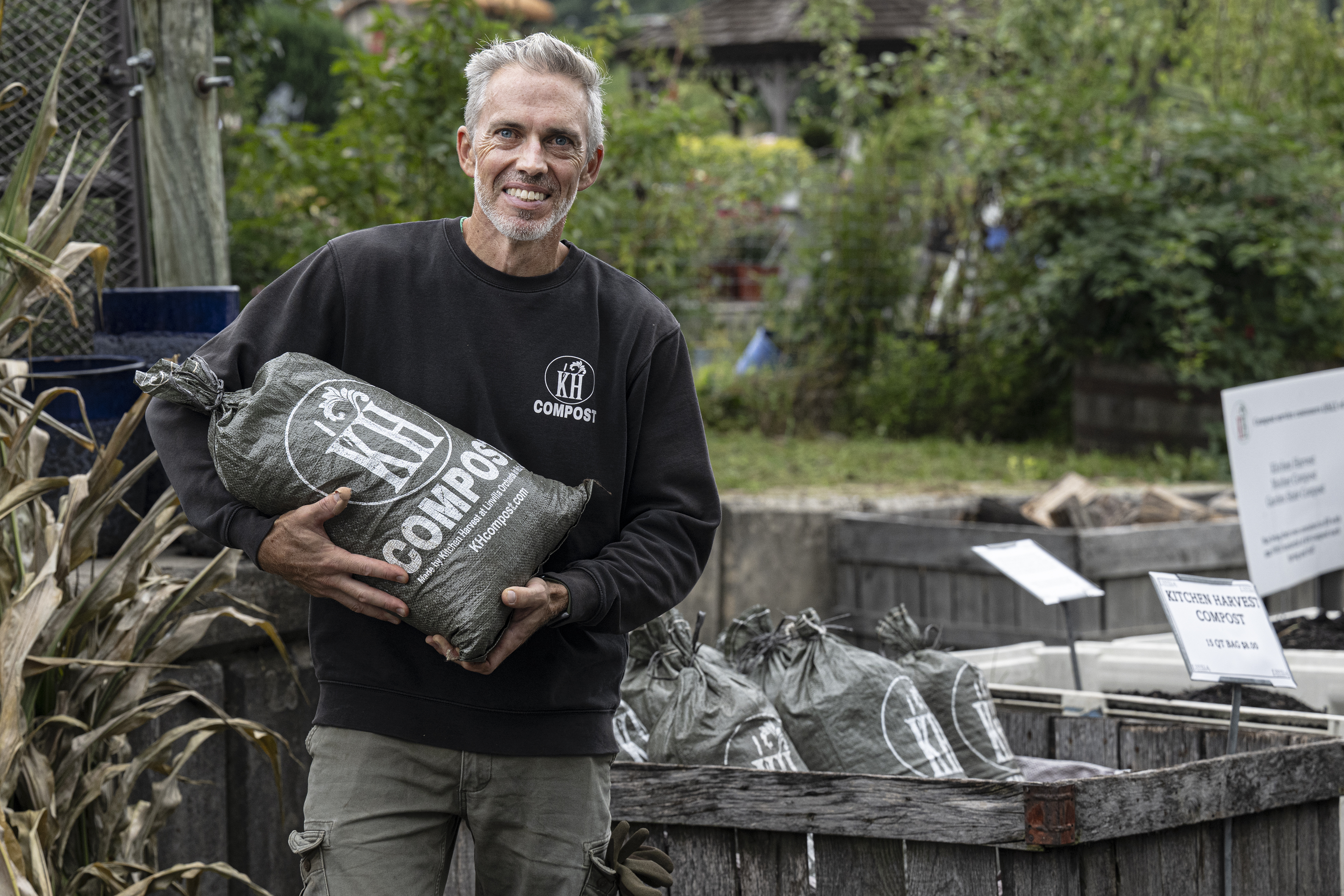
Chris Pieretti holds a compost bag at Kitchen Harvest in Delaware County. Pieretti is working with local homes and municipalities to compost food scraps and yard waste. Jose F. Moreno / Staff Photographer
What is composting?
Composting is the process of recycling organic materials like food scraps and yard waste, breaking them down into a brown, soil-like material called compost, and using that material in farms and gardens to enrich other plants and crops.
The composting process happens on micro and macro scales — in small home gardens and at multi-acre sites like Kitchen Harvest’s.
Compost advocates tout both its environmental and agricultural benefits. In the U.S., food is the single most common material sent to landfills, where it is responsible for 58% of methane emissions, a powerful greenhouse gas, according to the Environmental Protection Agency. Adding compost to soil increases its nutrient content, conserves water by helping retain moisture, and reduces reliance on chemical fertilizers, the EPA says.
“Food is only wasted when we throw it in the trash. It’s our choice to dispose of it in that method, but we don’t have to,” said Gwenn Nolan, founder of Mother Compost, a company that collects compost material throughout the Philly suburbs and brings it to the Kitchen Harvest site at Linvilla.
Going from ‘crunchy’ to ‘waste management strategy’
Many compost enthusiasts have a similar story: What started as a backyard experiment grew, through trial and error, into a way of life and, for some, a career.
Nolan, of Mother Compost, got her start asking 10 friends on the Main Line to try composting so she could test demand for a compost collection service. She bought a small truck, picking up the bins of food scraps early in the morning before heading to her job in financial services. After the pandemic, residential demand ballooned, and Nolan made Mother Compost her full-time job. Now, the company serves around 1,500 homes; schools including Bryn Mawr College and Villanova University; culinary institutions including Reading Terminal Market; and corporate offices.
Nolan collects compost in her truck and carts it out to Pieretti, whom she calls “the master mixologist,” for processing.
“It’s really exciting to see the commercial side and the institutional side coming online as well,” Nolan said. “It’s becoming more a piece of the waste management strategy than just this kind of crunchy, environmental practice that I think people thought about it before.”
Kate Jacoby, who runs Center City vegan restaurant Vedge with her husband, Rich Landau, is one of Nolan’s loyal customers. Jacoby began composting in her small Philadelphia backyard during the pandemic, expanding her home compost operation when the couple moved to Chester County in 2021 and, eventually, bringing composting to the Vedge kitchen.
“I get such a satisfaction knowing that it’s going to go into the soil and it’s not going to sit in a landfill,” Jacoby said.
Foods scraps like banana peels, onion skins, and lemons are turned into compost. JESSICA GRIFFIN / Staff Photographer
An expanding suburban compost network
As compost accessibility grows, so, too, does the number of municipal governments offering compost services to residents.
“The community at-large really supported the idea, and the participation was really high,” Pieretti said of Media.
Many suburban programs have followed in the footsteps of Bennett Compost, which has been serving the city of Philadelphia since 2009.
Lower Merion in 2025 debuted both a community drop-off and a curbside pickup pilot program through Mother Compost and Bennett Compost. Swarthmore Borough launched a curbside compost program through EZComposting in January.
When Haverford Township launched its Kitchen Harvest partnership this summer, Pieretti felt like he had “won the compost championship.”
In July, Haverford Township collected 162 tons of organic material, an increase of 111 tons from last July, according to township manager Dave Burman, who called the program “pretty successful.” The township also collected 141 fewer tons of trash this July than the year prior.
Haverford Township’s program is optional, with no additional cost or registration process for residents.
“We’ve tried to make it as easy as we could for people to participate, and so far, so good,” Burman said.
Buckets of finished compost at the Kitchen Harvest site at Linvilla Orchards. Jose F. Moreno / Staff Photographer
At its best, proponents say, compost creates a circular system. Much of Kitchen Harvest’s compost product is used by Linvilla Orchards to feed the crops, and composters can buy back bags of the finished product at a discounted rate.
Sarah Linvill, team member at Linvilla, said the farm is grateful to work with Kitchen Harvest and to “be hosts for that kind of work.”
Composting services are “just invaluable to the community,” Linvill said.
Nolan called Linvilla “a tremendous resource for the region” when it comes to compost.
Composters like Jacoby, of Vedge, say they now cannot imagine a world where they simply toss an apple core into the trash.
“If you really, really dig down and want to get kind of philosophical about it,” Jacoby said, “when your soil is healthy and it’s full of nutrients, you’re going to have better-tasting food for yourself to consume.”
This suburban content is produced with support from the Leslie Miller and Richard Worley Foundation and The Lenfest Institute for Journalism. Editorial content is created independently of the project donors. Gifts to support The Inquirer’s high-impact journalism can be made at inquirer.com/donate. A list of Lenfest Institute donors can be found at lenfestinstitute.org/supporters.
An inmate at the Delaware County prison has tested positive for bacterial meningitis and remained hospitalized Tuesday night, officials said.
The inmate at the George W. Hill Correctional Facility in Thornton tested positive on Sunday after being transported to a local hospital, officials said.
The Delaware County Health Department is advising prison administrators on identifying close contacts of the inmate among other incarcerated individuals, staff members, and any other people who may have had close contact from Sept. 2 through Sept. 12, officials said.
The county did not identify the inmate.
“Close contacts that are considered higher risk include people who have had direct exposure to a case’s oral secretions through frequently eating or sleeping in same dwelling as a case, kissing, and/or sharing toothbrushes or drinking water bottles, eating utensils, or cigarettes,” the county said in a statement.
Staff members and inmates who had close contact with the individual are being supplied with preventive antibiotics and information about monitoring symptoms, the county said.
Meningococcal disease is an infection caused by Neisseria meningitidis bacteria, also known as the meningococcus bacteria, the county said.
“The bacteria is spread from person to person by respiratory and throat secretions and is not spread by casual contact. Symptoms of the disease include sudden fevers, headache, stiff neck, altered mental status, and light sensitivity. Additionally, symptoms of chills, muscle aches, nausea, vomiting, and diarrhea can occur. In later states, a dark purple, brown, or black rash may appear,” the county said.
People with questions about personal health should consult with their health provider, the county said. Anyone with general questions about bacterial meningitis and public health may contact the Delaware County Health Department at 484-276-2100 or delcowellness@co.delaware.pa.us.
One of the many things we won’t forget about the Trump era is how much the family of POTUS 47 has enriched itself — not only the president but his children, including Donald Trump Jr., who is said to be now worth at least $500 million and growing. So it was no surprise when his second marriage to Palm Beach, Fla.’s Bettina Anderson in May was a lavish affair on two private islands in the Bahamas. What is a surprise — as we now know from some stunning work by a team of reporters from ProPublica — is who paid: a very close associate of Russian dictator Vladimir Putin. So maybe the “Russia, Russia, Russia” folks were onto something?
Pa. Democrats are alarmed at the rapid growth of ICE-police deals. But can they stop them?
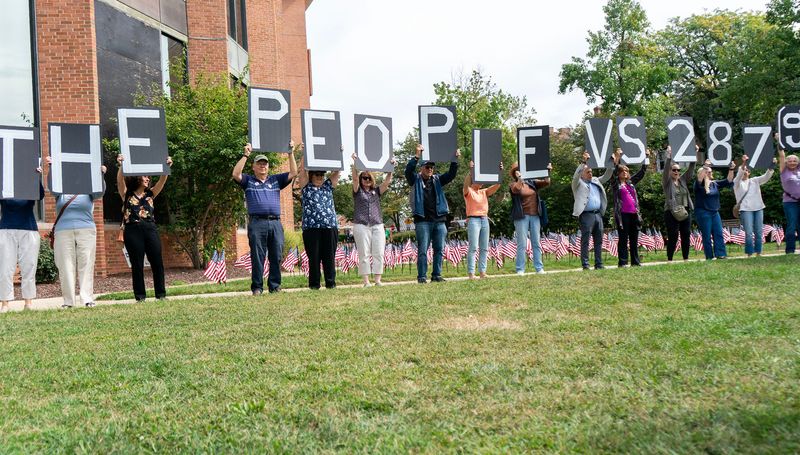
Immigrants’ rights advocacy group members and their supporters hold up letters that read “The people vs 287(g)” during a rally last September in Doylestown against the Bucks County sheriff’s efforts to implement a 287(g) program.Daniella Heminghaus | Bucks Coun
The big, mostly under-the-radar story around the Donald Trump regime’s relentless push to arrest and remove immigrants from the United States has been this year’s explosion of so-called 287(g) agreements. These allow local cops to act as immigration agents, working collaboratively with U.S. Immigration and Customs Enforcement, or ICE.
But if you look at a national map to understand how these 287(g) agreements have spiked from just 135 when Trump retook office in January 2025 to more than 2,500 such pacts today, you’ll notice that one state sticks out like a sore thumb.
In Pennsylvania, amped-up promises of federal cash incentives have meant a soaring number of localities where local beat cops are now working with ICE to make arrests — up from just a handful at the start of the year to some 130 now. Most 287(g) collaborators are in Trump-voting pockets of the Keystone State — northeast and south-central Pennsylvania, or out west near the Ohio border.
But when you look at the rest of the Northeastern United States, the 287(g) map is very sparse. That’s partly because most local pols across the region agree with their constituents about opposing Trump’s mass deportation policies, and in several states it’s also the result of legislation that aims to ban the program altogether.
In late August, New York enacted the Local Cops, Local Crimes Act — backed and signed by its Democratic Gov. Kathy Hochul — which calls on police departments and county sheriffs to terminate their 287(g) agreements, although several counties are still challenging the measure in court. Maryland has a similar law on the books, while New Jersey, which had long prevented such pacts under an attorney general’s directive, also passed a law this spring to codify the ban.
There’s a growing number of Pennsylvania lawmakers who want to pass a similar law here, but there’s one big problem: Republicans. They control the state Senate in Harrisburg — currently by a 27-23 margin — and GOP lawmakers have no interest in rebuking the president on immigration policy.
“The reason we exist alone is because of our split legislature,” State Rep. Heather Boyd, a Democrat who represents heavily immigrant Upper Darby and adjacent parts of Delaware County, told me. Last year, Boyd circulated proposed legislation to ban 287(g) deals in Pennsylvania, and while dozens of Democrats in Harrisburg are supportive, any move is on hold until a November election that could shift the balance of power. Boyd said lawmakers are wary of “starting any culture wars” ahead of the vote.
I pressed the office of Gov. Josh Shapiro, who’s running for a second term and who is seen as a possible top contender for the 2028 Democratic presidential nomination, for his position on reining in the 287(g) program here.
“Governor Shapiro has been clear that law enforcement should be focused on keeping Pennsylvanians safe — not sowing fear in communities or targeting people who are working hard, raising families, and contributing to our Commonwealth,” his press secretary, Rosie Lapowsky, said. She noted that the governor has barred Pennsylvania State Police from any formal ICE collaboration, and he would urge local police to take a similar stance.
She added: “Ultimately, however, these decisions rest with local law enforcement agencies. The governor does not have the unilateral authority to dictate whether individual sheriffs or police departments enter into these agreements.”
Many of those local law enforcement agencies have instead rushed to join 287(g), with ICE promising small-town departments an initial $100,000 cash windfall and additional incentives for training officers to make arrests and to cover the cost ofworking overtime on the program.
Last week, I reported from Schuylkill County in east-central Pennsylvania, where some 14 law enforcement agencies have raced to adopt 287(g), more than any other county in the state. Since the spring, local cops there have arrested about 100 immigrants at highway stops or by assisting ICE in job site raids. The blitz has prompted rising complaints about alleged racial profiling, the handcuffing of U.S. citizens, and a sense of fear that permeates a growing Latino community in Pennsylvania coal country.
Statistics obtained from the U.S. Department of Homeland Security by advocates show that local police in Pennsylvania have arrested and turned over to ICE more than 1,200 immigrants this year — ranking the state fourth in the nation on a list in which the other leading states are all south of the Mason-Dixon Line.
In Washington, some of the state’s Democratic House members say they’re fed up with a lack of transparency over who is being detained and how the 287(g) program is working here. Last week, four of them — Reps. Mary Gay Scanlon and Madeleine Dean from the Philadelphia suburbs and Reps. Chris Deluzio and Summer Lee from Western Pennsylvania — sent a letter to ICE’s acting director David Venturella demanding information on why the agency’s data lack any specific details about which departments are making arrests, which is required by law.
“It is unacceptable to me that ICE is hiding information from Pennsylvanians about who ICE is working with in their mass deportation regime,” Deluzio — viewed as a potential 2028 primary challenger to embattled Sen. John Fetterman — told me in an emailed statement.
Deluzio also summed up the growing unease by many over the speedy growth of 287(g) in the state. “Let’s keep local law enforcement focused on local public safety, rather than enlisting them in extreme federal immigration enforcement that has ripped away American liberties and targeted so many law-abiding families,” he said. Indeed, 287(g) data guru Andrew Thrasher has reported that a whopping 70% of the immigrants arrested in Pennsylvania under the program have no criminal record or pending charges.
“People in my community are getting smashed off the streets,” said Boyd, the Upper Darby lawmaker. That Delco township is about to vote on a local ordinance to restrict its cops from collaborating or sharing data with ICE.
Statewide, Boyd says she’s one of about 50 House Democrats in a Welcoming Pennsylvania Caucus with an extensive list of proposed bills that would not only bar 287(g), but look to expand opportunities for noncitizens to do things like obtaining driver’s licenses or gain professional certification. But any serious action hinges on November, when Democrats are hoping a blue wave at the ballot box will flip at least three more Senate seats and create a trifecta for their party in Harrisburg.
“Even if we can’t stop ICE from picking them up on the streets, we have to protect their rights,” Boyd said. “And right now, there are barriers to that in the state of Pennsylvania.”
Yo, do this!
The issue of wrongful convictions is back in the news here in Philadelphia — but for all the wrong reasons. Some reckless and seemingly wrongheaded moves by Philadelphia District Attorney Larry Krasner and his underlings have the vultures who’ve always opposed criminal justice reform circling. The shame is that the real crisis around wrongful conviction is the thousands of mostly Black and brown folks who remain behind bars for crimes they did not commit. I cannot say enough about a book that came out earlier this year from Brown University (yay!) sociologist Nicole Gonzalez Van Cleve called Crime Fictions: How Racist Lies Built a System of Mass Wrongful Conviction. She mines the most outrageous prosecutions — often of young Black teens and boys — to make a compelling argument that wrongful convictions aren’t a flaw in the criminal justice system. They are the system.
If timing is everything, then you’ve got to hand it to my freshman dorm pal at Brown who became Washington bureau chief for Mother Jones, David Corn. On the heels of ProPublica’s bombshell reporting on ties between the Trump family and Vladimir Putin, Corn is out Tuesday with his newest book: How Russia Won — Donald Trump, Vladimir Putin, and the Fight for America. It promises a raft of new information about Russia’s efforts to meddle in U.S. elections in 2020 and 2024, the ongoing close links between Team Trump and Team Putin, and how the current president’s pro-Russian slant has changed the world.
Ask me anything
Question: What happens when [House Speaker Mike] Johnson refuses to seat newly elected Dems in January? — David Minckler (@audivita.bsky.social) via Bluesky
Answer: Suddenly, Jan. 3 — the date the 120th U.S. Congress begins, and new members who won their November elections are to be sworn in — has become the new Jan. 6. Summer vacations are over, and the body politic is focused on the looming midterms, and — more importantly — with polls showing the Democrats on track to retake one and possibly both chambers. So there’s been a surge of speculation that the Trump-allied Johnson will do what former Vice President Mike Pence would not do on Jan. 6, 2021, and somehow fail to certify Democratic winners. That’s based on an assumption that Trump’s election-meddling tactics like stopping mail voting — blocked on Monday by the U.S. Supreme Court — won’t work, yet Team MAGA will attempt to undo the election after the fact, as was tried unsuccessfully in 2020-2021. Lawfare has published the most detailed analysis of a so-called rogue clerk theory in which Johnson appoints a MAGA loyalist to serve as House clerk with the understanding that some Democratic wins won’t be certified. Its article notes that such a gimmick is unlikely to pass muster in the courts, but that won’t necessarily stop Trump and the GOP from trying. My only guidance is: Fasten your seat belts.
What you’re saying about …
It turns out readers of the newsletter aren’t eager to join the punditocracy. Only a few of you responded to last week’s question about the chances of a Democratic-led Senate in 2027, and one of them was to give me a verbal tongue-lashing for even asking this. (Frequent writer Daniel Fleisher called it “a pointless exercise in predicting the unpredictable.”) That said, Cathy King has her eye on Abdul El-Sayed in Michigan, her home state, writing that “he seems to be following [Zohran] Mamdani’s playbook.” Meanwhile, in Iowa, Mary Chilton thinks the Dems’ Josh Turek has a real shot in a state won three times by Donald Trump, noting that farmers are up in arms “over the data center issue, imported beef, water pollution and the soaring cancer rates …”
📮 This week’s question: Suddenly, everyone is talking about one thing: the Silicon Valley whistleblowers saying there’s not a trivial chance that a swarm of angry artificial intelligence agents could wipe out humankind by the end of the decade. Are you worried by this, or do you think Big AI is deflecting here to draw attention away from other issues like data center opposition or the stock market bubble? Please email me your answer and put the exact phrase “the AI threat” in the subject line.
Backstory on that other thing that could kill humanity
A barge on the Ohio River moves past the Mountaineer Power Plant, a coal-fired power plant near New Haven, W.Va., in March.Carolyn Kaster
This weekend, a Bluesky post went super viral almost the second its author, a scientist named David Ho, hit the button to post it. “I resigned from ExxonMobil today,” he wrote. “I spent the last three years doing fossil fuel extraction research at both BP and ExxonMobil. Neither company is acting responsibly. They are racing to maximize extraction while the window to act closes, and gambling with our lives.”
It’s a safe bet that many of the 13,000 people who liked Ho’s post truly believed they were sharing the words of a brave whistleblower — but instead the post was satire from a leading climate scientist based at the University of Hawaiʻi at Mānoa. Ho would never work for a Big Oil giant. He was trying instead to mimic — and thus make a point about — the recent posts from Silicon Valley whistleblowers that triggered the new freakout over whether AI robots are a threat to human existence.
Climate change is a threat to society, and it’s even closer to reality. Maybe we should freak out about that?
Ho absolutely has a point. Just before his post, it was announced that August had been tied for the hottest month ever recorded in the history of the planet. That doesn’t come without consequences. In the Himalayas between Nepal and Tibet, a glacier and the adjacent bedrock of mountains at 17,000 feet abruptly collapsed in a region plagued by higher-than-normal temperatures, sending a 150-foot-high cocktail of floodwater and debris down a populated valley at 100 mph. At least 1,386 were killed, and thousands more remain missing. Here in the U.S., a summer of record heat triggered wildfires across the Pacific Northwest.
Robots didn’t do this. Humans did. Maybe that’s why humans — at least the ones that are running Donald Trump’s America — are reacting so differently to the danger of AI than the way they’re dealing, or not dealing, with the lethal pollution from burning fossil fuels. In the case of artificial intelligence, even tech leaders like Anthropic’s Dario Amodei, whose firm makes the Claude program, have urged a slowdown until we better understand the risk from rogue AI agents.
But in the case of climate change, willful ignorance rules the day. The latest outrage from a Trump regime that’s expensively killing off wind farms while racing to extract as much fossil fuel as possible? The now ironically named Environmental Protection Agency is repealing the rule that limits greenhouse-gas emissions from power plants that burn coal or natural gas. A president who spent his summer sweltering on the golf course continues to insist climate science is “the greatest con job ever perpetrated on the world.”
There’s one last irony here. Increasingly, the biggest new sources of climate-altering pollution are the massive data centers that power AI. An Amazon data center proposed for Pecos County, Texas, would likely become the world’s largest source of carbon dioxide if it opens, spewing out 33 tons from natural gas generators every year. Slowing down the AI arms race would also help the planet. Artificial or not, that would be intelligence.
What I wrote on this date in 2019
Joe Biden performing badly in a presidential debate? Say it ain’t so, Joe. We all remember what happened on that 2024 stage in Atlanta (“The night the lights went out in Georgia,” I called that one), but I was almost as unimpressed with the future 46th president during a Democratic primary debate on this date seven years ago. That put me at odds with the punditocracy. I wrote, “The cable TV news show that both channels and is most revered by Washington’s elites — MSNBC’s Morning Joe — is at times so over the top in its bias toward Barack Obama’s former wingman that it could be renamed Morning Joe Biden.”
Summertime is over, and the living is no longer easy. I published my monthlong investigation into local cops collaborating with ICE under the controversial 287(g) program in semirural Schuylkill County, northwest of Philly. I found U.S. citizens handcuffed, families hiding behind blanket-covered windows, and a community wrestling with what it means for neighbors to be treated as suspects. Over the weekend, I delved into the astonishing $850 million or so Trump World has raised in campaign contributions since his reelection — despite the fact that he’s barred from seeking office again. You don’t think he has a scheme to pocket the excess cash, do you?
Dante only had Nine Circles of Hell, but the downward spiral of Pennsylvania Sen. John Fetterman seems to be never-ending. It’s one thing to profoundly disagree on a political and moral issue such as the war crimes of Israel’s right-wing government in Gaza, but recent reporting suggests things are far, far worse in Fettermanland. No senator — regardless of how much their ideology has flip-flopped — should be blowing off their home-state constituents, or clocking out of committee hearings after five minutes. The Democratic senator’s surprise video appearance at the midterm miniconvention of Donald Trump’s GOP, introducing his new best buddy, Republican Sen. Dave McCormick, did nothing to dispel the sense of utter betrayal among liberal voters who now see his winning 2022 campaign as a big lie. The next two years will be crazy as Democrats line up to primary Fetterman, amid rumors the hoodie-clad politico might run as an independent or even change parties. The only sure thing is that The Inquirer will be there for every move. Join us. Subscribe!
By submitting your written, visual, and/or audio contributions, you agree to The Inquirer’s Terms of Use, including the grant of rights in Section 10.
Students at Strath Haven High School and Middle School and Wallingford Elementary School sheltered in place Monday morning as police searched the area for a suspect who had fled during a traffic stop.
The incident began when a Nether Providence Township police officer stopped an Acura at 9:07 a.m. Monday on South Providence Road, police said in a statement. The driver fled in the car, which police determined was stolen, and the officer lost sight of it.
Then at 9:41 a.m., a resident contacted the police to report a car abandoned in a backyard on Hickory Lane, near the high school, police said. Officers determined the car was the same one that had been driven by the suspect, and police began searching the area.
Police said they worked with school officials to place the three Wallingford-Swarthmore schools, which enroll about 2,600 students, “in a ‘Teach in Place’ status while officers searched the surrounding area.”
Wallingford-Swarthmore Superintendent Russell Johnston said the lockdown “kept the kids safe inside the buildings” during the police search. Classes continued during that time, he said.
“What we did was out of an abundance of caution,” Johnston said. He said school officials believed police had guns drawn during the search.
Police reviewed video surveillance that showed the suspect “fleeing toward the rear of Strath Haven High School” before being picked up by another car. The schools returned to their normal status after it was clear the suspect had left the area, police said.
Nether Providence Township police are still investigating the incident, and are asking anyone with information to call the department’s detective division at 610-892-2875.
Richard Nelson DeShield should be starting his senior year at Penn Wood High School, suiting up for football practice, and looking forward to life after graduation, his family said Monday.
But all of that was taken from him by a gunman who shot and killed him on Sept. 8, five days after his 18th birthday, officials said.
A Lansdowne police officer patrolling the area near North Wycombe and Blackburn Avenues saw two teens standing next to DeShield’s car as he sat inside it about 10:30 p.m., authorities said, when shots rang out.
Struck multiple times, DeShield sped forward and crashed the vehicle. He was pronounced dead at the scene.
The teens fled into a nearby apartment building, police said. Officers detained two people last week for questioning, but Lansdowne Police Chief Ken Rutherford said Monday that no charges have been filed, and the case remains under investigation.
“This is a terrible tragedy,” Rutherford said. “There is no taking back the loss of a young life, and our department will work diligently to determine what happened and hold those responsible accountable.”
DeShield was one of four children and the only son, said his older sister Christine.
He was an avid football player throughout his preteen and teenage years, and was preparing to suit up in number 85 for his senior year as a linebacker for Penn Wood High.
His loved ones held a vigil Sunday evening at their home in Lansdowne, releasing balloons with his football jersey number in his memory.
“He was a good friend, good student, good son,” Christine Browne said, adding that she was helping him prepare his application to join the Army after graduation.
DeShield’s mother, Wanita Browne, said she was too heartbroken to comment on her son’s slaying. But in a GoFundMe she started to help cover funeral costs, she described him as “a down-to-earth, friendly person who cared deeply for his friends and family.”
The online fundraiser drew support from former coaches, teammates, and friends who expressed shock and outrage at the crime that took DeShield’s life.
Lansdowne police ask that anyone with information about the shooting to call them at 610-623-0700.
In the weeks after the Sept. 11, 2001, terror attacks, I went to New York to report on a story about Johanna Sigmund, a young woman from Wyndmoor who perished after one of the hijacked planes rammed the north tower.
Over the course of my career, I’ve spent more time than anyone would want writing pieces about people whose lives were cut short prematurely. One of the most memorable was Johanna, whose story and positive spirit remain seared into my soul.
Johanna’s parents invited me, a stranger, into their home at their worst hour. They took the time to tell me about their only daughter, and shared photograph after photograph after photograph — Johanna smiling after she ran the New York City Marathon, Johanna posing with her girlfriends at a wedding, and so on.
One image stood out.
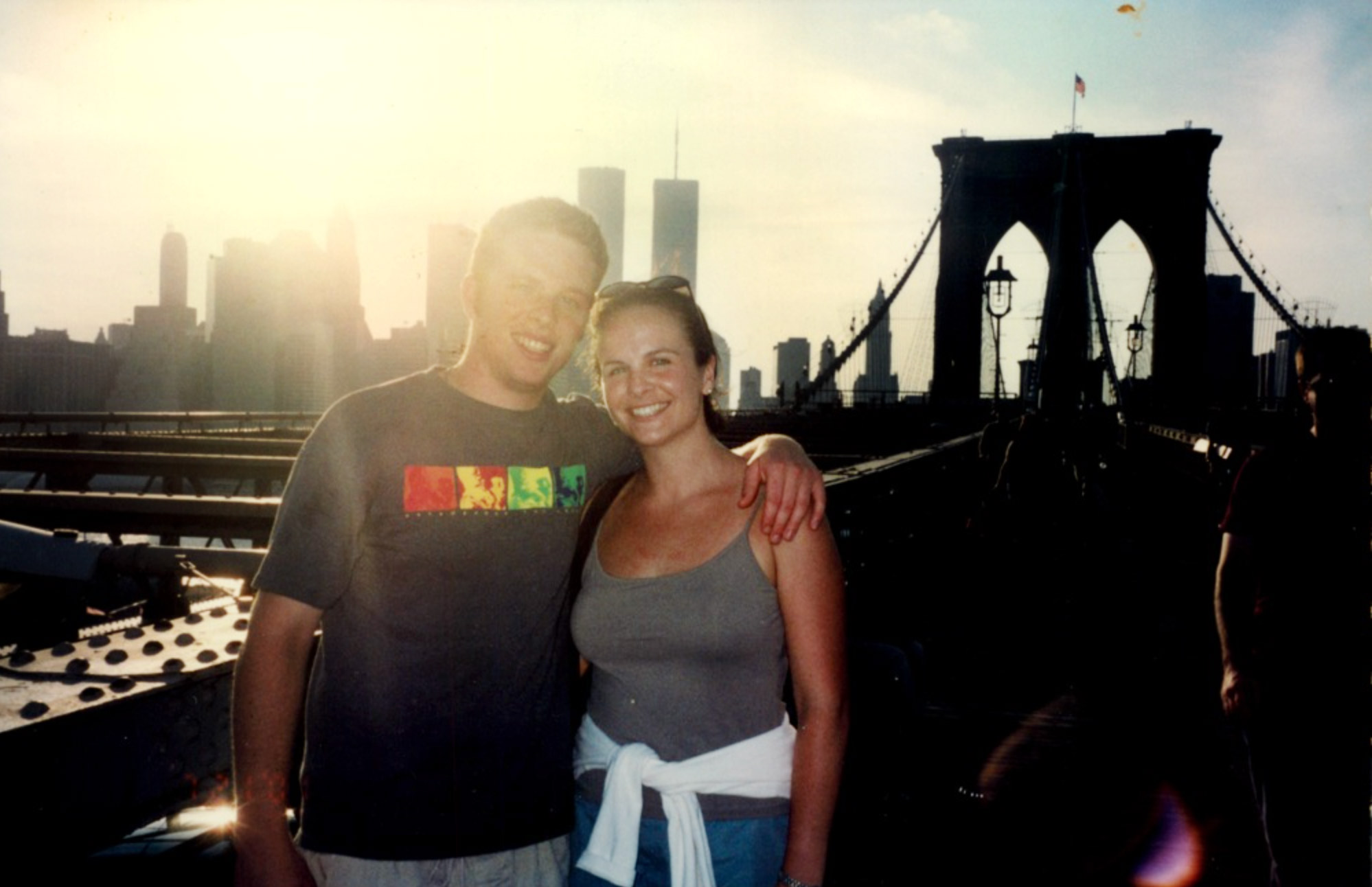
It was a photo of Johanna, 25, and her brother, John, 23, smiling while standing arm in arm at the foot of the Brooklyn Bridge. The photo was taken two months before the terror attacks. In the background loomed the twin towers.
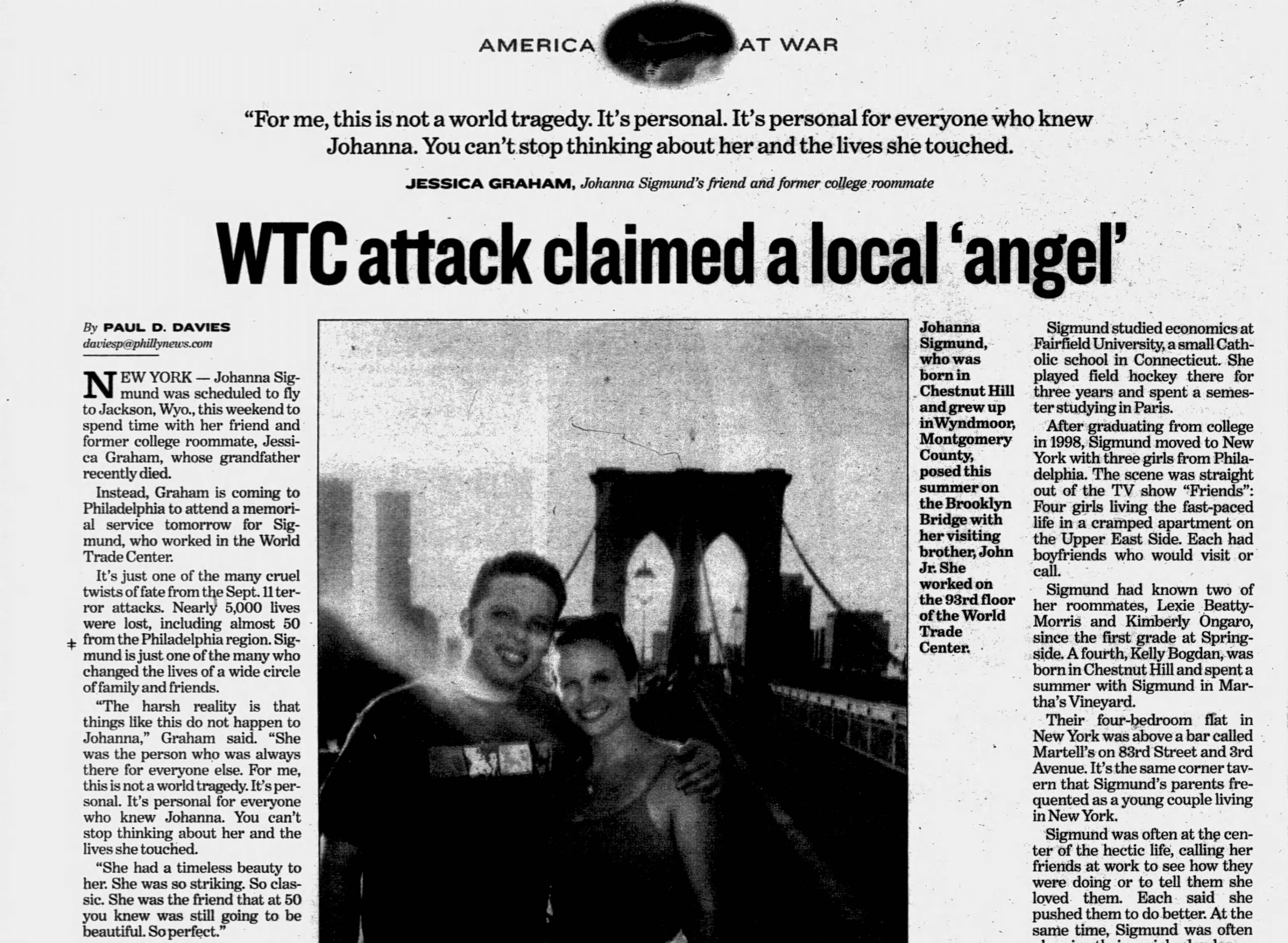
An article by Paul Davies about Johanna Sigmund in the Oct. 19, 2001, edition of the Daily News.Staff
Johanna’s story has stuck with me for a quarter century, but her life is emblematic of the promise and potential of so many others who were lost. At least 40 people with ties to Philadelphia and its western suburbs were killed in the attacks, including 18 from Bucks County, 11 from Montgomery County, five in Chester County, eight from Delaware County, and three from Philadelphia. It may be impossible for any of us to fathom how many other lives were forever impacted by the horrors of that day.
I wondered how Johanna’s family and friends had fared over the years.
So much has been lost in the 25 years since 9/11. Johanna would have turned 50 on the first day of summer — the longest day of sunlight. Her elegant beauty remains frozen in time, and — all these years later — her life remains a catalyst for good.
A scholarship fund set up in her name continues to help students attend St. Malachy School in North Philadelphia, as well as another at her alma mater, Springside Chestnut Hill Academy.
Johanna packed a lot into her brief time here. She was the captain of the field hockey, lacrosse, and squash teams in high school. She studied economics and played field hockey at Fairfield University, and spent a semester in Paris before moving to New York in 1998 with three friends from Philadelphia.
When I met with Johanna’s roommates a few weeks after the attack, they shared stories of her love of cooking, dancing, and listening to U2, often replaying the song “Stuck in a Moment You Can’t Get Out Of” that begins, “I’m not afraid of anything in this world.”
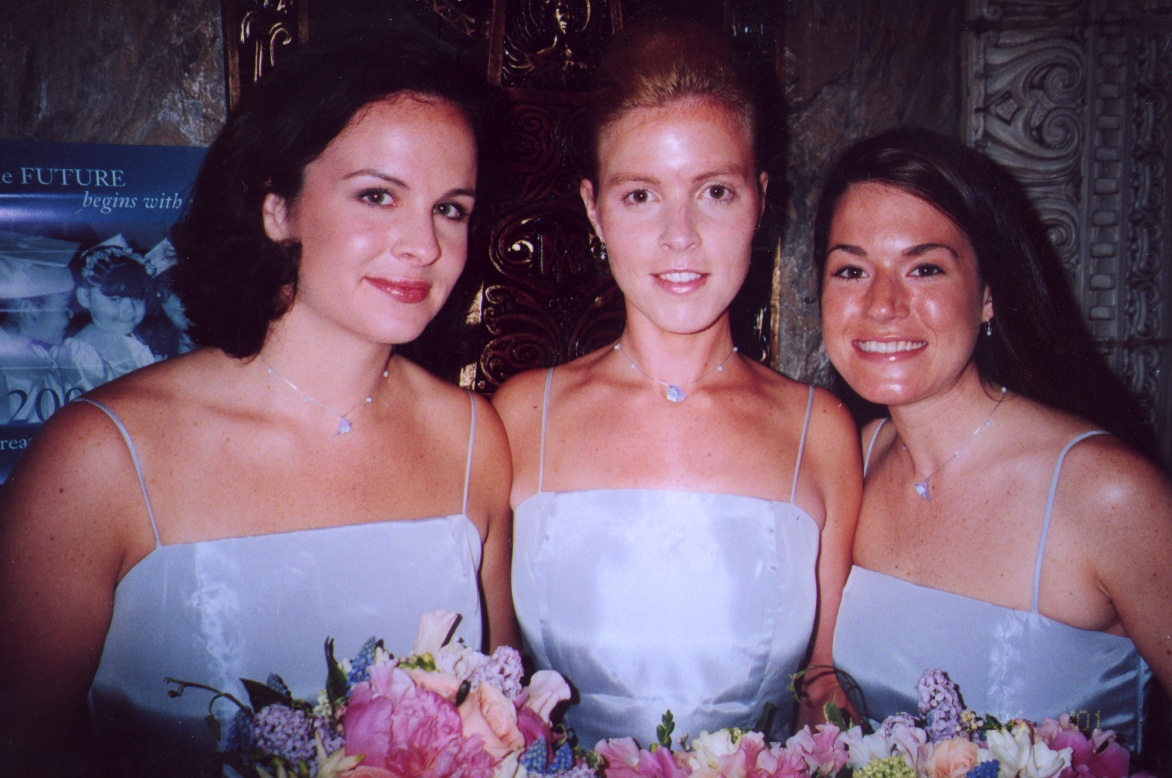
From left: Johanna Sigmund, Rory McDevitt, and Kim Ongaro were all bridesmaids at the wedding of their friend, Lexie Beatty, in May 2001. Sigmund was one of the victims in the 9/11 attacks.h
Johanna cared for others. She distributed pizza and McDonald’s to the homeless people in her neighborhood. She helped a woman who was thrown from a taxi get to a hospital. Johanna spent the night by her side and returned home in the morning with blood on her clothes.
Kimberly Ongaro, a roommate and friend from Springside, called her “an angel.”
The toughest interview in the weeks after the attack was with Johanna’s boyfriend, Joe Bonavita. They had dated for several years and had discussed marriage.
Their final weekend together was a whirlwind. They went to the Yankees game Friday night and drove to the U.S. Military Academy in West Point, N.Y., on Saturday, met up with friends, attended the Army football game, and walked through the cemetery for soldiers, which included Gen. George Armstrong Custer.
On Sunday, Johanna competed in a 5K race down Broadway before continuing on as part of her training for the Philadelphia Marathon. She and Joe shared dinner that night.
Johanna Sigmund and her boyfriend, Joe Bonavita, at the wedding of her friend Lexie Beatty Morris.
Johanna did not feel well on Monday, but went to work. When she was still under the weather on Tuesday — Sept. 11 — Joe urged her to stay home.
But she went into the office at an investment firm on the 93rd floor of the north tower.
Joe worked near the Trade Center. As he exited the subway, he saw the first plane smash into the north tower.
A life upended
I located her brother, John, and emailed him. He responded a few minutes later and graciously agreed to speak. When we connected after 25 years, it almost felt like old friends catching up.
John told me how 9/11 upended his life.
He had planned to move to New York after college, but lost interest after the attack. He visited ground zero to commemorate the first anniversary. President George W. Bush greeted families, including John’s aunt, who offered veiled advice regarding the plans to invade Iraq. “I hope you are making a prayerful decision,” she told the president.
Bush was taken aback, but continued shaking hands before circling back to tell John’s aunt that he prayed every day.
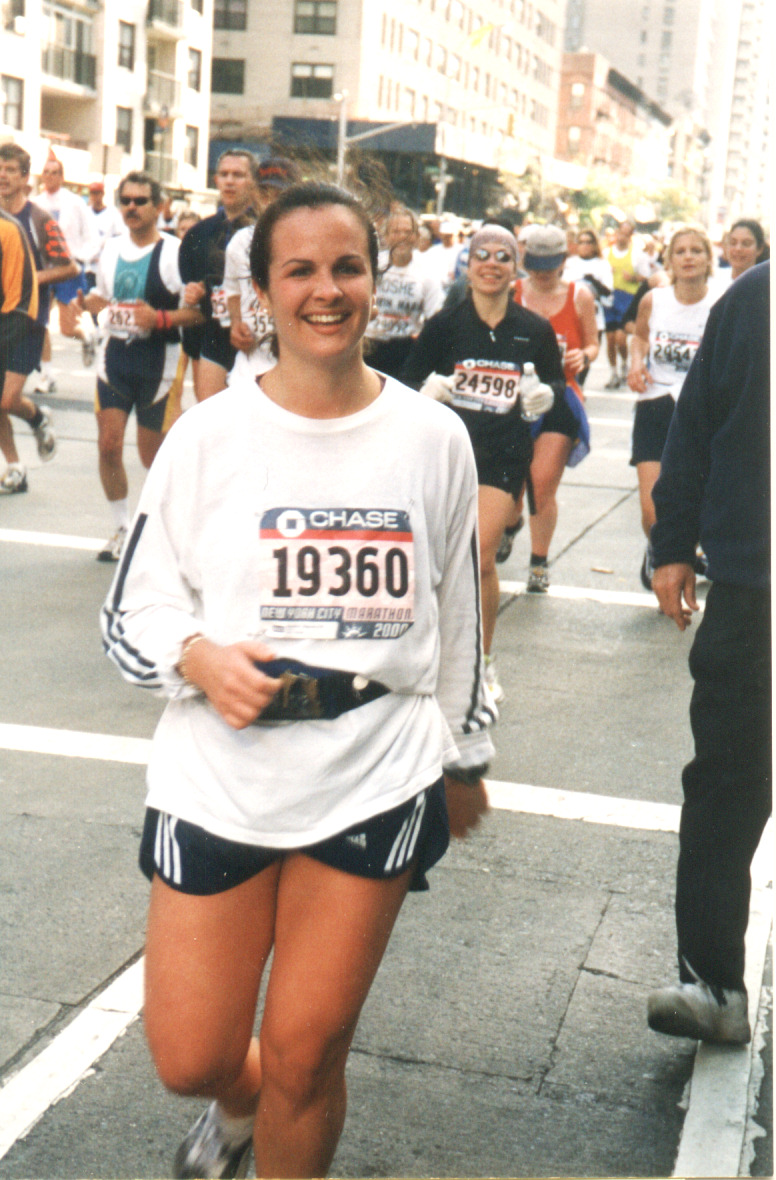
A photograph of Johanna Sigmund running in the New York City Marathon in November 2000.
After college, John, a Spanish speaker, spent a year with AmeriCorps teaching literacy to second graders in Kensington. After he explained to one class’s teacher why he wanted to take off for the anniversary of 9/11, she had her students write notes of support. John was struck by how many kids shared stories of loved ones they had lost to violence.
“Everyone has their 9/11,” he said.
Along the way, we all pay a price. Some more than others. But how one responds is a lesson for all as we navigate these trying times 25 years after 9/11.
John said he wonders how his life would have been different if not for Sept. 11. After a year teaching in Philadelphia, he moved to Texas, in part to get away. He earned a master’s degree in art education at the University of Texas in Austin before going on to teach at Say Sí, an after-school arts program in San Antonio.
John’s attempt to get away brought him back to New York. One of his students won an art award that included a trip for the student and teacher to Carnegie Hall. The artwork was displayed at the Winter Garden located near ground zero in May 2010.
“My heart sank,” John said. “I didn’t want to go anywhere near ground zero.”
Even then, nearly a decade after the towers fell, ground zero remained little more than a giant pit with the Freedom Tower slowly rising alongside it. In a macabre daily scene, tourists jammed the sidewalks, gawking and posing for pictures in front of what John could only see as a mass grave, while street hustlers sold photos of the hijacked planes crashing into the towers.
John tried to maintain his composure as he made his way through the gauntlet to the Winter Garden, but a man stepped in front of him and tried to sell him a fiery photo from the attack.
John snapped. He grabbed the stack of photos from the man, threw them in the air, and cussed him out. The two got into a tussle. After the fracas, John tried to gather himself by channeling his sister’s unflappable spirit.
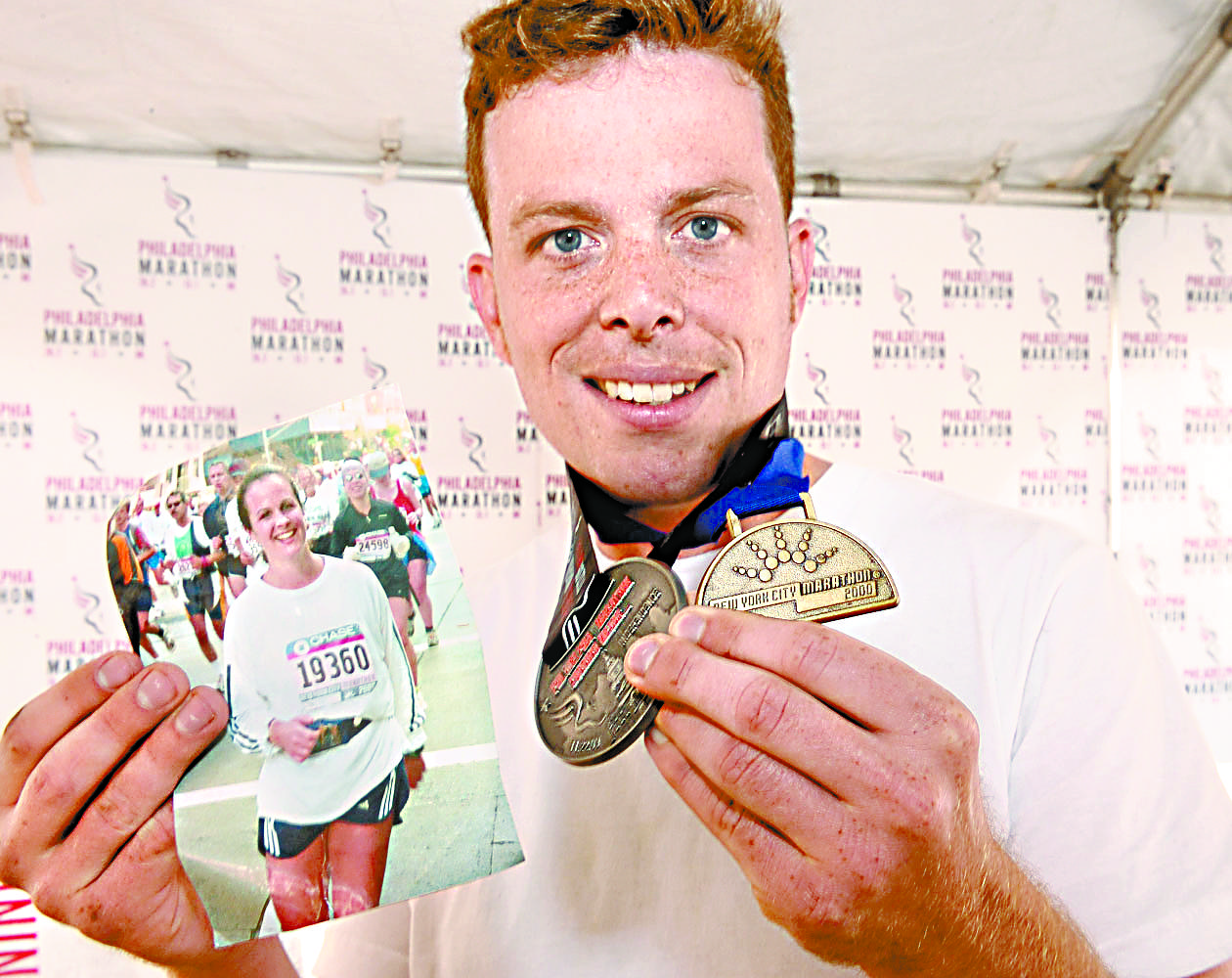
John Sigmund (center) holds a picture of his sister, Johanna, as he and his family run down Kelly Drive toward the finish line of the Philadelphia Marathon in November 2001.d
“Johanna, help me,” he said to himself while overlooking ground zero. “I need to get it together.”
‘Beyond coincidence’
John calmed down and carried on. After the event, he met friends at a nearby bar. John was telling them about the run-in with the street hustler when he suddenly saw Johanna’s old boyfriend, Joe Bonavita, across the bar.
Joe had moved to New Orleans but, in a twist of fate, was in town for a 9/11 event. The two were not close but quickly bonded. John viewed the reunion as his sister’s handiwork.
“Some things are beyond coincidence,” he said.
Eventually, John did move to New York. The city helped him better find himself. After years of worrying about disappointing his parents or adding to their suffering, John told them he was gay. His parents, who have a deep Catholic faith, were supportive.
Twelve years ago, John returned to Philadelphia and fell in love with the city, and especially Fairmount Park.
After running the Philadelphia Marathon in November 2001, John Sigmund holds a photo of his sister, Johanna, and wears two medals around his neck — one he earned after finishing the race and another his sister won after completing the New York City Marathon in November 2000.Courtesy of Tony Webb / Office of the City Representative
But tragedy struck again in September. Three days after the 20th anniversary of 9/11, his father died.
For John, September remains the cruelest month. But he credits a strong support network of cousins and friends for helping him navigate life’s challenges — and added that Johanna always feels close by.
“I have a thing with the wind,” John said. “When I think about her, the wind will kick up.”
After losing his sister and father in September, John and his partner, Jaime, decided to add some positivity to the month. They got married last Sept. 26 and are planning an anniversary party in a couple of weeks.