The new owner of Swiss Farm Stores, a Delco fixture selling dairy, groceries, and convenience goods almost as long as cross-county rival Wawa, is planning new stores with gas pumps in Delaware, Philadelphia, Montgomery, and Bucks Counties.
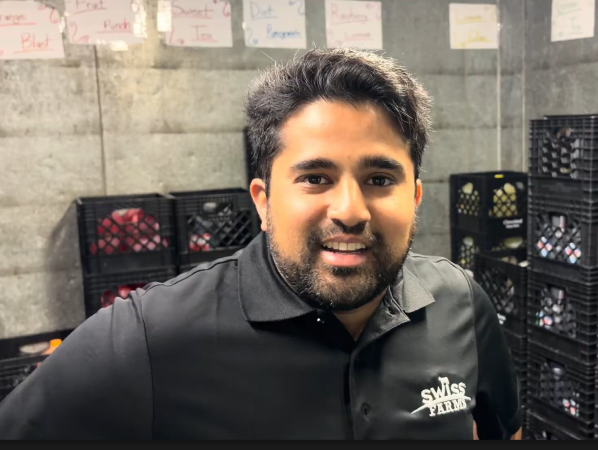
“We were neck and neck with Wawa, then they went into gas in 1996, and it revolutionized their business,” said Arsh Pola, a Drexel University graduate and gas station and convenience store operator, who bought the chain in stages after starting talks in 2022.
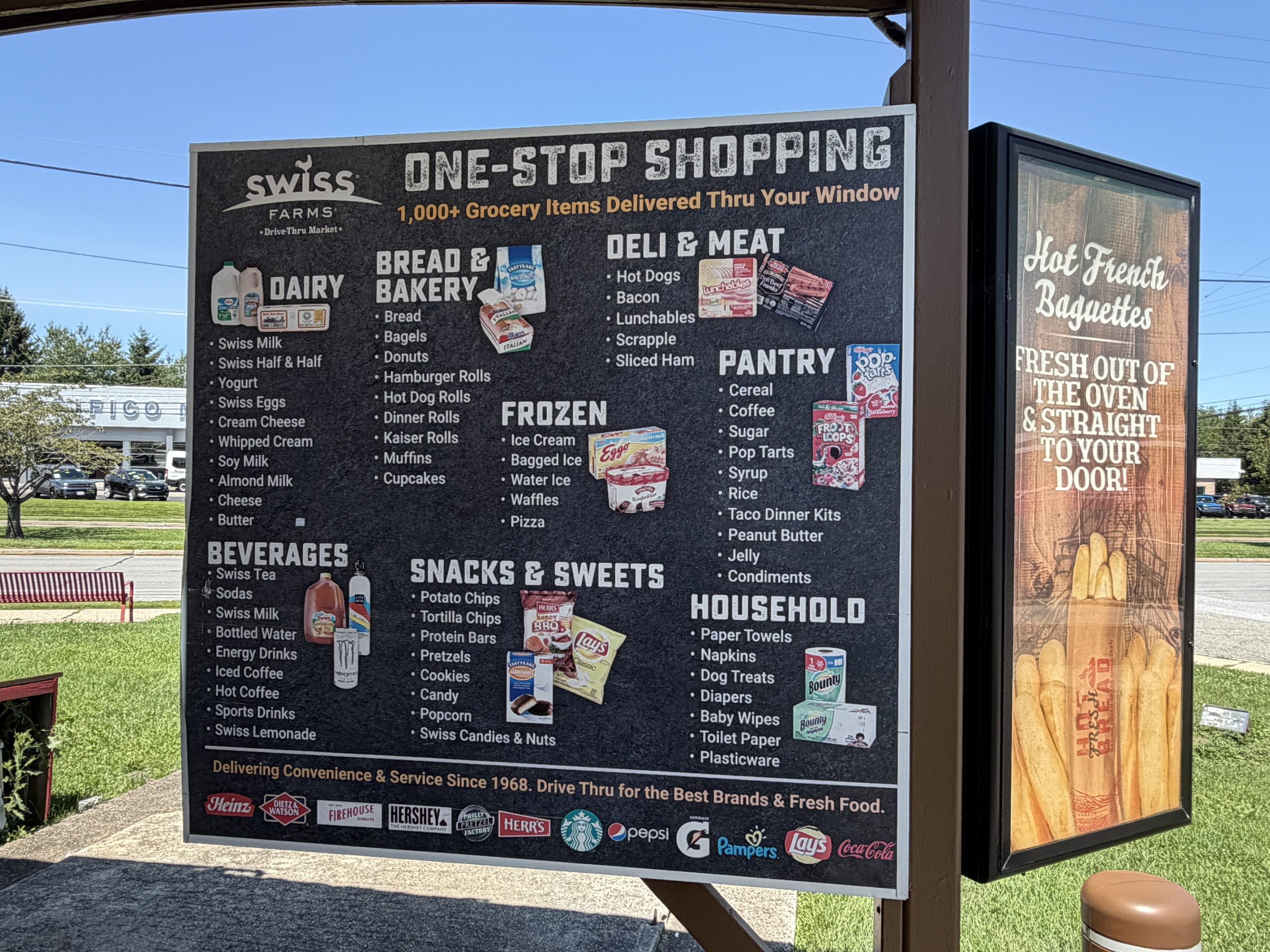
“It’s a beautiful business,” Pola said. Serving through drive-up windows from posted menus of hot and cold foods andpantry items, “we have a different customer from other stores: mom. We are serving local families milk and the things that built a cult following. We will add more of the right things.”
Side entrance at Swiss Farm Stores’ Drexel Hill, location.Joseph DiStefano
Pola’s vision to update Swiss Farm, which started in 1968, is fuel and an expanded menu.
Adding gas to a drive-up chain might not be a long jump for Pola, who owns gas stations, stores, and apartments in Philadelphia and Montgomery County.
The North Penn High School alumnus jokes that his retail focus in a family of professionals — engineer, pharmacist, dentist — makes him “a black sheep” but also tracks with his Gujarati immigrant grandfather, a teacher who saved his pay to buy a New England convenience store.
Pola began negotiating to buy Swiss Farm franchises in 2022, two years after Florida-based Farm Stores bought the company from Radnor-based MVP Capital and other investors.
Earlierowners tried and failed to grow Swiss Farms beyond Delaware County. When Pola realized the Delco-area franchises were the only stores still open, he bought one after another, starting in 2024, and then the parent company. He was financed by regional banks that also backed his gas station deals. The purchase closed June 30.
His plans rely on execution by Swiss Farm veterans, topped by Chris Gray, who worked 25 years at the company and rose to CEO before MVP let him go. Pola, now CEO, brought Gray back as chief operating officer.
Pola agreed to detail his plans for Swiss Farms to The Inquirer in interviews at the Broomall and Drexel Hill stores.
How did you get into retail?
When I was studying finance at Drexel [graduated 2019], I had the dream of working at Goldman Sachs. I became the youngest co-op at Goldman Sachs. And they quickly told me, ‘You get along really well with the clients.’
I started buying gas stations while I was still a student. I took Warren Buffett’s advice: ‘Buy something with a moat around it.’ Gas stations have a very strong customer cash flow that’s recession-proof.
I started with a former Liberty, up at Ridge and Manatawna. I wanted my own brand on the store. I called it Posh [with a crown over the P]. I ended up doing Marathons and Lukoils. I still have a few stations in Philadelphia and Montgomery County.
How could you afford to buy Swiss Farms?
Each gas station required a million-dollar investment. So I wanted to do a portfolio deal [buy several at once]. Everything was financed from the banks that knew me. They do 20-year mortgages.
Farm Stores’ goal was: ‘Let’s franchise!’ Wawa doesn’t franchise. Raising Cane’s CEO Todd Graves talks about this: You can’t control the quality of a franchise when you don’t own it.
I told Farm Stores, ‘You guys are 1,500 miles away. Let me buy it all.’
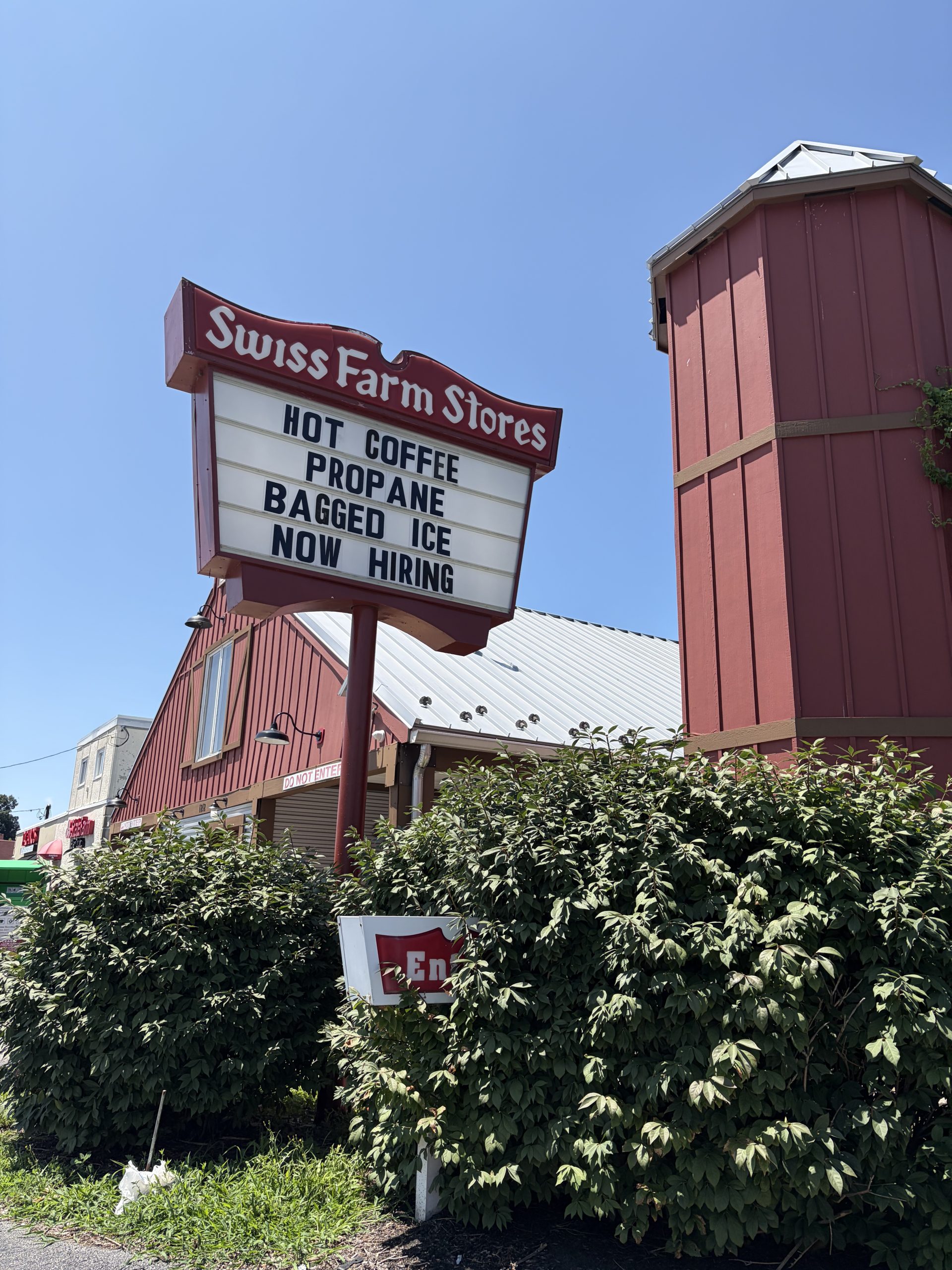
Sign at Swiss Farms’ Broomall, Delaware County store.Joseph DiStefano
What are the first few things you will add or take away?
The stores need a facelift. We won’t take away the silos, but [we’ll give them] a fresh look.
We always had employees in these black shirts. Now we’ve added six new colors, make it fun for the staff.
We just did an event with [former Eagle] Brian Dawkins. Everyone on his staff knew Swiss Farms and loves us.
How can you compete with large chains like Wawa and 7-Eleven that can purchase gas and food in bulk at lower costs?
I’m already in the gasoline business. I buy on the open market every day. I buy from the same [fuel suppliers] that sell to BJ’s and Sunoco. We are going to price gas the most aggressively we can.
Some costs you can cut. Swiss Farms had a consultant negotiating what were supposed to be the best trash rates. We cut that.
Swiss Farm Stores drive-up menu, July 2027Joseph N. DiStefa
Kathy Strimmel, who runs the Drexel Hill store, says she’s a longtime customer, who’s now been working there for a year. Is it hard to find people to work your stores?
It’s difficult to find quality talent. People don’t all have the same drive, or loyalty. We start at $10 to $12 an hour.
Your milk costs maybe a dollar more a gallon than the store down the street, why?
It’s good milk! People don’t say, ‘Can I get a gallon of whole milk?’ They say, ‘Can I get Swiss Vitamin D?’ And we share the cost for getting it into your car.
We do have the best prices on our iced teas. I don’t know why, but Delaware County has a reputation as the best iced-tea market in the country.
How many new stores are you planning?
Twenty-five in the next five years. We will find locations here in Delaware County, and we will enter Philadelphia, Montgomery County, and Bucks County. After that, we will grow organically, state by state, where it makes sense.
I respect Wawa. [Wawa CEO] Chris Gheysens said, ‘It took 60 years for us to get into six states; it’ll take six years to get into the rest.’”
A Havertown man was charged Tuesday with terroristic threats, ethnic intimidation, and related crimes after prosecutors said he left racist, threatening voicemails for the Delaware County sheriff.
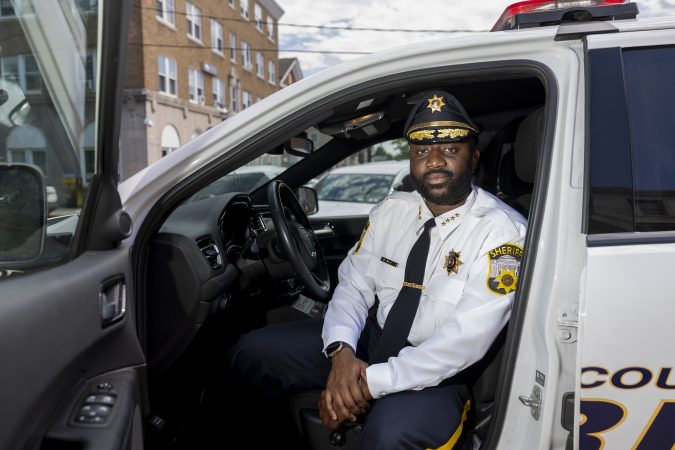
Sean Keenan, 40, made 15 calls earlier this month to the sheriff’s office in a 24-hour period, according to the affidavit of probable cause for his arrest. Keenan left two voicemails, during which he used a racial slur to refer to Sheriff Siddiq Kamara, who is Black, threatened to hunt him down, and called for “death to Islam.” Kamara is a Muslim whose family came to Delaware County from their native Liberia.
Keenan was released on $100,000 unsecured bond. There was no indication he had hired an attorney. Keenan did not return a request for comment.
In announcing the charges, Delaware County District Attorney Tanner Rouse said Keenan’s words were “vile, disgusting, and completely unacceptable.”
“There is a time when language crosses the line into criminal behavior, and that is exactly what we have here,” Rouse said. “Threats of violence, most especially racially motivated violence, have no place in Delaware County, regardless of who the intended victim may be.”
Kamara, in a statement last week, said that he welcomes criticism as a public official, but that threats of violence cross the line.
Investigators said they used phone records to trace the numbers that made the call to two phones registered to Keenan, according to the affidavit. One of those numbers called 911 in February to report a car crash, and a recording of the caller’s voice matched Keenan’s.
After serving a search warrant on Keenan’s personal and work-issued cell phones, detectives found evidence that he had left the voicemails on July 18 and July 19, the affidavit said. In an interview with police, Keenan admitted to leaving the voicemails, the document said.
He is scheduled to appear before a district judge for a preliminary hearing on Aug. 7.
When Robert Barclay’s two daughters moved from Africa to live with him in Delaware County, getting them up-to-date on their vaccines was at the top of his list.
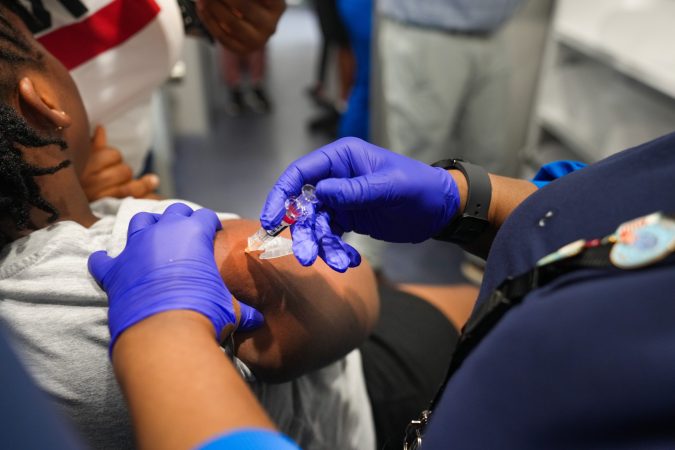
His daughters, 14-year-old Albertine and 20-year-old Ruth, were among the first clients at the Delaware County Health Department’s new mobile clinic, which launched earlier this summer. The sisters did not bring their vaccination paperwork when they moved here from Africa earlier this year.
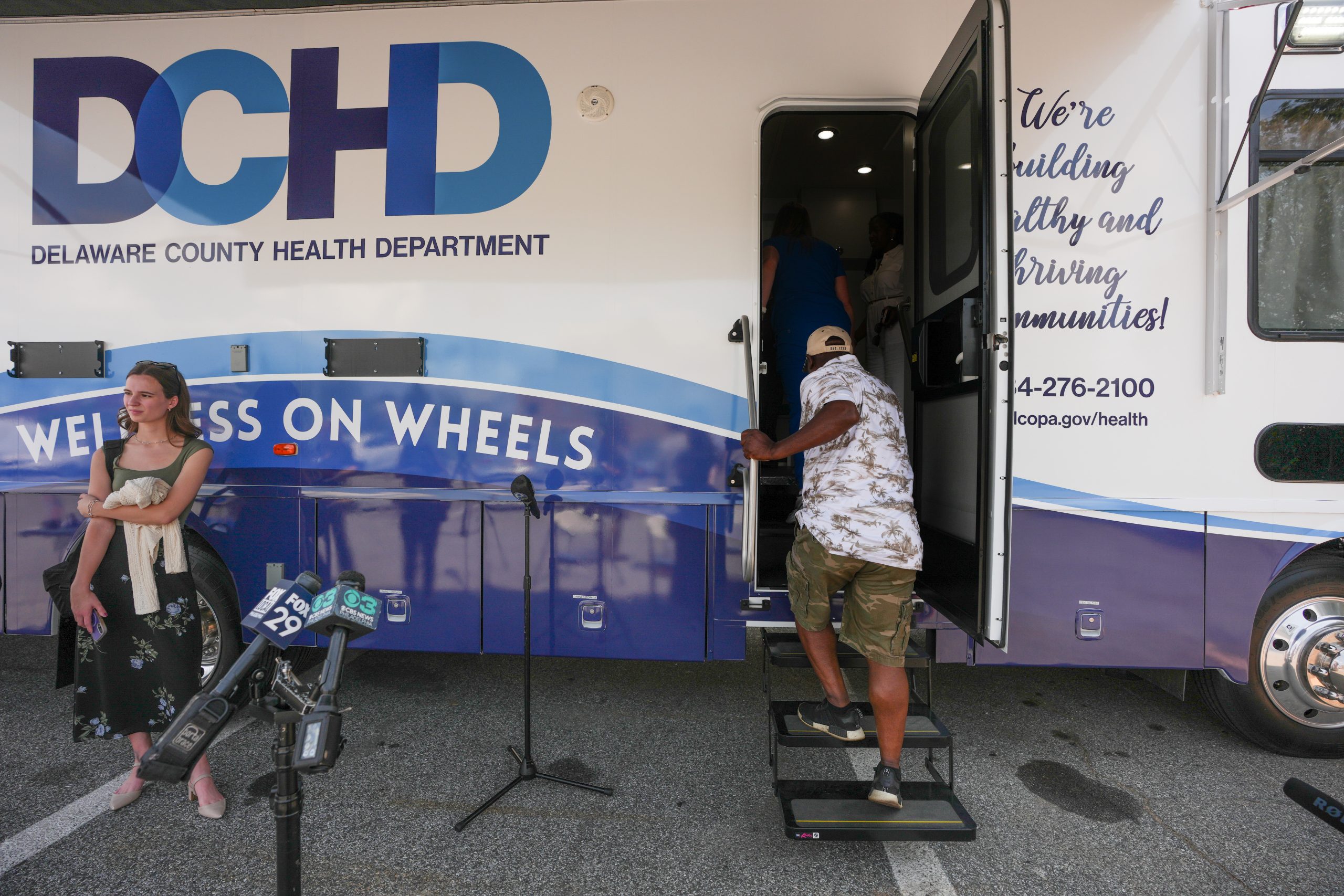
On Monday, the 33-foot-long RV trailer was set up at Observatory Park in Upper Darby to mark the beginning of the county’s back-to-school vaccination campaign. As part of the campaign, the mobile clinic will make stops across the county to provide vaccines, physicals, and STI testing.
Encouraging families to vaccinate and hosting clinics in advance of a new school year is a time-honored tradition for health departments. But vaccination efforts have extra urgency this year: Measles cases have reached their highest rate in more than 30 years in Pennsylvania, with a total of 142 cases reported as of Monday.
The highly contagious virus has not yet been reported in Delaware County, but cases are mounting in Chester and Lancaster Counties, as well as in the state of Delaware.
At the same time, vaccination rates across the state are declining. And parts of Delaware County have among the lowest measles vaccination rates in Pennsylvania.
“We don’t have to have measles here,” said Lora Siegmann Werner, director of the Delaware County Health Department.
The key, she said, is boosting vaccination rates before the virus begins to spread locally.
“This is really only a matter of time,” Werner said Monday of the possibility that the current measles outbreak reaches Delaware County. “This is our window to prevent it.”
In Delaware County, 94.3% of kindergarten students had received the measles, mumps, and rubella vaccine in the 2024-25 school year — just below the “herd immunity” rate that scientists say is required to prevent the spread of the disease. But the Philadelphia region is dotted with schools with lower vaccination rates, pockets of vulnerability that put communities at higher risk for an outbreak.
Getting more children vaccinated is a complex and evolving public health challenge. In many cases families have access to vaccines, but do not want them.
About 740 families in the five-county Philadelphia region opted out of vaccination for religious reasons in 2024, a 76% increase over five years. An additional 568 families claimed philosophical exemptions in 2024, a 49% jump from 2019, according to an Inquirer analysis.
The measles vaccine is typically given in two doses: when children are 1 year old and before they enter kindergarten. Pennsylvania requires students be vaccinated to attend school, but also allows medical, religious, or philosophical exemptions, making it among the easiest places to opt out. Recently, state health officials have recommended parents vaccinate children early if they live in or plan to travel to counties where measles is circulating.
On Monday, the clinic vaccinated just three people, including 9-year-old Kayle. Her mother, Pearl, a nurse who declined to give her last name for privacy reasons, said she had heard about the mobile clinic from Delaware County’s health center, and had brought her daughter to get up-to-date on shots before starting fifth grade in the fall.
Robert Barclay heads into the mobile clinic behind his two daughters, who received follow-up vaccine doses during the clinic’s stop in Upper Darby on July 27. Jessica Griffin / Staff Photographer
Aside from directly providing shots, Werner hopes the clinic’s presence will put vaccination top of mind for families who see the RV parked in their neighborhood.
“We don’t need to be the ones doing it — we just want people to get vaccinated,” Werner said.
Barclay, who works in corrections in Delaware County, said the clinic’s spot at Observatory Park was a convenient place for his daughters to get their second doses of needed vaccineson Monday.
The sisters moved from Africa in the spring and did not have the paperwork needed to prove to their school that they had been vaccinated as younger children.
Barclay did not hesitate to get them scheduled for the necessary vaccines.
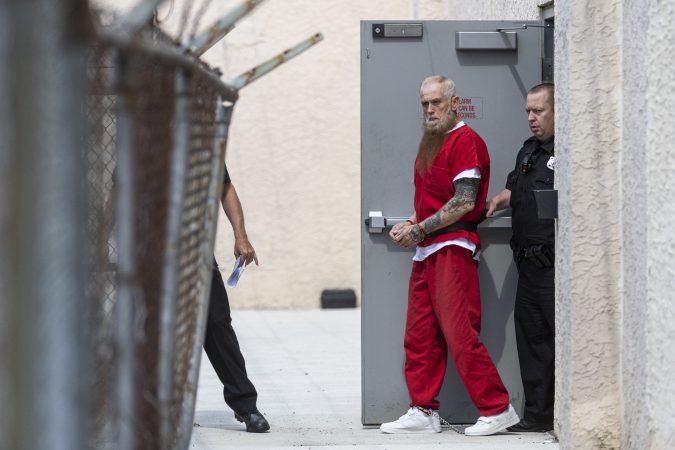
Wilbert Rosado-Ruiz, 63, was also convicted of four counts of attempted murder — three for other coworkers he wounded in the May 2024 shooting, and one for another man he attempted to shoot before his gun jammed.
Rosado-Ruiz had no reaction as the verdict was handed down by Delaware County Court Judge Kevin Kelly, who presided over the bench trial. Kelly will sentence Rosado-Ruiz in October. A conviction for first-degree murder carries a mandatory penalty of life in prison.
Leovanny Peña Peña, 30, and Giguenson Peña Peña, 26, were killed by Rosado-Ruiz during the shooting at Delaware County Linen, an industrial laundry facility where he had worked for 10 years. The three other victims were seriously wounded, including Charles Doyle, who said that he suffered severe internal injuries that have left him with limited use of his arms.
During his trial before Kelly, Rosado-Ruiz testified that he acted in self-defense: A group of his coworkers, including the Peña Peña brothers, cornered him inside the facility and threatened to kill him and his family.
The brothers, he said, were holding knives as they slowly walked toward him.
Prosecutors disputed Rosado-Ruiz’s version of events. Evidence from the scene, including surveillance footage and witness accounts, showed Rosado-Ruiz was the aggressor, screaming that he was “tired” of his coworkers during an argument near the facility’s time clock.
He then pulled out his 9mm handgun and opened fire, according to Nilamarie Valdivieso, the first person Rosado-Ruiz shot that morning.
In her closing arguments, Assistant District Attorney Sophia Polites said none of the victims were armed, and no weapons were recovered from the scene. She asserted that Rosado-Ruiz went room-to-room, searching for more victims as they fled from the initial gunfire, and at one point paused to reload his gun before continuing to fire.
Rosado-Ruiz intended to kill more people, according to the prosecutor, and would have done so had his gun not jammed. He fled the scene, and was arrested by a Trainer police officer not far from his home.
The same weekend America turned 250, I also watched a mosque burn in Northeast Philadelphia, a governor threatened with violence he’d already survived, and masked men march past the U.S. Capitol chanting “Reclaim America.”
None of it happened in the same city or involved the same people — and that is exactly why it matters.
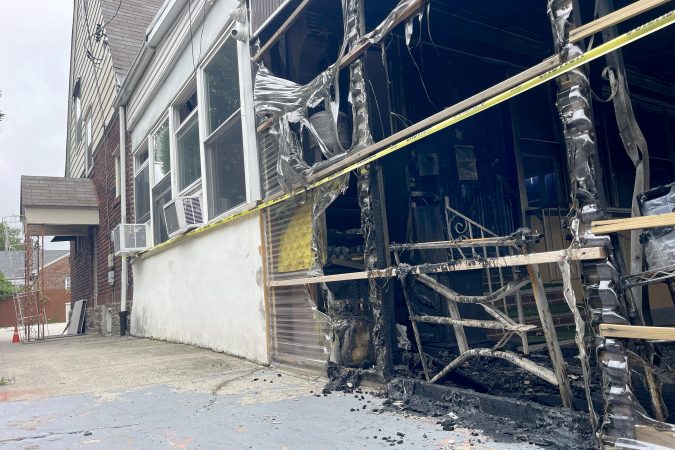
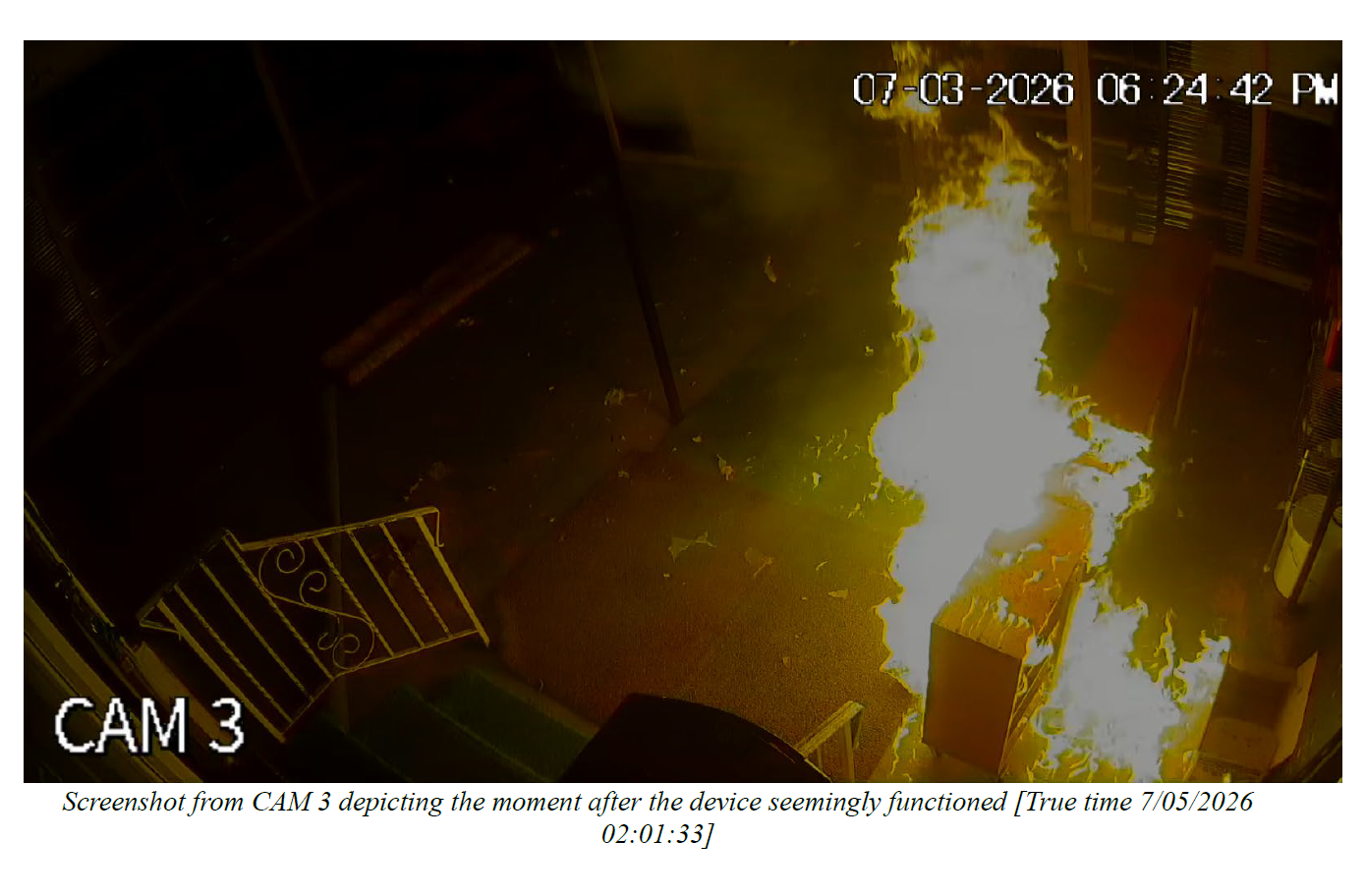
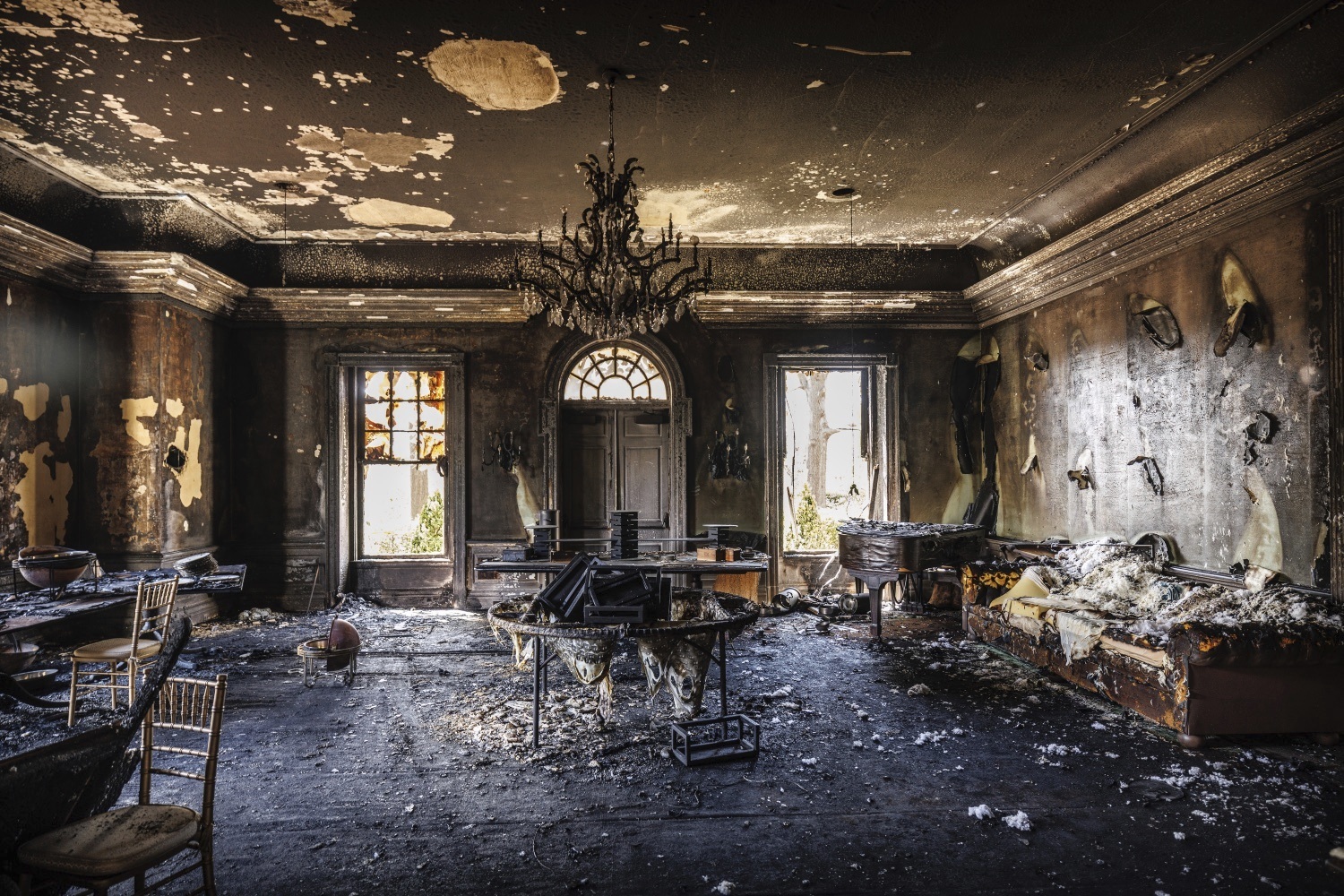
This image provided by Commonwealth Media Services shows damage after a fire at the Pennsylvania governor’s mansion while Democratic Gov. Josh Shapiro and his family slept inside on April 13, 2025, in Harrisburg, Pa.Commonwealth Media Services
Read that twice. A man was arrested for describing arson against a governor’s family as an act of sympathy.
On the National Mall, hundreds of Patriot Front members, a group the Anti-Defamation League calls the most visible white supremacist organization in the country, marched in coordinated uniforms, carrying Confederate flags, chanting about reclaiming a nation they insist belongs to them alone. They did this in broad daylight, on Independence Day, and walked away unbothered.
It doesn’t have to be this way. Pennsylvania has offered a glimpse of the right response to hate.
After mailers went out to Upper Bucks County voters attacking a Democratic candidate as the pick of the “corporate, Israel-first Democratic party,” alongside a photo of State Sen. Steve Santarsiero, who is Jewish, with an Israeli flag under his face, he called the language exactly what it was: “an antisemitic trope that falsely implies Jewish Americans are disloyal to the United States.” Republican Attorney General Dave Sunday agreed, as did State Rep. Dan Frankel (D., Allegheny) and State Sen. Judy Schwank (D., Berks), who called the mailers “unacceptable and dangerous.”
That’s what the response to hate should look like every time, not because it’s convenient, but because antisemitic hate speech is hate speech, and in the end, it is incumbent on all parties and political leaders to speak out.
Extremism doesn’t wait for permission from a party platform. It shows up as a firebomb thrown into a mosque, a slur hurled at a governor, matching uniforms marching past the Capitol, a hateful symbol that doesn’t disqualify a candidate.
The only real defense is what happened with the mailer in Bucks County: leaders naming it immediately, without waiting to see who it benefits politically to stay quiet.
I have spent my career watching people search for the loophole: this hate doesn’t count, this extremist isn’t really one of ours, this symbol was just a tattoo. There is no loophole. Hate doesn’t get a partisan exception, and neither does our responsibility to name it the first time we see it.
Here is what I’d ask, whatever you believe and whomever you vote for:
Condemn it the first time, not the 10th.
Refuse the whataboutism. “The other side does it, too” has never made anyone safer.
Show up for communities that aren’t yours. A mosque needs the same solidarity a synagogue would after an attack, and vice versa.
Report what you see. Silence is how patterns become normal.
This year marks 250 years of a promise: that all people are created equal.
That promise doesn’t come with a partisan carve-out. Leaders in Pennsylvania showed us it doesn’t have to. The question is whether we follow that example, or wait for the next arson, slur, or tattoo before it finally matters.
Andrew Goretsky is the senior regional director for ADL Philadelphia.
A Chester man who recruited his friend to carry out the execution of a criminal rival in June 2024, only to have that friend die during the botched ambush, was convicted of first-degree murder by a Delaware County jury.
Jesse Allen Jr., 20, was charged with the murder of Zaheem Sabree, even though he did not fire the shot that killed him, under the legal theory of transferred intent. The person who pulled the trigger, Tyjohn Walker-Jones, 18, was the target of Allen and Sabree, who were out for revenge after Walker-Jones allegedly killed their friend weeks earlier.
Text messages presented during Allen’s three-day trial showed that he had begun plotting Walker-Jones’ death immediately after the murder of Sabrie “Breezy” Pierce.
“Everybody gone pay,” Allen said in the message, displayed in court.
Surveillance footage from a nearby deli recorded Allen and Sabree walking together down 24th Street on the day of the shooting, then hiding nearby — Allen in shrubbery and Sabree behind a concrete wall. Moments later, Walker-Jones is seen on the video walking through the area and then ducking behind a parked car as the gunfire rang out, prosecutors said.
Shell casings found at the scene showed that Walker-Jones and Sabree shot at each other multiple times — Sabree with a .45-caliber pistol and Walker-Jones with a 9mm, prosecutors said. Walker-Jones and Allen then fled in opposite directions.
Sabree was found near that scene, shot in the head. Police took him to Crozer-Chester Medical Center, where he was later pronounced dead.
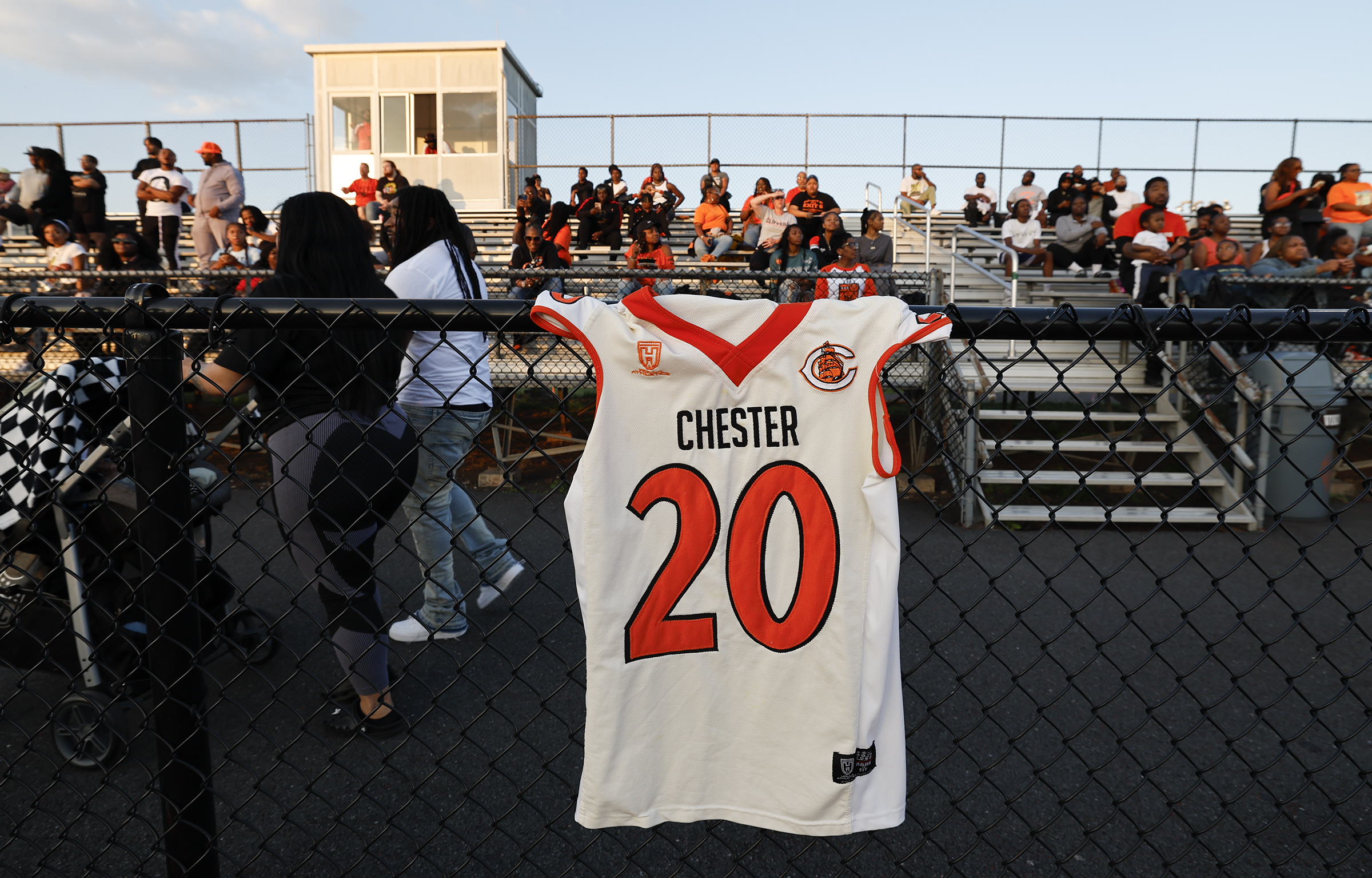
The jersey of Chester High School football player Zaheem Sabree hangs on the fence while the Chester High School before a game in August 2024. Sabree was gunned down in Chester during the botched ambush of another teen.Yong Kim / Staff Photographer
Allen’s attorney, Brian Malloy, urged jurors in his closing arguments to acquit his client. The real killer, he said, was Walker-Jones, who, while awaiting trial in Pierce’s murder, was given a “two-for-one deal” by prosecutors.
During Allen’s trial, Walker-Jones, who was not charged in connection with Sabree’s death, took the stand and admitted to shooting Sabree in the head.
“He knows he has to play along, say what he has to say, but actions speak louder than words,” Malloy said. “We watched videos of him killing two people, and he’s not sitting at this table, and that’s a crazy thing.”
Malloy suggested that Walker-Jones was the aggressor, chasing Allen and Sabree as they walked through Chester.
But Deputy District Attorney Matt Krouse said Allen took deliberate steps to plan the ambush and was directly responsible for Sabree’s death.
Allen directed Sabree, a star football player at Chester High School and an honors student at STEM Academy, to wear all black and meet him at a deli in Walker-Jones’ neighborhood, which was nowhere near his own, Krouse said. He deliberately left his cell phone at a friend’s house, knowing his movement would be tracked.
And after the shooting, Allen, in text messages, bristled at the rumor circulating through Chester that he had left his wounded friend to die, saying he had no choice.
“He knew already on June 30, 2024 that he was guilty of everything he was charged with,” Krouse said. “But just like he ran from his so-called best friend to avoid the consequence of his actions, that’s what he’s trying to do today and this week.”
Allen is to be sentenced in October. Walker-Jones’ trial in the death of Sabrie Pierce is scheduled to be held later this year.
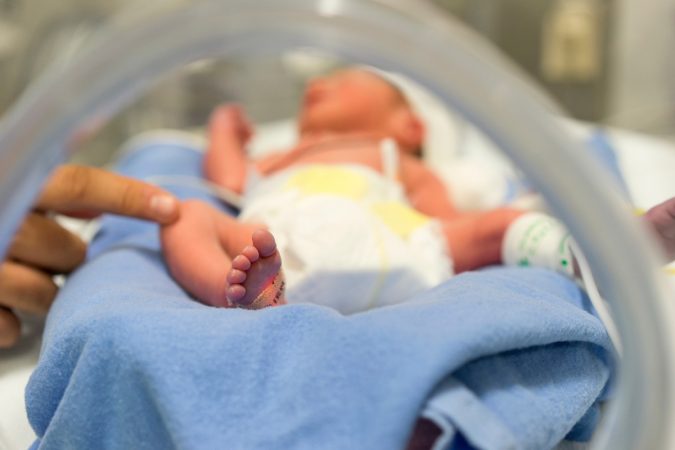
Discharge day in the neonatal intensive care unit, or NICU, should feel like a finish line. After weeks or months of monitors, alarms, oxygen, feeding tubes, blood tests, and waiting, a family can finally take their baby home.
As a neonatologist, I know how much work it takes to get that baby there. Their lungs have grown stronger. Their feeding has improved. Their medications have been adjusted and readjusted. The car seat test has been passed.
But every time we prepare to discharge a preterm infant, I find myself thinking about something that is not listed in the NICU discharge summary: What is the air like in the home and neighborhood where this child lives?
That question has animated my clinical and research life. Before I was a neonatologist, I worked in a toxicology lab studying fine particulate matter, or PM2.5. These are tiny particles produced by sources such as vehicle exhaust, power plants, and industrial emissions. They are small enough to be inhaled deep into the lungs and may enter the bloodstream. In the lab, we studied how early-life exposure to polluted air could affect the developing heart and lungs.
Years later, caring for preterm infants in Philadelphia, I am confronted by the same question. Not in a dish or an animal model, but in the lives of my patients — whose lungs are still developing when they leave the hospital — and their parents.
Preterm infants face double exposure
Before my patients are born, their pregnant parent is already breathing the air in the place they call home, whether that’s in Philadelphia, Delaware County, or beyond. When a pregnant parent breathes polluted air, it may increase the risk of preterm birth, making it more likely I’ll see that baby in the NICU.
But delivery does not end the exposure. The same air pollution may still be there when the infant comes home. The difference is that now, alongside their parent, a preterm infant with developing lungs is breathing it too.
That means some infants may face a double exposure: first before birth, then again after discharge.
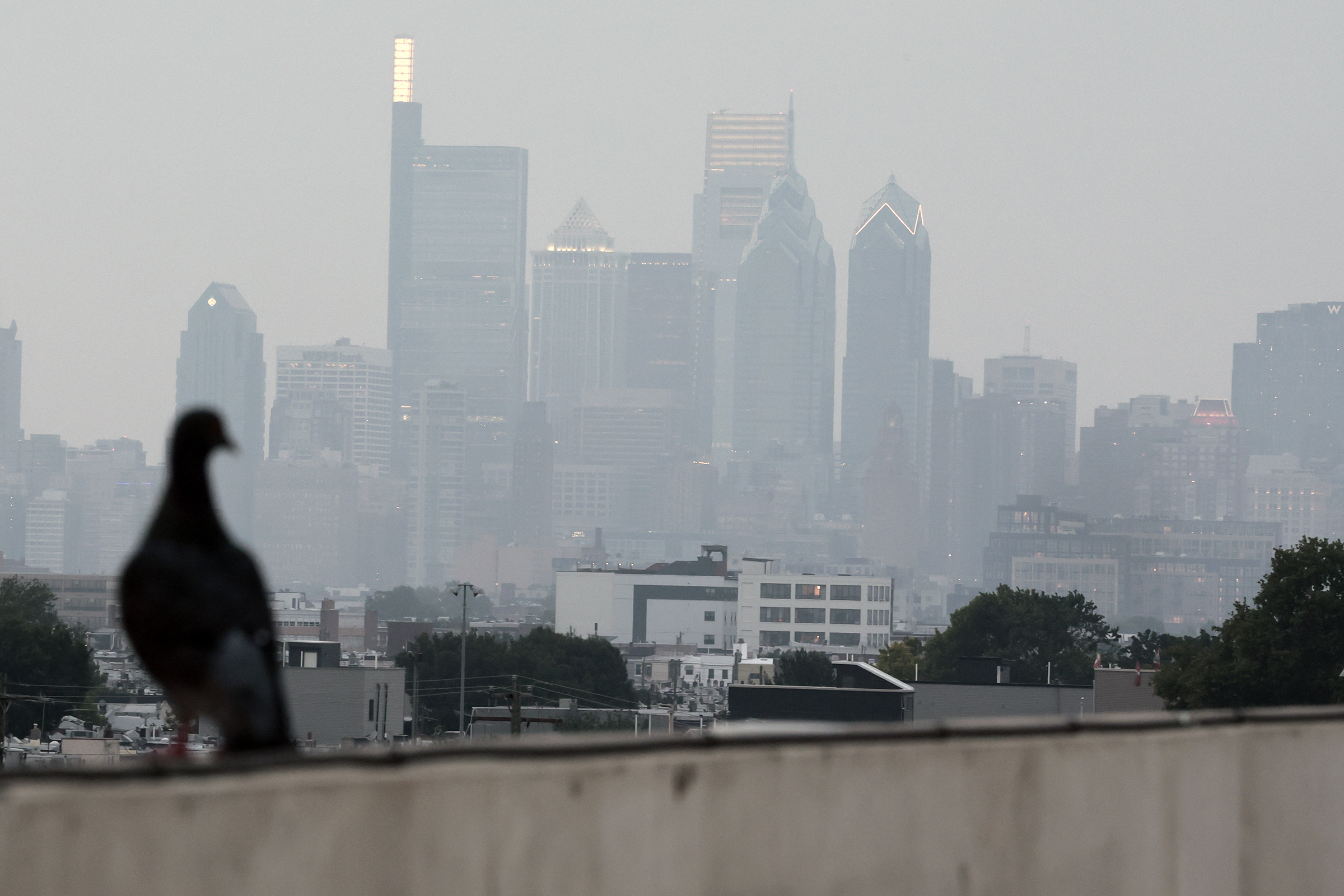
As seen from the Live! Casino parking garage, haze hangs over the Center City skyline on July 15. Smoke from the Canadian wildfires was creating unhealthy air quality.Elizabeth Robertson / Staff Photographer
My own research has focused on infants with bronchopulmonary dysplasia, or BPD. This is a chronic lung disease that affects many babies born very prematurely. These infants often spend weeks or months receiving respiratory support in the NICU. Even after they leave, their lungs remain vulnerable.
In one Philadelphia study of 378 preterm infants with BPD who were cared for in NICUs affiliated with the Children’s Hospital of Philadelphia, we used a state-of-the-art air pollution model to estimate PM2.5 exposure at each infant’s home address and examined the association of PM2.5 exposure with respiratory illness during the first year after discharge.
More recently, we followed this same cohort of children through early childhood. We found that higher PM2.5 exposure in the first year after discharge was associated with a higher risk of asthma by the age of 5, an age when many kids enter kindergarten. In other words, what a baby breathes in the months after going home may be associated with respiratory health years later.
The American Lung Association’s 2026 State of the Air report again shows that poor air quality remains a real problem in the Philadelphia region. Those rankings may sound like background noise. Another annual report. Another set of grades. But for my patients, air quality is meaningful. It is part of the discharge plan, whether we name it or not.
What families and policymakers can do
So what do we do? It is tempting to propose individual solutions. Families can use indoor air purifiers. They can avoid outdoor activity on bad-air days. They can keep windows closed during wildfire smoke events.
The Environmental Protection Agency strengthened the annual PM2.5 standard in 2024, lowering it from 12 to 9 micrograms per cubic meter. In practice, the standard establishes a nationwide, health-based benchmark for outdoor air quality and requires states to develop pollution-reduction plans for areas that fail to meet it. That change matters because a growingbody of evidencesuggests that breathing PM2.5can harm health even at levels once considered acceptable.
My patients are part of that evidence. Their lungs are telling us that small differences in PM2.5 exposure may matter and that exposure to PM2.5 levels once considered low may have substantial implications for health when infants breathe that air day after day over a long period of time.
There are also local interventions worth taking seriously. Cities can reduce traffic-related emissions near homes, schools, and childcare centers. They can electrify municipal vehicle fleets. They can enforce industrial pollution limits. They can invest in high-quality housing. They can also expand tree canopy and green space, which can help capture airborne pollutants and reduce urban heat.
When clinicians discharge a baby from the NICU, we are making a quiet bet that the world outside the hospital will help that child thrive. But decisions made far beyond the bedside shape the quality of the air all children breathe.
Tim Nelin is an instructor of pediatrics at the University of Pennsylvania’s Perelman School of Medicine.
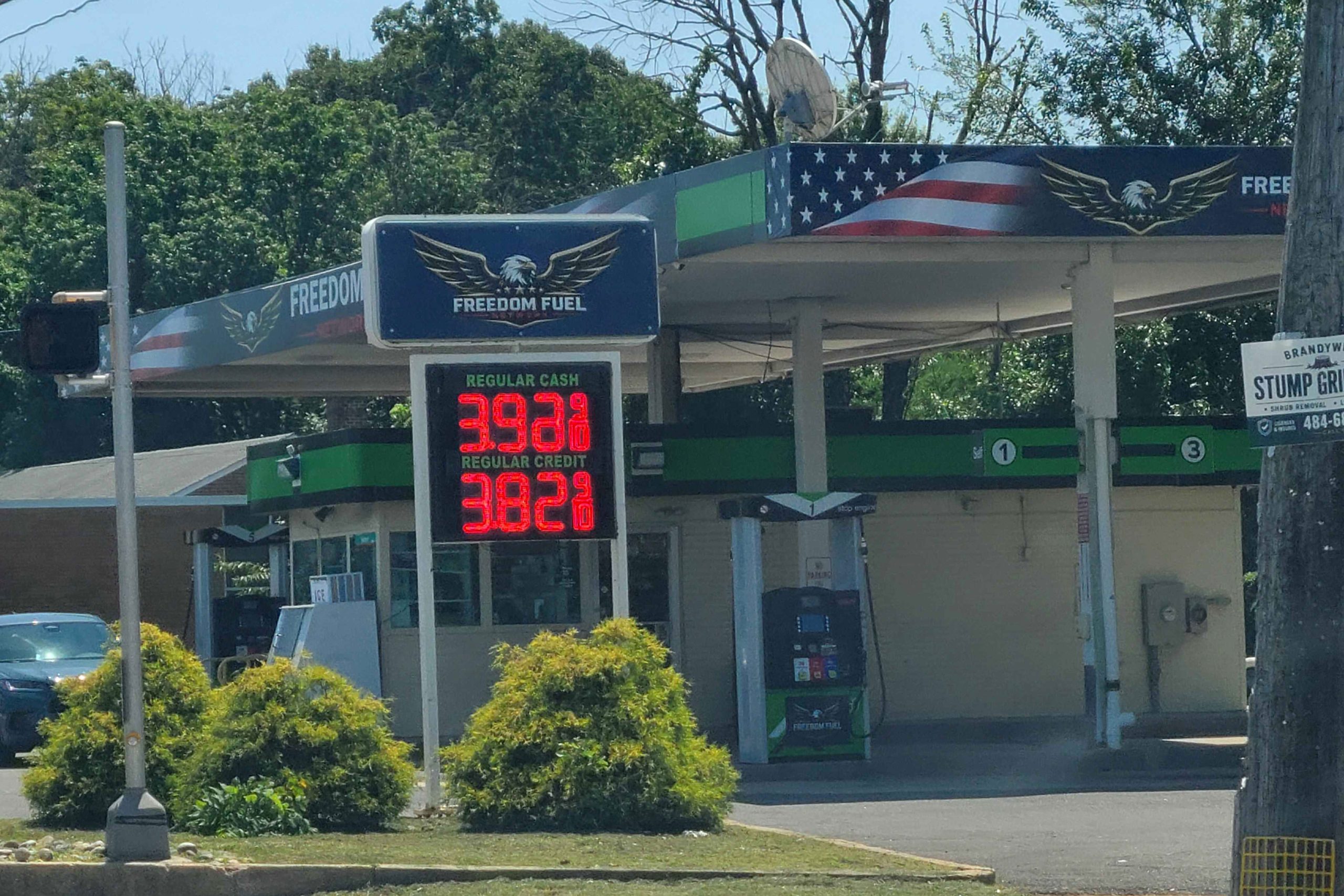
Even the Freedom Fuel Network promoted by President Donald Trump isn’t immune to rising gas prices.
Yet, the Philadelphia-area network of gas stations is expanding anyway, according to the company’s website.
The enterprise, currently made up of 25 stations spread across the region, garnered national attention earlier this month when it began selling regular gas for $3.47 a gallon — a nod to Trump, and 40 to 50 cents cheaper than other stations.
Gas station owners suddenly undercut, political observers, and government watchdogs wondered how long the promotion would continue.
It turns out, not long.
The Inquirer visited seven Freedom Fuel locations over several days, and while all were still selling gas cheaper than nearby competitors, the deep discounts from earlier were gone.
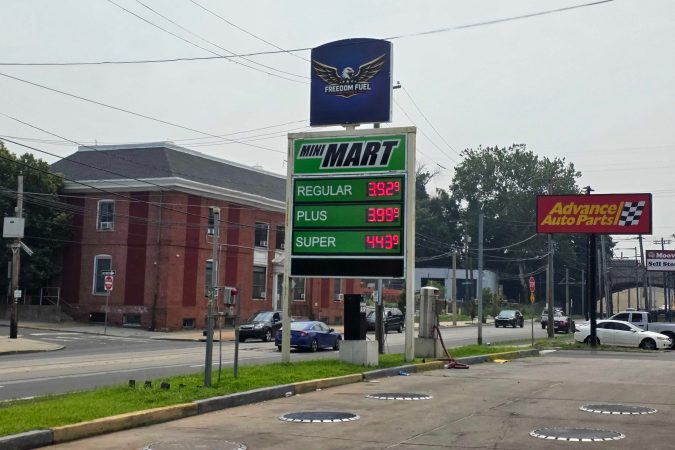
Gas prices are up everywhere, including the Freedom Fuel Network station on Edgemont Avenue in Brookhaven, Delaware County.Rob Tornoe /
Three Philadelphia gas stations and two Delaware County locations were among those within the network selling gas at $3.92 a gallon Monday. Near Philadelphia’s Freedom Fuel stations, competitors were charging $3.89 to $4.09 for a gallon of gas. The same was true in South Jersey, where Freedom Fuel stations in Marlton and West Berlin were selling gas around 10 cents a gallon less than their nearbycompetitors.
(function(){function e(){window.addEventListener(`message`,function(e){if(e.data[`datawrapper-height`]!==void 0){var t=document.querySelectorAll(`iframe`);for(var n in e.data[`datawrapper-height`])for(var r=0,i;i=t[r];r++)if(i.contentWindow===e.source){var a=e.data[`datawrapper-height`][n]+`px`;i.style.height=a}}})}e()})();
Selling gasoline is a low-margin business, with owners making just “a few pennies” of profit per gallon sold, according to Eliezer Fich, a finance professor at Drexel University’s LeBow College of Business.
“They can sustain those losses for a little while, but it becomes unsustainable if you can’t offset that with a convenience store or a car wash,” said Fich.
Several Freedom Fuel stations visited by Inquirer reporters were small, appeared somewhat rundown, and offered a limited selection of products beyond gas. One location had an inoperable convenience store.
Fich doesn’t know the specifics of Freedom Fuel. He said independent stations banding together can offer purchasing power with refineries, which can be one route to securing lower fuel costs. But those savings wouldn’t come close to supporting the deep discounts the stations were offering.
Despite the White House’s involvement in promoting Freedom Fuel, a spokesperson said the company received no government subsidies and did not obtain fuel at a lower cost. The below-market prices would exist “for as long as the company chooses,” the spokesperson said.
If that’s the case, the business itself was already absorbing dramatic losses before the United States resumed attacks on Iran, leading to a jump in gas prices over the past week.
The average cost of a gallon of fuel in Philadelphia was $4.17 a gallon Monday, up from $3.95 a gallon last week, according to AAA. Nationally, the average cost of a gallon of gas also jumped back to $4 a gallon, up from $3.14 a gallon compared to last year.
While questions remain, Freedom Fuel plans to expand
Little is known about who is taking on the likely losses expected from the promotion.
Former Evesham Township mayor, Baltimore Ravens assistant coach, and self-proclaimed “proud Trump supporter” Randy Brown, along with former commodities trader Yoni Gontownik, both signed the certificate of formation, first obtained by The Newsground, an investigative news outlet. Neither could be reached for comment.
Cherry Hill developer Shamikh Kazmi and his brother Syed Kazmi are linked to at least six locations. The brothers, who have been embroiled in at least two lawsuits related to previous gas station ventures, also could not be reached for comment.
One of Shamikh Kazmi’s businesses was sued as a result of a lengthy trademark dispute with BP America Inc. and BP Products North America Inc. in 2021. That case ended with four deputies with the U.S. Marshals Service seized remaining brand signs in June 2022, according to court documents.
Also in 2021, the brothers were accused by Petroleum Marketing Group Inc, a fuel distribution company, of stealing thousands of gallons of gas from the company. Petroleum Marketing Group sued the brothers, who were ordered by a federal judge in February to pay $600,000.
Still, the people behind Freedom Fuel are looking at expansion.
“Since launch, drivers have flooded us with one request: bring Freedom Fuel Network to my area,” read the website Monday. “We heard you. Due to overwhelming demand for additional locations, we’re expanding to serve more communities with lower prices at the pump.”
The website did not give a timeline for when those additional stations could come online and did not respond to a request for comment.
Delaware County detectives are investigating a racist, threatening voicemail left for county Sheriff Siddiq Kamara, officials said Monday.
The caller, whom police are working to identify, used a racial slur to refer to Kamara, who is Black, and called for “death to Islam.” Kamara is a Muslim whose family came to Delaware County from their native Liberia.
The caller also told Kamara he was going to hunt, attack, and torture him when Kamara least expects it, according to a recording of the voicemail that was reviewed by The Inquirer.
“I will find you. I know where you are,” the male caller said. “You are an amateur.”
Kamara, in a statement, said despite the caller’s attempts to intimidate him, the incident has strengthened his resolve.
“Let me be clear: There is a fundamental difference between criticism and criminal conduct. Public officials should expect scrutiny, disagreement, and accountability — that is part of our democracy,” he said. “But threats of violence, intimidation, and hate cross the line and will be treated accordingly.”
Kamara, 31, was elected sheriff in November. He is the youngest person in county history to hold the position.
A career police officer, Kamara said he was motivated to run for office after a personal tragedy: His cousin, Fanta Bility, was struck and killed by a stray bullet fired by Sharon Hill police officers in 2021.
In a statement Monday, the Delaware County Council said it “unequivocally condemns these threats in the strongest possible terms” and stands with Kamara.
Members of the Philadelphia chapter of the Council on American-Islamic Relations called the incident “the latest example of the growing climate of intolerance that seeks to intimidate public servants based on their race, religion, or national origin.
“No public official should be subjected to racist intimidation for simply serving their community,” Ahmet Tekelioglu, executive director of CAIR-Philadelphia, said. “Attacks like these are not only directed at one individual They are intended to send a message of fear to entire minority groups — particularly the Black, immigrant, and American Muslim communities.”
Kurt Vile’s love of Philly — and Philadelphia’s affection for Kurt Vile — has never been in question.
For the cover of Constant Hitmaker, the 2008 album that announced his arrival, Vile posed in front of a blown out wall “that looks like a Rauschenberg painting” at the corner of Frankford and Norris, he recalls. “That stuff’s beautiful, you know?”
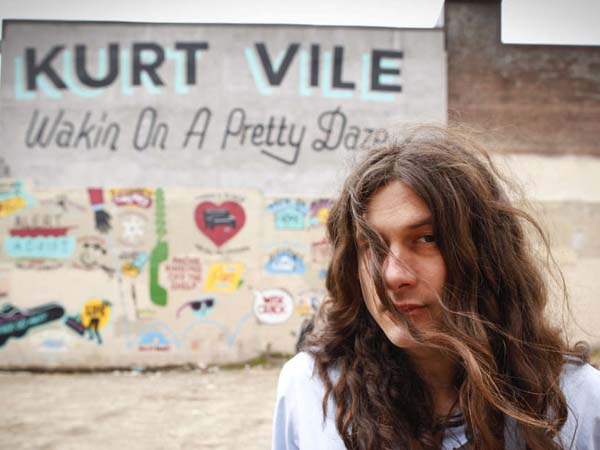
Since 2012, a Steve “ESPO” Powers mural that doubles as the cover for Vile’s 2013 album Wakin On A Pretty Daze has adorned a wall at Front and Master Streets in Northern Liberties, visible to travelers headed north on the Market-Frankford El.
With his signature mane and quizzical expression, Vile, who grew up in Lansdowne in Delaware County, has been the face of Philly’s reign as the capital city of 21st century indie rock.
Kurt Vile stands in front of a mural by Steve “ESPO” Powers on March 27, 2013. Michael S. Wirtz / Staff Photographer
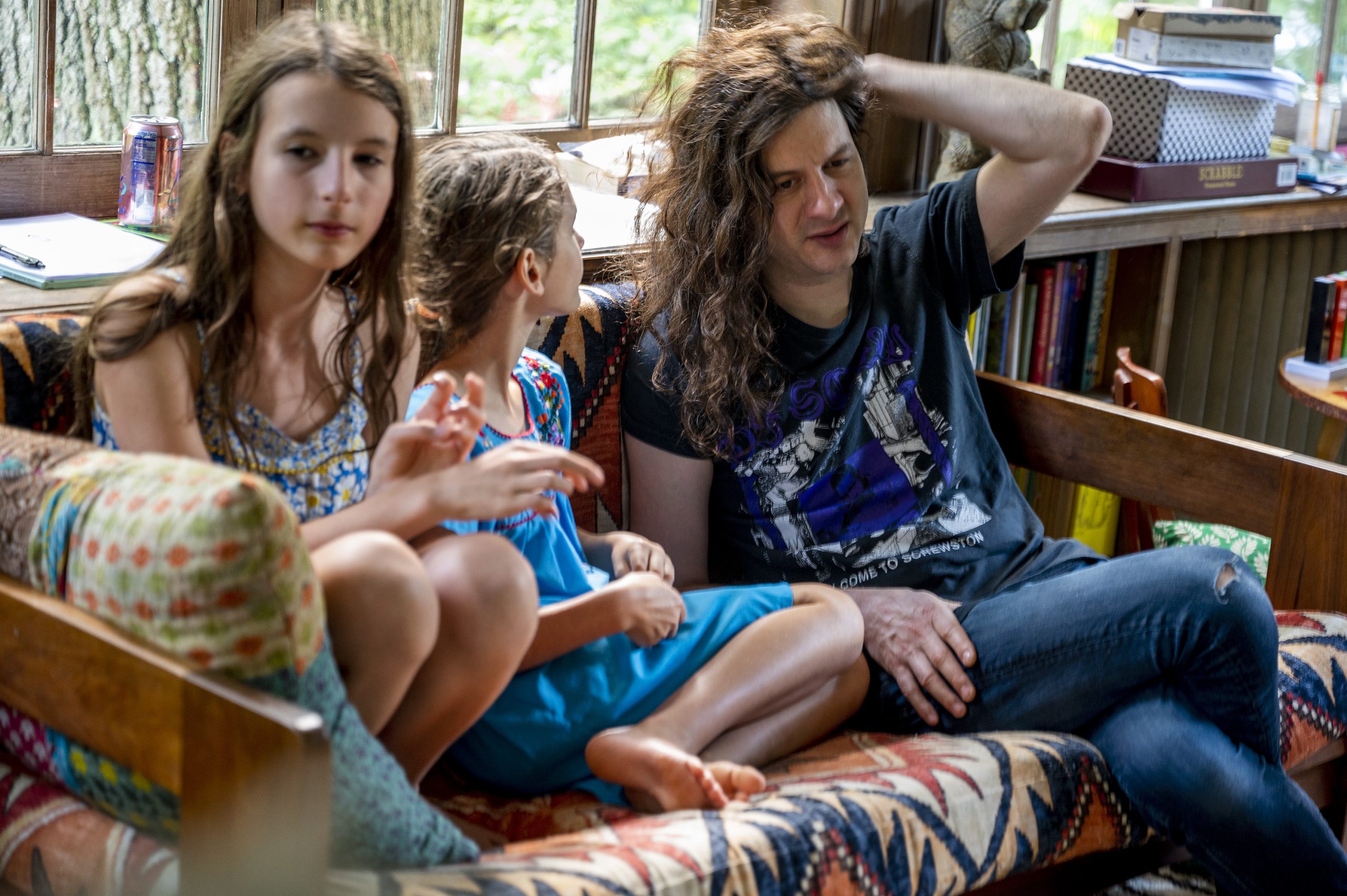
The city is embedded in Vile’s music at every turn, from the “I park for free!” boast on the 2018 song “Loading Zones” to the cover of 2022’s Watch My Moves, which pictures the Dad rock king wearing a crocodile mask in Wissahickon Valley Park, flanked by daughters Awilda and Delphine.
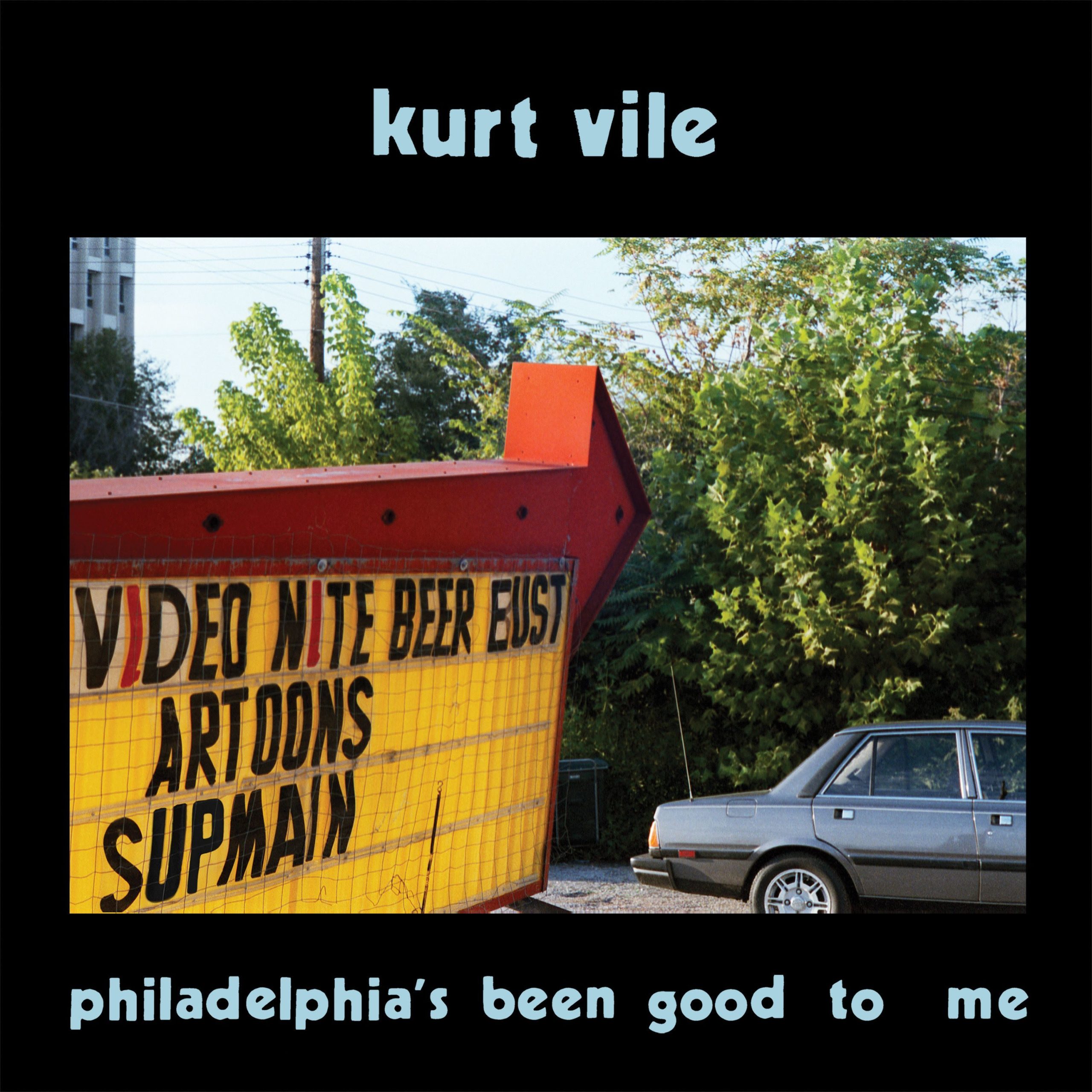
But Vile has never repped his hometown so hard as on his new album, Philadelphia’s Been Good To Me, released in May. It includes shout-outs to Lincoln Drive, the Schuylkill, and Sun Ra, and an infectious single “Chance to Bleed” that features Philadelphia gangsta rap pioneer Schoolly D in a video shot at Kung Fu Necktie.
Philadelphia’s Been Good To Me even includes a playful taunt at two of Vile’s classic rock favorites who dared to record songs with the word Philadelphia in the title.
“A couple of my heroes wrote a song,” Vile talk-sings in “You Don’t Know Cuz It’s My Life.” “But that ain’t where they’re from, so hey you don’t know / But I still love you, Neil and the Boss.”
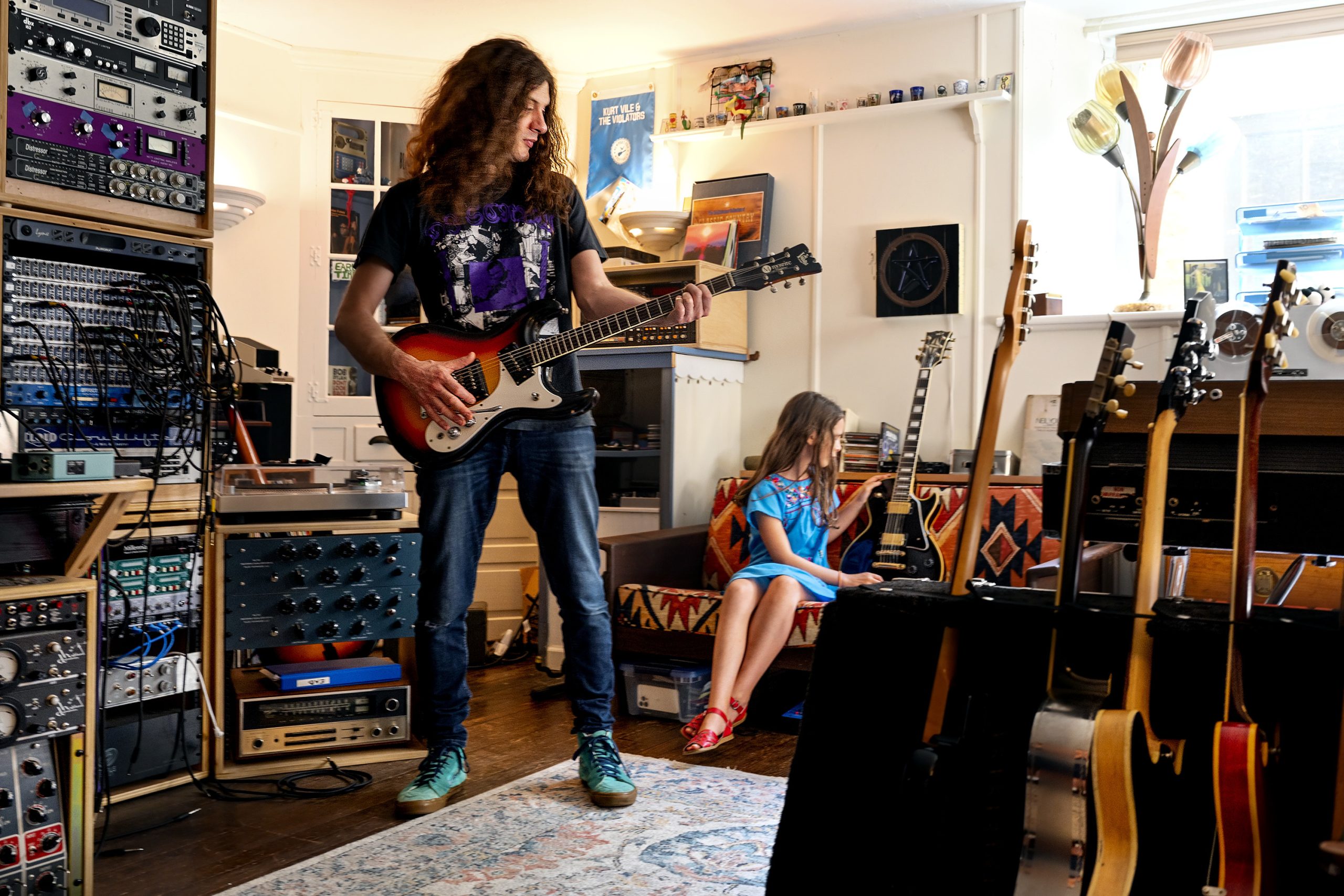
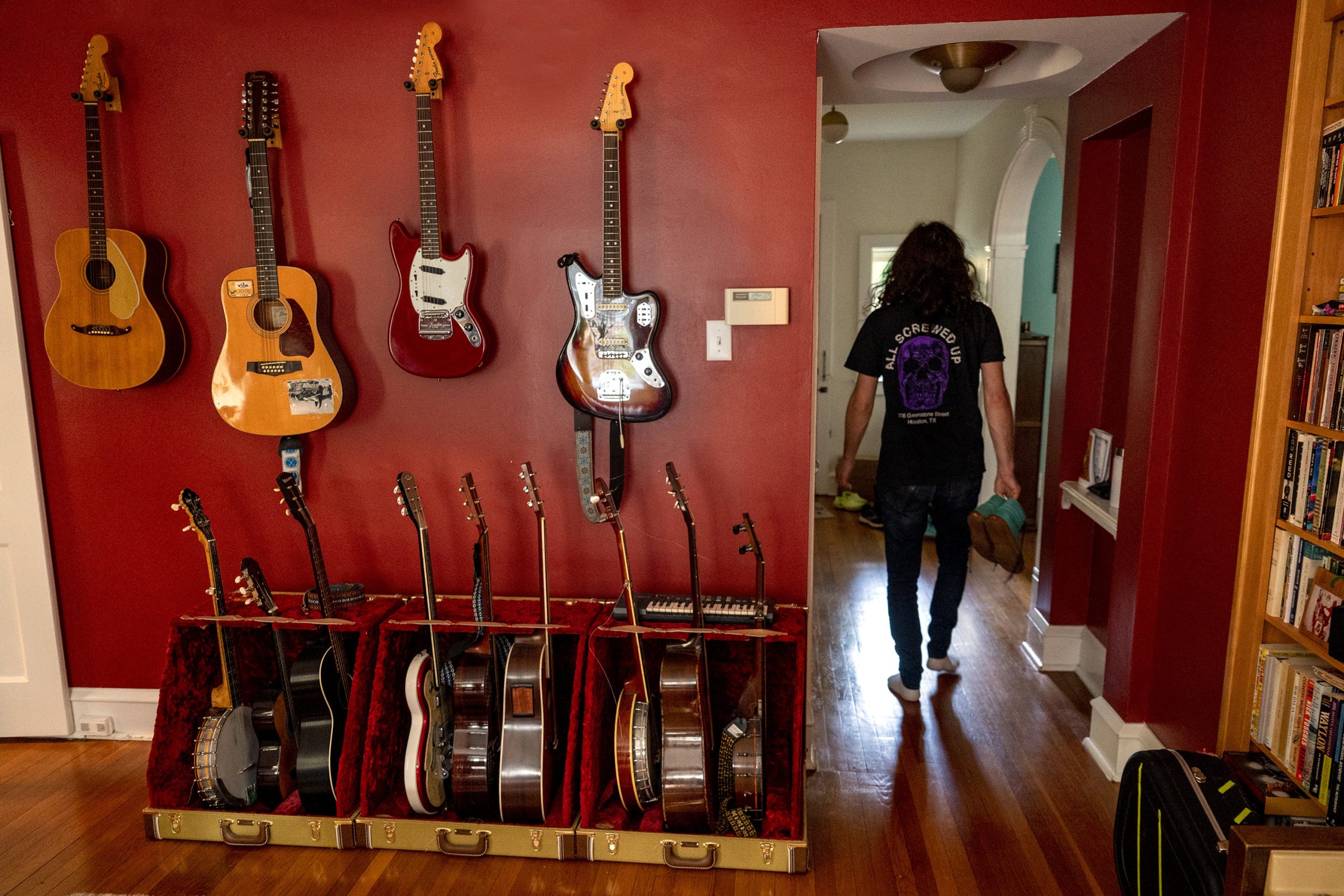
Working in the wee hours in his basement OKV studio — which stands for “Overnight Kurt Vile” — in his fieldstone house in Mount Airy, Vile recalls, “I was singing along to this keyboard track I had laid down, and that thought came to me.”
Kurt Vile in his basement studio at his home in Mount Airy June 13, 2022, with his daughter Delphine.Tom Gralish / Staff Photographer
Vile, who had (legally) parked his Prius in a nearby loading zone, was talking at the Silk City Diner on the Sunday night of Memorial Day weekend where he would realize a long-held ambition: sitting in with centenarian saxophonist Marshall Allen and members of the Sun Ra Arkestra.
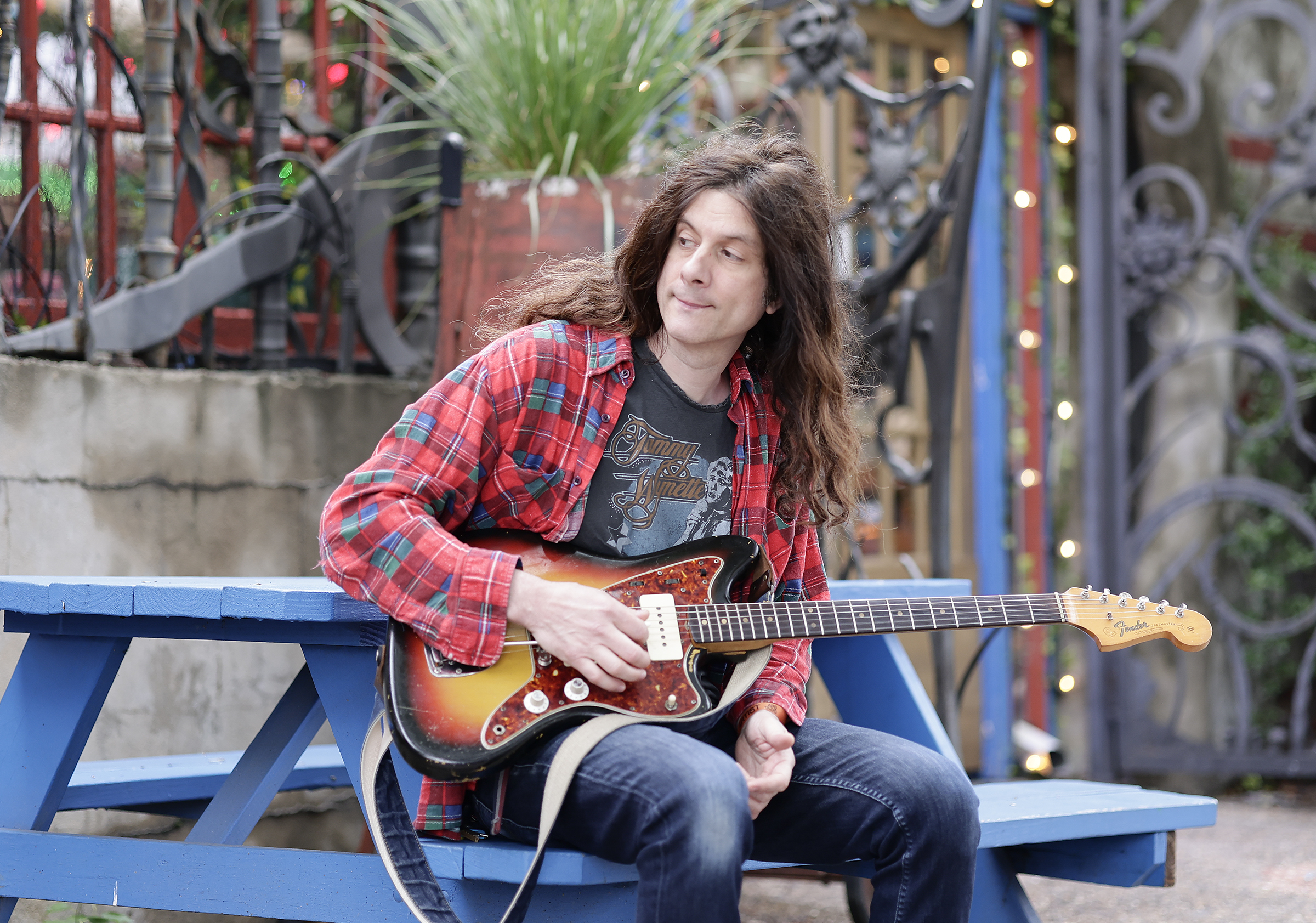
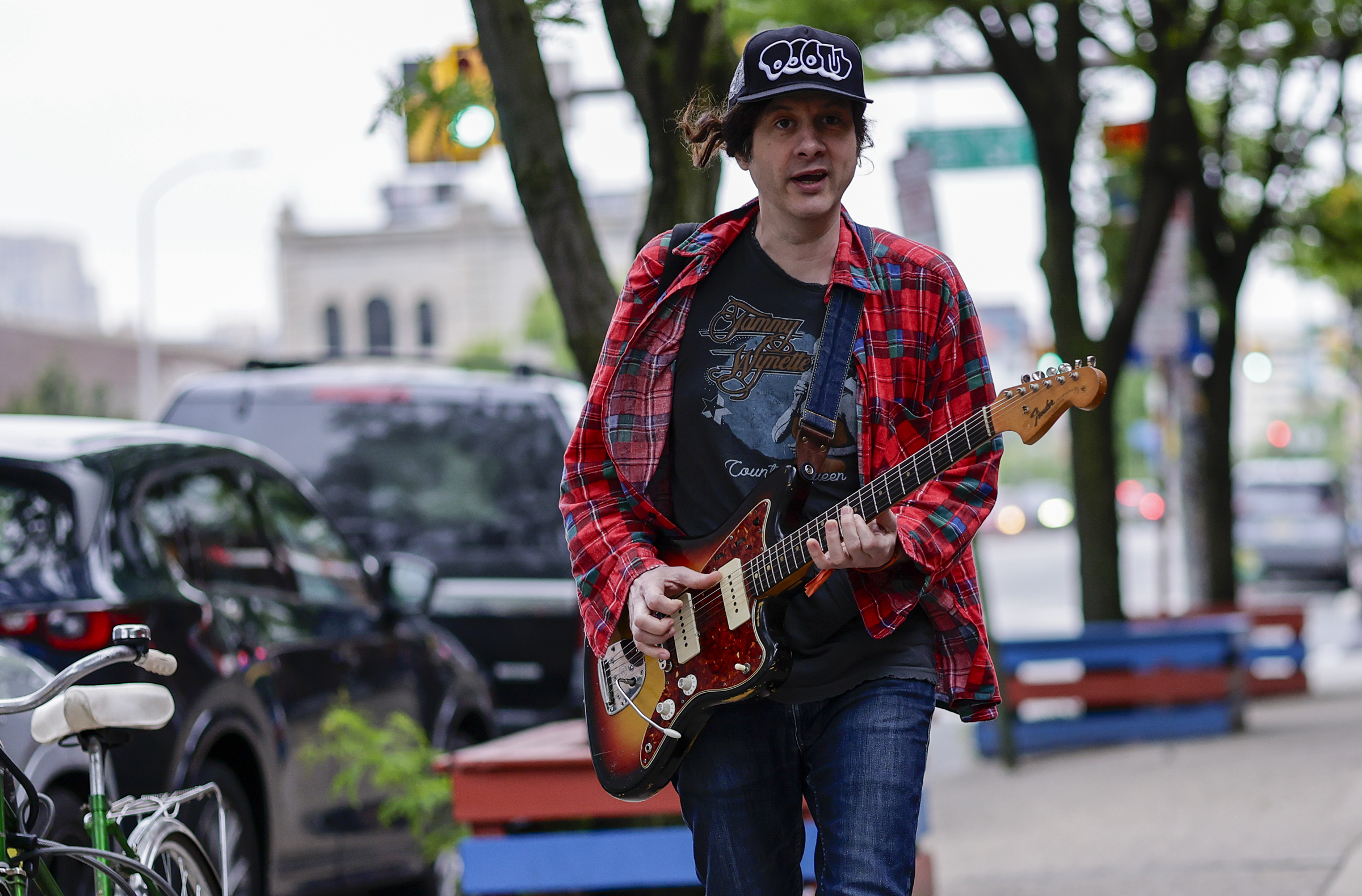
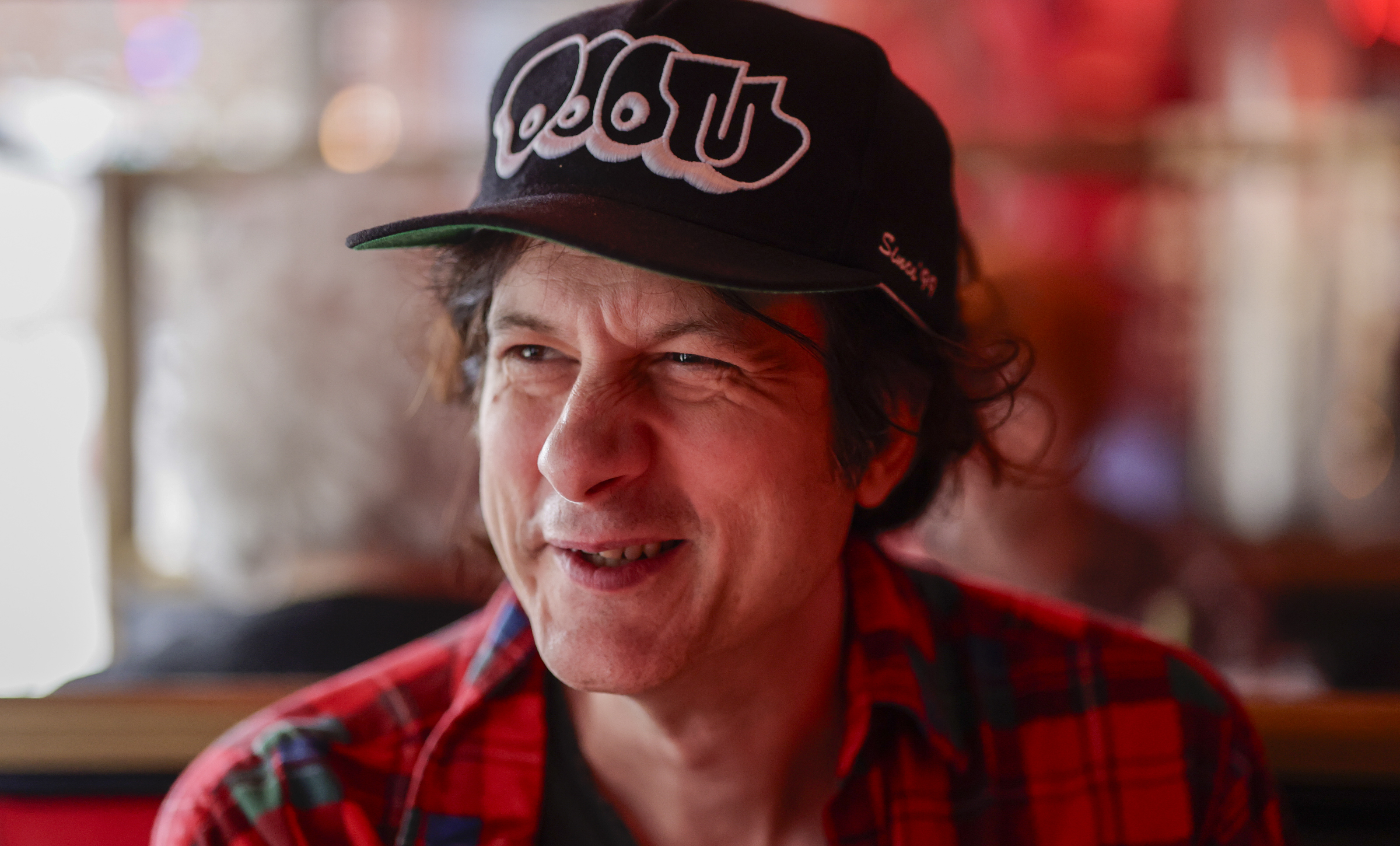
Vile — who was wearing a Tammy Wynette T-shirt and MF Doom trucker’s hat, with his 1965 Fender Jazzmaster Sunburst in the booth beside him (without a case) — explainedhis unique position in Philadelphia music history while dining on an Impossible Burger and Korean fried cauliflower.
“Springsteen wrote the song ‘Streets of Philadelphia’ and Neil wrote ‘Philadelphia,’ and they’re both on the soundtrack to Philadelphia, right?” he says, referring to Jonathan Demme’s 1993 AIDS drama.
“I get where they’re coming from, but it’s still an assignment. They’re singing about a city they don’t know that well. I’m proud of the city that I’m from, and I’m also lucky that I’m from here.
“It’s like my friend Mary Lattimore, who plays the harp.” (And has given lessons to Vile’s daughters, who also both play guitar.) “She’s not from Philly, but she lived here forever, so it feels like home to her, even though she’s in LA now.”
The album cover of Kurt Vile’s ‘Philadelphia’s Been Good To Me,’ which features a photo by Memphis photographer William Eggleston.Verve
Adam Granduciel of the War on Drugs, with whom Vile frequently teamed up when both were aspiring artists in the 2000s, also grew up elsewhere and now lives in Los Angeles.
“They’re two of my oldest friends that were in the Philly scene forever, but they don’t have the extended history that I do.”
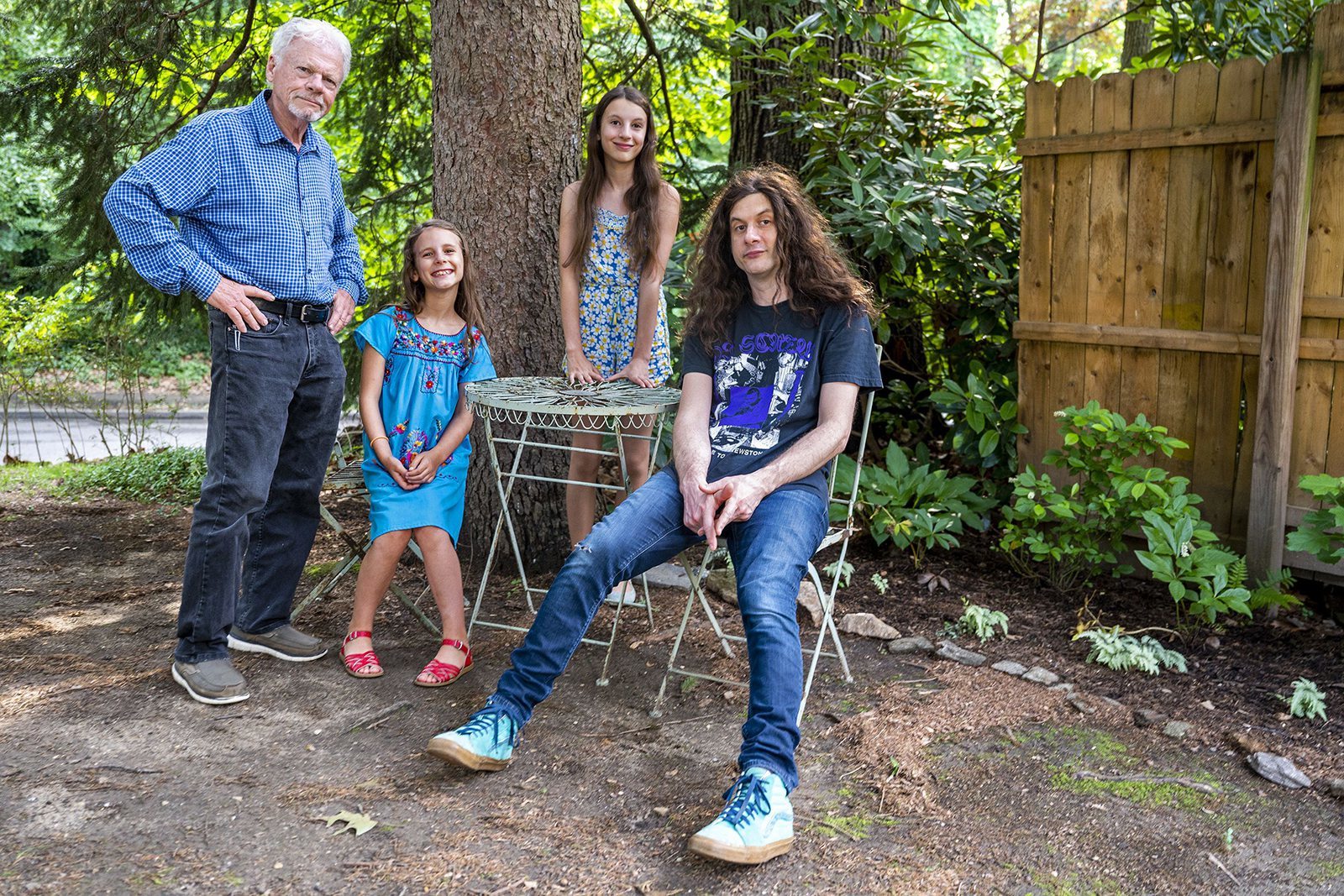
Kurt Vile with his father, Charlie, and his daughters Delphine (left) and Awilda, who posed with him on the cover of his latest album, at his home in Mount Airy on June 13, 2022.Tom Gralish / Staff Photographer
The Philly fixture
Vile — who is the oldest boy among the 10 children of his SEPTA train operator father Charlie and stay-at-home mother Donna — is Philly-area born and bred.
“I’m the OG,” he says. “That’s what I’m proud about. It’s like Questlove, or something,” though for all the Philly repping the Roots drummer does, he doesn’t live here either.
Vile, by contrast, is a Philadelphia fixture. When artists like country rebel Margo Price, Australian rocker Courtney Barnett, and North African desert blues band Tinariwen have come to town, there was one way to know for sure they were in Philadelphia: Kurt Vile was standing next to them onstage.
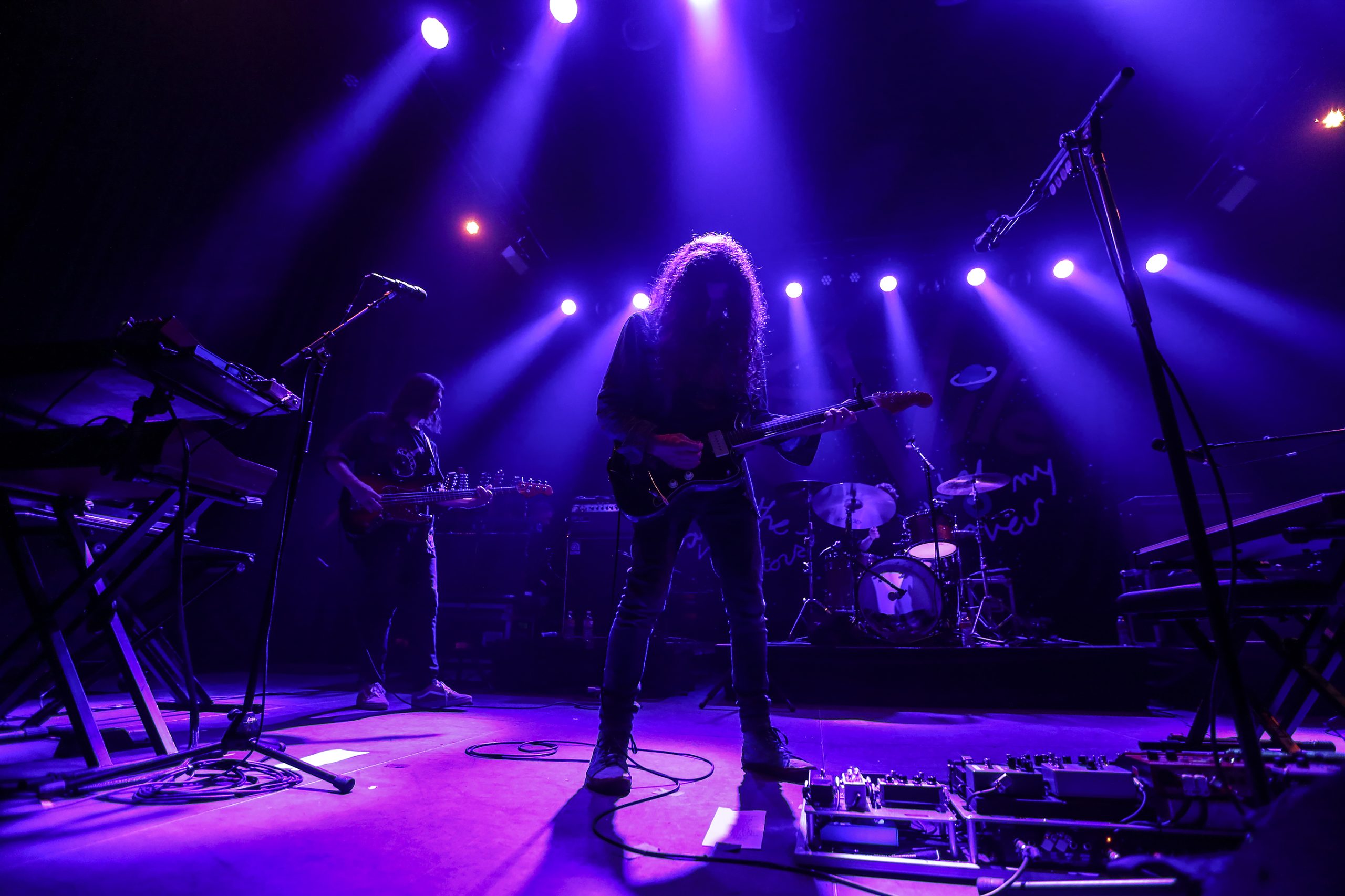
Vile plays the Dell Music Center with his band the Violators on July 25 as part of Connor Barwin’s Make The World Better Concert Weekend. He played Barwin’s first MTWB Foundation benefit in 2014, which raised money to build playgrounds and rec centers throughout the city.
“I don’t follow football and I didn’t know who he was,” Vile says, recalling meeting Barwin at a show. “He walked in and he looked amazing. He was so tall, like a [expletive] Eagle. He was just a genuine fan. I love reconnecting with Connor and watching him do his thing.”
Vile’s July 25 show is the second of two MTWB nights at the Dell. The first-night headliners are 1990s alt-rock heroes Pavement.
“Pavement was my gateway drug to indie rock,” Vile says. “Stephen Malkmus was my hero. I got my first job as a busboy at the Blue Comet on Baltimore Pike and I would spend all my money on Pavement CDs.”
Now, Vile is friends with Malkmus, and was stoked when he found out they were both playing the MTWB weekend — until he realized that he has a gig in Boston the night Pavement is playing. “I’m missing Pavement by a day,” he says. “Which I’m not happy about.”
Vile, 46, has spent his entire life living in the Philly area, save for 2002-03 when he followed his wife Suzanne Lang to Boston while she got a master’s degree at Emerson College.
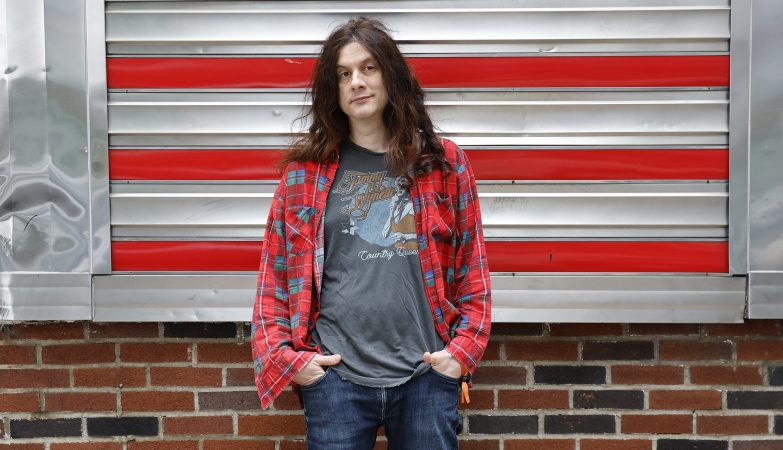
Philly alt-rock star Kurt Vile outside the Silk City Diner on Sunday, May 24, 2026 in Philadelphia.Yong Kim / Staff Photographer
He worked as a forklift operator for an air freight company. “The most ball bustin’ blue-collar job there is,” he says. Before he mastered the machinery, “I got made fun of a lot my first year. But then I got really good at it.”
Returning to Philly and moving to Northern Liberties, he went to work for Philadelphia Brewing Company, where he was hired by future pizza sensei Joe Beddia who was roommates with Granduciel. “They were all blown away by my forklift skills,” recalls Vile. “And that’s how I met Adam.”
At PBC, Vile met Jack Rose, the late Philadelphia guitarist who, like Vile, was a fan of influential American Primitive guitarist John Fahey.
Asked to name his top five Philadelphia artists, Vile starts with Rose. He then adds Purling Hiss guitarist Mike Polizze, and psychedelic folk singer Meg Baird, Petty Bunco label head and singer Richie Charles, along with Schoolly D.
“Is that five?” It is, but Vile has a couple more: Marshall Allen-slash-Sun Ra, and rockin’ country band Florry. “They’re so fun and excitable and young,” Vile says.
Kurt Vile in the music room in his home in Mt. Airy June 13, 2022 (this is not the basement studio)TOM GRALISH / Staff Photographer
“I love Mount Airy and Germantown,” he says. “There’s still so much old-school Philly in Germantown. And Mount Airy really saved my life. I love that there’s forest, and I have room to think.
Kurt Vile at his home in Mount Airy June 13, 2022, with his daughters Awilda (left) and Delphine, who posed with him on the cover of his latest album.Tom Gralish / Staff Photographer
“But I can still go to the city any time, and it’s so quick,” driving his Prius down Lincoln and Kelly Drives. “You go in through the Art Museum, and it’s a classy way to go in, you know?”
Over 10 albums, Vile has continued to develop a raw, unhurried signature sound. He often seems to be talking to himself in a bemused drawl over patient jams that turn out to be transfixing.
What country star Keith Urban once said of Vile’s 2015 hit “Pretty Pimpin’” in naming it as one of five songs he wished he’d written applies to Vile’s songwriting in general: “I don’t know how he wrote it, but it sounds like pure stream of consciousness.”
Philly alt-rock star Kurt Vile walking outside the Silk City Diner on Sunday, May 24, 2026 in Philadelphia.Yong Kim / Staff Photographer
‘Philadelphia’s Been Good To Me’
On Philadelphia’s Been Good To Me — whose cover features a photo by Memphis photographer William Eggleston — that deft, uncanny approach is evident on tracks like “99th Song,” an ode to a loop pedal that turns out to be a paean to domestic bliss.
“Stoned on music, well, the best kind of high,” he sings. “Got love in my life, and three girls by my side.” Later, the album includes a more straightforward love song: “Every Time I Look At You,” which begins: “Every time I look at you, sparks fly from my eyes.”
At Allen’s birthday party, Vile took a seat next to guitarist DM Hotep at the rear of the stage. “I was playing spacey, bendy Sonic Youth-hybrid leads,” he said afterward. “I felt really calm up there.”
A few days after that party, Vile celebrated the release of Philadelphia’s Been Good To Me at the Triangle Tavern in South Philly, where 200-plus fans lined up to purchase the album and receive a free vegan cheesesteak as a bonus.
Vile headed out with the Violators in June, and checked inbefore a sold-out show at San Francisco’s Castro Theatre this month.
“I’m a little discombobulated today,” he says, ordering a late afternoon large coffee and glazed doughnut. “It was a late night.”
The night before, Vile enjoyed a day off at Festa, a beloved San Fran karaoke bar closing this year he wanted to visit one last time. “I’m shy at first, but then everybody sings and I get up, too.” His go-to is “Stand Back” by Stevie Nicks.
The tour, Vile says, “is going good, man.” This trek has made him rethink the streaming era. He’s a fan of physical media, and feels “the past was more simple and honest.”
Philly alt-rock star Kurt Vile at the Silk City Diner on Sunday, May 24, 2026 in Philadelphia. Yong Kim / Staff Photographer
“But now the way people can consume your catalog from streaming, the younger people can binge my catalog like Netflix, and I can tell that they know all of my music. I just feel that people are connected.
“This is my 10th record, and I’ve accumulated all these songs that have emotional qualities combined with a dreamy, pretty, hypnotic thing, and then it rocks live with my electric guitar. It just keeps evolving. The songs are simple enough, but the possibilities are endless.”
On the bus, Vile has been keeping Philly — and Delco — close to his heart.
Kurt Vile in concert at the Union Transfer, Friday, June 3, 2022Steven M. Falk / Staff Photographer
“I’m watching Mare of Easttown,” he says. “I never saw it, and now I’m obsessed, just watching all the Delaware County locations and hearing Kate Winslet say a sentence half-Delco, half-British.” He slips into a Winslet impression: “I’m hoping for an an-swer,” and chuckles to himself.
“But it’s my favorite show in a long time,” says Vile, who has Task cued up next. “And it’s got Mannequin Pussy in it. Does the director not know who I am?” he wonders. “I guess I’ve got to get in touch.”
“The timing is interesting, ‘cause I’ve been spending a lot of time in Delco lately,” says Vile, who’s been hanging with his parents and recently dropped in at his old haunt Paul Revere Pizza in Lansdowne. “Now I’m traveling, and I’m touring my Philly record, and I’m loving it. I’m loving being somewhere else and not in Philly every night. But I’m watching Mare of Easttown. And I know I’m gonna love it when I come home.”
Kurt Vile & the Violators with They Are Gutting A Body of Water and Twisted Teens at the Dell Music Center, 2400 Strawberry Mansion Dr. at 7:30 p.m. July 25th, dellmusiccenter.com.