Two men have been charged in the sexual assault of a student at Eastern University inside a dorm room earlier this year, Delaware County District Attorney Tanner Rouse announced Thursday.
Dontae Williams, who turns 20 on Friday, and Chase Thompson, 19, surrendered to Radnor Township police on Thursday to face charges of rape of unconscious person and related offenses. Bail was set at $150,000 unsecured for both men.
The assaults allegedly occurred in the Kea Hall residence of Naeem Turner, a friend of the victim, Rouse said. Turner was issued a summons to appear in court on three counts of invasion of privacy for allegedly recording video of the victim.
Robert C. Keller, a lawyer representing Williams, said his client “has been cooperating since the beginning.”
Keller said he will review the criminal case against Williams and pursue an appropriate defense.
No lawyers could be identified Thursday evening for the other two men.
Eastern University, a private Christian institution located in St. Davids, said in an emailed statement Thursday evening:
“Student safety remains our highest priority. Sexual assault is not tolerated at Eastern University. The university took this incident very seriously, acting swiftly and fully cooperating with the Radnor Police Department throughout their investigation.”
Eastern University continued: “We are grieved by this situation and the impact it has had on those involved. As a Christian university, we are committed to the safety and well-being of our students.”
The university said Naeem Turner was no longer enrolled at Eastern.
On Feb. 1, Radnor Township police responded to Eastern University for a report of a rape, Rouse said. The officers met with the student, who said that after a night out drinking, she reached out to Turner, her friend.
Turner said he had cousins visiting his dorm room, but she could come over, the police criminal complaint said.
The student, who already was intoxicated, arrived at Turner’s residence and was given tequila to drink, the complaint said. The student then said she fell asleep.
She was then allegedly sexually assaulted by Williams and Thompson, the complaint said.
Investigators collected DNA evidence that matched both men, the complaint said.
Turner had recorded video of himself engaged in sexual activity with the student, and twice the victim is seen pushing the phone camera away and indicating that she did not want to be recorded, the complaint said.
Turner, who was not charged with rape or any other assaults, said he had consensual sex with the victim, the complaint said.
The student said she did not remember having consensual sex with Turner and that she did not consent to being recorded, the complaint said.
Turner later allegedly sent two video clips to a contact on his phone, the complaint said.
“This incident is an appalling violation of a person’s safety, dignity, and trust,” Rouse said in statement.
“No one should ever have to fear being sexually assaulted by someone they know, and especially not by someone they consider a friend. It can be frightening to come forward after an experience like this, and we commend the victim for having the courage to report what happened,” Rouse said.
“Sexual violence is never acceptable, and my heart goes out to a young woman that will live with this trauma for the rest of her life. No one should have to fear that someone they trust will violate their safety or boundaries. There will be accountability,” Rouse said.
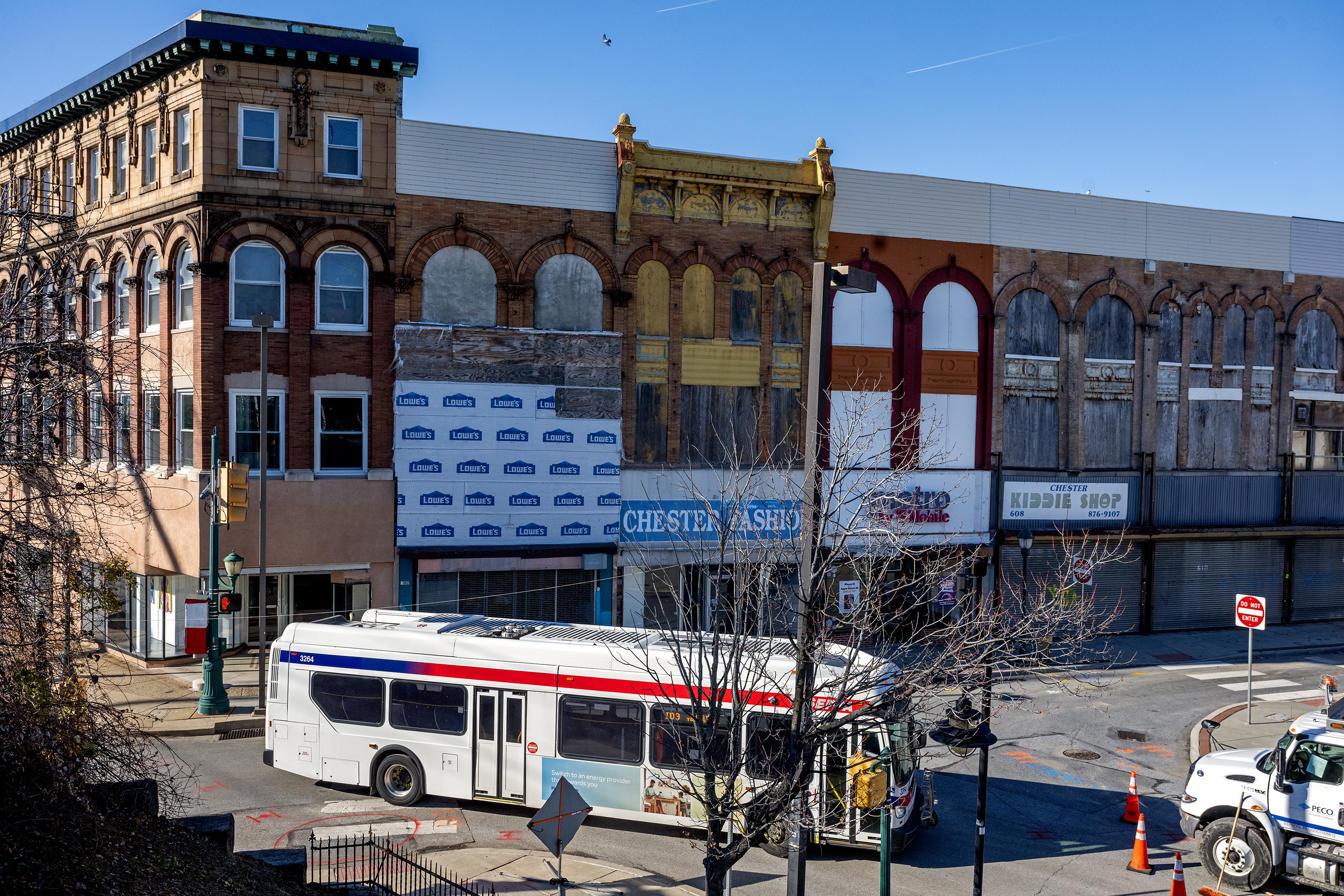
Approaching the fourth anniversary of its rare and historic bankruptcy, the City of Chester is about to get $97.1 million in public and private investments, Gov. Josh Shapiro announced Thursday.
“I might just be the happiest mayor in America,” said Chester Mayor Stefan Roots, among those who joined Shapiro for the announcement in Delaware County’s only city.
Shapiro, noting that the resolution of the protracted and often acrimonious bankruptcy “would take far longer than I’d like,” said “the time to invest in Chester is now.”
Roots said the money would go toward beautifying neighborhoods and dealing with blighted properties in the city of 33,000. “We’re going to be repairing homes. … We’re going to be improving roads and sidewalks,” he said.
The majority of the funding, $52.6 million, will go to “revamp and redesign” a section of Route 291/U.S. 13, part of the old “Industrial Highway,” which separates the riverfront from the city neighborhoods. The bulk of that money would come from the Pennsylvania Department of Transportation and the Delaware Valley Regional Planning Council.
The highway has long been a serious safety hazard for motorists and people who live along it, Roots said in an interview after the event. Speeding has been a major issue, he added.
PennDot also would be putting up $7.3 million for new sidewalks and walkways to Widener University, at the north end of town, in an effort to integrate the campus with the rest of the city.
“How do you be a city with a college, and not be a college town?” Roots said.
He said major efforts would be made to spruce up the Avenue of the States, which is a thoroughfare from City Hall to the campus about 10 blocks away.
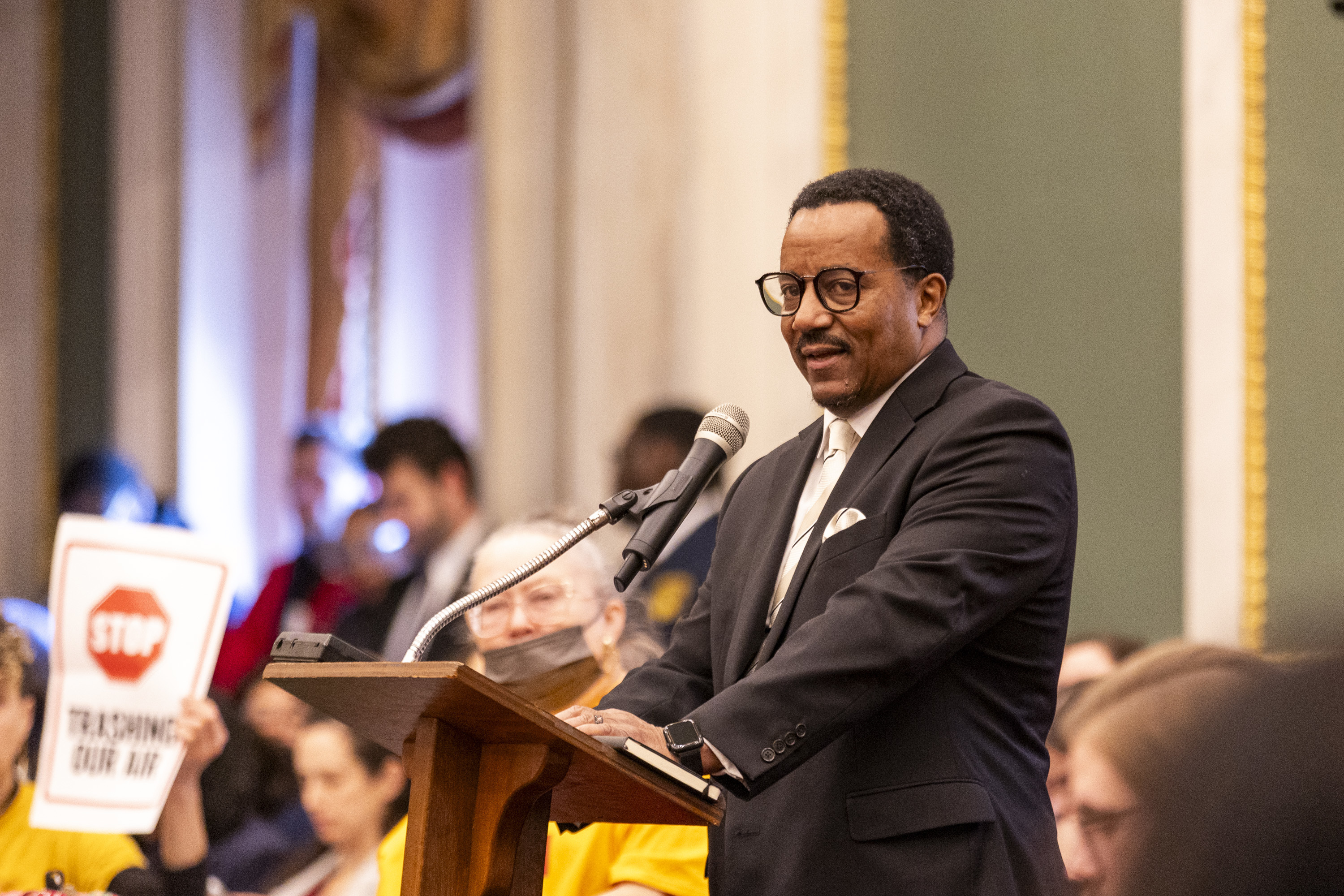
Mayor of Chester Stefan Roots speaks at a Philadelphia City Council meeting in January regarding the incinerator, which has been an important source of Chester’s revenue and a source of protests. Tyger Williams / Staff Photographer
The state and the Philadelphia Union soccer team are putting up $27.5 million to build “new outdoor fields, a 100,000-square-foot field house, indoor courts, academy space, and a performance center to expand youth programs and support school and community sports” at the riverfront Sportsplex in the city’s West End, according to a state news release.
Wawa, Essential Utilities Inc., Power Home Remodeling, and Delaware County are contributing $2 million for demolition work and to acquire 10 lots and two buildings, along with fixing up 25 other structures.
Shapiro said that Chester was now an “enterprise zone,” a Pennsylvania Department of Community and Economic Development program in which tax breaks and grant money would be made available to investors.
The department is overseeing the city’s bankruptcy process, which began in fall 2022, in part due to several years of missed pension payments.
But the city’s financial distress has been about 70 years in the making, as it has struggled to pay bills with the loss of businesses and its once-formidable industrial base. Among its prime sources of revenue today are an incinerator and a casino.
Among the nation’s more than 35,000 municipalities, only about 30 have filed for bankruptcy.
Neither Shapiro nor Roots made any mention of the bankruptcy beyond the governor’s opening comments.
State-appointed bankruptcy receiver Vijay Kapoor said in a statement: “We are very grateful for the commonwealth’s and the private sector’s investment in the City of Chester’s future.”
Exton-based Bentley Systems International, the software company with the highest market capitalization in the Philadelphia area, has opened a Center City office as its new base for 150 engineers and other tech and business staff, replacing two smaller outposts in the city.
Bentley customers use what’s now its Cesium Ion mapping platform to show sites and buildings in complex detail on office computers and hand-held devices.
A Penn State grad, who also earned a master’s and taught programming and architecture at the University of Pennsylvania, Cozzi says he sees Philadelphia as a “magical place” for tech companies.
“When I was CEO raising capital on the West Coast, some of the investors told me the best tech entrepreneurs want to move to the [San Francisco] Bay area. I said no, we can build a great tech company in Philadelphia,” he said.
Philadelphia was an early computing industry center. ENIAC, the pioneering system built at Penn to help plan World War II artillery attacks, and other early Philly-built computing systems relied on the vacuum tubes mass-produced for radio manufacturers in Philadelphia and Camden.
But by the 1970s, the industry committed to far more efficient silicon-based microprocessors developed in California’s “Silicon Valley.” Investor-rich cities such as Boston, Seattle, and Austin also became important computer hardware and software centers. Few large tech companies are now based in the Philadelphia region.
Cozzi says Philadelphia’s affordability is now an asset.
“We have reasonable cost of living and fantastic schools, graduates who want to stay here, great restaurants and quality of life, it’s an awesome place for the tech community,” he said, as he prepared to welcome Mayor Cherelle L. Parker, State Rep. Jordan Harris (D., Phila.), and 200 other guests to the new space for a grand opening celebration Thursday evening.
Cozzi said neither the city or state provided incentives for the new office.
Invited guests at Thursday’s event include Bentley clients from Center City-based Pennoni Engineering; Ansys, the Pittsburgh-based owner of AGI, and Earthbrain, a Japanese construction equipment and computing joint venture, which uses Philadelphia as a U.S. base.
Bentley went public in its 2020 IPO at $22 a share. The stock peaked in the low $60s the next year and ran almost as high last summer. It has lately tradedaround $35 a share.
It employs more than 5,000 at offices in 42 countries. The company is worth nearly $11 billion on the Nasdaq stock exchange. That compares to around $6 billion for Newtown, Bucks County-based software-outsourcing provider EPAM, $2 billion for King of Prussia tax-accounting software maker Vertex Inc., and $200 million for Blue Bell legacy hardware and software provider Unisys.
Bentley’s 10th-floor space in the Curtis Center includes a public-meeting area to host events.
The building was built in 1910 for Curtis Publishing and its mass market magazines, led by the Saturday Evening Post and Ladies’ Home Journal. Curtis moved its press operations to Delaware County in 1949 and shut both Philadelphia offices and Delco operations by the time of its 1969 bankruptcy.
The Curtis building’s owner, Keystone Development + Investment, has in recent years added apartments, biotech labs, and other specialized units to help fill the block-long complex.
Five Delaware County communities voted Wednesday to establish a new authority to provide emergency medical services funded by annual fees paid by residents, businesses, and other entities in their municipalities.
Media was originally part of the working group developing the authority proposal, but announced last week it would not be joining for financial reasons.
Each community approved an ordinance to join the authority Wednesday night at Strath Haven Middle School and appointed a representative to the authority board.
Nether Providence, Rose Valley, Rutledge, and Swarthmore voted unanimously to approve the ordinance. Upper Providence voted 3-1 in favor.
The appointed board members include Nether Providence Township commissioner Max Cooper, former Rose Valley council member David Firn, Rutledge fire marshal Thomas Moleski, former Swarthmore council member Kristen Seymore, and former Upper Providence council member Christen Rexing.
Creating an EMS authority is essential to provide reliable ALS service by stabilizing funding and staff, Swarthmore Mayor Conlen Booth said. Booth was a member of the authority working group.
“The authority model, sharing fees across all potential users of the system, is in my opinion the most equitable way to ensure that a reliable EMS service is available to everyone who may need it,” he said.
The authority’s name was originally going to be the Delaware County Emergency Services Authority, but was changed to avoid being confused with other county organizations and make clear that it was only providing medical service and not a police or fire response, Cooper said.
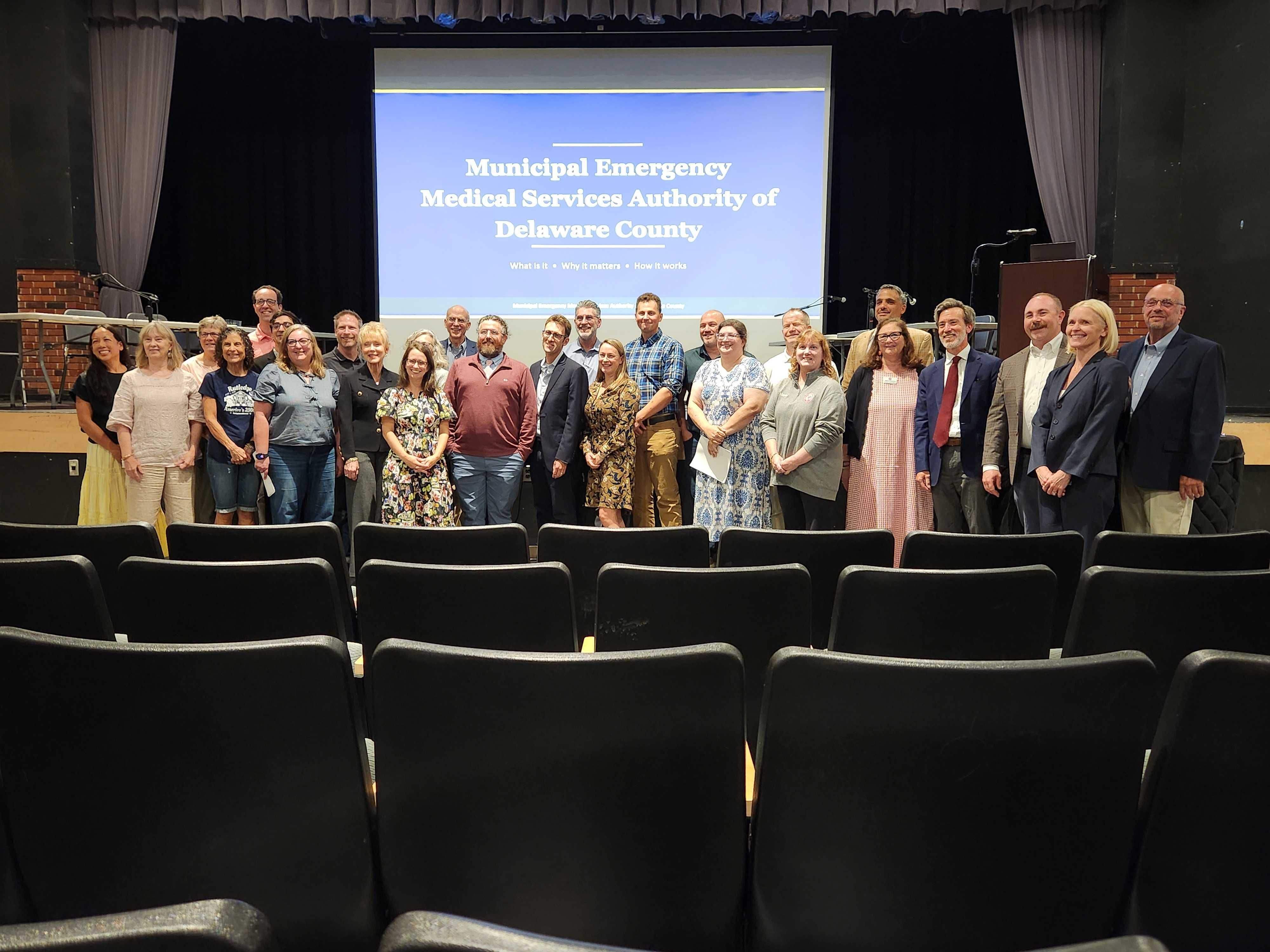
Nether Providence Township Commissioner Max Cooper speaks after five Delaware County communities approved the creation of a regional EMS authority Wednesday at Strath Haven Middle School in Nether Providence.Torin Sweeney / Staff
The next steps for the authority
While the vote established the authority, it won’t immediately go into service. The new board members will be charged with building the authority based on the foundations laid by the working group.
The recommended fee for residents will be $95 a year, although that is strictly a starting point for discussions, working group members said, and will be subject to future public hearings.
“Ninety-five dollars is similar to the yearly voluntary subscription models that many of our local firehouses use, and is similar to other recently formed EMS authorities in the state,” Cooper said. “This works out to less than $8 a month and our working group views it as a reasonable cost to ensure stable funding for such a critically important service.”
Businesses, nonprofit entities, and the municipalities themselves will have to contribute yearly fees as well. Using an authority and fee-based model was important for making sure nonprofits contribute to the costs of an EMS service, Cooper said. Nonprofits would not have to contribute if the system were tax based.
“We anticipate this will decrease the amount of taxes which will need to be dedicated to this system, and relieve some municipal pressure to raise taxes on residents every year,” Cooper said.
The board will have to decide the level of staffing and equipment needed. A potential partnership with Main Line Health is being discussed to provide some level of service.
“The authority could contract just their staff, but the authority could choose to own the ambulances and equipment,” Booth said. “It could also be that the authority contracts them to provide all the services in their entirety and then the board manages the contract. There’s a lot of potential.”
Representatives from Nether Providence, Rose Valley, Rutledge, Swarthmore, and Upper Providence pose for a picture after approving an ordinance to create a regional EMS authority Wednesday at Strath Haven Middle School in Nether Providence.Torin Sweeney / Staff
The working group hosted a presentation about the EMS authority and took public comments before each town approved the ordinance. Several attendees who identified themselves as Upper Providence residents spoke against the authority, questioning the logistics and cost.
“This is a tax increase, like it or not,” Upper Providence resident Justin Perry said to scattered applause.
Another Upper Providence resident, former longtime Marple Township Ambulance Corps member Vince Delvacchio, spoke in support.
“I don’t know where you think you’re going to get an ambulance if we don’t do this,” Delvacchio said, to more applause.
Why Media opted out of the authority proposal
Media had been part of the working group for the proposed authority, but borough council decided not to proceed for financial reasons, Borough Manager Brittany Forman said.
The borough has an existing contract with Main Line Health to provide ALS service and had been in discussions with them about projected 2027 costs. The council tasked Forman with comparing how those costs would affect taxpayers vs. the authority’s proposed fees for residents and businesses.
Ultimately the borough determined it would be less expensive to stay with Main Line Health, Forman said.
“Our council is interested to see this get implemented and really does want to keep the dialogue open,” Forman said. “Even though we’re not joining this year, I think this is still just a great step for the region.”
Upper Darby is set to consider a sweeping ordinance that would restrict if and how federal immigration agencies can operate in the township.
The ordinance, which will be introduced Wednesday with a public hearing scheduled for Sept. 16, would ban local police from assisting with federal immigration enforcement activities, prohibit immigration agents from using township property as staging areas for raids, and void agreements with neighboring municipalities that partner with U.S. Immigration and Customs Enforcement, among other provisions.
Kyle McIntyre, a Democratic council member spearheading the bill, said in a statement he hopesthe ordinance will become a “legally workable municipal framework” that other communities can adopt.
President Donald Trump’s second administration has brought a surge of ICE arrests to the Philadelphia region, stoking anxiety inUpper Darby, a diverse township whose slogan is “the world in one place” and where nearly a quarter of the population is foreign-born, according to estimates from the U.S. Census Bureau. In January, Parady La, 46-year-old Cambodian immigrant and Upper Darby resident, died in ICE custody while receiving treatment for severe drug withdrawal.
In February, Upper Darby High School students walked out in protest of ICE, and Upper Darby passed a resolution affirming that the township would not enter into an agreement with the agency through the 287(g) program, which deputizes local police officers to carry out immigration enforcement.
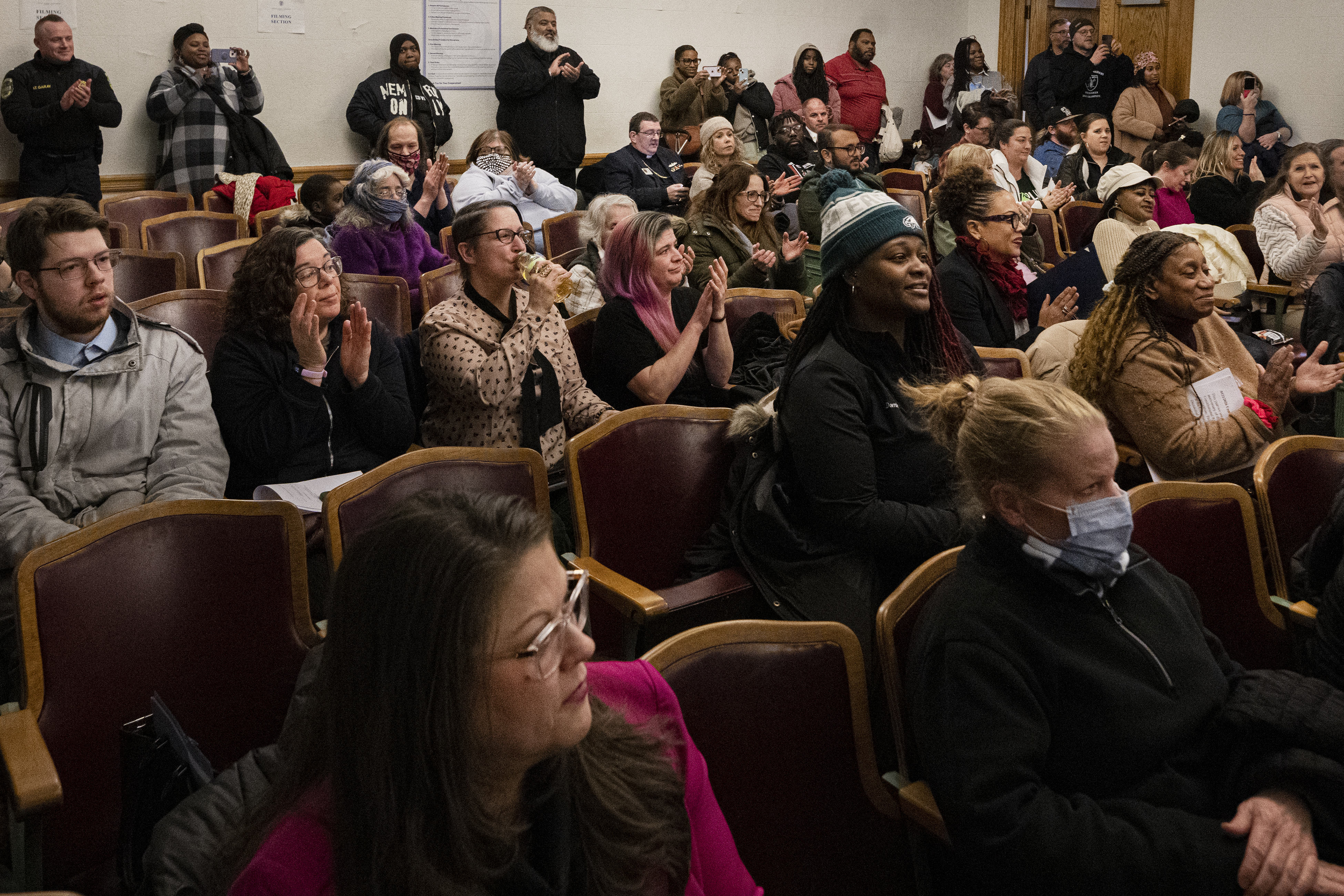
Upper Darby residents gather at a township council meeting on Jan. 21. The legislative body is set to consider an ordinance that would restrict if and how federal immigration officials could operate within the township. Jose F. Moreno / Staff Photographer
Under the proposed ordinance, no township resources, including funding, facilities, or databases, could be used to assist with federal immigration enforcement actions. Township officials could not provide information to federal agencies for the purpose of immigration enforcement, including housing records, employment details, or custody statuses. Township personnel could not assist with immigration enforcement operations, and Upper Darby could not record or maintain data about residents’ immigration status unless required to by state or federal law. Immigration enforcement agencies would also be barred from using township property as staging locations for immigration raids.
The ordinance carves out exceptions, including cases when federal agents possess a judicial warrant or when there is a legitimate criminal law enforcement matter that requires cooperation.
A judicial warrant is a warrant signed by a judge that allows law enforcement officers to make an arrest, search, or seizure. An administrative warrant signed by an ICE agent can only be executed in a public place and does not authorize officials to enter private property to make arrests.
Upper Darby’s proposal would also ban township police officers from wearing masks and would require that they clearly identify themselves with nameplates and badges. Township police would be exempt from the mask and identification rules in specific cases, including operations where there would be risk of chemical agents or hazardous environmental conditions.
Township police would be barred from stopping, questioning, detaining, or transferring individuals solely based on immigration status, civil detainers, or administrative warrants.
The ordinance also formalizes the February resolution barringUpper Darby from entering into a partnership with ICE through the 287(g) program, anddeclares that any municipality who cooperates with ICE through 287(g) will be considered “incompatible” with Upper Darby, and any agreements with those municipalities will be void.
In the Philadelphia suburbs, only the Lansdowne Borough Constable’s Office in Delaware County and the Pennsylvania State Constable Office Honey Brook Precinct 1 in Chester County participate in 287(g) agreements with ICE.
Upper Darby’s ordinance also “formally requests” that federal agents clearly identify themselves by name, badge number, and agency, and refrain from using masks while carrying out law enforcement operations.
The Upper Darby ordinance has many parallels to an aggressive seven-bill package passed by Philadelphia’s City Council in April, which prohibits federal immigration agents from using city property as staging or processing areas, bans data sharing between the city and ICE, and bars Philadelphia police from concealing their identities.
A Philadelphia bill that banned law enforcement agents from obscuring their identities with masks, also passed in April, was struck down by a federal judge in July. The order from U.S. District Judge Chad F. Kenney argued that the Constitution’s Supremacy Clause prevents municipal governments like Philadelphia from dictating requirements for federal agencies.
This suburban content is produced with support from the Leslie Miller and Richard Worley Foundation and The Lenfest Institute for Journalism. Editorial content is created independently of the project donors. Gifts to support The Inquirer’s high-impact journalism can be made at inquirer.com/donate. A list of Lenfest Institute donors can be found at lenfestinstitute.org/supporters.
A new tool may help Delco officials better understand flooding in the county.
Delaware County recently acquired 70 AWARE flood gauges, which officials say will help track data, improve response to flooding events, and allow the county to better plan for the future as extreme weather events challenge the region’s aging infrastructure.
Here’s a rundown of what flood gauges do and how they’ll fit into stormwater management in Delco.
What are flood gauges?
Flood gauges are tools placed in and around bodies of water that measure water levels — think giant measuring sticks.
Delaware County’s flood gauges will be placed throughout the county and report data to a public access portal in real time, allowing municipalities and residents to track water levels online.
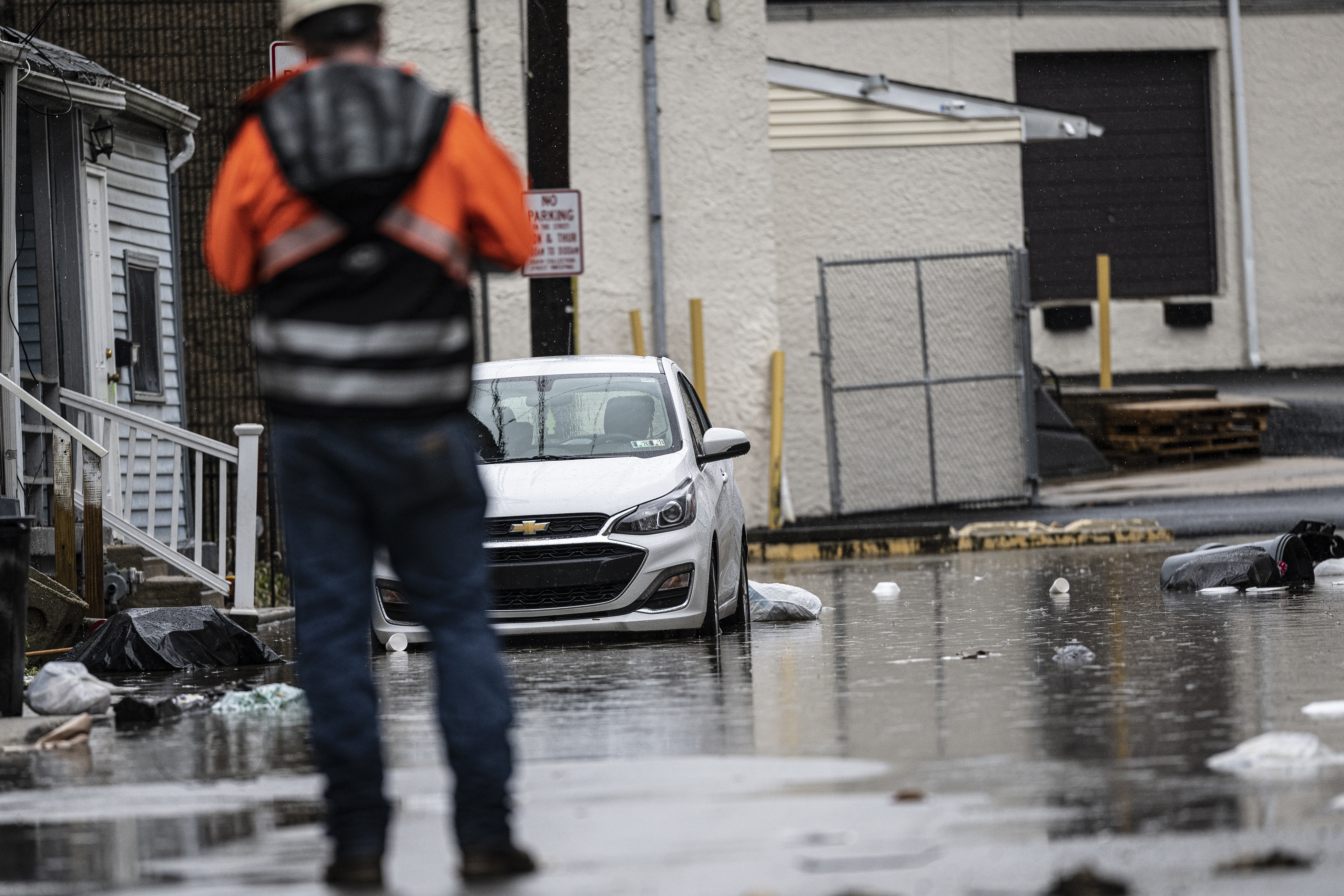
The county is seeing flooding in areas where it used to be rare, Burritt said, and water-proximate areas are becoming more vulnerable to serious storm damage. Flooding is of particular concern in Delco, where much of the land is low-lying and close to the Delaware River and its tributaries.
“We always kind of say that we’re downstream of everywhere,” Burritt said. “All of the watersheds, they flow to the Delaware River, so we’re at the very bottom of that watershed.”
Gauges will help the county understand where flood risk is the most acute, said Burritt, informing decision-making for county planners and emergency responders.
The flood gauges may also eventually provide early warning detection, though Burritt noted that this capability is still being developed.
Philadelphia installed a similar flood monitoring system earlier this year, with flood sensors and cameras put in nine locations, including Cobbs Creek, Darby Creek, and the Manayunk Canal. Residents can see flood monitoring data on a live portal.
The creek at Rolling Green Park in Springfield. Delaware County is planning to install 70 flood gauges to measure levels in and around waterways. Tyger Williams / Staff Photographer
Where will the gauges be installed?
In draftingits Act 167 plan, a state-mandated stormwater management blueprint, the county and consultant Jacobs Engineering have identified 87 potential flood gauge locations.
The first batch of flood gauges will be installed on county-owned sites like bridges and parks. Once the initial round of gauges are placed, Burritt said her department hopes to work with other landowners, like the state, PennDot, and local municipalities, to place gauges in other key sites.
Potential locations outlined in the draft plan include Smedley Park, Catania County Park along Little Crum Creek, Sun Village Park, Clayton County Park, and numerous county-owned bridges, according to the county’s draft Act 167 plan.
Officials have identified 230 “flood problem areas” across the county, 130 of which fall under the “high priority” category. Some of the highest priority flood risk areas in Delaware County include the intersection of 69th Street and Marshall Road in Upper Darby, Brookhaven Memorial Park, and the section of Baltimore Pike that crosses Brandywine Creek at the border of Chester County. The highest priority areas were identified by the frequency and severity of flooding that occurs there, as well as impacts to emergency services, roads, and structures.
Delco’s Act 167 plan is in preliminary drafting stages, according to the county, and will be further refined, including with feedback from municipalities and the Commonwealth’s Department of Environmental Protection.
Installation of the first batch of gauges will cost $95,000, an expenditure coming out of the county’s capital budget. Burritt said the county is in the request for proposal process and does not yet know exactly how many gauges will be installed in the first round.
This suburban content is produced with support from the Leslie Miller and Richard Worley Foundation and The Lenfest Institute for Journalism. Editorial content is created independently of the project donors. Gifts to support The Inquirer’s high-impact journalism can be made at inquirer.com/donate. A list of Lenfest Institute donors can be found at lenfestinstitute.org/supporters.
Upper Darby may soon hand out tickets for more than a dozen property maintenance and “quality of life violations,” including improper waste disposal, overgrown grass, and illegal dumpster placement.
Upper Darby’s council earlier this month advanced an ordinance that would allow the township’s licenses and inspections department to dole out “quick tickets” for 17 property-related violations. Tickets would range from $50 to $100 and would, according to officials, allow the township to enforce property-related infractions without engaging in a drawn-out compliance process each time.
“This is something that we really need. Our inspectors really need it,” Amrinder Singh, Upper Darby’s director of licenses and inspections, said at an Aug. 19 meeting.
Singh said the program would give inspectors “another practical tool to address routine violations more quickly and encourage prompt, corrective action” with the ultimate goal of “trying to change human behavior.”
Council voted to advertise an ordinance establishing the property maintenance quick ticket program and is set to vote on the ordinance on Sept. 2.
Upper Darby currently addresses property issues through a violation and compliance process, which Singh said can be lengthy and delay corrective action. Under the existing system, code enforcement officers conduct an inspection, either proactively or following complaints.If a violation is detected, the property owner receives written notice describing the infraction and required action with a deadline. After the compliance period, the property is reinspected, and, if the issue isn’t corrected, enforcement actions can be taken, including fines, citations, and criminal proceedings before a district judge.
Ultimately, Singh said, many property owners just ignore the citations.
The proposed program would send tickets straight to property owners after violations are documented, bypassing the existing, and sometimes protracted, process. Money collected through tickets would go into Upper Darby’s general fund. Property owners will be able to appeal tickets to the township, Singh said. The township’s existing violation process would still exist, Singh said, and would work in tandem with the quick tickets.
The townshipselected the 17 specific violations because they contribute to unsafe conditions, neighborhood blight, pests, and pedestrian obstructions, Singh said.
Upper Darby’s licenses and inspection department has received over 7,000 complaints this year, according to Singh, with around 40% being for grass and trash violations.
At recent council meetings, residents have complained of rat infestations and improper trash storage in their neighborhoods.
If passed by council, the quick ticket program ordinance would go into effect immediately, but fees and penalties wouldn’t be collected until Jan. 1. Singh said the four-month wind-up would allow the department to train inspectors, establish payment procedures, and engage in education and outreach with residents.
Council members at the Aug. 19 meeting seemed poised to approve the program. Council member Myron McNeely said it is “way overdue.”
Here’s a full list of the violations proposed for enforcement under the quick ticket program:
Accumulation of rubbish, garbage, or debris
Improper dumping or disposal of waste
Failure to clean up animal waste
Improper storage of trash containers or recyclables
High weeds or overgrown grass
Overgrowth obstructing sidewalks or public rights of way
Outside placement of indoor furniture or appliances
Exterior accumulation of construction debris or materials
Improper storage of hazardous materials
Illegal placement or storage of dumpsters without authorization
Unregistered, uninspected, unsafe, immobilized, or inoperative motor vehicles
Unsafe or noncompliant swimming pools
Snow and ice removal violations
Graffiti defacement
Failure to obtain required permits
Failure to post required permit placards
Failure to secure vacant unoccupied structures
This suburban content is produced with support from the Leslie Miller and Richard Worley Foundation and The Lenfest Institute for Journalism. Editorial content is created independently of the project donors. Gifts to support The Inquirer’s high-impact journalism can be made at inquirer.com/donate. A list of Lenfest Institute donors can be found at lenfestinstitute.org/supporters.
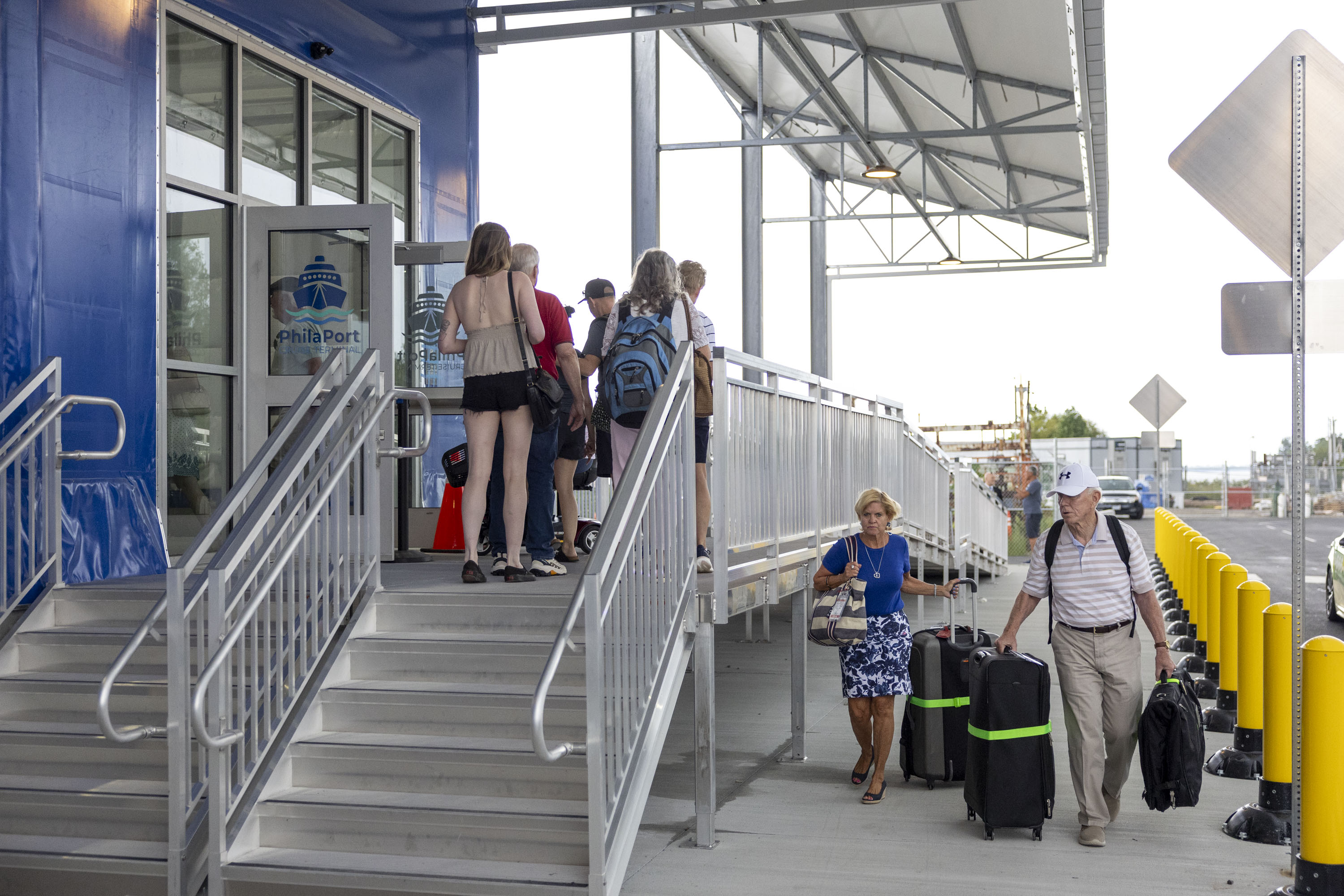
Women in sun hats and men in baseball caps lugged suitcases and scurried up a ramp to board a hulking Norwegian Cruise Line Jewel ship Thursday afternoon. Moments later, thunder cracked, rain drizzled, and lightning lit up the Delaware River.
The passengers on Norwegian’s inaugural voyage out of its new permanent terminal at PhilaPort likely could not get out of the Philly region soon enough. They were headed to sunny Bermuda.
The opening of the $66 million terminal in Tinicum Township, Delaware County, followed Norwegian Cruise Line’s return to the Philadelphia area earlier this year, making it the first cruise line to sail from the region in more than 15 years and marking the return of the industry to the region.
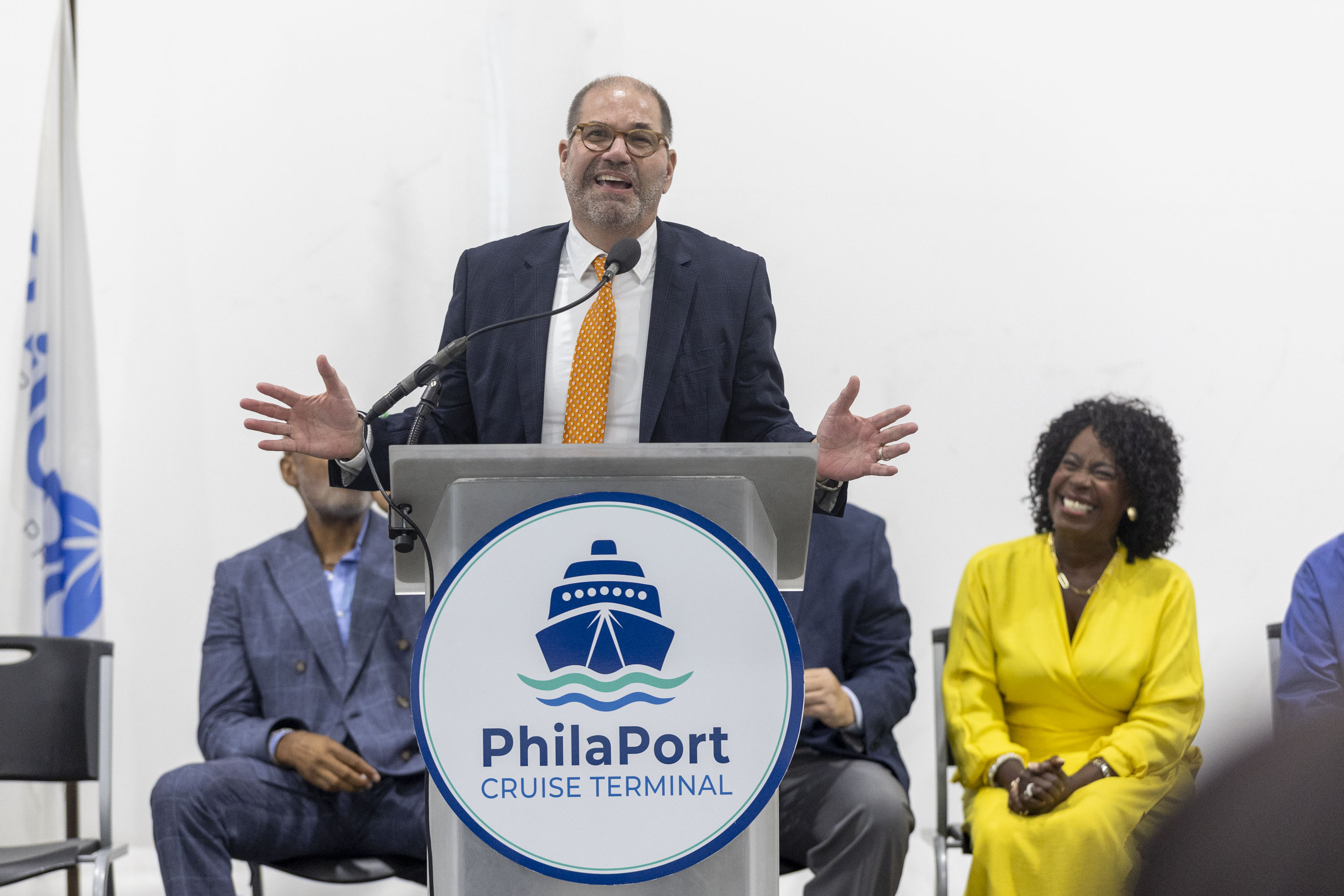
Dan Farkas, EVP & General Counsel with Norwegian Cruise Line Holdings, speaks on the opening of a new terminal for PhilaPort Cruise Terminal on Thursday, Aug. 27, 2026, in Philadelphia.Tyger Williams / Staff Photographer
The seven-year partnership between PhilaPort and Norwegian will avail residents to journeys to various cruise destinations without having to travel to New York, Boston, or Miami, where Norwegian’s other East Coast ports are based.
The Jewel will make voyages to Bermuda until Sept. 26, and the Pearl will arrive in November, offering five-day to 14-day trips to Bermuda, the Caribbean, Bahamas, Canada, and New England through April 2028. In summer 2028, Norwegian will offer seven-day Bermuda and Atlantic Coast voyages aboard its Gem ship.
The return of the cruise industry to the area is anticipated to contribute around 2,200 new jobs and generate about $300 million in local economic activity annually, said Dan Farkas, executive vice president of Norwegian Cruise Line Holdings.
“It benefits all. It’s benefiting the local hotels, the restaurants, the transportation providers, as well as the many vendors that provision the ships,” Farkas said at Thursday’s new terminal unveiling, before marking the celebration by enjoying a tiny cheesesteak hors d’oeuvre.
The Norwegian Jewel Cruise ship at the new PhilaPort Cruise Terminal on Thursday, Aug. 27, 2026, in Philadelphia.Tyger Williams / Staff Photographer
The cruise industry evacuated the Philly region about 15 years ago as the ships companies were running outgrew the Navy Yard port, said PhilaPort spokesperson Sean Mahoney. About four years ago, Norwegian approached the port about sailing out of the region again, Mahoney said, but a series of obstacles related to siting, land ownership, and permits cropped up.
“There were times when it did not seem possible,” Pearson said. “But the PhilaPort board and staff pushed against the naysayers and the frozen river and, with the help of our partners, we got this thing done.”
At Thursday’s celebration, Norwegian presented a $20,000 check to Tinicum Township’s fire department and a $30,000 check to the Boys and Girls Clubs to benefit three local branches. The donations were part of the company’s Sail and Sustain program, aimed to benefit the communities where it runs services.
As the final stragglers boarded the ship to Bermuda, they enjoyed a quintessentially Philly send-off — being serenaded by a Mummers band in an unpredictable and muggy rainstorm.
Two years ago, every child in the kindergarten class at Eleanor Emlen Elementary in Mount Airy had vaccine protection against measles.
A year later, the school’s kindergarten immunization rate had dropped to just 80%, putting students and the surrounding community at risk of an outbreak of the highly contagious disease.
Emlen is among more than two dozen Philadelphia-area schools that saw double-digit declines in kindergarten immunization rates last school year — in many cases because parents are increasingly refusing vaccines.
The affected schools span a diverse range of communities, from city neighborhoods like Mount Airy to the outlying suburbs. In Chester County, for example, a small private school in Downingtown saw its vaccination rates plunge by 20%.
Even as countywide immunization levels remain relatively high, some 40% of kindergarten classrooms across the region became vulnerable to an outbreak during the 2025-26 school year, up from 33% the year prior, an Inquirer analysis of newly released state data found.
(function(){function e(){window.addEventListener(`message`,function(e){if(e.data[`datawrapper-height`]!==void 0){var t=document.querySelectorAll(`iframe`);for(var n in e.data[`datawrapper-height`])for(var r=0,i;i=t[r];r++)if(i.contentWindow===e.source){var a=e.data[`datawrapper-height`][n]+`px`;i.style.height=a}}})}e()})();
That means that at least 249 schools had vaccination rates below 95%, the level at which scientists say a population must be vaccinated to prevent the spread of measles, one of the most contagious diseases.
Of these, 98 Philadelphia-area schools reported measles vaccination rates below 90%, presenting an even greater risk to students.
A sharp increase in parents opting out of vaccination for religious or philosophical reasons continued to drive down vaccination rates; exemptions in this category rose by 15% in the latest two years for which data are available.
(function(){function e(){window.addEventListener(`message`,function(e){if(e.data[`datawrapper-height`]!==void 0){var t=document.querySelectorAll(`iframe`);for(var n in e.data[`datawrapper-height`])for(var r=0,i;i=t[r];r++)if(i.contentWindow===e.source){var a=e.data[`datawrapper-height`][n]+`px`;i.style.height=a}}})}e()})();
Pennsylvania is among a handful of states that allows parents to opt out of vaccine requirements for philosophical or religious reasons, often by simply signing a form.
The health department published more granular, school-level vaccination data this summer for the first time, after reporting by The Inquirer and the Pittsburgh Post Gazette made this information public for the prior school year, exposing pockets of vulnerability within counties with overall high vaccination.
The new data show the growing public health threat to the region from Pennsylvania’s growing measles outbreak, in which two people in Lancaster County have died, state officials reported Tuesday. They were the state’s first measles-related deaths in three decades.
(function(){function e(){window.addEventListener(`message`,function(e){if(e.data[`datawrapper-height`]!==void 0){var t=document.querySelectorAll(`iframe`);for(var n in e.data[`datawrapper-height`])for(var r=0,i;i=t[r];r++)if(i.contentWindow===e.source){var a=e.data[`datawrapper-height`][n]+`px`;i.style.height=a}}})}e()})();
So far, nearly 400 cases have been diagnosed, with nearly half in Lancaster County. The rapidly spreading outbreak is edging closer to densely populated Philadelphia. Chester County, just west of the city, has reported the second-highest number of cases in the state.
At a news conference on the measles deaths Tuesday, Gov. Josh Shapiro stressed his concern about the rise in Pennsylvania parents opting out of vaccinations over the last 10 years.
“It has dramatically reduced community immunity in different areas of our Commonwealth,” he said. “Today, we see the consequences of a lack of immunization.”
The new school-level data on vaccines, he said, allow “everyone to see their school’s vaccination coverage and make informed decisions.” Lawmakers have also said they hope that having more access to data about their children’s schools will make families more aware of risks within their communities and encourage them to vaccinate their children.
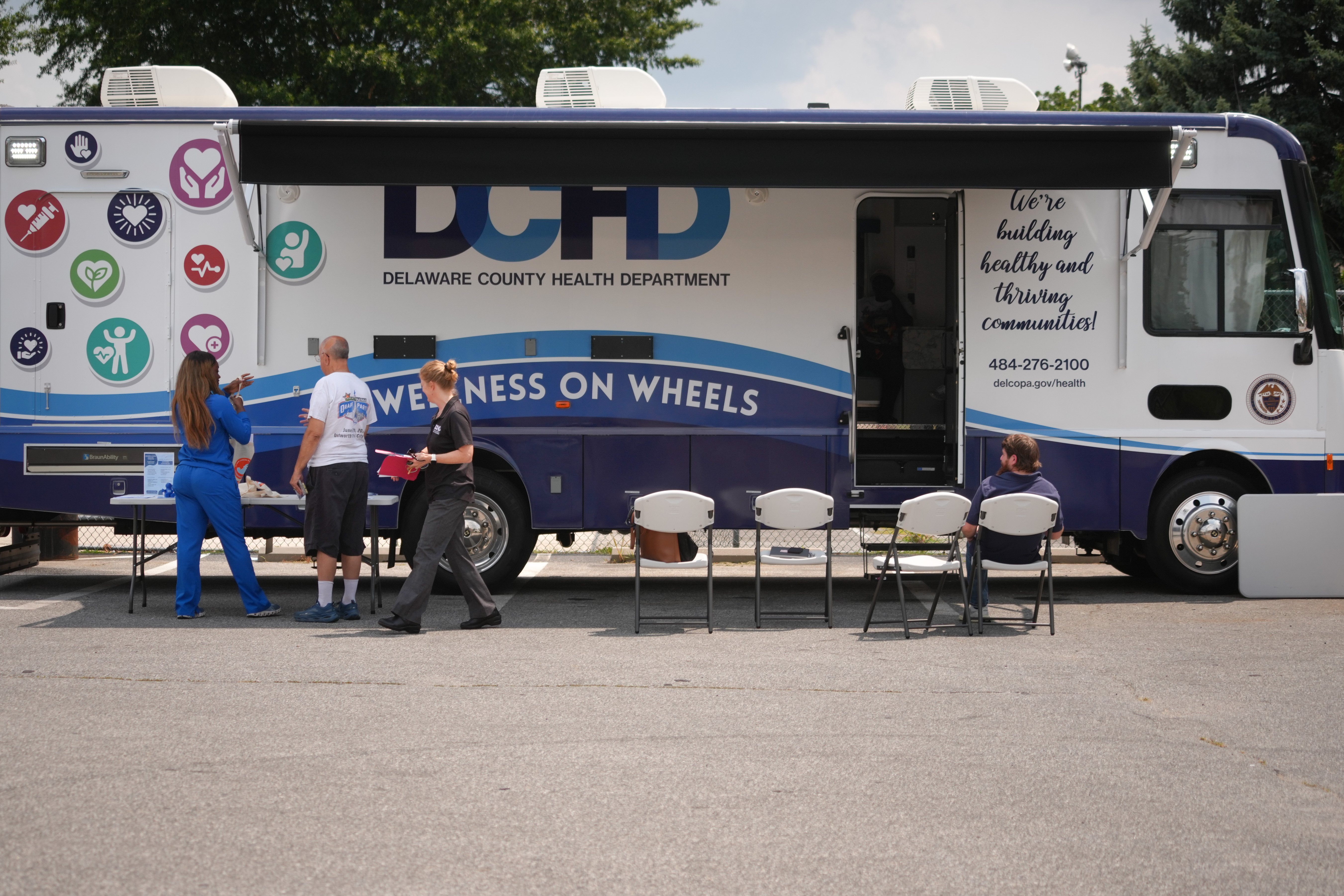
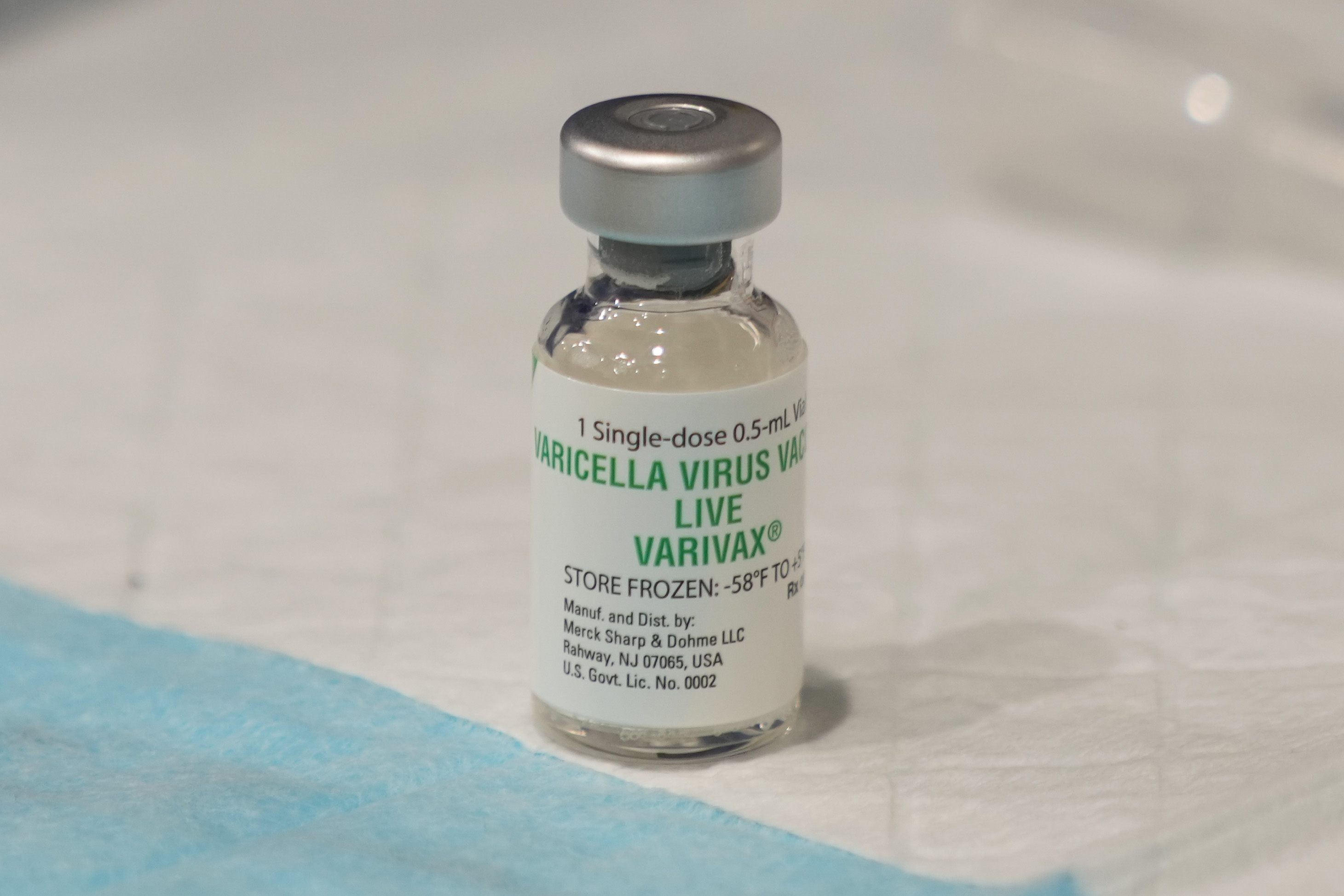
Amid rising measles case counts and declining immunization rates, Delaware County’s health department launched an immunization campaign over the summer to encourage families to vaccinate.Jessica Griffin / Staff Photographer
Emlen, which saw one of the steepest drops in protection, was one of 40 schools in the five-county region that reported 100% measles vaccination rates two years ago, only to drop below the 95% herd immunity threshold last year.
Philadelphia school officials say the changes at Emlen likely reflect increasing hesitancy among parents to immunize their children against measles, mumps, and rubella (MMR) and other diseases. State records show that most unvaccinated kindergarteners at Emlen have philosophical or religious exemptions.
Some fluctuations in kindergarten vaccination rates are typical from year to year, but the rise of anti-vaccine rhetoric in federal leadership appears to be exacerbating fears around vaccination, said Kendra McDow, a pediatrician who serves as the Philadelphia school district’s medical director.
“What we’re seeing is reflective of what I believe are local and national trends,” McDow said. “Families are confused, and they want to do right by their children.”
In the latest federal vaccine maneuver — opposed by the medical establishment, prominent Democrats, and Republican Sen. Bill Cassidy, a physician — President Donald Trump signed an executive order this month asking states to “consider updating” laws to require fewer vaccinations for schoolchildren without any medical justification. He also advocated for splitting the MMR vaccine into three separate shots — even though no separate measles, mumps, or rubella vaccines are licensed in the United States.
The order came after a chaotic year in which Health and Human Services Secretary Robert F. Kennedy fired federal vaccination advisers and pushed to upend the federal vaccine schedule. Kennedy, a longtime anti-vaccine activist, has promoted false concerns that vaccinations can lead to autism.
Families are faced with a barrage of misinformation about vaccines. Jessica Griffin / Staff Photographer
With Pennsylvania now experiencing its largest measles outbreak in three decades, Kevin Ressler, a healthcare nonprofit leader in suburban Philadelphia who was raised in Lancaster County, worries that declining vaccine rates reflect increasing political polarization.
“You don’t have to be a scientist to recognize that’s a problem,” said Ressler, the CEO of Alliance for Health Equity, a Coatesville nonprofit that works to improve access to health services. “A lot of this is rooted in whether we are able to hold trusted relationships.”
Philly-area counties all at risk
Philadelphia and its suburban counties overall remain well protected against measles, state officials say. The declines seen in the latest school year amount to less than 1% of all kindergarteners in each of the five counties in the area, an improvement from the drops that followed the COVID-19 pandemic.
But even small drops can be significant given the contagiousness of measles, which can linger in the air for hours and infect nine in 10 unvaccinated people who come into contact with it.
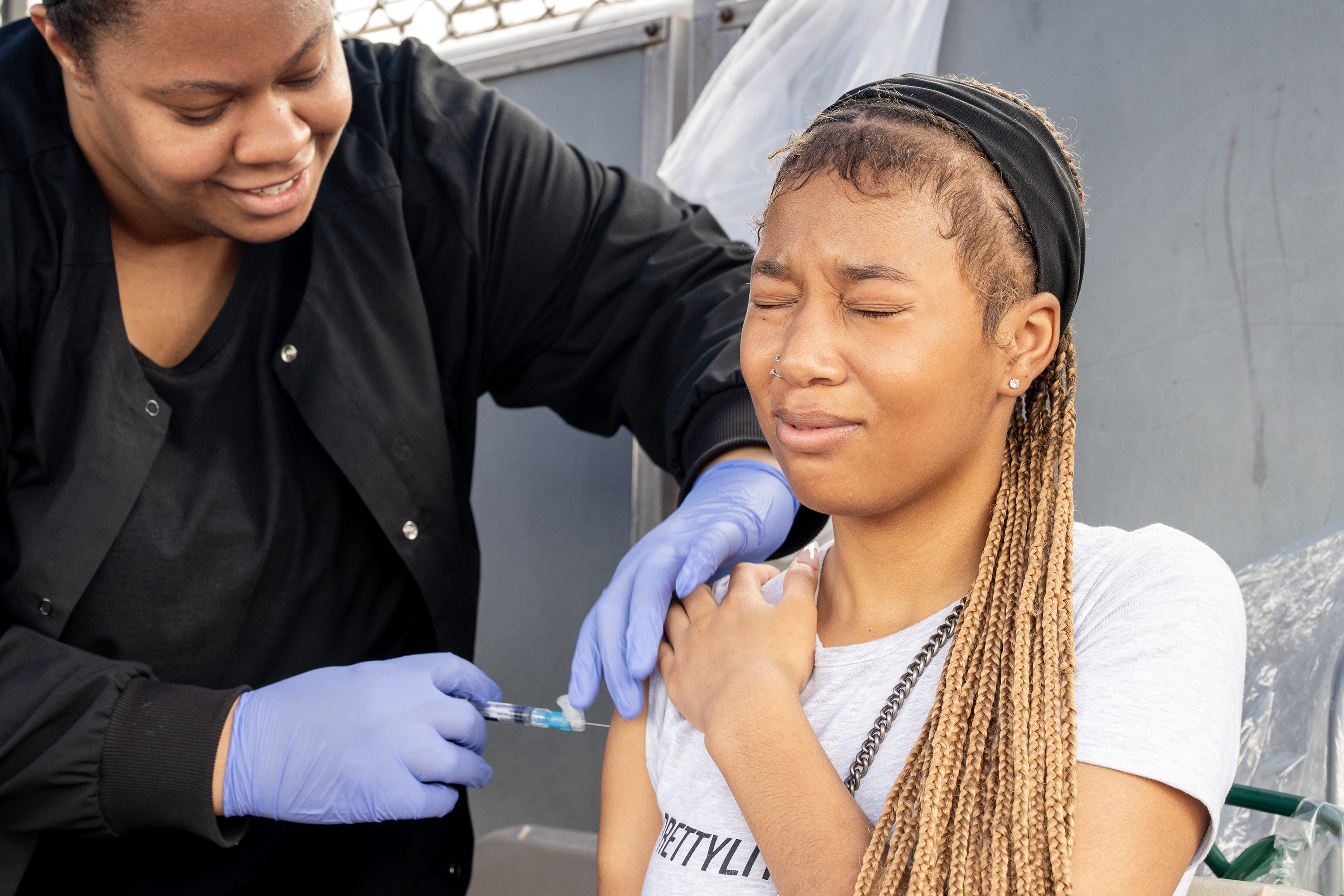
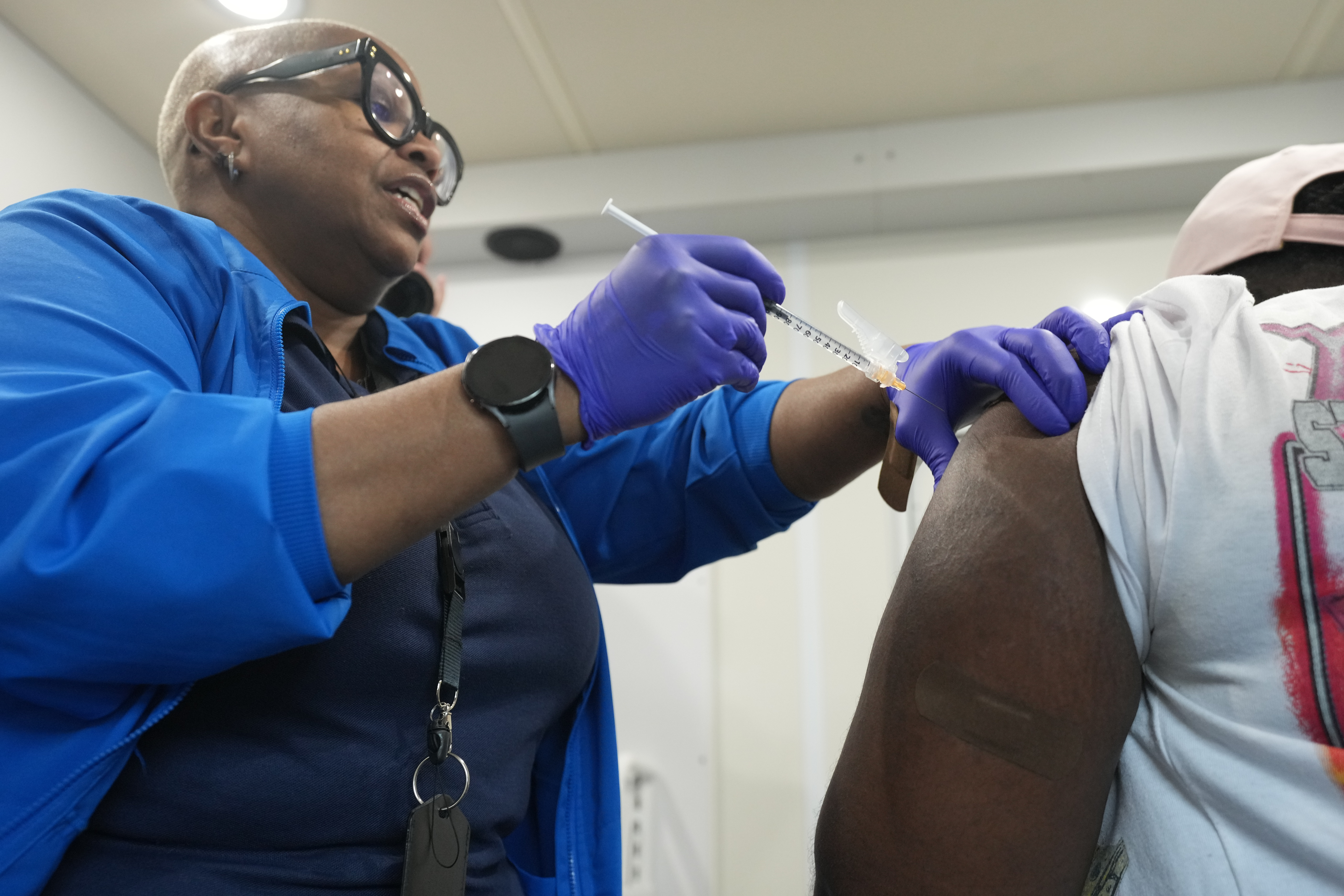
Mia Williams, a registered nurse, vaccinates a client at Delaware County’s mobile clinic in Upper Darby in July. Jessica Griffin / Staff Photographer
“The risk has definitely gone up because of lower vaccination numbers,” said Rene Najera, the director of public health at the College of Physicians of Philadelphia.
Najera says slipping vaccination rates especially endanger vulnerable students and community members beyond the schools, like pregnant women, cancer patients, or babies too young to be vaccinated. Parents of high-risk children should speak with their pediatricians about the risks of attending a school with lower vaccination rates, he said.
Last year marked the first time in more than 10 years that no Philadelphia-area county had reported measles vaccination rates above herd immunity.
Bucks County had the lowest MMR vaccination rate for kindergartners, at 93.7%, down by more than a half a percentage point from the year before.
Montgomery County, the only county in the Philadelphia region with kindergarten vaccination rates at herd immunity two years ago, slipped just below the threshold in 2025, to 94.8% vaccinated.
About 94% of Delaware County and Philadelphia kindergarteners were vaccinated last school year.
In Chester County, the only Philadelphia-area county to report cases in the current outbreak, vaccination rates for kindergartners have held steady at 94.5% for the last two school years. Some schools in the county reported steep drops in MMR coverage ahead of the current outbreak, which has seen 40 cases confirmed since June.
At Windsor Christian Academy in Downingtown, only one in four kindergarteners were vaccinated last year at a school that exceeded the herd immunity threshold the year prior. About 14% of the class had religious exemptions for vaccination. School officials did not return a request for comment.
Caln Elementary School in Thorndale saw measles vaccination rates drop from 100% to 74% in a year. Officials at the school declined to comment. (Caln closed at the end of last school year, and most of its students are transferring to the newly built Doe Run Elementary this year.)
Jeanne Franklin, Chester County’s health director, said she is “moderately” concerned about the current measles outbreak, given that many of the county’s most populous public schools still have high vaccination rates.
The school-level data improve the county’s ability to identify schools with lower vaccination rates.
Chester County health officials talk to school nurses, principals, and other administrators before the start of every school year to remind them of what to do if they identify a case of measles.
Under county policy, a single measles case in a school will mean all unvaccinated students and staff must stay home for 21 days.
This year, conversations that are usually hypothetical have taken on more urgency.
The health department has urged schools to take stock of who within their school is unvaccinated and develop a plan for how they will teach unvaccinated students who are sent home and staff classrooms of absent teachers.
“You don’t own getting them vaccinated,” Franklin said she tells administrators. “But you have to think through these things.”
Sisters A’zuri, 3, and A’Sara, 6, wait while their mother, Shania’ Jason, checks in at a vaccination clinic during the School District of Philadelphia’s sixth annual Back-To-School Bus Tour stop this month at Marcus Foster Memorial Stadium. Tom Gralish / Staff Photographer
Philly schools on alert
As the school district’s lead health officer, McDow worries about the threat of measles so close by, but believes concerted efforts in the city have kept vaccination rates “as high as they can be in this current climate.”
She’s also monitoring Philadelphia schools where the state data show declining vaccination coverage. (The publicly available school-level data does not include classes with fewer than 20 students, for privacy reasons, or schools that did not report to the state. About 90% of schools statewide reported data in 2025.)
In some cases, what looks like a decline can be explained by delays in data reporting due to administrative issues or staff absences. School vaccination records are reported to the state during the month of December.
For example, Mantua’s Morton McMichael School reported a 50% drop in MMR vaccination coverage, initially going from nearly nine in 10 kindergarteners vaccinated to just over a third.
But by the end of the 2025-2026 school year, records show 93% of McMichael kindergarteners were fully vaccinated against measles, district officials said, though the state data does not show the improvement.
McDow worries about drops at other schools, from Mount Airy’s Emlen Elementary to North Philadelphia’s James Logan Elementary’s 18.5% decrease in vaccination rates, which are likely related to parents increasingly refusing vaccines.
Pediatrician Amanda Bernard (left) talks with Shania’ Jason and her daughter A’zuri, 3, at a vaccination clinic hosted by the Philadelphia School District this month at Marcus Foster Memorial Stadium.Tom Gralish / Staff Photographer
The school district hosts vaccination clinics over the summer and during the school year, working with the city health department to target families with unvaccinated children and schools with low vaccination rates.
The district also works to ensure vaccination clinics are accessible to working parents, organizing some on weekends or evenings.
“We need to be talking to families and answering questions in transparent ways,” McDow said. “But we also need to be providing the opportunities for vaccination.”
Some families line up for immunizations
On a recent sweltering August afternoon, families lined up at a tent pitched on the football field at Marcus Foster Memorial Stadium in Olney, part of a back-to-school fair sponsored by the Philadelphia School District.
“IMMUNIZATIONS,” read a flag waving in the breeze. Business was brisk all day.
Some families who visited the tent were recent immigrants, getting caught up on vaccinations before their children started at their new schools.
“We’re vaccinated, my husband and I, because our parents vaccinated us. And I’ll do the same for my children,” said Betty Bachene, who moved to Philadelphia from Paris this summer. Speaking in French, she said she’s never been afraid of vaccinating her children, but does fear the diseases vaccines prevent.
Anaiya Burnham, a nurse, said she’d opted against getting COVID or flu shots for her two children, one of whom is entering kindergarten this year. But vaccinating them against measles was never a question.
“I would really be curious to know why anyone would opt out of the MMR, given the research,” she said.
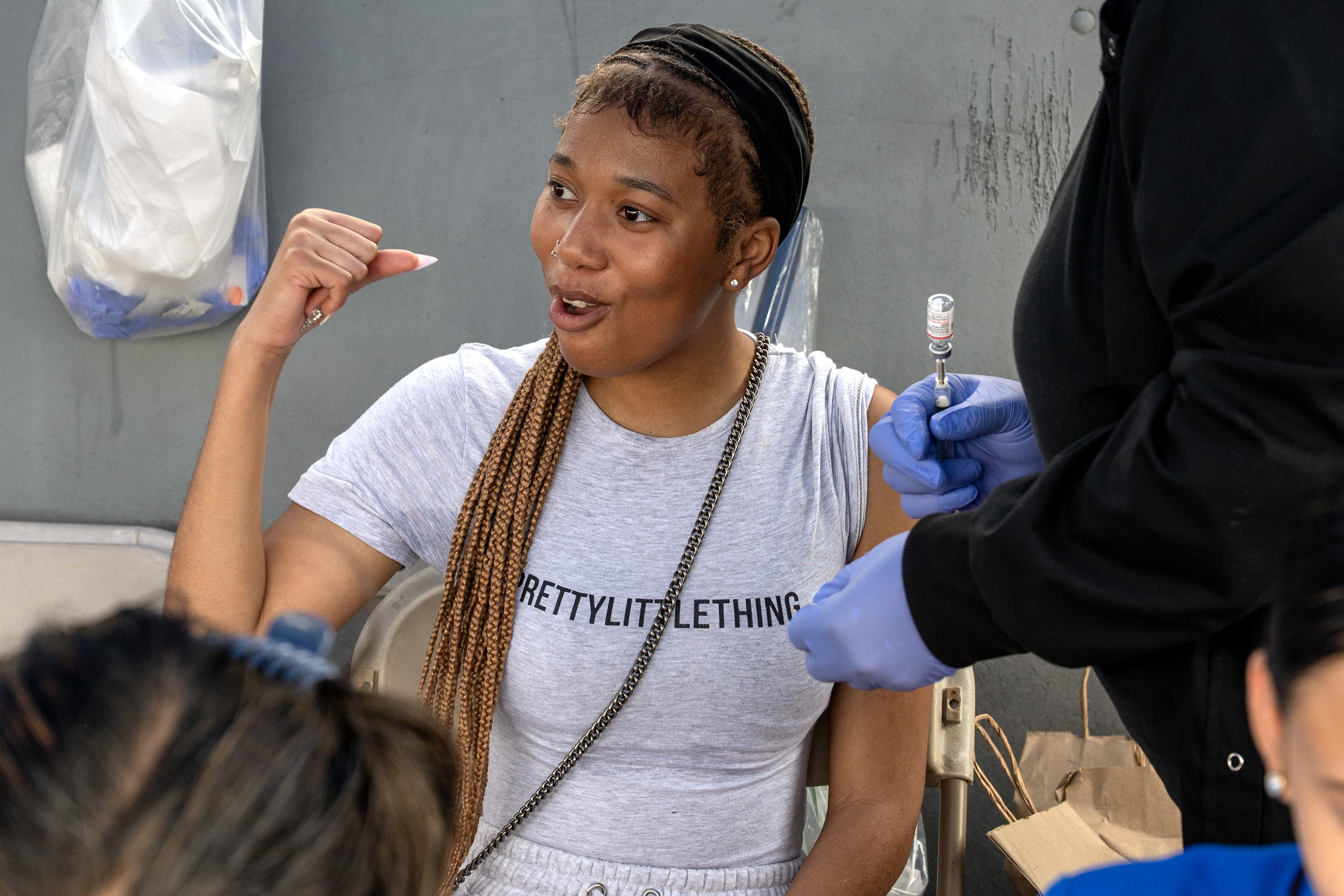
Cianey Brown, 16, reacts and turns to her family after getting an immunization at a Philadelphia school district vaccination clinic this month at Marcus Foster Memorial Stadium. Tom Gralish / Staff Photographer
Philadelphia parents face a number of different barriers that keep them from vaccinating children — and not all of them are related to vaccine hesitancy, said Amanda Bernard, a pediatrician with Greater Philadelphia Health Action, the clinic offering vaccinations at the event.
Some lack transportation to get to a health center outside their neighborhood, or don’t speak English well enough to navigate the healthcare system, she noted.
“I think that these sorts of events are really a way that we could combat that,” said Bernard, who has heightened her advocacy around vaccination as Pennsylvania’s measles outbreak has spread.
“There’s almost a desperation in my education. I sometimes feel like I’m almost begging [families] to get it.”
Editor’s note: This story has been updated to correct the name of James Logan Elementary in Philadelphia.
(function(){function e(){window.addEventListener(`message`,function(e){if(e.data[`datawrapper-height`]!==void 0){var t=document.querySelectorAll(`iframe`);for(var n in e.data[`datawrapper-height`])for(var r=0,i;i=t[r];r++)if(i.contentWindow===e.source){var a=e.data[`datawrapper-height`][n]+`px`;i.style.height=a}}})}e()})();
Vincent Procopio pleaded guilty to unlawful use of a computer, criminal use of a communication facility, hindering apprehension, and related crimes. He is scheduled to be sentenced by Judge Deborah Krull on Oct. 7.
His attorney, Meaghan Wagner, said after the hearing that Procopio accepted responsibility for his actions as a means of continuing “to move forward in a positive direction in his life.”
“Meanwhile he continues to work on his sobriety every day and celebrates eight months sober on Sept. 7,” she said.
Before he resigned after his arrest in April, Procopio, 34, of Newtown Square, had worked for Sharon Hill for four years. He was at Academy Park High School on the night 8-year-old Fanta Bility was killed by a stray bullet amid a shooting caused by three of his colleagues.
Procopio and the dealer, whom investigators did not identify, met through mutual friends in 2025, according to court filings. The dealer told police Procopio approached him, saying he “wanted in” on his drug-smuggling operation.
Over the course of the next year, the dealer would give Procopio $100 baggies of cocaine in exchange for information from police databases, including whether undercover officers planned to make drug busts in the area where he was operating, and whether there were any warrants for his arrest.
The narcotics, prosecutors said, were for Procopio’s personal use and “wholly unrelated to his law enforcement duties.”
The scheme unraveled when the dealer was pulled over in Chester in December with 63 grams of cocaine in his car. He called Procopio for help, and Procopio made calls on his behalf, telling officers in Chester the man was a friend and was in the process of signing up to become a confidential informant.
Procopio later told investigators he knew the man had sold drugs, but said he had recently stopped. He said he never saw the dealer sell cocaine and had never bought cocaine from him.
Prosecutors said that Procopio’s statement was a lie, and that Procopio had deleted text messages between him and the dealer that made that clear.
Procopio and the dealer had developed a jocular relationship, they said. On the day they met, the detective snorted a line of cocaine with the dealer inside his truck. He later went to the man’s home, where they “stayed up all night doing cocaine,” according to the affidavit of probable cause for Procopio’s arrest.
The two regularly exchanged text messages, including one in which the detective, on his way to Sunday Mass, asked the dealer for a bag of cocaine.
And Procopio instructed the man to tell any police officer who stopped him that he was the detective’s cousin, prosecutors said.
In a statement announcing Procopio’s arrest earlier this year, State Attorney General Dave Sunday, whose office is prosecuting the case, decried Procopio’s actions, saying his “selfish, criminal acts also stain the reputations of many public servants who make sacrifices for their communities every day across the Commonwealth.”
As part of the same investigation, another Sharon Hill officer, Domenic Dellabarba Jr., was arrested for allegedly providing confidential information to the dealer.
Dellabarba, 27, is charged with obstructing the administration of the law and related crimes, and his case is pending in Delaware County Court.