Tag: Cheltenham

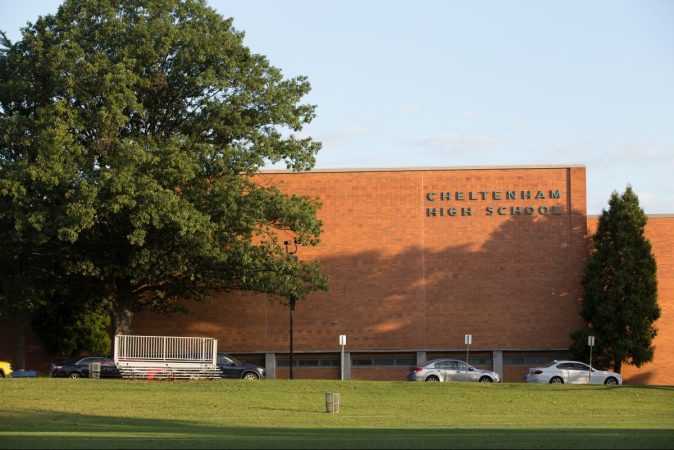
  • He was assaulted by teammates in Cheltenham High’s locker room. Nearly a year later, his mom says he ‘can’t escape the situation.’

    He was assaulted by teammates in Cheltenham High’s locker room. Nearly a year later, his mom says he ‘can’t escape the situation.’

    The mother knew something was wrong the night her son came home from football practice last September and quietly went to his room.

    Four days later, she took him to the doctor after he told her his teammates had jumped him inside the Cheltenham High School locker room after that practice, injuring his genitals.

    It was not until she got a call from police later that month that the mother learned that teammates had used a broomstick in the alleged attack, an act his lawyers described as attempted sexual assault.

    Her son, who was 15 at the time, told her teammates had tried “to mess with his manhood,” the mother said.

    He told her that the school’s football coaches, who knew that his teammates had jumped him, had called him that night and told him not to tell his parents.

    “He didn’t want to talk about it,” said the mother, who spoke to The Inquirer on the condition of anonymity to protect her son’s identity. Her son, she said, “was trying to put it in the back of his head. He was traumatized.”

    Cheltenham abruptly canceled its football season last October, citing hazing allegations. In January, the district said it had confirmed that a “student-on-student assault” took place in its football locker room on Sept. 3, and that nearly 20 students had watched without trying to stop it.

    A video of a locker room attack that investigators thought matched the student’s description of the alleged attack in September surfaced in the fall and was obtained by the district. The teammates who assaulted the student are identifiable in the video, said Gabrielle Turley, a lawyer representing the student. She said the student provided their names to Cheltenham police.

    But this spring, detectives determined the footage actually had been taken in August, according to the student’s lawyers — prompting the student to reveal he had been assaulted more than once.

    Eleven months later, no charges have been filed. A spokesperson for the Montgomery County District Attorney’s Office said it is still investigating but declined to comment further.

    The incidents have reverberated throughout the suburban community, even as the school district has provided few specifics about what happened in the locker room.

    The district announced in May it was canceling the forthcoming football season for the Panthers, but has not disciplined any students.

    A Title IX investigation — which schools are required by federal law to conduct into sexual misconduct allegations — is ongoing. “Unfortunately, the district received extremely limited cooperation from students,” Superintendent Brian Scriven said in a statement in response to questions from The Inquirer about the assaults. Any discipline for students will be imposed once the investigation is done, Scriven said.

    The district in April approved a separation agreement with the team’s head coach, Terence Tolbert, who had been Cheltenham’s top football coach since June 2025.

    Scriven noted that the district also in April approved a separation agreement with another football coach, Darian McFadden. None of the coaches from the 2025-26 season are still affiliated with the district, the superintendent said.

    Scriven declined to address specific questions about the alleged assaults, saying the district attorney’s office had asked school officials not to comment.
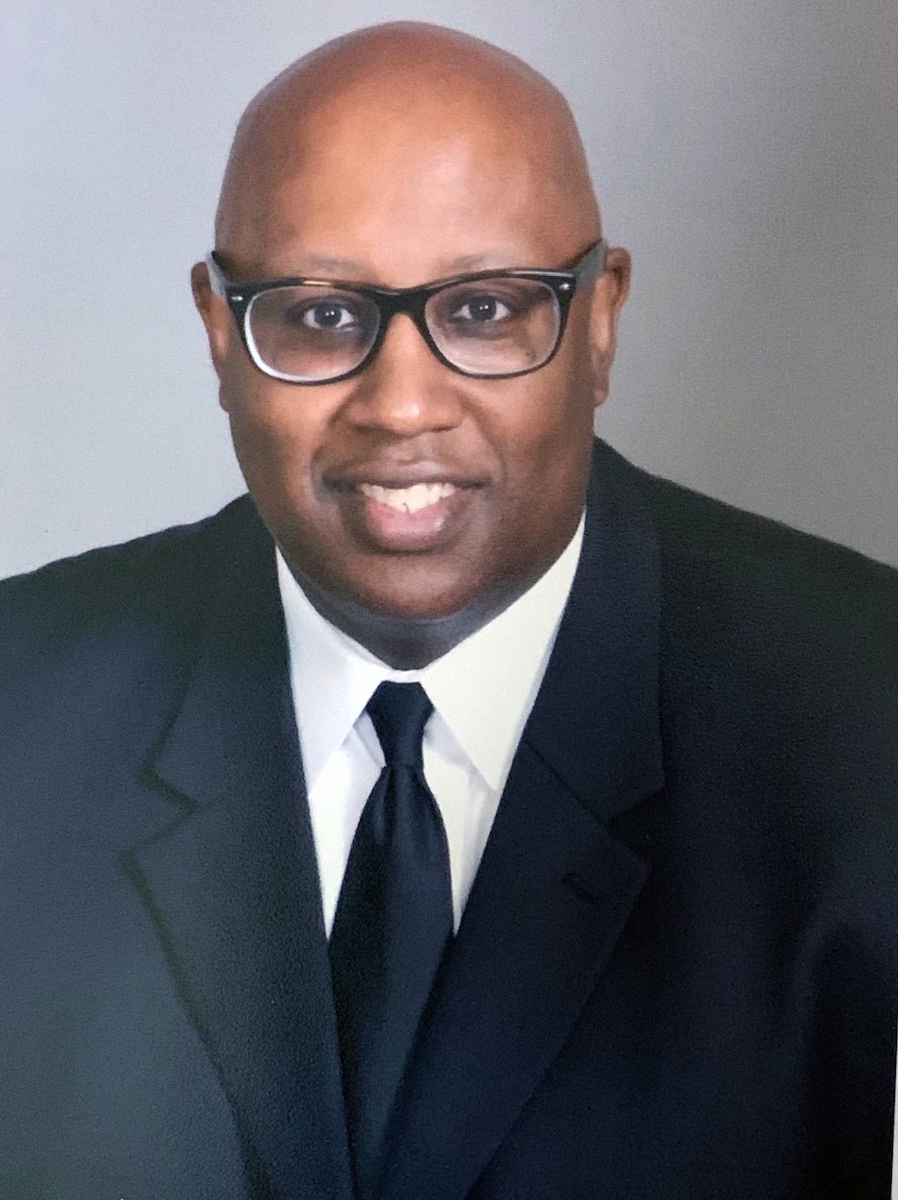
    Brian Scriven, superintendent of the Cheltenham School District.Courtesy of Cheltenham School District

    As the new school year approaches, some football players and their families have criticized the district’s cancellation of another season as unfair punishment for a situation they had no part in.

    But students who participated in or witnessed the alleged assaults have been able to move on with their lives, graduating from the 1,450-student Wyncote school or transferring to other schools, the mother of the victim said. Her son has not.

    He was taunted by peers after the September assault and switched to virtual school in the district, where he struggled and was isolated, his mother said. After getting harassed by kids at his local basketball court, he avoids going outside, she said.

    “He can’t escape the situation,” she said.

    Inside the locker room

    Video footage from the August incident after a football training camp at Cheltenham High School shows the student being dragged by his shirt on the floor of the locker room, according to his lawyers.

    About “seven or eight students are making physical contact” with him, while other students are standing by lockers, some with their phones out, said Alan Yatvin, one of the lawyers.

    The video shows one young man holding a broomstick, which is being “poked or thrust at [the student’s] genitals and backside,” Yatvin said.

    Turley, the other lawyer representing the student, said the video shows teammates trying to pick the student up by his shirt, which is ripped, while the student tries to remain seated on the floor.

    “There’s no other reason to be in that area, unless you’re trying to sexually assault somebody,” Turley said of the broomstick she saw in the video of the alleged attack.

    The student did not tell anyone about the August incident because he was embarrassed, his lawyers said.

    But then on Sept. 3, he was assaulted again. The student had taken someone’s shoulder pads because his were missing. Coaches made players run as a punishment, and they blamed the student, the lawyers said.

    Yatvin said that as the student tried to leave the locker room, he was thrown on the floor and punched and kicked in the head and testicles. He said the student reported there were “three main people hitting him.”

    The altercation lasted about five minutes, and the student heard someone say, “‘Get the broomstick,’” Yatvin said. He said the student tried to ball up on the ground and “sat in such a way to avoid the broomstick being stuck in him.”

    A couple of teammates intervened, and the fight broke up, Yatvin said. He said one player went to get a trainer, while another got the student ice.

    A volunteer coach drove the student home. That same night, three coaches, including then-head coach Tolbert, called the student, according to Yatvin.

    “They told him that he shouldn’t tell his mom, because they would handle it. He believed that,” Yatvin said.

    Reached by phone earlier this month, Tolbert declined to comment.

    A mother pushes for answers

    The student’s mother recalls taking her son to an urgent care center four days after the Sept. 3 incident because he was “complaining his pee was burning a little bit,” she said.

    She texted the vice principal, Mark Hoff, to let him know what had happened. “I was very upset,” the mother said. Hoff called her; the school opened an investigation the next day, Yatvin said.

    It was about 12 days later when Cheltenham police called her about a tip that had been submitted through the state’s anonymous Safe2Say line, about a broomstick being used during an assault.

    “I know that’s like a sexual assault — trying to sodomize somebody,” the mother said, noting she works at a prison. “What was going through my mind was, ‘Where did these kids get this from?’”

    At the end of September, lawyers said, the district contacted the mother to ask if she wanted to open a Title IX investigation, given the sexual nature of the allegations. She said yes.

    At the time, the mother did not know her son had been attacked more than once.

    No one had shown her and her son the video of the alleged assault that the district obtained — which had circulated through the school community, Yatvin said — until the spring. Had they seen it earlier, he said, they would have known it was from August, based on the student’s hairstyle at the time.

    The mother said her son was “scared to come forward.”

    “He didn’t want to go through none of this,” she said. “But I kind of pushed the issue.”

    Waiting for accountability

    On Oct. 17, a Friday, Cheltenham announced that it was postponing that night’s football game.

    “Today, the district received anonymous information regarding allegations of hazing in the football program,” Scriven said in a statement. The season was temporarily suspended, he said, and the district had “engaged an external investigator.”

    By that Sunday, Scriven had announced that the season was canceled. The district had received a report “approximately three weeks ago” of a locker room assault, he said in the announcement, and that Friday, it “received additional information, including reports indicating multiple team members engaged in hazing through physical contact.”

    Asked why it took until Oct. 17 for the district to suspend the season when the mother had reported the assault Sept. 7, Scriven drew a distinction between hazing and a “singular incident of assault.”

    The district’s external investigation, which was completed in January, determined there was insufficient supervision in the locker room and “a failure to prioritize student safety by the coaching staff and/or adult volunteers,” as well as a “a toxic and negative culture within the current football program.”

    Scriven said he expected the Title IX investigation to be completed “in the near future.”

    Yatvin believes more students know what happened to his client than have come forward.

    “If all the necessary information was available, there probably would have been something happening with the school’s investigation, and something happening with the district attorney’s investigation,” he said.

    The student’s mother, who is considering filing a lawsuit, said she wants people held accountable for what happened to her son. No one from his school has called and checked on his well-being, she said.

    “You’ve got parents on the news, worrying about their football team, but not necessarily worried about what happened,” she said. “Nobody is focused on what happened to him.”


  • House of the week: A three-story Victorian in Wyncote for $675,000

    House of the week: A three-story Victorian in Wyncote for $675,000

    As mason William Clark was driving around Wyncote in 1988, he spotted a six-bedroom Queen Anne Victorian house that had great potential but needed a lot of work.

    He spent much of the next 30-plus years working on the 19th-century house, which is in the Wyncote Historic District, until he died in 2024.

    Clark redid the kitchen, put in a four-car driveway, and added a garage in 2017 to match the style of the original house.

    KitchenBright House Photo

    “It was a labor of love for him,” said his wife, Patti, a programmer for an investment planning firm. But at 3,679 square feet, “it’s a great big house for one person.”

    So with the couple’s three children all moved out and married, she is moving to a much smaller home in Blue Bell.

    GarageBright House Photo

    The Wyncote home features original hardwood floors, stained glass windows, pocket doors, two ornamental fireplaces, and front and rear staircases.

    It has a side yard and a wraparound porch. The basement contains William’s workroom.

    Living roomBright House Photo

    The first floor has the kitchen with a built-in range and microwave, self-cleaning oven, granite countertops, and stainless-steel appliances.

    The second floor has four bedrooms, including the primary. The third floor has two bedrooms and an office.

    Dining roomBright House Photo

    The home is close to SEPTA’s Jenkintown-Wyncote Regional Rail station. Thomas Williams Park and Robinson Park are also nearby.

    The house is in the Cheltenham School District.

    It is listed by Pat and Mike Jula of Long & Foster Real Estate for $675,000.

  • Cheltenham to pull millions from Citizens Bank over immigrant detention facilities

    Cheltenham to pull millions from Citizens Bank over immigrant detention facilities

    Cheltenham Township is closing its two remaining Citizens Bank accounts over the bank’s financing of companies that run detention facilities, despite the bank’s announcement it would no longer lend to those companies.

    Cheltenham officials said they are working to move around $9 million in two bank accounts from Citizens Bank into Santander Bank after months of lobbying by local residents concerned about Citizens’ financing of private prison companies that operate detention centers, including CoreCivic and GEO Group Inc. GEO Group runs Moshannon Valley Detention Center near State College, Pa., and Delaney Hall in New Jersey.

    Cheltenham’s Citizens divestment still pending

    The township’s tax collector, Melvin Pitts, said he is also closing his office’s four Citizens accounts, but that process will take longer because of the nature of the accounts, which include real estate and income tax money. The total the tax collector holds at Citizens was not immediately available, but May bank statements showed around $3 million between three of the four accounts.

    Cheltenham’s commissioners said at a recent finance meeting that they had hoped to have the township’s two remaining Citizens accounts closed already but hit some administrative hurdles. Cheltenham was also waiting to receive pending state money in one of the accounts before closing it, township spokesperson Lauren Walter said.

    Cheltenham’s primary accounts were already at Santander, she said.

    Pitts and Matthew Areman, president of the township’s board of commissioners, both confirmed that resident lobbying against the detention facilities motivated the switch.

    “The Cheltenham Township Board of Commissioners has committed to divest all Township accounts from Citizens Bank,” Areman wrote in a statement.

    “While the Board remains committed to protecting taxpayer resources and maintaining sound fiscal stewardship, we also believe that where we choose to do business is an expression of our community’s values.”

    Divestment campaign began with dog walkers

    Much of the divestment push came from a community group formed after the 2024 presidential election, said Pam Albright, a member of East Cheltenham CARES.

    Neighbors started chatting while out walking their dogs, Albright said, and EC CARES grew from there.

    With a sizable immigrant community — about 14% of the township is foreign-born, according to U.S. Census Bureau figures — immigration enforcement was among their top concerns.

    After advocacy from EC CARES and other local groups such as Cheltenham Immigration Response, the town adopted a policy last October to affirm that local police would not ask about immigration status or take on federal policing roles when not legally required.

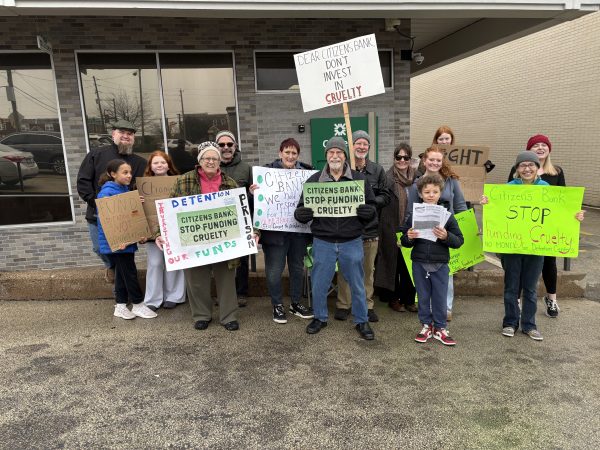
    EC CARES joined Indivisible Jenkintown in protesting monthly outside their local Citizens Bank, volunteers said, and began asking Cheltenham about closing its accounts after seeing other towns take action.

    Everyone played a different role, organizers said: Some talked to township officials, while others pulled research and records or handed out flyers at protests.

    “I like rabble-rousing,” said Susan Shachter of EC CARES. “I like making signs, I like screaming and talking to people.”

    Private prisons have long been a target for organizers over poor conditions and concerns over private companies’ involvement in government-mandated detention. Eight major U.S. banks agreed to stop funding private prison operators back in 2019 under activist pressure.

    But GEO Group and other companies have come under particular scrutiny in recent years for holding immigrants in concentration facilities amid alleged due process violations, detaining young children for months, and reportedly depriving detainees of food, water, sleep, and medical care. Most detainees have no criminal conviction, according to analyses by think tanks, research nonprofits, and news outlets.

    “If we think corporate America is doing what’s ethical in terms of people being detained, we’re joking ourselves,” said KayLee Taylor, another member of EC CARES.

    Some Cheltenham officials were hesitant to push back against federal action, Albright said, but they came around.

    “It is a little scary for them to, as they said, stick their necks out, or have a target on their back,” she said.

    But once commissioners passed the town’s immigration enforcement policy, it got the ball rolling, Taylor said: “Our commissioners have more guts than any others in the county because we were the first ones to put in writing our policy.”

    Albright also got the impression from a commissioner that Santander was fiscally better for the township, she said.

    Walter, the township spokesperson, said Cheltenham likely moved its main account to Santander for better rates a few years ago, but due to township staff turnover she could not confirm details with the officials who were involved at the time.

    Citizens says it stopped lending to GEO, but organizers want more

    Last week, Citizens announced it had stopped lending to private prison companies like CoreCivic and GEO Group now that the federal government has begun buying up facilities and the corporations need less capital than before.

    Walter said Wednesday that she had made commissioners aware of Citizens’ announcement late last week and that the officials did not indicate it had changed their plans. Walter was not sure if Pitts had changed his plans for the tax office accounts or not. Pitts could not be reached for comment on the issue.

    The bank’s announcement also criticized activists for failing to appreciate Citizens’ “virtues,” including the volunteer work its employees do.

    But organizers pointed out that lending is not the only business a bank can do with detention facility providers, and renewed a call for Citizens to end all banking relationships with private prison companies.

    “We want them to completely pull out,” Taylor said. “What you’re doing is wrong.”

    This suburban content is produced with support from the Leslie Miller and Richard Worley Foundation and The Lenfest Institute for Journalism. Editorial content is created independently of the project donors. Gifts to support The Inquirer’s high-impact journalism can be made at inquirer.com/donate. A list of Lenfest Institute donors can be found at lenfestinstitute.org/supporters.

  • Ramah Day Camp, a Jewish summer program in Cheltenham, is closing due to low enrollment after 30 years

    Ramah Day Camp, a Jewish summer program in Cheltenham, is closing due to low enrollment after 30 years

    Ramah Day Camp in Cheltenham will close its doors after this summer, leaders announced in June.

    After 30 years, this will be the Jewish day camp’s last season due to low enrollment and a financial deficit, Ramah officials said.

    There are 164 campers this summer — about half the 2014 enrollment.

    “We don’t have the money to run it, and people aren’t sending their kids,” said Debbie Albert, former president of the nonprofit Camp Ramah in the Poconos, which runs the Cheltenham program.

    In Cheltenham, kids from pre-K into high school dance, swim, practice Hebrew, learn about their faith, and connect with recently returned IDF soldiers for up to six weeks.

    “It’s really heartbreaking,” said Sara Ravitch, a longtime staffer whose 4-year-old son attended the camp for the first time this year. “It’s a place where you can feel proud to be Jewish.”

    Although Cheltenham is closing, the Ramah network has expanded elsewhere in recent years, adding Boston and Los Angeles day camps in 2023 and 2024. The closure will not affect the Poconos overnight camp, according to a June email addressed to the Ramah community announcing the Cheltenham closing.

    Ramah has competed with a number of secular day camps in the Montgomery County area. While Ramah campers take a three-minute bus ride to a nearby pool, other day camps like Sesame/Rockwood in Blue Bell have five pools on site.

    And some local Jewish youth programs are thriving, but the day camp is also located in an older community: Montco’s Jewish population grew slightly from 2009 to 2019, according to U.S. Census data in a report for the Jewish Federation of Greater Philadelphia, but more than a third in southeastern Montco were 65 or older, and just 11% were under 18.

    Ramah’s leaders have tried for years to sustain the Cheltenham program, Albert said. While the overnight camp is “thriving,” the day camp has been losing money for over a decade.

    “We cried over the data,” Albert said. “This is killing all of us.”

    Then there are the facilities: Ramah rents space at the Perelman Jewish Day School, owned by the Jewish Federation of Greater Philadelphia, Albert said, and Ramah officials believe their landlords may want to sell that property. (“There is no property currently for sale on the campus, and the closure of Ramah Day Camp is unrelated to any federation property transaction,“ a federation spokesperson said.)

    Ramah was never able to afford its own day camp site, which would cost “millions and millions of dollars,” Albert said.

    Ramah has been central to some Pennsylvania communities for decades, even earning a shout-out on the Jenkintown-set sitcom The Goldbergs.

    “As a Jewish community of Greater Philadelphia, it is a huge loss,” said Rachel Bloom, a former camper and staffer.

    Bloom attended Ramah Day Camp’s first summer back in 1996. She returned on staff in 2005 and met her husband, then a 25-year-old sports director in a navy blue Hillel shirt with cutoff sleeves.

    “Most of our bridal party were camp people,” Bloom said, and their wedding was filled with Jewish traditions: pre-ceremony tisch and badeken, and an impromptu sermon at the rehearsal dinner.

    Without Ramah, “I don’t think I would’ve had all of these things at my wedding,” Bloom said. “Going to a Jewish camp is like an extra special gift that is very hard to explain.”

    Though officials have long fretted over the camp’s future — the nonprofit did a multiyear review with a group of staff, parents, and board members, CEO Miryam Seid said — some staff and alumni felt blindsided by the news.

    “It feels a little bit — I don’t know if it’s a betrayal, but they weren’t so transparent with how many struggles they were facing,” Ravitch said.

    Bloom said she sometimes attends Shabbat at the camp, and she never noticed their shrinking numbers.

    “There’s always been spirit, no matter what,” Bloom said. “The spirit fills the space.”

    This suburban content is produced with support from the Leslie Miller and Richard Worley Foundation and The Lenfest Institute for Journalism. Editorial content is created independently of the project donors. Gifts to support The Inquirer’s high-impact journalism can be made at inquirer.com/donate. A list of Lenfest Institute donors can be found at lenfestinstitute.org/supporters.