Cheltenham’s commissioners will consider terminating a controversial public pool contract at a special meeting Tuesday, the township announced Friday morning.
The commissioner board had approved the $4.5 million contract earlier this year as a ground lease to Melrose Pool LLC, a new business entity affiliated with a developer who’s building houses, shops, and a medical center at the former Melrose Country Club.
The ground lease was signed in July by the cofounder of BG Capital, which is developing the country club property, on behalf of Melrose Pool LLC. But no LLC under that name appears to have been registered with Pennsylvania until September, according to state records.
Resident Sam Thacker sued in July, arguing the ground lease is really a construction contract that should’ve been subject to bidding rules.
The special meeting announcement came as the township faces a Commonwealth Court appeal process that Thacker’s lawyer, Christopher McCabe, has estimated could take a year.
“The Special Meeting of the Board was called due to concerns that the delays already being caused by the litigation could ultimately prevent successful completion of the pool project under the agreed upon terms,” Cheltenham’s spokesperson Lauren Walter wrote in an email Friday.
It was not immediately clear whether the township would be on the hook for any money the developer has already spent toward constructing the Melrose pools.
The Melrose project would put three public pools next to the new development to replace Conklin Pool, which would close. The township says it would cost more than $4.5 million to sustainably replace Conklin.
“I’m encouraged that they are listening to their constituents in bringing the issue before the public,” Thacker texted Friday. “Terminating the lease and moving forward with a transparent bidding process would bring a welcome end to the costly legal proceedings.”
The meeting is scheduled for Oct. 6 at 5:30 p.m., online and at the township administration building.
This suburban content is produced with support from the Leslie Miller and Richard Worley Foundation and The Lenfest Institute for Journalism. Editorial content is created independently of the project donors. Gifts to support The Inquirer’s high-impact journalism can be made at inquirer.com/donate. A list of Lenfest Institute donors can be found at lenfestinstitute.org/supporters.
Cheltenham Township plans to take over part of the independently run tax office amid a dispute with its finance officer over business data.
The disagreement over data privacy began shortly after Melvin Pitts took office in January, according to Pitts and emails obtained by The Inquirer. Cheltenham plans to amend the township code and reassign one of Pitts’ duties to help resolve the impasse.
Dispute over business licenses
Cheltenham’s tax office is independent from the township and collects county, school district, and municipal taxes for a flat fee from each entity. The tax collector, under the township code, also doubles as Cheltenham’s finance officer and issues the town’s annual $15 business licenses.
Shortly after Pitts and the township commissioner board’s new president, Matthew Areman, began their terms this year, Areman asked Pitts for a list of licensed businesses. Then in August, Pitts was asked for similar data to fulfill a Right-to-Know request.
Pitts refused both requests because, he said, he sees the information as confidential taxpayer information. Tax professionals who violate confidentiality rules can face jail time under state law.
“It’s very sensitive data,” Pitts said in an interview.
But the township argues that a list of licensed businesses does not qualify as tax information and should be public.
“I agree with you that information related to tax … is not subject to public access,” township solicitor Ed Diasio wrote to Pitts in February, “but there is no provision … that a list of businesses that the township has licensed in the township is not subject to public access.”
Two lawyers specializing in public records told The Inquirer that although the tax office is exempt from sharing certain records, the tax collector is required to provide other records as an officer of the township.
Cheltenham has no list of businesses
Without the business license data, Cheltenham has little way to confirm which businesses are operating in the township, spokesperson Lauren Walter said — especially more discreet enterprises like rental properties, which the township has to inspect every three years.
“Township Administration does not currently have a defined list of businesses within the Township, making communication with our business community a challenge,” Walter wrote in a statement. When the township began regulating plastic bags, for example, the environmental committee went door to door to help inform proprietors of the changes.
Cheltenham officials are also keen to build the township’s business tax base as part of its most recent comprehensive plan.
Rental inspector confronted tax collector
The conflict between the tax office and the code enforcement department came to a head in August, after Pitts learned that the township’s rental inspector, Michael Bluestein, had access to the tax office’s data portal. In August, after Pitts moved to cut off Bluestein’s access, Bluestein confronted Pitts.
Pitts recalls Bluestein telling him: If you take away my portal access, “I’ll crush you.”
Bluestein wrote an apology to Pitts after the incident that does not specify what he said. “I did not realize in that moment that my tone sounded aggressive or threatening,” Bluestein wrote in part. “While I was previously approved to have access, [I] honestly did not know that you did not want me to have access to that information.”
Walter, the township spokesperson, said that she conferred with Bluestein and that he had access in the system only to business contact information, not to financial data.
Township to do business licensing in-house
Now, the township is planning to transfer business licensing applications to someone who will handle accounts receivable, a now-vacant role. Information on newly licensed businesses would then be shared with Pitts’ office for tax collection purposes.
Moving the licensing process from the tax collector’s office to the township would require Cheltenham to amend the town code, which currently specifies that the collector handles it.
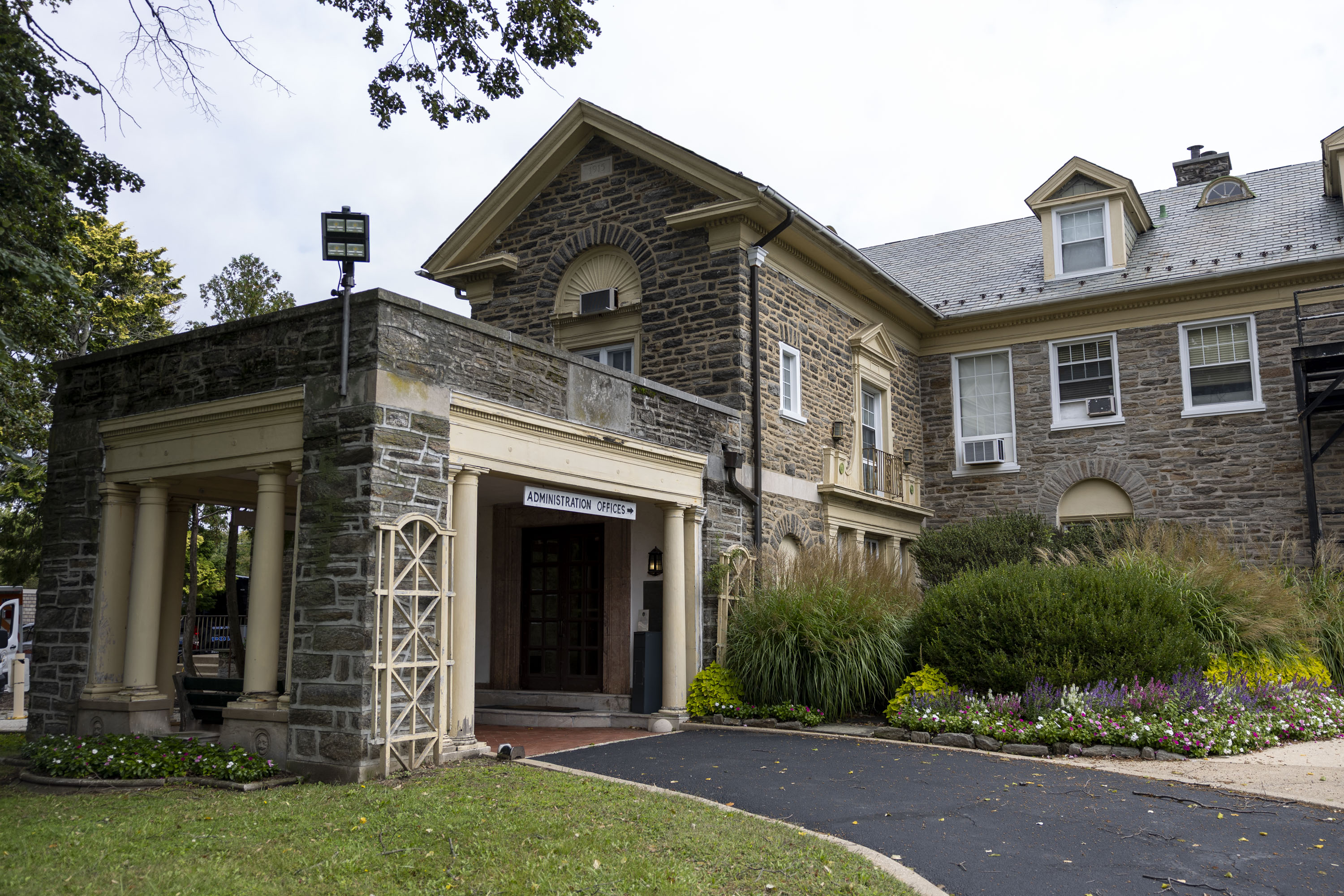
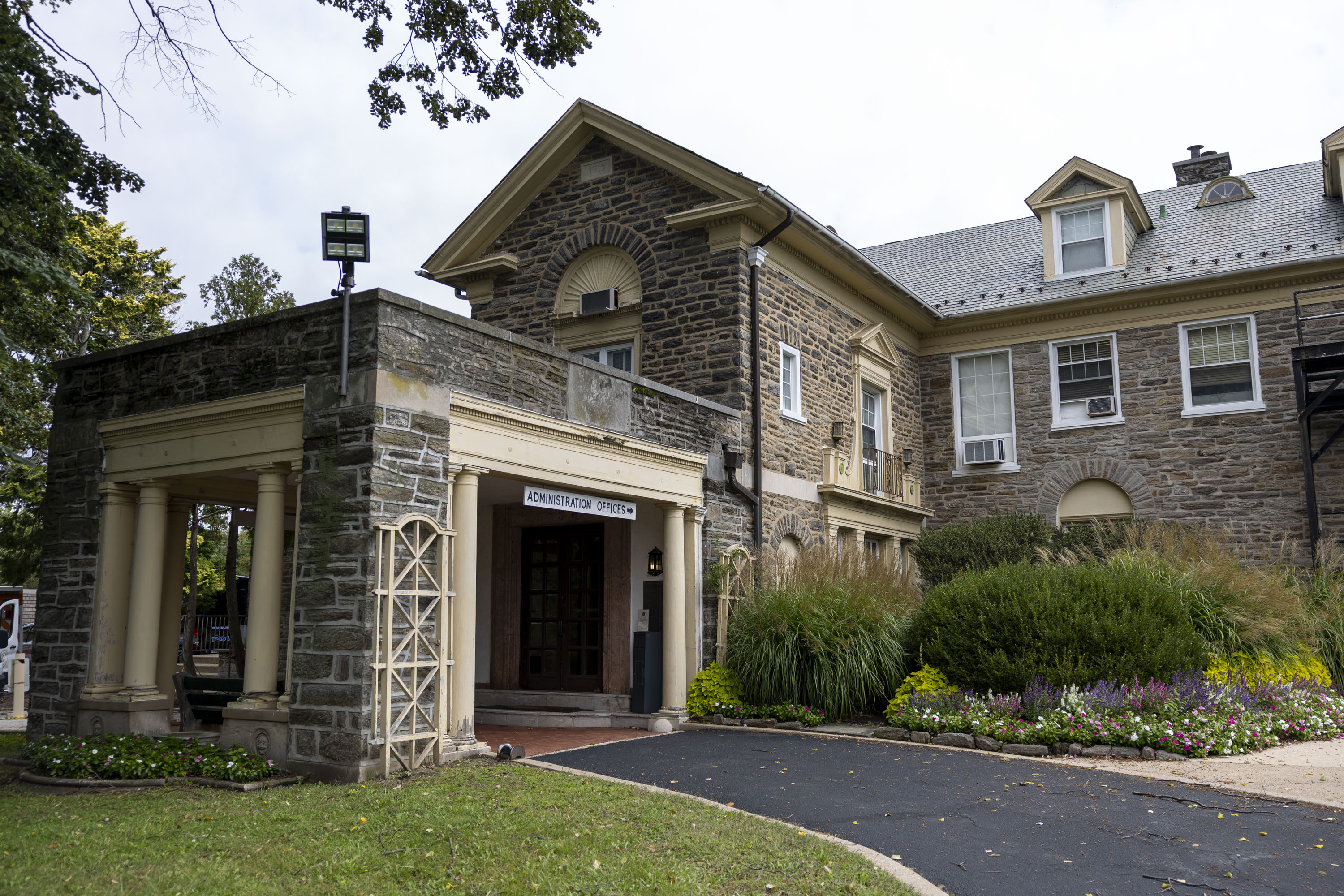
The Administrative Office Building on Tuesday, Sept. 29, 2026, in Cheltenham, Pa.Tyger Williams / Staff Photographer
Cheltenham plans to post the accounts receivable position within weeks, new township manager Jonathan Altshul said, and would not move to amend the ordinance until sometime after tax day 2027.
Pitts would have to remove business licensing from a new system his office is rolling out to allow online tax payments, he said, and he worries that the licenses will become delayed by code enforcement.
That is what had led to a $30,000 backlog in licenses that Pitts inherited, he said, and has since cleared.
“We’ve been getting stuff done so quickly,” Pitts said. “I just want to do my job, and do it under the law.”
Areman, the commissioner board president, said Cheltenham “looks forward to working closely with the tax office throughout the transition” to ensure it is “seamless for the business community.”
Clarification: This story was updated to clarify the tax office’s status under the Right to Know Law.
Correction: This story was updated to correct Michael Bluestein’s name.
This suburban content is produced with support from the Leslie Miller and Richard Worley Foundation and The Lenfest Institute for Journalism. Editorial content is created independently of the project donors. Gifts to support The Inquirer’s high-impact journalism can be made at inquirer.com/donate. A list of Lenfest Institute donors can be found at lenfestinstitute.org/supporters.
Also in the headlines, four former Cheltenham football coaches were held for trial for failing to report a player’s locker room assault, a contested $4.5 million pool development project may be delayed, plus, political leaders and clergy gathered outside the Philadelphia ICE office in the wake of the suicide of a deportation officer and Cheltenham High School alum.
Capricorn Books owner Jackie Botto on Sept. 17, 2026.William Thomas Cain / For The Inquirer
Across Greater Philadelphia, bookstores are so back — mirroring a national trend of physical book sales outpacing online retail.
In Jenkintown, Capricorn Books has almost doubled its business since expanding its storefront in July, owner Jackie Botto said. Last year brought other newcomers to the local bookstore scene: an Abington outpost of Barnes & Noble, which credits BookTok with reviving the chain, and Glenside Book Garden.
Local libraries, too, are seeing a boost in patronage.
📚 Bonus: See the best books that area booksellers, including from Jenkintown and Wyncote, have read this year.
💡 Community news
In a preliminary hearing Monday, a district judge said four former Cheltenham High School football coaches failed to protect a then-15-year-old player who told them he had been assaulted twice last year by his teammates in the locker room. The victim also testified.
Pending litigation over Cheltenham Township’s $4.5 million pool contract could now take a year to resolve, potentially delaying the project.
Cheltenham police will begin using AI-enabled cameras to deter crime at a local construction site and may use them at crime hot spots and community events down the line after township commissioners signed a $35,000 contract with controversial New Jersey tech company Packetalk.
Clergy, political leaders, and activists gathered outside the Philadelphia ICE office last week following the suicide of deportation officer Joseph Moore, 38, who was a 2006 graduate of Cheltenham High School.
Democratic State Sen. Art Haywood, who has an office in Abington, is co-introducing legislation that would formally designate hazing as a mandated reportable offense. In a press release, Haywood pointed to the recent Cheltenham football case as a “mishandling of a serious disclosure of harm.”
Philadelphia man Justyn C. Wharton, 37, was sentenced to up to 25 years in a state correctional institution for repeatedly sexually assaulting a 15-year-old Jenkintown girl, according to The Pottstown Mercury.
Cheltenham police charged a suspect with robbery, simple assault, terroristic threats, and harassment after he attempted to steal a woman’s phone in the Target parking lot at 2450 Shoppers Lane.
Rose Bridge Farm in Dresher has been going viral thanks to its new Coffee and Cows morning offering, which taps into the growing wellness trend around cow cuddling. The Inquirer’s Beatrice Forman shares what it’s like to start your day with a dose of baby calves, kids (the four-hoofed kind), and caffeine during the hour-long sessions.
🏫 Schools briefing
Cheltenham School District recently appointed a new director of teaching and learning, Rachel Girman. She will need to be formally approved at the school board directors’ Oct. 13 legislative meeting, Assistant Superintendent Kendra V. Johnson said during last week’s Educational Affairs Committee meeting.
The same district is working to implement new evidence-based materials focused on literacy for K-3 students by the start of the 2027-28 school year, Kaity Ferraro, supervisor of curriculum for grades K-5, said at the meeting.
🍽️ On our plate
Wendy Stahler’s take on brisket made it onto the menu at Recipe Philly, a new Center City concept with a unique food competition model that features dishes with stories from local home chefs. The 82-year-old is a longtime member of Old York Road Temple-Beth Am in Abington, The Jewish Exponent reports.
Hand-rolled bagels, “genuine and outgoing” service, and an eclectic, worldly dinner menu ranging from a smoked arctic char spread to a faux-meatloaf platter are just some of the details that make new all-day eatery Blue Warbler the “most intriguing restaurant in years” in nearby Chestnut Hill, Inquirer food critic Craig LaBan writes.
🎳 Things to do
🌃 Night Market: Support local businesses slinging fresh produce and artisanal bites. ⏰ Tuesday, Sept. 22, 4-8 p.m. 💵 Pay as you go 📍 Jenkintown town square
🎤 Labyrinth In Concert: Blast into the past for the 40th anniversary of Jim Henson’s musical fantasy film Labyrinth, shown on the big screen while a live band accompanies David Bowie’s vocals from the stage. ⏰ Friday, Sept. 25, 8 p.m. 💵 $65.59-$250.43 📍 Keswick Theatre, Glenside
🎨 Festival of the Arts: Peruse works from local artists and eats from food vendors while taking in live music and dance performances. ⏰ Sunday, Sept. 27, 1-6 p.m. 💵 Pay as you go 📍 Greenwood Avenue and Leedom Street, Jenkintown
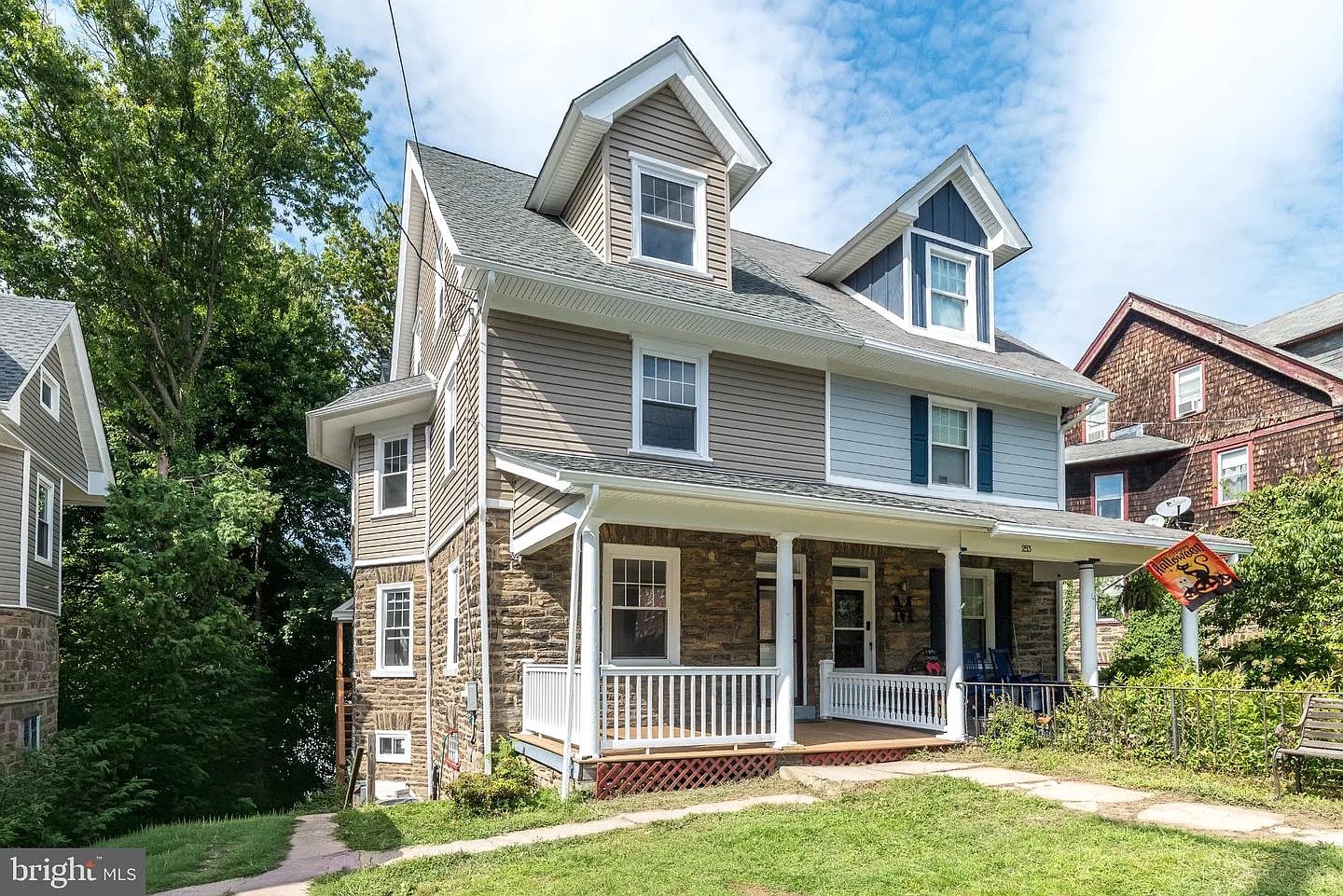
This Jenkintown dwelling, originally constructed in 1900, hit the market this month with a thorough list of home improvements, including a new roof, siding, windows, and flooring. The six-bedroom, three-bathroom space has quartz countertops, stainless steel appliances, and updated cabinets in the kitchen. Each of the three bedrooms on the third floor are outfitted with new mini-split cooling units. There is an open house Sunday from noon to 2 p.m.
By submitting your written, visual, and/or audio contributions, you agree to The Inquirer’s Terms of Use, including the grant of rights in Section 10.
This suburban content is produced with support from the Leslie Miller and Richard Worley Foundation and The Lenfest Institute for Journalism. Editorial content is created independently of the project donors. Gifts to support The Inquirer’s high-impact journalism can be made at inquirer.com/donate. A list of Lenfest Institute donors can be found at lenfestinstitute.org/supporters.
A legal battle over Cheltenham Township’s pool contract has bred tension at meetings and divided some neighbors, but a township official and the suing resident’s lawyer agree on one thing: It could take a while.
The dispute centers on Cheltenham’s lease of land to a private developer for $10 per year to build a pool complex — the same land that the developer had given Cheltenham for free in December 2025.
The agreement requires the township to pay up to $4.5 million for three public pools that a new entity, Melrose Pool LLC, will construct on that land, or rent the pools from that entity. The township had hoped to open the new complex at the former Melrose Country Club by 2027 to replace the aging Conklin Pool across town. The developer, meanwhile, is building houses and a medical facility next to the new pools.
But Cheltenham resident Sam Thacker sued in July, and he argues that the ground lease was in fact a public construction contract and should be subject to a bidding process to determine the best provider.
Cheltenham has argued that the township received estimates for replacing pools on other properties, and therefore determined that $4.5 million is a good deal for the Melrose project.
The litigation has reached a stage that could take a year to resolve, Thacker’s lawyer said. And whether construction continues alongside the suit may depend on whether a court grants an injunction Thacker filed last week to halt the project. A long delay may scuttle the entire pool project, a township official said.
Where the suit stands
Thacker’s injunction request was denied by a judge last month who found he lacked standing, but he has appealed to Commonwealth Court.
It could take six months to hear the case, said Thacker’s lawyer, Christopher McCabe, who specializes in construction and government contracts, and a year to get a decision.
Thacker, who was representing himself until he hired McCabe this month after raising more than $6,000 from dozens of donors in a GoFundMe campaign, also filed a new injunction with the higher court to halt pool construction in the meantime.
A long delay could mean the new pools do not happen, Township Commissioner Emily Cheramie Walz wrote in a social media post last week after delivering the same remarks at the Sept. 16 commissioner meeting.
“There is a real risk that continued litigation could jeopardize the funding and timeline for the Melrose project,” Cheramie Walz wrote. “Families across the township who were excited about having a new pool could lose that opportunity.”
Cheramie Walz’s comments echoed part of Cheltenham’s legal defense in the case, that halting the project would cause more harm to township residents than allowing the project to proceed — an argument the lower court judge agreed with.
But McCabe asserted in the emergency injunction request filed last week that that logic does not hold up, because the Melrose agreement is a no-bid construction contract disguised as a land rental.
“Then every municipality would simply argue that the object of an illegal contract will be greatly beneficial to their residents and the taxpayers,” McCabe wrote, and residents would be unable to stop an illegal contract.
When the developer, an entity associated with BG Capital, gave 2.7 acres to the township last winter, the document referred to an unspecified “advantage” that the developer would receive by gifting the land to Cheltenham.
Amee Farrell, a lawyer for the developer and a former chair of the township’s zoning board, has not answered questions about what the developer expected to gain from the land gift.
“If [Cheltenham] owns the land free and clear, what prevented them … from putting out a request for bids?” McCabe said Monday. “You don’t know whether there was corruption here because you don’t know what the discussions were.”
An ongoing topic at public meetings
Although the township has repeatedly declined to comment on the details of the ground lease because of the lawsuit, Cheramie Walz addressed the subject of the suit directly in her post last week.
“There is no secret no-bid deal,” she wrote. “We have spent an embarrassing amount of time and public resources dealing with this litigation — resources that could be going toward the work residents actually expect us to be doing.”
Some residents have also expressed frustration over the suit and the controversy.
“We want new centers for community to grow and businesses to develop and thrive,” resident Nick Steever said. “The bidding process isn’t what certain people are upset about, but rather the fact that [Conklin] Pool is closing.”
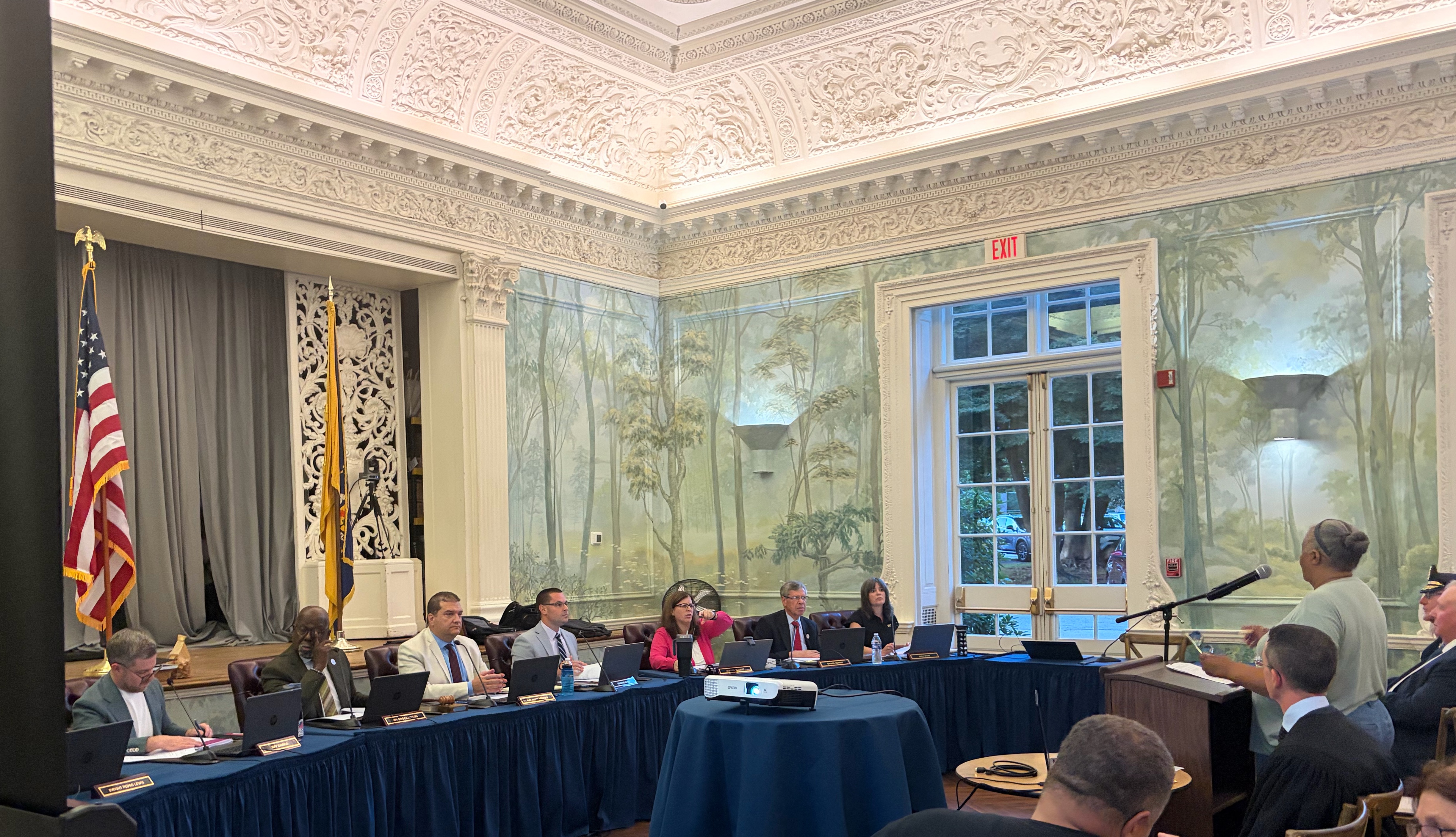
Thacker and the township commissioners have exchanged tense words during public comment. When Thacker spoke at a Sept. 14 committee meeting, Cheramie Walz asserted that Thacker’s lawyer had told officials they should not speak directly to Thacker, so they would not.
McCabe said Monday that he had told Cheltenham’s lawyers to communicate with him, not Thacker, now that he had legal representation, and was not referring to all township officials.
Thacker said Monday that any delay or waste is on the township.
“They are the ones who executed a no-bid construction contract,” he said. “I do not bear any responsibility for the costs incurred as they dig deeper into defending it.”
Correction: This story was updated to reflect the status of Thacker’s case.
This suburban content is produced with support from the Leslie Miller and Richard Worley Foundation and The Lenfest Institute for Journalism. Editorial content is created independently of the project donors. Gifts to support The Inquirer’s high-impact journalism can be made at inquirer.com/donate. A list of Lenfest Institute donors can be found at lenfestinstitute.org/supporters.
District Judge Christopher Cerski told head coach Terence Tolbert, 55; associate head coach Darian McFadden, 42; assistant coach Benjamin Johnson III, 45; and volunteer coach Ralph Burnley, 60, that they had failed in their duties to protect the then-15-year-old by encouraging him not to tell his mother about the assaults, and insisting on handling the matter themselves.
During the lengthy proceedings, the victim testified about the assaults and how it affected him.
After a marathon preliminary hearing in Jenkintown, Cerski held all four men over for trial on two counts of endangering the welfare of a child and one count of conspiracy, but dismissed another count of conspiracy that they faced.
Their lawyers argued against the merits of the case, saying the coaches were never told the full scope of abuse the teen suffered. He had deliberately downplayed the assault to them, according to testimony Monday, because he was embarrassed that his teammates had used a broomstick to poke at his buttocks.
The group only found out the full details months later, when video of an earlier assault surfaced during Cheltenham School District’s internal investigation.
Tolbert’s attorney, Thomas Egan III, called the prosecution’s “grand conspiracy to stomp on this teen’s voice” completely false.
“[Tolbert] could only act in the scope of what he knew,” Egan said. “He had a player who didn’t have major injuries and intended to still play football and not tell his mother.”
But Assistant District Attorney Samantha Cauffman balked at that theory of the case, saying adults who should have known better were improperly foisting their responsibility onto a teenager.
“This case boils down to the fact that a 15-year-old was beaten up, and you tell him not to tell his mother,” she said. “It doesn’t matter if he didn’t want to tell her. You are the adults in the room.”
Two players charged alongside the former coaches, Isaiah Simpson and Josiah Peeler, both 18, waived their hearings and will also face a Montgomery County judge: Simpson for conspiracy to commit aggravated assault, simple assault, reckless endangerment, and related crimes for his role in the September assault, and Peeler for false swearing for being untruthful to police.
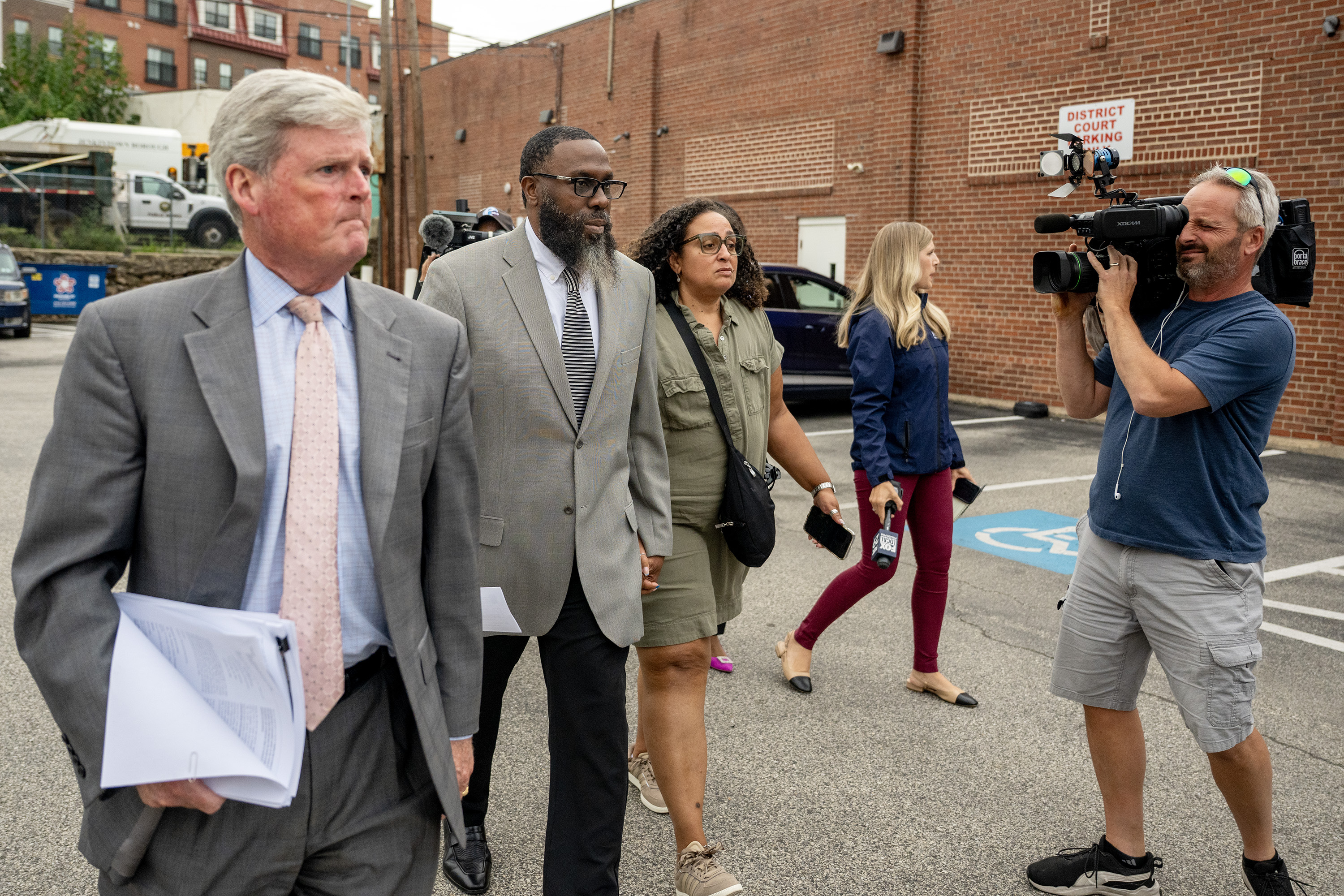
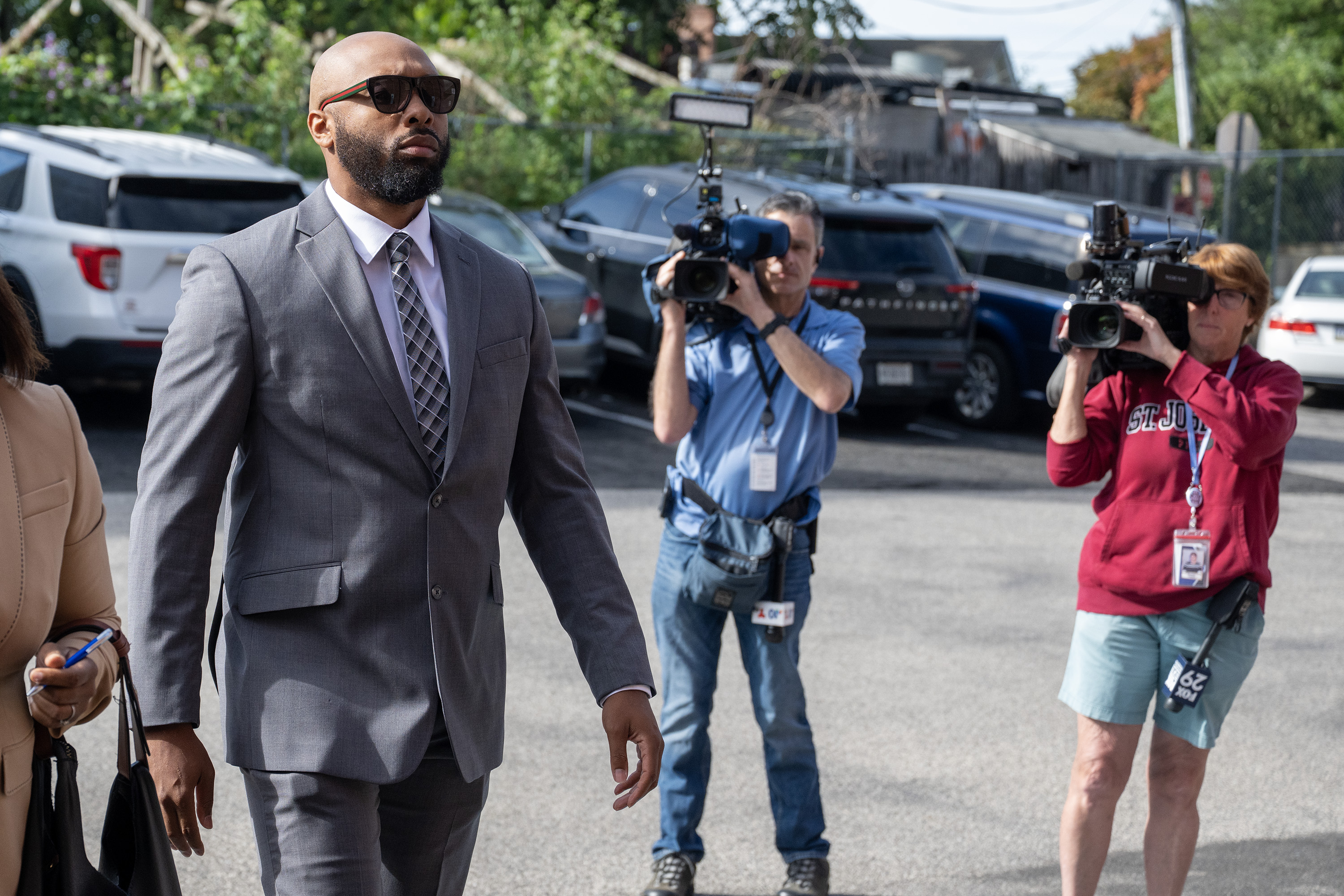
Former head coach Terence Tolbert (second from left), one of six members of the Cheltenham High School football team appearing for their preliminary hearings Monday in Jenkintown Monday, Sept. 21, 2026.Tom Gralish / Staff PhotographerFormer assistant coach Benjamin Johnson III.Tom Gralish / Staff PhotographerFormer associate head coach Darian McFadden.Tom Gralish / Staff PhotographerFormer volunteer coach Ralph Burnley (right).Tom Gralish / Staff PhotographerPlayer Isaiah Simpson.Tom Gralish / Staff PhotographerPlayer Josiah Peeler.Tom Gralish / Staff Photographer
Locker room assault victim takes the stand
The victim of the assault, whom The Inquirer is not naming, testified Monday that Simpson and a group of other players pulled him into the team’s locker room after practice in September 2025 and “jumped him.” The group stomped on his head while wearing cleats, kicked him in the groin, and assaulted him with the broom.
They were acting out a reference to a Meek Mill song, he said, that included the lyrics “broomstick all in his butt, tell him take that.”
In a quiet voice, as he faced his former coaches, the teen said the group attacked him because he had taken Peeler’s shoulder pads after his had been stolen out of his locker. Peeler reported the theft to the coaching staff, who made the entire team run extra laps as a punishment.
After the assault, the teen said he walked outside, asking Burnley for a ride home. He was crying, he said, and icing his groin to ease the pain he felt.
When he explained to Burnley what happened he omitted the detail about the broomstick, feeling embarrassed.
Burnley told him to call his mother. He declined, he said, because he was afraid she’d force him to stop playing football.
As he drove the teen home, Burnley called the other coaches to tell them about the assault. Later, Johnson, Tolbert, and McFadden spoke to him over the phone and told him not to tell anyone about the incident, and that they would handle it internally.
Privately, the coaches sent incriminating text messages to one another, prosecutors said, expressing concern that the incident “has to be handled and kept quiet.”
McFadden wrote “if this gets out we are [expletive]. They will cancel the whole season,” according to messages displayed in court.
However, the teen’s mother learned of the assault a week later from someone in the community, and Cheltenham began investigating the case.
During that probe, the district received video of a similar, earlier assault of the teen, which had taken place in August 2025. The video, played in court, showed a group of players ganging up on the teen to beat and mock him as he cries out for them to stop.
The teen testified that he didn’t disclose that assault to the coaches because he considered it more minor and was closer to “horseplay.”
The four coaches are expected to be arraigned in county court next month.
Cheltenham police will soon use AI-enabled cameras to deter crime at a construction site, and may use them in the future for crime hot spots and community events.
Packetalk is smaller than the more widely known Flock Safety, but the company is not without controversy.
In 2023, Packetalk’s current CEO, Tamer Zakhary, was charged with allegedly selling Chinese surveillance equipment banned under the National Defense Authorization Act as his own product, asking a manufacturer to change the color and logo to hide it, and lying to public safety clients about compliance.
The federal charges were dropped in 2024 without explanation or prejudice, meaning prosecutors are allowed to charge Zakhary again for the same thing in the future.
Township Manager Jonathan Altshul said Friday he had not been aware of the case.
The Packetalk cameras will initially be used at the La Mott Community Center construction site, but police will keep the cameras for use at crime hot spots and community events, IT director Michael Rubin said at a Tuesday committee meeting. The contract includes five years of maintenance.
Packetalk also allows police to create a surveillance network using both public and private cameras with owners’ permission. The township already has Packetalk cameras at Wall Park, Rubin said.
Cheltenham officials, in an interview Friday, characterized the existing Wall Park technology as more akin to conventional surveillance cameras. Though the department may access the cameras through the same Packetalk monitoring platform, the Wall Park cameras are not integrated with other surveillance systems and do not use AI-powered tools.
The Packetalk systems can help solve crime, Police Chief Richard Schaffer said at the Wednesday meeting where commissioners approved the AI surveillance contract: “These cameras don’t get tired, they don’t leave … they don’t sleep.”
Schaffer added Friday that camera technology was critical to solving cases like the 2023 homicide of Rachel King.
“For any investigation, we would take any legal avenue for trying to solve a case,” Schaffer said. “That would include if we identify cameras.”
Several Cheltenham commissioners also emphasized that the camera contract was well worth the cost to protect the more than $8 million investment the township is making in the community center.
Flock cameras have raised questions across the country — including in neighboring Abington, where both police and residents became concerned about data security and privacy.
Like the Flock cameras, the Packetalk system can flag wantedvehicles, according to the company’s website.
But unlike Flock cameras, which can be connected to a nationwide network where other agencies can request access, the data from the Packetalk system will be stored by the township, and only Cheltenham will have access, Schaffer said.
Cheltenham does not have its own Flock cameras, but has access to Flock’s surveillance network via private companies within the township, police previously said.
The new cameras have not yet arrived, but in general, the police department retains video for a minimum of 60 days, officials said.
The township originally planned to order two surveillance trailers from Packetalk for $35,000 each, but commissioners amended the agenda item to approve just one, which will be paid for via Cheltenham’s capital fund.
Packetalk was significantly cheaper than other vendors, a township memo noted.
This suburban content is produced with support from the Leslie Miller and Richard Worley Foundation and The Lenfest Institute for Journalism. Editorial content is created independently of the project donors. Gifts to support The Inquirer’s high-impact journalism can be made at inquirer.com/donate. A list of Lenfest Institute donors can be found at lenfestinstitute.org/supporters.
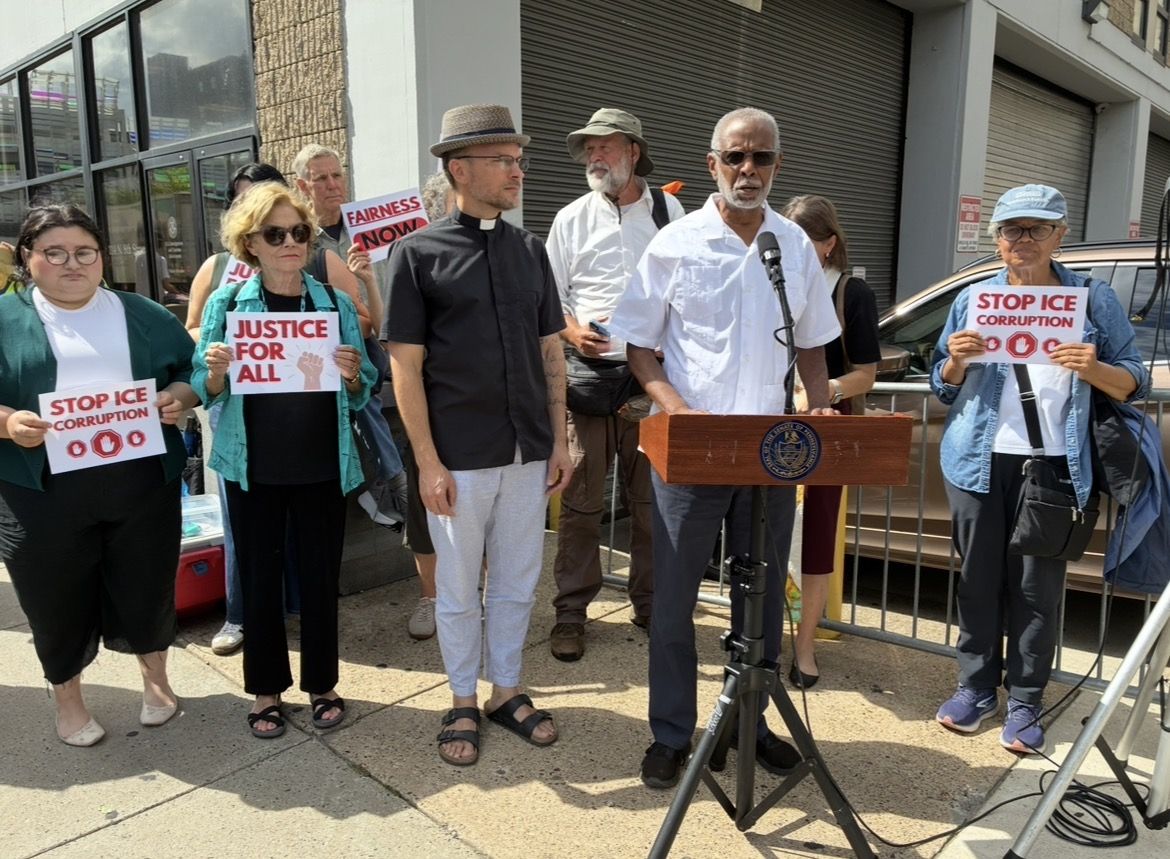
A group of clergy, political leaders, and activists gathered at the Philadelphia ICE office on Friday in the wake of a deportation officer’s suicide, condemning what they said was the agency’s destruction of lives both inside and outside its ranks.
Speakers said they said they grieved with the family of Joseph Moore, 38, who died of a self-inflected gunshot wound while parked near the Center City headquarters, and with the families of immigrants treated wrongly and cruelly by the agency.
Moore died Aug. 28 as he was facing dismissal, along with other new officers brought on amid a huge wave of ICE hiring, one that critics say has led to the employment of unqualified and unvetted recruits.
“He was an ICE agent,” said state Sen. Art Haywood, a Democrat who represents parts of Philadelphia and Montgomery counties, “but he was also a human being.”
Local ICE officials did not immediately respond to a request for comment.
Speakers called ICE a rogue agency, and called on its officers to quit their jobs.
One man, who kept vigil outside ICE headquarters nearly every day in August, said he tried to talk to officers as they went inside, and wished he could have talked to Moore.
Generally, said Jim Nicholson, who described himself as Quaker and non-violent, the officers he addressed were “not interested in being human, compassionate beings,” that they told him everyone they arrest is a criminal.
“I’m a very sorry to hear an agent of ICE committed suicide. That’s a tragedy,” he said. “If the agent had come to us, to me, I would have tried to help.”
U.S. Immigration and Customs Enforcement, charged with carrying out President Donald Trump’s mass-deportation plan, has been on a hiring binge that more than doubled the size of the agency. Now ICE has begun quietly firing some of those new officers, The Washington Post reported, citing multiple officials who said officers were put on the streets without being properly vetted.
Federal agents arrest a woman after smashing her car window and dragging her from the vehicle in Minneapolis on Jan. 13, 2026. The legality of the Trump administration’s tactics during its immigration enforcement operation, known as Metro Surge, in Minneapolis early this year was challenged by a series of federal lawsuits.DAVID GUTTENFELDER
The Post reported on Monday how Moore, a Marines reservist who graduated from Cheltenham High School in 2006, died by suicide while parked near ICE headquarters.
Philadelphia police officials said officers called to the scene tried to stop Moore from hurting himself.
Police were summoned to the area of Eighth and Race Streets ― the ICE office is one block south ― for a report of an armed man in distress who had barricaded himself inside a vehicle, officials said.
The officers communicated with the man and tried to de-escalate the situation, but he drew a gun and shot himself, police said. No Philadelphia officer fired a weapon, the department said.
Police, without identifying Moore by name, said they have finished their inquiry into the death, and would provide no additional details because it involved a suicide.
In mid-2025, ICE received massive new funding for hiring — about $30 billion, part of $76.5 billion it received through President Donald Trump’s “Big Beautiful Bill.” The administration has said it wants to deport a million people a year, which would require a vastly larger ICE and extensive new detention capability.
Part of the lure was a promised $50,000 signing bonus.
ICE said the majority of new hires were police and military veterans, but an investigation by The Associated Press found evidence that applicants with questionable histories were not fully vetted or were hired in spite of their pasts.
The Post said Homeland Security would not answer questions about specific hiring decisions. It did say that some applicants received “tentative selection letters” and offers to begin working on a temporary status before being subjected to full background checks.
The hiring happened so fast that new officers were put on the streets before being adequately vetted, multiple former officials told the Post. One ICE whistleblower urged officials to halt the expansion, saying in an August 2025 memo that the “overwhelmed” agency had hired officers without checking their fingerprints or their identities, the Post said.
In recent months, ICE has begun quietly firing some of the recruits, the Post reported, citing three former DHS officials who spoke on the condition of anonymity. They said ICE has cited poor performance or red flags that should have been identified earlier.
The Department of Homeland Security rejected those concerns.
Relatives of an ICE officer who shot a Colombian man in Maine in July told The Associated Press he struggled with serious mental health issues since early childhood, and never should have been given a badge and gun. The revelations about the officer, David Brouillette, brought fresh attention to ICE hiring procedures.
The Post said Moore had dreamed of a life in law enforcement since he was a teenager. But two law enforcement agencies fired him, and others rejected him. ICE hired him in the fall as a deportation officer.
Efforts to reach Moore’s family members were unsuccessful.
His obituary said the father of two served 20 years in the Marines as both an active member and a reservist. And that he graduated with a 4.0 grade-point average from Rosemont College, where he earned a bachelor’s degree in criminal science.
Jonathan Altshul started this week as the new manager of Cheltenham, an ethnically and economically diverse township of about 38,000 people divided into historic neighborhoods like Elkins Park, Wyncote, and Laverock.
As he gets down to work on the township’s biggest priorities, including revamping facilities and boosting the tax base, Altshul wants to hear from them all, he said in an interview.
“That’s what we sign up for as municipal managers,” said Altshul, who will receive an annual salary of $225,000. “How do you get people with different viewpoints, different walks of life, to come to the table?”
It is a skill he mastered growing up as one of seven kids, Altshul said — “trying to make sure your voice is heard while respecting there’s also six others of you in the house.”
One of his first priorities is improving Cheltenham’s facilities — some of which are century-old relics of the township’s past as a playground for the wealthy.
“We are facing aging facilities and aging infrastructure,” Altshul said, and part of his job will be addressing that to attract new residents and businesses.
He hopes to do so while “holding the line on tax increases as much as possible,” Altshul said. Cheltenham residents — who are the most property tax-burdened in Montgomery County — “have high expectations about the services that they receive, so there’s not, generally speaking, a whole lot of fat to cut.”
In tackling the building challenges, Altshul’s penchant for hard conversations may be crucial. Township officials in recent years have discussed the possibility of closing facilities, raising worries from some residents in neighborhoods that stand to lose amenities.
Two community centers — La Mott and Rowland — have been largely closed to the public for several years, and renovation plans have been confirmed only for La Mott.
Adding to Cheltenham’s infrastructure challenges is the tax base itself. The township has less commercial space than nearby towns, but a larger proportion of institutional land, according to its recent comprehensive plan. Institutional land typically includes churches, universities, and hospitals that may not pay property taxes.
Encouraging those entities to pay fees in lieu of property taxes may be part of the solution, Altshul said. He plans to take a pragmatic approach.
“There are no silver bullets with public finances,” Altshul said. “It’s just listening and rolling up sleeves, getting your hands dirty, and thinking through problems.”
It is the kind of work that led Altshul to public administration in the first place: He got a graduate degree in public policy and finance, taking federal and county-level government jobs in the Washington area before moving to Chester County to work in local government.
His last job stint — two years as a suburban township manager — took him back to his native Connecticut while he helped his widowed father with a life transition, but his “heart is in the Delaware Valley,” Altshul said. “I raised my kids here.”
That is why he takes seriously the emotional and financial investments Cheltenham residents have also made, Altshul said:
“We’re talking about home.”
This suburban content is produced with support from the Leslie Miller and Richard Worley Foundation and The Lenfest Institute for Journalism. Editorial content is created independently of the project donors. Gifts to support The Inquirer’s high-impact journalism can be made at inquirer.com/donate. A list of Lenfest Institute donors can be found at lenfestinstitute.org/supporters.
Before Glenside Lanes housed a yoga studio, coffee shop, record store, and other local businesses, the building at 2256 Mt. Carmel Ave. was once the site of an early-20th-century bowling alley and billiards hall. Soon, those once-bustling bowling lanes will welcome a concert and event space, too, further restoring the location to its original liveliness.
The driving force behind the micro-mall’s revival is Kevin Burke, a developer and Glenside native. His work is part of a national trend of investors seeking a blend of retail and experiential businesses to revitalize sleepy post-pandemic commercial spaces. He expects to open a similar multi-use project in Wyndmoor.
SPS Technologiesreached a tentative $5 million settlement agreement last week in a class-action lawsuit that could bring payouts to those who were affected by the four-alarm fire at a former Abington Township factory last February. Eligible business owners, employees of impacted businesses, and homeowners can file claims through Dec. 3.
Abington Township is looking into how it might exit its remaining contract with Flock Safety early amid data concerns. The news comes after Gov. Josh Shapiro, an Abington resident, last week vocalized “real concerns” about how the technology affects privacy.
Longtime Abington resident Bennett Fairorth, a well-known writer and teacher, died this summer at age 99. Former students, including some who planned to celebrate his 100th birthday with him this month, have taken to social media to remember Fairorth, who regularly heard from past pupils during his retirement despite never owning a cell phone, computer, or answering machine.
🏫 Schools briefing
A Tuesday night school board vote considered whether the Cheltenham district would bring former superintendent Brian Scriven a payout in excess of $265,000. Scriven resigned last month amid Cheltenham High School’s football hazing scandal. Reporter Maddie Hanna has the latest.
✨ Diamond in a Rhinestone World: Paint your own glittering ode to the late country music icon Dolly Parton. ⏰ Wednesday, Sept. 9, 7-9 p.m. 💵 $45 📍 Painting With a Twist, Jenkintown
🌭 Glenside Food Truck Festival: Fill your belly at this collaborative event from Downtown Glenside, Cheltenham Township, and Arcadia University. ⏰ Thursday, Sept. 10, 5:30-9 p.m. 💵 Pay as you go 📍 Easton Road and Wesley and Glenside Avenues
🇺🇦 Ukrainian Fall Festival: Celebrate Ukrainian culture at this two-day fete offering food, live music, and kids activities. ⏰ Saturday, Sept. 12, 3-11 p.m. and Sunday, Sept. 13, noon-6 p.m. 💵 $15 on Saturday for those age 13 and up; free on Sunday 📍 St. Michael the Archangel Ukrainian Catholic Church, Jenkintown
📚 Building Better, Stronger Relationships: Tune into this virtual author talk with conflict facilitator Priya Parker as she unpacks the conflict resolution techniques detailed in her new book The Art of Fighting: The Transformative Power of Conflict. ⏰ Tuesday, Sept. 15, 4-5 p.m. 💵 Free, registration required 📍 Virtual, sign up via Abington Township Public Library
This expansive Elkins Park estate dates back to 1925, offering classic details such as hand-carved moldings, French doors, exposed beams, and a window seat. The eight-bedroom, six-bathroom home has two fireplaces, plus a yard, patio, and courtyard.
Correction: Developer Kevin Burke expects to open a multi-use project similar to Glenside Lanes in Wyndmoor.
By submitting your written, visual, and/or audio contributions, you agree to The Inquirer’s Terms of Use, including the grant of rights in Section 10.
This suburban content is produced with support from the Leslie Miller and Richard Worley Foundation and The Lenfest Institute for Journalism. Editorial content is created independently of the project donors. Gifts to support The Inquirer’s high-impact journalism can be made at inquirer.com/donate. A list of Lenfest Institute donors can be found at lenfestinstitute.org/supporters.
The Cheltenham School District will pay more than $265,000, plus compensation for sick and vacation time, to former Superintendent Brian Scriven, who resigned last month amid outcry over the district’s handling of alleged assaults in a football locker room.
Under a settlement agreement the Cheltenham school board unanimously approved Tuesday night, Scriven will get $266,884.60 — a little less than the $270,000 annual salary the district had agreed to pay him under a five-year contract that took effect July 1.
He will also receive payment for “earned but unused vacation leave, sick leave and personal leave,” according to the agreement.
Asked what the amount of that payment would be, school board president Leah Mulhearn said in a statement earlier Tuesday that Scriven’s “separation agreement and general release follows Pennsylvania Public School Code, and the settlement is standard.”
“We appreciate Dr. Scriven’s service to Cheltenham schools, and we look forward to the coming year with Dr. Christopher McGinley now in place as interim superintendent,” Mulhearn said.
Prosecutors said the players had stomped on and poked a broomstick toward the buttocks of their 15-year-old teammate during the August and September 2025 assaults, while coaches later instructed the teen not to tell his parents what had happened.
But prosecutors also faulted the district, describing its investigation into the incidents — one of which was filmed and circulated in the school community — as flawed from the start. The district, which canceled last year’s football season in October, also came under fire from other parents with safety concerns, including at Cheltenham Elementary School, where parents said the district had failed to adequately respond to assaults by students.
Scriven, a 1983 Cheltenham graduate, was tapped as Cheltenham’s superintendent in fall 2021 after working in Baltimore County Public Schools.
He had received a new five-year contract in December, and the school board had voiced support for his leadership in May.
In resigning last month, Scriven said that the last year had “tested our community in ways none of us anticipated,” and that he had “come to believe that the district is best served by a fresh start under new leadership.”
Before the board vote Tuesday, Daniel Schultz, a school board member, said the settlement with Scriven followed “a lot of thought and discussion around what the options were and what the trade-offs were.”
“A severance agreement is not a performance evaluation,” Schultz said. He called the agreement “necessary to allow our district to move forward, heal and rebuild.”
In a report at the start of Tuesday’s meeting, McGinley said the district had made “some important changes in practice” as the new school year began, “all focused on ensuring students are safe, supported, and inspired academically.”
Among other changes, he said the district had been “revising the overall administration of high school athletics,” and training coaches on “new protocols for locker room monitoring.” The district also “enhanced” training for coaches on policies for mandated reporting of suspected child abuse, as well as student discipline, McGinley said.
Football coaches were not supervising players in the high school locker room last year, according to the grand jury report, which also said that five coaches lacked clearances related to mandated reporting requirements.
McGinley said the district had also installed new building access management systems, reorganized its reporting and supervision structure for school security personnel, and added a new dean of students position “for enhanced supervision and follow-up.”
But, McGinley noted, there are “many issues that still require attention.” The outside review of district policies is ongoing, and the district is still working to implement recommendations from the Center for Safe Schools for improving building security, he said.
Interim Superintendent Chris McGinley listens as speakers address the crowd after a community march at Cheltenham High School Aug. 29, before the new school year began.William Thomas Cain / For The Inquirer
The proposed settlement agreement with Scriven specifies that the former superintendent would make himself available to consult with the district on legal matters, and would be paid if the time spent exceeds 40 hours. If Scriven is named as a defendant and legal representation is provided by the district, however, he would not be compensated for time spent, the agreement says.