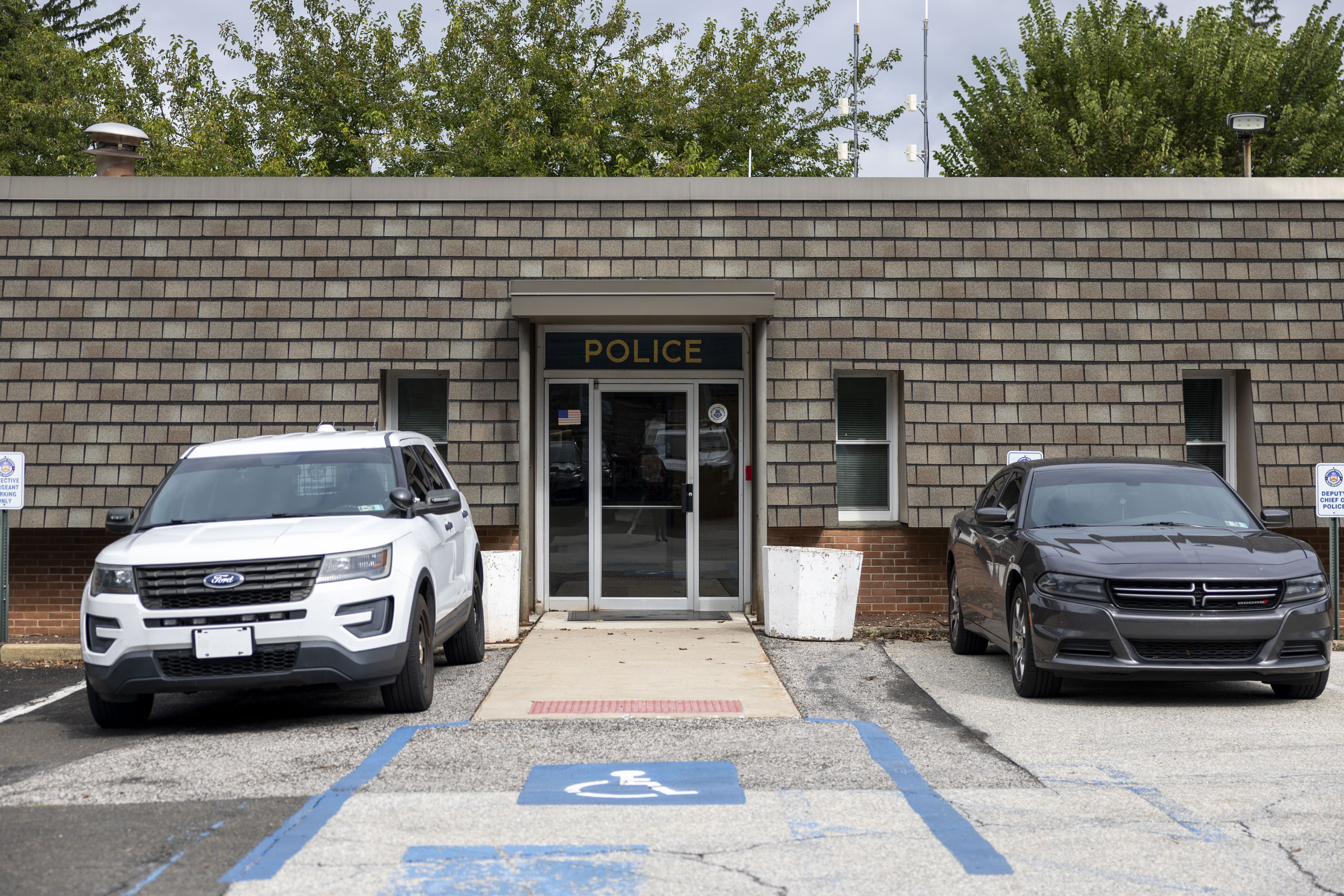
Cheltenham canceled plans to buy a new surveillance camera because it includes an automatic license plate reader.
The board of commissioners had approved the purchase of the $35,000 AI-powered Packetalk camera in September to monitor a township construction site, with an eye toward using the camera at community events in the future.
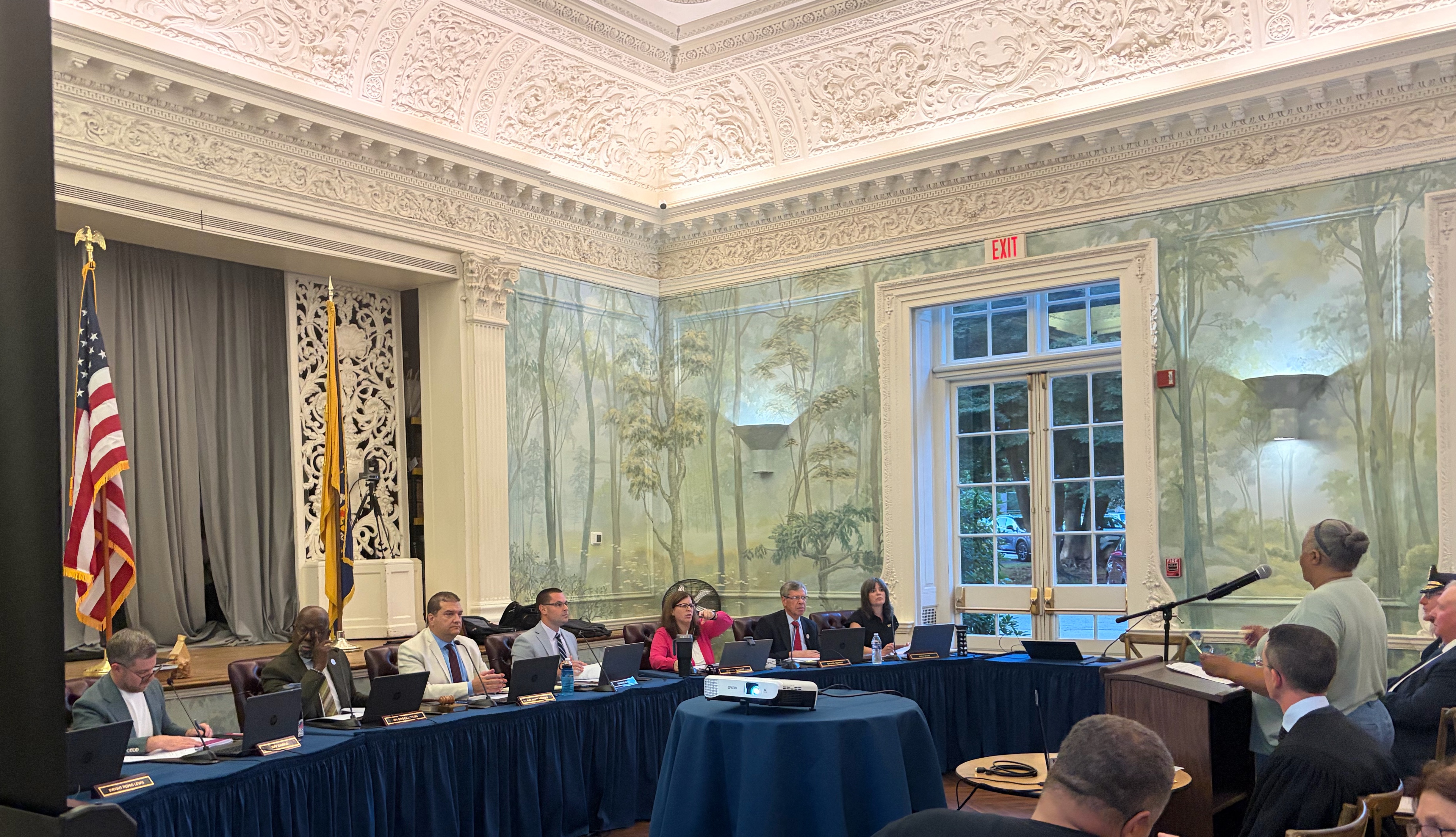
Residents at the Sept. 16 meeting told officials before the vote that the camera has an ALPR — a license-plate reading technology which has raised privacy concerns for many across the region.Several township officials, including the board president and the police chief, said they weren’t sure whether the camera included an ALPR or not. Township Manager Jonathan Altshul said he didn’t think there was an ALPR on the camera.The commissioners voted to approve the camera anyway.
Several residents expressed concern before the vote that township officials were unclear on the surveillance tool they were approving.
“If you don’t even know if that’s a license plate reader or not and you’re ready to vote, I’m not filled with confidence about this board,” one resident said at the meeting.
“When you look at the packet it’s one of the first things listed,” another resident said. “I think the concern is not even knowing it has ALPR on it.”
The leader of Packetalk has also faced legal challenges.Packetalk’s CEO, Tamer Zakhary, was charged in 2023 with selling Chinese surveillance tools banned under the National Defense Authorization Act as his product, asking a manufacturer to change the color and logo to hide it, and lying to public safety clients about compliance.
The federal charges were dropped without explanation or prejudice, meaning prosecutors are allowed to charge Zakhary again for the same thing in the future.
Board President Matthew Areman and other officials said at the September meeting that they didn’t intend to use the camera as a license plate reader regardless.
Altshul said at an Oct. 14 committee meeting that he asked IT Director Michael Rubin to hold off on purchasing the camera shortly after hearing feedback at the September meeting. Rubin had proposed the camera at a committee meeting earlier in September that fell on Altshul’s second day of work. An agenda for the October meeting included a memo from Altshul and Rubin.
“I misspoke in stating that the cameras do not have Automated License Plate Reader (ALPR) and Artificial Intelligence technology, when in fact they do,” Altshul wrote in the Oct. 5 memo. “Upon learning of my error, I asked staff not to purchase the surveillance trailer.”
Commissioners and residents praised Altshul and his staff at the October meeting for changing course.
“Thank you for hearing our questions and the public’s questions … and coming up with a different plan,” Commissioner Emily Stine said. “It’s very much appreciated.”
Cheltenham still has Packetalk cameras at Wall Park, but a township spokesperson reiterated on Oct. 13 that those do not use AI or ALPRs.
This suburban content is produced with support from the Leslie Miller and Richard Worley Foundation and The Lenfest Institute for Journalism. Editorial content is created independently of the project donors. Gifts to support The Inquirer’s high-impact journalism can be made at inquirer.com/donate. A list of Lenfest Institute donors can be found at lenfestinstitute.org/supporters.
After a football assault scandal that has weighed heavily on the community, Cheltenham High School leaders hope to bring excitement and pride back to the student body with a different homecoming celebration.
This year’s festivities will center on a boys’ soccer game in the school’s new football stadium, with traditions both old and new. Cheltenham will face Academy Park on Oct. 16 at 7 p.m., with the homecoming court recognized at halftime. While the boys’ game will be the main homecoming event, the school will also celebrate its girls’ varsity soccer and volleyball teams, which will each play earlier that evening.
“Homecoming is not intended to belong to one sport,” Athletic Director Sam Sheridan wrote in an email. “It belongs to Cheltenham High School and the broader Cheltenham community.”
Homecoming last year came weeks before the football season was canceled after a player reported an assault by teammates in the locker room. Four former coaches are set to stand trial for child endangerment and conspiracy after text messages shown in court suggested they tried to hide the incident. Six players were charged.
The school year began a few weeks ago with fallout from the assault scandal still unfolding. Some kids were nervous, parent teacher association President Stephanie Curry said. But parents have worked to lift the mood — holding a community march the weekend before school started, and forming a welcome tunnel outside the doors on the first day.
Student council started planning homecoming in the spring, when students learned that Cheltenham’s football program would also be canceled this year as the district awaits investigative findings and looks to address any systemic problems the incident and its aftermath have exposed.
“We had a very unfortunate year last year,” Student Council President Safia Pendleton said. “Everybody was disappointed in each other and ourselves as a district.”
Cheltenham students turn the page
Those most affected by the canceled football season, students said, included teams who perform at football games. Canceling the season meant hours of lost time for cheerleaders, musicians, and the color guard.
Pendleton is also a captain on the varsity cheerleading squad, which faced a canceled senior night alongside the football team last year.
“The most fun game of the year, we had to [forfeit],” Pendleton said. “We had a very good season going.”
“Not having a football team kind of sucks,” said Freddy Torres, a varsity soccer team captain, who added that he’s looking forward to playing at homecoming.
Student council got pushback from some students on the soccer plan, Pendleton said, but she still expects a large turnout.
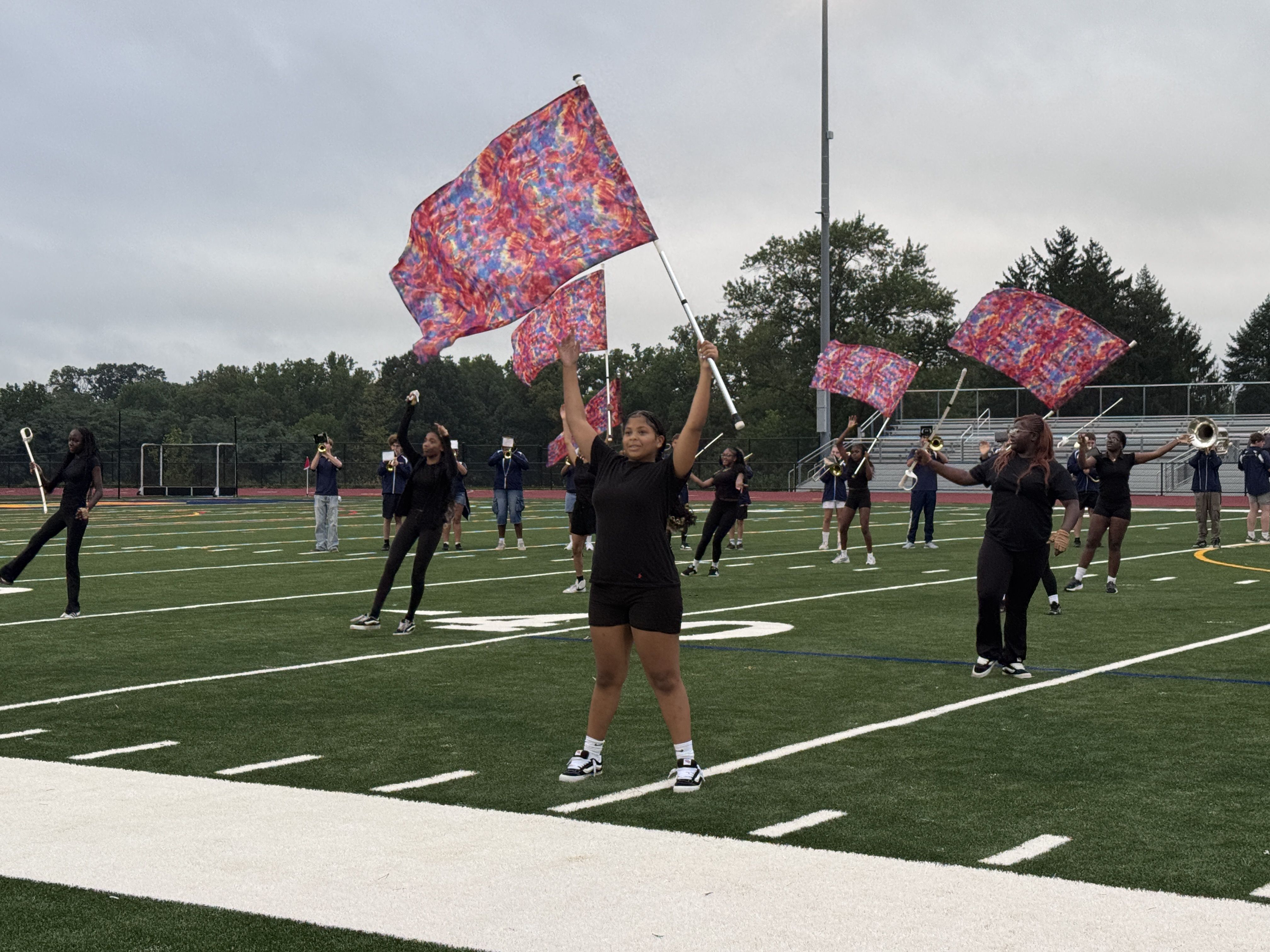
Other homecoming mainstays will remain at Cheltenham, including cheerleaders, pep band, drumline, and color guard. The school is also adding what leaders say could become a new tradition: a staff versus students flag football game before the soccer match.
Cheltenham isn’t alone in swapping cleats for boots this year: Jenkintown built homecoming around the coed varsity soccer team’s Oct. 3 game after it canceled the rest of its football season over low participation.
New stadium for Cheltenham
Cheltenham debuted its $13.4 million stadium this summer. As news of the assaults broke last year, some residents questioned whether the two-year project was worth it, without a football team to play on the turf.
But school board directors and staff have emphasized that it is used for other sports, too, including soccer, field hockey, and track.
“Our old grass fields were rugged,” said Jackson Scott, a soccer team captain. “We’ve had a lot more fans [in the stadium] and it’s a lot more fun.”
Though Cheltenham teams have played on the new stadium field since August, the school will hold an official ribbon-cutting in the afternoon before other homecoming festivities.
“The atmosphere is definitely different, but everyone is trying to make it the best it can be,” Pendleton said. “No matter what comes our way, Cheltenham will still be great.”
This suburban content is produced with support from the Leslie Miller and Richard Worley Foundation and The Lenfest Institute for Journalism. Editorial content is created independently of the project donors. Gifts to support The Inquirer’s high-impact journalism can be made at inquirer.com/donate. A list of Lenfest Institute donors can be found at lenfestinstitute.org/supporters.
The child gasped for air, sitting alone in front of an upstairs television, near death inside her Northeast Philadelphia home.
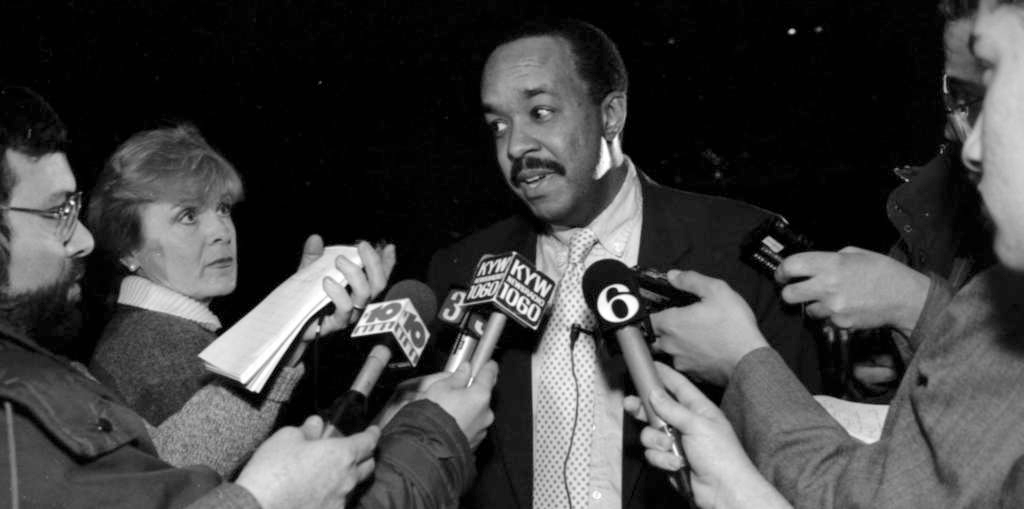
As a measles outbreak ravaged the city, Philadelphia’s deputy health commissioner, Robert Ross, used the home phone to call a judge for a court order to treat the girl. Her family worshiped at Faith Tabernacle Congregation, a fundamentalist Christian church at the center of the outbreak. Many members were refusing all medical care, including vaccinations.
The 1991 outbreak would eventually sicken 1,400 people across Philadelphia and kill nine children. It spurred the city to pursue the nation’s first and only court-compelled vaccinations. Some parents at Faith Tabernacle were ordered, against their wishes, to vaccinate their children against measles.
The girl in the house in Northeast Philadelphia was about 9 years old and “minutes, maybe an hour, away from respiratory failure,” Ross recalled. And when he tried to call for medical care, her grandmother tried to block him from the phone.
The child ended up on a ventilator at St. Christopher’s Hospital for Children and ultimately survived. Her story became a defining moment in the public health response to the state’s last major measles outbreak, part of a nationwide surge between 1989 and 1991 that sickened tens of thousands of people and led to at least 166 deaths.
Then and now, the highly contagious disease spread in communities with low vaccination rates, but for different reasons. The 1991 outbreak spread in a community that rejected vaccines — and across a city with limited access to vaccination even for those open to them. Now, vaccines are easier to access — but too many people don’t want them.
So far, Philadelphia has been spared as measles actively spreads in the region’s western suburbs of Chester County and just beyond in Lancaster County, whose 401 reported cases lead the state.
Ross and other physicians who treated children in Philadelphia in 1991 lament the return of measles, which tops the list of vaccine-preventable diseases once common during childhood.
“I would have said there was no chance this would ever happen again,” said Ross, who went on to spend decades as a public health administrator in California. “We were looking forward to decades of measles-free, whooping cough-free, polio-free livelihoods for children.”
In 1991, parents flocked to vaccine clinics organized around the city. At one event that May, doctors handed out shots to 60 children — with Nerf balls and a DJ on hand to make the medicine go down — in Fishtown and South Kensington, then without full-time pediatricians to routinely provide vaccines. Another vaccination effort immunized 6,000 children over a weekend, with help from the Phillie Phanatic.
Today, families increasingly are opting out of vaccines, often by taking advantage of religious and philosophical exemptions that provide legal outs from immunizations otherwise required to enter school. And vaccine skeptics once relegated to the fringes of public discourse now are setting the federal health agenda under President Donald Trump.
Years of declining vaccination rates have left not only children but also many unvaccinated adults vulnerable. Where only children died in 1991, three of five deaths in the current outbreak appear to have occurred in adults.
“It felt like a more winnable battle in ’90, ’91, than right now,” Ross said.
‘You just knew that an outbreak was imminent’
In the spring of 1989, an R.E.M. concert led to Philadelphia’s first reported cases, involving concertgoers at the Spectrum. The city health department interviewed teenagers exposed at the show, ramped up vaccinations, and braced for the worst.
Pennsylvania laws requiring vaccinations for school admission were still relatively new — on the books for less than a decade — and federal health officials had only just begun recommending a second dose of measles, mumps, and rubella vaccines for children.
Tens of thousands of preschoolers had not received even one dose of the MMR vaccine, the Daily News reported when the first cases emerged. Nearly two-thirds of Hispanic toddlers in North Philadelphia had not received the one dose recommended by age 2, The Inquirer noted at the time.
The virus started spreading: 89 cases were reported in the city in 1989, followed by more than 200 the next year.
The numbers followed a nationwide trend: By December 1990, measles had infected more than 25,000 people across the country, a 68% increase over the year before.
At Philadelphia’s children’s hospitals, St. Christopher’s was receiving three to four measles cases a day in city neighborhoods with high poverty and low access to medical care. Children’s Hospital of Philadelphia was handling one to two at its main campus in West Philadelphia, where at least half of preschoolers had received their recommended shots.
In 1991, officials told The Inquirer that roughly 60% of preschoolers citywide were vaccinated against measles, well below the 95% threshold that scientists now say is necessary to prevent the virus from spreading in a community.
In part, this reflected access challenges. The federal government had reduced public health funding under President Ronald Reagan, a Republican, as rising poverty contributed to a growing uninsured population. The illicit drug use that defined the crack epidemic also meant some parents neglected to seek medical care for their kids, Ross said. All contributed to “a toxic brew” that kept kids from getting immunized, he said.
“You just knew that an outbreak was imminent,” Ross said.
Deaths mount
In January 1991, Philadelphia recorded its first measles death in 20 years — an unvaccinated 18-month-old who developed pneumonia after contracting measles.
The next month, two unvaccinated girls involved with Faith Tabernacle died from measles. Church members told the Daily News their views required rejecting medical care: Only God could cure illness. “They effectively had a ban not just on vaccines but on all medical care,” Ross said.
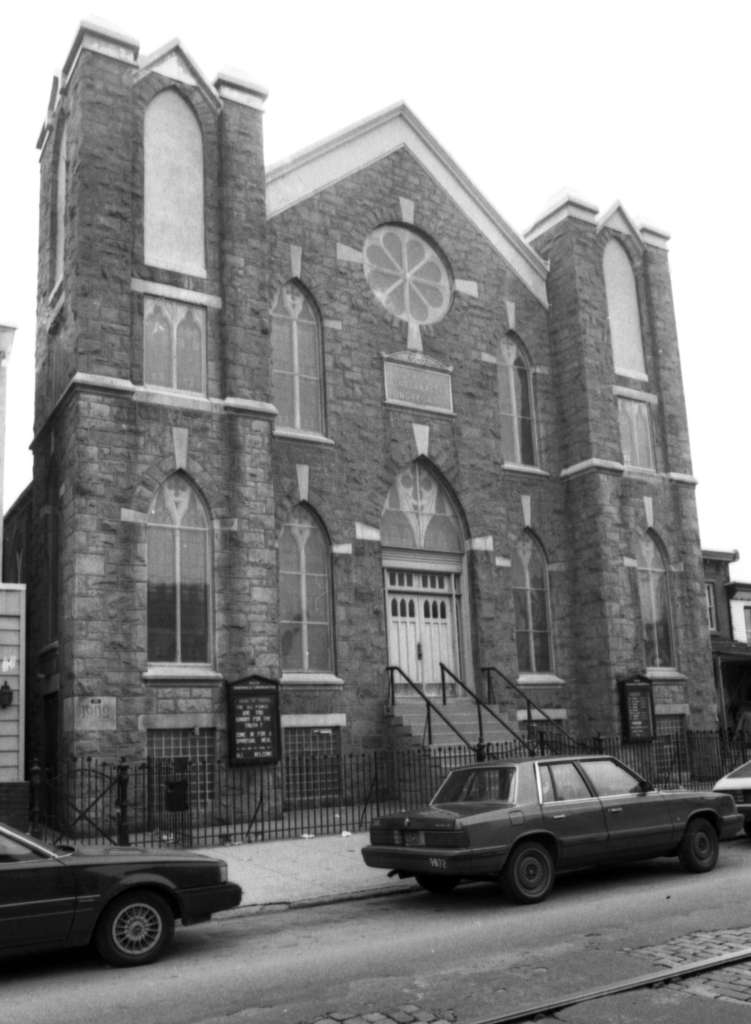
Faith Tabernacle Church at Fifth and Erie Streets in 1991. Children from the congregation died in a measles outbreak that year.File Photograph
Some church members refused to call a doctor or visit a hospital even as their children lay dying. Other parents associated with the church, however, did take their children to the hospital as their conditions deteriorated.
Sarah Long, then an infectious-disease physician at St. Christopher’s, remembers the first child with measles she treated in 1991 — a 2-year-old with a high fever and rapid breathing, characteristic of a case of pneumonia.
But with a classic case of pneumonia, “the child is hyperalert and anxious,” Long said.
“These children — they were not able to sit up. Not able to take fluids. They’re just lying there, incapacitated,” she recalled.
She was stunned by the consequences of a disease avoidable through immunization since the 1960s. “This was a completely preventable problem,” Long said.
After a third death, of a Cheltenham girl whose family attended the church, Ross and other health department workers grew concerned that phone calls with the church’s members were not producing accurate information.
With a judge on call to order medical treatment if necessary, Ross and others knocked on congregants’ doors.
At the house where he discovered the girl gasping for breath upstairs, Ross met eight other children recovering from measles infections, the virus’ characteristic rash fading from their faces.
Hundreds of children not affiliated with the church also fell ill. Six of the nine children who died were church members.
Reached by phone, Faith Tabernacle’s pastor said news reports over the years had “misconstrued the truth” about the church’s experience during the outbreak.
Declining to give his name, and noting that he was not its leader at the time, he said the church supports personal choices about medical care. “We’re not a cult. We present the word. It’s up to the individual,” he said. “We trust the Lord for our healings.”
‘We had to resort to it’
In March 1991, after another child died, several judges upheld a Common Pleas Court ruling that ordered five Faith Tabernacle parents to vaccinate their children. Their parents cried as they brought their children to court for the shots.
“We had to resort to it,” Ross said. ”We just had nothing else available to us to protect those kids.”
Such a ruling is unlikely to happen again in the current political landscape, said Paul Offit, a vaccination expert who heads CHOP’s Vaccine Education Center and worked at the hospital during the 1991 outbreak.
The 1991 court rulings were much more stringent than typical vaccine requirements for schools or employment, Offit said. Under a vaccine mandate, for example, a person might face a penalty for not being vaccinated — like not being able to work a specific job — but can still decline a vaccine.
Philadelphia courts compelled Faith Tabernacle parents to vaccinate their children — with no way to opt out.
By the time courts were compelling parents to vaccinate their children, the city’s large-scale vaccine drives helped ensure that few children still lacked immunity to measles, he said.
The arrival of spring and summer — measles traditionally spreads in the fall and winter — also helped quell the outbreak. So did a wave of media coverage that raised awareness about the virus and spurred many parents to vaccinate.
Offit published a book, Bad Faith, in 2015 about religious objections to vaccination, including Faith Tabernacle’s experience.
In 1991, immunization rates came up as shots were made more widely available.
Now, stricter vaccine mandates for school entry could help reduce measles transmission — but that is politically unviable, Offit said.
Pennsylvania has some of that nation’s most permissive exemption laws, requiring only that parents indicate a religious or philosophical objection to vaccinations on a form before sending unvaccinated kids to school.
An Inquirer analysis found a 15% increase in the use of these exemptions in the last two years, reflecting increasing public mistrust in vaccines.
In the state’s current outbreak, Health Secretary Robert F. Kennedy Jr. has spent years stoking skepticism of the vaccine, although he recently said the MMR vaccine is effective.
Downplaying the dangers of the state’s measles outbreak, he has accused Pennsylvania Gov. Josh Shapiro, a Democrat, of politicizing the outbreak and said his administration may have “fabricated” the first reports of measles-related deaths.
Kennedy later acknowledged that one of the deaths was caused by measles. Yet the Centers for Disease Control and Prevention website currently lists two measles-related death across the nation this year, despite Pennsylvania’s reports of five deaths.
Now local physicians and health systems have limited options to combat anti-vaccination sentiment to increase immunization rates.
“We have two tools: quarantine and vaccine mandates,” Offit said, “and there’s been an erosion in both because people like RFK Jr. say you can’t trust medical experts. I am worried we’re going to be seeing this for years.”
Cheltenham Township commissioners voted Tuesday to cancel a contract with a private developer to build a pool at the former Melrose Country Club, while vowing to proceed with a pool project there.
The special meeting came less than two days before a court was set to hear oral arguments in a lawsuit a resident filed against the township.
Sam Thacker alleged that Cheltenham illegally skirted bidding laws by making a deal with a private developer to build a pool alongside a new housing complex for up to $4.5 million. The pool is to be built on 2.7 acres that the developer gifted to the township late last year.
The agreement came in the form of a ground lease, in which Cheltenham would charge the developer $10 per year to rent the land back from the township. Thacker’s case argues the township instead should have put the project out for competitive bids to ensure a fair price.
Thursday’s hearing has been postponed in light of the vote, Thacker’s lawyer, Christopher McCabe, said Wednesday, and the suit will likely be dropped if Cheltenham agrees not to pursue another ground lease.
The township has not indicated that bids were sought for the project, and has repeatedly declined to explain the legal reasoning for the lease approach to the public. Cheltenham has argued in court filings that the township did its due diligence by getting estimates to redo the aging Conklin Pool.
“We remain confident in the township’s position,” Commissioner Emily Cheramie Walz said at Tuesday’s meeting.
The commissioners emphasized that they intend to move forward with a pool on the 2.7-acre Melrose plot, which the developer gave to Cheltenham last year for the purpose of building a township amenity and for an undisclosed benefit to the developer. The Melrose pool would replace Conklin Pool across town.
Conklin Pool in Cheltenham.Sam Thacker
“Our goal has not changed. Our residents want a new pool. We want a new pool. We continue to believe that Melrose is the right location for that pool,” said Matthew Areman, board president.
The officials offered no details on how the Melrose project would proceed or how Cheltenham could legally exit the lease.
“Our staff is already working to identify alternative options for moving forward. Those options will be evaluated and presented to the board in the coming weeks,” Areman said.
Although the board has repeatedly declined to answer questions about the pending litigation, multiple commissioners said at the meeting that the lawsuit is delaying the pool project, without explaining how.
The main reason the case is delaying the pool project, Commissioner Dwight Pedro Lewis said after the meeting, is that the bank will not finance construction when there is an active lawsuit against the project.
The township has previously declined to explain how its litigation insurance policy works or how much it has to pay out of pocket in the suit.
Thacker, the resident who sued, said at the meeting he is glad the township is canceling the lease and hopes the commissioners opt for a public bidding process this time.
If Cheltenham does a new ground lease instead, Thacker said, “they’ll get sued again.”
This suburban content is produced with support from the Leslie Miller and Richard Worley Foundation and The Lenfest Institute for Journalism. Editorial content is created independently of the project donors. Gifts to support The Inquirer’s high-impact journalism can be made at inquirer.com/donate. A list of Lenfest Institute donors can be found at lenfestinstitute.org/supporters.
Cheltenham’s commissioners will consider terminating a controversial public pool contract at a special meeting Tuesday, the township announced Friday morning.
The commissioner board had approved the $4.5 million contract earlier this year as a ground lease to Melrose Pool LLC, a new business entity affiliated with a developer who’s building houses, shops, and a medical center at the former Melrose Country Club.
The ground lease was signed in July by the cofounder of BG Capital, which is developing the country club property, on behalf of Melrose Pool LLC. But no LLC under that name appears to have been registered with Pennsylvania until September, according to state records.
Resident Sam Thacker sued in July, arguing the ground lease is really a construction contract that should’ve been subject to bidding rules.
The special meeting announcement came as the township faces a Commonwealth Court appeal process that Thacker’s lawyer, Christopher McCabe, has estimated could take a year.
“The Special Meeting of the Board was called due to concerns that the delays already being caused by the litigation could ultimately prevent successful completion of the pool project under the agreed upon terms,” Cheltenham’s spokesperson Lauren Walter wrote in an email Friday.
It was not immediately clear whether the township would be on the hook for any money the developer has already spent toward constructing the Melrose pools.
The Melrose project would put three public pools next to the new development to replace Conklin Pool, which would close. The township says it would cost more than $4.5 million to sustainably replace Conklin.
“I’m encouraged that they are listening to their constituents in bringing the issue before the public,” Thacker texted Friday. “Terminating the lease and moving forward with a transparent bidding process would bring a welcome end to the costly legal proceedings.”
The meeting is scheduled for Oct. 6 at 5:30 p.m., online and at the township administration building.
This suburban content is produced with support from the Leslie Miller and Richard Worley Foundation and The Lenfest Institute for Journalism. Editorial content is created independently of the project donors. Gifts to support The Inquirer’s high-impact journalism can be made at inquirer.com/donate. A list of Lenfest Institute donors can be found at lenfestinstitute.org/supporters.
Cheltenham Township plans to take over part of the independently run tax office amid a dispute with its finance officer over business data.
The disagreement over data privacy began shortly after Melvin Pitts took office in January, according to Pitts and emails obtained by The Inquirer. Cheltenham plans to amend the township code and reassign one of Pitts’ duties to help resolve the impasse.
Dispute over business licenses
Cheltenham’s tax office is independent from the township and collects county, school district, and municipal taxes for a flat fee from each entity. The tax collector, under the township code, also doubles as Cheltenham’s finance officer and issues the town’s annual $15 business licenses.
Shortly after Pitts and the township commissioner board’s new president, Matthew Areman, began their terms this year, Areman asked Pitts for a list of licensed businesses. Then in August, Pitts was asked for similar data to fulfill a Right-to-Know request.
Pitts refused both requests because, he said, he sees the information as confidential taxpayer information. Tax professionals who violate confidentiality rules can face jail time under state law.
“It’s very sensitive data,” Pitts said in an interview.
But the township argues that a list of licensed businesses does not qualify as tax information and should be public.
“I agree with you that information related to tax … is not subject to public access,” township solicitor Ed Diasio wrote to Pitts in February, “but there is no provision … that a list of businesses that the township has licensed in the township is not subject to public access.”
Two lawyers specializing in public records told The Inquirer that although the tax office is exempt from sharing certain records, the tax collector is required to provide other records as an officer of the township.
Cheltenham has no list of businesses
Without the business license data, Cheltenham has little way to confirm which businesses are operating in the township, spokesperson Lauren Walter said — especially more discreet enterprises like rental properties, which the township has to inspect every three years.
“Township Administration does not currently have a defined list of businesses within the Township, making communication with our business community a challenge,” Walter wrote in a statement. When the township began regulating plastic bags, for example, the environmental committee went door to door to help inform proprietors of the changes.
Cheltenham officials are also keen to build the township’s business tax base as part of its most recent comprehensive plan.
Rental inspector confronted tax collector
The conflict between the tax office and the code enforcement department came to a head in August, after Pitts learned that the township’s rental inspector, Michael Bluestein, had access to the tax office’s data portal. In August, after Pitts moved to cut off Bluestein’s access, Bluestein confronted Pitts.
Pitts recalls Bluestein telling him: If you take away my portal access, “I’ll crush you.”
Bluestein wrote an apology to Pitts after the incident that does not specify what he said. “I did not realize in that moment that my tone sounded aggressive or threatening,” Bluestein wrote in part. “While I was previously approved to have access, [I] honestly did not know that you did not want me to have access to that information.”
Walter, the township spokesperson, said that she conferred with Bluestein and that he had access in the system only to business contact information, not to financial data.
Township to do business licensing in-house
Now, the township is planning to transfer business licensing applications to someone who will handle accounts receivable, a now-vacant role. Information on newly licensed businesses would then be shared with Pitts’ office for tax collection purposes.
Moving the licensing process from the tax collector’s office to the township would require Cheltenham to amend the town code, which currently specifies that the collector handles it.
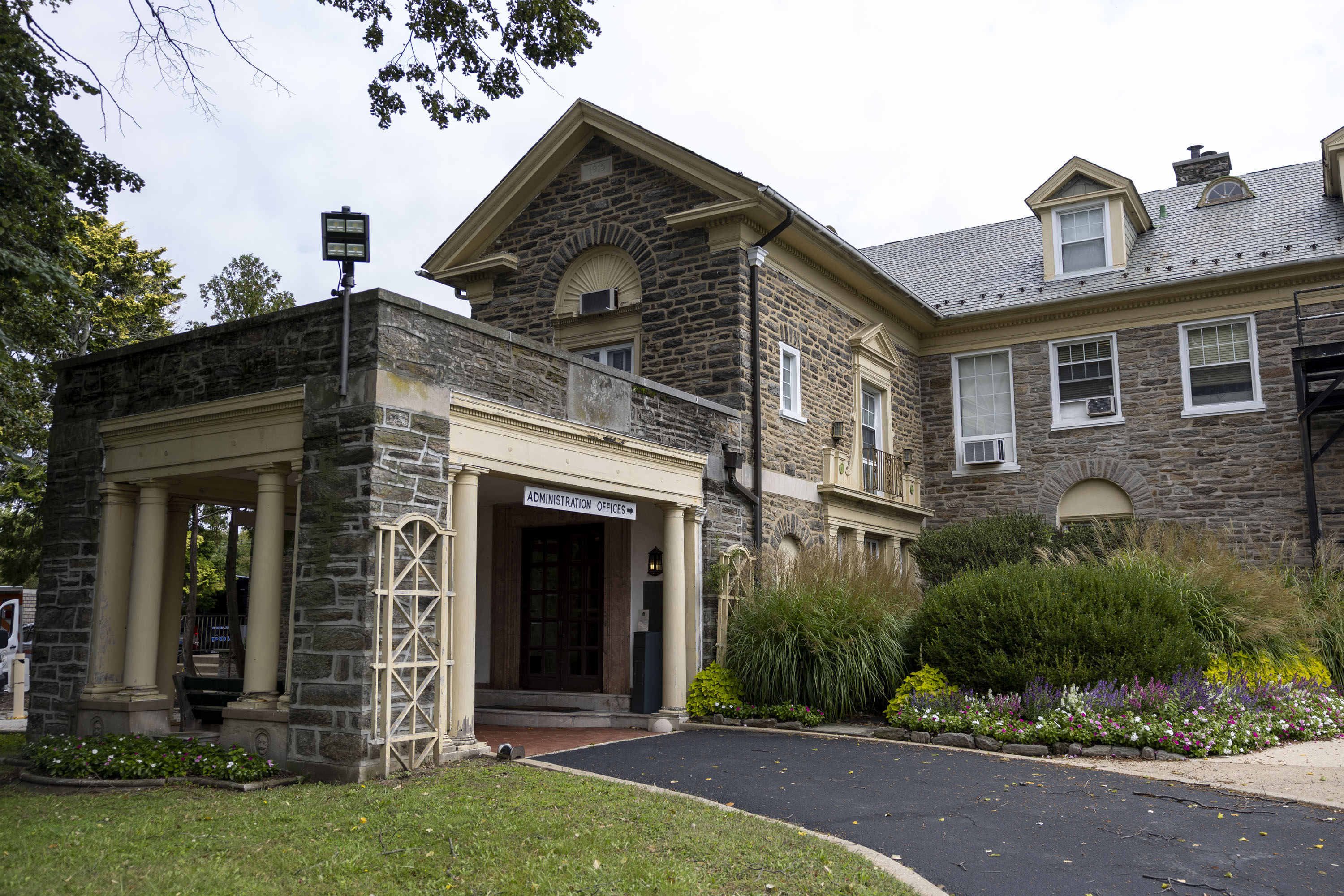
The Administrative Office Building on Tuesday, Sept. 29, 2026, in Cheltenham, Pa.Tyger Williams / Staff Photographer
Cheltenham plans to post the accounts receivable position within weeks, new township manager Jonathan Altshul said, and would not move to amend the ordinance until sometime after tax day 2027.
Pitts would have to remove business licensing from a new system his office is rolling out to allow online tax payments, he said, and he worries that the licenses will become delayed by code enforcement.
That is what had led to a $30,000 backlog in licenses that Pitts inherited, he said, and has since cleared.
“We’ve been getting stuff done so quickly,” Pitts said. “I just want to do my job, and do it under the law.”
Areman, the commissioner board president, said Cheltenham “looks forward to working closely with the tax office throughout the transition” to ensure it is “seamless for the business community.”
Clarification: This story was updated to clarify the tax office’s status under the Right to Know Law.
Correction: This story was updated to correct Michael Bluestein’s name.
This suburban content is produced with support from the Leslie Miller and Richard Worley Foundation and The Lenfest Institute for Journalism. Editorial content is created independently of the project donors. Gifts to support The Inquirer’s high-impact journalism can be made at inquirer.com/donate. A list of Lenfest Institute donors can be found at lenfestinstitute.org/supporters.
Also in the headlines, four former Cheltenham football coaches were held for trial for failing to report a player’s locker room assault, a contested $4.5 million pool development project may be delayed, plus, political leaders and clergy gathered outside the Philadelphia ICE office in the wake of the suicide of a deportation officer and Cheltenham High School alum.
Capricorn Books owner Jackie Botto on Sept. 17, 2026.William Thomas Cain / For The Inquirer
Across Greater Philadelphia, bookstores are so back — mirroring a national trend of physical book sales outpacing online retail.
In Jenkintown, Capricorn Books has almost doubled its business since expanding its storefront in July, owner Jackie Botto said. Last year brought other newcomers to the local bookstore scene: an Abington outpost of Barnes & Noble, which credits BookTok with reviving the chain, and Glenside Book Garden.
Local libraries, too, are seeing a boost in patronage.
📚 Bonus: See the best books that area booksellers, including from Jenkintown and Wyncote, have read this year.
💡 Community news
In a preliminary hearing Monday, a district judge said four former Cheltenham High School football coaches failed to protect a then-15-year-old player who told them he had been assaulted twice last year by his teammates in the locker room. The victim also testified.
Pending litigation over Cheltenham Township’s $4.5 million pool contract could now take a year to resolve, potentially delaying the project.
Cheltenham police will begin using AI-enabled cameras to deter crime at a local construction site and may use them at crime hot spots and community events down the line after township commissioners signed a $35,000 contract with controversial New Jersey tech company Packetalk.
Clergy, political leaders, and activists gathered outside the Philadelphia ICE office last week following the suicide of deportation officer Joseph Moore, 38, who was a 2006 graduate of Cheltenham High School.
Democratic State Sen. Art Haywood, who has an office in Abington, is co-introducing legislation that would formally designate hazing as a mandated reportable offense. In a press release, Haywood pointed to the recent Cheltenham football case as a “mishandling of a serious disclosure of harm.”
Philadelphia man Justyn C. Wharton, 37, was sentenced to up to 25 years in a state correctional institution for repeatedly sexually assaulting a 15-year-old Jenkintown girl, according to The Pottstown Mercury.
Cheltenham police charged a suspect with robbery, simple assault, terroristic threats, and harassment after he attempted to steal a woman’s phone in the Target parking lot at 2450 Shoppers Lane.
Rose Bridge Farm in Dresher has been going viral thanks to its new Coffee and Cows morning offering, which taps into the growing wellness trend around cow cuddling. The Inquirer’s Beatrice Forman shares what it’s like to start your day with a dose of baby calves, kids (the four-hoofed kind), and caffeine during the hour-long sessions.
🏫 Schools briefing
Cheltenham School District recently appointed a new director of teaching and learning, Rachel Girman. She will need to be formally approved at the school board directors’ Oct. 13 legislative meeting, Assistant Superintendent Kendra V. Johnson said during last week’s Educational Affairs Committee meeting.
The same district is working to implement new evidence-based materials focused on literacy for K-3 students by the start of the 2027-28 school year, Kaity Ferraro, supervisor of curriculum for grades K-5, said at the meeting.
🍽️ On our plate
Wendy Stahler’s take on brisket made it onto the menu at Recipe Philly, a new Center City concept with a unique food competition model that features dishes with stories from local home chefs. The 82-year-old is a longtime member of Old York Road Temple-Beth Am in Abington, The Jewish Exponent reports.
Hand-rolled bagels, “genuine and outgoing” service, and an eclectic, worldly dinner menu ranging from a smoked arctic char spread to a faux-meatloaf platter are just some of the details that make new all-day eatery Blue Warbler the “most intriguing restaurant in years” in nearby Chestnut Hill, Inquirer food critic Craig LaBan writes.
🎳 Things to do
🌃 Night Market: Support local businesses slinging fresh produce and artisanal bites. ⏰ Tuesday, Sept. 22, 4-8 p.m. 💵 Pay as you go 📍 Jenkintown town square
🎤 Labyrinth In Concert: Blast into the past for the 40th anniversary of Jim Henson’s musical fantasy film Labyrinth, shown on the big screen while a live band accompanies David Bowie’s vocals from the stage. ⏰ Friday, Sept. 25, 8 p.m. 💵 $65.59-$250.43 📍 Keswick Theatre, Glenside
🎨 Festival of the Arts: Peruse works from local artists and eats from food vendors while taking in live music and dance performances. ⏰ Sunday, Sept. 27, 1-6 p.m. 💵 Pay as you go 📍 Greenwood Avenue and Leedom Street, Jenkintown
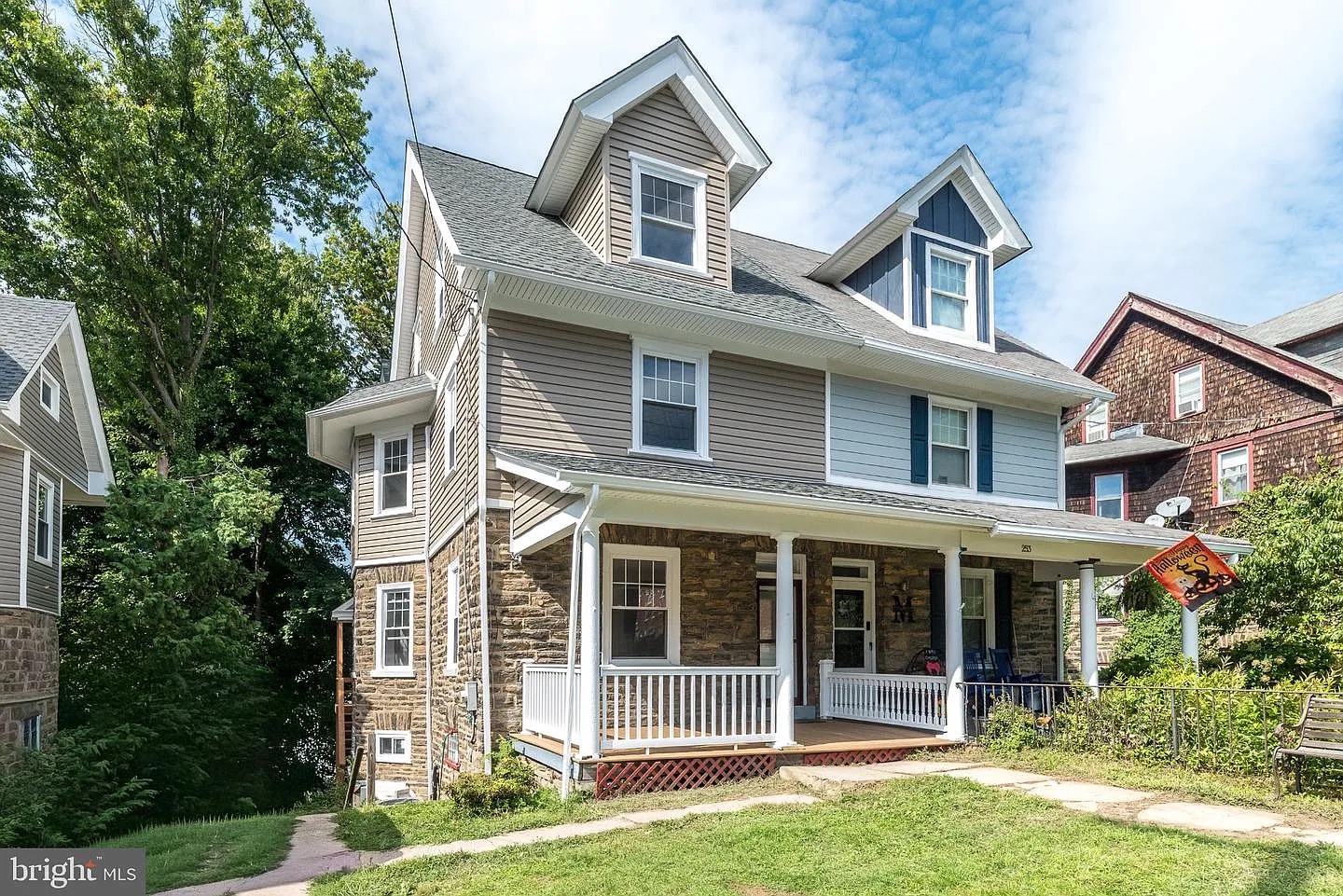
This Jenkintown dwelling, originally constructed in 1900, hit the market this month with a thorough list of home improvements, including a new roof, siding, windows, and flooring. The six-bedroom, three-bathroom space has quartz countertops, stainless steel appliances, and updated cabinets in the kitchen. Each of the three bedrooms on the third floor are outfitted with new mini-split cooling units. There is an open house Sunday from noon to 2 p.m.
By submitting your written, visual, and/or audio contributions, you agree to The Inquirer’s Terms of Use, including the grant of rights in Section 10.
This suburban content is produced with support from the Leslie Miller and Richard Worley Foundation and The Lenfest Institute for Journalism. Editorial content is created independently of the project donors. Gifts to support The Inquirer’s high-impact journalism can be made at inquirer.com/donate. A list of Lenfest Institute donors can be found at lenfestinstitute.org/supporters.
A legal battle over Cheltenham Township’s pool contract has bred tension at meetings and divided some neighbors, but a township official and the suing resident’s lawyer agree on one thing: It could take a while.
The dispute centers on Cheltenham’s lease of land to a private developer for $10 per year to build a pool complex — the same land that the developer had given Cheltenham for free in December 2025.
The agreement requires the township to pay up to $4.5 million for three public pools that a new entity, Melrose Pool LLC, will construct on that land, or rent the pools from that entity. The township had hoped to open the new complex at the former Melrose Country Club by 2027 to replace the aging Conklin Pool across town. The developer, meanwhile, is building houses and a medical facility next to the new pools.
But Cheltenham resident Sam Thacker sued in July, and he argues that the ground lease was in fact a public construction contract and should be subject to a bidding process to determine the best provider.
Cheltenham has argued that the township received estimates for replacing pools on other properties, and therefore determined that $4.5 million is a good deal for the Melrose project.
The litigation has reached a stage that could take a year to resolve, Thacker’s lawyer said. And whether construction continues alongside the suit may depend on whether a court grants an injunction Thacker filed last week to halt the project. A long delay may scuttle the entire pool project, a township official said.
Where the suit stands
Thacker’s injunction request was denied by a judge last month who found he lacked standing, but he has appealed to Commonwealth Court.
It could take six months to hear the case, said Thacker’s lawyer, Christopher McCabe, who specializes in construction and government contracts, and a year to get a decision.
Thacker, who was representing himself until he hired McCabe this month after raising more than $6,000 from dozens of donors in a GoFundMe campaign, also filed a new injunction with the higher court to halt pool construction in the meantime.
A long delay could mean the new pools do not happen, Township Commissioner Emily Cheramie Walz wrote in a social media post last week after delivering the same remarks at the Sept. 16 commissioner meeting.
“There is a real risk that continued litigation could jeopardize the funding and timeline for the Melrose project,” Cheramie Walz wrote. “Families across the township who were excited about having a new pool could lose that opportunity.”
Cheramie Walz’s comments echoed part of Cheltenham’s legal defense in the case, that halting the project would cause more harm to township residents than allowing the project to proceed — an argument the lower court judge agreed with.
But McCabe asserted in the emergency injunction request filed last week that that logic does not hold up, because the Melrose agreement is a no-bid construction contract disguised as a land rental.
“Then every municipality would simply argue that the object of an illegal contract will be greatly beneficial to their residents and the taxpayers,” McCabe wrote, and residents would be unable to stop an illegal contract.
When the developer, an entity associated with BG Capital, gave 2.7 acres to the township last winter, the document referred to an unspecified “advantage” that the developer would receive by gifting the land to Cheltenham.
Amee Farrell, a lawyer for the developer and a former chair of the township’s zoning board, has not answered questions about what the developer expected to gain from the land gift.
“If [Cheltenham] owns the land free and clear, what prevented them … from putting out a request for bids?” McCabe said Monday. “You don’t know whether there was corruption here because you don’t know what the discussions were.”
An ongoing topic at public meetings
Although the township has repeatedly declined to comment on the details of the ground lease because of the lawsuit, Cheramie Walz addressed the subject of the suit directly in her post last week.
“There is no secret no-bid deal,” she wrote. “We have spent an embarrassing amount of time and public resources dealing with this litigation — resources that could be going toward the work residents actually expect us to be doing.”
Some residents have also expressed frustration over the suit and the controversy.
“We want new centers for community to grow and businesses to develop and thrive,” resident Nick Steever said. “The bidding process isn’t what certain people are upset about, but rather the fact that [Conklin] Pool is closing.”
Thacker and the township commissioners have exchanged tense words during public comment. When Thacker spoke at a Sept. 14 committee meeting, Cheramie Walz asserted that Thacker’s lawyer had told officials they should not speak directly to Thacker, so they would not.
McCabe said Monday that he had told Cheltenham’s lawyers to communicate with him, not Thacker, now that he had legal representation, and was not referring to all township officials.
Thacker said Monday that any delay or waste is on the township.
“They are the ones who executed a no-bid construction contract,” he said. “I do not bear any responsibility for the costs incurred as they dig deeper into defending it.”
Correction: This story was updated to reflect the status of Thacker’s case.
This suburban content is produced with support from the Leslie Miller and Richard Worley Foundation and The Lenfest Institute for Journalism. Editorial content is created independently of the project donors. Gifts to support The Inquirer’s high-impact journalism can be made at inquirer.com/donate. A list of Lenfest Institute donors can be found at lenfestinstitute.org/supporters.
District Judge Christopher Cerski told head coach Terence Tolbert, 55; associate head coach Darian McFadden, 42; assistant coach Benjamin Johnson III, 45; and volunteer coach Ralph Burnley, 60, that they had failed in their duties to protect the then-15-year-old by encouraging him not to tell his mother about the assaults, and insisting on handling the matter themselves.
During the lengthy proceedings, the victim testified about the assaults and how it affected him.
After a marathon preliminary hearing in Jenkintown, Cerski held all four men over for trial on two counts of endangering the welfare of a child and one count of conspiracy, but dismissed another count of conspiracy that they faced.
Their lawyers argued against the merits of the case, saying the coaches were never told the full scope of abuse the teen suffered. He had deliberately downplayed the assault to them, according to testimony Monday, because he was embarrassed that his teammates had used a broomstick to poke at his buttocks.
The group only found out the full details months later, when video of an earlier assault surfaced during Cheltenham School District’s internal investigation.
Tolbert’s attorney, Thomas Egan III, called the prosecution’s “grand conspiracy to stomp on this teen’s voice” completely false.
“[Tolbert] could only act in the scope of what he knew,” Egan said. “He had a player who didn’t have major injuries and intended to still play football and not tell his mother.”
But Assistant District Attorney Samantha Cauffman balked at that theory of the case, saying adults who should have known better were improperly foisting their responsibility onto a teenager.
“This case boils down to the fact that a 15-year-old was beaten up, and you tell him not to tell his mother,” she said. “It doesn’t matter if he didn’t want to tell her. You are the adults in the room.”
Two players charged alongside the former coaches, Isaiah Simpson and Josiah Peeler, both 18, waived their hearings and will also face a Montgomery County judge: Simpson for conspiracy to commit aggravated assault, simple assault, reckless endangerment, and related crimes for his role in the September assault, and Peeler for false swearing for being untruthful to police.
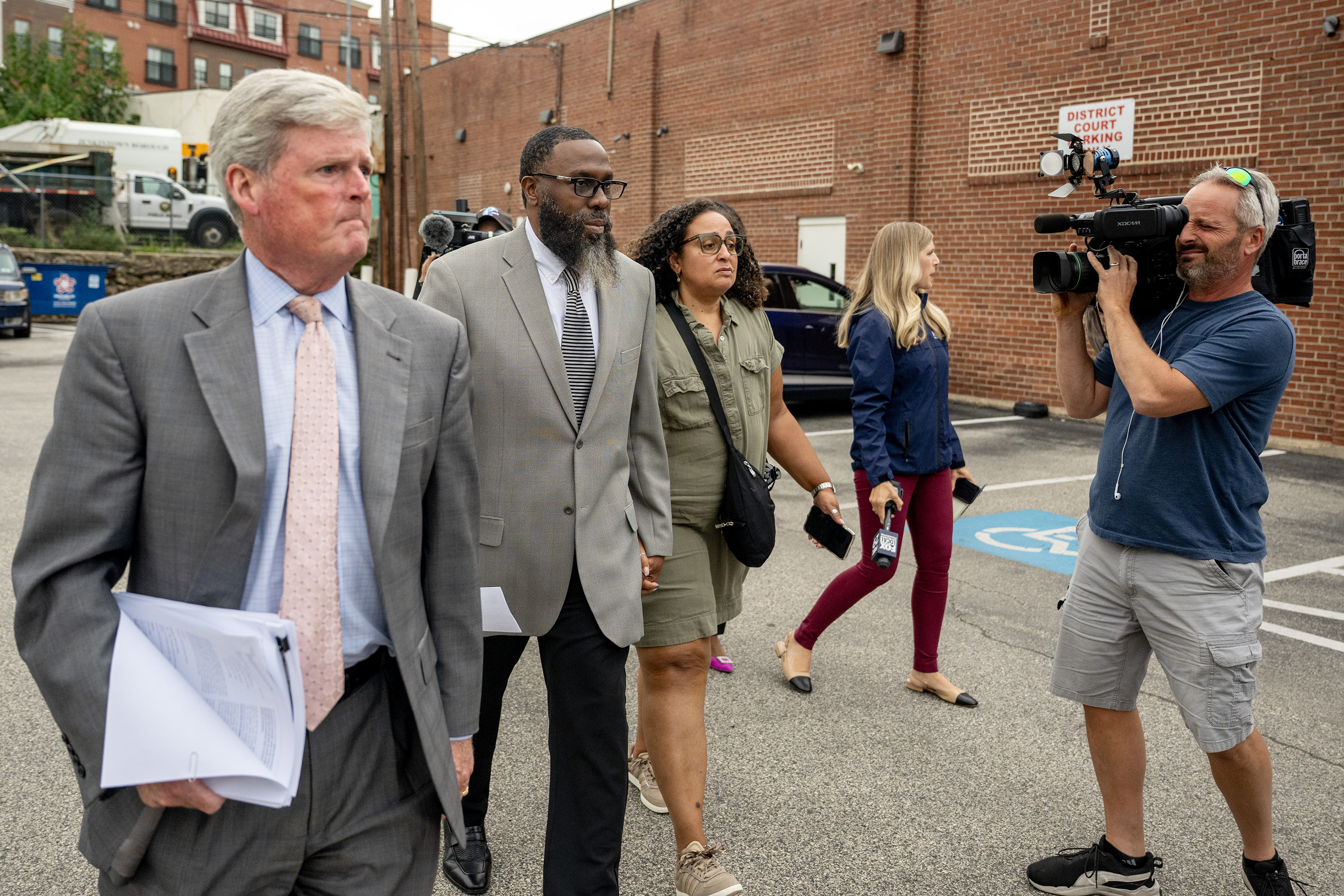
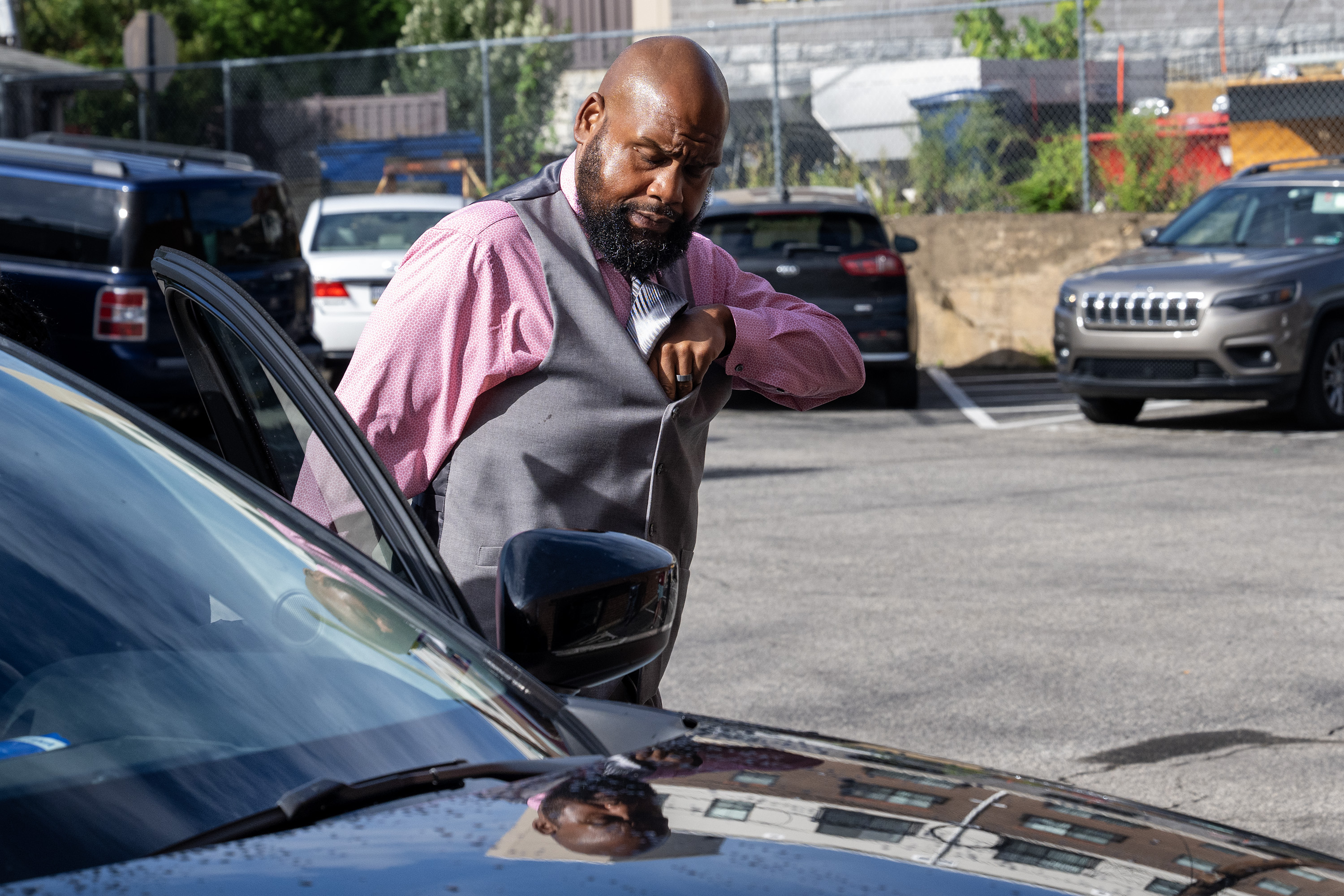
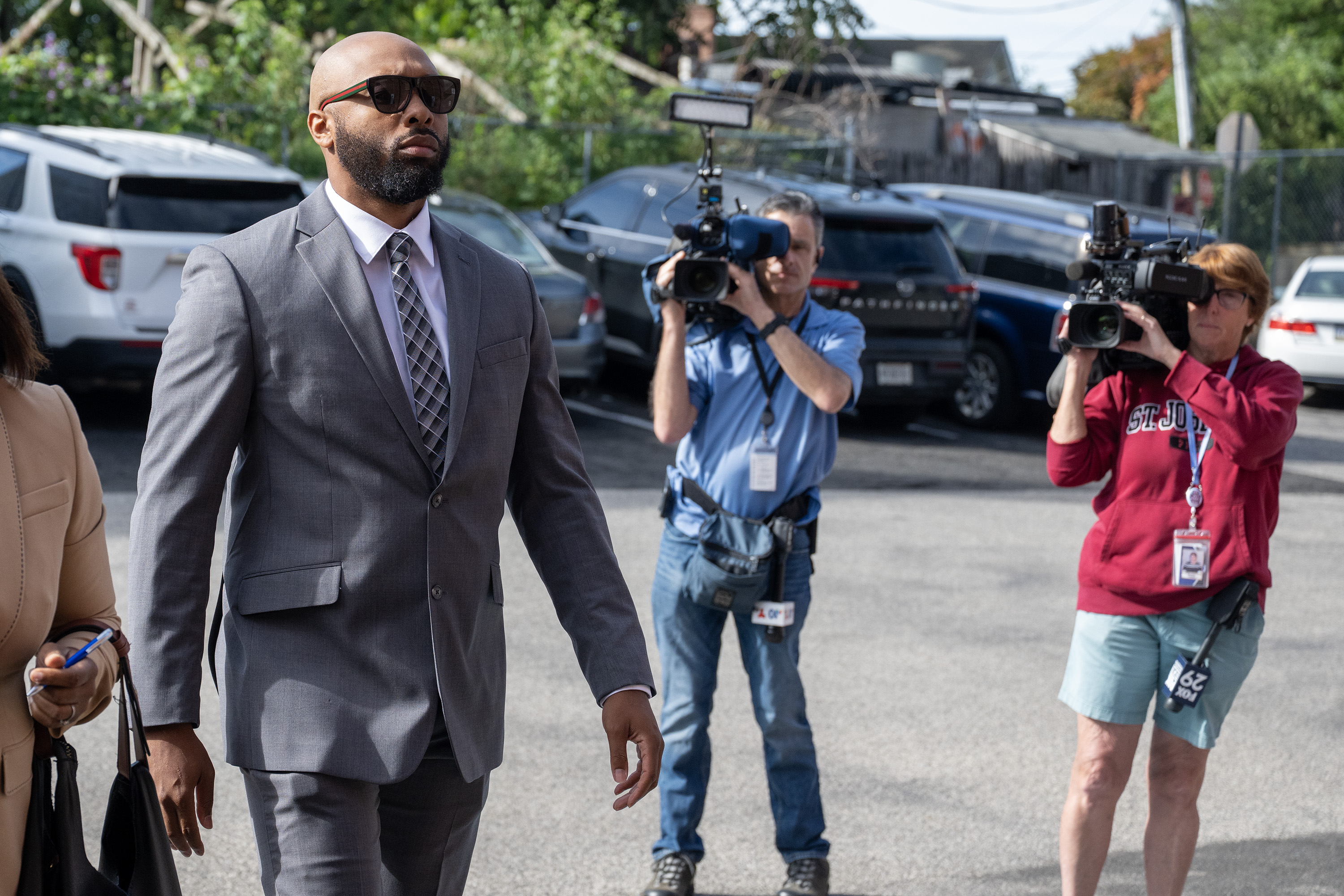
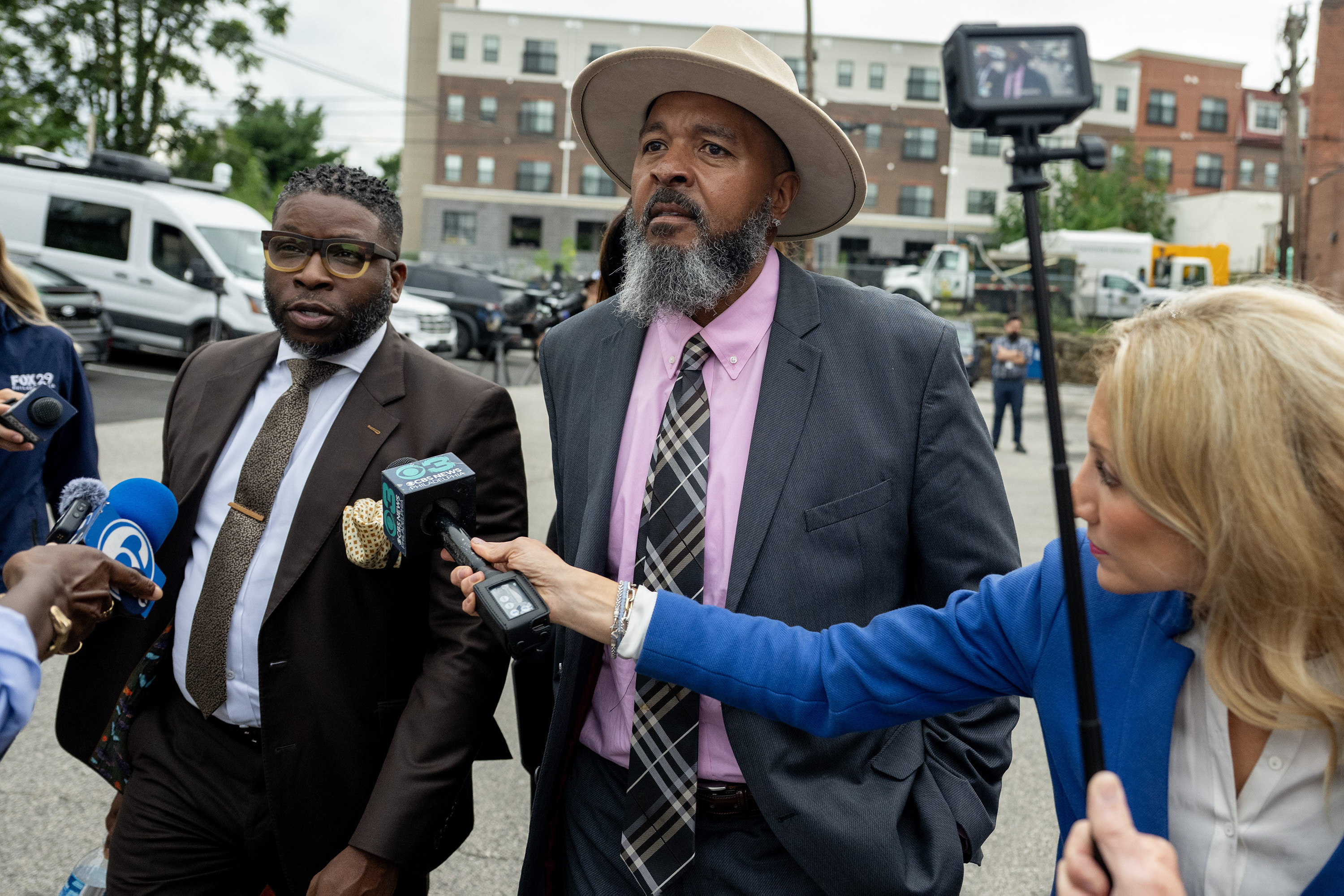
Former head coach Terence Tolbert (second from left), one of six members of the Cheltenham High School football team appearing for their preliminary hearings Monday in Jenkintown Monday, Sept. 21, 2026.Tom Gralish / Staff PhotographerFormer assistant coach Benjamin Johnson III.Tom Gralish / Staff PhotographerFormer associate head coach Darian McFadden.Tom Gralish / Staff PhotographerFormer volunteer coach Ralph Burnley (right).Tom Gralish / Staff PhotographerPlayer Isaiah Simpson.Tom Gralish / Staff PhotographerPlayer Josiah Peeler.Tom Gralish / Staff Photographer
Locker room assault victim takes the stand
The victim of the assault, whom The Inquirer is not naming, testified Monday that Simpson and a group of other players pulled him into the team’s locker room after practice in September 2025 and “jumped him.” The group stomped on his head while wearing cleats, kicked him in the groin, and assaulted him with the broom.
They were acting out a reference to a Meek Mill song, he said, that included the lyrics “broomstick all in his butt, tell him take that.”
In a quiet voice, as he faced his former coaches, the teen said the group attacked him because he had taken Peeler’s shoulder pads after his had been stolen out of his locker. Peeler reported the theft to the coaching staff, who made the entire team run extra laps as a punishment.
After the assault, the teen said he walked outside, asking Burnley for a ride home. He was crying, he said, and icing his groin to ease the pain he felt.
When he explained to Burnley what happened he omitted the detail about the broomstick, feeling embarrassed.
Burnley told him to call his mother. He declined, he said, because he was afraid she’d force him to stop playing football.
As he drove the teen home, Burnley called the other coaches to tell them about the assault. Later, Johnson, Tolbert, and McFadden spoke to him over the phone and told him not to tell anyone about the incident, and that they would handle it internally.
Privately, the coaches sent incriminating text messages to one another, prosecutors said, expressing concern that the incident “has to be handled and kept quiet.”
McFadden wrote “if this gets out we are [expletive]. They will cancel the whole season,” according to messages displayed in court.
However, the teen’s mother learned of the assault a week later from someone in the community, and Cheltenham began investigating the case.
During that probe, the district received video of a similar, earlier assault of the teen, which had taken place in August 2025. The video, played in court, showed a group of players ganging up on the teen to beat and mock him as he cries out for them to stop.
The teen testified that he didn’t disclose that assault to the coaches because he considered it more minor and was closer to “horseplay.”
The four coaches are expected to be arraigned in county court next month.
Cheltenham police will soon use AI-enabled cameras to deter crime at a construction site, and may use them in the future for crime hot spots and community events.
Packetalk is smaller than the more widely known Flock Safety, but the company is not without controversy.
In 2023, Packetalk’s current CEO, Tamer Zakhary, was charged with allegedly selling Chinese surveillance equipment banned under the National Defense Authorization Act as his own product, asking a manufacturer to change the color and logo to hide it, and lying to public safety clients about compliance.
The federal charges were dropped in 2024 without explanation or prejudice, meaning prosecutors are allowed to charge Zakhary again for the same thing in the future.
Township Manager Jonathan Altshul said Friday he had not been aware of the case.
The Packetalk cameras will initially be used at the La Mott Community Center construction site, but police will keep the cameras for use at crime hot spots and community events, IT director Michael Rubin said at a Tuesday committee meeting. The contract includes five years of maintenance.
Packetalk also allows police to create a surveillance network using both public and private cameras with owners’ permission. The township already has Packetalk cameras at Wall Park, Rubin said.
Cheltenham officials, in an interview Friday, characterized the existing Wall Park technology as more akin to conventional surveillance cameras. Though the department may access the cameras through the same Packetalk monitoring platform, the Wall Park cameras are not integrated with other surveillance systems and do not use AI-powered tools.
The Packetalk systems can help solve crime, Police Chief Richard Schaffer said at the Wednesday meeting where commissioners approved the AI surveillance contract: “These cameras don’t get tired, they don’t leave … they don’t sleep.”
Schaffer added Friday that camera technology was critical to solving cases like the 2023 homicide of Rachel King.
“For any investigation, we would take any legal avenue for trying to solve a case,” Schaffer said. “That would include if we identify cameras.”
Several Cheltenham commissioners also emphasized that the camera contract was well worth the cost to protect the more than $8 million investment the township is making in the community center.
Flock cameras have raised questions across the country — including in neighboring Abington, where both police and residents became concerned about data security and privacy.
Like the Flock cameras, the Packetalk system can flag wantedvehicles, according to the company’s website.
But unlike Flock cameras, which can be connected to a nationwide network where other agencies can request access, the data from the Packetalk system will be stored by the township, and only Cheltenham will have access, Schaffer said.
Cheltenham does not have its own Flock cameras, but has access to Flock’s surveillance network via private companies within the township, police previously said.
The new cameras have not yet arrived, but in general, the police department retains video for a minimum of 60 days, officials said.
The township originally planned to order two surveillance trailers from Packetalk for $35,000 each, but commissioners amended the agenda item to approve just one, which will be paid for via Cheltenham’s capital fund.
Packetalk was significantly cheaper than other vendors, a township memo noted.
This suburban content is produced with support from the Leslie Miller and Richard Worley Foundation and The Lenfest Institute for Journalism. Editorial content is created independently of the project donors. Gifts to support The Inquirer’s high-impact journalism can be made at inquirer.com/donate. A list of Lenfest Institute donors can be found at lenfestinstitute.org/supporters.