Tag: Bucks County

  • How Bucks County’s sheriff redefined his office to zero in on domestic violence

    How Bucks County’s sheriff redefined his office to zero in on domestic violence

    In January, Danny Ceisler inherited a Bucks County Sheriff’s office that was a lightning rod for debate over deputies’ role in federal immigration enforcement. Now, as he reflects on the changes he’s made in his first six months in office, Ceisler says he is bringing the office back to standard procedure with a shift in staffing to prioritize addressing domestic violence.

    That shift comes amid an increase in the number of warrants — called Protection From Abuse orders — served against alleged perpetrators of domestic violence.

    Between February and May, Ceisler’s office has served 441 PFAs — an increase from the 370 that were served during the same time period last year.

    Ceisler, a Democrat who flipped the seat after four years of GOP control, has dedicated more staffing and resources to ensure those warrants are served in a timely manner, which can often be a life-or-death situation.

    “I view it as one of our real life-saving duties,” Ceisler said. “I mean if we can get an abuser out of a house at 8 p.m. on a Friday instead of 9 a.m. on a Monday — which is kind of what used to happen if they came in on Fridays — you could save a person’s life.”

    Last November, Ceisler ousted former Sheriff Fred Harran, a Republican, who came under scrutiny for his embrace of President Donald Trump’s style of politics and his willingness to commit his office to a controversial agreement to assist U.S. Immigration and Customs Enforcement in federal immigration enforcement in the county.

    In addition, Ceisler has developed a so-called “armory” that holds confiscated weapons and added six people to a round-the-clock unit dedicated to evicting alleged abusers from their homes based on judicial orders.

    In the United States, one in three women and one in four men will experience domestic violence in their lifetime, according to the Pennsylvania Coalition Against Domestic Violence.

    Jen Locker, executive director at A Woman’s Place, a Bucks County-based shelter and community organization for survivors of domestic and intimate partner violence, said that throughout her 13 years working at the nonprofit, the sheriff’s office has always been “really phenomenal” at being present during hearings for PFA warrants and ensuring survivors feel safe. The organization offers court accompaniment services and assistance in filling out PFA petitions.

    But the biggest shift came when A Woman’s Place and the sheriff’s office met early on in Ceisler’s tenure and advocates expressed that one of the biggest challenges survivors face is the delay in serving PFAs.

    Soon after the meeting, Locker said, Ceisler prioritized the eviction unit.

    “Getting the offenders out of the home and getting the weapons out of the home are really, really crucial in maintaining safety for the survivors who are just trying to find a path forward safely,” Locker said.

    Ceisler’s counterparts in the other Philadelphia suburbs say the work he’s doing is one of the core functions of any sheriff’s office.

    And Ceisler argues that he’s bringing the office back to basics, noting that at one point he had to reassign deputies who were tasked with planning firearms training and that the office spent a lot of time on ICE training.

    “One of my predecessor’s issues was he was stepping on the toes of police departments and trying to do more police work or federal, you know, immigration work,” Ceisler said. “We’re just doing what we are statutorily empowered to do, and trying to do it to the very best of our ability.”

    According to data provided by the sheriff’s office, there has been a 94.1% clearance rate for PFAs under Ceisler’s tenure between February and March and a 90.4% rate during that same period last year under Harran. A “cleared” PFA means the warrant was successfully delivered, and any weapons were confiscated.

    In an interview, Harran pushed back on the characterization that the office, under his leadership, was dedicated to anything but local law enforcement issues. And he was adamant that deputies working under him also served PFA warrants, with a dedicated, four-person unit doing that work exclusively.

    “Danny knows the truth: We were never doing the work of immigration. I’ve said it a million times, I’ve testified with my hand on a Bible to it,” he said. “I don’t know what more I could’ve done to tell people that’s not what we were doing.”

    Ceisler’s “armory,” he said, is also not a new concept. Harran said he was in the process of establishing one.

    “Domestic violence is not going away,” he said. “To say he created a new unit, tomato, tomahto, call it whatever you want, we were doing same thing.”
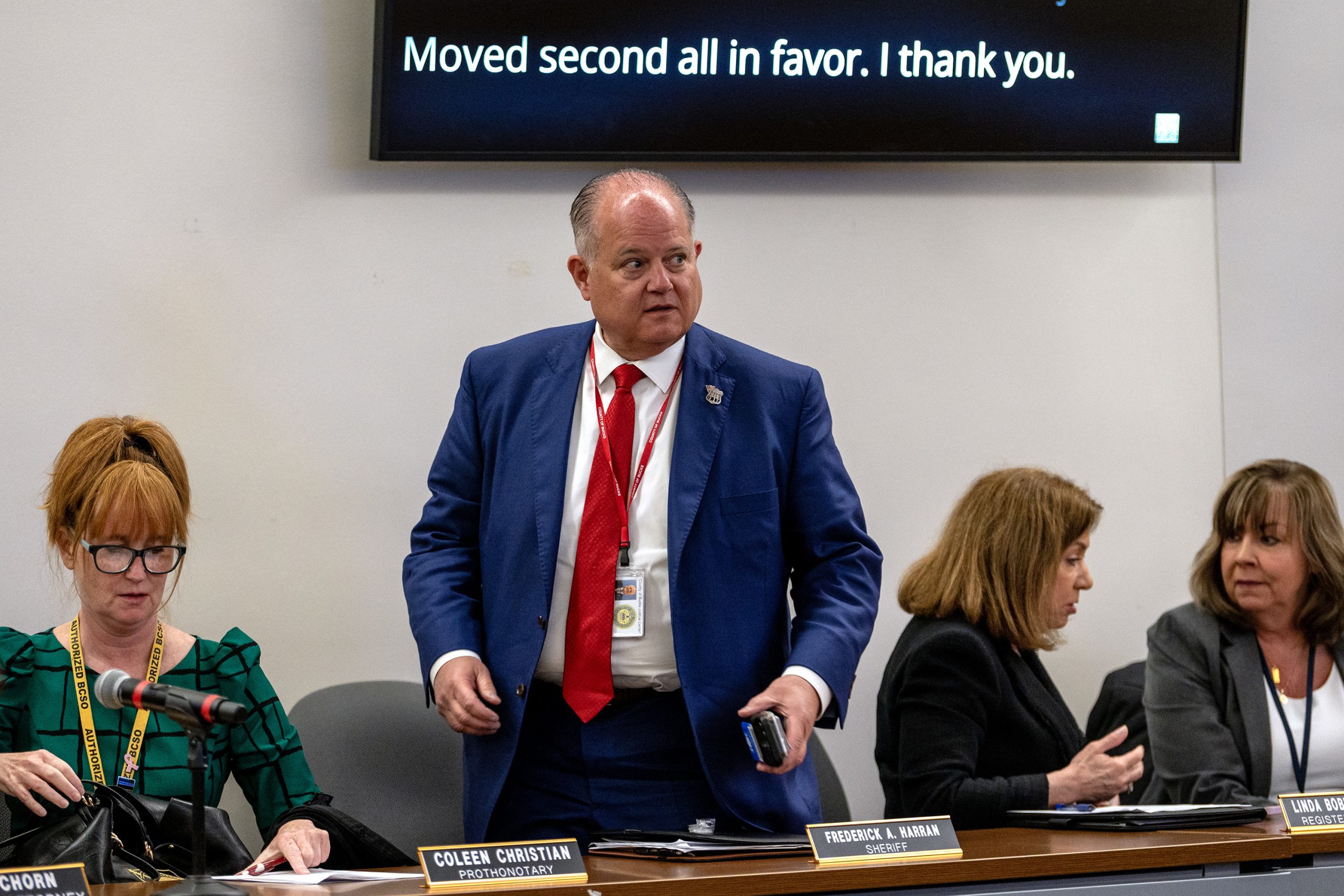
    Former Bucks County Sheriff Fred Harran stands following County Commissioners meeting last year when they approved a resolution opposing his deputies participating in an Immigrations and Customs Enforcement 287(g) program to act as ICE officers.Tom Gralish / Staff Photographer

    In most of the other suburban counties, the sheriffs — all Democrats — say their offices have been serving the vast majority of PFA orders.

    In Chester County, Sheriff Kevin Dykes said his office has processed 247 PFA orders in the first quarter of 2026, as well as recovered eight firearms relinquished through that process. Dykes said his office rarely, if ever, has a backlog of PFA orders waiting to be filed, and works closely with local police departments to avoid that situation.

    “I think where the issue came in with Bucks is that Danny stepped into an office where the person running it had different priorities,” Dykes said. “In this instance, it’s just how the nature of this business is. One day we could have a high-profile trial in the courthouse, and the next we could have a threat on an official. It just changes day-to-day for us.”

    In Montgomery County, Sheriff Sean Kilkenny said his deputies are responsible for serving three-quarters of the PFAs filed. Last year that amounted to about 1,600.

    Kilkenny formerly headed the state’s Sheriff’s Association, and said having those departments take the lead in handling PFAs is the industry standard, one that he said has worked well for counties across Pennsylvania. He added that Ceisler “getting under the hood” of the process is part of the job for a new official.

    In Delaware County, where newly elected Sheriff Saddiq Kamara is wrestling with a staffing shortage, the sheriff’s office one day hopes to use Ceisler’s initiatives as a model.

    Kamara, a former Yeadon Police officer and onetime member of Gov. Josh Shapiro’s security detail, said his office currently has 35 vacancies for deputies. He’s working to reverse that, and has recently hired seven new deputies, but said the shortage has forced him to leave the serving of PFAs to local police departments.

    “It’s something that I really would like for us to do as well, but the Delaware County Sheriff’s Office is the third-busiest in the state,” said Kamara, referring to the number of prisoners they transport daily, as well as applications they receive for gun permits and other filings.

    “We just don’t have the capability of the resources and the man and woman power in our office,” he said. “What Danny is doing I think is a phenomenal idea, and we’re planning to do that in the near future as well.”

  • A New York man stole the ashes of his ex-boss’ daughter and held them for ransom, Montco DA says

    A New York man stole the ashes of his ex-boss’ daughter and held them for ransom, Montco DA says

    Over a perceived debt of $8,000, a New York man stole an urn containing the ashes of his former employer’s daughter and attempted to hold the remains for ransom, according to Montgomery County prosecutors.

    Nuo Chen, 30, told the victim that if she did not pay him, he would dump the ashes and flee back to his home in Flushing, Queens, according to the affidavit of probable cause for his arrest.

    Chen happened to call the victim while she was being interviewed by Bensalem police about the theft, authorities said, and they were able to set up a meeting at the nail salon she owns under the guise of her paying him the money.

    Officers took Chen into custody June 12, and he was charged with burglary, theft, and related crimes. He remained in custody Thursday with bail set at $50,000.

    Montgomery County Deputy Chief Public Defender Michael Drossner, whose office is representing Chen, declined to comment on the case.

    The victim also declined to comment on the case or speak about her daughter when contacted by a reporter Thursday.

    Investigators say the woman told them Chen broke into her home June 12, using keys he had previously taken while staying there with her.

    Earlier that day, Chen had visited her at the nail salon, arguing with her about money he said she owed him, the affidavit said. During the argument, Chen threatened to “smash things in the store” and pushed the woman.

    She had fired Chen weeks earlier, police said, due to his erratic behavior.

    After the argument at the nail salon, Chen drove to the woman’s home in Willow Grove and was seen on surveillance footage carrying the urn containing her daughter’s ashes, according to the affidavit.

    He called the woman, telling her not to contact the police or she would never see the urn again, the affidavit said.

    Later, after Bensalem arrested Chen outside the nail salon, he admitted that he had entered her home without her permission, using the key he had previously taken, authorities said.

    Chen is scheduled to appear for a preliminary hearing on June 26.

  • Surfside has taken over the U.S. alcohol industry. But its founders say the brand is staying put in Philly.

    Surfside has taken over the U.S. alcohol industry. But its founders say the brand is staying put in Philly.

    At a grand-reopening celebration at Stateside Live!, Stateside Vodka president Matt Quigley’s wife, Megan, grabbed his arm and beckoned to the crowd around them in disbelief.

    Nearly half the revelers were drinking a Surfside, Stateside’s wildly popular take on hard iced tea, or a Super Lyte, the company’s latest canned cocktail.

    “She goes, ‘What the hell did you guys do?’” Quigley recalled with a laugh.

    The couple noticed an abundance of the colorful cans while walking around the Philly stadiums’ renovated bar complex, for which Stateside had recently bought the naming rights.

    “It was just such a prideful moment of like … we’re here to stay,” Quigley said.

    Just a couple years earlier, fellow cofounder and CEO Clement “Clem” Pappas looked around Citizens Bank Park to see as many Surfsides as Miller Lites in the hands of Phillies fans: “Holy s —, this is happening,” Pappas recalled thinking at the time.

    At their massive new Center City headquarters last week, Pappas and Quigley said Surfside’s astronomical rise still feels surreal.

    In 2015, the area natives founded Stateside Vodka in a distillery near Kensington with their brothers, Zach Pappas and Bryan Quigley. The company started selling canned vodka sodas in 2021. But they launched into a different stratosphere when they debuted their spiked teas and lemonades in 2022.

    Stateside Vodka’s taproom near Kensington is pictured in 2017, when it was called Federal Distilling. TOM GRALISH / Staff Photographer

    Branded as lower-calorie, better-for-you booze, the Surfside cans took off. The cofounders said they sold 200,000 cases in the first year, then 1.3 million in 2023, nearly 5 million in 2024, and a whopping 11.1 million cases last year.

    The “slammable” 4.5% ABV cans, as Matt Quigley describes them, are particularly popular in the summertime, a three-month period that accounts for about half the beverage company’s retail sales.

    So far this year, Stateside is on track for 70% growth in overall sales, and a 65% growth in Surfside sales, according to the company. That comes after a record year in which the company recorded 111% overall sales growth.

    (function(){function e(){window.addEventListener(`message`,function(e){if(e.data[`datawrapper-height`]!==void 0){var t=document.querySelectorAll(`iframe`);for(var n in e.data[`datawrapper-height`])for(var r=0,i;i=t[r];r++)if(i.contentWindow===e.source){var a=e.data[`datawrapper-height`][n]+`px`;i.style.height=a}}})}e()})();

    As a private company, Stateside does not have to publicly disclose earnings, and executives declined to share specific sales figures.

    While Surfside has accounted for about 90% of sales in the past year, the top executives are bullish on their latest invention, a sports-drink-inspired canned cocktail called Super Lyte. They said the new beverage had sold nearly 400,000 cases in three months, meaning it could outpace Surfside’s early growth.

    “The initial response is way beyond our expectation,” Clem Pappas said. “It feels like another hit.”

    Stateside is ascending despite a historic decline in drinking, with just over half U.S. adults saying they imbibed last year. Beer, wine, and spirits are decreasing in popularity. Ready-to-drink cocktails are the only major segment seeing consistent growth, and Surfside has been leading the pack.

    The company has achieved this success without the backing of an alcohol giant like Anheuser-Busch InBev or Molson Coors, which together manufactures hundreds of brands.

    Quigley, 42, and Pappas, 52, said they’ve been approached by nearly every big beverage company, but they have no interest in selling anytime soon.

    “As long as you’re still having fun, I see no reason to hang up the metaphorical cleats,” Quigley said.

    “I don’t want to sit on the bench. I want to be in the game,” Pappas said. “We still think it’s early days.”

    Stateside keeps Philly at its heart amid national growth

    A wall at Stateside Vodka’s new Center City headquarters shows a handful of Surfside’s 170 partnerships.Alejandro A. Alvarez / Staff Photographer

    In Stateside’s earliest days, Quigley recalled confiding in Pappas about a pipe dream: “If we ever get super successful, I want a sick office in a high-rise in Center City.”

    More than a decade later, they have moved from a temporary office in Feasterville-Trevose, Bucks County, to a chic new headquarters at 11th and Ludlow Streets in Market East.

    The company plans to stay put for at least 10 years, the cofounders said. For now, about 80 employees work there four days a week with room to grow.

    On a recent day, the office was humming during a new-hire orientation. While everyday operations include the same mundane tasks required of any business, the top bosses pride themselves on keeping the vibes light. “We’re not selling, like, car insurance,” Quigley said.

    The bright industrial-style space occupies 34,200 square feet across two floors. It is centered around a long bar with a backlit Stateside marquee, a replica of the one at the tasting room. Nearby, there’s an open lounge with couches, underneath a miniature Jumbotron. Ads for Surfside, Super Lyte, and Stateside rotate on the screens.

    Office happy hours are a given.

    “That’s part of the special sauce,” Pappas said. “We’re in the drinks business.”

    Philadelphia has always been at the heart of the company. It’s where they landed their first partnership with the Phillies, which fueled Surfside’s rise. At Citizens Bank Park, the cans have been the top-selling spirit since 2023, according to Stateside executives, citing figures from concessions provider Aramark.

    Across the city, the cofounders still run the 7,500-square-foot Kensington-area tasting room and distillery, the latter of which they hope to turn into an event venue.

    The distillery has been outgrowing its space for a while. But the need intensified in the past year as the vodka’s retail sales increased 120%.

    They attribute the boost in part to greater name recognition thanks to Stateside Live! They said they hope to move vodka production to a larger facility somewhere in the Northeast.

    Sales of the original Stateside Vodka, displayed at the company’s office bar, have grown 120% year over year.Alejandro A. Alvarez / Staff Photographer

    The cofounders have also stayed local: Quigley, a Fort Washington native, lives in Kensington, and Pappas, originally of Vineland, is in Haddonfield.

    Stateside’s reach, meanwhile, has expanded far beyond the region. The company employs about 340 nationwide, up from around 30 in 2022, executives said, and they sell in all 50 states through a network of more than 200 distributors.

    Across the country, Surfside has racked up 170 partnerships, including with MLB teams, music festivals, and colleges. Super Lyte has already acquired more than a dozen partnerships, too, including at Penn State, where they said it will be sold at Beaver Stadium this fall.

    A hawker carries drinks, including Surfsides, around the concourse at Citizens Bank Park in 2024. The brand now has 170 partnerships at venues nationwide.Elizabeth Robertson / Staff Photographer

    In many ways, the cofounders said, they’re trying to replicate the strategy that proved successful with Surfside at Citizens Bank Park: Connect with consumers somewhere where it feels only natural to grab a refreshing, familiar-tasting beverage.

    “You’re at a hot baseball game,” Pappas said. “You got a hot dog. You got a soft pretzel. You got an iced tea” — or, rather, a Surfside.

    Compared to seeing a new canned cocktail at a beer distributor, he added, “It’s more of an authentic, emotional connection.”

    A beverage hawker sells Surfside cans during a Phillies game at Citizens Bank Park in 2024. Surfside has been the stadium’s top-selling spirit since 2023.Elizabeth Robertson / Staff Photographer

    Surfside succeeds with familiar tastes

    When customers first sip a Surfside or Super Lyte, the taste is likely familiar, perhaps even comforting. It’s similar to iced tea, lemonade, tea cooler, or Gatorade, drinks that for many have been staples since childhood.

    That’s intentional, Pappas and Quigley said, and is one of the reasons they think their products have become so popular.

    “If you remember your first beer, it was like, ‘Oh God, who wants that?’ It’s bitter. It’s foreign,” Pappas said. “It’s an acquired taste.”

    But when it comes to these canned cocktails, “these are not acquired tastes,” he added. “They’re light. They’re easy.”

    Quigley said he got the idea for Super Lyte after years of mixing vodka into Gatorade and throwing the bottles into beach bags on summer vacations. He recalled thinking: “I can’t be the only person in America that’s been doing that for a long time.”

    The initial uptake of Super Lyte confirmed that, he said.

    Super Lyte launched in March with four flavors: fruit punch, orange, lemon-lime, and blue chill.

    Surfside now has 16 variations of iced tea, lemonade, iced tea-lemonade, and green tea. A 12-ounce Surfside contains 100 calories, 2 grams of sugar, and no carbonation, while a 12-oz Super Lyte contains 90 calories, no sugar, and no carbonation.

    Stateside Vodka’s new product line, Super Lyte, is displayed at the company’s new Center City headquarters.Alejandro A. Alvarez / Staff Photographer

    While the health risks of drinking and smoking differ, Pappas said he sees a parallel to the historic decline in the U.S. smoking rate amid the skyrocketing popularity of oral nicotine patches like Zyns.

    In the alcohol industry, “we’re meeting what was previously an unmet demand,” he said. It’s “all the convenience and the alcohol level of [a light] beer, where you can drink a few of them and you’re not getting sloshed.”

    Even younger consumers — who are least likely to drink alcohol, according to recent surveys — are gravitating toward Stateside products, with high sales in some college towns.

    Pappas and Quigley said they don’t see drinking rates declining much farther. Instead, they predict an evolution in the market, with an even greater focus on ready-to-drink cocktails.

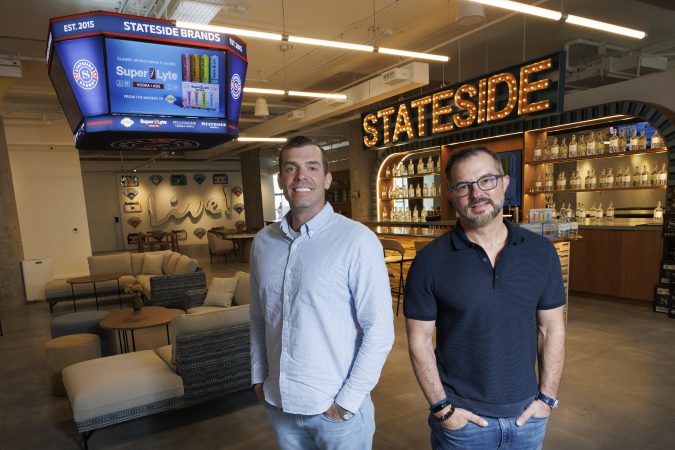
    Matt Quigley (left), Stateside’s president and cofounder, talks about the company’s products with fellow cofounder and CEO Clement Pappas.Alejandro A. Alvarez / Staff Photographer

    So Stateside’s leaders plan to keep crafting new products, they said, which is one of the reasons they have turned down acquisition offers.

    “Big, publicly traded multinational companies just aren’t great at innovating,” Pappas said.

    Stateside has now established “enough of the back-end capabilities to really compete pretty effectively,” he said, without losing “that entrepreneurial spirit” and the drive “to innovate and disrupt.”

    At the moment, he said, they are working on several beverage ideas, none of which are ready for publication.

    But it seems unlikely they’ll dabble in nonalcoholic drinks. As Quigley noted, “then it would just be iced tea.”

  • Final teen charged in Quakertown ICE protest resolves her case, ending monthslong legal battle

    Final teen charged in Quakertown ICE protest resolves her case, ending monthslong legal battle

    Bucks County prosecutors on Monday said they had resolved the case of the last teenager arrested during an anti-ICE protest in Quakertown that turned violent.

    The 16-year-old girl was scheduled to stand trial Monday on misdemeanor charges of resisting arrest and disorderly conduct, as well as a summary offense of obstructing traffic, according to her lawyer. Instead, prosecutors said, she agreed to enter into a diversion program in exchange for the dismissal and expungement of the charges.

    The girl’s lawyer, Ed Angelo, said the agreement includes 20 hours of community service, among other things, to be completed over a 90-day period. “She is a wonderful young lady who, I think, exercised great courage,” both during the protest and throughout her criminal case, he said.

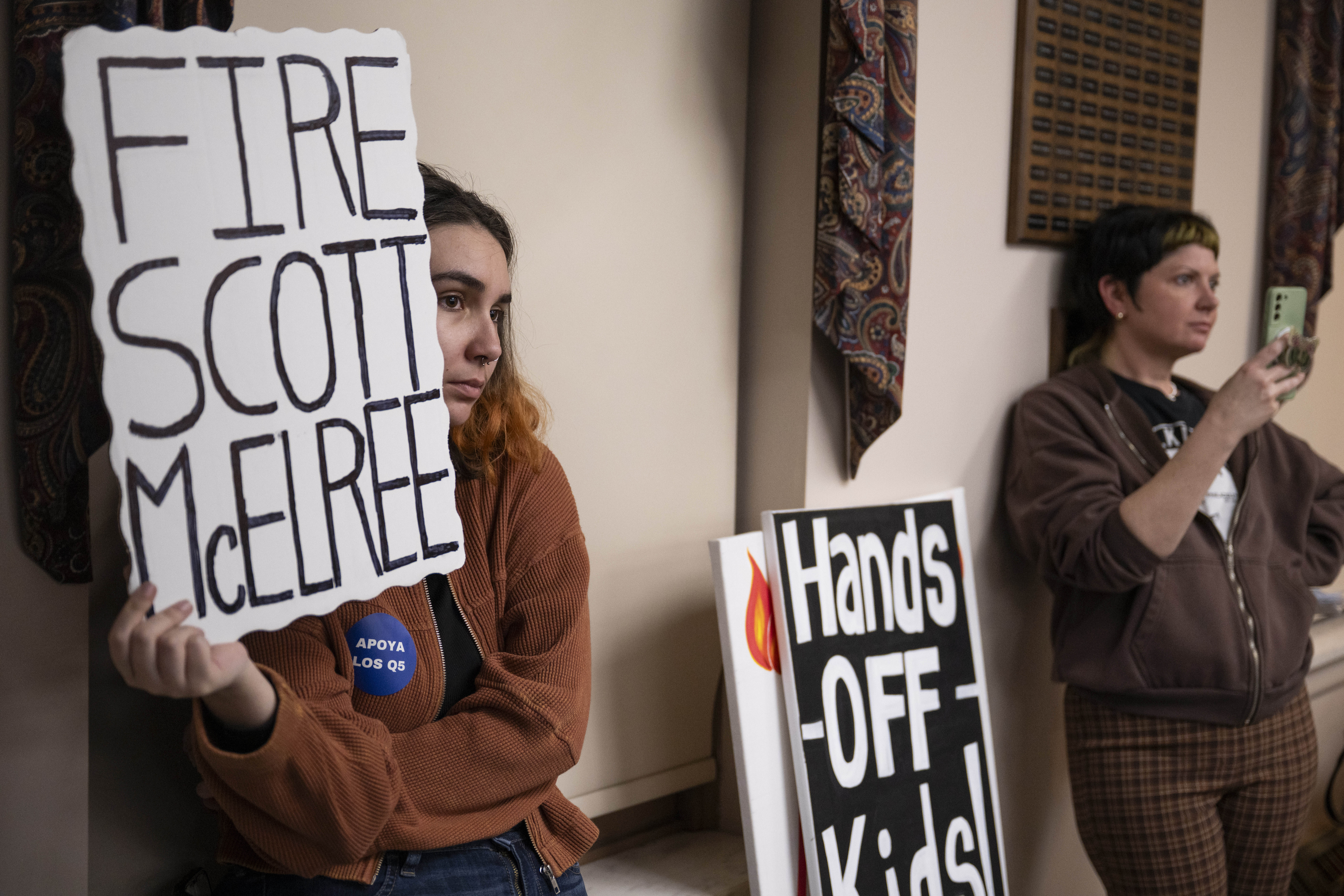
    The agreement closes the last outstanding case among five Quakertown Community High School students arrested after a February demonstration against ICE escalated into a physical confrontation with the borough’s police chief and manager, Scott McElree.

    The teens’ arrests sparked months of public debate over the melee, which was captured on camera by onlookers whose videos circulated widely online. One video showed McElree, who was dressed in plain clothes, grappling with a boy on the sidewalk. Another captured 72-year-old McElree placing a girl in a chokehold.

    Following the confrontation, Bucks County officials said McElree had sought medical care for injuries that included fractured ribs. He also took worker’s compensation leave for several weeks before returning to work in May. And a panel of area police chiefs later cleared McElree of wrongdoing following a review of the case.

    The teens were each initially charged with aggravated assault as well as misdemeanor offenses. But on Monday, the Bucks County District Attorney’s Office said in a statement that after reviewing evidence in the case — including “video footage obtained after the initial filing of the charges” — prosecutors had dismissed the aggravated assault charges because they “were unsupported by the evidence as a whole.”

    Over the last few months, prosecutors have struck diversion-program deals with the other teens that are “designed to meet the needs of each juvenile,” according to their statement.

    The 16-year-old girl, who was 15 at the time of her arrest, had been the only teen whose case remained unresolved.

    “She should never have been charged,” Angelo, her lawyer, said.

    Angelo had previously sought to have the case dismissed outright, arguing that the allegations relied heavily on secondhand accounts and that his client had done nothing wrong.

    The district attorney’s office also said Monday that it continues to investigate the conduct of Quakertown police during the protest.

    That investigation began a day after the demonstration, when prosecutors were tasked with independently reviewing the department’s response. In its statement, the office said county detectives had spent the last four months gathering evidence, including video footage submitted by members of the public.

    Now that all five of the teens’ cases have been resolved, prosecutors said investigators are working with defense lawyers to secure voluntary interviews with the teenagers so they can provide their accounts of what occurred.

    The office did not provide a timeline for completing the investigation but said it intends to move “expeditiously” toward its conclusion.

  • The only revived Iron Hill Brewery in the Philly suburbs is set to reopen next week

    The only revived Iron Hill Brewery in the Philly suburbs is set to reopen next week

    Another Iron Hill Brewery is set to reopen next week.

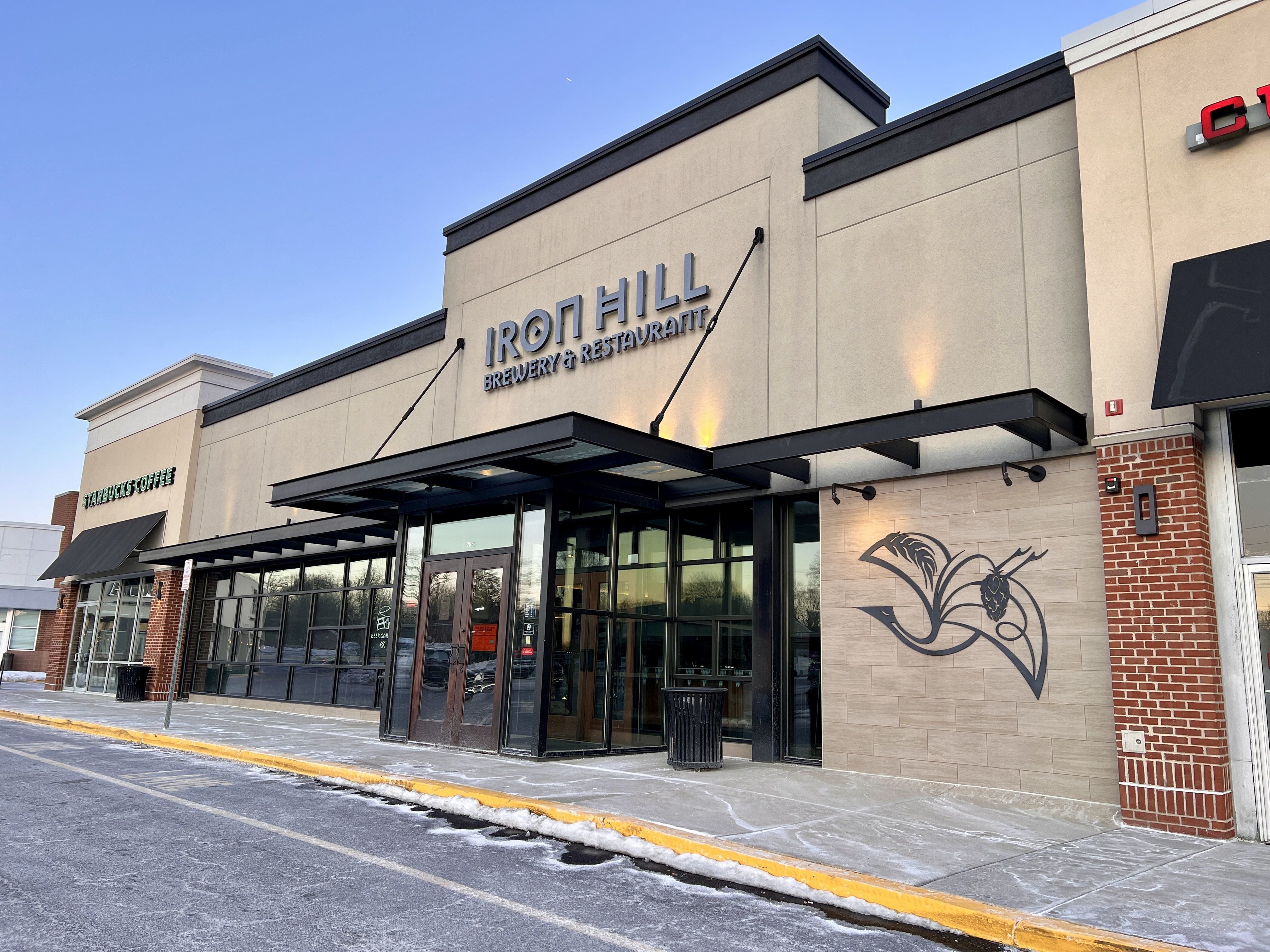
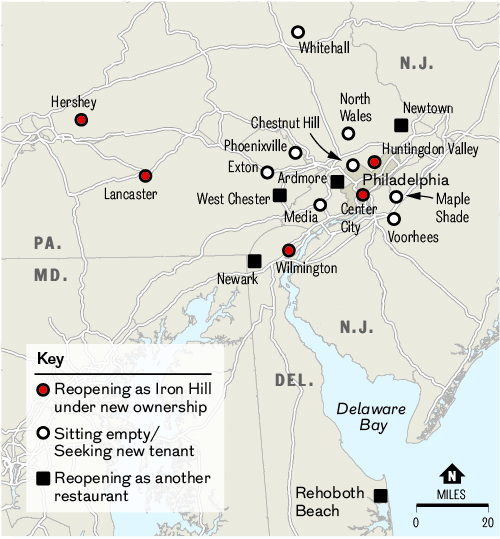
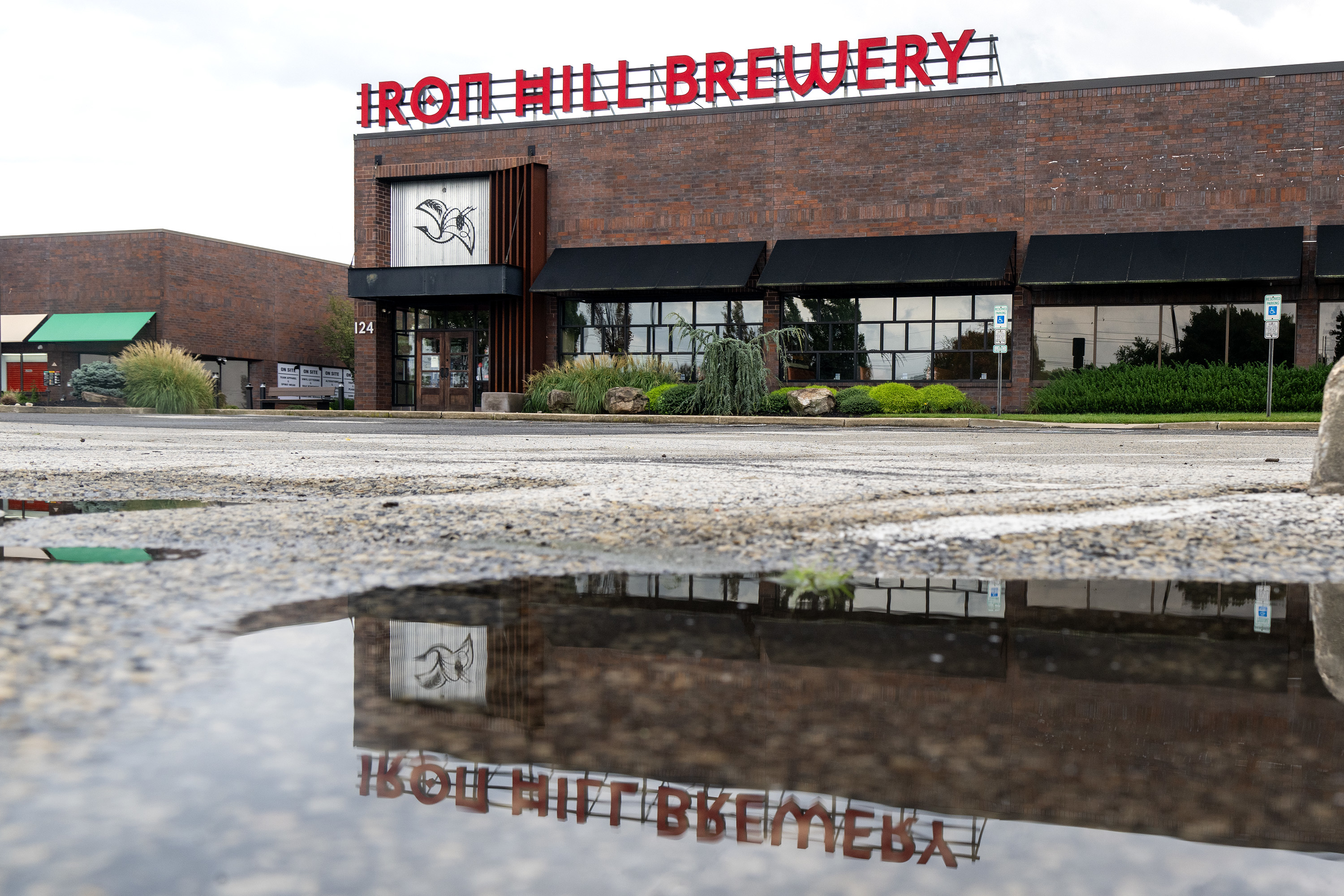
    The Huntingdon Valley restaurant will be back in business Monday, June 22, according to the restaurant’s new ownership group. It will mark Iron Hill’s fourth post-bankruptcy revival and the only one in the Philadelphia suburbs.

    The Center City brewpub reopened in April, followed by the Wilmington riverfront location in May and the Hershey restaurant earlier this month. The Lancaster outpost is also set to reopen by the end of June.

    Elsewhere, other former Iron Hills are being transformed into new restaurants. And in a few spots, property owners are still looking for their next tenant.

    The brewery chain, which was founded in Newark, Del., in 1996, had leased some of these properties for decades.

    Some longtime customers were shocked when Iron Hill’s former ownership group closed all locations in September and filed for liquidation bankruptcy, citing $20 million in debt. The abrupt shutdown left more than a dozen vacant brewpubs across Pennsylvania, New Jersey, and Delaware.

    In the bankruptcy process, a new ownership group — later revealed to include original cofounder Mark Edelson and other former executives — acquired Iron Hill’s trademark and intellectual property, as well as five restaurant leases.

    Amid the reopenings, the new owners have launched a fresh loyalty program and special offers, including a free beer and free appetizer for customers with prebankruptcy gift cards that are no longer usable.

    While Iron Hill had a suburban-Philly focus before bankruptcy, the Huntingdon Valley Shopping Center location is the only one set to be resurrected in the collar counties or South Jersey.

    Bartenders there will be pouring a new IPA, Hop Chase, brewed exclusively for Huntingdon Valley, according to the new owners. They said patrons can sit inside or outside at the restaurant’s beer garden, which was the chain’s first when it opened in 2016.

    “We’re creating a true neighborhood place for the guests we call family, somewhere the community can come together over laughter, great food and award-winning beer,” Naomi Yared, general manager of the Huntingdon Valley Iron Hill, said in a statement.

    What’s happening at your neighborhood Iron Hill?

    The former Iron Hill Brewery in Chestnut Hill sat empty in November. Property owners are still marketing the space for lease.Jose F. Moreno / Staff Photographer

    Here’s what we know about these local Iron Hill Breweries as of publication time June 15:

    Philadelphia

    Pennsylvania suburbs

    The lounge area is pictured last month at Ogyu Japanese BBQ at the former Iron Hill Brewery in Ardmore.Michael Klein / Staff
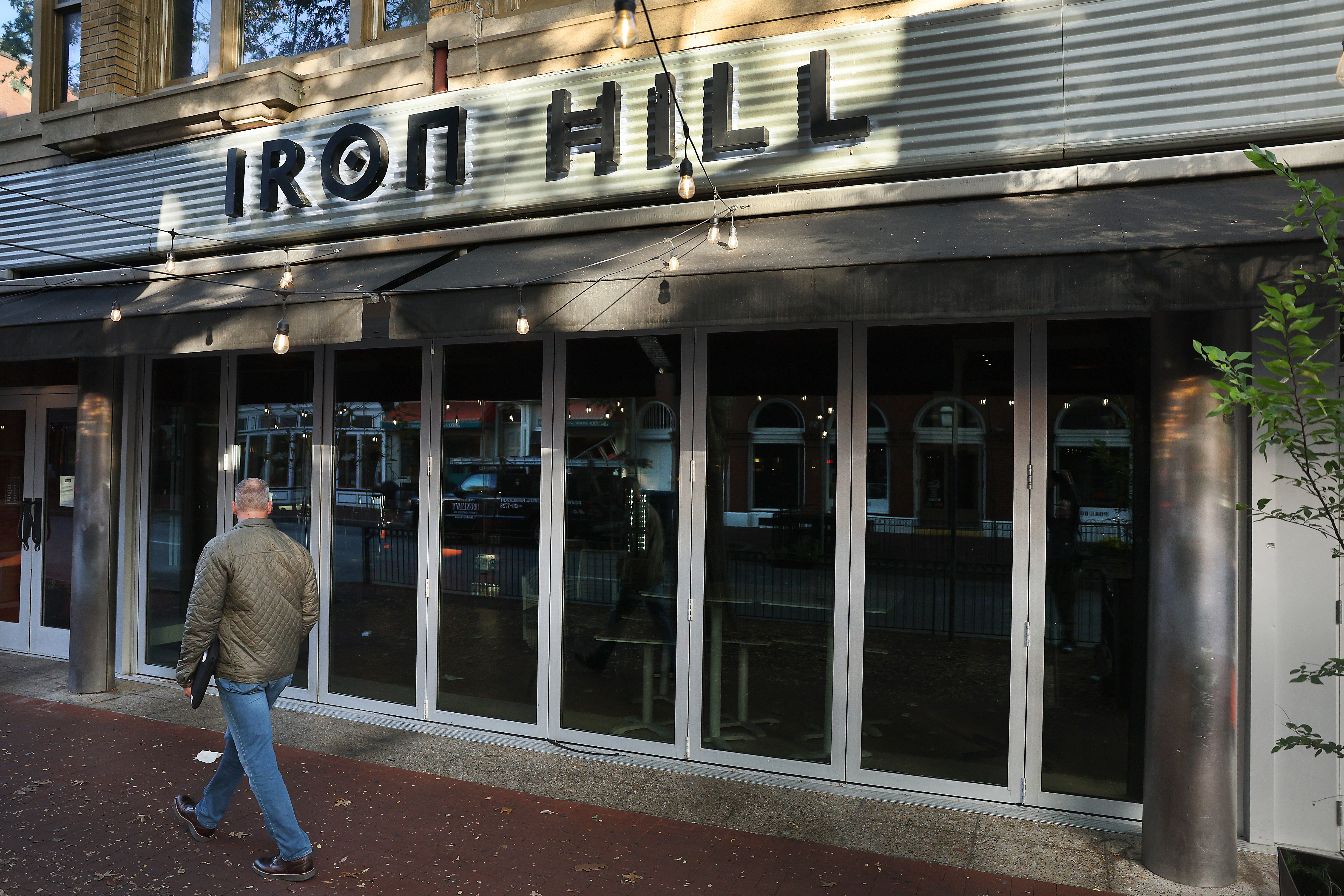
    A pedestrian walked by the closed Iron Hill Brewery in West Chester in October. Magerk’s Pub & Grill is now taking over the space.David Maialetti / Staff Photographer

    Elsewhere in Pennsylvania

    • Hershey (101 W. Chocolate Ave.): Reopened as Iron Hill Brewery under new ownership
    • Lancaster (781 Harrisburg Pike): Reopening as Iron Hill Brewery under new ownership
    • Lehigh Valley Mall (950 Lehigh Lifestyle Center, Whitehall): No update from property owner

    New Jersey

    The closed Iron Hill Brewery in Maple Shade is pictured in September.Tom Gralish / Staff Photographer
    • Maple Shade (24 E. Kings Hwy.): No update from property owner
    • Voorhees (13107 Town Center Blvd.): No update from property owner

    Delaware

  • Trump is losing in courts, Congress, and the polls. Be more worried, not less. | Editorial

    Donald Trump continues to inflict historic damage on the United States through his corruption, incompetence, and cruelty. But amid the daily chaos and nightly fury, Trump has suffered significant losses that should give citizens who support the Constitution and democracy a glimmer of hope.

    He’s lost in Congress, the court of public opinion, and courtrooms across the country. Even the Iran war has turned into a no-win situation. Adding to the indignity, Trump was roundly booed in his hometown by Knicks fans when he made an appearance at an NBA Finals game at New York’s Madison Square Garden on Monday.

    But here’s the thing about Trump: He’s never more dangerous than when he’s losing.

    He continues to dismantle democracy even as the country prepares to celebrate 250 years since the adoption of the Declaration of Independence. And he still wields immense power over his MAGA base.

    But fissures abound.

    Just look at Congress. After largely serving as lapdogs, (some) Republicans who control the House and Senate have begun to push back.

    The Senate shelved Trump’s brazen scheme to create a $1.8 billion fund to reward loyal lackeys prosecuted and convicted of crimes, including the Jan. 6, 2021, insurrection — but passed on reining in his tax audit chicanery.

    Senate Republicans also dropped $1 billion in security funding for Trump’s ballroom — an obscene waste of tax dollars that keeps growing in price and size as many Americans struggle to make ends meet.

    In a rare rebuke, four GOP House members — including U.S. Rep. Brian Fitzpatrick (R., Pa.) — joined with Democratic lawmakers to pass a war powers resolution that called for ending the conflict in Iran that is costing taxpayers $2 billion a day and sent oil prices soaring.

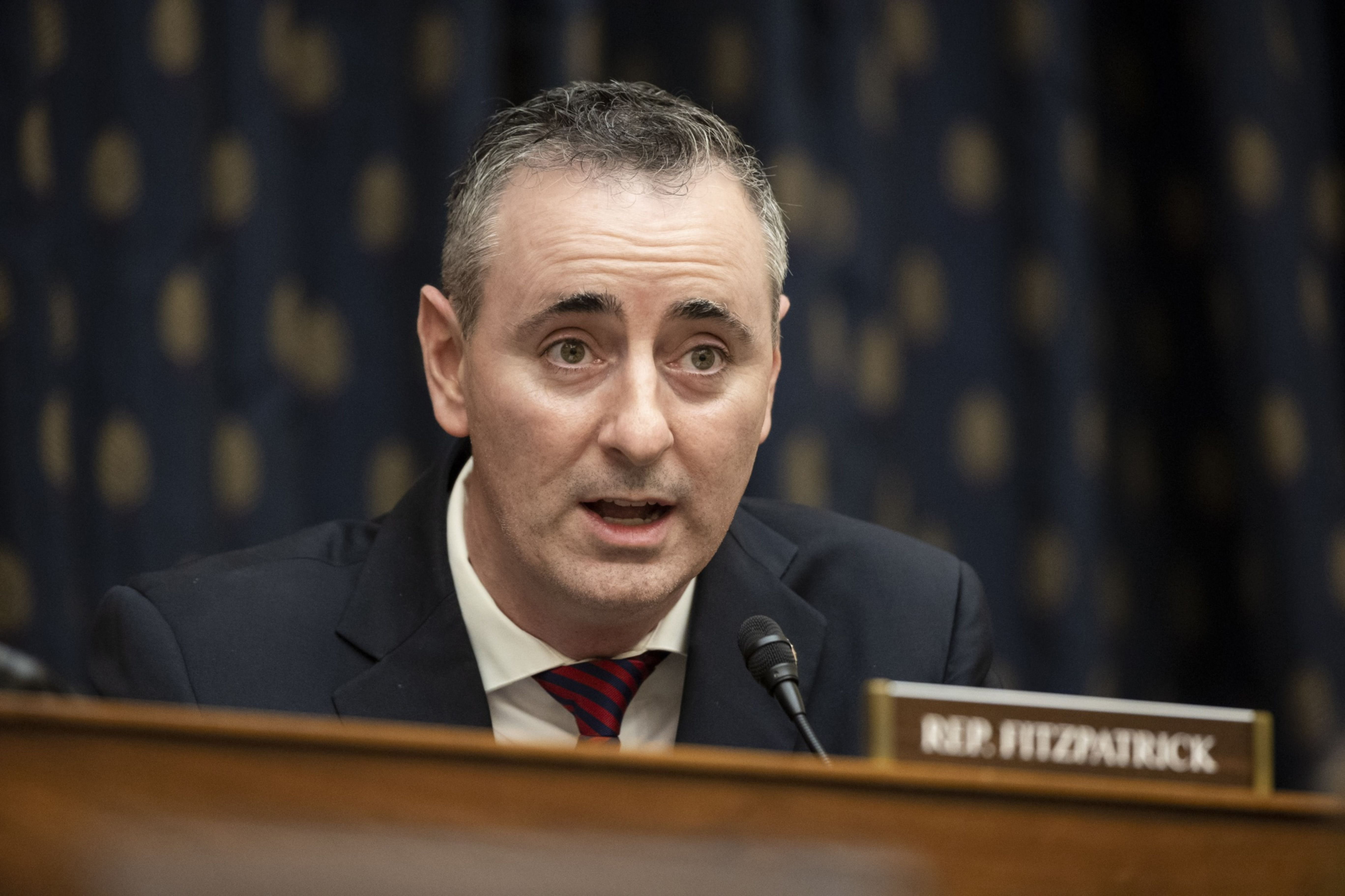
    U.S. Rep. Brian Fitzpatrick (R., Pa.) was one of four GOP House members who joined with Democratic lawmakers to pass a war powers resolution.Eric Lee

    In defiance of Trump’s refusal to help Ukraine, 18 House Republicans joined Democrats to pass a measure to provide more than $1 billion in aid and impose new sanctions on Russia. (Recall how Trump repeatedly said he would end that war within 24 hours after returning to office.)

    U.S. Rep. Don Bacon (R., Neb.) called Trump’s continued deference to Russian leader Vladimir Putin a “moral blindness” that “communicates weakness.”

    The sudden turn against Trump by some GOP lawmakers is likely driven more by the looming midterm elections than any allegiance to their constitutional oath.

    Trump’s poll numbers are sinking. There are even cracks among white working-class voters without a college degree who now disapprove of the president’s handling of the economy. They could tolerate Trump’s lies, corruption, and incompetence, but not $5-a-gallon gasoline.

    At the same time, Trump — who has spent a lifetime litigating thousands of grievances — is losing in many courtrooms on issues big and small.

    On Monday, a judge voided “in its entirety” Trump’s scheme to impose $100,000 fees on employers seeking visas for skilled foreign workers — one in a series of misguided moves by the administration to target immigrants, which hurts all Americans.

    Earlier this year, the U.S. Supreme Court struck down Trump’s cockamamie plan to impose tariffs on countries in a way best described as willy-nilly. Beyond being fiscally stupid, the court found Trump’s signature economic policy was unconstitutional.

    The Supreme Court will soon rule on Trump’s signature immigration policy to end birthright citizenship for babies born in the U.S. to undocumented immigrants or those on temporary visas.

    Most legal experts believe Trump will lose this case because birthright citizenship is guaranteed under the 14th Amendment. Even Trump predicted the court would “probably rule against me.” As it should, since the law is not on his side.

    A federal judge ruled that Trump’s name must come off the John F. Kennedy Center for the Performing Arts. The judge said the law is “crystal clear,” and that only Congress can change the name.

    After beating four criminal indictments, Trump is still subject to the law.

    In fact, the Trump administration has lost 70% of the more than 600 lawsuits it has faced over the past year or so. The record of futility underscores Trump’s overreach, since the federal government traditionally prevails in court.

    Judges and grand juries have rejected many of the slapdash legal arguments from the Trump administration. The U.S. Department of Justice has parted ways with thousands of career prosecutors and is forfeiting its credibility with the bench.

    The losses are real. And they matter. But democracy doesn’t survive on court rulings and poll numbers alone — it survives because people keep showing up.

    Trump’s losing streak obscures the harder truth that he continues to trample the rule of law, attack countries, install lackeys, line his pockets, and upend the economy — moves that systematically weaken the U.S. at home and abroad.

    It is, after all, a reminder that the arc of the moral universe can bend toward justice — even in these “dark, disturbing, and dangerous times.” The bending, though, is up to us: follow the Constitution, hold wrongdoers accountable, and vote.

  • Brian Fitzpatrick steps up criticism of House Republican leaders while he starts to lean on their campaign cash

    Brian Fitzpatrick steps up criticism of House Republican leaders while he starts to lean on their campaign cash

    WASHINGTON — As U.S. Rep. Brian Fitzpatrick’s fiercest reelection battle in years got underway in the last two months, the moderate Bucks County Republican has called to restrict President Donald Trump’s war in Iran and prohibit a so-called “anti-weaponization fund” that could reward the president’s allies.

    He’s talked up Democratic Gov. Josh Shapiro’s potential run for president, and he’s said he would “100%” become an independent if Pennsylvania didn’t have closed primaries.

    He went even further this week — deriding House Republican leadership for opposing a process that allows lawmakers like him to force a vote on issues like the weaponization fund.

    “Leadership of both parties have been guilty of this for years… just further evidence of the brokenness of the two-party system — and the rise of Independent voters is a direct manifestation of this,” Fitzpatrick wrote on social media.

    Behind the scenes, though, Fitzpatrick has started to lean on his party’s vast resources to help win his reelection and, Republicans hope, keep the narrowly divided 435-member House in GOP control.

    In a newly scheduled television ad campaign that will begin later this month, Fitzpatrick is teaming up with the National Republican Congressional Committee — the official campaign arm of House Republican leaders — to launch ads aimed at boosting his campaign in the 1st Congressional District against Democratic nominee Bob Harvie, a Bucks County commissioner who won last month’s primary with support from Shapiro and national Democrats.

    The $120,000 worth of cable TV ads represent the first foray by the NRCC in any Pennsylvania district so far this year, according to the tracking firm AdImpact.

    Both parties are competing heavily over four Republican-held seats in Pennsylvania, making the state one of the centerpieces in the fight to win the House majority during this year’s high-stakes midterms.

    The NRCC and other Republican groups have promised to help reelect all four incumbents. And with the new ads benefiting Fitzpatrick, the NRCC is spending first on the candidate who’s been the most publicly critical of their leadership and even gotten some blowback from Trump as a result.

    “Trump can say whatever Trump wants,” Robin Kolodny, a Temple University political science professor, said of the president’s accusations that Fitzpatrick is insufficiently loyal. “But you get to 218 by adding one race at a time. And if you have an incumbent who’s been successful, the party has every incentive to support them until they find that the polling says it’s the lost cause.”

    Fitzpatrick has won five terms in a nearly evenly divided Bucks County-based district with what observers have called a specific brand of politics. He votes with his party and supports Trump’s priorities the vast majority of the time, though he’s broken with them in instances like the final passage of the One Big Beautiful Bill and the expiration of COVID-era Affordable Care Act tax credits that kept costs lower for individuals using the public marketplace.

    His recent opposition to the anti-weaponization fund has echoes of that healthcare debate in December, when Fitzpatrick joined with Democrats in trying to use a process called a discharge petition to force a vote that Republican House Speaker Mike Johnson declined to set up.

    Fitzpatrick’s office and campaign did not respond to requests for comment for this story.

    But earlier this week, the Pennsylvania lawmaker and U.S. Rep. Tom Suozzi (D., N.Y.) said they would launch a discharge petition to prevent Trump from creating a fund to compensate people who claim to be victims of a weaponized federal government, Punchbowl News reported. The idea for the $1.8 billion fund emerged from a settlement between Trump and the Department of Justice in a case about the leak of Trump’s tax returns.

    Republican lawmakers who have often acquiesced to the president’s demands voiced deep concerns. Acting Attorney General Todd Blanche responded by saying the administration was walking away from the idea. Still, Trump officials have quietly worked to keep it alive and have not ruled out payments going to individuals previously charged with attacking the Capitol on Jan. 6, The Atlantic reported Thursday.

    “The statement’s not satisfactory,” Fitzpatrick said on CNN earlier this month while discussing Blanche’s comments. “We need both a legal avenue here and a statutory legislative avenue. That’s what Tom and I have introduced, and that’s what we’re going to force to the floor.”

    He called the fund an “abuse” of the law. In a post on X this week, he also disparaged Republicans leaders’ “poorly managed House Floor” for preventing a discharge petition to squash it.

    Johnson, the Louisiana Republican who leads the chamber, headlined a fundraiser earlier this year for Fitzpatrick, who generally does vote for GOP priorities — including this week’s successful effort to provide additional funding for immigration enforcement within the Department of Homeland Security.

    Fitzpatrick and Suozzi had not yet launched the discharge petition as of Thursday evening, after Punchbowl reported that Republican leadership was frustrated with the idea. Some even proposed pulling back campaign contributions from NRCC “patriots” who signed on to a discharge petition, according to Punchbowl.

    Fitzpatrick is one of 15 Republicans in the NRCC’s “patriots” program that prioritizes sending resources to competitive districts.

    Also on the list are U.S. Reps. Scott Perry, in a Harrisburg-based district; Ryan Mackenzie, in the Lehigh Valley; and Rob Bresnahan, in a Scranton-based district. Each of those races are considered more of a “tossup” than Fitzpatrick’s, and Kolodny said it’s likely the NRCC will invest in advertising and campaign operations to help them as well, possibly a little later in the summer.

    She said the earlier spending on behalf of Fitzpatrick is likely a sign they found him to be “newly vulnerable” after the May 19 primary, when Harvie was nominated.

    Widely considered the most formidable challenger to Fitzpatrick so far, Harvie has already been elected by voters twice in a majority of the district and both national and state Democrats have coalesced around him.

    Kolodny called the size of the NRCC’s ad-buy “modest” but said that “they’ve done anything at all means that their polling has shown them they’ve got a problem.”

    “They have a new level of concern that they didn’t have before,” Kolodny said.

    Harvie, who is expected to benefit from outside spending by the NRCC’s counterpart, the Democratic Congressional Campaign Committee, said in a statement that the ads are proof Republican leaders “can count on [Fitzpatrick’s] vote when they need it most.”

    “We are tired of politicians like Fitzpatrick talking out of both sides of their mouth,” Harvie said. “He claims to be ‘independent,’ but he’s seeking a bailout from Trump’s Republican Party because he is one of their own.”

    Charlie Gerow, a Republican strategist with a Harrisburg-based public affairs firm, said he didn’t view Fitzpatrick’s latest moves as much different from any other instance in which he’s successfully walked a “political tightrope” in his district, which is one of only nine GOP-held districts in the country that went for Kamala Harris in 2024.

    He said the assist from the NRCC also makes sense because of how large Fitzpatrick’s district looms in a House that’s currently split 218 Republicans to 212 Democrats, with one independent and four vacancies.

    “Leadership has an absolute interest in making sure that Brian Fitzpatrick gets reelected, despite their displeasure from time to time with what he says and does,” Gerow said.

  • Years before Bill Rauch won a Tony, he was a Jersey teenager playing Malvolio and braving a monologue through an allergic reaction

    Years before Bill Rauch won a Tony, he was a Jersey teenager playing Malvolio and braving a monologue through an allergic reaction

    When Bucks County-raised pop star Pink began the Tony Awards on Sunday evening, she started somewhere she would be comfortable on stage — in the air.

    Suspended from the rafters, she joked about feeling underqualified to host the awards ceremony because she’s never appeared on Broadway. But actor Neil Patrick Harris assured her that she would excel as her entertaining, acrobatic self: “Listen you’re Pink, you’re singular, you’re the best.”

    Then she went on to belt “Lady Marmalade” with some of Broadway’s best performers and fit right in.

    The night of revelry at Radio City Music Hall celebrated the biggest theater shows with major winners including Death of a Salesman, Schmigadoon!, Ragtime, The Lost Boys, and Liberation. The latter won for best play, recognizing playwright Bess Wohl, who became the fourth woman in Tony history to win that award. (Philly audiences will get a chance to see the show this fall when Liberation runs at Philadelphia Theatre Company in October)

    The biggest local highlight was director Bill Rauch, who calls New York home now but spent part of his childhood in Haddonfield, where he participated in productions at Haddonfield Memorial High School. Rauch and his codirector, Zhailon Levingston, won the Tony Award for best direction of a musical for Cats: The Jellicle Ball, a revival of Andrew Lloyd Webber’s 1982 feline musical, set in New York’s queer ballroom scene.

    “Ballroom is about audacity and disruption, in the words of Junior LaBeija, it do take nerve,” said Levingston when the pair accepted the award.

    “Finally, ballroom is about chosen family,” said Rauch, getting emotional. “We chose each other, my husband, Christopher Liam Moore, 42 years ago, and you and our kids, Liam and Xava, are at the heart of anything I do that has any value in this world.”

    Rauch, who leads New York’s Perelman Performing Arts Center, previously directed the Tony Award-winning production All the Way, about Lyndon B. Johnson during the civil rights era. That production received Tony Awards for best play and best lead actor in a play (spotlighting Bryan Cranston), in 2014.

    Rauch credits his high school teacher and mentor Jack Shaw with inspiring him to pursue theater.

    “I did six shows directed by Jack Shaw, and they really changed my life,” Rauch told 6abc. “I learned by example what a great director could be, and it made me want to become a director.”

    On Sunday night, Shaw hosted a Tony Awards watch party at his home in Voorhees, where he and a group of about 15 of Rauch’s old theater classmates jumped and screamed as they saw him accept the award. The revered drama teacher is still close with dozens of his former students, who reunite often to celebrate Shaw’s milestone birthdays and have created a scholarship at Haddonfield Memorial High School to fund drama students in Shaw’s honor.

    One of Shaw’s favorite memories of Rauch was during a production of Shakespeare’s Twelfth Night, when the teenager powered through his Malvolio monologue while in the middle of an allergic reaction.

    “The poor guy literally ended up on the floor of the stage, going through a long speech [as] his neck and back cramped up,” said Shaw. “Unbelievably, he kept going — the ultimate ‘show must go on’ spirit. He delivered the speech from his knees, still in character, and the audience had no idea …[then] we took him offstage and put him in an ambulance.”

    A proud teacher, Shaw was “choked up” seeing Rauch receive the Tony recognition and praised his former student’s “remarkable need to bring theater to lots of people.”

    “Theater and the drama club was a place where anybody could come and be accepted. To my way of thinking, that’s my most happy part, and Bill, as a director, has had the same kind of philosophy,” Shaw said.

    Cats: The Jellicle Ball was nominated for nine awards and took home three, including best choreography and best costume design of a musical, which went to Qween Jean (who also designed costumes for Liberation). Qween Jean made history becoming the first transgender person to win a Tony Award.

  • Bucks County DA sues creators of Roblox, saying the game creates loopholes for predators to exploit kids

    Bucks County DA sues creators of Roblox, saying the game creates loopholes for predators to exploit kids

    Bucks County District Attorney Joe Khan, saying parents are “outmatched” by social media companies in the fight for the online safety of their children, has filed a federal lawsuit against the makers of a popular online video game that he said had allowed sexual predators to exploit children.

    Khan announced Monday that his office is taking legal action against the creators of Roblox, a game that he said 75% of American children between the ages of 9 and 12 play regularly and one that he said has led to crimes against them.

    “Today we are sending a clear message to social media companies,” Khan said. “If you put our children in harm’s way, we’re coming for you.”

    A spokesperson for Roblox did not immediately respond to a request for comment.

    In underscoring the necessity of the lawsuit, Kahn cited the recent conviction of a child predator who used the game to find victims. Alec Magill, of Southampton, posed as a teenage boy on Roblox and persuaded two teenage girls to send him sexually explicit photos and videos. On Friday, he was sentenced to up to two years minus one day in county jail.

    “Roblox gave Magill the tools to hide in plain sight and then target and exploit children from behind his phone and computer screen here in Bucks County,” Khan said, adding that Magill, 32, used the game’s “completely lax parental notification,” and lack of age-verification features to seek out his victims.

    Khan filed the suit in federal court in California as an amended version of a lawsuit he began in 2023 while serving as Bucks County’s solicitor. The suit contends that the companies behind TikTok, Instagram, Facebook, Snapchat, and YouTube have worsened anxiety and depression among young people through their apps, particularly in Bucks County schools.

    The amended complaint adds Roblox, as well as Elon Musk’s X and Discord, an online messaging platform, alleging that they have allowed underage users to be exposed to “an endless barrage of pornography, hate speech, cyberbullying.”

    The gaming platform Roblox, seen here on a tablet in 2021, is played by 75% of American children between the ages of 9 and 12, according to Bucks County prosecutors.Leon Keith

    Bucks County Commissioner Diane Marseglia said Monday that she and her colleagues support Khan’s efforts, saying the social media companies “have ignored both science and the law.”

    “If you are 21 years or younger, you have had social media in your life the entire time,” she said. “In fact, an entire generation has now reached maturity with social media and without the protections they deserve, and, looking back, it seems we should have known the risks, but we didn’t.”

    Khan filed the suit under the state’s Unfair Trade Practices and Consumer Protection Law, which gives county prosecutors the authority to pursue cases such as this to prevent a danger to the communities they serve.

    Earlier this year, he filed another civil action against Richard and Ronald Goetter, who own a rental property in Dublin. Khan characterized the two as “slumlords” who forced their low-income tenants to live in hazardous conditions.

    The district attorney says the risk Roblox poses to children is just as dangerous.

    “As a parent of two young kids in Bucks County, I believe that social media companies can and should do more to ensure their products are not used as a back door for predators to access them,” he said. “It is time that we hold these global corporations responsible for the harm that they caused.”

  • What Chris Rabb’s win in Philly could mean for the 2028 Democratic battle to replace John Fetterman

    What Chris Rabb’s win in Philly could mean for the 2028 Democratic battle to replace John Fetterman

    The euphoria at Chris Rabb’s election night party last month hadn’t even started to wane before the democratic socialist and his supporters — dancing and hugging after capturing a rarely open Philadelphia seat in Congress — spoke of setting their sights even higher.

    Taking on the city’s Democratic establishment to defeat a pair of more centrist candidates in the heated 3rd Congressional District race was a momentous win on its own. But the reckoning, they promised, wouldn’t be confined to Philadelphia’s borders.

    “It’s going to change not just our city, but our entire commonwealth,” Rabb said in an interview amid the celebration at a Germantown banquet hall.

    It was a sentiment echoed that night by key figures in Rabb’s coalition — from the head of the Working Families Party to Pittsburgh’s U.S. Rep. Summer Lee, the only other democratic socialist representing a part of Pennsylvania.

    With the 2026 Pennsylvania Democratic primary in the rearview mirror, that conversation has broadly and quickly turned to the next biggest prize in the state: the U.S. Senate seat held by Democrat John Fetterman.

    The senator has not said whether he will run for a second six-year term in 2028. But in an unusual situation for an high-profile elected official, a robust intraparty competition to replace him is expected to start either way in the next year as Fetterman increasingly sides with Republicans and as polls show that his support among Democratic voters has nose-dived.

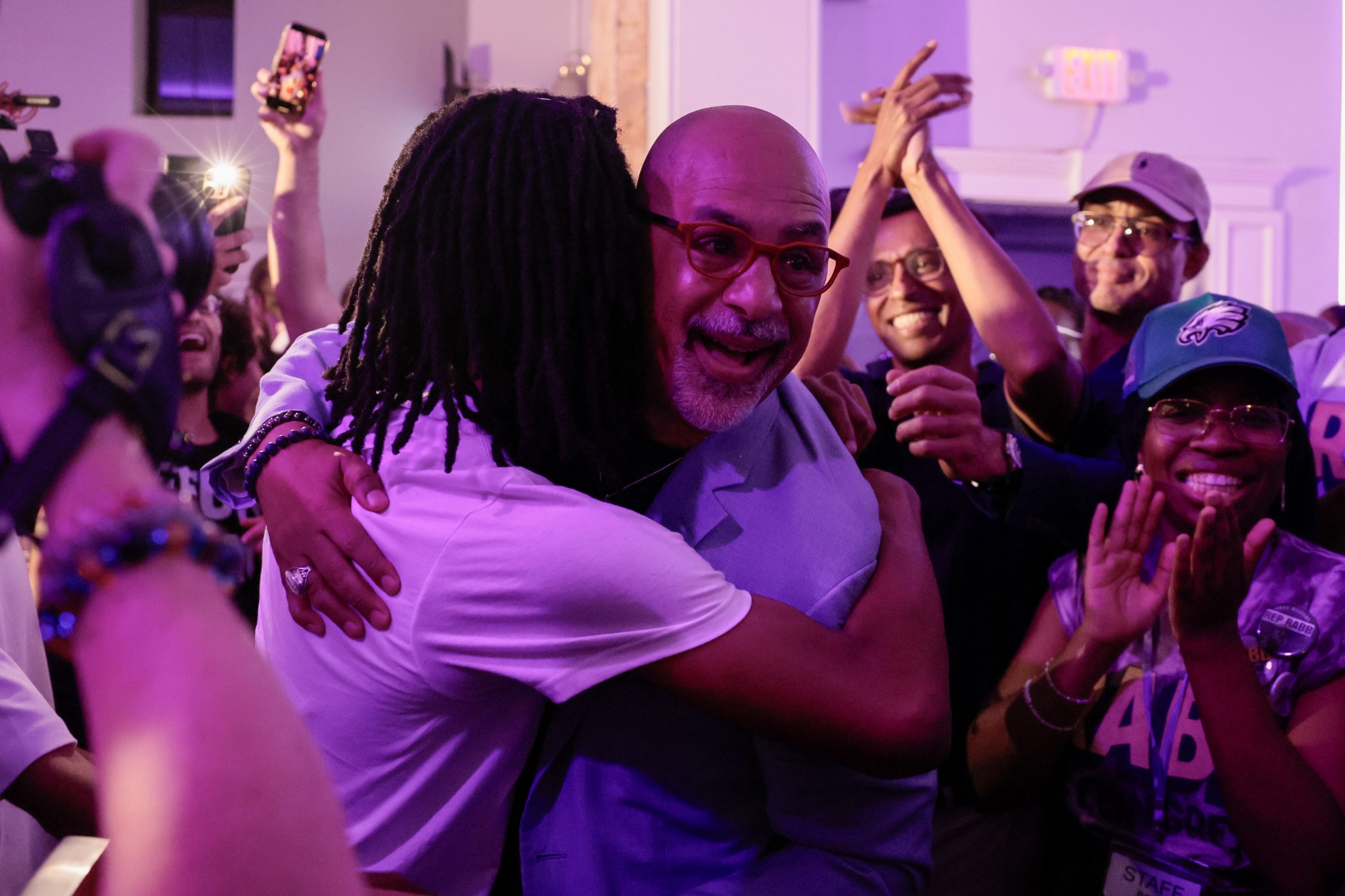
    State Rep. Chris Rabb is hugged by his son, Issa Rabb, during his primary election night event at Victorian Banquet Hall on May 19.Elizabeth Robertson / Staff Photographer

    Some Democrats who watched Rabb emerge from a competitive race, notching one of the left’s biggest wins yet in Pennsylvania, see an opportunity — one that extends the energy and momentum to boost a well-organized, progressive, anti-establishment candidate in the Senate primary.

    Other strategists and activists say that’s a tall task, particularly in a swing state that rarely strays from electing more centrist politicians statewide.

    “Anytime you have success, it breeds enthusiasm, which translates into more volunteers, into more money — everything you need to run a campaign,” said Mike Mikus, a Pittsburgh-based Democratic strategist. “But every election cycle is different. Every campaign’s different. The quality of candidates are different. And anybody who says that any one race signifies a permanent change within a party is mistaken.”

    ‘A huge impact on the political landscape of Pennsylvania’

    In his campaign to succeed U.S. Rep. Dwight Evans, Rabb, a five-term state lawmaker, won 44% of the vote. He was up against State Sen. Sharif Street, who had the backing of the city Democratic apparatus, and physician Ala Stanford, a political newcomer endorsed by Evans.

    Rabb and others have said his success, in part, was the culmination of a decade of progressive organizing that began in the city after U.S. Sen. Bernie Sanders’ 2016 presidential campaign.

    That progressive infrastructure — the coming together of different groups to knock doors, make calls to voters, and unleash a significant independent advertising campaign in a way that rivaled the official Democratic Party organization — is likely the most important way that the left can use the experience of Rabb’s campaign to replicate its success elsewhere, strategists said.

    It’s a template that could have “a huge impact on the political landscape of Pennsylvania,” said Rotimi Adeoye, a Philadelphia-based Democratic strategist who worked in the office of former U.S. Sen. Bob Casey.

    In a district packed with Democratic voters, Rabb’s ability to turn out progressive voters should draw the attention of anyone looking to win the state’s Democratic Senate primary in 2028, Adeoye said.

    “If a Democrat running statewide can learn from some of these organizational groups to build a strong, relational and community-based organizing campaign in Philadelphia and the surrounding suburbs in Montgomery County, Bucks County — they’re going to have a really big chance of winning,” Adeoye said.

    In a sign that those efforts could coalesce around a Senate candidate, one of the groups that helped usher Rabb to victory remains the only major Democratic entity in the state to have publicly started laying the groundwork for a challenge to Fetterman.

    The Working Families Party, which backed Fetterman in the 2022 general election after originally endorsing State Rep. Malcolm Kenyatta in the primary, said in November it would organize an effort to oust him. A “Primary Fetterman” website launched in January is equipped with a “Fetterman sell-out tracker” — highlighting his votes for Trump’s cabinet nominees and opposition to war powers resolutions that would rein in his military strikes, for example — and instructions for donors on how to request a refund from his campaign.

    The website remains the extent of the group’s efforts so far to rally public support and back a new candidate, though its work is expected to pick up after this year’s midterm elections. For now, the party is looking forward to bringing new members who worked to elect Rabb into its fold.

    “Our goal is always to keep building on the work we do each cycle and the success we have each cycle,” said Nick Gavio, the Working Families Party’s Mid-Atlantic communications director.

    One PA, another statewide group in that progressive coalition, has not yet had internal discussions about the Senate race but it supports the Working Families Party’s position as a member of its steering committee, executive director Steve Paul said. He said more than 150 members of One PA mobilized for Rabb by talking to thousands of voters.

    Winning a high-profile congressional race only helps add to that organizational infrastructure, making them “sharper for the next thing,” Paul said.

    “I think it shifts what’s possible, politically — what people can envision,” he said.

    Potential progressive roadblocks

    Mikus said progressives have increasingly surpassed “more establishment Democrats” in their ability to run strong campaigns, including in his area of Western Pennsylvania where candidates like Lee have emerged in the last decade.

    Democratic primary voters are also more progressive than they were 10 years ago, he said. But campaigning on a far-left — or a far-right — platform doesn’t often equate to success on a statewide level in Pennsylvania, a swing state where successful candidates tend to walk a “fine line” that appeals to both swing voters and a message that excites their partisan base, Mikus said.

    “You’ve seen this time after time in presidential elections here in Pennsylvania,” Mikus said. “Hillary Clinton versus Bernie Sanders. Joe Biden versus Bernie Sanders. The vast majority of voters in Pennsylvania will go with the more mainstream Democrat.”

    J.J. Balaban, a Philadelphia-based Democratic strategist and ad maker, said the party runs the risk of “drawing too big of a conclusion” based on a single election — particularly one like Rabb’s where candidates only needed to appeal to Democrats.

    “Democrats really need to think hard about what it will take to win statewide in a purple state, which Pennsylvania clearly is,” Balaban said. “What it will take to win a general election in Pennsylvania is very, very different than what it will take to win in literally the most Democratic congressional district in the country.”

    After recent years of tough losses — including the ousting of Casey by now-U.S. Sen. Dave McCormick, a Republican — Democratic voters will likely have a “tremendous thirst for candidates who have a credible case to make that they can win the general election,” Balaban said.

    Fetterman, whose office did not comment for this story, has insisted that Pennsylvania’s purple state status means he should appeal to both sides of the aisle and not demonize the other side.

    He’s also lamented the direction he sees his party going with candidates like Rabb, particularly around a growing sentiment that Israel has gone too far in its war against Hamas. Fetterman acknowledged last year that his unwavering support of Israel could cost him his Senate seat.

    “Look at the people that are winning the primaries in our party right now, and look at their views on Israel,” Fetterman said at an American Jewish Committee conference in Washington this week.

    On stage with McCormick and the head of the Jewish advocacy organization, Fetterman painted Graham Platner, the expected Democratic nominee for a U.S. Senate seat in Maine, as a “Nazi sympathizer” and connected him to Rabb.

    “People also in our state, too. Rabb, he won, and he ran on being a very, very anti-Israel guy,” Fetterman said. “It’s actually a virtue [in the modern Democratic Party] … It’s heartbreaking for me. And if it isolates me, then so be it.”

    Who might run?

    Of the Democrats widely considered to be eyeing a campaign to replace Fetterman, the public jockeying has so far been limited to criticisms of the incumbent.

    U.S. Rep. Brendan Boyle, a moderate who represents the other half of Philadelphia next to Rabb’s soon-to-be seat, has repeatedly called Fetterman “Trump’s favorite Democrat.”

    Former U.S. Rep. Conor Lamb, a moderate who represented a suburban Pittsburgh district before Fetterman beat him in the 2022 Senate primary, has frequently lambasted him.

    Conor Lamb speaks to the crowd at a town hall-style event organized by progressive groups at Central Penn College on June 22, 2025, in Enola, Pa. Marc Levy

    And U.S. Rep. Chris Deluzio, who succeeded Lamb and leaned into progressive economic populism, has taken a less direct tack while noting the differences between himself and Fetterman over issues like Trump’s military interventions abroad. Deluzio has occasionally reposted others’ criticisms on social media — including one from Gavio, the Working Families Party spokesperson, last week that called Fetterman’s reversal on eliminating the filibuster “a new low” and “an indescribably massive backtrack from everything he ran on.”

    None of the three have ruled out running.

    Boyle is expected to weigh a Senate campaign vs. staying in the House to take a rare opportunity to lead the powerful budget committee if Democrats win the majority in November. Lamb, who’s remained highly active in Pennsylvania politics, said in an interview that he’s hoping to serve again and would run for office if he feels he “can be of service to the state.” Deluzio, who is also heavily involved in helping Democratic candidates across the state, said he’s focused on his reelection this year and that “we’ll see what 2028 holds.”

    “I am not at all interested in seeing us lose this Senate election, and I certainly have gotten a lot of encouragement to look at 2028,” Deluzio said.

    Progressives have also mentioned Lee, the Rabb ally who’s been a vocal member of the leftist wing on Capitol Hill while taking leadership roles in areas like securing the release of the Jeffrey Epstein files.

    U.S. Reps. Summer Lee and Chris Deluzio, both Pittsburgh-area Democrats, speak outside the Moshannon Valley Processing Center in Clearfield County on May 28 after getting a tour of the facility, the largest detention center for undocumented immigrants in the Northeast.Sam Janesch / Staff

    With potential candidates still several months away from making their decisions, it’s unclear who might try to take up the progressive mantle if Lee does not run, strategists say.

    The field could also grow considerably. Other potential candidates could jump in, including the three other current Pennsylvania Democrats in Congress or former lawmakers like Susan Wild, who lost a swing congressional district in the Lehigh Valley in 2024. Wild said she’s “not ruling out” a run but she’s more interested in thinking about good female candidates in general since no woman has ever won a Pennsylvania U.S. Senate seat.

    On the prospects of a battle between different factions of the party, Lamb said he believed Democrats had broadly learned a lesson — from Fetterman’s election in 2022, where he ran on being a reliable Democratic vote in the Senate — that was beyond ideological policy tests.

    “Fetterman taught Democrats in Pennsylvania that you have to have a character test. Anybody can run around the state promising you these further left solutions, and that they’re going to be a thumb in the eye of the establishment, and they’re going to channel all your anger and dissatisfaction. And then that person can turn on you on a dime,” Lamb said. “The fact is that we have to evaluate our candidates based on whether they have integrity and they’re going to keep their word and, honestly, whether they have the work ethic to be a senator day in, day out.”