Blog

  • You hate data centers. They think you could be a terrorist or Chinese dupe.

    You hate data centers. They think you could be a terrorist or Chinese dupe.

    A year or so ago, many Americans had never heard of a data center. Today, these massive warehouse-type structures with an insatiable thirst for electricity and water are fast becoming the new “third rail” of U.S. politics. Sarah Longwell, the focus-group guru and TV pundit who writes for the “Never Trumper” site the Bulwark, said what she’s hearing from everyday voters is stunning.

    “I’m in the middle of a huge countywide fight against data centers,” one small-town Georgia woman told a focus group, in a tape that Longwell played on a podcast. “People are showing up about their water already, and about 40 people are being pushed out of their homes. It’s just very personal.”

    It’s the same here in Pennsylvania, where leaders in both parties, including Democratic Gov. Josh Shapiro, see data centers as an economic savior much as oil was in the 1860s. “We don’t want them!” exclaimed a Pittsburgh voter at the notion of these tech sites replacing shuttered steel mills. “It doesn’t matter who the governor is, who the mayor is. They’re all on board because it’s job creation.”

    Not on board? The average American. As recently as last September, a poll conducted for the environmental site Heatmap found voters evenly divided on whether they’d support a data center built near their home. Just nine months later, its newest survey finds about seven in 10 people would now strongly oppose one — a steep and shockingly rapid decline in public support for the infrastructure of artificial intelligence, or AI.

    Indeed, the trouble in the heartland for data centers has come so quickly it’s hard to say how much is driven by environmental complaints — such as noise and vibrations from data centers already up and running — or rising electric bills, and how much is simply white-hot rage at the tech billionaires getting even richer from AI, or the compliant politicians who’ve jumped on the bandwagon of their biggest donors.

    Christina Speasmaker, of Waco, Texas, chants with other protesters demonstrating against laws surrounding data centers outside the Texas Capitol in Austin in February.Mikala Compton

    Fortunately, we live in a thriving, well-oiled democracy in which our elected officials have their fingers on the pulse of the people and have rapidly shifted gears — to grab a pitchfork and join their furious constituents on the front lines of the war against data centers. Right …?

    OK, you probably saw right through my lame sarcasm there. Instead, America’s elites, and their beat cops who exist less to enforce laws than to uphold the social order that’s made their bosses so powerful, refuse to believe that regular folks have rationally decided that new data centers are unwanted scars upon the land.

    If you oppose data centers, they’ve decided, you must have been brainwashed by Chinese communist spies.

    Or worse. You may even be a terrorist.

    Last Thursday, the Republicans on Capitol Hill who lead the House Energy and Commerce Committee sent a letter to Trump regime officials urging an investigation into whether China — as part of a 21st-century nuclear arms race to become the planet’s dominant AI force — is secretly funding all these farmers and suburban moms fighting data centers.

    It’s an outlandish and unsubstantiated claim. Indeed, some of the GOP’s supporting evidence comes from a “think tank” called — and you cannot make this stuff up — the Bitcoin Policy Institute. Yet, anti-left conspiracy theories are sure to find a sympathetic ear in Donald Trump’s rabidly pro-AI government.
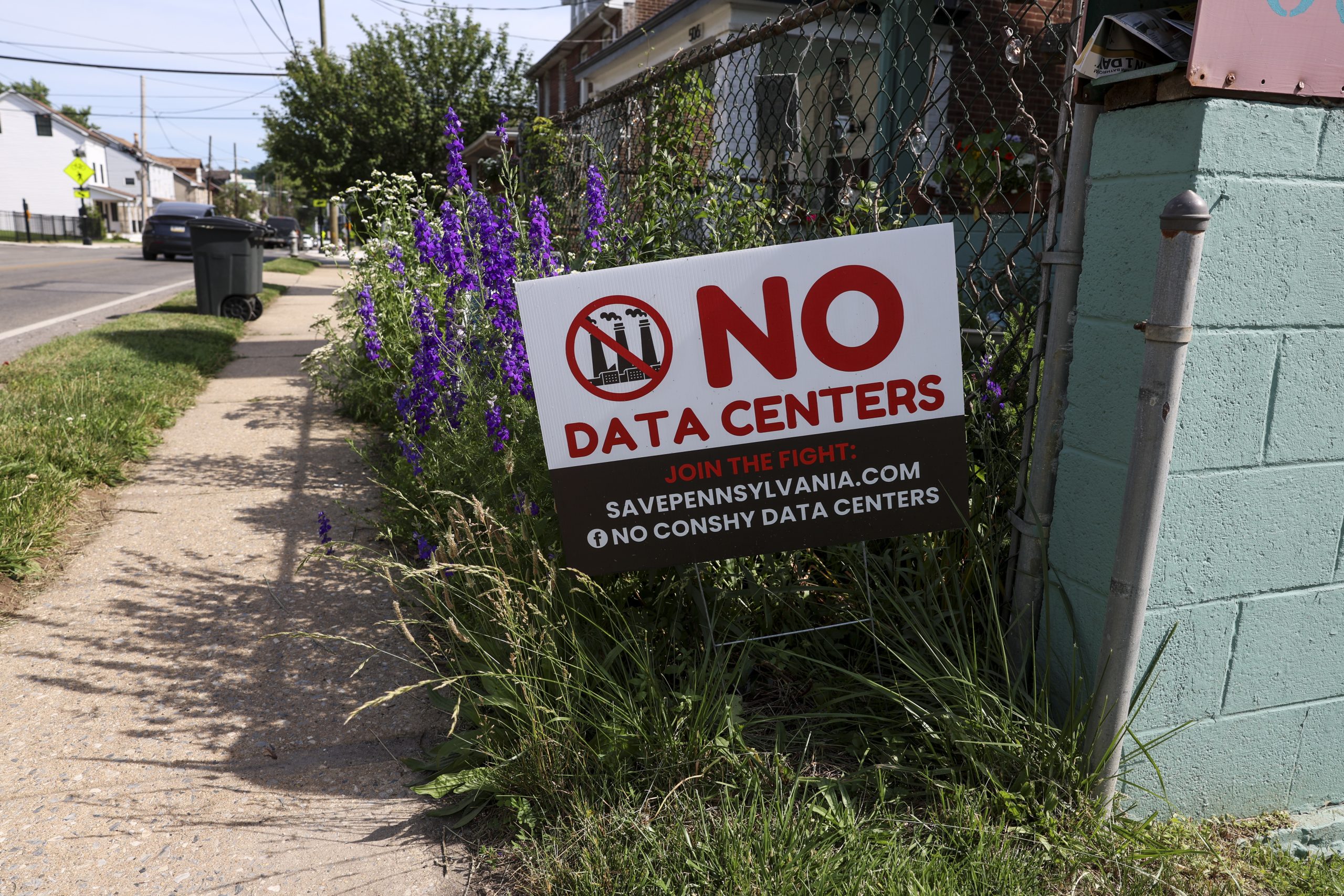
    A yard sign in Conshohocken protests a proposed data center on the site of the shuttered Cleveland-Cliffs steel mill.Monica Herndon / Staff Photographer

    “It’s not organic and local, some of this is foreign-sourced dark money coming in,” Interior Secretary Doug Burgum — formerly the governor of oil-drenched North Dakota — said at a May event hosted by the right-wing site Breitbart News. “The people who used to fight on climate change have shifted.”

    That shift would have to be the result of Manchurian Candidate-level brainwashing from Beijing, and not because studies have shown that at least 56% of the massive amounts of new energy needed to run these data centers comes from fossil fuels — oil, gas, and coal — right when the global climate crisis is accelerating. Last week, the World Meteorological Organization warned the planet should expect record heat through 2030.

    Dang, those Chinese spies are good.

    At least we can take comfort in the fact that the nation’s leading law enforcement organizations are working hard to respect the all-American First Amendment rights to free speech and dissent of these data center activists, much as they did for the civil rights marchers and anti-war protesters of the 1960s and ‘70s.

    LOL.

    Also last week, the Intercept reported on a document — later confirmed by The Inquirer — from the Delaware Valley Intelligence Center, which is hosted by the Philadelphia Police Department, that revealed that cops are sifting through social media posts by anti-data center activists, convinced they pose a newfangled terror threat.

    “Domestic violent extremists (DVEs) are likely interested in targeting artificial intelligence (AI) data centers, posing a physical and cyber threat to infrastructure in the Philadelphia regional area,” stated a December alert from the intelligence fusion center, which coordinates local, state, and national law enforcement.

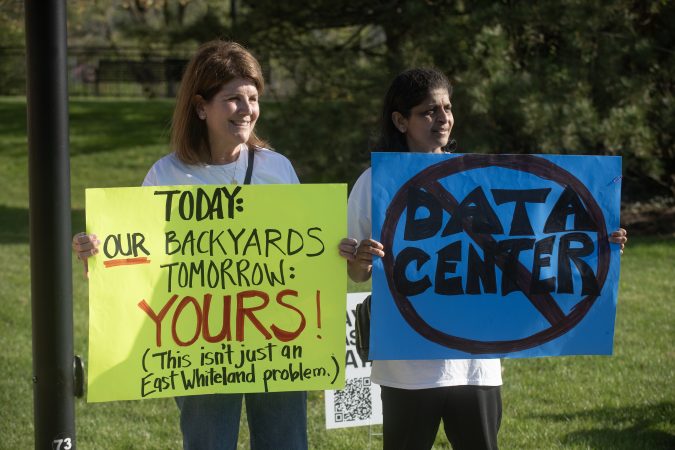
    These fusion centers, you may recall, were established after the 9/11 attacks to prevent another World Trade Center-level incident. Today, “the terrorists” are apparently folks in places like East Whiteland Township or Vineland, N.J., who, in the immortal words of David Byrne, dress like students, or dress like housewives, or in a coat and a tie. Philly cops said in the report they are on the lookout for potential acts of vandalism and something they called “more disruptive First Amendment activity.”
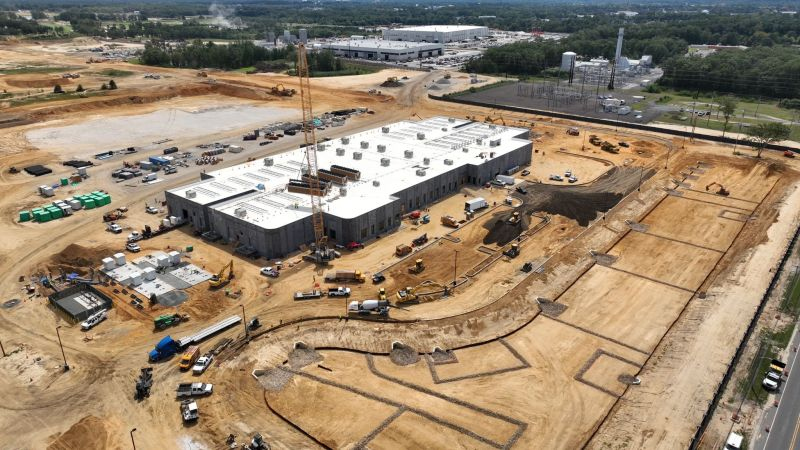
    A massive data center is under construction in Vineland, N.J. It is expected to be complete later this year, with a capacity of 300 megawatts.Courtesy of DataOne

    I’m pretty sure your right to be nonviolently disruptive in America — without the government working to suppress those rights — is exactly why James Madison wrote up the First Amendment back in 1789.

    To be clear, vandalism or arson or other destruction at data centers would be wrong — but I’m struggling to find many examples of this. There have been a couple of reports of shots being fired at the homes of a pro-data center politician and AI impresario Sam Altman, which is deplorable. But the anti-data center movement is, overall, remarkably nonviolent. The threat to the system isn’t the bullet but the ballot, and they know it.

    “The more they try to silence us, the louder we’ll get,” Karen Feridun, the veteran environmental activist from Berks County, Pa., who founded the Pennsylvania Data Center Resistance group on Facebook, told me on Sunday. She noted that law enforcement also spied on her anti-fracking efforts in the 2010s, so she is not surprised.

    Feridun — who, as far as I know, does not speak a word of Mandarin — said activists see the law enforcement monitoring as an effort to intimidate them, but it is only fueling fears that the AI powered by data centers will be used for broader domestic surveillance.

    Indeed, we have never seen such a disconnect between our clueless elites, from Silicon Valley to Capitol Hill and the hallways of Harrisburg, and everyday folks who are filled with fury.

    That communication breakdown peaked a few weeks ago when an obscure real estate executive was tapped to address the graduating seniors at the University of Central Florida, and didn’t think twice about hailing the glorious AI future that 22-year-olds see as obliterating their job prospects. The speaker recoiled in shock at the overwhelming boos.

    Some observers argue that folks in the rural towns or sprawling exurbs fighting the data centers see them not just as ugly, noisy neighbors, but also as a proxy for the threat to the social order posed by AI as it disrupts the workplace or classroom learning.

    But in reality, the rage runs even deeper. It’s anger not only at the machine, but the world that created it — a world where the gap has never been wider between the billionaires of AI (and, this week, the first trillionaire) and us regular schlubs, struggling to pay the electric bill or fill the gas tank before our boss replaces us with a robot.

    Making matters worse is the realization that both political parties are in the back pocket of Big Tech and their crypto-bro allies, who are spending well over $300 million to buy the 2026 midterms. If anything, the hypocrisy of top Democrats like Shapiro or Virginia Gov. Abigail Spanberger, who claim to be fighting climate change while pushing for these energy hogs, is more infuriating than the predictable “Drill, baby, drill!” chants of Neanderthal Republicans.

    They just don’t get it. They spend all day in their cloistered back offices, counting their future cash, and all night at swank political fundraisers, convinced that anyone who’s not on board with their gravy train must be a deranged radical from Antifa™, or a useful idiot for the International Communist Conspiracy.

    They see the pitchforks and the flaming tiki torches and are squinting to see a “Made in China” label. They miss the righteous wrath, born in the USA.


  • The USMNT has momentum going into the World Cup, even after a loss

    The USMNT has momentum going into the World Cup, even after a loss

    CHICAGO — The big crowd was buzzing, the fireworks were rising, and local legend Jim Cornelison was belting out the national anthem in his famous way.

    But the mood lasted barely 43 seconds after the U.S. men’s soccer team’s last World Cup tuneup kicked off.

    That’s what the clock read when midfielder and longtime locker room leader Tyler Adams tripped up Felix Nmecha just outside the Americans’ 18-yard box. Joshua Kimmich of German club superpower Bayern Munich took the free kick, then Kai Havertz of newly crowned English Premier League champion Arsenal raced past Miles Robinson for an open header past a frozen Matt Freese.

    Just like that, the good vibes were down the drain.

    “I think we all looked at each other and said, ‘Well, it just got a lot more difficult, but we need to battle,’” Adams said.

    “I think instantly, it was frustration,” said left back and fellow locker room leader Antonee Robinson, who scored the equalizer later in the half. “You could see that we don’t know how we’ve let quality players and quality opposition just get a free header in our box — that shouldn’t really be possible.”

    U.S. manager Mauricio Pochettino was upset, too. But he quickly realized that he had a measuring-stick moment on his hands, and he started to relish it.

    “I was thinking that we were lucky,” he said. “Because to face a situation — conceding a goal against a team [like] Germany is, with top players, was an amazing challenge for us. To see how we react, how we show character, how we show togetherness, how we start to play under pressure.”

    More than a few recent U.S. teams might have folded. This one, though, took the game right back to the four-time World Cup champions and had the better play for much of the rest of the first half. The payoff came in the 37th, when Antonee Robinson belted in a highlight-reel strike from just outside the 18-yard box.

    “The reaction was amazing, was really positive,” Pochettino said. “And that’s why it’s good, you know, that something not so good happened: to see the reaction and to create that atmosphere that we can deal with this type of situation that we can find in the future, and during the competition in the World Cup.”

    Antonee Robinson added: “I think that response shows that when things are going against us, which in tournament football is bound to happen, that we can come back from anything.”

    Germany ended up winning, 2-1; Leroy Sané scored the winner just before both managers started making mass substitutions. For the casual fans just tuning in before the World Cup, the final score might be all that matters. But if you’re one of them, know that many U.S. diehards were pleased with the performance.

    “I don’t think any of us are fazed by playing Germany,” Adams said. “To play a top team like that though, going into the World Cup. I think increased our confidence tenfold. I think for us, we already have a confident team, but to go toe-to-toe with one of the best teams in the world, [it] shows that we’re ready and capable.”

    The stats and the eye test backed that up. The Americans outshot their star-studded opponents, 16-12, with both teams registering four shots on target. Christian Pulisic had a double chance in the 48th minute that he should have converted, and Brenden Aaronson forced a big save out of Oliver Baumann in the 87th.

    “I don’t think this game is about the result,” Adams said. “This game is about again showing the character, the mindset, what we’re trying to be, what we’re trying to become.”

    Perhaps if the U.S. had tied or pulled off an upset, Adams would have said something different. This was a moment for big-picture thinking, though, and he provided some.

    Germany and Bayern Munich star midfielder Jamal Musiala (center) dribbling between the U.S.’ Malik Tillman (left) and Tyler Adams during the first half.Nam Y. Huh

    “The final product and the result matters next week, obviously first and foremost,” he said. “But that being said, we showed our character. And we showed that we’re able to create a high volume of chances [and] not concede a high volume of chances against a really good team.”

    With all due respect to Paraguay and Australia, the first two teams the U.S. will face at the World Cup, their attacks don’t have the firepower of Germany’s. Havertz scored in the Champions League final the previous weekend, and the starting playmakers behind him were Florian Wirtz of England’s Liverpool, Jamal Musiala of Bayern Munich, and Sané of Turkey’s Galatasaray (and formerly Bayern and England’s Manchester City).

    If that quartet clicks in the World Cup, they can carry the Mannschaft a long way — including a potential round-of-16 game in Philadelphia, which a lot of local fans hope for.

    The U.S., meanwhile, will have to have everyone clicking to make that round, and to a quarterfinal that is the bar for a successful run. These two warmup games have shown that they can do it, but the requirements are clear.

    U.S. defender Alex Freeman (left), who’s been one of the team’s best players in the last two games, dueling with German counterpart David Raum.Nam Y. Huh

    “We have to do it when it comes down to it for sure, when the World Cup starts and we have the big games,” Pulisic said. ”But it definitely helps us and makes us feel good. I feel like the last performances have been really good and absolutely it should keep us in high spirits.”

    One of them is the return of centerback Chris Richards. Pochettino picked what might be 10/11ths of his World Cup starting lineup on Saturday, with the remaining one, Miles Robinson. It didn’t take long to see how that turned out.

    Still, the signs are there overall. If they were not, you’d see that said here.

    Now it’s on to California, where the U.S. team’s World Cup base camp opens Monday with the lone open practice of the run in Irvine. The moment really has arrived, and at last, it really feels that way.

  • Lorina Marshall-Blake wears retirement with the verve and flair of one of her signature hats

    Lorina Marshall-Blake wears retirement with the verve and flair of one of her signature hats

    During the early 1990s, back when I was a business reporter for the Daily News and brand-new to Philly, one of my first challenges was to figure out who the local players in corporate and political circles were. It didn’t take long before I came across Lorina Marshall-Blake.

    She stood out partly because of her penchant for wearing exquisite hats. But it was also because Marshall-Blake was the newly installed vice president of government relations at Independence Blue Cross. I would see her at meetings and events across the city. She seemingly knew everybody in business and at City Hall — and could work a room like no other. Not only was Marshall-Blake a mover and shaker, but it was clear she was well-liked and respected, as well.

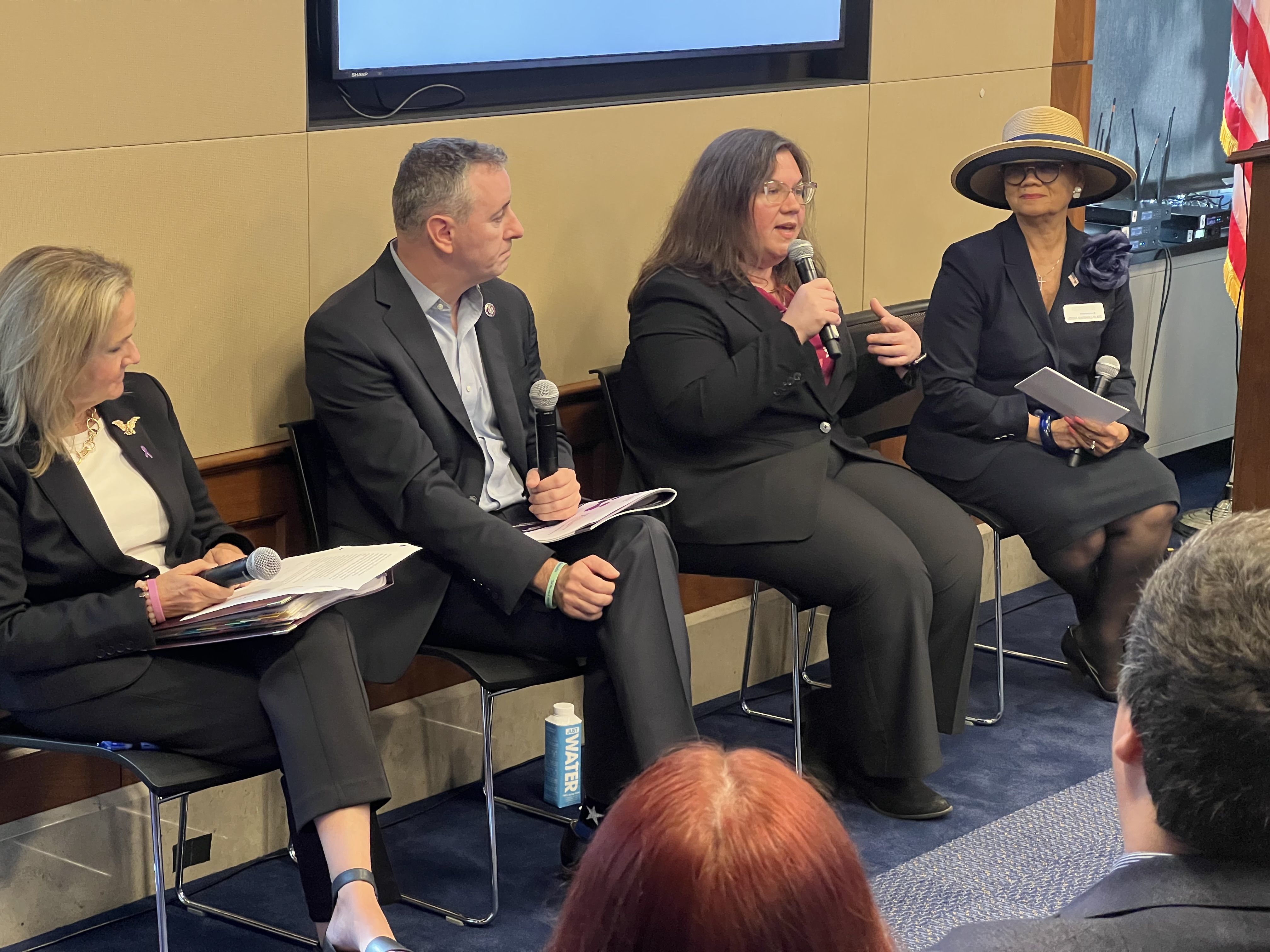
    Lorina Marshall-Blake at a meeting in Washington, D.C., with U.S. Reps. Madeleine Dean and Brian Fitzpatrick, and Kristina Canfield of the Association of Recovery in Higher Education.Courtesy of Independence Blue Cross

    “Lorina Marshall-Blake has a way of making people feel seen and supported the minute she walks into a room,” Kelly Munson, president and CEO of Independence Blue Cross, said. Marshall-Blake, she added, is an example of “how you lead matters just as much as what you lead.”

    Watching Marshall-Blake’s career trajectory from afar, I was in awe. There aren’t many women — much less Black female executives — who have experienced the kind of success she has, especially during the early 1990s. The proverbial glass ceiling that blocks qualified women and people of color from advancing in the workplace is stubbornly thick, but Marshall-Blake was somehow able to break through it.

    In 2011, she was named president of the Independence Blue Cross Foundation, the company’s philanthropic arm, which has distributed more than $90 million in grants to various local causes — including a program that provides scholarships for Philly-area high school students to attend nursing school.

    When I learned earlier this year that Marshall-Blake intended to hang up her fancy hats after 35 years at Independence Blue Cross, I felt a little sad, because it marked the end of an era.

    “She’s an iconic person given what she achieved during that period of time,” said A. Bruce Crawley, the public relations guru who met Marshall-Blake when they were both students at the now-defunct Charles Morris Price School of Advertising and Journalism.
    Crawley, who founded the African American Chamber of Commerce, watched her career over the years, and “was amazed at the progress she was able to make because she was always just a nice person.”

    Back then, he believed that to succeed in corporate America, “it required a certain toughness.” Crawley added, “I thought that she maybe would be challenged by having to be tough, but she was able to do that in a way that didn’t grate on people, and she was a very productive executive.”

    When I reached out to Marshall-Blake earlier this year about doing an exit interview, she informed me she will continue working with IBX — just not in a full-time capacity.

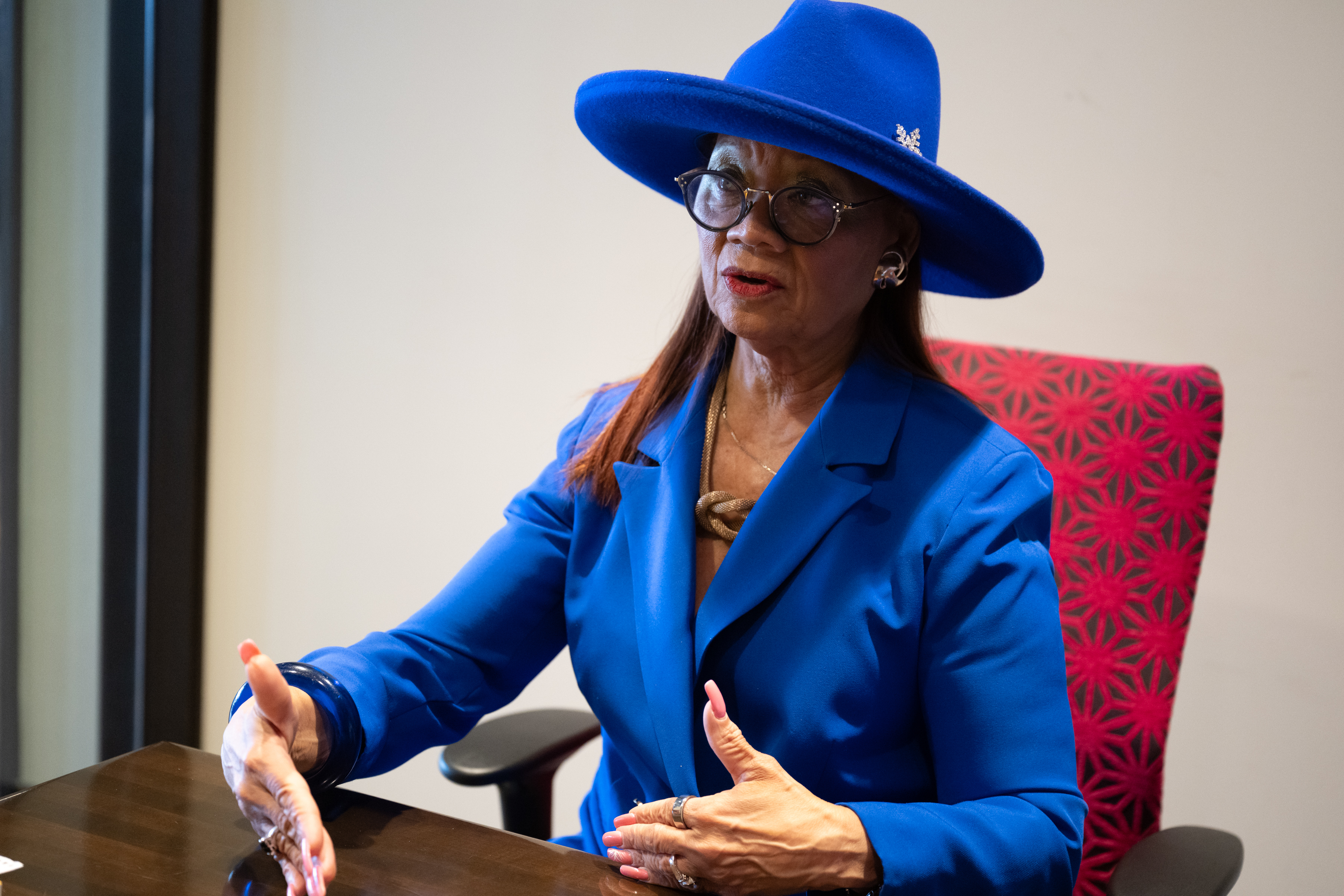
    Lorina Marshall-Blake chats with Jenice Armstrong at the Pyramid Club in March.Erin Blewett / For The Inquirer

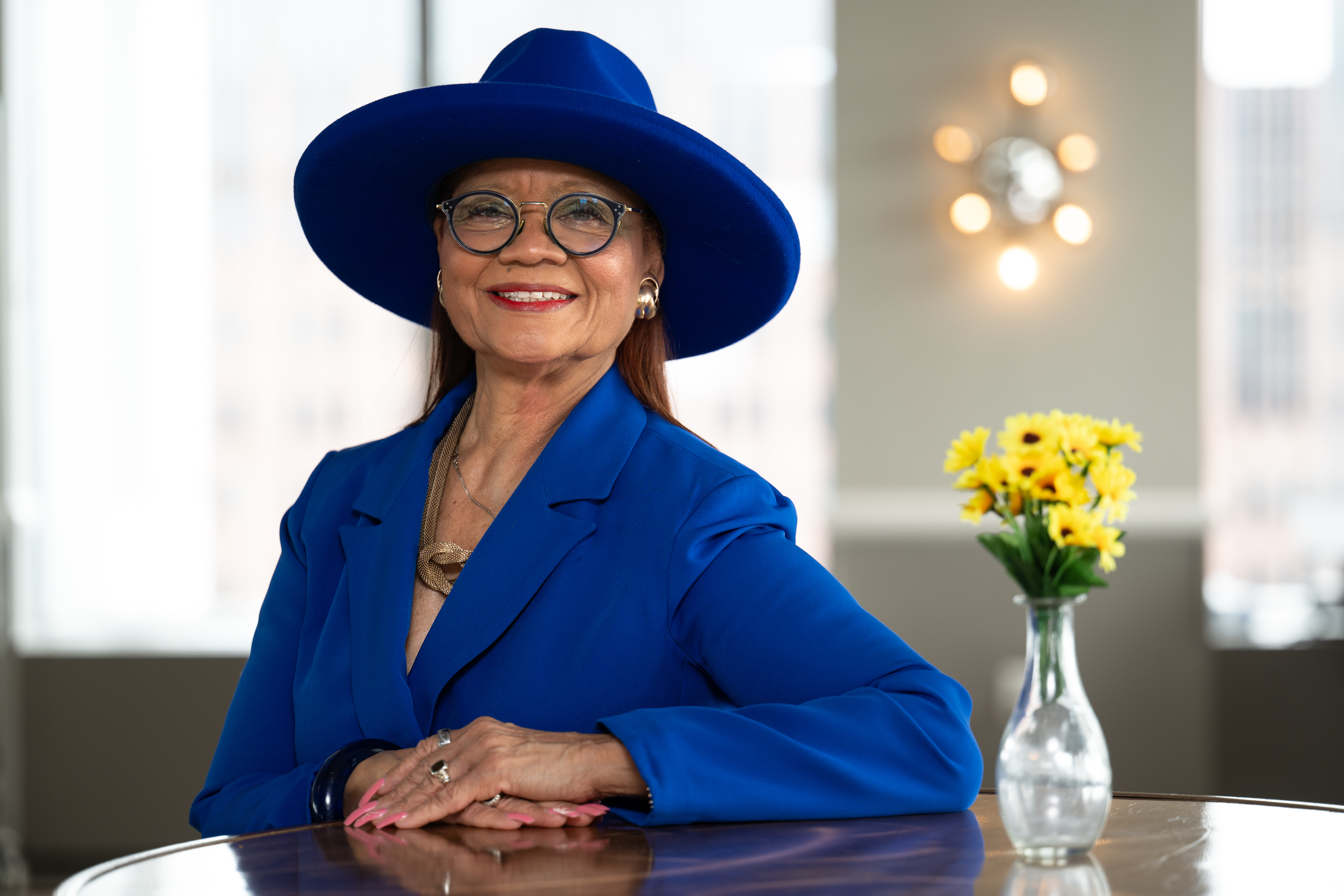
    But I still wanted to meet with her to talk about her next chapter, as well as to glean some wisdom about succeeding in corporate America. We agreed to meet at the Pyramid Club on a chilly, overcast day. When she walked in, Marshall-Blake lit up the room in an electric blue pantsuit with, of course, a crisp matching chapeau.

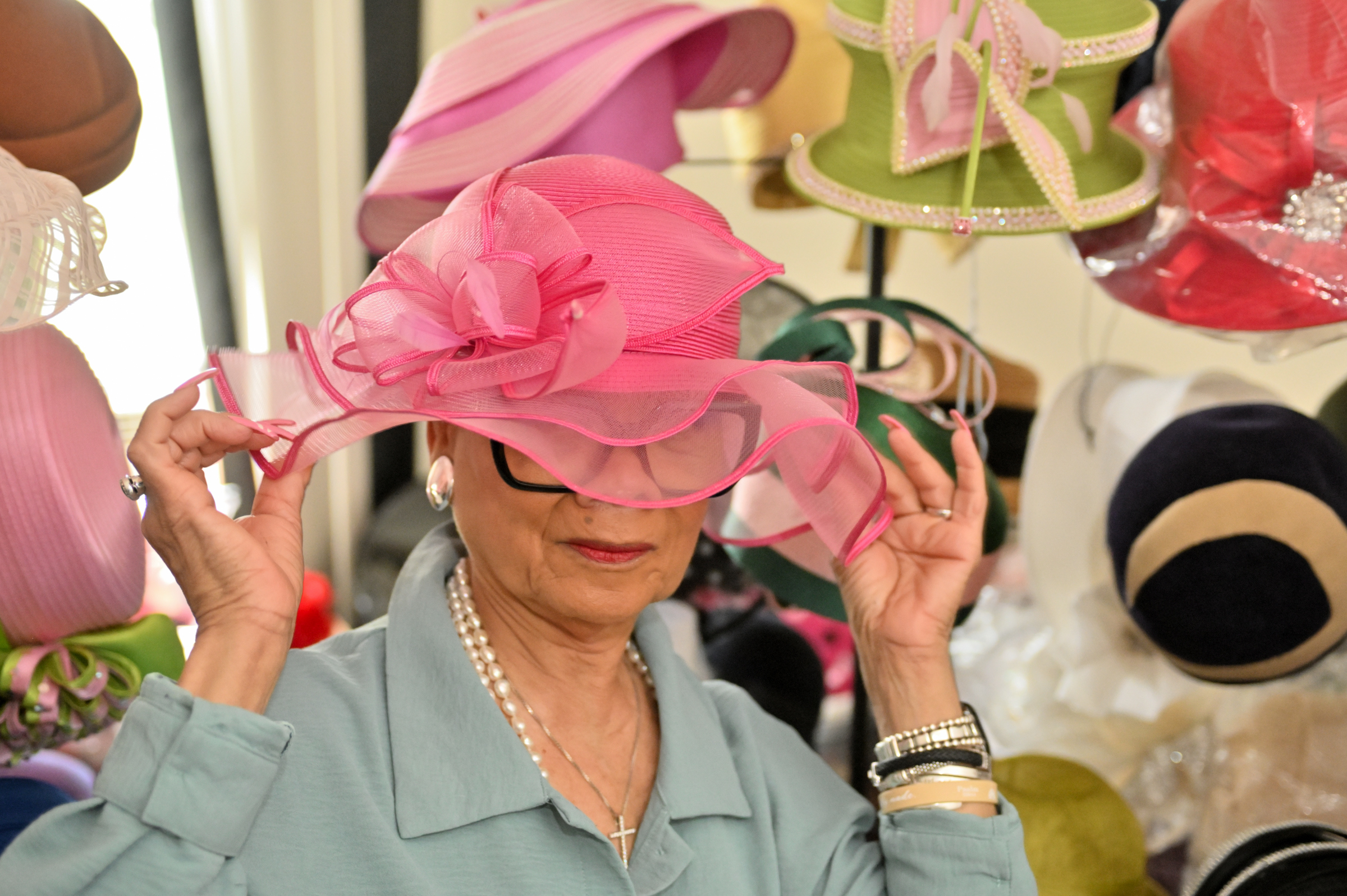
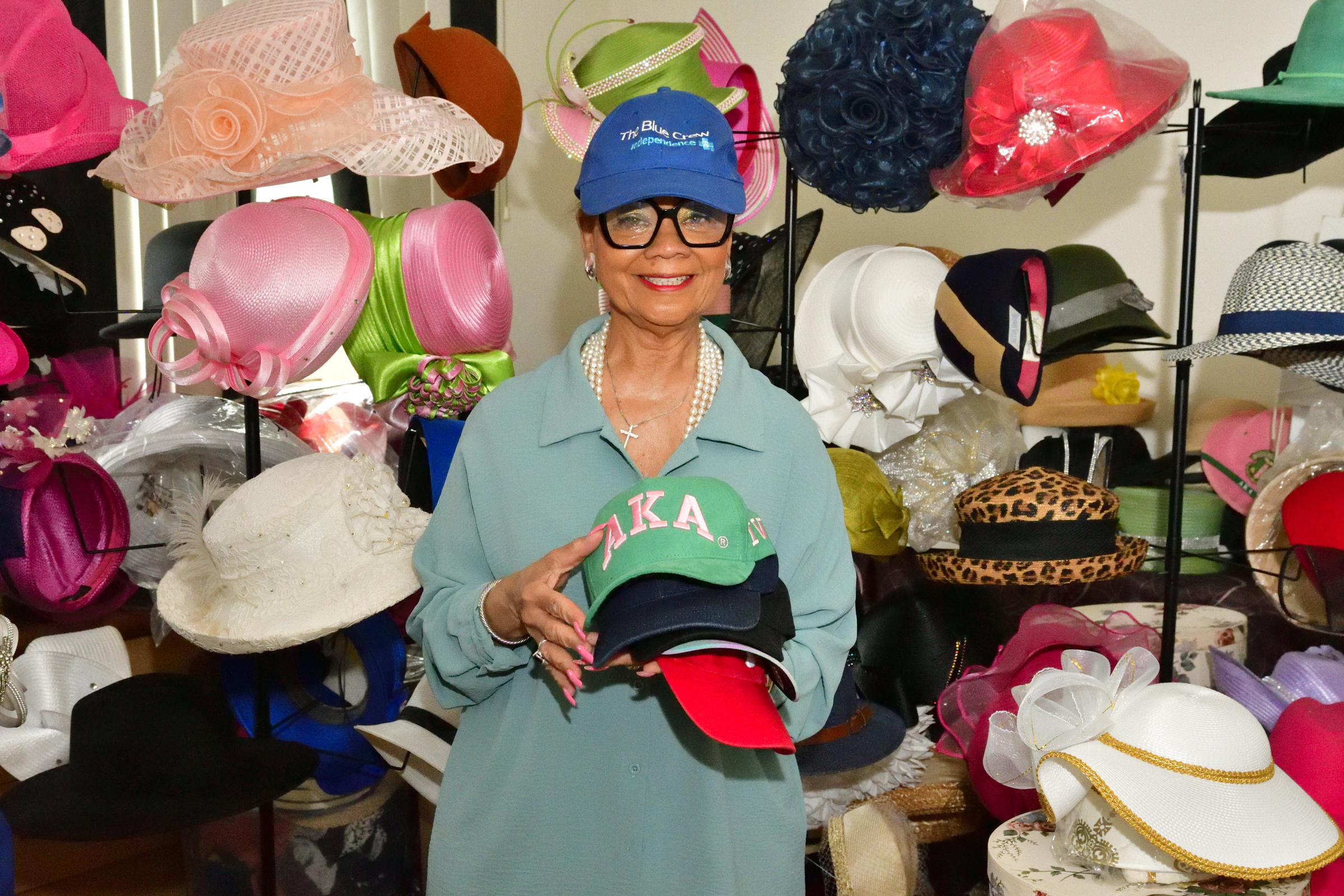
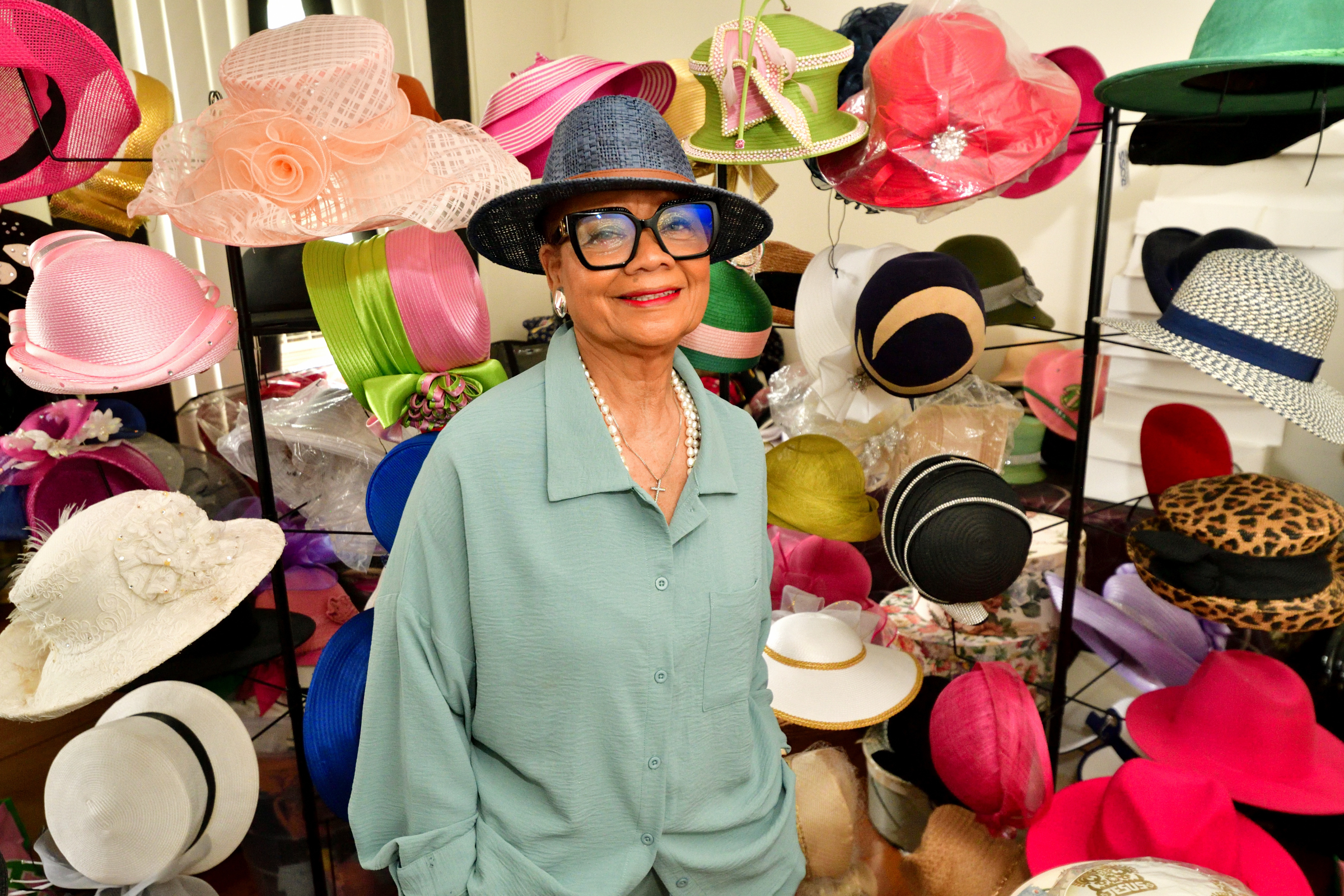
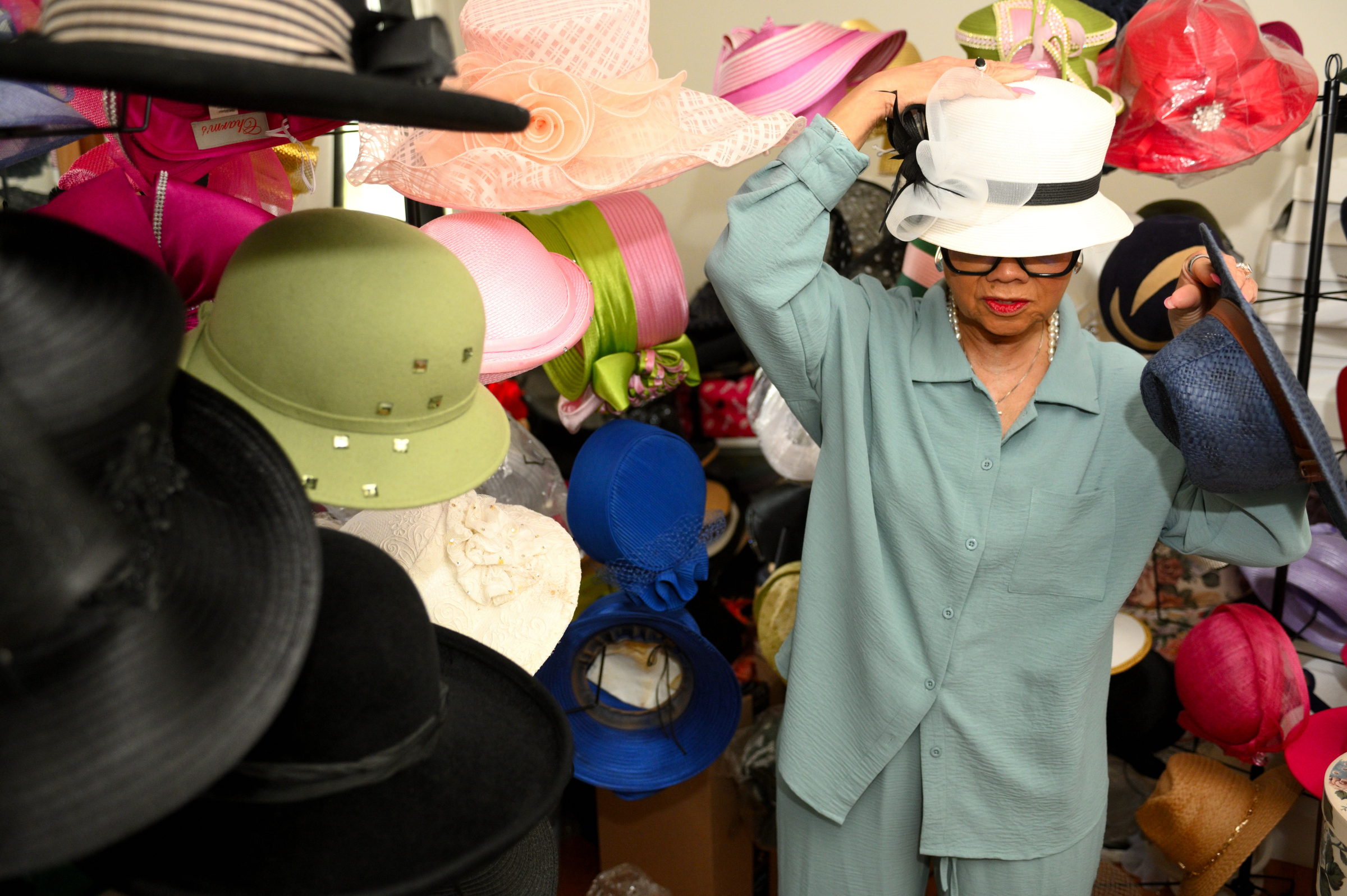
    She told me she has an entire room in her home filled with hats, many of which were given to her as gifts over the years.

    Listening to Marshall-Blake talk about growing up as a middle child in a family of five children in a modest, four-room house on the 600 block of North Yewdall Street in West Philadelphia, I thought about the considerable challenges she faced along the way. Her mother was a homemaker; her father was a welder until he was injured on the job.

    “I didn’t know I was poor until somebody told me I was poor,” she said.

    After graduating from Overbrook High School in 1968, where she was a cheerleader and class treasurer, Marshall-Blake won a scholarship to attend Temple University. But her college dreams were put on hold because she couldn’t afford books.

    She went on to hold a series of low-level jobs at Philadelphia Gas Works, Cigna, and a local law firm, and took undergraduate classes before finally graduating from Antioch University in 1983.

    Marshall-Blake got her first big career break in 1980, when PGW named her vice president of government relations and urban affairs — a role she fully embraced. She said she worked to learn everything she could about the organization from the ground up — literally.

    “I donned my meter reader outfit and read meters,” she told authors of the 2020 book, They Carried Us: the Social Impact of Philadelphia’s Black Women Leaders. “I climbed underneath buildings and got in ditches with the guys. I got on the phones. I wanted to know the people that really carried PGW. If there was a gas explosion, I was there. It was more than just showing up. I was present.”

    Lorina Marshall-Blake dons a full fascinator from her collection …Bastiaan Slabbers / For The Inquirer
    … and an Independence Blue Cross cap.Bastiaan Slabbers / For The Inquirer

    In 1990, she completed her master’s degree in government relations at the University of Pennsylvania. The following year, she moved to Independence Blue Cross, where she had been named vice president of government relations.

    “I’ll always remember the first day I walked into Independence Blue Cross on June 1, 1991,” Marshall-Blake said during a retirement reception in her honor at the company’s headquarters earlier this spring. “This work for me was more than a job. For me, it was ministry.”

    March 31 marked her last official day as a full-time employee at Blue Cross, but her consulting agreement with the insurance giant began immediately. She said she welcomes the slower pace of her new role. She’s 75. It’s time. She’s ready.

    Still, stepping into her next act will be a major adjustment. Marshall-Blake is working on letting go of her usual “got-to-do-this” mindset. The 20 unpacked boxes in the middle of her living room can stay where they are. She’ll get to them when she gets to them.

    Lorina Marshall-Blake wears a classic coffin-top Stetson …Bastiaan Slabbers / For The Inquirer
    … and then a mushroom crown hat with a downturned brim.Bastiaan Slabbers / For The Inquirer

    Marshall-Blake, who is also an associate minister at Vine Memorial Baptist Church in West Philly, said she recently offered up a simple prayer: “Lord, let me accept retirement with grace.”

    She accomplished so much during her time in corporate America; I’m sure she will do the same during this season in her life, too.

    My hats off to her.

  • Before she married Tug, Diane McGraw led Philly’s bid for a World Cup. There was one problem: They wanted the Vet for two months

    Before she married Tug, Diane McGraw led Philly’s bid for a World Cup. There was one problem: They wanted the Vet for two months

    Diane McGraw was never a sports person. As a young girl in Ridley Park, she dreamed of being an actress, and paid far more attention to the film industry than she ever did to the Phillies or Eagles.

    This ethos applied to her day-to-day life, as well. In the late 1960s, McGraw slipped and fell while playing field hockey for Notre Dame High School in Moylan, Pa.

    It would be the end of her short-lived athletic career, but she was unbothered and quickly found a way to occupy her time.

    “I was the athletic rep for my class,” she said, “that helped organize the intramurals.”

    Little did McGraw know, the role would become a precursor to her future profession.

    Over the coming decades, she’d organize celebrity tennis tournaments and national and international sporting events, from NCAA volleyball championships to the Ryder Cup to the MLB All-Star Game.

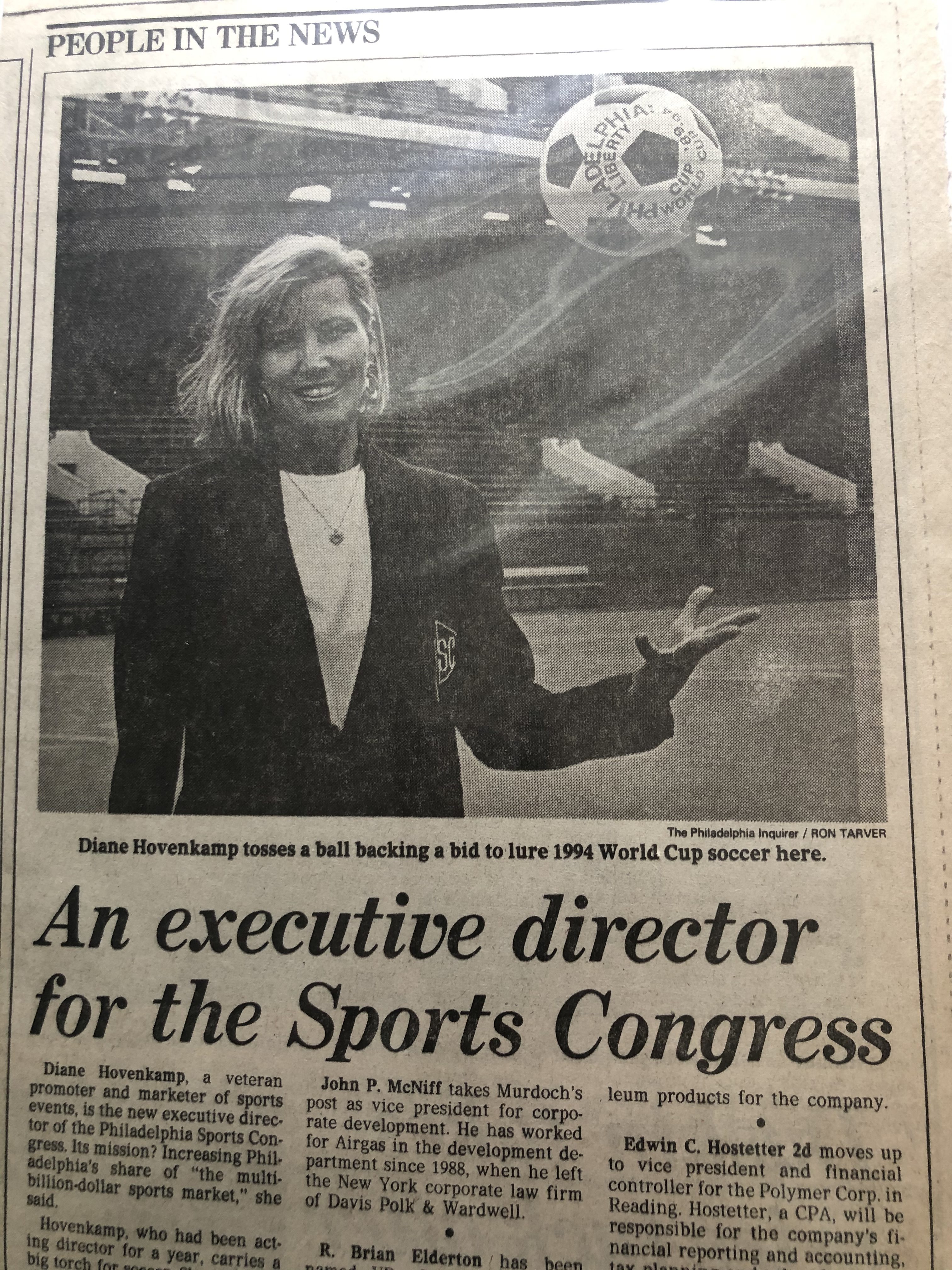
    As executive director of the Philadelphia Sports Congress, Diane McGraw (née Hovenkamp-Robertson) was instrumental in trying to bring the 1994 FIFA World Cup to Philadelphia.Courtesy / Diane McGraw

    McGraw would find herself atop sports and entertainment commissions in four U.S. cities — Philadelphia, Los Angeles, Louisville, and Orlando — and in 1995 married longtime Phillies reliever Tug McGraw.

    The aspiring actress went from having no casual interest in sports to living a life full of them. And among her most fulfilling projects was one that never came to be.

    Under McGraw’s leadership, Philadelphia became one of the first major U.S. cities to host international soccer matches throughout the late 1980s and 1990s. They drew well, often with attendance numbers as high as 45,000.

    In the early 1990s, she was put in charge of Philadelphia’s bid to host the 1994 World Cup. The bid was unsuccessful, but McGraw did prove something in the process.

    Major corporate sponsors like Aramark and Blue Cross helped fund the bid. It was clear that there was local interest in the sport. The timing just wasn’t right.

    Now, it is. As Philadelphia hosts its first World Cup this month, McGraw is grateful to have played a small part.

    “I was thrilled [to hear] that it was coming here,” she said. “Finally. We deserve to have it here. And I’m just sorry we missed out on it back then.”

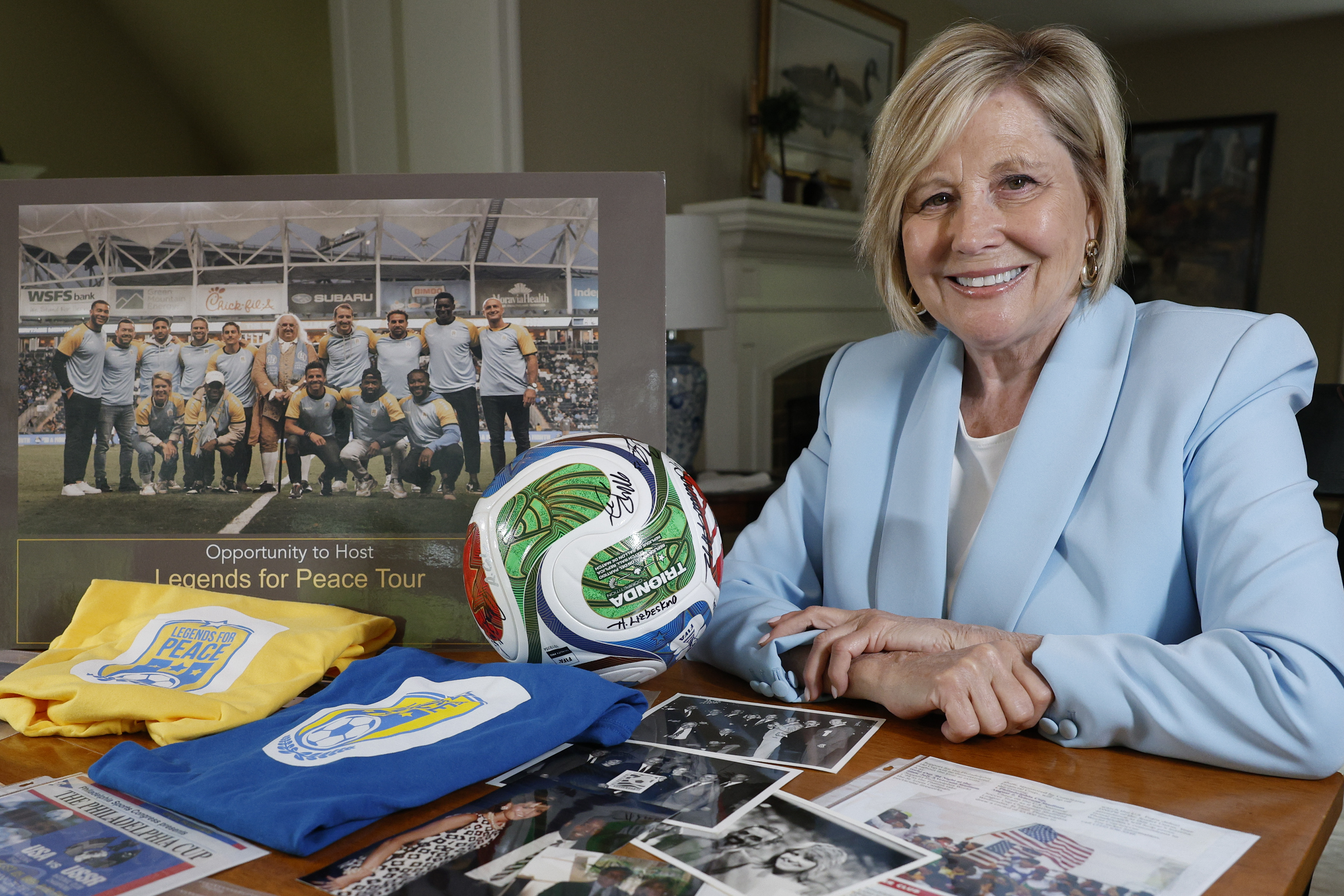
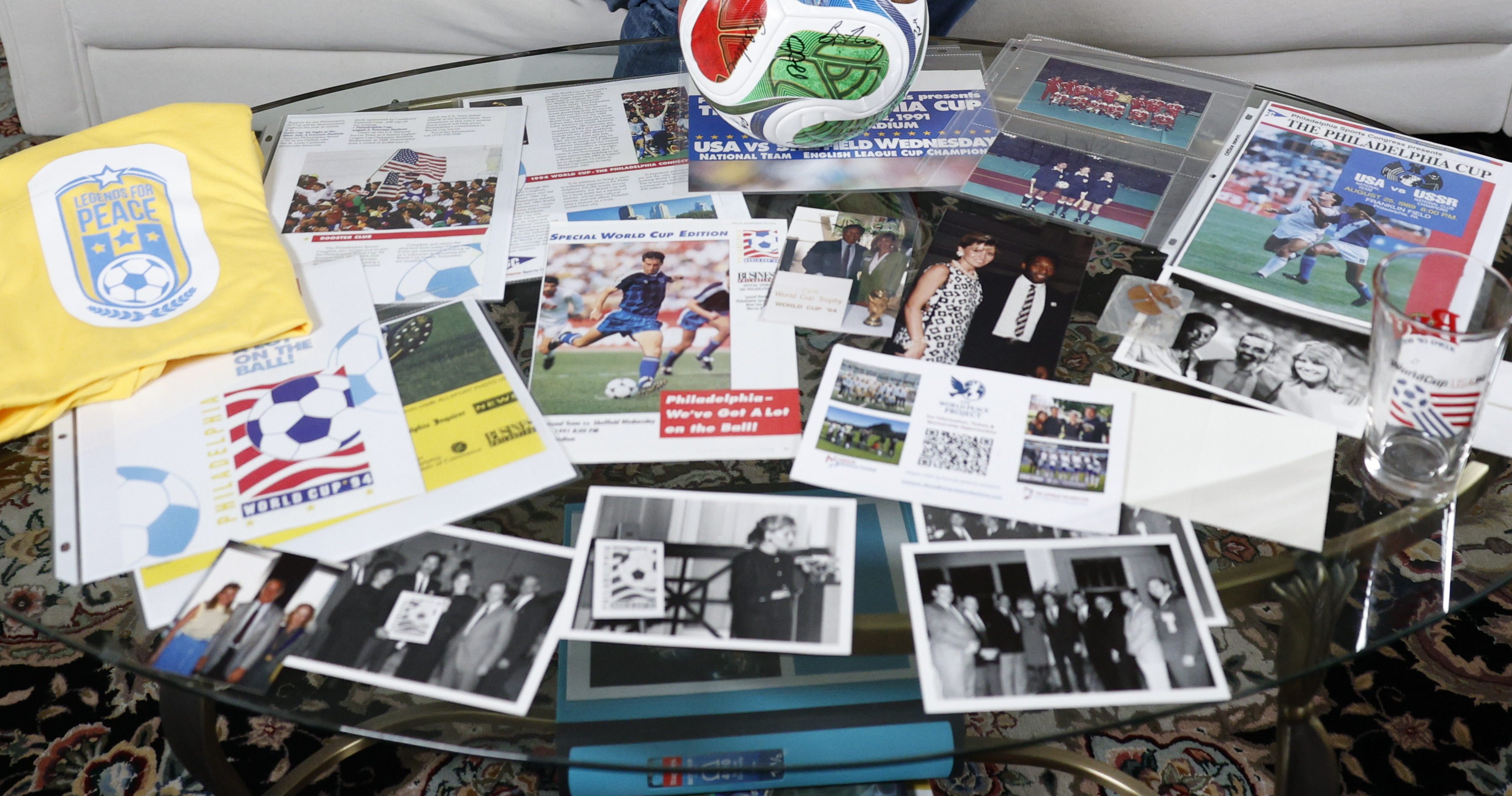
    A look at materials that became Diane McGraw’s memorabilia from Philly’s 1994 World Cup bid.Steven M. Falk / For The Inquirer

    From acting aspirations to a life in sports

    McGraw’s entry into sports was unconventional. After graduating from high school, she worked part-time as a model, which landed her a few appearances on local daytime talk shows.

    In 1977, she moved to New York, determined to fulfill her acting aspirations. McGraw had no job and only a little money, but continued picking up modeling gigs here and there and was eventually hired as a personal assistant to the president of Sassoon Jeans.

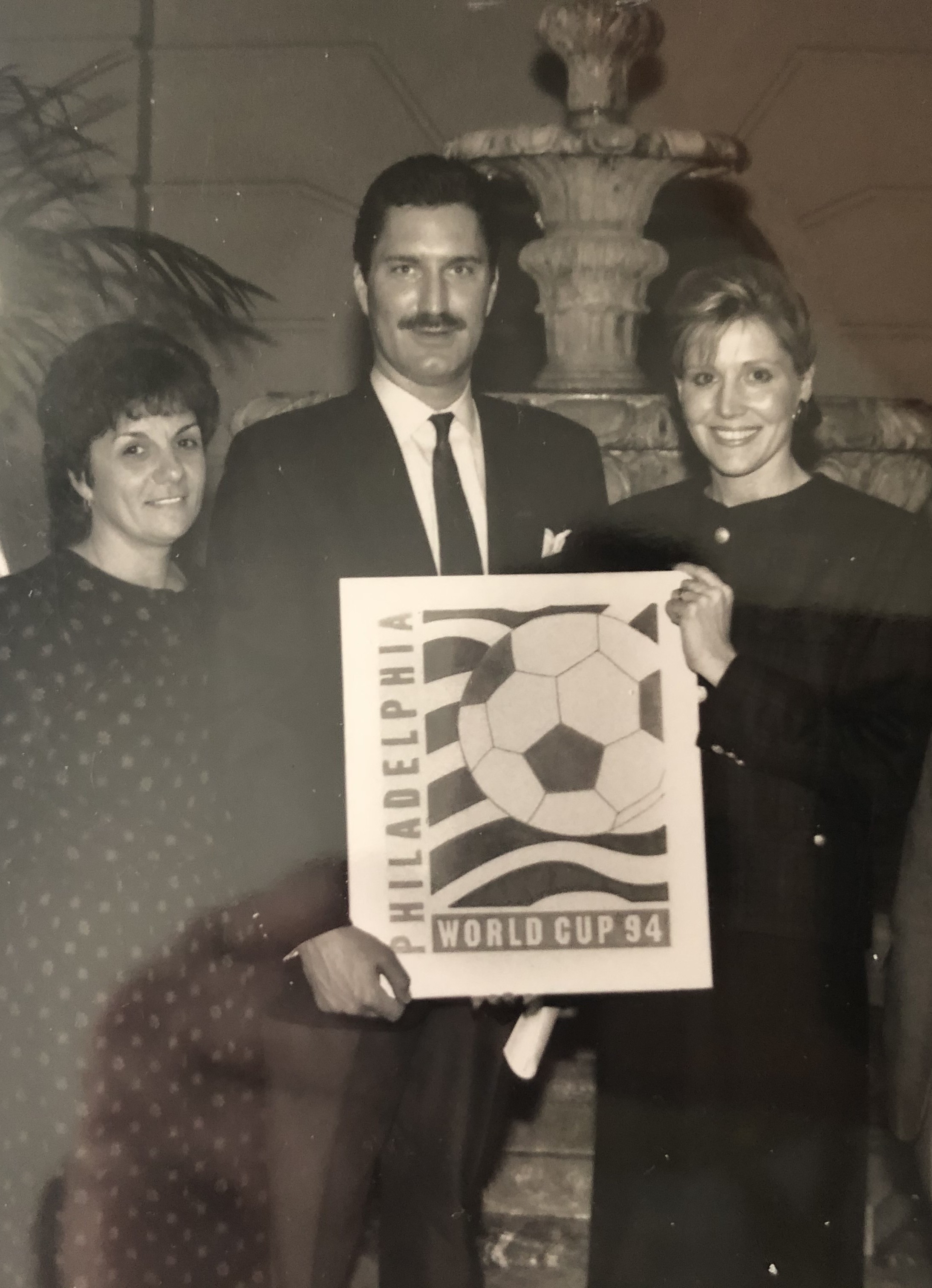
    Diane McGraw (right) shows the graphic for Philly’s 1994 bid for the World Cup at Veterans Stadium. Courtesy / Diane McGraw

    Two years later, she left for a position at the Screen Actors Guild, thinking she could parlay it into a career in entertainment. That did not pan out, but the role did open some doors.

    Not long after McGraw began her new job, she attended a networking event at East River Tennis Club. The pros, well aware that the SAG assistant had contacts, asked if she’d be open to organizing a pro-celebrity tennis tournament.

    It was the first of many sporting events to come. McGraw started her own business, under her maiden name, Robertson Productions — of which she was the only employee — and taught herself everything she could about the industry.

    She began with tennis, but quickly broadened her scope to other sports. This meant spending a lot of time with sponsors, and one day, while on the sidelines of a New York Cosmos game, McGraw had an encounter she’d never forget.

    A small, athletically built man with a warm smile approached her and asked for an autograph. English wasn’t his first language, and McGraw realized that what he actually wanted was her phone number.

    She demurred, giving him the business card for Gaylord’s Restaurant, one of the sponsors of the Cosmos game. The man walked away.

    A few minutes later, Gaylord’s owner, Jati Hoon, returned with the same suitor.

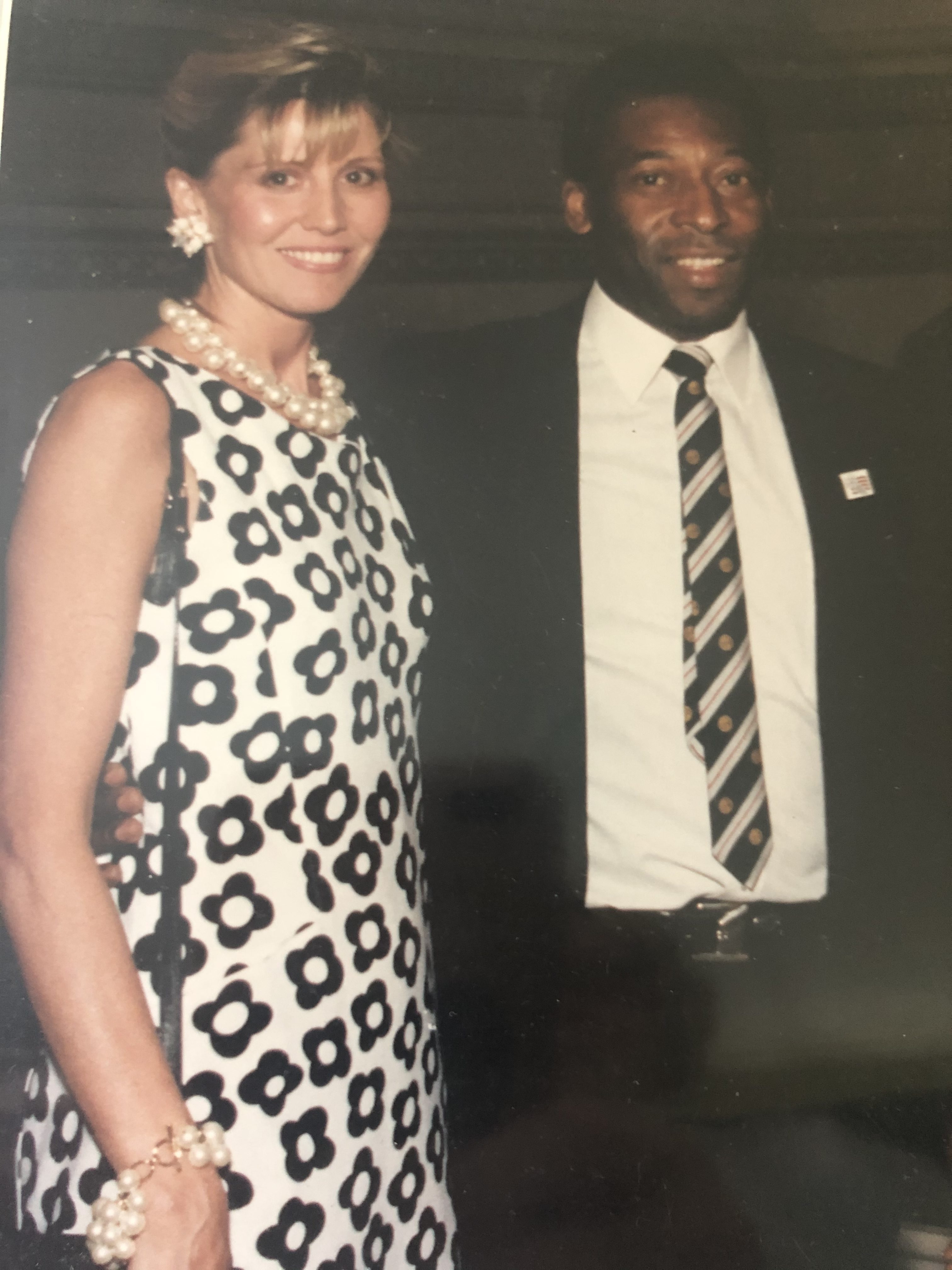
    Diane McGraw with soccer legend Pelé.Courtesy / Diane McGraw

    “He says, ‘Diane, I want you to meet Pelé,’” she recalled. “I had no idea who he was.”

    By that point, McGraw was fairly used to meeting world-class athletes. Through the tennis community, she’d gotten to know John McEnroe and Björn Borg, among other stars of the game.

    But her run-in with the soccer phenom was different, in that it would come to a serendipitous conclusion decades later.

    After a few more years of star-studded galas and tournaments, McGraw married her first husband, Jan Hovenkamp. He was a native of Holland, and the young couple moved to the Netherlands in 1983.

    She continued to plan celebrity tennis events, and at one of them, she met the president of AFC Ajax, a professional football club in Amsterdam. He suggested that McGraw bring “real football” to the United States and offered to help provide a team from Holland and Brazil.

    When McGraw returned to Philadelphia in 1986, she kept this in mind and reached out to the general manager of Veterans Stadium about renting it.

    It was a short conversation.

    “He said, ‘Diane, we don’t like soccer here,’” McGraw said. “‘We’re the Philadelphia Eagles. We’re only football.’”

    He directed her to the group that ran Franklin Field, which directed her to the Philadelphia Sports Congress. They agreed to support the project, if McGraw could find the sponsors.

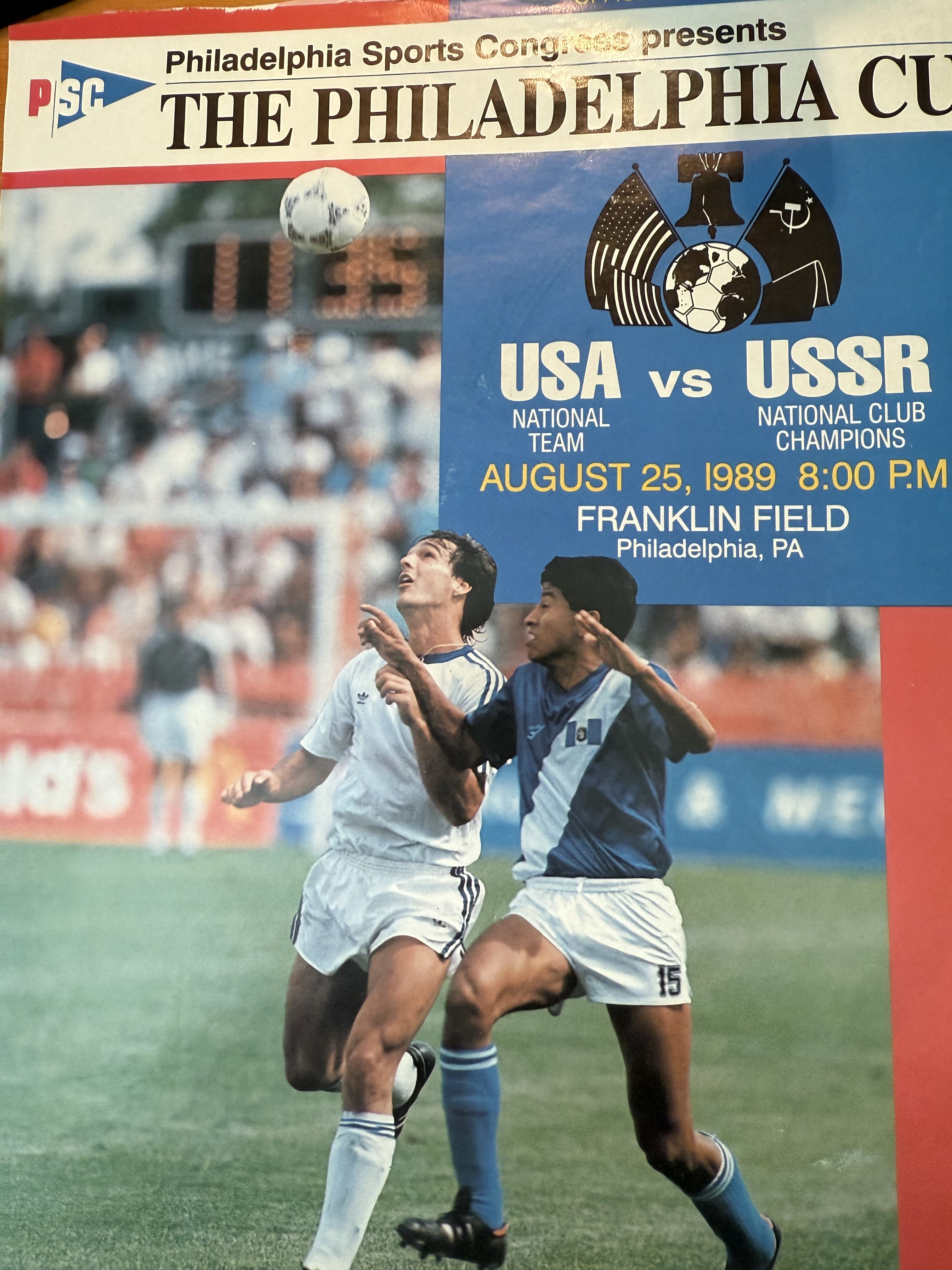
    She did, and in 1989, McGraw brought the first international soccer match to the Delaware Valley. Dubbed the Philadelphia Cup, the game between the U.S. and the U.S.S.R. drew 43,000 people and was broadcast on WIP (94.1-FM), which at the time was on AM radio as SportsRadio WIP. (Holland and Brazil were unavailable due to scheduling conflicts).

    The program for the 1989 Philadelphia Cup, which at the time was the first soccer match between the two nations. Courtesy / Diane McGraw

    A year later, in 1990, McGraw organized another match, this time between Sheffield Wednesday and the USMNT. Forty-five thousand fans showed up.

    The two matches netted over $500,000 and earned McGraw a job as executive director of the Philadelphia Sports Congress — as well as a new unofficial title.

    “I ended up becoming the World Cup person,” she said.

    A fortuitous encounter with Pelé

    Because McGraw had successfully convinced two European soccer teams to travel to the City of Brotherly Love, the Sports Congress decided to have her lead their efforts to bid for the 1994 World Cup.

    This was a daunting task, as Philadelphia had never hosted an international soccer tournament. But McGraw felt strongly that they had a case, and not just because of the attendance numbers from the 1989 and 1990 matches.

    The congress had collected data from the Eastern Pennsylvania Youth Soccer Association, which showed that more than 100,000 local families were actively engaged in the sport.

    McGraw couldn’t offer state-of-the-art facilities. But she did have an audience: a city full of passionate fans, who had shown they’d pack a stadium for events beyond American football.

    It was a grueling process. The Sports Congress had to dole out $250,000 just to submit a bid. Once Philadelphia was approved, McGraw spent the next three years finding sponsors, mapping out hotels and security, as well as transportation and venue options.

    As fate would have it, this role reunited her with a familiar face. In 1991, a group of soccer supporters testified in front of Congress.

    Their goal was to convince the federal government to mint a commemorative coin as a means of fundraising for the World Cup.

    Among those who testified? Pelé.

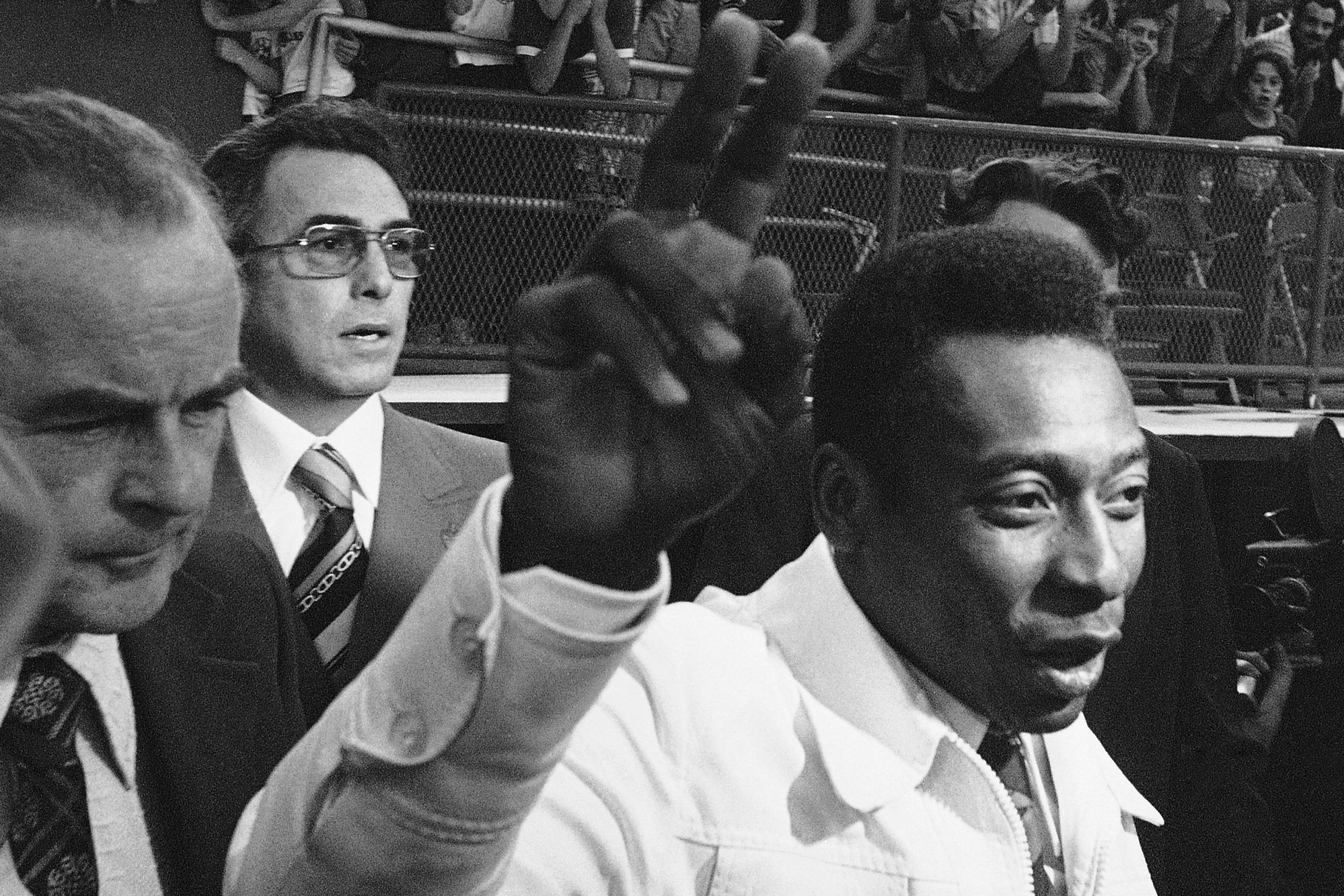
    Pele, then with the New York Cosmos, waves to the crowd at Veterans Stadium in June 1975.Bill Ingraham

    McGraw reintroduced herself and explained what she was trying to achieve. The three-time World Cup winner was on his way to a dinner, but before he left, he reached for his wallet and gave McGraw a gift.

    It was a four-leaf clover.

    “He said, ‘Diane, I’m going to help you get the World Cup to Philadelphia,’” she said with a laugh. “And then we got out of the car and I never saw him again.”

    For a while, McGraw was optimistic — and not just because she had Pelé on her side.

    The event organizer seemingly had an answer for every problem, even those as granular as the surface the athletes would play on.

    (Astroturf wasn’t going to cut it.)

    “We came up with a formula from a company here in Pennsylvania,” McGraw said. “They were going to grow the grass outside the stadium in trays, and bring it in, and let them fit it together. We had it all planned out.”

    But there was one quandary she couldn’t solve. FIFA wanted control of the local stadiums for roughly two months. That ruled out the Vet; Major League Baseball was not about to send the Phillies on a road trip for six to eight weeks.

    The congress didn’t have any other location to offer. The bid failed.

    “I’ll never forget sitting in the boardroom of the convention and visitors bureau, with FIFA on the phone, saying, ‘These are our host cities,’” McGraw recalled. “‘We’d like to thank Boston. We’d like to thank so and so.’ They never mentioned Philadelphia.”

    Diane met former Phillies reliever Tug McGraw in 1992. They were married three years later.

    A full-circle moment

    Diane met Tug in 1992. She was in the Sports Congress office, and the former Phillies reliever was picking up tickets for an ice skating event at The Spectrum.

    He invited her to the opening of Oriole Park at Camden Yards in Baltimore. A day before they were supposed to leave, McGraw gave her a call.

    “He goes, ‘I want to take you out to dinner first so we can have a predate, before our regular date,’” she said. “We went to some restaurant on South Street, just to get to know each other.”

    They were married three years later. Diane’s job took her all over the country — from Florida to California — but Tug accompanied her every step of the way.

    In 2003, their lives took a devastating turn, when Tug was diagnosed with a brain tumor. He died 10 months later at his son’s home in Tennessee. With two teenagers from her previous marriage and a 7-year-old to raise, it was an extremely challenging time.

    But the widow saw it through. She immersed herself in motherhood and work, moving to Kentucky to lead the Louisville Sports Commission before returning to Philadelphia in 2009.

    Now, McGraw plans on enjoying the soccer tournament she almost brought here all those years ago. She isn’t on the host committee, but has found a way to take part in the festivities.

    The organizer will be holding a watch party in South Philly on June 12 to stream the U.S. vs. Paraguay match. All proceeds will go toward the World Peace Project (an initiative McGraw started last year) to fund a youth sports summit in a few months.

    It’s McGraw’s way of giving back. Her life has taken some difficult, unexpected turns, but she is grateful for the journey and will continue to savor it — four-leaf clovers and all.

    “I want to thank Pelé,” McGraw said with a laugh. “Even though it all came [true] 30 years later.”

  • A Conshohocken bridal shop has closed after 45 years

    A Conshohocken bridal shop has closed after 45 years

    For more than four decades, hundreds of Philadelphia-area women first laid eyes on their wedding gowns at La Bella Moda.

    Even in recent years, as their bridesmaids and mothers increasingly bought dresses online, brides kept the Conshohocken boutique in business.

    But last month, the Fayette Street mainstay shut its doors for good.

    “It eventually wears on you,” said owner Gabriella Pagano Rush, who decided to close the shop in response to industry pressures and personal timing. The 30-year-old, who took over the store from her grandmother Lena Pagano in 2020, is due to have her first child this summer.

    “The business was fine,” Pagano Rush said. “Sometimes you just have to do something that is better for you in the long run.”

    La Bella Moda, shown here in 2023, sold wedding gowns and other formal wear for 45 years before closing its doors in Conshohocken last month.Courtesy Morgan Taylor Artistry

    She calls the transition “a happy ending,” one she said marks a new chapter in her life but also comes after years spent struggling to keep up with an evolving wedding industry.

    Weddings have become increasingly extravagant, with some Philly-area celebrations costing $40,000 or more.

    Social media has upped the ante — and the pressure on couples to plan the perfect day, noted Pagano Rush.

    They have more vendor choices than ever, and small businesses like La Bella Moda, where gowns cost $2,500 on average, must compete with wedding emporiums, which can offer a wider selection for less.

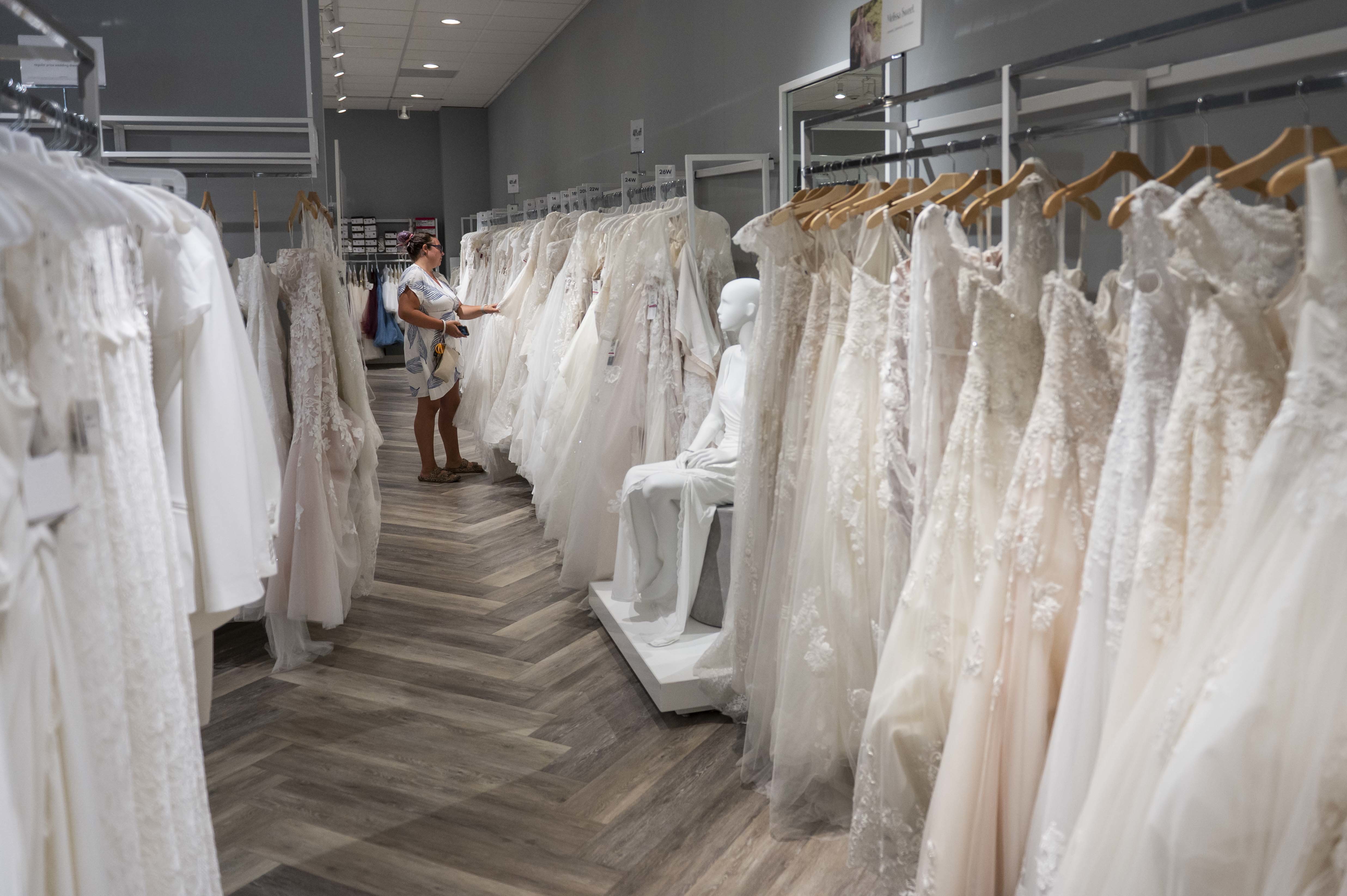
    The other options include larger brands, such as King of Prussia-based David’s Bridal, which is expanding its offerings while still selling dresses for under $500.

    There are also online retailers, such as Revelry and Azazie, which offer home try-ons and mail custom dresses directly to customers. Even broader ecommerce sites and fast-fashion brands sell wedding accessories.

    In recent years, as brides browsed veils and shoes at La Bella Moda, “I would start hearing, ‘Oh, I can get this on Amazon’ or ‘Oh, I can get this on Shein,’” which started out selling wedding dresses online before becoming a retail behemoth, Pagano Rush said.

    Someone shops for a wedding dress at David’s Bridal in Feasterville-Trevose in 2023. Allie Ippolito / Staff Photographer

    In 2023, Pagano Rush stopped selling bridesmaid dresses and other formal wear, which had accounted for about 30% of the shop’s business, she said. Instead, she doubled down on wedding gowns.

    She began offering $200 private appointments, during which a bride and up to eight guests got the store to themselves, with champagne, cookies, and a personalized shopping playlist, Pagano Rush said.

    “I really wanted brides to feel relaxed when they came into our store,” Pagano Rush said. “Not intimidated, not feeling pressured to find their dress.”

    How an Italian immigrant cultivated bridal joy in Conshy

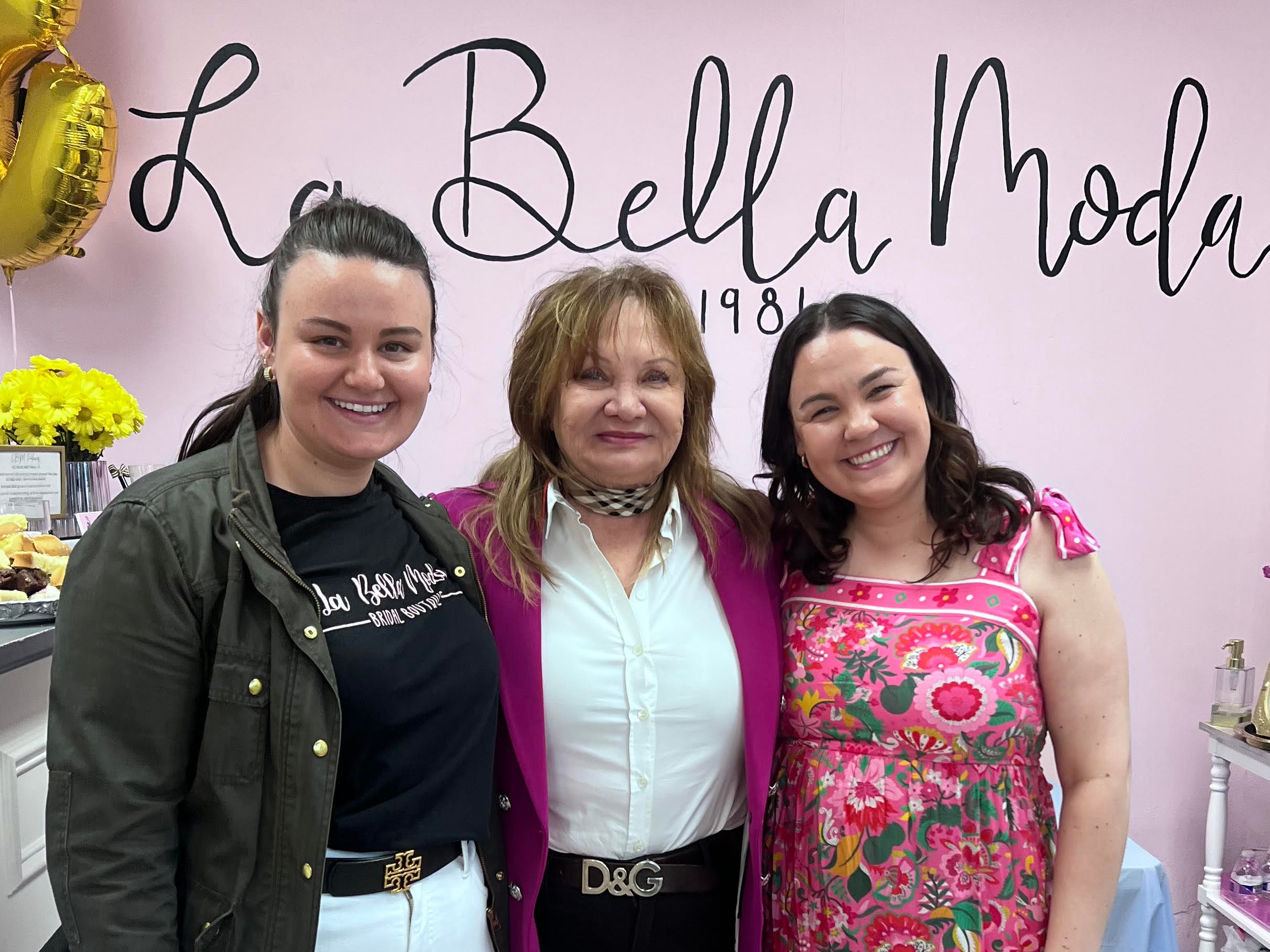
    La Bella Moda founder Lena Pagano (center) poses with her granddaughters in the Conshohocken shop. Gabriella Pagano Rush (right) took over as owner in 2020. Pagano Rush’s sister Michaela Bosico (left) encouraged the new owner to renovate the store during the pandemic.Courtesy Gabriella Pagano Rush

    Ever since she was a kid watching her “mom mom” Lena run La Bella Moda, Pagano Rush was enthralled by the wedding dress shopping experience.

    “I just remember growing up, going and visiting her at the store, helping her for fun, and just in the back of my head being like, ‘Oh, this would be really fun to do,’” said Pagano Rush, who grew up near Lansdale.

    At the time, the shop’s second floor was devoted to bridal try-ons, she said. “It was always so exciting when you would walk upstairs and you’d see all the brides up there trying on dresses.”

    The joy in the shop was cultivated by Lena Pagano, who emigrated from Italy, married, had three children, taught herself English, and then fulfilled a longtime dream of opening a boutique in 1981, Pagano Rush said.

    Lena Pagano, now in her 70s, stepped aside just before the pandemic in 2020, Pagano Rush said, and has been enjoying retirement in Plymouth Meeting.

    Meanwhile at La Bella Moda, Pagano Rush’s first few months as a business owner coincided with the early months of the pandemic, when businesses were forced to close. But she took it in stride and used the time to renovate the shop, making for a better customer experience when it reopened that June.

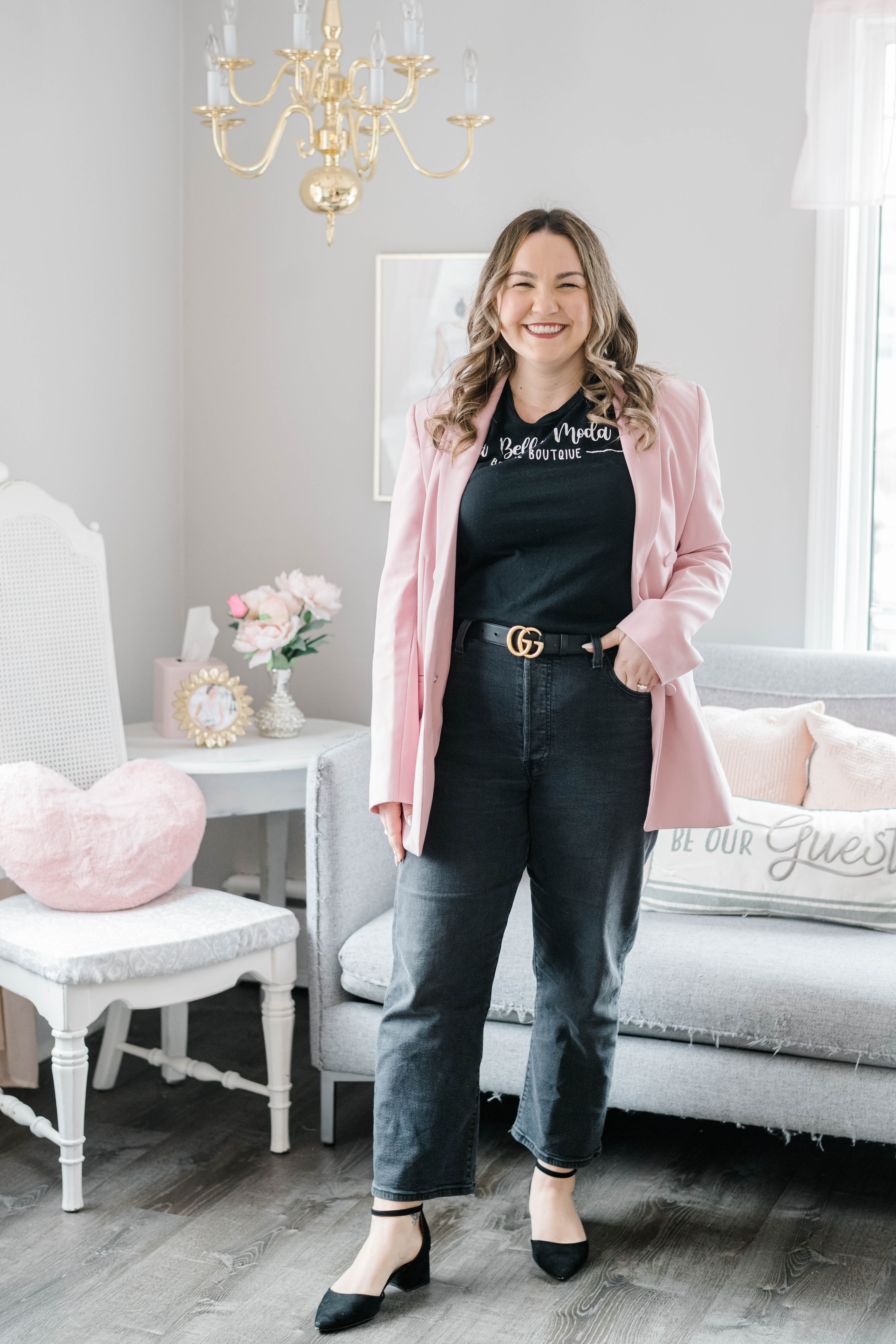
    Owner Gabriella Pagano Rush inside a renovated La Bella Moda in Conshohocken in 2023.Courtesy Morgan Taylor Artistry

    Montgomery County Commissioners Chair Jamila Winder said the Pagano family’s story exemplifies the immigrant experience.

    “In these times where it’s really hard for small business owners and entrepreneurs to start a business and sustain a business, Lena and Gabriella are really the epitome of that grit and that discipline and that vibrancy,” Winder said.

    “They’ve brought so much joy to women across Montgomery County, women who were planning for some of the best days of their lives.”

    Winder is one of them. A few years ago, she said, she bought her bridesmaids’ dresses at La Bella Moda.

    Customers remember their wedding dress fittings

    For women across the region, word of La Bella Moda’s May 31 closure brought back similar memories.

    Dozens commented on Facebook posts about the news.

    “I’ll never forget how gorgeous I felt in my lace gown on my wedding day,” wrote one woman. “Thank you for helping to make it so special, almost 20 years ago.”

    “Such amazing memories of the fitting and how beautiful you made me feel!” added another.

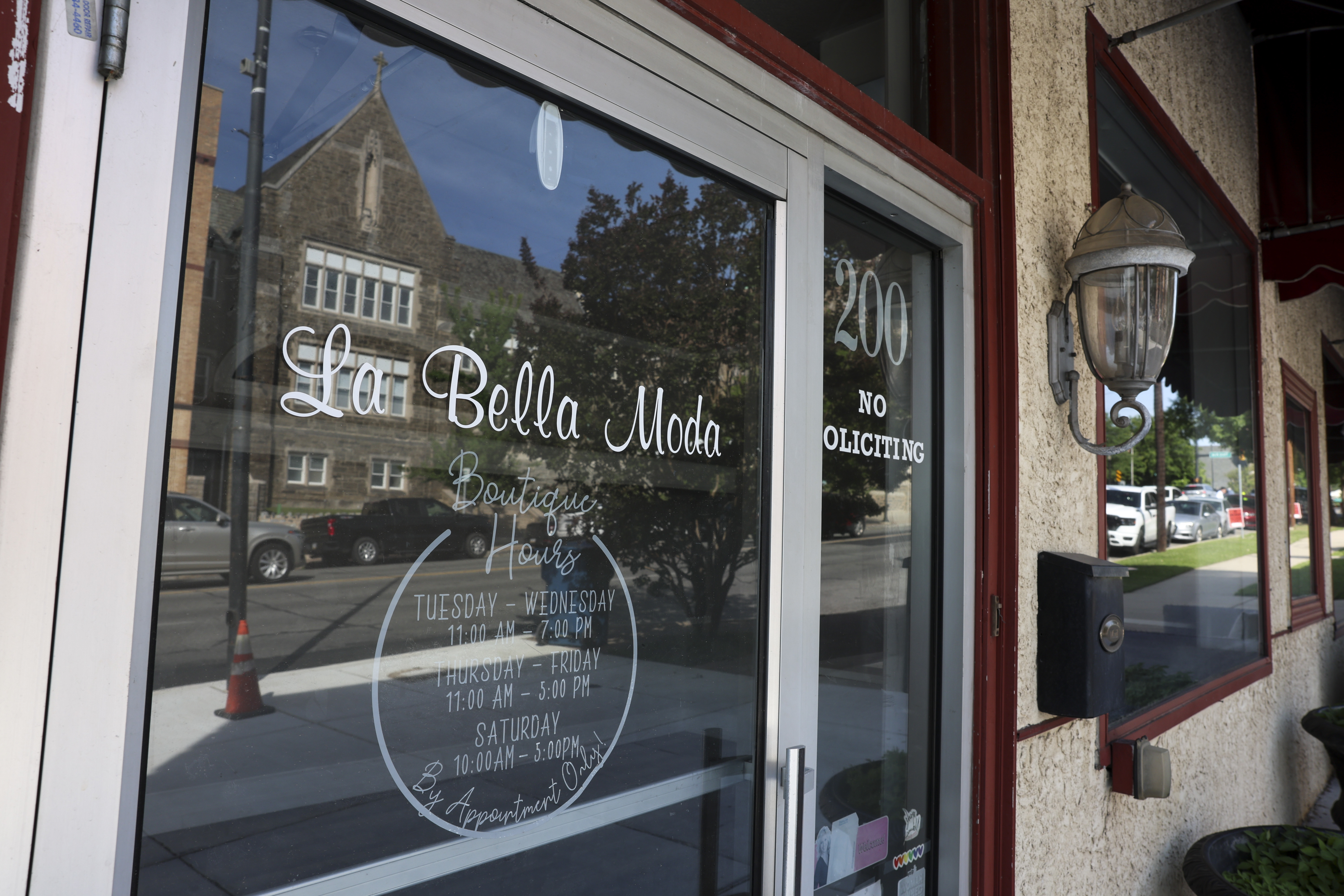
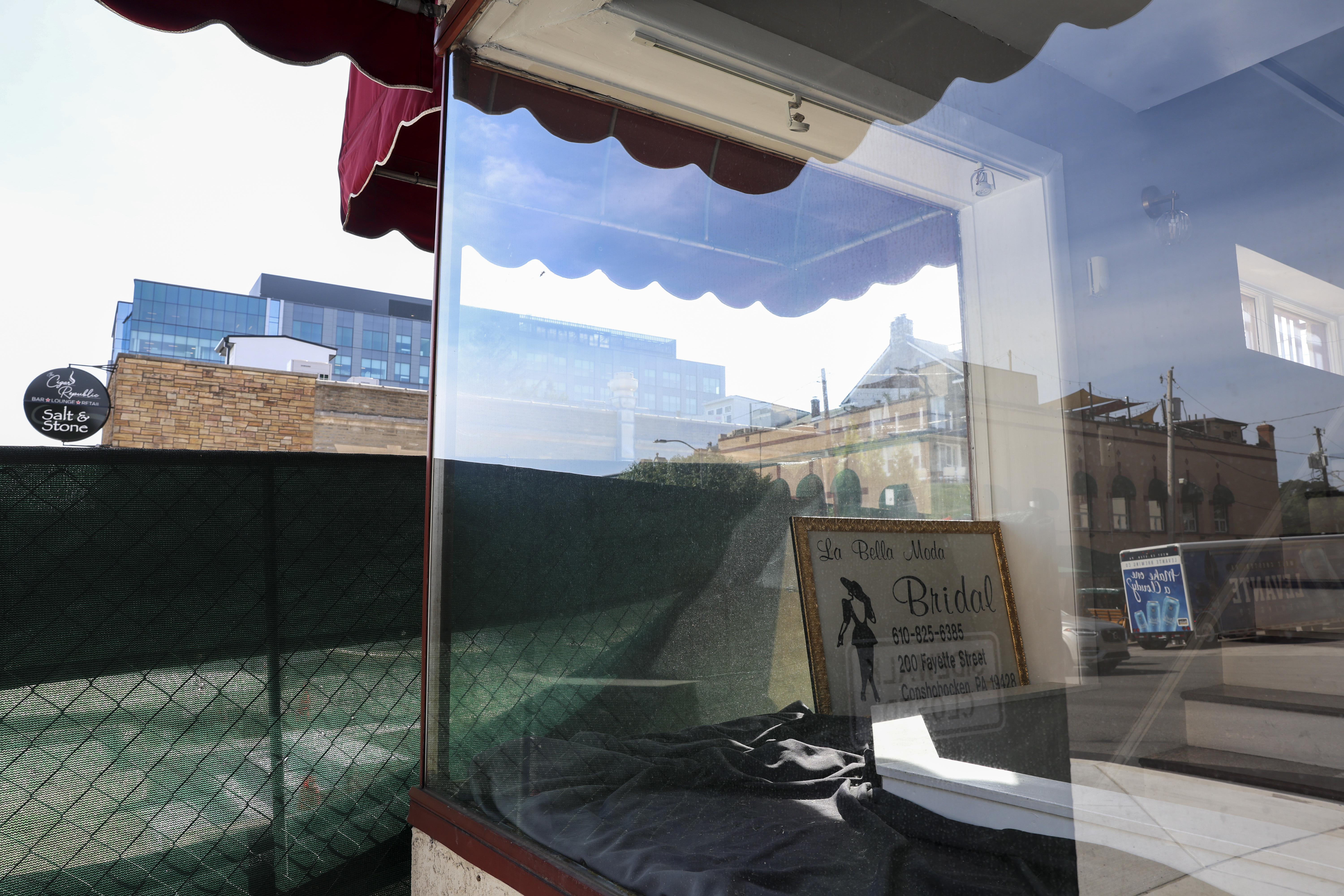
    The mostly empty window of La Bella Moda is pictured on June 4 in Conshohocken.Monica Herndon / Staff Photographer

    Tina Brennan West said she, too, recalls her wedding-gown fitting there 34 years ago.

    “I remember the experience walking through the doors, the smiles, the feeling that they already knew you,” said Brennan West, 55, of Plymouth Meeting, who works at an auto repair shop.

    She showed the stylists an inspiration picture from a magazine, she said, and an employee pulled a similar white-satin dress, with a long train, pink rose buds in the appliqué, and puffy sleeves that were popular at the time.

    She can still picture trying on the gown, she said, and see her mother and grandmother crying at the sight of her.

    Erin McElroy Kraft, now 60, wore her mother’s wedding gown for her 1992 nuptials. But the Plymouth Meeting native bought her bridesmaids outfits — deep-purple velvet skirt sets — at La Bella Moda.

    “It was absolutely beautiful,” McElroy Kraft said. “They were just so great at what they did.”

    McElroy Kraft, a retired foreign-service worker who now lives in Arlington, Va., said Fayette Street won’t feel the same on her next visit home.

    “It’s going to be hard not to see La Bella Moda in Conshohocken,” she said.

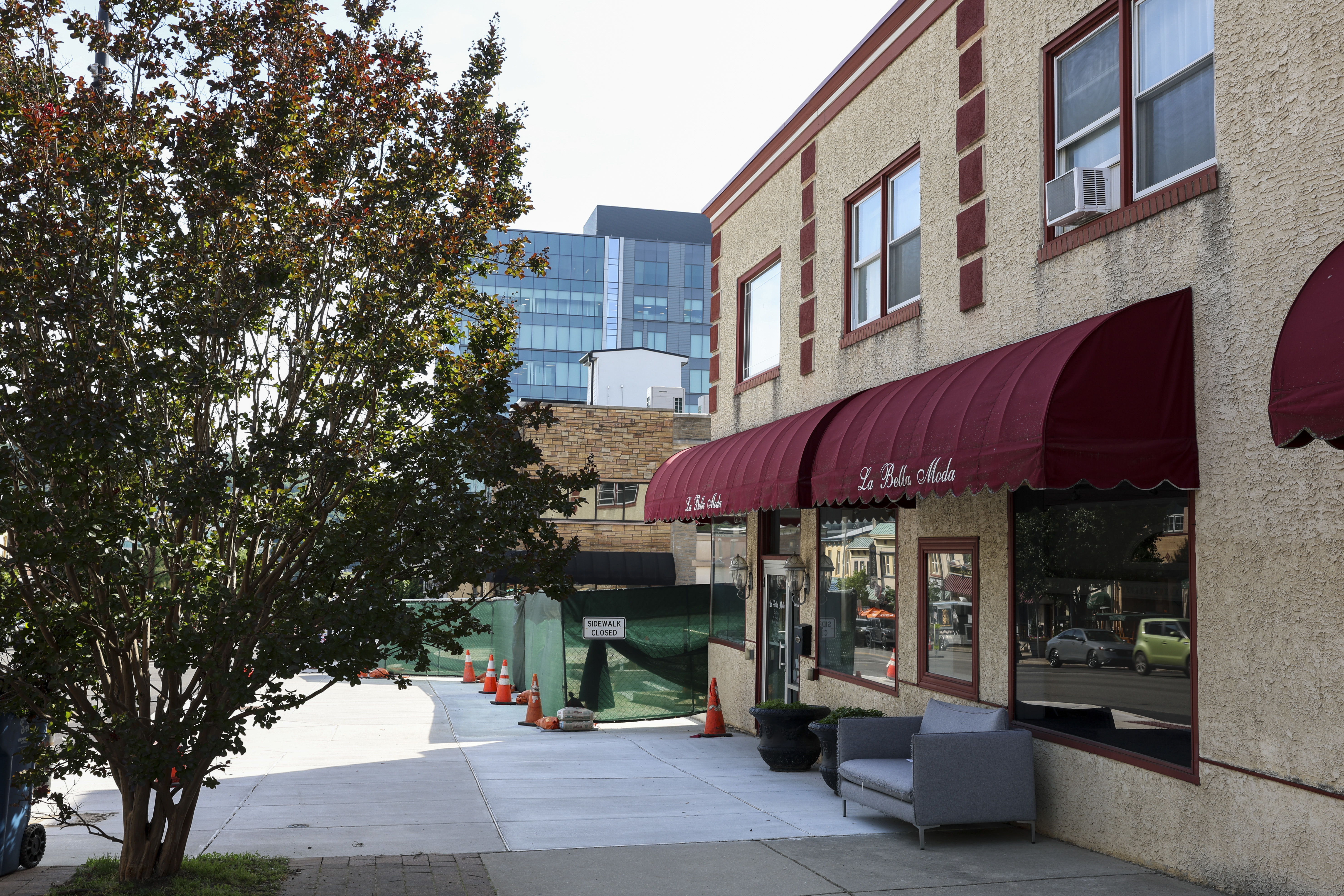
    The closed La Bella Moda on Fayette Street in Conshohocken is pictured on June 4.Monica Herndon / Staff Photographer

    La Bella Moda sits empty now. Its last dresses were either sold to customers during a recent farewell event, Pagano Rush said, or donated to bridal consignment shops owned by her friends.

    As for brides who had recently bought gowns at La Bella Moda, “no one was left without their dress and without a plan,” said Pagano Rush, who referred some customers to a local seamstress for alterations.

    The building, owned by Lena Pagano, will be leased to another tenant, Pagano Rush said.

    “The borough of Conshohocken has really done an amazing job of attracting businesses to that main corridor,” said Winder, the county commissioners’ chair. “I don’t anticipate that storefront will be vacant for long.”

    Pagano Rush said she believes there is still a place for independent shops in the modern wedding industry.

    “I can’t tell you how much attention we have gotten since April when we posted that we were even closing,” she said. “I wish small businesses just got this kind of attention and support” all time.

  • Trump’s kowtow to China on Taiwan risks tech disaster for the U.S. and the world

    Trump’s kowtow to China on Taiwan risks tech disaster for the U.S. and the world

    Recently, I attended a showing of a fascinating documentary called A Chip Odyssey that laid out the history of how that small self-governing island democracy of Taiwan came to manufacture around 90% of the world’s most advanced semiconductor chips.

    It was not at all, as President Donald Trump keeps insisting, because Taiwan “stole our chip industry.” The real reason is one Americans need to understand: if China ever manages to take control of Taiwan, it will cause a U.S. and global economic disaster that would make the Strait of Hormuz blockade look like child’s play.

    It would halt America’s global dominance in the field of artificial intelligence, since U.S. AI companies all depend on sophisticated chips fabricated by the Taiwan Semiconductor Manufacturing Co., known as TSMC. As the Wall Street Journal put it, “the island is now the factory floor” for U.S. leadership in AI.

    Yet, Trump, before, during, and after his May summit with Xi Jinping, has continued to belittle Taiwan. He discussed a planned $14 billion U.S. arms sale with Xi, despite a long-standing pledge to Taiwan, made by President Ronald Reagan, that U.S. weapons support for the island would never be subject to China’s approval.

    Trump has now frozen the weapons sale, saying it could be “a bargaining chip” with Beijing.

    The president has repeatedly hinted at his reluctance to defend a place that’s “9,500 miles away.” And he frequently argues that the production of advanced chips could and should be moved to the United States.

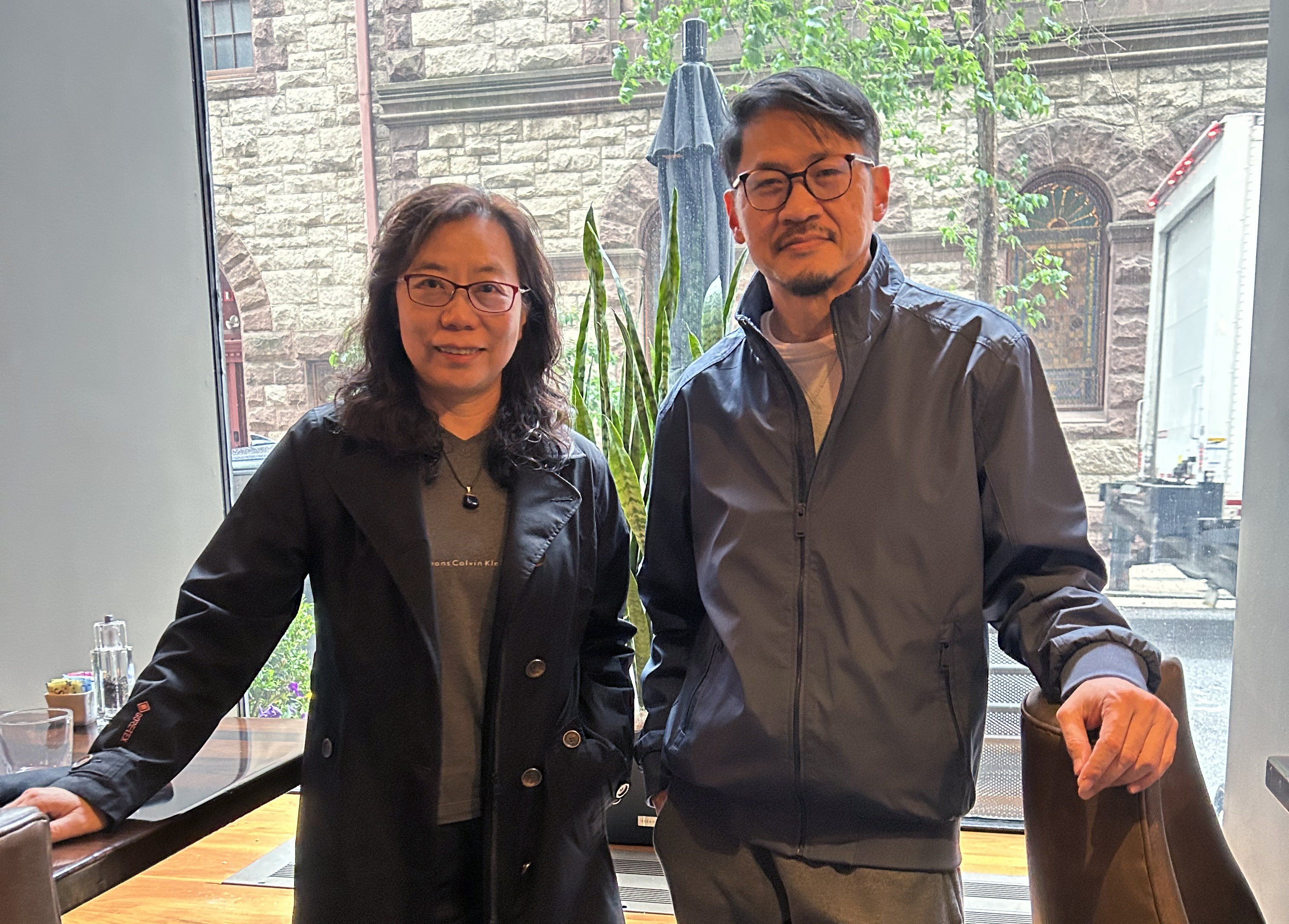
    My conversations with the director of A Chip Odyssey, Hsiao Chu-Chen, and coproducer Ben Tsiang (along with my recent trip to Taiwan) made clear why it will be years before the U.S. can onshore production of even a modest percentage of its chip needs. The film offers a moving history of how a small, poor island became a tech giant because it had no choice.

    Hsiao Chu-Chen, left, director of “A Chip Odyssey,”  and the documentary’s co-producer Ben Tsiang in Philadelphia in May.Trudy Rubin

    “I wanted to tell the history of Taiwan’s semiconductor industry, not just about the achievement itself, but how people strived to achieve what they did,” Hsiao told me over coffee in Philadelphia. Fifty years ago, the island was almost abandoned by the international community after the United Nations switched the China seat to Beijing and expelled Taiwan, she told me. “Taiwan is so tiny, with no minerals, so we needed to find a way we could survive.”

    After consulting with Taiwanese American engineers working in the United States, the Taipei government decided to focus on high tech. In the mid-1970s, it licensed and paid for semiconductor technology transfer from RCA, a common process. Nothing was stolen — and, at the time, this technology wasn’t new or mainstream, and was only a minor focus at RCA.

    Taiwanese engineers traveled to the United States to master manufacturing technology, returned, and vastly improved it. They began transferring it to the manufacture of consumer electronics such as watches, personal computers, and cell phones.

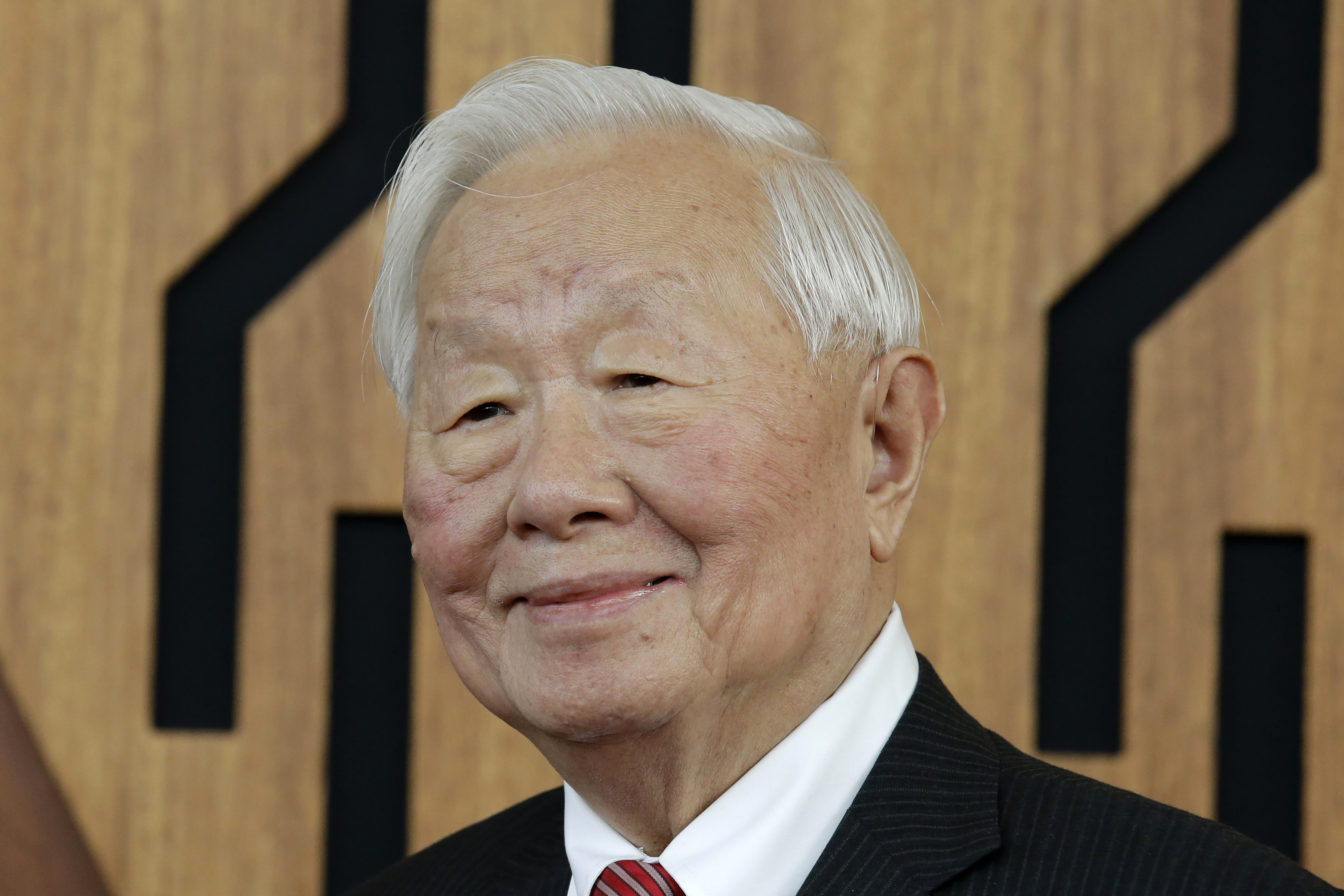
    Fast-forward, when a brilliant Chinese American engineer and star at Texas Instruments named Morris Chang was recruited by Taipei in 1987 to advance its semiconductor industry. He conceived the idea of a “fab-less” process, where small companies in Taiwan and elsewhere, and huge ones in the U.S., could focus on design and research to constantly update the technology, while Taiwan would be the foundry that manufactured complex chips to their specifications.

    Morris Chang, founder of one of the world’s largest chip manufacturers, TSMC, smiles at the start of the APEC Economic Leaders Meeting at Port Moresby, Papua New Guinea, in 2018.Aaron Favila

    For example, Hsiao explained, “TSMC makes chips based specifically on designs from Nvidia [a global leader in technology, based in California], so it is not competing with them.” And TSMC has built up the trust of its many U.S. and international partners because it never leaks information. In fact, it hardly ever allows journalists (myself included) within its sprawling precincts at the Hsinchu Science Park, an hour outside Taipei.

    “The most important principle [of TSMC] is integrity,” said the film’s director. “Companies don’t have to worry that their technology will be stolen, as it has been in China.” Moreover, TSMC invests massively in research and development to keep its foundry on the cutting edge.

    Fabricating chips “is not like manufacturing nails,” I was told by one scientist who studies TSMC and preferred not to be named, “but it is an intense, complex, and layered process. You need to update, improve the technology all the time.”

    When Chang pioneered his “fab-less” concept, making Taiwan the world’s semiconductor foundry, it was a huge risk, but it paid off beyond his dreams.

    “I understand that some Americans are anxious about losing leadership in the semiconductor industry, but Taiwan earned its place with decades of talent, tireless innovation,” producer Tsiang said intently. “It took daring investment across generations to build what we have today. That is what we were trying to show.

    “But it is not a zero-sum game with America. Taiwan’s rise is deeply connected to collaboration with U.S. companies, and will be in the future.”

    Indeed, the choice by companies such as Nvidia or Intel to outsource fabrication of chips to Taiwan was based on profit-seeking, since it vastly lowered costs.

    The Americans could also rely on the massive Taiwanese production and talent ecosystem that feeds into TSMC. As the film shows, engineers there rotate in three shifts, so they are always present and are ready to show up at 2 a.m. if machinery needs adjusting.

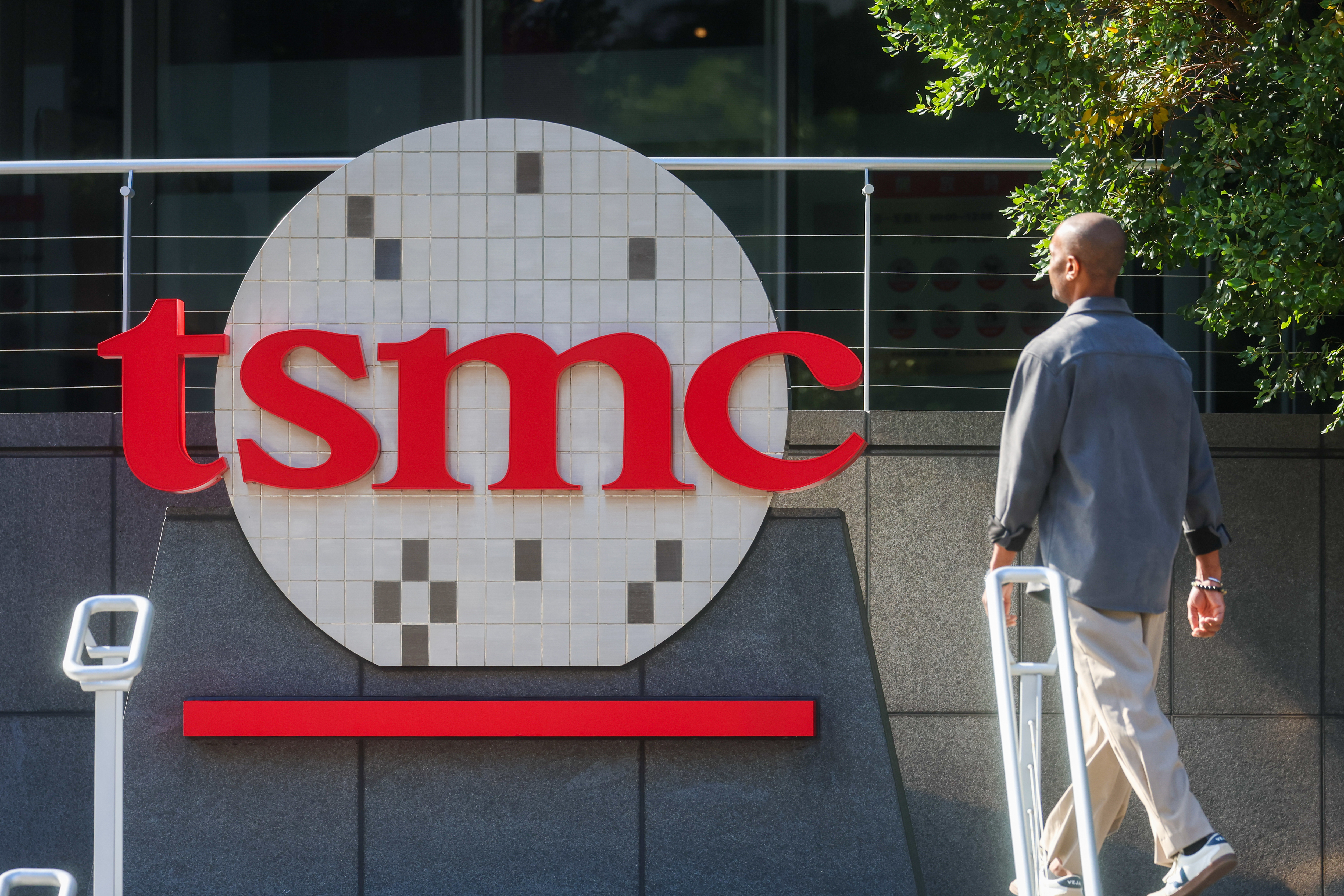
    A worker walks past the logo of TSMC, or Taiwan Semiconductor Manufacturing Co., a Taiwanese multinational semiconductor contract manufacturing and design company, in Hsinchu, Taiwan, in January.Daniel Ceng

    Which brings us to the question of whether a huge chunk of the foundry production could easily be moved from Taiwan and installed in the United States, as Trump demands.

    TSMC has committed $165 billion to build six “fabs” (as fabrication plants are called) in Phoenix. Yet, only one is operating, and one more will come online this year.

    The difficulties are obvious. Besides far higher operating costs than in Taiwan and the far more casual American work ethic, there is the huge problem of finding the engineering talent in the United States — both to maintain complex machinery and oversee complex operating processes.

    “In Taiwan, all the top university graduates go to TSMC,” Tsiang told me. “In the United States, the top university graduates go to Washington, D.C., or Silicon Valley. There is a real test in how the U.S. can develop a talent pool.”

    Links are being established with the University of Arizona and other potential feeder schools to programs aimed at filling TSMC positions. But this is a process that will take years.

    At present, the Phoenix fabs depend on around 2,000 Taiwanese engineers and staff. There are seven direct flights a week from Taipei to Phoenix.

    In Taiwan, audiences tear up at showings of A Chip Odyssey as they listen to elderly scientists reminisce about their years of building TSMC from the ground up. I wish more Americans could see the film, but it is only available for now at special showings. (However, you can watch the trailer as well as an extended interview with the director and producer on YouTube.)

    Yet, the cost to America of a possible Chinese takeover of Taiwan in the next decade is almost unimaginable, even though Trump seems to dismiss it. His ignorance of the real story of Taiwanese semiconductors is infuriating and dangerous.

    Perhaps some of Trump’s tech-bro pals can get the message across to him before we all suffer the consequences of losing TSMC.

  • At a new Goodwill in South Jersey, customers are flocking for the deals and the resale potential

    At a new Goodwill in South Jersey, customers are flocking for the deals and the resale potential

    Mia Garcia showed off her clothing haul: a multicolored tank top, a backless white tee, a lacy maroon cardigan, and white tights for an upcoming trip to the New Jersey Renaissance Faire.

    The 19-year-old was as excited about the bill as she was about the fashion.

    Her grand total: $15.

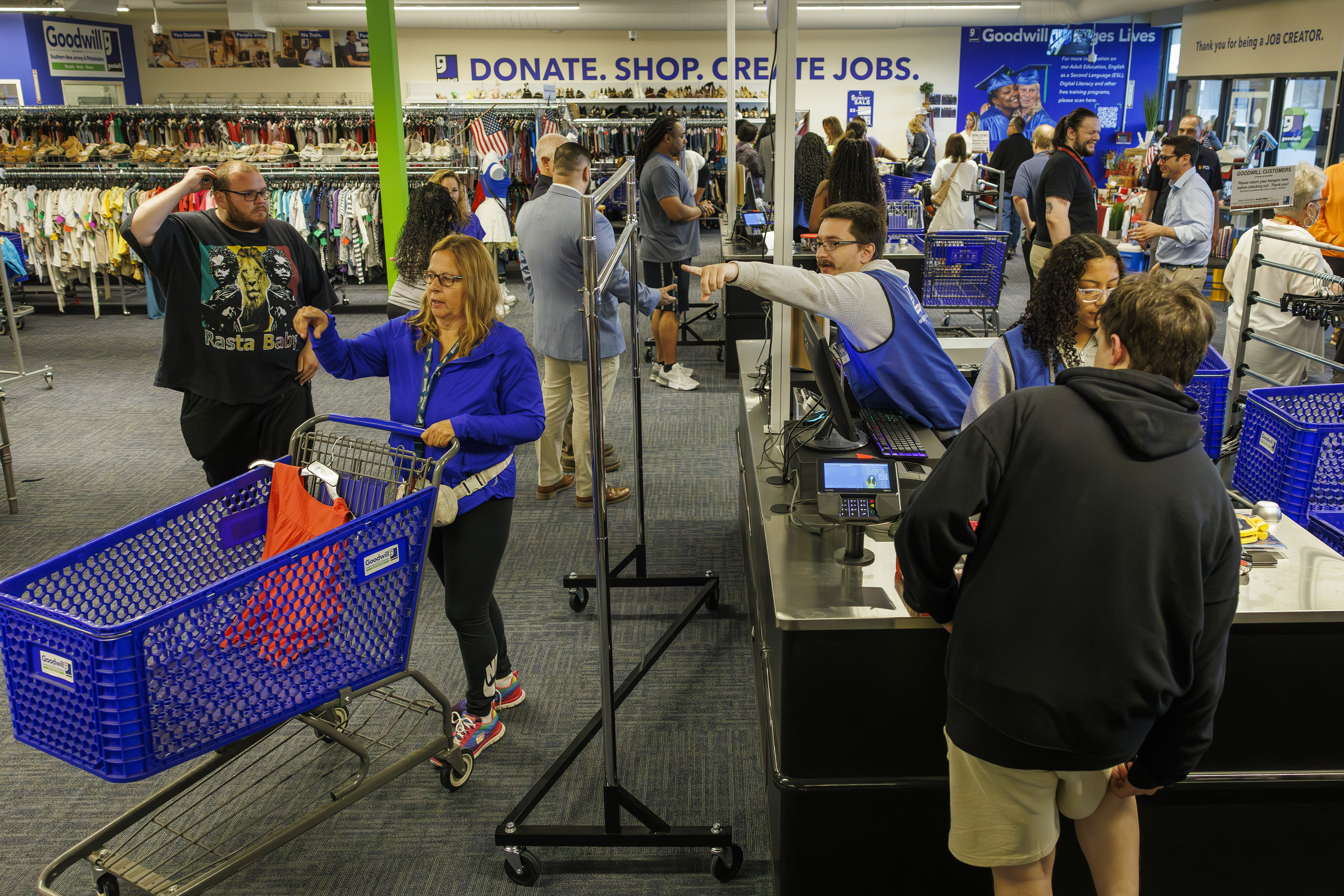
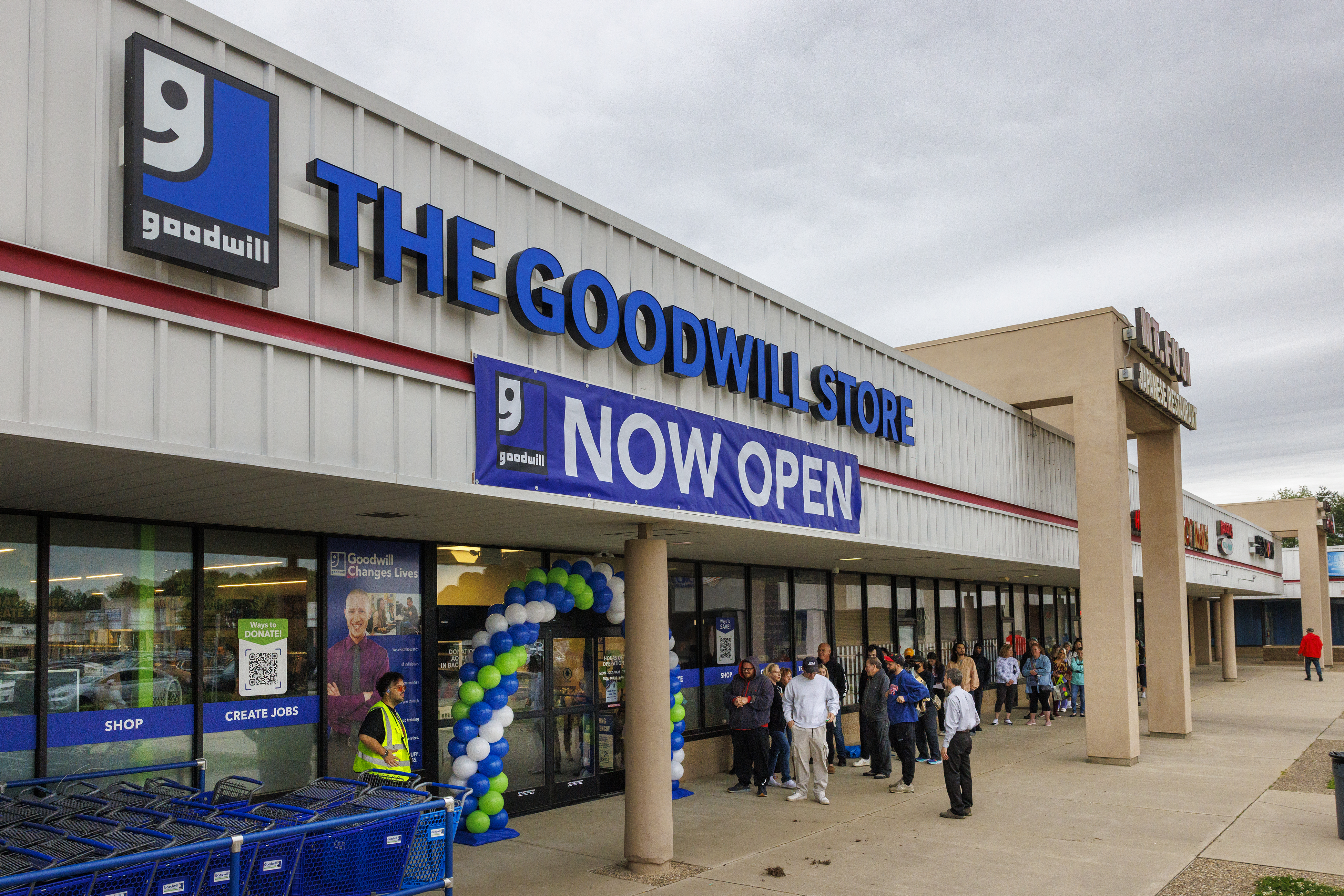
    She and her friend, Salsbee Jahan, scored the deals at a massive new Goodwill store in Deptford, where local executives say a growing number of Gen Z shoppers are flocking for clothes, shoes, decor, and more. Young customers are increasingly fueling the world’s largest thrift store chain, which posted record revenue last year.

    At Goodwill, “it’s definitely cheaper and easier to find older-style clothes,” like popular Y2K-inspired fits that are sold at a premium elsewhere, Garcia said. At some name-brand stores, “$20 won’t even get you get a shirt.”

    The women, both Deptford natives attending Rowan College of South Jersey, say they frequent malls, too. But Jahan, 18, said they’re trying to thrift more because “everything is going up” in price.

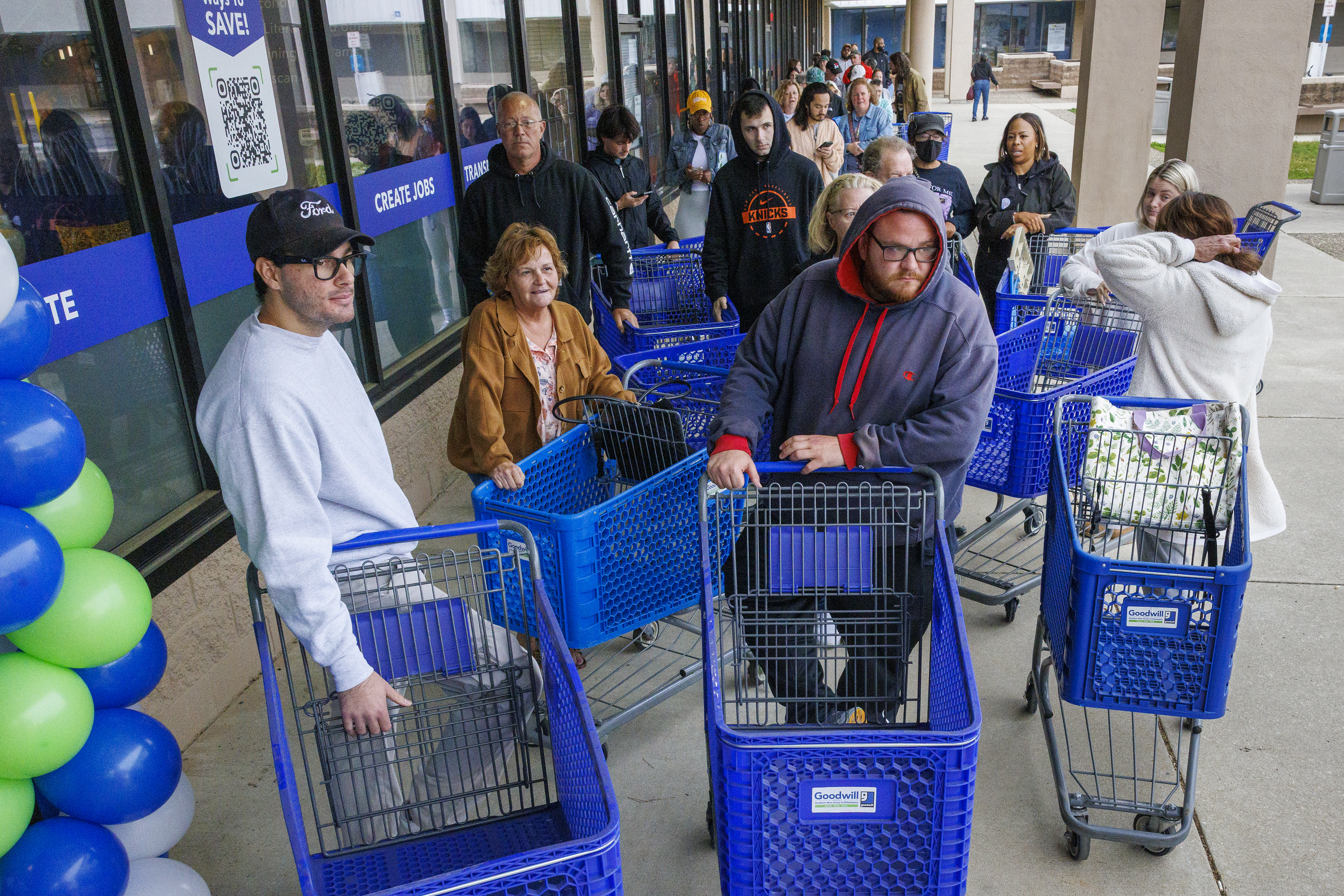
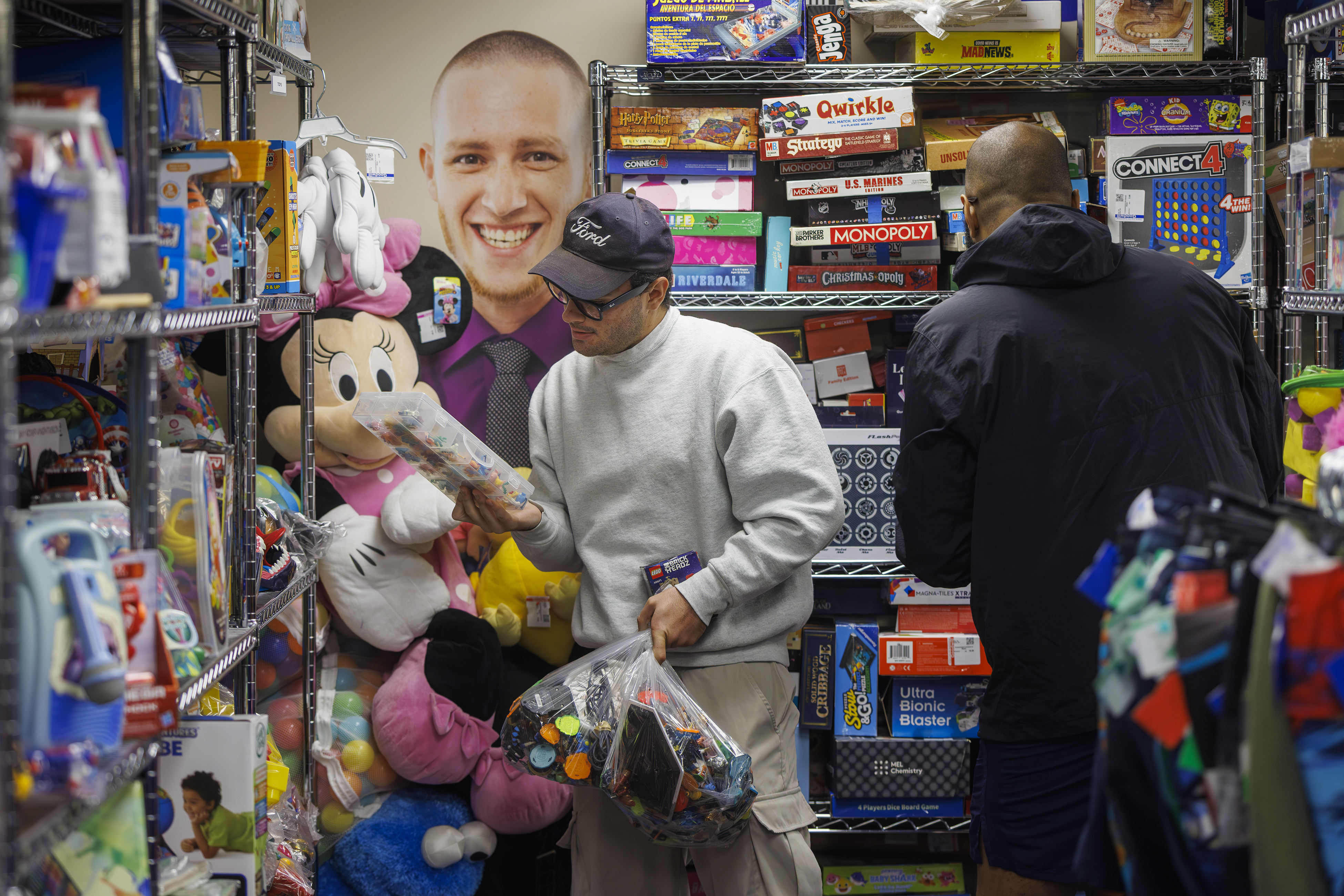
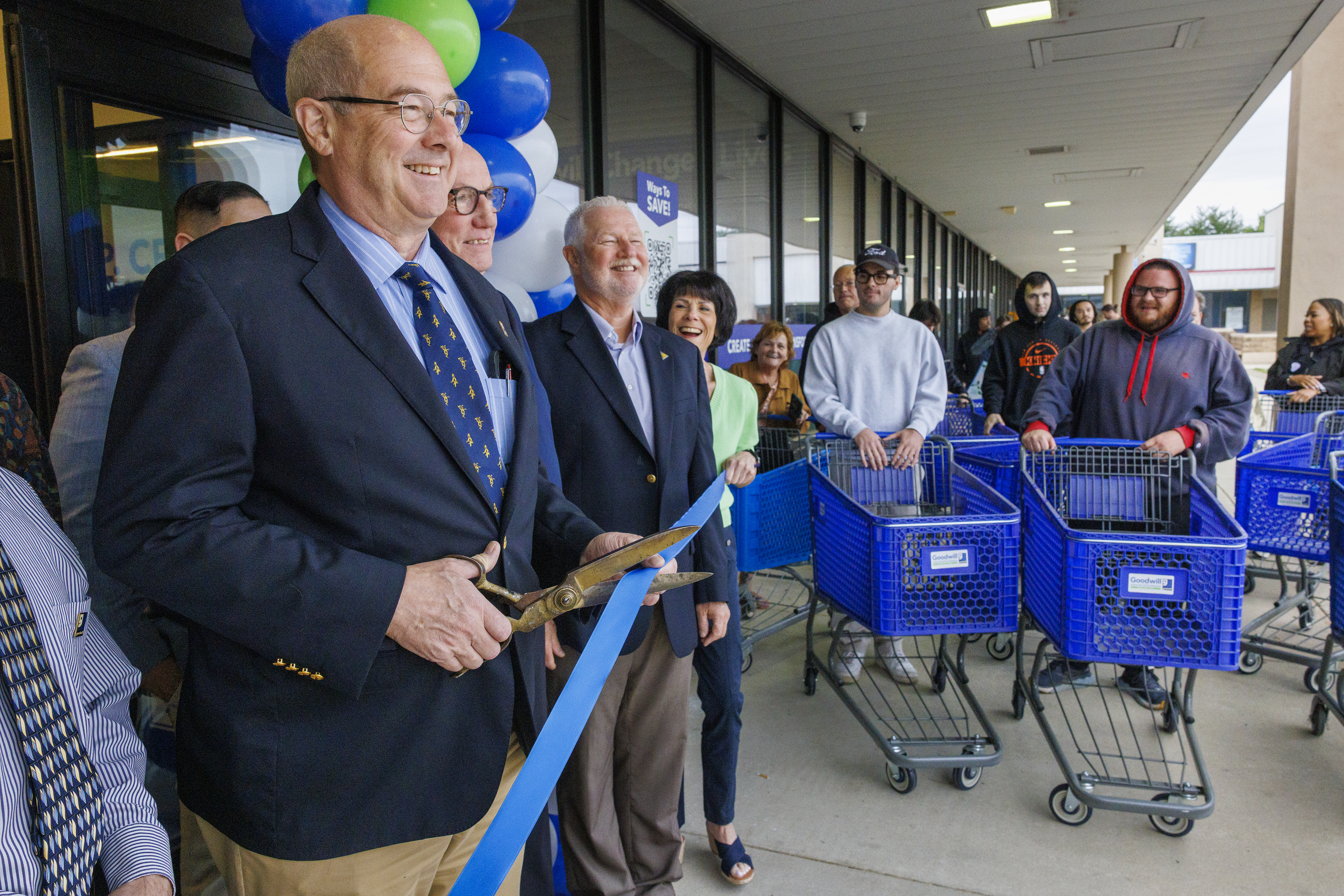
    Shoppers lined up to get inside the new Goodwill store in Deptford on opening day.Alejandro A. Alvarez / Staff Photographer

    The sentiment was echoed by several other customers at the 19,000-square-foot store, which was buzzing with dozens of shoppers around lunchtime Tuesday.

    “Gas prices have gone up. Groceries have gone up,” said Kaitlin Deegan, a 38-year-old nurse from Salem County. She was wearing a graphic tee and denim shorts that she had bought for under $10 at another Goodwill. “Now it’s all about thrifting.”

    Nearby, one woman put a $6.49 denim skirt in her cart, next to a pair of $7.99 sparkly shoes she’d grabbed earlier. Across the room, children perused shelves of toys, games, and stuffed animals — most under $10 — and teens eyed rows of $1.99 DVDs and 99-cent CDs.

    In its first 12 days, the new location on Clements Bridge Road averaged about 600 customers a day, more than double the foot traffic recorded at a smaller Goodwill retail store that recently closed in nearby Woodbury Heights, said regional manager Josef Fortun.

    Each Deptford customer has spent about $31 on average, he said, exceeding managers’ goals.

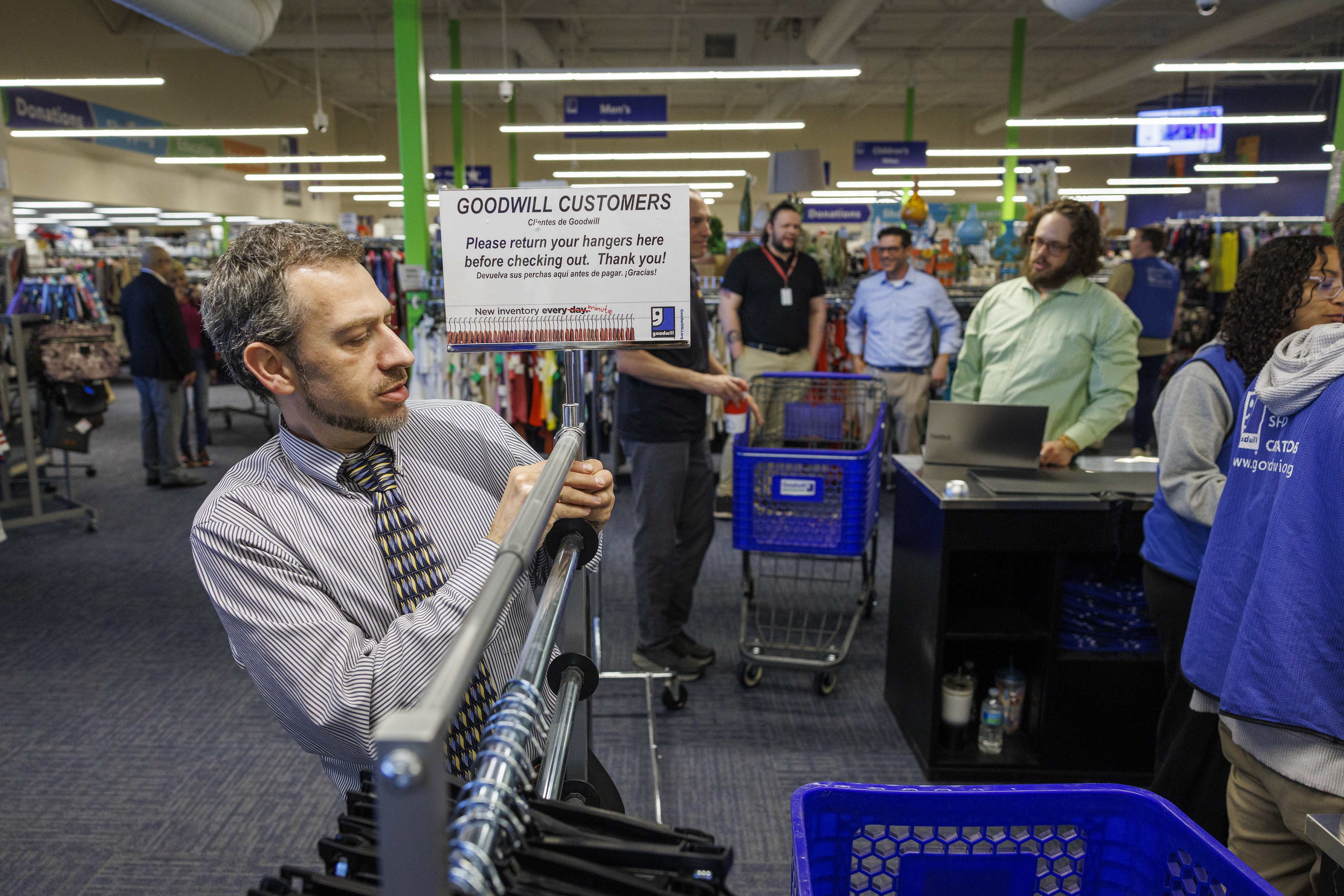
    Josef Fortun, regional manager with Goodwill Industries of Southern New Jersey, prepares the new Deptford store to open on May 21.Alejandro A. Alvarez / Staff Photographer

    This early success in South Jersey comes amid a larger thrifting resurgence. Last year, the U.S. resale market grew nearly four times faster than the broader apparel market, according to an annual report from the online consignment platform ThredUp.

    Goodwill recorded more than $7 billion in revenue last year, the New York Times reported, and annual sales across its 3,400 stores have risen 50% since 2019. Smaller secondhand shops, such as Savers Value Village and ThredUp, have also reported revenue increases, according to the Times.

    In the same Deptford shopping center as the new Goodwill, there are three other thrift stores: Once Upon A Child, Plato’s Closet, and Play It Again Sports. All are owned by Winmark Corporation, which has been adding more thrift stores and reporting year-over-year revenue increases.

    In nearby Cherry Hill, a Red White & Blue Thrift opened this spring, a half-mile from a 2nd Ave thrift outpost — owned by Savers Value Village — that opened in 2024.

    Goodwill also opened a store a year ago in a former Rite Aid in Voorhees. And its Woodbury Heights location, which is still accepting donations, is set to reopen June 15 as a Goodwill Home Medical Equipment Store.

    Boyd said the nonprofit chain is looking to expand into Cape May County in the near future.

    Why are more people thrifting?

    More people are buying secondhand right now for many reasons, said Mark Boyd, president and CEO of Goodwill Industries of Southern New Jersey and Philadelphia.

    “Challenging economic times definitely bring people into the Goodwill store, maybe for the first time,” Boyd said. At the same time, “there’s a lot of people out there who care a lot about reuse, and that’s driving particularly younger shoppers into Goodwill.”

    Friends Reed Habiak (foreground left) and Anthony Nunez (foreground right), both influencers and resellers, were first in line at the new Goodwill store in Deptford on May 21.Alejandro A. Alvarez / Staff Photographer

    And while thrifting is one of the most “tactile” experiences, Boyd said social media is playing a role in its rebirth. Many Goodwill customers are resellers, he said. They find steals in store aisles and then mark up the products to sell online or at flea markets.

    On Deptford Goodwill’s opening day last month, professional reseller Anthony Nunez was first in line. He had arrived with a friend around 4:30 a.m., ready to hunt for sports jerseys, Pokemon memorabilia, video games, and vintage clothing to resell on eBay.

    Since losing a job in compliance during the pandemic, the 34-year-old Sayreville resident has been reselling full-time, making more than $100,000 a year, he said.

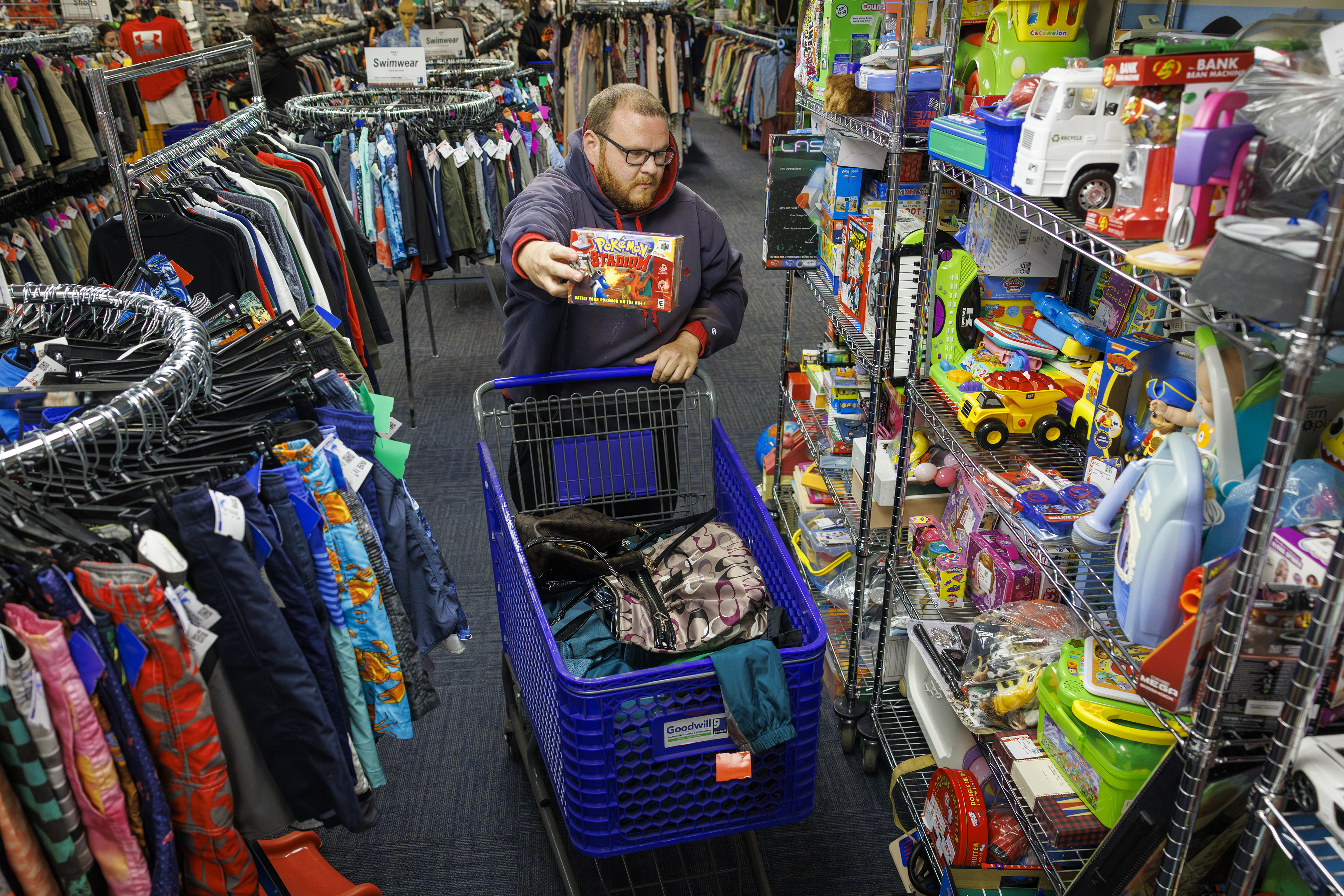
    Anthony Nunez flashes a Pokemon Stadium game he picked up in the toy section at the opening of the new Goodwill in Deptford.Alejandro A. Alvarez / Staff Photographer

    At the Deptford Goodwill, Nunez made a beeline for items with a high resale value, including a still-in-the-box Pokemon Stadium video game for Nintendo 64. He bought it for $18, Nunez said, and later resold it for $150, recouping the cost of his entire Goodwill trip.

    It helped that Goodwill executives had invited several resellers to a store preview, he noted.

    “They understand we help them too,” Nunez said. “I don’t know if they would be able to exist without us.”

    How social media has promoted thrifting

    Some longtime thrifters have started using social media to make extra cash.

    Melody Appel got into thrifting decades ago, when she was a student at Drexel University.

    Now 47 and living in Monmouth County, N.J., Appel recently got a TikTok account at the urging of her teenage daughters. At first, she just used the account to show off her thrifting hauls. But over the past month, she said she has started reselling items, too, making around $1,500.

    Many of her TikTok followers seem to be between the ages of 30 and 60, she said, but she has noticed many younger customers in stores.

    “People are seeing what they can find,” said Appel, who works as an educator and interior decorator. “And maybe their perception of what thrifting was is different from what thrifting is.”

    Reed Habiak, a social media influencer and reseller, looks for items in the Deptford Goodwill’s toy section on opening day last month. Alejandro A. Alvarez / Staff Photographer

    While some found their way to thrifting through social media, others get hooked when they stumble into a store, said Fortun, the Goodwill regional manager. He has noticed more young people at the Deptford store than at the old location in Woodbury Heights, he said, and he attributes some of that to the Edge Fitness Club right next door.

    Customers often come in on a whim, he said, and are in awe of the wide selection and the price tags.

    “People always look for deals,” Fortun said. “You go to discount stores like Ross and Burlington, you still don’t find items as cheap.”

    Goodwill is trying to keep these customers hooked with a new online loyalty program, which will offer special deals and send push alerts to shoppers when their favorite brands are stocked at a local store, said Boyd, CEO of the South Jersey and Philadelphia locations.

    Mark Boyd, CEO at Goodwill Industries of Southern New Jersey and Philadelphia, cuts the ribbon to open the new store in Deptford last month.Alejandro A. Alvarez / Staff Photographer

    Executives are also looking into using artificial intelligence to optimize parts of their operations, such as pricing, he said. But he doesn’t think technology could enhance the customer experience much, he added, and over-digitization could detract from it.

    “I really think thrifting is like one of the most human experiences you’re going to have, and it’s a great shopping experience,” Boyd said, “and that’s why it’s so popular.”

  • Catholicism is growing in Philly and New Jersey. Who’s filling the pews?

    Catholicism is growing in Philly and New Jersey. Who’s filling the pews?

    Church bells rang out from one of Philadelphia’s oldest cathedrals, echoing off downtown parking garages and office buildings, while one of the city’s newer Catholics tried to explain his conversion.

    Daniel Yesilonis, 32, grew up evangelical in the Harrisburg area and converted to Mormonism while studying at Temple University. He said his Mormon mission to Colorado Springs, Colo., was deflating, though, and after he came out as gay during the COVID-19 pandemic, he officially left that church.

    Like millions of Americans, Yesilonis figured he would try his best to be decent, to be spiritual without a label or building attached to it. But he soon felt a sense of loss.

    “It was like something was missing, maybe a sense of community or something,” Yesilonis said outside the church in April.

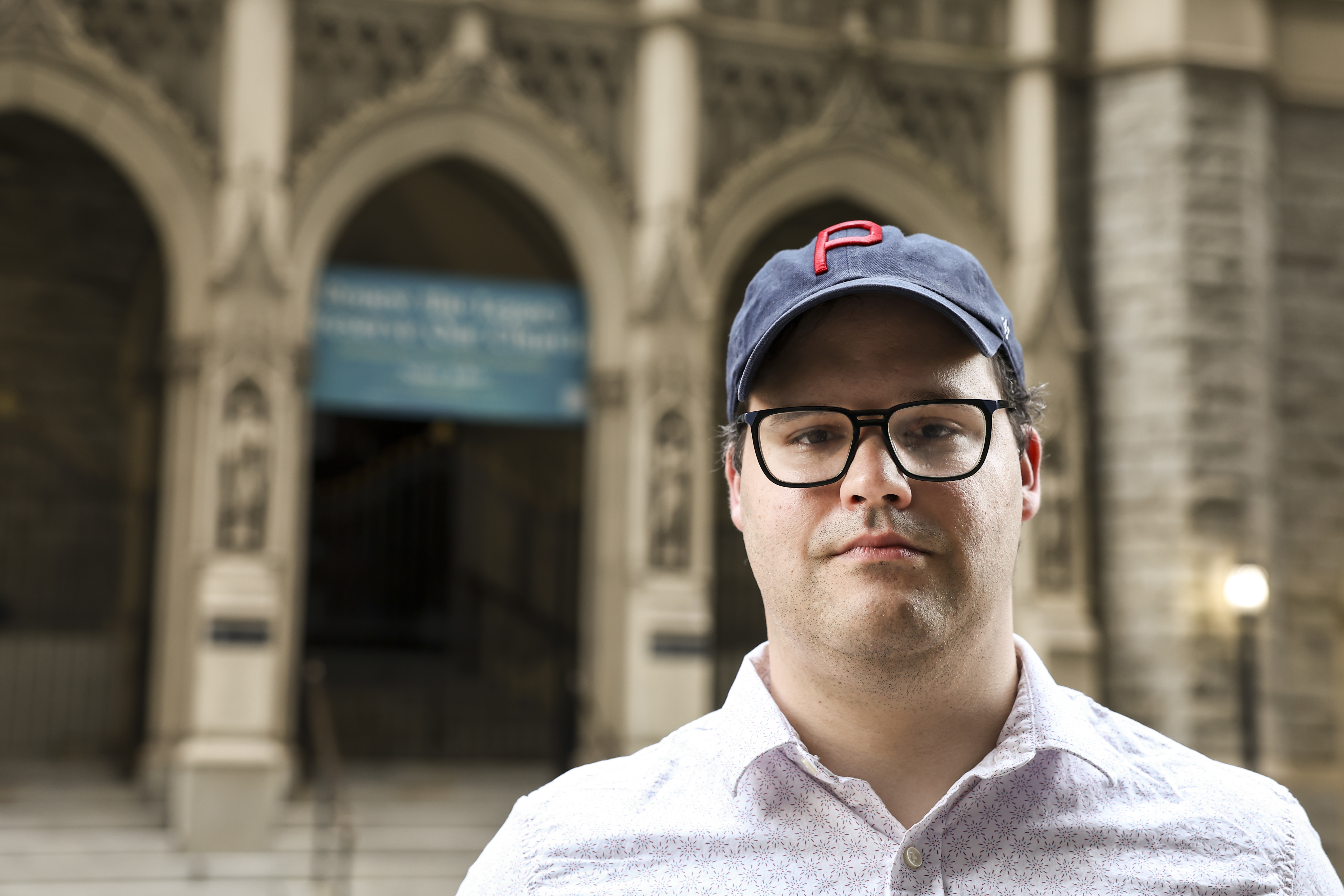
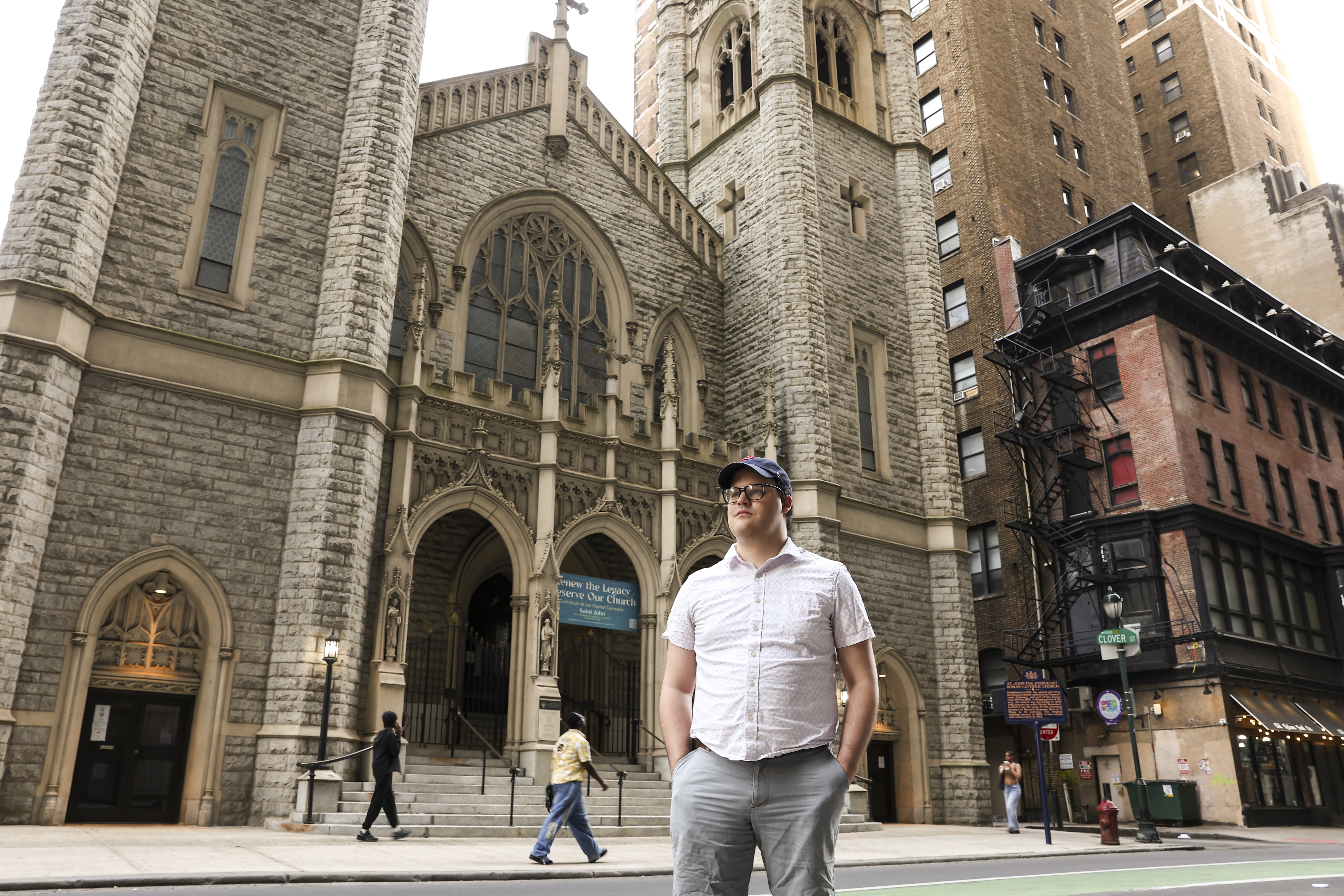
    Daniel Yesilonis posed for a portrait outside of St. John The Evangelist Church on Wednesday, April 15, 2026 in Philadelphia.Monica Herndon / Staff Photographer

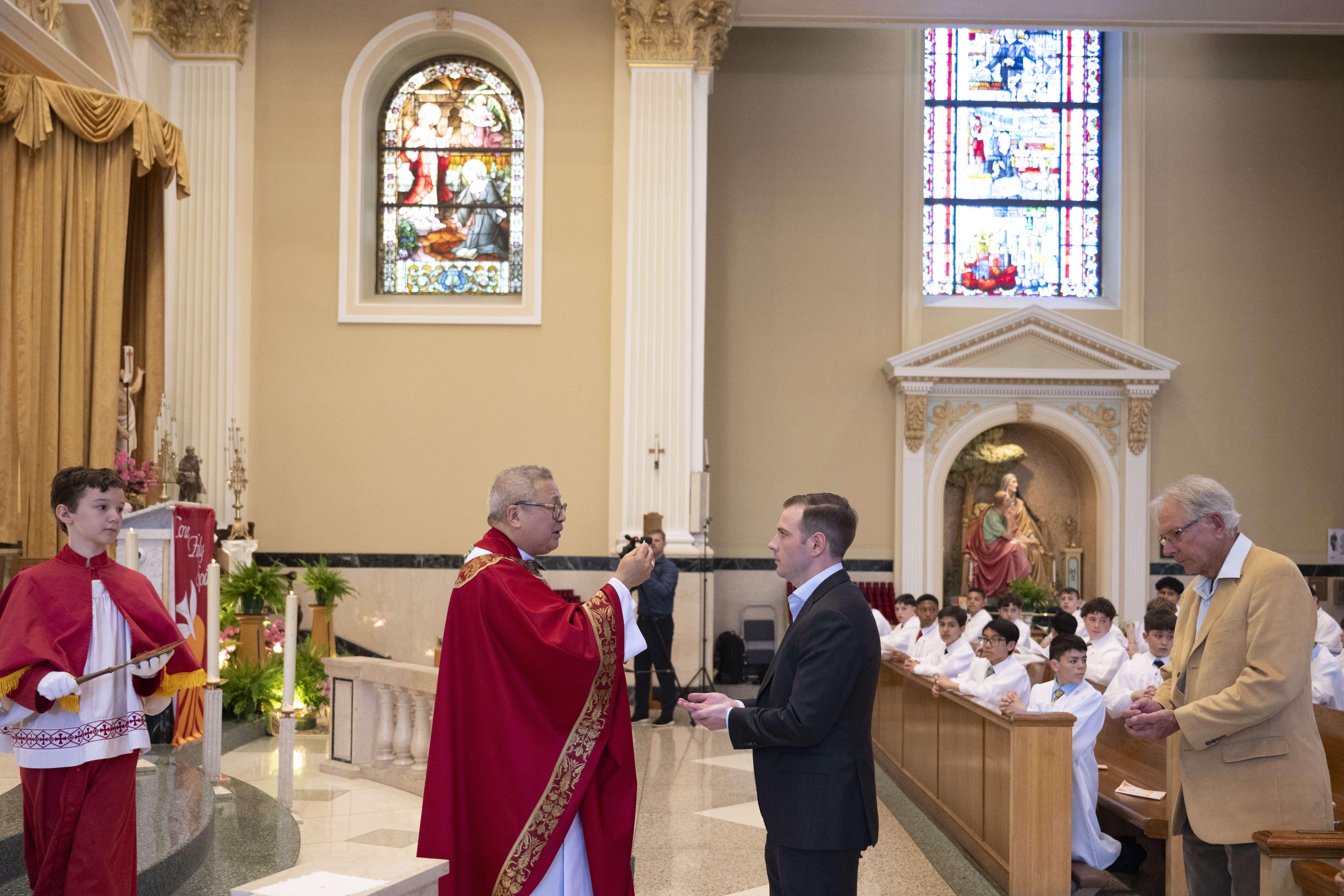
    So, at an Easter vigil Mass in 2024, Yesilonis was among a group of candidates (people who were already baptized) and catechumens (those who were never baptized) who became Catholic and joined St. John the Evangelist on 13th Street.

    Converts like Yesilonis are on the rise at churches all over Philadelphia and New Jersey, diocese officials said, a conversion boom that is being reported globally, including large spikes in Canada and France. In Philly, there have been 1,162 candidates and catechumens this year, which is a 60% increase since 2025 and a 100% increase since 2017.

    Researchers and religious scholars said it was too soon to say much about the recent spike, but noted that a rise would be bucking long-term trends. Earlier this year, the Pew Research Center found that Catholicism has lost more people than it has gained in 24 countries it surveyed, including the United States. A 2025 Pew study found that Christianity’s long-term losses were starting to “level off,” but according to the Archdiocese of Philadelphia, two high schools closed in 2021, and the last time a new Catholic school and parish opened was back in 2010.

    Since 2012, 34 Catholic churches have closed in the archdiocese. So the trend, while noticeable, is still a small change.

    “There would have to be a huge swing, something dramatic would have to happen, for the church to start gaining huge numbers,” said Patricia Tevington, a Pew Research assistant who lives in Philadelphia.

    There is no one reason for the recent increase, diocese officials said.

    In the Philadelphia Archdiocese, the Rev. Gerald Dennis Gill said, many new devotees were baptized as children but did not grow up with Catholicism because their parents or other elders had stopped practicing. He believes they are experiencing a vacuum in their life and are seeking to fill that.

    “Our culture is not offering something objectively good and true and beautiful, but it’s within all of us to seek that out,” he said. “People of all ages are finding the need to have a relationship with the Lord, for meaning and the promise of heaven.”

    A confirmation mass is held at St. Monica Roman Catholic Church in Philadelphia on Saturday, April 18, 2026.Joe Lamberti / For The Inquirer

    Across the river in the Camden Diocese, spokesperson Michael Walsh said, the number of catechumens grew from 194 last year to 238 in 2026, a nearly 23% increase.

    Catholics are not knocking on doors the way Yesilonis had to in Colorado, but members of St. Agatha-St. James Parish had an “Ask a Catholic” tent at West Philly’s 68th annual Spruce Hill May Fair in Clark Park on May 9.

    Newer Catholics whom The Inquirer spoke to in recent months (including this reporter’s adult son) cited a slew of different personal reasons for their decision.

    “We’re all looking to God to help us, to save us. For me, it was time,” said Jana Muhammad, a “middle-aged” candidate who received the sacrament of confirmation at St. Monica’s in South Philly earlier this spring. “It’s really a rough, rough time out there right now. There’s no peace right now, and people are really looking for peace, and it’s not there right now. For me, personally, when it gets really rough, I absolutely pray to God.”

    There is, however, a litany of theories being tossed around online and in the media about the increase in Catholicism that are sometimes at odds with one another.

    The trend has been attributed to increasing conservatism in young men. Catholicism has also been offered up as an antidote to the so-called red pill, a “manosphere” belief that society now caters to women. Some say the increase is a Gen Z response to the isolation of the pandemic. Others say that technology burnout is fueling it. There have been stories about the rise of Catholic social media influencers and the popularity of the prayer app Hallow, which has been downloaded 32 million times since it debuted in 2018.

    “People ask why priests always wear black. ’Cause everyday is a funeral for the haters,” the Rev. David Michael Moses, a Catholic “priestfluencer” with 1.1 million followers on Instagram, said in a post.

    Actor Mark Wahlberg, a partner in Hallow, is a proud Catholic, but so is Shia LaBeouf, a recent convert who reportedly yelled, “I’m a Catholic,” while allegedly shouting homophobic slurs in New Orleans earlier this year.

    The middle-ground, welcoming approach taken by the late Pope Francis and his successor, Pope Leo XIV, who has been vocal against President Donald Trump’s war on Iran, has also pulled people closer to Catholicism.

    “Pope Francis inspired my decision,” Yesilonis said.

    Daniel Yesilonis posed for a portrait outside of St. John The Evangelist Church on Wednesday, April 15, 2026 in Philadelphia.Monica Herndon / Staff Photographer

    Yesilonis said he knows he could never marry a man in the Catholic Church, but he has found solace among the LGBTQ+ parishioners at St. John the Evangelist.

    “I found a community as much as I found a church,” he said.

    The Rev. Thomas Betz, of St. John’s, said the church “teaches and believes” the same tenet as the wider church, but has been open.

    “St. John, by its very nature, is in the heart of the city and open to different races, and people who think differently, politically,” he said. “Everyone is welcome.”

    Mark Schiavo, 26, waits to be confirmed at St. Monica Roman Catholic Church in Philadelphia on Saturday, April 18, 2026.Joe Lamberti / For The Inquirer

    Down in Cape May, Sara Kelly said she grew up in a family that gave up on formal religion, but still held on to a strong spiritual sense of right and wrong. Her father, Kurt, suffered from head and neck cancer for years, and after he died in 2019, she constantly wondered about the afterlife.

    Kelly and her husband went to some nondenominational churches in Philadelphia, where she lived at the time, but did not find the answers she was looking for. The couple moved to the Shore and struggled with finances.

    One day, while walking on the Delaware Bay beach, she fell to her knees and asked God for help.

    “I’ve never done anything like that before,” she said.

    At the advice of a relative, Kelly began sitting in a Catholic church in 2025, and later downloaded the Hallow app. She bought a rosary, too, and began going back to church multiple times a week, and eventually signed up for Order of Christian Initiation of Adults (OCIA) classes.

    “I know for me, it was really enjoyable to go to a place where the focus is only on love and trying to help others,” she said. “At every Mass, we’re praying for people caught up in war, people in Gaza and Ukraine.”

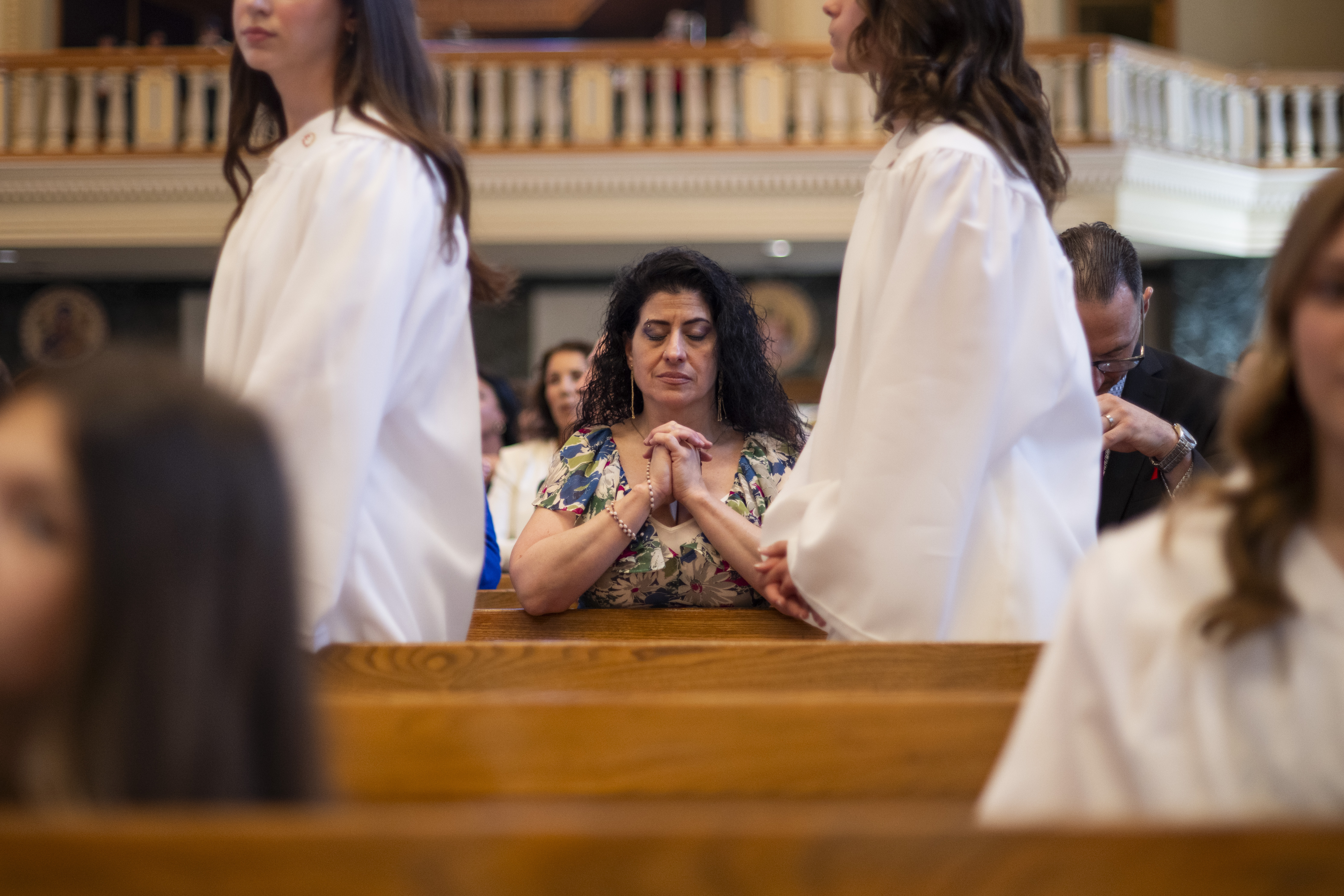
    On a breezy April morning in South Philly, hundreds of people filed into St. Monica’s for the Rite of Confirmation Mass. A few dozen teens in white filled the front pews, but just behind them were a handful of adults, like Jana Muhammad, there to receive their final sacrament and take the name of a saint.

    Muhammad chose Angelica. She was baptized as a child and grew up going to church. She said her stepmother did not want to “force” religion on her and gave her the choice to make up her own mind as an adult.

    “And it was just time,” she said.

    The Rev. Edward Town led the Christian initiation processes there and said the reasons adults come back vary from simple to profound.

    “People want stability in their lives,” he said. “To young people, the world seems very unstable, and there’s a lot of uncertainty. I think our faith gives us a little hope, right?”

    When the Mass was finished, the Rev. Efren V. Esmilla, auxiliary bishop of Philadelphia, extended an invitation to any other seekers sitting in the church.

    “Come find us,” he said. “Our door is always open.”

    Mark Schiavo, 26, is confirmed at St. Monica Roman Catholic Church in Philadelphia on Saturday, April 18, 2026.Joe Lamberti / For The Inquirer
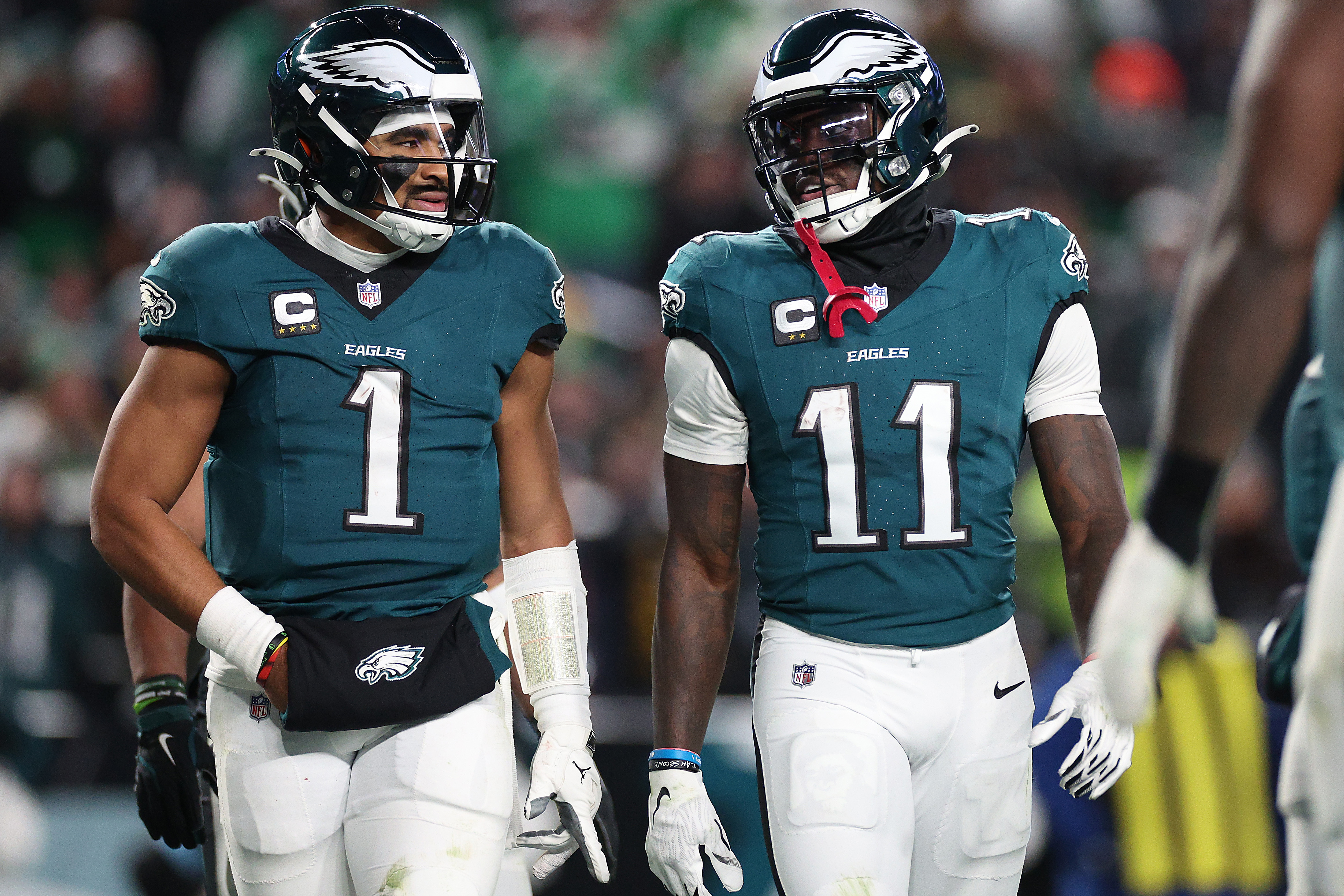
  • Don’t get it twisted: A.J. Brown, like Carson Wentz, betrayed Philadelphia and his Eagles teammates

    Don’t get it twisted: A.J. Brown, like Carson Wentz, betrayed Philadelphia and his Eagles teammates

    A.J. Brown now is a Patriot, an ironic misnomer since he’s such an obvious traitor.

    Philadelphians generally seem relieved that Brown’s diva act no longer will be a distraction for a perennial title contender. That’s just A.J. fatigue. What he has done is no better than what Carson Wentz did five years ago: hamstrung his franchise, dissed the fan base, and hung his teammates out to dry.

    After Brown signed a three-year, $96 million contract extension in April 2024, he spent most of the next two years complaining. His main complaint: His skills were being wasted in an Eagles offense designed by Nick Sirianni and quarterbacked by Jalen Hurts, even though it was potent enough to win Super Bowl LIX.

    During the 2025 season, Brown reportedly requested to be traded. He greased the rails to that end, continually whining, culminating in a midseason social media post in which he called the offense a “[bleep]-show.”

    That prompted owner Jeffrey Lurie to publicly meet with Brown, after which Brown refrained from further criticism. However, at that point, it became inevitable that Brown would be traded.

    And that, inevitably, would hurt the team.

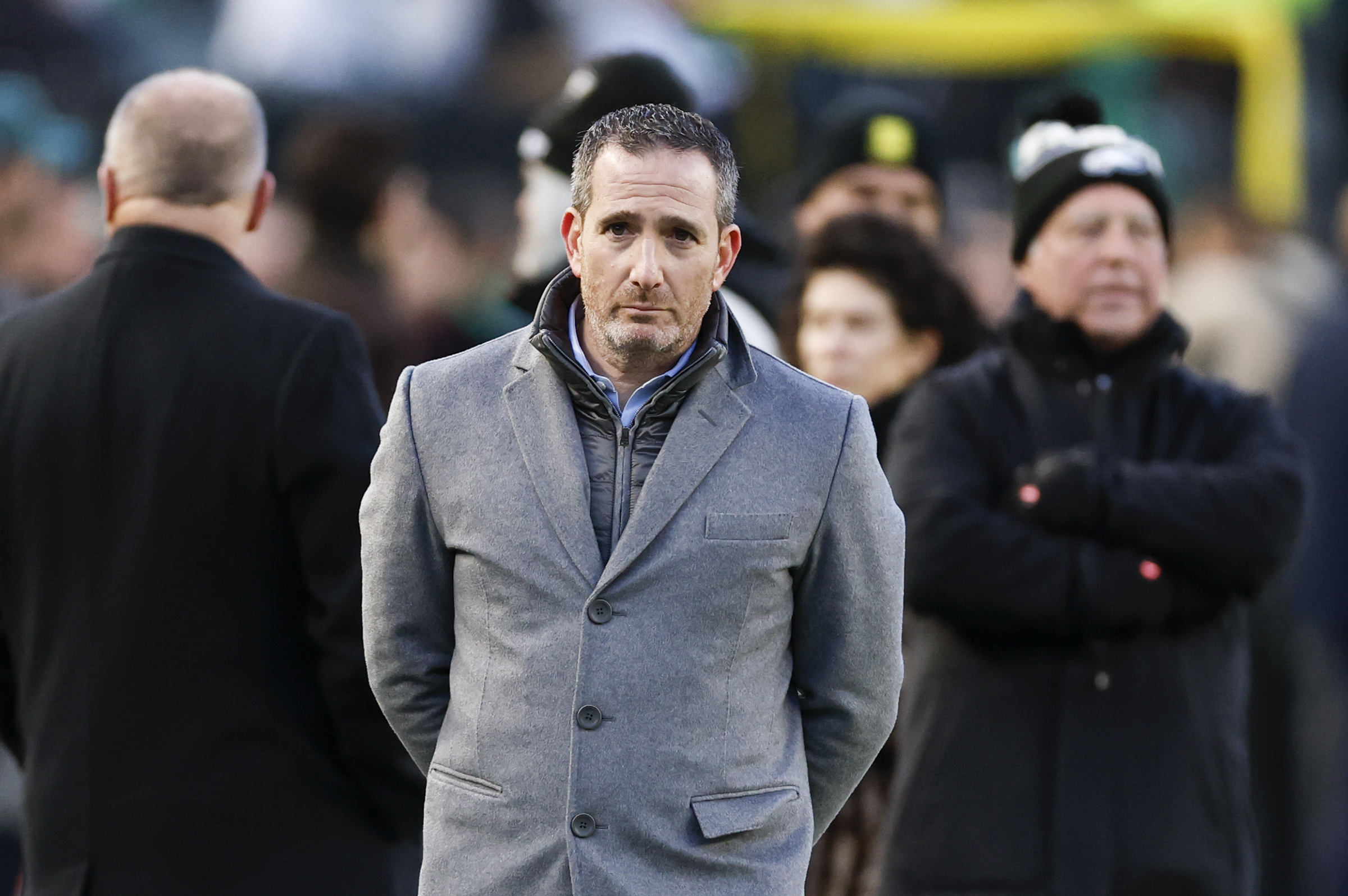
    Before the draft in April, sources say Howie Roseman asked for a first-round pick in 2026 or, at worst, in 2027. Nobody bit. On June 1, the first day of a new league year, when a salary cap hit would be spread over two years, Roseman settled for a first-round pick in 2028 and a 2027 fifth-round pick.

    That’s going to hurt.

    It will hurt the fans, now deprived of supporting the best receiver in franchise history.

    It will hurt the front office, since Brown’s departure will dent the salary cap $43 million, the fourth- (or fifth, depending on how you look at Daniel Jones and the Giants)-highest amount of dead money ever absorbed and the most dead money of a non-quarterback.

    More than anyone, though, it will hurt his teammates.

    Why?

    Because the Eagles cannot immediately fill the talent void left by Brown. This is partly because Brown has cost them so much money against the cap, so the Eagles would not be able to sign a player of his caliber. Which means there is a massive drop off in total roster talent.

    This leaves the rest of the players in a difficult spot.

    Every player has a finite window in which he can win. Over the past few seasons many of the current Eagles had a choice of where to play, and many chose the Eagles because the Eagles had an elite roster, and no skill player on that roster was more elite that Brown.

    His 14.8 yards per reception rank first among receivers with at least 275 catches since 2022. His 5,034 receiving yards rank fifth. He is different.

    When Brown signed his extension, Eagles in the locker room, Eagles in the coaches’ offices, and Eagles in the executive suites reasonably expected at least four more seasons of this sort of production from Brown.

    Instead, they have a $43 million hole on the ledger over the next two years. In the short term, at least, this could be catastrophic.

    It was nearly so last time.

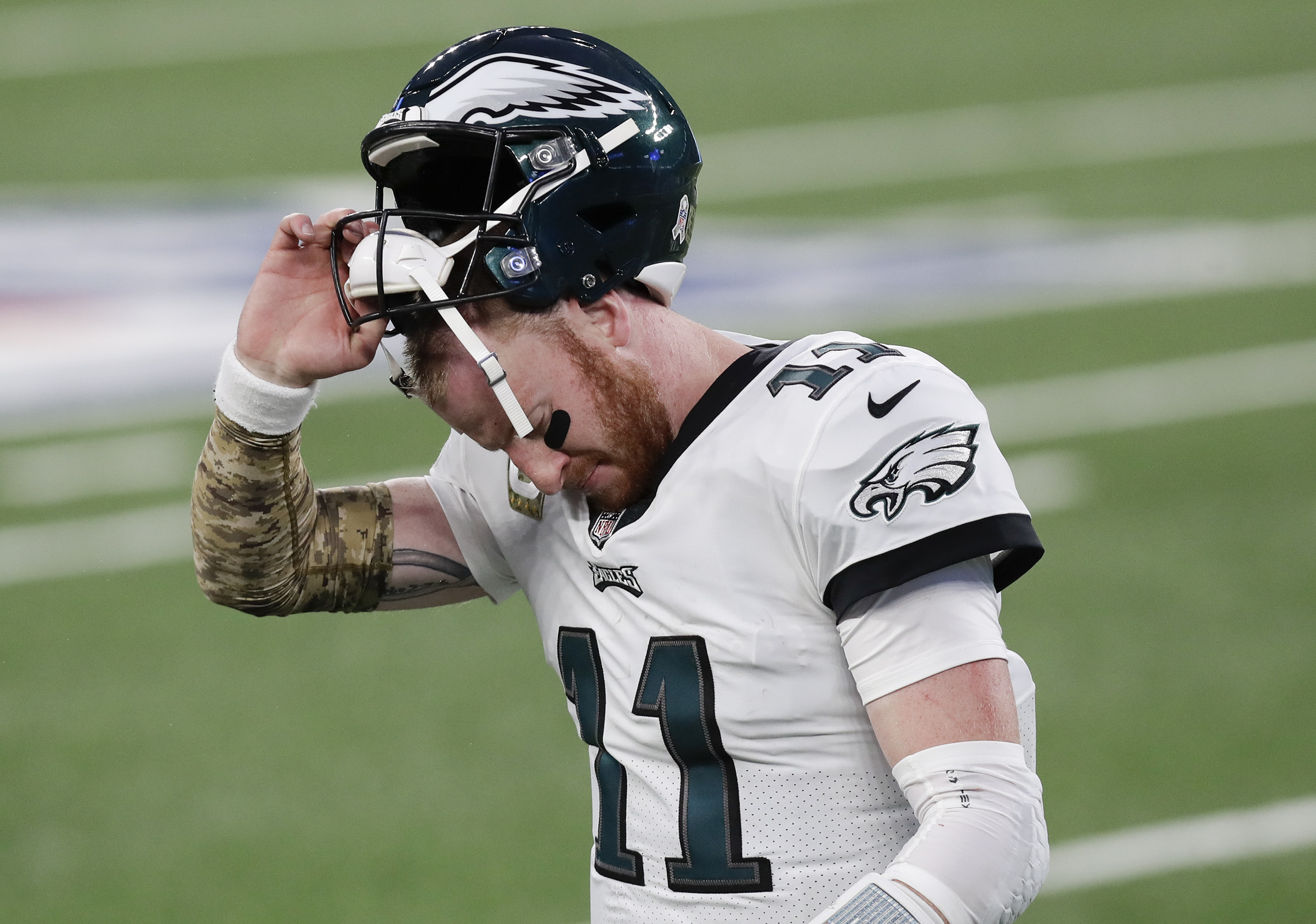
    Carson Wentz sulked, then struggled, then forced his way out of Philly. YONG KIM / Staff Photographer

    Carson Wentz

    The reason Ginger Jesus went Judas on the Birds differs from Brown’s, but it is no less shameful.

    Wentz resented that the Eagles took Hurts in the second round of the 2020 draft. This, despite their stated intent to use Hurts as a long-term insurance policy against Wentz’s frequent injuries. In the meantime, Hurts would be used as a gimmick player, in the manner of Saints utility man Taysom Hill.

    Wentz then was outraged when he was benched late in the 2020 season after throwing 15 interceptions and taking 50 sacks, numbers that would lead the league at the season’s end despite Wentz playing in just 12 games. After the season, after getting coach Doug Pederson fired, Wentz still forced a trade.

    That carried a $33.8 million cap hit, which was the NFL record at the time. Hurts took over as a second-year project quarterback of a team in disarray coached by a relative unknown in Nick Sirianni.

    As it turns out, Wentz had a little bit left.

    He rebounded with 27 touchdown passes with seven interceptions and rebounded with a 94.6 passer rating in 17 starts for the Colts, who, with an inferior team, matched the Eagles’ 9-8 record but missed the playoffs. Hurts threw 16 TDs with nine picks (but added 10 rushing scores) and was horrid in a playoff loss.

    It began something great. Wentz’s career fizzled as Hurts led the Eagles to two Super Bowls. But, in 2021, it wasted a prime year for such players as Lane Johnson, Fletcher Cox, Brandon Graham, Jason Kelce, Darius Slay — players who chose to remain Eagles with the understanding that Wentz would be their quarterback.

    Why would they expect that?

    Because in June 2019, Wentz had signed a four-year, $128 million contract extension … that didn’t kick in until 2021.

    That’s right.

    Wentz took a $66 million bonus to play for the Eagles from 2021 to 2024, but he didn’t take a snap for the team in that span.

    Not bad work if you can get it.

    Howie Roseman found a path out of the Carson Wentz quagmire and history may reflect that he did the same with A.J. Brown. Yong Kim / Staff Photographer

    No pain, no gain?

    Fate, genius, and effort combined to make lemonade from Wentz’s sour grapes.

    Fate, in that Wentz stayed healthy enough to convert the conditional pick in 2022 into a first-rounder.

    Genius, in that Roseman used the first- and third-round picks from the Wentz trade as part of the capital to add DeVonta Smith, Jalen Carter, Jordan Davis, and, yes, even Brown. Can he do the same with the less valuable haul from Brown’s trade?

    Effort, in that no player in the NFL has worked harder at becoming the best player he can be than Hurts. He has his limitations, but Hurts is a Super Bowl MVP with three Pro Bowl nods.

    If you’d like more irony, then you might like this:

    If Hurts doesn’t produce in the offense of new coordinator Sean Mannion, then Roseman might have to use the first-round pick he got by trading Brown to draft Hurts’ replacement.

    You know who’d help Hurts produce in the new offense?

    His former good buddy, Arthur Juan Brown.

  • How top NHL draft prospects fared at the final day of the NHL combine

    How top NHL draft prospects fared at the final day of the NHL combine

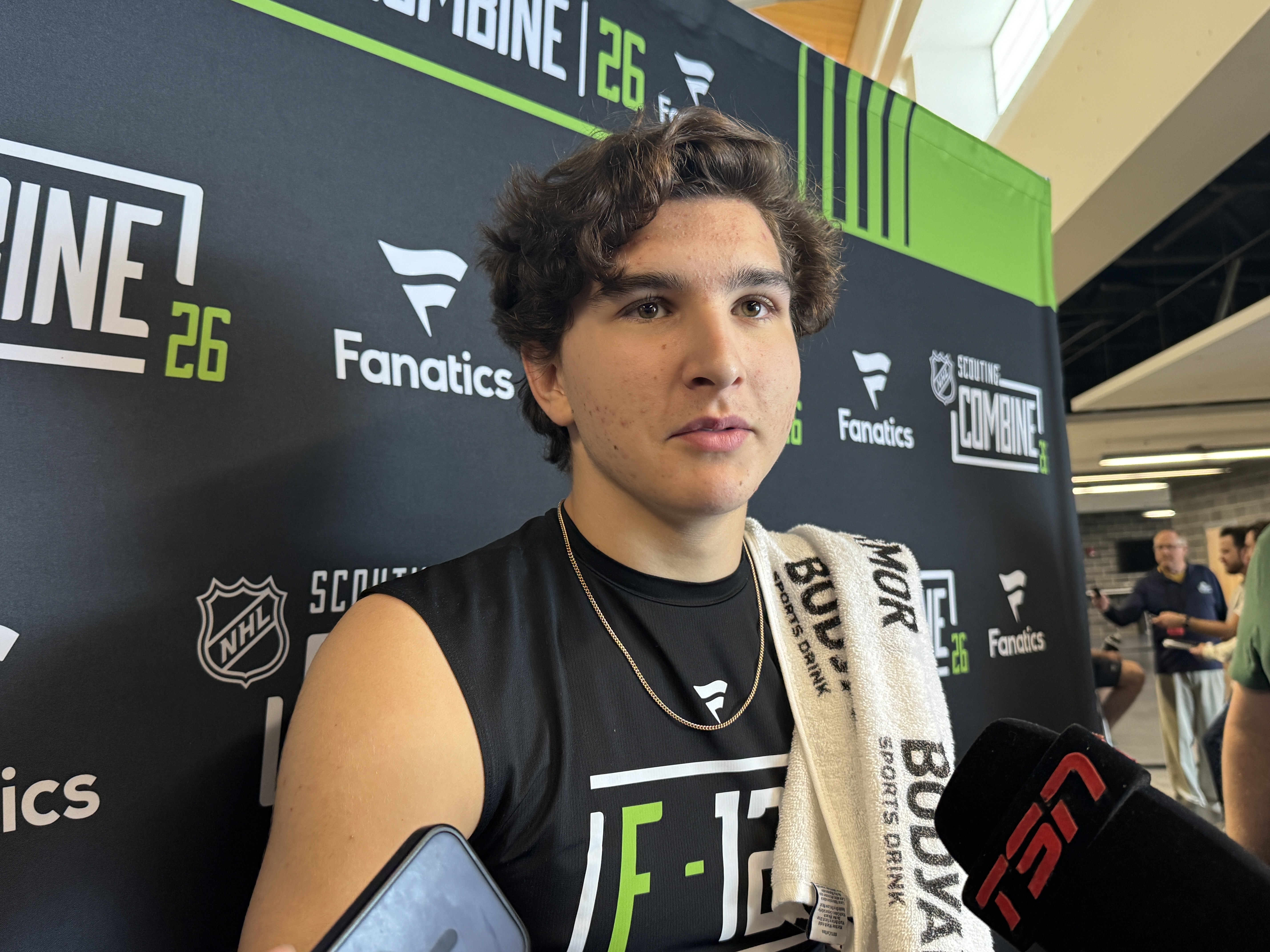
    BUFFALO — Alexander Command sat down in front of the media after finishing his twirl through the fitness testing on Saturday at LECOM HarborCenter.

    The Swedish center looked relaxed and rosy cheeked for someone who said he had just vomited.

    It’s not an unheard-of result for the Wingate test, in which players at the NHL scouting combine ride the bike for 30 seconds as hard as they can with no clock in view to see when the end is coming and trainers shouting to keep going.

    “I’d say the Wingate was better than I thought, and pretty fun,” Command said with a smile before revealing how it really went.

    Command, who could be available when the Flyers select at No. 21 overall in the NHL draft on June 26-27, and has met with the team, finished tied for 11th in the peak power output test that concluded the combine for each player. He also finished tied for 17th in VO2 max, a test completed Friday in which a player rides a bike with the resistance increasing and keeps riding until they cannot keep up the required revolutions per minute.

    The consensus was that the Wingate test, which also provides a fatigue index result, was the hardest but, oddly, the most fun. Ryder Cali, a center with whom the Flyers met, said the VO2 drained him and he couldn’t move for 25 minutes after, but he felt the Wingate was his best test as it showed his power. He also said the screaming the trainers do as the players pedal actually made him angry, which, in turn, made him go harder.

    Said Jaxon Cover, a right winger who met with the Flyers and will head to Penn State in the fall of 2027: “I wish that I could see the time while I was doing it because I couldn’t believe that I had more time to go while I was on it, but it was a lot of fun, and it’s a great experience overall.”

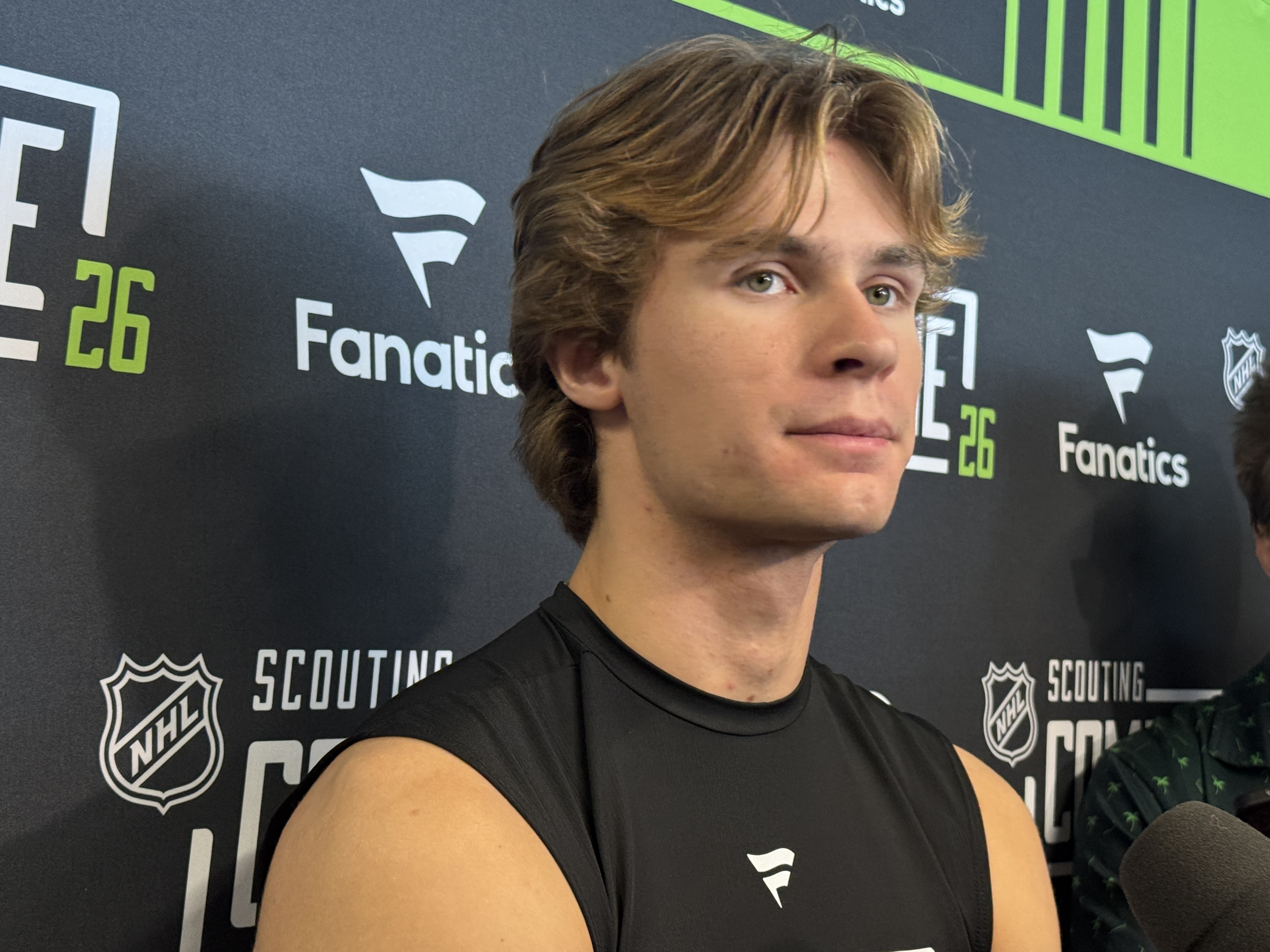
    Layne Gallacher, a center who went to Guelph of the Ontario Hockey League in the trade that sent Flyers prospect Jett Luchanko to Brantford, finished atop the Wingate test’s peak power output while consensus No. 1 pick Gavin McKenna was the best in VO2, joking long shifts helped him in his career. The Penn State winger finished in the top 25 for several tests, including third in the new isokinetic squat strength test, which was “performed on a motorized resistance device [1080 Cable] to assess lower extremity strength,” according to the NHL.

    McKenna gave his team and NCAA hockey’s weekend-heavy schedule some of the credit for his strong performance, as it helped him spend a considerable amount of time in the gym at the beginning of each week. He also was training in Kelowna, British Columbia, with Markus and Liam Ruck — Markus tweaked his back on the vertical jump and could not continue — and Mathis Preston since the end of his season.

    “Obviously, you want to do your best at everything, so I wanted to prepare hard for this,” said McKenna, who measured 5-foot-11¼ and 170 pounds.

    “I think sometimes my frame’s not the biggest, so [I] just wanted to show that I can compete out there and I can work hard off the ice,” he said. “I think that’s a big key to carry through the next level.”

    Gavin McKenna is the consensus top overall pick in this summer’s NHL draft.Jackie Spiegel

    Among the 90 prospects at the combine, many just wrapped up their first year in college, are heading there in the fall, or are going in two years.

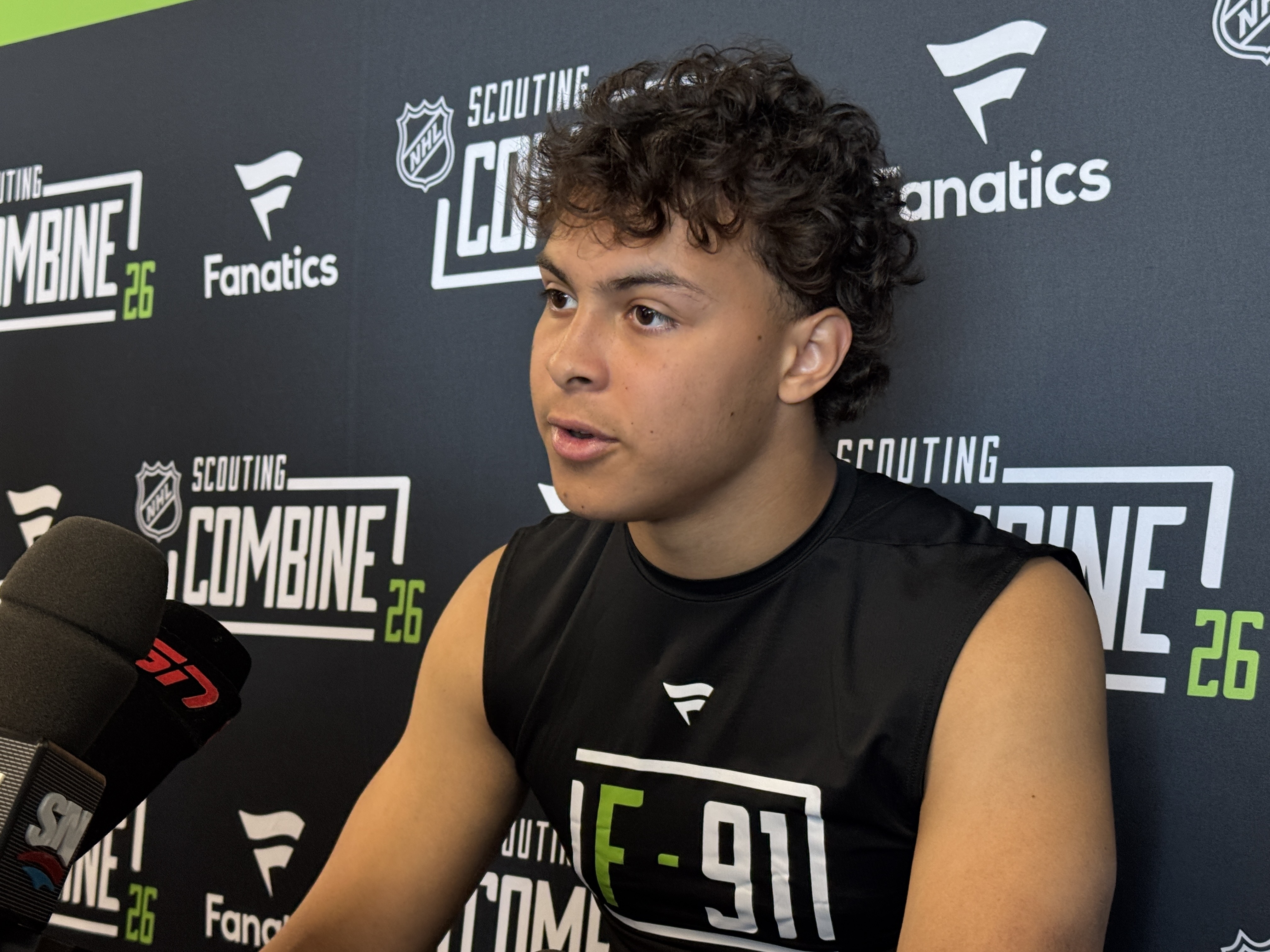
    In addition to McKenna, Beckham Edwards and Cole Zurawski, who will be teammates at Notre Dame in September, dominated the tests. The pair tied Norwegian Niklas Aaram-Olsen for No. 1 in the pro agility test to the left. The test is a 5-10-5 yard shuttle that evaluates multidirectional speed, agility, and whole-body reaction plus control. Aaram-Olsen and Edwards tied for the lead to the right, and Edwards was No. 1 in force plate no jump.

    Zurawski finished atop the leaderboard for the new 10-meter sprint test, which showed how off-ice linear sprint performance is a good predictor of on-ice speed. And Aaram-Olsen led the way in the horizontal jump, landing 118.0 inches, almost two inches more than second place.

    “I like the explosive,” said Aaram-Olsen, a winger who is a teammate of Command with Örebro HK U20 in Sweden’s top junior league.

    Pierce Mbuyi is off to Penn State in 2027, but first he topped the isokinetic squat test, came in second on the bench press power test — behind UMass’ Landon Nycz — and finished tied with several players for sixth in pullups (14). Mbuyi, a winger and captain of Owen Sound of the OHL is listed at 5-foot-9 and 177 pounds. Fellow under-6-foot winger Victor Plante, the son of former Flyer Derek Plante who is heading to the University of Minnesota-Duluth, was atop the fatigue index.

    Two centers had the best grip strength. Cali, who recently flipped his commitment to Providence, tied for first in right-hand grip strength, and Ilia Morozov, 17, who was the youngest player in college hockey this past season at Miami (Ohio), had the best left-hand grip strength. Both met with the Flyers and could be right in their wheelhouse on draft night.

    Pierce Mbuyi is heading off to Penn State in 2027.Jackie Spiegel

    Breakaways

    Winger Adam Novotný said he had a good meeting with the Flyers. He mentioned that his head was still spinning when he spoke with the media after riding the bike. The Czech winger, who played for Peterborough of the OHL, did the most pullups (18). … Goalie Michal Oršulák slipped doing the shuttle. He was OK but said “I think not too much good,” afterward about his overall performance. His Prince Albert squad finished its season on May 16, losing to Flyers prospect Luke Vlooswyk and Everett in the Western Hockey League final. He said he did not have much time to prepare for the testing. … Two top prospects, Ivar Stenberg and Carson Carels did not do physical testing at the combine.