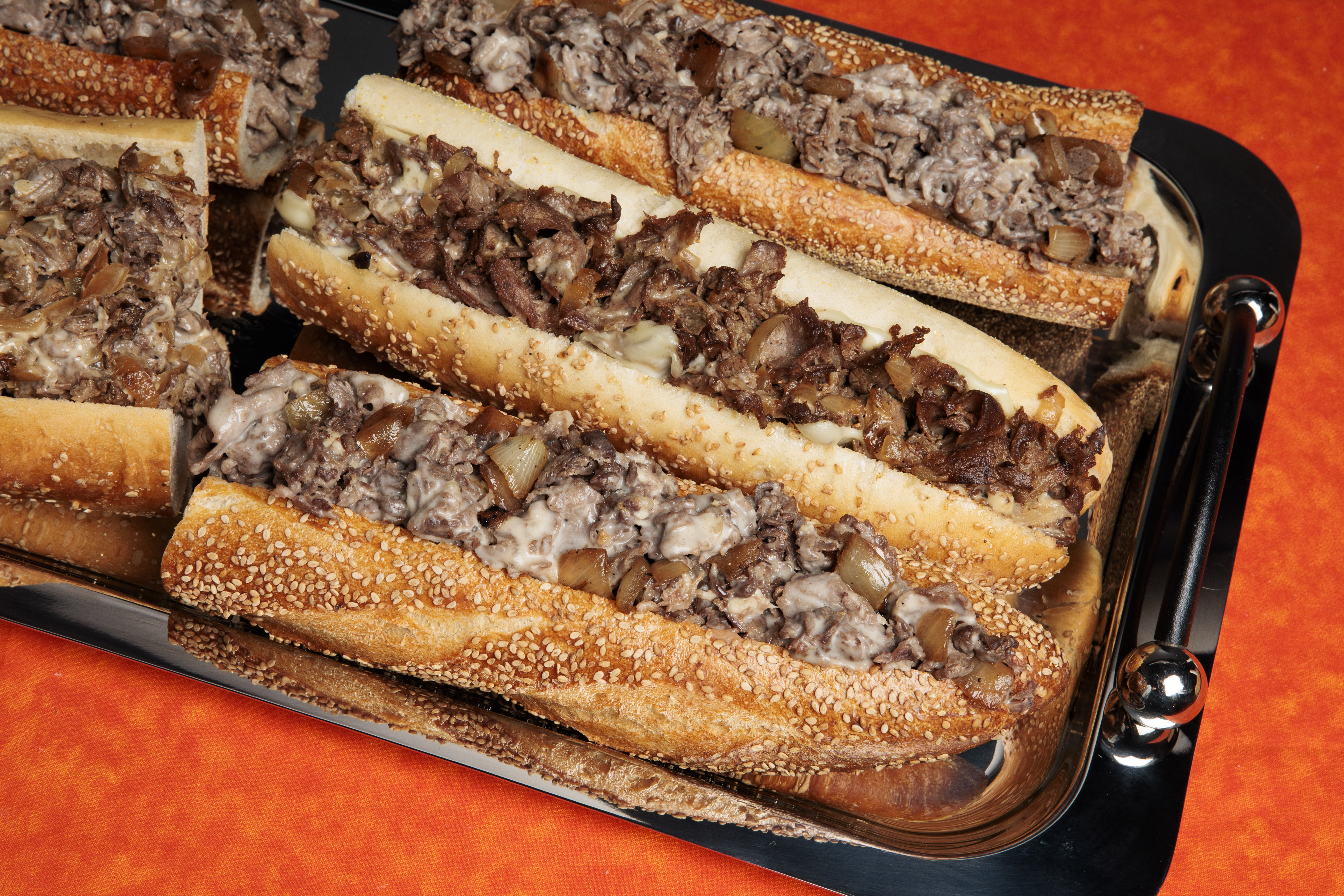
“Philly needs to understand, New York is the king‚” Louis Cretella, the owner of Dario’s Pizza in West Hempstead, told the tabloid.
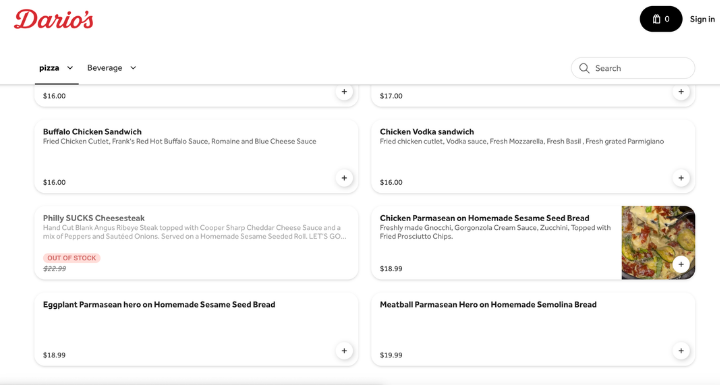
The restaurant — which purportedly sells 2,500 cheesesteaks a week — is rebranding the sandwich as the “Philly SUCKS” cheesesteak for the duration of the series. For hard copy menus, Cretella reportedly instructed staff to scribble “F— Philly” in black marker over the item.
The online menu at Dario’s Pizza in West Hempstead, NY. The Long Island restaurant is sold out of “Philly SUCKS” cheesesteaks.Scree
This is exactly the sort of over-the-top behavior expected from the bridge-and-tunnel crowd. Y’all want to prove you’re NYC tough so badly that you forget how to act.
Still, the whole gimmick raises a couple of questions: Why are you bragging about selling Philly’s signature sandwich if you hate us so much? And is your ego really that fragile?
Other New York City area restaurants have joined in. At Birdie Bar in Northport, it’s now the Big Apple Cheesesteak. At G’s Cheesesteaks in Manhattan’s Lower East Side, their entire livelihood now revolves around whatever a New York Knicks cheesesteak is.
And at Wogies — a traitorous Philadelphia-themed bar with locations in the Financial District and the West Village — it’s now called the Appendix Burster. It’s an homage to the appendectomy that kept Joel Embiid out of the first three games of the Sixers’ playoff series against the Boston Celtics.
To this, I say: Our culture is not your costume.
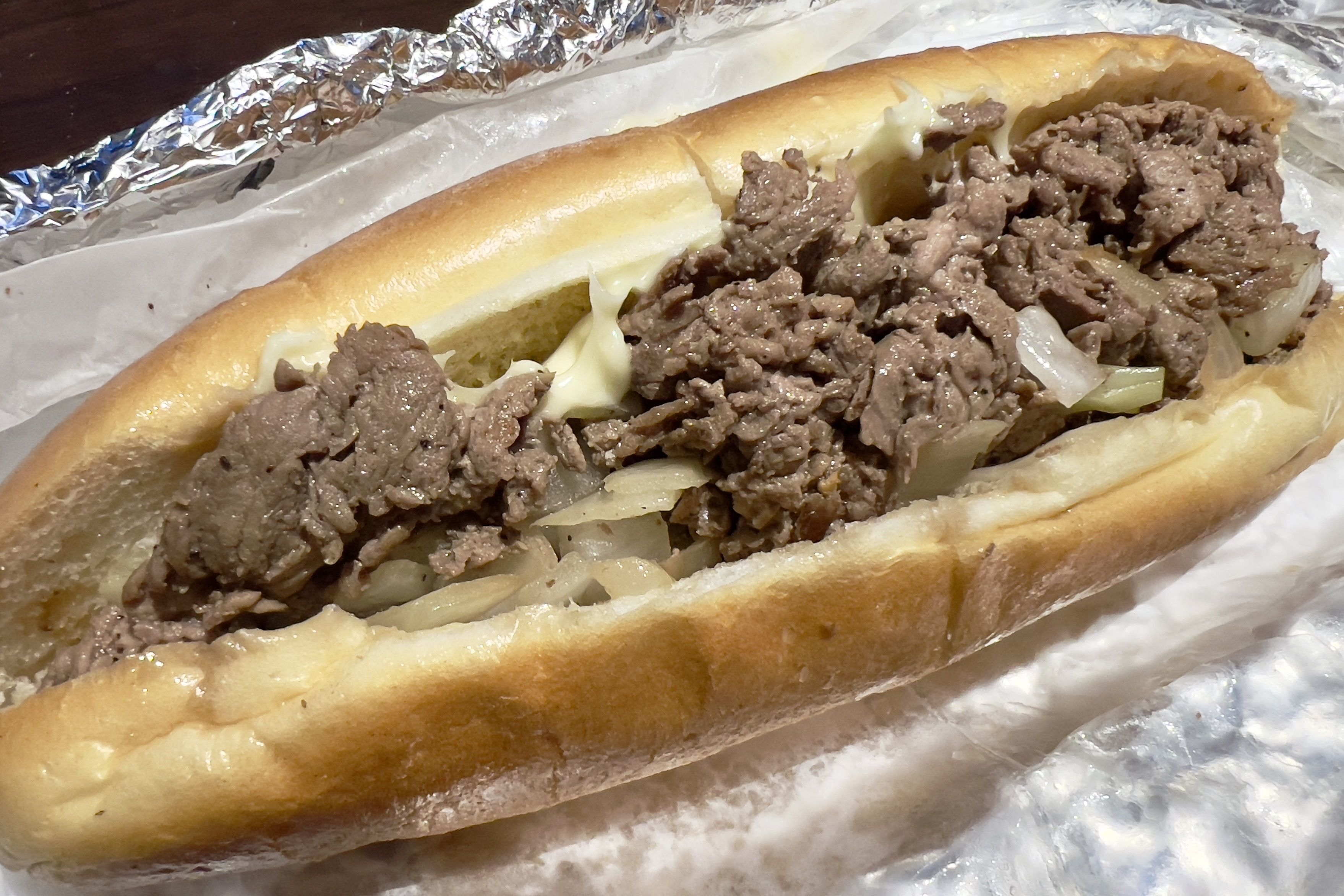
A sad-looking Philly cheesesteak from Wogies in FiDi, 44 Trinity Place, New York City.Michael Klein / Staff
Perhaps this is all just an eye for an eye. Still, this trend smacks of one thing: fear.
“We just sat around, and all of a sudden we see the word ‘Philly’ there, and we’re like, ‘ugh!’ Teeth are grinding, and we didn’t want anything Philly. That’s weak,” Lure Group CEO Aristotle “Telly” Hatzigeorgiou told the New York Post. At the restaurant group’s lounge Slate and bar Clinton Hall, “Knicks” has been added to the front of each establishment’s cheesesteak empanadas and sliders, respectively.
What’s weak is the mere mention of a city making your teeth grind. Might as well just stand on business and pull cheesesteaks from your menu entirely at this point.
After all, it’s not like Philly restaurants are wiping the words “New York” from our menu — mostly because we have no need. You don’t see people lining up at Pat’s or Geno’s and demanding a chopped cheese. There’s plenty of hoagies and real cheesesteaks to go around.
Still, if erasing the word “Philly” is what it takes for Jalen Brunson to actually play to his potential, go for it. Cope harder.
The Inquirer’s Jackie Spiegel sits down with NBC Sports Philadelphia Jim Jackson to break down the possible outcomes of the Flyers vs. Hurricanes playoff matchup. Watch here.
This interview was recorded prior to the disclosure that forward Noah Cates will miss the series with a lower-body injury.
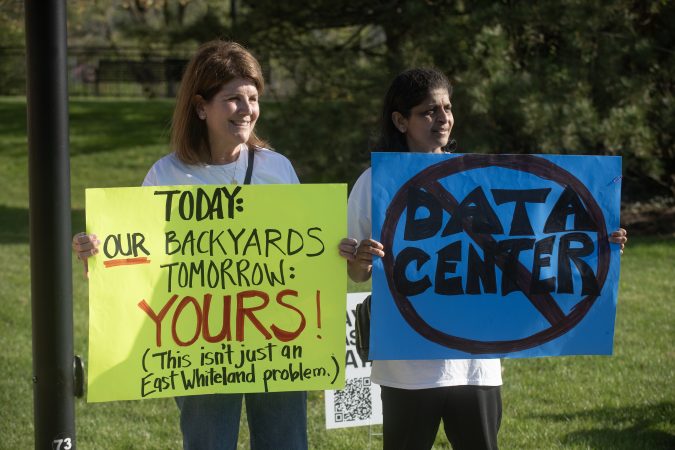
Following months of fiery opposition from residents that saw protests and halted municipal meetings, the developers of an East Whiteland data center called their own bluff, telling the township that they will scrap their revised plans and instead build a previously approved 1.5 million-square-foot version.
The decision takes a smaller plan, proposed last month, off the table — but it also eliminates a much bigger version that residents vehemently opposed.
Limited plans were submitted and were sent to consultants for review, officials said. The developers told the board that it was a concession they’d make only if the township’s three elected officials moved quickly on an approval.
In an email, Lou Colagreco, an attorney representing the developers, said that the decision to withdraw the project was partly due to the timeframe from the board, but “the larger factor was that it became obvious that no accommodation which our client offered would be acceptable.”
“We thought that our offer to pivot to a much smaller data center together with enhanced landscaping, sound attenuation, diminished water usage and other modifications would be well received,” he said. “It became apparent to us, however, that the real issue had little to do with these factors. It was simply data center vs. no data center.
Colagreco described the current proposal “a good plan” that developers “are anxious to build.”
Residents considered the downsized project — smaller than one of the amended plans that would have increased square footage by roughly 60% — a win. They’re still pursuing legal action, arguing that the initial approvals have now expired.
The project will sit on about 100 acres at 13 S. Bacton Hill Rd., on a Superfund site near a residential development and the popular Chester Valley Trail.
It has been a winding saga for the project, which saw its first approvals back in 2018 by the zoning hearing board before receiving a final greenlight from the supervisors in 2024.
The developer has maintained that the project would be built in some capacity but argued that the newer plans would have a lower impact on the community.
Under the original 2024 plans they said they’ll move forward with, the project — which is 1.5 million square feet across two buildings — would include antenna yards, microwave towers, and cooling towers that rely on evaporating 3 million gallons of water a day.
“We’ve been accused of bluffing. This is not bluffing,” Sentinel Data Centers CEO Josh Rabina told the supervisors and residents in Aprilwhen presenting plans to shrink the facility. “The approved plan is less desirable for us and for our customers, is less elegant and less efficient of a design, but it’s functional, it’s profitable, it’s vested, and it gives us certainty.”
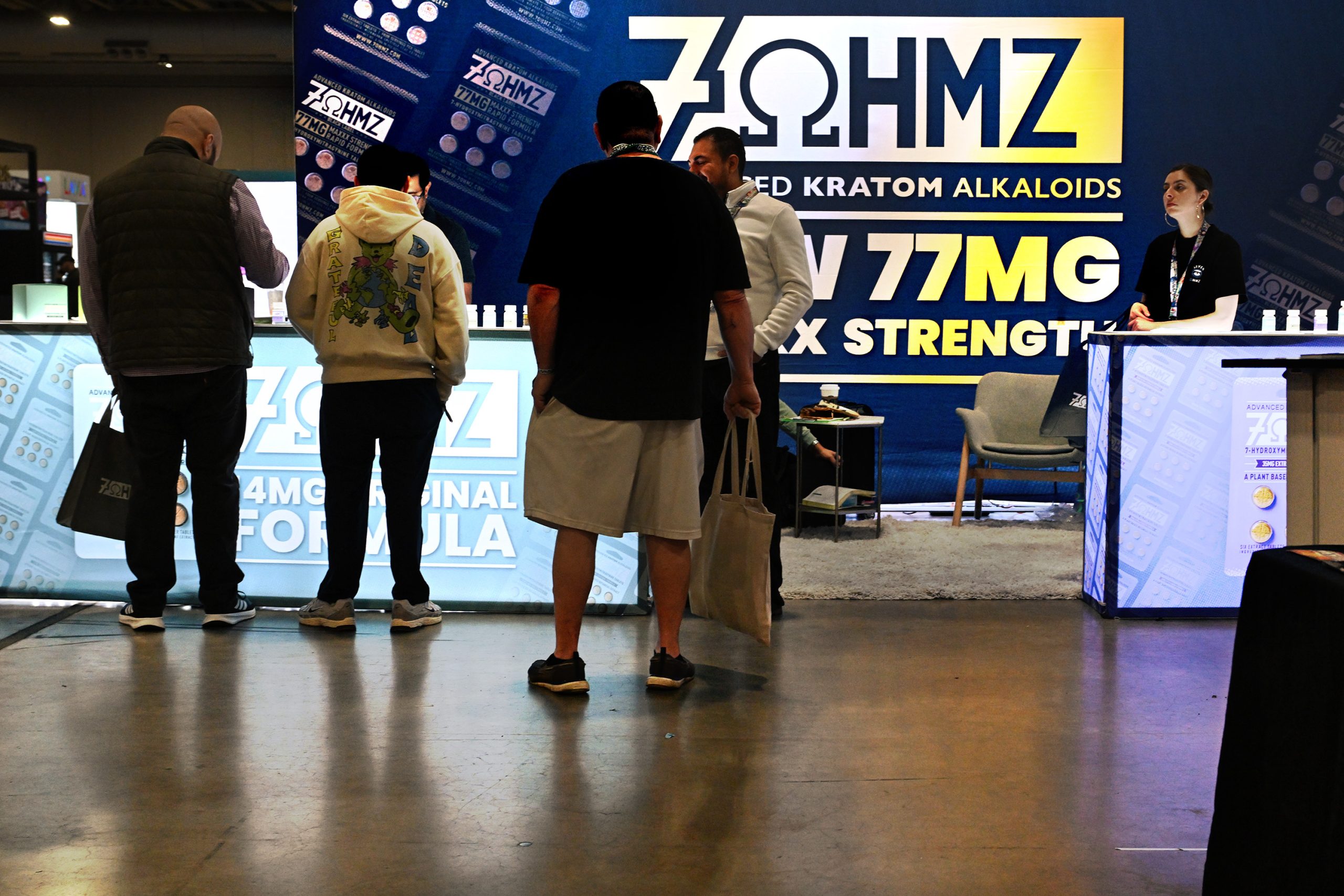
ATLANTIC CITY — When the nation’s largest smoke shop expo descended on the convention center here earlier this spring, sales reps scrambled to offload pallets of a controversial synthetic kratom product known as “7-OH” before lawmakers in Pennsylvania and New Jersey ban their products.
The addictive drug 7-Hydroxymitragynine, a highly concentrated lab-made compound derived from the kratom plant, flooded the bustling floor of the CHAMPS trade show.
Yet some vendors said they weren’t worried about bills working their way through Harrisburg and Trenton.
Their suppliers had already cooked up new recipes.
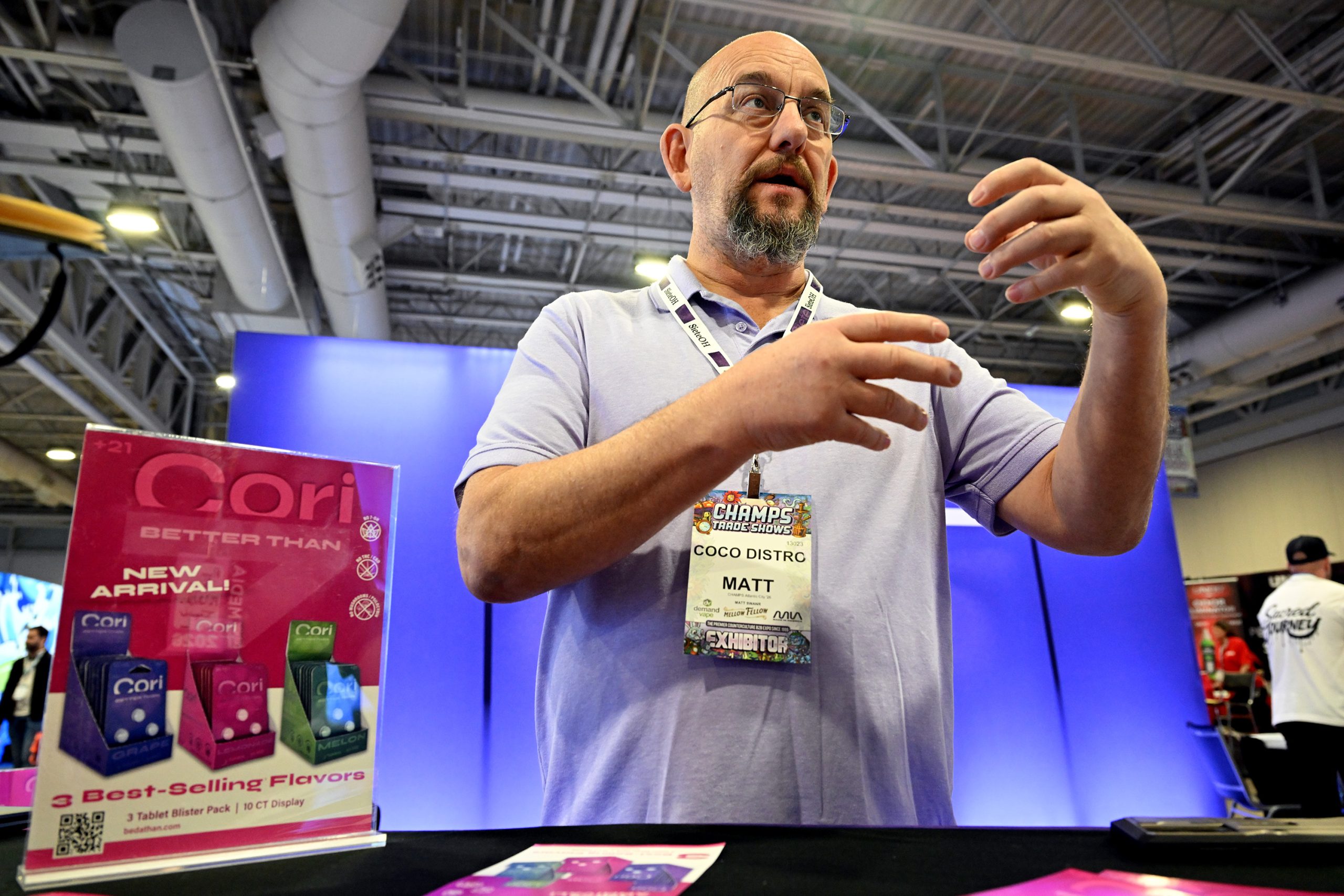
Matt Swann, a real estate investor turned 7-OH distributor from Salt Lake City, promoted a new product called “Cori,” a four-pack of tablets wrapped in a sleek green package. Swann’s offering draws from corydalis, yet another plant from East Asia that produces similar pain-killing alkaloids to kratom — but is not the target of any proposed bans.
“Legislation is what shuts me down,” Swann said, at his one-man expo booth in March. “This is how we stay ahead.”
Half a dozen 7-OH sales reps told The Inquirer that companies are changing their formulas to preemptively sidestep legislation prompted by concerns over the drug widely dubbed “gas station heroin” for its promised high and addictive potential.
Federal authorities began taking steps last summer to classify 7-OH as a controlled substance due to its widespread availability and reports of abuse. At least a dozen states have moved to outlaw the substance, and bills in Pennsylvania and New Jersey are being considered.
But in the booming gray market for synthetic drugs — from kratom to lab-made THC to psychedelics — the difference between legal and illegal can be as small as a molecule.
Perks’ booth at the CHAMPS B2B trade show at the Atlantic City Convention Center on March 19.Tom Gralish / Staff Photographer
To dodge the crackdown, some companies are swapping their active ingredient from 7-OH to a related compound called mitragynine pseudoindoxyl, or “pseudo.” Others are pivoting to 13-Hydroxy Mitragynine, or “13-OH.” Both function in similar ways, binding to opioid receptors in the brain.
And vendors promised the variants are just as powerful.
Some kratom advocates welcome restrictions on 7-OH and other chemically concentrated alkaloids. But they also worry that lower potency, natural kratom products will get caught up in sweeping bans.
Swann criticized the panic around 7-OH. He described both it and his new corydalis product as safer alternatives to opioids that can help people living with chronic pain.
Swann said he is clear with buyers about the risk of dependency. Kratom-derived pain relievers are far less fatal than opioids, whose pharmaceutical producers, he argued, are threatened by the drug’s popularity.
“It’s the safest alternative,” he said. “Kratom is 10-fold the product.”
Matt Swann at his Siete 7 / Coco Distro booth At the CHAMPS B2B trade show at the Atlantic City Convention Center.Tom Gralish / Staff Photographer
A game of molecules
Last summer, Florida passed an emergency ban specifically targeting 7-OH. Other states, like Vermont, have banned kratom altogether, as well as any related alkaloids, preemptively cutting out alternative compounds like 13-OH or pseudo.
New Jersey lawmakers are advancing legislation that would similarly classify 7-OH as a controlled substance, although it makes no mention of these related alkaloids.
Another bill under consideration in Harrisburg mimics Vermont’s strategy by outlawing all products that contain over 2% 7-Hydroxymitragynine, as well as any other “synthetic, semi-synthetic, or chemically manipulated alkaloid” derived from the kratom plant.
“They can call it whatever they want,” said Sen. Tracy Pennycuick (R., Montgomery County), the bill’s lead sponsor. “If it comes up 2%, it’s still banned.”
Still, as written, the ban might cover new variants like “pseudo” and 13-OH but not the latest extracts from the corydalis plant.
Meanwhile, pro-kratom lobbying groups have pushed lawmakers to create clear legal definitions between naturally sourced, low-potency kratom products and those ultra-concentrated, synthetic forms like 7-OH.
Dallas Vasquez, CEO of Mitra9, a Florida-based company that distributes kratom and kava-infused beverages across the country, said the two products are “not equivalent from a chemistry or pharmacological standpoint.”
He said Mitra9 does not use concentrated 7-OH to make the drinks more potent. His products contain less than 2% total kratom alkaloids, with low levels of 7-OH that occur naturally in extracts from the plant leaves, according to lab tests reported on Mitra9’s website.
“My business is built on the bet that the responsible segment of the market will survive,” Vasquez said. “If it doesn’t, I lose too. So I have every incentive to be honest about what the products are.”
Kratom booth at the CHAMPS B2B trade show at the Atlantic City Convention Center on March 19.Tom Gralish / Staff Photographer
Booming profits, clandestine makers
The CHAMPS trade show traditionally serves as a meetup for recreational drugmakers and retailers of cannabis. That the kiosks were dominated by 7-OH vendors is a sign of kratom’s growing popularity and profitability.
Large kratom companies pushing products with opioid-inspired names like “Opia” and “Perks” can bring in millions in revenue per month, according to Swann, the vendor from Salt Lake City.
Many companies are supplied by a small network of kratom manufacturers that synthesize products, often on condition that the makers’ names be kept secret, according to Swann and company owners who spoke with The Inquirer. So long as the compounds remain legal at the federal level, there are labs willing to make them en masse, which sellers like Swann can distribute in states without total bans.
For everyone involved, profits are high.
“[Manufacturer] profit margins are in the 5 to 10% range, but they’re doing millions and millions of dollars,” Swann said. “My profit margin is closer to 200% to 300%. If I invest a quarter-million dollars, I can usually come out with a million.”
Swann said he started his own business with $250,000 in capital and a phone call to a lab in Utah. His brand, Siete, launched within months. He estimated that his new “Cori” product had a life span of three years before it, too, would be banned.
Camille Winans, a sales representative for a company selling new 13-OH products, argued that kratom had been demonized by lawmakers and that keeping the products on shelves amounted to “harm reduction.”
However, medical experts say there has been an uptick in admissions to rehabs from people who got hooked on kratom, including in Pennsylvania.
Jason Kirby, chief medical officer of Recovery Centers of America, worries that states would ban 7-OH without the necessary medical resources for people who are dependent on it. He said hospitals struggle with an influx of kratom users in states that passed sweeping bans.
“One day it’s legal, and the next day it’s not,” he said. “So I’m going into the vape shop to refill my need, and it’s not there anymore, and I’m going to the emergency room in withdrawal.”
Bans would also not prevent manufacturers from finding new loopholes, he said.
“We’re gonna be dealing with a brand new synthetic substance that we’re gonna have to figure out all over again, and figure out pathways and management for,” he said. “We always have to stay ahead of them.”
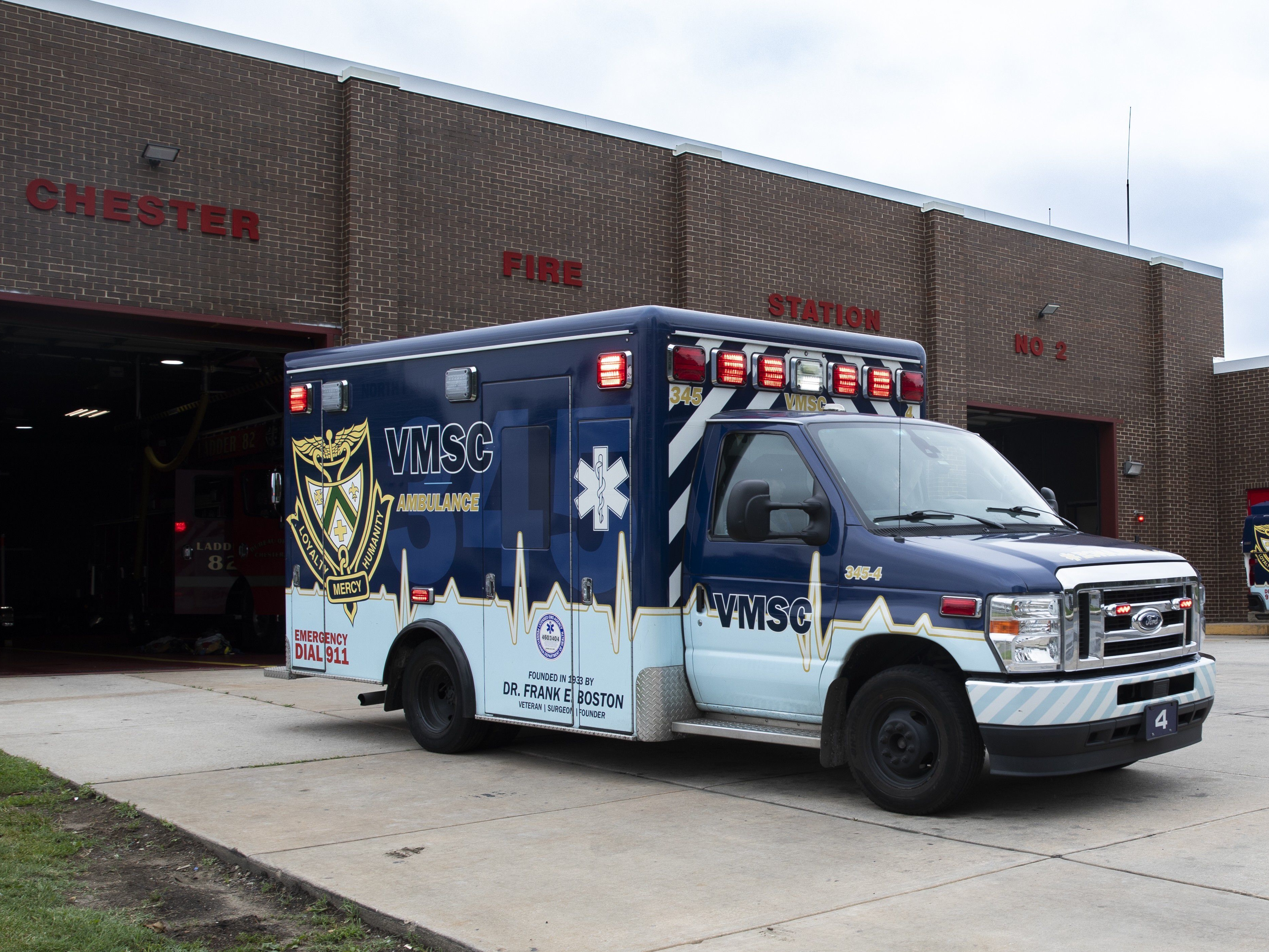
Chester City agreed to a five-year, $2.8 million contract with VMSC Emergency Medical Services, a nonprofit that started providing ambulance services in the community after the closure of bankrupt Crozer Heath a year ago, the city and VMSC announced Monday.
During VMSC’s first year in Chester, the Lansdale organization had a $470,000 shortfall, chief executive Shane Wheeler said. The $2.8 million is expected to support operation of the services — including the cost of serving uninsured patients — and pay for equipment needs.
The ambulance company has responded to 8,324 calls since May 2, but 35% did not require transport to a hospital, Wheeler said. In many cases, the ambulance crew fulfills the function of primary care for residents.
“We’re assessing blood pressure or helping someone with their medication, helping people get up” from a fall, Wheeler said.
VMSC’s accomplishments in the first year reducing ambulance response time to about 5½ minutes from more than 12 minutes, according to Wheeler.
The contract requires VMSC to assign at least three basic ambulances to serve Chester and its direct neighbors, with two staffed 24 hours a day. The organization also must provide at least one commander with training in more advanced treatment.
Just when you think the White House policy toward refugees can’t get any uglier, it sinks to new depths that should infuriate Americans of all political persuasions.
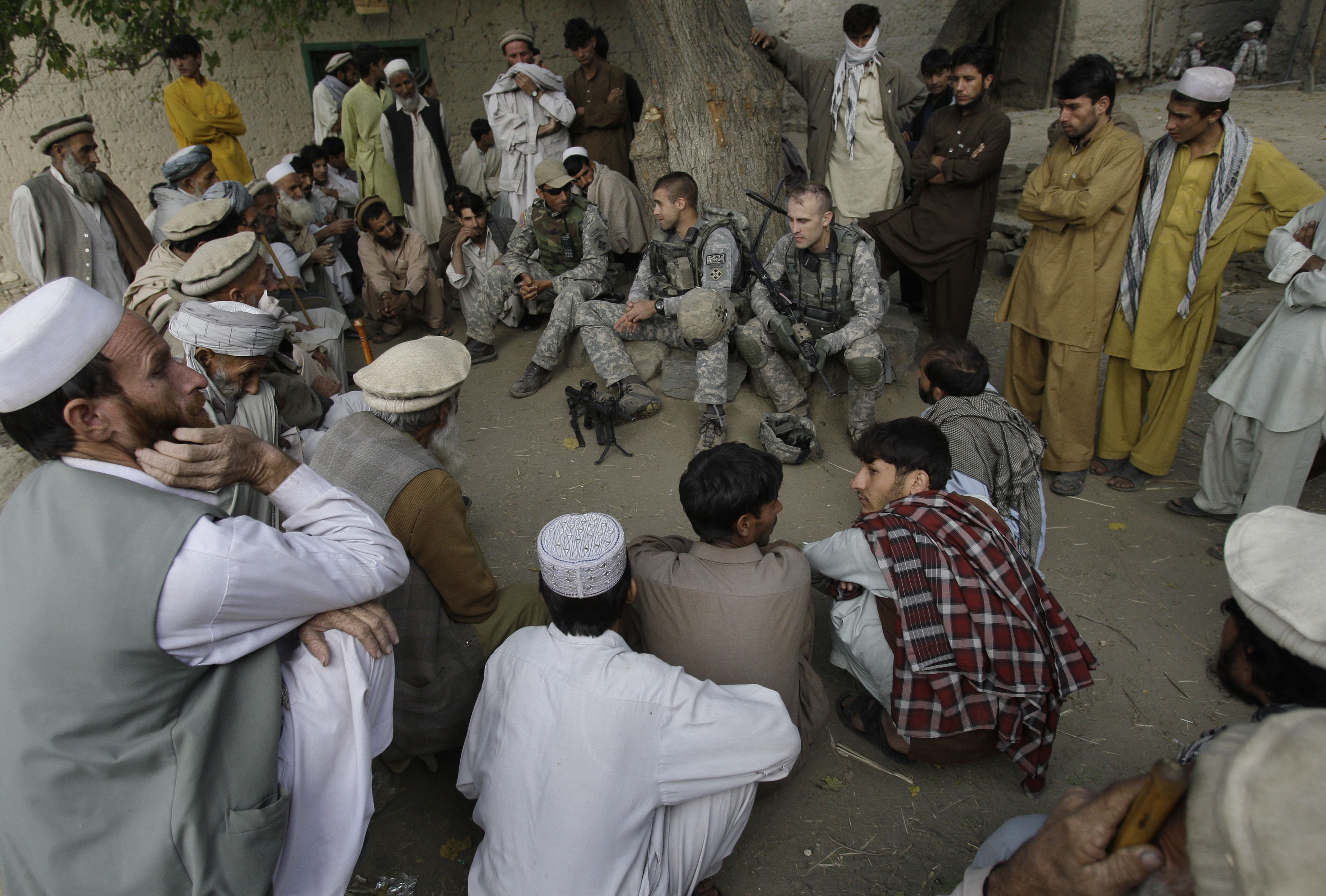
After the suspension in November of a resettlement program for Afghans who helped U.S. soldiers and civilians, the Trump administration is now trying to send up to 1,100 of such Afghan refugees to the Democratic Republic of Congo. These include former interpreters for the U.S. military, former members of the Afghan Special Operations forces who worked alongside their U.S. counterparts, and families of U.S. service members — including about 400 children.
These Afghans are trapped in limbo at a former U.S. military base in the Gulf emirate of Qatar (amidst the U.S.-Iran war), where they were taken in late 2024 for a short stay while they completed the resettlement process.
Now, the U.S. Department of State wants to rid itself of the problem, and these refugees may soon be given a brutal choice between death and disaster.
One option will be to return to Afghanistan, where many are on the Taliban death list for aiding Americans. The other choice would be the Democratic Republic of Congo (also known as the DRC), a country in central Africa enmeshed in bloody civil wars that have killed and displaced millions.
Why would U.S. officials choose the DRC? A State Department spokesperson told the New York Times the focus is on “voluntary resettlement.” Refugee organizations beg to differ.
“They have been trying to wash their hands of these Afghans,” I was told by Shawn Van Diver, president of the aid group AfghanEvac. “The DRC may be the only ones who will play ball with them. So the DRC is rising to the top.”
Other refugee aid groups are equally horrified, as we all should be.
“It is horrific and absurd to think of it as a viable option to send persecuted people to a country in the midst of active conflict and listed as Do Not Travel by the State Department,” said Jennifer Patota, deputy director of U.S. legal services at the International Refugee Assistance Program.
“This is a complete betrayal of our promise to Afghans who stood by us. Any future partners will be watching,” she said.
But concepts like honor and loyalty or even simple human decency don’t move the White House officials who devise U.S. refugee policy. They should, however, move every citizen and U.S. legislator who cares about the future safety of our military, and the immorality of U.S. leaders eager to sell out allies.
This latest disgrace sent my mind racing back to President Joe Biden’s shameful and botched withdrawal from Afghanistan (following on Trump’s equally shameful first-term pullout accord with the Taliban). After many trips to Afghanistan, I tried, as did so many U.S. journalists, former U.S. military, and U.S. officials who had served there, to get friends and comrades out.
One of those, whom I wrote about, was a judge who had worked with U.S. officials and had stellar recommendations for the special immigrant visa, known as an SIV, for those who helped Americans. After harrowing months hiding outside Kabul with the Taliban on his heels, and then waiting a year in Pakistan for an SIV, he finally had to return to with his ill wife to Afghanistan when their Pakistani visas expired. I can’t use the judge’s name because he is in hiding.
Although he had completed essential parts of the application process, the Trumpers froze the program at the end of 2025. The supposed reason was a murder in Washington, D.C., by an Afghan refugee (not an SIV holder). Absolutely no excuse for rejecting Afghans who risked their lives to help U.S. personnel.
I spoke about this latest Afghan tragedy to Najib Bakhshinda, a former journalist, who, with his human rights lawyer wife, now heads a nongovernmental organization (NGO) in Canada called GCARR-CANADA that works to help refugees facing danger. Along with their four sons, they made it from Kabul to Ottowa.
I asked Bakhshinda what would happen if the Afghans in Doha returned to Afghanistan.
“They will simply get killed,” he replied. “The Taliban have an official office in Doha, Qatar, and they know who is in Camp As Saylihah [where the Afghans are held]. They even visited the camp and tried to ask about the residents, but people don’t trust them.”
So let me repeat: The White House wants our Afghan allies trapped in Doha to choose between terrible danger and likely death.
What makes this story even darker is the Kafkaesque process that doomed many of these refugees after they reached Doha. “There had been pre-vetting before they reached the camp,” I was told by Andrew Sullivan, a military veteran who served in both Iraq and Afghanistan, and now heads No One Left Behind, an organization that helps Afghans resettle here.
But many of the 1,100 couldn’t qualify for SIVs because of arcane regulations, so they had to apply as refugees.
For example, Afghan Special Forces operators who fought side-by-side with and supported U.S. troops were disqualified if the Afghan government paid them rather than the U.S. military. Yet, the Taliban wants them dead just the same.
There are cases where a child of an SIV applicant aged out at 21 while the family waited years for their visa, and thus was no longer eligible. Or interpreters for U.S. units — prime targets of the Taliban — who didn’t work the required 365 days.
“Absolutely, exceptions should be made if they pass final security clearance,” insisted Sullivan, whose organization helped resettle 3,300 Afghan and Iraqi SIV holders. And, if the U.S. is still unwilling, said Sullivan, then officials should ensure they are going to a safe country where they can survive.
Once upon a time, a bipartisan movement of veterans in Congress promoted laws to enable Afghans who helped us to get visas. But as time passed, and foreign policy crises multiplied, the issue faded from view.
“There is still strong bipartisan support, but the issue has fallen out of sight,” Sullivan said. “Congress needs to act. It can change the law any time.” Or, I’d add, it can press to revive the SIV program the White House froze. Pressure can also be brought on the State Department to drop the two despicable options it is trying to impose on the Afghans in Doha.
This is a refugee issue that all Americans should be able to unite behind.
A man who shot his girlfriend twice in the back on a quiet Chester street on Wednesday night later turned his gun on responding police officers, prompting them to shoot him, authorities said.
The man and the woman — whom authorities did not identify — were in critical condition at an area hospital, Delaware County District Attorney Tanner Rouse said.
Authorities said the man shot the woman shortly before 9 p.m. near the intersection of East Ninth and Walnut Streets. Then, Rouse said, the man opened fire on passing vehicles.
No drivers were struck.
When officers arrived at the scene, the man turned his weapon toward them, authorities said, and at least one officer shot him.
Helicopter footage of the scene shows more than two dozen bullet casings littering the streets and what appears to be a parked power-washing truck riddled with bullet holes.
A Chester Police Department spokesperson did not return a request for additional information on Thursday.
Rouse said his office was reviewing camera footage of the incident and would “make sure we have every angle that depicts the events that transpired.” When its investigation is complete, he said, charges will be filed against the man.
Meanwhile, he praised law enforcement for its response to the shooting.
“I can tell you with confidence that the actions of the Chester Police Department were nothing short of lifesaving and the defendant in this case had every intention to kill anyone he could,” Rouse said.
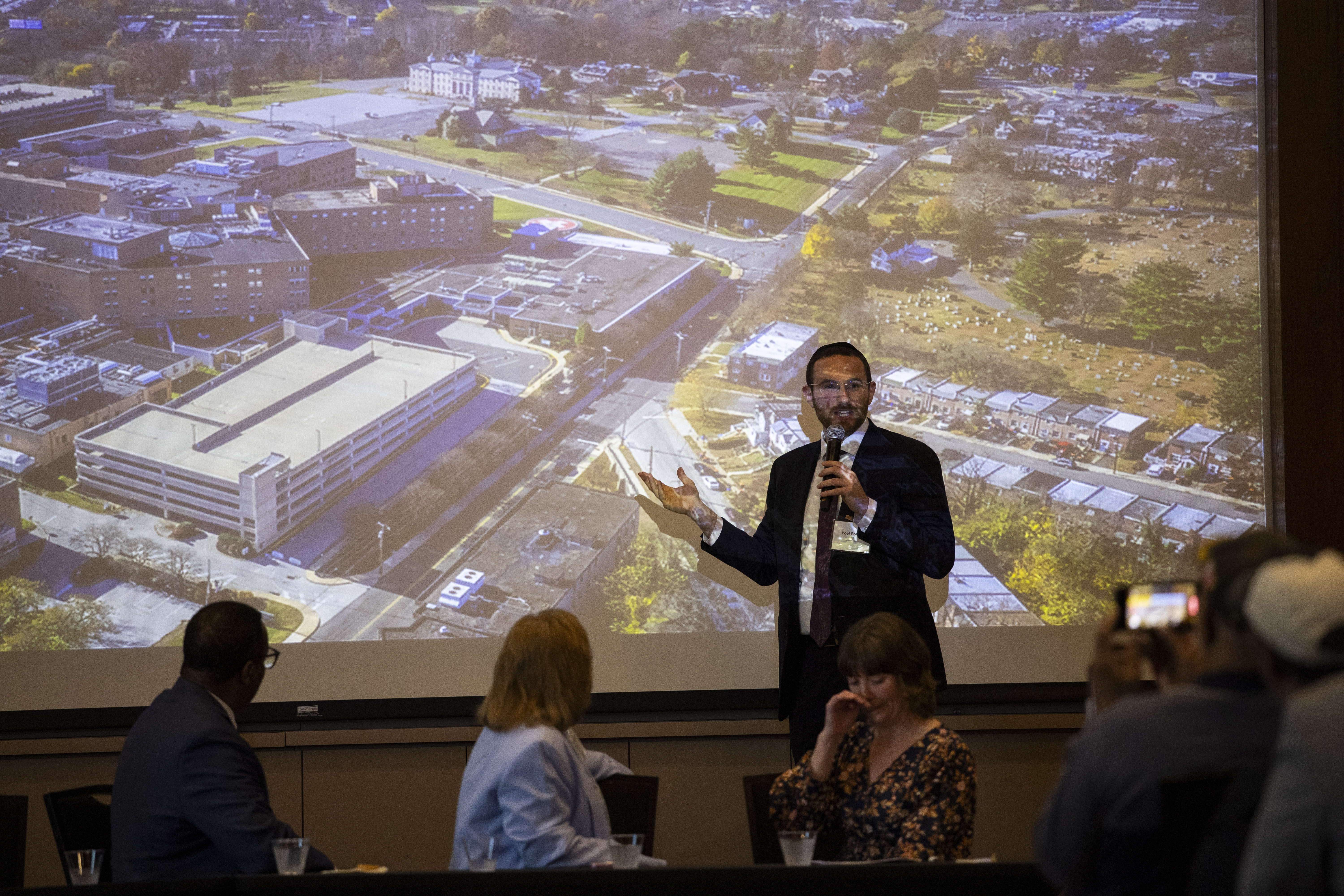
The new owner of the shuttered Crozer-Chester Medical Center in Delaware County shared what he called an “aspirational” plan to restore healthcare services to the Upland facility at a town hall meeting Tuesday in Chester.
The vision includesreopening of the emergency department, creating a small hospital above the ED, and developing outpatient services — all operated by one or more local nonprofit health systems, Yoel Polack told a standing-room-only crowd of more than 200 at Widener University.
Polack isCEO of Chariot Allaire, the for-profitpartnership that paid $10 million for Crozer in January. His group has been talking to all the regional health systems for months and expects soon to begin “a study process with two and hopefully three of the major academic medical centers in the region,” he said.
That is expected to last up to 90 days, he said, “and hopefully at the end of that period, we’re going to be having some outline of partnership with the system.” Polack described his anticipated partner as an institution “you know and trust.”
The entire process could take two or three years after a partnership is formed, he said Polack, whose company is registered in Lakewood, N.J.
He provided no details on how much Chariot Allaire would be willing to invest to attract a health system to the site, where state-led efforts previously failed to savea major safety-net provider for Delaware County that closed last May amid the bankruptcy of its California-based owner, Prospect Medical Holdings Inc.
Chariot Allaire paid relatively little for the 64-acre campus, which gives the company a low cost basis for owning the site. But that doesn’t mean it will be easy to attract a partner at a time of thin to nonexistent profit margins for the region’s health systems.
“It does not seem like there’s an easy and obvious candidate,” said Dan Grauman, managing director at VMG Health, a national healthcare consulting firm.
“There’s no question there’s need for care and for services, said Grauman, who has decades of familiarity with the Philadelphia region’s healthcare market.
A welcome public meeting
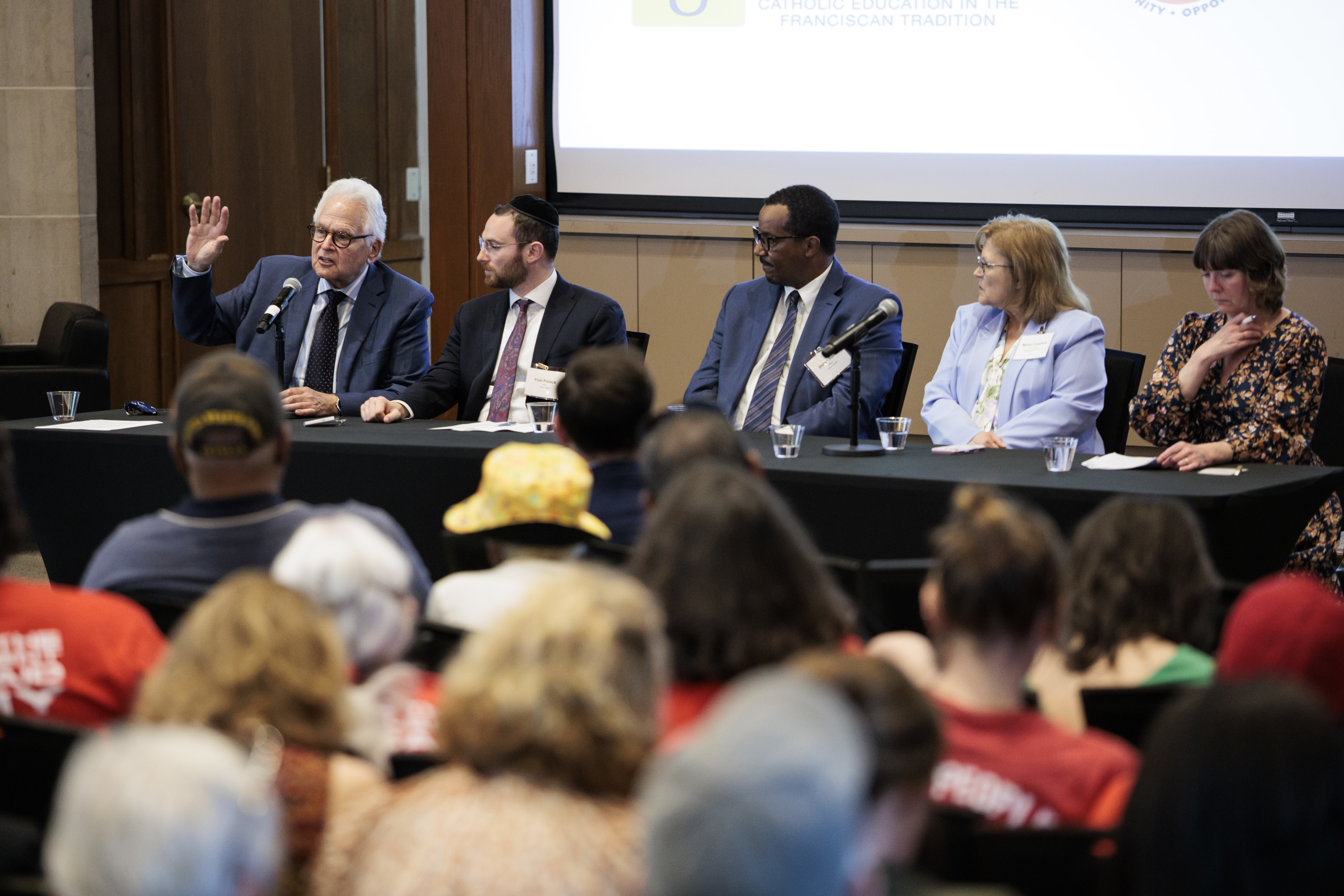
During an hourlong question and answer session, residents expressed gratitude for the meeting with Polack and his senior medical adviser, Arthur Klein, a pediatric cardiologist who spent decades as an executive at nonprofit health systems in New York.
A town hall meeting Tuesday in Chester about plans for the former Crozer-Chester Medical Center drew a large crowd.Monica Herndon / Staff Photographer
“Many times things happen in our community, and we are the last to know, so you started off very, very well,” said Zulene Mayfield, chairperson of Chester Residents Concerned for Quality Living, a community group known for the fight to close alarge trash incinerator in the city.
Some residents pushed back againstPolack and Klein’s plans for a much smaller hospital than the more than 400 beds Crozer-Chester Medical Center had at its peak. During a March interview with The Inquirer, Klein suggested the new hospital could have 80 beds.
“You don’t want a hospital of the 1990s,” Klein said Tuesday.
The current hospital structure encompasses 750,000 square feet — now completely empty. Crozer’s shuttered ED took up 30,000 of the square feet. Chariot Allaire contemplates opening a hospital a tenth of the size of the old hospital.
Operating that hospitalcost way too much, Polack said. ”It also doesn’t meet the way medical care is done today, which is mainly on the outpatient side,” said Polack,who has worked in healthcare real estate development in New York.
Simone Development Cos., where Polack worked before striking out on his own, often collaborated on real estate deals with Montefiore, a health system in the Bronx that serves many patients with Medicaid insurance, Grauman said.
That experience is relevant to the effort here, he said, given that Crozer also served large numbers of people with Medicaid, which pays significantly lower rates than private insurers.
The role of local health systems
Before Prospect’s bankruptcy filing in January 2025, a few local health systems explored establishing a new nonprofit to take over Crozer-Chester Medical Center. Those talks continued during the bankruptcy, but failed to produce a solution.
The University of Pennsylvania Health System saidit remains at the table.
“We continue to work with committed partners to restore crucial healthcare services for Delaware County residents,” Penn said in a statement. “It’s important that any new models for the former Crozer-Chester site are built to be sustainable amid a rapidly changing healthcare landscape and persistent financial challenges.”
ChristianaCare, which plans to open a micro-hospital in Aston in June, is not in discussions with Chariot Allaire, it said, but supports “their efforts to expand access to quality heath care in Delaware County.”
Arthur Klein, senior medical adviser (left), and Yoel Polack, CEO of Chariot Allaire, greet attendees during a town hall in Chester on Tuesday.Monica Herndon / Staff Photographer
While Chariot Allaire is wooing health systems, the new owners of two other closed Crozer Health hospitals,Taylor and Springfield, are doing the same thing. Local investors paid $1 million each for those hospitals. Those low prices could allow the owners to offer below market rate leases to attract tenants.
Polack noted that if no local systems want to bring services to the Crozer site, he would look farther afield.
“We don’t control hospital systems and operators, but we are doing everything that we can to put the pieces together to illustrate the opportunity that we see here to those hospital systems,” he said.
The Delco 10 Miler race is back for what organizers hope will be a bigger and better second lap. Changes for 2026 include a revised course, more than twice the number of runners, and a faster pace requirement.
The race will take place on Oct. 4. Registration is open. This year’s race will be capped at 2,500 runners, up from 1,200 last year. About 700 runners registered in the first 24 hours, race director Kevin Nolan said.
Some residents and drivers passing through the area were unhappy with road closures, which cut a long swath across the county. The course‘s adjustments should mean fewer closures along main roads.
“Logistically with all this traffic, it’s a tough race to manage,” Nolan said. “It’s tougher than the Philadelphia ones … because I’ve talked to all the race directors and they don’t have the issues that we have to deal with, with all this traffic.”
Course changes
The race will again start at Rose Tree Park in Upper Providence and end at Subaru Park in Chester. Last year, the race shut down parts of Route 252 and Route 320, as well as portions of Third, Fourth, and Fifth Streets in Chester, including a loop that took runners past Subaru Park before returning.
(function() {
var l2 = function() {
new pym.Parent(‘delco_10_miler_2026’,
‘https://media.inquirer.com/storage/inquirer/projects/innovation/arcgis_iframe/delco_10_miler_2026.html’);
};
if (typeof(pym) === ‘undefined’) {
var h = document.getElementsByTagName(‘head’)[0],
s = document.createElement(‘script’);
s.type = ‘text/javascript’;
s.src = ‘https://pym.nprapps.org/pym.v1.min.js’;
s.onload = l2;
h.appendChild(s);
} else {
l2();
}
})();
This year, runners will turn west on Rose Valley Road in Nether Providence and travel through residential streets before crossing Route 320 and heading into Chester and Widener University’s campus. The course crosses I-95 on the Melrose Avenue bridge again before heading south toward Subaru Park. The loop at the end has been eliminated.
The new course:
Starts at Rose Tree Park South on Providence Road/Route 252
Right on West Rose Valley Road
Left on Bickmore Drive
Left on Sheffield Drive
Left on Georgetown Road (becomes Media Parkway)
Left on Chestnut Parkway (becomes Chestnut Street)
Right on East 18th Street
Left on Walnut Street
Left on East 14th Street
Right on Melrose Avenue
Right on Morton Avenue
Right on East Fifth Street
Left on Penn Street
Right on West Third Street
Right on Tillman Street
Left on West Fourth Street
Left on Rainey Street
Ends at Union Yards at Subaru Park
Getting the word out
Some residents complained to race organizers that they weren’t told ahead of time that their streets were being closed.
“As much as you try to get the word out, there are people that don’t know,” Nolan said. “So you have to do more.”
This year, volunteers will walk some sections of the route ahead of time to let residents know about the race and road closures, Nolan said.
St. John Chrysostom Catholic Church in Nether Providence told the Delco Times last year that the parish was not consulted about the race, which took place on a Sunday and impacted their Mass schedule. This year’s route avoids St. John’s, as well as St. Katharine Drexel Catholic Church in Chester and some fire departments.
Faster pace
In another change this year, the race will have a faster pace requirement. Runners will have to maintain a minimum pace of 13 minutes, 30 seconds per mile. Last year’s minimum pace was 15 minutes per mile.
“Police are after us to open the course up. They were pretty aggravated last year with all the walkers,” Nolan said. “You hate to kick someone off the course.”
A few more quality-of-life improvements include more bathrooms at the start and at water stops. There will also be four staggered starts based on runner speeds.
This suburban content is produced with support from the Leslie Miller and Richard Worley Foundation and The Lenfest Institute for Journalism. Editorial content is created independently of the project donors. Gifts to support The Inquirer’s high-impact journalism can be made at inquirer.com/donate. A list of Lenfest Institute donors can be found at lenfestinstitute.org/supporters.
“It had a good vibe,” said Scott Carpel, describing what attracted him to the Havertown neighborhood where he lived for 22 years.
“There was no pretentiousness. It was family and community oriented, there isn’t a day goes by that there isn’t a bouncing basketball on the street or a Wiffle ball in the air,” he said.
The four-bedroom, 1½-bathroom Craftsman-style home was a good size for him and his then wife to raise their two daughters, who are now in college.
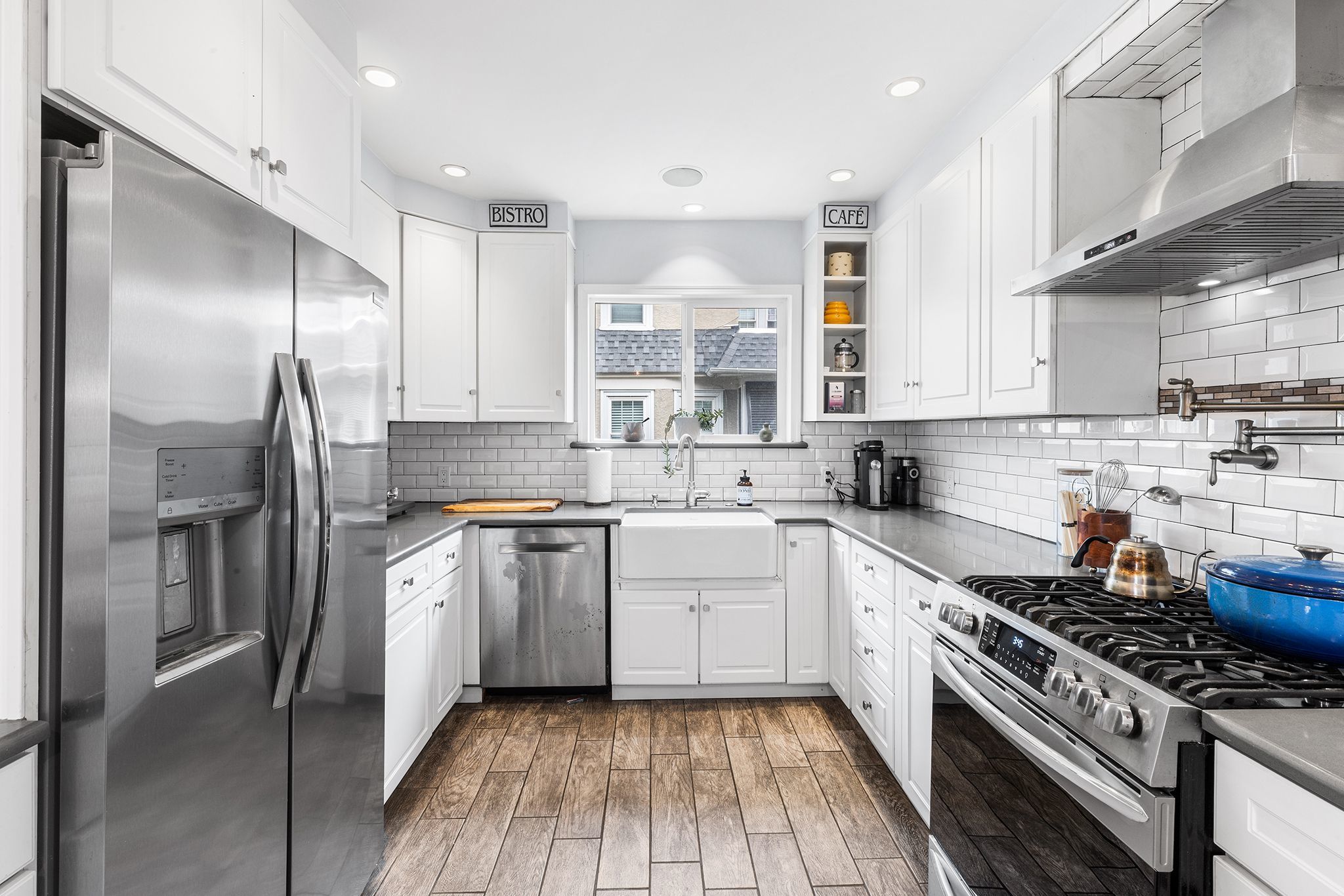
The kitchen has a breakfast bar.Shawn May Photography
But now Carpel, who is in sales for a major food distribution company, is headed to the Garnet Valley area of Delaware County to live with his fiancée.
The house, built in 1923, is 2,337 square feet and is in the Brookline neighborhood.
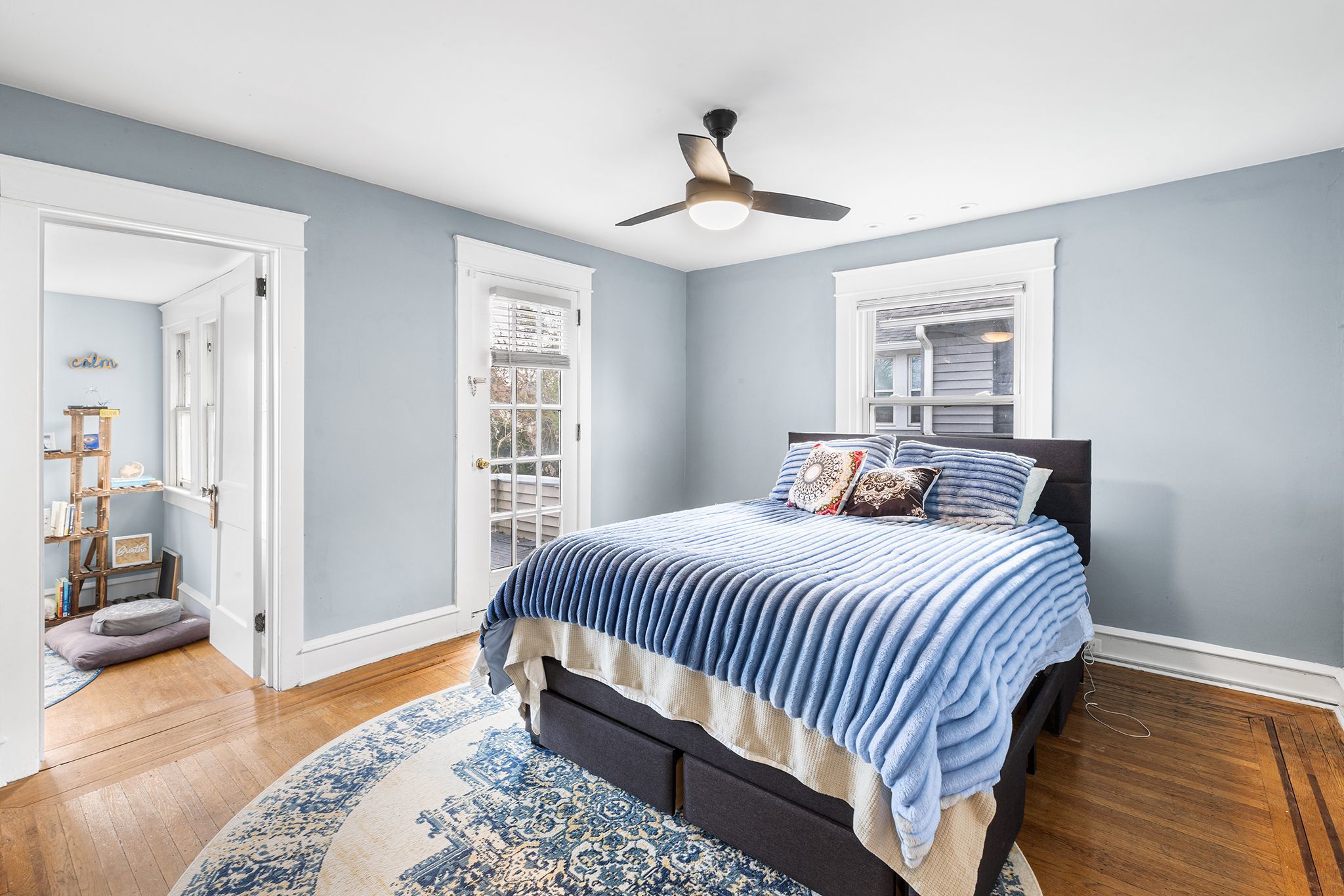
One of the home’s four bedrooms.Shawn May Photography
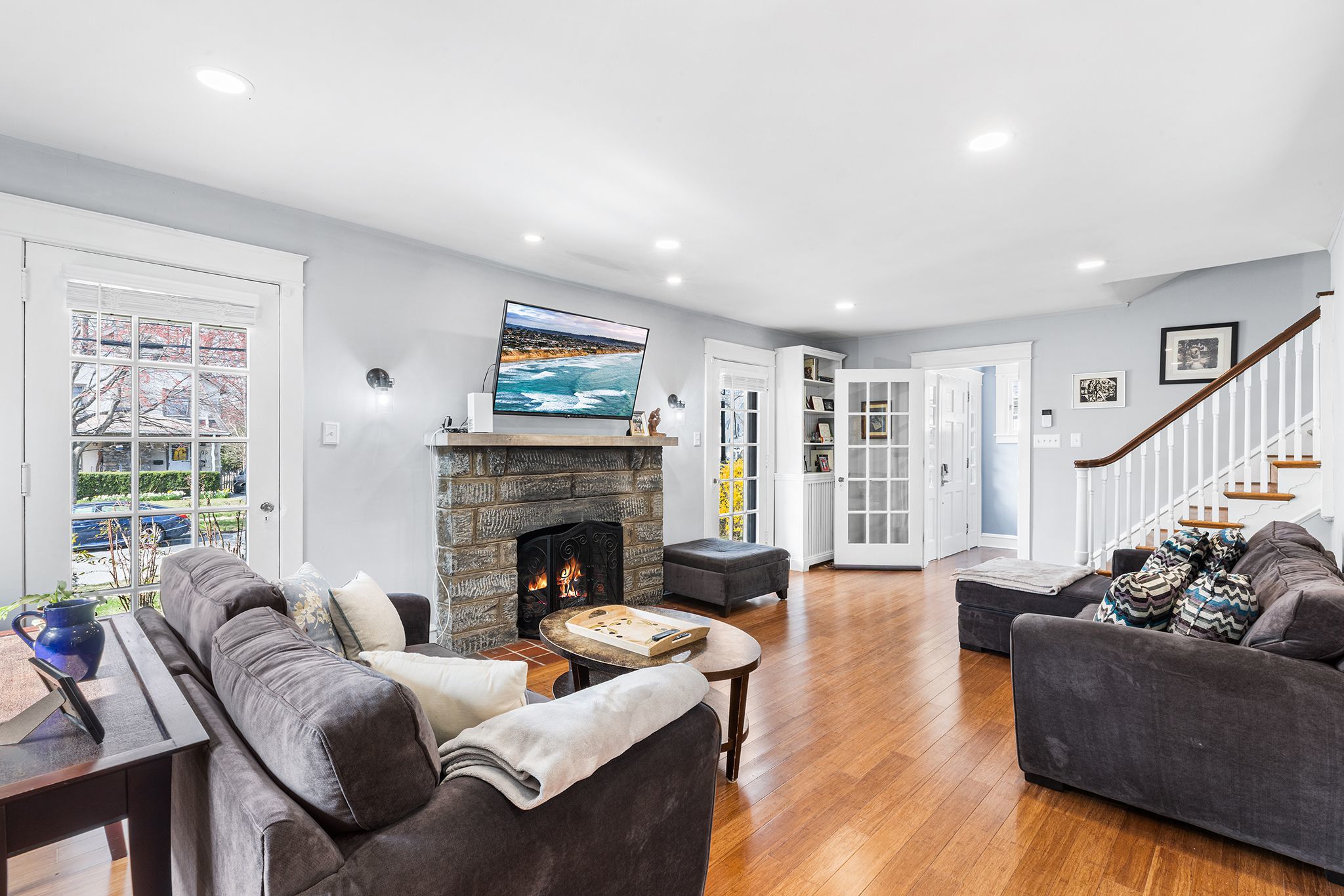
The first floor has a large dining area, a living room with working gas fireplace, laundry, kitchen with a breakfast bar, and an extra room that could be used for a home office.
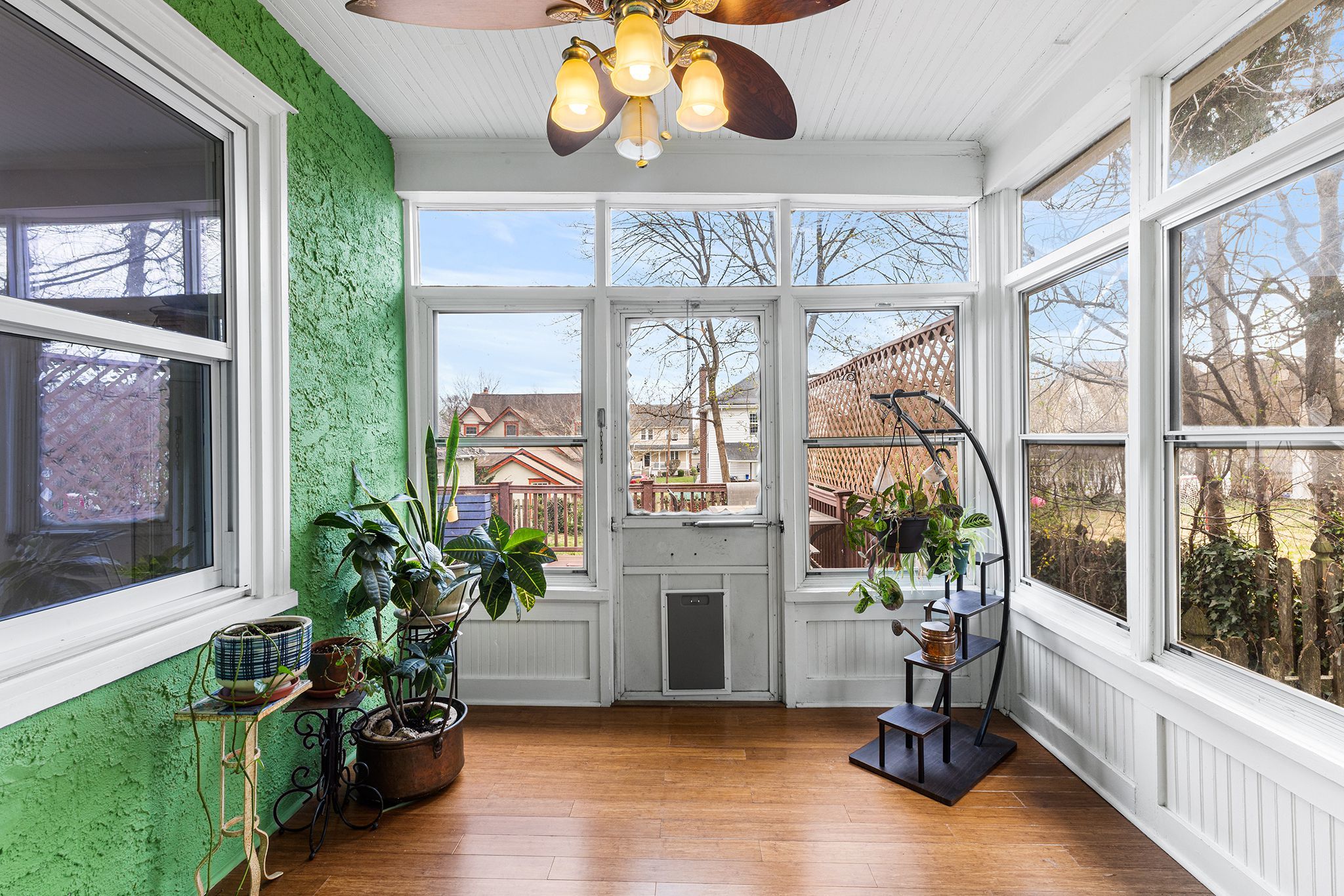
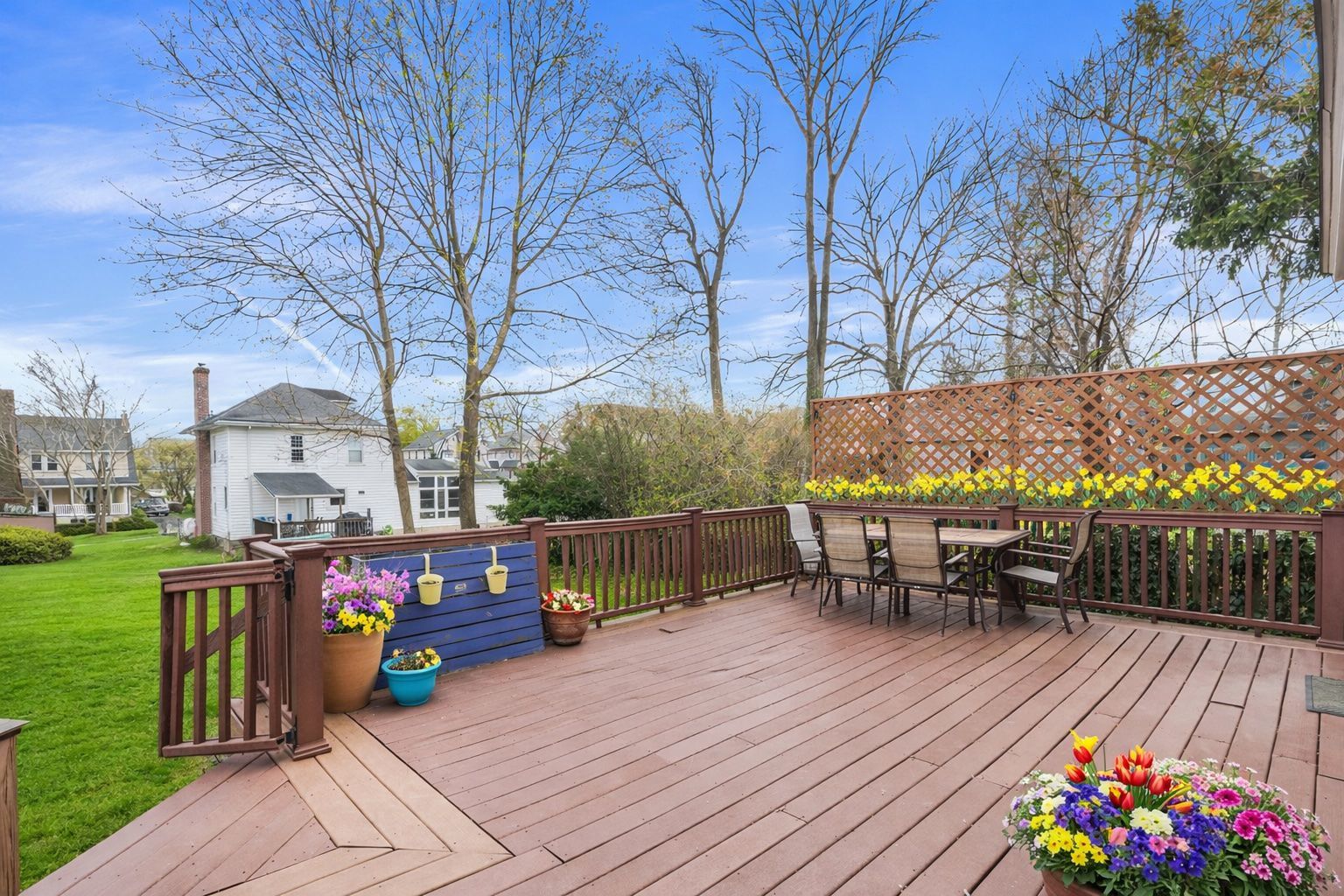
There is a powder room, a sunroom off the dining room, a rear deck, and a fenced-in yard.
The sunroom is off the dining room.Shawn May Photography
The second floor has three bedrooms, a full bath, and a den.
The attic has a fully carpeted bedroom with built-in shelving and a bonus room.
And the unfinished basement has ample storage space and could be converted into a workshop.
The deck.Shawn May Photography
The house has a detached one-car garage.
There is a Norristown High Speed Line stop at the bottom of the street. Haverford High School and Haverford Middle School are within walking distance, as are the Brookline Boulevard commercial area, and the Karakung Drive recreation area.
The house is listed by Larry Levin of Realty Mark Associates for $675,000.