Blog

  • ⚙️ Kicking into gear | Sports Daily Newsletter

    ⚙️ Kicking into gear | Sports Daily Newsletter

    The World Cup is set to begin later this week, and Philadelphia will host its first match on Sunday. The United States last hosted the men’s FIFA World Cup in 1994, and this year marks the first time that Philadelphia is a host city.

    But why didn’t Philly welcome the World Cup the last time it was here? Well, it was actually up for consideration, thanks to Diane McGraw.

    Before she married Phillies reliever Tug McGraw, Diane led the charge to make Philly and Veterans Stadium a host city for the 1994 World Cup.

    Diane, who went from having no interest in sports to living a life full of them, organized celebrity tennis tournaments and national and international sporting events throughout her career. She eventually found herself atop sports and entertainment commissions in four U.S. cities — Philadelphia, Los Angeles, Louisville, Ky,, and Orlando.

    But her most fulfilling project was one that never came to be. Now, she feels grateful to have played a small part in the largest sporting event in the world coming to Philly.

    — Isabella DiAmore, @phillysport, sports.daily@inquirer.com.

    If someone forwarded you this email, sign up for free here.

    ❓What game or team are you looking forward to watching in the World Cup? Email us back for a chance to be featured in the newsletter.

    ‘Trying a little too hard’

    Andrew Painter has a 6.21 ERA, 108th among 111 pitchers who have worked at least 55 innings this season.Yong Kim / Staff Photographer

    Sometimes you have to go back to the basics, and for Andrew Painter, that’s as basic as throwing a strike. Eleven starts into his major-league career, Painter has a 6.21 ERA, 108th among 111 pitchers who have worked at least 55 innings this season. It’s not what the Phillies expected from the 23-year-old.

    Meanwhile, interim manager Don Mattingly confirmed that Dodgers manager Dave Roberts asked him to join the National League coaching staff.

    And the Phillies recorded 11 hits in Sunday’s 9-5 series finale win over the White Sox.

    What we’re…

    👕 Wearing: After two years of planning, the U.S. Soccer Federation released its 11X11 World Cup clothing collection in a collaboration with designers from each hosting city.

    🏀 Learning: The Sixers promoted Jameer Nelson, formerly the organization’s assistant general manager, to vice president of basketball operations.

    📖 Reading: James Develin grew up in Gilbertsville, Pa., rooting for the Eagles before defying long odds to play in the NFL with New England. Now he’s selling smoothies down the Shore.

    🤔 Wondering: What advice Kyle Schwarber had to offer to Brandon Marsh and how it’s helped him break through against left-handed pitching.

    Wrapping up NHL combine

    Alexander Command could be available when the Flyers select at No. 21 overall later this month.Jackie Spiegel

    Alexander Command, a Swedish center, could be available when the Flyers select at No. 21 overall in the NHL draft on June 26-27. He finished tied for 11th in the peak power output test that concluded the combine for each player. Also, consensus top pick Gavin McKenna was among those who dominated the testing during the final day of the NHL combine.

    Coming full circle

    Haiti midfielder Duke Lacroix grew up in New Egypt, N.J., and played college soccer at Penn.AFP via Getty Images

    Fifteen years ago, Markhus “Duke” Lacroix arrived at Penn from New Egypt, N.J. He has spent a decade grinding through a series of lower-division American clubs. Earlier this month, he earned a place on Haiti’s tournament squad.

    Now he gets a World Cup trip not just to Philadelphia, but to his old college field.

    And even after a 2-1 loss to Germany in its last Friendly, the United States men’s national team has some momentum going into the World Cup.

    Sports snapshot

    St. John’s pitcher Liam O’Leary hugs his coach. St. John’s is in the NCAA super regionals against host Alabama.St. John's Athletics

    Marcus Hayes’ take

    A.J. Brown (right) hurt the Eagles financially and limited his one-time close friend Jalen Hurts’ on-field options.David Maialetti / Staff Photographer

    Philadelphians generally seem relieved that A.J. Brown’s diva act no longer will be a distraction for a perennial title contender.

    That’s just Brown fatigue. What he has done is no better than what Carson Wentz did five years ago: hamstrung his franchise, dissed the fan base, and hung his teammates out to dry, writes columnist Marcus Hayes.

    We compiled today’s newsletter using reporting from Alex Coffey, Marcus Hayes, Lochlahn March, Scott Lauber, Jonathan Tannenwald, Jackie Spiegel, Ariel Simpson, Gina Mizell, Brett Friedlander, and Becca O’Reilly.

    By submitting your written, visual, and/or audio contributions, you agree to The Inquirer’s Terms of Use, including the grant of rights in Section 10.

    Happy Monday, and thanks for reading. I’ll be back in your inbox with Tuesday’s newsletter. — Bella

  • Duke Lacroix’s soccer career has taken him from Penn to Haiti’s World Cup team

    Duke Lacroix’s soccer career has taken him from Penn to Haiti’s World Cup team

    Here is another of the kind of story that the World Cup is so good at creating.

    Fifteen years ago, Markhus “Duke” Lacroix arrived at Penn from New Egypt, N.J., a small town in Ocean County near Fort Dix. He had 25 goals and 15 assists in 68 games for the Quakers, earning All-Ivy League honors in all four of his varsity seasons.

    He earned a pro career from that, but not in MLS. Instead, he has spent a decade grinding through a series of lower-division American clubs: first in the former North American Soccer League, then in the USL Championship since 2017. His sixth team, the Colorado Springs Switchbacks, has been his home since 2023.

    It’s rare for that resumé to open a door to a national team career. But Haiti, the country of Lacroix’s ancestors, scouted him and offered him an opportunity in 2019. Though it didn’t work then because of passport issues amid the pandemic, he remained interested.

    In 2023, the time was right, and everything came together. Lacroix now has 16 caps for Les Grenadiers as a left back, including five last year in a run to their first men’s World Cup qualification since 1974. He has three goals for the team, including one last Tuesday in a World Cup warmup game vs. New Zealand.

    Earlier this month, he earned a place on Haiti’s tournament squad, meaning a return to Philadelphia is in the works. But it won’t just be to potentially play against mighty Brazil in South Philadelphia.

    Haiti is also expected to use Penn’s Rhodes Field soccer facility as a game-day eve training site, which means Lacroix will get to return to his old college stomping grounds.

    What a way to come full circle.

    “To be there representing Haiti, part of my identity, part of who my parents are, and my family, friends, loved ones, being Haitian, and to be able to represent that national team is truly special,” he told The Inquirer. “And to be a part of the group that’s got us there, and then have the opportunity to play in the World Cup, is amazing.”

    On a personal level, he said, “It’s a dream. Every professional player who plays this game wants to play in front of the largest crowds, in front of the biggest stadiums, at the highest level, and the World Cup is the epitome of that for this sport.”

    Lacroix also happily embraces the unlikeliness of his path.

    “I think if you were to tell me at the outset upon graduating that this would be kind of the trajectory or a possible destination, I would have chuckled a little bit and been really happy,” he said. “But to make it happen, a lot of things have to go right. Very, very fortunate to be in this position where I’m at now. A lot of people who supported, helped, and guided along the way to make it happen — none of it was explicitly my own.”

    His sociology degree has come in handy plenty over the years, but it’s especially useful now. The U.S. government’s ban on Haitian citizens entering the country means they can’t come for the World Cup. Even though Haiti has a big diaspora in the U.S. and Canada that will attend (pending the exorbitant ticket prices, of course), the situation matters to Lacroix.

    “A cliché about this in soccer, or sport, is there’s certain things that are bigger than sport, and what we do can be a connector at times, even though it’s such a simple game,” he said. “I think this is a moment where what is being done on the pitch, the sentiment and the support and the sensation from the Haitian fans around what this team has done, has kind of been a unifying and rallying thing for the Haitian country given what is going on, where the World Cup is being hosted, and the restrictions being placed on our supporters and on our people to come and watch the matches.”

    People who watched Lacroix in his youth and college days have enjoyed watching his career since then.

    “I don’t think any of his success and impact, on or off the field, is surprising to those that coached or played around Duke at at any point in his career,” said his Penn coach, Rudy Fuller. “As an undergrad, he was very driven and focused and serious and mature, and it was reflected in our team and the success we had. … There’s no question that we would never have won the Ivy League title and played in the NCAA Tournament [in 2013] and achieved the success we achieved without Duke — his leadership, his impact on the field, and just his overall approach as a human being.”

    Fuller was happy to “take very little credit” for Lacroix’s success, “because he has really worked hard to develop himself as an athlete, as a leader, as a man, and he’s been paid dividends for that.

    Kevin Nuss of the semipro Ocean City Nor’easters coached Lacroix with the USL League Two club for a few summers during his college years. He recalled a player who “was extremely successful on the field, but I also think set the tone in terms of the type of person that we wanted at the club.”

    Duke Lacroix had 25 goals and 15 assists in 68 games for Penn.Drew Hallowell

    Nuss added that Lacroix plans to visit the current Nor’easters during Haiti’s pre-World Cup training camp at Stockton University in Galloway Township, not far up the road.

    “Kids, especially for us at the Nor’easters, at our academy level, are able to see a guy that went through all of the levels and made it real,” he said. “The fact that it’s Duke is the perfect vessel, the perfect person, the most humble guy that you can walk right up to, shake hands, have a conversation with.”

    Both coaches also praised Lacroix’s work with the USL Players Association, of which he has been the president for two years.

    So, what about that return to Rhodes Field? It doesn’t look like much, wedged between the Schuylkill Expressway and the Amtrak tracks, but it happens to be the Big 5’s only soccer venue with natural grass. The pitch has been used by a lot of visiting pro teams over the years, from U.S. national squads to David Beckham’s Los Angeles Galaxy back in the day.

    It was no surprise that Penn and the city put the venue forward as a World Cup practice site. But it’s still a long-shot tale that a former Quaker will train there as a tournament player.

    “To walk on that ground again as an international footballer,” Lacroix said, “I’ve been back a couple times, obviously. But to be able to walk back in to wear the Haiti jersey at the same time — the last time I was wearing a jersey was the Penn jersey.”

    He said it will be “a really special, full-circle moment for me,” even compared to the other big one in town.

    “I mean, playing Brazil at Lincoln Financial [Field], few moments will ever elevate above that,” he said. “But on a smaller, personal note, to have that moment back on Penn’s campus will be special.”

  • Daryl Morey teams up with Philly-born chess master Jennifer Shahade at Rittenhouse Chess Club’s charity tournament

    Daryl Morey teams up with Philly-born chess master Jennifer Shahade at Rittenhouse Chess Club’s charity tournament

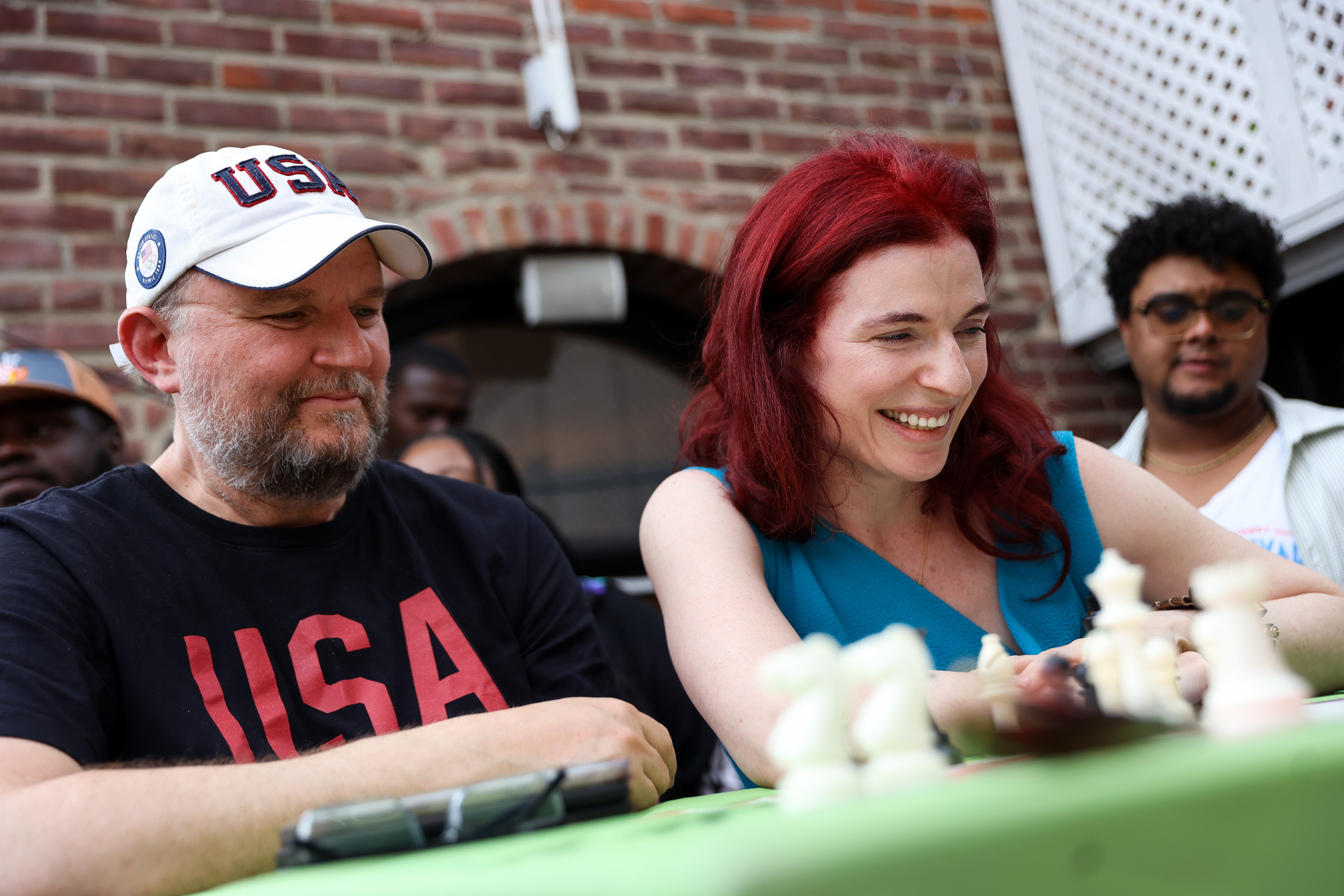
    There were two kinds of GMs on hand at Rittenhouse Chess’ charity tournament at Queen & Rook Game Cafe on Sunday afternoon.

    Former 76ers president of basketball operations Daryl Morey and Philly-born Woman Grandmaster Jennifer Shahade both attended the event, which drew 64 players from across the city.

    Despite parting ways with the Sixers after the team was swept in the Eastern Conference semifinals by the Knicks, Morey kept his promise to show up for Rittenhouse Chess Club’s Charity Blitz Tournament.

    “[It is] very cool of him to still come here after not being with the Sixers,” Zach Pepsin, one of the event’s organizers, said. “He definitely loves chess, and it’s a cool thing to do for charity.”

    Pepsin said that through the tournament’s $30 entrance fee and raffle, Rittenhouse Chess will able to donate more than 100 chess boards to local organizations, including the Children’s Hospital of Philadelphia, the Ronald McDonald House and After School Activities Partnerships, among others.

    Morey makes moves

    Pepsin, a 32-year-old software designer, has been an active member of Rittenhouse Chess since it started in 2021. The club, which meets twice a week, on Wednesday and Sunday in Rittenhouse Square, runs occasional tournaments, including one in February at the Brauhaus Schmitz restaurant.

    Pepsin was not organizing that tournament, but he asked to see the list of entrants to see which of his friends he could expect to see. Instead, Pepsin spotted Morey’s name among the registered players.

    “No one else who runs Rittenhouse has any idea who Daryl Morey is,” Pepsin said. “I’m a huge Sixers fan. I’ve had season tickets for over 10 years now. When I saw his name, I thought it was a joke. I was like, ‘Oh, who put his name on here?’ They had no idea who he was. It turned out it was real, and he just wanted to play some chess.”

    Morey missed out on the tournament in February, as the Sixers were in the midst of a three-game road trip, but for Pepsin, the executive’s sign-up was kismet. Pepsin was planning to reach out to Morey, whose love for chess is documented through interviews and a bot on chess.com, to see if Morey would be interested in helping Rittenhouse with a charity event after basketball season.

    Pepsin reached out to Morey, and the executive agreed to come for the club’s tournament in June. There were concerns among the organizers that Morey’s dismissal from the Sixers in May would change his plans for the summer, but Morey remained committed to the tournament.

    Daryl Morey was hired by the Sixers as president of basketball operations back in 2020.Isaiah Vazquez / For The Inquirer

    Morey declined to speak with media at the event, but he found his way to Queen & Rook as the tournament was entering its final round.

    He played alongside Shahade in a “hand and brain” team game against two of the tournament’s top performers. Shahade, playing as the brain, told Morey which piece to move, while Morey, the hand, had to decide where to move the piece Shahade selected. Morey and Shahade lost the match after their 10-minute timer ran out.

    Shahade plays simultaneous exhibition

    Shahade and Morey are friends, having met at Massachusetts Institute of Technology’s Sloan Sports Analytics Conference. Shahade, who became a Woman Grandmaster in 2005, has attended the conference each year since 2021 and has spoken at the conference multiple times about chess and poker, which she also plays professionally.

    “I’ve known [Morey] for a long time,” Shahade said. “He’s a pretty good chess player. He’s especially good with strategy.”

    Shahade, who drops into Rittenhouse Chess meetups monthly, also played in a simultaneous exhibition against five players at once. The players were selected as part of the raffle, which also included five copies of Shahade’s latest book, Thinking Sideways. Shahade beat four of her opponents in the timed exhibition.

    Jennifer Shahade (center) is a three-time National Chess champion.Isaiah Vazquez / For The Inquirer

    Shahade said seeing organized tournaments and club meetings across the city is a testament to the game’s ability to bring people together in a time when isolation is becoming more common.

    “Ever since the pandemic, there’s been a huge hunger [for chess],” Shahade said. “But there’s also been hunger around board games in general, churches, synagogues. There’s real interest in people getting offline and meeting each other in real life. I think you see that in chess.”

    Shahade said she expects the interest around chess and other face-to-face games to increase as the role of artificial intelligence expands in people’s daily lives.

    “Now, not only are you not necessarily talking to someone you might be friends with, you’re probably not even talking to a person at all,” Shahade said. “I think that’s just making people crave the real-life interactions even more.”

    Sixty-four players competed in the Charity Blitz Tournament.Isaiah Vazquez / For The Inquirer

    Chess in the Square

    Andrew Graham, 31, started Rittenhouse Chess in 2021 to try to meet new people in a new city. Graham moved to Philadelphia from Cheyenne, Wyo.

    “I didn’t know anybody,” said Graham, who works as a data scientist for PECO. “I wasn’t that into chess, but I needed activities to meet people. So, I picked chess.”

    Graham looked for a preexisting chess club, but the city’s most prominent club, the Franklin Mercantile Chess Club, closed during the pandemic. So Graham set out to start his own club, bringing a board with him to Rittenhouse Square and waiting for passersby to come over and play.

    “I started making friends, and some people started to return,” Graham said. “Slowly, it picks up, and then over the course of two months it picked up pretty good.”

    Andrew Graham (right) started the Rittenhouse Chess Club. He runs it alongside Helen Sdao, Sarah Court, and Zach Pepsin.Isaiah Vazquez / For The Inquirer

    Sarah Court, a 27-year-old freelance artist, claims to be the club’s second member, as she walked up and played Graham in the club’s early days.

    “It was just Andrew out there, and I walked out and played with him,” Court said.

    Court, who does artwork for the club’s social media and merchandise, helped run the tournament on Sunday.

    Now, a handful of people come together every Wednesday and Sunday to play in Rittenhouse Square, one person on each side of the wall that surrounds the center of the square.

    Roughly 100 people came to Sunday’s tournament, and the 64 players came from the vibrant chess community around the city, including players from South Philly Chess and Capitolo Chess Club, among others.

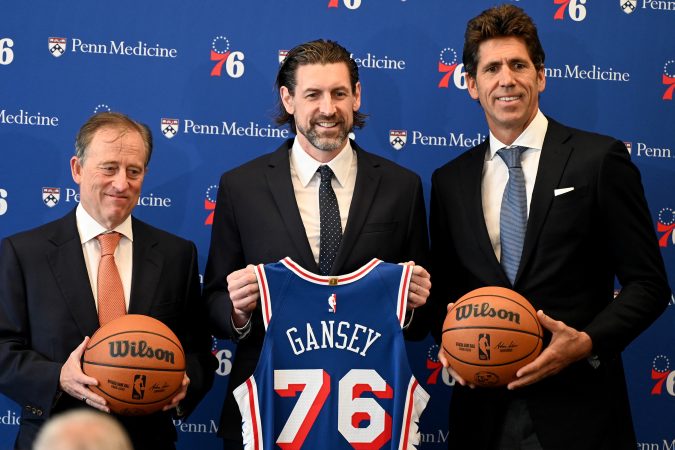
  • Mike Gansey will have one big question to answer as his Sixers tenure begins

    Mike Gansey will have one big question to answer as his Sixers tenure begins

    It is fitting that the Sixers will introduce their new personnel chief on a day that could end with the Knicks one win away from their first NBA championship in 53 years. The last time they held one of these press conferences, the Knicks were coming off their sixth straight season with fewer than 33 wins and heading into a campaign where their starting lineup would include Nerlens Noel and Elfrid Payton.

    By the end of Daryl Morey’s first season as president of basketball operations, the Sixers would have a 15-game winning streak against the Knicks dating back to 2017. Six years later, there’s no better way to measure the organization’s stagnation than against the ascendancy of its closest neighbor.

    In short, the Sixers have selected a heck of a contextual backdrop for Mike Gansey’s first meeting with the Philadelphia media. Not only are the Knicks up 2-0 in the NBA Finals, but they are there with a starting lineup that features four players drafted no earlier than 23rd overall, plus a center whom Joel Embiid once used as his literal and figurative punching bag. Granted, the Knicks were not the team that drafted any of the five. But they also weren’t the team that traded one of them away.

    The Villanova angle has been well trod. For good reason. It is a remarkable twist of the knife. Less examined are the more painful connections.

    In 2017, the Sixers traded up for Markelle Fultz in a first round where OG Anunoby went at No. 23 and Josh Hart at No. 30. They are two of five players from that year’s draft who participated in this year’s conference finals.

    The following year is the year best known as the one where the Sixers drafted Mikal Bridges at No. 10 and then traded him away for a guy who would play 13 career games. It was also the year where they drafted Landry Shamet seven spots before the Mavericks took Jalen Brunson. The kicker is that Shamet is now on the verge of a ring as a key reserve with the Knicks.

    This exercise is mostly an example of the fun of cherry-picking your hindsight. But there is some level of truth in it. Like Morey, Gansey will be inheriting a team that is largely a function of some consequential missteps in its long ago past. The original vision was to lose a lot of games in the hopes of drafting a homegrown triumvirate like Fultz, Embiid, and Ben Simmons. The Sixers ended up with more chances than they deserved at executing a pivot. Each time — with Bridges and Jimmy Butler, notably — they kicked the ball right back out of bounds.

    Now, somehow, they have another chance.

    Gansey’s hiring comes at a critical time for the Sixers. Somehow, they find themselves at an inflection point that could prove just as critical as those they deflected in the past. Tyrese Maxey and VJ Edgecombe are both gifts from forgiving gods. Maxey was selected with the No. 20 overall pick that the Sixers initially traded to the Magic in the Fultz draft and then reacquired by trading a then-floundering Fultz to the Magic. Edgecombe was selected with the No. 3 overall pick that the Sixers landed because of how bad they were in Year 1 of the Paul George/Embiid Era.

    Monday’s press conference will hopefully be an opportunity to hear Gansey’s response to a question that nobody from the Sixers has yet answered. Bob Myers and Josh Harris took turns dodging it a month ago in the wake of Morey’s firing. They surely posed it during their interview sessions with the former Cavaliers general manager. However much say Gansey ends up having relative to Myers, his hiring is pretty good evidence that their philosophies are all in alignment here at the beginning.

    Where do the Sixers go from here?

    While the futures of Embiid and George are clearly the biggest variables, they also might be beside the point. There is only one answer. Their future is here, with the Sixers. Each of their contracts renders impossible a mutually beneficial trade, at least for next year. Gansey’s real challenge is how to factor that reality into his attempts to build around Maxey and Edgecombe.

    Maybe that is giving him and the Sixers too much credit. I suppose there is a chance he comes out and says he sees a roster that is built to win now, that Embiid is still the centerpiece of this team and George is still a fine championship-caliber starter. I suppose he could look at the No. 22 pick in this year’s draft and the Sixers’ relative wealth in future drafts and see mostly the capital it would take to add a win-now player to George, Embiid, Edgecombe, and Maxey.

    But I doubt it.

    Josh Harris and Bob Myers meet with the media at the 76ers Training Complex on May 14.Yong Kim / Staff Photographer

    If that was a philosophy Myers and Harris agreed with, they wouldn’t have had a reason to part ways with Morey. The change at the top only made sense if they sought a change in vision. Let’s hope we hear Gansey articulate that vision.

    There are lots of different ways to build a championship contender. There are lots of different timelines. The Knicks remade their entire roster from scratch in the span of a couple of seasons, but they built a team so sensible that it feels like it was drafted and developed together. The Spurs hit on three top-five draft picks in Victor Wembanyama, Stephon Castle, and Dylan Harper.

    In the push-pull between present and future, how much will the Sixers value players who make them a better team now vs. players who might make them the team they’ll need three years from now? Gansey’s first task as president of basketball operations is to sell his fan base on that vision.

  • To our high school grads: Don’t leave that Philadelphia prom energy behind

    To our high school grads: Don’t leave that Philadelphia prom energy behind

    It’s graduation season in Philadelphia and across the country. But before the caps fly and diplomas are handed out, there’s another moment that reveals just as much about who our young people are becoming: prom.

    Nobody does prom like Philadelphia.

    Here, prom isn’t just a dance. It’s a declaration. Send-offs spill onto stoops and sidewalks as families, neighbors, and whole blocks gather to celebrate.

    Polished cars, bold outfits, unforgettable entrances — it’s Philly style and excellence on full display.

    In this photo from 2018, Saajid Barlow and Nydiyra Bryant Giles stop briefly to pose for photos as they arrive for their prom send-off at the Belmont Mansion in Philadelphia.Elizabeth Robertson / Staff Photographer

    But it’s also a moment to pause and celebrate what students have accomplished as we send them toward graduation with pride.

    Last month, my son stepped off our porch in a black embroidered Chinese-cut tuxedo he designed himself. Watching him walk into that moment, confident in who he is, reminded me of something powerful: Our young people already know how to show up boldly. They just need to carry that energy into what comes next.

    Because graduation is not just a milestone, it is a transition into a world that will not always feel as affirming as that sidewalk send-off.

    It has been a while since I have given a commencement speech, but I do have a message for this year’s graduates:

    The world you are entering will not always celebrate your arrival, recognize your brilliance, or make room for your voice.

    That means you will have to do what you did on prom night: show up anyway.

    Show up boldly in rooms where you are not expected. Show up creatively when there is no clear path. Show up as yourself, even when it would be easier to shrink.

    Carry that same confidence into every room you enter — whether it is a college classroom, a first job, a new city, or the community that raised you. Some of you will build your futures right here in Philadelphia.

    Others will carry Philadelphia with you into new cities, new campuses, new workplaces, and new communities. Wherever you go, bring the creativity, grit, compassion, and presence this city has already helped shape in you.

    And for those who stay, Philadelphia needs that energy now more than ever. We need your ideas, your leadership, your care for your neighbors, and your willingness to help build the city’s next chapter.

    We need that Philly energy.

    I know that energy matters because I carried it to the state Capitol when I served our city as a state representative, and I carry it now in my work to end homelessness as president and CEO of Project HOME. Every day, I walk into rooms where the stakes are high and the challenges are real, and I am reminded that leadership requires the same presence, courage, and authenticity our young people show on prom night.

    It takes vision when the path is uncertain, confidence when the work is hard, and the boldness to believe we can solve homelessness in our lifetime.

    Philadelphia’s prom culture teaches our youth not to wait to be seen, not to wait to lead. Instead, step forward and let the world catch up.

    Leadership is not about position. It is about participation, initiative, and showing up even while you are still figuring things out.

    It is about caring enough to act and using whatever platform you have, no matter how small it may seem, to make a difference.

    And like those prom send-offs, none of this happens alone.

    Behind every graduate is a supportive network of families, teachers, mentors, and neighbors who showed up, sacrificed, and believed in you long before this moment. That support does not disappear. It becomes something you carry with you, and something you are called to extend to others.

    That is how we build stronger communities, here in Philadelphia, or wherever your path takes you.

    So to the Class of 2026: Celebrate this moment. You earned it.

    But do not leave that prom energy behind.

    Donna Bullock is the president and CEO of Project HOME.

  • Americans’ spending is fueling the economy, but it might not last

    Americans’ spending is fueling the economy, but it might not last

    Americans are still spending money so strongly it’s steering the economy through surging inflation, but rising prices are starting to take a toll on savings accounts and summer vacation plans.

    While gas prices have surged since the Iran war began, raising costs for groceries and transportation, tax refunds and stock market gains have been helping buffer the pain for some Americans who are still spending. Although, many Americans are reducing how much money they are saving, data shows.

    Overall, consumer spending, which fuels two-thirds of the economy, rose half a percent in April, down slightly from March but a resilient showing, experts say. The strong spending helped the labor market pick up 70,000 jobs in May in leisure and hospitality, much higher than at any point over the past year.

    Other signs of strong spending appeared this past week with Macy’s and discount stores Dollar General and Five Below all reporting stronger than expected sales for their most recent quarters. That accelerated a trend of decent sales already reported weeks ago by retail behemoths like Walmart and Home Depot.

    However, the spending data obscures a growing list of concerns, and economists expect things could get rockier for spending in the coming months, especially if energy prices remain elevated. On Friday, gas cost $4.22 a gallon on average, much higher than $3 a gallon in December.

    Generally, people feel pretty terrible about the economy — consumer sentiment dropped 10% in May, according to a gauge measured by the University of Michigan, falling to a record low.

    One significant warning sign is flashing: Consumers are dipping into their savings and setting less aside to keep up with their spending. The personal savings rate fell to 2.6% in April, the lowest level in nearly four years, and the second poorest showing since the height of the Great Recession.

    Inflation, which has remained persistently high and hit 3.8% in April, is the likely culprit of the lower savings rate.

    “The economy has been somewhat insulated, and everyone has been willing to draw down savings to keep spending going,” said Mark Zandi, chief economist at Moody’s Analytics. “But if things keep going up, increasingly consumers are going to have to pull back.”

    Greg Tresley, 54, said he generally aims to save $700 to $800 each month. But with rising prices on gas and groceries, plus a couple unexpected larger expenses, he’s only been able to break even the past few months.

    “Basically the air has been coming out of my checking account little by little over the past year,” said Tresley, an IT manager in Langhorne, Bucks County.

    The toll of rising prices and global uncertainty is weighing on his family. His wife decided against a trip to Arizona to see family, and they’ve stopped driving their 2011 Mustang to avoid any unexpected repairs.

    “It’s all home cooking these days,” he said. “We have changed our grocery habits; we look at sale items first.”

    Consumer wariness is also starting to show up in other parts of the economy. When Dollar General reported earnings, officials said that they’re seeing more shoppers making more than $100,000 a year, as higher-income families seek out discounts.

    “Many of our core customers reported cutting back on other household expenses, including food purchases, due to rising gas prices,” Dollar General CEO Todd Vasos said on the company’s quarterly call, adding that the company was stocking more $1 items to appeal to customers. Dollar General increased net sales by more than 3% from the same period last year.

    Inflation also continues to hit lower-income families especially hard. A May report from the Federal Reserve’s Board of Governors reported that lower-income households showed greater financial strain, while higher-income households remained more resilient. Middle-income families are “squeezing more life out of every dollar before deciding to spend it.”

    Higher-income earners are being bolstered by a strong stock market — the S&P 500 is up more than 10% for the year — and might not feel the need to save as much each month.

    The increase in spending early this year was helped by higher-than-normal tax refunds doled out to taxpayers in the wake of President Donald Trump’s massive spending bill passed last year. Data from banking giant Chase shows that people are spending significantly more at gas stations this month, compared with last year, but that they haven’t really cut back on discretionary spending. Savings levels are also remaining largely stable, Chase said.

    But those tax refunds have peaked and are now slowing, said Bank of America economist Aditya Bhave. He has learned not to bet against the U.S. consumer, he said, noting that people find a way to keep spending. But, he said, the risks are now massive.

    “I think the true test of consumer resilience is still ahead of us,” he said.

    Karen Jenkins, a 54-year-old project manager in Houston, said she deliberately moved close to her office when she recently relocated to the city to avoid putting excess wear and tear on her car. She and her husband generally take a trip to Europe each December, but this year they are on the fence if they’ll make it. They’re watching flights and overall prices and will make a game-time decision this year, she said.

    Americans are also increasingly relying on credit cards to buy essentials. Since the pandemic, the National Foundation for Credit Counseling has seen an increasing reliance on credit cards as a “gap filler” for budgets.

    “This isn’t a story of people taking exotic vacations or buying nice vehicles,” said Bruce McClary, senior vice president for media relations and membership for the organization.

    The payments are piling up for many. Credit card delinquencies for those who are more than 90 days late making a payment hit a 15-year high in the first quarter of the year, according to the Federal Reserve Bank of New York. However, newer delinquencies, for those who are more than 30 days late, held about steady.

    As prices rise, Americans are increasingly hunting out deals and sales to save money. In Bay Shore, N.Y., Sofia Delta, 50, often visits multiple stores to search for deals as she grocery shops for herself and her four children. Delta, who works in banking, said she is cooking at home more and putting groceries on her credit card before paying it off and repeating the cycle.

  • A 50-year-old partnership allows Haverford and Bryn Mawr students to take classes or even pick a major on the other campus

    A 50-year-old partnership allows Haverford and Bryn Mawr students to take classes or even pick a major on the other campus

    Caitlin Cowan chose Haverford College because she liked its Quaker roots and honor code and that it was a small campus near a big city.

    But when it came time to choose a major, she selected anthropology at nearby Bryn Mawr College.

    And that was no problem at all.

    For decades, the two colleges, just a five-minute shuttle ride apart, have allowed students to take classes, participate in clubs and programs, and eat in dining halls on each other’s campus for no additional charge. Students have even been able to live on the other campus, though college officials say few do.

    At left is Anastacia Dulany a student at Bryn Mawr taking a Growth and Structure of Cities class along side Marco Calia a student from Haverford. The class was held at Bryn Mawr College where the Growth and Structure of Cities program is based. Alejandro A. Alvarez / Staff Photographer

    Many take advantage: During the fall 2025 semester, 40% of Bryn Mawr students took courses at Haverford and 42% of Haverford students did the same at Bryn Mawr. In total, there were more than 1,700 course registrations on the non-home campuses in fall 2025. (Haverford and Bryn Mawr students also can take classes at Swarthmore College and the University of Pennsylvania and select a major at Swarthmore.)

    The relationship between Haverford and Bryn Mawr — which together enroll about 2,800 students — opens many more options to students, allows faculty to collaborate, and saves money, college officials said. Both are highly selective liberal arts colleges; Bryn Mawr is a women’s college.

    “The academic offerings that we provide are exponentially larger than they would be without the partnership,” said Bryn Mawr president Wendy Cadge.

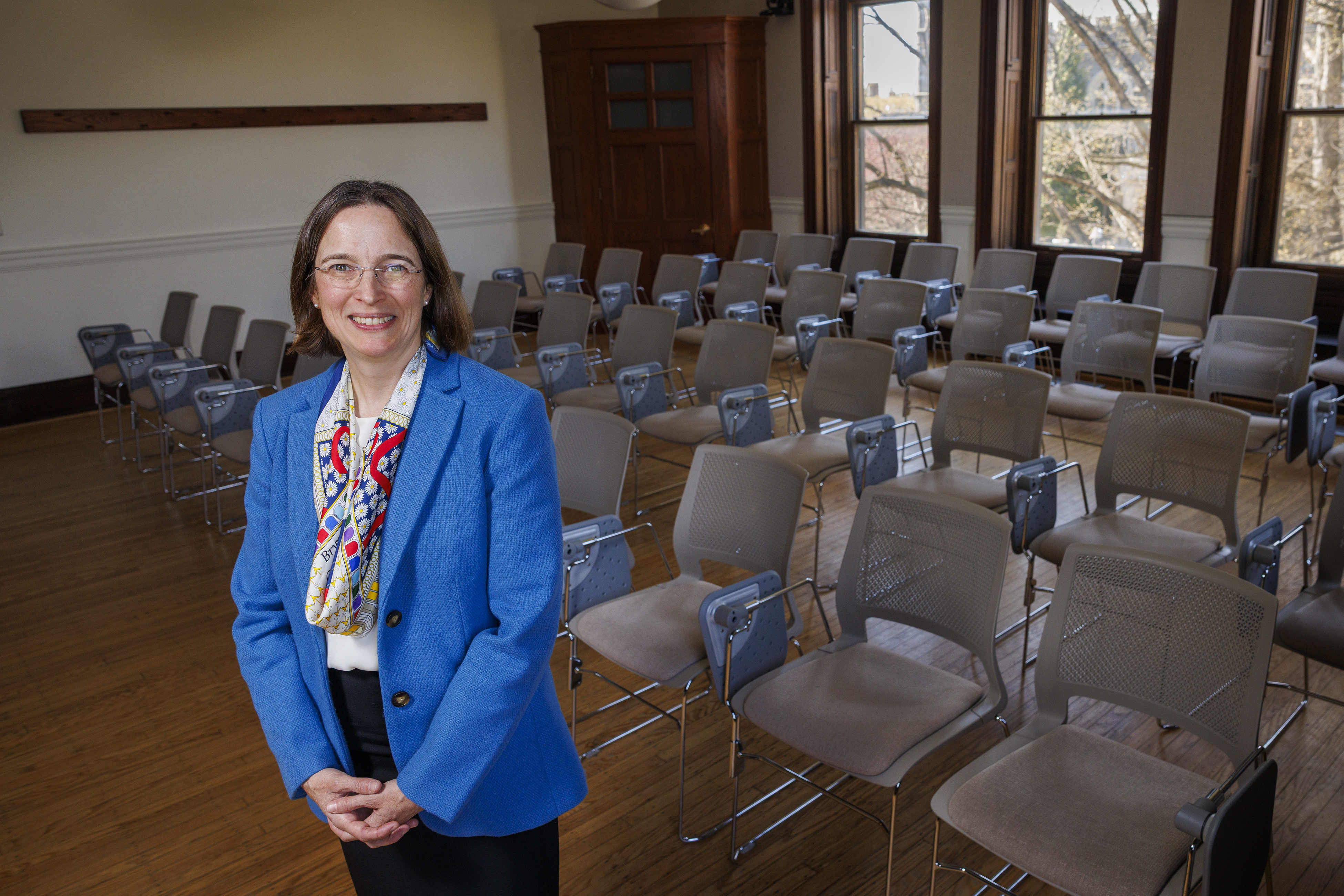
    Wendy Cadge, president of Bryn Mawr CollegeAlejandro A. Alvarez / Staff Photographer

    It was 1997 when Cowan, now an elementary school reading teacher in Minneapolis, got her degree from Haverford while majoring at Bryn Mawr. Now her daughter, Tabitha, 21, is enrolled at Bryn Mawr and is enjoying the benefits of both campuses, too.

    “It just broadens your world,” Tabitha Cowan said.

    Majoring in architecture studies and Spanish, she participates in the Bi-College flute choir, made up of two Haverford students and 11 Bryn Mawr students.

    Tabitha Cowan, a Bryn Mawr College student, plays the flute for the Bi-College Flute Choir.Courtesy of Bryn Mawr College

    “We have access to Haverford’s performance spaces because we do not have a music program here at Bryn Mawr,” she said.

    They practice twice a week, once at Haverford and once at Bryn Mawr.

    Joint majors and projects

    The colleges have been able to launch joint majors in technology-intensive, interdisciplinary fields like neuroscience — which has become the most popular major on Haverford’s campus — that would have been harder to support individually. It also means the schools share expanded instructional technology and library services.

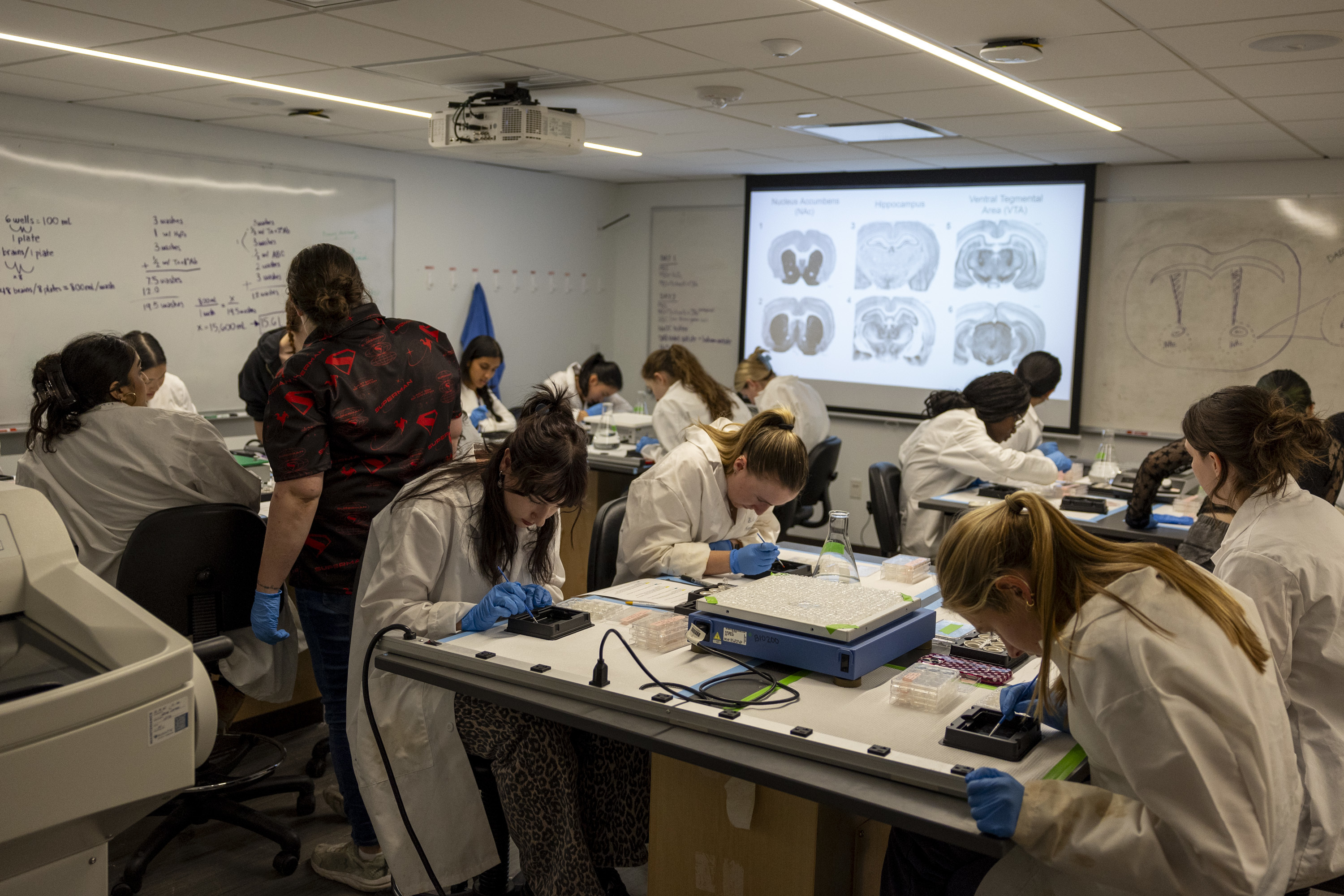
    Students from both Bryn Mawr and Haverford take a neuroscience class at Haverford College. Tyger Williams / Staff Photographer

    Faculty from both schools are working on joint projects that received institutional pilot grants, encouraging closer collaboration. One project that launched last semester is focused on developing a Jewish studies program, while another aims to reinvigorate Black studies. Others involve interdisciplinary training, chemistry, and narrative across languages and cultures.

    “We really do try to make it as seamless as possible,” said Bryn Mawr provost Dee Matthews.

    Students get one transcript, and colleges share non-salary operating costs, such as administrative overhead, for some of the offerings shared by the campuses, she said.

    “It’s a way in which we can have a large academic community while still preserving the scale of our individual institutions,” said Haverford provost Helen White.

    The two schools earlier this year re-upped a memorandum of understanding on the partnership, which started 50 years ago. The schools will explore new ways to make the most of the partnership and elevate its visibility for students.

    “We affirm that ‘each college is a better version of itself because of the richness of ideas, community, and organization made possible by the Bi-College connection,’” the memo states.

    There are about 75 such consortia nationally, with differences in how they collaborate, said Sarah Pfatteicher, executive director of the Five College Consortium in western Massachusetts. The two oldest were formed about a century ago, one in California and one in Georgia. More may start, given the political and financial pressures on higher education and the influence of artificial intelligence, said Pfatteicher, who has written a book about college consortia.

    “Any time there is pressure on higher education, particularly financial pressures, there is incentive to say, ‘What could we gain by working with our colleagues instead of trying to go this alone?’” she said.

    Complementary offerings

    The partnership between Haverford and Bryn Mawr — both of which have substantial endowments — has not been driven by finances.

    Each school brings unique features to the table. Bryn Mawr has a pool, Haverford a track. Bryn Mawr has art history and Haverford the fine arts. Haverford has music; Bryn Mawr has theater.

    The food is better at Bryn Mawr and the parties at Haverford, students say.

    “Certain sports teams at Haverford watch our menus and then come here because they think our food is better,” Cadge said. “It’s all the same food, but don’t tell.”

    Haverford student Gabriel Bernstein may differ. He said he and his track teammates often board the bus to eat at Bryn Mawr.

    “Bryn din,” he called it.

    In Bryn Mawr’s Class of 2025, 2% were enrolled in a major exclusive to Haverford, while 2.8% took a Haverford major with a Bryn Mawr component and 12.8% had a major shared by the colleges. For Haverford, 4.1% were enrolled in a major exclusive to Bryn Mawr, while 7.2% took a Bryn Mawr major with a Haverford counterpart and 11.1% had a shared major.

    Jet Li, a Haverford College student, arrives at Bryn Mawr College to take a class. Alejandro A. Alvarez / Staff Photographer

    ‘Deeply invested in the liberal arts’

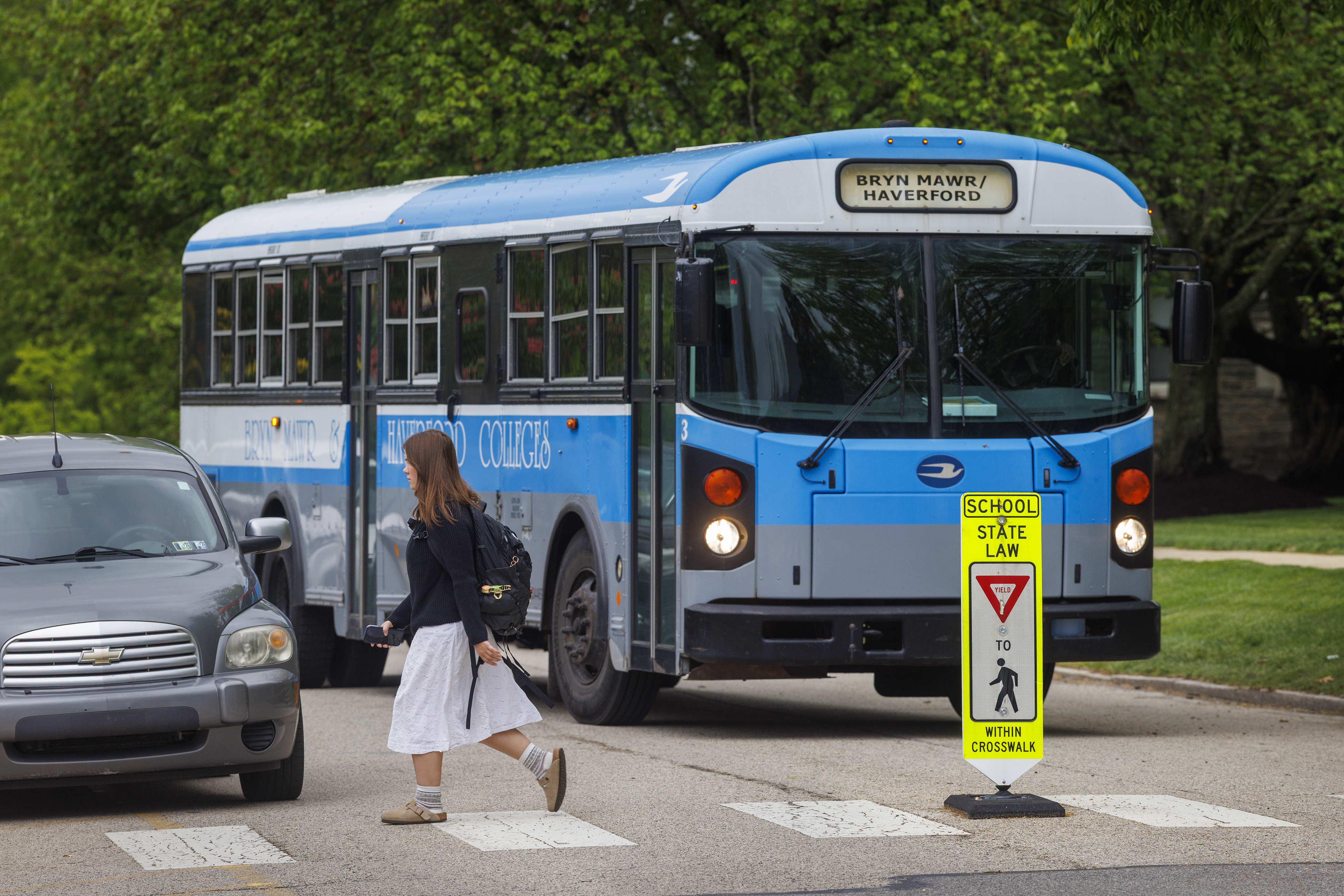
    One day during the spring semester, a group of Haverford students got off the Blue Bus, which shuttles students back and forth between the campuses about every 20 minutes, They had arrived at Bryn Mawr to take a Chinese class not offered at Haverford.

    Meanwhile, Corry Varney-Irlam, 21, a Bryn Mawr student, boarded the bus to head to Haverford for a political science class.

    “It worked better with my schedule,” Varney-Irlam said.

    Matt Ruben teaches in the Growth and Structure of Cities program at Bryn Mawr College. In his class of about 50 students, 12 are Haverford students. Alejandro A. Alvarez / Staff Photographer

    Bryn Mawr professor Matt Ruben teaches classes in the growth and structure of cities program, a major based at Bryn Mawr. In a recent class of 50 students, 12 were from Haverford. Typically, 40% to 50% of the program’s majors are Haverford students, he said.

    Students from the two schools have a lot in common, he said.

    “They’re all really highly skilled,” he said. “They’re highly engaged. They’re all highly motivated. And they’re all deeply invested in the liberal arts experience.”

    Some Haverford students were men — the partnership means males take classes at Bryn Mawr, a women’s college.

    Students said the gender mix in classes really didn’t matter.

    “I don’t mind it,” Varney-Irlam said. “There’s definitely a benefit to having predominantly women in Bryn Mawr classes. But I think that it’s nice to have a change of environment and more people around to socialize with.”

    Cowan said she enjoyed taking classes at Bryn Mawr in the 1990s because it seemed women had more space to talk and there was more support.

    “Sometimes men can take up a lot of space in the room,” she said.

    That is not as much of a factor now, said Ruben, the professor, because there is more gender fluidity, and different levels of consciousness about gender-related issues.

    “It makes a difference and it’s always going to make a difference, but it makes less of a difference than it did like 10 years ago,” he said.

    Madeline Dosen, left, a student at Haverford College, stands with her twin sister Daniela Dosen, (right) a student at Bryn Mawr College. They both played soccer for their respective schools.Courtesy of Daniela Dosen

    The Dosen family has seen the partnership from both sides. Daniela Dosen, 22, was a physics major at Bryn Mawr, while her twin sister, Madeline, majored in biology at Haverford. Both women played varsity soccer for their schools and graduated May 16. The colleges even coordinate commencements — one was in the morning, the other in the afternoon.

    First semester freshman year they had an 8 a.m. Spanish class together at Bryn Mawr. Daniela had a short walk, while her sister had to board the bus.

    “Sometimes we showed up in the same beach sweatshirt,” she said.

  • A Philly grandmother says $600 of EBT benefits were stolen in a skimming scheme. A solution for Pa. might be on the horizon.

    A Philly grandmother says $600 of EBT benefits were stolen in a skimming scheme. A solution for Pa. might be on the horizon.

    Keenya Banks lives in Philadelphia with her husband and the two grandchildren they care for. She has never been to Fishkill in New York’s Hudson Valley.

    Yet, that’s where someone spent more than $650 in food assistance benefits for her family at a Sam’s Club in April in an alleged case of EBT skimming, just one of the more than 5,100 cases reported in Pennsylvania between the start of the year and May. This year’s skimming incidents account for approximately $2.5 million in stolen benefits, according to the Pennsylvania Office of State Inspector General, which investigates the reports and seizes the skimming devices.

    It’s likely Banks used her EBT card in a point-of-sale machine rigged with a device designed to copy her card information and pin number. Someone then applied her EBT information to a different physical card and drained her monthly benefits the next day.

    “I was too numb to cry because I just couldn’t believe it,” said Banks, 56, who was alerted to the fraud as she tried to purchase food days after she had gotten her month’s benefits. “They said, ‘Ma’am, this is declined.’ I said, ‘No, no, I have at least 600-something dollars.’”

    Even more devastating to Banks: For a brief stretch of time, benefits were being reimbursed through a federal program, but that ended December 2024 because Congress did not extend funding. The most that the Pennsylvania Department of Human Services can do is direct victims to food banks and other food assistance programs. The end of the federal reimbursement program also means the skimming incident data Pennsylvania has on hand are likely an undercount: Victim advocates say people may simply skip reporting if they believe nothing can be done.

    Pennsylvania is looking at a possible solution, but without one immediately available, Banks spent a month scrambling to put food on the table with the help of food pantries and what she had on hand.

    “We had been storing up, like a lot of canned goods and water, and we had a deep freezer, and thank God we were able to really kind of make ends meet.”

    Victim advocates argue EBT skimming has risen to a nationwide crisis because the federal government has failed to invest in more secure card technology. Between October 2022 and the end of the reimbursement program in 2024, states reported $320 million in stolen Supplemental Nutrition Assistance Program benefits, according to the Government Accountability Office.

    EBT cards: From cutting-edge technology to scammers’ favorite

    The idea that someone’s food benefits could be loaded digitally onto something that worked like a debit card was once revolutionary.

    Before federal supplemental food assistance could be loaded onto a card, it used to come by way of coupon books or mailed checks, depending on the program. These methods not only came with high administrative costs but in the case of the coupons, also known as “food stamps,” there was an element of stigma and a risk of forgery.

    The federal government launched its first “electronic benefit transfer” pilot in Reading in 1984, yet it was not until 2002 that all states were required to make the switch.

    By then, scammers had already learned how to exploit the magnetic stripe technology used in debit, credit, and EBT cards. While banks have made cards more secure by adopting chip technology, the federal government has stuck with the magnetic stripes for EBT cards.

    In the absence of chip adoption, states have resorted to other added security measures. Last May, Pennsylvania launched ConnectEBT, an app that allows people to lock their cards until they are at the checkout line, ready to use them.

    Mackenzie Libbey, staff attorney in the health and independence unit at Community Legal Services, noted the current system places the onus on families, which are required to lock and unlock their cards, monitor their spending, and change their PIN regularly to stay ahead of fraudsters.

    “It’s just not something that anyone would expect of a middle-class consumer using a credit or debit card,” Libbey said. “It’s a lot of extra effort to protect benefits that they have shown they’re entitled and eligible to receive.”

    CLS has advocated for the federal government to reimburse victims of skimming again and for Pennsylvania to adopt chip cards.

    Pennsylvania eyes chip EBT cards

    The federal government did not approve the use of chip and tap-enabled EBT cards until 2024, largely due to concerns over the costs of upgrading the aging technological infrastructure in use.

    Some states were eager to become early adopters and tackle the skimming issue.

    In February 2025, California became the first state to begin replacing the magnetic stripe cards, with a handful of states following suit because of their own issues with skimming. Oklahoma launched a two-month pilot this March, and in April, Massachusetts announced its plan for a pilot later this year. New Jersey also has plans for a chip card rollout.

    But the U.S. Department of Agriculture has approved only two vendors for the new cards, and users in early adopter states have complained about issues with the chips and difficulties getting the cards to process.

    Those issues gave Pennsylvania Secretary of Human Services Val Arkoosh pause. She has previously said the technology was not quite ready.

    In a May hearing with the House Democratic Policy Committee, however, Arkoosh said Pennsylvania’s vendor had promising data. After Alabama adopted chip cards, the state saw an 83% reduction in theft in 60 days among the people using the chip, she said.

    “I do think I can now sit here and say to you, I believe that the technical issues have largely been solved,” she said at the hearing. “I didn’t want us to embark on this before we were confident that it would work, but I think we’re there now.”

    And there appears to be interest in Harrisburg to go after EBT skimming.

    A bipartisan bill that would require Pennsylvania to transition to chip-enabled EBT cards by 2028 moved out of committee Wednesday to the full House.

    A recent cost estimate puts the overhaul at about $14 million, according to the Pennsylvania Department of Human Services. It would take six to eight months to roll out chip cards after approval, barring any significant challenges, according to a December report by the department.

    Should legislators in Harrisburg choose to fund the transition, they would have an incentive to move fast. While the federal government used to split SNAP administrative costs evenly with states, come Oct. 1, states will be on the hook for 75% of these expenses because of the One Big Beautiful Bill Act.

    For now, the Pennsylvania Office of State Inspector General’s skimming response teams continue to search for these devices and prosecute fraudsters. Between April 2025 and March of this year, the agency said, it had prevented $8.3 million in potential losses.

    The USDA, meanwhile, said it is not stopping at card locking and chip adoption. It is combating skimming and other SNAP fraud with mobile payment pilots and encouraging states to block out-of-state and online SNAP transactions by default.

    These efforts, while welcome, cannot undo what Banks and her family went through the month after the theft they experienced. She hopes her story can alert other families to scammers targeting EBT users.

    Until chip cards come, even Banks’ 10-year-old grandson is on the lookout, monitoring their card benefits and inspecting point-of-sale machines at the grocery stores.

    “He’s so tech savvy and he’s very, very wary,” she said. “So he’s like, ‘Grandma, did you check and see if there’s a skimmer on there?’”

  • A $400 million price tag for a ballroom? What if we invested in families instead?

    A $400 million price tag for a ballroom? What if we invested in families instead?

    The import of budget figures, particularly those large values contained within the federal budget, has become something to which we are numb, or worse, indifferent.

    A $1.5 trillion request for the U.S. Department of Defense, when all government expenditures total just over $7.5 trillion, is a large number and gets the attention of Congress. But the public is systematically desensitized to expenditures in the billions, and millions barely get noticed.

    This is not new; it just seems worse. “A billion here, a billion there, and pretty soon you’re talking real money” is a wry observation widely attributed to the late U.S. Sen. Everett Dirksen in the 1960s.

    But expenditures in the millions and billions are important, and they reflect important choices, even if those choices are not obvious. Joe Biden, quoting his father, said: “Don’t tell me what you value. Show me your budget — and I’ll tell you what you value.”

    An interesting thought experiment is to imagine what alternative investments could be made in place of some currently controversial choices, since budgets are not unlimited.

    Spending $100 million for a Triumphal Arch, or $400 million for a White House ballroom, and $1.776 billion for an anti-weaponization fund are choices. Dollars spent on such expenditures are dollars not available for other investments; what economists call “opportunity costs.”

    An arch may enhance the architecture of Washington, D.C. A ballroom might be desired to entertain dignitaries. And a weaponization fund, assuming Donald Trump does not permanently drop this proposal, and it is not ultimately deemed illegal, may serve certain matters of justice. But these expenditures should not be thought of in absolutes.

    They need to be weighed against other choices that could be made. What other investments cannot be made with these dollars if they are used for these three expenditures?

    At a time when the nation’s families are facing a housing crisis, and when low-income families are pressed by rising prices for the most basic necessities of life, we find it useful to consider how proposed expenditures for one initiative, if reprioritized, could positively impact our housing condition and efforts to lift people out of poverty.

    Think about these three large expenditures: the Triumphal Arch, the White House ballroom, and the anti-weaponization fund. What could the funds for these three items alternatively do to enhance housing affordability or reduce poverty?

    According to official federal reports of a measure called the aggregate income deficit, $1.776 billion distributed to each poor family in Alabama would bring their incomes above the poverty line. Alternatively, $1.776 billion could raise all Mississippians out of poverty, leaving almost $400 million.

    The average cost for a Housing Choice Voucher, a U.S. Department of Housing and Urban Development program that pays the difference between what a family could afford on rent, spending no more than 30% of their income, and the unit’s fair market rent, is approximately $1,200 per certificate per month.

    In other words, the federal government pays landlords $14,400 per year on behalf of each supported renter household.

    That $1.776 billion could pay rent to landlords for an additional 25,000 families each year for five years. Those families would not have to decide between clothes for their children, medication, food, transportation, or housing for five years into the future.

    What about $400 million for a White House ballroom? Those dollars could support almost 28,000 additional renters this year.

    Alternatively, that $400 million deployed in the state of Alaska could bring every low-income Alaskan out of poverty for three years, North Dakota for 11 years, or Delaware for nearly two years.

    In Philadelphia, there is a $10,000 grant for first-time homebuyers. Recipients will be able to live in a home they own, providing shelter and stability for their families and an opportunity to accumulate wealth for themselves and future generations. That $400 million could help 40,000 Philadelphia families become first-time homeowners. In place of the arch, $100 million would support 10,000 more families.

    Given that budgets are finite, a decision to spend money on one thing represents a choice about what you value, and importantly, those items on which you cannot invest. Sen. Dirksen would probably be shocked at some of the decisions currently being made by some of our elected officials. All of us should be.

    Ira Goldstein is a member of the National Housing Crisis Task Force and a lecturer at the University of Pennsylvania in the urban studies program. Gregory D. Squires is a research professor and professor emeritus of sociology at George Washington University and a member of the advisory committee to the Philadelphia Home Appraisal Equity Program.

  • The hottest musical act in Philly? A group of middle-aged guys in khaki slacks and sensible loafers.

    The hottest musical act in Philly? A group of middle-aged guys in khaki slacks and sensible loafers.

    As a general rule, Sam Marshall is not used to drawing a crowd.

    At 70 years old, with glasses and a plop of silver hair, the Haverford grandfather is a semiretired regulatory lawyer with a fondness for trains and the print version of the Wall Street Journal.

    Yet, there he was last month, at a wedding in Big Sky, Mont., loitering near the dance floor when a young woman approached.

    “You’re famous!” she said.

    Before Marshall could respond, the woman was grabbing her friends and pulling them over.

    “Hey!” she called out. “This is the guy from that group we follow!”

    Such is life these days for the Tonics, a men’s a cappella group made up largely of Main Line fathers and grandfathers who might very well be the city’s hottest musical act.

    Since videos of the group’s endearing kitchen rehearsal performances began circulating on social media recently — racking up millions of views — no one can seem to get enough of Philly’s a ca-fellas.

    In the comments section of their videos, the Tonics’ most ardent fans break down everything from their impressive hairlines to their choice of rehearsal snacks.

    Elizabeth Robertson / Staff Photographer

    Online, the Tonics are putting up kittens-doing-cute-things numbers: 2.9 million Instagram views for a rousing rendition of “Lean on Me”; 4.1 million for a performance of “Werewolves of London.”

    Supermodel Gigi Hadid is a fan. The singer Michael Bublé responded to their rendition of his song “Haven’t Met You Yet” with a string of heart emoji.

    So meteoric has been their rise, meanwhile, that they’ve broken U.S. containment.

    “Evidently,” says Mike Reese, a 46-year-old Wayne resident who sings second tenor for the group, “we’re very popular in Australia.”

    The appeal is undeniable; in a digital world where every piece of content seems carefully curated, the Tonics have remained their unassuming selves.

    Of the group’s 19 members, most are middle-aged and older — with full-time careers as doctors, lawyers, and educators. Their collective look — an assortment of khaki slacks, quarter-zip sweaters, and sensible loafers — might best be described as CPA chic. It is not uncommon, meanwhile, for one of the group’s members to pull a handkerchief from his pocket mid-performance and blow his nose.

    During a Saturday afternoon performance at a restaurant in Wayne last month — where even the waitstaff couldn’t help clapping along — supporters clamored to make clear they’d been fans before the group’s mainstream success.

    “I have all of their CDs,” said a woman named Esther, from her perch at the bar. “I put them on when I’m paying bills.”

    Unlike many of their musical contemporaries, the Tonics did not set out for musical stardom.

    Back in 1990, a couple of them — who’d previously been part of a cappella groups and missed the camaraderie — got to thinking: Why not get some guys together and do a little jamming?

    They began meeting every Thursday night, rotating between members’ homes, where for two hours they could leave their stresses — family responsibilities, demanding careers — at the door and enjoy a little old-fashioned harmonizing with the boys.

    “There’s something very spiritual that happens when you’re standing in a group and singing a song, making harmony together,” says Peter Evans, one of the group’s original eight members.

    It wasn’t long before they were movin’ and snappin’ their way into the hearts of the masses — or at least the occasional graduation party, bat mitzvah, and assisted-living facility.

    Through the years, they managed to achieve a modicum of local renown. They performed “The Star-Spangled Banner” at Phillies games. They recorded four studio albums. A catalog of their music — covers of hits spanning the decades — is available to stream on Spotify and Apple Music.

    It wasn’t until earlier this year, however, that things started to get a ca-crazy.

    Youngmoo Kim (right) serves as the Tonics’ music director and de facto social media manager. Elizabeth Robertson / Staff Photographer

    The Tonics’ crescendo

    During a rehearsal one evening last November, the group’s members stood around a well-appointed kitchen island, belting out a rendition of “Drift Away.” Someone captured a short video of the performance, and afterward, Youngmoo Kim — the Tonics’ 53-year-old music director — posted it to the group’s sparsely followed Instagram page, thinking little of it.

    Maybe it was their wholesome vibe. Or the earnestness of their instrument-less performance.

    Maybe, at a time when adult males — especially those over 50 — report feeling increasingly lonely, it was simply the novelty of a group of men gathering to do something that didn’t involve “golf and cigars and bourbon,” says Philip Pearson, a 57-year-old Tonic from Chestnut Hill.

    “To be able to carve out a couple hours to do something special with a bunch of guys you like to hang out with is a pretty special thing these days,” adds Reese.

    Whatever the reason, the Tonics struck a chord.

    When Kim checked the group’s Instagram page a few days later, he was astounded.

    “I’m used to seeing 300 views,” he says. “All of a sudden, it was 300,000.”

    The majority of the group’s 19 members were part of college a cappella groups, including several who performed with the renowned Tigertones at Princeton University. As for the viral success? “We have no idea why this happened,” said Philip Pearson, a longtime member of the Tonics. Elizabeth Robertson / Staff Photographer

    More videos followed, and soon, Instagram feeds across the world were filling with a dozen or so middle-aged guys from the Philadelphia area cutting loose around a kitchen island — their impassioned performances rivaled only by the stream of good-natured jokes that accompanied them.

    “Room full of good credit,” read one comment on Instagram.

    “A case of sparkling water hates to see these fellas coming,” read another.

    “I just know they have a [favorite] length of grass.”

    These days, everyone’s jockeying for a piece of the Tonics.

    There were the folks from North Carolina who wanted to book the group for a summer wedding. And the woman from Chicago who begged the group to record a “Happy Birthday” video for her fiancé, a huge fan. (The Tonics — whose performance fee ranges from free dinner to $1,000 — agreed, but only after ensuring they weren’t being pranked.)

    There have been collaboration requests and brand partnership offers, including one — much to the confusion of the group’s members — from a company selling skinny jeans.

    “You’ve seen our shapes — our shapes are not all great,” says Jim Buck, 66, of Bryn Mawr, a cofounder of the Tonics. “But if they’re really looking to appeal to a bunch of 40-to-70-year-olds, then we’re your guys.”

    In addition to serving as the Tonics’ beatboxer, Ed Glassman (center) is a teacher at Springside Chestnut Hill Academy. When the group went viral recently, his students didn’t miss a beat. “It was a full day where every kid that came up to me that day had seen that video,” Glassman said. “They were having a good time with it.”Elizabeth Robertson / Staff Photographer

    Their future

    The Tonics, of course, would not be the first band to succumb to the pressures and temptations that accompany overnight fame.

    But while there has been the occasional sign of their newfound stature — “I do notice that maybe people comb their hair a little more before rehearsal,” says Marshall — the group’s members insist that they have remained cool and levelheaded about the whole thing.

    Indeed, at a recent Thursday night rehearsal in a leafy Haverford neighborhood, there were no signs of swollen heads or raging egos. As they trickled in, the group’s members mingled and backslapped. They picked from an assortment of snacks — a family-size box of Triscuit crackers, some Di Bruno’s-sourced cheeses — and hammed it up in that uniquely suburban-dad kind of way.

    “We got a photographer here tonight,” someone quipped. “Don’t pick your nose!”

    “Bad-lookin’ guys in the back!” called another.

    On this night, however, there was plenty to do. There was their suddenly packed calendar of gigs to prepare for — at the Woodmere Art Museum, the Wayne Music Festival, the Philadelphia Cricket Club.

    And their forthcoming live performance on Australia’s The Morning Show.

    And so, as the evening sunlight dwindled and the diet soft drinks flowed, the Tonics took their places around the kitchen island — van Gogh at his canvas — and got to work.

    The Tonics’ members have a variety of careers. Among the group are teachers, attorneys, and several doctors. “We have pretty much every affliction covered,” joked Tonics cofounder Jim Buck. Elizabeth Robertson / Staff Photographer