Blog

  • James Develin faced the Eagles in Super Bowl LII. Now he’s selling smoothies to Birds fans down the Shore.

    James Develin faced the Eagles in Super Bowl LII. Now he’s selling smoothies to Birds fans down the Shore.

    James Develin was raised in Gilbertsville, Pa., on the voice of Merrill Reese and the mystique of Brian Dawkins, “Weapon X.” But in the wake of Super Bowl LII on Feb. 4, 2018, he felt sad.

    There was good reason for this. The fullback was in his sixth season with the New England Patriots. He’d won two Lombardi trophies, in the 2014 and 2016 seasons, and was eager to add a third.

    But the Eagles were a team possessed. They were dominant in the trenches. Bursts of offense came from unlikely contributors. Backup quarterback Nick Foles had the game of his life.

    Develin returned home a few days later to a barrage of clips from the Super Bowl parade. Hoagie shops started selling sandwiches called “Philly Special” and “Philly Philly.”

    Every Wawa had championship T-shirts on display. Develin couldn’t even get his coffee without being reminded of the worst loss of his career.

    “Losing that one … you were so close, and now you know exactly what the Eagles are enjoying,” Develin said. “And you’re home, watching them doing it, right outside your front door. Man, that was tough.”

    Life has gotten easier since then. Develin retired in 2020, but won a third Super Bowl with New England before that. He began to pursue a career in business.
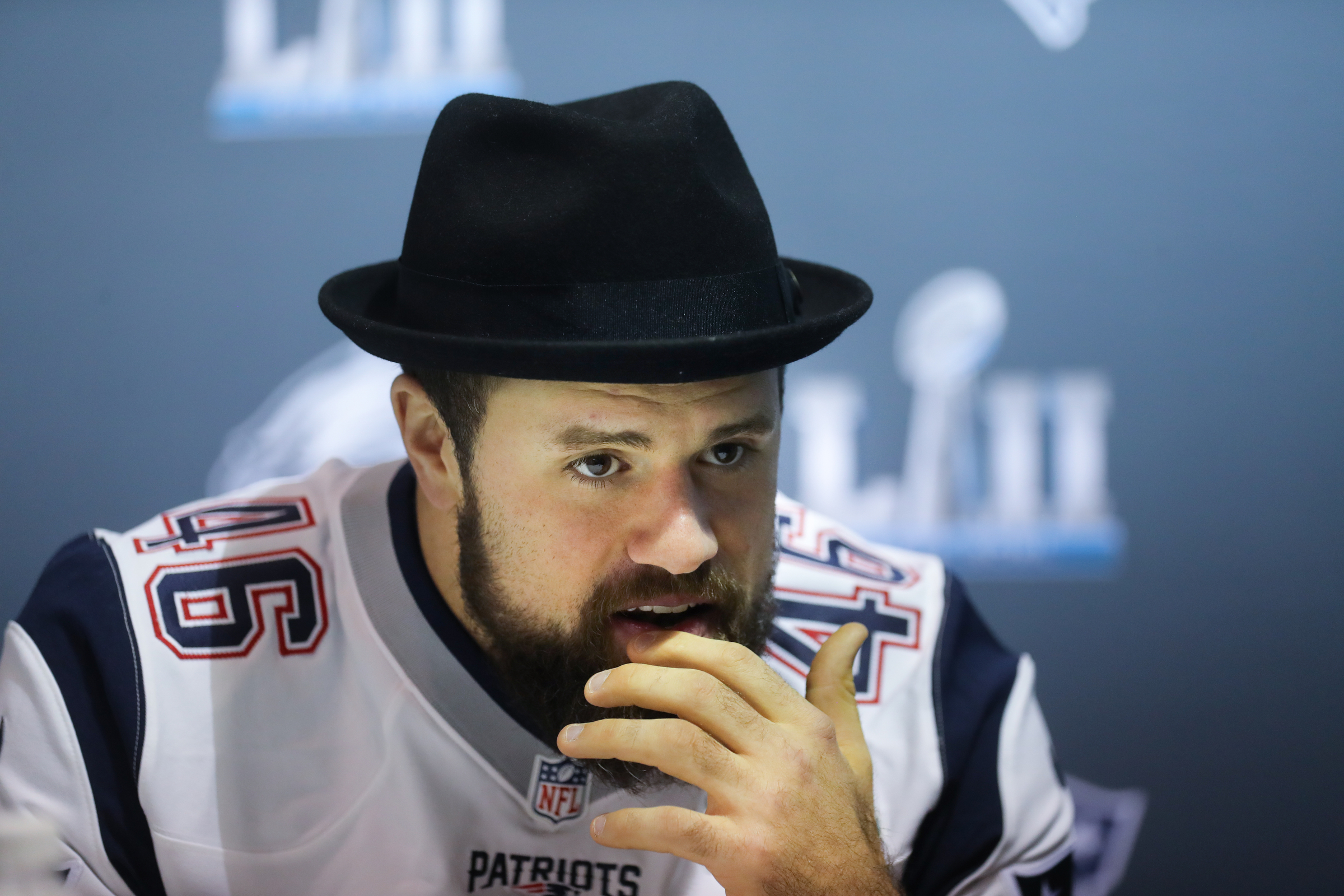
    James Develin, pictured at a news conference days before his Patriots’ Super Bowl LII loss to the Eagles. David Swanson / Staff Photographer

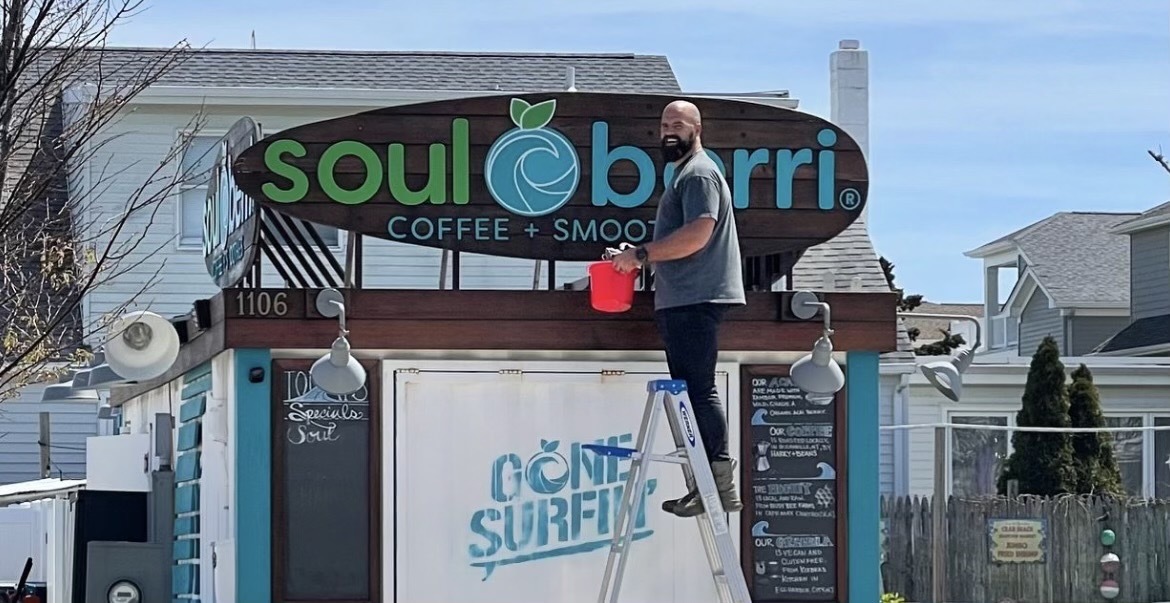
    He and his wife, Jenny, grew up together and decided to stay in the area. They moved to Collegeville and got a place down the Shore. In 2021, Develin purchased Soulberri, a smoothie shop in Brigantine where he was a frequent customer.

    The longtime Patriot is not your typical athlete-turned-entrepreneur. During the summer, he’s at Soulberri every day. When Develin added a location in Ocean City in 2023, it was he and general manager Ryan Bonanni who built it from the ground up.

    Develin handles payroll. He sands and stains mahogany wood benches. He plants flowers and paints walls. There is no task too small for the former fullback.

    “He doesn’t like to sit around,” said Bonanni. “He’s hands on.”

    It has been an interesting and atypical career path, one that is not short on irony. Eight years after Super Bowl LII, Develin is selling açai bowls and dairy-free ice cream to people who actively rooted against him.

    But the former Patriot has embraced this.

    “Every once in a while, someone driving yells, ‘Go Birds,’ or something,” he said. “And it could be anybody. Because 90% of the area is Eagles fans.

    “And I have no qualms with that. I understand what it’s like being an Eagles fan. So I am all for it.”
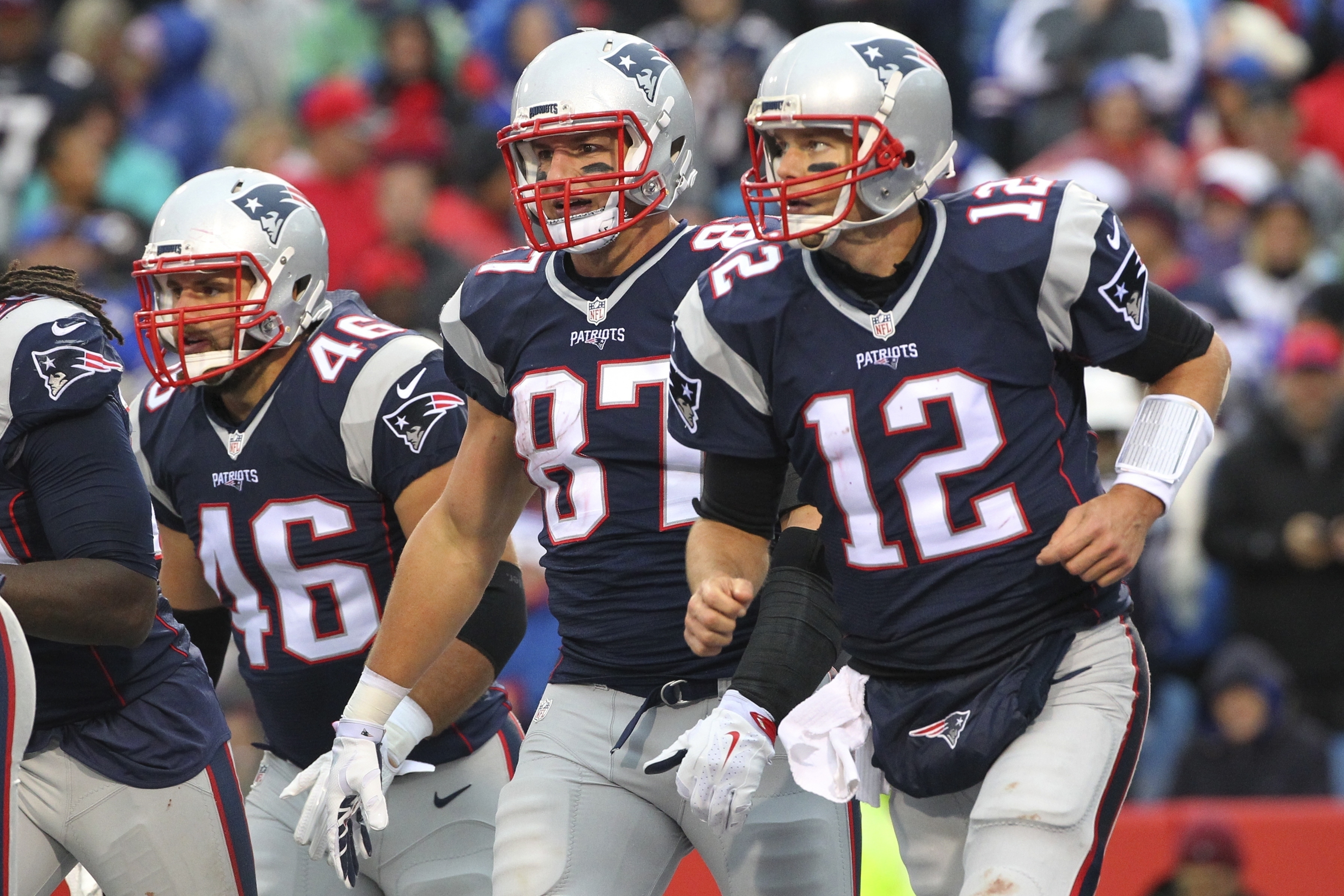
    James Develin (46) played alongside some of the biggest NFL stars of his era including Rob Gronkowski (87) and Tom Brady (12). Bill Wippert

    From ‘hating’ Tom Brady to becoming teammates

    It was not long ago that Develin was one of those fans.

    He says he can still remember picking up hoagies on Sunday afternoons as 94.1 WIP hummed in the background. Develin’s father, Jim, lived and died with every snap, and passed his unbridled enthusiasm on to his kids.

    James Jr. started following the team in the early 2000s, a successful era of Eagles football. He gravitated to the ruthlessness of Jeremiah Trotter, the dynamism of Brian Westbrook, the passion of Dawkins.

    He also experienced the heartbreak. Develin was 16 years old when the Eagles made it to their second Super Bowl during the 2004 season, against none other than the Patriots. He was in his friend’s basement in Gilbertsville, watching it on a big-screen TV with some neighbors.

    Develin described the aftermath as a “somber scene.”

    “That game was a tough one, because it was somewhat close, and in the end, in typical Eagles fashion, they would just kind of break your heart,” Develin said. “McNabb’s throwing up. T.O comes back on the broken leg. You just wanted them to do it, but they didn’t quite have enough ammo in the gun.”

    He added: “I was hating on Tom Brady and the Patriots so bad.”
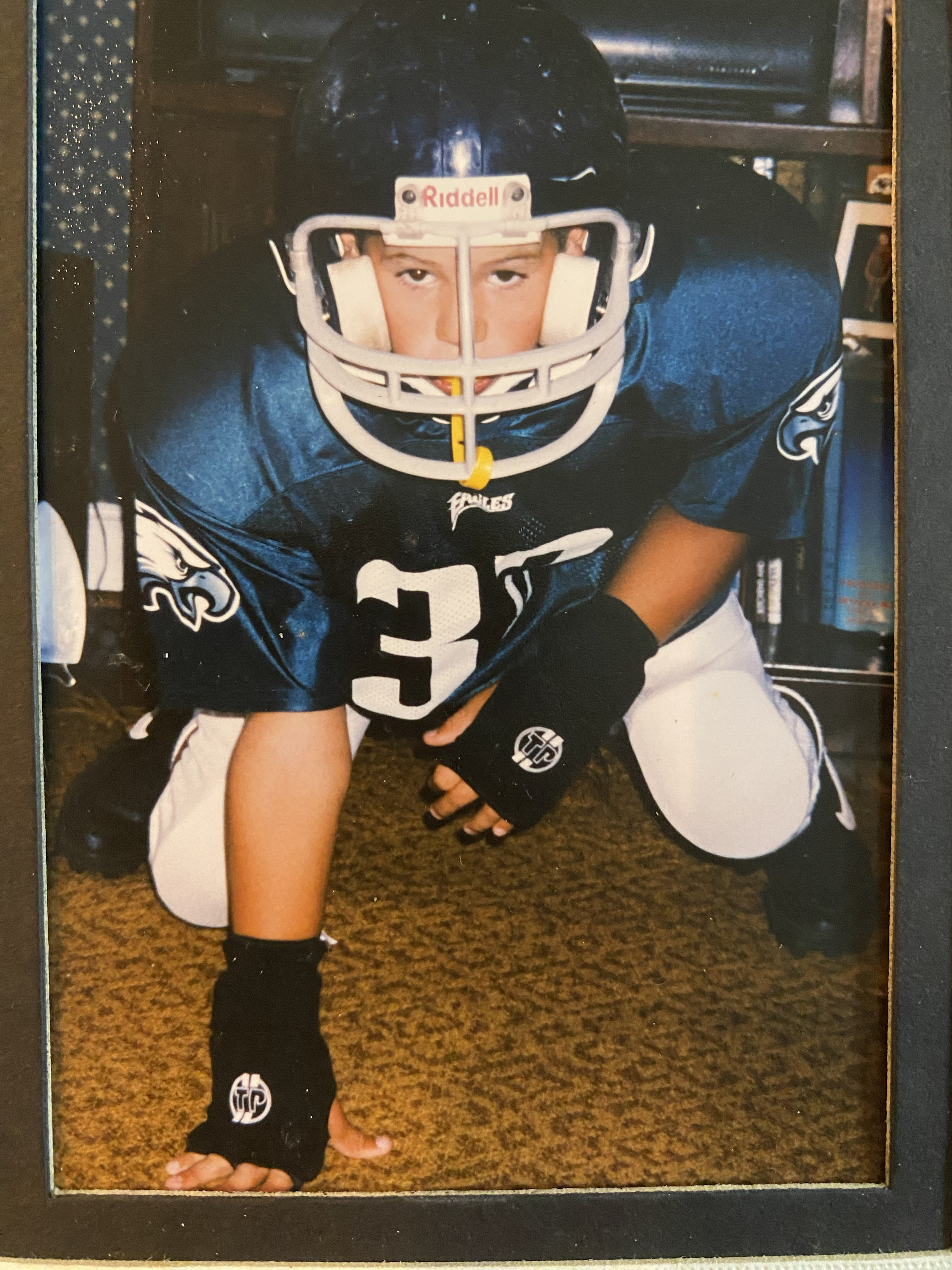
    James Develin rooted for the Eagles as a youth in Gilbertsville. courtesy of James Develin

    After graduating from Boyertown High School in 2006, Develin attended Brown University, where he studied mechanical engineering. He played football all four years, primarily as a defensive lineman, and had success — but not enough to attract NFL attention.

    Nevertheless, Develin was itching to stay in the game. The Ivy League alum had few resources to do so. No teams or agents reached out initially; Jim Ulrich of Enter-Sports Management eventually did, in late 2009, and brought Develin on as a client.

    The Cleveland Browns invited him to a tryout ahead of rookie minicamp in the spring of 2010, but he was quickly cut.

    Not long after that, Ulrich reached out to longtime former Cowboys scout Jim Garrett, who lived in Monmouth County, N.J., and was the father of then-Cowboys assistant Jason Garrett. Ulrich asked if Develin could have a workout.

    The Eagles-loving Develin family had mixed feelings about this.

    “I remember my dad making a comment, like, ‘Man, I want you to succeed, I want you to get in the NFL, but if it’s the Cowboys … man, that might be a tough sell,’” Develin recalled.

    But Develin’s first gig in professional football would come not with Dallas but the Yard Dogs of the Arena Football League, a team that paid $200 per week ($400 for active players).

    Develin lasted just over a month, playing in only one game in 2010. Later that year, he tried out for the Florida Tuskers of the United Football League, and earned a spot as a backup fullback, a position he’d never played with regularity.

    The team’s starting fullback developed vertigo, and all of a sudden, the rookie found himself playing every week. NFL teams began to call.

    He bounced around practice squads, from the Cincinnati Bengals in 2010 and 2011, to the Patriots in 2012, before finding a permanent home in New England.
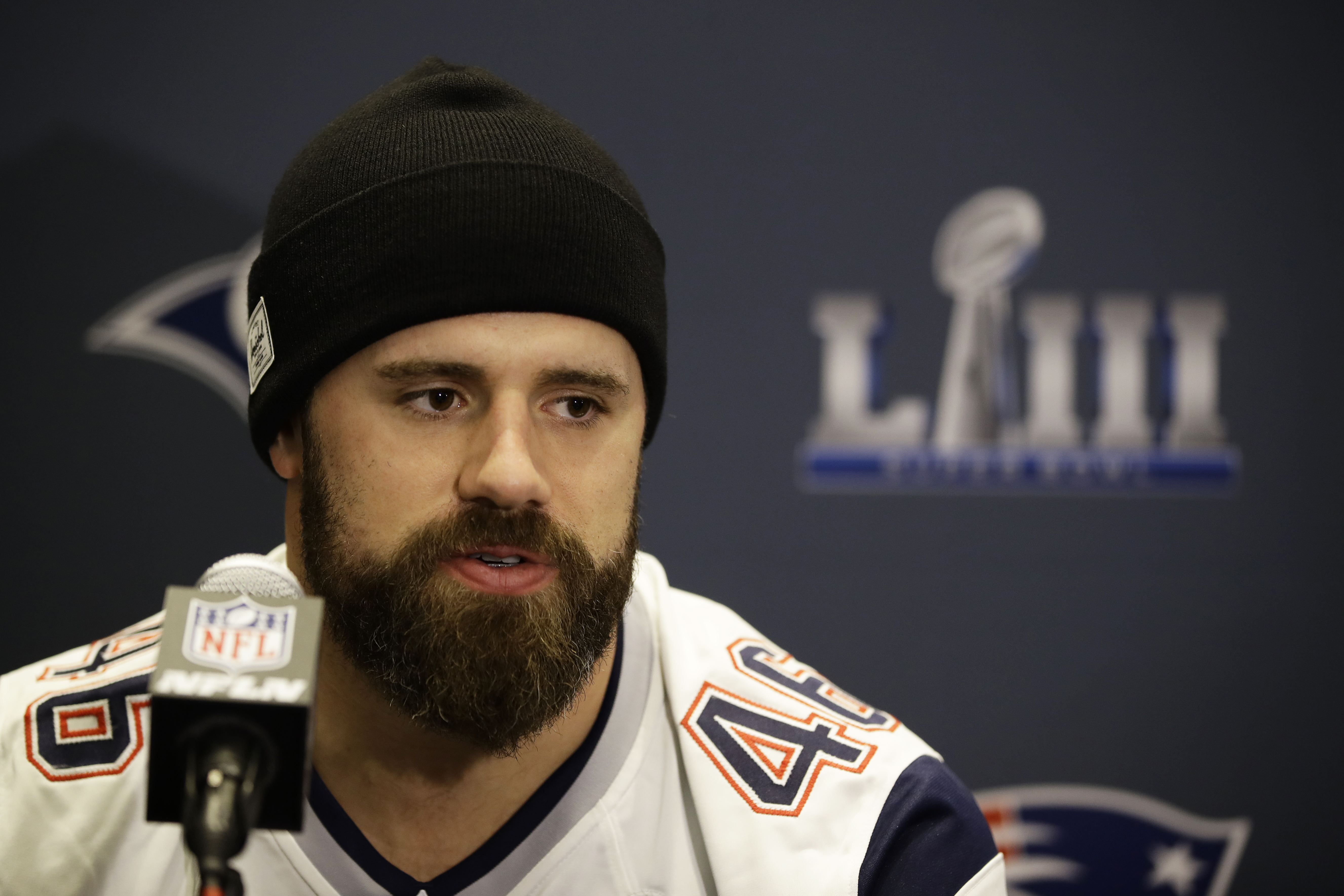
    James Develin would develop into an NFL veteran and win multiple Super Bowls at a position he had never played before becoming a pro. Matt Rourke / AP

    By 2013, Develin was appearing in every game. He was now teammates with the quarterback he derided from a Gilbertsville basement in 2004, and realized that Brady wasn’t a “cry baby,” like he’d originally thought.

    “When I got there in 2012, I was a practice squad guy,” Develin said. “I had a tumultuous journey, playing in two different leagues, changing my position, and doing the whole thing. He didn’t know me from anybody.

    “I could have been there one day, and gone the next. But he gave me the time of day, introduced himself, and said, ‘Hey, we’re happy to have you.’”

    The Patriots re-signed him in the summer of 2015. By 2018, Develin had a Pro Bowl appearance, 81 regular-season games and 10 playoff games behind him.

    When it became apparent that Philadelphia would be his opponent in the Super Bowl, his heart sank.

    “I was like, ‘Are you kidding me?’” Develin said. “Do I have to play the team I grew up idolizing?’”

    The Develins had about 30 family members in attendance at U.S. Bank Stadium in Minneapolis. James was able to get tickets, but so was Jenny, who had a cousin who worked for the Eagles at the time.
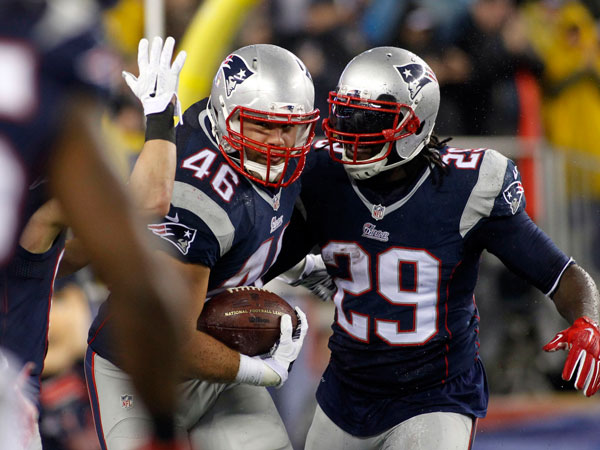
    James Develin (46, with future Eagle LeGarrette Blount) played in 97 NFL games (regular season and playoffs) across seven seasons.

    They were not all donning Patriots gear. The fullback estimated that of the group of 30, about 25 people were in green and white. Some tried to be diplomatic.

    “There were a couple cousins who wouldn’t wear Pats stuff, but they didn’t want to wear Eagles stuff to disrespect me, so they’d wear my college jersey,” he said. “The only person to ever wear a Brown University jersey to an NFL game.”

    In the first quarter, after the Eagles went up 3-0, the Patriots started driving down the field. They had second-and-4 from the Eagles’ 8-yard line, and Develin was tasked with blocking Nigel Bradham.

    He’d blocked Bradham before, when Bradham was with the Buffalo Bills, and felt confident he’d be able to do it again. But on this night, the linebacker was more explosive than ever.

    Bradham beat Develin across his face and tackled running back James White for no gain. It’s a moment the Gilbertsville native thinks about often. If he’d made that block, perhaps the Patriots wouldn’t have had to settle for a field goal.

    “Man, if I had just made that block, would it all have been different?” he mused. “Would I have had to sit around and watch Jason Kelce’s Mummers speech for the next two months?

    “It is such a such an Eagles fan thing to happen. I had a front-row seat to them winning their first one, but I’ll never be able to really enjoy it, because it was at my expense.”

    James Develin and his family became business owners in Brigantine and expanded the operation to Ocean City. courtesy of James Develin

    A ‘little haven’ in Brigantine

    After Develin retired in early 2020, he decided to take a year off. He enrolled in business classes through the NFLPA, and eventually ended up working for the players’ trust, as a liaison between the union and its members.

    He and Jenny and their four kids spent the pandemic at their Shore house in Brigantine. They fell in love with the quiet beach town. It wasn’t too congested, even during summer holidays.

    Life was simpler, almost by necessity; Develin said there was “pretty much one of everything” on the island.

    “It became our little haven,” he said. “I just fell in love with the speed of life down there. Even in the winter, going down there, and just the small-town feel.”

    A mutual friend introduced Develin to the owner of Soulberri, Will White, who was looking to sell the business. Develin bought it in October of 2021, and dove right in.

    The cadence was completely different from what Develin was used to. Instead of getting ready for minicamp in the spring, and training camp in the summer, he was now on Soulberri time, figuring out when to apply for a mercantile license, and pay for insurance.
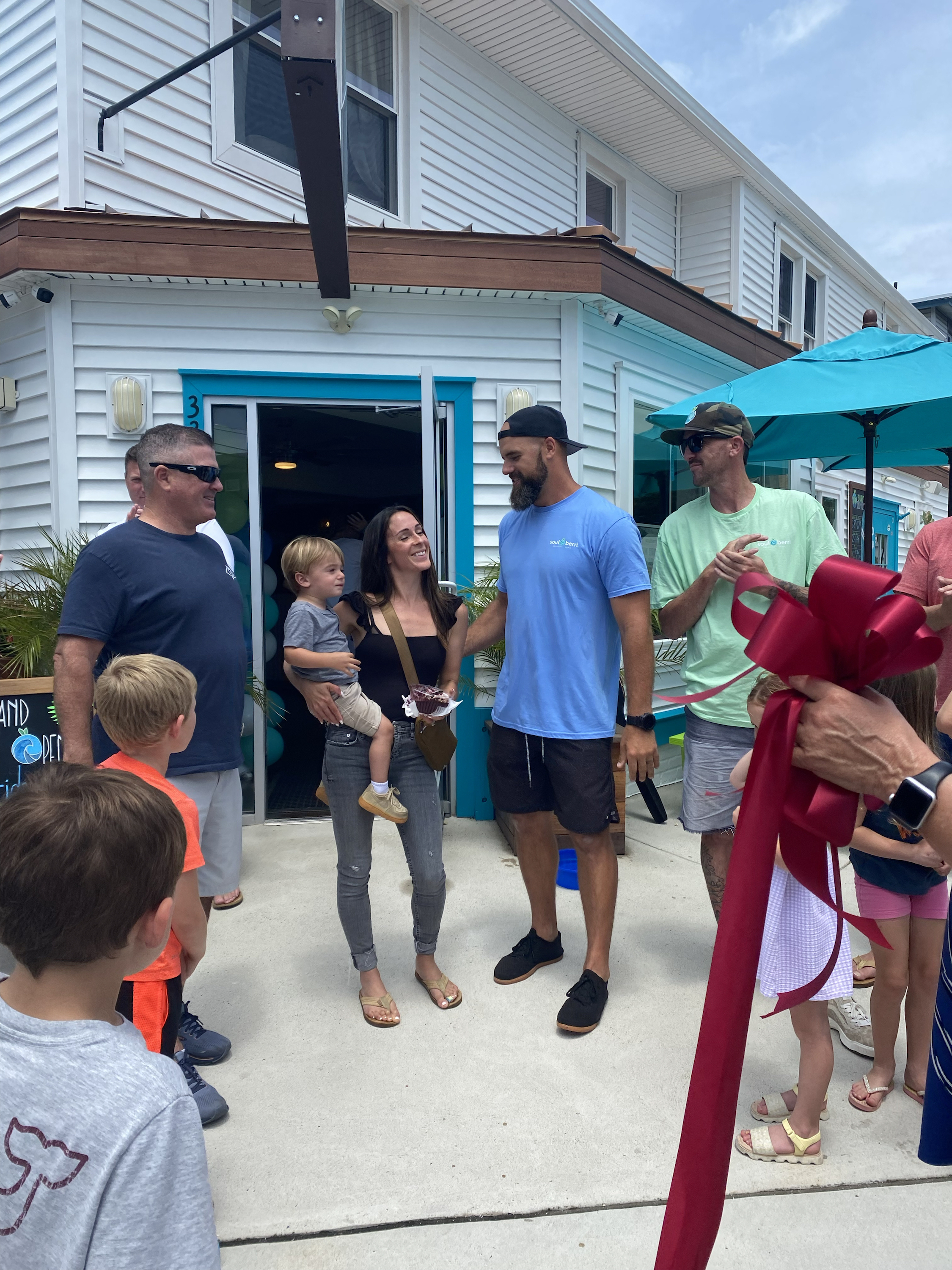
    James Develin (second from right) has rekindled his Eagles fandom despite his Patriots connection. courtesy of James Develin

    But he was a quick study, and made it clear that he was willing to learn. Even before Develin became owner, he had one of Soulberri’s long-tenured employees give him a tutorial.

    She walked him through every station, from washing the dishes, to filling the blender, to topping off the açai bowls. It was a busy weekend, but the former fullback wanted to try a shift himself.

    So he got behind the counter, and worked for a few hours.

    “It was chaotic,” he said. “I didn’t know the recipes, so I felt like I was holding everything up. But I started to get the hang of it.”

    Every now and then, locals will ask if he’s the “football player,” but it doesn’t come up often. And now that Develin is back in the area, he has rekindled his Eagles fandom.

    His kids wear their father’s jersey, but also Dawkins’ and Reggie White’s. They’ve watched “Weapon X” highlights over bowls of cereal.

    Now that Develin has more free time, he is teaching them the unabridged history of the franchise, including “deep cuts” like former quarterbacks Ty and Koy Detmer.

    “So they understand that it wasn’t always the Eagles going to Super Bowls,” he said. “There were a lot of lean years, too. But we’ve had good players, so respect the team and understand what your fanhood means.

    “I loved growing up here. That’s why I came back here. That’s why I want to raise my kids around here. Even though I won a lot of games as a Patriot, I still have a lot of respect and loyalty to this area.”
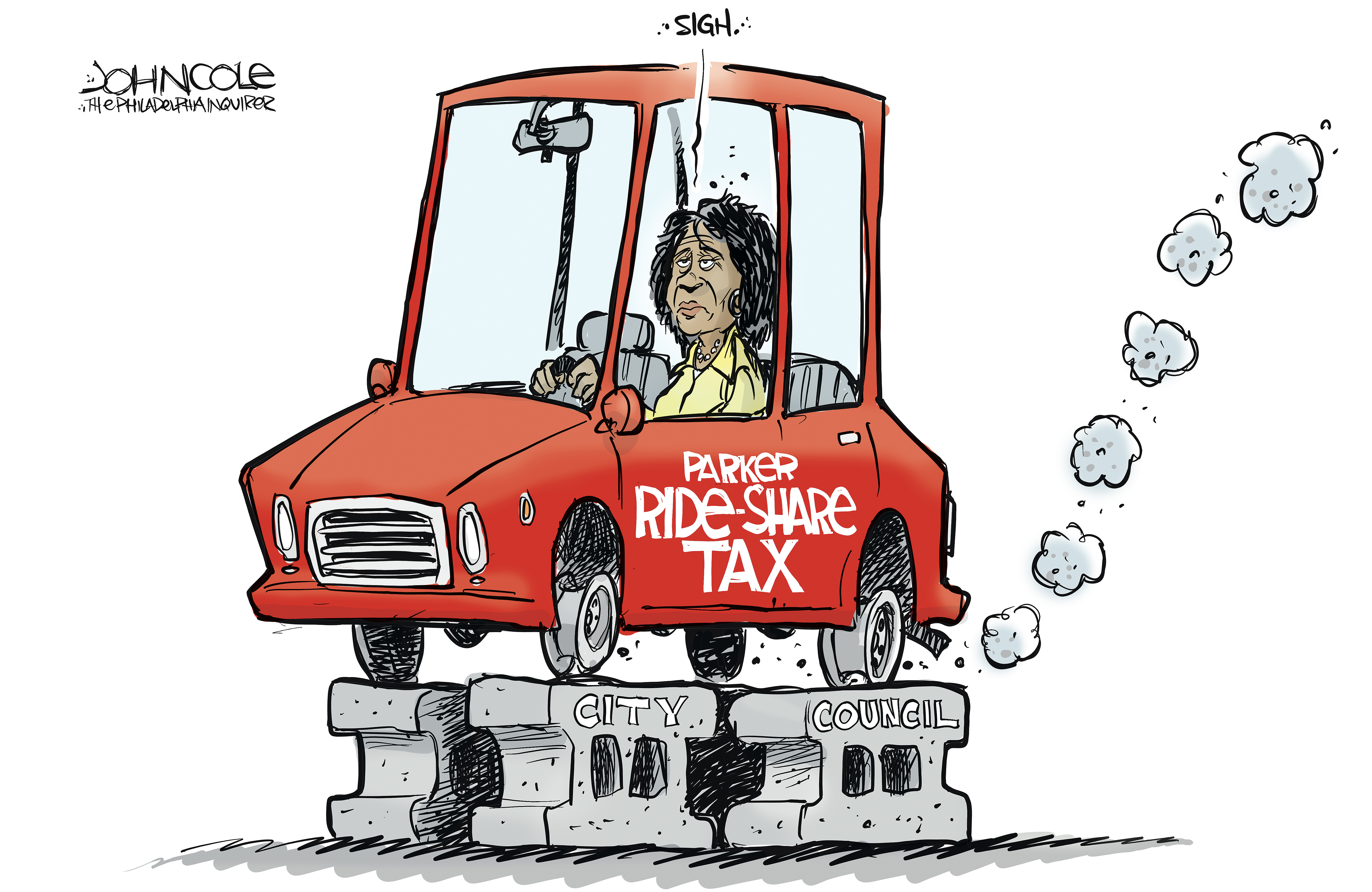

  • No gas, all brake | Editorial Cartoon

    John Cole spent 18 years as editorial cartoonist for The (Scranton) Times-Tribune, and now draws for various statesnewsroom.com sites.

  • Letters to the Editor | June 8, 2026

    Letters to the Editor | June 8, 2026

    Debating farm standards

    Brent Hershey argues in a recent op-ed that a bipartisan farm bill provision that has passed the House of Representatives would undermine Pennsylvania farmers, threaten animal health protections, and destroy markets producers have spent years building. Those are serious claims. They deserve careful examination.

    The provision under debate does not prevent Pennsylvania from regulating farms within Pennsylvania. It does not affect the state’s authority to manage livestock disease, conduct inspections, or respond to outbreaks. Claims that it somehow jeopardizes protections against avian influenza, bovine tuberculosis, or chronic wasting disease simply are not what Congress is considering.

    Hershey also argues that Pennsylvania farmers invested to meet California’s standards and now earn premiums from those markets. Even if true, a business opportunity created by California’s policy does not answer the question now before Congress.

    The actual issue is whether one state may impose farming production requirements on farms located in other states as a condition of market access.

    Reasonable people can disagree about animal housing standards — and on this issue, the American Veterinary Medical Association does not support California’s arbitrary and unscientific approach that it says provides no demonstrable advantage for animals. What should not be in dispute is the question being debated.

    That question is where state authority ends, and interstate commerce begins. It deserves to be characterized accurately and debated on those terms.

    Andy Curliss, chairman, Carver Center for Agriculture and Nutrition, Des Moines, Iowa

    . . .

    California’s Proposition 12 is driving up food costs across the country by imposing mandates on pork and egg farmers. Prop 12 prohibits farmers from selling pork and eggs in California unless they make expensive and arbitrary changes to their operations, driving up costs for all consumers, not just Californians.

    Prop 12 is opposed by major veterinary and farm organizations. If it’s allowed to stand, it will set the stage for more overreaching state laws that drive up the cost of meat and reduce consumer choice at the supermarket.

    So why does pork farmer Brent Hershey approve of the law? Because he happens to already be California-compliant — meaning the law drives up the costs of other farmers who compete with him. It’s a cynical and selfish position.

    Congress should pass a fix in the Farm Bill that keeps state laws within state borders. California should not be allowed to impose costly regulations on farmers in other states. A federal fix will help consumers and farmers by preventing these hidden food taxes from taking hold in more states.

    Will Coggin, research director, Center for the Environment and Welfare

    Delaney Hall protests

    As a child of the ‘60s and a frequent protester, I disagree completely with Will Bunch’s critique of New Jersey Gov. Mikie Sherrill’s handling of the demonstrations at the Delaney Hall immigrant detention center. Any kind of protest by the left instantly becomes fodder for Rupert Murdoch’s conservative news agencies, which spin video images into “lawlessness and anti-Americanism.” I’m sure the governor was torn as to how to handle this situation, and — as much as I admire the protesters — I also see them becoming fodder for a future campaign commercial for the party that spouts “law and order” in every other sentence. You may accuse Sherrill of being too harsh, but she is keeping the Delaney Hall protesters from being the lead story on right-wing television.

    Gerard Iannelli, Haddon Heights

    Cruel Medicaid requirements

    Reading a recent article about stricter rules for Medicaid work requirements, my stomach curdled. The cruelty of Trump’s administration has reached a new high. The preamble to the Constitution states: “We the people of the United States, in order to form a more perfect union, establish justice, provide for the common defense, promote the general welfare …”

    Healthcare is “general welfare.” Yet now, people working at minimum wage jobs 20 hours per week would have great difficulty obtaining and submitting proof of employment to keep their Medicaid. People with terminal kidney disease and cancer will have to prove their inability to work 20 hours a week to keep their Medicaid.

    Where’s the outrage? Let heartless legislators and policymakers know this is unacceptable.

    Mardys Leeper, Bryn Mawr

    Teen employment challenges

    Many adults encourage teenagers to get jobs to build responsibility, gain experience, and prepare for the future. However, what is often overlooked is how difficult it can actually be for teenagers to find and maintain employment while balancing school, family responsibilities, and transportation limitations.

    As a high school student, I have seen firsthand how challenging it is to manage academics, extracurricular activities, and responsibilities at home while also trying to enter the workforce. Many teenagers are eager to work, but employers often want experience that young people have not yet had the opportunity to gain. In some cases, limited transportation and restricted work hours for minors create even more barriers.

    Teen employment is important because it teaches communication, time management, independence, and financial responsibility. Yet, many teenagers are caught in a cycle in which they are told they need experience to succeed, while struggling to find opportunities that allow them to gain that experience in the first place.

    Communities and employers should recognize the value that motivated young workers bring. Offering more flexible scheduling, entry-level opportunities, and support for teen workers would benefit both businesses and young people preparing for adulthood.

    Deanna Giorgio, Ardmore

    Gracious in defeat

    As a college Hall of Fame athlete and U.S. national team coach, I was taught from an early age that competition carries responsibilities beyond simply winning. One of the most important lessons was that when you lose, you shake your opponent’s hand, accept the result with dignity, and work harder to “get them next time.”

    That is one reason I could never again support Donald Trump after the events surrounding Jan. 6, 2021. Disputing election procedures through lawful courts is one thing. But continuing to encourage the belief that the election was illegitimate after repeated court losses, and then watching the U.S. Capitol being attacked during the certification process, crossed a line for me.

    Now, discussions about compensating some individuals with taxpayer dollars who were convicted in connection with the Capitol riot only deepen that concern. As a Republican, I have always believed our party stood for law and order, personal responsibility, and respect for police officers and constitutional institutions. Rewarding people involved in that event feels inconsistent with those values.

    Reasonable Republicans can disagree on taxes, immigration, spending, or foreign policy. But sports taught many of us that character is revealed most clearly in defeat. Leaders, like athletes, are ultimately judged not only by how they win, but by how they lose.

    Thomas E. Feaster, Tampa, Fla.

    Join the conversation: Send letters to letters@inquirer.com. Limit length to 150 words and include home address and day and evening phone number. Letters run in The Inquirer six days a week on the editorial pages and online.

  • Horoscopes: Monday, June 8, 2026

    ARIES (March 21-April 19). The fast way to get to know someone is to be in a totally new situation with them. It creates a shared sense of discovery. Away from routine, people reveal different sides of themselves, form vivid memories and develop trust through experience.

    TAURUS (April 20-May 20). You’ve already analyzed the situation enough. Continued thinking will have diminishing returns. Success depends less on whether you act and more on how you enter the situation. What’s the thing people want here? Can you position yourself to be that?

    GEMINI (May 21-June 21). Some are fluent with ideas but disconnected from emotional realities. Others understand feelings deeply yet struggle with structure. Today features rare and lovely interactions combining emotional awareness with accountability, honesty, boundaries, humor and practical problem-solving.

    CANCER (June 22-July 22). You appreciate fairness and good business not despite life’s inequities but because of them. You have some very creative ideas about how to even the score, shore up inequities and make up for disproportionate sorrows.

    LEO (July 23-Aug. 22). Ask any jury: passing judgment can be exhausting work. Spare yourself the drain by directing your attention toward people you genuinely enjoy, admire and understand. Delight tends to produce far better company than criticism does.

    VIRGO (Aug. 23-Sept. 22). You’re always learning more about how to communicate with people because communication is always evolving. People’s needs, moods and goals change. Your capabilities change. Language itself changes. You adapt like a pro.

    LIBRA (Sept. 23-Oct. 23). Politeness is a foundation of a decent society. Today there’s a shared decorum that keeps people cooperating. While good manners alone can’t solve every problem, they create conditions where people can solve them together.

    SCORPIO (Oct. 24-Nov. 21). Shared human experiences are powerful all by themselves. There doesn’t have to be anything planned or structured or fancy about team building. Just doing something together will be enough to improve vibes and heal rifts.

    SAGITTARIUS (Nov. 22-Dec. 21). As you respond predictably, you’ll earn someone’s trust. If you respond unpredictably, you’ll earn other things, which may include alertness, excitement, fear or wonder. You want them to be comfortable, but you should not let them get too comfortable.

    CAPRICORN (Dec. 22-Jan. 19). In today’s relationship landscape, what’s broken can be fixed. Even so, avoid approaching the issue with a line like, “Can I talk to you?” which only puts others on the defensive. The fix starts in your heart and your imagination.

    AQUARIUS (Jan. 20-Feb. 18). Your experiences have taught you patterns that no book could fully explain. After enough disappointment, tenderness, conflict and repair, you recognize emotional dynamics and respond to challenging exchanges with skill, diplomacy and self-respect.

    PISCES (Feb. 19-March 20). Someone prosperous is looking for someone with whom to share their good fortune. You’ll stand out as a solid prospect, not because you are needy but because you appreciate with enthusiasm and do not take life’s gifts for granted.

    TODAY’S BIRTHDAY (June 8). It’s your Turned Up Year in which the volume of your soul gets dialed to perfect amplification. No more toning yourself down to avoid challenging, upsetting or offending people. You’re around people who get you and want you to shine. More highlights: You’ll be entrusted with the keys to headquarters and hearts. You’ll enjoy the company of those who need you and who are there when you need them. Four fun trips. Leo and Sagittarius adore you. Your lucky numbers are: 9, 30, 44, 2 and 17.

  • Dear Abby | Man’s sobriety hasn’t calmed his anger toward others

    DEAR ABBY: My husband and I have been married 12 years, and we were together five years before getting married. He’s an alcoholic who has been sober for several years, but he wants to argue about everything. He has anger issues, possibly because he was in the military. His health is bad, too.

    I have reached a breaking point and am thinking about divorce because of the way he treats me, my kids and grandkids — except for my son, who he is scared of. He also badmouths my son’s wife. He gets mad because I watch my granddaughter three days a week while her mother works, and sometimes I have both girls.

    My daughter-in-law is an awesome person who does anything for anyone. She’s in the Army Reserves and works full time. She put herself through school and is a social worker as well as a full-time mom! My son is a truck driver, so he’s gone all week. I try to help them out as much as I possibly can. I’m not giving up on my kids and grandkids. Am I wrong for putting them first? What can I do?

    — DOING MY PART IN OKLAHOMA

    DEAR DOING: Your husband appears to be what is known as a “dry drunk.” That’s an alcoholic who managed to quit drinking, but never dealt with the issues that drove him to drink in the first place. He is also an abuser.

    You are not wrong for wanting a life free of hostility and verbal abuse. You are also not wrong for wanting to protect your family from the poison he spews. Because you can’t make this man change who he is, talk to a family law attorney and set yourself free.

    ** ** **

    DEAR ABBY: A group of 10 couples have been friends since meeting in college. Seven of the couples have been married for more than 25 years, and three of the couples have, over the last decade, divorced. The issue is that one man has remarried (his ex is no longer in touch with any of the group). His new wife is demanding and self-centered, with clear narcissistic traits. We love the husband dearly but not his new wife.

    We are planning a once-in-a-lifetime cruise, and nobody wants her on the ship. We know from past experience that she will ruin the trip. How do we tell the husband that they are not invited, and who should deliver the message? We don’t want to end the relationship, but frankly, she cannot go.

    — TRAVEL TROUBLES

    DEAR TRAVEL TROUBLES: No matter how you approach him, know that you run a real risk of alienating your friend if he is forced to choose between his wife and this friend group. If it’s not worth the risk, the group will have to grin and bear her presence with as much grace as can be mustered.

    If you are sure you want to exclude them both, you owe him an explanation. The person closest to him should meet up with him privately and deliver the news. Remind him of the “past experience” where his wife ruined a previous trip. Be specific about what behaviors bothered the rest of the group, and tell him no one is willing to travel with her again.

    You might, however, consider extending him a solo invitation. It’s possible he could use some time away from his charming wife!

  • A Man found shot to death near the Quaker City Yacht Club

    Responding to a radio report of gunfire Sunday afternoon, Philadelphia Police found a man shot to death near the boat ramps of the Quaker City Yacht Club.

    It was just before 5 p.m., when patrol officers raced to 5198 Princeton Ave., where the yacht club is located tucked away near the Delaware River waterfront.

    Within minutes, paramedics pronounced the victim, whose name and age have yet to be released, dead on the scene.

    Investigators are currently working to determine the circumstances surrounding the shooting. No motive has been established, police said.

    The victim became the 59th homicide in Philadelphia in 2026, a nearly 40 percent decrease in killings from the same time last year.

    Anyone with information involving the shooting is encouraged to contact the Philadelphia Police Department’s Homicide Unit at 215-686-3334 or submit an anonymous tip by calling or texting 215-686-Tips.

  • Brandon Marsh sparks Phillies’ offensive surge in 9-5 series finale win over White Sox

    Brandon Marsh sparks Phillies’ offensive surge in 9-5 series finale win over White Sox

    The mural covers the side of a restaurant on a city block in Fishtown. It’s impossible to miss. It also symbolizes promise during this half-decade of Phillies contention.

    And it came to life Sunday.

    It wasn’t only that Brandon Marsh continued a yearlong rise into an All-Star before our very eyes by homering in his third game in a row and leaping to make a catch against the left-field wall.

    No, this time, Alec Bohm and Bryson Stott — the other members of the trio that teammates once dubbed “The Daycare” and inspired the artwork on Frankford Avenue — delivered big fifth-inning hits in a series-winning 9-5 victory over the White Sox in Citizens Bank Park.

    “The best thing about this team,” said backup catcher Rafael Marchán after the Phillies won for the ninth time in 12 games to maintain their hold on a wild card, “is if the big guys can’t do it that day, there’s going to be someone that’s going to find a way to help us win.”

    Marchán might as well have been speaking for himself after homering in the second inning of a seesaw game in which the Phillies led 3-2 and 4-3 but also trailed 2-1 and 5-4.

    But it’s really more about Bohm and Stott. Like Marsh, they were supporting characters who brought youthful energy when this run began in 2022. Now, they bat behind the star trio of Kyle Schwarber, Trea Turner, and Bryce Harper.

    You might say the Daycare is all grown up.

    Into what, though? Marsh has matured as a core player, perhaps even the Phillies’ most consistent hitter in their season-reviving 26-11 run under interim manager Don Mattingly. He leads the majors with a .338 average and has an .889 OPS.

    Remember when Marsh started only against right-handed pitching? Yeah, that’s a thing of the past. He has been one of the best outfielders in the majors.

    “It seems like now we’re starting to talk about him every day,” Mattingly said. “He’s just swinging the bat, and he continues to swing it. And not only average but power, you know? It’s extra-base hits, he’s driving in runs.”

    Said Marsh: “I don’t know about the power. That was first row, bro.”

    OK, so Marsh’s leadoff homer in the third inning did eke over the fence. But it came on a curveball, and he drove it the other way to left field to restore the lead for the Phillies at 4-3.

    Alec Bohm hits a sixth inning RBI single against the Chicago White Sox on Sunday.Yong Kim / Staff Photographer

    And if Marsh had plans to go away for a few days in the second week of July, he should probably cancel.

    The All-Star Game is beckoning.

    “I’d be lying to you if I said it wasn’t on my mind, but I’m really not focused on that,” Marsh said. “I’m really just trying to enjoy right now. I’m just enjoying this moment. I’m really focused on just trying to be present here with these guys and still just be a sponge to my teammates and just keep learning from them and just trying to be the best I can be.

    “But it would be really, really cool to be a part of that group this year, especially here in Philly.”

    Yet while Marsh has ascended to the level the Phillies believed he could reach when they traded for him at the deadline in 2022, Bohm and Stott struggled through much of the first two months of the season.

    Even now, these were the numbers they carried into the fifth and sixth spots in the batting order entering play Sunday:

    • Bohm: .218 average, seven homers, .624 OPS.
    • Stott: .216 average, six homers, .638 OPS.

    But trailing 5-4 in the fifth inning, Bohm punched a game-tying double the other way to right field before Stott drove in Marsh as the go-ahead run with a single to center field.

    Marsh, Bohm, and Stott combined to go 5-for-10 with three runs and five RBIs.

    And there it was: hope, symbolized by the three players in a 2-year-old mural of the “Daycare.”

    “That whole middle of our order, all really good today,” Mattingly said. “It felt like it was up and down the order today.”

    The Phillies recorded 11 hits, five of which came with runners in scoring position. And they needed it. Aaron Nola lacked his usual control. He walked four batters, three of whom came around to score, and lasted only 4⅓ innings.

    After weeks of being pushed back into contention by otherworldly starting pitching — “If we wouldn’t have won those games, you all would have been asking a lot more questions about the offense,” Mattingly said — the Phillies busted out for 20 runs in the three games against the White Sox. Before this week, they went 13 games without scoring more than four runs in a game.

    It surely helps when it’s more than Schwarber, Harper, and Marsh driving in the runs.

    “We’ve just got to keep this train going,” Marsh said. “It’s been driven by our pitchers. They’ve set the tone for us. And as hitters, we’ve picked it up as well. We’re just trying to give those guys a couple of runs because that’s pretty much all they need.

    “Just trying to do our part so they can do theirs.”

  • Kennedy shows minimal engagement with vast health portfolio

    Kennedy shows minimal engagement with vast health portfolio

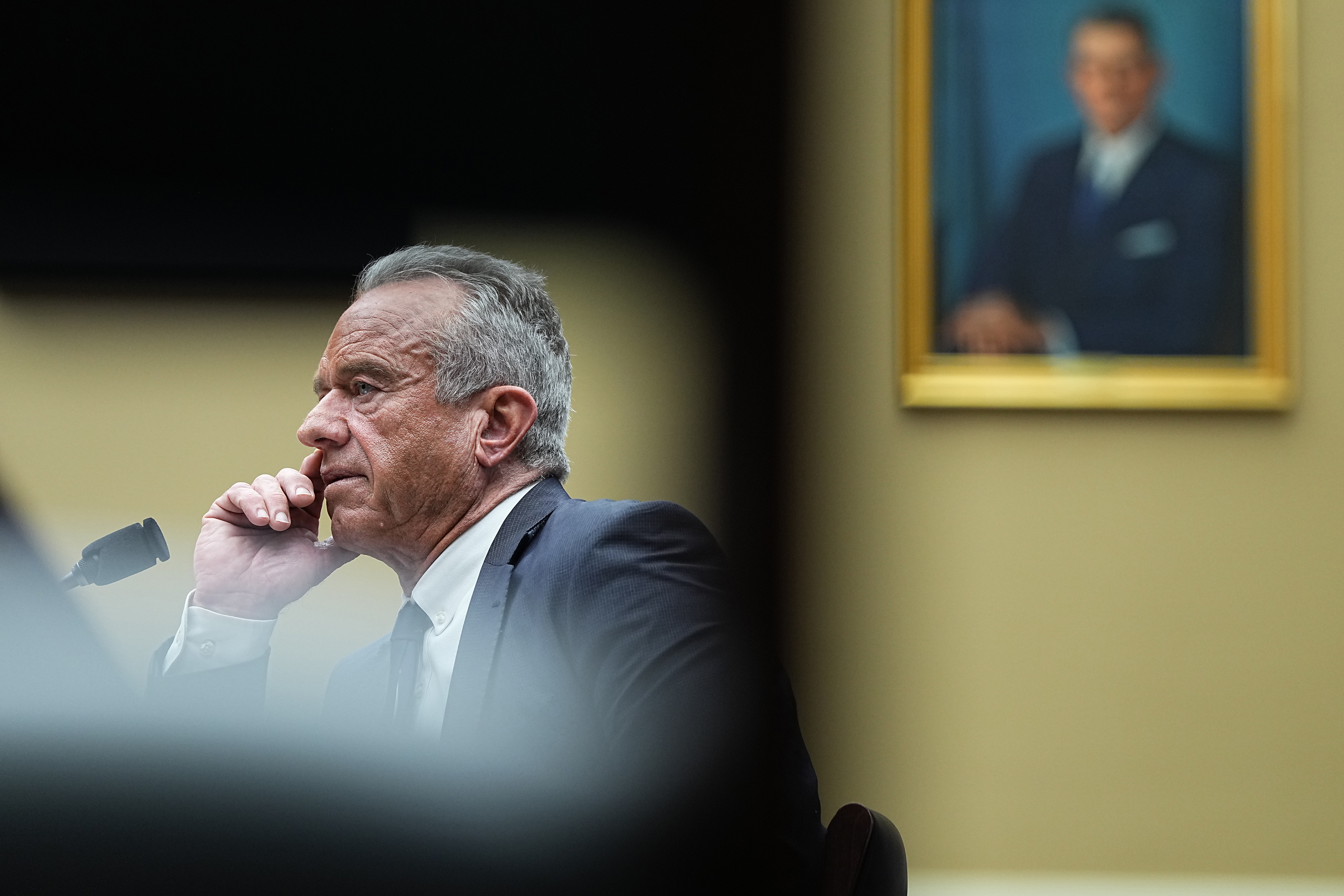
    WASHINGTON — Shortly after the World Health Organization declared the Ebola outbreak in Africa a public health emergency, a reporter asked Health Secretary Robert F. Kennedy Jr. if he was worried about the virus. Six Americans had already been exposed. His response was brief: “Yeah, we’re working on it.”

    In the nearly three weeks since, as the Centers for Disease Control and Prevention imposed travel restrictions to keep the virus from coming to the United States, Kennedy has made no public comments about the spreading outbreak. He has received few briefings about the virus from CDC scientists, although he speaks daily to the acting director, according to people familiar with his response.

    Kennedy’s approach to the crisis reflects his broader management of the Department of Health and Human Services, which affects the health of 340 million Americans and provides healthcare to 40% of the population through Medicare and Medicaid.

    Kennedy has shown little interest in managing the details of work in his department, according to multiple colleagues. Instead, they say, he is single-mindedly focused on his top priorities, including food recommendations and pesticide exposures, and hunting for evidence to support his long-held beliefs that vaccines are harmful.

    Deeply mistrustful of career civil officials, the secretary has surrounded himself with a close circle of handpicked advisers and stacked agencies with political appointees aligned with his views. While major posts have sat vacant and a wave of veteran health experts and scientists have departed, Kennedy has remained isolated from much of the department’s top staff.

    He rarely engages with members of Congress, colleagues said, unless he is asked to testify. He has made just one known visit to the CDC, after a gunman opened fire on its headquarters and killed a police officer last August.

    This examination of Kennedy’s leadership style is based on the accounts of a dozen people who have had direct contact with him as secretary, as well as other health department employees, all of whom spoke on the condition of anonymity to avoid retribution.

    Kennedy and the department did not directly address questions about his leadership style.

    The secretary’s detachment from much of the work of the agency, along with the administration’s deep staff cuts and his attacks on career staff, have driven down morale, they say. It’s a dynamic that could threaten the department’s ability to protect Americans in a crisis, according to public health experts and former secretaries.

    Critics say one of the most urgent problems is Kennedy’s failure to act more swiftly to address a leadership vacuum. There is no surgeon general. About half of the 27 institutes and centers at the National Institutes of Health are run by acting directors. The acting chief of the National Institute for Allergy and Infectious Diseases was recently fired, as was the nation’s top drug regulator.

    The leader of the Food and Drug Administration quit last month under pressure over tobacco policy. Kennedy fired the CDC director last August; it is now run on an acting basis by Jay Bhattacharya, who has another huge job as director of the NIH.

    “You would never accept a major corporation operating this way,” said Michael T. Osterholm, director of the University of Minnesota Center for Infectious Disease Research and Policy, who has advised health secretaries of both parties.

    “If the CEO lacked deep expertise in the company’s business and the leaders of its most important divisions were missing, investors would revolt,” Osterholm said. “Here, the stakes are much higher. The mission is protecting the health and safety of the American people, and we’re confronting serious disease threats without permanent leadership in some of our most important public health agencies.”

    To address the management gaps, the White House and Kennedy initiated a shake-up in February, elevating Christopher Klomp, a department official and former healthcare executive, to serve as the secretary’s chief counselor and smooth out operations. In a statement, Courtney Spencer, who left the Labor Department two weeks ago to become Kennedy’s top spokesperson, said the health department was “aggressively recruiting top talent to fill every remaining vacancy,” adding, “Nothing has slowed our ability to execute.”

    Kennedy’s allies say that while his management style may be different from that of his predecessors, he is leading in other ways by taking stands on matters of importance to Americans, including healthy eating and tackling chronic disease.

    “You do not come to Washington to challenge powerful interests, disrupt decades of business as usual, and demand accountability to make friends,” Mehmet Oz, director of the Centers for Medicare and Medicaid Services and a close ally of Kennedy’s, said in a statement provided by the health department. “You do it to deliver results.”

    Other advisers say Kennedy is also running into the realities of Washington, including a Congress that has refused to confirm some of President Donald Trump’s nominees.

    “Very predictably, you get into governing, you get into a toxic political environment, and a situation where there’s trillions of dollars of interest and you have the burden of having to do policy,” Calley Means, a close adviser to Kennedy, said at a recent forum hosted by Harvard University. “Nobody executes perfectly.”

    A remote presence

    Kennedy keeps a low profile at the health department’s headquarters, a hulking building that faces the National Mall near the U.S. Capitol.

    When he is in town, he exercises at his gym before work, then usually arrives at about 10 a.m. and leaves by 4 p.m., his colleagues say. He spends much of his day in closed-door meetings, according to those who work with him, and has little direct engagement with his staff.

    Every Tuesday at 10:30 a.m., the chiefs of the department’s 13 operating divisions gather in the secretary’s suite to update leadership on their activities. At the outset of his tenure, Kennedy was rarely there, either virtually or in person, according to three people familiar with his schedule. Since Klomp’s elevation, he now shows up once a month. But when he does attend, he often appears disengaged and spends the time scrolling on his phone, according to people in attendance. Several described him as “checked out.”

    Once, when he arrived to the meeting 15 minutes late, Kennedy offered a self-deprecating apology, according to one person in the room: “Thank you for putting up with my dysfunctional self.”

    Health department officials did not respond to a request for comment about the meeting or Kennedy’s remark.

    His lack of interest in matters that are not high on his priority list has meant that he has not engaged at critical moments, colleagues said.

    When measles killed two children in Texas early last year, Demetre Daskalakis, who led the response but has since left the agency, asked repeatedly to brief Kennedy but was rebuffed, he said.

    Susan Monarez, who briefly served as Kennedy’s CDC director before she was fired, had little direct interaction with the health secretary until she ran afoul of him on vaccine policy. She later told senators that during a series of tense meetings with the secretary, she was “directed to only work with the political appointees that he had put in place at CDC, and not to speak or work with the career scientists.”

    In the current Ebola crisis, Kennedy has left the department’s response to Bhattacharya, a health economist with no prior experience in public health even though he is leading the CDC. Bhattacharya, who also led the response to a recent outbreak of hantavirus, wrote an opinion essay published in the Wall Street Journal on Wednesday saying that while the “risk to the American public remains low, Ebola is dangerous.”

    A White House spokesperson, Kush Desai, said the agency’s “rapid and comprehensive response” to the Ebola outbreak proved that “under Secretary Kennedy’s leadership, HHS continues to safeguard the health and wellness of the American people.”

    Spencer, the HHS spokesperson, said the health department had “executed an immediate and coordinated response” under Kennedy’s leadership.

    But key vacancies inside the health department have made the response more challenging, people familiar with the situation said.

    The Administration for Strategic Preparedness and Response, responsible for pandemic preparedness and for standing up field hospitals and quarantine facilities in Kenya, is currently run on an acting basis by John Knox, a former Los Angeles firefighter who founded the group Firefighters4Freedom during the pandemic to fight vaccine mandates.

    As the Ebola outbreak has spread, Secretary of State Marco Rubio offered a tacit rebuke of Kennedy’s move last year to withhold funding from an international vaccine alliance, suggesting the State Department was taking back management of the U.S. relationship with the alliance.

    “We are going to reengage,” Rubio told lawmakers last week. “We need to drive this to an outcome.”

    A daunting portfolio

    Under any circumstances, the Department of Health and Human Services is difficult to run. It has 13 operating divisions covering a vast array of issues, such as child welfare and pandemic preparedness. Past secretaries from both political parties say there are three main ingredients for success: understanding the work of the divisions, strong crisis communication, and muscular coordination with state, local, and international health leaders.

    Tommy G. Thompson, who as health secretary to President George W. Bush faced complaints about his management of the 2001 anthrax crisis, spent a week at each one of the operating divisions at the outset of his tenure, and made frequent trips to Capitol Hill to advocate for the department. In an interview last year, he said he “would strongly suggest” Kennedy do the same.

    “The department is so vast and so complex,” Thompson said, “and you have to be prepared.”

    Kathleen Sebelius, a former Kansas governor who resigned as President Barack Obama’s health secretary after the flawed rollout of the healthcare.gov website, said she met with the division chiefs regularly, likening them to her cabinet.

    “My goal was to really be informed by the scientists, to make sure that NIH was at the table, that FDA was at the table, that our global health people were at the table,” Sebelius said in an interview. “I was really schooled by the people who had been there before and who knew what the hell they were doing.”

    Kennedy, by contrast, has delegated broad authority to Stefanie Spear, a longtime adviser who has been with him since his days as an environmental lawyer and functions as his protector and defender, according to people who know them.

    Spear runs meetings for the secretary, accompanies him on official trips, and keeps a list of his policy projects on a private spreadsheet to which his policy team has no access. There are more than 50 items on the list, one person who has seen it said.

    All requests for the secretary’s decisions and meetings go through Spear. When Kennedy is asked a question, his frequent response is “just run that by Stefanie.”

    Colleagues say that her tight control has slowed department operations.

    After Kennedy promised Congress that the FDA would investigate the safety of the abortion pill mifepristone, the agency proposed updating a set of sophisticated databases of electronic records it needed for the research. But the project was delayed for months by Kennedy’s office, according to two people with detailed knowledge.

    When a gunman opened fire on the CDC last August, Kennedy was fishing with Native American leaders in Alaska. Health department officials wanted to get a statement out to the news media. But it was held up for hours, several said, while Spear sought approval from the White House.

    Frustration with Spear, who served as Kennedy’s communications director during his campaign and oversees his public comments, has fueled some key departures.

    Kennedy is on his third top spokesperson; the first two quit in frustration, according to people familiar with their decisions. The secretary has also run through two chiefs of staff; he fired the first one, and the second was pushed aside in favor of Klomp.

    In a statement, Kennedy praised Klomp and Spear as “two of the most effective leaders in government.” He said Klomp had ”been instrumental in driving operational excellence, strengthening accountability, and ensuring HHS delivers results for the American people,” and that Spear “keeps our team focused on results and ensures the president’s and my priorities get across the finish line.”

    Klomp has moved quickly in the search for a new CDC director, with a nominee now awaiting Senate confirmation, as well as for other top leaders for the agency. He also brought in a new team of policy advisers to the secretary and instituted daily meetings between Kennedy and the leaders of the “Big Four” agencies: FDA, CDC, NIH, and the Centers for Medicare and Medicaid Services, according to three people familiar with the department’s operations.

    He has also sought to address low morale by starting a regular newsletter in which Kennedy addresses employees as “the dedicated professionals of HHS.”

    The secretary, however, has been out of the loop on some key decisions. When Tracy Beth Hoeg, the FDA’s top drug regulator, was fired by FDA leaders in May, the secretary did not learn of it until after it happened, according to three people familiar with the events.

    There is no question that Kennedy is changing the national conversation around health in America, especially healthy eating. While his vaccine agenda has so far been stymied by court decisions, he has scored “wins,” as he likes to call them, notably by flipping the food pyramid, persuading medical schools to revamp nutrition education, and convincing some food makers to abandon artificial dyes.

    He travels often and makes aggressive use of his platform to promote his priorities, including on social media and The Secretary Kennedy Podcast, which began in April. Last week, he made stops in Wisconsin to spotlight the work of dairy farmers and faith-based groups working in addiction recovery, and New Hampshire to announce an effort to combat Lyme disease.

    Colleagues say he also makes visits to Scottsdale, Ariz., where his son and daughter-in-law live, and Florida, where he stays at the Palm Beach mansion owned by Oz.

    After Memorial Day, the public got a glimpse of him there. Kennedy posted video of himself, in a suit and tie, capturing two black racer snakes on Oz’s patio. One of them bit him.

    This article originally appeared in the New York Times.

  • Philly’s 2026 Pride takes over Benjamin Franklin Parkway

    Philly’s 2026 Pride takes over Benjamin Franklin Parkway

    With the sun shining and the grand vista of the Philadelphia Art Museum steps framing a new venue, crowds poured into Philadelphia’s 2026 Pride festivities on Sunday — the first time the LGBTQ+ event was ever hosted on Benjamin Franklin Parkway.

    “This is beautiful,” said Drew Galella, 27, of King of Prussia, toasting his boyfriend, Rich Jann, 42, also from King of Prussia, and their friend, Kaitlin Kirwan, 41, of South Jersey, with their first vodka lemonades. Regular attendees of Philly Pride events — hosted in the Gayborhood since 2022, and Penn’s Landing before then — they cheered the spacious festival grounds, which ran along the Parkway, from Eakins Oval to 21st Street. The celebration had stepped off at 11 a.m., with a parade starting at 13th and Locust Streets.

    Participants hold a large Pride flag during the annual Pride Parade in Philadelphia on Sunday, June 7, 2026.David Maialetti / Staff Photographer

    By 12:30 p.m., the group had easily wound through fast-moving ticket lines — this year also marked the return of a festival admission fee — and strolled the celebration’s vastly expanded vendors’ row and wide-open performance areas, and grabbed their cocktails without a wait.

    “The change of venue is perfect,” said Jann.

    The new location is a means to accommodate larger crowds — an estimated 147,000 last year — and improve safety, the organizers have said. But the changes, including the $10 cost of an entrance band, were not well-received, and many took to social media with their frustrations and concerns over whether this move would hurt the Gayborhood.

    Philadelphia is no stranger to the pay-for-Pride model; before 2022, the festival charged an entrance fee. But still, the ticketing policy sparked discourse about inclusivity and the corporatization of Pride parades, which were first held to commemorate the Stonewall riots in New York City.

    In an email to The Inquirer ahead of Sunday’s festivities, Philly Pride 365 spokesperson Brandon Szeker said that “given the various factors that could potentially impact ANY event,” the organizers were “not concerned about ticket pricing.”

    “There are many community organizations offering free tickets, so it’s really up to the consumer to make the best decision for themself,” Szeker said. “Pride is where you stand.”

    Other cities, like St. Louis, have adopted an admission fee in response to major sponsors pulling or scaling back their support as President Donald Trump targets diversity, equity, and inclusion initiatives. In Pittsburgh, Pride organizers told NPR they anticipated securing 30-40% of the sponsorship money this year that they were able to fundraise a few years ago.

    Szeker said Philly Pride 365 has not experienced this drop in support and has previously dumped “problematic businesses,” like Target, Wawa, AARP, and Burlington, from its list of backers.

    When asked about a possible missed economic boom for the Gayborhood, Szeker pointed to Philly Pride 365’s “Out For Good,” a Saturday street festival “centered on the [Gayborhood], uplifting the businesses, venues, and spaces that help sustain LGBTQ nightlife in Philadelphia year-round.”

    This year’s sprawling event did seem to attract many first-timers, including neighborhood residents and out-of-towners.

    Sweet Suki, from Upstate New York, posed for a portrait at the Philly Pride Festival on the Ben Franklin Parkway on Sunday, June 7, 2026 in Philadelphia.Monica Herndon / Staff Photographer

    “It’s so great to see everyone come together for such a beautiful cause,” said Erin Bell, 24, of Delaware, who made the trip with friends.

    Others said they were extra proud to see the event hosted at Philadelphia’s most prominent celebration grounds, especially now, when their community is under attack from lawmakers and others.

    “It’s the City of Brotherly and Sisterly Love — it’s just so wonderful to see all this love here,” said Abby Craig, 23, of Bucks County.

    Her friend, Phillip Rodriguez, 27, of North Philly, said that while he loves the Gayborhood, he felt the move to where Philly holds its biggest festivals makes a statement that Pride isn’t just for LGBTQ+ people.

    “It says that something that everyone should enjoy,” he said.

    Manning the Mazzoni Center booth, where volunteers connected crowds with LGBTQ+ health and wellness info, the center’s chief executive officer, Simon Trowell, said he understood upset feelings over the move but praised the added visibility.

    “What a wonderful opportunity to celebrate the community and the city on America’s 250th anniversary,” he said. “We are delighted to be here.”

    Jaedan Goodman, of Burlington, N.J., holds a large Pride flag during the annual Pride Parade in Philadelphia on Sunday, June 7, 2026.David Maialetti / Staff Photographer

    Meanwhile, the Gayborhood’s sidewalks and iconic shops and bars buzzed with crowds, who said they preferred to keep the party where they believed it belongs.

    “Pride should remain a protest and support local businesses, not corporations,” said Nikki Schwartz, 28, of Spring Garden, who along with her wife toured the recently opened Philly Pride Visitor Center at 12th and Locust Streets, one of the few LGBTQ+-focused visitor centers in the nation. A lot of her friends felt the same, she added.

    Nearby, Tonka Meares, 58, and her friend, Lorre Chavez, 60, both of Philly, said they had not yet made up their minds whether to visit the festival or stay in the neighborhood, where they have celebrated for 20 years.

    “This is the Gayborhood,” said Meares. “It should be here.”

  • Andrew Painter presses for command; Don Mattingly asked to join NL All-Star staff

    Andrew Painter presses for command; Don Mattingly asked to join NL All-Star staff

    The lessons are coming quickly for Andrew Painter in his first major-league season.

    Sometimes, though, it’s as basic as throwing a strike.

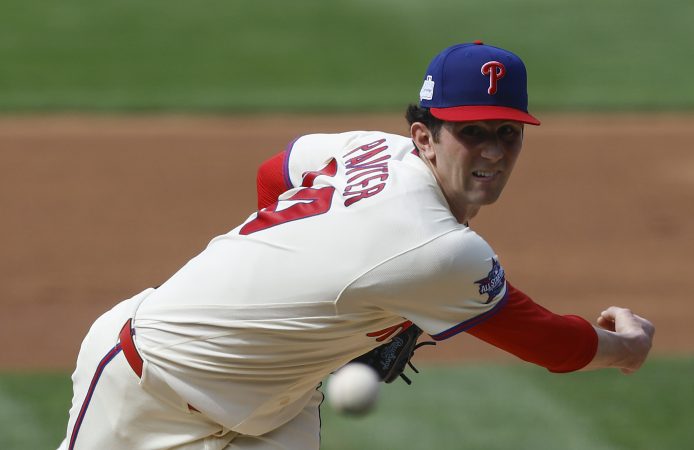
    Take, for instance, the first batter Saturday. Painter fell behind in the count and tried to get White Sox leadoff man Sam Antonacci to swing at a fastball above the zone. Instead, Painter hit him, the beginning of a tone-setting three-run rally in an eventual 6-3 Phillies loss.

    “He beat himself there by trying to command a pitch [in a] 2-1 [count] when I just need you to control the zone and collect a strike and move it to 2-2 on a foul ball,” pitching coach Caleb Cotham said Sunday. “Say that wasn’t commanded as well, but you’re 2-2 now vs. you commanded the heck out of trying to go up and in and you missed two inches left of where you’re trying to go.

    “You need to command the count by throwing strikes, and that, for him, comes first. If you’re ahead in the count, you get to throw to more aggressive locations. He’s trying a little too hard to command perfect locations, which gets him behind, and it’s tough to work back from that on good hitters.”

    Eleven starts into his major-league career, Painter has a 6.21 ERA, 108th among 111 pitchers who have worked at least 55 innings this season.

    It’s not what the Phillies expected from the 23-year-old righty, their most hyped pitching prospect since Cole Hamels.

    Andrew Painter throws against the Chicago White Sox on Saturday.Yong Kim / Staff Photographer

    Most surprising, though, is the ineffectiveness of his fastball. Opponents are batting .390 and slugging 585 on a heater that ranks in the top 75th percentile in average velocity (96.6 mph), according to Statcast.

    Some rival talent evaluators suggest that Painter may be able to amplify his fastball by getting more extension through his delivery. With less time to react, hitters perceive the pitch to be even faster than it is.

    Despite his 6-foot-7 frame, Painter ranks in only the 51st percentile with 6.5 feet of extension. By comparison, 6-7 Brewers ace Jacob Misiorowski reaches upwards of 7.5 feet.

    But Cotham is focused on less complicated things.

    “I can sit here and say I don’t necessarily care about extension as a metric,” Cotham said. “I think extension is as important as it is for a person to throw good pitches.”

    After the first inning Saturday, in which Painter walked two batters in addition to hitting Antonacci, Cotham said they talked about “trying to let it rip with full belief right down the middle.”

    “If he’s in the zone a little bit more, I’ll take my shot there,” Cotham said. “When he’s at his best, he’s controlling down and up. It’s not just this constant up, kind of noncompetitive miss.

    “Big-league hitters are very good at hitting fastballs, and obviously the fastball’s gotten hit. But there’s a different type of fastball where it’s like, if I have enough stuff behind it, belief behind it, the same pitch that a guy maybe hits out, now he fouls it off.

    “So, I think the path through is not, try harder to be more pinpoint. It’s more belief that I’m good enough, and I need to throw strikes when I need to throw strikes and balls when I need to throw balls.”

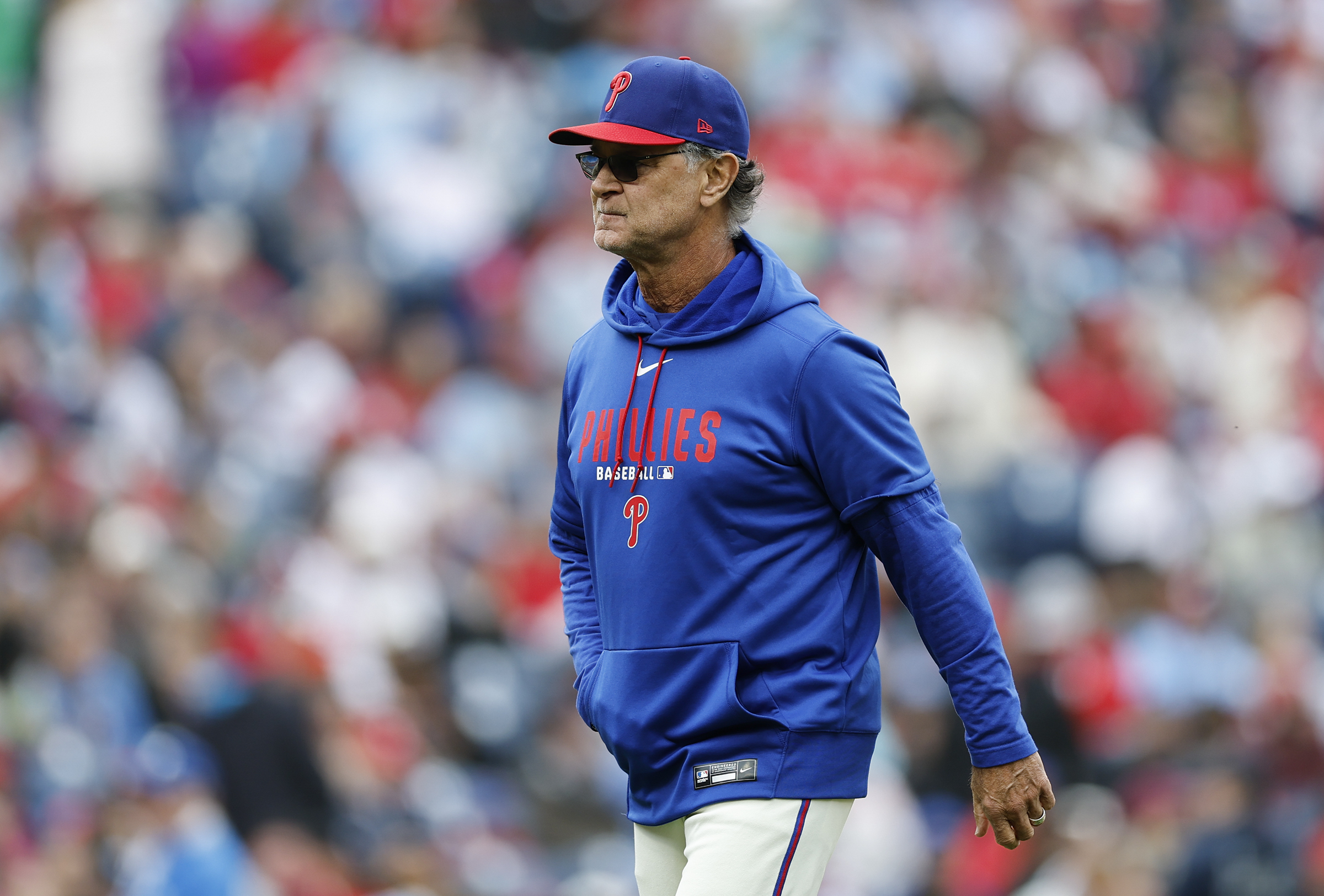
    Phillies interim manager Don Mattingly has an offer to serve on the National League coaching staff for the All-Star Game next month.Yong Kim / Staff Photographer

    Star man

    Fan balloting for the All-Star Game got underway only a few days ago, but the Phillies already have one All-Star.

    Interim manager Don Mattingly confirmed that Dodgers manager Dave Roberts asked him to join the National League coaching staff. He deferred comment until MLB announces the staffs, but USA Today reported that Roberts reached out to Mattingly and Cardinals manager Oli Marmol.

    It would be the second time that Mattingly has coached in an All-Star Game. As manager of the Dodgers, he was on then-Giants manager Bruce Bochy’s NL All-Star staff in Cincinnati in 2015.

    “Any time you can be involved with the All-Star team, obviously it’s an honor,” Mattingly said, “The All-Star Game is a big deal. It’s kind of like an award show almost for MLB, right?”

    Mattingly, hired in January by the Phillies as bench coach, thought his managerial days were over until he was tapped to replace deposed manager Rob Thomson on April 28.

    As a player, Mattingly was selected for six consecutive All-Star Games. His favorite memory: meeting Rod Carew at his first All-Star Game in 1984 at Candlestick Park in San Francisco.

    “He was kind of the guy I watched as a kid and kind of patterned hitting after, and Rod signed a bat for me and brought it to me,” Mattingly said. “He obviously read something that I talked about it. That was probably my [biggest memory], just making the first one and then having Rod reach out.”

    Extra bases

    Top pitching prospect Gage Wood allowed one run in four walk-free innings Friday night for double-A Reading. He has allowed three runs in 11 innings with 14 strikeouts and one walk in three starts since the Phillies promoted him two levels from low-A to double A. … Cristopher Sánchez (7-2, 1.46 ERA) is scheduled to start at 7:07 p.m. Monday in Toronto against Blue Jays lefty Patrick Corbin (2-2, 3.98).