Blog

  • La Famiglia Ristorante still glitters after 50 years in action

    La Famiglia Ristorante still glitters after 50 years in action

    We were led to a table lost in the shadows in the farthest corner of La Famiglia. The tall white candle waiting for us was lit and its flickering wick filled the space with a bright warm glow that revealed a posh little nook — the lavishly muraled walls wrapped around a table padded with silken napkins and not one, but two layers of linen tablecloths. Our view of the room revealed a world that still hummed with fine-dining trappings that, outside this venerable Old City space, have nearly disappeared.

    Crisply suited servers rolled guéridons across polished pink marble floors to decant grand old wines from La Famiglia’s legendary cellar. Other carts bearing whole branzinos entombed in salt crusts paused tableside, where the fish were deftly deboned into a bloom of fillets, then glossed with olive oil, tomatoes, and capers. I haven’t seen so many men eating in blazers in years.
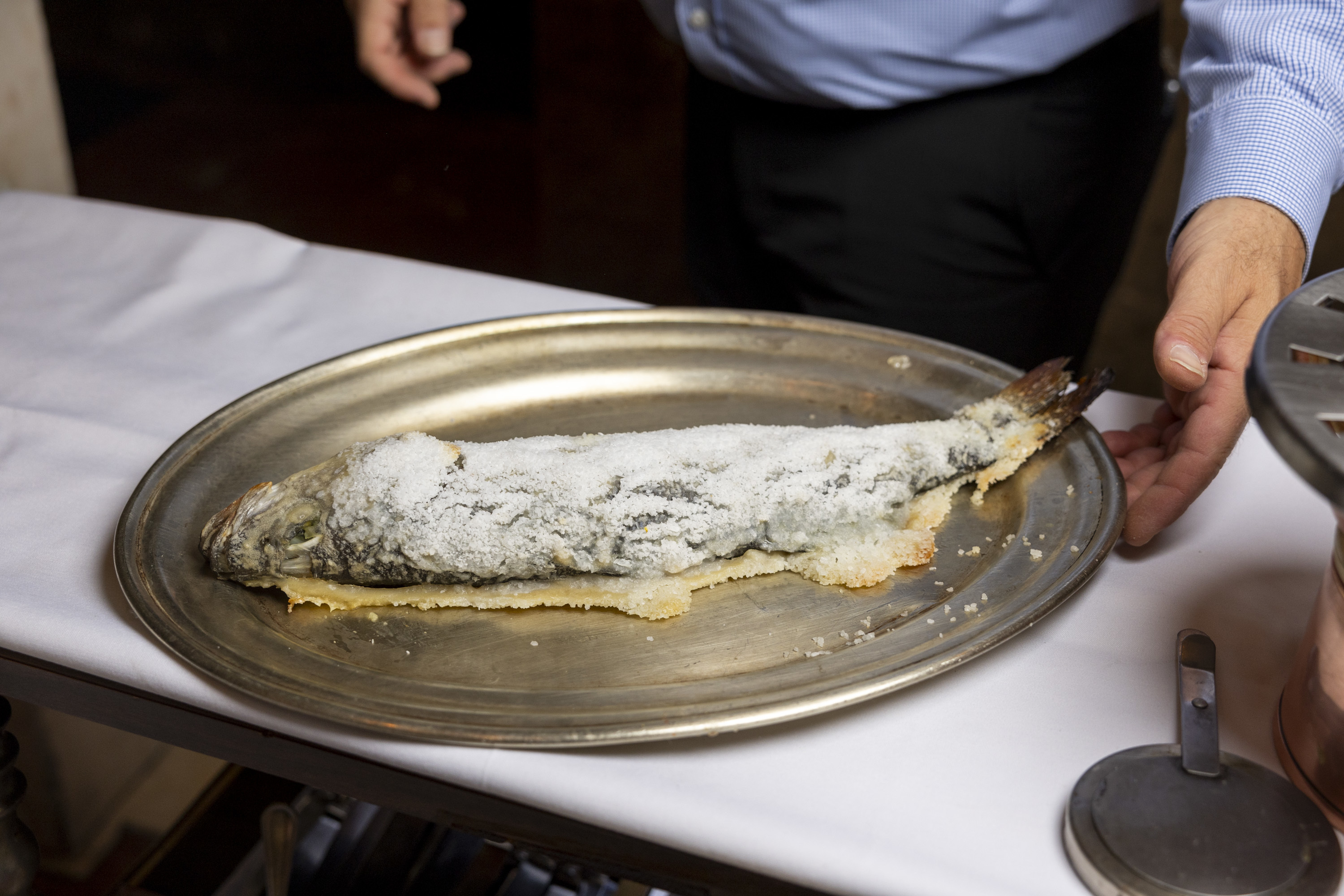

    The branzino at La Famiglia in Philadelphia. The fish is baked whole in salt before it is filleted tableside.Tyger Williams / Staff Photographer
    The branzino at La Famiglia.Tyger Williams / Staff Photographer

    “Back in the ‘70s and ‘80s, people used to come here really really dressed!” says co-owner Giuseppe Sena, 73, recalling the era shortly after he and his brothers founded La Famiglia in 1976 with their parents, and his father Carlo “Papa” Sena’s classic Neapolitan cooking drew the city’s most well-heeled gourmands. “The women would come in chinchilla furs and so many diamonds the restaurant would be sparkling!”

    Many longtime customers are still regulars. I ran into my retired rabbi here the same night that I ran into the retired poll judge from my local voting ward, both discerning eaters. The hushed tones and formal hospitality, as well as this menu’s fondness for center-cut meats, porcinis, and hard-to-find old wines, still appeals to a certain generation. The yet-to-retire and under 60 set? They are far rarer in the gilded confines of 8 S. Front Street, a Colonial-era building that was once a tea warehouse.

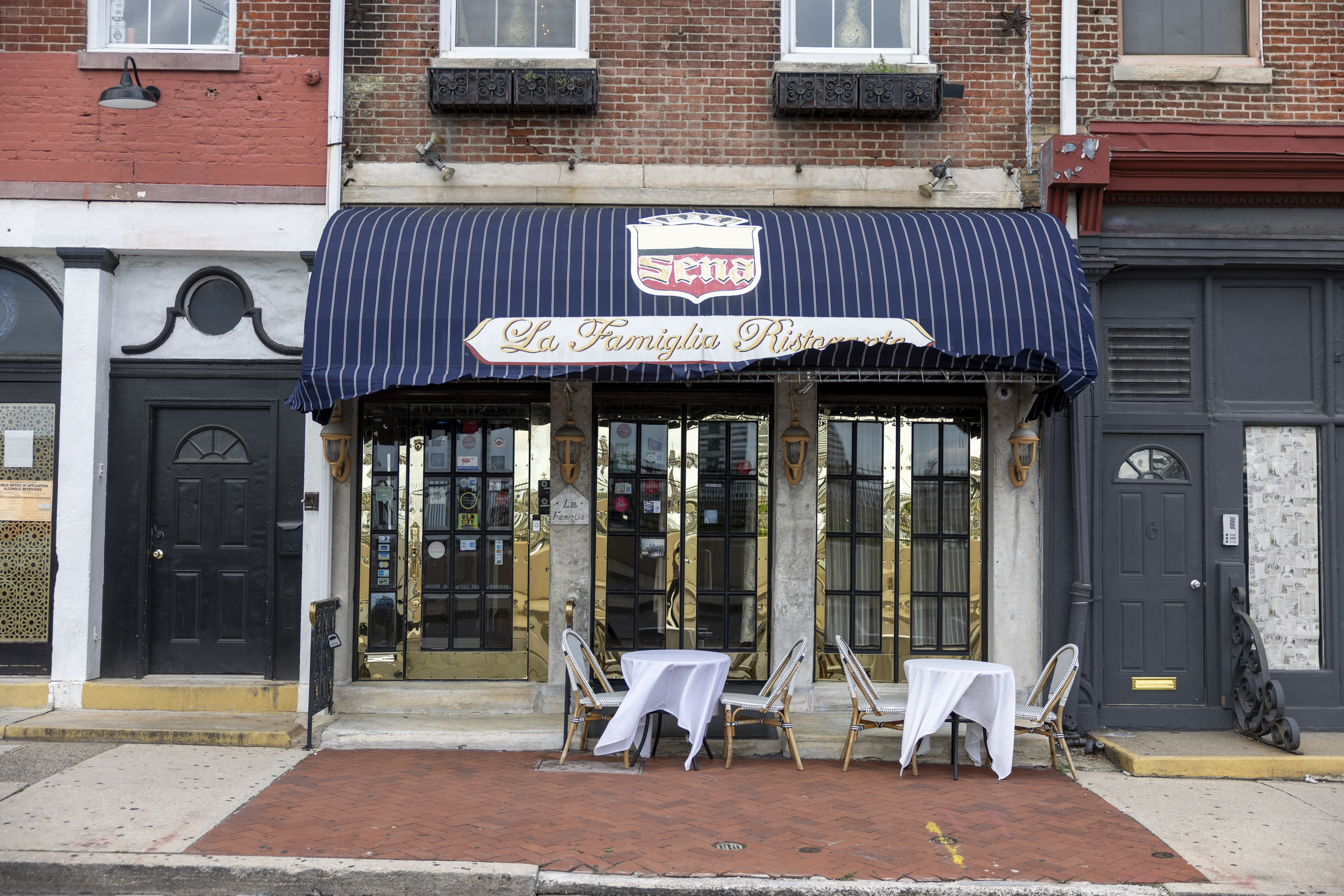
    Diners at La Famiglia in Philadelphia.Tyger Williams / Staff Photographer
    The outside of La Famiglia.Tyger Williams / Staff Photographer

    It’s been over two decades since I last reviewed La Famiglia, and even then I considered it old-fashioned, not to mention too expensive. But revisiting this classic 23 years later, I view it now through a different and fonder lens, not only because the cooking was more consistent, but because the context has shifted.

    La Famiglia is among the last of a generation of continental-style restaurants with European-born chefs and well-starched dining rooms that ruled Philly’s fancy Italian scene in the late 20th century, including long-gone destinations such as Gaetano’s, Monte Carlo Living Room, and the original La Buca. But it has earned its status as a survivor. After two absolutely delicious recent visits, I can attest it’s clearly more than just a museum piece.

    Set against the diverse riches of Philadelphia’s current Italian dining scene, from the stalwart red gravy icons of Italian American cooking (Villa di Roma, Dante & Luigi’s) to the alta cucina of Vetri, regionalists such as Le Virtù or Irwin’s, the nostalgia revivals of Palizzi Social Club and Bomb Bomb Bar, along with fresh contemporary takes from Emilia, La Famiglia’s retro experience still occupies a unique and worthy place to dine. With check averages for a complete meal between $90 and $100, it’s still a big night out but nowhere near the top of Philly’s current price range.


    Upstairs event space and large dining area at La Famiglia.Tyger Williams / Staff Photographer
    Co-owner Giuseppe Sena shares a laugh with Dawn and Luca Sena, of Society Hill, regulars and relatives, at the restaurant in Philadelphia.Tyger Williams / Staff Photographer

    The menu isn’t exactly innovative, but has been updated multiple times over the years. An overall delicacy remains to the cooking, now under the care of current chef de cuisine Luis Yauri, that, guided by Giuseppe Sena and his nephew, Carlo, follows a direct lineage to the recipes and techniques Papa Sena had perfected at Zi Teresa in Naples before coming to Philadelphia in 1967.

    You can taste some of those original dishes on a throwback menu for the month of June in honor of La Famiglia’s 50th anniversary, including snails in spicy red sauce and gnocchi Sorrentina. But the signature pasta, penne alla Famiglia, is the only original dish that still lingers on the current menu — and for good reason. The quill-shaped tubes are glazed in a buttery sauce tinted pink with fresh tomatoes, lightly sweetened with caramelized onions and dotted with savory nubs of rendered prosciutto, the epitome of patient cooking.

    The founder’s elegant approach is also still evident in fried appetizers that employ only the finest grain of housemade breadcrumbs and an insistence on using only egg whites, rather than the more typical and heavier method of whole eggs with a flour dredge. The resulting wafer-thin snap on the crocchette just barely contains the whipped potato centers laced with three kinds of cheese. The rounds of eggplant are so sheer and deftly fried they form a fork-tender stack, along with truffled porcinis, fresh tomato sauce, and mozzarella, of a dreamy Parm-like starter called a tortino.


    Carlo Sena, general manager and co-owner of La Famiglia, in the back of the kitchen checking orders in Philadelphia.Tyger Williams / Staff Photographer
    Triangolo ravioli stuffed with burrata in eggplant cream sauce at La Famiglia.Craig LaBan / Staff

    Some of my favorite dishes here are unfashionably drab but deliver vivid flavors, like the vitello tonnato that dabbed silken-soft pads of veal tenderloin with a tonnato sauce that zinged with the briny umami of pureed tuna, capers, and anchovies. I could also taste Neapolitan sunshine in the eggplant cream that glazed the burrata-stuffed triangolo ravioli that arrived lightly broiled to a cheesy crisp.

    For the most part, these plates have largely been updated with splashes of flavorful herb oils that add colorful halos to the refined sauces that are always in service of La Famiglia’s sweet spot: luxury proteins.

    The pork chop at La Famiglia.Tyger Williams / Staff Photographer

    A ruby-rare hunk of grilled ahi tuna comes sliced on the bias atop a sun spot of pureed tomatoes and olive oil, a Mediterranean tableau framed dramatically by a crispy ring of baked pappardelle. An incredibly tender veal chop arrives standing upright against a crisp frico of a Parmesan cheese over porcini cream sauce dotted with carrot mousse.

    An amazingly juicy pork chop channels South Philly swagger with zesty banana peppers added to its white wine sauce, alongside plump caper berries. Filet mignon, a plush cut I almost never order over less tender but more flavorful steaks, rises here on a rich Barolo wine sauce infused with juniper and rosemary. The veal Milanese, meanwhile, whose breadcrumbs are pounded directly into the meat, is superbly crisped before it’s topped with a juicy fresh salad of tomatoes and red onions. A pappardelle special was all about showcasing fresh burrata chunks that wept a lush milkiness into the juices of lightly roasted cherry tomatoes to form their own kind of tangy orange sauce.


    The pappardelle with burrata and roasted tomatoes at La Famiglia in Philadelphia, Pa., on Thursday, May 28, 2026.Tyger Williams / Staff Photographer
    A veal chop is served with porcini sauce at La Famiglia Ristorante.Craig LaBan / Staff

    If there was one savory disappointment, it was the puny nuggets of lump crab that came with scallops for the linguine, an uncharacteristic dip in quality for a restaurant that prides itself on luxury.

    One other gold-plated aspect of La Famiglia that remains steadfastly exceptional is the wine cellar, whose 12,000-plus bottles and 912 selections are kept in the dank chill of temperature- and humidity-controlled cages in the basement. A trip to this subterranean treasure cave is essential, not only since it’s the corridor to the restrooms, but because you can also view illuminated holes in the ground where colonial-era privies were excavated during La Famiglia’s construction in the mid-1970s, a reminder that this address occupies one of the oldest corners of the city.


    The downstairs wine cellar at La Famiglia.Tyger Williams / Staff Photographer
    Cellar at La Famiglia, 8 S. Front St.MICHAEL KLEIN / Philly.com

    Decades of collecting and careful preservation have resulted in what is still one of the city’s greatest assemblages of vino, largely Italian but international in scope, from a 1945 Brunello di Montalcino Riserva that had been walled off for protection during WWII, to 19th-century Madeiras, as well as verticals of late-’70s and early-’80s California cabs from Heitz Cellar and Beaulieu Vineyard. The restaurant has increasingly begun offering premium wines by the glass — Barolo and Amarone — as a nod to current drinking trends. (An iPad has also replaced the massive old “wine bible.”)

    We decided to go all in and indulge in a bottle of Barbaresco. The sky’s the limit there, including the last $4,000 bottle from 1961 that was Angelo Gaja’s first vintage. We didn’t have the time for anything so old to be opened far enough in advance (not to mention the budget), we took maître d’ Jesus “Gaetano” Maldonado’s spot-on suggestion of a 2019 Famiglia Rivetti for $195.

    Maître d’ Jesus “Gaetano” Maldonado decants a bottle of Famiglia Rivetti Barbaresco at La Famiglia.Craig LaBan / Staff

    After a careful tableside decanting over a flickering candelabra to scout for sediment, the wine was luminous within 15 minutes of touching air, a gorgeously supple red with notes of black cherries, tobacco, rose petals, and spice that boosted the flavors of every dish on our table with a shine of glamour.

    When it comes time for dessert, La Famiglia unfortunately settles for the tiramisu, cheesecake, and cannoli clichés, which were fine but unexciting, and mostly not made in-house. But the ristorante’s alcoholic assets, not surprisingly, offer a beguiling alternative: a collection of nearly three dozen rare grappa bottles beckon from a marble fireplace mantel. I sipped a little snifter of the clear and fruity brandy, an aged Rossi d’Asiago Dal Toso Elegance made from five different grapes, and it warmed my gullet and flooded my mind with a glow of contentment that felt like a forgotten pleasure. Decadent. Out of fashion. But undoubtedly still beautiful, not unlike eating at La Famiglia itself.

    More than two dozen grappas line the fireplace mantel at La Famiglia Ristorante.Craig LaBan / Staff

    La Famiglia Ristorante

    8 S. Front St., Philadelphia, Pa. 19106, 215-922-2803; lafamiglia.com

    Dinner Tuesday through Saturday, 5 to 9:30 p.m.

    Entrees, $25-$75. Gluten-free pasta available.

    The dining room is not wheelchair accessible, except with the assistance “of two strong guys.” The bathrooms, however, are located downstairs and completely inaccessible to wheelchairs.

    Menu Highlights Arancini; crocchette di patate; vitello tonnato; tortino di melanzane; penne alla Famiglia; ravioli with burrata in eggplant cream; tuna with heirloom tomato sauce; veal chop with porcini sauce; pork chop with banana pepper-caper berry sauce; whole branzino in salt crust.

    Drinks Italian-themed cocktails are a solid start to the meal, but the legendary wine cellar is the main attraction, a 12,000-bottle collection offering some of the world’s most famous Italian, French, and American producers. While the bottles (priced with generous mark-ups) tend to suit big spenders, La Famiglia’s much improved collection of wines by the glass, with choices under $20 along with more premium options hovering below $30, keep quality sipping within reach.
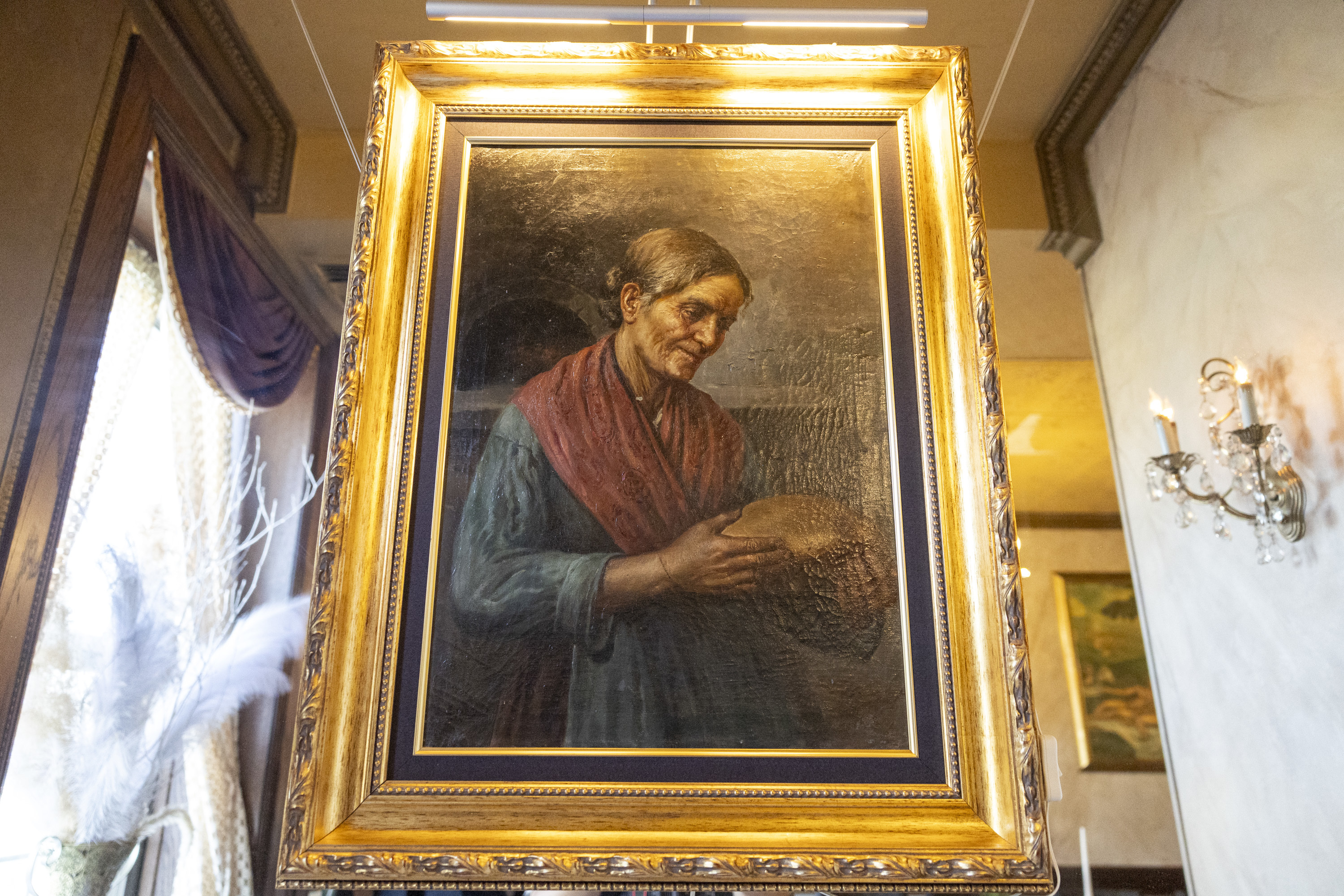

    A painting of Giuseppe Sena’s great-grandmother Rachele Labbiento, seen upstairs in the event space and large dining area at La Famiglia.Tyger Williams / Staff Photographer
  • Urban Outfitters plans to hire 1,000 at Navy Yard and new Bucks County facility

    Urban Outfitters plans to hire 1,000 at Navy Yard and new Bucks County facility

    Urban Outfitters Inc., the Philly-founded fashion company, is adding employees and business facilities in the region as it continues to grow.

    The parent company of Urban Outfitters, Anthropologie, Free People, and Nuuly plans to hire more than 1,000 employees in the Philadelphia region over the next seven years. Company cofounder Dick Hayne and Gov. Josh Shapiro gathered at the company’s Navy Yard headquarters Monday to announce the plans.

    At least 450 new positions will be at the Navy Yard headquarters. And at least 600 hires are planned at a new distribution site in Bucks County for clothing rental brand Nuuly, over the five years after that building is completed in 2028.

    “Urban Outfitters was built from the ground up in Philadelphia more than five decades ago — and we are proud that this company is continuing to grow and create jobs all across our Commonwealth,” said Shapiro in a statement on Monday.

    The positions include creative and operational roles across the brands and the parent company, according to Meaghan Condon, Urban’s director of communications and impact.

    The company has just over 2,500 employees based out of the Navy Yard headquarters. That number has grown significantly from 500 in 2004, when Urban announced it was moving its offices there from Center City. The company employs 6,300 across Pennsylvania, including those at its stores and its distribution sites.

    At the time of the move, Urban had five buildings there. Today it has 15.

    The most recent addition is a 117,000-square-foot site at the Navy Yard that houses the photo studios. Redeveloping the space, which Urban started using in the last couple of months, cost about $40 million. Previously, the company’s photos were taken at various headquarters buildings in the Navy Yard or off-site at rented studios in New York.

    Gov. Josh Shapiro (left) with Urban Outfitters cofounder and CEO Dick Hayne during an event Monday to announce planned hires in the region.Alejandro A. Alvarez / Staff Photographer

    On Monday, Shapiro and Hayne spoke in the outdoor portion of the new building, which has been partially converted into pickleball courts, to announce the company’s continued growth. An American flag hung above them swaying in the breeze, and airplanes flew overhead periodically to and from the Philadelphia International Airport.

    “When we started, we had a tiny, tiny store,” said Hayne on Monday, recalling the company’s first location near the University of Pennsylvania. “Today, we have over 800 stores across the world, including many in Europe, and our sales have grown extremely rapidly.”

    Hayne said he attributes that growth in part to “the relationship that we’ve had with our governmental agencies, the City of Philadelphia, the Commonwealth of Pennsylvania, and even a little bit with the federal government.”

    Hayne said Urban has invested millions in the state, calling Pennsylvania the company’s home and adding, “we intend to stay here. We have no thought of leaving.”

    The announcement on Monday echoed a similar moment in 2011 when then Mayor Michael A. Nutter, alongside Hayne, announced that Urban would be adding 1,000 jobs at the Navy Yard over the course of three years, and moving into two additional buildings there. The company employed some 1,500 people at the time.

    The new Bucks County facility, which is expected to be completed by early 2028, is for the company’s growing clothing rental subscription business, Nuuly. Launched in 2019, Nuuly had over 450,000 active subscribers as of this spring — over double the amount the brand had in 2023.

    Nuuly has a distribution center in Levittown which opened in 2019, and another in Missouri which opened in 2024.

  • The first Black woman to win a Barrymore for directing a musical is now going to lead Theatre Horizon

    The first Black woman to win a Barrymore for directing a musical is now going to lead Theatre Horizon

    Popular Philadelphia director, actor, and teacher Amina Robinson will take the helm at Theatre Horizon as artistic director, the Norristown organization announced Monday.

    The 21-year-old nonprofit theater, cofounded by Erin Reilly and Matthew Decker, had been searching for a permanent leader since the 2024 departure of Nell Bang-Jensen, who now heads FringeArts.

    Decker has served as interim artistic director and will continue to do so until Robinson’s tenure begins in November.

    For Robinson, who grew up in South Philly and studied theater at Temple University, Theatre Horizon has been a creative home and launching pad for her work as a director. In 2018, she received wide acclaim for her direction of the musical The Color Purple, based on the classic Alice Walker novel and 1985 film. The Theatre Horizon production earned six Barrymore Awards and Robinson made Philly theater history, becoming the first Black woman to win the Barrymore for outstanding direction of a musical.

    “I like to say [The Color Purple] put me on the map in Philly because it won a whole bunch of awards, and people responded really well to it,” said Robinson, who lives in Cherry Hill with her husband and teenage son. “I got the opportunity to work with people who have become family to me …[that’s] the culture of the theater. It’s built into their mission [to be] a place of gathering. I like to think of them as human-powered, people-centered, and that really coincides with who I’ve always been.”

    Theater fans in the region will recognize Robinson’s name from some of the buzziest local productions in recent years, from directing James Ijames’ Pulitzer Prize-winning Fat Ham in 2023 at the Wilma Theater, to the Arden Theatre’s 2024 run of the musical Once on This Island, which Robinson set in Haiti as a comment on the Caribbean country’s turmoil.

    “Amina is a visionary artist, a thoughtful collaborator, and someone who understands both the power of theater and the importance of community,” Decker said in a statement.

    Robinson is an associate professor of acting and musical theater at Temple University and has appeared on screen in shows like Nurse Jackie, Law & Order, and Smash, and in the 2009 film Precious.

    She is no stranger to Norristown, either, as she was formerly an artistic director at the Centre Theater.

    Director Amina Robinson with the cast and crew of “Ain’t Misbehavin’” at Theatre Horizon in spring 2026.Courtesy of Theatre Horizon

    Robinson just wrapped work on Theatre Horizon’s production of the Fats Waller musical revue Ain’t Misbehavin’ and is now working on the forthcoming Arden Theatre production of Suzan-Lori Parks’ TOPDOG/UNDERDOG, opening this fall.

    “As Theatre Horizon continues expanding how we serve artists and audiences in Norristown and throughout the region, I’m excited to partner with someone who believes deeply in theater as both an artistic home and a gathering place,” said Theatre Horizon executive director Mydera Taliah Robinson in a statement.

    The two will work to expand community programming and reach new audiences; their plans so far include a permanent choir and potential events for Black History Month and Juneteenth in 2027, as well as a “season sampler” series of comedy nights, open mics, and staged readings under the title HorizoNEXT. In October, the theater will host an event celebrating Robinson’s start, showcasing performances from Ain’t Misbehavin’ and The Color Purple.

    “I have a really burning desire to make theatergoing feel essential,” said Robinson. “When I’m talking about the history of theater, it finds its grounding in ancient African storytelling traditions, and that wasn’t only used for entertainment, it was used to share cultural values and strengthen community.”

    She said sees an opportunity to create a community-driven theater, to produce shows that prompt people to think critically about social and political issues, or help process collective trauma together — all working toward the goal of building a sustainable, supportive community for artists and patrons alike.

    “I want an essential theater, and that includes growing the audience and getting more people in the space to experience the power of creation and storytelling through the theater,” she said. “I’m invigorated by the power that theater has to impact people’s lives, and how miraculous the creation is.”

  • Real estate giants Compass and Zillow fight over the future of the market

    Real estate giants Compass and Zillow fight over the future of the market

    Over the past year, Zillow, the country’s largest real estate portal, and Compass, the biggest real estate brokerage in the world, have traded lawsuits and allegations of antitrust violations, all while waving the banner of consumer protection. Both companies have gobbled up competitors and become so dominant that when they shift their rules and practices, they have the power to change how homes in the United States are bought, rented, and sold.

    Zillow owns listing websites including StreetEasy and Trulia and receives about 220 million unique visitors every month. Its scale means it can dictate practices that agents say are bad for their businesses and confusing for consumers.

    Compass was already the largest real estate brokerage in the country when, this year, it bought Anywhere Real Estate for $1.6 billion, making it by far the biggest real estate brokerage in the world with about 340,000 real estate professionals. It controls brands that include Christie’s International Real Estate, Century 21, Coldwell Banker, and Corcoran. It has come under fire for pushing the practice of private listings, which go to a select group of people before they reach the public.

    The National Association of Realtors was the longtime gatekeeper of real estate listings, but the organization was found guilty of antitrust violations in 2023, and its grip on the market has loosened. Now, Zillow and Compass are rushing in to fill the vacuum, battling over who gets control of the listings.

    “We have two behemoths in the industry,” said Jonathan J. Miller, a real estate appraiser and consultant. If the leaders of these companies were to quickly change, shifting their strategy or focus, he continued, the ramifications could be enormous. “The entire market — the biggest asset class in the world — is subject to potentially significant change overnight.”

    What is the controversy around Compass’ private listings?

    Private listings have existed for decades, but they were fairly rare. Perhaps a judge or a celebrity wanted to keep their home and address private, so instead of posting the house online, their broker would call other agents and quietly invite them to the property.

    Compass, however, has taken the practice wide. It offers its buyers the ability to share online listings only on the Compass website so its own agents and their clients can see them, before bringing the homes to the larger market. Those are what it calls Private Exclusive listings.

    Websites like Zillow list how many days a home has been for sale, and a property that’s been on the market for an unusually long time might give a potential buyer pause. Compass’ Private Exclusive listings allow sellers to test their price without starting the days-on-market clock.

    Compass’ critics say the practice disadvantages both buyers and sellers. Buyers won’t know if an overpriced home has been sitting at the same price for a year, and sellers won’t have the largest pool of potential buyers. Compass, on the other hand, does benefit, its critics say. Brokerages take a cut of their agents’ commissions, so by keeping both sides of the deal in-house, the company earns more money.

    Critics liken the practice of private listings to putting tape over the odometer before selling a car. Compass disputes this, and says it isn’t obscuring any information about the home itself.

    “Sellers should have the right to decide how their homes are marketed and where they are marketed,” Compass CEO Robert Reffkin said in a statement.

    Some states, including Connecticut and Wisconsin, have passed laws restricting private listings. New York’s version is on its way to the governor’s desk.

    Why do real estate agents complain about Zillow?

    When potential buyers look at a home on Zillow, they’re presented with the price, photographs, and a menu of information, including the number of bedrooms and a list of local schools. There are also big, bright buttons to click that will connect them with an agent.

    Most buyers assume that when they click those buttons, they are contacting the agent selling the home. But instead they are connected with a buyer’s agent, a person who might have nothing to do with the property, but pays Zillow a fee to be connected with potential clients. Some of those agents share their commissions with Zillow.

    Many buyers find this practice confusing. A study by Jerry Wind, a professor of marketing at the Wharton School at the University of Pennsylvania, surveyed more than 850 consumers about Zillow’s website and found that less than 1% of them correctly identified who would be contacting them when they expressed interest in a property on Zillow.

    Zillow says it’s important to connect buyers with their own broker.

    “When you go into a negotiation, you want to make sure that each party to the negotiation has somebody on their side who is advocating for them,” said Mischa Fisher, chief economist at Zillow. The listing agent’s information is available on Zillow for every property.

    Does it matter that these companies are so large?

    There has been an enormous amount of consolidation in the real estate industry. Last year, Rocket Cos., which provides mortgages, acquired Redfin, an online real estate brokerage in a deal valued at $1.75 billion. The Real Brokerage announced this spring that it plans to acquire RE/MAX in an $880 million deal.

    Many in the industry expected the Compass acquisition of Anywhere Real Estate to face antitrust scrutiny from federal regulators, but it sailed through the regulatory process. The office of New York Attorney General Letitia James, however, is investigating Compass over antitrust concerns, according to a person with knowledge of the investigation who was not authorized to speak publicly.

    James has concerns about Zillow, too. Last year, her office joined a group of states and the Federal Trade Commission in suing Zillow and Redfin, one of the largest players in the rental market, saying they had entered into an agreement to stop competing with each other.

    Zillow is also facing a class-action lawsuit alleging it incentivizes brokers who use its Flex Agent and Premier Agent programs to steer buyers toward its home loan products.

    Both Compass and Zillow have also sued each other on antitrust grounds, accusing one another of using market power to stifle competition. In the latest suit, Zillow accused Compass and Midwest Real Estate Data, a listing service, of hiding listings from buyers to shut out competition.

    The companies have all denied the allegations against them.

    “There is a huge multibillion dollar strategic power play playing out with these very large publicly traded companies, around the country and in court,” said Michael DelPrete, a real estate technology strategist who teaches at the University of Colorado Boulder. “At the end of the day, they’re fighting over content — but it’s not just content. It’s not a Star Wars movie. It’s somebody’s house.”

    This article originally appeared in The New York Times.

  • Fewer Americans say democracy is central to country’s identity, poll finds

    WASHINGTON — As the U.S. prepares for an extravagant celebration of its founding principles, fewer Americans see their country as exceptional, a new poll finds.

    The survey from the Associated Press-NORC Center for Public Affairs Research highlights many Americans’ feeling of unease over the future of its representative government — particularly among young people. It presents a jarring contrast as communities around the country commemorate the nation’s 250th anniversary.

    Only about one-quarter of Americans say the U.S. stands above all other countries in the world, the new poll found, while 44% say it’s one of the greatest countries in the world, along with some others. About 3 in 10 say there are better countries than the U.S., an increase from 19% in an AP-NORC poll conducted in June 2016.

    Americans remain divided about whether diversity is an essential feature of the U.S.’s identity, and agreement about other aspects of the country’s underlying character appears to be eroding, the survey found. Americans are less likely to see a democratically elected government as “extremely” or “very” important to the United States’ identity as a nation than they were just a few years ago. About two-thirds of U.S. adults now say a democratically elected government is highly important to the U.S.’s identity as a nation, down from 80% in 2021.

    “It’s not that the democracy part is not working,” said Derricka Wall, 24, of Chickasaw, Ala. ”It’s the people that are actually being put in office that is the problem.”

    Wall believes politicians have damaged America’s governing system, which was designed to ensure representation and guard against government misuse.

    America, she said, “is not what it used to be. I feel like our founding fathers would be kind of disappointed with how it is now.”

    Rising belief that democracy is not essential to American identity

    Young adults are much less likely than older Americans to believe the U.S. is special, compared with other nations, the poll found.

    About 4 in 10, 44%, of U.S. adults under 30 say there are other countries better than the U.S., compared with 22% of U.S. adults ages 60 and older.

    Fewer, too, see democracy as a key element of the U.S.’s identity. Only about half of Americans under 30 believe this, compared with 81% of those 60 and older.

    Wall said the people who established the government with co-equal branches thought they were erecting safeguards to keep any one person or group from attaining too much power. But she believes they didn’t foresee how easily those guardrails would crumble if the people in the system stopped enforcing them.

    “I feel like they would actually roll out of their graves,” she said. ”I feel they would be very disappointed in us.”

    The belief that politics isn’t working for everyday people extends beyond the youngest generations. Kent Stage, 62 and a retired senior enlisted man in the Army, is a registered Republican in Indiana. He does not think the current political system addresses the country’s problems. He’d like to see term limits on politicians and more working-class people serving.

    “I’ll trust the ambulance-chasing lawyer and a shady used car salesperson before I trust the politician,” he said.

    Stage, who is also a former Marine, believes public servants make self-serving choices for their families “while mine and yours still got to hit the old grindstone.”

    Many feel it’s harder to get ahead in the U.S.

    The survey also finds widespread cynicism about America as the land of opportunity. About half of U.S. adults, 51%, say the American Dream — the idea that if you work hard, you’ll get ahead — once held true but does not anymore. About one-third say it “still holds true” while 15% say it never held true.

    Jack Hermanson, a 27-year-old software developer in Denver, said his belief in the American Dream changed when he saw his engineer husband struggle to find a job. “That really shattered my impression that if you work hard, you get what you deserve,” Hermanson said.

    Only 22% of Americans under 30 say the American Dream still holds true, compared with 46% of Americans ages 60 and older.

    Angela Toombs, 31, works at a senior living facility in Atlanta where her clients talk about how easy it was to buy a house while working their first regular jobs in their 20s and are incredulous about the obstacles facing Toombs’ generation. Toombs recently gave up her own apartment to rent a room in order to save money.

    Skepticism about the American Dream is more widespread among Democrats and independents, compared with Republicans. Most Republicans, 57%, say the American Dream still holds true, compared with about one-quarter of independents and 17% of Democrats.

    Republicans are also much likelier than Democrats to see the U.S. as exceptional. About half of Republicans say the U.S. stands above all other countries in the world, compared with only 7% of Democrats.

    Quintin Sharpe, 28, lives in a resort town on Lake Geneva in Wisconsin. A financial planner who is Republican, he said the American Dream remains accessible and he is proud of the country. “It’s been a great experiment.”

    “The opportunity is there for those who want to work for it,” he said. Sharpe believes the country is “a meritocracy, and the best ideas, the best work ethic, those with the best succeed regardless of race, skin color, any of those factors.”

    He and his wife will celebrate the country’s 250th anniversary watching the fireworks over the lake.

    Divides on whether diversity is essential to U.S.

    Just over half of U.S. adults — 56% — say a shared American culture and set of values are “extremely” or “very” important to the country’s identity, down from 65% in 2017. Younger Americans are less likely than older ones to say a singular set of values is important to U.S. identity.

    But Americans remain sharply divided on the centrality of welcoming diverse perspectives: About half of adults, 51%, say the ability of people to come from other places in the world to escape violence or find economic opportunities is “extremely” or “very” important to American identity, while 55% say this about the mixing of cultures and values from around the world.

    Only about 4 in 10 Republicans see the mixing of cultures and values from around the world as central to the country’s identity, compared with 76% of Democrats.

    Rose Nunez, 70, of San Antonio, Texas, was a small-business owner but now is a caregiver for family members. Nunez, who tends to vote for Democrats, said there is an unease and tension that are just beneath the surface, especially focused on Hispanics. She said some people have started carrying their papers showing their immigration status in case they are challenged.

    “It is hard to celebrate when the feelings towards immigrants and communities of color are so strong,” she said of the upcoming America 250 celebrations.

    She said even citizens are questioned now. If it gets to a point where being naturalized is challenged, “guess what, my mom would be leaving. She’s been living in this country since she was maybe 4 years old. She’s 93.”

  • Israel and Iran appear to pause strikes after trading fire for the first time since April ceasefire

    DUBAI, United Arab Emirates — Israel and Iran appeared to back away from further strikes Monday, hours after they traded fire for the first time since the U.S. agreed to a ceasefire with Tehran two months ago. Both countries warned that they were ready to launch retaliatory attacks if provoked.

    The renewed hostilities raised concerns that the Middle East could plunge back into a full-scale war.

    Since the U.S. and Israel began striking Iran on Feb. 28, the war has shaken the global economy, driven up energy prices around the world, and made many basics, including food, more expensive. Officials have been unable to turn the April ceasefire into a deal to permanently end the conflict.

    The new attacks prompted U.S. President Donald Trump to call for an immediate stop to fighting between Israel and Iran.

    Soon after, the Iranian military’s joint command issued a statement that said it was halting offensive strikes. The statement said further “aggression and hostile acts” by Israel and its supporters, including in southern Lebanon, would be met with “much more severe and crushing measures than before.”

    Israeli Prime Minister Benjamin Netanyahu, speaking in a videotaped statement, implied that the current round of fighting was over. But he also warned that if Iran “makes the mistake and returns to attacking us, we will respond with force.”

    Netanyahu said Israel is continuing to operate in Lebanon against the Iranian-backed militant group Hezbollah, and that Israel “has full right to self-defense, and we will exercise it to the full extent necessary.”

    Meanwhile, the Lebanese Health Ministry said an Israeli airstrike on the village of Zefta killed seven people Monday, including a Syrian child. Eight people were wounded. Another strike on the coastal city of Tyre killed five and wounded eight, some of them members of the Lebanese Red Cross, the ministry said.

    Both countries lift restrictions

    Both countries lifted restrictions they had imposed as safety precautions. The Israeli military said most schools in Israel that closed Monday would reopen. Iran’s official Mizan news agency reported that the Islamic Republic had lifted airspace restrictions affecting civilian flights.

    During the truce, Iran has maintained its stranglehold on the Strait of Hormuz — a crucial passage for the world’s oil and natural gas whose closure was the primary reason global fuel prices skyrocketed. Israel has continued to strike Hezbollah, Iran’s ally in Lebanon, and pushed deeper into that country.

    The U.S. military continues to impose a blockade on Iranian ports. U.S. Central Command said its forces on Monday fired on and disabled a Palau-flagged oil tanker, the M/T Marivex, in the Gulf of Oman after the ship attempted to breach the blockade.

    Officials in India said the tanker’s crew of 24 Indian sailors were all reported safe after a fire broke out on the vessel. It was the seventh commercial vessel the U.S. military has disabled to enforce its blockade, which began in mid-April.

    Diplomats race to save the ceasefire

    Pakistani Prime Minister Shehbaz Sharif expressed concern Monday over the surge in violence. In a post on X, Sharif urged all parties to “exercise restraint and give peace a little more chance.”

    Two regional officials said Egypt, Saudi Arabia, Turkey, Pakistan, and Qatar had all urged the Trump administration to pressure Israel to halt strikes on Iran and Beirut.

    Those countries also pushed for Iran to stop attacking Israel, the officials said. Both spoke on condition of anonymity because they were not authorized to speak to reporters.

    Iran’s ambassador to the United Nations said Monday that Iran and the U.S. are still working to negotiate a peace deal. After speaking at a U.N. Security Council meeting, Amir Saeid Iravani told the Associated Press he was hopeful that “very soon” the two sides would reach “a conclusion.”

    Explosions sound in Tehran and central Israel

    Iran launched waves of attacks on Israel on Monday, and Israel launched strikes on central and western Iran.

    Iranian state media reported at least 15 people were wounded after explosions sounded in Tehran and other cities. There were no immediate reports of fatalities.

    The semiofficial Fars and Mehr news agencies said Israeli strikes hit a petrochemical factory in the city of Mahshahr. They did not elaborate on any damage. The Israeli military confirmed the strike on the plant, saying it targeted sites that produce materials for ballistic missiles. Israel said it also targeted truck-based missile launchers.

    Israel said its strikes were in response to an Iranian missile attack. Tehran warned Sunday that it would retaliate after Israel struck Beirut’s southern suburbs without warning. When Israel struck back, Iran fired again.

    Explosions could be heard in central Israel as air defenses sought to intercept incoming Iranian fire. Iran’s paramilitary Revolutionary Guard said it had targeted two military bases in Israel.

    Iran blamed the United States for the escalation.

    “No one believes that the Israeli regime would take any action without coordination with the United States,” Iranian Foreign Ministry spokesperson Esmail Baghaei told journalists in Tehran.

    Tensions appear to grow between Trump and Netanyahu

    Trump and Netanyahu launched the war in a closely coordinated attack, with Israeli officials proudly boasting of unprecedented “shoulder to shoulder” cooperation.

    The conflict reached 100 days on Monday, and the two leaders have moved in opposite directions, with tensions sometimes spilling out into the open.

    Netanyahu appears to have openly defied Trump with the strike Sunday in Beirut and subsequent attacks in Iran. Trump has voiced his displeasure with Israel, including belittling Netanyahu by declaring to the Financial Times that “I call all the shots.”

    Their differences appear to be rooted in each leader’s domestic considerations. Netanyahu faces elections this fall and is under public pressure to strike back against ongoing Hezbollah attacks on northern Israel. He also is wary of appearing too subservient to Trump.

    The U.S. president also faces elections — for Congress in November — and is eager to end a war that has jolted the global economy and raised prices for consumers.

  • Birthright citizenship is constitutional. But some Americans have always had to prove themselves worthy.

    Birthright citizenship is constitutional. But some Americans have always had to prove themselves worthy.

    As the Supreme Court considers President Donald Trump’s effort to narrow birthright citizenship, the administration has cast the issue as a defense of the value of U.S. citizenship rather than simply a change in immigration policy. In court, Solicitor General D. John Sauer argued that automatic citizenship “demeans the priceless and profound gift of American citizenship,” and Trump later called the current system “STUPID” on Truth Social.

    But the current fight is about much more than constitutional wording. It is the latest chapter in a long history of deciding that some people born in the United States still must prove they deserve to belong.

    That is not a new problem in American history. Birthright citizenship has long been one of the clearest places where the United States has worked out the boundaries of national belonging. On paper, the 14th Amendment seemed to settle the question after the Civil War. Anyone born in the United States and subject to its jurisdiction was a citizen. But almost immediately, that promise ran into a familiar problem: many Americans were willing to defend universal principles only until those principles extended to people they considered outsiders.

    That tension came into full view in United States v. Wong Kim Ark in 1898. Wong was born in San Francisco to Chinese immigrant parents. When he returned to the United States after a trip abroad, officials detained him and argued that his birth on American soil did not make him a citizen after all. The logic was plain enough. His parents were Chinese, Chinese immigrants were racially excluded from naturalization, and anti-Chinese officials insisted that the children of such immigrants could not truly belong either. The Supreme Court rejected that argument. It affirmed that birth in the United States, not the race or legal status of one’s parents, established citizenship. But the case mattered precisely because it revealed how badly exclusionists wanted a different outcome. They wanted citizenship to depend on lineage, not principle.

    Wong Kim Ark clarified the constitutional rule, but it did not end the effort to define the nation more narrowly. That effort moved simply moved elsewhere. Lawmakers could not easily strip citizenship from people born here, but they could still shape the nation by trying to restrict who could enter in the first place.

    The Johnson-Reed Act of 1924 did exactly that. It used national-origins quotas to privilege immigrants from northern and western Europe while sharply restricting others and effectively excluding most Asians on explicitly racial grounds. The law did not abolish birthright citizenship but rather worked around it. It sought to preserve a preferred vision of the nation by controlling the people who might one day reproduce it. Immigration control became a way to manage the future population of the nation.

    That narrowing of belonging did not stop at the border. During the Great Depression, Mexican repatriation campaigns pushed hundreds of thousands of people of Mexican descent out of the United States, including many U.S. citizens. As historian Adam Goodman argues, the long history of expulsion in the United States has always been about power: the power to determine who may remain, who can be removed, and who gets cast as outside the nation in the first place.

    That history is worth dwelling on because it makes something painfully clear. Even formal citizenship has not always guaranteed a person’s recognition as fully American. In moments of panic and xenophobia—such as when the U.S. forcibly removed and incarcerated Japanese-American citizens during World War II—race and presumed foreignness could override legal status.

    The United States also developed a more selective politics of inclusion. During the Cold War, the country welcomed many refugees, but it did so unevenly and strategically. As historians like Carl Bon Tempo have shown, this process was shaped by foreign policy goals, domestic political pressures, public attitudes toward newcomers, and changing ideas of American identity. For example, refugees fleeing communist regimes like Hungary and Cuba were often easier to recognize as worthy because their stories served a larger ideological purpose for the United States. Their flight to the U.S. helped tell a flattering story about the United States as a refuge of freedom standing against communism. On the other hand, asylum claims of those fleeing right-wing regimes such as El Salvador and Haiti, were denied en masse. The United States distinguished between the refugees it wanted and the refugees it preferred not to see.

    That is the longer history behind the present fight. American policy has repeatedly distinguished between the people imagined as rightful members of the nation and those treated as suspect, alien, or disposable. Sometimes exclusion worked through immigration restriction. Sometimes it worked through expulsion. Sometimes it worked through selective refuge. But the basic logic remained recognizable across time. Belonging was never simply given. It was sorted, ranked, and politically constructed.

    And that is still the case. In my current work as a fellow at the Public Religion Research Institute (PRRI), I study how immigration debates continue to function as debates over nationhood and belonging.

    On one level, Americans still describe the nation in civic terms. In PRRI’s 2025 American Values Survey, 93% said that believing in individual freedoms is important to being truly American, 91% said believing in the Constitution, and 89% said accepting people of diverse racial and religious backgrounds. Those are the kinds of answers Americans like to give about themselves. They describe a nation rooted in principle, rights, and pluralism.

    But the same survey points to another vision of the country, one that is narrower and more exclusionary. Seventy-five percent of Americans polled said speaking English is important to being truly American. Fifty-four percent said being born in America. And 57% said believing in God, with 43% explicitly saying being a Christian. Those numbers matter because they show that civic ideas of membership still coexist with older assumptions about inherited religious and cultural belonging. The nation may be described in universal terms, but many Americans still imagine it in more bounded ways.

    OLD IMAGE — DO NOT USE — Made By History sponsors. FOR USE ON MADE BY HISTORY STORIES ONLY.Inquirer Staff

    That same tension appears in immigration attitudes more broadly. PRRI found strong support for a pathway to citizenship for undocumented immigrants who meet certain requirements. But it also found that 37% of Americans support detaining undocumented immigrants in internment camps until they can be deported, and 32% favor deporting undocumented immigrants to foreign prisons without allowing them to challenge their deportation in court. Those are not just policy preferences. They reveal how easily legal exclusion and coercive state power remain available when migrants are cast as outside the circle of national concern.

    That is why the present debate over birthright citizenship matters so much. The Supreme Court case may seem technical or narrowly constitutional. The irony is that the legal principle itself is not especially ambiguous. Wong Kim Ark settled the matter more than a century ago.

    What remains unsettled is the political desire to narrow the boundaries of belonging. Again and again, Americans have used citizenship and immigration law to distinguish between those whose presence affirms the nation and those whose presence is treated as a problem. The country remains divided over a deeper question. Is the United States really a civic nation, or will it reserve full belonging for those who fit more narrow criteria of who Americans are supposed to be.

    E. Kyle Romero is an assistant professor of history at the University of North Florida where he writes and teaches on the history of U.S. foreign policy, immigration, and humanitarianism; he has previously served as a postdoctoral fellow at the Dickey Center for International Understanding at Dartmouth College, and is currently a fellow at the Public Religion Research Institute in Washington, D.C.

    Made by History takes readers beyond the headlines with articles written and edited by professional historians. Opinions expressed do not necessarily reflect the views of Inquirer editors.

  • Can a progressive replace Fetterman? | Morning Newsletter

    Hi everyone! Happy Monday. The warm weather persists with highs nearing 80 degrees today.

    Some Democrats who watched Chris Rabb notch one of the left’s biggest wins in Pennsylvania see an opportunity to boost a progressive in the 2028 Senate primary. Others say that’s a tall task in the swing state.

    A Philly grandmother says $600 of her EBT benefits were stolen in a skimming scheme. A solution for the state might be on the horizon.

    Plus, a local a cappella group went viral for their wholesome renditions of popular songs, and more news of the day.

    — Sam Stewart (morningnewsletter@inquirer.com)

    If someone forwarded you this email, sign up for free here.

    What Chris Rabb’s win means for 2028

    The euphoria at Chris Rabb’s election night party last month hadn’t even started to wane before the democratic socialist and his supporters — dancing and hugging after capturing a rarely open Philadelphia seat in Congress — spoke of setting their sights even higher.

    With the 2026 Pennsylvania Democratic primary in the rearview mirror, that conversation has broadly and quickly turned to the next biggest prize in the state: The U.S. Senate seat held by Democrat John Fetterman.

    The senator has not said whether he will run for a second six-year term in 2028. But in an unusual situation for an high-profile elected official, a robust intraparty competition to replace him is expected to start either way in the next year as Fetterman increasingly sides with Republicans and as polls show that his support among Democratic voters has nose-dived.

    In a district packed with Democratic voters, Rabb’s ability to turn out progressive voters should draw the attention of anyone looking to win the state’s Democratic Senate primary in 2028, a strategist said. But campaigning on a far-left — or a far-right — platform doesn’t often equate to success on a statewide level in a swing state like Pennsylvania, some experts say.

    The Inquirer’s Sam Janesch has the full breakdown.

    EBT skimming is a problem in Pa.

    Keenya Banks lives in Philadelphia with her husband and the two grandchildren they care for. She has never been to Fishkill in New York’s Hudson Valley.

    Yet, that’s where someone spent more than $650 in food assistance benefits for her family at a Sam’s Club in April in an alleged case of EBT skimming, just one of the more than 5,100 cases reported in Pennsylvania between the start of the year and May.

    It’s likely Banks used her EBT card in a point-of-sale machine rigged with a device designed to copy her card information and PIN. Someone then applied her EBT information to a different physical card and drained her monthly benefits the next day.

    Last May, Pennsylvania launched ConnectEBT, an app that allows people to lock their cards until they are at the checkout line, ready to use them. Some state officials are also eyeing chip EBT cards as a possible way to curb skimming.

    What you should know today

    • President Donald Trump dismissed the idea that launching the war with Iran this year betrayed his refrain of “No new wars” that he made repeatedly as he campaigned again for the White House.
    • A federal lawsuit seeks to halt the UFC fight card on the White House South Lawn with a mixed martial arts show timed for President Donald Trump’s 80th birthday and as part of the celebration of the nation’s 250th anniversary.
    • Philly Pride 2026 took over the Benjamin Franklin Parkway for the first time after four years in the Gayborhood, and drew a large crowd.
    • A 22-year-old Penn State student died after being shot steps away from his home in South Philadelphia on Saturday, police said.
    • A court ruling in a Chester County case may mean higher stormwater bills in scores of Pennsylvania towns.
    • Ariel Lajara, a top Philly school official, is leaving the district to be a superintendent in South Jersey.

    Quote of the day

    The Tonics is a viral, Philly-based a cappella group made up of middle-aged guys in khaki slacks and sensible loafers.

    🧠 Trivia time

    Who did the Sixers just promote to executive vice president of basketball operations?

    A) Mike Gansey

    B) Jameer Nelson

    C) Elton Brand

    D) Prosper Karangwa

    Think you know? Check your answer.

    What we’re…

    🤔 Considering: Did A.J. Brown betray Philadelphia and his Eagles teammates? Columnist Marcus Hayes thinks so.

    ❤️ Loving: Philly! We asked residents what made them fall in love with the city, and their answers are heartwarming.

    🥤 Dying to try: Smoothies down the Shore made by James Develin, who faced the Eagles in Super Bowl LII.

    🧩 Unscramble the anagram

    Hint: A leading liberal arts undergraduate college outside Philadelphia.

    ADHERE GOLF VELCRO

    Email us if you know the answer. We’ll select a reader at random to shout out here.

    Cheers to Noreen Gloninger, who solved Sunday’s anagram: Spirit Halloween. A case of the summer scaries hit the Wildwood boardwalk on Friday, courtesy of the folks at Spirit Halloween. Things got weirder than usual.

    Photo of the day

    Diane Hurst poses for a friend’s photo at Swann Memorial Fountain in Logan Circle during the annual Pride Parade in Philadelphia, Pa. on Sunday, June 7, 2026.David Maialetti / Staff Photographer

    📬 Your ‘only in Philly’ story

    Think back to the night that changed your life that could only happen in Philly, a true example of the Philly spirit, the time you finally felt like you belonged in Philly if you’re not a lifer, something that made you fall in love with Philly all over again — or proud to be from here if you are. Then email it to us for a chance to be featured in the Monday edition of this newsletter.

    This “only in Philly” story comes from reader Ann Hess, who describes the kindness of Philadelphians:

    Never underestimate the kindness of Philly strangers…

    On a recent Saturday, I was babysitting my 9-year-old grandson, Gabe. We were about to walk to the Fumo Family Library, when I mentioned that I saw the little boy across the street picking up trash in front of his house.

    Gabe announced, “I want to pick up trash!” He went down to the basement and came back with a reacher.

    Walking back to his house, Gabe was collecting trash and depositing it in a bag using his reacher. A woman was parked along the street, rolled down her window, and asked him, “Are you picking up trash?”

    We answered “yes” and she said it was a great idea and thanked him for doing it, “because there’s a lot of trash in the city and we need all the help we can get!“

    She said she wanted to give him something for his hard work and asked him to come over to the car window. Gabe walked over and said ”Thank you” to the woman. She said, ”I wanted to thank you for doing this — go buy yourself a water ice!”

    It turned out this appreciative stranger had handed him $5!

    What an amazing, generous, and kind gesture this stranger offered to another stranger. This is how you Philly.

    Gabe collected and filled two small bags of trash from Broad Street to South Warnock on the walk home.

    👋 Bye all! Have a great week.

    By submitting your written, visual, and/or audio contributions, you agree to The Inquirer’s Terms of Use, including the grant of rights in Section 10.

  • The power of prevention: How to reduce accidental poisonings in Philadelphia | Expert opinion

    The power of prevention: How to reduce accidental poisonings in Philadelphia | Expert opinion

    As a family physician who treats patients from birth through old age, a new trend in household decor has me worried. People increasingly are decanting or transferring household products, such as detergent, into decorative jars or containers, the American Cleaning Institute says.

    I can appreciate the aesthetic appeal, but I fear that many don’t realize the potential hazard created by removing important safety features such as child-resistant closures.

    In Philadelphia alone, 84 children under the age of 5 were hospitalized for poisoning in 2024, the latest available data show.

    The statistics from the Poison Control Center and the Children’s Hospital of Philadelphia do not include details on how these incidents happened. Still, reporting shows that everyday household items that are stored improperly commonly expose children under five to poison.

    These numbers track with a slight increase in poison center calls seen across Pennsylvania related to cleaning products in recent years, even as national exposure rates have held steady.

    From cleaning solutions to medications and even small batteries, many items essential to daily life require thoughtful storage and proper use, especially in households with young children who are naturally curious. Many don’t recognize the difference between a toy and something that could be harmful. Within seconds, a colorful object left within their reach can become an unintentional hazard.

    These situations often start with products left within their reach, such as cleaners stored under sinks without safety locks or outside of their original packaging. But small, intentional changes at home can make a difference.

    If you are not sure where to start, I often recommend taking a moment to review your home from your child’s perspective. Get down on the ground and look up. What can they reach? What might catch their attention?

    From there, a few practical steps can significantly reduce risk:

    1. Store products up, away, and out of sight. Keep cleaning supplies and other potentially hazardous items in high cabinets or secured spaces, and never within easy reach.
    2. Always keep products in their original packaging. Original containers are designed with safety features and labels that help prevent misuse and confusion.
    3. Focus on high-risk areas. Laundry spaces, undersink cabinets, and utility closets should be secured or reorganized with safety in mind.
    4. Build safe habits into daily routines. Putting products away immediately after use, even during quick tasks, can prevent a momentary lapse from becoming an emergency.
    5. Be prepared. The Poison Help number is 1-800-222-1222. Keep it saved on your phone, so you can act quickly if needed.

    These recommendations reflect guidance from the American Cleaning Institute and other safety organizations. A comprehensive home safety guide developed by Safe Kids Worldwide — available at PacketsUp.com — can also help families reduce risk in high-traffic areas like laundry rooms and undersink cabinets.

    As a family physician, I have seen how quickly a child’s curiosity can turn into a scary situation, and how preventable many of these incidents are. I urge Philadelphia families to prioritize safe storage at home. It could make all the difference in reducing the number of young children hospitalized here each year for accidental poisonings.

    Libby Wetterer is a family physician and assistant professor of family medicine at Penn Medicine who provides care with a focus on reproductive health and family-centered primary care.

  • Main Line Health, UnitedHealthcare contract dispute could leave 32,000 patients out of network later this month

    Main Line Health, UnitedHealthcare contract dispute could leave 32,000 patients out of network later this month

    Chris Feaster sees Main Line Health clinicians for mammograms, breast MRIs, and other preventive screenings required due to her high risk of breast cancer.

    The 61-year-old Montgomery County resident has been panicked in recent weeks after Main Line sent patients a letter warning that the nonprofit health system’s contract with her insurer, UnitedHealthcare, may end later this month.

    Main Line is a leading provider of care across Philadelphia’s western suburbs, where it has four hospitals. Feaster has relied on its facilities for care for 40 years.

    “They know me,” she said of her Main Line providers in an interview. “I have been getting monitored there since the time I was in my early 30s.”

    Feaster, who lives in Trooper, has already experienced a healthcare disruption caused by another insurance dispute. Two years ago, Axia Women’s Health and United failed to reach adeal. That forced Feaster to find a new gynecologist after 40 years.

    Chris Feaster is among thousands of Main Line Health patients worried about the prospect of Main Line Health going out of network with UnitedHealthcare at the end of this month.Steven M. Falk / For The Inquirer

    If no deal is reached by June 30, Feaster could be facing a repeat. She is among 32,000 affected Main Line patients who have United insurance through Medicare Advantage plans and commercial insurance from employers.

    It’s not unusual for health systems and insurers to go down to the wire when negotiating contracts, but Axia’s failure to reach a deal — and the decision by Jefferson Health’s Lehigh Valley Health Network to go out of network with United — has people on edge.

    Main Line Health said that United had been engaging more meaningfully in negotiations in recent weeks. “We are hopeful that momentum continues. We remain committed to reaching a resolution before June 30,” its statement said.

    For Main Line, which is far less profitable than it was before the pandemic, the dispute is not just about rate increases. The nonprofit health system also wants to reduce claim denials, prior authorization delays, and excessive audits.

    UnitedHealthcare focused on prices in a statement, and the impact high costs have on employers who pay for health benefits.

    “Main Line Health is seeking price hikes that would significantly increase costs for families and employers,” UnitedHealthcare said.

    United added that self-insured companies would absorb the biggest hit ”impacting the money they have to grow their business and compensate their employees.”

    Worries about maternity care

    Jessica Geida, a Newtown Square resident and an ob/gyn who is not currently practicing, is particularly worried about access to maternity care in Delaware County, given that Axia is already out of network with United.

    Main Line operates the only practice that delivers babies at Riddle Hospital for people with UnitedHealthcare (UHC), said Gaida, who has worked at Axia and Main Line. “If they drop UHC, there would be no access to care in the Delaware County,” she said.

    Maternity care has been under pressure in Delaware County since the maternity unit closed at Delaware County Memorial Hospital in early 2022, followed by the shutdown of Crozer-Chester Medical Center a year ago as part of the Prospect Medical Holdings bankruptcy.

    Mercy Fitzgerald Hospital in Darby closed its labor and delivery unit more than 20 years ago.

    If Main Line and United fail to reach a deal, UnitedHealthcare patients might have to go to Penn Medicine’s Chester County Hospital in West Chester, which is already busy.

    Patients who get into Penn’s ob/gyn practice at Penn Medicine Radnor deliver babies at the Hospital of the University of Pennsylvania in Philadelphia, according to that group’s web site.

    A disappointing call

    Feaster said a call from UnitedHealthcare Friday left her feeling very uncertain about her care.

    Feaster grew up in Wayne and kept seeing Main Line doctors when she moved to Trooper, which is north of King of Prussia.

    Feaster would have to specially request a continuation of care to keep seeing each of her Main Line doctors at in-network prices, the UnitedHealthcare representative told her.

    The temporary stopgap is designed to help people who have significant needs — including cancer patients in the middle of treatment — avoid gaps in care while they switch to doctors who accept their insurance.

    Feaster would have to fill out part of the form, and her doctors would have to complete another part. She’d also have to take the same steps for Main Line providers of her regular mammograms, breast MRIs, and DEXA bone density scans.

    UnitedHealthcare would then review each request to determine whether to approve.

    “I’m really worried,” she said.