Blog

  • Horoscopes: Tuesday, June 9, 2026

    ARIES (March 21-April 19). The gift that would make the biggest difference at home these days is organization. A good logistical flow is the mood-lifter that lends a sense of progress, ease, and accomplishment. Even one cleaner drawer is enough to start luck rolling in.

    TAURUS (April 20-May 20). Hope wafts in like a fresh breeze to delight the senses, especially the olfactory realm. The scents you love will relax your nervous system and convey signals of safety, luxury and goodness. Getting these feeling right leads to more luck.

    GEMINI (May 21-June 21). What contributes most to a lovely home life is clear communication with everyone and everything that lives there. Relationships need the lines open, but so do pets, plants, and the inanimate world that is always “talking” to you.

    CANCER (June 22-July 22). More than decor or upgrades, what changes everything now is tenderness. Because your home thrives on emotional atmosphere. A kind tone, a shared meal, a softer landing after hard days — comfort multiplies when people feel genuinely cared for.

    LEO (July 23-Aug. 22). Beauty is the blessing that transforms your environment now. A home should feel expressive, alive, and welcoming to the senses. Art, color, music, lighting — every dramatic flourish is a reminder that life is supposed to feel enjoyable.

    VIRGO (Aug. 23-Sept. 22). Functionality can be the greatest luxury. Tiny inefficiencies have a way of draining psychic energy over time. A repaired system, useful tool, or cleaner routine restores peace of mind and frees up attention for more creative and fulfilling pursuits.

    LIBRA (Sept. 23-Oct. 23). Harmony is the true wealth of a household. You’ll notice how much easier everything becomes when everyone or everything is included and respected in the picture. To consider the physical balances in play, as well as labor, emotion, and design elements, is to live in grace.

    SCORPIO (Oct. 24-Nov. 21). A restorative home contains spaces where secrets, feelings, and unfinished thoughts can exist without intrusion. You’ll have the privacy and protection that matter now. Creating more emotional safety will strengthen every relationship, including the relationship to self.

    SAGITTARIUS (Nov. 22-Dec. 21). Fresh energy is the blessing your home life craves. Open the windows, rearrange the furniture, invite fascinating people over, or bring symbols of possibility into your environment. A household grows luckier where there’s movement, humor, and room to dream bigger.

    CAPRICORN (Dec. 22-Jan. 19). Reliability is the cosmic gift that keeps good stuff flowing your way. When the practical foundations are handled well, everyone relaxes. Timely tending to maintenance creates a secure and sustaining home environment from which to build your beautiful life.

    AQUARIUS (Jan. 20-Feb. 18). Freedom is essential to domestic happiness and abundance. It’s having room to think, create, and exist without excessive scrutiny that allows for flourishing. Small adjustments toward more individual expression within the household will lighten and improve the mood.

    PISCES (Feb. 19-March 20). Your home absorbs emotional and spiritual tone like a sponge. What you actually do at home makes your place an auspicious environment. Music, prayer, laughter, imagination, study, and embodied expressions of health and joy infuse the space with inspired compassion.

    TODAY’S BIRTHDAY (June 9). It’s your Year of the Labyrinth. Unlike a maze, your path does not contain tricks, dead ends or wrong turns. There is only one path — a creative and magical winding way, which you’ll follow in grace and certainty. More highlights: Sweet, funny company when you want it. Tickets of all kinds open the door to fantastic and thrilling experiences. You’ll share what you have in abundance and be provided for in kind. Leo and Taurus adore you. Your lucky numbers are: 6, 16, 8, 11, and 19.

  • Dear Abby | Impromptu family reunion becomes source of contention

    DEAR ABBY: I recently hosted a family gathering that included my adult cousin and his wife, who live locally, and my son, daughter-in-law, and their son, who traveled from Georgia to Pennsylvania to visit.

    Since my son and family rarely see relatives, I thought it would be great to get everyone together. At the gathering, my son barely acknowledged our cousins. He and his wife didn’t participate in the conversation — instead, they pulled out their phones and generally looked bored and anxious for the company to leave.

    My son is a neurosurgeon. His wife is a nurse-practitioner. They are in their early 40s. I was so embarrassed.

    The next day, I sent a message to them, telling them how upset I was. My message was ignored. I followed up with another message, asking if they received the previous communication. Again, no response.

    I’m embarrassed for my cousins and disappointed in my son and daughter-in-law. I have no outlet for these emotions because they will not respond to me. I am physically sick over the situation since I have no way to resolve it. Help!

    — BEST OF INTENTIONS

    DEAR BEST: How socially aware are your son and daughter-in-law? Were they on their phones because of some medical problem that sprang up in their absence? Could they have been uncomfortable because you foisted these relatives on them with no warning?

    I keep looking for excuses that might explain their rudeness to the relatives. But I can find none for their ignoring your messages other than that they simply do not care. You should be furious. But please, don’t turn it inward, because that is what is making you ill.

    ** ** **

    DEAR ABBY: I am a mature female who hasn’t been in any kind of relationship for 25 years. When I realized I needed and wanted a relationship with someone compatible, I went on a dating site and found someone. But I messed up because I was insecure.

    I wanted more communication, and he is involved in many activities, which I understood. I tried to call him twice, but he didn’t pick up. I thought he was still communicating with other women on the dating site. I went to his house and told him that I had moved on because I hadn’t heard from him and he didn’t answer my calls. He said he broke his phone and was dealing with a son in jail and a sick mother.

    I don’t know if he was telling the truth, but if it’s true, that’s a lot of things to deal with. I felt awful and knew I had ruined things because of my impatience. I texted him, and I’m waiting to hear back. I really like him. We had been intimate, but I’m afraid I’ve lost him. What do I do?

    — ANXIOUS IN INDIANA

    DEAR ANXIOUS: Sometimes mature people can react immaturely. Once your insecurities took over, you came on a little too strong. Apologize for it and tell him that you have not “moved on.” But realize that the ball will be in his court, and if you don’t hear from him in a reasonable amount of time, you will have to look elsewhere for companionship.

  • Cristopher Sánchez strikes out 10 as the Phillies top the Blue Jays

    TORONTO — Cristopher Sánchez glanced toward the Phillies dugout and signaled, one more.

    He was already at 101 pitches in the seventh inning, and Orion Kerkering had already warmed up in the bullpen. The Blue Jays had just brought switch-hitting catcher Brandon Valenzuela in the game as a pinch-hitter with two runners on.

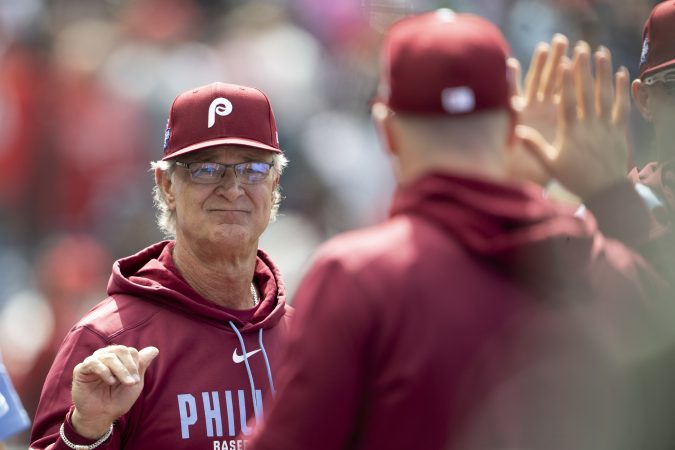
    But interim manager Don Mattingly nodded, deciding to grant Sánchez’s request. Phillies pitching coach Caleb Cotham headed out for a mound visit to check in and discuss how to attack Valenzuela, but the ball stayed in Sánchez’s hand.

    “Sánchy’s easy to trust,” Mattingly said.

    And the Phillies lefty made sure that trust wasn’t misplaced. Like he had all night in the 5-2 win over the Blue Jays, Sánchez rebounded from adversity to induce a groundout from Valenzuela to end the inning.

    “I don’t like leaving guys on base,” Sánchez said through team interpreter Diego D’Aniello. “I felt great today. … Obviously a big thank-you to the manager for trusting me with that. And I told him that after the game.”

    An early offensive outburst was just enough for the Phillies to take the first game of the series. Sánchez gave up two runs, including his first homer allowed since April 23.

    He had cruised early in his start, retiring the first six Blue Jays he faced. But after a long top of the third while the Phillies worked long at-bats against lefty Patrick Corbin, Sánchez’s command initially wasn’t as sharp.

    He allowed his first hit of the day, a leadoff double to Myles Straw, and then fell behind in the count to Tyler Heineman. But he battled back to induce consecutive groundouts, conceding one run, and then struck out George Springer.

    Ernie Clement led off fifth inning with a homer — the first Sánchez had allowed since April 23 — but he responded right away by retiring the next three Blue Jays. He helped himself out with a strong defensive play on a grounder hit back to him. Sánchez bobbled the ball, but recovered, barehanded it, and fired it to Harper who picked it for the out.

    “I’m laughing a little bit because [Alec Bohm] at the time told me, ‘Don’t throw it, don’t throw it.’ I threw it anyway,” Sánchez said.

    Sánchez also picked up right fielder Adolis García in the sixth inning. Yohendrick Piñango, the Blue Jays’ nine-hole hitter, doubled and then advanced to third when García misplayed the ball off the wall. The ball deflected off García’s foot, and he was charged with his third error of the season.

    “I talked to him after the inning, right away, and he told me just to stay calm because he was there for us,” García said. “I think it’s really important for us to have that type of communication because it allows us to be aggressive and just go after the ball.”

    Sánchez struck out the top of the Blue Jays order — Springer, Nathan Lukes, and Vladimir Guerrero Jr. — to leave Piñango at third base.

    “I think the sixth is huge. It kind of shows who he is, right?” Mattingly said.

    Sánchez struck out 10, five of which came in the sixth and seventh inning as he seemed to get sharper as his outing progressed.

    The Phillies had seven hits and drew five walks. They jumped out to an early lead in the second inning. Bryson Stott won a nine-pitch battle against Corbin with a double to center field and García blasted his third homer in the last five games to put the Phillies up, 2-0.

    García has continued to hit early before each game with the hitting coaches. He said he focuses on getting his timing down in those extra sessions. It’s paying off: After posting a .125 average and .182 slugging percentage in May, he is hitting .269 and slugging .654 in June.

    “I feel good, and I feel comfortable at the plate. I think it’s about making the adjustments,” García said.

    Patience against Corbin paid off for the Phillies in the third. After Kyle Schwarber flew out to center field to start the inning, the next seven Phillies reached base — walk, walk, hit by pitch, single, single, walk, and fielder’s choice — and they scored three more runs.

    They couldn’t get much going against the Jays bullpen, which took over in the fourth, but the early cushion was enough with Sánchez on the mound for seven.

    “Whenever we have him on the mound, the type of pitcher that he is, it’s almost a sure win if we get him run support,” García said.

    Brad Keller took over in the eighth and sidestepped a walk and a single for a scoreless frame, while Jhoan Duran picked up his 16th save of the season in the ninth to seal the win.

  • Trump crashes the NBA Finals and creates chaos at Madison Square Garden

    NEW YORK — There were 66 New York Police Department vehicles and two garbage trucks acting as barriers parked around the corner of 33rd Street and 8th Avenue. Forty-three of the vehicles, including 35 motorcycles, were lined up on 33rd alone.

    Both streets were locked down, and it wasn’t because John Turturro was inside Madison Square Garden.

    Trump was coming.

    President Donald Trump on Monday became the first sitting president to attend an NBA Finals game. He did so in the worst possible setting: the middle of the biggest, most congested city in the United States.

    Trump, a native New Yorker, said he was invited by Knicks owner James Dolan. He choppered into the city and took a limo to the arena, but did not sit courtside as planned.

    With the best seats auctioning off for more than $500,000 and the worst seats going for more than $6,000, maybe he couldn’t afford it.

    During the national anthem, he was shown in a suite, saluting.

    The boos were absolutely monumental, long and sustained, drowning out the hearty singer, Avery Wilson, and whatever cheers there might have been.

    Knicks guard Josh Hart expressed regret that ticket prices were so high that many long-suffering Knicks fans, whose team last won a title 53 years ago, would have to watch on TV.

    “I kind of wish ticket prices weren’t as crazy as they are. I feel like a lot of people have been waiting for this moment for a very long time,” Hart said. “Unfortunately, they’re not able to get into the building with the cheapest ticket $7,000 or $8,000. That’s ridiculous.”

    You wondered what, then, Hart thought of Trump and his entourage taking up so much space in the World’s Most Famous Arena. Hart has been a frequent critic of Trump’s, celebrating on X, then known as Twitter, when Trump lost the 2020 election.

    Hart has not issued any comment on Trump attending Monday night.

    Trump’s presence only amplified what you knew would be a frenetic, eclectic, and electric atmosphere.

    There was Spike Lee mugging courtside in a signed Pope Leo jersey. Signed.

    Comedian Larry David and Patriots owner Robert Kraft were hugging and texting courtside.

    Ben Stiller arrived four hours early, game face on, and was rubbing elbows with Pat McAfee, Stephen A. Smith, and what seemed like the rest of the ESPN staff that isn’t covering the College World Series.

    Jeremy Lin was in a leather Knicks jacket, and, for some reason, was stretching his Achilles tendons backstage. He looked fit. Secret weapon?

    Long before tipoff, thousands of folks outside were being misdirected by confused cops for an hour, then standing in lines another 90 minutes to get through security. There didn’t seem to be an empty seat by game time.

    New Yorkers knew what was up. They’re used to Trump messing up Manhattan traffic.

    ESPN studio host Ernie Johnson, his bow tie undone, was getting wanded by Secret Service as he entered the arena 4½ hours early, then waited among a herd of press types for 20 minutes to be let in 30 minutes early, then waited 15 minutes for the only accessible elevator before they turned on the escalators around the corner.

    Spurs center Victor Wembanyama went through the same process two hours later.

    Both coaches said Trump’s presence and the resulting complications affected neither them nor their teams.

    We’ll see.

  • Somali referee won’t officiate in World Cup after being denied entry into the United States

    Somali referee won’t officiate in World Cup after being denied entry into the United States

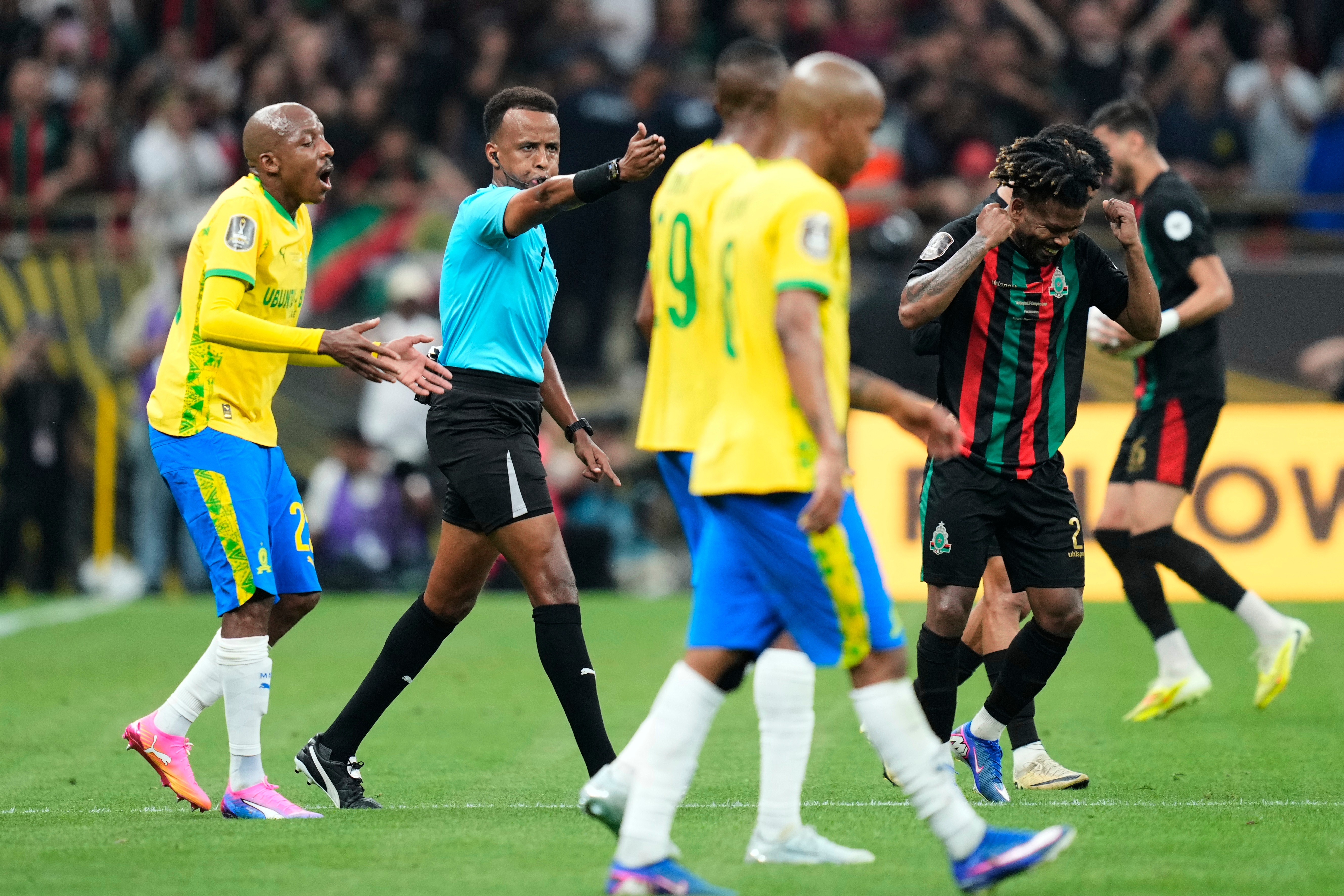
    Somali referee Omar Artan won’t officiate in the World Cup after being denied entry into the United States.

    U.S. Customs and Border Protection said Monday that a Somali national who was planning to referee in the World Cup had been denied entry after arriving to Miami International Airport from Istanbul on Saturday. While the CBP statement didn’t mention the person by name, Artan is the only World Cup referee from Somalia.

    FIFA confirmed later Monday that Artan wouldn’t be able to train and officiate at the World Cup.

    “FIFA is not involved in host country immigration processes, including visa adjudications, and has been informed by authorities that Mr. Artan’s status will not be changed at present,” soccer’s governing body said in a statement. “In line with previous FIFA events, a host government ultimately determines who receives a visa and who is admitted into their country.”

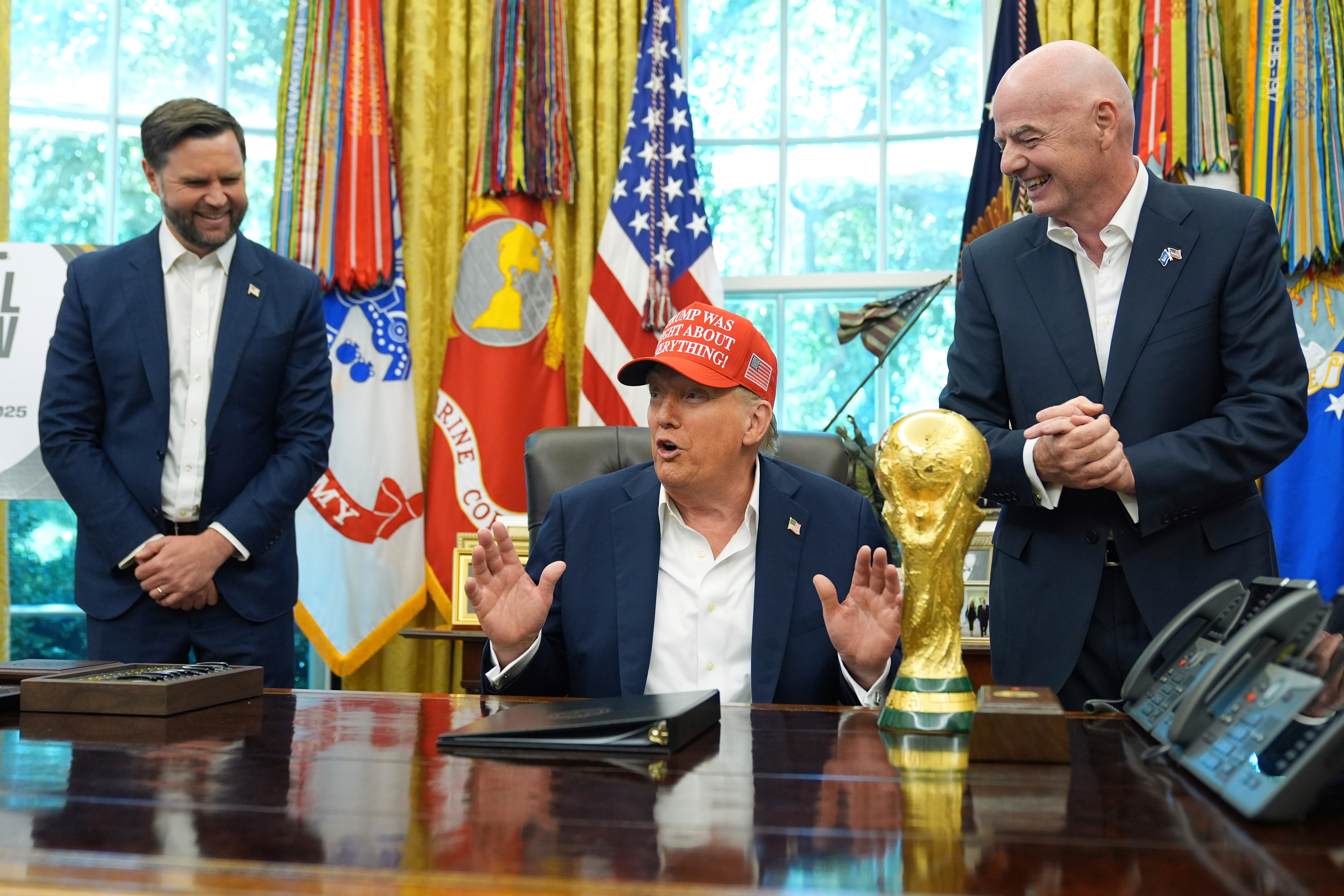
    FIFA president Gianni Infantino (right) with U.S. president Donald Trump, vice president J.D. Vance, and the World Cup trophy in the Oval Office last year.Jacquelyn Martin

    CBP issued a release explaining why Artan was denied entry.

    “During processing, the traveler underwent additional inspection, a routine part of CBP’s inspection process when officers need to verify information or determine admissibility,” CBP said in its statement. “Following inspection, the traveler, a referee for the FIFA World Cup, was determined to be inadmissible due to vetting concerns and was denied entry.”

    CBP said all travelers seeking entry into the U.S. — including athletes, coaches, and staff — are subject to CBP inspection and vetting.

    “Admissibility determinations are made on a case-by-case basis using law enforcement, national security, and immigration information available at the time of inspection,” the CBP statement said. “CBP officers have the authority to question travelers, conduct inspections, and determine admissibility consistent with U.S. law.”

  • Back in Toronto as Phillies interim manager, Don Mattingly reflects on Blue Jays’ run to the World Series

    Back in Toronto as Phillies interim manager, Don Mattingly reflects on Blue Jays’ run to the World Series

    TORONTO — Moments after the Blue Jays’ World Series hopes dwindled away in Game 7 against the Dodgers last November, Don Mattingly sat in Toronto’s dugout and looked out at the field at Rogers Centre.

    Bo Bichette, who departed the Jays for the Mets in free agency a few months later, shared a hug with his bench coach before they disappeared into the clubhouse.

    “I was just kind of watching the end of it, and taking it in,” Mattingly said. “I usually get out of the dugout after a game, but that one I just kind of watched, took it in, and then Bo came over.”

    On Monday, Mattingly was sitting at that ballpark but in the opposite dugout, now as the Phillies’ interim manager. It marked his first visit to the Rogers Centre since the 11-inning, 5-4 loss that cemented the Dodgers as back-to-back champions.

    Over his more than four decades in baseball as a player, manager, and coach, 2025 was Mattingly’s first time being involved in a World Series.

    “What I learned: It’s hard to get there; it’s hard to move through each round,” he said. “Just emotional, right? If you’re the team that doesn’t get the last out, it’s a crash. No matter if it’s at that level or it’s the first round. That feeling is the same.

    “But once you get away from that, from last year’s standpoint, you really are proud of the team, right? What they were able to accomplish, the guys that are in there, and you feel for those guys, and they kind of laid their hearts out there.”

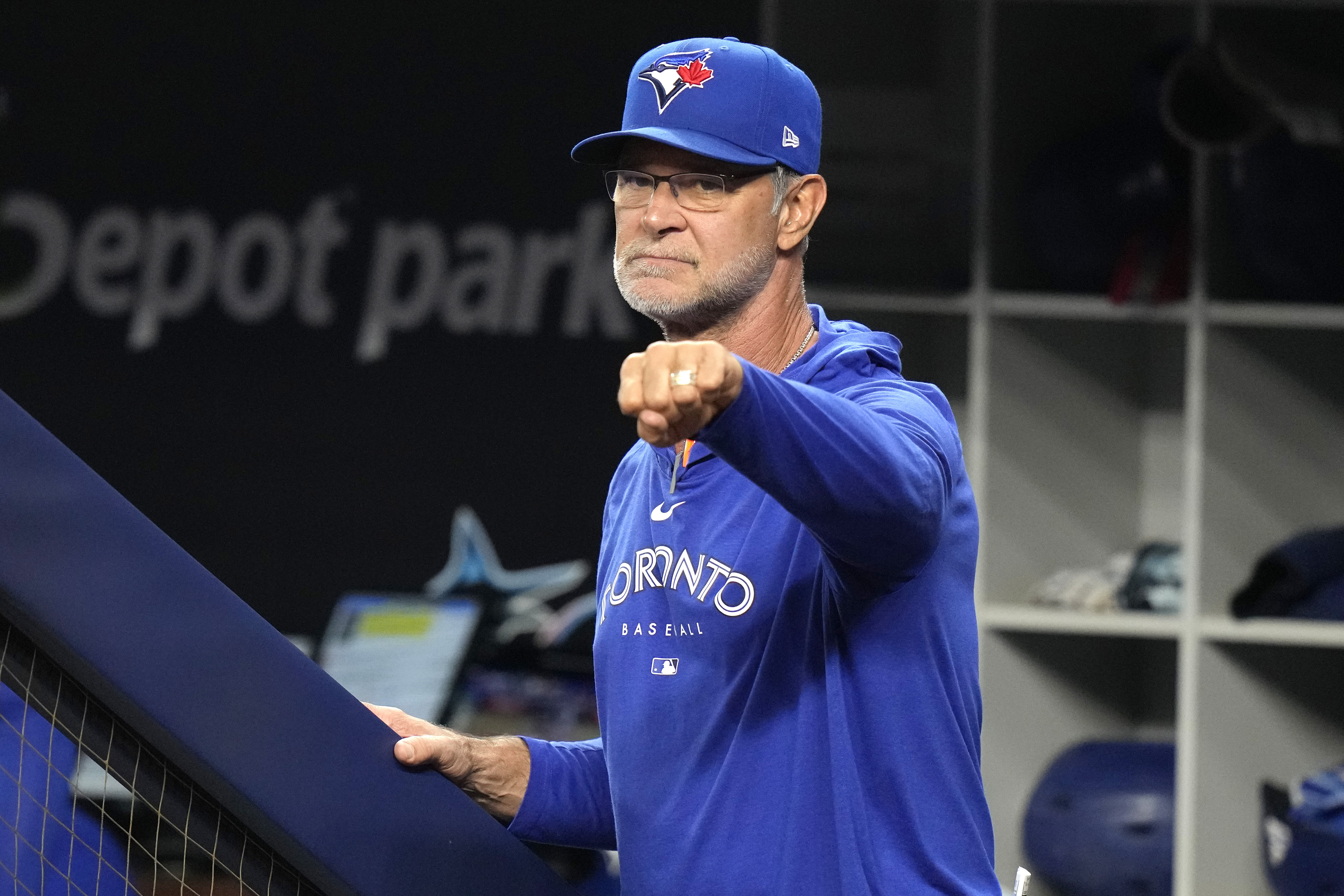
    Don Mattingly has plenty of familiarity with the Blue Jays’ roster.Lynne Sladky

    Mattingly spent three years as bench coach for Blue Jays manager John Schneider. He stepped down after the World Series, as he felt like he had accomplished his goal of helping Schneider, a younger manager, establish himself.

    He couldn’t have predicted that five months later, he would be managing again. Mattingly initially planned to retire but changed his mind after he was approached by the Phillies in the offseason for their open bench coach job. And after Rob Thomson was fired following the Phillies’ slow start, Mattingly was back at the helm.

    He said he’s taken many lessons from his previous stops into his position.

    “I think a lot, the way Schneids does things, and the way Toronto actually does things,” Mattingly said. “But I can say the same from everywhere. From Miami, I can say the same from LA, I could say the same from being around Joe Torre with his staff. So you’re always taking. I always try to take from everyone, good or bad. Take the bad, and know that that’s not what you want to do, right? So I’m taking all the time.”

    With this series against Toronto, Mattingly’s familiarity also gives him a leg up with game-planning.

    “It’s a little less having to totally go through a club you don’t know anything about,” he said. “Like a lot of the White Sox guys we just got done playing, there was a lot of new faces that I hadn’t seen play before. It makes me more comfortable. I don’t know if it makes it easier, but I definitely kind of know who these guys are, in a sense, and how they use them. But you still got to get outs, and make plays, and all that kind of thing.”

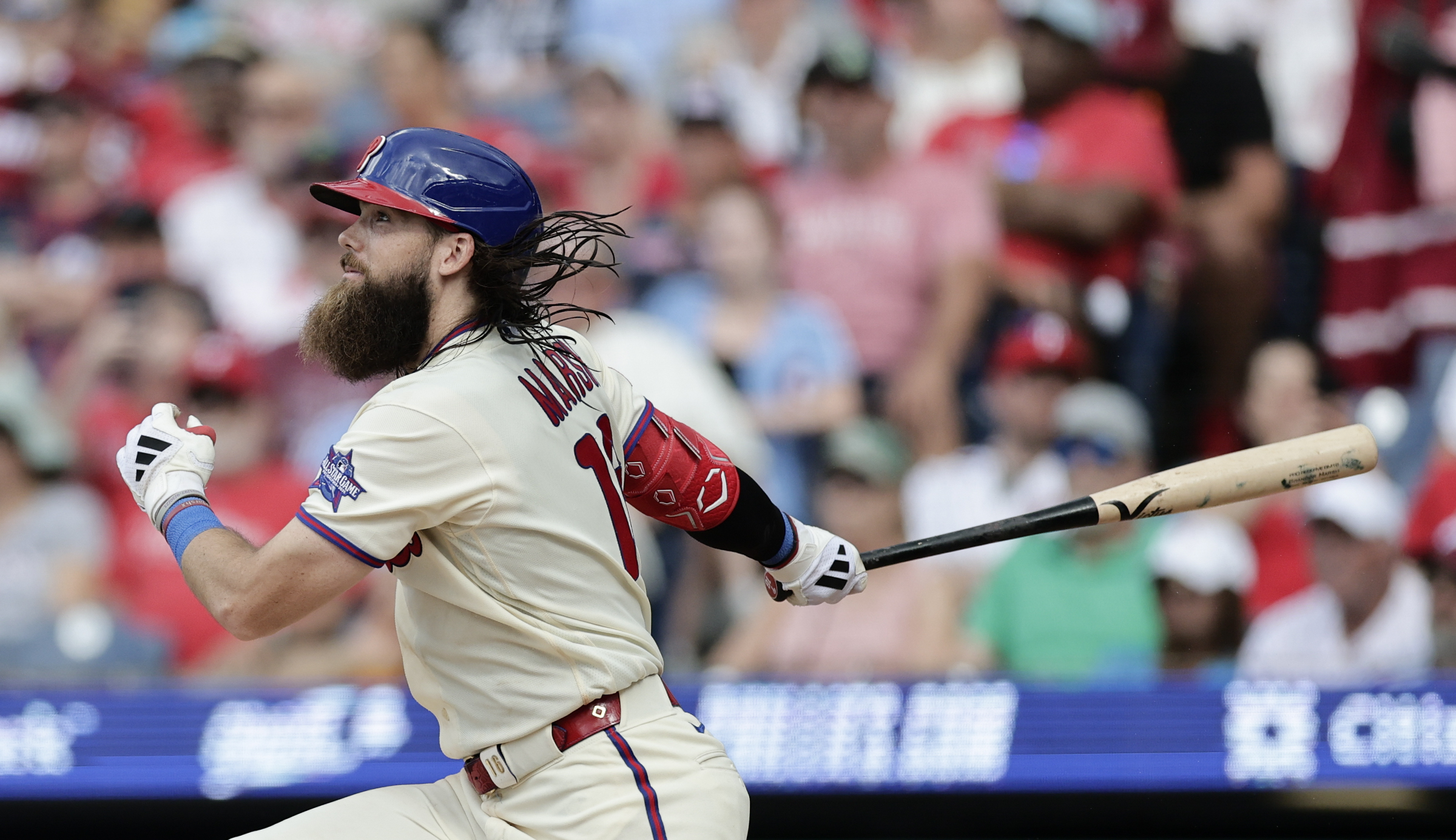
    Brandon Marsh slid over to center field on Monday.Yong Kim / Staff Photographer

    Extra bases

    Justin Crawford sat against Blue Jays left-hander Patrick Corbin on Monday, with Edmundo Sosa drawing into the lineup at left field and Brandon Marsh sliding to center. … Zack Wheeler (5-1, 2.31 ERA) is scheduled to start against Blue Jays righty Dylan Cease (3-3, 3.05) on Tuesday. Cease will be making his first start since he was placed on the injured list on May 25 with a left hamstring strain.

  • 15 arrested as police response to Gayborhood Pride festival spurs criticism from some in LGBTQ+ community

    15 arrested as police response to Gayborhood Pride festival spurs criticism from some in LGBTQ+ community

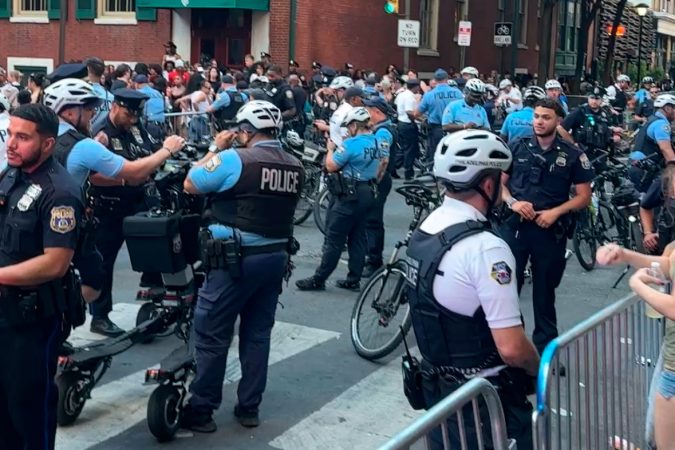
    Fifteen people were arrested at a Pride celebration in Philadelphia’s Gayborhood on Sunday, authorities said, and the response drew criticism from some LGBTQ+ residents over how police handled crowd control at the event.

    Images of police officers engaging with attendees in Center City circulated widely across local social media feeds on Monday, featuring criticisms of what some considered to be an outsize and aggressive law enforcement presence.

    In one image shared on X, a police officer on a motorcycle appears to push against a woman’s chest, and, in another photo, pushes the woman against a garage door while arresting her.

    Others videos showed police on horseback dispersing young people from a sidewalk, as well as officers physically struggling with a man outside the gay bar Woody’s.

    And in yet another clip, a row of police officers — two of whom were wearing face coverings — formed a line to clear a barricaded Gayborhood street while officers on motorbikes rode along the sidewalks.

    Joshua Stokem, a New Jersey resident who regularly attends the city’s Pride celebrations, said he had never seen that large a police presence during such festivities.

    “They were definitely getting more and more aggressive” as the gathering stretched into the early evening, said Stokem, who works as a promoter for LGBTQ+ events at city bars.

    Councilmember Rue Landau, herself a member of the LGBTQ+ community, said in a statement Monday that LGBTQ+ constituents had reached out to her office in “outrage” and that she was working to better understand the department’s strategy.

    “Police brutality has no place at Pride,” she said.

    The revelry outside some of the city’s best-known gay establishments was not affiliated with the official Philly Pride March and Festival event that took place on the Benjamin Franklin Parkway throughout the day, Stokem said. But many attendees migrated from the Philadelphia Museum of Art to the Gayborhood that afternoon, he said, where post-parade parties have become tradition.

    Hours before police dispersed the crowd, Stokem said, guests were surprised to arrive and find that several Gayborhood blocks around 13th and Walnut Streets — cordoned off in years prior for attendees to wander — were instead blocked with metal barricades, limiting crowds to the sidewalks.

    He said that layout caused large groups of people to pack into the corridors outside bars and restaurants and, in his view, created confusion and exacerbated some of the issues attendees had with police.

    For their part, police said they deployed 600 officers for Sunday’s Pride events — including 150 officers to the Gayborhood — to maintain public safety.

    Police Commissioner Kevin Bethel said in a statement that the celebration was “by all accounts, a successful event attended and enjoyed by thousands of people.”

    Still, “as crowd sizes increased in the Gayborhood, officers responded to a growing number of public safety concerns, including fights, disorderly behavior, blocked roadways, and the challenges associated with safely managing large crowds in a confined area,” Bethel said.

    Bethel said the department had expected the Parkway celebration to gradually transition to the Gayborhood event, but that did not happen.

    Instead, he said, two separate gatherings were essentially happening at once, creating a situation that was “challenging to manage safely” and led to the decision to clear parts of the neighborhood.

    “That decision was not made in any way, shape, or form because people were celebrating Pride,” he said.

    In all, 15 people were arrested, according to Bethel, primarily for offenses related to disorderly conduct. One person was arrested on a charge of aggravated assault of a police officer.

    Bethel said the department was aware that some officers were wearing face coverings, which are not part of the department’s official uniform, while dispersing crowds.

    “We are currently working to identify the officers involved,” the commissioner said, adding the department would determine whether discipline was necessary.

    Stokem, the Pride attendee, was one of the social media users who documented the police presence. He said he left the Gayborhood around 7:30 or 8 p.m., when officers with batons ramped up enforcement.

    “Police, dressed up as if we’re going to riot, basically start steamrolling the street,” he said. ”They’re just like shoving everyone to a corner and expecting us to … honestly, I didn’t know what they were expecting.”

    Some of those arrested appeared to be teenagers who were not part of the Pride celebration, Stokem said, but had nonetheless taken part in the revelry and were behaving disorderly and fighting outside nearby non-LGBTQ+ bars.

    “I don’t think it’s OK for that to be happening, but what are you going to do about it?” he said of those altercations and his frustration with the resulting police response. “Because now you’re punishing the entire community.”

  • Trump nominates Todd Blanche for attorney general

    Trump nominates Todd Blanche for attorney general

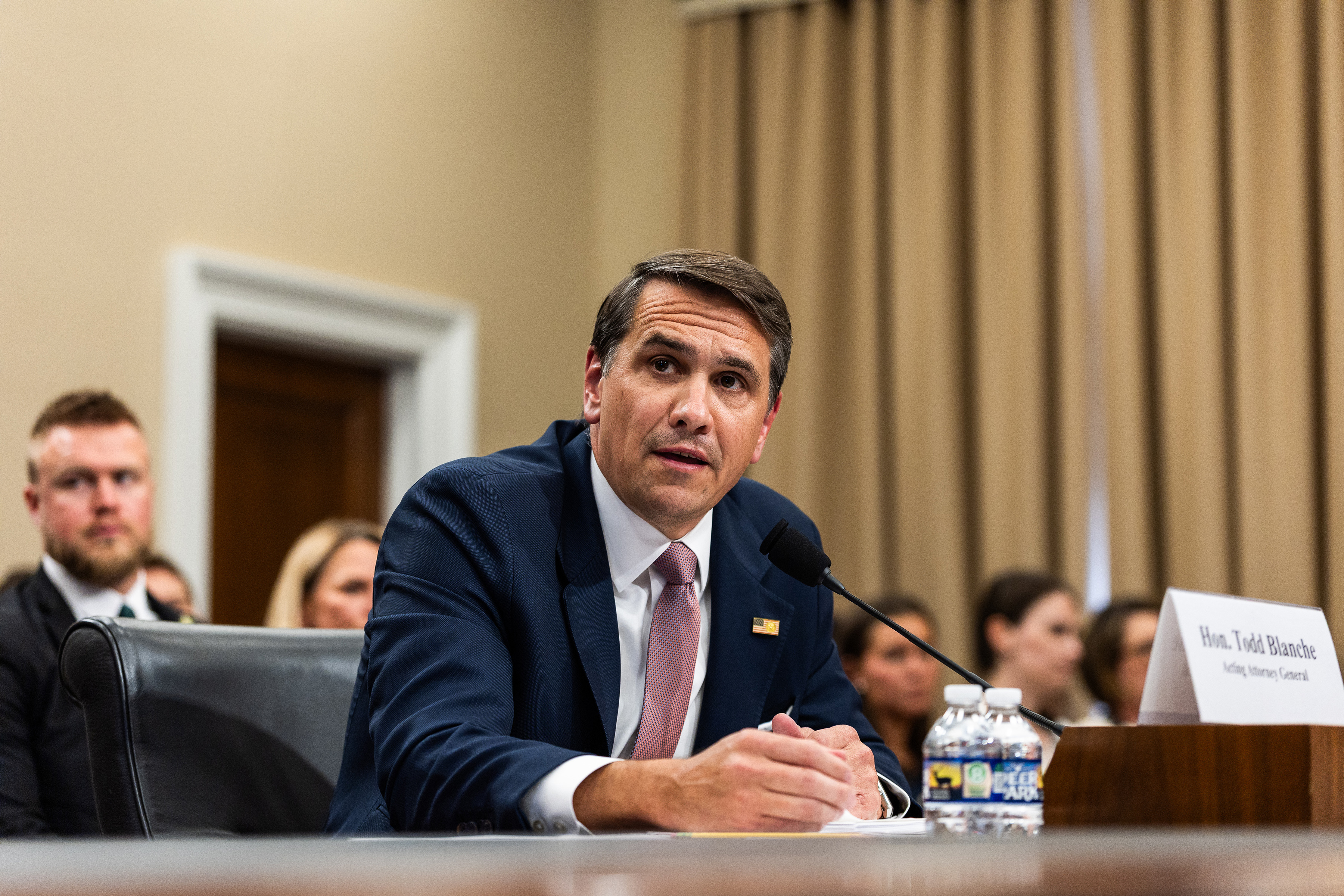
    WASHINGTON — President Donald Trump on Monday nominated his former personal lawyer Todd Blanche to serve as attorney general, elevating a loyal and trusted ally who as acting attorney general has shown a willingness to execute Trump’s maximalist demands.

    The announcement, teased by White House officials last week, comes as public scrutiny of Blanche intensifies over his role in an administration push for a $1.8 billion fund with taxpayer money to pay those claiming they were victims of government mistreatment, most likely including rioters who attacked the Capitol on Jan. 6, 2021.

    The nomination was disclosed in a notice Monday on the White House’s website, saying that Trump had sent Blanche’s name to the Senate.

    It remains unclear if Blanche, who promoted an expansive view of executive power at the expense of the legislative branch both as Trump’s defense lawyer and as the Justice Department’s second in command, will have sufficient support in the Senate to be confirmed as tensions grow between the White House and congressional Republicans.

    A confirmation hearing for Blanche could pose a tricky political test for Republicans as the party prepares for midterm elections this year. A recent closed-door meeting between Blanche and Senate Republicans was described as blistering, with dozens of lawmakers sharply criticizing Blanche over the $1.8 billion fund.

    Senators, however, failed to pass restrictions on any such payouts, suggesting their unhappiness with the White House may have ebbed.

    His path to the permanent appointment he has long coveted will also be complicated by lingering anger — and unanswered questions — related to his handling of the release of millions of pages of investigative files related to convicted sex offender Jeffrey Epstein.

    In recent weeks, his predecessor, Pam Bondi, who was fired in April after Trump privately vented over her failed efforts to prosecute his political enemies, placed primary responsibility for the release of the Epstein files on Blanche during an interview with a House committee.

    Blanche, a former federal prosecutor in Manhattan, has shed his reputation as a mildly moderating voice within the department as he has energetically pursued a job whose main prerequisite, in the view of current and former officials, is never saying no to the boss.

    A wide range of former law enforcement officials have sharply criticized Blanche’s brand of justice, saying he has deployed prosecutorial power to punish Trump’s perceived foes, and in the process badly damaged the department’s reputation with the courts and the public.

    As acting attorney general, Blanche has taken a series of actions against Trump targets, including green-lighting the indictment of former FBI Director James Comey for posting to social media an image of seashells arrayed to read “86-47,” which Blanche has described as a credible threat of violence against a sitting president. (The phrase “86” is a slang term evolved from restaurant parlance for throwing something out, and “47” refers to Trump, the nation’s 47th president.)

    Blanche expressed internal reservations about the highly unusual plan to establish the fund, which also included a broad shelter from tax investigations for Trump, his family, and his businesses that could be worth more than $100 million.

    But Blanche and one of his top aides, Stanley Woodward Jr., signed off on the plan, unlike some first-term Trump appointees who resigned or offered fierce resistance when confronted with demands they considered questionable. It was immediately assailed as a political slush fund by Democrats and Republicans alike.

    Testifying before lawmakers last week, Blanche said the Justice Department was giving up the plan for the fund but would keep Trump’s shelter from tax investigations in place. Trump later cast doubt on the abandoning of the fund, saying, “I love it.”

    “Todd Blanche has never stopped acting as Donald Trump’s personal lawyer,” said Stacey Young, the founder of Justice Connection, an organization of former department employees that includes many career prosecutors forced out by Blanche as he has sought to reshape the department to Trump’s liking.

    “He has used his high position at the department to enter into a corrupt deal with the president and his family, advance vindictive prosecutions, illegally fire career employees, smear whistleblowers, and attack the judiciary,” she added.

    The fund was the result of secret talks between Trump’s private lawyers and officials working for Blanche, as a means of settling a $10 billion lawsuit Trump had filed against the government over the leak of his tax returns, and unrelated claims for about $230 million that Trump had filed against the Justice Department and the FBI over past investigations and prosecutions.

    Blanche and his team sought to create a settlement that would prevent the government from paying taxpayer money to Trump, which they saw as a potential ethical, legal, and political catastrophe.

    In his testimony to lawmakers last Tuesday, Blanche insisted the protection of Trump and his family from tax audits or investigations would not be affected by the withdrawal of the fund proposal, and would remain in place.

    “So the blanket immunity is not something that you’re going to move back on?” asked Rep. Rosa DeLauro (D., Conn.), who accused Blanche of prioritizing the president’s financial interests over the public good.

    “You do not belong in this job,” she added.

    But Trump, who has said he owes his freedom to Blanche’s hard-nosed legal efforts on his behalf in the criminal cases against him, appears to believe otherwise.

    Blanche first gained the confidence of Trump while he was out of office, battling multiple investigations and indictments. Blanche became Trump’s defense lawyer in 2023, and represented him when he went on trial a year later in New York City; Trump was convicted on charges of falsifying business records.

    Since becoming the deputy attorney general in early 2025, Blanche has executed sweeping changes at the Justice Department, where he has proudly described firing more than 200 agents and prosecutors who worked on cases involving Trump or his allies. He has also talked of being at war with federal judges.

    This article originally appeared in the New York Times.

  • City Hall failed the school district. Now Philly’s kids will pay for it. | Editorial

    City Hall failed the school district. Now Philly’s kids will pay for it. | Editorial

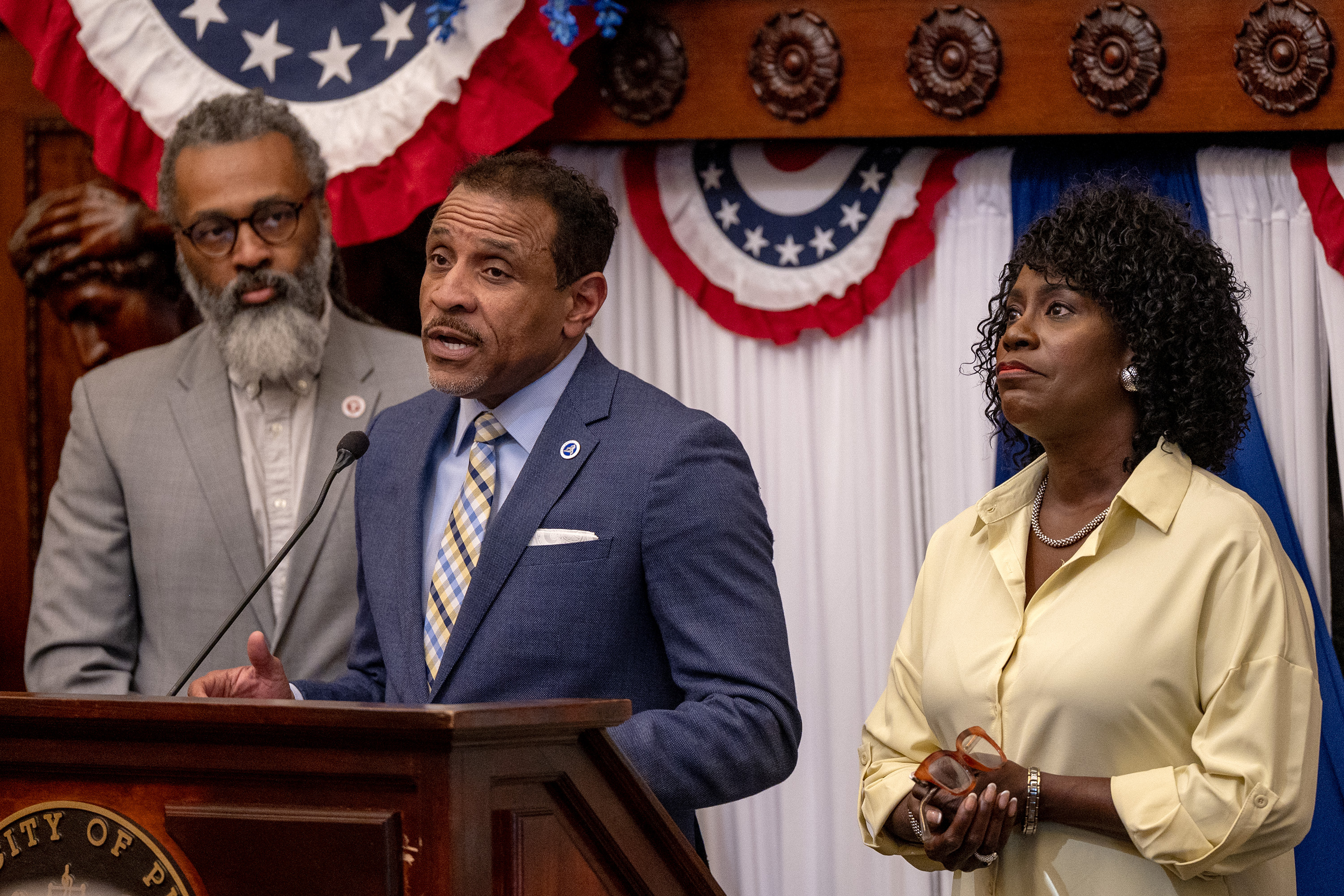
    Mayor Cherelle L. Parker and members of City Council could not agree on how to bridge the Philadelphia School District’s structural budget deficit. Now, students and staff will bear the brunt of a political failure.

    In some ways, the scope of the deficit seemed to catch policymakers off guard. The mayor’s initial budget proposal included a 20-cent per-trip tax on rideshare services, which then ballooned to $1 per ride. Neither figure came close to filling the $300 million hole in the district’s financial plan.

    While both the mayor and City Council have strong oversight powers when it comes to school spending, neither seemed to anticipate the size of that gap — even though Superintendent Tony B. Watlington Sr. had warned of a looming fiscal crisis during the last budget season.

    The ripple effects of the deficit are already clear. Principals and teachers have described this hiring season as chaotic. Some district employees whose positions are slated for elimination have begun looking for jobs in suburban school systems, many of which are facing their own budget issues.

    The cuts to Philadelphia’s schools come at a time when students are making progress, although pandemic-era declines have yet to be fully reversed. According to the Education Scorecard, the school district’s “learning rate” outpaces other big cities. That could be undermined by shedding hundreds of staff positions and shuffling teachers around to fill the gaps.

    Magnifying the impact of the staffing cuts is the scheduled closure of 17 schools across the city. The closure plan — which was finalized in April after a long and contentious process marked by City Council’s opposition — eroded support for the district with both residents and lawmakers. Council members did little to hide their fury over the inclusion of Paul Robeson and Lankenau High Schools on the district’s closure list, despite their efforts to preserve them.

    It did not help matters that some of the mayor’s plans seemed somewhat haphazard. Closing the gap between internet retailers and their brick-and-mortar competitors through online taxes makes a lot of sense, as does taxing delivery services in order to fix potholes. But many of Parker’s other proposals were unconventional.

    For example, most cities that tax rideshare services use the funds to support public transportation. That use of the revenue may feel more intuitive to taxpayers: If improved transit access allows current rideshare users to take more trips on SEPTA, they’ll save money overall. Instead, the proposal was to send money from the rideshare tax to the school district, and at a level that was still significantly below its needs.

    Whatever the details, the proposed tax did not pass. In a news conference last week, Parker said there were just three votes for the plan from the 17-member council. Instead, Council members approved a one-time payment of $50 million in an attempt to forestall the district’s job cuts.

    Despite the windfall, Watlington announced that the planned cuts would go through. He has spent weeks citing the need for a recurring source of revenue for the district, and the school system found itself facing the reality that a one-time payment of $50 million simply isn’t enough to stem a $300 million annual shortfall.

    This episode has lessons for everyone involved.

    For Parker, it is a sign that she must find a more effective way to work with Council. Mayors in Philadelphia tend to lose momentum over time, but she is still in her first term. If she’s already failing to “get to yes” with City Council over such relatively straightforward proposals, it may not bode well for the balance of her tenure.

    For Council, there must be a recognition that there is more to governing than just saying no. At some point, inaction is itself a choice. Philadelphia’s students cannot afford another year of this.

  • Robert Coles, Pulitzer-winning child psychiatrist, is dead at 97

    Robert Coles, a child psychiatrist by training and a storyteller by inclination whose scores of books and articles transported readers into the minds of children, opening new vistas on issues as varied as race relations and moral reasoning, died Thursday in Lincoln, Mass. He was 97.

    The death, at a hospice facility, was confirmed by his son Robert.

    A longtime professor at Harvard University, Dr. Coles eschewed ideologies and psychiatric orthodoxies, visiting the homes of children — first in the American South and then around the world — to listen intently to what they, their parents, and others had to say. He returned again and again, sometimes for months or even years, building the trust that underpinned his work.

    He told searing accounts illustrating illusive truths of a fast-changing society, beginning with the tale of Ruby Bridges, who as a 6-year-old walked through a screaming mob in 1960 as part of an effort to integrate a public school in New Orleans. From the households of poor Black families to those of rich white ones, from Appalachia to the Arctic, Dr. Coles visited children whose voices were not often heard. He once rode a bus for a whole year with Black youngsters being transported to schools in white neighborhoods.

    Dr. Coles then wrote it all down, distilling the tape recordings of conversations, the children’s crayon drawings ,and his voluminous notes into compelling verbal snapshots of how children grapple with challenge. His five-volume book series Children of Crisis was published between 1967 and 1977; Volumes 2 and 3 won him a Pulitzer Prize in 1973.

    Some criticized his approach as scattershot and unscientific, and Dr. Coles readily admitted he veered from exact transcriptions to tell what he considered greater truths.

    But eminent sociologist David Riesman said in an interview with Time magazine in 1972 that the effect of Dr. Cole’s work was to obliterate stereotypes, to demonstrate that “policemen are not pigs, white Southerners are not rednecks, and Blacks are not all suffering in exotic misery.”

    “What he is saying is ‘People are more complicated, more varied, more interesting, have more resiliency and more survivability than you might think,’” Reisman said. “‘I listen to them! You listen to them! Please listen! Again and again!’”

    Dr. Coles offered proof “that hope is alive,” Kenneth Clark, a psychologist whose insights contributed to the Supreme Court outlawing the racial segregation of schools in 1954, said in an interview with the New York Times Magazine in 1978. “I don’t know if he’s one of the 10 just men required to keep this world spinning around,” Clark said, adding: “You can’t judge him by normal standards any more than you could Martin Luther King; they are men possessed.”

    Dr. Coles acknowledged a sense of “moral anxiety” as a white man writing about those with a less privileged existence.

    “I work with very vulnerable people, and yet I’m not very vulnerable myself,” he said in an interview with the New York Times in 1997. “It makes me uncomfortable, seeing the disparities between the world I document and the world I inhabit.”

    Dr. Coles was an exceedingly popular professor at Harvard, using great literature to stimulate debate in courses in its undergraduate college, as well as its schools of medicine, law, business, and government. He wrote books on personalities as diverse as Bruce Springsteen and the novelist Walker Percy, and also found time to write novels, children’s books, and poetry.

    He was awarded a MacArthur Fellowship in 1981, the Presidential Medal of Freedom in 1998, and the National Humanities Medal in 2001.

    So what was he? Dr. Coles variously described himself as a doctor, child psychiatrist, wanderer, oral historian, social anthropologist, teacher, friend, storyteller, busybody, nuisance, and “idiosyncratic oddball.”

    His friend Percy, himself a physician, once judged that the doctor designation, if broadly applied, might be most apt.

    “He treads a narrow path between theorizing and novelizing and emerges as what in fact he is: physician, and a wise and gentle one,” Percy said. “He is doctor to the worst of our life.”

    Robert Martin Coles was born Oct. 12, 1928, in Boston, to Philip Coles, an engineer who immigrated from England, and Sandra (Young) Coles, the daughter of an Iowa Episcopal minister. A deeply affecting memory of his youth in the suburb of Milton was how his parents read Charles Dickens, George Eliot, and other novelists aloud to each other.

    He went to Boston Latin School and graduated from Harvard in 1950. An essay he wrote on William Carlos Williams, the poet and pediatrician, led to him meeting Williams. After reading the essay, Williams replied on a prescription slip: “Not bad — for a Harvard student.”

    Dr. Coles was inspired to become a doctor himself, and earned a medical degree from Columbia University and interned at University of Chicago clinics.

    He said in an interview with the journal Christianity and Literature in 2005 that he worked with polio patients as a resident at Massachusetts General Hospital, and became interested in addressing the psychological impacts of the disease. This, as well as a reluctance to inflict pain on children by giving them shots, persuaded him to switch his specialty from pediatrics to child psychiatry.

    In 1958, he was drafted into the Air Force, given the rank of captain and sent to a psychiatric hospital in Biloxi, Miss. He became angered over the treatment of Black Southerners after he saw a “vicious” fight erupt when Black people tried to integrate a beach.

    He began his study of children with Bridges, whose poise in the face of racism moved him deeply. The girl was threatened daily on her way to class. She was told her food was poisoned and was kept isolated in a classroom without other students for a year.

    Dr. Coles noticed that she seemed to be talking to the hostile white people, and asked her why. She said she was praying for them.

    But why? “They need praying for,” the little girl said.

    Bridges would be a central theme running through Dr. Coles’ career. She inspired him to write about children’s moral and spiritual lives, and the two wrote a children’s book together.

    And when Bridges grew up, she told him that it was time for him to write Women of Crisis to accompany his earlier series.

    Dr. Coles teamed up with his wife, Jane, to write that two-volume women’s study, which was published in 1978 and 1980. But that was hardly the greatest of her contributions to his work: It was she who had urged him to stop asking questions during an interview with children in New Orleans when they were responding with a long series of monosyllabic replies.

    “Why don’t you just shut up and watch television with them?” she said, according to an oral history interview with Dr. Coles by the Southern Oral History Program in 1974.

    In Volume 4 of Children of Crisis, Dr. Cole described the approach he finally developed. No questions — or at least, not many.

    “I would tell the children I wasn’t interested in finding out anything in particular,” he said, “merely knowing, to a degree, how they lived and what they thought about — insofar as it was their inclination to tell me.”

    One thing Dr. Coles learned about children was that they were absorbed in their daily environment, not focused on concerns like nuclear war. Even when they did talk about such issues, they grounded them in their daily lives. A Black child in Mississippi once told him that, “If the Ku Klux Klan ever get that bomb, it would be real bad for us.”

    He noted that children of migrant workers saw everything as temporary. Or, rather, he let a migrant child make the point for himself: “I love the yo-yo, because it keeps going, up and down, and that’s what I do.”

    Pictures often told more than words. A deprived child of a migrant worker depicted himself without arms and gave the boss an ogre’s ugly teeth.

    As Dr. Coles moved around the country to study groups as diverse as Alaska Natives, wealthy suburbanites, and Hopi Indians, his wife and three sons moved with him.

    Jane Hallowell, whom Dr. Coles married in 1960, died in 1993. In addition to Robert, he is survived by two more sons, Daniel and Michael, and four grandsons. He lived in Concord, Massachusetts.