Blog

  • After Mormon lawmakers object, Pentagon revises Christian religious categories

    After Mormon lawmakers object, Pentagon revises Christian religious categories

    The Defense Department on Monday edited its new list of religious “codes” for service members so that no group is labeled “Christian” — drawing praise from Mormon lawmakers who were angered last week when their faith was categorized as outside of Christianity.

    On Friday, the Pentagon released a new, dramatically pared-down list of religious groups. It classified groups including Catholic, evangelical, and Methodist, among others, with the tag: “Christian.” The Church of Jesus Christ of Latter-day Saints was listed without the tag.

    After the outcry from several leaders who are members of the Mormon Church, the revised list simply states religious groups, without adding the tag “Christian” to any.

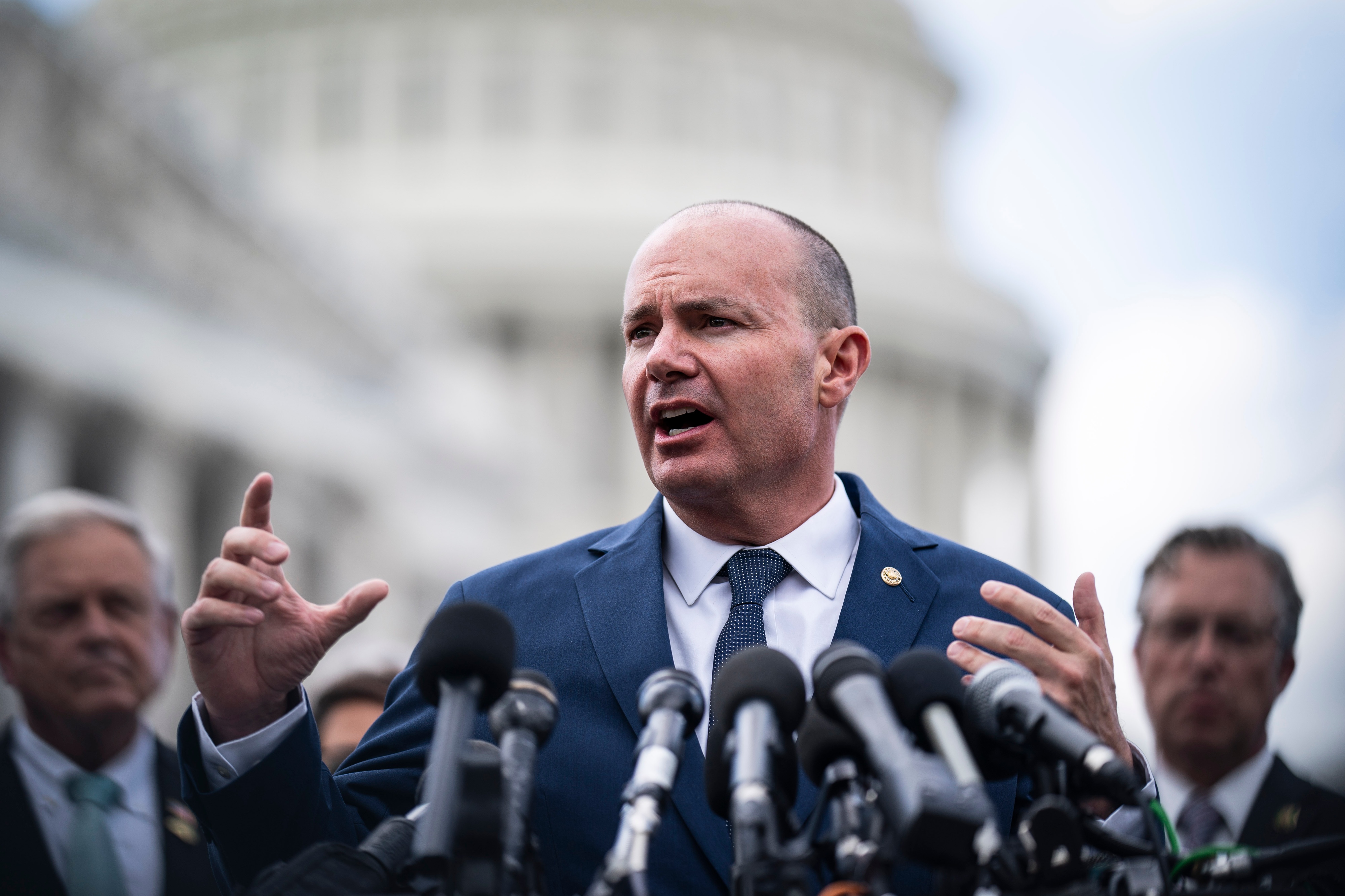
    U.S. Sen. Mike Lee (R., Utah), who is Mormon and had spoken out multiple times over the weekend on social media against the list, posted on X on Monday that he was “grateful” to Defense Secretary Pete Hegseth for the change.

    A spokesperson for Lee said he had spoken to President Donald Trump and Hegseth about the issue “and they assured him that the classification will be fixed.”

    The Defense Department on Monday declined to comment on whether it changed the list because of Lee’s campaign. The White House did not respond immediately to a request for comment.

    The Defense Department said last week that it removed 180 faith groups from its coding list — going from 211 to 31 — because the list was too large and “unmanageable.”

    “This decrease in religious affiliation codes is not designed to make any claims on the legitimacy of any faith or religious belief, nor is it intended to provide a list of ‘officially approved’ religions,” the statement said. “Rather, it is designed to allow chaplains to quickly look at the religious composition of their units and determine how they structure resources to best provide for warfighters of all faith groups.”

    In speaking earlier this year about his plan to trim down the code list, and to scrap the Army’s spiritual fitness guide, Hegseth has talked about his own view of faith, saying military religious services should be more focused on “truth” and less on self-care.

    The former Fox News host‘s handling of religion within the Defense Department has repeatedly been questioned. He has urged chaplains to speak more about scripture than psychology, and hosts monthly evangelical worship services that legal experts say are unprecedented. His social media profile and public comments routinely espouse his understanding of Christianity, which says that the faith is a defining aspect of American life, and casts those who disagree with him as God’s enemies. Hegseth has brought clergy from his small Christian denomination to preach at the Pentagon, including a prominent pastor who says women shouldn’t have the right to vote.

    The military has made many changes over time in how it recognizes different faiths, but experts say it had shifted in a more inclusive direction in recent decades. When the list of religious codes was expanded under the first Trump Administration, in 2017, the Defense Department said the broader list was needed to understand the military’s religious demographics and to “enable better planning for religious support.”

    The Defense Department press office Monday declined to comment on who was consulted as the department built its latest coding list.

    Among the dozens of faith groups no longer named in the codes are Wicca, atheists, and humanists. Also removed were Unitarian Universalists, the faith group with which multiple Founding Fathers were associated, including John Adams and Thomas Jefferson.

    Retired Maj. Gen William D. Razz Waff, the executive director of the Military Chaplains Association, predicted that the removal of religious and spiritual specifics will significantly complicate chaplains’ ability to do their job.

    Within the broad groupings of, for example, “Baptist” or “Jewish,” he said, are major differences — for the enlisted and for the chaplains themselves. For example, he wondered how marriage retreats that chaplains organize will work if it’s not clear how the participating soldiers or the chaplains themselves feel about topics like same-sex marriage.

    “As we used to say, ‘this breathes well,’ it looks good on paper, but wow, is the execution is going to be a mess,” Waff said.

    Lee, in his social media posts, mostly focused on arguing that his own denomination should be recognized as Christian, but also addressed the role of the government in making such decisions.

    “I’m not talking about what individual Christians might think. I’m talking about the U.S. government,” he wrote on X on Sunday. “I can say confidently that the U.S. government has no business recognizing the Christianity of literally every other religious sect that worships Jesus Christ — with one exception.”

    Whether Mormons are considered Christian has come up often in recent years, especially with the high-profile presidential campaigns of church member Mitt Romney. Concern about the issue prompted the group a few years ago to formally change all its marketing material to remove the word “Mormon” and replace it with the full name, which includes the words “Jesus Christ.”

    In a 2022 Pew Research poll, Mormons received the lowest favorability rate among Americans of the seven religious groups included. Among Christian denominations, evangelicals — a group that includes Hegseth and a large part of Trump’s base — are particularly skeptical of the Church of Jesus Christ of Latter-day Saints.

    Sen, John Curtis (R., Utah), who also is a member of the church, on Monday on X thanked the Pentagon for “engaging thoughtfully” with his office and “delivering a swift correction.”

    He had previously written in a Saturday post that it is “unacceptable for a government entity to characterize a faith in a manner that contradicts the religion’s own foundational tenets.”

    “Latter-day Saints are among the most patriotic, service-oriented individuals in our country. They are also unequivocally Christian — just look at who is in the name of the Church,” he wrote.

    In a statement, the Unitarian Universalist Association said that it is working on a “strategic response” to the pared-down list.

    “This may make it more difficult for our uniformed UUs to access the spiritual care that they need,” the statement said. “No government action can erase our faith nor lessen the powerful and necessary grounding it provides for those who serve.”

  • Mixteca, a Mexican agave bar from a James Beard Award-winning duo, is planning to open in Philadelphia

    Mixteca, a Mexican agave bar from a James Beard Award-winning duo, is planning to open in Philadelphia

    A James Beard Award-winning New York cocktail team is bringing its agave-focused bar concept to Philadelphia, taking over the former Martha space in East Kensington.

    Mixteca, an ode to tequila, mezcal, and Mexican drinking culture from industry veterans Jeff Bell and Euclides “Victor” Lopez, is expected to open next month at York and Martha Streets. It’s the former home of Martha, the acclaimed bar that closed in November 2024 after a decade.

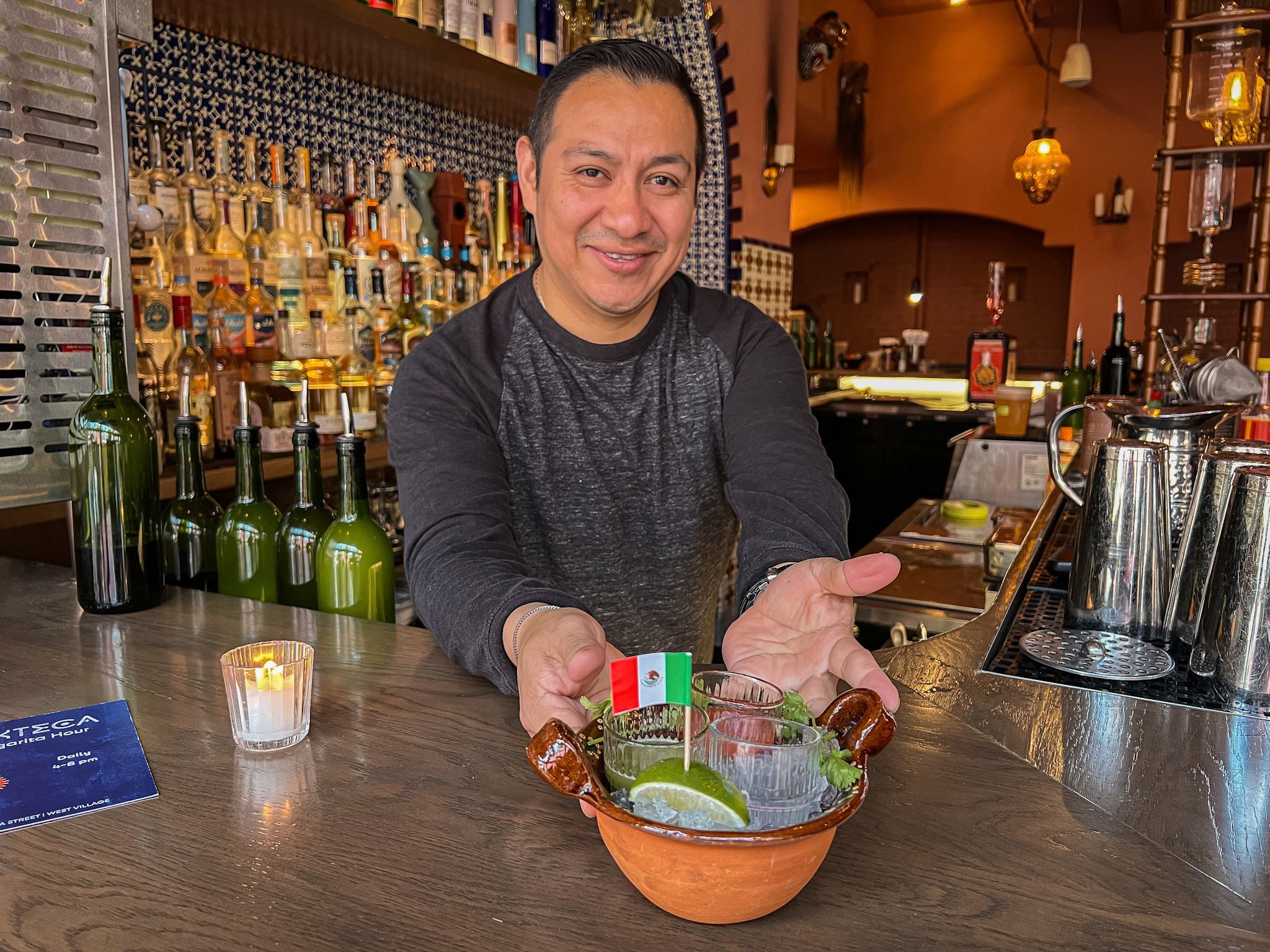
    Euclides “Victor” Lopez behind the bar with his signature drink La Bandera at Mixteca in New York City on June 4, 2026.Michael Klein / Staff

    Mixteca opened in New York’s West Village last July, with a limited food menu from Tacos 1986 next door.

    The project marks the Philadelphia debut for both Mixteca and Apres Cru Hospitality, the New York-based investment and management company behind the expansion.

    Apres Cru, which also works with such chefs as Marc Forgione and Ludo Lefebvre, initially announced that Martha would become a Philadelphia outpost of Pig & Khao, the Thai- and Filipino-inspired restaurant from Top Chef alumna Leah Cohen and her husband, Ben Byruch.

    Construction plans for Mixteca as seen in the space at 2113 E. York St. on May 28, 2026.Michael Klein / Staff

    “But we got deeper into this neighborhood and this space, [Mixteca] just started to feel like a really good fit for here,” Chris Quinlan, Apres Cru’s vice president, said.

    The former Martha, at 2113 E. York St., occupies part of the long-gone Weisbrod & Hess Brewery complex near Frankford Avenue. It’s in a fast-growing restaurant district — across from Picnic and beside Zig Zag BBQ, down the block from Philadelphia Brewing Co., and around the corner from the Monkey Bar. Emilia, Bar ILU, Fiore, and Little Walter’s are all within a short walk.

    Mixteca will retain Martha’s indoor-outdoor appeal while significantly reworking the layout. The space will seat about 75 guests indoors, including a comfy lounge area on the York Street side, with an additional 50 seats on the patio. A new balcony, seating about 20 and overlooking the dining room and bar, will accommodate private dinners and small events.

    Mixteca’s future home at 2113 E. York St. previously housed Martha.Michael Klein / Staff

    The design will draw heavily from Puebla, Mexico, where Lopez was born. Talavera tile, ceramic details, and a signature arched back bar inspired by a museum in Puebla will connect the Philadelphia location to the original West Village location without replicating it.

    “I’m incapable of copy-and-paste,” Bell said. “Doing the exact same thing a second time isn’t inspiring to me.”

    Bell and Lopez first worked together at the influential East Village cocktail destination Please Don’t Tell, known as PDT. Lopez joined the operation shortly after its 2007 opening after working at the bar’s associated hot dog joint, Crif Dogs, for five years. PDT won the Beard Awards’ first award for Outstanding Bar Program in 2012.

    “If you ever drank at PDT since its inception, there’s a very good chance he made one of your cocktails,” Bell said of Lopez.

    Mixteca’s concept grew out of conversations Bell and Lopez began nearly a decade ago about creating a venue centered on agave spirits and Lopez’s Mexican heritage. “He spent so many years making everybody else’s drinks, and this is a chance for him,” Bell said.

    Mixteca’s calling card is La Bandera, a three-shot tequila ritual inspired by the colors of the Mexican flag and served in a tray over pebble ice. The order starts with a tangy, ceviche-like green juice, segues to a crisp blanco tequila, and finishes with a red, fruity sangrita chaser.

    While tequila and mezcal remain the focus, Bell said the Philadelphia version will lean more heavily into food than the New York original. The menu is expected to feature house-made tortillas, tacos, guacamole, esquites, and other street-food staples, alongside larger dishes designed for groups and families. A small children’s menu and desserts such as flan or tres leches cake are also planned.

    Bell said the East Kensington neighborhood helped shape the offerings. “In the West Village, it’s more about going out for drinks and late nights,” he said. “Here it’s more residential.”

    “If there were a sliding scale, and New York was 80/20 drinks-to-food, here it’s probably more like 55/45 or 50/50.”

    Cocktails will still anchor the experience. The bar plans to import popular features from New York, including a daily “Margarita Hour” offering discounted margaritas. Bell also said the menu will incorporate Philadelphia influences through agave-based interpretations of local classics such as the Clover Club and Fish House Punch.

    The beverage program will also include a substantial selection of nonalcoholic drinks.

    For a neighborhood that has become increasingly defined by destination dining, Mixteca will arrive as something slightly different: a cocktail-forward gathering place that aims to function as both bar and restaurant.

    “We’re not going to impose our will,” Bell said. “We’re going to showcase our concept, try to ingratiate ourselves with the community, and evolve over time into whatever makes the most sense here.”

  • A flesh-eating cattle parasite spreads beyond Texas as new screwworm cases are found

    Two more cases of the New World screwworm have been confirmed, including one outside the main cluster in Texas, demonstrating the difficulty of stopping a pest that could potentially devastate the nation’s cattle industry, the U.S. Department of Agriculture announced Monday.

    The screwworm is actually a fly larva that eats living flesh instead of dead material. Females lay their eggs in open wounds of warm-blooded animals like cattle, but wildlife, pets, and occasionally even humans can be infested. A government program to breed sterile male flies and drop swarms of them from planes to mate with wild females had kept screwworm contained at the southern end of Panama for decades.

    So far, there are four confirmed cases: three calves in Texas and a dog from neighboring Lea County, New Mexico. The dog, which the USDA initially reported as a Texas case, lives in New Mexico and was reclassified as the first in that state. The animal’s travel history is being investigated.

    The first two screwworm cases were discovered last week in calves a few miles apart in south Texas. The third was announced Monday in La Salle County, southwest of San Antonio.

    Scientists expect a handful of new cases could pop up in the coming days and weeks, but it doesn’t mean screwworm is spreading rapidly, said Edward Burgess, a University of Florida entomologist who studies the fly.

    “When that first case is seen, everyone is being vigilant and their eyes are on it more intensely,” Burgess said. “And when you are looking for something, you are more likely to see it.”

    The USDA and the U.S. cattle industry have been racing to prevent an infestation since screwworm was detected in Mexico late in 2024. The annual warm-weather scourge of cattle ranchers had been eliminated in the U.S. in the 1960s.

    So far, its reappearance hasn’t greatly affected beef prices, which are already near record levels because there are fewer cows in the U.S. Although the parasite attacks live cattle, it does not infest meat or fruit. There are also a dozen government-approved medications to treat livestock.

    Canada temporarily stopped importing cattle, horses, or other livestock from Texas on Friday. The parasites prefer humid areas where temperatures are at least 77 F, making them more of a summer problem up north.

    USDA Secretary Brooke Rollins was scheduled tol hold a news conference about the infestation Monday afternoon following a briefing at the U.S. Livestock Insects Research Laboratory in Kerrville, Texas.

    Burgess said the long-term solution — breeding sterile male flies — is months away. Since wild female flies mate just once, if that encounter is with a sterile male, outbreaks can eventually be halted as the flies die out.

    The USDA is working to both increase sterile fly production in plants outside the U.S. and build a massive fly factory in Texas.

    However, Texas Agriculture Commissioner Sid Miller said the federal response will take too long and risks crippling the cattle industry. Instead, he says, a poison bait could eliminate the screwworm problem in a few months, even if USDA and other experts say the bait hasn’t been proven to work and could poison other flies, animals, and even humans.

    “What the hell is a good fly?” Miller said in an interview Monday.

  • Five Below has officially eliminated its above-$5 section

    Five Below has officially eliminated its above-$5 section

    Five Below, the Philadelphia-based discount retailer, has officially done away with its above-$5 section.

    But all its products aren’t below $5.

    Those higher-priced items — which had been set apart in stores’ “Five Beyond” sections and account for less than 20% of inventory — are now interspersed with the rest of the merchandise, according to chief executive officer Winnie Park.

    “We’ve actually seen that product perform better” when placed throughout the store, Park said last week on the company’s earnings call. “If you have a $35 gilt floor mirror, it’s in the room section and not tucked away in the back of the store.”

    The move came during a strong quarter for Five Below, which sells toys, games, decor, tech accessories, candy, party supplies, sporting goods, and more to kids, teens, and their parents.

    The company’s net sales rose nearly 33% and its net income increased to $123 million, triple the $41 million it recorded in the first quarter last year, according to the latest earning report.

    The wide selection of products at Five Below’s Chestnut Street location, one of its flagship stores, is shown in 2019. ED HILLE / Staff Photographer

    Executives attributed some of this growth to the popularity of games and toys, “underpinned by strong support of squishy trends and collectibles,” said Dan Sullivan, chief financial officer.

    “Everyone has been talking about the squishy dumplings,” the viral fidget toys that Five Below capitalized on, Park said. Pokemon and other trading cards also flew off the shelves.

    “We’re constantly looking at what next trend we can amplify,” the CEO said.

    Other factors contributed to higher sales, too, said the executives, citing higher tax refunds and broader economic pressures that are attracting more consumers to discount retailers.

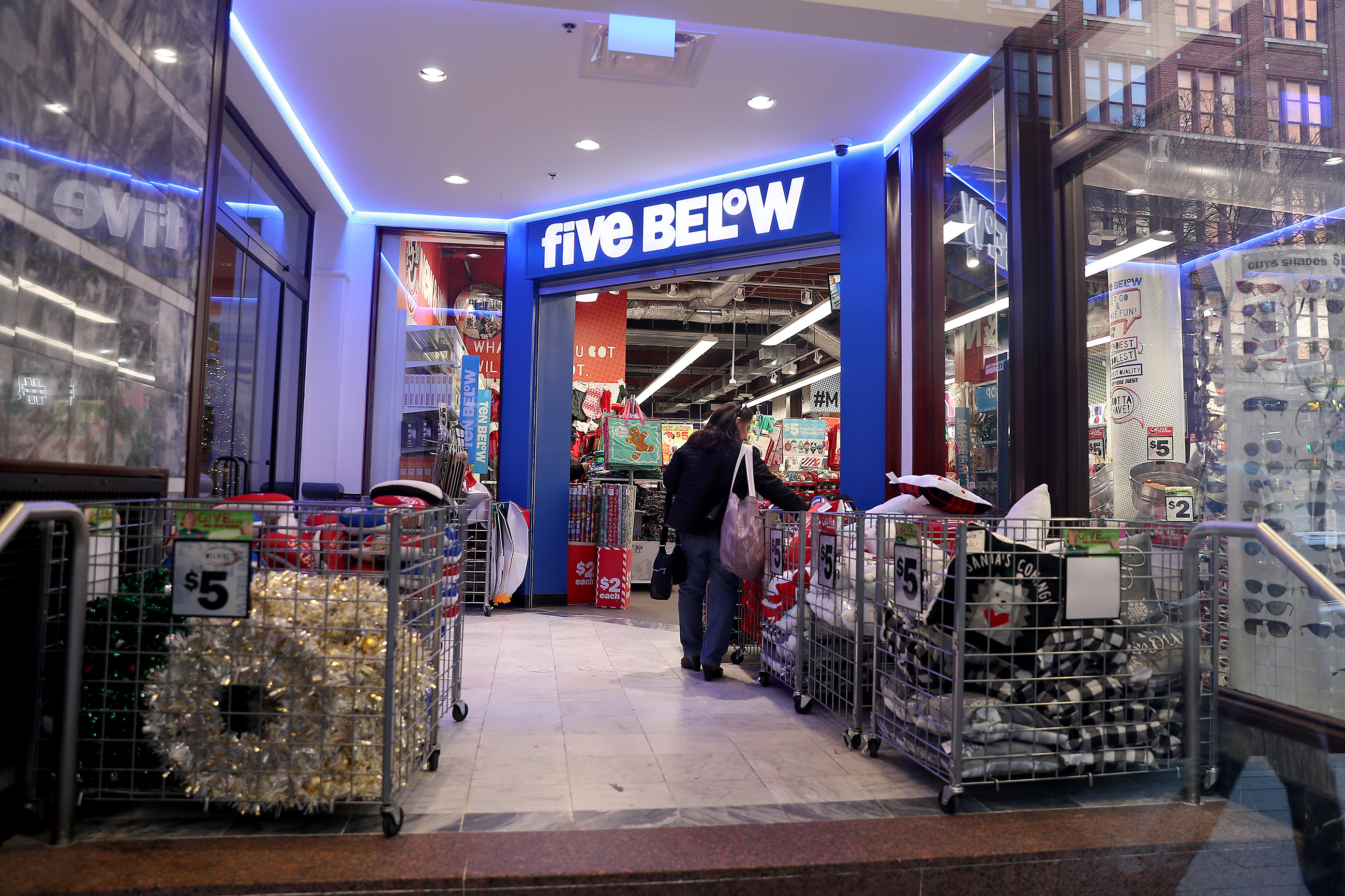
    A display of holiday accessories, priced between $2 and $5, were shown inside the Five Below on Market Street in this file photo.TOM GRALISH

    Off-price stores, such as Dollar General and South Jersey-based Burlington, have thrived in recent years amid rising costs of gas, groceries, utilities, and other essentials.

    Secondhand shops like Goodwill, which recently opened a giant new store in South Jersey, are also seeing stronger sales.

    At Five Below, executives said they have seen growth across all customer demographics, including millennial moms. Park said exercise gear, including yoga and Pilates equipment, has been a big seller.

    Sullivan said he’s curious to see what happens the rest of the year.

    “We’re being cautious,” the CFO said. “We’re looking at the world that our customers are living in with rising fuel costs, with very sticky inflation, with a somewhat soft labor market.”

    “And we think a piece of that pain that they are feeling wasn’t felt in the first quarter purely because of tax proceeds year-over-year that were significantly up,” he added.

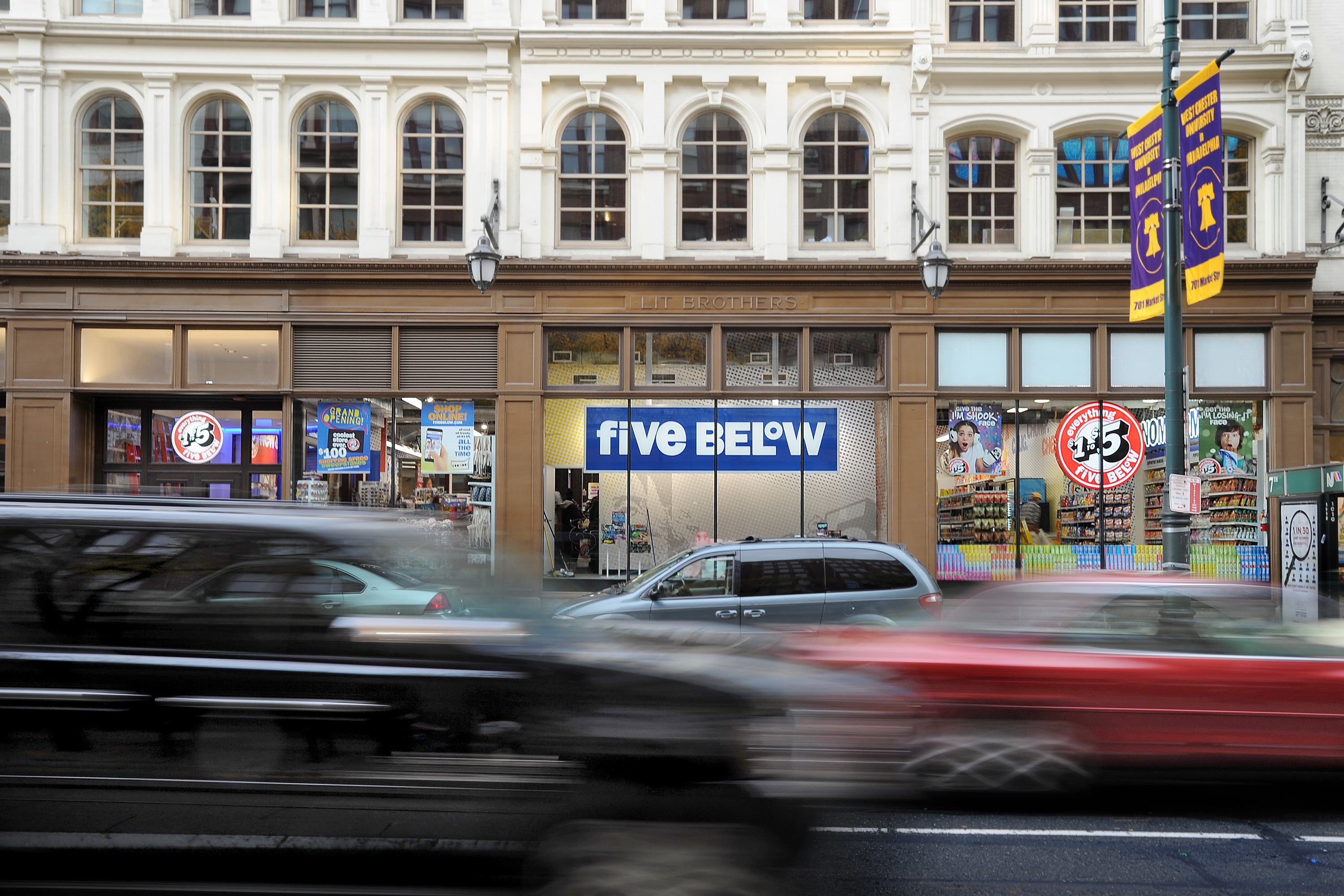
    Five Below was founded in Wayne in 2002 and has since grown to include 1,970 stores in 46 states. In 2018, the company opened a massive three-story headquarters in the former Lit Bros. building at 701 Market St. in Center City.

    Five Below’s Market Street location is shown before opening in this 2018 file photo.TOM GRALISH / Staff Photographer

    After a period of rapid expansion, Five Below has experienced some upheaval in recent years. Former CEO Joel D. Anderson stepped down in 2024 after two quarters of disappointing profits. Anderson, now CEO of Petco, had pushed to expand Five Below’s selection of above-$5 products.

    Park, the former top boss at Forever 21, took the helm in December 2024, with a mission to reaffirm Five Below’s reputation as an “extreme-value retailer,” as the company called itself in her hiring announcement.

    By last summer, the company was rebounding, thanks in part to viral toys like plush Squishmallows and artificial-intelligence tools that now help with inventory.

    Analysts told industry publication RetailDive that Five Below’s latest earning report showed the business in a strong position. They noted that stock prices fell initially, however, over concerns about the company’s ability to sustain this growth.

    “Looking ahead, the outlook remains very positive but is tempered by a dose of caution,” GlobalData managing director Neil Saunders told the outlet.

  • Houthis threaten to widen Iran war by blocking Israeli shipping in Red Sea

    Houthis threaten to widen Iran war by blocking Israeli shipping in Red Sea

    SANAA, Yemen — The Iran-backed Houthi militia in Yemen said Monday that it would stop Israeli ships from operating in the Red Sea and had fired missiles at Israel, threatening to widen the Iran war and impede navigation through a crucial global trade route.

    The Houthis have largely sat out the U.S.-Israeli war with Iran, despite frequently warning that they could join the fighting. But the group’s threat Monday appeared to signal a shift that could further disrupt shipping and energy markets roiled by Iran’s effective blockade of the Strait of Hormuz, a waterway through which much of the world’s oil and gas is shipped.

    Yahya Saree, a Houthi military spokesperson, said in a statement on social media that the partial naval blockade would take effect immediately. Iran and Israel traded waves of attacks Monday as a two-month truce between the countries broke down.

    Saree also said that the Houthis had launched a “salvo of missiles” against Israel in response to “aggression” against Iran, Lebanon, the Palestinians, and other targets.

    “We will meet escalation with escalation,” he said.

    It was unclear what the Houthi threat to Israeli ships would mean in practice. The territory controlled by the Houthis in Yemen sits alongside Bab al-Mandab, a narrow waterway that enters the southern end of the Red Sea. Cargo ships that cannot pass through the area must sail around the southern tip of Africa to transit between Asia and markets in Europe and the Americas, significantly lengthening travel times. Many shipping groups had already been avoiding the area.

    During Israel’s war in the Gaza Strip, the Houthis regularly attacked ships in the Red Sea in what they described as an effort to try to force Israel to end its bombardment of the Palestinian enclave.

    Since the United States and Israel attacked Iran in late February, the Red Sea has become a key outlet for Saudi Arabia, the world’s largest oil exporter, to reach international markets by avoiding the Strait of Hormuz.

    Mohammed al-Bukhaiti, a senior Houthi political official, said that the group would target only vessels linked to Israel, but he cautioned other states, such as Saudi Arabia, not to intervene.

    “Any state that becomes involved will be targeted,” he said in a phone interview.

    It would not take much for the Houthis to hinder shipping by increasing the risks for vessels transiting the Red Sea, a move that would also raise insurance premiums for shipping companies, said Farea Al-Muslimi, a research fellow focused on Yemen at Chatham House, a London-based think tank.

    “They can just send a signal and only one attack has to happen — and that will send a shock across insurance companies,” Al-Muslimi said. “I won’t be surprised now if you have a joint lockdown of Hormuz and Bab al-Mandab.”

    Rashid al-Haddad, an economic analyst based in Yemen, said that if the U.S. military or other countries’ armed forces were deployed to the Red Sea to counter the Houthis, it could turn the entire waterway “into a theater of military confrontation.”

    “This would also drive up maritime insurance costs and divert a significant portion of global trade,” he said. “If hostilities escalate, the Houthis will resort to a complete closure of the Bab al-Mandab strait.”

    This article originally appeared in the New York Times.

  • A 7.8 magnitude quake in the Philippines kills at least 35, collapses buildings, and sparks tsunami

    DAVAO, Philippines — An offshore earthquake with a magnitude of 7.8 hit the southern Philippines on Monday, killing at least 35 people, injuring more than 200 others mostly in ruined buildings, and sending a 3-foot tsunami into nearby coasts.

    Several mostly low-rise buildings collapsed or sustained heavy damages in the hard-hit city of General Santos. Tsunami damage was reported in at least one southern coastal village. Smaller waves were measured in Indonesia and Palau and as far away as southern Japan.

    The quake also triggered a landslide in Glan, a municipality in the province of Sarangani, that killed 13 villagers, Rene Punzalan, a provincial disaster-mitigation official, told the DZBB radio network. Four other villagers died in Sarangani, he said.

    The major earthquake was the strongest to hit the Philippines this year, Teresito Bacolcol, the director of the Philippine Institute of Volcanology and Seismology, said. He warned people to seek advice before returning to damaged buildings and houses, which could collapse due to aftershocks.

    The United States, a treaty ally of the Philippines, said it was coordinating with Manila and was ready to support Philippine response efforts. France, Japan, and New Zealand also expressed support.

    “Our pickup truck suddenly jerked and I thought we had a flat tire,” Rod Sosmeña, a regional director of the Office of Civil Defense, told the Associated Press from General Santos, where he was traveling when the quake struck at 7:37 a.m.

    “The shaking was very strong and people dashed out of houses into the streets,” Sosmeña said.

    Epicenter in sea off Mindanao

    More than 100 students in uniforms and a dozen teachers had gathered for a flag-raising ceremony in a coconut tree-ringed grade school compound in the rural town of Malita in Davao Occidental province when the ground shook, turning the first day of school after a two-month summer break into chaos.

    “Their excitement on the first day of school turned to trauma,” school principal Rosavel Cachuela told the AP.

    Some of the young students screamed in panic and wept but most remained seated and still, preventing any injuries, Cachuela said, adding that a motorcycle was damaged when a shed crumbled to the ground.

    At least four people remained missing in General Santos, a port city of more than 700,000 people and a regional hub for the tuna export industry. Search and rescue teams worked to find people who may have been trapped in a supermarket, a warehouse, a grade school, and other small buildings that either collapsed or were severely damaged, officials said.

    The international airport in General Santos was temporarily shut due to the earthquake and 17 domestic flights were canceled, the Civil Aviation Authority of the Philippines said.

    The quake was centered at sea off Mindanao, the second most populous island in the Philippine archipelago. According to Bacolcol, the quake occurred at a depth of 20 miles, about 20 miles southwest of Maasim town in Sarangani province.

    Assessing damage and casualties

    President Ferdinand Marcos Jr. ordered the cancellation of classes and directed disaster-response agencies to immediately get to work in quake-hit provinces, saying, “The national government is moving and we will not leave Mindanao behind.”

    The Pacific Tsunami Warning Center said the threat of a tsunami largely passed about five hours after the quake. Philippine officials also lifted a tsunami warning by mid-afternoon. Six shanties on stilts were damaged in a coastal village in Zamboanga del Sur province due to the quake and taller waves, officials said.

    Aside from the landslide in Sarangani, most of the other deaths were caused by collapsing buildings and falling debris, including in a damaged mosque, in the southern provinces of South Cotabato and Davao Occidental, and on Balut Island, according to Sosmeña and another disaster-mitigation official, Ednar Dayanghirang.

    The DZRH radio network in Manila reported that a four-story commercial building where its provincial station was located partly collapsed and staffers dashed to the ground floor without injuries.

    Tsunami waves near 3 feet measured

    Waves of 3 feet were monitored in the provinces of Sultan Kudarat and Sarangani. A 4.6-foot wave hit at one time in Kiamba town, Bacolcol said.

    The quake was also felt in Malaysia’s Sabah state on Borneo island. Sabah is just a boat ride away from southern Philippines. A 2.7-foot tsunami was measured by a gauge off Indonesia’s Sulawesi island, and the PTWC said 1-foot waves were measured in Palau.

    Waves up to 7.8 inches were detected on the remote Japanese island of Chichijima and the central Japanese town of Kushimoto, the Japan Meteorological Agency said.

    The Philippines is often hit by earthquakes and volcanic eruptions due to its location on the Pacific “Ring of Fire,” an arc of seismic faults around the ocean.

    The archipelago is also battered by about 20 typhoons and tropical storms each year, making it one of the world’s most disaster-prone countries.

  • Mike Gansey’s career started in Cleveland. Here’s how that experience will inform his role as Sixers president of basketball operations.

    Mike Gansey’s career started in Cleveland. Here’s how that experience will inform his role as Sixers president of basketball operations.

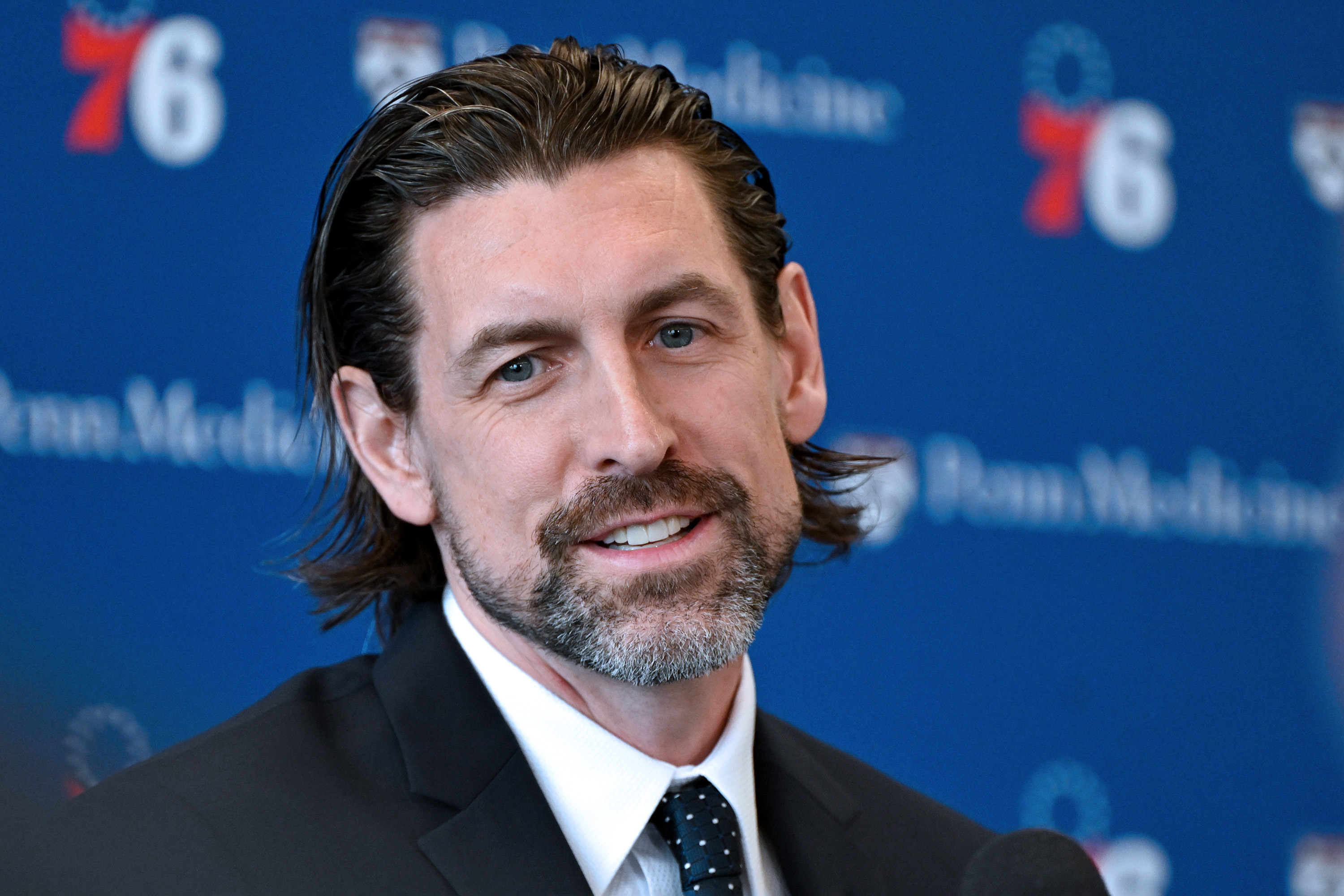
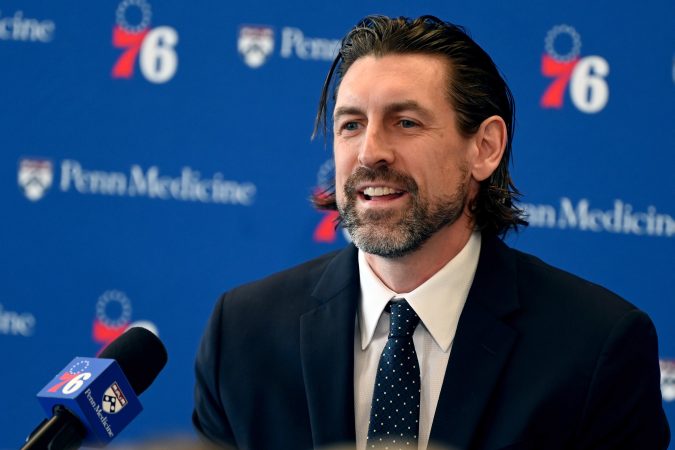
    During his introductory press conference, new 76ers president basketball of operations Mike Gansey detailed his journey to Philly, explaining the role he played in the Cleveland Cavaliers front office for more than a decade as he climbed up the organization’s ranks.

    Gansey most recently served as Cleveland’s general manager, but he has worked in a number of roles since joining the organization in 2011. A native of Olmsted Falls, Ohio, Gansey took some time to thank the franchise on Monday.

    “Cleveland has been home for me, and leaving that special group was not an easy decision at all,” Gansey said on Monday. “I have nothing but gratitude and admiration for the Gilbert family [majority owners], [president of basketball operations] Koby Altman, [coach] Kenny Atkinson, the players and everyone with that organization that have helped me personally and professionally.”

    Promoted to general manager in 2022, Gansey helped build the Cavaliers into a contender. The team traded for franchise cornerstone Donovan Mitchell during Gansey’s first season as the team’s GM. Then, after finding minor playoff success despite impressive regular-season finishes, the Cavaliers made another splashy move. Cleveland traded two-time All-Star Darius Garland to the Los Angeles Clippers for James Harden, forming a new backcourt between the former MVP and Mitchell.

    After winning 52 games this season, the Cavaliers were swept by the New York Knicks in the Eastern Conference finals.

    On Monday, Gansey explained his role with the Cavaliers and the part he played in major moves: “I did all the day-to-day. Talking to players, the agents, collaborating with any coach. I mean, me and Kenny [Atkinson] had a great relationship, we talked every day. … I haven’t been the number one guy, but right there with Koby, and Koby put a lot on my plate. I was very fortunate to be able to work as much as I did.”

    The Harden move, in particular, has given some Sixers fans and analysts pause. Harden, who played two seasons in Philadelphia before requesting a trade, struggled against the Knicks in the playoffs, averaging just 16 points, 4.8 rebounds and 3.0 assists in the four-game series. On Monday, Gansey did not offer much insight about the team’s acquisition of the 36-year old.

    “Obviously I was in those conversations,” Gansey said. “I was involved, but you know, James is with another team now. So you know, 10 days ago I could have answered every question you had on James, but he was great for us.”

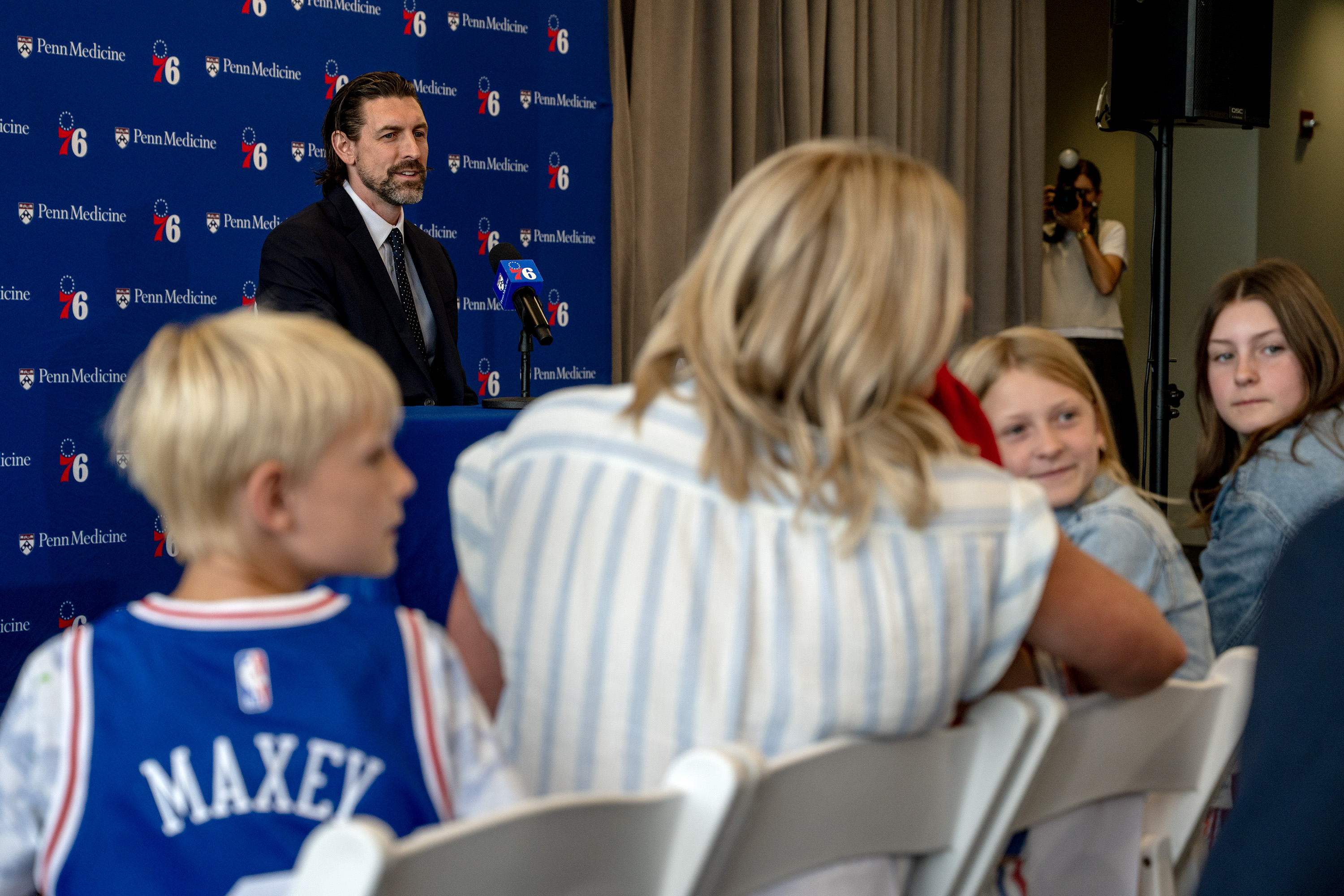
    Mike Gansey makes his first appearance as Sixers president of basketball operations during a press conference on Monday.Tom Gralish / Staff Photographer

    When asked further about his major responsibilities in Cleveland, Gansey shared that he “ran the draft,” playing a major role in “player personnel and evaluation.” Since 2022, when he took over as the team’s GM, the Cavaliers have drafted a few key role players. Namely, Cleveland selected guards Jaylon Tyson in 2024 and Tyrese Proctor in 2025, who both contributed to the team’s success this past season. The Sixers have the 22nd pick in this year’s draft. Bob Myers, president of sports for Harris Blitzer Sports & Entertainment, told reporters that while he did not know Gansey personally before the interview process began, he was more than familiar with his resumé.

    “[Gansey is] a great guy, he’s well-respected,” said Myers, who led the search. “I [did not] know if he’d leave Cleveland, the only place he’s ever been. I think Cleveland’s done a good job, obviously, in the LeBron [James] era and then climbing back up out of that. They made a lot of good decisions.”

    After playing basketball professionally overseas, Gansey’s first role with Cleveland was as a basketball operations seasonal assistant. From there, he willed his way up the organization via the team’s G League affiliate. He served in a multitude of roles with the Cleveland Charge, being named the 2016-17 G League Executive of the Year prior to being named Cavaliers assistant GM the following year.

    “I was there for 15 years, worked my way up: intern to GM, and I give Koby all the credit and the Gilbert family,” Gansey said. “They let me do my thing, I had a ton of responsibilities. Nowadays, when people can be a G League GM, I think that’s a huge stepping stone in their career, and I was able to do that. And it helped me when I became assistant GM all the way to GM.”

    Gansey said he maintained an “open-door policy,” meaning he was available to anyone in the organization. He noted he built relationships “all the way from our star player to the janitor,” and he hopes to do the same in Philly.

    “We’re going to have alignment throughout the whole building. You know, me and Nick [Nurse] are going to collaborate every day, Jameer [Nelson], Prosper [Karangwa] — our whole staff, all the coaches, players. It’s going to be a great environment to be in Philly. I’m big on having fountains, not drains in the building.”

  • How the drive to find a conspiracy against Trump rocked the Justice Department

    WASHINGTON — It was an investigation long sought by Kash Patel, the FBI director, and it was announced not in court papers, but through a haze of cigar smoke on Joe Rogan’s podcast in early June 2025.

    Patel’s prized criminal inquiry, known as “the grand conspiracy case,” sought to tie together actions by a group of people that President Donald Trump blamed for various investigations into him, going back to the examination of possible ties between his 2016 campaign and Russia, and extending into events surrounding the 2020 election and the criminal prosecutions of Trump in 2023 and 2024. In the view of Trump and his supporters, there was a “deep state” cabal that had sought across multiple administrations and agencies to bring him down.

    Patel told Rogan he had found a secret room of evidence inside FBI headquarters confirming his long-held suspicions.

    “You know how I caught these guys?” Patel asked. “Because these guys were so arrogant, they would write everything down, and I found the documents.”

    To Patel, those documents, found in government burn bags — large brown paper bags with red and white stripes used to store papers designated for destruction — justified a sweeping investigation of former officials. To the former officials and the career investigators who looked at the evidence, the papers in the burn bags were nothing like a smoking gun. The administration’s efforts to find prosecutors willing to pursue such theories became a defining feature of the Trump administration’s politicization of the Justice Department — and the internal resistance to it.

    New details of how that period unfolded show how Patel’s drive to target critics of the president set off cascading crises with U.S. attorneys’ offices, derailed distinguished careers, and undercut the Justice Department’s credibility with judges. This account is based on interviews with multiple people with knowledge of the effort, all of whom requested anonymity because they were not authorized to speak publicly.

    Asked for comment on this account and the roles of Patel and other officials, a Justice Department spokesperson, Emily Covington, said the department “enforces federal law fairly, consistently, and without regard to politics,” adding that all investigative and prosecutorial decisions “are grounded in evidence and the law.”

    On July 14, barely a month after Patel told millions of podcast listeners about a supposed vault of dirty secrets, Todd Gilbert became the interim U.S. attorney for the Western District of Virginia.

    Hours after he was sworn in, Gilbert got a phone call from Patel that would wreck his new job. On his first day, when most employees are still getting their work email set up, the new U.S. attorney was told by Patel to pursue the grand conspiracy.

    Patel instructed him to investigate how classified documents had been placed inside the burn bags found inside Room 9582 of FBI headquarters.

    Some of the documents related to events from 2016 and 2017 that Patel wanted examined, specifically the actions of James Comey, who was the FBI director at the time, and John Brennan, who had been the CIA director. Patel wanted both men investigated for lying to Congress and suggested that the documents supported charging them.

    His call to Gilbert was unusual. FBI directors do not typically assign U.S. attorneys to open cases. Such a directive, particularly for high-profile investigations, would normally come from Justice Department headquarters. And investigations that involved purported lies to Congress were assigned to prosecutors in Washington, not in Roanoke, Va. It was also strange to give such a weighty assignment to a U.S. attorney with little authority to question orders because he was still awaiting confirmation by the Senate.

    But the administration had good reason to think of Gilbert as a loyal and willing hunter. A lifelong Republican with strong ties to Virginia’s GOP leaders, he had given up a powerful position in the state legislature to become the U.S. attorney.

    The premise of the “grand conspiracy” was that Comey and his allies had concocted the FBI’s investigation of Russian interference in the 2016 presidential contest to damage Trump, and that conspiracy extended into the 2020 election and the 2022 appointment of Jack Smith as special counsel to investigate him.

    To Patel, the case consolidated years of his complaints and accusations about Democrats and national security officials.

    To many career Justice Department veterans, the case looked more like Frankenstein’s monster — a motley assortment of long-dead investigations that were now supposed to be stitched together and brought to life.

    From the start, FBI leadership wanted near-daily updates on the case — a level of attention usually reserved for national crises. The Virginia prosecutors were confused why the case received so much interest from Patel and so little from their actual boss, Deputy Attorney General Todd Blanche, who had been Trump’s personal lawyer.

    Gilbert tried repeatedly to get advice and instruction from Blanche, even driving to Washington unannounced to try to speak to him. Instead, one of Blanche’s deputies, Aakash Singh, urged Gilbert to pursue the case aggressively. But Singh did not address many of Gilbert’s legal and factual questions. One senior Justice Department official said Gilbert and Blanche eventually did speak about the case.

    Gilbert’s team decided that the law gave his office jurisdiction over only one of the issues Patel had directed him to investigate — whether the documents in the burn bags had been mishandled as part of a criminal scheme to hide them.

    The other two prongs he was assigned — whether Comey had lied in congressional testimony in 2020 about leaks and Russia-related intelligence, and whether Brennan had lied to Congress about a 2017 intelligence assessment of Russian election interference that referenced a dossier compiled by a former British spy — had no legitimate venue in western Virginia, they concluded.

    Gilbert angered the administration by resisting pressure to impanel a grand jury to investigate the burn bag case, since he and his team did not believe there was yet a sufficient factual basis for that step.

    A related disagreement over personnel assignments in his office also hurt his standing. In mid-August, Sergio Gor, a powerful White House official, called Glenn Youngkin, then Virginia’s Republican governor, and told him that Gilbert was going to be fired and that the governor should not try to stop it.

    Gilbert lasted just 37 days as a U.S. attorney. After his departure, prosecutors in his office wrote a lengthy legal analysis, called a declination memo, detailing why no criminal charges were warranted in the burn bag case. The senior FBI agent on the investigation endorsed the memo’s conclusions.

    At that point, a number of current and former law enforcement officials concluded that the administration had embarked on a new kind of fishing expedition — not for dirt on the people they did not like, but to find a prosecutor willing to file charges based on the threadbare evidence they already had.

    Resistance by officials in western Virginia did not stop the pressure campaign from senior administration officials. Instead, that pressure simply migrated across the state, to the federal prosecutor’s office in Alexandria, Va.

    Trump’s pick to lead that office, Erik Siebert, was an experienced lawman, and unlike Gilbert, he had allies among the Justice Department’s leaders. Siebert’s law enforcement career began as a D.C. police officer, and he heartily embraced Trump’s agenda.

    But in the summer of 2025, Siebert suddenly found himself on thin ice, having inherited not just the Comey case but a separate investigation of Letitia James, the New York attorney general who successfully sued Trump over his business accounting. Bill Pulte, the head of the Federal Housing Finance Agency, had made a criminal referral to the Justice Department against James in April 2025, accusing her of having falsified information in mortgage paperwork to get a more favorable interest rate.

    Pulte leveled a similar allegation against Sen. Adam Schiff (D., Calif.), who while in the House had led impeachment proceedings against Trump. Pulte suggested that Schiff had claimed two different places as his primary residence.

    In July, Blanche summoned FBI agents, Virginia prosecutors, and senior FHFA officials to a meeting at the Justice Department to talk about the James investigation. The meeting began with a detailed presentation from FBI agents, emphasizing the lack of evidence of criminality surrounding James’ mortgages.

    Then Blanche declared that the evidence simply did not support a criminal case against James for either property. When Pulte’s aides tried to argue or interject, Blanche shot them down.

    The agents and prosecutors on the case were encouraged to see the deputy attorney general back them up. Their optimism, however, was short-lived. Within days of the meeting, law enforcement officials were told that the White House still wanted to see James charged. (One senior Justice Department official who was not authorized to speak publicly disputed that characterization of the meeting as “inaccurate and oversimplified,” saying that investigators still wanted to pursue the case against James.)

    The administration was not giving up on the Comey investigation either. Siebert had been handed the case in mid-August, after the federal prosecutors in western Virginia successfully argued that they did not have jurisdiction. It was the second time in months that Siebert and his team were pressured by superiors to investigate Comey.

    In May, deputies to Blanche had pushed Virginia prosecutors to open a criminal investigation of the former FBI director for posting a photo on Instagram of seashells arranged on a beach to read “86 47,” the slang reference “86” meaning “get rid of” — in this case the 47th president.

    Trump and his supporters called the message a criminal threat of violence. Comey denied that was his intent, saying he knew it as a restaurant term for nixing items on a menu, or removing an unruly patron.

    The morning after Comey’s post, Blanche’s deputies told prosecutors in Siebert’s office to investigate the seashells. Secret Service agents tracked Comey and his wife as they traveled from the North Carolina seashore to their home in Virginia — a level of surveillance that some agents said they felt was overkill.

    Comey quickly agreed to sit down with Secret Service agents for an interview, and he insisted again that he had no intention whatsoever of threatening Trump. Given Comey’s cooperation and statements, Secret Service investigators concluded there was no point in opening a full investigation.

    Blanche’s deputies disagreed and pressed both the Secret Service and the FBI to pursue the case. The Secret Service is part of the Department of Homeland Security and therefore did not report to Blanche. Their agents refused to pursue the case, a decision that made it easier for the FBI and prosecutors in Virginia also to say no.

    The seashell case revealed just how badly administration officials wanted to arrest Comey. That June, Trump had declared himself “the hunter,” and federal law enforcement officials came to believe that Comey was the president’s most sought-after prey.

    Just two months later, Siebert was again pressed to go after him — this time over his statements to Congress on Sept. 30, 2020, the investigation initially given to Gilbert. Siebert was under the gun, since the five-year statute of limitations gave him less than two months to investigate and indict a former FBI director.

    Through deputies, Blanche pressured the Virginia prosecutors to be “tough” and see the Comey case through. Personally, though, Blanche kept a certain distance from the conversations, relying on aides to relay his wishes. Three Blanche deputies, Singh, Christopher-James DeLorenz, and Diego Pestana, were most involved in the discussions about the Comey case. (The senior Justice Department official insisted the case against Comey was strong, and denied that Blanche’s office pressured career prosecutors to file criminal charges.)

    When Virginia prosecutors outlined the ways in which the evidence was weak, Pestana suggested the prosecutors were weak — a particularly galling critique to the prosecutors given that Pestana had never worked as a prosecutor. Inside the Justice Department, experienced lawyers chafed at being hectored by the deputy attorney general’s younger, greener aides, who often came across as cocky and uninformed. Behind their backs, some career lawyers referred to them as “Blanche’s bros.”

    The pressure from Blanche’s office to indict Comey intensified in early September. FBI officials were told to draft a criminal complaint against Comey, while prosecutors were told to draft an indictment. One senior department official denied prosecutors were pressured to bring charges, and also insisted the case against Comey was strong.

    On the weekend of Sept. 13, 2025, Patel told officials that Comey would be charged in three days. When no charges were produced in that window, it seemed that his big talk had served only to ratchet up the pressure on Siebert to deliver.

    Siebert would happily have charged Comey with crimes if he thought the evidence warranted it, but he felt it was not even a close call, according to colleagues.

    On Thursday, Sept. 18, Singh called Siebert to warn him that the president planned to fire him, and the hammer fell one day later.

    In a social media post that was written as if it was a private message to Attorney General Pam Bondi, the president expressed outrage that Comey, James, and Schiff hadn’t been charged with any crimes.

    “We can’t delay any longer, it’s killing our reputation and credibility,” he wrote, adding, “JUSTICE MUST BE SERVED, NOW!!!”

    Trump then picked Lindsey Halligan, a White House aide with no prosecutorial experience, to replace Siebert. She quickly secured indictments of Comey and James, though those cases were dismissed by a judge who found Halligan’s appointment was unlawful.

    The spree of firings and indictments showed just how much control Trump had over basic Justice Department functions long considered off-limits to the White House. Blanche had pushed for the Comey indictment, and fought against the James indictment, but in the end it did not much matter because prosecutorial discretion was superseded by presidential directive.

    The president’s fishing expedition for his kind of prosecutor continued. The “grand conspiracy” case was transferred to the U.S. attorney in Miami, Jason Reding Quiñones.

    In April, prosecutors in North Carolina indicted Comey over the “86 47” photo. Blanche, by then the acting attorney general, declared the seashell charges were the product of work by career agents and prosecutors. He never mentioned that other career prosecutors and agents had previously rejected the case.

    This article originally appeared in the New York Times.
  • Mike Gansey plans to build around Sixers’ current core while growing the team’s culture: ‘I want fountains, not drains’

    Mike Gansey plans to build around Sixers’ current core while growing the team’s culture: ‘I want fountains, not drains’

    The 76ers need to establish an identity, Bob Myers said Monday.

    That’s the central task ahead of new president of basketball operations Mike Gansey, who will look to bring the Sixers past the second-round hump and build them into a true championship contender.

    When asked if the franchise was committed to Joel Embiid in the long-term, Gansey said that he considers Embiid, Tyrese Maxey, VJ Edgecombe, and Paul George the four tentpoles of the roster in the short-term.

    “We have those four and we’ve got to maximize those four,” Gansey said. “Obviously [Edgecombe] and [Maxey] are younger, but [George] and [Embiid] can still play at a high level. We were 24-14 when Joel played, and obviously in the playoffs, coming back from Boston. We’ve got to rely on those four, and obviously keep them on the floor, and then just build around them.”

    The Sixers were not elite offensively or defensively last season — they ranked in the middle of the league in both offensive (17th) and defensive (16th) rating — and the new leadership group wants to change that.

    But getting their stars on the floor at the same time is easier said than done. Myers cosigned that to establish a team identity, the Sixers need to have their top four guys, namely Embiid and George, who both missed significant chunks of the last two seasons, all on the floor together.

    “In order to see what we are, we’ve got to be on the floor, right?” said Myers, president of sports for Harris Blitzer Sports & Entertainment and the head of the search that led to the Sixers hiring Gansey. “You have to have a consistent product on the floor, and maybe that’s not good enough, or maybe it is, but we’ve got to figure out what are we, what can we stand on as a team.”

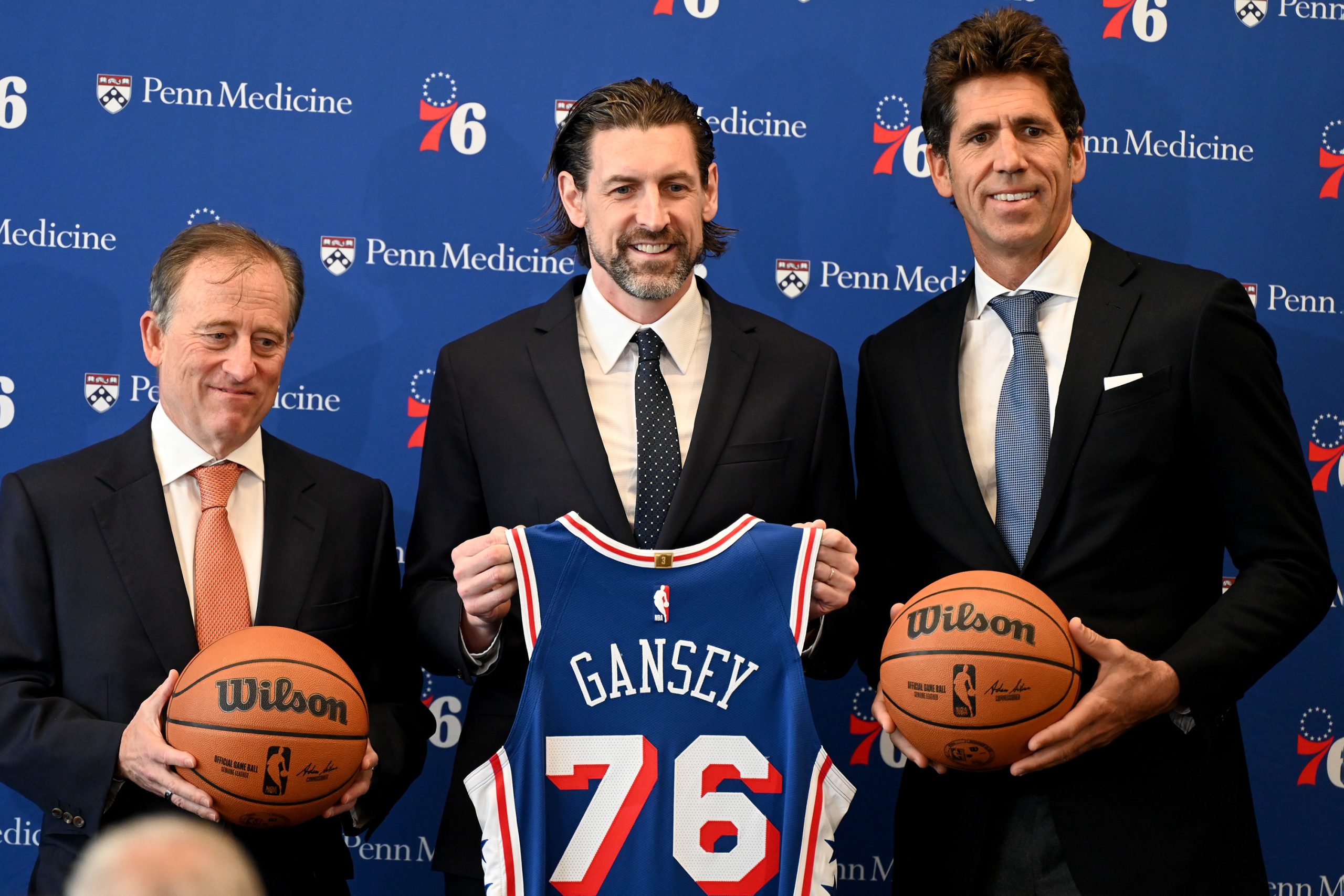
    Mike Gansey (center) was introduced to the Philadelphia media Monday by managing partner Josh Harris (left) and president of sports for Harris Blitzer Sports & Entertainment Bob Myers (right).Tom Gralish / Staff Photographer

    Myers referenced Embiid’s comments that the season was “successful” because he felt like he’d worked past the knee issues that hampered him for several years. Embiid has no scheduled surgeries this summer and the Sixers hope he can use the offseason to build instead of recover.

    But Embiid has missed more games than he’s played in his NBA career, partially due to just exceptionally bad injury luck, like last season’s appendectomy, or an orbital fracture or a bout with Bell’s palsy. Embiid has never played 70 games in a season, and hasn’t played more than half the games in a year since his MVP campaign in 2022-23.

    “He’s too important, and we are a top heavy team, right?” Myers said. “That’s just what it is. Look at the contracts. We need those guys to play, and you need depth underneath it. The league has changed, so we need both, but to experience what this team is, we need a healthy roster in training camp.”

    The other aspect of building a team identity is through the internal culture of the organization. Gansey said explicitly that the Sixers roster is not championship caliber as it stands, but “we’re going to do everything we can to bring in players that fit” in order to build that roster.

    “I want guys that want to be in Philly, first and foremost,” Gansey said of his roster construction philosophy. “… I want fountains, not drains. I want guys with high character, guys with high work ethics, and guys that want to be in Philadelphia.”

    Gansey also said it was “a sticking point” for him to keep Jameer Nelson on and promote him to executive vice president of basketball operations. As a Chester native and former St. Joe’s star, Nelson knows the culture of basketball in the city in a way no one else in the organization does.

    Mike Gansey speaks to the Philadelphia media Monday as his wife Amy and their four children sit in the front row.Tom Gralish / Staff Photographer

    With the draft at the end of the month, Gansey’s first big task will be to add another piece that can hopefully make an impact for the Sixers next year. Gansey did not delve too deeply into his draft philosophy, but said that at No. 22 he would consider both best fit and best player available.

    But it’s not just about getting the pick right. It’s also about what the Sixers do from there. The team has come under scrutiny recently for its struggles in keeping and developing players. This year’s NBA conference finals featured several ex-Sixers, including former draft picks Jared McCain, Landry Shamet, Isaiah Joe, and even Mikal Bridges, though he never suited up for Philly.

    Now in Philly, Gansey hopes to fix that — starting with some of the players already on the roster.

    “The big part is just internal development, with Tyrese, VJ, and some of our other young guys, like they’ve got to get better too,” Gansey said.

  • The Kennedy Center drops ‘Trump’ branding as Bill Maher’s Twain Award guests are revealed

    NEW YORK — John Mellencamp, Jay Leno, and Whitney Cummings will be among the guest speakers when Bill Maher receives the Mark Twain Award for American Humor during a June 28 ceremony at the Kennedy Center.

    The center disclosed the list Monday in an email sent to members, who were offered packages ranging from $99 for a seat reservation to $1,500 and more for seating and admission to pre- and post-show receptions. The announcement also marks a notable change in how the center is identifying itself: The news came from the Kennedy Center, not the “Trump Kennedy Center,” a switch that also appears on the center’s home page.

    Last month, a federal judge ruled that President Donald Trump’s handpicked board of trustees had acted illegally when they voted to add Trump’s name to the venue, which Congress in 1964 named for the recently assassinated President John F. Kennedy.

    “The Kennedy Center’s organic statute makes crystal clear that the Center is to be named for President Kennedy, and it cannot bear any other formal name or public memorial based on the Board’s unilateral say-so. Congress gave the Kennedy Center its name, and only Congress can change it,” wrote U.S. District Judge Christopher Cooper.

    Although a Kennedy spokesperson suggested the venue might appeal the decision, the center received an email last week from its general counsel that laid out steps for cooperation, including the removal of Trump’s name.

    After mostly ignoring the Kennedy Center during his first term, Trump soon made the center a key part of his overall mission to purge federal cultural institutions of so-called “woke” influences. He ousted the leadership, filled the board of trustees with supporters, and presided over such signature events as the Kennedy Honors ceremony.

    In response, numerous performers canceled planned appearances at the center, including Issa Rae, Bela Fleck, and Renée Fleming.

    Maher is the 27th recipient of the Twain Award, which has previously been given to Leno, Steve Martin, and Tina Fey, among others. Trump and Maher have publicly feuded in recent years, but the HBO host is otherwise the kind of comedian that many Republicans have found palatable — a self-styled independent who regularly attacks Hollywood as “woke” and has interviewed everyone from liberal stalwarts like Jane Fonda to conservative commentators like Ben Shapiro and Charlie Kirk to such “canceled” cultural figures as Woody Allen.

    Other guests expected at the Twain ceremony include the comedian Louis C.K., who has been touring regularly since allegations of sexual misconduct briefly upended his career after they were reported in 2017, and the controversial ESPN personality Stephen A. Smith, whose blunt comments on sports and beyond have led to fierce exchanges with NBA star Jaylen Brown and commentator Keith Olbermann, among others.