Blog

  • Pentagon labels tech giant Alibaba and electric car maker BYD as aiding Chinese military

    WASHINGTON — The Pentagon has added several prominent Chinese businesses, including the tech giant Alibaba, electric car maker BYD and search engine Baidu, to its list of Chinese military companies, preventing them from getting U.S. defense contracts.

    The list, updated and published Monday by the Pentagon, now sanctions well-known, non-state-owned Chinese companies that are not traditionally considered to be in the defense or security sector. It reflects growing wariness of Beijing’s strategy of tapping the strength of non-state businesses for military purposes.

    Created in 2021 by a congressional mandate, the list seeks to identify Chinese companies that the Pentagon considers to have links to the Chinese military — not only those directly controlled by the Chinese military and security forces but also those contributing to the country’s defense industrial base.

    When updating the list last year, the Pentagon said the Chinese military sought to acquire advanced technologies and expertise developed by Chinese companies, universities and research programs that “appear to be civilian entities.”

    The Chinese Embassy on Monday accused the U.S. of “overstretching the concept of national security and making discriminatory lists to go after Chinese companies.” It said Chinese companies observe the laws and regulations of the countries where they do business. “The U.S. should stop its wrong practice and create a fair, just and non-discriminatory environment for Chinese companies,” the embassy said in a statement.

    Alibaba, BYD and Baidu said there is no basis for including them on the list. “Alibaba is not a Chinese military company nor part of any military-civil fusion strategy,” a statement from the leading e-commerce company said. Baidu, which has expanded into artificial intelligence and self-driving taxis, said the suggestion that it is a military company is “entirely baseless.”

    BYD said in a statement it is “not a military enterprise” and that the determination “seriously contradicts the facts.” It also said it “will actively safeguard its legitimate rights and interests through all feasible administrative and legal means.”

    This year’s list has grown to 188 Chinese entities, up from last year’s roughly 130 named by the Pentagon. It already had covered companies such as DJI, a major maker of consumer drones. While a company on the list can still do business in the U.S., it faces reputational damage and could be subject to more restrictions.

    After the Pentagon released the updated list, the House Select Committee on the Chinese Communist Party called it “a warning to American businesses, all levels of government, and the American people.” It said the companies on the list that are traded publicly on U.S. exchanges should be delisted and no American company should do business with those on the list, “otherwise they are enabling China’s military ascendance.”

    In naming Alibaba, the Pentagon said the tech giant helps boost China’s defense industrial base because it is affiliated with the country’s Ministry of Industry and Information Technology. Alibaba is traded on the New York Stock Exchange.

    The Pentagon said BYD and Baidu are affiliated with the same ministry, which oversees China’s technology and industrial policies. BYD is dominant in the global electric vehicle market, and President Donald Trump said in January that he would welcome Chinese carmakers such as BYD if they built plants in the U.S. and hired American workers.

    However, a number of U.S. lawmakers have said they will seek a ban on Chinese electric vehicles.

    Another addition is the Chinese robotics company Unitree, whose dancing robots impressed Simon Cowell on NBC’s “America’s Got Talent.” The Pentagon said the company “knowingly received assistance” from the Chinese government through its designation as a small or medium-sized company that is highly innovative, highly competitive globally and critical to the country’s supply chain. Unitree did not immediately respond to a request for comment.


  • Gov. Mikie Sherrill says ICE detention center visit was strictly limited

    Gov. Mikie Sherrill says ICE detention center visit was strictly limited

    Gov. Mikie Sherrill of New Jersey on Monday was allowed to visit Delaney Hall, a detention center in Newark that has drawn protests for two weeks after immigrants inside complained about inhumane living conditions.

    Sherrill described the visit as closely controlled and limited, and she said she was not permitted to meet with or speak directly with detainees.

    “That is unacceptable,” Sherrill said in a prepared statement.

    Sherrill, a Democrat, said she would continue to ask for a more thorough inspection of the center, including a visit by the state’s Department of Health. New Jersey’s attorney general has sued the center’s operator, Geo Group, which is one of the largest private prison operators in the United States. The attorney general is asking that state health inspectors be given full access to the facility.

    Fights between demonstrators and detention center employees have erupted since last month at the front gates of Delaney Hall, with violent clashes common in the early morning hours. Demonstrators had blocked vehicles trying to leave the center, and in late May, heavily armed federal agents with U.S. Immigration and Customs Enforcement had responded with pepper spray and pepper balls.

    In a statement, Homeland Security Secretary Markwayne Mullin said his department had granted Sherrill access to the federally run facility despite the fact she is not a federally elected official. Mullin said prisons operated by New Jersey were run more poorly than Delaney Hall.

    “Gov. Sherrill won’t tell you: New Jersey state prisons face systemic health code violations,” Mullin said. “I’d encourage Gov. Sherrill to focus on her own backyard, and put the safety of her own constituents above illegal aliens.”

    During an appearance on “Fox & Friends” on Monday, Tom Homan, President Donald Trump’s top border adviser, criticized the demonstrators and argued that detainees inside Delaney Hall were treated and fed well, contrary to claims that many have made about rotten food and dirty bathrooms.

    Homan also said federal officials would send more federal agents to New York, vowing to push back against new restrictions approved by Gov. Kathy Hochul against federal immigration operations in the state. The recently passed legislation bars agents from wearing masks during immigration operations, allows agents to be sued for constitutional violations, and prohibits agents from searching “sensitive locations” such as hospitals and schools without a warrant signed by a judge.

    Homan suggested that local officials were endangering the public by refusing to help facilitate the arrests of migrants.

    “I made her a promise — you are going to see more ICE agents than you have ever seen in New York City,” Homan said on “Fox & Friends.” “It’s coming.”

    Hochul said Homan’s threat directly contradicted what Trump had said to her in a room full of fellow governors. Trump, Hochul said, had told her that the federal government would not deploy a crackdown where it was not welcome.

    “If they come here and go throughout New York state with a surge in ICE, there won’t be a Republican standing in this state,” Hochul said to a group of reporters. “Americans have had enough with the overreach of ICE.”

    Asked about Hochul’s account of her interaction with Trump, the White House said, “Any criminal illegal alien living any place in the United States is subject to removal.”

    In a social media post on Monday, New York City Mayor Zohran Mamdani criticized Homan’s threat.

    “We will not allow ICE or anyone else to sow fear in our communities,” Mamdani said. “We will stand proudly with our immigrant neighbors and reject these attacks for what they are: an attempt to divide us.”

    This article originally appeared in The New York Times.

  • Health risks of alcohol accelerate after one drink a day, study finds

    Health risks of alcohol accelerate after one drink a day, study finds

    A government alcohol study published Tuesday concluded that the health risks of alcohol start at a single drink a day. The report was caught up in controversy after drawing the ire of the alcohol industry.

    At one drink a day, the researchers found, there was an increased risk of premature death from an illness or injury directly attributable to alcohol, though it was small — 1 in 1,000 people. But the risk of premature death jumped to 1 in 25 for those who had two drinks a day, a level long considered safe for men, according to the study, which was published in the Journal of Studies on Alcohol and Drugs.

    The Alcohol Intake and Health Study was one of two reports commissioned during the Biden administration to inform an update to the U.S. dietary guidelines.

    The second report, from a panel appointed by the National Academies of Sciences, Engineering and Medicine, or NASEM, came to very different conclusions. It suggested that moderate drinking (up to two drinks a day for men and one for women) was healthier than not drinking at all, although it noted that moderate drinking was also linked to a higher breast cancer risk. Some of the panelists behind that report had financial ties to the alcohol industry.

    The second report’s finding was more palatable to the alcohol industry, which had called the Alcohol Intake and Health Study ideologically driven and scientifically flawed, and said it had communicated its concerns repeatedly to government officials over a period of several years.

    When the Trump administration finally issued the new dietary guidelines in January, they advised Americans to drink less for better health but omitted any recommendation for daily limits, in a departure from previous years.

    “The new dietary guidelines say that consuming less is better for your health, but don’t say what consuming less means,” said Priscilla Martinez-Matyszczyk, one of the authors of the new paper and the deputy scientific director of the alcohol research group at the nonprofit Public Health Institute. “This paper does, and it says that having no more than one drink a day is best for health, and that drinking above that comes with significant risks.”

    A standard drink is defined as 12 fluid ounces of regular beer, 5 ounces of wine or 1.5 ounces of distilled spirits.

    In an editorial accompanying the new paper, Robert M. Vincent, the former government official who commissioned the study, said he believed he was fired because the report produced evidence “at odds with commercial interests.” Vincent lost his job as associate administrator for alcohol prevention and treatment policy at the Substance Abuse and Mental Health Services Administration during a reduction in force last year.

    “It was going to cost the alcohol industry money,” Vincent said. “They didn’t like going from two to one for men, and they didn’t like the mention of cancer.”

    A spokesperson for the Department of Health and Human Services did not respond to a request for comment about Vincent’s statement.

    The new study, which relied exclusively on U.S. health data, assessed relationships between average alcohol consumption and the risk of disease or death from causes that were directly attributed to drinking.

    Women who had one drink a day were more likely to die of liver cancer or breast cancer than women who did not drink. And at one drink a day, both men and women were at increased risk of dying from liver cirrhosis, oral and esophageal cancers, and injuries, the paper found. The risks continued to climb with higher levels of consumption.

    Consuming more than one drink per occasion was associated with progressively higher risks of breast cancer, cardiovascular disease and injury.

    The report did find that one drink a day was associated with a lower risk of diabetes for women and a lowered risk of stroke for both men and women. However, occasional heavy drinking nullified the protective effects against stroke.

    One reason the studies reached such different conclusions is that while the new study examined deaths from causes directly attributable to alcohol, the NASEM report commissioned by Congress looked at overall death rates of moderate drinkers, including deaths not causally related to alcohol.

    Critics of the NASEM report say that people who drink in moderation often have other healthy lifestyle habits that contribute to their longevity. The moderate drinking group also included many people who consumed less than two drinks a day. Both of these factors could make the health effects of moderate drinking look less significant than they might be.

    Dr. Ned Calonge, an epidemiologist at the University of Colorado Anschutz Medical Campus who led the NASEM study, said he stood by its conclusions.

    “Alcohol research is complex and I am not surprised by different methods producing different results,” Calonge said, adding that modeling studies like the Alcohol Intake and Health Study, which use data to estimate the lifetime risk of diseases and deaths caused by alcohol, also come with potential biases.

    At the same time, he added, “I don’t believe anyone should start drinking for health reasons.”

    This article originally appeared in The New York Times.

  • ‘A breath of fresh air’: Jamie Apody’s role at Fox 29 expands following difficult 6abc departure

    ‘A breath of fresh air’: Jamie Apody’s role at Fox 29 expands following difficult 6abc departure

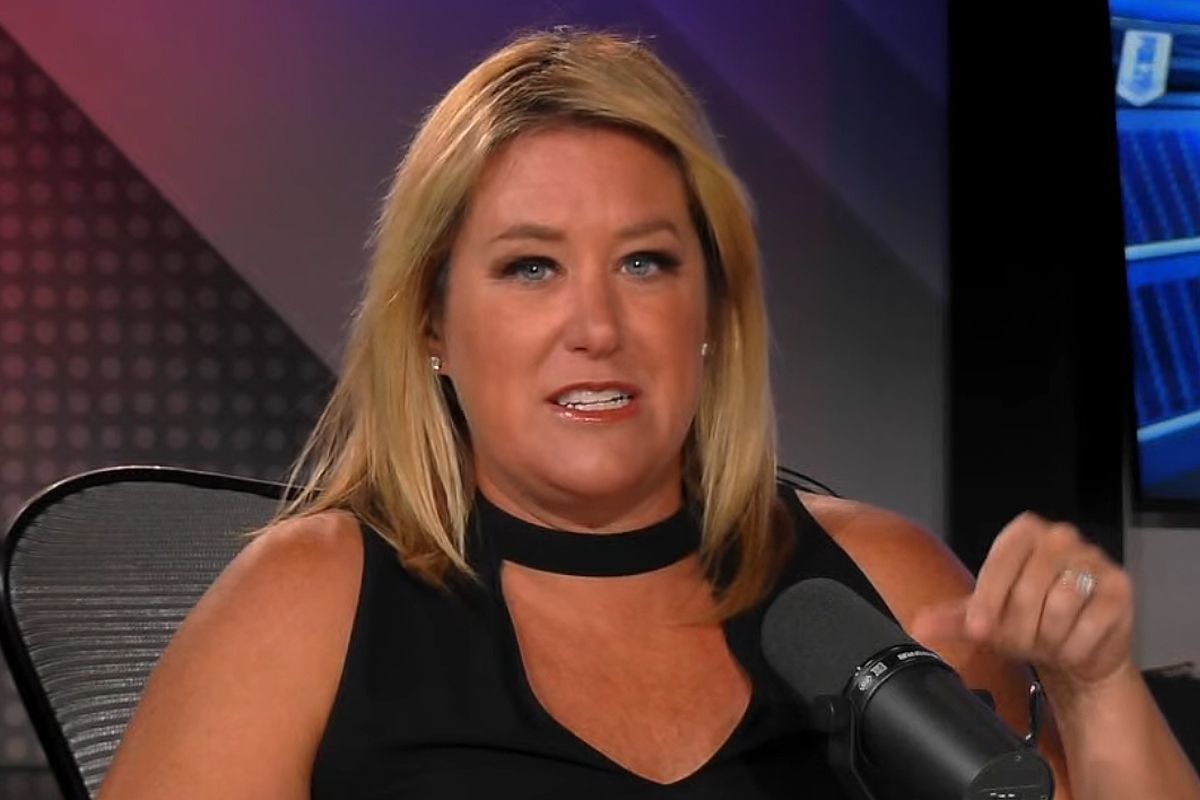
    Ahead of anchoring her first Philly sportscast in more than two years (947 days for those counting), Jamie Apody’s focus was squarely on her feet.

    “I’m mostly rusty with high heels. Oh god, it’s a disaster,” Apody said Monday night before making her debut as a sports anchor on Fox 29.

    Apody, who spent 18 years as part of 6abc’s Action News team, is getting an expanded role at Fox 29. In addition to her regular appearances on The Phantastic Sports Show, which began in 2024, Apody will anchor the station’s Saturday 10 p.m. newscast and pop in elsewhere as needed.

    “It’s not a full-time thing, but who knows? Maybe it’ll become that. That’d be awesome,” Apody said. “But I’m so thrilled to be doing what I love again.”

    The expanded role will also include reporting, which will put her back into the stadiums during a busy year for Philly sports, featuring the World Cup, the MLB All-Star Game, and the Eagles heading to London.

    “I’m more than ready,” Apody said. “I do think it’s going to be a little weird … not to mention starting with a different station’s name on the microphone after all this time.”

    Jamie Apody has been working with Fox 29 since 2024.Fox 29

    She certainly has plenty of experience. For the bulk of her tenure at 6abc, Apody anchored the 5:30 p.m. edition of Action News five days a week and was a regular at the city’s stadiums covering the teams.

    All that ended when she lost her job in 2023, a gut-wrenching experience Apody wasn’t even able to talk about publicly until almost a year later. Her unexplained departure and lengthy absence was the talk of the town, and some viewers launched a Change.org petition asking 6abc to bring her back.

    It was even difficult for Apody to return to Citizens Bank Park and Lincoln Financial Field as a fan, something she avoided for about a year. Ultimately, she was forced back to the stands by her three young sons, all of whom are diehard Philly sports fans.

    “It was really hard. Harder than I thought,” Apody said. “For a while there, those stadiums and ballparks really reminded me that I wasn’t able to do what I love more than anything, so it was hard for me to face. I actually made the choice not to face it.”

    After leaving 6abc, Apody reached out to most of the stations around town and had meetings with both NBC10 and CBS3. But she really hit it off with Fox 29 executives Jim Driscoll and Dennis Bianchi, and said working for the station has been “a breath of fresh air,” recalling the words of former 6abc sports director Gary Papa, who hired her in 2006.

    “He once told me, ‘You don’t know what you don’t know. You don’t even know what you know,’” Apody recalled. “The first time I walked in the door [at Fox 29] two years ago, I couldn’t believe what I’d been missing.”

    She’s not the only Action News alum at the station. Former 6abc sports anchor Jeff Skversky, who also sparked speculation by his sudden TV exit in 2021, joined Fox 29 as a freelance reporter in 2025 after first contributing to The Phantastic Sports Show.

    “I think it’s such an amazing fit,” Apody said of Fox 29. “I almost wonder what things would have been like if our paths crossed earlier.”

  • U.S. says it has begun strikes against Iran following crash of Army Apache helicopter off Oman coast

    DUBAI, United Arab Emirates — The U.S. military said Tuesday that it carried out strikes on Iran following the crash of an Army helicopter near the Strait of Hormuz that President Donald Trump blamed on the Islamic Republic.

    U.S. Central Command said on social media that the strikes would be “a proportional response to unjustified Iranian aggression.” Iranian state media reported that explosions were heard on Qeshm Island in the Strait of Hormuz, a critical shipping lane that Iran has effectively closed during the war, before saying that the wave of American attacks in the south has “subsided.”

    Trump said earlier in a social media post that Iran had shot down the aircraft while it was on patrol over the strait and declared that the U.S. “must, of necessity, respond to this attack.” Iran’s top diplomat said foreign military forces near the country’s territory “are at constant risk.”

    The downing of the helicopter and the resulting strikes by the U.S. military further strained a two-month ceasefire a day after Iran and Israel exchanged fire for the first time since the fragile truce took effect. Iranian state television said Tuesday that the Israeli attacks killed at least two members of the country’s air-defense units.

    Since the U.S. and Israel began striking Iran on Feb. 28, the war has shaken the global economy, driven up energy prices around the world, and made many basics, including food, more expensive.

    Officials have been unable to turn the April ceasefire into a deal to permanently end the conflict, particularly as Israel intensifies and expands its military campaign in Lebanon against the Iranian-backed militia Hezbollah.

    U.S. helicopter collided with Iranian drone, official says

    The Army AH-64 Apache attack helicopter went down after colliding with an Iranian drone, according to a U.S. official, who spoke on condition of anonymity to discuss an ongoing investigation.

    It wasn’t clear whether the collision was intentional, and official statements only said the crash is under investigation. CNN, CBS News, and other outlets earlier reported the collision.

    In the first known operation of its kind by the American military, a drone boat rescued the two aviators who were aboard the Apache attack helicopter when it went down near the critical shipping lane that Iran has effectively closed during its war with the U.S. and Israel.

    Trump said in a social media post that military officials told him “the Iranians shot down one of our highly sophisticated Apache Helicopters.” Both service members “are safe and uninjured,” he added.

    “Nevertheless, the United States must, of necessity, respond to this attack,” Trump wrote.

    Soon after Trump made his accusation, Iranian Foreign Minister Seyed Abbas Araghchi said in a social media post that the strait is “thousands of miles away from U.S. shores.”

    “Foreign forces in proximity to our territory are at constant risk on account of their own human errors, plain accidents, or potentially being caught in crossfire,” Araghchi wrote. “To reduce risk, best solution is for them to leave.”

    The downing of the helicopter further strained a two-month ceasefire a day after Iran and Israel exchanged fire for the first time since the fragile truce took effect. Iranian state television said Tuesday that the Israeli attacks killed at least two members of the country’s air-defense units.

    Since the U.S. and Israel began striking Iran on Feb. 28, the war has shaken the global economy, driven up energy prices around the world, and made many basics, including food, more expensive.

    Officials have been unable to turn the April ceasefire into a deal to permanently end the conflict, particularly as Israel intensifies and expands its military campaign in Lebanon against the Iranian-backed militia Hezbollah.

    Army crew members picked up by drone boat

    The Army aviators were rescued at 3:30 a.m. local time Tuesday, about two hours after their helicopter went down during a patrol off the coast of Oman, U.S. Central Command said.

    The U.S. service members were spotted and picked up by a drone boat that took them to another location on the water, where they were picked up by a helicopter, said Capt. Tim Hawkins, a spokesperson for U.S. Central Command. Hawkins initially said the drone took the two to shore, and he did not elaborate on the updated timeline.

    It was the first known drone rescue at sea by the U.S. military, Hawkins said.

    AH-64 Apache helicopters have been a key asset for the American military as it enforces a blockade on Iranian crude oil shipments and tankers, seeking to pressure Tehran into a deal. The helicopters have also been used by the United Arab Emirates to shoot down Iranian drones.

    The drone used to perform the rescue was a 24-foot vessel called a Corsair, Hawkins said. It’s manufactured by Saronic Technologies.

    The drone was assigned to the Navy’s Task Force 59, established in 2021 as the Navy’s first uncrewed and artificial intelligence unit that focuses on maritime security in the Middle East, including the Strait of Hormuz and the Suez Canal.

    Trump insists an Iran deal is coming

    Before he accused Iran of downing the U.S. helicopter, Trump had expressed renewed optimism over negotiations with Iran.

    “We have a good chance” of signing a deal in “two or three days,” Trump said late Monday. But he did not provide any details on why there was reason for new optimism. In the two months since the U.S. and Iran agreed to an initial ceasefire, Trump has repeatedly predicted that a deal is near.

    “We’re very close to having a very, very good, strong, powerful deal,” the president said.

    Mediators, led predominantly by Pakistan, have been trying for weeks to get a deal across the line. However, both Iran and the U.S. have taken hard-line positions.

    The U.S. wants to see Iran give up its stockpile of highly enriched uranium, which is believed to be entombed in the aftermath of American airstrikes that happened during the 12-day war in 2025. But Iran is refusing that and demanding relief from sanctions. It also wants the release of frozen assets even before a final agreement is in place, something rejected by Trump.

    Before Trump’s comments on negotiations, Qalibaf said Monday that Trump’s remarks so far on a possible deal “contradicted the agreed-upon sections,” showing that the U.S. is “neither seeking a ceasefire nor dialogue.”

    The continued fighting between Israel and Hezbollah is still a top Iranian priority as well. Lebanon’s army chief, Gen. Rodolphe Haykal, traveled to Pakistan on Tuesday. There, he met Pakistan’s army chief, Field Marshal Asim Munir, who has been a key figure in the Iran-U.S. talks.

    Haykal’s visit comes as Lebanon’s government takes an increasingly hard line on Hezbollah but remains unable to disarm the powerful militia. Hezbollah thanked Iran on Tuesday for attacking Israel “in defense of our Lebanese people,” suggesting that Lebanon’s government should take this opportunity to improve relations with Tehran.

    Israel issues a warning for Tyre, Lebanon

    Meanwhile, the Israeli military issued an evacuation warning for Lebanon’s southern port city of Tyre, including the Christian quarter, which has so far been spared from airstrikes on the city.

    Last week, Israel warned the Christian neighborhoods in Tyre that it believed Hezbollah members were among them. Many Lebanese Shiite Muslims fled to those areas as Israeli strikes hammered the Mediterranean coastal area over the past two weeks.

    After last week’s warning, the Lebanese army deployed to the Christian district of Tyre in an effort to prevent Israeli attacks there and to show that Hezbollah has no armed presence in the area. But Avichay Adraee, the Israeli military’s Arabic-language spokesperson, posted on X on Monday that the Israeli military “will have to act against their terrorist activities in the neighborhood soon.”

  • ‘The Secret Lives of Mormon Wives’ shines a light on the complex history of Mormon women

    ‘The Secret Lives of Mormon Wives’ shines a light on the complex history of Mormon women

    To the surprise of many, Hulu’s The Secret Lives of Mormon Wives (SLOMW) has met raging success, with Season 5 being filmed for release this fall. ABC cast SLOMW star Taylor Frankie Paul as the most recent lead of The Bachelorette, and two castmembers of Mormon Wives in its recent, widely viewed season of Dancing with the Stars. SLOMW’s Whitney Leavitt also headlined a record-breaking run in a Broadway production of Chicago.

    To a degree not seen since Mitt Romney’s presidential bid, or the smash hit musical The Book of Mormon, it seems like Mormons are having a moment. But notably, this moment belongs to Mormon women.

    Most Americans know very little about Mormon women, and what is known is often based on sensational stories about narrowly circumscribed gender roles and stereotypes about polygamy. The women of Secret Lives of Mormon Wives challenge these assumptions, projecting an image of influence, ambition, and agency that sits uneasily alongside popular assumptions about Mormon womanhood. As SLOMW reflects, there have been times in Mormon history when women have exercised substantial power and influence, often drawing on core doctrines that emphasize equality. Yet, Mormon women have also seen their opportunities revoked or diminished in tandem with political and cultural moments in the U.S. at large.

    Members of the faith credit Joseph Smith, Jr. as the prophet who formally established the Church of Jesus Christ of Latter-day Saints—commonly known as the Mormon Church—in 1830. At this time, the rights of women in the U.S. were broadly restricted. In most cases, women could not vote or run for political office, and married women were legally barred from owning property or keeping their own wages.

    Early Mormon history suggests possible openings for women’s power in the church and in doctrine. For one, the LDS Church recognized a feminine divine, taught about by Joseph Smith in the 1830s and 1840s. Some scholars have suggested that in the 1840s when Smith developed temple liturgies in LDS temples, he incorporated “elements that suggest he viewed women as holders of a form of priesthood.” This vision of ordained women was not realized, yet they held spiritual roles: women prophesied, performed blessings, and participated in their own rituals of “washing and anointing” before giving birth.

    In 1842, Smith’s first wife Emma Smith and others established the Relief Society, a women-only organization to “seek out and relieve the distressed.” It provided a platform for women to serve in church leadership capacities, fundraise and manage their own budgets, and publicly speak about religion. The confidence and community organizing skills Mormon women gained through the Relief Society set the stage for their entry into national political life.

    At the turn of the 20th century, Mormon women carried that same organizational energy into the women’s suffrage movement. White women in Utah were the first in the nation to vote in 1870, 50 years before the passage of the 19th Amendment. Initially, women’s suffrage in Utah was directly tied to the common practice of plural marriage—Mormon women believed they could use their vote to support polygamy and show that they were not “oppressed, helpless, and enslaved” as anti-polygamists claimed. Relief Society leaders developed education programs about the political process and civic engagement and sent Utah delegates to represent them at national suffrage conventions.

    The Relief Society that had been first established in the early 19th century became a key source of Mormon women’s activism, especially around voting rights, operating independently and managing its own funds. Emmeline B. Wells, one of Utah’s national suffrage delegates, served as Relief Society president and simultaneously edited the Relief Society magazine the Woman’s Exponent. Writing in a Relief Society handbook, Wells argued that “woman must be instrumental in bringing about the restoration of the equality which existed when the world was created.”

    However, Wells’ release from service as Relief Society president in 1921, “marked the beginnings of decades of declining institutional power for Mormon women,” as scholars of Mormon feminism have argued. Facing suspicion from other Christians, LDS church leaders emphasized alignment with conservative American values at mid-century, defining women primarily as mothers and homemakers rather than as independent spiritual practitioners as they had been in the early years of the church.

    Revised Church policies reflected this shift. Women’s blessings that began in Joseph Smith’s time ended in 1946. In 1954, motherhood was redefined as the counterpart to men’s priesthood, validating women’s exclusion from the priesthood. By 1967, women were no longer allowed to pray in weekly congregational Sacrament Meetings. And in 1970, the Relief Society lost financial independence to the male-run Church under the Priesthood Correlation program.

    Efforts to constrain women in narrowly defined roles grew in tandem with postwar national trends. Following World War II, cultural pressures mounted for working women to return to domestic life, with marriage, motherhood, and homemaking recast as women’s primary obligations—a retrenchment that would spur new feminist movements in the 1960s and 1970s.

    By the early 1970s, when Congress moved to pass the Equal Rights Amendment—which would have upheld equality regardless of sex—the Mormon Church funded an effort to ensure its defeat. It organized speakers and published oppositions to it in official LDS communications. Many women supported the Church’s anti-ERA stance, concerned that the amendment might expand abortion access and LGTBQ rights—policies that in their view went against LDS principles.

    Alternatively, some Mormon women believed the church’s progressive doctrine regarding women and their own advocacy for women’s educational and political advancements were closely aligned with the aims of the ERA. Sonia Johnson, a fifth generation Mormon and feminist activist, formed the “Mormons for ERA” group. They protested the church‘s anti-ERA position, notably chaining themselves to the gates of the Seattle Temple Open House in 1980, while urging Americans to bar missionaries from their homes until the church changed course.

    Johnson testified to a Senate subcommittee regarding Mormon theology and the ERA. But she was officially excommunicated from the church in 1979 for “spreading false doctrine and working against both the teachings of the Church of Jesus Christ of Latter-day Saints and its leaders.”

    Made By History sponsors. FOR USE ON MADE BY HISTORY STORIES ONLY.Inquirer Staff

    The church and its membership continue to battle between changing with the times and hewing to traditionalism, with advancements and setbacks on both fronts.

    For example, the priesthood and temple ban on members with African ancestry was lifted in 1978, the BYU’s Women Research Institute began organizing a women’s conference in 1984, temple marriage ceremony language changed for women from “obeying their husbands” to “hearkening their husbands” in 1990, and Chieko Okazaki became the first woman of color appointed to the General Relief Society Presidency also in 1990.

    Yet, the church also deepened its commitment to rigid gender hierarchy. In 1995, President Gordon B. Hinckley declared that God’s commandment to “multiply and replenish the earth remains in force,” sex should explicitly be between a lawfully wedded man and woman, children are entitled to be born “within the bonds of matrimony,” and that God divinely wants fathers to “preside over” their families and mothers are “primarily responsible” for nurturing their children. Hinckley’s declaration provided religious justification to keep women out of formal employment, focusing instead on maternal, homemaking, child-rearing responsibilities.

    In a surprising move, the Church lowered the missionary age for women from 21 to 19 in 2012, more than doubling the number of women serving missions. While service remains optional for women, the policy change gave young women more access to similar spiritual training and church leadership opportunities predominantly accessed by men while serving a full-time mission before fulfilling their duties as wives and mothers. That a single policy change could so dramatically reshape women’s participation reveals just how much institutional gatekeeping, rather than women’s desire or capacity, had long determined the boundaries of their religious lives.

    Although discredited by Church officials,The Secret Lives of Mormon Wives may be expressing a form of power and independence that Mormon doctrine claims to support—but which the institution struggles to grant in practice. Mormon women are not flat, oppressed, one-dimensional characters. SLOMW highlights this dichotomy for global audiences—with messaging coming directly from the women themselves rather than from the patriarchal and tightly controlled organization.

    Mallory Hutchings-Tryon is an educator and historian at the University of Washington whose work sits at the intersection of gender equality, education policy, and religious autonomy.

    Made by History takes readers beyond the headlines with articles written and edited by professional historians. Opinions expressed do not necessarily reflect the views of The Inquirer.

  • Past Present Future, beloved Main Line gift and craft store, is closing its doors

    Past Present Future, beloved Main Line gift and craft store, is closing its doors

    The interior of Past Present Future, downtown Ardmore’s beloved gift and craft store, is unmistakable. Each wall is adorned with art and collectors’ items, from hand-beaded necklaces to fruit-shaped bowls and ceramic tropical fish. Cases of jewelry sit under hanging lanterns and mobiles, and trinket boxes share shelves with colorful purses and glass figurines.

    Past Present Future, located at 15 Lancaster Ave., is the 50-year work of owner Sherry Tillman, who first opened the store in Center City in 1976 as a young graduate of the Philadelphia College of Art, before moving to Ardmore in the mid-1990s. Tillman calls the shop “part gift store, part mini-museum,” and prides herself on grouping items, from lamps to clocks to mirrors, in “ways that maximize their funky diversity.”

    Now, five decades, four storefronts, and thousands of customers later, Past Present Future is officially closing, marking the end of a chapter that Tillman says has been defined by eclectic art, changing times, and deep community ties. While Tillman is “gutted” to close up shop, in her words: “It’s time.”

    Sherry Tillman, owner of Past Present Future, chats with Ellen Balze, of West Philadelphia, a regular for many years, during Tillman’s party for friends and long-time customers in Ardmore, Pa., on Friday, June 5, 2026.Tyger Williams / Staff Photographer

    Tillman first opened Past Present Future as a toy store on the corner of 13th and Pine Streets in Center City, next to a friend’s science-fiction bookstore. The Philadelphia Daily News in 1979 called Tillman’s store “one of the wonders of the city,” a “throwback to the age of handcrafted wooden playthings, one-of-a-kind soft toys and sculptures, old-fashioned balance toys and Rube Goldberg-ish do-nothing machines.” Tillman, then a 20-something artist, took orders from customers and handcrafted toys from her workshop.

    After three years, Tillman left the Gayborhood and moved to 17th and Locust Streets, where the scope of Past Present Future began to shift, bringing in more crafts and jewelry. Four years later, Tillman moved to 18th Street between Market and Chestnut Streets. She had 2½ floors of a four-story building and, according to a 1990 Inquirer story, stocked “zingy jewelry, kaleidoscopes, cards, clocks, handmade ceramic diners that light up” and had a “top-floor gallery devoted to fun-and-funky craft items for adults.”

    By the mid-1990s, much of Tillman’s customer base had moved out to the suburbs, and the confounding pressures of crime, high taxes, and a lack of parking, plus raising her own growing family in Ardmore, spurred her to pack up her Center City store and move to the Main Line. She opened on Lancaster Avenue in 1996.

    “The fact that my business could be where my home is was so important to me,” Tillman said, reflecting on her move to Ardmore. “To be embraced and connected to this community is also important to me.”

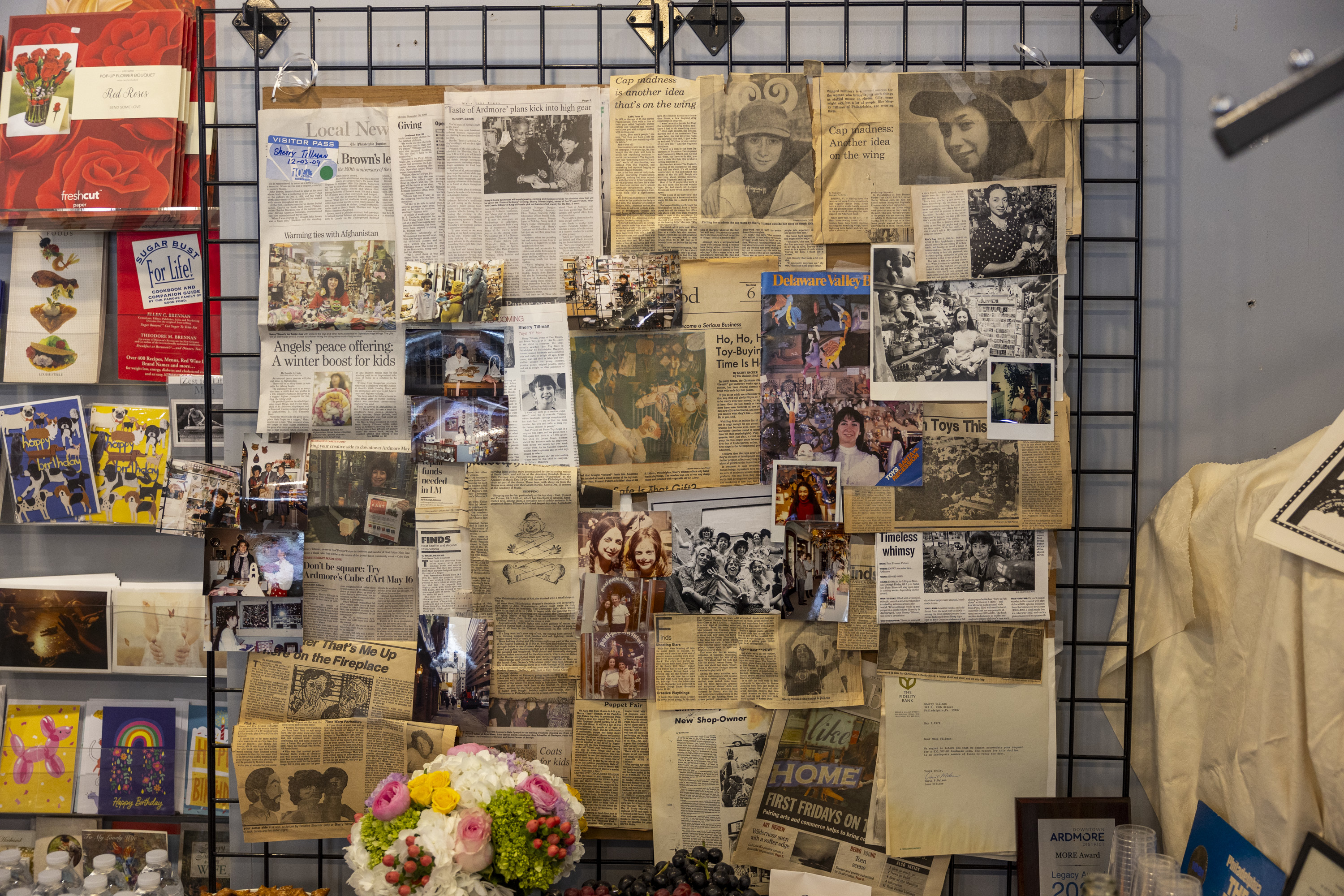
    Sherry Tillman, owner of Past Present Future, made a board of all her articles and photos of her for her small party for friends and regular customers in Ardmore, Pa., on Friday, June 5, 2026.Tyger Williams / Staff Photographer

    Tillman’s store quickly became a magnet for artsy types, window shoppers, gift givers, touring musicians, and spiritually minded Main Line residents.

    “It’s incredible,” she said. “People come in and we talk, other people come in and they join the conversation. It’s a place where people just feel so comfortable.”

    Lorig Buckley, otherwise known as Mystic Lor at Mystic of the Main Line, said she thinks of Past Present Future as “a staple” in Ardmore.

    When people strolled into Past Present Future looking for a palm reading, Tillman would send them down the block to Mystic of the Main Line. When clients of Buckley’s needed to shop for a gift, she’d pass them along to Past Present Future.

    “My heart sank when I saw that she was closing, because it really brought a different spirit to the area,” Buckley said.

    Shannon Gallagher, a business coach who lives in Ardmore, always bought her clients gifts from Tillman’s shop, from crystals to wooden boxes with tarot cards. When she first moved to Ardmore four years ago, Tillman gave her the lowdown on all of the locals’ favorite spots.

    “She just made it feel so comfortable for us,” Gallagher said.

    Sherry Tillman, featured in the Philadelphia Daily News in 1982, holding a teddy bear at Past Present Future, back when it was located at 243 S. 17th St. in Center City. Tillman has operated the toy and art store for 50 years, first in Philadelphia and, for the last three decades, in Ardmore.Sam Psoras / Staff Photographer

    In addition to running Past Present Future, Tillman organized First Friday Main Line, a monthly arts crawl that brought music and art to the streets of Ardmore. Alongside Broomall surgeon Lt. Col. Kenneth Marx, Tillman helped create Operation Angel Wings, a donation drive that sent clothes and toys to children in Afghanistan. Most recently, she spearheaded a contest to paint a mural on the side of her storefront. The first of five winning murals will be up by July 1.

    Tillman said Ardmore has “blossomed a lot” in the years since she moved to town. Street art, interesting shops, and live music sprawl across downtown, from the newly painted Schauffele Plaza to Ardmore Music Hall (many of the traveling performers stop into Past Present Future before their shows, Tillman said).

    “There’s expressions of art around us,” Tillman said.

    Tillman doesn’t have an exact closing date yet. Past Present Future has marked down its merchandise by 20%, and Tillman said she’ll be open until there’s nothing left (“hopefully”). Tillman plans to sell the 15 Lancaster Ave. building, which she has owned for years.

    “It’s really hard,” she said, “when you think that your entire life has been this one thing, to say goodbye.”

    This suburban content is produced with support from the Leslie Miller and Richard Worley Foundation and The Lenfest Institute for Journalism. Editorial content is created independently of the project donors. Gifts to support The Inquirer’s high-impact journalism can be made at inquirer.com/donate. A list of Lenfest Institute donors can be found at lenfestinstitute.org/supporters.

  • House of the week: A three-bedroom on a cul-de-sac in Pottstown for $575,000

    House of the week: A three-bedroom on a cul-de-sac in Pottstown for $575,000

    For Tina and Waverly McAlister, preparing for a retirement living near the beach has been a meticulously planned process taking about a decade.

    About 17 years ago, the two Phoenixville natives thought they would buy a home there or in King of Prussia, but Pottstown was a better market for them. Waverly had been a supervisor with a precious metal manufacturing firm and Tina had been a revenue services specialist in a school intermediate unit.

    Kitchen
    Alcove Media

    So in 2009 they bought a three-bedroom, 2½-bathroom house in Pottstown on a cul-de-sac along busy U.S. Route 422. Waverly said they were attracted to the design and attention to detail.

    Then, eight years ago, they bought their eventual retirement home, on Fenwick Island, Del. Since then they have split time between two homes, gradually moving possessions to Delaware.

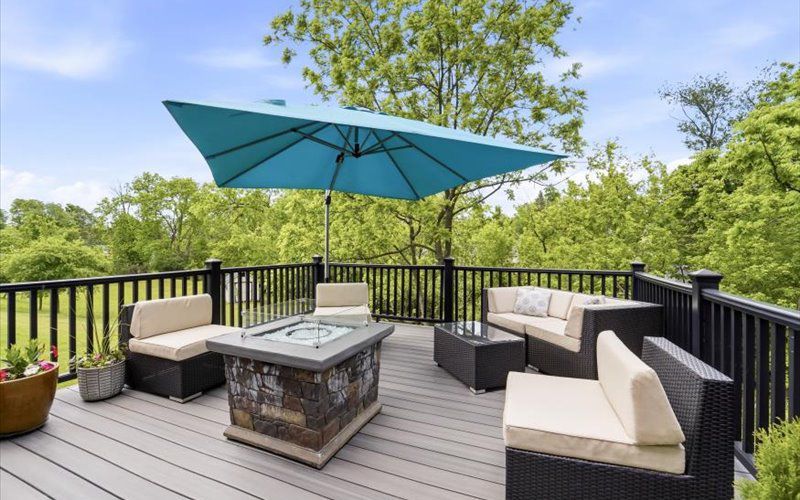
    DeckAlcove Media

    The 2,648-square-foot Pottstown house features a two-car garage that can also serve as a workshop. It has extensive cabinetry, a refrigerator, and mounted television.

    The house’s main level has a hardwood foyer and composite flooring in the kitchen, dining room, and family room. And the kitchen has an island, a subway tile backsplash and a sink mounted under the counter, giving a lower profile.

    There is also a powder room and laundry.

    The primary bedroom has a walk-in closet with custom organizers.Alcove Media

    The bedrooms are on the next level. The primary has a decorative accent wall and a walk-in closet with custom organizers, and a bathroom with tile flooring.

    The finished basement has a bar area with a wine and beverage refrigerator, pantry, a decorative tile ceiling, and an electric fireplace. Sliding doors lead to the patio and backyard.

    FireplaceAlcove Media

    The house is in the Pottsgrove School District, convenient to Philadelphia Premium Outlets and Costco.

    It is listed by Pam Butera of Keller Williams Blue Bell for $575,000.

  • A school’s fight over Black history | Morning Newsletter

    Happy Tuesdee. It’s shaping up to be a lovely spring morning.

    We’re starting with a look at the Cherry Hill school board and its debate over the possibility of ending its African American history requirement.

    And, our food team has cultivated a list of the most iconic Philadelphia dishes of all time.

    Plus, the sheriff’s office will undergo a shakeup, and more news of the day.

    — Tommy Rowan (morningnewsletter@inquirer.com)

    If someone forwarded you this email, sign up for free here.

    Cherry Hill schools dropping African American history mandate?

    In the 2021-22 school year, Cherry Hill was the first New Jersey district to mandate a Black history class to graduate.

    It made national headlines.

    Five years later, the board has debated whether the course should be dropped as a requirement in light of budget problems in the largest South Jersey school system.

    And while officials have assured the community that the course will remain part of the curriculum, the debate highlights the difficult choices that districts are facing during a tough budget year.

    Melanie Burney has the full report from South Jersey.

    If you want to keep it super local, sign up here for our weekly Cherry Hill newsletter, which is a free and easy-to-read guide to everything from local headlines to weekend plans.

    And next week we’re launching a daily South-Jersey-centric newsletter that is part of our expanded reporting across the region. Sign up here.

    76 iconic Philly dishes

    We’re counting down the 76 most iconic Philadelphia dishes all week.

    Today, we’re highlighting entries 76 through 55.

    And throughout the week we’ll be counting down to No. 1.

    We asked ourselves: What are the foods that have most shaped the culinary scene in Philadelphia?

    That’s what the food team has set out to answer.

    So check out our picks, starting at No. 76.

    What you should know today

    • Sheriff Rochelle Bilal announced a major restructuring of her office to reduce a problem she previously claimed she’d fixed. Some details aren’t public.
    • Fifteen people were arrested on Sunday during Pride events in the Gayborhood, officials said. The police response drew criticism from residents over how crowd control was handled.
    • District Attorney Larry Krasner publicly criticized Mayor Cherelle Parker on Monday over what he said was an inadequate budget. Krasner’s televised appeal came as rumors swirl that he may run for mayor next year.
    • The Bucks County district attorney has sued the makers of Roblox, which he said had allowed sexual predators to exploit children.
    • A body believed to be that of a swimmer who went missing in the Delaware River was found by police after it washed ashore on Monday in Palmyra Township, Burlington County.
    • Former President Joe Biden made a surprise appearance at the annual Stonewall Awards in Philadelphia on Sunday, delivering a 20-minute speech to a packed crowd in Center City.
    • FIFA Fan Fest opens Thursday and will feature music, food, shopping, and a showing of World Cup games. There will also be transportation headaches.

    Quote of the day

    After 50 years of service, this Old City Italian restaurant remains a retro experience. It’s still a unique and worthy place to dine, restaurant critic Craig LaBan writes.

    🧠 Trivia time

    What famous boy band member was recently in Delaware and ate at a Craig LaBan-approved restaurant?

    A) Justin Timberlake

    B) Harry Styles

    C) AJ McLean

    D) Nick Jonas

    Think you know? Check your answer.

    What we’re…

    🎶 Harmonizing. Some Main Line dads started getting together in the ’90s to do some old-fashioned harmonizing. Their fanbase is now international.

    🎭 Recognizing. Amina Robinson made history as the first Black woman to win a Barrymore for directing a musical. And now she’s going to lead Theatre Horizon.

    🫟 Translating. The colorful markings on Philly-area streets and sidewalks might look like gibberish, but they are the language of utility companies.

    🏀 Cautiously optimistic about: In his first news conference since taking the Sixers’ top job, Mike Gansey didn’t sound like he planned on undertaking a major roster overhaul.

    🧩 Unscramble the anagram

    Hint: What store recently ditched an unpopular section.

    LIVE OF WEB

    Email us if you know the answer. We’ll select a reader at random to shout out here.

    Cheers to Matthew Zipin, who solved Monday’s anagram: Haverford College. Haverford and Bryn Mawr Colleges have long had a partnership that allows students on both campuses to take classes at the other.

    Photo of the day

    Pennsylvania Gov. Josh Shapiro held a news conference in the newest building at the Urban Outfitters campus in the Navy Yard on Monday.Alejandro A. Alvarez / Staff Photographer

    Urban Outfitters says it plans to hire 1,000 workers in the Philly region. Most will be added at a new distribution site in the suburbs.

    👋 Thanks for starting your day with The Inquirer. Paola Pérez has you covered tomorrow.

    By submitting your written, visual, and/or audio contributions, you agree to The Inquirer’s Terms of Use, including the grant of rights in Section 10.

  • Punch Buggy Brewing’s new Chester County taproom will open this week

    Punch Buggy Brewing’s new Chester County taproom will open this week

    Punch Buggy Brewing Company is bringing its artisan brewery to the suburbs, with its second location opening in Spring City later this week.

    “I think it’s going to be fun to see [the business] grow and thrive with the growing of Spring City right now, and the growing of the beer community,” owner Patrick Coyne said.

    The brewery’s latest endeavor, which has been about a year in the making, will open its doors at its new Main Street location on Saturday. And Coyne, 42, is no stranger to the Chester County borough: He and his family moved there five years ago, and Punch Buggy has been a presence at the farmer’s market for more than two years, learning what the crowd likes and wants.

    In North Philadelphia, where the brewery’s first location opened seven years ago on American Street, it’s “all IPAs all the time; lagers also,” Coyne said. But Spring City’s crowds are appreciating Punch Buggy’s sours and dark beers more than their Philly counterparts, Coyne said.

    The brewery released a Spring City Lager last year — its can featured local landmarks — to announce their venture into the suburbs.

    Over the past year, they have renovated an old hardware store for the brewery, refinishing its old pub-style floors, working with a local woodworker to build a live-edge wood bar, and “just adding our own little flair to every little piece,” Coyne said.

    Deezy’s Famous Cheesesteaks will join the brewery to serve food. The space will have three large TVs for sports fans and a small stage to host local musicians, like during their popular Friday music nights in Philly.

    “Piece by piece, the whole thing coming together has been pretty cool,” he said.

    Expansion has come with its challenges, Coyne said. They’re increasing the canning of their IPAs, lagers, sours, saisons, and more. They’ve paused distribution temporarily, to make sure they have enough beer at both locations and while they get a sense of demand.

    Punch Buggy Brewing is no stranger to Spring City, as owner Patrick Coyne lives there with his family. His wife runs the flower shop next to their Main Street location.John McGuire

    Coyne is looking forward to being “part of the beginning for Spring City,” where the population grew by more than 11% over the past five years.

    “It’s definitely an up-and-coming city,” he said. “There’s things opening every couple weeks, it feels like.”

    It doesn’t hurt that the new spot is near Coyne’s home, and next to his wife’s flower shop, Wild Blooms Florals. It’ll join a swath of new businesses that have come to the area in recent months — including Tuned Up Brewing on the same block, as well as The Gem, a speakeasy, plus more robust public parking.

    “People from in town could just walk and hit three places right now,” Coyne said. “People from out of town can come and they can park and they can go to three spots and spend a whole night there in Spring City.”

    This suburban content is produced with support from the Leslie Miller and Richard Worley Foundation and The Lenfest Institute for Journalism. Editorial content is created independently of the project donors. Gifts to support The Inquirer’s high-impact journalism can be made at inquirer.com/donate. A list of Lenfest Institute donors can be found at lenfestinstitute.org/supporters.