Blog

  • Lower Merion is advancing a policy to eliminate iPads and laptops for K-2 students

    The Lower Merion school board plans to stop assigning personal laptops and iPads to kindergartners, first graders, and second graders after facing intense pushback from parents who say kids are getting too much screen time in school.

    Members of the school board’s policy committee announced the plan during a meeting Monday, along with other proposed limits on technology use. Under policy changes going before the full school board for review next week, third and fourth graders would use electronic devices stored on carts in classrooms, while fifth and sixth graders would be permitted, but not required, to bring devices home.

    “This is a huge movement forward,” said the board’s president, Kerry Sautner, describing revisions made to the proposed technology policy in response to community feedback.

    But parents who have accused the district of overusing educational technology said the proposed changes did not go far enough — leaving too much room for interpretation around when technology should be used, and failing to adequately restrict kids’ access to inappropriate websites.

    Some parents also expressed anger that the board is moving forward with repealing the current technology policy, which contains language accommodating families who opt out of district-issued devices.

    “You are removing the escape hatch,” said David Smyth, a parent from Merion Station, who said the district had produced no data supporting its use of technology. “You know that ed tech is failing, it’s suboptimal, and you don’t want to be embarrassed.”

    Here is what to know about the tech debate in Lower Merion, the board’s latest policy proposal, and what happens next:

    Lower Merion at the center of ed tech backlash

    As backlash to technology in schools has spread across the region and nationally, Lower Merion has become an epicenter of parental opposition.

    At meetings this spring, dozens of parents have voiced concerns about weakened attention spans and classroom distractions, and expressed fear that the quality of their kids’ education is declining as a result.

    More than 800 parents have signed a petition asking for the right to opt out of one-to-one devices, according to parent organizers in Pencils Over Pixels. The group, which started a GoFundMe campaign, has distributed lawn signs and enlisted a public relations firm as part of its advocacy efforts.

    But district officials have repeatedly said that the technology policy’s language is dated, stemming from when Lower Merion first introduced one-to-one devices, and that it is not possible for families to opt out.

    Instead, the board has been reworking the technology policy to address when and how devices should be used in classrooms.

    A revised policy after meetings with parents

    The latest policy proposal outlines guidelines for technology use at different grade levels, rolling back one-to-one devices for Lower Merion’s youngest students.

    “Technology shall not be used for routine classroom instruction in these grades,” the policy says. “Any use shall be minimal, highly structured, and limited to specific educational purposes such as diagnostic testing or for teacher-directed, whole-class demonstration, visual display, or state testing preparation.” (Pennsylvania’s standardized tests, which start in grade 3, are required to be administered on computers.)

    In grades 3-4, the policy says, students “shall have supervised, teacher-directed access to technology resources” that stay in classrooms, while in grades 5-6, students will be permitted to bring their devices home, but not allowed to use them between classes or at lunch.

    The policy describes students in grades 7-8 and 9-12 as having increased responsibility for independent technology use, but says devices should be used only for school-related work.

    The policy changes are “meaningful responses” to community feedback, said Anna Shurak, the chair of the board’s policy committee, who said board members had met with concerned families.

    But some parents said the policy — which says teachers should use technology “only when doing so serves a clear educational purpose” — would not adequately limit an overreliance on screens in classrooms.

    “The verbiage of this policy is very carefully crafted to say nothing,” said Eleanor Stanford, a parent and a writing professor at Bryn Mawr College, who also questioned why the district was still “dragging its feet” on imposing a bell-to-bell ban on cell phones in its high schools, even as legislation advances in Harrisburg to do so. (Shurak said the district would fully ban cell phones in 2027-28.)

    Parent Matthew Posey quoted the policy’s language that technology belongs in the classroom when it “genuinely amplifies human curiosity.”

    “Did Albert Einstein need Kahoot or iReady?” Posey said, referring to two educational technology programs. “Is this a public policy document, or a corporate marketing brochure?”

    Some parents also questioned proposed administrative regulations that include suggested time ranges for technology use by grade level. In grades K-4, the guidelines are less than 30 minutes a day; by high school, they increase to less than 120 minutes a day.

    Calculating the high school upper limit as about 40% of daily instructional time, “to me, that’s way, way too high,” said Sam Handlin, a parent and a professor at Swarthmore College. He said the only way teachers would approach that time limit was either by using technology “as a babysitting device” or letting students take notes on computers, “which is just a recipe for distraction.”

    Shurak did not comment on the time frames specifically but told Handlin the administrative regulations still need to be revised.

    When will changes take effect?

    The committee endorsed sending the revised technology policy to the full board for review next week, along with a recommendation to repeal the current technology policy.

    While the board may repeal the current policy at next week’s meeting, the new policy would need to be considered a second time to before it could go into effect.

    The goal is to have the new policy in place in August, Shurak said. She said the board would be directing administrators to implement changes in time for the coming school year.

    Board member Jason Herman, a member of the policy committee, said some of the new policy’s language should be revised to limit “ambiguity and subjectiveness.” He also questioned why the district could not move to a content filtering model where only certain websites were permitted for students to access, rather than restricting sites after problems are reported.

    Officials did not address questions around content filtering Monday, or calls from the Pencils Over Pixels group for the release of district contracts with educational technology companies and a technology advisory board that would include parents.

    Sautner said the board had more work to do, including around technology questions related to the district’s curriculum.

    But “we cannot micromanage” administrators through policy language, she said.

    Some expressed concern that the board could overreact in response to anti-tech opposition.

    “Banning technology isn’t going to be the way to ensure that our kids critically think,” said Emma Benn, who urged the board to “take a step back” before passing a new policy. “This world is a technology-driven world, and we need to make sure our children can function within it.”

  • Three Philly hospitals among 500 warned by Trump administration to provide more price information or face fines

    WASHINGTON — The Trump administration has warned more than 500 hospitals that they are failing to provide the public with basic pricing information — arguing that the lack of disclosure is keeping healthcare costs higher than they should be.

    The Associated Press obtained exclusively the list of hospitals that since April have either received letters of warning or requests to submit plans to provide transparent pricing. Failing to comply with the warnings comes with penalties as high as $2 million annually for each recipient that doesn’t create a plan to post clear pricing data.

    The letters are meant to fix a fundamental problem that patients, employers and insurers might not know ahead of time the cost of blood work, an imaging test or another form of treatment, and as a result pay more than they should have. AP has posted the list of hospitals that have received letters.

    The list includes three hospitals in Philadelphia: Fox Chase Cancer Center, Friends Hospital, and St. Christopher’s Hospital for Children. Other hospitals in the region that received letters were Phoenixville Hospital, Pottstown Hospital, and Reading Hospital, all owned by Tower Health, which also is a joint owner of St. Christopher’s children’s hospital.

    Christiana Hospital in former President Joe Biden’s home state of Delaware received a warning letter. Rockford Center in Newark, Del., was also on the list.

    A senior administration official who requested anonymity to provide the list said that President Donald Trump plans to tighten enforcement of price transparency standards made possible by a 2019 executive order signed by Trump. More hospitals are likely to receive letters regarding the absence of pricing data, the official said.

    The warnings are the latest example of Trump leaning into the message that his administration is fixing the problem of healthcare expenses that can drain a family budget. It’s a calculated pitch ahead of the November midterms at a time when affordability is a top concern for voters. But Trump is also vulnerable on this particular issue, as his administration allowed subsidies to lapse for people buying insurance through the 2010 Affordable Care Act, widely known as Obamacare.

    Just 29% of U.S. adults approved of Trump’s healthcare policies according to the most recent survey on the issue by The Associated Press-NORC Center for Public Affairs Research. The president fared slightly worse on that issue in the December survey than on the economy, immigration or his management of the federal government.

    The push for price transparency could have a particular impact on Republican strongholds like Texas, Florida, Indiana, Alabama and Louisiana, which are among the states with the highest count of hospitals that have not provided adequate information on the costs of medical services.

    Texas had 42 hospitals that received warnings, more than any other state. Baptist Medical Center in San Antonio, Texas, among the state’s largest hospitals with 1,585 beds, received a letter, as did the University of Texas MD Anderson Cancer Center in Houston.

    Missouri-based Ascension, one of the country’s largest hospital systems, had 13 hospitals in multiple states that received letters. The Republican state of Indiana had 34 hospitals that received letters, nearly as many as the 38 in Democratic-led California, even though California has five times more people than Indiana.

    The letters reflect two competing philosophies between Republicans and Democrats over how to handle the ballooning expense of healthcare, which is also a growing risk for the federal government’s own balance sheet.

    Biden’s team put more emphasis on record enrollment in Obamacare programs that increased the percentage of people with health insurance. Biden also signed a bill that allowed the government to begin negotiating prices for some Medicare drugs directly with pharmaceutical companies. That program, which has continued into Trump’s second administration, has helped knock down the list prices of some of Medicare’s costliest drugs.

    The Trump administration, by contrast, has focused more on trying to find ways to provide details on pricing — such as promoting the TrumpRx site for prescription drugs — betting that doing so will lead to better and more efficient spending on healthcare as the data gets crunched.

    Critics have said Trump’s negotiated prices on prescription drugs might not produce genuine savings for many Americans with insurance, while the administration has estimated savings in excess of $500 billion over 10 years.

    With the various lists of hospital prices, the administration wants providers to make it easier to access the files and to ensure the information in them is legitimate, instead of being based on estimates or omitting numbers for key procedures.

    The House Committee on Energy and Commerce has a hearing planned for Wednesday on price transparency.

    “Transparency is the foundation of a healthcare system that rewards competition based on cost and quality,” Shawn Gremminger, CEO of the National Alliance of Healthcare Purchaser Coalitions, plans to say in his prepared remarks.

  • The Weccacoe Playground is living proof of Philadelphia’s macabre history of grave robbing. Now it’s inspired a surprisingly funny play.

    The Weccacoe Playground is living proof of Philadelphia’s macabre history of grave robbing. Now it’s inspired a surprisingly funny play.

    The bodies of poor and Black Philadelphians have long been exploited in the name of medical progress — even after death.

    Grave robbing was a common practice among medical schools like the one at the University of Pennsylvania in the 18th and 19th centuries, when the cholera outbreak created great demand for cadavers. Medical schools paid people to steal freshly buried corpses for medical students to conduct research in the hope of developing cures.

    Very often, a wealthy white population benefited from the cures derived from experimentation on these bodies.

    Black Philadelphians were denied burial in the city’s cemeteries, so many of these bodies were buried in potter’s fields without tombstones.

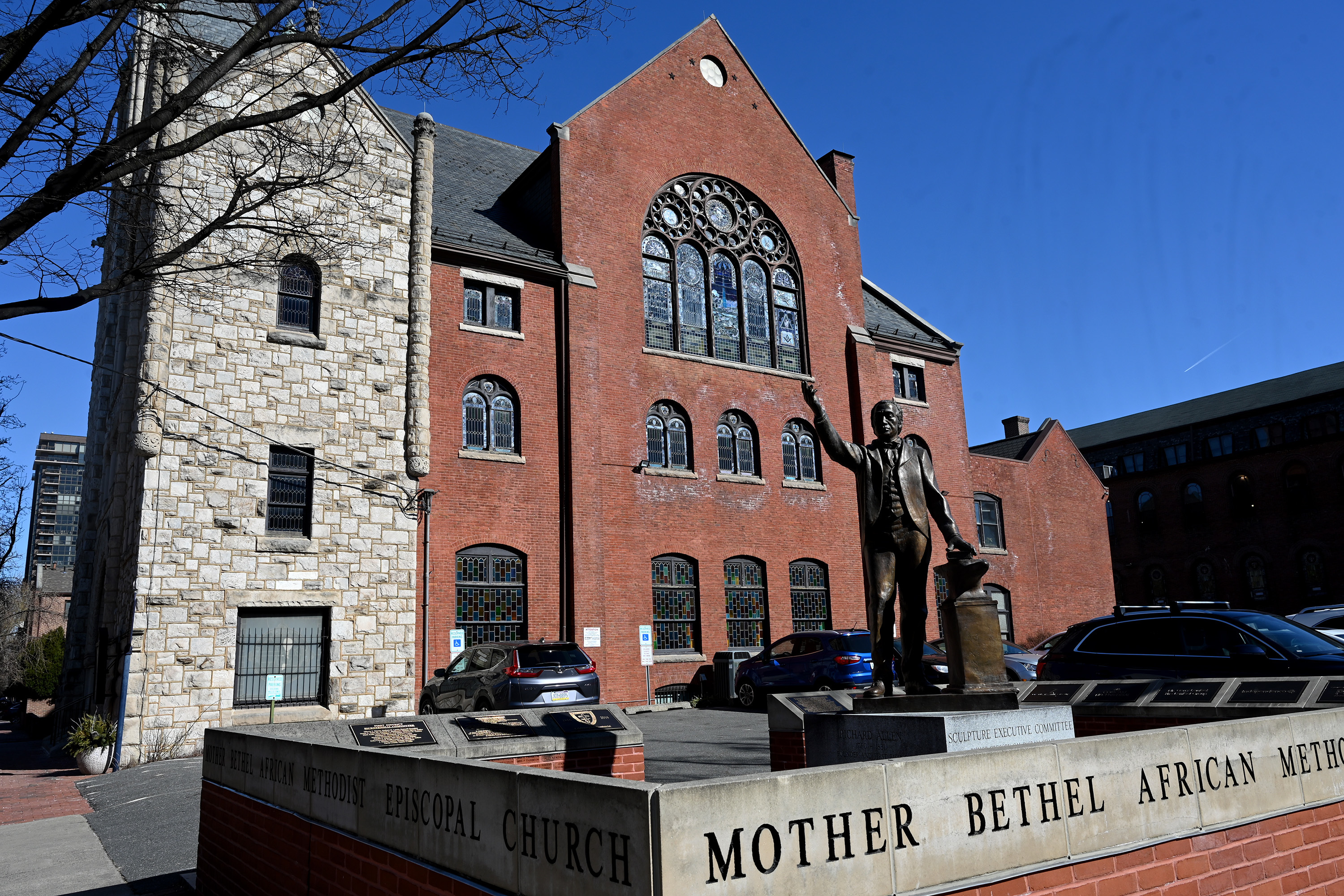
    In 1794, after being denied worship at Old City’s St. George’s Methodist Church, the formerly enslaved Richard Allen founded the Mother Bethel African Methodist Episcopal Church, considered the world’s first AME congregation. In 1810, he purchased what today is called the Bethel Burial Ground.

    A statue of Bishop Richard Allen outside Mother Bethel AME Church.Tom Gralish / Staff Photographer

    The minister, who would go on to become one of America’s most influential Black leaders, wanted Black Philadelphians to receive a dignified final resting place, with tombstones.

    Through her 2024 play The Great Privation (How to Flip Ten Cents Into a Dollar), Harlem-raised playwright Nia Akilah Robinson seeks to offer audiences a peek into this macabre history with Philadelphia roots.

    “This topic of grave robbing is a subject in which I had conversations around the dinner table with my parents,” Robinson said. “It is a practice that has a long and storied history in Philadelphia, especially institutions like University of Pennsylvania medical school, and these crimes continue today.”

    The play, set at Mother Bethel in 1832 and the present, is now being staged at Theatre Exile.

    It explores the history of grave robbing in America in the name of medical progress, through the story of a Black American mother and daughter who keep vigil over their recently buried loved ones’ graves to protect their bodies from grave robbers or “resurrectionists,” who were often white.

    Andre G Brown, Rayne, Aidan McDonald, and Semaja Murphy in “The Great Privation (How to Flip Ten Cents Into a Dollar)”Paola Nogueras

    “I saw the description of a play, talking about an African Methodist Episcopal Church, 1832 graveyard in South Philadelphia,” the Rev. Carolyn C. Cavaness of Mother Bethel said. “That’s Mother Bethel! That’s me.”

    “We can never divorce ourselves from where we come from and our roots,” said Cavaness, who was appointed the church’s first female pastor in 2024.

    The church sold the graveyard in 1889, and the plot of land became a playground, today called Weccacoe Playground.

    In 2014, amid a playground remodel, historian Terry Buckalew raised concerns about the human remains underground. These concerns were validated by a subsequent archaeological dig, and remodeling plans were halted until a plan for a re-memorialization of the Weccacoe/Bethel Burial Ground could take place.

    The Rev. Carolyn Cavaness celebrates worship service Nov. 11, 2024 after Mother Bethel AME appointed her the first woman pastor in its history. CAVANESS-TBDTom Gralish / Staff Photographer

    Robinson first drove past Weccacoe Playground and Bethel Burial Ground during rehearsals for Theatre Exile’s production. Philadelphia-based director Ontaria Kim Wilson wanted her to see the place that she had been writing about.

    “When I was crossing into that block with Ontaria, as she was driving, I felt something, I can’t even explain it,” Robinson said.

    “In Philly, there is a lot of respect paid toward talking about the history through those signs of what happened here. Sometimes when I go past those [historical markers], I see a tribute, and I feel a sadness. I get why it’s there and I also [think] maybe we need more plays doing that, too.”

    Today, members of the Mother Bethel congregation, families visiting Weccacoe, and the thousands of Philadelphians and tourists walking past this small playground hold the juxtaposition of young life and centuries-old resting souls at once.

    Philadelphia-based director Ontaria Kim Wilson has directed Nia Akilah Robinson’s 2024 play “The Great Privation (How to Flip Ten Cents Into a Dollar),” which is now playing at Theater ExileCourtesy of Theater Exile

    Theatre Exile is partnering with Mother Bethel to offer the production crew a more real-world context to the story of the play. Cavaness met with Wilson and attended the first rehearsal and will participate in post-show discussions during the run of the production.

    “You always have the contesting and the non-acceptance of Black bodies being fully human,” Cavaness explained. “‘You’re not fully human, so I can do with your pieces, I can do with your body, as I see fit.’”

    Cavaness can’t help but think of Allen, who was initially buried in front of Mother Bethel.

    “They would have people guarding his body. Again, this notion of protecting the dignity and of having to reinforce that and to show that,” she said.

    Playwright Nia Akilah Robinson’s 2024 play “The Great Privation (How to Flip Ten Cents Into a Dollar),” is now playing at Theatre Exile.Courtesy of Theater Exile

    Organizations like the Mütter Museum and Penn Museum hold the remains of Black people and Native Americans in their collections and in recent years have faced significant public backlash over their acquisition and display. The Mütter has engaged in extensive community programming regarding its background as a medical history museum while receiving criticism that its efforts to repatriate the remains of Indigenous people have moved too slowly. Penn has embarked on internment and repatriation processes that some critics and families argue have been flawed and rushed.

    “We are the caretakers of this history. We are entrusted,” Cavaness said. “We have a responsibility to care for and uplift and to say their names and their stories. They just can’t go away.”

    These real-world, very local connections continue to inspire Wilson’s direction of the play in preparation for sharing it with the descendants of those buried in the Bethel Burial Ground. The Great Privation could rely on its inherent didacticism, but Wilson’s direction is focused on uplifting the love story of a mother and daughter, and Robinson’s surprisingly humorous writing.

    Robinson hopes the play can be received as a comedy, even as it holds so much grief.

    Semaja Murphy and Rayne in “The Great Privation (How to Flip Ten Cents Into a Dollar)”Paola Nogueras

    “I hope that [the audience] find themselves laughing. And I hope that Philly audiences feel like this play was written with care,” said Robinson.

    “It’s Philadelphia. It’s the birthplace. It’s another chapter in who we are as a nation,” said Wilson. “And I think it’s important that, especially during this time, we grab onto any information that we can learn about this American experiment.”

    “The Great Privation (How to Flip Ten Cents Into a Dollar)” runs through June 14, Theatre Exile, 1340-48 S. 13th St., theatreexile.org/tgp25

  • The Visitor Center is adding new locations and pop-ups at PHL, Reading Terminal Market, and the Parkway

    The Visitor Center is adding new locations and pop-ups at PHL, Reading Terminal Market, and the Parkway

    Big things are happening in Philadelphia this summer.

    With the FIFA World Cup, MLB All-Star Game, and the nation’s 250th birthday celebration expected to draw millions of tourists this summer, the Philadelphia Visitor Center Corporation is gearing up to offer an even warmer welcome to tourists.

    The visitor center’s nearly $600,000 expansion includes new locations at the Philadelphia International Airport and Reading Terminal Market, plus two pop-up resource tents along the Benjamin Franklin Parkway.

    “For visitors, we want them to see a visitor center for every five to seven minutes on their walk from the Historic District to the Parkway,” said Kathryn Ott Lovell, president and CEO of the Visitor Center.

    America 250 signage in Independence Visitor Center in Independence National Historical Park March 12, 2026.Tom Gralish / Staff Photographer

    The PHL outpost will be located at the airport’s Terminal AL West, dedicated to international and trans-Atlantic travelers. A former MAC Cosmetics retail space will be temporarily transformed into a 1,000-square-foot visitor center, complete with maps, attraction tickets, itinerary planners, and Commonwealth-branded souvenirs and merchandise. Incoming and departing visitors will also be able to send postcards with images from notable Pennsylvania sites.

    The Reading Terminal visitor center will be stationed near the entrance at 12th and Filbert Streets, at the site of a now-closed Visitor Center.

    The new one, Lovell said, will be larger and have dedicated staff and volunteers running the kiosk. The hope, she said, is to make it a permanent resource for visitors.

    The two visitor centers are under construction. Lovell said the plan is to open at least one by June 15, and have both fully operational within the next two weeks.

    The PHL Visitor Center will be open daily from 7 a.m. to 10 p.m., and the Reading Terminal Market location will be open daily from 10 a.m. to 6 p.m.

    The organization is also adding an air-conditioned Visitor Center tent at LOVE Park, and another across from the Oval at the end of the Parkway. These tents will be filled with souvenirs and retail items, flash tickets, transportation information, and other offerings. There will also be a water station and public restroom trailers that will be open to all visitors.

    President and CEO of Philadelphia Visitor Center Corporation Kathryn Ott Lovell speaks at the Bells Across PA event in celebration of America’s 250th Birthday in Philadelphia, on Jan. 16, 2026.Tyger Williams / Staff Photographer

    Starting Thursday, the resource tents will be open daily from 10 a.m. to 8 p.m. throughout the 39 days of the FIFA Fan Festival Philadelphia, ending July 19.

    Along with paid Visitor Center staff, the nonprofit will position hundreds of volunteer greeters at these new Visitor Center locations. The bulk of these volunteers have already signed on as Phambassadors, who’ll act as the city ambassadors and connect visitors to the area’s many attractions. The program, launched in 2025, has already recruited more than 10,000 members.

    Volunteers will include 26 high school students from Saints Neumann Goretti High School and the Girard Academic Music Program. These students are part of the newly-launched Youth Phambassador Program, designed in partnership with Temple University’s Lenfest Center for Community and Workforce Partnerships. It is aimed at training aspiring hospitality professionals on customer service, visitor engagement, and civic leadership.

    Tiphanie White (center), chief of staff in Council President Kenyatta Johnson’s district office, joins Michelle Freeman (left), CEO of Witty Gritty and Kathryn Ott Lovell (right), president & CEO of the Philadelphia Visitor Center Corporation and Philadelphia250, during a pep rally in LOVE Park Tuesday, Apr. 29, 2025, to kick off the city’s recruiting of 10,000 “Phambassadors” to serve as Philly champions, advocates, and storytellers ahead of America’s 250th birthday in 2026. The event featured pom-poms, foam fingers, a giant pledge card, all five Philly pro sports mascots (plus Temple’s owl), a DJ, cheerleaders, drum lines, and pep bands.Tom Gralish / Staff Photographer

    The volunteers will be tasked with providing directions, offering recommendations, and other on-the-ground assistance throughout their six-week, paid summer work experience.

    Lovell said the cost to build out and operate the two visitor centers for six months will total an estimated $400,000. The tents will cost roughly $200,000 to operate for six weeks.

    This investment, she said, is made possible through fundraising and support from funders such as Philadelphia Funder Collaborative for the Semiquincentennial, Visit PA, and the Connelly Foundation.

    The expansion, Lovell hopes, will not only raise the profile of the city as a global tourism destination for 2026, but for many years beyond this summer.

    “This is our Super Bowl,” Lovell said. “We’re the Visitor Center. We’re the welcome wagon. We’re the ones that help connect visitors to their amazing experiences throughout our city.”

    This article has been updated to reflect that the Reading Terminal visitor center kiosk will be run by staff and volunteers.

  • Jameer Nelson wants to be ‘part of the solution’ for the Sixers. His promotion provides an opportunity to do that ‘at home.’

    Jameer Nelson wants to be ‘part of the solution’ for the Sixers. His promotion provides an opportunity to do that ‘at home.’

    During early conversations with Josh Harris and Bob Myers, new 76ers president of basketball operations Mike Gansey asked a version of this question multiple times:

    Can we keep Jameer?

    Can we elevate Jameer?

    News popped Sunday that those inquiries had become reality. Jameer Nelson was promoted to executive vice president of basketball operations, the No. 2 front-office position under Gansey. It continues Nelson’s rise through his hometown NBA organization following a terrific playing career, which on Monday the Chester native and former St. Joseph’s star called “actually a surreal moment.”

    “Six years ago, when I started [with the Sixers], I had no idea where this journey would take me,” Nelson said following Gansey’s introductory news conference at the Sixers’ facility. “Credit to the organization for believing in me … To do it for the home team gives me goosebumps, to be honest with you.

    “I think it’s one of the things that people take for granted: when you can actually help out an organization but, more importantly, do it at home.”

    Nelson was reportedly the primary internal candidate for the top job that went to Gansey, following a search spearheaded by Myers, the president of sports for Harris Blitzer Sports & Entertainment and former lead executive during the Golden State Warriors’ dynasty. When asked about the process that ultimately resulted in Nelson’s promotion from assistant general manager, he said, “It was fun, and it’s always good to be wanted.”

    Vice president of player personnel Prosper Karangwa also attended Monday’s news conference, after The Inquirer confirmed Sunday that he had agreed to a multi-year contract extension. Fellow assistant general manager Ned Cohen and Delaware Blue Coats general manager Ariana Andonian also were present. Not spotted: Elton Brand, who is expected to transition to a new role and title after stints as the Sixers’ top front office decision-maker and as general manager under former president of basketball operations Daryl Morey, who was fired May 12.

    That all makes Nelson the prime example of front office continuity — he fielded questions about Tyrese Maxey, VJ Edgecombe and Joel Embiid on Monday — and deep local roots. Nelson considers himself “Philadelphia adopted,” idolizing Charles Barkley, Allen Iverson, and Kobe Bryant before his own successful career.

    Nelson’s understanding of the current roster, city’s passionate fan base, and media scrutiny also was valuable to Myers.

    “He has that equity with our players and the community,” Myers said.

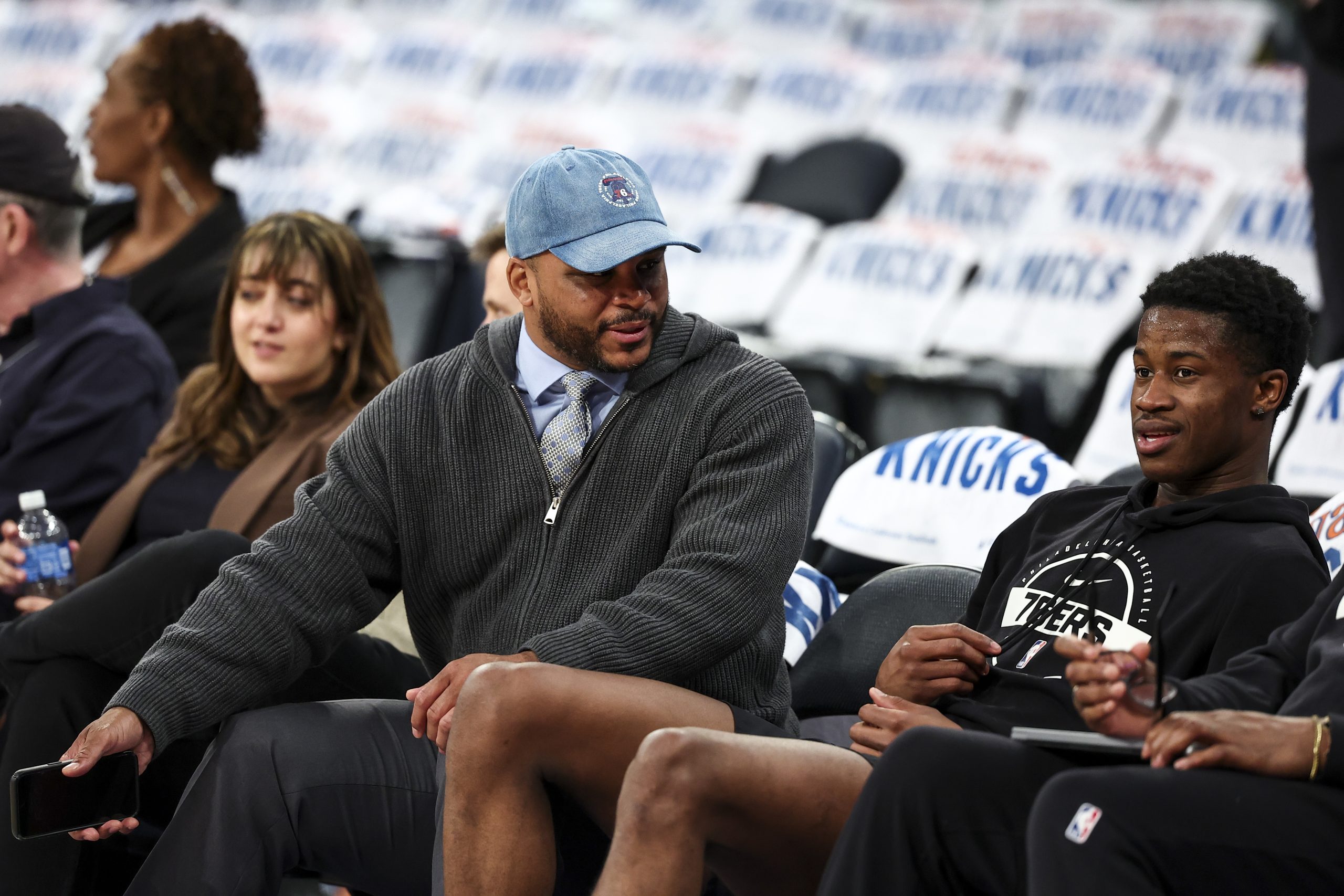
    Jameer Nelson talks with guard VJ Edgecombe before Game 2 of the second-round playoff series against the New York Knicks at Madison Square Garden on May 6.Monica Herndon / Staff Photographer

    The Sixers went 45-37 during the 2025-26 regular season, came back from a three-games-to-one deficit to upset the Boston Celtics in the playoffs’ first round, then were swept by the Finals-bound New York Knicks in the Eastern Conference semifinals. They also face an immediately challenging roster setup, with Maxey and Edgecombe forming a dynamic young backcourt, but Embiid and fellow injury-plagued veteran Paul George still on max contracts for multiple seasons.

    As Nelson’s 14-year NBA playing career wound down, he initially thought he would become a coach. Instead, Brand hired Nelson as a Sixers scout, before being elevated to general manager of the G League-affiliate Blue Coats. Collaborating with players and coaches in that role “[quenched] my thirst for coaching,” Nelson said, while he learned how to lead all aspects of a professional organization.

    He was promoted to Sixers assistant general manager last year. Myers noticed that Morey empowered Nelson in that position, and regularly sent him on road trips to interact with returning coach Nick Nurse. Nelson added that an unnamed “former co-worker ‘above me’ in title” challenged that, if Nelson did not make that superior better, he had “failed.”

    “My voice was bigger,” Nelson said of his role this past season. “Ultimately, I always had the confidence to know who I am. But it just gave me more confidence when I had a project, and I was able to accomplish the goal. …

    “You don’t have to be ‘ready.’ You have to be prepared. I’ll look at it like that: Just be prepared for everything to figure things out, and help the group make the right decision.”

    Nelson acknowledged Monday that, in past years, he has received job interest from other teams. But he wants to be “part of the solution here” and feels “responsibility to help this organization move forward.”

    Gansey understands that connection to the Sixers and Philly because of past college battles, when Gansey’s St. Bonaventure teams went 0-2 against Nelson’s St. Joseph’s squads. That is a reason why, when Gansey landed his new gig, it was “kind of a sticking point” that Nelson also received this promotion.

    “I think I got the win now,” Gansey said. “Got him on my side.”

  • Flyers Q&A: Danny Brière on Sam Ersson, Trevor Zegras, the biggest needs this offseason, and more

    Flyers Q&A: Danny Brière on Sam Ersson, Trevor Zegras, the biggest needs this offseason, and more

    BUFFALO — Three seasons are complete for Flyers general manager Danny Brière, and he is on the precipice of one of the biggest offseasons of his tenure.

    The Inquirer sat down with Brière at the NHL’s scouting combine in western New York to discuss what the future landscape looks like for the Flyers. In the first of two parts, he discusses the current squad and where things stand with free agency.

    This interview has been edited and condensed for clarity. It was conducted on June 3, before it was revealed that Dylan Larkin wanted a trade out of Detroit.

    Q: You and president Keith Jones have spoken for a long time about wanting to take a step forward. How important do you think it is to add now to the roster?

    A: Well, we want to add smartly. You’re not going to see us try to go after a big-time free agent who doesn’t make sense in what we’re trying to do. The goal is still to improve the team, but not mortgage the future. I think that’s probably the best way that we can explain it. It’s got to make sense for years to come before we’re going to trade away some young assets.

    Q: With the free agency landscape changing, does it make you look harder at an offer sheet?

    A: I think every team will consider that. But people have to understand, an offer sheet also comes with some consequences that you have to consider before going down that road. But we have to consider it. I would say it’s probably not likely with the cap going up; a lot of teams have extra dollars to spend. But we’re definitely going to look into it, like everything.

    Q: What would you consider to be this team’s greatest need in terms of position or skill set?

    A: I think the greatest need is a top-six center. We have guys that have really stepped up. Trevor Zegras has played center at times, and he has a skill to play in that role. We’ve asked a lot out of Noah Cates, Christian Dvorak, and Sean Couturier to play some heavy minutes, and we’ve asked them to play in that role for a big part of the season. … The other place would be a high-end power-play quarterback on defense, if we could find one.

    Q: There’s obviously a lot of interesting over-30-year-old defensemen who are good on the power play available, like John Carlson and Darren Raddysh. I know you cannot comment about them specifically, but would you consider someone over 30 as a stopgap solution?

    A: I’m not saying it will happen, but we have to consider it. We have to look to see if it makes sense. Obviously, term and money will play a big role to see if it fits into what we’re doing. It’s an area that we need to improve on, and we’ve been trying to improve on. The exciting part is we’re starting to bring in some guys that have been good on the power play at different levels, when you talk about the [Porter] Martones, the [Denver] Barkeys, [Alex] Bump, even Oliver Bonk and David Jiříček. So we do have some different flavors that are starting to integrate the team. Hopefully that pushes some of our veterans that have had the chance to play on the power play the last few years, but it just hasn’t been good enough.

    Q: In the past you have brought in a veteran blueliner, like Erik Johnson, Marc Staal, and Noah Juulsen to be the seventh defenseman. Has this defense reached the point where you don’t need that player?

    A: I think we’re probably past the mentor part. If there’s a high-end defenseman that can help us, we’ll have to look at that. It might be time now to give our young guys the chance to see if they can step into those roles, from David Jiříček, Emil Andrae, Bonk, Ty Murchison, Hunter McDonald. I think those guys have probably earned the right to get a look, and hopefully we can fill that all with our younger guys from within. Maybe even guys like Adam Ginning or Helge Grans can step up their game. They could be in the mix as well.

    Is this the summer the Flyers part ways with defenseman Rasmus Ristolainen?Jose F. Moreno / Staff Photographer
    Q: Rasmus Ristolainen has always been mentioned in trade rumors. He was obviously a valuable player down the stretch and in the playoffs, but the reality is he’ll be 32 in October, in the last year of a good deal, and stayed healthy. Do you envision him here come September? Do you anticipate him being in conversations again?

    A: Yeah, I mean, we’re going to look into it. I think we have to. That’s our duty as the organization, to explore what’s out there and see if there’s something that makes sense or not. But he was so good down the stretch for us, played on the top pairing with Travis Sanheim, how good he was at the Olympics, how good he was in the playoffs. So he’s a big asset. As we talk about expectations, you trade a guy like Rasmus, and it weakens the team. So if we do it, it’s going to have to make sense for the future. It certainly wouldn’t be ideal for taking a step forward next season if we do trade him, but we have to explore everything that’s out there.

    Q: Does having players like Bonk, Jiříček, and maybe McDonald and Murchison, who showed the ability to play at the NHL level, impact things?

    A: Well, it’s good to know that we do have some players that have the capabilities to eventually step in. When is that? That’s what we don’t know. Every player kind of graduated at a different pace, but, yeah, we believe that some of those guys will be able to take some of his responsibilities. We just don’t know yet when that will happen. We knew they weren’t quite ready for that down the stretch and into the playoffs, and that was one of the reasons why we kept Risto when we weren’t able to get what we were looking for.

    Q: Dan Vladař extension talks have surfaced. How comfortable are you with going long-term considering he’ll be 29 in August?

    A: Vladař was our MVP last year. He was our best player. He was a leader also in the locker room. He’s a guy that wants to be here, and he’s someone we want to be here. So we will definitely consider doing something with him, if he’s open to it. He’s earned it. He believed in us. He wanted to be here, and we don’t feel that we have any prospects that are quite ready to play those minutes and those games. He’s in a great tandem with Sam Ersson. It’s definitely a position that we would like to keep strong, and Dan has earned it.

    Q: But it was only one year where he carried the heavy workload and at that high of a level. How do you balance that?

    A: That was part of the reason to sign him to a short-term deal. We didn’t know the personality; we didn’t know the person off the ice. You get to know the person, you get to have a test run, basically. Knowing what I know now, I would have signed him to a four-year deal last summer. … Is he going to play that high of a level again next year? There’s no guarantee of that, and we know that. But I think he’s shown us enough to believe that he could be the guy for the future for us.

    Will the Flyers keep their goalie tandem together for another season?Yong Kim / Staff Photographer
    Q: You mentioned Ersson, who will be a restricted free agent on July 1. Where do things stand with him, and did his play late in the season change your viewpoint?

    A: Sam is a gamer, and Sam doesn’t quit. He fits the personality of the Flyers. There’s no quitting with him; even when he has a bad game, he fights back, and he comes back strong. We all know it wasn’t the ideal first half, but we have to give him a lot of credit in the way he could have thrown that season out the window and just give up. But he did not, and he got us some big wins. … We know Sam. He is well-liked in the room, great teammate, great human being, character person, so that plays a lot into it as well, and that’s why we have to strongly consider bringing him back. We haven’t made a decision yet, and we haven’t discussed an extension with him yet, but we’re looking at all options. But he did a lot of good last season and earned [the opportunity to] be considered.

    Q: Zegras is also a restricted free agent. How are his contract talks going, and where do you see his ideal position at this point?

    A: I think it’s a great option to have him be able to play either [wing or center]. Part of the season, I thought he was more of a winger than a center, but then coming down the stretch, what he did was very good too, in the middle of the ice. I think it’s nice to have that option, to have a guy like him who’s so creative that can play a different position and help us in the middle if we need to or on the wing. Again, where it stands, I’m not worried about the contract with him and Jamie Drysdale. They’re players that we want back, and I feel they want to be part of the future for the Flyers, so my expectation is they will be there in September when camp opens.

    Q: What has it been like for you watching Drysdale’s progression as a top defender?

    A: Yeah, it’s been pretty cool to see [him] being able to adjust to the league, to see him work on his game, a student of the game, trying to find ways to improve and get better. We have to give him a lot of credit for the season that he had after — it’s admitted — a little bit of a rough start in Philadelphia. But, defensemen, you have to be patient with them. They take a long time, and it was definitely a good sign to see Jamie take a step forward.

    Q: You have a bit of a logjam on wing. Do you think there is a spot for everyone, or do you need to clear some space?

    A: It depends on if Trevor is going to play wing or center. It depends if we ever end up finding another centerman. I think it’s pretty fair to say that we’re not looking to bring in more wingers in our top nine. I think our group is still pretty young and already able to have an impact, so we’re not going to look to bring in outside help on the wing in our top nine.

    Q: Like Ristolainen, Owen Tippett is mentioned in trade rumors often. Did it show how much you missed having him in the lineup against Carolina, and did that give you pause to keep him around?

    A: First of all, I’m not going around shopping Owen Tippett. But a lot of teams are calling about him because they like the package, the speed, and everything. It’s my job — and I’ve been very honest with Owen; I tell him that too — I have to listen. It’s been going on now for, I think, two years, so I think that shows you how much we value Owen and how much we love him. I’m not foreseeing anything going on there. Owen brings us a lot of speed, and the way he played down the stretch is a big reason why we made the playoffs, and we’re very happy with Owen Tippett.

    Q: Is there an update on his health?

    A: He did have surgery for a sports hernia. A few days after the year-end meeting, he saw the specialist, and all agreed it was better to do it. So it was taken care of right away. It won’t hamper his offseason training, and he’ll be ready to start the season.

    Q: How confident are you that Matvei Michkov will bounce back and learn from this year?

    A: I am very confident that Matvei will step up to where he was the previous year, and more. I think it was a tough season. It was a trying season. I believe he’s learned a lot. At the end of the day, he still finished with 20 goals and over 50 points in a trying season. We’ve said it before: Other than Connor McDavid, Sidney Crosby and Macklin Celebrini, there aren’t too many guys that don’t have downs in their career, and I’m sure even those guys have had them at some point.

    Development is not an easy, straight arrow going up the whole time; you see that happen to a lot of players in their second year. You have maybe a little bit of a letdown because you think, “I survived, it went pretty well the first year, and you think it’s going to be easy.” Most of the time, the guys bounce back from that, and I expect the same thing from Matvei. He’s so talented, can beat you many different ways, and I expect him to come back with a vengeance and to want to show everybody. Just knowing how competitive he is, I expect him to want to show everybody who he can be.

  • Folarin Balogun has delivered on his promise with the USMNT. Now a long-awaited World Cup is here.

    Folarin Balogun has delivered on his promise with the USMNT. Now a long-awaited World Cup is here.

    IRVINE, Calif. — When the U.S. men’s soccer team left Qatar after the last World Cup, the repeated lament was the lack of a No. 1 striker.

    Folarin Balogun’s name wasn’t entirely new at that point. Born in New York to Nigerian parents and raised in London, he had played for a U.S. youth squad in 2018. He started playing first-team club soccer at England’s Middlesbrough in the first half of 2022, and a brief hot streak there got him on U.S. fans’ radar.

    The next European season brought Balogun’s real breakout and a bigger spotlight. Now not only did the U.S. want him, but so did Nigeria and the England program of which he played on youth clubs from 2018 to 2021.

    For a stretch of spring 2023, the noise resembled college football teams recruiting a five-star high school quarterback. U.S. fans flooded Balogun’s Instagram page with comments, then-manager Anthony Hudson dropped hints about conversations, and even then-England manager Gareth Southgate was pulled into the chattering class.

    Folarin Balogun on the ball during Monday’s U.S. practice, the only open one the team will have leading up to the World Cup.Jonathan Tannenawld

    In March, it really looked like a recruiting circus. Around that month’s FIFA window, Balogun was spotted courtside at an Orlando Magic game, then at Yankees spring training, with U.S. Soccer’s help behind the scenes.

    Two months later, Balogun committed to the U.S. program. And in the three years since, he has lived up to the hype, with nine goals in 27 games, including one in the first World Cup tuneup vs. Senegal. Both numbers would have been higher if not for long stretches of 2024 and 2025 missed because of injuries.

    Now comes the biggest moment. Balogun, 24, almost certainly will be the Americans’ starting striker at the World Cup, beginning with Friday’s group stage opener against Paraguay in Inglewood, Calif. (9 p.m., Fox29, Telemundo 62).

    “I feel like my individual journey is a bit full-circle now, approaching the World Cup,” he said Monday, the opening day of the U.S. team’s stay at its World Cup base camp. “Especially with the World Cup being here, the opportunity to represent my nation in front of a home crowd is going to be something special for me, for my family, for my friends, and for the team. So I’m definitely looking forward to it and very proud.”

    Folarin Balogun (center) among his teammates at Monday’s practice.Jonathan Tannenawld

    His teammates know what he brings to the squad.

    “His movements: left, right, being able to hold a ball up and bring other players in, and then his movement in behind,” U.S. centerback and captain Tim Ream said. “Just being in positions, and getting himself into goal-scoring positions, is something that we’ve been crying out for for a long time with the team and the group, and he brings that.”

    Ream sat next to Balogun on the podium, so he joked about being wary of giving too many compliments. But he went on with them anyway.

    “He’s probably the most annoying striker for me to have to deal with in training because he is so quick with his movements,” Ream said. “Physically strong and able to seemingly glide past people.”

    Balogun admitted that being so close to the World Cup doesn’t feel real yet, but he knows the time is coming.

    “I think it’s probably going to start to feel more real to me when I’m lining up and preparing to go out on to the pitch and I’m hearing the fans shouting and screaming,” he said. “I definitely think it will be real to me the closer I get, but this is the first opportunity for me to play in a World Cup. So I don’t really have any expectations, and I’m just trying to stay present, stay in the moment, soak everything in.”

    There were a few moments to enjoy on Monday, when the U.S. held an open practice for fans, its only one of camp. A full house of 5,500 fans attended at Championship Soccer Stadium, home of the second-tier USL Championship’s Orange County SC, with free admission through registration with the city of Irvine. U.S. Soccer said there were over 32,000 applicants.

    Quite a few of them cheered for Balogun specifically, along with the many “USA!” chants that rose all morning.

    Fans cheering for Antonee Robinson as he walked onto the field.Jonathan Tannenawld

    “As I said before, it’s just coming to a full-circle moment, being able to perform on the biggest stage and give back to the fans,” he said. “That’s something I’m looking forward to doing, and I’m just happy I have the opportunity to do that.”

    And he hasn’t forgotten that whirlwind time leading up to his commitment and what it showed him about soccer’s growth in the United States.

    “I just remember an immense amount of appreciation from the fans,” Balogun said. “I didn’t realize at that moment how big football, soccer, was here in America. And to really feel that in full force was something that was inspirational for me. It made my decision easier.”

    Alejandro Zendejas autographing a fan’s American flag after practice.Jonathan Tannenawld
  • Shane Victorino Boys & Girls Club getting a facelift as All-Star festivities come to Philly

    Shane Victorino Boys & Girls Club getting a facelift as All-Star festivities come to Philly

    There’s a new addition to the list of All-Star events coming to Philadelphia this July.

    In partnership with America 250, MLB Together is working to achieve 250,000 volunteer hours pledged leaguewide. It now includes an All-Star week project to refurbish the Shane Victorino Nicetown Boys & Girls Club as it approaches the 15-year anniversary of its opening in September 2011.

    April Brown, MLB’s senior vice president of social responsibility, said MLB Together works with the host club during All-Star week to carry out projects within the community.

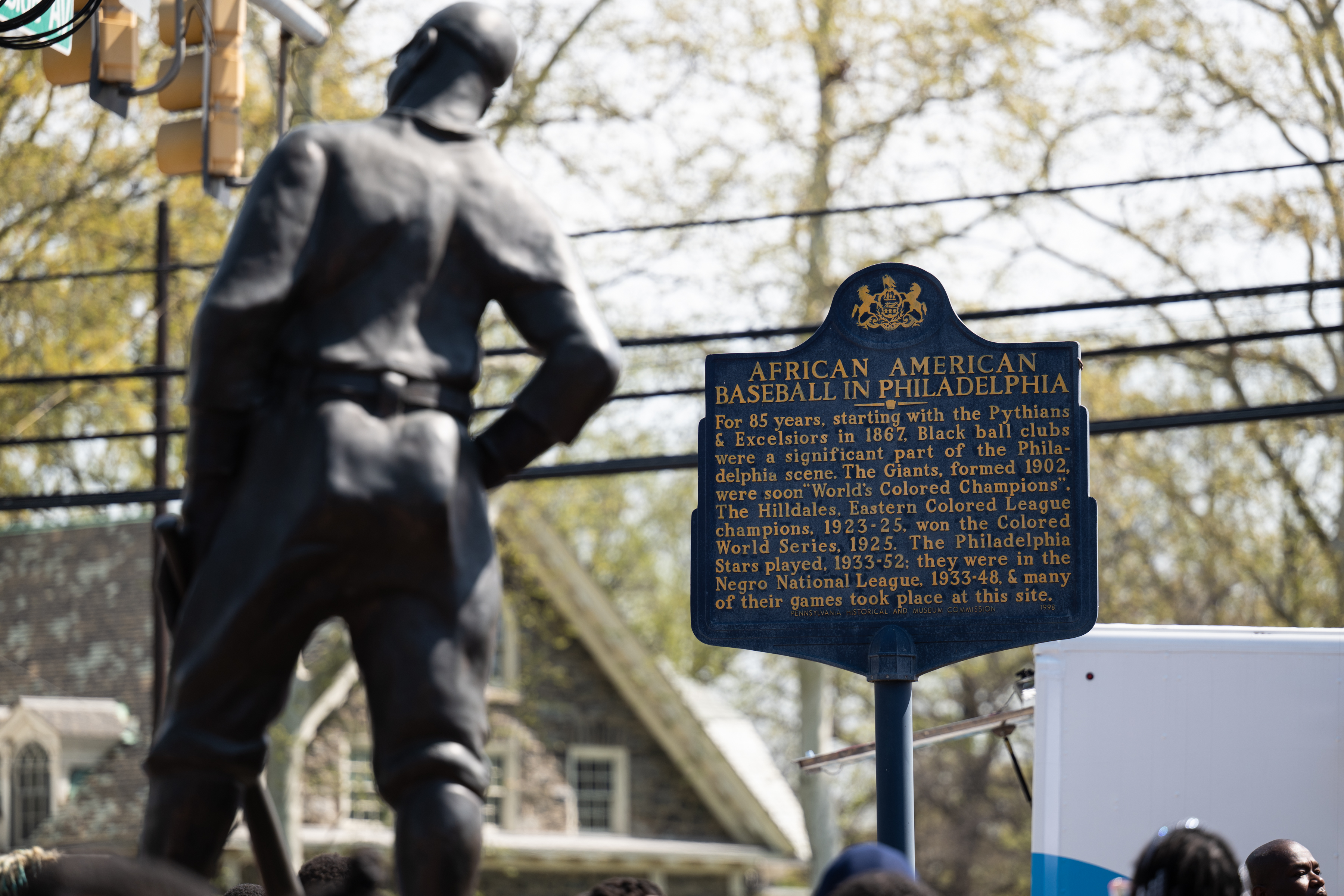
    MLB Together’s legacy projects include work with the Veterans Multi-Service Center, Ashburn Field refurbishment at FDR Park, Tree House Books, Philadelphia Stars Negro League Memorial Park, Miracle League, and Pennsylvania Horticultural Society Garden Mobile.

    One of the MLB Together legacy projects includes work on the Philadelphia Stars Negro Leagues Memorial Park.Erin Blewett / For The Inquirer

    On July 11, the plan is for more than 100 volunteers to descend upon Victorino’s Boys & Girls Club.

    “We’ll be rolling up our sleeves and painting the teen room, putting together some new furniture, decorating, and doing some internal work, in addition to some external work,” Brown said. “Some planting and some weeding and taking care of the baseball field, which is literally across the street from the Boys & Girls Club.”

    The center, which was created to give kids a space to play and grow, originally was a century-old facility that was going to close. With the help of the Shane Victorino Foundation, the building was refurbished to open the Boys & Girls Club.

    The 2008 World Series champion, two-time All-Star, and four-time Gold Glove winner said the day the club opened has remained his favorite moment in its 15-year history, but to now renovate it with the help of the MLB is surreal.

    “Having the 250th anniversary [of America] and Major League Baseball All-Star Game, if you had told me that I’d be partnering with MLB, Major League Baseball and their projects, and what they’re trying to do with the Boys & Girls Club, it’s definitely a pinch-me moment,” said Victorino, who played eight of his 12 MLB seasons with the Phillies. “It means a lot to me as far as where it is today.”

    Shane Victorino is a World Series champion and four-time Gold Glove winner.Yong Kim/Staff Photographer

    Brown said the volunteer outings are a “great opportunity to bring everyone into the fold” and create a community off the diamond when events like the All-Star Game bring attention to baseball. During the World Baseball Classic, MLB Together participated in a beach cleanup in Miami and has been working in New York before heading to Philly in July. Fans can get involved at mlbtogether.com/a250 to volunteer in their communities.

    “I think at the end of the year when we achieve the 250,000 hours, it will be about the hours, but it will be about the community that was connected across the country,” Brown said. “Every place where we play our game, all of our 30 major league clubs and our 120 minor league clubs are all a part of this initiative, so that unifying connector of everyone rolling up their sleeves and doing good for others, it will be what’s most important.”

  • FIFA World Cup players who hit their heads too hard will see this Temple neurologist

    FIFA World Cup players who hit their heads too hard will see this Temple neurologist

    Daniel Feinberg can’t recall ever holding a soccer ball, but he’s ready to aid the pros playing this month at the FIFA World Cup games in Philadelphia — should one take a hard hit to the head.

    Feinberg, a neurologist and concussion specialist at Temple University Hospital, is part of a team of doctors on call to help injured players, coaches, and others in town for the games.

    The Inquirer spoke to Feinberg, who also serves as chief medical officer for Temple University Hospital Inc., in an interview lightly edited for length and clarity about his upcoming role, and what people should know about concussions.

    How did you get involved with FIFA?

    When the World Cup [medical team] was being put together, it was done under the guidance of Dr. PJ Brennan, the chief medical officer of University of Pennsylvania Health System. I was the chief medical officer of Pennsylvania Hospital until mid-March, and then I transitioned to Temple on April 1. PJ, who is my mentor and friend, said we’d still like you to be part of the medical consultative group for the World Cup coverage.

    What is your background in neurology for athletes?

    When I came to Philadelphia, I practiced at Pennsylvania Hospital for many years, and they had a large sports medicine presence. I was on the medical staff of the Flyers and the Eagles for many years. I was never on the sidelines watching all the games, but I was the one seeing them the day after. In very rare situations, I would have to meet them in an emergency room setting. I also took care of players’ families and friends, if someone had another neurological problem.

    What will your role be during the World Cup?

    I will be available to consult with trainers on the field, team physicians who are accompanying the groups, and I will see patients as necessary. Dr. Brennan will call me and say, “Dan, I need you to see player X for this problem.“ It will likely be a concussion or concussion-type symptoms, but it could be other neurological symptoms. I would see them at Temple University Hospital.

    What happens when you get a concussion?

    The brain is inside of the skull, and it’s floating in the skull — it’s not actually packed into the skull. Around the brain is fluid that communicates from around the brain all the way down the spine to the tailbone. It serves as a buffer for the brain and the spinal cord to make sure that they don’t literally push up against the bone.

    What happens when someone has a concussion is the brain actually shifts — whether it’s a neck movement, like whiplash, or a direct head hit — and the brain literally will push up against the bone or smack up against the bone.

    The severity of that impact will dictate how severe the concussion is. If there’s not much movement of the brain in the skull, it’ll produce mild symptoms, headaches, nausea, light sensitivity, sound sensitivity, maybe some balance trouble.

    If it smacks up against the skull harder, that’s when people have word-finding difficulty, memory trouble, concentration trouble, along with those other things that happen with the milder concussions.

    What do you want people to know about concussion treatment?

    People are very nervous — the parents of the high school athletes, particularly, and maybe even the college athletes — when they come in with their kids to these visits.

    They ask questions like, is my kid going to get Alzheimer’s disease earlier? Is my kid going to get a neurodegenerative disease earlier? And there’s no real proof that’s the case. A lot of what I do in these visits, especially when I’m seeing someone for the first time, is alleviating anxiety and putting to rest some of the myths.

    The vast majority of concussions only have symptoms for a few hours to a few weeks with proper guidance — which is usually rest, avoiding screen time, and staying really well hydrated. When kids or adult athletes are less symptomatic or asymptomatic, they can resume physical activity slowly.

    Is it bad to fall asleep after a concussion, or is that a myth?

    That concern comes from the idea that if someone falls asleep, they could be unconscious. And that could be a sign that a bad thing is happening, that there is bleeding in the brain, or pressure in the brain — and you wouldn’t want to miss something like that.

    The other danger signs that would go along [with risk of unconsciousness] are things you would go to an emergency room for — a bad headache, sick to their stomach, a lot of light or sound sensitivity. Those things would make me say get evaluated at an emergency room.

    When bad things happen, they’re going to happen in the first few hours. When I talk about getting a good night’s sleep, I’m talking about after they’ve been cleared.

  • In Trump’s second term, fewer seats for women at the table

    In Trump’s second term, fewer seats for women at the table

    Nearly 10 years after their first bilateral meeting inside Beijing’s Great Hall of the People, President Donald Trump and Chinese President Xi Jinping again gathered last month for discussions about U.S.-China relations.

    Much had changed over the preceding decade. Wars had broken out in Europe and the Middle East, shifting global alliances; the coronavirus pandemic had killed millions around the world and transformed the global economy; and at the table in Beijing, the makeup of aides and advisers sitting alongside each leader for the high-level talks was visibly different.

    Images from Trump’s meeting with Xi in 2017 show Trump sitting alongside a large group of senior U.S. officials, including three women. Xi’s staff at the table also included a woman.

    During their most recent meeting inside the same room in May, every U.S. and Chinese official at the table was a man.

    The all-male delegation exemplifies a broader trend within the Trump administration’s hiring practices for senior executive branch roles that require Senate approval. Data reviewed by the Washington Post shows that Trump has selected fewer women to serve in these senior roles than during the same period of his first term. There also has been a historic amount of turnover among women in Trump’s cabinet.

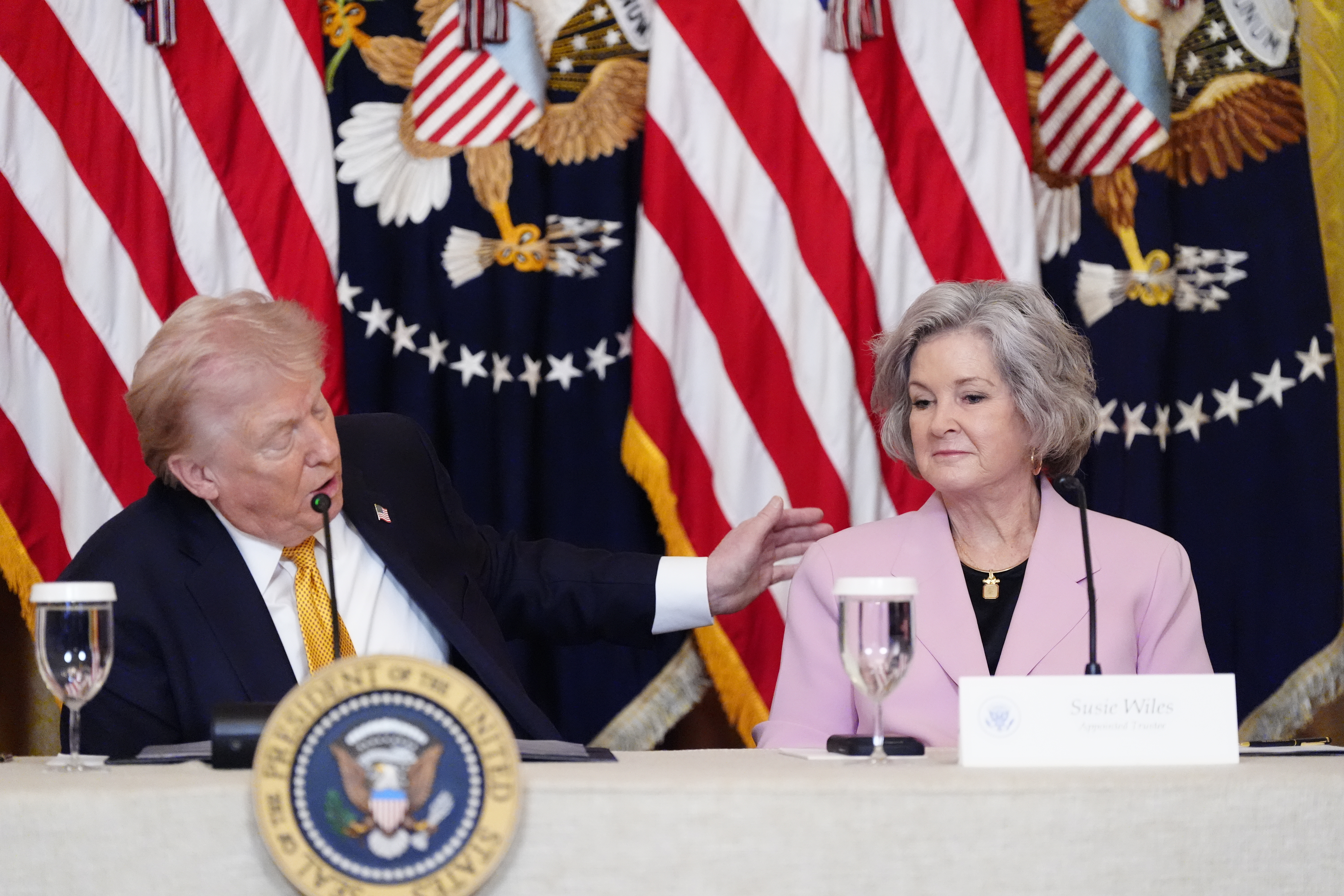
    The Trump White House has expressed pride in the fact that some key senior staff have been the first women to hold certain titles, including Susie Wiles as chief of staff, and defended the president’s hiring choices in a statement to the Post.

    “President Trump has assembled the greatest Administration in history, selecting each member of his incredible team based on one criterion: their ability to deliver for the American people,” Taylor Rogers, a White House spokesperson, said in a statement. “Unlike the identity-politics-obsessed Democrats, the President judges individuals on merit and qualifications, not immutable characteristics.”

    Lower rate of female political appointees

    According to the Partnership for Public Service, a nonprofit that says it aims to build a better government and a stronger democracy, Trump’s Senate-confirmed appointees are made up of the smallest percentage of women of any administration since George W. Bush.

    A PPS political appointee tracker, launched with the Post in 2016, monitors appointments to roughly 800 executive branch positions, a portion of more than 1,300 positions that require Senate confirmation. It includes all full-time, civilian positions in the executive branch that require Senate confirmation except for judges, marshals, and U.S. attorneys. (Military appointments and part-time positions requiring Senate confirmation are not included.)

    When excluding ambassadors and holdovers from previous administrations, PPS data show that so far in this administration, about a year and four months in, 14.53% of all nominees or Senate-confirmed political appointees — 51 out of 351 total roles — are women.

    At this point in President Joe Biden’s term, women had been nominated for 199 out of 379 roles, comprising 52.5% of appointees. And at this point in Trump’s first term, women had been nominated or announced for 41 of 173 of those roles, comprising 23.7% of appointees.

    Heather Higgins, CEO of the conservative nonprofit Independent Women’s Voice, told the Post that “the confirmation gantlet falls hardest on conservative women who can expect their families, faith, and reputations to be put through the wood chipper.”

    “Plenty of enormously talented women make the entirely rational choice to serve the country some other way,” she added. “That’s not a deficit of ambition but a market signal that women don’t necessarily see politics as the only or best lane for influence. And looking at the life of those in those roles, which is no picnic, I’d say that that’s a testament to the groundedness and judgment of women on the right.”

    But Max Stier, the president and CEO of the Partnership for Public Service, expressed concerns about the trend.

    “The evidence is clear that drawing on people with different backgrounds creates a higher-performing organization,” Stier said in a statement. “At the end of the day, our government needs leadership that reflects the diversity of the American people in order to understand and best serve them.”

    Turnover in Trump’s cabinet

    The first female cabinet member was Frances Perkins, who served as secretary of labor from 1933 through 1945. But it wasn’t until the 1970s under President Jimmy Carter that more than one woman was part of the president’s cabinet at the same time.

    Trump selected nine women to serve in his cabinet or in cabinet-level positions at the start of his second term. One of those cabinet-rank members, White House chief of staff Susie Wiles, does not require Senate confirmation. Another pick, Elise Stefanik, withdrew her nomination as U.S. ambassador to the United Nations.

    Among Trump’s presidential predecessors, only Biden successfully nominated more women to serve in his cabinet toward the start of his presidency.

    But nearly a year and a half into Trump’s second term, every departure from his cabinet has been a woman. And more female cabinet and cabinet-level officials have left their positions during this term than at this point in any previous presidential administration, according to an internal count by the Post based on a list of female cabinet members through U.S. history collected by the Rutgers University Center for American Women and Politics.

    Most recently, Tulsi Gabbard announced last month that she would step down as the director of National Intelligence effective June 30. Along with Gabbard, Attorney General Pam Bondi, Labor Secretary Lori Chavez-DeRemer, and Homeland Security Secretary Kristi L. Noem all have left the cabinet. A man was chosen to replace each of them.

    Fewer Republican women running for federal office

    The start of Trump’s second presidency also marked the first Congress since 2011 in which the number of women serving in the House and Senate declined, due to a decline in Republican women. While Democrats set a record by sending 110 female lawmakers to the House and Senate at the start of 2025, Republicans elected 40, according to data from CAWP. The number of Republican women in the House and Senate hit record or near-record levels after the 2022 midterm elections.

    There’s also been a decline in Republican women running for federal office, according to data from the Center for American Women and Politics at Rutgers. Republican women as a percentage of Senate and House candidates reached their peak in 2022.

    A record-setting 38 women filed as Republican Senate candidates in 2022. The number of candidates dropped to 21 in 2024 and has risen slightly to 27 candidates filing to run in 2026.

    Similarly, the number of Republican women registering to run for House seats hit a peak in 2022 with 261. That number dropped to 166 in 2024. So far in 2026, the number of female Republican candidates filing to run for House seats has declined further to 155 candidates.

    “Republican women are underrepresented across the board, across states, even when we look at them as a percentage of their own caucus in highly Republican states,” said Kelly Dittmar, director of research and CAWP scholar at Rutgers. “This change in a Republican administration is consistent with what we have seen before: When Republicans are in office, when they hold a state legislature, the majority party — we know that almost always there are going to be fewer women.”

    Public polling suggests that waning female representation in Washington may not be seen as much of a problem for many Republicans.

    A 2023 Pew Research study found that 5% of Republicans and Republican leaners say it is extremely or very important to them that the U.S. elects a woman as president in their lifetime. Among Democrats, 31% said it was extremely or very important. Republican women were also about twice as likely as Republican men to say there are too few women in high political offices in the country.

    “It’s odd to assume that women are succeeding only if they’re found in government rosters. That’s a surprisingly narrow definition of success,” Higgins, the Independent Women’s Voice CEO, said. “One of the lessons of the last several decades is that women don’t all want the same things, don’t make the same choices, and shouldn’t be expected to. Equality means respecting those choices, not treating every statistical difference as evidence that something has gone wrong.”