Blog

  • Iran soccer body claims fans’ tickets for World Cup games in the U.S. have been revoked

    Adding more turmoil to a chaotic World Cup buildup for Iran, the national soccer federation claimed Tuesday that FIFA revoked the ticket allocation for fans at the team’s three group-stage games in the United States.

    Each federation for the 48 World Cup teams taking part is entitled to receive and distribute 8% of stadium capacity for each of its games, adding up to several thousands of tickets per game.

    Those allocations typically went on sale to each team’s most loyal fans soon after the tournament draw in December, when Iranians for five months already had been subject to a travel ban by the U.S. government.

    Now, just days before Iran opens its World Cup in Inglewood, Calif. — on June 15 vs. New Zealand at the 70,000-seat stadium used by the Los Angeles Rams and Los Angeles Chargers — the federation claimed in a statement reported by semiofficial state media that it now was unable to provide tickets to its supporters.

    The claim adds to the tensions among Iranian soccer, FIFA, and tournament cohost the United States, which began military attacks on Iran on Feb. 28. Some federation officials have been denied visas to enter the U.S.

    FIFA has total authority over ticketing operations at the World Cup, yet the Iranian soccer body suggested “the United States has now taken steps to obstruct the presence of Iranian supporters at the stadiums.”

    “This incident raises serious questions about the influence of non-sporting and political considerations on the organization of the world’s biggest football event,” the Iranian soccer federation said.

    Iran, appearing in its seventh World Cup, also plays games June 21 in Inglewood and June 26 in Seattle.

    FIFA said in a statement Tuesday it is “working closely with the IR Iran Football Federation to identify compliant solutions that maximize opportunities for Iranian supporters to attend matches.”

    FIFA President Gianni Infantino and secretary-general Mattias Grafström promised logistical support in face-to-face meetings with Iranian soccer officials in Turkey in recent weeks.

    Most of Iran’s 26-member squad has not had a competitive game since February because they play for clubs in the domestic league that was shut down by the war.

    The team is based in the Mexican border city of Tijuana near San Diego instead of the original plan to train in Tucson, Ariz.

    Denied admissions

    Omar Artan, a referee from Somalia who was denied entry to the U.S. at Miami International Airport on Saturday is not the only person connected to World Cup teams stopped by U.S. Customs and Border Protection.

    The Iraqi team’s official photographer, Talal Salah, was detained and denied entry after arriving at Chicago O’Hare International Airport on Friday as part of the country’s 53-member delegation.

    “U.S. authorities asked for his phone; he gave it to them. After 12 hours’ detention, they decided to ban his entry,” said a member of the Iraqi soccer federation, who spoke on the condition of anonymity because he was not authorized to speak to the media.

    Iraqi striker Aymen Hussein also was detained by U.S. immigration authorities for seven hours upon arrival before being released, another Iraqi soccer federation member said.

    CBP confirmed in a statement that two people with the Iraqi national team were subject to “additional inspection” to verify their information or “determine admissibility.”

    Iraq’s Aymen Hussein (left) is congratulated after scoring his side’s second goal against Bolivia in March.Fernando Llano

    Artan, one of Africa’s top referees, was denied over “vetting concerns,” CBP said in a statement without giving details of those concerns. Artan was issued a visa to travel to the U.S. last week, according to the Somalia Embassy in Kenya that processed it.

    The move to deny a FIFA-appointed match official permission to enter a World Cup host country is highly unusual. Artan was due to meet up with other World Cup referees at their training base in Miami.

    Andrew Giuliani, the executive director of the White House FIFA Task Force, said Tuesday the referee was denied admittance for “very good reason” but also declined to go into details.

    Contract deal in LA

    Southern California stadium workers who threatened to strike for the U.S. men’s soccer team’s opening World Cup match on Thursday against Paraguay said Tuesday that they expect to stay on the job after reaching a tentative contract deal with higher wages and more labor protections.

    Workers will vote Wednesday on whether to ratify the deal.

    The union represents 2,000 bartenders, servers, cooks, and dishwashers at SoFi Stadium. The deal came after workers last week voted to authorize a strike as contract talks had stalled with the stadium’s food service provider, Legends Global.


  • Soccer Extra: The wait is over

    Soccer Extra: The wait is over

    With the FIFA World Cup kicking off this week, Soccer Extra dives into Philadelphia’s preparations to host the world’s biggest sporting events. The Inquirer’s Jonathan Tannenwald and CBS Sports’ Lisa Carlin discuss the city’s plans to welcome thousands of visitors, the impact the tournament will have on the region, and whether Philadelphia is ready for the global spotlight. They also examine the current state of the U.S. men’s national team, recent performances, and what fans should expect as the World Cup gets underway.

  • Three current Eagles (and one former Bird) cracked the top 50 in NFL merchandise sales last season

    Three current Eagles (and one former Bird) cracked the top 50 in NFL merchandise sales last season

    No matter what social media tells you, Saquon Barkley and Jalen Hurts are still pretty popular.

    For the second year in a row, the Eagles’ offensive duo ranked in the top 10 in jersey and merchandise sales, according to the NFL Players Association’s year-end list. Barkley’s jersey was the third highest-selling overall, while Hurts finished seventh. In fact, this year marked the third straight that a pair of Eagles appeared in the top 10 — in 2024, Hurts and Jason Kelce placed first and second, respectively.

    The list took into account all officially licensed player products purchased from March 2025 through February 2026. The merchandise, which sold for more than $1.9 billion across more than 50 countries, according to the NFLPA, includes jerseys, drinkware, bobbleheads, accessories, and more.

    “Fans have more choices than ever when it comes to the players they follow and support, and the Year-End Top 50 gives us a real look at who they’re showing up for,” president of NFL Players Inc. Matt Curtin said in a release.

    After surpassing 2,000 rushing yards during the Eagles’ 2024 Super Bowl season, Barkley finished with 1,140 and seven touchdowns last season. The running back’s drop in production coincided with a slight dip in popularity. Barkley was ranked the top-selling player a year prior, but he still topped all running backs in total merchandise sold for the second straight year.

    Barkley also finished in the top five in almost nearly every other listed category, including jersey sales, FOCO bobbleheads, Fathead wall decals, and shirts from BreakingT and 500 LEVEL.

    Eagles quarterback Jalen Hurts ranked seventh in jersey sales last seasonJose F. Moreno / Staff Photographer

    Hurts, who passed for 3,224 yards and 25 touchdowns in 2025, suffered a dip in sales as well, falling from third to seventh overall. In terms of quarterbacks, Hurts trailed Buffalo Bills’ Josh Allen (No. 1), Patriots’ Drake Maye (No. 2), Washington Commanders’ Jayden Daniels (No. 5), and Kansas City Chiefs’ Patrick Mahomes (No. 6).

    The Eagles quarterback did prove to be especially popular with the next generation of rabid fans. He ranked second in youth apparel sales, trailing just Mahomes. Barkley was fourth in the category.

    The only other team to boast two players in the top 10 overall was the Green Bay Packers. Quarterback Jordan Love ranked ninth overall while linebacker Micah Parsons, who the team acquired last season from the Dallas Cowboys, rounded out the top 10.

    But Barkley and Hurts weren’t alone. Two more Eagles also made the NFLPA’s top-50 highest sellers list.

    Cooper DeJean topped all NFL defensive backs in total merchandise sold last season.Yong Kim / Staff Photographer

    At No. 22, Cooper DeJean topped all NFL defensive backs in total merchandise sold. After a breakout rookie year, DeJean logged 93 total tackles and two interceptions during his sophomore season, which also resulted in his first Pro Bowl and All-Pro selections. DeJean climbed 20 spots from No. 42 last year.

    Former Eagles receiver A.J. Brown, on the other hand, fell 26 spots and just made the list at No. 50. There is also likely a bit of buyer’s remorse for Birds fans who recently bought the wideout’s gear. Last week, Brown was traded to the New England Patriots. He caught 78 passes for 1,003 yards and seven touchdowns during his final season with Philadelphia.

    But now that he’s playing in a new team’s uniform, there’s a good chance Brown skyrockets back up this list next season. Perhaps his departure will have a similar effect on new Eagles No. 1 wideout, DeVonta Smith, who was 29th last June but fell off this year’s list.

  • NASA unveils Artemis III astronauts to test technology for a future moon landing

    NEW YORK — NASA on Tuesday revealed the crew for its Artemis III mission, the next step in the space agency’s plan to eventually land astronauts on the moon.

    The announcement came two months after Artemis II’s record-breaking trip around the moon that surpassed the distance record of Apollo 13.

    NASA’s Randy Bresnik, Frank Rubio, and Andre Douglas and the European Space Agency’s Luca Parmitano won’t fly to the moon or land on the surface. Instead, they’ll orbit Earth while practicing docking their Orion capsule with two lunar landers.

    “To the Artemis III crew, we wish you Godspeed on the journey ahead,” said NASA administrator Jared Isaacman.

    Elon Musk’s SpaceX and Jeff Bezos’ Blue Origin are racing to deliver the lunar landers. The two-week demo is targeted for 2027. Blue Origin suffered a recent setback when its massive rocket exploded during an engine-firing test on the launch pad in Florida, shaking nearby homes and illuminating the sky with an orange fireball.

    NASA’s Jeremy Parsons said the setback is a learning opportunity and that the space agency is confident Blue Origin’s rocket will be ready in time.

    NASA’s Artemis program aims to return astronauts to the moon’s surface for the first time since the 1970s. A recent revamp of the program announced by Isaacman aims to fast-track it similarly to the Apollo era, adding the upcoming spaceflight around Earth before eyeing a lunar landing in 2028.

    “We are certainly humbled as a crew to be able to be your crew that executes this Artemis III mission in space,” said Bresnik, Artemis III commander.

    Added Douglas, mission specialist: “My brain — it is going a mile a minute right now. But my heart, it is so warm. It is so full.”

    In May, NASA awarded hundreds of millions of dollars in contracts to four companies, including Blue Origin, to build landers, rovers and drones for a future moon base. Isaacman said the goal of the moon base is to lay the foundation for a Mars expedition.

  • House passes $70B bill to fund Trump’s immigration actions for the rest of his term

    WASHINGTON — A bill to provide nearly $70 billion for immigration enforcement narrowly passed the House on Tuesday and now goes to President Donald Trump for his signature, fueling the administration’s deportation agenda for the remainder of his time in the White House.

    Republicans used their majority to get the bill over the finish line, funding a pair of Homeland Security agencies through the next three years. The bill passed by a vote of 214-212, over the objections of Democrats.

    The White House says the bill will provide $38 billion for Immigration and Customs Enforcement, $26 billion for the Border Patrol, and another $5 billion to cover unforeseen costs. It frontloads routine annual funding, ensuring a virtually uninterrupted flow of money as the Trump administration seeks to deport some 1 million people per year.

    Speaker Mike Johnson needed near-perfect attendance and unity on his side to complete weeks of action. The legislation got sidetracked over $1 billion for White House security, including for Trump’s new ballroom, and a $1.8 billion fund to compensate his allies who claim they have been unjustly investigated and prosecuted. Those proposals proved politically toxic and were scrapped.

    Now, the bill is focused entirely on immigration enforcement, a topic that Republicans have treated as a defining issue between the two major political parties and one they hope will carry them to victory in this year’s midterm elections.

    “It’s long overdue,” said Johnson (R., La.) of the bill. “We have to fund border security and immigration enforcement, and it’s sad that Republicans have to do it on our own.”

    But Democratic Rep. Lloyd Doggett of Texas called it a “slush fund for ICE.”

    Funding accelerates Trump’s deportation agenda

    The funding comes on top of the nearly $140 billion that the Republican-controlled Congress gave ICE and Customs and Border Protection last year as part of Trump’s tax and spending cuts bill.

    Democrats objected to giving the agencies more money without significant changes in the way they operate after the deaths of Alex Pretti and Renee Good in Minneapolis. For example, Democrats insisted that agents remove masks and be required to display their ID badges during enforcement operations and that they get a judicial warrant before entering private property. Instead, the funding will come with virtually no strings attached.

    Democratic leader Hakeem Jeffries of New York said Republicans weren’t focused on the top priorities of the American people and have cut access to Medicaid and nutrition assistance through Trump’s earlier tax and spending cut bill.

    “Republicans have now come back for more, to give ICE and Donald Trump’s violent mass deportation machine another $70 billion blank check, with no oversight, no accountability and no guardrails,” Jeffries said.

    House Majority Leader Steve Scalise countered that Democrats were not adequately supportive of law enforcement.

    “Make no mistake, if you’re voting yes, you’re not only voting to secure America’s border, you’re voting to fund law enforcement,” Scalise said. “And if you vote no, you are voting to defund the police.”

    Homeland Security faced longest shutdown in history

    The package is the result of a monthslong standoff in Congress after Democrats refused to fund the Department of Homeland Security in the wake of the immigration enforcement actions in Minneapolis and other American cities, leading to the longest shutdown in agency history.

    Negotiations had been underway with the White House to alter ICE operations as Democrats were demanding. When those negotiations failed, Republicans turned to a complicated procedural maneuver to get around the filibuster and pass the immigration funding with no Democratic votes.

    Rep. Jodey Arrington (R., Texas), the chairperson of the Budget Committee, said the money would provide “regular, normal funding” that ICE and the Border Patrol would get through the annual budgeting process.

    “And we’re going to do it, not for one year, but for three years, so we don’t end up here again.”

    The Senate completed its work on the legislation last week during an overnight session. The final 52-47 vote on the bill was nearly party line, with Sen. Lisa Murkowski of Alaska the only Republican to oppose it.

    Money comes at pivotal time for Trump’s immigration agenda

    The money will come at a pivotal time for the Department of Homeland Security, which is under new leadership after Trump replaced Kristi Noem with new Secretary Markwayne Mullin in March.

    While Mullin has vowed to keep the department out of the headlines, the administration is under pressure from anti-immigration advocates to deliver on Trump’s campaign promise of the largest deportation operation in American history.

    So far, the administration has not hit its goal of 1 million deportations a year, but Trump’s border czar, Tom Homan, has promised more to come, including hinting at immigration enforcement actions in New York, the nation’s biggest city, which is heavily Democratic.

    At the same time, the administration is making it more difficult for legal immigrants to remain in the U.S. by working to end Temporary Protective Status, changing the processes for obtaining green cards, and leaving some Dreamers — the young people who were brought illegally to the U.S. as children — reporting delays in renewing their status, which allows them to stay and work.

    Lawmakers clash over DHS priorities

    On the House side, Johnson had little margin for error. GOP leadership opted to avoid any hiccups and sent lawmakers home last week rather than take up the bill early Friday once the Senate had completed its all-nighter.

    Leading up to the vote, Democrats portrayed DHS as an agency that has used its new resources to buy private jets for its leadership, warehouse immigrants in deplorable conditions, and attack U.S. citizens.

    “Republican leadership likes to talk a lot about common sense, but where is the common sense in giving this federal agency essentially unlimited funds without a single reform in place?” asked California Rep. Pete Aguilar, chairperson of the House Democratic Caucus.

    Republicans countered that they were fulfilling their duty to safeguard the nation and support the men and women charged with enforcing the law.

    “Democrats can say whatever they want, but what it’s about is public safety. What’s it about is keeping Americans safe,” said Rep. Michelle Fischbach (R., Minn.).

  • A new public safety hub brings police forces together on Market Street

    A new public safety hub brings police forces together on Market Street

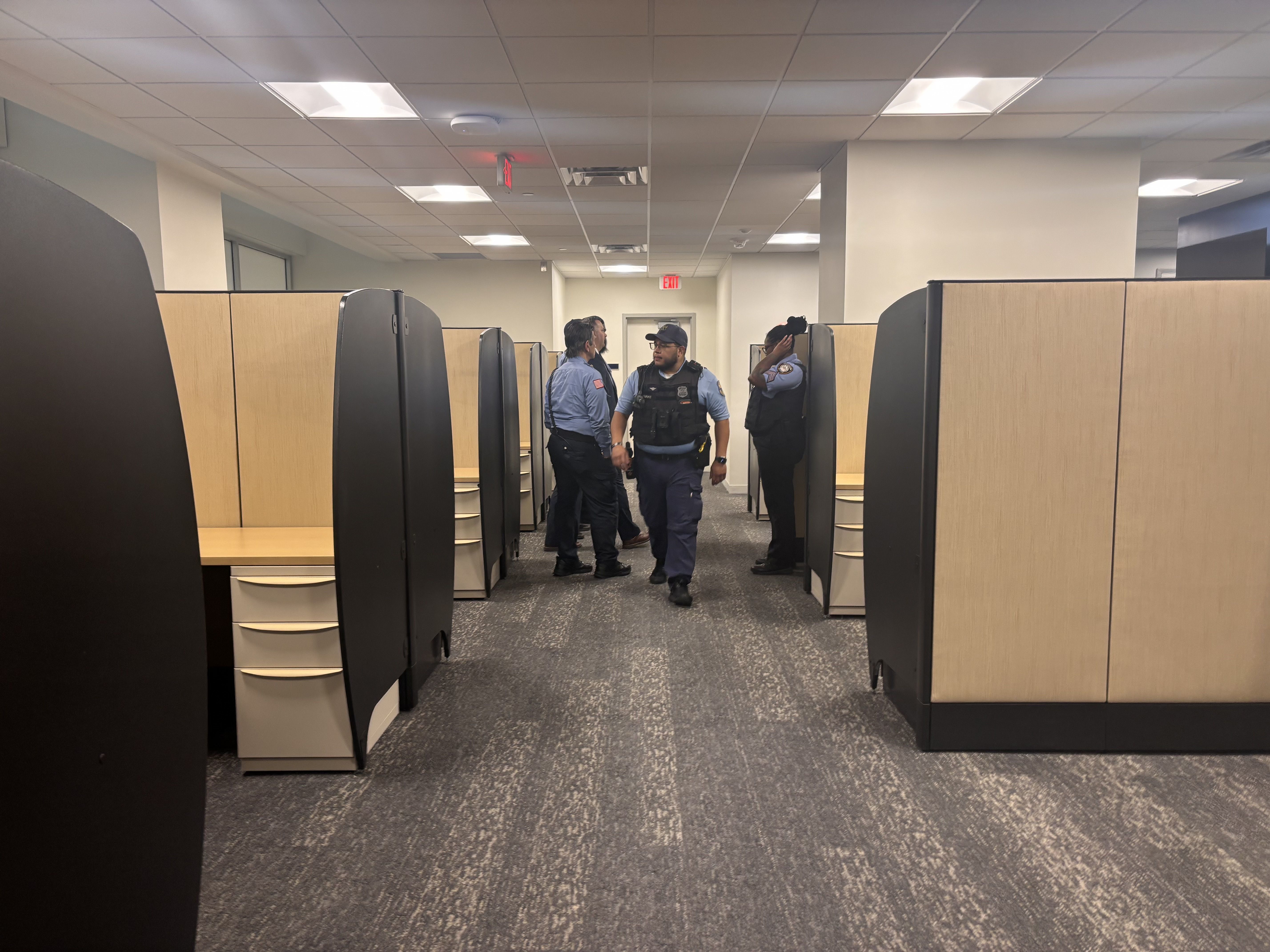
    As Philadelphia prepares for a summer of pageantry with the World Cup and celebrations to mark the country’s 250th anniversary, a public safety hub is opening on Market Street to coordinate police responses in the area.

    The center at 1011 Market St. will be a place for three police forces — Thomas Jefferson University police, Philadelphia police, and SEPTA police — to coordinate.

    Officials expect that the hub will enable police to respond faster to incidents in the area both ahead of the World Cup and as part of a long-term effort to revitalize Market Street. Without an established place for collaboration, officers’ ability to work with different departments was hampered by the lack of physical infrastructure to coordinate.

    “We’ve never had anything like this before,” said Kevin Seta, the director for public safety for Jefferson. Before this hub, he explained, “everyone’s kind of working in silos. We do work very well together with these partner agencies, and we share as much as we can. But in this case, this will allow us to be all in the same room at the same time.”

    With the new center, police presence will increase on Market, Filbert, 11th, and 12th Streets. The hub will become the main headquarters for the Jefferson police force, which was previously on the other side of the Jefferson campus. Twelve officers from the Philadelphia Police Department have been assigned to East Market Street and will use the hub as needed, along with SEPTA officers who patrol the area. Jefferson CEO Joseph G. Cacchione said that with the new officers, he has already noticed a difference in vagrancy and panhandling.

    The city has allocated $1 million for the hub. Jefferson, which has a large presence in the area with its university and health system, will provide additional funds for the project.

    A holding cell at the new public safety hub for Market Street on June 9, 2026.Isabel Maney / Staff

    East Market has been getting a sprucing up ahead of this summer’s festivities, with pop-up businesses, tree plantings, lighting, and other transformations. Also on Tuesday, officials unveiled an 18-month overhaul of Market Street in Old City that includes a new plaza.

    Mayor Cherelle L. Parker emphasized that the public safety hub was part of a larger project to make Market Street “safer, cleaner, and greener.”

    “We are strengthening our work here in Center City, creating a vibrant and thriving corridor where we have more than 60 partners from across the business, civic, and community sectors,” Parker said. As an expected tens of thousands of visitors begin to arrive, “this coordination right now is more important than ever.”

  • 160,000 people drop Pennie health plans following price hikes

    160,000 people drop Pennie health plans following price hikes

    One in three Pennsylvania residents who bought an Affordable Care Act health plan last year has dropped coverage for 2026, after costs more than doubled on average when a critical financial incentive program expired.

    A total of 160,000 people who bought a health plan through Pennie, the state’s ACA marketplace, last year had canceled their coverage as of the end of May. That includes just under 55,000 people in the five-county Philadelphia region, figures released Tuesday show.

    Many of those 160,000 will become uninsured, marketplace leaders expect, though some may enroll in private health insurance through a new job, or transition to government coverage through Medicaid or Medicare.

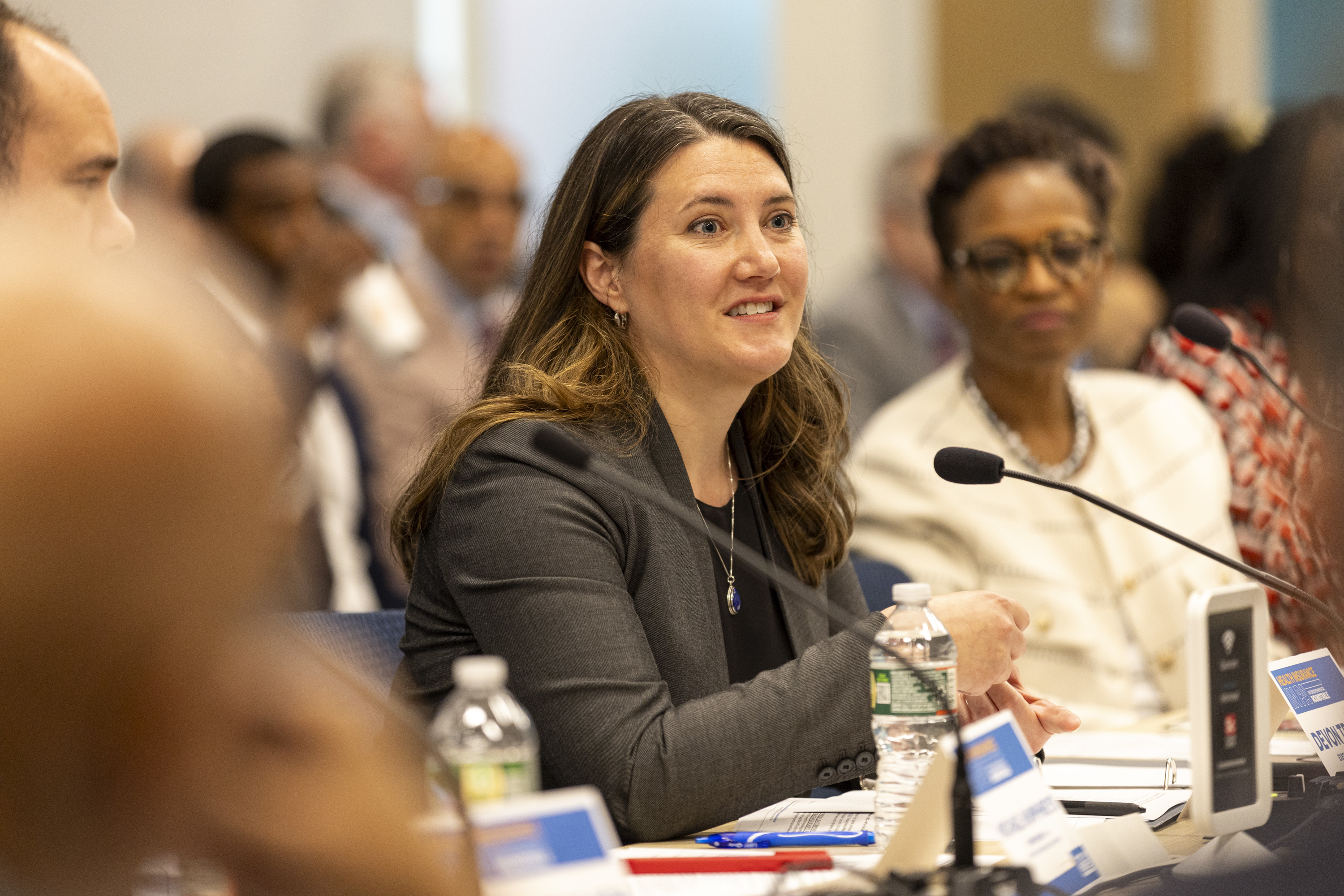
    Cost was the most common reason people cited for dropping their plans, said Devon Trolley, Pennie’s executive director.

    “People want to have coverage, they see the value and the protection it provides,” Trolley said. “And when they can afford it, they enroll.”

    Pennie leaders were bracing for dropouts on this scale after Congress failed to renew for this year a financial incentive program that ensured no one paid more than 8.5% of their salary for health coverage.

    The so-called enhanced premium tax credits became a major sticking point in federal budget discussions last fall that led to a Democrat-forced government shutdown. Republicans had refused to include the tax credits without significant restrictions.

    The tax credits introduced in 2021 had helped to drive Pennie enrollment to a record 497,000 enrollees last year. Just over 443,000 people were enrolled in Pennie as of June, with new enrollees partially offsetting the losses.

    In New Jersey, nearly 69,000 people dropped out of their ACA plans between the end of January and April, according to the state’s Department of Banking and Insurance. The figures it released tracked drops only since the end of the state’s open enrollment Jan. 31.

    (function(){function e(){window.addEventListener(`message`,function(e){if(e.data[`datawrapper-height`]!==void 0){var t=document.querySelectorAll(`iframe`);for(var n in e.data[`datawrapper-height`])for(var r=0,i;i=t[r];r++)if(i.contentWindow===e.source){var a=e.data[`datawrapper-height`][n]+`px`;i.style.height=a}}})}e()})();

    Dropping coverage over high cost

    Many people were able to keep health coverage by switching to a less expensive plan.

    In New Jersey, thousands of people opted for less expensive plans, instead of canceling their coverage entirely.

    The most popular mid-level Silver plans accounted for 68% of New Jersey marketplace enrollments, down from 83% the year before. Many switched to Bronze plans, which have cheaper monthly premiums but higher out-of-pocket expenses and deductibles.

    In Pennsylvania, Trolley said that marketplace leaders have “heard from people who tried to make it work” but a few months into the new year, decided they couldn’t afford to keep their plan.

    Even less-expensive plans have become unaffordable, said Antoinette Kraus, executive director of Pennsylvania Health Access Network, which helps people enroll in coverage.

    “It means that people are going to go uninsured,” Kraus said. “They’ll delay getting care, get sicker, and end up in the emergency department with conditions that could have been prevented.”

    In Pennsylvania, dropouts have been highest among people age 55 and older, who are nearing Medicare eligibility and who pay more for coverage than younger people.

    By income level, dropouts have been greatest among people with incomes between 150-200% of the federal poverty rate. That’s an annual income of between $23,475 and $31,300 for an individual. For a family of four, the equivalent income range would be $48,225 to $64,300.

    Income-based tax credits for lower-income individuals and families are still available because they were written into law under the ACA.

    Ongoing ACA challenges

    Marketplace leaders predicted that people would continue to drop plans through the spring, when the grace period for overdue premiums passed. People who qualify for a tax credit have 90 days to pay their premium before losing coverage; everyone else has 30 days.

    Dropouts may now level off, but new challenges are looming for the ACA marketplaces. Last year’s federal spending package included new rules that would save billions of dollars through cuts to the ACA marketplaces and Medicaid, the publicly funded health program for low-income families and people with disabilities.

    Beginning this fall, open enrollment will start earlier and be cut short by about two weeks, running Oct. 15 through Dec. 15. In the past, people have had until at least mid-January to sign up.

    Also beginning this fall, certain groups of people who legally immigrated to the United States will not be able to enroll in marketplace plans, Medicaid, or Medicare.

    In 2027, new enrollment rules will prevent marketplaces from automatically renewing plans, requiring individuals to resubmit and verify their eligibility annually.

  • Amy Poehler was cursed out at PHL once and she told Colman Domingo all about it

    Amy Poehler was cursed out at PHL once and she told Colman Domingo all about it

    Amy Poehler had somewhat of a rude welcome when visiting Philadelphia.

    “The only time I’ve ever been called a c-word to my face [was] at the Philadelphia airport [with Tina Fey],” the Parks and Recreation actor said, laughing, on the latest episode of her podcast, Good Hang.

    Poehler’s crime? Saying no to an autograph flipper.

    “Tina turned to me and she goes, ‘Welcome to Philly,’” Poehler added, referring to her close friend, the Upper Darby native and collaborator on last year’s “Restless Leg” comedy tour.

    Her guest on the podcast, West Philly native Colman Domingo, seemed to empathize but also rose to the defense of his hometown.

    “[Philly’s] a city of underdogs. Tina and I, we always talk about that,” said Domingo, who stars in Netflix’s The Four Seasons, on which Fey is a showrunner. “We’re like, there’s something, that Philly in us.”

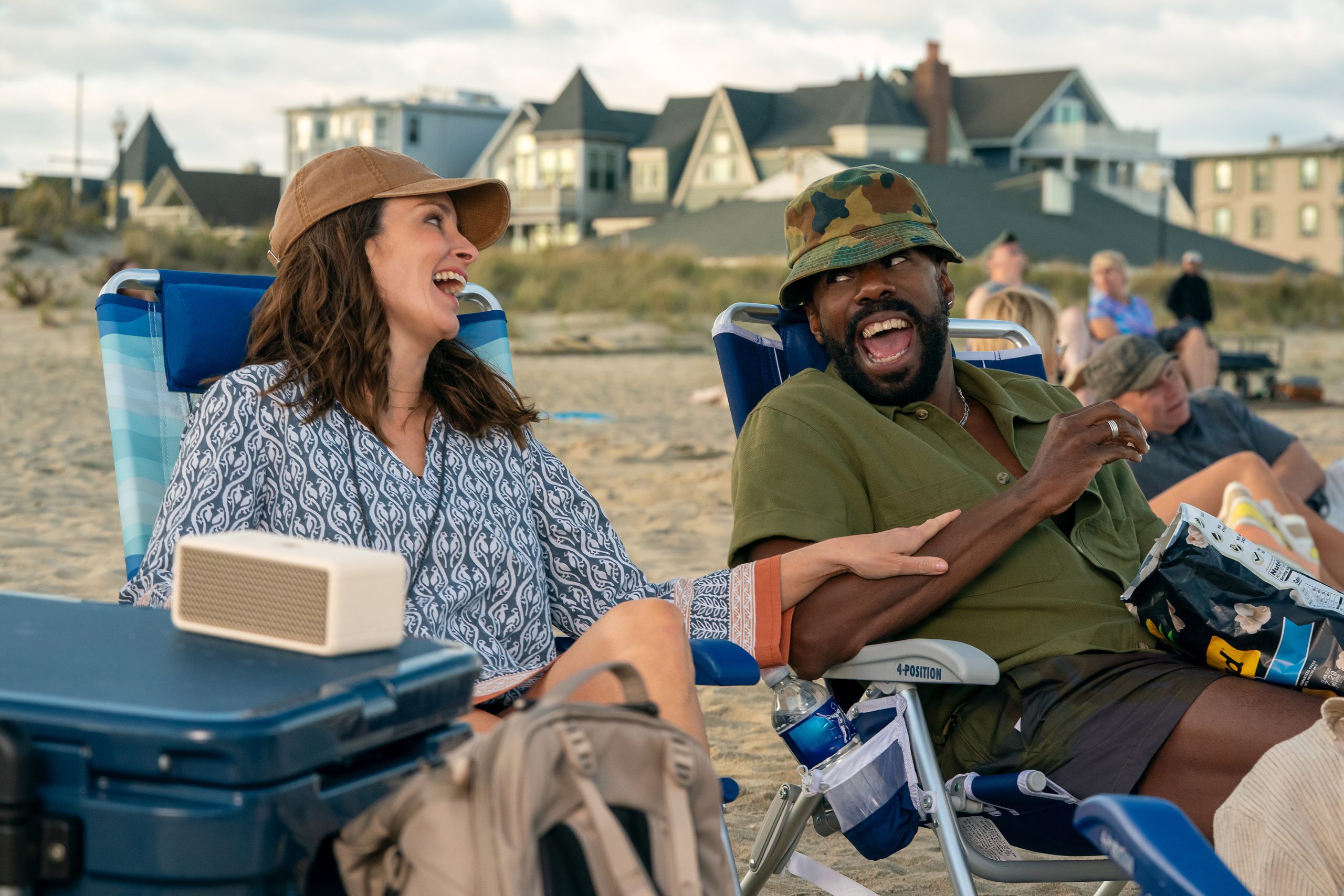
    Fey, who grew up taking trips to Wildwood, has the characters in Season 2 of The Four Seasons taking their summer vacation at the Jersey Shore, as a nod to her Philly roots. Domingo, who attended Temple University, also vacationed down the Shore, frequenting Margate and Cape May.

    Domingo also recalled several Philly-specific memories from his childhood on the podcast, claiming that his parents “used to always throw the best parties.”

    “We lived in a rowhome in Philadelphia, and [in] the basement, we had a bar down there,” he said, adding that dancing was a big part of those house parties.

    “We dance like, do you remember that show Dancin’ on Air? With Kelly Ripa? They don’t move like that anymore. We moved like we were trying to hurt somebody.”

    Tina Fey as Kate and Colman Domingo as Danny in Season 2 of the Netflix comedy series “The Four Seasons,” premiering May 28.Emily V. Aragones/Netflix

    And just in case Poehler needed more convincing that Philly is largely a decent and fun city, Domingo made sure to name-check another famous West Philadelphian: Will Smith.

    “He was actually very friendly, everybody really liked him,” said Domingo of his fellow Overbrook High School alum.

    Domingo, whose latest release is Steven Spielberg’s Disclosure Day, definitely has more convincing to do.

    “Philly makes Boston look like London, England,” said Poehler, referring to her Massachusetts hometown. “Philly is wild. [The Phillie Phanatic] is an insane person.”

  • Transgender, reproductive healthcare bill heads to final vote in N.J.

    Transgender, reproductive healthcare bill heads to final vote in N.J.

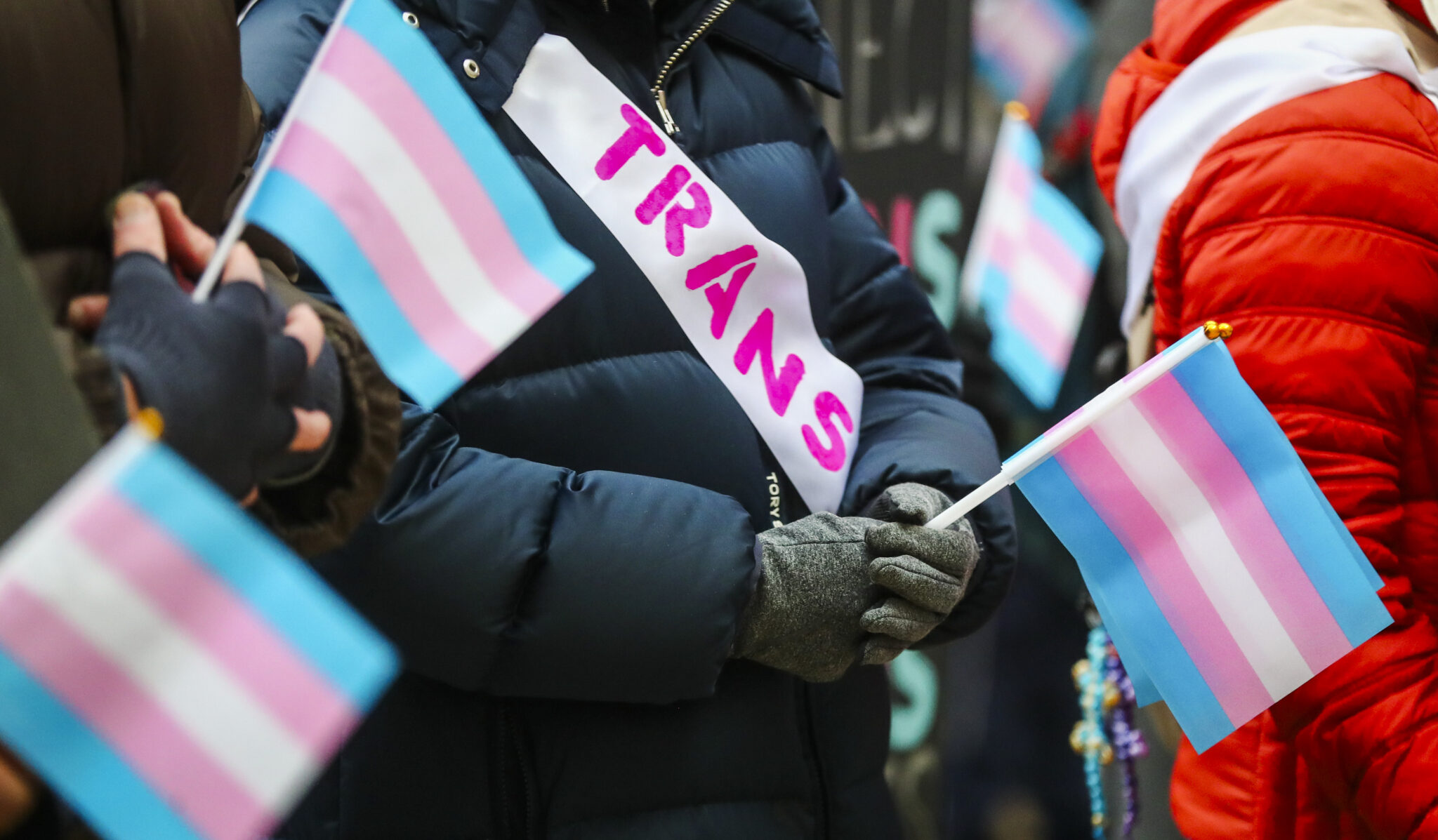
    A bill designed to protect reproductive and transgender healthcare in New Jersey passed an Assembly panel Monday, clearing it for a final vote in the legislature that could come later this week.

    The Assembly Appropriations Committee voted along party lines to pass the Democratic proposal, which would create a new crime of interfering with reproductive and transgender healthcare services.

    “This bill is needed to strengthen New Jersey’s existing shield protections and respond to the current reality of legal attacks on patients and providers,” testified Sarah Best, legislative and advocacy director for the Planned Parenthood Action Fund of New Jersey, the healthcare system’s political arm.

    Best said the legislation is modeled on a federal statute designed to protect reproductive care access that is no longer being enforced under the Trump administration, making a state-level law more urgent. The legislation has long been a priority for LGBTQ+ organizations.

    “Reproductive health and gender-affirming care providers are under unique scrutiny from extremist governments and activists,” Best said.

    The bill was amended to align with a version that passed the Senate in late May, nearly two years after it was first introduced. A full vote in the Assembly — the last step before it could be signed into law by Gov. Mikie Sherrill — could come when members gather Thursday.

    Republican lawmakers on Monday echoed concerns raised by opponents of the bill, who say it would interfere with constitutional free speech rights, further erode parental rights, and make New Jersey a “sanctuary state” for clinicians who specialize in services sought by transgender patients.

    Gregory Quinlan, the founder and leader of the conservative advocacy organization Center for Garden State Families, said activists who oppose the use of those services and are anti-abortion could be arrested for praying outside facilities or engaging in what he called “sidewalk counseling” sessions.

    “We could be 100 feet away and just praying” and still be found in violation, Quinlan said.

    Gregory Quinlan.Dana DiFilippo/New Jersey Monitor

    Marie Tasy, executive director of anti-abortion group New Jersey Right to Life, said language in the bill could make people afraid to speak out against abortion.

    “The threat of prosecution is enough to silence lawful speech. And that happens to be exactly what this bill is designed to accomplish,” she said.

    “This is the common thread that seems to run through everyone’s testimony,” Assemblyman Robert Auth (R-Bergen) said about the free speech concerns.

    Lauren Albrecht, senior director of advocacy and organizing at Garden State Equality, an LGBTQ+ organization, noted that many parents had testified in previous hearings about the struggles they face trying to secure healthcare for their transgender children. Multiple parents described being told by doctors that medical care they said has saved their children’s lives would be suspended.

    “The parents of trans kids have rights, too,” Albrecht said.

    Bill sponsor Assemblywoman Luanne Peterpaul (D-Monmouth) held back tears as she rebutted testimony from some opponents who had challenged the need for gender-affirming care entirely.

    “Let’s talk reality. Let’s talk truth,” said Peterpaul, who is gay, adding, “My rights should not be dictated by someone who doesn’t understand who I am.”

    The proposal builds on existing reproductive care shield laws and expands the definition of these services to include care for transgender patients through a 2017 law that requires insurance coverage for all forms of gender-affirming care, treatments that can include hormone therapy, mental health services, and surgery.

    The bill would make it a fourth-degree crime to harass, harm, or block patients, healthcare providers, staff, or volunteers from entering a healthcare facility and would protect providers from extradition to states that have criminalized reproductive or transgender treatments. Violators could face as many as 10 years in prison and a fine of $150,000 if someone is injured during the interference.

    Trenton Councilwoman Jennifer Williams is the first transgender person elected to a municipal council in New Jersey. Williams told the panel that the bill would “protect the young, the adults like me, and our senior citizens who are transgender.”

    “We deserve it and we are worth it,” Williams said.

    An analysis by nonpartisan staff with the Office of Legislative Services found that if signed into law, the bill would have an “indeterminate” impact on state finances. The only clear cost identified was the expense of prosecuting and imprisoning offenders, calculated at just over $83,000 annually, per person.

    This story originally appeared on New Jersey Monitor.

  • Brooklyn man is convicted of fatally stabbing a Philly dancer at a gas station

    Brooklyn man is convicted of fatally stabbing a Philly dancer at a gas station

    A Brooklyn man has been convicted in the killing of beloved Philadelphia dancer O’Shae Sibley, who was stabbed to death at a New York City gas station in 2023.

    Dmitriy Popov, 20, was convicted of manslaughter as a hate crime and other charges related to “taunting, stabbing, and killing” Sibley, which included “hurling homophobic and anti-Black slurs,” Brooklyn District Attorney Eric Gonzalez said in a statement.

    Sibley, 28, was a gay Black man, while Popov, who was 17 at the time of the killing, is white. Popov, who was tried as an adult, faces up to 25 years in prison. Sentencing is scheduled for June 30.

    O’Shae Sibley at the Ailey Extension dance school in Manhattan.Courtesy Whitney Brown & Alvin Aliey

    While filling up their car with gas on a Saturday night in July 2023 after a trip to the beach, Sibley and four of his friends blasted music by Beyoncé and started dancing, according to Joan Myers Brown, founder of the Philadelphia Dance Company and Sibley’s former teacher.

    Popov and two associates approached the car and threatened the group with racist and homophobic slurs, telling them they did not want to see gay men dancing in their neighborhood, Gonzalez said.

    His associates left the gas station, but Popov remained and continued to taunt the group of dancing friends. Ultimately, he stabbed Sibley on the side of his chest with a knife, puncturing his heart, Gonzalez said. Sibley was pronounced dead a short time later at a nearby Brooklyn hospital.

    “O’Shae Sibley moved to New York to pursue his dream of being a dancer and choreographer, and his life was cut short when he was killed by this defendant, who couldn’t stand the sight of O’Shae and his friends just being themselves and living their lives openly as Black gay men,” Gonzalez said, offering his hope that the verdict would “bring O’Shae’s family, his friends, and the larger community some measure of solace.”

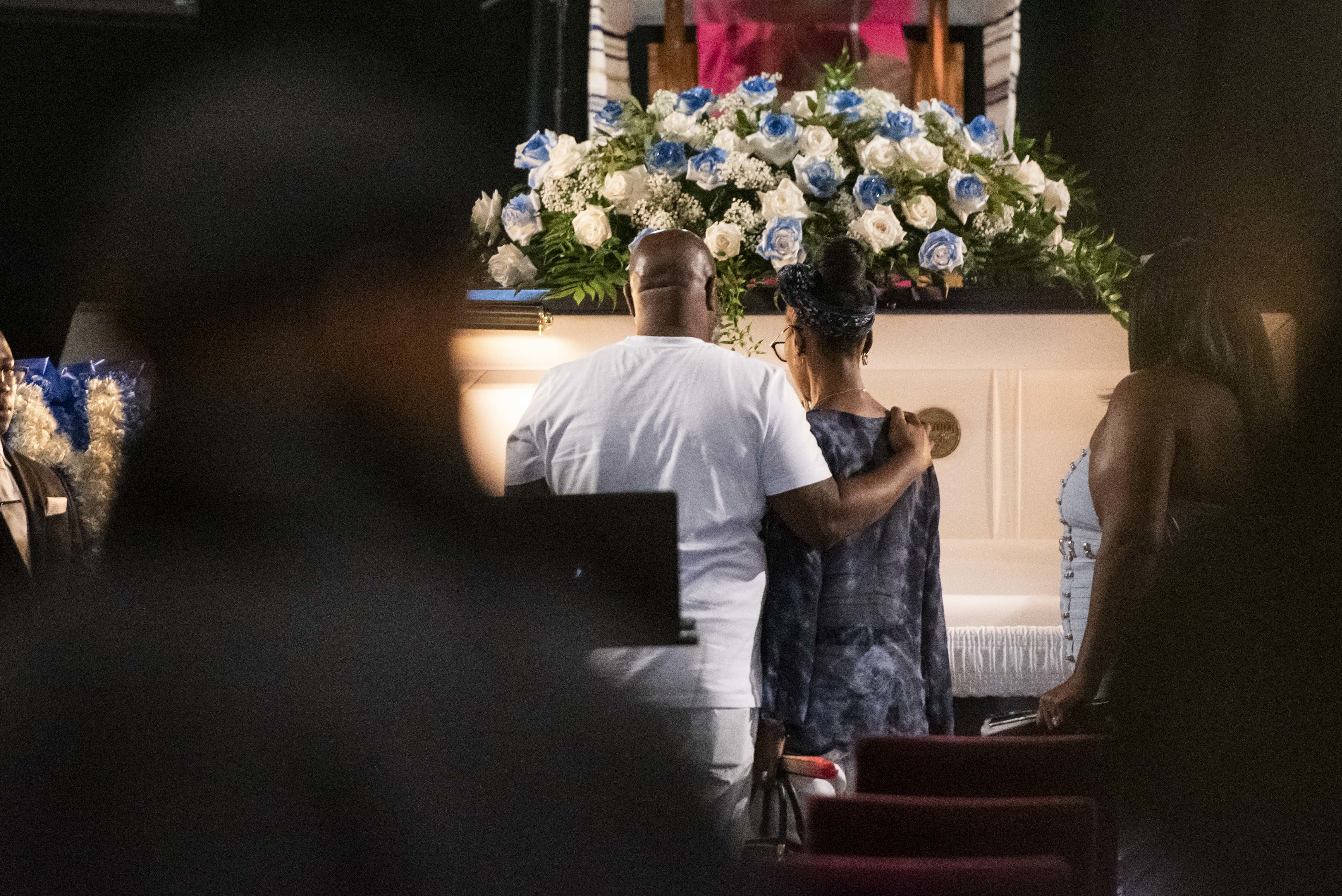
    O’Shae Sibley’s parents Jake Kelly (left) and Onetha Sibley visit their son’s casket at The Met in Philadelphia on Tuesday, Aug. 8, 2023.Allie Ippolito / Staff Photographer

    A North Philadelphia native, Sibley moved to New York before the COVID-19 pandemic in 2020 and landed a job as a dancer and choreographer with the Alvin Ailey American Dance Theater’s Ailey Extension. He danced in several music videos and performed at the Lincoln Center for the Performing Arts in New York.

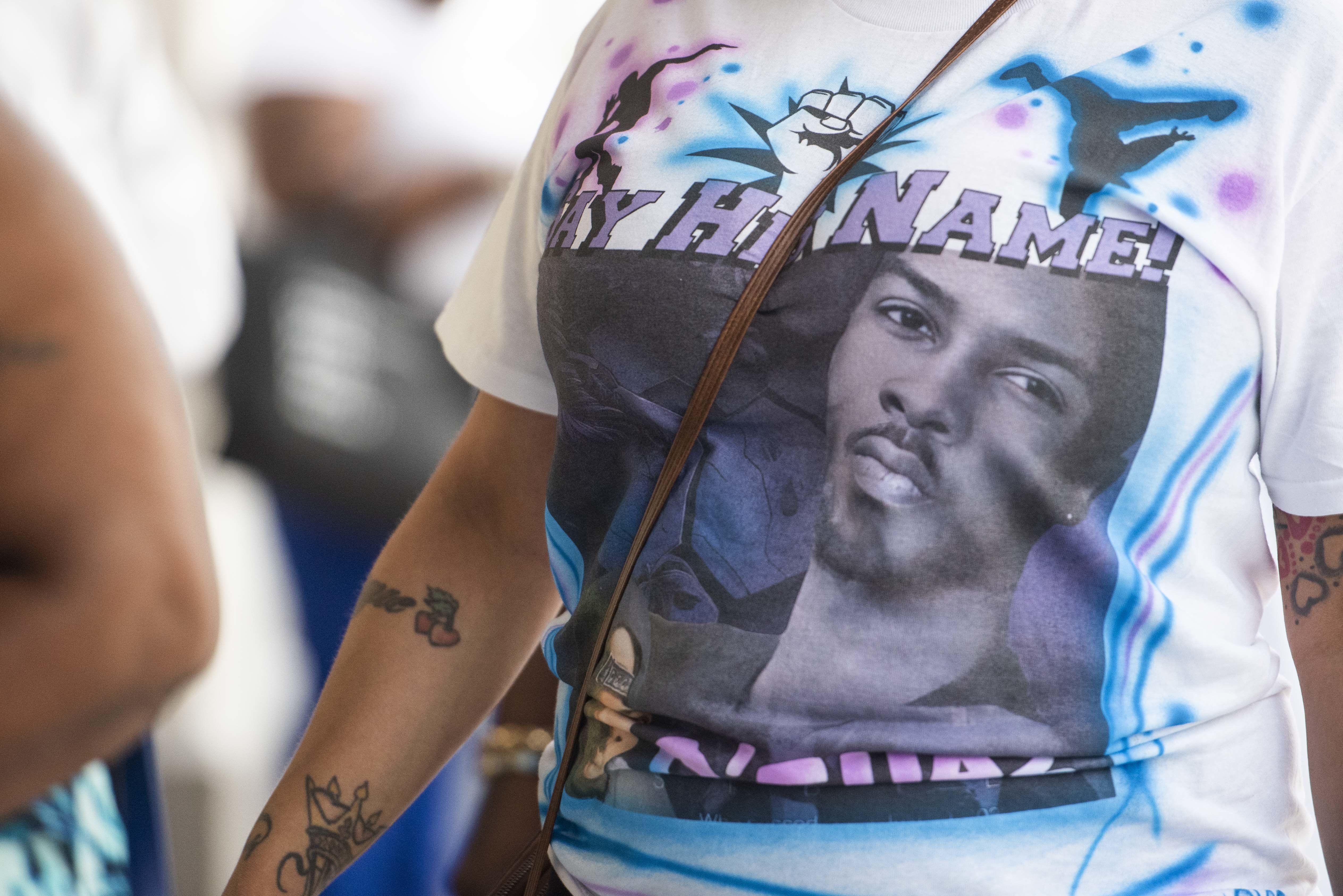
    During a celebration of O’Shea’s life at the Met in Philadelphia in 2023, Otis Pena, who was with Sibley the night he was killed, recalled his friend as authentic and unapologetically himself.

    “O’Shae was a beacon of light for a lot of us in our community that was engulfed in darkness,” Pena said then. “But O’Shae rejoiced. O’Shae was O’Shae.”