Amid the passionate debate about Philadelphia’s schools, one thing has been getting lost: No public school district wants a budget that requires changing people’s jobs. Behind every position is a person, a family, and years of service to students. Those decisions are difficult and are never made lightly.
As caretakers of Philadelphia’s public schools, the Board of Education and the school district have a responsibility to look beyond this year’s budget. We have to make sure our schools remain financially stable and able to serve students not just this year, but for years to come. That is what good governance means.
That is also why the district should stay the course with its planned reduction of some roles and the reassignment of teachers and staff, even after City Council approved a preliminary budget that includes a one-time $50 million funding increase.
At first, that may seem confusing. If there is more money, why not keep every position? The answer is simple: One-time money should not be used to pay for permanent costs.
A job is not a one-year expense. It comes with salary, benefits, retirement costs, and other ongoing expenses. If those costs are paid with money that exists for only one year, the district will face the same bills next year without the funds to cover them.
Most families understand this idea. A one-time bonus at work might help pay for a new roof or replace an old refrigerator. But it would be foolish to use that bonus for a down payment on a car with a huge car note and no resources to pay it off.
The author writes that the Board of Education is grateful for City Council’s $50 million boost — but won’t use it to fund permanent expenses.Jessica Griffin / Staff Photographer
The same principle applies to the Board of Education and the school district. For too many years, difficult financial decisions have been delayed. Continuing to postpone them only makes the problem larger and harder to solve. Federal COVID-19 relief dollars did help the district avoid cuts, but that was a once-in-a-century time of crisis.
That does not mean the additional funding lacks value, and we appreciate such support from City Council. It gives us a chance to address important needs that do not create permanent expenses. Those dollars can be used for building repairs, school safety improvements, technology upgrades, instructional materials, and managing staffing changes. Such spending would help improve schools today without creating a budget problem tomorrow.
It is also important to understand what these staffing changes mean. The district’s goal is to move employees into positions where they are needed across the system whenever possible, keeping experienced staff and reducing disruption for students and schools.
The Board of Education has a responsibility to protect the interests of both today’s and tomorrow’s students. Sometimes that means supporting new investments. Always it means advocating for more reliable funding from the city and the state. And at times it means making difficult decisions that protect the long-term financial health of the district, even when it appears there are easier choices.
The reality is that Philadelphia’s students deserve a school system built on stable, dependable funding — not temporary fixes. One-time dollars can solve one-time problems. Permanent commitments require permanent funding.
These decisions are not easy. But making responsible choices today is the best way to ensure our students have strong schools for years to come.
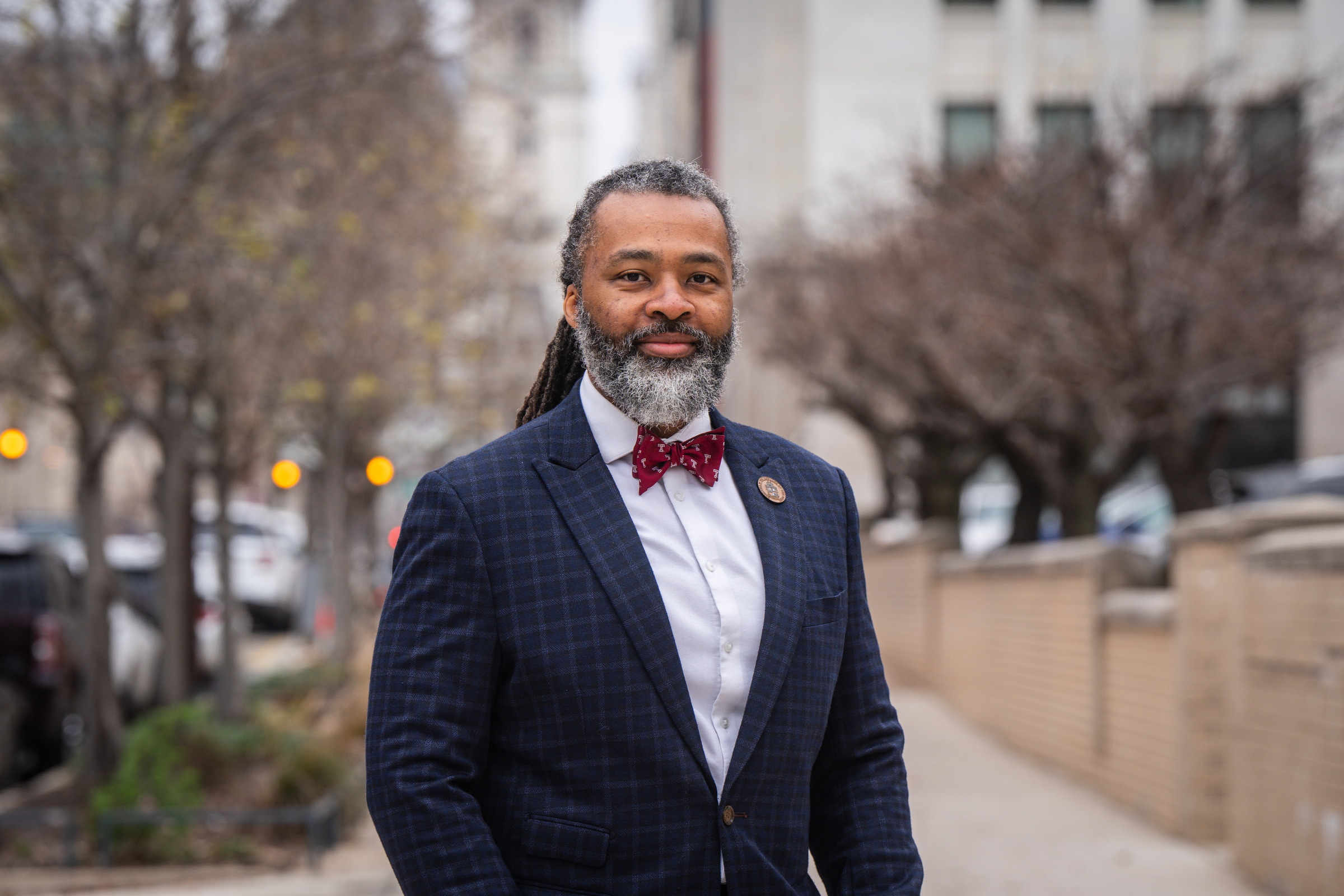
Reginald L. Streater is the president of the Philadelphia Board of Education, to which he was elected in December 2022. He was appointed to the board in February 2021.
Lane Johnson said he knew something was wrong with his right foot on the first play against the Detroit Lions in Week 11 last season.
At the snap, Johnson took a power step and attempted to anchor down against the opposing defender. Then he said he felt a pop in his foot.
He kept playing. But on the next series, Johnson took a bull rush from Lions defensive end Aidan Hutchinson and couldn’t anchor. The six-time Pro Bowl right tackle had played through several ailments throughout his 13-year Eagles career to that point, but he struggled to overcome this one.
Over halfway through the first quarter, Johnson exited the game with what was later diagnosed as a Lisfranc sprain that ended his 2025 season. Still, Johnson was determined to ensure that it wouldn’t be the last moment of his career on the field.
“I didn’t want to go out that way,” the 36-year-old Johnson said on Tuesday.
He didn’t. The two-time All-Pro was back on the practice field for the first practice of mandatory minicamp on Tuesday. Johnson didn’t appear to miss a step, taking every repetition in both individual and team drills with the starting offense.
At the end of the 2025 season, fellow tackle Jordan Mailata said he expected Johnson to return for a 14th season, but he added, “whatever happens, happens,” acknowledging the degree of uncertainty surrounding Johnson’s future. According to Johnson, though, he never doubted that he would return, staving off retirement for at least another year.
“I wanted to play,” Johnson said. “Only thing that’s keeping me thinking about retiring, just family. Mom and dad getting older. You miss a lot of time. But other than that, man, I love this game so much. I love competing with all my teammates. I love becoming an older player. A lot of guys trend down in their 30s. I feel like my career has been the opposite, where my career started to blossom in my 30s.”
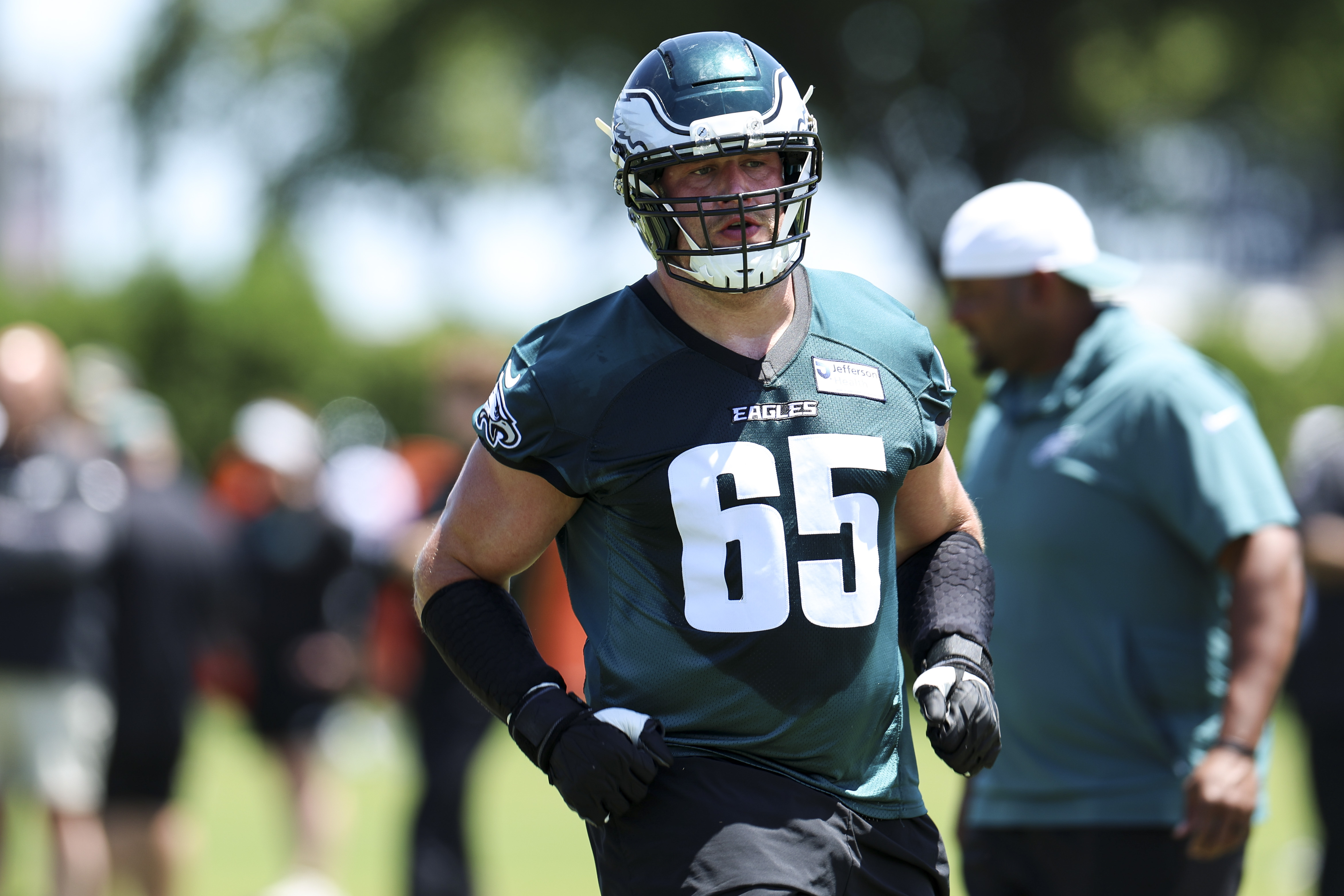
Lane Johnson’s foot injury he suffered on Nov. 17 last season against Detroit kept him out of the Eagles’ final eight games of the year, including the playoffs.David Maialetti / Staff photographer
That positive career trajectory, Johnson said, had continued in 2025 up until the foot injury. He said he thought he was having a “really good season” at the time, and the stats back up that assertion. Johnson did not concede a quarterback hit through 262 pass-blocking snaps, according to Pro Football Focus.
Johnson said he also felt like the team was starting to “make a turn” for the best before his injury. The win over the Lions extended their winning streak to four games. The offense displayed flashes of dominance in the first two wins of that stretch against the Minnesota Vikings and the New York Giants.
But the Eagles’ season began to falter instead, as they lost their next three games. Johnson, meanwhile, did not go on injured reserve, with the hope of returning for the playoffs. However, he didn’t recover in time to play in the wild-card playoff loss to the San Francisco 49ers.
“I was trying to come back,” Johnson said. “I was rehabbing, I was practicing, and so toward the playoff game, I went out there to practice, and after a couple series, my foot would just swell up, and then the mobility piece became to where it was just I couldn’t function.”
Time was a luxury that Johnson didn’t have last season. He said he finally felt 100% healthy around February or March.
“I feel good,” Johnson said of his current health. “But it took a long time to get here. I wish I could have done this at the end of last year.”
Johnson is moving forward, and so is the rest of the offense. With Sean Mannion now at the helm, Johnson is acclimating to a plethora of changes, from the scheme to the man in charge of teaching its finer details to the offensive line.
For the first time since his rookie season in 2013, Johnson has a new offensive line coach in Chris Kuper. Jeff Stoutland, the Eagles’ offensive line coach for 13 years, left the organization this offseason.
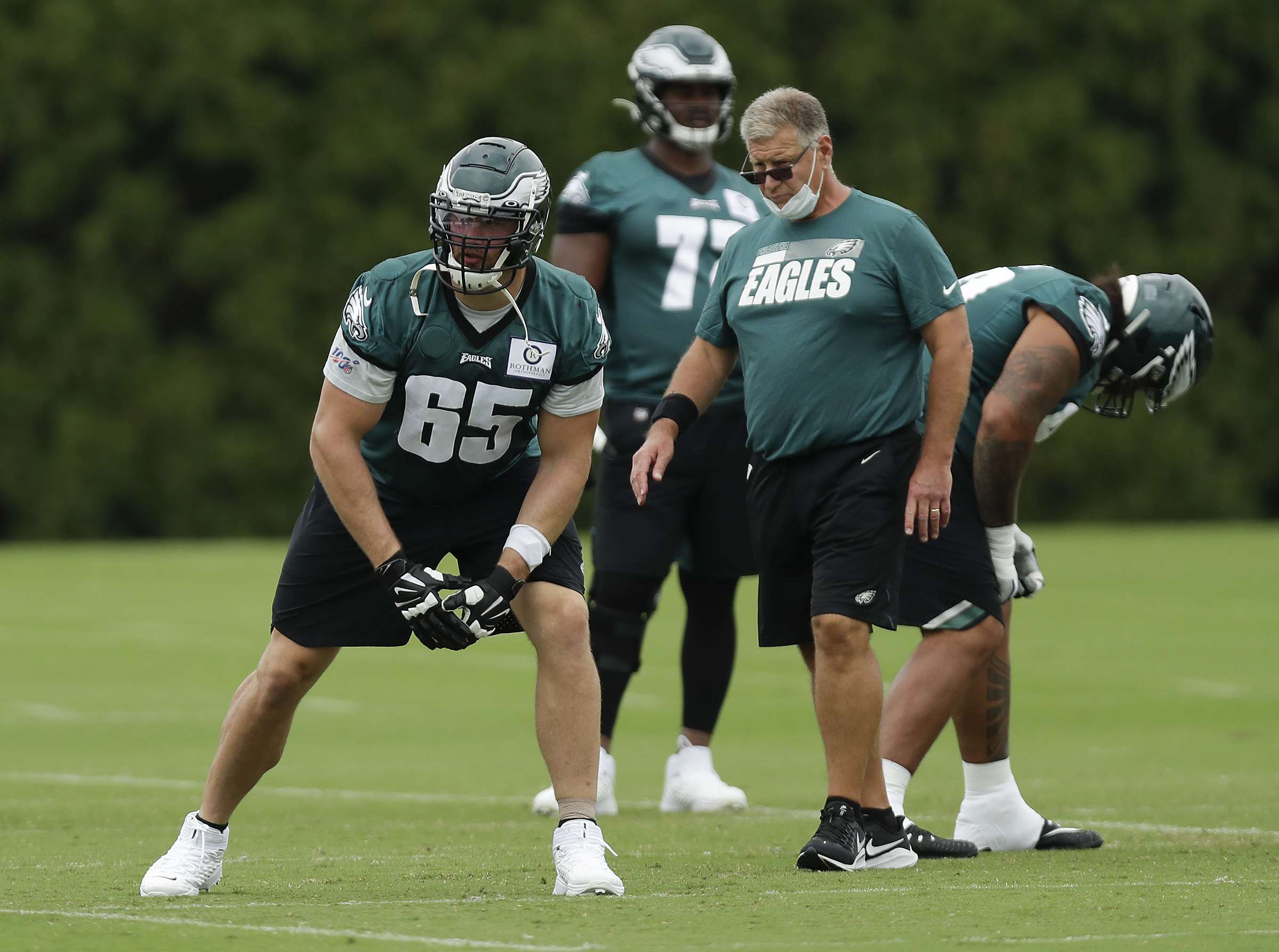
Eagles offensive tackle Lane Johnson (left) was coached by Jeff Stoutland for his first 13 seasons in Philly. Now, Chris Kuper will lead the room.YONG KIM / Staff Photographer
Johnson called Stoutland’s departure a “shocking ordeal.” But he said he has had time to process the change. Kuper, he said, has garnered the respect of the offensive line room through his playing and coaching experience.
Throughout the offseason program, Johnson has mostly worked remotely, tuning into meetings via Zoom. Johnson has been encouraged by the new scheme, stating that he hopes that the offense “won’t be as stagnant as it was last year,” especially regarding the run game.
“You have the ability to stretch it front side, but also the running back has the ability to read backside blocks more than maybe what we did in previous years,” Johnson said. “It really does a good job of allowing us to run. We have a lot of athletic guys up front, so being able to stretch the field, make the D-tackles run, make the linebackers run, cover all this ground.
“And then I think setting up with the play action is just going to be a whole lot tougher to distinguish what we’re doing. Whole lot harder to catch on tells with stuff that we’re doing. So I think this stuff, we can disguise it more.
“I’ve watched this system, [Klint] Kubiak, [Kyle] Shanahan style of offense from afar, and I’ve always envied wanting to be a part of it. So here I am, after all these years, getting a chance.”
A chance to play in the Shanahan/Sean McVay style of offense will also give its tackles more help from guards in pass protection. Throughout most of Johnson’s career, he’s been left on an island to fend for himself.
“If I get beat inside, having a guard come out and help me is a big deal for me,” Johnson said. “So, me likey.”
Johnson likes the new blocking scheme, and his familiar opportunity to prove that he only gets better with age entering Year 14.
“I’m hoping this will be a great year for us, a great year for me, and we can right a lot of the wrongs that we had last year,” he said.
The World Cup is here. So how well do you know the players and nations descending on Philly? No studying — just put your knowledge to the test with our newest quiz.
Nine nations will play in five World Cup group stage games in Philly. How well do you know them?Julia Duarte / Staff Illustration
The World Cup is back on American soil for the first time since 1994, and Philadelphia is set to host six matches — including a round of 16 match — in the world’s largest international soccer tournament.
Brazil, France, and Croatia are among the nine teams that will take to the pitch at Lincoln Financial Field, which FIFA has renamed Philadelphia Stadium for the next month, for five group stage matches in the newly expanded 48-team World Cup tournament.
story continues after advertisement
Think you know footy? Test your knowledge with this quiz. It’s 10 questions — nine about the nations coming to Philadelphia during the group stage and one about the Stars and Stripes.
Question 1 of 10
Which Brazilian star has scored the most goals for the national team?
CorrectIncorrect. XX% of other readers got this question right.
Some of the sport’s most iconic players have suited up for the Seleçao, but none have scored more than Neymar, who has 79 goals in 128 international appearances.
Question 2 of 10
Ivory Coast is returning to the World Cup for the fourth time in its history. When did Les Éléphants most recently compete in the tournament?
CorrectIncorrect. XX% of other readers got this question right.
Ivory Coast qualified for three consecutive tournaments in 2006, 2010 and 2014. The African nation has never advanced out of the group stage, claiming a third-place finish in all three World Cup tournaments it has participated in.
Question 3 of 10
Which nation did Curaçao tie on the final day of Concacaf qualifying to secure its first trip to the World Cup?
CorrectIncorrect. XX% of other readers got this question right.
Curaçao secured a 0-0 draw against Jamaica in November that set it atop its qualifying group. Curaçao, a Caribbean island with a population of 155,000, will be the least populous nation represented at this year’s tournament.
story continues after advertisement
Question 4 of 10
Which team will come to Philly featuring the reigning FIFA Ballon d'Or winner, given to the player of the year in world soccer?
CorrectIncorrect. XX% of other readers got this question right.
When Les Bleus take on Haiti in a Group C matchup on June 19 (9 p.m., Fox 29), they will do so with midfielder-forward Ousmane Dembélé in tow, winner of the 2025 FIFA Ballon d'Or.
Question 5 of 10
Which nation did Ecuador play in the opening match of the 2022 World Cup?
CorrectIncorrect. XX% of other readers got this question right.
Ecuador kicked off the 2022 edition of the tournament by beating host nation Qatar, 2-0. Ecuador finished third in Group A, with a 2-1 loss to Senegal keeping La Tri out of the knockout rounds.
Question 6 of 10
Which Croatian player earned the Golden Ball award, given to the World Cup’s best player, in 2018?
CorrectIncorrect. XX% of other readers got this question right.
The former Tottenham and Real Madrid midfielder led Croatia to a second-place finish in Russia. Despite suffering a fractured cheekbone in April, Modrić was named to the Croatian squad and will make his fifth World Cup appearance this summer.
More on the World Cup
Everything you need to know about the World Cup in Philly
The Inquirer's comprehensive guide on the nine nations headed to Philadelphia this summer, their footprint on our city, and what those fans need to know about Philly.
Question 7 of 10
Ghana’s best World Cup result came in 2010, when it reached the quarterfinal round for the first time in its history. Which team did Ghana beat in the round of 16 to secure its place in the quarterfinal?
CorrectIncorrect. XX% of other readers got this question right.
Ghana secured a 2-1 victory over the U.S. on a dramatic 93rd minute goal from Asamoah Gyan. Ghana went on to lose its quarterfinal match to Uruguay on penalties.
Question 8 of 10
Which French player joined Pele as one of two teenagers to score in a World Cup final during France’s 4-2 defeat of Croatia in 2018?
CorrectIncorrect. XX% of other readers got this question right.
At 19, Mbappé became the youngest goalscorer at the World Cup in French history, scoring four goals in France’s run to the 2018 trophy. Mbappé needs two more goals to surpass Olivier Giroud as France’s all-time leading goalscorer.
Question 9 of 10
Haiti will return to the World Cup stage for the second time in its history this summer, breaking a 52-year drought. Which Haitian player starred in the Union’s MLS Supporters’ Shield-winning campaign last season?
CorrectIncorrect. XX% of other readers got this question right.
Danley started 14 times across all competitions this season for the Union, logging two goals. He also scored two goals for Haiti in its 2026 qualifying campaign.
More on the World Cup
Philly’s path to the World Cup was paved at Newt’s, where playing on cinder was a ‘badge of honor’
The growth of the region’s soccer scene will be celebrated when Philadelphia hosts the World Cup. But for years, the sport seemed to only exist locally in the neighborhoods around the cinder fields.
Question 10 of 10
The United States — the team has a slim chance of playing in Philly in the round of 16 — finished third in the first World Cup, but has advanced past the round of 16 just one time since 1930. In which year did the U.S. men make it to a tournament quarterfinal?
CorrectIncorrect. XX% of other readers got this question right.
The U.S. downed Mexico, 2-0, in South Korea to advance to the quarterfinals for the first and only time in a 32-team tournament. A 1-0 loss to eventual runner-up Germany ended the Americans’ best post-war run at the World Cup.
Your Results
You have skipped .
You scored XX out of 10.
The average reader scored XX out of 10
Don't worry, this is the first World Cup in Philly. Did you really expect to be an expert already?
Nice job. There's still room for improvement, but someone clearly follows soccer. If you're still interested, we've got plenty soccer coverage for you to read.
Wow! Let us guess, you only refer to soccer as football and spend weekend mornings at a local bar watching your favorite Premier League team?
A perfect score? Now that's impressive. Let's hope the USMNT has similar success in its run through the group stage this month.
The first group stage game in Philly is scheduled for Sunday, June 14, and will feature Ivory Coast and Ecuador. Ivory Coast will play two of its three group games in the city. For more World Cup coverage — whether you’re going to the games, watching the U.S. team from home, or just curious about what all the fuss is about — be sure to check out our comprehensive guide. And get the latest headlines here.
In the aftermath of his trade to the New England Patriots, A.J. Brown reportedly returned to the Eagles facility to collect a few personal items, bid farewell to a few of the staff, then left his mark on the wall under his Pro Bowl picture.
It’s reported that Brown wrote: “The best to ever play here. Always open.”
Now, before we shrug it off as preposterous, let’s put it in perspective. Brown did finish with over 5,000 receiving yards, 32 touchdowns, was picked for a pair of Pro Bowls, and was an All-Pro three times.
But the best there ever was? No. Not at least statistically, anyway.
We know because Inquirer writer Gabriela Carroll dove into data, taking a look at things like total yards, total receptions, total touchdowns, and more to see where Brown stacked up on the Eagles’ all-time list. You’d be surprised where he landed.
It’s what we’re leading off with on this Wednesday. Speaking of football, by the time you read this know that we are about 24 hours away from the kickoff of the FIFA World Cup. From where to watch to what to know, check out our latest coverage right here.
We’re looking at clouds that might send in some much-needed scattered showers across the region, with temperatures hovering in the mid-80s today.
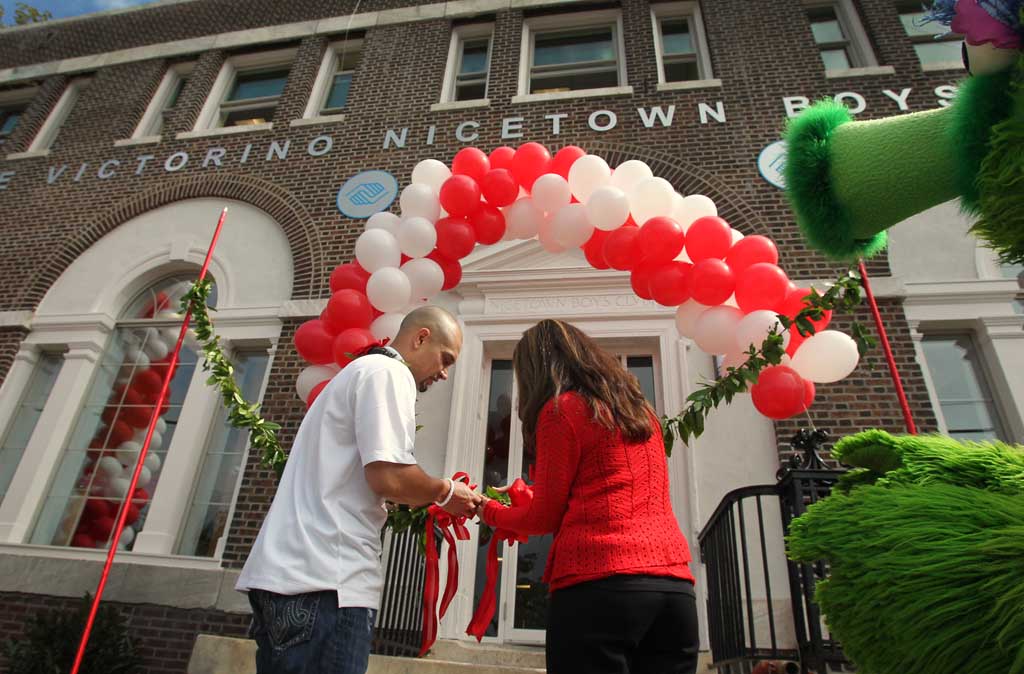
Shane Victorino, and wife Melissa celebrate the Nicetown Boys & Girls Club in 2011. In 2026, it’s undergoing another massive update as part of MLB All-Star game.Philadelphia Daily News
Next month in conjunction with Major League Baseball’s annual All-Star Classic coming to Philadelphia, the Boys & Girls Club in Nicetown is getting a much-needed face-lift. The organization got one in 2011 after former Phillies shortstop Shane Victorino offered a generous gift, but on July 11, MLB Together, a philanthropic arm of the league, is coming in to clean up with more than 100 volunteers.
“We’ll be rolling up our sleeves and painting the teen room, putting together some new furniture, decorating, and doing some internal work, in addition to some external work,” said April Brown, MLB’s senior vice president of social responsibility. “Some planting and some weeding and taking care of the baseball field, which is literally across the street from the Boys & Girls Club.” Inquirer writer Mia Messina has more on the MLB’s plan of attack.
Lincoln Financial Field, known as “Philadelphia Stadium,” is all set ahead of the start of Sunday’s World Cup opener in Philadelphia between the Ivory Coast and Ecuador.Kerith Gabriel
Goalie wars: With days before the start of the World Cup for the U.S. men’s national team, there’s still no guarantee that Wayne native Matt Freese is the No. 1.
Bait and switch: The Iranian soccer federation claims FIFA has revoked tickets for its three group stage World Cup matches in the United States.
Soccer spirit: From city bars burning the midnight oil, to kid-friendly beer gardens, here’s a look at some of the best places to feel World Cup vibes.
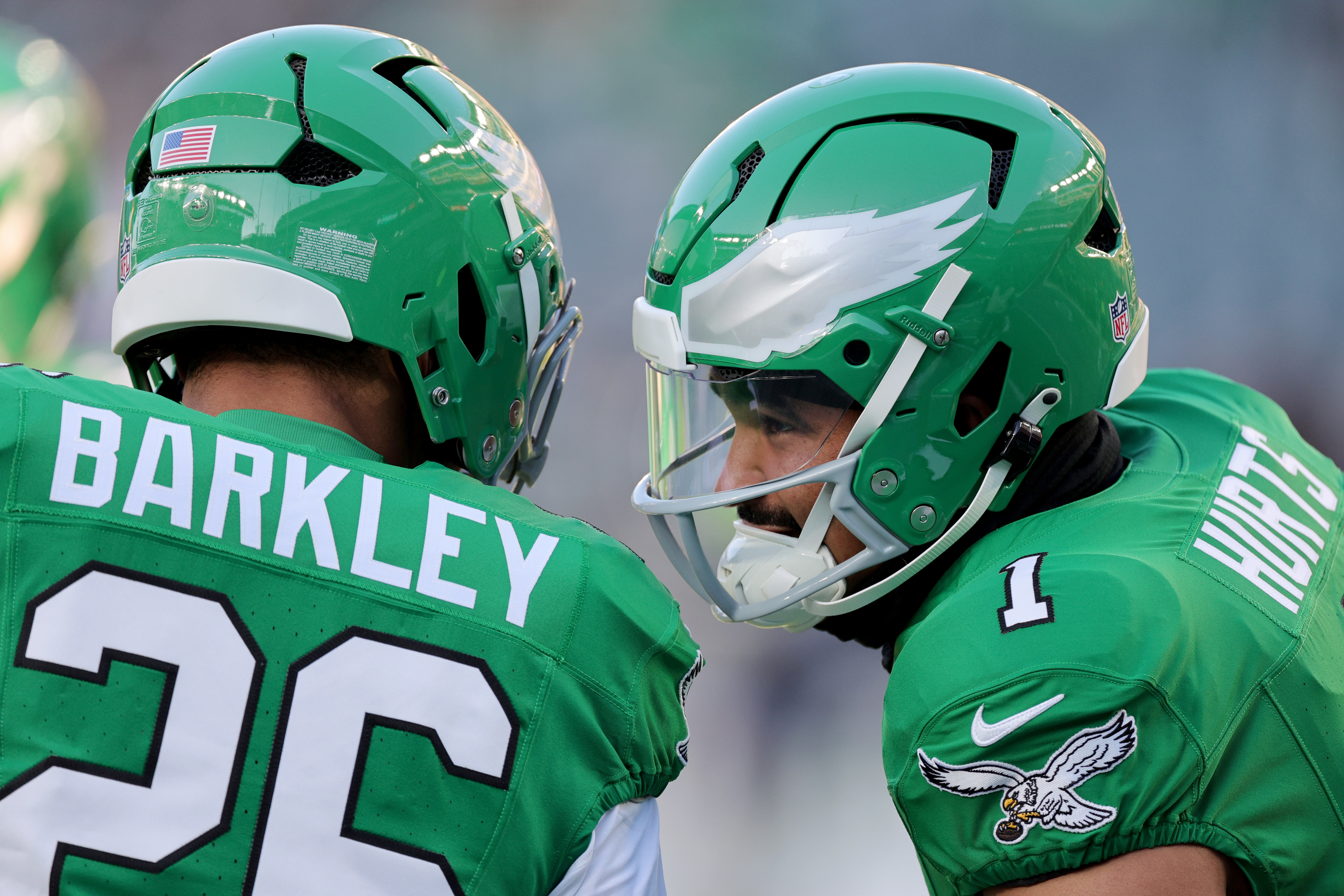
Saquon Barkley and Jalen Hurts’ jerseys ranked inside the top 10 for the second year in a row.David Maialetti / Staff Photographer
For the second year in a row, the Eagles running back Saquon Barkley boasts the No. 1 selling jersey on the team and is in the Top 10 in jersey and merchandise sales in the league, along with quarterback Jalen Hurts. Check this out for the complete list of league leaders in the selling swag department.
In more pressing news, Inquirer’s Jeff McLane offered his observations of yesterday’s minicamp practice, which revealed the offense still has some meshing to do.
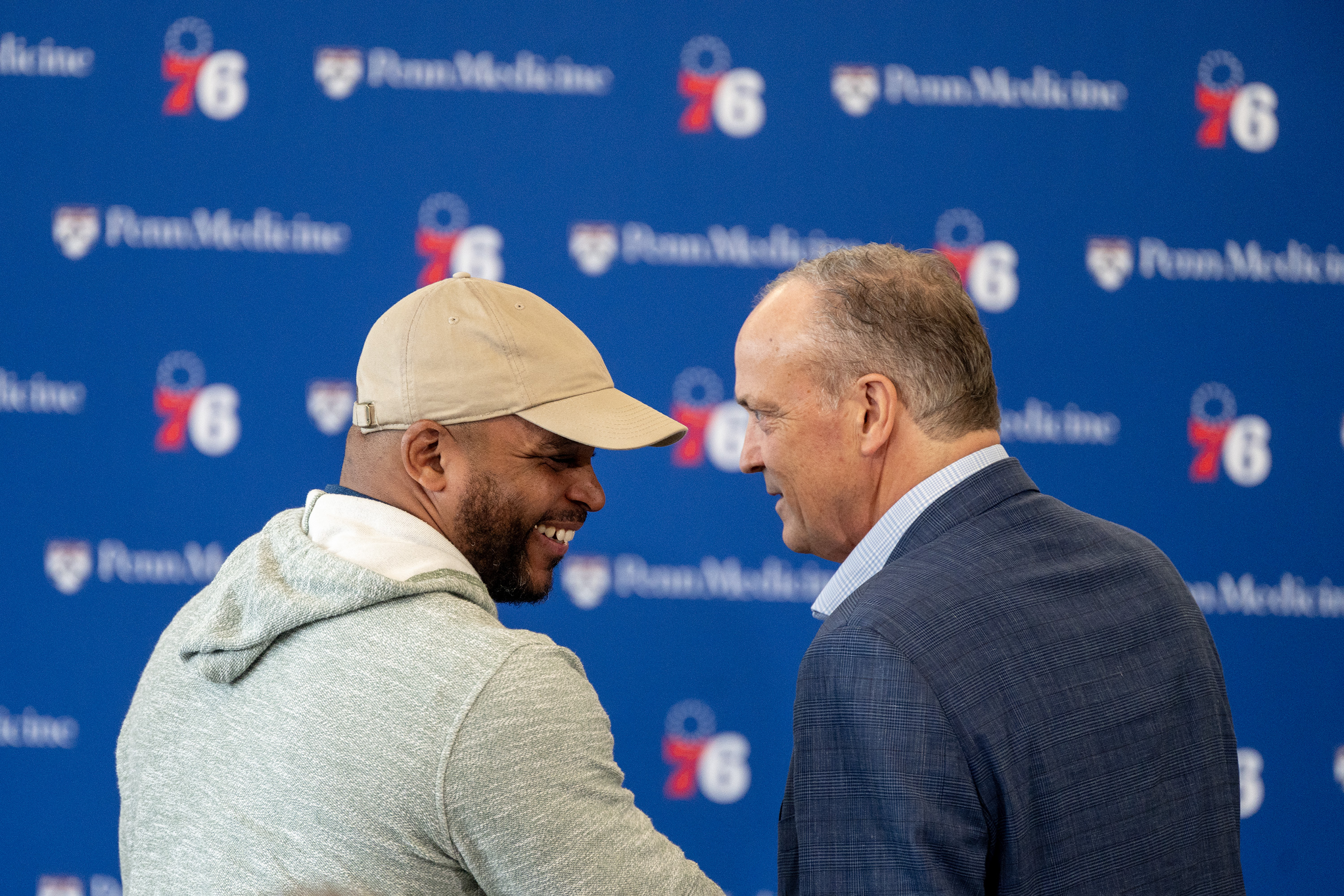
Jameer Nelson (left) new Sixers executive vice president of basketball operations talks with Tad Brown (right), CEO of Harris Blitzer Sports & Entertainment following Mike Gansey’s introductory press conference on Monday.Tom Gralish / Staff Photographer
Jameer Nelson wanted to remain in the Sixers front office. New president of basketball operations Mike Gansey was determined to keep him. Now, after elevating Nelson as vice president, the two are paired to reinvigorate the Sixers — together.
Nelson’s understanding of the current roster, the city’s passionate fan base, and media scrutiny is invaluable, says Bob Myers, the president of sports for Harris Blitzer Sports & Entertainment. Myers added that Nelson “has that equity with our players and the community.”
Ahead of Thursday’s opening match, join Inquirer reporter Jonathan Tannenwald and host Lisa Carlin for Soccer Extra!, our monthlong Gameday Central weekly pop-up dedicated to all things World Cup. The first episode kicks off tomorrow at 11 a.m. Watch here.
On this date
June 9, 1974: Phillies slugger Mike Schmidt hits a ball off the roof of the Houston Astrodome, hitting the public address speakers. Which is just insane.
[Donald] Trump always seeks to steal the shine from winners, and the Knicks, fueled by NCAA champs Jalen Brunson, Josh Hart, and Mikal Bridges, were winning like nobody’s business … He’d wanted to sit with Spike Lee and Larry David courtside, but the Secret Service (and perhaps his more sane advisers) persuaded him to retreat to a suite. There, in the shadows, he rested as the streak ended, a 115-111 downer in Game 3. — Columnist Marcus Hayes looks at the trouble Donald Trump caused as the first active president to attend an NBA playoff game.
What you’re saying about the Phillies
We asked: The Phillies have several candidates who could make the All-Star team. Who do you hope to see get picked and why?
As the host city, there are four obvious selections: Christopher Sanchez (wins, ERA), Jhoan Duran (saves), Kyle Schwarber (HRs), and Brandon Marsh (batting). Each is among the league leaders in their respective categories. An argument could be made for Bryce Harper, a fan favorite.— Bob C.
Here’s my short list: Don Mattingly as coach, Brandon Marsh, Zack Wheeler, Bryce Harper, Christopher Sanchez, Kyle Schwarber, and Jhoan Duran. Can you imagine what his introduction will look like at night when the whole world is watching? Even for one batter. One batter will be enough. — Ronald R.
[Cristopher] Sánchez, [Zack] Wheeler and [Kyle] Schwarber. — Ronald R.
We compiled today’s newsletter using reporting from Gabriela Carroll, Lochlahn March, Marcus Hayes, Jeff McLane, Jonathan Tannenwald, Gina Mizell, Lisa Carlin, Conor Smith, Mia Messina, Beatrice Forman, and Henry Savage.
By submitting your written, visual, and/or audio contributions, you agree to The Inquirer’s Terms of Use, including the grant of rights in Section 10.
That’s your Wednesday. Here’s hoping we made you a little more informed or at least provided an ice breaker in your virtual meeting. Catch you soon. — Kerith
Jameer Nelson took care to draw a distinction that was important to him and should be important to the franchise that has promoted him.
“Growing up in this area — everybody keeps saying Philly — I’m a Chester native,” he said Monday. “Philly adopted me.”
There’s a difference between the two, as anyone who has lived and followed basketball in the Philadelphia area long enough can tell you. Chester is a small, forever struggling city with its own glorious hoops history, with a high school program that has won eight PIAA boys basketball championships, with its own heroes and legends, the 76ers’ executive vice president of basketball operations among them.
When Nelson mentioned his favorite players as a kid, he name-dropped Charles Barkley and Allen Iverson. Any Chester aficionado would have chided him for leaving John Linehan and Zain Shaw off his list, and he laughed in acknowledgment of the omission.
That contrast might not seem to mean much. But it said everything about Nelson’s potential value to the Sixers, to his ability to provide at least some of the institutional memory and understanding of the market that the organization has lacked for so long. “No one more capable,” Phil Martelli, Nelson’s coach at St. Joseph’s, said in a text message Monday.
He knows Philadelphia and Chester and knows they aren’t quite the same. He knows what it was like here in 2001, when Iverson led the Sixers to the NBA Finals, and he knows what it was like in early 2004, when Nelson himself led the Hawks in that magical unbeaten regular season and that run to the Elite Eight.
Jameer Nelson Sr. was a 2,000-point scorer for St. Josephs. He ignited the Hawks to the NCAA Tournament Elite Eight in 2004.George Reynolds / Staff Photographer
He knows what will play here and what won’t, who can play here and who can’t.
“Understanding the landscape and understanding what this team means to the city, I can bring that,” said Nelson, who had a 14-year playing career in the NBA. “I can help everybody in the building understand that because I understand it. Growing up, I was one of the people who are doing what people are doing now.”
Too few people among the Sixers’ previous power players have had that background, and no member of the current leadership has it. Harris Blitzer Sports & Entertainment president Bob Myers lives in California. Mike Gansey, the Sixers’ new president of basketball operations, reminded people at the team’s headquarters in Camden that he “just got here” after growing up in the Cleveland area and working for the Cavaliers for 15 years. And managing partner Josh Harris splits his time between Miami and his $28 million mansion in the Georgetown section of Washington, parachuting into town for home games and the latest hiring/firing news conference.
Nelson still is third in the pecking order at best within the Sixers’ basketball hierarchy, behind Myers and Gansey. But at least his new title might afford him a louder, stronger voice when it comes time to draft, sign, or trade for players the Sixers hope to have here for a while. Myers said aloud Monday what anyone who has followed this team already knew to be true: “We’ve got to find an identity. We just don’t have one.” That assertion goes beyond the Sixers’ style of play.
It gets to the character and attitude of the players, the coaches, everyone in the organization. It gets to the Sixers’ giving themselves a better chance of making better decisions. For every time they’ve recognized that Tyrese Maxey or VJ Edgecombe had the mental and emotional makeup to cut it here, they’ve failed to see that Ben Simmons and Markelle Fultz didn’t, that James Harden and Paul George and mercenaries like them, stars who require a softer setting, were unlikely to thrive or to be embraced.
“Anytime you can put somebody in a leadership role who understands and embraces it and is reared here, it’s an advantage,” Myers said. “I don’t know to say it was a negative last year or in years past, but I do think most people would agree this is a uniquely spirited community, and having someone who knows that and grows up and feels that — and the responsibility that comes with it — I love that Jameer is in the place he’s in.”
The Sixers under Harris need Nelson’s instincts and experience and all the additional help they can get in that regard. A longtime NBA executive noted recently that in professional sports, you often can trace a franchise’s excellence or stability to the geographical proximity and familiarity of its owner. Does the person in charge live where the team is based? Did they grow up there? Do they truly understand the city and its fan base?
Spurs managing partner Peter Holt has deep familial ties to San Antonio. The Heat’s Micky Arison has lived most of his life in Miami. Joe Lacob was a Warriors season ticket-holder for nearly 10 years before he bought the team in 2010. Jeffrey Lurie relocated from Boston and took the time to learn what Philadelphia was all about. Ed Snider and John Middleton were already here to know.
New Sixers executive vice president of basketball operations Jameer Nelson (left) talks with Harris Blitzer Sports & Entertainment CEO Tad Brown (right) after Mike Gansey’s introduction press conference on Monday.Tom Gralish / Staff Photographer
James Dolan is a surveillance-happy nepo-Boomer who, after a quarter-century of mismanaging the Knicks, finally stumbled into ecstasy thanks to Leon Rose, William “Worldwide Wes” Wesley, and Jalen Brunson. But Dolan’s also a native Long Islander who felt the heat in New York — the city where rebuilding isn’t allowed — every time one of his cockamamie attempts to quick-fix his franchise went awry.
Too often since Harris took control of them in 2011, the Sixers have acted as if they’re content to be interesting, to settle for the sugar rush of another roster shake-up and a sold-out arena instead of putting in the demanding, patient work that leads to genuine and lasting success. “You can’t buy championships,” said Myers, who won four of them as the Warriors’ general manager. “You have to go through it to get them.”
Whether it’s the pain of Sam Hinkie’s Process or the cost of exceeding the league’s luxury-tax threshold, Harris’ Sixers have shown a reluctance to make such sacrifices, and their status in the city and their performance come the second round of each year’s playoffs have sunk because of it. If nothing else, in Jameer Nelson, out of Chester and adopted by Philadelphia, they have someone who can remind them that the hard way is what this region prizes and rewards, the only way that works.
NEW YORK — When Manhattan’s original Pennsylvania Station was demolished in 1963, it marked the undignified end to one of America’s great public works, a monolithic Beaux Arts train terminal with Roman-style columns and a spacious central waiting area that was at the time the city’s largest indoor space.
In its place rose Madison Square Garden — home of NBA’s New York Knicks and NHL’s New York Rangers — while train commuters were forced underground into gloomy, claustrophobic, low-ceilinged corridors when the redesign was completed in 1968.
“Through Pennsylvania Station one entered the city like a god,” the architectural historian Vincent Scully famously lamented. “One scuttles in now like a rat.”
But a dramatic new vision for the busiest transit hub in the Western Hemisphere calls for a return to the original station’s grandeur from 1910.
Renderings released Monday feature a rectangular stone facade lined with imposing columns along a grand entryway. Inside, a sunlight-drenched concourse boasts soaring ceilings more than 50 feet high in places. There are bronze finishes and other ornamental details, like a bas-relief of the city’s famous skyline and a large station clock.
Inside one entryway, an inside wall bears the seal and name of President Donald Trump, who had Amtrak assume control of the project last year after decades of political infighting among transit agencies and opposition to moving MSG from billionaire owner James Dolan.
For now, though, the name etched across the proposed grand facade would still read “Pennsylvania Station,” according to the renderings. They were released by Amtrak, which owns the terminal, and Penn Transformation Partners, the design and development consortium picked for the project.
Proposal aims to make Penn Station an icon again
The proposed design draws from the ornate, Beaux-Arts design of Grand Central Terminal, the city’s other major rail hub, as well as Art Deco landmarks like the Empire State Building and Rockefeller Center, according to lead design architect Vishaan Chakrabarti.
The vision, he said, is to restore Penn Station’s place among the pantheon of the city’s greatest landmarks.
“There was this fearless embrace of ornament and decoration that in some ways we’ve lost,” Chakrabarti said. “We want to bring some of that sense of craftsmanship back.”
The redesign is projected to cost roughly $8 billion, and construction is targeted to begin before the end of 2027, officials said Monday. Penn Station would remain in operation throughout as the project progresses in phases over about six years.
More than 600,000 commuters traverse the rail hub on any given workday, or more than the three major international airports that serve greater New York City — John F. Kennedy, LaGuardia, and Newark Liberty — combined.
Knicks and Rangers home arena would remain at the site
Plans floated over the decades have called for relocating MSG, but the plan is for the “World’s Most Famous Arena” to remain in place. A theater owned by MSG and built directly above the tracks, however, would have to be razed.
The developers and MSG’s owner have reached an agreement on this critical point, but the final terms — including payment — are still being negotiated. That’s according to Andy Byford, a former New York City subway chief who Amtrak named as a special adviser to oversee the redevelopment.
Transit advocates complain the process has been shrouded in secrecy.
“It’s really important that there be public input and involvement,” said Lisa Daglian, who heads a group that advises the Metropolitan Transportation Authority, which operates New York’s subway and two commuter rail systems.
“We don’t need another megamall or monument and certainly not at the cost of billions in local revenue or by putting existing services at risk,” said Danny Pearlstein of the transit advocacy group Riders Alliance.
Byford said more details will be revealed in the months ahead, including a more detailed breakdown of costs, as the developers refine the preliminary designs and the project goes through the extensive federal environmental review process.
But he vowed no fare hikes to cover project costs and no plans for the government to condemn and take surrounding properties to expand the station, as some have suggested.
At Penn Station on Tuesday, John Schoen was among the regular riders who welcomed the prospect of a more inviting commute.
“The city needs new looks. This is old,” the 55-year-old Long Island resident said. “Let’s do it. Move forward.”
Others, though, wondered how construction might worsen their commutes. James Culhane, another Long Island rider, noted parts of the station received a significant face-lift in recent years that brought in new eateries, more natural light, and other improvements.
“Things are operating as well as they can be,” said the 24-year-old opera stagehand. “Just use the money elsewhere.”
With the summer solstice still two weekends away, already the temperature has reached 90 degrees or higher in Philly nine times.
And while the sequence of 90s has been extraordinarily premature, the early experience may come in handy this week as the region could experience triple-digit heat indexes.
“It will definitely feel different,” said Ray Martin, lead meteorologist with the National Weather Service office in Mount Holly, as the humidity and dew point, the measure of absolute moisture in the air, reach their highest levels of the year to date.
Any 100-plus heat indexes may present challenges to some older residents, and those with heart and other health issues. The weather service Wednesday morning issued an advisory for indexes of up to 103 Thursday and Friday.
But the heat the region has experienced, starting in mid-April, could be viewed as a sort of spring training for the discomforts to come, said Samuel Eldrich, director of the Temple Health-Chestnut Hill Hospital Emergency Department.
“It’s all about adaptability,” he said. And it’s not just physiological, he said.
In addition, a juicier atmosphere may squeeze out some much-needed rain.
The regional forecast for the next several days
Showers are possible Wednesday morning and late in the day, Martin said, with highs in the mid-80s. However, it might not get cooler than 70 degrees early Thursday, a sign that mugginess is on the increase.
A moist air mass inhibits daytime heating from escaping into space, and the heat and humidity build for real on Thursday.
“It’s not going to feel nice out there,” said Tom Kines, senior meteorologist with AccuWeather Inc.
Shower chances are in the forecast Wednesday through Friday, and at times the atmosphere will be highly energized, Martin said. The Storm Prediction Center in Norman, Okla., has outside chances for severe thunderstorms for the entire region Thursday and Friday. Isolated flooding downpours are not out of the question, Martin said.
The heat and storm threats should back down some by the weekend, when Philadelphia hosts the World Cup match between Ecuador and the Ivory Coast, with a high about 90, the air less muggy, and rain looking unlikely.
How hot has it been in Philly so far?
Philly has logged four daily highs of 90 degrees or more so far this month, and nine since April — including four record highs — almost a third of the average for an entire year.
Far more dangerous are hot spells that come abruptly after the weather has been relatively cool and comfortable for a period, he said.
Early heat, which typically is short-lived, can make a difference in terms of how we respond to subsequent hot spells. “You’re more accustomed” to the heat, Eldrich said. “You’ve adapted to the lifestyle. You sweat more quickly, more easily.”
People are more likely to stay inside, and stay hydrated.
“It’s both the physiological and the cultural factors,” he said. “In the South, you don’t hear about heat exhaustion or heat emergencies. It’s something they deal with three-quarters of the year rather than a quarter of the year.”
Drought conditions persist, but more rain may be coming
The longer-range outlooks favor above-normal temperatures for the rest of the month, but they also see the odds tilted toward above-normal rainfall.
That would be a switch. Philadelphia’s precipitation has been below normal for 10 consecutive months.
“We could certainly use the rain,” Martin said. The interagency U.S. Drought Monitor has most of the region under “severe drought” conditions. State-declared drought emergencies remain in effect in New Jersey and Chester County.
Any showers would mean temporary breaks in the heat Wednesday and Thursday, and the heat wave is not expected to survive the weekend, in keeping with a trend.
Even though average summer temperatures have been rising, the hot spells this century have not lasted as long as some of those of the 1990s.
“Let’s hope that streak continues,” Martin said.
Whether it is related to heat-wave durations or the city’s responses to hot-weather emergencies, heat mortality is way down in Philadelphia.
From 1991 through 2000, 227 heat-related deaths were recorded in the city. In the last 10 years, there were 37.
“American cheese is all gone from Japan,” read Nihonbashi Philly’s frustrated post to Instagram on May 30. Going forward, the restaurant would be using Whiz and provolone only.
Tomomi and Kosuke Chujo own and operate Philadelphia’s unofficial embassy in Tokyo’s Nihonbashi neighborhood, a restaurant named Philly that serves cheesesteaks, house-made pretzels, and Tastykakes. They’re ambassadors of the cheesesteak and have become semi-regular fixtures in Philadelphia’s dining scene since their first trip to Philadelphia in 2020.
Their post was met with hundreds of comments of support, ranging from “American cheese is terrible anyway” to offers to smuggle in Cooper Sharp for them.
But while Cooper Sharp has become the preferred cheese on American cheesesteaks (at least, those that aspire to the level of Angelo’s) in recent years, the Chujos have long had a love for the Kraft-esque Kirkland American cheese they found at Japan’s Costcos.
Kosuke Chujo and his wife, Tomomi, posed for a portrait with cheesesteaks at Nihonbashi Philly on Sunday, Nov. 9, 2025, in Tokyo, Japan.Monica Herndon / Staff Photographer
For the Chujos, Kirkland brand Deluxe American Cheese has been their go-to cheese since 2021. When they did taste tests before they opened the restaurant, it won by a large margin over any other cheeses available to them, (though when Craig LaBan went to visit last year, the cheese was his only complaint, writing, “It was a satisfying cheesesteak, even if the cheese was not quite right — slices of American cheese that lacked the creamy flow and piquant savor of the now-standard Cooper Sharp, currently unavailable in Japan.“)
Nihonbashi Philly normally goes through 60 pounds of American cheese every week. Despite it being a relatively stable product, it still requires refrigeration. Tomomi Chujo has never been able to stock up in large quantities because of how small her restaurant is, and because she does not have a walk-in cooler.
So when Tomomi went to restock, she was startled to find the cheese missing.
“I went to Costcos in three other prefectures and bought what they had,” she said. “I check every day now, but they don’t have any more,”
The Inquirer reached out to Costco Japan and was told in an e-mailed statement that “this item has been discontinued and is no longer available at Costco locations in Japan.” The company declined to provide a reason for the change.
There are other options — Japan has a specialty dairy culture of its own, headquartered in Hokkaido, which is world-renowned for its milk. And Kraft cheese is also manufactured in Japan by Morinaga, a dairy conglomerate.
“The Kraft cheese made by Morinaga costs much more and it’s not that tasty,” explained Tomomi Chujo, who also e-mailed photos of Kirkland and Kraft Morinaga blocks illustrating their extreme differences in size and color. The Kirkland cheese melts better and costs significantly less.
“Cheese from Japan tastes like dairy and cream. It’s milkier and bland,” said Tomomi Chujo.
Morinaga American cheese in bulk is about half the size of the Kirkland package but twice the price. The Chujos say using Japanese cheese would make their cheesesteaks, which currently cost about $18, far too expensive for the average Japanese consumer.
A comparison of Kraft cheese manufactured by Morinaga in Japan and the Kirkland brand of American cheese.Nihonbashi Philly
With the American cheese gone for now, they Chujos are still committed to making Japan’s best cheesesteaks. And they’re open to other cheeses.
The Chujos occasionally bring Cooper Sharp back to Japan to use at Nihonbashi Philly.
“But there’s nothing like Cooper Sharp [for sale] in Japan,” she said.
On the Chujos’ most recent trip to Philly in May, they served their version of the cheesesteak at the Philly Opener and to the Eagles.
They flew with Japanese flour, Tomomi baked the loaves at Lost Bread’s bakery, and they made their cheesesteak with Cooper Sharp cheese, which is readily available in Philly.
The Chujos should be able to restock their Cooper Sharp supplies and make a few Costco runs for American cheese again this summer when they’re in Philly, though of course, they can only bring so much back to Japan.
I grew up in the South Bronx, a short walk from the subway. I did not think of that as a privilege at the time, but it was. That train carried me to a good school, to my first job, and to internships across the city. The access I took for granted is exactly what hundreds of thousands of Philadelphians never get, not because the trains are not running, but because we have spent decades making it nearly impossible to build homes next to them.
Bill 260517, now before City Council, begins to undo that. It would rename and expand the city’s public transit zoning restriction from 500 feet to a quarter mile around the entrances to subway stops, allow a modest number of homes near the train, trim parking requirements, and require new buildings to put shops and offices on the ground floor instead of garage doors.
It is a sensible, overdue reform, and Council should pass it before the summer recess.
But we should be honest about how small a step it is.
The bill covers just 13 stations, all on the Market-Frankford Line. Most Philadelphians do not live near the El. I think about the family in the Northeast that cannot reach a steady job without a second car. I think about the retiree near Broad Street who cannot easily get to one of our region’s best hospitals. If the zoning change stops there, we will have passed a good policy and confined it to a footprint too small to reach them.
We do not have to guess how that story ends. The Parking Reform Network, which tracks parking rules nationwide, has found that most cities that reform parking limit it to a handful of downtown blocks, blunting nearly all of the benefits, while housing reform lags behind commercial reform. The lesson is not that reform fails. It is that timid reform fails. The cities that get results match the scale of the policy to the scale of the city.
Other states have figured this out. Last October, California enacted SB 79, State Sen. Scott Wiener’s Abundant and Affordable Homes Near Transit Act, which legalizes mid-rise housing within a half mile of major transit stops across the state’s largest urban counties.
New Jersey’s Transit Village Initiative now includes 37 designated municipalities, with concrete results: Since 2020, Newark alone has approved nearly 6,800 housing units, far more than in the entire stretch from 2007 to 2019.
In this photo from 2020, a construction crew works on a 290-unit transit-oriented, mixed-use affordable housing community with 7,200 square feet of nonresidential leasing space, seen to the right, in Fremont, Calif.Anda Chu / MCT
States like Massachusetts, Colorado, and New York have done versions of the same thing. Transit-oriented housing is one of the most consequential planning movements in the country right now, and the Northeast is leading it.
Philadelphia cannot afford to watch from the sidelines, and the stakes here run deeper than zoning. SEPTA is fighting for its financial life as state funding wavers, and every home built near a station adds riders and fare revenue at no cost to taxpayers. Every family that can live near mass transit and skip the cost of a second car keeps more of its paycheck. Building more homes doesn’t only help newcomers; it relieves pressure on the renters already here.
This is, finally, a question of fairness. For generations, the neighborhoods cut off from fast, reliable transit have been the same ones cut off from opportunity. I know what that access made possible in my own life. Withholding it from whole sections of this city should anger us.
Timid reform fails. The cities that get results match the scale of the policy to the scale of the city, writes the author.Alejandro A. Alvarez / Staff Photographer
So pass Bill 260517, and pass it now.
But do not treat 13 stations as the finish line. Council should follow this bill this fall with station-designation legislation extending the zoning change to the Broad Street Line, Regional Rail, the trolleys, and our busiest bus corridors.
On North Broad, six fast-food drive-throughs sit directly atop subway stops on the Broad Street Line — businesses built for drivers, on land that belongs to riders. That is exactly the land transit-oriented communities are meant to put back to work.
Philadelphia spent a century building a public transit system. The least we owe the next generation is the right to live next to it.
Jay Arzu holds a doctorate in city and regional planning from the University of Pennsylvania. He is a housing organizer with 5th Square Advocacy and the founder of the Roosevelt Boulevard Subway Movement.
Philadelphia School District students receive report cards on Thursday, the last day of the 2025-26 school year.
But it’s an open secret that in many schools, it is nearly impossible to fail a student, according to interviews with two dozen teachers from schools across the city who say the district is making them give passing grades.
Many teachers said they passed students who did little or no work, did not understand concepts being taught, or did not show up to class much. Most of the teachers interviewed requested anonymity for fear of reprisal.
“There’s a bunch of kids in my class that have F’s in reading, and I’m probably going to pass them — I’ll bump it up to a D and call it a day,” one middle-grades teacher at a K-8 school said. “I don’t know of anyone who’s been able to keep anyone back, and we’re just setting kids up for failure.”
On paper, Philadelphia students can fail courses, or be retained in a grade, so long as they are offered appropriate interventions and supports. Officially, the district, according to its policy, “is committed to excellence in student accomplishments and recognizes the contribution of a district wide promotion policy moving all schools to models of achievement.”
But many teachers said that they were discouraged or forbidden by their principals from flunking students, or that they have given out failing grades that were overridden. Others said failing students was permitted if justified, but the administrative burden to rationalize failure, even for students who did not show up to school, is onerous or impossible.
All of the teachers who spoke with The Inquirersaid they fear for the long-term implications for students who are passed along without the skills they needto advance — especially in a city where so many students cope with the effects of poverty and trauma and a majority of students do not meet grade-level standards on state testing.
Monique Braxton, district spokesperson, said the district’s policies “emphasize that student grades are meant to accurately reflect their academic performance and progress toward learning standards. Schools are required to provide and document appropriate interventions and progress monitoring when students encounter academic challenges. The district remains steadfast in its commitment to maintaining high expectations for students while ensuring they receive the necessary support to achieve success.”
When did it start?
The K-8 teacher, a veteran of district schools for three decades, said that at the beginning of her career, it was easier to give F’s or retain students who did not meet the learning standards. But, the teacher said, there has been a “subtle shift” since the early 2000s, the era of the federal No Child Left Behind Act.
“When the pressure was on the schools to show promotions and graduation rates, and the district was so focused on showing data, it’s shifted grading, and now it’s a joke,” the teacher said.
Philadelphia changed its grading policy in 2017, setting a 50 out of 100 as teachers’ grading floor and making it easier to pass. The minimum score for a D, once a 64, was changed to a 60.
The rationale for the change, leaders said at the time, was standardizing grading procedures and preventing students from giving up if they perform poorly early in the year. Detractors of the policy shift said at the time they feared it would water down standards.
The K-8 teacher, and others interviewed, emphasized that most Philadelphia students are bright and capable. But those who do not try because of complicated home lives or other reasons can skate by, they said.
“We have a kid who’s done no work all year, and we’ve done everything, and they’re just going to push him forward,” the K-8 teacher said.
The teacher also works in the service industry, and said the effects of passing students who have not earned passing grades is evident in that workplace.
“We see people who don’t come to work on time, they can’t take orders, they can’t use a computer or figure things out, and this is why,” she said. “They’re not being held to standards for all their years in schools.”
‘Is there anything you can do to bump these up?’
A second teacher said he hasfailed students who did not earn passing grades, though he has more latitude because he does not teach a major subject. But heabsolutely understands why some teachers give 60s that should be F’s: With full course loads, teachers do not have time to document a pattern of contacting guardians, giving extra time for work, breaking down assignments, allowing extra credit, orextending deadlines.
“Who has time to do that when you have 30 other kids?” the teacher said. “And the system is inherently causing laziness from teachers also, to just shut up, pass them, and you don’t get grief.”
There is a ripple effect, hesaid.
“I feel sorry for the good kids, the kids who struggle, do their work, and get a C. So I give them a B, a low A. They try,” he said.
“The PSSA scores don’t match the grades kids are getting,” the second teacher said.
The district’s four-year graduation rate has also risen. In 2024-25, it was up to 84%, from 69% in 2014-15.
Grade inflation comes at the end of every year, said a third teacher, who works at a district high school.
“There’s a push right after grades are due,” said the third teacher, who noted that administrators will say, “‘Is there anything you can do to bump these up?’”
Grades are not changed for every student, but in some cases, administrators will “push [students] along because they want to see them graduate or pass,” the third teacher said. “There’s all this pressure from the district to increase the graduation rate — there are so many layers to it. I know that it happens in a lot of places. It’s not just our school. But this year, it was huge margins and huge numbers.”
Administrators sometimes change the grades themselves, the third teacher said.
In one instance, a student’s grade shot up with no explanation, the teacher said. “This student had a 50 yesterday. How did he have an 82 today? This was a student who didn’t turn in any additional work, and missed 63 of 84 classes,” the third teacher said.
The third teacher said another student who was moved on without doing the work admitted it.
“Even he was like, ‘Yeah, I didn’t deserve to pass, I don’t know how that happened. But I’m excited to graduate,’” the teacher said.
The third teacher underscored that while the practice could be making the district’s numbers look better, it is not serving students.
After graduation and not being held to standards, the teacher said, one former student “lost the first three jobs he had because he didn’t go to them. He had to learn that lesson in a much harder, more adult way, and he could have learned that in high school. I worry that when kids graduate and get into the workforce, it will impact the way they approach the goals they set for themselves and how they try to achieve those goals.”
‘The gap was huge’
A fourth teacher who has worked in multipletypes of schools in Philadelphia said the practice is not limited to the district.
She most recently taught at a city charter and said some of her middle-grades students were at kindergarten reading and math levels.
“The gap was huge,” the fourth teacher said. “The school’s explanation is that there’s a school-to-prison pipeline, and the older students are, the less likely they are to graduate. But they’re not meeting standards. The gaps are huge. It was very shocking to me how they would just pass the kids. I’m a parent, and I want my kids to be prepared properly.”
A fifth teacher said that at herschool, it is rare for students to be pushed along without doing work.
“I can’t in good conscience pass anybody who doesn’t show up,” she said. “I think a lot of teachers around me also can do that. But I have also seen that teachers — maybe at a particular building, maybe those who work for a particular administrator — who say, ‘You know what, I’m not going to fight it.’”
What is definitely not rare, the fifth teacher said, is giving students “a lot of different lifelines, a lot of different ways for them to pass,” whether it’s in-school credit recovery or summer school, “even when their trends of behavior and attendance and performance and engagement in the class suggest that they needed more time with that content.”
A sixth teacher said his principal permits failure and retention, in rare cases, with significant documentation. There is some pressure to not fail students, but when needed, the teacher has been able to produce adequate paperwork to show failure was the last resort.
But when deciding whether to pass or push through a student, “I ask myself whether holding them an extra year will make a significant difference,” the teacher said. One of the teacher’s students is bright but unmotivated and rarely completes work.
“I don’t think that’s going to change with an extra year in the same grade, and therefore, I decided to pass him,” hesaid.
Does he worry about the implications for the district writ large?
“Honestly, I do think about it sometimes, but I’m just not sure there’s a right answer with the current situation,” the sixth teacher said. “I’m no policy expert, but I think for it to make sense on a larger scale we’d need significant cultural shift and policy changes.”