Blog

  • Horoscopes: Wednesday, June 10, 2026

    ARIES (March 21-April 19). What some call luck is really the result of sensible choices, steady work and the willingness to act when opportunity appears. You have shown up time after time. Now opportunity comes knocking and you’re so prepared.

    TAURUS (April 20-May 20). Other people are experiencing something wonderful about you. Challenge yourself to see what they see. It’s not in the mirror so much as in your deeds and how you show up time after time, ready to work.

    GEMINI (May 21-June 21). Your good taste is indisputable. Sometimes your style is unserious, playful or niche, and still it’s stellar. You know what you like and you keep seeking it out, learning about it, perfecting it. Study can be a kind of worship.

    CANCER (June 22-July 22). Oscar Wilde said, “Morality is simply the attitude we adopt toward people we personally dislike.” You challenge that idea by remaining fair even when emotions run hot. Anger would be easier and far more satisfying. But you choose integrity instead.

    LEO (July 23-Aug. 22). People are impressionable today. Moods, attitudes and behaviors are contagious. Your conduct affects others more than usual. When you behave thoughtfully and graciously, that’s the tone that will spread.

    VIRGO (Aug. 23-Sept. 22). Because the same sentence that comforts one person might provoke another, you’re mindful of the unique needs of each person you interact with. Your growing awareness leads you to communicate with more precision, warmth, timing and discernment each day.

    LIBRA (Sept. 23-Oct. 23). Many encounter openings they never take. Not you. You see it and strike while the iron is hot, forming the opportunity to your specifications. That’s what makes it a good fit — knowing yourself and your needs enough to shape it that way.

    SCORPIO (Oct. 24-Nov. 21). Competition weakens each side. Connection strengthens the team. People who stop trying to win and start trying to understand create connection instead of competition. Connection gives you more energy to complete the task at hand.

    SAGITTARIUS (Nov. 22-Dec. 21). You handle crises with skill and endurance. But that shouldn’t define your life. Please, more pleasure. Buy the flowers, learn the recipe, frame the photograph, take the scenic route. Acts of devotion toward your joy are restorative.

    CAPRICORN (Dec. 22-Jan. 19). Your environment trains your nervous system to expect chaos or harmony. That’s why a room can change your thinking. Clearing clutter, repairing broken things and placing beauty where your eyes rest each day creates concentration and ease.

    AQUARIUS (Jan. 20-Feb. 18). You’re becoming known for something specific. A signature look, favorite meal, trusted ritual or recognizable style helps people form a strong memory of you and keeps them coming back. So don’t try to fit in. There’s power in distinction.

    PISCES (Feb. 19-March 20). Opportunities will be disguised as extra work. Hosting dinners, tending gardens, mentoring or mastering skills may exhaust your schedule for a season, though these commitments are also among the richest parts of your life and strong sources of belonging.

    TODAY’S BIRTHDAY (June 10). It’s your Year of Uncanny Companionship. Love appears in whimsical forms. A stranger understands you and offers lucky opportunity. Non-human companionship such as pets, immersive hobbies and mystic protectors and muses are sources of joy, fun, solace and protection. More highlights: You’ll be lauded for your intelligent observations. You’ll influence, invest and make a difference. Scorpio and Aries adore you. Your lucky numbers are: 8, 10, 30, 12 and 15.

  • Dear Abby | Wife of two years appears to be hiding many things

    DEAR ABBY: I have been married to my wife for two years. We met online and have known each other for about five years. We originally lived an hour apart, and after some persuasion, we bought a condo together. Everything was going great until I began to notice my wife’s attraction to other women. I noticed lesbians “cruising” my wife wherever we went, whether we were on vacation or just at the grocery store. I also believe she’s finding women online and having sex with them. I don’t think she’s gay — but just enjoys the sex part. Also, she still has sex with me.

    I hate the fact that all this is done in secret. She denies anything is happening, but I’ve caught her in many lies. We are retired and living off both our savings, but most of it is hers. I don’t know if I could survive on just my savings. She’s also threatened to take a lot of my savings through litigation. I’m stuck. I love her, but I can’t continue this farce. Help, please.

    — NERVOUS IN NEW ENGLAND

    DEAR NERVOUS: Your wife may not be gay, but if your hunch is accurate, she is certainly bisexual. However, you have more problems than her having sex outside your marriage. Equally troubling are her threats to help herself to your savings and the fact that when you ask her something, you don’t necessarily get a straight answer.

    You may love your wife, but I don’t see how you can stay married and be happy under these conditions. You should consider whether you are at risk for an STD. You may need to talk about this with a lawyer.

    One more thing: You stated that you are afraid you can’t survive financially if you leave her. Because you both invested in the condo, wouldn’t you be entitled to half the money from its sale? Think about how you were managing to survive before you met her, and consider whether you can live that way again.

    ** ** **

    DEAR ABBY: I am in love with a married woman. I was in love with her many years ago. Before she was married, she knew I was in love with her, but she lied to me and led me on. Despite knowing how I felt about her, she got married, leaving me devastated. Now, many years later, I am still in mourning and haunted by “what if?” I know I can never move on from her, and it seems like things will never change. So what do I do?

    — ABANDONED IN ARIZONA

    DEAR ABANDONED: When I was young, I was in love with Steve Reeves and Robert Redford (not at the same time, though). Unfortunately, they were both taken — and not with me. If you want to waste any more of your life pining after a woman who lied to you, led you on and married someone else, that is your privilege. If, however, you would like to get beyond your lingering emotional pain, you will ask your physician or insurance company for the name of a licensed psychologist. You CAN move on, but it will require concerted effort.

  • Jhoan Duran blows his first save in Phillies’ 3-2 walk-off loss to the Blue Jays

    Jhoan Duran blows his first save in Phillies’ 3-2 walk-off loss to the Blue Jays

    TORONTO — Most times when Jhoan Duran makes the jog from the bullpen to the mound, the result of the game seems like a foregone conclusion.

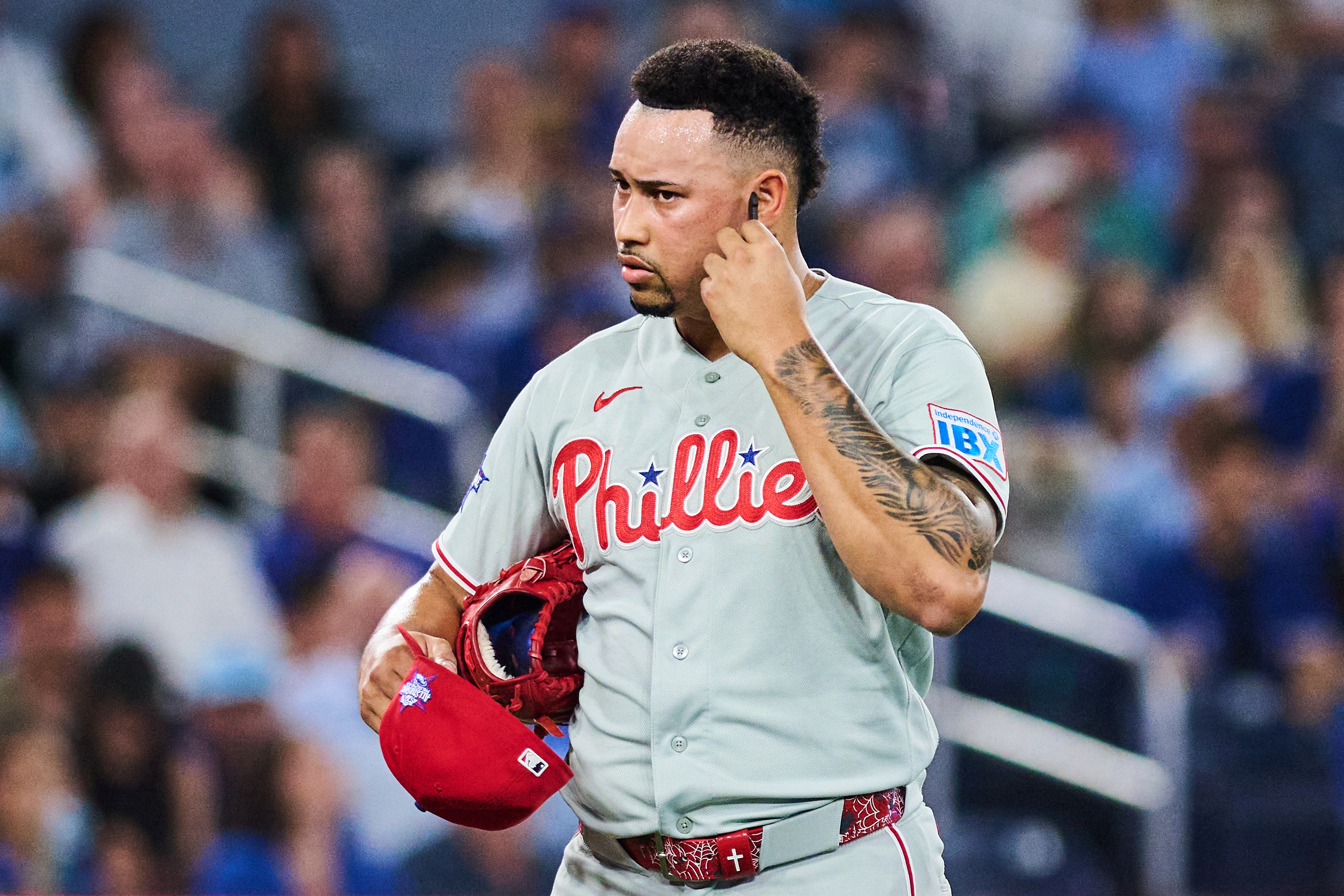
    The Phillies closer had been perfect in his first 16 save opportunities of the season. But on Tuesday, the Blue Jays managed to end that streak, walking Duran off, 3-2, in the ninth inning.

    “You know it’s going to happen at some point,” said interim manager Don Mattingly.

    The first two batters Duran faced singled on ground-ball hits that found holes in the infield. The Jays used two pinch-runners, and a wild pitch brought the tying run home before Brandon Valenzuela hit an RBI single to end it.

    “They just kind of got us in a bind at that point,” Mattingly said. “They run [Daulton] Varsho, and it’s hard to throw anybody out, really, with those guys. So, yeah, it’s one of those games.”

    Duran entered the game after Bryson Stott drove in the go-ahead run in the top of the ninth against Louis Varland. The Blue Jays pitching staff confounded the Phillies’ offense for most of the game, as they struck out 15 times. But with two out in the ninth, Stott punched an opposite-field double to break the 1-1 stalemate.

    It marked just the second earned run that Varland has given up this season.

    The Phillies’ only other run came in the first inning when they strung together doubles from Trea Turner and Brandon Marsh to take a 1-0 lead against starter Dylan Cease. The ball only left Turner’s bat at 64.4 mph, but he was aggressive against Toronto’s rookie right fielder Yohendrick Piñango and wound up on second. He advanced to third on a wild pitch and then scored easily when Marsh laced a slider to right field.

    After that, though, the Phillies couldn’t generate much against Cease. He only allowed one more hit — a single — and walked one while striking out 11. Cease generated 29 swings-and-misses from Phillies hitters, including 10 on his fastball.

    “Just the way his hand is, he hides the ball well,” Stott said. “So you have a split second to see kind of what pitch it is. Usually when they’re not kind of cupping their hand, you can see the pitcher’s fingers or whatever it is, so you kind of have an idea of what’s coming the whole way. But with him, it feels like halfway there, you pick it up, and then he’s throwing 99 [mph]. So it makes a lot of guys late, and his pitches are moving all over the place.”

    Zack Wheeler held Toronto to one run over six innings. He gave up some hard contact early, but managed to escape a few jams. Wheeler allowed a leadoff single in the second inning, but immediately erased the runner with a double play. Kazuma Okamoto followed that up with a double and Wheeler then hit Andrés Giménez with a fastball to put two on. But he stranded both runners with a strikeout.

    “It wasn’t the best, wasn’t the sharpest,” Wheeler said of his outing.

    Wheeler said he found the mound tough and wasn’t able to push off like he normally does, so he had to rely on his upper body more.

    “I think that’s kind of why it wasn’t as sharp,” Wheeler said. “Velo’s down just a tick. So we kind of take those games and throw them out right away.”

    Still, he held Toronto off the scoreboard until the sixth inning, when Wheeler’s cutter to Jesús Sánchez didn’t get high enough above the zone. Sánchez — who had also doubled in the third — sent it into the Phillies’ bullpen in right field for a solo shot that tied the game at 1.

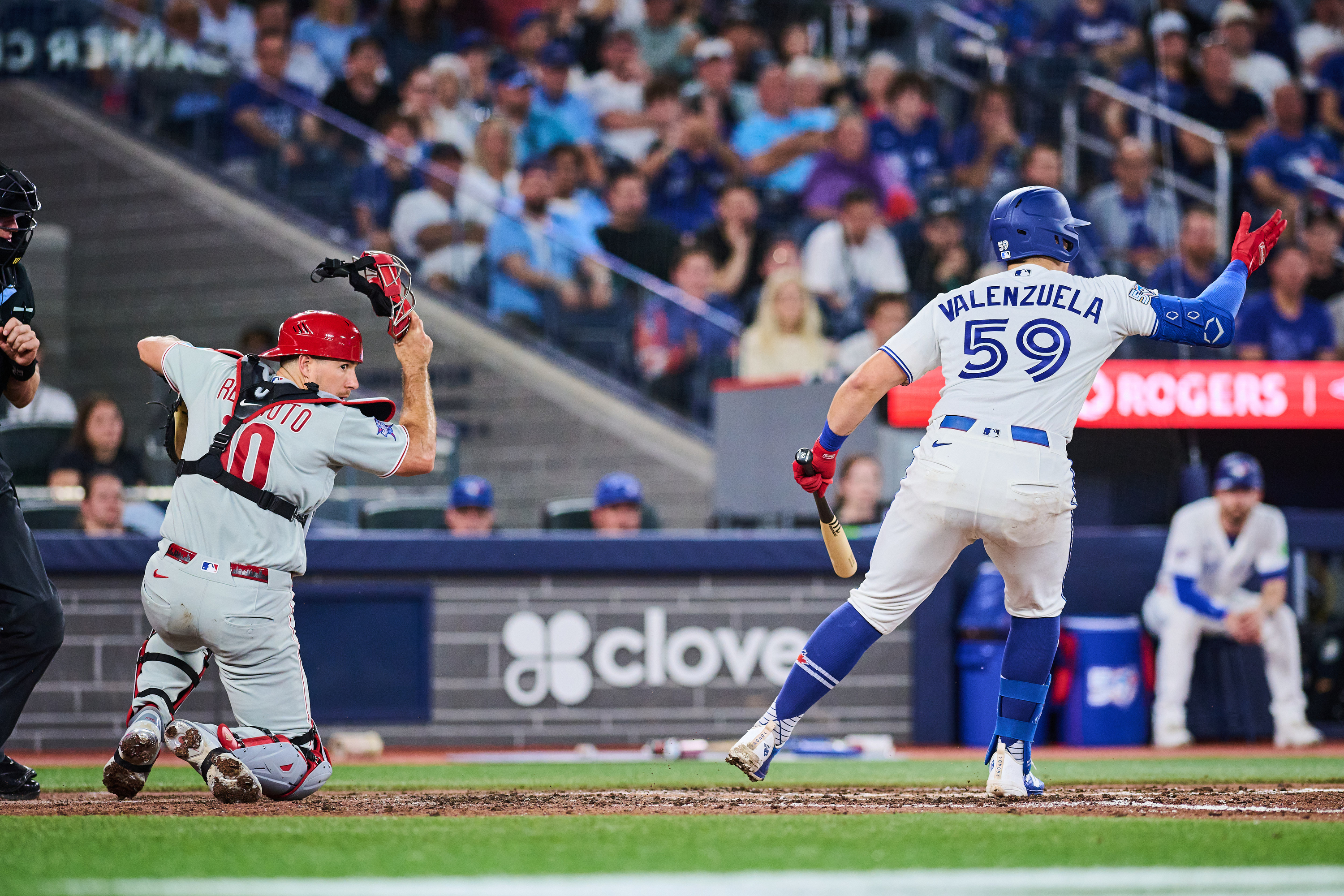
    J.T. Realmuto (left) loses the ball as the Blue Jays’ Brandon Valenzuela (59) waves Myles Straw in to score on a wild pitch during the ninth inning.Sammy Kogan

    “Cease was really good; I thought Zack was good,” Mattingly said. “Obviously, it was one of those games that’s just not going to be a bunch of runs going up, with a guy like Cease and Wheels. … I thought the at-bats were OK. He’s just one of those guys that you’re going to have your hands full when you start the game.”

    Although Cease was cruising, since he was making his first start after being reinstated from the injured list, Toronto manager John Schneider lifted him after six innings and 93 pitches. Former Phillie Jeff Hoffman pitched a scoreless seventh and Mason Fluharty retired the side in order in the eighth, before Stott came through against Varland.

    The Phillies finished with five total hits. Bryce Harper drew their only two walks.

    “You always want to score, especially when you get guys on base,” Stott said. “But felt like when [Cease] needed a pitch, he got it, and sometimes you just run into guys who have that stuff that day, and he kept us off-balance.”

    Orion Kerkering took over for Wheeler in the seventh and pitched a 1-2-3 inning. He returned for the eighth to face Vladimir Guerrero Jr. and induced a line out. José Alvarado retired the next two batters before Duran entered in the ninth.

  • Eagles practice observations: Offense has growing pains; Jalyx Hunt shines; Lane Johnson and Jalen Carter return

    Eagles practice observations: Offense has growing pains; Jalyx Hunt shines; Lane Johnson and Jalen Carter return

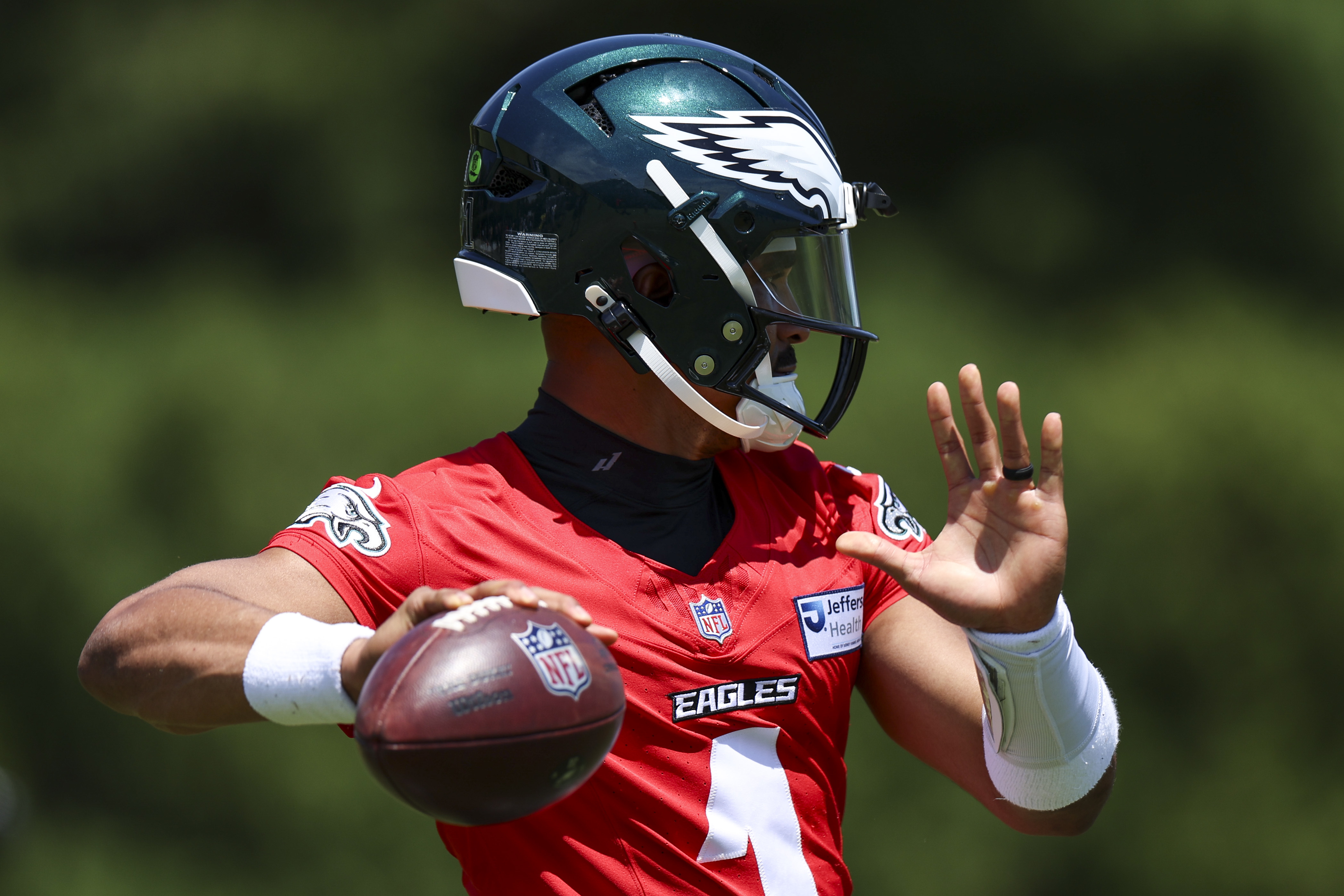
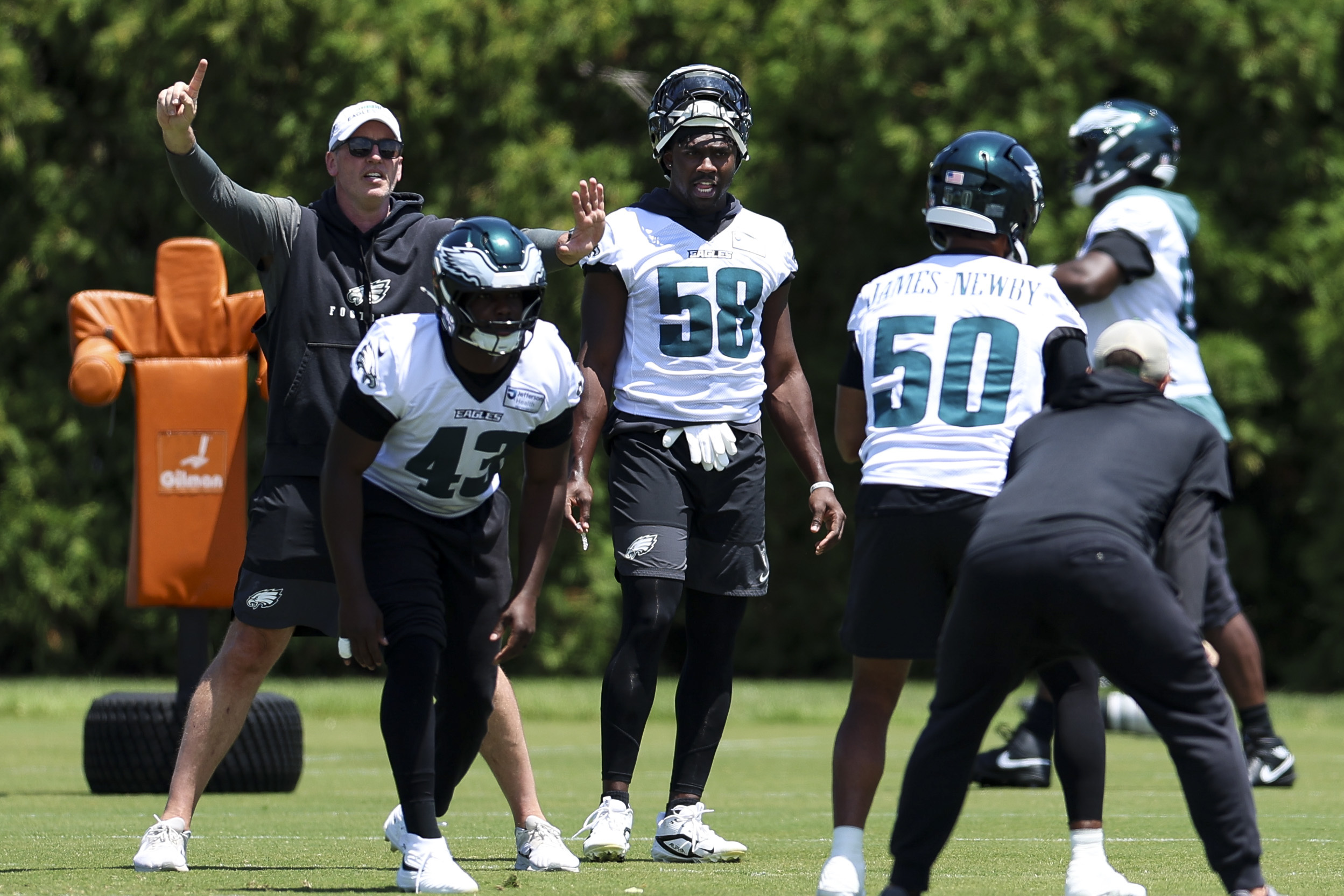
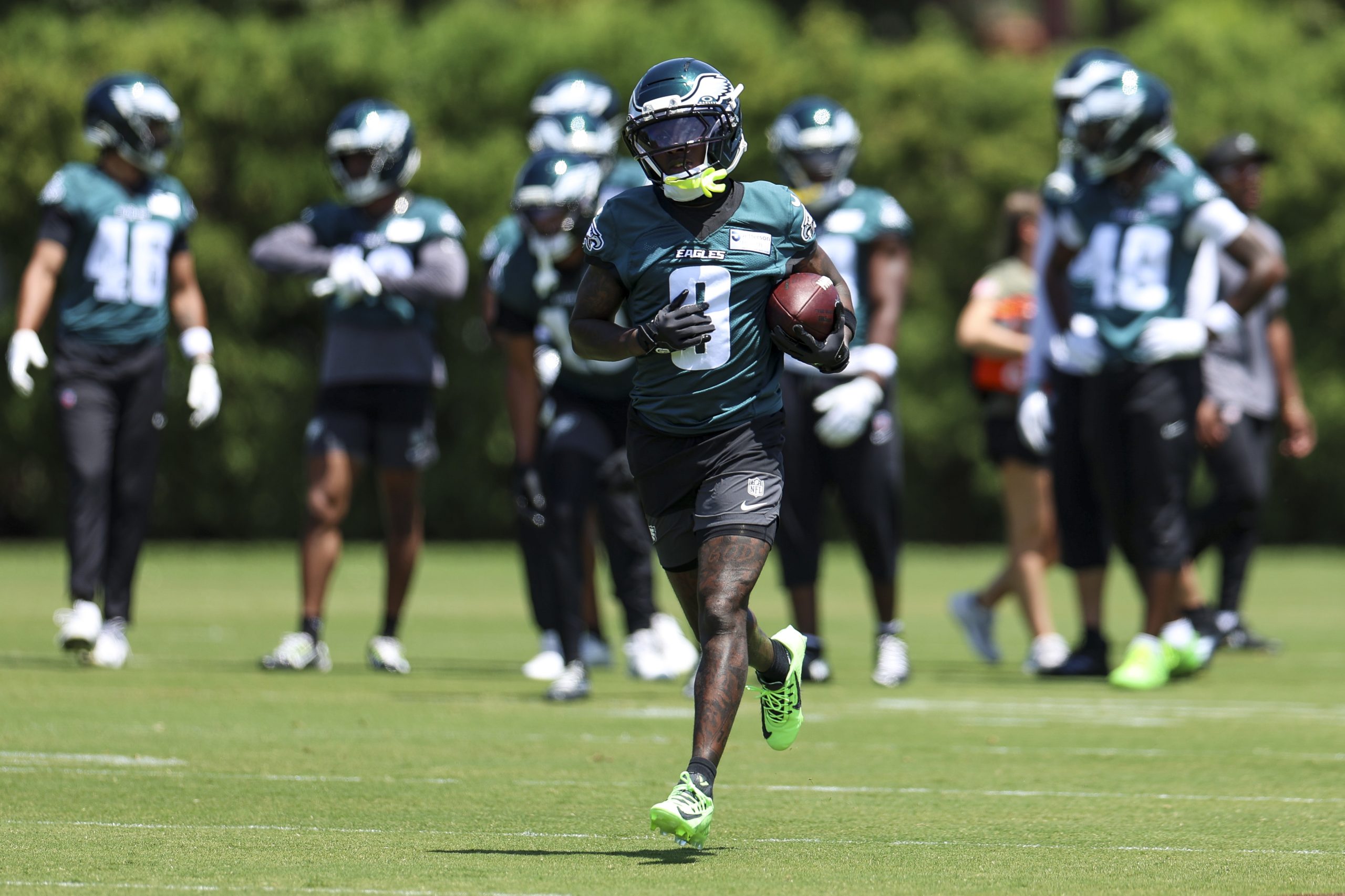
    The Eagles held their first practice of minicamp on Tuesday at the Jefferson Health Training Complex. Here are my observations:

    Pave the Lane

    We had our first Lane Johnson spotting of the spring, and, really, since November when he suffered a season-ending Lisfranc foot injury. The right tackle also spoke with reporters after practice for the first time since October. He talked about former offensive line coach Jeff Stoutland’s departure, among other topics.

    Johnson looked in fine shape. He opted to miss most of the Eagles’ offseason program, but returned for this week’s mandatory workouts. We also got our first look at defensive tackle Jalen Carter, who was absent from the two open organized team activities. He is believed to be fully recovered from his shoulder woes, but he didn’t participate in team drills. Outside linebacker Joe Tryon-Shoyinka was the only player from the 90-man roster who was missing.

    Lemon drill

    Makai Lemon remained out with an apparent hamstring strain. The rookie wide receiver was initially sidelined last week. If he misses Wednesday’s session, he should be fully recovered in time for training camp. Tight end Grant Calcaterra was a new addition to the injury list and watched practice. Linebacker Jihaad Campbell is still working his way back from shoulder surgery.

    Receiver Britain Covey was still out, as were fullback Carson Steele, linebacker Chandler Martin and safety Tucker Large. Edge Jonathan Greenard also wasn’t active. He, too, is recovering from shoulder surgery, but should be ready by late July.

    Offensive start

    It would be simple to focus on Vic Fangio’s defense considering how well it performed in seven-on-seven and 11-on-11 drills. His first two units outplayed the offense in my estimation. And maybe they should have since first-time offensive coordinator Sean Mannion is installing a new scheme. Fangio returns seven starters on his side of the ball with many entering Year 3 in his system.

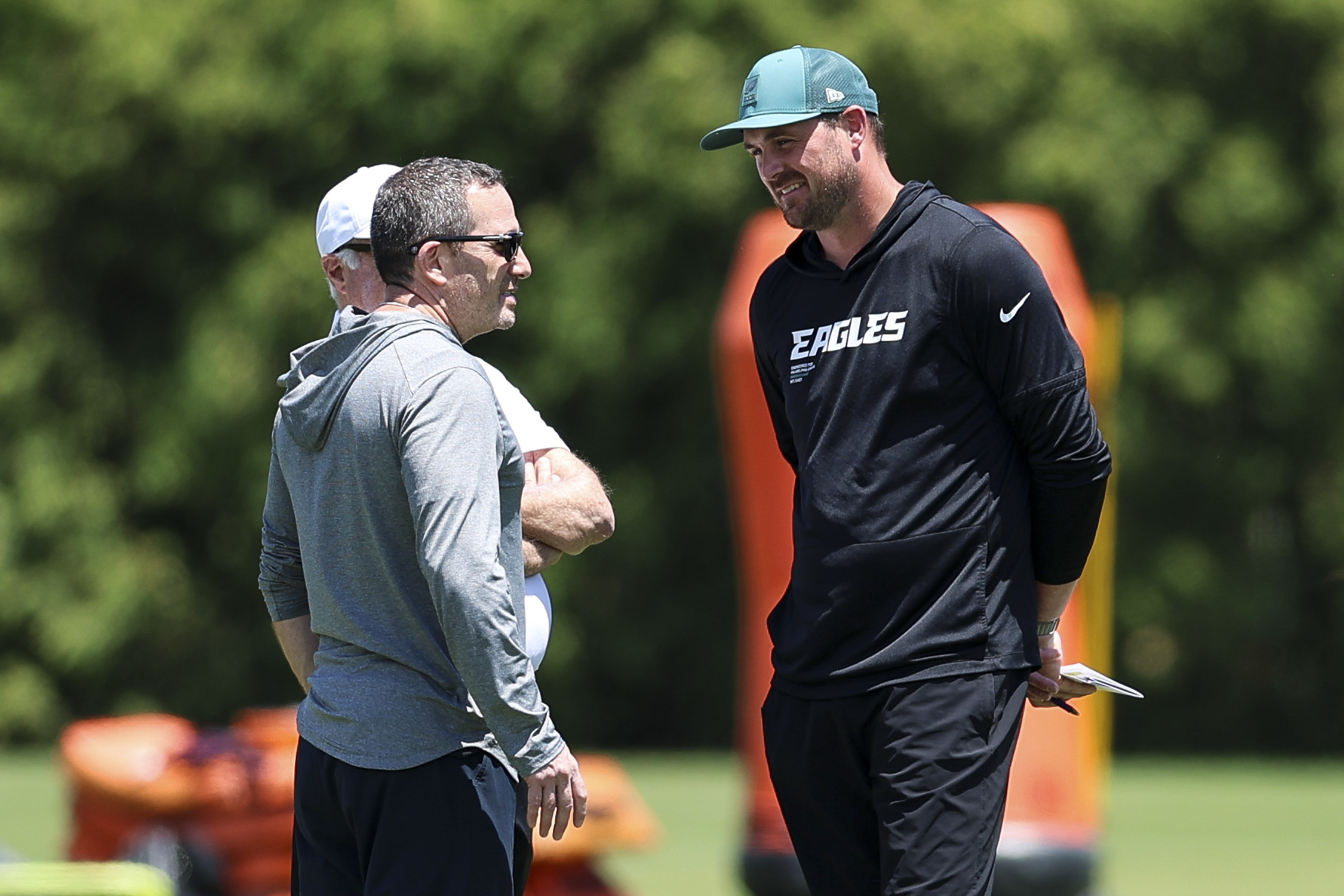
    Sean Mannion (right), shown with Howie Roseman (left) and Jeffrey Lurie during mandatory minicamp on Tuesday. Mannion’s first-team offense struggled.Monica Herndon / Staff Photographer

    But this offseason is mostly going to be about how quarterback Jalen Hurts and Co. adjust to learning a new offense. There are going to be some ugly moments early on. And we saw plenty on Tuesday. Hurts threw over and behind a covered (by Riq Woolen) DeVonta Smith on two pass plays during seven-on-sevens. The second could have been intercepted by post safety Drew Mukuba if he wasn’t intent on breaking up the pass. There was another toss into traffic that surprised receiver Hollywood Brown and bounced off his shoulder. In team drills, Hurts heaved one ahead of Smith, who had cornerback Quinyon Mitchell on his heels. He later just flicked a pass out of bounds rather than to an open Smith, who was near the line of scrimmage.

    There were completions, with most of them of the check down variety to running back Saquon Barkley or tight end Dallas Goedert as a safety outlet. There were also a few over-the-middle hookups. But the first-unit pass offense, which often worked from under center and off play action, looked out of sorts. On a red zone play, Smith and receiver Dontayvion Wicks were run out of bounds by defenders and Hurts had nothing. Nevertheless, it’s way too soon to make any proclamations about the season. There were bound to be growing pains.

    Dutch Dalton

    The same thinking could apply to the apparent competition for the backup quarterback spot. Andy Dalton continued to get snaps ahead of Tanner McKee. We haven’t been to every workout this spring and were told that the two split time with the second offense. But McKee no longer has a firm grip on the No. 2 spot, which is mildly surprising.

    Eagles linebacker Jalyx Hunt (center) intercepted Andy Dalton during minicamp practice on Tuesday.Monica Herndon / Staff Photographer

    It’s not like Dalton has overly impressed. Like Hurts a week ago, Dalton’s first pass in seven-on-sevens resulted in an interception. Outside linebacker Jalyx Hunt dropped into coverage and undercut a slant route for the pick. Later on, Dalton was nearly intercepted by cornerback Jonathan Jones. He had some solid throws, too. Dalton found receiver Elijah Moore down the seam on a busted coverage. He twice hit receiver Johnny Wilson on crossers. And he found Danny Gray in the end zone after the receiver beat his man to the sideline.

    Tight lies

    As Goedert said after practice, the tight end position is central to the Shanahan/McVay style of offense. A lot of that has to do with deception and marrying the run with the pass. But Goedert and others have been featured a fair amount in what is essentially a passing camp. New guy Johnny Mundt might have been brought in primarily as a blocker, but he broke through the secondary and probably would have pulled in a Dalton deep ball had safety Michael Carter not held him.

    E.J. Jenkins was on the receiving end of passes from Hurts and Dalton. He saw more time with Calcaterra out. Rookie tight end Eli Stowers has been quiet in the practices we’ve attended. He has a lot to learn.

    Bell tolls

    Johnson’s return meant a slight change on the offensive line with rookie Markel Bell dropping from first-team right tackle to second-team left tackle. Here’s a look at the updated depth chart:

    Drew Kendall was the lone O-lineman I didn’t spot in team drills.

    Depth thoughts

    Jordan Davis and Moro Ojomo were the first-team defensive tackles in nickel with Carter watching. Byron Young was the third interior lineman in base personnel and was still ahead of second-year defensive tackle Ty Robinson.

    Jeremiah Trotter Jr. took most of the first-unit repetitions alongside Zack Baun at inside linebacker with Campbell out.

    Trotter was around the ball all practice. He blitzed and forced Hurts outside the pocket in team drills. A play later, he filled the hole on a Barkley run. And he nearly picked off rookie quarterback Cole Payton when he worked with the third-unit defense. (Payton almost tossed another interception on the next play, but cornerback Tariq Castro-Fields couldn’t hang on to a ball that hit him in the hands.)

    Eagles wide receiver Hollywood Brown is one of the new additions vying for a role in the remade position group.Monica Herndon / Staff Photographer

    Receiving line

    Coach Nick Sirianni didn’t have much to say about A.J. Brown, who was traded to the Patriots last week. He instead focused on the Eagles’ existing receivers when asked about Brown before practice. Sirianni first mentioned Smith, Lemon, and Wicks before he got to Hollywood Brown and Moore. He also mentioned Wilson and Darius Cooper, who didn’t partake in team drills, as “dirty work” receivers.

    Brown and Moore were featured most on this day, partly because of the first-unit offense’s struggles. Brown caught several passes from McKee late in the session and flashed strong hands on low throws. Moore, playing with the starters, was set up on a screen pass, but Young wasn’t fooled by misdirection. The receiver later caught a seed from Hurts over the middle.

    Highs and lows

    McKee had some highlights with the third group. He connected with tryout receiver James Proche on a few occasions. He hit receiver Samori Toure over the middle off play-action.

    There were defensive standouts, as well. Hunt and Ojomo teamed up for a would-be sack. Defensive tackle Ta’Quon Graham batted a Dalton pass. Rookie cornerback Maximus Pulley broke up a Payton toss. Chance Campbell almost got to a Dalton misfire. And corner Kelee Ringo forced a wide throw in the end zone in man coverage.

    Extra points

    I narrowed my binoculars on the Eagles’ two international pathway prospects: defensive tackle Uar Bernard and edge Joshua Weru. Needless to say, getting those two acclimated to football at this level will be a process. … The Eagles return on Wednesday for the last practice of minicamp.

  • Bucks County man accused of creating child porn using X’s AI chatbot, Grok

    Bucks County man accused of creating child porn using X’s AI chatbot, Grok

    Police have arrested a Bucks County man accused of creating child sexual abuse material using Grok, the chatbot linked to the social media platform X.

    Harry Tiffany IV, 66, of New Britain Borough, was arraigned Tuesday and faces multiple felonies, including sexual abuse of children and possession of child pornography.

    The Bucks County District Attorney’s Office said the investigation began last month after the National Center for Missing and Exploited Children received automated reports from X flagging 37 images Tiffany allegedly uploaded or shared through Grok in April.

    The investigation led to email and IP addresses linked to Tiffany’s home. During a search by authorities Friday, investigators found “multiple computer-generated files depicting minors” on Tiffany’s Grok application, according to the district attorney’s office.

    “Whether a predator is utilizing AI applications to generate illicit material or hiding behind gaming platforms to lure our children, the dangers are immediate,” said Bucks County District Attorney Joe Khan.

    The Center for Countering Digital Hate, a nonprofit focused on “making the internet safer,” estimated Grok created about 3 million sexualized images during an 11-day period between Dec. 29 and Jan. 9, including 23,000 that appear to depict children.

    X limited Grok’s ability to create sexualized images of real people in January after photos flooded the social media platform. But those restrictions appear easy to bypass, according to a risk assessment conducted by Common Sense Media.

    X did not respond to a request for comment.

    X and Roblox added to Buck County’s lawsuit against social media companies

    Tiffany’s arrest came one day after Bucks County expanded a federal lawsuit against tech giants and social media companies accused of harming children to include X, Roblox, Discord, and Meta, the parent company of Facebook.

    The lawsuit, first filed in California in 2023, previously included TikTok, Facebook, Instagram, Google’s YouTube, and Snapchat. It aims to halt what the complaint described as deceptive practices by tech companies, especially when they market their platforms as safe for children.

    Last week, Alec James Magill, 32, of Upper Southampton, Bucks County, was sentenced to just under two years in prison after using Roblox and Telegram to target young girls and manipulate them into sending explicit material, despite protections put in place by the platforms.

    The lawsuit also demands unspecified financial damages for the rising costs of mental health services that Bucks County offers to young people.

    According to screenings conducted during the 2021-22 academic year, 34% of the country’s school-age youth were at risk for moderate to severe depression, and 40% percent were at risk for significant anxiety. More than 25% of students reported a history of suicidal thoughts.

    “An entire generation has now reached maturity with social media and without the protections they deserved,” Diane Ellis-Marseglia, chair of the Bucks County Board of Commissioners, said in a news conference Monday. “So now we will look forward to preventing such failures, stepping up to make sure that things change, and to attempt to make reparations to those youth.”

  • Philly progressives made gains in Democratic ward elections. But party chair Bob Brady remains well-positioned for reelection.

    Philly progressives made gains in Democratic ward elections. But party chair Bob Brady remains well-positioned for reelection.

    Former City Councilmember Jannie Blackwell, who has been a fixture of Philadelphia politics for decades, is no longer a Democratic ward leader. State Sen. Sharif Street — weeks after losing the city’s heated congressional race — just became one.

    And the Rev. Lewis Nash Sr., who in 2024 was removed as leader of the 47th Ward after The Inquirer reported he was recorded making anti-LGBTQ+ remarks, has returned to the post after being reelected in his North Philadelphia ward Monday night.

    Meanwhile, the upstart group Wards That Work, which was backed by progressive activists and sought to recruit hundreds of people to run for committee openings in the May 19 Democratic primary, claimed victories in six wards that were previously seen as aligned with the party establishment or more centrist Democrats.

    Despite those notable gains, fewer than one-third of Philadelphia’s 69 Democratic ward leaders are seen as closely aligned with the party’s left wing.

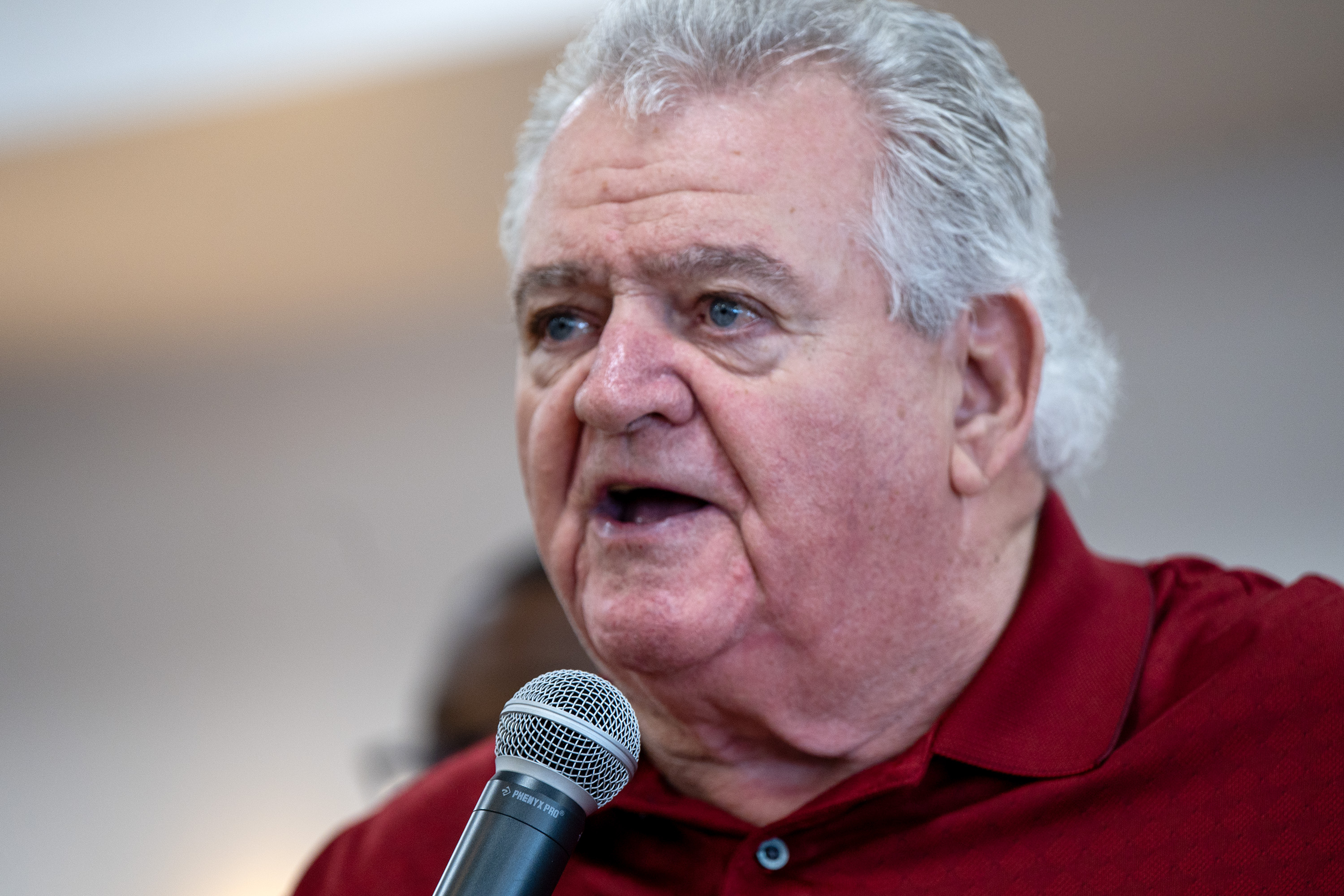
    That means Bob Brady, who has led the local Democratic Party since 1986 and is seen by many as the embodiment of the political old guard, will likely coast to victory in party leadership elections — decided by the ward leaders — next week, securing an 11th term as chair of the Democratic City Committee.

    The party’s internal politics have become a key battleground in the fight between progressive upstarts and the Democratic establishment. There has also been a renewed push to grow the number of “open wards” — those that allow committeepeople to vote on political endorsements rather than allowing ward leaders to decide unilaterally.

    Brady, a former U.S. representative, has over the last few weeks struck a conciliatory tone regarding the party’s left wing after clashing with activists in a series of elections, most notably when the party sought to punish committeepeople who endorsed the elections of Councilmembers Kendra Brooks and Nicolas O’Rourke from the progressive Working Families Party.

    “These labels — Working Families, Reclaim, socialist — the best labels they have that I love is they’re Democrats,” he said in an interview, referring in part to Reclaim Philadelphia, a group inspired by U.S. Sen. Bernie Sanders’ presidential runs that organized the local progressive movement’s first successful ward takeovers in 2018.

    Now, he said, he is focused on unity as Democrats hope to make gains in this year’s midterm elections and defeat candidates aligned with President Donald Trump in future elections.

    “We can come together and beat that nut in the White House,” Brady said.

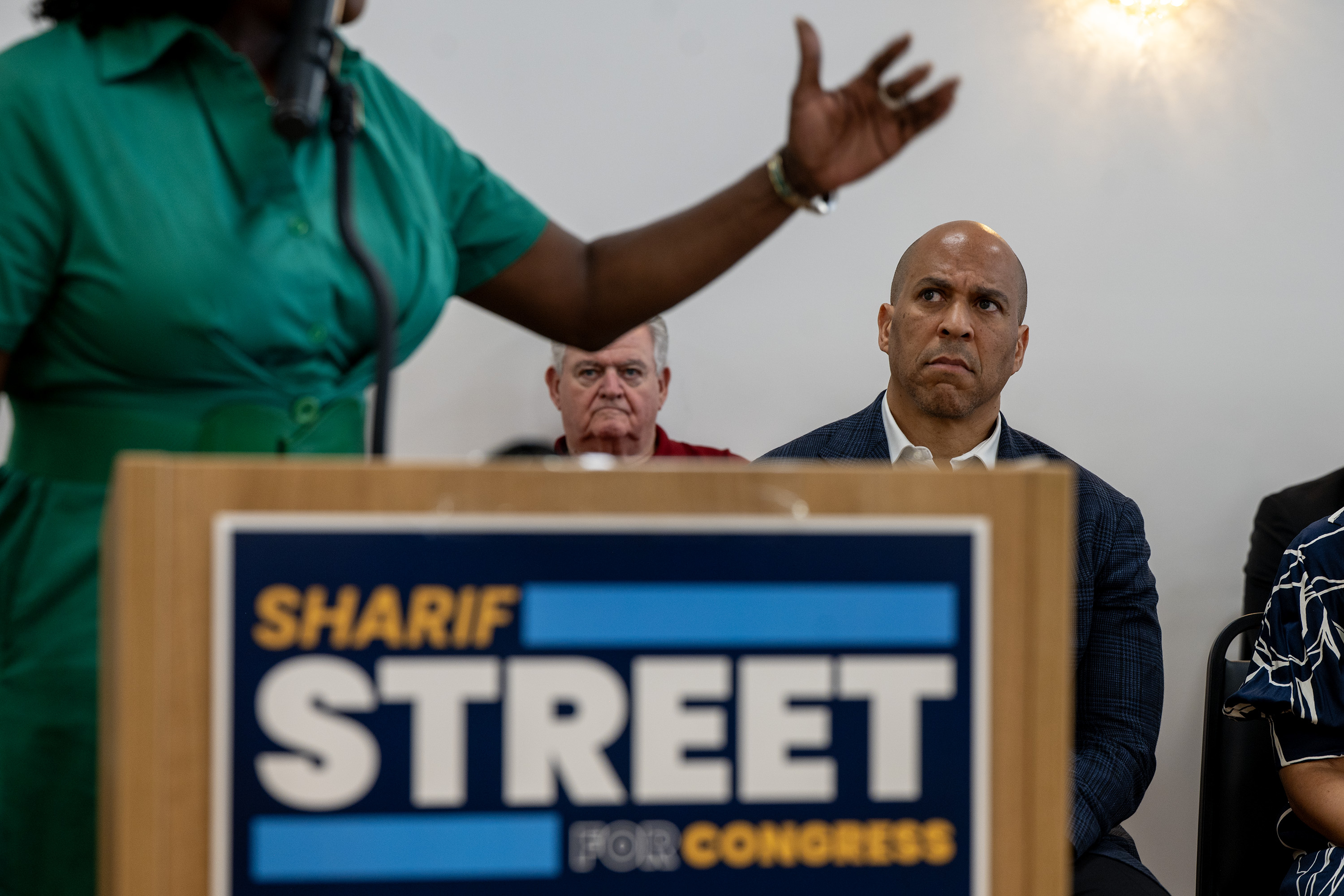
    Philadelphia Democratic Party Chairman Bob Brady (left) and U.S. Sen. Cory Booker (right) listen as Mayor Cherelle L. Parker speaks in support of State Sen. Sharif Street at a get-out-the-vote rally at the Church of Christian Compassion in West Philadelphia Monday, May 18, 2026 the day before Tuesday’s Democratic primary election for the 3rd Congressional District.Tom Gralish / Staff Photographer

    Earlier this year, however, Brady acknowledged that the Democratic City Committee funded mailers opposing some of the committeepeople backed by Wards That Work, and many on the left are still hoping for major changes in the local party.

    District Attorney Larry Krasner, for instance, recently called on Brady to resign, and State Rep. Chris Rabb, a democratic socialist who last month won the Democratic primary for an open Philadelphia congressional seat, has emerged as a leading critic.

    Rabb beat Street, the party’s endorsed candidate, in the 3rd Congressional District race, and has accused the city committee of neglecting the work of turning out the vote, instead concerning itself with backroom dealings among party insiders.

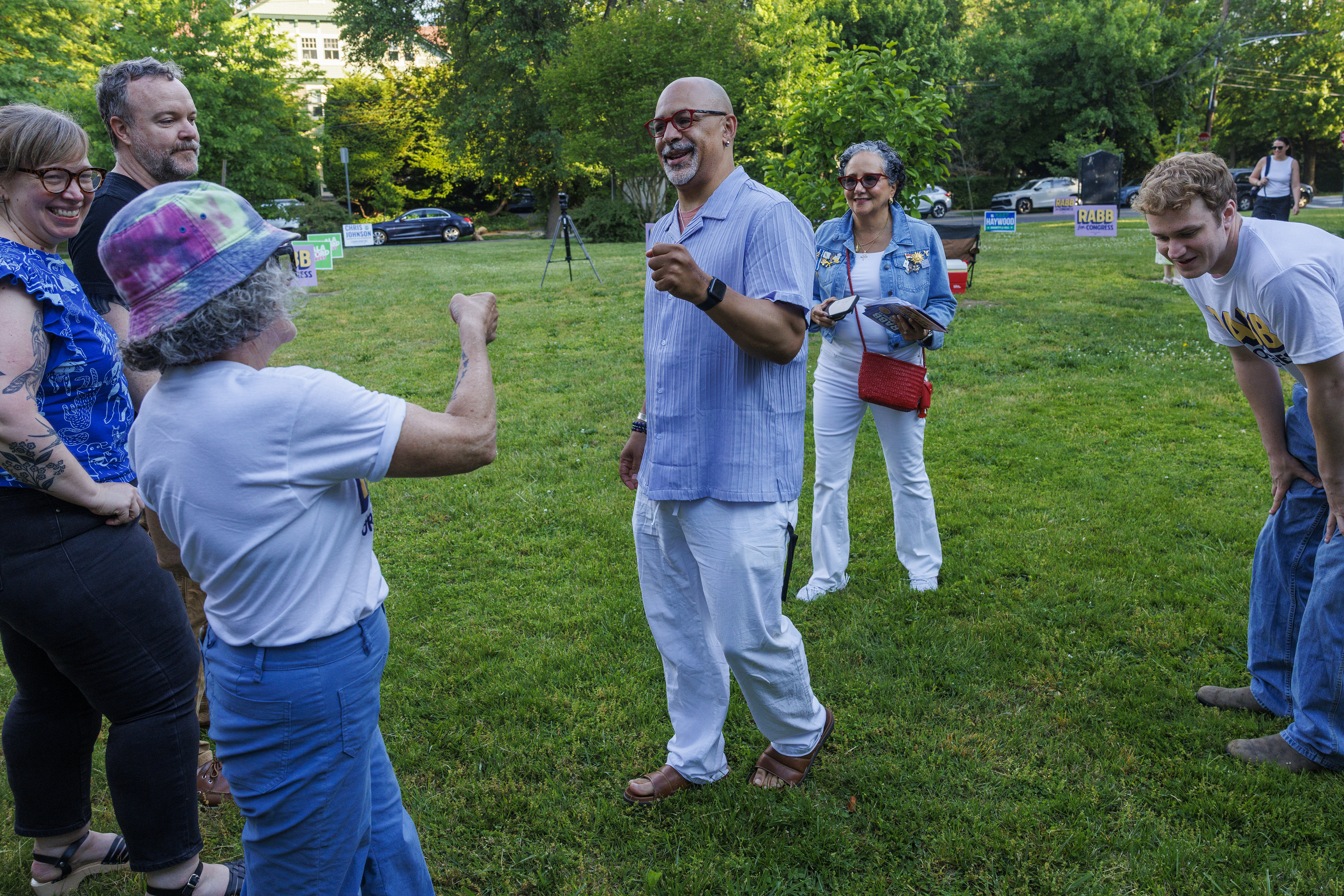
    State Rep. Chris Rabb greets supporters on election day. He is arriving to his polling place to vote, Grace Epiphany Episcopal Church, Philadelphia, Tuesday, May 19, 2026.Alejandro A. Alvarez / Staff Photographer

    Rabb has not explicitly called for Brady to resign. But he is now calling for a dramatic overhaul of the party, from its leaders to its bylaws to the city’s antiquated ward boundaries.

    “What I’m asking for is for the ward leaders — whatever candidate is running for chair, whether it’s Bob Brady or anyone else — that they demand that their first order of business is to overhaul the bylaws by Labor Day [to focus] on building a local party built on transparency integrity and inclusion,” Rabb said in an interview last week.

    Progressives make gains

    On paper, Philadelphia’s Democratic Party structure is bottom-up. Every four years, during the primaries of presidential midterm cycles, registered Democrats elect two committeepeople from their precincts, as they did this year on May 19. The committeepeople then elect neighborhood-level ward leaders, and the ward leaders in turn elect the top officials in the city party, including Brady.

    But in practice, many critics of the city’s old guard see a top-down reality, with Brady and other high-ranking city officials controlling the party’s agenda.

    Progressives are hoping to wrest control of the party from the establishment or to force reforms that make it more hospitable to left-leaning candidates. But it remains an uphill battle given the diffuse nature of the party system.

    Among the notable progressive wins in Monday night’s ward elections:

    • 5th Ward (Center City): Ryan Alsayegh, a political consultant currently working for State Reps. Tarik Khan and Joe Hohenstein, unseated Mike Boyle.
    • 25th Ward (Port Richmond, Kensington): Alexandria Mercedes Murphy, a neurophysiologist and volunteer with Reclaim Philadelphia, succeeded Tommy Johnson.
    • 31st Ward (Fishtown, East Kensington): Molly Hartman, a staffer for Councilmember Rue Landau, faced no opponents in her bid to succeed Margaret Rzepski.
    • 27th Ward (University City): Benjamin Moss-Horwitz, a staffer for State Rep. Rick Krajewski, won a contested race to succeed retiring ward leader Carol Jenkins, a party stalwart.
    • 46th Ward (Squirrel Hill, Cedar Park): James Bridgeforth, a University of Delaware professor, ran an uncontested race to succeed Blackwell, who retired this year after defeating a progressive challenger for her ward in a contentious election four years ago.

    In West Philadelphia’s 60th Ward, State Rep. Amen Brown, a centrist Democrat, was unseated by Lorraine White-Johnson.

    White-Johnson, who had the backing of Wards That Work, said in an interview that she is not aligned with one faction and welcomes all Democrats. She added that she plans to explore opening up the ward but has not made formal plans to do so yet.

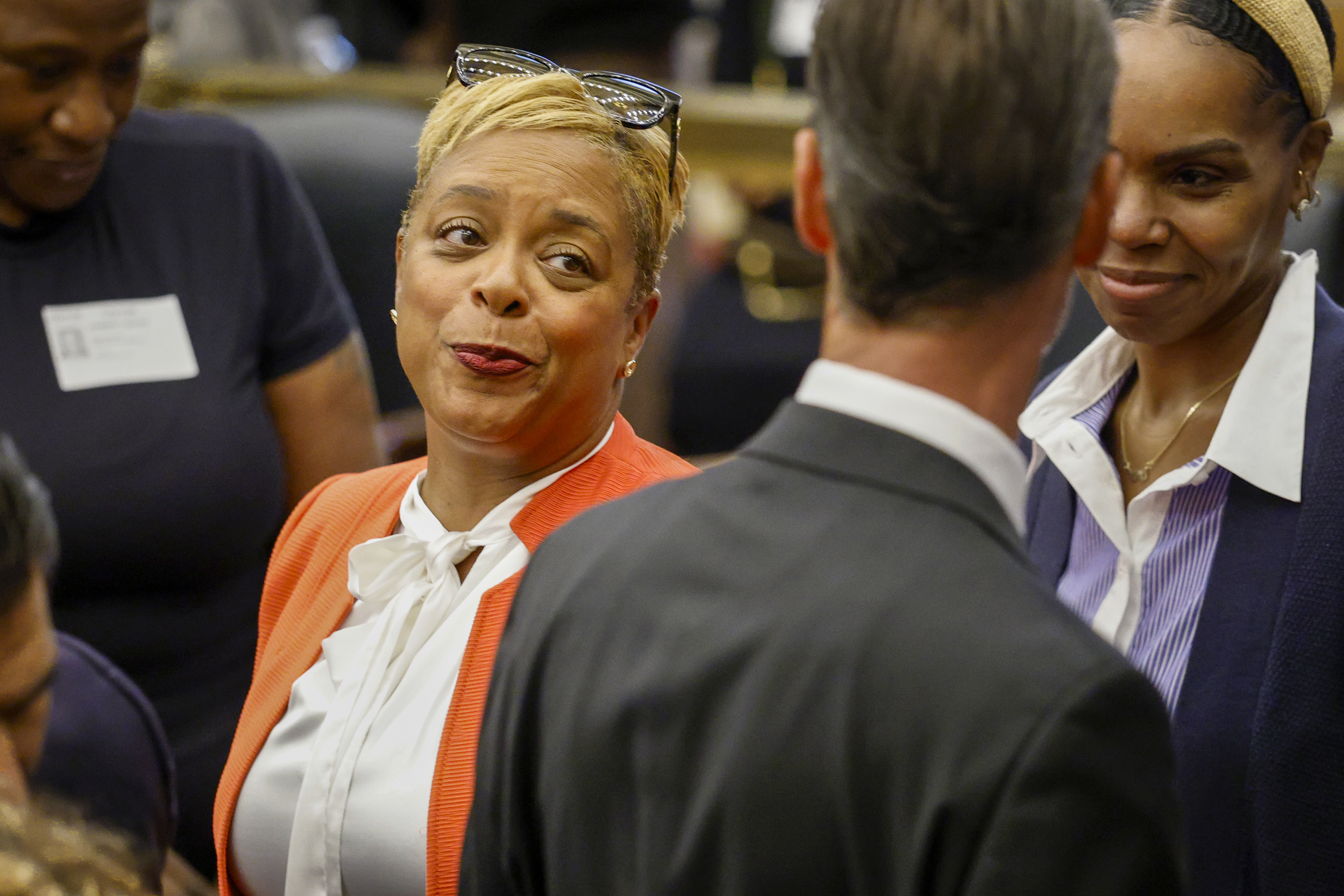
    Philadelphia City Councilmember Cindy Bass on Thursday, September 11, 2025.Alejandro A. Alvarez / Staff Photographer

    In Mount Airy’s 22nd Ward, Councilmember Cindy Bass declared herself reelected to a new term in a controversial move by saying she won a contested voice vote of committeepeople and denying motions for a roll-call vote that could have clarified the results. Her opponent, Octavius Price, was backed by progressive organizers and said he plans to challenge the election.

    Some notable ward election results did not involve major ideological shifts.

    Nash, who on Tuesday denied having made the anti-LGBTQ+ comments that previously cost him his seat, won a three-way race to reclaim the 47th Ward.

    “I forgive everybody that was involved with those unforeseen circumstances,” Nash said in an interview Tuesday. “To anyone that was offended by the alleged comments, forgive me and the person who made those comments, allegedly and falsely, and let’s move forward.”

    Also in North Philadelphia, Street, a former chair of the Pennsylvania Democratic Party, unseated 11th Ward leader Dwayne Lilley just weeks after losing his congressional bid to Rabb.

    In a statement, Street said he would “take a back-to-basics approach, listening to my neighbors about their concerns and filling vacant committee member seats.”

    “Last month’s election results galvanized my belief that we need to build the party from the ground up,” Street said in a statement. “We need to increase voter turnout in Black communities, like North Philadelphia, by demonstrating every day that Democrats are fighting for them.”

    Staff writer Anna Orso contributed to this article.

  • The science around GLP-1 drugs and cancer is suddenly getting a lot more interesting

    The science around GLP-1 drugs and cancer is suddenly getting a lot more interesting

    The story of GLP-1 drugs keeps getting bigger.

    First they transformed the treatment of diabetes. Then they upended the science — and culture — of weight loss. Now a growing body of research is raising another possibility: that these drugs may help protect against cancer.

    At this year’s American Society of Clinical Oncology (ASCO) meeting in Chicago, more than 40 studies, abstracts, oral presentations, and poster presentations examined the relationship between GLP-1-based drugs and cancer. The results were strikingly consistent. Taken together, they suggest that people taking medications such as Ozempic, Wegovy, and Mounjaro may develop certain cancers at lower rates than comparable patients who are not taking the drugs — and that those already diagnosed may experience a slower decline and better outcomes.

    For oncologists, the accumulation of evidence is hard to dismiss. The findings are “super promising,” said Mark Orland, a cancer researcher at the Cleveland Clinic. “We’re really excited to be on the forefront of looking at the effects of these drugs.”

    The studies spanned many of the 13 cancers associated with obesity. Among the most prominent is an analysis from the University of Pennsylvania. It looked at data from more than 100,000 women and found lower rates of breast cancer among those taking the drugs. Another followed more than 10,000 patients and found that those taking the medications were significantly less likely to progress to metastatic disease across four solid tumors.

    Also drawing attention were findings related to lung cancer — because it is not generally associated with weight — as well as a few studies hinting that GLP-1s could enhance the effectiveness of cancer treatments. Those findings have fueled a particularly intriguing possibility: that GLP-1s may be acting independently of weight loss — by reducing inflammation, altering metabolic pathways involved in cancer development, or perhaps even slowing tumor growth itself.

    None of this proves that GLP-1s prevent cancer, and doctors said the evidence is not yet strong enough to recommend prescribing the drugs for that purpose. Most of the findings come from observational studies, which can identify associations but cannot establish cause and effect. That distinction matters. Patients who take GLP-1s may differ from those who do not in ways researchers cannot fully measure, even after statistical adjustments. Many treatments that appear effective in observational data fail in randomized clinical trials, where patients are assigned to receive a drug or a comparison treatment.

    Scientists point to metformin as a cautionary example. During the 2010s, the diabetes drug was repeatedly linked to lower cancer risk in observational studies, but those benefits largely disappeared when tested in clinical trials.

    For now, the GLP-1 findings remain a hypothesis rather than a conclusion. Yet the growing volume of evidence has turned the question into a serious area of investigation.

    The larger question raised by the findings is whether medicine has underestimated how many diseases share the same underlying biology. GLP-1s keep forcing medicine to redraw the boundaries between diseases that once seemed separate. Diabetes, obesity, heart disease, kidney disease, addiction, dementia, cancer — the emerging theory is that many of these conditions may share more than researchers appreciated.

    To Gilberto de Lima Lopes, chief of medical oncology at the Sylvester Comprehensive Cancer Center at the University of Miami, the cancer findings fit into a broader pattern. GLP-1s increasingly resemble “a really interesting longevity drug,” he said — one that may influence enough biological processes to extend life in ways researchers are only beginning to understand.

    “The potential benefit is real,” he said, “and it makes biological sense.”

    Preventing cancer

    The connection between obesity and cancer is one of the most established findings in cancer epidemiology. Excess body fat does more than add weight to the body. The tissue is biologically active, producing hormones and inflammatory molecules that can influence how cells — including tumors — grow, divide, and repair themselves.

    “We know obesity is a risk factor, but we don’t understand how,” said Elizabeth McDonald, a physician and radiology professor at the Hospital of the University of Pennsylvania.

    McDonald was among the researchers behind one of the conference’s most talked-about findings. Like much of the new GLP-1 research presented, her study relied on analyzing existing medical records rather than a randomized clinical trial. She examined records from about 100,000 women ages 45 to 80 undergoing breast imaging and found that after accounting for differences in age, obesity, diabetes, and other risk factors, GLP-1 users remained roughly 30% less likely to develop breast cancer.

    McDonald said the findings build on years of studies in lab-grown cells and animals that have suggested GLP-1 drugs can slow cancer cell growth, enhance the effects of chemotherapy and influence other pathways linked to cancer development.

    A separate breast cancer study, led by Jasmine Sukumar of MD Anderson Cancer Center and also presented at the ASCO meeting, analyzed records from more than 137,000 breast cancer patients between 2014 and 2023. In a matched analysis, women taking GLP-1 drugs had markedly better survival: Nearly 96% were alive five years after surgery, compared with about 90% of similar patients who were not taking the medications.

    For McDonald and Sukumar, the question is no longer whether the signal is interesting. Given the growing number of large studies finding similar results, they said, the next step is to test the hypothesis in randomized clinical trials.

    “We are nearing the ends of years of research leading up to this,” McDonald said.

    Sukumar said the consistency of the findings across multiple studies was particularly encouraging.

    “All the studies have slightly different designs, and yet we are still seeing some absolute benefit with GLP-1s,” she said.

    The prevention signal extended beyond breast cancer. Studies of pancreatic cancer, acute myeloid leukemia, and several other malignancies also found lower cancer rates among patients taking GLP-1 drugs.

    A researcher at University Hospitals Seidman Cancer Center and Case Western Reserve University, Sarina Ailawadi, reported that among patients with chronic pancreatitis — a major risk factor for pancreatic cancer — those taking GLP-1 drugs were more than 50% less likely to develop the disease, one of the deadliest malignancies.

    Another study pointed to a possible benefit in acute myeloid leukemia. Colton Jones, a fellow at the Mays Cancer Center at the University of Texas, found that GLP-1 use was associated with a 63% reduction in risk. Jones calculated what such an effect might mean at a population level. If roughly 20 million Americans are now taking GLP-1 drugs, he estimated, the association could translate into approximately 1,500 fewer leukemia cases.

    “That is a good number,” Jones said. If the findings hold up, he added, “this could revolutionize how we prevent cancer on the whole.”

    Slowing progression

    Orland’s work began with a single patient. More than a year ago, he noticed something unusual in a patient with clonal hematopoiesis of indeterminate potential, or CHIP, a blood disorder associated with an elevated risk of leukemia and other diseases. After the patient began taking a GLP-1 drug, the number of mutant blood cells associated with the condition declined.

    The case was hardly proof of anything. But it was enough to make Orland wonder whether the drugs were affecting cancer biology in ways researchers had not appreciated. He and his colleagues began combing through hundreds of thousands of medical records to test the idea that GLP-1s, when started after a cancer diagnosis, might slow disease progression. To isolate the effect of the drugs, they compared patients taking GLP-1s with similar patients receiving other diabetes medications.

    The results, published in the Journal of Clinical Oncology, showed that patients taking GLP-1 drugs were 38 to 50% less likely to progress to metastatic disease in four cancers: lung, breast, colorectal, and liver. One possible explanation, Orland said, is that the drugs’ anti-inflammatory and immune-modulating effects make it harder for cancer cells to thrive and spread.

    Boosting existing treatments

    Two studies presented at the ASCO meeting raised a possibility that goes beyond cancer prevention: that GLP-1 drugs may improve outcomes for patients who already have advanced cancer.

    In one abstract, Shalin Rawal of NYMC at St. Mary’s General Hospital and Saint Clare’s Health examined patients with metastatic colorectal cancer receiving immune checkpoint inhibitors, a class of drugs that helps the immune system recognize and attack tumors. Patients taking GLP-1 drugs had consistently lower mortality rates than comparable patients who were not taking the drugs at three years, five years, and beyond.

    Researchers said the findings suggest that GLP-1s may enhance the effectiveness of immunotherapy, potentially through their anti-inflammatory and immune-modulating effects. Another possibility, said Michael Maroules, a New Jersey-based oncologist who helped with the study, is that GLP-1s make it easier for immune system cells to recognize and target cancer cells.

    Khvaramze Shaverdashvili of Thomas Jefferson University led a separate analysis of more than 25,000 patients with metastatic non-small cell lung cancer treated with targeted therapies known as tyrosine kinase inhibitors, or TKIs. Patients taking GLP-1 drugs had substantially better outcomes, with five-year survival of 63% compared with 40% among nonusers.

    Although the studies involved different cancers and different treatments, they pointed to the same underlying hypothesis: that GLP-1s may alter the body’s inflammatory and metabolic environment in ways that make cancer therapies more effective.
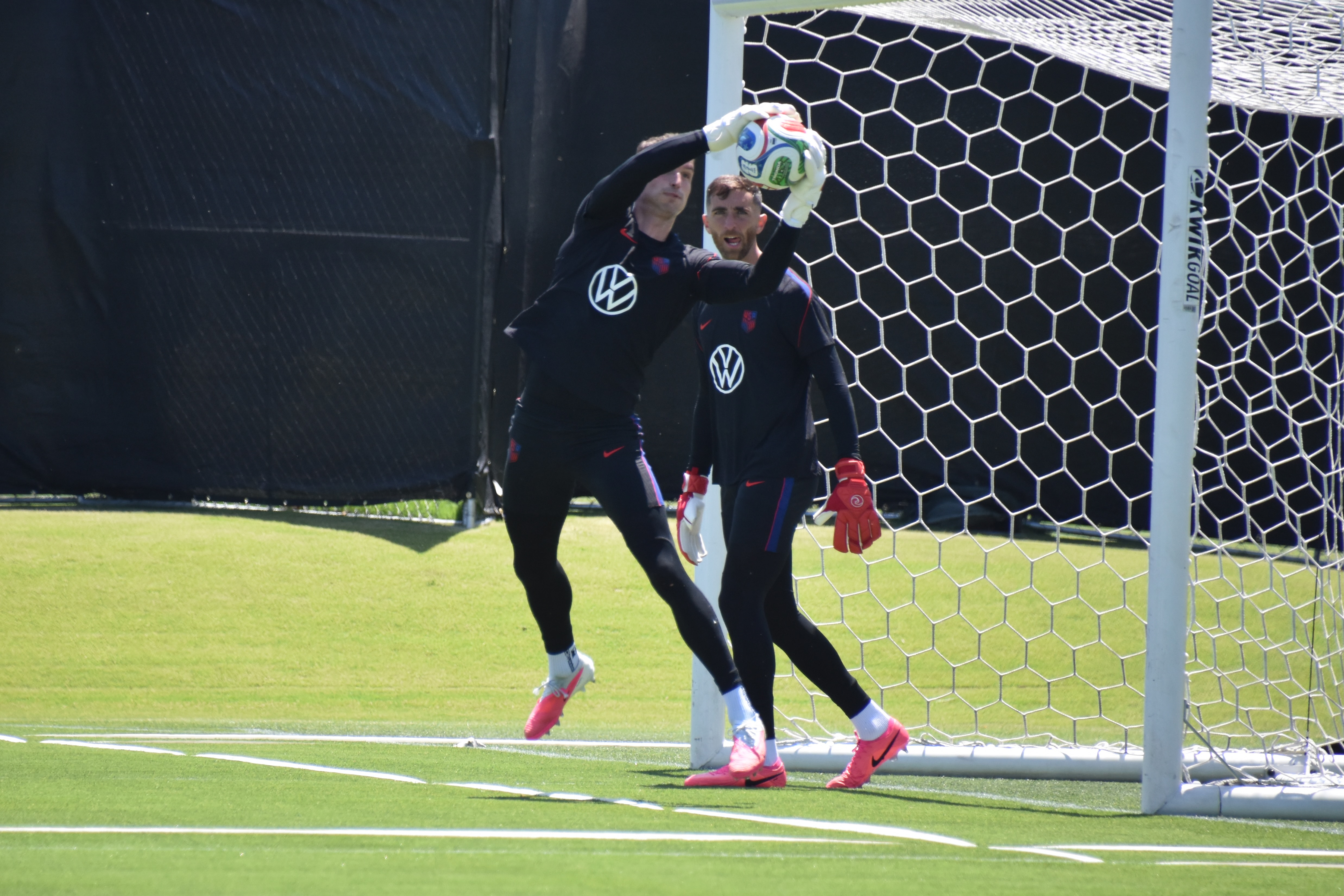
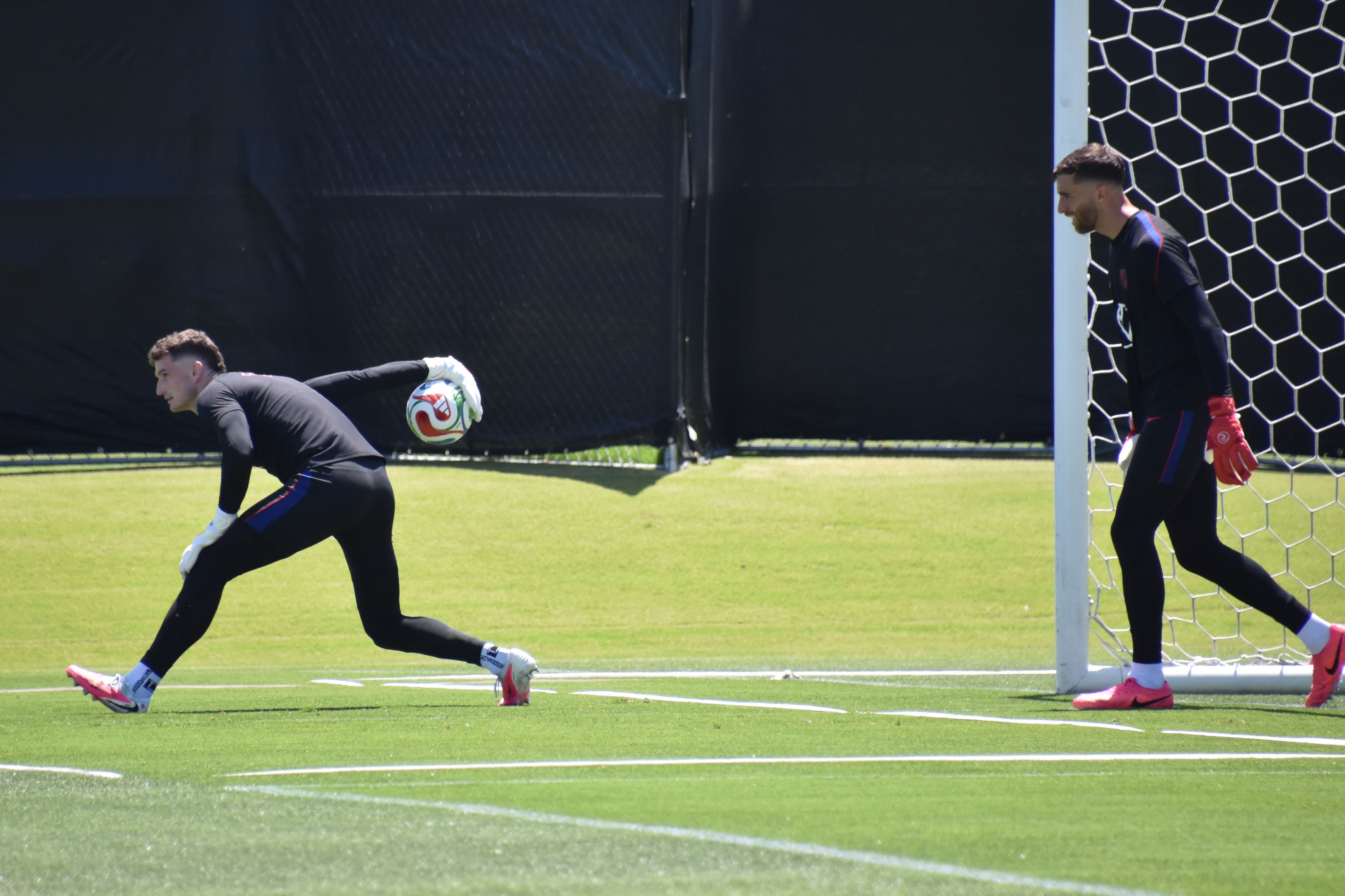
  • Matt Freese vs. Matt Turner: The USMNT starting goalkeeper duel could go down to the wire

    Matt Freese vs. Matt Turner: The USMNT starting goalkeeper duel could go down to the wire

    IRVINE, Calif. — Most of the time in soccer, one of the first things a team does is set its starting goalkeeper. But for the U.S. men, it appears that will be one of the last things that happens.

    Leading candidates Matt Freese and Matt Turner have said in recent days that they don’t know who will get the nod for Friday’s group stage opener vs. Paraguay (9 p.m., Fox29, Telemundo 62).

    “Not a ton of clarity,” Turner said Tuesday as he met with the media before the day’s practice. “It’s about training really well, keep fighting, and then the decision will be made on Friday.”

    A day earlier, when Freese asked if he’d been told who the starter will be, he said, “No, just focused on training today.”

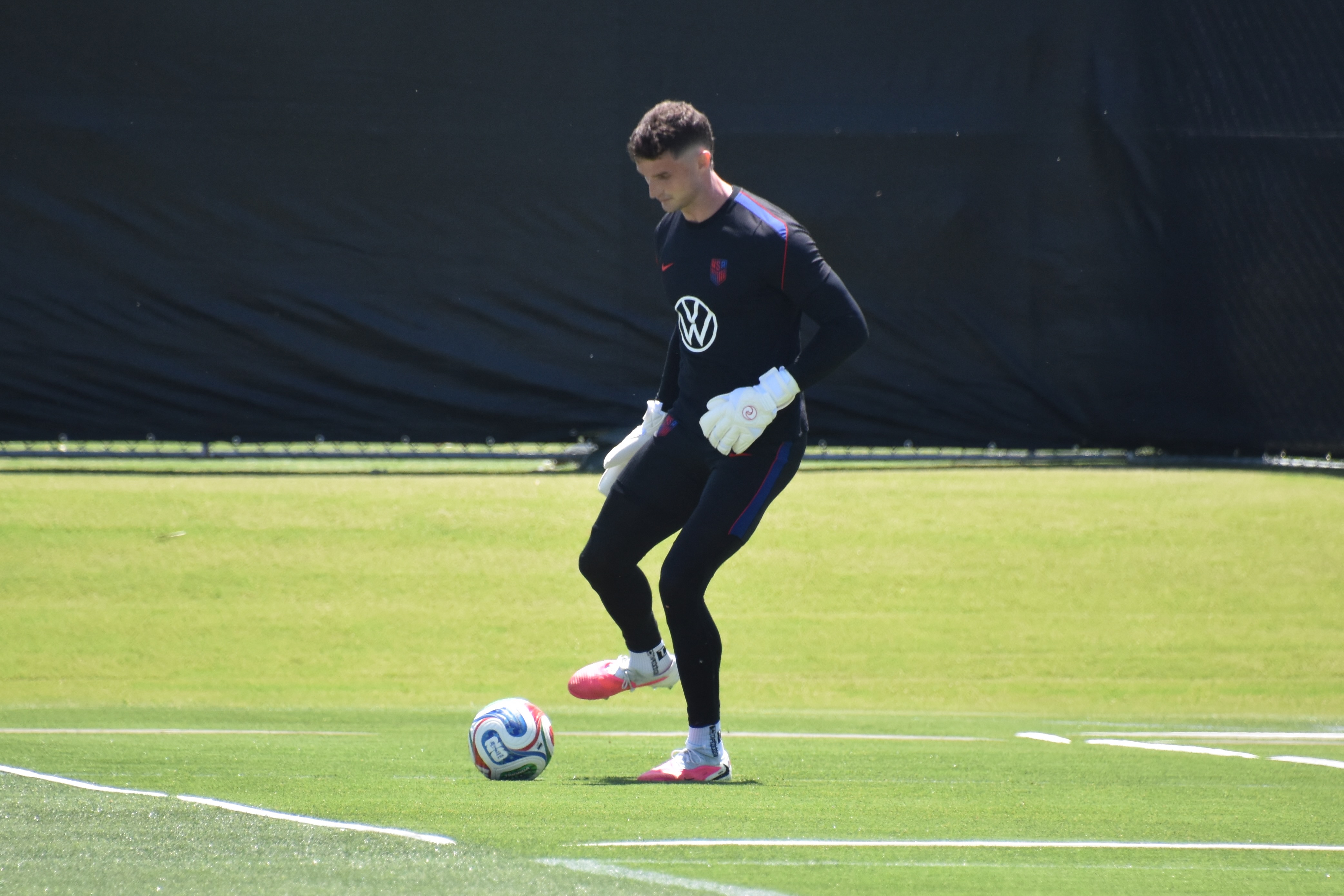
    Matt Turner (right) watches Matt Freese in a drill at Friday’s practice.Jonathan Tannenwald

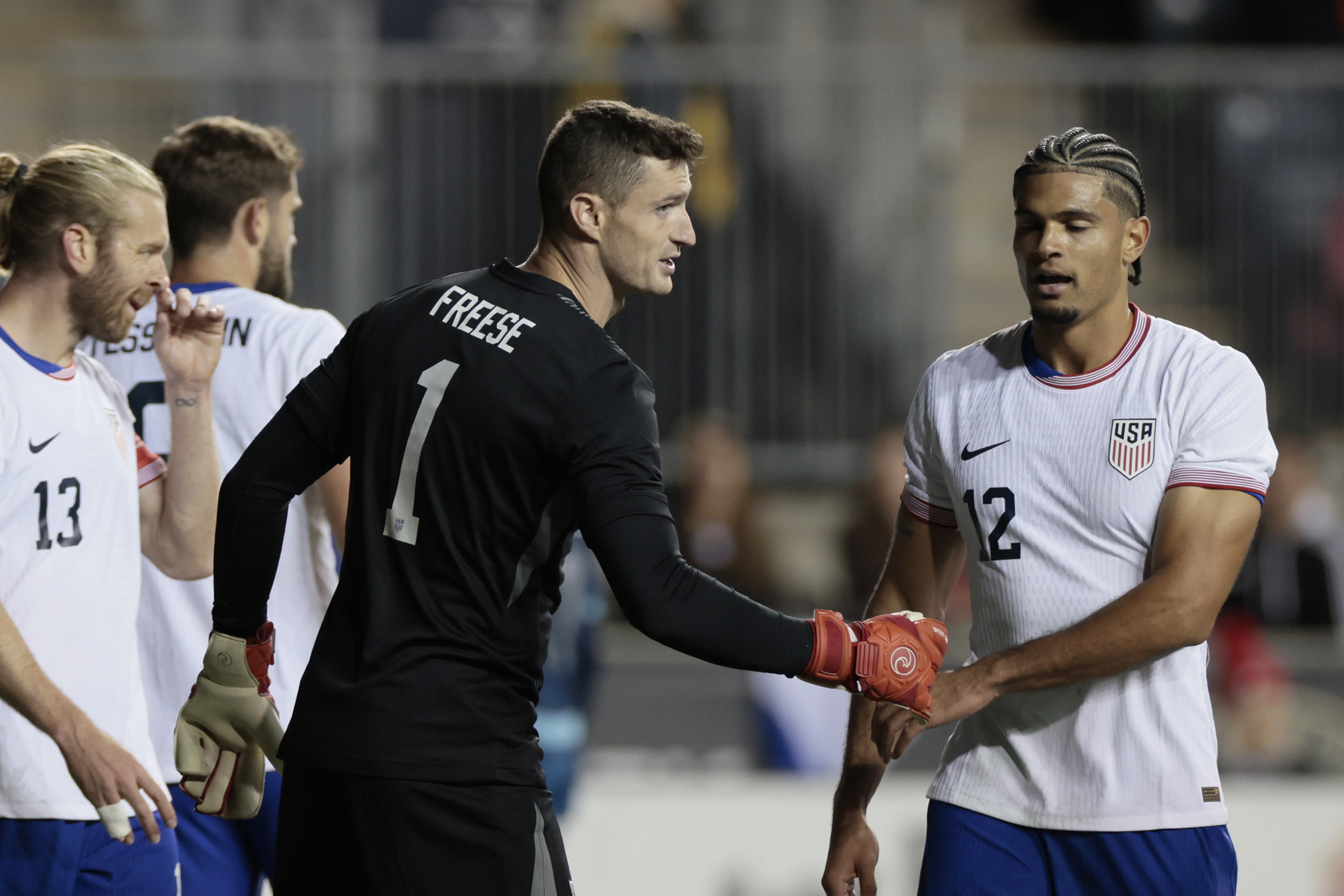
    This is despite the fact that Freese has started 15 of the Americans’ 18 games since his debut last June, including a Gold Cup tournament that cemented his rise and U.S. manager Mauricio Pochettino’s demotion of Turner.

    That demotion, in turn, came despite Turner having been the starter at the 2022 World Cup and for a long time afterward. Now, he’s the only goalkeeper on this World Cup squad with experience in the tournament.

    With the clock ticking toward Friday night, what happens now — or at least until Pochettino is asked about it at his news conference on Thursday?

    Even then, he might choose not to name a starter publicly.

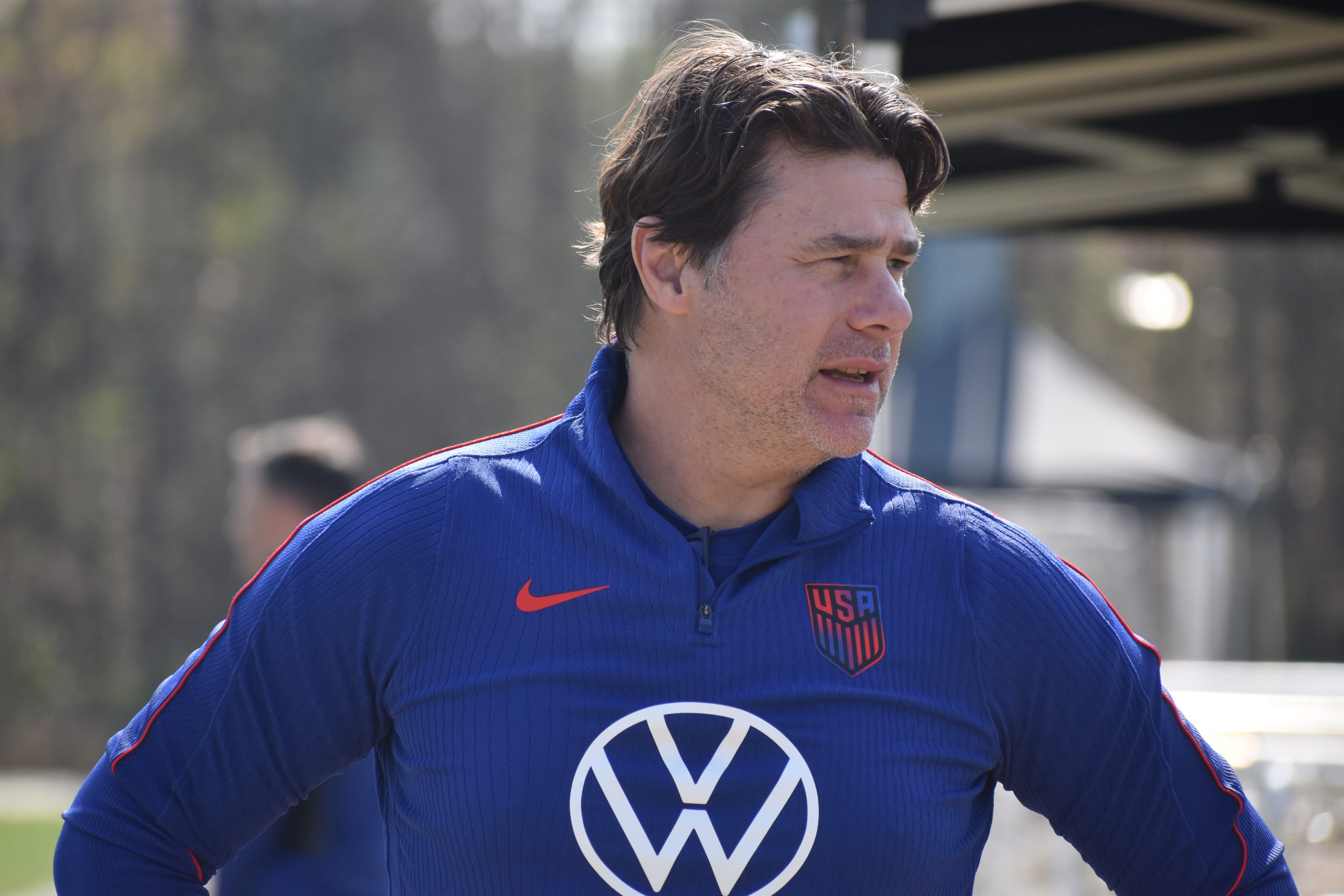
    If Mauricio Pochettino has made his decision about his starting goalkeeper, he hasn’t said so publicly.Jonathan Tannenwald

    From most of the indications we have so far, Freese is ahead. The fact that he started the final tuneup game vs. Germany signaled that after Turner played the first half of the first tuneup vs. Senegal.

    What is certain is that each is laser-focused on trying to win the race and on his individual tasks to get there.

    ‘Chase it no matter what’

    Let’s start with Freese, the 27-year-old Wayne native who grew up at Episcopal Academy and Union youth teams, turned down trials at English powers Manchester United and Liverpool, then went to Harvard to follow in his family’s footsteps.

    After two years on campus, he left to turn pro with the Union, and served as Andre Blake’s backup for four seasons before getting a trade to New York City FC so he could become a starter. He has kept improving since then, combining his saves, passing, and a work ethic that Pochettino appreciates.

    Matt Freese (center) during the U.S. team’s game against Paraguay at Subaru Park in November. The teams will meet again in their World Cup opener on Friday.Elizabeth Robertson / Staff Photographer

    “I think the mentality that I always have, and I always will have for the next 15 years of playing, is to never expect to be in a roster,” Freese said in a recent news conference. “You always want to chase it, no matter what. And even if you’re a guy who’s played 100 games in a row for the national team, I’m going to be someone that is chasing that next one.”

    At every step along the way, Freese has spoken about taking things one day at a time: in September, October, November, and again in March. The latter two months brought extra opportunities, as Freese beat his old club twice: knocking the Union out of the playoffs and thwarting them in the league home opener.

    As cliché as it is to say, consistency is key, and Freese lives it intentionally.

    “I think every player has his own routines and strategies, but what works for me is taking every game the same and doing the same routine,” he said, “and doing the same preparation, same mind work, same physical work. Because then you arrive into the game in your standard situation.”

    Matt Freese has started 15 of the U.S. men’s soccer team’s last 18 games.Jonathan Tannenwald

    Freese acknowledged that “it’s obviously a World Cup, and it’s obviously different, and it’s obviously special: a once, twice hopefully, in a lifetime experience. And so that excitement will be there, naturally.”

    But he persists, all the way down to what he packed for the trip.

    “I bring my tea kettle, so I make the same tea. I’ve brought my own alarm clock from home,” he said. “The exact same stuff. I love keeping things consistent because if it works for you in small moments, then the game itself doesn’t change. So it helps me, at least, deal with those big moments and that pressure.”

    And there undoubtedly is pressure: to make a historic impact at this World Cup, and on him personally to continue the legacy built by Tony Meola, Kasey Keller, Brad Friedel, and Tim Howard. Howard often wore No. 24, the same one that’s on Freese’s back this summer.

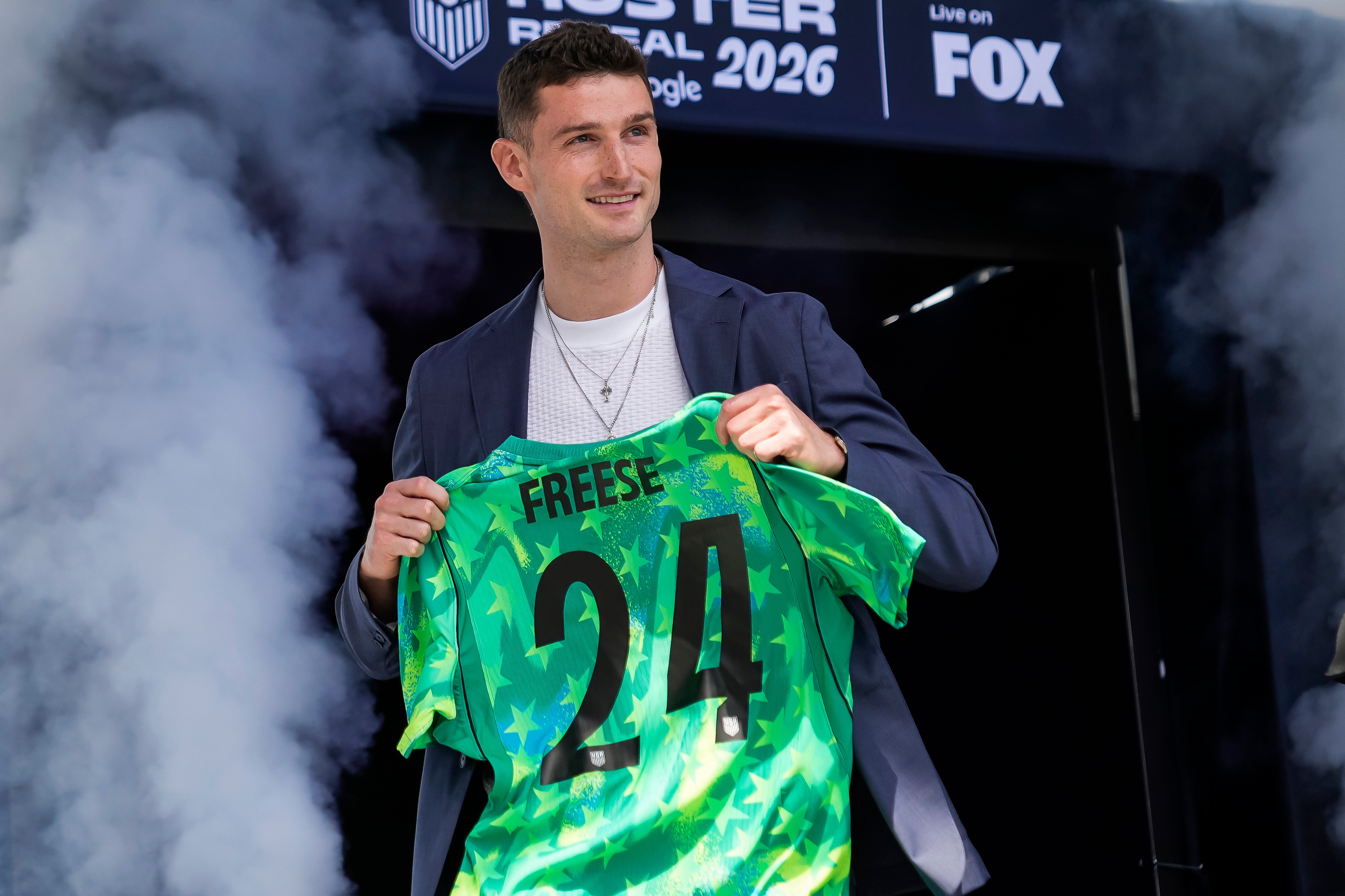
    Matt Freese with his No. 24 jersey at the introduction of the U.S. World Cup team last month.Eduardo Munoz Alvarez

    “I was a fan of that goalkeeping corps for much of my life — still am,“ Freese said. “And so it’s an honor to be on this team and be part of that group, to hopefully continue that great legacy.”

    He summed it up this way: “The ones that work hard without the promise of reward are the ones that usually succeed.”

    Turner’s comeback could be too late

    Now to Turner, who has his own remarkable story. The 31-year-old North Jersey native wasn’t well-known when the New England Revolution signed him undrafted out of Fairfield in 2016, but he quickly became a stalwart. That led not just to being the 2022 World Cup starter, but to a $6 million move to England’s Arsenal earlier that year.

    But he failed to establish himself there, so he moved across England to Nottingham Forest, then Crystal Palace on loan, then France’s Lyon. None of those moves brought stability, and his U.S. stock started falling as a result.

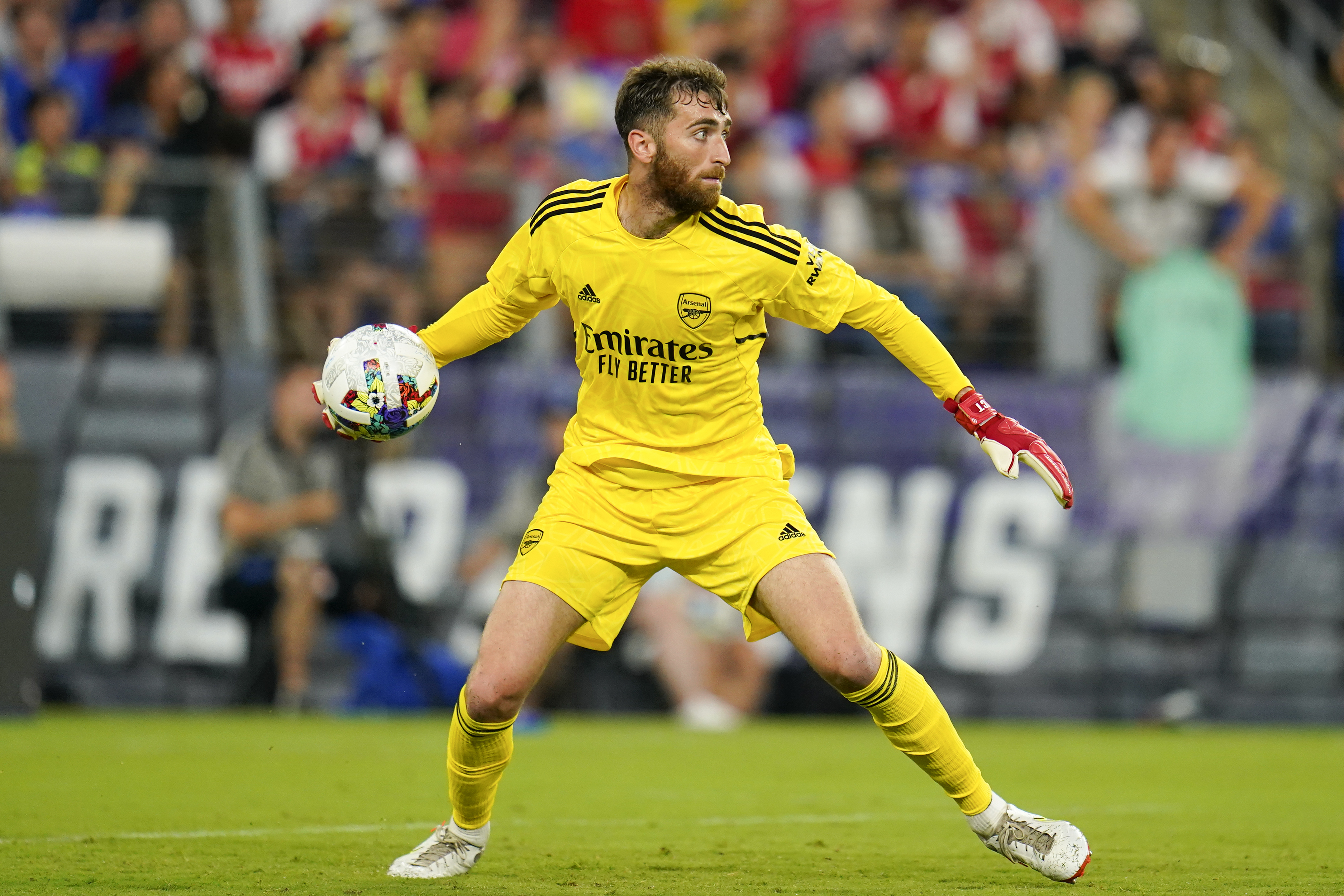
    Matt Turner played just seven games for Arsenal in his short time with the English Premier League giant.Julio Cortez

    So he returned to New England on loan last summer, and this year has finally regained his form. By some statistical measures, he has done better than Freese in MLS this year.

    With the U.S., Freese looked better in the March games vs. Belgium in Portugal. If Turner looked slightly better against Senegal than Freese did in conceding an early free kick goal to Germany, the fact that Turner only played half of his game means a full comparison isn’t possible.

    “I think playing consistent minutes at the level that I’ve been playing at this year has helped me tremendously with staying ready,” Turner said, “unlike in the past, where I was kind of scrapping for minutes at the club level, and then when you show up to the national team, you’re not as sharp when your number is called. So it’s obviously been really great to be playing consistently, be an important player for my team as well, and, of course, that just helps with my preparation on a weekly basis, daily basis.”

    One of Pochettino’s goals in his tenure has been to foster competition across the roster, so no player feels assured of a place — which can breed the complacency that sank the team at the 2024 Copa América. In that context, Turner was asked to expand on his “lack of clarity” remark: Is it a good dynamic or too unsettling?

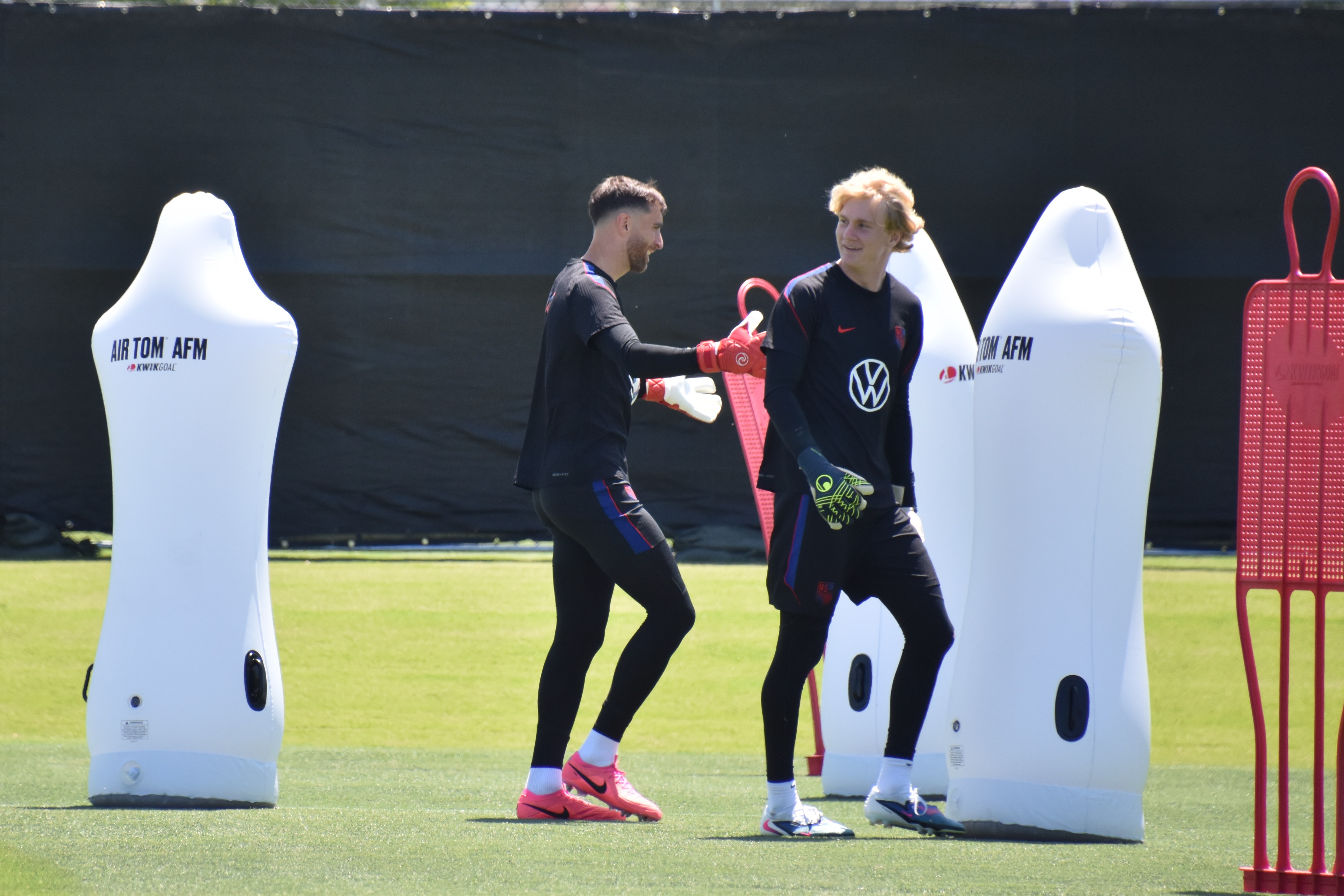
    Matt Turner (left) with the Union’s Andrew Rick, who’s serving as a guest player for U.S. practices this summer.Jonathan Tannenwald

    “I think it’s a great thing, and I think he’s constructed a roster of guys that buy into that,” he said. “And it creates competition in training for spots on a weekly basis. Just because [a group of] 11 starts one game doesn’t mean the next 11 is going to be the same. Everybody knows that they’re looked at in the same light in the coach’s eyes, and if they merit and deserve an opportunity with this coach, they’re going to get one.”

    And asked if he prefers to not have the starter at his position set yet, Turner was just as direct.

    “Well, given the fact that I haven’t played a ton in the last year for the national team, of course, for me, that makes me feel like the door is always cracked [open] — everyone has a chance,” he said. “But I think the coach will always pick the guy that’s playing the best, and he’s going to make the right decision for the team. And whatever my role is going to be, I’m going to be ready to do it to the best of my ability.”

  • A Wawa bag of Tastykakes, Villanova swag, and a historical artifact: National Constitution Center team meets with Pope Leo at the Vatican

    A Wawa bag of Tastykakes, Villanova swag, and a historical artifact: National Constitution Center team meets with Pope Leo at the Vatican

    What tokens of Philadelphia appreciation would you bring across the globe to the first pope from the United States?

    A bundle of Villanova swag? A replica of George Washington’s Acts of Congress? A Wawa tote bag filled with Tastykakes?

    That’s what a delegation of Philadelphians on behalf of the National Constitution Center brought to Pope Leo XIV in the Vatican ahead of his speech to be broadcast on Independence Mall next month amid the city’s celebrations of the country’s 250th birthday.

    The pontiff, who has ties to the Philadelphia region as an alumnus of Villanova University, gave a “big belly laugh” at the sight of the Tastykakes, a gift from Philadelphia Archbishop Nelson J. Pérez.

    “Where else would this happen that you meet up with the archbishop toting Tastykakes in a Wawa bag?” said Vince Stango, interim president and CEO of the Constitution Center, in an interview Tuesday. “So there was a real humanity to it, a real Philadelphia vibe that was unmistakable.”

    But the group’s visit to the Apostolic Palace, the pope’s official residence, was not just about Philly’s delectable sweets or relentless Big 5 basketball pride. It served as a precursor to Leo’s speech that will be shown live on Independence Mall and YouTube on July 3 as he delivers an acceptance speech for the Constitution Center’s annual Liberty Medal award.

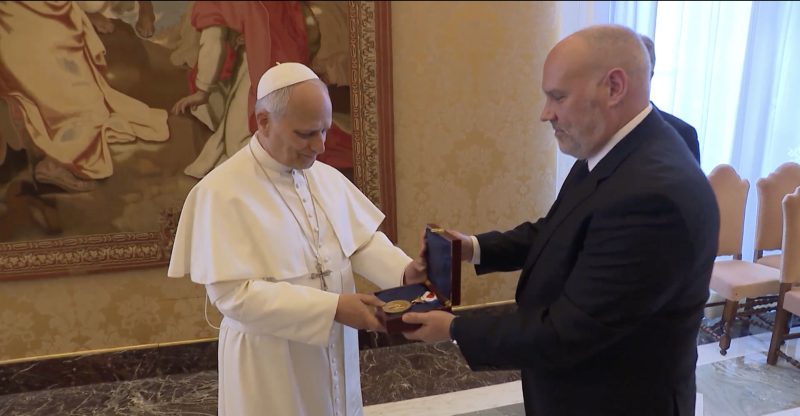
    The delegation from the Constitution Center, which included Stango, Pérez, and four center board members, presented Leo with the medal, which honors the pontiff’s efforts toward promoting religious liberty.

    “I would just like to recall the words signed by the Founding Fathers of the nation 250 years ago in Philadelphia in the Declaration of Independence when they said that we hold these truths to be self-evident … that all men have received fundamental rights from our creator,“ the pope said upon receiving the Liberty Medal.

    ”And they include life, liberty, and the pursuit of happiness. May those values continue to inspire us in the United States and throughout the would, and together hopefully,” he continued.

    The July 3 ceremony, beginning at 11 a.m., will also feature remarks from Stango, Pérez, civic leaders, and various faith leaders, including:

    • Imam Quaiser D. Abdullah: director, Mayor’s Office of Muslim Engagement; board member of Interfaith Philadelphia.
    • The Rev. Carolyn C. Cavaness: pastor of Mother Bethel A.M.E. Church; board member of Interfaith Philadelphia.
    • The Rev. Luis A. Cortés Jr.: founder, president, and CEO of Esperanza; founding member of Hispanic Clergy of Philadelphia; member of the Religious Leaders Council of Greater Philadelphia.
    • Rabbi Jill L. Maderer: senior rabbi of Congregation Rodeph Shalom; board member of Interfaith Philadelphia.

    The Cathedral Basilica Choir and the Archdiocesan Choir of Philadelphia will also perform.

    Stango said the pope took his receipt of the Liberty Medal award very seriously, and the pontiff had taken it upon himself to confirm the details of the delegation’s visit to the Vatican on April 30, in an email on the morning of Good Friday.

    “His character as an individual and his humbleness really came through,” Stango said.

    The Philadelphia delegation was greeted at the Vatican by the Swiss Guard, an armed patrol that has watched over the pope since 1506, said Stango, who described the “grandeur” of driving through the property toward the Apostolic Palace, where every room was “like you’re in the Sistine Chapel.”

    They met Leo in the gathering room and presented him with two medals — one for him to keep and another to bless, as it will be displayed at the Constitution Center — along with his Philly-centric gifts.

    Stango said he was able to walk the pope through the copy of Acts of Congress, which is a replica of Washington’s personal volume, and comb through the first president’s notes in the margins. The delegation then spoke with Leo about the work being done at the Constitution Center and the principles that the United States was founded on.

    “It had the intimacy of the Philadelphia connection, but it also had the magnitude of the global impact of the award, and what it represents, and what Pope Leo represents as a recipient,” Stango said.

    Leo’s participation in next month’s ceremony is notable given that the next day — on the Fourth of July — the pontiff will be in Lampedusa, a small Italian island between Sicily and North Africa, along what is considered one of the deadliest migration routes in the world.

    The Vatican has said that the pope, who was elected in May 2025, will not be traveling to the United States in 2026. Vice President JD Vance, who converted to Catholicism in 2019, personally delivered Leo an invitation to visit the White House earlier this year.

    That invitation came before tensions spiked between the pope and the White House after the pontiff criticized the United States’ war on Iran. President Donald Trump, in turn, said on his social media platform Truth Social in April that the pope is “WEAK on Crime, and terrible for Foreign Policy.”

    Leo said at the time that he had “no fear of the Trump administration.”

    “We are not politicians, we don’t deal with foreign policy with the same perspective he might understand it, but I do believe in the message of the Gospel, as a peacemaker,” Leo said.

  • Gov. Sherrill announces 770 free World Cup tickets for some N.J. residents

    Gov. Sherrill announces 770 free World Cup tickets for some N.J. residents

    Gov. Mikie Sherrill announced Tuesday that 770 free World Cup tickets will be given to New Jersey residents, with the tickets earmarked for youth soccer players, families of National Guard members, sick children, and first responders.

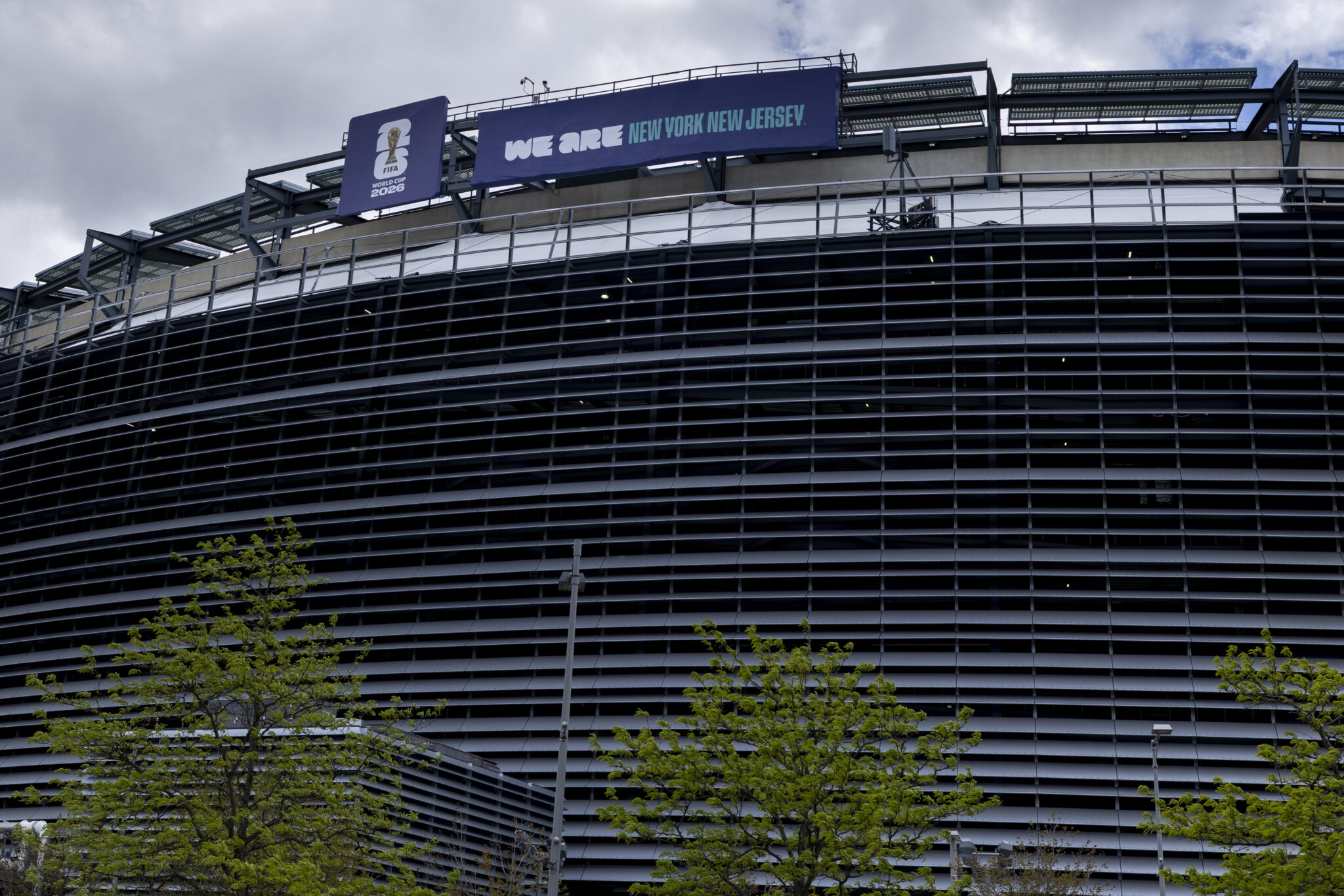
    The news comes just days before the first New Jersey match at MetLife Stadium in East Rutherford, and about three weeks after New York City Mayor Zohran Mamdani announced that 1,000 New Yorkers would receive discounted World Cup tickets, which angered Garden State soccer fans and some of our state lawmakers.

    “As governor, I promised to open the doors of opportunity, and I meant that in ways both big and small. Today, we’re giving fans another opportunity to get to the game,” Sherrill said at a press conference at Hackensack University Medical Center.

    The 770 tickets will be spread across five group stage matches and two knockout rounds, and none will be available for the final match played in East Rutherford on July 19.

    Five hundred of the tickets will go to New Jersey Youth Soccer players from underserved communities, families of New Jersey National Guard members deployed overseas, Hackensack Meridian Health patients in the Make-A-Wish program, and Bergen County first responders helping with World Cup operations. Another 200 tickets will be made available to New Jersey nurses, other healthcare workers, and pediatric patients, including children facing serious illnesses and their families.

    The remaining 70 tickets will be available for state residents through a World Cup rewards program that allows people to earn entry by visiting small businesses and attending community events.

    Sherrill said the free tickets are funded entirely through private sector partnerships, including with Uber, Choose New Jersey, and Hackensack Meridian Health. The committee organizing New Jersey’s World Cup matches is separately providing $3.6 million to support transportation costs for these ticket holders.

    FIFA, soccer’s global governing body, has struggled to fill seats for what it touts as the largest World Cup in the tournament’s history, and NJ Transit’s dedicated train service has seen far fewer sales than expected. FIFA’s website shows tickets available for all matches in East Rutherford, ranging from a few hundred dollars to over $30,000 for the final.

    Transportation to the game on NJ Transit costs $98, a drop from the original $150 cost, but still several times more than the typical $12.90 fare to MetLife Stadium. According to NJ.com, just 10% of tickets were sold as of Sunday.

    This story originally appeared on New Jersey Monitor.