Blog

  • Horoscopes: Friday, June 12, 2026

    ARIES (March 21-April 19). Muscle builders don’t grow new muscles from nothing. They work repeatedly with the ones they already have, strengthening them through strain and recovery. Confidence, patience, discipline, courage, creativity, charm… all developed similarly, through repetition.

    TAURUS (April 20-May 20). Politeness will keep the wheels turning today. Your respectful interactions will reduce friction, create predictability, soften conflict and make cooperation easier. Tiny rituals of respect keep the machinery from grinding sparks.

    GEMINI (May 21-June 21). It’s easy to overlook your natural talents that are so much a part of who you are. But what feels routine to you will be perceived as deeply impressive, valuable and distinctive to others.

    CANCER (June 22-July 22). You’re playing with the wide-focus lenses and pondering your place in the grander scheme. Your actions gain new meaning when you consider even the smallest one has the potential to ripple outwards and impact others positively.

    LEO (July 23-Aug. 22). Planning has taken you far enough. Now you must choose the right point of entry. Where are your abilities genuinely useful? Who could most use what you do? This could apply to work, relationships, creative projects, networking and even social dynamics.

    VIRGO (Aug. 23-Sept. 22). Just as a gemstone becomes brilliant through grinding and abrasion, human character develops through challenge. It’s the moments that resist you, force you to adapt or bring you face to face with your edges… those are the moments that make you shine.

    LIBRA (Sept. 23-Oct. 23). Something that’s been lingering in the background becomes important. It was a vague idea or a faint desire that is now growing into a need that’s hard to ignore. So what would it really take to fulfill it?

    SCORPIO (Oct. 24-Nov. 21). You’re careful about who you get close to. You pay attention to indications of character, worldview and thought process. Generous spirits will be all around you. You’ll enjoy interactions of openness, trust and fun.

    SAGITTARIUS (Nov. 22-Dec. 21). Emotional intelligence helps you interpret behavior with nuance. Someone’s harshness may reflect exhaustion, insecurity, fear, embarrassment or grief. It doesn’t mean you should accept poor treatment, though it may allow you to reduce unnecessary escalation and find a productive path.

    CAPRICORN (Dec. 22-Jan. 19). The fair and wise choice isn’t always the immediately logical or dutiful one. As you carefully consider the available options, let your whimsy have its say. Don’t choose something that leaves you with a lingering “what if.”

    AQUARIUS (Jan. 20-Feb. 18). Some people conveniently forget who they owe and why. You’re aware of the ledger. You know who you owe and who owes you. This keeps you from feeling indebted when, in fact, you are not.

    PISCES (Feb. 19-March 20). One good thing about life’s little snags: They can cause people to work together for freedom, ease and beneficial results. Bonds are made in moments of vulnerability and resilience. You’ll help someone in a jam, and it will be lucky for both of you.

    TODAY’S BIRTHDAY (June 12). It’s your Year of Powerful Wielding when you channel your personal influence and electricity in life-changing directions. Energies like fame, competition, and desire will be managed to brilliant effect. More highlights: The things you’re doing that you’ve done for years will start to pay you much more and new work ignites earl on. Also, a sweet reunion and a domestic transformation. Cancer and Aquarius adore you. Your lucky numbers are: 49, 33, 12, 5 and 8.


  • As the World Cup begins, Mauricio Pochettino sets out his true expectations for the USMNT

    As the World Cup begins, Mauricio Pochettino sets out his true expectations for the USMNT

    INGLEWOOD, Calif. — U.S. men’s soccer team manager Mauricio Pochettino has said many times during his tenure that he wants his players to believe they can win this World Cup.

    If it’s unrealistic, or derided by fans and media, he does not care. His job has been to make his players think they can do it, and use that belief to put extra fuel in the tank.

    (For the record, reaching the quarterfinals is the bar most outsiders have set; and if you ask this reporter’s opinion, that’s correct.)

    On Thursday, in his final remarks before Friday’s opening game against Paraguay (9 p.m., Fox29, Telemundo 62), Pochettino finally turned to a more realistic tone.

    Mauricio Pochettino (left) walking with a U.S. team staffer at Thursday’s practice.Jonathan Tannenwald

    Asked how he defines success now, he started by saying “it’s difficult.” Then, acknowledging those who hadn’t heard his passionate stances in the past, he set out his explanation.

    “I think for me, ‘successful’ is winning,” he said. “It’s win tomorrow, and win after tomorrow, and win. If we don’t arrive to the final and we don’t win the World Cup, to talk about ‘successful’ is, I don’t know — for me and my mindset.”

    Pochettino has heard from plenty of people in his 22-month tenure to date about the mountains American men’s soccer must climb, and the obstacles along the way. And now he knows firsthand how his players truly stack up against the world’s best, especially after games against powers Belgium, Portugal, Senegal, and Germany.

    “If you say to me, oh, the conditions, or this [other thing], or we play against good national teams, I say, OK, OK,” he said. “But when we signed here, it’s because we wanted to come here, and to be involved in that unique event, but with the possibility to compete well, and believing in winning.”

    Mauricio Pochettino making a point to a group of players during the U.S. team’s open practice on Monday.Jonathan Tannenawld

    Asked what he’ll say to his players before Friday’s kickoff, Pochettino joked that “I already spoke, I already talked — too much. I said [to them], don’t expect an unbelievable speech Friday.”

    That’s mainly because in his opinion, they “don’t need an external motivation” at this point.

    “They need the motivational speech and inspiration when they need to go to train and improve in every single area,” he said. “And then tomorrow, it’s late. … If you are not ready, sorry guys, it’s impossible to perform. What were [we] doing all this year and a half [we’ve been preparing]?”

    ‘Their emotional intelligence is very high’

    But in a way, the manager gave that speech to the media from the podium on Thursday, in a news conference where he alternated freely between English and Spanish.

    Mauricio Pochettino (right) talking with U.S. captain Tim Ream at Thursday’s practice.Andre Penner

    “The players, tomorrow, need to go on the field and feel in a bad way that they need to perform,” he said. “And to perform is to respect some rules, but also the most important is not to be disconnected with your emotional relationship with the game. And we were talking about that: they need to think tomorrow and play like they are a child, with no pressure, with no responsibility.”

    He also said he wants his players to “take it step by step,” and that “the key is not to look at the finish line before you actually get there.”

    Pochettino particularly applied that to the players he’ll summon from the bench, a key part of any manager’s strategy with five substitutes allowed per game.

    “How many players aren’t starters early in the World Cup, but end up big figures in the tournament?” he said. “It’s not just about how you start, but how you continue and how you finish.”

    Mauricio Pochettino looks to the heavens during a philosophical moment at a U.S. practice in March.Jonathan Tannenwald

    Perhaps his most revealing words came when he opened up about what he has learned from the players, for as much as they have learned from him.

    “I really admire the players’ mindset,” Pochettino said. “I don’t think they should be underestimated, because their emotional intelligence is very high — well above the global average. They become great athletes because they possess that capacity and talent, and they develop that mental strength. I tell you, they are all intelligent.”

    He has also learned the different ways required to connect with the 26 players on this squad, and the over 70 he has had in U.S. camps over his tenure.

    “The trick is getting to know each individual so you can communicate effectively, finding the right frequency,” he said. “You realize that, ultimately, they all feel the same things, face the same struggles, and have the same needs. It’s about finding the right frequency to connect with each personality. They are giving us so much, and honestly, we are really enjoying the whole group.”

    Keeping the lineup secret

    As nice as it was to hear Chris Richards declare himself “ready” on Wednesday, that only counted for so much without his boss’s blessing. Pochettino gave it on Thursday, calling the key centerback “available.” He also said all 26 players on the roster are fit to play.

    But he backed off saying whether Richards has the green light to start.

    “Chris is available to be selected, and then we will decide if he’ll start from the beginning of the game or is on the bench,” Pochettino said. “But I think we celebrate the job that our medical staff and performance [staff] did — worked really hard to recover Chris, and recover some other players that arrived with minor things. No big issues. … It’s a really good feeling to have 26 players available to be selected.”

    Pochettino said he knows what his starting lineup will be, but signaled that he hasn’t told the players. That includes the goalkeepers, the subject that has been second to Richards’ health in the most-discussed rankings.

    The goalkeepers at work during Friday’s practice in Irvine, Calif., amid a backdrop including a balloon decorated with U.S. Soccer’s logo.Jonathan Tannenwald

    “No, I’m not going to tell you,” he said when invited to. “But I already decided. Only if something happens before the game [would it change].”

    Asked if the players know, he said: “I don’t know if they know. Because if they know, you are going to start to call them.”

    The room laughed with him at that. Such leaks are a tradition in other countries, including Pochettino’s native Argentina, and England where he worked for many years. It isn’t in the United States, though, at least not yet.

  • Philly hotel workers push back potential strike as FIFA World Cup is set to begin

    Philly hotel workers push back potential strike as FIFA World Cup is set to begin

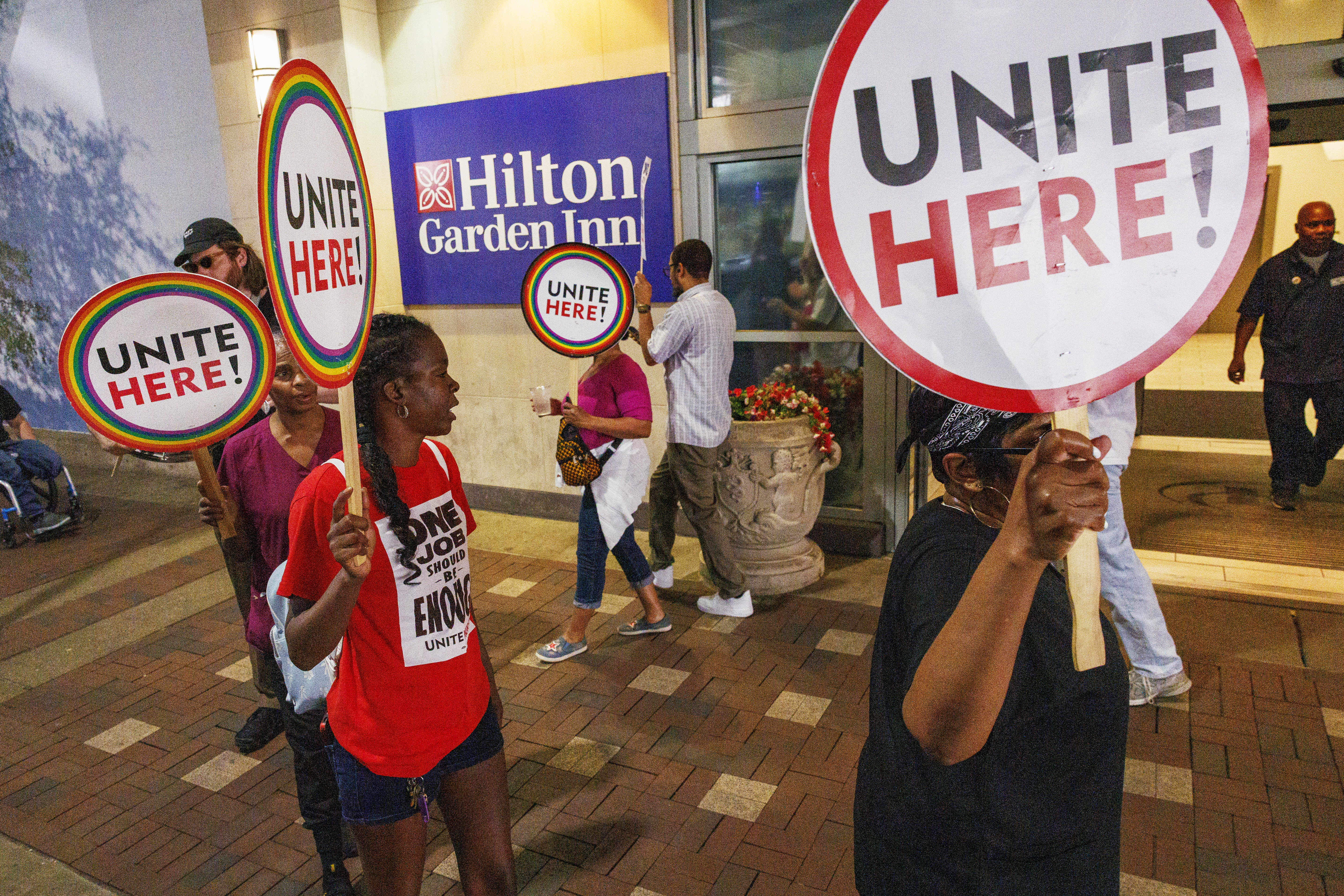
    Unionized hotel workers in Philadelphia had planned to strike if they hadn’t agreed on a new contract by Friday, but they’ve decided to continue working for now, citing progress made in negotiations.

    Their union, Unite Here Local 274 had announced a strike deadline of June 12 last month. Hours away from the deadline on Thursday evening, the union announced in a statement that the deadline had been extended but did not provide a new date. The statement noted, “a strike may now be called at any time.”

    “Substantial progress is being made in some hotels,” union president Rosslyn Wuchinich said in a statement Thursday. “We have set a citywide standard, and we expect our hotel employers to meet it or face disruption during the World Cup.”

    The union said last month that some 600 workers across five hotels where contracts had still not been reached could walk off the job.

    They are: Sheraton Philadelphia Downtown, Wyndham Philadelphia Historic District, Hilton Philadelphia at Penn’s Landing, the Warwick Hotel Rittenhouse Square Philadelphia, and Hilton Garden Inn Philadelphia Center City.

    Workers at two of the five hotels had voted to authorize a strike, Wuchinich said in May. Strike authorization votes still have not been held at all five hotels, union spokesperson Dermot Delude-Dix confirmed Thursday.

    The union last spring began negotiating new contracts at several Philadelphia hotels.

    New contracts have since been adopted at: Hampton Inn Philadelphia Center City — Convention Center, Sonesta Philadelphia Rittenhouse Square, and the Sheraton Philadelphia University City Hotel.

    At these hotels, contracts include raises to $30 an hour by 2028 for non-tipped employees, and an increase in employers’ contributions to their pensions. The contract also includes a provision capping the number of rooms a worker can be tasked with cleaning at 15 per day, down from 16 previously.

  • ‘This is senseless’: Slain Penn State student mourned as police work to identify killers

    ‘This is senseless’: Slain Penn State student mourned as police work to identify killers

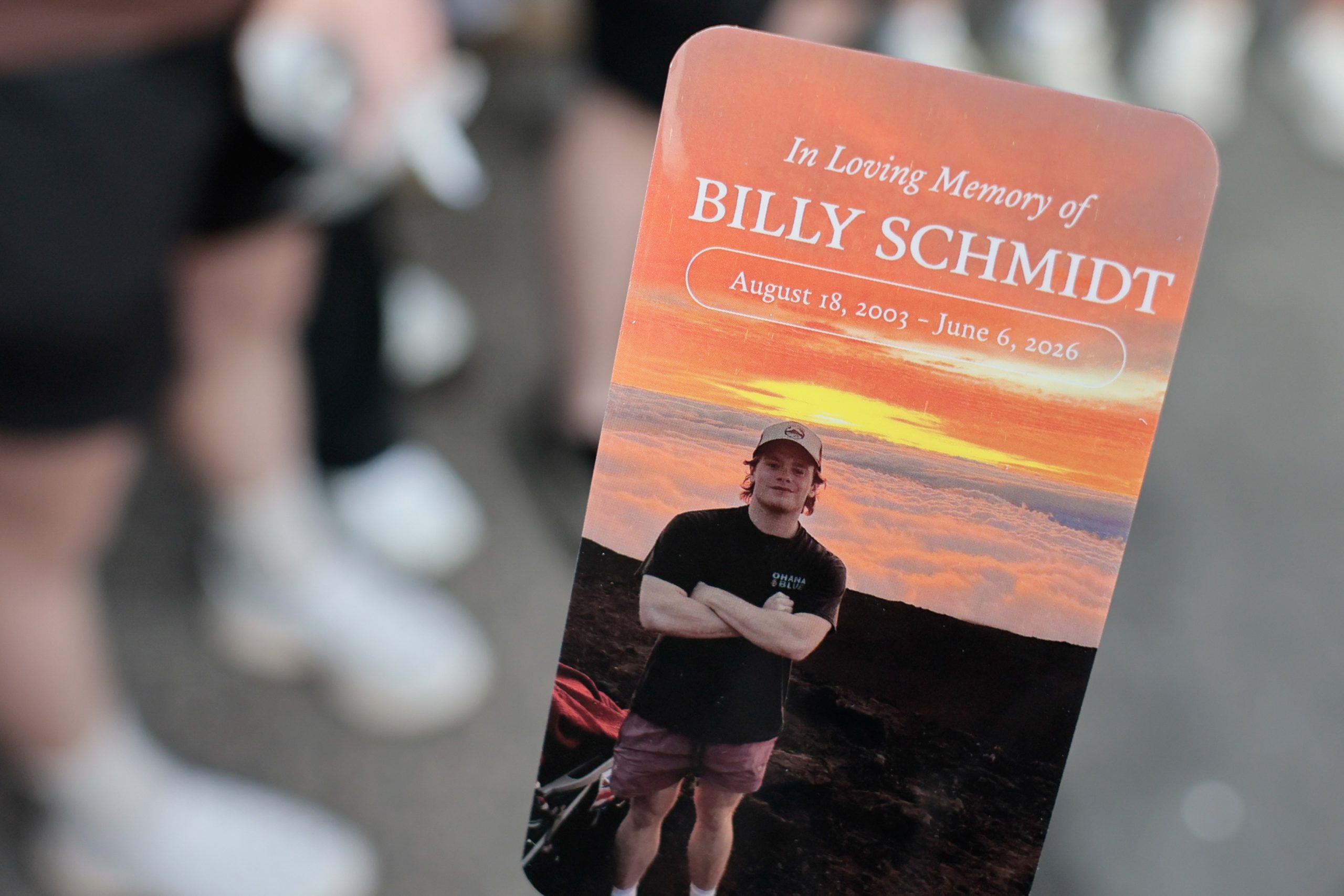
    Family and friends gathered in South Philadelphia Thursday night to mourn William Schmidt, a Penn State student they all knew simply as “Billy.”

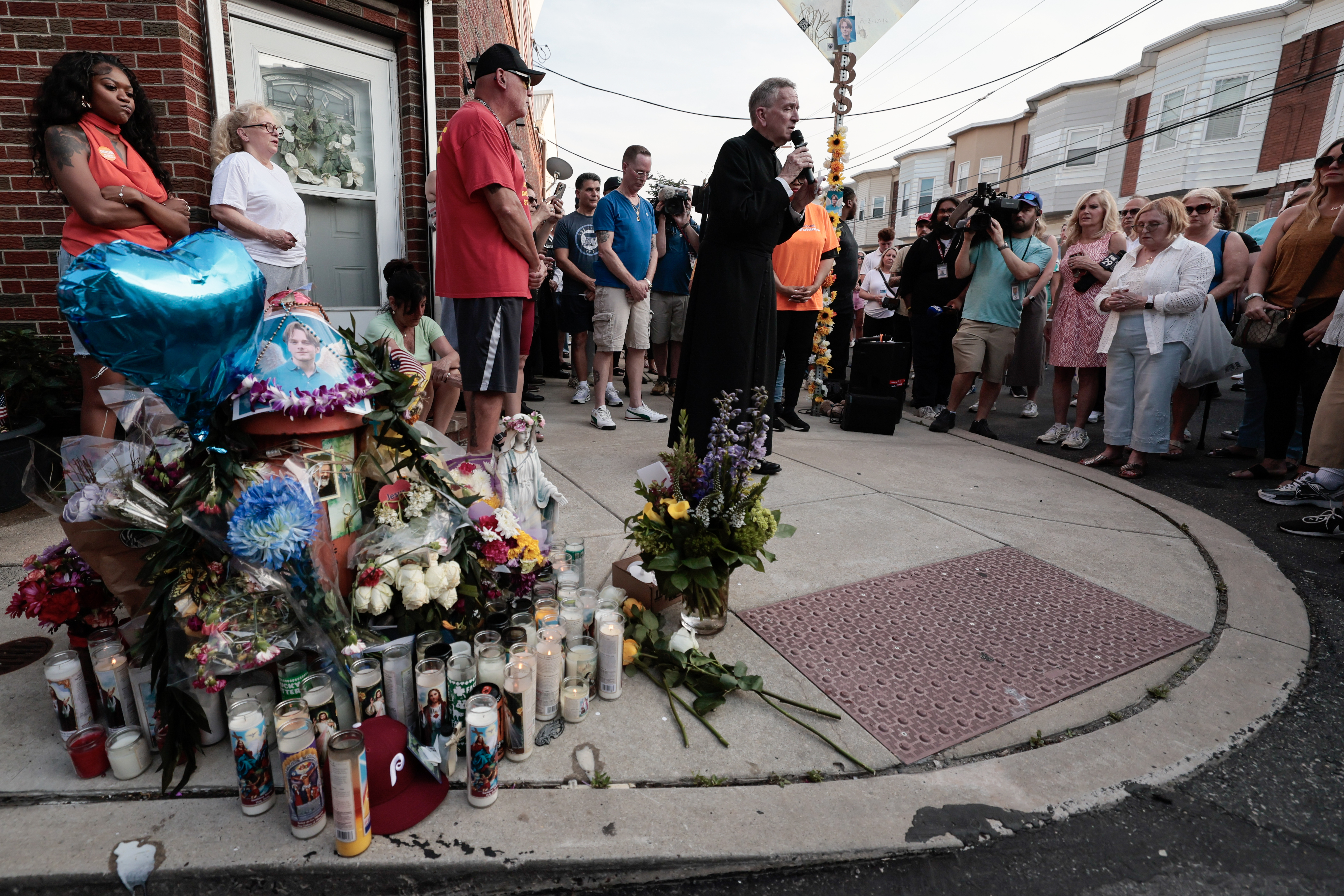
    Spanning three blocks, loved ones and neighbors sang songs and held back tears on the corner of 20th and Durfor Streets, where a memorial to Schmidt near a fire hydrant where he was shot and killed was covered by candles, flowers, and balloons.

    “He was my son, my best friend,” William Schmidt, Billy’s father, said, holding back tears. “How am I supposed to watch the Eagles play without him now? I am heartbroken without him.”

    Father Kelly speaks at a vigil in memory of South Philly shooting victim Billy Schmidt Thursday, June 11, 2026, in South Philadelphia.Elizabeth Robertson / Staff Photographer

    Trying to find comfort in the outpouring of love surrounding his son’s memorial, Schmidt said the crowd was a testament to Billy’s life and how good a person he was. But it’s not enough to outweigh a father’s pain.

    “I’m thrilled he had such a great group of friends. He was a very candid person who never bothered anyone,” Schmidt said. “But I don’t have my son.”

    One of those friends, Gino Russo, can’t even remember life without Billy, whom he’d known since kindergarten.

    “Every time you call him, he was there,” Russo said. “Billy never let anyone down. I never saw him walk into a room not smiling and making sure everyone is smiling around him.”

    Anna, Billy’s sister, called him “my best friend + best brother in one” in a message on a poster featuring lots of memories and a heart made with pictures of the siblings.

    “Being your sister is the biggest honor,” she wrote. “Spending every Eagles game with you was so much fun, and you will always be watching the games with me now.”

    A ‘senseless’ killing

    Schmidt, 22, was shot and killed just footsteps from his home on South 20th Street early Saturday morning in an apparent robbery attempt. According to his father, Schmidt was returning home after watching the NBA Finals at a nearby bar with friends.

    Video captured on a home surveillance camera obtained and broadcast by 6abc shows a man wearing a hoodie throwing a cell phone down Durfor Street. Schmidt appeared to be chasing him and another man, who shot the Penn State student in the chest as he turned the corner.

    Schmidt was pronounced dead at Penn Presbyterian Medical Center a short time later.

    “This is senseless,” Councilmember Kenyatta Johnson told the crowd standing beside Schmidt’s father and sister, who held each other tightly.

    William Schmidt was studying digital journalism and media at Penn State’s online campus.Elizabeth Robertson / Staff Photographer

    Schmidt was a fourth-semester student studying digital journalism and media at the Penn State World Campus, the university’s online campus. Schmidt’s father told 6abc he was shocked his son chased the two men to retrieve his phone, which was found under a car on Durfor Street and turned over to police.

    Philadelphia police are still trying to identify the two suspects, who were also captured in security footage both approaching the scene and fleeing the area following the shooting.

    One suspect was wearing a light gray custom designed “KONFUSED” brand hooded sweatshirt. The other was wearing dark clothing and a light gray camouflage face mask, which he removed following the shooting.

    Anyone with information is asked to call the homicide unit at 215-686-3334, or submit an anonymous tip by calling or texting 215-686-TIPS (8477). The city offers a $20,000 reward for information that leads to an arrest and conviction.

  • Kennedy Center board to fight order to remove Trump’s name as deadline looms

    Kennedy Center board to fight order to remove Trump’s name as deadline looms

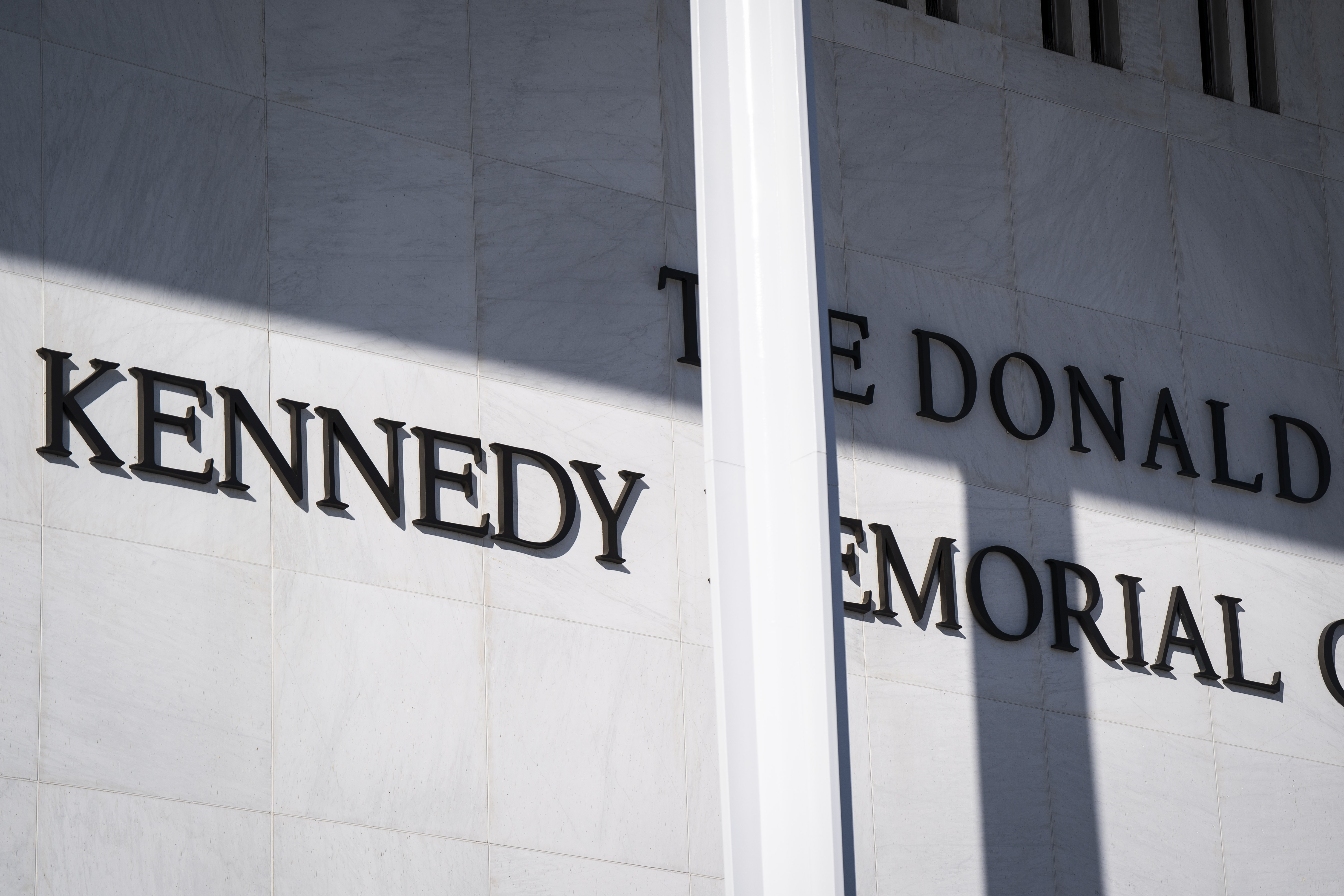
    The Kennedy Center’s board plans to fight a federal judge’s order to remove President Donald Trump’s name from the performing arts center.

    The center’s trustees on Thursday voted to seek a last-minute stay of U.S. District Judge Christopher Cooper’s directive to take Trump’s name off the center’s exterior by Friday as they appeal his ruling that renaming the center was illegal, according to a meeting attendee and someone briefed by a meeting attendee, who both spoke on the condition of anonymity for fear of retribution.

    The board’s decision came a day before Cooper’s deadline for the center to remove Trump’s name from its building and branding, part of a ruling in which the judge also granted a request from Rep. Joyce Beatty (D., Ohio) to temporarily block steps toward a planned two-year shutdown.

    Cooper’s order, the most significant legal blow yet to Trump’s effort to remake the Kennedy Center, found that the board exceeded its authority in December when it voted to rename the venue “The Donald J. Trump and The John F. Kennedy Memorial Center for the Performing Arts.” Congress gave the center its name, Cooper wrote, and only Congress can change it.

    In February, Trump announced that he planned to close the center for two years starting in early July. The closure was necessary, he said, to make roughly $250 million in renovations, a decision that blindsided staff, artists, and even some trustees. The board — stacked with loyalists who elected Trump chairman after he purged his predecessors’ appointees in February 2025 — voted in March to approve the closure. The center’s executive director, Matt Floca, testified in April that the building’s deterioration is so severe that staying open during construction would be “irresponsible,” citing failing roof panels and water seeping into electrical vaults.

    But Cooper ruled that the closure decision was made rashly, without the board weighing enough information about the potential harms. He did not bar trustees from ever shuttering the building, leaving the door open for the board to reconsider whether it should “come to this decision anew after independently balancing its multiple obligations to the Center in a prudent fashion.” The center’s general counsel highlighted that language last week in a memo to staff, noting that the court did not require the center to stay open during renovations or present any particular programming.

    The center has so far signaled that it will comply. In last week’s memo, the general counsel’s office ordered employees to erase all references to Trump from official materials, starting immediately with email signatures, letterhead, and other documents, followed by signs, brochures, ID cards, and the building’s exterior by Friday’s court-ordered deadline. On Monday, the center erased Trump’s name from its website and YouTube page, and by Thursday, it had done the same with its Facebook, LinkedIn, and X accounts.

    “We are complying with the court’s order while evaluating all legal options to preserve this revitalization and recognize President Trump’s leadership,” spokeswoman Roma Daravi said.

    Late Thursday afternoon, the center’s Instagram account was still branded “The Trump Kennedy Center,” and the president’s name remained emblazoned across the building’s facade.

    Hours after Cooper’s rulings, Trump lashed out at the judge and suggested he would abandon his involvement in the Kennedy Center altogether. In social media posts after the ruling, the president insisted that the building must close for renovations to proceed safely and said that unless he was “free to do what I do better than anyone else,” he had no interest in continuing. Trump said he had instructed the Commerce Department to arrange a “full and complete transfer” of the institution to Congress, a proposal that puzzled lawmakers and legal observers, since federal law vests management of the center in its board of trustees.

    Last week, Trump appeared to walk that back. When asked on Friday how he wanted to be involved at the center, Trump said, “The same way it is.”

    “I’m the chairman, so we’ll just keep it going,” he told reporters aboard Air Force One.

    On Wednesday, a White House official said the president will remain engaged in the center’s affairs as administration officials devise plans to fix “the facility’s major issues.” The White House contested the notion that Cooper’s rulings were a “defeat” for Trump.

  • U.S. slaps sanctions against Cuban oil and gas company as tensions rise

    SAN JUAN, Puerto Rico — The U.S. government on Thursday announced sanctions against Cuba’s state-owned oil and gas company in a move some experts say will only deepen the island’s crises and hit vulnerable Cubans the hardest.

    Secretary of State Marco Rubio asserted that key assets of the company, known as Cupet, were “unlawfully expropriated from American owners years ago.”

    He also accused Cuba’s government of weaponizing energy.

    “While the Cuban people have suffered fuel shortages and blackouts because of decades of under-investment in critical infrastructure, Cuba’s Communist leaders have diverted energy resources to line their own pockets,” Rubio said in a statement.

    He further noted, without providing evidence, that Cuban officials “resell countless barrels of scarce energy on the secondary market, hoarding energy supplies for its military, intelligence and repressive forces, and rationing energy as a tool of social control.”

    Bruno Rodríguez, Cuba’s foreign affairs minister, pushed back against Rubio’s comments in a post on X.

    “The U.S. Secretary of State, driven by ambitions of conquest, presidential aspirations, and the vindictive sentiments of the elitist clique that propelled his political career, is now further tightening the economic and energy blockade against Cuba,” he wrote. “To justify this, he doesn’t resort to excuses prepared by his State Department, but rather to the usual vulgar lies, the most aggressive, ignorant, and rabid rhetoric among Cuba’s enemies.”

    Cuba’s government has previously said that sanctions punish all Cubans and are aimed at strangling the economy to destabilize both the government and its people.

    Cupet’s fuel sales to the public are almost nonexistent and are currently rationed.

    William LeoGrande, an expert on Cuba at the American University in the United States, said the latest U.S. measure seems like an effort to block any major oil shipments.

    “It appears that they’re all in on strangling the Cuban economy,” he said. “Their policy is a contradiction. They claim they don’t want to create a humanitarian crisis, although that’s exactly what they’re doing.”

    ‘Risk of triggering mass migration’

    Ricardo Herrero, a Cuban economist based in the U.S. and executive director of the Cuba Study Group, a nonpartisan organization based in Washington, D.C., said he was “genuinely vexed” by the move.

    “How are private importers supposed to store diesel and get it into vehicles without using CUPET facilities?,” he wrote on X. “This undermines what, until this morning, had been a humanitarian priority for the US. Either something much bigger is afoot, or we’ve entered the ‘indiscriminate cruelty’ phase of this policy.”

    It’s unclear whether Cupet has any assets in the U.S., although it’s unlikely, LeoGrande said.

    He said he could understand the logic of the measure to decentralize the government and strengthen and empower the private sector by enabling it to sell gasoline to state enterprises, or force those enterprises to move toward privatization so they could be oil recipients.

    “Now, the Cubans are not going to privatize Cupet in the hope that might work and that somehow the U.S. might allow oil to go through in that way,” LeoGrande said.

    He noted that most private businesses in Cuba are small and don’t have the infrastructure to land an oil tanker, unload the product and distribute it.

    “They’re running a huge risk of triggering mass migration,” he said of the U.S. government.

    Thursday’s announcement comes almost a week after the U.S. government sanctioned Cuban President Miguel Díaz-Canel and other officials, as well as several institutions.

    Rubio said in a statement that all property or interests of Cupet located in the U.S. or in possession or control of U.S. people are blocked.

    “President Trump wants a new future for the Cuban people with greater economic and political freedom and opportunity,” Rubio wrote on X. “Until then, we will continue to target the Communist regime’s ability to leverage its energy trade to further its corrupt agenda and violently repress the Cuban people.”

    Cuba is already struggling under a decades-old embargo and a lack of petroleum as the U.S. keeps pushing for a change in its economic and political model.

    Power outages — already common given the economic and energetic crisis gripping the island for the past five years — have only intensified since U.S. President Donald Trump threatened tariffs in late January on any country that sells or provides oil to Cuba.

    Both countries have acknowledged that they’ve held talks, but the scope of them is unknown.

    Meanwhile, Trump has been threatening military action in Cuba ever since the U.S. military invaded Venezuela and arrested former President Nicolás Maduro.

    Last Thursday, Trump said Cuba has “sort of collapsed” and said “we’re going to handle that as soon as we’ve finished” military operations in Iran.

  • Members of Congress will gather at Independence Hall for a ceremonial event during the 250th anniversary week

    Members of Congress will gather at Independence Hall for a ceremonial event during the 250th anniversary week

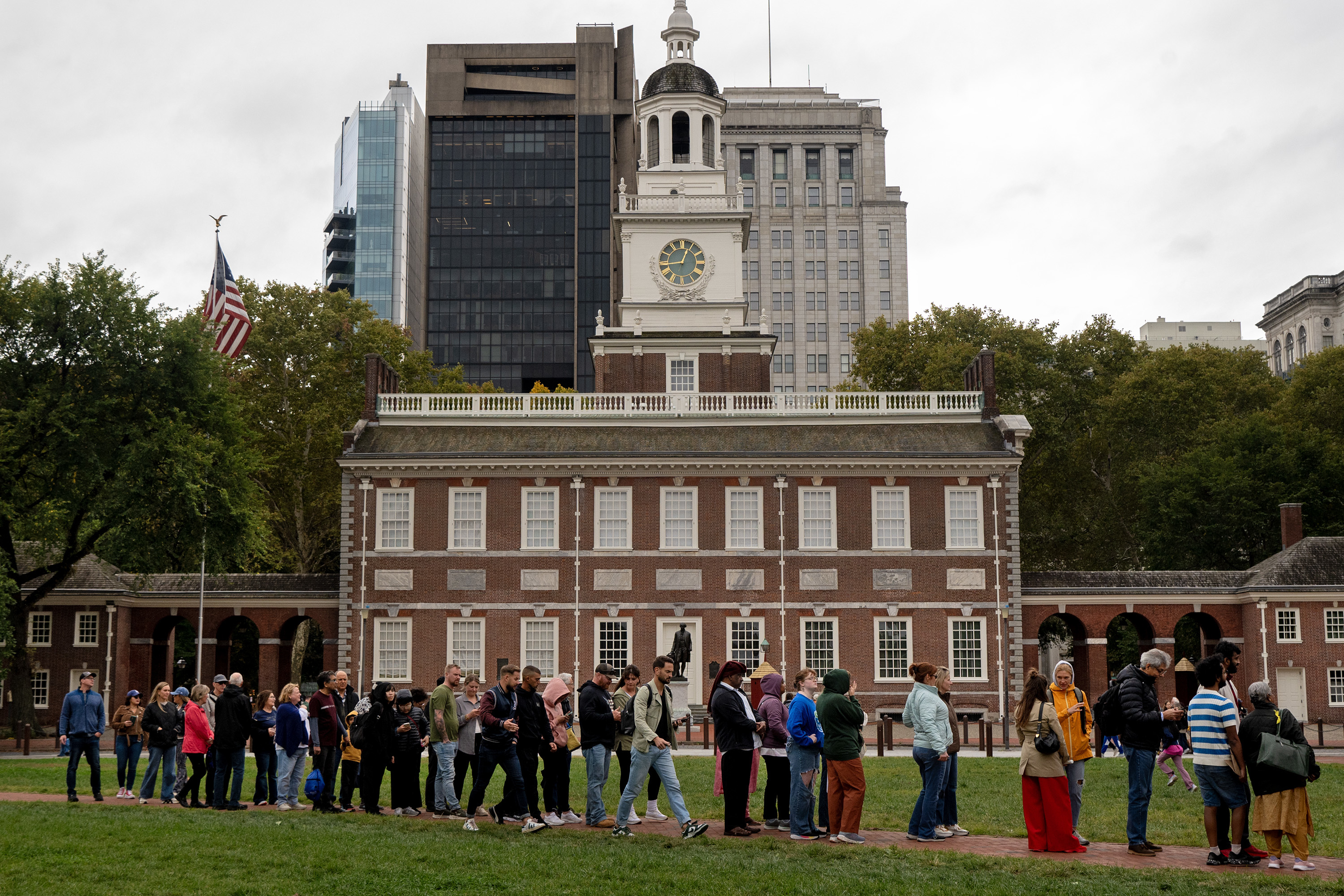
    A ceremonial event with members of Congress will convene at Independence Hall during the upcoming celebration of America’s 250th anniversary, the first such gathering in Philadelphia since a ceremonial joint session in 1987 to mark the bicentennial.

    The event, set for July 2, will feature visits from members of Congress but is not expected to include all 535 members in a building that, when it was in use in 1776, held only 56 delegates.

    It will fall on the anniversary of the day that the Second Continental Congress voted to adopt a resolution for independence. The Declaration of Independence was drafted and formally approved on July 4.

    The gathering is years in the making. U.S. Rep. Brendan Boyle, a Democrat whose district includes the national historic site, introduced legislation starting in 2024 that called for a joint session at the site on July 2.

    Congress has convened for a ceremonial session outside of Washington, D.C. on only two other occasions — a 1987 event in Philadelphia with 55 lawmakers, and in September 2002, when more than 300 met in New York City for the one-year anniversary of 9/11.

    The congressional event comes as the City of Philadelphia and the Trump administration are engaged in an ongoing legal battle over the federal government’s efforts to remove slavery exhibits from the President’s House, an adjacent site which memorializes the nine people George Washington enslaved in Philadelphia during the nation’s founding.

    U.S. Rep. Brendan Boyle holds a news conference about legislation intended to protect the President’s House in Philadelphia. Alejandro A. Alvarez / Staff Photographer

    Boyle, whose legislation did not pass, announced this year’s event in a statement that did not describe it as a ceremonial joint session but as a “ceremonial event.” Details about participants and programming would come later, his office said Thursday.

    “Exactly two years ago I launched this effort to bring Members of Congress, both Democrats and Republicans, back to the place where it all began 250 years ago: Independence Hall,” Boyle said in a statement. “I am very proud and excited this historic and special event is happening. It will be a unifying moment for the Congress and our country, at a time when we need it most.”

  • Trump plans to nominate U.S. Attorney Jay Clayton to be national intelligence director

    WASHINGTON — President Donald Trump said Thursday that he plans to nominate Jay Clayton, the U.S. attorney for the Southern District of New York and a former Securities and Exchange Commission chairman, as director of national intelligence.

    Trump announced the nomination on social media amid pressure from Congress to name a permanent replacement for Tulsi Gabbard, who announced her resignation last month. Trump faced intense pushback over his decision to name Bill Pulte, head of the Federal Housing Finance Agency, as acting director. The job oversees the coordination of 18 intelligence agencies.

    The resulting uproar led to a standoff in Congress after Democrats said they would refuse to renew foreign intelligence powers unless Trump pulled Pulte’s nomination and named a permanent nominee.

    “Few people anywhere in the Legal Community are respected at the level of Jay,” Trump wrote. “I encourage the United States Senate to confirm Jay as soon as possible.”

    Speaking later Thursday in the Oval Office, Trump said he still plans to keep Pulte in the role “for a little while” after earlier saying he wants Pulte to downsize the office. He called Clayton an “incredible talent” and said, “Nobody has better credentials.”

    As the U.S. attorney in Manhattan, Clayton oversees the most prestigious of the Justice Department’s prosecution offices, with a vast portfolio ranging from terrorism and espionage cases to security fraud and public corruption.

    He took over from interim U.S. Attorney Danielle Sassoon, who resigned in February after refusing to carry out orders from the Justice Department to drop corruption charges against Mayor Eric Adams. The case was eventually dropped after prosecutors from Washington submitted a request to a judge.

    Republicans hope to move quickly on nomination

    The Senate Intelligence Committee plans to hold a confirmation hearing for Clayton on Wednesday, according to a person who requested anonymity to discuss it ahead of an official notice.

    Senate Majority Leader John Thune (R., S.D.) told reporters that the Senate hopes to receive Clayton’s nomination paperwork from the White House as soon as Thursday. “We will move quickly,” he said.

    Democrats are holding up the renewal of a key surveillance law, the Foreign Intelligence Surveillance Act, in protest of Trump’s decision to temporarily tap Pulte. They say they won’t support an extension of the law, which expires at midnight Friday, until Trump withdraws Pulte’s appointment.

    Trump previously said Pulte would take over on June 19. It is unclear whether the Senate could move quickly enough to confirm Clayton before that date.

    “I don’t know what realistic is, but we’re gonna probe the limits of it,” Thune said.

    Connecticut Rep. Jim Himes, the top Democrat on the House Intelligence Committee, said that he has “known and respected” Clayton for decades and that if Trump had named him as the DNI nominee last week, “lots of pain might have been avoided.”

    “His intelligence, temperament and deep commitment to public service will make him a terrific DNI,” Himes said.

    Asked about Clayton’s nomination, Senate Democratic Leader Chuck Schumer said, “Pulte has to go.”

    “He cannot be in the DNI role,” Schumer said. “It’s too important.”

    Trump’s pick has led SDNY during a tumultuous period

    Clayton navigated his way through a 14-month tenure in the Southern District of New York without clashing with the federal judges in the busiest court in the nation, unlike his counterparts in upstate New York and New Jersey. After his interim term expired after 120 days, the judges of the Southern District appointed him as U.S. attorney.

    Clayton was sworn in April 2025 on the same day three prosecutors resigned, saying they felt pressured to admit wrongdoing or regret about prosecuting the case against Adams.

    Then, weeks later, the office had to withstand controversy over the Trump administration’s firing of one of its most respected and successful prosecutors, Maurene Comey. She claims she was fired because of Trump’s dislike of her father, former FBI Director James Comey.

    Under Clayton, the Manhattan U.S. Attorney’s Office facilitated the unsealing of thousands of pages of court records from the prosecutions of Jeffrey Epstein and Ghislaine Maxwell — documents that were made public as part of the Justice Department’s release of records related to the late sex offender and his longtime confidant.

    Clayton filed documents with the court explaining the process the government followed in releasing the materials.

    Clayton has also overseen the prosecution of former Venezuelan President Nicolás Maduro and Maduro’s wife, Cilia Flores, on drug trafficking charges.

    Clayton has overseen cases involving national security threats

    Several recent terrorism cases brought by Clayton’s office touch on the global threats and influences that he’ll be navigating if confirmed as director of national intelligence.

    They include the May arrest of Mohammad Baqer Saad Dawood al-Saadi, an Iraqi and Iranian citizen accused of plotting 20 attacks in Europe and Canada and planning to attack a Manhattan synagogue and Jewish centers in Los Angeles and Scottsdale, Ariz., in retaliation for the U.S. war on Iran.

    “There are foreign nations and terrorist organizations that see our success as a threat. A threat that they want eliminated,” Clayton said at a recent press briefing. “That is a stark truth.”

    “And don’t take my word for it,” he added. “Take their words and their actions. When your enemies tell you something, and when they act, you should know that they mean it.”

    The first Trump administration tried in June 2020 to install Clayton, then the chairman of the SEC, as U.S. attorney in Manhattan, but backed down and instead allowed Deputy U.S. Attorney Audrey Strauss to serve in the post. The reversal came after then-U. S. Attorney Geoffrey S. Berman agreed to step down, following assurances that probes into Trump allies would not be disrupted and that Strauss could lead the office.

    At the time, the office was looking into dealings by Rudy Giuliani, who was serving as Trump’s personal attorney, and was also investigating the actions of a state-owned Turkish bank.

  • Philly man charged in the murder of a mother beaten to death with bricks

    Philly man charged in the murder of a mother beaten to death with bricks

    A Philadelphia man has been arrested and charged in the death of a North Philadelphia mother beaten with a pair of bricks over the weekend.

    Dawaun Lewis, 30, has been charged with murder, robbery, and related crimes in the death of 45-year-old Keisha Furlow, police said. He was taken into custody Thursday after being arrested by Highway Patrol officers near his home on West Girard Avenue.

    First responders discovered Furlow, a mother of four, in an alley near her North Opal Street home in North Philadelphia early Sunday morning, according to police.

    Her face had been badly injured, and investigators believe two bloodied bricks found near her body had been used in her slaying hours before, around 2 a.m.

    Furlow was pronounced dead at the scene, and medical examiners determined she died from blunt force trauma.

    Investigators said they reviewed surveillance footage showing a person kicking Furlow and beating her head with a brick. That person and another individual fled with Furlow’s purse before ditching it nearby, they said.

    There was no word if police have any information about the second attacker. The investigation is continuing.

  • ICE arrests six in Phoenixville Thursday, say immigration advocates

    ICE arrests six in Phoenixville Thursday, say immigration advocates

    At least six people were detained in Phoenixville by U.S. Immigration and Customs Enforcement Thursday, according to a nonprofit that works with undocumented people in the Greater Philadelphia area.

    Rachel Rutter, executive director of Project Libertad, said the tips regarding ICE sightings started pouring in at around 7 a.m. Agents were reportedly at an Acme, a Wawa on the other side of the borough, and a car stop at an intersection.

    “It really was just kind of a feeling of the town crawling with ICE because it was just kind of coming from everywhere and they’re moving around quickly,” said Rutter, whose organization confirmed the arrests and was still pinning down the locations of where they took place.

    ICE did not immediately respond to questions regarding the alleged flurry of activity and arrests.

    One Phoenixville resident, who declined to give her name out of privacy concerns, said she was walking her dog when she saw four SUVs with tinted windows and siren lights on their back dashboards in the middle of a car stop just blocks from the borough’s main commercial corridor. About eight plainclothes officers, some in face masks and wearing vests with “police” emblazoned on them, were at the scene, she said.

    After dropping her dog off, the woman returned to Washington Avenue, near Star Street, where she saw the officers arrest two of the car’s passengers.

    “From the time I saw them until the time I left, I’d say the total time was probably about 10 minutes,” she said, adding the driver of the car would later tell her the group was heading to work.

    As of Thursday afternoon, Project Libertad, which has been connecting families of people detained by ICE to legal help, food, and financial assistance, was still in the process of reaching those affected by the arrests.

    Some Phoenixville immigration advocates say the timing of the sudden arrests, after what felt like a lull in ICE activity, comes two days after a unanimous Phoenixville Council vote to pass an ordinance amendment that would limit immigration enforcement on borough property.

    The change was introduced in Council earlier this year after the controversial arrest of two Guatemalan men off the borough’s main commercial corridor in February.

    The mayor’s office and members of the Borough Council could not be reached for comment by publication.

    “We’ve seen this in other areas across the country where when a city or a town, especially around sanctuary cities, takes a stand, ICE responds in force,” said Parker Studebaker, director of the Phoenixville Liberation Center, which has been hosting “know your rights” immigration trainings.

    Studebaker also expressed concern over how the arrests took place a day after President Donald Trump signed a bill funding ICE and Border Patrol through the end of his term. Many immigration advocates worry that the roughly $70 billion going to the agencies comes with little oversight.

    For now, immigration advocates in Phoenixville vowed to continue organizing and educational efforts.

    “We really want to make it heard and make it known that the community is coming together and is willing to defend our neighbors, and that will not change, and so that’s the best we can do is show up and meet this where it’s at,” he said.

    Correction: This story has been updated to reflect that six people were detained.