As he headed out of his hotel and toward the track in Dover, Del., for the NASCAR All-Star Race in May, Steve O’Donnell couldn’t help but eavesdrop on a group sporting 23XI Racing gear.
Of the six fans standing outside the hotel, three had driven from Philadelphia and three had come from New York. For four of them, it was their first time at a NASCAR event, and all of them were talking about Bubba Wallace.
O’Donnell, who was appointed as the CEO of NASCAR in April, said more people are experiencing NASCAR for the first time as the sport turns to a younger and more diverse field of drivers, technicians, and owners.
That trend is expected to continue as NASCAR visits Pocono Raceway in Long Pond, Pa., this weekend for a trio of races, culminating in the Cup Series’ Great American Getaway 400 on Sunday (3 p.m., Prime Video).
O’Donnell said NASCAR bringing in first-time fans has been intentional, and a vanguard of young talent from different backgrounds is helping.
“Everyone’s doing their part to showcase the sport through different avenues,” O’Donnell said. “The opportunity for our sport to continue to grow is incredible … For the first time in a long time, I believe that we are all aligned to work toward showcasing our sport to as many fans as possible [and] getting younger.”
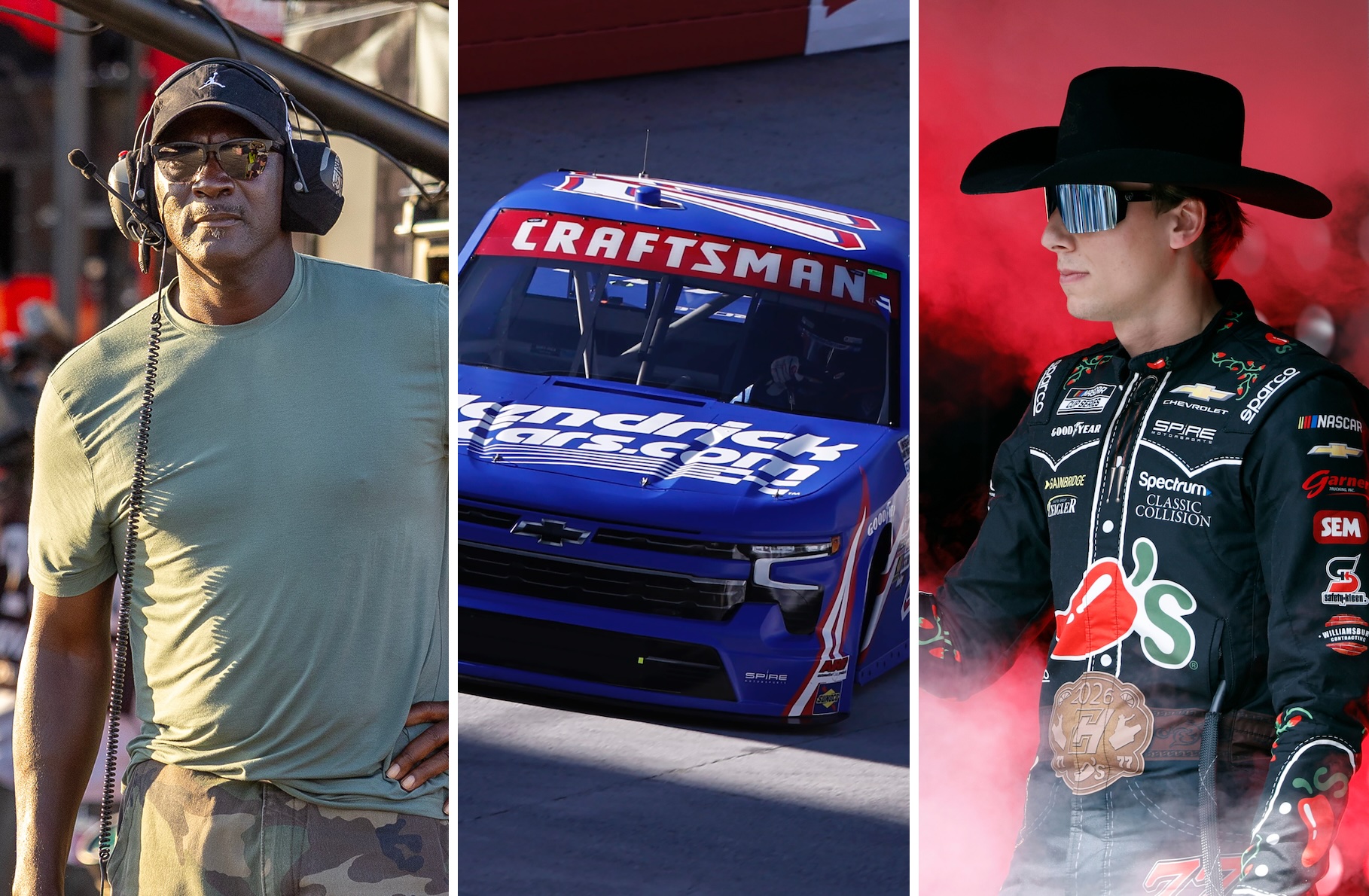
Basketball legend Michael Jordan is an owner of 23XI Racing.Wade Payne / AP
Jumpman jump-start
Tyler Reddick started this season with a three-peat at Daytona, Atlanta, and Circuit of the Americas in Austin, becoming the first Cup Series driver to win the first three races of a season.
Reddick has been dominant driving the No. 45 car for 23XI this season. The team, co-owned by Michael Jordan and current Cup Series driver Denny Hamlin, leads the NASCAR owner standings by 51 points and has five wins through 15 races.
Jordan started the team in 2020 with Hamlin, who has 63 Cup Series wins since being named NASCAR Rookie of the Year in 2006. Hamlin said Jordan is a true racing fan, which helped them align on many decisions since the team took to the track in 2021.
“He would have been watching these races no matter what, whether he was an owner or not, because he has been such a big NASCAR fan for so many years,” Hamlin said. “Now, he’s got a vested interest in it. It certainly makes him more passionate about it.”
Jordan lifted the Harley J. Earl Trophy alongside Reddick in the winner’s circle after the Daytona 500. O’Donnell says moments like those help lift NASCAR’s visibility, especially with fans who might not otherwise be exposed to racing.
“[Jordan is] involved all the time, which is great for us because I think he pushes the sport and certainly gets us eyeballs that we wouldn’t necessarily have,” O’Donnell said, “from a television viewing standpoint, or maybe even coming to the race, for a chance to watch his race team.”
Jordan’s is one of three Black-owned teams that has competed this year, and he employs Wallace, the only Black driver on the Cup Series circuit.
That representation and Jordan’s larger-than-life presence have allowed 23XI Racing to draw the interest of Black NASCAR fans, especially Black first-time NASCAR fans. In 2024, Wallace’s fourth season driving the No. 23 for 23XI Racing, 40% of new NASCAR fans were multicultural, and the sport was rapidly growing its proportion of Black fans.
“I think it’s a big part of why Michael got into it, to bring in a new fan base and then make our fan base aware of his brand,” Hamlin said. “You’re able to knock out two birds with one stone there. Him being a race fan on top of it was certainly an added bonus.”
Old school meets new school
When Hamlin won his first race on the Cup Series at Pocono in 2006, he could not have predicted that hosting a podcast would be part of his job 20 years later.
But, in an age where NASCAR is trying to draw in a younger viewership, direct-to-fan media has become crucial for any driver. Hamlin said his podcast, Actions Detrimental, helps him reach new fans and court sponsors.
“When sponsors shop different race teams and drivers, who’s going to give the best return on their value?” Hamlin said. “You need to put your name high on that list, because we’re all fighting for the same sponsors. When you are able to increase your brand awareness, like I think that the podcast has done for me personally, there’s been nothing but positives for it.”
Hamlin, 45, will compete in a Cup Series race at Pocono for the 20th time this weekend in the Joe Gibbs Racing No. 11. He competes as a driver and an owner for different teams, which he said has been an adjustment.
Hamlin is coming off back-to-back wins at Nashville and Michigan, which helped narrow the gap between himself and Reddick, driving for 23XI Racing, at the top of the driver standings.
While Hamlin still is a natural talent on the track, social media and other forms of content creation come a bit more naturally to younger drivers on the Cup Series, including Carson Hocevar.
Carson Hocevar is one of NASCAR’s most popular young drivers.Butch Dill
Hocevar, 23, has built a fan base with his aggressive driving style and confidence. He streams video games on Twitch, where he has more than 45,000 followers, and makes YouTube videos. He says streaming and making videos come naturally to him.
“I’ve just grown up with it,” Hocevar said. “I enjoy doing it. A lot of my friends have massive YouTube channels or massive Twitch channels. I watch them and enjoy it, and it looks fun. It kind of gives me my own hobby.”
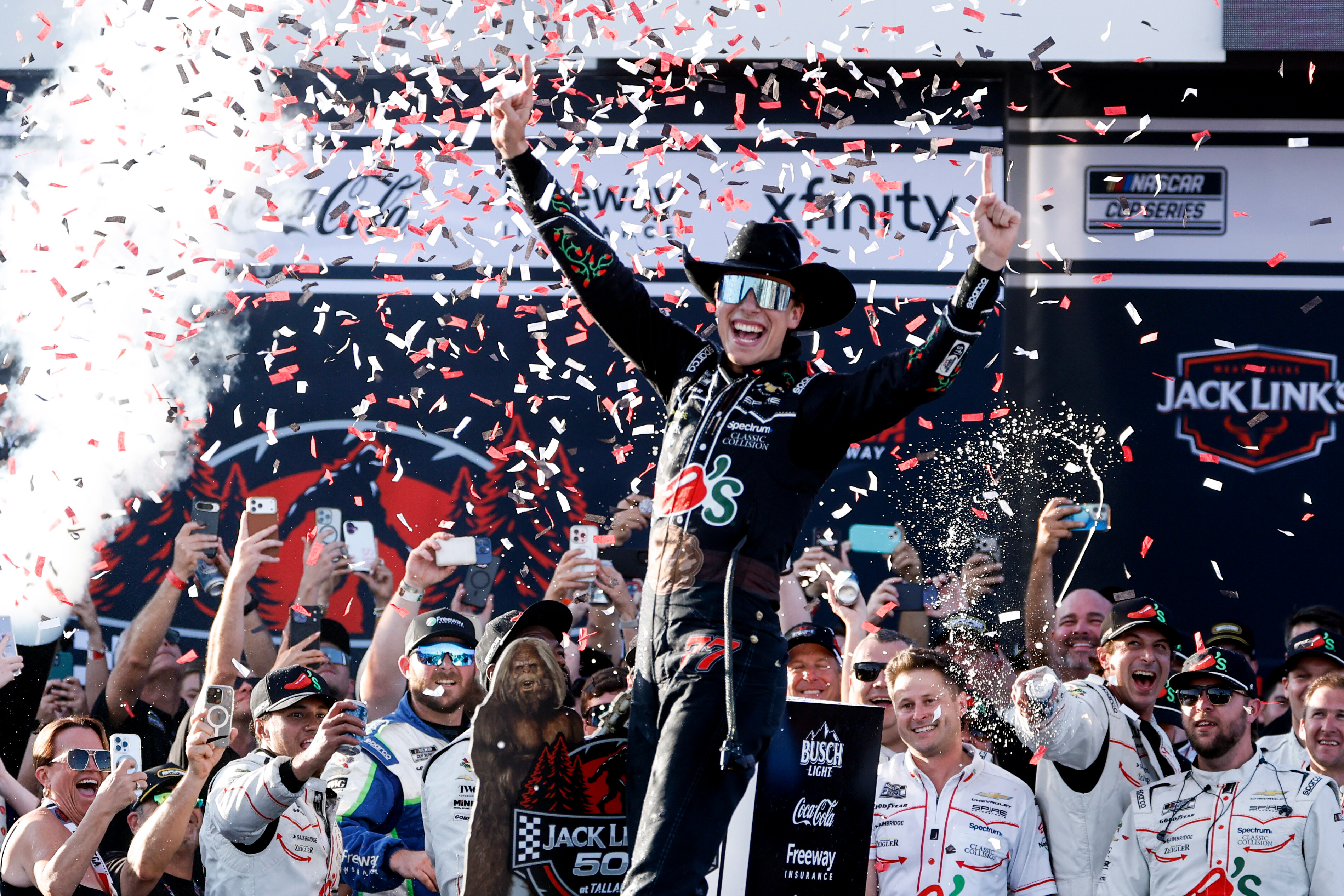
Hocevar won at Talladega this year, his first win since bursting onto the scene as NASCAR Rookie of the Year in 2024. He will race at Pocono a week after drawing the ire of his fellow drivers at Michigan by triggering a nine-car crash on a midrace restart.
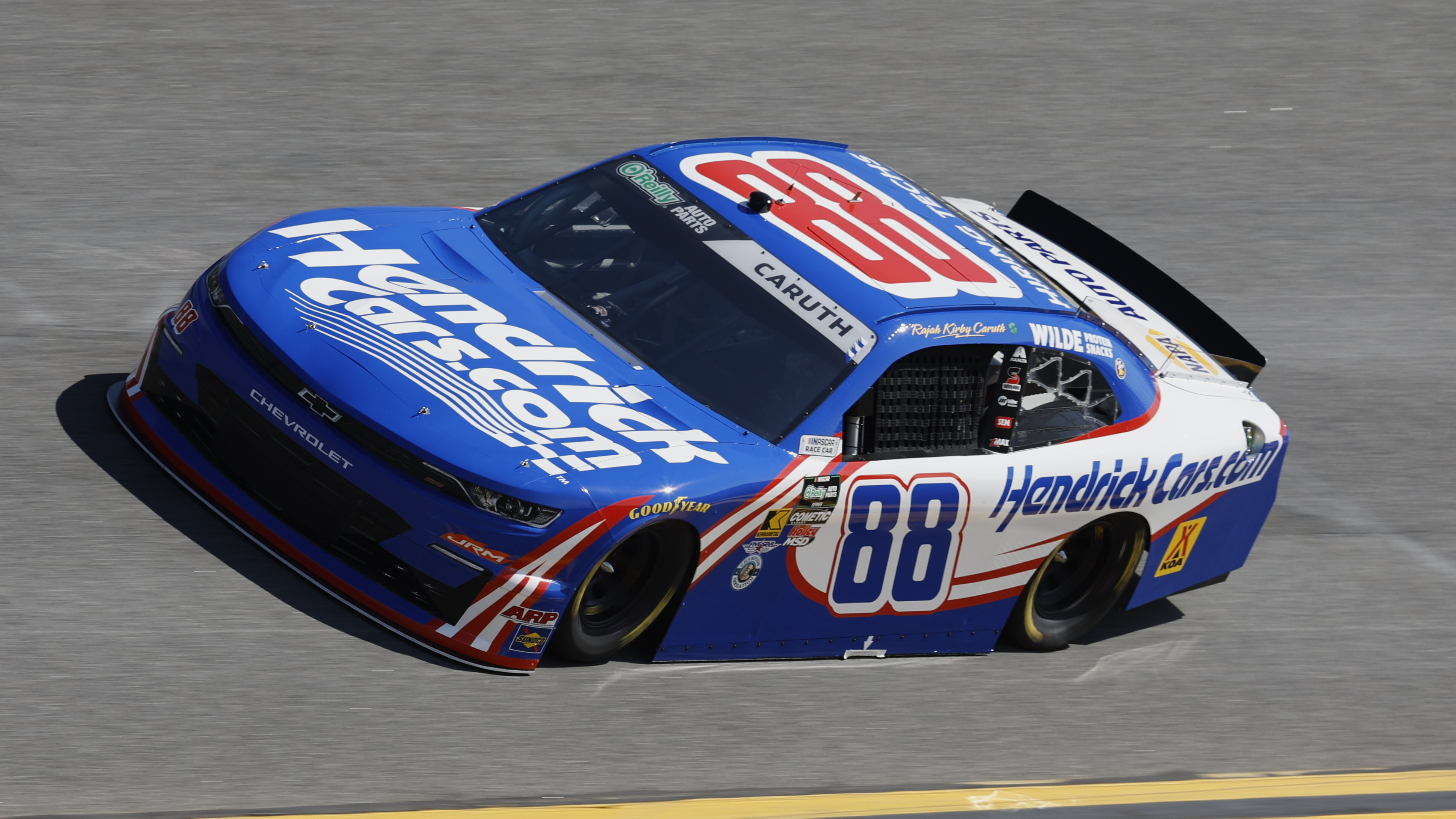
Rajah Caruth drives during qualifying for a NASCAR Xfinity series race in February at Daytona.David Graham / AP
Simulator to track
Hocevar isn’t the only up-and-coming NASCAR driver streaming on Twitch.
Rajah Caruth, who drives full time on the second-tier O’Reilly Auto Parts Series, streams a variety of video games regularly. One of the games he broadcasts often is iRacing, a racing simulator that served as his entry point to the sport.
Caruth started racing on the virtual eNASCAR Ignite Series at 16, then got onto a real-world track as part of NASCAR’s Driver Development Program, formerly known as Drive for Diversity.
“It’s been a fun process so far,” Caruth said. “I feel like the more experience I get in real life, the more useful that iRacing is, the more useful that our GM simulators are. I love to use them, because it’s just free practice.”
He’s climbed his way from Automobile Racing Club of America races into the NASCAR ranks. Caruth has two wins on the Craftsman Truck Series since his debut in 2022. He will continue to push for his first O’Reilly Auto Parts series win at the MillerTech Battery 250 at Pocono on Saturday (4 p.m., CW).
Caruth, 24, also is vying for a call-up to the Cup Series, but he takes his role as a minority driver in the lower levels of NASCAR seriously. He became the first Black driver to win a race at Tri-County Motor Speedway with a win on the NASCAR Advance Auto Parts Weekly series in 2021.
“I remember being 12 years old [and] just loving the sport so much, but being an outsider,” Caruth said. “I know how important it was seeing, whether it was Lewis Hamilton, Bubba Wallace, Mark Davis, other drivers before me. It meant a lot. If I can repay that in any form, I’m going to do so.”
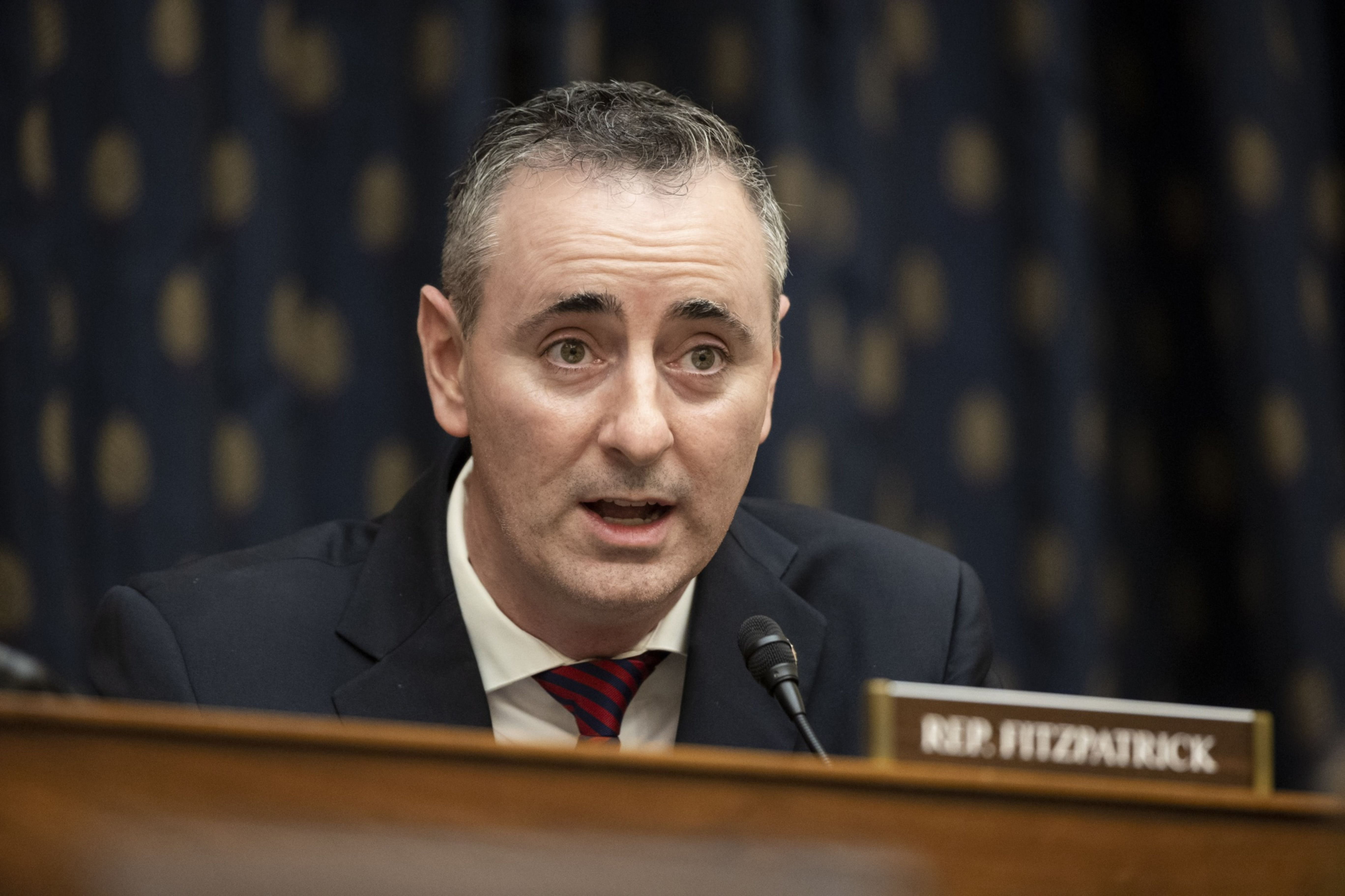
WASHINGTON — As U.S. Rep. Brian Fitzpatrick’s fiercest reelection battle in years got underway in the last two months, the moderate Bucks County Republican has called to restrict President Donald Trump’s war in Iran and prohibit a so-called “anti-weaponization fund” that could reward the president’s allies.
He’s talked up Democratic Gov. Josh Shapiro’s potential run for president, and he’s said he would “100%” become an independent if Pennsylvania didn’t have closed primaries.
He went even further this week — deriding House Republican leadership for opposing a process that allows lawmakers like him to force a vote on issues like the weaponization fund.
“Leadership of both parties have been guilty of this for years… just further evidence of the brokenness of the two-party system — and the rise of Independent voters is a direct manifestation of this,” Fitzpatrick wrote on social media.
Behind the scenes, though, Fitzpatrick has started to lean on his party’s vast resources to help win his reelectionand, Republicans hope, keep the narrowly divided 435-member House in GOP control.
In a newly scheduled television ad campaign that will begin later this month, Fitzpatrick is teaming up with the National Republican Congressional Committee — the official campaign arm of House Republican leaders — to launch ads aimed at boosting his campaign in the 1st Congressional District against Democratic nominee Bob Harvie, a Bucks County commissioner who won last month’s primary with support from Shapiro and national Democrats.
The $120,000 worth of cable TV ads represent the first foray by the NRCC in any Pennsylvania district so far this year, according to the tracking firm AdImpact.
Both parties are competing heavily over four Republican-held seats in Pennsylvania, making the state one of the centerpieces in the fight to win the House majority during this year’s high-stakes midterms.
The NRCC and other Republican groups have promised to help reelect all four incumbents. And with the new ads benefiting Fitzpatrick, the NRCC is spending first on the candidate who’s been the most publicly critical of their leadership and even gotten some blowback from Trump as a result.
“Trump can say whatever Trump wants,” Robin Kolodny, a Temple University political science professor, said of the president’s accusations that Fitzpatrick is insufficiently loyal. “But you get to 218 by adding one race at a time. And if you have an incumbent who’s been successful, the party has every incentive to support them until they find that the polling says it’s the lost cause.”
Fitzpatrick has won five terms in a nearly evenly divided Bucks County-based district with what observers have called a specific brand of politics. He votes with his party and supports Trump’s priorities the vast majority of the time, though he’s broken with them in instances like the final passage of the One Big Beautiful Bill and the expiration of COVID-era Affordable Care Act tax credits that kept costs lower for individuals using the public marketplace.
His recent opposition to the anti-weaponization fund has echoes of that healthcare debate in December, when Fitzpatrick joined with Democrats in trying to use a process called a discharge petition to force a vote that Republican House Speaker Mike Johnson declined to set up.
Fitzpatrick’s office and campaign did not respond to requests for comment for this story.
But earlier this week, thePennsylvania lawmaker and U.S. Rep. Tom Suozzi (D., N.Y.) said they would launch a discharge petition to prevent Trump from creating a fund to compensate people who claim to be victims of a weaponized federal government, Punchbowl News reported. The idea for the $1.8 billion fund emerged from a settlement between Trump and the Department of Justice in a case about the leak of Trump’s tax returns.
Republican lawmakers who have often acquiesced to the president’s demands voiced deep concerns. Acting Attorney General Todd Blanche responded by saying the administration was walking away from the idea. Still, Trump officials have quietly worked to keep it alive and have not ruled out payments going to individuals previously charged with attacking the Capitol on Jan. 6, The Atlantic reported Thursday.
“The statement’s not satisfactory,” Fitzpatrick said on CNN earlier this month while discussing Blanche’s comments. “We need both a legal avenue here and a statutory legislative avenue. That’s what Tom and I have introduced, and that’s what we’re going to force to the floor.”
He called the fund an “abuse” of the law. In a post on X this week, he also disparaged Republicans leaders’ “poorly managed House Floor” for preventing a discharge petition to squash it.
Johnson, the Louisiana Republican who leads the chamber, headlined a fundraiser earlier this year for Fitzpatrick, who generally does vote for GOP priorities — including this week’s successful effort to provide additional funding for immigration enforcement within the Department of Homeland Security.
Fitzpatrick and Suozzi had not yet launched the discharge petition as of Thursday evening, after Punchbowl reported that Republican leadership was frustrated with the idea. Some even proposed pulling back campaign contributions from NRCC “patriots” who signed on to a discharge petition, according to Punchbowl.
Fitzpatrick is one of 15 Republicans in the NRCC’s “patriots” program that prioritizes sending resources to competitive districts.
Also on the list are U.S. Reps. Scott Perry, in a Harrisburg-based district; Ryan Mackenzie, in the Lehigh Valley; and Rob Bresnahan, in a Scranton-based district. Each of those races are considered more of a “tossup” than Fitzpatrick’s, and Kolodny said it’s likely the NRCC will invest in advertising and campaign operations to help them as well, possibly a little later in the summer.
She said the earlier spending on behalf of Fitzpatrick is likely a sign they found him to be “newly vulnerable” after the May 19 primary, when Harvie was nominated.
Widely considered the most formidable challenger to Fitzpatrick so far, Harvie has already been elected by voters twice in a majority of the district and both national and state Democrats have coalesced around him.
Kolodny called the size of the NRCC’s ad-buy “modest” but said that “they’ve done anything at all means that their polling has shown them they’ve got a problem.”
“They have a new level of concern that they didn’t have before,” Kolodny said.
Harvie, who is expected to benefit from outside spending by the NRCC’s counterpart, the Democratic Congressional Campaign Committee, said in a statement that the ads are proof Republican leaders “can count on [Fitzpatrick’s] vote when they need it most.”
“We are tired of politicians like Fitzpatrick talking out of both sides of their mouth,” Harvie said. “He claims to be ‘independent,’ but he’s seeking a bailout from Trump’s Republican Party because he is one of their own.”
Charlie Gerow, a Republican strategist with a Harrisburg-based public affairs firm, said he didn’t view Fitzpatrick’s latest moves as much different from any other instance in which he’s successfully walked a “political tightrope” in his district,which is one of only nine GOP-held districts in the country that went for Kamala Harris in 2024.
He said the assist from the NRCC also makes sense because of how large Fitzpatrick’s district looms in a House that’s currently split 218 Republicans to 212 Democrats, with one independent and four vacancies.
“Leadership has an absolute interest in making sure that Brian Fitzpatrick gets reelected, despite their displeasure from time to time with what he says and does,” Gerow said.
The World Cup is finally here, and for the next 39 days, billions of soccer fans worldwide will hang on the fate of the 48 national teams vying to be named the global best for the next four years.
There is nothing else quite like it.
If you haven’t followed it closely, try to imagine it as a kind of March Madness wherein the bracket’s unexpected turns and Cinderella runs can upend every expectation: add into it the international scope and quadrennial timing of the Summer Olympics; then top it off with the fervor of beloved religious observance — and you’ll be getting close.
My familial WhatsApp group started really buzzing two days ago, after New York City Mayor Zohran Mamdani posited the possibility of Morocco winning it all, and won’t stop buzzing until the confetti rains down on the overjoyed winners. In between will be everything from play-by-play game commentary, to status reports on Panini collections or taste tests of World Cup branded snacks, to shared photos of candles lit for the success of a favored team.
Because, when you are all in you are all in, am I right?
Thursday the opening match took place between Mexico (which, along with the United States and Canada, is co-hosting this World Cup) and South Africa.
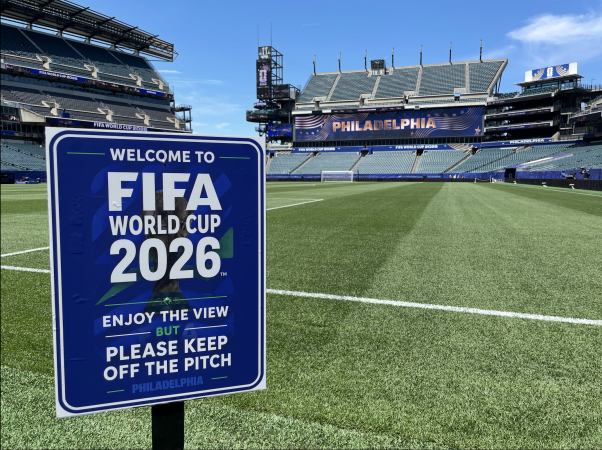
On Sunday, our own Linc-turned-Philadelphia-Stadium will host Cote d’Ivoire vs. Ecuador. Philadelphia Inquirer columnist Will Bunch has written about the Cote d’Ivoire team — which he will see in person — and whose fans came to watch them in Chester even before the World Cup started.
The Vourvouliad (the collective we’ve coined for my extended family) long toyed with the idea of attending one of the Philadelphia matches as a group — but FIFA’s dynamic pricing put the kibosh on that by making every seat cost a small fortune.
But we’ll make do — as we have every mundial before this one — watching from afar.
Truth is, many of us are also approaching this World Cup with more than a little bit of trepidation. We will watch the World Cup matches taking place on U.S. soil with bated breath, given President Donald Trump’s xenophobia and his administration’s targeted deployment of Immigration and Customs Enforcement and other Department of Homeland Security agents to Black and brown cities, communities and gathering spaces.
But we longtime fans have too many great memories born of our experiences of soccer to boycott the World Cup altogether — even though some have called for that.
In fact, most of the fans that I’ve spoken with lately are consumed by the exact opposite: trying to find a way to get into a World Cup stadium.
Ecuador’s Moisés Caicedo carries the ball during a World Cup 2026 qualifying soccer match against Argentina at Banco Pichincha Stadium in Guayaquil, Ecuador in September.A
Felipe, who — perhaps channeling Pelé, Neymar and countless other soccer icons — only wanted to go by one name, will be at the Philadelphia opener Sunday, rooting for his home country of Ecuador.
“I will be going to the stadium with my family. We will also be tailgating with some other friends from Ecuador before the game outside the stadium,” he told me. “I think it will be a great opportunity to meet other soccer fans there.”
“I am really excited for the World Cup, not only because Ecuador’s national team is in great shape but also because it is a once in a lifetime [opportunity] to have your home country’s national team playing a World Cup in the city you are living in,” Felipe added. “I wish the organization would take into account the fans’ enjoyment before the profit, but I guess this is the business model we sadly see in many other sports as well.”
France’s Kylian Mbappé, left, scores his side’s third goal during a World Cup 2026 group D qualifying soccer match between France and Ukraine in Paris in November.Christophe Ena
Ben Rush-Goebel, who moved to Philadelphia from France more than a decade ago, probably won’t be at France’s match on June 22.
“The tickets are really too expensive,” he told me, “so unless I find a magical way to get to the Philly game, I will be watching it with my friends. I can’t wait to go to the FanFest to watch this game and others. Might also go to a bar. Fado has always been our spot. In 2018, when France went to the finals to beat Croatia, we were in the rain on South Street watching from the screen set up by Brauhaus Schmitz. This was the most amazing time as we rushed after the victory to buy cheap champagne to celebrate.”
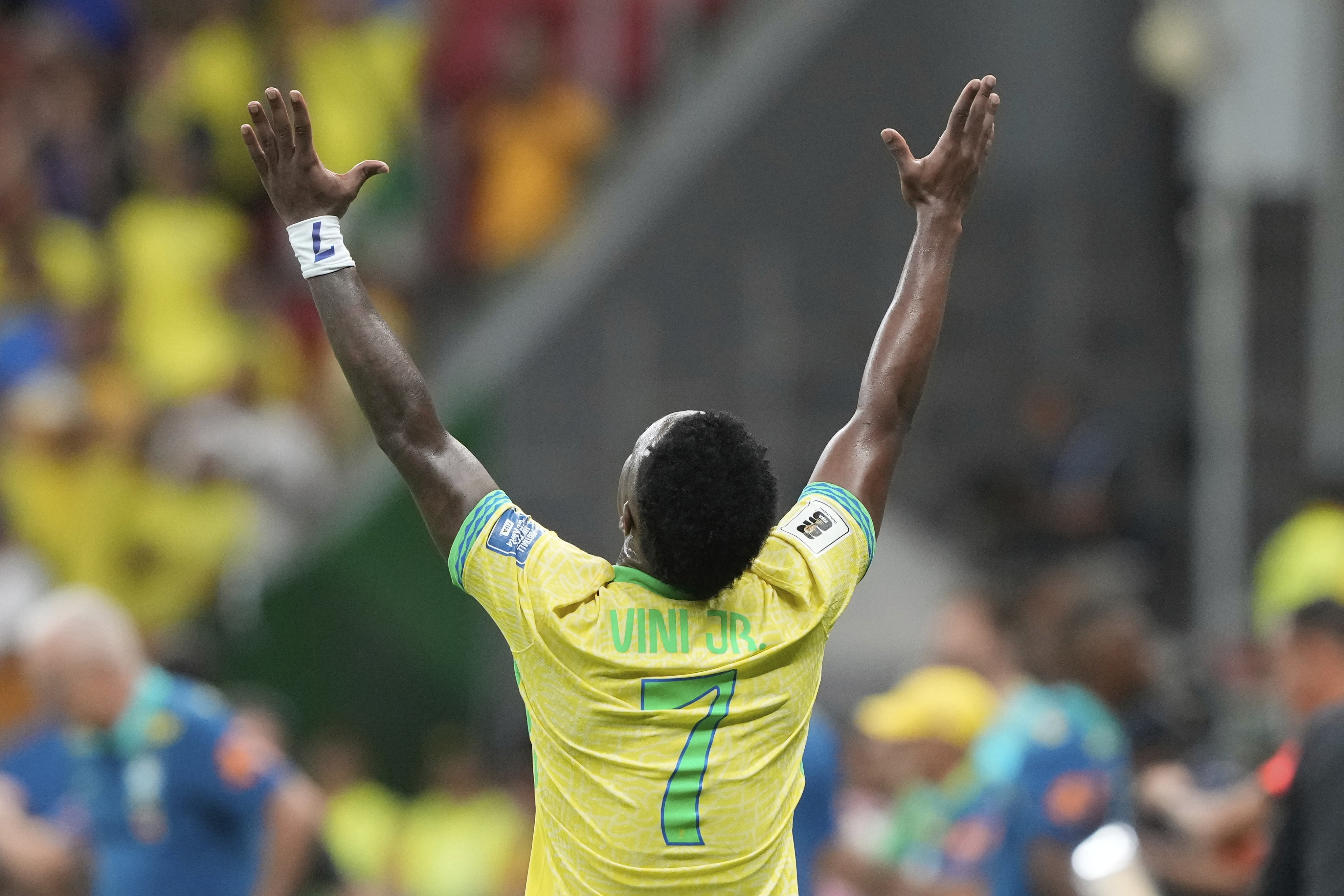
Brazil’s Vinícius Júnior celebrates after scoring his side’s second goal against Colombia during a FIFA World Cup 2026 qualifying soccer match at Mané Garrincha stadium in Brasilia, Brazil, in March 2025.Eraldo Peres
Rob Levin, raised in Brazil and rooting both for their Seleção and Argentina’s Albicelestes, will be watching Brazil play in Philadelphia June 19 from home, or with others at a watch party.
“Chevere to have the World Cup here,” he said. “It’s a shame that the ticket costs are so high and travel to and fro is so fraught — I hope all the fans behave and all players are treated well and with respect — no place for politics in these games. May everything go as smoothly as possible, as it should.”
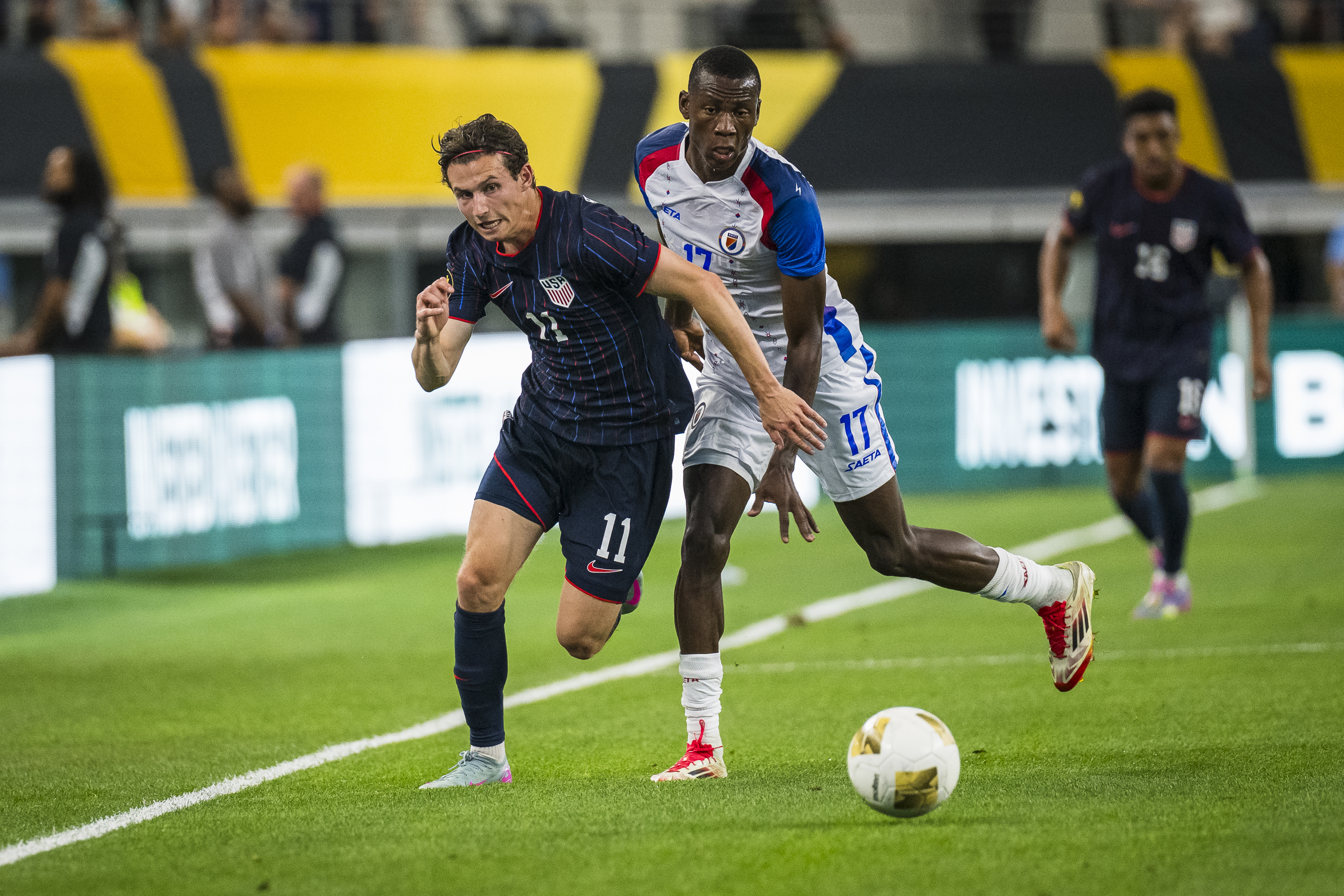
The Union’s Danley Jean Jacques, right, is the first active player from the Philadelpha club to play in a World Cup, on the Haitian national team.Jessica Tobias
Numa St. Louis, whose team, Haiti, is participating in the World Cup for the first time in more than 50 years, hasn’t given up on seeing the team play against Brazil on June 19.
“I’m still hoping to score a ticket for the Haiti-Brazil game,” he told me, “but if not, I’ll be enjoying the tournament the Haitian way — at community watch parties, breaking bread with friends and family, dancing, and vibing to Haitian music and rhythms while cheering on our team.”
“The entire Haitian community is energized by the opportunity to support our national team and celebrate this historic moment together …Win, lose, or draw, this team has already made us proud,” he added.
Like Levin, St. Louis worries about the welcome players and international fans might feel in the U.S. venues. “I have some concerns about how the United States is being perceived by many international fans,” he said. “Reports regarding the treatment of an African referee, Senegalese players, and issues involving Iranian supporters have raised questions about whether the spirit of the tournament is being fully embraced. The World Cup should be a celebration of cultures, people, and the beautiful game. It should feel welcoming, joyful, and inclusive for everyone.”
And it should resonate, even years later.
“My best soccer memory goes back to 1996, the first time Ecuador beat Argentina in Quito,” Felipe told me. “I was 12 years old and went to watch the game at the stadium with my grandfather who was a huge fan of soccer.”
Rush-Goebel points to that 2018 moment on South Street after France’s win as his favorite soccer memory: “A whole lot of French people, many of whom were my friends, my wife, [all of us] stressing together, in the rain, to an amazing victory!”
For myself, I have fond memories of seeing Mexican immigrants in Philly dressing their Jesus figures in El Tri’s national jerseys before Mexico played in the 2014 mundial — but you have to go all the way back to the 1970 World Cup in Mexico for my best memory.
Sure, I recall snippets of the televised semi-final “game of the century” between Italy and West Germany, and maybe even Pelé’s magnificent header that opened the final between Brazil and Italy…
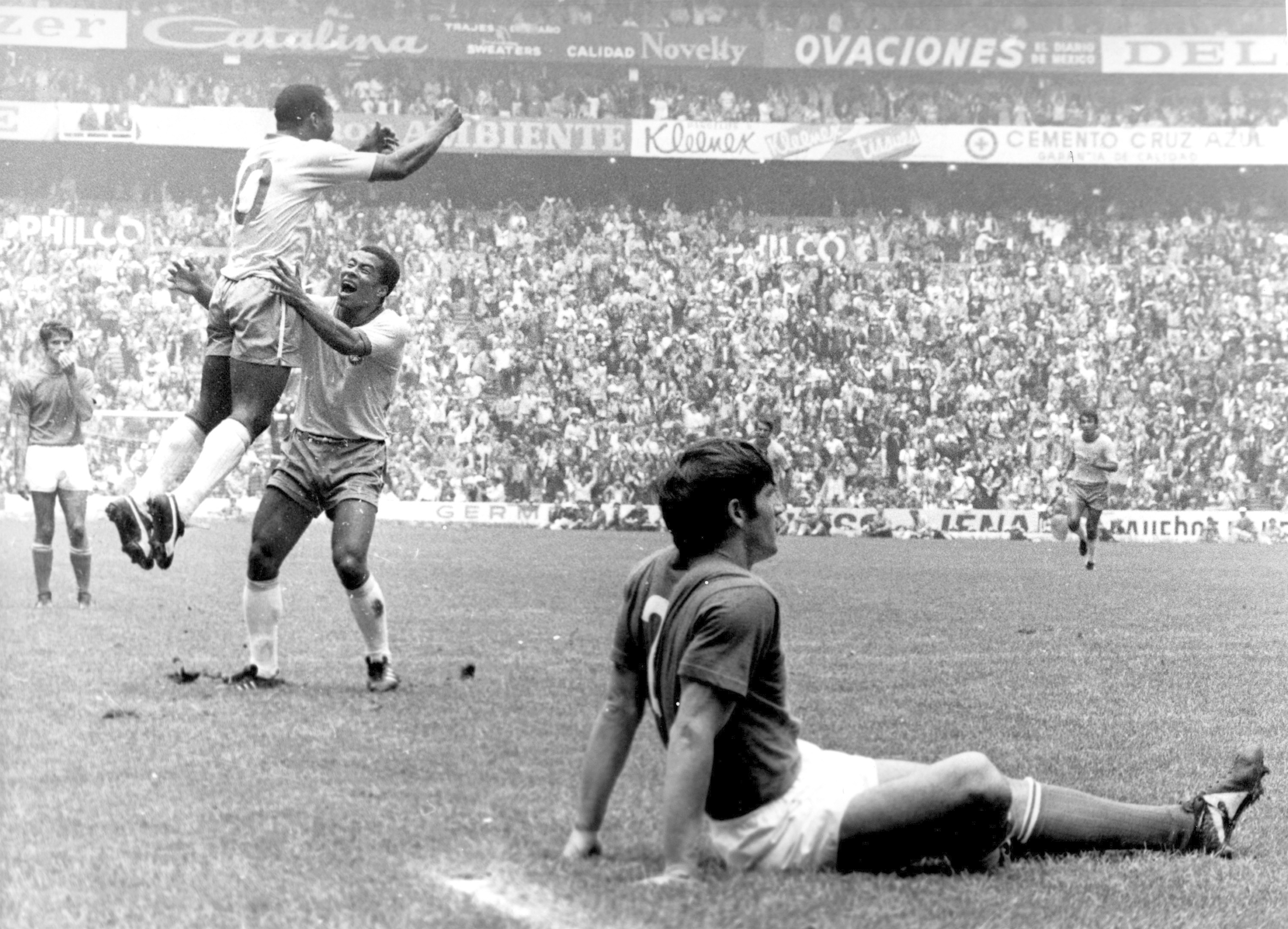
In this June 21, 1970 file photo, Brazil’s Pelé jumps for joy after scoring his team’s first goal against Italy in the first half of a World Cup final at Azteca Stadium in Mexico City, before winning 4 – 1. Kurt Strumpf
But what lives most vividly in my memory played out during the long lent leading up to those games.
I’m a kid, standing under the eucalyptus tree in my grandmother’s house in Guatemala with my brothers, trading Panini we purchased for centavos at the corner store in Zone 7 so that we could fill every team roster with stamps in our albums. We talked fútbol nonstop — me, who can’t stand sports, and my brothers, who love soccer and baseball with equal passion — and cheerfully bickered about who would go the distance.
For me soccer will always be about those two people I love, who I want to keep talking fútbol with until the day I die. The beautiful game is beautiful precisely because of the profound connections it invites and honors — be it with family members, friends or strangers across continents and time zones.
Or with a city, hosting its first ever World Cup matches with characteristic style and grit. May you hold our deep and indelible memories forever, Philadelphia.
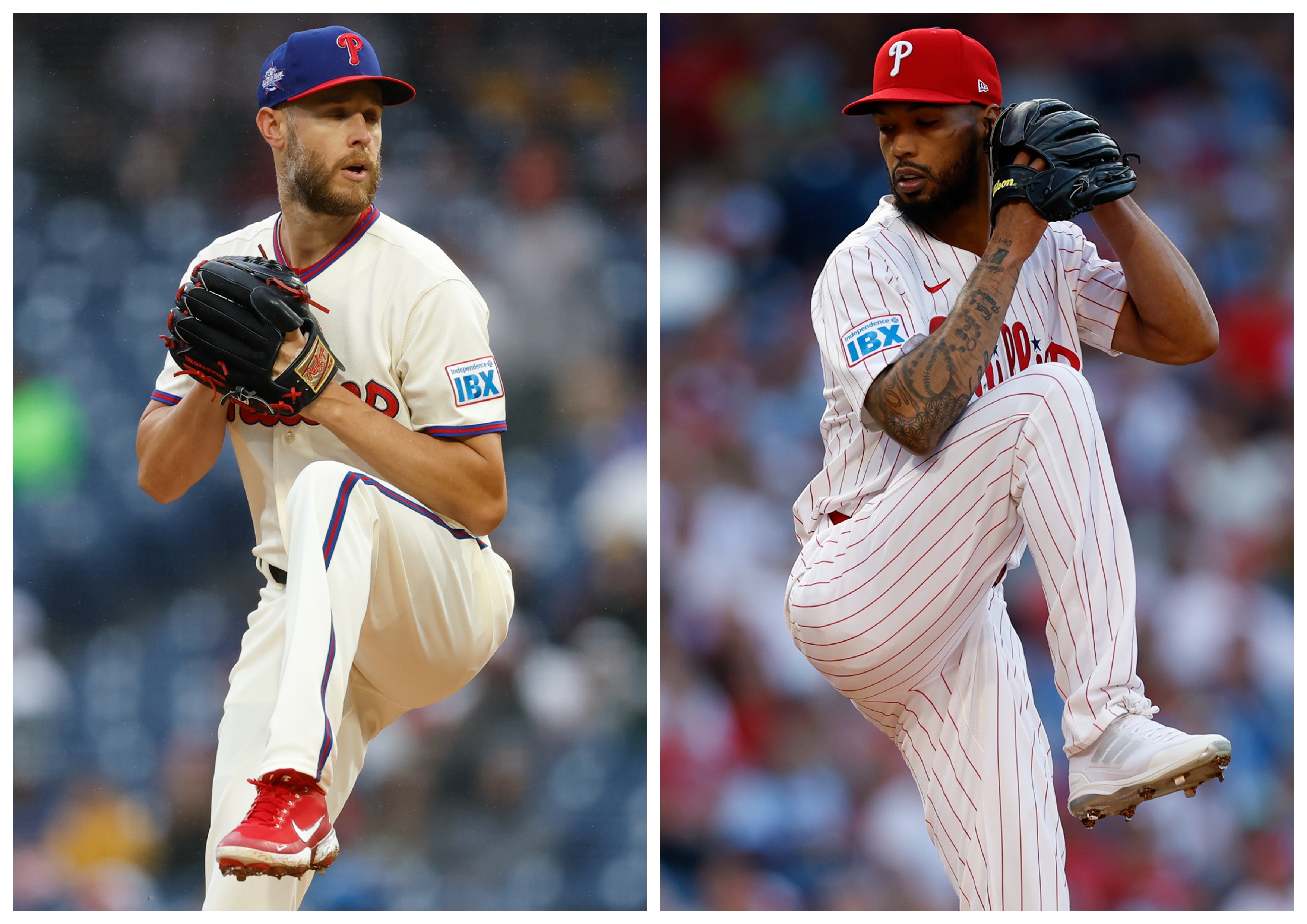
Anecdotally, it’s hard to believe there’s a better tandem. Sánchez and Wheeler have started back-to-back for seven turns through the rotation, five times against the same team. Here’s how it’s gone:
Sánchez, May 5 vs. A’s: 8 innings, 0 runs
Wheeler, May 6 vs. A’s: 6⅓ innings, 3 runs
Sánchez, May 10 vs. Rockies: 7 innings, 0 runs
Wheeler, May 12 at Red Sox: 7⅓ innings, 1 run
Sánchez, May 16 at Pirates: 9 innings, 0 runs
Wheeler, May 17 at Pirates: 7 innings, 0 runs
Sánchez, May 22 vs. Guardians: 8 innings, 0 runs
Wheeler, May 23 vs. Guardians: 6 innings, 0 runs
Sánchez, May 27 at Padres: 7 innings, 0 runs
Wheeler, May 29 at Dodgers: 6 innings, 4 runs
Sánchez, June 3 vs. Padres: 7 innings, 1 run
Wheeler, June 4 vs. Padres: 7 innings, 2 runs
Sánchez, June 8 at Blue Jays: 7 innings, 2 runs
Wheeler, June 9 at Blue Jays: 6 innings, 1 run
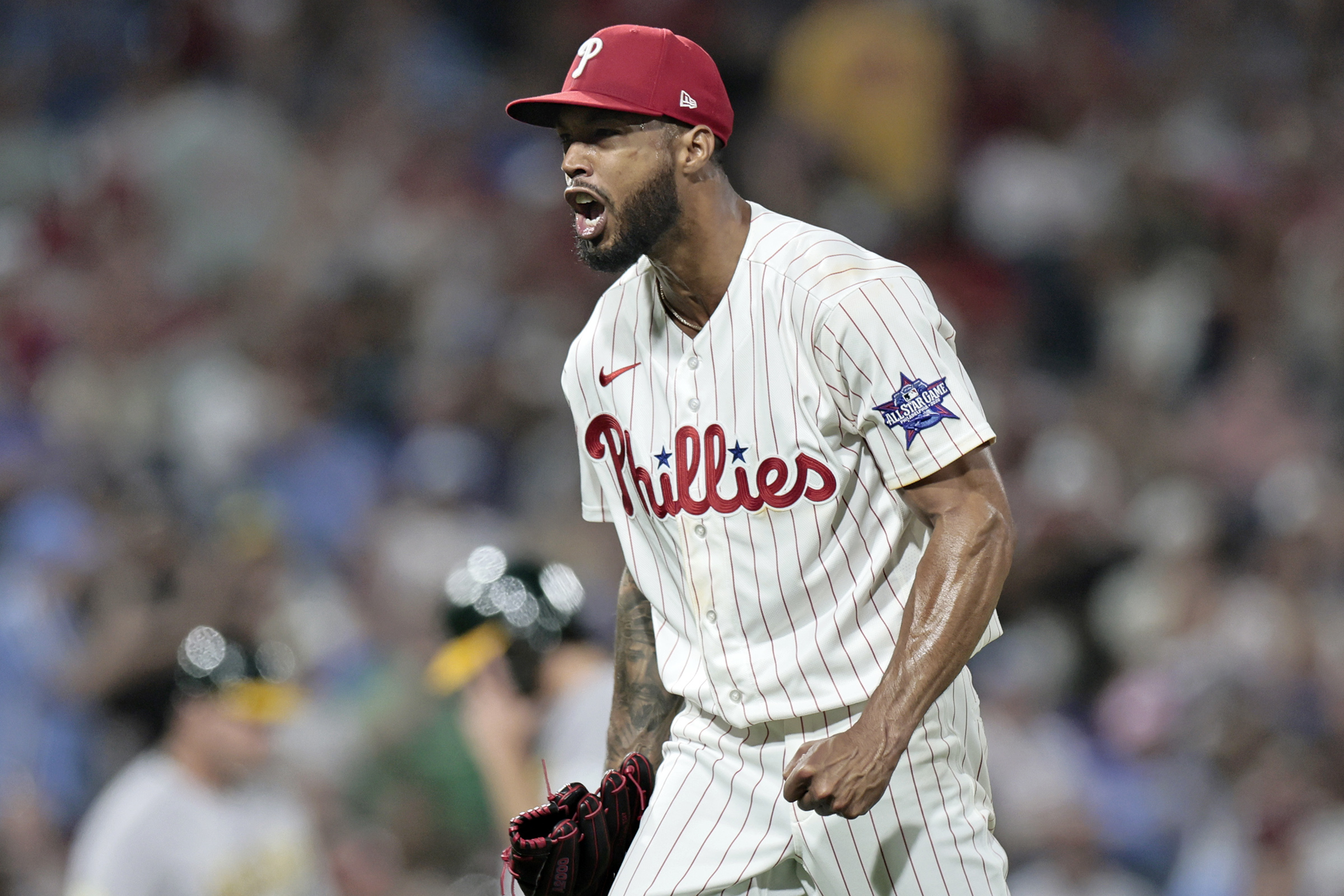
That’s a 0.51 ERA in 53 innings for Sánchez, last year’s Cy Young Award runner-up in the National League. The 29-year-old recently went 50⅔ innings without giving up a run, the longest streak by a lefty and fifth-longest overall since at least 1893.
Cristopher Sánchez recently went 50⅔ innings without allowing a run, the longest streak by any left-handed pitcher since at least 1893.Elizabeth Robertson / Staff Photographer
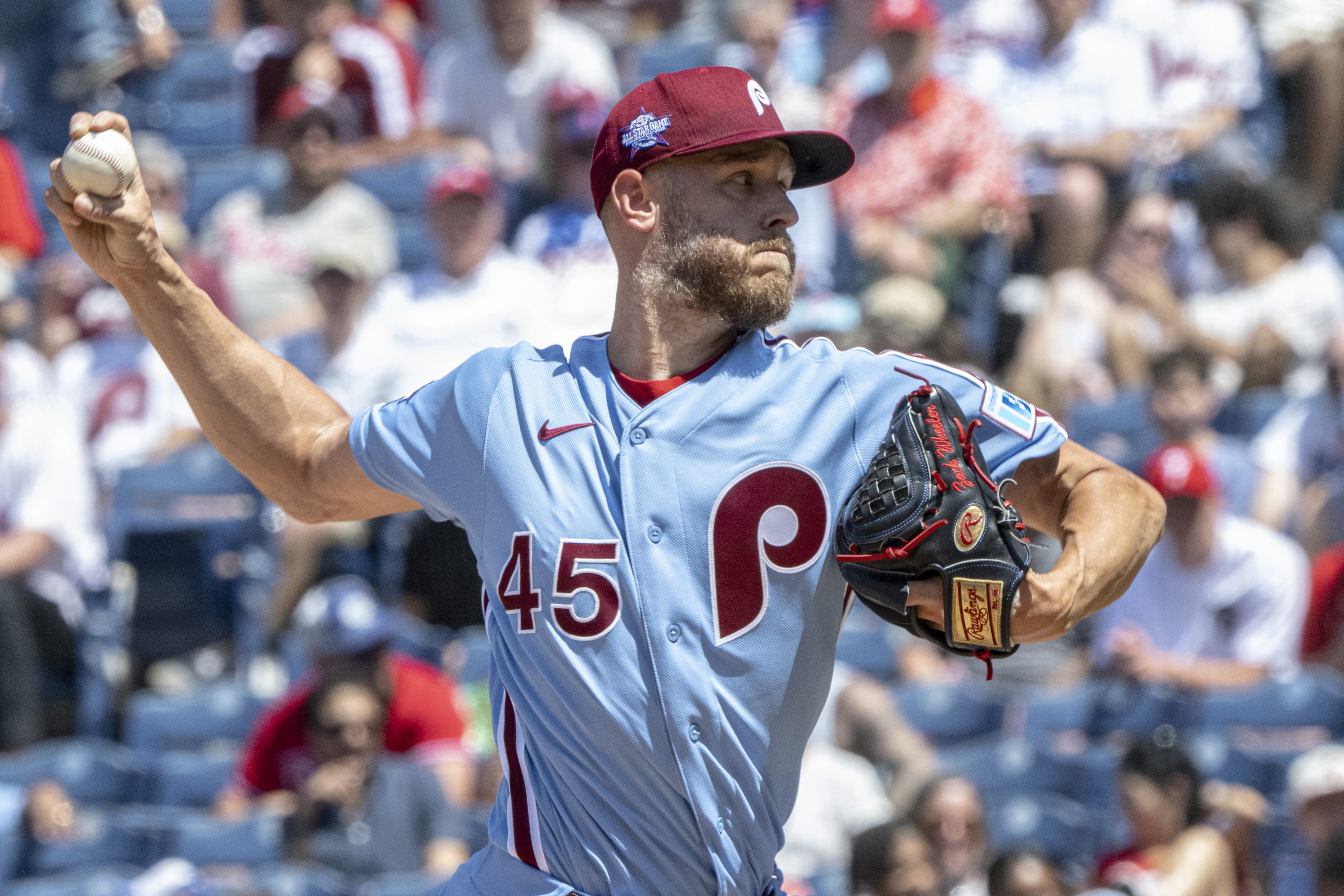
And it’s a 2.17 mark in 45⅔ innings for Wheeler, a two-time Cy Young runner-up. You wouldn’t know that he turned 36 two weeks ago — or had a rib removed nine months ago to relieve a compressed vein.
Philly hasn’t seen a better one-two punch since the trio of Roy Halladay, Cliff Lee, and Cole Hamels in 2011, maybe since Rocky’s left jab and right cross.
Sánchez leads all pitchers in wins above replacement (5.1, as calculated by Baseball-Reference) and innings (93⅓), and ranks second in strikeouts (113), and third in ERA (1.54). Wheeler is tied for sixth in WAR (2.7) and has a 2.22 ERA in nine starts.
“I love Wheeler, and I think Sánchez is above Wheeler now,” said a talent evaluator from a National League team. “That’s how good I think Sánchez is.”
“It’s relentless,” Pirates manager Don Kelly said last month after Sánchez’s six-hit shutout preceded seven scoreless innings from Wheeler. “Whenever you get to that level and you’re facing those types of guys, those are the types of arms you’re going to see in October.”
After Sánchez blanked the Guardians for eight innings on May 22, Cleveland manager Stephen Vogt called him “special.” A day later, the Guardians were muted for six innings by Wheeler, whom Vogt called “one of the best righties in the game.”
Put them together, and well, it’s a two-headed monster that gives the Phillies an edge over almost any team in a short series.
But there are others. An informal survey of scouts this week produced other dynamic-duo nominees. Among them:
Zack Wheeler has a 2.22 ERA in nine starts after returning from thoracic outlet syndrome.Jose F. Moreno / Staff Photographer
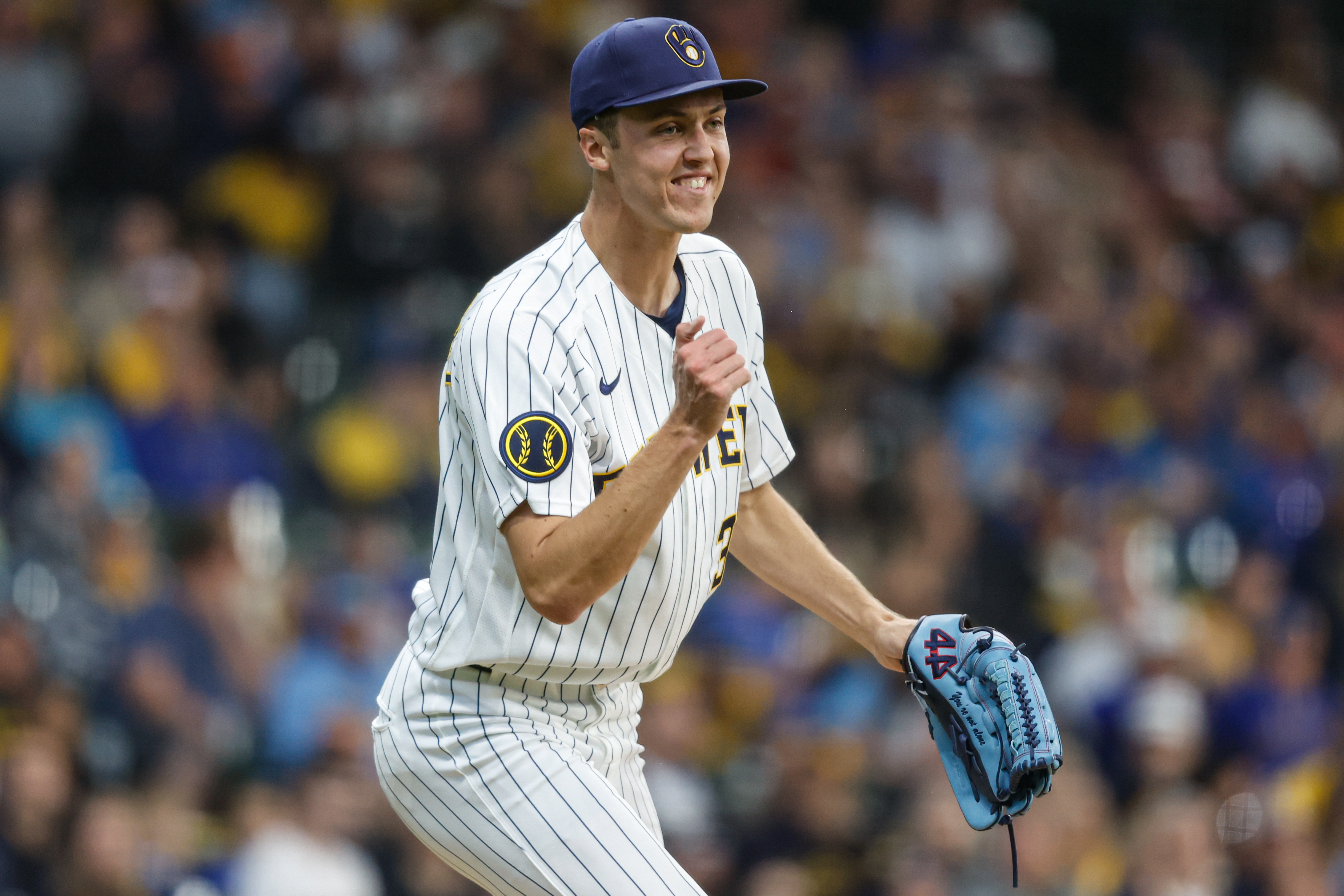
Jacob Misiorowski and Kyle Harrison, Brewers: When it comes to velocity, nobody beats The Miz. The 24-year-old righty’s fastball averages — repeat: averages — 100 mph. Harrison is a revelation, though one NL evaluator was skeptical of the 24-year-old lefty, who has been traded twice (Giants to Red Sox to Brewers) since last June 15. Misiorowski and Harrison will take 1.50 and 2.72 ERAs into starts Friday and Sunday, respectively, against the Phillies in Milwaukee.
Shohei Ohtani and Yoshinobu Yamamoto, Dodgers: Imagine if the Phillies convinced Yamamoto to take their $300 million-plus offer in December 2023? After his iconic postseason last year, he has a 2.68 ERA through 12 starts. Ohtani seems determined to add a Cy Young Award to his MVP collection (four, and almost certainly counting). He allowed five runs through his first 10 starts and has a 1.06 ERA overall. One rival NL scout dinged the Dodgers’ duo, dominant as it is, due to the unique usage of Ohtani, who rarely starts on less than six days’ rest.
Cam Schlittler and Gerrit Cole, Yankees: Every team wishes it could clone its Cy Young-winning ace. The Yankees seem to have done it. Schlittler (1.87 ERA through 14 starts) resembles Cole not only in terms of physical appearance but also stuff, notably a big fastball and hard cutter. Two scouts — one in each league — put the Yankees’ 25- and 35-year-old righties slightly ahead of Sánchez and Wheeler. But one NL scout cautioned that, like Wheeler, Cole is coming back from surgery. So far, though, four starts into his return from Tommy John elbow surgery, he has a 2.45 ERA that has him looking like vintage Cole.
Another NL scout cited the emergence of righty Braxton Ashcraft (3.28 ERA through 13 starts) as a sidekick to Paul Skenes (2.84 in 14 starts) to give the Pirates a formidable tandem. The AL scout pointed to Blue Jays right-handers Dylan Cease (2.91 ERA in 12 starts) and Kevin Gausman (3.60 in 14 starts).
Off the top of his head, Harper submitted Braves lefty Chris Sale and, when healthy, hard-throwing Spencer Schwellenbach. But the latter had surgery in February to remove bone spurs from his right elbow and isn’t expected to pitch until late in the season.
In any case, the Phillies believe Sánchez and Wheeler don’t take a back seat to anyone. They’re 10-4 in Sánchez’s starts (including a 1-0 loss to the Guardians on May 22), 7-2 in Wheeler’s, and 20-25 in all other games.
Unlike the Dodgers’ and Yankees’ co-aces, Sánchez and Wheeler give the Phillies a lefty-righty balance. They present stylistic contrasts, too, and come from vastly different backgrounds.
Brewers ace Jacob Misiorowski, who will face the Phillies on Friday night, is half of Milwaukee’s formidable top-of-the-rotation tandem.Jeffrey Phelps
Sánchez, acquired from the Rays in a minor trade after the 2019 season, represents a victory for the Phillies’ scouting, analytics, and mostly player-development departments. Specifically, pitching coach Caleb Cotham credits César Ramos, who worked with Sánchez in triple A before becoming the major league bullpen coach.
In three years, Sánchez harnessed his command, honed his changeup, and went from a last-resort fifth starter in 2023 to the best lefty in the NL — and maybe in the entire sport.
Since the beginning of the 2024 season, Sánchez has a 2.62 ERA and leads all pitchers with 16.9 WAR, as calculated by Baseball-Reference.
“It’s the coolest thing I’ve ever been a part of, from where he started to where he is now,” Cotham said this week on The Inquirer’s Phillies Extra podcast. “The attention to detail and the small things, tightening the delivery, we can go on and on. They turned into huge things for him.
“You watch a ’23 video, ’22, even some ’24 video, it still kind of smacks me in the face, where it’s like, wow. I know the delivery is tighter, it’s cleaner. But he’s a big dude. There was arms and hands and feet going everywhere. It’s still kind of jarring watching even ’24 video with how much better and consistent and compact his delivery is compared to then. It’s just gotten better and better each year.
“That’s probably the biggest piece for me with Cris. The physicality got to a point to allow the delivery to get to where you’re no longer wondering where this ball’s going to go.”
Cristopher Sánchez has a 2.62 ERA since the start of the 2024 season.Yong Kim / Staff Photographer
Wheeler has evolved, too. He still leans on his fastball, although it’s a few ticks slower after his surgery. But he added a sweeper and splitter over the last few years, and in any given start, one or the other, or maybe his curveball, might be his best off-speed pitch.
“The splitter’s arguably as good as it’s ever been, movement-wise,” Cotham said. “The sweeper’s been very good. He’s thrown the last couple of starts some of the better curveballs he’s thrown. The cutter was a pitch he didn’t quite have early in the year. It’s gotten better lately.”
Oh, and for hitters, here’s the scary part.
“I still think,” Cotham said, “there’s another level for him.”
Said interim manager Don Mattingly: “It’s always good to have Wheels out there. We talk about Sánchy being an ace. But it’s hard to have a true ace if you’re not saying Wheeler is the guy. It’s good to have these guys back-to-back.”
Regardless of where Sánchez and Wheeler stack up, few teams have anything like them.
“It’s tough coming into a ballpark and knowing that you’re going to face those two guys in a series,” Harper said. “So, yeah, I really don’t know if there’s a better one-two punch in the game right now.”
One of the Eagles’ great strengths as an organization is they understand the implications of the NFL’s competitive Darwinism. You evolve, or you die. It is a league full of maniacs who will not sleep until they figure out what your team is doing and how to stop it. The margins are slim, so fortune can flip fast. The Eagles saw it with Chip Kelly in Year 1 vs. Years 2 and 3. Anybody who can’t adapt to what comes next will quickly be out of the league.
The Eagles were on the field for only a few days this week, but their mandatory minicamp was long enough to give you a real sense of why the offseason went the way it did. It was a startling thing to behold, both on the practice field and inside the building. Over five seasons, almost nothing had changed with regard to the fundamentals of the Eagles offense. Sure, coordinators came and went, but the identity remained the same. It served them well, with two Super Bowl appearances in three years, one of them a title from which they were less than a year removed when the offseason began. Yet they clearly sensed that an inflection point was coming, if it hadn’t already arrived.
That sense was most evident in the words and tone of one Lane Johnson, the eldest statesman of the offense and the keystone around which the Eagles have built everything over the last decade and a half. Earlier this week, the veteran tackle spoke publicly for the first time since before a foot injury sidelined him for the last eight games of the season. A lot had changed in the interim. Gone was Jeff Stoutland, the legendary offensive line coach who inspired a fierce loyalty in his former players. In his place was a new blocking scheme, with new terminology, and a new philosophy, all under the command of a 34-year-old first-time playcaller whose playing career ended less than three years ago.
Yet here was Johnson, barely a year removed from anchoring one of the greatest single-season offensive line performances of all time, and having done so under the tutelage of one of the greatest offensive line coaches of all time, en route to one of the most dominant Super Bowl victories of all time, and dadgummit if he didn’t sound positively refreshed.
“I think with this offense, we’ll be able to stretch the field and really work our zone game and get the defense running and work things off of that,” Johnson said. “I’m really excited for what it can do, not just for tackles. I think it will open up a lot in our game.”
The two keywords there are “this offense.” As opposed to that offense. You know, the one the Eagles used to run. It may sound like a small thing, but only if you didn’t listen closely during the four previous changes at playcaller. I don’t think that phrase was ever used. At least, not like Johnson and the rest of the Eagles who spoke publicly have been using it. As a signifier of real, legitimate change. It didn’t sound like this when Nick Sirianni gave way to Shane Steichen, nor when Steichen gave way to Brian Johnson, nor Johnson to Kellen Moore or Moore to Kevin Patullo. The operative question always centered on who would have final say over the plays rather than what those plays would look like from a broad schematic standpoint.
Not so this time around.
The change is real. That was the biggest takeaway from this week’s preamble to training camp. The hiring of Mannion, the jettisoning of Stoutland, the trading of A.J. Brown, the subtle challenges to Jalen Hurts … this was not the same window-dressing offseason of years past. These were purpose-driven moves rooted in the realization that 2025 would not be a one-year blip if the Eagles fooled themselves into thinking that the things that worked in previous seasons would one day work again.
It remains to be seen what the scheme will actually look like. You’d have to work just to get an NFL coach to admit he will have precisely 11 players on the field. But Johnson referred to Mannion’s scheme as a Kubiak/Shanahan system, the archetype being the 1990s Broncos teams that utilized heavy amounts of outside zone/stretch runs from under center and the resulting play action looks that offered quarterbacks ample passing lanes and plenty of distance between them and the line.
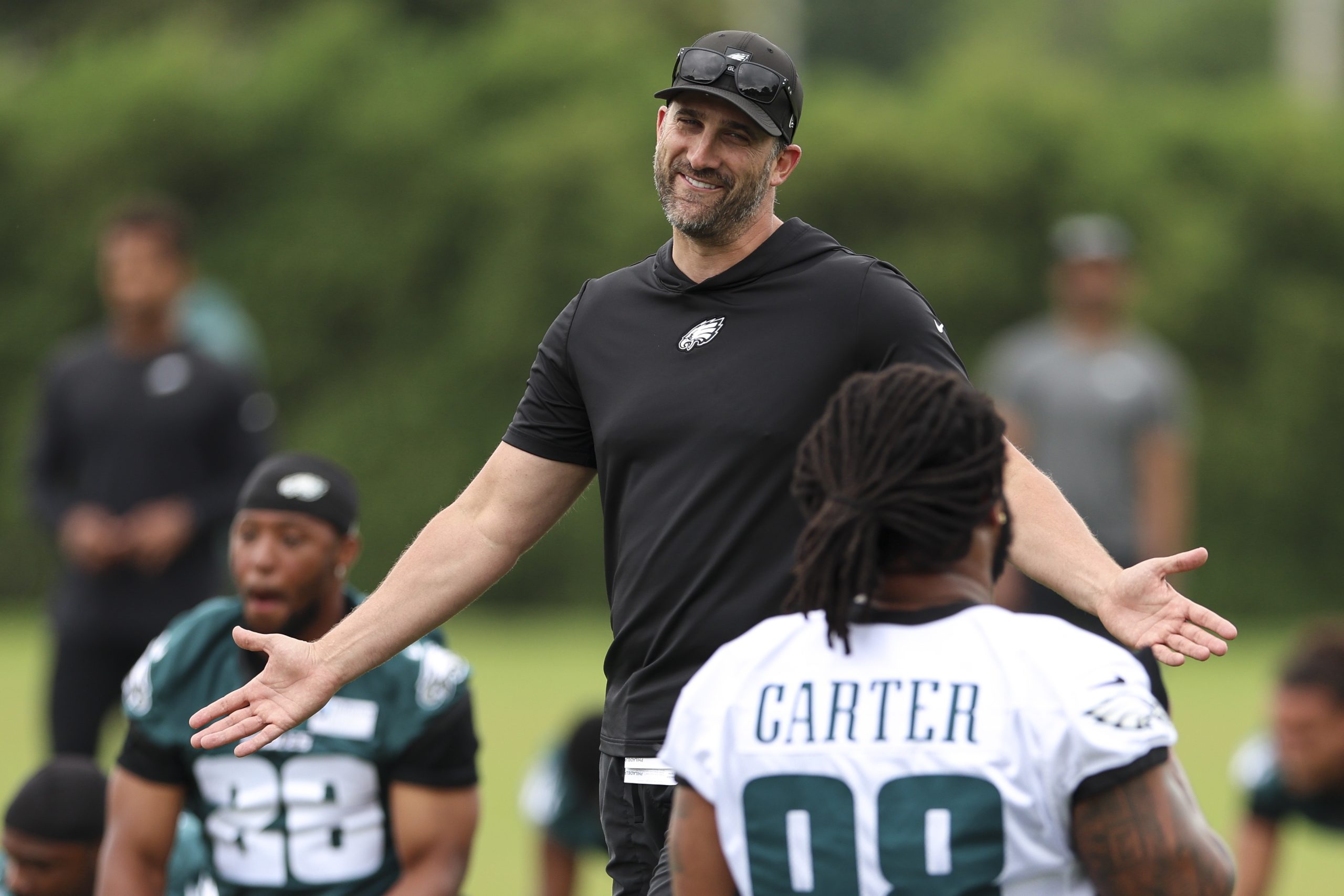
Head coach Nick Sirianni and the Eagles have seemingly embraced an offensive scheme change this offseason.Monica Herndon / Staff Photographer
“I’ve always envied wanting to be a part of it,” Johnson said. “So here I am, after all these years, getting that chance. Not to say we’re going to be better because there’s a lot to learn. I think we have the ability to be a lot more than what we were last year.”
The Eagles did the right thing in treating last year as a sign of the times rather than awarding themselves a mulligan. Their strength as an organization has long been their willingness and ability to execute a hard pivot. Dating back to Joe Banner’s reign as club president, the Eagles front office has built its decision-making processes on a cold philosophical calculus. A team is better off being a year early than a year late on its consequential decisions.
It is true at all levels of football management, from awarding contract extensions to the evaluation of veteran players to the identification of leaguewide trends. There is considerable risk in being early, which is why a lot of teams end up being late. It isn’t easy to let a franchise icon leave town, or to spend a second-round pick on a quarterback when one already has a starter. Vindication occurs in a separate time horizon from a fan base’s patience. It is good to be proved right. It is better to be employed.
What Jeffrey Lurie and Howie Roseman both realize is that the last teams to arrive for dinner often become the dinner. Barely a year after winning their second ever Super Bowl title, the Eagles decided that they’d arrived at one of those inflection points that plenty of teams would ignore in the interest of convenience or ego protection.
Will the offense actually look different? Like, materially? The players sure seem to think it will. In which case, the big question is this:
Drumroll, please! The full list of Philadelphia’s most iconic dishes — including our top 10 — is below.
What is the most Philadelphia dish? What are the foods that have most shaped the culinary scene in Philadelphia? That’s what the food team set out to assess for this, our ranked list of the 76 most iconic Philadelphia dishes. In celebration of the 250th anniversary of the founding of the country — of which Philadelphia was a crucial part — we looked at the history of the city, and at the dining trends that define its regional cuisine to the rest of the country.
To make our annual list of the 76 most essential restaurants in the area, we ask: What’s vital now? Where is the energy of the city in the past 12 months? But for this project we took a longer scope. It’s not just what’s good now, but what shaped the culinary landscape up until now. Then we debated, hotly, where we would place certain dishes. Some inclusions were a given — yes, there are cheesesteaks — while others represent growing immigrant communities, innovations in food and beverage technology, and restaurants that have come and gone but left an indelible imprint on the culinary scene. Below, our picks for the most iconic Philadelphia dishes of all time.
Disagree? Have an addition? Let us know in the comments.
The Pizzazz Pizza at Celebre's PizzaTyger Williams / Staff Photographer
Ronnie Celebre — the original owner of Celebre’s Pizzeria in Packer Park — invented this hyperlocal pie in the 1970s as a means of grilled cheese-ifying pizza, layering beefsteak tomatoes and a sprinkle of banana peppers atop slices of white American cheese. The Pizzazz remains one of Celebre’s best sellers, according to current owner Michael Spina, who believes the American cheese adds a sharpness and creaminess that’s worth some skepticism. “When people come in and ask about our best pizza and we say Pizzazz, they look at me and say, ‘American cheese? No, I don’t wanna try that,’” Spina told The Inquirer. “Afterwards, they say it’s one of the best pizzas they ever had.” The Pizzazz remained a South Philly secret until recently, with newer school versions at Northeast Philly’s Cafe Carmela and University City’s Tempoopting for Cooper Sharp to add an extra dose of Philly. Not that the Pizzazz needs it. The pizza is a perfect metaphor for the city: underdog-ish, Italian-ish, and so much better than you expected. — Beatrice Forman
75
Khachapuri at Gamarjoba
The Khachapuri 'Ajaruli' at Gamarjoba.Monica Herndon / Staff Photographer, Food Styling / Emilie Fosnocht
Philadelphia’s broad awakening to the wonders of Georgian cuisine has finally taken root as that country’s distinctive khachapuri — sometimes simply called cheese boats — sailed into the Center City spotlight at Saami Somi in the Reading Terminal Market and charming Kinto in Fishtown. Northeast Philadelphia is the epicenter of the region’s growing influx of immigrants from that former Soviet republic, and sprawling Gamarjoba remains a drive-worthy destination for the best khachapuri in town. The famous canoe-shaped Ajaruli, named for its home region, is notable for the delicate snap and thinness of its crust. Its dough is enriched with enough yogurt and eggs to hold a boatload of blended Georgian cheeses which, when mixed tableside with the raw yolk and butter on top, turn into a luxuriously golden pudding. The Kubdari khachapuri is a double-crusted meat-lover’s beauty filled with cumin-laced minced beef seasoned with garlic salt from Svaneti. The dough for the round Imeruli khachapuri, meanwhile, is completely different, and so is its cheese, a blend of brined sulguni with younger Imeruli, the cheese for which the pie is named. It is essentially a dreamy cheese pizza, but with Georgia’s trademark swagger and tang. — Craig LaBan
74
The Zep
The small zep from Lou's in Norristown is served on a round roll.Michael Klein / Staff
The zep is Norristown’s great sandwich flex: hyperlocal, fiercely defended, and absolutely not a hoagie. It may look like one from a distance, but locals know the rules. A proper zep starts on a specialized Italian roll — longer, wider, and squatter than the usual hoagie roll — and is built with one meat (cooked salami), an onion-tomato-oregano balance, and never, ever lettuce. Its origins are murky, with one story tracing the name to zeppelin-shaped rolls after the Hindenburg disaster. What is clear: the zep proves Philly food culture does not stop at city limits. — Michael Klein
73
The Schmitter at McNally’s Tavern
The Schmitter sandwich.Tim Tai / Staff Photographer
The Schmitter is Philadelphia sandwich logic pushed to its most lovable extreme. Created at McNally’s Tavern in Chestnut Hill, it piles sliced beef, grilled salami, cheese, fried onions, tomatoes, and special sauce onto a Kaiser roll, landing somewhere between cheesesteak, burger, deli sandwich, and bar-food fever dream. Our old colleague Steve Lopez once described it as “a steak and salami sandwich that comes with cheese, tomatoes, fried onions, a secret sauce, and a paramedic.” That about covers it. The Schmitter – named after a regular customer’s favorite Schmidt’s beer – made the classic Philly leap: neighborhood tavern oddity to ballpark staple. It is excessive, specific, faintly absurd, and impossible to mistake for anything from anywhere else. In other words, very Philadelphia. — M.K.
72
Middle Child BLT
Tomatoes from Urban Roots Farm star in Middle Child's BLT.Lauren Schneiderman / Staff
Everyone knows it’s peak tomato season in Philadelphia when Middle Child’s beloved BLT, served at both Center City and Fishtown locations, emerges from hibernation. What makes a really good BLT sandwich? Ask owner Matt Cahn, and he’ll tell you it’s the heirloom tomatoes oozing with red juice. The sandwich is made exclusively with tomatoes from Urban Roots Farm. At their peak, the heirlooms are big, plump, soft, sweet, and super juicy — Cahn salts three-quarter-inch cuts and stuffs them in Merzbacher’s rye bread with four to six slices of bacon, arugula dressed in a salted tomato juice vinaigrette, and Duke’s mayonnaise. It’s the sandwich that may have set the trend for the city’s BLT love. “I don’t think I invented the BLT. But I do think that I hyped it up in Philly,” he said. — Hira Qureshi
story continues after advertisement
71
Galette de Crabe from Le Bec-Fin
La galette de crabe Le Bec-Fin, Perrier's signature crab cake.Courtesy of Marc Vetri
Georges Perrier put Philadelphia on the national dining map when he opened Le Bec-Fin in 1970. His luxurious galette de crabe was its signature dish. It was inspired by an American crab cake he’d eaten on Maryland’s Eastern Shore, but reimagined through a French haute cuisine lens, suspending jewels of sweet lump crab in a pedestal of ethereally creamy seafood mousse that came glazed in a mustardy mayonnaise over haricot verts arranged in spokes across the plate to recall crab legs. It’s a presentation detail missing from modern tributes like the one currently at Parc, but the dish also lives on elsewhere with Le Bec-Fin alums such as Richard Cusack at June BYOB. The recipe from Perrier’s cookbook is famously finicky for its rigorous attention to temperatures and technique. But its legacy endures in the DNA of Philly’s restaurant scene. — C.L.
70
Country Club Diner Cheesecake
CheesecakeClay Hickson / For The Inquirer
Diner culture is vanishing in Philadelphia. We still have the Country Club, which Jack and Miriam Perloff opened on Cottman Avenue in Northeast Philadelphia in 1956, as the area surged amid the postwar housing boom. Operating round the clock for its first several decades, the Country Club was indeed Rhawnhurst’s country club. One of the gifts of membership, if you will, is the cheesecake: dense, smooth and almost fudgy, its outer edge dusted in graham cracker, and not cloyingly sweet. There are always several varieties besides plain (the standby) and chocolate chip (every kid’s favorite). The Perloffs sold the Country Club in 2004 to diner magnate Michael Petrogiannis, who still maintains the bake shop and its case up front between the counter and dining room. The world may be changing, and the diner’s hours are now shorter, but the cheesecake offers the reassuring possibility that no matter when you walk in, something good and familiar will be waiting. — M.K.
69
Milan salad
Milan SaladClay Hickson / For The Inquirer
The Milan salad has survived on local menus for three decades after its namesake creator closed. It’s a retro chopped salad – a bowl of lettuce (iceberg, of course) with peeled shrimp, bacon, hard-boiled egg, and tomato, tossed in more than enough creamy dressing. The DiBattistas – Jimmy and son Jimmy Jr. – served untold thousands of them at Jimmy’s Milan, the old-school supper club and politico hangout whose 45-year run on 19th Street near Chestnut ended in 1995. Nostalgists say the key was the dressing (equal parts Russian and Italian, according to insiders). The version at D’Angelo’s in Rittenhouse has direct ties to the original because Milan's longtime chef was Tony D’Angelo, brother of owner Sal D’Angelo. You can also order one at the Happy Rooster in Center City (to name another oldtime saloon) and Ryan Christopher’s BYOB in Narberth. Further, Ann Conlin, whose late husband was Jimmy Jr., said she plans to bring her bottled version of the dressing back to supermarket shelves after a few years’ hiatus. — M.K.
68
Famous Chicken Soup
The Famous Chicken Soup at Famous 4th Street DeliTyger Williams / Staff Photographer
There’s matzo ball soup. And then there’s the Famous Chicken Soup at Famous 4th Street Deli, a giant bowl of Jewish comfort that is four soups in one. A planet-size matzo ball enriched with schmaltz comes bobbing in a half gallon of broth steeped from whole chickens and parsnips, along with housemade kreplach dumplings, pasta bowties, and kasha, the toasted buckwheat groats that lend this combo an earthy shtetl note that sets it apart. The bowl is big enough to feed four and has become every bit as iconic as the mile-high pastrami sandwiches that typify the bigger-is-better aesthetic cultivated by Famous’ previous owner Russ Cowan, who, over nearly two decades of stewardship, elevated this century-old deli’s food to a level of quality that puts it on the map as among the best in the country. Cowan sold the deli in 2024 to open Radin’s in Cherry Hill (where he still makes arguably the best version of this mish-mash soup). But Cowan’s legacy and recipes persist here and no doubt played a role in Famous earning a Bib Gourmand from Michelin. The ownership transition has not always gone smoothly, but a promising recent visit felt like the new management was finally bouncing back. This majestic soup was as restorative as ever. — C.L.
67
The BBQ Platter at Vietnam Restaurant and Vietnam Cafe
Vietnam Cafe's barbecue sampler heaped with grill-charred cartridges of grape leaves stuffed with ground pork; skewers of savory meatballs; crisp, airy (not too dense) spring rolls, fried and chopped to bite-size pieces; and glistening slivers of marinated chicken.Michael S. Wirtz / Staff Photographer
A mere $36 buys you a veritable feast at Vietnam Restaurant in Chinatown (which also has a presence in West Philly with Vietnam Cafe). There are crackly fried pork spring rolls (some of Philly’s finest), delightfully rich beef wrapped in grape leaves, grilled meatballs, and chicken dusted with a handful of crushed peanuts. These are all anchored by a cool avalanche of tangled rice vermicelli noodles, fresh lettuce, and mint, and served with chili vinegar and hoisin sauce for dipping. The legendary BBQ platter masquerades as an appetizer sampler for two diners, but good luck saving room for anything else on the menu if you order it. — Kiki Aranita
66
Fried Chicken at Corinne’s Place
The fried chicken at Corinne's Place with a side of mac’n cheese and okra, corn, and tomatoes.Tyger Williams / Staff Photographer
Dubbed an American Classic by the James Beard Foundation in 2022, Corinne Bradley-Powers’ soul food joint on Haddon Avenue “puts the ‘C’ in Camden,” at least according to Bradley-Powers herself. To hear Bradley-Powers, now 81, tell it, no one wanted to come to Camden when Corinne’s Place opened in 1989. But they did, lulled by her tender ribs and no-nonsense fried chicken, with crackly skin and wings so juicy you can’t help but lick the bone clean. There’s no secret to the fried chicken, Bradley-Powers said, “besides me, the [salt-and-pepper] rub, and the prayer” kitchen staff say after every batch. Devotees know to pair the chicken with a side of collard greens, baked mac-n-cheese, and a complimentary piece of warm cornbread for a timeless Southern plate, but what makes Corinne’s a classic are the stories held inside the dining room’s pink walls. A children’s counselor before becoming a chef, Bradley-Powers preferred to staff her restaurant with neighborhood kids who could use an escape from home. “When those children succeed … when they come up out of here and become doctors and lawyers, that’s my true James Beard award,” Bradley-Powers said. — B.F.
65
Banh Chow Salad at Mawn
Banh chow salad at Mawn restaurant.Jose F. Moreno / Staff Photographer
The banh chow salad at Mawn started as a memory. As a child, Chef Phila Lorn had difficulty eating the large coconut milk and turmeric yellow crepes with his tiny hands, so he’d break them up into pieces. This translated into one of the best items on Mawn’s stellar menu. Crunchier than most any banh xeo found in Philly, Mawn’s grown-up version is stuffed with ground chicken and shrimp, topped with peanuts, and served alongside herbs and fresh lettuce. Break the crepe up into salad croutons, like little Phila once did. Its refreshing textures are all different types of crisp and crunch. The salad is just one of the reasons Mawn has become one of the city’s hardest reservations. — K.A.
64
Banh Mi at Cafe Cuong
A deluxe banh mi.Tim Tai / Staff Photographer
In Philadelphia, there are Cafe Cuong’s banh mi and then there are all the rest. Don’t get me wrong, the rest are excellent, thanks to waves of Vietnamese immigration to the city. But Cafe Cuong’s are simply in their own solar system. This is a sandwich that could only have been born in Philly, with a crusty, soft Sarcone’s roll, then its smear of secret-recipe mayo. Meatyshredded roasted chicken (or whatever meat you choose — but the chicken banh mi is the best) is tucked into its roll with slivers of pickled daikon and carrot, fresh cilantro, cucumbers, and jalapeno. When the chicken juices meet fresh mayo, the result is ethereal. — K.A.
63
The burger at Fountain Porter
The burger from Fountain Porter.Monica Herndon / Staff Photographer, Food styling by Emilie Fosnocht
Once upon a time, Fountain Porter’s burger was the best $5 deal in town. It is now the best $6 deal in town. The bar’s wine and beer lists are esoteric and interesting. It's a precursor to every “listening lounge” in town, an effortlessly cool, unpretentious neighborhood bar. But its cheeseburger makes Fountain Porter one of the most enduring and beloved bars in South Philly. It tastes like a loving dad grilled the burger in the backyard just for you. It has a salty char, and the cheese is melted just enough. It’s served with lettuce and tomato on a potato bun that’s neither too small nor too unwieldy. This is the simplest, most satisfying, and most straightforward burger in the whole city. — K.A.
62
Czerw’s Kielbasa
KielbasaClay Hickson / For The Inquirer
You can smell the dreamy campfire aroma of garlicky kielbasy slow-cooking in a haze of Jersey fruit wood smoke from blocks away before you get to the low-slung brick facade of Czerw’s in Port Richmond. That’s because one of Philly’s last great kielbasa artisans still makes its all-natural links in the 88-year-old brick smokehouses Jan Czerw built on Tilton Street in 1938. Last year, Czerw’s suffered the death of its third-generation owner, John Czerw, but the shop is still bustling and the sausages are as good as ever, with a bold, deep resonance that’s far superior to mass-produced sausages found in most supermarkets. The smoked and “extra garlic” are the standards, although the Cajun-spiced links and jalapeño-cheddar poppers are ideal for heat-seekers. A fridge case of housemade pierogies and pickles makes Czerw’s a one-stop shop for a proper Polska party. Swiacki Meats just a few blocks to the northeast, is another outstanding traditional Polish butcher with comparable kielbasy. — C.L.
story continues after advertisement
61
Upside-Down Pizza at Santucci’s
A personal-sized "The Works" pizzaTim Tai / Staff Photographer
Santucci’s upside-down pizza is one of Philadelphia’s clearest arguments for having its own pizza identity. The formula is instantly distinctive: square pie, cheese first, sauce on top, with a thick, chewy crust built for crisp corners and loyal devotion. It is the sort of pizza locals grow up with and outsiders sometimes need explained, part of its power. This is not Philadelphia imitating New York or Naples. This is Philadelphia doing Philadelphia. Santucci’s, which launched in 1959, became the standard-bearer for the style, turning a Juniata Park specialty into a regional touchstone. Its importance lies not only in flavor, though the brightly sweet sauce and sturdy structure do plenty of work. Upside-down pizza is proof that Philly pizza culture is broader and more self-defined than people elsewhere often realize. — M.K.
60
Junior hot fudge sundae at Franklin Fountain
Ice cream chef Franny Zehmer arranges a display of (empty) pint containers at Franklin Fountain on April 6. As part of their 250th celebration, the company is releasing 26 new limited edition ice cream flavors over the coming months.Tom Gralish / Staff Photographer
This 1920s-themed ice cream parlor in Old City is so historically accurate that tourists and tour guides alike mistake Franklin Fountain as the country's oldest continuously operating soda fountain. In reality, Media-born brothers Ryan and Eric Berley opened Franklin Fountain in 2004 with an eye for restoration; the building and its penny tiles date back to the 1890s. Still, Eric Berley told The Inquirer that he doesn’t mind the misconceptions. For years, people have likened Franklin Fountain’s iconic takeout ice cream and sundae receptacles to Chinese takeout containers. They’re actually replicas of the Progressive Era oyster pails Philadelphians used to carry wet foods in — ice cream included. Berley said Franklin Fountain went through roughly 104,000 of those iconic 8-ounce takeout containers in 2025. The most popular way to fill them is with a junior hot fudge sundae: a single scoop of ice cream topped with whipped cream, hot fudge, and a cherry. The fudge — made in batches three times a week with 63% dark chocolate — and the takeout containers are the most important parts. “The pituitary gland in the brain lights up for cute and small things,” Berley said. “And with the takeout pails, we got lucky that a lot of people think they’re cute.” — B.F.
59
Jollof rice at Lè Mandingue
Jollof rice with lamb and potato green with white riceCaean Couto / For The Inquirer
There are as many variations of Jollof rice as there are home kitchens in West Africa. That diversity is on vivid display in Southwest Philadelphia, where as many as 40,000 people have emigrated chef from the 16 sub-Saharan countries of West Africa, and where I joined locally based Nigerian chef Shola Olunloyo for a Jollof rice crawl through nine restaurants around Woodland Avenue and into Delaware County. At its most elemental, Jollof is rice stewed in flavorful tomato broth, but variations range with types of rice, heat levels, textures, and garnishes. We tasted Mauritanian Jollof with tomatoey tripe stew at African Small Pot and versions in the distinctively red Nigerian style that reminded Olunloyo of home at both Suya Suya and WaZoBia in Collingdale. A standout was found at Lè Mandingue, a longstanding takeout on Woodland Avenue since 2005, where chef-owner Fanta Fofana serves her Liberian-style Jollof in a big aluminum pan seasoned with sumbala (fermented locust beans) that radiates a lasting glow. Order it topped with the restaurant’s grilled lamb dibi, which Fofana deliberately cuts into bony little chunks, “because the bones slow you down and make you take your time.” — C.L.
58
Plov at Uzbekistan
A family-sized pan of Uzbek plov is filled with tender lamb and cumin-flecked rice that is as aromatic as it is delicious.Craig LaBan / Staff
The fragrant Central Asian rice dish known as plov is the national dish of Uzbekistan, but you can find it at dozens of restaurants in Northeast Philadelphia and nearby suburbs, from the 24-hour Plov House off Bustleton Avenue to Sarmarkand in Feasterville. One of my favorites is still served at Uzbekistan Restaurant, the 20-year-old Uzbek standby where the charcoal-fired kebabs, samsa pastries, and manti dumplings draw crowds to its glassed-in front porch, and a heaping pile of cumin-scented rice plov (or “pilaf” as the menu calls it) anchors virtually every table. The rice steams in layers atop the meat, carrots, and broth bubbling in a kazan (cauldron), where the oil is infused with waves of onions, the rendering of well-marbled lamb breast, a generous helping of cumin, and whole heads of garlic buried deep into the pile. When the plov is done, every grain of rice should be glossy and distinct. There will be tender chunks of slow-braised lamb (or sometimes beef) perched atop. But those meats are mostly tokens of the savoriness they’ve already imparted to the dish. The real treasure are the shiny batons of soft, sweet carrot where all the flavors are steeped into one tender bite. — C.L.
57
Turkey Rachel at Hershel’s Deli
Turkey RachelClay Hickson / For The Inquirer
First, let’s get the nomenclature straight. A Reuben is a grilled corned beef sandwich on rye with sauerkraut, while a Rachel – its newer cousin – substitutes turkey or pastrami and coleslaw. Both are topped with Swiss cheese and Russian dressing. Not to slight Hershel’s East Side Deli’s corned beef or pastrami, but its turkey Rachel earns its place in Philadelphia’s food conversation because it takes classic Jewish deli sensibility and plants it squarely inside one of the city’s busiest public stages: Reading Terminal Market. Line up to watch the counter person in action, piling carved-to-order roasted turkey atop the rye, adding cheese, slaw, and dressing in a frenzied burst, and placing the creation on a press. What you’ll get is a sandwich that is rich, tangy, hot, and gloriously overbuilt, and feels like something that requires both appetite and commitment. That is part of the appeal. Philadelphia is a place where hand-carved meat still matters. — M.K.
56
Mofongo at El Cantinflas
The Mofongo with a side of garlic shrimp and carne frita.Tyger Williams / Staff Photographer
The menu at this Norris Square institution revolves around the plantain. El Cantinflas goes through 20 pounds of plantains a day, according to head chef Ingrid Ortiz, split between sweet caramelized maduros, deep-fried tostones, and bird’s nest-shaped arañitas made with shoestring-thin shreds of the fruit, among other Puerto Rican snacks. But nothing is more quintessential than El Cantinflas’ staple mofongo, which uses a buttery garlic mojo gravy to keep the mound of mashed and fried plantains incredibly moist. You can order the mofongo on its own or with a side of one of seven meats, including a steel crock of garlicky shrimp and compulsively snackable pork chicharrones. Owned by Migdalia “Daly” Morales, El Cantinflas has stood on the corner of West Dauphin and Hope Streets for more than 21 years, enduring as its neighbors turned over from working class Latino families to luxury apartments, trendy coffee shops, and at one point, even an upscale, short-lived French restaurant from George Sabatino. But if you stick around for a Phillies game, it feels like nothing has changed as reggaetón plays from a jukebox asregulars sip rum and cokes while bemoaning what’s become of Johan Rojas. — B.F.
55
Mussels at Monk’s Cafe
Singing MusselsClay Hickson / For The Inquirer
Beer lovers might know Monk’s Cafe for the impressive selection of craft brews — they’re the farthest east that you can obtain offerings from cult favorite Russian River Brewing, for example. But Monk’s isn’t just an excellent Belgian beer bar, it's also a steadfastly good restaurant. An unassuming spot just two blocks east of Rittenhouse Square, here you can get the best moules frites in town. The mussels come steamed in your choice of five aromatic broths, including Thai curry, a golden ale sauce with chile de arbol and garlic, and a caramelized leek, blue cheese, bacon, and Ommegang Hennepin concoction. It’ll soak up whatever you’re drinking. — Margaret Eby
54-33
54
Dmitri’s Octopus
The grilled octopus.Tim Tai / Staff Photographer
Philadelphians embrace octopus with an enthusiasm that defies the logic of geography or historic foodways. But one man — Dmitri Chimes — can take credit for jumpstarting this city’s steady craving for the cephalopod in 1990 when he opened Dmitri’s, a tiny Greek seafood grill that became one of the city’s first hit BYOBs. Its Mediterranean simplicity resonated in a big way until its three locations ultimately closed in 2020. But Dmitri’s culinary legacy lives on with the octopus he perfected in Queen Village, where it was simply grilled, sliced into thin rounds, and splashed with olive oil, herbs, and lemon. That accessible presentation had a lasting influence as Philly’s gateway octopus, says Stina chef Bobby Saritsoglou: “If it had been just one big tentacle with suckers all over it, people might have been turned off. ” Stina’s rendition, which is in fact one big tentacle with suckers, gorgeously garnished, is emblematic of the next level of octo-cookery that continues to shine here, from the octopus and beans at Friday Saturday Sunday to the wood-fired whole octopus that’s a modern Mexican showstopper at Amá. “Dmitri’s octopus laid the groundwork for it all,” says Saritsoglou. “That version was the beginning of a love affair.” — C.L.
53
Salted Caramel Budino at Barbuzzo
Salted Caramel BudinoClay Hickson / For The Inquirer
When married entrepreneurs Marcie Turney and Valerie Safran opened their Mediterranean and wood-fired pizza restaurant Barbuzzo in 2010, it was a single dessert that cemented the Gayborhood spot as an early icon. Enter the salted caramel budino, a not-quite-trifle composed of four layers: a brown butter-and-dark chocolate wafer cookie crumble, caramel pudding, gooey caramel, and a sweet crème fraîche flecked with Maldon salt. Hailed as “arguably one of the best desserts in Philadelphia,” the budino is inspired by Turney’s Gen X childhood when pudding everything — prepackaged cups, poke cakes, pudding pops — was all the rage. “We were looking for something craveable,” Turney said. “And pudding is nostalgic for people.” To date, the budino is Barbuzzo’s best-selling item, according to Turney. The restaurant sold 12,000 of them in 2025 alone. And while the recipe has remained the same, Safran and Turney have played with form over the years. There were dalgona coffees during the pandemic, the cruffins that caused lines around the block, and the fudgy pudding pops, Turney’s favorites. None of them quite topped the O.G. in its cute glass cup. — B.F.
52
Pound cake at Stock’s Bakery
Stock's pound cakes come wrapped in white paper – easy to throw on a bow and a tag for a gift.Carolyn Wyman
Much has changed in Port Richmond in recent years, where anchors of this historic epicenter of Philadelphia’s Polish community have begun to disappear. But little has changed at Stock’s, a century-old institution that still draws the faithful back with long lines at Christmas for the city’s definitive pound cake, the 2 1⁄2-pound loaves wrapped in white paper the bakery refers to as “bars.” This fifth-generation bakery was founded by Josef Stock in 1924, but the pound cake actually made its debut in 1940 when Stock’s son, Frank, introduced a tweak to the standard recipe that took this icon of home baking to the next level of density and richness. I’m partial to cutting thicker slices of the marbled loaves, whose buttery crumb toasts nicely in a cast-iron pan, as the ideal pedestal for seasonal fruit and whipped cream. Stock’s is still cash-only and does not ship. It also sells one of the best examples of another Philly tradition, the gooey-centered butter cake, which is yet one more reason to pay a visit in person. — C.L.
51
Gelati
A Willows Way Water Ice "Spicy Gelati" features flavored water ice – in this case watermelon – mixed with custard topped with chamoy and Tajin.Tom Gralish / Staff Photographer
While some argue that water ice is just rebranded Italian ice (and they’d be very wrong), gelati is a truly Philadelphia treat, sandwiching water ice between custard or soft-serve ice cream. The last sheet of water ice is always topped with a perfectly-coiffed soft-serve swirl, and you’re supposed to eat it straight down the middle to get a little bit of everything — never in layers, or you’ll be hit with a cup of a melted, muddled mess. At most classic cash-only takeout windows, like Pop’s and Jimmy’s and Morrone’s, you’ll have to choose between vanilla or chocolate soft serve, but some newer-school joints are switching things up. At South Philly Ice on East Passyunk Avenue, their bestseller is black cherry water ice topped with bright blue hard Cookie Monster ice cream from Leiby’s Dairy in Schuylkill County, according to co-owner Nikos Antonogiannis. And at Cherry’s Ice Cream & Water Ice in Cherry Hill, three different soft-serve machines are spinning nine different flavors of ice cream, from toasted coconut to a creamy pistachio that pairs well with cold brew water ice for a gelati that’s a Dubai chocolate dupe. Regardless of how you take it, the creamy and fruity treat always tastes like summer. — B.F.
story continues after advertisement
50
Satay at Hardena
The chicken sate (chicken marinated in garlic sweet soy sauce, grilled, topped with creamy peanut sauce, then served with pickled vegetables) at Hardena.Elizabeth Robertson / Staff Photographer
Marinated in garlic sweet soy sauce, the satay at Hardena has been on the menu since its inception. The beloved, late Ena Widjojo would offer the dish at the many bazaars and street fairs before she opened the South Philly restaurant. It was a number one seller back then, and remains as such to this day at the restaurant, which is now run by her daughters. Folks can order chicken, lamb, or tempeh tofu satay topped with their housemade peanut sauce — a recipe that was passed down through generations of the Widjojo family. The satay is just one menu item that demonstrates how Hardena has paved the way for Philly’s recent boom of Indonesian restaurants serving both traditional and fusion items on their menus. — H.Q.
49
Limonana at Bishos
LimonanaClay Hickson / For The Inquirer
Nothing beats the electric green slush in a cup from Bishos. It’s been on the menu since Zohra Saibi and Bishara Kuttab opened their Palestinian cafe in 2017. Nana in Arabic translates to mint — so the slushie is made from lemon and mint leaves crushed with a housemade simple syrup and slushed together in a machine. It’s a popular drink throughout the Middle East, and at Bishos, it takes the form of a slushie to bring forth the full force of this mixed drink. The husband-and-wife duo added a new flavor last year — strawberry — alongside the original. Whether you’re sipping on the original or the new one, the drink is the perfect companion for perusing the neighboring marketplace filled with Arab spices, nuts, candies, oils, and more. — H.Q.
48
Pernil at Freddy & Tony’s
The pernil with crackling skin.Tom Gralish / Staff Photographer
Freddy & Tony’s has been the center of Centro de Oro since Tony Santiago and his wife, Dhamla, opened up shop on Allegheny Avenue in 1980, serving up platters of piping hot pernil alongside thinly cut tostones and piles of sweet maduros. (The Freddy in the name comes from Tony’s onetime best friend). “We do it old school,” said manager Rob Santiago. F&T’s goes through about 700 pounds of roast pork shoulder a week, he estimated. It’s slow-roasted for 10 hours at a time and seasoned with homemade adobo, its aroma and the sizzle of crackling skin circulating through the dining room to create a slice of Puerto Rico right in North Philly. Philly’s Puerto Rican population grew to become the second largest stateside in the 46 years after F&T’s opened, bringing with it chefs like Bolo’s Yun Fuentes, who have translated the island’s staples into fine dining recipes that sing with local ingredients. But for out-of-towners, there’s simply no place like Freddy & Tony’s: When former Vice President Kamala Harris hosted a roundtable at the restaurant before the 2024 election, they sent her on her way with a plate of pernil and arroz con gandules that she praised in an email sent to staff. Still, said Santiago, pleasing the hometown crowd matters more. “It means a lot to the community,” he said, “to have a place where you can get a taste of what an abuela used to cook.” — B.F.
47
Pepper Pot
Chef Ashbell McElveen presents Pepper Pot soup at Jansen.Monica Herndon / Staff Photographer
One of Philadelphia’s most essential dishes, pepper pot, has become nearly extinct in 2026. But it was synonymous with the city in the 18th and 19th centuries, a hearty stew of vegetables and mixed meats, frequently including tripe, glowing with spice from the cauldrons of female street vendors from the West Indies immortalized in engravings chanting “Pepperee-pot! All hot!" Pepper pot shares Afro-Caribbean roots with New Orleans gumbo and was a reflection of colonial Philadelphia as a haven for free Black communities and the tropical foodstuffs that arrived in the port — allspice, habaneros, sea turtles, and pumpkins — on trade ships from the Caribbean. The stunning diversity of recipes, says historian William Woys Weaver in his book, Pepperpot City, is emblematic of Philadelphia’s status as a focal point of the New World melting pot, where the confluence of Black, white, and Creole foodways began to define this newly founded country’s culinary identity. By the time Campbell’s Soup discontinued its canned version in 2010, pepper pot had almost completely disappeared. A recent boost in pepper pot revivals by the chefs at Elwood, Honeysuckle, Studio Kitchen, and Friday Saturday Sunday, however, reassures this Philadelphia birthright is not dead yet. — C.L.
46
Herr’s Potato Chips
Herr’s chips are shown at the factory in August 2022, in Nottingham. While it makes 300 products, Herr's is famous for its potato chips.Jose F. Moreno / Staff Photographer.
Philly’s snack powerhouse is Herr’s Potato Chips. Sure, they aren’t made in Philly, but you’d be hard-pressed to find a deli or sandwich shop that doesn’t have the bags of salty snacks on offer alongside your meal. The first flavor, BBQ, debuted in 1958 and was followed up by other staples like salt and vinegar. The chips are produced at a potato chip plant in Nottingham, Chester County, where softball-sized potatoes are whittled down into paper-thin chips. For 76 years, Herr’s chips have been a signature brand found across the city. — H.Q
45
Industry Chirashi Bowl at Royal Sushi and Izakaya
Industry Chirashi BowlClay Hickson / For The Inquirer
Served on a bed of rice in a plastic pint container, Royal Izakaya’s “industry chirashi” bowl has given those longing for a taste of Jesse Ito’s nearly-impossible-to-get-into omakase a tiny sampling. Composed of off-cuts from that omakase, famous for its extremely high-quality fish, the bowl is a mere $20 and available for delivery on DoorDash (now you know my secret to obtain it). The exact lineup of items and fish changes, of course, but expect odd-shaped pieces of tamago and a symphony of wonderful misfits. — K.A.
44
Saad’s Chicken Maroosh Way
The Chicken Shish Tawook Maroosh Way.Monica Herndon / Staff Photographer
The best sandwich in Philly might just be Saad’s chicken maroosh way. It’s unanimous among neighborhood residents, college students, the local Muslim community, and everyone in between that a visit to the West Philly mainstay requires an order of the chicken shish tawook, better known simply as the chicken maroosh. The icon comes together with juicy pieces of grilled chicken, tomato slices, sautéed onions, and snappy pickles packed into a long hoagie roll — the namesake “maroosh way” — then generously drizzled with creamy garlic sauce. — H.Q
43
Bun Bo Hue at Cafe Nhan
The Bun Bo Hue Dac Biet at Cafe Nhan.Monica Herndon / Staff Photographer
This tiny cafe in deep South Philly makes excellent versions of a great many Vietnamese dishes, from banh mi to fried chicken wings to pho, but you, along with most of Philadelphia’s service industry workers, are here for the bun bo hue. Owner Nhan Vo’s bun bo hue is like no other version of the noodle soup in the city. It’s richer, spicier, deeper, perhaps more lemongrass-inflected. Spiked with shrimp paste and fish sauce, it’s got irresistible funk. The rice noodles are bouncy, soaking up the juices of intermingled cubes of pork blood, pigs’ feet, beef brisket, and steamed pork roll. Crowned with slices of raw white onion and fresh scallion, it will warm you from deep within your bones. — K.A.
42
Pomegranate lamb shoulder at Zahav
The lamb shoulder with Persian wedding rice (rear) at Zahav.Tim Tai / Staff Photographer
Few dishes land with the wow factor of the lamb shoulder at Zahav, a massive hunk of bone-in flesh so tender it practically melts when you reach for it with tongs. But the wave-like complexity of its flavors — the deep wood smoke, the sweet-and-sour gloss of chickpeas in pomegranate molasses, the earthy depth of lamb stock — renders it magnetic. It also reflects why chef Michael Solomonov’s modern Israeli cooking has become a national draw. The starring ingredients show off the international collage of flavors that contribute to Israeli cooking, including the Persian influence of crispy turmeric rice. But the dish was born of Solomonov’s formative experiences as an American chef, wood-roasting baby goats during his early days at Vetri, followed by an eye-opening encounter with a bo ssam pork shoulder at Ssam Bar in New York. The notion of such a messy large-format centerpiece was novel in 2008 when Zahav opened. But, accompanied by a parade of seasonal mezze, silky hummus, and fresh-baked laffa bread, it unlocked the whole concept of Zahav’s multi-course “mesibah” sharing experience and marked a major shift in Philadelphia restaurants away from fussy fine-dining to something far more rustic — and also so much fun. — C.L.
41
Bread Basket at Parc
The bread basket at Parc is still free but worth so much more.Tim Tai / Staff Photographer
Receiving the bread basket at Parc feels like one has struck gold. In recent months, it has made national headlines by the simple virtue of being free but excellent. It’s piled high with generous slices of house-baked baguette, squishy and crusty sourdough, that now viral cranberry walnut bread, and ramekins of cold, salted butter. The cranberry walnut bread is simultaneously tartly sweet, soft, and textured. It, in itself, contains multitudes. The bread beautifully soaks up the gently sweet, beefy broth of Parc’s excellent onion soup gratinee. Use it to swipe the lingering sauces left by pastas.The bread basket has fed veritable generations of Philly’s impoverished artists. — K.A.
40
Snapper soup at Oyster House
Snapper SoupClay Hickson / For The Inquirer
The Mink family’s Oyster House earned the distinction as an “America’s Classic” by the James Beard Foundation this year, in part for its role as a final guardian of the fish house tradition that once defined Philadelphia to the world. Among the most iconic of those specialties is snapper turtle soup. This dish has roots in Philadelphia’s colonial past, when 70-pound live green sea turtles would step off ships carrying all manner of tropical produce and spices from the West Indies. Smaller snapping turtles are the norm for the soup now, but you can still taste the echoes of that Caribbean spice trade — a heady current of allspice and clove — swirling through the mahogany broth the restaurant steeps with whole turtles for nearly four hours. There are some other differences in Oyster House’s current snapper soup, served only during the cold months there, and the style that was once standard across Philly in places like the (now long-gone) Bookbinder restaurants. It’s nowhere near as sludgy as the thick brown soups of yore. But the flavors of tradition shine through even more, as well as the velvety softness of the tender meat, helped along by a generous tableside splash of sherry. — C.L.
39
Dumplings at Kalaya
The shaw muang, blue chicken-filled dumplings shaped like flowers.Charles Fox / Staff Photographer
A few things precede Kalaya, starting with its reputation: the staggering number of national accolades bestowed upon the restaurant and its chef, Chutatip “Nok” Suntaranon; the airy elegance of its sophomore space in Fishtown; and the now-iconic photos of their tiny bird-shaped dumplings and floral electric-blue dumplings, dotted with a bright red chili navel and set atop a tiny slice of cucumber. Kanom Jeeb Nok, the bird-shaped dumplings, a nod to their creator’s nickname meaning “bird,” have bellies stuffed with preserved radish and caramelized cod, little eyes made of black sesame seeds, and beaks of Thai chili. Shaw Muang, indigo dumplings tinged with butterfly pea flowers, are just as intricate and lovely, stuffed with chicken. These dumplings may have their ancestral roots in the royal Thai court, but they are now just as emblematic of Philly’s excellent Thai cuisine. — K.A.
38
Special combo at Kim’s Restaurant
Korean BBQ at Kim’s Restaurant.Monica Herndon / Staff Photographer, Food Styling by Emilie Fosnocht
There are a number of newer destinations for Korean barbecue, but none hit the spot like Kim’s Restaurant, Philly’s original Korean tabletop grilling extravaganza in Olney. Kim’s, which opened in 1982 in a converted Silk City diner, is one of the last places in the Philly area diners can still experience galbi grilled over live charcoal flames, not the gas-fueled grills that are now the fire marshal-mandated norm. Kim’s Special Combo for two ($101.99) is the best way to experience the difference. A generous platter of chuck flap, pork belly, and marinated short ribs are sizzled to perfection over a blazing screen inset in the table by an attentive server, who will also make sure you’re fully stocked with lettuce leaves, ssamjang sauce, and watercress salad for wrapping the warm meats into crunchy fresh bundles. A dozen banchan of kimchi-spiced cabbage, cucumbers, daikon, and sesame-splashed tofu add to the parade of bold flavors while two hot stone bowls — one a souffle of steamed egg; the other a bubbling doenjang-jigae soybean soup —- assure no one goes hungry. Kim’s also has an impressive selection of sojus and craft brews, including the unfiltered Korean rice beer called makgeolli, to wash it down. — C.L.
37
Vietnamese coffee at Caphe Roasters
An iced ca phe sua and a bac xiu at Caphe Roasters.Monica Herndon / Staff Photographer
Caphe Roasters completely changed Philadelphia’s coffee scene in three notable ways. First, its Kensington cafe is perpetually busy with a constantly changing menu of drinks that shake up their small-batch roasted coffee with Southeast Asian flavors like Thai tea, tropical fruits like guava and coconut, and even specialty teas. Second, they roast the coffee for cafes and restaurants’ drinks programs around the city. And third, they paved the way for a renaissance of Asian-inflected cafes. All this aside, their coffee beans are simply delicious. They roast beans from Vietnam specifically for ca phe sua, or traditional Vietnamese coffee, bringing out the beans’ almond-esque, chocolatey notes. They also have dark robusta roasts and a medium roast of beans from Sumatra. — K.A.
story continues after advertisement
36
Rutabaga Fondue at Vedge
Rutabaga fondue at Vedge.Tyger Williams / Staff Photographer
For a town associated with meaty sandwiches, Philadelphia has a robust and ever-evolving vegan scene, thanks in part to trailblazing chefs Rich Landau and Kate Jacoby, who opened Vedge in 2011. For the past 15 years, Vedge has been serving show-stopping vegan food with many seasonal tweaks to the menu, but the rutabaga fondue has been a staple throughout. Infused with miso, vegan sour cream, potato, and dry white wine, the fondue has a sweet, nutty profile, as complex as the cheese-based kind. Like all the best vegan food, it doesn’t taste like a substitute for an animal-based product or a compromise, but a dish that’s worthy of its own spotlight. — M.E.
35
Original Nick’s Roast Beef
Nick's Roast BeefClay Hickson / For The Inquirer
Few people talk about roast beef in Philadelphia, even if it was always a traditional staple on the steam tables of local Italian-American banquets. It is the roast pork from those events that has lingered and flourished as a more steady presence, while Philly’s beef sandwich energy has been almost entirely diverted into the cheesesteak. But a few tempting relics of that history remain. None are juicier than Old Original Nick’s Roast Beef at 20th and Jackson, a classic South Philly corner tavern opened in 1938 where massive sides of prime-grade beef are still carved to order. Get the “combo overboard on the out,” with long hots, provolone, and extra trimmings from the roast’s outer edge loaded onto a kaiser roll followed by a thorough drenching of juice. Try to devour it before it dissolves in your hands. It’s so profoundly good that it’s enough to make one believe Philly could have been a great roast beef town if it had really wanted to. A revival of excellent new versions made in Nick’s image, including at Meetinghouse and Wine Dive, suggest it might not be too late.
34
Carter’s Watermelons
Dov-Bes Carter’s Melons, watermelon stand in West Philadelphia.Alejandro A. Alvarez / Staff Photographer
The best place to buy watermelons during the scorching Philadelphia summer isn’t the local Acme, or even your farmers market. It’s a truck in West Philadelphia, where the Carter family has been selling the choicest, juiciest fruits of the season for 75 years. From April to September, the family sells melons seven days a week, and they offer a variety: orange meat, yellow meat, sangrias, and sugar babies. The family patriarch, Dover V. Carter, a civil rights activist, began the business in 1950, starting in Mantua. They’ve recently expanded to a second spot on 52nd and Pine, and even deliver melons right to your door. — M.E.
33
Tibs at Abyssynia
Beef Tibs from Abyssinia.Alejandro A. Alvarez / Staff Photographer
There’s one dish at Abyssinia that makes the restaurant a beloved West Philly staple among the plethora of Ethiopian mainstays — including Amsale, Doro Bet, and Gojjo — in the neighborhood. A plate of aromatic tibs — sautéed, bite-sized meat (beef, lamb, or goat) seasoned with herbs, garlic, and onions — served on a fresh blanket of chewy injera brings loyalists back inside the intimate, casual setting time after time. Nothing stops Tedla Abraham's long-standing neighborhood restaurant and bar from being the neighborhood spot — not even a truck ramming into the restaurant's front entrance. — H.Q.
32-11
32
Dollar Dogs
The Phillie Phanatic shoots hot dogs into the stands during the spring training game against the New York Yankees at Baycare Ballpark.Monica Herndon / Staff Photographer
We didn’t know how good we had it. Dollar Dogs are Philly’s entry to 27 Club, suffering an untimely death in 2024 when the Phillies top brass suddenly decided that it was rude to throw hotdogs on the field. To that, I say: How else are you supposed to tell the team to play better? And more importantly, how else are we to enjoy a baseball game now? With full-priced food? Gross. Devised at Veterans Stadium in 1997 as a way to get spectators in stands when the Phils weren’t at their best, Dollar Dog night outlived slumps and victories alike to become a time-honored Philly tradition, complaints about long lines and cold wieners be damned. It was practically a rite of passage to test the limits of how many $1 glizzies you could consume in nine innings, and a way for vibes-focused fans like myself to feel like they finally had their own reason to be there, cheering as loudly as the diehards who keep score by hand. BOGO dogs just don’t hit the same. — B.F.
31
South Philly Barbacoa
South Philly Barbacoa is pictured in Philadelphia's Italian Market.Tim Tai / Staff Photographer
While the Italian Market may have begun life as an Italian enclave, its demographic has seen seismic shifts over the years, to the great boon of anyone seeking out some of the city’s best Mexican food. Its pinnacle, at least in terms of barbacoa, is South Philly Barbacoa, now housed in Casa Mexico. South Philly Barbacoa has long been deceptively humble, focusing on lamb barbacoa and pancita (a spicy lamb offal sausage). Chef Cristina Martinez is a master and champion not only of impossibly tender, slow-cooked lamb and its rich accompanying consomme, but of corn. South Philly Barbacoa’s masa is made from indigenous corn and pressed into elastic, fragrant tortillas, both at Martinez’s hands, and those at other spectacular Mexican restaurants in Philadelphia, like the conjoined Tequilas and La Jefa. — K.A.
30
Spaghetti and Crabs at Palizzi Supper Club
Blue crabs simmer in "crab gravy" as chef Joe Cicala shows how to make spaghetti alla chitarra with crab at his restaurant, Cicala at the Divine Lorraine.Tim Tai / Staff Photographer
An Italian American specialty in Philadelphia and South Jersey, crab gravy is a red sauce imbued with the subtle brininess of whole crabs. You can find it all over the Jersey Shore when crabs are at their peak, usually in the summertime. The version chef-owner Joey Baldino serves at the Palizzi Supper Club, called simply spaghetti and crabs, is an homage to the classic dish: pasta piled high and topped with whole crab shells, as is tradition dictates. It’s one of the restaurant’s most popular dishes, with gravy finished with brandy, anchovies, wine, and clam juice, an irresistible combo of marinara and the heady flavors of the ocean. — M.E.
29
Panzarotti
PanzarottiClay Hickson / For The Inquirer
Panzarotti have always felt like the Philly region’s answer to the question: What if pizza were more dangerous and more fun? Fried dough stuffed with sauce and cheese sounds simple enough until you bite into one and realize it is basically a hand grenade of molten filling. Back in Puglia, they have roots as a peasant dish. Around 1960, Pauline Tarantini of Camden began frying dough pockets filled with sauce and mozzarella, first selling them for 25 cents. By 1963, she and her family had opened Pizza King in Camden and trademarked the name “panzarotti.” Cherry Hill-based Tarantini Panzarotti sells these crisp, cheap, and portable snacks to the local pizzeria community, where they’ve become a staple at even hip, new shops like Paffuto. The difference between panzarotti and calzones? Panzarotti are smaller, crescent-shaped, and usually deep-fried, while calzones are generally larger, baked (though sometimes fried), and are often filled with ricotta cheese. – M.K.
28
Surfside
Surfside canned cocktails available for purchase at Citizens Bank Park.Elizabeth Robertson / Staff Photographer
It took a homegrown canned cocktail to turn Philadelphia away from being Twisted Tea country. Launched in 2021 by the Kensington distillery Stateside, Surfsides are a crushable can of 100-calorie, 4.5% ABV vodka soda and lemonades that taste crisp enough to feel almost hydrating. The cocktail was a recipe for near-immediate success. Stateside went from selling 200,000 cans in 2022 to 11.1 million in 2025. Forbes deemed it the fastest-growing beer or ready-to-drink boozy beverage, but fame has not made Surfside any less Philly, according to co-owners Matthew Quigley and Clement Pappas. The drink is in part inspired by the half gallon jugs of Wawa iced tea Quigley would mix with vodka growing up, and its marketing consistently pulls from our city’s ethos as a hard-partying sports city. Pappas said he knew Surfside made it when he saw hawkers at Citizens Bank Park selling the sunshine-y cans at Phillies games. Now, Surfsides are as ingrained in our culture as Crabfries, thanks to a 15-year Stateside Live! licensing deal in the sports complex, a new Center City headquarters, and the rows of empty cans that litter our stadiums after seemingly every game. Repping Philly “isn’t charity work,” Pappas said. “This is where we live. And it’s where we want to be.” — B.F.
27
Roast duck in Chinatown
Businesses are reflected in a window in front of roasted ducks at Lau Kee in Philadelphia's Chinatown.Tim Tai / Staff Photographer
Not all roast duck in Philly’s Chinatown is roasted equally. In the past two years, we have seen an expansion of duck styles, as newer restaurants introduced different approaches to Peking duck and older ones like M Kee kept making Hong Kong-quality Cantonese roast duck. But what makes roast duck so special to the Philly region is that the majority of the ducks come from right nearby, from the Jurgielewicz farm, a fourth-generation family farm that has been in operation for almost a century. These are ducks that have led happy lives, nurtured and pampered, right up until slaughter and transport to Chinatown. — K.A.
26
Peanut Chews
The wrapper of Peanut Chews again has the Goldenberg's name on the front.Courtesy of Just Born Inc.
Gusts of wind frequently waft trash around South Philly and nary a breeze goes by that doesn’t contain wrappers from Goldenberg’s Peanut Chews candy. Despite this being a somewhat vintage candy — they were born in 1917 — consumption rates in Philly are still very high. Peanut Chews are a mystical union of chocolate (either dark or milk), peanuts, and molasses. They’re sort of like Snickers but crunchier, flatter, and less chewy and cloying. Originally a military ration bar for U.S. troops in World War I, the full-size bars were shifted to small pieces, able to be consumed in a few bites, in 1930. Nearly 100 years later, these little candies are still going strong. — K.A.
25
Fish hoagie
The fried fish hoagie at Everybody Eats Cafe in Chester.Allie Ippolito / For The Inquirer
A fish hoagie is, technically, chopped fried whiting, melted American cheese, and crunchy vegetables stuffed into a long roll. But it's also the “intersection of the cheesesteak, the hoagie, and the Nation of Islam,” according to writer Max Johnson Dugan, who had his first one at Sister Muhammad’s Kitchen and Bakery in Nicetown. Owner Sister Sharon Muhammad and her late husband, Brother Abdul Rahim Muhammad, ran the institution from 1999 until 2022, where the sandwich reigned supreme. The Muslim fish hoagie, an adaption of the Italian American classic sandwich, is part of a long tradition of Black and Muslim dishes in the city — from salmon cheesesteaks to navy bean pies — that stretches back decades. Sister Muhammad traces the sandwich back to the pita-based “fish in a pocket,” a sandwich that was popularized by Nation of Islam establishments in New York City, later taking on its Philly form with Muslim chefs in Philadelphia innovating the sandwich by adding raisins and rebranding the special sauce as “Muslim sauce,” Dugan explained. While it is no longer available in Nicetown, the legend persists with variations found across the city such as the ones at Saad’s Halal and Jordan Johnson — H.Q.
24
Mole Poblano
Mole PoblanoClay Hickson / For The Inquirer
Philadelphia has become all the more flavorful thanks to the arrival of 35,000-plus immigrants from Mexico over the past quarter century, and no dish tells that story — and the emergence of “Puebladelphia” — more vividly than mole poblano. Most of this community has origins in the state of Puebla and, in particular, the tiny village of San Mateo Ozolco, where this intricate pre-Columbian stew of chilies, fruits, nuts, and chocolate is essential. Every family-owned restaurant has its own rendition, but my favorite remains the sublimely balanced version at appropriately named Mole Poblano. One of the original anchors of Calle Nueve, it was launched in 2012 by brothers Pedro and Javier Ríos as a platform for their parents, Ines Sandoval-Pérez and Pedro Ríos-Hernandez. The parents have since returned to San Mateo, but Ines still crafts the base regularly in Puebla and ships it to Ninth Street, where it’s blended with fresh stock and simmers whole chickens until tender, and glazes enchiladas, tamales, and fluffy eggs. Try the sauce at some other favorites, including Tlali in Upper Darby, and South Philly standbys such as El Chingon, Tamalex or San Miguelito, each of which has its own story to tell. — C.L.
23
Zitner’s Butter Krak Eggs
They have been making chocolates at Zitner's in Philadelphia for 90 years. These are Butter Krak Eggs in their finished wrapped form.Courtesy of Sharon Gekoski-Kimmel
In Philadelphia, Zitner’s Butter Krak Eggs do not simply show up before Easter; they announce it. Generations have hunted for the familiar boxes, homing in on them as if spring depends on them. Butter Krak is dark chocolate enveloping a fluffy center of buttercream, long-shredded coconut, and toasted coconut. Rich without being heavy, it lands somewhere between a Cadbury egg and a Mounds bar, with the toasted coconut adding an almost caramelized finish. Their temporary absence stings while the century-old Zitner’s sets up its new factory in Montgomery County. But the attachment is bigger than one missed Easter. When Zitner’s returns, Philadelphia will know exactly what to do. — M.K.
22
Spinach gnocchi at Vetri Cucina
The spinach ricotta gnocchi at Vetri Cucina.Monica Herndon / Staff Photographer
Marc Vetri was raised on the Italian Market classics of meatballs and eggplant parm. But when he returned to Philadelphia in 1998 to open Vetri, he was determined to showcase dishes that better reflected what he’d eaten and cooked in Northern Italy. His spinach gnocchi, perfected just before opening in the storied townhouse at 1312 Spruce St., still exemplifies that spirit. These airy orbs of puréed greens just barely bound with ricotta — far lighter than the usual potato — are so delicate they melt away like a dream. There are other notable signatures on Vetri’s menu, including boar ragù, baby goat, and his sweet onion crêpe. But none carry the game-changing surprise factor of texture, richness, and intensity of flavor these gnocchi deliver. They are also the ultimate vehicles for the sage-infused brown butter sauce that also immediately set Vetri apart from Philly’s red gravy roots and helped launch Philadelphia’s modern Italian era. You’ll find similar ricotta-based dumplings across town these days referred to as “gnudi,” including at Vetri’s more casual pasta bar, Fiorella. But none surpass the original spinach beauties that launched Vetri’s star as one of the city’s most influential chefs from day one. — C.L.
21
Fish House Punch
Fish House PunchClay Hickson / For The Inquirer
Philadelphia’s historic Fish House Punch is patient zero of all the best fruity and boozy mixed drinks — Surfsides, Fishtown Iced Teas, and homemade Jungle Juices included. The historic punch was created in 1732 at the State of the Schuylkill, a secretive members-only club for the Quaker elite in what’s now Bensalem’s Andalusia neighborhood. No one quite knows the original recipe, but historians say it boils down to something like this: sugar, lemon peels and juice, Jamaican rum, cognac, boiling water or black tea, and a splash of brandy mixed together in a big punch bowl over ice with a garnish of grated nutmeg. The citrusy concoction was reportedly so good it once caused George Washington to go on a three-day bender. “He who sips for the first time imagines that he has been made immortal by the ambrosia of the gods,” the New York Times wrote in 1896. You can still get modern adaptations of Fish House Punch in Philly today, like during happy hour at historical cocktail bar 1 Tippling Place or as an off-menu drink at Oyster House, a Philly icon in its own right. — B.F.
20
Crabfries
"Famous Crabfries" with cheese sauce from Chickie's & Pete's in Philadelphia.Sara Griesemer
Pete Ciarrocchi certainly was not the first person to sprinkle crab seasoning over an order of crinkle-cut fries, as he started doing in 1982 at his parents’ corner bar in Tacony. But he was the first to trademark “Crabfries,” and woe betide the restaurateurs who crib that name for their menu. Crabfries are less about crab seasoning than about attitude. People eat the salty snack from Chickie’s & Pete’s locations all over — stadiums, concerts, the airport, casinos, down the Shore — swiping them through little plastic cups of molten white cheese. Crabfries may not be heritage food in the old, Philly immigrant-neighborhood sense, but they are one of those rare dishes that instantly scream “Philly.” Mention them anywhere in the region and people know exactly what you mean, what they taste like, and where they first fell for them. — Michael Klein
19
Irish Potato Candy
Shane Confectionery's Irish Potatoes, 18 in a box. A sweet, coconut cream-filled candy rolled in cinnamon that resembles a potato.Courtesy of Shane Confectionery
Irish Potatoes, in the Philadelphia context, are neither Irish nor made of potato, both surprising facts to those unfamiliar with the seasonal regional candy. Rather, around St. Patrick’s Day every year, boxes of these truffle-like confections — made of coconut, sugar, and cream or cream cheese, then rolled in cinnamon to resemble a russet potato — start popping up in Philly-area grocery and convenience stores. Their history is murky. Irish potatoes started appearing in Philadelphia in the mid-1800s or early 1900s, alongside waves of Irish immigration to the area. Whatever their roots and rough aesthetics, they’re delicious — and a uniquely Philadelphian treat. — M.E.
18
Broccoli Rabe
The Arista features roasted suckling pig, broccoli rabe, provolone, and long hots at Paesano’s Philly Style.Monica Herndon / Staff Photographer
It’s bitter. It’s brash. But it’s also hard not to love once you get to know it. Could there be a vegetable more Philadelphian than broccoli rabe? “It’s an acquired taste, for sure, but especially if you’re Italian,” says chef Joey Baldino of Palizzi Social Club and Bomb Bomb Bar & Grille, who grew up eating broccoli rabe sandwiches at his grandfather’s tavern. Baldino’s dad used to forage wild versions of rabe in FDR Park in the 1950s and sautee them in olive oil and garlic. (To blanch or not is the subject of endless debates.) An estimated 80% of the national crop is now grown in California for the Andy Boy brand by D’Arrigo Bros., whose 1940s patent renamed its “rapini” seeds as “broccoli rabe.” More than half of D’Arrigo’s crop is shipped to the Mid-Atlantic and its large concentration of families with Italian roots. But one can argue our sandwich culture takes broccoli rabe fervor to unparalleled heights. Broccoli rabe is part of the Holy Trinity of Philly sandwich toppings, along with long hots and provolone, and brings the perfect peppery note to counterbalance a roast pork, cheesesteak, or chicken cutlet. And as Baldino says, “the more bitter the better.” — C.L.
17
Pho at Pho 75
The pho with steak, flank, fatty brisket, tendon, and tripe.Tim Tai / Staff Photographer
Everyone comes to Pho 75. Its customers are a cross-section of Philadelphia, coming for its robust, aromatic, beefy pho. It’s a favorite of local chefs, families looking for a quick and affordable meal, and soup enthusiasts of all stripes. The broth strikes a perfect balance of herbaceous and meaty, salty and sweet. Unlike other pho joints in the city, at Pho 75 there are no distractions. No appetizers, no banh mi, no rolls, just steaming hot pho. The beef is exceptionally tender, the tripe is bouncy and clean, and the piles of basil and bean sprouts are always fresh. Dive in and focus on this pho, and tailor it to your liking, whether you’re a meatball person, a simple pho tai person, or you want everything (order number 1). Sauce your always-perfectly portioned bowl to your tastes and remember to bring cash. — K.A.
16
Meatballs at Villa di Roma
Spaghetti with meatballs from Villa di Roma.Caean Couto / For The Inquirer
In a city packed with Italian restaurants, Villa di Roma remains a red-gravy favorite for a reason. The Italian Market spot’s atmosphere is casual, the helpings ample, and the wine list an afterthought. Any local will have a favorite order, but the star of Villa di Roma’s culinary offerings is, without a doubt, the meatballs. They’re all-beef (sourced from Italian Market neighbor Esposito’s), tender, flavorful, about the size of a billiard ball, and served in the house’s signature gravy. I’ve ordered just meatballs, salad, and tiramisu at the bar, and it makes for a perfect solo dinner. You can even grab some to go, if you’re so inclined. —M.E.
15
Draft Latte from La Colombe
Draft latte at La Colombe in Fishtown.Michael Klein / Staff
La Colombe’s Draft Latte is a modern Philadelphia success story with a pull tab. It took frothy, stylish cold coffee — once the exclusive province of the cafe counter — and made it portable, branded, and endlessly copied. Todd Carmichael, who cofounded La Colombe near Rittenhouse Square in 1994, developed a draft system for the cafes in 2015 to end those “watered-down” iced lattes once and for all. He infused cold-pressed espresso and milk with nitrous oxide in a keg, mimicking the airy texture of freshly whipped milk on cold brew. A year later, he introduced the drinks in special cans and the drinks went national. In late 2023, he and partner J.P. Iberti sold La Colombe to Chobani for $900 million. The can speaks to today’s food economy: design-conscious, quality-minded, and smart enough to travel. In a canon crowded with sandwiches, snacks, and bakery loyalties, draft latte earns its place by proving Philadelphia can produce contemporary icons, too. — M.K.
14
Stromboli
A meatball stromboli at Anomalia Pizza in Fort Washington.Tyger Williams / Staff Photographer
Stromboli is the Philadelphia region’s great pizzeria workhorse: less glamorous than pizza and less argued over than the hoagie, but every bit as useful. It’s not to be confused with a calzone or panzarotti, another Italian delicacy perfected in the Philadelphia area. The stromboli goes back to 1950 when Nazzereno “Nat” Romano of Romano’s Italian Restaurant & Pizzeria in Essington rolled dough around ham, salami, cheese, and peppers — no tomato sauce within — and baked it. His future son-in-law named the turnover for the hot Ingrid Bergman movie that was shocking audiences at the time. The stromboli stuck because it solved a problem: cheap, filling food that traveled well, reheated easily, and fed a crowd. Other shops have picked it up over the years, but Romano’s still gets the glory, especially after winning Herr’s Flavored by Philly potato chip contest in 2024. The stromboli is unmistakably Delco — sturdy, shareable, and built to last. — M.K.
13
Scrapple
Two slices of fresh scrapple made from local ingredients by Primal Supply Meats.Courtesy of Primal Supply Meats
Pork scrapple is the meat equivalent of “No one likes us, we don’t care.” Sure, you can get it all over the state, but Philly is one of this meat medley’s biggest champions. It’s a particularly popular breakfast option. To make it, pork byproducts are blended with cornmeal into a creamy inner texture and like other mystery meats (say, SPAM), they come out really delicious when cooked properly — sliced and then griddled until crispy. This humble product even fascinates restaurant chefs, like Enswell’s Andrew Farley, who makes a stunningly delicious mushroom scrapple from local mushrooms that taste confusingly exactly like really good pork-based scrapple. — K.A.
12
Butterscotch Krimpet
Butterscotch KrimpetClay Hickson / For The Inquirer
It’s a Krimpet, not a crumpet, and if you didn’t know that, you are not a Philadelphian. Every city has its beloved snack cake. Philadelphia’s signature comes from hometown hero Tastykake, which unveiled them in 1927. A Krimpet is a soft sponge cake with crimped sides. They’re baked in long strips, topped with thick icing, and wrapped in plastic (it used to be waxed paper), engineered for lunchboxes, corner stores, school cafeterias, and late-night kitchen raids. The butterscotch version is the bestseller, though jelly-filled is a strong runner-up. Tastykake also deserves flowers for its Peanut Butter Kandy Kakes — a similar sponge cake, layered with peanut butter, cut into discs, and covered in chocolate.— M.K.
11
Wawa Shorti
Michael Alfton of Philadelphia has been attending Hoagie Day for the past 10 years. The Wawa Welcome America Hoagie Day public distribution of 6” hoagie is an important date in Philadelphia’s calendar.Alejandro A. Alvarez / Staff Photographer
Is the 6-inch Wawa Shorti the best hoagie you’ll ever have? No. But it’s the one you’ll probably have most often: after a night out, before your kid’s soccer game, at the beach, or on road trips. Wawa is likely the biggest domestic exporter of Philadelphia culture, no matter how hard the Delaware County-based convenience store chain wants to distance itself from the city, between closing stores and letting employees in other regions call the sandwich — ugh — a “sub.” The chain has 1,200 stores across 13 states and Washington, D.C., but the Shorti launched in Philadelphia with a literal party. The sandwich was introduced in 1992, the same year Wawa started Hoagie Day by handing out free Shortis before the Fourth of July (former Mayor Ed Rendell even declared it a citywide holiday). Sure, some argue the quality of the sandwiches has gotten worse over time but a good Shorti is a Goldilocks: not too big, not too small, and just right when stuffed with all the Italian hoagie fixings. Even at its most mid, the Shorti has inspired songs and powered Phillies playoff runs. Schwarberfest makes any Wawa hoagie taste a little better. — B.F.
Top 10
10
Papaya salad at FDR Park’s Southeast Asian market
Papaya SaladClay Hickson / For The Inquirer
Pok! Pok! Pok! Do you hear the thump pulsing through the aisles of the Southeast Asian Market in FDR Park? That’s the sound of wooden pestles pounding shredded papaya salads into zesty submission with fish sauce, peppers, eggplants, and salted crabs. “How many chiles? How sour do you want it?” a vendor asks, customizing the heat, spice, and tang for each customer as a long line waits patiently. Few dishes are as emblematic of the diversity and bold flavors that fuel the SEA Market as papaya salad, known as bok lahong in Khmer, or som tum in Thai. That’s in part because this cold salad is prepared to order, but also because it is shared by most of the cultures represented here, albeit with a different balance of seasonings depending on whether it’s ordered in the Cambodian, Lao, Thai, or Vietnamese style. Heat levels can escalate swiftly, so first-timers can request some dried chilies on the side to modify their own spice — then head directly to a nearby stand for a quenching cup of fresh-squeezed cane juice. — C.L.
9
Cannoli
Cannoli at Nonna & Pop's, a dessert shop across from Termini Bros Bakery.Jessica Griffin / Staff Photographer
Cannoli are more than a pastry. They are one of Philadelphia’s edible heirlooms, embodying everything you want from an old-line bakery: consistency, craftsmanship, and the reassuring sense that some things do not need updating. To get to the center of this Sicilian-rooted treat, head to South Philly, where bakeries still pipe the bubbly, crispy shells to order with ricotta filling. Rivalries are fierce. Some swear by Isgro, where they’re still made on Mario Isgro’s original Carrara marble table. To others, Termini Bros.’ sweeter version is the standard. Others crave Rim Cafe’s maximalist versions dipped in pistachios, mini chocolate chips, or both, and still others head to Varallo Bros., which offers a variety including one in which the ricotta is blended with whipped cream and herbaceous Strega liqueur, and then piped into a chocolate-dipped shell. The only wrong answer is calling them all the same. – M.K.
8
Soft Pretzels
Pretzels from Miller’s Twist.Monica Herndon / Staff Photographer, food styling by Emilie Fosnocht
Soft pretzels’ roots stretch back to German-speaking Europeans, who brought the tradition to Pennsylvania in the 1700s. But Philadelphia turned the pretzel into something different. They became an urban working-class staple — a cheap, filling snack you buy in multiples from a street cart, a Wawa, or some guy standing near traffic. Unlike the puffier, butter-drenched belly bombs from Auntie Anne’s, the Philly pretzel evolved into flatter, denser, figure-8 loops with a firmer texture and more salt. It just needs mustard, preferably yellow, and maybe a napkin if you’re feeling fancy. A good one has some pull to it. A bad one is still useful, which is more than you can say for most snacks. It can be breakfast, lunch, after-school food, office bait, or something to eat in the car while pretending you’re not getting salt all over yourself. It’s not elegant. It’s not precious. It’s ours. – M.K.
7
The City Wide
The City WideClay Hickson / For The Inquirer
Sure, the City Wide is just a shot of liquor and a beer, but it’s the most efficient and cost-effective option to catch a buzz at just about any bar in Philly. The humble one-two punch’s origins trace back to the South Street dive Bob & Barbara’s, which has been serving a shot of Jim Beam and a PBR as a package deal since at least the mid-1990s. There, the duo is affectionately called the “Special” and prices have climbed from $3 to $5 over time. But the City Wide is called the City Wide for a reason: It’s ubiquitous. The pairing is also customizable, and a way to immediately sum up a bar’s vibe. At the newly 25+ Dirty Frank’s, you can order it with a can of Hamm’s. At heavy metal bar Doom, it’s an $8 Budweiser and a shot of tequila. And at fancier joints like Fishtown’s R&D and Little Walter’s, the combos are a $15 Guiness with a shot of small-batch Teeling Whiskey and a $16 can of Polish źubr lager with a shot of żubrówka rye vodka, respectively. The City Wide is also Philly’s version of the hemline index for the economy: When times are good, the combo hovers around $5 on average. When times are bad, it creeps up. Right now, the special averages just under $7. — B.F
6
Long Hots
Long HotClay Hickson / For The Inquirer
The long hot pepper is the signature spice of the Phila-talian pantry. These slender, finger-like chilies are most commonly grown from a variety of cayenne and are rarely fermented, unlike equally ubiquitous pickled cherry peppers. The long hot’s appeal comes from the distinctive character of the fresh pepper itself, whose vegetal green notes turn earthy once roasted in olive oil. Adding one is the Philly equivalent of hitting the flavor volume boost button, dialing up a fiery liftoff for any roast pork, hoagie, or chicken cutlet sandwich, a prickle of heat to pizza toppings or simmering red gravy, or stuffed lengthwise with prosciutto and provolone. It’s always a toss of the dice when you lay a pepper on that roll, because sometimes it brings a whisper of heat, but more often a whipcrack of fire, with an inevitable reverb of uncomfortable penance a few hours later. I nonetheless find them impossible to resist. Now that the long hot has made the leap from its sandwich counter roots to mainstream condiment — as fiery pesto, cream cheese bagel schmear, Jawndiment mayo, and now a potato chip flavor — its impact as a Philly icon only grows. — C.L.
5
Pork Sandwiches
A roast pork sandwich with spinach and cheese.Tyger Williams / Staff Photographer
Philadelphia’s greatest hot sandwich? It isn’t the cheesesteak. It’s a crusty long roll stuffed with juicy roast pork, provolone, and greens. This isn’t a hot take. The pork sandwich came first. Steaming pans of roast pork fragrant with garlic and herbs were mainstays at wedding parties and banquets for the Italian immigrants who settled in South Philadelphia in the late 19th century, and that community adapted whole pig porchetta to a sandwich-friendly staple in delis across town. The advent of the steak sandwich in 1930, and the instant gratification of its short-order sizzle, overtook labor-intensive pork as the Philly street food with the broadest appeal. But the tradition persists as an underdog favorite at iconic destinations such as John’s Roast Pork, the 96-year-old shack that makes my platonic ideal of the classic shaved pork, as well as the wine-braised pulled pork variation at Tommy DiNic’s counter in the Reading Terminal Market. There’s been a surge of compelling new entries of late, at Dolores’ 2Street, a.kitchen, Meetinghouse, and Bomb Bomb Bar & Grill, whose chef Joey Baldino also recently collaborated with Mexican chef Frankie Martinez at Amá on an Italian roast pork and provolone tamale with long hot salsa. Is this century-old classic finally poised for its modern glow-up? It’s long overdue. — C.L.
4
Tomato Pie
Tomato pie from Liberty Kitchen.Monica Herndon / Staff Photographer, food styling by Emilie Fosnocht
Whether the tomato pie is ultra thin and forged in Cacia Bakery’s ancient ovens, airy and focaccia-esque like Brass Monkey Bread’s, or gorgeously almost-gelatinous like Pizzeria Beddia’s, it’s one of Philadelphia’s most defining dishes. Born in the early 1900s in Italian bakeries in South Philly, this square, cheeseless pie has now been served by the slice for over a century by bakeries like Iannelli’s, Sarcone’s, and Tacconelli’s. Its ancestor is the thick and spongy Sicilian sfincione (which unlike most tomato pies, is finished with a hard, dried cheese). Tomato pie is simple: tomato sauce and dough, sometimes with a smattering of dried oregano. But it is constantly being redefined by new school bakers like Downtime Bakery and Machine Shop. It’s a modern classic, like the pies sold retail and wholesale by Liberty Kitchen, with an optional topping of white anchovies. And yet, like pretzels, it’s an old stalwart, there to fill you up at any temperature, soak up the booze, and anchor the potluck. — K.A.
3
Cheesesteaks
Cheesesteaks from Uncle Gus and John’s Roast Pork.Monica Herndon / Staff Photographer, Food Styling by Emilie Fosnocht
The cheesesteak, much like the city in which it was invented, is a working-class sandwich. Its rugged beauty is in its simplicity. Three simple ingredients that coalesce into a hearty, tasty answer to a blue-collar worker’s lunchtime quandary. It’s not expensive, it fits easily between the hands, and has traditionally supplied a lot of protein to roofers, electricians, and mail carriers. Along the way it became a symbol of Philadelphia, just like the broken bell that can’t ring. Over the years, lesser versions have become tourist fodder. But at its best, like offerings from John’s Roast Pork, Angelo’s, or Shay’s, it's an authentic taste of home: a fresh-baked roll worth its salt, tender meat with taste, and cheese that doesn't soak the whole thing into submission. In other words, a long-rolled reminder of life’s redeeming qualities. — Tommy Rowan
2
Water Ice
Customers line up for Italian ice on April 16 at Tranzilli's Real Italian Water Ice.Jose F. Moreno / Staff Photographer
Nearly every culture has its version of ice, water, sugar, and syrup or fruit — Japanese kakigōri, Puerto Rican piragua, and Filipino halo-halo, to name a few. But only water ice captures the beauty of a Philadelphia summer. The treat traces its roots to the waves of Italian immigrants who landed in Philly in the 1900s and the granita recipes they brought with them. Over time, the texture became creamier and more stirrable, with adventurous flavors, from the electric Shirley Temple at D’Emilio’s Old World Ice Treats to the cantaloupe at Siddiq’s Real Fruit Water Ice and the seven-layer birthday cakes at South Jersey’s The Water Ice Factory. While nothing beats a classic cherry or lemon ice in a dixie cup at Italian-American joints like John’s and Pop’s in South Philly, there’s comfort in knowing you can walk along a boardwalk down the Shore or a strip mall anywhere in the U.S and get a sweet taste of home — even if it’s from a Rita’s. At least the Bensalem-based chain still uses the same formulas as it did when it was just a Philly thing. — B.F.
1
Hoagies
Hoagies photographed in the Philadelphia Inquirer studio.Monica Herndon / Staff Photographer, food styling by Emilie Fosnocht
The hoagie is Philadelphia’s most complete food expression: humble but exacting, commonplace but deeply personal, mundane enough to seem simple until you realize everything that’s at stake. Bread matters. Oil matters. The cut of the meat matters. The proportion of lettuce, onion, tomato, and peppers matters. Everyone has a favorite shop, a preferred build, a strong opinion about who gets it right, and even where the name comes from. That is precisely why the hoagie is essential. It is not just a sandwich; it is a shared local language. Philadelphia claims it not because nobody else stuffs deli meat into an Italian roll, but because the region shaped the form, named it, and built a culture around it. The hoagie reflects the city’s Italian American roots, its corner-store economy, and its love of portable food that still deserves care and craft. But it has also become a template: something newer Philadelphians can adapt, reinterpret, and make their own. The fish hoagie, the Vietnamese hoagie — banh mi, by another local name — and countless other variations show how the form keeps moving as the city changes. That makes the hoagie more than a relic of old Philadelphia. It is a marker of the city’s evolving demographics, a sandwich sturdy enough to hold tradition and flexible enough to absorb new flavors. It is the order people miss when they move away. It is the order that proves where you are. It is Philadelphia in two hands. – M.K.
Staff Contributors
Design: Julia Duarte
Development: Julia Duarte, Charmaine Runes
Reporting: Kiki Aranita, Bea Forman, Michael Klein, Craig Laban, Hira Qureshi, and Tommy Rowan
Editing: Margaret Eby and Sam Ruland
Photography: Alejandro A. Alvarez, Jessica Griffin, Monica Herndon, Jose F. Moreno, and Tyger Williams
Photo Editing: Jasmine Goldband
Illustration: Clay Hickson
Subscribe to The Philadelphia Inquirer
Our reporting is directly supported by reader subscriptions. If you want more journalism like this story, please subscribe today
Say this for the Phillies: They are what we thought they were, a playoff contender led by two aces atop the starting rotation and a dominant closer. Pitching coach Caleb Cotham joins “Phillies Extra,” The Inquirer’s baseball podcast, to discuss the state of the Phillies’ pitching, from the success of Cristopher Sanchez and Zack Wheeler to the struggles of Andrew Painter. Watch here.
Prosecutors have dismissed at least 24 firearms cases after defense lawyers challenged the legality of stops conducted by two Philadelphia police officers who they say systematically targeted Black men for unlawful searches.
Lawyers with the Defender Association of Philadelphia say former partners August Gershwin and John Lee initiated hundreds of pedestrian investigations in Northwest Philadelphia without sufficient legal justification — ordering Black men to submit to searches during interactions that were supposed to be voluntary, delaying activation of body-worn cameras until after stops were underway, and rarely documenting investigations unless they yielded illegal guns or contraband.
The allegations come more than a decade after Philadelphia entered into a federal consent decree aimed at curbing unconstitutional stop-and-frisk practices. The agreement requires officers to document investigative stops for review by independent monitors and encourages police to handle low-level violations through so-called mere encounters — voluntary interactions with officers in which people are free to ignore questions and walk away.
The lawyers contend that Gershwin and Lee exploited that distinction, routinely detaining people without the legal justification required for a stop while avoiding the scrutiny those interactions would otherwise receive.
Their review, detailed in recent court filings, has prompted prosecutors to abandon dozens of cases tied to the officers, while the fate of dozens more remains uncertain.
The dismissals began with the case of Namir Mack, charged with firearms offenses and evading arrest after a March 2025 stop by Gershwin and Lee led to the recovery of an illegal handgun.
According to court filings, the officers stopped Mack as he walked along West Erie Avenue. Body-worn camera footage showed Mack lifting the back of his sweatshirt after the officers ordered him to expose his waist.
Mack then ran. During a brief chase, he was struck by an SUV on Hunting Park Avenue, and officers recovered a handgun. A supervisor’s body-worn camera footage captured the aftermath.
“What is this?” Sgt. Christopher Bloom asked. “A mere encounter turned into a foot pursuit?”
Defender Association lawyers characterized the pattern of conduct discovered in their review as deeply concerning.
The officers’ actions were “flying in the face of everything that’s supposed to be happening with this march toward more equitable policing in Philadelphia,” said Michael Mellon, who, along with Paula Sen, leads the association’s police accountability unit and conducted the review.
Efforts to reach Lee, who left the department last November, were unsuccessful. Gershwin directed inquiries to his supervisor, who declined to comment.
The police department declined to comment on the dismissed cases and the Defender Association’s findings.
Police Commissioner Kevin J. Bethel declined an interview request, and police union leaders did not respond to requests for comment.
The district attorney’s office, too, declined to comment.
Police spokesperson Sgt. Eric Gripp said that pedestrian stops must be based on something more than a “hunch,” and that “the mere presence of a firearm” or “a person being in a particular area does not, standing alone, automatically justify a detention or frisk.”
Department policy also requires officers to activate body-worn cameras at the outset of investigative stops. But the lawyers found that in every reviewed stop for which footage was available, the officers activated their cameras only after the interaction had begun, obscuring the moments most critical to determining whether the stop was lawful and whether citizens had voluntarily complied with police requests.
Paula Sen and Mike Mellon, who lead the police accountability unit of the Defender Association of Philadelphia, at their offices.Alejandro A. Alvarez / Staff Photographer
According to the lawyers’ legal filings, the department sustained at least three investigations for body-worn camera violations against both Gershwin and Lee during the two-year period reviewed by attorneys.
Of the nearly 500 pedestrian interactions reviewed by Mellon and Sen, only 130 were documented as investigative stops. The officers recorded an additional 320 as mere encounters.
After reviewing body-worn camera footage, police paperwork, and other materials, the lawyers concluded that 277 of the interactions described as mere encounters should have been classified as investigative stops and subjected to consent-decree review. Of those, 218 involved weapons license investigations. None resulted in the recovery of an illegal firearm.
The lawyers also found that all but one of the nearly 500 people the officers stopped during the review period were Black. All but two were men.
<div data-analytics-viewport="autotune" data-analytics-label="stops-06-11-26" id="stops-06-11-26__graphic" data-iframe-fallback="https://media.inquirer.com/storage/inquirer/ai2html/stops-06-11-26/fallback-mobile.jpg" data-iframe-fallback-width="350" data-iframe-fallback-height="1062" data-iframe="https://media.inquirer.com/storage/inquirer/ai2html/stops-06-11-26/index.html" data-iframe-height="1038" data-iframe-resizable></div> <script type="text/javascript">(function() { var l = function() { new pym.Parent( 'stops-06-11-26__graphic', 'https://media.inquirer.com/storage/inquirer/ai2html/stops-06-11-26/index.html'); }; if(typeof(pym) === 'undefined') { var h = document.getElementsByTagName('head')[0], s = document.createElement('script'); s.type = 'text/javascript'; s.src = 'https://pym.nprapps.org/pym.v1.min.js'; s.onload = l; h.appendChild(s); } else { l(); } })(); </script>
In one encounter classified as voluntary, body-worn camera footage showed Gershwin asking to search a man’s bag outside a beer deli. When a woman in the group objected, Gershwin searched the bag anyway before walking away, having found nothing.
In another supposedly voluntary encounter, Gershwin warned two teenage boys that if they did not lift their shirts, “we’re gonna cuff you.” Neither teen was found to have a weapon.
“They know they don’t have reasonable suspicion,” Sen said, “so they’re simply not documenting them.”
Gripp said the department’s internal affairs bureau conducted six investigations involving Gershwin and four involving Lee related to pedestrian stops and searches. Two allegations against Gershwin were sustained, he said, and none of the cases against Lee was sustained.
David Rudovsky, a civil rights lawyer who helped secure the consent decree, said he is “concerned that at least some officers in the department are doing an end run around the consent decree.”
Rudovsky said he plans to press the department to investigate Gershwin, Lee, and other officers who appear in body-worn camera footage reviewed by defense attorneys.
“If we’re not satisfied,” he said, “ultimately we can seek relief from the court.”
The Citizens Police Oversight Commission also said it plans to analyze department data on mere encounters and conduct audits as a result of the Defender Association’s findings and complaints from residents.
While most active cases handled by the Defender Association have been dismissed, Mellon and Sen estimate that an additional 30 to 40 cases involve private defense attorneys. They said they next plan to press the district attorney’s office to review closed cases tied to the officers’ arrests and broaden their analysis to other officers.
The parking lot was crammed, and the game was already underway when Benny McLaughlin pulled his Impala toward McVeigh Playground, the spot in Kensington where he played as a kid before traveling the world as one of Philadelphia’s true soccer pioneers.
He grew up on Hurley Street in a rowhouse across from the playground where neighbors hung out their windows in the summer of 1948 to fete McLaughlin with a ticker-tape parade after he made the Olympic team.
McLaughlin played professionally as a teenager, was a star at North Catholic, kicked leather balls that felt like cinder blocks in the rain, and helped the U.S. qualify for the 1950 World Cup.
But he had to miss the tournament in Brazil. Why? Because his job refused to give him time off.
McLaughlin, who once played in front of more than 100,000 people in Scotland, was told by a British journalist that he was good enough to play in England’s first division. Considered by one admirer to be the “Babe Ruth” of his neighborhood, in Philadelphia soccer circles, McLaughlin was an icon.
But he still needed a parking spot that Sunday afternoon in the early 1970s at his old playground. Finally, he was spotted behind the wheel.
“Someone goes, ‘Benny’s here,’” said his son, Andy, who sat in the passenger seat. “They waved him in and just said, ‘Park the car anywhere. Leave the keys. Drop it here.’”
Benny McLaughlin already had his cleats and shorts on. He was in his early 40s, there to play in a reunion game of old teams.
Benny McLaughlin playing for the Philadelphia Nationals at Holmes Stadium on Erie Avenue.Mark McLaughlin
Andy, then 12 years old, watched as his dad subbed in. A defender from the Five And One Club — another Kensington watering hole — pointed to McLaughlin and said he had him covered. Good luck.
“He made a move or two around the guy and the guy just fell down,” said Andy, 65. “He took a quick pop shot, and it was in. It was just smooth. I was going crazy. I get goose bumps thinking about it now. And it’s true. I witnessed it. He still had it.”
McLaughlin’s six children would often ask their dad how good he was back in the day. The dad guarded his heroics like state secrets. He was humble. McLaughlin was inducted into the National Soccer Hall of Fame in 1977 and told his kids that it was because he had good teammates.
Just once, Andy said, he wished his dad would brag. That wasn’t McLaughlin, who always had a second — or third — job while raising his family on Convent Avenue in the Northeast.
He finally gave his son a glimpse of the life he lived when he blasted that shot into the net at his old playground.
“That was the proof,” Andy said. “I was like, ‘Yeah!’ I was roaring. What would you do? My friends needle me like, ‘What happened to you?’ It’s like being Mickey Mantle’s son. What do you want from me?”
Benny McLaughlin was the 1951-52 American Soccer League MVP.Mark McLaughlin
Missing the World Cup
The World Cup will be broadcast worldwide over the next six weeks as players from 48 nations play in sold-out stadiums across three countries. Six games will be in Philadelphia, and the event is now a spectacle after years of planning.
But in 1950, it was anonymous to most Americans. McLaughlin, then 22 years old, was in Mexico the previous September to help the U.S. qualify for the 1950 World Cup. He graduated from North Catholic three years earlier and was an all-American at Temple before dropping out after one year to work.
He was hired in 1949 by Fischer & Porter, a factory in Hatboro that made parts for Navy ships and submarines, where his brother-in-law was an executive. McLaughlin asked the company if he could have a few weeks off to go to Brazil and play in the World Cup.
“They told him, ‘If you go, you no longer have a job,’” Andy said.
Len Oliver, a Hall of Fame soccer writer and Philadelphia native, once wrote that McLaughlin was one of the best American-born players of his era. He was a star. But he couldn’t play in the World Cup.
“Imagine that happening today,” Andy said. “Let’s say you’re a youth player, you make the national team, and you’re going to go represent the U.S. in a foreign country. They would wrap the company’s logo around you. It had to be a real kick in the teeth not to go. But he had to decide. He had a life decision to make. He needed to work. He wanted to get married. If the company said you can’t go, then what do you do?”
McLaughlin playing for the American Soccer League All-Stars in 1947 at Ebbets Field.Mark McLaughlin
That’s Bernie Flanagan
McLaughlin’s father, Bernard, immigrated from Scotland after being recruited by Bethlehem Steel to work at its plant and play on its soccer team. The McLaughlins eventually moved to Kensington, where Benny learned to play soccer in the streets as the boys used the neighborhood’s narrow passages as soccer fields.
His skills blossomed at Lighthouse Boys Club where he played with Walter Bahr, another Kensington kid who became a giant in Philadelphia soccer. They were best friends and played together as teenagers on the Philadelphia Nationals, a professional squad that traveled to New York on the weekends.
McLaughlin was just 15, so he used a false name — Bernie Flanagan — to protect his amateur status while making $15 a game. A tipster wrote to the U.S. Olympic Committee in June 1948, informing them that Bahr and McLaughlin were pros. The USOC passed the information to the U.S. Soccer Federation, which said it would investigate the high schoolers. Nothing to see here, they said.
“Ben, a young fellow doing a graduate thesis came across these letters,” Bahr wrote to McLaughlin years later after being sent a series of correspondences about their amateur case. “Thought you’d get a kick out of them.”
McLaughlin and Bahr remained amateurs and played together on the U.S. team at the 1948 Olympics in London.
“He looked up and saw 90,000 fans,” said McLaughlin’s son, Bernie, 73. “His cousins from Scotland came over to see him play. He said he was never more proud to be an American.”
Two years later, he was ready for the World Cup. But the company did not budge. McLaughlin, engaged to be married later that year, couldn’t risk losing his job.
“He needed a job, right?” said his son Mark, 59. “All he ever said to us was that it was for personal reasons. What do you do? You choose family. That’s him.”
The U.S. team stunned England that summer in a 1-0 win that still stands as one of the most significant moments in American soccer history. It was so hard to fathom that the Brits back home thought the score was a mistake. They even made a movie about the upset.
Bahr assisted the winning goal, which was scored by the player Andy said replaced his dad on the roster. McLaughlin and Eugene Olaff — who was slated to be the backup goalie but couldn’t get off work as a New Jersey state trooper — read about the win in the newspaper.
“Imagine getting that news,” Andy said. “It had to be bittersweet. You’re thrilled for them but sorry for yourself. When you have time to evaluate it, what’s a few weeks when you’re making history?”
Benny McLaughlin (second from right in second row) at a Philadelphia All-Stars game in 1955.Mark McLaughlin
Benny’s legacy
Bernie was a freshman at St. Joseph’s when some teammates who grew up in his dad’s old neighborhood recognized his last name.
“My dad’s picture was hanging up in bars in Kensington,” he said as the taverns all sponsored teams. “They said, ‘Is your dad Benny McLaughlin?’ I said, ‘Yeah.’ They said, ‘Well, if you grew up in our neighborhood, you would’ve never had to buy yourself a beer.’”
About 10 years ago, Andy was sitting at a quiet bar on Torresdale Avenue when he heard a few guys talking about soccer. He joined the conversation.
“I said, ‘Yeah, my dad played one time,’” Andy said. “The guy said, ‘Oh yeah? Who’s your dad?’ I said, ‘Benny McLaughlin.’ He looked stunned. He said, ‘Your dad is Benny McLaughlin? Benny McLaughlin is your dad?’ He was fumbling for words. Finally, he says to the bartender, ‘This guy is on scholarship for the rest of the afternoon.’”
McLaughlin’s name still means something in Philadelphia, but his legacy has dimmed outside the city. Perhaps that would be different if he played in that World Cup and scored that iconic goal. But he never thought about it, his sons said. It didn’t make him bitter or dim his love of the game he learned to play as a kid in Kensington.
He kept a pair of old soccer cleats — “You would’ve thought they were Frankenstein’s boots,” Mark said — under the basement stairs and watched VHS tapes of European highlights, marveling at how they blasted the ball. He cheered the next generation of American players, some of whom grew up near Kensington. The game never left him.
“He always said that soccer is for the new generation,” Mark said. “He had no regrets for what he did. He was grateful for what he was able to accomplish. He never looked back.”
Ed Blaney, who played at St. Joe’s, told the McLaughlins that he credited their dad for his college scholarship. McLaughlin, he told them, helped make soccer relevant in the U.S., which caused more colleges to field teams.
Blaney played at North Catholic and grew up in Kensington, just like McLaughlin. He would not have been able to afford college without the pathway the neighborhood celebrity created. Forget the World Cup. That is McLaughlin’s legacy, Bernie said.
Walter Bahr and Benny McLaughin with McLaughin’s four sons: Mark, Andy, Brian, and Bernie.Mark McLaughlin
One last reunion
McLaughlin kept his job at Fischer & Porter for more than 20 years before working for the city in the redevelopment authority. He sold carpet at night and delivered kegs on the weekend, doing whatever it took to raise six children with his wife, Joan. McLaughlin made breakfast every Sunday — fried eggs and bacon — and often topped a summer barbecue with a drive to Goodnoe’s Ice Cream in Bucks County.
“I want to stop myself from bragging about him,” Andy said. “But I don’t. As great as a soccer player as he was, he was a great dad, too. He was always looking out for us. He always had a nice word for you. He was just a great, loving dad.”
McLaughlin was starting to fade in 2010 when his family moved him to a senior facility in West Chester. A few weeks later, a new resident named Harry Naughton was complaining about his hips. He told the staff he used to play soccer. They told him they had someone else living there who once was a big soccer player in Philly.
“Don’t tell me it’s Benny McLaughlin,” Naughton said.
The staff asked Naughton how he knew it would be McLaughlin.
“Who doesn’t know Benny McLaughlin?” he said.
Mark soon took his dad to Naughton’s apartment. Benny couldn’t say much, but his son knew he recognized his old teammate. Naughton was a goalie on the Philadelphia Nationals, the team McLaughlin played for under that fake name.
Mark took out his phone, called Bahr, and put him on speakerphone. The three teammates were together again.
Bahr asked Naughton how his back was feeling. He said it was giving him trouble, but how did Bahr know?
Benny McLaughlin (left) and Walt Bahr at Lincoln Financial Field for the Union’s first game in April 2010.Mark McLaughlin
“‘Oh, I just figured it would be bad from all the times you had to bend over to pick the damn ball up from the back of the net,’” Bahr said.
Benny McLaughlin, who died two years later in 2012 at age 84, laughed. So did the others as they chatted that afternoon about the old days.
McLaughlin played the game as a kid with wizardry, a skinny kid from Kensington who moved the ball with ease and always seemed to find an open teammate. Eric Charleson, one of America’s earliest soccer experts, once wrote that McLaughlin had “a fire, spirit, and determination that defied the rigors of the sport.” But he was more than that, Charleson wrote, as McLaughlin had “integrity, sportsmanship, and character.” That’s why he didn’t talk much about his career. His game said it all.
And there he was in his old buddy’s apartment, talking about the game they once mastered. The game they played on the streets in Kensington and the game they toasted in those little neighborhood taprooms. The game that took them around the world and the game that wasn’t yet popular enough to get you off from work. But McLaughlin didn’t mind. The game gave him enough memories. He didn’t need a World Cup.
“You almost saw a youth come into all of them,” Mark said. “They were young again for a minute. The joy and the smile. The eyes were shining. It was just so awesome. It was the best day ever.”
Thanks for your candid article on grade inflation in Philly schools. Perhaps the reason the children live in poverty and are incapable of holding a job is that the public education system is an abject failure. Some misguided souls think these students should be given “equality of outcomes” — that they should be treated the same as the student who works hard, gets a legitimate “A,” and can read and do math at grade level on proficiency tests. As the old proverb says: “If you give a man a fish, he eats for a day. If you teach him to fish, he eats for a lifetime.” Philadelphia has been giving students a fish for decades — and the remainder of their lives is hunger.
Alexander W. Ross Jr., Mount Laurel
. . .
The practice of giving wholesale passing grades in the Philadelphia School District — even for students who rarely show up to class or do not master most of the required content — is a very old story for which inadequate funding often takes the blame. But like many persistent problems in the district, this situation could be remedied if administrators took the time to identify and replicate the best practices in schools that are serving high percentages of low-income students, where grades actually are an accurate reflection of academic performance. A common thread in those schools is that struggling students receive the extra supports they need. The district should know what those schools are based on the reams of data it collects every year, but it seems to have done little or nothing to duplicate their efforts.
When large numbers of Philadelphia high school graduates cannot pass the basic skills test for a job requiring only a high school diploma, or the placement test for college-level classes at community college, the message is clear: Grade inflation may be acceptable in the school district, but it doesn’t work in the real world.
Debra Weiner,Quakertown
. . .
I sincerely hope people are reading the wonderful reporting of Kristen A. Graham regarding education issues. As a result of her work, we readers have learned that Philadelphia’s teachers essentially can’t fail anyone.
What’s the point of education if a teacher giving a student an “F” is overruled by a principal?
And whom do we thank?
For starters, I would look at people like Jeff Yass, whose hostility toward public schools, tens of billions of dollars, and campaigns for “educational freedom” have increased the pressure on administrators to the point where some of them might foolishly think that this kind of grade inflation is actually helpful.
In my humble opinion, every single teacher I had at Olney High did more for America than ByteDance, the politically divisive, Chinese-owned parent company of TikTok, which is responsible for much of the riches of the wealthiest Pennsylvanian.
Should a school’s first priority be to educate children? Or to make money?
The debate is elevated by Ms. Graham’s wonderful reporting, and I, for one, thank her.
Al Gardner, Olney High School, Class of 1964, Bolivia, N.C.
Join the conversation: Send letters to letters@inquirer.com. Limit length to 150 words and include home address and day and evening phone number. Letters run in The Inquirer six days a week on the editorial pages and online.