Blog

  • Trump calls off latest threats to strike Iran, cites breakthrough in talks to end the war

    DUBAI, United Arab Emirates — President Donald Trump said Thursday he had called off new military strikes on Iran, claiming a breakthrough in negotiations to end the war just hours after the American leader threatened to escalate the conflict by seizing control of Iran’s oil industry.

    Trump has said multiple times in recent weeks that the warring parties have been on the cusp of a deal without anything coming to fruition. A spokesperson for Iran’s Foreign Ministry said in a live phone call on state television that mediators were active and nothing had been finalized to end the conflict that began Feb. 28 when the U.S. and Israel jointly attacked Iran.

    Trump opened an Oval Office event Thursday afternoon saying: “We just made a great settlement of the war with Iran.” He offered scant details, other than to say he expects an agreement to extend a fragile ceasefire that started in April to be finalized “over the next few days.”

    Extending the terms of the ceasefire gives U.S. leaders more time to negotiate over Iran’s nuclear program, the main reason Trump and Israeli Prime Minister Benjamin Netanyahu used to justify launching the war. Netanyahu’s office said Thursday that Israel is not a party to the emerging agreement between the U.S. and Iran.

    The announcement came after two days of back-and-forth attacks between the U.S. and Iran had pushed the Middle East closer to the resumption of a full-scale war.

    Trump had threatened further escalation earlier Thursday, posting on social media that the U.S. would hit Iran “VERY HARD TONIGHT” and take “total control” of its oil and gas industries. A few hours later, Trump posted on social media that significant points in the negotiations “have been brought to the highest level of Iranian leadership and approved.”

    Esmail Baghaei, the spokesperson for Iran’s Foreign Ministry, said in his phone call on state television that text of a deal is “mostly finalized.”

    “The problem is that the contradictions in America’s position has caused turbulence to this process,” he said Thursday night.

    A major sticking point in negotiations has been Iran’s nuclear program, which the U.S. and Israel fear could lead to an atomic weapon, but which Tehran says is for peaceful purposes. Another key issue is Iran’s stranglehold on the Strait of Hormuz, a critical shipping lane for transporting oil and natural gas.

    Trump again moves quickly from threats to negotiating

    Trump’s rapid shift Thursday from dire threats to promoting peace negotiations again underscored his whipsaw approach to the war. He suggested on Monday that a deal to end the conflict could be reached in a matter of days.

    Then back-and-forth strikes rattled the Middle East this week. The first involved attacks between Iran and Israel, followed by the two rounds of fire between the U.S. and Iran, which targeted countries where U.S. troops are based. The U.S. strikes began after Trump blamed Iran for downing an American attack helicopter near the Strait of Hormuz. Both pilots were rescued safely.

    Iran’s Foreign Ministry said the U.S. attacks had “effectively rendered the ceasefire … meaningless,” without saying it was abandoning it.

    After Trump threatened more attacks were to come on Thursday, Iran’s parliamentary speaker, Mohammad Bagher Qalibaf, responded on social media that “wrong strategies and impulsive decisions” would wreak havoc on energy markets and “create an endless quagmire that you will be stuck in for years.”

    It wasn’t the first time Trump threatened escalation before giving negotiations another chance. In April, he warned Iran that “a whole civilization will die tonight, never to be brought back again” if it didn’t agree to his terms, before extending a ceasefire.

    Trump threatened to seize Iran’s main oil terminal

    Iran’s monthslong disruption of shipping through the Strait of Hormuz has crimped global energy supplies, driven up fuel prices and made food and other basics more expensive well beyond the region.

    Trump had threatened Thursday to seize Kharg Island, the heart of Iran’s oil industry, through which 90% of its exports pass.

    But Trump himself soon voiced doubts about taking over the oil terminal, saying in an interview with Fox News: “I don’t know that America has the stomach for it, to be honest.”

    “I don’t want to have boots on the ground,” Trump said. ”But if I wanted to, we could put a small group of soldiers and take over the place.”

    Tensions persist over Iran’s nuclear program, Strait of Hormuz

    U.S. Treasury Secretary Scott Bessent said in a social media post that the U.S. would extract funds from frozen Iranian accounts to offset the costs of damage to American allies and any tolls Iran imposes for ships to transit the Strait of Hormuz.

    Beyond the deadlock over the strait, the two sides also remain at odds over Iran’s nuclear program. Tehran insists its nuclear efforts are peaceful. The U.S. and Israel fear Tehran’s stockpile of highly enriched uranium could be used to build an atomic weapon.

    Iran has insisted that any deal to end the war must also end fighting in Lebanon between its ally militia Hezbollah and Israel. But Israeli Prime Minister Benjamin Netanyahu appears intent on pursuing his goal of destroying the militant group.

    Iranian student says hope dwindles as attacks escalate

    A 25-year-old student in northern Iran says Iranians are fearing “chaos” amid the war with the U.S. and Israel and multiplying crises at home.

    The student, who lives in the city of Babol, said many Iranians are struggling to afford groceries in the face of mass job losses and triple-digit food inflation. He spoke on the condition of anonymity out of security fears.

    “Everything is going wrong and there is no hope among the people,” the student added.

    The student first spoke to The Associated Press before the war when he participated in widespread anti-government protests. He now says his chief concern is that Iran “maintain territorial integrity and deterrence” in the face of attacks by the U.S. and Israel.

    U.S. fires on another merchant ship to enforce blockade

    The U.S. military’s Central Command said Thursday that it struck a Guinea-Bissau-flagged tanker attempting to evade the American blockade on Iranian ports. It said the M/T Jalveer was transporting Iranian oil when it was disabled late Wednesday after its crew failed to obey U.S. orders.

    It’s the ninth merchant vessel the U.S. military says it disabled to enforce the blockade.

    Three Indian sailors were killed when American forces struck the Palau-flagged M/T Settebello on Tuesday, India’s minister overseeing ports and shipping said Thursday on X.

    U.S. Central Command said American forces issued warnings before firing on the ship, which it accused of trying to evade the blockade.

    The leader of the International Maritime Organization, a United Nations agency, condemned the attack.
  • Philly hits a record high 97 as the World Cup fest begins. Strong storms may come later.

    Philly hits a record high 97 as the World Cup fest begins. Strong storms may come later.

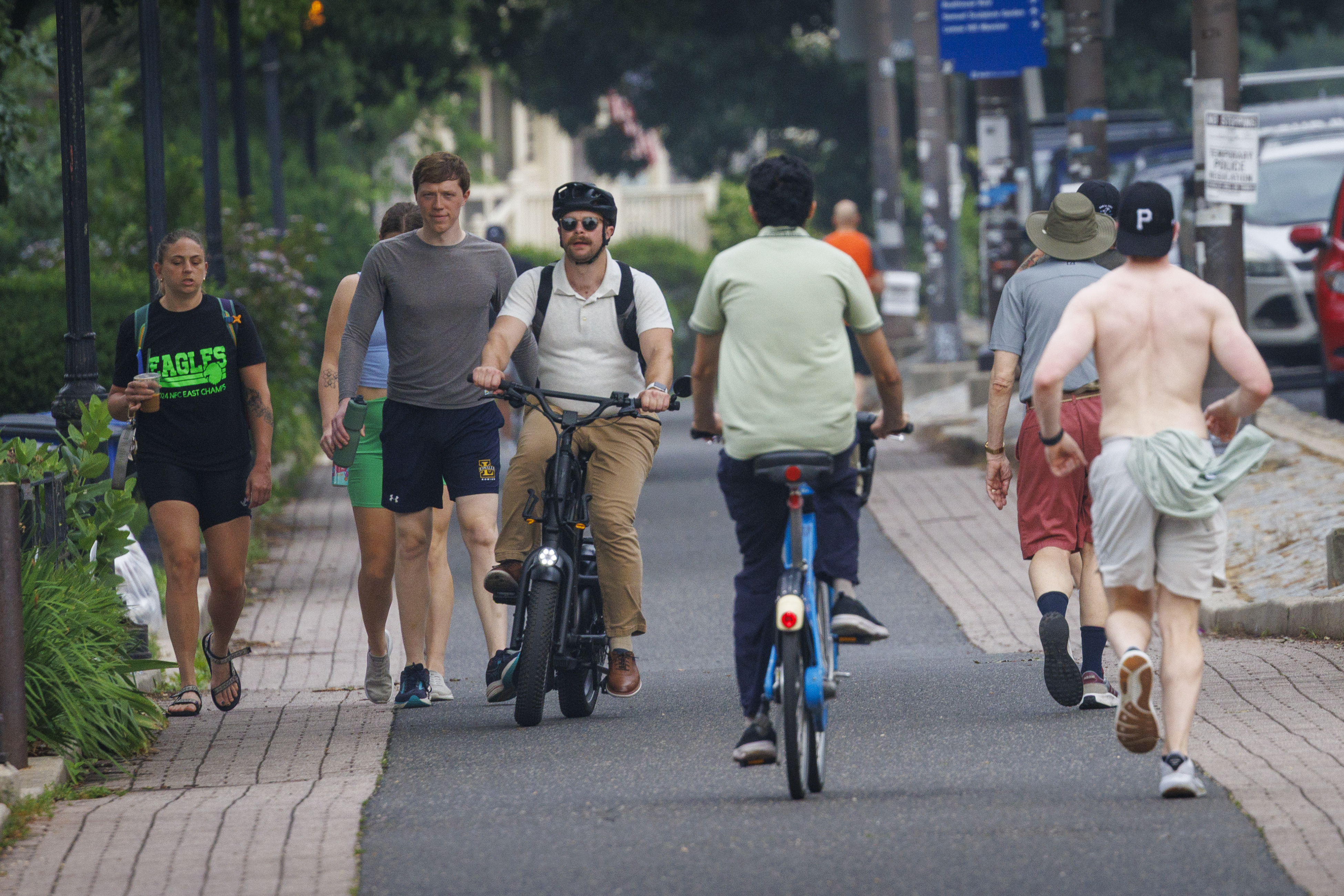
    The heat and humidity have transformed the atmosphere into an obnoxious broth — just in time for the World Cup FIFA Fan Festival — and we can do without the fireworks, thank you.

    The official temperature at Philadelphia International Airport had reached 97, setting a record for the date, with a heat index of 103 at 4 p.m. It beat the high of 95, reached in 1985, and an encore was expected Friday, when the record also is 95.

    In addition, the steaminess has added volatility to a vapor-swollen atmosphere that is even making the windows sweat. The city’s heat emergency remains in effect until 8 p.m. Friday, and the National Weather Service is advising people to stay hydrated and in air-conditioning if possible.

    With a front approaching, strong thunderstorms with potent winds are likely at some point during the FIFA fan festivities in Fairmount Park on Friday.

    It will still be hot during the weekend, forecasters say, but as the World Cup activities heat up, the humidity will be so comfortable you might think you had moved.

    As for game-time conditions Sunday for the Ecuador vs. Ivory Coast match in South Philly, spectators might want to pack an umbrella.

    When the storms are expected to arrive in Philly

    The government’s Storm Prediction Center warned that the region could be affected by “multiple disturbances,” and the atmosphere is well-juiced with moisture.

    Rich Thompson, chief of forecast operations at the storm center, in Norman, Okla., said the center might have to issue a severe watch for the Philly region Friday, when he happens to be on duty.

    Those attending the FIFA Fan Festival on Lemon Hill in Fairmount Park will be well-warned in case of severe weather, said Philadelphia Soccer 2026 spokesperson Melissa Ferdinand, via screens, announcements, and text messages.

    In short, if you didn’t like the weather Thursday, you won’t like Friday’s, either.

    The weather service warned of the “risk of heat-related illnesses for much of the population — especially those without effective cooling or hydration.”

    The outlook for the weekend

    Temperatures on both Saturday and Sunday are expected to reach 90 or better, but the air is going to be refreshingly drier. All thermal comfort being relative, the differences will be as noticeable as they are welcome.

    At game time Sunday — 7 p.m. — it should be quite comfortable in South Philly. However, another system may touch off more showers during the game in advance of what will be a refreshing air mass to start the workweek.

  • Devan Kaney is back talking Philly sports on a new podcast with former Phillies outfielder Jayson Werth

    Devan Kaney is back talking Philly sports on a new podcast with former Phillies outfielder Jayson Werth

    Former Phillies All-Star Jayson Werth and former 94 WIP host Devan Kaney have started a podcast.

    The first episode of Werth Talking About was released Thursday. The hosts discussed topics ranging from Werth’s passion for horse racing to their defining Philly sports moments — and whether the Phillies have what it takes to make it to the World Series this year. They promised to “tell it like it is” and “keep it real” in their weekly Thursday episodes.

    Werth, who played for the Phillies for four seasons, helped lead the team to back-to-back World Series appearances in 2008 and 2009 before signing a whopping seven-year, $126 million contract with the Washington Nationals after the 2010 season. Though his departure was a major disappointment for many Phillies fans, Werth assured that he is impartial these days.

    “I had some great years in Philadelphia,” he said. “I played on great teams, won a World Series, and nobody can take that away from me. … I can be a Phillie, I can be a Nat, but these days, I identify as a horse racing owner.”

    For Kaney, Werth was a welcome surprise voice for the podcast.

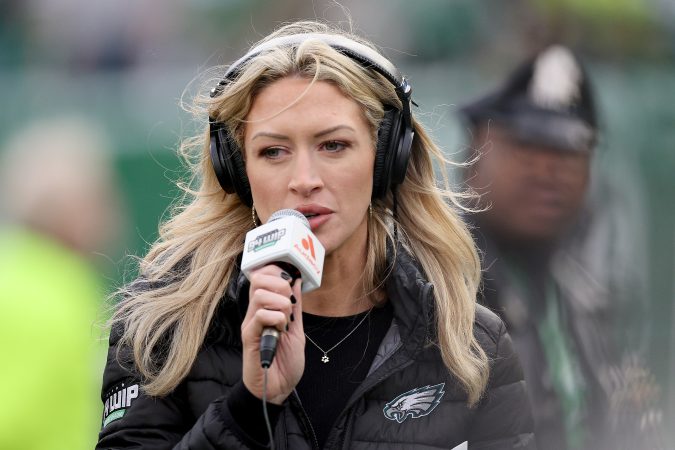
    “I was absolutely not expecting Jason Werth,” Kaney, who replaced Howard Eskin as WIP’s Eagles sideline host in 2024 before being laid off in March, told The Inquirer. “We’re one episode in, and he just has so much lore. He’ll just drop the most insane stories, and it’s awesome to work with him.”

    Jayson Werth holds up the August Belmont Memorial Cup after Dornoch won the 156th running of the Belmont Stakes in June 2024.Julia Nikhinson

    Though out of the baseball limelight for the past few years, Werth is no stranger to podcasting, having served as a cohost of Off the Rail, a show discussing the world of horse racing with fellow former MLB player Shawn Kelley.

    As the hosts got acquainted in the debut episode, stories bounced from Werth’s horses to his recent appearance in a Lakers jersey at Game 3 of the NBA Finals, and, of course, each of their perspectives on the Phillies’ 2008 World Series win.

    Despite now being a horse racing enthusiast and accomplished owner — Werth’s horse, Dornoch, won the 2024 Belmont Stakes — he shared some analytical thoughts on his former team. Werth, who retired from baseball in 2018, offered a wealth of insider knowledge after playing in Washington with current Phillies stars Trea Turner and Bryce Harper. The latter sparked debate over his status as an elite player.

    “I think Bryce is right in the middle of his prime,” Werth said. “If he can stay healthy over the next few years, we’re talking about a first-ballot Hall of Famer.”

    The Phillies have been one of the best teams in baseball since replacing manager Rob Thomson with interim Don Mattingly in April. Werth remains optimistic about the team’s chances the rest of the way but knows from experience that it won’t be easy — even if he believes the team is better than most.

    “I would say this to the people out there that say, ‘Oh, this team’s not as good,’” Werth said. “This team, year over year, has made it to the playoffs, won the division, and found a way to get in. So this is a quality team if it keeps doing what it’s supposed to do. … Winning is hard. Everybody should know that. Winning is hard.”

    Werth threw out the first pitch before Game 5 of the 2022 NLCS between the Phillies and Padres.Chip Fox / Staff Photographer

    As the Phillies move deeper into the season — and the baseball world descends on Philly next month — Kaney said the show will continue to evolve.

    “We’re going to start incorporating a lot more guests and active players,” Kaney said. “I know we’re going to do a lot of fun stuff around the MLB All-Star Game here in Philly.”

    Werth Talking About is produced by the ALLCITY Network and PHLY, which also produces Cooper DeJean and Reed Blankenship’s podcast, Exciting Mics. The show is working with the Major League Baseball Players Association to plan on-site episodes and in-person recordings as it grows.

    “What we provide in our podcast is a unique perspective,” Kaney said. “It’s not attacking, it’s not hot takes, it’s not anything overly negative, but more so kind of peeling back the curtain on what happens behind the scenes.”

    Kaney, a longtime Phillies fan, also hopes the show provides some optimism for fellow fans as the hosts draw connections between the current team and the ones Werth played on.

    “If I was part of this Phillies team, I would be so sick of hearing about the magical 2008 Phillies just because they’re the last team that won,” Kaney said jokingly. “This is a good team, and we’re going to tie both of them together and find the similarities and differences between those teams.

    “It’s going to be something that’s really fun for us.”

  • The first day of the World Cup fan fest at Lemon Hill drew thousands

    The first day of the World Cup fan fest at Lemon Hill drew thousands

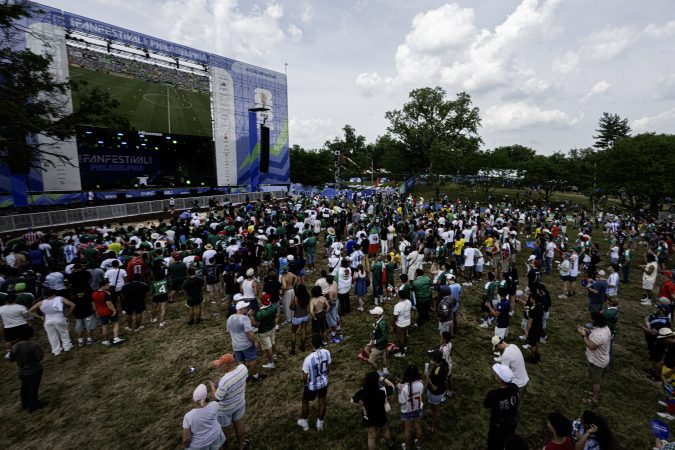
    Philadelphia’s scorching, soupy weather could not stop soccer fans from making the trek to East Fairmount Park, where World Cup revelers filed in Thursday afternoon to celebrate the tournament’s kickoff at the FIFA Fan Festival.

    Thousands of soccer lovers were present, arriving at Lemon Hill for the festival’s 2 p.m. start time — an hour before Mexico started its clash against South Africa in the World Cup’s first match, in Mexico City. Philly’s FIFA Fan Festival, which is slated to run for 39 days through the end of the tournament next month, arrived amid a heat advisory that saw temperatures push into the mid-90s with heat indexes surpassing 100 degrees, thanks to high humidity levels.

    And that did not go unnoticed by festival attendees.

    “This is far too warm for us,” said Rhys Gray, who traveled to Philadelphia from Scotland. Gray arrived in town Tuesday and plans to make the city his home base as he and his father follow Scotland’s games throughout the World Cup. Gray, who donned a matching plaid bucket hat and shirt for the occasion, said the city had been welcoming so far.

    “I never felt so popular,” he added.

    The FIFA Fan Festival serves as the city’s official World Cup watch party, and sprawls across a million square feet of lush, green space at Lemon Hill. It is capable of holding 15,000 attendees, many of whom are expected to take in matches on the festival’s 60-foot-wide screen on the main stage. The family-friendly event also features more than 80 food trucks, a massive shopping area, and a beer garden, among other amenities.

    And while it attracted World Cup watchers from around the world Thursday, Philadelphia-area locals also made the trip. Many attendees seemed to be rooting for Mexico, judging by the sea of green-and-red soccer jerseys that dominated the space.

    Among Mexico’s supporters was Bianca Vetta, who traveled to Philly from Easton with her mother. On Thursday, Vetta’s face was painted like the flag of Mexico, with red, white, and green marking her cheeks to show her support for the country’s team. Her father, she said, is from Mexico.

    Bernard Dagenais, president and CEO of the Main Line Chamber of Commerce, also supported Mexico over South Africa. Dagenais, who parked at the nearby Philadelphia Museum of Art and walked to Lemon Hill, said his support for the country only made sense.

    “Why not?” he asked. “They’re our neighbors to the south.”

    Dagenais’ walk is likely not to be unique during the festival’s run, as extensive road closures and parking restrictions arrived with the event. Organizers have encouraged attendees to take rideshares or public transportation, which some Philadelphia residents, like West Philly’s Eric Abreu, heeded.

    Despite the travel restrictions, Abreu said, getting to the festival was convenient and trouble-free, thanks to a $10 Uber ride that dropped him off nearby. And while he plans to head back to the festival grounds in the coming days, he did note Thursday was a little on the warm side.

    “Hopefully we just get a nice tan,” Abreu said.

    Philadelphia itself, meanwhile, is slated to host its first World Cup game Sunday, when Ivory Coast faces off against Ecuador at Lincoln Financial Field. FIFA has temporarily renamed the arena “Philadelphia Stadium” for the World Cup, which will include six games in town through July 4.

    Philadelphia’s role as a host city, however, seemed to be secondary to the match at hand Thursday afternoon. As the match started, attendees flocked to the festival’s largest screen, set out picnic blankets, and danced to music reverberating through the grounds. Cheers and applause in Philadelphia erupted as the teams took the field in Mexico City.

    On Thursday afternoon, said attendee Patrick Aruta, a registered nurse at Penn Presbyterian Medical Center, the experience transcended any difficulties or controversies that may be associated with the World Cup. In that fleeting moment, he said, this was all there was — just enjoying the match, with thousands of other fans from far and wide.

    “No matter what people say about the heat [or] the political climate, there is nothing like this. I forget who I am for a moment,” he said. “You can’t get this at any other sports game. Just the World Cup.”

  • City Council votes to ban horse-drawn carriages in Philadelphia

    City Council votes to ban horse-drawn carriages in Philadelphia

    In the middle of mundane City Council procedures on Thursday, cheers erupted inside Council chambers.

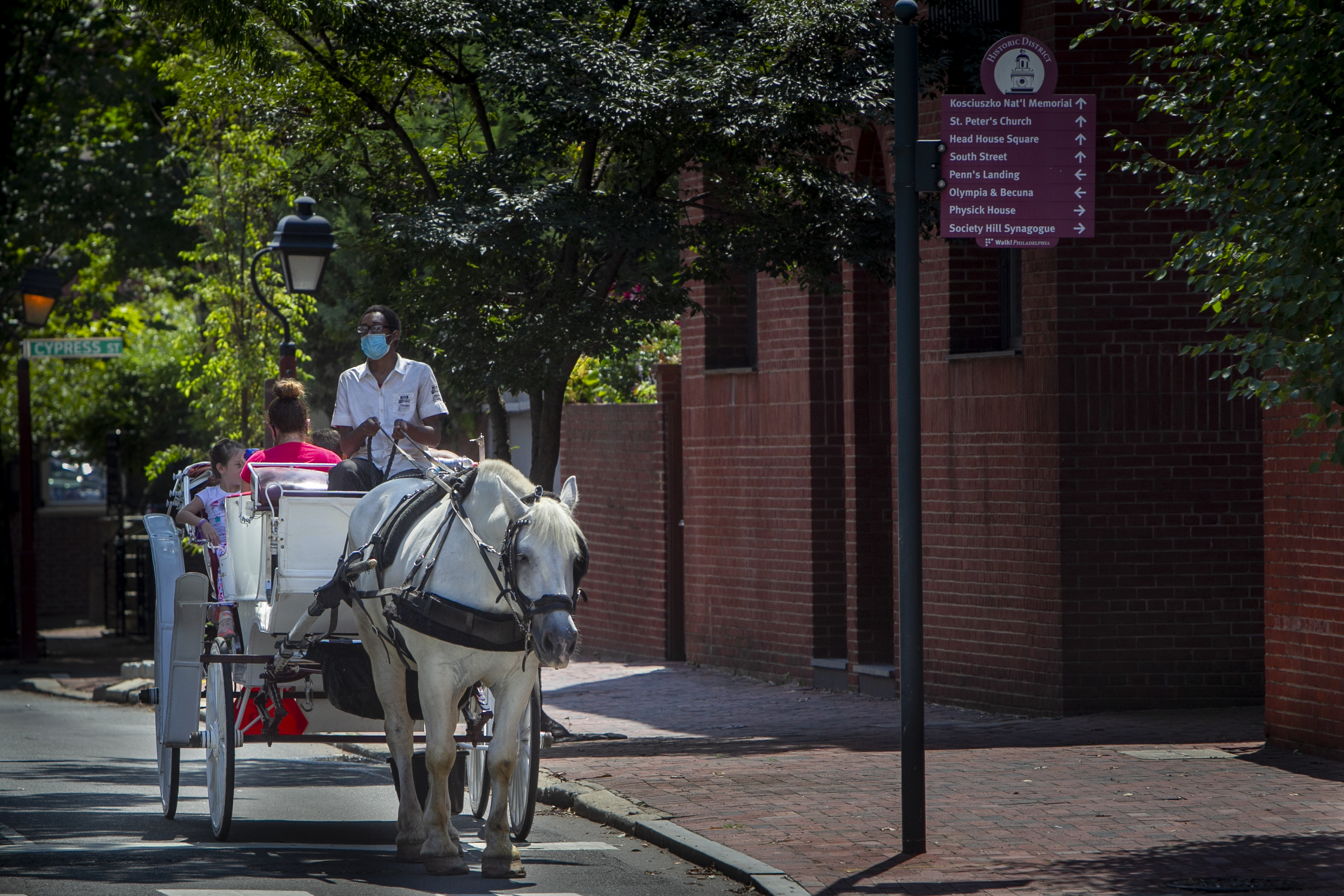
    Supporters were celebrating the passage of a bill that will outlaw horse-drawn carriages in Philadelphia. The ban would take effect after Mayor Cherelle L. Parker signs it into law.

    The city’s last operating horse-carriage business, 76 Carriage Co., ceased operations in 2023, but people have taken noncommercial horse carriages to South Street in recent weeks.

    Councilmember Mark Squilla, who introduced the bill, and animal-welfare advocates have been working to ban the practice for several years. The advocates have argued that horse-drawn carriages are cruel and onerous to the animals, and dangerous for surrounding traffic and pedestrians.

    A horse in New York City died earlier this week while pulling a carriage, and lawmakers have planned to reintroduce legislation that would ban the practice in that city.

    Philadelphia City Council was slated to vote on the bill last week, but that version would have banned only commercial horse-carriage use. Advocates like Janet White, executive director and founder of Carriage Horse Freedom, successfully pushed for the bill to be amended to include a ban for both commercial and noncommercial uses.

    The new proposal allows for some exceptions, which would be regulated and monitored by animal control and the Philadelphia Department of Licenses and Inspections. Violations of the ban could result in fines of $1,000 per day for someone operating a horse carriage.

    Council voted nearly unanimously for the amended bill’s passage in its last session before summer recess, with Councilmember Nicolas O’Rourke casting the lone vote in opposition.

    O’Rourke said his nay vote was “benign,” because he has deep respect and connection with horses since his mother taught him how to ride and care for them. His objection came from concern about how the language of the legislation potentially could make it difficult for movies filming in the city to use horse carriages, he said, and he would like to continue talking about the issue over the summer.

    White said the bill’s passage made her hopeful, and she believes it will help Philadelphia move into a better future for animal welfare.

    “It is a moral and civic milestone — one that reflects who we are today and the humane, forward-looking city we aspire to be,” she said in a statement.

    Staff writer Andrea Padilla contributed to this article.

  • Phillies acquire outfielder Derek Hill in trade with White Sox as they await update on Adolis García

    Phillies acquire outfielder Derek Hill in trade with White Sox as they await update on Adolis García

    As the Phillies await word on the severity of Adolis García’s right shoulder injury, they made a trade Thursday to add to their thin outfield depth.

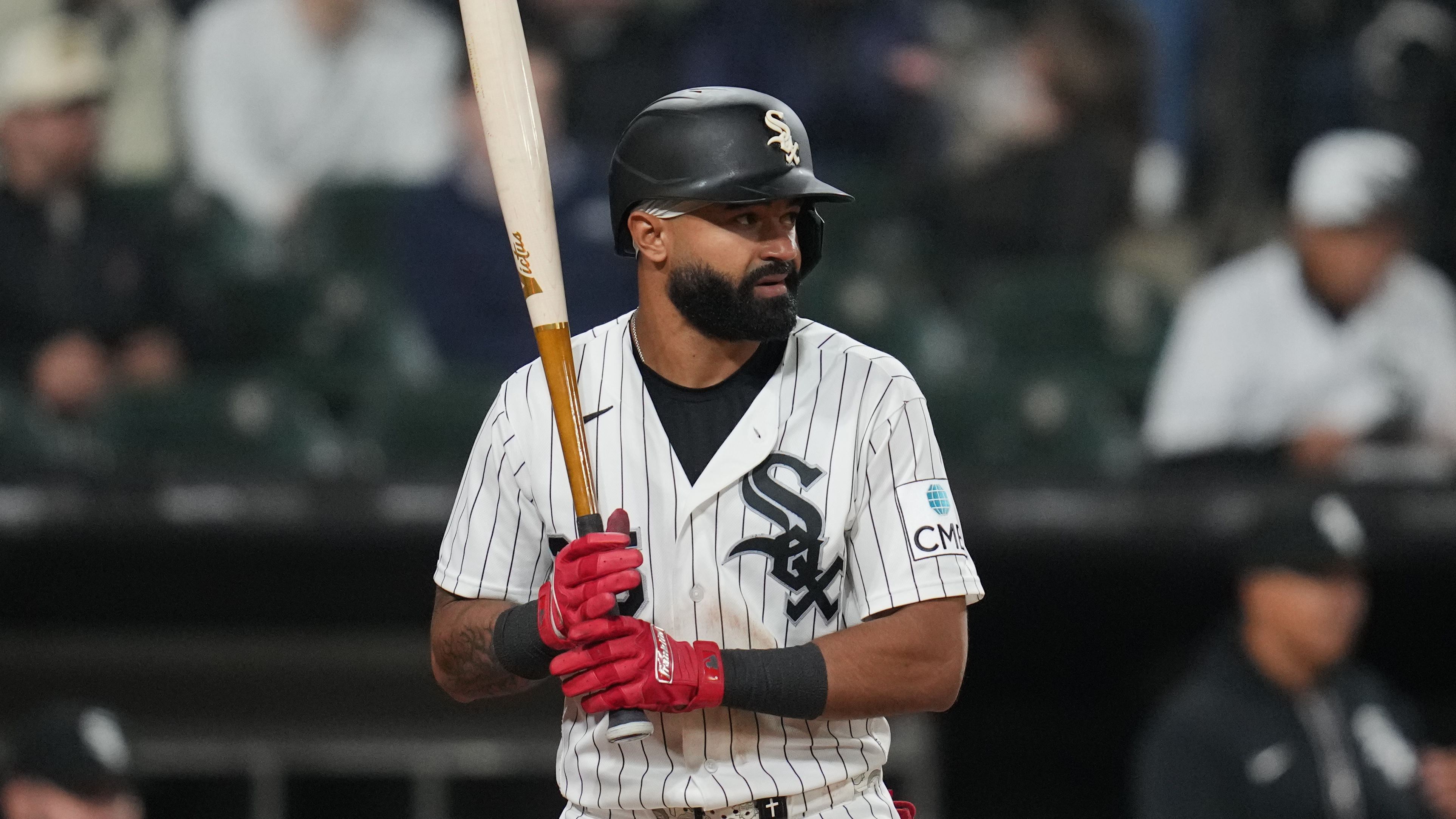
    The Phillies acquired righty-hitting Derek Hill and international bonus pool money from the White Sox, a major league source confirmed, for double-A outfielder Dylan Campbell and single-A infielder Jose Colmenares. Primarily a center fielder, Hill is expected to see time in right field with the Phillies.

    Hill, 30, batted .213 with four homers in 80 at-bats in limited action in Chicago. He went deep against Jesús Luzardo last Friday night in an 8-6 Phillies victory over the White Sox in Citizens Bank Park.

    García grabbed his shoulder after making a throw to home plate Wednesday night in Toronto. He exited the game and was diagnosed with a pulled muscle in the right shoulder area, according to the Phillies. García was expected to undergo further testing Thursday. The Phillies remain uncertain how long he will be sidelined.

    If García needs to go on the injured list, Otto Kemp, Felix Reyes, and Gabriel Rincones Jr. are potential replacements on the 40-man roster. Neither Kemp nor Reyes has hit much lately in triple A, while Rincones struggles against left-handed pitching. Bryan De La Cruz, who isn’t on the 40-man roster, has considerable major league experience, mostly with the Marlins.

    Hill has a .789 OPS against left-handed pitching this season and could form a right-field platoon with Rincones.

    ESPN was first to report the trade.

  • Judge denies challenges to a 1.5 million-square-foot East Whiteland data center project

    Judge denies challenges to a 1.5 million-square-foot East Whiteland data center project

    Calling it “frivolous,” a Chester County judge on Thursday quashed a land use appeal seeking to halt the construction of a 1.5 million-square-foot data center proposed for East Whiteland Township.

    It’s the second time this week Court of Common Pleas Judge Anthony Verwey has denied appeals challenging approvals of the controversial data center project, proposed for a Superfund site near a residential development and the popular Chester Valley Trail.

    “None of the four ‘errors’ complained of by the Appellants constitutes a decision subject to review by this Court,” Verwey wrote in his order denying the challenge to East Whiteland elected officials’ approval of the development plans. “… Appellants are attempting to collaterally attack an approval, that had ‘no deficiencies.’ The appeal, filed well out of time, is frivolous.”

    The appeals challenged the zoning hearing board’s 2018 decision to permit for a data center at 13 S. Bacton Hill Rd., and the board of supervisors’ 2024 approval of the development plans.

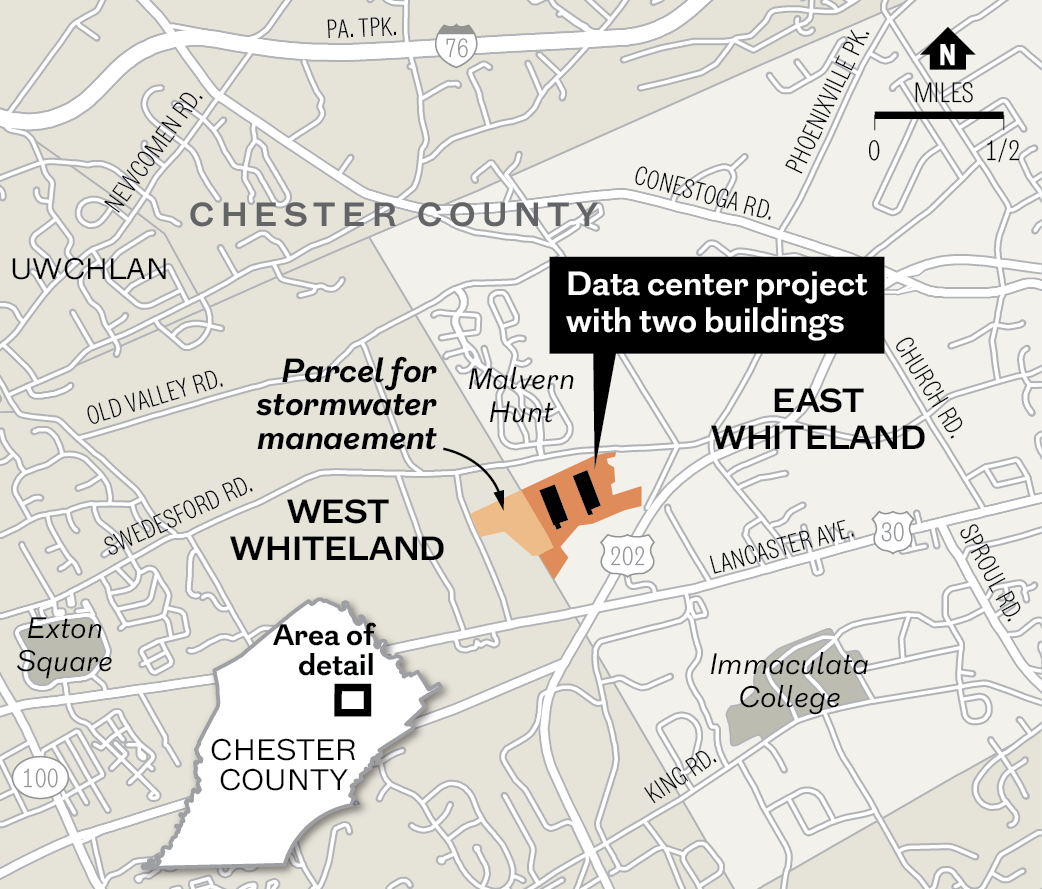
    Lou Colagreco, an attorney representing the developers Green Fig LLC and Sentinel Data Centers, said they “are pleased that the court acted quickly and decisively in dismissing” both appeals. Colagreco said work is underway for the project’s stormwater management facilities in adjacent West Whiteland, and that the developers are securing the perimeter of the East Whiteland site in advance of construction.

    The location of the two-building data center project in East Whiteland, Chester County.John Duchneskie

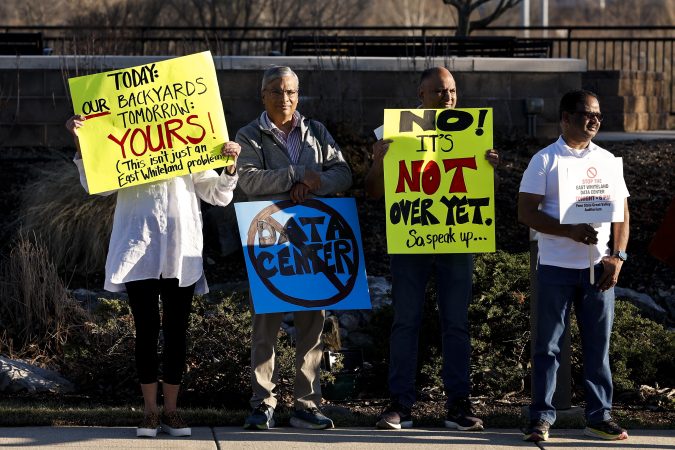
    The judge’s denial is a hit for residents who have for months shown up adamantly against the data center.

    Attorney Andrew Schneider, a resident of the nearby development Malvern Hunt who argued on behalf of other neighbors, said he “respectfully disagree[d] with the Court’s decisions.” Schneider has another case filed in opposition to the data center project.

    The data center project has been through a winding saga, after it secured initial approvals years ago with little community fanfare. But when it approached the township to amend its original plans — at first requesting to scale up the project by 600,000 square feet — it kicked off a slew of contentious public meetings. When too many people showed up to one planning commission meeting in February, officials had to postpone it.

    Developers Green Fig LLC and Sentinel Data Centers abandoned attempts to amend the plans when “it became apparent to us … that it was simply data center vs. no data center,” Colagreco said previously.

    During a hearing last week challenging the board’s approval of the project, Schneider argued that the township had erred in its decision to approve the plans, saying that the final plan was deficient and didn’t meet conditions the municipality initially laid out. Allowing the construction would cause irreparable damage to the health of the community, he said.

    Colagreco dismissed those arguments, saying the residents hadn’t produced enough evidence to support their allegations. But delaying the project was a threat to the developers being able to complete the data center on time and risked them losing approvals, he said.

    Colagreco and an attorney representing the township argued that the appeal came too late, and the township’s decision shouldn’t come before the court.

    Verwey ultimately agreed.

    “Appellants cite not a single case to support the proposition that any of the four ‘errors’ are appealable,” he wrote in Thursday’s order. “This is likely because no such citations exist.”

    Verwey wrote in his order regarding the 2018 zoning decision that the appeal, “filed 8 years after issuance, is out of time and must be quashed.”

    As data centers are beginning to populate Pennsylvania and surrounding states, residents have become stauncher opponents. In nearby East Vincent, the community saw an early victory when supervisors denied a proposed data center at the historic Pennhurst State Hospital and School site last month. It will also likely end up before a judge, as the developer there plans to appeal the decision.

    This suburban content is produced with support from the Leslie Miller and Richard Worley Foundation and The Lenfest Institute for Journalism. Editorial content is created independently of the project donors. Gifts to support The Inquirer’s high-impact journalism can be made at inquirer.com/donate. A list of Lenfest Institute donors can be found at lenfestinstitute.org/supporters.

  • Former AP reporter Marlene Louise Johnson, who sued wire for discrimination, dies at age 89

    DETROIT — Former Associated Press reporter Marlene Louise Johnson, whose lawsuit against the wire service for race and gender discrimination led to affirmative action plans to spur hiring of female, Black, and Hispanic journalists, has died at 89.

    Ms. Johnson died May 9 in a Los Angeles-area care facility after being released from a hospital. She had been suffering from dementia, according to her daughter, Morenike Joela Evans.

    Born in Rochester, N.Y., Ms. Johnson earned an associate degree from the University of Buffalo and a bachelor’s degree at Wayne State University in Detroit. At the age of 75, she graduated from Howard University’s School of Divinity with a master’s degree in religious studies.

    While working in the Detroit office of the late-Rep. John Conyers in the early 1970s, Ms. Johnson met and befriended late civil rights icon Rosa Parks. In 1955, Parks helped spark a bus boycott in Montgomery, Ala., when she was arrested for refusing to give up her seat to a white man, ultimately leading to the desegregation of the city’s public buses. Parks died in 2005.

    Ms. Johnson was hired in 1972 as a general assignment reporter in the AP’s Detroit bureau. She covered stories on Black capitalism, court-ordered busing in Detroit’s public schools, tensions between the predominately white police department and the city’s Black residents, breast cancer screening, and women empowerment in business and culture.

    Minority hiring program brings Johnson to AP

    Ms. Johnson, who was Black, sued the global news organization for race and gender discrimination the year after she joined. She had been hired as part of a minority hiring program meant to bring in diverse talent to the AP — but after several months on the job, Ms. Johnson claimed she had received no training. She also believed she was being held to a performance standard different from her white, male counterparts.

    “What the suit was about originally was racism,” Ms. Johnson said in a 2013 interview with History Makers, a nonprofit research and educational institution that keeps an online oral history of both well-known and unsung Black Americans.

    “I was filing a copy, and there was nothing wrong with the copy,” Ms. Johnson said. “And so, like nine months in, the boss decides that he’s going to retire, and he’s going to dump me. And I said ‘oh, my gosh.’ And so, I was very upset.”

    Ms. Johnson said the Newspaper Guild helped her file the suit, which later became a class-action claim involving several other female minority journalists. Ms. Johnson then took a leave of absence in June 1975, according to AP records. Newspaper archives show her AP byline appearing on a Detroit-datelined story in 1975.

    “It was a scary thing for her to do,” Evans said about her mother’s discrimination claim against the AP. Much later, “she ended up getting like $700. I remember her being very upset over that — it kind of got taken away from her getting justice.”

    Class-action lawsuit nets bonuses, training for women and minorities

    The Newspaper Guild’s sex and race discrimination class-action lawsuit against the AP was settled about decade later in 1983 for more than $1 million. Ms. Johnson was not listed as one of the plaintiffs. Under the agreement, which involved the U.S. Equal Employment Opportunity Commission, the AP was required to establish affirmative action plans for female journalists, as well as Black and Hispanic journalists.

    “The suit turned from all Black and one white [plaintiff], to all white and one Black [plaintiff],” Ms. Johnson recalled in the interview with History Makers. “And the one Black — the one that went to the civil suit — they took my name off and put another woman’s name on it. A Black woman who I had never heard of before.”

    The seven women listed as plaintiffs shared $83,120, according to a 2019 NewsGuild International article. Part of the settlement agreement included provisions for training and bonuses for AP’s minority and female journalists.

    “I wasn’t in it for the money,” Ms. Johnson said, also noting that she couldn’t find jobs in the journalism industry for some time after filing her lawsuit.

    “We should be grateful that someone like Marlene, a Black woman in the 1970s at a major news organization who had the courage,” said veteran journalist Vincent McCraw, who also is Black and worked with Ms. Johnson later in her career at the Washington Times. “Whether she, willingly or not, knew there would be a sacrifice, she took it.”

    Johnson returned to journalism, ventured into public relations

    Ms. Johnson later moved to Washington where she worked for the Newspaper Guild, the National Urban League, and the National 4-H Council. She also worked with the White House Council On Aging and was part of the press office for President Jimmy Carter’s inauguration committee, according to her obituary.

    McCraw, a regional manager for Report for America, said he learned of Ms. Johnson’s death from Evans. He met Ms. Johnson in the early 1990s in Washington when she was working in communications and he was covering city government for the Washington Times.

    “We struck up a conversation and I learned she’d been in journalism,” McCraw said. “What I did not know then was the suit she had against AP. After a year or so she mentioned how she wanted to get back into journalism.”

    It was through McCraw that Ms. Johnson would come to work at the Washington Times in 1994, where she was an assistant features editor, he said. Ms. Johnson retired from there in 2004.

    She held memberships in the National Association of Black Journalists, the Capital Press Club, and the Public Relations Society of America.

    ‘Somebody you could count on’

    For about a decade prior to her death, Ms. Johnson lived in the Los Angeles area where she was cared for by Evans.

    “She loved being a reporter, a journalist,” her daughter said. “She was really an advocate for people and telling the truth.”

    In the interview with History Makers, Ms. Johnson said she would like to be remembered “as a friend, as somebody you could count on, as a good Christian woman, as a strong woman, as a loving person, as a good mom, as a wonderful grandmom.”

    Ms. Johnson also is survived by two grandchildren, a son-in-law, and two siblings.

  • Taylor Swift repped the Knicks at the Garden and some Philly fans feel betrayed. But should they?

    If you ask some Philadelphia fans, Taylor Swift’s claim to the city should be revoked.

    On Wednesday, Swift sat on Madison Square Garden’s celebrity row to watch the New York Knicks, who swept the Sixers out of the playoffs last month, claw back from a 29-point deficit against the San Antonio Spurs to take a three-games-to-one series lead in the NBA Finals. Swift, who’s from Reading and spent her childhood summers in Stone Harbor, N.J., cheered on New York despite her strong ties to the Philadelphia area.

    The pop star wore a blue T-shirt with “Stevie Knicks” — a nod to Fleetwood Mac’s Stevie Nicks — printed in Knicks orange. She was seated between friends and fellow musicians Este and Alana Haim, who sported “Knickole Kidman” and “Knickelback” shirts, and Law & Order: SVU star Mariska Hargitay, whose character, Olivia Benson, inspired one of Swift’s cats’ names.

    After Swift was spotted at the Garden, Philadelphia fans took to social media to voice their displeasure with the singer’s apparent New York fandom.

    So, what’s actually going on? Did Swift ever rep the Sixers or has she always been a big Knicks fan?

    In April 2002, a 12-year old Swift performed the national anthem before the Sixers tipped off against the Detroit Pistons at the First Union Center (now Xfinity Mobile Arena). Sixers public address announcer Matt Cord, who retired after this past season, introduced the future global star as “Taylor Swift from Reading, Pa.”

    Swift, who also performed the anthem before Game 3 of the 2008 World Series at Citizens Bank Park, recently reflected on singing at her hometown NBA team’s arena during a December appearance on The Late Show with Stephen Colbert, but she did not mention where her NBA fandom lies. She instead focused on the American flag-themed attire she wore.

    “You know, when you’re like 11 and you’ve got that one outfit that you just know goes so hard,” Swift said. “You just know that when you put this on, you’re like, ‘I’m sorry, I’m unstoppable today.’”

    In 2014, Swift told Time magazine that she began to root for New York earlier that year when she moved to the Big Apple. That year, the “Process Sixers” went 19-63, but the Knicks were not worldbeaters either, finishing 37-45. Her reason for embracing the Knicks evidently was not because of how the team was playing. Instead, it was because of a friendship she formed with New York big man Amar’e Stoudemire.

    “So you run into a bunch of different, interesting types of people at the Met Ball,” Swift told Time. “I’ve gone the last four years. And the most normal people at that event, every single time, are Amar’e Stoudemire and his wife Alexis. I talk with them and hang with them every time I’m there. So I’ve always had this sort of love of the Knicks, just because Amar’e is so cool.”

    It also seems the Sixers did not claim a special place in Swift’s heart because they invited her to sing, either. In fact, as she told Time, she also performed at Madison Square Garden as a child. The Mecca seemed to leave a greater impression on her than the Sixers’ South Philly arena.

    “And also I performed at the Knicks’ — at Madison Square Garden’s kids talent competition at halftime when I was 12 or 13,” Swift said. “And ever since then, I’ve had this kind of sparkly, magical opinion of Madison Square Garden and the Knicks, since they let me sing when I was a little kid.”

    As some on social media have pointed out, Swift also attended Game 3 of the Knicks’ Eastern Conference finals matchup at the Cleveland Cavaliers. At that game, seated next to her fiancé and Kansas City Chiefs tight end Travis Kelce, she appeared to root for the Cavaliers — not the Knicks. Kelce and his brother, retired Eagles great Jason Kelce, are from Cleveland Heights, Ohio, and have been public in their support for the Cavs.

    Swift’s relationship with the Eagles does not leave many clues to where her loyalty lies, either. Despite previously performing in Eagles jerseys and mentioning the team in her 2020 song “gold rush,” Swift seemingly ditched the Birds after she began to date Kelce. Since then, she has supported Kansas City.

    It seems that Swift will have to correct the record on her favorite teams. Until then, a small sect of Philadelphia Swifties will likely hold out hope. The rest? They seem to have given up.

  • Philly has a new law to boost development around transit. Which neighborhoods will benefit?

    Philly has a new law to boost development around transit. Which neighborhoods will benefit?

    City Council approved a bill Thursday to encourage denser and taller development around Philadelphia’s transit stations.

    The legislation, a part of Mayor Cherelle L. Parker’s housing agenda, expands an existing law that offers development incentives to most non-single-family properties within a 500-foot radius of transit stations. Thursday’s Council vote expands that radius to a quarter of a mile.

    It also boosts eligibility for the incentive, allowing it to include not only SEPTA rail stations but also intercity bus, PATCO, water taxi, and some bus or trolley stops.

    The legislation is meant to allow more people to live near transit and boost SEPTA ridership. Mass transportation works best when more people live within walking distance of stations.

    The law comes with a very Philadelphia caveat, however: City Council must opt stations into it. In most other states or cities that have this kind of transit-oriented development policy, it automatically applies to all eligible stations.

    “I have not heard of that for transit-oriented development laws,” said Yonah Freemark, a lead housing policy researcher at the Urban Institute, a Washington think tank.

    “If you look at what Chicago, New York City, or Los Angeles has, it’s across the city. There aren’t special exemptions for aldermen or council members” to control which stations are included, Freemark said.

    Under the existing law, Council members in West Philadelphia have opted in most Market-Frankford Line stations to the west of the University of Pennsylvania.

    Many of the stops in Northern Liberties, Fishtown, Kensington, and Frankford are included as well, although heavily used stations like Front-Girard, York-Dauphin, and the Arrott Transportation Center are left out.

    The stations already covered by the zoning incentive’s existing 500-foot radius will be automatically expanded to a quarter mile.

    No stations on the Broad Street Line are currently included. Those to the south of City Hall are half in Council President Kenyatta Johnson’s district and half in Councilman Mark Squilla’s district, complicating the politics of adding the stations.

    To the north, former City Council President Darrell Clarke and his successor, Jeffery Young, have not opted any of the stations on Broad Street into the transit-oriented development program and have often been skeptical of high-rise development.

    “The problem with this approach is that it essentially allows City Council members who are recalcitrant to allow development to block” the transit-oriented development law, Freemark said. “It entrenches that resistance.”

    Several Council members said in interviews that they hope to make use of the new law and add stations in their districts.

    Councilmember Mike Driscoll, who represents much of the Lower Northeast, said he plans to use it at the two Market-Frankford Line stops in his district that are not already covered, including the Arrott Transportation Center.

    Councilmember Jamie Gauthier, who represents much of West Philadelphia, has long championed the legislation and said she is studying the new language to see whether she can opt in more stations.

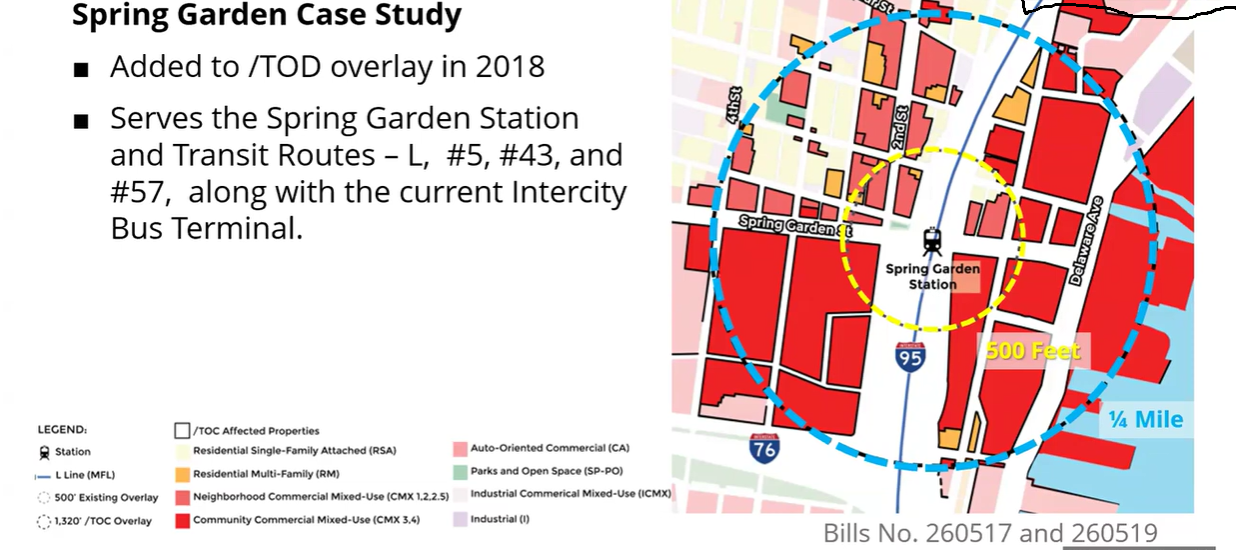
    Squilla, who opted in the Spring Garden station in Northern Liberties, said its application is more complicated on South Broad Street.

    A screen shot of a Philadelphia Planning Commission study showing how many more properties will be covered by the overlay under the new law.Philadelphia Planning Commission

    “Broad Street is tough because it is two separate Council districts, and [we] need to get input from the community on both sides,” Squilla said. “I would consider it but do my usual community outreach first.”

    But Council President Johnson said that he is interested in adding all the South Broad stations to the expanded transit-oriented development law.

    “I have no objection to transit-oriented communities, so all of mine will be in,” Johnson said. “It’s great for development and the surrounding area. I’ll probably look at it just to make sure … there’s a level of affordability.”

    On North Broad Street, Young is still studying the legislation and “assessing which stations would make sense to include,” the Council member’s spokesperson said.

    Properties zoned for single-family housing are not affected by the law. It also bans certain kinds of development from the area around transit stations, including one-story buildings, parking garages, and curb cuts.

    The urbanist group 5th Square had been meeting with City Council members in advance of Thursday’s final vote on the bill strengthening transit-oriented development.

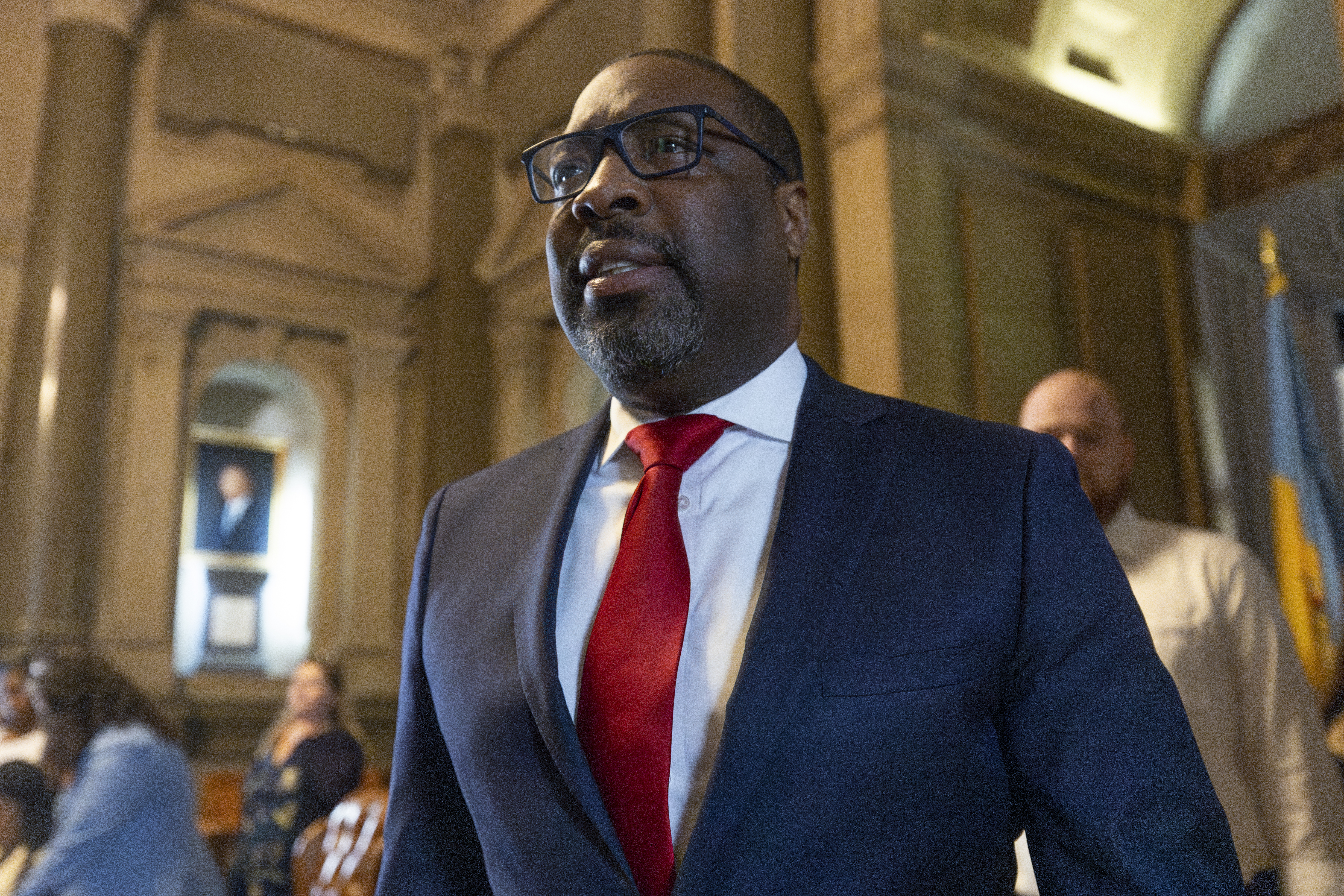
    Council President Kenyatta Johnson says he is interested in including all of the South Broad Street subway stops in the transit oriented development law. Aidan T. Gallo / Staff Photographer

    Activists with the group say there is support for adding many more SEPTA stops to the law, although they think areas like North Broad Street will be much harder to get stations opted in.

    “The idea that all of the stations will be opted in at once is unlikely,” said Jay Arzu, housing organizer with 5th Square and the founder of the Roosevelt Boulevard Subway Movement.

    “They made the intention clear that they’ll look at it on an individual, case-by-case basis, which is disappointing for transit advocates,” Arzu said. “But we recognize it’s another step in the right direction. Sometimes you just got to take what you can get.”