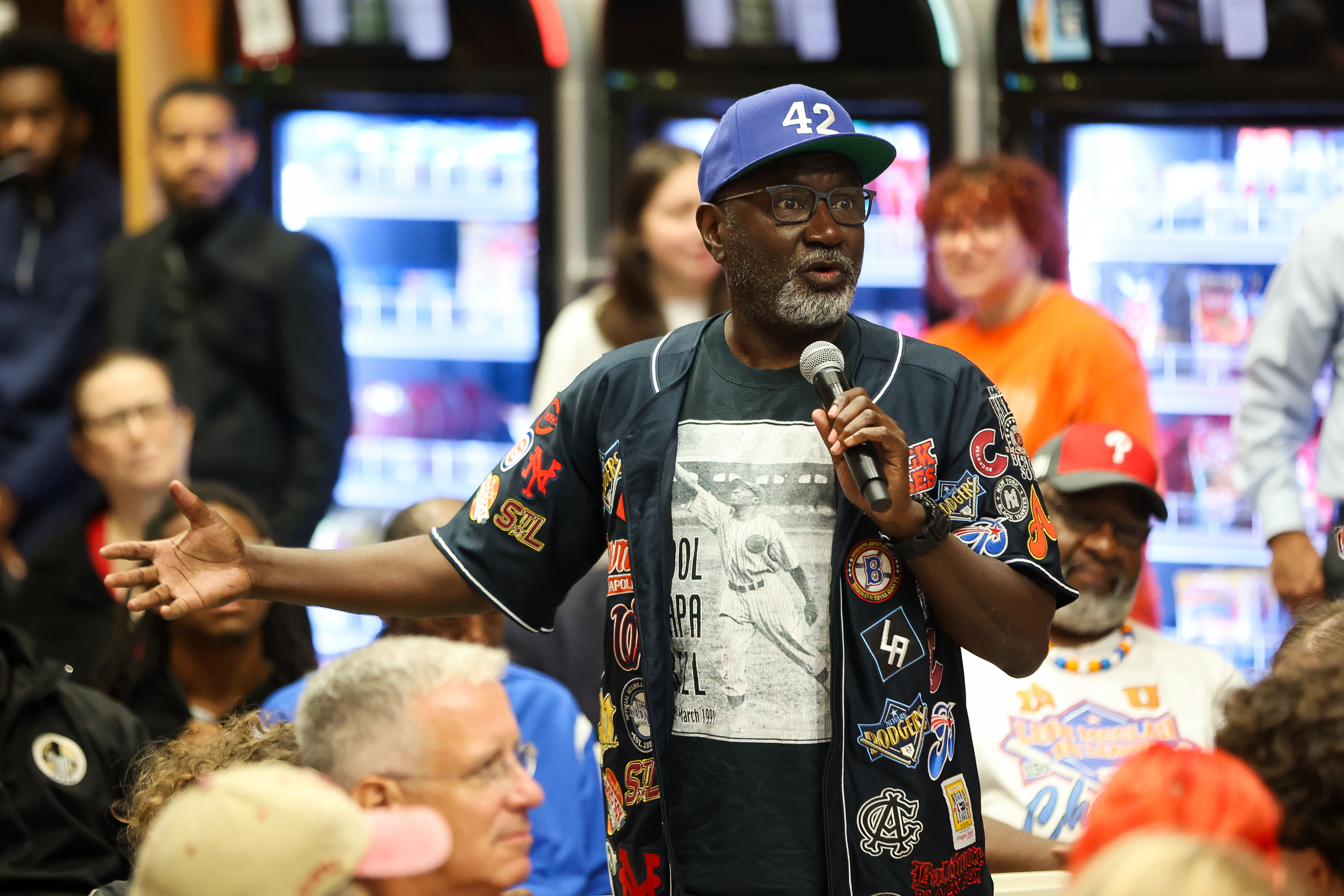
When a panel of baseball representatives discussed how to revive the sport in North Philadelphia at a Temple University event last August, Tyrone Young was the first person in the audience to stand and ask a question.
“How can we sit at the table that y’all want to put together so we can help make the decisions?” Young, who runs the North Philadelphia Heritage League, asked the panel composed of MLB and Phillies leadership. “Some of the things y’all want to put together, it’s not what we need.”
Almost a year later, Young and other North Philly baseball coaches have their answer: MLB will pour $5.5 million into a variety of initiatives as part of its All-Star Legacy program benefiting host cities of the annual showcase, but the money won’t be going to the fields or programs they say are in desperate need.
“When they earmarked this money, we’re not sitting at the table to say where we want the money used at,” Young said in a recent interview. “It’s really a slap in the face.”
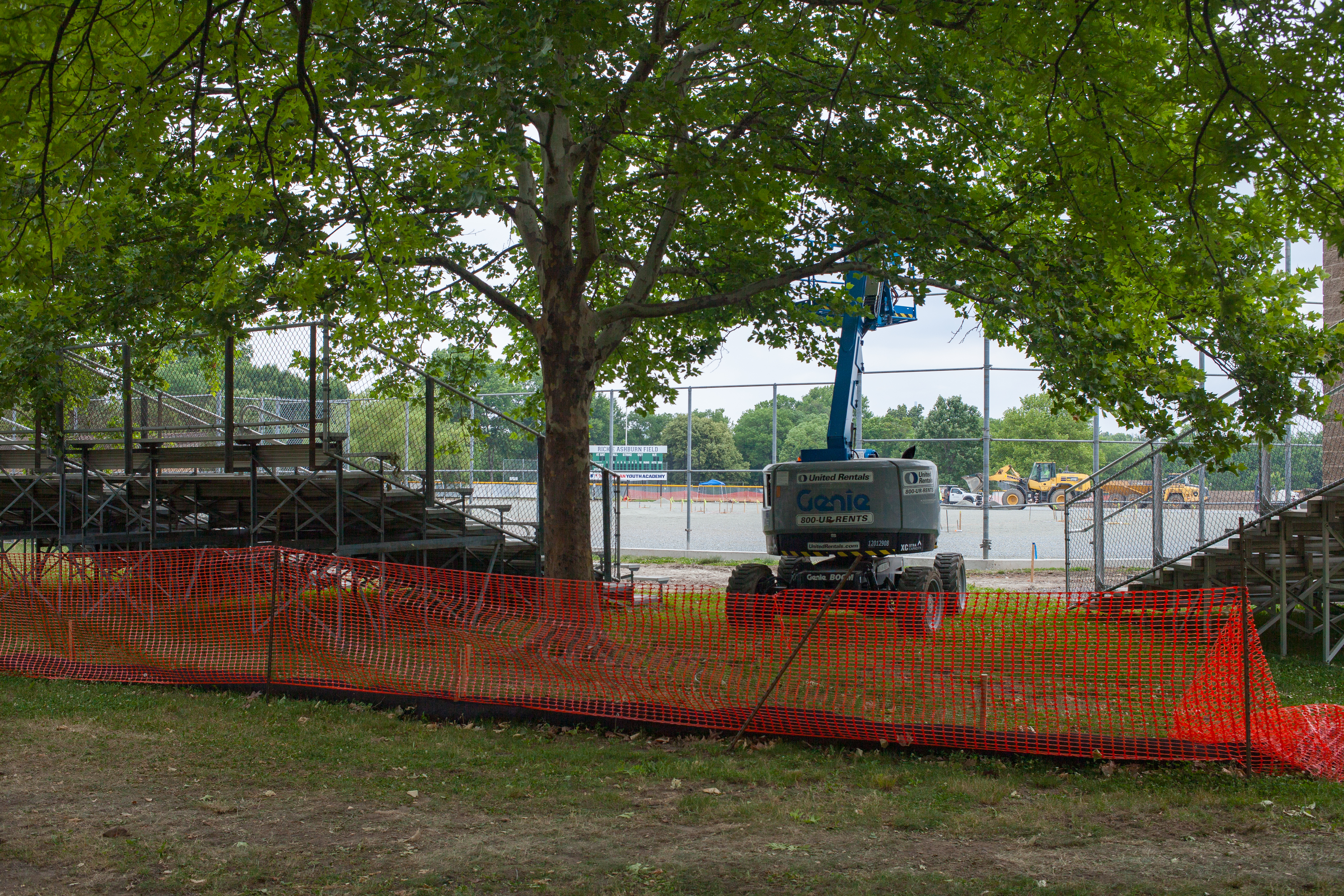
Instead, MLB is renovating Ashburn Field in FDR Park, a city field managed and maintained by the Phillies that hosts a variety of youth baseball programs.
“Ashburn Field was originally built in 1998 using funds generated from the 1996 All-Star Game in Philadelphia,” said Jon Joaquin, the Phillies’ director of youth baseball and softball development programs. “For nearly 30 years, it has served area youth and remains an extremely popular field, hosting approximately 125 events each year, including games, practices and programming for local colleges and high schools.
“This investment will make a meaningful difference for so many young athletes and we’re excited to see the impact it will have across the community.”
With the All-Star Legacy funds, MLB will also host a PLAY BALL event at Athletic Recreation Center on July 10; invest in renovations of the Shane Victorino Boys & Girls Club in Nicetown, Tree House Books in North Central, and the Veterans Multi-Service Center in Old City; fund statues honoring Negro League players in West Philadelphia; and pour dollars into the Miracle Leagues of Southeastern Pennsylvania, which builds fields for ballplayers with disabilities, and the Pennsylvania Horticultural Society.
MLB has donated funds to the host of the All-Star Game since 1997. In years past, baseball has invested between $4 million and nearly $7 million in the form of field renovations, funding for veterans, and grants to nonprofits.
Many recreational fields across the city, especially those in nonwhite areas, are in poor condition. Trash, holes in base paths, and a lack of nearby bathrooms for players are just some of the issues coaches say make it difficult to maintain programming.
Those difficulties are reflected in the Phillies’ youth baseball program, which primarily operates in the city’s predominantly white, middle-class neighborhoods in the Northeast. The Phillies recently partnered with a neighborhood-led baseball league trying to address the disparity by introducing baseball to young children primarily in North and West Philly.
MLB is replacing Ashburn’s 135,000-square-foot grass and dirt field with a “high-performance synthetic turf system” and an updated drainage system, according to Tuesday’s announcement. The renovation will benefit teams in the Phillies MLB Urban Youth Academy and Nike RBI All-Star teams as well as high school, college, and community teams who use the space, including the Anderson Monarchs, whose Philadelphia Stars teams play and practice there.
Amos Huron, the Monarchs’ executive director, said the field renovation at Ashburn is an important first step in closing the gap between the quality of fields in Philly compared to the suburbs and other cities. The field renovation will help bring consistency to the Stars’ practices and play during more times of the year, he added. Thirty percent of scheduled events at Ashburn are canceled each year due to weather, according to the MLB announcement.
But Huron also understands where coaches upset with the decision to not renovate their fields are coming from, he said, as the Monarchs are constantly pouring their own money into upkeep of their field at the Marian Anderson Recreation Center in Graduate Hospital.
“I know that in certain parts of the city, where the neglect has been greater and the disinvestment has been greater, it’s almost impossible to even start a baseball program because of the condition of the fields,” Huron said. “I hope that this is a step in building better infrastructure around the city.”
Dave Fisher, who runs Tioga United Baseball, said he sees hypocrisy in how MLB can pay for statues of Negro League players but not fix up the fields that his “Black, young, underserved players” use. In Tioga, the program maintains its field, sustained by donations from volunteers who used to play there, he added.
“We’re doing everything we can do to keep baseball alive and violence from entering in the community where young kids who still want to play and develop in the game of baseball can play,” Fisher said.
MLB is renovating Ashburn Field in FDR Park, a city field managed and maintained by the Phillies that hosts a variety of youth baseball programs.Colin Evans / For The Inquirer
Joaquin said the Phillies invite feedback from their RBI program participants through surveys and convene focus groups with coaches to understand “where additional support may be needed.”
“North Philadelphia coaches and organizations also play an important role in growing the game, and we are always open to hearing their feedback,” Joaquin said. “We welcome continued input and communication from coaches and organizations, and remain committed to working collaboratively to support and strengthen youth baseball across the community.”
David Lisby, who coaches the North Philly Camelots, said he feels “very negative” about the decision to not invest in North Philadelphia baseball. The field he plays on at 33rd and Diamond streets needs a makeover, he said, which would get kids to come out and play in his program.
“I don’t appreciate how they overlook North Philly,” Lisby said.
Playing Fields, not Killing Fields is an Inquirer collaboration with the Claire Smith Center for Sports Media and The Logan Center for Urban Investigative Reporting, to produce a series examining the current state of Philadelphia’s youth recreation infrastructure and programs. The project will explore the challenges and solutions to sports serving as a viable response to gun violence and an engine to revitalize city neighborhoods.
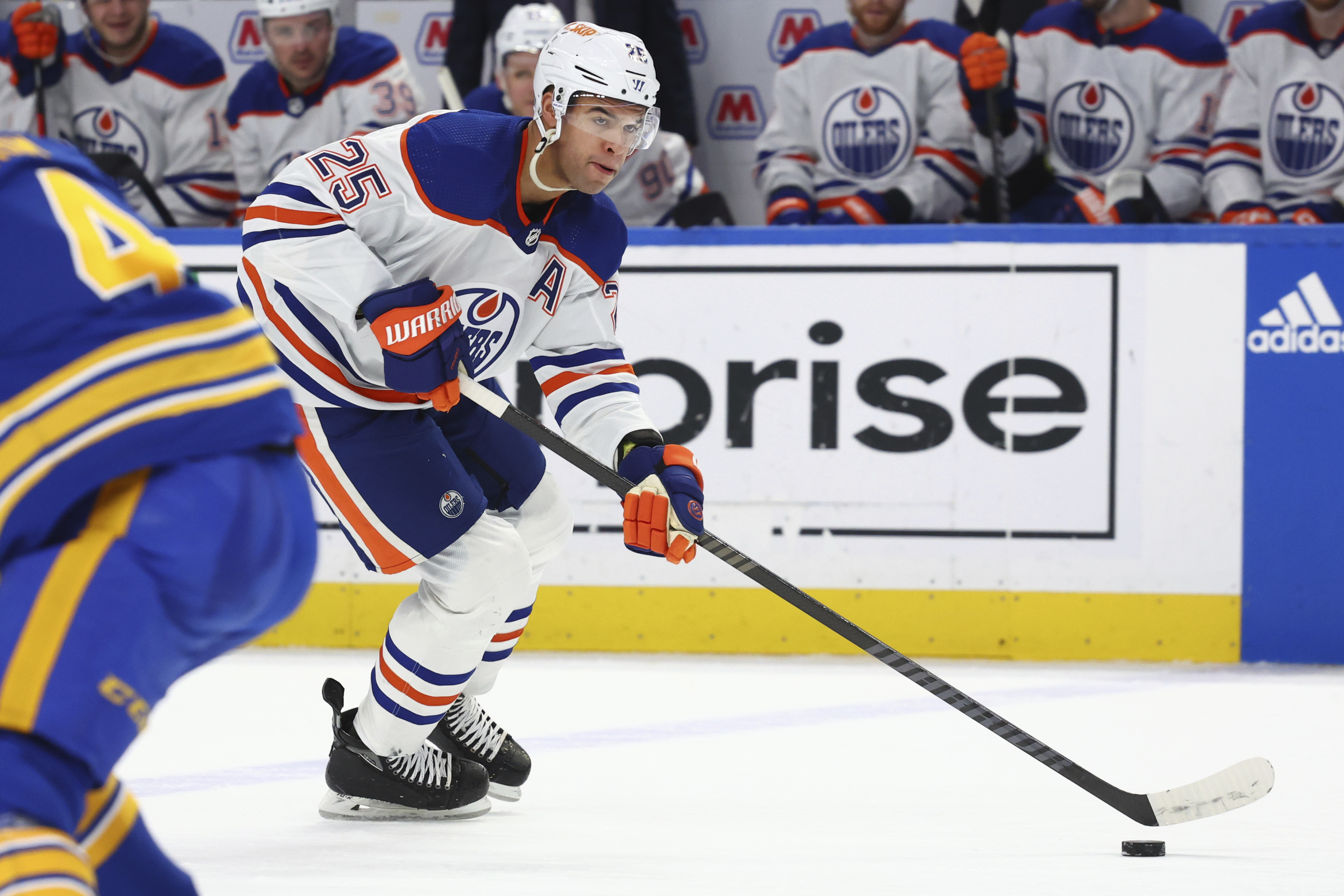
A few hours before Sportsnet reported that Larkin wanted out, the outlet reported on June 4 that all signs pointed to defenseman Darnell Nurse and the Edmonton Oilers heading for a breakup. The report stated that Oilers general manager Stan Bowman was expected to speak with Nurse in the coming days “about his wishes” and that the team would like to trade Nurse.
Unlike Larkin’s impending divorce, this one sounds a bit more amicable, with Sportsnet adding Thursday that Nurse has officially requested a trade. League sources have told The Inquirer there is not only mutual interest, but the Flyers are on a short list Nurse sent the Oilers.
But does it make sense for the Flyers to acquire the blueliner, who is a nephew of ex-Eagles quarterback Donovan McNabb? Let’s dissect.
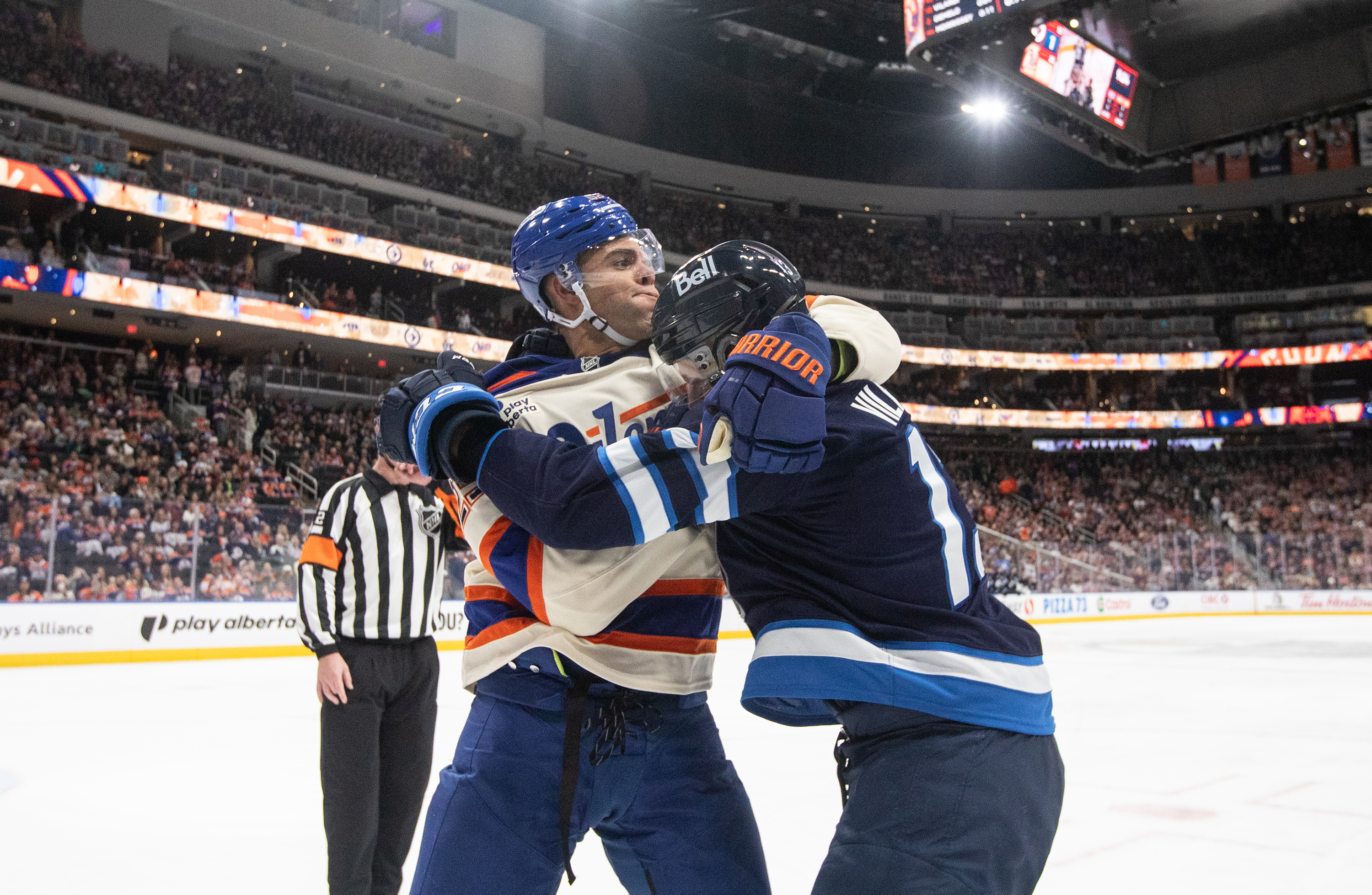
Darnell Nurse (left) will bring 100 games worth of NHL playoff experience to his next destination. JASON FRANSON
The request by Nurse comes as he enters Year 5 of an eight-year deal with a no-movement clause for one more season, meaning he cannot be traded, sent to the minors, or waived without approval. The contract shifts to a modified no-trade clause — he can submit a list of 10 teams to which he can be traded — on July 1, 2027.
That’s not the biggest concern, as he’s already said he wants to move out of Alberta. The issue is that the contract has a hefty cap hit of $9.25 million despite Nurse being on the middle pair. However, the contract was heavily front-loaded so he’s only owed $29.6 million the rest of the way. Either way, the consensus is that Edmonton would have to eat some of the money to facilitate a trade.
And it’s a large contract for someone who doesn’t play top minutes. This past season, Nurse had seven goals, 24 points, and blocked the ninth-most shots in the NHL (167) in 82 games. He had his worst plus-minus (minus-12) since 2015-16 and the most penalty minutes in his career (104) while averaging his fewest minutes since his third season in the NHL at just under 21 minutes.
His 164 shots on goal during the regular season tied for 20th among NHL defensemen, and, among all skaters, would have been the fourth-most on the Flyers. Could that be intriguing to the Flyers, who averaged 24.6 shots across 10 playoff games and finished the regular season at No. 28 (25.5)? Coach Rick Tocchet often brought up the need for more shots on goal from his defensemen, coupled with guys getting to the front to set screens or tip shots.
There are pluses to Nurse’s game, including the fact that he has played in the Stanley Cup Final multiple times, which no one on the roster has done. Having a veteran presence, of someone who has gone that far, could provide a boost when they are pushing in the postseason. Still, the veteran of 798 NHL games does have some warts, like miscues and misreads.
An intriguing thing is that general manager Danny Brière told The Inquirer at the NHL scouting combine that the Flyers probably are past signing a veteran to mentor the defensive corps.
“If there’s a high-end defenseman that can help us, we’ll have to look at that, he said. ”It might be time now to give our young guys the chance to see if they can step into those roles, from David Jiříček, Emil Andrae, [Oliver] Bonk, Ty Murchison, Hunter McDonald. I think those guys have probably earned the right to get a look, and hopefully we can fill that all with our younger guys from within.”
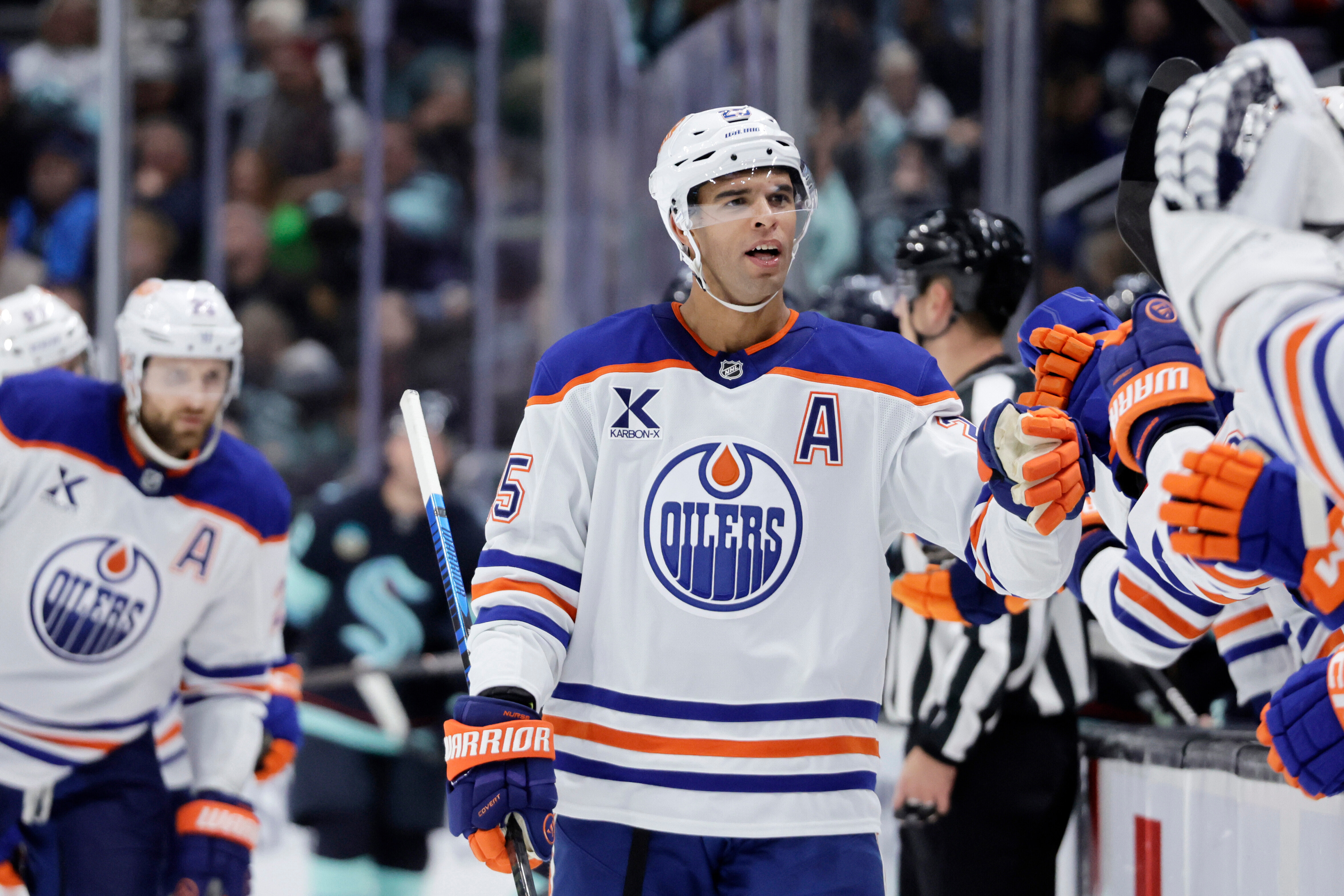
Could a Darnell Nurse (25) acquisition help mitigate the potential departure of Rasmus Ristolainen?Jeffrey T. Barnes
Does acquiring Nurse, or at least talking of acquiring Nurse, hint that there is another move pending? The Flyers need to make room for Jiříček, who will no longer be waiver-exempt in 2026-27. Brière also mentioned that “a high-end power-play quarterback on defense” is a need. Additionally, the team must make room to stay under the cap.
Could Rasmus Ristolainen, who has been the subject of trade rumors for years, finally be on the move?
“Yeah, I mean, we’re going to look into it. I think we have to,” Brière said in Buffalo when asked if the Finn would be part of trade chatter again. “That’s our duty as the organization, to explore what’s out there and see if there’s something that makes sense or not. But he was so good down the stretch for us, played on the top pairing with Travis Sanheim, how good he was at the Olympics, how good he was in the playoffs. So he’s a big asset.
“As we talk about expectations, you trade a guy like Rasmus, and it weakens the team. So if we do it, it’s going to have to make sense for the future. It certainly wouldn’t be ideal for taking a step forward next season if we do trade him, but we have to explore everything that’s out there.”
With Brière’s words in mind, if the team traded Ristolainen and brought in Nurse — maybe to play with Jamie Drysdale and reunite Travis Sanheim and Cam York — might the Flyers view it as a pretty clean swap?
Major League Wrestling is returning to Philly for the first time in over two years with two nights of action this weekend at the 2300 Arena. MLW has history with the venue, hosting its debut event, Genesis, at the arena in 2002. Since, it has operated in major markets like New York, Los Angeles, and Chicago.
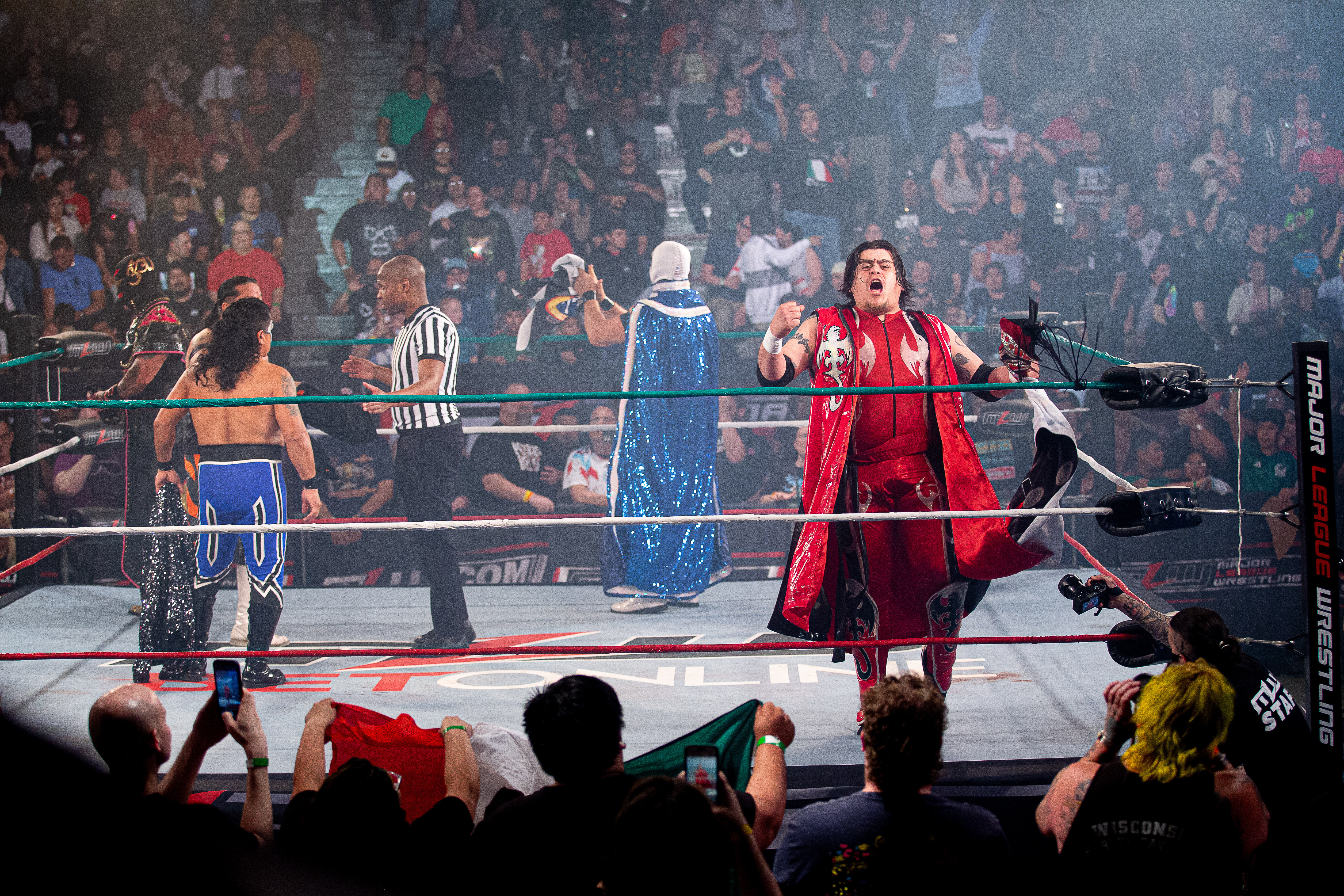
As part of the promotion’s 24th anniversary, it’s returning to Philly for a doubleheader that includes a national taping of the new season of MLW Fusion and its signature event, Summer of the Beasts.
Across both nights, fans can expect appearances from the promotion’s biggest stars, including Karrion “Killer” Kross, Shotzi Blackheart, CONTRA Unit, and Don Gato. There will also be Allentown native Matt Riddle, and behind the scenes, Jesús Rodriguez, a Lancaster resident.
One ‘Rude Dude’
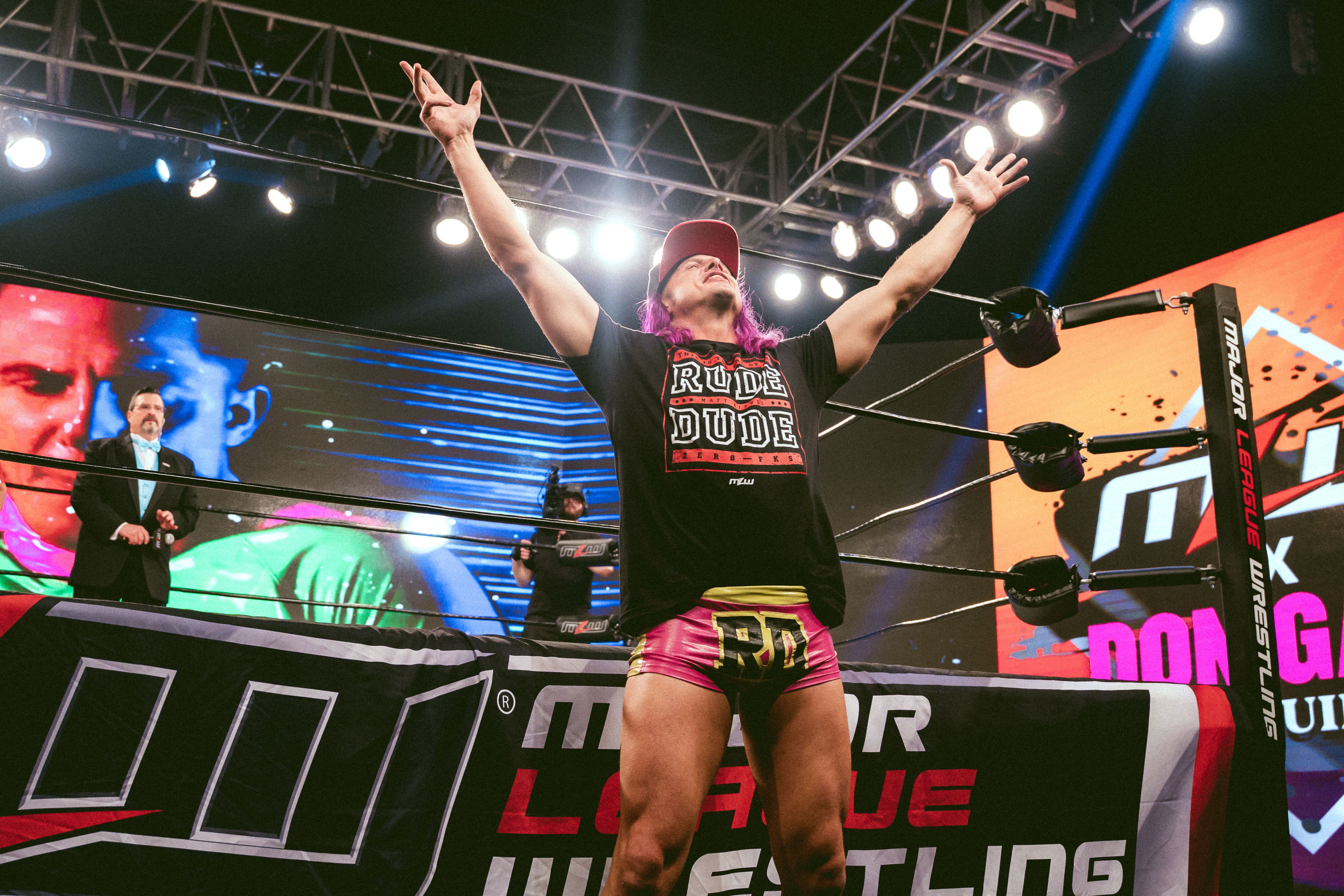
The “Rude Dude” Riddle has a chance to reunite with the title on Saturday night as he prepares for his second match against Kross, the current world heavyweight champion, for the evening’s main event.
“The Rude Dude’s not going to lose two times in a row,” Riddle said. “So I think the fans can expect to hear, ‘And new MLW champion, the Rude Dude Riddle.’ Whenever somebody like myself and Kross get in the ring and then we get in the ring again, we just end up — it’s going to be more intense and crazier.”
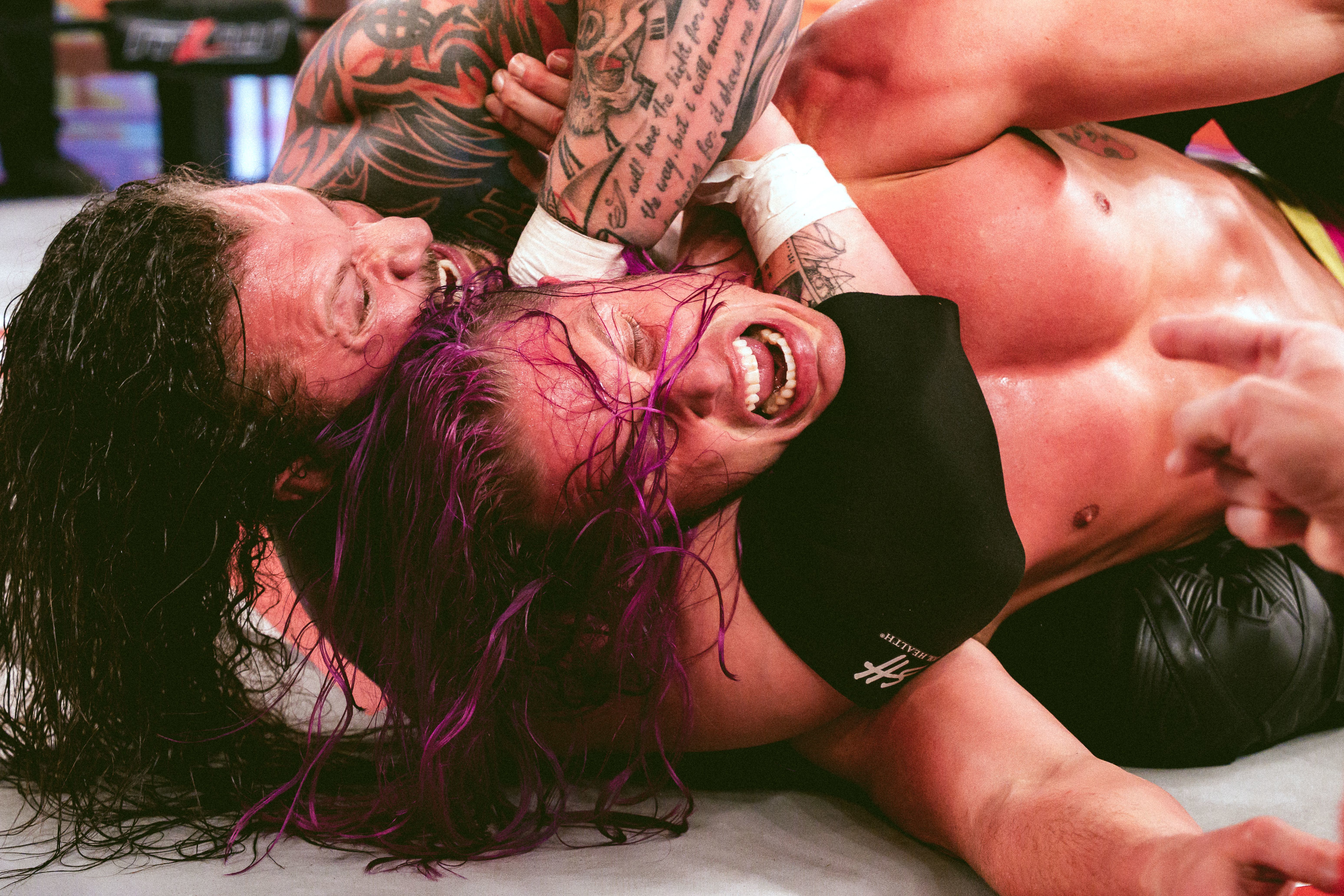
The last time they met in the ring, Riddle lost to Kross by a rear-naked choke. But this time around, Riddle will have an advantage performing in front of a crowd he knows well.
“I’m really excited to be in front of that Philly crowd,” Riddle said. “They’re a little raw. They’re a little more intense. In the wrestling business we call them smarks. Because they’re not only wrestling fans. But they’re smart, intelligent, educated wrestling fans. They’re intense. They like you to make it feel real and that’s what I’m good at.”
Competing for championships against big names like Kross isn’t new for the 40-year-old Riddle. In high school, he defeated former UFC champion Jon Jones on the wrestling mat to become the 2004 New York state champion.
“Daniel Cormier used it to talk trash [against Jon Jones] but then Jon Jones beat Daniel Cormier,” Riddle said. “So, at the end of the day, isn’t it just making me look good?”
Matt Riddle lost to Killer Kross with a rear naked choke in their first match in Nov. 2025.MLW
Riddle made the move to upstate New York and attended Saratoga Springs High School. He returned to his home state to attend East Stroudsburg University on a wrestling scholarship.
After dropping out during his third year, Riddle transitioned into Mixed Martial Arts — training out of Palmerton, Pa., at Rat Pack Fighting Systems. Riddle’s MMA career lasted from 2008-2014, and included an appearance on The Ultimate Fighter 7 and an 8-3 record in the UFC before he was released in 2013.
Eventually, Riddle decided it was time for a career change. In 2014, he started training at Monster Factory, located in Paulsboro, to begin his transition to professional wrestling.
“Growing up as a kid, I always wanted to be a pro wrestler,” Riddle said. “But as I got older, I just felt like I wasn’t big enough to be a pro wrestler. But when I was released I was like, you know what? I just knew it was time to start pro wrestling.
“[Monster Factory] had a legacy of high-end talent. Sheamus. Big Show. There’s a huge list of people, including myself now. When I moved back to Pennsylvania, I was just looking for the hardest working gym in the area and the Monster Factory was that. My buddies Q.T. Marshall and Damian Priest were training there and they probably are the ones I hold most responsible for getting me up to speed.”
Riddle took on a persona of a carefree, surfer boy, wrestling barefoot in the ring. He signed with the WWE in 2018, where he won the NXT tag team championship, the United States championship, and the RAW tag team championship alongside Randy Orton.
After getting released by the WWE in 2023, Riddle returned to MLW in 2024 — and recorded a 245-day title reign before losing to Mads Krule Krügger — following his initial stint with the promotion in 2018.
This weekend, he wants to get his belt back.
Jesus Rodriguez has gone from wrestler to working on the production side of the business.Courtesy of Major League Wrestling
From in the ring to behind the scenes
While Riddle will be front and center, Rodriguez will be behind the scenes producing some of the women’s matches at the former ECW arena.
“It’s such an iconic building,” Rodriguez said. “It has so much history. And to be able to perform in a venue that has such a long history of pro wrestling is surreal. And to feel that passion that the Philadelphia fans have is so real and it’s something that has to be experienced.”
Rodriguez has been with MLW for the last three and a half years, taking on multiple different roles — working as a backstage talent producer, getting involved with the production side, and working as an on-air talent.
“It’s been an amazing journey,” Rodriguez said. “I have been very blessed that I have been in the industry for 20 years now. And through my ventures — not just in the U.S., but internationally — I’ve gotten experience with major TV companies, not just in wrestling, but also in production aspects. Now I’m able to put it all together and share my knowledge.”
Rodriguez previously worked for the WWE under the ring name Ricardo Rodriguez. He also worked as a manager for Alberto Del Rio for the promotion Nación Lucha Libre, and worked as an announcer for Combate Americas and AEW.
But throughout his wrestling journey, he found himself battling addiction. Years after his departure from the WWE, Rodriguez made the move to Lancaster to get help from Blueprints rehab facility.
After rehab, he decided to give back to a community that gave him so much. To do that, he started Three Legacies Wrestling Academy in Lancaster in 2022. The academy includes seminars and lessons from himself and other WWE alumni.
“I feel like I was at the right place at the right time,” Rodriguez said. “A lot of times when folks battle issues, it’s a lack of focus. So, having the academy and then having MLW, and the fact that both entities are able to collaborate together has given me purpose and focus. Can it be stressful at times? Absolutely. But at the same time, this is also what I wanted and the choices that I made for something greater.”
WASHINGTON — A key surveillance tool seen as vital in preventing terror attacks and catching foreign spies was set to expire Friday after congressional efforts to temporarily extend it failed in bipartisan fashion.
It’s a significant lapse for the program known as Section 702, and even as President Donald Trump nominates a new national intelligence director more palatable to both Republicans and Democrats than his initial pick, it’s unclear how soon lawmakers — set for recess — would be able to revive the spy program.
Still, there is not expected to be an immediate drop-off in intelligence collection given that a court order from March certified that government surveillance powers under the law could remain in effect for another year.
Section 702 allows for sweeping powers
The provision is a part of the Foreign Intelligence Surveillance Act, known as FISA, and grants American spy agencies sweeping powers to collect and examine the communications of foreigners located outside the United States without first getting a warrant.
U.S. officials see the law as an invaluable national security tool that has helped disrupt potential acts of terrorism, yielded valuable insight into ransomware attacks on critical infrastructure, and contributed to the killing of al-Qaida leader Ayman al-Zawahri in a 2022 drone strike.
The law was passed in 2008 as an effort to codify key aspects of a predecessor spy program created by President George W. Bush’s Republican administration.
Since then, officials across administrations of both major political parties have warned that without the law the government won’t be able to collect crucial intelligence overseas.
Program’s renewal historically has been contentious
The periodic need to reauthorize the law has prompted protracted debate in Congress well before this year, including discussion over whether additional guardrails are needed to protect the privacy of Americans and their personal data.
That’s because when the government eavesdrops on foreigners abroad, it also sweeps up the communications of American citizens and others in the U.S. who are in contact with those surveillance targets.
Civil liberties advocates have raised concerns over revelations that FBI analysts over the years have improperly queried the vast repository of intelligence collected through the program for information about Americans, including related to the Jan. 6, 2021, riot at the Capitol by a mob of Trump supporters and the racial justice protests of 2020, as well as about state and federal political figures.
Some of those advocates have said the government should be required to have a warrant before examining communications collected from Americans. U.S. officials have said that a warrant would be legally unnecessary and overly cumbersome and that corrective measures have been implemented to reduce the number of improper queries.
Complicating the debate is the unlikely political alliances it has produced, uniting a coalition of lawmakers skeptical of government surveillance that includes both privacy-minded liberal Democrats and Republicans who still regard the intelligence community with suspicion over the investigation of ties between Russia and Trump’s 2016 Republican presidential campaign.
Pushback over acting intelligence pick Bill Pulte
Democrats balked when Trump picked Bill Pulte to serve as acting national intelligence director and refused to support a FISA extension until the selection was withdrawn. Pulte, a Trump loyalist with no known national security experience, has set off alarms by using his perch as director of the Federal Housing Finance Agency to facilitate dubious mortgage fraud investigations of perceived Trump adversaries.
A House vote this week that would have temporarily extended the program collapsed, with 19 Republicans and nearly all Democrats rejecting the temporary measure, 198-218. A Senate effort to approve its own versions also failed.
After those votes, Trump announced he was tapping Jay Clayton, the U.S. attorney in Manhattan who previously served as chairperson of the Securities and Exchange Commission, as his permanent pick for director of national intelligence, or DNI. The pick was warmly received on Capitol Hill, but it was not enough to break the impasse before Friday’s scheduled expiration.
Connecticut Rep. Jim Himes, the top Democrat on the House Intelligence Committee, said that he has “known and respected” Clayton for decades and that had he been tapped a week ago, “lots of pain might have been avoided.”
“His intelligence, temperament, and deep commitment to public service will make him a terrific DNI,” Himes said.
Next steps for the spy powers provision
Before the congressional votes, Republican Arkansas Sen. Tom Cotton, chairperson of the Senate Intelligence Committee, and Iowa Sen. Chuck Grassley, chairperson of the Senate Judiciary Committee, had warned the Trump administration to prepare “for a potential significant gap in foreign intelligence collection.” Other lawmakers since then have voiced similarly dire concerns.
The expiration is likely to be the first meaningful lapse of Section 702 since the law was created more than 15 years ago. In 2024, the Senate barely missed its midnight deadline before voting to approve a bill that was then signed by President Joe Biden, a Democrat, creating a brief lapse.
Despite this year’s sunset of the statute, there’s no expectation of any immediate halt to intelligence collection as the U.S. hosts a series of events this summer with potential national security concerns, including the World Cup and festivities surrounding the 250th birthday of the United States.
A March opinion from the secretive Foreign Intelligence Surveillance Court certified the program’s renewal for another 12 months, meaning that Section 702’s authority is expected to remain intact through then. Even so, it’s conceivable that without congressional reauthorization, communications companies forced to provide data to the government under the law could try to cease that compliance and argue that they cannot be compelled to cooperate.
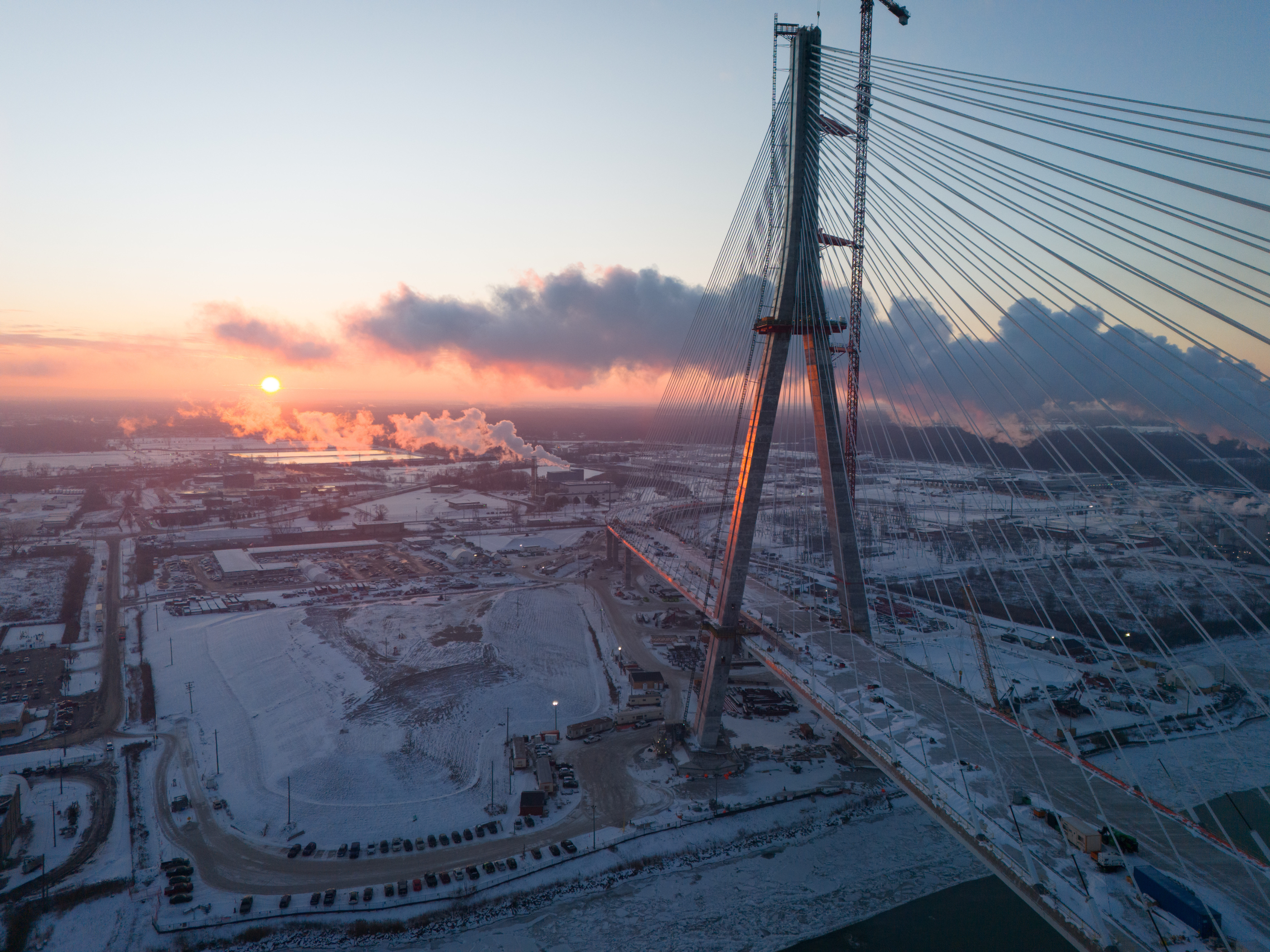
A day before a ribbon-cutting ceremony, the opening of a new bridge meant to ease congestion at the busiest trade corridor between Canada and the United States hit another roadblock, four months after President Donald Trump vowed to block it.
The authority that will operate the 6.4 billion-Canadian-dollar Gordie Howe International Bridge between Detroit and Windsor posted a notice online Thursday announcing that the opening, scheduled for late Friday morning, had been postponed.
“Canada and the United States have agreed to delay the opening of the bridge, taking the necessary time to resolve any outstanding issues,” Chuck Andary, acting CEO of the bridge authority, said in a statement. “We appreciate the efforts of workers on both sides of the border to get the bridge to its current state of readiness.”
The statement offered no details about those issues and gave no new opening date.
Invitations to a Friday opening ceremony had been sent to participants Tuesday.
In February, Trump threatened to stop or delay the project in a rambling social media post, saying he wished to punish Canada for what he described as its exploitation of the United States and its revival of trade ties with China, among other perceived transgressions.
He also demanded compensation for a wealthy Detroit-area family that owns a nearly century-old bridge upstream, which currently carries around $300 million a day in trade.
Matthew Moroun, a billionaire trucking industry scion in Detroit whose family has mounted legal challenges of the project for decades — one even reaching Canada’s Supreme Court — and aggressively lobbied governments on both sides of the border.
Trump had issued his post hours after Moroun met in Washington with Commerce Secretary Howard Lutnick, The New York Times reported in February. Lutnick then called Trump.
Less than one month before that meeting, Moroun donated $1 million to a super PAC devoted to Trump.
What’s being negotiated?
After Trump’s initial post, Canada’s prime minister, Mark Carney, said he called Trump and explained that although Canada paid for the bridge, it will share ownership with Michigan under a 2012 agreement between the two governments.
Canada is Michigan’s largest export market.
“This is a great example of cooperation between our countries,” Carney told reporters at the time. “I look forward to it opening.”
Carney said that Trump asked Pete Hoekstra, who is the U.S. ambassador to Canada and is from Michigan, to “play a role in smoothing the conversation” about the bridge.
In late May, Carney told reporters that there have been “discussions at the ambassadorial level around the bridge.” Neither Carney or officials in Canada or Michigan have offered any details about those talks.
The bridge opening delay comes as a July 1 review deadline for the United States-Mexico-Canada Agreement on trade looms. The Trump administration has been offering varying signals about its continuation in the pact.
On Wednesday, Trump said: “I don’t know that I’m going to renew it.”
The following morning at a conference in Toronto on relations between Canada and the United States, Hoekstra appeared more optimistic about the pact’s continuation.
He advised Canadians to “go into these negotiations very aggressively and say we know America has needs across the board and we’re here to partner with America.”
He added: “We’re open to offers, make your case.”
Why did Canada build a second bridge?
The catalyst for the new bridge was the closing of the border after the Sept. 11, 2001, terrorist attacks.
The enormous, miles-long traffic jams of trucks along roads in Ontario underscored the vulnerability created by relying on a single bridge for commercial traffic at North America’s busiest land crossing.
There is a tunnel for vehicles linking Windsor and Detroit, but tractor-trailers are too tall to fit.
The Ambassador Bridge, which opened in 1929, was also showing its age. Chunks of it regularly fell off, causing lane reductions on the bridge and street closings below in Windsor.
An expressway that runs across southern Ontario ends on the outskirts of Windsor, forcing trucks to make a slow journey to the bridge on a congested local road.
Investors and both governments floated several proposals, including a plan by the Moroun family to build a second crossing alongside the four-lane Ambassador Bridge.
Who is the Moroun family?
Manuel Moroun purchased the Ambassador Bridge in 1979 after building a fortune largely through the expansion of his father’s trucking company. Matthew Moroun, Manuel Moroun’s son, gradually took over as head of the family before the older Moroun’s death in 2020.
Manuel Moroun was known for being exceptionally litigious even with other members of his family. He also had a reputation for disregarding government and court orders.
The Moroun family bought properties on both sides of the border near its bridge and was known for leaving the buildings in those areas to decay, leading to disputes with both cities.
A former railway station in Detroit that became a widely known symbol of the city’s decay was among the family’s holdings. It was sold to Ford Motor Co. in 2018 and was restored.
Who paid for the new bridge?
After finding no interest among U.S. lawmakers, the Canadian government has entirely financed the bridge’s construction and even paid for the highway interchange on the American side. The United States paid for the bridge’s border inspection facility.
The project cost CA$6.4 billion, or $4.7 billion. The province of Ontario also completed a $1 billion highway expansion that opened a decade ago.
By alleviating traffic on streets in Windsor, the bridge, which has been built roughly six years behind schedule, will benefit both countries, said Dennis Darby, CEO of the Canadian Manufacturers and Exporters, an industry group.
“Fewer bottlenecks and fewer surprises mean more resilient, competitive supply chains,” Darby said in a statement.
From the end of June to early July, the Trump administration will host what it is calling “The Great American State Fair,” a weeks-long event to help mark the nation’s 250th birthday. The White House is promoting the fair as “a master-planned celebration” in and around the nation’s capital. They note that it will feature “pavilions, designed in the beaux-arts style [sic]” that will “highlight national pillars,” such as “Arts & Culture,” “Land & Expansion,” “The Arts & Innovation,” “Technology & Progress,” and “Horsepower” to “ignite a spirit of adventure and innovation to help our nation succeed for the next 250 years.”
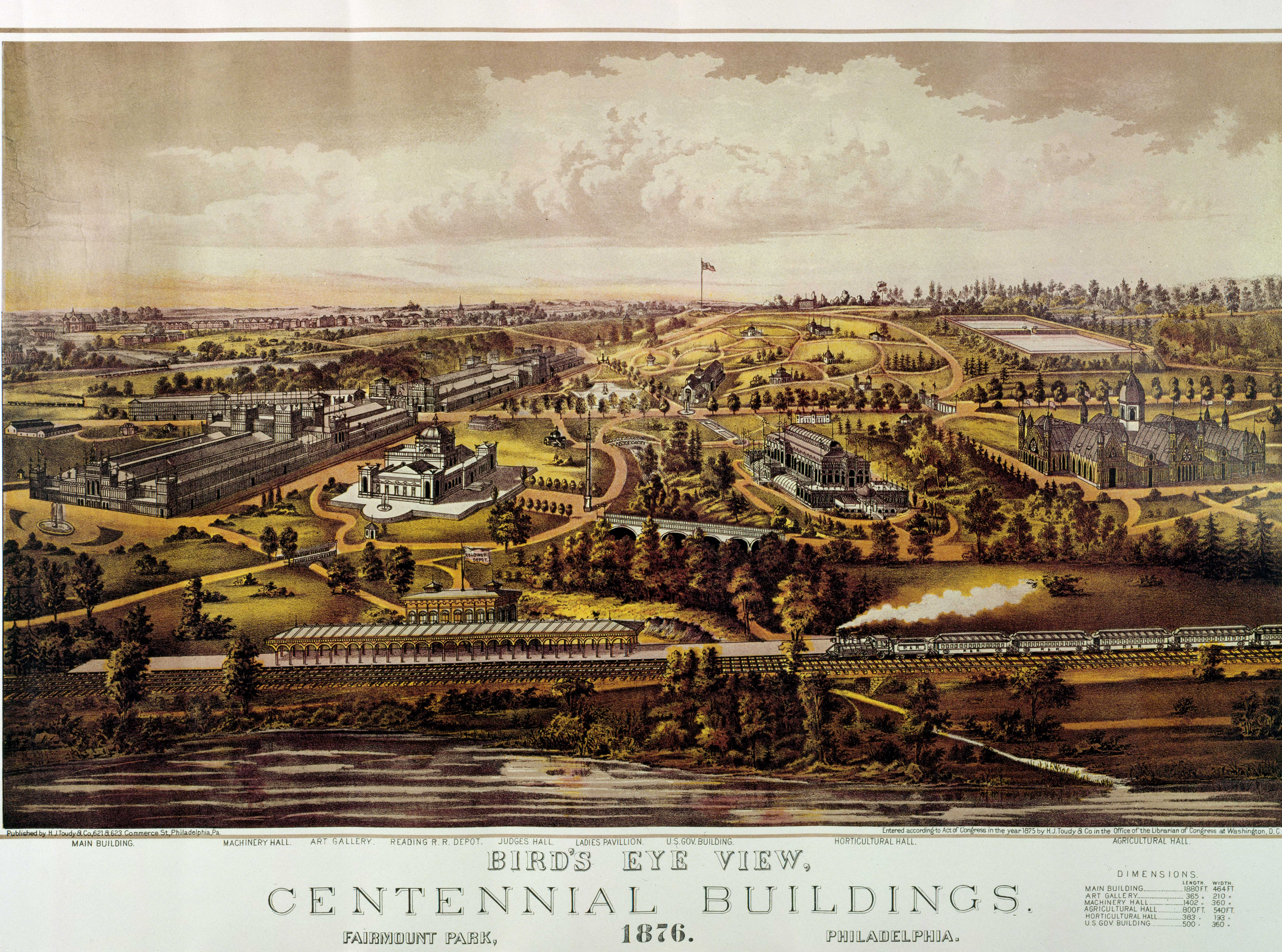
These grand pronouncements call to mind a classical world’s fair exhibition, even if the administration hasn’t put in the work to pull it off. By contrast, the first major world’s fair held in the United States 150 years ago, the 1876 Philadelphia Centennial Exposition, was ten years in the making, spanned six months, attracted more than 10 million visitors, and featured the work of over 30,000 exhibitors, including Alexander Graham Bell and Thomas Edison. Today, the White House is fighting poor publicity, scrambling to find respectable entertainers to perform, and floating a plan to cancel its fair altogether.
Yet, we can find echoes of the Philly Expo in today’s slapdash 250th celebration. History reveals that America in 1876 was, as it is now, in turmoil, gripped by a growing economic crisis and mounting unemployment, politically torn apart, debating the impact of new technology, and reeling from the cost of war. In the familiar context of extreme uncertainty, the glorious Exposition also drew sharp criticism and, more poignantly, highlighted the nation’s fragility.
In 1876, from May to November, Philadelphia was the site of the biggest public event in the nation’s history up to that point – the International Exhibition of Arts, Manufactures, and Products of the Soil and Mine, or more simply, the Centennial Exposition. This was a world’s fair, a unique event in which the host nation spent lavishly to build elaborate fairgrounds, exhibition halls, courtyards, and gardens to grab the global spotlight and celebrate progress. In the 19th century, amid the industrial revolution, a world’s fair commonly featured thousands of displays promising a peek into the future. Visitors could glimpse the cutting edge in science and technology, advances in the arts, new discoveries in medicine, innovations in transportation, and the latest consumer products.
The stakes were terribly high for the United States as it planned to host its own world’s fair in 1876, the first held in the U.S. since the Civil War. Although the war had been devastating, and the work of reconstructing the South still threatened the lives of freed Black people and the American two-party political system, the preserved republic was pursuing new projects, including building a continent-crossing railroad and rapidly expanding the industrial economy. Both fueled the growth of cities and a new diversified workforce thanks to emancipation, immigration, and the rise of the middle class. In the midst of big changes, the world’s fair in Philadelphia was an opportunity for America to present itself to the nation and the world as a stable and culturally advanced industrial giant with a bright future.
For six months, visitors from all over the country and abroad poured in to see tens of thousands of exhibits, many of them astonishing firsts: incandescent light bulbs, the typewriter, a dishwasher, Alexander Graham Bell’s first prototype for the telephone, and a new fireproofing material called “asbestos.”
In addition, farmers put several agricultural wonders on display including new types of citrus trees that could thrive in the American West, and bananas, considered an expensive delicacy and priced at $2 each (about $60 today). At the center of the Machinery Hall exposition building was one of the fair’s main attractions: a hulking, 1400 horsepower steam engine, 45 feet tall, and weighing 650 tons. This Corliss engine was the biggest of its kind and, in size and power, signaled America’s industrial might. For 50 cents ($15 today), visitors could climb to the top of a towering hand and torch structure called “Liberty Enlightening the World”—a portion of what would eventually become the Statue of Liberty.
The Philadelphia Centennial seemed to say that, yes, the United States may have been, in a global context, a young country. But that fact only reinforced all that it had accomplished in one short century.
The timing for such a vainglorious celebration wasn’t optimal. The year of the Exposition came at the height of the so-called “Terrible Seventies,” an era of disastrous economic news that began with the financial panic of 1873 and continued through the decade with bank closures, business failures, railroad bankruptcies, mass layoffs, and inept government leadership. Indeed, the crisis forced fair planners to resort to penny pinching in the final stages of construction, leaving some exhibition buildings unfinished after opening day.
The era of the Philadelphia World’s Fair was also a time when a handful of capitalists accumulated extreme wealth and tightened their grip over the nation’s resources while workers began to lose control over their own conditions of labor. In growing cities like Philadelphia, where industrial wage workers, including Black laborers and new immigrants, were concentrated, poverty spread quickly. Outside of urban centers, small farmers lost ground to commercial agriculture and worried about sustaining their rural way of life and simply making ends meet. At a time when the average laborer made around $1.25 a day and people in the skilled trades made little more, the 50 cent fair entry fee was an extravagance reserved for only those with expendable time and income.
Made By History sponsors. FOR USE ON MADE BY HISTORY STORIES ONLY.Inquirer Staff
Some fairgoers left ambivalent about the future and puzzled by how disconnected the consumer-focused displays seemed to be from current economic realities. One visitor from Connecticut complained to the Hartford Christian Secretary that the fair seemed to be little more than “a scramble for the Almighty dollar” at a time when terrific economic fear “pervades the country.” Another wrote with dismay to Ohio’s Worthington Advance that the grandiose festivities focused on consumer abundance proceeded, even as a “great army of men and women out of employment is on the increase.”
The Terrible Seventies revealed a tough truth: America had survived war, embraced modernity, and proved more than capable of industrial might. But it remained fragile. The awe and grandeur of Philadelphia’s sprawling Centennial Exposition paradoxically reminded the nation of the challenges – both predictable and unpredictable – that lay ahead. It turned out, great progress and great problems would be inseparable.
Trump’s Freedom 250 events aren’t likely to be successful as a showcase of national advancement. Still, as with the 1876 Philly Expo, some Americans will find meaning and pride in the fact that this year’s Great American State Fair will take place on the National Mall near the White House, where Trump has asserted his power. Its location and its brazen host will be enough to elevate Make America Great Again spirits, even at a time when they’ve been shaken by rising costs, an unpopular war with Iran, and declining global power.
For many other Americans and for the world watching, this fair will not be a glorious reminder of the nation’s birth. Instead, in the midst of economic crisis, political animosity and corruption, and fears that American principles won’t survive, the commemoration of the nation’s founding will likely reinforce uncertainty ahead— just as was the case a century and a half ago.
Felicia Angeja Viator is an associate professor of history at San Francisco State University, a pop culture writer, and editor for Made By History.
Made by History takes readers beyond the headlines with articles written and edited by professional historians. Opinions expressed do not necessarily reflect the views of The Inquirer.
The Philly region is home to a plethora of farmers markets, so we compiled a list of 25 that are well worth checking out. Some operate through the fall, while others are available year-round.
Here’s a sampling:
🥬 Explore the Media Farmers Market which highlights vendors within a 150-mile radius (runs Sundays from 10 a.m. to 1 p.m.)
🍑 Check out 4th & Lehigh Farmers Market and try the plump peaches and crates of juicy strawberries (opens in July; runs on Tuesdays from 11 a.m to 3 p.m.)
🧀 Try artisanal cheese at Clark Park Farmers Market in West Philly (open all year long every Saturday from 10 a.m. to 2 p.m.)
New Jersey secured a federal disaster declaration for the crops damaged in April’s rare heat-freeze sequence. Pennsylvania counties got a similar designation last month.
Philadelphia will begin opening pools on a rolling basis across the city Friday, but details are scarce.
FloatLab, a public art feature that will offer an eye-level view of the Schuylkill, finished its voyage up the East Coast and arrived at Bartram’s Garden on Wednesday.
FDR Park’s Anna C. Verna Playground will remain closed for at least another few weeks, after an inspection found that slide equipment did not meet safety standards.
🌳 Your outdoorsy experience
I’m on the hunt for new stories to share here. Tell me: Where do you go for a moment of calm? What sight takes your breath away? If you have photos, we’d love to see them — you might even be featured in an upcoming newsletter.
🎤 Now I’m passing the mic to arts and culture reporter Earl Hopkins.
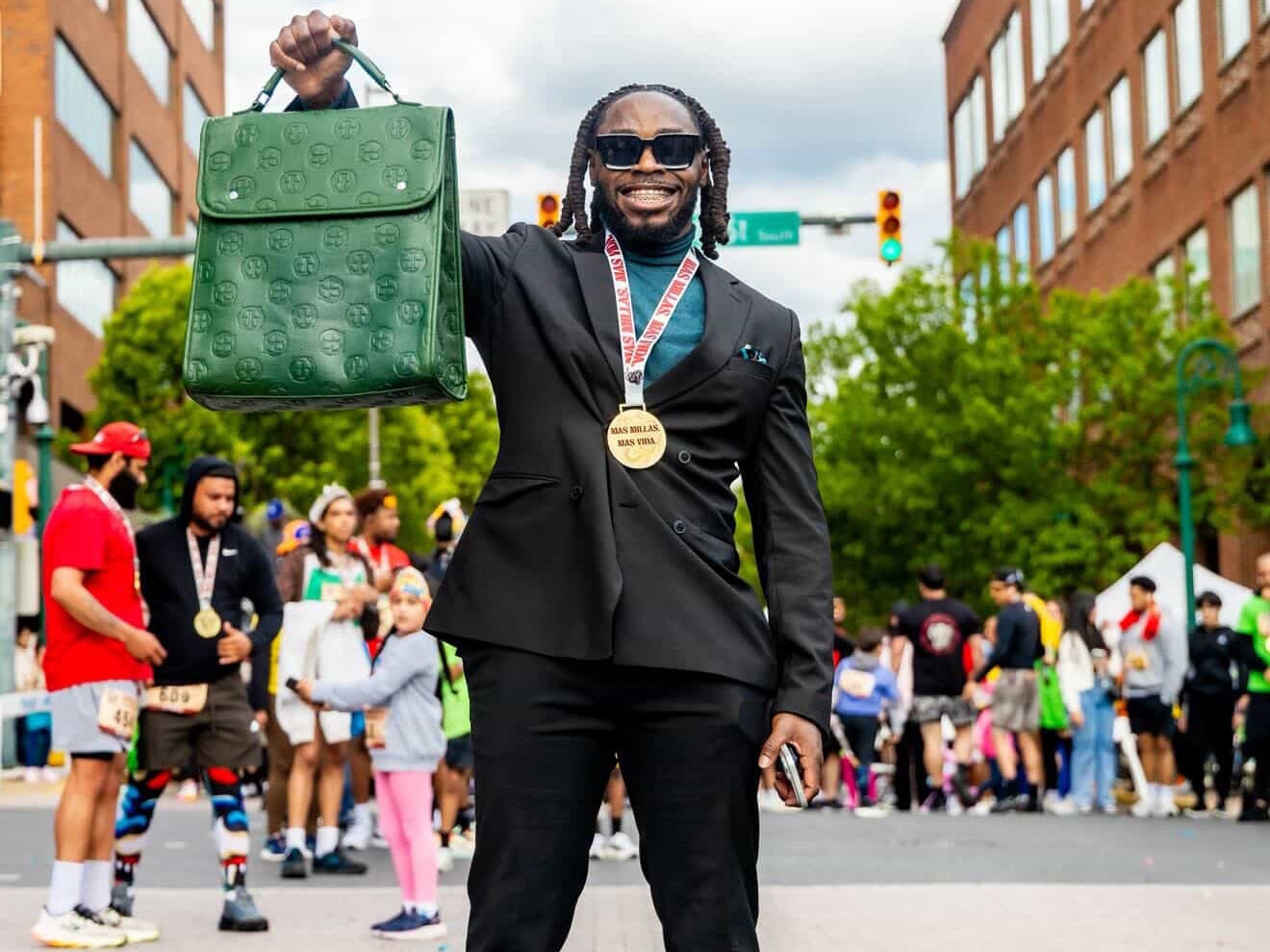
The image of a long-distance runneris usually a combination of heavy-duty sneakers, compression shorts, and sweat-absorbing tops. But that’s not the picture Alim Wallace paints on a race day.
That’s because the North Philly native shows up in a tailored suit, with a pocket square and a suede briefcase stuffed with hydration packs and electrolyte gels. Yes, to a race.
Since his first race in 2025, Wallace has competed in the Philadelphia Marathon, the Broad Street Run, and others like the Life Time Miami Marathon and the Publix Atlanta Marathon. He’s racked up medals and thousands of social media followers who follow him not just to see him run past the finishing line, but to see what he wears crossing it.
“It was about having an idea, and being bold enough to do it,” Wallace, 31, said. “Some people will let an idea stop them. They say, ‘People are going to look at me funny. People are going to think this way.’ I really don’t care.” — Earl Hopkins
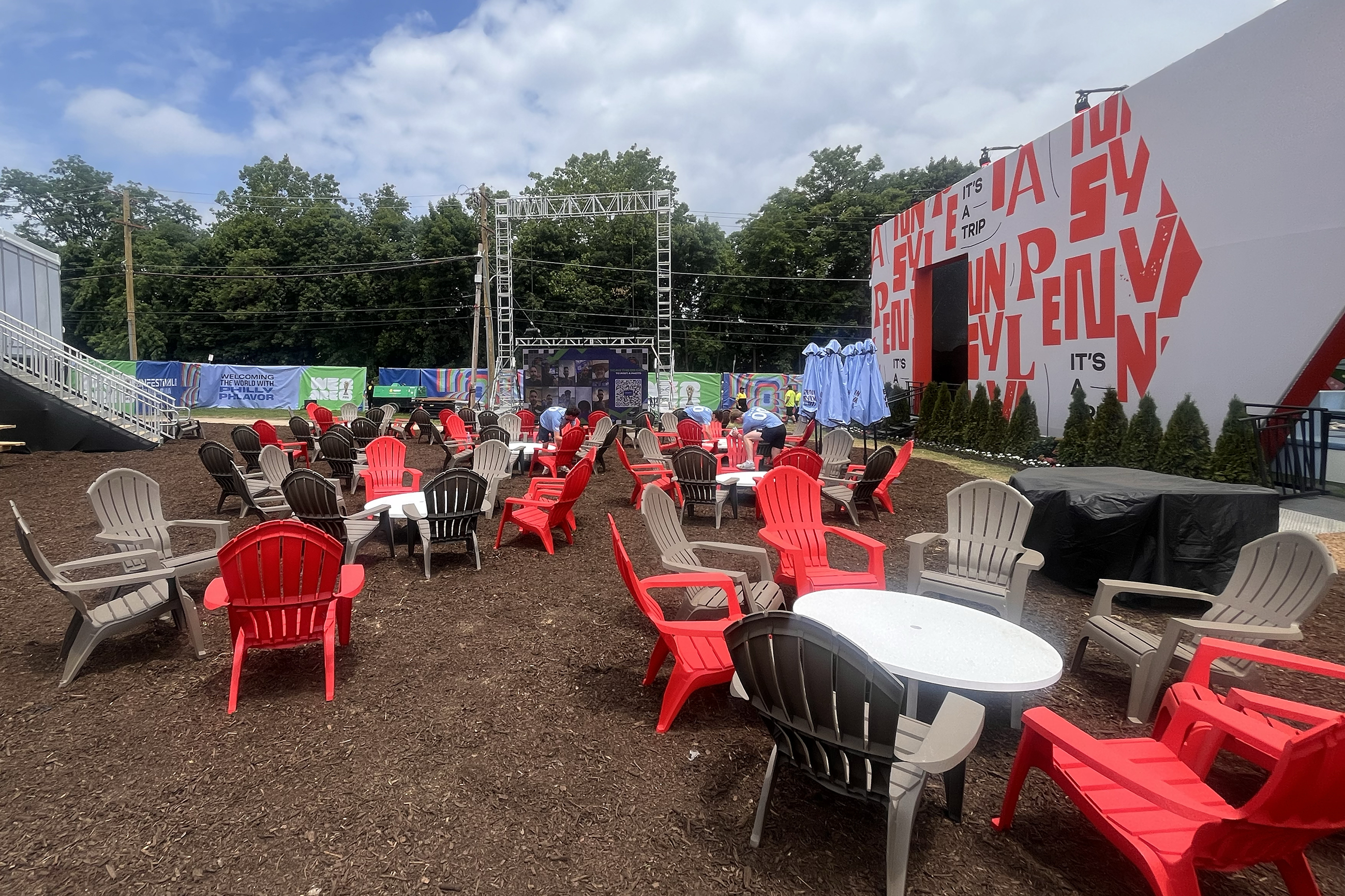
A 39-day festival for the World Cup is officially underway on Lemon Hill in Philadelphia’s Fairmount Park, with thousands expected to join in on the free, open-air fun.
The city’s official watch party will let fans watch matches on a stage-size screen, play a bit of “futebol,” and explore vendor and food markets.
Here are a few things to know before you go:
⚽ To get there: There is no parking on-site. Consider SEPTA, the Philly PHLASH shuttle, cycling, or rideshare.
⚽ To get in: Fans must first register via an online form.
With thousands of travelers trying to navigate the city during the World Cup, SEPTA has recruited workers and volunteers to help show them the way. Transportation reporter Tom Fitzgerald took us along for the training class.
To become a SEPTA ambassador, Tom Fitzgerald went through a bit of boot camp.
From June 13 through July 19, employees and volunteers will be posted at critical transit and Regional Rail stations as the city plays host to a handful of big summer events. As ambassadors, Fitzgerald and others would offer information, directions, and crowd control — baked in with a friendly Philly welcome.
His training included:
Cultural diplomacy: For instance, you should never flash the “OK” hand gesture to a Brazilian. It’s offensive, like flipping the bird.
Emergency scenarios: How to “bring the temperature down” if and when tensions rise or conflicts break out, or handle a more serious situation.
In Tom’s own words: “It’s a lot, which is why up to 1,000 employees have spent half a day in training with a detailed curriculum that feels like cramming for finals.”
Over the course of two years, two Philadelphia police officers systematically targeted hundreds of Black men for unlawful searches, according to lawyers with the Defender Association of Philadelphia.
Since the lawyers challenged the legal justification for the stops, prosecutors have dropped firearms charges against 24 men the officers arrested.
In recent court filings, the lawyers said their review found that the officers mislabeled stops as voluntary encounters, delayed body-camera activation, and avoided required documentation of the stops.
The allegations raise questions about the city’s compliance with a federal consent decree meant to curb unconstitutional stop-and-frisk practices. Philadelphia entered that agreement more than a decade ago.
Philadelphia City Council will hold public hearings to examine the police department’s crowd-control tactics used during last Sunday’s Pride festivities in the city’s Gayborhood, a response that drew criticism from LGBTQ+ community leaders who have called the display of force unacceptable.
City Council approved a bill Thursday to encourage denser and taller development around Philadelphia’s transit stations. The law comes with a caveat: the council must opt stations into it. City Council also voted to ban noncommercial and commercial horse carriages, with exceptions that will be regulated by animal control.
The body of a Philadelphia teenager who vanished earlier this month while swimming in the ocean at the Jersey Shore has been recovered, the Wildwood Police Department said.
New Jersey secured a federal disaster declaration for the crops damaged in April’s rare heat-freeze sequence.
Drexel University received a historic $112.6 million gift to establish its new college of engineering and computing, renovate space in two buildings to foster programs within it, and provide more scholarships.
Philly artisan brewery Punch Buggy Brewing Company is opening a second location in the suburbs on Saturday.
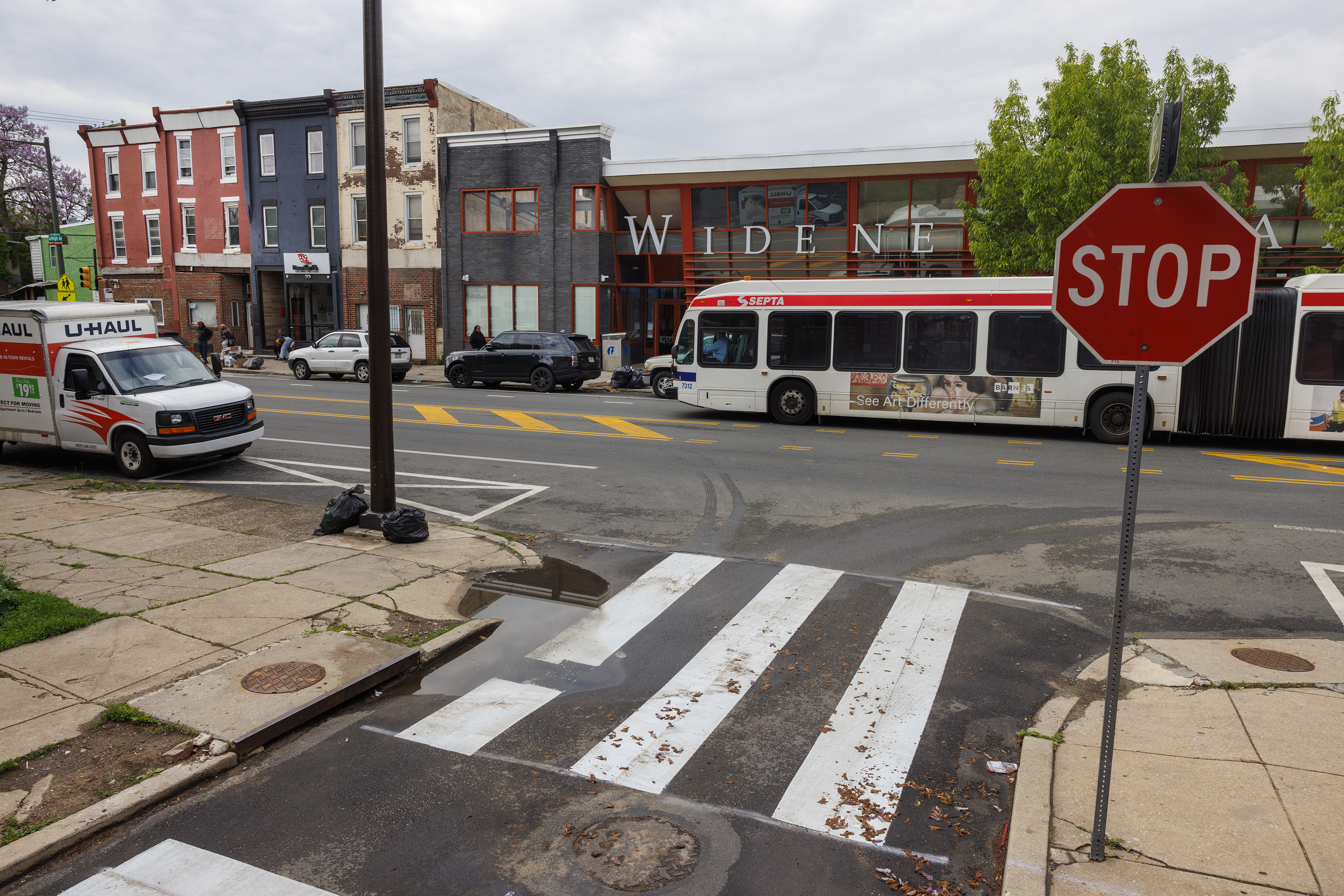
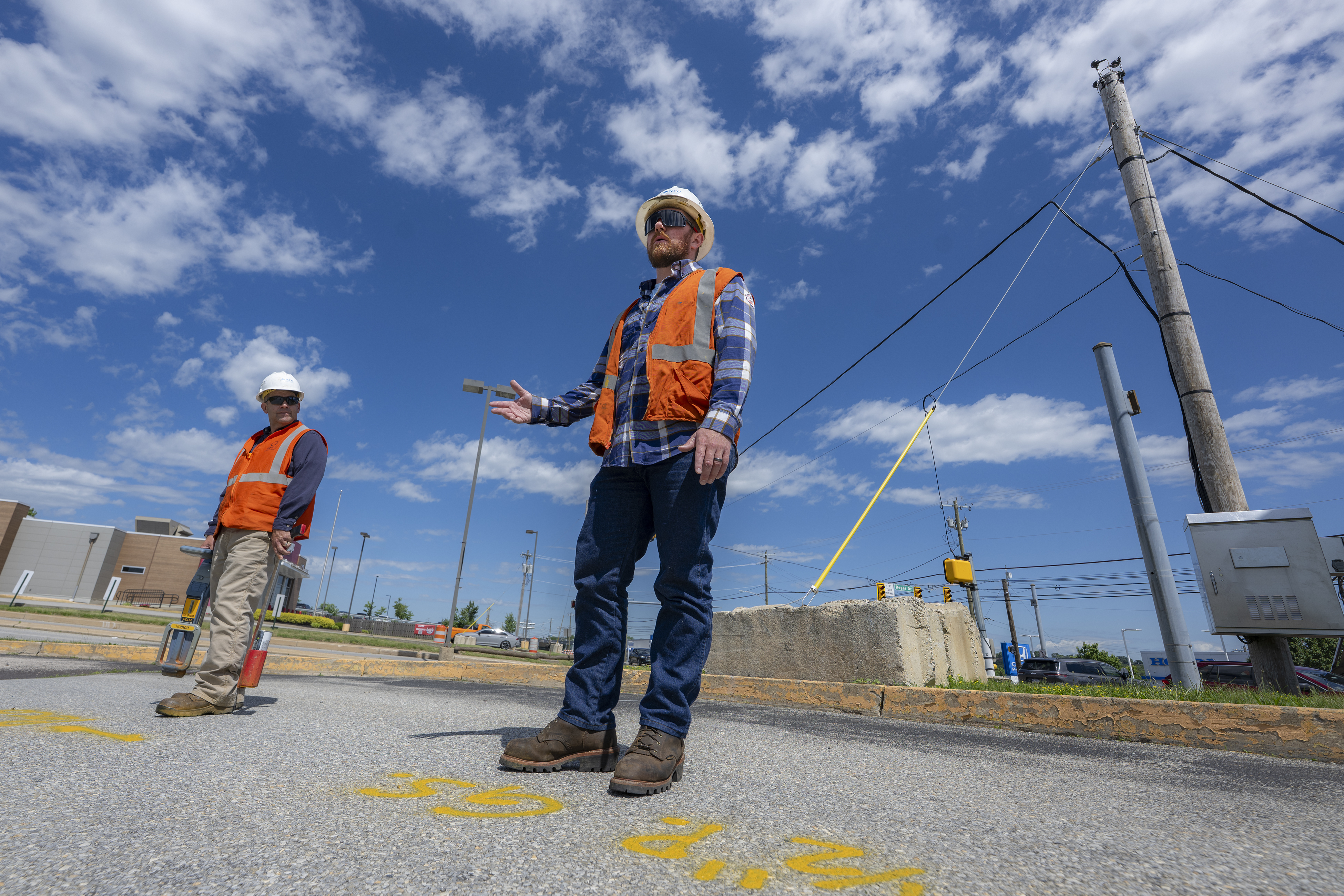
This week, we have an explainer from Michelle Myers on some mysterious-looking symbols and writings on Philly-area streets and sidewalks.
It might look like a bunch of nonsense, but they all mean something. It’s a language by which utility companies communicate what’s happening underground. Here’s the full story.
Cheers to Clare Cosenza, who solved Thursday’s anagram: Reading Terminal Market. The market will be part of a new expansion by the Philadelphia Visitor Center ahead of the large influx of tourists expected this summer.
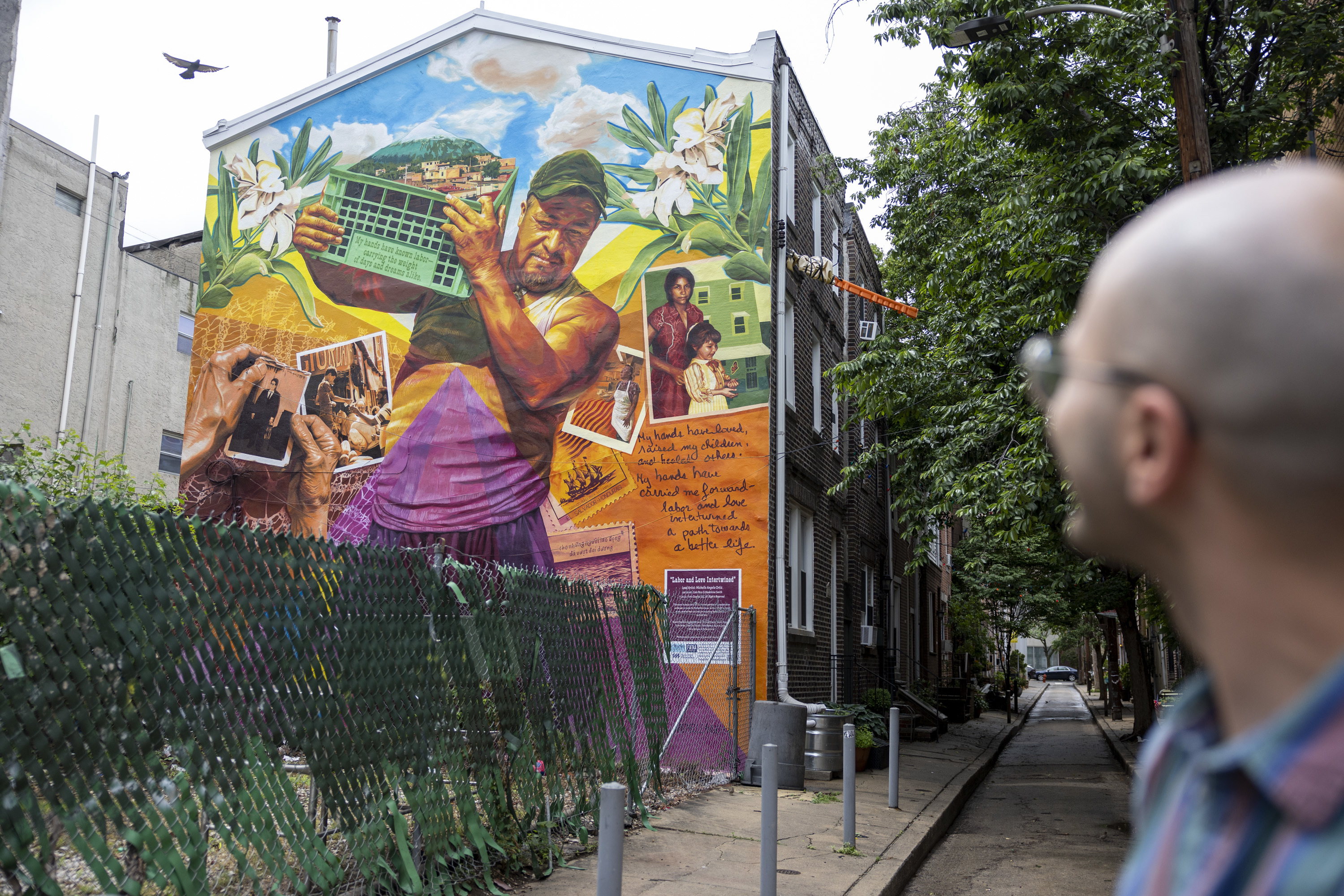
Brendan McCreath looks at the mural painted on the side of his rowhouse.Tyger Williams / Staff Photographer
🎨 One more artsy thing: Roughly1,000of Philly’s muralsare on private homes. The Inquirer asked six homeowners why they wanted their properties to join the city’s rich tapestry of murals.
👋🏽 Thanks for reading. Have a great weekend when you get there, and I’ll catch up with you again tomorrow.
By submitting your written, visual, and/or audio contributions, you agree to The Inquirer’s Terms of Use, including the grant of rights in Section 10.
Take the B (Broad Street) Line to 15th Street/City Hall, transfer to the eastbound L, and disembark at Spring Garden Station, on the southern edge of the neighborhood.
Correct, to a point.
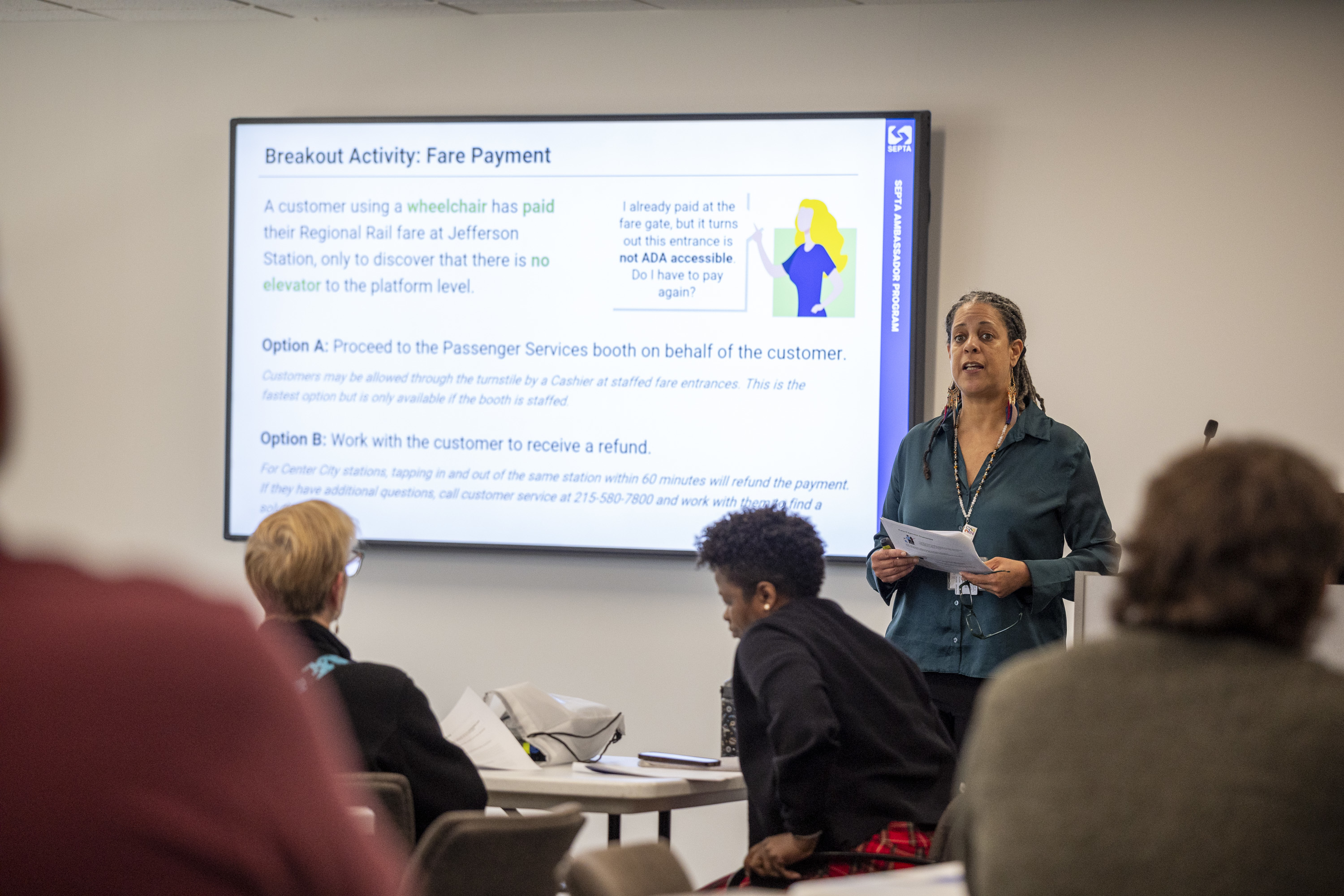
“I didn’t say where I need to get to in Northern Liberties, right?” said Jena Burley, the SEPTA training facilitator teaching the class.
Ack! Maybe the passenger would be better off taking the L for one more stop to Front-Girard, depending on the precise destination.
“Ask for as much specific information as possible,” Burley said.
SEPTA supervisors, administrators, and managers have been assigned 1,300 shifts as ambassadors in critical transit and Regional Rail stations from June 13 through July 19.
Jena Burley leads the SEPTA ambassador class.Tyger Williams / Staff Photographer
Four to 12 ambassadors will provide information, directions, and, ideally, a friendly welcome in each designated station — along with crowd control, and de-escalation techniques for conflict.
It’s a lot, which is why up to 1,000 employees have spent half a day in training with a detailed curriculum that feels like cramming for finals.
I worked with them through scenarios of escalating severity to simulate situations they will encounter: sweaty, frustrated crowds on platforms; medical emergencies; confusion over SEPTA’s fares and methods of payment; and how to troubleshoot travel glitches. And scarier stuff.
“This summer is an opportunity for SEPTA to shine, and you are such a big part of that,” said Lex Powers, chief officer for customer experience.
The Disney approach
This summer SEPTA is also debuting a new customer-service philosophy that subordinates other priorities to creating a safe and positive experience for people using the system.
The transit agency has used ambassadors since 2000 to help customers during special events like the Eagles Super Bowl parade last year, service changes, and the like. Officials rebooted the training program.
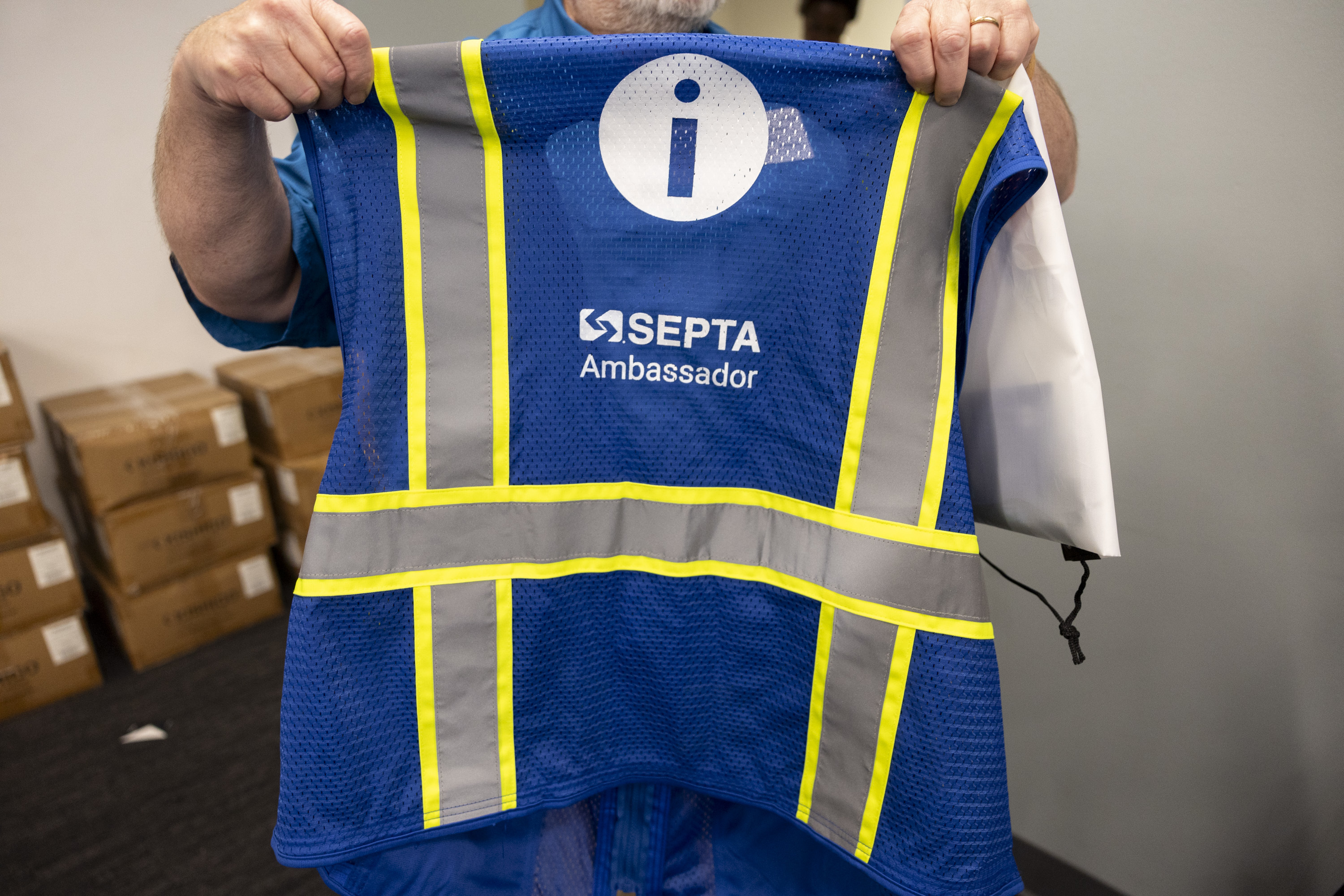
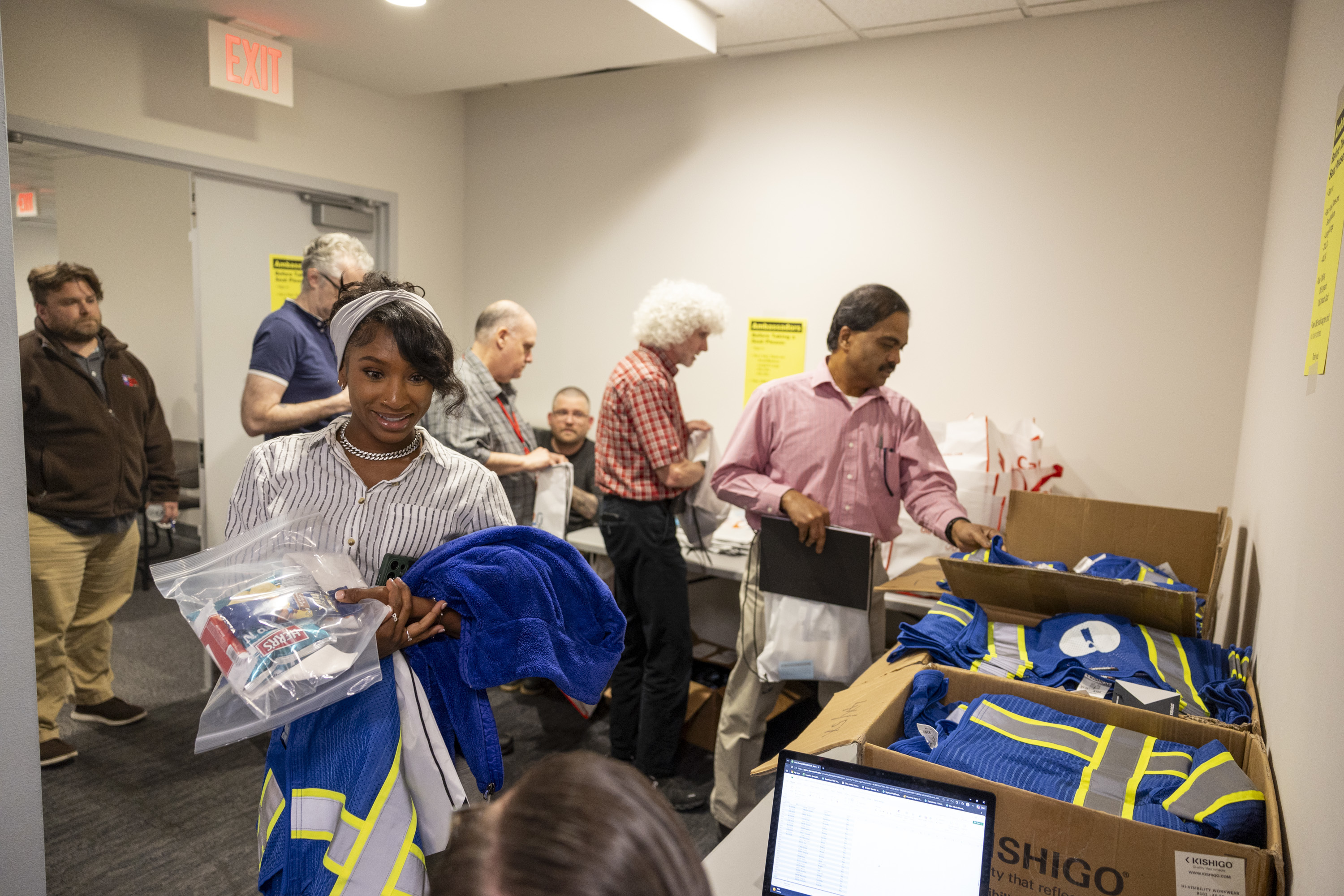
This summer, ambassadors will carry “cheat sheet” cards and wear blue vests to differentiate them from other workers in typical yellow safety vests.
I got my own blue vest at the start of the class — pretty snazzy — and tried to earn it.
Brittany Davis, of Northeast Philadelphia, a service planner at SEPTA, gets her vest.Tyger Williams / Staff Photographer
Cultural correctness
The recent training included “cultural diplomacy” briefing sheets with guidance on customs and backgrounds of the countries with national teams playing here, prepared by the World Affairs Council of Philadelphia and protocol experts.
For instance,I learned:
Never flash the “OK” hand gesture to a Brazilian. It’s offensive, like flipping the bird.
When greeting or handing things to a person from Ivory Coast, use your right hand. It is a social slight to use the left, which is reserved for personal hygiene.
In some cultures, such as Ghana, it is customary to exchange pleasantries before getting down to business. People from Curaçao, influenced by Dutch culture, can be more direct and, while friendly, value personal space.
‘Bring the temperature down’
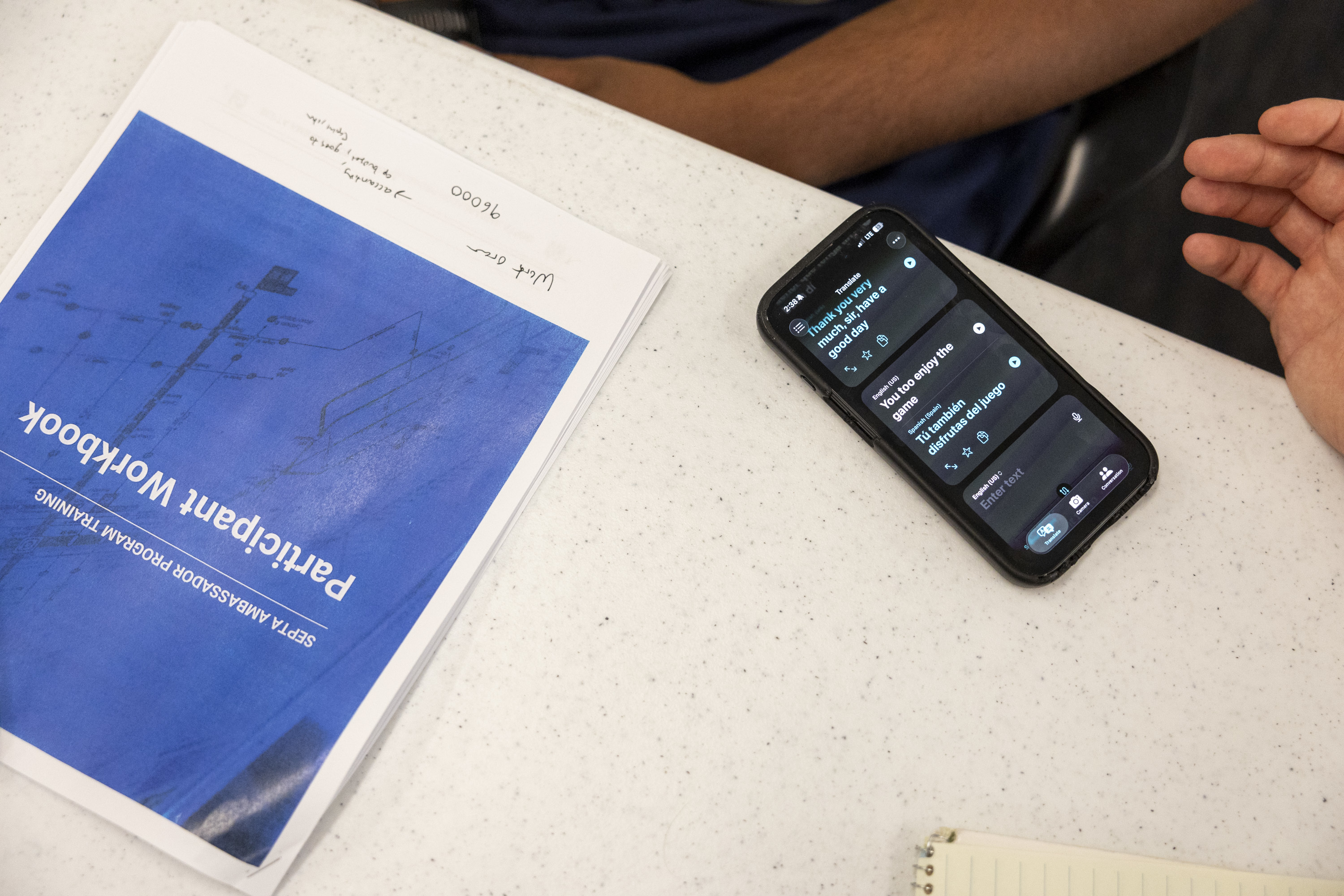
My fellow trainees and I shared tables in a conference room and huddled to work through often complex scenarios in a 24-page workbook.
You notice a particularly long line forming at one fare gate and go to investigate. …
A customer is tapping a credit card over and over, but it doesn’t work. Another customer tries to squeeze past them, increasing tension, and voices in the line start to rise.
“You want to bring the temperature down,“ said Noah Lee, manager of service-information development, with whom I shared a table. ”Take the person whose card doesn’t work off to the side to figure it out, and let other people go through.“
Nithin Vejendla, an operation planner, speaks Spanish in the Google Translator app.Tyger Williams / Staff Photographer
Nithin Vejendla said the bottleneck could be a two-person job and suggested bringing in another ambassador to wave people through the gate.
“Try empathizing with them,” said Vejendla, a SEPTA operations planner who was at my table. “Like, ‘I know it’s frustrating. I’ve had times where [tapping] doesn’t work. … We’ll get you on the next train.’”
Meanwhile, fix it. Is the person tapping incorrectly? Maybe the card reader’s bad, so try another turnstile. Consult a cashier.
The situation worsens.
A customer that has been held up in the line starts pushing and shoving the people in front of them. They are clearly agitated … [and] verbally threatening people.
“If they keep escalating, at that point your responsibility shifts to keeping the other passengers safe,” Vejendla said. “Maybe you stay between them and the fare gates, a physical barrier.“
Lee worked an ambassador shift during the 2025 Super Bowl parade and said he didn’t see anything like that.
“The atmosphere was joyful, and it was in the morning,” Lee said.
Vejendla, an operations planner who has worked at SEPTA for almost three years, was an ambassador for the Eagles parade and the Flower Show, and when SEPTA briefly cut and changed bus routes last year.
Later, trainees downloaded Google Translate to practice.
Vejendla speaks fluent Spanish and rough French. Powers, his boss, was teasing him about it.
“Lex was like, and I quote, ‘I can’t believe the system understood you. That French accent was terrible.’”
When emergencies arise
Sometimes, the scenarios are more serious. People wind up in the track area, trying to retrieve an item or having fallen off a platform. What do you do?
“Stop the train. Think about everything else later,” Burley said.
Heather Jordan, employee relations manager, (right), and Kim Smith, senior project engineer and track engineering with SEPTA, (left), are looking at the SEPTA app to answer questions for an exercise during the SEPTA’s Ambassador class.Tyger Williams / Staff Photographer
Go to the cashier and get them to push the Emergency Train Stop button, which activates a “stop” signal light. There are red flags in the booth to wave at incoming trains.
Moving your arm back and forth at chest level is a traditional railroad stop signal. “Or go berserk,” Burley said, waving your arms over your head or flashing a phone flashlight.
Do not enter the track area, and don’t try to pull a person up. The third rail carries 600 to 750 volts of electricity.
“You’re there to keep customers safe, but if you’re not safe, you can’t help,” Burley said.
As class ended and everyone left, I carried a deeper respect for the job of ambassador. I wished my fellow students good luck.
Think you know your news? There’s only one way to find out. Welcome back to our weekly News Quiz — a quick way to see if your reading habits are sinking in and to put your local news knowledge to the test.
Question 1 of 10
Philly is opening a “hospitality hub” for visitors this summer along the Benjamin Franklin Parkway. What is the hub’s main feature?
CorrectIncorrect. XX% of other readers got this question right.
On Tuesday, the city opened four new “hospitality hub” restrooms along the Parkway to welcome and accommodate the many visitors expected in Philadelphia over the next two months. Each of the restroom trailers has four genderless stalls and an adjacent port-a-potty for individuals who cannot make it up the restroom steps. Each stall has a sink, soap, paper towels, and “air care” to keep it smelling fresh. There are also water refill stations.
Question 2 of 10
On her podcast, Good Hang, Amy Poehler spoke to West Philly-bred Colman Domingo and told him all about how she was once cursed out at this Philly spot:
CorrectIncorrect. XX% of other readers got this question right.
Poehler told Domingo that the only time she’d been called “a c-word” to her face was at the Philadelphia International Airport alongside Tina Fey. Her offense? Turning down an autograph flipper. Fey brushed off the interaction, telling Poehler at the time, “Welcome to Philly.”
story continues after advertisement
Question 3 of 10
American Airlines has permanently removed all future flights from Philadelphia to the capital of this country. Until now, the airline’s flight there held the title of the longest-ever flight departing from Philadelphia International Airport.
CorrectIncorrect. XX% of other readers got this question right.
The airline’s flight to Doha, the capital of Qatar, held the title of the longest-ever flight departing from Philadelphia International Airport (PHL), 14½ hours covering approximately 6,800 miles. The cut route follows a late February decision that suspended all Philadelphia-Doha flights until 2027, because of the flare in regional hostilities.
Question 4 of 10
Nihonbashi Philly, a well-known cheesesteak shop and unofficial Philadelphia embassy in Tokyo, posted on Instagram that it would need to switch up its default cheese offerings, citing a shortage across Japanese Costcos. What kind of cheese has gone missing in Japan?
CorrectIncorrect. XX% of other readers got this question right.
“American cheese is all gone from Japan,” read Nihonbashi Philly’s frustrated post to Instagram on May 30. The restaurant would be using Whiz and provolone only, going forward. Cooper Sharp has never been available in Tokyo. An orange-hued American cheese that resembled Kraft Singles has been discontinued from Costco’s inventory, the company said.
Question 5 of 10
The Tony Awards were hosted Sunday by this Doylestown native:
CorrectIncorrect. XX% of other readers got this question right.
Suspended from the rafters, Pink joked about feeling underqualified to host the awards ceremony because she’s never appeared on Broadway. But actor Neil Patrick Harris assured the Bucks County native that she would excel as her entertaining, acrobatic self: “Listen, you’re Pink, you’re singular, you’re the best.” Then she went on to belt “Lady Marmalade” with some of Broadway’s best performers and fit right in.
Subscribe to The Philadelphia Inquirer
Our reporting is directly supported by reader subscriptions. If you want more journalism like this story, please subscribe today.
Olney High School stands to lose 17 staff because of Philadelphia School District budget cuts — perhaps the deepest cuts of any school in the district. At the Class of 2026’s graduation ceremony, a group of students protested the cuts by doing the following:
CorrectIncorrect. XX% of other readers got this question right.
As the class valedictorian spoke, several students behind her unfurled signs: “A school is its people” and “Don’t rip away our teachers and counselors.” The audience applauded. Valedictorian Iamdra Peguero was part of a small group that met with school board president Reginald Streater at the school Monday, imploring him to find a way to stop the budget cuts coming Olney’s way.
Question 7 of 10
Which coach with Philly ties made Time’s inaugural list of the most influential people in sports?
CorrectIncorrect. XX% of other readers got this question right.
Dawn Staley made the list. The longtime South Carolina women’s basketball coach grew up in North Philly and graduated from Dobbins Tech in 1988 before playing collegiately at Virginia.
Question 8 of 10
Designer Sheila Bridges has drawn on her Black American Wynnefield childhood to create "the Philadelphia Collection," the 14-piece collection of kitchen and serving ware, available exclusively where?
CorrectIncorrect. XX% of other readers got this question right.
The Philadelphia Collection dropped Monday exclusively on Walmart.com. Prices for the limited-edition collection range from $12.76 for a pitcher to $19.76 for a set of four melamine dinner plates. The 76 cents in the pricing was intentional.
Question 9 of 10
Cultural influencer Reuben "Big Rube" Harley is suing a Philly-based company, saying they failed to pay him for promoting their products. What was Big Rube known for promoting?
CorrectIncorrect. XX% of other readers got this question right.
A.J. Brown reportedly left a message on the wall of Eagles’ facility. What did it say?
CorrectIncorrect. XX% of other readers got this question right.
Less than 24 hours after his trade to New England, Brown stopped into the Eagles’ facility after the deal to pick up a few items, say his goodbyes, and leave a parting message on the wall. Throughout the Jefferson Health Training Complex, the team has life-size photos of franchise greats lining the walls. Underneath his picture alongside other Eagles Pro Bowlers, Brown reportedly wrote: “The best to ever play here. Always open.”
Your Results
You have skipped .
You scored XX out of 10.
The average reader scored XX out of 10
Seems like you’ve been skimming more than reading there, buddy. There’s always next week.
You’ve read some articles (or made some educated guesses) but we wouldn’t come to you first for our local news recaps. Better luck next week!
Do you work here? You’re a local news stan with the latest updates on Philly happenings. Your friends definitely ask you for summaries on what’s going on and it shows.