Blog

  • Brewers ace Jacob Misiorowski blanks Phillies in series opener

    MILWAUKEE — For five innings here Friday night, Andrew Painter and Jacob Misiorowski shared a mound.

    That was all they had in common.

    While Painter got roughed up again in an increasingly tough-to-watch rookie season, his Brewers counterpart unleashed 58 — 58! — 100-plus-mph pitches, collected 15 — 15! — strikeouts, faced the minimum 27 batters, and gave up one hit.

    And when “The Miz,” as he’s known around these parts, whiffed Justin Crawford on his 95th pitch to cap a 6-0 undressing of the Phillies — on the one-year anniversary of his major league debut, no less — he clapped his glove, looked skyward, and raised both arms to mark his first career complete game.

    One word: Wow.

    Four more: Your move, Cristopher Sánchez.

    Sánchez will have a chance Sunday in the series finale to submit his midseason case in what’s shaping up as an epic Cy Young race. But first, let’s talk about this Misiorowski fellow, who dominated from first pitch (103.4 mph) to last (103.1).

    “I’m glad we faced him,” said Bryce Harper, who struck out on a 104.1 mph fastball in the first inning. “I’m glad we were able to see that. Obviously, we’ve got a chance to play those guys in the postseason, so happy we were able to face him today.”

    Misiorowski’s opening statement: swinging strikeouts of Kyle Schwarber, Trea Turner, and Harper on 12 pitches, including a 104.5 scorcher that set a velocity record for a starter since tracking began in 2008. He fanned eight of the first nine batters on 34 pitches. The Phillies had one baserunner, Schwarber on a leadoff single in the fourth inning on a first-pitch slider.

    “Obviously, a unique fastball,” Schwarber said. “You try to adjust to different things, and it just kind of finds a way around you. You’ve got to tip your hat. Not much else to really say.”

    But even if Misiorowski’s dominance wasn’t so … what’s the word? … absurd, the contrast between him and Painter would have been impossible to miss.

    And yes, it’s perfectly fair to compare them. Painter is 6-foot-7 and right-handed, just like Misiorowski. Painter is 23, only 372 days younger than “The Miz.” They were high draft picks, one year apart, and hyped as prospects in the minors.

    Yet there’s Misiorowski, leading the majors in ERA (1.34) and strikeouts (131) and the planet in heat-seeking fastballs. And here’s Painter, with a 1-7 record, coming in behind an opener to lessen his exposure to the top of the Brewers’ lineup, and still giving up five runs in five innings to raise his ERA to 6.43.

    Interim manager Don Mattingly thought it represented progress. He cited improvement in Painter’s offspeed pitches, said the first-pitch sweeper that Jake Bauers hit for a three-run homer “wasn’t a terrible pitch,” and observed “better aggression” in going after hitters.

    Still, the results weren’t good. So Painter sat facing his locker, dressed in full uniform and deep in thought as teammates moved around the quiet clubhouse after the game.

    “Hard to tell right now so fresh off it, but the emphasis has been being super-aggressive in the zone early and kind of pitching on offense, almost,” Painter said. “I thought [there were] a lot of first-pitch strikes, a lot of early contact.”

    And yet …

    “Just those walks,” he said, referring, in particular, to a free pass to William Contreras that preceded Bauers’ homer. “I think a lot of them are not competitive where it’s four- or five-pitch walks. I’ve got to limit that.

    “I’ve just got to take it and move on.”

    OK, some perspective: Even Misiorowski struggled as a rookie. Maybe not to Painter’s extent. But after a sensational start that got him named as an All-Star (much to the chagrin of several Phillies players, who thought Sánchez got snubbed), he had a 6.06 ERA over his last eight starts.

    Maybe it’s a lesson for Painter, even as the flashes of promise from his first few starts have begun to flicker and dim.

    “Everything’s there, you know?” Schwarber said. “It’s just, this is the big leagues. It’s the highest form of competition, and it’s hard to just always succeed.”

    Said Harper: “I said it in camp, right? We need him. And we still do. He’s still in the beginning of his career, and he’s going to have success and he’s going to get better. We believe in him.

    “We need to him to establish his pitches a little more, have confidence out there, not look at his numbers. I think that’s a big thing, not looking at your numbers. I think he’s, what, 1-7? Just throw that out the door. He’s really good. We know he’s going to be good.”

    Misiorowski is already great. Maybe he took the mound with a chip on that lightning-bolt of a right shoulder from the Phillies’ complaints last July. Maybe not.

    Either way, the Phillies had no chance.

    Misiorowski doesn’t merely throw harder than anyone else. He gets more extension through his delivery, which somehow makes 104 mph look even faster than it is.

    Brandon Marsh asked Harper postgame if he has ever faced anyone like “The Miz.” Harper compared him to former Mets ace Matt Harvey.

    “He had the extension heater, and he was one of the first guys that really rode that heater at the top of the zone,” Harper said. “I mean, 104 is a little bit different. It’s going to be tough at any point. He might be throwing 106 with a big [postseason] crowd, you know?

    “But, yeah, it’s a different animal when he’s on the mound. Just like what Sánchez is for us. He’s their guy.”

    The Miz has spoken. Time for Sánchez to have his say.
  • Trump’s name poised to be removed from Kennedy Center after court denies last-minute move to keep it

    WASHINGTON — The Kennedy Center was running out of options Friday evening to keep President Donald Trump’s name on the facade of the iconic performing arts venue.

    A judge earlier in the afternoon rejected a request to pause a court-ordered deadline of Friday to remove references to Trump from the building and other aspects of the Kennedy Center’s operations. The institution appealed that ruling, an effort that was also rebuffed Friday evening.

    Scaffolding was erected earlier in the day around a section of the building that includes Trump’s name, though there was no effort to remove it by 7 p.m. Eastern Time. Storms with lightning were dancing around Washington, adding to the challenge for workers.

    After ignoring the Kennedy Center for much of his first term, Trump has wielded tremendous influence over the venue during his return to office. Just a month into his second term, he ousted the center’s previous leadership and replaced it with a board of trustees that named him chairman. Trump’s name was quickly added to the building.

    In his ruling that only Congress could make changes to the Kennedy Center’s name, U.S. District Judge Christopher Cooper also blocked the administration from closing the cultural and arts venue for major renovations that had been planned to start in July and last for two years.

    The Kennedy Center’s leadership argued in its appeal Friday that the renovation was badly needed and accused the lower court, in terms that seemed similar to Trump’s speech patterns, of interfering in the effort.

    “The District Court is not allowing us to close in order to properly fix up and repair the Building, including potentially life threatening structural damage like beams and parking garage ceilings that are rusted, and in serious danger of falling onto people below,” according to the appeal. “Indeed, total collapse!”

    Even as the Kennedy Center has fought efforts to remove Trump’s name from the building, it has taken steps to comply with Cooper’s initial ruling.

    A June 4 memo to staff from the Kennedy Center’s Office of General Counsel said email signatures, letterhead and other documents must reflect the name as “The John F. Kennedy Center for the Performing Arts” or “Kennedy Center.”

    The Kennedy Center’s website has dropped Trump’s name. And an earlier email sent to members offering ticket packages for the June 28 Mark Twain Award for American Humor ceremony came from the Kennedy Center without including Trump’s name.

  • 55 children and teenagers charged in Hersheypark brawl

    Fifty-five children and teenagers have been charged with misdemeanor and felony offenses for allegedly starting and participating in a large group fight at Hersheypark in April.

    Children as young as 12 were among those charged, and all but three are younger than 18. The charges, according to police, include riot, aggravated assault, theft, and failure to disperse. The three adults charged are Omar Ibraham, 19, Jerome Ross, III, 18, and Quaneek Williams, 18, all of Harrisburg.

    Officers were called to Hersheypark around 7 p.m. on April 3, the park’s opening day. Eyewitnesses told CBS News that a large group of teenagers ran through the food court, knocking over tables and chairs as security chased them. Videos posted from that day also showed teenagers running through the park while being pursued by security.

    Charges were not announced until this week, after police reviewed park security footage and social media videos, and worked with schools to identify those allegedly involved. Derry Township Police Chief Garth Warner said that while arrests involving two or three juveniles are relatively common, the size of this group made the case notable.

    “Because it was such a large incident where multiple [people] were involved, and there were other children there, it was prudent of us to hold everyone involved accountable,” Warner said.

    No serious injuries were reported and no one outside the group involved was hurt.

    More broadly, videos circulating online suggest that some teenagers in Pennsylvania are participating in a trend of public fights or “wilding out,” raucous behavior that is often filmed, posted, and treated as entertainment by peers.

    One Instagram account, “Harrisburg the Best,” is filled with videos of teenagers fighting. The captions often include laughing emoji and, in some cases, first names of the people shown. In several videos, other teenagers appear to act as referees.

    Kate Burdick, a senior attorney at the Juvenile Law Center, said cases like these are difficult because they involve both public safety concerns and adolescent development.

    “Kids are going to convene, and that is a positive, prosocial event,” Burdick said. Although she does not condone fighting, she said she worries about the harm that can come from criminalizing adolescent behavior.

    “Our recourse tends to be very punitive, whereas what we know about kids is that they’re still developing and have an immense capacity for change and growth,” she said. “A punitive response can cause additional trauma and doesn’t increase safety.”

    Still, not every juvenile case results in a trial. Steve Jarmon, a Philadelphia lawyer who specializes in juvenile criminal defense, said juvenile courts are designed to consider what is in the best interest of the child. In some cases, that can mean probation or diversionary options that allow a child to avoid formal adjudication.

    Because the charges were announced only this week, it remains unclear how many of the 55 cases will proceed to adjudication or trial.

  • Justice Department approves Paramount’s deal to buy Warner Bros.

    Justice Department approves Paramount’s deal to buy Warner Bros.

    Antitrust regulators at the Justice Department on Friday approved Paramount Skydance’s $110 billion deal to buy Warner Bros. Discovery, a merger that would create one of the largest companies in Hollywood and reshape the television news landscape.

    In a statement, the Justice Department said it had concluded its eight-month investigation and found that the deal was unlikely to harm consumers because of corporate combination in streaming, linear television, and content production.

    The deal would put two major film and television studios (Paramount and Warner Bros.), streaming services (Paramount+ and HBO Max), and TV news giants (CBS News and CNN) under a shared roof.

    “The extensive investigatory record reviewed by the Division suggests that the impact of the transaction will be to increase competition across the media and entertainment ecosystem, with benefits for American consumers and workers,” the department wrote in a statement.

    The merger signals a quick accumulation of power for the son of Larry Ellison, the billionaire co-founder of Oracle and ally of President Donald Trump.

    David Ellison’s Skydance took over Paramount last year in a deal heavily scrutinized by regulators. Since then, his mark has perhaps been most noticeable at CBS News, where his appointed editor in chief, Bari Weiss, has overseen tumult, layoffs, and a high-profile blowup at the newsmagazine 60 Minutes.

    Politico first reported news of the deal’s approval.

    The agreement could still be challenged. Regulators in Britain and Europe are still reviewing the deal, and a group of state attorneys general is reportedly considering suing to halt it on antitrust grounds.

    Warner Bros. Discovery had initially agreed to sell most of its assets to Netflix in an $83 billion deal. Under the terms of that agreement, CNN and other cable TV assets would have spun off into an independent company.

    Despite being rebuffed, Paramount kept pursuing the entire company — including CNN — in a deal that was accepted in February when Paramount increased its offer and Netflix said it wouldn’t budge.

    Paramount Skydance did not respond immediately to a request for comment. Warner Bros. Discovery declined to comment.

    Trump and top administration officials repeatedly weighed in on the deal, particularly its impact on CNN, a media company Trump has warred with throughout his political career. “I think the people that have run CNN for the last long period of time are a disgrace,” he said in December amid the bidding war. “I think it’s imperative that CNN be sold.”

    Two weeks after Paramount won its bid, the White House issued a news release saying that CNN was “lying” in its coverage of the war with Iran in an effort to undermine the success of the military operation.

    That day, Defense Secretary Pete Hegseth criticized CNN for an article on how the administration failed to anticipate the war’s impact on the Strait of Hormuz, calling it “fake news” in a press briefing. “The sooner David Ellison takes over that network, the better,” Hegseth said.

    Ellison, for his part, has vowed that CNN will stay editorially independent. “CNN is an incredible brand with an incredible team,” Ellison said in a March interview with CNBC. “We absolutely believe in the independence that needs to be maintained, obviously, for those incredible journalists, and we want to support that going forward.”

  • Pa. will pay for security upgrades to Gov. Josh Shapiro’s home but treasurer was right to initially deny $1 million payment for the bill, AG says

    Pa. will pay for security upgrades to Gov. Josh Shapiro’s home but treasurer was right to initially deny $1 million payment for the bill, AG says

    HARRISBURG — Pennsylvania Treasurer Stacy Garrity acted lawfully when she declined to pay more than $1 million in bills related to security upgrades made on Gov. Josh Shapiro’s personal home in Abington Township following an arson attack on his state mansion, the Pennsylvania Attorney General’s office announced Friday.

    In a memo detailing a settlement agreement between the state and the unpaid contractors who provided security upgrades to Shapiro’s private home, the attorney general’s office said that Pennsylvania would foot the $1 million bill “on a one-time basis,” noting the extraordinary circumstances and the threat on Shapiro’s life that led to the upgrades being requested.

    Current state law does not account for the increasingly dangerous position public officials face in today’s political climate, and the GOP-led state attorney general’s office encouraged the General Assembly to find a legislative solution for these issues going forward.

    However, Shapiro’s administration and Pennsylvania State Police failed to follow proper procurement processes and should have approached the legislature for approvals for the security upgrades, according to the memo authored by Executive Deputy Attorney General Eisenberg and Chief Deputy Attorney General Amy Elliott.

    “Going forward, we expect that such expenditures will result from specific legislative appropriation or new general laws,” they wrote in the memo. “We looked forward to working with the administration to accomplish these goals.”

    Shapiro’s personal home received more than $1 million in security updates, including a new security system and landscaping that Pennsylvania State Police determined was necessary after a man attempted to murder Shapiro by setting several firebombs inside the governor’s residence in Harrisburg while he and his family slept.

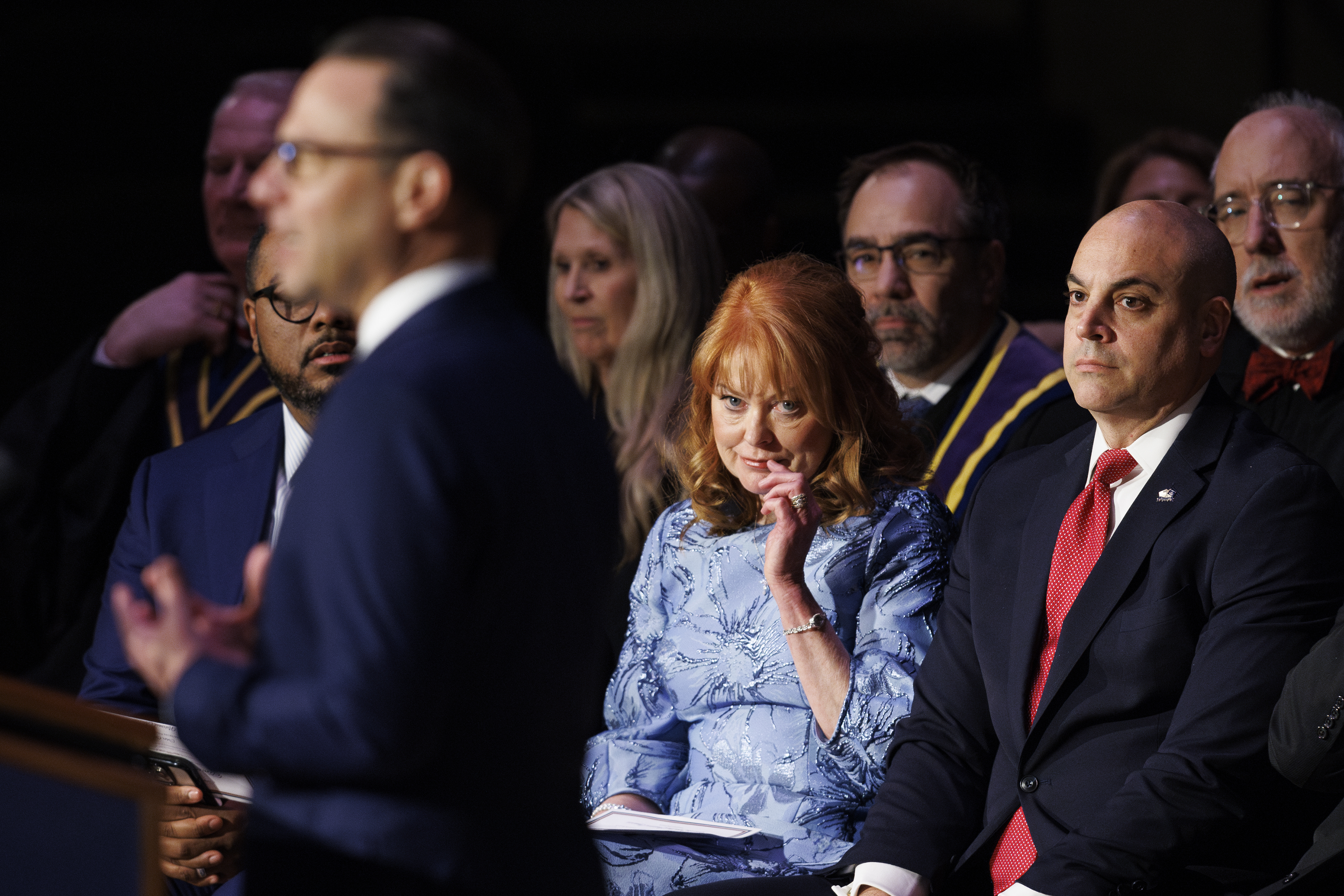
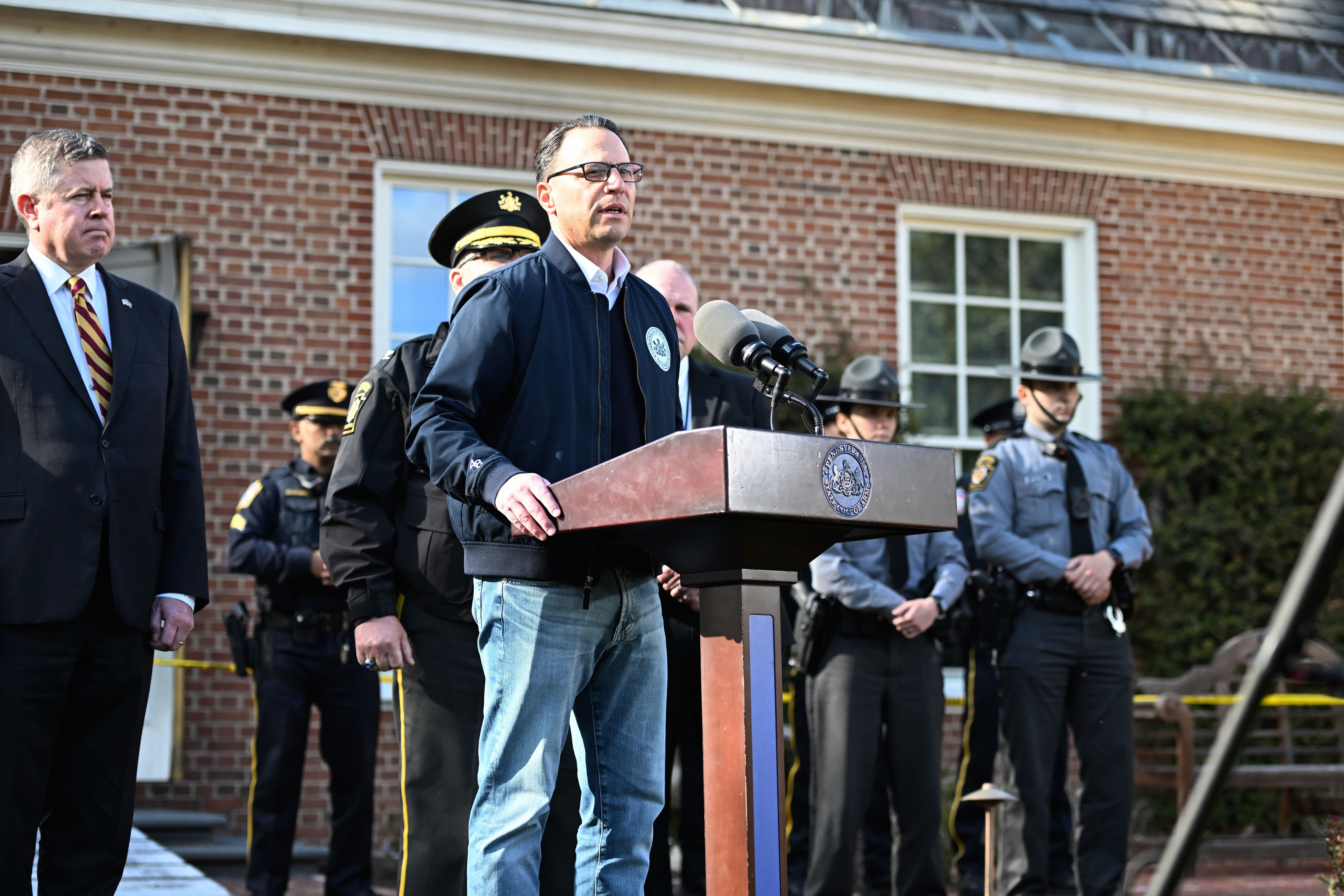
    Pennsylvania Gov. Josh Shapiro speaks during a news conference at the governor’s official residence about a suspected arson fire that forced him, his family and guests to flee in the middle of the night on the Jewish holiday of Passover, Sunday, April 13, 2025, in Harrisburg, Pa. (AP Photo/Marc Levy)Marc Levy

    Garrity, a Republican who is challenging Shapiro in November’s gubernatorial election, announced in April she could not pay the security upgrade bills, arguing that state law prohibits her from approving payment on work done on a privately owned property without legislative approval. The move was criticized by the incumbent Democratic governor’s office at the time, arguing it was a “shamefully political action.”

    In a statement Friday, a spokesperson for Shapiro said the governor appreciates the attorney general’s office acting “without political interference” to approve the settlement so the contractors can be paid.

    “As the Attorney General demonstrated, the safety of the governor and his family should never be weaponized for partisan gamesmanship, and our administration will continue to work with law enforcement and elected officials across the commonwealth to keep our leaders safe,” said Shapiro spokesperson Rosie Lapowsky.

    After Garrity declined to pay the bills, the state had two options to address the outstanding payments: a review and settlement by the attorney general’s office or legislative approval of the funds. Shapiro’s administration chose the review by the state AG’s office, which is led by Attorney General Dave Sunday, a Republican who supports Garrity’s bid for governor.

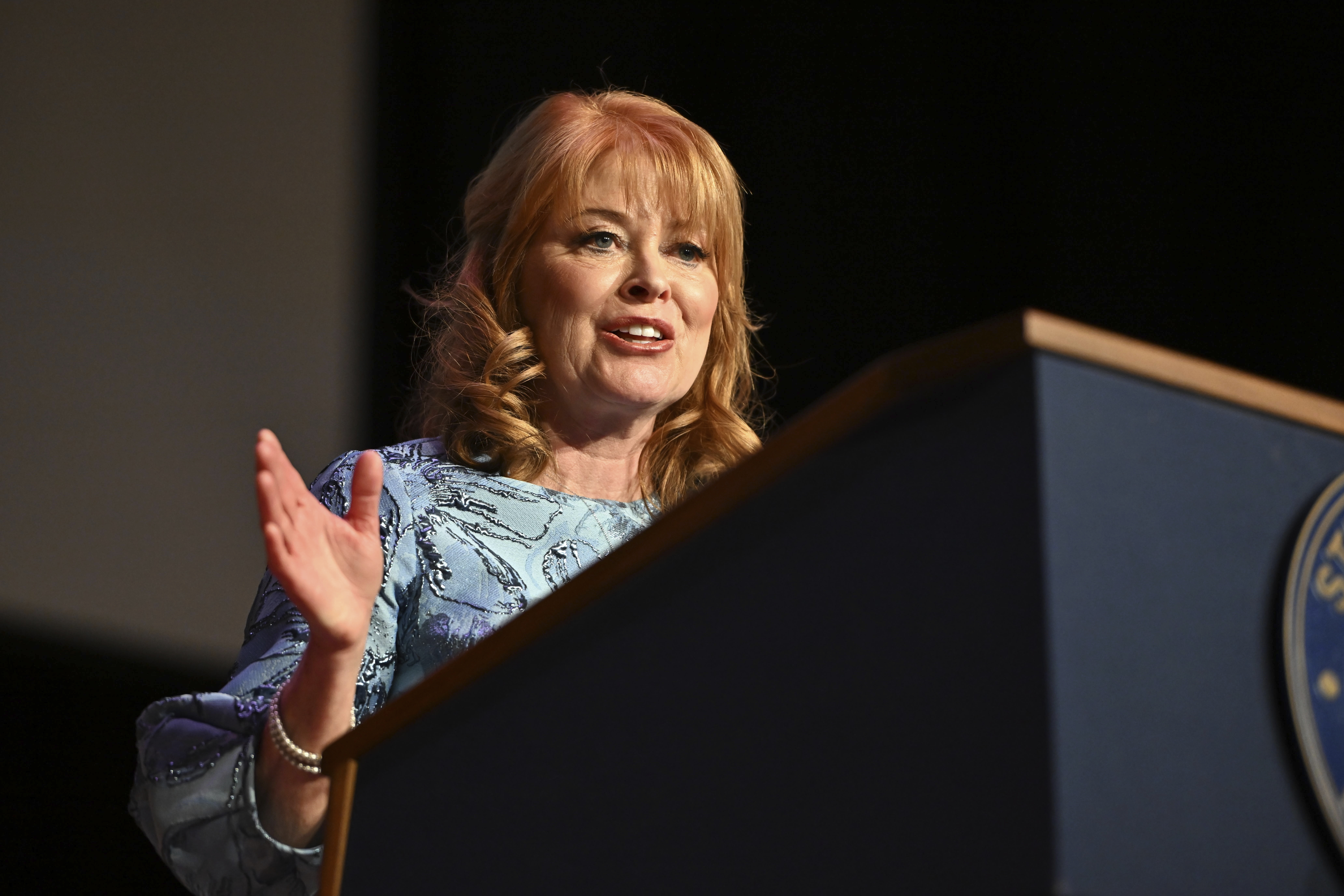
    Pennsylvania State Treasurer Stacy Garrity speaks to the audience after taking the oath of office for her second four-year term in the Forum Auditorium across the street from the Capitol, Jan. 21, 2025, in Harrisburg, Pa. (AP Photo/Marc Levy)Marc Levy

    The security upgrades on Shapiro’s personal home — plus $32 million in upgrades to the state-owned governor’s residence — were made under emergency contracts, which allow state agencies to quickly respond to emerging problems without waiting for legislative approval. However, Garrity argued — and the state attorney general’s office on Friday affirmed — that the emergency process does not allow the state to spend taxpayer funds on private property, such as Shapiro’s personal residence.

    “Current procurement law does not account for the increasing reality of threats to public officers and their families,” the AG’s office wrote in the settlement agreement. “Because the law does not allow for public funding of construction on private residences, the Treasurer had no legal option other than to deny payment.”

    In a statement Friday, Garrity said the settlement makes it clear “my sworn duty is to uphold the law, protect taxpayers, and only act with explicit legal authority.”

    Her office has not yet received a request to pay the contracts, she said. Once it does, she will “carefully review each one” and pay the outstanding bills.

    “Safety and security matter to everyone, but good intentions can never excuse ignoring the law,” Garrity added.

    Shapiro has faced scrutiny from some Republican lawmakers over his administration’s rapid and sweeping response following the arson, while Democratic lawmakers rallied around him to ensure his and his family’s safety. Republican legislators have said they believe Shapiro and his family should be safe, but should follow proper channels and regulations when spending taxpayer funds.

    A committee in the Republican-controlled state Senate in December took the unprecedented step to subpoena Shapiro over the security upgrades to his personal home, arguing that his administration had not been transparent in previous inquiries about how state taxpayer dollars were being used to upgrade security there.

    Shapiro’s personal property upgrades also resulted in a land dispute with one of his neighbors, who argued in federal court that Shapiro was violating their constitutional rights by using his power as governor to seize a portion of their property. Shapiro, in a separate suit filed in the Montgomery County Court of Common Pleas, argued that the disputed land had been his for years.

    Shapiro and his family split their time between the state-owned governor’s residence in Harrisburg and their Montgomery County home, where his two youngest children still attend school.

    This story was updated to note Sunday supports Garrity’s campaign for governor.

  • Eagles safety Andrew Mukuba launches Mukuba Miracles Fund to benefit foster children

    Eagles safety Andrew Mukuba launches Mukuba Miracles Fund to benefit foster children

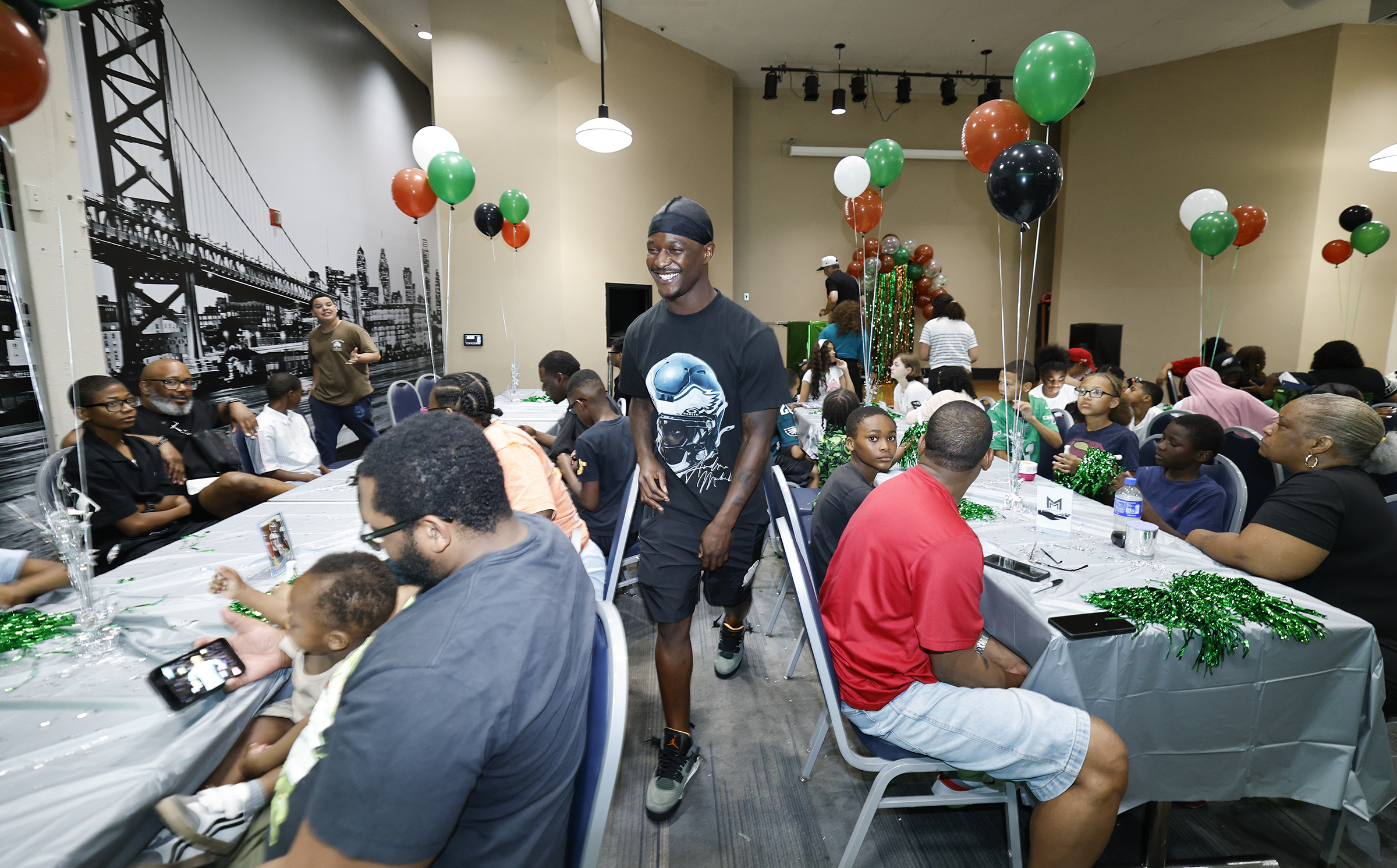
    Eagles safety Andrew Mukuba knows exactly how it feels to grow up facing an uncertain future. Years before he nabbed a starting role as a rookie in 2025, he grew up in Zimbabwe as his family sought refuge from Congo. Mukuba recently launched his new foundation, Mukuba Miracles, which held its first event Thursday night.

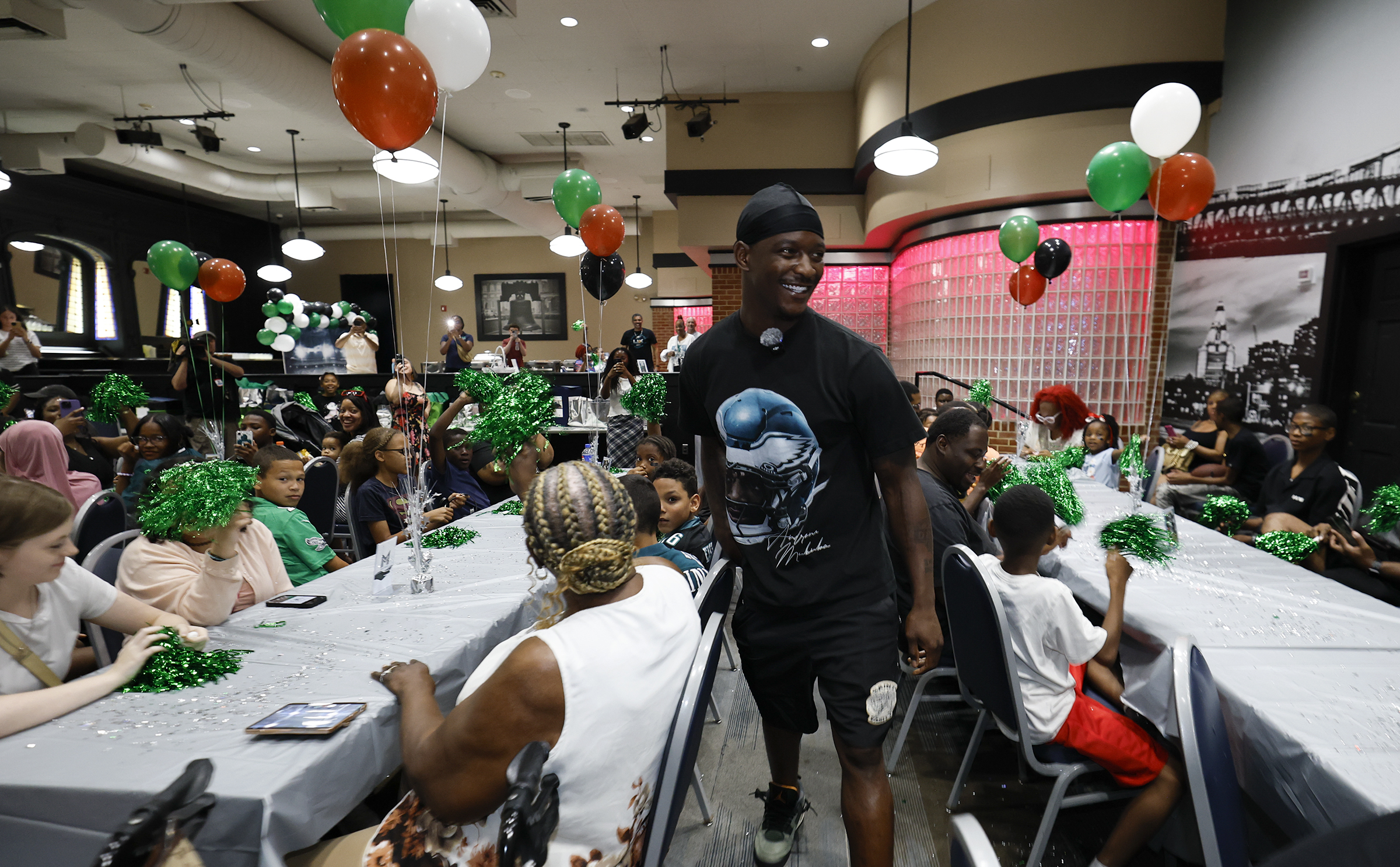
    The defensive back partnered with Turning Points for Children, a Philadelphia-based organization focused on providing care to foster children and their families. Together, they hosted over 30 foster children at the Dave and Buster’s in Penn’s Landing. Over dinner, Mukuba gifted items kids had requested, ranging from art supplies to basketball shoes to a bicycle. Afterward, the 23-year-old played arcade games with the kids.

    Eagles safety Andrew Mukuba smiles after presenting D’avion Faison, 10, with a new bike during a launch of the Mukuba Miracles Fund at Dave & Buster’s on Thursday.Yong Kim / Staff Photographer

    “I’m just trying to make an impact in the communities that I’m involved in … and help in any ways that I can,” Mukuba said. “Being able to put smiles on the kids’ faces … that’s the goal for me.

    The most fulfilling part of the night for Mukuba, he said, was seeing the reactions of those to whom he gave gifts.

    “I was once a kid as well, and I know what a gift can mean to somebody, especially something so valuable to them,” he said.

    The children attending the event had not been made aware that Mukuba would be there. As the 64th overall pick in 2025 was being introduced by Eartha Holland, Turning Points for Children’s director of stakeholder engagement and events, a large ovation ensued.

    “Our kids are so humble, and they express great gratitude for the gifts,” said Ciera Carter, the organization’s director of family support services. “Our kids have been through a lot, and our program seeks to find permanent resources and connections for them.”

    The event held a special meaning for Lorraine Dredden, a foster mom invited by Holland. Over the last 35 years, the Winslow Township school board member has fostered over 100 children and adopted 13. The Berlin Township native also was honored by the state’s Department of Children and Families last month for her commitment to giving foster children a home. Dredden, who had two children in attendance, felt touched during the ceremony.

    “I didn’t know all of the children in here, but I was clapping so hard for them,” Dredden said. “Some of the children I had, they never knew about Christmas, so when Christmas came, they were so excited about Santa, they didn’t know what to do.

    Andrew Mukuba is grateful to be back on the field and in the community after an ankle injury prematurely ended his 2025 season. Yong Kim / Staff Photographer

    Along with growing his foundation, Mukuba is excited to get back on the field this fall. A fractured ankle ended the safety’s rookie season last November.

    “The toughest part [last year] was just not being on the field,” he said. “But mentally, I felt like I was right where I needed to be at, as far as attacking rehab.”

    Mukuba, who has made a full recovery, is projected to start for the Eagles alongside veteran Marcus Epps, who is in his second stint with the team. In a safety room now without Reed Blankenship, who departed for the Houston Texans, the former Clemson standout is anticipating the opportunity he likely will receive.

    “I feel like a lot of people didn’t get an opportunity, and I [am] fortunate enough to get an opportunity after the injury I suffered,” he said. “So going out there and having fun all over again … that’s what I’m really looking forward to.”

  • Philadelphia releases initial schedule of pool openings amid record heat

    Philadelphia releases initial schedule of pool openings amid record heat

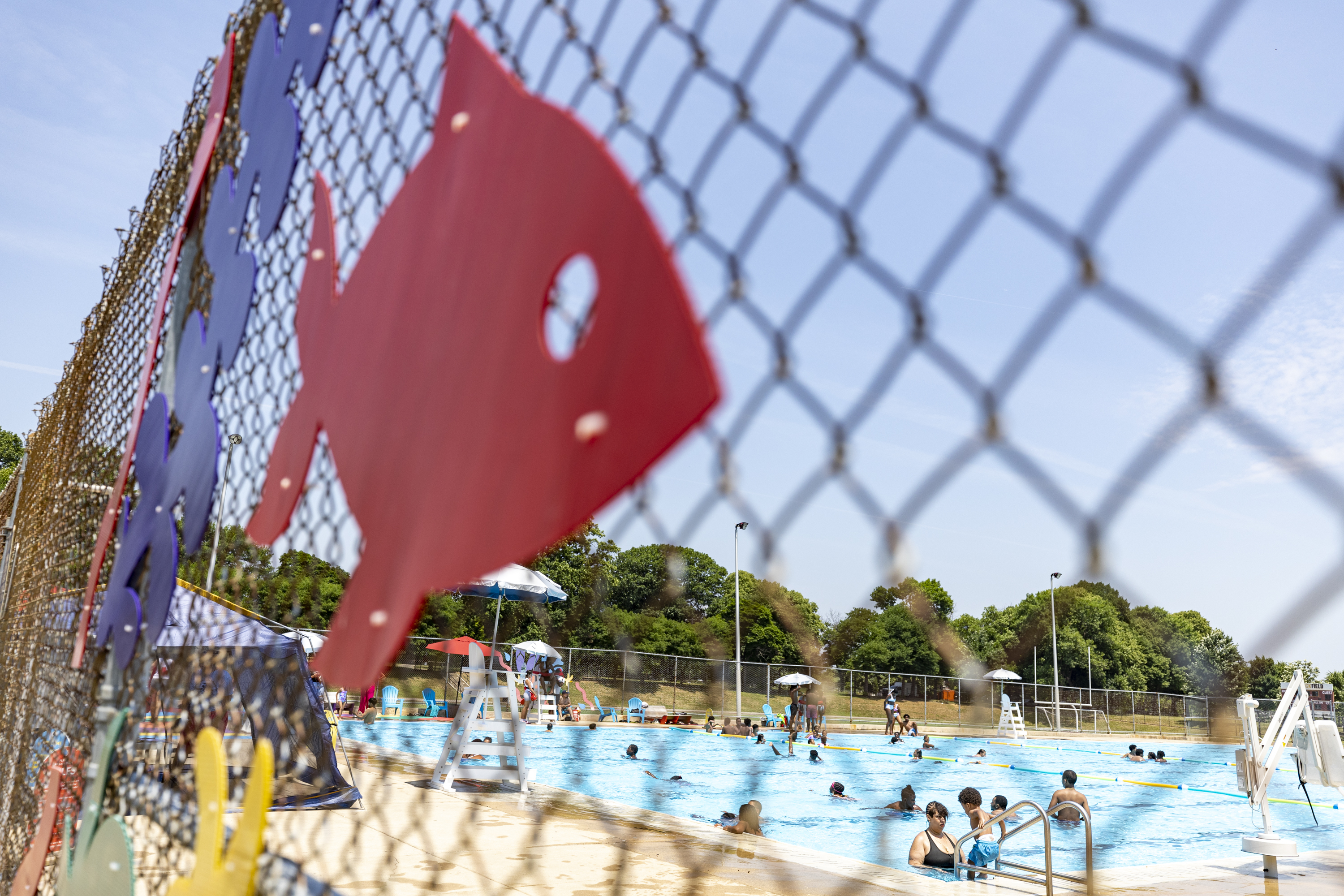
    Philadelphia public pools finally began to open Friday, just in the nick of time as a suffocating mixture of heat and humidity are breaking city records.

    Those looking for relief will be limited to just a handful of spots this week, as the city rolls out pool openings and ramps up hiring lifeguards.

    “We are moving with urgency and intention to ensure every neighborhood has dependable spaces for recreation and relief,” Mayor Cherelle L. Parker said in a statement. “These pools reflect our commitment to fairness in access to healthy public spaces where children can learn, play, and thrive safely during the summer months.”

    The city plans to open 63 pools this summer, up from 41 pools last year. The rollout began Friday with two locations — Hunting Park Pool and Kelly Pool in Fairmount Park.

    By Sunday, six pools will open, increasing to 10 by Tuesday. The city is aiming to have the rest of the pools open by the second week of July at the latest.

    The issue, as it is every year, is hiring enough lifeguards to staff the pools. Philly aims to hire and train nearly 400 lifeguards and maintenance staff to keep pools open across the city during the summer.

    “Our pools and spraygrounds are essential community assets during the hottest months,” said Susan Slawson, commissioner of the city’s Parks & Recreation department.

    A new sprayground at Wharton Square Park will open Saturday, with City Council President Kenyatta Johnson joining community leaders at noon to celebrate. There are more than 90 spraygrounds and splash pads spread across the city, with a new one planned for Miles Mack Playground in Mantua.

    To find pool hours, swimming lessons, and updated opening information, visit the Parks & Rec Finder App at phila.gov/parks-rec-finder.

    2026 Philadelphia Public Pool opening schedule

    Friday, June 12

    • Hunting Park Pool – 1101 W. Hunting Park Ave.
    • Kelly Pool – 4231 Lansdowne Dr.

    Saturday, June 13

    • Max Myers Pool – 1601 Hellerman St.
    • Sacks Pool – 400 Washington Ave.

    Sunday, June 14

    • Gathers Pool – 2501-19 W. Diamond St.
    • Bridesburg Pool – 4625 Richmond St.

    Monday, June 15

    • Marian Anderson Pool – 740 S. 17th St.
    • Lackman Pool – 1101 Bartlett St.

    Tuesday, June 16

    • Tiffany Fletcher Pool – 743-81 N. 48th St.
    • Schmidt Pool – 113 W. Ontario St.

    7 Philadelphia pools won’t open this summer

    The city said seven pools will remain closed all summer as long-term improvements totaling $70 million, which includes upgrades and reconstruction, are completed.

    • Lonnie Cohen Recreation Center 
    • Cecil B. Moore Recreation Center
    • Vogt Recreation Center 
    • Feltonville Recreation Center
    • McVeigh Recreation Center
    • Lawncrest Recreation Center 
    • Cherashore Recreation Center
  • Interested in tickets to the MLB All-Star Game or Home Run Derby at Citizens Bank Park? Here’s what it’ll cost you.

    Interested in tickets to the MLB All-Star Game or Home Run Derby at Citizens Bank Park? Here’s what it’ll cost you.

    Many of baseball’s biggest stars are coming to Philadelphia next month, but fans hoping to see them in person may have to dig deep into their wallets.

    MLB All-Star week begins July 10 with a week of activities, culminating with the 96th All-Star Game on July 14 at Citizens Bank Park.

    Seats on StubHub for the All-Star Game range from $651 to more than $7,000 for two seats together, as of Friday evening. A single ticket starts at $645. Standing-room-only tickets start at $667 each.

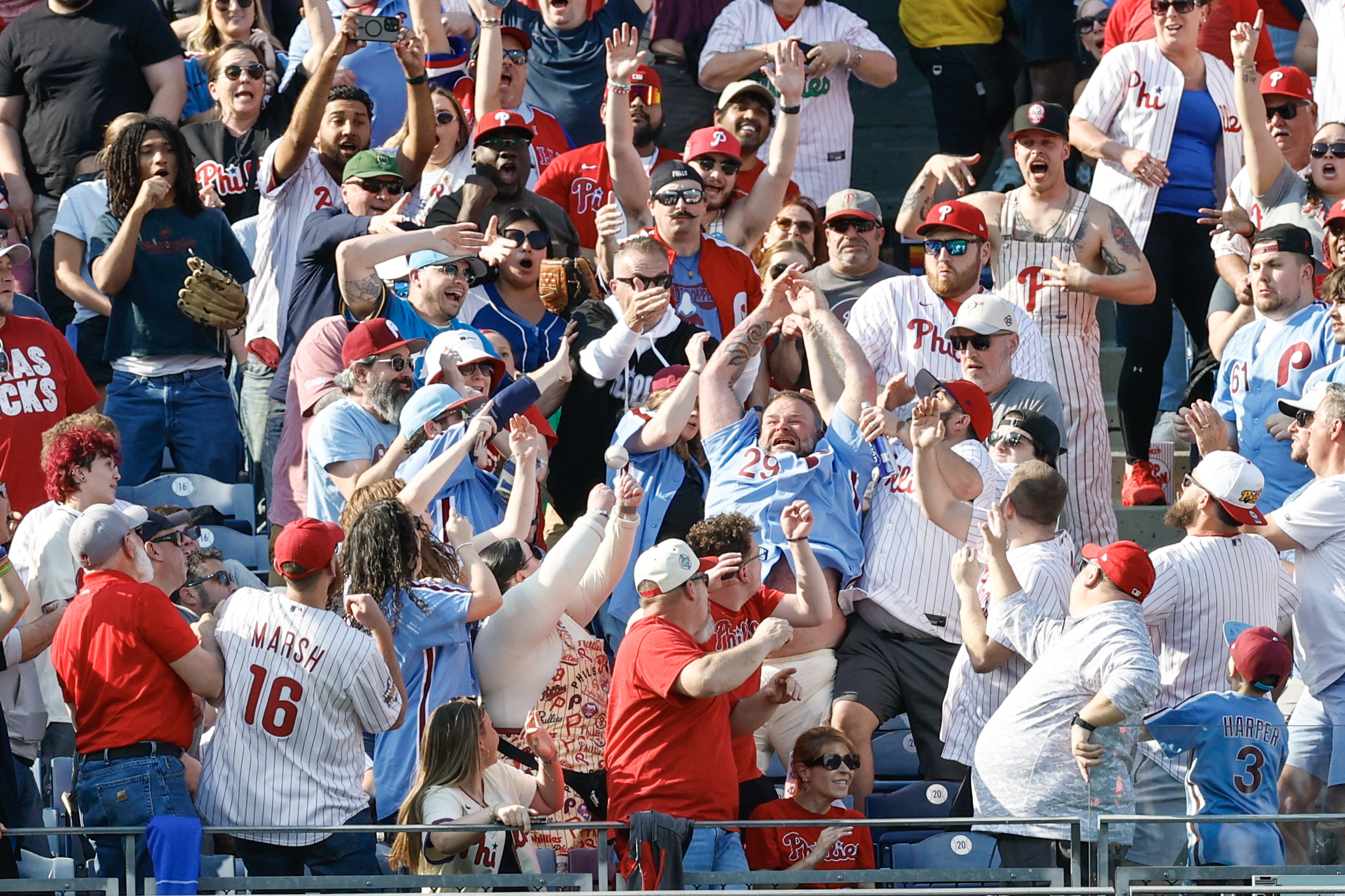
    For the Home Run Derby on July 13, the cheapest price is $509 for one ticket and $503 each for two tickets together. Outfield tickets in the 100 Level, which offer the greatest chance of catching a home run ball, start at $1,201.

    Phillies fans cheer and look to catch a home run hit by Kyle Schwarber in March.Yong Kim / Staff Photographer

    Last year in Atlanta, prices were lower. Ticketmaster listed seats starting at about $221, while StubHub and SeatGeek were just under $300.

    The soaring ticket prices hardly are surprising, given the city’s historic summer. The All-Star Game is returning to Philadelphia for the first time since 1996, and the city also is hosting FIFA World Cup matches and celebrations surrounding America’s 250th anniversary.

    With the FIFA World Cup, the PGA Championship, and the MLB All-Star Game happening within weeks of one another, Philadelphia sports fans are soaking up one of the busiest stretches in sports history.

    Starting Sunday, Philadelphia is hosting five group-stage matches and a Round of 16 match at Lincoln Financial Field (temporarily known as Philadelphia Stadium). World Cup tickets have become one of the hottest commodities in sports this summer, and he cheapest single ticket for the July 4 Round of 16 Match is $1,333, and $1,286 each for two tickets together on StubHub.

    A $663 ticket to the All-Star Game doesn’t seem as outrageous now.

    Just over 20 miles outside the city, Aronimink Golf Club hosted the 2026 PGA Championship. It drew such strong interest that tickets for the championship rounds sold out on official sites months in advance.

    Fans turned to resale markets to secure tickets to golf’s second major championship of the year. Daily tickets were resold on SeatGeek starting at $423.

  • ‘This is not about Pride’: Police Commissioner Bethel addresses criticism of police response to Gayborhood

    ‘This is not about Pride’: Police Commissioner Bethel addresses criticism of police response to Gayborhood

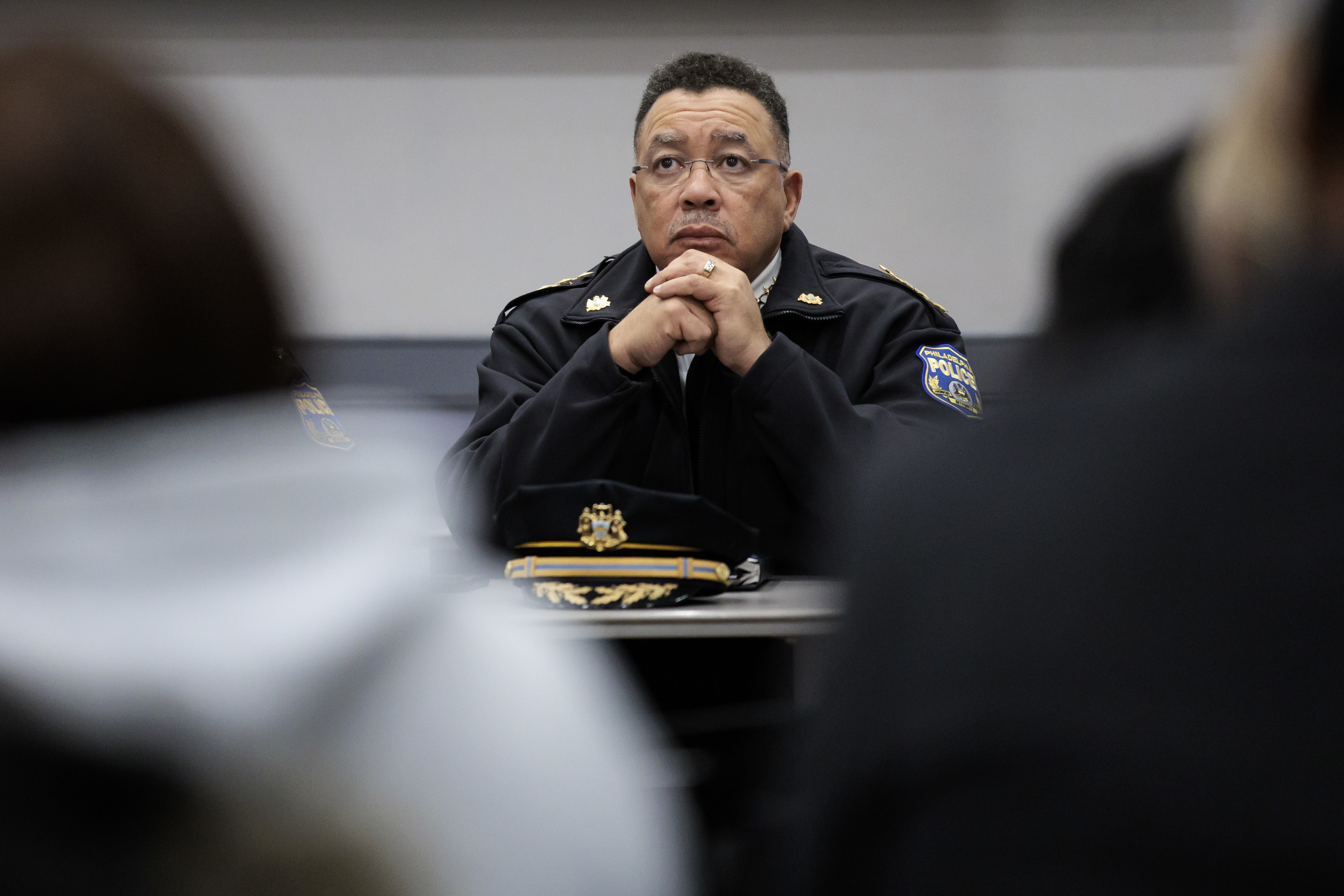
    Addressing criticism of his department’s handling of crowd control at a Pride celebration in the Gayborhood over the weekend, Police Commissioner Kevin Bethel said Friday that his officers became overwhelmed by dueling events and unruly behavior from large groups of teenagers.

    The turmoil — which led police to arrest 15 people and shut down street festivities in the LGBTQ+ neighborhood earlier than anticipated — stemmed from a change in the way the city celebrated Pride this year, Bethel said in a news conference at police headquarters.

    The decision to hold Philadelphia’s official Pride celebration on the Benjamin Franklin Parkway on Sunday deviated from the tradition of holding it in the Gayborhood, according to Bethel, who said the competing events created a public safety risk.

    In retrospect, he said, barricades that police set up on the Gayborhood sidewalks — another deviation from past celebrations there — might not have been a wise move.

    “We now know that might not have been the right decision,” he said, noting they caused ‘frustration” among guests.

    Bethel said the evening took a turn when large groups of people began arriving at both the Parkway and the Gayborhood, overwhelming the 600 officers dispatched across both events.

    And in the Gayborhood, that included crowds of teenagers, some breaking out into fights, he said.

    The commissioner said commanding officers made the decision to close down the streets near popular gay bars like Woody’s around 8 p.m. as a consequence.

    To underscore the point, Bethel played a video of one of those altercations, which showed a throng of young people acting erratically, some yelling and pushing each other.

    He called the arrival of young people to the Gayborhood a “surge” that saw teens “taking over” a parking lot and getting on top of cars.

    “At that point there are some decisions that have to be made,” Bethel said. “We can’t have thousands of individuals swirling together.”

    Bethel also acknowledged public outcry over images of police officers on horseback and motorbikes engaged in crowd control. Those officers had been dispatched to the Gayborhood from the Parkway event once crowds began to get out of hand, he said.

    “That is not pretty — it is not pretty when you move people,” he said.

    Responding to questions over the department’s enforcement at LGBTQ+ festivities, Bethel repeated his earlier assertion that the nature of the event had nothing to do with police response.

    “All of this is not about Pride, it is not about the Gayborhood, it is not about anyone’s feelings about anything,” he said. “It is about safety.”

    The commissioner added that he welcomed speaking again about the issue at City Council hearings called on the matter that will likely take place in the fall.

  • Joe Negri, handyman and music maestro on ‘Mister Rogers,’ dies at 99

    Joe Negri, handyman and music maestro on ‘Mister Rogers,’ dies at 99

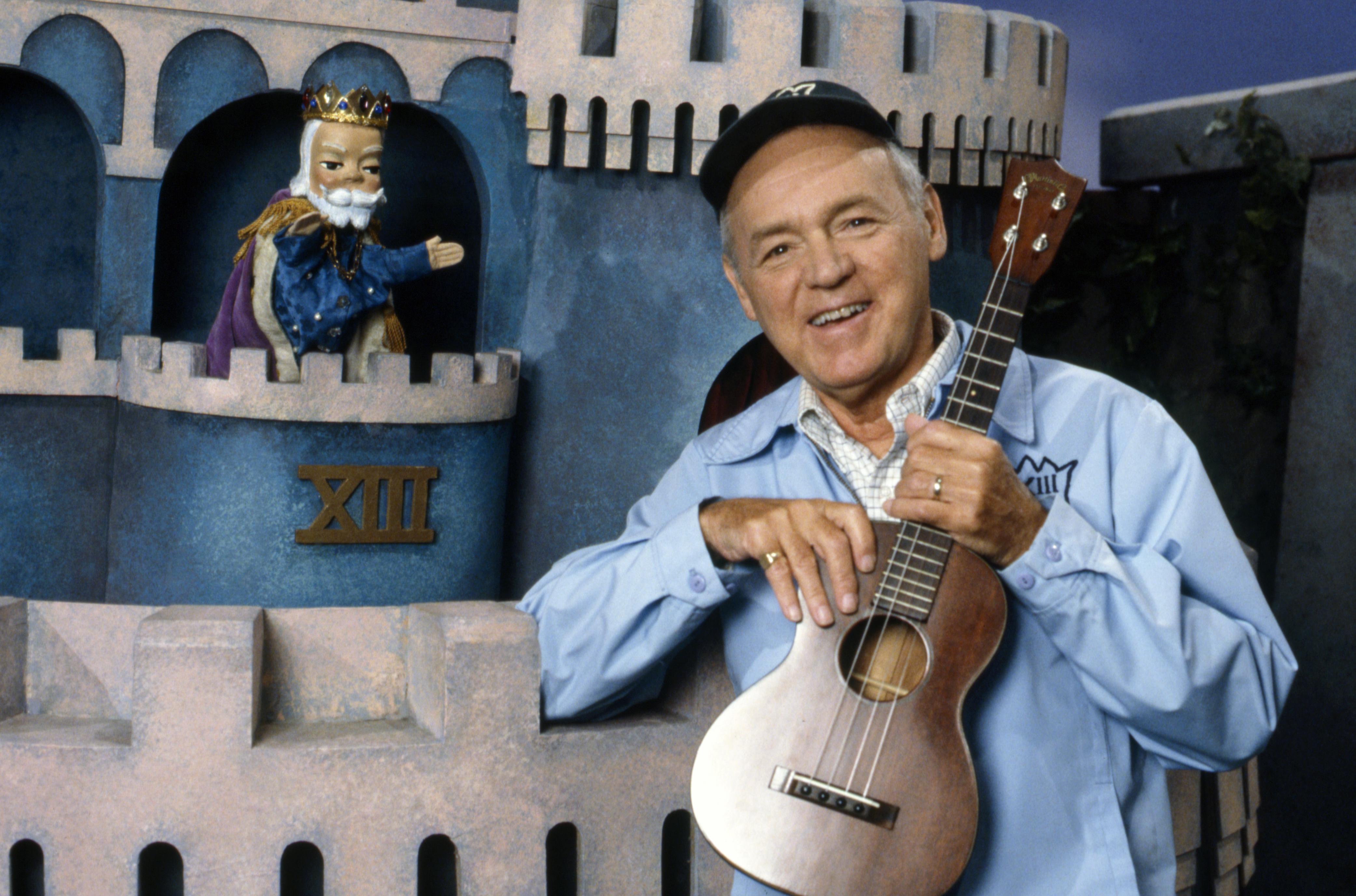
    Joe Negri, an elegant jazz guitarist who passed up touring with Tony Bennett and other luminaries to remain in Pittsburgh, his beloved hometown, where he played Handyman Negri on Mister Rogers’ Neighborhood, cleaning castles, mixing cement, and bantering with King Friday, died May 30 in Scott Township, Pa. He was 99.

    His death, at a senior living facility near Pittsburgh, was confirmed by his family.

    Mr. Negri appeared on more than 300 episodes of the long-running public television show — first as an affable, singing handyman in the Neighborhood of Make-Believe and later as the congenial proprietor of Negri’s Music Shop, demonstrating instruments and playing alongside Wynton Marsalis, Yo-Yo Ma, and other musical guests.

    “The thing about Joe was that he wasn’t acting,” David Newell, who played McFeely on the show, said in an interview. “He really was like the friendly fellow you might find walking around a neighborhood. He was just incredibly gentle as a person, but also as a musician.”

    After touring with jazz bandleader Shep Fields as a teenager, Mr. Negri accompanied Andy Williams, Johnny Mathis, and other headliners in the 1950s, framing their melodies with rich, effervescent chords. The Pittsburgh Post-Gazette arts critic Harold V. Cohen called Mr. Negri a “wizard.”

    Impressed by his talent, some Pittsburgh musicians persuaded him to move to New York, the center of the jazz world, where stars like Bennett wanted him to tour with them. But after arriving with his family in 1959, Mr. Negri realized he had made a mistake.

    “Living wasn’t easy in New York,” he told NPR in 2010. “The kids had babysitters. Somebody had to take them to the park to play. The whole scene just kind of turned me off. So we packed up.”

    Returning to Pittsburgh, Mr. Negri started a band and eventually became the music director at WTAE, a local television station. There, he worked with Fred Rogers on a short-lived children’s show.

    In 1966, Rogers left WTAE to develop Mister Rogers’ Neighborhood for the public television station WQED. He hired Mr. Negri to be on the show and later asked him to play a handyman.

    “I almost started laughing,” Mr. Negri later recalled. “I said, ‘Fred, you got the wrong guy. I’m not very handy. You know, I can’t do anything. I can’t even put a hammer on a nail.’”

    Rogers was undeterred.

    “Don’t worry,” he told his new handyman. “It’s going to be all pretend.”

    From the outset, music was central to the show. Mr. Negri sang for the first time in Episode 13, performing Sometimes People Are Good, a song written by Rogers, after the puppet Lady Elaine Fairchilde borrowed a painting without asking.

    The lesson is in the lyrics:

    Sometimes people are good

    And they do just what they should.

    But the very same people who are good sometimes

    Are the very same people who are bad sometimes.

    It’s funny, but it’s true.

    It’s the same, isn’t it for me …

    Isn’t it the same for you?

    At the end of the episode, Rogers reflected on what Lady Elaine had done. “If you want something, you ask for it,” he said. “And if you can’t have it, then you find something else.”

    Bending down to pick up domino blocks from the floor, he added, “I wonder if Lady Elaine knew that.”

    Then he, too, sang the song, lingering on the words “for you?”

    Joseph Harold Negri was born June 10, 1926, in Pittsburgh, the son of Italian immigrants. His parents were Michael Negri, a bricklayer, and Rose (Viggiano) Negri.

    Growing up in Mount Washington, a working-class neighborhood with a spectacular view of the city’s downtown, his home was filled with music. His father played the banjo. His mother listened to pop songs on the radio.

    When he was 3, he started playing the ukulele. By the time he was 5, he was singing on Uncle Henry’s Radio Rascals, a local program for child performers. He took up the guitar when he was around 8, taking lessons at Volkwein’s Music, a well-known store in downtown Pittsburgh, where he learned to play solos by jazz guitarist Eddie Lang.

    Mr. Negri had found his chord in life.

    “I guess there’s been a mainline for me — the guitar,” he told Vintage Guitar Magazine in 2010. “I call myself a work in progress.”

    In 1942, he played his first professional gig, sitting in with a local orchestra. Frank Andrini, a guitarist in Pittsburgh, took note of the performance and connected him with Fields, the bandleader. Mr. Negri dropped out of high school to tour with him.

    “He promised my mom and dad I’d be in good hands and he would look after me,” Mr. Negri later recalled. “And he did.”

    At 18, in the midst of World War II, he was drafted into the Army and sent to Europe, playing when he could at nightclubs and bars. An officer who saw him perform helped him join a special services unit that entertained soldiers.

    After his Army service, Mr. Negri returned to Pittsburgh, studying music at the Carnegie Institute of Technology (now Carnegie Mellon University). His path seemed set — move to New York, play on albums and tour with jazz stars — but the road led back to his hometown.

    “I feel that in this town I’ve gotten to do such a variety of things that I could never have done in New York or on the West Coast,” he told the Pittsburgh Press in 1971.

    Mr. Negri married Joan Serafini in 1954. She survives him, along with their daughters, Lisa Negri, Laurie Bentz and Gia Leven, and three granddaughters.

    This article originally appeared in The New York Times.