Blog

  • TMI owner says Pa. nuclear plant is on track to reopen next year

    TMI owner says Pa. nuclear plant is on track to reopen next year

    Constellation Energy crews have been laboring since 2024 to reopen Three Mile Island’s Unit 1 nuclear plant to meet spiking electricity demand. Planned data centers and other new demands have materialized since 2019, when the plant was shut because generating power there was too expensive to compete with cheap natural gas.

    Now Constellation has moved up its own deadlines and says it’s approaching its goal to load uranium next spring and add electricity to the grid later in 2027.

    That’s despite naysayers such as Neil Chatterjee, President Donald Trump’s former Federal Energy Regulatory Commission chair.

    “It will never work” because of TMI’s aging technology and the complex U.S. and Pennsylvania energy bureaucracies, Chatterjee wrote in January in The Hill, which neglected to note Chatterjee had become a solar-power lobbyist.

    In testimony submitted to regulators, environmental groups, including Eric Epstein’s TMI Alert, called the utility’s plans rushed and incomplete. Montgomery County-based PJM, which oversees power distribution for 13 states and the District of Columbia, warned it could be 2031 before the plant could connect to the power grid, Constellation chief executive Joe Dominguez told analysts and investors in March.

    But Dominguez minimized that warning. “Normally, they start off with a pretty long timeline and shorten that up,“ he told investors in a conference call May 11, adding that he would work with states to speed connections.

    Dominguez has moved up the original 2028 target date to next year, in part because of supporters like President Donald Trump and Pennsylvania Gov. Josh Shapiro, and because Microsoft has promised to buy as much power as the plant produces to run a growing array of data centers.

    So Constellation is paying an army of builders, lawyers, and plant operators to prepare the plant.

    Earlier this month, PJM agreed to speed up its process for connecting new power plants in states where regulators agree to approve sites faster.

    Here’s an update on what’s happening at TMI:

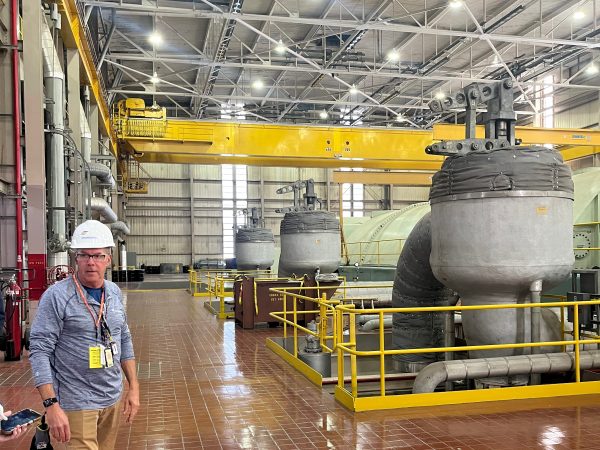
    At Constellation’s nuclear power plant on Three Mile Island near Middletown, Pa., in June 2025. Ted Shaffrey

    New equipment

    Constellation bought three building-sized replacement transformers from manufacturer Hyundai in South Korea, to be delivered later this month, after reinforcing the bridge to the island to bear their weight. Two will be installed “later this year,” one kept as a spare, said spokesperson Paul M. Adams.

    The company says crews are repairing the partly dismantled Bravo cooling tower and inspecting the reactor building and diesel motors on the site. They are restoring controls — originally analog systems made by manufacturers in Reading and other Pennsylvania cities.

    The company has scheduled enriched-uranium fuel assembly deliveries from its supplier Framatome in Richland, Wash., later this year, so fuel can be loaded into the reactor core next spring. The uranium is sourced from U.S. and foreign mines.

    The deal with Microsoft

    Microsoft has promised to buy power equal to the plant’s entire production at prices above today’s levels for 20 years.

    But that doesn’t mean the software and data-center giant is going to run wires to new, power-burning facilities in the neighborhood.

    The Microsoft deal supports Constellation’s regulatory and investor arguments in favor of reopening. It confirms this major data-center operator will need more power in years to come.

    Jobs for construction and plant workers

    Constellation says more than 3,000 construction workers will help bring the plant, which it now calls the Crane Clean Energy Center, into service.

    The company also has hired hundreds of permanent workers for the plant, named after the late Exelon Corp. CEO who spun off Constellation and championed nuclear power. More than 550 full-time employees are on site, including the current class of 80 operators being trained in federal Nuclear Regulatory Commission procedures.

    About 145 of those employees are “boomerang” staff who worked at Three Mile Island before its 2019 shutdown, according to Constellation.

    More than 400 hires live within 25 miles of the plant. They include about a dozen recent graduates of the Penn State Harrisburg campus nearby.

    U.S. Secretary of Energy Doug Burgum (center) with Constellation Energy staff on May 1 at the Three Mile Island nuclear power complex Unit 1, which Constellation Energy plans to reopen as the Crane Clean Energy Center uranium-powered electric plant in 2027.Constellation

    Financing for the advance work

    In November, the U.S. Department of Energy Loan Programs Office approved a $1 billion low-interest government loan to help Constellation reopen the Three Mile Island plant.

    Supporters of nuclear loan and subsidy programs say federal money ensures long-term operation at reasonable financing costs. Critics such as the Cato Institute, which generally opposes subsidies, say the government shouldn’t help pay for power that would otherwise be unprofitable.

    Supporters of the TMI reopening

    Shapiro, U.S. Energy Secretary Chris Wright, U.S. Interior Secretary Doug Burgum, U.S. Sen. Dave McCormick (R., Pa.), U.S. Rep. Scott Perry (R., Pa.), state legislators, and local officials have toured the plant to tout job and energy creation.

    With permit applications pending before the NRC and other agencies, Constellation says it is “on track” to restart the plant next spring and deliver energy into the grid by summer or fall.

    U.S. Sen. Dave McCormick with Tori VanderMeersch, senior manager, operations support for the Crane Clean Energy Center, in the control room at Three Mile Island Unit 1 nuclear power plant in early 2026.Constellation Energy

    A workaround for PJM’s warning on connecting to the grid

    In early June, the Federal Energy Regulatory Commission agreed to an unusual switch: It will let Constellation transfer “Capacity Interconnection Rights” from its diesel- and natural gas-burning electric power plants at Eddystone, Delaware County, to Three Mile Island, to speed the process of bringing the nuclear plant back online.

    Constellation says it can do this without having to shut the Eddystone complex because the Trump administration gave the company special permission to keep Eddystone open, along with other fossil-fuel plants that were earlier scheduled for closing under a long-term program to reduce carbon-burning. It no longer needs the rights at Eddystone and can apply them at Three Mile Island.

    An agreement on using water from the Susquehanna River

    The Susquehanna River Basin Commission in early June approved Constellation’s plan for using river water at the restarted Three Mile Island nuclear plant.

    Constellation plans to pull 73 million gallons per day from the river to control temperatures at the plant. That’s about one-third of 1% of the river’s average flow; an equivalent volume of water will be released and won’t, on average, cause “significant adverse impact to the ecosystem and other users,” notes commission spokesperson Stacey Hanrahan.

    “Of course, we do not review a project based on average daily flow,” but on days the river is low, for example during a drought, she added. If the river gets too low for too long, Constellation could be ordered to stop using it.
  • A popular but deadly hiking trail will reopen in the Poconos

    A popular but deadly hiking trail will reopen in the Poconos

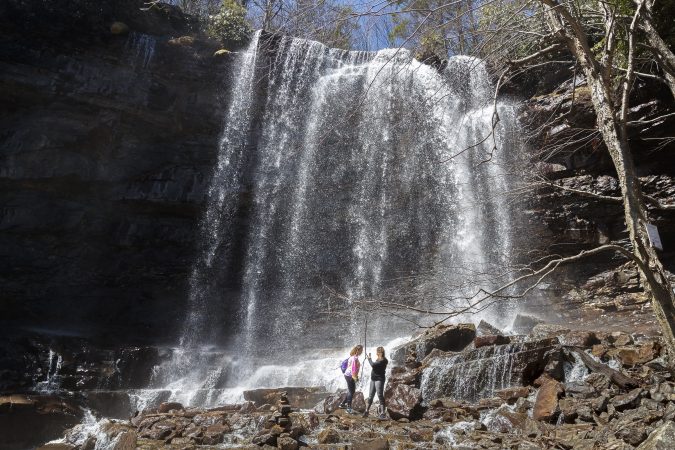
    JIM THORPE, Pa. — Long considered one of Pennsylvania’s most popular and scenic hikes, the Glen Onoko Falls Trail was also one of the state’s most dangerous.

    Many people have been injured on the steep rocky trail, 85 miles north of Philadelphia, in Jim Thorpe, Carbon County. Others have died. In 1983, David R. Carlyon, 23, of Hazleton, dove across the top of the falls, trying to save his 3-year-old nephew, Ian Russell. Both fell and died. Over the last 50 years, at least 10 hikers have died.

    When the Pennsylvania Game Commission closed the trail in 2019, citing safety and trail deterioration issues, Thomas Russell recounted the tragic day his son died.

    “I saw him,” he told The Inquirer in 2019. “I saw him clutching at vegetation, at a branch or something, and I guess his hands slipped, or it didn’t hold, and then he was gone.”

    Russell did not want the state to close the trail, however.

    Now, seven years later, it’s still closed and being transformed into a safer destination. The Pennsylvania Department of Conservation and Natural Resources’ Outdoor Corps has begun a project that will make the trail safer for hikers and more easily accessible to first responders who have to rescue the injured.

    The project, according to DCNR, is expected to take anywhere from three to five years. When finished, the trail would reopen and become part of Lehigh Gorge State Park.

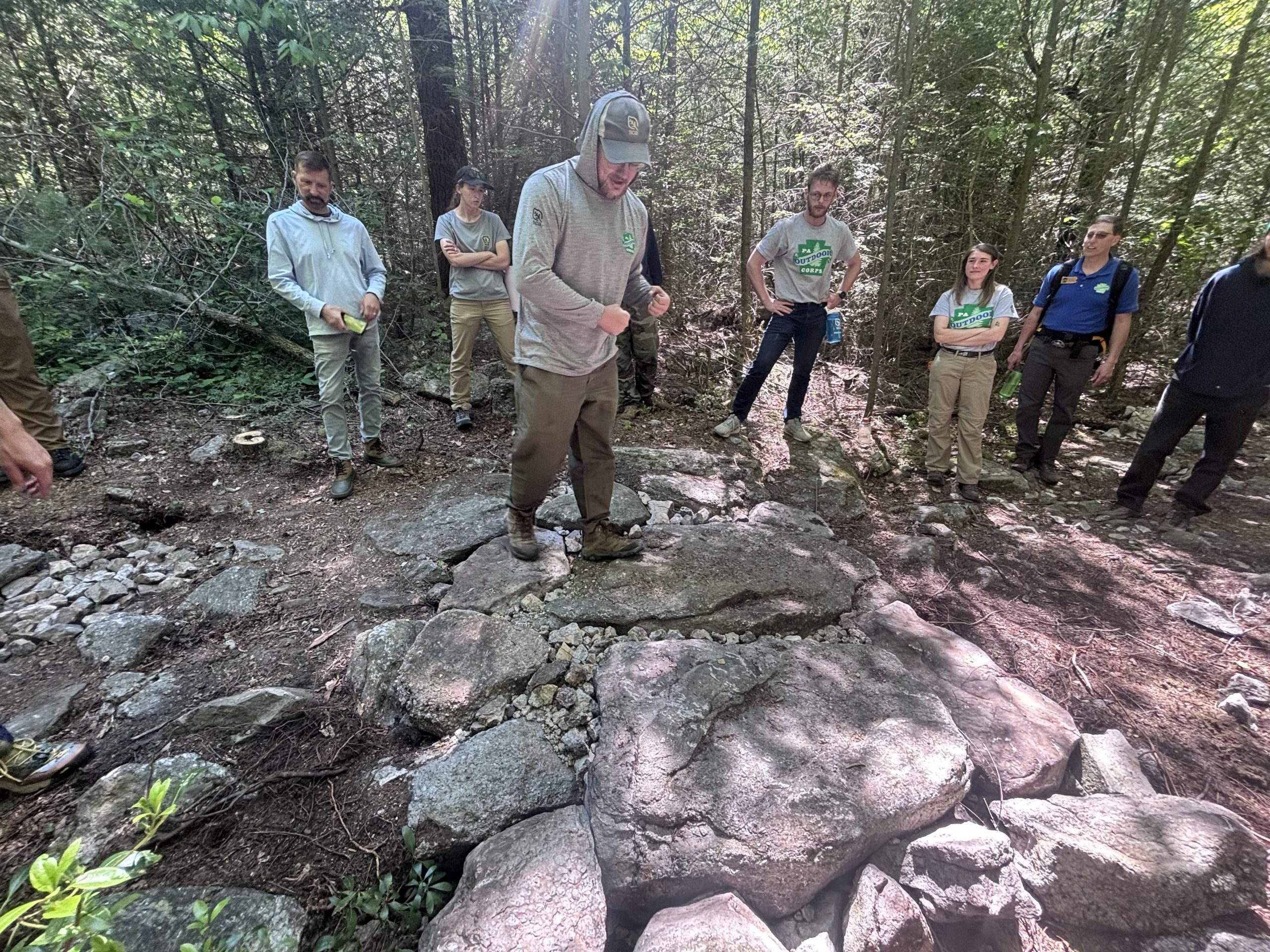
    A portion of Glen Onoko Falls Trail is being reconstructed to allow for easier access in case of emergencies.Jason Nark

    Members of the Outdoor Corps have been methodically moving or smashing large boulders on the upper portion of the trail, creating a safer route for first responders to reach injured hikers with UTVs. Many of the trails would be wider when the work is completed.

    It’s sweaty, calculating work that often requires heavy hydraulics to move boulders that weigh more than cars. Some of the biggest rocks — most of them sandstone — have earned names, like Belinda, Gertrude, and Turkey Leg.

    “When we crush a rock open, that’s the first time the inside of that rock has seen daylight in millions of years,” one Corps worker said.

    Earlier this month, a worker with the Pennsylvania Outdoor Corps discusses boulders that will be removed or pulverized on the Glen Onoko Falls Trail.Jason Nark

    In 2019, the Pennsylvania Game Commission cited overuse as an additional factor in the decision to close the trail. More than 8,500 people signed a petition at the time to keep the trail open.

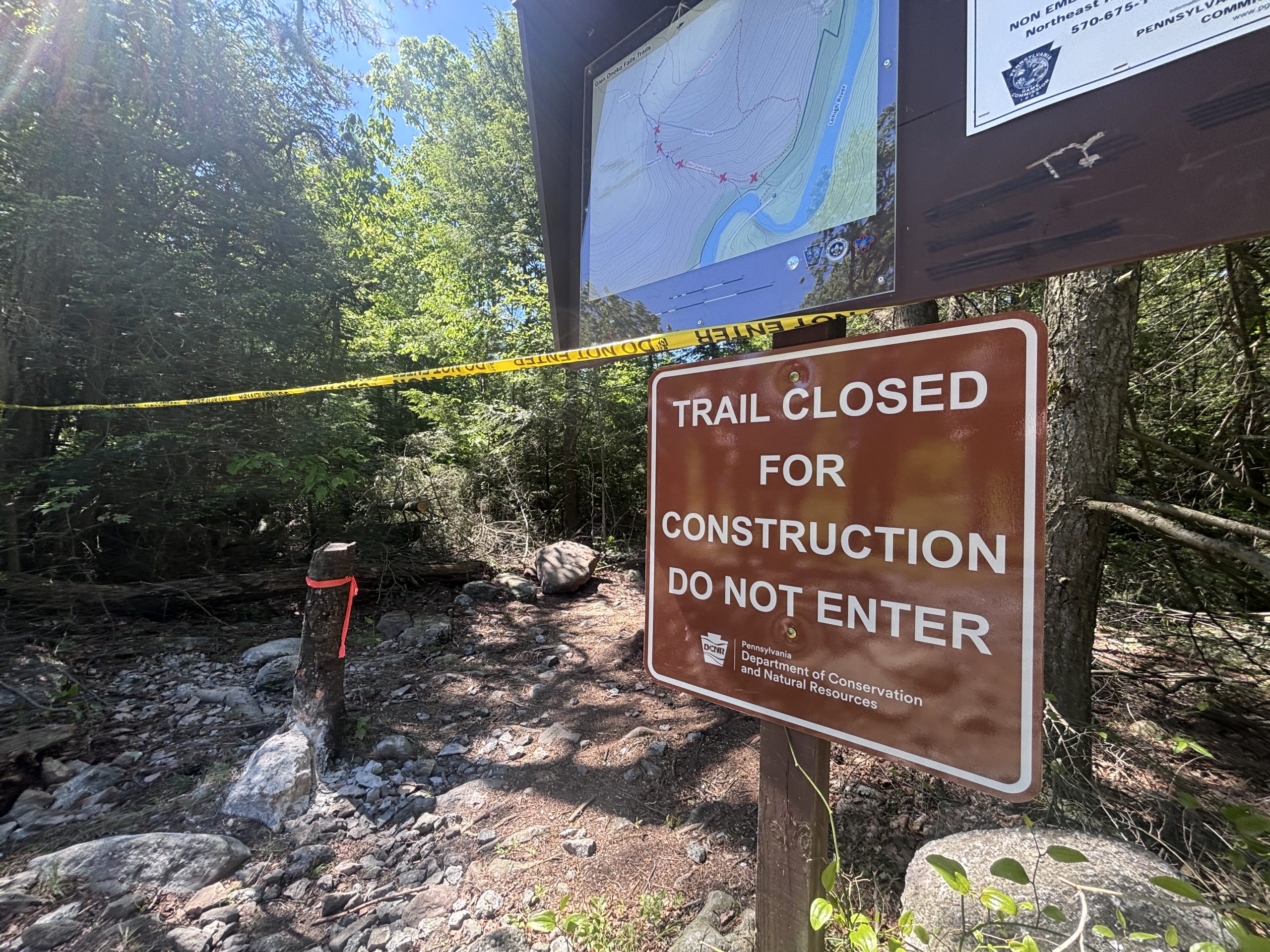
    Despite the closure and citations issued to hikers found on the trail, it has remained popular, officials said. Officials said the trail is even more dangerous, with hydraulics under high tension to move rocks, during the reconstruction process.

    “Even though it’s closed, the public still comes on here,” said Rich Fritsky, regional supervisor for the Pennsylvania Outdoor Corps. “They ignore the signs. They duck under the ropes, but it’s extremely dangerous.”

    A hiker had to be rescued just a month after the trail closed, and in 2022, a 72-year-old hiker fell and died there. On a recent tour, two hikers were resting by the falls.

    “Last winter, a guy was ice climbing and had to be rescued,” said Timm Berger, the district director for State Rep. Doyle Heffley.

    On a recent gathering at the trail rehabilitation site, Berger said Heffley’s office has received countless calls over the years from hikers asking when Glen Onoko will reopen.

    “People are anxious,” Berger said.

    The popular website AllTrails.com lists Glen Onoko Falls as a difficult hike where proper shoes are required. The trail is a 3.7-mile loop and ascends easily, with flat terrain, for about a quarter-mile beyond the parking lot, following Glen Onoko Run closely. But it grows steeper and rockier as it goes upward, with some narrow ledges that appear to be eroding and some steep drop-offs. Often, hikers need to scramble over wet rocks.

    AllTrails also warns hikers that the trail is “temporarily inaccessible,” but many are not heeding the warning.

    “It started off fairly easy, but then got fairly difficult,“ one hiker wrote on AllTrails in March. “I can definitely understand why the trail is closed.”

    A sign near the middle falls on the Glen Okono Falls Trail uses a skull and crossbones to warn hikers just how serious the threat of danger exists on the trail at this point. The Pennsylvania Game Commission closed the main Glen Onoko Falls trail in Jim Thorpe on May 1, 2019.MICHAEL BRYANT / Staff Photographer
  • 🗳️ The odds of Parker’s reelection | Morning Newsletter

    Good morning, Philly! Welcome to a new week. We may see a bit of rain today, and highs are expected to be near 80.

    Philly progressives are eyeing the mayor’s office after State Rep. Chris Rabb’s win in the 3rd Congressional District. But any challenger to Mayor Cherelle L. Parker would be considered a significant underdog.

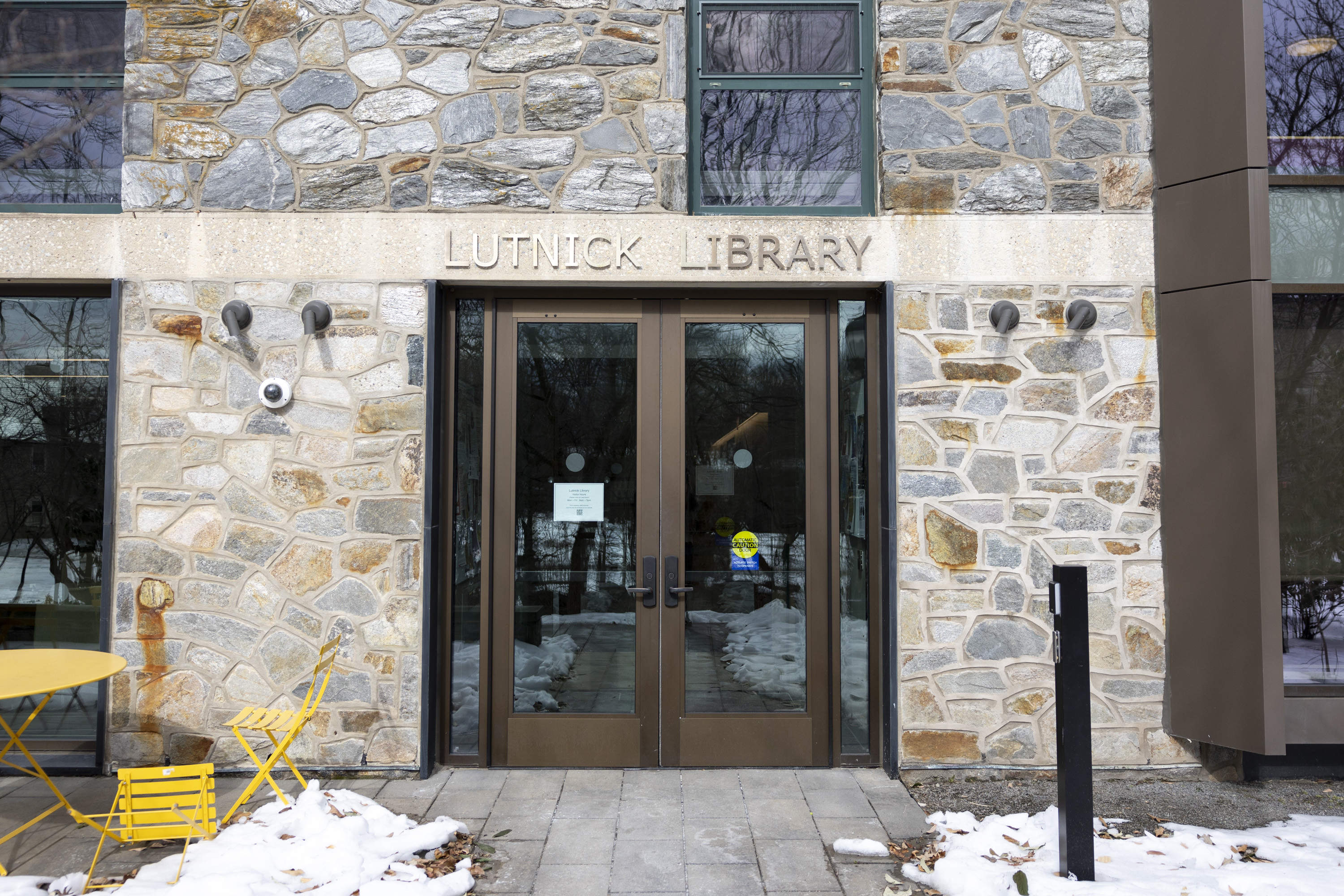
    And a group of 1960s Haverford College alumni has been writing to school officials, urging them to form a committee to consider removing U.S. Commerce Secretary and mega donor Howard Lutnick’s name from the library.

    Plus, three Philadelphia police officers were wounded in a shooting late Saturday, and more news of the day.

    — Sam Stewart (morningnewsletter@inquirer.com)

    If someone forwarded you this email, sign up for free here.

    Could an underdog take office?

    In a little more than 10 months, Mayor Parker, a centrist Democrat and Philly’s first female mayor, will be up for reelection. She has not officially announced a campaign, but all signs indicate she intends to run again.

    Any challenger to Parker would be considered an underdog, though. The mayor has the power of incumbency; no mayor in the last eight decades in our deep-blue city has lost a bid for a second term. And Parker is backed by the city’s long-powerful Democratic establishment, contributing to the foregone conclusion that their allied mayor would win again.

    However, some on the left see a coalescence of forces that could bolster their chances: national frustration with the Democratic establishment and a widespread anti-incumbent sentiment, among other factors. They also see potential signs of Parker’s power waning.

    But the biggest question for progressives in the approaching mayoral race remains: Who could be their candidate? A Democratic strategist based in Philadelphia said there are few, if any, challengers to Parker who could pull off a win in 2027.

    Alumni weigh in on controversial library name

    About a dozen vocal Haverford College alumni have come out in strident disagreement with president Wendy Raymond’s decision to not take steps toward considering the removal of Howard Lutnick’s name from the school library.

    Several in the group have called for Raymond’s resignation, while at least one said he had withheld his donation.

    Some were critical of Lutnick even before Department of Justice documents released earlier this year showed he had contact with sex offender Jeffrey Epstein as recently as 2018, long after Epstein pleaded guilty to obtaining a minor for prostitution and soliciting a prostitute.

    But Raymond stood by and explained her decision during a Zoom call this week with former board members, and the current board chair said Lutnick himself feels that he is being targeted in a witch hunt, according to accounts of the meeting.

    “I am appalled,” one alumni wrote to Raymond. “You should resign immediately so Haverford‘s board can replace you with a leader who puts principle ahead of principal.”

    What you should know today

    • Three Philly officers were wounded in a shooting after a verbal altercation with a retired city firefighter escalated, and the man opened fire on them, officials said. The gunman, identified as Eric Franks, was killed by officers in response, according to authorities.
    • The feud between Anthropic and the Trump administration escalated again Saturday after the government took the unusual step of demanding that the artificial intelligence company cut off foreign access to its latest models.
    • Republican Sen. Mitch McConnell was admitted to a hospital Sunday, his spokesperson said. McConnell’s health has been a subject of scrutiny for years.
    • The Urban League of Greater Philadelphia is opening a free clinic in West Philadelphia for people without health insurance. The $8 million Center for Well-Being will also offer workforce development, housing, and other services.
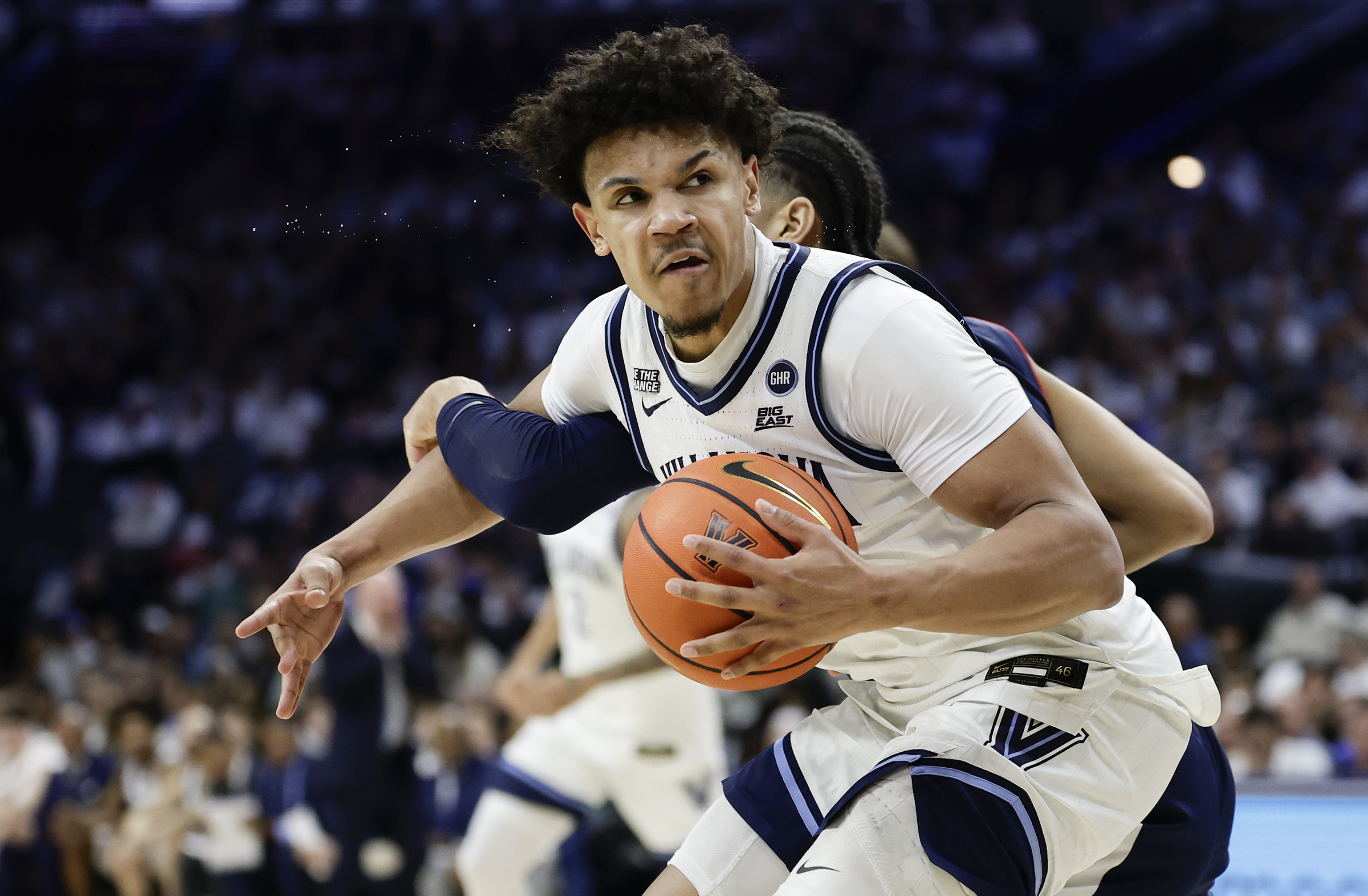
    • Jalen Brunson, a Villanova alumnus, and the Comeback Knicks did it again. Now they’re the Champion Knicks for the first time in 53 years after beating the Spurs 94-90.

    Quote of the day

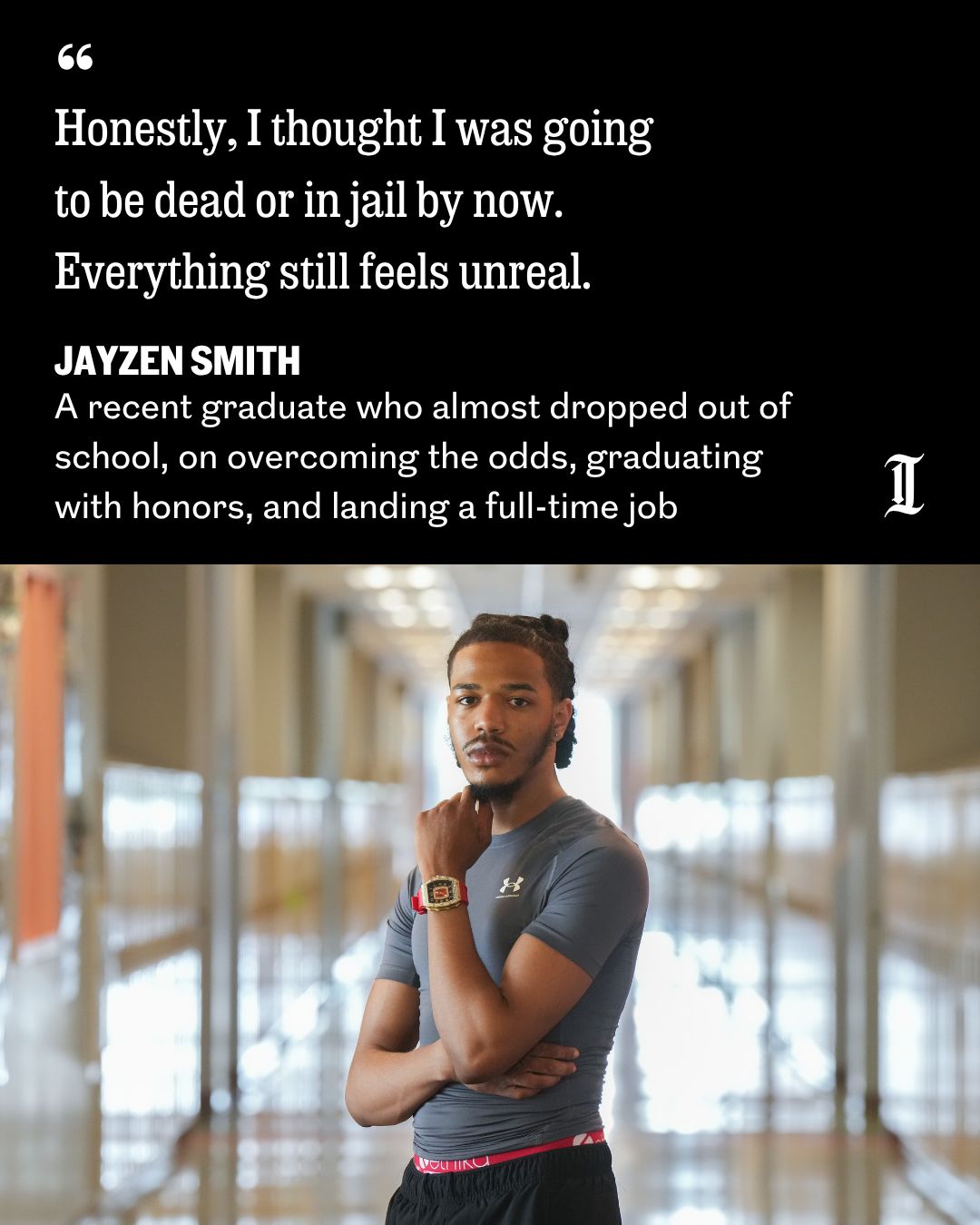
    A West Philly High graduate almost dropped out of school. Instead, he has a diploma and a full-time job.Jessica Griffin

    Jayzen Smith, a recent graduate of West Philadelphia High, overcame housing and food insecurity. He graduated with honors last week and is employed full-time in operations with the Penn Medicine health system. But the diploma, the accolades, and the steady path were not a given, said Smith.

    🧠 Trivia time

    What animal appears on Wawa’s iconic logo?

    A) A moose

    B) A goose

    C) A mouse

    D) An eagle

    Think you know? Check your answer. And be sure to take the rest of our quiz to see if you can identify the current logos for other Philly businesses.

    What we’re …

    😋 Dying to try: Samosas and viral dot cakes from Manayunk’s Saffron Cafe.

    👂 Listening to: Advice from five Chester County centenarians, who range in age from 99 to 104. They’re sharing some of their life secrets.

    ♟️ Playing: Chess! Philly is home to a thriving community of chess players, bringing together people of all ages, backgrounds, and experience levels.

    🧩 Unscramble the anagram

    Hint: A botanical liqueur produced by monks in France. (Hint: It’s one word.)

    CURE EARTHS

    Email us if you know the answer. We’ll select a reader at random to shout out here.

    Cheers to Lorraine Haggerty, who solved Sunday’s anagram: Benny McLaughlin. The Philly soccer legend couldn’t play in the epic 1950 World Cup because it would have cost him his job.

    Photo of the day

    Ecuadorian soccer fan Demetrio Govrea watches fans during a flag waving event at the Philadelphia Museum of Art steps along the Benjamin Franklin Parkway, ahead of their first-round World Cup match against the Ivory Coast on Saturday, June 13, 2026.Yong Kim / Staff Photographer

    📬 Your ‘only in Philly’ story

    Think back to the night that changed your life that could only happen in Philly, a true example of the Philly spirit, the time you finally felt like you belonged in Philly if you’re not a lifer, something that made you fall in love with Philly all over again — or proud to be from here if you are. Then email it to us for a chance to be featured in the Monday edition of this newsletter.

    This “only in Philly” story comes from reader Keith Vine, who describes why Philly is the best sports city:

    I grew up in New Jersey, about a 15-minute ride to the stadium complex in South Philly. So naturally, I was a Phillies / Eagles / Flyers / Sixers fan. Philadelphia is a great sports city, but I get why most of the country doesn’t understand us.

    Having rejoiced (but mostly suffered) through the ups and downs of our teams, Philly fans have developed a hard edge. After numerous collapses, we have always been nervous if a season is going too well. Other cities’ fans wonder why we can’t relax and enjoy the prosperity, but we are too afraid that it will end any minute.

    We are, for the most part, a pretty intelligent fan base, and will not put up with any nonsense being passed off as wisdom. When Bill Giles told us that Philadelphia was a small-market team, we scoffed.

    A sports writer (I can’t remember who) captured the very essence of being a Philly fan by saying that, “Philadelphia fans will tolerate losing, barely. What they won’t tolerate is not trying.”

    It’s a great time to be a sports fan in Philadelphia, especially with the World Cup finally here. 👋 Have a great day, folks! Be back in your inbox tomorrow morning.

    By submitting your written, visual, and/or audio contributions, you agree to The Inquirer’s Terms of Use, including the grant of rights in Section 10.

  • ⚽️ Start your day with a Cup | Sports Daily Newsletter

    ⚽️ Start your day with a Cup | Sports Daily Newsletter

    We’ve be talking about it for years, waiting and planning for almost as long, and on Sunday night, the World Cup finally arrived in Philadelphia as Ecuador took on Ivory Coast at Lincoln Financial Field Philadelphia Stadium. Even Jay-Z was on hand.

    From South Philly to Lemon Hill and all across the city, fans celebrated as a years-long effort culminated, and a stretch of six games over the course of the next three weeks commenced. The Ivory Coast’s 1-0 win over Ecuador was the first of five group stage games, with a Round of 16 finale scheduled for July 4.

    To many in the Philadelphia area — outside of the passionate Ecuadorian and Ivorian fans that made their presence known throughout the city over the weekend — the outcome of last night’s game likely mattered very little. What did matter, however, is that the city’s World Cup party has officially started. And it’s time to enjoy that thing it felt like would never arrive. Because it will be gone before you know it.

    According to columnist Marcus Hayes, Philadelphia was the star during its men’s World Cup debut.

    — Matt Mullin, @phillysport, sports.daily@inquirer.com.

    If someone forwarded you this email, sign up for free here.

    ❓After the team’s big 4-1 win this weekend, how far do you think the U.S. can advance in the World Cup? Email us back for a chance to be featured in the newsletter.

    Call it what it is

    Philadelphia Phillies center fielder Justin Crawford reacts after he’s called out following an ABS challenge during the game against the Cincinnati Reds at Citizens Bank Park on Tuesday, May 19, 2026 in Philadelphia.Monica Herndon / Staff Photographer

    Phillies interim manager Don Mattingly didn’t mince words when talking about the situation in which rookie outfield Justin Crawford now finds himself.

    “We’re pretty much platooning him,” Mattingly said.

    That wasn’t the initial plan, but the left-handed hitting Crawford is 4-for-28 (.143) with three walks and no extra-base hits against lefties. And so, the plan changed. But does Crawford need to see left-handed pitching in order to improve against left-handed pitching? Mattingly is leaning on his on experience.

    “I kind of rely on my own history because when I first came up, I platooned, and it wasn’t a terrible thing for me,” he said. “I probably would’ve struggled with the lefties. [Crawford]’s a guy that I think is going to hit lefties. But the amount of lefties we see, we don’t see a ton. So, it’s days where he can step back and keep working on his swing.”

    Meanwhile, the Phillies dropped two of three to the Brewers in Milwaukee this weekend. The latest series loss isn’t cause for panic given the opposition, but it is worth noting that while the Phillies are 38-33 — and 29-14 under Mattingly — they’re only 3-9 against the Brewers, Dodgers, and Braves, the cream of the National League crop.

    Now, the Phillies return home for six games against the Marlins and Mets, the start of 12 straight against the two teams at the bottom of their division.

    Next: Phillies vs. Marlins, 6:40 p.m. (NBCSP)

    What we’re…

    🙋‍♂️ Asking: Now that the Sixers promoted Jameer Nelson, what’s next for Elton Brand?

    🏁 Learning: Why everyone loves Pocono Raceway, which hosted its annual NASCAR event this weekend.

    🤔 Wondering: How hard can it really be to stop a penalty kick?

    The ‘Nova Knicks did the thing

    It probably hurt most Philly sports fans to watch the Knicks, who steamrolled the Sixers in the second round, hoist the Larry O’Brien Trophy on Saturday night. They were a deserved champion, for sure, taking care of Victor Wembanyama and the San Antonio Spurs in five games, but there’s something about seeing a rival — especially one that so thoroughly beat your hometown team — win a title.

    But if you went to Villanova or are a Wildcats fan, you’re likely ranging somewhere between an existential crisis and pure joy. And columnist Mike Sielski likely wouldn’t blame you for applying your Villanova loyalties to the ‘Nova Knicks. He believes the seeds of their greatness — especially that of Finals MVP Jalen Brunson — was forged on the Main Line.

    “It was the perfect preparation for these playoffs, for these NBA Finals, for a remarkable run capped when Brunson took control of Game 5, when the sub-six-foot guard with the impeccable footwork, with the endless array of head fakes and mid-range shots, with the glorious old man’s game was once again the coolest customer on the court,” Sielski writes.

    Spending with the big ‘Cats

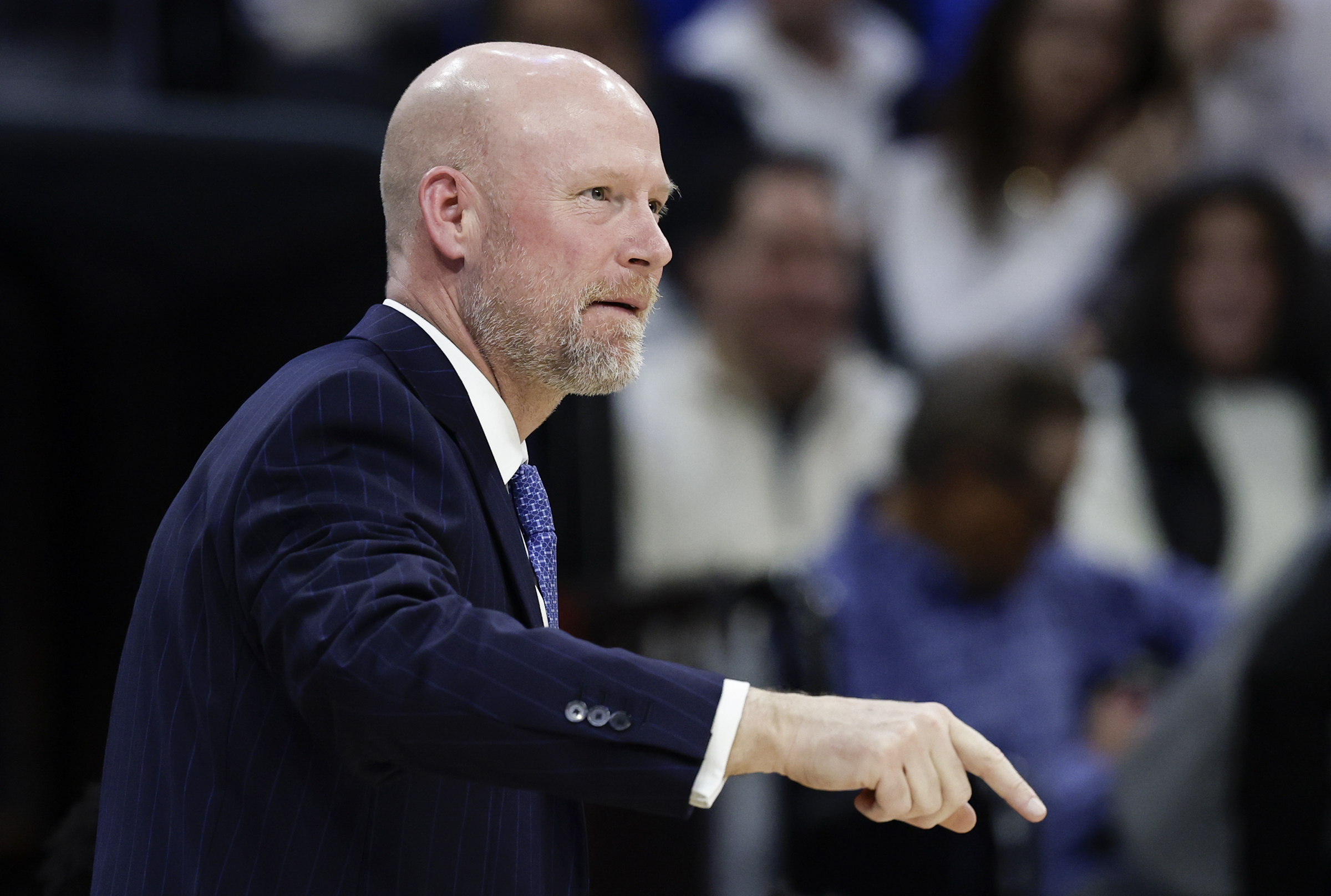
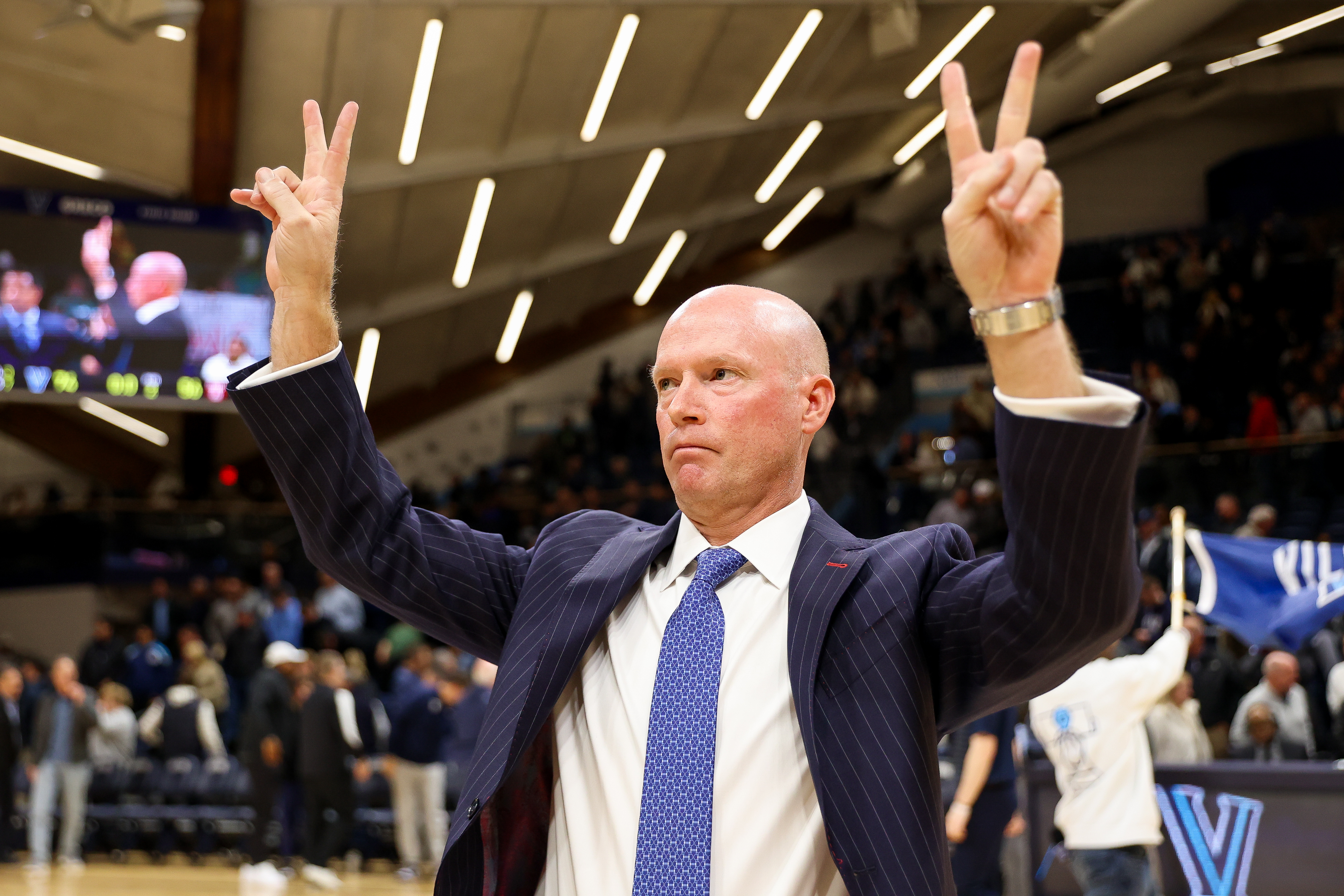
    Villanova head coach Kevin Willard against UConn on Saturday, Feb. 21, 2026 in Philadelphia.Yong Kim / Staff Photographer

    Speaking of Villanova, the team landed a commitment from 7-foot-3 Italian center Luigi Suigo, who recently withdrew his name from the NBA draft despite some scouts suggesting he could go late in the first round.

    That Villanova was able to lure a player projected to make up to $3 million as an NBA rookie says a lot, and not just about their team next season. In fact, it may say more about the school’s future — and its ability to financially compete with some of the sports’ biggest programs.

    It also caps off a roster retool that saw the Wildcats replace all but one of the eight players to appear in their NCAA Tournament game in March. And the reviews so far are promising.

    A Flahr for the draft

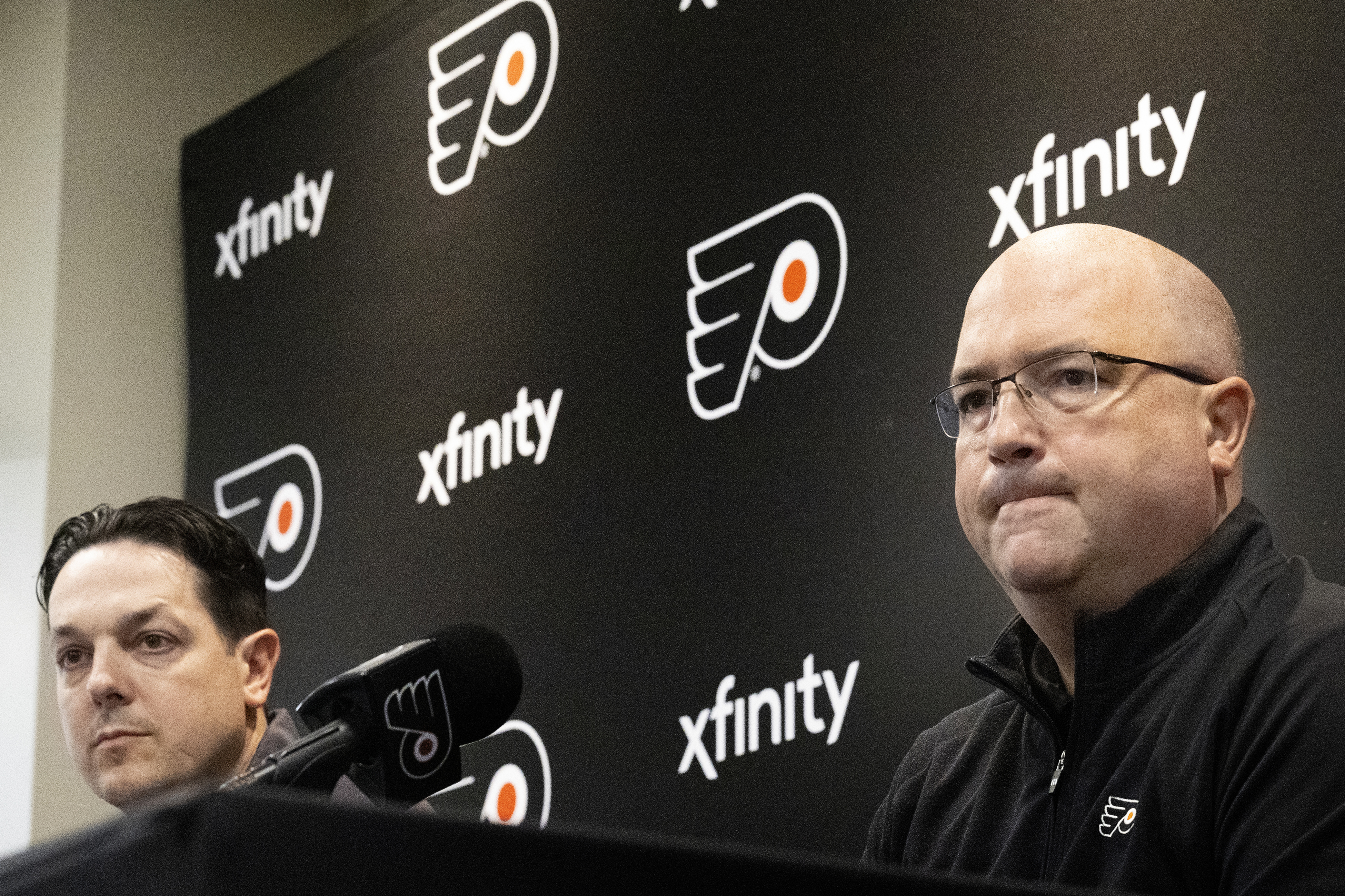
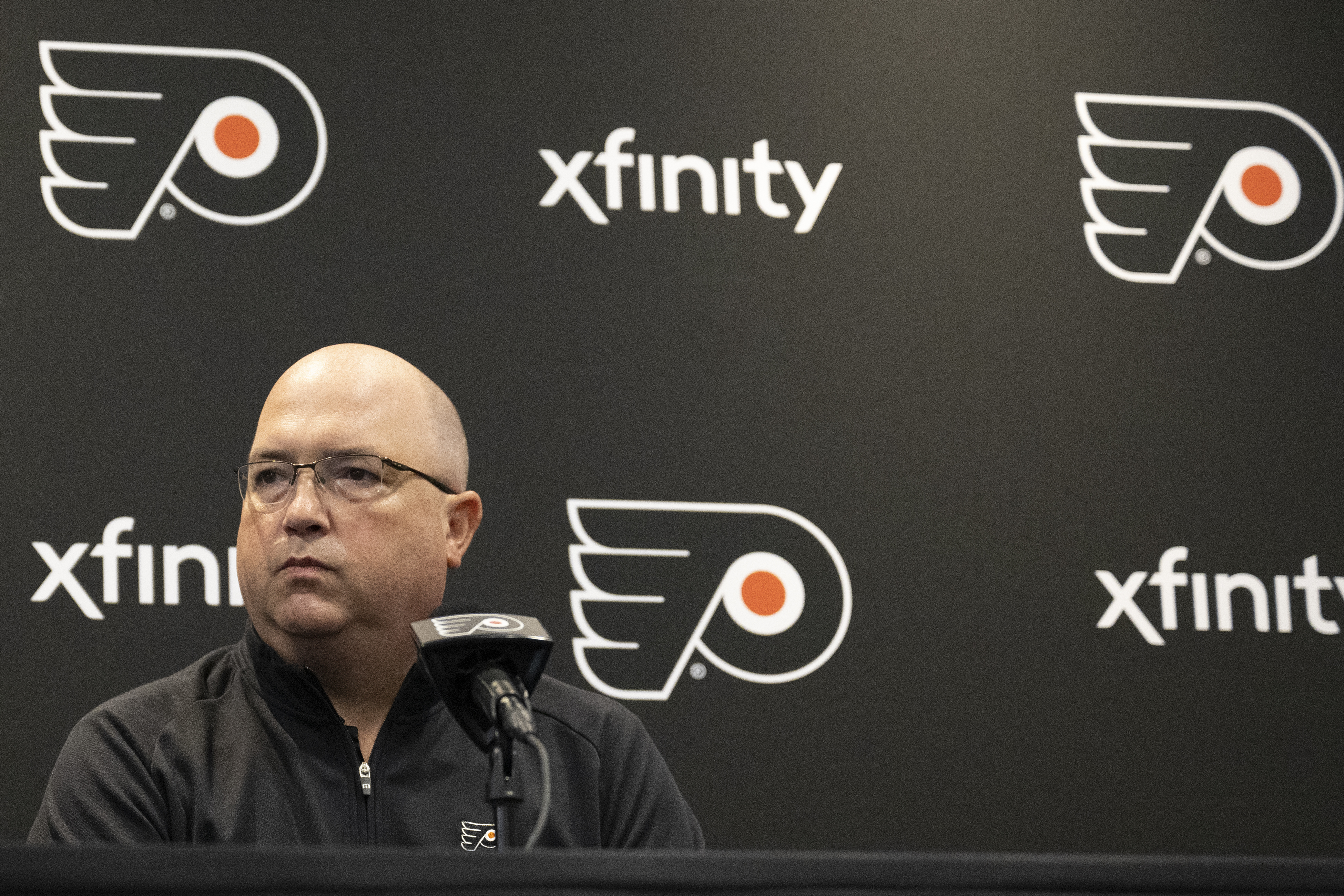
    Flyers Asst. GM Brent Flahr talks to reporters on Tuesday, June 17, 2025 at the Flyers Training Center in Voorhees, N.J.Jose F. Moreno / Staff Photographer

    The NHL draft is rapidly approaching, and it’s going to be new territory for general manager Danny Briere, whose team made the playoff for the first time in his tenure and holds the 21st overall pick, not a lottery pick. But there are still plenty of needs — and plenty of options — for the Orange and Black.

    Last week, Jackie Spiegel caught up with Briere for a two-part interview about all things Flyers, including the draft and some of the team’s young players. But this week, she zeros in on just next week’s draft with assistant GM Brent Flahr, who runs the team’s draft, in another two-part interview.

    Sports snapshot

    It was a beautiful weekend, so hopefully you were outside enjoying the start of summer. If you were, here are a couple more stories you might’ve missed from around the sports world …

    🧠 Trivia time

    Jalen Brunson, Josh Hart, and Mikal Bridges are not the first members of Jay Wright’s two Villanova national championships teams to win an NBA title. Who was the first?

    A) Collin Gillespie

    B) Eric Paschall

    C) Donte DiVincenzo

    D) Ryan Arcidiacono

    We compiled today’s newsletter using reporting from Scott Lauber, Mike Sielski, Gina Mizell, Devin Jackson, Ariel Simpson, Jeff Neiburg, Jackie Spiegel, Henry Savage, Lauren Jones, Jonathan Tannenwald, and the Associated Press.

    By submitting your written, visual, and/or audio contributions, you agree to The Inquirer’s Terms of Use, including the grant of rights in Section 10.

  • Q&A: Brent Flahr on the Flyers’ draft strategy with the 21st pick, whether trading the pick is an option, and more

    Q&A: Brent Flahr on the Flyers’ draft strategy with the 21st pick, whether trading the pick is an option, and more

    BUFFALO, N.Y. — The 2026 NHL draft is quickly approaching, and things look a little different for the Flyers this year.

    After making it to the second round of the Stanley Cup playoffs for the first time since 2020, the Orange and Black are picking at No. 21 in the first round and only have five picks across all seven rounds.

    In Part 1 of The Inquirer’s two-part interview with Brent Flahr, who runs the team’s draft, the assistant general manager chats about the team’s approach heading into the draft, which will be held on June 26-27 back in Western New York.

    This interview has been edited and condensed for clarity and was conducted on June 3.

    Q: Several young players entered the lineup for the Flyers this season and impacted the game. Does how they performed change how you look at things for the draft?

    A: A little bit. But where we’re picking, we know we can’t be that selective, especially early, we’re going to go with the best player. But we know where maybe our holes and our depth charts are going forward, or where we need to add more depth. At the same time, sometimes the draft doesn’t fall that way; you can’t go way off. The way we do our draft is we have layers and, obviously, we’ll target the best player, and if it’s all equal, then we’ll go by position. It’s kind of the way it always works.

    Q: What do you consider missing in the depth chart then?

    A: Well, we do have a number of centers coming now, which was kind of our [issue in] depth before, and we have some younger D on the team. But besides Spencer Gill and Ty Murchison and Hunter McDonald, Oliver Bonk, the next layer of younger defenseman we would probably use. We didn’t draft a goalie — we drafted two a couple of years ago, which takes the heat off — but probably go with adding a goalie, maybe. And then up front, we can always add depth.

    Q: Does it change your approach when there’s only five draft picks?

    A: Certainly doesn’t change it early. We’ll look at options, whether you’re trying to trade up or trade back, maybe adding a pick or changing things to get another higher pick, but just the way the draft was, we were aware. I think it’s a good draft at the top end; it’s not quite as deep as maybe some of the drafts previously. So when we were talking about giving away picks, we kind of targeted this year as the year that we’re going to be short a pick or two. But we still feel like, as the year has gone on, we have some guys targeted to the later rounds, which our guys [will] be happy with and excited about.

    Q: When you see the success of players like Ty Murchison, Hunter McDonald, Alex Bump, who were late-round picks, does it give you confidence you can find someone there?

    A: For sure, and that’s the challenge of the draft. Not everybody plays — we’re well aware of that — but you’re trying to draft players with multiple assets to give them a chance down the road. Some guys you think are slam-dunk players maybe don’t come through, for whatever reason. … And there’s some guys who are overachievers that really push themselves, like a Murchison, and Alex Bump from where we drafted him to now; a lot of that’s because of how hard he’s worked to get himself in that position. It’s a competitive business, and it’s not only getting there but staying there, too. But obviously the key for organizational success is hitting on some of those late-rounders, too.

    Q: Do you look for that specific internal drive or confidence then?

    A: You can watch them play, but, yeah, when you meet with them — and we’re not talking about 24-year-old kids, either — we interview kids here. You’ve got to understand some kids are in high school, so they’re less polished than the kid that’s already been in college for a year, or a kid that’s [played for] Hockey Canada and been in front of microphones and rooms full of people before. So, you got to take that into account, but you can tell players who have a presence, people that are leaders, just by sitting there, the presence they have. And some kids can grow into it, but some people just have that.

    Selected by the Flyers in the second round at the 2025 draft, 6-foot-5 center Matthew Gard was one of six players over 6 feet the team selected.Alejandro A. Alvarez / Staff Photographer

    Q: In past drafts, the Flyers seem to prioritize size, 200-foot play, and high compete. With who you have in the system, does it change your outlook?

    A: A little bit. The one draft [in 2025] where we had a really big draft randomly, some of it was, obviously, a focus [that] we wanted to try to get bigger, but at the same time we had all those guys that were that big, and that was just kind of circumstance, too. So, there’s good small players in the game, and there’s certain things you have to have when you are a smaller player. For instance, our forward group, we have some top-end smaller players, and we also need some size to build around that. We’ve added a lot of size to the organization with the younger players, and you want to be as big and strong and fast as you can [but] there are some good players, and we’ll be cognizant of that.

    Q: There are several smaller players in this draft, specifically defensemen under 6-feet like Tommy Bleyl and Xavier Villeneuve, who are puck-movers and high-offense players. With the power-play struggles, does it impact your thought process?

    A: Yeah, obviously the power play is a problem. Realistically, the guys in this year’s draft, especially the guys you mentioned, are going to need quite a while to get there. So, hopefully, we have our power play addressed before these players arrive. But, no, for being a small player, a small defenseman, it’s getting harder and harder to play. I think you need an offensive dimension, or you’ve got to be special. … You watch the playoffs, size does matter, and it’s harder to get to the net. But it’s something we take into consideration, and this D class, especially at the top end, is pretty good — really good — especially top 10.

    Q: So, you’re not necessarily looking for size still?

    A: No, but I think in certain positions I think it’s certainly important. But if you’re undersized, you have to be dynamic.

    Q: Picking at 21 is very different than where you’ve been in the last couple of years. Does it change things and make it harder to build your draft board with such uncertainty?

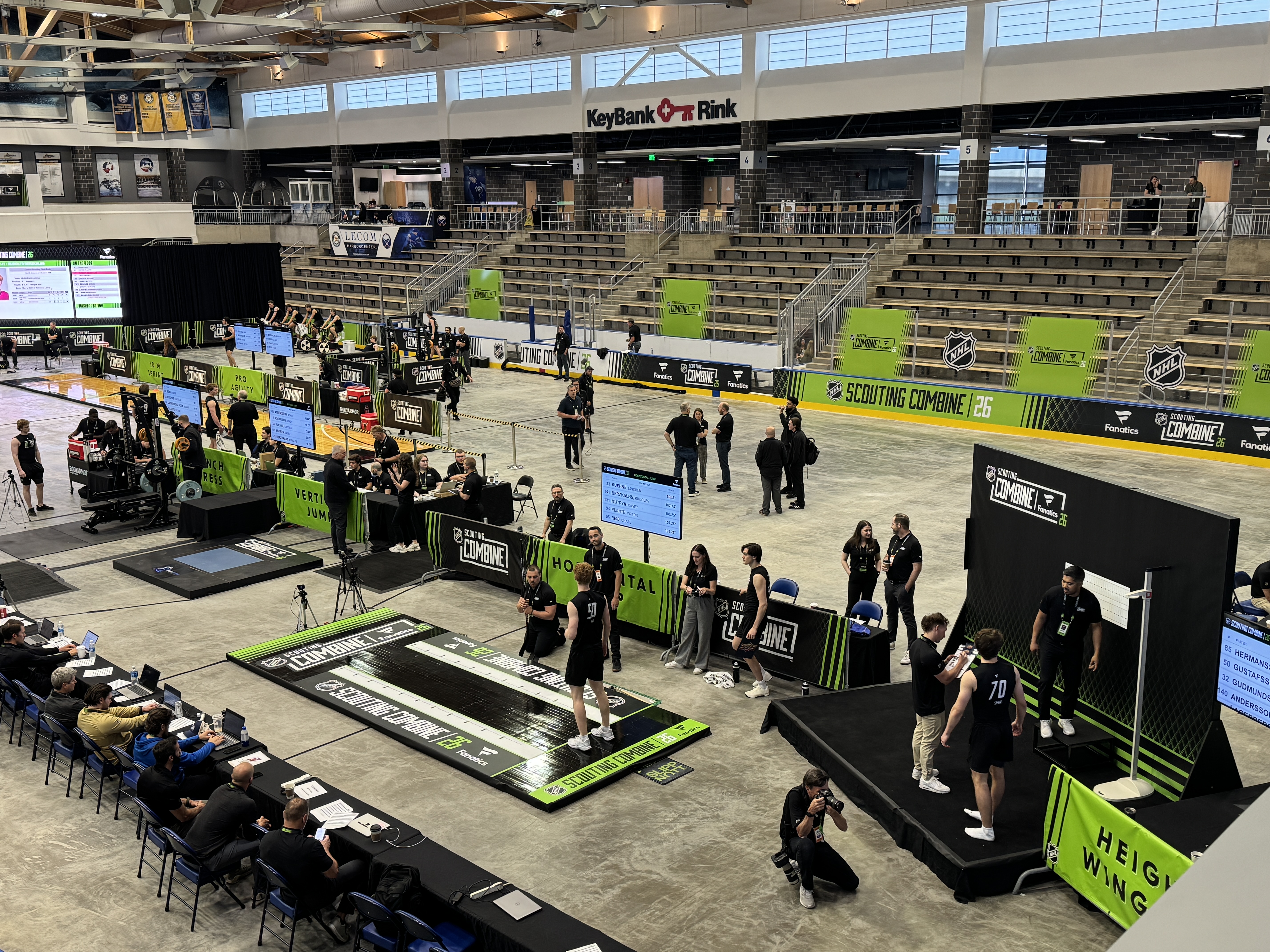
    A: Yeah, still a little early, because we usually have a pretty good idea of the projection of where guys are going. There are always a few surprises, outliers, but yeah, we’ll build our list the same way. This year it’s obviously a little bit different, the number of players going ahead, but you’ve got to make sure your list is tight, and you can’t just assume players are gone because we will go off our list in the first round. And then maybe later in the draft you’ll go [for] guys you maybe have a stronger feel for or position or whatever, if it’s close. But, yeah, it’ll be interesting. Got a lot of work to do yet. We’ve had our meetings already, and obviously the combine kind of fills up some gray areas, testing and seeing the body type, personalities of these kids a little bit more. Yeah, we’ll tighten it up, certainly through the first couple rounds and beyond, and we’ll be ready to go at the end of the month.

    Q: Is there usually a big shift after the NHL scouting combine in your list?

    A: Well, we have some red-flag players. Or, maybe, players who, whether it’s body type, or our strength guys think they can get there, or we also have some maybe character flaws or something. So you just address it here, and sometimes you take players off, sometimes you move them up or down, and if there’s no issues, or whatever, you can move them up. But yeah, we still have some things to tighten up for sure.

    The NHL held its annual scouting combine in Buffalo, N.Y., the week of June 1, where teams were able to interview 90 draft prospects. The Flyers interviewed approximately 50.Staff/

    Q: How would you compare the value of having a 21st pick versus last year at sixth overall?

    A: Well, it’s a big difference, but at the same time, happy where our team got to this year. We’ll do the best we can to find players who can have impacts down the road, but obviously you’re dealing with a different level of player. … So, it’s a little more challenging, a little more projection probably because some of these kids, where we’re looking at, aren’t as maybe as close to playing or a little more work or a couple more years away. But, same time, we’ll have the same concepts, and what we like in players.

    Q: Is there any thought of moving up and seeing what you can get higher up in the draft?

    A: For sure. We’ll be talking about those scenarios here going forward, whether it’s trading up at a certain level if players are gone, maybe trade back and add a pick, or move up the pick and give them a later pick. Whatever you got to do. But I know Danny [Brière’s] talking to teams here already about certain scenarios, and then once you get to the draft and see what players are available, you react. But usually before then, we talk to the teams, and you have an idea what it’s going to take to move up and whether it’s worthwhile, and vice versa, to move back and have things in place. It’s a little more challenging now [because] you’re not right on the draft floor anymore; you’ve got to do it by phone and just keep in contact with teams. So you create the relationships now and put a bug in the ear that maybe we’ll move, and calls take place after that.

    Q: The Flyers have a history of taking players who played well at U18 Men’s World Championship or the Hlinka Gretzky Cup, like Jett Luchanko. How much do you actually factor that in?

    A: I think what happens is the media says that’s part of the case. … There’s kids that we see all year — our scouts see them all the time — and there’s certain players that the media have no idea about as far as the quality, and sometimes they don’t get to see them live, and then when they see them at the U18s, they see these guys climbing the list. So it doesn’t matter to the teams; lists are the same. But, no, in certain cases, you see these players against their peers, so I think any time a player has a lot of success at the end of the year in a big tournament and wins a championship, or whatever, puts up a big number and performs well, it’s the last thing on our minds. And vice versa, a kid has a tough tournament, or doesn’t produce, or whatever, doesn’t mean they’re not a good player. You’ve got to be a little careful with that kind of stuff. It’s a recency [bias] effect, but at the same time, it is real. We’re all there to watch, and you want to see guys perform on a big stage, too. That’s a big part of playing in the NHL.

    Q: Russia was not allowed to play internationally this year. How does that impact looking at those players?

    A: Well, me personally, and a number of our staff, we have to do everything by video. [Gold Star agent] Dan Millstein has a camp down in Florida [before the draft], which we’ll attend and get to know players personally, but for some of the other players, we have to rely on Kenny [Hoodikoff], our Russian scout, and [director of European pro scouting] Reid Simpson is able to travel, so he sees a number of these guys live. But other than that, it’s video and interactions with Kenny and the player interviews, and doing the background that way. But it is a challenge, and there’s some risk there, too.

    Q: What kind of involvement does Rick Tocchet have in the draft? Does he give you any directions?

    A: Not much. His coaches come by and talk to our scouts … just what type of players they like. But no, he doesn’t get involved.

    Q: It’s hard to gauge when a player will be NHL ready, and he may not be the coach when that time comes. Do you still look for players that would fit his structure or systems?

    A: Hockey sense is a big factor for players that we try to get. But there are types of players that his staff [and Tocchet] are confident they can develop. He’s had a lot of different players play for him that have had success over time. So, the biggest thing for our coaches, they want competitive people; they’re competitive, and they’re smart, and they can adapt and adjust to the league. So they’re pretty easy to deal with. Obviously, we’ve had a lot of guys jump in the lineup here this year, and they’ve been great.

  • Some important context for the great shotgun debate and the Eagles moving forward under Sean Mannion

    Some important context for the great shotgun debate and the Eagles moving forward under Sean Mannion

    You could use the same four words to describe the Eagles offense in 2025 as you would Elmer Fudd.

    Uses shotgun, rarely well.

    So says the conventional wisdom, at least.

    During the Eagles’ recently completed mandatory minicamp, there was a lot of talk about new offensive coordinator Sean Mannion’s affinity for operating from under center and the adjustment it might require for those closest to the ball (namely, the quarterback). The topic of conversation was certainly valid. Throughout the Jalen Hurts/Nick Sirianni Era, shotgun has been the Eagles’ baseline look, more so than all but a small handful of NFL teams. I’m just not sure that the change under Mannion will be as radical as people hope/expect.

    What if I told you that Saquon Barkley has only had one fewer carry from under center than the Packers’ Josh Jacobs over the last two seasons, when Mannion was in Green Bay? Or that, in 2025, Hurts attempted more passes from under center than Joe Burrow and Patrick Mahomes, both of whom can make a case as the best in the game?

    All of this talk about scheme comes from a good place. But I think the term itself tends to get misapplied when we talk about what makes good teams good and bad teams bad. The perception of “scheme” is that it is some static, word-of-God recipe book that each coach draws up like a wizard and then carries with him from stop to stop. In reality, I think it’s closer to a core set of principles and best practices that guide the concrete aspects of coaching: teaching and game-planning. The actual output of all of those things — the plays — will look a lot different from roster to roster and opponent to opponent.

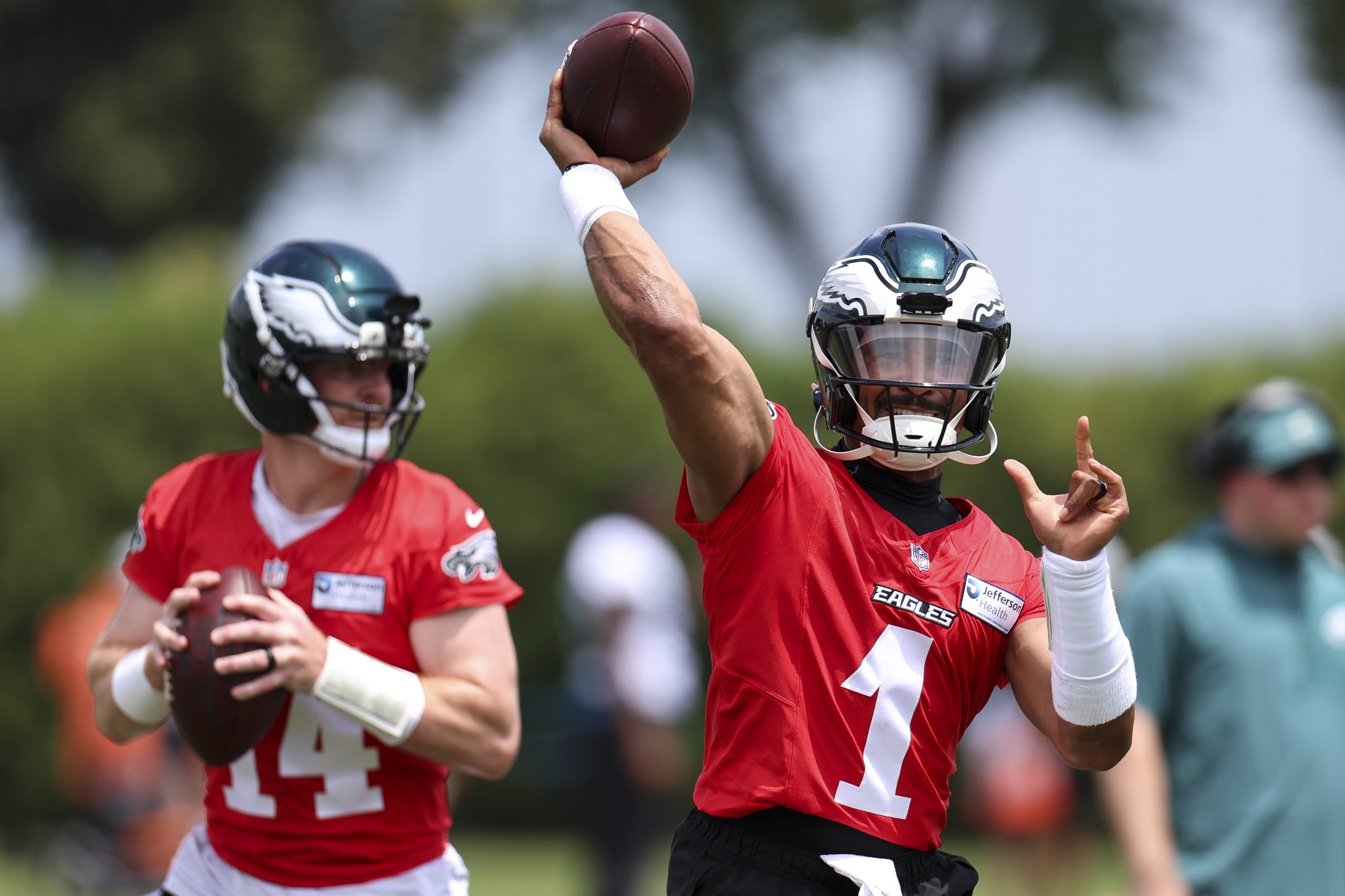
    Jalen Hurts attempted more passes from under center than Joe Burrow and Patrick Mahomes in 2025.Monica Herndon / Staff Photographer

    “There’s things I believe in and there’s things that schematically I have a background in, but ultimately it’s going to be a blend and it’s constantly going to evolve,” Mannion said earlier this offseason. “It’s about maximizing things for the players. How do we make the Eagles the best team we can be, how we make the Eagles offense the best it can be and how do we put all of our players in a position to really, really succeed and maximize their strengths.”

    Don’t get me wrong. There will be change. As I wrote last week, it will be real change, more so than at any point in Sirianni’s time as head coach.

    Context is important, though.

    Reality is, the NFL has become a shotgun league over the last decade. That’s true regardless of coach or quarterback. Last season, Matthew Stafford and Sam Darnold were the only two quarterbacks to line up under center on more than half their snaps. Both quarterbacks threw the ball out of shotgun roughly twice as much as they did under center.

    The evidence hardly supports the idea that the Eagles’ heavy reliance on the shotgun in recent years is an ipso facto indictment of Hurts and/or the offensive scheme. At least, not if you accept as fact that Burrow and Mahomes are two of the best quarterbacks in the NFL. Mahomes attempted just 32 passes from under center in 2025, 12 fewer than Hurts’ 44.

    The big difference between teams like the Seahawks/Rams and the Eagles was their preference for running from under center. The Rams ran out of shotgun just 64 times in 2025, for instance.

    At the same time, the Eagles ran the ball from under center more than you might think. Two years ago, nearly half Barkley’s 2,005 rushing yards came from under center. His 6.1 yards-per-carry average was best in the NFL, and better than his 5.6 yards per carry out of shotgun.

    Saquon Barkley is looking forward to running Sean Mannion’s system.Monica Herndon / Staff Photographer

    Again, to be clear, we should expect to see a significant difference. One takeaway from the Eagles’ pre-camp workouts is that Mannion’s run game philosophy is closer to the Shanahan/McVay/Kubiak tree than Sirianni’s.

    “It’s no secret what this system is about,” Barkley said earlier this offseason. “I look forward to doing that. It’ll probably be the most I’ve ever done it under center and outside zone and all that good stuff. It’s a challenge I’m looking forward to work on and getting better at and trying to be the best at it.”

    As for the passing game, one suspects we’ll still see plenty of shotgun. Jordan Love attempted roughly 30% of his passes from under center in 2025 when Mannion was with the Packers. That’s more than three times as often as Hurts did.

    We could be talking about an additional 5-7 passes per game from under center. That’s not nothing. But we’re probably not going to see something that looks completely foreign. As tight end Dallas Goedert said last week, “You can only do so much [different] on offense.”

  • Why signing Luigi Suigo is significant for Villanova, not just for 2026-27, but beyond

    Why signing Luigi Suigo is significant for Villanova, not just for 2026-27, but beyond

    Late Saturday night, Villanova basketball stars of yesteryear took center stage when the New York Knicks won the NBA championship behind the MVP performance of Jalen Brunson and the significant contributions of Mikal Bridges and Josh Hart. Champions at Villanova turned New York basketball heroes.

    The trio of Wildcats won in college at a different time, both in the sport and at their school. Villanova is on its second coach in the post-Jay Wright era, and while Kevin Willard’s first season was a step in the right direction after three consecutive NCAA Tournament misses, losing in the first round as a No. 8 seed was not cause to cue a cacophony of alarm bells to let the world know Villanova was back.

    But earlier in the day, hours before Brunson joined Michael Jordan as the only player in NBA history to score 45 points in a road clincher, a significant signing may have slightly altered the outlook for both the 2026-27 Wildcats and where the program stands in the New World of college basketball.

    Luigi Suigo, a 7-foot-3 Italian center, withdrew his name from the NBA draft process and signed to play at Villanova, joining a roster rebuild that already had the Wildcats rated among the best transfer portal classes in college hoops.

    There is at least some hyperbole happening here. It is June, after all. And if Suigo was truly the “Italian Wemby,” there would not have been any question about whether he would be taken in the first round of the draft. Suigo, 19, played professionally in Serbia this past season and entered the draft looking to go in the first round. There was no guarantee that would happen, though some experts and evaluators had Suigo going off the board in the mid-to-late-20s at next week’s draft.

    Consider what signing Suigo means. There is the short-term outlook: Villanova is a near lock to be considered among the top 25 teams in the sport heading into next season. Then there is the long-term meaning: Suigo surely wasn’t cheap. Players going off the board at the end of the first round still make $3 million-plus per season. The Wildcats had already committed quite a few dollars to signing top-end transfers like Kwame Evans Jr. (Oregon) and Devin Royal (Ohio State). They likely had to buck up to give leading scorer Tyler Perkins his market value. Other players on the roster came at a cost.

    That there was still plenty of money left in the bag to lure Suigo to the Main Line is a sign that Villanova plans to spend — and has access to — the financial resources required to compete with the top programs in the sport. It’s hard to view the signing in any other way.

    Roster retool

    Suigo’s signing completes a roster rebuild that was pretty drastic. The Wildcats finished their 2025-26 season with a first-round NCAA Tournament loss to Utah State. Eight players touched the floor. Only one of them, Perkins, will be back on next year’s roster (Matt Hodge, who is returning, missed that game after undergoing surgery to repair a torn ACL).

    Two of the other seven — Duke Brennan and Devin Askew — are out of eligibility. The other five entered the portal.

    Willard hit the portal cycle needing, well, everything.

    How did he do? It’s hard to argue that the 2026-27 team isn’t better on paper than the roster assembled at this time last year. Suigo’s addition is a major factor in that.

    Start with the categories where Villanova was most deficient last season. It was against bigger, physical, more experienced teams that the Wildcats struggled. They played Hodge at the power forward spot when he’s probably better served as a shooter on the wing. After Tafara Gapare left the program in December, the team lacked the requisite size and athleticism inside to rebound. Duke Brennan was a machine on the glass, but at times he struggled defensively. Not that UConn’s Tarris Reed Jr., or St. John’s big man Zuby Ejiofor are easy covers.

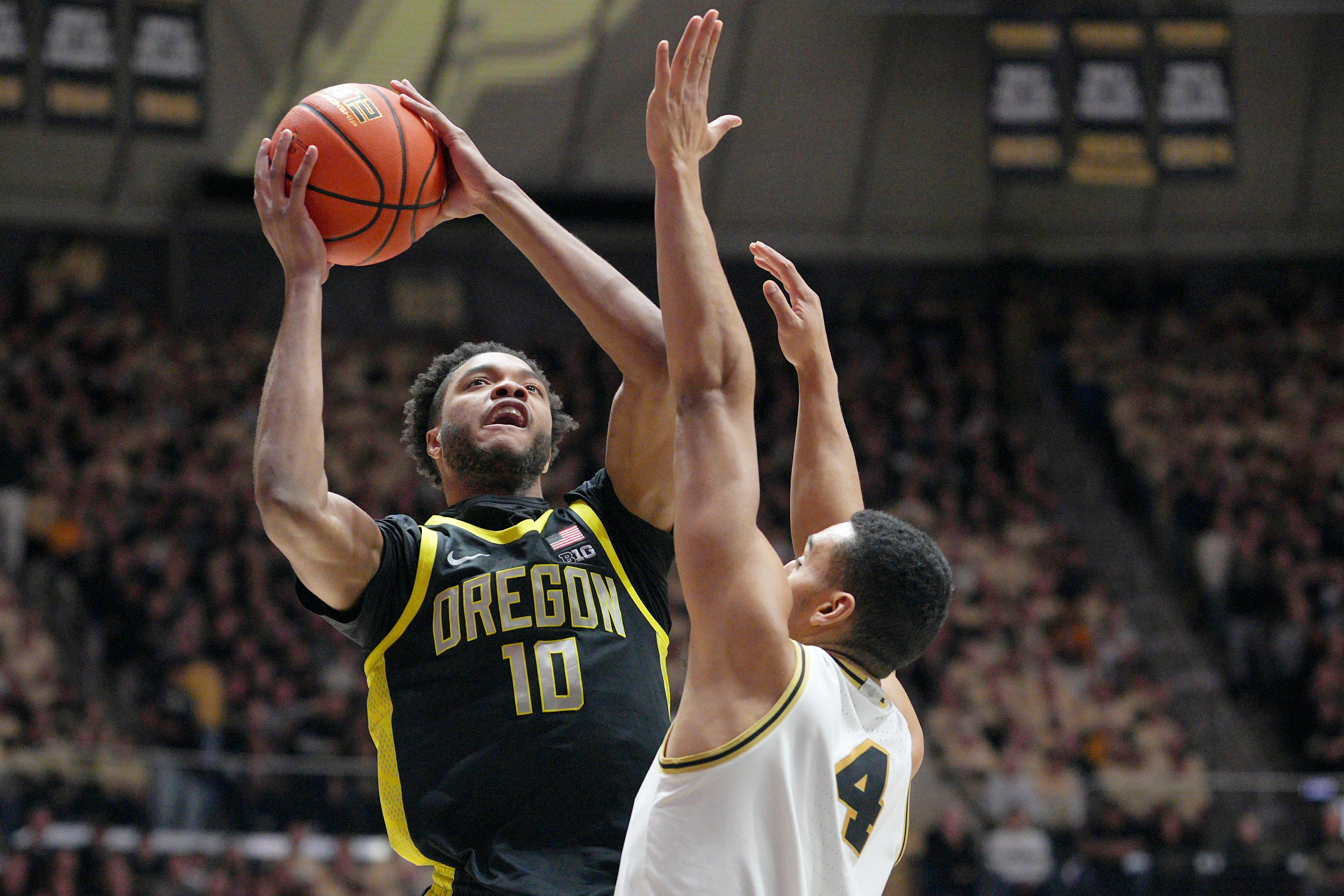
    Oregon transfer Kwame Evans Jr. will have a big center standing next to him in Luigi Suigo.AJ Mast

    The first two portal additions aimed to fill frontcourt needs. Hodge may not be at 100% when the season starts, and his long-term future is probably at the small forward spot. So Villanova signed Evans, a 6-foot-10 forward, and Royal, who is a physical player with a bulky 6-foot-6 frame. Both of them will be seniors.

    Villanova couldn’t come to an agreement with point guard Acaden Lewis, so the Wildcats found a cheaper version of him. Elijah Crawford isn’t as flashy as Lewis, and isn’t anywhere close to him on the various lists of transfer portal players, but the Illinois-Chicago transfer, a rising junior who played sparingly as a freshman at BYU, thrives in ball screens and has similar analytical metrics as Lewis in terms of his assist and steal rates. Neither is a proficient three-point shooter. Lewis, who commanded a high salary in the portal and eventually landed at Miami, also struggled at times in Villanova’s biggest games.

    Bryce Lindsay scored 25 points and made six three-pointers in Villanova’s NCAA Tournament loss, but he spent the majority of the Big East campaign mired in a shooting slump. He seemed possibly destined for a bench role if he came back. Instead of Lindsay providing shooting off the bench, Villanova will have Cornell’s Jake Fiegen, a 6-foot-4 shooting guard who scored 17.7 points per game and shot 41.4% from deep, and St. Bonaventure’s Buddy Simmons, a 5-foot-11 scoring guard who averaged 16.4 points and shot 42.4% from deep. Both of them will be seniors. They also have Adam Oumiddoch, a 6-foot-5 guard who is expected to contribute right away as a freshman.

    The projected rotation as it stands is Crawford, Perkins, Royal, Evans, and Suigo starting with a bench consisting of — in no order — Hodge, Fiegen, Simmons, and Oumiddoch. That’s three seniors, a junior, and a freshman center with first-round size and talent starting, and a four-man bench unit with two seniors, a soon-to-be-22-year-old redshirt-sophomore (Hodge), and a freshman. There are also deeper reserves in senior Abdou Samb, a Towson transfer, returning redshirt-freshman Nico Onyekwere, and incoming freshman guard Carter Fisk.

    Villanova guard Tyler Perkins is back with the Wildcats for 2026-27.Yong Kim / Staff Photographer

    For context, Villanova started a freshman, a redshirt freshman, a redshirt sophomore, a junior, and a senior last year. The 2026-27 team is bigger, older, and seemingly more versatile. Consider the team that cut down the nets in March. Michigan had 7-foot-3 center Aday Mara and a frontcourt that included big bodies in Yaxel Lendeborg and Morez Johnson Jr. Suigo, Evans, and Royal might not be that trio, but from a physical presence, it’s not far off.

    Suigo is still developing, but he’s a 7-foot-3 defensive anchor with some three-point shooting touch who should provide a big body for Willard to utilize in an offense that runs a high volume of ball screens.

    The makeup of this rotation gives Willard plenty of options to deploy “small-ball” lineups with Evans at center. He had limited choices down the stretch last season due to injuries and program departures.

    What the experts are saying

    All of this is a relatively rose-colored-glasses analysis of where the roster stands, but the high turnover rate in the sport makes so much of the roster analysis this time of year speculative.

    It’s meaningless rankings season. Portal players, portal classes, and so on. Last year’s portal class wasn’t ranked very high, yet Villanova won 24 games and earned a No. 8 seed.

    Kevin Willard’s Wildcats should be in the top 25 to start the 2026-27 season.Monica Herndon / Staff Photographer

    This year’s portal class is among the best. Analytics expert Evan Miya had the Wildcats at No. 8. Other outlets like ESPN, 247Sports, and On3 rate Villanova’s portal class among the top 25 in the sport. Suigo doesn’t factor into those ratings. He is technically an incoming freshman.

    What does all of this mean in June? Nothing. No one gets a prize for winning the offseason. But it’s a start.

  • As a Black voter, Graham Platner’s ethics don’t bother me — my people can’t afford to wait for a perfect candidate

    As a Black voter, Graham Platner’s ethics don’t bother me — my people can’t afford to wait for a perfect candidate

    As a lifelong Democrat, I’m often exhausted by my party’s hand-wringing when it comes to the question of ethics.

    I certainly believe moral clarity is important. We should all seek to embrace a firm set of values. However, when it comes to politics, morality is often a mirage, and Democrats spend far too much time pretending it’s not.

    Perhaps that’s why I was encouraged by Graham Platner’s win in the Maine Democratic Senate primary. Platner presented himself as a rugged everyman who happened to be a progressive. However, a series of disclosures exposed Platner’s dark side.

    He wore a tattoo that resembled a Nazi death’s head symbol, but claimed he didn’t know what it represented.

    He sent sexually charged text messages to women, a fact his campaign confirmed.

    Several ex-girlfriends accused him of disturbing behavior, including one who said he forcefully grabbed her more than once. In response, Platner described himself as a “bad boyfriend,” but denied physically abusing women.

    These allegations, along with old Reddit posts that some described as racist and sexist, were not enough to cost him the election, and in my view, that’s a good thing.

    As a Black man in Trump’s America, I can’t afford to wait for the perfect candidate. Nor can I expect politicians to live on a higher moral plane. My people are being targeted by an administration that seems hell-bent on returning us to the age of Jim Crow, and at a time like this, we cannot waste a second playing holier than thou.

    We are literally watching a president with 34 criminal convictions treat the U.S. Constitution as a suggestion, so we don’t need choirboys. We need U.S. senators and representatives who will stand up to Donald Trump.

    For that reason, Platner’s background is less important to me than his ability to fight against racist policies. Could he turn out to be a John Fetterman — pretending to support Democrats while voting with Trump on important issues? Yes, he could, but while Platner might target Black people, Republicans are already doing so.

    With Trump in the White House and GOP majorities in the House, the Senate, and the U.S. Supreme Court, anti-diversity efforts are raging. Black congressional districts are being eliminated, and the Trump administration is using antidiscrimination laws against the very people they were meant to protect.

    In my view, MAGA was never solely about stopping undocumented immigrants from entering the country, because, contrary to right-wing conspiracy theories, undocumented people cannot vote.

    African Americans, however, are among the Democratic Party’s most loyal demographics. We have the power to sway national elections, and we tend to use that power against Trump.

    In 2016, 94% of Black voters cast ballots against Trump, according to the Pew Research Center. In 2020, 92% voted against him. In 2024, 83% voted against him.

    Some pundits say the shift means Trump is making inroads with Black voters. I believe the opposite is true. Democrats are losing us.

    When Black people come face-to-face with bread-and-butter issues like food insecurity and unaffordable healthcare, we don’t want to hear about studies by Ivy League scholars. We don’t want a doctoral thesis on poverty. We want solutions, and Democrats spend far too much time explaining problems rather than solving them.

    Even worse, my party is frequently consumed with constructing ethical obstacle courses that few candidates can navigate. Maybe that was cute back in the day, when you could lose the election and still count on guardrails to restrain the other side. Those guardrails are gone now, and while my party’s white elites can afford to theorize about the link between government and racism, I can’t.

    Racism is not a theory for Black people. It is a daily reality, and it plays out through systems that flourish when conservatives take power.

    Therefore, we must not bind ourselves by seeking perfect candidates. Instead, we must seek to free ourselves by uniting and fighting to win.

  • Trump’s homelessness plan could revive forced psychiatric commitment

    Trump’s homelessness plan could revive forced psychiatric commitment

    For most of our nation’s history, involuntary psychiatric commitment operated with sweeping and often unchecked power: State hospitals confined people for years or even lifetimes based on such broad claims as mental illness and “moral defect,” often with little legal recourse.

    Public outrage over abuses in overcrowded asylums — dramatized most famously in the book One Flew Over the Cuckoo’s Nest — helped propel the patient’s rights movement in the 1960s and 1970s toward successful deinstitutionalization. A series of court rulings limited the state’s power to confine people against their will.

    Now that balance is shifting again.

    Last summer, President Donald Trump signed Executive Order 14321, which purports to address homelessness by greatly expanding involuntary psychiatric commitments and encouraging police to arrest people experiencing homelessness.

    The order — its constitutional validity remains in question — undermines decades of court precedent and removes judicial constraints to hold people in institutions. It could resurrect the old ways as a national standard without debate or congressional action.

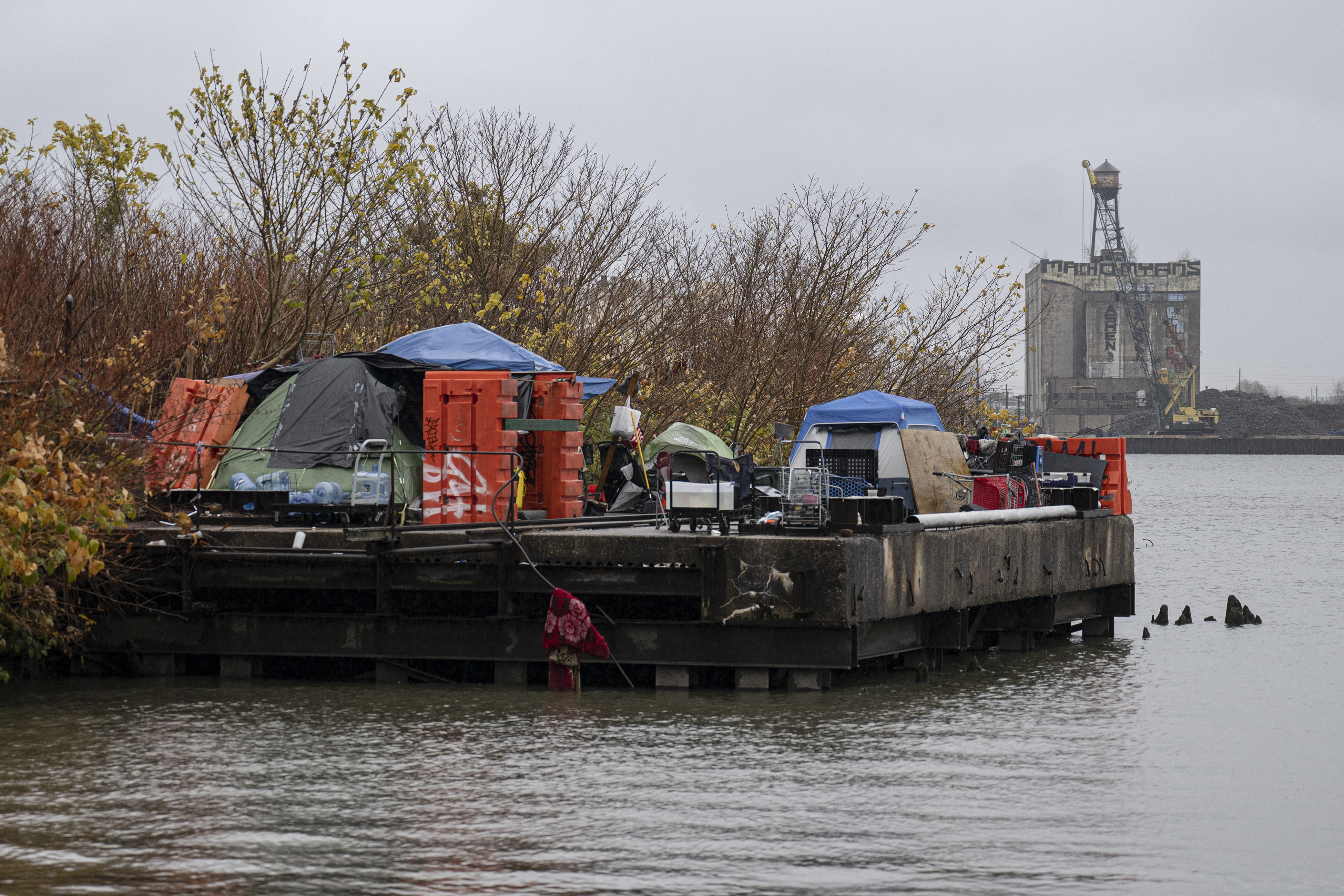
    A sprawling facility recently built outside Salt Lake City already shows the trappings of a prison camp for people experiencing homelessness. This spring, the administration started legal guardianships for hundreds of veterans — some of whom are homeless — that could drive more of them into institutional care.

    And in a historic shift, federal officials are slashing millions of dollars in homeless grants across the country, including in Philadelphia and its suburbs, forcing a broad swath of nonprofits to curtail their efforts to house unhoused people. The Philadelphia Furniture Bank, which gave free furniture and mattresses to more than 22,000 people facing homelessness, became the latest casualty, announcing it would close on June 30.

    The Philadelphia Furniture Bank, which gave free furniture and mattresses to more than 22,000 people facing homelessness, is set to close June 30.Heather Khalifa / MCT

    Past presidents couldn’t make these changes — even if they wanted to — because our system empowers the states to set laws for involuntary commitments. Trump’s order would undermine that by ending consent decrees that aim to ensure stays are safe, ethical, and clinically appropriate.

    His order also seeks to incentivize confinement by directing federal agencies to green-light grants to towns and states that get people off the street and into institutions. And those receiving federal homeless services would have to undergo mental health care as a condition for those benefits.

    If enforced, this order would worsen the problems we have while creating new ones.

    We know a lot more about mental illness than in 1962 when Ken Kesey published Cuckoo’s Nest. At the same time, homelessness is growing in the U.S. An estimated 700,000 people live unhoused every night.

    Involuntary psychiatric treatment is sometimes necessary, but open-ended and inappropriate commitment harms patients and creates a moral indignity that can have a lifelong negative impact. And even when it is appropriate, our system tailors commitment lengths to people’s health needs, as the U.S. Supreme Court has affirmed several times. Most states limit the first court-ordered commitment to six months or less. Removing those limits would subvert the Supreme Court’s authority and abandon patients to the whims of unchecked administrators.

    Another problem: The order violates the Constitution by impinging on the state’s authority to direct health and safety, including civil commitments.

    Those with disabilities should be concerned about this, too. They have the right to live independently in their homes, with access to state-funded services. But this order would threaten that.

    Importantly, the order could also force clinicians to break their fiduciary responsibility to serve their patients’ best interests first by pressuring them to inappropriately confine homeless individuals who might not be seriously mentally ill.

    History shows many examples of the political misuse of psychiatric power. Soviet communists invented the diagnosis “sluggish schizophrenia” to justify the imprisonment of political dissenters. Vladimir Putin continues to use psychiatric excuses to shackle his critics. More recently, U.S. police used the contested diagnosis “excited delirium” to justify giving controlled substances to calm down people resisting arrest. The diagnosis has since been discredited.

    Our system is far from perfect. Too many seriously mentally ill people end up unhoused, imprisoned, or cycling in between. But the executive order risks turning clinicians into Soviet-style apparatchiks, who violate their ethics to make the system run.

    Federal policy should encourage the advocates who run safe consumption sites and syringe distribution efforts to keep people alive until they get help, because these efforts have been proven to work. But the president would levy civil or criminal charges against these caregivers.

    The executive order also dismisses efforts like Housing First, which give housing without requiring treatment or sobriety. These programs help make people more likely to improve their mental health and stay in housing.

    By contrast, arresting and confining people is associated with more death, illness, and misery.

    It may be politically appealing in some quarters to sweep up, institutionalize, and resettle unhoused people who are barely surviving with mental illness. But this approach was recognized long ago as inhumane and impractical.

    The time is now to build a real mental health care system to support the most vulnerable in our society. Instead of issuing retrograde executive orders, the Trump administration should invest real money to advance evidence-based interventions and policies.

    Dominic Sisti is a senior fellow at the Leonard Davis Institute of Health Economics and associate professor in the department of medical ethics and health policy at the University of Pennsylvania. He directs the Scattergood Program for the Applied Ethics of Behavioral Health Care at Penn.

  • Former 6abc reporter Annie McCormick’s new book details South Jersey socialites’ 1929 deaths

    Former 6abc reporter Annie McCormick’s new book details South Jersey socialites’ 1929 deaths

    In the summer of 1929, Moorestown was rocked by the tragic shooting deaths of two young socialites in what officially was ruled a murder-suicide. The saga resulted in a scandal rife with money, alleged corruption, and death, and it captured sensational headlines for years.

    Nearly a century later, though, the case has been all but forgotten. In fact, former 6abc reporter and Moorestown native Annie McCormick had never heard of it — until a 2021 New York Daily News article. Now, with the release of McCormick’s Restless Ghosts: Murder, Suicide, and the Case that Wouldn’t Stay Buried by Camino Books, the specters of Ruth Wilson and Horace “Reds” Roberts Jr. may yet stir again.

    “It’s crazy I never heard of it, growing up in Moorestown and doing what I do,” said McCormick, who left 6abc in December after 13 years at the station. “I started looking into it and got hooked. I thought, ‘How many legs does this case have?’”

    Many, it would turn out. And they range from bootlegging and political corruption to the unspoken truths of high society in South Jersey and the desperation of Depression-era America. Even Ellis Parker, the famed Burlington County detective once known as “America’s Sherlock Holmes,” plays a role.

    The deaths of Ruth Wilson and Horace Roberts Jr.

    At its core, McCormick’s Restless Ghosts has its roots in a case that dates back to June 1929. Early one morning that month, Wilson and Roberts — wealthy, twenty-something socialites from two of South Jersey’s most prominent families who until recently had been engaged to be married — were found dead in Wilson’s bedroom in her family’s Moorestown home.

    Wilson’s father, John Wilson, a prominent attorney and real estate developer, found the pair, nude and apparently suffering from gunshot wounds to their heads. Both died a short time later, with an investigation led by Parker later finding that the fatal shots came from a .22-caliber handgun discovered at the scene.

    Ruth Wilson, investigators found, had been shot in the head twice. Roberts, meanwhile, had at least three gunshot wounds to his head — and officials quickly ruled that the situation was a murder-suicide that occurred in the wake of Wilson calling off the engagement. According to official reports, Roberts shot Wilson in the head before firing multiple shots into his own while distraught over the state of their relationship.

    No autopsies were initially conducted. In the days and weeks that followed, rumors and speculations about the pair’s deaths cropped up in news coverage, with some reports insinuating that the situation was a double murder — one that involved Wilson’s father, though no such claims were ever substantiated.

    https://www.newspapers.com/article/the-philadelphia-inquirer/199199692/

    Article from Jun 3, 1929 The Philadelphia Inquirer (Philadelphia, Pennsylvania) <!— –>

    A coroner’s inquest

    While McCormick runs down the tragic history of the deaths in Restless Ghosts, she is careful to not take a particular side on what may have happened back then. Instead, the circumstances are thoughtfully, meticulously recounted from multiple perspectives, leaving the readers to decide. Still, some inconsistencies and details, McCormick said, give her pause.

    “It doesn’t make sense that someone could fire into their head multiple times,” McCormick said. “But at the same time, who else was there?”

    In 1929, officials and members of the public had similar questions — so much so that a coroner’s inquest was launched that resulted in the exhumation of Wilson‘s and Roberts’ bodies weeks after their deaths. But even after the extensive questioning of investigators, relatives, and friends and the coroner’s discovery that Roberts had four bullet wounds to his head, the original conclusion was upheld.

    And so, it seemed Wilson‘s and Roberts’ ghosts were left to rest for eternity, victims of a tragic murder-suicide over unrequited love. At least, until the death of Bradway Brown, a similarly high-profile socialite who died from gunshot wounds he suffered at his home in nearby Cinnaminson in 1933.

    https://www.newspapers.com/article/the-philadelphia-inquirer/199199753/

    Article from Jan 17, 1933 The Philadelphia Inquirer (Philadelphia, Pennsylvania) <!— –>

    The death of Bradway Brown

    Brown, a childhood friend of the victims and a former suitor of Wilson’s, was found dead in his home with multiple gunshots. Parker also headed up the investigation in this case, and initially told the press it was a suicide — a tactic McCormick reports was a method to throw the media off and prevent Brown’s actual killer from becoming too alarmed.

    Brown’s death stoked the fires of conspiracy, with rumors abounding that he had confessed to acquaintances that he had known who Wilson’s and Roberts’ true killer was. The rumor mill even said Brown had likely been behind anonymous phone calls to Wilson’s father accusing him of being the perpetrator.

    Again, though, none of these allegations were officially substantiated. And despite Brown’s death resulting in another investigation into Wilson and Roberts’ deaths, this time a grand jury probe, the original conclusion was again upheld: Roberts killed Wilson, and then himself.

    As the investigation into Brown’s death wore on, Parker gradually backed away from his suicide theory. Ultimately, three men were arrested — a group of gangsters Parker called the “After Dinner Burglars.” The trio, reports from the time indicated, had targeted Brown’s Cinnaminson home for a robbery, but were surprised by his arrival. One man who was found to have pulled the trigger was sentenced to life in prison, and had no known connection to the Wilson and Roberts deaths.

    Parker, meanwhile, ultimately died of a brain tumor in federal prison after having been convicted of masterminding the abduction of an attorney in order to coerce a confession in the 1932 kidnapping and murder of Charles Augustus Lindbergh Jr., otherwise known as the Lindbergh baby.

    https://www.newspapers.com/article/the-philadelphia-inquirer/199199831/

    Article from Apr 15, 1934 The Philadelphia Inquirer (Philadelphia, Pennsylvania) <!— –>

    No one left to ask

    In 2026, meanwhile, McCormick’s Restless Ghosts has the benefit of hindsight, and faithfully recreates the case largely from archival newspaper accounts. McCormick remains surprised that she had never learned of the case until starting work on the book, noting that the families involved had a lasting impact on Moorestown. The homes where the murders occurred, she said, remain in pristine condition.

    “These were all places I know and have driven by a million times,” she said.

    Still, while she didn’t necessarily set out to solve the case once and for all, its mystery remains intriguing for the author. After all, with the crime so far in the rearview mirror of history, virtually all of the people directly impacted are long gone. As a journalist, McCormick is particularly perturbed by that aspect of the project.

    “The most frustrating part is that I can’t ask anyone,” she said. “I have questions, and I don’t have anyone I can follow up with. I wonder if this was a present-day case if there would be more finality.”