Blog

  • Trump puts himself at center of birthday spectacle — his own and America’s

    Since 2020, the White House’s southern facade has served as the backdrop for a Republican National Convention, a rally preceding a mob attack on the Capitol, and now, a mixed martial arts match celebrating President Donald Trump’s 80th birthday.

    Trump opened his front lawn to his friend Dana White’s sports league for a live spectacle to air on his friend David Ellison’s streaming platform. A clawlike arched canopy loomed over the executive mansion’s iconic colonnade, evoking the spaceship on the movie poster for the 1996 film Independence Day, in what Trump ranked among “the most exciting days in the History of our fabled White House” on social media.

    At least nine cabinet secretaries attended, along with uniformed military service members the Pentagon required to look the part as defined by a prescribed “height-waist ratio.”

    The use of White House grounds for a violent sporting event sponsored by light beer and cryptocurrencies was overwhelmingly unpopular, garnering the support of just 31% of Republicans and 11% of independents in a Reuters-Ipsos poll. The president’s overall approval ratings hit a second-term low in a new NBC survey, and AP-NORC polling showed the blue-collar, independent, and young voters who swung to him in the last election increasingly deserting him and his party over dissatisfaction with inflation and the Iran war that worsened it.

    Even in this setting where Trump could reliably expect a warm reception, a boo stuck out among the cheers as he entered.

    The president wore a UFC lapel pin below his standard American flag as he and White walked out of the Oval Office, through the mansion, and emerged on a balcony as the band played “Hail to the Chief.” The president saluted during the national anthem, while the broadcast showed images of active-duty sailors, and a delta formation of 12 fighter jets roared over the White House as country artist Zac Brown sang “O’er the land of the free.”

    “I have seen some surreal things in my life — this is the most surreal,” podcaster Joe Rogan said on the official broadcast. “It doesn’t seem real. None of it seems real. It’s so crazy.”

    Sunday’s fight kicked off this summer’s D.C.-anchored celebration of the nation’s 250th anniversary, which has similarly become politicized by Trump’s central role. Trump allies sidestepped a bipartisan commission and congressional funding to fundraise and organize events through their own vehicle.

    Musicians and states dropped out of participating in the 250 events, so that the headliner would be Trump himself holding another rally on the National Mall. Renovations of the Reflecting Pool, the Kennedy Center, parks and fountains, and the White House’s East Wing are absorbing the president’s attention — a distraction in the view of most voters and some Republican strategists and politicians.

    Hours before the fight began, Trump heralded an end to the Iran war after months of false starts and shifting deadlines. But the details of the agreement remained concealed on Sunday, with talks ongoing ahead of an official signing scheduled for Friday. The last time the administration announced a deal to stop the bombing and reopen the Strait of Hormuz, it unraveled within days.

    Trump spent the earlier hours of his birthday working to preserve the agreement after an Israeli attack in Lebanon. He also watched Fox News, criticizing an interview with Sen. Jack Reed (D, R.I.) and praising an appearance by former adviser Victoria Coates. He posted repeatedly on social media denouncing opposition to his embattled acting spy chief, Bill Pulte, and taking a swipe at his former lawyer, Michael Cohen.

    Trump also held a small family dinner.

    His 80th could not have been more different from his predecessor’s, the only other president to mark that milestone in office. Public doubts about Trump’s health and fitness have increased, polls show, but concerns do not rival those about Joe Biden.

    The White House has called the president’s health “excellent.” Trump insists he feels the same as or better than decades ago, and that he’d be the first to admit if he ever felt otherwise. Still, he is frequently reminded of the friends around his age who are getting sick and dying, and he speaks more often of the memory of his parents and his own place in history.

    Trump has used settings such as a UFC match, a Formula One race, a football game, or a frat house to project an image of enduring vigor, as well as to appeal to young men with unapologetic masculinity, daring critics to recoil so that his team can mock them as weak and effeminate.

    “I just can’t believe that we’re at the White House watching UFC fights,” former UFC champion Daniel Cormier said during the broadcast. “I’m so filled with like testosterone I want to kick someone in the chest, it’s crazy.”

    On Saturday night, White stood steps from the site of Martin Luther King Jr.’s “I Have a Dream” speech in front of the Lincoln Memorial as he separated two competitors about to brawl at the night-before news conference. Speaking to reporters ahead of Sunday’s fight, heavyweight Josh Hokit said he might take off his pants and throw his cup at the president, perhaps as a souvenir for the Oval Office.

    Trump’s role has been divisive even within the world of UFC. Featherweight Diego Lopes chafed at reports that his Spanish-language walkout song might offend the president; the Marine Band ended up playing it after all.

    One fighter not picked for Sunday’s lineup attributed the decision to his criticisms of Israel and the Iran war. Another said the government’s entry into sports entertainment was “desecrating its role in society.” UFC co-founder Rorion Gracie said he wouldn’t watch the White House event because the sport has gotten too violent.

    “First and foremost, got to thank President Trump for making this happen,” middleweight fighter Bo Nickal said about winning his match. “It takes such a special person to be able to have the balls to do something like this.”
  • Iran and US reach a tentative deal to end the war and open Strait of Hormuz but challenges remain

    DUBAI, United Arab Emirates — The United States and Iran reached an initial agreement Monday that would extend their shaky ceasefire and lead to the reopening of the Strait of Hormuz, but significant challenges remain, including whether Israel will continue its offensive in Lebanon.

    Details of the agreement were not immediately released, but it appeared that it would not be implemented until it is signed, which mediator Pakistan said would happen Friday in Geneva. Until then, shipping will likely remain restricted in the strait, which is a crucial passage for the world’s oil and gas and the closure of which has sparked a global energy crisis.

    Israel’s defense minister said Monday that the country wouldn’t withdraw from land seized in Lebanon, where Israel is fighting the Iranian-backed Hezbollah militant group. Israel joined the U.S. in launching the war on Feb. 28, but it is not party to the deal. A spokesman in Prime Minister Benjamin Netanyahu’s office said Israel will continue to defend itself against any threat to its security.

    That alone could scupper the deal, since Iran has insisted any agreement to end the war include an end to the fighting in Lebanon.

    But the agreement also faces other major challenges. It gives just 60 days to decide what to do about Iran’s stockpile of highly enriched uranium and its nuclear program — which the U.S. and Israel worry could be used to build an atomic weapon, despite Tehran’s insistence that it is peaceful. It took years for Iran and world powers to negotiate a 2015 agreement to rein in Tehran’s nuclear program.

    President Donald Trump unilaterally withdrew the U.S. from that accord in his first term, setting the stage for the tensions that culminated in the current war.

    Despite the uncertainties, world leaders from Europe to China welcomed the deal to end a conflict that has killed thousands across the Middle East, including the top leaders of Iran’s theocracy, and raised the prices of fuel, food and other basic goods far beyond the region.

    Still, some expressed concern that the deal would actually come about: Luxembourg’s foreign minister, Xavier Bettel, noted: “It’s a long time till Friday.”

    The Strait of Hormuz won’t open until the deal is signed

    Trump, who faced pressure to end the war ahead of congressional midterm elections in November, hailed the agreement on social media, saying that he had authorized the Strait of Hormuz to open and the U.S. blockade of Iranian ports to end. He later said the strait wouldn’t open until Friday.

    Iran’s deputy foreign minister, Kazem Gharibabadi, confirmed the agreement on state television but said Iran would not start implementing it until it was signed.

    Early in the war, Iranian attacks on ships brought traffic in the crucial waterway to a near standstill. Trump implemented a blockade in response.

    The closure of the strait — through which a fifth of the world’s oil and natural gas passed before the war — and the blockade sent fuel prices skyrocketing, and the knock-on effects rippled throughout the world economy. It will likely take months before energy companies can resume operations to the point of meeting the world’s demand, according to energy experts.

    Iranian and U.S. officials will hold preparatory meetings in Doha, Qatar, this week before the signing, said a diplomat with direct knowledge of the talks, who spoke on condition of anonymity to discuss the closed-door meetings.

    Israel says it won’t withdraw from Lebanon

    The success of the deal rests at least partially on what happens between Israel and Hezbollah in Lebanon. Israel’s bombing of Beirut’s southern suburbs on Sunday nearly derailed the negotiations, and a previous attack led Iran to fire on Israel and Israel to fire back.

    Defense Minister Israel Katz, meanwhile, said Israel plans to stay “indefinitely” in land it holds in Lebanon, Syria and the Gaza Strip.

    Katz also threatened that if Iran attacks Israel over its strikes in Lebanon, Israel will strike Iran with “great force.” Over the past 2 1/2 years, Israel has taken control of areas in Gaza, Lebanon and Syria amounting to 386 square miles of territory.

    In response to questions about where Israel stands on the deal, David Mencer, a spokesman in Netanyahu’s office, told The Associated Press that Israel and the U.S. remain fully aligned on preventing Iran from obtaining nuclear weapons. But he added that Israel will not tolerate attacks from Hezbollah on its territory and will continue to act against those who seek to harm its citizens.

    Hezbollah has not yet commented on the deal.

  • The Philadelphia-born Chinese American who tested the limits of birthright citizenship

    The Philadelphia-born Chinese American who tested the limits of birthright citizenship

    In 1950, Ernest Moy was trying desperately to return to the United States after spending the previous 20 years working in China. Since he had reentered the U.S. twice before, immigration officials already possessed thick files of evidence attesting to his U.S. citizenship, including his birth certificate from Philadelphia. This unquestionably established his status because of the Fourteenth Amendment’s birthright citizenship clause and an 1898 U.S. Supreme Court decision that had affirmed this: if you are born in the United States, you are a citizen.

    But more than 50 years of settled law meant less to the Immigration Service than the fact that Moy was Chinese American. Because of his race, officials considered him both undesirable and unassimilable. When he finally did get permission to reenter the United States, it was only as a temporary immigrant who required further investigation. Moy bristled at such treatment but had learned to expect no better.

    In 2026, as the Supreme Court considers Trump v. Barbara, many Americans have learned for the first time about the Supreme Court ruling that should have guaranteed Moy’s reentry: U.S. v. Wong Kim Ark. The aftermath of that case — and the story of Ernest Moy — show how the constitutional guarantee of birthright citizenship has on its own never been sufficient to protect the rights of many Americans. When those in power define citizenship as whiteness, they enable and encourage immigration officials to do the same.

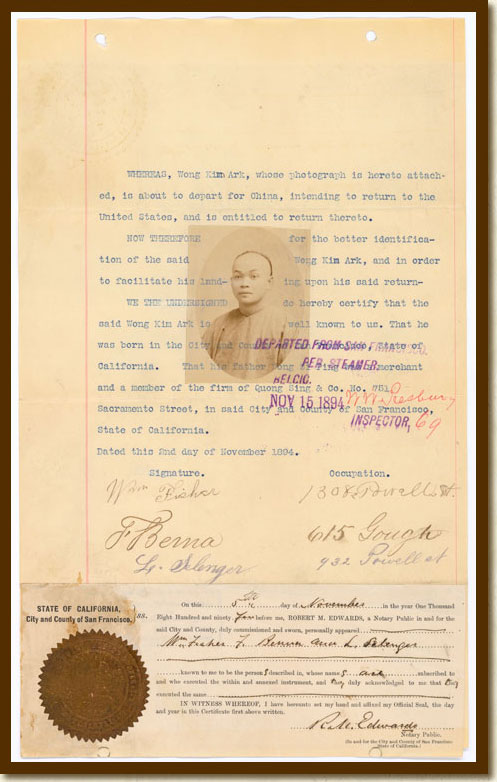
    The landmark case began in 1895, when immigration officials barred Wong Kim Ark, a native of San Francisco, from reentering the United States after a trip to China. Authorities argued that because Wong’s parents were Chinese immigrants — a group barred from naturalizing because of their race — the birthright citizenship clause of the Fourteenth Amendment did not apply to their son. What did cover him, officials claimed, was the Chinese Exclusion Act. This 1882 law prohibited the entry of Chinese laborers, and because Wong was a cook, he fit into that category. As the government succinctly put it, “although he is native born, he is not entitled to come into the United States because he is a laborer and of the Mongolian race.” Wong responded by taking his case all the way to the Supreme Court, which in 1898 clearly and unambiguously affirmed his U.S. citizenship.

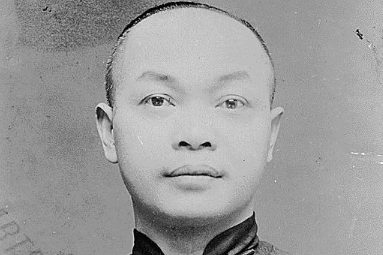
    Wong Kim Ark, the son of Chinese parents in San Francisco, was determined by the Supreme Court to be a citizen by virtue of being born in the United StatesNational Archives

    Yet in the years that followed, the Immigration Service found plenty of ways to thwart the spirit of the ruling, all while claiming to recognize birthright citizenship as settled law. Wong Kim Ark, now back home in El Paso, discovered this firsthand in 1901. Three years after the Supreme Court decided his case, authorities in Texas briefly detained him, charging him with violating the Chinese Exclusion Act for living and working in America, the land of his birth.

    Hoping to head off reentry problems, other Chinese American citizens planning to travel abroad learned to gather substantial evidence of their birth in the United States and ask white acquaintances to vouch for them at local courts or Immigration Service offices. Those with enough money hired attorneys to help navigate the haphazard process more effectively, though one such lawyer warned his client that even the most thoroughly documented travelers often faced “considerable trouble” reentering. In such cases, attorneys needed to sue for writs of habeas corpus, just as Wong Kim Ark had done in 1895.

    Wong Kim Ark, whose Supreme Court case determined that he was a citizen by virtue of being born in the United StatesNational Archives

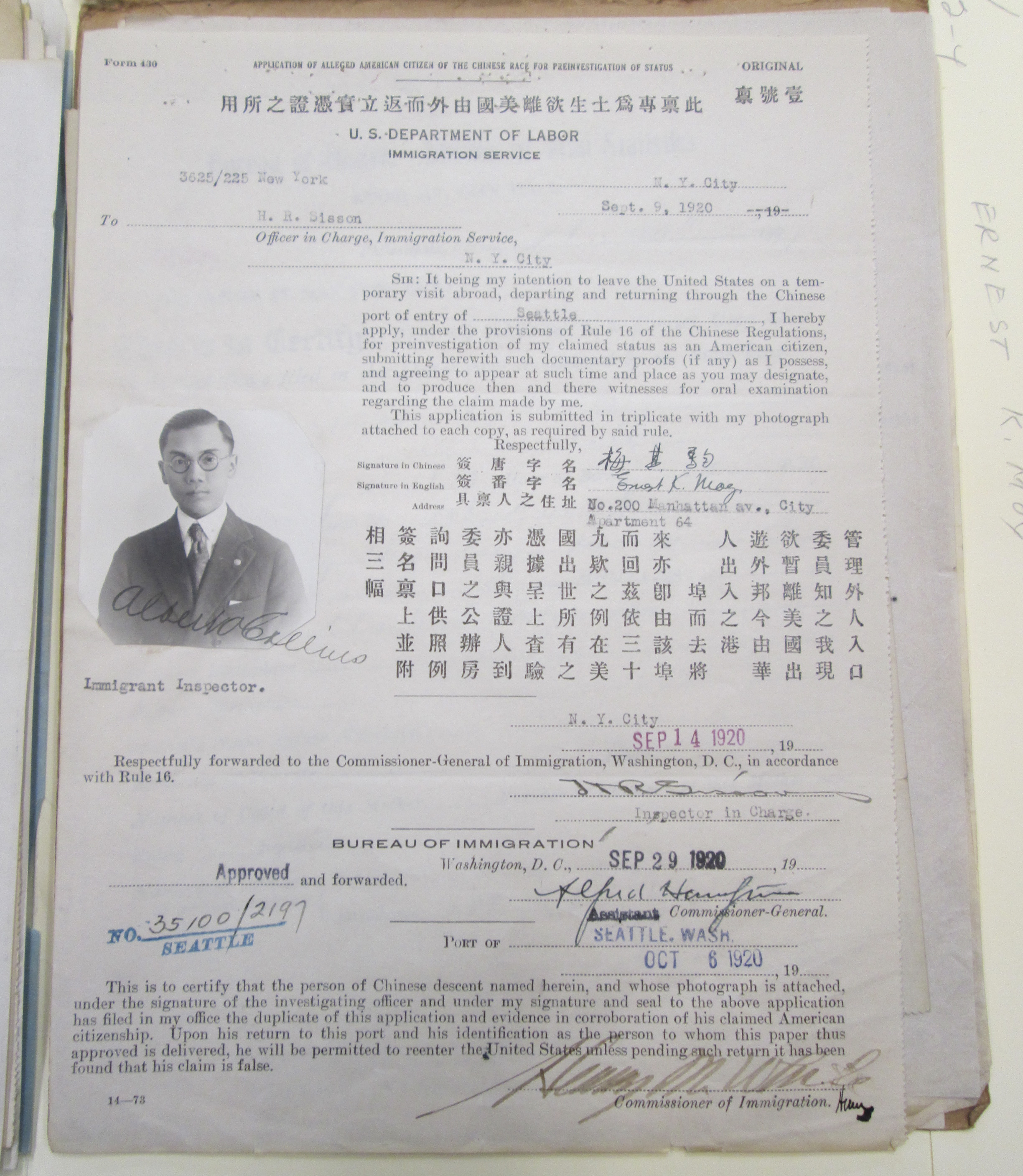
    In 1909, U.S. officials rolled out a new procedure for Chinese American citizens, unsurprisingly modeled on the way the government vetted China-born temporary residents. The entire process reflected authorities’ continued hostility toward the very idea of Chinese American citizenship as a legitimate concept — and their eagerness to deny or at least constrain it in any way possible. Even the official name of the Immigration Service’s new form broadcast this attitude: “Application of Alleged American-Born Chinese for Preinvestigation of Status.”

    Resentful of the word “alleged,” most Chinese American citizens chose to refer to the application by its official number: Form 430. No matter how they felt, those planning to travel abroad had little choice but to fill out the form and submit it together with copious additional documentation, including birth certificates, school records, photographs, selective service certificates, and the citizenship identity cards that only Chinese American citizens had to carry. By the 1920s, when passports became common for all U.S. citizens traveling abroad, Chinese Americans included those, too. But while a passport could guarantee reentry for other American citizen travelers, officials considered it inadequate evidence of citizenship for Chinese Americans who did not also carry an endorsed Form 430.

    OLD IMAGE — DO NOT USE — Made By History sponsors. FOR USE ON MADE BY HISTORY STORIES ONLY.Inquirer Staff

    In addition to gathering documents, Chinese American citizens also had to testify at the closest Immigration Service office, answering detailed questions about their lives and families to establish their birth in the United States. Many brought in friends, relatives, and community members to undergo similarly detailed interrogations on their behalf. Immigration Service agents tended to view the testimony of white acquaintances, including family doctors, teachers, and local Christian leaders, as particularly valuable.

    Even after the Immigration Service “conceded” (in its words) an applicant’s birthright citizenship and endorsed the person’s Form 430, obstacles remained. For instance, returning travelers, including those with U.S. passports, had to sit for further interrogation when reentering the United States. And the Immigration Service required Chinese American citizens to undergo a new preinvestigation each time they left the U.S., even for brief trips to Canada or Mexico. In other words, officials “conceded” citizenship only temporarily, so U.S.-born Chinese Americans became “alleged” citizens before every new departure. No other group of U.S. citizen travelers endured such treatment in the pre-World War II years. While Congress finally repealed Chinese exclusion in 1943, official attitudes barely changed over the next decade, as Ernest Moy’s experience shows.

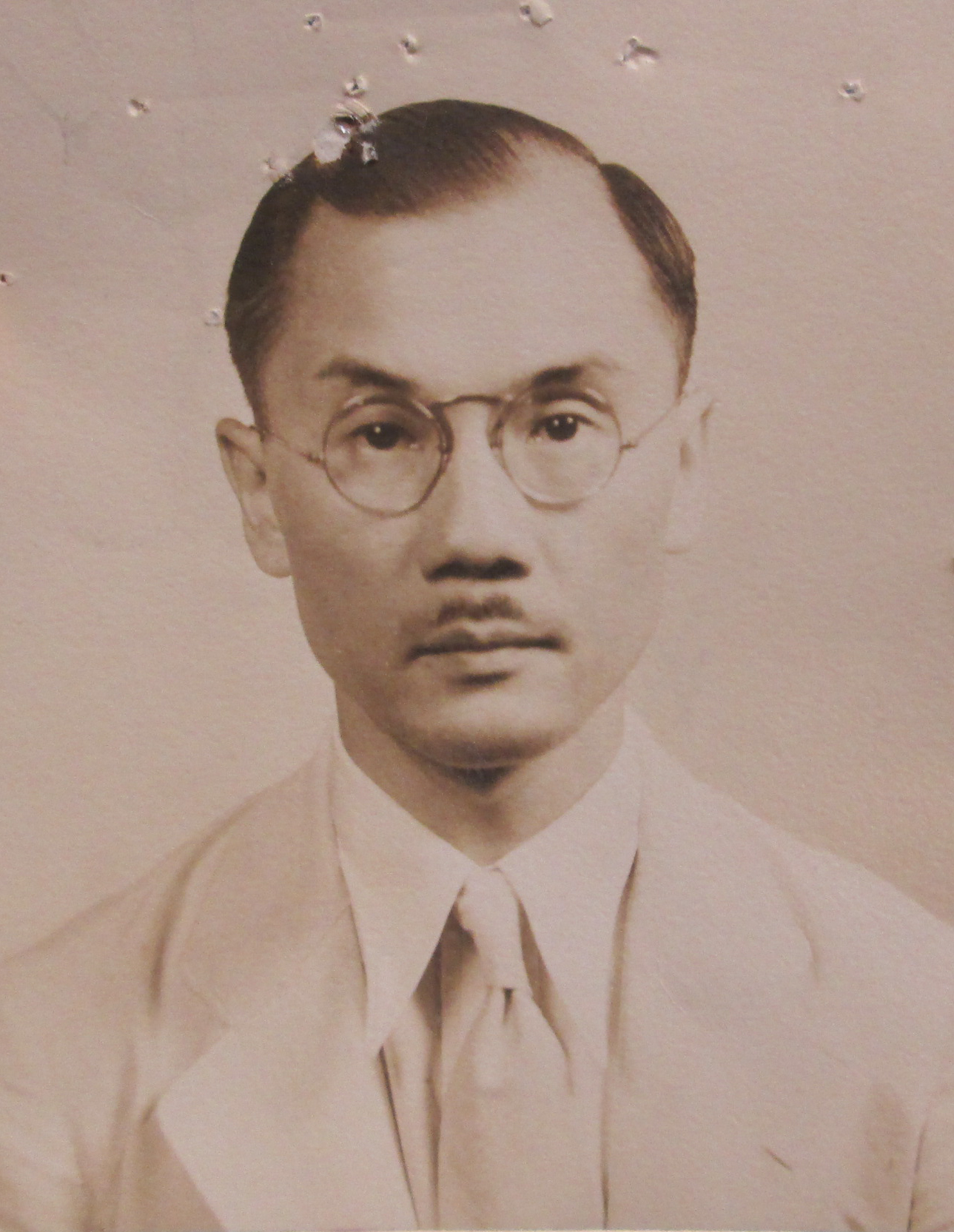
    Ernest Moy first underwent pre-investigation in 1920, when he received this endorsed Form 430.National Archives at Seattle

    By the 1910s, large numbers of Chinese Americans started to undergo preinvestigation, but not for the kinds of short trips Wong Kim Ark had taken. Many began to relocate to China, a struggling young republic that offered Western-educated people career opportunities unconstrained by American racial discrimination. Eventually, close to half the Chinese Americans born in the United States, including Ernest Moy, moved to China. Before departing, almost all these U.S. citizens underwent preinvestigation — Moy did so three times — to ensure that they could retain the right to return to the country of their birth, the United States.

    Eventually, Wong Kim Ark returned to China, too. The citizenship rights that officials “conceded” to him came with restrictions that didn’t apply to other Americans, and at 61, he was both lonely and fed up. For years, Wong had supported his family from afar because Chinese exclusion laws prevented him from bringing his China-born wife to the United States. In 1931, he retired and joined her in the village where she had raised their sons. But unwilling to relinquish the rights for which he had fought 35 years earlier, Wong submitted to preinvestigation one last time before making that final trip.

    The institutionalized harassment of Chinese Americans is just one example of the way the U.S. government for decades equated citizenship with whiteness — and nonwhiteness with alien status. President Donald Trump’s attempt to end birthright citizenship is rooted in this same idea, and the Supreme Court must and should reject the president’s deeply unconstitutional executive order. But as the lives of Wong Kim Ark, Ernest Moy, and so many of their peers show, such a ruling, though essential, will be incomplete without a larger challenge to the pernicious idea that whiteness and Americanness are the same.

    A professor of history at Baruch College and the CUNY Graduate Center, Charlotte Brooks has written several books about Asian American history, including the newly published The Moys of New York and Shanghai: One Family’s Extraordinary Journey Through War and Revolution.

    Made by History takes readers beyond the headlines with articles written and edited by professional historians. Opinions expressed do not necessarily reflect the views of Inquirer editors.

  • Gov. Sherrill’s ‘first real test’ | Inquirer South Jersey

    Gov. Sherrill’s ‘first real test’ | Inquirer South Jersey

    Good morning, South Jersey.

    👋🏽 I’m Taylor, your newsletter writer. As a Jersey girl, I can’t wait to spotlight my home state: the land of pork roll, intense attachments to highway exit signs, beautiful farmland, expansive woodlands, full-service gas stations, and of course, diners.

    I hope this space will become your reliable news hub for Burlington, Camden, and Gloucester Counties.

    A little more about me:

    • You might know me already from writing The Inquirer’s main morning newsletter from 2022 to 2023. I’ve also been filling in over there during the past month.
    • I’ve lived in every region of this wonderful state: North, Central, and now South Jersey is my home. I wouldn’t have it any other way.
    • Some hobbies include writing quick book reviews, hiking, latch-hooking, and hunting for new bookstores and coffee shops (double points if they are both!).

    Now, onto the news.

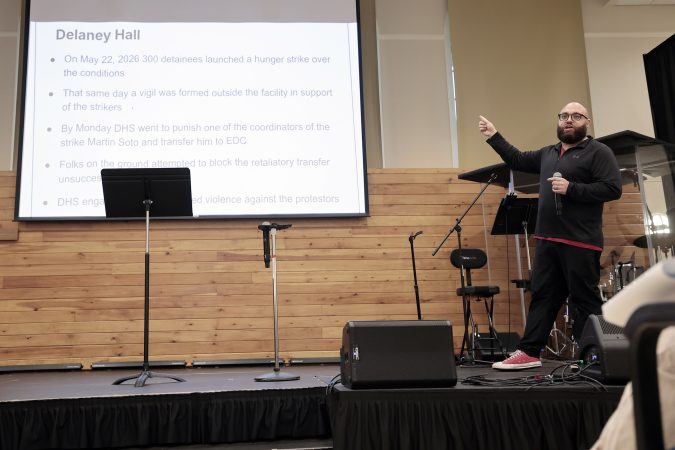
    South Jersey progressives and immigration rights activists aren’t happy with how Gov. Mikie Sherrill handled the protests outside of Delaney Hall.

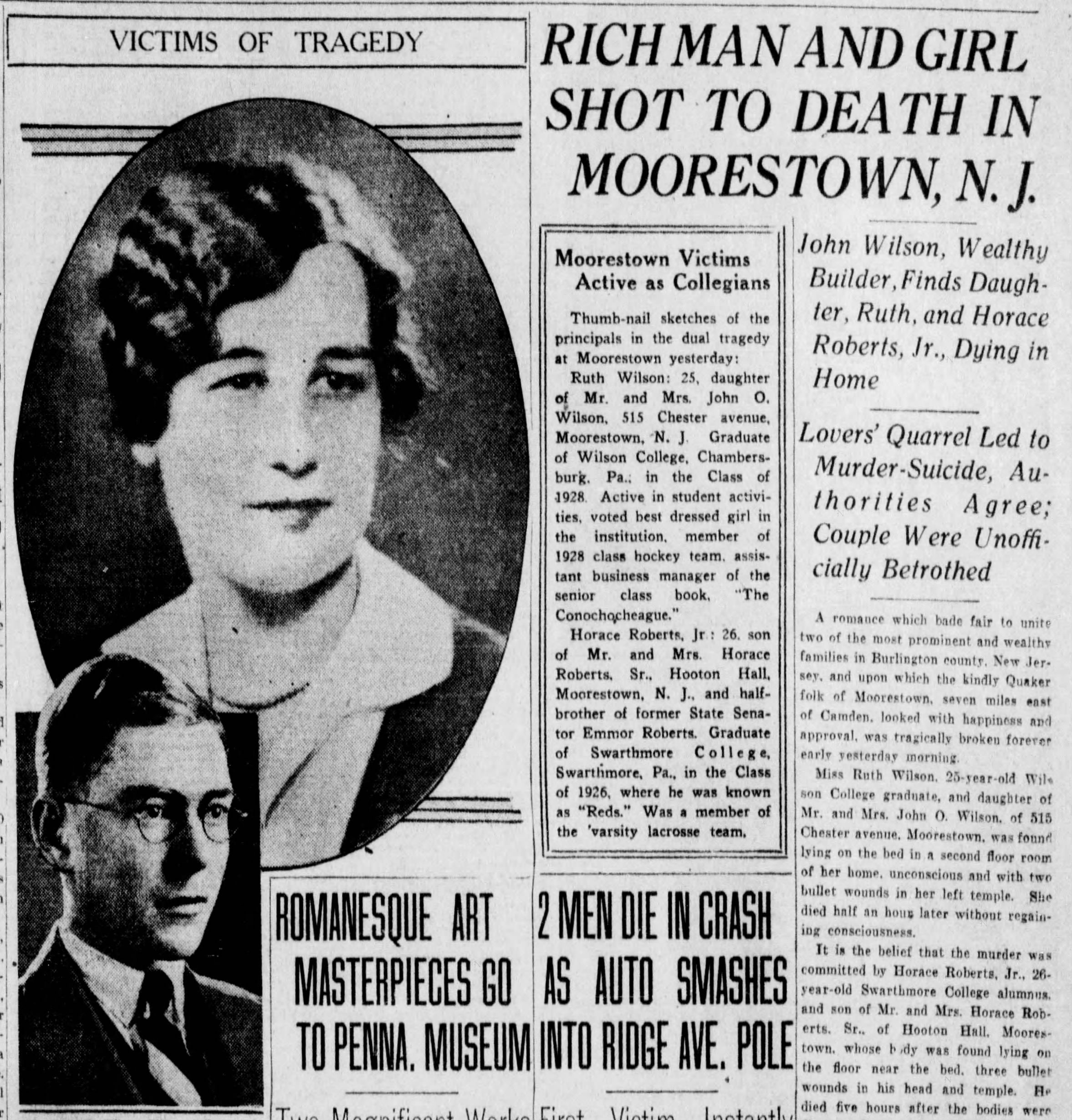
    And former 6abc reporter Annie McCormick recently released a book about a nearly 100-year-old case about the deaths of two South Jersey socialites in Moorestown.

    Plus, most of the 2025 Jersey wildfires were caused by human activity, and more news of the day.

    — Taylor Allen (southjersey@inquirer.com)

    If someone forwarded you this email, sign up for free here.

    Delaney Hall fallout

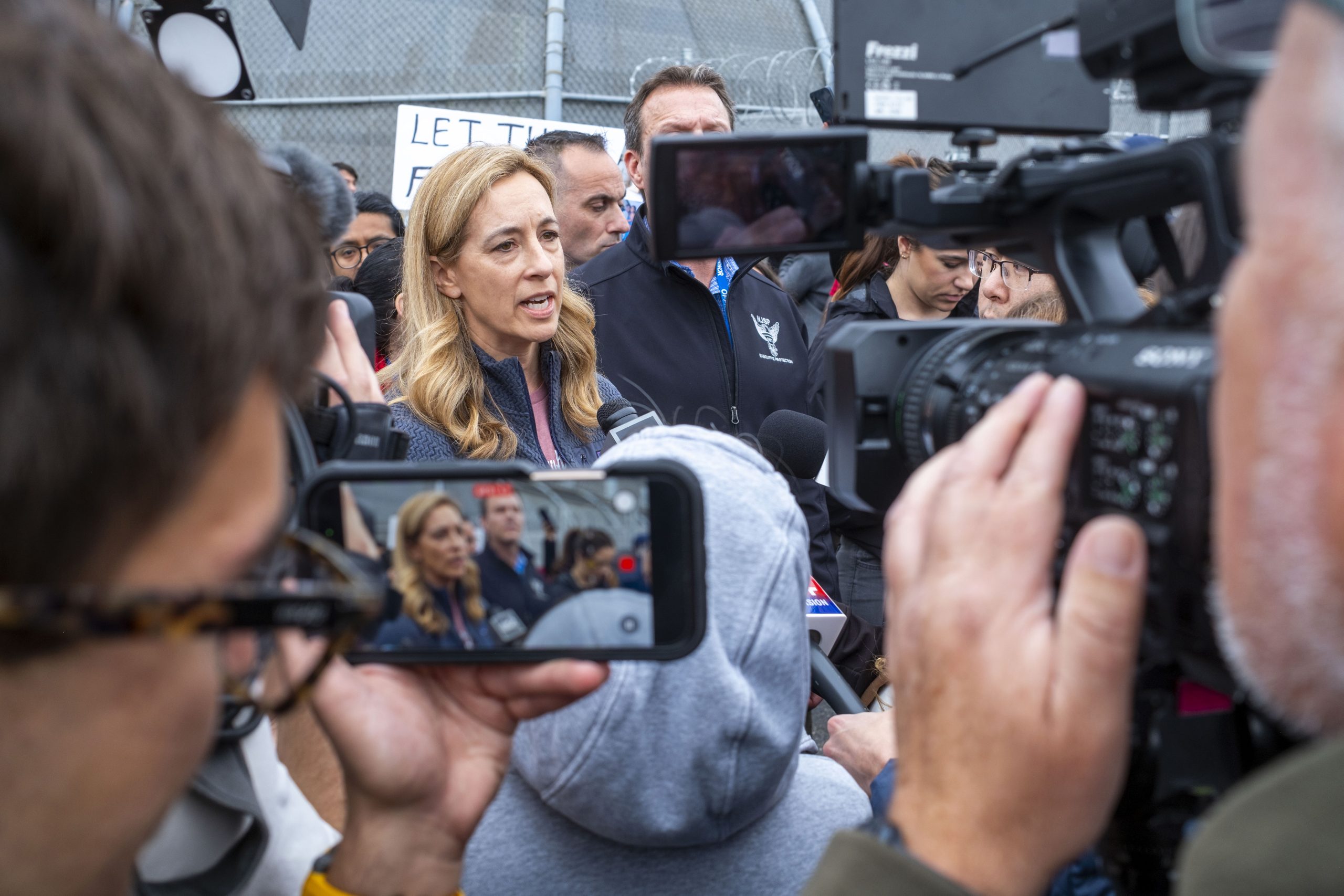
    All eyes are on Gov. Sherrill, the first-term governor who campaigned to fight against President Donald Trump and ICE.

    She’s pushing for the closure of the Delaney Hall immigration detention center while grappling with the backlash for how she’s has handled the unrest outside of it.

    The South Jersey progressives and immigration rights activists who campaigned for her see Sherrill’s choice to put in place designated protest zones and deploy state troopers as a betrayal. Sherrill said the decision was her attempt to “lower the temperature.”

    “It’s her first real test [of] how she manages the duties of being the highest public safety officer of the state leading New Jersey, and then still protecting the immigrant community who lives here,” a former campaign adviser to Sherrill said.

    The Inquirer’s Aliya Schneider has the story.

    ‘Restless Ghosts’ details South Jersey socialites’ deaths

    The 1929 deaths of two young socialites, Ruth Wilson and Horace Roberts Jr., in Moorestown rocked the township and inspired years worth of sensational headlines.

    But nearly a century later, most people don’t recall the case that was officially ruled a murder-suicide.

    Former 6abc reporter and Moorestown native Annie McCormick never heard of it until she stumbled on a 2021 news article and then quickly became hooked on the story. Her fascination led to the recent release of her book, Restless Ghosts: Murder, Suicide, and the Case that Wouldn’t Stay Buried which retells the case.

    “The most frustrating part is that I can’t ask anyone,” she said. “I have questions, and I don’t have anyone I can follow up with. I wonder if this was a present-day case if there would be more finality.”

    Read on to gain more insight into the case, and the questions that still linger around it.

    P.S. Don’t miss the archived Inquirer coverage of the case included throughout the article.

    What to know today

    • Nearly all of the 1,322 New Jersey wildfires that burned 27,229 acres in 2025 were caused by human activity. Two large fires from the past year included the Mines Spung Wildfire in Burlington County and the California Branch Wildfire in Camden County, which burned 6,610 and 2,336 acres respectively.
    • A South Jersey man shot and killed an acquaintance, and then himself in his car after driving half a mile away in Lumberton last week, according to authorities.
    • U.S. Sen Cory Booker toured the Camden County’s Police Department in Camden to see its new training tools for officers. Booker praised the new technology as “innovative and cutting edge” and said other departments should use them as an example.
    • The brother and father of Xavier Taylor, the 12-year-old boy from Maple Shade who was critically injured after getting hit with a baseball and remains on a ventilator, threw the first pitch at a Little League game in Camden County on Saturday, NBC10 reports. Support for Xavier and his family has grown nationwide.
    • Gov. Sherrill announced state farmers in all 21 counties are eligible for emergency federal loans for the crops damaged by cold temperatures back in April. Heights in Progress, a nonprofit, hosted a FIFA World Cup watch party in downtown Haddon Heights on Saturday to fundraise for farmers.
    • The $50 million Bruce Springsteen Center for American Music at Monmouth University examines the musician’s influence and validates “New Jersey’s enormous contribution to the history of American music,“ architecture critic Inga Saffron writes.
    • According to South Jersey Food Scene, Ciconte’s Restaurant Group acquired Don & Bert’s Custard Stand in Paulsboro.

    🧠 Trivia time

    What was the most popular baby name in New Jersey in 2025?

    A) Emma

    B) Liam

    C) Noah

    D) Thiago

    Think you know? Check your answer.

    What we’re…

    🍴 Craving: Crab gravy.

    🌲 Exploring: The area around Laurel Lake, now a nature preserve.

    ⚽ Watching: The World Cup at Zed’s Beer in Marlton.

    📬 Your South Jersey view

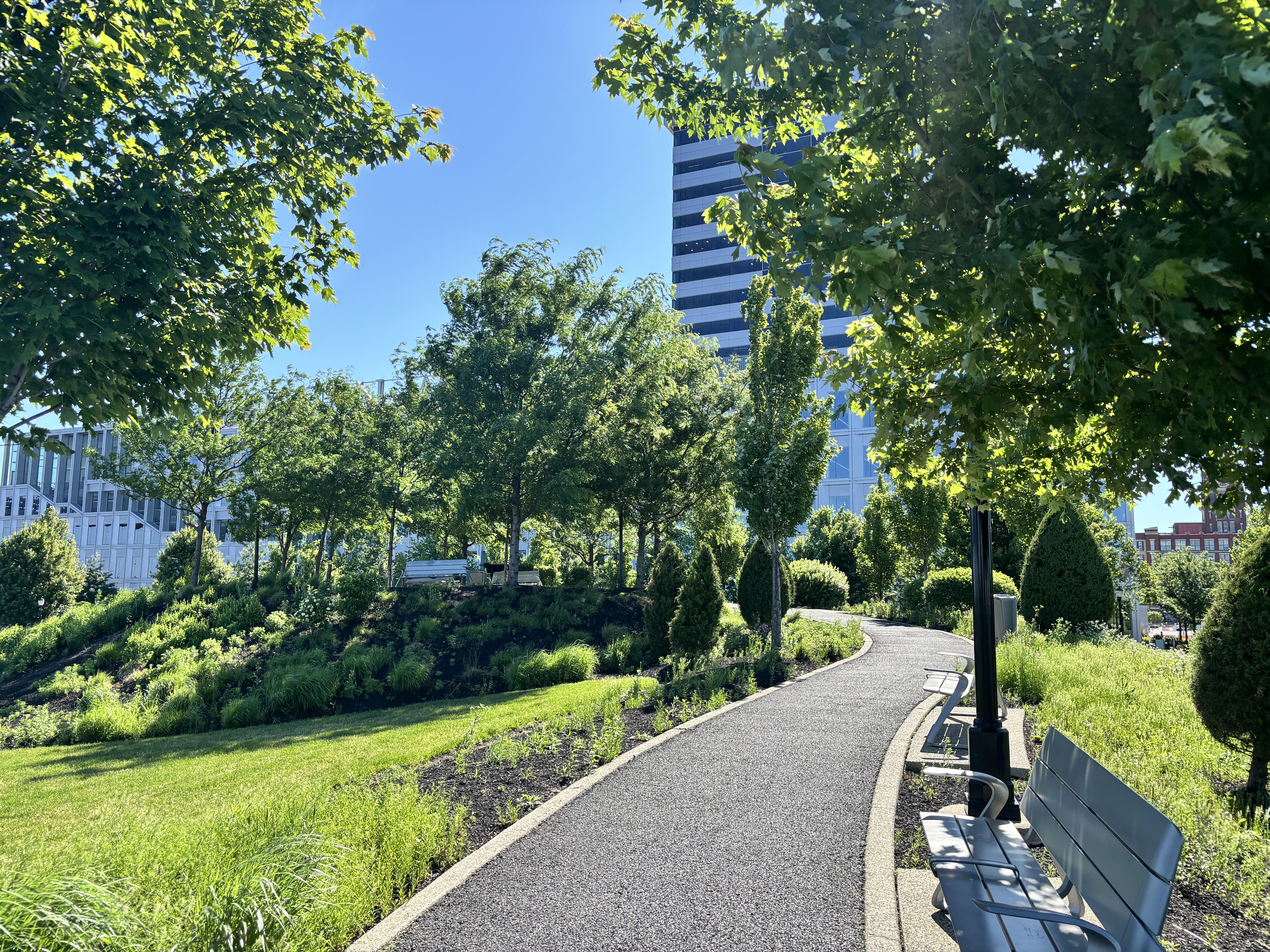
    The sun is out during a spring day at the Wiggins Waterfront Park in Camden. Taylor Allen

    This view minutes away from my home never gets old. It’s spring (now, basically summer), but it’s beautiful in every season.

    What does your community look like? Submit a photo and a brief description for a chance to be featured in the Monday edition of this newsletter.

    🗞️ What other South Jersey residents are reading

    Thank you for reading our first edition of the South Jersey newsletter. I’ll be back in your inbox tomorrow, bright and early. ☀️

    By submitting your written, visual, and/or audio contributions, you agree to The Inquirer’s Terms of Use, including the grant of rights in Section 10.

  • The ups and downs of daycare germs | Expert opinion

    The ups and downs of daycare germs | Expert opinion

    Many parents and guardians find that as soon as their child starts daycare, they seem to be sick constantly. Whether that is a runny nose, sore throat, or lingering cough, there always seems to be something. They may be sent home from daycare due to fussiness or fever, and just when it seems they have turned the corner, they develop a new cough and the cycle continues. It can seem like there might be something wrong with the child’s immune system.

    The truth is, frequent illness in daycare is something to be expected – and may actually help a child build immunity. Children in daycare may experience eight to 12 illnesses per year. After all, kids who share toys and surfaces share viruses, too.

    Runny noses that do not fully go away, lingering cough, or temporary appetite changes are to be expected in a child with a viral illness.

    A runny nose is the way the body flushes out germs. Even after the infection improves, the lining of the nose may still be irritated, which is why you may still see this symptom after your child seems better.

    Additionally, the airways remain sensitive after an illness, and that means coughs can linger for several weeks after a cold. When the body is fighting a virus, that focus can suppress appetite, though that should improve within three to five days of the onset of illness.

    How daycare can build your child’s immune system

    Exposure to common viruses helps the immune system learn and grow stronger over time. Early childhood illnesses can:

    • Help build protection against future infections;
    • Lead to fewer missed days of school later in childhood;
    • Support the development of a stronger immune system.

    When should you check in with your doctor?

    • Usually normal: frequent colds, mild lingering coughs, reduced appetite during illness, short periods of fatigue;
    • Check in with your pediatrician if: your child is not growing well, infections are unusually severe, and symptoms linger for more than 4 weeks without any signs of improvement or change.

    What is “supportive care”?

    Often, the pediatrician will let you know that we treat these viral infections with supportive care, which simply means helping the body recover while the illness runs its course.

    Supportive care includes:

    • Hydration: fluids help to prevent dehydration and keep the mucus thin, so it is easier for the body to clear;
    • Rest: Sleep supports the immune system as it fights the infection;
    • Hand hygiene: Washing hands helps prevent the spread of viruses to others.

    The bottom line:

    Frequent illness in children who use daycare can feel overwhelming, but it is a normal part of early childhood. Over time, children exposed to common viruses build stronger immunity and experience fewer infections than those who don’t encounter typical childhood ailments.

    If you have any concerns, stay connected to your child’s pediatrician, as they can provide reassurance and guidance. Staying up to date with vaccines, including the flu shot, may not mean your child never gets sick, but vaccines are proven to reduce the severity of illnesses and prevent hospitalizations.

    Renee Bruce is a second year pediatric resident and Hayley Goldner is a pediatrician in the adolescent medicine department at Nemours Children’s Hospital, Delaware.

  • There’s a new cafe in Manayunk serving samosas and viral dot cakes

    There’s a new cafe in Manayunk serving samosas and viral dot cakes

    In 2022, Smit Patel was a freshman at Thomas Jefferson University selling Indian Chipotle-style bowls in his apartment kitchen for students on campus. Now, the 22-year-old is whipping up viral dot cakes cups and Dubai chocolate lattes in his new cafe in Manayunk.

    Patel, with his friend Ojas Patel (no relation), opened Saffron Cafe on 4331 Main Street in May.

    Murals decorate Saffron Cafe in Manayunk.Hira Qureshi

    The 1800-square-foot cafe is filled with marble tables, cushioned chairs, and faux leather couches for customers looking to settle in for hours. The beige, lime-washed walls feature three murals, featuring Hindu deities Krishna and Radha, painted by Patel’s friend.

    “We wanted to bring our culture to the cafe,” Patel said. “Not only are we focused on the Indian aspect, but we’re also focusing on how to bring both American and Indian cultures together and become the bridge for both.”

    By day, the windows bathe the space in sunlight. At night, downlights in the ceiling illuminate the coffee shop. The cafe is open until 8 p.m. for the summer and until midnight when schools are back in session, a rarity in a city where coffee shops often close before sunset.

    Find viral dot cakes at Saffron Cafe.Hira Qureshi

    Housemade dot cakes — the viral cake in a cup concept made in layers, frosted, and topped with a colorful, spherical coating of nonpareils sprinkles — line the small display case on the checkout counter. There are Dubai chocolate and Biscoff cake cups and a variety of vegan eggless croissants (think Ferrero Rocher and strawberry cheesecake). The vegetarian, vegan-friendly menu also includes a sandwich featuring a spicy North Indian dish called maharaja paneer and a peas and potato spiced puff pastry. Customers can order from a variety of samosas stuffed with paneer tikka, potatoes and peas, and melted cheese and spicy jalapeños.

    Paneer tikka sandwich at Saffron Cafe.Hira Qureshi

    The cafe’s coffee menu offers masala chai and lassi, along with more familiar contemporary drinks like brown sugar shaken espressos, tiramisu lattes, and iced mango matchas. Patel also incorporated the viral dot trend to his drink menu with lattes and matchas topped with cream and finished with a colorful confetti crunch.

    When he’s not running the cafe, Patel is a global lead for a financial institution based in New York — it’s how he came up with the cafe idea.

    He visited Dubai last year for work and was inspired by the cafe culture there. He returned with ideas for an Indian American cafe and pitched the idea to his childhood friend Ojas in January. The two signed a lease in March, sorted permits and government regulations by April, and opened their doors in May with a soft opening featuring a 300-person Bollywood DJ event.

    (The two owners plan to host the event on the 30th of each month, along with other events.)

    Find Dubai chocolate cake cups at Saffron Cafe.Hira Qureshi

    “Over here, people mainly go to cafes just to study or do some work and grab a cup of coffee,” said Patel. “In Dubai, people go to cafes more so as a form of connecting with other people, whether that’s strangers or the group of people they came with. And so, I thought Manayunk was a great spot to open a cafe with this concept of connecting people.”

    And the Patels’ mission is reflected in the name of the cafe. When the two launched their idea, they wrote a letter to Hindu guru Mahant Swami Maharaj at BAPS Swaminarayan Sanstha temple in India (Patel attends the Downingtown temple, and Ojas attends the Delaware one) for blessings, guidance, and a name.

    Saffron Cafe in Manayunk.Hira Qureshi

    “He chose the name Saffron Cafe, and the reason for choosing the name is that saffron is orange [colored], which is similar to the color of fire in Hinduism,” Patel said. “When you come inside a cafe, we want you to burn your distractions and burn all the negativity and stuff. We want you to come into a new environment and connect with others. This cafe should uplift you.”

    Saffron Cafe: 4331 Main St, Philadelphia, PA 19127; instagram.com/saffroncafephilly

  • Philadelphia’s 1876 Centennial Expo introduced the world to ketchup and the telephone. Now, it’s inspired a new oratorio.

    Philadelphia’s 1876 Centennial Expo introduced the world to ketchup and the telephone. Now, it’s inspired a new oratorio.

    To bring Philadelphia’s Centennial Exposition back to life, Peter Boyer and Mark Campbell could have created a nostalgic musical impression delivered like a sepia-toned postcard lost in the mail for a century and a half.

    And, in fact, they have.

    The oratorio will premiere Wednesday night at the Highmark Mann in Fairmount Park, the very site of the somewhat now-forgotten 1876 event that wowed roughly a fifth of the nation’s population with marvels of technology, agriculture, culture, and more.

    But what the composer and librettist have created is something that is also more deeply personal than merely an account of a World’s Fair that introduced, among other things, an invention called the telephone and foods like Heinz ketchup and the banana.

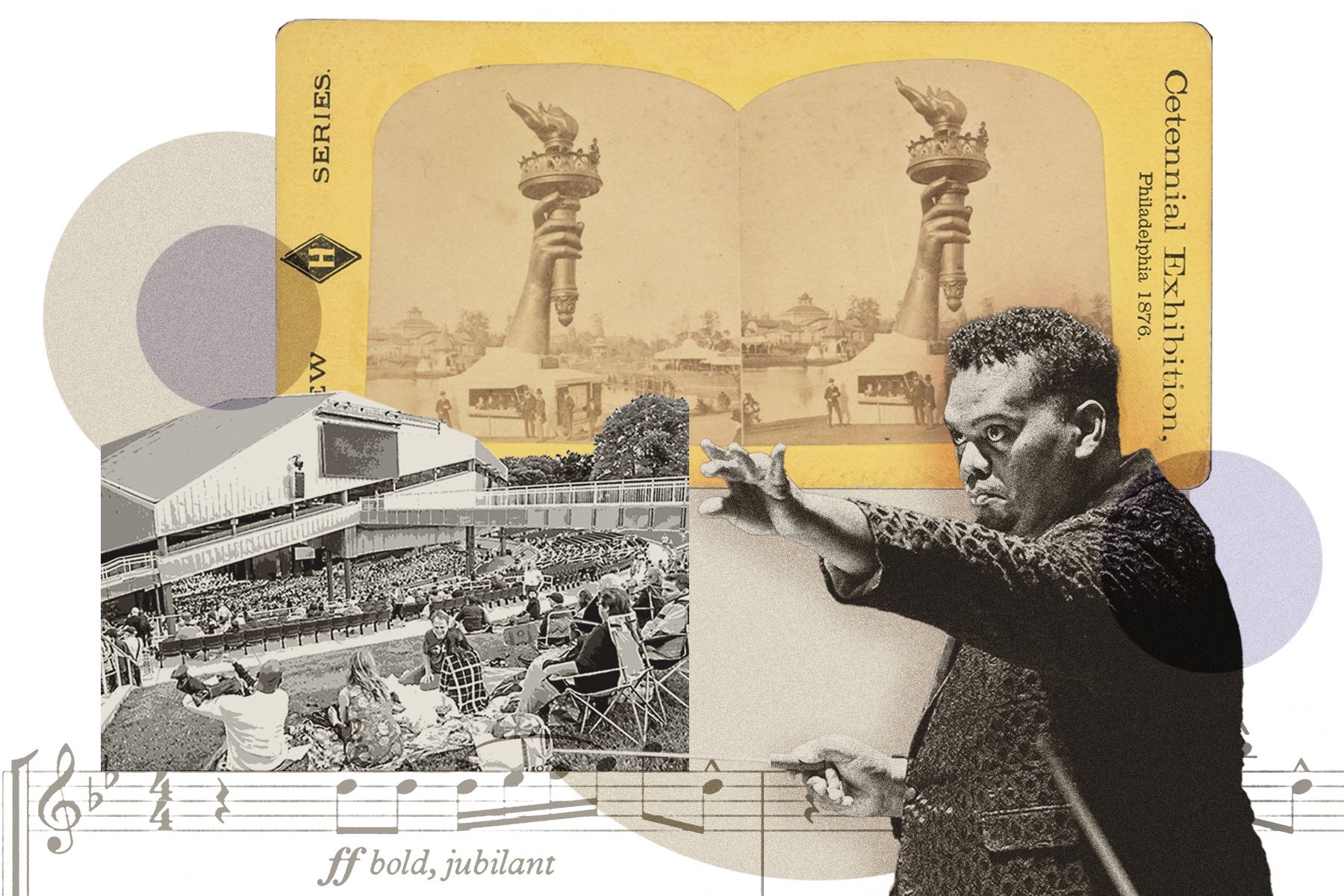
    The great U.S. Centennial Exposition is conjured in A Hundred Years On through five fictionalized characters and others who voice hope, a sense of ambition, progress, and prosperity but also uncertainty about the young country. With the Philadelphia Orchestra, the Crossing choir, vocal soloists, and conductor Anthony Parnther, the piece — commissioned by the Highmark Mann to celebrate its half century and the nation’s 250th — also humanizes the story of Americans who were denied a full voice in society.

    In other words, although it celebrates the excitement of the Centennial Exposition, the piece in a sense collapses the span of time between then and now.

    “It’s obvious, the relevance to our situation today,” said Boyer. “We’ve made some progress since the 1870s, and then in some ways we have made much less progress than we might have hoped.”

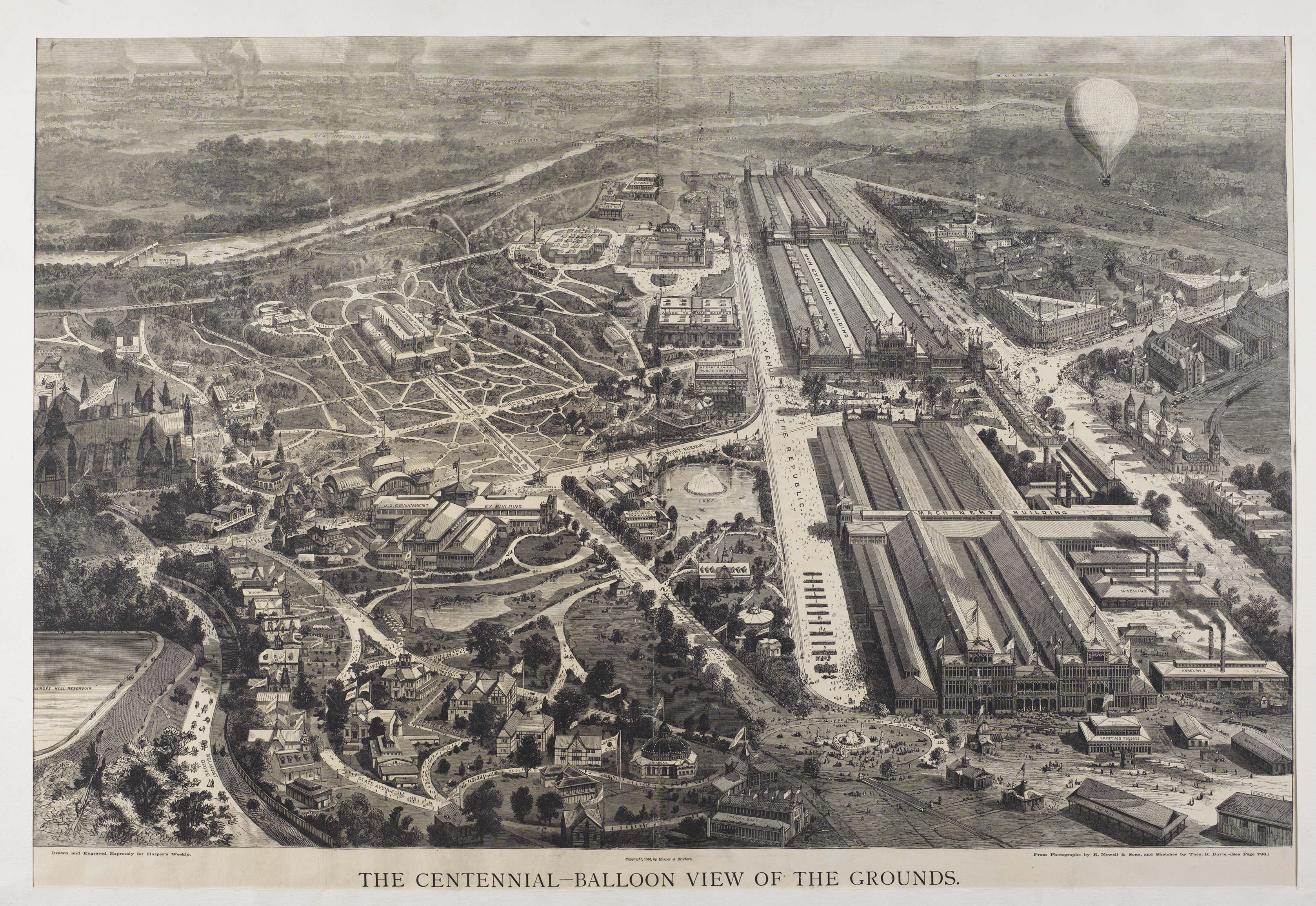
    Map of the Centennial Exposition grounds and buildings, 1876.Courtesy of the Historical Society of Pennsylvania

    “As I read about this World’s Fair, it was 10 years after the end of the Civil War, the country had just gone through a depression,” said Campbell. “This was a time when it was important for the U.S. to put its best foot forward, but it could not shake itself free from what had happened in recent history. And so there were some real dramatic possibilities there.”

    Like Ignatius Thomas, a Black waiter at the exposition’s Restaurant of the South.

    “Happy birthday, America,” the baritone sings, “but the speeches and the fireworks — they’re not meant for me.”

    And a Polish immigrant named Marion Jozwiak, who sings in a mezzo soprano voice, says she came to America to “find a little hope” but found a “country divided, broken” — and yet still believes it’s a fair land.

    “Yes, there are a few mean men who always find a way to speak the loudest and the longest. But after time, their voices die and they’re forgotten.”

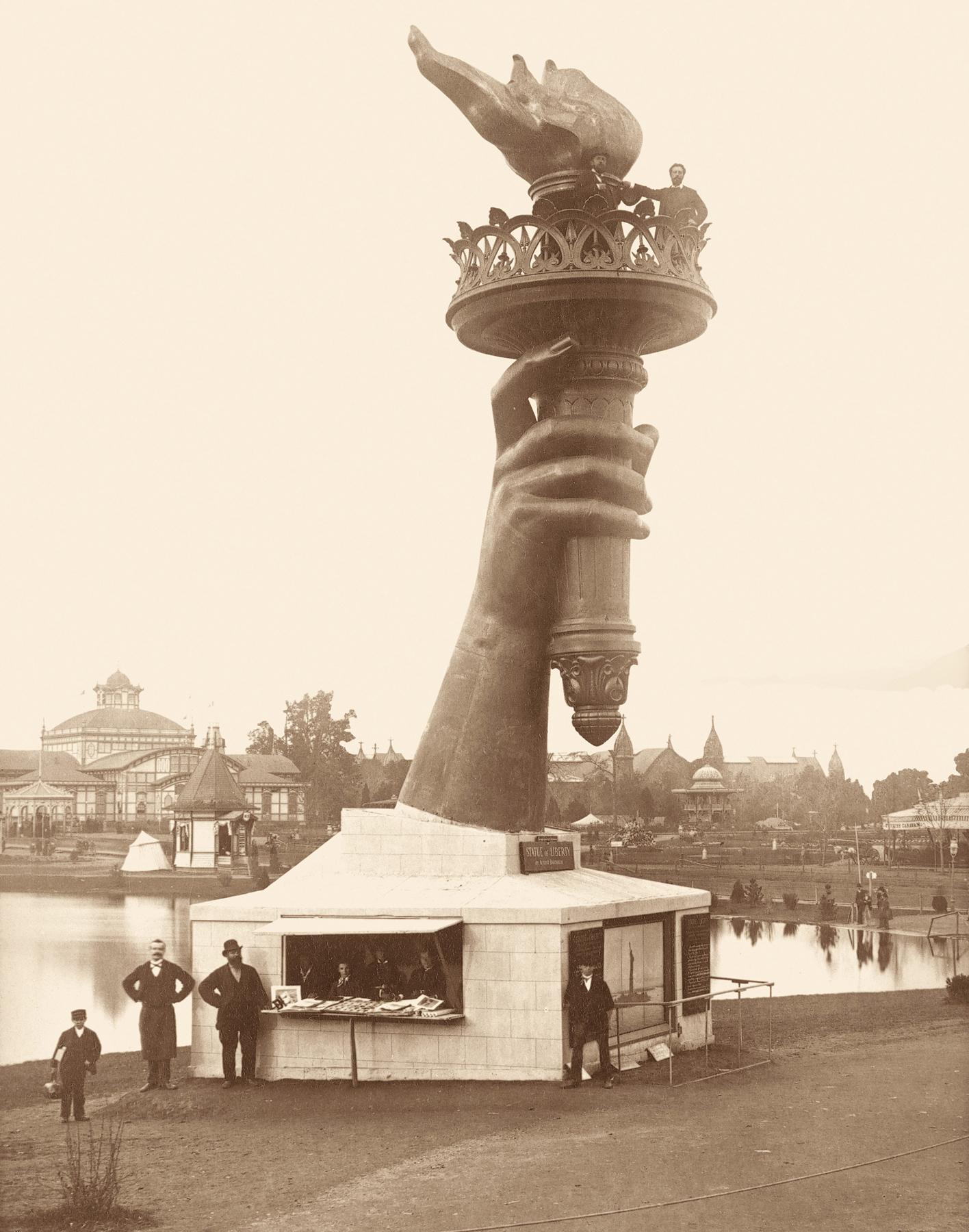
    In the piece, Jozwiak is standing on the torch of the Statue of Liberty, which, with its raised arm, was displayed at the Centennial Exposition before the statue’s dedication a decade later in New York Harbor.

    The Statue of Liberty’s torch at the Centennial Exhibition of 1876 in Philadelphia. As a way to raise funds to build a pedestal for Lady Liberty, visitors could, with a small donation, climb a staircase inside the statue and get a bird’s-eye view of the festivities.

    “I think maybe it’s the most iconic image of this exhibition, it just says so much,” said Boyer. “It says ‘work in progress.’ We’re still a work in progress.”

    That the progress is now in retrograde compelled Campbell to go back into the libretto and make changes a few months ago, long after it was finished.

    “What we’re facing now — I’m sorry, I’m going to be very frank — with this terrible corrupt government we have, we are facing an autocracy — or, what is the word? Kakistocracy. So I wrote this in a very different place and I had to go back to the libretto and make it darker than it was when it was originally written. It was just sounding too positive to me.”

    But if the piece acknowledges pain and exclusion, it doesn’t stint on idealism.

    “The story certainly has humor in it, and joy and excitement about where America could be, where America could go, what America could be to the world, and I think that’s the soul of Peter’s music,” said Campbell.

    In the way it deals with story, the new piece echoes Ellis Island: The Dream of America, Boyer’s work whose stirring, filmic musical language has generated about 350 performances since the piece’s premiere in 2002.

    “I’m pretty clearly identifiable as an American-sounding composer, you know, which is an ambiguous term,” says Boyer, who cites Copland, Bernstein, and John Williams as influences generally.

    Here in this new piece, “my love of Sondheim, my love of Bernstein, theatrically speaking, that sort of came through, because the libretto seemed to suggest it.”

    Composer Peter BoyerBenjamin Ealovega

    Boyer and Campbell collaborated virtually on the piece — Californian and New Yorker, respectively, they’ve yet to meet in person — and they made separate visits to the Free Library of Philadelphia to research the 1876 exposition. They also did the bulk of their work at different times to fit in with other projects. Boyer composed the music while simultaneously writing American Mosaic for the Semiquincentennial. That piece was premiered by the National Symphony Orchestra in February at the John F. Kennedy Center for the Performing Arts.

    Both works use visuals. American Mosaic is a collaboration with photographer Joe Sohm, and A Hundred Years On uses projections of images from the exposition designed by video artist Rasean Davonté Johnson, costumes by Millie Hiibel, and stage direction by director Tazewell Thompson.

    “They’re similar and yet different in some fundamental ways,” says Boyer of his two pieces, “again with where we are in our country and here we are celebrating this incredible milestone in our history while simultaneously dealing with such disheartening times. And so, what is our role as artists and composers?

    “I think it’s an opportunity that this piece can bring some history and some uplift, and that’s not a bad thing.”

    “A Hundred Years On” is performed Wednesday at 8 p.m. at the Highmark Mann, 5201 Parkside Ave., along with Julia Wolfe’s “Liberty Bell” and other works. With vocal soloists Mary Dunleavy, Meredith Lustig, Eve Gigliotti, David Portillo, and Malcolm J. Merriweather. Tickets are $18.76 or $50. highmarkmann.org.

  • This West Philly High graduate almost dropped out of school. Instead, he has a diploma and a full-time job.

    This West Philly High graduate almost dropped out of school. Instead, he has a diploma and a full-time job.

    School wasn’t always Jayzen Smith’s priority.

    For a time, during his 10th grade year at West Philadelphia High, Smith didn’t know where he was going to sleep at night, or how he’d scrape together his next meal.

    “I stopped coming to school,” said Smith. “I was not doing the right things. It got so bad that I used to come only for first period, and leave out.”

    But Smith’s teachers noticed. They pulled him aside to ask what he needed and how they could help. They told him he was smart but he had to come to school and envision a future for himself.

    “That showed me I had people who cared about me,” said Smith. Those conversations, those educators, galvanized him. Coming to school steadily built opportunities — new skills, internships, paying jobs, and a solid future.

    Smith graduated with honors last week after earning a citywide Philadelphia School District honor this winter and maintaining perfect attendance since 2023.

    He’s employed full-time in operations with the Penn Medicine health system, a job with benefits and tuition reimbursement. He’s eyeing trade school after he socks away enough for his own car and apartment.

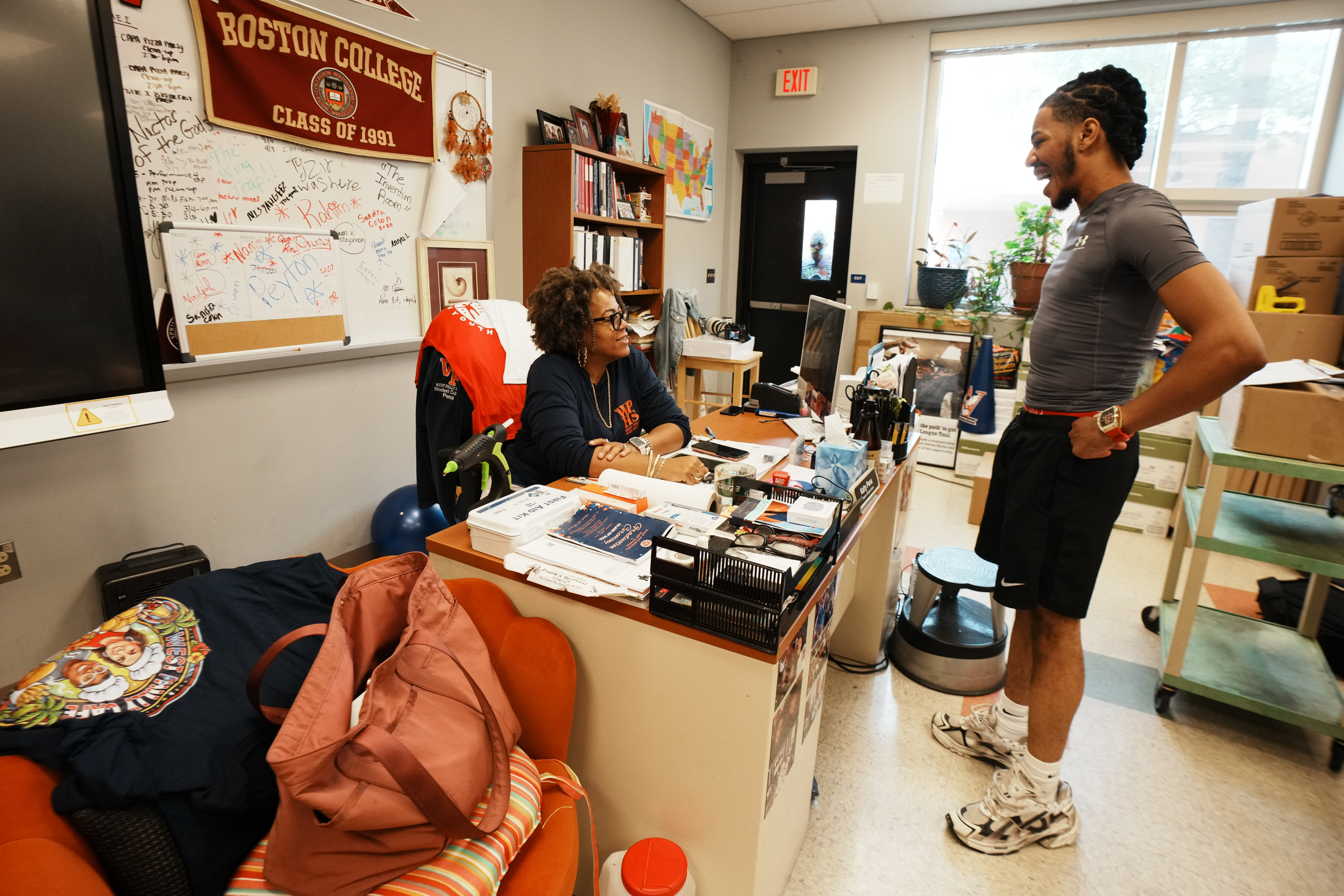
    Jayzen Smith, a West Philadelphia student who has set a path of achievement for himself, at his school in Philadelphia, on Friday.Jessica Griffin / Staff Photographer

    The diploma, the accolades, and the steady path were not a given, said Smith, 19.

    “Honestly, I thought I was going to be dead or in jail by now,” said Smith. “Everything still feels unreal.”

    ‘He just has this way about him’

    Marie Wilkins-Walker, a veteran West Philadelphia computer networking teacher, knew there was something special about Smith, even when he was hardly showing up to class.

    “He just has this way about him, he says hi to everybody, and I noticed he caught on very quick — he was very intelligent,” Wilkins-Walker said.

    Wilkins-Walker and another teacher set up a meeting with Smith during those low-attendance days. Just come to class, they said. You’re so smart, they told him. West is good at connecting kids with resources to fill in the gaps that might exist at home, they said.

    “When we started talking about college, he told me that no one had ever talked to him about college,” said Wilkins-Walker. “He was in 10th grade, and no one had ever talked to him about college.”

    Marie Wilkins-Walker, a computer networking teacher at West Philadelphia High School, talks with Jayzen Smith.Jessica Griffin / Staff Photographer

    Technology wasn’t on Smith’s radar — he made music and wanted to be a rapper. But he started spending more time with Wilkins-Walker, who also serves as West’s technology coordinator, and picked up some skills.

    Smith doesn’t need prompting to seize opportunities. By his senior year, he was an invaluable member of West’s tech team, fixing Chromebooks and solving staff’s IT issues. He worked for the district supporting other schools installing computer security systems and fixing broken hardware. He volunteered his services to other schools, and he held two separate internships with Penn, leading to his full-time post-graduation job.

    “He’s just been an amazing young man,” said Wilkins-Walker.

    Smith’s resumé is impressive but what sets him apart is his soft skills — he’s the guy who, without prompting, makes the new student feel at home, speaks to everyone who walks in the room, and solves tech problems without making anyone feel less than.

    Jayzen Smith became an invaluable member of the tech team at West Philadelphia High School.Jessica Griffin / Staff Photographer

    When Wilkins-Walker’s own grandson began attending West, she wanted him to meet Smith, because she knew Smith would make the boy feel comfortable, and he did.

    It’s not lost on Wilkins-Walker what Smith, as a young Black man in Philadelphia, might have become.

    “For our students, the line is so thin,” said Wilkins-Walker. “You don’t even sometimes know you’re crossing over to the wrong side of the room — from friends or neighborhoods.”

    Keeping busy

    Opportunities are what set him apart from people from his West Philadelphia neighborhood who find themselves on the wrong side of that line, Smith said.

    “Keeping busy, that’s what’s keeping me out of trouble,” said Smith. “You got to find something to keep you occupied. Certain people in certain environments, if they have time on their hands, it’s tough. I grew up with them, they’re still my friends, and I just try to tell them, do what I’m doing.”

    Jayzen Smith, a West Philadelphia student who has set a path of achievement for himself, at his school in Philadelphia on Friday.Jessica Griffin / Staff Photographer

    Smith doesn’t talk much about the dark times. He’s more interested in the future, he said.

    Smith and his mom both narrowly avoided crying on graduation day, he said, because of a mutual pact to stay away from tears. But earning his diploma has made him reflect on what he came through to get there.

    “Ms. Walker,” he said, “she probably saved my life.”

  • 2025 was a wild year for fires in New Jersey, nearly all due to human mayhem

    2025 was a wild year for fires in New Jersey, nearly all due to human mayhem

    Conditions worsened by a drought last year, which continues in 2026, had a dramatic impact on wildfires in New Jersey, according to the state’s inaugural wildfire report.

    However, of 1,322 wildfires that burned 27,229 acres statewide in 2025, nearly all were caused by humans, according to the report. That includes the massive Jones Road Wildfire in Ocean County that took 20 days to contain as the result of a bonfire set by youth.

    The figures represent a 22% increase in the number of wildfires and an eye-popping 116% increase in acreage burned compared with the 20-year average.

    To date in 2026, New Jersey has logged 589 wildfires that burned 648.5 acres.

    Overall, the New Jersey Forest Fire Service’s first wildfire report details a historic, challenging, and highly destructive 2025 for the state’s wildlands.

    That came after a demanding fall fire season in 2024. Severe blazes in 2025 not only stretched firefighting resources but also forced thousands of residents from their homes.

    “Our wildland firefighters responded to an increased number of wildfires and spent weeks at a time battling fires, often under challenging weather conditions,” Bill Donnelly Sr., chief of the New Jersey Forest Fire Service, wrote in the report, which was released Thursday.

    A major wildfire in New Jersey is classified as any blaze reaching or exceeding 100 acres. While the state typically averages 4.75 major fires annually, crews battled nine major wildfires in 2025.

    The drought had a big impact as it created tinderboxes in areas such as the Pinelands. Not only did the dryness help spread fires, but it also forced the forest fire service to drastically reduce the amount of acres it intentionally burns in advance.

    Firefighters use those prescribed fires, or controlled burns, in strategic areas to reduce dry brush and other vegetation, thus denying future fires fuel.

    The drought continues into this June despite some recent heavy downpours. Data from the National Weather Service’s Middle Atlantic River Forecast Center show that Camden County is running a 13-inch rain deficit over the last 12 months.

    Residents of the state are living amid a prolonged drought warning — the third of four levels of dryness monitored by officials. Parts of South Jersey have been under a drought warning since fall 2024.

    But the biggest issue has been people.

    Human activity was responsible for an overwhelming 99.6% of New Jersey’s wildfires in 2025, stemming from both accidental and intentional acts, according to the report.

    “Whether through accident, carelessness, or even at times intentional acts, human behavior continues to be the primary driver of wildfire activity in our state,” Donnelly said.

    Equipment use was the leading cause of fires by volume, sparking 486 individual wildfires that collectively burned 527.5 acres. Lawnmowers, weed trimmers, chain saws, welding tools, grinders, and agricultural harvesting machinery can all create sparks that ignite brush.

    However, illegal and improperly managed campfires were responsible for the most devastating destruction, scorching a massive 15,263.75 acres statewide.

    The largest incident of the year, the Jones Road Wildfire in Ocean and Lacey Townships, burned 14,949 acres and prompted the evacuation of 7,000 people.

    Triggered by an illegal bonfire, the massive blaze threatened more than 1,300 structures and forced the closure of major thoroughfares, including the Garden State Parkway and Route 9. It destroyed a commercial building and triggered power outages affecting 30,000 residents.

    Other large incidents included the Mines Spung Wildfire in Burlington County, which consumed 6,610 acres and closed portions of the Batona Trail, and the California Branch Wildfire in Camden County, which burned 2,336 acres.

    Firefighters faced increasingly difficult environmental conditions throughout 2025. The report noted a growing trend of prolonged emergency operations, stating that 44% of the major wildfires in 2025 required more than five days to contain due to persistently dry weather.

    In response to the escalating wildfire threat, the state’s fiscal year 2026 budget allocated an additional $1 million to the New Jersey Forest Fire Service, funding that is expected to be maintained in future budgets. That allowed the addition of six full-time positions.

    The remaining $700,000 was used to buy equipment, including a bulldozer and fire engines, and to expand air base operations. The service is also upgrading its communication network by transitioning to a 700 MHz radio system to improve coordination with local and state agencies.

    Additionally, the state opened the new Veterans Fire Tower in Jackson Township.

    The $2 million, 133-foot structure replaces the decommissioned Lakewood tower and will serve as a vital vantage point to protect nearly 200,000 homes and more than 516,000 residents across Ocean and Monmouth Counties.

  • Penn launches $18 million facility to advance RNA technology’s role in health, agriculture

    Penn launches $18 million facility to advance RNA technology’s role in health, agriculture

    Inside Philadelphia’s new RNA manufacturing hub, scientists are working to create vaccines for fish, precision pesticides, and treatments to protect plants from extreme heat.

    The recently launched biofoundry at the University of Pennsylvania aims to expand biotechnological capabilities in the United States, funded by an $18 million federal grant. The National Science Foundation has invested in five such facilities nationally, each focused on a specific biological material.

    The term foundry traditionally refers to a factory where metal is melted and shaped into desired forms. Expanding the concept, Penn’s NSF AIRFoundry now offers a one-stop facility for designing and building RNA technology.

    All products under development involve ribonucleic acid, or RNA, a key molecule in living cells. Some consider it the cousin of the better-known molecule, DNA. Both can carry the genetic instructions for life.

    The facility opened in March at One uCity Square in University City. It builds upon Penn’s success with the 2023 Nobel Prize-winning development of an mRNA platform that led to the first COVID-19 vaccine.

    “We need to democratize this technology,” said Daeyeon Lee, a Penn professor of chemical and biomolecular engineering who serves as the foundry’s director.

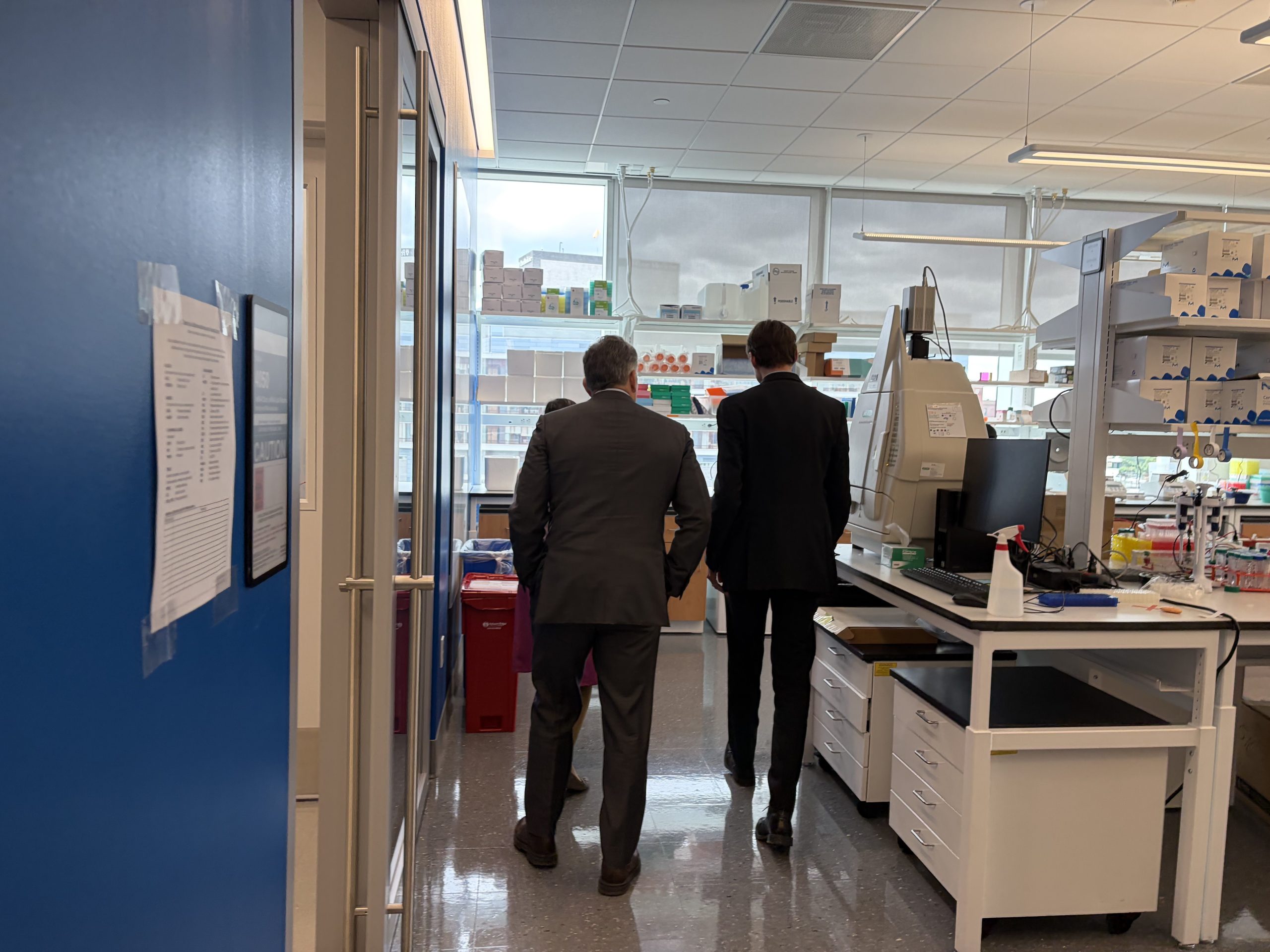
    Penn Engineering professor George Pappas speaks with Sen. Dave McCormick about the AIRFoundry.Kayla Yup / Staff

    AIRFoundry stands for Artificial Intelligence-driven RNA BioFoundry. Scientists hope AI will help them automate aspects of the design and manufacturing process, serving as a resource for researchers and commercial companies across the world.

    Penn’s mRNA work has continued to advance, even as Health and Human Services Secretary Robert F. Kennedy Jr. last year slashed $500 million designated for mRNA vaccine development.

    A longtime anti-vaccine activist, Kennedy has claimed the technology is unsafe and ineffective, despite scientific evidence finding the vaccines to be highly safe and beneficial.

    Now the foundry seeks to expand RNA’s applications in healthcare, agriculture and beyond.

    Lee compared the technology to a hammer — good for certain things, but not everything.

    “Our students and postdocs that get trained right now are going to be sort of the first generation of people to think about RNA as a tool for whatever problem they’re trying to solve,” Lee said.

    An AIRFoundry scientist describes her work in the facility.Kayla Yup / Staff

    A foundry for RNA

    In the mRNA COVID-19 vaccines, injected mRNA provides the instructions for cells to build a harmless fragment of the viral protein. That trains the body to recognize and fight a future infection.

    Compared to traditional vaccines that use live or inactivated pathogens, mRNA vaccines can be produced more rapidly — useful in a pandemic.

    One of the Nobel laureates behind that effort, Penn scientist Drew Weissman, has operated a smaller scale version of the facility, mainly to make mRNA for his lab and collaborators. The foundry’s launch marked an expansion beyond Penn.

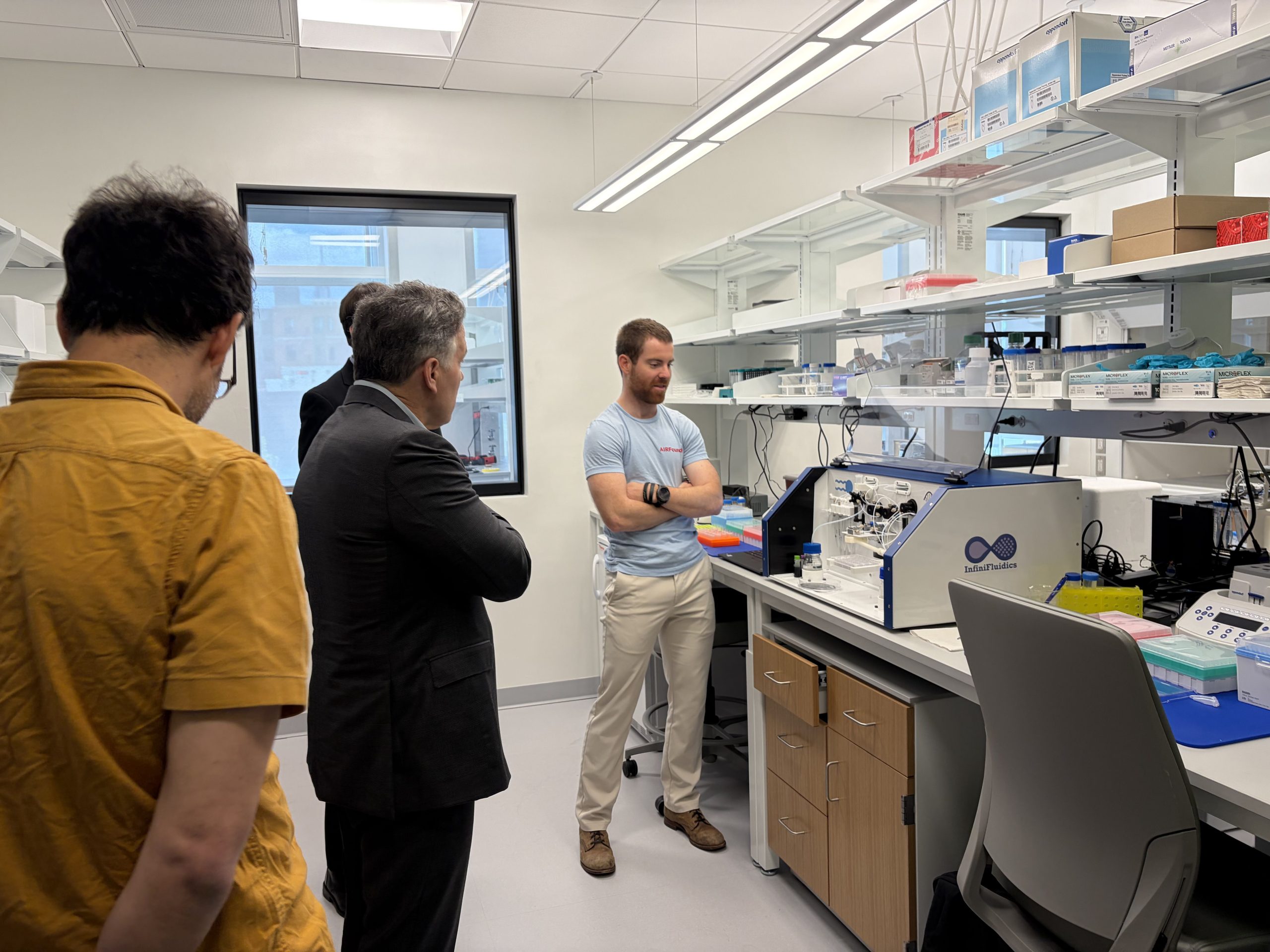
    Its sterile instruments and busy lab benches were on display last month as students and faculty walked through the manufacturing process.

    “It takes special facilities and skills to make RNA and associated materials,” Lee said.

    Owen Land, an engineer at Infinifluidics (a Penn spinout), spoke about a device used to automate part of the process of creating liquid nanoparticles (a delivery vehicle for RNA).Kayla Yup / Staff

    So far, Penn’s facility has operated on a “fee-for-service” basis, where collaborators request a specific RNA technology and the foundry builds it.

    But its scientists hope to incorporate AI to help with synthesizing all the current knowledge, best practices and databases.

    They also want to reach a point where users can come to the physical facility and use the instruments themselves.

    Sen. McCormick toured the AIRFoundry in May.Kayla Yup / Staff

    The federal grant, which started in September 2024, supports the foundry for six years. Lee hopes it will eventually become self-sustaining through the services they provide.

    Projects underway include working on vaccines to keep fish healthy.

    Another collaborator is developing ways to deliver RNA into plants to benefit the agriculture industry. For example, designing RNA molecules that carry instructions for producing a heat shock protein could protect plants from high temperatures. The plant would produce the protein and theoretically have greater resilience against extreme heat.

    The molecule degrades over time, making its effects temporary. So if used during the summer months, the RNA could be gone by the time harvest rolls around.

    This transient quality could also make RNA useful for pest control, in lieu of chemical-based pesticides, Lee said.

    “We want to interact with everyone that’s interested in using RNA technology,” he said.