Blog

  • Philly aims for glory at the 2026 James Beard Awards

    Philly aims for glory at the 2026 James Beard Awards

    Before Philadelphia’s chefs, bakers, restaurateurs, and bartenders take center stage at tonight’s James Beard Awards in Chicago, one Philadelphian has already brought home a medal.

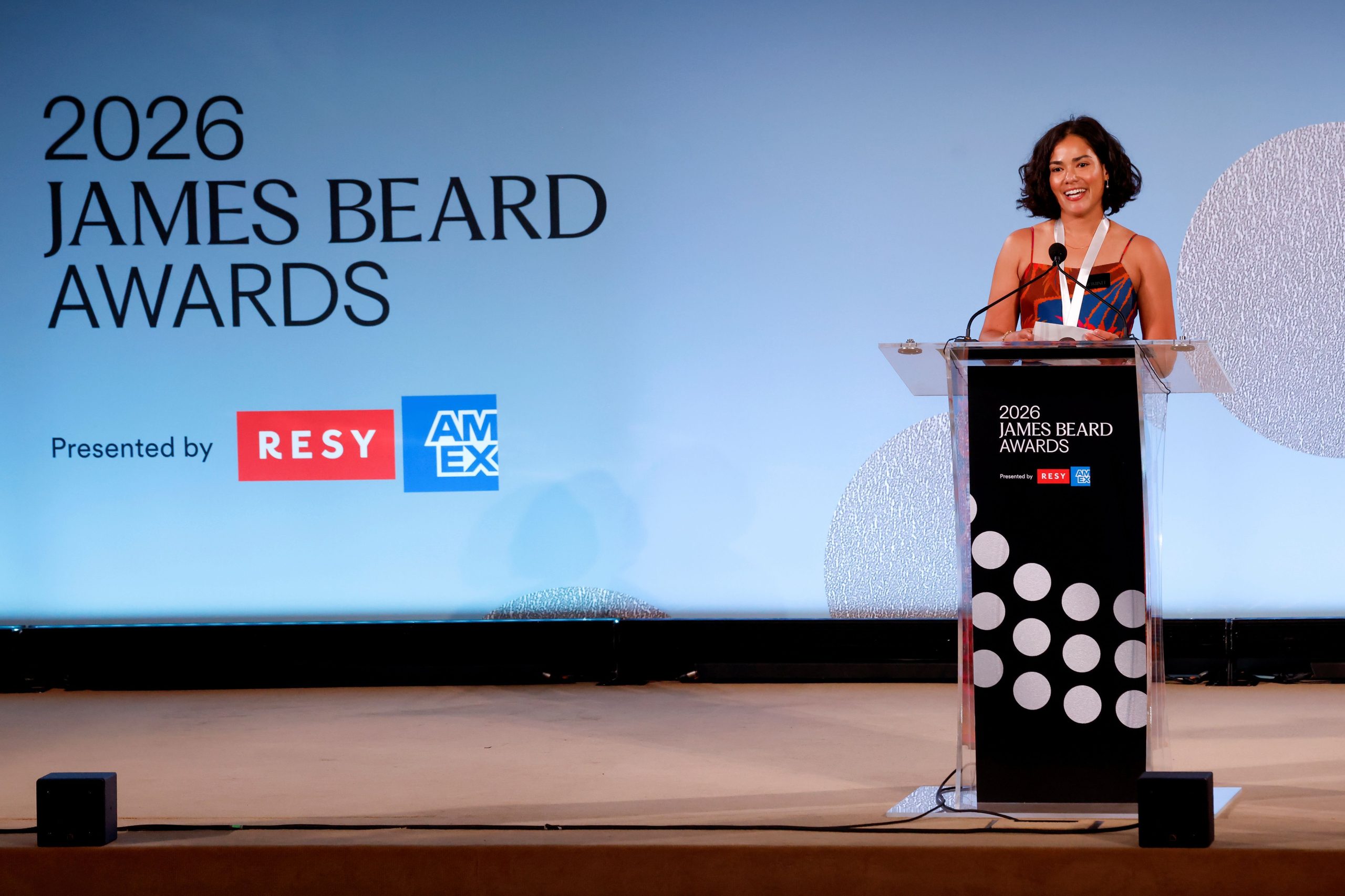
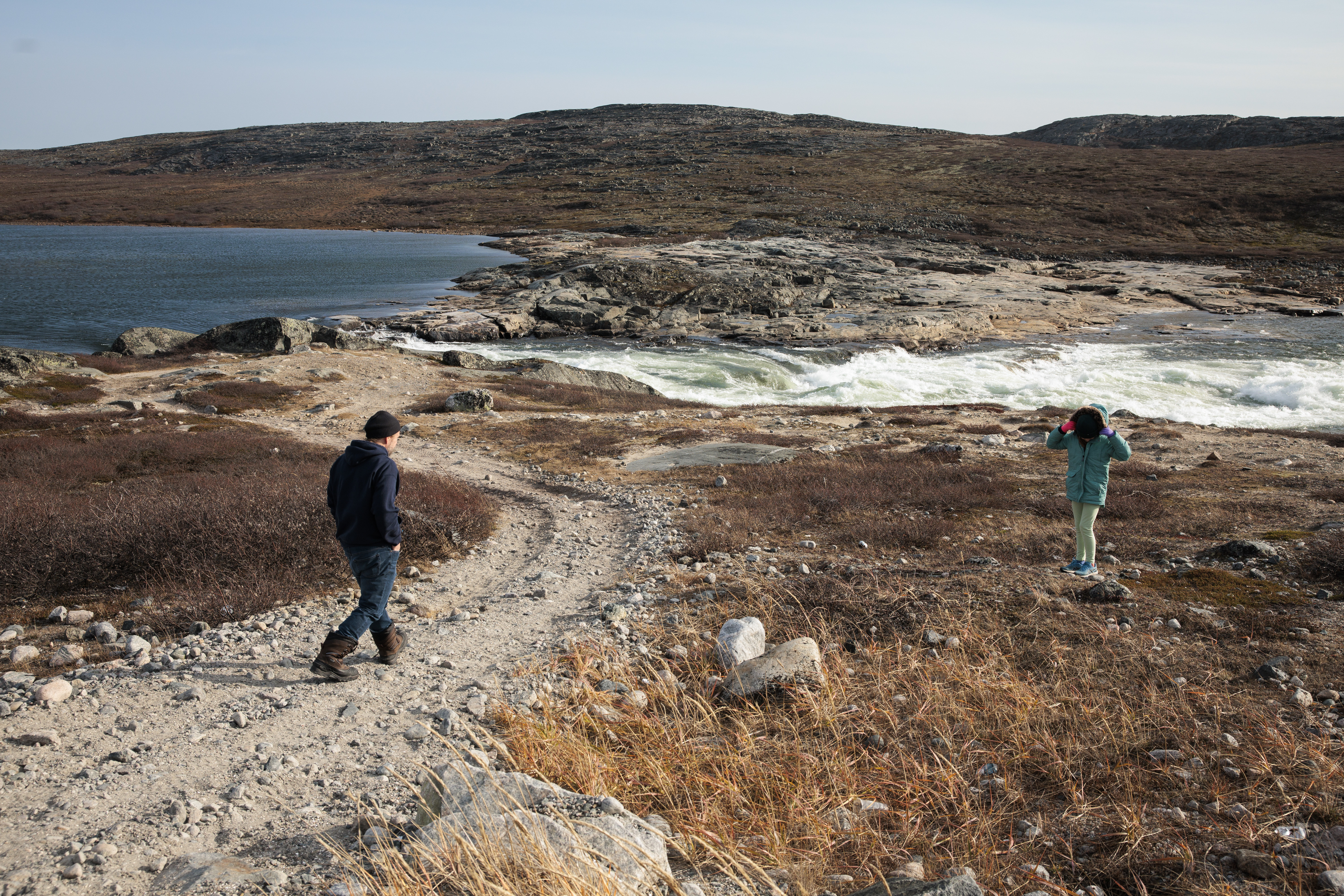
    On Saturday night, Inquirer staff photographer Monica Herndon won the 2026 James Beard Media Award for Narrative Photography for “The hunt for life-giving ‘country food’ in the Canadian Arctic,” a photo essay documenting Inuit food traditions in the remote northern Québec community of Inukjuak.

    The Inquirer’s Monica Herndon, winner of the Narrative Photography Award, speaks during the 2026 James Beard Media Awards on June 13.Jeff Schear / Getty Images for the James Beard Foundation

    The project accompanied reporting by Inquirer restaurant critic Craig LaBan and chronicled how residents hunt, prepare, share, and preserve traditional foods, including seal, beluga, and caribou. In October 2024, Herndon and LaBan followed filmmaker Kirk French of Penn State to the region as he screened a documentary.

    “There was this moment, at the end of the trip when I was leaving, when one of the elders pulled me aside and whispered, ‘You know you’re very lucky to be here,’” Herndon recalled in a chat Monday before she photographed tacos for a food article. “It sent chills down my spine.”

    A father and daughter walk near the Innuksuak River in Inukjuak, Quebec.Monica Herndon / Staff Photographer

    A native of Annapolis, Md., Herndon has worked at The Inquirer for nearly seven years. She won a 2022 Mid-Atlantic Emmy Award and Best in Show recognition from the National Press Photographers Association’s Northern Short Course contest for her work on The Inquirer’s “Wildest Dreams” project, a mini-anthology of storytelling about Black cultural inheritance, legacy, and joy.

    She previously accompanied LaBan to Japan to photograph chefs Jesse and Matt Ito’s homecoming and to Thailand for a feature tracing the roots of chef Chutatip “Nok” Suntaranon.

    Now the attention turns to the restaurant and chef awards, which will be presented tonight at the Lyric Opera of Chicago.

    Philadelphia enters the ceremony with seven finalists, one of the strongest showings of any city in the country. Kalaya is nominated for Outstanding Restaurant, while Emmett is a finalist for Best New Restaurant. The Lovers Bar at Friday Saturday Sunday is in the running for Outstanding Bar.

    In individual categories, Justine MacNeil of Fiore is a finalist for Outstanding Pastry Chef or Baker. The hotly contested Best Chef: Mid-Atlantic category includes three Philadelphia contenders: Jesse Ito of Royal Sushi & Izakaya, Amanda Shulman of Her Place Supper Club, and Omar Tate and Cybille St.Aude-Tate of Honeysuckle.

    Philadelphia already has one James Beard honor secured this year.

    In February, Center City’s Oyster House received a James Beard America’s Classics Award, recognizing restaurants with timeless appeal and deep roots in their communities.

  • The Phillies’ Brandon Marsh is third among NL outfielders in first All-Star vote update

    The Phillies’ Brandon Marsh is third among NL outfielders in first All-Star vote update

    Major League Baseball released the first update for All-Star voting on Monday, and several Phillies are vying for starting spots.

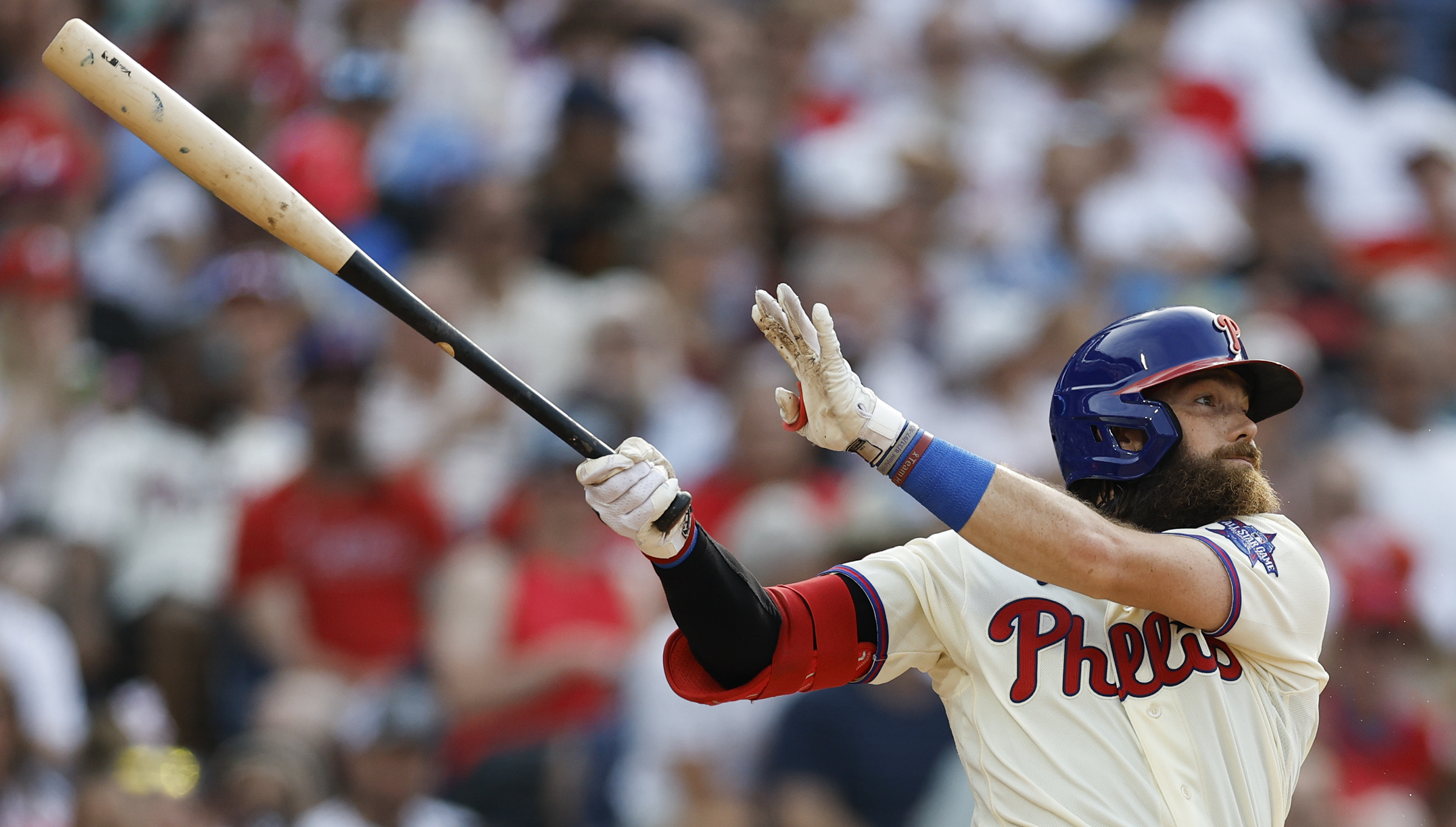
    With 668,191 votes, Brandon Marsh is third among National League outfielders behind the Dodgers’ Andy Pages (800,496) and Ronald Acuña Jr. (693,472) of the Braves.

    Marsh entered Monday’s game against the Marlins with a .322 batting average, which ranks fourth in baseball and third in the NL.

    “Great for him and great for us, and it’s good to see that nationally he’s starting to get recognized,” interim manager Don Mattingly said of Marsh. “After that April last year, he’s probably been one of the best hitters in baseball.”

    Kyle Schwarber (820,009) ranks second for designated hitters behind the Dodgers’ Shohei Ohtani (1,165,133), who is the top vote-getter in baseball.

    Bryson Stott is second among second basemen and Alec Bohm is second among third basemen, while Bryce Harper and J.T. Realmuto are third at first base and catcher, respectively.

    Phase 1 of voting concludes on June 25 at noon, after which the top two vote-getters at each position and top six outfielders will advance to the second phase. The All-Star Game is July 14 at Citizens Bank Park.

  • Kennedy seeks to expedite appeal of ruling that blocked his vaccine policies

    Kennedy seeks to expedite appeal of ruling that blocked his vaccine policies

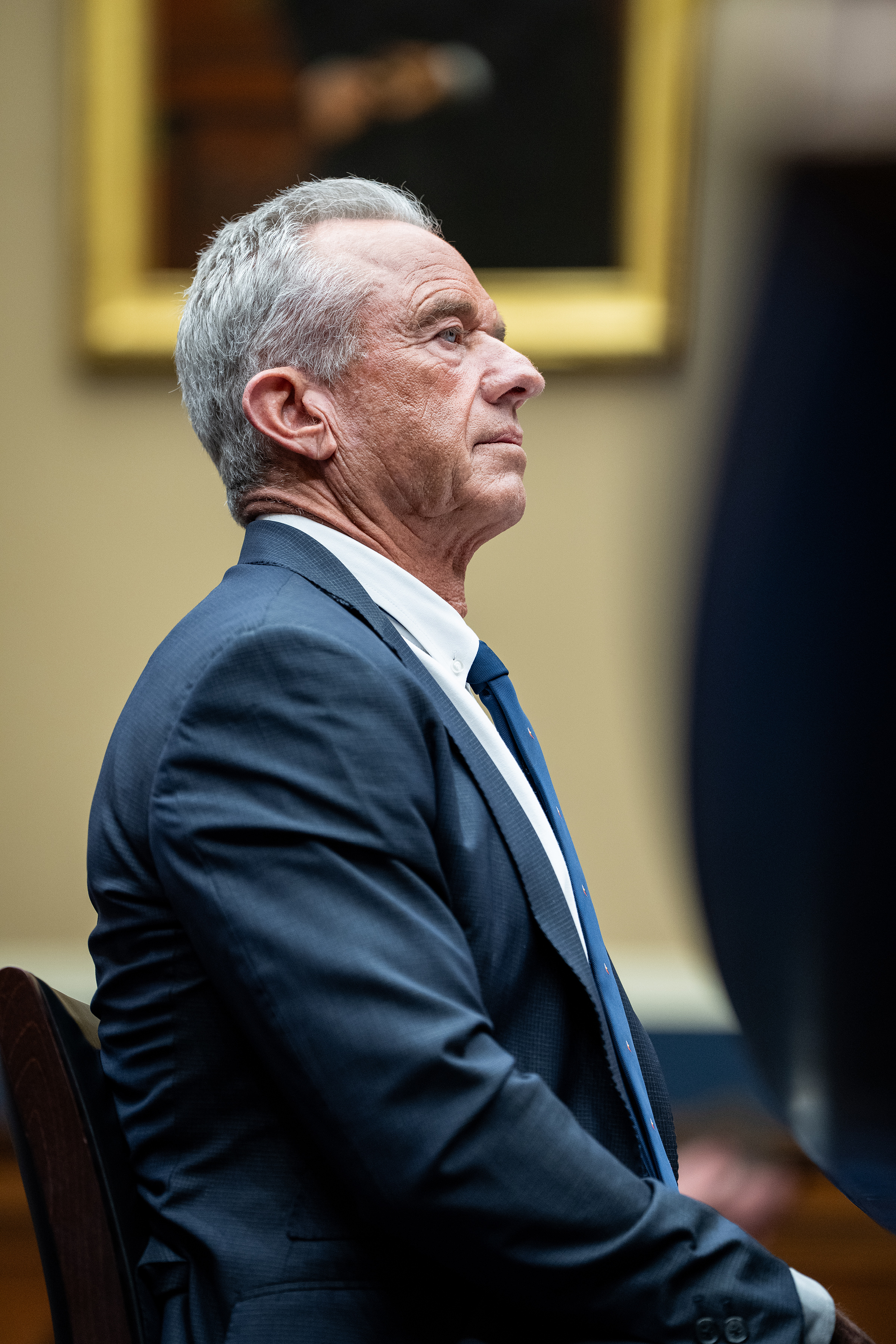
    The Trump administration has requested an expedited appeal of a federal court ruling that blocked a series of decisions on vaccines made by Health Secretary Robert F. Kennedy Jr., including rescinding routine recommendations for immunizations against a half-dozen childhood diseases.

    Kennedy announced in a social media post Friday that the administration had filed the motion to expedite appeal so that federal vaccine advisers could meet to decide whether to recommend shots before the fall flu season.

    The move is the latest development in a lawsuit brought by six medical organizations, including the American Academy of Pediatrics. The suit contended that Kennedy and his appointees to the Centers for Disease Control and Prevention had made “arbitrary and capricious” changes to the childhood vaccine schedule.

    It also argued that the panelists Kennedy appointed to the Advisory Committee for Immunization Practices, a panel of outside experts, did not have the qualifications to recommend vaccinations and that their decisions endangered the health of Americans.

    The ruling, delivered March 16 by a federal judge in Massachusetts, temporarily blocked Kennedy’s policies while the trial continued. It froze all decisions made by the panelists Kennedy had appointed and prevented the committee from meeting as scheduled.

    Friday’s announcement is the latest sign that the administration is seeking to revive the committee. Last month, President Donald Trump issued an executive order urging the CDC and the committee to align their recommendations for childhood vaccinations with those of peer countries. Separately, Kennedy’s office reestablished the committee’s charter.

    “The 2026-2027 respiratory virus season (i.e., RSV, influenza, COVID) begins in the fall, and while the ACIP cannot act, no newly licensed or reformulated vaccine for those conditions can be added to the immunization schedule,” the administration argued in its motion, filed in U.S. District Court for the District of Massachusetts.

    Richard Hughes, a lawyer for the medical organizations, said in a statement that the administration’s motion was a “misleading attempt to shift blame for what Secretary Kennedy broke.”

    “We will oppose his motion to expedite appeal because we refuse to pave the way for his further destruction,” Hughes said.

    Vaccine recommendations have historically been made by ACIP members after careful review of the benefits and potential risks, in a process that can take months or years. Last June, Kennedy fired all 17 previous members of the committee and named new ones, many of whom shared his skepticism of vaccines.

    Over three meetings, the new panelists rescinded several recommendations for childhood shots, including the immunization of all newborns against hepatitis B, a highly infectious virus that can severely damage the liver.

    Then, in January, bypassing the committee entirely, the acting head of the Centers for Disease Control and Prevention, appointed by Kennedy, announced a new schedule for childhood vaccines, which cut the number of diseases against which children are routinely immunized to 11 from 17.

    In his decision, Judge Brian Murphy, of the U.S. District Court for the District of Massachusetts, noted that vaccine recommendations had historically followed “a method scientific in nature and codified into law through procedural requirements.”

    But, he added, “unfortunately, the government has disregarded those methods and thereby undermined the integrity of its actions.”

    Only six of the panelists Kennedy appointed “appear to have any meaningful experience in vaccines — the very focus of ACIP,” the judge said.

    Immediately after the ruling, the Trump administration indicated it would appeal. On April 23, the Justice Department instead asked the court to halt the case while an appeal was pending, arguing that continuing the case “wastes scarce taxpayer resources” and that compiling administrative records required by the court “would divert agency employees from other important responsibilities in furtherance of the public health.” Then, on April 29, the administration filed its intent to appeal.

    The court’s request for extensive records may indeed be what spurred the administration to appeal, said Dorit Reiss, an expert on vaccine policy and law at the University of California College of the Law, San Francisco.

    “One reason for asking for a halt and filing the appeal may be that they did not want to give the information, or the trial was going poorly, and they wanted to put that on hold,” she said.

    This article originally appeared in the New York Times.

  • Philly women make 89 cents for every dollar men make, new report finds

    Philly women make 89 cents for every dollar men make, new report finds

    Women working in Philadelphia continue to make less than their male counterparts, according to a new report from the Forum of Executive Women.

    While the gender pay gap in the city narrowed between 2015 and 2024, women in the local workforce still earn on average about 89 cents for every dollar men make, according to the organization’s annual report, citing Philly-specific research from the Economy League of Greater Philadelphia.

    And the pay gap is worse for women of color, the report found.

    “Persistent pay gaps do more than reduce annual income,” Meghan Pierce, forum president and CEO, wrote in the report. “They affect lifetime earnings, retirement security, access to capital, business formation, and the generational wealth of women and their families.”

    “Pay gaps impact who leads, who invests, and who builds lasting economic power in our region.”

    The gender pay gap is narrower in Philadelphia than the national average, which is roughly the same as it was in 2010. Across the country, women earn on average 81 cents for every dollar made by men, according to data from the Economic Policy Institute, a left-leaning nonprofit think tank.

    Because of the gap, working women in the U.S. collectively lose about $1.7 trillion in wages each year, according to the forum report, and each woman loses about $500,000 on average during their career.

    While the gender pay gap is smaller in Philadelphia, racial disparities persist.

    Compared to non-Hispanic white men, white women in Philadelphia earn 94 cents on the dollar, the report found, while Black women earn 64 cents, and Hispanic and Latina women earn 57 cents.

    Women in the city also remain concentrated in lower-earning professions, making up 76% of healthcare workers and 66% of education workers, two sectors where the median annual earnings was below $60,000, according to the report, titled “The Philadelphia Paradox.”

    While a pay gap persists for local women at every education level, some industries have narrowed the gap more than others in recent years, the report found: Finance, retail, and real estate saw their gender pay gaps narrow, while the gap widened in arts, utilities, and construction.

    When it comes to Philadelphia’s gender pay disparity, the report concluded: “Progress is real, but closing the remaining gap requires addressing the structures that determine who enters higher-paying fields, who advances within them, and who benefits from the systems that shape long-term economic security.”

  • It’s soft-shell crab season. Here’s where to find them in Philadelphia.

    It’s soft-shell crab season. Here’s where to find them in Philadelphia.

    The soft-shell crab is one of the pleasures of late spring and summer. They offer the sweet, briny flavor of fresh blue crab wrapped in a delicate, edible shell that turns crisp when cooked.

    This year’s season, however, appears to have been compressed.

    Soft-shells are blue crabs that have recently shed their hard outer shell and are briefly in a soft, vulnerable state. Anthony D’Angelo of South Philadelphia seafood distributor Samuels Seafood said warmer water temperatures brought on the crab molt early, while fewer marketable peelers, weather interruptions, and normal predation left restaurants with fewer crabs and a shorter window.

    Volume this year is down about 20% from last year, yet prices last year were about 15% higher, D’Angelo said.

    As an example, D’Angelo said jumbo soft-shells sold for an average of about $98 a dozen in May, compared with roughly $117 a dozen during the same period last year. Another run of crabs from the Carolinas is expected in late August or early September, likely at lower prices, he said.

    Many restaurants are offering soft-shells when they can get them. Blue Corn in the Italian Market recently featured them as tacos with mango slaw, guacamole, fresh jalapeño, and microgreens.

    Others keep them on the menu throughout the season. Soft-shells remain one of the more expensive seafood items. Several restaurateurs said they are paying $95 to $100 a dozen for jumbo crabs. Given that many restaurants target food costs of roughly 30% to 33% of menu price, that is one reason a soft-shell dish can easily top $30.

    For chef Randy Rucker, who serves soft-shells at both River Twice and Little Water, the annual ritual is worth the cost and unpredictability. “When they’re available, we grab them,” he said. “They’re special. They’ll always be special.”

    Here are some of the dishes I’ve found. As always, call ahead to confirm availability.

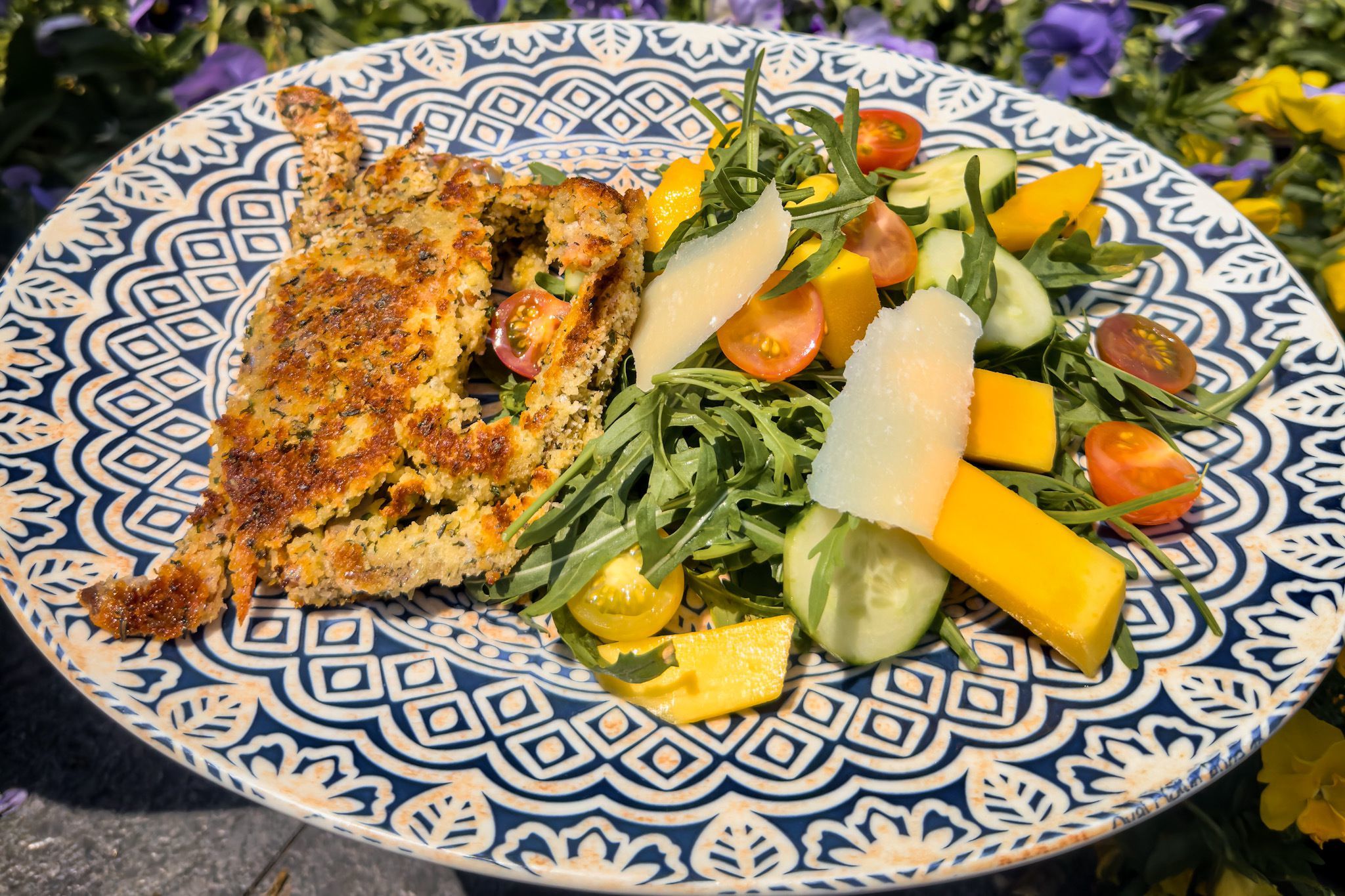
    Soft-shell crabs, herb crusted over an arugula salad with tomatoes, cucumbers and mango, at Caffe Aldo Lamberti, 2011 Marlton Pike, Cherry Hill.Courtesy of Caffe Aldo Lamberti

    Caffe Aldo Lamberti, Cherry Hill

    Chef Genaro “Jerry” Ventura changes the preparation of his crabs frequently at this Italian destination. Last week, he crusted soft-shells with herbs and served them over arugula with tomatoes, cucumbers, and mango. Another preparation paired pan-seared soft-shells with squid-ink linguine, garlic, extra-virgin olive oil, tomatoes, and snap peas. Expect to pay about $28 for one crab at lunch or $45 to $48 for two at dinner.

    Condesa, Center City

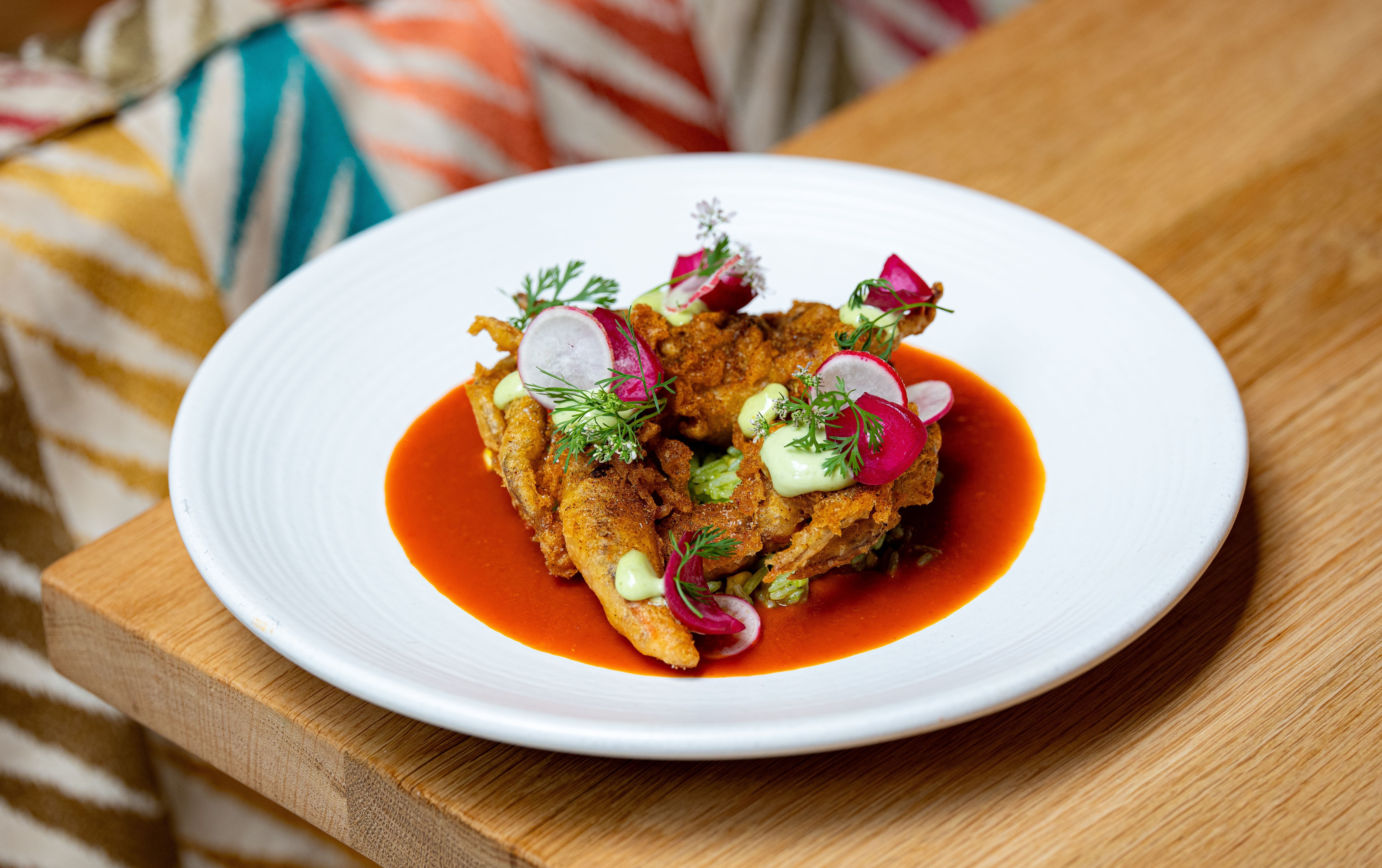
    At this Mexican restaurant, chef Jason Peabody’s crab relleno features beer-battered soft-shell crab with green rice, salsa roja, and epazote mayo ($34).

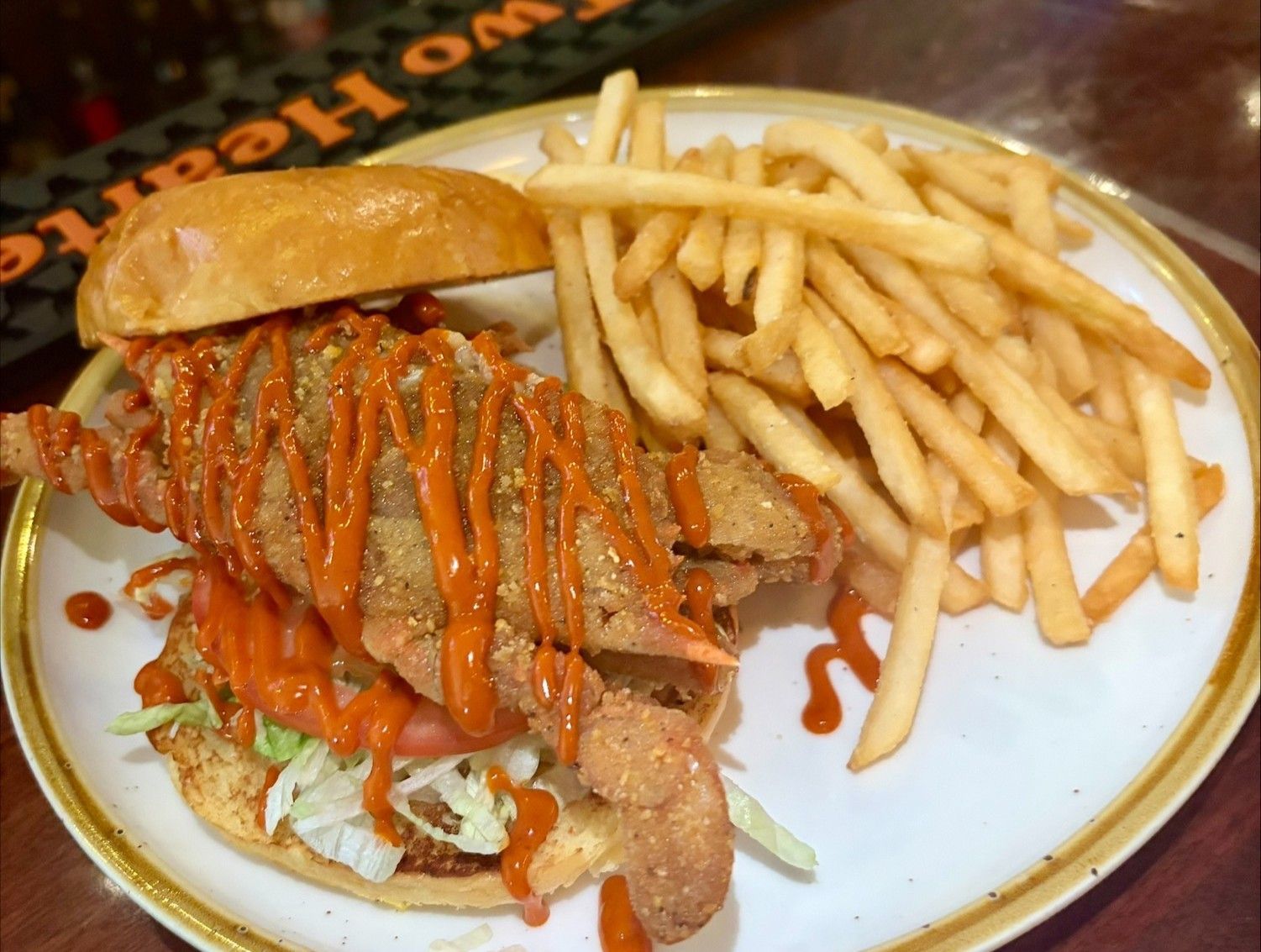
    At the Crossbar (2225 Darby Rd., Havertown), a soft-shell crab sandwich is deep fried and topped with a smoky house- made harissa aioli, lettuce, and tomato and served on Le Bus brioche bun.Courtesy of the Crossbar

    The Crossbar, Havertown

    This Delco taproom’s soft-shell is battered and fried, then topped with smoky house-made harissa aioli, lettuce, and tomato on a Le Bus brioche bun ($24).

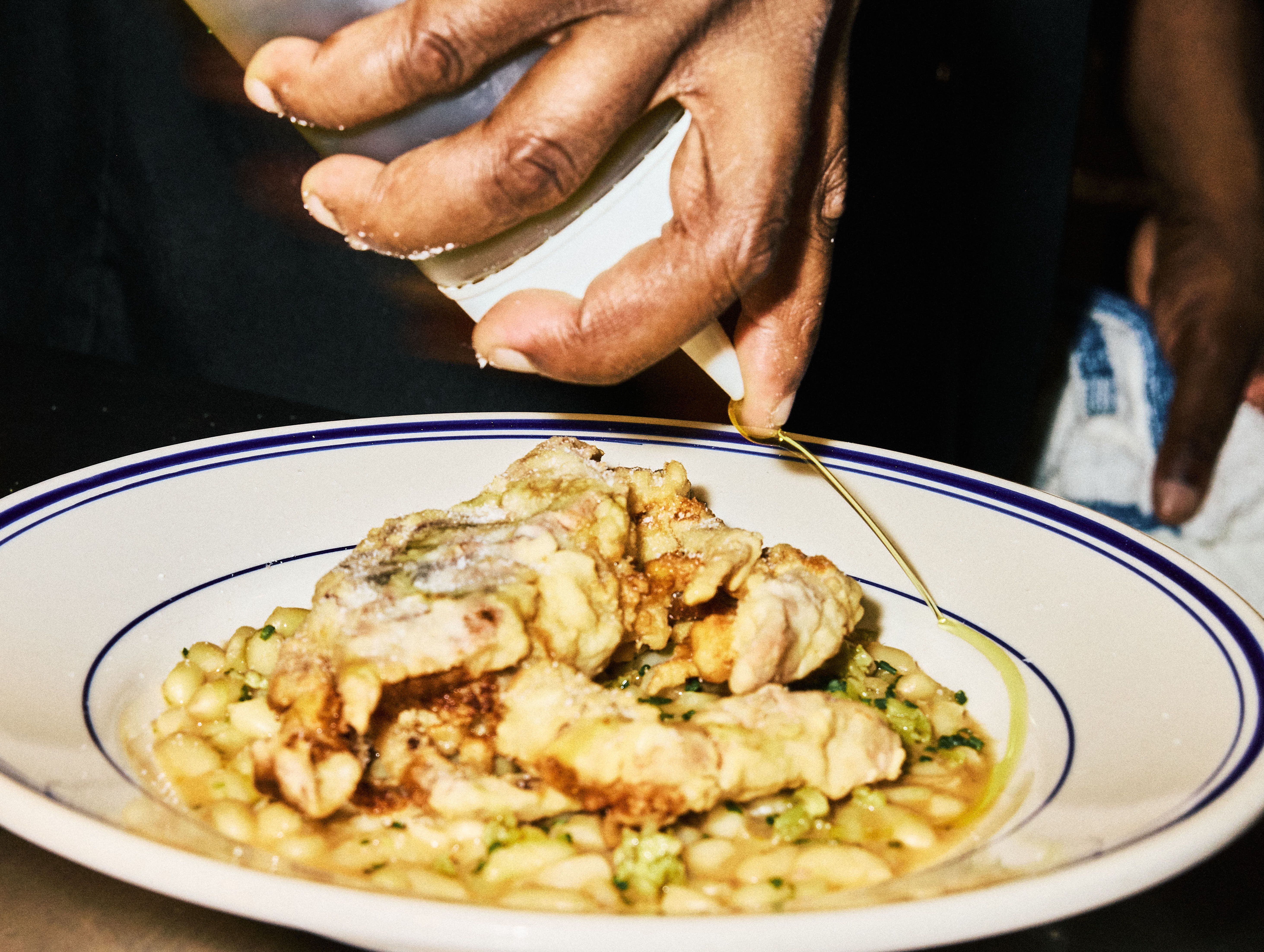
    Soft-shell crab with flageolet beans, tapenade, and preserved lemon at the Good King Tavern, 614 S. Seventh St.Ed Newton

    The Good King Tavern, Bella Vista

    The French bistro has featured soft-shell crab as a chalkboard special with flageolet beans, tapenade, and preserved lemon ($32).

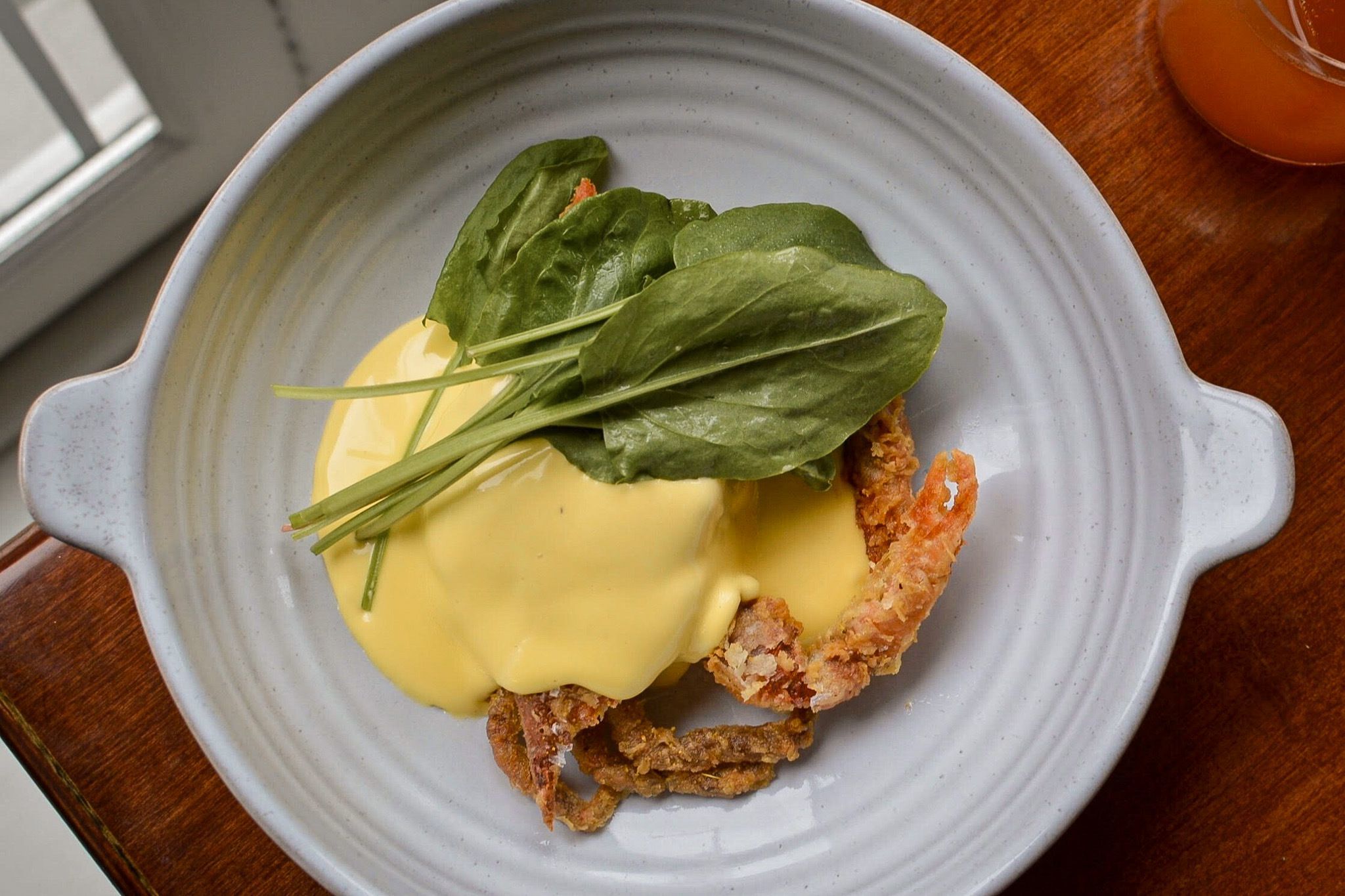
    Chicken-fried soft-shell crab with vin jaune hollandaise and sorrel at Little Water, 261 S. 20th St.

    .Courtesy of Little Water

    Little Water, Center City

    This seafood restaurant’s chicken-fried soft-shell crab comes with vin jaune hollandaise and sorrel ($42).

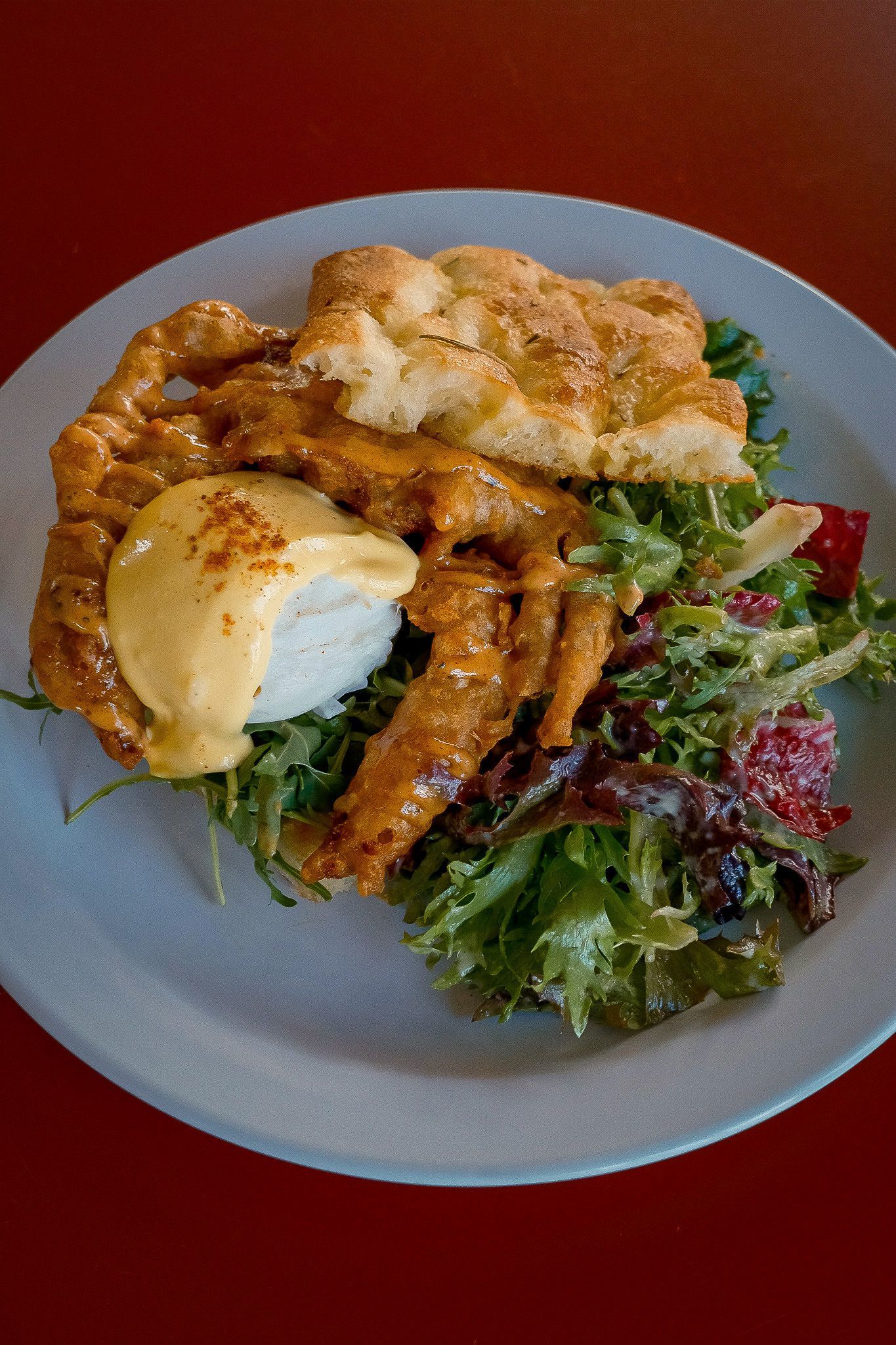
    The soft-shell Benedict at Lucky Duck, 501 N. Columbus Blvd.Pri Rambhia

    Lucky Duck, Old City/Northern Liberties

    Soft-shells are on this riverside bar’s weekend brunch menu as a Benedict with Old Bay Alabama white sauce, arugula, and hollandaise, on brioche.

    Oyster House, Center City

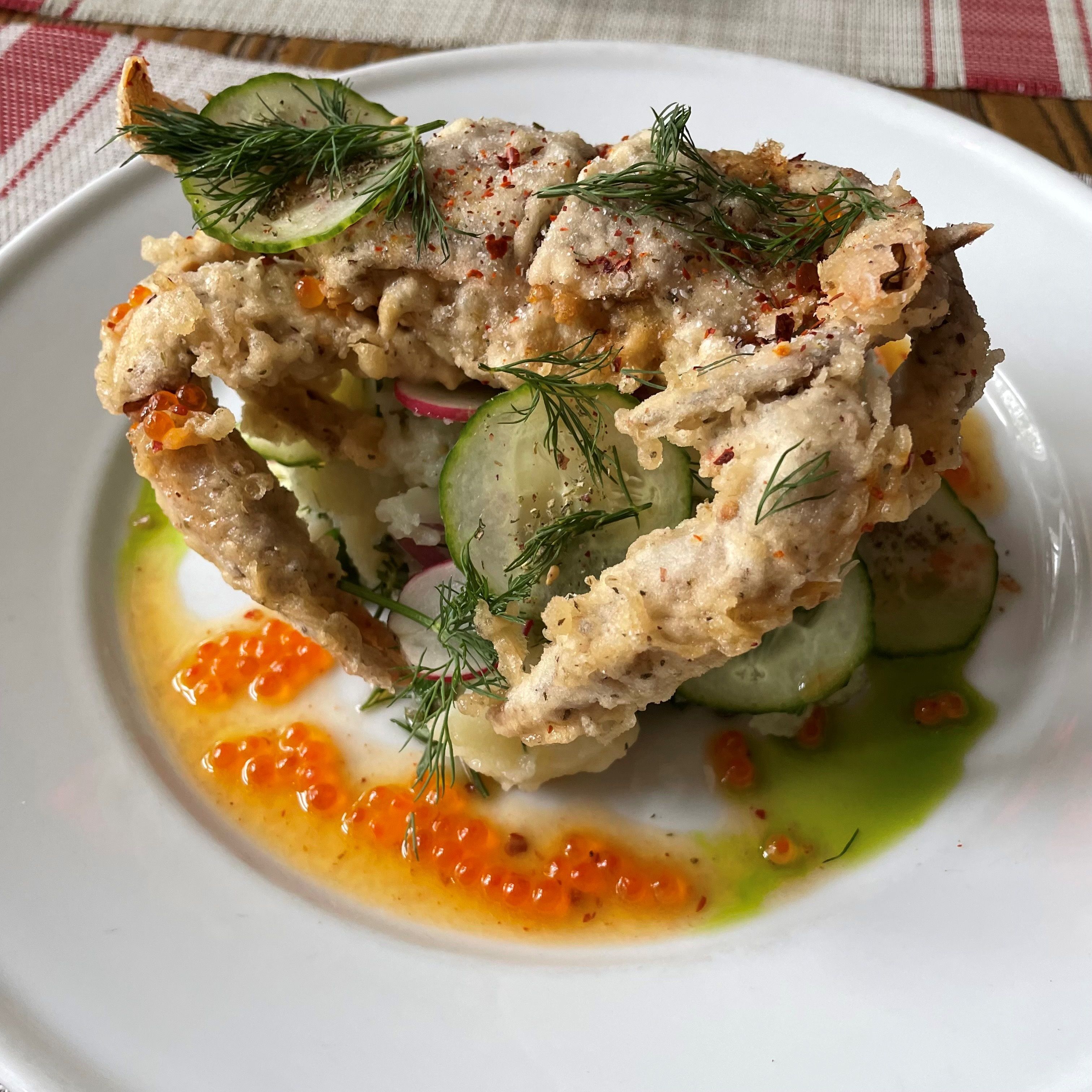
    The seafood destination’s grilled soft-shell crab ($36) is plated with poblano Dijon sauce, blanched asparagus, smoked trout roe, and pickled ramps. There’s also a fried soft-shell crab BLT ($29) with smoked bacon and ramp buttermilk ranch.

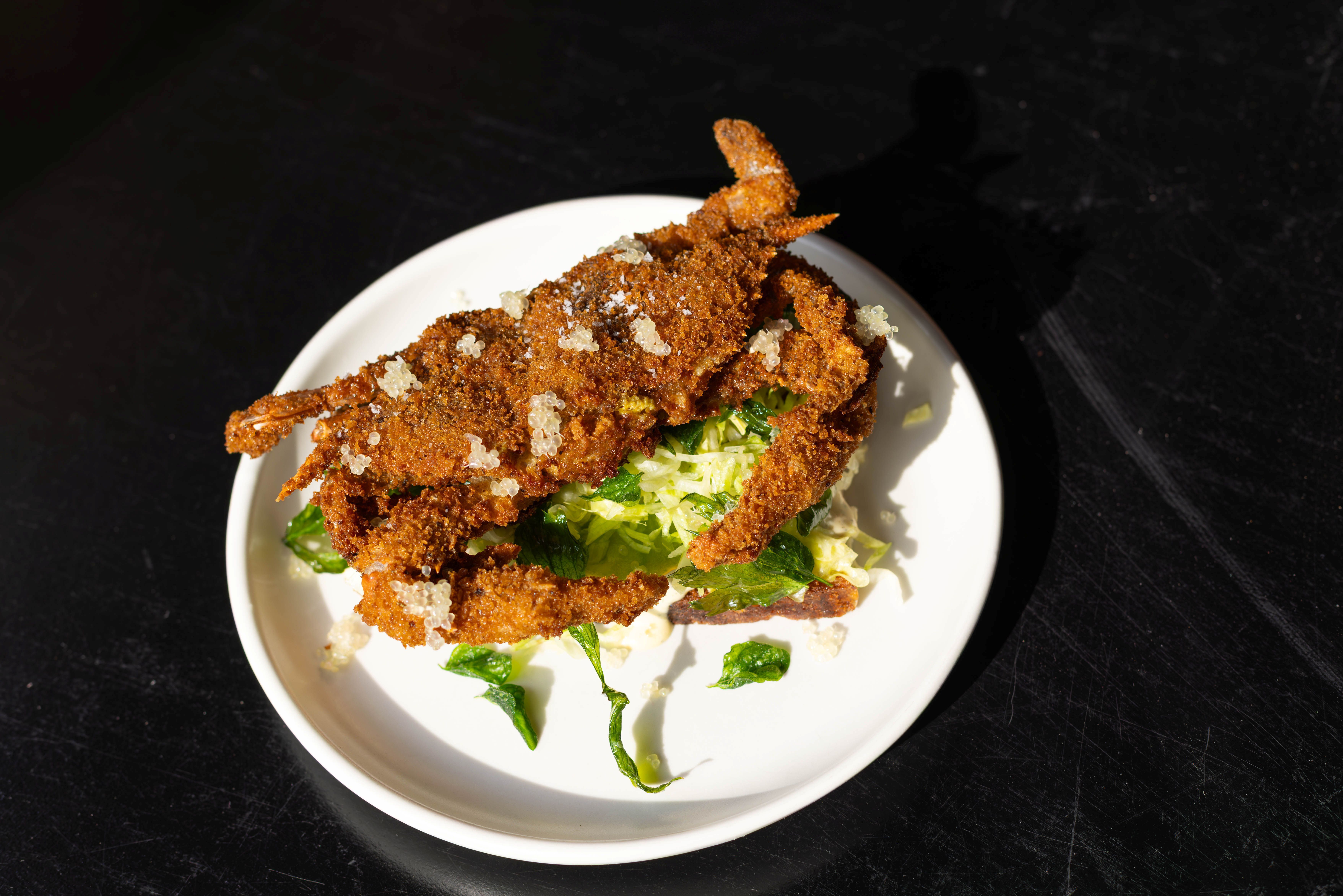
    Soft-shell hoagie tartine at Post Haste, 2519 Frankford Ave.KC Tinari

    Post Haste, Kensington

    At this farm-to-table restaurant, chef Ari Miller (husband of Inquirer food reporter Kiki Aranita) offers a soft-shell hoagie tartine featuring a breaded and fried crab on Brass Monkey bread with green coriander mayo, shredded local iceberg lettuce, heirloom tomato, crispy herbs, and caviar lime ($24).

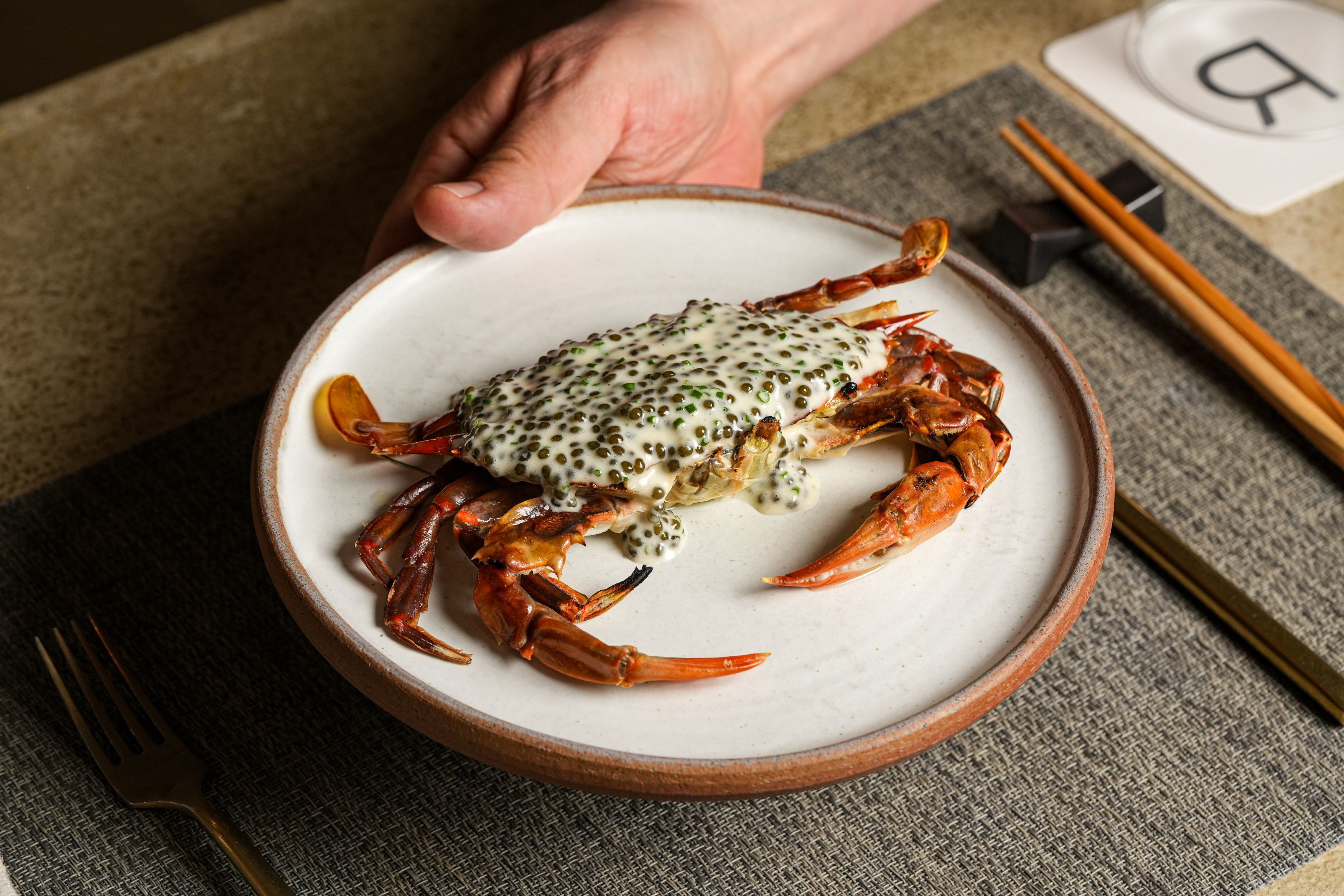
    Soft-shell crab cooked over charcoal with crab fat and golden Ossetra caviar at River Twice, 1601 E. Passyunk Ave.Mike Prince

    River Twice, South Philadelphia

    The signature preparation at this Southern restaurant returns this season: a soft-shell crab grilled over charcoal and finished with crab-fat koji butter and golden Ossetra caviar ($52).

    At Stina (1705 Snyder Ave.), the soft-shell crab is served with Greek-style potato salad, capers, lemon, herbs, extra-virgin olive oil, smoked trout caviar, and Bukovo vinaigrette.Courtesy of Stina

    Stina, South Philadelphia

    At his Mediterranean restaurant, chef Bobby Saritsoglou serves soft-shell crab with Greek-style potato salad, capers, lemon, herbs, extra-virgin olive oil, smoked trout caviar, and Bukovo vinaigrette ($36).

  • Trump winds down the war he started with goals unmet

    Trump winds down the war he started with goals unmet

    Almost immediately after striking a deal with Iran, President Donald Trump appeared eager to take a victory lap.

    He trumpeted that the agreement would open the Strait of Hormuz, a vital waterway for the world’s energy supplies whose stalled ship traffic has rattled the global economy. He told the New York Times that his efforts had saved Israel from nuclear extinction and made the Middle East safer. It all gave him a key win as he traveled to France for the Group of 7 summit, where he is meeting with European leaders who have criticized his approach to the war.

    Despite Trump’s grandiose claims, the agreement has not yet achieved the core goals he laid out three months ago for launching the U.S.-Israeli war against Iran.

    Back then, Trump said the United States intended to “annihilate” Iran’s military capabilities, abolish its nuclear ambitions, topple its theocratic leadership, and liberate its people, whom he encouraged to take over their government when the fighting had stopped. Just one week after the strikes started, he said Iran’s only path to a deal was an “unconditional surrender.”

    Trump publicly declared victory Sunday mainly based on solving a problem of his own making, in miscalculating Iran’s ability to choke off the Strait of Hormuz. Trump asserted on Truth Social that he had authorized the toll-free opening of the crucial waterway, which would essentially restore the prewar status quo, and celebrated that the global energy markets would rebound.

    “Ships of the World, start your engines,” he wrote. “Let the oil flow!”

    The latest framework, which has not yet been publicly released and is expected to be signed in Geneva on Friday, is a capstone to three months in which Trump has delivered a dizzying array of mixed messages.

    He said that Iran’s nuclear program had been “obliterated” in U.S. strikes last year, yet said that the war was necessary to stop the Iranians from obtaining a nuclear weapon.

    Trump said that Iran’s nuclear program posed a threat not only to allies, but also to U.S. troops overseas and to everyday Americans. He was clear that the war’s conclusion would rest on one stipulation: “It has always been the policy of the United States, in particular, my administration, that this terrorist regime can never have a nuclear weapon,” he said. “I’ll say it again. They can never have a nuclear weapon.”

    Even Saturday, when he announced that a deal would be signed the next day, he claimed that Iran’s leaders “no longer want a nuclear weapon, nor will they have one, either through purchase, development, or any other form of procurement.”

    But the deal leaves that issue unresolved for at least another 60 days, when both sides are expected to negotiate on nuclear issues.

    Trump did not cast the deal as a solution to the nuclear threat. Instead he focused on the Middle East and his legacy.

    “This Great Deal will bring Peace and Security to the whole Region,” he wrote in a social media post. “Many presidents have tried to make Peace with Iran, and all have failed before me.”

    Trump has also sent conflicting messages over how far he would go to secure a nuclear agreement with Iran. He has gone from threatening to wipe out the country’s civilization to saying he was in no hurry to remove its remaining stockpiles of enriched uranium.

    At the start of the war, Trump initially claimed the United States would accomplish its goals in “four to five weeks.” He repeatedly compared the war in Iran to his quick military operation in Venezuela, in which the top leader was removed but much of the rest of the government remained in place, willing to work with the United States.

    This war instead dragged on for months, killing thousands of Iranian civilians and 13 U.S. service members. Rather than bowing to the United States, Iran’s new leadership has been emboldened, consistently withstanding military and diplomatic pressure to persist in its goal of advancing a nuclear program.

    In negotiations with Trump’s son-in-law, Jared Kushner, and special envoy, Steve Witkoff, the Iranians have held firm on not giving up the right to enrich uranium.

    “As for the nuclear issues, there really is no agreement,” Daniel B. Shapiro, a former U.S. ambassador to Israel, said in a statement on social platform X. “Iran knows how to drag out those negotiations, and try to pocket concessions along the way.”

    He added that the United States now appeared to be paying to reopen the Strait of Hormuz by potentially lifting sanctions imposed against Iran. The Trump administration has said Iran would receive no relief from sanctions or release of its frozen financial assets until it delivered on its commitments.

    The framework does provide a path toward potential peace and economic relief. And Monday, both world leaders and global markets expressed optimism.

    Chancellor Friedrich Merz of Germany, who previously said that the United States had “no strategy” and was being “humiliated” by Iran in the war, congratulated both sides on the diplomatic breakthrough, calling it a potential step toward “a reinvigorated global economy and a more secure Middle East.”

    But it was a cautious optimism given all the uncertainties. Crucially, Iran’s nuclear capability will need to be hashed out over the next two months of negotiations, raising questions over whether a lasting peace will materialize.

    Plenty of spoilers could arise along the way. Notably Israel, a partner in the war but not in the framework for peace, has been less than enthusiastic about the deal. Trump himself said in the Times interview that he was prepared to restart military attacks against Tehran if Iran failed to reach a final nuclear accord with the United States.

    Some of Trump’s allies appeared concerned over the unfinished aspects of the negotiations. Sen. Lindsey Graham (R., S.C.), who has long supported military action against Iran, said he was “somewhat concerned that Iran’s view of the agreement seems different than what the American negotiating team is claiming.”

    “I will be watching closely the ensuing negotiations regarding Iran’s nuclear program and other matters,” Graham said. He added that Vice President JD Vance, whom he described as the “architect of the deal,” should ensure that the final deal is presented to Congress.

    In an interview with CNBC on Monday, Vance said the framework gave the administration “leverage,” though there remained “details to figure out,” including on enriched uranium.

    As negotiations progressed over the weekend, Trump posted a lengthy criticism on social media of the previous deal struck with Iran by President Barack Obama, asserting that the one he was working on would be better.

    Shapiro, who is also a fellow at the Atlantic Council research institute, said on social media that Trump seemed focused on comparing his deal favorably with the Obama deal, but the United States was far from being able to come to such a conclusion.

    “It is possible that no deal will ever be reached,” Shapiro said, “and very likely that if one is reached, it will be worse than what we could have achieved through diplomacy before the war.”

    This article originally appeared in the New York Times.

  • Wisconsin beagle farm closing and hundreds of its dogs will be sent to a Florida rescue group

    MADISON, Wis. — A Wisconsin beagle breeding farm that’s been the site of recent violent protests is closing, and its remaining dogs are being taken in by a Florida rescue group.

    Big Dog Ranch Rescue announced Monday that it has reached an agreement for the permanent closure of Ridglan Farms and the transfer of its 475 remaining beagles starting this week.

    “Not one dog will remain,” Lauree Simmons, the group’s founder, said in a news conference at a farm in Wisconsin. “No more breeding, no more testing, no more anything.”

    The rescue group said some of the beagles will go to other rescue groups while others will be sent to its Florida and Alabama campuses, where they will be spayed, neutered, and prepared for adoption.

    The group bought roughly 1,500 of the farm’s more than 2,000 beagles in April for an undisclosed price.

    About 200 dogs were transferred from the farm starting Monday morning, according to Simmons. Another 125 will be moved Tuesday. The transfer of the remaining beagles will happen in August, as they are still puppies.

    Simmons called on protesters to refrain from further demonstrations as it says Ridglan Farms has committed to permanently closing its dog breeding, sales, research, and testing operations.

    She said her group and others are “working closely” with the Trump administration to stop funding studies that subject dogs to invasive and painful experimentation.

    “Our focus now should be on supporting these dogs as they transition into their new lives,” Simmons said. “These dogs will get to experience safety and a normal life for the first time.”

    Ridglan Farms, in a statement Monday, said all the dogs being transferred are “happy, healthy animals” with “extensive” state and federal inspection documentation.

    “We hope these dogs will continue to flourish in their new homes,” the farm said, adding that the “years-long harassment campaign targeting the research facility’s owners, staff, and neighbors comes to an end.”

    The dog breeding and research business is located in Blue Mounds, a small town about 25 miles southwest of the capital, Madison.

    Animal activists have been pushing for years to have dogs at the facility adopted, not sold to other research facilities.

    Beagles are the most common breed of dog used for animal testing, primarily because of their smaller size and gentle temperament, according to Big Dog Ranch Rescue.

    In April, police used tear gas and pepper spray to repel a large group of animal welfare activists that stormed the farm in an attempt to take beagles from the facility. Protesters also broke into the facility in March and took 30 dogs, leading to dozens of arrests.

    Ridglan Farms agreed in October to give up its state breeding license as of July 1 as part of a deal to avoid prosecution on felony animal mistreatment charges.

    The firm has denied mistreating animals, but a special prosecutor determined that Ridglan Farms was performing eye procedures that violated state veterinary standards.

  • There’s a new flavor at Rita’s — but only for a month

    There’s a new flavor at Rita’s — but only for a month

    Rita’s Italian Ice & Frozen Custard has added a new limited-edition flavor to its summer menu.

    Mermaid Italian Ice is vibrant pink flavor that combines berry and marshmallow and comes topped with glitter.

    The Bensalem-born water ice purveyor is offering the flavor at all 600 Rita’s locations nationwide until July 19.

    Order the new flavor three ways: Italian ice, gelati, or ice blender.Rita's Italian Ice & Frozen Custard

    Rita’s Italian ice is made daily on-site with a rotating selection of over 80 flavors. The menu also includes frozen custard, gelati, frozen coffee, Rita’s Blendinis, and milkshakes.

    The new flavor comes three ways: as an Italian ice; a gelati (Mermaid Italian ice layered with vanilla frozen custard and topped with glitter); and as an ice blender (an icy berry-marshmallow blend shimmering with glitter.)

    “At Rita’s, we’re always looking for ways to create joyful experiences that bring families together, and Mermaid Italian Ice does exactly that,” said Carmela Hughley, SVP of Marketing Insights and Innovation at Rita’s, in a statement. “This treat captures the magic and imagination of summer. We can’t wait for guests of all ages to dive in and experience this enchanting new flavor for themselves.”

  • Neshaminy High wrote its own story — and ended it with its first state baseball title

    Neshaminy High wrote its own story — and ended it with its first state baseball title

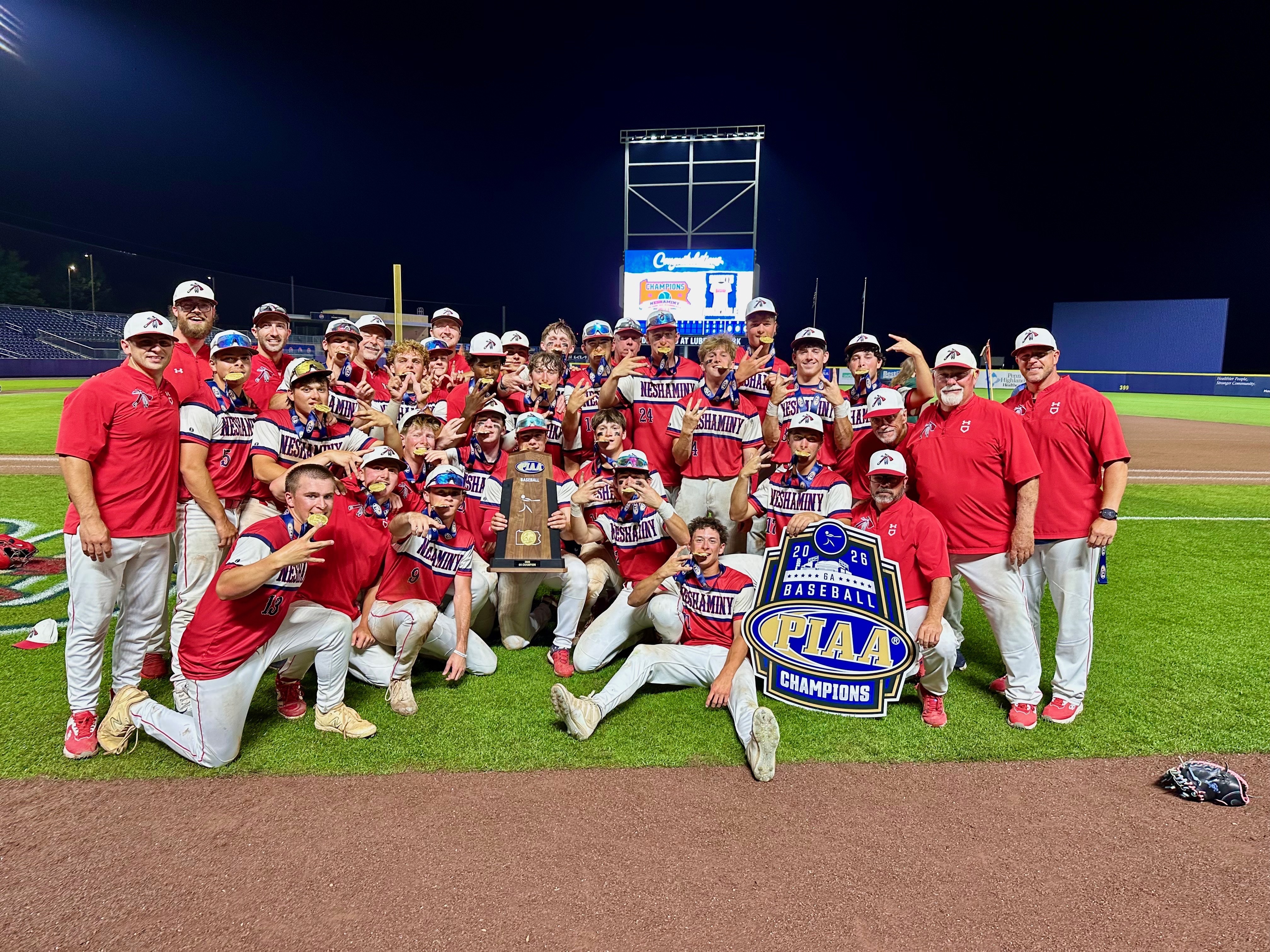
    Neshaminy baseball has been waiting for a state championship since its inception, so having to wait another three-and-a-half hours wasn’t going to stop the team from accomplishing what it set out to do.

    Following a rain delay at Penn State’s Medlar Field at Lubrano Park, Neshaminy won the first state title in program history with a 7-3 win over Butler Senior High School in the PIAA Class 6A championship last Thursday.

    Neshaminy was one of three area schools competing in the state final from June 11 to June 12. Dock Mennonite Academy in Lansdale beat Eden Christian Academy of Allegheny County for the 1A crown, while Holy Ghost Prep fell short to Indiana Area Senior High in the 4A title game.

    Head coach Dan Toner said from when the team arrived, and through the delay, he knew Neshaminy was coming home with the plaque.

    “We felt it when we got there.” Toner said. “[The players] were studying film, talking about ways to be successful, [and] visualization. So, they were focused from the second they arrived, all the way through.”

    These techniques were part of the team’s pregame conversations about creating its own narrative. Toner said Neshaminy’s football coach, Nick Felus, sent him a video about how creating your own narrative is what separates elite athletes and winners.

    Toner preached this to his team early on, and the players bought into it. Even during a stalemate through the first half of the game, Neshaminy knew it was going to break through.

    That breakthrough finally came in the back-half of the game.

    Tied 1-1 through the bottom of the fifth, a single from senior Dan Marable brought senior Michael Welsh home from second to give Neshaminy a 2-1 lead, followed by three more runs in that frame. In the next inning, they added two insurance runs.

    In Toner’s nine years as the head coach, Neshaminy has made the PIAA tournament six times, losing in the state semifinal in both 2019 and 2025.

    “We were kind of knocking on the door a couple times,” Toner said, “But to finally get over that hill and make it and then actually win it, was the feeling everybody chases and the goal everybody chases when they start playing, start coaching.”

    Toner said coaches Jess Toner, his father, and Jim Strickler, who have been coaching in the area for more than 40 years, have been waiting for this state title longer than anyone else.

    Strickler was the head coach at Truman before joining Neshaminy’s coaching staff. Jess Toner was also with Truman, as well as Pennsbury and Council Rock, before joining his son at Neshaminy.

    They’ve experienced league and district championships, but states were a new experience for them.

    “Watching them finally get that moment was absolutely fantastic for myself and I’m sure everybody else involved,” Toner said.

    The moment also meant a lot to the players who got a taste of the PIAA playoffs before.

    Third baseman Brandon Lall, shortstop and pitcher Chase Bonner, second baseman Mike Sassano, and first baseman and pitcher Noah Wallace have experienced state playoffs for most of their careers.

    They have been starters since their sophomore year, when Neshaminy won the Suburban One League title in 2024 and made it to the state quarterfinal. Toner said they had a good idea of what the “intensity and competition” was like on this stage.

    “The experience played a huge part,” Toner said. “Once they got to the game that they really couldn’t get past [the state semifinal], they knew what they had to do to be able to accomplish that and they were able to do it.”

    With three sophomores and five juniors on the state championship team returning next year, there’s a solid group of players who have gained this experience as well. After learning from the upperclassmen, Toner said it’s their turn to pass it on to the younger players and get back to the state championship.

    “That’s what they’re going to be chasing from now on,” Toner said. “So right away, whether the skill level is the same or not, whether they’re as successful, they know what it takes and they have that feeling of what they want to accomplish again. That’s a huge part of being successful.”

  • A Russian barrage in Ukraine kills 11 and damages a sacred landmark, officials say

    KYIV, Ukraine — A cathedral in one of the oldest and most sacred landmarks in Eastern Orthodox Christianity was set ablaze early Monday as Russia bombarded Ukraine’s biggest cities, killing 11 people, President Volodymyr Zelensky said.

    Russia fired the barrage of hundreds of drones and dozens of missiles at the capital of Kyiv and the second-largest city of Kharkiv, after Zelensky and Russian President Vladimir Putin spoke separately by phone with U.S. President Donald Trump on Sunday.

    Arriving in France, Trump said he had good conversations with Zelensky and Putin. “Now that this (Iran) is finished, we’re going to be focusing on that,” he said, referring to diplomatic efforts to stop the fighting that followed Moscow’s full-scale invasion of its neighbor in February 2022.

    The war in Ukraine is also set to feature in talks Tuesday by G7 leaders at a summit in France. Zelensky also is due to attend to bring attention to his country’s plight.

    “This is how Russia shows the world its intention to continue the war,” Zelensky said in a post on X, referring to the overnight attack on civilian sites that included the Kyiv-Pechersk Lavra, an 11th century monastery complex.

    “It is very important that there be a response from the G7 countries … and that this response be decisive and substantive; more pressure on the aggressor and more support for Ukraine’s air defense, especially anti-ballistic capabilities,” he said.

    Zelensky offered to meet Putin with Trump and European leaders at the G7 gathering in France but the Kremlin didn’t reply, a Ukrainian official familiar with the matter told the Associated Press on condition of anonymity because he was not authorized to talk publicly about it. The Kremlin has said repeatedly that if Zelensky wants to meet Putin, he can come to Moscow.

    Putin is wanted by the court on a warrant dating to March 2023 for alleged involvement in the abduction of children from Ukraine during the conflict. France would be obliged as an ICC member to arrest him. The United States and Russia both oppose the court.

    Children among the wounded in Kyiv

    Zelensky said the Russian strikes killed 11 civilians and emergency workers and wounded 53 across Ukraine.

    Five were killed in Kyiv, Mayor Vitali Klitschko said, where at least 30 others were also wounded, including two children aged 5 and 6, according to Tymur Tkachenko, head of the city’s Military Administration.

    A series of powerful explosions were heard across Kyiv, with a wave of ballistic missiles followed by Shahed drones as many people sought shelter underground. Clouds of black smoke drifted over the city.

    Five strikes hit civilian sites in the city’s Shevchenkivskyi district in under 30 minutes, Tkachenko said, including a 25-story apartment building, while a market and a grocery store caught fire. In the Obolonskyi district, a nine-story residential building took a direct hit.

    Russia’s Defense Ministry said the strikes targeted defense and industrial facilities in Kyiv, Kharkiv, and Dnipro, including enterprises and workshops producing components for long-range drones and cruise missiles. It said that a workshop producing medium- and long-range drones located on the premises of the Dovzhenko film studios in Kyiv was among the targets hit.

    Russia also claimed to have hit Kyiv’s Radar plant, which it said makes drone components, and the Mayak plant that it said makes Ukraine’s Flamingo long-range cruise missiles. Military conscription offices in Kyiv were also struck, it said.

    There was no immediate information about the 11th person killed in the attacks.

    Religious site damaged in attack

    In Kyiv, smoke billowed around the golden domes of the Dormition Cathedral inside the Kyiv-Pechersk Lavra, a revered religious landmark.

    Its roof caught fire during the attack, said Metropolitan Epiphanius, head of the Orthodox Church of Ukraine. He condemned the strike as another Russian crime “against humanity, against history, against Christianity,” and appealed for prayers to save the site.

    The Kyiv-Pechersk Lavra, also known as the Monastery of the Caves, is a sprawling complex of monasteries and churches, including some underground, built between the 11th and 19th centuries. Some of the churches at the UNESCO-listed World Heritage site are connected by a labyrinthine complex of caves spanning more than 2,000 feet.

    In a statement, UNESCO condemned the attack, which it said reportedly caused significant damage to the exterior and interior of the Dormition Cathedral.

    Zelensky said the damage was caused by two Russian drones and called the attack Moscow’s “biggest crime yet against Christian culture.” He visited the scene with Prime Minister Yuliia Svyrydenko and other government officials.

    The cathedral, churches, and other buildings overlook the Dnieper River and have been a pilgrimage site for centuries.

    French Foreign Minister Jean-Noel Barrot said the attack was the “equivalent, for us French, of a bombing of Notre Dame” in Paris.

    Ukraine’s National Commission for UNESCO, which coordinates the country’s cooperation with the U.N. educational, scientific and cultural body, urged the international community to step up pressure on Moscow to stop its invasion and to throw it out of the organization.

    “By destroying Ukraine’s cultural heritage, (Russia) seeks to erase historical memory and inflicts damage upon the heritage of all humankind,” the commission said in a statement.

    Russia’s Defense Ministry claimed, without offering evidence, that the complex was hit by one of Ukraine’s U.S.-made Patriot air defense missiles, saying that it might have veered off course due to its age.

    Russia fires more than 600 drones at Ukraine

    Ukraine’s air force said Russia launched 70 missiles and 611 drones overnight, primarily targeting Kyiv, while also striking the cities of Dnipro and Kharkiv.

    The military said air defenses intercepted or electronically suppressed 632 aerial targets, including 50 missiles and 582 drones.

    Preliminary data showed 20 ballistic missiles and 27 attack drones hit 42 locations across the country, while debris from intercepted drones fell at 12 sites.

    Russia’s Defense Ministry said air defenses downed 123 Ukrainian drones overnight.