Blog

  • Bob Brady has chaired Philly’s Democratic Party since 1986. Ward leaders just gave him four more years.

    Bob Brady has chaired Philly’s Democratic Party since 1986. Ward leaders just gave him four more years.

    Since 1986, Philadelphia has had six different mayors and five City Council presidents. But over those four decades, the city’s Democratic Party has known only one leader: Robert A. Brady.

    And he’s not done yet.

    Brady, 82, on Monday night won an 11th term as chair of the Democratic City Committee, continuing an astonishing run as the top official in the local party despite growing tensions between the local Democratic establishment and progressive insurgents.

    Fresh off democratic socialist Chris Rabb’s victory in last month’s Democratic primary for an open Philly congressional seat, District Attorney Larry Krasner called on Brady to resign, and progressive activists hoped to shake up the local party they blame for Philly Democrats’ lackluster turnout in recent federal elections.

    But following last week’s ward leader elections — in which left-leaning candidates notched at least five victories but came up well short of the numbers needed to seriously threaten Brady and his allies — the writing was on the wall.

    No challenger stepped forward during Monday night’s leadership elections at the party’s headquarters, the Robert A. Brady Office Building on Spring Garden Street, and the incumbent won another four-year term.

    “It‘s pretty nice to get it unanimous — nobody complains at all, no problems whatsoever, and that’s the way I like to have it,” Brady told reporters after his reelection, in which the ward leaders approved his slate of party officers in a unanimous voice vote.

    He added that he believes the party’s factions can overcome their differences.

    “They know that my heart’s in the right place,” Brady said of the party’s left-leaning critics. “I want to go in the right direction, and it might be the direction that they want to go.”

    Mayor Cherelle L. Parker, who leads the 50th Ward, addressed party officials during the election meeting, telling them she is a “progressive with a capital P — because if you want to be a progressive, you got to make some progress.”

    “People want results,” Parker said in an interview afterward. “They don’t want to see fighting. They don’t want to see finger-pointing. Let’s focus on an agenda and not try to eat our own.”

    Also Monday, the party elected several new officers to serve alongside Brady and ordered reruns of three ward leader elections with contested outcomes.

    Those include Mount Airy’s 22nd Ward, in which City Councilmember Cindy Bass controversially declared herself the winner after a contested voice vote.

    All three reruns will take place Wednesday night.

    Soup to nuts in Democratic politics

    Brady lives in Overbook, where he is the 34th Ward leader.

    His mother was a committeeperson, and he worked as a union carpenter before his mentor, the late City Council President George X. Schwartz, got him a patronage job as a Council sergeant-at-arms. (Schwartz later went to jail after being convicted on corruption charges as part of the Abscam scandal in the 1980s.)
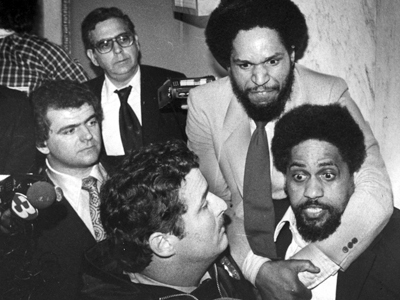
    City Council Sergeant-at-Arms Bob Brady, left, looks on as Councilmember John F. Street, top, and State Rep. Milton Street, right, take part in a near-riot in Council chambers. (Daily News File Photo)

    Brady was elected to Congress in a 1998 special election, and eventually chaired the House Administration Committee, which handles behind-the-scenes tasks such as assigning office space to lawmakers.

    While in Congress, he ran unsuccessfully for mayor in 2007, losing to Michael A. Nutter, who ran on an anti-corruption campaign.

    In 2017, news broke that Brady’s congressional campaign was the subject of a federal investigation over an alleged scheme in which a would-be challenger accepted $90,000 to withdraw from running against Brady in a 2012 primary.

    Two of Brady’s aides served prison time, but Brady never admitted wrongdoing. He chose not to run for reelection the following cycle, in 2018.

    A modern political ‘boss’

    While Brady is often referred to as Philly’s “party boss,“ leading the Democratic City Committee is not the same job as it was in the heyday of big-city machine politics.

    Thanks to civil service reforms in the 1950s, there are far fewer patronage jobs to hand out. And Brady’s time is more often spent attempting to maintain peace among the various political organizations around the city, rather than telling them what to do.

    “It really isn’t all that easy, you know, keeping everybody together,” Brady said Monday night. “You got all kinds of factions, all kinds of egos, and I try to do the best I can to keep together, like we did tonight.”
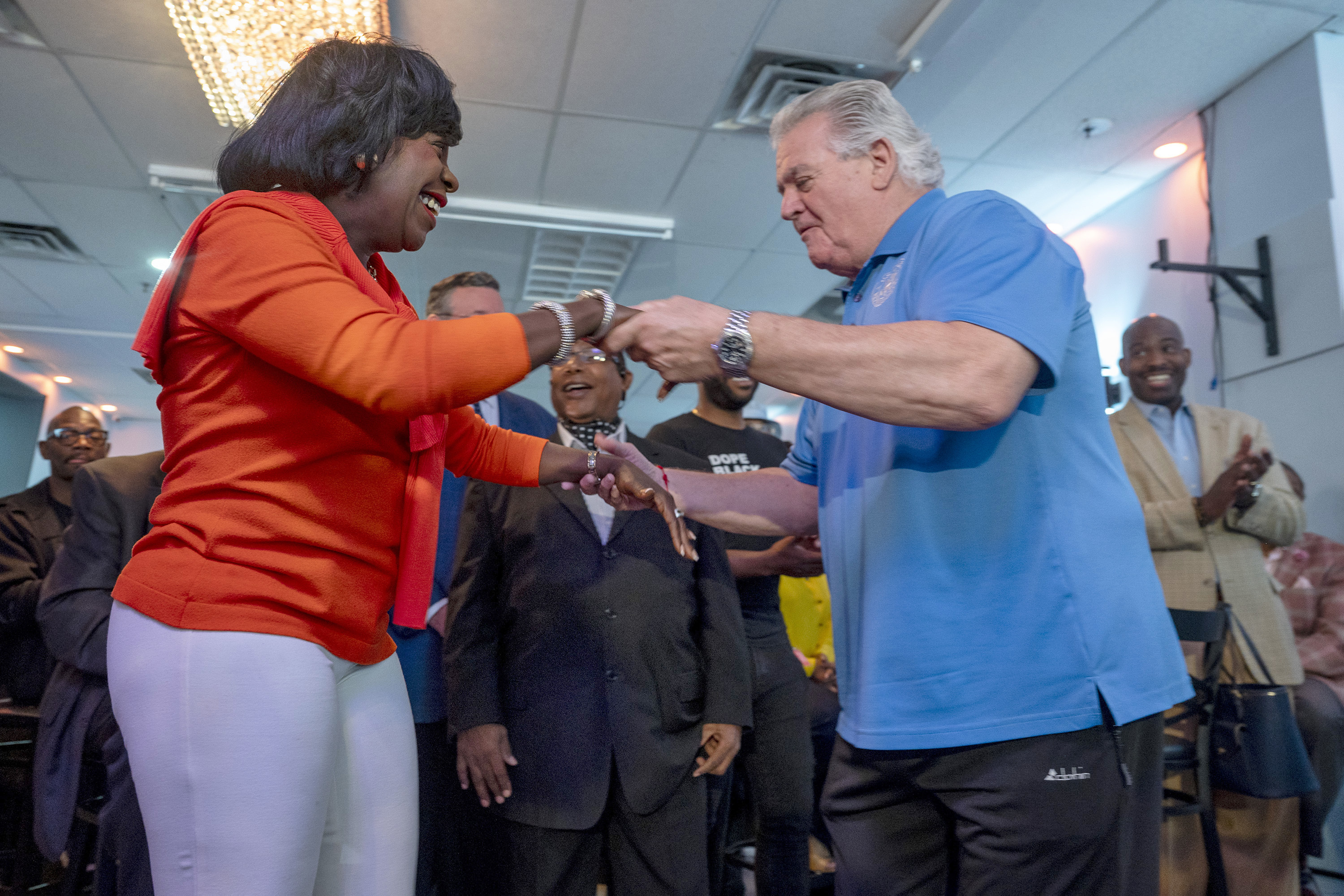
    Bob Brady, right, chair of the Philadelphia Democratic City Committee, dances with Cherelle L. Parker at a “unity breakfast” following her victory in the 2023 Democratic mayoral primary. Tom Gralish / Staff Photographer

    One area where today’s party does resemble the machine politics of old is local judicial elections. Party-endorsed candidates almost always win seats on the local Municipal Court and Common Pleas Court benches, and many of their staffs are in turn filled with people connected to the local party.

    Brady and party leaders have no qualms about admitting what it takes to win their approval: doing favors and free legal work for the city committee, ward leaders, and their constituents.

    Philly Democrats’ new No. 2

    Although the Democratic City Committee does not have a new chair, ward leaders on Monday elected a new No. 2.

    Former Councilmember Sharon Vaughn, who leads the 49th Ward, will be the new first chair of the party, replacing former Councilmember Jannie Blackwell, who did not run for reelection as 46th Ward leader.

    Vaughn, who is also a secretary of the Pennsylvania Democratic Party, would temporarily become city committee chair if Brady were to step aside. Brady said Monday he would support her to one day hold the position on a permanent basis as well.

    “She’s a great world leader, a former Council person, a hard worker,” Brady said. “What you see is what you get, straight shooter, and she’ll tell you just what it is. And she’s a loyal lady.”

    Lauren Rinaldi, the 18th Ward leader who is seen as having relationships with both the progressive and establishment wings of the party, became the second vice chair. She replaces Bass, who has now lost out on her citywide party leadership post regardless of how Wednesday’s 22nd Ward election redo shakes out.

    Rinaldi said Monday night she understands her election to leadership was partially an olive branch to the left wing of the party.

    “I‘m sure that’s part of it, definitely,” Rinaldi said in an interview. “But I am seeing my role as an advocate — advocating for reform to strengthen the party and modernize the way we do some things and bring more people in instead of shut them out. Basically to rebuild trust with voters.”

    The third vice chair remains 7th Ward leader Angel Cruz, and 63rd Ward leader Brian Eddis has replaced Bill Dolbow as fourth vice chair.

    Former City Controller Jonathan Saidel will stay on as the party’s treasurer, with John Brady, who is not related to the chair, serving as assistant treasurer.

    And 6th Ward leader Pete Wilson was retained as secretary, with 8th Ward leader Elaine Petrossian elected as assistant secretary.

    Back-to-back-to-back reruns

    The party on Monday ordered the results of three contested ward leader races voided. They will be rerun on Wednesday at the Brady building, with a committee of other ward leaders overseeing the results.

    In all three instances, the ward elections were found to have violated the party’s procedures.

    The redo for the 14th Ward, in which incumbent Arthur Green lost to Valerie Williams, will take place at 6 p.m.
    City Councilmember Cindy Bass, left, speaks with a reporter about her contested 22nd Ward leader election. Aidan T. Gallo / Staff Photographer

    That will be followed by a 7 p.m. rerun of the 17th Ward election, which was an open seat in which Tyrone Barge defeated Michelle Schley.

    And finally, the 22nd Ward redo will take place at 8 p.m., with progressive challenger Octavius Price taking on Bass.

    In all three races, the party will allow submission of “proxy votes” from committeepeople who cannot attend if they are accompanied by notarized affidavits.

    Brady said the decision to redo the 22nd Ward vote was an easy one after he saw a video published by The Inquirer showing Bass, who chaired her own reelection meeting, shutting down requests for a roll-call vote that could have clarified the results.

    “I don’t think anybody that saw that … was supportive of it,” Brady said. “One ward is one ward, and there’s 68 others, and we’re all going to fix that on Wednesday night.”
  • The researcher who didn’t want to know

    The researcher who didn’t want to know

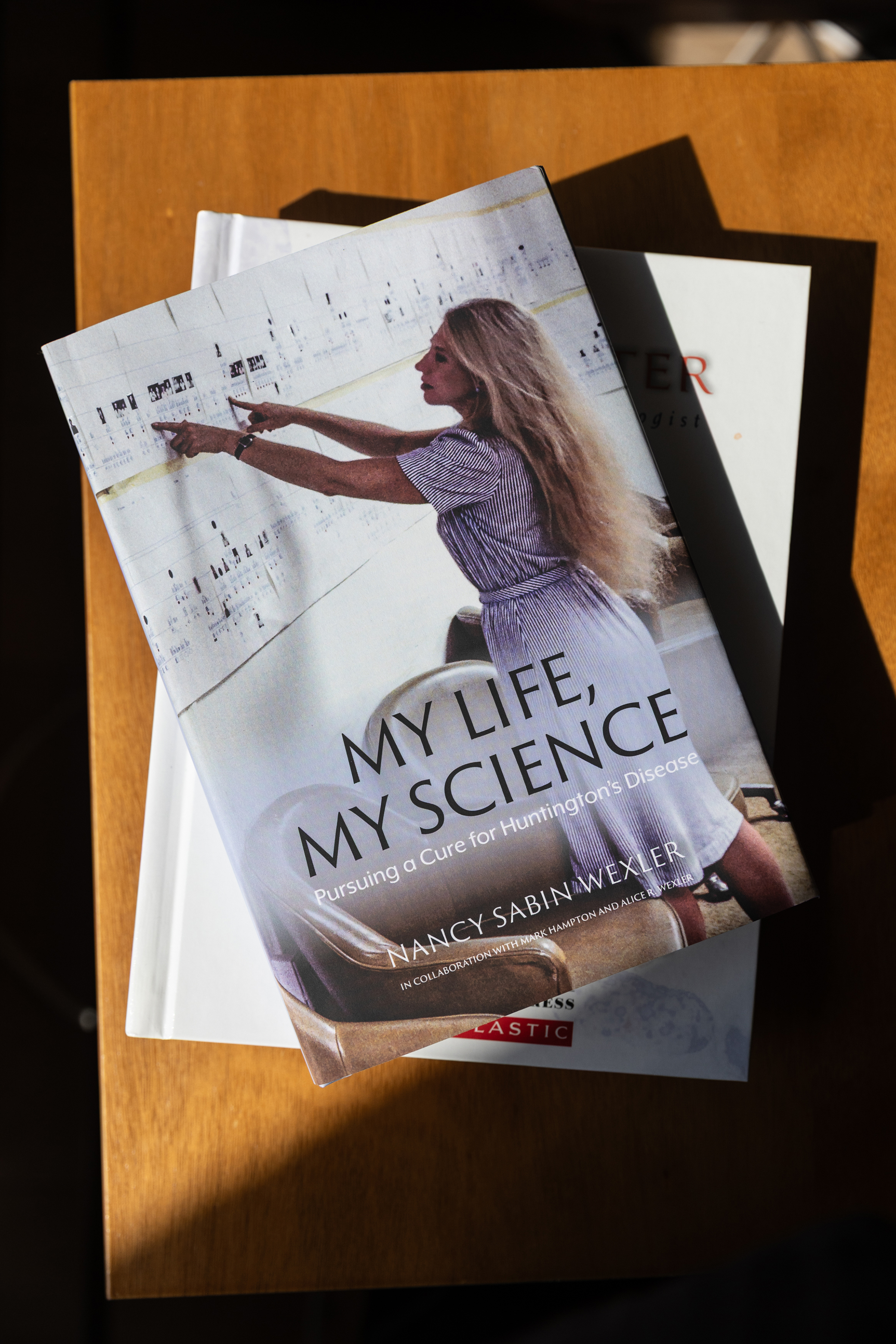
    On my second visit with Nancy Wexler at her Manhattan apartment, she had a gift for me. It was a copy of her newly published memoir, My Life, My Science: Pursuing a Cure for Huntington’s Disease.

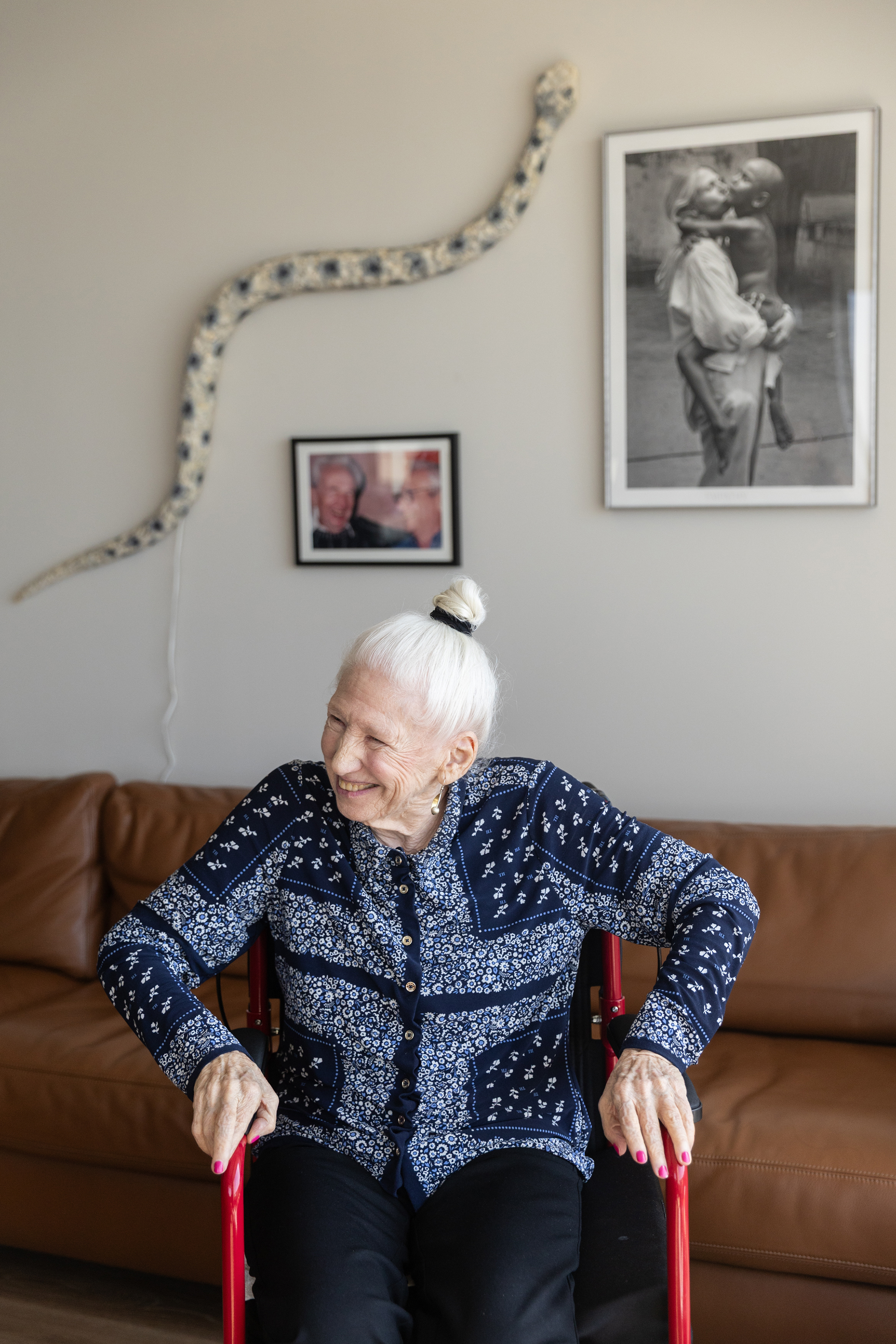
    It had been signed with a stamp of her signature — she isn’t able to sign it herself. Nor could she rise from her brown faux-leather recliner to greet me — she can’t get up unassisted. Speaking requires effort. She can manage at most a few badly slurred words or phrases or, with great difficulty, a short sentence.

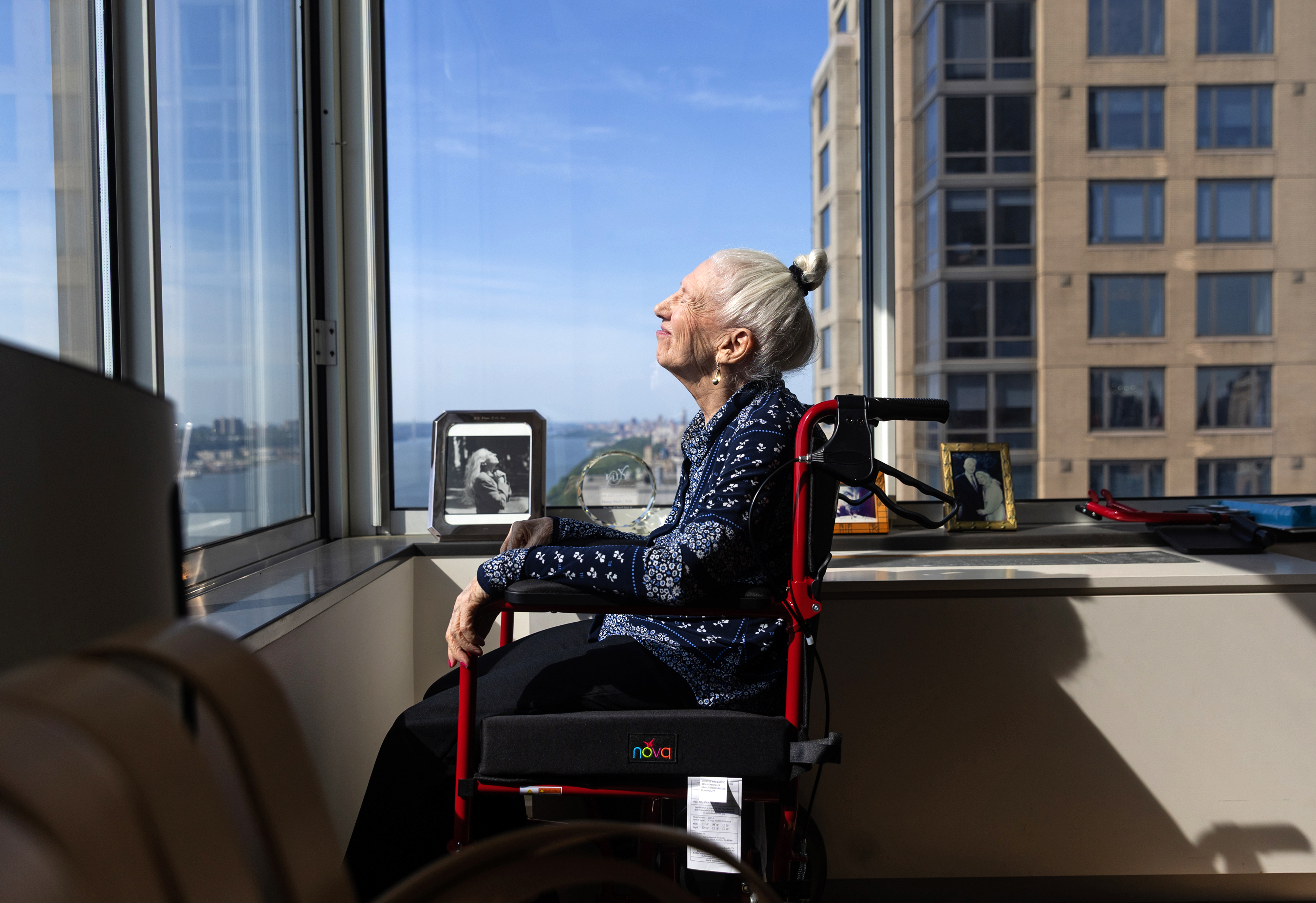
    On that bright windy afternoon, Nancy and her sister, Alice Wexler, sat side by side in recliners, their backs to windows that offered a stunning view of the Hudson River far below. Alice lives in California, but she visits Nancy every other month.

    At age 80, Nancy Wexler has Huntington’s disease, a dreaded brain disease that destroys a person’s ability to control movements. There is no treatment. There is no cure.

    The disease is inherited: Nancy’s grandfather, three uncles, and mother had it. Alice, however, does not: If a parent has Huntington’s, each child has a 50% chance of getting it. Their mother attempted suicide, a path that others with the disease have chosen, but ultimately died from Huntington’s.

    Nancy is not just any Huntington’s disease patient. For decades, she led a research effort in a remote area of Venezuela that found the gene responsible for Huntington’s. That work yielded a blood test that enable at-risk people to find out if they are destined to get the disease. In honor of this work, Nancy has garnered numerous accolades and prizes, including a Lasker award, among the most prestigious in science. She devoted her life to understanding what it’s like to be at risk for Huntington’s disease, what it’s like to have it.

    What she did not know, though, was that she would get it herself. After helping lead the crucial research that allowed those at risk to find out if they would contract this terrible disease, Nancy chose not to be tested.

    Now that the disease has progressed long past the point where she can keep contributing to the fight against Huntington’s, it is natural to wonder: How would her life and research have been different had she made the other choice? If your fate is sealed, is it better or worse to know?

    Nancy Wexler can no longer sign her own name or get up unassisted.Jackie Molloy

    Huntington’s disease was first described in a paper published in 1872 by an American doctor, George Huntington. It affects an estimated 41,000 people in the United States. Symptoms start slowly, with clumsiness or a stumbling walk; patients are often thought to be drunk as they stagger down a street. As years go by, patients become plagued by constant involuntary movements.

    Huntington described the misery in unsparing detail: “If the patient attempt to protrude the tongue it is accomplished with a great deal of difficulty and uncertainty,” he wrote. “The hands are kept rolling — first the palms upward, and then the backs. The shoulders are shrugged, and the feet and legs kept in perpetual motion; the toes are turned in, and then everted; one foot is thrown across the other, and then suddenly withdrawn, and, in short, every conceivable attitude and expression is assumed, and so varied and irregular are the motions gone through with, that a complete description of them would be impossible.”

    Patients and family members, Huntington added, spoke of the disease “with a kind of horror.”

    Nancy’s acquaintance with that horror began in 1968. After graduating from Radcliffe College, she was in Europe on Fulbright fellowship when she was called home to learn her mother had the disease.

    She had grown up in luxury in Pacific Palisades, Calif. — her father, Milton Wexler, was a psychoanalyst to Hollywood stars. Her mother, Leonore, had a master’s degree in zoology from Columbia University and a teaching certificate, but did not work. She did, however, have a secret that she kept from her children and even from her husband: Leonore’s father had Huntington’s disease.

    Leonore didn’t mention it even when her three brothers — Nancy’s uncles — started exhibiting the telltale signs: clumsiness, a stumbling walk, sudden jerky movements.

    Nancy Wexler’s memoir, “My Life, My Science” on a table in her apartment.Jackie Molloy

    When his wife’s slide into the disease could no longer be denied, Milton called both sisters home and sat them down in his bedroom. The 50-50 chance now hung over both of them, too. He gave them some advice they never forgot: Don’t waste your life.

    Alice decided to ignore Huntington’s and her own risk. “I didn’t want to have anything to do with it,” she told me. She became a historian.

    Nancy had a different reaction. She would make Huntington’s the focus of her life, getting a Ph.D. in clinical psychology from the University of Michigan. Her thesis subject: the experiences of people with Huntington’s, and of those at risk for getting it. She thought of that choice as a way of coping with her situation. She wrote that it was a version of something the American Psychiatric Association called implosion theory — “a technique used in behavior therapy where the client is flooded with experiences believed to be relevant to the client’s fear.”

    “I could talk about Huntington’s without seeming selfish and whiny,” she explained. “I could talk about how people felt in the context of helping them.”

    Nancy’s father started a chapter of the Committee to Combat Huntington’s Disease, or CCHD, which later became the Huntington’s Disease Foundation. Its express goal was to find the Huntington’s disease gene and search for a cure. Nancy started a chapter in Michigan and also worked with her father in California.

    Her first job, at age 29, was at the New School for Social Research in New York where she continued her studies of Huntington’s sufferers and those at risk. But she never told her academic colleagues about her own risk. Her work, she later wrote, “taught me how a genetic condition such as HD can shape the ways people see and react to you.”

    She added: “I also learned the high emotional costs of keeping it hidden.”

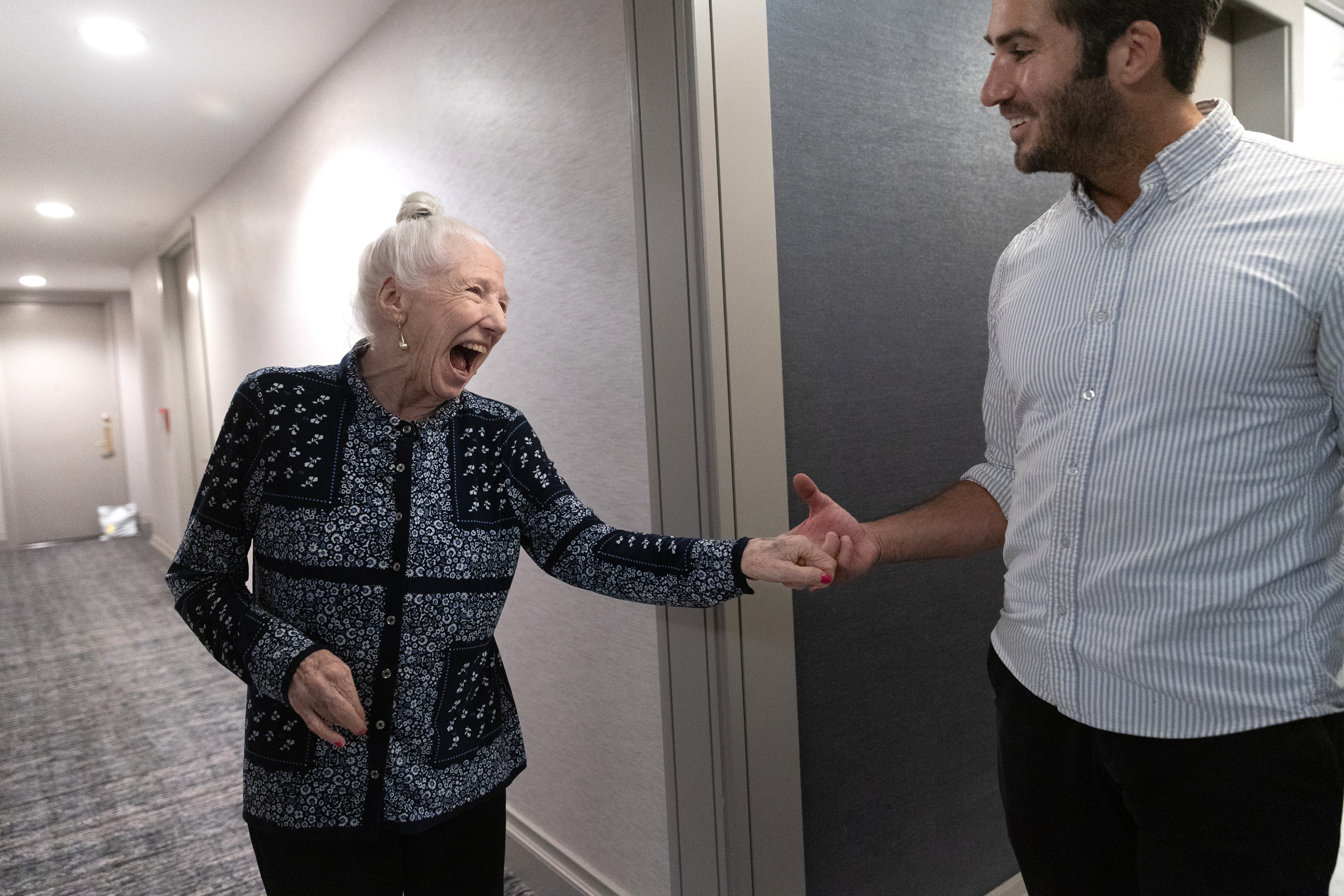
    Nancy Wexler works with her physical therapist, Sean Conroy, who visits three times a week.Jackie Molloy

    On frequent trips to California, Nancy was also helping her father lead the Huntington Disease Foundation. The group’s gatherings couldn’t be further from the staid scientific meetings that are the main staple of academic life. There were no traditional talks, no slides. Instead, Nancy and her father invited creative scientists — who may or may not have ever thought about Huntington’s before — to brainstorm about ways to find the gene, scrawling their ideas on a whiteboard. The meetings always included a Huntington’s patient, or the family member of a patient, so the scientists could understand what was a stake.

    Back in New York, as part of her social science work, Nancy held hearings with Huntington’s disease families and people who worked with them, including social workers, neurologists, insurance representatives, police, teachers, nurses and other public officials.

    What she heard was all too familiar. She had, she wrote, experienced almost everything the families had told her: “the stigma and silence surrounding Huntington’s; the ignorance of most doctors about the disease, including about the hereditary pattern; the denial on the part of family members who knew about the disease but refused to discuss it; the fear and anxiety suffered by those at risk waiting for years to see if symptoms would emerge; the anxiety that should a predictive test be developed, it could reveal future onset but do nothing to forestall or prevent it; the divisions within families over how to respond to the illness; the sense of belonging to a tainted lineage; the shame and embarrassment about relatives with the symptoms; the tremendous financial burden of care; and the sense that there was nowhere to go for help.”

    As part of her research, Nancy asked people who had Huntington’s in their families whether they would have a test for the gene if one were developed. Two-thirds said yes.

    Nancy thought she’d want to be tested too.

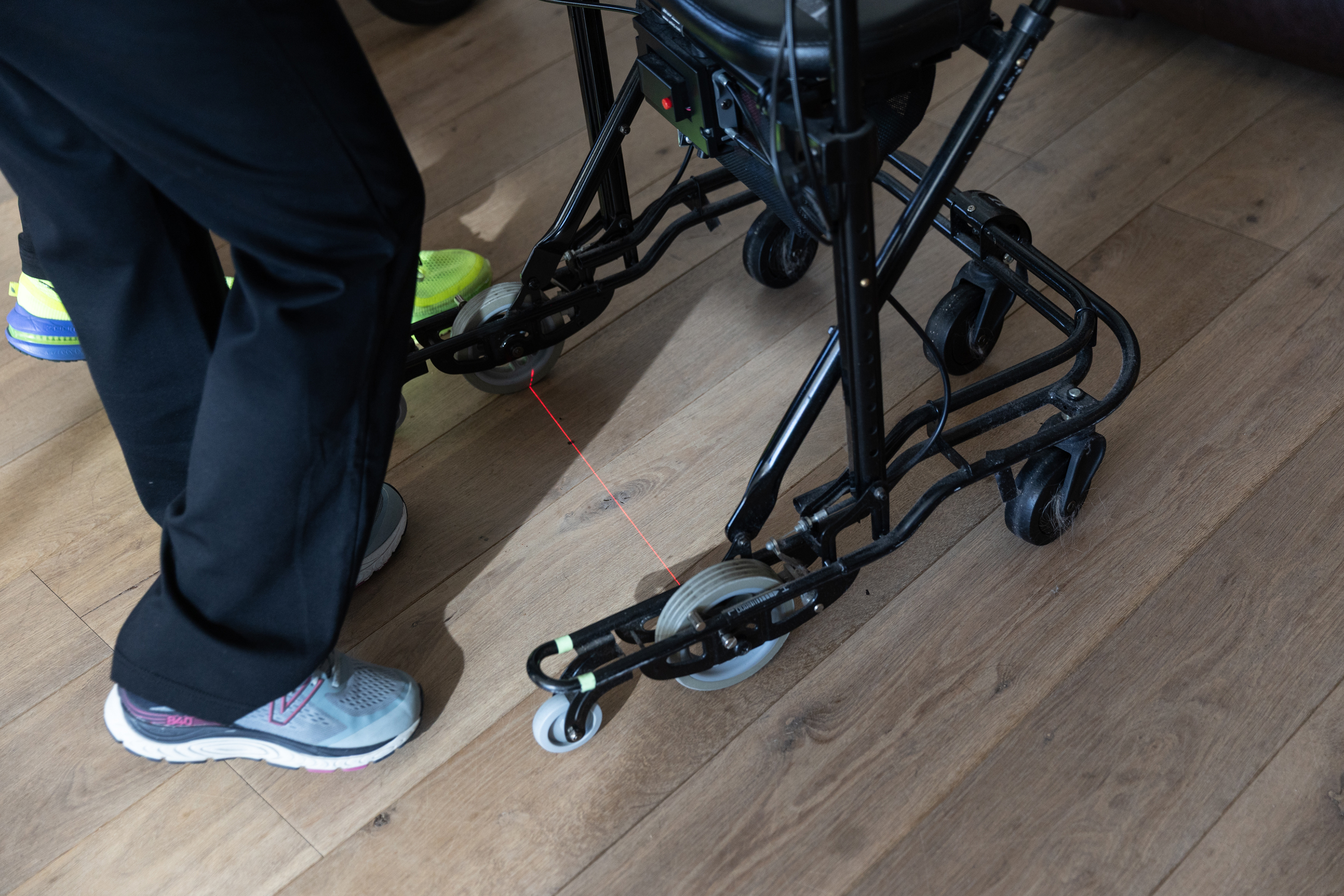
    Nancy Wexler’s walker has visual laser cues, multiple wheels, and weights to keep steady. Jackie Molloy

    The search for the gene began in earnest in 1980, focusing on three communities around Lake Maracaibo, Venezuela, that had the greatest prevalence of Huntington’s disease in the world. The researchers traced the disease there to one woman, Maria Conception, who lived in the area early in the 19th century. Maria apparently had Huntington’s disease, and passed it on to generations of descendants who called it El Mal.

    Huntington’s was so feared that the residents of those communities had been isolated and ostracized. They ended up intermarrying, increasing the likelihood that the gene would be passed on.

    Nancy led the research team, returning to Venezuela regularly for 22 years and collecting more than 4,000 blood samples from Venezuelans. She cared deeply for them, and even helped establish a nursing home for Huntington’s patients.

    Three years after the gene search in Venezuela began, that question — would you want to be tested? — was no longer hypothetical. The researchers found a marker, like a flag on DNA, that was present only when someone had the Huntington’s gene. It wasn’t the actual gene — that would come later — but it could be used to tell people if they had the gene.

    The decision to be tested, though, turned out to be a more difficult one than it might seem. Is it better to know you are doomed, or to hope you are not?

    In Nancy’s doctoral thesis, she had cautioned that when a test became available, many who thought they’d want it would change their minds. She hadn’t realized that she would be one of them.

    Huntington’s is one of just a handful of diseases — others include early onset Alzheimer’s, as well as some prion diseases — in which a positive genetic test takes away all hope of escaping your fate. With other genetic diseases, a test can only signal a likelihood, not a certainty, that a person will get the disease. In both cases, people often opt not to be tested. In colon cancer, for example, a recent national study found that only 3.7% of those with a mutation that increases risk actually had the genetic test.

    The phenomenon of avoidance is so common that IVF clinics offer a special test to couples at risk for a hereditary disease: examining each embryo for the disease gene and implanting only those that don’t have it, without informing the prospective parents about the result.

    In her book, Nancy explains that she had been too cavalier about the idea of testing before there was actually a test.

    “I realized I hadn’t thought through all the ramifications, both psychological and social, of what a positive test might mean in my life,” Nancy wrote, adding: “I wasn’t sure I could live with the foreknowledge that one day the dreaded symptoms would emerge. I preferred to meet the devil when he was on my doorstep.”

    Alice had a similar reason for declining the test. “How would I live with a positive test result?” she asked herself. “I thought the idea of ambiguity, uncertainty, was kind of appealing. I thought I could live with that.”

    And, she told me, “once you have that knowledge you can’t take it back.”

    In 1996, after Nancy’s research effort helped find the gene, Alice began noticing little abnormal movements in her sister.

    Nancy was just 51, two years younger than her mother had been when a police officer saw her weaving as she walked down a street and accused her of being drunk.

    But Nancy denied anything was wrong. She had an active life; she felt fine. She met her partner, Herbert Pardes, a psychiatrist and executive vice-chair of New York-Presbyterian Hospital, late but had a happy relationship. (He died in 2024.)

    Yet friends and colleagues started asking Nancy if she had Huntington’s, watching her closely. She was furious and upset. How dare they try to diagnose her? They weren’t her doctors.

    Nonetheless, Nancy was startled to see herself in videos making sudden jerky movements. She hadn’t realized she was doing that.

    She worried about impulsive behavior — telling Alice that she couldn’t seem to stop buying things she couldn’t afford. (Impulsivity is a hallmark of Huntington’s.)

    By 2015 she had lost a lot of weight, as is typical in Huntington’s, because of the constant involuntary movement. And she was unsteady when she walked.

    Finally, in 2019, there was a clinical trial of an experimental Huntington’s drug. Nancy wanted to participate — but she would have to have a Huntington’s diagnosis to do so.

    She asked a neurologist, Linda Lewis, to tell her the truth. Did she have Huntington’s?

    “Yes, Nancy, you do,” Lewis said.

    She was too old for the trial, but the researchers were willing to make an exception for her. Before she could start taking the drug, the trial was halted: It was making people worse.

    There remains no treatment for Huntington’s disease.

    Nancy Wexler has a video chat with her sister, Alice, who does not have Huntington’s.Jackie Molloy

    Now, in retrospect, I asked Nancy and Alice, would it have been better to have had had the test?

    The answer, for each, is a resounding no. Neither lives a life of regret.

    As Alice sees it, testing does not resolve the big questions. “While the test was marketed as a choice between certainty and uncertainty, for me it always seemed more a choice between one form of uncertainty — will I get Huntington’s? And another — when will I get Huntington’s?” she said.

    After all that uncertainty, Alice escaped the family disease. I asked whether she felt survivor’s guilt. “More than guilt, I feel the injustice of it,” she replied. “How unfair it is that she has Huntington’s and I don’t. Just cruel arbitrary luck of the draw.”

    The only reason she might have wanted to be tested, Alice said, was so that, if she did not have the gene, she could have biological children. She had not wanted to take a chance on passing the gene on to another generation. But she was in her mid-40s when a test was available — too late for her.

    Nancy’s answer was briefer, but succinct: “The predictive test would not have helped. It would have been too threatening,” she said, struggling to get the words out.

    Nancy, too, longed for children. She tried the in vitro fertilization method that allowed her to avoid knowing if any embryos were affected. But she did not succeed in having a baby.

    Now, being cared for by full-time assistants, confined to her apartment, unable to feed or bathe herself, robbed of her charismatic personality by her struggles to speak, I asked what life is like for her.

    “It’s not so scary,” Nancy replied.

    This article originally appeared in The New York Times.

    Nancy Wexler embraces her colleague and close friend, Julie Porter.Jackie Molloy
  • Kennedy orders woman to stay in hantavirus quarantine, despite CDC recommendation

    A cruise ship passenger who was exposed to hantavirus in early May is still being held at a quarantine facility in Nebraska, against her wishes and against the recommendation of a medical review from the Centers for Disease Control and Prevention.

    On Monday, Health Secretary Robert F. Kennedy Jr., a staunch proponent of medical freedom, signed an order to continue quarantining Angela Perryman, 47, even though others who had been held at the facility have, since May 31, been allowed to return to their homes if they wished to do so.

    In a telephone interview with the New York Times, Perryman, who has tested negative for the virus and says she has not had any symptoms, expressed anger and frustration. She said she learned of Kennedy’s decision when a copy of his order was slipped under the door to her room.

    After a hearing to dispute her quarantine order, Michael Bell, the CDC’s quarantine medical reviewer, recommended Thursday that Perryman be allowed to return home for the remainder of her 42-day quarantine, with remote symptom monitoring once daily and access to 24-hour help “in the event she develops symptoms.”

    “In my professional judgment, this less restrictive alternative is adequate to protect public health,” Bell wrote in the review.

    “This is the final proof that there is no check and balance on a basically indefinite detention under the public health law,” Perryman said.

    The Department of Health and Human Services declined to comment.

    Perryman is one of 18 passengers who were on a cruise ship that became the center of a hantavirus outbreak that killed three people, sickened several others, and unnerved people around the world. They were flown back to the United States on May 11 and quarantined at the National Quarantine Unit in Omaha, Neb.

    The passengers were initially set to return to their own states, but were then ordered to remain in Omaha at least until May 31. Perryman publicly challenged the order.

    “I think this is obvious malice and retaliation,” she said Monday.

    Some passengers were allowed to quarantine at home until June 22, or 42 days, provided local health officials committed to having a law enforcement or community health worker monitor them. Perryman is one of 10 passengers still in Omaha, she said, but the only one being held against her will.

    Perryman lives in Florida part of the time and wished to quarantine there. But Florida refused to comply with the administration’s requirements, according to Steven Hyman, Perryman’s lawyer.

    But now, the order by Kennedy to keep Perryman in Omaha “flies in the face of the findings of the medical reviewer,” Hyman said.

    At the Omaha facility, officials take Perryman’s temperature twice a day and provide her with food on request. She can also request access to a rooftop for about an hour each day, under the watch of armed guards.

    “They’re polite and they’re not using physical violence against me, but otherwise it’s a prison,” she said.

    This article originally appeared in the New York Times.

  • In major decision, Pa. Supreme Court rules ‘skill games’ are slot machines

    In major decision, Pa. Supreme Court rules ‘skill games’ are slot machines

    HARRISBURG — So-called skill games, the slot machine look-alikes that have proliferated by the tens of thousands around Pennsylvania bars and corner stores, are slot machine devices and should be regulated as such, the state’s highest court ruled Monday.

    The Pennsylvania Supreme Court ruling clears the way for widespread taxation and regulation by the state, as well as limits on where the machines are available, as a majority of justices ruled that both gambling law and the criminal code apply to the machines.

    “The device is a ‘slot machine,’” wrote the newly independent Justice David Wecht in the majority opinion.

    The majority recognized that the ruling could cause a “potential disturbance” for “business owners and other good-faith participants in the industry,” so the ruling will take effect after a 120-day “safe harbor” period. And if lawmakers in Harrisburg disagree with the opinion, the General Assembly “remains free at any time to take whatever legislative action it may deem appropriate.”

    Pennsylvania’s gambling industry is highly regulated and taxed. If state law is unchanged after the 120-day waiting period, the estimated 70,000 skill game machines available across the state would need to be regulated and confined to specific locations like casinos that have the proper licenses.

    Chief Justice Debra Todd and Justice Daniel McCaffery, both Democrats, joined the opinion in full, while Republican Justices Sallie Updyke Mundy and Kevin Brobson concurred with most of the majority’s reasoning but wrote a short dissent.

    Justice Christine Donohue, a Democrat, wrote a concurring decision.

    “Because chance predominates both the player’s eligibility for winnings and the magnitude of those winnings, the [skill games] device is a gambling device,” Donohue wrote.

    Justice Kevin Dougherty, a Philadelphia Democrat, sat out the long-awaited decision.

    Skill game operators have evaded taxation and regulation for more than a decade, operating in a legal gray area after lower courts ruled that the machines require a level of skill not necessary to play games of chance like slot machines.

    The most influential player in the skill games industry, Georgia-based operator Pace-O-Matic, has asked the state on multiple occasions to regulate and tax the machines — but at a rate much lower than slot machines, arguing that their technology helps small businesses with small margins stay afloat as prices rise.

    In a statement, Pace-O-Matic said it was disappointed by Monday’s ruling, which it said would have “far-reaching consequences” on Pennsylvania’s small businesses and fraternal organizations.

    “[Small businesses] are now potentially left facing an impossible choice: cease operating these games and lose an important source of revenue, or endure a legislative solution that could bring excessive regulation and crippling taxation, which will force them to cease operating these games and lose an important source of revenue,” a spokesperson for Pace-O-Matic added.

    Gov. Josh Shapiro, a first-term Democrat, has proposed regulating and taxing skill games at 52% — the same rate currently levied on slot machines and most other games of chance. He estimated taxing and regulating the machines could bring in $765.9 million for the state in new revenue in its first year, as part of his $53.2 billion February budget pitch.

    Lawmakers have been waiting for the state Supreme Court to rule whether the machines are legally slot machines or not, as the split legislature considers whether to and how much to tax them as a way to create a much-needed new revenue stream.

    Top legislators and Shapiro have convened over the last few weeks in closed-door meetings to finalize a state budget deal ahead of a June 30 deadline. Now, with the decision in hand, Senate President Pro Tempore Kim Ward (R., Westmoreland) and Majority Leader Joe Pittman (R., Indiana) said in a statement they believe gaming reform is a “critical piece of resolving this year’s budget.”

    In Philadelphia, City Council banned skill games in 2023 over concerns that they attract crime, but a lower court blocked enforcement of the ban while several cases worked their way to the state Supreme Court.

    A Philadelphia jury ordered Pace-O-Matic to pay $15.3 million last year to the estate of Ashokkumar Patel, a Hazleton store clerk killed during a 2020 robbery. And a Philadelphia store clerk shot last year during an armed robbery of Philly Market in Frankford, Ahmedine Maham, sued Banilla Gaming, a North Carolina-based skills game manufacturer, for enticing his assailants.

    At the end of the 120-day waiting period, the machines will be subject to regulations like slot machines and restricted to specific locations licensed to house slot machines — unless lawmakers decide to change the law.

    Pace-O-Matic, in its statement Monday, urged lawmakers to approve bipartisan proposals backed by rural GOP members and Philadelphia Democrats that would charge a $500 fee per skill game machine and would not restrict the machines to licensed slot machine locations, such as casinos.

    In a statement, Pennsylvania Attorney General Dave Sunday, a Republican, praised the Supreme Court’s decision as a “significant victory for consumers, taxpayers, and the rule of law.”

    “The Supreme Court recognized what our office has argued from the beginning — these machines operate as gambling devices and cannot legally exist without the same oversight, regulation and accountability as other forms of legalized gaming in the commonwealth,“ Sunday added. ”Pennsylvanians deserve protections that ensure games are fair, transparent and operated within the bounds of the law.”

  • Don Mattingly sticking with slumping Trea Turner in the Phillies lineup: ‘He’s always hit’

    Don Mattingly sticking with slumping Trea Turner in the Phillies lineup: ‘He’s always hit’

    When the Phillies posted their lineup card ahead of Monday’s series opener against the Marlins, Trea Turner’s name was where it has been for the past few weeks: second in the order.

    Phillies interim manager Don Mattingly said he didn’t consider giving Turner some time off as he’s continued to struggle at the plate. Turner was already slumping before the Phillies departed for their 3-3 road trip to Toronto and Milwaukee, but a 3-for-26 trip lowered his average to .219 and his OPS to .598 on the season.

    Turner, who won the batting title in 2025 with a .304 average, has a 23% strikeout rate and 27.8% whiff rate this year. But Mattingly is steadfast that things will turn around.

    “Because it’s Trea. He’s always hit,” Mattingly said. “It’s what we talked about earlier in the year with [Alec Bohm], when everybody was ready to bench him, not ever play him again. Guys who hit, hit. He’s a great player, and he’s going to be a great player for us.”

    A few days off did work for Bohm’s own struggles this season. He had a two-day reset in May after his batting average dropped to .159 and then he hit two homers in the game immediately after. In the 32 games since then, Bohm has a .281/.326/.504 slash line.

    Bohm was out of the lineup on Monday because he was a little “banged up,” according to Mattingly, who added that he was still healthy and should be back Tuesday. Edmundo Sosa started at third base in his place.

    Alec Bohm benefited from his two-day “reset” in May.Yong Kim / Staff Photographer

    “He was just kind of gathering nicks and bruises as that road trip went on, a little bit in the hammy, a little bit in the hip, a little bit in the shoulder,” Mattingly said. “So I just wanted to give him a day, a chance to recover.”

    Mattingly also said he hasn’t considered moving Turner further down in the batting order from the No. 2 spot.

    “Not at this point. If it gets to that point, then [I’d] consider anything that’s going to help us win,” Mattingly said. “Everybody, all of a sudden, is talking about Trea today, but when we don’t score, Trea’s not the only reason when things like that happen. Trea’s a big piece of what we are, what we’re going to be, and if we’re getting really successful, we’re going to need Trea. So for me, I’m not giving up on Trea, I’m not moving him right now. It’s just the way I feel about it.

    “ … I want to show confidence because I feel confidence. I wouldn’t say the things I say if I didn’t feel confident that Trea was going to find it, and be swinging more consistently and better as we go through the season.”

    Still monitoring Marchán

    Phillies backup catcher Rafael Marchán has not been diagnosed with a concussion after he took a foul ball off the mask on Sunday in Milwaukee, Mattingly said. But the Phillies are still monitoring him.

    “The update’s been good, and that we’ll continue to keep an eye on him,” Mattingly said. “I guess things can happen a couple days later, too, so we’ll keep an eye on him. But at this point the doctors have checked him out, he’s been through everything, and he’s good to go. ”

    Extra bases

    Left-handed reliever Kyle Backhus (left elbow inflammation) pitched one-third of an inning Sunday for triple-A Lehigh Valley for his rehab assignment. He entered with two inherited runners, walked a batter, and then struck out the next batter to end the inning. Backhus is next scheduled to pitch for the IronPigs Wednesday, and the Phillies plan to start building multiple innings. “He’s doing good, everything’s going in the right direction for him,” Mattingly said. … Outfielder Steward Berroa returned from the paternity list on Monday and was optioned to Lehigh Valley, the Phillies announced. … Jesús Luzardo (5-4, 4.35 ERA) is scheduled to start Tuesday against Marlins right-hander and Bishop Eustace product Tyler Phillips (1-1, 1.86), a former Phillie.

  • California Gov. Gavin Newsom says Trump’s Justice Department is investigating him and his wife

    Federal agents have questioned friends and associates of Gov. Gavin Newsom of California and his wife, Newsom said Monday in a video in which he accused President Donald Trump of using the Justice Department to punish a political enemy.

    The full scope of any investigation remains unclear. But Newsom’s aides say part of the federal investigation appears to focus on his wife, Jennifer Siebel Newsom. Former employees of the governor and people affiliated with his wife’s nonprofit groups are among those who have been questioned by agents, according to the governor’s office.

    A person familiar with the matter confirmed that multiple federal investigations were underway related to the governor, including one looking at his wife’s finances. But the person disputed Newsom’s assertion that the investigations were politically motivated and said they had been initiated by federal law enforcement officials in California, not launched by officials in Washington. The person spoke on condition of anonymity because they were not authorized to discuss it publicly.

    Newsom, a Democrat, described the investigation as a fishing expedition in which federal agents had started sifting through “years and years of random documents” and knocking on the doors of family friends and associates of the Newsoms to try to find evidence of an unspecified crime.

    “Donald Trump isn’t just coming after me because of my mean tweets,” Newsom said in the video. “He’s coming after me because I am considering running for president.” He added, “To get me, he’s coming after my wife.”

    Several people associated with the Newsoms have been contacted by federal agents in the past week, according to the governor’s office. Newsom’s aides believe the agents have also subpoenaed banking records but said they had seen no written evidence of that.

    An FBI spokesperson and a Justice Department spokesperson declined to comment. A White House official referred all questions to the Justice Department.

    Siebel Newsom, who calls herself California’s first partner, is a documentary filmmaker whose work focuses on the social impacts of sexism. She founded a nonprofit organization called the Representation Project that advocates for gender equity, in part by developing educational materials based on her documentaries.

    Siebel Newsom also owns a film-production company called Girls Club Entertainment. It is listed as a contractor of the Representation Project on the nonprofit’s tax returns. Tax records show that the Representation Project makes annual payments to Girls Club Entertainment. In 2024, the nonprofit paid Girls Club Entertainment $161,250 for film production work.

    Siebel Newsom is also a co-founder of the California Partners Project, a nonprofit that works to get more women onto corporate boards, address the gender pay gap, and make technology safer for children. Some of the donors that support the California Partners Project are groups with business before the state government.

    For years, critics have raised the possibility of self-dealing, but no public evidence of wrongdoing by any of the entities tied to Siebel Newsom has surfaced, and it remains unclear what precise issues and actions investigators have been asking questions about.

    Newsom has reported soliciting $4.3 million in donations to the California Partners Project since 2020, according to disclosures filed with the state’s ethics agency. That includes $1.8 million from a Native American tribe that has an agreement with the state to operate a casino in Sonoma County. In California, public officials must disclose donations to charities that are made at the official’s request.

    Another nonprofit group with ties to Newsom is called the California Protocol Foundation. Its board includes some of Newsom’s top advisers during his time as governor and previously as the mayor of San Francisco. The foundation pays for initiatives that the governor says he does not want state taxpayers to cover, including his travel overseas for conferences and other meetings.

    Newsom’s office said the investigation is a fresh attempt to smear him after the federal prosecution of his former chief of staff revealed no misconduct by the governor. The former chief of staff, Dana Williamson, pleaded guilty last month to three felonies in a corruption case.

    One of the crimes Williamson pleaded guilty to was lying to the FBI about information she had access to while working in Newsom’s office. In her plea agreement, Williamson said she gave her former business partner confidential information about state litigation that involved one of their clients and then lied about it when questioned by the FBI.

    The agreement does not name the client, but details in the indictment align with a sex-discrimination lawsuit that California regulators filed in 2021 against video game maker Activision Blizzard. The company had been a client of Williamson’s consulting business before she joined Newsom’s office. In 2022, Newsom fired the state lawyer leading the suit against Activision, prompting complaints that he was interfering.

    When Williamson was indicted last year, her attorney said that federal agents first approached her during the Biden administration. She was working for Newsom at the time, and the agents asked her if she would cooperate in an investigation of the governor. She replied that she had no information to give them because she had never witnessed any criminal conduct by Newsom.

    Earlier this year, Newsom’s office responded to questions from Trump’s Justice Department about his 2022 termination of the lawyer involved in the Activision lawsuit, according to a spokesperson for Newsom. Then the communication from federal officials ceased, the spokesperson said.

    The latest inquiries into associates of Newsom and Siebel Newsom began around the time Trump said that he planned to nominate Todd Blanche as attorney general, according to the governor’s office.

    Blanche had previously defended Trump in three of the four criminal cases he was facing.

    Nominated to be the No. 2 official at the Justice Department at the beginning of Trump’s second term, Blanche — now the acting attorney general — has pursued prosecutions of Trump’s perceived enemies. He also signed an agreement granting the president and his companies immunity from audits of past tax returns to settle a $10 billion lawsuit the president brought against his own government earlier this year.

    Newsom has been highly critical of Blanche’s nomination to the top Justice Department position, recently calling Blanche “the guy covering up the Epstein Files” and saying he “gave Trump and his family a lifetime pass to commit tax crimes.”

    (END OPTIONAL TRIM.)

    Newsom, in his video address, mentioned that Trump had called for his arrest last year, and he said he was proud to join the “hit list” of people standing up to the president. He accused Trump of “selling the presidency” for golf course approvals, cryptocurrencies and a private jet, and pledged to continue calling out what he saw as corruption from the White House.

    “You can subpoena my records. You can investigate me. You can harass me,” Newsom said. “Put my name on every and any enemies list you have, but leave my wife and family out of your personal vendetta.”

    This article originally appeared in The New York Times.

  • As the USMNT returns to work at the World Cup, Australia’s big win sharpens the focus

    As the USMNT returns to work at the World Cup, Australia’s big win sharpens the focus

    IRVINE, Calif. — The U.S. men’s soccer team’s big win over Paraguay electrified this World Cup, especially for American fans. But the players can’t spend too long reveling in the moment, because the next game is now on the horizon.

    Monday was always going to be a natural moment to turn the page, since it marked the return to work after two days off. But there was also a wakeup call over the weekend, when Australia upset Turkey and blew Group D wide-open.

    The players got the message.

    “We saw a team that went out against Turkey and competed at a very, very high level,” stalwart U.S. midfielder Tyler Adams said of his team’s next opponent. “They’re combative, they’re smart, tactically they were unbelievably sound. So I think it’s going to be an extremely difficult game.”

    Tyler Adams making a point to a teammate during a drill.Jonathan Tannenwald

    As he got ready for Monday’s practice, Adams said it was “pretty easy” for the team to shift its focus ahead.

    “I think that having a day off is obviously nice to just be able to disconnect,” he said. “I think having this amount of time in between games is really nice, just for the body, the mind, everything in between. It was a good start — it’s exactly what we wanted and we set out to do. That being said, the focus has to be on Australia now.”

    Australia’s win raises the stakes even higher in what was already a much-anticipated game (3 p.m., Fox29, Telemundo). The scene will be just as much of the story as the action on the field, as soccer-mad Seattle finally hosts the U.S. after not being part of any previous World Cup in this country, from the 1994 men’s tournament to the 1999 and 2003 women’s ones.

    The city looked terrific in its first time on the big stage, Egypt’s 1-1 tie with Belgium on Monday.

    A view of the full house in Seattle as Belgium and Egypt’s players lined up for the national anthems.Maddy Grassy

    When the U.S. and Australia met in a friendly last October, striker Haji Wright scored both American goals in the 2-1 win. He reflected Monday on watching tape of the Turkey game, and how these Socceroos compare to last fall.

    “Saw a well-executed game plan from Australia,” he said. “They’re tough to break down, they’re dangerous on counterattacks, they have good players at the top of the pitch, and they were able to be effective and damage Turkey. I think Turkey kind of came into the game a bit overconfident, and I think we won’t make that same mistake.”

    That was a reference to team captain Hakan Çalhanoglu claiming a few days earlier: “I think we will dominate the game, because we have more qualities and a more talented team.”

    Some U.S. pundits have done some boasting of their own, and Adams was asked about that. He quickly brushed it off.

    “I don’t think any commentary helps anybody,” he said. “And no, it’s not going to be a layup. If anything, it’s going to be one of the most difficult games that we play.”

    Haji Wright (center) in a drill at Monday’s practice.Jonathan Tannenwald

    The U.S. will be on alert not just for Australia forward Nestory Irankunda, already justifying the hype as a breakout star. Adams’ yellow card in the second half against Paraguay means that if he’s is booked again in this game, he’ll miss the group finale against Turkey on June 25. Card accumulation is then reset after the group stage ends, and after the quarterfinals.

    “I live with yellow cards,” Adams said. “I think that for me, it’s something that you have to manage of course, but especially in the second game, you can’t take your foot off the gas.”

    When kickoff arrives, it will have been a week since the Americans’ group opener. That’s a rare sight in a World Cup, created by FIFA’s expansion of the field to 48 teams. In the past, there were usually three or four days between games.

    “I absolutely love it after playing a long season,” said Adams, who plays his club soccer for the English Premier League’s Bournemouth, noting too that the last World Cup in 2022 — his first — was the first moved from the summer to autumn because of Qatar’s heat.

    Tyler Adams drew a big crowd for his session with the media, as he always does.Jonathan Tannenwald

    “Your body feels it, obviously, a little bit more coming into the end of the season, into a World Cup where there’s so much emotion, so much adrenaline, all these things,” he said.

    Pulisic trains separately

    As he nurses the hamstring knock that sent him out of the Paraguay game at halftime, Christian Pulisic did not take the field with his teammates Monday morning. He emerged separately a few minutes later, and worked on his own with a trainer on the next field over.

    A U.S. Soccer spokesperson said Pulisic was scheduled to do a “modified training session” with “gym and individual field work.”

    Pochettino wasn’t scheduled to meet with the media on Monday, but he came over during practice to say hello and talk casually for a few minutes. When a reporter asked him how Pulisic is doing, Pochettino answered “Good.”

    Christian Pulisic working with a trainer on a separate field Monday morning.Jonathan Tannenwald

    Adams shared the sentiment, and a few more words.

    “Come on — Christian will be ready, everyone. Let’s relax,” he said with his usual spirit. “I think that he picked up a knock a few days before the game, and I think he got kicked in the same spot again during the game, and when you go in at halftime, things obviously get tight within the 15-, 20-minute break. But he’ll be fine.”

    U.S. Soccer also announced that 20-year-old goalkeeper prospect Julian Eyestone of English club Brentford has joined the camp as a training player. Diego Kochen of Spain’s Barcelona departed last week, while the Union’s Andrew Rick has stayed all along.

    Though U.S. Soccer didn’t say why Kochen left, ESPN reported last week that the 20-year-old is on the verge of a season-long loan to Danish club Lyngby to get some regular playing time. Lyngby earned promotion to Denmark’s top flight last month, and its ownership includes the Union holding a partial stake.

    Julian Eyestone (left) is another of the U.S. program’s leading young goalkeeper prospects.Jonathan Tannenwald
  • A ‘proud’ Jay Wright revels in the success of his former Villanova pupils with the ’Nova Knicks

    A ‘proud’ Jay Wright revels in the success of his former Villanova pupils with the ’Nova Knicks

    Jay and Patty Wright attended a wedding Saturday night in Red Bank, N.J., and Game 5 of the NBA Finals was at halftime when it was time for them to head home.

    Watching Jalen Brunson, Mikal Bridges, and Josh Hart is like watching his own children, Wright said, and he wasn’t going to miss this. Patty took the wheel, Jay put the game on his phone in the passenger seat. The game was nearing its end when it was time to exit the Blue Route.

    They weren’t going to make it home in time, so the Wrights pulled off the main road and onto a side street. They watched the ‘Nova Knicks win their first NBA title and end a 53-year New York Knicks championship drought in a Radnor cul-de-sac.

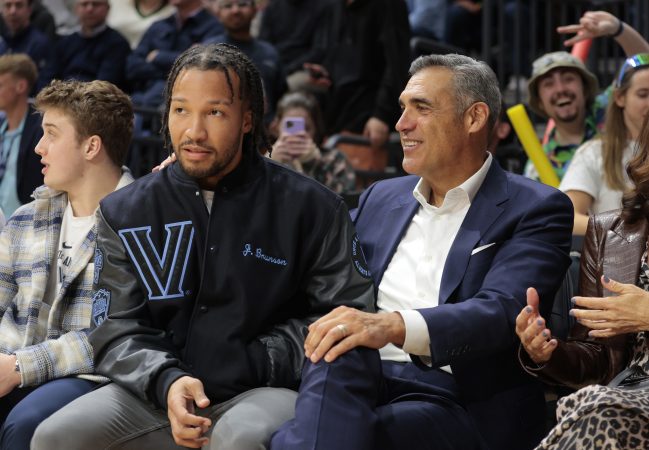
    Wright intentionally stayed out of the spotlight during the playoff run. He did a spot on ESPN’s Inside the NBA because the guy who asked him to come on was his old producer at Turner Sports and Wright wanted to do him a solid. He reluctantly attended Game 4 because Rick Brunson, Jalen’s father and a Knicks assistant, asked him to. He sat near the court with Patty on one side and Billy Lange — the former St. Joe’s head coach, and former Villanova assistant who is now in the Knicks’ front office — on the other. The epic comeback was followed by singing Frank Sinatra and Jay-Z, hugs with his former players and celebrities like Stephon Marbury and Spike Lee. It was, Wright said, “one of my favorite sports moments of all time.”

    But it was maybe fitting that he watched the series end in the car with Patty, just the two of them, proud “parents” watching the guys who played a huge part in delivering the family and the school two NCAA national championships.

    “What I enjoy about coaching is just sitting back and watching them all grow and then being a small part of their lives when they make a change or are accomplishing something and they call me or text me to ask me advice or share something with me,” Wright said Monday. “That’s what you love. It just happens to be that these three are doing it on the world stage and you’re watching them handle it with such maturity.

    “It’s really heartwarming, like if you watch your own kids do it.”

    Wright, 64, is a sort of basketball dad to Brunson, Bridges, and Hart. You don’t need to squint to see the style of play Wright and his coaching staff instilled in the trio during their time at Villanova. The staff would tell them that they would teach the “Villanova way” during their time playing college basketball, and it was up to them to take that to the next level and put their own spin on it.

    Jay Wright, Jalen Brunson, and Josh Hart during a 2016 Villanova win over Temple.Charles Fox / Staff Photographer

    “You see things that they specifically took from our program,” Wright said. “You see the mentality that they took from our program. You also see what they added themselves to that, their own individualism, their own level of maturity, their own level of knowledge of the NBA game that I don’t have. It was fascinating for me to watch that.”

    There was no doubt this trio would end up contributing in the NBA in some capacity. Hart, who graduated from Villanova in 2017, was a first-team All-American. Bridges and Brunson left a year later after another title. Brunson was the player of the year.

    Wright talked to scouts both years. Hart, he told them, would be one of the greatest competitors a team could find. They didn’t need to worry about what position to play him at. Bridges, he said, would be the type of player who was capable of being a leading scorer but had the IQ to understand winning was more important than anything.

    He was right about those two evaluations. But Brunson? Wright thought he could be a point guard on a championship team. And that would be fine if he left the evaluation there. He’s right about that. But Wright thought he would need a leading scorer next to him. Dallas, where Brunson played before New York, was the perfect setup, Wright thought. Brunson could be the lead guard, but Luka Dončić was there to provide the bulk of the scoring.

    “I didn’t think he would be the guy that would score 45,” Wright said.

    Brunson, the Finals MVP, joined Michael Jordan as the only players in NBA history to score 45 in a road clincher. He averaged 11.2 points in the fourth quarters of the five Finals games. He is now in a new stratosphere of fame and is on a Hall of Fame type of path.

    All of this has been a unifying moment for the university and for the former teammates of the trio. It was alumni weekend and the school held a watch party on campus Saturday night. Later that night, after the Wrights pulled away from that cul-de-sac and returned to their home, Wright got a text message with a picture. On the court with Bridges was Phil Booth, a former teammate who now works with the Minnesota Timberwolves, and former Villanova walk-ons Matt Kennedy and Tom Leibig.

    “Personally, it has been a thrill for me,” Wright said. “I’m proud of all of them.”

  • Danny Simmons, founder of Rush Arts and passionate supporter of Black artists, has died at 72

    Danny Simmons, founder of Rush Arts and passionate supporter of Black artists, has died at 72

    Danny Simmons, founder of Rush Arts Philadelphia, an arts community that provided space and motivation for local artists to be discovered and show their work, has died at 72. The cause of death was not announced.

    Mr. Simmons was the older brother to hip-hop mogul and Def Jam Recordings cofounder Russell Simmons and Rev. Joseph “Run” Simmons, one-half of the classic rap group Run-DMC.

    Mr. Simmons’ death was announced Monday by his brother Russell on Instagram.

    “It is with a profound sense of loss that we honor and celebrate the life of Danny Simmons Jr., a beacon of love and creativity,” Russell Simmons wrote on the social media post.

    “He was not just a brother, father, uncle, grandfather, and loving husband; he was a vibrant artist, dedicated supporter of creatives and a cherished friend. Though he has transitioned from this world, his legacy of kindness, generosity, and artistic brilliance will forever shine brightly in our hearts.”

    Daniel Simmons Jr. was born on Aug. 17, 1953, in Hollis, Queens. His father, Daniel Simmons Sr., was a truant officer and Black history professor who also wrote poetry. His mother, Evelyn Simmons, was a teacher who painted as a hobby.

    Both of his parents encouraged Mr. Simmons’ art but also pushed him to work a stable job with a pension. After receiving his degree in social work from NYU, he worked at the New York Bureau of Child Support through the 1980s.

    “He was the true artist in the family,” Russell Simmons said in a subsequent social media post. “Joey and I went into music … but Danny was the one who created from the deepest place. His poetry, art, and ideas shaped how we think and gave us freedom to dream beyond limits.”

    In 2003, Simon & Schuster published Mr. Simmons’ Three Days as the Crow Flies, a novel about a drug-addict hustler named Crow Shade, who poses as an artist in New York’s drug and arts scene.

    Three Days as the Crow Flies is fictional, but by the 1990s, Mr. Simmons had kicked a 20-year heroin addiction, given up his 9-to-5, and leaned into abstract painting.

    “I quit my job, started painting, and it started taking off,” he told The Inquirer in 2016. “But I couldn’t find a whole lot of outlets for my work. There were very few galleries dedicated to emerging Black artists. I figured if I was in that position, there had to be other artists in that position.”

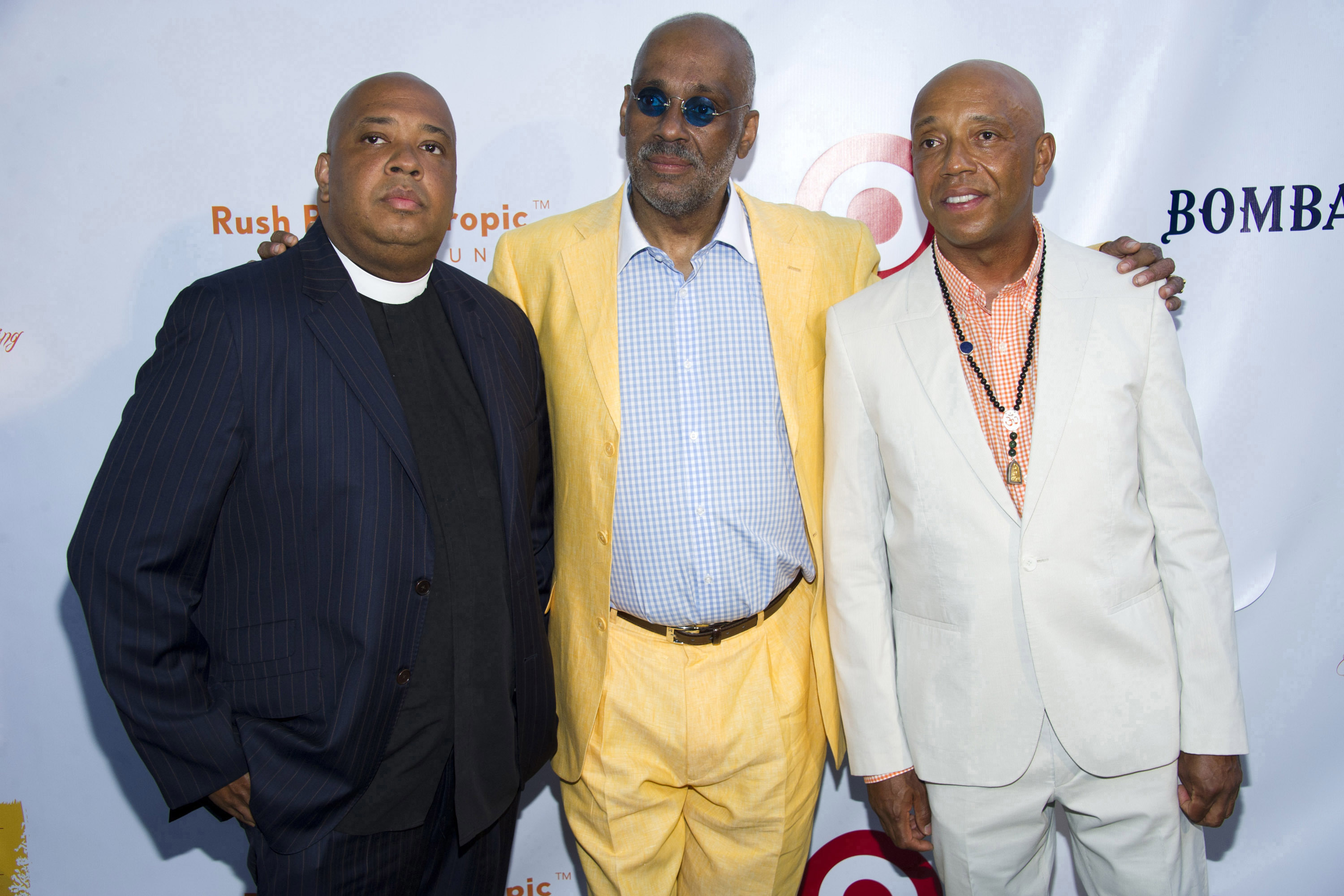
    Joseph “Rev. Run” Simmons (left), Danny Simmons (center), and Russell Simmons attend the 12th annual Art For Life Benefit Gala at Russell Simmons’ estate in East Hampton, N.Y., on Saturday, July 30, 2011.

    (Charles Sykes / AP Images for Rush Philanthropic)AP IMAGES FOR RUSH PHILANTHROPIC

    Mr. Simmons became an avid collector of Black art, opened two galleries in downtown Manhattan, and founded Rush Philanthropic Arts Organization, supporting Black artists around the world.

    “Danny’s impact has been global,” said Vashti DuBois, executive director of the Colored Girls Museum in Philadelphia. “His investments in and support of Black artists and Black institutions have fundamentally transformed the landscape of the Black art scene.”

    In the early 2000s, Mr. Simmons convinced his brother Russell to produce HBO’s Def Poetry Jam. The show, a spinoff of HBO’s Def Comedy Jam, ran from 2002 to 2007 and breathed new life into spoken word poetry, first popularized by the 1970s Black Arts movement.

    A prototype of Def Poetry Jam, that often showcased Philly artists Sonia Sánchez and Ursula Rucker, was filmed at the African American Museum in Philadelphia.

    Mr. Simmons won a Tony for the stage adaption in 2003.

    Danny Simmons speaking at a Mural Arts Philadelphia event to unveil the 2023 mural, “My Crazy Red Rooster.”Mural Arts

    In 2015, the African American Museum hosted his solo show, “Badass Art, Man!” a colorful collection of paintings, collages, and statues he described as “neo-African abstract expressionist.”

    Later that year, he moved to Northern Liberties, because it reminded him of parts of Brooklyn, into a place with a backyard large enough to store his immense collections.

    He purchased an old bank building in the Logan section of Philadelphia on Old York Road and made it a home for Rush Arts Philadelphia, a community center and gallery. Until last month, the center supported the work of Philadelphia artists through a series of shows, exhibitions, and receptions.

    “Mr. Simmons had a remarkable ability to bring people together through art, inspiring others to see the world through a more vibrant lens,” said Ashley Jordan, president and CEO of the African American Museum in Philadelphia. “His presence was as memorable as the masterpieces he created and championed.”

    Mr. Simmons served on the Mural Arts board from 2022-25 and was the lead artist on four mural projects in Germantown and North Philadelphia.

    His work resides in the Woodmere Art Museum and the Pennsylvania Academy of Fine Arts. In 2019, he was appointed to the Philadelphia Museum of Art’s African American Collections Committee.

    “Danny was an extraordinary artist and human being,” said Jane Golden, founder and executive director of Mural Arts. “Danny was one of a kind, and he leaves very big shoes to fill in our city and our world.”

    Apart from his brothers, Mr. Simmons is survived by his wife, Keia Simmons; son, Jamel Simmons; and other family members and friends.

    Memorial services and celebrations have not been announced by the family.

  • Colleges are finally making it easier to transfer academic credits

    Colleges are finally making it easier to transfer academic credits

    Hannah Fleckner was in the midst of a premed track at Case Western Reserve University in Cleveland when she realized that what she really wanted to do was teach. But the idea of transferring to a new school was scary. She had to start over, figure out the policies at each school, and she realized she wouldn’t get credit for many of the classes she had already taken.

    It wasn’t just the fear.

    “The transfer process is frustrating,” said Fleckner, who is among the more than a million students who transfer colleges each year. “It’s self-inflicted pain.”

    Transferring academic credits is a perennial problem in higher education. Coursework at one school may not align with the requirements at another. Students may have to retake classes, spending more money and time on their education. And the frustration of it all can derail students from earning bachelor’s degrees.

    As students wrap up the school year and look ahead to the next, more colleges and universities are making a concerted effort to simplify the process to get more students across the finish line.

    There are potential benefits to the schools as well as to the students — especially at a time when many school officials are concerned about enrollment and hope to reach a wider mix of students.

    “We see some hope on the horizon,” said Tania LaViolet, director of the Aspen Institute’s College Excellence Program. “There are community colleges and universities that have created transformational transfer models that are serving students much better than what we’ve seen in the past.”

    The Aspen Institute, a Washington think tank, has tracked the national outcomes for transfers since 2016. While 80% of community college students aspire to earn a bachelor’s degree, only 16% are successful within six years of entering school. LaViolet said transparency regarding student success rates and the workforce shortages has helped build urgency around the issue for many states and schools.

    Colleges are increasingly partnering to design transfer programs with tailored advising and course plans that map out the classes needed for community college students to progress in their majors.

    At American University — where Fleckner transferred — a new program will allow students to bring as many as 75 previously earned credits, and could cover up to half the cost of tuition at the private university.

    American, like many schools, has been concerned about enrollment, and transfers could be an opportunity for growth. School leaders said they have heard from local community colleges that their students who want a four-year degree are apt to assume that private colleges are out of reach.

    “I don’t know that it was always just perception that we were out of reach,” said Vicky Wilkins, the school’s provost and chief academic officer. “This is a true effort to make sure we’re not out of reach to them.” The school has made the financial commitment, she said, so that they can tell students, “You can plan to be at a private place like AU. You can come in and take advantage of the pledges and commitments we’ve been making in our strategic plan, and we’re going to help you get there and do it.”

    Colorado State University and Front Range Community College launched the Ram Transfer Academy in 2024 to give enrollees immediate access to academic and student services at both institutions. Lebanon Valley College, a private institution in Pennsylvania, teamed with Harrisburg Area Community College to offer a dual-admission program in which students can take up to four free courses at the four-year school while completing a degree at the community college.

    Last fall, the City University of New York rolled out Universal Transfer Path (UTP), a program that ensures students at CUNY community colleges follow the same coursework as those at CUNY four-year schools. That way, students can seamlessly transfer within a major across the system of 18 undergraduate colleges.

    “The way in which material was covered in similar courses varied quite a bit from school to school,” said Alicia Alvero, executive vice chancellor and university provost at CUNY, who is overseeing the transfer initiative. “It was demoralizing for students because they had to repeat so much content.”

    The university system focused on eight majors with the highest transfer rates — accounting, biology, business, computer science, engineering, math, psychology, and sociology — which account for 85% of CUNY’s transfer students.

    If a student takes an accounting class with the UTP designation at the Borough of Manhattan Community College, those credits are guaranteed to count toward a bachelor’s degree in accounting from Baruch College. According to CUNY, more than 345 courses are now universally equivalent to each other across all colleges, a system that is expected to save students an average of $1,220 in excess credits.

    At American University, the new program is open to students nationally. But school officials have been working particularly closely with local community colleges to make transferring credits seamless and to show students there’s a direct path to completing their degree, one they could be thinking about as early as high school.

    “We wanted to move transfers to the front of the conversation,” said Jeremy Lowe, American’s assistant vice president for undergraduate admissions. The country’s demographics are changing, and community college may become a more common starting point for a four-year degree, he added.

    Evelyn Thimba, the vice president for undergraduate enrollment, said the school realized some of its policies weren’t as transfer-friendly as they could be. Now officials are increasing financial aid, adding a transfer-specific orientation, starting academic advising even before students arrive on campus, and ensuring they have a career adviser who can help them find professional experiences such as internships.

    Benny Geller, a 21-year-old from Charlotte, N.C., who transferred from Berklee College of Music in Boston, appreciated that American grouped transfer students together for orientation, which helped the older students make friends quickly. “It just helped me feel a bit less like a stranger on campus,” he said.

    “I was worried about making friends, finding community,” Fleckner said. “I was just very nervous about being older going into a college environment,” where most entering students had recently finished high school. The transfer orientation group was more diverse — with veterans, people with associate’s degrees, students from public and private universities — and Fleckner said she found the experience welcoming.

    Her adviser met with her several times in the first two weeks of school to help her transfer as many credits as possible. “She has been amazing,” Fleckner said.

    Now, with the new initiative, she’s hopeful that she’ll be able to get credit for even more of her hard work from Case Western, finish her classes and graduate next spring — in time to start teaching in the fall.