Blog

  • Philadelphia Historic District’s ‘firstivals’ have drawn super fans who have traveled from the nation’s first circus to its first zoo

    Philadelphia Historic District’s ‘firstivals’ have drawn super fans who have traveled from the nation’s first circus to its first zoo

    Christine Barnabic had already run a 5K at Belmont Plateau on Saturday morning when, still in her running gear, she hopped on her scooter and headed from her home in Fairmount to the Philadelphia Zoo. Her purse held commemorative pencils and a tattered punch card.

    When she arrived, the punch card had 10 holes in it — one for each “firstival” she had attended so far this year. At the zoo, she got her 11th hole punched, and a hat to celebrate her attendance.

    “It’s just really neat to recognize these firsts in America,” Barnabic, 42, said.

    The Philadelphia Zoo, for its part, was the first public zoo to open in the United States, in 1874. It is just one stop along the Philadelphia Historic District’s “52 Weeks of Firsts” events that celebrate Philly’s history and cultural significance by showcasing things that happened here first.

    The series launched Jan. 3, commemorating the first balloon flight in America. Barnabic missed the first run of events, but once she attended an event marking the first circus performance in the U.S., she was hooked.

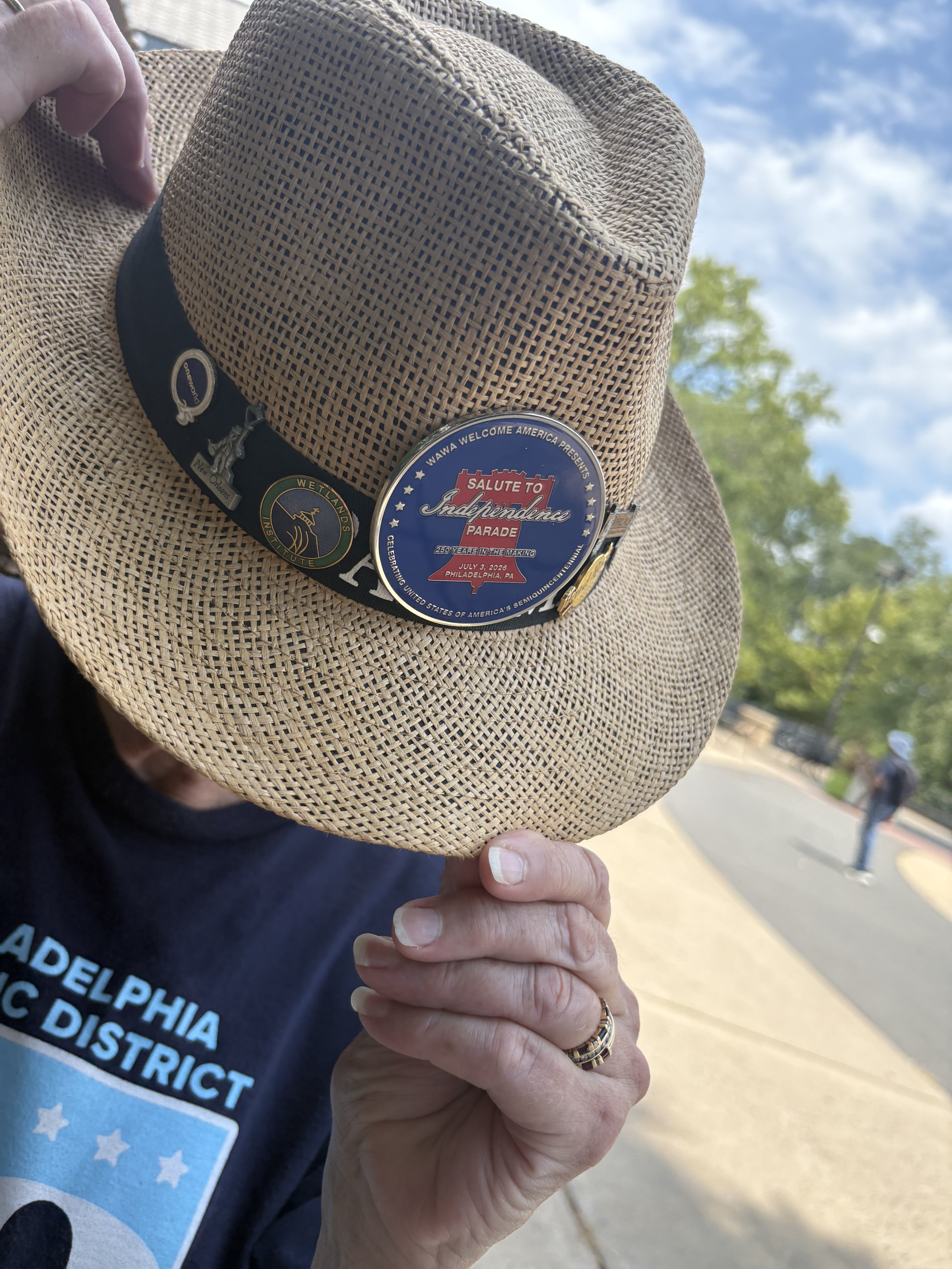
    Amanda Meiluch displays her hat adorned with pins for America’s 250th as part of the city’s 52 Weeks of Firsts celebrations Saturday, Aug. 8, 2026.Brett Sholtis

    She started posting selfies taken at each firstival and was stunned to learn she had won a prize pack including a Slinky, a record of old songs, tickets to the Betsy Ross House and Eastern State Penitentiary, and free admission to adult circus classes — each gift celebrating a historic milestone that happened in Philly.

    Barnabic said she is no history expert, but she is an enthusiast. She manages a company that does fitness tours for people who are in town for conferences or staying at hotels. To her, checking off the firstivals also boosted her knowledge.

    “And people are very friendly here,” she said.

    Todd Marcocci at Under the Sun Productions has been coordinating the events for the historic district. He said he knows at least four people who have attended all 32 events so far.

    The firstivals are often held at popular public locations, and many, like Barnabic, have been drawn in and kept coming back, Marcocci said. The zoo commemoration, for example, was held near the Ferris wheel, which is open to the public, no ticket required.

    “It’s been great, because each week there is variety. It’s beyond education. You think you know a lot about history, but everyone learns something here,” Marcocci said.

    Retired historian Lee Arnold agreed. In March, he attended the first flower show event at the Pennsylvania Horticultural Society and kept coming back.

    He has his own side quest: He is gathering commemorative items from all of the firstivals that he plans to give to the Historical Society of Pennsylvania for posterity.

    These days, Arnold leads history tours a couple of days a week for Grim Philly. He said he enjoys showing people the U.S. post office, the First Continental Congress, the first use of the phrase “United States of America,” and the invention of the Slinky, which can all be traced back to a four-block area in Old City.

    Artist Gwenn Seemel’s No. 1 captures many of the Philadelphia Zoo’s first milestones.Gwenn Seemel and Colibrí Workshop

    “It’s just wonderful. As I say to my tourists, everything started here,” Arnold said.

    For anyone feeling left out, 20 more firstivals remain on the calendar. They highlight everything from the first people to live in the region (at Penn Museum’s new Native North America Gallery) to the first modern detective story, “The Murders in the Rue Morgue,” written in 1841 by then-Philadelphia resident Edgar Allan Poe.

    (And yes, Philly invented cheesesteaks and water ice, according to the historic district, and forthcoming food-themed celebrations are on the list, too.)

    For the firstival diehards, the weekly events have also fostered a kind of community, said Amanda Meiluch, who took the train in from Penndel to volunteer at the event.

    She did not start out as a volunteer, but after a few weeks, she decided to make it official.

    In the process, the retired accountant has befriended other regulars — one of whom gave her a hat after dealing with a particularly sunny day. A week later, they saw each other again, and her friend was delighted to see that Meiluch had adorned the hat with pins celebrating the city’s history.

    “She made me happy. And I made her happy. That’s all you can do in this world,” Meiluch said.

  • The manager at Trump’s North Jersey golf club set up the botched renovation of the Reflecting Pool, according to a NYT investigation

    The manager at Trump’s North Jersey golf club set up the botched renovation of the Reflecting Pool, according to a NYT investigation

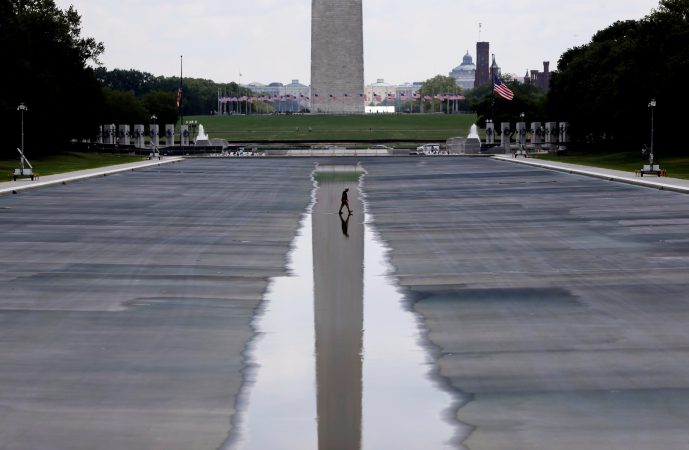
    The person who set up the botched renovation of the Lincoln Memorial Reflecting Pool in Washington is the manager at President Donald Trump’s golf club in Bedminster, N.J., according to an investigation by the New York Times.

    The Times found that David Schutzenhofer, who has run the Trump Organization’s golf club in North Jersey since 2006, was chosen by Trump to lead the renovation of the national landmark, which had leaked for years and was full of algae.

    The Times reported that Schutzenhofer does not have formal training in architecture or engineering and is Trump’s private employee, but that the golf club manager “played an off-the-books role in government decisions” regarding the project.

    The company that Schutzenhofer chose to do the renovation partnered with a company that enlisted the help of a third company that had never won a government contract, and applied the pool’s lining that later peeled away.

    Charles Birnbaum, president of the nonprofit Cultural Landscape Foundation, told the Times that paying millions of dollars to a first-time contractor to undertake a plan orchestrated by a golf-club manager to fix a national landmark was “like asking the museum guard to restore a painting in the Met.”

    In January, Schutzenhofer attended the World of Concrete trade show in Las Vegas in search of ideas for fixing the Reflecting Pool, according to the Times. Vendors recommended he call Rodney Jarboe, president of Creative Polymers, a company based in Missouri.

    Jarboe told the Times he first spoke with Schutzenhofer in March and was told the president wanted the work done in time for the Fourth of July, which Jarboe called “a very tight deadline.”

    He said Schutzenhofer decided to coat the Reflecting Pool with a polyurea liner, but Trump’s tariffs made getting polyurea coatings difficult. So Jarboe partnered with a California-based company called Rhino Linings, which then got a Virginia-based company called Atlantic Industrial Coatings to help apply the coating.

    Soon after the Trump administration said the renovations were finished in early June, the blue lining began to peel. Algae also returned. The Reflecting Pool was then drained so it could be repaired.

    Spokespeople for the Trump administration defended the project in statements to the Times. Neither Schutzenhofer nor Rhino Linings responded to questions about their roles, according to the Times. Atlantic said in a statement that a “very small part” of the liner needed repairs but otherwise declined to comment.

    Trump has claimed without evidence that vandalism was behind the damage to the Reflecting Pool. But in a court filing, Jeanine Pirro, the U.S. attorney for the District of Columbia, admitted that “the damage was the result of a botched installation.”

    A judge this week dismissed felony charges against Olympic canoeist David Hearn after he was accused of vandalizing the Reflecting Pool. And Pirro has moved to dismiss cases against several others.

  • Charlie Manuel, Cole Hamels, and other former Phillies turn back the clock for a good cause: ‘This is a special group’

    Charlie Manuel, Cole Hamels, and other former Phillies turn back the clock for a good cause: ‘This is a special group’

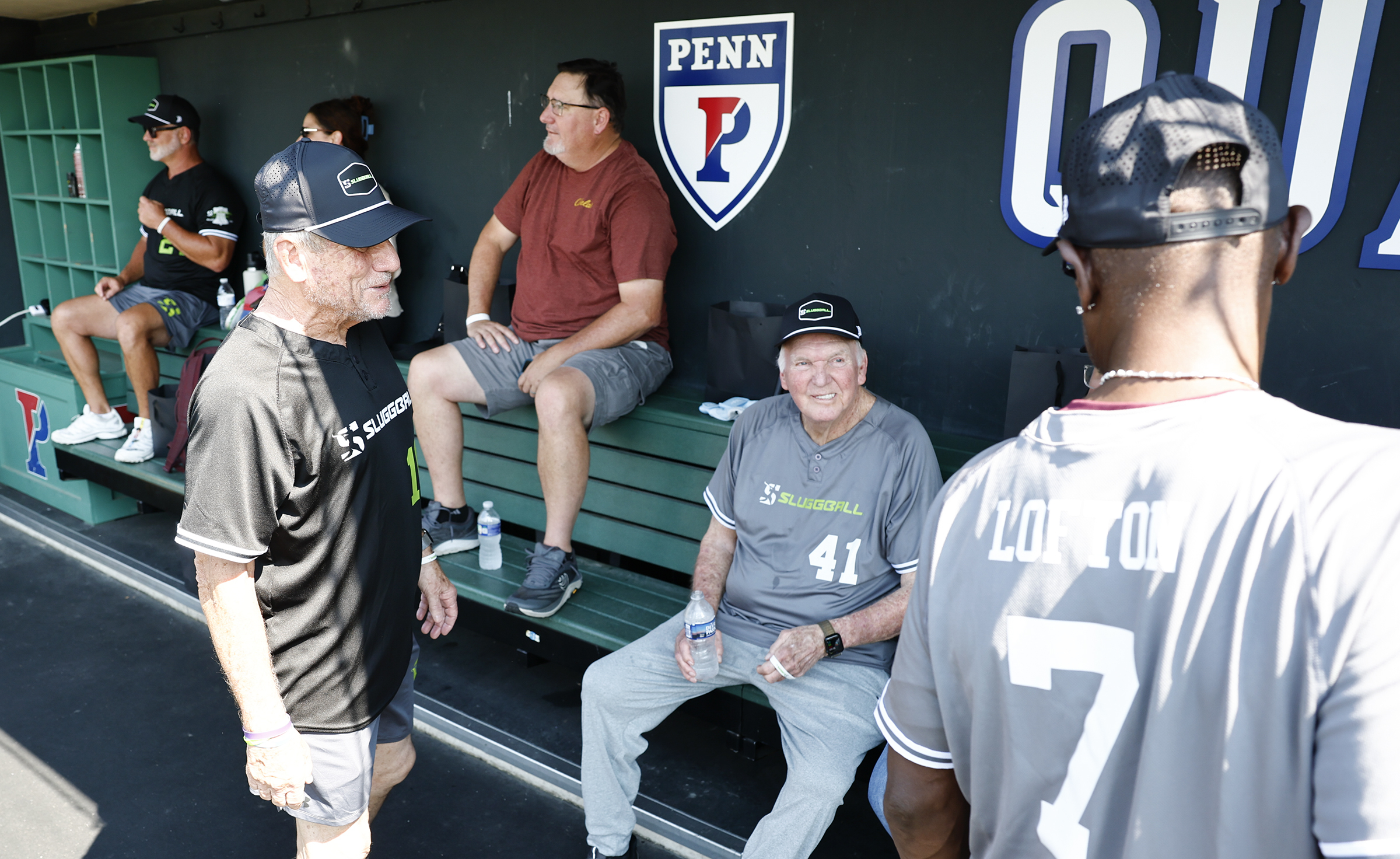
    Cole Hamels was at the plate and Charlie Manuel was the manager in the dugout, but it wasn’t 2008.

    While that was a familiar sight until 2013, it made Tommy Lasorda Field at Meiklejohn Stadium on the University of Pennsylvania campus feel like a time machine Saturday.

    The inaugural Sluggball All-Star Classic featured two teams of former Phillies. Manuel managed one team, and 1980 World Series champion Larry Bowa managed the other. There was also Team Sluggball, which consisted of what Ruben Amaro Jr., one of the cofounders of Sluggball and a former Phillies player and general manager, called “average Joes.”

    Along with Hamels, Team Manuel featured six-time All-Star and Sluggball adviser Kenny Lofton (a 2005 Phillie), and former Phillies Joe Blanton, Aaron Rowand, and Domonic Brown.

    Team Bowa had Phillies Wall of Famer Mike Lieberthal, Mickey Morandini, Milt Thompson, Kevin Stocker, and Randy Wolf.

    “This is a special group, a special city, and we shared a lot of moments together, and so when we get these opportunities to reminisce and kind of get back together, we take it,” Hamels said. “It’s supporting each other, and I think that’s what we learned when we came up in the organization. We learned the value of what it is to support and to try to be there and be present.”

    Former players and fans watch former Phillies catcher Mike Lieberthal hit the baseball during Saturday’s Sluggball event.Yong Kim / Staff Photographer

    The former Phillies were helping support the Darren Daulton Foundation, providing assistance to people with primary malignant brain tumors, and the Ruben Amaro Sr. Foundation, which works to provide college scholarships and make high-level opportunities more accessible. All proceeds from the event benefited the two charities.

    The Sluggball Classic was purposely scheduled for the Phillies’ Alumni Weekend following Friday night’s Wall of Fame ceremony for 2008 World Series champion Chase Utley.

    “It’s great to see everybody for Alumni Weekend,” Lieberthal said. “I come every year, and you don’t get to see these guys except once a year, so just to hang out with guys you played with is fantastic.”

    Sluggball is a baseball-inspired game that includes only the offensive part of the sport. Every round features four batters from each team who are given 35 seconds or eight swings in their at-bat. Each round has an objective for where the batters are meant to hit the ball, and points are awarded for every ball hit in that area.

    It was a challenge for players who haven’t played in years, but Sluggball was designed with that in mind.

    “Glad they try to take it easy on us a little bit, but you know, most of us haven’t picked up a bat in so long,” Rowand said. “At least we had to go take a few swings before and try to get it back and not just embarrass ourselves out here.”

    Despite any rust Rowand may have been anticipating, he was the only player to have a perfect at-bat by finishing 8-for-8 in the first round of Game 3.

    Hamels, the 2008 World Series MVP, Blanton, and Wolf were all known for their ERAs and not their batting averages, but also found some success at the plate. Wolf clinched Team Bowa’s win over Team Manuel in a sudden-death round of the tripleheader’s main event.

    “For a lot of us, it is funny because hitting was such a big part, and for pitchers, we always tried to brag and always wanted to do our best and see what we could do in the lineup,” Hamels said. “We knew it wasn’t our first sort of job, but it always provided a lot of bragging rights in the clubhouse.”

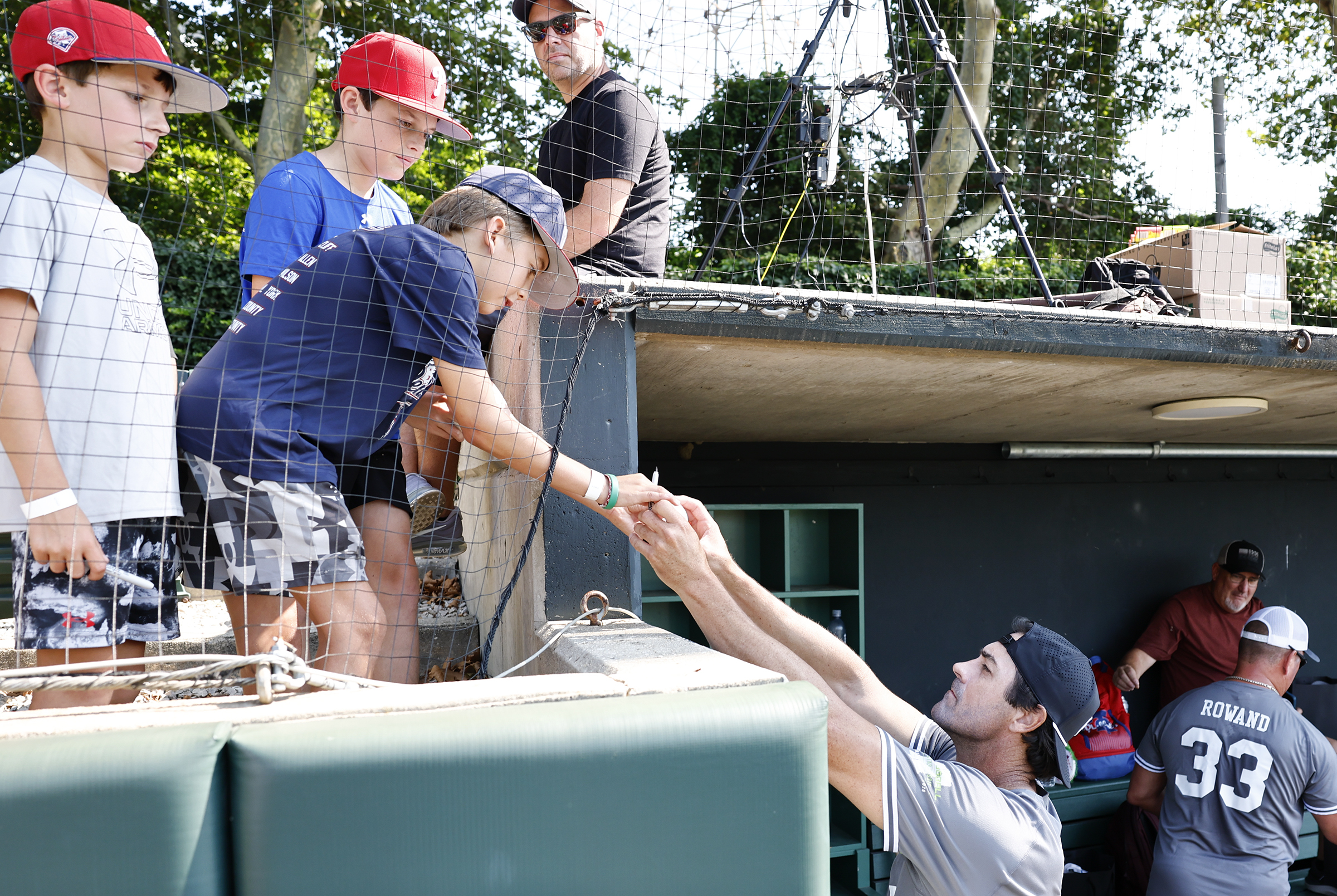
    Former Phillies pitcher Cole Hamels (right) signs his autograph for fans on Saturday.Yong Kim / Staff Photographer

    While the game brought players from the organization’s history together, it also brought a new group of fans to the game, which cofounder Greg Olenski Sr. said was part of the goal.

    “It’s really about the game bringing everybody back together, getting on the field, the camaraderie,” Olenski said. “We thought the best time would be an Alumni Weekend, get them back on the field, get them swinging. Again, nobody’s trying to hit home runs. A lot of these guys probably haven’t picked up a bat in a while, so it’s a great opportunity for them to get back on the field with their teammates and enjoy themselves.”

    The All-Star Classic will air at 10:30 p.m. Aug. 19 on NBC Sports Philadelphia, with Leslie Gudel and Chris Wheeler on the call.

  • Lake Mead hits historic low water level as Colorado River struggles

    Lake Mead hits historic low water level as Colorado River struggles

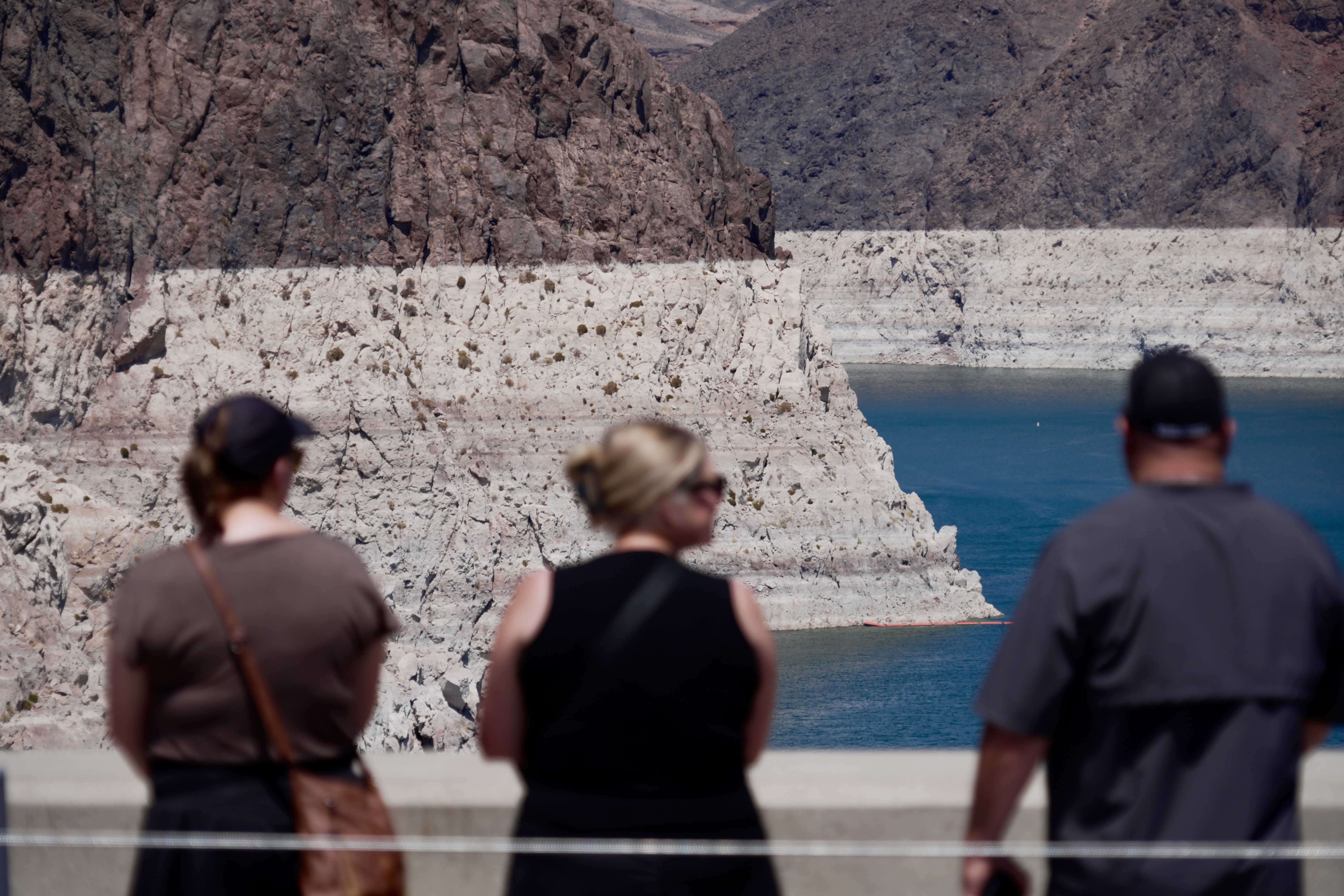
    BOULDER CITY, Nev. — Lake Mead, the largest reservoir in the United States, has plummeted to its lowest water level since it was filled some 90 years ago, another sign of the crisis plaguing the Colorado River system.

    Water levels at Lake Mead hit 1,040.4 feet above sea level on Friday, according to federal data. That’s just below the elevation of 1,040.58 feet recorded on July 28, 2022, at the reservoir that straddles the Arizona-Nevada border outside Las Vegas.

    The record follows a winter that produced the worst snowpack on record in the Colorado River Basin. Melting snow feeds the river, which is relied upon by farmers, industries, wildlife, hydropower producers, and more than 40 million people across seven U.S. states, tribal nations, and Mexico.

    It comes a week after federal officials announced a short-term proposal to stave off a crisis in the beleaguered waterway. Federal officials stepped in after states that rely on the river — California, Colorado, Arizona, Nevada, New Mexico, Wyoming, and Utah — failed to reach an agreement on how to share the dwindling resource long term. Under the proposal, California, Nevada, and Arizona would share water cuts.

    Years of overuse combined with drought and rising temperatures have been depleting Lake Mead and Lake Powell, the country’s second-largest reservoir. Together, the two bodies of Colorado River water are the lowest they’ve been in nearly seven decades.

    To protect the strained system’s ability to produce hydropower, federal officials said Thursday that they will not release cool Lake Powell water from Glen Canyon Dam in northern Arizona to protect a threatened native fish whose habitat is between the reservoirs.

    Severe drought in 2022 on Lake Mead, which is held back by the Hoover Dam, exposed human remains and forced water officials in Las Vegas to pump water from deeper within the reservoir to continue to supply water to millions of people.

  • How to get paid for providing home care services in Philadelphia while vacationing in Jamaica

    How to get paid for providing home care services in Philadelphia while vacationing in Jamaica

    A federal law passed in 2020 required state Medicaid programs to implement electronic verification systems to verify that personal-care services were actually being delivered where they were expected.

    The systems were adopted to prevent the sort of fraud unveiled this week in Philadelphia by federal and state prosecutors, who charged 18 people for allegedly billing Medicaid while they were in prison, working at one of the city’s sports stadiums, relaxing on a cruise, or vacationing in Jamaica.

    Why don’t the electronic visit verification (EVV) systems work better?

    “It’s tough to verify that the services are actually being rendered,” David Metcalf, the top federal prosecutor in Philadelphia, said Tuesday. “The caregiver or the client behind closed doors simply can tap a button on their smartphone app or call in, and that record doesn’t actually establish that the person was actually there.”

    If location services on the smartphone are turned off, the system does not register where the caregiver is, Metcalf said. When a caregiver calls to check in or out of a shift, the system does not pick up where the caregiver is but, rather, where the phone is registered, he said.

    “EVV was not sufficient to prevent people from scheming the system,” Metcalf said.

    Federal officials from the Department of Justice and the Department of Health and Human Services did not discuss how the system might be improved. But T. March Bell, inspector general for the health and human services agency, said after Tuesday’s news conference that some states have adopted stricter controls.

    The Pennsylvania Medicaid program requires caregivers to submit a location as part of visit verification, but it does not limit services to the client’s home because they sometimes happen elsewhere in the community, according to the Pennsylvania Department of Human Services.

    If the human services department suspects fraud, it refers the matter to the state attorney general’s Medicaid fraud-control section, the agency said.

    National anti-fraud efforts

    The showing of federal officials in Philadelphia on Tuesday was part of a nationwide effort by the administration of President Donald Trump to root out healthcare fraud.

    In May, the administration implemented a temporary moratorium on the enrollment of new home care and hospice companies into Medicare, the federal insurance program for people 65 and up.

    Pennsylvania followed with its own six-month moratorium on enrolling new hospice companies in Medicaid, which is jointly funded by state and federal taxes, “after reviewing the risk levels of Medicaid hospice services in Pennsylvania,” state human services officials said in an email Friday.

    Kimberly Brandt, deputy administrator and chief operating officer at the U.S. Department of Health and Human Services, on Tuesday encouraged Pennsylvania to follow through on home care and “take the action needed to protect beneficiaries and taxpayer dollars.”

    Pennsylvania said it is still determining whether a temporary moratorium on home health providers is needed.

  • Pirro, Trump’s longtime champion, is on the outs over Reflecting Pool move

    Pirro, Trump’s longtime champion, is on the outs over Reflecting Pool move

    Jeanine Pirro swept into Washington last year as a camera-ready prosecutor and staunch ally of President Donald Trump. Suddenly she was everywhere: crime scenes and community forums, court hearings and TV interviews, TikTok-style videos and black-tie dinners.

    But after more than a year in office as U.S. attorney in the nation’s capital, Pirro now finds herself at odds with Trump — with her job at risk — over scraps of blue liner that peeled off the Lincoln Memorial Reflecting Pool.

    Pirro, who left her job as a Fox News host to become the top federal prosecutor in D.C., immediately began seeking the toughest charges possible for violent crimes. She launched criminal probes of more than a half-dozen public officials who had drawn Trump’s ire — then punted the blame to judges and juries when those efforts collapsed.

    But her moves to drop several cases of alleged vandalism at the newly renovated pool contradicted Trump and blamed the administration’s handpicked contractor for botching a project the president had championed. And in the end, they exposed a crack in Pirro’s ability to balance Trump’s demands with her legal responsibilities.

    “She thought she had covered all of her bases — that’s what she thought — and then, of course, things went south,” a person who has known Pirro for decades said of her current predicament with the president.

    People who have followed Pirro’s trajectory as a judge, district attorney, conservative author, and TV personality say she is a prosecutor at heart who has long been passionate about fighting crime and protecting victims, and who found a renewed sense of purpose when Trump tapped her to run one of the busiest U.S. attorney’s offices in the country.

    Her detractors say few in the Justice Department have been as willing as Pirro to gin up prosecutions or test the boundaries of the system in pursuit of Trump’s fixations and antagonists.

    This account of Pirro’s tumultuous time as U.S. attorney, and how she has handled being the prosecutor in Trump’s backyard, is based on court records and interviews with 11 people familiar with key events. Almost all spoke on the condition of anonymity to offer candid assessments of Pirro while her job is seemingly on the line. Pirro, through a spokesperson, declined an interview request.

    Her troubles began after the Trump administration installed a coat of blue sealant at the Lincoln Memorial Reflecting Pool in anticipation of this year’s July Fourth festivities. Pieces of paint quickly started coming apart and floating to the surface, and some visitors who reached out to grab them were arrested, court records show.

    Trump claimed vandals had torn up the pool’s “beautiful facade,” and Pirro initially filed criminal charges against four people, including a former Olympic canoeist who was indicted on a felony count of destruction of property. In her booming New York brogue, Pirro castigated that defendant at a news conference and said her office was “committed to protecting our national resources, our monuments, and our parks from vandals.”

    But Pirro abruptly dropped all four cases weeks later, blamed the Interior Department for misleading prosecutors into filing unsupported criminal charges, and was soon inside the Oval Office to explain herself.

    A former judge and district attorney who served for decades in Westchester County, N.Y., Pirro arrived at the White House on Monday with boxes of evidence showing that the Interior Department had awarded a no-bid contract to a company that misapplied the liner, according to people familiar with the matter. That evidence is detailed in an explosive, 20-page court filing that the U.S. attorney’s office submitted last week, which stated that “the damage was the result of a botched installation and not vandalism.”

    Pirro had personally reviewed and signed off on the filing, and it conveyed her frustration that the documents from Interior were not quickly turned over to prosecutors, as well as her view that they “demolished” any chance of building a winning case against the alleged vandals, according to people with knowledge of her thinking. Interior Secretary Doug Burgum pushed back, writing on X that the “evidence is clear” that vandalism was what damaged the pool.

    One person familiar with Pirro’s thinking described her approach to the White House meeting as: “Stand her ground, be focused, make her case, and do the right thing.”

    The rift between Trump and Pirro, over peeling bits of paint at a national monument, came after she had launched criminal probes into six Democratic lawmakers who criticized the administration’s military actions, as well as the Federal Reserve chair at the time, Jerome H. Powell, who refused Trump’s demands to resign or institute lower interest rates.

    A federal judge rejected Pirro’s attempts to issue subpoenas in the Fed investigation, and she later closed that probe without seeking criminal charges, but Trump praised her doggedness in taking the case as far as she could. A grand jury declined to indict the Democratic lawmakers, and Trump soon moved on to other issues.

    This time, Pirro’s office said in the Reflecting Pool court filing, prosecutors were voluntarily dismissing the charges. Trump said Pirro “folded like an umbrella.”

    “I just think she was totally wrong,” Trump told reporters Wednesday, noting that National Park Service employees had told authorities they saw vandals in action. He described problems with the contractor as “a couple of little things” and said he hadn’t made a determination on whether to keep Pirro on the job.

    Trump continued his criticism Friday, saying on social media that “U.S. Attorney Jeanine Pirro should revisit her hastily made decision.”

    Pirro had befriended Trump decades ago in New York’s social circles, but they had never worked together, and one dynamic underlying their rare public break is that both are more comfortable calling the shots than deferring to others, said the longtime friend, who has seen them together.

    “She has a lot of respect for the president,” this person said, adding, “They have a relationship that for the first time has now transformed into a professional subordinate situation.”

    Pirro, 75, leads the only U.S. attorney’s office in the country with the dual mandate to prosecute local crimes and complex federal cases. Trump named her interim U.S. attorney in May 2025. She was later confirmed by the Senate, earning support from Republicans that Trump’s first pick for the job, Ed Martin, couldn’t muster.

    She came into a deep-blue city where only 6.5% of D.C. voters cast ballots for Trump in the 2024 election. Protests flared when immigration raids and street arrests swept up hundreds of people after Trump declared a crime emergency in D.C. last year, bringing in teams of federal officers and National Guard troops to patrol city streets. Pirro has often been the one absorbing the blowback from heated community meetings and in court, where juries have voted down felony charges for some defendants and acquitted others of assaulting federal officers.

    “The truth is that with the federal surge — whether you like it or you don’t like it — crime is down,” Pirro told the dozens of community members in the D.C. police’s Fifth District office in Northeast Washington after a tense weekend last October in which 12 people were shot.

    Homicides last year declined by roughly one-third, totaling 127, according to D.C. police statistics. They have dropped another 32% this year, and stood at 66 as of Thursday. Robberies and property crimes also have declined, but assaults with dangerous weapons have risen 42% this year, to 758 instances, according to the police data.

    “President Trump said, ‘I’m going to make D.C. safe and beautiful,’” Pirro added at the October meeting. “And you know what? He’s going to do it. … Every day we’re pushing. Pushing against juries, pushing against judges.”

    On social media, she frequently repeats a similar message, crediting the president with making the city safer.

    Those who have worked with Pirro describe her as a decisive boss, quick to grasp legal nuances and less abrasive than her brash TV persona. She has taken a particular interest in a new task force to disrupt international cryptocurrency scams, and she has called on the D.C. Council to toughen sentencing laws for juvenile crimes and partnered with Mayor Muriel E. Bowser (D) on efforts to strengthen domestic violence legislation. Pirro, according to those who know her, is meticulous about her fashion choices, known for her sweet tooth, and on friendly terms with some of her staff, attending trivia night at a brewery/pizzeria this year.

    Pirro has attempted to rebuild the U.S. attorney office’s ranks, which were decimated by staff departures and Martin’s purge of prosecutors who had investigated the Jan. 6, 2021, attack on the U.S. Capitol. The Justice Department is now offering $25,000 bonuses to lawyers who sign a commitment to stay at the office for two years, according to two people familiar with the matter, who spoke on the condition of anonymity because they were not authorized to discuss it.

    “I think that U.S. Attorney Pirro, over the past year and a half that she’s been there, has led an unprecedented effort to literally turn this city on its head to be a safe place for all of us to live and eat,” acting attorney general Todd Blanche said at a news conference Wednesday, a notable show of support that buoyed Pirro’s allies. Blanche added that Trump was allowed to dismiss any U.S. attorney.

    Although Pirro’s office has had a mixed record with jury trials in U.S. district court over the past year, there have been no major setbacks in the office’s biggest cases. Those include the prosecutions in the killing of a 21-year-old congressional intern; the fatal shooting of a young couple outside the Capital Jewish Museum last year; the ambush-style attack in which one National Guard member was killed and another wounded; and the case of Cole Tomas Allen, who has been charged with attempting to assassinate Trump at the White House correspondents’ dinner this year. The trial of an alleged terrorist behind the infamous bombing of Pan Am Flight 103 over Lockerbie, Scotland, is scheduled for this year in D.C., with Pirro’s office running the prosecution.

    But critics say Pirro has curtailed prosecutors’ autonomy and jacked up their workloads by ordering them to seek the maximum possible charges in every case. Judges and public defenders have criticized Pirro’s office for bringing cases during Trump’s federal law enforcement surge that were based on incomplete or shoddy investigations, leading to multiple instances in which the U.S. attorney’s office dismissed charges after the defendants spent time in jail.

    “I think many Americans have a sense that in Trump 2.0, prosecutions are being brought for reasons other than public safety,” Paul Butler, a Georgetown University law professor, said in an email assessing Pirro’s record as U.S. attorney. “We are now seeing many jurors more carefully scrutinizing cases, and that’s a good thing in terms of how the system is supposed to work.”

    Longtime defense attorney Joe Flood, who practices in the D.C. area, recalled that he first encountered Pirro in the 1990s when she was the Westchester County district attorney, and he was defending people facing the death penalty in New York. She made death-penalty cases central to her political ambitions, he said, as she geared up for a potential run for state attorney general or governor, but she never got a defendant sentenced to death and eventually left elected office for her television career.

    In Trump’s second term, Flood said, some U.S. attorneys in key offices have discovered that being a responsible prosecutor is sometimes a fireable offense. He noted that Erik S. Siebert, whom Trump had appointed as the interim U.S. attorney for the Eastern District of Virginia, was forced out last year after declining to seek criminal charges against former FBI director James B. Comey and New York Attorney General Letitia James. Career prosecutors in both cases had said the evidence was too flimsy to take to court.

    “The reality is if you’re an ethical U.S. attorney, and you won’t be bent to Trump’s will, you’re gone,” Flood said. Of Pirro’s decision to drop the Reflecting Pool cases, he added: “She gets some credit for standing up to Trump.”

    Judges have also criticized Pirro’s office for wiping out the most serious convictions from the Jan. 6 riot — the seditious conspiracy cases against the far-right Proud Boys and Oath Keepers.

    Members of the extremist groups stockpiled firearms and led the charge into the Capitol, according to the evidence presented at their trials. Pirro this year signed on to key court filings to clear those charges as a matter of loyalty to Trump, according to people familiar with the matter. But she declines to take questions about those moves, even as federal judges bemoan the historical consequences of undoing convictions for crimes against the country.

  • Ukraine honors its ‘collector of souls’ killed while recovering the war dead

    Ukraine honors its ‘collector of souls’ killed while recovering the war dead

    KYIV, Ukraine — Ukraine paid tribute on Saturday to Oleksiy Yukov, a volunteer who spent more than two decades recovering the bodies of civilians and soldiers — many of them Russian — killed by war. He was 40.

    An Orthodox Christian service was held at the Cathedral of Saint Volodymyr, in central Kyiv, where thousands of people gathered to pay their respects following his death in a landmine explosion during a recovery mission on Aug. 5. Mourners also gathered at Kyiv’s main Maidan Square before the service.

    Yukov founded the Platsdarm (“bridgehead”) organization because he believed all the dead require a proper burial. He became known as a “collector of souls.”

    Yukov, from the war-torn Donbas region, was a martial arts instructor. He began recovering the dead as a teenager after encountering the remains of Soviet and Russian soldiers from World War II.

    Platsdarm’s volunteers go into fields and forests, among ruins and across territory, where the ground is often mined.

    Yukov’s widow, Evhenyia Kaluhyna, promised to continue his work, sobbing as she spoke at the funeral, wearing an embroidered white dress and standing over her husband’s open casket.

    “The work was difficult and terrifying,” she said. “But I promise you we will continue it because the (dead) deserve it, and you deserve it for everything you did.”

    Yukov had suffered leg injuries and lost an eye in a mine blast in 2022. Still recovering from those injuries, he returned to the front line.

    In a social media post last month, Yukov described the landscape in which he worked.

    “Remote mines, shelling, drones — everything is against you. But you go and do everything to ensure that every soul returns home,” he said.

    He also addressed those who believed Russian bodies should simply be left behind: “When they say: ‘Let them rot,’ I do not agree. This is how we fight for every soul.”

    Yukov spoke of his work in religious terms, saying a body was a soul waiting to go home.

    “This is action,” he wrote. “Action every day in the fields, in the forest belts, among the ruins, where your life can end at any moment.”

  • Hunter Biden opens up about his pardon and Joe Biden’s cancer

    Hunter Biden opens up about his pardon and Joe Biden’s cancer

    Hunter Biden, son of former President Joe Biden, opened up about his father’s prostate cancer, saying he has been in a lot of pain as the disease has spread.

    In a wide-ranging interview Friday with BBC Newsnight, Biden said that it has been “really sad to watch” his father suffer. The cancer has spread and “metastasized into his bones and further,” he said.

    He said that despite that, Joe Biden has continued to speak out in public about issues that he cares about.

    “He so believes in this country,” Hunter Biden said. “And as long as he is alive, I promise you, he is going to continue to fight.”

    He also discussed his feelings about receiving a presidential pardon from his father, saying that it was not good for the country.

    BBC correspondent Paddy O’Connell pressed Biden on whether he thought his father went “too far as a dad” in issuing a pardon to his son. In December 2024, as one of his final acts as president, Joe Biden issued a full and unconditional pardon for his son despite having previously promised not to intervene in Hunter Biden’s legal problems.

    Hunter Biden said it was “not fair” and that he is “the most privileged person in the world” as it related to getting that kind of treatment from a father and president.

    “Was it good for our constitution? Was it good for the American people? Was it good for my dad’s legacy?” he asked. “No. On all counts.”

    However, Biden said they did not discuss the pardon before it happened. He is “eternally grateful for it because I think Donald Trump has proven to be exactly who my dad thought he was going to be, as it relates to revenge and retribution.”

    Critics had a good reason to lambaste the move, Hunter Biden said. But then he asked: “What would you have thought of my dad if he did not do it for me?”

    After steering clear of the spotlight during much of his father’s presidency, Hunter Biden has in recent months taken on a higher public profile, including engaging on social media with critics and supporters alike and granting media interviews, including one with right-wing podcaster Candace Owens.

    In the BBC interview, O’Connell also asked the former president’s son if his yearslong descent into drugs, alcohol, and legal issues “precipitated more decline” for Joe Biden’s health.

    “This is a very difficult thing to talk to you about,” O’Connell said. “But do you think you made life worse and the health worse for Joe Biden?”

    After a pause, Biden responded: “Of course I did.”

    The former president refused to shut the door on him or let him go, his son said, but the stress took a toll.

    “My dad never let me off the hook,” he said. “But what my dad did was always make it clear that, when I was ready to come back, the door was open.”

    In response to questions about his father’s controversial decision to seek a second term, Biden said that he wielded no influence over Joe Biden, nor did anyone. He was, however, just as shocked as everyone at the former president’s state during the June 2024 debate with Trump, during which Joe Biden struggled to finish sentences.

    “I could tell as soon as my father came out that something was wrong,” Hunter Biden said. “I have never seen him with kind of the hundred-yard stare that he had.”

    In May 2025, Joe Biden’s office revealed that he had been diagnosed with Stage 4 prostate cancer that had metastasized to his bones.

  • Julián Carranza is thrilled to return to Subaru Park, now with Necaxa to face the Union

    Julián Carranza is thrilled to return to Subaru Park, now with Necaxa to face the Union

    The Leagues Cup still doesn’t capture many Union fans’ imaginations, between its newness and the perennial sense that it’s a cash grab for MLS. But there’s going to be a storyline on Sunday night that many around Subaru Park have been looking forward to.

    Julián Carranza is back in town for the first time since his departure from the Union two summers ago, to lead Necaxa against his old club (7:30 p.m., Apple TV). The striker, now 26, moved to Mexico in January after 18 months in Europe didn’t go how he hoped.

    “I had a lot of experiences over there, in the Dutch League [with Feyenoord], also in the English Championship [with Leicester City],” he said in a news conference Saturday morning at the stadium. “So I’ve grown a lot, mentally and obviously fútbol-istically. … A lot of things happened in those two years, and I’m really happy that happened, and I’m really happy to be here as well.”

    If absence makes the heart grow fonder, an absence of goals from current strikers Bruno Damiani and Ezekiel Alladoh has made Union fans especially fond of their former star. Carranza scored 43 goals in 95 games here, tied with Mikael Uhre for No. 3 in club history. (Sébastien Le Toux’s 56 and Dániel Gazdag’s 72 are the top two.)

    It’s only fair to say Carranza wasn’t missed as much last year, when Uhre and Tai Baribo led the way to the Supporters’ Shield. But this year’s squad has missed exactly the kind of skill set Carranza brings: pace, precision, and creation off the dribble at the right moments.

    “He is a very important player for us: he is our goleador, our center-forward,” said Necaxa assistant coach Marcos Villano, who will stand in on the bench Sunday with manager Martín Varini suspended for a red card in Thursday’s 2-0 loss at the Chicago Fire. “Beyond just his goal-scoring ability, he is vital to our style of play, the way he drops deep to link up with the midfield. So he is incredibly important, and we’re fortunate to have him on our team.”

    Club officials aren’t going to say publicly that the Union could use him right now. Certainly not in the way fans have begged the team on social media to not let him leave the building Sunday night. But his old teammates know what he means to the Union’s history books.

    “I love him, he’s my brother, but on the field, there are no friends,” midfielder Jesús Bueno said. “What can I say? He made history in the club, he is a fantastic player, I think that he fit in very well with the team. And no matter what happens with him in his career, I wish him the best.”

    Julián Carranza (center) celebrating a goal in 2023 with Jesús Bueno (left) and Dániel Gazdag.Elizabeth Robertson / Staff Photographer

    Quinn Sullivan called Carranza “a great dude, and he’s a warrior. I know he’s going to want to score a goal back here again, and it’s our job to stop him from doing it.”

    Nor was Carranza going to say aloud that he’d like to return eventually. He has six goals in nine games for Necaxa, after all, including a goal in each of Los Rayos’ first three games of the Liga MX season that kicked off in late July.

    Still, it sure tugged at the heartstrings when he said Saturday morning: “It feels special to be back home. I feel like since I got here yesterday, there’s been a lot of memories coming back to my head.”

    Carranza keeps in touch with a lot of former colleagues, too. He name-dropped Bueno, Sullivan, and Alejandro Bedoya. And on Thursday, he commented on Bedoya’s Instagram post teasing the Union’s new third jersey that’s coming soon: “Save one for me.”

    It didn’t take long for fans to jump on that.

    Then came Saturday morning, with not just Carranza’s words but hugs and handshakes for all the familiar faces. He said he’d head to the Union’s training facilities afterward to see more friends and his old locker.

    “I still talk to everyone — Paulie [Rushing, the team’s longtime head athletic trainer], the physios, players,” Carranza said. “I’m still very attached to this institution, especially because of the great things that we lived here.”

    He remembered, too, how he didn’t really get to say goodbye when he left. That was partly because of how the deal with Feyenoord came together, but also because he didn’t want a public send-off, even though he could have had one.

    Now the time will finally come for Union fans to salute him, however many are in the stands Sunday night.

    “I feel like it’s going to be special,” he said. “I think me and the fans, we had a really good connection all my time here. So hopefully tomorrow, they can show a little bit and yeah, I’ll be grateful.”

  • Voter turnout surges in Tennessee after Black-majority district is erased

    Voter turnout surges in Tennessee after Black-majority district is erased

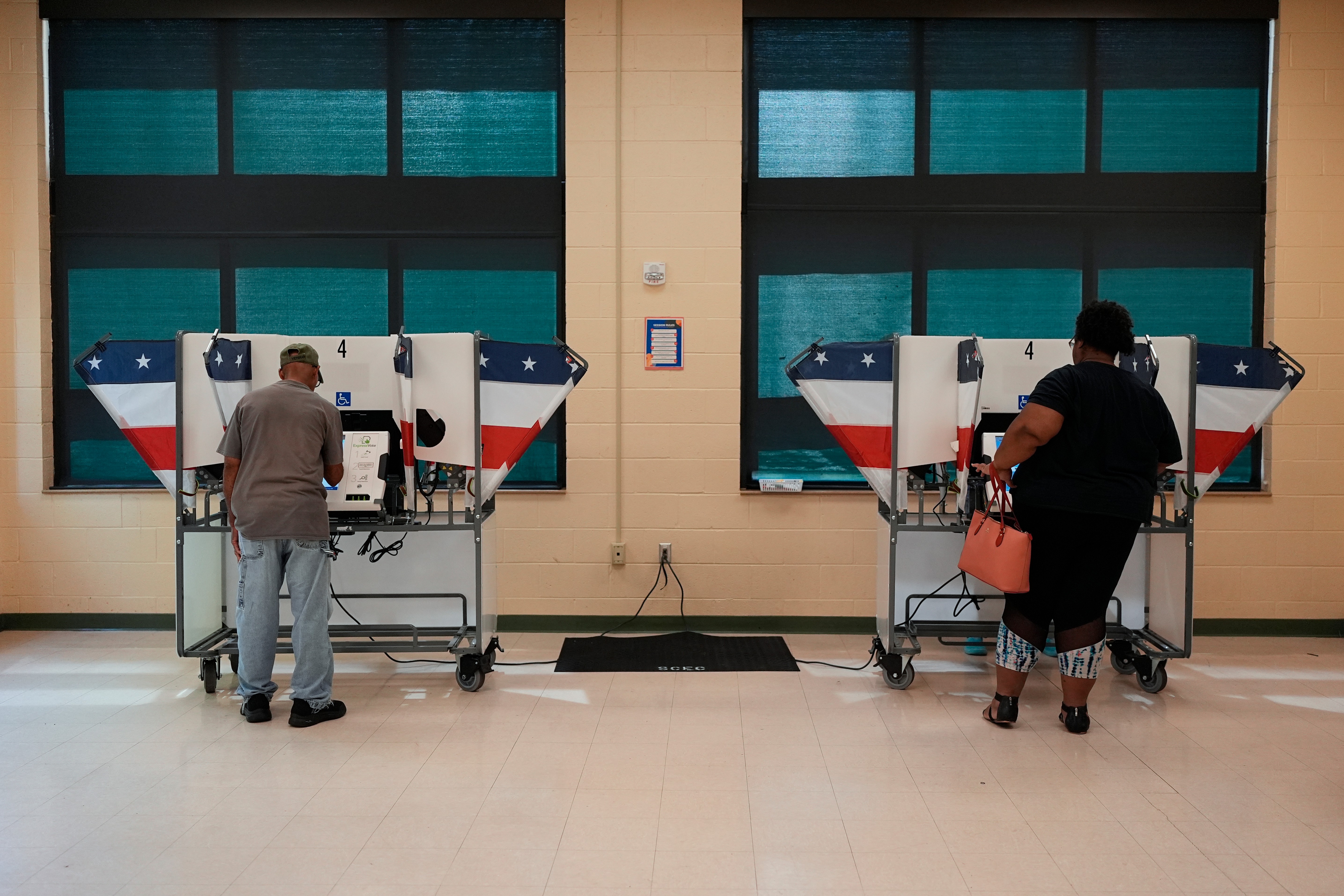
    Democratic turnout for House primaries in a majority-Black Tennessee county surged to the highest level in a decade Thursday, the latest sign that redistricting may be energizing Black voters across the South.

    A fifth of active registered voters cast a ballot in three Democratic U.S. House primaries held Thursday in Shelby County, which includes Memphis. That’s more than double the turnout percentage for similar contests in 2024.

    Organizers said the outpouring was motivated by anger over the Republican-led legislature’s action to break up the state’s only majority-Black congressional district after the U.S. Supreme Court eliminated minority voter protections in the Voting Rights Act this year. Lawmakers dispersed the Black voters of Shelby County into three separate districts that stretch into rural white communities.

    “People are pissed off,” said Kristal Knight, chairperson of the voting rights group Organize Tennessee. Memphis is “the densest part of the African American vote in the state, and people really took it personally — you are trying to come into our county, break up our county, and split our vote? And what better way to push back than to say we’re going to turn out.”

    President Donald Trump has pushed red states to draw new congressional districts to help the GOP maintain control of the House in elections this fall. The Supreme Court’s gutting of protections in the Voting Rights Act made that easier. Louisiana, Alabama, and Tennessee quickly drew new maps that dilute Black voting power, raising fears that the civil rights gains of the past 60 years are being destroyed.

    But the actions have galvanized Black voters, who have mobilized protests in many states and turned out in historic numbers in primaries in South Carolina. That turnout helped prompt the South Carolina legislature to abandon plans to dissolve a majority-Black district. The Georgia legislature also opted not to act after an outpouring of opposition.

    “People are really amped up about … what is happening across the South,” Knight said. “People need to show the rest of America, this is not the way you treat voters.”

    Democrats and voting rights organizers had worked overtime in Tennessee over the past few weeks to ensure a big presence in primary elections there for governor, a U.S. Senate seat, and the state’s nine House districts, even though Republicans are heavily favored to win those races in November.

    “A night like last night lets you know it’s not all in vain,” said the Rev. Earle Fisher, pastor at Abyssinian Missionary Baptist Church in Memphis, who was among an outspoken, ardent group of faith leaders in the city who ramped up turnout efforts after redistricting.

    Memphis resident Harmony Lucas, 26, was one of the young voters who helped to boost turnout — urging friends, family, and even co-workers to join her at the polls. Lucas said she has voted in the past, but the GOP effort to break up the state’s only majority-Black district “made me realize I had to get more serious that my voice is heard. It matters.”

    Ian Randolph, who founded the Shelby County Voter Alliance to boost voter participation, attributed the jump in turnout in part to such efforts, including by unions and other civic organizations. In recent months, they have had poll parties, done texting and phone banking, and gone door to door to canvass voters.

    “Everything that touches a voter, we are involved in,” Randolph said. “Working those things got us a better turnout.”

    Rep. Steve Cohen, Tennessee’s lone Democratic congressman, decided not to seek reelection after the 9th District, which he represents, was overhauled. Justin Pearson — a charismatic Black preacher who received national attention in 2023 for his expulsion from the state legislature after protesting at the Capitol in Nashville — won the Democratic nomination to wage the uphill battle to replace Cohen.

    In his victory speech Thursday night, Pearson depicted his candidacy as an act of defiance against redistricting and the undermining of the Voting Rights Act, calling those steps “a blatant attempt to keep people like us out of power and an attempt to make us quit.”

    GOP strategist Ward Baker, who is working in the 9th District with Republican nominee Brent Taylor, disputed the idea that Black voters are turning out in bigger numbers out of anger over redistricting.

    “It’s the first time there’s a contested primary in a long time, and several people are running,” Baker said. He pointed out that Republican voters overall still outnumber Democrats by a wide margin.

    Beyond redistricting, Randolph said voters in the majority-Black county have been energized by other issues including an attempted state takeover of Memphis-Shelby County Schools and the presence of federal immigration agents and the National Guard in the city.

    Democrats’ task gets harder heading into general elections this fall. Tennessee’s 9th District, which had been the state’s only blue seat, is now rated Solid Republican by the Cook Political Report and went for Trump by 21 points in 2024.

    “Everyone that came out last night — that needs to double for November,” Knight said.

    Fisher said he and other pastors have been planning another “Souls to the Polls” rally like the one that drew more than 1,000 people this spring. Thursday’s show of force gives him cautious optimism for November.

    “At least some of what we did worked,” Fisher said. “It’s one of those instances where you can log it as a win and build on it, but it’s not like a victory lap.”