Blog

  • The Lower Merion school board repealed its technology policy over outcry from parents who don’t want kids on laptops

    The Lower Merion school board voted Monday to repeal its existing technology policies, over outcry from parents who accused the board of stripping their right to opt their children out of district-issued laptops and iPads.

    During a contentious meeting — the board summoned security after interruptions from the crowd in the Lower Merion High School auditorium — parents demanded answers on why the district was denying families the ability to reject devices they said were threatening their kids’ education, and even their lives.

    “A parent’s right to opt out of one-to-one educational technology to do what is best for their children” is “life and death for their development and learning,” said parent Meredith Brisco-Bacik, a cardiologist who likened the district’s use of educational technology to giving kids a risky medical procedure without their parents’ consent.

    By repealing the existing policies, which contain language requiring administrators to accommodate students whose families do not sign electronic device use agreements, “you stand ready to remove the proverbial defibrillators from the room,” Brisco-Bacik said.

    Parents in Lower Merion have been battling the district since the spring over concerns about excessive screen time in school, saying the district is relying too heavily on educational technology programs and failing to stop kids from accessing distracting or inappropriate content.

    District officials have responded to the criticism by advancing a new technology policy that would end the assignment of personal devices to K-2 students and set guidelines for technology use by grade level.

    But officials say it is not possible for families to opt out of devices entirely, despite hundreds of parents signing a petition supporting the ability to do so.

    “That is not an option in Lower Merion School District, nor has it ever been an option in Lower Merion School District to opt out,” said Anna Shurak, the chair of the board’s policy committee.

    She said the policy repealed Monday — which dates to when the district adopted one-to-one devices in 2011 — has been misinterpreted by parents, and was related to families who did not sign agreements about taking electronic devices home.

    But parents said the district had failed to explain why technology was so integral to the curriculum that it was not possible to opt out of personal devices.

    “If there were direct payoffs or dirty money exchanging hands, it would make sense, but to think that our kids and teachers have been sold out for simple ideological capture by tech corporations … is incredibly depressing,” parent Eleanor Stanford said.

    Numerous parents expressed frustration, saying they felt the district had not listened to them.

    Brian Nealis, a parent of children finishing seventh and fourth grades in the district, said that when he tried to talk to his sons’ assistant principal about his concerns, “his response to me was, ‘The kids need to learn self-control.’ And my reaction was like, oh, should we just hand out nicotine packets in middle school? … That is the most asinine thing to hear from an educator.”

    The board voted 7-2 to repeal the current technology policies, with members Sarah Thomas and Abigail Lerner Rubin voting no.

    Rubin said she was uncomfortable with repealing existing policies before the district had adopted new ones, and asked fellow board members to “pause unless and until we can provide the evidence that people have asked for, that these devices are safe, effective, and legal.”

    Shurak said the board needed to repeal the existing policies to allow administrators and teachers to move forward with planning for adoption of the proposed replacement policies for the coming school year.

  • Brazilian fans brought the noise in their nation’s World Cup opener in New York. Philly, we’re next.

    Brazilian fans brought the noise in their nation’s World Cup opener in New York. Philly, we’re next.

    EAST RUTHERFORD, N.J. — Philly, you’re in for a treat.

    In anticipation of next Friday’s match between Brazil and Haiti, I decided to make the 93-mile trek by train from Philadelphia to MetLife Stadium to watch the Seleçao take on Morocco last Saturday.

    This match was sure to be comparable to the numbers that will be back here in about three weeks for the World Cup final, so I wanted to see what the trip would be like on NJ Transit, since New Jersey has prided itself on the legion of bus shuttles it’s arranged to take fans over to MetLife Stadium.

    Also, this match was definitely going to be worth the trip, considering the matchup of two teams regarded among the top 10 best in the world (in fact, the match pitted No. 6 Brazil against No. 7 Morocco, according to FIFA World Rankings).

    Though some might want to argue whether or not it’s still worth the price of FIFA’s hefty admission, it went down as an unforgettable match.

    Brazil fans were out in force at MetLife Stadium.Kerith Gabriel / Staff

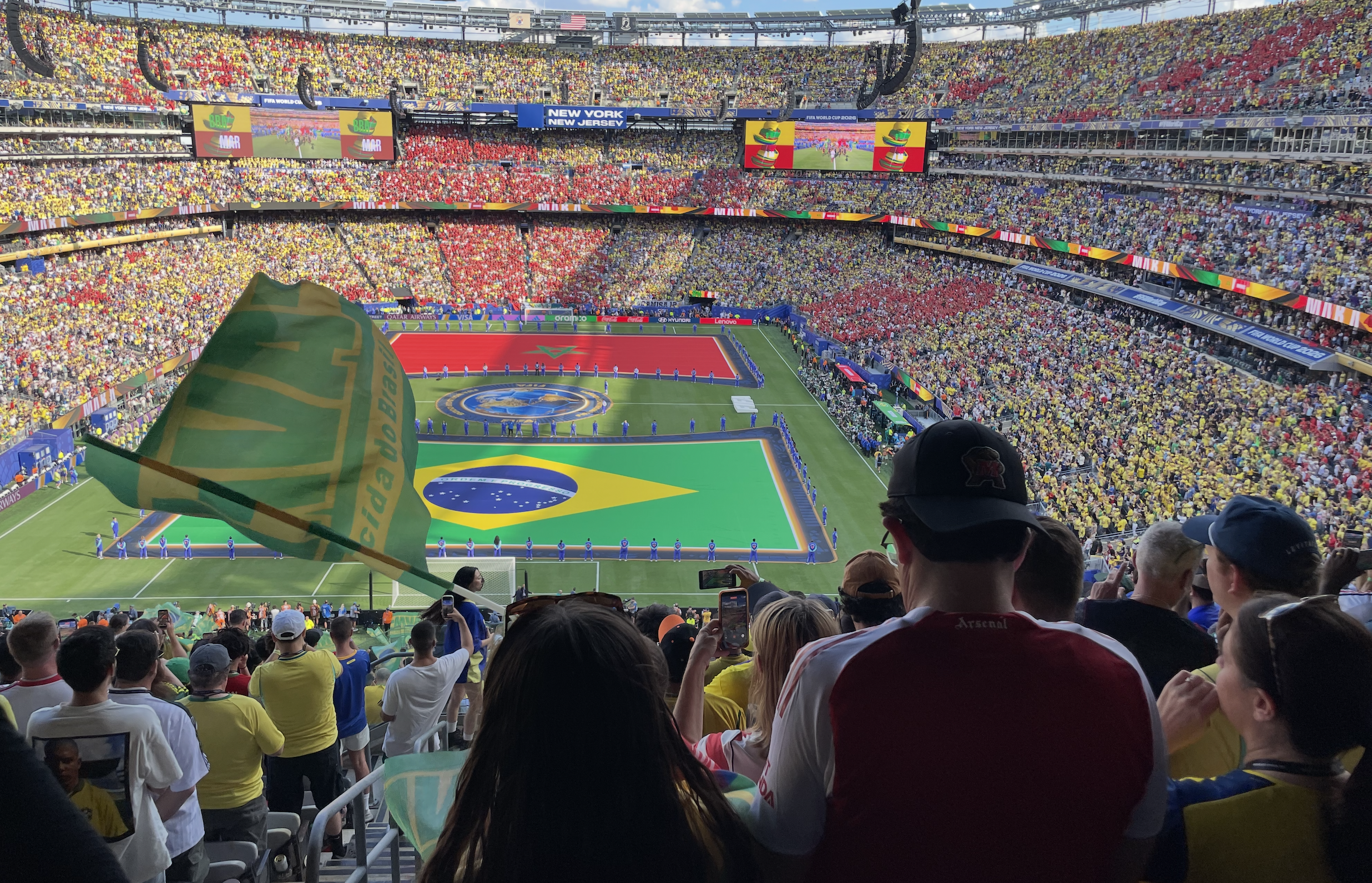
    Over 80,000 (80,663 announced) mostly yellow-clad fans sang, cheered — a few even shed tears while the Brazilian national anthem played — watching this first game for both teams in Group C. For anyone there, it was worth FIFA’s steep admission price, and speaking with various fans, the prices did vary across similar sections.

    Sergio Ximeyo, 22, who came from Brooklyn, said he waited until the morning of the game and was able to snag his ticket for $300. Ximeyo, dressed from head to toe in Brazil’s colors, considered himself “lucky” to say he was witnessing this World Cup match live.

    Mariana Costa traveled from São Paulo, Brazil, for last Saturday’s match against Morocco. Kerith Gabriel / Staff

    Another fan, Mariana Costa, 38, who traveled from São Paulo, Brazil, was all smiles in a traditional Brazilian headdress and said that she paid $1,000 for her ticket to the match in the same 200-level section, though a bit closer to the pitch.

    “These tickets [prices] are crazy,” Costa said, “But you love your team and your country, so you pay.”

    It’s safe to anticipate that same passion will travel down I-95 for Brazil’s second group match against Haiti at Lincoln Financial Field on Friday (9 p.m., Fox29). As much as FIFA would like us to refer to the venue as “Philadelphia Stadium,” the Philly in me has a hard time conforming.

    Sergio Ximeyo says he spent just $300 for a 200-level seat for last Saturday’s Brazil-Morocco match. Kerith Gabriel / Staff

    Joao Brigadóes, 33, who said he resides in New York, noted that he’s already excited to take in the match. Brigadóes explained that he purchased his tickets through a presale and spent $4,200 for a total of four tickets, two for the match against Morocco and two for Friday’s game.

    “This team is my heart,” Brigadóes said. “Look at this, we are all Brazilians here, this is the World Cup — I may never get a chance to witness this opportunity again, so yeah, I saved because I knew I couldn’t miss this chance to see my country play so close to [my home].”

    We got a taste of just how much Brazilian (and Moroccan, too, we didn’t forget) supporters brought the noise during last summer’s FIFA Club World Cup, when fans of Flamengo and Fluminense came through for group stage matches. The atmosphere of their club teams was unbelievable.

    For the national team? On Saturday night, it was a different level. Even from the bird’s-eye view of MetLife Stadium’s hermetically sealed press box where I didn’t stay for very long. You can’t feel the pulse of anything in there, but in the adjacent 200-level sections? Fantastic.

    New York has a large contingent of Brazilians living up here, an estimated 35,000, according to 2024 U.S. Census data, and it felt like they all packed into MetLife Stadium on Saturday. They packed shuttles, held up the lines at concessions, took over large swaths of sections, and were loud.

    For this soccer fan, who has been to quite a few live matches in my lifetime, this one is right up there as one of the best when it came to atmosphere, excitement, and quality on the pitch as Brazil and Morocco battled to a 1-1 draw.

    Let’s talk water for a second …

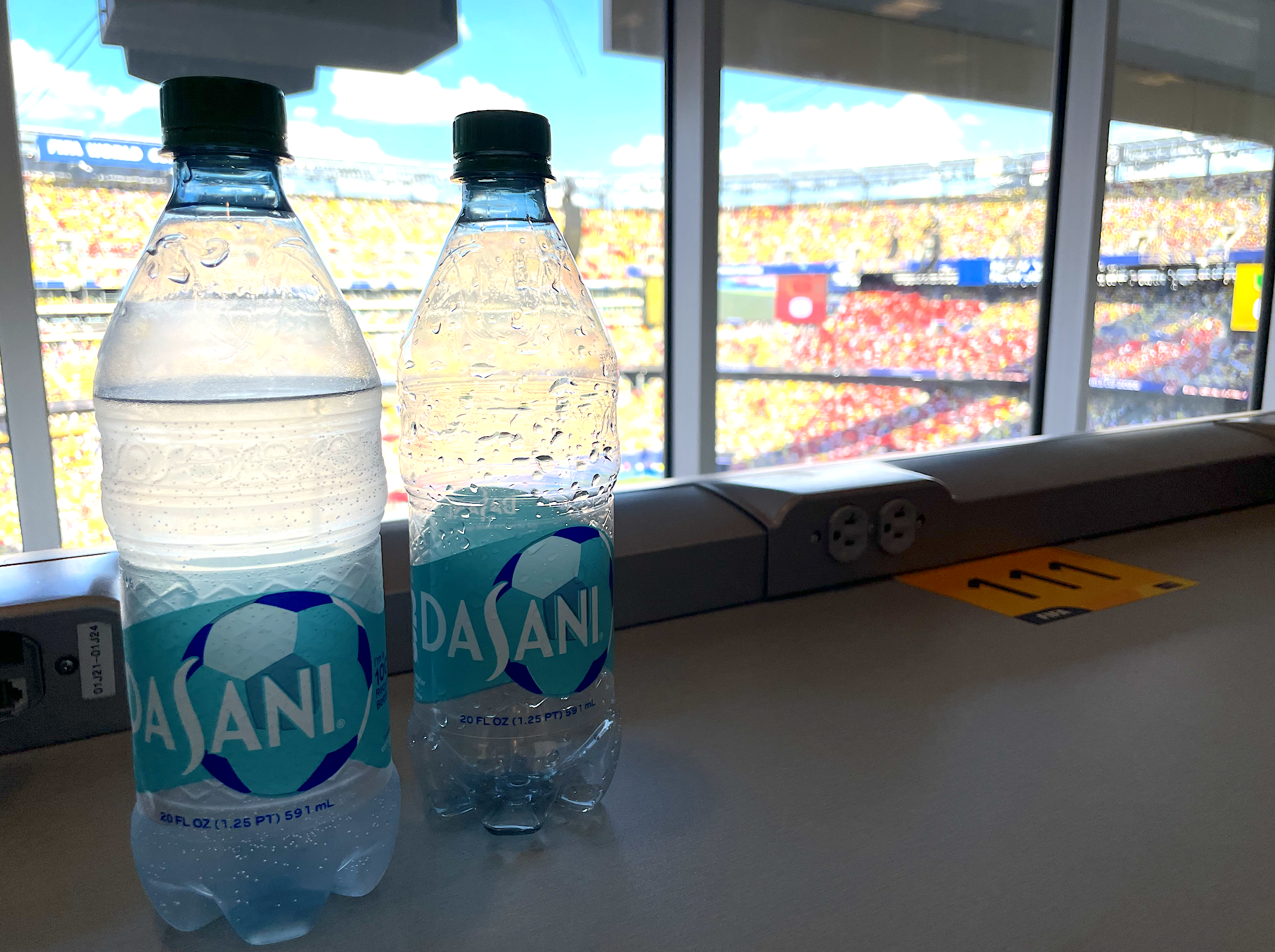
    Oh, speaking of concessions, “Philadelphia Stadium” should consider taking a page from “New York-New Jersey Stadium” when it comes to water bottles.

    A bottle of Dasani at MetLife? $5.75. A concession worker noted, too, that regardless of the event, that’s the going rate at MetLife. Anyone who’s been to the Linc knows that’s not the case, with prices surging to as much as $10 for the Club World Cup.

    In Sunday’s opening match in Philadelphia between Ecuador and Ivory Coast, the price for a water was $6.99.

    Brazil fans in yellow bring the noise in their nation’s first match at MetLife Stadium. And the water prices weren’t terrible, all things considered.Kerith Gabriel / Staff

    So, while yes, $5.75 isn’t exactly the cheapest for a plastic bottle of purified water, it’s still cheaper than options at the Linc.

    Not gonna lie, that was refreshing to hear, so I bought two.

  • Main Line Health’s Paoli Hospital will get a new, 108-bed patient tower in a major expansion

    Main Line Health’s Paoli Hospital will get a new, 108-bed patient tower in a major expansion

    Main Line Health is adding a 108-bed patient pavilion to its Paoli Hospital campus as part of a push to expand its capacity in Chester and Montgomery Counties, the nonprofit health system announced Tuesday.

    The building, expected to cost between $220 million and $240 million, is scheduled to open in early 2029. The project will expand Paoli’s capacity by more than 40%.

    Patient rooms will occupy three of five floors. They will be convertible from standard hospital rooms into rooms for intensive care. One floor will be used for diagnostics, such as radiology and perinatal testing. The roof will have a landing pad for helicopters.

    Beyond Paoli, Main Line is adding to its outpatient capacity in Downingtown, where a large facility that has township approval will include surgical care. The health system also has shared an early-stage proposal for outpatient offices in the Collegeville area, while it considers building there what would be its fifth hospital in Philadelphia’s western suburbs.

    “While many communities face declining access to care, Main Line Health is moving forward with optimism, investing in this region’s future and reaffirming our commitment to exceptional care where people live and work,” Main Line CEO Ed Jimenez said in the announcement.

    Paoli hospital currently has 261 licensed beds and employs nearly 1,400 people, according to Main Line. The hospital had 53,000 emergency department visits in the year that ended June 30, 2025. Main Line Health completed its last major expansion of Paoli Hospital in 2009, doubling the facility’s size.

    Like other Philadelphia-area health systems, Main Line has experienced tough times financially since the pandemic, which led to broadly higher costs in healthcare. In the nine months that ended March 31, Main Line had a $214,000 operating profit on $2.1 billion in revenue.

    More Main Line projects

    Separately, about 12 miles west of Paoli Hospital, in Downingtown, Main Line plans to open a large outpatient facility next summer. Main Line Health Downingtown, at the intersection of Lloyd and Manor Avenues, will cost $150 million and include a surgery center and substantial imaging capabilities.

    In central Montgomery County, as well, Main Line recently made a presentation to the Upper Providence Township Board of Supervisors about a major development in an area where the health system has seen substantial growth.

    The long term could see Main Line build a 108-bed hospital, but more immediately it needs to add outpatient office space in the Collegeville area, Main Line said.

  • Developers of a Yass-backed Gladwyne development present a pared-back plan after hearing from residents

    Developers of a Yass-backed Gladwyne development present a pared-back plan after hearing from residents

    The team behind a major redevelopment of the heart of Gladwyne presented a pared-back plan to residents last week after considering extensive public feedback.

    Design firm Haldon House and local billionaires Jeff and Janine Yass earlier this year unveiled plans to reinvigorate Gladwyne with new buildings, renovated historic structures, public green space, and updated commercial options that would breathe new life into the Main Line community’s quaint downtown.

    The project has sparked buzz in the community, with some Gladwyne residents eager for their neighborhood to get a facelift, and others skeptical of the development’s impact on traffic, parking, and Gladwyne’s character.

    Five months after unveiling the project, Haldon House owners Andre Golsorkhi and Autumn Oser brought an updated approach to Gladwyne residents at a meeting of the Gladwyne Civic Association on May 18. The new proposal features fewer buildings, more open green space, and more subdued aesthetics than the original scheme.

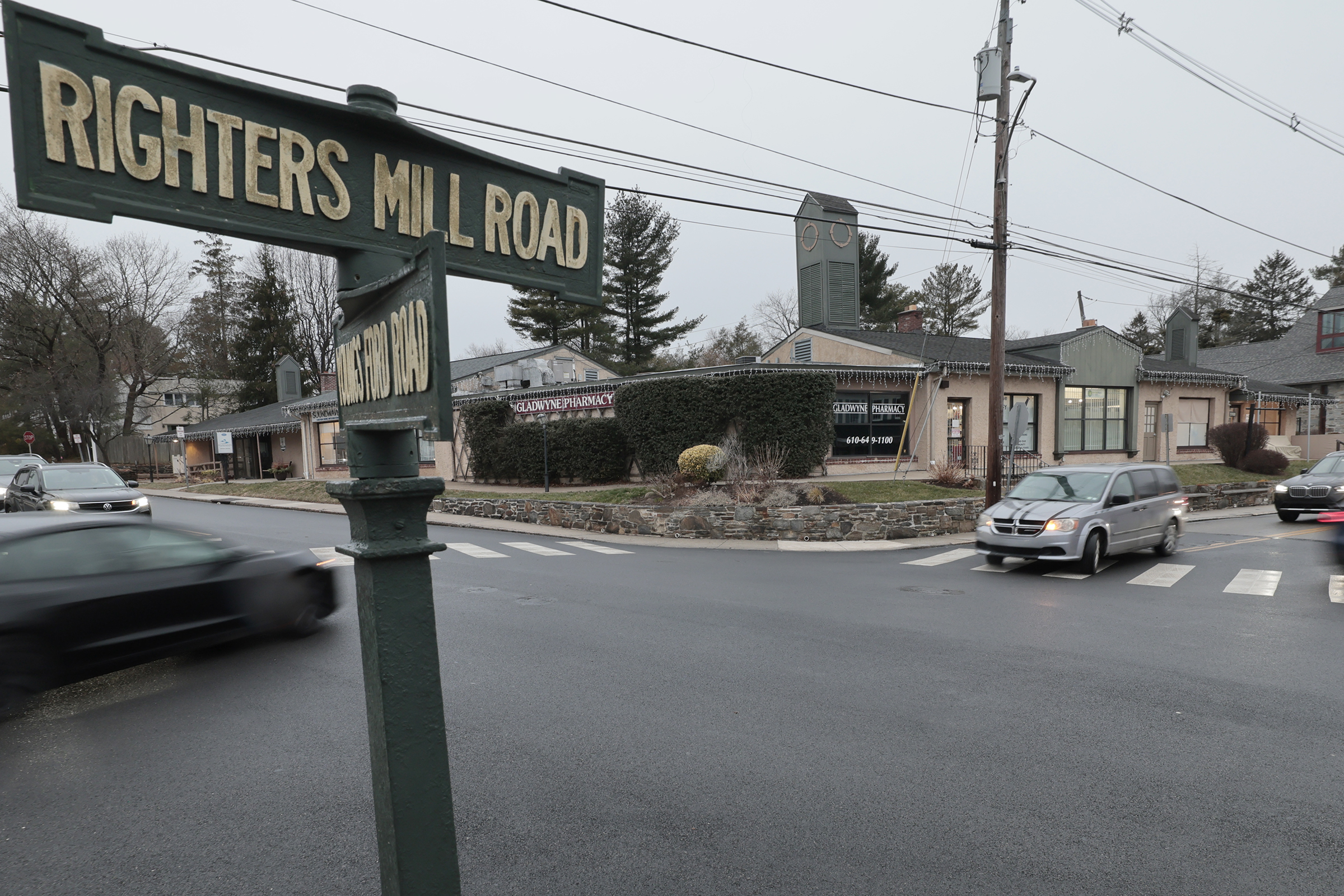
    The Village Shoppes, including the Gladwyne Pharmacy, at the intersection of Youngs Ford and Righters Mill Roads in Gladwyne. Under the proposal, the Shoppes would be razed and replaced with an updated, barn-style building.Elizabeth Robertson / Staff Photographer

    Haldon House’s revised plans for Gladwyne center on five main renovations: moving and expanding the Gladwyne Pharmacy into the former Gladwyne Market building; bringing a restaurant into the former OMG Hair Salon building; constructing a new barn-style building for an expansion of local cafe Homeroom; building a public green space between Homeroom and the library; and razing a residential property on Youngs Ford Road to create a parking lot.

    The reconfigured plan has not officially been submitted to Lower Merion Township for approval. Greg Prichard, historic preservation planner for Lower Merion, said the township is expecting the Gladwyne project to involve meetings of multiple review boards with the board of commissioners’ approval as the final green light.

    Haldon House has not disclosed a cost for the project, but Golsorkhi has said that the developers “have a very good understanding of the scope and scale of the investment required” and are “fully committed to what is needed to see this through.” The developers have spent over $15 million acquiring the properties.

    Golsorkhi and Oser said survey responses, public comment, and informal feedback from the Lower Merion Historical Architectural Review Board (HARB) gathered over the last few months helped shape the amended plan, one that leans into Gladwyne’s existing businesses and keeps a “quirkiness” cherished by residents.

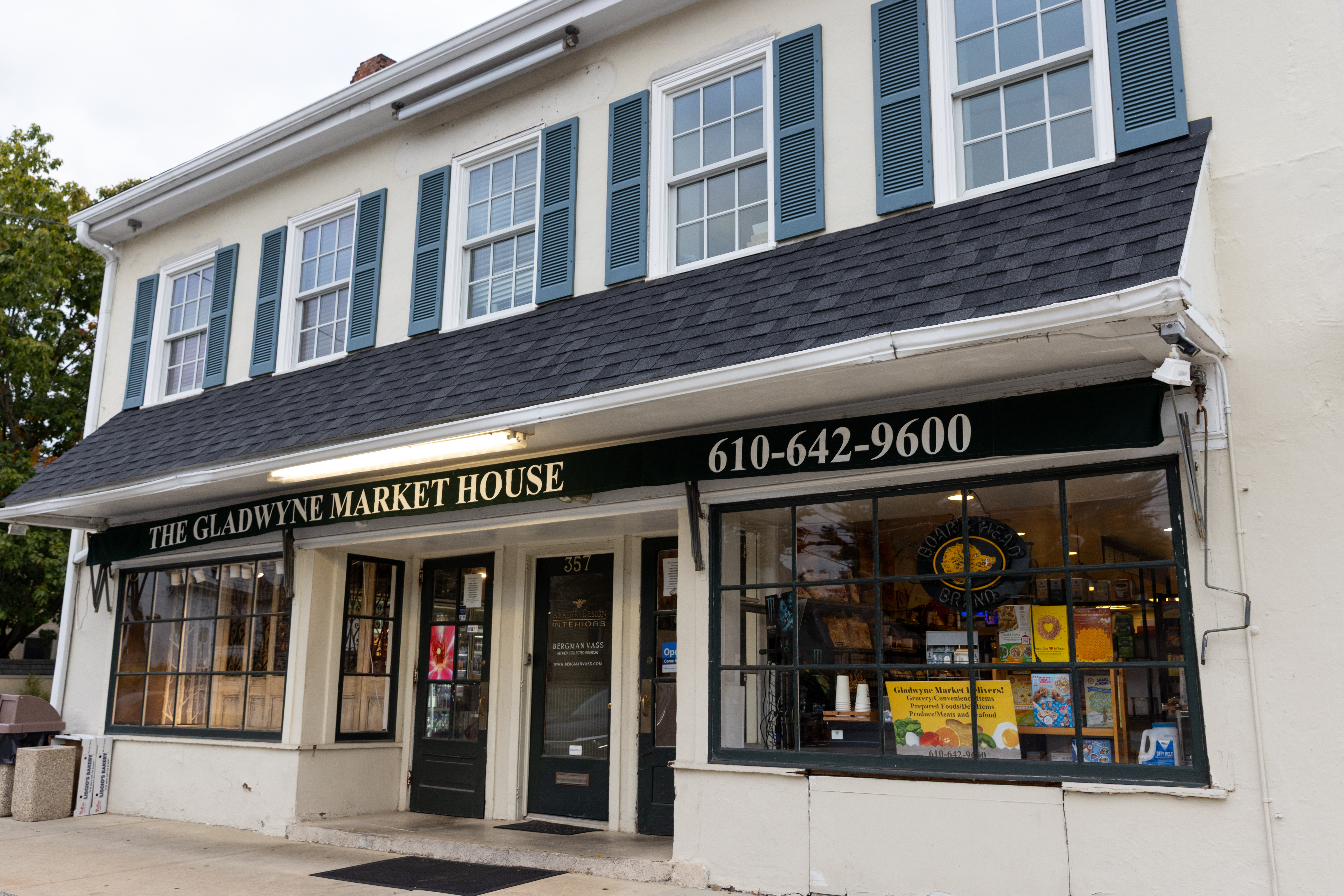
    Under the proposal, the Gladwyne Pharmacy would be moved into the former site of Gladwyne Market at 357 Righters Mill Rd. Gladwyne Market shuttered last fall after the building was purchased for $5 million.

    Oser said Haldon House wants to “celebrate the pharmacy” by expanding its inventory and designing a space that is “charming and nostalgic” with a wraparound porch and outdoor seating.

    The former Gladwyne Market, which shuttered last fall after developers purchased its building. The Gladwyne Pharmacy is set to move into the space under plans proposed by Haldon House.Jasmine Goldband / Staff

    Across the street, 358 Righters Mill Rd., the current home of the pharmacy and Homeroom, a local cafe, would be torn down and replaced with a new building. The building would house an expanded site for Homeroom and an upstairs office tenant (the upstairs would potentially be used as a conference space for Haldon House, the developers said at a HARB meeting, or as a flexible event space for community vendors). Homeroom would likely expand its menu, extending its hours into the early evening and growing its bakery apparatus.

    The building would combine stone facades with wood paneling and floor-to-ceiling windows, a design the developers say is “rooted in Main Line tradition” yet “contemporary.”

    Oser said Haldon House took to heart feedback that the first iteration of 358 Righters Mill Rd. was too polished for Gladwyne.

    “There was the specific request, like, ‘Please keep the quirk.’ Gladwyne is quirky, and it’s eclectic, and we like that,” she said at the civic association meeting. “… That was awesome feedback, and it was a really good point.”

    Haldon House originally intended to bring a slate of new businesses to the village, but Oser and Golsorkhi realized they could fulfill the community’s needs by expanding the offerings at its existing businesses, rather than bringing in more retail tenants.

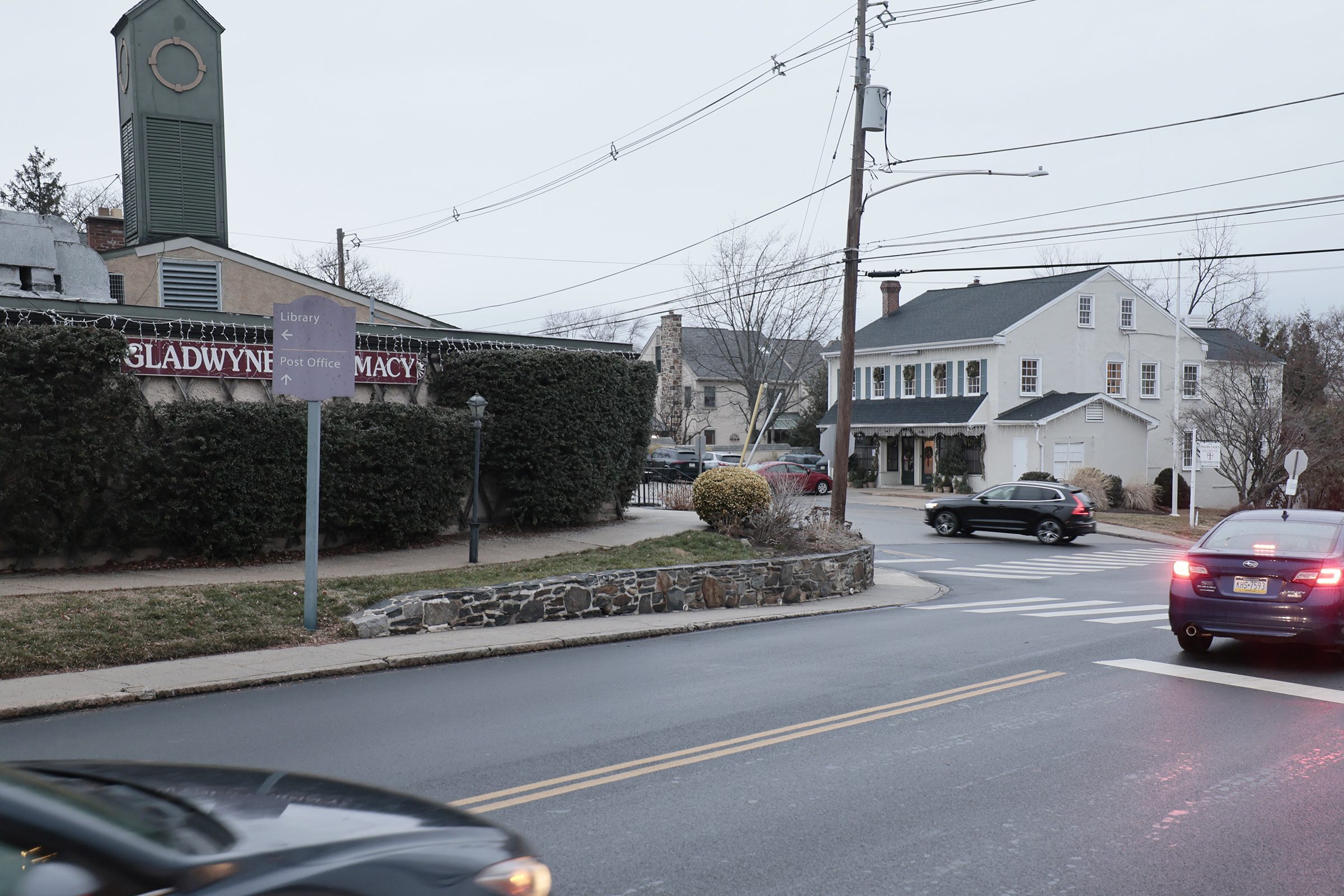
    The intersection of Youngs Ford and Righters Mill Roads in Gladwyne.Elizabeth Robertson / Staff Photographer

    358 Righters Mill Rd. would abut a community green space outfitted with a gazebo, native plants, and an amphitheater. The developers hope to use the green space as a hub for outdoor education, library events, and yoga classes, among other activities.

    The developers said they would establish a fund that draws on revenue from the properties to pay for park upkeep. Golsorkhi at a township meeting said that the tenants themselves would not be responsible for the park’s maintenance.

    The developers plan to bring a restaurant to 351 Righters Mill Rd., the former location of OMG Hair Salon. Currently, the only full-service restaurant in Gladwyne’s commercial core is the Union League’s members-only Guard House, which has been closed to the public for dining for nearly a decade.

    Oser outlined a vision for a “watering hole” that honors Gladwyne with historic photos and a “timeless” interior.

    The developers want a dining option that “only exists in Gladwyne” and do not plan to recruit a restaurant from Philadelphia, Oser said.

    A residential property at 946 Youngs Ford Rd. would be razed and turned into a parking lot. A retaining wall and tree barrier would be erected around the lot as a buffer for neighboring residents (one single-family home and a townhouse development border the proposed parking lot). The developers would need to secure a zoning change from the township to convert the property into parking.

    The proposal has brought tepid optimism — and a handful of concerns — to the small community.

    Some have praised the redevelopment, describing it as a much-needed facelift for a corridor with few amenities and deteriorating buildings. Others have warned of increased traffic and parking issues in an intersection that already deals with congestion.

    At Monday’s meeting, residents who border the proposed parking lot criticized what they described as a lack of communication from the developers and warned that the lot would disrupt the neighbors who surround it.

    “I think you’ve come a long way. This thing is going in the right direction,” Ed Lewis, a resident of a neighboring property, said during a recent HARB meeting.

    But Lewis warned, “You have to have the basics solved at the beginning: traffic, pedestrian access, and the green, existing trees and reinforced with new vegetation.”

    This suburban content is produced with support from the Leslie Miller and Richard Worley Foundation and The Lenfest Institute for Journalism. Editorial content is created independently of the project donors. Gifts to support The Inquirer’s high-impact journalism can be made at inquirer.com/donate. A list of Lenfest Institute donors can be found at lenfestinstitute.org/supporters.

  • Trump’s war of choice in Iran ends with humiliating concessions | Editorial

    Trump’s war of choice in Iran ends with humiliating concessions | Editorial

    Just before hosting a modern day gladiatorial bout on the White House lawn Sunday, Donald Trump announced a deal to end the needless war he started in Iran. But the terms of the deal made public so far underscore the epic blunder of his Middle East misadventure.

    None of the goals the president initially stated were attained: Iran did not offer the “unconditional surrender” Trump demanded. Its nuclear program was not abolished. The hard-line theocratic regime remains firmly in place. The people of Iran were not liberated. And Iran’s military, though damaged, is still intact.

    At best, the preliminary agreement is a fragile ceasefire that will reopen the Strait of Hormuz and end the costly U.S. bombing campaign. If all goes well, that will maybe get the world back to the way it was on Feb. 27 — the day before the war began.

    At worst, it is another humiliating defeat for the U.S. to go with the losses in Afghanistan and Vietnam. While the Iran war was much shorter, the damage was just as disgraceful, and perhaps even more unnecessary.

    In fact, the Middle East and the rest of the world is less stable today than before Trump started bombing Iran.

    If anything, Iran learned it can easily create a global economic crisis whenever it wants by putting a choke hold on the Strait of Hormuz with just a few drones and underwater mines. Iran can use that leverage as future deterrence against the U.S., Israel, or any other foe — which may be better than a nuclear weapon.

    Then there is the cost of Trump’s useless war.

    The military spent more than $25 billion just through the end of April. But the cost to the economy was estimated to be more than $1 trillion.

    Closing the strait meant cutting off passage for a fifth of the world’s oil supply, leading Americans to feel the financial pain at the gas pump and the grocery store. Farmers were hurt by higher fuel and fertilizer prices. Overall, the war sent inflation surging to a three-year high.

    Trump was unfazed by the pain he inflicted, claiming he “loved inflation,” and that gas prices were not very high and a cost everyone needs to endure to keep Iran from obtaining a nuclear bomb.

    As usual, Trump’s war spin was delusional, as he veered from dozens of claims that peace was just around the corner to psychotic threats to wipe out Iran’s civilization.

    Then there was the human cost.

    Fourteen U.S. service members died and hundreds more were injured. More than 3,000 Iranians were killed, including scores of children in a school that was bombed.

    How many hearts have turned cold toward America and its interests after the senseless killing and destruction of civilian sites in Iran and other parts of the Middle East bombed by Israel?

    Of course, the agreement did not resolve the main issue regarding Iran’s nuclear ambitions — which Trump oversold.

    Trump can’t even claim his deal is better than the Nuclear Non-Proliferation Treaty Iran signed in 1968, let alone the nuclear agreement negotiated by the Obama administration in 2015, whereby Iran agreed to do away with much of its nuclear program in exchange for sanctions relief.

    In 2018, Trump abandoned that deal, which was reached through nearly two years of discussions by seasoned diplomats, in contrast to the untrained negotiators Trump sent in — a group that included his son-in-law, Jared Kushner.

    Trump and his Republican allies for years railed about the $1.7 billion the Obama administration sent to Iran as part of the deal. But preliminary drafts of Trump’s plan include unfreezing $24 billion in Iranian assets, lifting oil sanctions, and implementing a massive reconstruction plan — or reparations — for Iran valued around $300 billion, according to Reuters.

    No wonder why the final terms of Trump’s deal remain secret while he tries to claim victory for a war he lost, while everyone else was stuck with the cost.

    All to end up — at best — back where we started.

    Mission accomplished!

  • House of the week: A 19th-century farmhouse in Delco for $475,000

    House of the week: A 19th-century farmhouse in Delco for $475,000

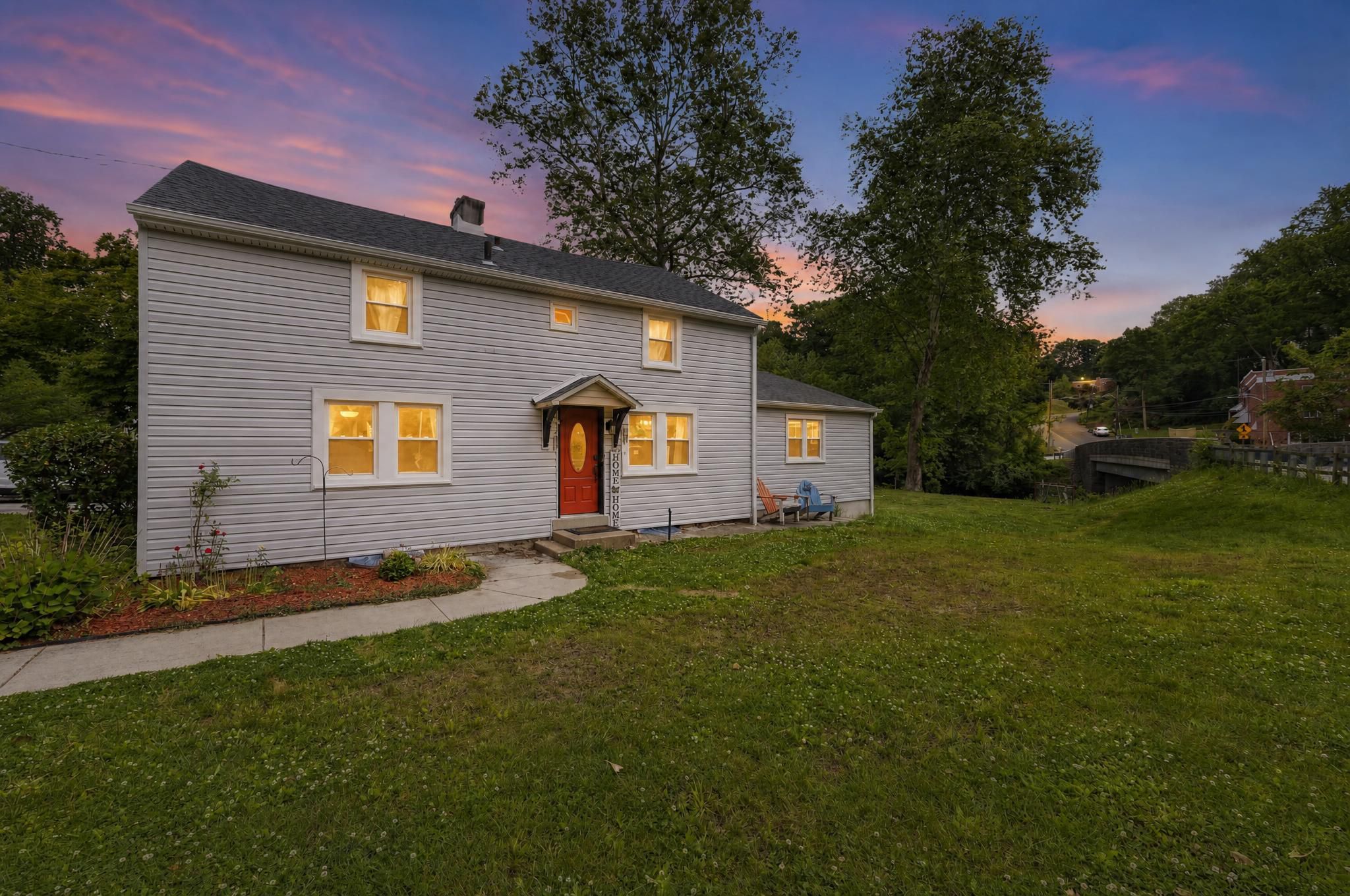
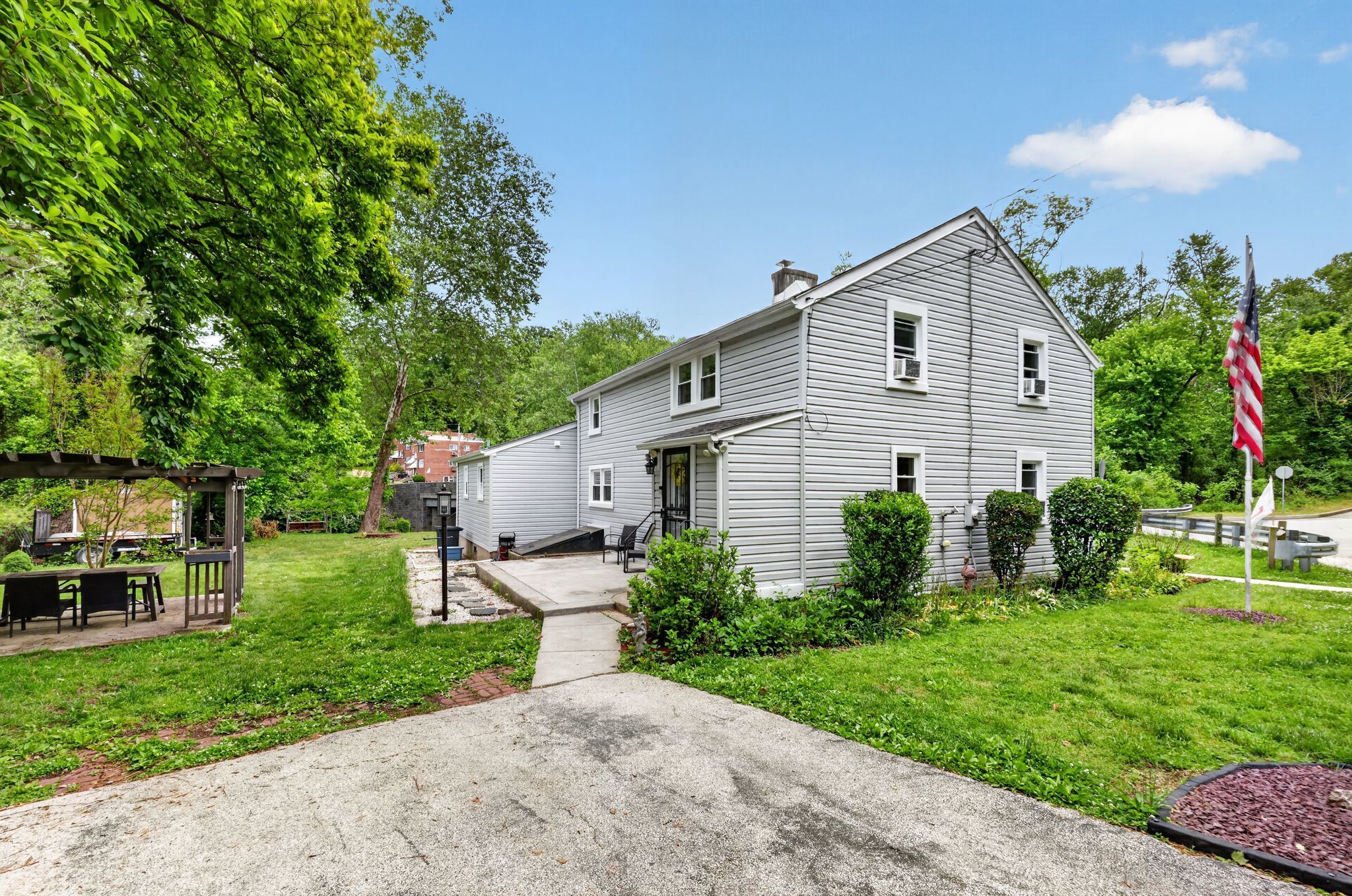
    The five-bedroom, two-bathroom farmhouse-style home in Springfield, Delaware County, was once a church and a mill. But since 2014, it has been the Hornberger family’s “pride and joy,” said Kortney Hornberger.

    That is when she and her husband, Bob, bought the 2,368-square-foot house, bordering Darby Creek and built in the mid-to late-19th century.

    “It’s one of the coolest houses in Springfield,” Kortney said. Their three children grew up playing in the creek.

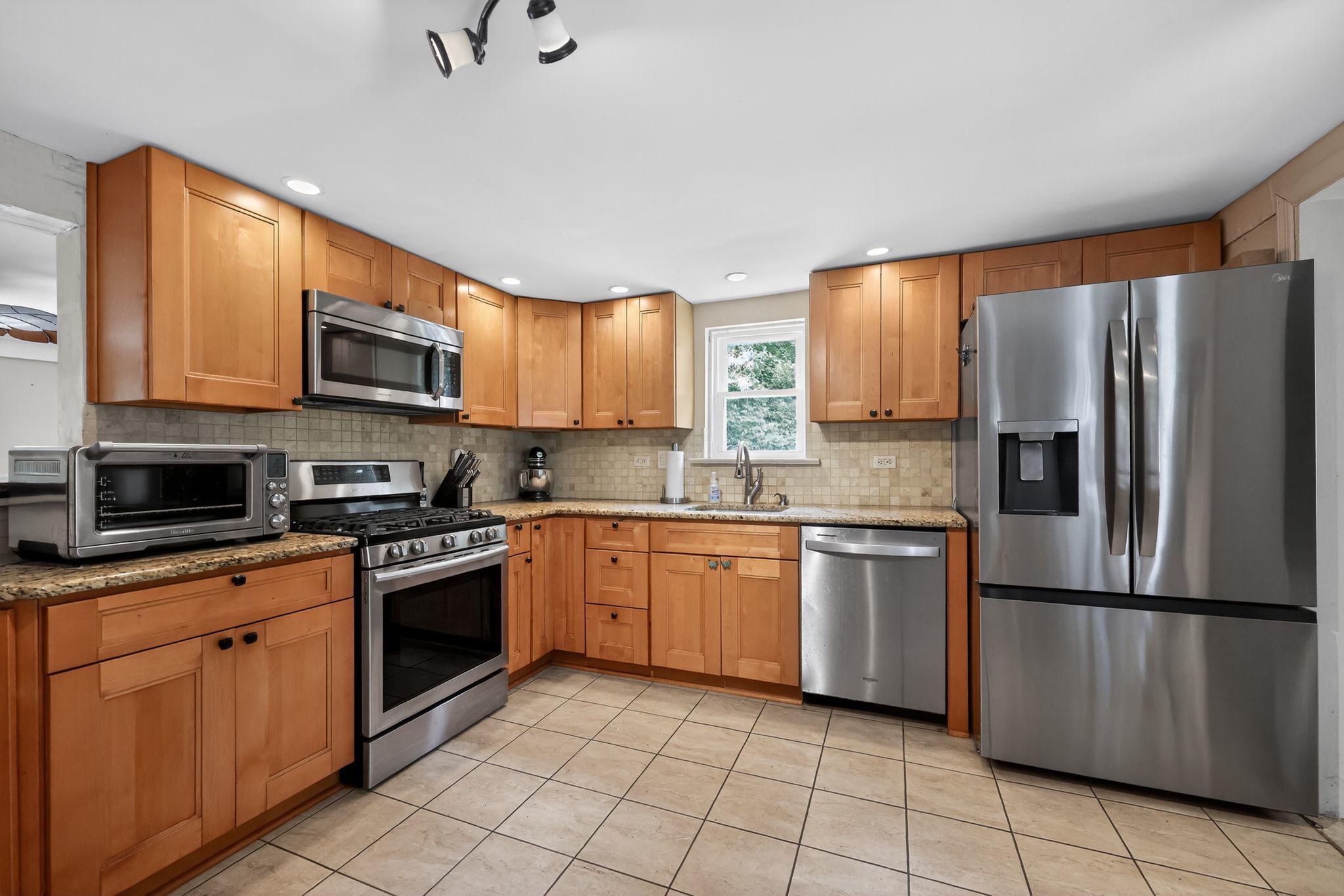
    The kitchen has Shaker-style wood cabinets, stainless-steel appliances, and granite countertops.Derrick Kunzer

    “We had been looking for a long time,” she said. “The old wood beams were beautiful” and “the yard with no neighbors on three sides of the corner lot sold me.”

    But the Hornbergers — she is a civilian contractor for the Army National Guard and he is semi-retired from an administrative job with Wawa — are preparing to retire in Hawaii.

    The house has four bedrooms on the second floor and one on the main floor. Bob said the couple made many improvements over the years, including a new boiler, windows, siding, three new entry doors, and whole-house water heater. The second floor has a walk-in storage area. The home has a large basement for additional storage and laundry.

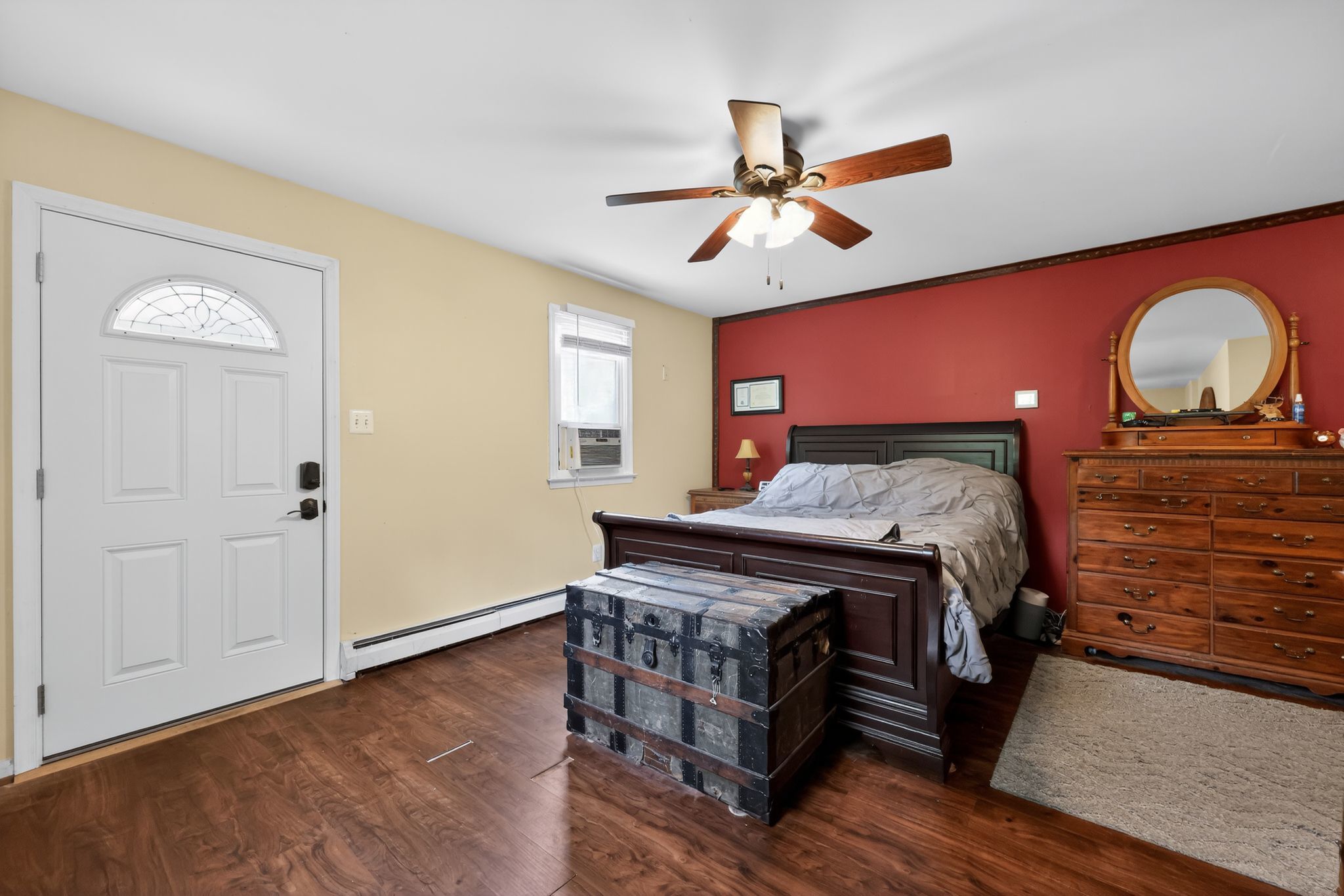
    The primary bedroom, which has an exterior door.Derrick Kunzer

    The main floor bedroom has a walk-in closet and a private entrance. An additional room on this level could be a home office, playroom, or gym.

    The eat-in-kitchen adjoins a large dining room and has Shaker-style wood cabinets, stainless-steel appliances, and granite countertops.

    The backyard has a patio, a pergola, and a firepit, and there is a shed for additional storage.

    The outdoor space, which has a patio, a pergola, and a firepit, as well as a shed.Derrick Kunzer

    The house is a seven-minute drive to Media, and is served by SEPTA’s Media/Wawa Regional Rail line, the trolley to Media, and bus routes. There is driveway space for three cars.

    It is in the Springfield School District.

    It is listed by Amanda Terranova of Compass Realty for $475,000.

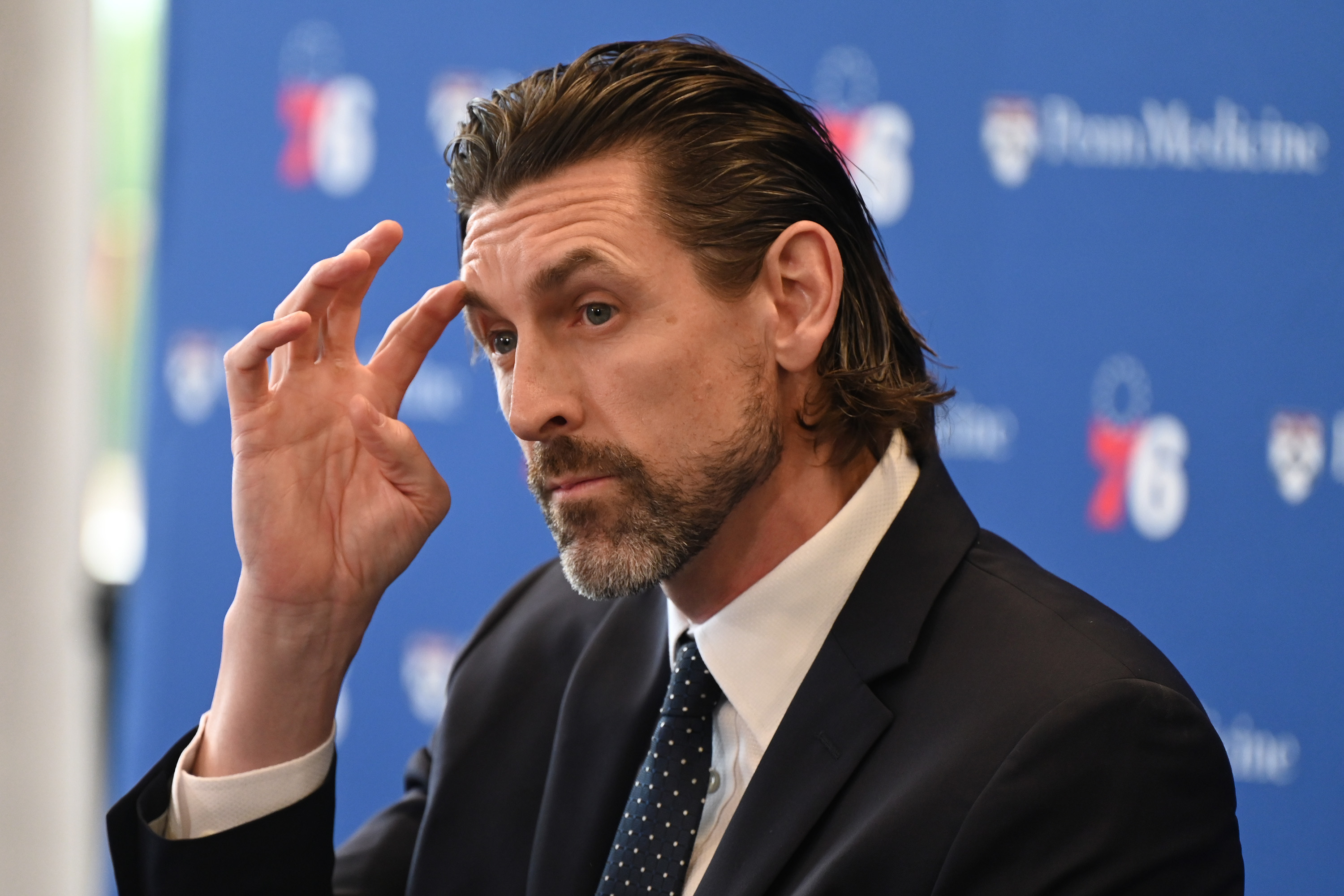
  • Would Daryl Morey still be here if the Sixers had slowed the Knicks’ runaway train? At least one NBA source thinks so.

    Would Daryl Morey still be here if the Sixers had slowed the Knicks’ runaway train? At least one NBA source thinks so.

    The question has lingered.

    Would Sixers owner Josh Harris have fired president Daryl Morey if the Knicks hadn’t rolled the Sixers?

    Working big sporting events can be an exercise in frustration. The Olympics, the World Cup, the Super Bowl, the World Series are objects of spectacle and celebration for a sports fan but can be vehicles of exclusion and futility for a sports writer.

    They also can be veins of golden intel. Such was the case last week in New York.

    Thanks to the vanity of the New Yorker in Chief, entering the arena last week was a protracted challenge. An NBA source with ties to the 76ers told me in the hours before Game 3, as we waited for President Trump to arrive:

    “You know, if the Sixers had won a couple of games against the Knicks, no way Morey gets fired.”

    That piqued my interest. The Knicks had swept the Sixers in the second round of the playoffs. Morey was fired two days later, news that shocked the NBA world.

    Did the Knicks’ storybook run to the hoop-crazed city’s first title in 53 years make Morey’s career an unlikely casualty? Did the sweep cost Morey his job? Was it at least the final straw?

    Apparently so.

    The Knicks weren’t considered elite when they rolled the Sixers. By Game 3 of the Finals, however, they were playing great.

    Folks were talking: Was Morey’s firing less warranted than it seemed at the time?

    I was eager to leave Madison Square Garden and try to track down Morey himself, see what he’d say. He’s going to continue to live in Philadelphia, but, since he got fired, he’s been hanging out in New York, feeding his Broadway addiction and waiting for the unemployment checks to come in.

    Then, a few hours later, the Knicks had lost Game 3, the Spurs seemed to have turned a corner, and the assertion lost its legs.

    But only briefly.

    Daryl Morey did some things well, but the Sixers were also hamstrung by some of his decisions. Matt Rourke

    Genius dismissed

    A computer scientist with an MBA from MIT, Morey’s moves might draw criticism but his intellect never has been in question. Twenty-one years ago he co-founded the annual analytics nerd-fest at MIT, the Sloan Sports Analytics Conference, a stats-based Davos gathering of the smartest suits in the sports industry, designed to render obsolete knuckle-draggers like Doc Rivers and me.

    Despite having never won a title, Morey is front-office royalty. As such, the NBA was rocked by Morey’s dismissal, especially coming, as it did, on the heels of such a dizzying postseason high.

    The week before the sweep, the Sixers beat the arch rival Celtics in seven games to win their first-round series. Boston had held a 15-7 record in the teams’ playoff series and had won the last six; the last time the Sixers won was 1982. It was their first Game 7 win in 25 years. It was their first Game 7 road win in 44 years (the aforementioned 1982 series). It was the first time the Sixers won a series when trailing 3-1 in their last 18 tries, and the Celtics had won 32 times in a row when leading a series 3-1.

    Euphoria barely describes the mood around the franchise after Tyrese Maxey dropped 30 points and pulled down 11 rebounds in that Game 7. Maxey was Morey’s first draft pick when he arrived in 2020.

    Humiliation barely describes the mood around the franchise 10 days later. The Knicks won Game 1 in New York by 39 points. They won Game 4 in Philadelphia by 30 and, at one point, they led by 44. That wasn’t the worst of it. Xfinity Mobile Arena was inundated with Knicks fans for Game 3 and was predominantly pro-Knicks in Game 4.

    Harris, a New Yorker for most of his adult life, was galled. More than anything else, according to the source, it was those two home losses and the Knicks fans’ takeover that cost Morey.

    It didn‘t help, of course, that Morey traded popular shooter Jared McCain in February, after which McCain thrived in Oklahoma City. It also didn‘t help that, two years ago, Morey max-extended the contract of Joel Embiid and max-signed Paul George. Both have been injured and suspended since.

    Both were bigger stars than anyone on New York’s team. Neither played well against the Knicks.

    As it turned out, nobody would play well against the Knicks.

    Jalen Brunson and the Knicks rolled the Sixers in a way that was humiliating for the team and the fan base. Monica Herndon / Staff Photographer

    Juggernaut

    The Knicks’ sweep of the Sixers included wins three through six of 13 playoff wins in a row, the second-best streak in NBA history and just two fewer than the Warriors in 2017. Those Warriors had Steph Curry and Kevin Durant, Hall of Fame scorers who’d been to 12 All-Star Games between them.

    Again, at the time of the Sixers series, nobody considered any of the Knicks on par with Steph or KD.

    Then, the Knicks swept the Cavaliers in the Eastern Conference Finals.

    Then, they won Games 1 and 2 in San Antonio.

    Then, after losing Game 3 at home, they executed a Finals-record 29-point comeback in Game 4.

    Then, on Saturday, they won Game 5 and the title in San Antonio. Jalen Brunson proved himself the biggest star in the playoffs, capping his Finals average of 32.6 points with 45 in the closeout game, a record for a Knick in the Finals, tied with Michael Jordan for the third-most in a Finals closeout game.

    The Knicks finished the playoffs with a point differential of plus-283, the biggest in NBA history. Of course, the Sixers contributed 89 of those positive points, and the Knicks played only one team from the superior Western Conference, but those arguments are thin gruel.

    The 2025-26 Knicks were a powerhouse team: deep, talented, hungry, well-coached, and led by a bona fide, if unlikely, superstar.

    That’s who beat the Sixers.

    That’s who, according to an NBA source, ultimately cost Morey his job.

    It’s new president of basketball operations Mike Gansey’s show now in Philly. Tom Gralish / Staff Photographer

    So what?

    I’ve always believed Morey to be a bit overrated as a team builder but I’ve always admired his innovation, his transparency, and intellectual capacity. These, I believe, burnished an image that was more impressive than the reality. He was, nevertheless, a very good basketball president.

    Still, when a team with high expectations repeatedly fails to meet them, change is almost always good. Embiid just ate his way into wasting two more seasons. Paul George popped for PEDs. Both happened on Morey’s watch. Will it happen again under his replacement, Mike Gansey, who helped resurrect the Cavaliers after the LeBron James Era, Part 2? Will Gansey and his overseer, Bob Myers, the former Warriors president who runs all of Harris’ numerous sports franchises, keep the old guys from stealing more money?

    Maybe.

    Maybe a new sheriff in town who has no connection to either Embiid or George will serve as a catalyst for them to deliver more value for the combined $112 million they will make in the next season alone.

    But maybe, had Harris known how humiliated his peers in Cleveland and San Antonio were going to be a month later, he wouldn’t have let go the man he’d introduced six years prior as “extraordinary,” an “innovator,” and a “visionary.”

    Then again, maybe he would have.

  • FBI thwarted attack targeting White House UFC show, director says

    Authorities intercepted a plot to attack the Ultimate Fighting Championship event held outside the White House over the weekend, according to court papers made public Tuesday that described plans to fly drones loaded with explosives over the crowd, set them off, and gun down fleeing attendees.

    FBI Director Kash Patel posted on social media Tuesday morning that “multiple individuals” had been taken into custody. Following “a multi-state operation,” he wrote, the “allegedly planned attacks were stopped cold.”

    It was not immediately clear how close the alleged plot came to reality or how many people authorities believe may have been involved.

    Matthew C. Quinn, deputy director of the Secret Service, told reporters Tuesday morning that the event “was never at risk due to the great investigative work.”

    But he cautioned that some people allegedly involved were still at large. And after Patel’s social media post revealed the alleged plot, Quinn pointedly noted that the Secret Service had chosen not to “leak” news of the investigation.

    A criminal complaint filed in federal court in Ohio on Monday and unsealed Tuesday depicted plans to carry out “a coordinated attack against the United States government” during the UFC event.

    The complaint alleges that Tycen Proper, 19, admitted to plotting the attack with people who began communicating via TikTok, a social media app, before shifting to Signal, an encrypted messaging app.

    Proper has been arrested and is in custody, with a detention hearing set for Wednesday. An assistant public defender appointed to represent him did not immediately respond to a message seeking comment Tuesday.

    According to an affidavit submitted with the complaint, Proper’s mother contacted law enforcement because she was alarmed by his recent actions, including buying guns “and communicating with certain individuals online.”

    The affidavit was signed by Christopher S. Betts, who wrote that he is a Columbus, Ohio, police detective assigned to an FBI Joint Terrorism Task Force.

    Betts wrote that police went to the home where Proper lives with his parents on Wednesday, four days before the UFC event. Proper’s father told them that his son had recently gotten new firearms and ammunition and was planning to meet up with the people he met online during the upcoming weekend, Betts wrote.

    The local sheriff’s office took Proper to a local hospital and sought an “emergency admission based on homicidal ideations,” Betts continued. The sheriff’s office also called the FBI.

    Betts said that he spoke with Proper’s mother the next day and that she said her son had been interacting with people online “who claimed to be ex-military and Christian-based.” Proper’s mother said the group had anti-government beliefs, Betts continued, and had expressed grievances dealing with the handling of files related to sex offender Jeffrey Epstein and data centers.

    She also described seeing her son mapping an area outside D.C., Betts added. And he wrote that family members told investigators Proper had made “concerning statements” in recent months, including antisemitic rhetoric and sympathetic remarks about Adolf Hitler.

    Investigators spoke to Proper on Thursday, and he admitted to planning to attack people at the UFC event, Betts said. He wrote that Proper described plans for members of the plot to meet in Fredericksburg, Va., south of D.C., and then “stage a demonstration” near the White House.

    According to Betts, Proper said he was not going to the event to shoot people but reported that some other members of the group were intending to carry out violence.

    Proper described plans to sent drones “laden with unspecified explosive devices” over the north side of the UFC arena, Betts wrote. Then the group planned to shoot attendees fleeing the explosions, including “wealthy people and politicians,” Betts said. He wrote that Proper said the attack was meant to start a revolution.

    When investigators searched Proper’s phone, Betts said, they found chats on Signal “consistent with much of what” he had described. The phone showed a large chat with about 19 people and smaller groups with four to five people, Betts added. In another app, Betts wrote, Proper discussed targeting a U.S. senator because of her support for Israel.

    News of the alleged plot spread widely Tuesday morning when Patel posted about it on social media.

    “On June 10, FBI and our law enforcement partners became aware of a potential threat to the UFC America 250 event in Washington, D.C. involving individuals outside of the National Capital Region,” Patel wrote in his post.

    The White House declined to comment further Tuesday, and the FBI referred questions to Patel’s social media post. The Justice Department and UFC did not immediately respond to requests for comment on the alleged plot.

    When asked Tuesday whether he had been briefed about the alleged planned attack, President Donald Trump said he had not heard about it.

    “The attack that I watched were the fighters,” Trump told reporters at the Group of Seven summit in France.

    Speaking with reporters Tuesday, Quinn, the Secret Service’s deputy director, described the alleged plot as “unique” because of the number of people and the level of planning involved.

    He said the Secret Service had led the investigation from the start.

    “In order to maintain the integrity of the investigation and the security plan, we chose not to leak it,” he added.

    Pressed on whether he was suggesting Patel or the FBI had jumped the gun by divulging details of the investigation, Quinn said he was “not going to comment on who or what.”

    “I’m going to tell you that we, the Secret Service, made a conscious decision to maintain the integrity of the security plan and the ongoing investigation,” he said.

    The FBI did not immediately respond to a request for comment Tuesday about Quinn’s remarks.

    Patel has been criticized in the past for posting prematurely on social media about ongoing investigations, including when he announced last year that someone was in custody after conservative activist Charlie Kirk was killed. The person was soon released.

    The UFC event held at the White House on Sunday was an unprecedented spectacle designed to mark America’s 250th anniversary and Trump’s 80th birthday. It was run by UFC CEO Dana White, a close Trump friend, and the president and the first lady sat in the front row to watch the fights.

    Joe Rogan, a podcaster who provided color commentary at the UFC event Sunday, had called the decision to hold the event outside “odd” and the event a “security nightmare” and “kind of a gimmick.”

    “I just don’t think that you should compete in a world championship fight in a noncontrolled environment,” Rogan said on his podcast last week. “I think it should be inside an air-conditioned arena. … You wouldn’t ask them to play a world championship basketball game outside in the sun.”

    The event included two flyovers and a fireworks finale near the National Mall well after midnight. The Federal Aviation Administration implemented a ground stop at the region’s three airports during the fireworks Sunday “to ensure safety.”

  • Roundup of third-quarter financial results for Philly-area nonprofit health systems

    Half of the nonprofit health systems in Southeastern Pennsylvania had operating losses in the first nine months of fiscal 2026, the systems’ latest reports to municipal bond investors showed.

    All had strong revenue growth, with the exceptions of Redeemer Health and Tower Health, the two smallest systems by revenue. The gains at Jefferson Health and Penn Medicine benefited from acquisitions in fiscal 2025.

    The reports are not perfectly comparable because of variations in accounting practices.

    For example, Jefferson, Main Line Health, and ChristianaCare changed their depreciation rates, which reduced their expenses relative to competitors. Jefferson includes investment income in its revenue, boosting its results.

    Here’s a summary in order of revenue, from the region’s largest to smallest systems:

    Jefferson Health had a $252.6 million operating loss, which it attributed to severe winter weather, restructuring costs related to layoffs, and shortfalls in insurance reimbursement. Total revenue was just shy of $13 billion, up from $11.6 billion last year, which included only eight months of results from Lehigh Valley Health Network.

    The University of Pennsylvania Health System’s operating income in the nine months ended March 31 rose to $238 million, up sharply from $163 million in the same period a year ago. Total revenue for the nine months increased nearly 15% to $10.1 billion from $8.8 billion last year. This year’s results include Doylestown Health, which Penn acquired in April 2025.

    Children’s Hospital of Philadelphia had a $271 million operating profit in the first nine months of fiscal 2026, up from $195.8 million the year before. Total revenue rose 9% to $4.1 billion from $3.7 billion, thanks to strong gains in payments for hospital patients and unspecified other operating revenue.

    ChristianaCare reported $76.4 million in operating income, up from $57.4 million the year before. Its revenue climbed to $2.64 billion from $2.5 billion. This year’s results include a new micro-hospital that opened last summer in Chester County and five former Crozer Health outpatient facilities in Delaware County.

    Temple University Health System had an operating loss of $9.9 million, recovering largely from a $50.5 million loss in the first half of fiscal 2026. In the same period a year ago, Temple had a $10.9 million operating loss. The health system’s revenue was $2.6 billion, up from $2.3 billion last year.

    Main Line Health reported a small operating profit of $214,000, following a winter quarter setback. The four-hospital nonprofit system recorded an $8.5 million loss in the three months that ended March 31. Severe winter weather reduced patient visits, and the health system increased its reserves for medical malpractice expenses.

    Tower Health swung to a small operating loss of $3.6 million. During the same period a year ago, Tower had a $4.2 million operating profit. Revenue increased 1.6% to $1.6 billion.

    Steep losses continued at Redeemer Health, which reported a $29 million operating loss, compared to a $33 million loss last year. Redeemer’s total revenue rose by less than 1%, to $332 million. Redeemer owns Holy Redeemer Hospital, a 239-bed facility in Abington Township, Montgomery County, not far from Jefferson Abington Hospital.

  • This Philly-based steel stock has rocketed as SpaceX shot up

    This Philly-based steel stock has rocketed as SpaceX shot up

    It’s not just SpaceX on the rise.

    Elon Musk’s company that runs the Starlink communications network, launches rockets for NASA, and develops artificial intelligence software raised more than $75 billion from investors last week — a record initial public stock offering (IPO) for a company fast-burning through billions in investor dollars in hopes of future profit.

    SpaceX is just the flashiest of a string of industrial stocks that have soared as orders for missiles, drones, and other war machines, as well as civilian aircraft and rockets, pile up. S&P’s Aerospace and Defense Select Industry Index is up 44% over the past year vs. 24% for the broader S&P 500 stocks, even with Google, Nvidia, and other AI-linked stocks leading the 500.

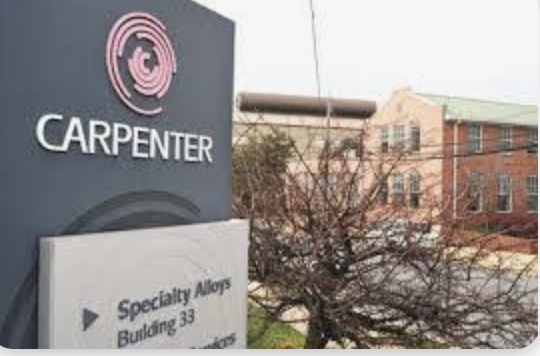
    The share price for Philadelphia-based Carpenter Technology is up 125%, almost three times as much as that index of aerospace and defense stocks.

    Carpenter does $3 billion in annual sales, melting or grinding iron, tungsten, cobalt, and other metals into super hard or relentlessly flexible alloys used in stainless steel and other specialty parts by military, commercial airliner, medical, industrial, and space equipment makers.

    The company operates plants in Reading, Berks County; Latrobe and other Western Pennsylvania towns; and around Athens, Ala. It has a finishing plant in China and distributors worldwide. Carpenter’s large customers include passenger jet and military aircraft maker Boeing and European aerospace giant Airbus.

    CEO Tony Thene has said space is a fast-growing growing part of Carpenter’s customer base, exciting some investors into expecting the company will share SpaceX’s gains.

    Thene, who is stepping down at the end of the month, hasn’t said SpaceX is a customer. Chief operating officer Brian Malloy will take over leading the company.

    Investor Louis Navellier was quoted last month as saying he’d rather own Carpenter, which makes the metals used by SpaceX and other aerospace companies, and its larger customer, Pittsburgh-based Howmet Aerospace, than SpaceX itself, at recent valuations.

    In an article in Barron’s, also last month, polled analysts predicted Carpenter stock would rise into the high $500s — as it has in the four weeks since.

    That price is above the targets set by analysts at Bala Cynwyd-based Susquehanna International Group and Wall Street brokerages after Thene reported earnings at the end of April. At that time, Carpenter officials predicted stronger than expected sales and higher profits, to be split between investor dividends and new furnace equipment.

    Carpenter at recent valuations is worth around $30 billion, roughly as much as Hershey or Kraft Heinz, whose sales are much larger, and almost as much as gas-drilling giant EQT, based in Pittsburgh.

    Shares of area aerospace manufacturers such as Ametek, which has its headquarters in Berwyn and plants around the world, and Innovative Aerosystem, of Exton, are also up significantly over the past year.

    Triumph Group, an aerospace manufacturer based in Radnor, was bought by private equity companies last year. Growth at privately held Piasecki Aircraft has slowed after delays in private and government contracts.

    Howmet, with $8 billion in yearly sales to Carpenter’s $3 billion, hasn’t boosted its share value as fast in past year, but it has risen enough to become the most valuable company in Pennsylvania, the only company whose shares are worth over $100 billion on the stock market.

    That’s more valuable than companies with much larger sales, such as Philadelphia-based media giant Comcast; mega-drug distributor Cencora of Conshohocken, or Pittsburgh’s PNC, the nation’s fifth-largest bank.

    At today’s share prices, many times earnings or projected future profits, investors are gambling that suppliers like Carpenter and Howmet — and SpaceX, the spaceship builder — will grow a lot faster than the economy as a whole.