Blog

  • Bucks County farm owner who fled to Belize to dodge animal abuse charges pleads guilty

    Bucks County farm owner who fled to Belize to dodge animal abuse charges pleads guilty

    A Bucks County woman who presided over squalid conditions on a Wrightstown farm and mistreated more than 100 animals in one of the worst neglect cases in county history has pleaded guilty.

    Abigail Tuttle O’Keeffe, 55, the former owner of Narrow Way Farm, entered guilty pleas to aggravated cruelty to animals, neglect of animals, and related crimes late last month. She was spared from prison by entering a diversionary program, prosecutors said Monday. O’Keeffe must attend substance-abuse and mental-health counseling, and is barred from owning animals.

    Her attorney, Josh Buchanan, declined to comment Monday.

    In August 2024, the Bucks County SPCA served a search warrant on O’Keeffe’s property after a farm manager notified the agency that a sheep had been found dead, according to the affidavit of probable cause for her arrest.

    Abigail Tuttle O’Keeffe was extradited to Bucks County in September 2025 by the U.S. Marshals Fugitive Task Force. In this photo provided by the U.S. Marshals Service, her face was obscured.U.S. Marshals Service

    Officers rescued more than 100 pigs, goats, and sheep, many suffering from infections, parasites, and other chronic medical conditions. One severely emaciated goat died while investigators were searching the property. Another one was so malnourished and riddled with parasites that it had to be euthanized after weeks of intensive care, the affidavit said.

    Volunteers at Narrow Way who spoke with The Inquirer in 2024 said O’Keeffe, who holds a doctorate in developmental psychology, did not have the skills to match her ambitions of running a working farm.

    Most of O’Keeffe’s workforce also had little to no farm experience, and the 36-acre property was in disarray, to the detriment of the livestock she kept there, according to some of those volunteers.

    In one incident, workers botched the dehorning of a calf, leaving the animal with permanent nerve damage.

    Word of the conditions at Narrow Way spread quickly: The owner of a nearby farm said O’Keeffe was not “a real, active farmer,” shied away from the work that required of her, and ran the operation like a cult, comparing her farmhands to “disciples.”

    But when local investigators came to the farm, O’Keeffe was thousands of miles away. Prosecutors said she moved to Belize, where she was arrested in April 2025 on gun charges.

    U.S. Marshals extradited her to Bucks County months later.

    Staff Writer Jesse Bunch contributed to this article.

  • ‘We survived, right?’ Andrew Painter and Phillies bullpen rise to occasion, deliver 6-5 win over Cardinals

    ‘We survived, right?’ Andrew Painter and Phillies bullpen rise to occasion, deliver 6-5 win over Cardinals

    ST. LOUIS — There was no backup plan.

    As the Cardinals wheeled around the bases in the eighth inning, finding gap after gap, lucky break after lucky break, interim manager Don Mattingly could do nothing but watch. The Phillies’ lead shrank from four runs to one, and still, the bullpen phone in left field never rang. It couldn’t. There was no one to call on.

    “We had one bullet out there,” Mattingly said, “and that was it.”

    That bullet was Jonathan Bowlan, who was tabbed for the ninth. With a relief corps that has been run ragged over the past week, the Phillies had no choice but to rely on rookie Andrew Painter and fringe starter Alan Rangel to cover eight innings against the Cardinals.

    If the game went to extras — like the Phillies did three times in the last five days — Mattingly was planning to put backup catcher Garrett Stubbs on the mound and functionally concede the game to St. Louis.

    But Rangel, who had piggybacked Painter, took a breath. He went back to the rosin bag behind the mound. The Cardinals had already tagged him for three runs on five hits — including three doubles — in the inning. They had the tying run on third, the go-ahead run on second, a pinch-hitting lefty at the plate.

    Rangel went to his best pitch — his change-up — and left-handed Bryan Torres sent a soft liner out to Justin Crawford’s waiting glove in center field. For now, the threat was quelled.

    “Gutsy,” Mattingly said.

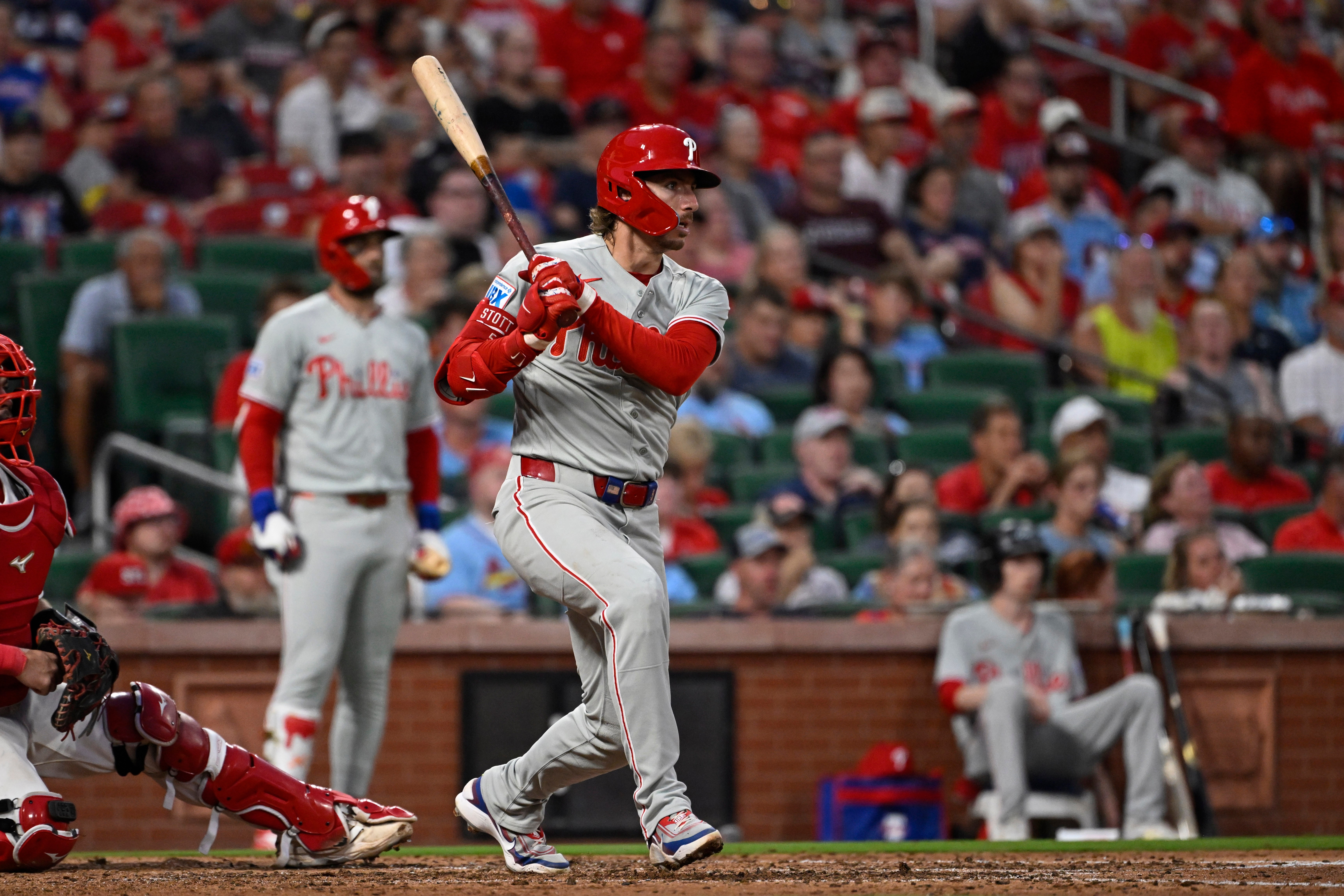
    The Phillies ultimately pulled off a 6-5 win over the Cardinals to open the series because the plan — the only plan they had — worked out. Painter delivered one of his strongest starts of his rookie season, taking a no-hit bid into the sixth. Rangel managed to survive 2⅔ innings. And Bowlan delivered his first career major league save with a 1-2-3 ninth.

    “It’s the first time that they’ve given me such an important task,” Rangel said. “And I just feel proud of myself and I feel good with what we did today.”

    The offense did just enough to back them up. They jumped out to an early lead in the second, capitalizing on a throwing error from Cardinals starter Hunter Dobbins and a single from Edmundo Sosa. From there, the Phillies continued to tack on. Kyle Schwarber finished with two doubles and came a foot away from a homer in the eighth, but it hung up just enough to be playable for right fielder Jordan Walker.

    Sosa, who spent nearly 10 years in the Cardinals organization until being traded to the Phillies in 2022, also hit an RBI double in the eighth.

    “It’s always nice to come here and enjoy playing in this beautiful stadium,” Sosa said. “Back when I was younger, way younger, I dreamed of playing in this stadium.”

    Meanwhile, Painter kept St. Louis off-balance with his change-up, which has been a weapon for him since being recalled from the minors. While in triple A, Painter tweaked its grip, and he has been throwing it with conviction.

    Three of his six strikeouts came on the pitch.

    “Just more and more reps with that build the confidence up, and I feel comfortable throwing it to both sides of the plate, lefty or righty, and really just in any count,” Painter said of his change-up.

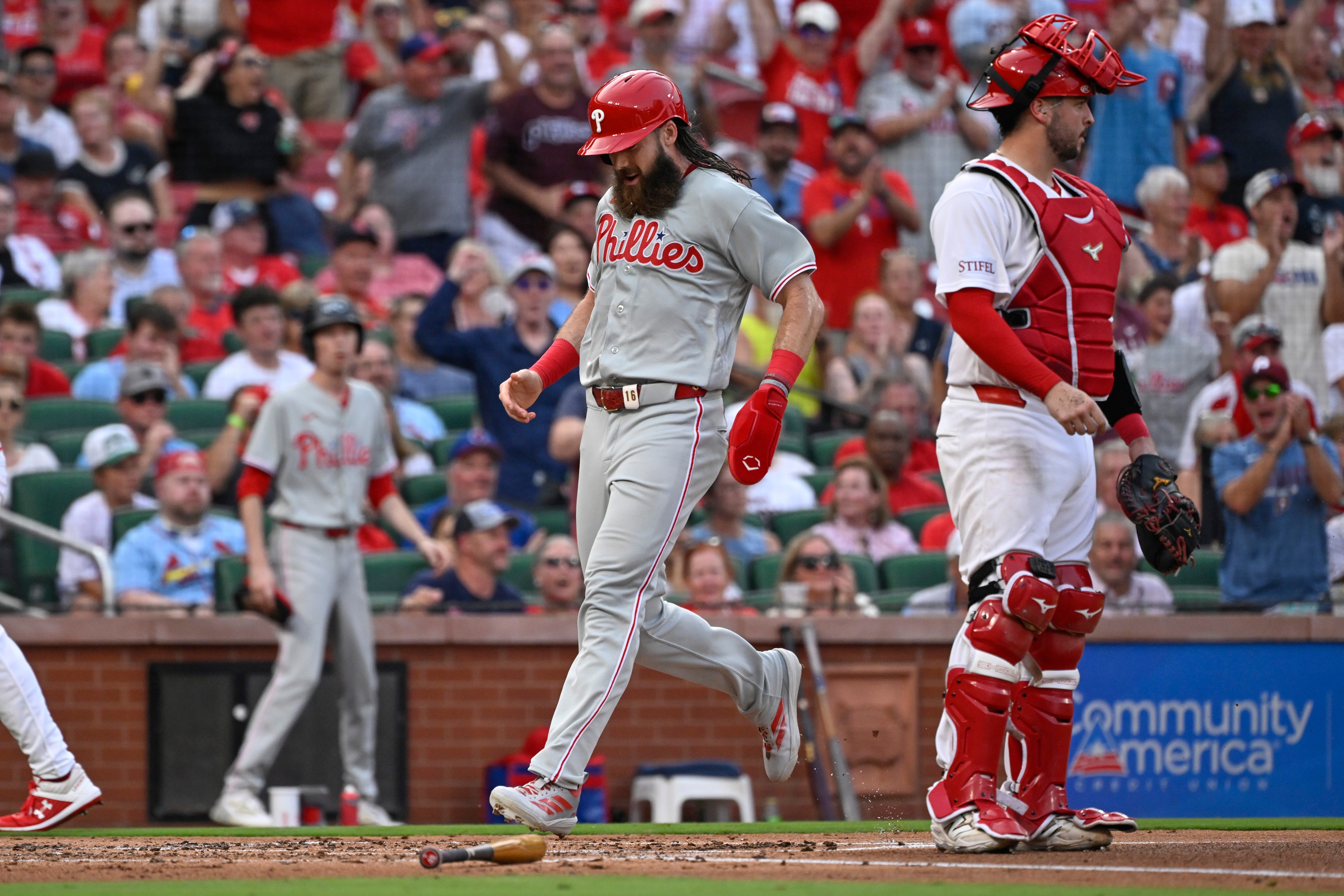
    The Phillies’ Brandon Marsh (center) crosses home plate. He scored two runs in his team’s 6-5 win. Joe Puetz

    Painter, 23, became the youngest Phillies pitcher to carry a no-hit bid through five innings since Cole Hamels did so at age 22 against the Astros in September 2006.

    “It’s three in a row that he’s thrown the ball well since he’s come back,” Mattingly said. “So that’s obviously positive for us, but that was something that the team needed right there. And for him to come through in that spot is really good for him, and good for our club.”

    But soon after the Cardinals’ first hit fell in the sixth — Iván Herrera tucked a line drive just inside the left field line for a double — the shutout evaporated, too. Alec Burleson hit a two-run single to chase Painter from the game, bringing in Rangel.

    The Phillies were well-aware of the state of their bullpen heading into Monday night. That morning, they had been dealt another blow with newly acquired reliever Caleb Kilian landing on the injured list.

    As usual, the Phillies staff checked in on every reliever and how they were feeling ahead of the game, and Bowlan was the only one they felt comfortable calling on.

    “I was prepared,” Bowlan said. “I mean, you always got to be prepared down there.”

    He added that he would do anything he was asked to, even if it was to pitch more than one inning. But as it happened, he only needed 10 pitches to retire the side in order. Bowlan fulfilled the last piece of the plan and picked up his first major league save, all at once.

    For him, it was kismet that it happened on this day, in this ballpark. Bowlan grew up in Tennessee watching the Memphis Redbirds, a Cardinals affiliate, and his father Mark was a 19th-round pick for the Cardinals back in 1989. Bowlan estimated he had 20 family members and friends looking on in the stands on Monday.

    Last season, Bowlan bounced between the majors and minors in the Royals organization. This year, he has ascended into a key high-leverage arm, most often to set up Phillies closer Jhoan Duran. And his family was there to see it come to fruition with his first save.

    “It’s kind of full circle,” Bowlan said. “Family was able to come out, and being the fact that they were here for it, it’s very special. Family means the world to me. Personal accolades, that’s cool. That’s awesome. Keep going and see where this thing goes.”

    The Phillies bullpen will have more options on Tuesday, but will still likely not be back at full strength. That’s how much stress has been placed on the unit in the past week. But with Cristopher Sánchez and Zack Wheeler scheduled to be on the mound, the Phillies have come to expect quality starts, which would lighten the load.

    To get there, though, they needed a rookie, a fringe starter, and a breakout reliever to step up.

    “We survived, right?” Mattingly said. “And that’s really what you’re looking for, is find a way to win a game tonight.”

  • How local contractors and construction companies are leaning into AI | Expert opinion

    How local contractors and construction companies are leaning into AI | Expert opinion

    Painters? Windows installers? Flooring specialists?

    These may not be the first people that come to mind when you think of AI. But many local companies in construction and contracting are struggling with a very tight labor supply and higher costs, so every dollar they save through automation can make a big difference.

    This is why AI is producing a measurable business impact for approximately 38% of contractors, according to a 2026 survey of 1,000 companies by field service management software company ServiceTitan. That’s up from just 17% in 2025.

    Takeoffs

    Construction professionals know how important it is to get their estimates right. AI is quickly becoming integral to the process, beginning with the initial “takeoff” phase.

    A takeoff is the process of reviewing construction plans to identify and measure the materials, surfaces, and fixtures needed to prepare an accurate project estimate or bid. AI is helping to improve speed and accuracy during this process.

    AI is used in construction applications like Togai, Stack and On Center to read specification sheets, analyze photos, flag revisions, verify measurements and then set up estimates, produce reports, and recommend construction documents.

    “When we receive a set of drawings, our team will upload the plans into our AI takeoff platform, which automatically identifies walls, ceilings, substrates, finish areas, and other relevant surfaces for painting or wall covering,” said James Geisel, a project manager at Philadelphia-based Hispanic Ventures, which does painting and wall covering. The AI tool “calculates square footage, linear footage, and quantities with a very high accuracy rate.”

    AI does the “time-consuming measurement work,” Geisel said, while his estimators still apply their judgment to labor pricing, logistics, risk, and competitiveness.

    Commercial flooring contractor Seamless Flooring Systems in Somerdale, Camden County, also relies heavily on AI for project takeoffs, said president Chris McDermott.

    “It has really streamlined our production rate and has eliminated a ton of human error,” he said.

    Estimating and bidding

    In construction, after a takeoff comes estimating and bidding.

    Applications like Procore, Autodesk, and Stack can advise an estimator on square footage and linear footage, material quantities, and cost-related inputs to draw up project estimates and determine pricing and bid preparation.

    An application like this is “essential,” said Matt Biedekapp, a sales manager with Pella Windows & Doors in Scranton. It’s used when bidding on both residential and commercial construction projects because it helps with measurements, cost analysis, and timing of installation.

    On the residential side, Biedekapp said his company uses AI tools to help with window measurements and hard-to-reach places, as well as overall quality assurance. For commercial customers with very large plans, they use AI software to identify, filter, and tag windows and doors for better accuracy and efficiency.

    “Along with quickly getting window counts, we can also provide more accurate material lists using built-in formulas or even creating our own formulas,” he said. “Our AI-assisted measurements provide another layer of quality assurance and help us reduce remeasuring or reordering of materials, which can be costly.”

    Geisel said AI also helps his team create standardized cost assemblies and recognize patterns from previous jobs.

    “It recommends labor or material benchmarks based on similar projects,” he said. “It allows us to provide tighter, more accurate bids with less administrative work.”

    Office automation

    Like many of my clients, all three construction companies said they’re using AI in the office to help draft emails and proposals, summarize long email threads, prepare responses to requests for information, produce scope letters, and turn estimating data into professional reports.

    Geisel said his team uses Microsoft Copilot.

    “Copilot also helps turn raw estimating data into clean, professional reports that can be sent to clients,” Geisel said. “Instead of spending an hour formatting a scope breakdown or executive summary, you can generate a polished version in minutes and then refine it to your needs.”

    Reporting and analysis

    After projects are completed, companies can use AI to analyze and report on job performance in comparison to the estimates and evaluate overall profitability.

    “Thanks to AI, we have been able to reduce our ‘recoveries’ significantly, which in our industry boils down to time,” Biedekapp said. “It helps us save the time spent to remeasure, reorder windows, parts, pieces, as well as the time spent tying up our project coordinators and carpenters.”

    That translates to money saved too, he said, “but as a small business, the time is most valuable.”

    As for staffing, McDermott said AI won’t be replacing any employees. But it will allow them to work better. “It will just give them a way to redirect their skills to strengthen on a different task and be more productive.”

  • Sixers open season Oct. 20 at Knicks, face Cavaliers in Philly home debut for LeBron James, Jaylen Brown

    The 76ers will be one of the NBA’s highest-profile teams this season after adding LeBron James and Jaylen Brown to a roster that already included Joel Embiid, Tyrese Maxey and VJ Edgecombe.

    And they’re being treated as such as the league announces its schedule. That started with the opening week slate and marquee meetings on Tuesday, including opening night and Christmas Day. The Sixers will travel to face the Knicks in the season-opener on Oct. 20, returning home two nights later to host the Cavaliers in the home Philly debut for James and Brown.

    The Sixers will reportedly play in 30 national TV games in the 2026-27 regular season, starting on opening night against the defending champion Knicks.

    The marquee matchups keep coming on Christmas Day as the Sixers are slated to face a Los Angeles Lakers team James decided to leave this offseason.

    The matchup against the Knicks speaks to the outsized expectations for this new iteration of the Sixers. While the Sixers and Knicks have shared recent history, including a 2026 second-round sweep as the Knicks marched to a title, New York has gotten the better of that rivalry. But the Sixers have since fired former president of basketball operations Daryl Morey and hired Mike Gansey, traded for Brown and signed James to a two-year, $8 million deal. They also added depth in the offseason, with Anfernee Simons, Dean Wade, Kentavious Caldwell-Pope and Labaron Philon Jr. all figured to feature heavily in the rotation.

    The prominent scheduling of the matchup against the Lakers was almost a foregone conclusion. Christmas Day, which some consider the unofficial open of the NBA season, is as good a day as any. James decided to leave Los Angeles as the franchise prioritized younger players in the offseason, with Luka Doncic and Austin Reaves both playing on max deals.

    More games against rivals come early as the Sixers will see the Boston Celtics twice in the NBA preseason. That means we will get an early preview of Brown against his former team and running mate Jayson Tatum in some form, with the real games coming later. The Sixers’ three preseason games will be played at the Brooklyn Nets on Oct. 8 and in a back-to-back against the Celtics on Oct. 10 and 16.

    James spent the previous eight seasons as a member of the Lakers, delivering a title in the pandemic-shortened 2020 season. He kept the Lakers in contention for the rest of his tenure, including last season when he averaged 20.1 points, 6.1 rebounds and 7.2 assists in his 23rd season. James also served as the offensive engine in the postseason at age 41, delivering a surprising first-round defeat of the Houston Rockets with Doncic and Reaves dealing with injuries. The 2025 champion Thunder ended the Lakers’ run in the second round.

    Brown played his entire 10-year career with the Celtics, winning Eastern Conference finals MVP and NBA Finals MVP as he helped lead the franchise to a title in 2024. An All-NBA performer in 2025-26, Brown is fresh off one of his best individual seasons. He averaged 28.7 points, 6.9 rebounds and 5.1 assists as the Celtics outperformed expectations and landed the second seed before falling in seven games to Embiid, Maxey and the Sixers.

    James and Brown will join a Sixers franchise big on talent. Maxey has blossomed into an All-NBA performer, Embiid is a former MVP and Edgecombe finished third in a competitive Rookie of the Year race last season.

    The Sixers’ opening night matchup against the Knicks is part of a tripleheader that starts with a matchup between the Boston Celtics and Detroit Pistons, followed by Sixers-Knicks and Spurs-Thunder. The week continues with Oct. 21 meetings between the Minnesota Timberwolves and Miami Heat, followed by a meeting between the Golden State Warriors and Los Angeles Lakers. The next night, which is headlined by Sixers-Cavs, will also feature the Thunder against the Denver Nuggets.

    Christmas Day, the league’s vaunted quintet of games will start at noon with an NBA Finals rematch between the Knicks and Spurs and run deep into the night, with the final showing, a West Coast game between the Nuggets and Warriors, kicking off at 10:30 p.m. ET. Heat-Celtics, Sixers-Lakers and Thunder-Timberwolves will fit in between those games.

    Inquirer Sixers beat reporter Gina Mizell contributed to this report.

  • House of the week: A Queen Village trinity for $349,000

    House of the week: A Queen Village trinity for $349,000

    When Hunter Wages and his wife, Lauren Nalley, bought their Queen Village trinity in 2023 after renting nearby for two years, they especially liked having the Weccacoe Playground across the street.

    They liked the constant activity there, such as park cleanup days, and, “It’s hard to beat having a tennis court in your front yard,” said Wages.

    For Nalley, an environmental engineer in water resources, and Wages, who does software testing for a veterinarian agency, the two-bedroom, 1½-bathroom house was the first they had owned together.

    Living roomJim Armstrong

    Noting the home’s “historic charm,” Wages said, “trinities are unique.” And he found the exposed brick sections of the interior attractive. But they are moving to Colorado to be with friends and family.

    The 710-square-foot house on a tree-lined street has replacement windows and central air-conditioning.

    The private fenced patioJim Armstrong

    The living room has hardwood floors, built-in custom cabinetry, and French doors opening to a private fenced patio.

    The lower level also has a modern kitchen.

    KitchenJim Armstrong

    The second floor has a bedroom, the full bathroom, and multiple closets. The primary bedroom is on the third floor, with built-in shelves, vaulted ceilings, and an updated half-bathroom.

    There are also decorative fireplaces on the first and third floors.

    The primary bedroom has built-in shelves and a decorative fireplace.Jim Armstrong

    The house is steps away from neighborhood restaurants such as Southwark and Ambra, as well as the Famous 4th Street Delicatessen and the Delaware River Trail.

    It has easy access to I-95 and several bus routes.

    It is in the William M. Meredith School catchment area.

    It is listed by Jim Armstrong of JG Real Estate for $349,000.

  • Trump told Ukraine it had no cards. Then Kyiv took the war to Russia

    Trump told Ukraine it had no cards. Then Kyiv took the war to Russia

    The meeting in the Oval Office between U.S. President Donald Trump and Ukrainian President Volodymyr Zelenskyy was a diplomatic car crash.

    “Your country is in big trouble. You’re not winning,” Trump said, dressing down Zelenskyy in front of the world’s media. “You don’t have the cards.”

    The blowup in February 2025, three years into the war, was more than just a heated public exchange: The Ukrainian delegation was asked to leave the White House, and Washington briefly suspended intelligence sharing with Kyiv. In the ensuing months, as Russia made slow but steady gains on the battlefield, Trump warmly welcomed Russian President Vladimir Putin in Alaska and seemed ready to push Ukraine into an unfavorable peace deal, including forcing it to give up territory.

    But even as Zelenskyy sat next to Trump, his forces were preparing an operation that would reveal Ukraine’s ability and ambition to take the war to Russia: Months later, drones smuggled into the country attacked Russian bombers, destroying or damaging planes worth hundreds of millions of dollars.

    Since then, Kyiv has ramped up a campaign of longer-range strikes inside Russia and in areas Moscow has seized, increased production of weapons, targeted Russian air defenses, and hit oil infrastructure and the warehouses of a major retailer in a bid to ensure ordinary Russians feel the impact of the conflict.

    In an embarrassment to Putin, Ukrainian drone strikes sent thick plumes of smoke billowing over St. Petersburg shortly before the opening of an international economic forum in June. Concern over Ukraine’s attacks led Russian authorities to scale down the May 9 military parade commemorating the defeat of Nazi Germany. Strikes on oil refineries have caused a summer fuel crisis.

    By the time Trump and Zelenskyy met at a NATO summit in July, the American president said the Ukrainian leader had “been very effective” in the war. “We’ve actually developed a good relationship,” Trump added.

    But as Ukraine’s strikes have intensified, so have Russia’s — and Kyiv faces major challenges in defending against them because of shortages of American Patriot air defense missiles.

    In the first six months of the year, 1,396 civilians were killed in Ukraine, according to the U.N. Meanwhile, the world body said Russian authorities reported 250 civilians killed in the same period. On Monday, a strike that Ukraine said hit an oil refinery in Russia killed 13 people, according to local officials.

    And while Ukraine’s effort appears to have shifted the narrative about the war in Washington, it’s still not clear if it will be able to push Putin toward the negotiating table.

    Ukraine’s strikes are aimed at undermining the idea that Russia can afford to “just let this roll,” said Jack Watling, a senior research fellow at the London-based RUSI think tank.

    The question of whether it will succeed depends on how much pain Ukraine can exact. “Logically, above a certain threshold, it does work but whether they can reach that threshold is an interesting question” — and one that depends at least partly on factors outside Kyiv’s control, like continued European financial support, he noted.

    Ukraine brings the war to Russia

    While most of Ukraine’s strikes have a range of less than 200 kilometers (125 miles), its longer-range attacks have increased dramatically this year. It launched three times as many of those strikes in July as it did in January, according to data from ACLED, an independent conflict monitor. Repeatedly hitting deep into Russia has forced its military to stretch air defenses over a larger area.

    Many of its strikes have focused on four key categories of targets, according to an Associated Press analysis of hundreds of Ukrainian attacks this year — compiled from statements by Russian officials and state media and the Ukrainian military.

    As the Iran war pushed up energy prices, leading the U.S. to ease sanctions on Russian oil, Kyiv ramped up strikes on oil infrastructure to deny the Kremlin revenue from fuel exports and force shortages on ordinary Russians. It is also striking defense manufacturing to damage Russia’s long-term ability to produce weapons, targeting air defenses to clear a path for its own arms, and hitting retail warehouses to bring the effects to ordinary Russians.

    — As part of the campaign against oil infrastructure, Kyiv said it hit Russia’s largest oil refinery, more than 2,500 kilometers (1,550 miles) from Ukraine.

    — Kyiv has also targeted defense manufacturing centers. It hit a factory making navigation systems multiple times, including with its own Flamingo missile.

    — In July and August, Ukraine struck Wildberries warehouses. Kyiv said the company helps supply the Russian military. Moscow denies that.

    — Many of Ukraine’s strikes on Russian air defenses and radar are around Russian-held Crimea and are often carried out with drones.

    Maj. Robert “Magyar” Brovdi, the commander leading Ukraine’s drone war, told the AP its strikes in Crimea are also aimed at rendering the peninsula unusable as a staging ground for Russian forces.

    Starlink gives Ukraine an advantage — for now

    It’s not always clear if Ukraine’s attacks are effective — and some may have resulted in minimal or no damage. In May and June, Ukraine said it hit several satellite, reconnaissance or signals intelligence facilities in Russia, but satellite images analyzed by AP did not show major damage.

    Still, Ukraine has one advantage that can help it strip back Russian air defenses and make its drone strikes more precise.

    It has access to Elon Musk’s satellite communications service Starlink — which means its operators can control drones in real time in Russian-held Ukrainian territory. Russia has been blocked from using Starlink.

    But Russia is also building its own version of Starlink, and is installing jamming systems that hamper Starlink connectivity, Brovdi said.

    Ukraine is investing heavily in weapons production

    Even before the Oval Office meeting, Ukraine scrambled to invest in new weapons — but that moment was “a real wake-up call,” said a European military official who spoke on condition of anonymity to discuss the front-line situation in detail. It became clear that U.S. support could be stopped “from one day to the next.”

    Ukraine doubled down on production, churning out a growing array of weapons in larger numbers and shortening traditional research and production cycles from decades to years or even months.

    Even so, Ukraine is still not able to produce as many missiles as it needs. It also took Ukraine time to make systems that could target facilities precisely enough that Kyiv felt comfortable using them to strike deep into Russia, Watling said.

    And while Ukraine has begun to resolve navigational issues with its missiles, such as the Flamingo, those weapons are still not as accurate — or as stealthy — as their Western analogues. That often means hundreds of drones must be fired to overwhelm Russian air defenses to allow a missile to get through.

    It’s an expensive and time-consuming way to wage war since only 5% to 9% of what Ukraine fires gets past Russian air defenses, according to Watling.

    But, although Russia’s weapons are more powerful, Zelenskyy suggested at the NATO summit that Putin is “losing the initiative” in the war as Ukraine has moved the fight from the stalled battlefield to the sky.

    Sitting next to Trump at the summit, the Ukrainian leader even cracked a joke, demurring when Trump asked him if he would accept Moscow as a venue for peace talks, as Putin has suggested.

    “There are a lot of Ukrainian drones in the air,” Zelenskyy said. ”It would be dangerous.”

  • In rejecting Trump’s Gaza plan, Netanyahu reprises a balancing act he has mastered

    In rejecting Trump’s Gaza plan, Netanyahu reprises a balancing act he has mastered

    It’s possibly the most important job of any Israeli prime minister: maintain good relations with the United States while pushing back on demands seen as undermining Israel’s security.

    No one has managed the balancing act longer than Prime Minister Benjamin Netanyahu, Israel’s longest-serving leader. But with the Iran war at a stalemate, and U.S. President Donald Trump looking to advance peace efforts elsewhere, Netanyahu’s task is getting harder less than three months away from Israeli elections.

    On Sunday, Netanyahu rejected Trump’s latest plan to advance the stalled ceasefire in Gaza, saying Israel will not withdraw from any of the roughly 60% of the territory it controls until Hamas has been completely disarmed — something the militant group controlling the other 40% has long resisted.

    Netanyahu risks angering Trump, who he has repeatedly said is the greatest friend Israel has ever had in the White House. But even a hint of compromise with Hamas could be fatal for Netanyahu’s reelection in a country deeply traumatized by the Oct. 7, 2023, attack that happened on his watch.

    Trump, meanwhile, is under pressure to deliver on his promise of being a global peacemaker as talks with Iran stall and gas prices stay elevated ahead of U.S. congressional elections in November.

    Netanyahu: No progress on Gaza ceasefire until Hamas disarms

    The Gaza plan announced by Trump last month grew out of his October ceasefire deal, which ended major Israeli military operations there and brought about the release of all remaining hostages but has otherwise largely stalled.

    Under the latest agreement, Hamas would gradually give up its weapons while Israeli forces halt their attacks and begin withdrawing from Gaza. Hamas accepted the deal, even as the group linked the surrender of its heaviest weapons to the creation of a Palestinian state, something Israel’s current government and most of its political class adamantly reject.

    Netanyahu rejected the plan, saying Israel would not retreat from any of its positions in Gaza until Hamas has been completely disarmed. That would leave other elements of the ceasefire, including the deployment of international forces and any reconstruction of the devastated territory, on hold.

    At the same time, the Israeli military seems to have eased off on its strikes on Gaza that have killed over 1,250 people since the ceasefire came into effect, according to Gaza’s Health Ministry.

    Israeli media reported that the authority for carrying out strikes has been limited to the army’s chief of staff, apparently in a quiet gesture toward Trump’s ceasefire efforts. The Israeli military did not respond to a request for comment.

    “We are focused on actions, not rhetoric or politics,” an official with the Board of Peace, the Trump-led entity overseeing the ceasefire, told the Associated Press. “There have been some results on the ground in the last few days,” the official added, including “restraint from strikes” and new Israeli military procedures.

    “There is constructive cooperation behind the scenes and our conversations continue,” the official said, speaking on condition of anonymity because they were not authorized to talk about the ongoing discussions.

    Oct. 7 looms over a tough campaign for reelection

    In his election campaign, Netanyahu has boasted of Israel’s military achievements in the wars that followed the Oct. 7 attack. Israeli forces have seized territory in Gaza, Lebanon and Syria, and launched two major air wars against Iran and its disputed nuclear program.

    But the “total victory” Netanyahu promised in Gaza has yet to materialize. Many Israelis blame him for the security failures that led to the initial attack, as well as previous attempts to contain Hamas that at times included allowing Qatar to deliver suitcases filled with cash to Gaza.

    Netanyahu’s far-right allies, who will likely be crucial to his Likud party’s ability to form a government after the elections, have welcomed his rejection of the Trump plan.

    Trump “wants to see real steps taken toward rehabilitating Gaza, while Netanyahu’s two right-wing partners and the Likud’s faltering election campaign is keeping him from yielding even a millimeter,” wrote Jonathan Lis, the diplomatic correspondent for Israel’s Haaretz newspaper.

    Ghaith al-Omari, a former Palestinian negotiator who is now a senior fellow at the Washington Institute for Near East Policy, said that even if the White House ignores Netanyahu’s rejection of the plan, Trump is still stuck unless he can persuade the Israeli leader to change course.

    Hamas is meanwhile winning the “blame game” by appearing to be the more reasonable of the two sides, he said.

    Trump’s standing in Israel has fallen

    Trump was wildly popular in Israel during his first term, when he lent unprecedented support to Israel’s claims to territory seized in war, including by moving the U.S. Embassy to Jerusalem.

    The trend continued in his second term, as he backed Israel’s actions in Gaza and joined it in bombing Iran. The alliance was particularly beneficial to Netanyahu, whose political future remained uncertain. The prime minister relied on Trump to improve his image at home.

    But the allies’ interests diverged last spring, as Israel pressed for further strikes on Iran and against Hezbollah in Lebanon, while Trump looked to wind down the regional conflict in order to reopen the Strait of Hormuz to ease pressure on the world economy.

    Since then, Trump has said that he would “likely” endorse Netanyahu ahead of the Israeli election but has not yet given his full backing. And while a formal endorsement from a U.S. president still carries weight in Israel, the rift between the two leaders suggests it could also complicate Netanyahu’s campaign.

    “A few months ago, a significant majority of Israelis assumed that when President Trump is making decisions, he’s taking Israeli security interests into account. This is no longer the case,” said Yohanan Plesner, head of the Israel Democracy Institute, a think tank in Jerusalem.

    The closeness between Netanyahu and Trump “used to be an asset,” he said, but not anymore.

    Netanyahu has defied past U.S. presidents

    Netanyahu has a long history of defying U.S. presidents, particularly Democratic ones. During his first term, in the late 1990s, he resisted efforts by President Bill Clinton to resolve the conflict with the Palestinians. He clashed publicly with President Barack Obama over the 2015 nuclear deal with Iran.

    But that approach carries greater risks now, as Israel’s military campaigns have left it increasingly isolated diplomatically and upended its historic support among Democratic voters in the U.S., leaving Trump as one of Israel’s few strong allies.

    Netanyahu’s dependence on Trump is “tremendous,” Plesner said, and voters will punish him if he is seen as mismanaging the key relationship.

    “If Trump will insist on carrying on, I think Netanyahu will have no choice but to tag along rather than take on the president, since he’s left Israel with very few diplomatic cards to maneuver.”

  • Former Syrian President Assad sentenced to death in absentia

    Former Syrian President Assad sentenced to death in absentia

    DAMASCUS, Syria — A Syrian court sentenced ousted Syrian President Bashar Assad along with his younger brother to death in absentia on Tuesday for crimes against humanity and war crimes during Syria’s 14-year conflict that left about half a million people dead.

    The sentences at the Fourth Criminal Court in Damascus are the first against Assad or members of his inner circle since the Assad family’s five decades in power came to an end 20 months ago.

    “Bashar Assad used state agencies to commit war crimes and crimes against humanity,” said judge Fakhareddine al-Aryan during a court session that was aired live on state TV.

    Also sentenced to death in the same case was Assad’s maternal cousin Atef Najib, who was convicted of overseeing a crackdown in the southern province of Daraa that led to the uprising and later the civil war.

    Amid tight security, Najib stood inside a cage wearing a prisoner’s uniform as the judge read the sentence. A crowd of people gathered outside the courthouse in central Damascus to hear the verdict.

    Assad and his brother Maher fled to Russia after the government’s fall in December 2024 and received political asylum. Syria’s new rulers have asked Russia to hand the Assads over.

    Najib, who was sanctioned by the U.S. Department of the Treasury in April 2011, was later detained and is one of the highest-ranking officials to be put on trial.

    Najib is a former Syrian army brigadier general who was head of the Political Security Branch in southern Syria’s Daraa province under Assad in 2011.

    During his tenure, more than a dozen teenagers who scrawled anti-government graffiti on a school wall in Daraa were arrested and tortured. The case became a catalyst for mass protests against the repressive policies of Assad’s security forces.

    The protests were met by a brutal government crackdown and spiraled into a 14-year civil war that ended with Assad’s ouster in a lightning rebel offensive.

    Maher Assad was a former commander of the Syrian military’s 4th Armored Division — which Syrian opposition activists have accused of killings, torture, extortion and drug trafficking, in addition to running its own detention centers.

  • GOP lawmakers release Fauci texts discussing COVID vaccine and pregnancy

    GOP lawmakers release Fauci texts discussing COVID vaccine and pregnancy

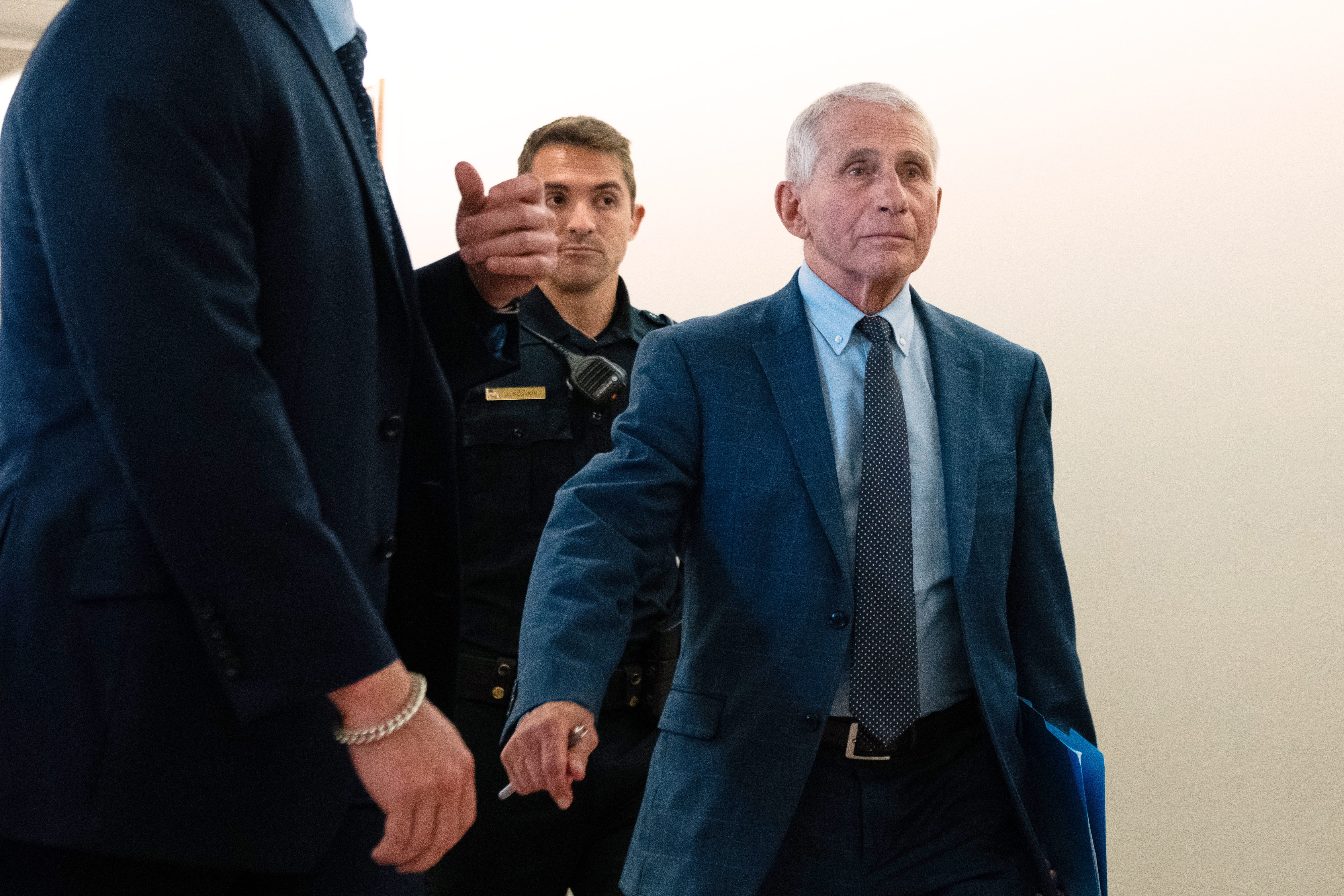
    Two Republican senators on Monday released the first in a trove of text messages from Anthony S. Fauci’s former government cell phone, including a discussion with health officials about whether the COVID vaccine posed a risk for pregnant women.

    The messages were released by Sens. Ron Johnson (R., Wis.) and Rand Paul (R., Ky.), who lead panels investigating Fauci, the longtime infectious-disease scientist who left government at the end of 2022 after becoming a highly visible official helping lead the pandemic response.

    The texts appear to show an exchange between Fauci and top health officials in January 2021 related to the safety of the COVID-19 vaccine for pregnant women.

    In one message, according to screenshots the senators released, Fauci wrote: “Since many people have significant cytokines storm and fever after the 2nd dose. this theoretically could be associated with miscarriage in the 1st trimester.”

    “Definitely a good point, esp after dose two,” then-Centers for Disease Control and Prevention Director Rochelle Walensky responded.

    In a news release, the senators pointed to several subsequent public statements from Fauci and other administration officials in which they said the benefits of pregnant women getting vaccinated appeared to outweigh the risks.

    In February 2021, for instance, Fauci said the Food and Drug Administration has “found, thus far — and we’ve got to be careful — but thus far, no red flags about that, about pregnant women.”

    Some of the statements cited by Johnson and Paul occurred after the CDC officially recommended pregnant women get the vaccine in August 2021, citing an agency analysis that found no increase in miscarriage in pregnant women.

    In a statement, Johnson said the release of the texts “could have an immediate impact on public health.” He added that “you don’t wait a day, months, or years, to inform the public of potential dangers.”

    The CDC states that with more than a million pregnant women vaccinated globally, studies have not shown increased risk for complications like miscarriage, preterm delivery, and more. Health officials have said such past exchanges reflect the evolving nature of the science and debate at the time.

    Fauci declined to comment on the released messages. Walensky and Vivek H. Murthy, at the time a member of President Joe Biden’s COVID advisory board who was also included in the texts, did not immediately respond to a request for comment.

    Pregnant women are historically excluded from clinical trials, including those for the coronavirus vaccine. But it became clear that contracting the virus during pregnancy could be associated with increased risk of preterm birth and other adverse outcomes, and so health officials concluded that the benefits of vaccination appeared to outweigh the risks, according to a former public health official who spoke on the condition of anonymity to speak candidly.

    The senators said the texts are among more than 34,000 recovered from a copy of Fauci’s former iPhone. It also contains 522 voicemails, they said. The phone was obtained from the Department of Health and Human Services, now led by fellow Fauci critics, including Health Secretary Robert F. Kennedy Jr.

    “Now that we have the documents and Fauci’s government-issued phone, my investigation has only just begun,” Johnson, the chairperson of the Senate’s permanent subcommittee on investigations, wrote Monday on social media.

    As part of Paul’s investigation of Fauci, HHS also turned over years of Fauci’s personal diary entries that were collected from government servers.

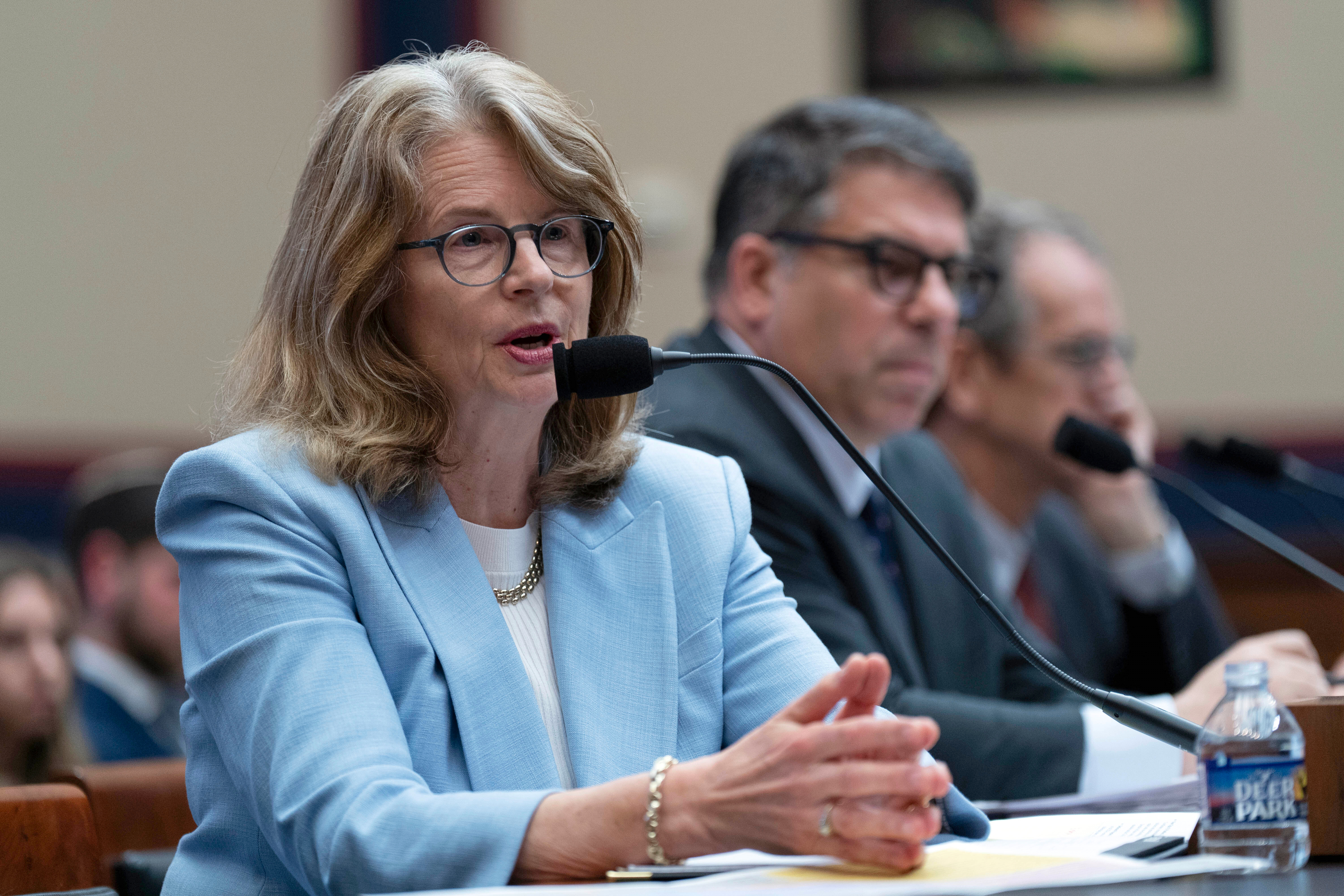
    Last week, a Senate committee that Paul chairs voted along party lines to hold Fauci in contempt of Congress after he declined to answer its questions and accused Paul of trying to wrongly entrap him. The Justice Department, which is not obligated to prosecute Fauci, said it received Paul’s letter referring the matter but did not confirm whether it planned to pursue any criminal charges.

    In April 2021, a New England Journal of Medicine article written by CDC officials stated that preliminary findings “did not show obvious safety signals” among pregnant women who received the vaccines — meaning there wasn’t an unusual number of adverse events — but added that more follow-up was needed.

    “Our societies [American College of Obstetricians and Gynecologists and Society for Maternal-Fetal Medicine] were strongly recommending and advocating for pregnant women to have access to COVID vaccines in the earliest stages of the pandemic because those of us who were dealing withCOVID in pregnancy were seeing exceptionally high rates of complications,” said Neil S. Silverman, a member of the Society for Maternal-Fetal Medicine’s Infectious Disease and Emerging Threats Committee and maternal-fetal medicine faculty at the David Geffen School of Medicine at UCLA.

    Fauci has faced numerous legal threats from Republicans, including Paul and Johnson, who accuse him of covering up his agency’s funding of risky coronavirus research in Wuhan, China, before the virus was first detected there. Fauci has dismissed those claims as “preposterous.”

    Kennedy, his allies, and some Republicans in Congress have expressed concerns about vaccine safety.

    Kennedy, the founder of a prominent anti-vaccine group, has been an outspoken critic of mRNA-based shots, and once called the coronavirus shots “the deadliest vaccine ever made.” Medical experts say COVID-19 vaccines are effective at protecting people from getting seriously ill, being hospitalized, and dying.

    Last year, Kennedy sought to no longer recommend the coronavirus vaccine for healthy pregnant women. The American College of Obstetricians and Gynecologists said it was “concerned” and “extremely disappointed” by the move, and the medical society has continued to recommend the shot for pregnant women.

    On Monday, President Donald Trump signed an executive order that called for cutting the number of recommended childhood vaccines, spacing out those shots and making other changes that would upend decades of federal guidance on vaccines for children.

    Speaking in the Oval Office, the president reiterated his long-held claim that childhood vaccines have led to a rise in U.S. autism cases, an idea that outside researchers have largely debunked.

  • How the Haverford antisemitism settlement harms free speech

    I believe in Israel.

    I oppose its current leadership and its policies in Gaza and the West Bank. But I support its right to exist as a Jewish state. And I reject the idea that Zionism is inherently racist or malevolent.

    That’s why it’s important for me to hear from people who see Israel differently than I do. I need them to question, provoke, and challenge me. That’s how I learn.

    And that’s also why I’m worried about the settlement Haverford College announced last week, pledging to protect Jewish students from antisemitic speech. In a statement, Haverford president Wendy Raymond declared that the college would not tolerate “discrimination, harassment, and bias” against “students who identify as Jewish” or “those who support Zionism.”

    So does that mean you won’t be able to say “Zionism is racism” or “Israel is an apartheid state”? The lawyer representing Jewish students who sued the school — and who said she was “very pleased” with the settlement — seemed to think so.

    “It’s a new form of antisemitism, saying, ‘Oh, no, I don’t hate Jews, I just hate Zionists,’” she said. “For a Jew to hear that was incredibly painful.”

    I’m sure that it was. I’m Jewish, and anti-Zionist rhetoric is hard for me to hear, as well.

    But that’s why I should hear it. Zionism is probably the most contested question on our campuses right now. Unless everyone can address it, freely and openly, we’ll never get a good purchase on it.

    Wendy Raymond, president of Haverford College, pledged that the college would not tolerate “discrimination, harassment, and bias” against “those who support Zionism.”Jose Luis Magana

    Ditto for Columbia, where I went to college 40 years ago. Back then, you could argue about anything. But now Zionism, too, is effectively off the table.

    That’s because the university adopted the International Holocaust Remembrance Alliance’s definition of antisemitism. According to the IHRA, “claiming the existence of a State of Israel is a racist endeavor” and “drawing comparisons of contemporary Israel policy to that of the Nazis” are antisemitic.

    But a competing standard, the Jerusalem Declaration on Antisemitism, argues that “criticizing or opposing Zionism as a form of nationalism” or offering “evidence-based criticism of Israel as a state” are not, on their face, antisemitic. Haverfordʼs settlement seems to lean entirely on the first definition and ignores the second, which has not been adopted by the college or most other institutions, but was endorsed by Bucknell University’s faculty last year.

    Under the IHRA definition, would a student or professor who said Israel was committing genocide in Gaza — like the Nazis did in Europe — face punishment at Columbia? I don’t think Israel’s action in Gaza constitutes genocide, but I know other historians do. And again, I need to hear from them.

    In their 2024 lawsuit against Haverford, Jewish students complained that a professor called supporters of Israel “racist genocidaires.” I can understand why they felt “pain and harm” about these kinds of comments, as Raymond acknowledged at the time.

    But you can censor anything — literally, anything — on those grounds. During the 2016 presidential campaign, students at Emory University said they were harmed by campus chalk messages backing Donald Trump. “Supporting him, repeating his catchphrases [is] an implicit attack on the Muslim, Latinx, Black, and other communities at Emory and across the country,” protesters declared. “This is not political expression; it is hate speech.”

    And in 2021, Harvard biology professor Carole Hooven caused an outcry when she told Fox News that gender could take any number of forms, but sex is binary: male or female. After a colleague denounced Hooven’s “transphobic and hateful” comments on Twitter (now X), she became a campus pariah. Her mental health plummeted, and she resigned.

    Like Zionism, the biology of sex is a hugely contested and complicated matter. And we won’t be able to learn more about it if we inhibit discussion of it.

    How many people celebrating the new restrictions on anti-Zionist speech at Haverford would be OK with prohibiting claims that sex is binary? Likewise, would any of the critics who pushed out Hooven rest easily if critics of Israel were silenced, too?

    We all want to have our own say, of course. But when we feel pained or harmed by someone else’s political expression, we call it hate speech. And we try to blot it out.

    To be clear, nobody should be subject to threats of physical violence. Whatever you think of Zionists on campus, you can’t say you’re going to assault or murder them. That’s against the law, and our colleges should be vigilant in enforcing it.

    But at Haverford, it would now appear, you can’t say anything negative about Zionism. Period. If you don’t think Israel should exist, you’re an antisemite. And you need to keep your big mouth shut.

    I know some people on campus have been “deeply hurt” by anti-Israel rhetoric, as Raymond said in her statement last week. But once that becomes the barometer for what the rest of us can say, we won’t be able to speak — or listen — across our differences. Isn’t that why we gather at universities in the first place: to learn from each other?

    Either you believe in free expression for everyone, or you don’t believe in it at all. Period.

    Jonathan Zimmerman teaches history and education at the University of Pennsylvania. He is the author of “Schooling Citizens: How Education Can Save Democracy,” which will be published next spring by the American Philosophical Society Press.