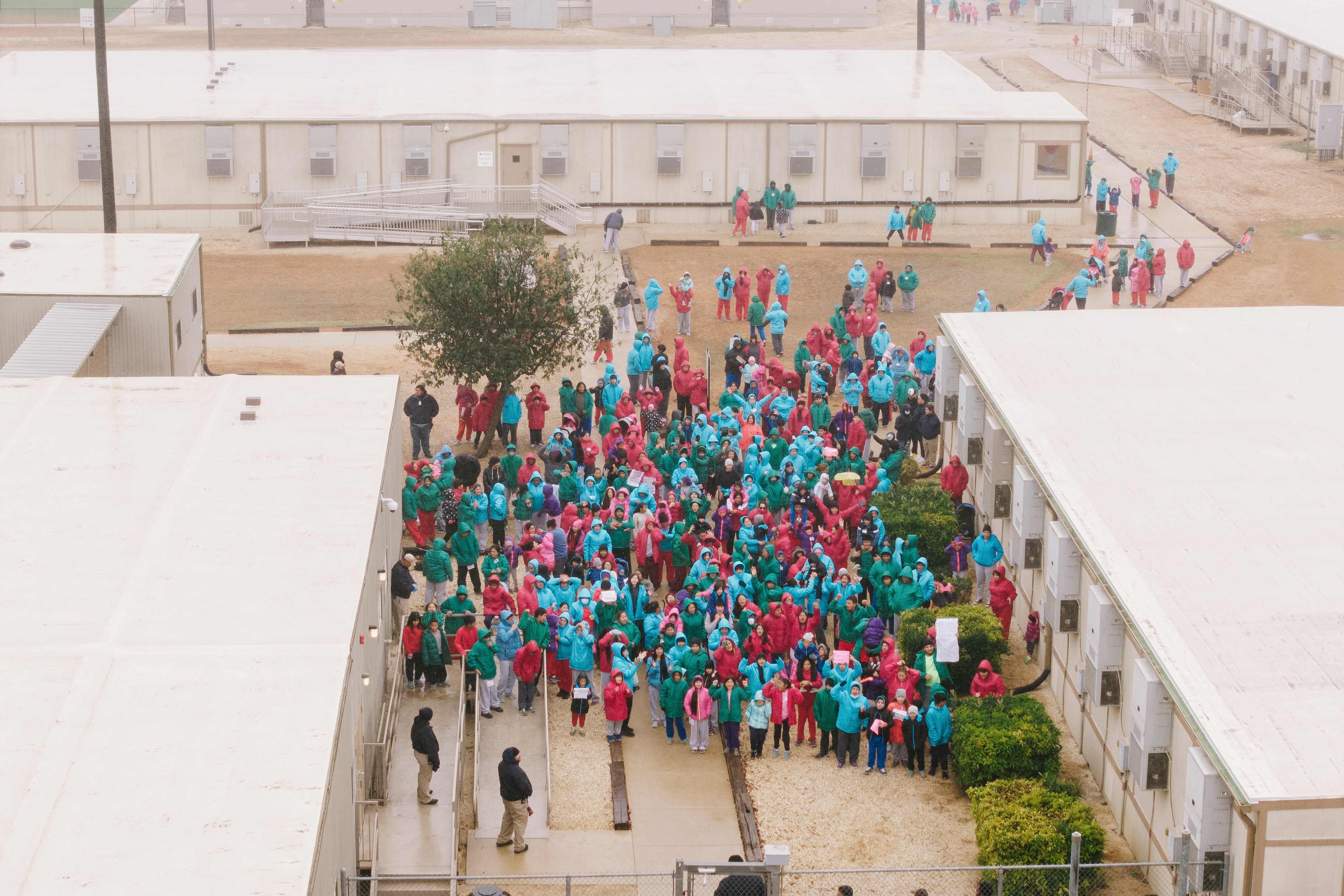
The Trump administration has awarded a $158 million contract to represent unaccompanied migrant children to a nonprofit group founded by a former immigration agent who inspired the film Sound of Freedom, a federal contracting database shows.
A notice of the award to the Minneapolis-based group Our Rescue, which combats child trafficking, was posted online late Friday. The contract is with the Office of Refugee Resettlement, which oversees the care of minors who cross the border without authorization and without a parent or guardian. The award could increase up to $244 million, the contract notice showed.
President Donald Trump’s administration in recent weeks has pivoted away from working with advocacy groups that previously represented the minors. Last week, a small Texas law firm with ties to the Trump administration was awarded a $150 million no-bid contract to represent unaccompanied minors in their immigration court proceedings.
That firm, Burke Law Group, is helmed by Marcella Burke, a former Trump appointee. Immigration advocates criticized the contract and the Trump administration’s decision to cut ties with groups that had two decades of experience in legally representing minors.
Our Rescue was founded in 2013 by Tim Ballard, a former U.S. Immigration and Customs Enforcement agent who quit his job and embarked on efforts to rescue children from sex trafficking rings in countries including Colombia, Haiti, Mexico, and Thailand. His work was loosely fictionalized in Sound of Freedom, a 2023 film starring actor Jim Caviezel that drew acclaim from conservatives.
Others, however, criticized the movie for catering to unfounded conspiracy theories, including those peddled by the far-right group QAnon.
During Trump’s first term, Ballard was appointed in 2019 as a co-chair of a council tasked with making antitrafficking recommendations to the White House.
Ballard abruptly left Our Rescue in July 2023, days before Sound of Freedom was screened at Trump’s private club in Bedminster, N.J.
Three months later, a group of five women filed a lawsuit in Utah state court alleging Ballard had coerced them into sexual acts as part of his trafficking rescue missions tied to the organization, then known as Operation Underground Railroad (OUR).
A separate federal lawsuit in 2024 accused him of sex trafficking and forced labor. Both lawsuits remain active.
The Office of Refugee Resettlement and Ballard’s attorney did not respond to requests for comment.
Our Rescue’s website states that it works with law enforcement and other partners around the world to provide services to people who are vulnerable to trafficking and exploitation. It is not clear whether the organization employs immigration attorneys with expertise in providing legal counsel to minors.
Derek Benner, the organization’s chief executive, said in a statement that ensuring unaccompanied minors have access to support and are protected from exploitation aligns with his group’s mission.
“These are among the most vulnerable children in the world, and they deserve nothing less than the full weight of our experience,” said Benner, who is also a former ICE agent. “We welcome this responsibility and are working on their behalf.”
Michael Lukens, executive director of the Amica Center for Immigrant Rights, which provides legal representation to children in the Washington, D.C., area, accused the Trump administration of seeking to ramp up deportations of minors by going after their legal representation.
The administration is trying to “make sure that the kids have an attorney on paper but are not actually providing meaningful legal advocacy,” Lukens said.
Lukens said his organization has not received notice from the government about transferring the immigration cases of minors to the new contract holders. He said his group continues to represent unaccompanied children in cases where they have been retained.
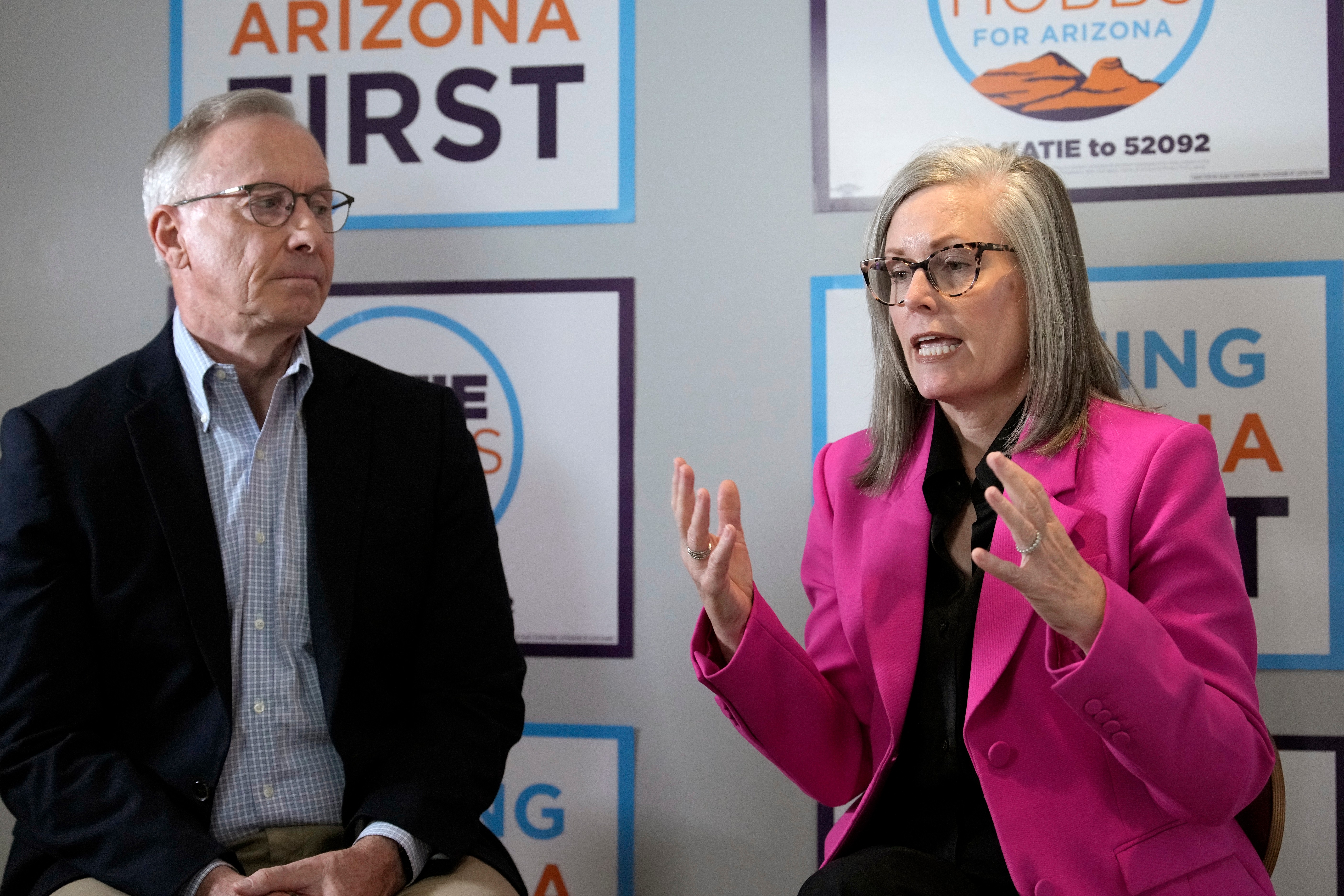
PHOENIX — Democratic Arizona Gov. Katie Hobbs has picked a Republican-turned-independent to be her running mate in a tough reelection campaign, setting up a bipartisan ticket as voters elect the state’s first lieutenant governor.
Hobbs’ selection Tuesday of John Giles, a former mayor of Mesa, a Phoenix suburb that is Arizona’s third-largest city, is an overture to the Republicans and conservative independents she must win in a state that was once a GOP stronghold. Republicans have expanded their voter registration advantage over Democrats since Hobbs eked out a narrow win over Kari Lake, a fierce ally of President Donald Trump, in 2022.
Hobbs is considered the most vulnerable Democratic governor in the country. Giles, a registered Republican for decades, changed his party affiliation to independent on May 17 and voted in the Democratic primary last month, according to county voting records.
The Republican nominee is U.S. Rep. Andy Biggs, who last week picked Sine Kerr, a farmer and Republican former state lawmaker, to be his running mate. Kerr’s rural roots balance Biggs’ base in parts of metro Phoenix.
In an interview with the Associated Press before Hobbs publicly announced that she had picked Giles, he said he still considers himself to be a conservative and said he stuck around the Republican Party probably longer than he should have in a crusade to save it. “A few months ago, I realized that it was time to give up that crusade,” Giles said.
Giles led a conservative city for a decade
Giles, who was Mesa’s mayor from 2014 to 2025, has been a vocal Trump critic and has endorsed Democrats, including Trump’s 2024 rival, then-Vice President Kamala Harris. Giles spoke in favor of Harris at the Democratic National Convention, saying Trump’s policies would hurt Mesa.
Giles also backed Democrats running against Trump allies, including Hobbs in her 2022 race against Lake and the state’s current U.S. senators, Mark Kelly and Ruben Gallego.
As mayor, Giles signed a proclamation promoting equal treatment for lesbian, gay, bisexual, and transgender residents in housing and accommodations, a controversial move in the conservative city.
The Biggs campaign, in anticipation of Hobbs’ announcement, launched a website highlighting Giles’ support for Harris in 2024 and his participation in the Democratic convention. Drew Sexton, a senior adviser in the Biggs campaign, issued a statement early Tuesday saying Hobbs’ selection of Giles “is of no surprise to Arizonans who have been paying attention. As Kamala Harris’ favorite Arizona mayor, Giles is aligned with Hobbs on all the issues that have hurt Arizonans the most over the past four years.”
Sexton also said Giles “has been an aspiring Democrat since he first voted for Joe Biden in 2020.”
As a member of the Church of Jesus Christ of Latter-day Saints, Giles can be an ambassador for Hobbs. Church members make up about 6% of the Arizona population. Latter-day Saints, widely known as Mormons, have been a reliably Republican voting bloc for decades, but many have been ambivalent about Trump since his first run for the White House.
Democrats have been working to woo Latter-day Saints turned off by Trump’s penchant for foul language and demeaning rhetoric toward women and people of color, which clashes with the church’s values of humility, morality, and compassion.
Biggs is also a member of the church.
Picking a former Republican as a running mate hones the bipartisan image Hobbs has tried to create, contrasting with Biggs’ background as a far-right congressman and, before that, the state Senate president. But it also risks inflaming tensions on the left.
In the AP interview, Hobbs said she takes a nonpartisan approach to her work in government. When she was asked whether some supporters might be frustrated because she picked a former Republican as her running mate, she said, “It shouldn’t be a surprise.”
Both Hobbs and Giles portray Biggs as an extreme partisan. Giles said it’s disingenuous for Biggs to present himself as more of a moderate when he was “unapologetic about being the most conservative person in the roo in any room.”
Arizona is electing a lieutenant governor for the first time
Arizona is one of just five states without a lieutenant governor position, along with Maine, New Hampshire, Oregon, and Wyoming.
That will change in January.
Voters added the post in 2022 to more clearly define the line of succession. Until then, the secretary of state will continue to serve as the next in line to be governor.
Gubernatorial succession is especially relevant in Arizona, where five governors since 1975 have entered the office through succession rather than election.
In fact, of Arizona’s 12 governors over the past 50 years, only one, Republican Doug Ducey, entered and left the office through the typical pathways of being elected and serving out a full term. Among the others, one died, one was impeached and removed, one resigned after being convicted of fraud, and two quit to accept presidential appointments.
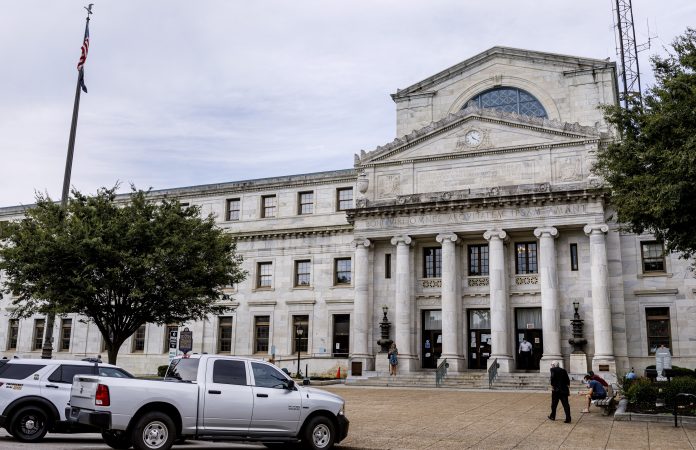
When Michael Nixon pulled the trigger on the handgun he was carrying last May, he robbed Khalief Webster Jr. of his future, Webster’s family of a loving son, and the community of any semblance of safety, Webster’s mother said Tuesday in a crowded Delaware County courtroom.
“Khalief was not just the headlines, not just the crime scene tape that haunts me through the night, not just a victim,” Talaya Shaw said of her 17-year-old son. “Khalief was a young boy growing into a young man with a heart bigger than this world could handle.”
And Nixon, she told Judge Deborah Krull, “had no God-given right to decide when and how he left this world.”
For killing Webster, Nixon, 18, of Upper Darby, was sentenced to 18 to 36 years in state prison. Nixon pleaded guilty to third-degree murder earlier this year for the fatal shooting, which unfolded in May 2025 as the two teens, classmates at Upper Darby High School, crossed paths on Long Lane near Pine Street.
Emotions and tempers flared during Nixon’s hours-long sentencing, which the judge had to pause multiple times to rein in outbursts from those who filled the standing-room-only courtroom. Webster’s friends and relatives screamed to be heard, calling Nixon a coward, among other insults, and demanding justice.
Sheriff’s deputies barred more people from entering the hearing, and had to respond to a scuffle that erupted outside the courthouse after Nixon’s sentence was handed down.
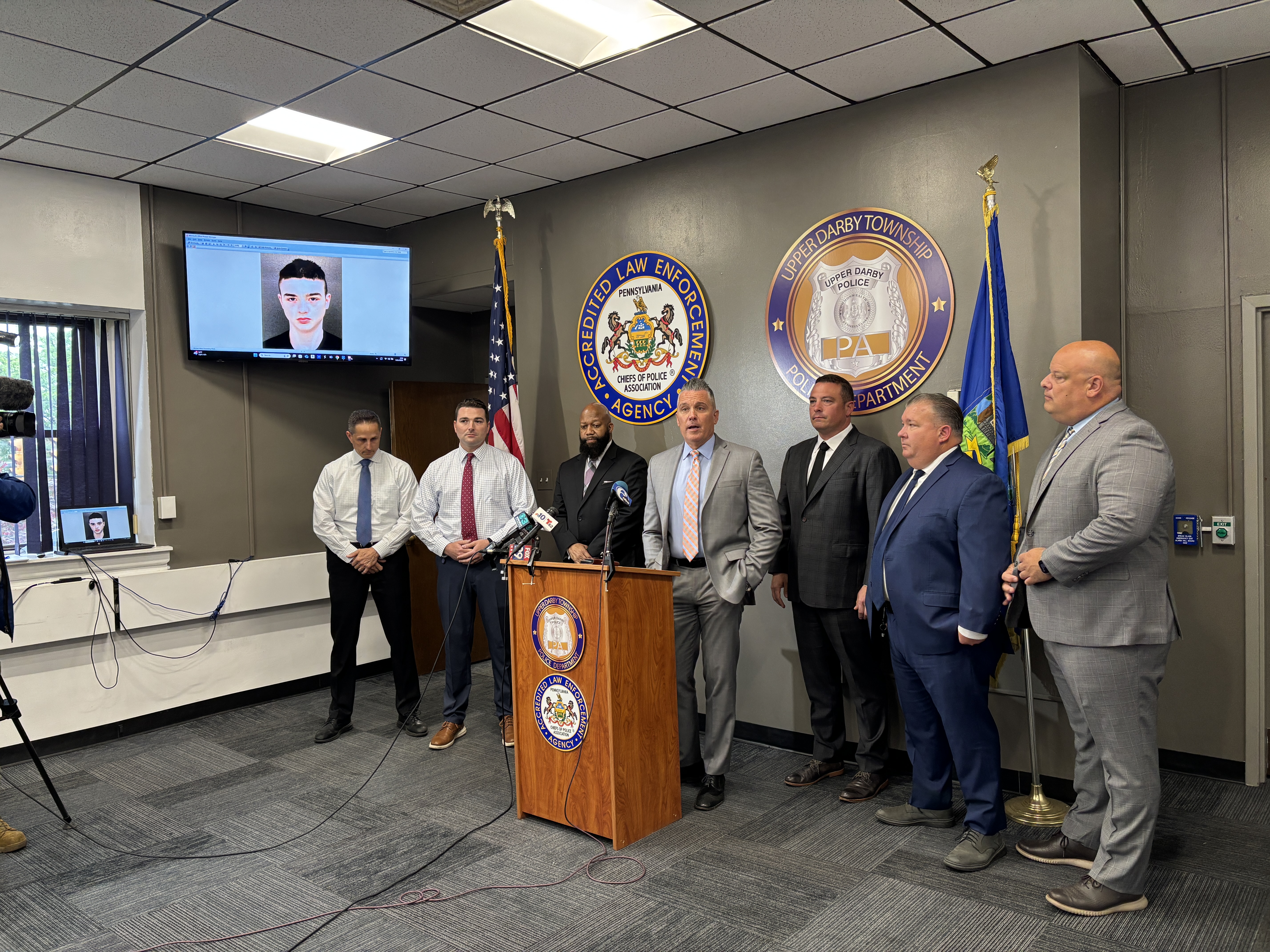
In May 2025, Upper Darby Police Superintendent Tim Bernhardt (center) announced the arrest of Michael Nixon for the murder of Khalief Webster.Vinny Vella / Staff
On the day of the shooting, Webster was riding a miniature dirt bike when he encountered Nixon, who had walked 25 minutes from his own neighborhood to the area, according to investigators.
What happened next was the subject of debate during Tuesday’s hearing.
Nixon’s attorney, Pete Manaras, said Webster asked his client if he was the “young boul” he had seen “the other day,” and got off the bike to confront him.
The two teens, he said, knew each other and had gotten into disputes before. Nixon, fearing for his safety, shot Webster in the abdomen, Manaras said.
But Senior Deputy Attorney General Christopher Phillips, who prosecuted the case, said Nixon was the aggressor. He was out looking for Webster, Phillips said, armed and lying in wait in an area where he knew he would encounter the other teen.
“The public needs to be protected from people that would do such a thing on a sunny afternoon, on a beautiful May day, to a young man who didn’t see it coming,” Phillips said.
After the shooting, Nixon fled and was recorded on a surveillance camera telling someone on a phone call that he had shot somebody in the chest, according to the affidavit of probable cause for his arrest. Nixon’s mother then picked him up and drove him away.
Nixon addressed Webster’s family Tuesday to apologize, saying he wished he could take back what had occurred.
“I didn’t want to kill him. I never wanted to hurt him,” Nixon said. “I was just scared and my body reacted before my mind.”
Nixon said he encountered Webster by chance. He was carrying the gun because of previous run-ins with him, he said, and needed it for protection as he walked to a friend’s house.
Webster grabbed at his waistband as he confronted him, Nixon said. He believed Webster was reaching for a gun and reacted.
Nixon said he had grown up in an abusive household and that made him “perceive everything as a threat” and grow anxious when people get too close to him.
“I’m not saying this as an excuse for my actions, because I know I deserve to be locked up for what I did,” he said. “But that doesn’t mean I don’t want to turn my life around, because I do.”
Webster’s relatives, including his grandmother, Charlotte Webster, said that while they have not yet forgiven Nixon, they know that will come in time through their faith.
Still, she said, the pain Nixon caused their family was devastating.
“I believe this was a deliberate, heinous crime he committed,” she said. “He didn’t care about anything or anyone.”
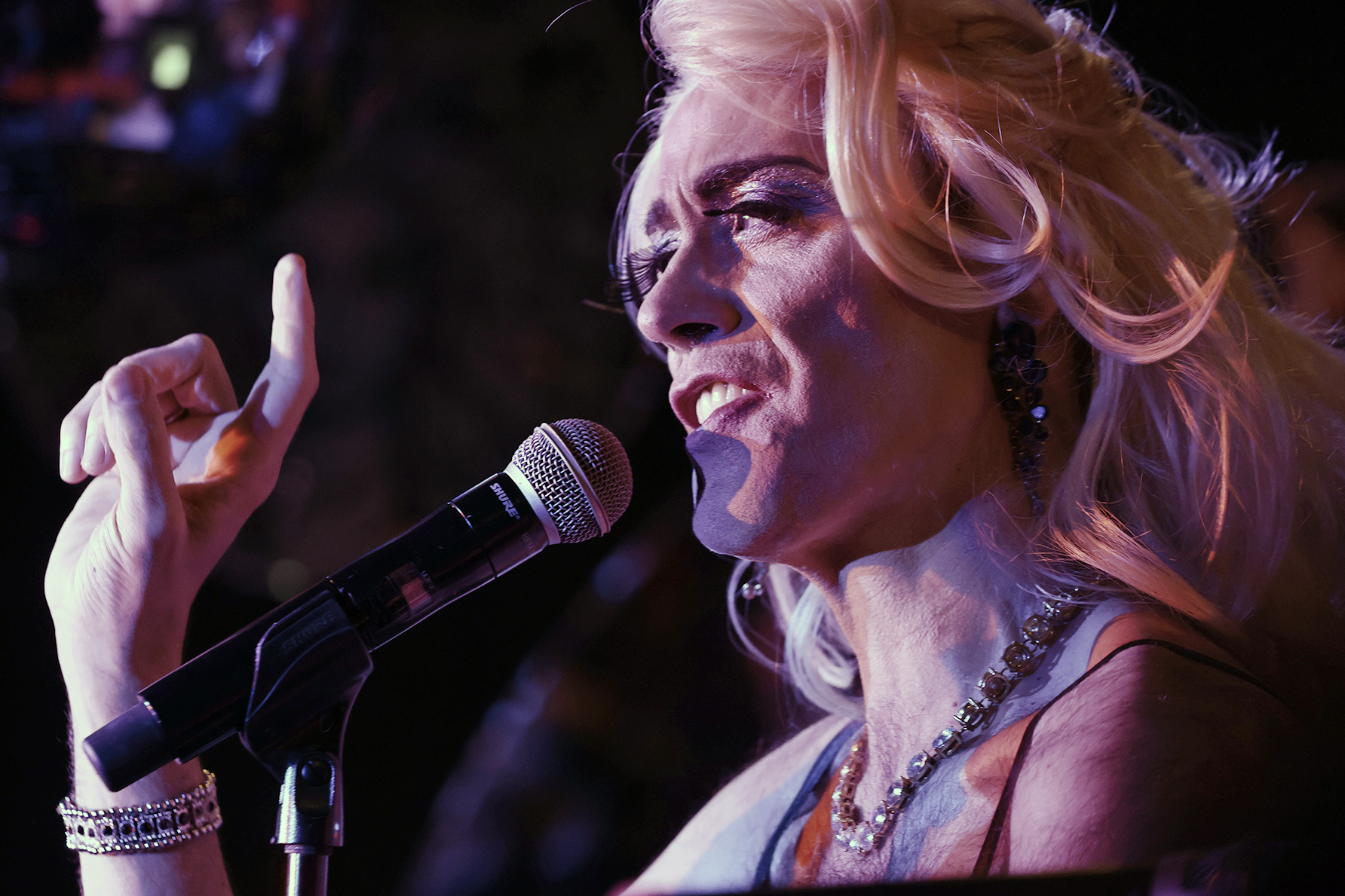
Following the recent death of beloved artist Dito van Reigersberg — who performed as Philly’s legendary drag queen Martha Graham Cracker — his friends, family, and fans are working on two scholarship funds for the city’s artists and students in van Reigersberg’s honor.
Victor Fiorillo, the cabaret pianist who performed with van Reigersberg for years, has launched the Martha Graham Cracker Scholarship Fund to support drag and cabaret artists through microgrants. FringeArts will administer the funding, and the first phase will award $500 in unrestricted funds to three individuals or ensembles performing in the 2026 Fringe Festival.
Fiorillo developed the idea in early August after seeing photos on social media remembering a Martha Graham Cracker Cabaret band fundraiser last year that celebrated the 40th anniversary of Philadelphia’s legendary Live Aid concert. Fiorillo and van Reigersberg raised more than $25,000 for Blood Cancer United (then called the Leukemia & Lymphoma Society) to help others struggling with the kinds of cancer that affected van Reigersberg, who died June 1.
In less than a week, Fiorillo has raised nearly $11,000 with donations from van Reigersberg’s mom, Stephanie van Reigersberg, and longtime Martha fans, like Jose Pistola’s owner Casey Parker and Johnny Brenda’s owner William Reed. He initially raised $5,000 from friends and fans before opening the fund to public donations through GoFundMe. “It was just a no-brainer for people” to say yes, Fiorillo said.
“It’s not only about Martha, of course, it’s about furthering the cabaret and drag arts in Philadelphia … I think of it as paving the way for the next Martha — not that I think that Martha could ever be replaced, but that’s certainly the idea,” said Fiorillo, a reporter at Philadelphia Magazine who lives in West Philly.
“Dito and I both sort of came from privileged backgrounds. We had the money to pay musicians. We never struggled to make Martha a thing. We never had to bet the bank on it or take out a second mortgage. But having worked with so many artists over the years, we know how much some of them struggle.”
Applications for microgrants for 2026 are now open. Fiorillo added that he plans to work with a financial planner to ideally establish the fund long-term. The next 2027 phase of microgrants will be open to drag and cabaret artists outside of the Fringe Festival as well.
Another scholarship fund memorializing van Reigersberg is in the works at Pig Iron Theatre Company, the experimental theater group and school that van Reigersberg cofounded.
Though still in early planning stages, the Dito van Reigersberg Legacy Fund would support artists and students in two ways: by establishing scholarships for Pig Iron graduate students to partially cover tuition costs and through funding Pig Iron’s program The Island, which van Reigersberg codeveloped.
The Island provides artist ensembles with studio space and production support to experiment and workshop performances without the pressure of delivering a final product. (Pig Iron artists have used The Island to eventually create full productions, like 2008’s OBIE Award-winning Chekov Lizardbrain.) The Legacy Fund would finance Pig Iron’s current Island program and invite collaborations with new artists. Additionally, the fund would establish an Island residency for artists, either individually or as a group, to receive two weeks of dedicated time and space for ideation.
“I watched Dito open so many doors for so many emerging artists [especially] in the queer community, just [by] saying, ‘You belong and what you do is valuable.’ For us to be able to carry that on just feels like a gift,” said Pig Iron coartistic director Quinn Bauriedel.
Their goal, Bauriedel said, is to create “a board-designated legacy fund that would operate like an endowment, meaning there would be a principal and the interest would be spent every year,” supporting graduate student scholarships and The Island programs.
Bauriedel hopes to raise between $1 million to $2 million in the coming years and begin offering the graduate student scholarships in fall 2027. Pig Iron will seek contributions from institutional and individual donors. He added that members of van Reigersberg’s family have agreed to serve on the selection committee for recipients.
“Running an experimental theater company and school is a precarious enterprise … I just have this strong feeling that now, Dito, in his next phase, is helping to save the whole enterprise,” said Bauriedel.
“He was always doing special things, and this is yet another one where he might help young artists … who just need to have somebody wrap their arms around them and say, ‘What you’re doing is important and meaningful, even if nobody quite understands it yet.’ Dito continuing to open that door is just beautiful.”
Wendell Smallwood Jr. will be by his daughter’s side in her final days after being granted early release from prison.
Gloucester County Superior Court Judge Renard Scott approved a motion to withdraw Smallwood’s guilty plea from last year, on August 7, in order to see his dying daughter, The News Journal reported on Monday.
Mila, Smallwood’s eight-year-old daughter, was diagnosed with diffuse anaplastic Wilms tumor, an aggressive and rare childhood kidney cancer, in 2026. After unsuccessful chemotherapy treatments, she is in palliative care and is expected to live for weeks at most, according to the report.
Smallwood, a former running back with the Eagles, Commanders and Steelers, was sentenced to 18 months in prison last September for a COVID-19-related fraud scheme. He pleaded guilty in December 2024 to charges of felony wire fraud, conspiracy and tax fraud tied to economic relief programs.
In March, he pleaded guilty to second-degree unlawful possession of an assault firearm for possessing an AR-15 rifle in New Jersey. He was sentenced to three years in state prison, concurrent to his federal sentence.
At the time, New Jersey banned the ownership of assault weapons, but a July ruling from the 3rd Circuit Court of Appeals ruled that New Jersey’s ban on assault weapons was unconstitutional. This provided Smallwood legal grounds to withdraw his guilty plea.
Smallwood’s emergency hearing on August 7 ruled that Mila’s severe illness was a notable reason for granting Smallwood’s motion, which could have seen him released as early as Monday.
CHICAGO — Toyota is recalling about 655,000 of its Camry vehicles globally, the automaker confirmed Tuesday, due to a display error that may deactivate safety indicators like turn signals and hazard lights during start-up.
Most of the now-recalled cars were sold in the U.S. — where more than 508,000 model year 2025-2026 Camry Hybrids are affected.
According to documents published by the National Highway Traffic Safety Administration, these vehicles are equipped with a 7-inch display combination meter that can become blank at start-up. And beyond turn signals and hazard lights, certain warnings like seat belt reminders and “key left in ignition” buzzers may also not function as a result.
These display failures increase crash risks — both for drivers who may not be able to see telltale indicators and “the ability of other road users to recognize the driver’s intent to change direction or indicate a vehicle hazard,” the NHTSA warns.
Texas-based Toyota Motor North America — a subsidiary of the larger Japanese automaker — says it will notify all known owners of the affected Camrys to bring their vehicles into a certified dealer. To remedy the issue, those dealers will later provide a software update free of charge.
Owner letters are set to be mailed starting Sept. 21 in the U.S., and Toyota expects to complete those notifications by early October. In the meantime, customers can check the NHTSA’s and Toyota’s online recall lookups to see if their car is affected.
Toyota confirmed to the Associated Press via email Tuesday that its recall affects markets in North America, the Middle East, Asia, and some countries in other regions. The company said the 655,000 vehicles impacted globally were produced between December 2023 and July 2026 — across three plants located in the U.S., Japan, and Thailand.
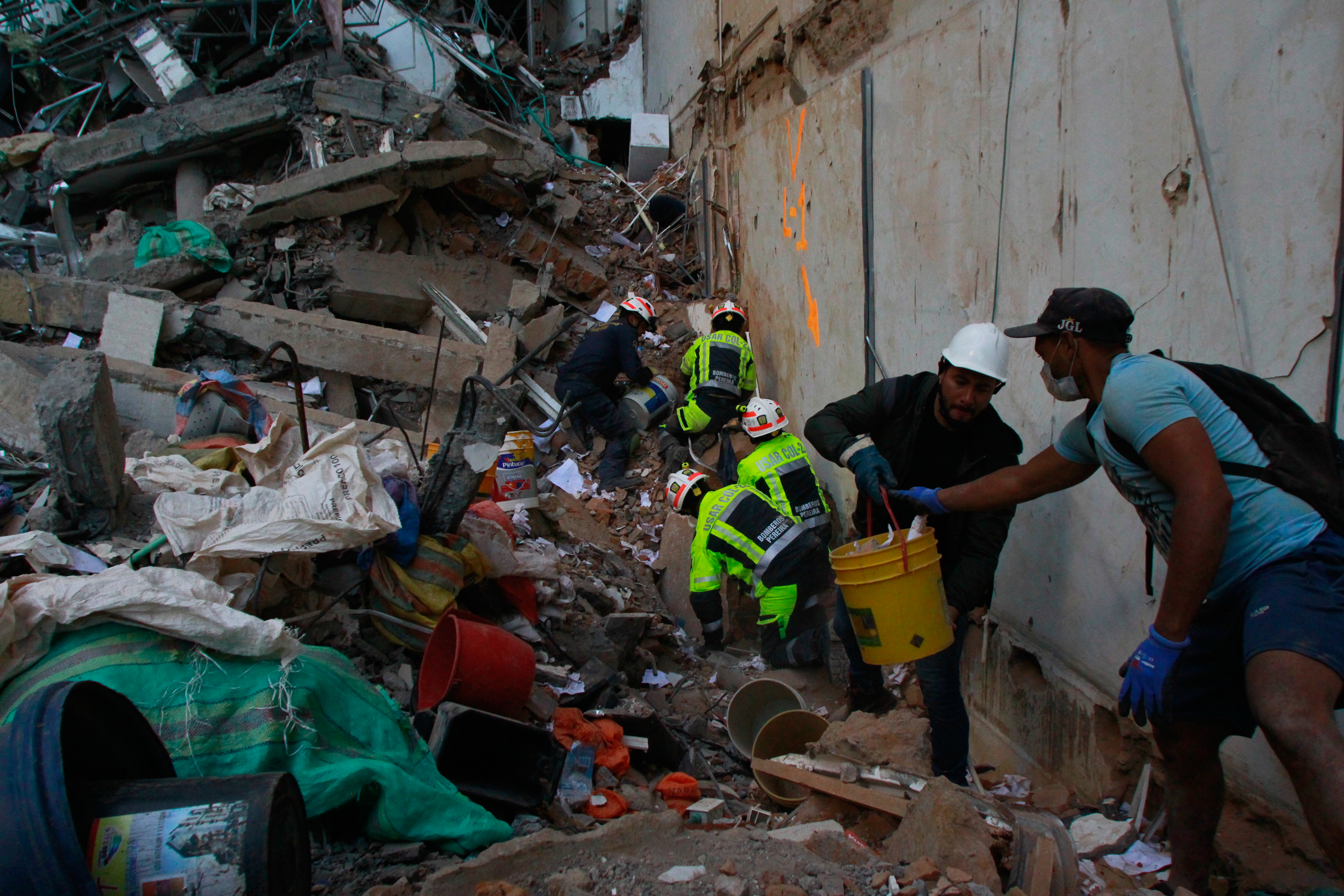
PEREIRA, Colombia — Rescue crews and civilians in Colombia painstakingly searched through rubble Tuesday in the hopes of finding survivors trapped under debris after a powerful earthquake left thousands missing in dozens of cities and towns.
The 7.4 magnitude earthquake that hit western Colombia on Monday wreaked havoc, collapsing buildings, buckling roads, crushing cars, and leaving devastated residents to console each other among the wreckage of their homes. Excavators and heavy machinery cleared heavy chunks of concrete, while buckets of rubble were passed hand-to-hand along a line of volunteers.
Rescue crews and volunteers picked through flattened concrete buildings in affected cities, searching for signs of life. They raised their hands to call for silence when they thought they heard someone beneath the piles of debris. At least one woman was retrieved — alive — from the rubble.
Colombian President Abelardo de la Espriella said the earthquake killed at least 181 people and left 2,595 more injured. He said at least 195 remained missing, but civilian-run databases suggest that number could be closer to 4,000.
Crews race to find survivors
Authorities said the deaths were concentrated in the cities of Cali, Pereira, Manizales, and Quibdo, but local leaders and families worried about casualties and damage in rural areas, from where very little information has emerged. Aid agencies consider the first 48 to 72 hours crucial for retrieving people alive, though that threshold can be extended if they have access to food and water.
De la Espriella said more than 1,000 homes were destroyed and yet more damaged.
Standing near the remains of his brother’s collapsed apartment building in Pereira, Jairo Vargas said he made the 135-mile drive from Medellin, hoping to find him alive.
“I’m absolutely certain he’s here. Absolutely certain,” Vargas said, adding that his brother’s car was still parked outside. But he fears his sibling did not survive.
“The debris surrounding my brother is soft,” he said, as heavy machinery rumbled nearby. “It’s possible that it’s protecting him, but we can’t hear any noises anymore. I don’t know. I have little hope.”
Colombia’s new president faces his first serious challenge
The earthquake presents the first major test for first-time officeholder de la Espriella, who entered office just days before the natural disaster. The leader, who split the country in recent elections, now seeks to unite Colombia in its disaster response.
That challenge was particularly notable in Choco, the region at the quake’s epicenter. It is one of Colombia’s poorest and most neglected regions, often beset by warring armed groups. Much of Choco is accessible only by boat, through the jungle, or by airplane.
Sterling Palacios, a religious and environmental leader in the region, said Choco’s capital and smaller communities along the Atrato River were devastated. Homes were reduced to rubble and aftershocks continued to rumble, terrifying residents who slept in the streets overnight.
The Colombian Geological Service said it has documented more than 100 less powerful aftershocks since the initial quake.
“There are towns where people have lost everything, where people have died, where homes have been destroyed,” he said. “We don’t have a full panorama of the damage, but we know it’s been massive.”
De la Espriella traveled to Quibdo in Choco on Monday night where he announced he was mobilizing “the entire military and police apparatus,” as well as deploying engineers, rescue workers, and search dogs.
“Choco will never again be the ‘land of the forgotten,’” he said.
Palacios said the government’s response has so far been “concentrated in the capital,” and that authorities were flying the wounded from Quibdo to hospitals in the city of Medellín.
The biggest challenge, he said, remains towns in rural areas only reachable by boat — journeys that can take hours or days. That response is also complicated by a toxic slate of armed groups warring for control who, during the COVID-19 pandemic, blocked healthcare workers from traveling to remote areas.
“It’s a risk and it’s very difficult to predict” what could happen, he said, adding it could take weeks to fully assess the devastation.
Desperate residents seek news of loved ones
Families posted information about missing loved ones on citizen-run websites.
Dana Carolina Zamora posted an image of her missing 60-year-old uncle, Miguel Ángel Zamora, cradling his dog. The farmer was living in a rural area of El Cairo, not far from the quake’s epicenter in San Jose Del Palmar.
Local authorities said 80% of El Cairo, a town of about 7,000 people, was damaged. Zamora said her uncle lived in a traditional house of sticks and mud.
“We are afraid. We hope that is not the case, that he is all right and that it is only a communication failure. But we haven’t heard anything from him,” Zamora said.
Mónica Sánchez, who lives in Pereira, one of the worst-hit cities, said when the quake happened a wall collapsed inside her clothing factory. Sánchez and her 12 employees escaped just in time.
“It was shocking — the city fell down around us,” she said.
On Tuesday, rescue workers pulled a woman alive from the rubble. Diana Troncoso lay on a stretcher, dusty and scraped up, with her eyes closed. Observers burst into applause as she emerged, but search teams raised their hand to call for quiet so they could continue their search for survivors.
Pereira and Cali enforced curfews Monday night to prevent looting, and private vehicles were banned from the roads of Pereira so ambulances, police, and rescue workers were able to navigate what’s left of the roads.
The U.S. State Department has announced it would provide $15.5 million for emergency shelter, food, and other aid. Governments across Latin America have also lined up to help.
“This has been a tragedy for the whole city, for thousands of families,” Pereira Mayor Mauricio Salazar told local media, his voice quavering. “But here we are, and we will continue forward with the hand of God.”
When President Bill Clinton deplaned in Islamabad, the sleight of hand became clear.
A decoy jet with all of the markings of Air Force One touched down in view of the news media, and a Secret Service agent resembling the president emerged. Then, an unmarked plane landed, and the real president disembarked.
It was March 2000, and Susan Page, a White House reporter covering the trip for USA Today, was one of a small group of people who knew about the ruse.
Before the India-to-Pakistan flight, White House officials called Page, then the White House Correspondents’ Association president, and summoned her for an off-the-record conversation. There, White House press and security officials explained the operation, informing her of the president’s location and safety measures in place for journalists on the trip, Page said in messages with the Washington Post.
“They told me about the extraordinary security procedures being taken because of the dangers in flying there, including use of the decoy plane,” she said. “Of course, the dangers threatened the journalists covering the trip as well as President Clinton.”
Page’s briefing, which has not been previously reported, meant at least one journalist in the traveling press corps knew the president would not be aboard Air Force One.
More than 25 years later, the White House faced a similar security dilemma — but handled the press very differently.
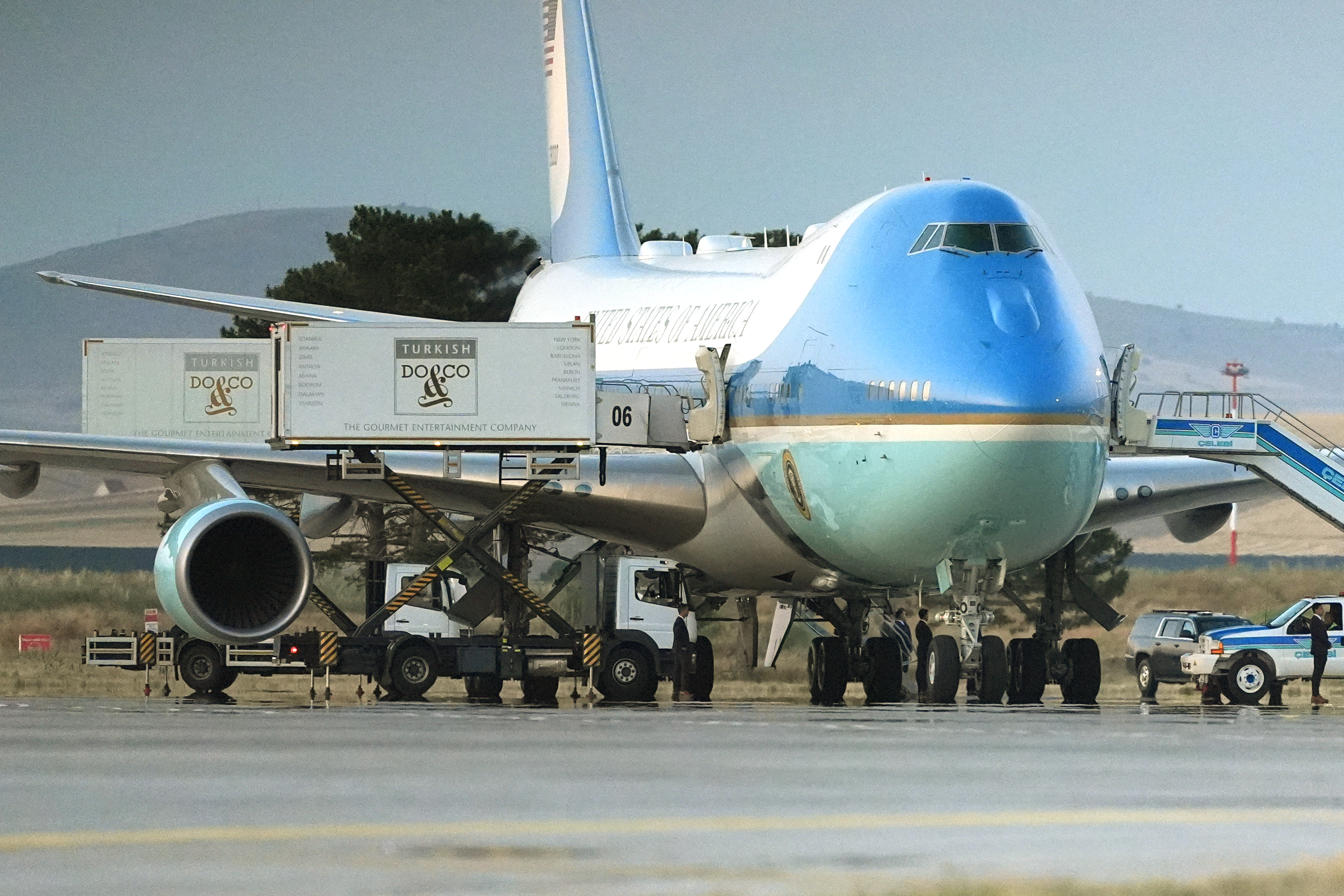
On Monday evening, the Post reported on an extraordinary maneuver in which security personnel in Turkey secretly moved President Donald Trump from a plane marked as Air Force One to a smaller, unmarked Air Force plane, using an airport catering truck. The operation, which took place last month, was prompted by a credible Iranian threat to Trump, the Post reported.
As the swap took place, reporters aboard the decoy plane, who were instructed to lower their window shades, were unaware of the president’s maneuver, according to the Post’s reporting.
The incident could further degrade the already-fraught rapport between the Trump White House and the press corps, a relationship marked by name-calling, threats, legal restrictions, and lawsuits from Trump.
Page, now USA Today’s Washington bureau chief, declined to comment on the newly revealed incident but broke a decades-old agreement with the Clinton White House to describe her experience.
“I haven’t spoken about this episode before, because of the off-the-record ground rules of that discussion,” Page said in a text message. “But since more than a quarter-century has passed — and since the ruse became evident as soon as President Clinton disembarked in Pakistan — I think it’s OK for me to relay it now.”
Jacqui Heinrich, current president of the WHCA, declined to comment.
The White House did not respond to a request for comment on the operation’s impact on the journalists aboard the decoy plane.
“As the President has said recently, there are many enemies of America who have their sights on him, and we use every tool at our disposal to address those threats,” White House Communications Director Steven Cheung previously told the Post.
The White House press pool consists of a rotating group of journalists who send reports, photos, and footage of the president’s activities for the entire press corps. This formal system has existed since 1937, though the White House first brought in a pooler in 1881 after President James Garfield was shot. Associated Press reporter Franklin Trusdell sat outside of the president’s room, monitoring his breathing and sharing updates with his colleagues.
The system is designed to ensure that someone from the press is present to observe the president’s movements and activities, giving the public an independent accounting.
Because the press was seemingly in the dark about the operation, Garrett Graff, a journalist and historian, said that the Post’s reporting describes an event that is probably unprecedented in modern presidential history.
“That the White House would lie to the press corps in its entirety about where the president is,” he said. “That’s a new Rubicon that’s being crossed.”
The breach was not merely one of journalistic access, according to Graff. The details of the threat that prompted Trump’s operation are unknown, so it’s impossible to calculate the risks to the press pool. However, the reporters aboard the plane were probably exposed to the very threat that had prompted the extraordinary security measures, Graff said.
“Knowing that this was a series of actions that the White House and the military took precisely because of a threat that they were deeply worried about, it makes it all the more egregious that the press was kept out of the loop,” he added.
Former CNN Pentagon correspondent Barbara Starr said that the press fully understands and respects the security requirements of covering the president.
But, she said, “there will be a level of distrust now that we have not seen before … their own lives were potentially at risk without them even knowing it, without them having the option of making a different choice of how to get home.”
Politico reporter Megan Messerly was the print pooler on the day of Trump’s trip. “We are wheels up from Ankara as of 8:43 p.m.,” she reported. “We have been advised to keep our window shades in the press cabin closed. See you on the other side.”
After landing, she wrote that the flight was “uneventful” with “no visitors to the press cabin.”
Hours later, a reporter peppered Trump with questions about whether there was a security threat to Air Force One that warranted the shades being closed, according to Messerly’s pool report.
“Well, I have a threat all the time. I’m number one on their list, before you,” Trump responded. “But if I go, you go. Right? Perhaps someday you want to change professions.” Messerly did not respond to a request for comment.
The disclosure quickly prompted a scramble among White House reporters for more information.
“We (and no doubt every other newsroom in Washington) are asking the White House and sources for more info,” NBC chief White House correspondent Garrett Haake wrote on X.
ABC’s Michelle Stoddart, who was the TV pool producer aboard the flight, sent WHCA members additional details on the trip, following the Post’s reporting.
“Upon arrival to the airport, the events did not seem particularly out of the ordinary to the travel pool,” she wrote. “Our photographer noted that the stairs were quickly pulled away as the press loaded.”
She said that a photographer seated behind her opened a shade on board and was quickly instructed to close it again by a White House staffer who said it was a “request from Secret Service.”
One White House reporter, speaking on the condition of anonymity because they weren’t authorized to speak publicly, said that they were outraged to learn about an operation that might have put the press corps in danger.
“When you sign up to work at the White House, even as a civilian, part of your job is to defend the president,” the reporter said. “That’s not my job. I cover the president. Reporters take risks as part of the job, but not on behalf of the president.”
Angela McDonald caught her breath on the sidewalk at the intersection of South 58th and Delancey Streets in Cobbs Creek, a few feet from where her son, Mark Ringgold, was killed last year in a hit-and-run crash by a speeding driver in a Jeep Cherokee.
She wants someone to answer for her son’s death and for the city to install speed bumps on the streets and other road-design changes to slow drivers down. And surveillance cameras.
“This is what my purpose is now,“ McDonald said Friday, a year after the crash. ”I will fight until God calls me home.“
Ringgold, 33, was crossing Delancey Street after leaving a friend’s house shortly before 3 a.m., when he was hit and left in the street. The family calls it a blessing they were able to say goodbye to him in the hospital before he died.
Last year, 28 pedestrians were killed in hit-and-run crashes in Philadelphia, according to the city’s count.
“Don’t wait for it to come to your door before you do something. Nobody knows what’s coming. Make change now,” said McDonald, 62, a retired Philadelphia police officer.
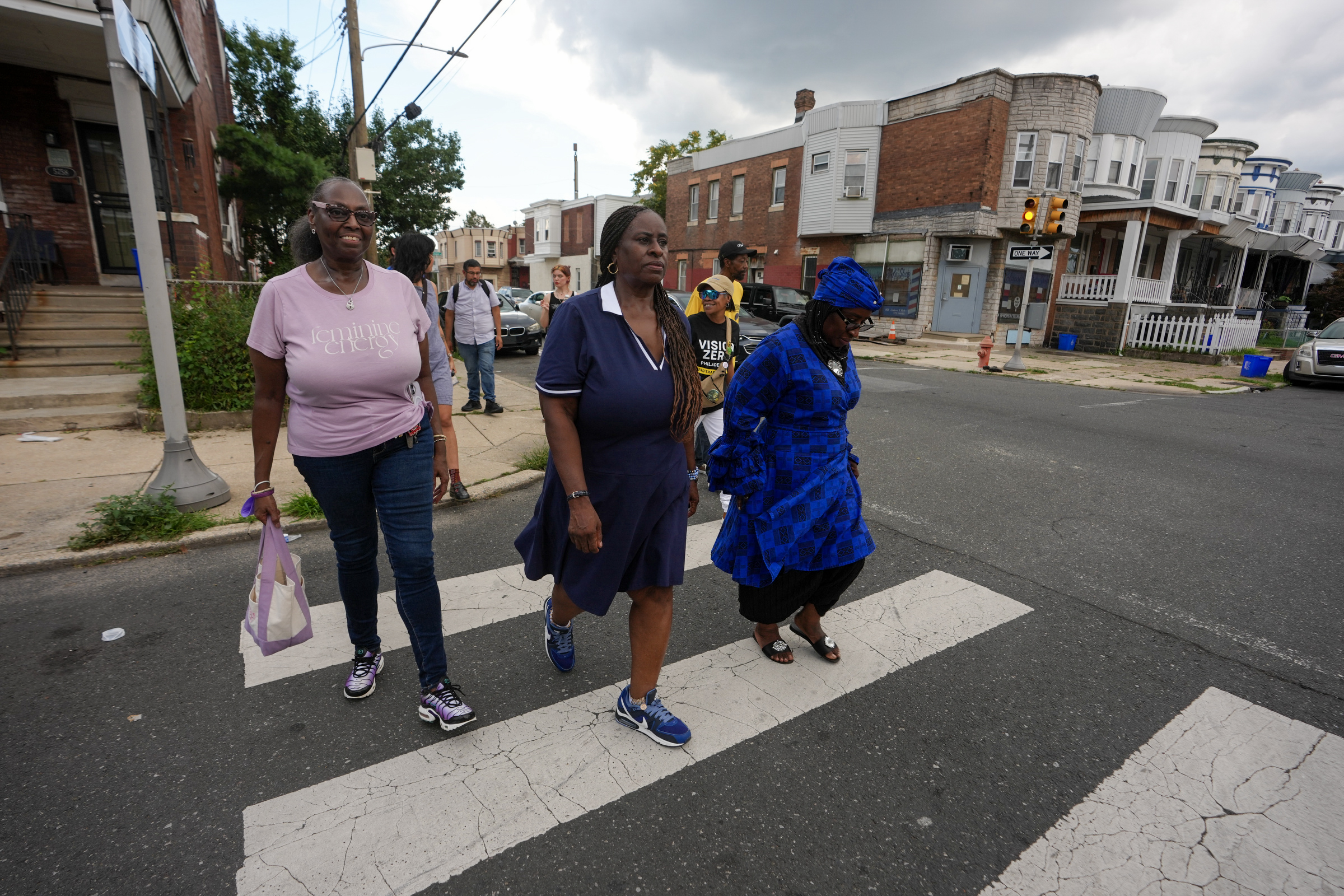
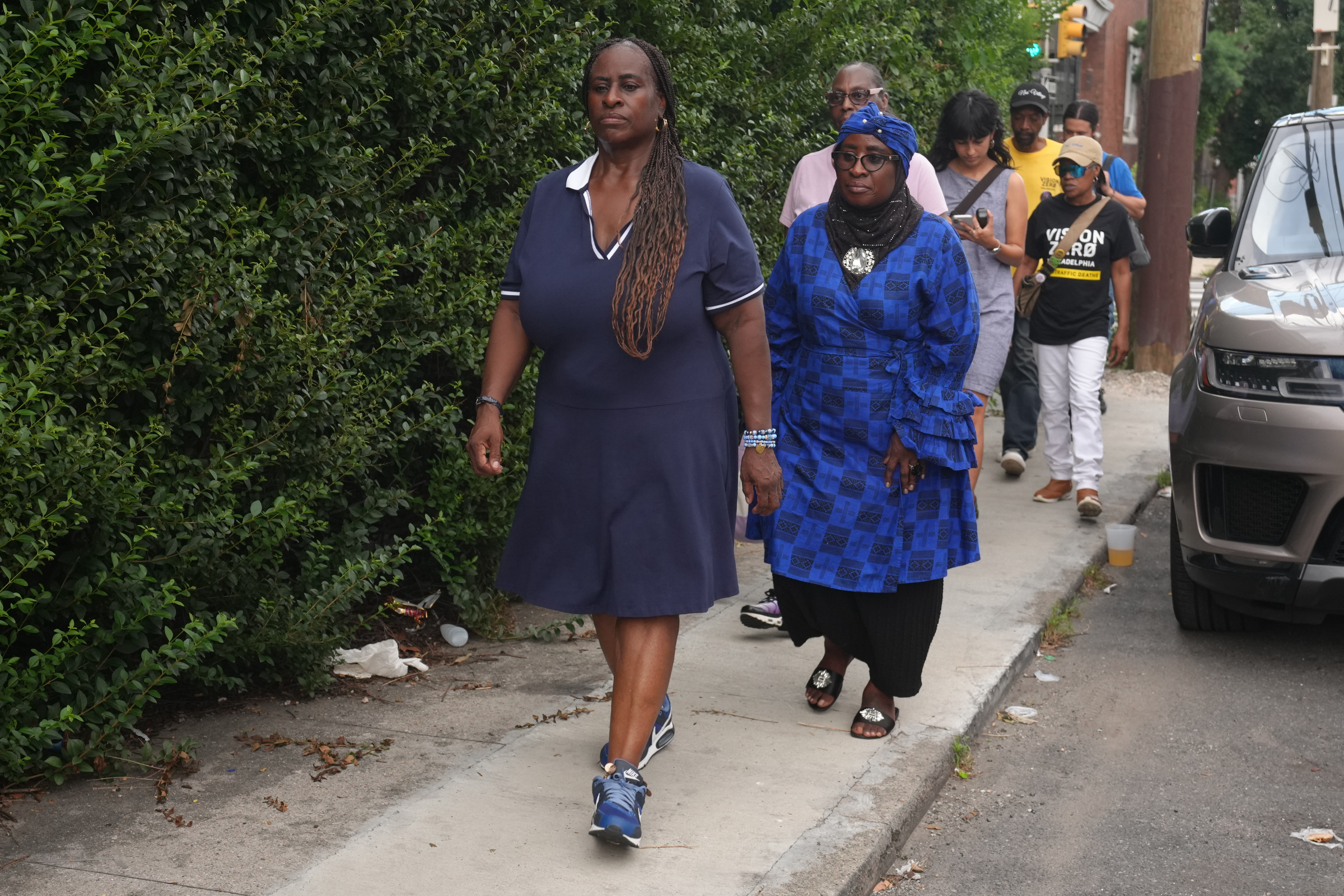
Angela McDonald and other traffic-safety advocates held a community walk in memory of her son Mark, who was killed by a hit-and-run driver. Jessica Griffin / Staff Photographer
A group of family, neighbors, and traffic safety advocates walked the streets Friday in heat brushing triple digits as thunderstorms rolled in.
Cobbs Creek Parkway, a state-designated highway not far away, is listed on the High Injury Network, one of the 12% of city roads where 80% of traffic crashes have occurred. Many of those streets are thoroughfares or state highways, like Broad Street (Route 611).
South 58th Street is not on the map, though there are speed bumps near a recreation center at South 58th and Spruce Streets.
And the city is working on a Neighborhood Slow Zone nearby, about five square blocks bounded by 52nd Street, 57th Street, Spruce Street, and Baltimore Avenue. The program imposes a 20 mph speed limit on residential streets and adds traffic-calming infrastructure such as speed cushions, narrower pedestrian crossings at intersections, and other elements.
“We have a lot of traffic violence on streets in regular Philadelphia gridded neighborhoods, not just on the High Injury Network or thoroughfares,” said Andrew Goodman, director of equitable development in the office of Councilmember Jamie Gauthier, who is working on getting some safety treatments for South 58th Street and Delancey Street.
“We get calls from people asking for speed bumps consistently,” Goodman said. “There are so many needs, so much demand. Driver behavior seems to be getting worse by the day.”
McDonald wants the neighborhood to get consideration. Speed-enforcement cameras are limited, with installations requiring specific authorization by the state legislature.
But she wonders about police surveillance cameras. If there is a hit-and-run crash, they might be able to capture the image of the driver. Police have recoveredthe car that hit her son, but there is no footage of the driver and there has been no arrest.
“As long as I have been traveling this road, since I was a young girl, 58thStreet has always been a racetrack,” McDonald said.
“Speed bumps aredefinitely going to slow people down, because if you don’t, you’re going to tear your car up,” she said. “You may flip yourself over.”
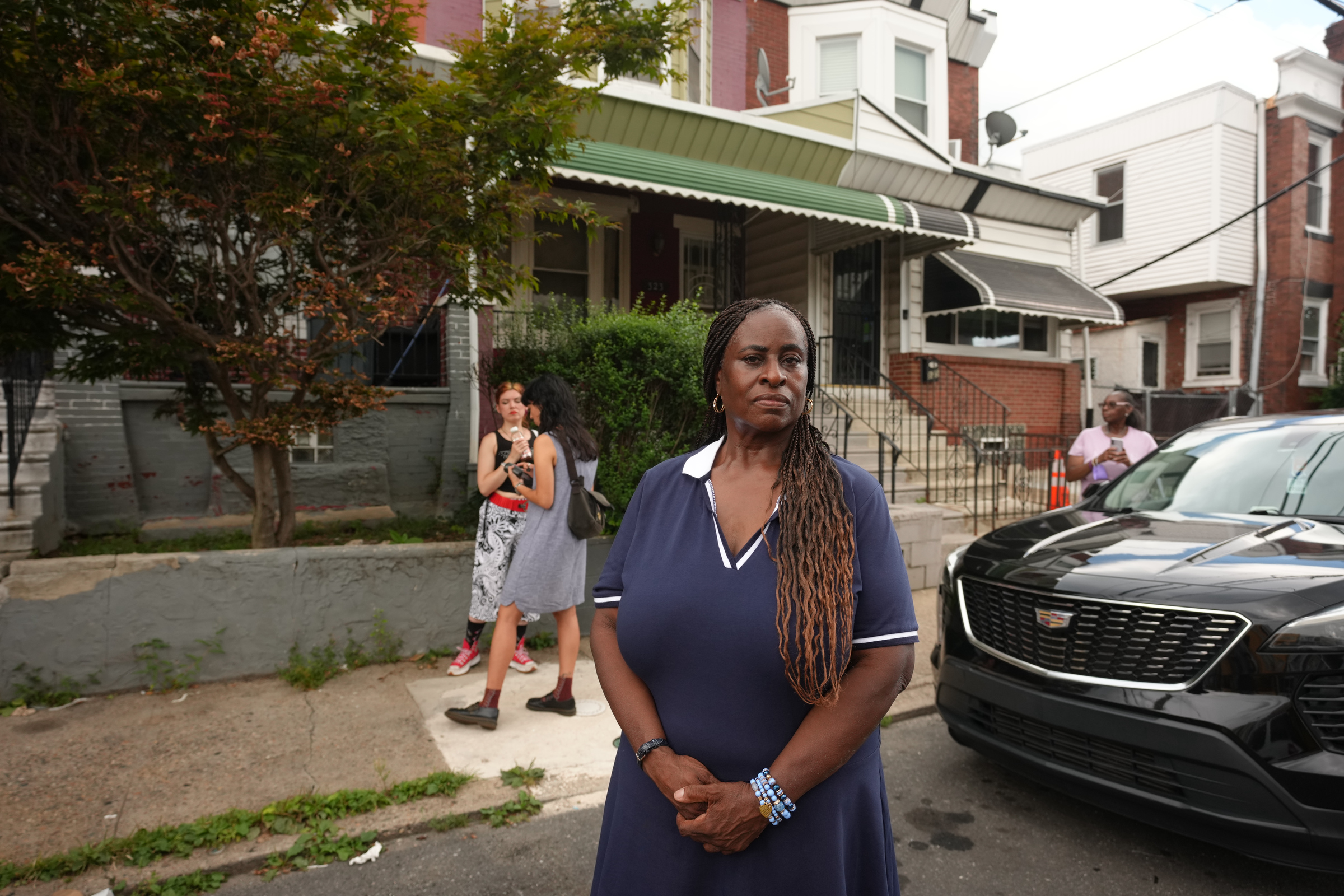
One year after a fatal hit-and-run took the life of Angela McDonald’s son, Mark, she and other traffic-safety advocates are pushing for traffic-calming improvements.Jessica Griffin / Staff Photographer
Do rich guys have to ruin everything? Apparently so. There came a time about 15 years ago when my soccer obsession got to the point where I felt I needed to pick an English Premier League team to root for, in addition to the U.S. national teams and the Union. Long story, but I went with Liverpool, in a city many consider the Philadelphia of the U.K., and it’s been a good ride, including a couple of trophies. On Monday, it was reported Amazon gazillionaire Jeff Bezos is buying 30% of the team. I’m officially out. Go, Leeds!
When did Trump’s ballroom become a national security fortress? We need answers.
Construction continues on a helipad and the White House ballroom on the South Lawn of the White House on Aug. 5.Tierney L. Cross
Donald Trump’s originally stated 2025 scheme to demolish the East Wing of the White House to make way for an oversized ballroom to hold state dinners and whatnot was bad enough: an unneeded, unwanted, gilded, and presumably tacky callback to Louis XVI, a massive monument to a modern let-them-eat-cake regime.
A year later, the project is better describedasan alleged ballroom — another bait-and-switch scam by America’s first grifter president. The fact that the public really doesn’t know how much this project actually costs — estimates have soared from the initial lowball of $300 million to now at least $600 million, but possibly more — or how much of that will be dumped on U.S. taxpayers is just the beginning of the problem.
Nearly 10 months after the president shocked Washington, D.C., and the rest of America by taking a wrecking ball to the history-packed East Wing, Trump has all but stopped talking about a black-tie party venue and instead rebranded the project as essential to national security.
When the D.C. federal appeals court on Friday ordered the White House, which never got congressional approval for either the demolition or the ballroom addition, to halt aboveground construction, Trump took to Truth Social and described the ruling as akin to treason.
“The Military and Secret Service are viewing this horrendous, politically motivated, and unlawful ruling as a National Security threat to our Nation in that the entire Complex is being built for the protection of our Country and, additionally, all future Presidents,” Trump posted, using language that’s probably never previously in human history been used to describe a “ballroom.”
Trump didn’t say in his post anything about crystal chandeliers, or great acoustics, or things you might expect in a world-class ballroom. Instead, he said the facility will have bomb shelters, a state-of-the-art hospital, top-secret military facilities, protective missile-resistant steel, columns, roofs, and beams, drone-proof ceilings and roofs, military-grade venting, and bullet-, ballistic-, and blast-proof glass.
It sounds like somebody is expecting a last tango in Washington.
Trump’s post was alarming — shocking, really — but in case anyone missed the point, or doesn’t know how to read, he also posted some AI-created renderings, which again did not depict waltzing diplomats, but instead showed a rooftop “DronePort” that was packed to thegills with ominous-looking military drones, manned by troops and also with armored vehicles that somehow drove up there. The vibe was Darth Vader’s Death Star, except with “military-grade venting” this time around.
There are two very different ways to look at all of this, and let’s start with the more benign one. Ever since the beginning of his second crack at the presidency, Trump — when he’s not pursuing his main projects of making billions of dollars, punishing his enemies, and staying out of prison — has been obsessed with placing his personalist stamp on Washington. Maybe that’s for his legacy, or maybe he just wants a Mar-a-Lago-by-the-Potomac to comfort his octogenarian mind.
Trump might not be able to crash weddings as he does at his Palm Beach, Fla., estate, but his ballroom idea would be close enough. Although he’s also sought and received donations for the project from the usual suspects of friendly billionaires and favor-seeking corporations, Trump also wants both additional dollars and — more importantly, in light of the appeals court ruling — a stamp of approval from Congress. That’s been a thwarted agenda item for GOP leaders on Capitol Hill for months.
But if Trump can’t sway Congress, he hopes to win over a U.S. Supreme Court where he has appointed three of the nine members. The White House knows that both Congress and the high court tend to fall in line whenever national security is invoked, while there is no constitutional right to foxtrot. So maybe all the military bluster is just political posturing for Trump’s latest real estate development.
But as the project enters its second year, it seems to have morphed into something a lot more disturbing than that. The pictures, descriptions, and accounts of Trump’s game here are sounding a lot more like the impregnable mountain lair of a Bond villain.
This is a man who fomented an attempted coup the first time he was asked to leave 1600 Pennsylvania Avenue, and who saw how South Korea’s corrupt right-wing president was ousted after a massive throng of protesters overwhelmed key government buildings. Wasn’t it Chekhov who said you don’t put drones up on the roof unless you intend to deploy them by the third act? The two most likely scenarios for actually using Trump’s bunker — Civil War II, or World War III — are less than optimal.
This national security bunker isn’t the only thing that’s worrisome as Trump looks to the second half of what’s supposed to be his final term. As noted in this space recently, Trump has also extended the presence of National Guard troops in Washington through Jan. 20, 2029, which coincidentally is the scheduled last day of his term.
Since their arrival last year, the Guard troops — many from units in pro-Trump red states, and costing U.S. taxpayers at least $1.4 billion and possibly more — have often been spotted hanging around, or picking up trash as a kind of busywork. But residents and some advocates like Scott Michelman, legal director of the American Civil Liberties Union of the District of Columbia, are already complaining Trump is “treating [D.C.] like a police state.”
It raises the same questions as the alleged “ballroom.” The president is entitled to state-of-the-art security, and while the public doesn’t need to know all of the operational details, American taxpayers also can’t be expected to fork over hundreds of millions of dollars for these projects without truly knowing what they are for.
Democrats on Capitol Hill need to start demanding answers. On Monday, there was an encouraging report by the New Republic’s Greg Sargent that the opposition party is working to demand communications from the Justice and Interior Departments to explain why several people were wrongly criminally charged with vandalism at the Lincoln Memorial Reflecting Pool when the actual damage was a botched repainting contract.
Congress can, and should, also flex its muscles over this ballroom fiasco — first by denying any public money for the project, and then by launching a similar investigation into the hasty demolition, the political fundraising, and the sketchy purposes for the project. Someone owes America the truth, and it’s not going to come from the current regime without a fight.
Whatever happens, the woman or man who hopefully succeeds Trump and sends those guard troops back to their own private Idaho in January 2029 is also going to have a giant mess in their backyard. But it’s better to have the ruins from a botched, halted construction project than from the Battle of Armageddon.
Yo, do this!
The California journalist Gil Durán has been paying attention to the political craziness coming out of Silicon Valley years before anyone else was, and now comes the big payoff in the form of a book that is not only incredibly timely but has the best title of the year: The Nerd Reich: Silicon Valley Fascism and the War on Democracy. Durán explores the strange beliefs of Elon Musk, Peter Thiel, Marc Andreessen, and their friends, their obsession with building their own private “networked cities,” and their unlikely alliance with Donald Trump. I’ve been waiting on this one for a while.
August is always a great month for books. While Durán drills down on the high-tech enemies of liberty, the great writer Dave Zirin has a new tome about one of democracy’s heroes, the late historian Howard Zinn, his former mentor. Public intellectuals are still arguing about the merits of Zinn’s 1980 masterwork, A People’s History of the United States, but nobody disputes his influence on the national conversation. Zinn rejected American exceptionalism, but also spotlighted everyday heroes like labor leaders or civil rights activists who expanded our freedoms over two centuries. I’m looking forward to reading The People’s Historian: The Outsized Life of Howard Zinn.
Ask me anything
Question: Data centers are the flashpoint but the root problem is the unregulated AI that is sweeping up every keystroke and every written document then repackaging it as if original thought. How do we get a federal government mired in 2020 to begin legislating on AI? — Suzi (@wanderponder.bsky.social) via Bluesky
Answer: Great question, Suzi, and I think we all know the main reason why the body politic — and I’m talking about both Democrats and Republicans — have been so painfully slow to respond to voters’ widespread anxiety not only about noisy, polluting, resource-wasting data centers, but also to artificial intelligence itself. The reason is money. Silicon Valley AI developers have raised an unbelievable $220 million to spend on November’s election, and — while there are some disagreements within Big Tech about policy — most of the cash will go to the politicians least likely to regulatean industry badly in need of it. Cognitive computing is not only stealing our intellectual property, as you noted, but also our jobs, as well as our children’s ability to learn.The good news is that public backlash against AI is so strong that even a quarter-billion dollars may not be able to stop the movement. But it’s way past time to get money out of politics.
What you’re saying about …
I should have guessed that newsletter readers don’t have much more of a clue than Donald Trump about what to do about the giant mess in the Persian Gulf. I did get one thoughtful response from an emailer with a “cbluff” handle (Reminder: Please sign your real name to these responses) who said the Trump regime needs to send skilled negotiators — and be realistic. “I believe the U.S. will have to cede the Strait of Hormuz, allow Iran and Oman to collect protection money, remove sanctions and pay them so we can declare victory and leave,” they wrote. It’s hard to disagree. Once again, the United States has lost a war.
📮 This week’s question: Since the Democratic Senate primary win by Michigan’s Abdul El-Sayed last week, the mainstream media has been obsessed with the question of whether this year’s progressive surge, including candidates (although not El-Sayed) tied to the Democratic Socialists of America, is hurting the Democrats. What do you think? Are leftists bringing needed energy to a moribund party, or are they too out there to defeat the GOP in November? Please email me your answer and put the exact phrase “Democrats and the left” in the subject line.
Backstory on the day Trump left his press corps for dead
Catering trucks are parked at Air Force One on the tarmac as the motorcade carrying President Donald Trump arrives to depart following the NATO summit, at Ankara International Airport in Ankara, Turkey, on July 8.Alex Brandon
It was appalling enough back in late July when we watched a room full of some of America’s highest-profile journalists break bread with Donald Trump at the rescheduled White House Correspondents’ Association dinner in Washington, where the president got up and hurled crude insults at several of the media members. Many of us were disgusted that some of the nation’s most respected journalists would platform a man who has repeatedly called a free press “the enemies of the people.” But the White House press corps was in the dark about an even more disturbing plot twist.
Just 16 days earlier, Trump had left some of those journalists for dead — at least potentially — as human decoys who might be blown from the skies in a feared Iranian plot.
The stunning story came out late Monday night as I was writing this newsletter, with a scoop by the Washington Post, matched shortly, with some additional details, by the New York Times. The articles revealed a modern-day Air Force One kind of thriller that essentially involved a shell game with three different aircraft. It was triggered by what officials deemed was a credible Iranian assassination threat against the president when he traveled to a NATO summit in Ankara, Turkey — just over 700 miles from the border with the U.S. enemy.
This launched a series of events, beginning with a plan to abandon Trump’s new, $400 million gift-from-Qatar iteration of Air Force One for an older version that actually has more advanced defensive capacities. Trump was filmed boarding the replacement Air Force One, followed by the White House press corps and some traveling aides for the departure from Ankara to a U.S. air base in Great Britain. What those passengers could not have imagined was that Trump had somehow been spirited out “via a catering container that had been lifted to the opposite side of the plane,” and switched to a C-32A military plane for the flight to the U.K.
Then they kept the unwitting journalists and aides on the ground for a couple of hours before it was revealed POTUS was safely in Britain and the Iranians had been thwarted and … haha, of course that’s not what really happened. No, the press corps took off as human decoys — the latest sitting ducks in an idiotic war that never should have been launched in the first place. Thankfully, no one was hurt … this time. Journalists wondered why they’d been ordered to keep the airplane’s window blinds closed, which inspired this now ironic exchange between Trump and some journalists when they reunited for the flight from Britain back to the U.S.
Trump lied that he didn’t know of any specific plot against Air Force One, and then added: “I’m No. 1on their list, before you. But if I go, you go. Right?”
Apparently not.
Even as I write this in the middle of the night just hours after the Post and Times scoops, the internet is already flooded with memes depicting Trump crammed into one of those airport serving carts, or pigging out on the adjacent airline food. It’s funny to see that your president isn’t Harrison Ford punching out the terrorists, but, in reality, slinking away in a food truck, leaving other Americans in the line of fire, right?
No, it’s not funny at all. This whole episode is a grand metaphor for a careless president who smashes up things before retreating into his money or whatever keeps him going — not thinking twice about the fate of human beings in a squalid ICE detention camp or an Iranian girls’ school. Or bantering with the gaggle of journalists whom he abandoned after drawing a big target on their backs. The first media question at the next Oval Office event ought to be, “Why did you treat me like cannon fodder?” But I wouldn’t bet on that happening.
What I wrote on this date in 2016
It’s almost funny now, in a dark-comedy kind of way, to look back on the fateful summer of 2016 and remember what it felt like to be stubbornly convinced that something, anything, was bound to happen to stop the obvious insanity of a Donald Trump presidency. It seems so incredibly naive now to read what I believed exactly one decade ago, when I actually thought the success of a diverse and incredibly talented U.S. Olympics team in Brazil would expose the Big Lie of Trump’s racism. I wrote, “The exclamation point is the remarkable women’s gymnastics team led by individual gold medalist Simone Biles — so dominant you will easily forget they also celebrate the kind of diversity that is America’s best feature, not the bug that’s described by the bitter and the disaffected back home.”
The fight for America’s future is waged on many fronts, and I’m trying to keep up. Last week, I wrote about a fascinating political development that’s been largely flying under the radar screen: a movement out west to knock off GOP incumbents by creating one-on-one contests with feisty, populist independents. That means long-shot Democrats need to drop out — which has happened in Nebraska, Idaho, and South Dakota, but not in Montana. It’s both a bold plan to end the Republican majority on Capitol Hill and a sad commentary on the failed Democratic Party brand in the American heartland. This weekend, I wrote about the Trump regime’s latest assault on higher education — denying loans for students who major in fields linked to lower-income jobs — and the increasingly bleak future of a liberal arts education. I wondered why Democrats won’t fight harder to end runaway careerism and preserve college campuses as bastions of critical thinking.
This August feels like the calm before the storm in Philadelphia sports. Some of that is the excitement over the Eagles finally beingback in training camp and looking to regain that Super Bowl mojo as 76ers fans try to process, if that’s the right term, a once-in-a-lifetime offseason rebuilding project. But much of it is angst over the Phillies, who are clinging by their fingernails to a playoff spot despite adding the National League’s batting champ to a lineup that already includes home run king Kyle Schwarber, future Hall of Famer Bryce Harper, and one of baseball’s best pitching rotations. None of that matters when the Phillies don’t have a relief pitcher who can carry a lead past the 7th or 8th inning. The Inquirer’s ace sports columnists like David Murphy and Marcus Hayes have all asked the same question: Can this team be saved? The answers are just over the paywall, and you can leap over it just like Saquon Barkley at the first-down marker; all you need to do is subscribe to The Inquirer.
By submitting your written, visual, and/or audio contributions, you agree to The Inquirer’s Terms of Use, including the grant of rights in Section 10.