Over the past few weeks, President Donald Trump has made it clear that he will not take Supreme Court decisions as the final word on some of his most cherished priorities.
The president has introduced new tariffs, renewed efforts to fire Federal Reserve governor Lisa Cook, and issued new executive orders to limit birthright citizenship. While experts said the moves do not signal outright defiance of the high court, they nonetheless push the limits of the rulings that Trump lost earlier this summer.
“Without question, President Trump is challenging the bounds of the court’s opinions,” particularly regarding Cook’s firing and birthright citizenship, said Richard Lazarus, a law professor at Harvard University.
The high court’s opinion affirming that nearly everyone born in the United States is a citizen does not allow Trump to create exceptions like some set out in his recent executive orders, Lazarus said. Those orders say children are ineligible for birthright citizenship if born to “alien enemies,” foreign terrorists, foreign lobbyists, or people who fraudulently request tourist visas in order to give birth in the U.S.
In signing the orders, Trump referred to the Supreme Court decision on birthright citizenship, saying, “We’re ending it a different way.”
The Trump administration has always followed court orders, said White House spokesperson Lauren Bis. “All actions taken by the president since the recent Supreme Court rulings are consistent with the holdings and analysis set forth by the court,” she said.
As for Cook, the justices ruled that she deserved notice and a chance to respond before being fired, and Trump’s latest move seeks to provide that. The White House sent a letter to Cook last week renewing the threat to fire her, giving her 21 days to respond, and directing her to submit any response to the White House by Aug. 26.
“The Supreme Court’s ruling on the Cook case required notice and an opportunity for a hearing in considering whether the president should take certain adverse employment actions,” Bis added. “The president’s notice sent to Fed. Governor Cook offers exactly that within the precise structure enunciated by the Court.”
Still, Trump’s underlying rationale for dismissing Cook — that she engaged in mortgage fraud — remains unproved, and she has not been charged. While the renewed push to fire her does not “repudiate” the Supreme Court’s opinion, Lazarus said, it “certainly confronts it by challenging its limits.”
Trump is not the first president to look for ways around adverse Supreme Court rulings. Most recently, when President Joe Biden’s plan to forgive student loan debt was struck down by the Supreme Court, Biden within hours announced a separate plan to forgive the debt.
Two decades earlier, President George W. Bush wrestled with the court over procedures for detainees seeking freedom from the military prison at Guantánamo Bay, Cuba.
But such instances appear to be historical exceptions rather than the rule, said David Super, a professor at Georgetown Law.
“Most presidents treated Supreme Court rulings as dispositive of the issues involved rather than as technical documents to be evaded,” Super said.
That includes an earlier version of Trump. During his first term, the president was more willing to accept losses at the Supreme Court and move on, Super said. He cited rulings against Trump’s efforts to end the Deferred Action for Childhood Arrivals (DACA) program and to add a question on citizenship status to the 2020 Census.
“The second-term President Trump appears to have much less regard for the other branches of the federal government than the first-term one did,” Super said.
Similarly, the Trump administration last month imposed new tariffs on U.S. imports from 60 economies under an authority different from the one the Supreme Court rejected in February. The new duties, imposed under Section 301 of the Trade Act of 1974, purport to penalize countries that fail to curb imports produced by forced labor.
That does not directly go against the Supreme Court’s decision. But critics call the forced-labor rationale a pretext for reimposing the sweeping tariffs struck down by the court, and small businesses have sued to block them for that reason.
Some experts say Trump, far from challenging the Supreme Court, is working within the bounds of the justices’ rulings.
“The court ruled against Trump in these three big cases, and all of them sort of left openings to do something else — and in all three cases he did something else,” said Josh Blackman, a law professor at South Texas College of Law at Houston.
“Trump is more aggressive because he views rulings as political,” Blackman added. “He’s willing to push back, especially with conservative judges, three of whom he appointed.”
Still, Trump has added to the sense that he is challenging the court by using heated rhetoric against it.
After the court overturned his tariff regime in February, the president called the conservative justices who ruled against him “fools and lapdogs.” Last week, when Trump introduced his new birthright measure, he called the court’s decision “a bad decision, very unfair decision,” saying the “country suffers because of it.”
President Barack Obama criticized the court in his 2010 State of the Union address, though he did so in a more genteel manner. “With all due deference to the separation of powers,” Obama said in criticizing the Citizens United decision (which lifted limits on independent political expenditures by corporations and unions), the court has “reversed a century of law that I believe will open the floodgates for special interests.”
The Trump administration has also had a tense relationship with the federal judiciary more broadly.
A Washington Post analysis last year found that Trump and his appointees were accused of flouting the courts in more than a third of the 160-plus lawsuits against the administration in which a judge had issued a substantive ruling. The administration has also sparred with the judiciary over Trump’s picks to lead federal prosecutor’s offices.
But Mike Fragoso, a former chief counsel to Sen. Mitch McConnell (R., Ky.), said Trump’s responses to the Supreme Court’s most recent decisions do not appear out of the norm.
Instead, particularly with regard to the new birthright order, Trump appears to be adopting the longtime conservative view that a Supreme Court decision binds the president only to the specific case at issue, not necessarily to its broader reasoning, he said.
Fragoso, now an attorney at Torridon Law, pointed to President Abraham Lincoln’s rejection of the Supreme Court’s logic in its infamous 1857 decision Dred Scott v. Sandford, which held that African Americans were not citizens.
“On birthright, it’s a question testing the limits of what the Supreme Court said” while not being inconsistent with the opinion, Fragoso said, adding that Trump’s actions could be described as “Lincolnian.”
Good morning! Looks like we’re in for another hot day, with maybe some thunderstorms in the late afternoon. Translation: It’s August in Philly.
This morning, we have the story of a man who allegedly bilked NFL players and others out of money in a scam involving fake Shopify stores.
We also have details about Gov. Josh Shapiro’s early days in office when he welcomed businesses into Pennsylvania — including data centers, which are decidedly unpopular now.
Hours before they found him dead in his Gloucester County home, one of Mohamed Coulibaly’s alleged victims said the 23-year-old entrepreneur had been desperately seeking a $75,000 loan.
A recent Barron’s investigation alleged Coulibaly defrauded three former NFL players out of $1 million in an e-commerce scheme involving fake Shopify stores.
Now others who invested in the venture or lent Coulibaly money, were blowing up his phone. They wanted to know if Eagles Jalen Carter and several former members of the team, including Nakobe Dean and Terrell Edmunds, were even real clients, a claim Coulibaly made on promotional materials.
Gov. Josh Shapiro made a declaration in the early days of his administration: Pennsylvania is open for business.
The move would ultimately include promises to slash bureaucratic red tape, cut permit wait times, and offer a new direct line to Shapiro’s office for major corporations hoping to set up shop in Pennsylvania.
It was with this same spirit last summer that Shapiro announced the largest single private sector investment in Pennsylvania history: Amazon committed $20 billion in Pennsylvania that included two data center campuses in Luzerne and Bucks Counties.
But in a year’s time, the politics — and public opinion on both sides of the aisle — have dramatically shifted on data center development.
From Northwest Philly to an Olympic hopeful, Maurice Scott used rowing as an outlet. He says: “The water gave me strength.”
Quote of the day
“Baby boomers like me vividly remember the towering, then-state-of-the-art right field scoreboard at Connie Mack Stadium,” Dave Caldwell writes, “topped by a gigantic advertisement for Ballantine Beer. Well, that scoreboard was erected in 1956, five years before beer was sold there.”
🧠Trivia time
Which South Jersey town recently celebrated its 100th anniversary of incorporation?
Cheers to Gary Bolton, who solved Monday’s anagram: Lane Johnson. The six-time Pro Bowler and two-time first-team All-Pro said 2026 will “probably” be his final season.
Photo of the day
A rainbow sits over Citizens Bank Park before the Chase Utley Wall of Fame ceremony and the Phillies and Toronto Blue Jays game on Friday.Yong Kim / Staff Photographer
P.S. Our journalists want to solve the local mysteries that keep you up at night. Submit any questions you might have about the region to Curious Greater Abington, and we’ll see if we can dig up some answers in a future story.
Cheltenham Township’s new comprehensive plan lays out challenges and recommendations for homes, businesses, transportation, community services, and historical assets over the next 10 to 15 years.
Among the dilemmas facing the township is navigating the need for more tax revenue while avoiding too big a boom of new residents. That’s because many of the large estates in Cheltenham belong to non-property-tax-paying institutions.
The Cheltenham School District remains embroiled in controversy as families in the township allege safety issues aren’t confined to the high school. Here’s the latest:
Superintendent Brian Scriven resigned last week after two violent assaults in the high school locker room led to charges against four football coaches and six players. But Cheltenham High School football families repeatedly warned against the former head coach’s hiring because of allegations that he allowed bullying to fester in his prior coaching position at Abington Senior High School.
Cheltenham Elementary parents now say they’ve been raising concerns to administrators since last October over multiple alleged physical or sexual incidents affecting students. The district has not commented on the status of any other administrators. Its school board meets tonight.
Lynnewood Hall, the 110-room estate in Elkins Park thought to be the second-largest surviving Gilded Age mansion in the country, will soon welcome the public for the first time in 80 years for a floral exhibition inspired by HBO’s The Gilded Age, NBC10 reports.
Elkins Park resident John Matthews sets out today on a five-day, 425-plus-mile fundraising bike ride to benefit Ride Hard Breathe Easy, a nonprofit he founded after losing his mother, Kathleen, to lung cancer, Glenside Local reports.
A mid-century abode designed by Carlos Joseph Alvaré, a protégé of esteemed 20th-century architect Louis Kahn, recently sold for more than $1 million in Rydal. It features 10-foot glass walls, exposed Douglas fir beams, and a Japanese-inspired garden complete with a koi pond, according to Dwell.
🏫 Schools briefing
In the wake of the fallout from the Cheltenham locker room assaults, Inquirer columnist Mike Sielski unpacks the incidents through the lens that they are yet another example of failed adult leadership in youth and high school sports.
University of Pennsylvania education professor Jonathan Zimmerman shares a perspective on the prevalence of hazing at institutions across the U.S. over the years.
Valencia Peterson, who has more than a decade of experience working in violence prevention through youth sports, pens an op-ed about how the Cheltenham incidents should prompt schools and athletic organizations nationwide to ask, “Could this happen here?”
🍽️ On our plate
Mazaj, a Yemeni- and Saudi-inspired cafe slinging coffee, pastries, and za’atar-topped flatbreads and pizzas, recently opened in Willow Grove. It plans to debut a drive-through later this month.
🎳 Things to do
📚 Silent Book Club: At this dream event for introverts seeking new pals, get comfy with a good book and read alongside your neighbors. ⏰ Friday, Aug. 14, 4-6 p.m. 💵 Free 📍 Jenkintown Library
🎞️ Movie Under the Moon: Take a trip back to good ‘ol 1993 with an outdoor viewing of The Sandlot projected on the big screen. ⏰ Friday, Aug. 14; movie starts at dusk 💵 Free 📍 Conway Field, Abington
🎲 Game Night: Show off your skills or learn to play a variety of board and card games. ⏰ Monday, Aug. 17 at 6:30 p.m. 💵 Free 📍 Elkins Park Free Library
Tucked away on a tree-lined street in Cheltenham, this stone-and-brick house comes complete with a fireplace, partially finished basement, and details such as exposed beams and a bay window. It has five bedrooms and four bathrooms, including a private first-floor suite with a full bathroom and separate entrance.
By submitting your written, visual, and/or audio contributions, you agree to The Inquirer’s Terms of Use, including the grant of rights in Section 10.
This suburban content is produced with support from the Leslie Miller and Richard Worley Foundation and The Lenfest Institute for Journalism. Editorial content is created independently of the project donors. Gifts to support The Inquirer’s high-impact journalism can be made at inquirer.com/donate. A list of Lenfest Institute donors can be found at lenfestinstitute.org/supporters.
What started as a halal coffee-and-pastry counter tucked inside a Narberth restaurant has grown into a full-fledged cafe in Willow Grove, with a bakery operation fueled by a mosaic-tiled oven turning out za’atar-topped flatbreads and pizza. And for good measure, the new Mazaj will have a drive-through.
Mazaj, a Yemeni- and Saudi-inspired cafe, opened earlier this month in the former Grandma’s Grotto Pizza on Route 611 near Blair Mill Road.
Owners Mohammed Tashkandi, Mohammed Aqlan, Yousef Muneer, and Omar Alkahily also operate Malooga, the Yemeni restaurants in Narberth and Old City. Mazaj began in March as the coffee bar and bakery inside the Narberth location, where the partners developed its drinks and pastries while spending more than two years searching for a place where the concept could stand on its own.
They deliberately looked beyond the city limits, Tashkandi said. They wanted parking, easy access, and enough room to create the sort of coffeehouse where customers could settle in — without making a quick coffee run difficult.
Manakish are baked to order in a Forno Picone oven near the front of the cafe at Mazaj. The flatbreads can be spread with za’atar and olive oil or topped with cheese or meat.Jessica Griffin / Staff Photographer
The Willow Grove location, at 2700 Easton Rd., just north of the Pennsylvania Turnpike interchange, is designed to do both. There are sofas and upholstered chairs for lingering, tables lining the windows, and — unlike Narberth — a drive-through for customers who have no intention of lingering at all. The drive-through is expected to open at the end of the month with premade pizzas and manakish that can be reheated in two minutes.
“Two things can be true at the same time,” Tashkandi said. “Our homemade food, locally roasted coffee, and crafted drinks are intentionally chosen to elevate your day, whether you want to spend time in our spaces or grab something to go as you move through your day.”
A crowd has already formed at the new Mazaj in Willow Grove, Aug. 4, 2026.Jessica Griffin / Staff Photographer
That dual identity is wrapped into the name. Mazaj — also spelled mizaj or mizaaj — is an Arabic word for “mood,” “temperament,” or “state of mind” that is also used in Urdu and Persian. The partners were compelled to choose it because of the idea that what people eat and drink can change how they feel.
The menu crosses borders. Tashkandi is from Saudi Arabia, while his partners are from Yemen, but they don’t describe Mazaj strictly as a Yemeni coffee shop, an increasingly popular cafe format. They see it as a broader Middle Eastern cafe.
Honeycomb, Yemeni pull-apart bread, before it is baked at Mazaj, in Willow Grove, Aug. 4, 2026.Jessica Griffin / Staff Photographer
There are Saudi coffees and mutabbaq, the flaky stuffed pastry pockets popular in Yemen and Saudi Arabia, alongside Levantine manakish, honeycomb bread, date cake, and other pastries. The contemporary coffee-shop side of the menu brings espresso drinks, ceremonial-grade matcha, and flavored lattes.
Mazaj’s manakish are baked to order in a Forno Picone oven, a striking, mosaic-covered centerpiece near the front of the cafe. The flatbreads can be spread with za’atar and olive oil or topped with cheese or meat.
And now there’s pizza.
Pizza topped with beef pepperoni coming out of the oven at Mazaj, in Willow Grove, Aug. 4, 2026.Jessica Griffin / Staff Photographer
It is the major menu addition in Willow Grove, baked in the same oven as the manakish. A separate commercial deck oven handles the cafe’s pastries.
The expansion has turned Willow Grove into the baking hub for the partners’ other restaurants. The owners are shifting production from Malooga to the new cafe, which will supply baked goods to both Narberth and Old City. The company has also begun laying the groundwork for a wholesale operation to sell pastries to other coffee shops and supermarkets, and the partners say they are meeting with potential franchisees.
Head baker Samar Alasbahi leads a baking staff with backgrounds in Yemen and Syria. The pastries are made in-house, and Tashkandi said leftovers aren’t put back into the case the next morning. Unsold baked goods instead go to employees, neighbors, and others in the community.
Customers can linger in the comfy upholstered furniture at Mazaj.Jessica Griffin / Staff Photographer
The partners have thoroughly remade the former pizzeria. Olive green and cream set the palette, with patterned tile, geometric motifs, Moroccan-style pendant lights, and a long pastry-and-coffee counter. Faux marble tables and caramel-colored chairs dot the narrow, window-lined dining room, while deep-green upholstered chairs and a sofa make up a small lounge. Behind glass near the front sits the new, dark-tiled brick oven.
For all the Yemeni and Saudi influences behind Mazaj, Tashkandi said the idea is deliberately broader: a cafe where Middle Eastern food traditions overlap rather than stay within national boundaries. “We want the menu to reflect that diversity,” he said.
Mazaj, 2700 Easton Rd., Willow Grove, 267-900-3167, mazajpa.com. Hours: 8 a.m. to 9 p.m. Monday through Friday, 8 a.m. to 4 p.m. Saturday and Sunday.
Meta Platforms CEO Mark Zuckerberg laid out a vision Monday of what he said artificial intelligence can do for the world, imagining a future where everyone has their own, all-knowing AI agent that strives to improve all aspects of their lives.
Zuckerberg detailed his ambitions for the technology in a 6,500-word essay published online where he also outlined why he favors open-source AI technology, in which developers make key components accessible for anyone to examine, modify and build upon.
In a document derided by critics as fantastical, Zuckerberg said his company is working toward an era where everyone will have the tools to create new businesses, receive Ph.D.-level tutoring, and provide personalized lifestyle tips. His 8-year-old daughter, he wrote, can already code her ideas and quickly produce videos.
“Everyone will soon have invention superpowers,” Zuckerberg wrote.
Zuckerberg warned of risks if control of advanced AI is concentrated with a select few companies, institutions, or governments. On Monday, Meta also announced the release of a new open-source AI model, Muse Glimmer, which can run on a personal computer, and Zuckerberg said the company would also would provide a way for developers to access a more powerful AI model, Muse Spark 1.2.
Meta makes AI models, like several other tech companies, and uses them to power platforms such as Instagram and Facebook. The Menlo Park, Calif., company also makes them available to developers who can create their own apps and features.
Skeptics urge a slower pace of AI development
Critics said Zuckerberg was not reckoning fully with the risks inherent in AI’s rapid development.
Noting recent incidents where AI models, including Meta’s own, hacked other companies on at least three separate occasions, Anthony Aguirre, president and CEO of the AI safety nonprofit Future of Life Institute, asked “what on Earth makes Meta think they — or anyone — could control something exponentially smarter, faster, and more capable?”
“Meta’s chosen path is ultimately one of human replacement and disempowerment, but there is an alternate, pro-human path — one that brings about individual flourishing and scientific breakthroughs with controllable AI tools. What’s urgently needed now is for governments to facilitate a pause on advanced AI development and steer us onto the pro-human path — before it’s too late,” Aguirre said.
Meta chief says AI should be broadly distributed
In his essay, Zuckerberg outlined why he thought open source is a better path for fair development of AI. He warned that if control of AI “superintelligence” is too concentrated, it will lead to less favorable outcomes for everyone else. The key, he wrote, is finding a balance that ensures advanced AI is “broadly distributed” to empower billions of people equitably.
Meta has long been a proponent of open-sourcing its AI models, but has struggled to keep up with rivals such as OpenAI, Anthropic, and Google that have not taken the same approach.
Zuckerberg made what could be a veiled reference to Meta’s rivals without naming specific companies.
“Most other labs are focused on building AI for companies, governments, or other institutions, so if those labs lead, then the balance of power will favor larger institutions over individuals,” he wrote.
Zuckerberg also included policy recommendations for keeping the U.S. ahead of rivals, including China. The United States and its allies need to speed up building energy capacity and infrastructure to stay competitive, he said.
Zuckerberg called for authorities to reconsider their position on “distillation,” which involves training a less capable model on the outputs of a stronger one. The Trump administration has vowed to crack down on Chinese AI companies using distillation to extract technical features from U.S. AI models. Anthropic earlier this year accused China’s DeepSeek of using distillation.
“Some have tried to frame distillation as harmful, but I think it is important to protect the principle that you can learn from anything you can observe,” Zuckerberg said. “This is how the world works, and the U.S. will not be able to lead if we restrict ourselves on this front.”
Critics see a self-serving message from Meta
Matt Lane, senior policy counsel at the nonprofit digital rights advocacy group Fight for the Future, called Zuckerberg “annoyingly out of touch on his best day,” but said the CEO is right about the importance of open-source AI.
Shared access to open-source AI systems is important for protection in a world where AI can be used to hack into electronic systems, like voting systems and benefits infrastructure, he said.
But he said only Meta will benefit if everyone were to use Meta-designed AI systems, even if they are fully open-source. “Open-source AI needs to be supported beyond these corporate interests. We, unlike Zuckerberg, hope for as much competition as possible,” he said.
When Point Breeze resident Bonnary Lek, 46, first moved to the neighborhood in 2023, a neighbor told her that at the corner of 17th and Wharton Streets, “there’s an Asian couple who makes the best chicken sandwich in Philadelphia.” This particular sandwich has found fame in Point Breeze and far beyond, primarily through word-of-mouth.
Some people refer to the store, which has no visible signage, as Mrs. Lee’s. Even Lek and her fiancé, Manong sous chef Juan De Ocampo, cannot agree on what to call the store. De Ocampo swears it’s “Jimmy’s.” Credit card receipts read “Kim Woa Store,” a name which is strikingly similar to another South Philly fried chicken sandwich institution, Kim Woo Store, which is at the corner of 19th and Moore Streets.
Whatever the name of the store is, it’s an ordinary corner store with uneven linoleum floors laid with mismatched tiles, soda bottles lining the shelves along with single rolls of toilet paper and canned soup. Extremely neat, if a bit shabby.
Longtime regulars drive in from New Jersey, Delaware, and as far south as North Carolina — mostly former Point Breeze residents who need their chicken sandwich fix. TikTok has brought customers as far away as Canada.
The store is owned by Lynda Cong, 50, and Jimmy Cong, 53. They met in Philly in the early 2000s, after Lynda came to the area to study public health at Stockton University. Both the Congs are southern Chinese, but came from Saigon, now Ho Chi Minh City. They speak to their children (the two younger ones help out in the store, and two older ones are grown) in Cantonese.
A customer, before he moved away seven years ago, presented the Congs with a custom sign that reads: “The Best Chicken Sandwich in Philly.” It hangs in the spotless, stainless steel kitchen, facing the interior of the store.
Above the kitchen window: a handwritten menu with prices scratched out.
Lynda Cong and her husband, Jimmy Cong, pose for a portrait at their corner store in Philadelphia on Aug. 5, 2026.Tyger Williams / Staff Photographer
The Congs took the store over from Jimmy’s sister “between 10 and 15 years ago,” according to Lynda, when the sister retired. Jimmy’s sister was known as “Mrs. Lee” and she first opened the store in 1986. “Kim Woa” is an older Romanization of the Cantonese phrase “gam waa,” which translates literally to “golden splendor” and means “prosperity.”
“Golden” is apt, as it accurately describes the fried breading on the sandwich, which costs $9 and consists of two chicken breast cutlets, thickly breaded with a super crunchy exterior. Ordering it “with everything” means that it comes with pickles, mayo, onion, tomato, and lettuce, laid on two slices of potato bread.
Earlier this year, a few TikTok influencers also discovered the sandwich, though it has still hardly reached the point of virality. The chicken sandwich whisper network, however, did prompt me to get one.
After one bite, I promptly texted my editor, “I hit the chicken sandwich jackpot.”
Is this The Best Chicken Sandwich in Philly ? I let My Followers Pick My Spot & Meal for The day & This Was The First Suggestion ! So I’m at Kim Woo Store in Philly on 19th St I Got The Chicken Sandwich 🔥 . . . . . . . . . #food#fyp#philly#foodie#WhereToEat
The wings are improbably juicy, with the same crispy breading and are perhaps even more delectable than the famous chicken sandwich. “It’s just salt, pepper, flour, water, and garlic powder,” said Lynda, who has met this sudden interest in the sandwich with amusement. The Congs now sell about 50 of the sandwiches every day; they say the interest has only somewhat affected daily sales.
The sandwich and the wings (three for $5 or six for $9.60), along with a massive array of salads, cheesesteaks, hoagies, wraps, and fried rice, emerge from a highly polished and well-scrubbed stainless steel kitchen. (You can order things that aren’t even on the menu. You can order whatever you’d like in a wrap.)
Over the years, the Congs have watched the neighborhood around them evolve. They’ve added most of the menu items to meet new demands and new tastes. But the chicken sandwich has stayed the same.
Kim Woa Store, 1300 S 17th St, 215-463-5426, Hours: Monday to Saturday, 9 a.m. to 6:30 p.m.
The U.S. economy shed jobs in July, yet the unemployment rate improved — an unusual pairing that points to a worrying story unfolding behind the numbers for some economists.
That’s because even as the U.S. economy lost jobs, American workers left the labor market faster.
“This is one of the very, very few times where you see the number of jobs shrink but the unemployment rate falls,” said Stephen Moore, a conservative economist. The explanation, he said, is fewer people looking for jobs. “That’s a big economic story: Where are the workers?”
The share of adults working or looking for work slipped to 61.4% in July, extending a weakening in the labor force participation rate this year. That rate has reached the lowest level since February 2021, during the pandemic.
Employers shed 23,000 jobs in July, according to Labor Department figures released Friday, and the unemployment rate fell slightly to 4.1% from 4.2%, due in large part to fewer workers in the labor market.
The aging population is one of the bigger forces leading to fewer workers. As baby boomers retire, they pull down the share of adults either working or looking for work. But that doesn’t explain the full drop this year in the labor force participation rate.
The share of workers in their “prime working years,” ages 25 to 54, fell sharply between May and June, and only partially recovered in July, leaving economists to fear that young and middle-aged people are abandoning job searches.
Men in particular have been seeing a sharp decline in the workforce, with participation at an all-time low outside of the peak of the pandemic, at 66.8% in July, with both older men and the youngest men in the workforce driving the decline. That’s concerning for both social and economic reasons, Moore said. “That is not a good trend.”
“We’re just not seeing males working as much, and I don’t have a good explanation for why that is,” he said.
A shifting economy plays one role. Most recent job growth has come in healthcare and private education, fields long dominated by women. Several male-dominated industries, including manufacturing, transportation, and mining, have shed jobs over the past year. That leaves a mismatch between the skills many men have and the jobs available.
The decline is a potential warning sign, many economists say.
“We like to see the unemployment rate go down typically, right?” said Alexander Bick, an economist at the Federal Reserve Bank of St. Louis. But that’s because it normally indicates employment is going up.
Bick has watched the labor force participation rate fall for months, and he said it’s “a worrying trend.” The fear is that discouraged workers are giving up.
But the picture is not yet clear, because other factors are also playing a role, including the Trump administration’s big push to seal borders, stop immigration, and deport immigrants, which has led to a decline in foreign-born workers.
Teens and young adults have also fallen out of the workforce. The share of 16- to 19-year-olds working or looking for work has fallen this year, hovering near the lowest levels since the pandemic after teen employment surged in 2023 and 2024. The share of 20- to 24-year-olds in the workforce has also fallen in recent months.
One reason some teens are not working: More are graduating high school, reflected in rising high school graduation rates, experts say. But another reason is weaker hiring in the hospitality and retail sectors, which tend to employ young people.
Growth in artificial intelligence and other technologies may also be creating new barriers to entry-level roles. For example, self-service kiosks have taken the roles of many cashiers, said Sara Estep, an economist at the Center for American Progress, a liberal think tank in Washington. Also, AI applicant screening tools could be favoring more experienced workers.
Estep said she worries young people are missing out on work experiences that could help them gain a foothold in the labor market for years to come.
There is one bright spot from the latest jobs report, said Guy Berger, director of economic research at the Burning Glass Institute, a Philadelphia think tank that studies the labor market. Even as workers have left the workforce, the number of people who say they want a job but have given up searching over the past month has ticked slightly down.
“The things that would make me really worried about labor force exits aren’t showing up,” Berger said. “People aren’t telling us, ‘I want a job but can’t find one.’”
Last week, I asked my fiancé, a Phillies fan, “Who’s going to struggle the most with the realignment?”
For context, after second baseman Luis Arráez was acquired at the trade deadline, the Phillies shuffled their infield with Bryson Stott moving from second base to third and Alec Bohm shifting to first with Bryce Harper going to right field.
He responded: “Trea Turner.” It was a fair answer. Turner is second in the league in committed errors with 18. The one infielder who didn’t switch positions happens to be among the worst defenders in the sport this season.
How come? Scott Lauber sat down with Kevin Stocker, the Phillies’ pennant-winning shortstop in 1993, to get his viewpoint on why Turner isn’t an outfielder, among other thoughts about this new look for the Phillies.
Eagles kicker Jake Elliott kicks a field goal in the NFC wild-card round on Jan. 11.Yong Kim / Staff Photographer
Jake Elliott suffered a poor 2025 season by his standards.
The former Pro Bowler and two-time Super Bowl champion went 20-for-27 on field goal attempts, a 74.1% conversion rate that was the second-worst of his career. Meanwhile, his 76.2% clip (48-for-63) over the past two seasons rates as one of the worst marks for a primary kicker in the league. But Elliott is unfazed, speaking Monday about looking forward.
“I’m extremely confident in myself right now,” Elliott said. “I feel like I’ve had a great offseason, I’m putting together a good camp, I feel like I’m striking it best I have in a while. Every day is a new day. Just trying to build on it.”
Special teams coach Michael Clay noted that Elliott has responded well to whatever blips on the radar arose in 2025. Here’s more from Jeff Neiburg on Elliott’s rebound efforts.
And the first true fight of camp occurred on Monday. It came early in the first-team drill period, but it had been brewing for days. Jeff McLane fills us in on what happened, among other things, in his practice observations.
What we’re…
🤔 Wondering: What Michael Vick said about Jalen Hurts and how he’ll look with a new offensive scheme.
👏 Supporting: Drue Nicholas, a Drexel graduate, took the first drive of the U.S. Amateur on his home course.
🔍 Analyzing: Monday’s Temple football practice revealed more about how the starting lineup will rollout, but the quarterback competition continues.
🏈 Learning: About first-year coach Rick Santos and what changes he plans to bring to Penn football.
Reliever Caleb Kilian made four appearances since arriving via trade on Aug. 3.Yong Kim / Staff Photographer
The Phillies announced Monday that right-handed reliever Caleb Kilian was placed on the 15-day injured list with a left oblique strain. To fill Kilian’s spot, the Phillies recalled right-hander Chase Shugart.
The bullpen has been extremely taxed in the last week. The club is in the midst of a stretch of 14 consecutive games before a day off Friday. Plus, the three extra-inning games during its homestand didn’t help.
Despite this shortcoming, Andrew Painter delivered the best performance of his young career and helped guide the Phillies to a 6-5 win in St. Louis.
Union’s Danley Jean Jacques runs with the soccer ball against Necaxa during a Leagues Cup group stage game on Sunday.Yong Kim / Staff Photographer
The Union have a slim chance of advancing to the knockout stage of the Leagues Cup. Sitting on three points after two matches, they are not mathematically eliminated from advancing, but need a lot of help to jump from tied for tenth to inside the top four on the final match day.
Next is the Union’s assumed Cup finale against Santos Laguna at Subaru Park on Thursday. If they aren’t going to advance, what can the club bring back with them into the MLS schedule?
The most obvious answer is rest, but these games also helped interim head coach Ryan Richter gather more information about his personnel.
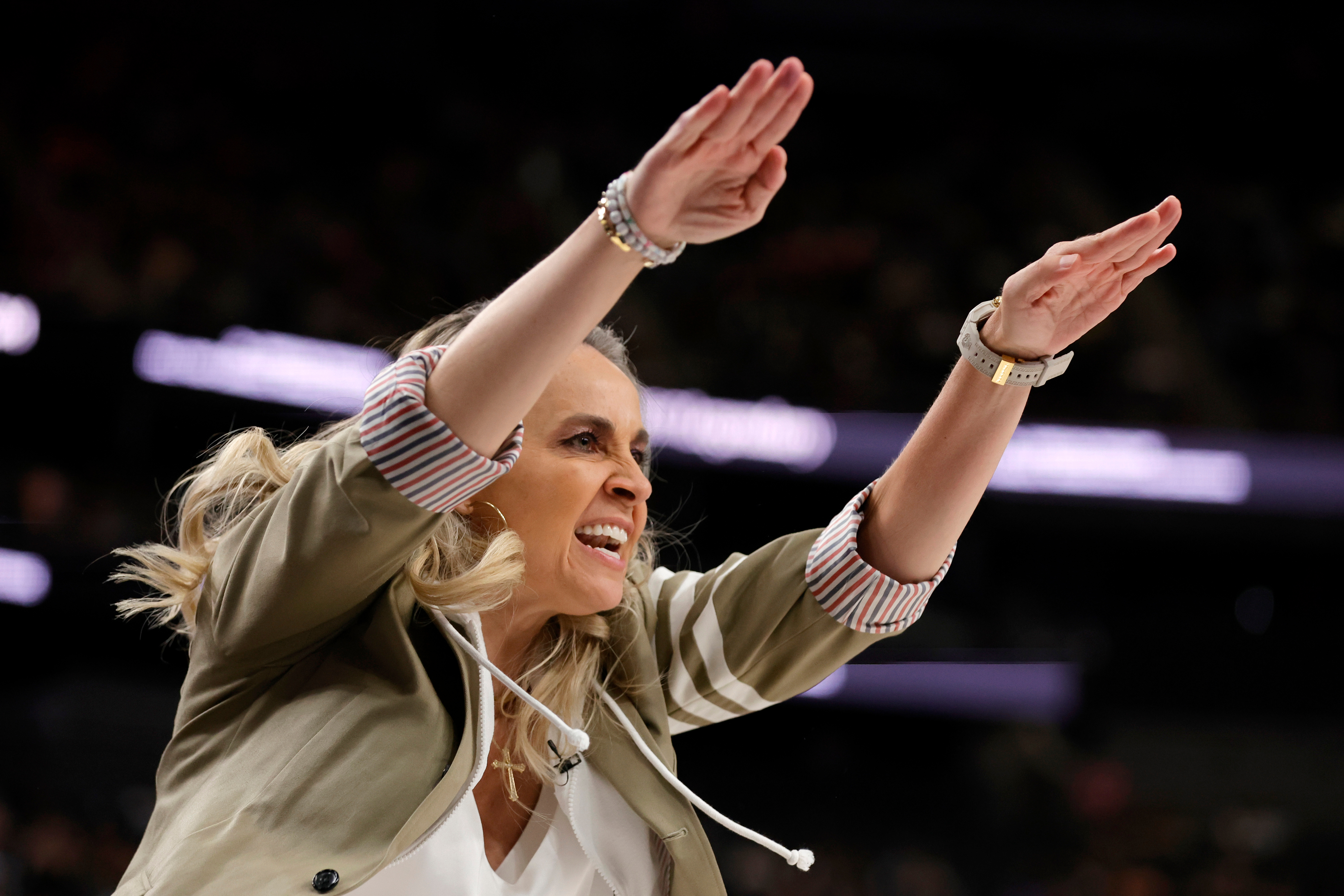
Becky Hammon’s personnel tactics are a self-own for the WNBA.Steve Marcus
On Sunday, my family was in dismay when we tuned in to an afternoon game between the Aces and the New York Liberty and discovered that three-time league MVP A’ja Wilson, Chelsea Gray, and five-time All-Star Jackie Young would not play. At. All.
From pitch counts to minute restrictions to scheduled losses, load management has become a distasteful aspect of professional sports. This was far more than load management, writes columnist Marcus Hayes.
What you’re saying about the Phillies’ bullpen
We asked: How can the Phillies address their bullpen issues? Among your responses:
The bullpen is as inconsistent as the hitting can be. Kerkering should be sent down for a couple of weeks. Mattingly needs a dartboard to figure out who to put in. LUZARDO had another great start. All for nothing. — Tom G.
Now if Stubbs could only develop a sweeper he’d be my choice as our “set up” guy. His ERA is better than our #4 starter Nola and our #1 setup man Alvarado. Ranger would sure look good now but he’s having a blast in Boston. Most all of the free agent relief pitchers our chief of baseball operations hired over the past 4 years were stiffs. Sorry but as season 4 winds down you are asking the same question the last 3 years. — Ronald R.
Getting Arraez was great, but the bullpen should have been issue #1. Put Alvarado on waivers or drop him to Lehigh. Put Nola in as long reliever and go with a four man rotation. Robin Roberts and Steve Carlton pitched most of their carers in a four man rotation. — Everett S.
GET RID OF ALVARADO IMMEDIATELY. — Murray U.
We compiled today’s newsletter using reporting from Jeff McLane, Ryan Novozinsky, Jeff Neiburg, Scott Lauber, Marcus Hayes, Owen Hewitt, DeAntae Prince, Lochlahn March, Conor Smith, and Mike Livingston.
By submitting your written, visual, and/or audio contributions, you agree to The Inquirer’s Terms of Use, including the grant of rights in Section 10.
Have a wonderful Tuesday. We’ll be back in your inbox with the latest sports news tomorrow. — Bella
Hours before Mohamed Coulibaly was found dead in his Gloucester County home, one of his alleged victims said, the 23-year-old entrepreneur had been desperately seeking a $75,000 loan.
A recent Barron’s investigation alleged Coulibaly defrauded three former NFL players out of $1 million in an e-commerce scheme involving fake Shopify stores. Now others who invested in the venture or lent Coulibaly money were blowing up his phone. They wanted to know if Jalen Carter and several former members of the Eagles, including Nakobe Dean and Terrell Edmunds, were even real clients, a claim Coulibaly made on promotional materials.
Above all, these people wanted their money back.
The morning of his death, July 31, Coulibaly solicited money from a New York man, who agreed to speak with The Inquirer on the condition of anonymity to protect his family’s privacy. He is one of at least 10 people, including the three former NFL players, alleging Coulibaly scammed them out of more than $5 million through phony investments over the last year.
Coulibaly, who lived in Mullica Hill, a section of Harrison Township, promised to send a Lamborghini, two gold Rolexes, and a signed Lionel Messi cleat as collateral for what was to be a weeklong loan.
Coulibaly still owed the man $1 million for a bridge loan due in March. Yet he insisted the additional loan somehow would make it possible to return the initial money owed. His alleged victim said he figured he could only gain from the arrangement — if the collateral proved to be real.
But a driver — not in a Lamborghini — arrived at his doorstep with two fake watches, an unauthenticated signed cleat, along with an insurance card and a bill of sale for the promised luxe car, according to the man.
The man called off the loan.
“[Coulibaly] then started to cry hysterical on the phone,” the victim said. “He said, ‘I’ve lost it all, please help me here, please help me here.’”
Coulibaly was found dead later that day.
Mohamed Coulibaly attends Milan Fashion Week on Jan. 19 in Milan, Italy.Dave Benett/Getty Images
The Gloucester County Prosecutor’s Office is leading the investigation into Coulibaly’s death and declined to comment. No charges have been filed in connection to the alleged scams Coulibaly is accused of spearheading.
Coulibaly’s death has only added a layer of uncertainty for his allegedly defrauded clients, who now believe they were unwitting participants in a Ponzi scheme. New so-called investments went toward paying off other clients. But the chain could not be sustained.
“In terms of his death, it sounds rather brash or harsh, but the only reason I’m upset for his passing is that he’s not able to go to jail and suffer,” the bridge loan investor said.
The Inquirer spoke with four victims, all but one of whom asked to remain anonymous citing lingering shame, privacy concerns, and, in one case, safety considerations. They provided alleged contracts Coulibaly gave them, text messages, screenshots of their purported Shopify store sales, and a whistleblower report sent to federal and Pennsylvania financial regulators.
In hindsight, the business always seemed too good to be true. The young entrepreneur convinced them they could rake in millions each month selling vacuums, printers, desktop humidifiers, and silicone trays on Shopify, an e-commerce platform similar to Amazon.
At first, investors said they had no reason to question Vent Motion LLC, also known as Motion Venture. Shopify alerted the victims to a steady stream of sales through their phone apps.
But at least two Shopify stores victims bought into were fake, full of transactions a Barron’s analysis suggests are also a sham. Shopify did not respond to requests for comment.
The alleged victims say Coulibaly lured them in by highlighting purported investor relationships with wealthy and connected people. His pitch deck listed several former members of the Eagles and the NBA as clients. Representatives for the current and former Eagles declined to comment or could not be reached.
“A selling point [Coulibaly] gave me was, ‘Hey, we only have about 90 to 100 people in this,’ insinuating you can make it behind the velvet rope because everybody involved is celebrities or athletes, and this is just a venture they do,” said another of the defrauded investors, requesting anonymity because family and friends do not know about the scam.
Yet as more victims have found one another in the wake of Coulibaly’s death, it has become clearer the scheme was not limited to targeting NFL players.
It involved everyday investors from Arizona, Pennsylvania, and New York who now want to know if any of it was real.
A ‘magnetic’ man with the digital footprint of a business phenom
Coulibaly knew how to sell the image of a successful entrepreneur.
His story always hit the same beats: Coulibaly was a professional soccer player. He made $4 million reselling rare sneakers before he turned 21. His success was largely attributed to “building connections” with athletes and influencers. Grinding was the key to success.
But much of that was embellished.
A database for American high school sports coverage noted Coulibaly played soccer for Roxborough High School.
Coulibaly said he began his professional career with the New York Red Bulls soccer team, but a spokesperson said Coulibaly never had a contract.
A friend from Coulibaly’s days at Temple University said the sneaker venture Heatkickcity was also a scam that swindled students out of thousands. He asked not to be named out of safety concerns, saying Coulibaly often touted relationships with gang-affiliated people.
While Coulibaly told publications he was born in Mali, West Africa, and immigrated to the United States at a young age, while in college, he often intimated that he was a trust fund child and that his parents worked for the French government, the Temple friend said.
He added that may have helped induce so many of their peers to pay a $1,200 membership for monthly access to rare sneakers that ultimately never came.
“He’d be like, ‘It’s stuck in shipping,’ or ‘my assistant forgot to order them,’ or ‘my assistant’s slacking,’ and then he would just keep on extending it, extending it,” said the friend. “If you questioned him in any way, shape, or form about the product that you paid for, then he would switch to angry mode.”
The friend eventually got his money back after pressuring him for weeks but said Coulibaly continued his self-proclaimed pursuit of becoming a billionaire.
“He scammed his best friends,” the friend said. “Nobody was off-limits.”
Coulibaly’s next venture was fashion line Motion Apparelz. It was profiled in Forbes last year, where the author describes Coulibaly’s energy as “magnetic.” In the piece, Coulibaly name-drops artist friends, including rapper YG, who was later listed as an investor in Motion Venture promotional materials.
Rapper YG performs at the Coachella Music & Arts Festival in 2019.Amy Harris
YG’s agent could not be reached for comment.
Outside of the glowing profiles, a now-defunct Instagram account also detailed a lavish lifestyle full of run-ins with celebrities, boat jaunts on luxury yachts with city skylines in the background, and snapshots of Coulibaly in or in front of private planes. Often, Coulibaly could be seen wearing gold watches, what appear to be Van Cleef & Arpels bracelets, and diamond-studded chains.
Coulibaly’s digital footprint set the stage for an even bigger business pitch.
A business promising exorbitant returns
When it came to Vent Motion LLC, Coulibaly told clients he operated “factories in China and India with a combined team of 125 full-time employees,” according to a pitch deck he showed investors that was obtained by The Inquirer.
This allowed stores to operate without keeping any inventory and reducing overhead — a model known as drop-shipping.
The savings from eliminating the middlemen, he said, could then be reinvested into artificial intelligence-driven ads and “influencer amplification” to drum up more customers. Coulibaly’s company would set up and manage the Shopify stores on behalf of investors, pushing out additional advertising or swapping out products if sales slowed.
Clients would be charged a 20% to 25% service fee for that work, and even so, Coulibaly dangled extraordinary returns for those who joined the venture.
One Shopify store that began with a $550,000 investment in January 2024 had allegedly generated $2 million in revenue in April and a whopping $23 million in July of that year. By August, this particular store had generated a total of $84 million in revenue, according to the company’s unsubstantiated pitch deck.
Further sweetening the deal was an initial investment “protection” guarantee if their store did not generate profit within six months.
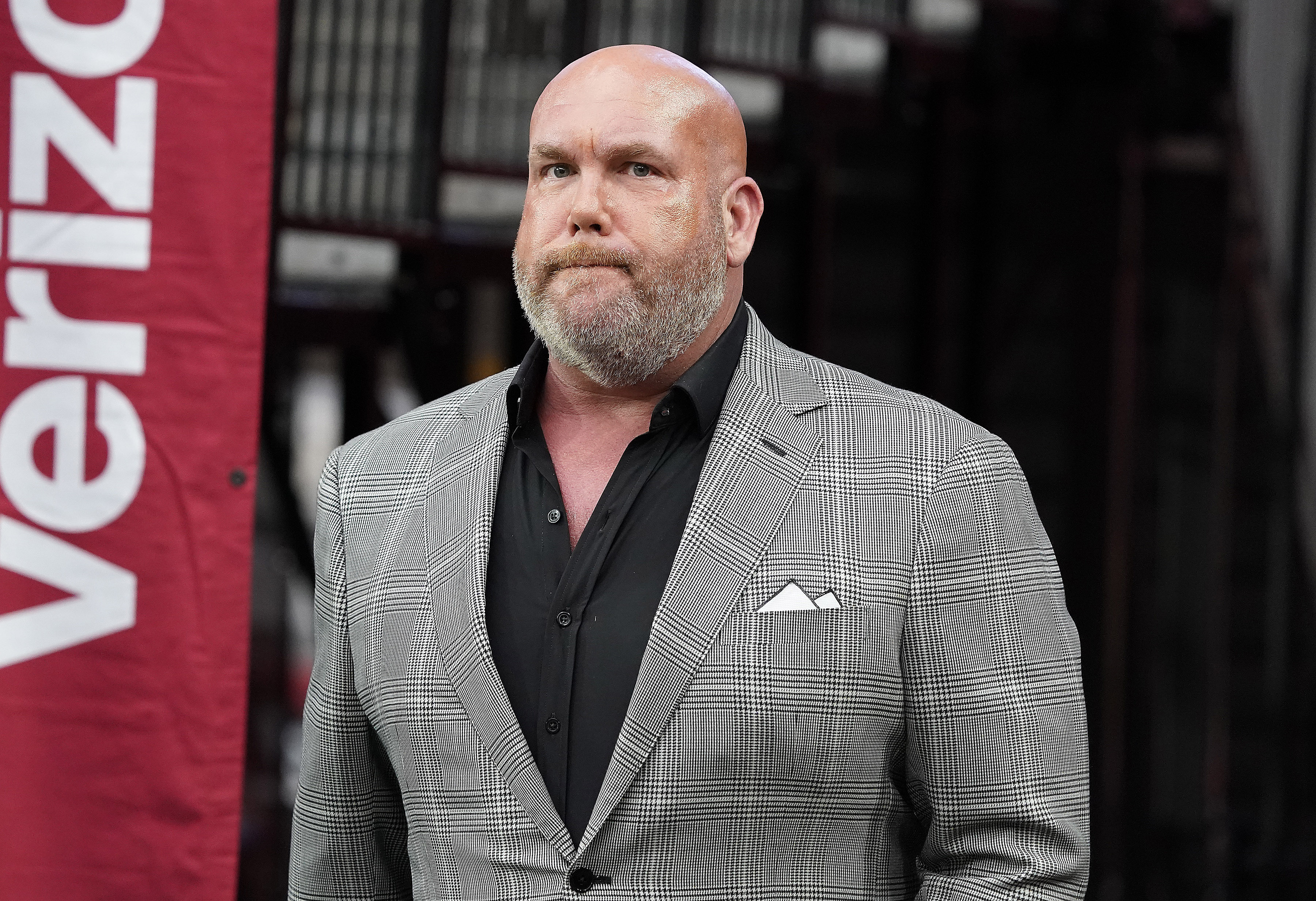
Former Arizona Cardinals General Manager Steve Keim says he was just as much of victim of Mohammed Coulibaly’s alleged scam.Darryl Webb
It’s what got Steve Keim, former general manager of the Arizona Cardinals, into the business.
Keim said he met Coulibaly through mutual Eagles acquaintances and by August 2025 he had bought his first Shopify store, which was recording sales at a pace that had him on track totriple his investment over six months. Keim bought into six more stores the following month, he said. His son and ex-wife would also buy into the business for at least a $1 million investment between all three.
Keim said he was soon offered the role of chief operating officer/chief growth officer, which he now sees as a way for Coulibaly to “legitimize his business.”
“I introduced him to people to sell stores to and that sort of thing,” said Keim, who describes fulfilling a figurehead role with no decision-making power. “He called me the COO but he also made promises to give me health insurance and to have some kind of bonus structure.”
The health insurance, bonuses, and exorbitant returns never materialized. Keim said he never had access to bank records and was never made aware of how many people gave money to Motion Venture. But by the start of the year, Keim claims, a flood of disgruntled investors were asking him for help getting their money back. Around this time, Keim said, he asked Coulibaly to stop using his name in promotional materials and told him he no longer wanted to be COO.
Keim contended he was as much of a victim as anyone else, holding onto hope that he could recover his money until Coulibaly’s death.
“This went downhill fast,” he said. “Not only did I get my name drug through the mud, I lost a lot of money since I was an investor.”
A Dubai deal
As more investors were demanding access to their Shopify funds in the fall, Coulibaly was telling them that the Dubai firm Middle East Venture Partners was interested in buying the operation for $215 million.
All they had to do was reach 175 online stores and meet other benchmarks by Aug. 1.
To back his claim Coulibaly produced a letter of intent dated Aug. 14, 2024.
Troubling for investors: The letter was dated more than a month before the company was registered in Pennsylvania.
The discrepancy was the biggest red flag for Barry Minkow, a convicted fraudster who now investigates scams on behalf of fraud victims. He started poking around the company at the start of the year for an investor who had put up $150,000.
“So here you are looking at a private equity company saying they’re going to buy up this company that doesn’t even exist for $200 million?” Minkow said in disbelief.
Middle East Venture Partners did not respond to an email to asking if a relationship existed with Coulibaly’s Vent Motion LLC.
With the permission of three of the alleged victims, Minkow submitted a 23-page whistleblower report to the U.S. Securities and Exchange Commission, FBI, and Pennsylvania Department of Banking and Securities. The report laid out victim accounts and flagged glaring issues with Motion Venture’s business model.
Minkow warned regulators in February thatintervention was essential to “halt ongoing solicitations, trace misallocated funds,” and stressed the importance of doing so “before the scheme inflicts further, irreparable harm.”
Minkow would prove to be right. Motion Venture was still actively recruiting new investors that month.
Picking up the pieces
Coulibaly’s college friend thinks he might have been one of the first victims of the Shopify sometime about three years ago. It involved less paperwork back then, more of a handshake deal. The friend put in $5,000 in a store with an investment protection promise in place, he said. Unlike that time in college, however, the friend only got half his money back.
The friendship with Coulibaly cooled after that.
“People just keep on saying he scammed NFL players,” said Coulibaly’s college friend. “No, anybody with money could be scammed, no matter how small.”
Coulibaly would insist money issues were the Dubai firm’s fault until his death, according to his alleged victims who shared screenshots and voice memos of conversations.
He ricocheted from distraught, lamenting the financial ruin that awaited him if he did not acquire more investors, to defiant, celebrating the Philadelphia 76ers’ LeBron James trade on X as he dodged investors.
When Keim and another investor flew into Philadelphia to meet with Coulibaly in late July, they spent a day and a half trying to figure out how much money was left, to no avail.
It was around that time that Coulibaly was soliciting the New York man for the $75,000 loan.
Coulibaly’s last post on X was a reshare a day before his death. “Trying to be everyone’s friend is a foolish behavior,” it read.
Whether any investor money remains is unclear. A now-defunct GoFundMe page put together by a man claiming to be Coulibaly’s brother raised more than $12,000 for the body’s “international transportation arrangements.”
Investors are also trying to figure out what legal recourse they might have, if any.
Coulibaly’s death has shattered any last remaining hope some victims had that a Dubai firm was to blame for cash-flow issues, and they are now seeking legal help.
It also left them feeling cheated one last time.
Staff writer Ryan W. Briggs contributed to this article.
What does it say about Pennsylvania’s political leadership when U.S. Rep. Ro Khanna, a progressive Democrat from California, seems more in tune with where voters stand on data centers than many top elected leaders in the Keystone State?
Khanna, a native of Bucks County, said Pennsylvania should do more to safeguard communities from the proliferation of data centers across the nation. He’s proposed a Data Center Bill of Rights to protect residents from the environmental and financial harms caused by the energy-sucking centers needed to fuel the artificial intelligence boom.
If Congress approved Khanna’s measure — which is unlikely as long as Republicans control both chambers in Washington — it would pause the current runaway development of data centers.
Pennsylvania is among the fastest-growing states for data centers. More than 50 of them have been proposed, planned, or are under construction in the state. So far, six are being built and 10 have received at least one state-level permit approval, according to Shapiro’s office.
Opposition to data centers may be the only issue that unites voters from all sides of the otherwise divided political landscape. In Pennsylvania, a whopping 74% of voters are against building an AI data center in their community, according to a recent Quinnipiac University poll.
Residents fiercely oppose a two million-square-foot data center proposed outside Conshohocken. Tempers flared at a public meeting in King of Prussia where the same developer, Brian O’Neill, wants to build five other data centers totaling 4.6 million square feet.
Across the country, residents have complained about sharp increases in electric bills — including a 20% increase in Pennsylvania since 2024 — caused, in part, by the growing power demands of data centers.
Others said their once-quiet communities have been ruined by the constant noise coming from the facilities, including one in Vineland, N.J.
Gov. Josh Shapiro announces a $20 billion investment by Amazon in Pennsylvania data centers in Salem and Falls Townships in 2025.
Still others said data centers caused their water wells to run dry, while many fear increased water bills from the need to cool large data centers that use an estimated five million gallons of water each day, equal to the usage of a town of up to 50,000 residents.
Sen. Dave McCormick (R., Pa.) has championed the development of data centers along with President Donald Trump. (Conflict of interest alert: McCormick’s wife is an executive at Meta, one of the leading developers of AI data centers.)
Gov. Josh Shapiro (D., Pa.) initially trumpeted efforts to bring data centers to the state. Just over a year ago, Shapiro said his administration was “all in” on AI, but his position has shifted somewhat in the face of the growing public backlash.
In May, Shapiro, who is up for reelection in November, unveiled standards designed to place guardrails on the energy usage of data centers and give local communities more input.
In recent months, Shapiro has met with some residents about data centers and acknowledged concerns about the impact on utility bills and the environment.
Supporters argue the data centers will bring investment and construction jobs to the state, and position the country to compete in the global AI race.
But at what cost to consumers left to shoulder the rising electric and water bills, not to mention the environmental harm?
Lawmakers have been slow to consider that part of the equation, as no one can say if the hyped benefits outweigh the real costs.
Elected officials are supposed to represent the interests of the people, and not the deep pockets of big businesses. Until lawmakers find ways to protect residents from the true impact of AI data centers, a pause makes the most sense.