Blog

  • Pennsylvania and N.J. Turnpikes choose a design for a new $1.6 billion Delaware River bridge

    Pennsylvania and N.J. Turnpikes choose a design for a new $1.6 billion Delaware River bridge

    Officials of the Pennsylvania and New Jersey Turnpikes have chosen a design to replace the 70-year-old bridge over the Delaware River linking the toll roads: a six-lane span that would be built about 195 feet north of the existing one.

    Called a ”tied-arch” bridge, the $1.6 billion replacement would be cheaper than other styles considered and can be built fastest, said John Boyer, senior engineer for the Pennsylvania Turnpike Commission.

    “Shorter time frames mean less disruption to local businesses and daily life for the communities in this area,” said Boyer, the manager of the joint project.

    Because the new bridge would be farther from the existing Delaware River Bridge than alternatives, traffic can keep flowing as it’s built, he said.

    Planners for years have known that the region would need a new turnpike bridge because of exponential growth in traffic volume, especially trucks.

    Freight volumes nationally are projected to grow by 73% by 2050, with warehouses on both sides of the river relying on crossing.

    Before the nearby I-95/Pennsylvania Turnpike interchange opened in 2018, an average of 42,000 vehicles a day crossed the four-lane Delaware River Bridge. Now, that’s up to around 70,000. By 2050, projections say an average 93,000 vehicles will need to traverse the replacement.

    The surface of a tied-arch bridge provides tension to resist the horizontal forces pressing on either end of the arch, like the taut string that connects a bow. It requires less sturdy foundations than a bridge supported by cables.

    “You can be build those river piers while you’re building the arch structure off-site,” Boyer said. When the piers are ready, the arch can be brought in by barge and “you can essentially jack it and elevate it up into place,” he said.

    Federal authorities approved a new span in 2003, but the project was put on hold because of problems paying for it.

    In 2017, a crack was discovered in a truss supporting the existing bridge’s roadway, and it was closed for about two months.

    As congestion increased on the repaired bridge, more traffic capacity became imperative, officials said.

    Because the earlier federal approval was so old, officials had to start again with a new environmental impact statement and design studies. Last year, turnpike officials settled on two options.

    Now, they’re finishing up the environmental impact statement, with formal public hearings scheduled for the winter.

    Turnpike officials expect the Federal Highway Administration to make a decision on the project around April 2028.

    In March, Pennsylvania’s U.S. senators announced a $600 million federal grant for construction of the new bridge connecting Bristol, Pa., and Florence, N.J. New Jersey’s congressional delegation also worked on getting the grant.

    The two states’ turnpike agencies will finance the balance. Borrowing would be backed by toll revenue, but both say the bridge project won’t increase tolls for drivers.

  • Ebola cases increase almost 40% in a week as death toll passes 200

    DAKAR, Senegal — The Ebola outbreak in Congo and Uganda has claimed more than 200 lives in its first month and is the worst known outbreak at this stage, with up to 35,000 suspected potential contacts, Africa’s Centres for Disease Control and Prevention said on Thursday.

    With 894 confirmed cases so far, the current outbreak is three times worse than a previous outbreak in Uganda in 2000, which had 281 cases at the same point, said Wessam Mankoula, a medical epidemiologist at Africa CDC.

    The latest number of cases is believed to be higher because the outbreak was confirmed on May 15, weeks after it was suspected to have begun. The number of cases has increased 38% since last week and is now in 32 health zones across eastern Congo, said Mankoula.

    The outbreak is caused by the rare Bundibugyo virus, which has no approved vaccines or treatments and was not tested for in the early days. The more common Zaire virus, for which there is a vaccine, was responsible for most of Congo’s past 16 outbreaks of the disease.

    So far 74 patients have recovered from the disease across eastern Congo and Uganda. Experimental treatments like monoclonal antibodies are being developed for Bundibugyo.

    The outbreak is concentrated in Congo’s eastern province of Ituri, which accounts for more than 90% of the cases. Cases have also been recorded in the North Kivu and South Kivu provinces and have spread across the border to Uganda, where 19 confirmed cases have been reported and two people have died.

    Contact tracing remains an issue due to the area’s remoteness and ongoing insecurity in Ituri province, Mankoula said.

    “For those 800 confirmed cases, we should have between 17,000 to 35,000 contacts that should be in our contact list,” said Mankoula. Currently only around 4,000 contacts have been tracked and are being evaluated, less than 15%.

    “We are still far from controlling the situation of this outbreak,” said Mankoula.

    Nearly a million people have been displaced by years of conflict in Ituri, according to the U.N. humanitarian office, making contact tracing difficult as people flee attacks or move frequently in the vast province with dense forests, poor roads, and remote villages that can take days to reach.

    Tracing is also difficult among the thousands of miners who regularly move among remote sites in the mineral-rich region.

    Of the over $900 million pledged to fight the outbreak, only $90 million has been released, further complicating the ongoing crisis, according to Mankoula.

    Africa CDC estimates it needs 540 personnel to fight the outbreak and so far they only have 84.

    “We’re keeping our fingers crossed those new pledges will be fast tracked, and we’ll be following up with different member states and different partners about their commitment to turn those pledges into actual money released to their affected countries or partners,” said Mankoula.

  • A man was shot on the Market-Frankford Line in Center City

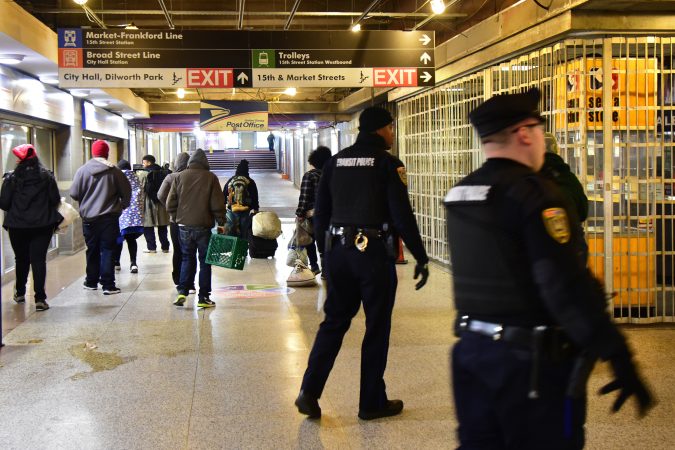
    A man was shot on the Market-Frankford Line in Center City

    A man was shot in the stomach while riding the L train in Center City on Thursday afternoon.

    SEPTA Transit Police were investigating the shooting, which occurred around 1:30 p.m. on a westbound L train, also known as the Market-Frankford Line, at 15th Street Station located under City Hall and Dilworth Plaza.

    Police transported the injured man, who was not identified, to a nearby hospital, where he was in stable condition, according to SEPTA. A search was underway for a suspect, whom police did not identify.

    L train and trolley service resumed after having been stopped for around 30 minutes, a SEPTA spokesperson said.

  • Ukrainian drones set a Moscow refinery ablaze in a major attack on the Russian capital

    Ukraine struck a major Moscow oil refinery Thursday for a second time in a week, sending huge plumes of black smoke over the capital and disrupting hundreds of flights at its airports in one of its biggest drone attacks since Russia’s full-scale invasion over four years ago, officials said.

    Ukraine has repeatedly targeted Russian oil facilities, aiming to cut Moscow’s revenue for the war and make Russians feel the consequences of the invasion. Some areas have reported fuel shortages.

    The attack by dozens of drones came hours after Ukrainian President Volodymyr Zelensky said he had held “an important coordination call” with the presidents of the United States and France and had won key pledges of further support from this week’s G7 summit.

    “If Ukraine is going to burn, your Moscow will burn too,” Zelensky said, adding that the attack was part of Kyiv’s effort to bring Russian President Vladimir Putin to the negotiating table. ”It is time to end the aggression, time to end this war.”

    Ukrainian attack embarrasses Putin again

    The Moscow attack was the latest embarrassment for Putin. Ukrainian drones attacked his hometown of St. Petersburg earlier this month as he welcomed foreign VIPs to his showcase economic forum in the city.

    Putin on Thursday was in Kazan, some 430 miles east of Moscow, hosting leaders of the Association of Southeast Asian Nations as Russia seeks to bolster business and other ties with the regional bloc.

    Russia’s state-controlled TV channels only briefly mentioned the attack on Moscow. Pro-Kremlin newspapers reported it, with some praising the performance of air defenses while noting that the strike highlighted the need to further strengthen the defensive shield around the capital.

    Vyacheslav Volodin, speaker of the lower house of Russia’s parliament, warned that Moscow would respond by ramping up its strikes.

    “Their action will lead to our counteraction and launching harsher blows, with more powerful weapons,” Volodin said in televised remarks.

    Some Russian hawks urged the Kremlin to respond with nuclear weapons. Nationalist Konstantin Malofeyev criticized the military for “fighting at half-strength in a gentlemanlike way.”

    “War means victory at any cost,” Malofeyev wrote on his Telegram channel, suggesting the use of “the nuclear weapons that our ancestors created and stockpiled while mobilizing the entire country’s strength precisely for this purpose — to win.”

    Fires rage at Moscow refinery

    Thick black smoke and occasional flames spewed from the Moscow Oil Refinery amid its red-and-white smokestacks on the southeastern edge of the city, about 9 miles from the Kremlin. Sooty rain fell on cars, according to local video.

    “One of the most popular questions asked by Muscovites this morning is ‘What is going on?’” Ukrainian Foreign Minister Andrii Sybiha said in a post on X. ”I can answer. Your country started a war of aggression against ours. For years, it has been killing our people. Now that you know what’s going on, ask Putin when he is planning to end it.”

    The refinery is one of Russia’s biggest, according to its website, producing more than a third of the Moscow region’s fuel. It was last attacked by Ukraine on Tuesday, but officials said that fire was swiftly put out.

    Thursday’s fire at the refinery was “largely contained,” Moscow Mayor Sergei Sobyanin said hours afterward, adding that remaining hot spots were being extinguished.

    As Ukraine pressed its strikes on Russia’s energy infrastructure, fuel supplies appeared to be under strain. Gas station chains in multiple regions have introduced restrictions on what drivers could buy. Russian independent news outlet Agentstvo reported that one out of every four gas stations has introduced some kind of restrictions.

    Authorities in the capital said in a statement hours after the attack that “supplies of oil products to Moscow and the work of all gas stations in the city continue as normal.”

    The attack also temporarily halted flights from four Moscow airports, transport and aviation authorities said. The Russian business daily Kommersant counted more than 500 delayed or canceled flights at the airports, based on their online flight information.

    In the greater Moscow region, a drone hit a residential building in the town of Zhukovsky, according to Gov. Andrei Vorobyov. Buildings elsewhere were damaged by drone debris, injuring 17 people, including two children, he added.

    Ukraine seeks more help from NATO, EU

    “Russia is on the back foot: militarily, economically and politically,” ‪EU foreign policy chief Kaja Kallas‬ said on X after meeting Thursday with Ukrainian Defense Minister Mykhailo Fedorov. “Now is the time to provide Ukraine with even greater support and to exert even more pressure on Russia to end the war.”

    Zelensky held talks Thursday in Brussels with NATO and European Union leaders, and the German and Ukrainian defense ministers signed an agreement to jointly develop an air defense system to counter ballistic missiles. Zelensky described it as the start of an “anti-ballistic missile coalition” and invited others to join.

    Russia has relentlessly struck Ukraine with those types of missiles, which air defenses struggle to counter.

    Russia says it downed over 500 Ukrainian drones

    The Russian Defense Ministry said its air defenses overnight shot down 555 Ukrainian drones over multiple regions, with almost 200 intercepted as they approached Moscow. That was roughly double the number of drones that Russia launched at Ukraine overnight, according to the Ukrainian air force.

    “If Putin does not want to end this war and wants to continue it, we will not sit quietly — we will respond,” Zelensky said in a voice message to a group chat with journalists.

    He has accepted an unconditional ceasefire demanded by U.S. President Donald Trump, but Putin has refused, and U.S.-led peace efforts have fizzled.

    Ukraine disrupts Russian supply lines

    Along with pledges of more diplomatic and military help at the G7 summit, Ukraine recently has gained momentum on the battlefield against Russia’s bigger army, thanks to its high-tech drones, Western officials and analysts say. Longer-range drones are choking Russian supply lines in occupied regions of Ukraine, in addition to disrupting oil production.

    French President Emmanuel Macron said the G7 summit was “very important for Ukraine” because its supporters — crucially including the U.S. — vowed to help it, although he provided no details. The U.S. under Trump has cut back assistance to Ukraine, leaving the Europeans as the biggest suppliers of military and financial aid. Trump and Zelensky have had a sometimes strained relationship.

    “America is with us on Ukraine, that is very important,” Macron said as he and Trump left the Palace of Versailles near Paris.

    In other developments Thursday, Russia struck the city of Sumy in northeastern Ukraine with two glide bombs that killed a 64-year-old man who was fishing in a river, said Oleh Hryhorov, head of the regional military administration. A Russian strike on the central city of Dnipro killed one man and wounded nine, said Oleksandr Hanzha, head of the Dnipropetrovsk regional military administration.

  • Janeese Lewis George wins the Democratic primary for mayor of Washington, DC

    WASHINGTON — Janeese Lewis George, who pledged to aggressively stand up to federal intervention into Washington, D.C.’s affairs, won Tuesday’s Democratic primary for mayor, setting up a potential showdown with the Trump administration over its moves to challenge the city’s limited autonomy.

    In an overwhelmingly Democratic city, Lewis George is likely to take the top spot in November’s general election, replacing moderate Muriel Bowser, who decided not to run again after three terms.

    Lewis George joins Robert White Jr., who won the Democratic primary for the district’s delegate to Congress, as the top local officials who likely will contend with the federal government’s intentions for the city. They each campaigned on a promise to take a harder line than their predecessors against the Trump administration’s moves on the district, including its deployment of the National Guard on an ongoing, open-ended mission meant to fight crime.

    “As mayor, I will work with anyone who makes D.C. safer,” Lewis George told a crowd of cheering supporters Tuesday night, “but I will also stand up to Trump.”

    Washington has limited autonomy and federal leaders retain significant control over local affairs, including approval of the budget and laws passed by the D.C. Council.

    President Donald Trump further encroached on that autonomy last year when he briefly federalized the city’s police force and deployed an ongoing law enforcement surge that included the National Guard. Trump’s efforts to downsize the federal government also roiled the capital region, costing thousands of people their jobs. He has also been reshaping the city by renovating storied landmarks and putting his name or image on buildings.

    Lewis George, a self-described democratic socialist and a member of the D.C. Council, has already come under fire from Trump, who last week threatened to place the city under federal control if she won.

    “Maybe we’d take back Washington, run it on the federal basis,” he said.

    Her main opponent, former D.C. Council member Kenyan McDuffie, conceded the race Thursday and said he had contacted Lewis George to congratulate her.

    “While the final certification process will continue, it is clear that the voters have chosen a different path,” he said in a statement. He wished Lewis George luck in the general election and called on his supporters to continue working.

    “The campaign may be over, but the work of building a safer, more affordable, more prosperous city continues,” he said.

    Lewis George, 38 and a third generation Washingtonian, has vowed to overrule an executive order by the city’s police chief permitting local law enforcement to cooperate with Immigration and Customs Enforcement agents. Lewis George argued the order “hurt the trust of our community.”

    Lewis George also vowed to use any levers available to her through the city’s home rule compact to resist what she called authoritarian infringements on the district’s local governance.

    “We have legal tools we can use to fight back,” she told the Associated Press in an interview before the vote. “And we know that when we have gone to court, we’ve won.”

    Bowser found herself walking a fine line between staying in Trump’s good graces and responding to the concerns of constituents, many of whom said she didn’t push back hard enough on Trump’s actions. Eleanor Holmes Norton, the 18-term, 89-year-old delegate to Congress, meanwhile faced mounting concern from critics who said she wasn’t forcefully pushing back on the Trump administration’s moves against the city.

    Lewis George has also made affordability a top priority, and her platform has included issues like rent support as well as ending below-minimum-wage pay for tipped employees and controlling high utility rates.

    Tuesday’s primary marked the first time in a generation that D.C. residents voted for a new mayor and delegate in the same election. It was also the city’s first election using ranked choice voting.

  • Reflecting Pool algae bloom is one of biggest recorded in years after $14M renovation

    Days after the completion this month of a $14 million renovation, the shallow water in the Lincoln Memorial’s Reflecting Pool had more algae in it than at any recorded point in the month of June for at least five years, according to a specialized analysis of satellite data.

    President Donald Trump vowed in April to clean up what he called the “filthy” and “disgusting” water in the Reflecting Pool. He promised to resurface the basin to eliminate persistent leaking and to paint it “American flag blue.” Once the pool started to be refilled, on June 4, he praised its “clean, beautiful water.”

    But the algae blooms that have long plagued the pool came roaring back, spawning more than a few conspiracy theories and much debate about the renovation. Some social media users said they suspected “bureaucrats” had seeded the algae bloom in an act of sabotage, while others claimed photos showing the reappearance of the algae were taken during the Biden years. Trump administration officials said the algae was caused by residual material in supply lines that had been dormant for weeks.

    Regardless, there was a lot of it.

    At the Washington Post’s request, Alana Menendez, a postdoctoral researcher at the University of Virginia’s Department of Environmental Sciences, analyzed light-reflectance data from a European satellite called Sentinel-2. The satellite captures clear images of the Reflecting Pool several times a month, and the data it produces can be used to estimate the presence of chlorophyll-a, a pigment found in algae.

    A higher value of that metric, known as the normalized difference chlorophyll index (NDCI), points to more algae in the water, Menendez said.

    Menendez’s analysis detected more algae in the reflecting pool in an image taken Saturday — in the week after it reopened — than in any June images going back to 2021. The algae level was among the highest measured in any month in the past two years, according to the analysis.

    Hot and sunny weather — which the Washington area has been experiencing — creates conditions in which the plantlike aquatic organisms thrive. The D.C. area experienced a heat wave just as the pool was being refilled earlier this month.

    Menendez found there was a strong indication of an algal bloom in the Reflecting Pool on March 10, when it was unseasonably hot. Just before construction began, on April 1, the bloom had reduced.

    “We would expect June to have more algae naturally than February, March, or April because there is more light availability and higher temperatures,” Menendez said.

    The Interior Department, which oversees the Park Service and contracted for the work, said in a statement that it is treating the pool with hydrogen peroxide and using “high-tech nanobubble ozone technology” to effectively cut off the algae’s food supply.

    White House spokesperson Taylor Rogers said the nanobubble equipment would “keep the Reflecting Pool crystal clear.”

    “Thanks to President Trump, new lining and industrial grade materials will permanently seal the Reflecting Pool, which previously leaked 16 million gallons per year and wasted countless taxpayer dollars,” she said.

    Trump has not publicly commented on the algae problem. On Monday, he posted that he would host a Trump rally on July 4 “with the backdrop of the Lincoln Memorial and surrounding the beautifully new Reflecting Pool.”

    Algae has been an on-and-off problem for the 6.75 million-gallon Reflecting Pool since it was built in the 1920s. It quickly reappeared after a more than $30 million renovation that was completed in 2012, though that project also changed the source of the pool’s water: Previously, it had been fed from the city’s drinking water, but after the renovation the water was drawn from the Tidal Basin, saving the city 32 million gallons of water a year.

    In its statement, the Interior Department said the Obama-era renovation “resulted in massive algae clumps taking over the pool’s surface following years of construction that cost taxpayers millions upon millions only to be broken and disgusting days later.”

    Last month, a local advocacy organization sued to stop Trump’s changes to the Reflecting Pool, alleging that the Interior Department failed to undergo required federal reviews for the project. The Trump administration in response called the work “routine maintenance” that will have “trivial aesthetic and environmental impact” and was not subject to certain environmental reviews.

    Contractors finished the project before a federal judge could rule in the case.

    As the pool was being filled earlier this month, Ed Stierli, an official with a different advocacy group, National Parks Conservation Association, wondered if the dark paint color was increasing the water temperature, exacerbating the algae problem.

    “These are all questions that would normally be answered during that review process that just was not done in this case,” he told the Post.

    By midday on Tuesday, the area was filling up with summer tourists and some locals who came to see how green the pool had become.

    “It’s the biggest tourist attraction now,” called out a biker as he wheeled past.

  • ‘A Hundred Years On’ could’ve been a more searing look back at 1876 America, but it is still remarkable

    ‘A Hundred Years On’ could’ve been a more searing look back at 1876 America, but it is still remarkable

    American centennials arrive in uncertain times.

    Amid the current 250th birthday of America, the country hasn’t been so divided since the 1976 Bicentennial when Vietnam and Watergate were open wounds.

    But in a backward gaze at Philadelphia’s 1876 Centennial Exposition, A Hundred Years On, composed by Peter Boyer, had the message that America somehow prevails. Commissioned by and premiered at the renovated Highmark Mann Center on Wednesday, the oratorio revisited how, amid the residual traumatizing of the Civil War, Philadelphia emerged in one of its peak years with innovations that supported its “city of firsts” reputation.

    Since America in general, and Philadelphia in particular, needs to feel good about itself, the total effect of this vocal/video/orchestral package featuring the Philadelphia Orchestra and the Crossing choir prompted roaring approval from an audience that one hoped would be larger (the inside seats were half full).

    The audience stands for the cast following the world premiere of ‘A Hundred Years On’ at the Highmark Mann Center.Elizabeth Robertson / Staff Photographer

    With any luck, this ambitious, communicative piece will have a further life.

    Even if you didn’t leave the concert with renewed faith in the future, you could at least aspire to that kind of belief — and be impressed with the program’s range of American expression from John Williams to Julia Wolfe.

    Special event pieces such as A Hundred Years On are, by definition, written in broad, sometimes heavy-handed strokes. But librettist Mark Campbell looked back to 1876 in a series of arias and chorus with touchstones that had dimensions — ones that avoided whitewashing history.

    Highmark Mann Center for the Performing Arts president and CEO Catherine M. Cahill welcomes guests to the world premiere performance of “A Hundred Years On” on Wednesday night.Elizabeth Robertson / Staff Photographer

    An entertaining upbeat stand-in for Alexander Graham Bell extolled the magic of global communication through a single wire (while also predicting our wireless era). But there was also an aria for a mother still grieving for her son’s Civil War death. The invention of the dishwasher promised to save female hands for other things — though such hands still didn’t have the right to vote. A Black restaurant waiter reminded the world that this post-Civil War era had a limited effect on civil rights.

    One visually surreal moment translated into a section rich in implications: The disembodied arm of the still-unfinished Statue of Liberty invited visitors to explore the insides of her torch. Video projections designed by Rasean Davonté Johnson lifted and animated images usually seen in vintage photographs in ways that took you deep into that era. Virtually, you were there. Live singers were in period costumes with supportive stage direction by Tazewell Thompson.

    Malcolm J. Merriweather in “A Hundred Years On” at the Highmark Mann.Elizabeth Robertson / Staff Photographer

    Overall, the piece didn’t quite have the searing authenticity of Boyer’s Ellis Island: The Dream of America, which included spoken firsthand immigrant accounts of their harrowing experiences. But Campbell’s poetic extrapolations of the 1876 experience clearly inspired Boyer to write essentially lyrical arias with all sorts of details heard in these individual journeys, such as the blues inflections of Ignatius Thomas, the Black restaurant waiter.

    Boyer steered clear of songlike tunes that would’ve distracted from the message at hand, and given less depth to performances by the excellent vocal soloists, Mary Dunleavy, Meredith Lustig, Eve Gigliotti, Malcolm J. Merriweather, and especially David Portillo. Boyer didn’t resist writing difficult but atmospheric harmonies for the supercapable Crossing choir, as well as descriptive vocal gestures suggesting the budding mechanization of the 19th century.

    The Crossing (in rear) choir performing with the Philadelphia Orchestra on Wednesday.Elizabeth Robertson / Staff Photographer

    In general, he used the orchestra as a frame to give focus and scope to the bigger idea of what 1876 meant then and now. The guy definitely knows the art of orchestration.

    In the concert’s first half, the “Star-Spangled Banner,” “conducted” by Mayor Cherelle L. Parker was the necessary starting point. Then, John Williams’ “Liberty Fanfare” had conductor Anthony Parnther luxuriating in the rich harmonies, memorably played by the Philadelphia Orchestra brass section. “Liberty Bell” by Julia Wolfe (who grew up in the area, near all of the bell’s cracks and crevices) was a miniature symphony of sorts, falling into four distinct sections.

    From left: Mezzo-soprano Eve Gigliotti, conductor Anthony Parnther, composer Peter Boyer, librettist Mark Campbell, and soprano Meredith Lustig in front of the Philadelphia Orchestra and the Crossing choir after the premiere of “A Hundred Years On” on Wednesday.Elizabeth Robertson / Staff Photographer

    First came the difficult birth of democracy with a series of whiplash rhythms, almost suggesting the passing of kidney stones. What followed was repose, but the apocalyptic ending was reminder that storms are always ahead.

    Sousa’s “Stars and Stripes Forever” was strangely perfunctory. Sorry, but I was spoiled by the late Arthur Fiedler, who had a way of suspending time during the thrilling piccolo solo. No big deal, really, especially since all other performances were shipshape.

    And that’s not often the case with a program featuring something as complex as “Liberty Bell” and a piece with as many moving parts as A Hundred Years On. No hints of strain. Remarkable!

  • unCovering the Birds: Is Julian Lurie Cut Out to Run the Eagles?

    unCovering the Birds: Is Julian Lurie Cut Out to Run the Eagles?

    Jeffrey Lurie has owned the Philadelphia Eagles, which he purchased in 1994, longer than his son, Julian, has been alive. But in recent years, the younger Lurie, heir to the franchise and now 31, has assumed a more pervasive and influential role in the organization. While the Eagles have made no secret about Julian’s increased involvement with the team, specifics about his role have been scant.

    In recent months, The Philadelphia Inquirer’s Jeff McLane spoke to nearly two dozen sources on and off the record to gain a better understanding of not just who Julian Lurie is and what he does, but – most important of all – whether he’ll be ready to assume the reins as Eagles Chairman and CEO, whenever the time comes.

    Jeff shares the biggest takeaways from his reporting with Inquirer columnist Mike Sielski in this companion episode to Jeff’s feature article about the Eagles’ succession plan, linked here: https://www.inquirer.com/eagles/a/julian-lurie-influence-eagles-ownership-succession-plan-20260617.html

    unCovering the Birds is a production of The Philadelphia Inquirer and KYW Newsradio Original Podcasts. Following this episode, the podcast will be on hiatus until the start of training camp.

  • Budget office redirects $352M in Secret Service funds to White House security

    Budget office redirects $352M in Secret Service funds to White House security

    The Trump administration’s budget office has redirected $352 million that was intended in part for Secret Service training and recruitment to what it described as security measures at the White House, a government database shows.

    The White House and the Office of Management and Budget did not specify the purpose of the unusually large shift in response to questions on Wednesday. But a person familiar with the Secret Service budget, speaking on the condition of anonymity because they were not authorized to comment publicly, told the Washington Post the funding was to help pay for a new White House East Wing that includes a large ballroom.

    Asked about the shift and its purpose, a White House spokesperson issued a statement stressing the necessity of security enhancements for the East Wing project. “The East Wing Modernization Project is inextricably tied to the security of the President, the White House grounds and the certain security infrastructure assets,” spokesperson Davis R. Ingle wrote in a statement.

    The Secret Service did not respond to emailed questions.

    The transfer of Secret Service funds — equal to more than 10% of the agency’s annual budget in recent years — comes amid revelations that President Donald Trump’s controversial ballroom project will rely more significantly on taxpayer money than the administration has publicly acknowledged.

    Trump has claimed repeatedly that the project will cost $400 million and has generally said it will be funded entirely by private donors. But this week, the Post reported that the contractor overseeing the work told the White House in March that the expected cost was $600 million, with more than half coming from taxpayers.

    The March budget estimates obtained by the Post show that $155 million for the project was expected to come from the Secret Service. Most of the rest of the public funding was projected to come from the White House Military Office.

    The administration’s budget office on Friday disclosed in a public database that it was redirecting $340.8 million and $10.8 million in Secret Service money for “White House Security Measures.”

    The redirected money, included in the Republican spending package dubbed the One Big Beautiful Bill Act that passed last July, was intended to bolster the Secret Service after two attempts on the president’s life — the first at a rally in Butler, Pa., and the second at his West Palm Beach, Fla., golf course.

    The law provided the Secret Service with $1.17 billion and specified that the money was meant to provide for “personnel, training facilities, programming, and technology” as well as “performance, retention, and signing bonuses” for agency personnel.

    Sen. Chuck Grassley (R., Iowa), chairman of the Senate Judiciary Committee, issued a news release at the time celebrating the law’s passage, saying it “provides essential resources for U.S. Secret Service recruitment and training efforts in the wake of two assassination attempts against President Trump.”

    Neither the bill nor Grassley’s office made any mention of the White House’s East Wing. Grassley’s office did not immediately respond on Wednesday to questions about whether he supports use of the funds for the East Wing.

    Key senators from both parties questioned the redirecting of the funds, which was first reported by Roll Call.

    Sen. Susan Collins (R., Maine), chairperson of the appropriations committee, directed staff to look into the move, according to a Republican staffer familiar with the matter.

    On Tuesday, after the Post’s report, Collins said she had taken Trump at his word. “I’ve said repeatedly that the President has promised only private donations would be used for the ballroom, and I believe he should keep that promise,” she said in an interview.

    Sen. Jeff Merkley of Oregon, a member of the appropriations committee and the top Democrat on the Senate Budget Committee, said the transfer showed Trump was more interested in his “vanity project” than safety and security.

    “This funding was intended to pay Secret Service agents and ensure they have the technology and resources they need to keep individuals under their protection safe,” he said in a statement.

    The administration has been pressing Congress to allocate taxpayer funds for the project since an armed man ran through a security checkpoint at the White House Correspondents’ Association dinner in April. Department of Homeland Security Secretary Markwayne Mullin and Secret Service Director Sean Curran wrote to Republican congressional leaders after the incident to back a proposed $1 billion for the Secret Service in part for “security upgrades at the White House to minimize threats, including the security components to the East Wing Modernization Project.” In a private meeting, Curran pitched GOP senators on spending $220 million of that money on “hardening” the ballroom.

    Several Republican lawmakers in both chambers raised concerns about providing funding for the ballroom project in the lead-up to the midterm elections, especially as Americans express frustration with the cost of living. The funding was stripped out of a larger spending bill because rules prevented it from being included.

    Ingle, the White House spokesperson, said in his statement that an alleged plot to attack the White House during a UFC event last weekend “proves exactly why the East Wing Modernization Project is severely needed for large scale events, which include drone proof structures and drone ports among other critical security enhancements.”

  • College sports bill clears key Senate hurdle despite SEC, Big Ten opposition

    WASHINGTON — A bill that top lawmakers and athletic leaders have described as the best chance to stabilize college sports cleared a key vote in the Senate on Thursday with bipartisan support after weeks of input from schools, conferences and athletes.

    The bipartisan Protect College Sports Act aims to regulate payments to players, limit them to one free transfer over their careers and create a rule to restrict coaches from changing jobs during a season. It advanced out of the Senate Commerce Committee on a 19-9 vote Thursday and now heads to the full Senate for consideration.

    The legislation is the product of months of negotiations between Republican Sen. Ted Cruz of Texas and Democratic Sen. Maria Cantwell of Washington, the top lawmakers on the Senate Commerce Committee, and comes as lawmakers in both chambers of Congress are grappling with whether it’s time for them to intervene in college sports.

    “The greatest risk facing college athletics today is not any single controversy, court decision, or headline. The greatest threat to college sports is inaction,” Cruz said in opening remarks.

    Bill moves forward without Big Ten and SEC support

    The committee vote advancing the bill — which included Senate Majority Leader John Thune voting in favor — followed endorsements from several athletic conferences, the NFL and its players union, and the United States Olympic & Paralympic Committee. The Olympic committee backed the revised measure after lawmakers added additional protections for women’s and Olympic sports.

    Yet the two most powerful conferences in college sports — the Southeastern Conference and the Big Ten Conference — are not supporting it. In a joint statement released Thursday morning, the two conferences wrote that “revisions are needed to secure our support for the bill.”

    “What we did today was say we’re not going to let the most powerful, richest conferences dictate to the rest of America what’s going to happen to 500,000 athletes,” Cantwell said after the committee vote.

    Earlier this month, the Congressional Black Caucus also urged the Senate to suspend action on the bill in the wake of a Supreme Court ruling that effectively disabled a key provision of the Voting Rights Act. Democratic Sen. Lisa Blunt Rochester of Delaware, a member of the CBC, voted against the legislation Thursday.

    Support and opposition for the bill does not fall neatly along party lines, reflecting the national reach of SEC and Big Ten schools and broader divisions in Congress.

    While President Donald Trump has backed the bill, multiple Republicans opposed the legislation Thursday, while several Democrat supported it.

    Some of the senators who voted against the bill represent states that are home to prominent SEC and Big Ten programs, including Michigan Sen. Gary Peters, a Democrat, and Republican Sens. Todd Young of Indiana and Roger Wicker of Mississippi.

    “We still are trying to get some changes that the Big Ten would like to see,” Peters told The Associated Press late Wednesday.

    A long road ahead

    Clearing the committee is just the first step in a long process.

    Passage through the Senate is far from guaranteed, as leaders already have a packed schedule and a dwindling number of legislative days left before the November election. The bill would need to clear a 60-vote threshold in the 53-47 Republican-controlled chamber.

    The bill will also still need to clear the House. Earlier this year, House Republican leadership had been working toward a vote on its own college sports bill, known as the SCORE Act, before the Congressional Black Caucus announced its unanimous opposition.

    Still, supporters on Thursday touted the committee action as a massive step forward.

    “Today we are proving that we are resilient in keeping this product moving,” Cantwell said.