Blog

  • Small Changes, Smarter Savings: Preparing Your Home and Budget for Winter

    Small Changes, Smarter Savings: Preparing Your Home and Budget for Winter

    Drafty apartments, rattling windows, and perpetually chilled family members prompt many residents to turn up the thermostat as temperatures drop. If you’re concerned about your energy costs this winter, PECO offers a suite of free fixes, rebates, and tools to help you manage your bills.

    According to Tom Hill, PECO’s senior energy efficiency program manager, customers often assume they need to take “drastic steps” to save energy when, instead, “a collection of small changes around your home can help your heating system run more efficiently.” Below are some suggestions from PECO experts for steps you can take to help save on your energy bill this winter.

    Cozy Comfort, Simple Savings

    When a home starts to feel chilly, turning up the thermostat can be an easy first instinct. Patricia King, PECO’s manager of community engagement, knows the feeling in her own home: “I had a sweater on, and my husband said, ‘Oh, are you cold? Let me turn the heat on.’ I’ll say, ‘Maybe not just yet.’ Sometimes it’s worth trying a sweater or blanket first before adjusting the thermostat.” For people without a medical need for extra warmth, King said the easiest way to keep energy bills from getting out of control during the winter months is to keep the thermostat at 68 degrees and throw on an extra layer.

    It is, however, important not to go too far in the other direction. Don’t, for instance, turn off your heating system entirely. According to Hill, while it’s perfectly acceptable to turn your heat down a few degrees when you leave for the day, fully shutting it off is not recommended. Doing so can force the heater to work harder when it comes back on and increases the risk of frozen pipes, which may eventually burst at 39 degrees or lower. Hill recommends keeping thermostat adjustments within a few degrees.

    Call in the Pros

    Hill, a former carpenter and home efficiency expert with 16 years of experience, has conducted thousands of energy audits over his career. He notes that a huge part of saving energy is preparing your home for winter by having your heating system serviced and maintained regularly, and sealing your windows. Hill said he often finds windows unlocked, with the top sash not fully closed, which can cause drafts.

    PECO’s home energy assessments help customers identify opportunities to improve energy efficiency and reduce costs. Depending on the program, energy advisors may check for air leaks, evaluate heating systems, recommend weatherization improvements, and offer practical tips to help customers save.Courtesy PECO

    However, sometimes problems with weatherproofing aren’t obvious, and experts should be consulted to help identify them. PECO offers two programs that help make a professional assessment convenient and affordable. PECO’s Free Energy Checkup, for instance, is free for households earning at or below 150% of the federal poverty level (FPL). (For a family of four, that’s $4,125 a month or less.) The Free Energy Checkup program includes a one-hour visit from a PECO energy advisor who can install energy-saving items such as LED light bulbs or a smart power strip, depending on your home’s needs. As part of the visit, advisors also check for safety hazards and install smoke or carbon monoxide detectors, if needed. But Hill said the most valuable part of an evaluation is the education advisors provide, including steps customers can take to reduce bills and make their homes safer.

    For customers whose households earn more than 150% of the FPL, PECO offers a similar Energy Assessment program for $49. Households that use electric heat can qualify for the Energy Assessment+, which also includes a blower door test, thermal imaging to identify air leaks, and an HVAC system check. The end result is a report on your home’s energy efficiency, which may recommend insulation and further weatherization. A free version of this service, the Free Energy Checkup+, is available to those at or below 150% of the FPL.

    The recommended work is then scoped and referred to PECO-approved contractors. Customers in homes with central air conditioning and non-electric heating can apply for rebates of up to $435 for these services. PECO estimates that participants may save up to 20% on their energy bills by following their report’s recommendations, based on U.S. Department of Energy guidance. (Actual savings vary by home.)

    Beyond improvements to your home’s structure, the appliances, electronics, and gadgets you choose can offer additional savings.


    Efficiency Upgrades for Your Home

    If the machines and electronics you depend on daily aren’t modern or energy-efficient, they may be using excessive amounts of electricity. Making the switch to energy-efficient versions of these devices can make a noticeable difference in your bill. To help you seamlessly make the transition, PECO maintains the PECO Marketplace, a digital storefront of energy-efficient home products, often with instant discounts applied. And while smart power strips that automatically deactivate unused plugs will help lower your bill, replacing major appliances can make an even bigger difference.

    While it may seem economical to continue using an older appliance, a garage refrigerator that is more than 15 years old could cost about 20% more to run than models meeting the federal minimum energy efficiency standard. Likewise, ENERGY STAR recommends replacing furnaces installed in 2010 or earlier, and modern ENERGY STAR-certified models are about 15% more efficient than conventional models. To take advantage of such savings, PECO offers rebates on major appliances, new efficient home builds, solar panels, and, especially important during the winter, heat pumps.

    Heat pumps, which have become more popular over the past 15 years, absorb heat from outdoor air and push it into the house in the winter. Hill said that while older heat pumps struggled below 32 degrees, modern models rated for cold climates work “very efficiently and effectively” in temperatures as low as -15 degrees.

    Managing Your Monthly Bill

    Not every step toward managing energy costs requires new equipment. Some of the most useful changes involve reconsidering the bill itself or applying for additional financial support. For example, PECO’s Budget Billing program can help even out the peaks and valleys of seasonal utility bills. Once a customer enrolls, the program uses their past 12 months of usage to calculate an average monthly payment that remains relatively consistent throughout the year. “You don’t have to be low-income to be on Budget Billing,” King said. Customers may pay a little more or less than the cost of their actual usage, but the predictable monthly bill allows them to budget more effectively.
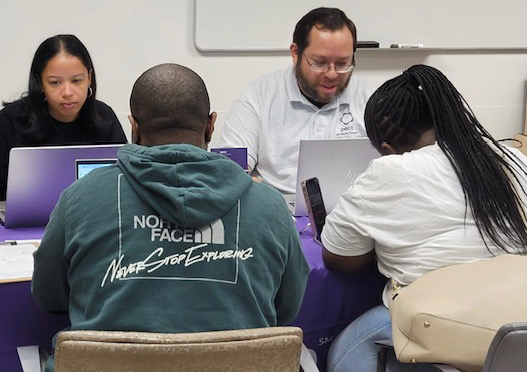
    PECO employees help customers explore energy assistance programs and options for managing their bills.Courtesy PECO

    For those who need financial support, PECO’s Assistance Finder is a useful and accessible resource. For example, customers with a household income at or below 150% of the FPL may qualify for PECO’s Customer Assistance Program (CAP), which limits monthly bills to a percentage of household income. Customers can also apply for the Low-Income Home Energy Assistance Program (LIHEAP), a federally funded program that provides qualified households with assistance paying heating costs through a cash or crisis grant. The 2026–27 LIHEAP season opened November 2. Customers must submit a new application each year.

    According to King, the biggest misconception customers have is that they earn too much to qualify for financial assistance. “They’re always surprised that they qualify,” she said. A common refrain King said she hears is: “I have a full-time job, and I know that I don’t qualify.” But federal poverty guidelines are updated every year. “Even if you didn’t qualify last year, you may qualify now because the income guidelines have increased,” King said.

    For those who need guidance enrolling in assistance programs or understanding their bill, the company offers 20-minute, one-on-one virtual assistance sessions with a customer service representative every other Thursday from 4 p.m. to 8 p.m.

    Small Steps Add Up

    According to PECO, customers have saved more than $570 million on their energy bills through rebates and incentives since Pennsylvania’s Act 129 established the Energy Efficiency and Conservation program in 2009. The energy saved is equivalent to the electricity used by nearly a million homes in a year. But those numbers are built one household at a time. “Have a conversation with your family to be on the same page [about] what’s being used [around the house] and what everybody can do themselves to help positively impact that bill,” Hill said.

    And if you do need help managing your bill, you should pick up the phone. “You do not have to be low-income to get a payment arrangement,” King said. “The thing that we always tell customers: Call us. Do not suffer in silence.”

    To learn about PECO’s energy efficiency and customer assistance programs, visit peco.com/Save and peco.com/Help.
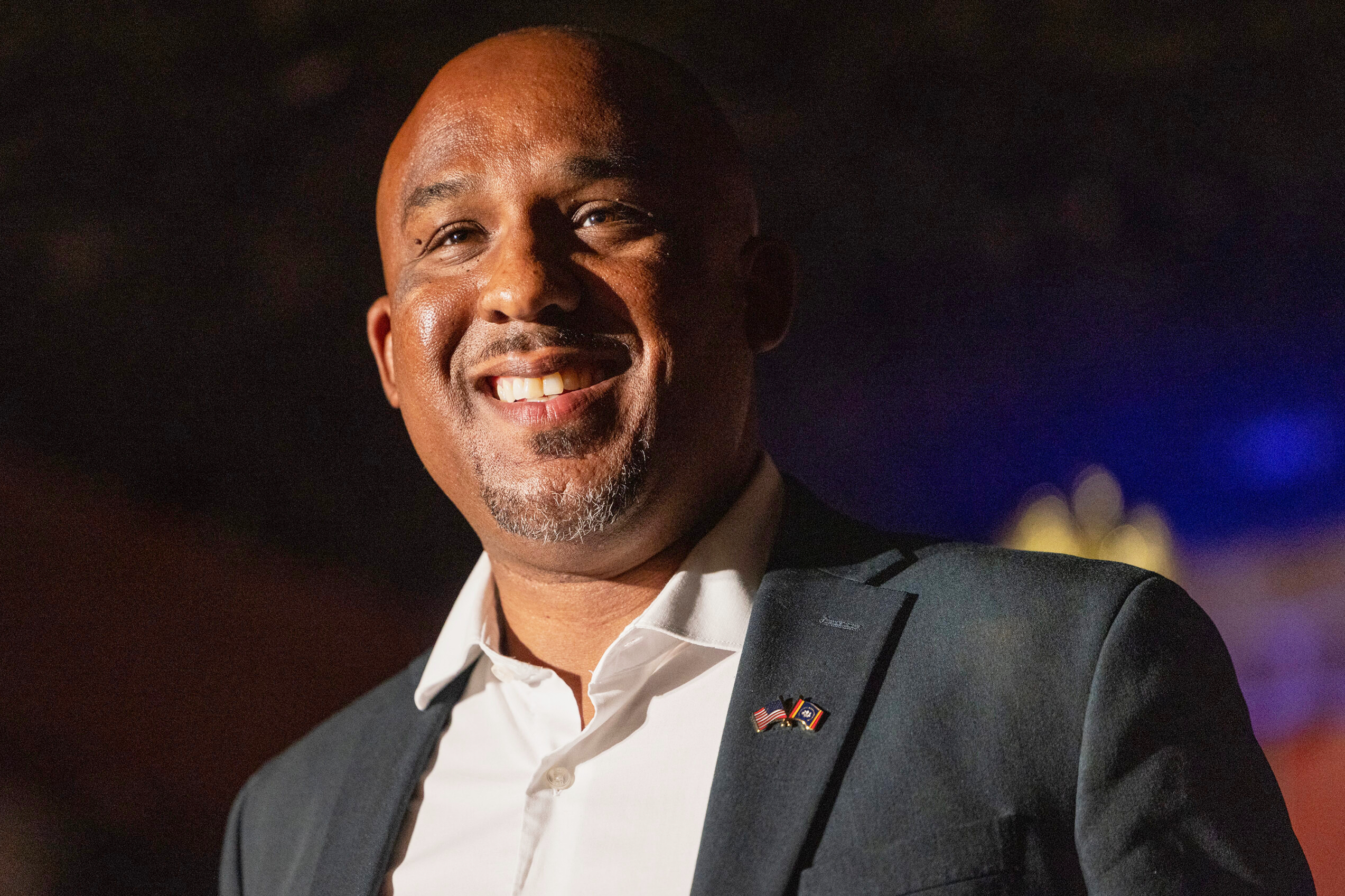

  • The how behind Scott Colom’s stunning victory in Mississippi is not nearly as important as the why

    The how behind Scott Colom’s stunning victory in Mississippi is not nearly as important as the why

    Democrats have secured a stunning victory in Mississippi, with veteran prosecutor Scott Colom narrowly defeating incumbent Republican U.S. Sen. Cindy Hyde-Smith to become the Magnolia State’s first Black senator since Reconstruction.

    Like the victory in Georgia by Keisha Lance Bottoms, who became the first Black woman elected governor in U.S. history, and many other races in this year’s midterms, Colom’s unlikely win was largely driven by high turnout among Black voters. But it’s not enough to know African Americans voted in droves.

    We also need to understand why.

    Black voters, much like those from other demographics, flocked to the polls because of the inflation tied to the president’s war of choice with Iran and his ongoing tariffs. More importantly, we voted because we were angered by Donald Trump’s brazen attempt to relegate us to second-class citizenship.

    We spoke with our ballots across generations and geography.

    We spoke with our feet as we marched to the polls.

    We spoke with determination as we pushed through every obstacle the president and his allies placed in front of us.

    For Black voters, this was about more than high gas prices. It was about the existential threat the Trump administration posed to our people. With anti-DEI policies that triggered the loss of hundreds of thousands of jobs, especially among Black women, with the erasure of Black history and the elimination of Black polling places, with the redrawing of district lines to squeeze out Black representation, Trump made it clear: We were being targeted — so we fought back with the most potent weapon a democracy can offer. We responded with our votes.

    Just as we’ve always done, African Americans stood up and acted as our country’s conscience. In Mississippi, that meant remembering Medgar Evers, who was murdered 63 years ago as he fought for Black voting rights. It meant remembering that in July, a Black teenager, Nolan Wells, died under questionable circumstances in the same state. It meant knowing that past is prologue, and that history’s horrors can reemerge, even in the midst of moments that appear to move us forward.

    I remember the jubilation that followed Joe Biden’s victory in the 2020 presidential election. Having watched 375,000 Americans die as a result of the COVID-19 pandemic that year, many Americans were repulsed by the air of incompetence and racism we’d experienced during Trump’s first administration. We were eager to wash our hands of it all. Then came the lies.

    Trump told his followers that the election was stolen, and repeated that falsehood for months. By Jan. 6, 2021, the stage was set for celebration to turn to terror. Thousands of Trump supporters stormed the U.S. Capitol to stop the transfer of power. More than 140 police officers were injured, and approximately 1,270 of the rioters were criminally convicted.

    Now, in the aftermath of the midterm Democratic landslide, history could very well repeat itself.

    Trump is now claiming the midterm elections were corrupt, and he is using his social media platform to promote the idea that the Democrats’ victory was not “honest.” Trump has also sought to undermine the early voting results, and he’s claimed the Alaska senatorial election was “rigged.”

    These are the same kinds of claims Trump made when he was defeated in 2020, so if the previous pattern carries through to completion, others will echo those claims, anger will consume his followers, and violence could result.

    Trump has already pardoned about 1,500 people who were either charged or convicted in the insurrection. Given that they’ve already shown their willingness to sow chaos on the president’s behalf, we must be ready for them to do so again.

    We must also accept that many GOP legislators are still loyal to the president, as evidenced by their successful defeat of Kentucky Republican Rep. Thomas Massie’s attempt to impeach Defense Secretary Pete Hegseth.

    For Black voters, however, it’s about much more than understanding the ongoing threat posed by Trumpism. It’s about reaping the benefits of our votes.

    Democratic victories don’t matter if we still lose economically. Nor do we benefit if racism goes unchecked.

    The symbol of Black representation is no longer enough for us. Black people must get wins beyond the vote.

  • Navy has quietly fired some commanders and other officials, drawing congressional pushback

    Navy has quietly fired some commanders and other officials, drawing congressional pushback

    WASHINGTON — The Navy has quietly fired or removed several top officers in recent months but broke with its usual practice of announcing those changes, drawing pushback from Congress.

    Two Democratic lawmakers said Thursday that the Navy failed to inform Congress that it fired the entire leadership team of a nuclear-powered attack submarine last month after an underwater collision. Separately, the sea service in September fired the commander of a destroyer deployed to the Middle East, according to a defense official, who spoke on condition of anonymity to describe sensitive personnel matters.

    Dr. Brian Monahan, a Navy rear admiral and attending physician for Congress and the Supreme Court, also departed his post during a Navy investigation — with no public announcement or confirmation.

    All three are a break from the Navy’s longstanding policy to announce major removals of commanders and other highly visible officials. They also follow an increasing level of secrecy over military operations, especially in the Middle East.

    “As a result of the Navy’s failure to communicate, what should have been a standard exercise in information sharing has instead raised questions about the Navy’s commitment to transparency and its commitment to a productive working relationship with Congress,” Reps. Joe Courtney of Connecticut and Adam Smith of Washington wrote in a letter to Navy leaders.

    The developments could set up a contentious confirmation hearing next week for acting Navy Secretary Hung Cao as he seeks to permanently take over as the top civilian official.

    In a letter to Cao and the Navy’s top uniformed officer, Adm. Daryl Caudle, Courtney and Smith said they had “deep frustration” over the Navy’s failure to notify the House Armed Services Committee about the firing of the commander, second in command and top enlisted sailor of the USS South Dakota submarine.

    The letter says they were fired after the submarine ran into something on the seabed, but the Navy would not offer public comment.

    The Navy also on Sept. 27 relieved Cmdr. Caitlin Cunningham, commander of the USS Michael Murphy destroyer, which has been deployed to support operations against Iran, due to a loss of confidence, the defense official said. She had been in the job less than a year.

    Typically, the firing of someone like Cunningham would be announced by the Navy within days, but the service did not offer public comment even when asked about it.

    On Thursday, Republican Sen. Mike Rounds of South Dakota and Democratic Sen. Alex Padilla of California also confirmed the departure of Monahan, the attending physician for Congress and the Supreme Court, but provided few other details.

    The Navy has opened an investigation, according to a person familiar with the situation who was not authorized to discuss the matter and spoke on the condition of anonymity.

    For nearly 18 years, Monahan held the top job in the Office of the Attending Physician, which is responsible for providing emergency medical assistance to members of Congress and the Supreme Court as well as congressional staff and visitors.

    Monahan was sometimes in the news for discussing matters such as Sen. Mitch McConnell’s health and for administering a COVID-19 vaccine to then-House Speaker Nancy Pelosi.

    Restrictions on the military sharing information go beyond the Navy.

    U.S. Central Command, which oversees operations in the Middle East, has released few details on recent limited strikes on Iran and refused to comment on or specify damage to bases or equipment, usually citing the need for operational security.

    Major satellite imagery providers with U.S. contracts have blocked or delayed public release of images in the region at the request of American officials. As a result, it took months to determine that Iranian drone and missile strikes damaged or destroyed structures on 26 military bases and other sites with U.S. equipment in the region, according to an Associated Press analysis.

  • Joel Embiid shines with 20-point night after injury scare: ‘He was aggressive’

    Joel Embiid shines with 20-point night after injury scare: ‘He was aggressive’

    Midway through the first quarter on Thursday night, Sixers center Joel Embiid was lying on the ground with clear pain in his knee.

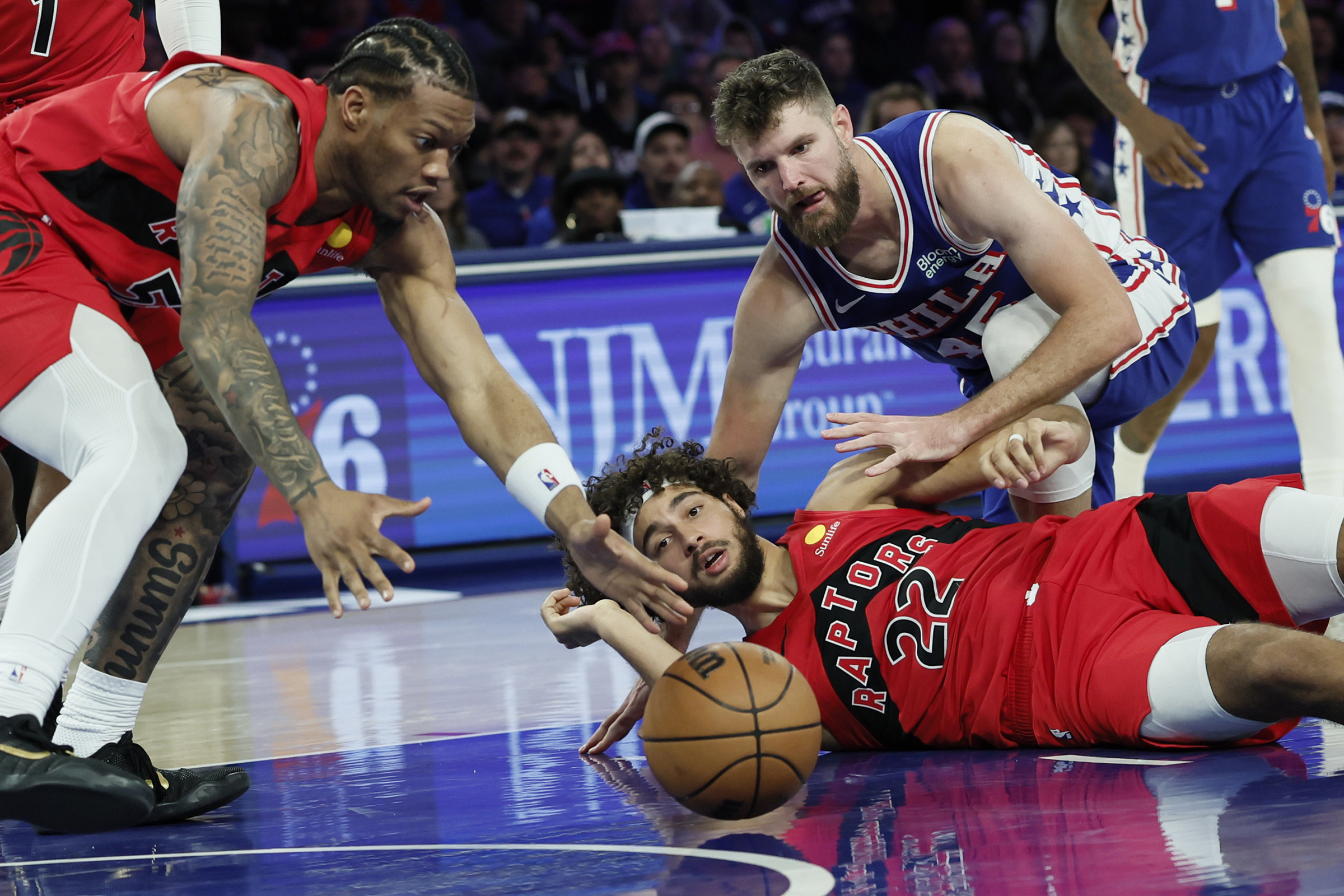
    Raptors guard Ja’Kobe Walter, fighting through Embiid’s screen to get to Tyrese Maxey, had knocked into Embiid’s right knee. Embiid left the court limping, grabbing at the knee as he walked off with a trainer.

    It looked like a potential nightmare scenario. The LeBron fan accounts were throwing in the towel on the season. Embiid said at the end of last season that he felt his knee injuries were finally behind him.

    “I always tell him all the time, just please don’t fall,” VJ Edgecombe said.

    Nick Nurse said after the Sixers’ 123-112 victory that he gets nervous every time he sees Embiid grab at his knee, and Thursday was no exception.

    But Embiid, after a brief stint in the locker room, got right back out on the court, to thunderous applause.

    “I’m kind of pessimistic at times, because, you never know what happened when someone’s just laying on the floor,” Edgecombe said. “… For him to go back and then come back out, it just shows his heart.”

    Joel Embiid left the Raptors game early after banging knees with Ja’Kobe Walter, but returned and thrived. Elizabeth Robertson / Staff Photographer

    Tyrese Maxey said he knew immediately that Embiid’s injury wasn’t going to be serious, and that Embiid, while on the ground, kept saying that he just got kneed.

    Embiid ended the night with 20 points, four rebounds, and three assists. He told reporters at shootaround that he wanted to be “more aggressive” against Toronto.

    “He was aggressive, man,” Maxey said. “He didn’t think. You know what I’m saying? I think he’s been thinking.”

    He still didn’t find much luck from behind the arc, missing all three of his three-point attempts to add to his tough 4-for-36 start to the season. But Embiid did get two dunks — something he jokingly swore off earlier this year — and a block.

    Nurse said Embiid’s movement, especially after that jolt of pain from the knee-on-knee bump, was the most promising sign from his night.

    “He’s just moving better, and I’m not sure that was the case for a couple games here recently,” Nurse said. “It’s nice to see the movement spark come back.”

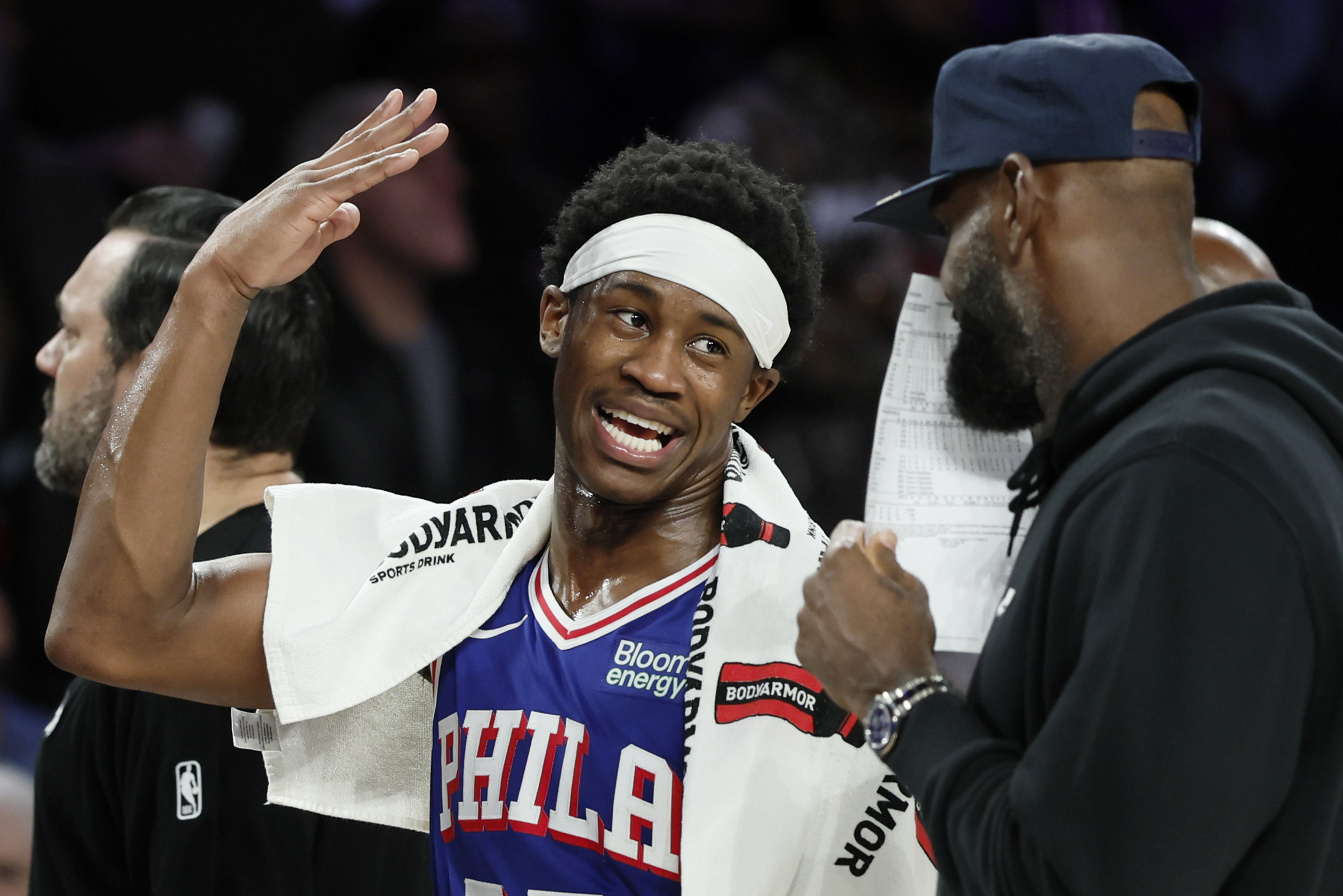
    The Sixers don’t need Embiid to carry the team every night the way they once did. Even with LeBron James out for back sciatica management, Maxey and Edgecombe performed at an elite level against Toronto, and the Sixers maximized the depth on their bench with strong nights from Anfernee Simons and Kentavious Caldwell-Pope.

    But they are still at their best with Embiid on the floor. He was a +11, the best mark of any starter. So far this season, Embiid and the Sixers have gotten lucky with injuries, with their full starting lineup playing in nine of 14 games, missing just the scheduled back-to-backs before James missed Thursday.

    Even with the team’s load management plan, Embiid joked after the first leg of a back-to-back that he wanted to play the next one. He’s more motivated than ever to be on the court and deliver for the Sixers.

    “[Embiid] was very, very motivated to play,” Nurse said. “It was hard to get him out for his scheduled rests tonight, which, it’s a good problem.”

  • Gina Hinojosa’s win in the Texas governor’s race is both historic and explained by history

    Gina Hinojosa’s win in the Texas governor’s race is both historic and explained by history

    Gina Hinojosa—a name few outside of Texas knew before this election cycle—made history Tuesday night after winning Texas’s governor race, part of a Democratic sweep of state-wide offices in 2026. Hinojosa will became the first Latina ever, and the first Democrat since 1995, to hold that office. She accomplished what many considered impossible, running a contentious gubernatorial campaign to defeat three-term Republican Governor Greg Abbott in a state largely considered a conservative stronghold.

    In truth, Texas’s political history is much more complicated. The state’s annexation into the United States in 1845 and the Treaty of Guadalupe Hidalgo (1848, ending the Mexican-American War) brought unprecedented numbers of new settlers—U.S. Southerners, ethnic Germans, and ethnic Polish among them—to the area, displacing Mexicans who had been there for generations. After the U.S. Civil War and Reconstruction, Southern Democrats dominated Texas politics and maintained their control through the regimes of Jim Crow and Juan Crow through much of the 20th century.

    But even that isn’t the whole story. Through the 20th century, examples abounded of grassroots, political resistance to racial injustice, economic exploitation and political repression. At mid-century, cross-racial alliances among Black, Mexican and poor white Texas residents forged meaningful changes on the streets and the ballot box. Of critical importance to such changes were the efforts of Chicana (Mexican American) women, whose long fight for political power as liberal feminists in the state renders Hinojosa’s victory as something a long time coming.

    In the early 20th century, Mexican Americans in Texas were viewed and treated as outsiders in their own land. Some naturalized or native-born U.S. citizens began to form civic organizations like the Order of the Sons of America (OSA, founded in 1921), laying the foundation for the League of United Latin American Citizens (LULAC) in 1929. LULAC, now considered the oldest Latino civil rights organization in the United States, fought racial discrimination, opposed school segregation, encouraged political participation and demanded Mexican American voting rights—all through the court system. What’s more, in 1948, Texas Mexican American veterans who had served in World War II established the American G.I. Forum to demand veterans’ benefits, labor rights and voting rights.

    While these organizations made critical contributions to the Mexican American civil rights movement, they tended to prioritize the experiences of upper- and middle-class men. But Mexican American women in Texas were also activated. They organized campaigns, registered voters, raised funds and founded women’s auxiliaries. This supportive political labor laid the blueprint for future generations of women to build upon.

    By the 1960s and 1970s, the expanding Chicano and women’s movements were transforming social, cultural and political life across the country. While the Democratic Party had increasingly positioned itself as the party of civil rights and sought the votes of Black and Mexican American voters in Texas, younger Mexican Americans, now calling themselves “Chicanos/as,” were frustrated by their still limited access to political power. In the face of police brutality, economic exploitation, continued political exclusion, gender inequality and erasure of their history and culture, they took to the streets calling for “Brown Power” and formed grassroots organizations across the Southwest. Chicanas were part of this fight, but they went further­. They challenged sexism in movements that shut them out of decision making, and they prioritized fighting for their own self-determination and autonomy.

    The La Raza Unida Party (RUP) formed as a liberal third party in South Texas in 1970, and Chicanas were at its center from the start. Not all ethnic Mexicans aligned themselves with the RUP; many remained with the Democratic Party. But through the RUP, women were able to exercise political power. Chicanas like Evey Chapa played major roles in crafting the party’s platform, which prioritized support for the Equal Rights Amendment and the recruitment of women within the party. Going one step further, the RUP became the first political party to actively recruit Chicanas to run for office themselves. In 1972, Marta (Martha) Cotera ran for the State Board of Education in District 23, and Alma Canales ran for lieutenant governor under the RUP banner.

    The RUP eventually spread from South Texas across the rest of the state, and even to the U.S. Southwest, Midwest and beyond. It further expanded its reach when its Chicana members joined the National Women’s Political Caucus, founded in 1971 to encourage women to run for public office and engage more deeply with the U.S. political process. In short, the RUP helped develop a blueprint for Mexican American political representation, but it also established the framework and network to ensure Mexican American women’s central role in political leadership.

    Chicanas’ organizing work in South Texas and beyond created an opening for them to participate in mainstream politics. In 1976, Irma Rangel launched her campaign for state representative for District 49. Her campaign centered the working people of Texas with the slogan “Representation for a Change.” She understood the economic hardship, lack of quality education and racial discrimination that South Texans endured. And she understood the importance of women’s rights. Rangel became the first Mexican American woman elected to the Texas House of Representatives and assumed office in 1977. Rangel helped fight for women’s rights, established a pharmacy school in Kingsville, Texas, and co-authored the “Top Ten Percent” bill that transformed higher education in Texas. She didn’t shy away from battle, and she sought opportunities to work in a bipartisan manner.

    Made By History sponsors. FOR USE ON MADE BY HISTORY STORIES ONLY.Inquirer Staff

    Like Rangel, Hinojosa grew up in South Texas, specifically Brownsville, where today ethnic Mexicans are the majority-minority and Mexico’s border is within driving distance. As an adult, she climbed the ranks in state politics, first winning a seat on the Austin ISD School Board and then in the Texas House of Representatives in District 49. All the while, she continued to work as a civil rights and union lawyer, advocating for everyday people at the grassroots level.

    In 2025, Hinojosa set her sights on the governor’s office and campaigned with the slogan “No te dejas,” or “Don’t let them.” It’s a familiar dicho (saying) in the Mexican community and something I grew up hearing my mother say. Hinojosa too said she often heard it from her grandmother, as I’m sure many ethnic Mexican women have. When we say “No te dejas,” we’re saying don’t give up, speak up, fight back, walk in your truth.

    Like the Texas Chicanas of the 1970s who came before her, Hinojosa “no se dejaron”—she didn’t let them shut her out, silence her or stop her. Hinojosa’s win may register as a major upset in Texas politics—but there has always been more to Texas than Republican men. Yes, she ran at the right time, but her victory is part of a movement decades in the making and one that will continue for decades to come.

    Tiffany Jasmin González is an assistant professor of history at the University of Kansas, where she teaches and writes on modern American history and Latina/o history.

    Made by History takes readers beyond the headlines with articles written and edited by professional historians. Opinions expressed do not necessarily reflect the views of The Inquirer.

  • Penn’s final home game of the season hits differently for Rick Santos and the seniors

    Penn’s final home game of the season hits differently for Rick Santos and the seniors

    In some ways, Penn’s matchup with Ivy League co-leader Harvard on Saturday afternoon carries a different weight.

    For head coach Rick Santos and the freshmen, it’s their first homecoming game. For the seniors, it’s goodbye to Franklin Field.

    “I was just talking to my mom about it,” senior linebacker Cole Olsztyn said. “I can’t believe these are my last two games as a Quaker already. It seems like just yesterday I was getting to campus [in] August for freshman year.”

    Santos added: “We need to play for [the seniors]. We need to honor them with our effort and our toughness.”

    That effort is what Santos believes will give Penn (4-4, 2-3 Ivy League) an edge against the Crimson (7-1, 4-1), who beat the Quakers in each of their last five meetings and have been Ivy League co-champion the past three seasons. This season, Harvard is averaging 27.8 points, tied for first in the league, and 387.3 yards per game while leading the Ivy in multiple defensive categories.

    “Harvard doesn’t have many weaknesses right now, to be honest with you,” Santos said.

    With top running backs Donte West and Tommy Lafayette out for the season because of injury, Penn will need to be “creative” offensively.

    Karson Siqueiros-Lasky will get the start at quarterback in Penn’s final home game of the season, and Santos said he expects him to “play the majority part of the game,” while freshman Miles Teodecki will play “situationally.”

    Siqueiros-Lasky started last Saturday, and his passing game propelled Penn to a 14-13 win over Cornell. He completed 24 of 38 passes for 220 yards and a touchdown.

    “That was definitely the momentum we need going [into] this week,” said Olsztyn, who had his first interception since high school against Cornell.

    Olsztyn said the seniors have worked to lay a foundation for the team and build an “upward trajectory.”

    Penn wide receiver Mason Page has 408 receiving yards and two touchdowns through eight games.Yong Kim / Staff Photographer

    Freshman wide receiver Mason Page could be a key part to the team’s future. Page is second on the team with 408 receiving yards and has two touchdowns through eight games. He ranks eighth in the Ivy League in receiving yards.

    “He was a dog in high school, as he is out here,” said Jack Sacchetti, a freshman defensive lineman who also was teammates with Page at West Forsyth High School in Cumming, Ga. “Once he committed here, I’m like, ‘We got a guy.’”

    Page added: “You’re playing against guys that are three or four years older than you, so I knew that I needed to work twice as hard just to even be equal with them.”

    Page is averaging 13.4 yards per catch against Ivy League opponents.

    “The moments never really seem too big for him,” Santos said.

    While playing at Franklin Field for the last time is “surreal,” senior defensive back Josh Narcisse said, “It doesn’t change the fact that we’re all very focused on our goal for this week.”

    The seniors have yet to beat Harvard, “so this is a legacy type game for them,” Santos said.

    “Let’s create a memory that they can have for a lifetime,” he said, “and that’s beating a team as good as Harvard.”

  • In win over Raptors, Sixers flashed why their offseason roster revamp also applied to the bench

    In win over Raptors, Sixers flashed why their offseason roster revamp also applied to the bench

    When an off-target shot left the basketball wedged behind the backboard for the second time Thursday night, Kentavious Caldwell-Pope wound up with the broom in his hands.

    It took “too many tries” for him to get it dislodged, the 76ers’ veteran wing quipped after the game. But when he finally poked it free, he raised his arms to acknowledge the cheering crowd.

    “It was a lot of pressure, actually,” Caldwell-Pope told The Inquirer from his locker.

    That was one way the Sixers’ bench provided a lift in their 123-112 victory over the Toronto Raptors at Xfinity Mobile Arena.

    The reserve trio of Caldwell-Pope, Anfernee Simons, and Jabari Walker combined for 37 points — including a blistering 9-of-13 mark from three-point range — while also impacting the game as rebounders, facilitators, and defenders. They sparked the Sixers following an awful start, then supplied key fourth-quarter moments to help put away the short-handed Raptors playing without stars Kawhi Leonard and Scottie Barnes and on the second night of a back-to-back.

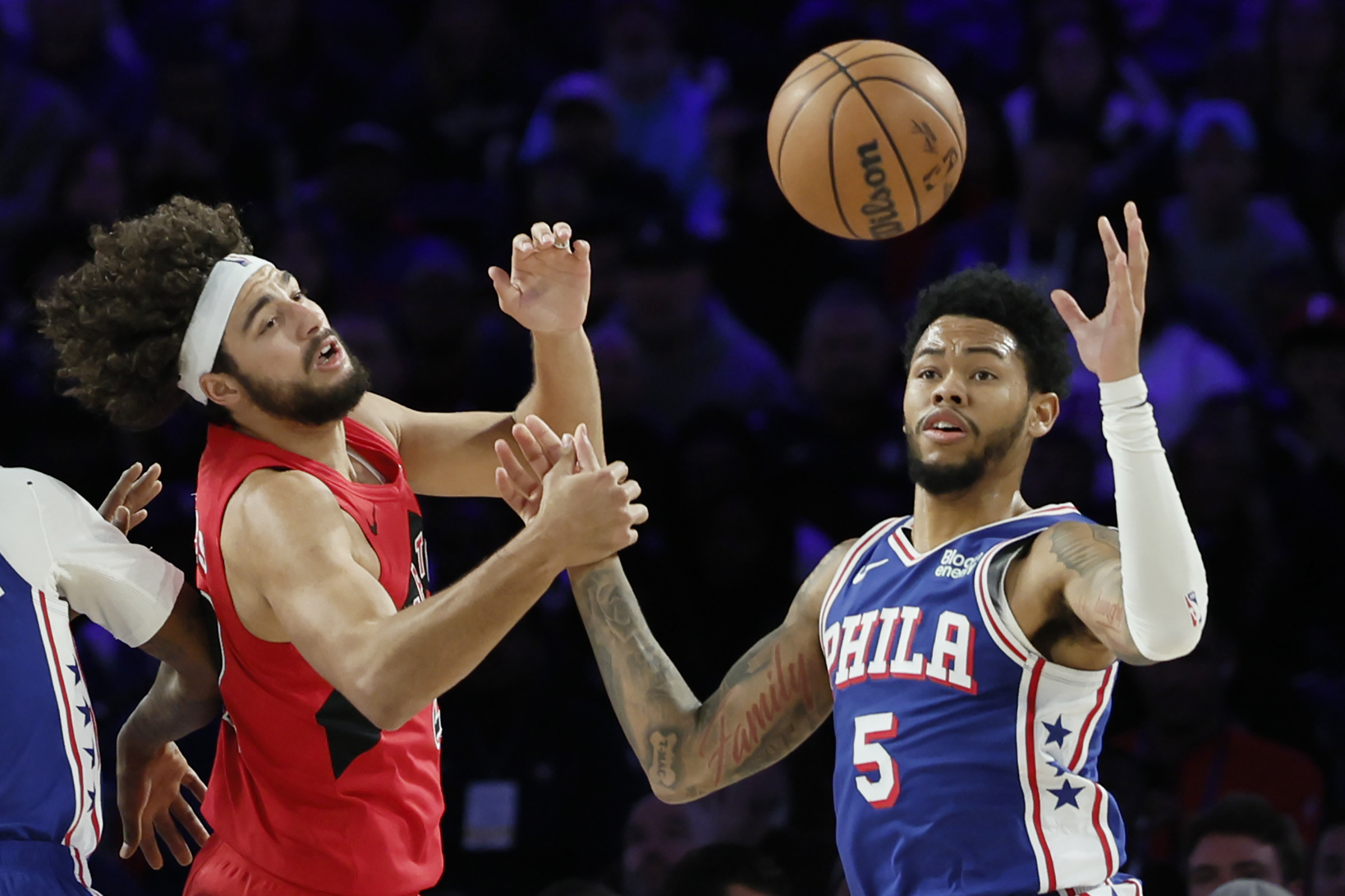
    Anfernee Simons (5) was among the bench scorers who made a big impact in Thursday’s win. Elizabeth Robertson / Staff Photographer

    The bench’s collective performance was evidence of why many outsiders believed the Sixers’ roster revamp did not just pertain to adding superstars LeBron James and Jaylen Brown, but improving the overall depth.

    “It’s very gratifying, for sure,” Simons said after the game. “[Our responsibilities are] going to change in every game. . … Obviously, the starting unit’s got great players, and [any player] can go for 30 each and every game if they wanted to.

    “As a bench unit, we’ve got to continue to bring the energy each and every night.”

    That loaded starting lineup featuring James, Brown, Tyrese Maxey, and Joel Embiid is at least partially why the Sixers (10-3) rank last in the NBA in bench points (23.7 per game) entering Friday.

    But against Toronto, Simons went 5-of-6 from three-point range and finished with 17 points. Caldwell-Pope added a balanced line of 11 points, five assists, and four rebounds, while also playing physical defense and being trusted with down-the-stretch minutes. Walker had nine points and eight rebounds in 16 minutes, many of them abrupt when Embiid briefly exited with a knee injury and then sat for the end of the first half with three fouls. Those outputs kept the starters in their normal minutes range before two welcomed days off Friday and Saturday.

    Jabari Walker helped prove the Sixers are not just about their starters on Thursday night. Elizabeth Robertson / Staff Photographer

    After the Sixers fell behind by 17 points in the opening frame, Simons jolted his team to life by hitting a three-pointer to beat the quarter buzzer. Caldwell-Pope then sank two deep shots in the second quarter, helping the Sixers swiftly close the gap and tie the score at halftime.

    Then, those reserves’ fingerprints were all over the final frame.

    Walker buried a corner three-pointer on the Sixers’ first possession and then converted a put back. Simons and Caldwell-Pope both finished at the rim. When the Raptors cut a double-digit deficit to 111-105 with less than five minutes to play, Simons answered with another make from beyond the arc. And after enthusiastically directing teammates while waiting at the scorer’s table to check back in for crunch time, Caldwell-Pope nailed a deep shot to give the Sixers a 121-108 lead with 2:02 remaining.

    “[Teammates] encourage us to keep shooting the ball,” Simons said. “And knowing that the team has that much confidence in us to keep shooting it, it makes the game that much easier.”

    The Sixers needed down-the-roster upgrades after last spring’s playoffs exposed their lack of depth. Those players also can provide reinforcements on load-management days for James or Embiid. Dean Wade slid into the starting lineup in James’ place Thursday and went 2-of-5 from beyond the arc.

    Simons agreed to sign as a free agent between the stunning blockbuster trade for Brown and James choosing the Sixers. Caldwell-Pope, who won NBA titles with the Los Angeles Lakers in 2020 and Denver Nuggets in 2023 but had struggled in recent seasons with the Orlando Magic and Memphis Grizzlies, was a late addition to the group. Walker is a returner from last season, after parlaying a two-way contract into a standard deal.

    Nick Nurse’s ability to call upon his bench will give the Sixers more flexibility and allow him to give his star-studded bench the requisite rest. Yong Kim / Staff Photographer

    Coach Nick Nurse still did not have his full complement of bench options Thursday, with Adem Bona (spine) sidelined for a fourth consecutive game and Dominick Barlow (back) waiting to play his first game of the season. Rookie guard Labaron Philon Jr., who was expected to be an immediate rotation player before the Sixers’ flurry of moves following the NBA draft, also did not play meaningful minutes Thursday.

    Sharpening chemistry among those bench players — who play in a variety of lineup combinations with starters and fellow reserves — has been a work-in-progress during the season’s initial weeks.

    Simons said he now recognizes when defenders try to prevent downhill drives from Maxey by hanging out at the top of the key, prompting him to space further outside the arc in order to step into his three-point shot. Caldwell-Pope said he and teammates have made their biggest early-season strides in defensive communication. When outside shots from Simons or Caldwell-Pope do start falling, that opens up lanes for Maxey and fellow electric guard VJ Edgecombe to get to the basket.

    Simons also emphasized the nonscoring ways he and others can help. Cutting. Making a crisp pass to Embiid down low. Boxing out.

    “Just being in the right position and making the right play each and every time,” he said.

    After Thursday’s victory, Simons and Walker sat side-by-side for a joint news conference. They both began their NBA careers with the rebuilding Portland Trail Blazers, with whom they probably logged heavier minutes and compiled more consistent statistical production but were part of fewer wins.

    While reflecting on that period, Simons acknowledged that they have “been through a lot.”

    “You feel appreciative of the times where you go into a situation where your role might be a little bit less, but you’re winning,” Simons said. “And so that’s something that you can’t take for granted, for sure, because it’s hard to win in the NBA. We’ve seen it firsthand.”

    That perspective is needed from the players who complement the Sixers’ stacked starting lineup. But their chance to provide the collective lift arrived Thursday — and illustrated why the Sixers’ offseason roster revamp also applied to the bench.

    “[Put] our best foot forward,” Simons said, “and be able to impact winning.”

  • Mauricio Pochettino officially leaves the USMNT for Manchester United

    Mauricio Pochettino officially leaves the USMNT for Manchester United

    Mauricio Pochettino’s departure from the U.S. men’s soccer team became official on Friday. He will formally step down after the upcoming Concacaf Nations League quarterfinal series against Haiti to take over Manchester United, after the English Premier League club chased him so hard that it agreed to pay a reported $10 million-plus to buy him and his staff out.

    “I think they know that not too many opportunities can happen in your career a size of Manchester United,” Pochettino said Friday, during a news conference at U.S. Soccer’s national training center in suburban Atlanta. “And of course when that arrives, it’s difficult to turn down that situation.”

    He sat at the podium flanked by two of the people who count as “they”: U.S. Soccer president Cindy Cone and CEO JT Batson.

    “What you’ve done with the men’s and the boys’ program in two years has been unbelievable,” Cone said in prepared remarks. “Not only have you contributed to their advancement, you’ve contributed to the entire federation being better, and you have been such a great partner to all of us. So I just want to give you a heartfelt thank you. We’re going to miss you.”

    Pochettino got choked up a few times, including when he admitted that “I didn’t prepare a speech — I am talking with my heart.”

    The most poignant moment came when he turned to address Batson, and ended up addressing a theme of the soccer world.

    “You never lied to us,” Pochettino said. “The human being is in front of everything, and that is why [this] is a really difficult decision. But we need to move forward. A big thank you from my heart and my people, because you always were transparent, and you always put in front the interest of the federation, but always trying to build something together. And we really enjoyed it.”

    He added that “we really enjoyed it” and “we learned a lot from you all, from this country, the amazing people.”

    Mauricio Pochettino in one of the moments when he got choked up.Colin Hubbard

    An admission that ‘it’s not ideal’

    A key factor in those sentiments was Batson’s offer of a new contract for the 2030 World Cup cycle before the this year’s tournament kicked off. That struck a manager who was dismissed from his previous three jobs: England’s Tottenham Hotspur in 2019, France’s Paris Saint-Germain in 2022, and England’s Chelsea in 2024.

    “That is why you always are going to be in my heart,” Pochettino said. “It’s difficult to find people like you that are transparent and really believe in more than a result if not seeing the project [make progress]. I think the federation is in great hands, and I think you have everything: the capacity, the knowledge, and the power in this country and behind it, that can be amazing in the future with one or another coach.”

    Batson’s prepared remarks certainly put a positive spin on the fact that the most famous coach in U.S. men’s team history was walking away from the job three months after signing a four-year deal for a second term.

    “The culture that Mauricio helped set within our team, and even more broadly within the federation, is something that will last for many, many years to come,” Batson said.

    Mauricio Pochettino (left) talking with JT Batson earlier this year.Jonathan Tannenwald

    When Pochettino agreed to the second term in August, he said “we signed the contract because we really believe that we are going to be four years there.” But not many other people did, and he knew it.

    Even during Pochettino’s first term, from the fall of 2024 through the World Cup, there were flirtations with European clubs including Tottenham and Italy’s AC Milan. This was seen for U.S. Soccer as part of the cost of hiring a famous name.

    Still, he wasn’t expected to leave the post this soon into the new deal. Maybe next summer, or especially the summer of 2028, but not now.

    “It’s true that this is not ideal, but it never is an ideal situation when this type of thing happens,” Pochettino said Friday. “But like in life, football goes quick … That is why we need to move more forward, I think, to keep that relationship and all the memories that we share.”

    Mauricio Pochettino helped the U.S. men’s soccer team capture the nation at the World Cup, but he didn’t take the team any farther than anyone else has in past tournaments.Julio Cortez

    What comes next?

    At least the timing works for U.S. Soccer. After the upcoming Concacaf Nations League quarterfinal against Haiti, there isn’t anything on the program’s schedule until a prospects camp in December. Olympic team coach Steve Cherundolo will lead that. The next thing from there is the Nations League final four in March, if the U.S. advances.

    It will be awkward to some observers that Pochettino is staying for the Haiti games, Saturday in Miami (4:30 p.m., TNT, Telemundo 62) and Tuesday in Cincinnati (7 p.m., TBS, Universo). But it’s practical, because there isn’t anyone else around. Pochettino’s entire coaching staff came with him and will leave with him; and Cherundolo is currently in Spain for a camp with Olympic team prospects.

    On top of that, Pochettino wants to see things out with his players.

    “Before professionals, we are persons,” he said. “The emotional link between us that we built in these two years, I think it’s to show the commitment, and respect, and care, and love, even if we take a decision that is not for one part maybe the best. … I think we have the respect of the players and the staff, and they understand the situation.”

    Will U.S. Soccer try to dance with another famous name now? The Athletic has reported that the brass want to land Pep Guardiola next, and Batson didn’t deny it Friday.

    “We’ve publicly shared our ambition is to be in a position where we’re winning major tournaments including World Cups and we want to make sure that we’re attracting leaders who help us do just that,” he said. “We know from our experience that great leaders want to work with great people, and great leaders want to make an impact on things that matter. And we think that we’ve proven that at U.S. Soccer that we are a great place to work, and we’re a great place to make legacy defining impact.”

    That was one of a few instances that sounded more like management-speak than plain talking. A brief moment of the latter came when Batson said the search for the next manager will be led by a committee of himself, chief operating officer Dan Helfrich, vice president of the sporting division Oguchi Onyewu, U.S. women’s team manager Emma Hayes, “and other soccer leaders.”

    But the full roster wasn’t revealed. Nor did Batson directly address what influence U.S. Soccer’s big-money donors will have, after they wrote the checks to pay Pochettino’s salary. He only said, and not quite directly, that the cash from Pochettino’s buyout will go into U.S. Soccer’s accounts and not to the donors.

    “Our supporters, our sponsors, our donors, our fans are very supportive around making sure that we have the resources to achieve our goals including having a world-class coach,” Batson said. “We’re appreciative of that support, and look forward to to that being a key part of our way of winning going forward

  • Democrats in position to end electoral college, but challenges await

    Democrats in position to end electoral college, but challenges await

    A movement to give the presidency to whoever receives the most votes nationally has new momentum after Democrats swept state races in the midterm elections, but still faces major hurdles in legislative chambers and courtrooms.

    For two decades, reformers have pressed states to agree to give their electoral votes to the winner of the national popular vote, regardless of who wins their state. The arrangement would render the electoral college moot and end aberrations like the ones in 2000 and 2016 that saw Republicans George W. Bush and Donald Trump win the presidency despite Democrats receiving more votes.

    “There is no other election in this country where the person who loses can win the election, where the person who gets the most votes doesn’t actually win,” said Wisconsin state Sen. Kelda Roys (D). “And it’s fundamentally unfair and antidemocratic, small-d democratic.”

    Finding a way to sidestep the electoral college once seemed all but impossible. But with Democrats winning full control of more state governments last week, it now appears within reach — at least politically. If supporters get their way, they will be met with a slew of litigation, and any one lawsuit could block their path.

    Such a change would transform the country politically, reshaping who can mount viable presidential bids and how they run their campaigns. Instead of concentrating on half a dozen or so swing states, they would seek votes across the nation. Supporters say that would guarantee presidential candidates find broad backing; detractors say they would ignore smaller states and spend most of their time in the most populous states: California, Texas and Florida.

    Opponents say those who want to overhaul the electoral college must go through the arduous process of amending the Constitution rather than rewriting the rules with state laws.

    Under the Constitution, states decide how to award their electoral votes, with most giving all of theirs to whoever wins their state. To get around that setup, reformers have asked states to agree to give their electoral votes to whoever wins the national popular vote. The agreement wouldn’t go into effect until states with at least the 270 electoral votes needed to win the presidency join.

    Over the last 20 years, 18 states and Washington, D.C., have signed on to the agreement. Together, they have 222 electoral votes.

    Supporters tout the plan as a neutral measure, but it’s one that’s secured lopsided support from Democrats. Republicans have shown little interest in changing a system that has allowed them to win two presidential races in recent decades without popular support.

    Last week, Democrats won full control of the state legislatures and governors’ mansions in five states that have not yet adopted the compact: Arizona, Michigan, Nevada, Pennsylvania and Wisconsin. They account for 61 electoral votes, and if four of them sign on, the compact would secure the majority needed to activate.

    Already, Democrats in those states are giving fuel to the idea.

    “The national popular vote makes sense,” Pennsylvania Gov. Josh Shapiro (D) said after the midterms on the “Pod Save America” podcast.

    Shapiro, a potential 2028 presidential candidate, added, “To me, the most important thing is that the will of the people is heard and respected, and I think popular vote is a way to do that.”

    Even with the renewed momentum, the plan faces dire political risks and guaranteed legal challenges. Opponents are prepared to sue because they see it as an illegal attempt to work around the Constitution, said Daniel Lennington, vice president of the conservative Wisconsin Institute for Law and Liberty.

    The electoral college is anti-democratic by design, Lennington said.

    “I’m going to side with the founders on the idea that there are certain things, certain structures and limitations, that we put on democracy,” he said. “There’s not a lot of difference between a society which is run by an autocrat versus one that’s run by 51 percent of the people in the country that are able to do whatever they want whenever they want.”

    Challenges ahead

    If enough states signed onto the agreement, supporters would have to wrestle with a provision of the Constitution that says Congress must sign off on some agreements among states. Some supporters of the agreement argue congressional approval isn’t necessary but say they would seek it anyway.

    Pushing the issue through a Democratic-controlled Congress could be tricky, especially when multiple senators from both parties are eyeing presidential runs and would have to weigh whether a popular vote would hurt or help their chances.

    There’s also debate over whether the president could veto the compact. A White House spokesperson didn’t respond to a request for comment.

    An avalanche of litigation is certain, with some lawsuits arguing the new arrangement would arbitrarily and unconstitutionally treat voters differently, said Derek Muller, a University of Notre Dame law professor. Different states have different voting rules — some require voters to show ID; some mail ballots to every registered voter; some have robust early-voting opportunities — and the challengers could argue that creates an unfair presidential contest.

    Under one theory, the national popular vote compact would violate state voter residency requirements because it would effectively turn state elections into national ones, Muller said.

    The Supreme Court would likely weigh in, but so would numerous state supreme courts. And supporters of the compact would have to win all of the cases.

    That’s no reason to hold back, said Chris Rabb, a Pennsylvania Democrat who was elected to Congress last week after working on the national popular vote compact as a state lawmaker for a decade.

    “If we had the attitude of not doing the right thing because of lawsuits, we wouldn’t do anything,” he said.

    Democrats may reconsider whether the electoral college is still biased against them, especially in light of the midterm results.

    On the one hand, they have new opportunities to advance the popular vote compact. On the other, they won states such as Ohio and Texas that are rich in electoral college votes and until recently were seen as solidly Republican.

    Support for adopting the popular vote is uneven across the states where Democrats won trifectas.

    “We can do away with” the electoral college, Wisconsin Gov.-elect David Crowley (D) told the Associated Press.

    Nevada Gov.-elect Aaron Ford (D), who unseated a Republican, has not committed to approving the compact. Ford spokesperson Tai Sims said that, for now, Ford is focused on lowering costs.

    But the measure failed before when Nevada Democrats held a trifecta in 2019. Then-governor Steve Sisolak (D) vetoed the measure passed by the Democratic-controlled legislature, saying it “could diminish the role of smaller states like Nevada in national electoral contests.”

    A spokesperson for Michigan Gov.-elect Jocelyn Benson (D) didn’t respond to questions.

    Arizona Gov. Katie Hobbs (D) declined to say in a television interview this week whether she backed the idea, even though she had sponsored a bill supporting the measure as a state lawmaker.

    The plan nonetheless is on the agenda of state Sen. Priya Sundareshan, the Democratic leader in the chamber.

    “This goes a long way to demonstrating that every vote matters, that the regular voter can make a difference with their vote,” she said.

  • ⭐ Outdoorsy ‘26, Wrapped | Outdoorsy Newsletter

    ⭐ Outdoorsy ‘26, Wrapped | Outdoorsy Newsletter

    Winter is coming. The air has grown colder, the remaining leaves are flashing their last striking colors, and we’re bundling up inside.

    There’s one more change in store: This newsletter is taking a break.

    Before we part ways, let’s hit nature together one more time.

    • Bridge debuts: Walk along the newest pedestrian bridge across the Schuylkill.
    • Best of Outdoorsy: Your favorite adventures of the year, ranked.
    • Plus: It’s “Love Your Park” weekend, a progress report on the Philly Tree Plan, and much more.

    🥶 Your weekend weather outlook: Watch out for some rain on Friday, and a December-like chill.

    — Paola Pérez (outdoorsy@inquirer.com)

    If someone forwarded you this email, sign up for free here.

    Swinging open

    Philly’s newest bridge on the Schuylkill is swinging open to the public after an eight-year refurbishment.Gabe Coffey

    The long-awaited Schuylkill River Crossing Swing Bridge is now open in what officials call a major engineering achievement for the Schuylkill River Trail.

    The newly refurbished bridge spans the east and west sides of the river, allowing for pedestrians and cyclists crossing from the Grays Ferry area to reach Bartram’s Garden and other areas. Boaters and jet skis also have room to pass freely below.

    🌉 Why it’s special: For one, the red steel bridge reuses foundations from the original swing bridge that was last open in 1976. It also connects historic Philly landmarks.

    🌉 What could come next: The new crossing provides a critical stepping stone for future southern extensions toward Passyunk Avenue and, ultimately, Fort Mifflin, writes environmental reporter Frank Kummer.

    🌉 How it works: Swinging the bridge takes roughly one to two minutes. An on-site Streets Department worker in a nearby operating house controls it.

    Get all opening-day details, and scroll along our interactive to learn how the bridge functions.

    News worth knowing

    • Philadelphia has planted 18,581 trees on streets, yards, parks, and schoolyards over the last three years under the Philly Tree Plan, which aims to grow the city’s shrinking tree canopy.
    • It’s Love Your Park weekend, and your help is wanted. Register to clean up, plant trees, and tend gardens at more than 100 neighborhood parks ahead of winter.
    • All the animals that lived at the Academy of Natural Sciences have found new homes. Shout-out to armadillo sisters Blue and Violet, who are reportedly “having a blast” after relocation.
    • A dam near the Brandywine was dismantled in October in an effort to tame flooding throughout the watershed. The Inquirer’s resident weather expert reports that the grand battle may never end.

    🌳 Your outdoorsy experience

    Alyssa Passeggio, The Inquirer’s senior editor for notifications and newsletters, recently escaped to the desert. Here’s what she saw:

    This serene image is from Barker Dam in California’s Joshua Tree National Park. It was our first hike of the trip and we were early enough to hear birds chirping here. The park’s sandy trails, rock formations, and slightly dangerous plants were unlike anything I’d seen before. The weather changed enough through our short trip to offer different color palettes every few hours, unexpectedly helping us notice different beauties even on the same roads.

    What a treat. Thanks, Alyssa!

    Best of Outdoorsy

    What remains of fall foliage is illuminated by sunlight on a morning walk in Philadelphia, Nov. 4.Paola Pérez

    You know how music streaming services give you a year-end recap of your top songs, albums, and artists? Consider this Outdoorsy ‘26 Wrapped, our curated year in review for memorable adventures in nature.

    Your favorite season

    For most of you, it must be fall, because of all the activities we took on, the majority of top picks centered around autumn, including:

    🎉 Celebrating at fall festivals.

    🍁 Best spots for leaf peeping and foliage-focused hikes.

    🍎 Apple picking at the best orchards.

    Beyond fall, you also loved:

    🏝️ Exploring our area islands.

    🌊 Learning about where flood risks rise.

    🌺 Building a tropical garden.

    Best reader experiences

    I want to give a huge thanks to everyone who sent in personal stories and pictures. Special shout-out to these al fresco anecdotes:

    🐢 Joe Berkery discovering a star turtle at Palmyra Cove Nature Park

    🍄 Barbara B. spotting a humongous fungus, and a bug’s-eye view from a summer meadow

    🌼 Lisa Dukart enjoying the quiet oasis of PHS Meadowbrook Farm

    🌱 Bonnie Zetick finding a moment of calm at the Winterthur Museum, Garden & Library

    🥾 Chloe Pantazi-Wolber and family admiring waterfalls and taking on tricky terrain together

    Did I miss your favorite? What did you like about this year’s newsletter? Write me an email to let me know.

    Paola’s picks

    A black squirrel! Spotted on Nov. 4.Paola Pérez

    👻 Stories of the year: Spooky trails around the Philly region, meeting the “‘renegades’ of the river,” and dealing with a strangely beautiful invader: the spotted lanternfly.

    🐿️ A sighting: The first time I ever saw a black squirrel was in Canada in 2019. I’ve noticed some around Philly, like the one pictured above. Here’s a fascinating history lesson on the species.

    🪸 An underwater marvel: The SS United States, docked for almost three decades in Philadelphia, has sunk and will now become the world’s largest artificial reef.

    🦋 A mystery: Where do monarch butterflies go on their long migrations across North America? Tiny trackers help scientists follow their journey.

    🦎 A frozen hazard: As a former Florida girl, the concept of iguanas falling in tune with the temperature never ceases to amaze me.

    🔴 A fall treat: It’s National Pomegranate Month. I didn’t know they are part of the berry family.

    A parting view

    A three-flowered maple tree displays its vibrant fall colors at Laurel Hill Cemetery. It towers over the tombstone of Henry Huddy, who died in 1904.Jose F. Moreno / Staff Photographer

    This photo made me think of a recent story my colleague Stephanie Farr wrote about Bob’s Diner in Roxborough. It’s located extremely close to Leverington Cemetery, almost forcing you to face your mortality as you enjoy your syrupy pancakes.

    Years ago, I followed up my first breakfast at Bob’s with a walk through that cemetery. It was a chilly day. I remember feeling an appreciation for the synchronicity of the moment, the transformation of the seasons and the circle of life, intertwined.

    Now, as we burrow in for colder, darker months, consider a handful of helpful tips from health psychologist Kari Leibowitz: “Our mindsets influence what aspects of winter we pay attention to, which in turn shapes our behaviors and how we feel about the season.”

    👋🏽 I’m grateful to you for joining me on this journey. Thank you for reading and sharing your own experiences along the way.

    Outdoorsy may be going into hibernation, but I’m still around! You can sign up for The Inquirer’s Morning Newsletter to read more of what I write on Saturdays and Sundays, or check out The Inquirer’s Things To Do Newsletter for fun happenings in and around Philly every week.

    Take care out there.

    By submitting your written, visual, and/or audio contributions, you agree to The Inquirer’s Terms of Use, including the grant of rights in Section 10.