Blog

  • Phillies’ quest to clinch a playoff spot stalls again with 5-1 loss to the Brewers

    Phillies’ quest to clinch a playoff spot stalls again with 5-1 loss to the Brewers

    For the second straight night, the Phillies had an opportunity to close in on a playoff spot. And for the second straight night, the Phillies laid an egg instead.

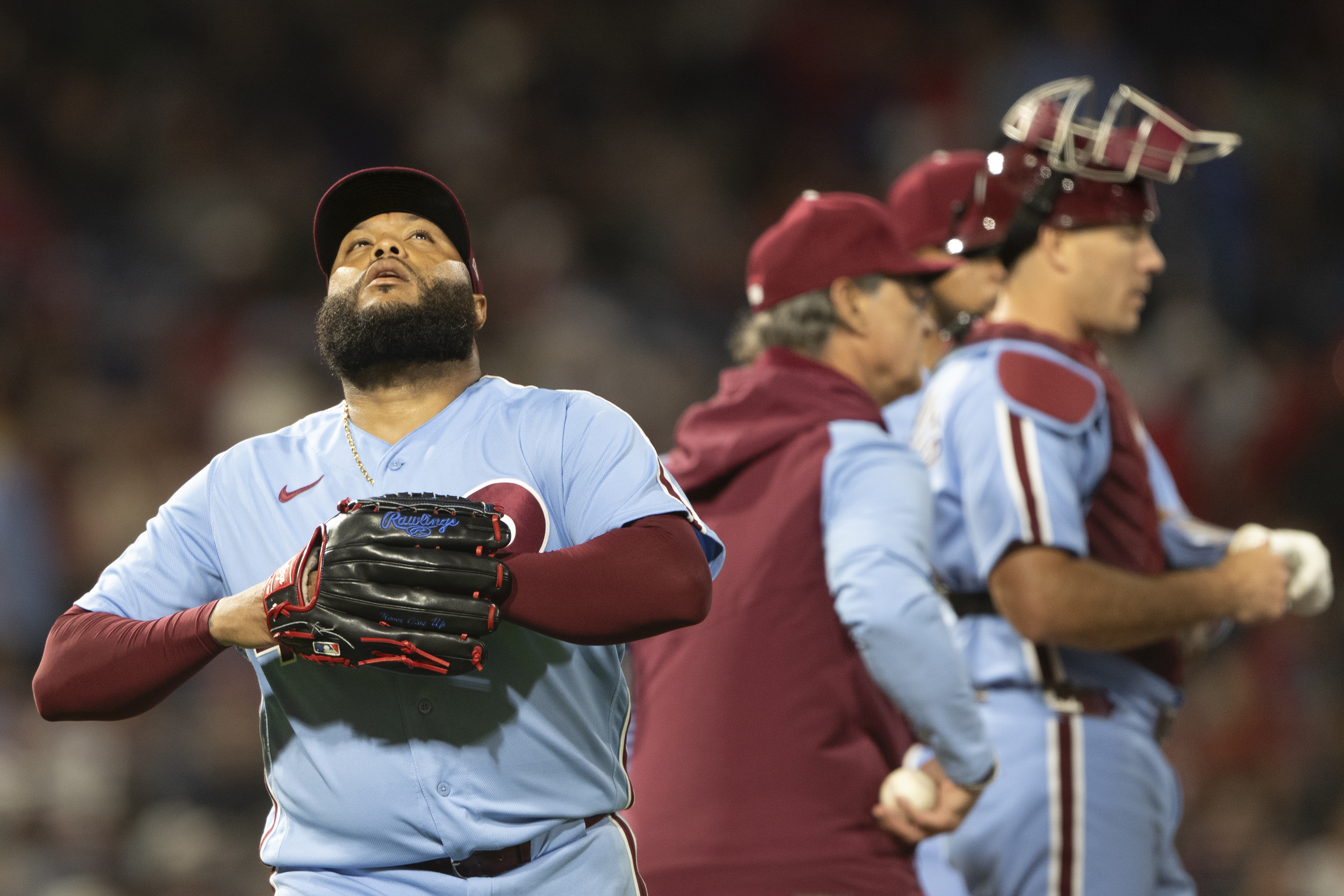
    A stagnant offense and yet another late bullpen collapse doomed them in a 5-1 loss to the Brewers on Thursday night. Milwaukee secured its 100th win of the season, setting a franchise record at the expense of the Phillies.

    The magic number remains at 2.

    The Phillies will enter their final series of the regular season against the American League-leading Tampa Bay Rays without having officially secured a playoff spot. But with three games left to play, they still control their own destiny.

    “We’re in the driver’s seat, so we’ve got to win and take care of our business,” Bryce Harper said. “We can’t really worry about any other teams or what they’re doing, so just got to keep going.”

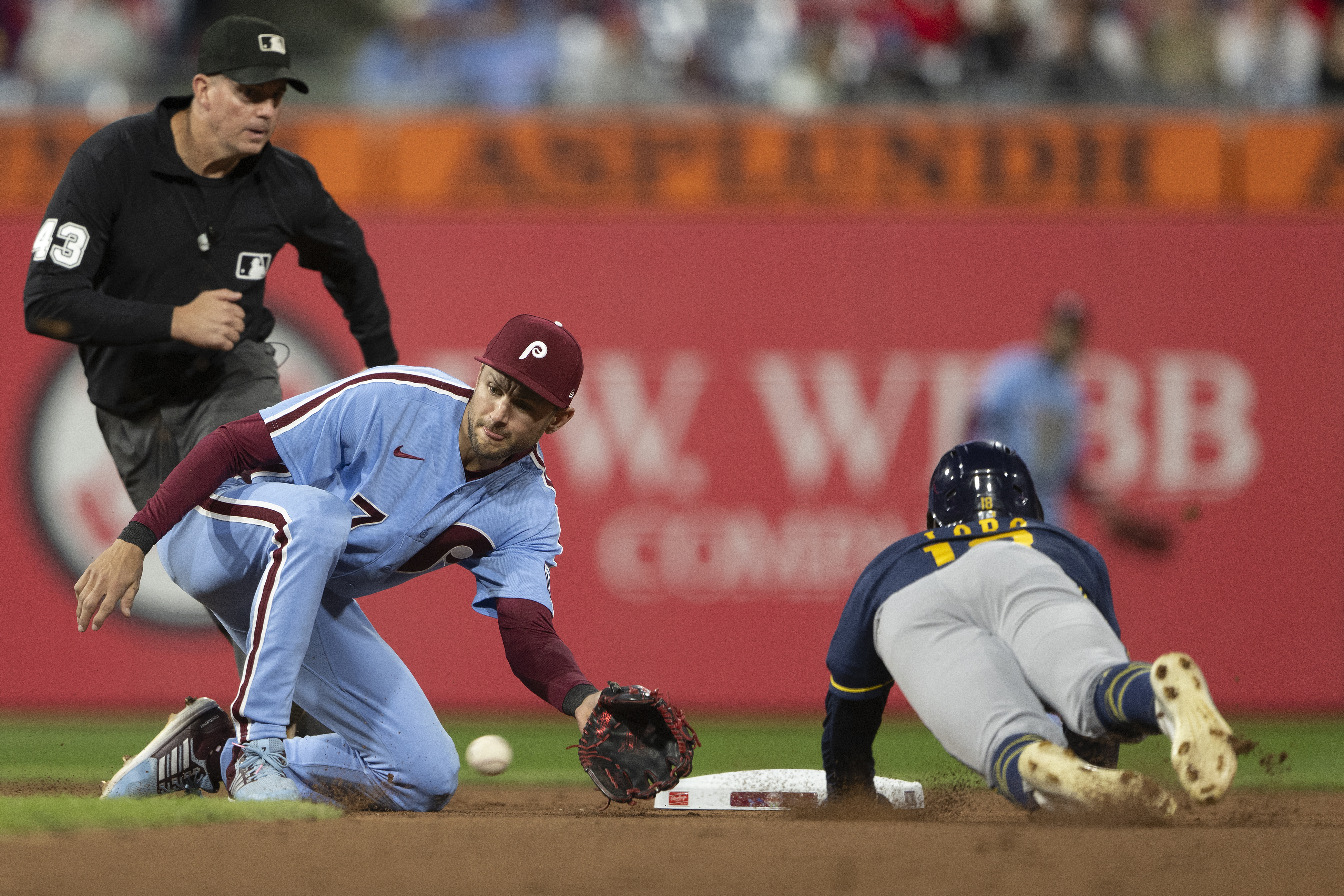
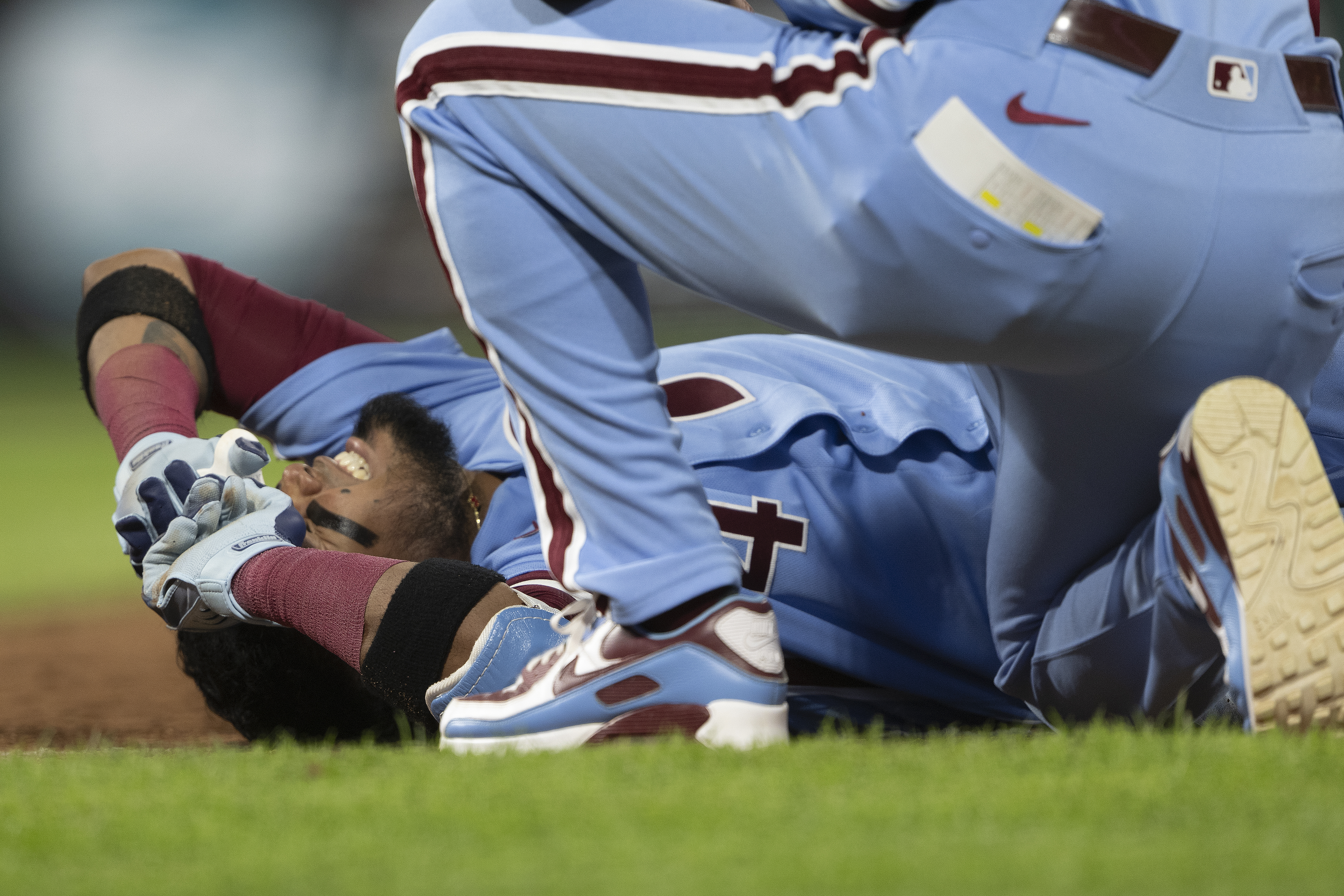
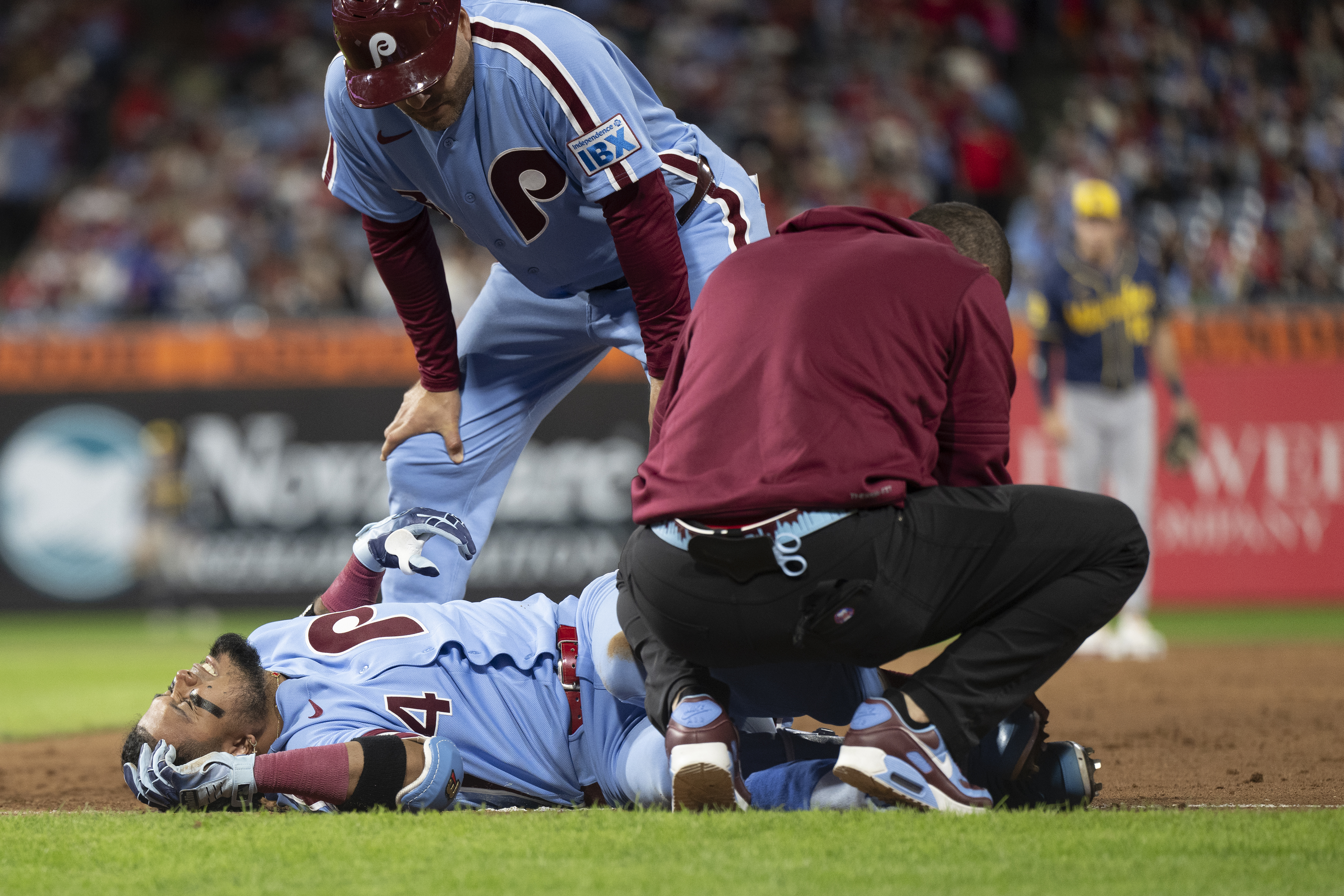
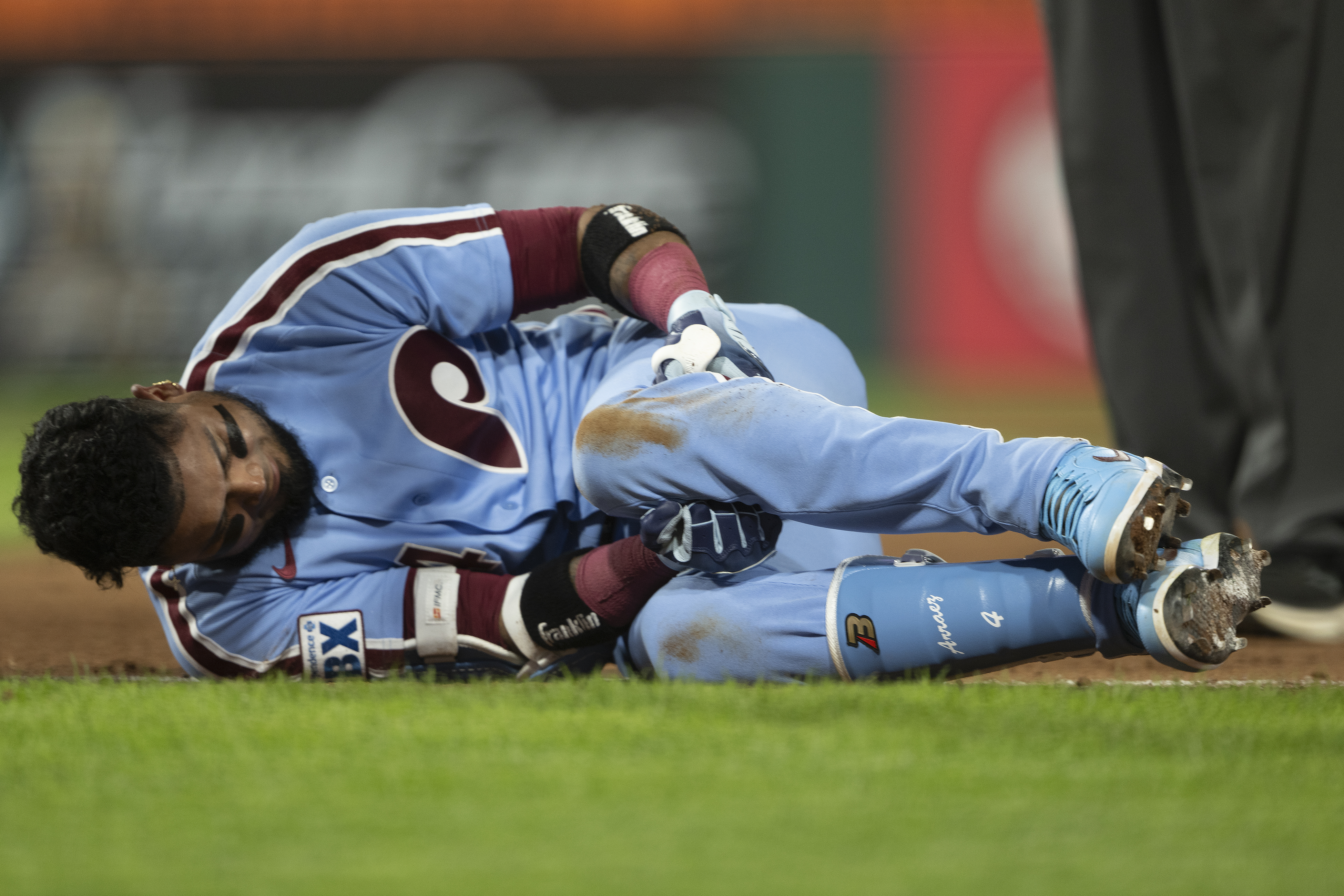
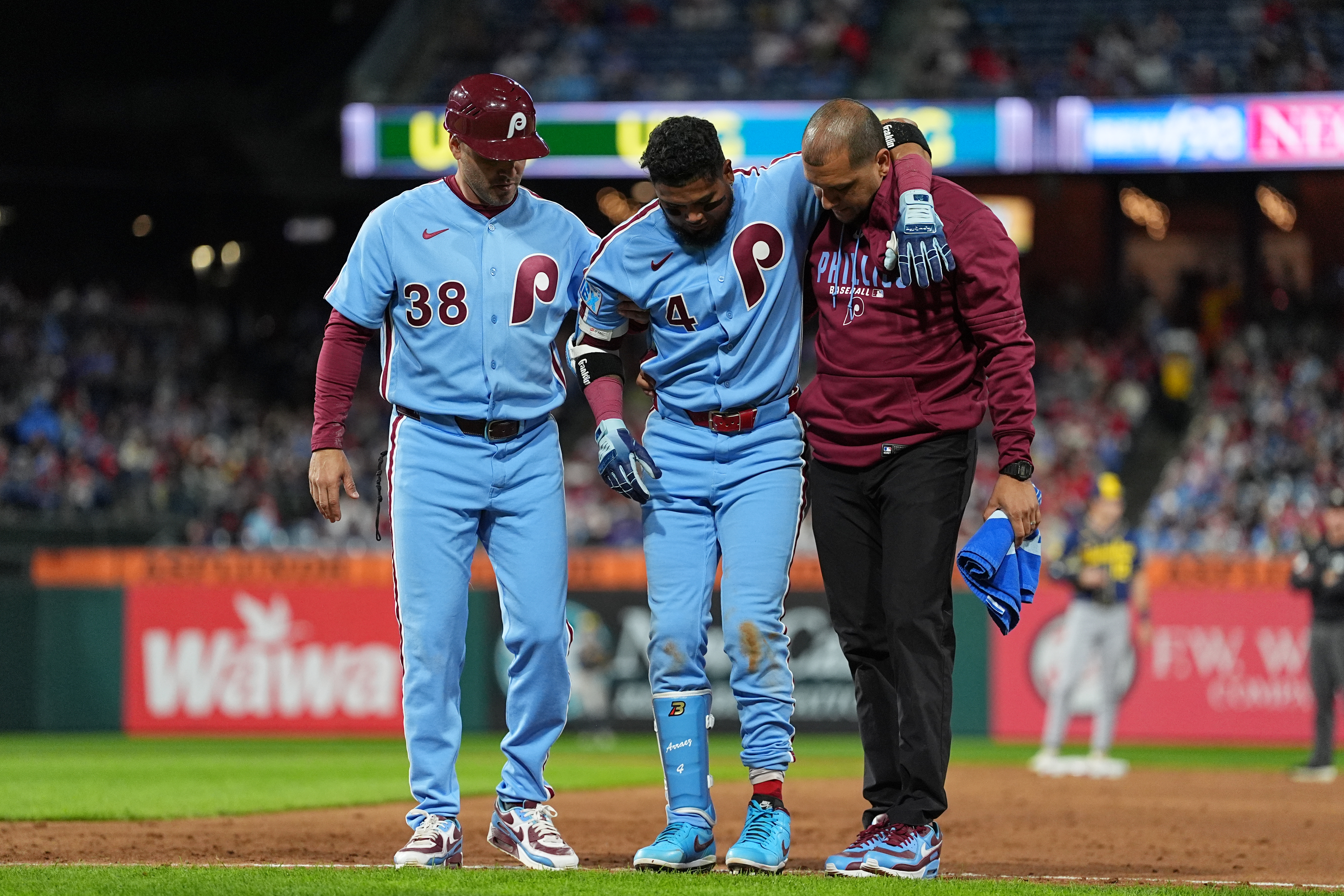
    But just as pressing for the club is the health of second baseman Luis Arráez, who departed the game in the sixth inning with a sprained left ankle. Arráez twisted it trying to dodge the tag at first base, and was unable to put weight on his foot as he was helped off the field. The Phillies said X-rays were negative and that Arráez will be evaluated further.

    “We’ll know more tomorrow. I know they’ll treat him tonight. See what happens,” said interim manager Don Mattingly. “See how he walks in tomorrow. … I’m hopeful that he can play. But we’ll see.”

    Edmundo Sosa took over at third base Thursday, with Bryson Stott sliding back to second base. Mattingly said the team would consider all its infield options if Arráez is unable to play. That could include Sosa filling in, or reverting to their pre-trade deadline infield with Harper returning to first.

    “I think it’s the next man up mentality,” Harper said. “Sosa has been great for us all year, so if he’s in the lineup, obviously he’s going to be our guy.”
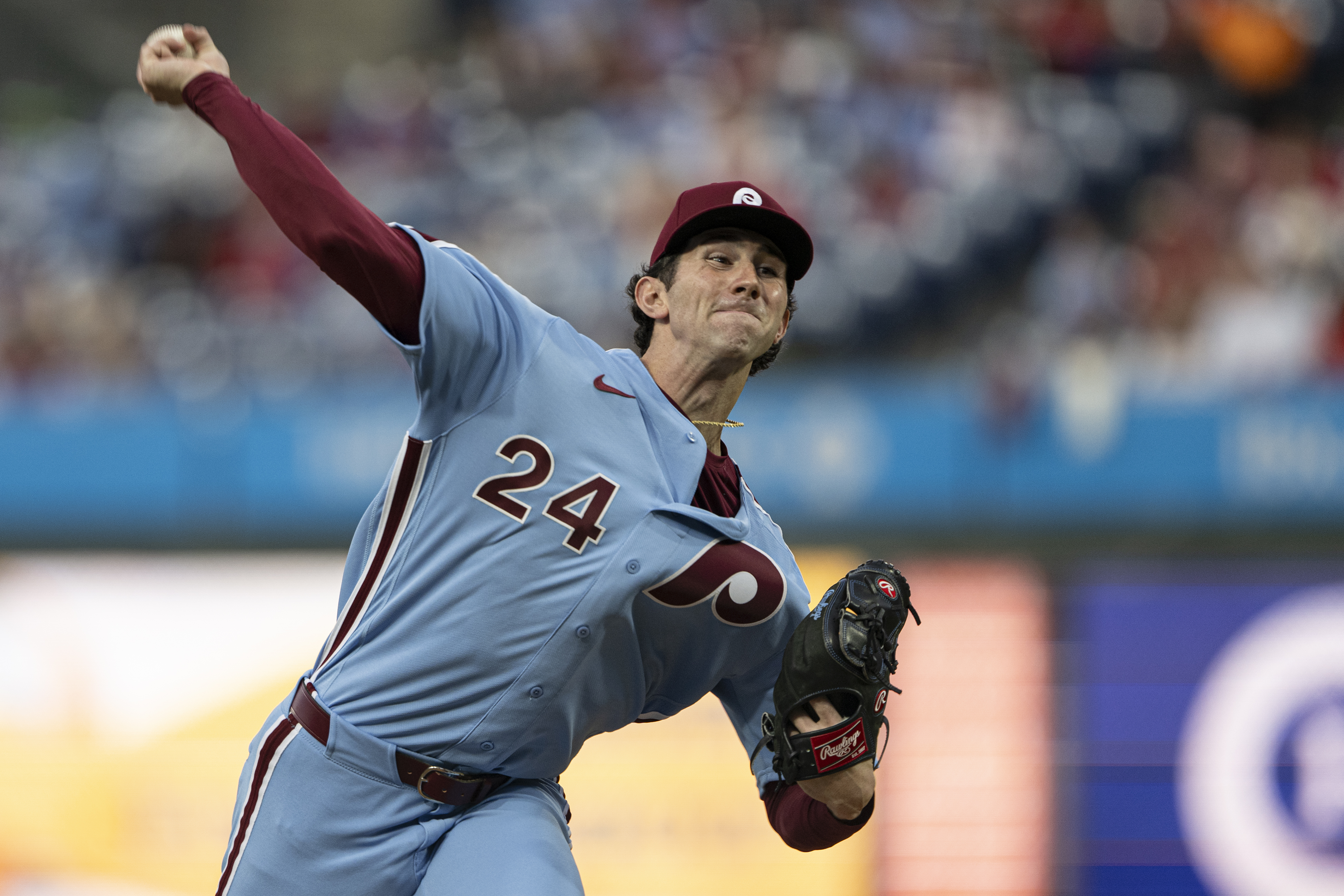
    Andrew Painter has a 3.65 ERA in the second half of the season.Jose F. Moreno / Staff Photographer

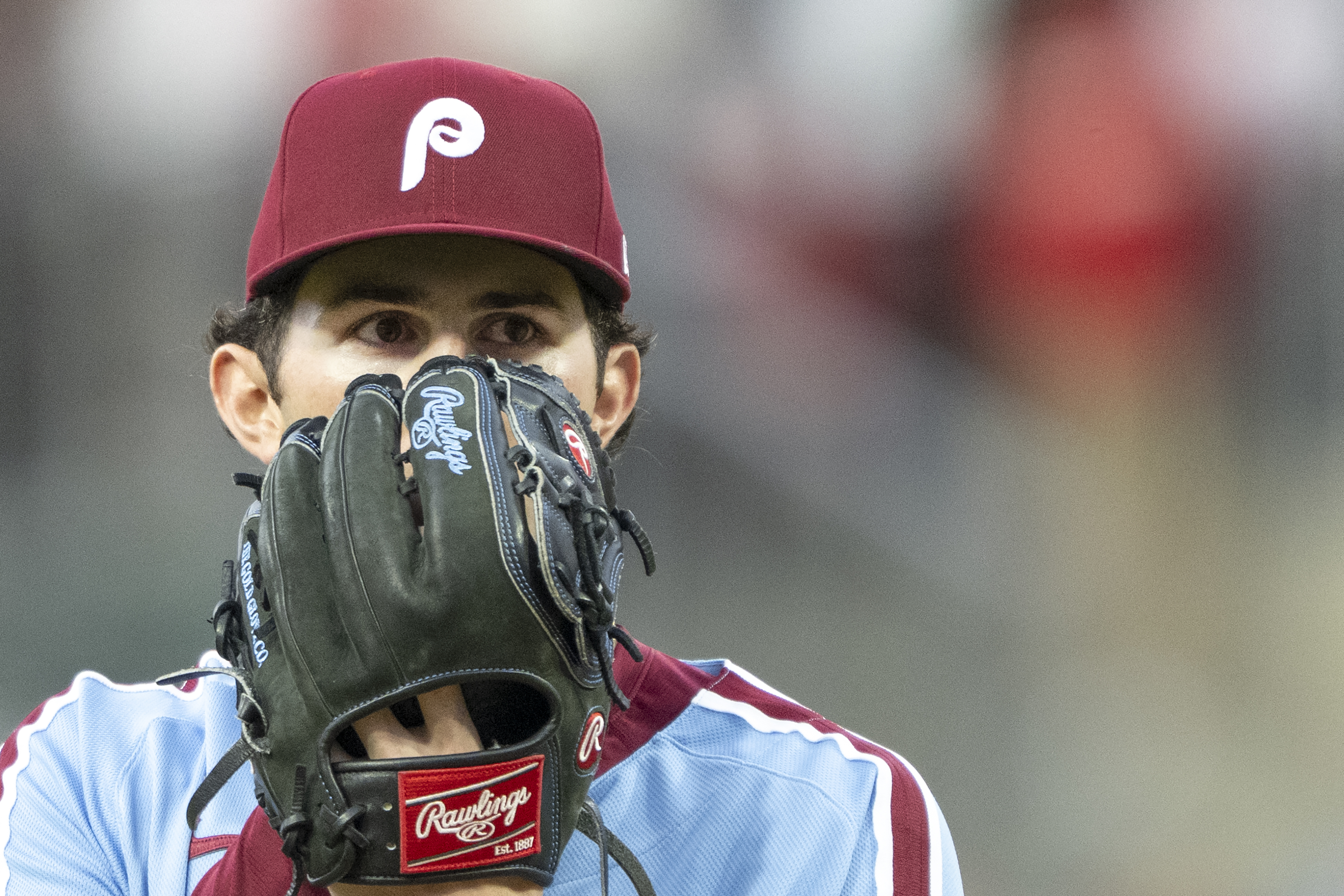
    Andrew Painter finished what figures to be his final start of the regular season on a strong note, holding the Brewers to one run over six innings. His changeup was electric, generating 10 whiffs and accounting for six of his eight strikeouts.

    “I think I just put it in good spots,” Painter said of his changeup. “I kept the ball down, and the misses were down or arm side, so nothing really over the plate. That’s where the damage has been done in the past.”

    The right-hander lowered his second-half ERA to 3.65, after putting up a 7.08 marker in the first half. It was an up-and-down season for him overall, as Painter found himself back in triple A in June after extended struggles with his fastball and his command.

    But the rookie managed to rebound, and now figures to play a key part in the Phillies’ postseason plans — should they get there — even if those plans aren’t concrete yet.

    “I know the bullpen’s a possibility,” Painter said. “Haven’t been told that 100% yet.”
    Painter let the leadoff man aboard in every inning save for the first and sixth, but the only time it scored was the leadoff walk to Gary Sánchez in the second. Consecutive hits — a soft grounder to the mound followed by a line drive that just snuck fair — brought in a run, though Painter ended the inning with back-to-back strikeouts.

    Mattingly thinks the adversity Painter faced with his early struggles, June demotion, mid-season changes to his mechanics, and then his return to the majors, made him a stronger pitcher. And Thursday, in a game with playoff-like stakes against a playoff-caliber lineup, he proved he could step up.

    “Paint’s legit,” Mattingly said. “I think Philadelphia’s going to like this kid for a while.”

    The Brewers used five different arms, but the Phillies couldn’t do much damage against any of them. They scored their only run in the third against lefty Shane Drohan. Kyle Schwarber ripped a double and came home on an opposite-field line drive single from Harper.

    But after that, a Schwarber single in the seventh was the only Phillies hit. Bryson Stott drew a walk in the ninth, but they failed to advance him.


    NL wild-card standings

    window.addEventListener(“message”,function(a){if(void 0!==a.data[“datawrapper-height”]){var e=document.querySelectorAll(“iframe”);for(var t in a.data[“datawrapper-height”])for(var r,i=0;r=e[i];i++)if(r.contentWindow===a.source){var d=a.data[“datawrapper-height”][t]+”px”;r.style.height=d}}});


    It wasn’t for lack of hard contact. Phillies hitters clocked exit velocities higher than 95 mph 13 different times, but only three of those fell for hits. The Brewers, on the other hand, hit eight balls harder than 95 mph, five of which were hits.

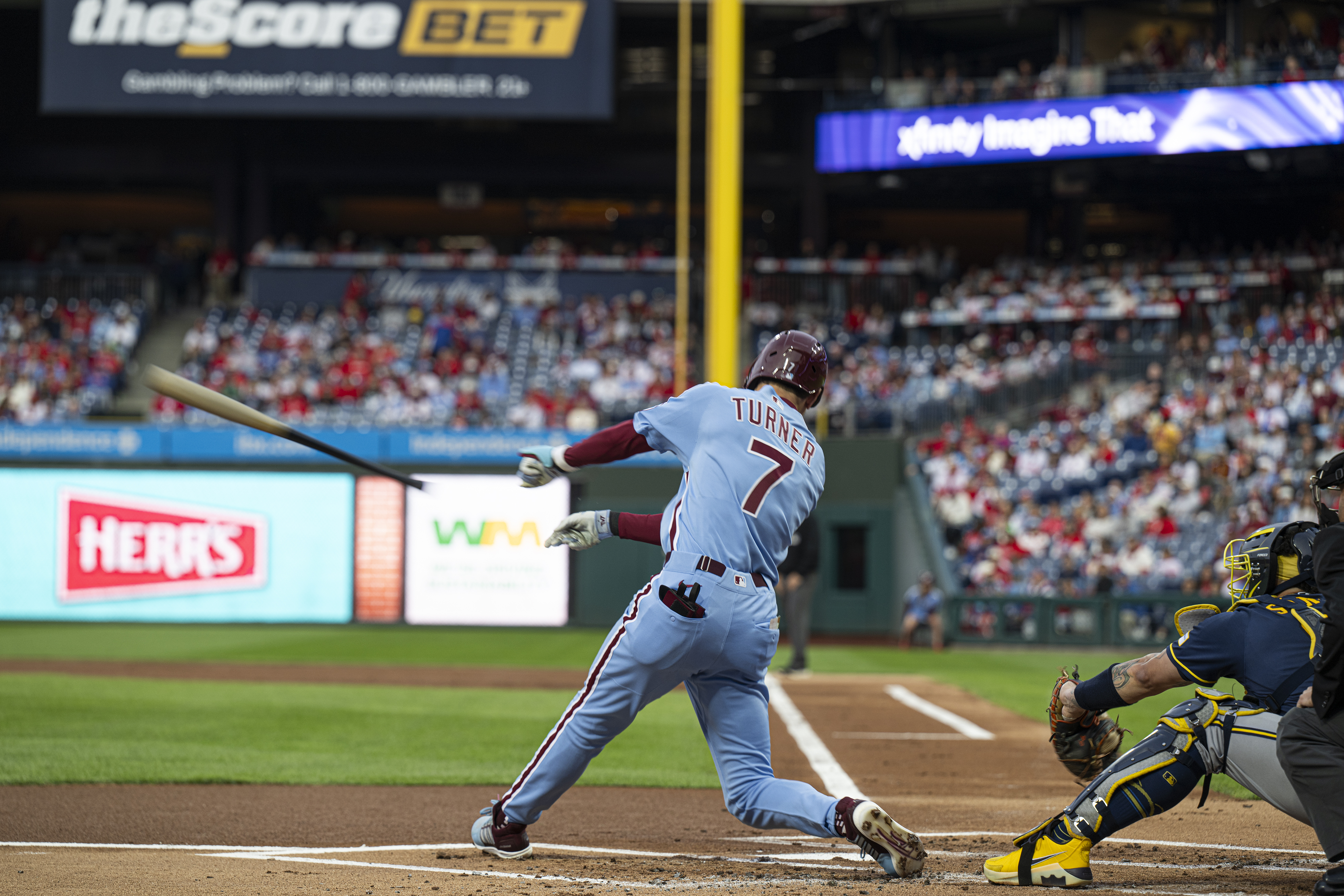
    “At times this year, it feels like that’s happened to us quite a bit,” said Trea Turner, who had a 107.4-mph groundout. “Last night we lined out a few times. Today again. That’s I think the frustrating part, where it feels like you go up there and tell yourself you had a good at-bat, you did what you could, but then you want to change something to try to get a little bit more production.”

    Reliever Alex McFarlane came up big in the seventh, continuing to prove himself in leverage spots. After walking the first two batters he faced, the righty rebounded to strike out the next three to keep the game tied at 1.

    Catcher J.T. Realmuto helped him with the first one, using an automated ball-strike challenge to flip ball three to strike three. McFarlane then struck out consecutive lefties: Garrett Mitchell looking on a sinker and Brice Turang swinging on a four-seam.

    “Mac took a little bit to get going, but after that he was really good,” Mattingly said. “Got in a little bit of trouble with the walks early, and then got out of it.”

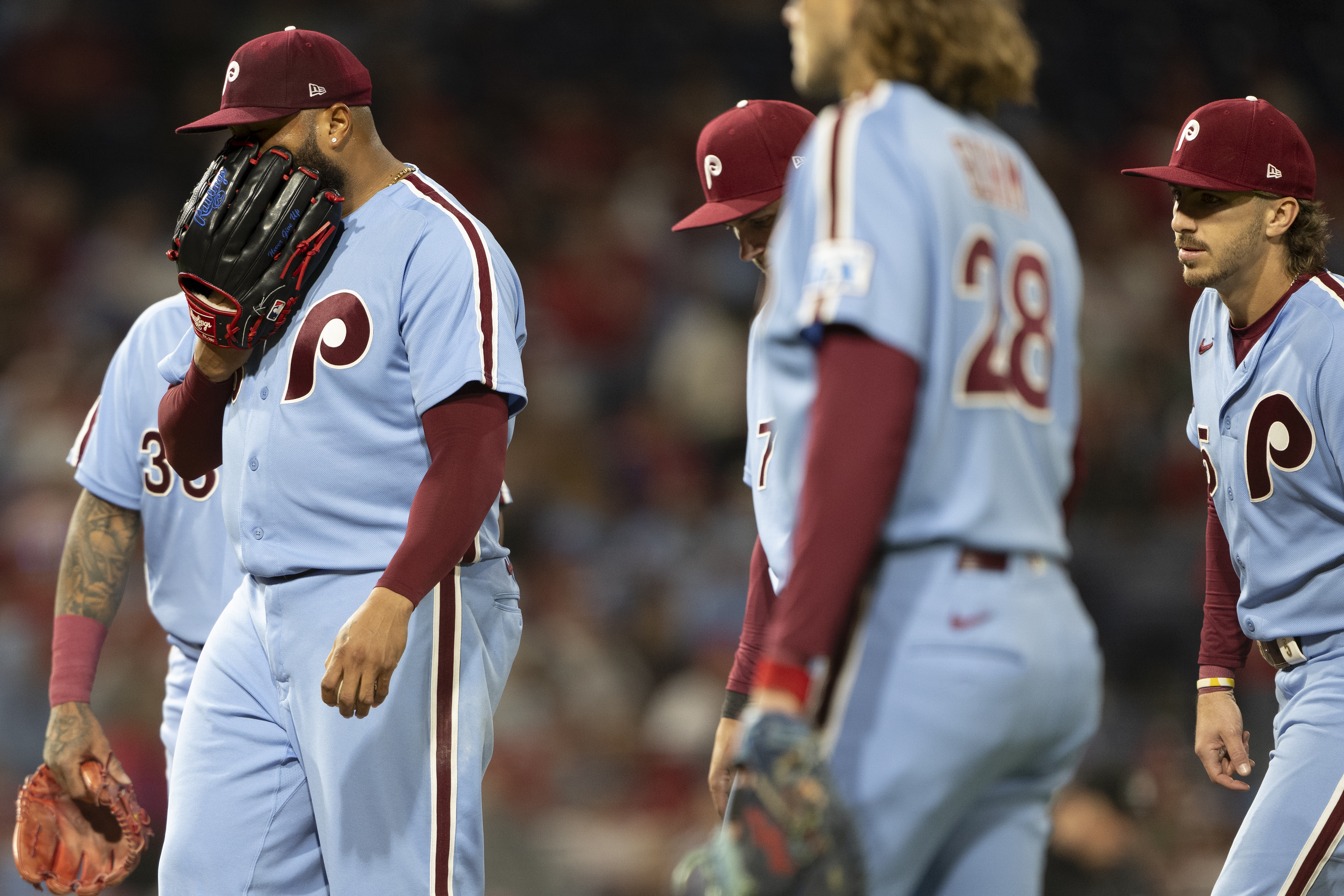
    The Brewers took the lead against José Alvarado in the eighth inning as he struggled to command his pitches. Alvarado allowed a leadoff walk and two singles before recording an out as Milwaukee jumped ahead, 2-1. He was lifted for Chase Shugart, departing to loud boos, and the right-hander gave up two base hits up the middle to pad Milwaukee’s lead.

    José Alvarado struggled with his command tonight.Jose F. Moreno / Staff Photographer

    On a somewhat chilly night in South Philly, Alvarado’s velocity was down a few ticks, averaging 96 mph when it has usually sat at 97.9 this season. The pitch only got one whiff.

    “Alvy’s been really good,” Mattingly said when asked if the down velocity was a concern. “We didn’t go into the game feeling like anything was wrong with those guys.”

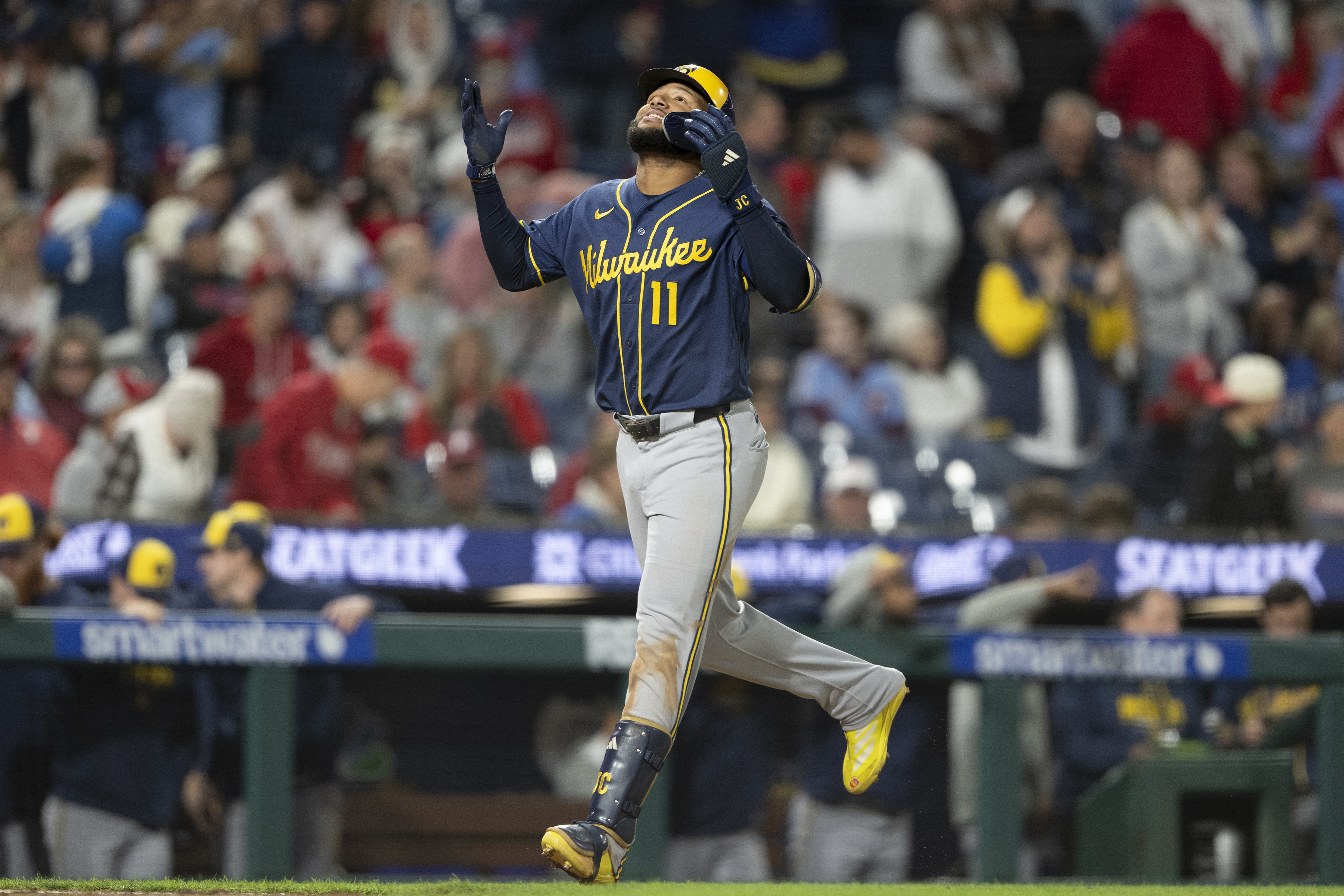
    Jackson Chourio homered off Tim Mayza in the ninth for good measure.

    Time is running out on the regular season, but the Phillies will have another chance Friday to cut the magic number with Cristopher Sánchez on the mound against Tampa Bay.

    “We should be feeling some pressure,” Mattingly said. “I know I feel some pressure, but I mean, it’s that time of year, and you’re trying to win games.”
  • Phillies’ Luis Arraez leaves game vs. Brewers with a sprained left ankle

    Phillies’ Luis Arraez leaves game vs. Brewers with a sprained left ankle

    Just in case you thought the Phillies only lost a game Thursday night, there was Luis Arraez, unable to put weight on his left leg as he limped off the field.

    And now, it’s unclear if he will play again this season.

    Diagnosed with a sprained left ankle after landing on it awkwardly to avoid a tag at first base while legging out a grounder in the sixth inning, Arraez’s availability will hinge on how he responds to treatment. X-rays were negative, according to interim manager Don Mattingly.

    “We’ll see more, we’ll know more [Friday],” Mattingly said after the Phillies’ latest attempt to clinch a wild card was foiled with a 5-1 loss to the Brewers. “We’ll see what happens, see how he walks in, or talk to him [Friday].”

    Arraez was unavailable for comment.

    Closing in on his fourth batting title with a National League-leading .310 average, Arraez is hitting .278 with a .309 on-base percentage for the Phillies since they traded for him at the Aug. 3 deadline. He has been the cleanup hitter in all 44 of his starts.

    The Phillies rearranged three-quarters of their infield to accommodate Arraez at second base. If he’s unable to play in the last three regular-season games against the Rays and (maybe) beyond, they could shuffle everything again, possibly even moving Bryce Harper back to first base from right field.

    “Yeah,” Harper said. “I’ll do anything.”

    When Arraez left the game, the Phillies moved Bryson Stott back to second base, inserted Edmundo Sosa at third, and kept Alec Bohm at first base and Harper in right field. Mattingly mentioned that as one potential alignment.

    “I think it’s just putting our full effort in as a lineup and saying it’s the next-man-up mentality,” Harper said. “Sosa’s been great for us all year. So, if he’s in the lineup, obviously he’s going to be our guy even in the short term.”

    Luis Arraez was helped off the field after spraining his ankle in the sixth inning Thursday.Matt Rourke

    Another possibility includes Bryan De La Cruz in right field, Harper at first base, and Bohm at third. The Rays are scheduled to start three left-handed pitchers, which likely keeps lefty-hitting Brandon Marsh in the lineup.

    In any case, the Phillies must generate more offense. Even with Arraez, they scored once in each of the last two games against the Brewers after scoring three runs in five consecutive games last week against the Nationals and Mets.

    Trea Turner said it would be “rough” if the Phillies must play without Arraez.

    “He’s kind of locked down that four hole for us and just keep the line moving,” Turner said. “Whether people are on or he’s leading off, it feels like he’s making us a lot better. And the defense has been really good, too. So, I think that’s going to be a little bit of a blow.”

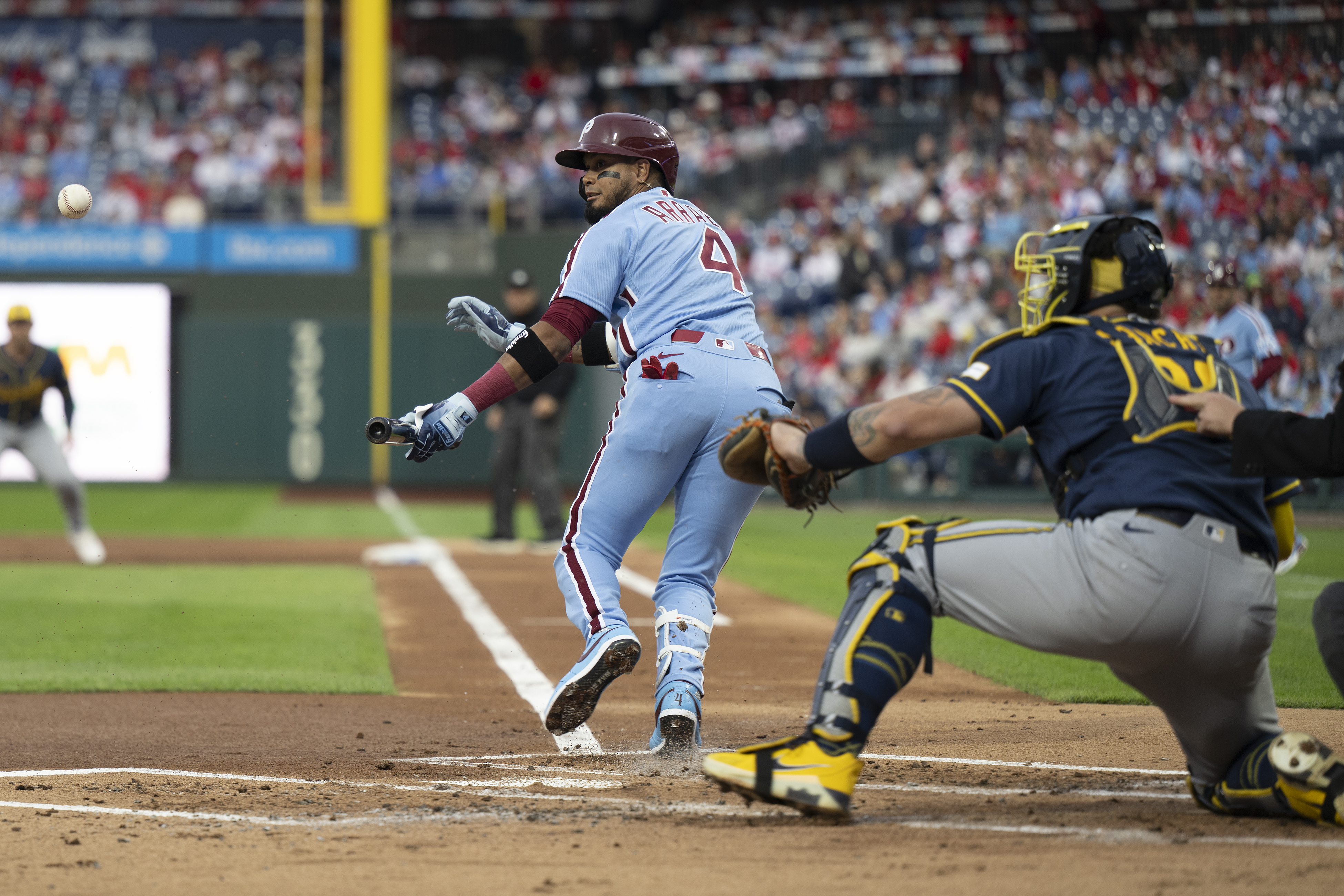
    Arraez was trying to beat out a grounder to shortstop when Cooper Pratt’s throw pulled Jake Bauers off the first base bag. As Arraez tried to dodge the tag, he appeared to twist his ankle and fell to the ground in pain.

    In an equally cruel twist, Arraez was called out when the umpires said he ran out of the baseline. Mattingly contested that Arraez’s last step before passing Bauers was in the box attached to the baseline.

    “So, no matter how far he moves, for me, he’s in the box,” Mattingly said. “Now, if I’m wrong on that, I’m wrong. But he’s still inside that box. … I’ve always felt like you can run in that box all day long and do whatever. So, yeah, I don’t get that one.”

  • Villanova looks for ‘more consistency’ back in conference play vs. Colgate

    Villanova looks for ‘more consistency’ back in conference play vs. Colgate

    It could be a Patriot League team, a nonconference opponent, or an FBS school, the mentality doesn’t change for Villanova coach Mark Ferrante: “The schedule is the schedule.”

    The Wildcats have played two conference games, losing to William & Mary and defeating Bucknell, and two nonconference games, a 59-13 loss to Louisville and a 20-16 win over Long Island on Saturday.

    “The nonconference is the nonconference, the in-conference is the in-conference, our approach always has been [the same],” Ferrante said. “We’re going to play who’s on our schedule [and] it shouldn’t matter. You only get so many guaranteed opportunities. You want to try to create more opportunities for yourself at the end of the year, but you better be where your feet are.”

    After facing Colgate (3-1, 2-0 Patriot League) at home on Saturday (2:30 p.m., ESPN+), a final nonconference matchup against Morgan State awaits on Oct. 3.

    Ferrante is happy the Wildcats are finding ways to win close games with one-score wins over Bucknell and LIU, but he said there is work to be done to play a complete 60 minutes.

    “It’s just more consistency,” Ferrante said. “We get great field position, let’s score the touchdown instead of having a turnover. Just got to start feeding off each other a little better, play more complementary football. I hope it’s still a work in progress, and I hope it’s starting to come, but we have not played a full, consistent four quarters yet in any game.”

    Villanova also started 2-2 last season before reeling off 11 straight wins and reaching the FCS semifinals.

    Even with retaining a majority of the 2025 squad, Villanova is still finding its identity.

    “I think they’re starting to realize that they’re not last year’s team,” Ferrante said. “Teams aren’t going to just roll over because Villanova’s coming to town. Teams are going to play harder because Villanova’s coming to town, so we just have to play our game, not play to the level of our opponent.”

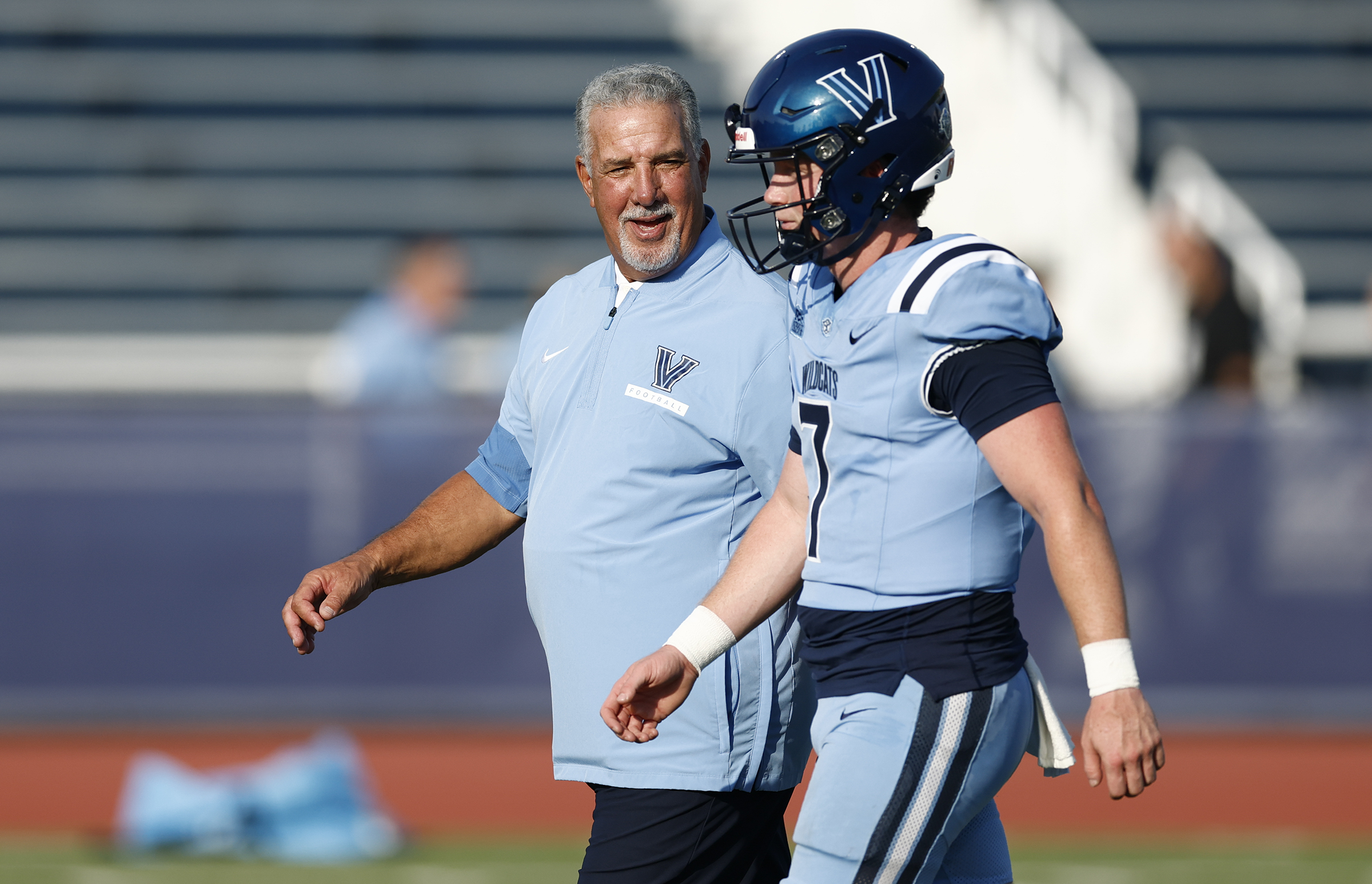
    Sophomore wide receiver Brandon Binkowski leads Villanova with 259 yards receiving.Yong Kim / Staff Photographer

    Penalties have plagued Villanova. The Wildcats have been called for 36 penalties for 305 yards while their opponents have been flagged for 22 penalties for 230 yards.

    “We just got to play a little smarter, with a little more focus,” Ferrante said. “Especially the false starts or the offside on offense and defense, respectively. That’s just focus, those are mental penalties [so] we got to clean that up.”

    After a rough start against William & Mary, quarterback Pat McQuaide has bounced back with 607 yards passing, four touchdowns, and one interception over the past three games. Sophomore wide receiver Brandon Binkowski is having a breakout season with 18 receptions for 259 yards, while junior running backs Ja’briel Mace and Isaiah Ragland have combined for 457 rushing yards and four touchdowns.

    Ferrante believes cleaner football is on the way.

    “It’s just little inconsistencies here and there, whether it’s penalties, whether it’s turnovers, whether it’s just not playing with the same level of intensity from one quarter to the next,” Ferrante said. “But you see the improvement in practice and you hear some of the comments that are being made amongst themselves in practice. I think we’re heading in the right direction, we just got to put it on a field on game day.”

  • Callowhill artist’s tower with lofts, elevator, and rooftop deck for sale for $2.5 million

    Callowhill artist’s tower with lofts, elevator, and rooftop deck for sale for $2.5 million

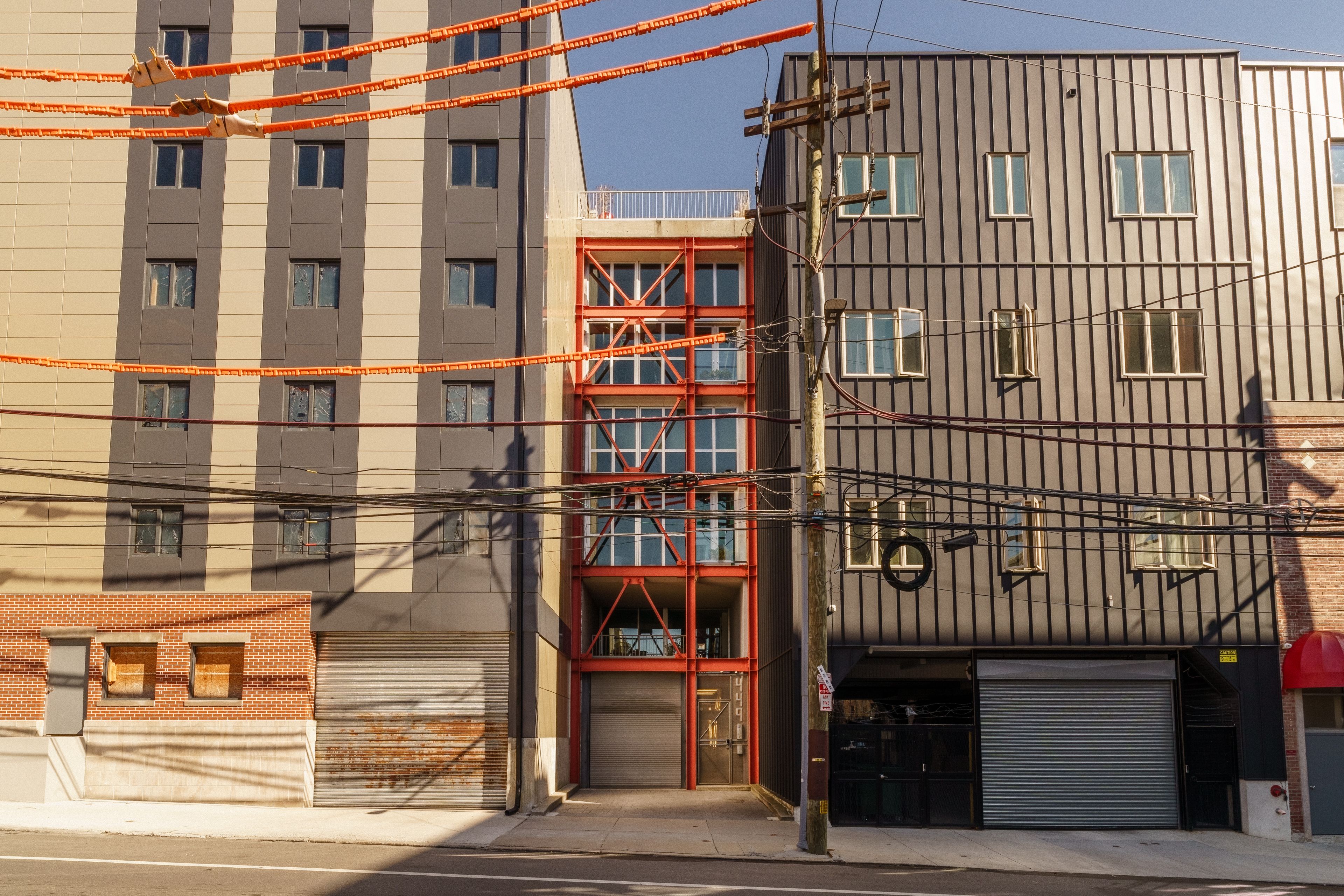
    An eye-catching Callowhill building with a vivid orange steel front that often inspires passersby to snap a photo is on the market for $2.5 million.

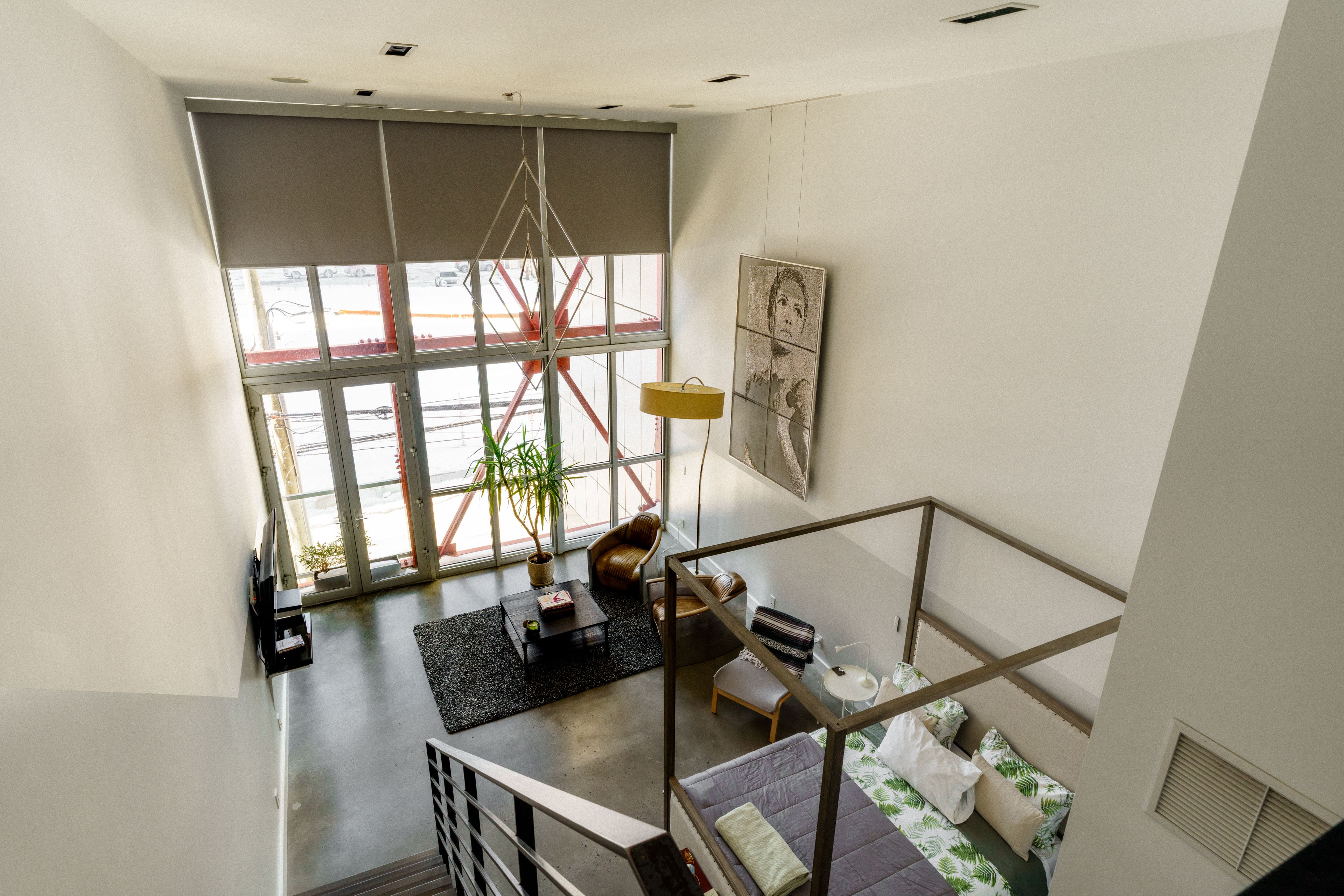
    The property on North 13th Street between Buttonwood and Hamilton Streets is owned by visual artist Ray Bartkus and his wife, Ina. The couple have used the building’s top unit, a tri-level with partial loft-like floors that allow light to flow through the space, as their home and Ray’s studio since purchasing it for $729,000 in 2013.

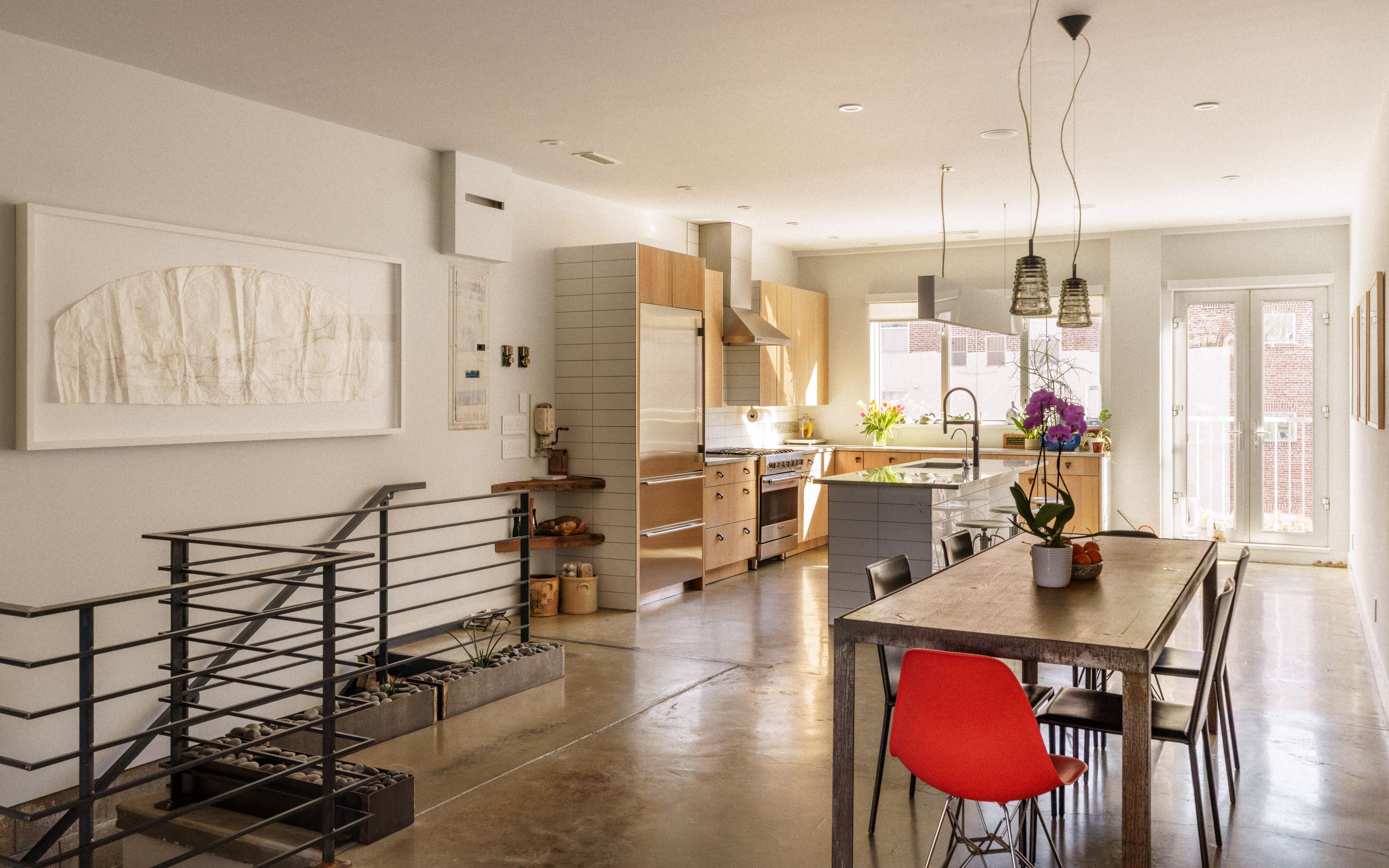
    The kitchen and dining area of the Callowhill property.Donkin Media/Thomas Donkin

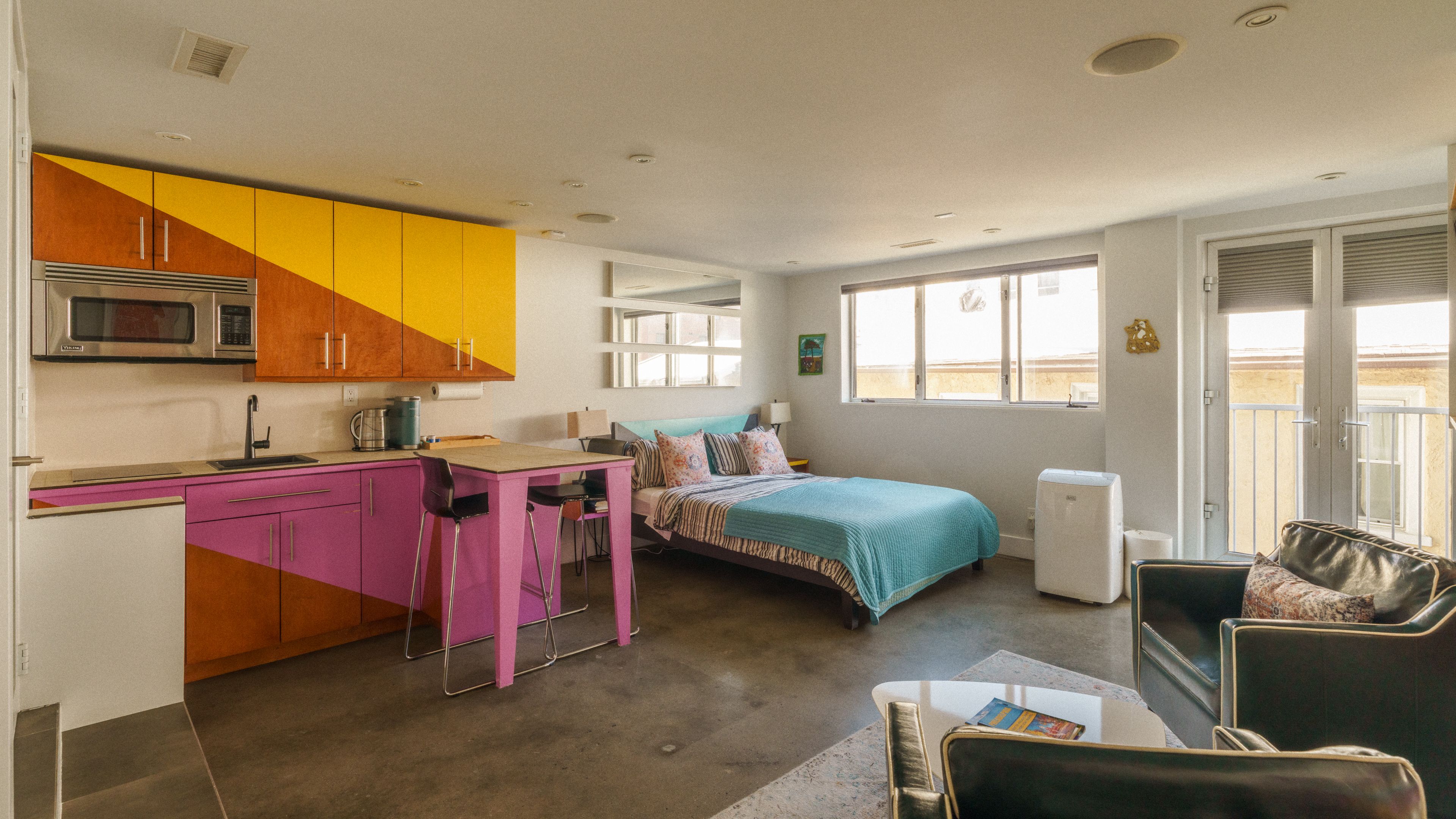
    The Bartkuses purchased the building’s remaining portion for $420,000 in 2015. They have used its five studio-like units, each with kitchen facilities and a bathroom, for hosting visiting friends and family as well as short-term-stay guests. The building can be reconfigured into a single-family home or maintained as separate units.

    The house is a playground for Bartkus’ artistic sensibilities. Included in the sale is a custom chandelier which he made out of car exhaust pipes that stretches two-and-a-half floors, as well as cheeky Philadelphia-themed artwork in the building’s central stairwell including impressions of Rocky Balboa and Questlove.

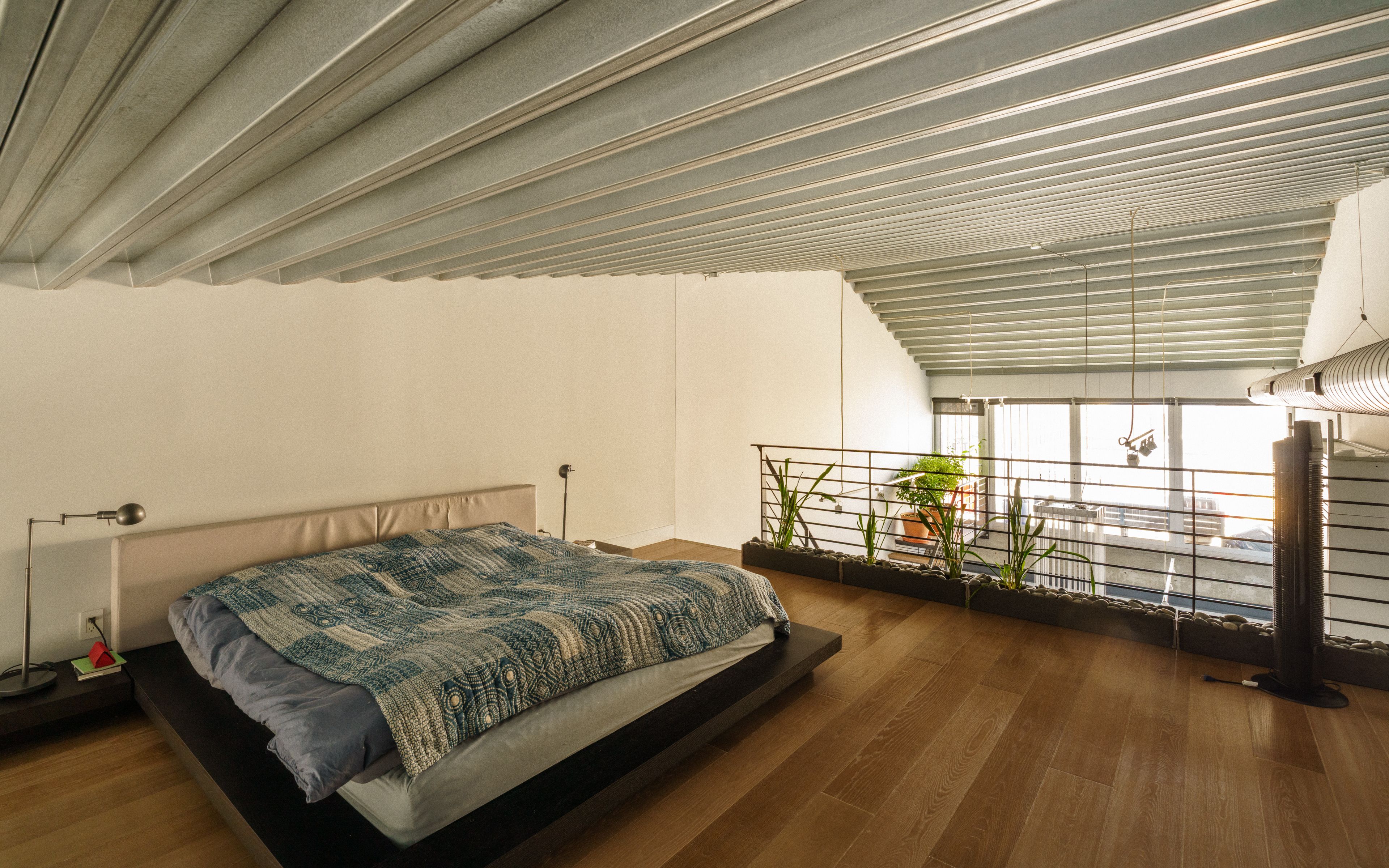
    A lofted bedroom in the Callowhill property.Donkin Media/Thomas Donkin

    Bartkus said he enjoyed bringing a Philly connection to each of the short-term-stay spaces through custom art.

    Some of the building’s best attributes, however, are immaterial, said listing agent Brent Williams.

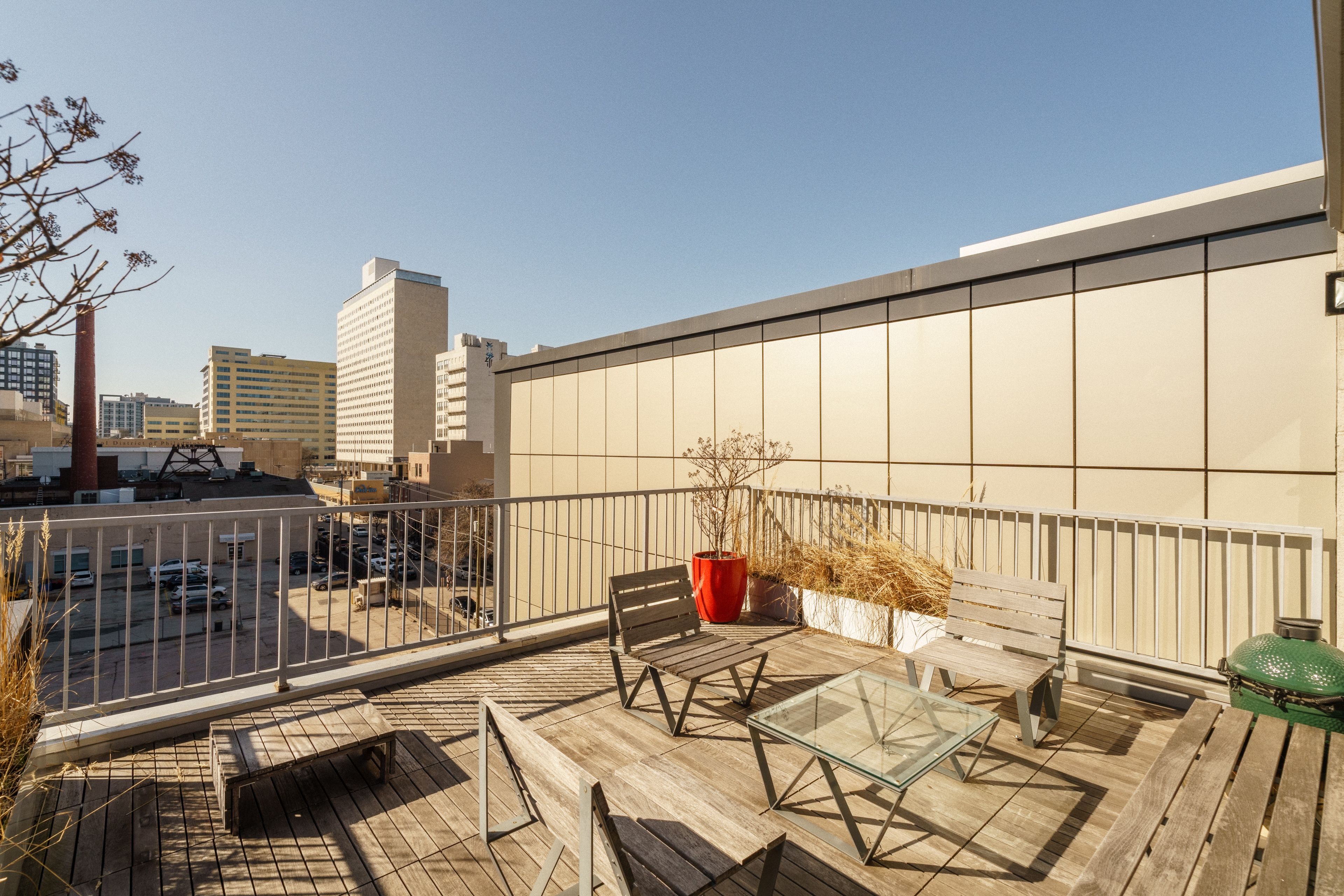
    The rooftop deck in Callowhill.Donkin Media/Thomas Donkin

    “The light really changes throughout the day, and that really influences how you live,” Williams said, noting that the building’s glass facades are east- and west-facing, meaning mornings get early, dewy sunlight and evenings get the rich setting sun. “The light and the architecture, the blend of glass and steel, it really is impactful in person.”

    Bartkus sees the house as its own piece of art that he has tinkered with, helping coax out its unusual qualities over the years.

    “Good artists have the ability to show the world details regular people didn’t see,” he said. “In a way this is this house.”

    One of the bathrooms, with a spacious shower and luxury finishes.Donkin Media/Thomas Donkin

    The building is heated via radiant heated concrete floors and, Bartkus said, has become much more energy efficient since buildings went up on either side of it with heating costs cut in half.

    Other unusual touches include a two-car garage and parking for two additional cars, a loggia that provides sheltered outdoor space off of one of the lower units, and a rooftop deck.

    One of the studio apartments in the building, with a colorful kitchenette.Donkin Media/Thomas Donkin

    The Bartkuses have decided to downsize in Philadelphia from the 4,500-square-foot building.

    “It fit us perfectly,” Bartkus said. But at 65, he’s ready to leave behind the rigamarole of short-term renting and maintaining such a large building.

    He added, “I just want to concentrate on my art.”

    Natural light floods into one of the bedroom spaces, which also has a sitting area.Donkin Media/Thomas Donkin
  • Jalen Hurts is bullish on early chemistry with Eagles wideouts as the offense builds ‘our own thing’

    Jalen Hurts is bullish on early chemistry with Eagles wideouts as the offense builds ‘our own thing’

    It was perhaps the biggest question entering the 2026 season: How would the Eagles’ pass game fare without A.J. Brown?

    DeVonta Smith was lauded as a No. 2 option, but it wasn’t a guarantee he’d thrive as a No. 1 wideout. Dontayvion Wicks was a big wild card. Ditto for rookie Makai Lemon. Few had Darius Cooper making the 53-man roster, let alone being a regular contributor.

    Through two weeks, this room has been an advantage for Jalen Hurts and the Eagles, not a problem.

    The Birds have five receiving touchdowns through two games, which is tied for fifth best in the NFL entering Thursday. Their 467 receiving yards ranks 11th. Smith has the 13th most yards in the league with 170, while Wicks isn’t far behind him with 147 (19th).

    Compare that to their production in the run game — Eagles running backs averaged just 3.7 yards per carry in the first two weeks — and you can see how much of a difference the receivers have made.

    Wick, in particular, has been a pleasant surprise. The 25-year-old has quickly grown into the ideal No. 2 option, posting 70 or more receiving yards in consecutive games. Last season with the Packers, he only had 70-plus yards one time. Hurts sung his praises in his Thursday press conference.

    “I think Tay’s thinking less because this is something that he’s familiar with,” Hurts said. “And then secondly is the time that we spent together to be able to learn each other. The opportunities I’ve had to learn his body language, to get to know the type of player he is. Everything I’ve seen to that point, he’s given me the utmost confidence. We just want to continue to build. … As a collective [the goal], is just to make this our own thing.”

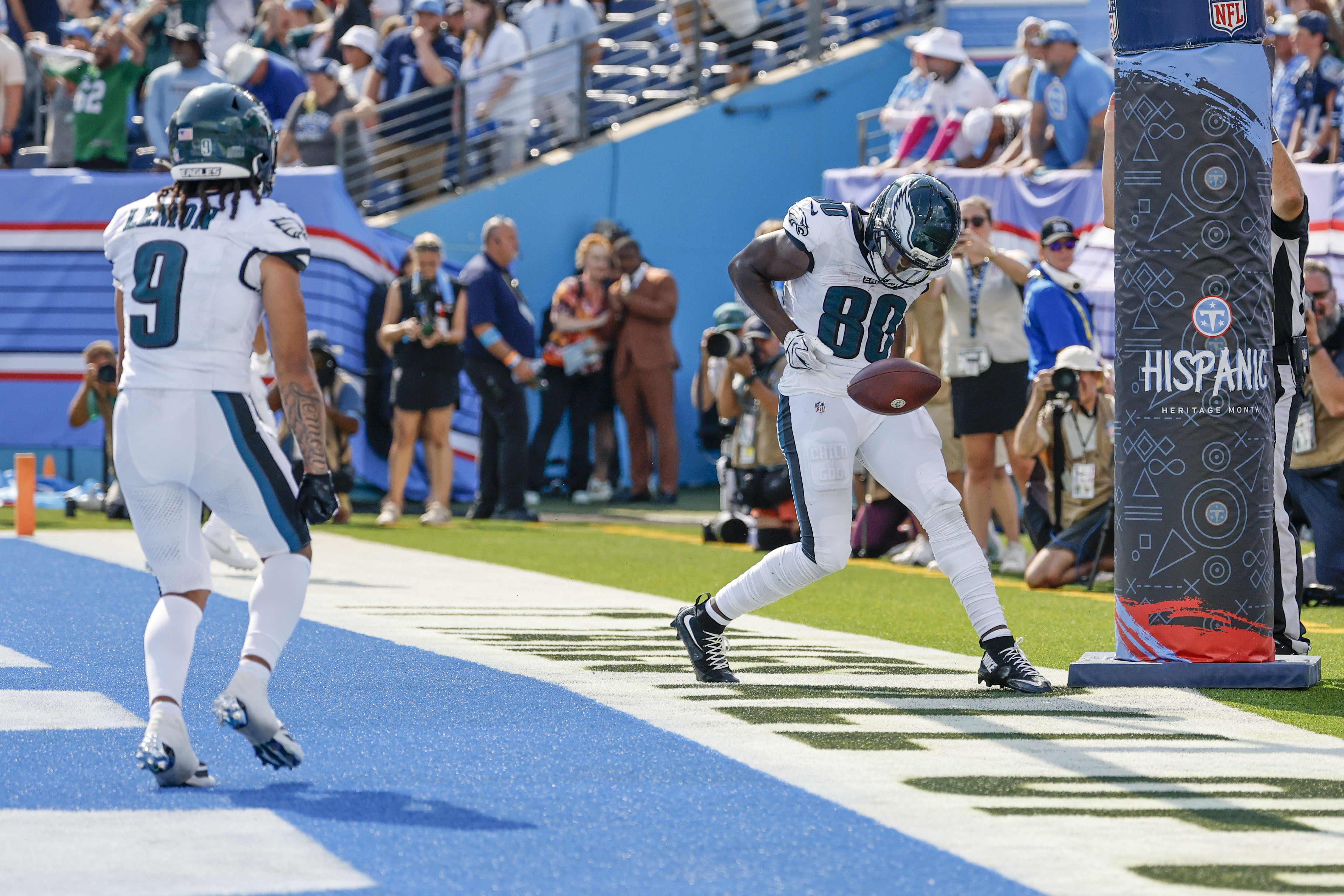
    Darius Cooper celebrates after scoring the game-winning touchdown on Sunday.Yong Kim / Staff Photographer

    Wicks was an obvious candidate to jell with Sean Mannion’s new offense, given his familiarity with it. Cooper, who scored the game-winning touchdown on Sunday, has been a surprise to outsiders. Not to Hurts, though. The quarterback felt Cooper was primed for a breakout.

    “I don’t think there’s any surprise on what type of player he is,” Hurts said. “How he shows up, the character he has and how he works, he’s been able to show up and he’s been willing to do all the things that can help the team be in the best place.

    “So, I’m proud of him and excited to see him grow. He’s got an old soul. Sometimes you forget how young in his career he is. He’s going to be great.”

    It hasn’t all been perfect. Lemon, for instance, has just nine yards on four receptions, and while he’s shown flashes with his blocking and hustle, it’s no secret the Eagles want more production from their first-round pick.

    But with Smith, the top threat in the room, rolling, Lemon can take his time to develop. The former Heisman winner has been a force, coming up clutch on the game-winning drive against Tennessee with 38 yards on four receptions. He finished the game with 117 yards and one touchdown on 10 receptions.

    “I think the ball finds guys who get open and win and do things right,” Mannion said. “Smitty’s a tremendous player. He sets a standard for our offense, for our team, in terms of the way he works every day. It’s not an accident.”

  • From Indian classical to some patriotic ballet, here are the 9 best dance shows coming to Philadelphia this fall

    From Indian classical to some patriotic ballet, here are the 9 best dance shows coming to Philadelphia this fall

    If you like your dance with a good soundtrack, there are a lot of fun options in Philly this fall.

    Philadelphia Ballet will open its season with a celebration of America’s 250th anniversary, with its orchestra playing “The Stars and Stripes Forever” and other patriotic music and American classics. Philadanco will be dancing to the Sound of Philadelphia at the Kimmel Center in December. Ballets Jazz Montréal will visit the Annenberg with an homage to Leonard Cohen.

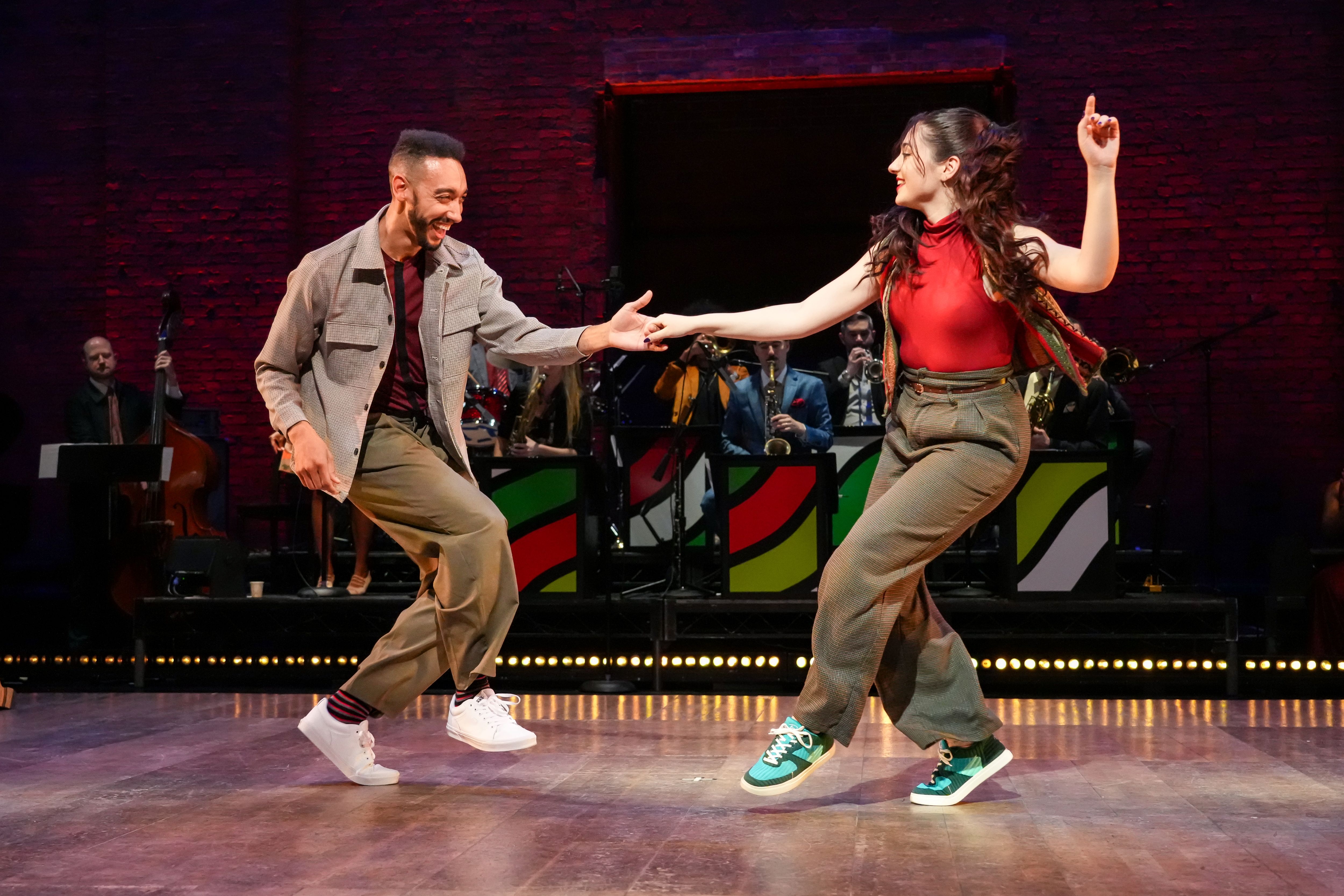
    And, of course, holiday music will be back with the dance in December when Philadelphia Ballet brings back George Balanchine’s The Nutcracker. Plus, A Very SW!NG OUT Holiday is coming to the Annenberg, with a live band playing holiday favorites to the dance.

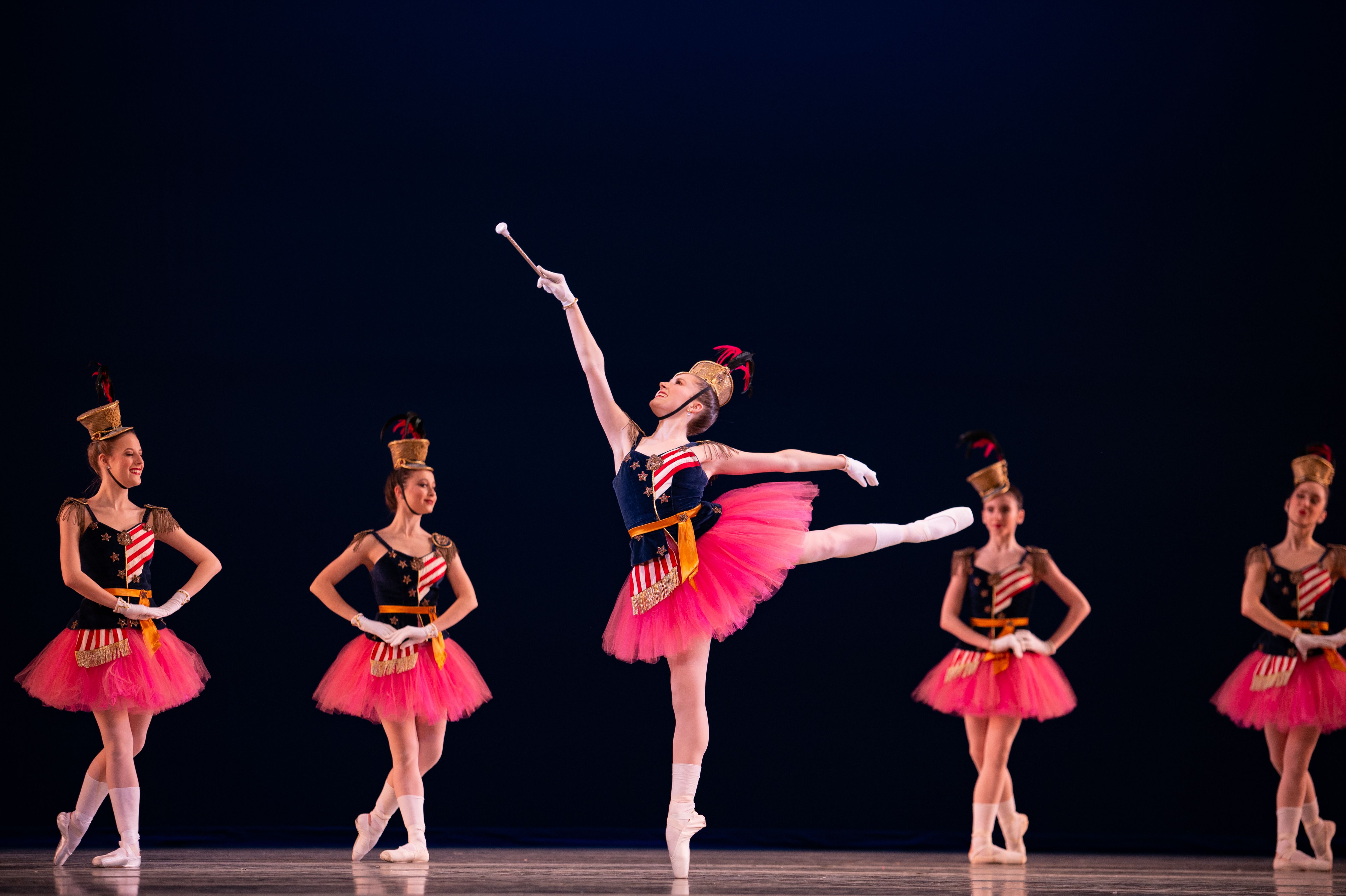
    Philadelphia Ballet in George Balanchine’s “Stars and Stripes.”Arian Molina Soca / Philadelphia Ballet

    ‘Stars and Stripes Forever!’ Philadelphia Ballet

    Oct. 8-11, Academy of Music

    Most of the Semiquincentennial celebrations happened around July Fourth. But Philadelphia Ballet is continuing the party with its season-opening program. It will be dancing Jerome Robbins’ Fancy Free, George Balanchine’s Stars and Stripes and a concert version of Who Cares?, and Eliot Feld’s Variations on “America.” philadelphiaballet.org

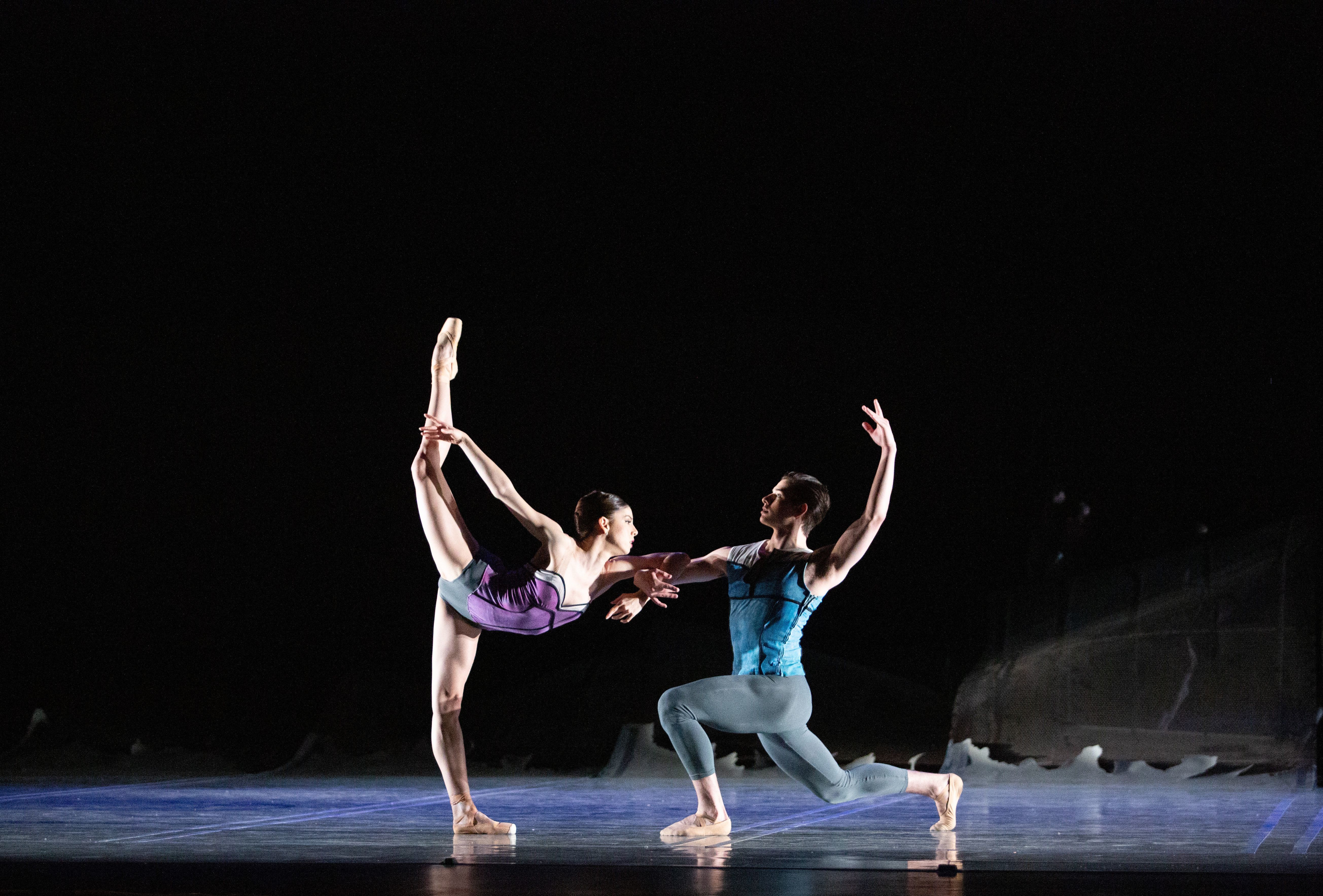
    Philadelphia Ballet dancers Dayesi Torriente and Sterling Baca in Christopher Wheeldon’s “DGV.”Alexander Iziliaev

    ‘Dance at Great Velocity,’ Philadelphia Ballet

    Oct. 15-18, Academy of Music

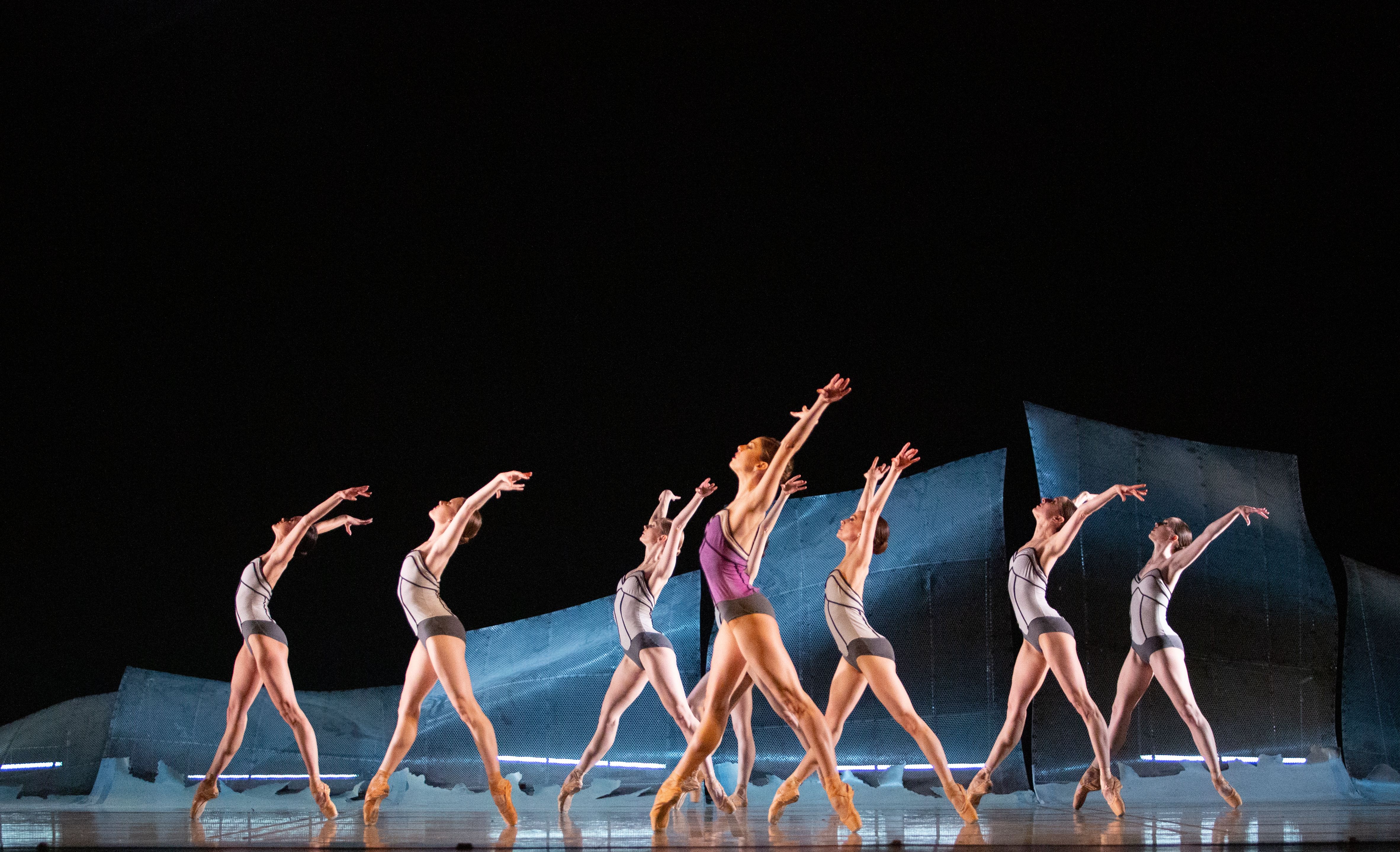
    Just days after its season opener, Philadelphia Ballet returns to the Academy of Music for its second program, one that focuses on the power and speed of a ballet dancer. Of course, the challenge is not only to make it athletic, but to bring great artistry, as well. For this program, the ballet is bringing back Wayne McGregor’s Chroma, Christopher Wheeldon’s DGV: Danse à Grande Vitesse, and Twyla Tharp’s In the Upper Room. philadelphiaballet.org

    Ballets Jazz Montréal in “Dance Me – The Music of Leonard Cohen.”Rolando Paulo Guerzoni / Ballets Jazz Montreal

    Ballets Jazz Montréal

    Oct. 23-24, Zellerbach Theatre

    This Canadian company is stopping in Philly for the final tour of Dance Me, an homage to the late singer/songwriter Leonard Cohen, who had authorized the work. The work includes choreography by Annabelle Lopez Ochoa (a frequent BalletX collaborator), Andonis Foniadakis, and Ihsan Rustem. pennlivearts.org

    Nrityagram Dance Ensemble in “KHANKHANĀ, The Sound of Dancing Feet.”Rajesh Krishna / Nrityagram Dance Ensemble

    Nrityagram Dance Ensemble

    Nov. 5-7, Zellerbach Theatre

    This classical Indian dance company is returning to the Annenberg with the Philadelphia premiere of KHANKHANĀ, The Sound of Dancing Feet. It features three decades of works by artistic director and choreographer Surupa Sen, who specializes in Odissi, one of the nine Indian classical dance styles. pennlivearts.org

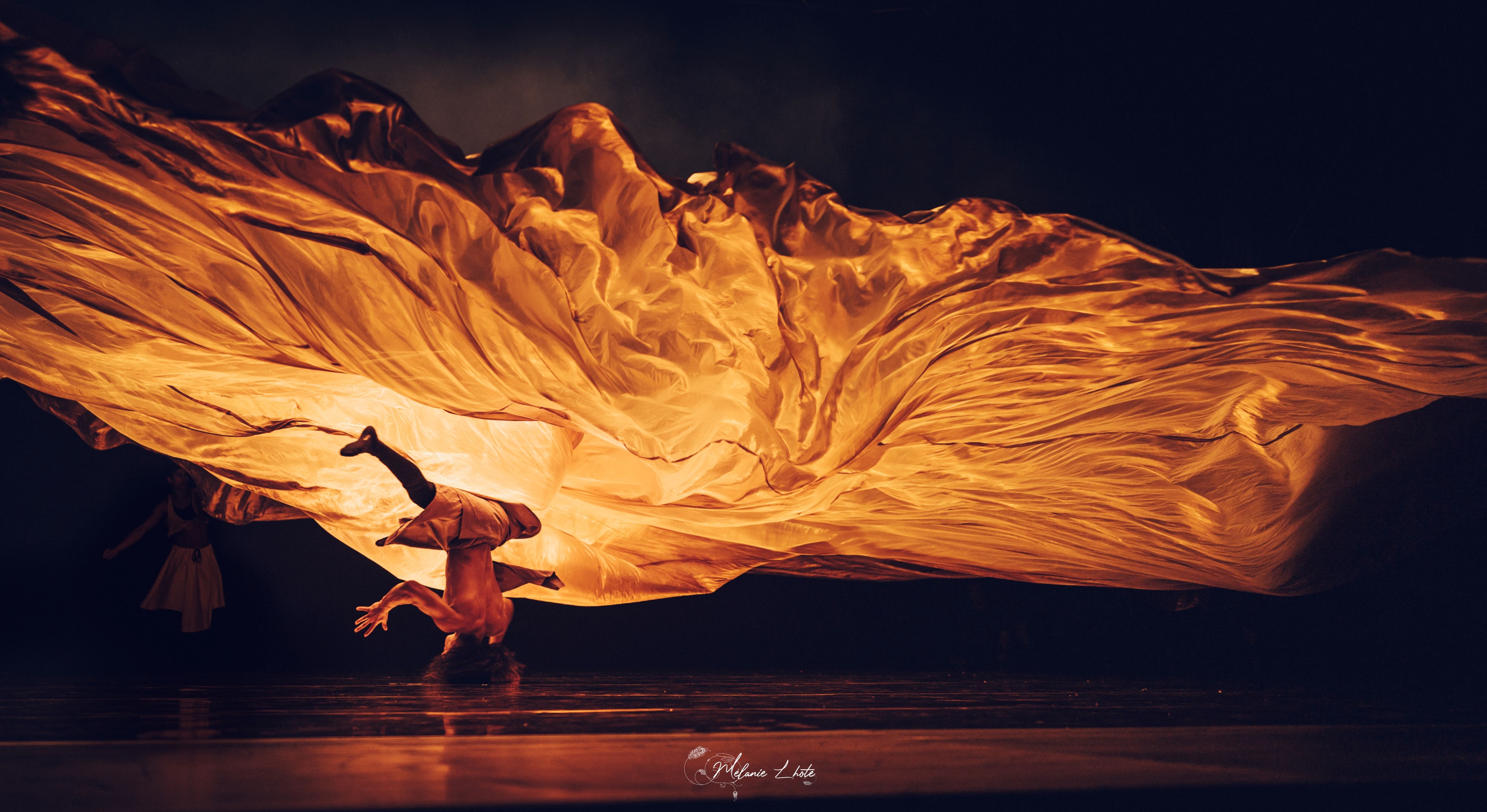
    Compagnie Hervé Koubi in “Sol Invictus.”Mélanie Lhôte / Compagnie Hervé Koubi

    Compagnie Hervé Koubi

    Nov. 20-21, Zellerbach Theatre

    This French company is returning to Philadelphia with Sol Invictus, a work that focuses on love and peace. The style is a combination of contemporary dance, hip-hop, capoeira, and martial arts, and it is set to music by Mikael Karlsson, Steve Reich, and Maxime Bodson. pennlivearts.org

    BalletX dancers Jared Kelly and Ashley Simpson in Amy Hall Garner’s “Switching The Groove.”Christopher Duggan / BalletX

    BalletX fall series

    Nov. 4-15, Suzanne Roberts Theatre

    BalletX is revisiting Prohibition-era Philadelphia in its fall series, with a world premiere from New Zealand choreographer Loughlan Prior. The company mentions jazz, glamour, and danger. Sounds fun! It will also include the return of 2023’s Switching the Groove by Amy Hall Garner and last year’s In the Wake by Christian Denice. balletx.org

    Philadanco will be performing “Sweet Agony” by Gene Hill Sagan in its December program.Philadanco

    ‘For the Love of Philly,’ Philadanco

    Dec. 4-6, Perelman Theater

    This season, Philadanco will be celebrating Philly’s Black culture legacy two ways: via its own history and through the Sound of Philadelphia. The program looks meaningful and highly entertaining, featuring world premieres by Rennie Harris and Dawn Marie Bazemore, as well as Sweet Agony by Gene Hill Sagan, Promise Me You Won’t Call by company co-artistic director Tommie-Waheed Evans, and a reimagined version of Dwight Rhoden’s Tribute. The music will be from the Philadelphia International Records catalog and include songs from Patti LaBelle, Teddy Pendergrass, the O’Jays, and others. On opening night, the company will celebrate founder and artistic adviser Joan Myers Brown’s 95th birthday. ensembleartsphilly.org

    Philadelphia Ballet rehearsal director Charles Askegard, as Drosselmeier, along with students from the School of Philadelphia Ballet in the party scene in “George Balanchine’s The Nutcracker.”Alexander Iziliaev / Philadelphia Ballet

    ‘George Balanchine’s The Nutcracker,’ Philadelphia Ballet

    Dec. 4-31, Academy of Music

    If you’ve ever seen one ballet, chances are it’s The Nutcracker. If you’ve ever performed in a ballet, it’s likely The Nutcracker. If you ever felt like there’s one performance that really makes it feel like Christmas, it’s likely The Nutcracker. Philadelphia Ballet offers many chances to get that holiday spirit, with performances throughout most of December. The delightful children, Sugar Plum Fairy, snow on stage, and red-coated Philadelphia Boys Choir are fun to see every year. philadelphiaballet.org

    “A Very SW!NG OUT Holiday.”Steven Pisano / Sw!ng Out

    ‘A Very SW!NG OUT Holiday’

    Dec. 11-12, Zellerbach Theatre

    If you’d like a different type of Christmas dance show, choreographer Caleb Teicher is bringing some holiday Lindy Hop, based on the show SW!NG OUT, which visited the Annenberg in 2023. The show also features holiday music played live by the Eyal Vilner Big Band. pennlivearts.org

  • How Pennsylvania’s quarries went on to inspire a national art movement

    How Pennsylvania’s quarries went on to inspire a national art movement

    What often gets called cobblestones on old Philadelphia streets are actually Belgian blocks. But no, the neat rectangles cut so they can fit tightly together did not come from Belgium. They came from nearby quarries, often from the New Hope area.

    Apart from the city’s architecture, Bucks County’s stones have also shaped the Pennsylvania Impressionism movement that flourished in the first half of the 20th century. New Hope, with its location on the Pennsylvania-New Jersey border, right by the Delaware River, was home to several artists who could afford to buy homes in the area, commute easily to Philadelphia to teach in art schools like the Pennsylvania Academy of the Fine Arts, and easily get to New York for shows and other networking opportunities.

    “The land was pretty cheap at the time, and artists could move into an old industrial mill or buy a property for not a lot of money. They could also escape urban life and get out into the country. It was just a really beautiful landscape, so people wanted to live in that area,” said Laura Igoe, chief curator at Doylestown’s Michener Museum and curator of the museum’s ongoing “Abstractions of Nature: Quarries and Industry in Pennsylvania Impressionism” show.

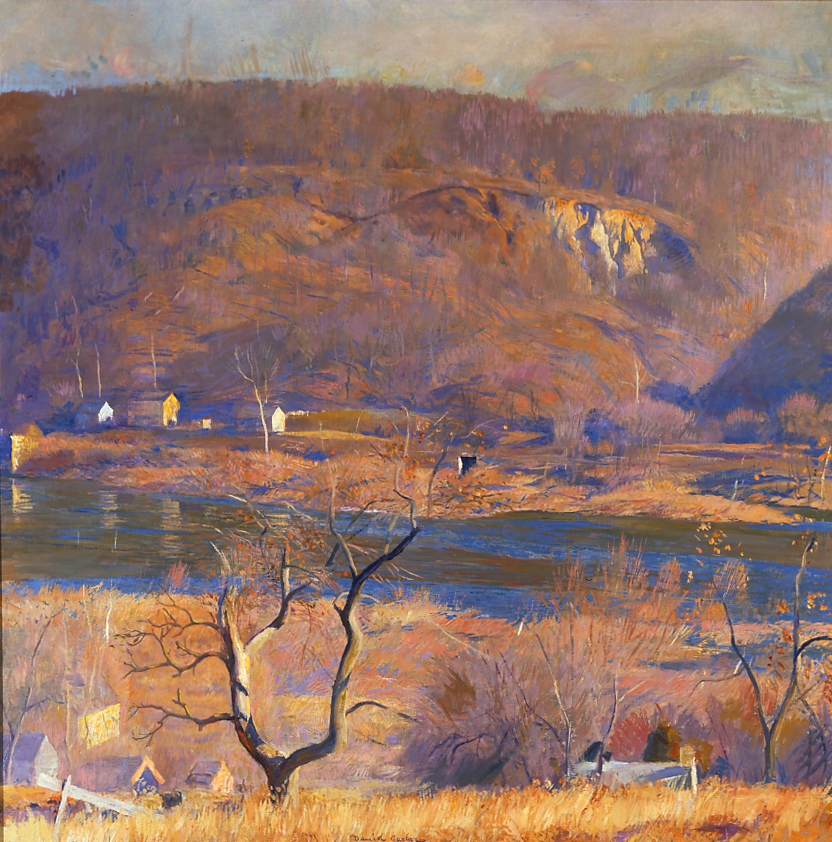
    The artists Edward Redfield and William Lathrop, Igoe said, were the first artists to settle in the area around 1900. Their works are a part of the show. Daniel Garber, who studied and taught at PAFA, soon followed them into the area and became one of the foremost artists living in New Hope. Then his students started moving to the area.

    “It was kind of like this self-perpetuating colony in a way,” said Igoe, “There was a very active artistic community there at the time, and also a lot of quarries.”
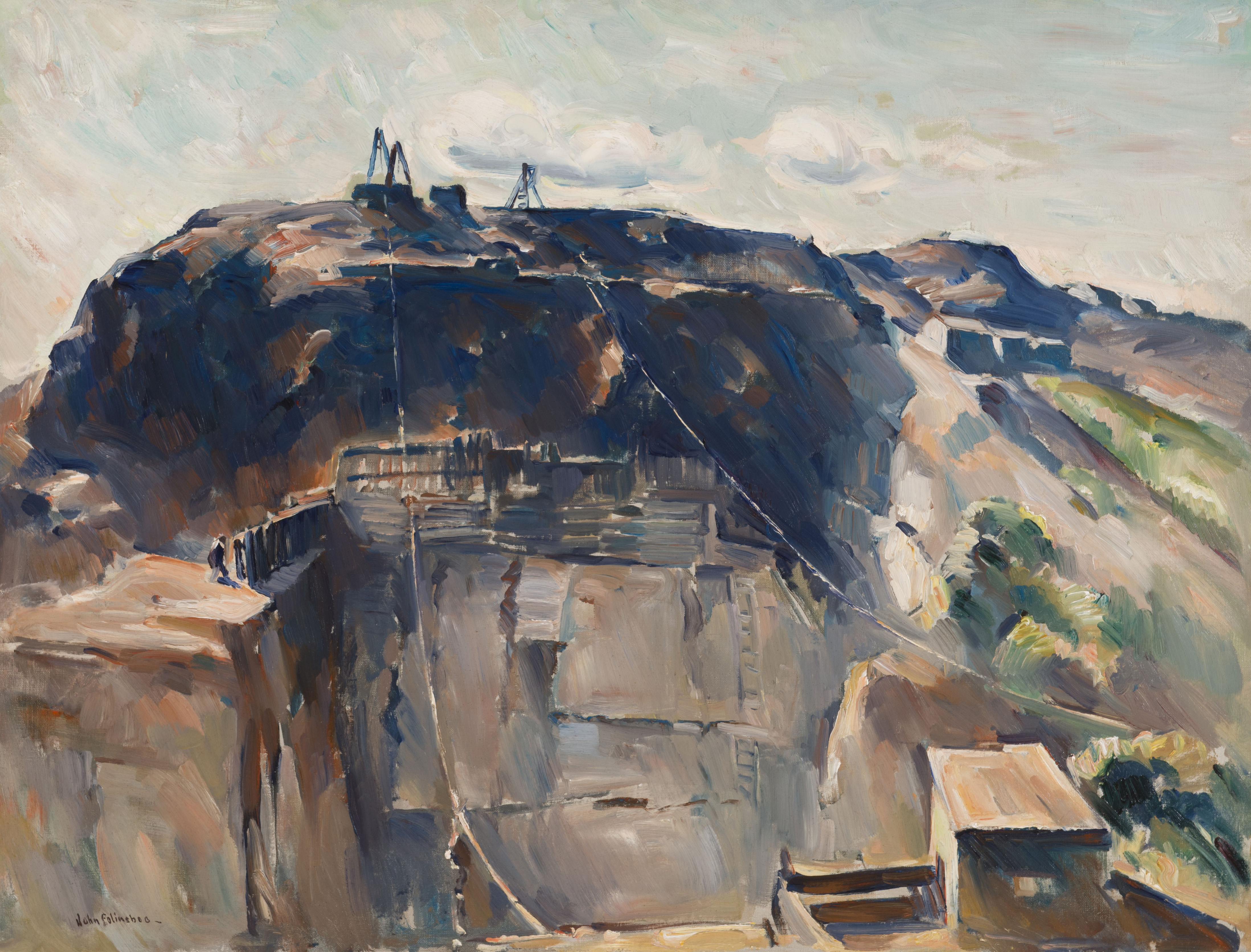
    John Folinsbee (1892-1972), “Slate Quarry, Bangor,” 1929. Oil on canvas, 32 x 40 inches. Courtesy of the Woodmere: Gift of the John F. Folinsbee Art TrustCourtesy of the Michener Art Museum

    Pennsylvania Impressionism by way of Europe

    At the time, there was a new interest in abstraction and Postimpressionism coming from Europe. Cezanne, particularly, was a big influence on some of the New Hope artists who often traveled to Europe and painted in the style of Impressionists like Monet. The Philadelphia art collector Albert Barnes even collected Cezanne paintings where the artist paints abandoned quarries, including Bibémus Quarry (Carrière de Bibémus) (1895).

    Like most Impressionists, the New Hope artists painted landscapes en plein air — outdoors, amid nature, directly drawing from subject matter. Naturally, the quarries that were a part of the landscape made it into the paintings and now form the focus of the exhibition.

    “But while in Europe Impressionism was a much more avant-garde style, it became kind of the style of the academies in the United States,” said Igoe, “so this was what was taught at places like PAFA.”

    “They emphasized capturing effects of light and atmosphere,” said Igoe, “really quick brushwork, quick application of paint.” Many of the artists, she said, were painting landscapes early in the morning or in the evening, painting sunrises and sunsets. “There’s frequently this shimmering sense of light in a lot of these Pennsylvania Impressionist paintings,” she said, “It is this really beautiful reflection of light off the stone that they’re trying to capture.”

    Igoe considers 1900 to the 1930s as the peak of Pennsylvania Impressionism, with the 1915 Panama Pacific Exposition in San Francisco being a highlight. Many of the New Hope Impressionists exhibited their work in the show.

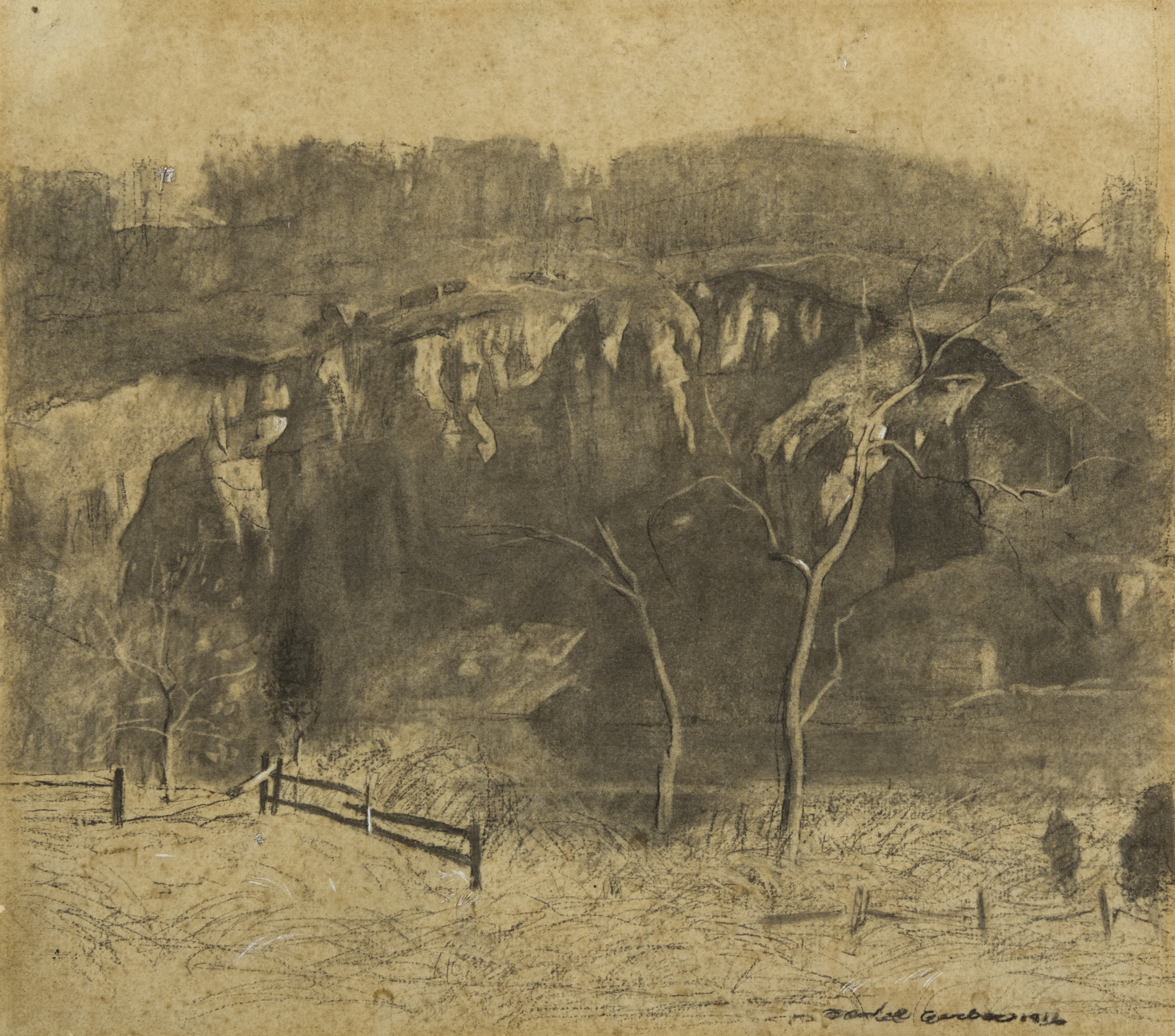
    Daniel Garber (1880-1958), “Abandoned Quarry,” 1916. Charcoal on paper, 10 ¼ x 12 1/8 inches. James A. Michener Art Museum. Michener Art Endowment Challenge Gift of Mr. Herbert WardCourtesy of the Michener Art Museum

    Redfield, notably, had a full room dedicated to his art; “which was an honor that was bestowed upon the likes of John Singer Sargent and Childe Hassam,” said Igoe. Many of the artists won medals at the show “and it led to them being proclaimed by some critics as the most American school of painting at the time,” said Igoe.

    “They painted the landscape of the New Hope area, and they painted in this, what was considered at the time, bold … in this very masculine style. We might not think of Impressionism that way today, but it was considered a very national style for the United States.”

    The artists continued to exhibit under the name of the New Hope Group, and their work was collected by museums across the country. Several women artists were members of the group. Together, they founded the Phillips Mill Community Association in 1929, which remains active as an exhibition venue.

    “The Michener Art Museum was really founded to preserve the legacy of those artists. Especially in Bucks County, those artists have always been well known. But Michener was founded so more people could learn about these artists and preserve their legacy and collect their work,” Igoe said.

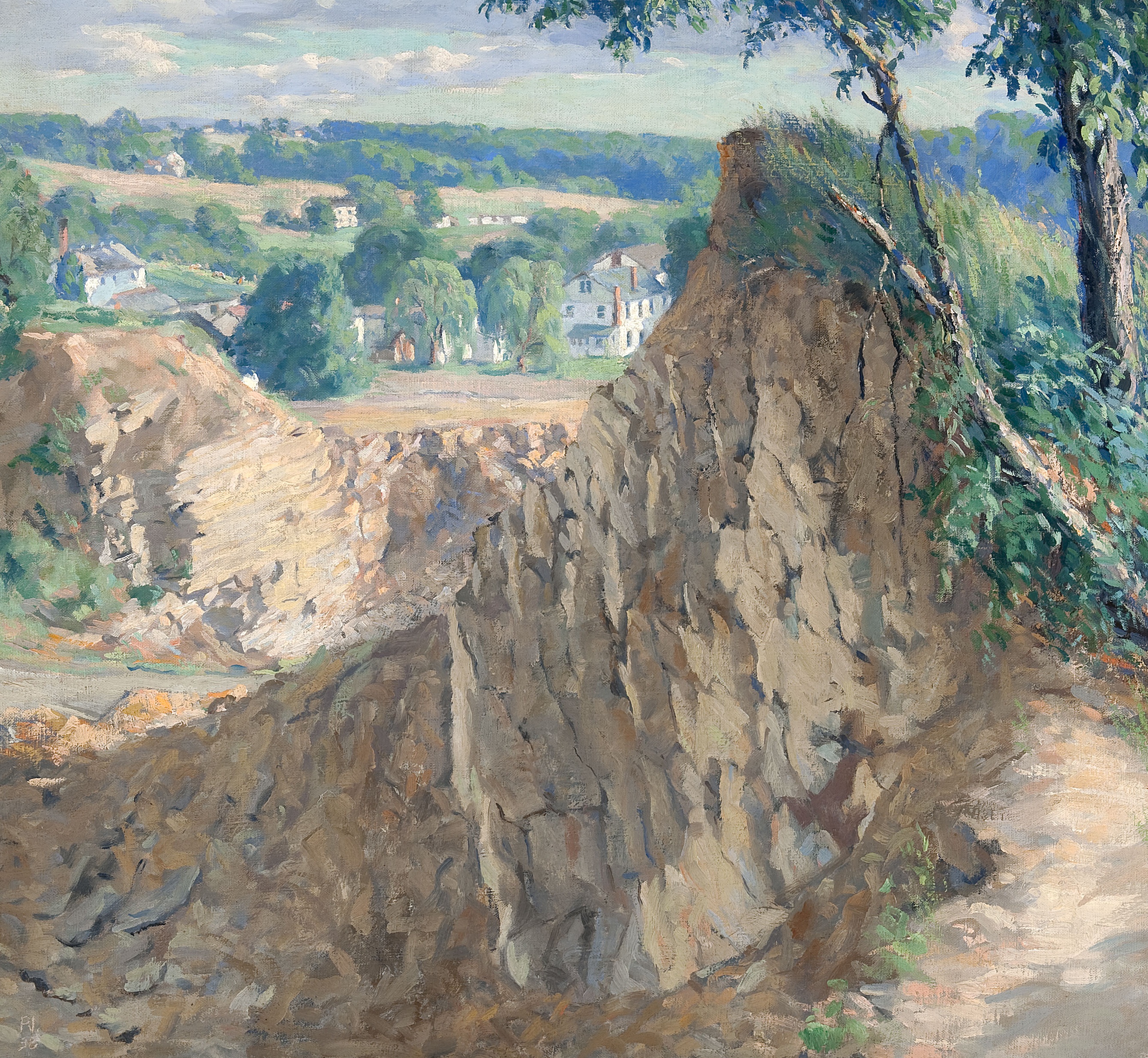
    Roy C. Nuse (1885-1975), “The Quarry at Rushland,” 1938. Oil on canvas, 22 x 24 inches. Courtesy of the Woodmere: Museum purchase, 2012Courtesy of the Michener Art Museum

    Why paint quarries?

    The artists, Igoe said, weren’t always painting exact reproductions of the nature around them, so they had the option of omitting the quarries from their art. “But they frequently chose to include these quarries,” she said, “and that led me to this exhibition where I wanted to look a little more closely at these paintings and think about why artists were so drawn to this subject.”

    Firstly, she thinks, the quarries added a drama to the landscape of New Hope that was attractive to the artists. Comparing quarries to the Grand Canyon, Garber said in an interview that they were “on a scale commensurate with the canvas,” said Igoe.

    “So you can include these dramatic rock faces, but it doesn’t overpower the canvas in the way the Grand Canyon can. You can’t get the Grand Canyon on a canvas, but you can get a quarry,” said Igoe.

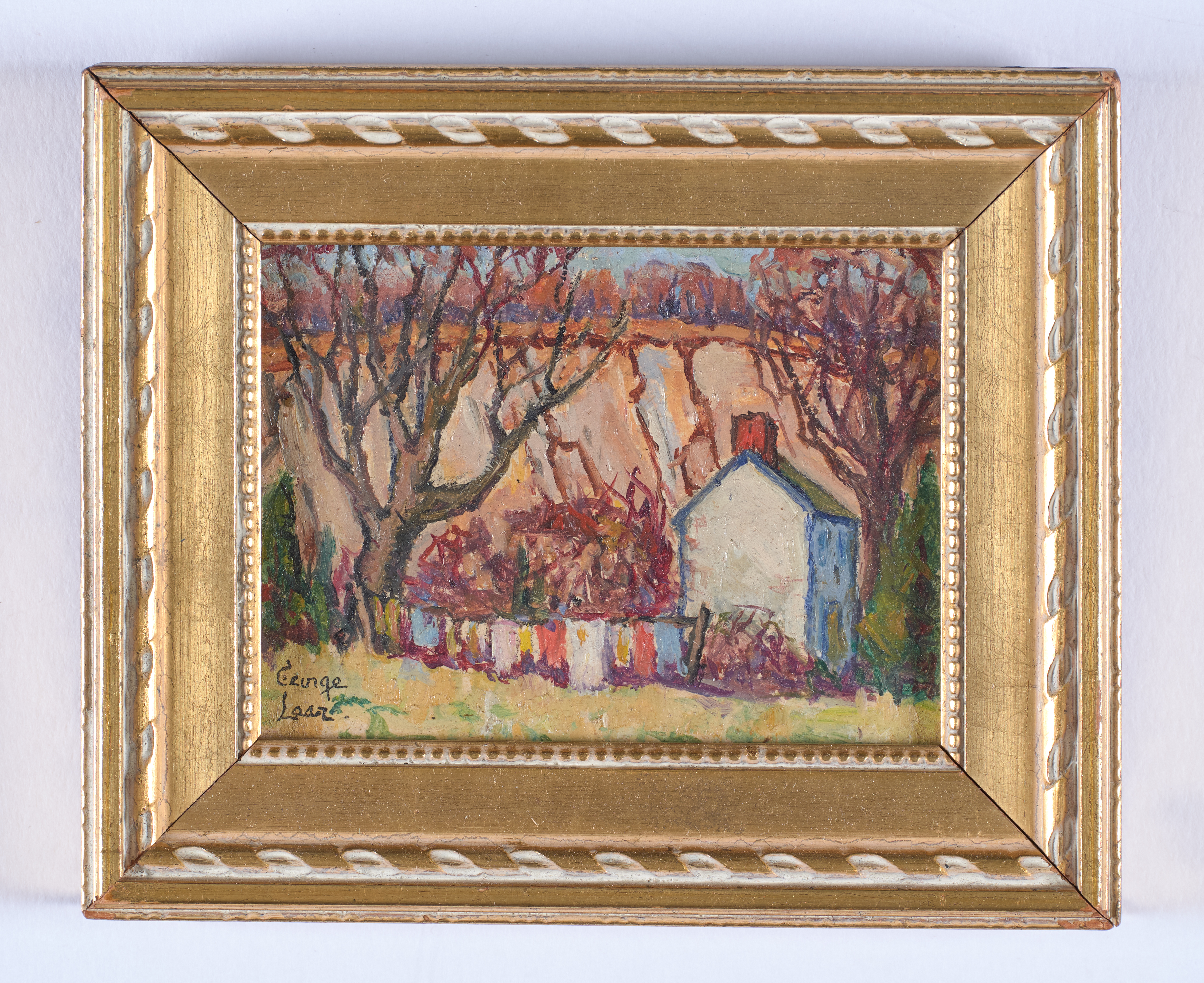
    George Lear (1897-1956), “Quarryman’s House,” ca. 1930-1950. Oil on board, 2 5/8 x 3 ¾ inches. James A. Michener Art Museum. Gift of Drs. Irwin and M. Susan RichmanCourtesy of Michener Art Museum

    The way the light at different times of the day and year reflected off the stones also inspired the artists, as did the geometric forms of the rock face that often inspired the artists to play with abstraction.

    “They were also interested in this human impact on the natural world, the way humans could excavate these rocks, from the landscape, I think was appealing to them,” said Igoe.

    Show highlights

    Many works in the show portray factories, smoke, and industrialization without much critical commentary, but Garber’s Harmonville (1925) shows a landscape near Conshohocken. To Igoe, it is “one of the artworks in the show that is the most critical of industry.” A sickly tree in the foreground of the print, she said, is perhaps Garber’s way of saying “that this industry can be really destructive to nature too.”

    Other artists in the show include Letitia Maxwell Ely, the lone woman artist in the mix, who was one of Garber’s students. “I just wasn’t finding a lot of paintings of quarries by women artists. I am not sure if it’s because it’s perceived as a more masculine subject,” said Igoe. But Maxwell Ely’s work, she said, stands out in the way the artist paints in proximity to the quarries. Masters like Garber, Igoe said, took a distant view of the quarries, not usually engaging with the human labor at the quarries.

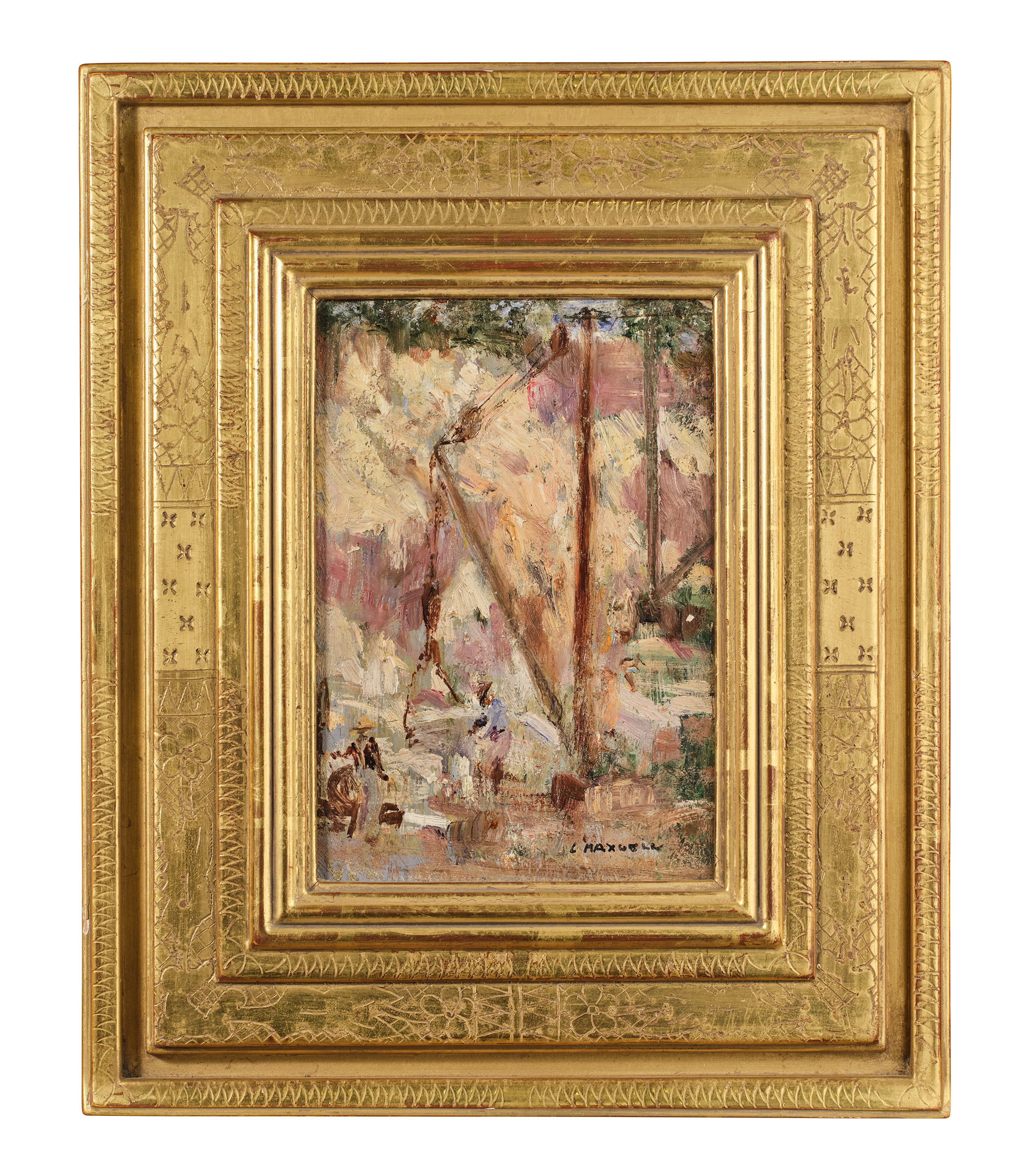
    Letitia Maxwell Ely (1886-1967), “Quarry,” 1914. Oil on board, 8 x 5 inches. James A. Michener Art Museum. Gift of David B. Long.Courtesy of the Michener Art Museum

    But Maxwell Ely, whose work was much smaller in scale, “brings you right into the quarries themselves in those little paintings, and she is more interested in the labor.” In works like Quarry (1914), there are no sweeping vistas, but a more zoomed-in perspective at life of those working in the quarries.

    “There’s not a lot of work known by her that’s still available. She’s an artist that I wish we knew a little bit more about, but she didn’t leave a very large body of work behind,” said Igoe.

    Among the other highlights of the show, according to Igoe, is a postcard-sized painting The Quarryman’s House by the artist George Lear. Another artist is Roy Nuse who lived by the Rushland quarry and painted that quarry many times throughout his life. “Nuse has this reputation as being somewhat of a homebody, he painted things close to his home,” said Igoe. “I just found it interesting that there was a quarry close to his home, and he painted it in all different seasons, in the winter and spring. And I think he really enjoyed the shapes that the quarry provided as well.”

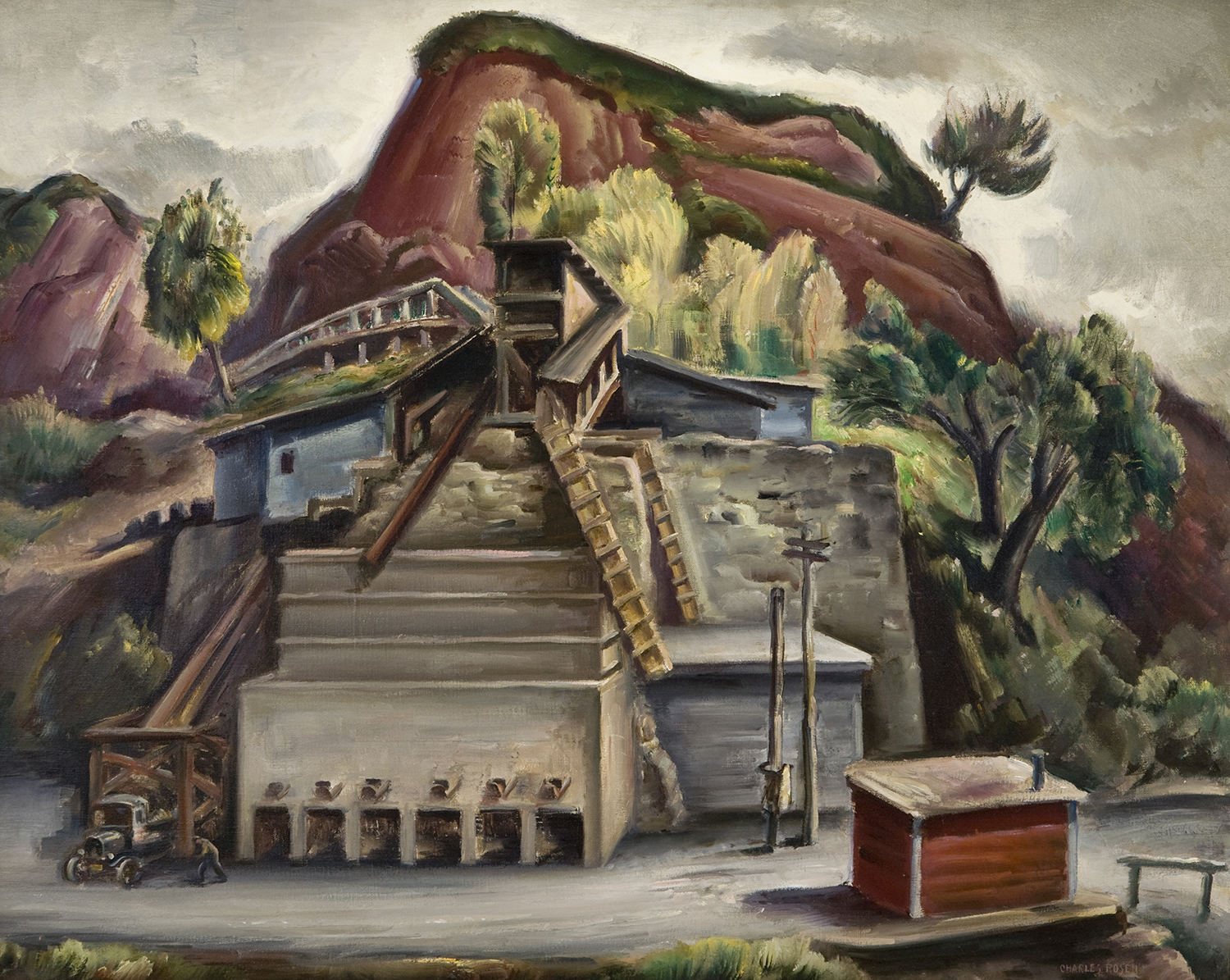
    Charles Rosen (1878-1950), “Quarry and Crusher,” early 1930s. Oil on canvas, 32 x 40 inches. James A. Michener Art Museum. Museum purchase funded by George C. Benson in honor of his friend, John Horton.Courtesy of the Michener Art Museum

    Charles Rosen, another artist in the show, started his career being an Impressionist but moved onto more avant-garde European styles after moving to Woodstock, N.Y.

    Pennsylvania Impressionism eventually dwindled as a movement around the 1940s as public interest shifted to more modern, abstract art forms. Some of the quarries depicted in the show remain active, some are overgrown, and some are part of protected land along the Delaware River.

    Igoe’s colleagues have even picked up some rocks from nearby quarries that, with the art, will also be a part of the show.

    So visitors can touch and feel the stones that they have walked over thousands of times. Stones that, with their jagged faces and smoothened ends, have witnessed artists’ curiosities and have gone on to outlive the hands that painted them.

    “Abstractions of Nature: Quarries and Industry in Pennsylvania Impressionism” runs through Feb. 28, 2027. Michener Art Museum, 138 S. Pine Street, Doylestown, Pa. 18901. michenerartmuseum.org

  • Looking for pawpaws | Outdoorsy Newsletter

    Looking for pawpaws | Outdoorsy Newsletter

    Welcome back and happy autumn equinox, nature lovers.

    Here’s what we’re up to today:

    • A rare, regional treat: It’s pawpaw season.
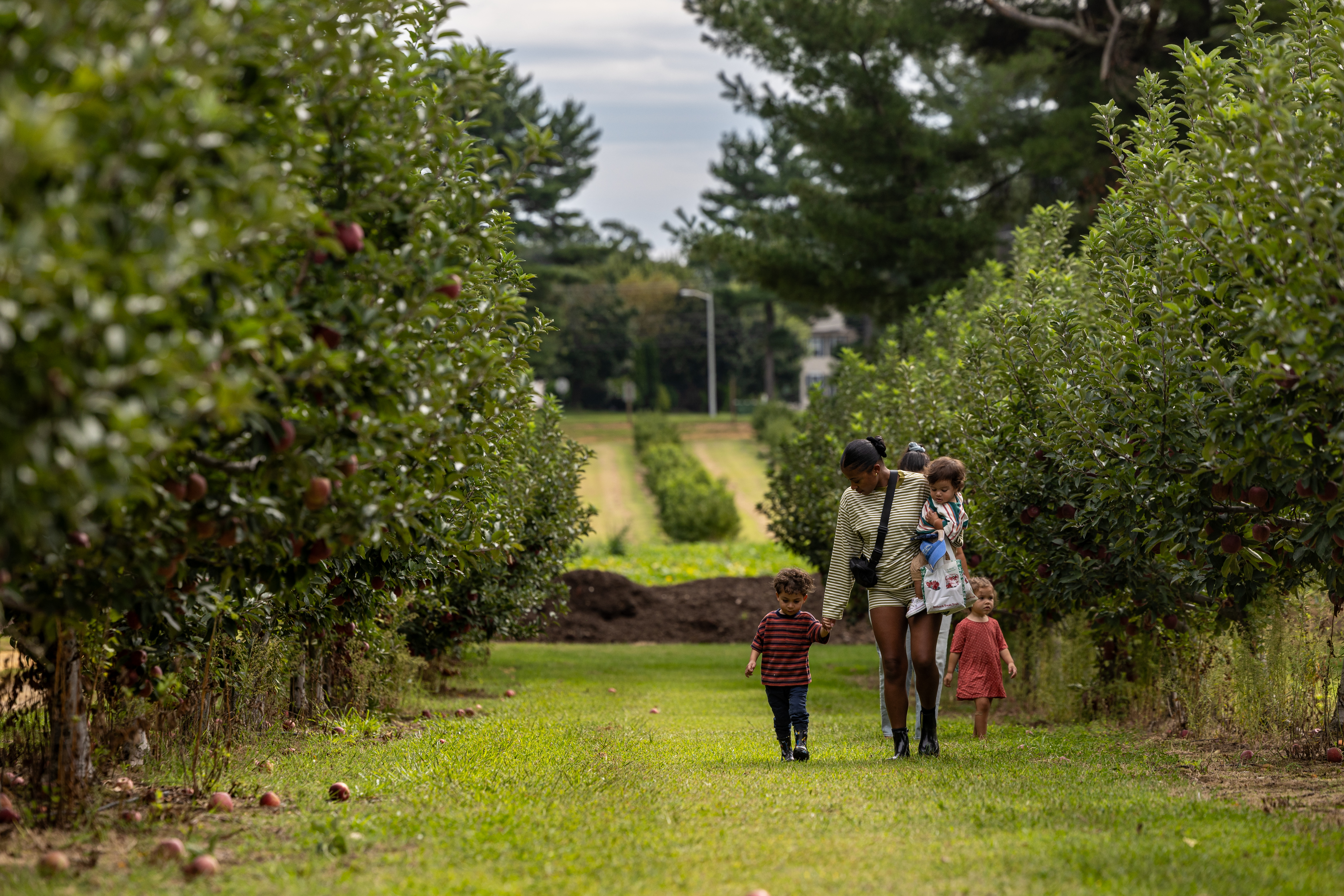
    • The fall must go on: South Jersey farmers get creative to stay afloat in the face of a shrunken apple-picking season.
    • Your outdoorsy experience: An adventure at a quiet oasis in Abington Township.

    ☀️ Your weekend weather outlook: Friday will be partly sunny, then showers are expected to douse the region thanks to an early-season nor’easter. Flood warnings are in effect for the Shore.

    — Paola Pérez (outdoorsy@inquirer.com)

    If someone forwarded you this email, sign up for free here.

    A novel delight

    September ushers in pawpaw season, but it won’t last for long. It’s delicate and highly perishable, so now is the time to act.

    🥭 The pawpaw is North America’s largest edible native fruit. It’s tropical-like in flavor, combining hints of papaya, mango, banana, and pineapple. My colleague Jenn Ladd said: “It tastes like a cross between a mango and a banana.”

    🧺 You can forage them around the region, but you may also get lucky at a local co-op or farmers market.

    😋 You can eat one straight, or use it as an ingredient. Think ice cream, jam, or pudding. No recipe needed. Just keep in mind that its shelf life is short.

    Keep reading to learn more about the unique sweetness of pawpaws, and send in tips about where you have found and enjoyed the rare fruit.

    News worth knowing

    🌳 Your outdoorsy experience

    My colleague Lisa Dukart, Inquirer Local newsletter writer, wants to take us to a lovely green space that’s well worth checking out:

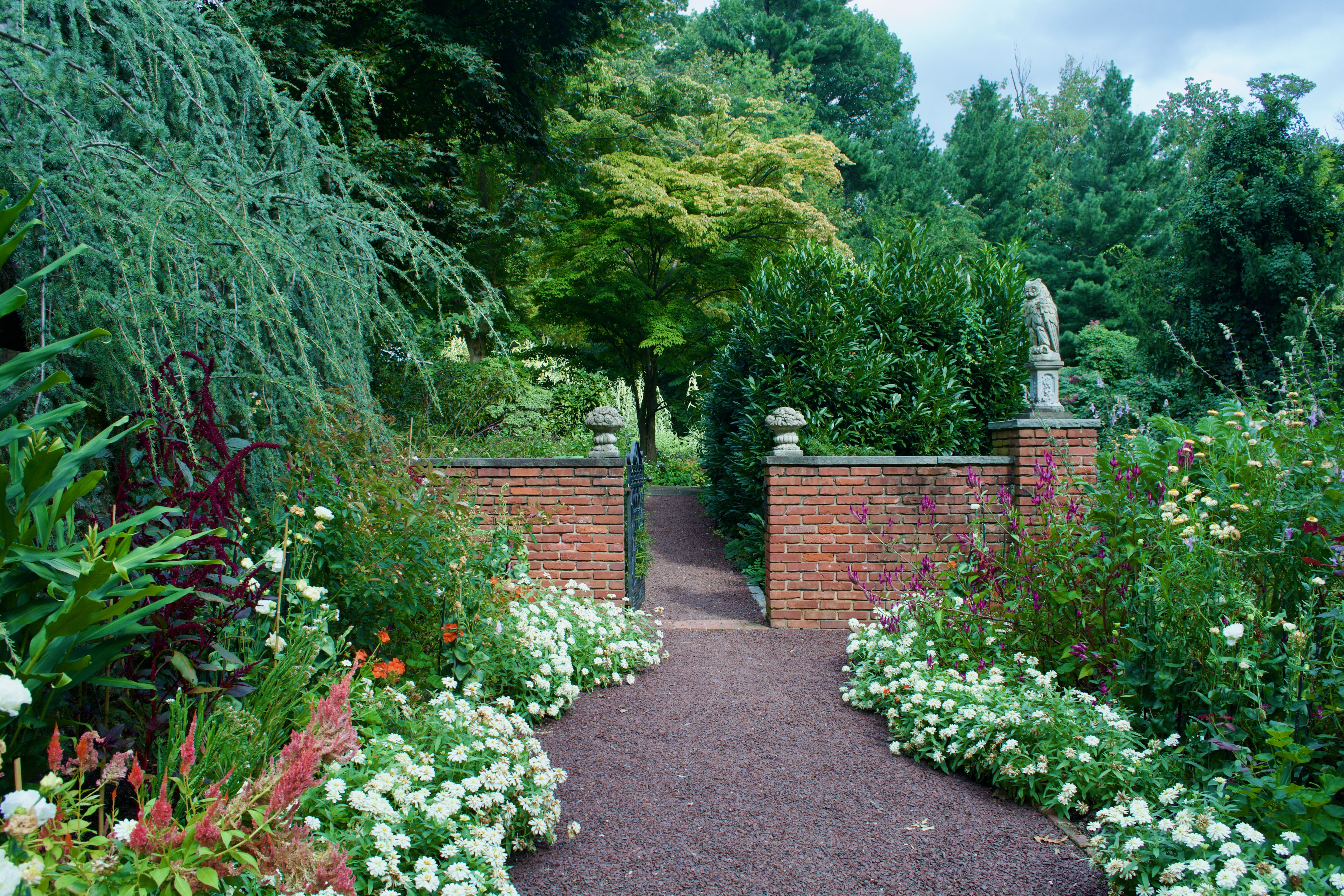
    While it’s not a month that first comes to mind for visiting a garden, late September is an unexpectedly wonderful time to do so. Native flowers are still in bloom, the air’s a touch cooler, and the leaves are getting the first hints of autumn color. While I was prepared for a small dose of beauty, what I found on a recent visit to PHS Meadowbrook Farm was much more magical than I expected.

    This quiet, 21-acre oasis in Abington Township unfolded slowly thanks to its intentional design, giving me space to savor each moment as I meandered the grounds of the stately 1936 home once owned by the Pennock family.

    The beauty begins at the entryway, where the stone facade is surrounded by an array of plants and flowers in a rainbow of colors. Beyond the house, almost seemingly tucked away, are a jewel box of garden rooms — some featuring colorful pollinator flowers or herbs, others showy blooms like roses and dahlias, while others are grounded in architectural details like a fountain or pool. Whichever direction you step, each room feels like a well-kept secret meant to be taken in slowly.

    PHS Meadowbrook Farm is open Wednesdays to Saturdays from 10 a.m. to 6 p.m. through Oct. 17.

    Looks and sounds utterly gorgeous. Thank you, Lisa.

    What about you, dear reader? Got any favorite spots or special outdoor memories to share? Email me here (with pictures, if you have them). You may see your story featured here.

    The fight to make it through fall

    🎤 Let me pass the mic to Inquirer reporter Sarah Nicell.

    For many, a quintessential South Jersey fall includes apple picking, a warm cider, and sugared doughnuts.

    But fall in the Garden State might look a little different this year after a spring freeze left farms across the region with damaged apple varieties and huge crop losses — at least $300 million worth, Gov. Mikie Sherrill said in May.

    With pumpkin spice and Halloween decorations already signaling fall’s arrival, farmers and produce sellers are trying their best to get by with fewer apples, or none at all. — Sarah Nicell

    Read on to learn how these farmers are getting creative under these difficult circumstances.

    Paola’s picks

    💭 A quote: “In all things of nature there is something of the marvelous.”

    🎃 A delightful portrait: A record-breaking pumpkin mosaic of Sir David Attenborough.

    🍅 A wicked find: Late-summer tomatoes at a Philly cemetery.

    🧠 A fascinating read: What a fruit fly can — and can’t — do with its 166,000 neurons.

    🏖️ A final score: The Inquirer’s Amy Rosenberg made 10 Shore predictions for 2026. Here’s how she did.

    A nurturing view

    Boots Levinson (left) and Laura White pose in the meadow at their home in Merion Station, Pa.Joe Lamberti / For The Inquirer

    Their Merion Station yard didn’t have much life. Now it’s filled with flowers. See all the colorful blooms and vegetation that adorn their Tudor-style home.

    👋🏽 Our next adventure awaits.

    By submitting your written, visual, and/or audio contributions, you agree to The Inquirer’s Terms of Use, including the grant of rights in Section 10.

  • Iran proposes 7-day plan to end war

    Iran proposes 7-day plan to end war

    UNITED NATIONS — Iran’s foreign minister said Thursday that Tehran had proposed to Washington a seven-day plan to cease hostilities, reopen the Strait of Hormuz and then begin comprehensive talks on his country’s nuclear program.

    Abbas Araghchi, the foreign minister, told reporters at a press briefing at the United Nations General Assembly that the proposal closely mirrored the commitments laid out in a so-called memorandum of understanding that was struck between the United States and Iran in June but quickly unraveled.

    He said Iran was ready to begin putting the plan into effect as soon as Washington agreed to it.

    “We have introduced a plan to the United States through the intermediators that if certain conditions are met, the Strait of Hormuz would be open on the end of the seventh day and talks would restart,” Araghchi said.

    He said “it would be better” if a deal was reached before the U.S. midterm elections.

    A U.S. official familiar with the talks said that the administration was having positive and constructive discussions through mediators, but that the United States was not going to rush into a deal.

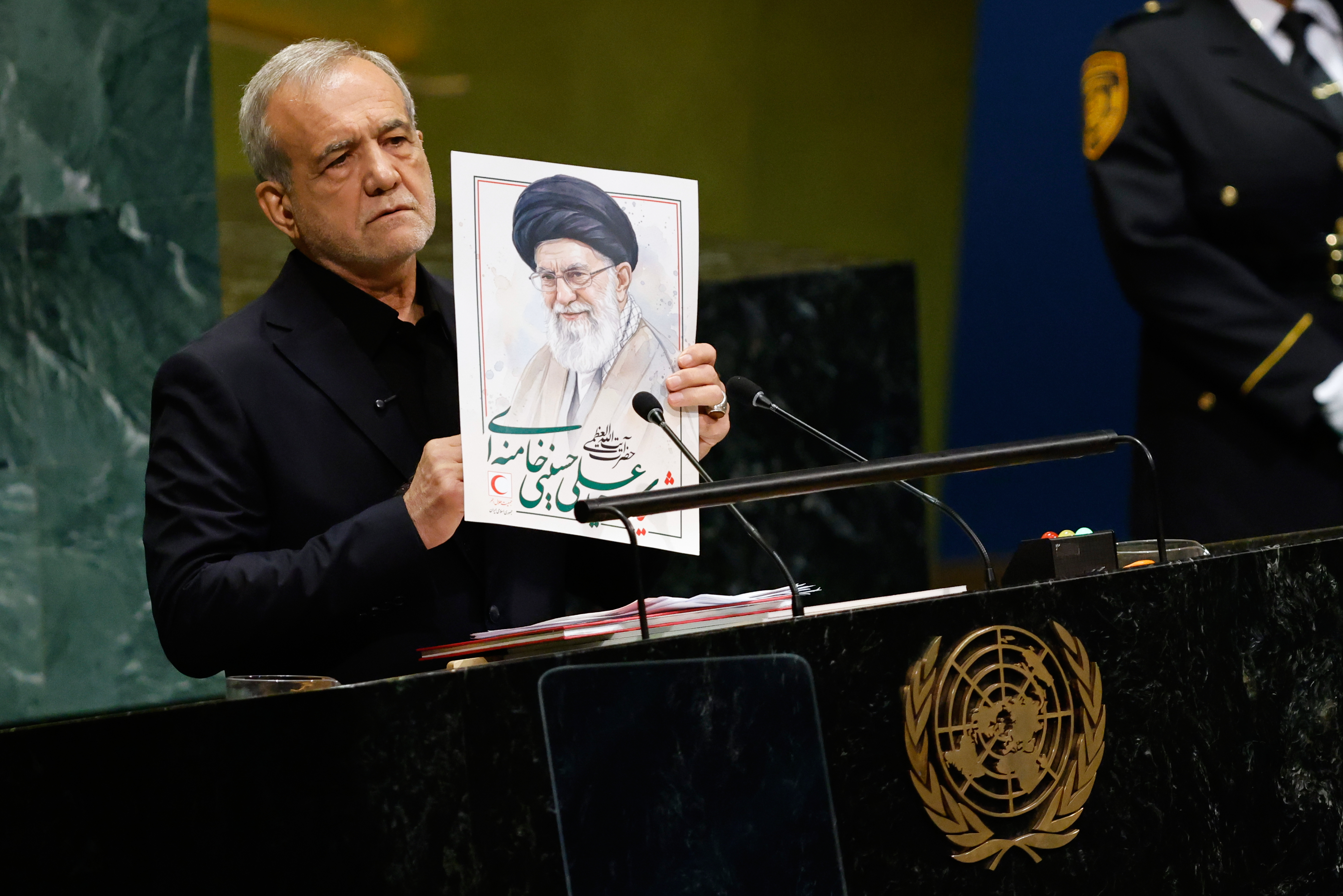
    The Iranian proposal came even as President Donald Trump and Iran’s president, Masoud Pezeshkian, delivered mutually hostile speeches at the United Nations. Trump threatened Iran with “annihilation” if it did not strike a deal, while a defiant Pezeshkian told world leaders his country would not be bullied.

    Though Iran’s proposal contains many of the same conditions of the deal that fell apart, the behind-the-scenes diplomacy suggested that both sides may see much to gain from finding an off-ramp from the war.

    Iranian officials said that while the proposal was effectively the same as the memorandum of understanding made in June, it was designed to move at a much faster pace. In the earlier agreement, a 60-day time frame was set for reaching nuclear negotiations.

    Under the conditions that Iran has set for the agreement, according to Araghchi, during the seven days all hostilities would end, including in Lebanon; the U.S. would release Iran’s frozen assets, estimated at least $12 billion; waive sanctions on Iranian oil; and lift the naval blockade on Iran. Then, on the last day, the Strait of Hormuz would be opened.

    After the seven days, Aragchi said, comprehensive negotiations over Iran’s nuclear program would immediately begin. Trump has said that his top goal is for Iran not to have a nuclear weapon, and that he would either achieve that through a diplomatic deal or with more attacks.

    The United States and Iran have been at war for nearly seven months. It began in late February when the United States and Israel launched airstrikes that killed Iran’s supreme leader, Ayatollah Ali Khamenei, and military chain of command. Trump initially said the war would take only a few weeks

    The war has had widespread global repercussions including on oil, energy and food prices.

    The Iranian proposal came as U.S. negotiators have tried to jump-start diplomacy with Iran on its nuclear program through talks on the sidelines of the U.N. assembly. U.S. Secretary of State Marco Rubio said a three-hour meeting, mediated by Qatar, between U.S. and Iranian officials did not end in a breakthrough.

    Araghchi, who will be in New York until next Monday, met on Tuesday with U.S. envoy Steve Witkoff and Jared Kushner, a son-in-law of Trump’s. It was mediated by Qataris passing messages between the two sides, and Araghchi described it as “productive” and said the messaging continued.

    Ismaeil Baghaei, the spokesperson for Iran’s foreign ministry who is also in New York, said that it was possible that there would be more mediated meetings in the coming days.

    Iran’s economy is under serious strain, and Iranians are suffering from skyrocketing inflation on basic food items, a shortage of medicine and disruptions to commerce.

    Analysts said that Trump would have to weigh the benefits of reaching a deal with Iran before the midterms against keeping a chokehold on its economy in the hope of getting more concessions from Tehran.

    “This is a smart move,” said Ali Vaez, the Iran director of the International Crisis Group. “They know it’s very tempting for President Trump because it ends an unpopular war and brings down energy prices in the run-up the midterms. But it also restores a deal that was largely favorable to the Iranians. A compressed timeline to get to the nuclear issue should be appealing to an impatient president.”

    This article originally appeared in The New York Times.

  • Pope Leo XIV affirms need for media to cover public figures when asked about Trump ban

    Pope Leo XIV affirms need for media to cover public figures when asked about Trump ban

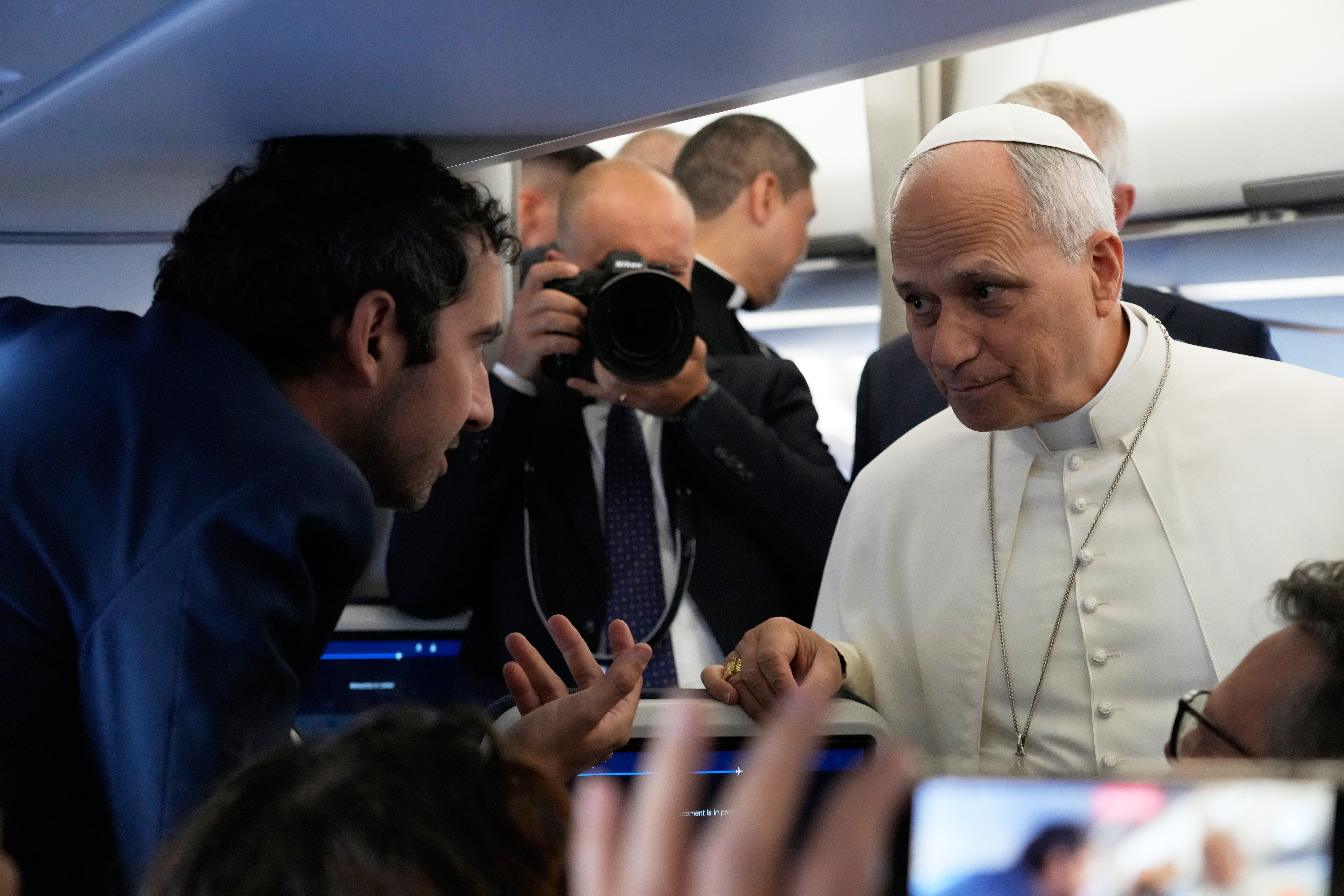
    ABOARD THE PAPAL PLANE — Pope Leo XIV told reporters they were welcome to cover him, as he responded to the Trump administration’s attempt to bar U.S. media from the White House and affirmed the importance of journalists covering public figures.

    Leo spoke to reporters Friday on his way to France for a four-day visit. Asked by a CNN reporter about the Trump administration’s attempt to bar CNN and other reporters, Leo said the media was welcome on his plane.

    “I am very happy that here, you are all welcome,” he said. Good media coverage is important, he said, and equally important “that we have it all the way around, for everyone”

    CNN, MS NOW and Politico were back at the White House on Thursday after a judge handed them a reprieve from President Donald Trump’s ban, but the extraordinary showdown between him and outlets whose coverage he dislikes continued.

    On a high-profile day when Chinese leader Xi Jinping was visiting Washington and attending a state dinner, no major American network was airing live coverage, and both CNN and MS NOW said their journalists were denied access to Xi’s state dinner arrival.

    Leo has long affirmed the need for free and independent press, a point he made in one of his first audiences as pope. Speaking to journalists who covered the 2025 conclave that elected him, the American pope called for the release of imprisoned journalists and affirmed the “precious gift of free speech and the press.”

    That said, since the COVID-19 pandemic, independent media have been prevented from covering photo opportunities inside the pope’s private studio when visiting heads of state visit. Additionally, many of the pope’s private audiences with other groups and individuals are closed to non-Vatican press.

    Leo had opposed Trump on the war

    Leo’s airborne comments about Trump followed his April back-and-forth over the American president’s criticism of his opposition to the Iran war. The American pope’s position won him points with some Europeans opposed to Trump’s policies.

    “He dared, at his level, to oppose the American president,” said retiree Thierry Marien, who lined up hours early to grab a spot on the popemobile route to Notre-Dame cathedral, where Leo was to celebrate vespers later Friday. “Not because he is opposed to the American president but because he’s opposed to countries where we can see there’s a risk of their political systems becoming a bit more dictatorial and there are already enough of those in the world.”

    “I appreciated that he did that. He could quite easily have said to himself, ‘In my situation, I won’t criticize any heads of state,’” he said.

    Leo apologizes to reporters

    Also on the flight Friday, Leo also apologized for missing an opportunity to speak with the press the last time he traveled internationally, when his Iberia charter broke down in Spain’s Canary Islands and he returned home solo on the king’s private jet, skipping his traditional airborne press conference.

    More than 70 reporters and the Vatican delegation waited for several hours at the airport for a replacement plane to arrive. Leo addressed the media’s disappointment when he came to the back of the plane to greet reporters.

    “A special mention I would like to make for those of you who were traveling with me when we returned to Rome from Spain,” he said. “I want to apologize personally for an incident, that I had nothing to do with, but which I know left a number of you unhappy with the fact that we couldn’t have the flight back together back to Rome.”

    In other comments to reporters, Leo said he believed his alma mater Villanova would be the fan favorite when the Augustinian university plays Notre Dame’s basketball team in Rome on Nov. 1.

    “They tell me that the people coming to the match, 90% are Villanova and 10% Notre Dame, so the voice of the people of God will be very strong on the Villanova side,” Leo said.