Blog

  • Josh Shapiro and Gretchen Whitmer, potential 2028 rivals, meet at Philly diner to boost Democrats ahead of midterms

    Josh Shapiro and Gretchen Whitmer, potential 2028 rivals, meet at Philly diner to boost Democrats ahead of midterms

    Pennsylvania Gov. Josh Shapiro and Michigan Gov. Gretchen Whitmer, stopped by a Bella Vista diner on Friday morning to pump up Democratic volunteers to turn out voters, with less than six weeks until the high-stakes midterm elections in both of their swing states.

    On the menu: Electing Democratic candidates to Pennsylvania’s four nationally-watched U.S. House seats that could determine control of Congress, and flipping the state Senate to Democratic control for the first time in more than 30 years.

    Shapiro is also seeking a second term as Pennsylvania’s Democratic governor this November, and maintains a sizable polling and fundraising advantage over his Republican opponent, state Treasurer Stacy Garrity.

    “I know we’re in a moment of tumult right now, where chaos and cruelty and corruption is just enveloping our lives. The good news is in 39 days, you’ve got the power to change that,” Shapiro told the group of a couple dozen volunteers from voter protection groups. Servers at Sam’s Morning Glory Diner, wearing T-shirts with messages condemning President Donald Trump and supporting former Vice President Kamala Harris, whisked by with plates of omelettes and pancake stacks.

    Gov. Josh Shapiro talks to patrons alongside Michigan Gov. Gretchen Whitmer out in the back patio of Sam’s Morning Glory Diner in South Philadelphia on Friday, Sept. 25, 2026. Shapiro is canvassing to get Pennsylvania Democrats elected up and down the ballot as the midterms are upcoming in November. He wants to flip the state Senate for Democrats to take back control. Whitmer is present to support Shapiro’s re-election campaign.Aidan T. Gallo / Staff Photographer

    Shapiro also assured voters that elections in Pennsylvania will be conducted fairly and accurately, following a CNN report that Trump’s Department of Justice is sending a surge of election monitors to oversee polling locations.

    “We’re prepared again in court, and we’re also prepared should they try and bring personnel into certain communities, particularly minority communities, to try and intimidate people, make it harder for people to vote, or make them worried about showing up to vote,” he said.

    State election officials are coordinating with the Pennsylvania National Guard, the Pennsylvania State Police and local law enforcement to protect voting access, he said.

    “We will do everything in our power to stop Donald Trump from interfering with this election and ensure, whether you vote by mail or you vote in person, you will have access to the ballot box, and it will be protected,” he said.

    Gov. Josh Shapiro meets with patrons alongside Michigan Gov. Gretchen Whitmer inside Sam’s Morning Glory Diner in South Philadelphia on Friday, Sept. 25, 2026. Shapiro is canvassing to get Pennsylvania Democrats elected up and down the ballot as the midterms are upcoming in November. He wants to flip the state Senate for Democrats to take back control. Whitmer is present to support Shapiro’s re-election campaign.Aidan T. Gallo / Staff Photographer

    Whitmer is nearing the end of her second term as Michigan’s governor, and like Shapiro, has been floated as a contender in the 2028 Democratic presidential primary.

    The two have been coy about any future pursuits. Shapiro has demurred on his ambitions for higher office, saying he’s focused on his reelection, though he’s also said he will “be a part of that conversation” about who Democrats should nominate for president. Whitmer previously said she had no plans to run in the Democratic presidential primary in 2028 but later walked it back, saying “never say never.”

    But on Friday in South Philadelphia, there were no signs of rivalry. Whitmer said she was in town to help support Shapiro’s reelection effort. Shapiro praised Whitmer, saying she has been a guiding light for the kind of governor he wanted to emulate.

    Whitmer, Shapiro said, is ”someone I have looked up to, someone who knows how to get stuff done in her state, and someone who I think leads with integrity, with purpose, with drive and determination.”

    The two appeared together publicly last year at an Eagles-Lions football game at Lincoln Financial Field, as part of what Whitmer called a friendly rivalry between the NFC championship contenders.
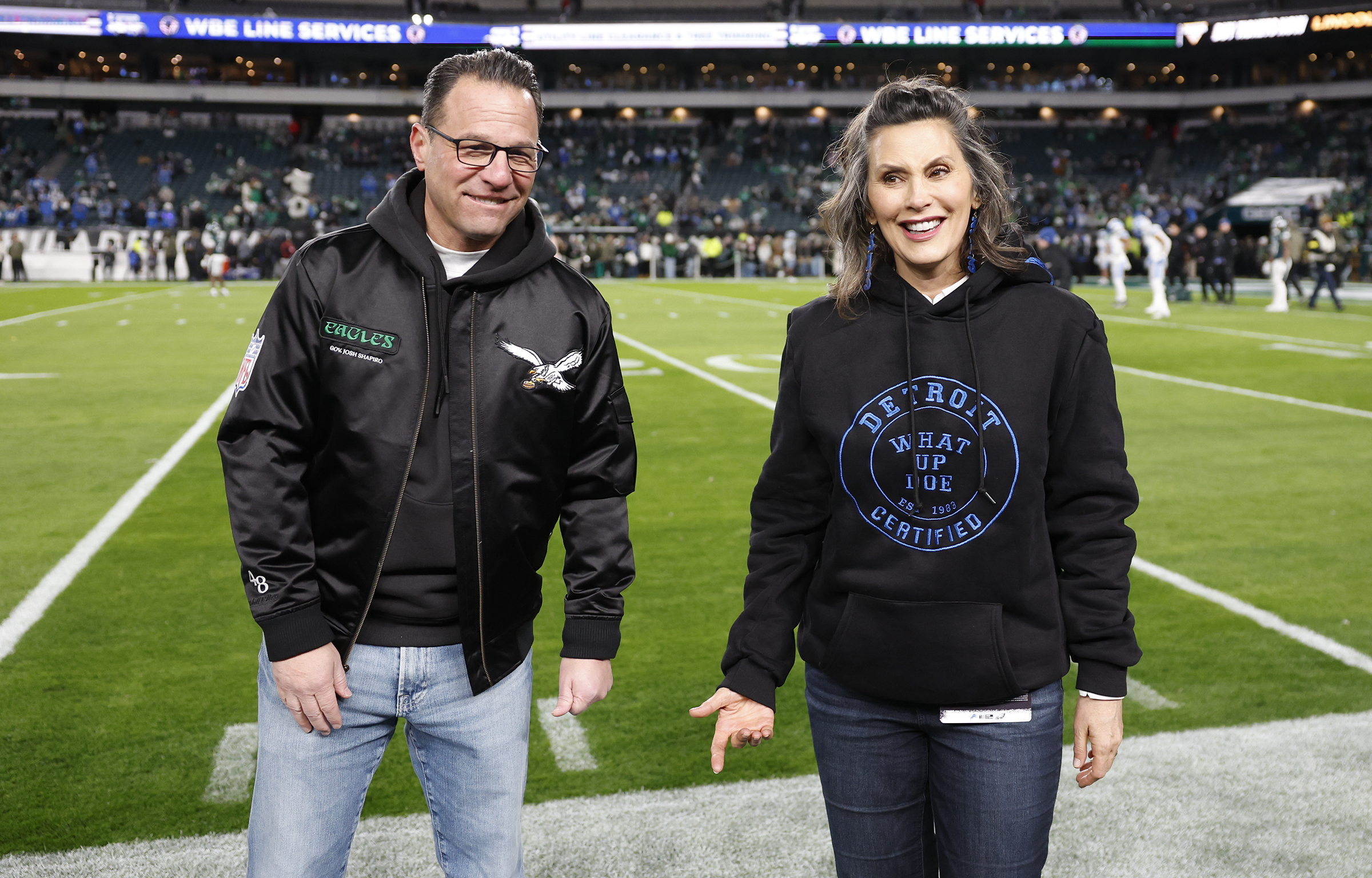
    Pennsylvania Governor Josh Shapiro (right) and Michigan Governor Gretchen Whitmer before the Eagles played the Detroit Lions at Lincoln Financial Field on Sunday, Nov. 16, 2025, in Philadelphia, PA.Yong Kim / Staff Photographer

    During the 2024 presidential election, Shapiro also visited Michigan to stump alongside Whitmer for Harris’ campaign.

    On Friday, Whitmer called Shapiro a “good friend and colleague.”

    “When Washington, D.C. is making life harder — whether it’s through tariffs or a war in Iran that’s jacking up the price of everything — it’s the governors that are protecting our rights, that are making sure we keep more money in our pockets. It’s the governors who are solving problems,” she said. “You got one of the best in the country.”

    After talking with patrons, Shapiro said he planned to sit down with Whitmer to eat something at the restaurant. Featured on Sam’s Morning Glory Diner menu on Friday: “Shapiro 2026″ and “2028 sausage, eggs and gravy.”

    Shapiro did not elaborate on his order.

  • Former Kibitz Room owner files for bankruptcy as he tries to repay debts from shuttered King of Prussia restaurant

    Former Kibitz Room owner files for bankruptcy as he tries to repay debts from shuttered King of Prussia restaurant

    Brandon Parish, former owner of the Kibitz Room in King of Prussia and deli manager at the original Cherry Hill location, has filed for personal bankruptcy, months after his Montgomery County restaurant closed amid mounting debts.

    Parish owes creditors nearly $1.8 million, including $1.2 million to Hanover Community Bank for a small-business loan, and has about $15,500 in assets, according to documents filed in U.S. Bankruptcy Court for the Eastern District of Pennsylvania.

    The 33-year-old King of Prussia resident filed for bankruptcy in early September, five months after he and his father, Neil, were evicted from their storefront in the Valley Forge Center on U.S. Route 202. Their landlord won a judgment for more than $194,000 in rent and fees.

    The restaurant was in business for a year.

    Brandon Parish sits at a table at the now-closed Kibitz Room in King of Prussia in April 2025.Kriston Jae Bethel / For The Inquirer

    The restaurant also owed more than $135,000 to distributor Foods Galore, a debt listed in Parish’s personal bankruptcy filing alongside more than $140,000 owed to other business vendors and related services.

    The King of Prussia location’s debts are “going to take some work to clean up,” Brandon Parish said in April, noting the expansive full-service restaurant strayed too far from its over-the-counter roots. “Obviously, it’s been a disaster since day one. Nothing went as planned. But we’ll have to figure all that out.”

    Meanwhile, the Cherry Hill Kibitz Room — a separate business that had been owned by Brandon Parish’s mother, Sandy — abruptly closed and filed for bankruptcy earlier this year. Neil and Brandon Parish, backed by outside investors, negotiated a deal in bankruptcy court to buy the Cherry Hill equipment and sign a new lease there, though neither Parish would be an owner. The Springdale Road deli reopened in May, with the Parish men behind the counter.

    Brandon Parish (right) waits on a customer at the Kibitz Room in Cherry Hill on May 1. Michael Klein / Staff

    Brandon Parish’s personal bankruptcy case will not impact operations at the Cherry Hill deli since he is only an employee, according to a spokesperson.

    The Kibitz Room has been part of the Parish family for more than two decades.

    In 2003, Neil Parish purchased the Cherry Hill spot from Russ Cowan, who had given the deli its name, a loose translation of the Yiddish chitchat. Cowan, a local legend, owned Philly’s Famous 4th Street Deli for 18 years and now owns Radin’s Deli in Cherry Hill.

    Brandon grew up at Kibitz, standing on milk crates to wash dishes for his father. Ever since he was a kid, delis were his “comfort zone,” Brandon said in 2025.

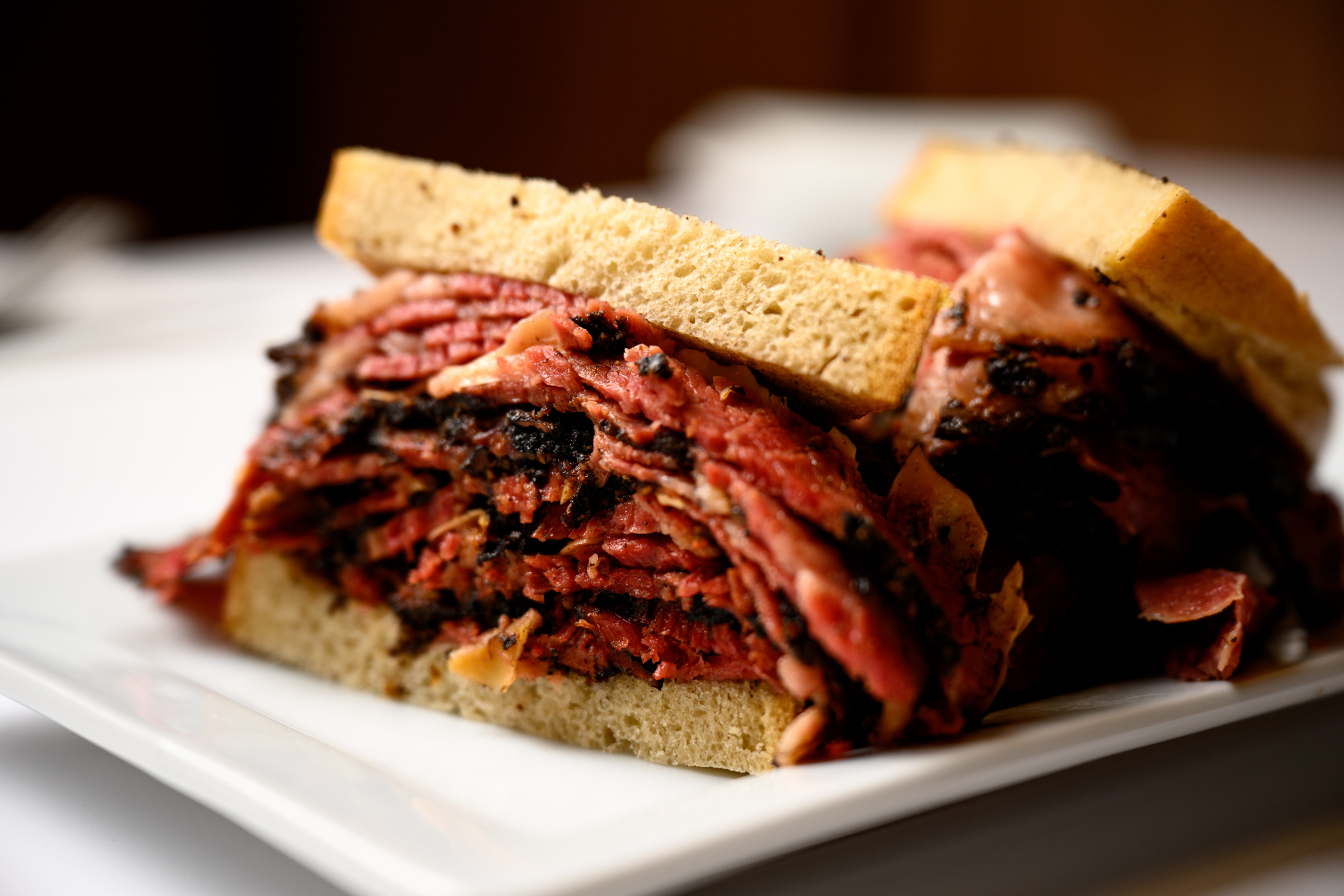
    A pastrami sandwich at the now-closed Kibitz Room in King of Prussia. Kriston Jae Bethel / For The Inquirer

    After Brandon’s mother and father split about a decade ago, his dad moved back to the Baltimore area, and Brandon continued to run the Cherry Hill restaurant with his mom. But he was itching to open his own place, he said.

    In 2025, Brandon left his post in Cherry Hill to open a Kibitz Room in the former Michael’s Deli in King of Prussia. The business was an independent venture with his father, who had returned to the Philly area from Baltimore. The senior Parish was in charge of the menu, but his son was the boss: “This is Brandon’s store,” Neil said at the time.

    The pair said they were excited to open a full-service restaurant that was about four times the size of the Cherry Hill deli and could seat 200 people.

    The Kibitz Room in King of Prussia was about four times the size of the original deli in Cherry Hill, a separate business not owned by Brandon Parish. Kriston Jae Bethel / For The Inquirer

    They created a giant menu full of staples like corned beef and pastrami sandwiches, matzo ball soup, knishes, and chicken pot pies, as well as elevated items like garlicky flank steak. They planned tableside chopped liver service.

    “I feel like this really encapsulates the Jewish deli as a whole experience,” Brandon Parish said at the time. “The old, the new, the vibe, the aesthetic, the personality, the quality, the menu mix.”

    And he scoffed at occasional reports that Jewish delis were going out of style: “I think if you do it well, then you never have to worry about failure.”

  • Pope praises free press, warns a ‘paradise of machines’ could undermine humanity as he opens France trip

    Pope praises free press, warns a ‘paradise of machines’ could undermine humanity as he opens France trip

    PARIS — Pope Leo XIV warned Friday that a “paradise of machines” risked undermining humanity as he opened a trip to France by posing fundamental questions about what it means to be human in the age of artificial intelligence, a nuclear arms race, and other threats to life itself.

    Leo raised existential concerns about scientific progress, life, and human rights during his opening speech to President Emmanuel Macron and authorities at the Élysée Palace and then to diplomats and United Nations employees at the headquarters of UNESCO, the U.N. culture and education organization.

    With wars plaguing Europe and the Middle East, he reaffirmed the Vatican’s opposition to nuclear weapons and said the nuclear deterrence doctrine was “mistaken” since it was just fueling a new arms race.

    “Peace is not a balance of power; rather, it is built day by day through dialogue and justice,” he said.

    Leo has an intense four days in France, where the Catholic Church has lost ground in influencing ethical issues given the strict approach to secularism that is enshrined in the French Constitution.

    Yet thousands of people lined his motorcade route, waving French and Holy See flags, with some braving hours of the unseasonable heat to catch a glimpse of him. The turnout underscored the surprising level of interest in Leo’s visit, the first official state visit by a pope to France in 18 years.

    “To see him, praying with us, it comforts us in our faith and on our path,” said Senegalese Sister Antonia Faye, who was glowing after her first-ever event with a pope, an evening prayer service at Notre Dame that featured angelic choirs and the cathedral’s booming organ.

    “Being with the pope is different to being alone or praying alone. We felt the benediction that came down on us,” she said.

    Pope says reporters ‘are all welcome’

    During his flight to France, Leo told journalists they were welcome to report on him, as he responded to the Trump administration’s attempt to bar U.S. media from the White House and affirmed the importance of journalists covering public figures.

    Asked by a CNN reporter about the Trump administration’s attempt to bar CNN and other reporters, Leo said the media was welcome on his plane.

    “I am very happy that here, you are all welcome,” he said. Good media coverage is important, he said, and equally important “that we have it all the way around, for everyone”

    The American pope has long affirmed the need for free and independent press, a point he made in one of his first audiences as pope. Speaking to journalists who covered the 2025 conclave that elected him, Leo called for the release of imprisoned journalists and affirmed the “precious gift of free speech and the press.”

    A capstone visit as Macron’s term ends

    For Macron, who is barred from seeking a third term in May elections, hosting the American pope is something of a capstone. Pope Francis had refused repeatedly to make a proper state visit to France during his 12-year pontificate and pointedly refused to join the inauguration of the rebuilt Notre Dame cathedral in 2024 that Macron had championed.

    “For a president of the republic as Macron, who is at the end of his mandate, it can be important to be aside the pope and to capture a part of his popularity,” said Charles Mercier, director of history and sociology of Catholicism studies at Paris EPHE university.

    With seven months left in his term, Macron’s approval ratings are near record lows, driven by anger over the rising cost of living and criticism of France’s growing debt and deficit and deteriorating public services.

    Smiling broadly as Leo spoke French, Macron thanked the pope for visiting, saying: “You are here with us for an extended visit, giving us your time, and that is moving.”

    Leo calls for the French to mull lofty questions about life

    Unlike Francis, who liked to travel to small Catholic communities far from Rome, Leo has been keen to emphasize and reawaken Europe’s Christian roots. He is seeking to push the church’s message about the value and dignity of human life in a country where the right to abortion was enshrined in the constitution in 2024, and where lawmakers recently gave final approval to a bill allowing adults with incurable illnesses to receive lethal medication.

    The French Catholic hierarchy strongly opposed the measures, in keeping with Catholic teaching that human life must be protected and defended from conception until natural death.

    In his speech to Macron and other government and diplomatic authorities, Leo reminded France of its “deep Christian roots” and called for the French to remember that the right to life is the “indispensable foundation of every other human right.”

    His concern about the dignity of human life and humanity as a whole extended to the threats posed by artificial intelligence.

    “The paradox has become increasingly evident: while ‘intelligence’ is attributed to computational systems, we struggle to recognize the inalienable dignity of human persons, whose lives are judged according to the criterion of efficiency and, when deemed no longer productive, are rejected and discarded,” he said.

    From the very start of his pontificate, Leo has identified AI as one of the greatest challenges facing humanity. He dedicated his first encyclical to the topic, “Magnificent Humanity,” calling for robust regulation and for AI developers to work for the common good rather than profit.

    Leo also appealed to AI developers and political leaders responsible for regulating them to slow down, an appeal that several top AI companies seem to have taken to heart recently.

    “If we are to avoid losing our humanity amid a ‘paradise of machines’ invading and conditioning our daily lives, there is an urgent need for education in ethical discernment and the capacity to acknowledge the moral good,” he said.

    Leo earlier told reporters that he was pleased his message was being heard and said he hoped the dialogue that the Vatican initiated with tech companies would continue.

    “And I think from their perspective, many of them, they’re very much open to looking for ways of making sure that AI does not displace or ultimately destroy humanity, but rather is a tool for human beings,” he said.

    A visit to Notre Dame that Francis declined

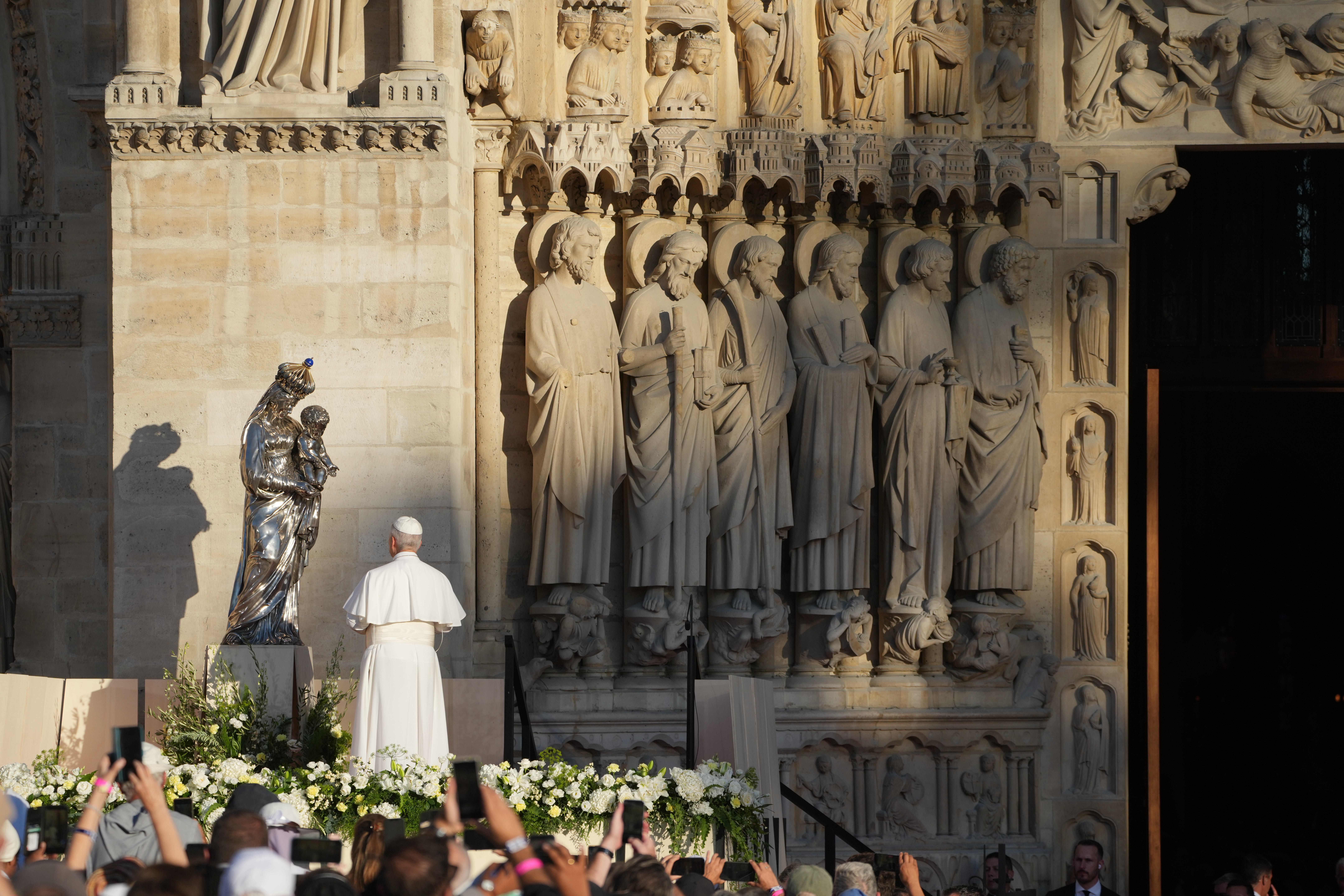
    Later on Friday, Leo presided over evening prayers in Paris’ soaring Notre Dame cathedral, the first pope to celebrate there since the devastating 2019 fire that consumed the cathedral’s roof and toppled its spire.

    After being mobbed by a crowd of eager nuns outside, Leo walked down the central aisle to the combined thundering of the organ above and cheers from the pews below. As bells tolled, he knelt in silent prayer in the same spot where, in 2019, flames brought down scorched roof beams.

    Leo marveled at the brilliance of the stained-glass windows and restored cream columns and praised the artisans who repaired them. He urged the priests and nuns gathered in the pews to be inspired by the combined effort to bring the Gothic masterpiece back to life.

    Francis had refused to visit France on a proper state visit, and explicitly refused Macron’s invitation to come for the 2024 reopening of the cathedral that drew dozens of world leaders.

    He did make three short trips to French cities, however, including Strasbourg in 2014 and Marseille and Corsica in 2024, a one-day visit that became his last foreign trip.

  • Bitcoin memes and Ponzi schemes | Editorial

    Bitcoin memes and Ponzi schemes | Editorial

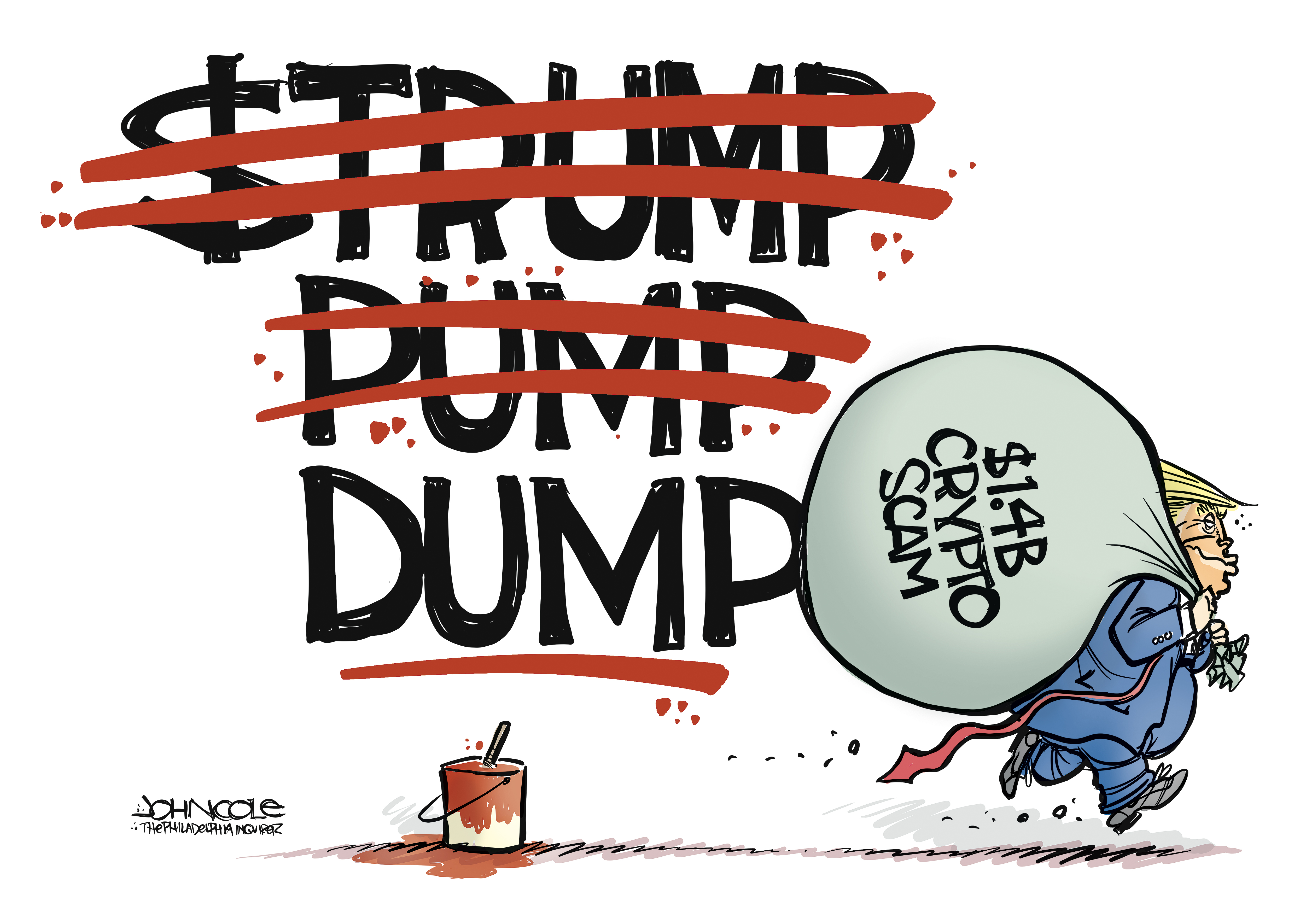
    Much has been made of Donald Trump’s apparent about-face on cryptocurrency. This is particularly notable since the president’s dealings in the virtual cash he once spurned have earned him at least $1.4 billion since he returned to office. Not bad for something he had called “a scam” and an asset “based on thin air.”

    Of course, that assumes he meant those things as derogatory.

    After a lifetime of pushing real estate, casinos, liquor, and steaks, one may think the Art of the Steal has finally gone high-tech. But at least for retail investors, Trump’s crypto ventures reek of old-fashioned Ponzi schemes.

    Launched a few days before his inauguration in 2024, the $TRUMP memecoin — a digital token with no intrinsic value — reached a peak price of around $74 as the president hyped up the asset to his followers. The coin’s value cratered soon after and was trading under $3 in September.

    A few dozen early investors made multimillion-dollar profits, but most buyers fared poorly, losing almost $4 billion as of earlier this year, according to a New York Times analysis.

    Even if Trump supporters and less savvy investors played along willingly, the game was always rigged in the president’s favor — regardless of the memecoin’s price, Trump and his business partners were always going to rake in transaction fees.

    All told, Trump walked away with a $636 million payout.

    It is unseemly and deeply unethical for Trump to use the office of the presidency for personal benefit. But profiting off the sale of a worthless tchotchke is very much on-brand for the inveterate huckster whom voters returned to the White House.

    Much more troubling than his déclassé dealings is how individuals and foreign governments with interests before the United States, including government regulation of the crypto industry, have made large investments that have gone to line Trump’s pockets.

    The president has repeatedly brushed off ethical concerns about his crypto windfall, saying there is “nothing illegal” and “nothing wrong.”

    Yet, there can be little question that Trump’s memecoin remains a way to funnel large amounts of money to him with little transparency or oversight.

    Speaking at a Center for American Progress event recently, U.S. Sen. Chris Murphy of Connecticut called the president’s crypto business “a bribery conspiracy,” and said the very founding of Trump’s crypto empire was “bathed in corruption.”

    Murphy pointed to the half billion dollars Sheikh Tahnoon bin Zayed Al Nahyan put up to secure a 49% stake in the Trump family’s crypto company, World Liberty Financial, shortly before Trump assumed office. The Abu Dhabi royal, the United Arab Emirates’ national security adviser and brother of that country’s president, is also backing the launch of a new Trump crypto bank, according to the Wall Street Journal.

    There is no evidence of a quid pro quo, but there is also little explanation as to why long-standing bipartisan national security concerns were ignored and the UAE was given access to advanced AI chips by the Trump administration, long a goal for the Gulf nation.

    Tahnoon was not the only investor in World Liberty Financial who benefited from his relationship with Trump. Justin Sun, a Chinese billionaire accused of fraud, sank $30 million into World Liberty Financial and saw a lawsuit by the Securities and Exchange Commission put on hold soon after, with a settlement reached in April in which Sun admitted no wrongdoing.

    (Sun is now accusing World Liberty Financial of “criminal extortion” after he was prevented from selling off the memecoin, allegedly once he declined to sink more money into the Trump-owned company.)

    Earlier this month, legislation long sought by the crypto industry as a way to legitimize its business failed to move forward in the Senate, as Democrats demanded stricter ethics guidelines to prevent further Trump profiteering.

    Crypto companies have spent hundreds of millions of dollars lobbying for this legislation — and they are likely willing to spend much more — but Congress should hold firm. Lawmakers must ensure that any legitimate use for cryptocurrency does not include the ability to bribe a president.

  • What national media is saying about the Eagles heading into their ‘Monday Night Football’ matchup with the Bears

    What national media is saying about the Eagles heading into their ‘Monday Night Football’ matchup with the Bears

    It’s Week 3, and teams are no longer fresh. Injuries and depth chart questions have national analysts divided on who will win this week’s Monday Night Football showdown between the Eagles and Chicago Bears (8:15 p.m., 6abc, ESPN).

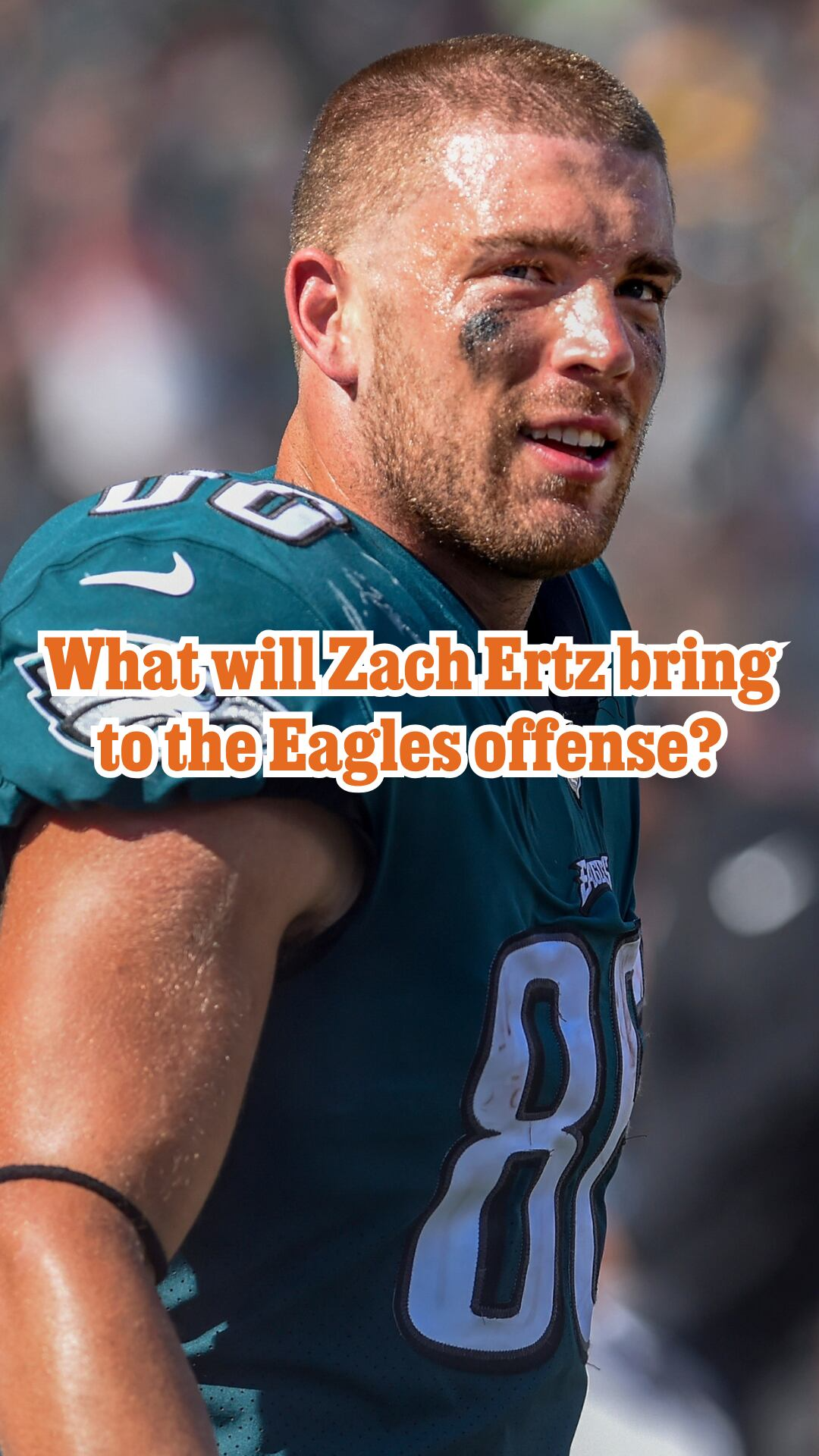
    The Eagles’ biggest change is the potential return of tight end Zach Ertz, who was signed to the practice squad after starting tight end Dallas Goedert went down with a sprained MCL that’s expected to keep him out for a few weeks. For Chicago, quarterback Caleb Williams’ status is unknown after he was carted off with a hamstring injury, and backup Tyson Bagent is in concussion protocol. That could put No. 3 quarterback Case Keenum on the field.

    Gameday Central: What will Zach Ertz bring to the Eagles offense?
    Video: Gameday Central: What will Zach Ertz bring to the Eagles offense?

    QB shuffle

    All eyes are on the quarterbacks. For the Eagles, that means relying on Jalen Hurts while the offense works out its kinks. ESPN analyst Ben Solak says the Birds still have a ways to go and predicts the Bears have a chance to win if Bagent starts.

    “My overall expectations for the Eagles’ offense will remain tempered until I see the line and the running game return to form,” Solak wrote on ESPN.com, “but if Hurts can use his arm to guide them to wins through September and into October, they’ll have time to iron out their rushing issues.”

    Jalen HurtsMonica Herndon

    Other ESPN analysts are focused on Chicago’s quarterback situation, with the starter undetermined. Keenum, who hasn’t played in a regular-season game since 2023, told ESPN’s Courtney Cronin he’s confident if he gets the call.

    “I feel very prepared,” Keenum told ESPN. “It’s what I do every week. It’s what I’ve done for a long time. I’ve been in this league for a long time. If my name’s called, I’m excited to be out there.”

    Keenum, 38, is in his 15th NFL season and is on a two-year contract with the Bears. He has an 84.6 career passer rating and has completed 62.3% of his career passes for 15,175 yards and 79 touchdowns to 51 interceptions. Monday’s game would be his first as a Bear.

    Bears upset?

    But playing their backup’s backup could still result in a win if the run game powered by Kyle Monangai and Philly native D’Andre Swift finds success, wrote Sports Illustrated.

    “If Chicago’s running backs are finding openings, Keenum could game-manage for most of the game and pick his spots in the passing game when needed against what has been a lockdown Philly secondary,” Andrew Hughes wrote.

    Chicago Bears running back D’Andre Swift (4) is from Philly and played for the Eagles in 2023.Nam Y. Huh

    SI betting analyst Peter Dewey is backing the Bears, at least for the spread, citing Goedert’s injury and a defense that’s had issues in Weeks 1 and 2.

    “I’ll take the points with the Bears at home,” Dewey wrote.

    Birds win?

    It’s not all bad news for the Eagles. Despite their slow start, USA Today points to an uphill battle for the Bears in Week 3.

    “Philadelphia has too much talent for a Keenum-led offense that managed only three points against Minnesota,” Adam Kaufman wrote. “If Williams unexpectedly plays, the handicap changes. Without him, I don’t see Chicago producing enough offense to stay competitive.”

  • Democrats press RFK Jr. on an ethics agreement change involving law firm fees

    Democrats press RFK Jr. on an ethics agreement change involving law firm fees

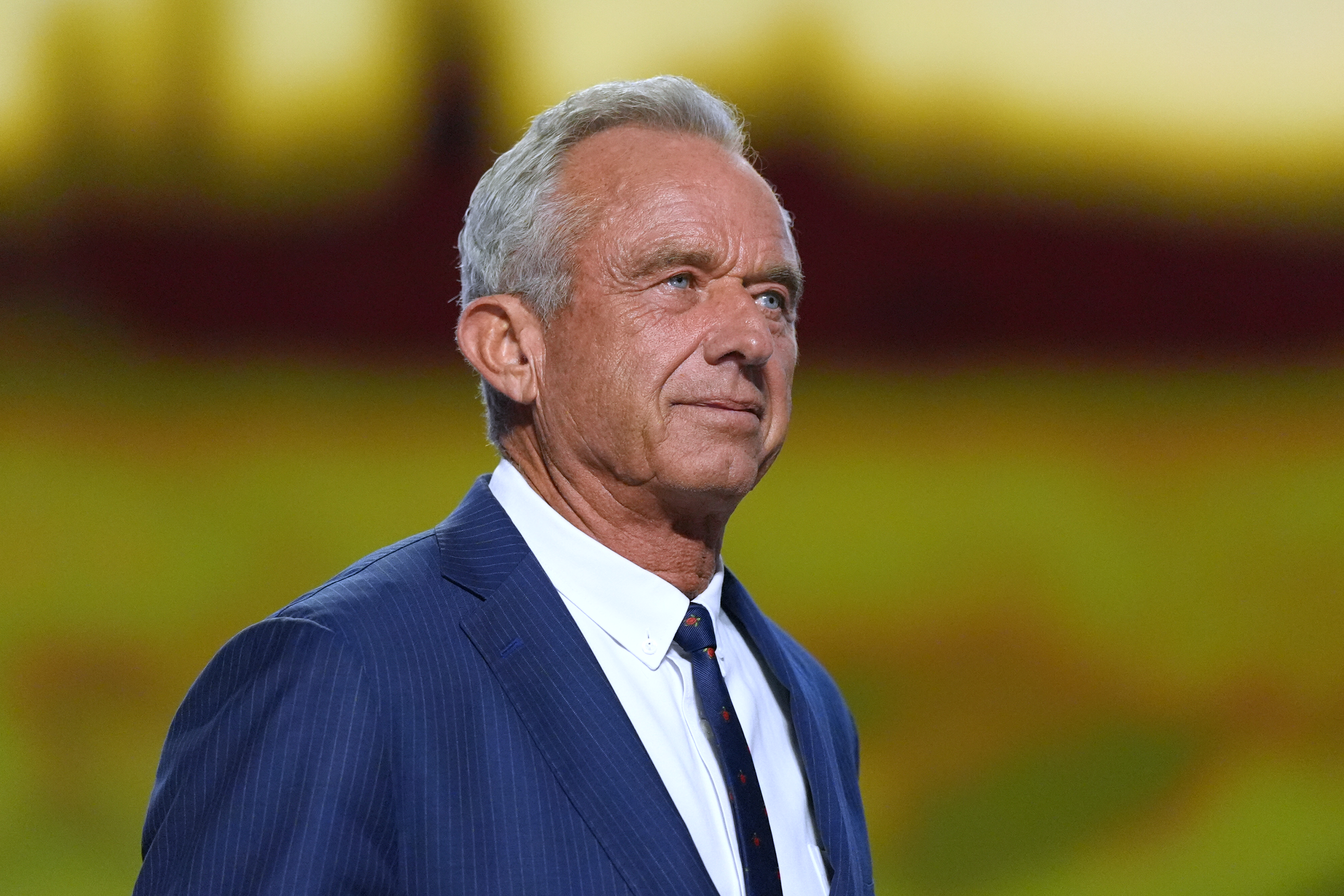
    WASHINGTON — Congressional Democrats are pressing for answers from Health Secretary Robert F. Kennedy Jr. over what they describe as a previously undisclosed change to the ethics agreement he made before being confirmed, which they say calls into question his credibility and the integrity of his decisions.

    Ahead of his confirmation vote last year, Kennedy told lawmakers that he would not collect fees related to litigation he pursued before becoming a government official against the drugmakers of a cervical cancer vaccine, saying he would transfer his financial interests to his adult son.

    The lawmakers say they recently learned, however, that shortly after his confirmation hearings, Kennedy quietly changed his ethics disclosures and transferred his stake to his former employer, the personal injury law firm Wisner Baum, apparently contradicting his sworn commitments to members of Congress.

    In a letter sent to Kennedy on Thursday, Democratic Sens. Elizabeth Warren of Massachusetts, Ron Wyden of Oregon, Richard Blumenthal of Connecticut and Angela Alsobrooks of Maryland said the health secretary has provided no explanation for the change.

    “Your decision to withhold this information from Congress and apparent failure to report this change to agency ethics officials is deeply alarming,” the senators wrote. “These troubling findings call into question the veracity of your public ethics commitments, your transparency with Congress and the public, and potentially, your compliance with federal ethics disclosure laws and regulations.”

    Emily G. Hilliard, an HHS spokesperson, told the Associated Press that HHS had confirmed Kennedy’s compliance with his ethics agreement in May 2025. “Any claim that Secretary Kennedy maintained a financial interest in this litigation after taking office is false,” she said.

    Kennedy’s testimony to lawmakers during his confirmation hearing has come under scrutiny before.

    During the arduous confirmation process in which he needed the support of some skeptical Republican lawmakers to advance, Kennedy pledged to maintain vaccine policies that, once in office, he moved to change. He also said a 2019 trip to Samoa had “nothing to do with vaccines,” an account refuted by documents recently obtained by the AP. The Department of Health and Human Services has denied Kennedy lied over the Samoa trip.

    Kennedy’s initial ethics disclosure, filed in January 2025, allowed him to retain a 10% contingency fee in cases that he had referred to Wisner Baum. After warnings from lawmakers about the conflict of interest, Kennedy agreed to amend his ethics agreement to divest his interest to his son.

    But in an Aug. 25 letter to Warren, HHS revealed Kennedy transferred those fees to Wisner Baum. Kennedy’s son Conor Kennedy is employed at the firm.

    “At the time, Secretary Kennedy intended to assign those interests to a non-dependent adult family member,” said the letter. “After further consideration, Secretary Kennedy irrevocably assigned his outstanding contingency-fee interests in the Gardasil cases directly to Wisner Baum.”

    The senators are now pushing Kennedy for answers on what his agreement with Wisner Baum entails, noting that if it involves any agreement about future payments, it could amount to a conflict of interest.

    “If you made any kind of implicit or explicit agreement for future payment or other future rewards with Wisner Baum in exchange for assigning them this stake, it would mean that you have an ongoing conflict of interest that calls into question your integrity and the motivations for your decisions as HHS Secretary,” the lawmakers’ letter to Kennedy said.

  • Starbucks is closing three stores in Philly and South Jersey

    Starbucks is closing three stores in Philly and South Jersey

    Starbucks is closing two Philadelphia stores and one in South Jersey among roughly 250 locations the company announced it is shuttering this week.

    The company “identified locations where we do not believe we can consistently deliver the experience we want for customers and partners or where we don’t see a path to acceptable financial performance,” chief operating officer Mike Grams said in a statement this week.

    Starbucks spokesperson Andrew Trull said the stores at 2201 South St. in Center City and 1018 N. Second St. in Northern Liberties, as well as the Willingboro store in New Jersey at 4380 Route 130, are expected to shutter “later this week.” The stores appear to be closing as of Sunday, according to the Starbucks website store locator. The company did not share whether other locations in the Philadelphia area are expected to close.

    The company closed six Philadelphia locations last year.

    The 250 stores closing represent about 1% of the over 18,000 Starbucks in North America, according to Grams. Of the 250 closing stores, 20 are unionized, according to the baristas’ union, Starbucks Workers United.

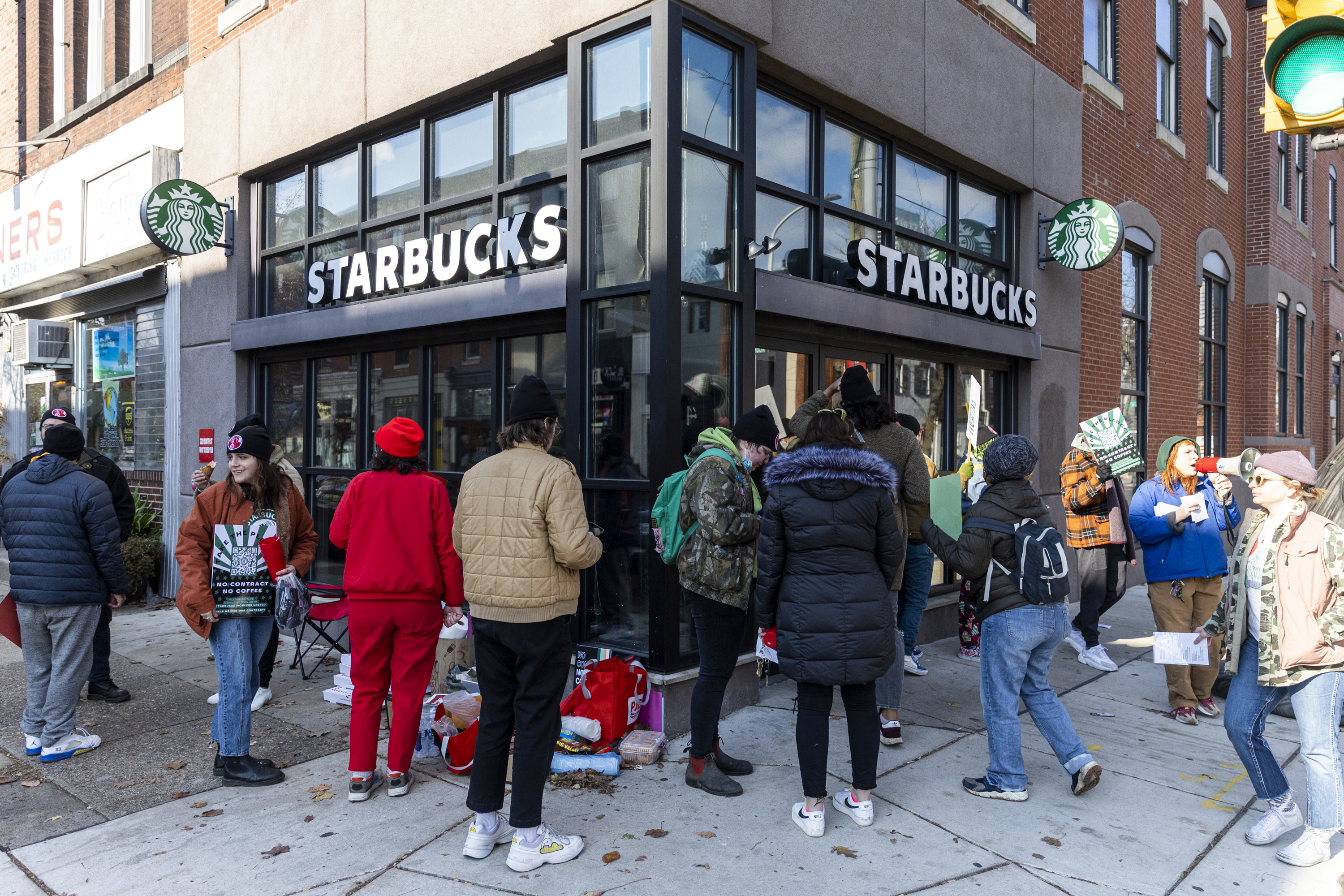
    A member of the Starbucks Workers United union wears pins during their shift at a Philadelphia store.Heather Khalifa / Staff Photographer

    Starbucks has several dozen stores in Philadelphia and more in the surrounding counties.

    “Starbucks leadership is failing the company, and trouble is brewing for Starbucks,” Starbucks Workers United said in a statement. The company, in response, pointed to its recent financial turnaround under company CEO Brian Niccol, who stepped into the role in 2024.

    Starbucks baristas have been organizing for years, electing Starbucks Workers United to represent them at nearly 700 stores, according to the union, but they have not yet reached a first union contract with the company.

    Starbucks closes some locations and opens new ones every year, Grams said, adding that is part of “managing our portfolio.”

    “We remain excited about the significant long-term growth opportunity ahead in North America,” Grams said. “We are actively developing a strong pipeline of new coffeehouses and remain committed to growth in North America.”

    The announcement this week is the latest round of store closures since Niccol took over as CEO. Upon last year’s closures, including six in Philly, Niccol cited nearly identical reasoning as Grams did this week for the latest changes.

    Niccol has been focused on improving customer experience with a plan dubbed “Back to Starbucks.” It is paying off, he said in a statement this month, adding “we have returned to growth, delivered positive global comps and improved margins.”

    The new closures support Niccol’s “Back to Starbucks” plan, Grams said.

    The union this week, in light of the closure announcement, said Niccol’s plan is “nothing more than a betrayal of what workers and customers loved about the company.”

    Starbucks spokesperson Trull, in response, pointed to a recent earnings call, in which Niccol said “we delivered our fourth consecutive quarter of positive global comps and our second consecutive quarter of consolidated margin growth. It’s clear proof that our Back to Starbucks plan is working.”

  • These are the numbers that stand out in the Union’s remarkable regular season turnaround

    These are the numbers that stand out in the Union’s remarkable regular season turnaround

    Much of the talk surrounding the Union has focused on the turnaround the team has shown since returning to league action after a reset courtesy of the FIFA World Cup. It was a seven-week break that left the team searching for answers about how a season with so much promise ended with just one win after 15 matches in Major League Soccer.

    On Saturday, the Union will embark on Matchday No. 27 when they host Orlando City inside Subaru Park (7:30 p.m., Apple TV). A win would set a franchise record of 12 straight matches unbeaten in MLS, an impressive run accomplished under an interim coach and with a sizable chunk of the roster away on international duty during the first FIFA window since the World Cup.

    The club’s second-half surge has them in great position to earn a trip to the MLS Cup playoffs, with seven games remaining before brackets and seeds are set. However, what’s often overlooked during the Union’s 11-match unbeaten run are the numbers behind their surge up the Eastern Conference standings and the metrics that have made them a contender again instead of an afterthought.

    Here are a few figures that stand out.

    3

    The number of head coaching roles within the Union by current interim head coach Ryan Richter. In addition to once being the director of the Union’s Junior Academy, Richter, 37, was also head coach of the club’s developmental team, Union II, before taking over as interim head coach of the senior team in May.

    Cavan Sullivan pays tribute to LeBron James with his celebration after scoring a goal for the Union against CF Montréal on Sept. 5. Philadelphia Union

    8

    The number of wins and draws the Union have amassed in 23 league meetings against Orlando City. They’ll be looking to avenge a 4-3 loss to the Lions at Inter & Co. Stadium on May 13. It was a game in which Cavan Sullivan scored his first MLS goal, but a last-minute clincher by Orlando sent the Union to their second straight loss in May.

    Eight is also the number of goals by a player with the last name “Sullivan” on the roster. Cavan Sullivan has scored seven goals, including six in the Union’s last six matches, while his older brother Quinn has one since returning from a season-ending ACL tear last season.

    12

    The number of goals the Union have allowed since their second-half return in MLS play. By comparison, during their slump before the World Cup break, the Union allowed 30 goals. Nestled within that are four shutouts, including 5-0 outbursts against FC Cincinnati (Sept. 9) and four days later on the road against San Diego FC.

    Union captain Alejandro Bedoya has been impactful on and off the field. Courtesy / Union

    16

    Union captain Alejandro Bedoya’s appearances this season. Bedoya, 39, might be considered the elder statesman on the roster, but his work rate, particularly when he enters in the second half, has been a key contributor to the team’s second-half surge. He owns a 65% accurate passer rating and has three assists in league play. However, Richter and several players on the squad suggest the leadership Bedoya brings is the real talent of this chapter of his 11-year career in Philadelphia.

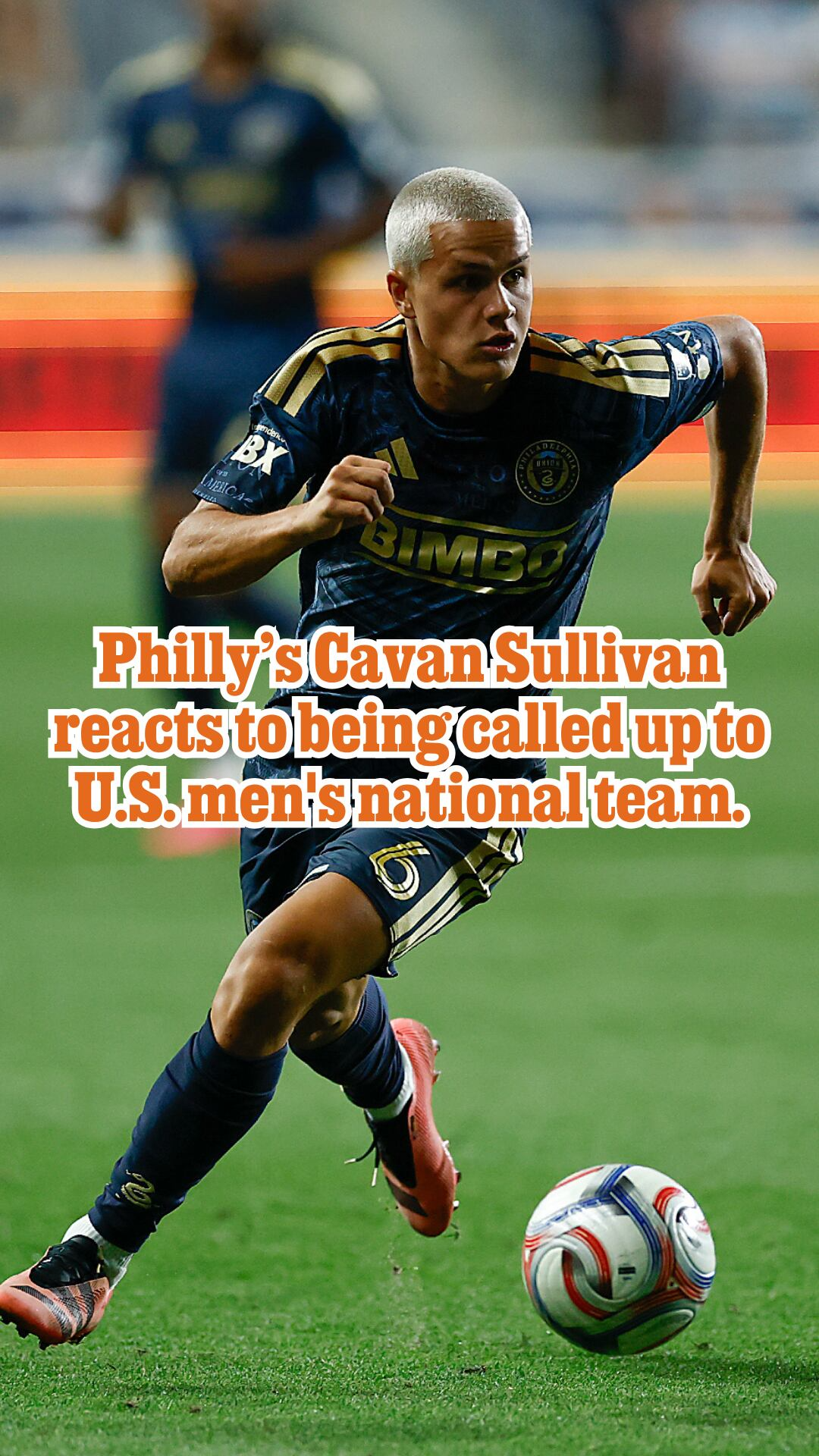
    Philly's Cavan Sullivan reacts to being called up to U.S. men's national team.
    Video: Philly’s Cavan Sullivan reacts to being called up to U.S. men’s national team.

    18

    The average age of the three Union players who were called into the senior U.S. men’s national team ahead of four matches for the Americans during the FIFA window. Defenders Frankie Westfield (20) and Neil Pierre (18), and midfielder Cavan Sullivan (16) make up the trio who, along with midfielder Danley Jean Jacques (26, Haiti) and goalkeeper Andre Blake (35, Jamaica), will miss time with the team due to international duty.

    Frankie Westfield is one of three current Union players in camp for the U.S. men’s national team ahead of four matches. Jonathan Tannenwald

    29

    The number of points the Union have amassed in this second half of the season. The club limped into the break with a 1-10-4 (seven points) record. Since the break, the Union are 9-0-2 in MLS play.

    30

    The number of MLS goals the Union have scored since the restart of the season. In total, the club has scored 50 goals in league play, meaning that 60% have come since July 22 when the Union took home a 3-1 win against Red Bull New York at home.

    2,321

    The number of minutes played by defender Nathan Harriel, who is the only player to have started every league match for the team. Harriel, who has been a bona fide presence at outside back, ranks third in MLS for the most minutes by a player who isn’t a goalkeeper.

  • CDC vaccine policy recommendations grind to a halt under Health Secretary Kennedy

    CDC vaccine policy recommendations grind to a halt under Health Secretary Kennedy

    NEW YORK — The Food and Drug Administration recently approved a new flu vaccine that tested well in older adults. But the federal agency responsible for telling doctors and the general public how to use it has made no recommendation on it.

    The Centers for Disease Control and Prevention’s inaction on the mFlusiva vaccine marks a break in longstanding practice. It’s also an example of how the agency’s vaccine review-and-recommendation process has been blown up in the past year, grinding decision-making to a halt.

    Efforts by vaccine-wary officials in President Donald Trump’s administration to scale back shot recommendations have been put on hold. Federal guidance on new vaccines has stopped. And public discussion of vaccine policy questions that might cross political divides — including whether there’s solid evidence to justify giving fewer shots to kids — has diminished.

    Health Secretary Robert F. Kennedy Jr.’s crusade to upend vaccine policy and the legal action opposing it have disrupted longstanding systems that deliver crucial health guidance to Americans, affecting whether people are getting the best available protection against vaccine-preventable diseases.

    “We find ourselves at a point where even if credible evidence (for a new vaccine policy) has reached a tipping point, we don’t have an obvious mechanism that can formalize that change,” said Jason Schwartz, a Yale University health policy researcher who studies government health agencies.

    Many in medical field praised a ruling that halted Kennedy’s changes

    For 60 years, the Advisory Committee on Immunization Practices guided the CDC’s vaccine recommendations. The committee met publicly, reviewed vaccine data, and sought input from various health groups. The panel voted on recommendations that went to the CDC director, who almost always adopted them as the government’s guidance, leading public and private insurers to pay for the shots.

    Trump, a Republican, appointed Kennedy to oversee federal health agencies, including the CDC. Kennedy last year dismissed the committee and replaced it with a group that included several anti-vaccine voices. Controversial decisions followed, leading to a lawsuit from the American Academy of Pediatrics and some other medical groups.

    In March, a federal judge said Kennedy likely violated federal procedures, stopped Kennedy’s panel from holding further meetings, and suspended Kennedy’s decision to reduce the number of vaccines recommended for children.

    Many in the medical and public health communities celebrated the decision and took the order as a respite from what they saw as the Trump administration’s assault on vaccines.

    Jason Goldman, president of the American College of Physicians, said he hoped “it will mean a return to a transparent and evidence-driven process that safeguards the health of all communities and the best interests of our patients.”

    In reality, the process stalled and splintered

    With Kennedy’s committee shut down by the court order, doctors’ groups that used to collaborate with the ACIP have gone their own way. Working with a University of Minnesota researcher, they have debated — not publicly — the kind of medical evidence formerly presented at ACIP meetings and issued their own recommendations.

    The trade association for private health insurers decided to heed the medical societies’ choices, and the insurers have continued to pay for shots recommended by those organizations.

    Many of the groups’ recommendations match prior ones made by ACIP and the CDC before Kennedy’s arrival. But they also made their own updates.

    For example, ACIP previously recommended that a new shot be given to women late in pregnancy: a vaccine against respiratory syncytial virus, or RSV, which can be dangerous to newborns. The government panel recommended that the vaccine be given between September and January in most of the U.S., to coincide with the time of year when RSV infections are most common.

    But RSV season sometimes remains active longer. For that reason, the medical groups recently said the shot should be offered to those women through the beginning of March.

    “We all recognized this needs to evolve,” Chris Regal, director of clinical innovation at America’s Health Insurance Plans, the health insurance trade association, said in a recent webinar.

    The official CDC guidance remains unchanged.

    Unanswered vaccine issues are piling up

    The mFlusiva flu shot is another example of the unusual way vaccine policy updates have stalled.

    The shot is the first flu vaccine made with the mRNA technology that was key to ending the COVID-19 pandemic. Kennedy has criticized mRNA vaccines and last year canceled contracts for the development of new ones. The shots also took a tortuous path through the FDA, which finally granted full approval in people ages 50 to 64.

    But the CDC this month quietly posted that it has decided to maintain its flu vaccine endorsements from last year due to “legal uncertainties and inquiries.” That means mFlusiva is not among the listed flu vaccines recommended to the public this fall.

    The medical societies are recommending it as an option, however.

    Another ACIP function was to vote on whether certain vaccines should be covered by Vaccines for Children, a government program that pays for shots for children who have no health insurance.

    The FDA approved updated COVID-19 vaccines, but as the summer dragged on — and fall vaccination campaigns got underway — the government would not say if the VFC program will pay for those shots. It was only this week that officials confirmed orders could be placed through that program.

    HPV vaccine reassessment is derailed

    Another question concerns the HPV vaccine, given to preteens to prevent certain cancers.

    Two HPV shots are recommended, but some recent research has suggested that perhaps one shot could be enough — at least for girls. Indeed, in 2024 the ACIP formed a working group to begin a reassessment of the recommendations.

    That work was derailed when Kennedy fired the entire committee. In January, he decided on his own to order that the number of recommended doses be reduced to one as part of a dramatic contraction of the childhood vaccination schedule. His decision was suspended by the judge’s order.

    Experts are trying to better understand the timing and the duration of protection from just one dose, particularly in boys. The American Academy of Pediatrics is weighing a change to its HPV vaccination recommendations and could reach a conclusion later this year, said the AAP’s James Campbell.

    It’s possible that the medical societies will end up agreeing with Kennedy on just how many HPV shots make sense. But that might not necessarily clear up the current mess, Schwartz said.

    “The credibility of the Trump administration, when it comes to vaccine recommendations, is so compromised in the eyes of the mainstream medical and public health communities,” he said, “that even recommendations that might align with where the public health community was trending are likely to be viewed with skepticism or distrust.”

    Meanwhile, the Trump administration is considering changing the federal government’s categories for vaccine recommendations, although a specific proposal has not been released and a Department of Health and Human Services spokesperson did not respond to questions about what is being contemplated. Public comments were due earlier this week.

    An alliance of 15 Democratic state governors said the proposed changes are likely to increase confusion and administrative complexity.

    “It’s Governors and their residents who bear the brunt of any increased disease outbreaks due to confusion related to hastily made federal changes,” Angela Botticella, managing director of the Governors Public Health Alliance, said in a statement.

  • Supreme Court lets Trump administration use revamped federal voter eligibility database for now

    Supreme Court lets Trump administration use revamped federal voter eligibility database for now

    NEW YORK — The Supreme Court on Friday lifted restrictions on a controversial federal voter database before November’s elections, granting President Donald Trump a temporary win in his aggressive campaign against noncitizen voting.

    The court’s three liberal-leaning justices publicly dissented from the decision.

    The emergency order allows states, for now, to use the Department of Homeland Security program, called Systematic Alien Verification for Entitlements, or SAVE, in their efforts to verify the eligibility of voters on their rolls.

    States’ use of the SAVE program is voluntary. The immediate impact on the upcoming midterms is likely limited because existing law blocks most states from systematically purging voters from their rolls within 90 days of an election, said David Becker, an election law expert who leads the Center for Election Innovation and Research.

    He said since the program is voluntary and DHS itself has admitted the data is not perfect, “states may find this to be a useful tool used along with other tools to keep their lists up-to-date.”

    The court’s order puts on hold a federal judge’s June ruling that had deemed the Republican administration’s recently revamped version of SAVE illegal. U.S. District Court Judge Sparkle L. Sooknanan had blocked the use of the tool, saying it violated Americans’ privacy rights and could result in voters being wrongly removed from the rolls.

    A federal appeals court let her order stand.

    But the Supreme Court majority found that a 1996 law explicitly allows DHS to get information about citizenship and immigration from other federal agencies. The federal government also has “an obligation to respond” to states seeking to verify citizenship.

    “The order below prevents the Federal Government from using the program it believes is best suited to the task,” the majority wrote in the unsigned order.

    Justice Ketanji Brown Jackson dissented, joined by Justices Elena Kagan and Sonia Sotomayor. The database has long been seen to fall under federal privacy laws, she wrote, and there are real risks that legitimate voter registrations could be mistakenly revoked.

    “The harm caused by burdening or disenfranchising even a few lawful voters outweighs the nonexistent harm that the Government experiences when it is prevented from taking an action that it likely lacks the authority to take,” Jackson wrote.

    The plaintiffs and counsel team in the case called the ruling “profoundly disappointing” and said it puts “millions of Americans at risk of being unlawfully targeted by the administration’s unreliable voter purge database” before the midterms.

    “However, this case is not over,” their statement read. “The D.C. district court ruled that the expanded SAVE program violated multiple laws. We will be doing everything in our power to protect Americans’ voting and privacy rights by ensuring that the district court decision stands.”

    The White House did not immediately respond to a message seeking comment.

    The SAVE program was created under an immigration law mandating that DHS help federal, state, and local agencies prevent government benefits from going to noncitizens. The Trump administration last year moved to significantly expand its search abilities. Since then, at least 67 million registrations have been scanned through the program, but critics worry it could end up purging valid voters from the rolls.

    Some registrants have already been wrongly flagged. In Travis County, Texas, for example, officials said they investigated 97 voters flagged by SAVE as apparent noncitizens and found that at least 10% of them — and likely up to 21% — were U.S. citizens. The county urged the Supreme Court to reject the administration’s appeal, while the state of Texas submitted its own brief defending the database.

    Even though the use of the SAVE program has been blocked for months, the administration said in court filings that DHS officials have continued using Social Security Administration data “in certain cases to verify information and help determine whether illegal voting may have occurred.”

    DHS in August launched its own investigation to find noncitizen voters on state rolls, according to a federal whistleblower statement that said the effort is rushed, filled with errors and potentially violates state laws. DHS has defended that investigation as being conducted “diligently and professionally.”

    The effort to create a national voter list is among numerous steps Trump has taken during his second term to try to overhaul the way elections are run. Most of those steps have been blocked by various courts, in part because the Constitution gives states and Congress the authority to set election rules, but provides no such power to the president. In mid-September, the Supreme Court rejected a bid from Trump to restrict mail ballot procedures before the midterms.

    Research shows that noncitizen voting, which is already illegal and punishable as a potential felony that could lead to deportation, is exceptionally rare. But Trump has remained fixated on the idea that massive numbers of noncitizens are voting in U.S. races.