Philadelphia’s state House delegation in Harrisburg has a new face, as Democrats enter uncharted territory where they control the House, Senate and governorship for the first time in decades.
Rep. Ben Waxman (D., Philadelphia), who represents parts of Center City, was chosen to lead Philly’s 25-member House delegation. As the new chair, he is tasked with advocating for the city’s interests, from mass transit funding, to a minimum wage increase, to ambitious tax changes. He will replace Rep. Morgan Cephas, who was term-limited in the position.
Philadelphia Democrats are again well positioned to push policies that will impact the city with two of the top three Democrats coming from the city — and Gov. Josh Shapiro hailing from its suburbs.
HouseSpeaker Joanna McClinton (D., Philadelphia) is expected to be reelected to the most powerful position in the state House in January for the new legislative session. Rep. Jordan Harris was also again chosen by House Democrats to lead the powerful appropriations committee, which almost every bill must pass through before becoming law.
Waxman, a former top aide to District Attorney Larry Krasner and StateSen. Vince Hughes, said he envisions his new job as a unifier among the lawmakers representing the state’s most populous city. Prior to his time as a spokesperson, Waxman was a journalist at the Philadelphia Daily News.
He described himself as a “Philadelphia nationalist” who plans to bring that view to his new position in Harrisburg, in an effort to “prioritize the whole city,” he said. Philly’s state lawmakers are highly motivated to increase Pennsylvania’s minimum wage to $15 an hour — a long-time Democratic priority and one that Shapiro promised will be the first bill to reach his desk next year.
With newly consolidated power, Waxman said he is excited that Democrats should be able to deliver a new revenue stream to support statewide mass transit, including for SEPTA, which is the state’s largest transit agency and serves the Philadelphia area.
Waxman said the delegation will focus on anti-poverty policies, such as housing affordability, education funding, workforce development, public safety, and more. Philadelphia recently returned to the top spot as the poorest big city in America, with 20.4% of Philadelphians living in poverty last year, according to data from the U.S. Census Bureau.
“It’s a moment of possibility for Philadelphia,” Waxman said. “My goal is to make sure that we stick together,” he added.
State Rep. Morgan Cephas surrounded by other lawamkers outside Abraham Lincoln High School in this 2025 photo. Alejandro A. Alvarez / Staff Photographer
Cephas said she was proud to pass the reins to Waxman, who she said in a statement has been a “fierce advocate for mass transit, resources for our unhoused neighbors, while simultaneously securing significant investments for the cultural institutions in Philadelphia.”
“While we represent different neighborhoods, our responsibility extends beyond our individual districts to fighting for our city as a whole,” Cephas added.
Rep. Anthony Bellmon will serve as the Philadelphia Delegation’s vice-chair, followed by Reps. Roni Green and Darisha Parker as treasurer and secretary, respectively.
Waxman said he hopes to continue and build on the work done by Cephas, including multilevel collaboration with Philadelphia Mayor Cherelle L. Parker and other top city officials.
Parker is scheduled to host the Philadelphia Delegation for one of her private intergovernmental roundtables on Monday.
The mayor, who led the delegation when she was a state representative, in a statement congratulated Waxman and the new leaders.
“When we work collaboratively, the Commonwealth, the City of Philadelphia and all our citizens prosper, as we work to deliver on an agenda of affordability and economic opportunity for all.”
The Philadelphia Delegation is the state’s second-largest delegation, followed by the Southeast Delegation, which is composed of members from the collar counties.
The Southeast Delegation is set to have 39 members, including five new members after Democrats ousted several of the remaining Republicans in Philadelphia’s suburbs. Regional delegations often serve as a way for members to join together to push for specific policies affecting their constituents.
Lawmakers in Harrisburg are set to finalize their leadership teams for the 2027-28 legislative session next week, with Senate Democrats on Thursday naming longtime Senate Minority Leader Jay Costa (D., Allegheny) as the president pro tempore in the Senate and Sen. Maria Collett (D., Montgomery) as the next majority leader.
Chris McQueen finished treatment for leukemia a year and a half ago, but the ads for fake cures never stopped.
Juice cleanses to cure cancer, “natural” cancer treatments, clinics in Mexico promising full recovery with little chemotherapy — all appeared on McQueen’s mobile phone during routine oncologist visits and monthly blood work.
McQueen and others have taken to social media to vent about companies known as data brokers tracking their whereabouts via their smartphones’ location data, connecting it with other data gathered about them, and then drawing inferences about their health struggles to sell to companies hawking unproven treatments.
“It makes me feel sick to my stomach,” said McQueen, who lives in San Diego and fears some patients are putting themselves at risk, potentially fatally, if they try such untested treatments instead of following their oncologists’ advice.
More than 92% of patients in a 2022 American Medical Association survey said they believed their health data should not be available for purchase. But many people might not realize that when they are sitting in a hospital, an abortion clinic, or an Alcoholics Anonymous meeting in a church basement, the location data emitted from their mobile phones isn’t covered by the Health Insurance Portability and Accountability Act, better known as HIPAA, which protects patient privacy.
That worries Eric Ellsworth, director of health policy and innovation at the Center for the Study of Services, a nonprofit focused on delivering consumers reliable information on local medical services and healthcare professionals.
“Data brokers typically are just hoovering up data from the open web and then buying it from anybody,” he said.
The U.S. government has begun to penalize some companies that track Americans when they visit health facilities and places of worship. But privacy and legal experts don’t think actions against a few companies will stop an entire industry built on scooping up Americans’ private data. They’re calling on more states or Congress to ban advertisers from tracking Americans’ locations via their phones.
But progress has been fitful. California Gov. Gavin Newsom, a Democrat, on Sept. 27 vetoed a bill that would have blocked the sale and sharing of location and other sensitive personal data, saying it went “a step too far.” And a recent study from Stanford University showed that only 9% of data brokers are adhering to an existing California privacy law that gives consumers the right to delete their data, correct personal information, and learn what personal records the business is selling.
In January, Consumer Reports released model legislation giving state lawmakers a framework to ban or limit the sale of geolocation data, which uses GPS to identify a person’s movements in real time. Connecticut, Delaware, Maryland, New Jersey, Oregon, and Virginia have already banned the sale of precise geolocation data. But digital advertisers have also lobbied states to block such proposed limits.
The money behind data sales
Data brokers and advertisers argue that location data itself is not sensitive data, said F. Mario Trujillo, senior staff attorney at the Electronic Frontier Foundation, a nonprofit that champions user privacy. “But location data is sensitive. It’s the comprehensive collection of location data that reveals sensitive things.”
Advertising trade groups say that targeted advertising saves consumers time and lowers the cost of searching for products, while also allowing websites and apps to offer digital services without paywalls or subscriptions.
“A national privacy law should protect consumers from harmful or unexpected uses of data without preventing businesses from providing the services consumers request and expect,” said Jim Potter, executive director of 4As Health, a subsidiary of the American Association of Advertising Agencies. “That balance is especially important in advertising, which is not merely a business model but a key part of the modern economy.”
The U.S. government has begun to look into industry practices. In August, the Federal Trade Commission warned retailers about using private consumer data to increase prices.
In May, the agency also placed limits on a data broker that the agency began investigating in 2022. That settlement prohibits Idaho-based data broker Kochava and a subsidiary from “selling, sharing, or disclosing sensitive location data without consumer consent” following allegations that the companies “sold location data from hundreds of millions of mobile devices” that could be used to trace the movements of people when they visited hospitals, churches, abortion clinics, and other sensitive locations.
Kochava did not respond to requests for comment.
While privacy advocates have welcomed the government actions, they pointed out that the terms of individual settlements don’t apply to other companies, because settlements aren’t laws or regulations.
Meanwhile, digital advertising has become a major source of profits for big tech companies, which often offer consumers services such as apps, email, and cloud storage in exchange for monetizing personal data. A 2024 report by Federal Reserve Bank of St. Louis economists on the economic implications of digital advertising showed that the profit margins for three of the four biggest tech firms — Google parent Alphabet, Facebook parent Meta, and Microsoft — were at least twice as large as the services sector average.
Other studies have shown that once data brokers build their collection systems, they face minimal additional costs to sell the same data repeatedly, including to AI companies. And their reach is wide: A 2019 study found that data brokers had data tied to more than 90% of Facebook accounts in the United States. And a 2020 report by the Electronic Frontier Foundation said Google shared sensitive user data — including geolocation, device IDs, identifying cookies, and browsing history — with potentially hundreds of digital advertising companies.
Neither Google nor Meta responded to requests for comment. Microsoft has supported a national privacy law in the U.S., similar to one in the European Union. Microsoft spokesperson Paige Fisher said the company “has long believed that people should not have to give up their privacy simply because they use modern technology.”
‘Pretty big attack surface’
The San Diego-based Privacy Rights Clearinghouse and the Electronic Frontier Foundation identified 750 data brokers operating in the U.S. as of last year. But they said many have not registered with state governments and may not offer easy opt-out forms or the ability for people to check the accuracy of their files, as one can for a credit report.
“We’re seeing a lot of scary stories,” said Matt Schwartz, a policy analyst at Consumer Reports who focuses on privacy.
Consumer Reports reported in September that when it had volunteers look at files companies had built about them, the information was often riddled with errors. One person’s report “showed four different ages, listed him as both male and female, predicted three markedly different incomes, and listed his jobs as ‘farmer,’ ‘homemaker,’ and a ‘self-employed white collar’,” though he was none of those.
The data brokers create marketing lists that categorize consumers based on location data collected from their devices, Schwartz said. That could include whether they have visited reproductive health facilities, taken part in protests, or supported a particular political party by attending a rally.
He’s also worried about the risk of data breaches.
“The fact that we have an entirely unregulated space where anyone can buy and sell this information means there are hundreds of data brokers that are collecting this information,” Schwartz said. “That’s a pretty big attack surface.”
Opting out
One way companies are attempting to address privacy concerns is by asking internet users to “opt in” to sharing their geolocation and health data. But Schwartz said opt-ins often contain verbiage allowing for the unlimited use, sharing, and sale of consumers’ location and health data. He said it presents consumers with an awkward choice — opt in and share sensitive data, or be blocked from using the website or app.
The other problem is that even when sensitive locations are stripped from a customer’s profile, data brokers and advertisers can still track a person’s route right up to the boundary of a sensitive zone and pick it up immediately upon departure, making it easy to infer the destination, the Electronic Frontier Foundation said in an August policy paper.
“If you’re tracking an individual, you track them from their home to their work, and then you track them going to a medical facility,” EFF’s Trujillo said, describing the sensitive locations as essentially blackout windows on the map. “There would still be this assumption that you’re entering that medical facility.”
To increase privacy on mobile phones in the absence of federal laws, Trujillo recommends people limit which apps track their location data and disable ad tracking on their phones. It is also possible to turn off location data or put phones in airplane mode before heading to sensitive locations.
While policymakers debate new privacy laws, doctors such as Julien Cavanagh say they are left to fix the mess that targeted online ads for fake cures create for patients’ health. Cavanagh, a neurologist in Atlanta, said he now asks patients whether they are taking supplements bought online when they show up with unexplained neurological symptoms.
“Some of these sham treatments can be toxic, cause vitamin or micronutrient deficiencies, or counteract the action of their prescribed medications,” he said. “The targeted ads are very common and insensitive.”
How to stop your phone from tracking your location in healthcare settings
At least 20 states allow their residents to demand that data brokers delete their personal data, but typically consumers must file requests with individual data brokers. California has a centralized portal for requesting such opt-outs, at privacy.ca.gov/drop/. People also can change their mobile device settings to prevent tracking:
On an iPhone:
To turn off location tracking:
Go to “Settings” and enter “Location” into the search bar.
Click “Location Services.”
To turn off location tracking completely, click the “Location Services” toggle switch at the top of the screen to the off position.
Or, from the same “Location Services” screen, navigate through individual apps to turn off location access app by app.
To stop data brokers from tracking you:
Go to “Privacy & Security,” then “Tracking.”
Turn off “Allow Apps to Request to Track.”
On Android:
To turn off location tracking:
Open the “Settings” app.
Scroll down and tap “Location.”
To turn off location tracking completely, toggle the switch next to the tab to the off position.
Click the “Close” button if given the option to turn on location again.
Or, from the same location settings screen, navigate through individual apps to turn off location access app by app.
To stop data brokers from tracking you:
In your settings, navigate to the security and privacy tab.
Scroll down and click on the privacy controls tab.
Click “Ads.”
Then tap “Delete advertising ID.”
KFF Health News is a national newsroom that produces in-depth journalism about health issues and is one of the core operating programs at KFF — the independent source for health policy research, polling, and journalism.
WASHINGTON — There is broad agreement among most senior Trump administration officials that the United States should more aggressively tighten controls on Nvidia’s advanced chips to keep China from using them to catch up in the race to dominate artificial intelligence.
Then there is Howard Lutnick, who runs the Commerce Department.
Over the past year, Lutnick has frequently clashed with top officials over how to regulate sales of advanced technology, particularly Nvidia’s chip sales to Asia. That has drawn accusations from others in the administration and in Congress that the Commerce Department has become too cozy with Nvidia and its co-founder, Jensen Huang, and failed to adequately police the firm’s chip sales to China, in particular.
The issue has exploded into public view in recent weeks with revelations from The New York Times that Nvidia CEO Jensen Huang was in a relationship with a woman believed by U.S. intelligence agencies to be a Chinese spy. The woman, Alice Huang, was a top executive at a Singapore-based company, Megaspeed, that is suspected of smuggling Nvidia chips to China. On Thursday, Jensen Huang announced that he was stepping down from the company, sending the company’s shares tumbling.
The astonishing developments have thrust Lutnick into an uncomfortable spotlight and raised questions about whether he went too far in protecting Nvidia’s interests. And it has focused attention on whether the influence of Huang, an ally of President Donald Trump and among the most high-profile and successful of American business leaders, kept the United States from moving faster to clamp down on sales of Nvidia chips to companies like Megaspeed.
The stakes in the AI race between the United States and China are high. China hawks warn that allowing sales of advanced chips to that country is speeding its AI development and giving it an economic and military edge. Those who support the sales say they help U.S. technology maintain global leadership, while deterring China from developing rival products. As the head of a department that has control over enforcing restrictions on technology sales, Lutnick is best positioned to single-handedly shape whether China has access to American technology, including Nvidia’s.
Within the Commerce Department, Nvidia is treated differently than other firms, current and former officials say, with its issues given high priority and sent through specific channels.
Lutnick frequently calls and messages with Huang, and the department prepares carefully for their private meetings together in Lutnick’s fifth floor office. All Nvidia matters are routed through Jeff Kessler, a top deputy to Lutnick, who is said to rarely take any significant action without the commerce secretary’s approval.
Nvidia’s general counsel has also been given direct access to shape new rules, including leaving comments in draft regulations affecting the company.
Nvidia’s general counsel, Tim Teter, is known within the Commerce Department for his aggressive outreach. An inquiry inside the agency into whether Megaspeed was smuggling Nvidia chips into China was shut down late last year and transferred to the Justice Department after Teter reached out directly to Commerce Department investigators, invoking Kessler’s name in doing so.
Trump’s close relationship with Huang has also made department officials wary of taking aggressive steps to rein in sales of Nvidia chips, out of concern about angering Lutnick or the White House, according to interviews with current and former officials and others familiar with the policies, who discussed internal deliberations on the condition of anonymity.
In the wake of revelations about Huang, frictions within the administration about how to deal with Nvidia’s interests erupted last week. Treasury Secretary Scott Bessent confronted Lutnick during a White House meeting over his handling of Megaspeed, demanding to know why the United States had not banned chip sales to the company.
Lutnick responded that new measures could be put in place soon.
A spokesperson for the Commerce Department denied that the interaction happened and said that the department had worked in concert with other agencies to issue export controls. She also denied that Trump’s relationship with Huang had put a chill on the department’s actions, calling the idea “false and reckless.”
The spokesperson, who declined to be identified, said the department had charged defendants in multiple major criminal investigations targeting billions of dollars of chip smuggling, and imposed a license requirement on Nvidia’s H20 chip, unlike the Biden administration.
Nvidia declined to comment. The White House did not respond to a request for comment.
An impediment to the rules
The Commerce Department has not always been so cautious on export controls. In Lutnick’s confirmation hearing in January 2025, he promised to take a tough stance on oversight of technology sales to China.
“We need to stop helping them,” he said, referring to China’s progress in AI. “I’m going to be very strong on that.”
But his critics say he has since been described as one of the biggest impediments to tighter rules.
Bessent, Secretary of State Marco Rubio and Trade Representative Jamieson Greer have all had concerns about the sale of Nvidia’s advanced chips to China and have pushed for tighter restrictions.
But Lutnick has repeatedly delayed or deferred technology controls, slowing efforts throughout the year, according to people who described the discussions.
In October, a few weeks before the midterm elections, some top officials in the Trump administration hoped to move forward with sweeping rules that would restrict Chinese companies from access to AI computing power in Southeast Asia, what some view as a major loophole in U.S. technology restrictions.
While the United States still bars the most advanced chips from being exported directly to China, Chinese companies have been able to gain access to them freely by remotely logging on to data centers in Southeast Asia. This is the business that Megaspeed, the Singaporean firm that was led by Alice Huang, is engaged in.
The Biden administration issued regulations in January 2025 to clamp down on this issue, known as remote access, but the Trump administration rolled them back shortly after coming into office. Since then, officials have sparred over what to replace them with.
Both the State and Treasury departments were in favor of moving forward with restrictions. The president had also signed off on the proposal.
Trump officials had just approached Oracle, which operates data centers in Southeast Asia, to try to dissuade it from pursuing a $7 billion deal to lease advanced chips to the Chinese company Tencent. Oracle agreed to cancel the deal, but told officials that its competitors were continuing to provide America’s most advanced computing power to Chinese companies.
Trump knew the step would affect Nvidia and Huang, but he had the support of most of his government advisers, as well as Elon Musk of Tesla and Mark Zuckerberg of Meta.
Then Kessler weighed in, saying that Lutnick had substantial policy issues with the idea. And Lutnick told his colleagues that he didn’t understand the rush.
The regulation was a serious issue that would impact other countries, as well as Nvidia, Lutnick said. He stressed to the team of Susie Wiles, then the White House chief of staff, that he believed any new action would instigate a further trade war with China and that he needed to have additional discussions with the president.
The Commerce Department spokesperson said the department was actively considering new rules to address remote access, along with other agencies.
Howard Lutnick’s evolution
Frustrations about Lutnick’s position on export controls are part of a larger battle between the commerce secretary and many others in the Trump White House and Cabinet that dates to the presidential transition in late 2024. Lutnick led the effort, and his approach — seen by his internal critics as heavy-handed — earned him few fans.
Lutnick pushed aggressively to eclipse Bessent and become Trump’s Treasury secretary, at times irritating Trump in the process.
Lutnick has had a long relationship with Trump dating to their days in New York and has proved himself willing to do whatever he thinks Trump wants, including fighting to put the president’s name on the Kennedy Center and donating $25 million to the future Trump presidential library when his own standing was shaky.
A former bond trader with no government experience, Lutnick initially deployed the export control powers of his department aggressively, though erratically, on several occasions last year. Those moves prompted harsh reactions from China, upset ongoing trade negotiations and prompted criticism from other top officials.
In September 2025, the Commerce Department issued a rule that added tens of thousands of Chinese companies to the “entity list,” which restricts American companies from exporting products to any company on the list unless they obtain a license from the government to do so. China responded swiftly, by cutting off the supply of rare earth minerals to the United States, which threatened to shutter U.S. factories making cars, tools and other products.
The administration started receiving panicked calls from CEOs, and officials quickly agreed to suspend the rule as part of a trade pact with China. Lutnick’s employees were then asked to write a short summary for him on what the entity list is.
People familiar with those incidents say Lutnick was chastened by the blowback. Since then, the department has essentially halted new technology controls against China, concerned that any measures would upset a fragile truce. The department has not issued any entity listings in more than a year, the longest stretch of time without an update in 18 years.
Lutnick’s defenders have repeatedly argued that when it came to Nvidia, he was doing what the president wanted. One person who witnessed a number of discussions about chips policy and Nvidia, who discussed internal deliberations on condition of anonymity, said the president was more often than not the person most sympathetic to Lutnick’s position. Trump, another official said, wanted to have a good relationship with President Xi Jinping of China.
A third person said the relationship between Huang and Lutnick was not always pleasant, including when the commerce secretary took actions that the Nvidia chief did not like.
The growing friendship between Trump and Huang also appeared to encourage commerce officials to take a more cautious approach to regulating the company. Huang has become a frequent guest at the White House, has traveled with Trump to China, and often speaks on the phone with the president.
Nvidia’s inroads into the White House and the Commerce Department began last year. In spring 2025, the Trump administration began pushing forward with a ban on shipments to China of a chip called the H20. Lutnick told Nvidia that the matter was out of his hands. The company’s only recourse would be to appeal to the president.
Huang, who was in Florida to receive an engineering award, traveled to Mar-a-Lago for a donor dinner to meet with the president and plead his case.
In April, the ban was issued anyway. But Huang continued to cultivate his ties with the president. He promised a huge investment in U.S. manufacturing and pledged a donation to the White House ballroom.
By December, Huang achieved a notable victory. Trump agreed to allow the company to sell its more advanced H200 chip to China, as long as the U.S. government got a cut of the revenue — an idea that prompted widespread outrage about U.S. national security being for sale. Commerce Department lawyers were deployed to figure out a way to sidestep a U.S. law banning export taxes and realize Trump’s proposal.
There are also concerns about possible conflicts of interest given that the investment firm that Lutnick steered for decades, Cantor Fitzgerald, operates in a wide range of industries, from cryptocurrency to data centers, that rely on Nvidia chips and could be affected by rules Lutnick is currently weighing. That business is now run by Lutnick’s sons.
Cantor Fitzgerald has served as a financing or placement agent for several companies that are involved in developing or operating data centers in Southeast Asia, like Gorilla Technology Group and Bitdeer Technologies Group, which could be hurt by tougher U.S. limits on chip sales to the region.
The activities of Lutnick’s sons have been a source of irritation for Trump and concern for some other Trump advisers, despite the fact that Trump’s own sons’ businesses have prompted similar criticisms.
The Commerce Department spokesperson said that Lutnick had fully divested all financial interests in Cantor Fitzgerald and had no interactions or discussions whatsoever with the company regarding Nvidia. Cantor Fitzgerald declined to comment.
Influence and enforcement
Trump and Lutnick’s closeness with Huang also reverberated inside the Commerce Department. Top officials appointed by the administration encouraged a more careful attitude toward the company, to the chagrin of rank-and-file employees who wanted to continue the department’s mission.
Kessler, Lutnick’s deputy, required communications with the company to be routed through him. Some commerce officials said their bosses had shown little interest in proposed investigations into Nvidia, instead encouraging them to go after Nvidia’s smaller customers.
The department says it has levied far more fines for export control violations than before, and been involved in at least six cases involving smuggling of Nvidia chips, though none of those charges have fallen on Nvidia itself. The department has also refrained from adding Chinese firms that are major Nvidia customers to its entity list, which restricts American companies from exporting products to those companies. The Commerce Department has approved licenses for Nvidia to sell its chips to Chinese firms that the Times found to have links with sanctioned entities or military contractors.
Nvidia also tried to shape the department’s staff. In an effort coordinated by Ned Finkle, the head of external affairs, Nvidia funded opposition research into groups with ties to “effective altruism,” a movement that has sought tighter chip controls as part of an effort to protect humanity from AI.
The company’s leaders spoke with officials in the administration about effective altruists and complained that there were some at Rand, which had a contract with the Commerce Department to provide a member of the administrative staff. The staff member was dismissed after Nvidia complained that licenses were not being granted for its chip sales to China, these people said.
The tighter ties between Nvidia and the Commerce Department also gave Teter, Nvidia’s general counsel, unique influence over the department and its rule-making process. When department staff reviewed drafts of policies under consideration, they sometimes found themselves looking at comments and critiques in the document that had been inserted by Teter.
With draft rules about the sale of Nvidia’s H200 chips to China, Teter inserted notes that had the potential to weaken rules that required companies to know who they were selling their chips to, and aimed to influence the volume of shipments allowed to China.
While commerce officials often meet with industry representatives to discuss the impact on business of potential rules, this was viewed as an unusual amount of influence.
A Commerce Department spokesperson said it was routine for agencies to consult with companies as they finalize rules. He said the agency aggressively pursues enforcement cases and had never directed staff to refrain from targeting any company. The agency was continuing to consider new entity listings and working with other agencies on that process, he said.
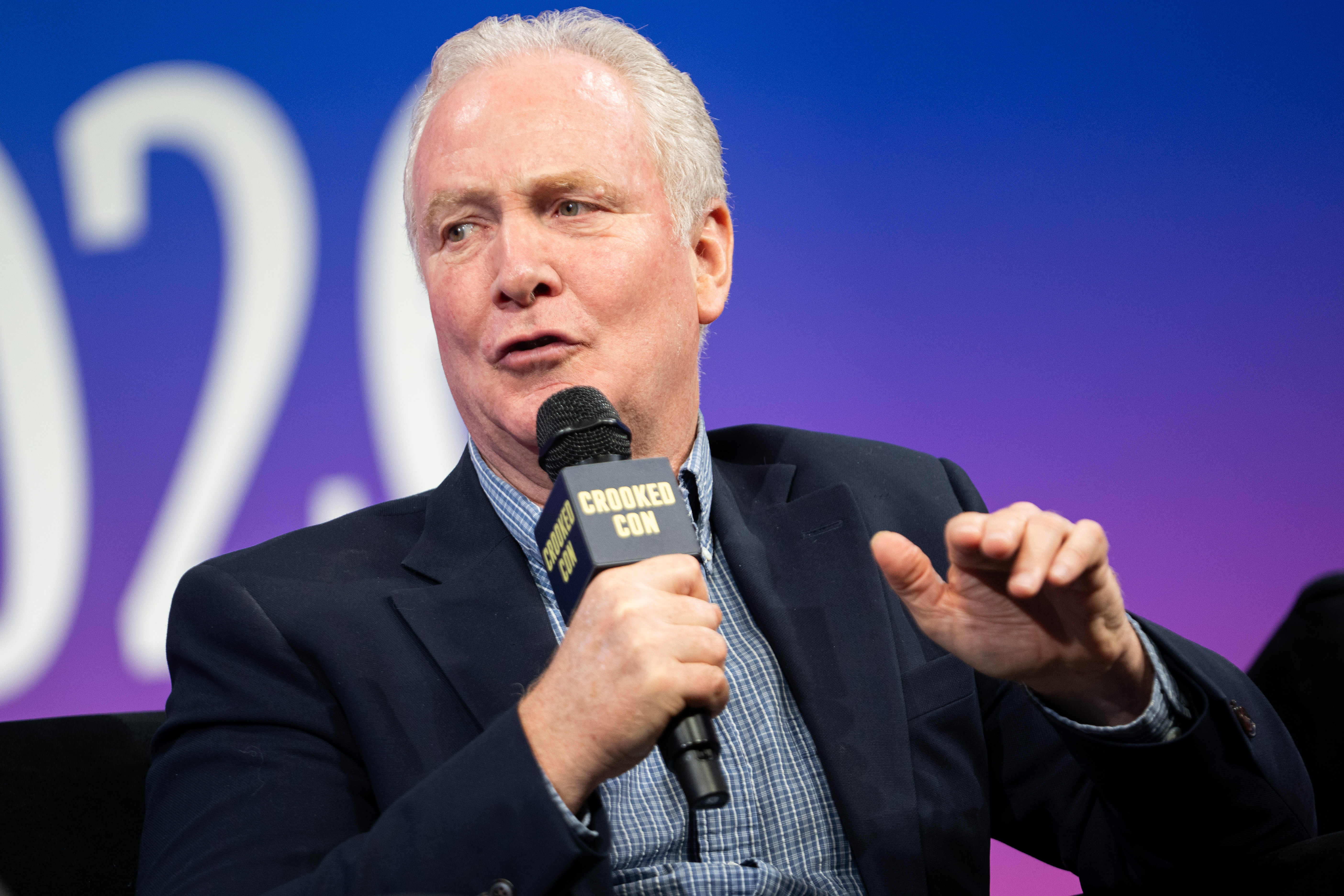
WASHINGTON — Democratic Sen. Chris Van Hollen of Maryland said Thursday that he will run for Senate Majority Leader in the next Congress, setting up a challenge to Democratic Leader Chuck Schumer after the party swept to power in the midterm elections.
Van Hollen said in a statement that “the American people called for change” and that is why he is running.
“It’s now on us to meet this moment, and to do that we need new leadership,” Van Hollen said. “This is not about any one person — it’s about answering the call of the American people. That is why I’m running for Senate Majority Leader.”
Schumer has said he has the necessary support to win the race, which will be the first contested election for Senate Democratic leader in decades. The closed-door, secret-ballot election will be held in early December.
The question of whether to reelect Schumer has already divided the caucus and many senators have declined to say publicly how they will vote, even before Van Hollen entered the race. They have privately deliberated about what message to take from the election and many are torn — Schumer recruited many of the party’s winning candidates and raised money for them, but progressive groups are pushing for his removal.
Making the pitch for his reelection, Schumer has been working with Democratic senators one-on-one to form an agenda for 2027. In private caucus meetings this week, Schumer opened discussion on a broad plan for their first 100 days in power that included healthcare and tariff legislation and efforts to stop the Iran war.
“I’m going to win it,” Schumer told the Associated Press in an interview last week.
In a statement after Van Hollen’s announcement, Schumer said he welcomes any discussion about the future of the caucus.
“I’m proud of what we’ve accomplished together — 55 seats and counting is an amazing result — and I have the votes to continue serving as Democratic Leader,” Schumer said. “I look forward to leading our new Democratic majority and delivering for the American people.”
Divisions over Schumer have simmered over last 2 years
While Schumer is the favorite to win, Van Hollen’s run exposes a rift in the party that opened in the spring of 2025, when Schumer was put on the defensive after he sided with Republicans on a spending vote.
Even as Schumer has redeemed himself within his caucus since then — leading them through a government shutdown last year and orchestrating huge wins in the election — many in the Democratic base are agitating for generational change.
Van Hollen, 67, is not that much younger than Schumer, 75. But he has positioned himself as a new face in the party. He has also said he is considering a run for president.
While most Democratic senators have either said they are supporting Schumer or are undecided, Van Hollen has at least two backers: Sen.-elect Abdul El-Sayed of Michigan, who won a competitive election in his state last week, and progressive standard-bearer Bernie Sanders.
El-Sayed posted on X Thursday night that their majority will need “bold leadership.”
“I called on Sen. @ChrisVanHollen to lead our caucus as a candidate back in April because he leads with courage and experience,” El-Sayed wrote. “We need both right now. Which is why I’m proud to stand with him in his bid to lead our Senate majority.”
Sanders, an independent who caucuses with the Democrats, held a news conference Tuesday announcing he would not support Schumer. He posted Thursday night that the American people “want a Democratic Party that will stand up to powerful special interests, take on the billionaire class and fight for working families. That is why I am supporting Senator Chris Van Hollen to lead Senate Democrats.”
Van Hollen has not yet laid out his own agenda, but he has criticized Schumer for his ties to Israel and other special interests.
Several senators have said they are backing Schumer, including incoming Ohio Sen. Sherrod Brown, who beat Republican Sen. Jon Husted last week. Beyond the election wins, those who support him say being the leader is a difficult job, experience is necessary, and Schumer has proven himself with legislative successes when they held the Senate under President Joe Biden.
“Why would you fire the manager when you just won the World Series?” posted Maine Sen. Angus King, another independent who caucuses with Democrats and votes in the leadership election.
“Chuck Schumer is one of the principal architects of the most successful election in modern history, and I see no reason to change the leadership that helped make that success possible,” King wrote.
Sen. Catherine Cortez Masto (D., Nev.) also posted her support Thursday evening:
Cortez Masto said Schumer was key in “securing a historic majority. I will be supporting him as our Democratic leader.”
Good morning, South Jersey. If you haven’t busted your winter coat out from storage yet this season, now’s probably a good time. Following last night’s tornado watch and unusual November thunderstorms, temperatures are expected to plummet.
Developers told The Inquirer that a planned $450 million development complete with a television and movie studio is moving forward in Pitman.
Southampton schools have returned to normal after a two-day shelter-in-place order concluded with a local man facing terroristic threat charges.
And a Trenton 16-year-old has been arrested in Monday’s fatal shooting in Burlington City.
Developers say a proposed $450 million, 76-acre project from new media company Americana Studios is moving forward in Pitman, bringing a television and movie studio to Gloucester County’s defunct Sony manufacturing plant.
Jersey native Lou Fusaro, who helped produce Californication, House of Lies, and Miami Vice, helms Americana Studios, which has plans for six 32,000-square-foot soundstages on the campus. A hotel, restaurants, and residential housing are also on deck for the site, which has sat idle for 15 years.
Schools in Southampton Township have returned to normal operations, bringing a close to a two-day shelter-in-place order that ended with state police taking a local man into custody for allegedly making terroristic threats.
In the days leading up to his arrest, Mark Cozens, who lives next to the Burlington County schools’ campus, reportedly sent distressing emails to Southampton’s superintendent Megan Geibel and was seen circling the administration building in different vehicles, reports The Inquirer’s Lacey Latch.
It’s not the first time Cozens has disturbed the schools’ programming this fall. In October, a lockdown occurred in response to gunshots that police determined came from Cozens shooting target practice on his property.
A 16-year-old from Trenton was arrested Wednesday in connection to Monday’s fatal shooting of 23-year-old Jerome “Rome” Chandler in Burlington City, Latch reports. Two other teenagers shot during the incident are still recovering at Cooper Norcross University Hospital in Camden.
A zoning hearing for a proposed controversial car wash at the border of Cherry Hill and Voorhees was postponed from Thursday evening to Jan. 28 because not enough board members were going to be in attendance.
The National Weather Service issued warnings for a tornado and severe thunderstorms on Thursday, citing a “complex storm system” that’s expected to reach its most potent state off the Jersey coast. The Inquirer’s Anthony R. Wood takes a look.
Over at the Deptford Mall, a remodeled American Eagle outpost and a new Offline by Aerie store opened last week, per 42 Freeway.
New Jersey American Water has started door-to-door outreach in Cinnaminson as part of its efforts to replace lead pipes throughout the Garden State by the government-imposed 2031 deadline.
Planning an outing to Philadelphia next weekend ahead of the holiday? Many roads will be closed due to the Philadelphia Marathon. Here’s what to know.
New Jersey ranked No. 9 on a post-midterm-election analysis from the American Immigration Council of how well states support and include immigrant residents. Reporter Jeff Gammage examines the study.
🧠Trivia time
Which celebrity from New Jersey found himself having an impromptu dinner in Wilmington at Bardea Food & Drink — a favorite of The Inquirer’s food critic Craig LaBan — back in June?
Rebellions are built on hope, but big shows are built on preparation and hype, and the Franklin Institute began hyping up its forthcoming exhibit, Star Wars: The Experience, during a media preview Thursday.
Flanked by two stormtroopers, Darth Vader walked into the museum’s rotunda to the Philly Pops playing “The Imperial March.” Figrin D’an and the Modal Notes had a prescheduled gig at the Mos Eisley Cantina and could not attend.
Jeff Smith conducts as the Philly Pops plays “Star Wars” themes composed by John Williams in the rotunda of the Franklin Institute during a preview Thursday for next year’s “Star Wars: The Experience.”Tom Gralish / Staff Photographer
Vader did not take the podium, preferring to let his ominous breathing do the talking.
At the center of the rotunda, in front of the 20-foot-tall national memorial of Benjamin Franklin (a noted master of the electrical side of the force), five Star Wars “artifacts” that will be in the exhibit were displayed. They were Kylo Ren’s lightsaber hilt from The Rise of Skywalker, a Night Trooper helmet from Ahsoka, a porg from The Last Jedi, a model of Ezra and Chopper from Rebels, and an Imperial TIE fighter model from Rogue One.
A porg, one of five iconic artifacts from Lucasfilm, on display in the rotunda of the Franklin Institute during a preview Thursday for “Star Wars: The Experience.” Tom Gralish / Staff Photographer
Along with previously announced experiences, the Franklin Institute revealed Thursday that the exhibit will have a “Lightsaber Sound Bar.” In a room where lightsaber replicas “appear to float from floor to ceiling,” guests will be able to use RFID devices to activate the lightsabers, hear their distinct sounds, and learn how those sounds were created, according to a news release.
Larry Dubinski, president and CEO of the Franklin Institute, said the exhibit, which opens Feb. 13, will highlight the science behind the science fiction franchise and celebrate the “legacy of a creative empire synonymous with imagination, storytelling, innovation, discovery, and wonder.”
Danielle Bower wears her hair in a Princess Leia space bun style as she attends a preview in the rotunda of the Franklin Institute for next year’s exhibit, “Star Wars: The Experience.”Tom Gralish / Staff Photographer
“Our mission has always been to make science meaningful and accessible to everyone,” Dubinski said. “We are always looking for exciting ways to connect people with stories of innovation and discovery and Star Wars: The Experience gives us a new and unique way to do just that.”
The exhibit, which has been five years in the making, is timed to coincide with the 50th anniversary of the 1977 release of the first film in the franchise, A New Hope.
Lauren Yenokida, director of Disney global brand commercialization, said the experience will celebrate the imagination and innovation that made Star Wars possible.
Lauren Yenokida, director of Disney global brand commercialization, joins Franklin Institute president and CEO Larry Dubinski in the rotunda during a preview Thursday of next year’s “Star Wars: The Experience” exhibit.Tom Gralish / Staff Photographer
“George Lucas and his extraordinary team of artists, designers, engineers, and storytellers brought this vision to life, but they didn’t just create a new galaxy, they helped revolutionize the way that stories could be told,” she said.
Yenokida said the Franklin Institute was the ideal partner for the world-premiere exhibit because it’s an institution dedicated to inspiring “curiosity, discovery, and that passion for innovation” and that Philly was the right city because it’s “a perfect combination of promoting culture and art.”
(This is the way.)
An Imperial TIE fighter model, one of five iconic Lucasfilm artifacts, on display in the rotunda of the Franklin Institute during a preview Thursday for its exhibit next year, “Star Wars: The Experience.” The exhibit will coincide with the 50th anniversary of the first film in the franchise.Tom Gralish / Staff Photographer
The 18,000-square-foot exhibit will have “Queen Amidala’s Throne Room,” Han Solo encased in carbonite, and more than 70 props from Lucasfilm’s archives, including Darth Vader’s costume, Darth Maul’s lightsaber, and a speeder bike.
Beloved characters like R2-D2, C-3PO, and Grogu will be part of the experience and more than 90 rare and vintage Star Wars action figures will be featured in a gallery about premium collectibles.
A Night Trooper helmet was one of five iconic Lucasfilm artifacts on display in the rotunda of the Franklin Institute during a preview Thursday for next year’s “Star Wars: The Experience” exhibit. Tom Gralish / Staff Photographer
Kevin Hanley of Media, a Franklin Institute member and a Disney content creator who runs the account Dads Love Disney, attended the media preview in a Star Wars sweatshirt and said he’s hyped for the opening.
“From the concept art it looks like it’s going to be completely immersive. Walking into Queen Amidala’s Throne Room, that’s going to be mind-blowing if it is even close to what the concept art has in it,” he said.
An artist’s rendering of what “Queen Amidala’s Throne Room” will look like at the upcoming exhibit, “Star Wars: The Experience,” at the Franklin Institute in 2027.Courtesy of MDSX
Star Wars: The Experience was created by the Franklin in conjunction with Lucasfilm, Disney Consumer Products, and Orlando-based experiential design firm MDSX.
Abby Bysshe, the Franklin’s chief experience and strategy officer, said designers thought “beyond the traditional exhibition” when making show.
“From the beginning our vision was to create a new kind of Star Wars exhibition, one that takes guests beyond the screen and into the galaxy in an immersive and versatile way, while also celebrating the people behind Star Wars, the pioneers who first imagined this galaxy, the artists and the storytellers who continue to build it, and the fans who have embraced it for 50 years,” Bysshe said.
Rafael Brito photographs his friend Giane Tateisi as they pass outside the Franklin Institute on Thursday while staff take promotional photos with Darth Vader and a pair of stormtroopers for next year’s exhibit, “Star Wars: The Experience.”Tom Gralish / Staff Photographer
Star Wars: The Experience will run at the Franklin from Feb. 13 to Sept. 6, 2027. After its Philly run, the show will go on a five-year tour around North America.
Tickets for the exhibit, which range from $25 to $65, are on sale now and available at www.fi.edu.
This week’s edition of Shackamaxon covers the fight over property assessments, a horrific failure in the system designed to protect children, why Gov. Josh Shapiro and the Pennsylvania Democrats won so big, City Council finally holding the sheriff’s office accountable, and a surprising admission from the city’s law department.
The 1100 block of Ruby Street, Wednesday, Aug. 21, 2024, is one of the blocks with the highest new property tax assessments in the city.Tom Gralish / Staff Photographer
Values vs. valuations
Property tax reassessment is one of the most contentious, and essential, parts of city government. For years, Philadelphia used out-of-date valuations that left some paying far too much and others paying far too little. After Mayor Michael A. Nutter instituted the Actual Value Initiative, the system has become significantly more accurate. To some, however, regular reassessment simply feels unfair.
That group seems to include most members of Philadelphia City Council, who have faced a flood of phone calls from residents who have seen significant increases in valuation from the Office of Property Assessment.
At Monday’s hearing on assessments, however, I could not help noticing that the debate was less about the specifics of OPA’s methodology and more about the inability of Council to control the real estate market that determines valuations. After all, experts at the hearing praised OPA’s accuracy. Monty Wilson, an attorney at Community Legal Services, went as far as calling it the best office in the state, even as he acknowledged that this isn’t good enough.
What frustrated the city’s legislators wasn’t the process but the results — including large increases in Kensington and other low-income areas. While the significant investments the city has made in combating the drug trade, reducing homicides, and cleaning up the streets (and the measured success of these efforts) means that some increase is expected, many residents were shocked that the home they once stepped over needles — or even people — to get to could now cost so much.
The good news is the city has the tools to help. Instead of pausing reassessments, which would slowly take us back to the days of widespread inaccuracy, Council can increase the Homestead Exemption, which is the only exception to statewide uniformity rules. This would eliminate the tax burden for the city’s poorest homeowners and lessen it for everyone else. Panelists also suggested extending the appeals period.
Family and friends of Malayshia Allford gather on Nov. 8 in Morris Park in Overbrook to remember the young girl.Tom Gralish / Staff Photographer
Demand answers
The murder of Malayshia Allford has refocused attention on Philadelphia’s foster care system. I know firsthand how important human services are. My younger brother and I are both adoptees, my older sister served as a social worker for years, and my parents fostered several newborns before adopting me.
I understand there are times when the state must intervene in the private affairs of families to protect the interests of vulnerable children. At the same time, Philadelphia separates children from parents at the highest rate of any major city — four times the rate of Chicago.
This separation can induce its own form of trauma. While infants like my brother and I benefited from placements with families, older children are often forced to live in group homes. This can be a miserable experience. My parents and the families that fostered my brother and me treated the babies in their homes like their own children. That’s less likely to happen in a group facility.
What happened to 10-year-old Malayshia, however, went beyond denial of the love and support all children need. Authorities failed her. Her foster mother, Caprice Williams, is now accused of her murder. Making matters worse, Williams has prior abuse allegations, and state officials had recommended not placing any more children in her care. How Williams was able to maintain her job as a public school teacher given these claims is also worth further exploration.
Three different Council members have moved to authorize hearings, and Mayor Cherelle L. Parker has vowed to investigate. This is a good start. But we’ve investigated the system before, and it still failed to protect Malayshia. This round must be different.
Senate President Pro Tempore Kim Ward leaves the House chamber following Gov. Josh Shapiro’s annual budget proposal in February.Tom Gralish / Staff Photographer
Illuminating exits
After last week’s landslide election, politicians and pundits gave their own interpretation of the results. Soon-to-be former state Senate president pro tempore Kim Ward blamed “national headwinds” for her party’s poor results. Supporters of State Sen. Doug Mastriano, who ran and lost to Shapiro in 2022, took to social media to blame Pennsylvania Republican insiders for anointing state Treasurer Stacy Garrity all the way back in September of 2025, bypassing the primary process that had previously selected Mastriano.
Pollster Jim Lee, with Susquehanna Polling, has his own theory for why Shapiro won big: Pennsylvanians, including a significant chunk of Republicans, just like the guy.
In his organization’s exit polling, they asked why voters selected Shapiro and Garrity. In Shapiro’s case, 53% said he was doing a good job, while another 23% said they agreed with the Ambitious Abingtonian on the issues.
As for Ward’s suggestion that President Donald Trump doomed her colleagues by bombing Iran and inflating gas prices, there are mixed signs. On the one hand, just 6% of Shapiro’s voters picked “standing up to Trump” as a reason he earned their vote. On the other hand, 44% of voters said they voted mostly for Democrats to send a message to the president. Still, that’s not enough to win, let alone score the first Democratic trifecta in decades. This means Shapiro and other Pennsylvania Democrats also did well with the 33% of voters who said Trump did not affect their vote this year.
In fact, Democrats across Pennsylvania did exceptionally well with Republican voters in this election. Around 44% of voters selected a straight Democratic ticket, while just 33% of voters voted for just Republicans.
It’s not all good news for Harrisburg Democrats, however. While their candidates may have earned Republican votes this year, these folks have not become progressives overnight. About 43% of voters identified themselves as Republicans, just one point shy of the 44% who called themselves Democrats. This means that going too far afield from the causes they campaigned on could erode their gains.
Sheriff Rochelle Bilal testifies in City Council during its annual budget hearing in April.Tom Gralish / Staff Photographer
Accountability at last?
After years of scandals, City Council has finally seen fit to hold hearings into the Philadelphia Sheriff’s Office, which is led by Rochelle Bilal. From the very beginning of her tenure, whistleblowers have alleged that Bilal has misused public funds and failed to perform the essential functions of her office. During that time, City Council has refused to hold her accountable, at one point even honoring her via resolution.
On Thursday, that finally changed. Council President Kenyatta Johnson moved to hold hearings into the operations and policies of the office, with the aim of restoring public confidence.
This is a good start, but the best way to improve the office remains abolishing it.
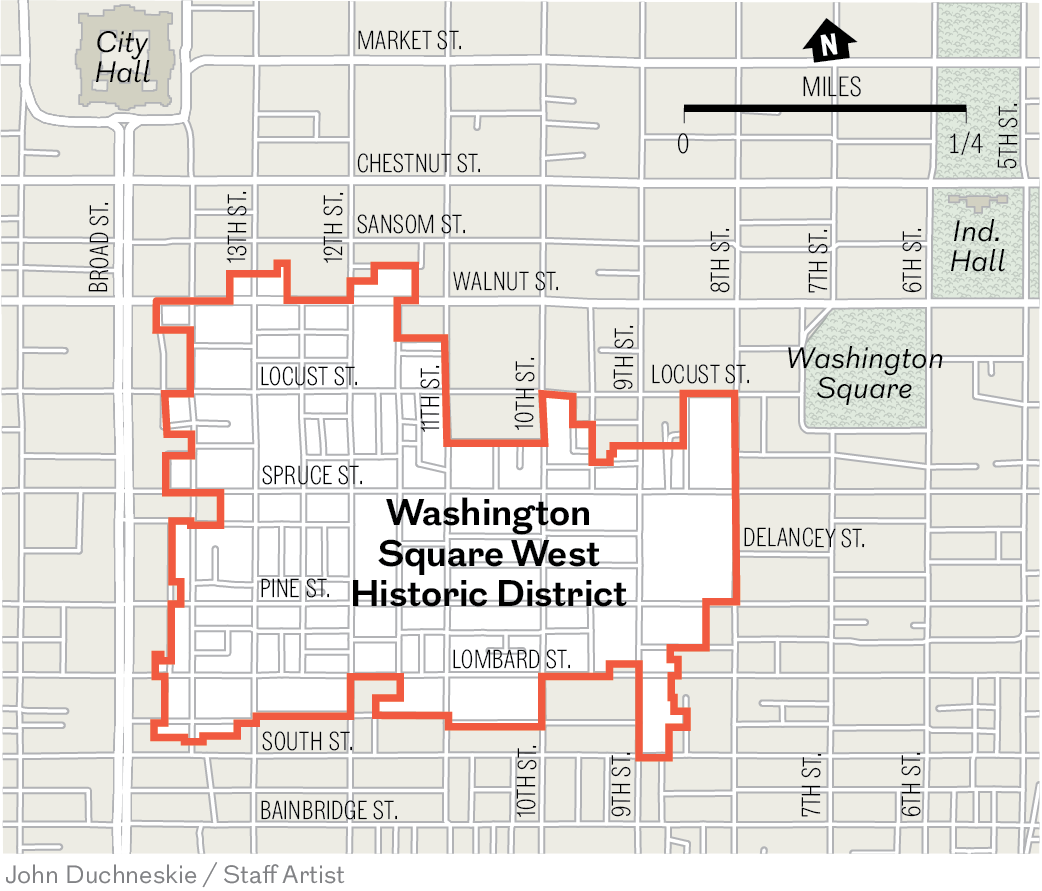
Map of the Washington Square West Historic District.
No comment
My newsroom colleague Jake Blumgart has chronicled the most recent chapter in the fight over the Washington Square West Historic District. The city’s appeal of the court ruling abolishing it, however, makes an interesting claim.
It said Judge Christopher Hall should not have considered public comment in his ruling, because “The record does not reflect the overall views of affected owners, businesses, or residents, but only the self-selected bias of the limited number of persons who provided public comments.”
At the same time, city officials often lean on this testimony while making decisions. I expect developers and institutions to cite this filing going forward when their own ideas meet a skeptical public.
Leaves may be dropping now, but Philly will enjoy a more robust tree canopy for years to come.
After losing the equivalent of 1,000 football fields worth of trees about a decade ago, the city embarked on an ambitious tree-planting quest.
It had planted nearly 19,000 new trees from 2023 to 2025, according to a new update to the Philly Tree Plan.
Putting down new roots hasn’t been easy. Much of the city is composed of dense residential streets with utilities buried under the same sidewalks where planting new trees would have the most impact.
Despite those hurdles, officials say the city is on track to meet its tree-planting goals.
Notable quote: “We’re making really great strides. We’re doing it,” said Kiasha Huling, director of the Philly Tree Coalition.
Come January, Democrats will run control the Pennsylvania Governor’s Office, state House of Representatives, and state Senate for the first time in more than 30 years.
Could SEPTA funding, long snarled in partisan gridlock, follow?
Newly reelected Gov. Josh Shapiro said last week “we will fund transit,” along with other Democratic priorities, although he did not explain how.
The transit agency projects a $192 million structural operating deficit next year, and has ambitious plans for not just stabilizing service but improving it.
Getting there would take a steady source of cash like a new tax, for example legalizing recreational marijuana and taxing it.
The Philadelphia District Attorney’s Office will conduct an independent investigation into the death of 10-year-old Malayshia Allford as well as the city’s foster care system, officials said Thursday.
A Peco technician did not know how to repair a leaking gas valve he encountered shortly before a nursing home explosion killed three people in Bucks County last year, according to a new report from the National Transportation Safety Board.
The Philadelphia School District is pushing back its deadline to apply to selective admissions schools amid changes to the standardized tests used to determine eligibility.
This week, we’re bringing back a piece from 2025. That’s when a reader asked: Do train engineers have guidance for when to sound the horn? And what do the different toots mean?
Inquirer reporter Michelle Myers dived into the rules railway engineers must follow to find the answer. She learned that every engine whistle, horn signal, or combination of the two has a set meaning.
For example, a single long wooo alerts the crew to put the brakes on.
Cheers to Trudi Ramsay, who correctly solved Thursday’s anagram: Jaylen Brown. This Philly sports star this week played his much-anticipated first regular-season matchup against his former team, the Boston Celtics.
Benjamin Franklin meets Darth Vader in the rotunda of the Franklin Institute during a preview Thursday for its exhibit next year, “Star Wars™: The Experience.” The exhibit was made to coincide with next year’s 50th anniversary of the first film in the franchise.Tom Gralish / Staff Photographer
The American Revolution meets the Rebellion. I know this looks Photoshopped but I can assure you it isn’t.
👋 If you’re the superstitious type, keep your talismans close today. I hear it’s a good omen to read the news and support The Inquirer, so you’re already in luck. Thanks for reading and have a great weekend!
By submitting your written, visual, and/or audio contributions, you agree to The Inquirer’s Terms of Use, including the grant of rights in Section 10.
Think you know your news? There’s only one way to find out. Welcome back to our weekly News Quiz — a quick way to see if your reading habits are sinking in and to put your local news knowledge to the test.
Question 1 of 10
When it comes to supporting its immigrant residents, New Jersey ranked No. 9 out of 50 states. How did Pennsylvania rank?
CorrectIncorrect. XX% of other readers got this question right.
Pennsylvania didn’t do so well, according to the American Immigration Council, ranking 28th. Delaware came in at 13th.
Question 2 of 10
Citing low enrollment, Drexel University has paused admission into its undergraduate program for this major:
CorrectIncorrect. XX% of other readers got this question right.
Drexel said entrants to its education program have declined and the school is pausing admission. But students, alumni, and a Philadelphia School District principal said the program is vital and should continue. A Dec. 5 rally is planned.
story continues after advertisement
Question 3 of 10
The long-awaited pedestrian swing bridge officially opens Friday to thousands of runners, cyclists, and walkers using the Schuylkill River Trail. They will be able to cross unimpeded from Center City through South Philadelphia to Grays Ferry. They will come out just above Bartram’s Garden. What color is the bridge?
CorrectIncorrect. XX% of other readers got this question right.
The $28 million red bridge links approximately 1.5 miles of trail to the south with three miles to the north, creating about 4.7 continuous miles along Schuylkill banks with the bridge included. It’s 225 feet long and weighs 60,000 pounds.
Question 4 of 10
Tormund, a viral orange cat from South Philly, has died. He has about 300,000 combined social media followers. What was he best known for?
CorrectIncorrect. XX% of other readers got this question right.
Tormund, best known as Standing Orange Cat, has died of medical complications, his humans said in a social media post. In hundreds of photos and videos posted of the chunky feline, Tormund could be seen perched on his short hind legs, belly protruding, and front arms awkwardly flapping in the front.
story continues after advertisement
Question 5 of 10
Why is the NRA suing Philadelphia?
CorrectIncorrect. XX% of other readers got this question right.
The lawsuit says Pennsylvania's age criteria for a license to carry a firearm, which is required for public carrying in Philadelphia, renders 18-to-20-year-olds "defenseless."
Question 6 of 10
This beloved coffee shop is closing its original location and opening in Graduate Hospital:
CorrectIncorrect. XX% of other readers got this question right.
After five years, Thank You Thank You’s last day on Jeweler’s Row will be Dec. 23, citing the historic building’s need for renovations and major construction next door. The coffee shop will open in a significantly larger new build on Washington Avenue in Graduate Hospital.
Question 7 of 10
Rowan University is ending this 40-year tradition as a cost-cutting measure:
CorrectIncorrect. XX% of other readers got this question right.
The public university is ending its breakfast tradition, which was once attended by Martin Luther King III, according to a university spokesperson. Some Black community members who have long attended the breakfast say the change is a loss. The breakfast is one of several cuts the university is making to prepare for a future with a potentially shrinking student body and tighter budgets.
Question 8 of 10
A Main Line OB-GYN office gained traction online because of this unique feature:
CorrectIncorrect. XX% of other readers got this question right.
Gynecologist Randolph Heinzel shows off his photography skills with his Eagles-themed medical exam room. Patients call it a personal touch.
Question 9 of 10
Sixty years ago this week, John Coltrane returned to the city he had called home for more than a decade for what would end up being his final performance. Where did he perform?
CorrectIncorrect. XX% of other readers got this question right.
He was playing at Temple University’s Mitten Hall, barely two miles from the Strawberry Mansion rowhouse where he’d spent several formative years.
Question 10 of 10
The SS United made its final voyage from Philadelphia to under the sea, where it’s being marketed as the world’s largest artificial reef. A city tourism department in this state purchased, moved, and sank the boat:
CorrectIncorrect. XX% of other readers got this question right.
Okaloosa County jumped at the opportunity to sink the SS United States 22 nautical miles southwest of Destin-Fort Walton Beach. The area has undergone a bit of an artificial reef renaissance in the last decade under Alex Fogg, the county’s natural resources chief.
Your Results
You have skipped .
You scored XX out of 10.
The average reader scored XX out of 10
Seems like you’ve been skimming more than reading there, buddy. There’s always next week.
You’ve read some articles (or made some educated guesses) but we wouldn’t come to you first for our local news recaps. Better luck next week!
Do you work here? You’re a local news stan with the latest updates on Philly happenings. Your friends definitely ask you for summaries on what’s going on and it shows.
Getting over a cold is one thing, but sometimes, it can feel like shaking that nagging cough is another.
Most respiratory infections, such as the common cold, flu, COVID — 19, and RSV are caused by viruses and usually run their course within one to two weeks. A cough is often the last symptom to fade.
When the hacking persists long after you’ve recovered, then you may be experiencing post — viral cough syndrome (sometimes called postinfectious cough), said Megan Conroy, a pulmonologist and critical care physician at Ohio State University’s Wexner Medical Center.
This is a cough that lingers for anywhere from three to eight weeks after a respiratory infection has resolved, and up to 25% of adults who come down with one of these infections will experience it.
We asked experts about why post — viral cough syndrome happens and what to do (and avoid) to get some relief.
What causes a lingering cough after an infection
It’s not entirely clear why it happens, but experts think some viruses can leave behind inflammation in the lungs and residual damage to the epithelial surface, or lining, of the airways, said Conroy.
Other problems may also play a role in, or worsen, a post — viral cough. One of the most prevalent, Conroy said, is upper airway cough syndrome, or what many people know as postnasal drip, which can occur when mucus in the sinuses drips backward and triggers the cough receptors in your throat.
Another common contributing factor is reflux. The condition is best known for causing heartburn, but it doesn’t always, Conroy said. In a form called laryngopharyngeal reflux, microscopic bits of stomach acid and digestive enzymes backtrack all the way to the upper airway, triggering a cough and sometimes a lump-in-the-throat sensation — either instead of or alongside the classic heartburn that occurs when reflux hits the esophagus, lower down.
It’s also possible that the initial cold or flu set off an underlying airway condition. “Some people may have a mild form of asthma or preexisting airway inflammation that’s similar to asthma, which might only become apparent after a virus,” Conroy said.
Over time, a post-viral cough can beget more coughing by leading to overstimulation of the nerves in the airway. “It can turn into what we call cough hypersensitivity,” Conroy said, which occurs when the cough nerves are “so overactive” that they react readily to even minor triggers such as temperature changes or a mild degree of acid reflux or postnasal drip.
Things that can make your cough worse
A handful of environmental factors and behaviors can provoke or worsen a postinfectious cough, including:
Cold, dry air or changes in humidity or temperature. Conroy recommends wearing a face covering such as a mask or wrapping a scarf around your mouth and nose when stepping outside in the winter “to maintain some of that relative warmth and humidity from your breath and reduce the shock to the airways.” Elisabeth Fowlie Mock, a family physician in Bangor, Maine, and member of the board of directors of the American Academy of Family Physicians, suggested investing in a humidifier, particularly if you live in a dry climate or run the heat continuously for most of winter.
Common allergens such as pet dander or dust mites. An allergic response can ramp up mucus production, which can lead to more dripping down your throat, Conroy said.
Exercising heavily. Exertion that leaves you huffing and puffing can prompt a coughing fit, Mock said. It’s best to opt for less-strenuous activities while you are recovering.
Smoking or vaping. Inhaling these substances can stress the lungs and cause coughing even when you’re not ill, so they can certainly worsen an existing cough, Conroy said.
How to get some relief
There aren’t many proven solutions to cut a post-viral cough short, Conroy said. Most cases resolve on their own with time. While you ride it out, having a teaspoon of honey a few times a day can coat your throat and ease some coughing.
As for over-the-counter cough medications? For the most part, “they’re not worth their weight in anything,” Conroy said. And some may do more harm than good. Stimulant decongestants (e.g., pseudoephedrine) can raise blood pressure and interfere with other medications, she pointed out. Many cough syrups and capsules also contain multiple drugs — for instance, a decongestant and acetaminophen (Tylenol). If you’re taking more than one cough medication, it’s easy to unintentionally overdose on acetaminophen, which is a frequent cause of liver failure, Conroy cautioned.
If you’re keen on taking something, both Mock and Conroy said to consider guaifenesin (Mucinex). Its effects on cough may not be significant, but it is relatively safe and can help thin mucus, which could reduce some of the hacking.
If your lingering cough comes along with the sensation of mucus in your throat or sinuses, it may be worth trying a steroid nasal spray (such as fluticasone/Flonase) or an oral antihistamine (loratadine/Claritin or cetirizine/Zyrtec), as well as nasal irrigation, for instance with a neti pot, to flush excess mucus, Conroy said.
And if you suspect that acid reflux is worsening your cough, aim to avoid spicy and tomato-based foods, chocolate, caffeine and alcohol; eat smaller amounts of food at a time; and stay upright — rather than lying down — for a couple hours after eating, she added.
When to see a doctor
Though most postinfectious coughs will let up on their own by the eight-week mark after a viral infection, it’s important to seek medical care if you’re also dealing with other ongoing cold or flu symptoms that don’t seem to be improving, or new ones appear, Mock said. (If symptoms return or worsen around the 10-day mark, or you develop a high fever or difficulty breathing, you could be dealing with a secondary bacterial infection such as pneumonia or sinusitis.)
If you’re a person at high risk for complications from a respiratory infection, including if you’re over the age of 60, were or still are a long-term smoker, or have a lung condition such as asthma or chronic obstructive pulmonary disease, Mock recommends seeing your primary care provider or heading to urgent care if a cough persists for two weeks.
If your post-viral cough is interfering with your ability to go about your day-to-day activities, is trending in a worse direction or lasts longer than eight weeks, you may be dealing with a chronic cough caused by something else, Conroy said, which a clinician can also diagnose and treat.
Adult-onset asthma, for instance — which research suggests may be incited by respiratory infections — can be addressed with medications that target airway inflammation. And laryngopharyngeal reflux can be treated with an alginate therapy, “or jellylike substance that you take around meals, which creates a raft, or barrier, on top of the stomach,” Conroy said.
If your clinician rules out other conditions, they might still be able to prescribe a medication to help tamp down a disruptive post-viral cough. There are no FDA-approved drugs for this condition, but they may recommend certain inhalers such as ipratropium (which can help open the airways), Conroy said. Benzonatate (Tessalon Perles), which essentially dampens the cough reflex, can also be a temporary measure. (It’s extremely dangerous for young children, so be sure to secure it out of their reach.)
Ultimately, these medications can’t cure your cough or the underlying cause but might help “tide you over where really the variable that’s needed to treat the cough is time,” Conroy said.