Blog

  • Philadelphia police found a man dead in the Delaware River

    Philadelphia police found a man dead in the Delaware River

    A 35-year-old man was found dead in the Delaware River Sunday afternoon, Philadelphia police said.

    In a news release, police said they had received a 911 call that a person was in the river near 3100 S. Front St. just before 2 p.m.

    Police said that the department’s marine unit recovered a 35-year-old man in the water. He was pronounced dead at the scene around 3:30 p.m.

    Police did not say how they determined the man’s age and did not provide any additional information. An investigation is ongoing, they said.

  • KYW’s Larry Kane signs off after six decades of broadcasting

    KYW’s Larry Kane signs off after six decades of broadcasting

    Every Sunday, Mike Newall brings you an inside look at a story defining Philly this week and a preview of what’s coming in the week ahead.

    The big story tonight: Philadelphians won’t have Larry Kane to tell them the truth anymore.

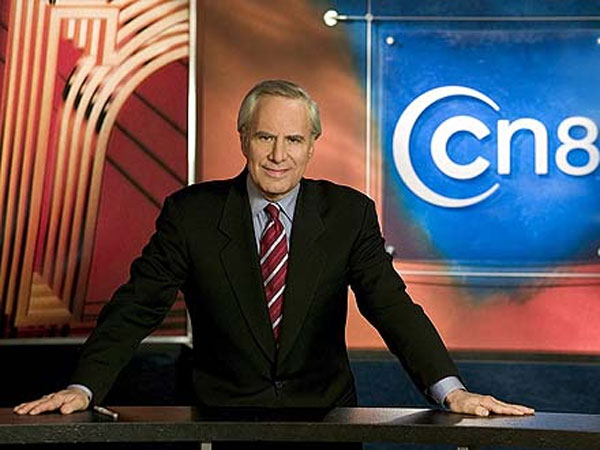
    Kane, Philly’s answer to Walter Cronkite during the golden age of local news, retired from broadcasting today at 84.

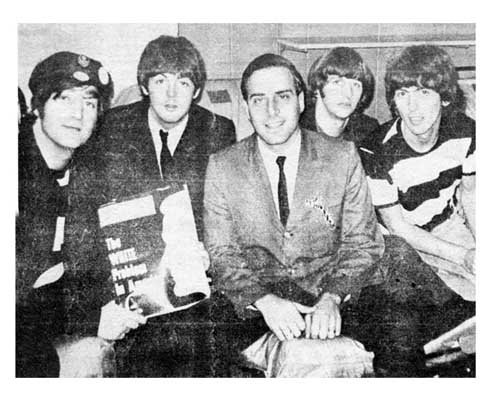
    Larry Kane with the Beatles.

    Kane, who worked at all three major networks in the city and transformed nightly news with his catchphrase — “The big story on Action News” — was king of the airwaves when anchormen were civic institutions and celebrities. When local news was appointment viewing and ratings and rivalries roared.

    At 27, he became the youngest major-market television news anchor in America, and eventually the only Philly anchor to helm all three major networks. Proudly Jewish, he said in 2005 that he once battled doubts he could succeed in a town that was “really run by the white Protestant establishment.”

    He rode shotgun with the Beatles during the fever pitch of Beatlemania. Covered presidents and popes and world leaders. And endless Philadelphia triumph and tragedy. He witnessed Philadelphia bomb itself.

    For nearly 60 years, Larry Kane told Philadelphians the news — and why it mattered. And Philadelphians believed him.

    Before his farewell broadcast Sunday on KYW Newsradio, where he has offered commentary for over two decades, the iconic newsman issued a warning about attacks on the media and the slow erosion of local journalism.

    “It’s all about local news,” Kane told me. “If people don’t have local news, they can’t understand what’s going on around them.

    I’ll be reporting more on Kane’s singular career in the coming weeks — and would love to include some of your favorite Larry stories. Share them with me at mnewall@inquirer.com.

    For now, let’s hear from Larry.

    Mike: You were the only broadcast journalist to travel to every stop on the Beatles 1964 and 1965 North American tours. It was an assignment you famously almost turned down.

    Larry: The first time I met them, I went down there to their room. I was wearing a suit and a skinny tie. Very conservative. Before I could even open my mouth, John said, “Who are you and what planet are you from?” I said, “It’s better than not brushing your hair.” At that point, I asked him some questions about the war in Vietnam and the racial unrest in Great Britain. I went back to my room, thinking, “I don’t think I’m going to last another day on this trip.” All of a sudden I felt two hands on my neck, and John actually gave me a little hug, and said, “That was really great, I look forward to traveling with you.”

    Mike: You got Lennon to take an Amtrak from New York City to 30th Street Station for a station charity event in 1975. He wound up doing an Action News weather report.

    Larry: It was his first Metroliner (laughing). The doors opened and he had a little box and bag. I said, “What’s in there?” He said, “That’s for me to know, and you not to know.” The people on the train said, “Bye, John. Great to see you, John.” He said, “Let’s take a little tour, so I took him to the Liberty Bell.” He was kind of dazzled by the fact that people knew who I was.

    Mike: You arrived in Philly from Miami in 1966, at 23. What was it like?

    Larry: I spent the first two years here on the streets [reporting]. When you’re out on the streets of the city — you see everything. You know the suburbs. You know the geography. You come to streets nobody has been on. When I went on the air, I was so familiar with the streets, people thought I was here my whole life.

    Mike: Who most shaped the Philadelphia of today?

    Larry: Ed Rendell. In some ways, he brought together the city and suburbs in a quiet bond.

    Mike: Philly can break your heart. Did you fall in love with it?

    Larry: Absolutely When I went to New York [briefly in 1977], it was professional pressure. I commuted most of the time. The minute I got there, I wanted to come back. I wanted my family to be here — and I wanted to be here. It was my home.

    Mike: What did you love about it all?

    Larry: Recognition and glamour wasn’t really something I loved. I loved doing the news. I loved the interaction with people about the news.

    Data deep dive: Shapiro vs. the Pack

    Gov. Josh Shapiro’s strongest case for the White House may be written in the election returns, reports Inquirer political reporter Michelle Baruchman. Shapiro’s landslide victory outperformed Kamala Harris’ 2024 Pennsylvania showing by nearly 12 points. Shapiro’s edge over Harris also bested five other Democrats with White House dreams. Does Shapiro’s Pennsylvania slamdown automatically propel him to the top of the 2028 contenders? That’s a different ballgame altogether.

    (function(){function e(){window.addEventListener(`message`,function(e){if(e.data[`datawrapper-height`]!==void 0){var t=document.querySelectorAll(`iframe`);for(var n in e.data[`datawrapper-height`])for(var r=0,i;i=t[r];r++)if(i.contentWindow===e.source){var a=e.data[`datawrapper-height`][n]+`px`;i.style.height=a}}})}e()})();

    Video of the Week

    Watching the SS United States sink off the coast of Florida
    Video: Watching the SS United States sink off the coast of Florida

    No more shall we behold a fallen jewel of the Atlantic during our weekend Ikea runs. The SS United States spent decades as South Philly’s most awesome piece of waterfront clutter. The great liner slowly sank to its grave at the bottom of the Florida Panhandle, where it will become a marine life habitat.

    A look ahead

    • Rochelle Bilal has elevated dysfunction and scandal into an absurdist art form at the Philadelphia Sheriff’s Office. With City Council finally promising action — and even defenders urging reporters to check beneath her mattress for $20 million in misplaced funds — a judge could rule as early as next week on whether to hold a contempt hearing against the embattled sheriff. “The judge’s decision could come any day,” says Inquirer Investigations reporter William Bender. “It seems like the judge so far has been focused on forcing the sheriff’s office to accept an outside forensic audit and to pay for it.”
    • Inquirer investigations reporter Samantha Melamed powerfully explains how Carprice Williams — a public schoolteacher previously accused of abusing a foster child who nearly died — ended up caring for 10-year-old Malayshia Allford. Now the city needs to answer for the devastating systemic failures that preceded the discovery of the girl’s body in a car trunk last month. “There were many, many documented red flags that seemingly should have prevented any child from being placed in that home,” says Melamed. “How was Carprice Williams able to take in children over and over again?”
    • Is Philly’s endangered Dino museum saved? Not yet, as contentious talks to save the Academy of Natural Sciences come to a standstill. Look for more details to come from Monday’s City Council hearing where subpoenaed Drexel and Academy officials are expected to testify. “Folks are asking for clarity on how we got to this point — and what options do we have in the future,” Councilmember Isaiah Thomas told me.
    • Ken Burns’ sweeping new reckoning with 250 years of America’s criminal justice system debuts Monday on PBS. Early episodes of the 8-hour documentary — titled “Crime and Punishment in America” and directed by Lynn Novick — chronicles how Philadelphia helped create the American penitentiary. “These ideas don’t just start in America,” says Kerry Saunter, president and CEO of Eastern State Penitentiary Historic Site, which features heavily. “These ideas started in Philadelphia.”

    One more thing: The marathon is more than running

    Shawm Needham (second to the right) with his (left to right) stepdaughter Sabrina Hoehne, daughter Sarah Needham, wife Linda Needham, and son Christian Needham.Courtesy of the Needham Family (Custon Credit)

    Back when the kids were younger, Shawn Needham always knew how to scope out the best spots at their track meets.

    “The good spots to be when you needed a little extra push,” says his daughter Sarah Needham, 23.

    A former Maryland state trooper, and now a cop in Warwick Township — and a hall-of-fame track star at Holy Ghost Prep in Bensalem — Shawn Needham, now 59, raced home three hours after night shifts to make the kids’ running events. He worked overtime so he and his wife, Linda, could afford the league payments. And he ate peanut butter and jelly in the squad car so he could take the kids to Applebee’s after a race.

    “Anything broke he could fix,” said Sabrina Hoehne, who is 28, and Needham’s stepdaughter. “He spent all his money on our sports.”

    But last November, Shawn Needham confronted a nightmare he couldn’t fix. Not alone, anyway. A life-altering diagnosis of cholangiocarcinoma, an aggressive cancer of the bile duct, that affects only about 8,000 to 10,000 Americans annually.

    Next weekend, five of Shawn Needham’s children — Hoehne, Sarah Needham, Grace Needham, Christian Needham, and Ella Needham will run in the Philadelphia Half Marathon and Marathon to raise money for the Cholangiocarcinoma Foundation.

    With thanks to his doctors at Penn, Shawn Needham knows exactly where he’ll be. He’s already scoped out a good spot — behind the Art Museum, where the runners loop around multiple times — and which will leave him time to race back to the finish line.

    “I’m proud,” he said. “I’m very proud.”

  • Grandparents who remember a time before vaccines are urging immunization as measles cases rise

    Grandparents who remember a time before vaccines are urging immunization as measles cases rise

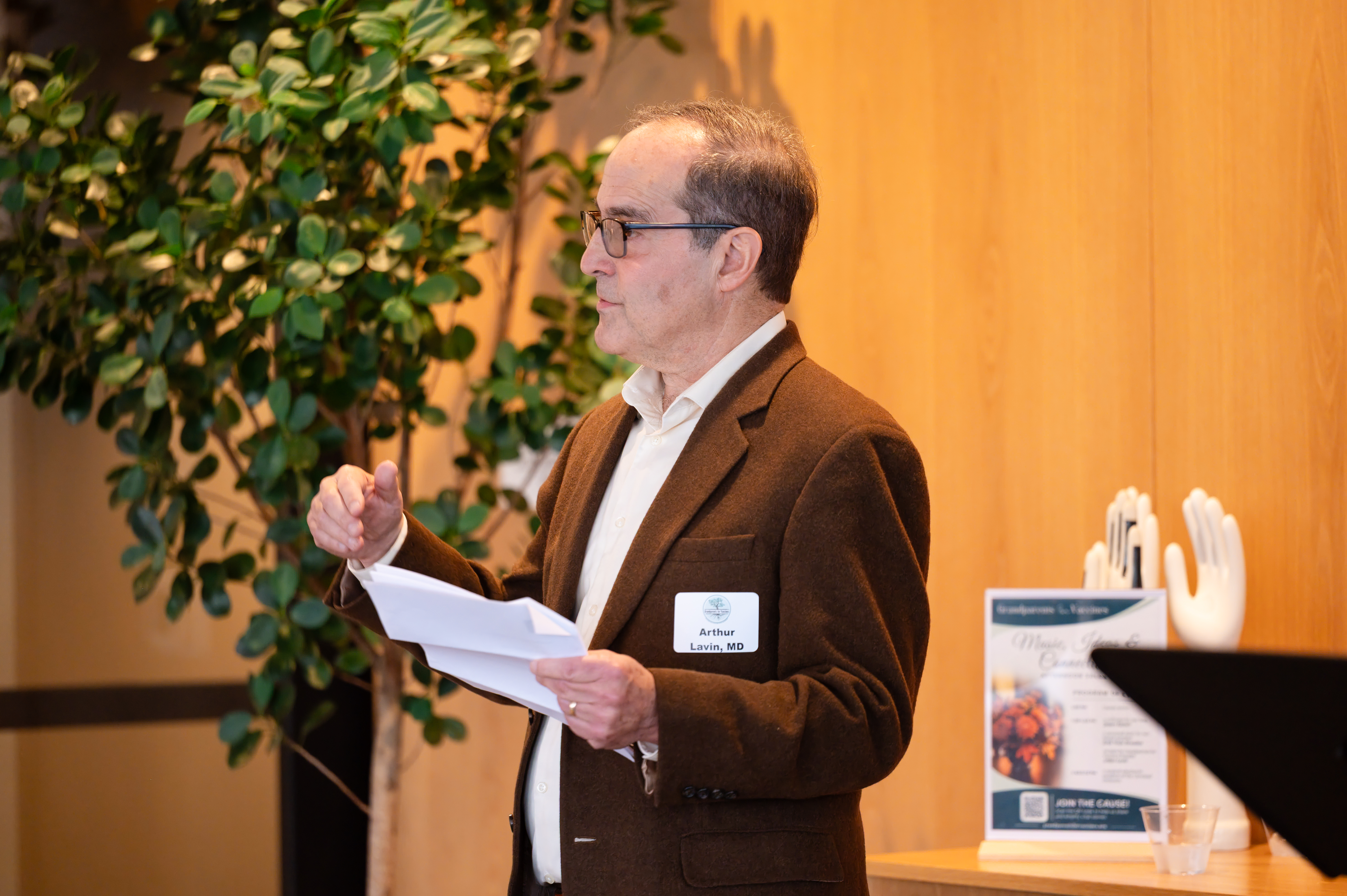
    Arthur Lavin remembers when diseases like measles, whooping cough, and polio were a fact of life with sometimes deadly consequences.

    And the retired pediatrician and grandfather of four knows that these days, memories of a time before widespread childhood vaccination are vanishing.

    “Vaccines not only erased disease, but they erased the memory of the disease. People having kids now don’t really have any memory of what these diseases are like,” he said. “We lived in that world.”

    So a year ago, Lavin, increasingly alarmed by rising cases of vaccine-preventable diseases like measles, began organizing grandparents like himself to tell their stories.

    Lavin is based in Cleveland, but the advocacy group he founded, Grandparents for Vaccines, now has members across the country, including in Pennsylvania, who regularly speak to the press, publish personal accounts, and advocate in their communities in favor of vaccination.

    Childhood vaccination rates have dropped. The United States this weekend reportedly lost its measles elimination status. And a spiraling measles outbreak in Pennsylvania has sickened more than 1,500 — all signs, Lavin said, that the group’s work is more important than ever.

    “Wherever we go, we’re finding grandparents who are saying to us that they’d been desperate to have their voices heard,” he said. “Watching this happen, they know what’s going to happen when vaccines aren’t used.”

    Some grandparents in the group have been inspired to tell their stories after years of silence.

    Barbara Weinhold, 86, caught whooping cough when she was 10 years old. She thought she had a summer cold at first — but then developed the telltale uncontrollable cough and a high-pitched “whoop” as she struggled to catch her breath.

    Weinhold, who now lives in Doylestown, missed more than a month of school and eventually recovered. But by then, her 4-month-old brother had contracted the disease.

    “He was unable to overcome it,” she said.

    His death haunted her for years. She rarely spoke of it.

    As an adult, she became a nurse and started a career in public health. She made sure to vaccinate her own children as routine childhood vaccinations became more widespread and eventually were required for school admission across the country.

    “When vaccines came into existence, parents lined their kids up to get them — I don’t have to have my children suffer what I had to suffer,” she said.

    But Weinhold rarely told her own story — until last year, when she watched a television news segment about Grandparents for Vaccines. The group was recruiting members to share their experiences with vaccine-preventable illnesses.

    “Percentages and all this number stuff don’t resonate [as well as] people telling their story, what they have been through,” she said. “I thought, I think I have a story.”

    As cases of vaccine-preventable illnesses rise, Weinhold said, the group empowered her to share about her family’s loss.

    “It took many, many many years to be able to even talk about it,” she said. “But Grandparents for Vaccines gave me an opportunity to write the story, tell the story, and get it out with an ulterior purpose of helping others and preventing more childhood illnesses and deaths.”

    Lavin says the stories about vaccine-preventable illnesses that he’s collected from fellow grandparents have one through line: “It’s horrible.”

    A woman who lost her twin at 5 to polio and now struggles with post-polio syndrome, a neurological disorder that can emerge decades after infection. A woman who contracted rubella along with a close friend while both were pregnant; the woman’s child was born without complications, but her friend’s baby was born deaf as a result of the infection. A woman whose sister contracted measles and developed brain swelling that resulted in severe, lifelong impairments.

    “We’re seeing more and more people step away from vaccination. Grandparents for Vaccines would like the national conversation to shift so the mood is, ‘Why are we putting our grandchildren in harm’s way?’” Lavin said.

    Weinhold says she’s encouraged by how her work with the group has resonated with others. One young woman she spoke with recently said she had decided to vaccinate her newborn after hearing her story.

    “I’m a big believer in planting seeds with people. We never know what’s going to happen to those seeds, but you’ve done your part,” Weinhold said. “My hope is that someone will read this, just like I heard about it on TV, and say, ‘I can be a part of that. I can get something going.’”

  • Weavers Way Co-op in Chestnut Hill is moving to the former Iron Hill Brewery space nearby

    Weavers Way Co-op in Chestnut Hill is moving to the former Iron Hill Brewery space nearby

    Weavers Way Co-op will move its Chestnut Hill location to the former Iron Hill Brewery spot, the community-owned grocer announced Friday.

    “We are bursting at the seams in our current space,” store manager Ann Marie Arment said in a news release. “The opportunity to spread out and improve customer access and back-of-house operations was too hard to pass up.”

    The store plans to relocate, just two doors down on Germantown Avenue, to meet growing demand and to better accommodate shoppers, Arment said. The move will provide more space, which will also allow the co-op to expand its bulk foods section and produce sections, she noted. Weavers Way also plans to bring back the hot bar, which it shuttered during the pandemic.

    Arment said in an interview shoppers at the “small but mighty” store have gotten used to doing the “excuse me, pardon me” dance as they navigated grocery carts and strollers down its narrow, winding aisles.

    The Chestnut Hill location has exceeded expectations with annual sales of about $14 million and about 1,000 transactions per day, said general manager Jon Roesser.

    But as it’s grown, the location has also posed challenges, Roesser said. The building has little back stock area, often requiring workers to load goods directly from the truck to the shelves.

    The new location will remedy that issue and will also comply with the Americans with Disabilities Act, unlike the current one, Roesser said. It will add about 900 square feet, and will have an open floor plan “with better customer flow and access” similar to the co-op’s Germantown location, Roesser said.

    The move also will breathe new life into a space previously occupied by Iron Hill Brewery, which abruptly closed all of its locations last September and declared Chapter 7 liquidation bankruptcy.

    The co-op signed a 20-year lease with Acadia Realty Trust to secure the new building, Roesser said. The co-op plans to install equipment and renovate the former Iron Hill property before moving in.

    “We’re going to apply for demolition permits with the idea of doing the interior demo in January. That’s the easy part,” Roesser said.

    Roesser said construction should start in May 2027 with a plan to complete the project by mid-October, though the project could potentially stretch into January 2028.

    The hard part, he said, will be closing down the current store for a few days and moving everything over to the new location.

    “Our goal right now is to get open before the next holiday season,” Roesser said.

    At the co-op Sunday, shoppers said they’ve gotten used to the quirky locations. Rory Phimister even remembered when the Mount Airy store was in the basement of Summit Presbyterian Church.

    But as he navigated he way through checkout, Phimister said he’s excited about the larger space.

    “It’s a good sign,” said his friend Lizanne McGuinn. “It means it’s doing really well.”

  • Cancellations, delays continued Sunday at Philly airport, two days after ground stop

    Cancellations, delays continued Sunday at Philly airport, two days after ground stop

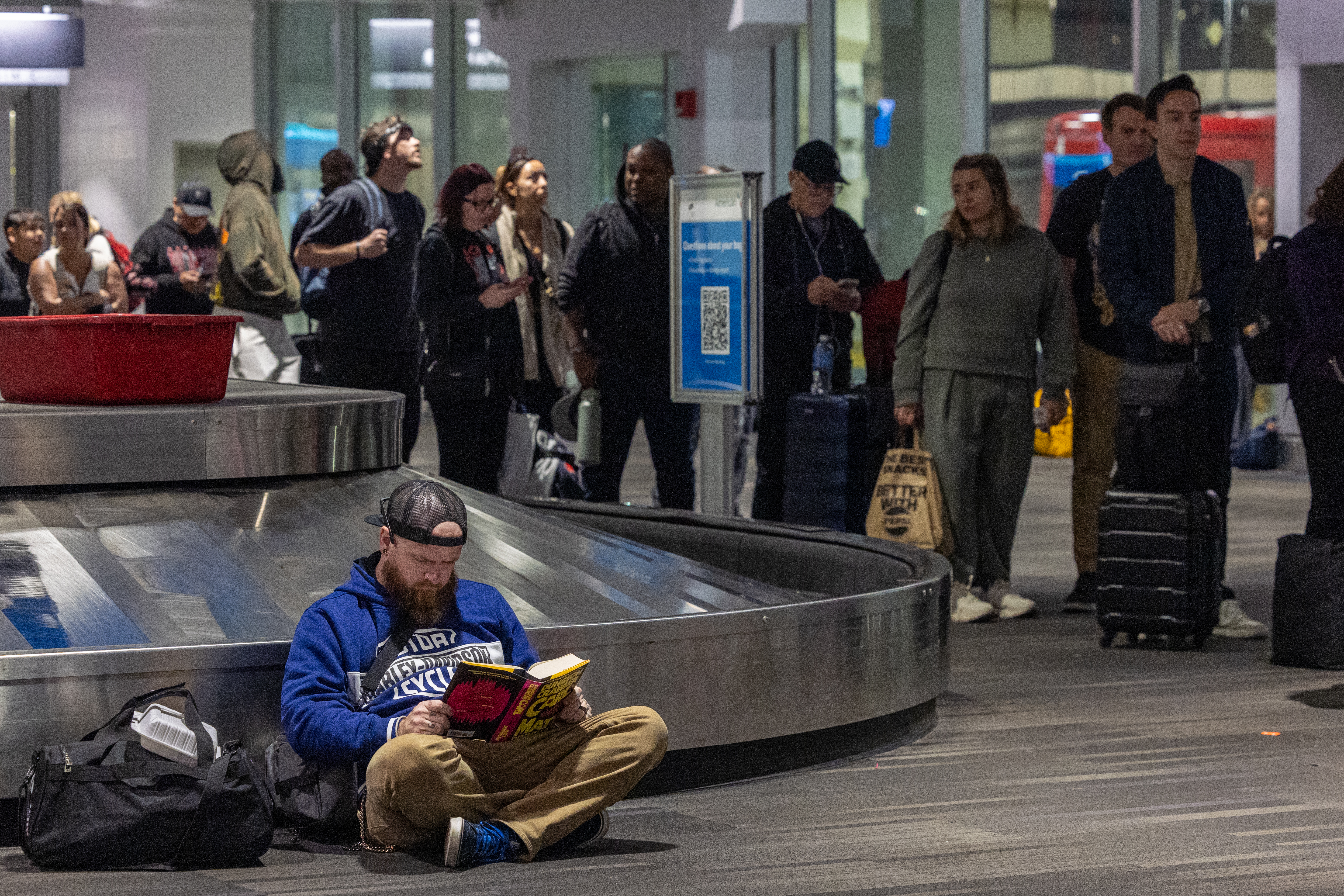
    Flight disruptions continued at Philadelphia International Airport Sunday, two days after a nationwide ground stop — the longest in 25 years — disrupted thousands of flights and triggered a wave of delays and cancellations.

    By 4 p.m. Sunday, 153 flights were delayed and 58 were canceled, according to FlightAware, a digital aviation company that operates a flight tracking and data platform.

    “Yesterday at the airport — the lines for airline customer support were very long for customers needing assistance rebooking flights. They tapered down toward the end of the day,” airport spokesperson Christine Ottow said in a statement. “Airlines are now faced with trying to reconnect travelers with their bags — travelers are asked to continue being patient as the airlines work through reconnecting bags with their owners.”

    Trump administration officials said a section of the nation’s aging air traffic control system was being upgraded when it became overloaded. A contractor was replacing copper telecommunications wire with new fiber wire when a problem caused communication and radar gaps, leading the FAA to suspend flights.

  • Iran targets Bahrain twice after months of quiet, claiming retaliation against U.S.

    Iran targets Bahrain twice after months of quiet, claiming retaliation against U.S.

    ABU DHABI, United Arab Emirates — Sirens sounded and explosions were heard in Bahrain on Sunday in an attack Iran said targeted U.S. military equipment at a helicopter base in retaliation for American strikes in Iran.

    Bahrain, home to the U.S. Fifth Fleet Navy base, was targeted by hundreds of Iranian drones and missiles during the first months of the war, but had been relatively quiet recently.

    Then on Friday, Iran again began targeting Bahrain, with the Islamic Revolutionary Guard Corps saying it had struck “early warning radar of the aggressor U.S. military.”

    U.S. Central Command denied the radar was destroyed and said it had shot down two Iranian drones.

    Tehran said Friday that its attack was in retaliation for U.S. strikes on Iranian sites, including Qeshm Island. It described Sunday’s as the “second phase of a decisive and crushing response” to the United States.

    The resumption of attacks comes as President Donald Trump has said that the U.S. will maintain the “status quo” in its war with Iran — signaling last week that a massive military escalation is unlikely but also saying a diplomatic solution to end the war is unnecessary. In the region, there is widespread concern that the strikes have the potential to once again expand.

    Sunday’s attack marked “a return to using Gulf states’ territory as a stage for exchanging military messages with Washington,” Ebtesam Al-Ketbi, president of the Emirates Policy Center, said in a statement on X.

    “Iran appears to want to increase military pressure without sliding into an all-out confrontation, using that pressure to improve its negotiating position,” Ketbi wrote. “But repeated attacks on Bahrain carry the risk of miscalculation and could open a new round of escalation.”

    Residents in Bahrain, an island nation of 1.6 million, reported hearing sirens from early-warning systems and explosions, as the government urged residents to keep calm and take shelter.

    The IRGC said in a statement, carried by state media, that it had targeted Bahrain’s Riffa Air Base with six drones. Bahrain’s air-defense systems intercepted “several treacherous Iranian aerial attacks,” the military said in a statement.

    Tim Hawkins, a spokesperson for U.S. Central Command, said there had been “no impacts to American forces” as a result of the attacks. Bahrain’s government did not respond to questions about whether there were damages. The Fifth Fleet base suffered extensive damage during the first phase of the war, and few Americans are still operating there.

    U.S. officials confirmed to the Washington Post this month that U.S. strikes hit Iran’s Qeshm Island, with one U.S. official, speaking on the condition of anonymity to discuss the operation, describing them as “defensive.”

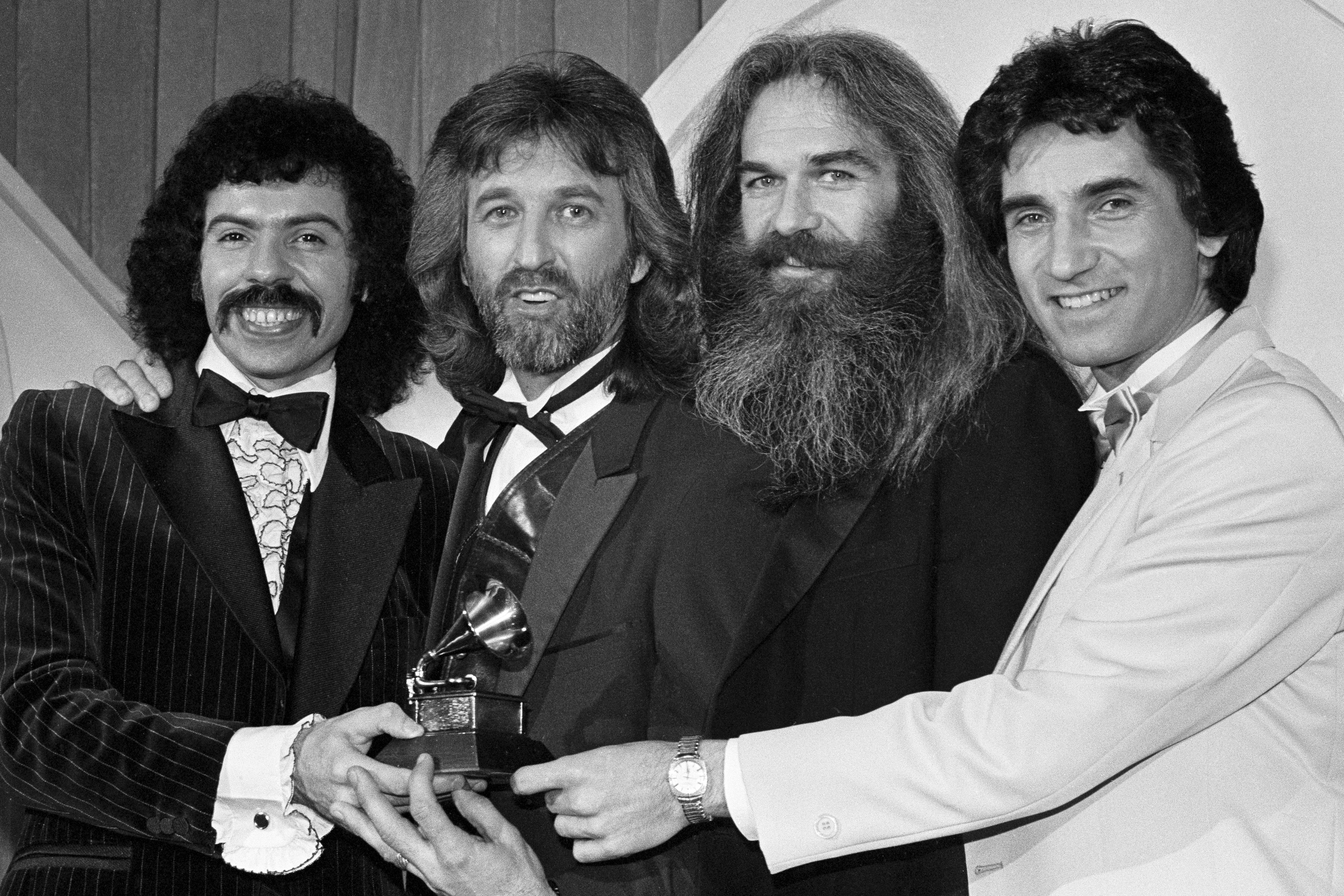
  • Richard Sterban, the bass singer for the Oak Ridge Boys, dies at 83

    Richard Sterban, the bass singer for the Oak Ridge Boys, dies at 83

    Richard Sterban, a backup vocalist for Elvis Presley who went on to international acclaim as the bass singer for the Oak Ridge Boys, the country vocal quartet for whom he sang the “oom-papa-mow-mow” refrain on the 1981 blockbuster hit “Elvira,” died on Saturday in Hendersonville, Tenn. He was 83.

    His death was confirmed by his family and the Oak Ridge Boys. They said that Mr. Sterban, who had cancer, had died of complications from bronchitis and pneumonia.

    A singer of extraordinary range and power, Mr. Sterban could hit notes so low they could only be felt, as opposed to heard. He also could hit notes higher than many tenors can reach. His basso profundo not only anchored the Oak Ridge Boys’ gospel-steeped sound; it carried the occasional melodic lead on recordings like the group’s 1979 remake of the Righteous Brothers’ Top 40 pop hit “Dream On.”

    His reverberating vocals galvanized the Oaks’ version of “Elvira,” a song that had previously been recorded by artists including Rodney Crowell and Kenny Rogers and the First Edition.

    It was never more than a minor hit, though, until Sterban’s stentorian “oom-papa-mow-mow” (framed by shouts of “Giddy up!” and “Hi-ho Silver!”) transformed it into a Grammy Award-winning record, and one of the most inescapable earworms of the early 1980s.

    “It absolutely carried us to another stratosphere,” Mr. Sterban explained in his 2012 memoir, From Elvis to Elvira: My Life on Stage, written with Steven Robinson. “The song, especially the lines I sang, was seemingly on everyone’s lips. It was unbelievable.”

    With 2 million copies sold, “Elvira” topped the country chart, crossing over to the pop Top 10 and helping secure the Oaks’ reputation as one of the most popular vocal groups in the history of country music.

    Besides Mr. Sterban, the group’s classic lineup, formed in the early 1970s, included lead singer Duane Allen; tenor Joe Bonsall, who died in 2024; and baritone William Lee Golden.

    The group was formed as a gospel quartet in Oak Ridge, Tenn., in the early 1940s, disbanding and reforming at least twice before Mr. Sterban and Bonsall teamed up with Allen and Golden, stabilizing what had long been a mercurial lineup. Over the next two decades, the four men modernized the group’s original gospel sound with pop-country elements, placing 17 singles at the top of the country chart and 17 others in the country Top 10.

    With records like “Elvira” and “Bobbie Sue” (1982), Mr. Sterban and the Oaks infused traditional country harmony singing with techniques popularized by R&B vocal groups like the Coasters and the Dominoes. They also contributed vocals to the likes of Paul Simon’s 1977 Top 10 pop hit “Slip Slidin’ Away.”

    This more far-reaching aesthetic was hardly second nature to the group, though — at least, not at first.

    This was especially the case when, at a commercial low point in the mid-’70s before they found a larger country audience, they went into the studio to sing backup on Jimmy Buffett’s “My Head Hurts, My Feet Stink, and I Don’t Love Jesus.”

    “What in the world had we gotten ourselves into?” Mr. Sterban wrote in his memoir, describing how the members of the group felt at the time. They had already been accused of being sellouts by their core gospel following for performing covers of hits by the Eagles and Olivia Newton-John in concert.

    “All we could imagine,” he added, “were headlines confirming what many of our detractors already seemed to believe: ‘Oak Ridge Boys don’t love Jesus!’”

    Richard Anthony Sterban was born on April 24, 1943, in Camden, N.J., one of three children of Edward and Victoria (Giordano) Sterban. The son of Polish immigrants, his father was an electrician. His mother, a native of Salandra, a township in the Basilicata region of southern Italy, worked various jobs, including at a chocolate factory.

    The product of a strict religious upbringing, young Richard began singing at the local Assembly of God church at 6 and went on to play tuba, sousaphone, and an assortment of other brass instruments in high school. While attending Trenton State College (now the College of New Jersey), he majored in music before dropping out to form the Keystone Quartet, a gospel group, in the early 1960s.

    Life on the road, though, didn’t agree with some of the quartet’s members, and the group split up in early 1965, at which time Mr. Sterban took a job selling menswear at the Gimbels department store in northeast Philadelphia.

    Shortly before that, he married Sandra Wilson, with whom he had three sons, Rich, Chris, and Doug.

    In 1970, Mr. Sterban was hired to sing bass in the touring edition of J.D. Sumner and the Stamps Quartet, one of the premier Southern Gospel groups of the day.

    A year later, the Stamps were hired to be Presley’s background singers, appearing with him at his four shows at Madison Square Garden in June 1972, as well as during his five-week residency in Las Vegas later that summer.

    Mr. Sterban also sang on major recordings by Presley including “Burning Love,” a No. 2 pop hit in 1972, and “Always on My Mind.”

    In October 1972, seizing the chance to be part of a headlining act of his own, Mr. Sterban accepted an invitation to join the Oak Ridge Boys, replacing bass singer Noel Fox.

    The newly reconstituted quartet initially struggled to make it in the country market. Buoyed, though, by a stint as regulars in Johnny Cash’s touring revue, they finally broke through to a wider audience with “Y’all Come Back Saloon.” A Top 10 country single in 1977, the record inaugurated a decade-plus string of hits that paved the way for sold-out concert tours, regular appearances on late-night television shows, and five Grammy Awards.

    The Oak Ridge Boys were inducted into the Gospel Hall of Fame in 2000 and into the Country Music Hall of Fame in 2015.

    An avid sports fan, Mr. Sterban was for years a part owner of — and occasional color commentator for — the Nashville Sounds baseball team, the Triple-A minor league affiliate of the Milwaukee Brewers. He also did color commentary for Vanderbilt University’s men’s baseball team.

    In addition to his sons from his first marriage, which ended in divorce, Mr. Sterban is survived by his second wife, Donna (Summers) Sterban; their daughters, Tori and Lauren; and several grandchildren.

    Their early struggles to find their stylistic equilibrium notwithstanding, the Oak Ridge Boys nevertheless continued to push the boundaries of country music decades after they found success with a more wide-ranging approach.

    Maybe nowhere was this more evident than in their haunting 2009 rendition of the White Stripes’ 2003 single “Seven Nation Army.” Recorded with producer Dave Cobb, whose clients include Jason Isbell and Lady Gaga, the collaboration has been likened to Cash’s partnership with iconoclastic producer Rick Rubin.

    “I think Dave took us down some roads we might not have traveled on our own,” Mr. Sterban was quoted as saying about the experience on the group’s website. “The music may be different, but he did not try to change us; he challenged us.”

    This article originally appeared in the New York Times.

  • LeBron James moves into third place on NBA’s assists list in Sixers’ win over Pacers

    LeBron James moves into third place on NBA’s assists list in Sixers’ win over Pacers

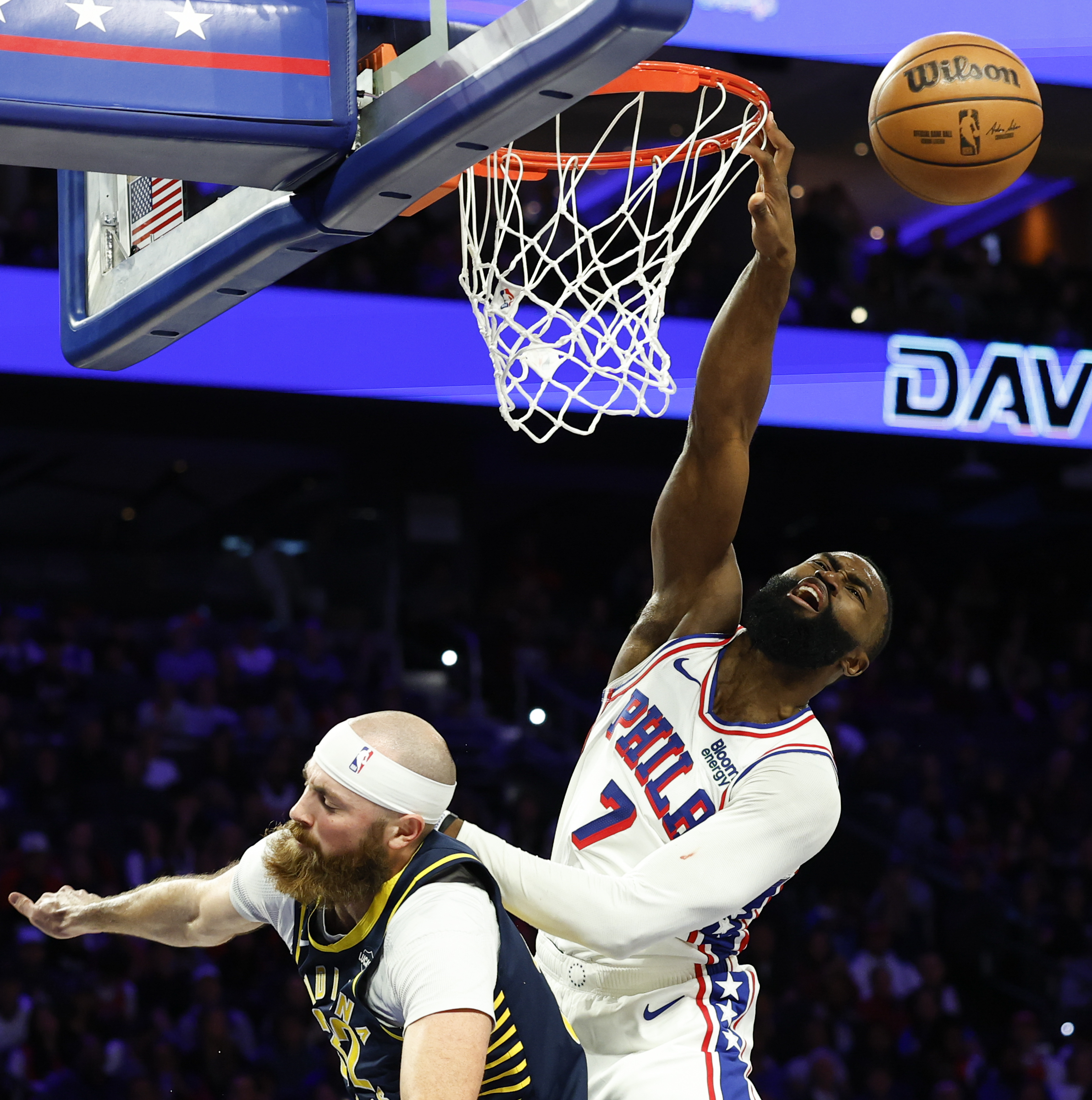
    LeBron James received the ball in the middle of the post, then dropped a bounce pass to a cutting Dean Wade for a dunk that pushed the Sixers’ advantage on the Indiana Pacers back up to nine points with less than three minutes remaining.

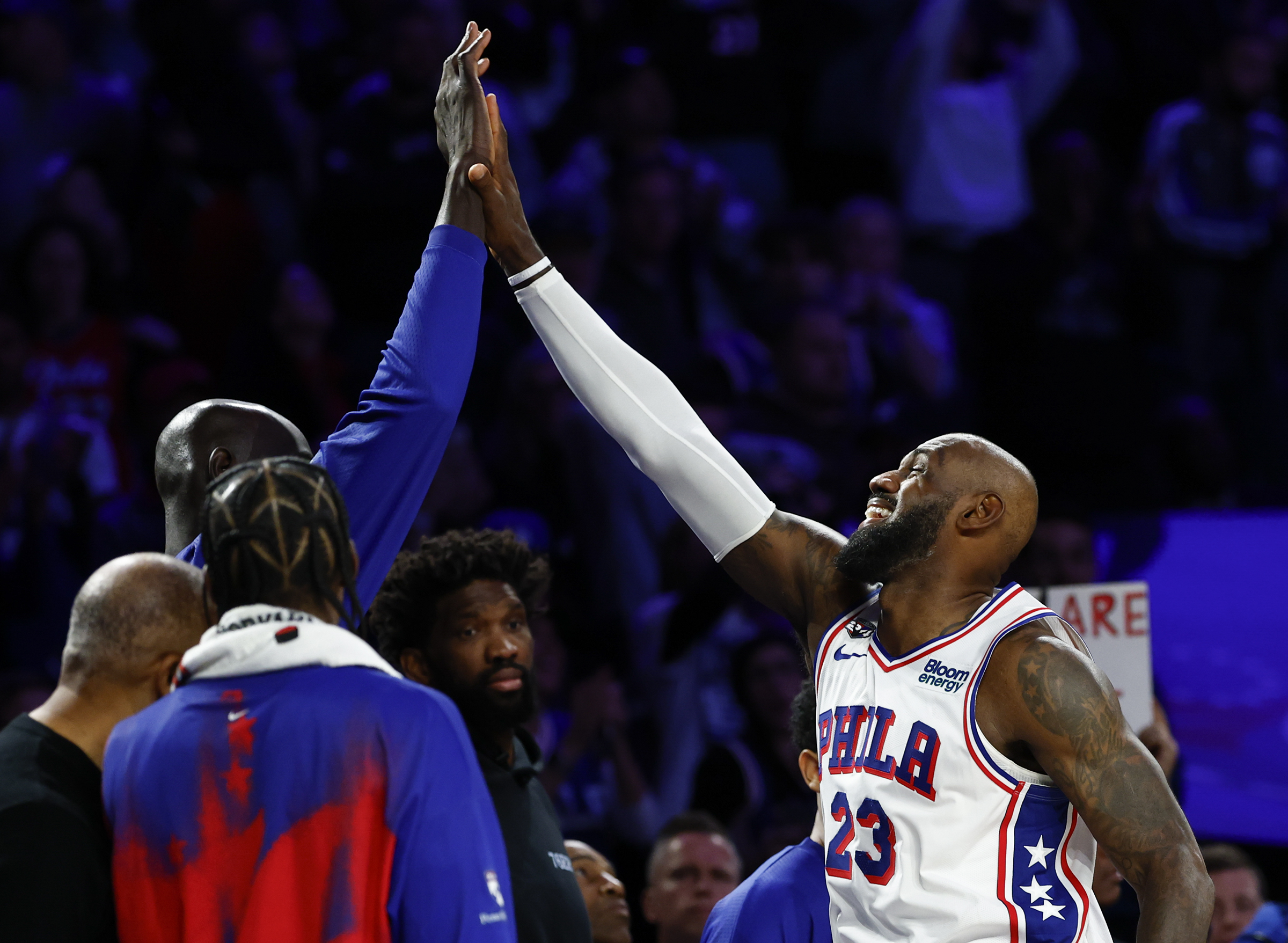
    That was one highlight dish in James’ 11-assist performance, which moved him past Jason Kidd for third on the NBA’s all-time assists list and helped lift the Sixers to a 131-124 victory Sunday afternoon at Xfinity Mobile Arena.

    James’ outing, which also included 15 points and seven rebounds, came after he missed Thursday’s win over the Toronto Raptors to manage sciatica in his back. He now has 12,092 assists in his legendary career. John Stockton is No. 1 with 15,806, followed by Chris Paul’s 12,552.

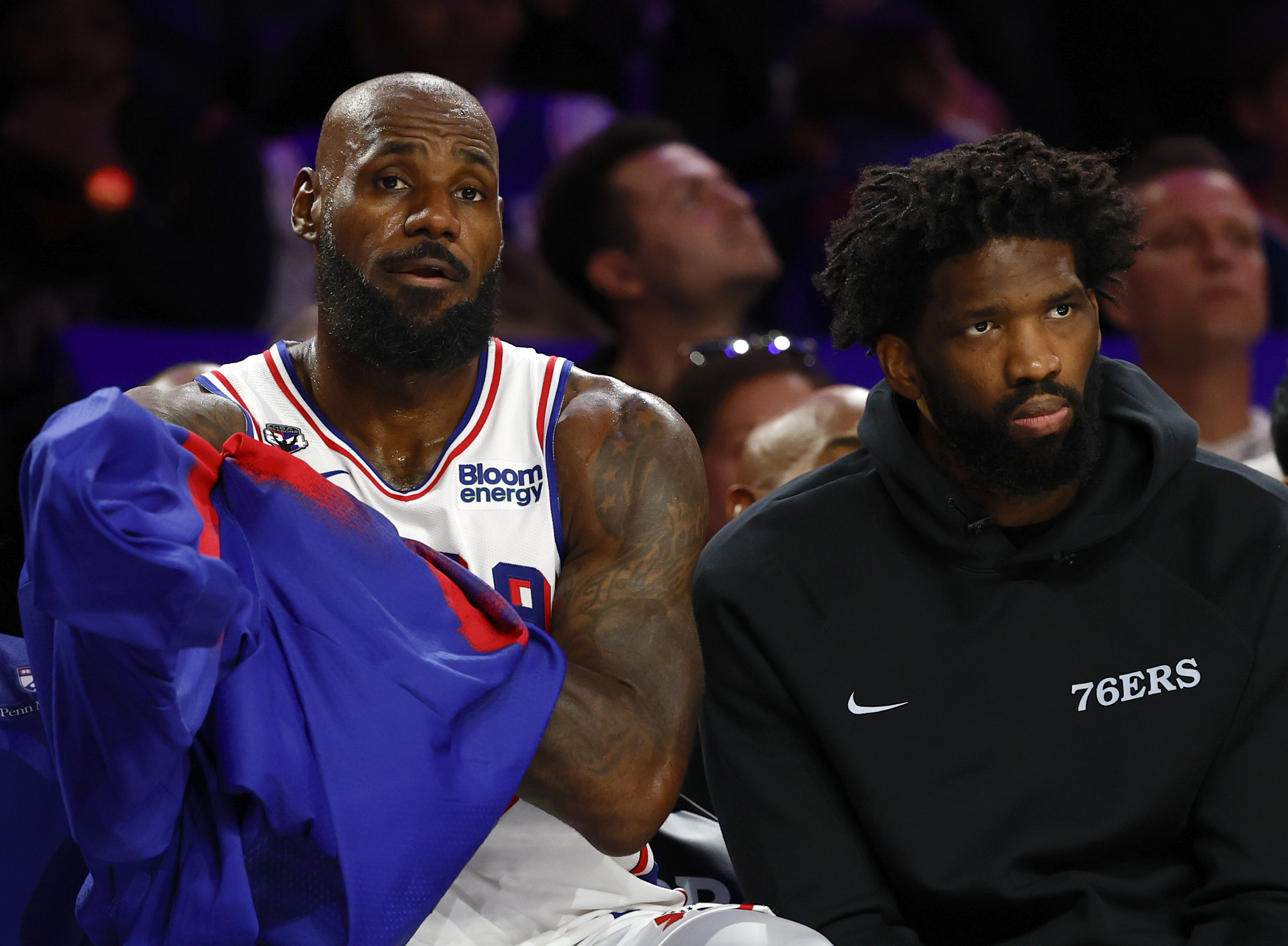
    Still, both teams were shorthanded Sunday. Joel Embiid was out to manage plantar fascia, while Indiana star Tyrese Haliburton remained sidelined with a hamstring injury.

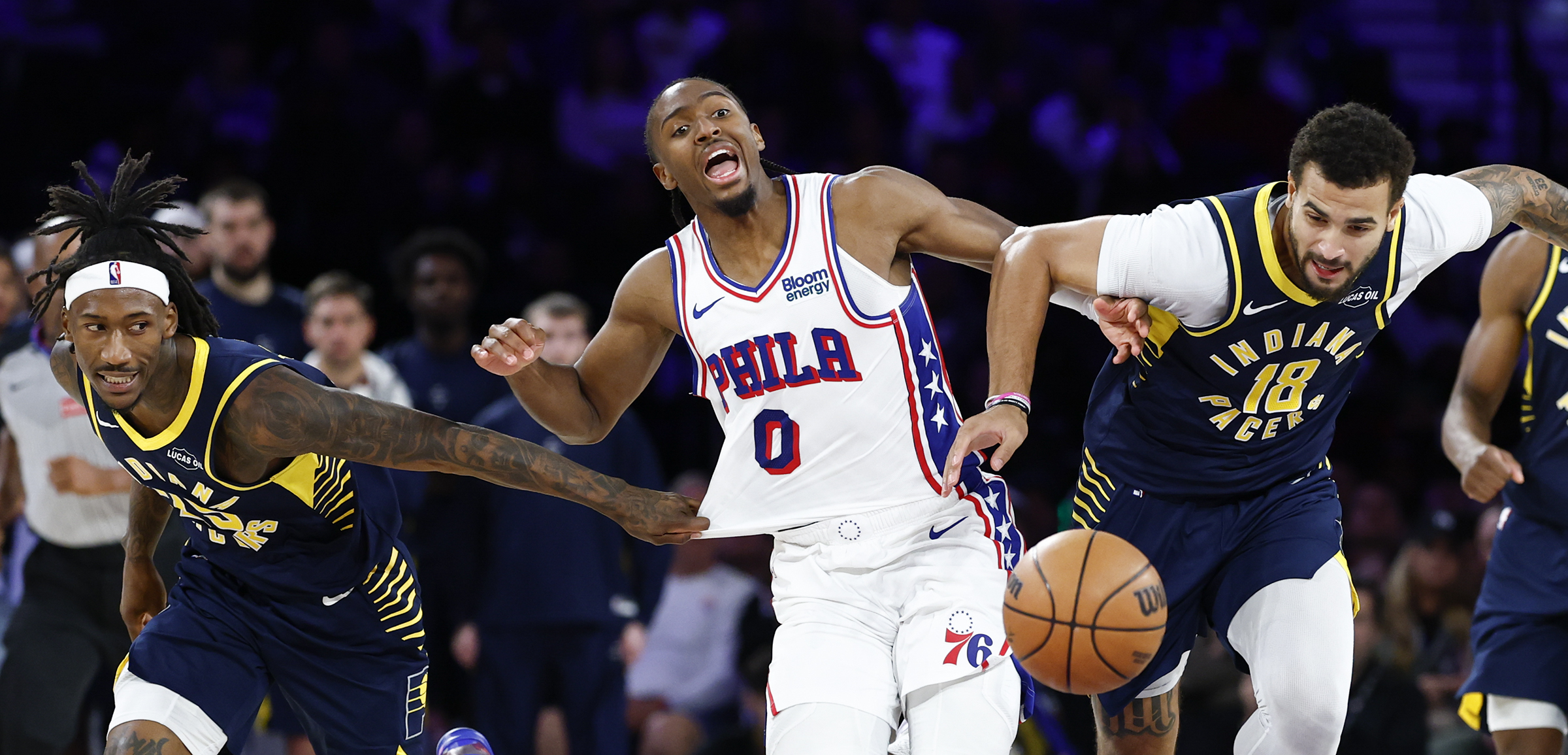
    Without Embiid, the Sixers (11-3) got a monster first half from Jaylen Brown, who scored 20 of his 31 points before the break. Tyrese Maxey, who entered Sunday ranked seventh in the NBA in scoring, provided another productive 27 points and six assists. The Sixers survived a fourth-quarter scoring barrage by the Pacers’ Pascal Siakam, who totaled 19 of his 31 points in the final period.

    The Sixers next play Monday night at the Brooklyn Nets, then have a Wednesday road game at the Orlando Magic.

    Patchwork center minutes — including Tacko Time

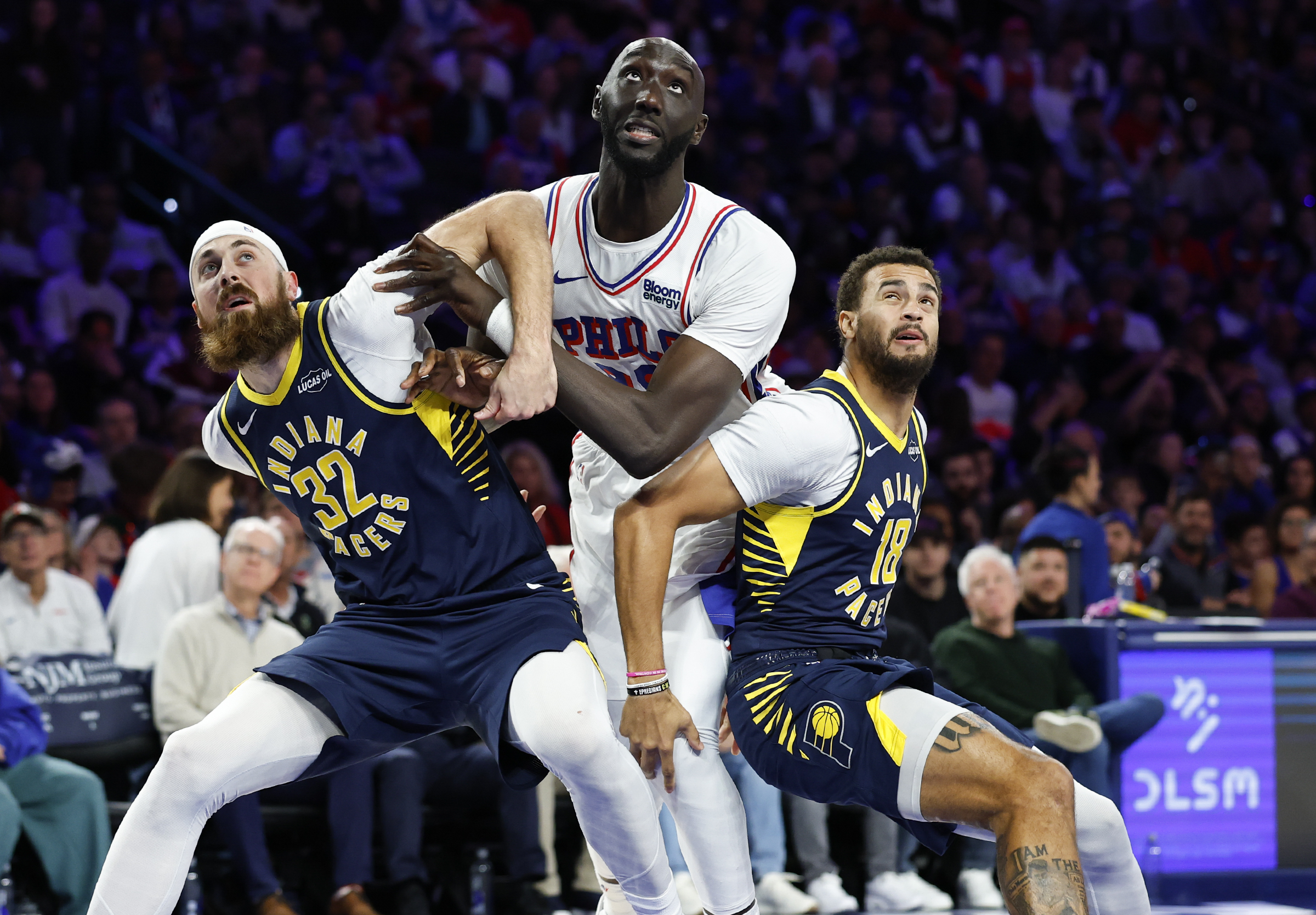
    With Embiid and Adem Bona (spine) both sidelined, the Sixers needed to roll out multiple center options against the Pacers’ frontcourt anchored by Ivica Zubac.

    Jabari Walker (11 points, seven rebounds) started, and sank three three-pointers. Wade (12 points, seven rebounds, three assists) was the primary reserve, before James played in the middle in crunch time. Then the 7-foot-6 Tacko Fall then played five third-quarter minutes — his first meaningful action as a Sixer — and received a thunderous ovation from the crowd.

    Sixers forward Jabari Walker reacts after teammate dunked the basketball during the third quarter against the Indiana Pacers on Sunday.Yong Kim / Staff Photographer

    The size difference was initially noticeable when Zubac (eight points, five rebounds) dunked over Walker and then flushed an alley-oop in the first half.

    Welcome back, Kelly Oubre Jr.

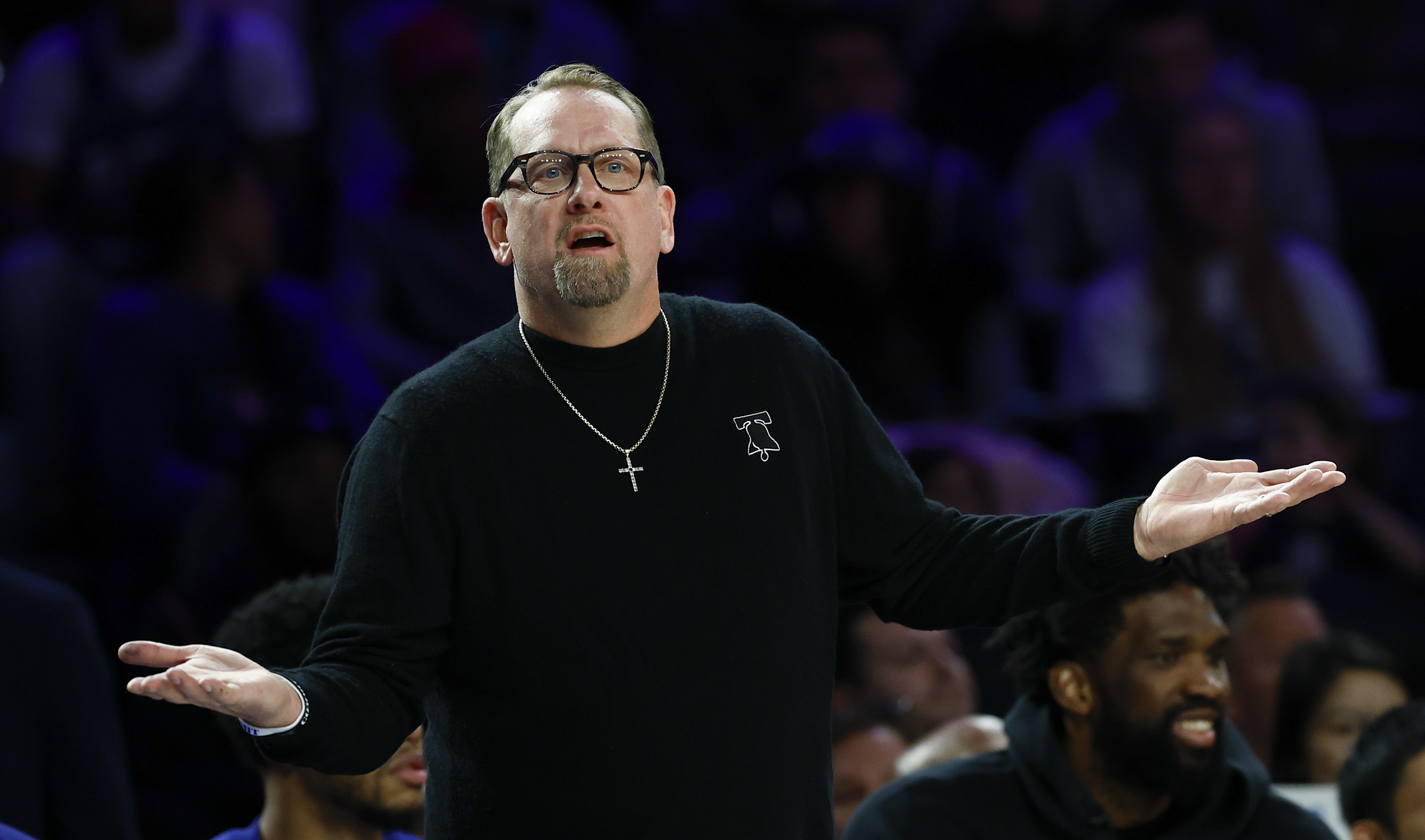
    Kelly Oubre Jr. wandered over to the Sixers’ bench before tipoff to give coach Nick Nurse a hug.

    It was Oubre’s first time back in Philly as a visitor since signing with the Pacers during the offseason. And it unfolded into a quintessential Oubre experience.

    He finished with 16 points on a mix of finishes at the rim and three-pointers capped by blowing a kiss in celebration, and added four rebounds, and two assists. He also got called for a technical and later vigorously mocked Brown extending his off arm upon being called for his third foul late in the first half.

    During a pregame media session, Oubre was appreciative of his three seasons as a Sixer — which rebuilt his NBA career — but candid that the front office helmed by Mike Gansey did not seriously pursue his return. Pacers coach Rick Carlisle also was complimentary of Oubre’s versatility, and credited him with helping stabilize the team’s defense in recent games.

    Another rough first quarter

    The Sixers entered Sunday ranked 26th in the NBA with a minus-11.8 net rating in the first quarter. Then they lost the opening frame again, 35-29, thanks to Indiana’s hot shooting (15-for-24) from the floor.

    But the Sixers chipped away in the second period, with a slick no-look bounce pass from James to Brown for a dunk giving the Sixers a 56-55 edge with less than two minutes to go before the break. They led 58-57 at the half, before extending that advantage to double digits when Anfernee Simons hit a pullup jumper at the third-quarter buzzer.

  • Pope crosses Peru in finale of trip home to visit flock high in Andes and deep in Amazon

    Pope crosses Peru in finale of trip home to visit flock high in Andes and deep in Amazon

    CUSCO, Peru — Pope Leo XIV traveled across Peru on Sunday to visit communities high in the Andes mountains and deep in the Amazon rainforest, as the plight of Indigenous peoples and the protection of the environment took center stage on his South American odyssey.

    On the penultimate day of his visit to his adopted homeland, Leo channeled Pope Francis by emphasizing Catholic teaching that links care for the most vulnerable with care for God’s creation.

    Leo arrived first in the Andean city of Cusco, the former capital of the Inca empire, before flying to the Amazonian city of Pucallpa, where illegal mining, deforestation, and threats to Indigenous communities are central concerns.

    In Cusco, Leo praised the traditional expression of popular piety, including processions and religious festivals, as effective ways of forging community and transmitting the faith, especially to young people.

    “The future of these traditions lies not only in preserving what has been handed down, but also in passing it on in a living way,” he said from the grounds of Cusco’s historic Incan fortress, Sacsayhuamán.

    Huge crowds lined Cusco’s cobblestoned streets and packed its central Plaza de Armas, an imposing square decorated with a blend of Inca and Spanish colonial buildings. Many people wore the traditional Andean hats and colorful wool vests typical of the region, while others wore plastic ponchos to guard against a drizzling morning rain.

    “It is all worth it,” said Margarida Salomon, 63, who said she came from Sucre in Bolivia to see the pontiff, spending about $500 to take a bus, sleep in a tent, and eat Peruvian food from stalls. “I am still getting to know this pope, but the fact he is here in the Andes means a lot.”

    Spectators at the archaeological site were treated to a performance of Los Pablitos, which translates to the Little Pauls but refers to the Ukukus (or Pabluchas). They are mythical half-man, half-bear figures who serve as the traditional guardians and peacekeepers during the Pilgrimage to the Sanctuary of the Lord of Qoyllurit’i in Cusco.

    The visit to Cusco, more than 11,000 feet above sea level, tested Leo’s stamina as he continues recovering from lung cancer surgery. Leo sat in the chair of his popemobile during part of the ride around Cusco, but it wasn’t clear if that was to preserve his energy or to steady himself on the uneven streets.

    In general, the 71-year-old Leo has seemed unfazed by the toll of the three-nation South American trip, the longest of his pontificate. While others traveling on the papal plane have fallen ill, Leo has shown no sign of weakness or fatigue since the trip began Nov. 6, and in fact seemed energized, especially from the days spent in his former diocese of Chiclayo seeing old friends.

    From the Andes to the Amazon

    In Pucallpa, a rainforest city of 434,000 people, Leo was expected to reinforce Francis’ teachings on protecting the environment and Indigenous communities threatened by illegal mining and other forms of exploitation.

    Illegal gold mining has become an increasingly lucrative business in the Amazon, devastating forests and polluting rivers. Miners use makeshift suction dredges and mercury, a toxic metal, to extract gold.

    “This global context of war and conflict has contributed to gold prices rising to historic highs, and the direct impact of this is that gold — which is present in all Amazonian rivers — can be extracted using mercury, particularly if you want to do this on a large scale,” said Raphael Hoetmer, Western Amazon program director at Amazon Watch.

    “It’s causing pollution, health issues, and environmental degradation,” he said.

    On Saturday, police reported three operations against illegal mining in Madre de Dios, one of the country’s most biodiverse regions. They said they destroyed extraction equipment, including rafts and motors, valued at $4.1 million.

    Illegal mining also drives deforestation and encroaches on Indigenous territories, threatening ancestral lands and exposing communities to violence and organized crime.

    “The church in Peru perceives the continuity of his commitment to accompany Indigenous peoples in the defense of life and the care of the territory, which is increasingly threatened by deforestation and illegal mining,” Peruvian Cardinal Pedro Barreto, president of the Amazon bishops conference, told the Associated Press.

    “Leo is clearing the path laid out” by Francis on environmental protection and human rights, Barreto said.

    The Rev. Luca Zanta, one of the visit’s organizers, said Leo would “primarily listen to the Amazonian Indigenous peoples, including the Shipibo, Asháninka, and Kukama communities” gathered beside Lake Yarinacocha.

    Zanta said Leo would lead a symbolic planting of a shihuahuaco, a native rainforest tree that can live for more than 1,000 years and grow dozens of meters tall.

    “That is a symbol of how we want our common house to be. We want the Catholic Church to live long, protect those who need it, and see its values and beauty admired by generations and generations,” Zanta told local radio Saturday.

    Indigenous communities face mounting threats

    The Rev. Peter Hughes, an 84-year-old Irish priest who has lived in Peru for more than six decades, said the visit reflects the church’s concern for the poor.

    “In Latin American terms, the Indigenous peoples, or what is left of them, are the most important collective representing the truly poor,” he said. “That is what makes leaders like Pope Francis and Pope Leo speak the language of the Gospel in very human terms, putting a premium on justice and peace. In the Christian sense of justice, the most important people are the poor, the marginalized, and those who have no voice.”

    Isolated peoples are especially vulnerable

    Leo is also expected to address sexual violence against Indigenous women and girls. Barreto said the pope would likely pay particular attention to a recent case in Condorcanqui province in the northern Amazon, where teachers sexually abused Indigenous Awajún and Wampis girls.

    There is particular concern in Peru for Indigenous peoples living in isolation, including the Mashco Piro in the forests of southeastern Madre de Dios.

    Images released by Survival International in 2024 showed dozens of Mashco Piro people near logging concessions. Clashes between Indigenous people and loggers that year left at least two loggers dead.

    Concerns also extend to Kakataibo communities living in isolation or initial contact.

    “They have reservations that should protect them. But the Peruvian government is increasingly unwilling to acknowledge the existence of these peoples,” Hoetmer said. “And their reserves are also being invaded by drug cartels because, of course, they’re ideal places for them to operate since no one can get in.”

  • SpaceX makes history with successful rocket catch in Texas

    SpaceX makes history with successful rocket catch in Texas

    STARBASE, Texas — SpaceX’s giant Starship spacecraft pulled off a remarkable feat on Saturday afternoon in the quest to build fully reusable rockets. For the first time, the spacecraft successfully returned from orbit to its launch site in South Texas, where it was caught between two mechanical arms on the launch tower.

    For the past decade, SpaceX has successfully landed the boosters of its smaller Falcon 9 rockets and then reused them on subsequent launches. But the upper stages of the Falcon 9s are still thrown away each time.

    The Starship rocket system is not only much larger than Falcon 9, but it was designed from the start to be fully reusable. Bringing back an upper stage from orbit is a major technical hurdle, and SpaceX was able to pull it off on its first try.

    Jared Isaacman, the NASA administrator, offered his congratulations. “Making more believers by the day …. one step closer to,” he wrote on social media, adding an emoji of the moon and the American flag. Starship is slated to serve as one of two lander designs that will take astronauts to the surface of the moon as part of NASA’s Artemis program.

    Elon Musk, the CEO of SpaceX, posted a video showing a view of Starship from below, part of the post-landing inspection.

    A few hours earlier, the spacecraft, which is about 170 feet long, had been traveling at more than 17,000 mph at an altitude of 170 miles. Then, one of its engines fired briefly, nudging it out of orbit to begin its fall back to Earth.

    As Starship entered the atmosphere, the pressure and friction of air heated the belly of the spacecraft and slowed its velocity. When it reached the denser parts of the atmosphere, flaps at the front and back steered it as it passed over Mexico before returning to Starbase, SpaceX’s facility at the southern tip of Texas.

    With the final landing burn, Starship pivoted to a vertical position, hovered, and then slid between the mechanical arms that gently closed around it.

    This was the 15th test flight of Starship, a mission that began when it launched Friday afternoon. It was not a complete success. The bottom booster stage, known as Super Heavy, accomplished its main objective of pushing the upper-stage spacecraft through the densest part of the atmosphere and then dropped away.

    SpaceX had hoped that it would be able to catch Super Heavy at the launchpad, much as it did with the upper stage on Saturday. But as the booster headed back, it detected a problem and instead performed a simulated landing over the Gulf of Mexico. SpaceX is still investigating what happened.

    The Starship spacecraft continued to orbit and deployed 26 of the company’s next-generation Starlink satellites.

    The words “DON’T PANIC” were printed on the side of the spacecraft, a reference to Douglas Adams’ novel The Hitchhiker’s Guide to the Galaxy. This particular ship was No. 42 off the production line, and in Adams’ book, 42 was the answer to the ultimate question of life, the universe, and everything.

    After about 22 hours and 14 orbits, Starship then returned to Earth.

    Unlike Friday, when the skies over Starbase were cloudless and filled with sunshine, Saturday was cool, breezy, and gray. In the final seconds, the spacecraft dropped through the clouds, and its engines fired one more time to pivot to vertical, hover and slide between the chopstick arms.

    Now that Flight 15 has ended with a successful catch in Texas, Flight 16 could be the first Starship launch from SpaceX’s revamped launchpad at the Kennedy Space Center in Florida.

    The Starbase launch site is not sufficient to serve SpaceX’s planned acceleration of Starship launches. Another Florida launchpad is under construction at the Cape Canaveral Space Force Station, and SpaceX has announced plans to build a huge launch complex in Louisiana.

    SpaceX could also hit a major milestone next year if it can launch two Starships in quick succession, dock them together in orbit, and then move liquid methane and liquid oxygen propellants from one Starship to the other.

    This refueling maneuver is essential for Starship to leave low-Earth orbit. Without it, the spacecraft could not make it to the moon for NASA, or head to more distant destinations like Mars, where Musk hopes to send people someday.

    SpaceX’s Starship is also slated to participate in its first NASA mission in the second half of next year. That flight, known as Artemis III, will stay in low-Earth orbit, where Starship will practice docking with NASA’s Orion crew capsule.

    In the original mission design, Starship and Orion were to travel separately to lunar orbit and dock there. But SpaceX wants the two spacecraft to dock in low-Earth orbit and then have Starship provide the propulsion to get them to the moon.

    This article originally appeared in the New York Times.